Two Parts Italy

Exploring Italy, travel, and living a flavorful life

  • Blog
  • About This Blog
  • Start Here
  • Recent Posts
  • Archives by Topic
  • Subscribe
  • Contact me

These barrels at Villa Medici Ermete are used for aging traditional balsamic vinegar

Tasting Parma Part Two: Traditional Balsamic Vinegar

February 07, 2022 by Joanne Bartram in #italytravel, Cooking, food, Food tours Italy, Parma, Modena, Reggio Emilia, Traditional product Italy

Some words just don’t translate well.  Such is the case with the Italian word acetaio.  Google translate will say that it means “vinegar maker”.  But that does not begin to describe the people who produce traditional balsamic vinegar. An acetaio is so much more – an artisan, the keeper of an ancient tradition, and a gustatory magician.  They are, justifiably, also a proud group of craftsmen.  And they are perhaps the most patient people on earth, for the process of producing a traditional balsamic vinegar takes a minimum of 12 years and often much longer.  The prized extravecchio (extra old) balsamics are aged 25 or more years.  The acetaio often begins to ferment a batch of balsamico that won’t mature in his (or her) lifetime. 


We are not talking your supermarket balsamic vinegar (a poor imitation of the real thing) but rather authentic Aceto Balsamico. As a Denominazione di Origine Protetta (DOP) product it may only be produced in the small geographically designated area of Modena and Reggio Emilia in the Emilia-Romagna region of northern Italy. Once rival cities in the making of traditional balsamic vinegar, today both towns are entitled to use the DOP designation. Having the DOP label also means that there are tight controls to ensure that the balsamico produced is of the highest quality.  The controls extend to bottle size, labeling, and even to the classic red wax seal.

On my recent food tour in and around Parma (arranged by Get Your Guide), I had the opportunity to visit the Villa Medici Ermete near the town of Reggio Emilia.  The villa and surrounding vineyards are owned by the Medici family whose main business is tending the vineyards and making Lambrusco wine.  

Looking out over the vineyard from the acetaia at Villa Medici Ermete. If only all workplaces offered such a view!

Alongside wine making, they have also produced small batches of traditional aceto balsamico for the last 100 years. Long ago, the vinegars produced were reserved for family use or given as gifts and wedding dowries. Today they are bottled and offered for sale. Alessandra Medici, who oversees the process, describes the making of her aceto balsamico as both a hobby and a passion.  In addition to managing the production, Alessandra gives wonderful tours during which she describes the traditional processes used to make and age the vinegar and invites guests into the attic to see (and breath in the scent) where the aging takes place. As a bonus, the tour concludes with a tasting.

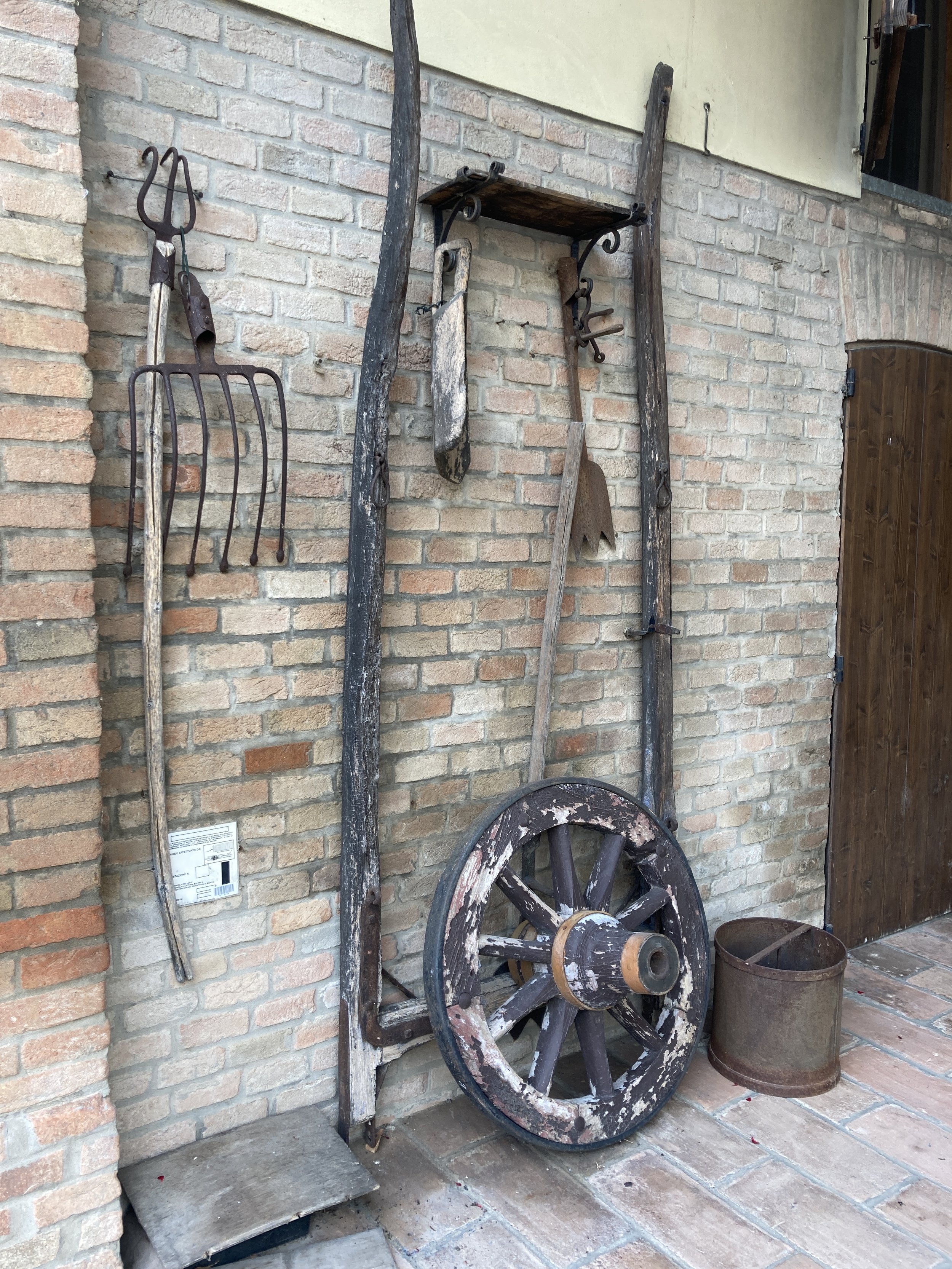
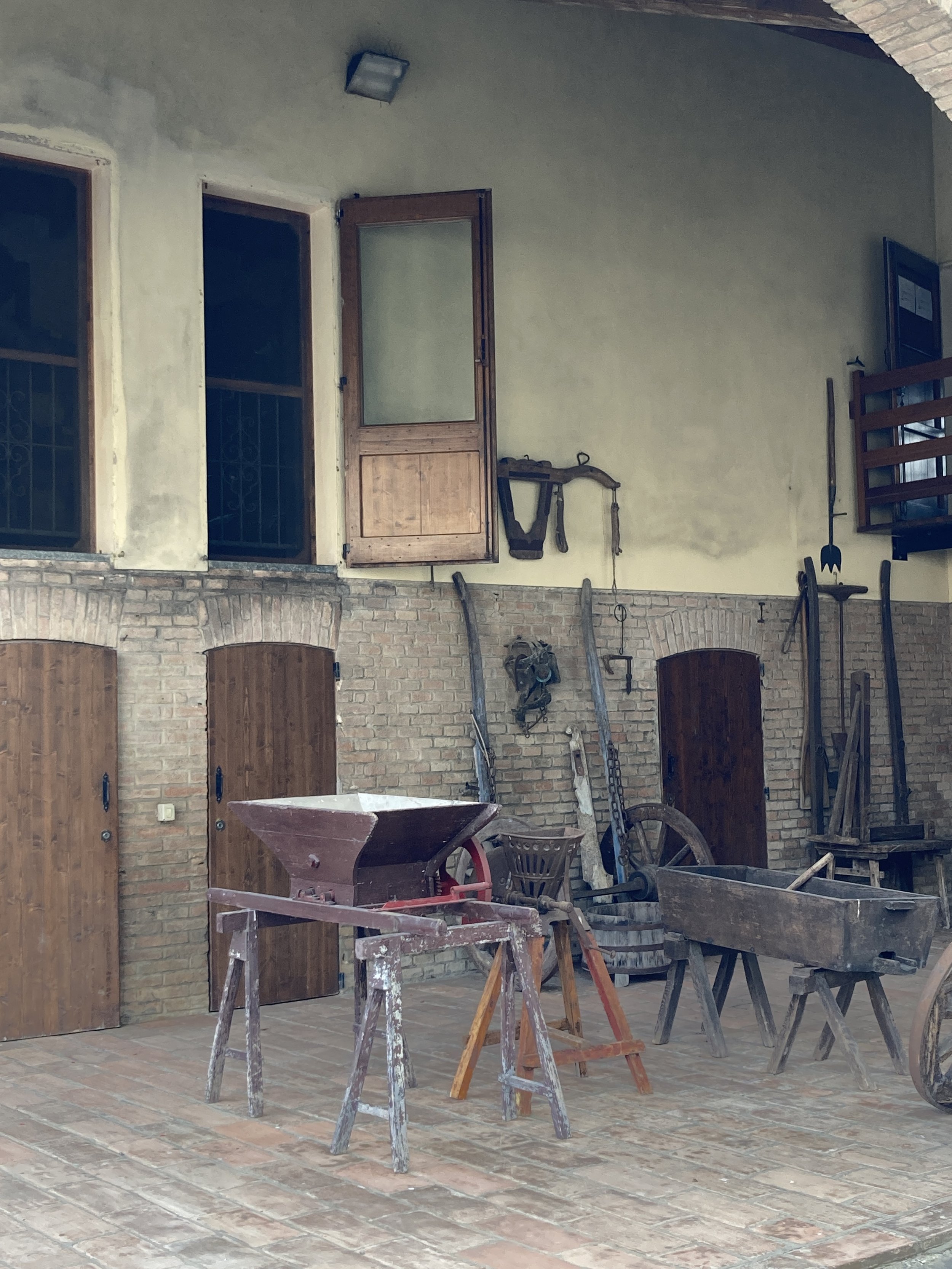
 The vineyard estate, with its central Villa Medici Ermete, is beautiful. The tour begins in a small museum in the open-air barn where old farm tools and wine-making equipment tell of the long history of wine and vinegar production on the estate. 
94EB963A-1A8E-4468-934B-8877EF1BF912.jpeg
A5D40383-BF1F-4CBD-A185-93BB15D74E82.jpeg

 Upstairs, above the barn, are rooms filled with wooden casks and the fragrance of fermenting balsamico.  This is the acetaia, the attic where the grape must (the crushed grapes) ferments and becomes more and more concentrated over time.

 As our guide explained, the process is fascinating yet quite simple.  There is only one ingredient used – the must of grapes grown on the estate. The first step is to cook the grape must in a cauldron over an open flame for a full day to begin the process of evaporation. The liquid is then placed in the largest of a series of ever-smaller barrels. A set of barrels is called a battery and at the Villa Medici Ermete each battery consists of 5 barrels.  In a long-standing tradition, a new battery is started and labeled with the name of each new baby born into the family.  It matures as the child does, aging long past the minimum 12 years and passing on an important heritage.  In the acetaia there was one battery which was started nearly 100 years ago, labeled with the name of an ancestor from several generations past.

 Fermentation occurs in warm weather (a little bit of older fermented balsamico may be added to begin the process) and then in the winter of each year the liquid is moved to the next smaller barrel.  The barrels are made of several different types of wood including oak, cherry, and chestnut.  Each will contribute to the flavor of the vinegar.  The barrels are left open to air, the vent at the top covered by a thin piece of linen, to allow for evaporation.  Eventually the concentrated liquid moves from the last barrel in the battery to some even smaller barrels to finish aging. One room in the acetaia was lined with these small barrels.

These small barrels, of several different kinds of wood, contain the balsamic vinegar during the many years of aging.

 Before the balsamico can be bottled for sale, it must be submitted to the local Consortium of Growers.  

There, a panel of 5 expert tasters judge its characteristics (color, density, aroma, taste).  If approved, the aceto (vinegar) can be bottled (under supervision) and labeled with the seal of the consortium and the red and yellow DOP symbol.  That label verifies that the balsamic is a DOP Aceto Balsamico di Modena or di Reggio Emilia. 


A dollop of thick, syrupy balsamic vinegar adds to the flavor of aged parmigiano reggiano cheese

A traditional aged balsamic is a joy to taste and I was fortunate to sample three different ones at the end of the tour.  All were delicious, with clear differences in taste and consistency.  The younger vinegars (red label, 12 years of aging) were sharper in flavor and thinner than the older ones. They are recommended for everyday use in salads or as a condiment for raw vegetables, fish, or carpaccio. The 18 year vinegars (silver label) were less acidic, a bit sweeter and smoother.  Suggested uses include in sauces or on meat or to drizzle on top of paté.  They are also wonderful paired with chunks of Parmigiano Reggiano cheese.

Lastly we tasted the oldest, 25 year balsamic (gold label).   This is the highest quality and most prized balsamic vinegar. It is not used in cooking, but is wonderful on strong cheese and also on desserts.  The syrupy sweetness compliments strawberries and is wonderful drizzled on some gelato.  It may even act as a sort of digestive taken by a spoonful at the end of a meal (in years past is was taken this way to ward off the plague!). The flavor of this long-aged balsamic is a true luxury.  

 As with most things, quality and price go hand in hand.  The long process of aging, the use of traditional methods, and the relatively small production mean that authentic balsamic vinegars can be quite expensive.  The intense flavors, and the way a small amount can turn a dish from ordinary to extraordinary, make it a worthwhile investment.  A bottle of the 18 year, silver balsamic now adds wonderful flavor to my kitchen in Lucca.  Having seen how it is produced at Villa Medici Ermete family just makes it all the more delicious.  

Next week: Part three of the series, Prosciutto di Parma
February 07, 2022 /Joanne Bartram
aceto balsamico, traditional balsamic vinegar, balsamico di Modena, Balsamico di Reggio Emilia, Balsamic vinegar production
#italytravel, Cooking, food, Food tours Italy, Parma, Modena, Reggio Emilia, Traditional product Italy

Tasting Parma (Part One)

January 31, 2022 by Joanne Bartram in #italytravel, food, Italy travel, Parma, #cheese making italy, Food tours Italy

The Emilia-Romagna region of Italy is famous for many things – the University of Bologna (founded in the year 1088 and still going strong), art, architecture, museums, beautiful landscapes, resorts along the Adriatic coast, and expensive automobiles (think Maseratis and Ferraris).   But even with all of these riches, Emilia-Romagna is perhaps most celebrated for its food.  

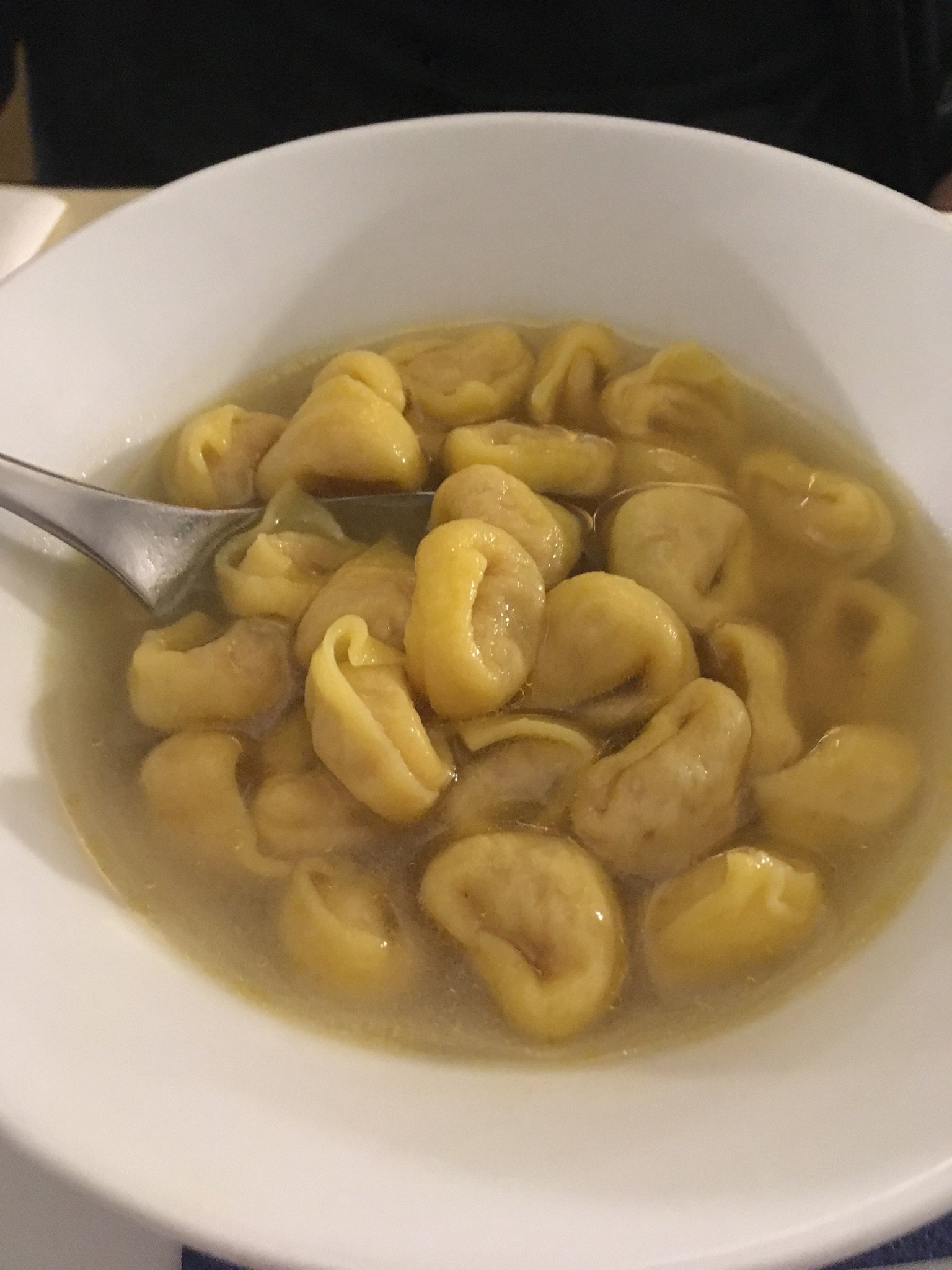
Tortellini in brodo - a specialty of Bologna

 The production of local specialty foods goes from field to table in this region of Italy.  Wheat, corn, vegetables, fruit and grapes are important crops (yes, I know grapes are fruit but really, they deserve a category of their own, don’t you think?).  And then there are the pigs!  This region is home to some of the world’s finest, make that tastiest, pigs.  

These products give rise to many of the dishes that define Italian cuisine – filled pastas, tasty sauces, wonderful cured meats, local wines like Lambrusco and Pignoletto, world-famous cheese and exquisite balsamic vinegar.  Food is practically religion in this part of Italy and Bologna, Modena and Parma comprise the geographic holy trinity. Consider me una pellegrina (a pilgrim). With culinary pilgrimage in mind, I recently ventured to Parma to learn about some of the regions famous products – Parmigiano Reggiano (parmesan), Proscuitto di Parma (#1 lesson, don’t call this ham!) and Aceto Balsamico (the real deal balsamic vinegar for which there simply is no substitute).


The combination of perfectly ripe melon and salty Prosciutto di Parma is a flavor superstar during the summer season

I figured that there were two ways to learn about these local delicacies  – tasting them and visiting the places where each is produced.  And so I set off to do both.

Finding good Parmigiano Reggiano and Prosciutto di Parma to taste is simple, in fact it is hard to find a meal in Parma that doesn’t include one or the other of these.  If there is a form of Stendahl syndrome for food, surely this region is where the affliction is likely to occur.

Walk past any bar at lunch, aperitivo time, or dinner and you are sure to spot a plate of thinly sliced prosciutto alongside a basket of bread.  Chunks of parmigiano are often served accompanied by a drizzle of intense balsamic vinegar. If you happen to visit in summer, look for ripe slices of cantaloupe wrapped in soft, almost buttery tasting, slices of locally produced prosciutto.

My tasting journey began with my very first lunch in Parma.  The English language menu said “toast with ham” (why did they give me the English menu?).   What arrived was quite a bit more complex - crisp wedges of warm crusty bread topped with paper thin slices of Proscuitto di Parma and a soft, melty stracchino cheese. This was paired with a glass of slightly fizzy pignoletto wine.  Oh my. This is the best kind of research.

Focaccia with Prosciutto di Parma and stracchino cheese. Delicious!

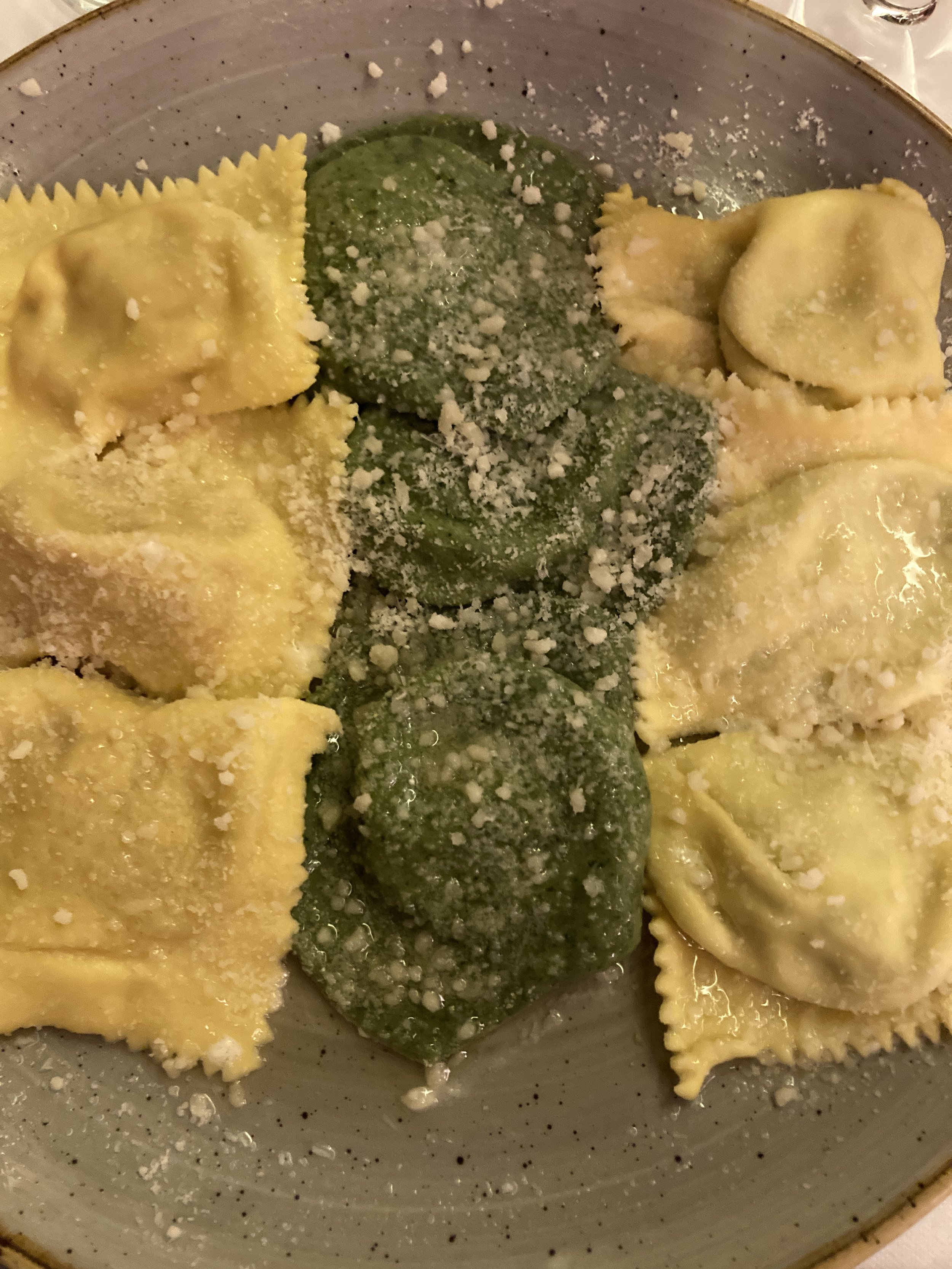
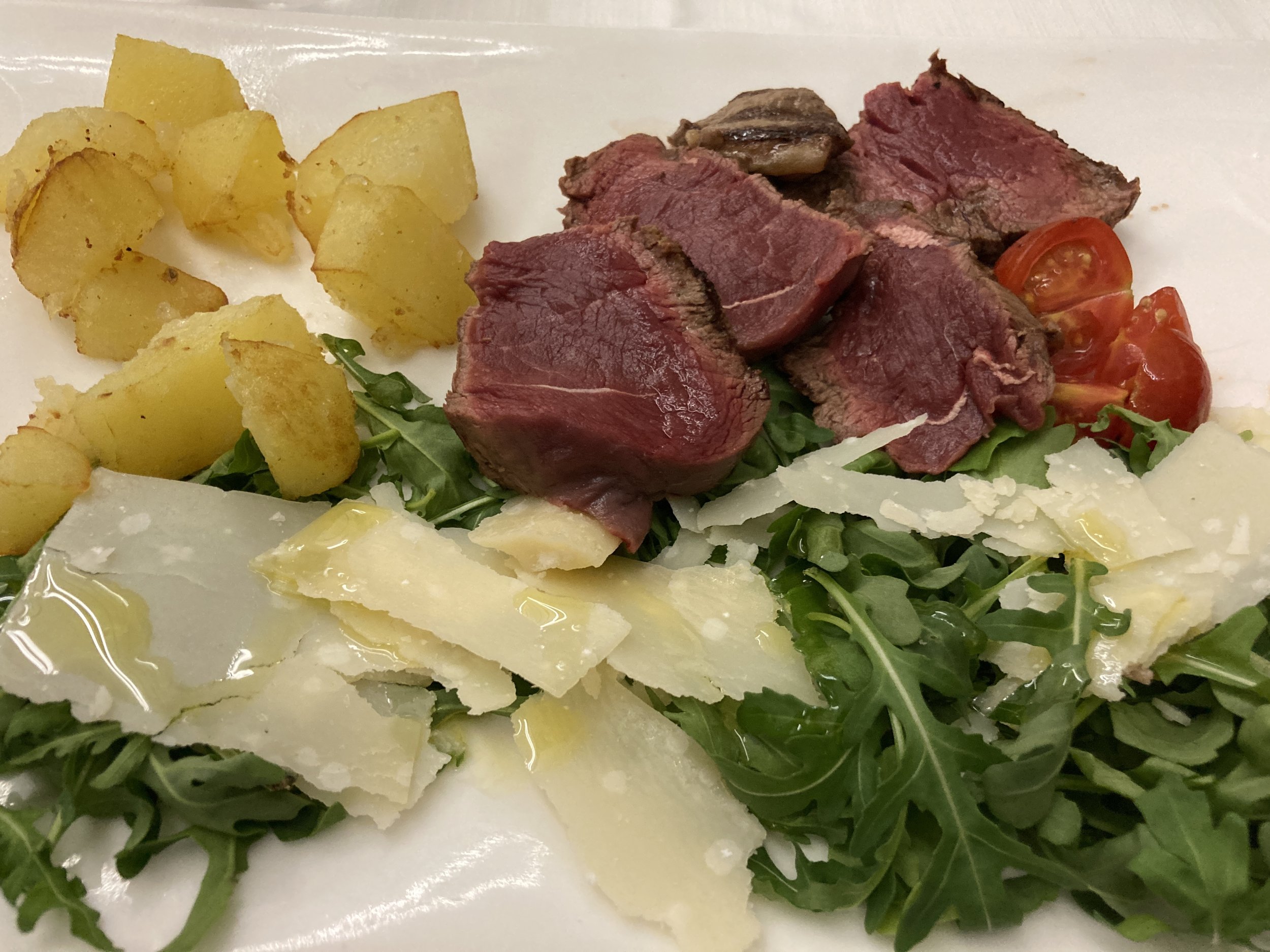
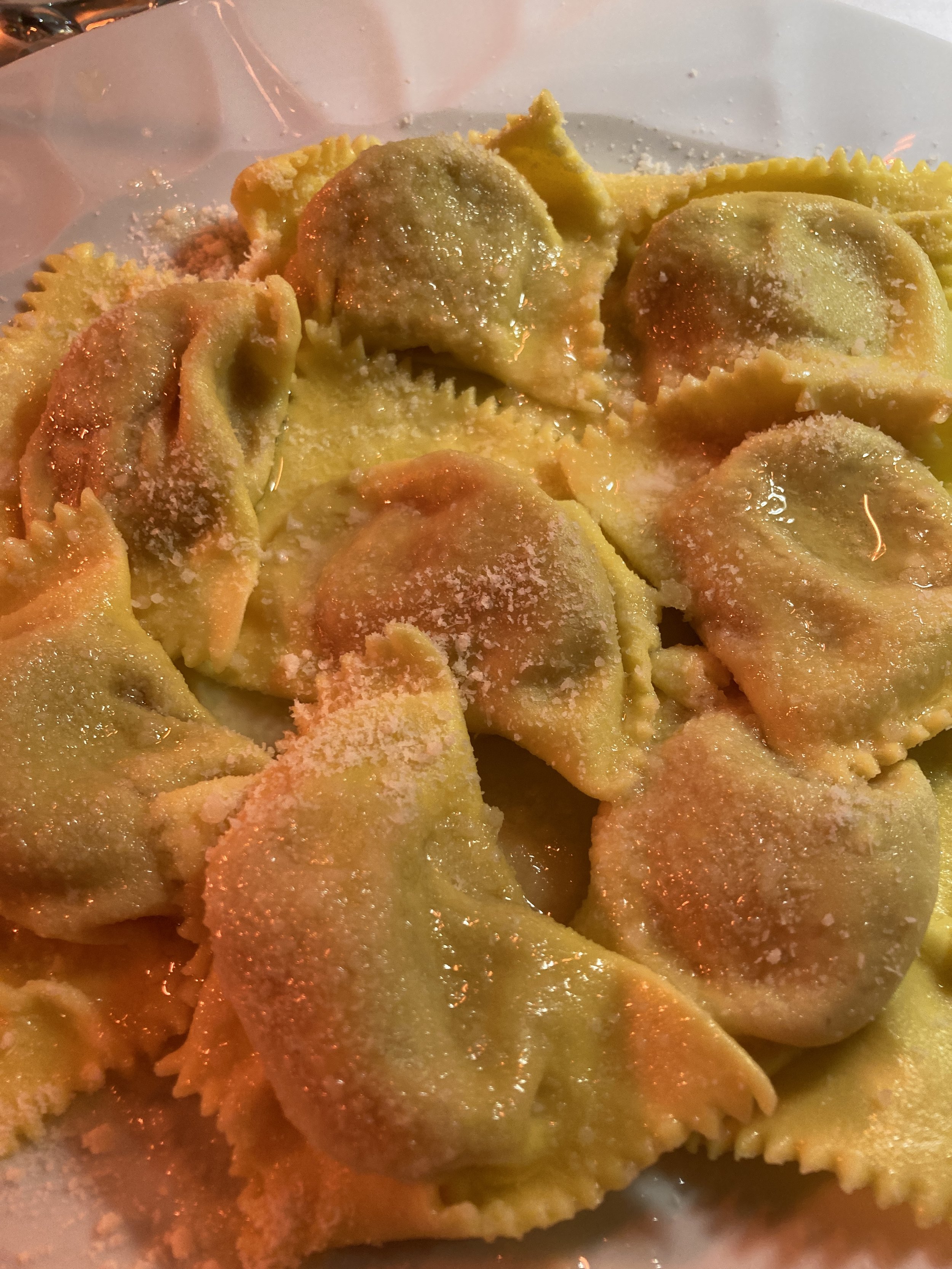
 The parmigiano tastings came at several dinners with a variety of filled pastas topped with generous sprinkles of cheese and one lovely salad of arugula with steak topped with big shavings of parmigiano.  Each was a perfect compliment to the dish it topped.  

0FCDBC16-3E1D-42B9-AEF5-B8ED1CA2B6A5.jpeg
E2613727-23E4-4EA9-9F78-F6998A69712D_1_201_a.jpeg
43B6B807-3550-43ED-BE3F-82B206E250DA.jpeg

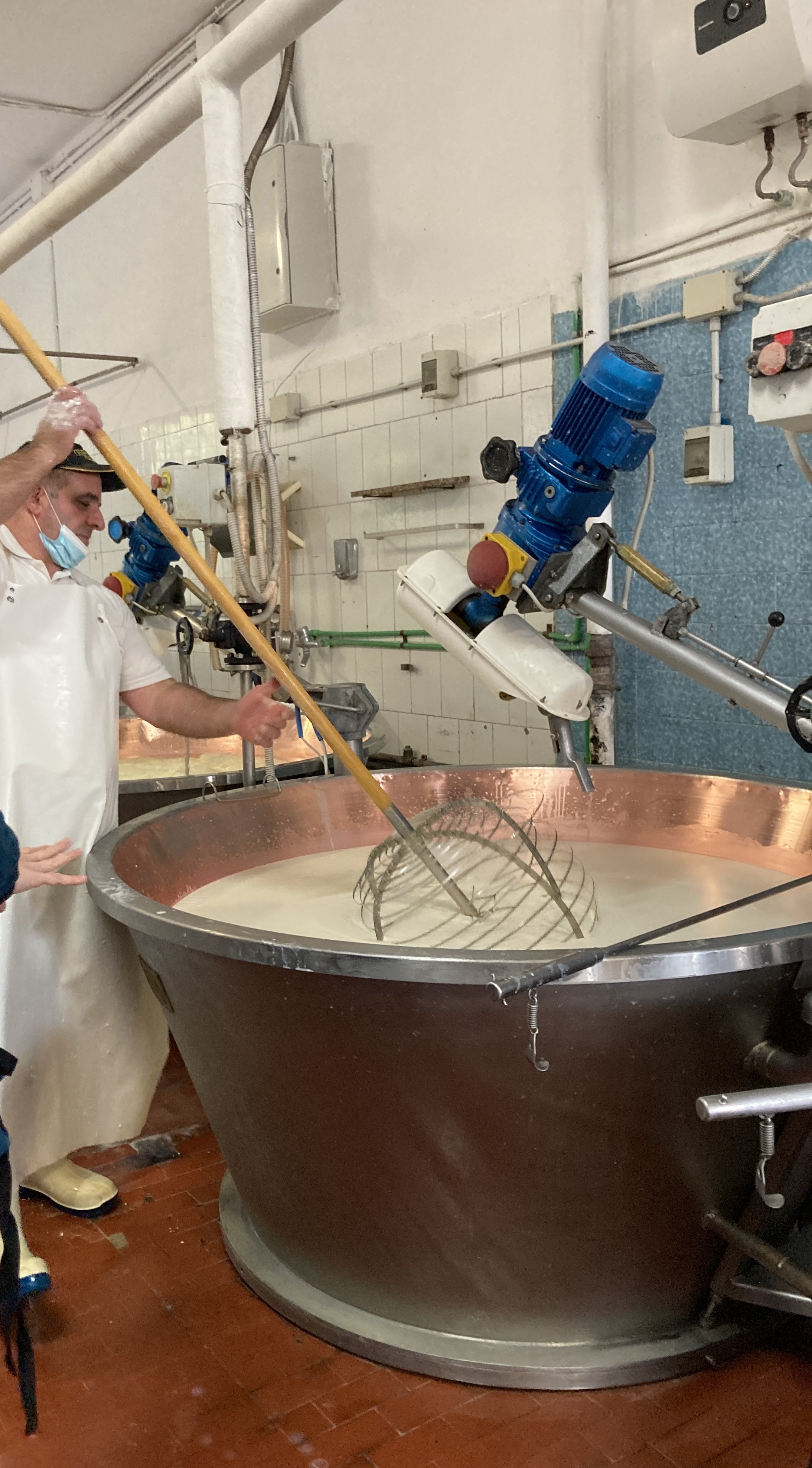
The cheese maker uses a spino to stir the granules that will eventually become parmesan cheese.

 Next up, a food tour arranged by Get Your Guide.  This was supposed to be a group tour, but ended up just being myself and my traveling companion (the benefit of off-season travel).   Our driver collected us near our hotel and off we went.  First stop, the Caseificio Ugolotti, a family run dairy that has been producing parmigiano cheese using traditional methods since 1930.  There we observed (and smelled) all the steps in the production of Parmigiano Reggiano cheese.  The process begins by combining skim milk collected from local, carefully fed cows the previous evening with the morning’s collection of whole milk.  1000 liters of milk is needed to produce just two wheels of cheese!
Rennet is added to begin the process of curd formation.  This takes place in deep copper-lined vats.  As granules begin to form, the expert cheese maker, clad in heavy boots and a rubber apron, breaks the granules up with a long whisk-like tool called a spino.  We watched as the cheese masters moved from one vat to the next, wielding their spini in a slow motion ritual which has barely changed over the years.

Next, the milk is heated (temperature is key) and the granules slowly sink to the bottom of the vat, forming a mass.  It surprised me to see the cheesemakers repeatedly dipping their fingers into the vats, but the guide explained that their trained hands could tell by feel when the granules were heated just enough and starting to form a loose mass which looks a lot like cottage cheese.

This loose mass is the next step in the formation of parmesan cheese

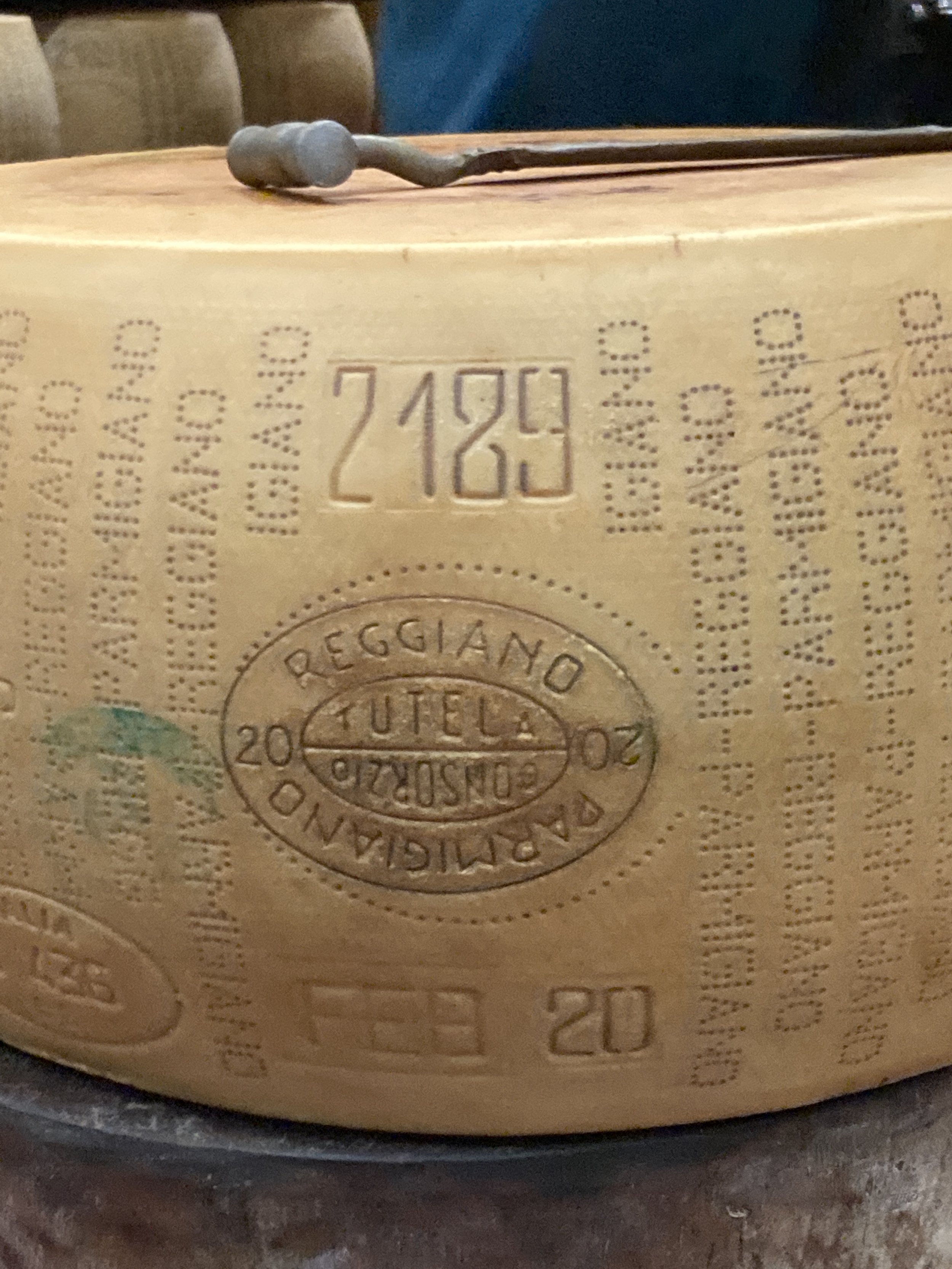
The mass (which becomes quite large and heavy) is then lifted from the vat in a canvas sling (look for a video of this on the Two Parts Italy Facebook page). Each mass is cut in half and each half placed in a round mold. The mold creates the classic shape of a wheel of parmesan and presses markings into each wheel. The markings include a code which gives information about the date of production and the dairy.  The leftover liquid (whey) is drained and used for animal feed (including for those special pigs which will become prosciutto).

This is how a wheel of Parmigiano Reggiano is born!

After a few day’s rest in the molds, the rounds of cheese are transferred to another room and placed into a salt water bath. There they are turned twice daily while they slowly absorb some of the sea salt.  This is how the cheese gets its salty flavor. Milk, rennet, and sea salt are the only ingredients used in the production of Parmigiano Reggiano cheese. Plus a little sprinkle of magic I think!

Resting in the saltwater bath. Turning them frequently moves the exposed upper part of the wheel into the salt water bath.

Next, the cheese must age for at least 12 months in a temperature controlled room.  To prevent mold from forming during this time the wheels of cheese are washed and brushed periodically.  Historically done by hand, today there are machines for this process.  

The aging room at Caseficio Ugolotti. The empty oval space on the wheel of cheese shows that it has not yet been inspected.


After aging, the cheese is inspected by an official inspector who uses a hammer to tap the wheels of cheese.  Based on the sound, the inspector grades the cheese and certifies the quality.  If a wheel of cheese fails inspection it cannot be sold for human consumption. The mark within the oval shows that the wheel has been approved by the inspector.

I have often wondered about the high price for a really good wedge of Parmigiano Reggiano. Seeing this labor intensive process gave me a new appreciation for the cost.  It now seems like a bargain to me!    

At the end of the tour we entered the tasting room. There, we sampled cheeses of different ages (12, 18, and 24 months). Each had a different texture, color and flavor, developed during aging. The chunks of cheese were served with a bit of balsamic vinegar, some bread, and a glass of white wine.  

A sample platter at Caseficio Ugolotti. The cheeses are Parmigiano Reggiano of 12, 18, and 24 months. A bit of balsamic vinegar drizzled over each piece compliments the flavor.

Caseficio Ugolotti was just the first stop on our food tour. It was fun, informative, and very tasty.  Still to come were stops at an artisanal producer of balsamic vinegar and a producer of Prosciutto di Parma. More on those stops in the next post.


January 31, 2022 /Joanne Bartram
Parma, Parmigiano Reggiano, cheese making in Italy, Parma Ham, Prosciutto di Parma
#italytravel, food, Italy travel, Parma, #cheese making italy, Food tours Italy

No-Fuss Holiday Entertaining

December 27, 2021 by Joanne Bartram in Cooking, entertaining, food, Living in Italy

This is a busy time of year! The days between Thanksgiving and the New Year are filled with activities -shopping, decorating, holiday baking, and dinners just for starters. For me, these weeks have also included a couple of out-of-town visitors, two quick trips out of town, and the birthdays of four friends. It has been a happy whirlwind as every week seemed to include a gathering or a short trip.

With all this activity, entertaining can either be a joy or it can cause stress. And stress is no fun! To keep the holidays fun and avoid entertaining burn-out, opting for a no-fuss approach is the way to go. No-fuss means that most of what is served can be purchased or prepared in advance with a minimum of actual cooking. That way, the effort goes into choosing a good mix of items with a variety of tastes and textures, presenting them in a visually appealing way, pouring something festive to drink and then relaxing with the guests. This is just the approach I used for the small gathering that I recently hosted. My no-fuss choice was to create a festive cheese board for an aperitivo celebration. No cooking required!

Here are some ideas for putting together a tasty cheese board.

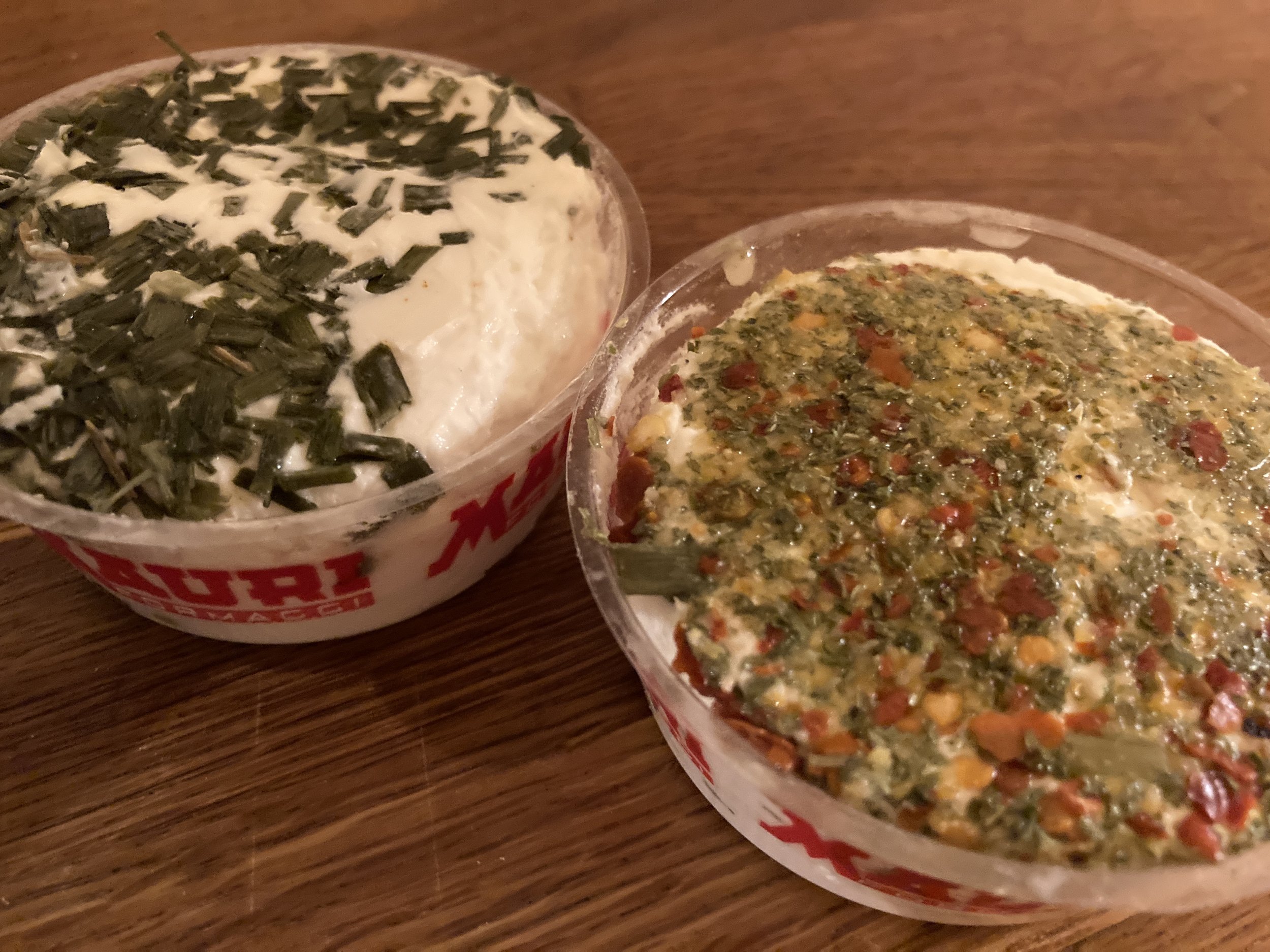
Herbed goat cheese - tangy, creamy, spicy and store bought

First, choose a variety of cheeses, even better if they are local specialties. For a light cocktail hour, an ideal combination is one soft cheese and one that is medium or hard. For a more substantial appetizer add a third cheese. Since my gathering was a pre-dinner aperitivo, I kept things light with just two cheeses.

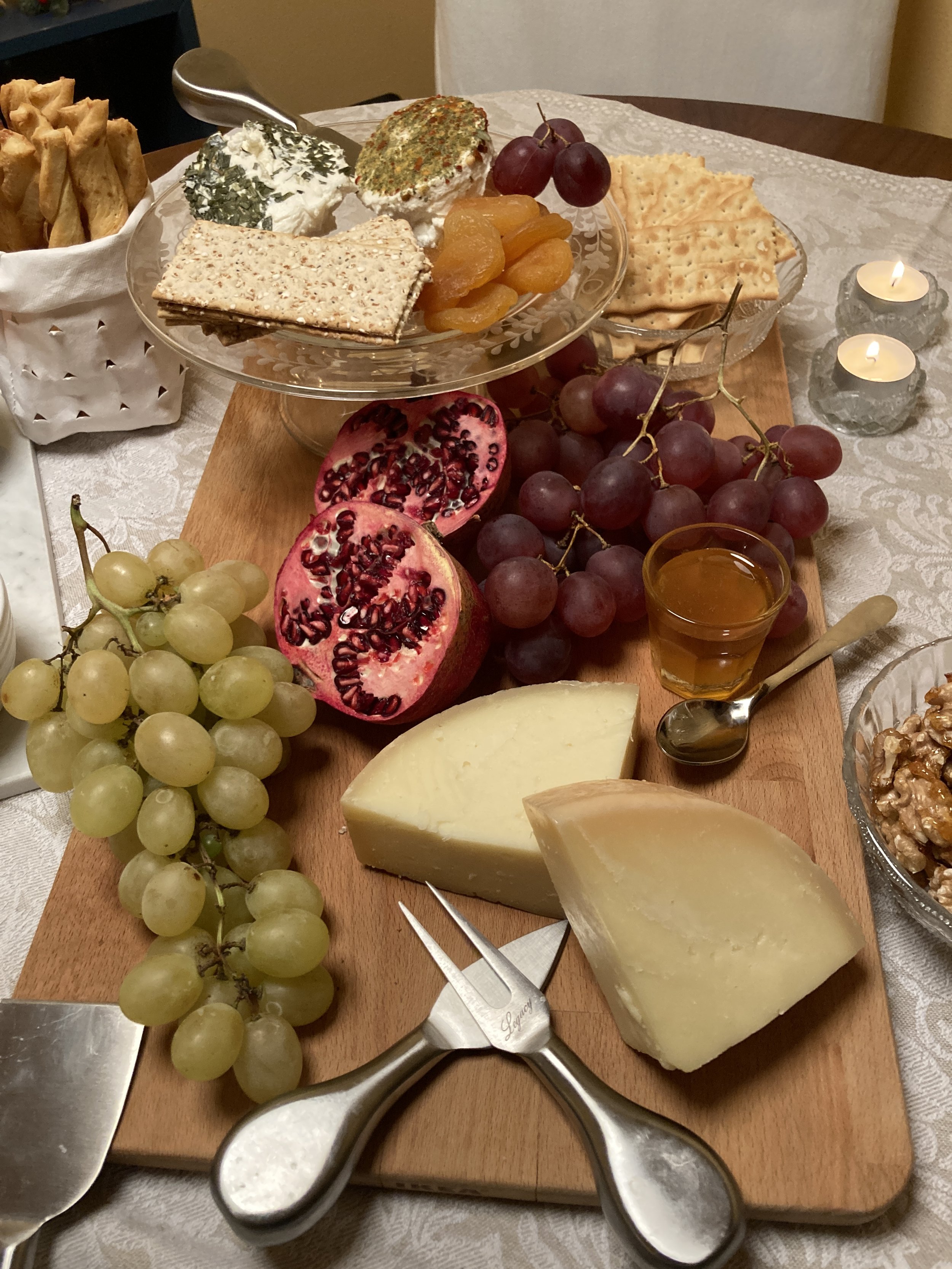
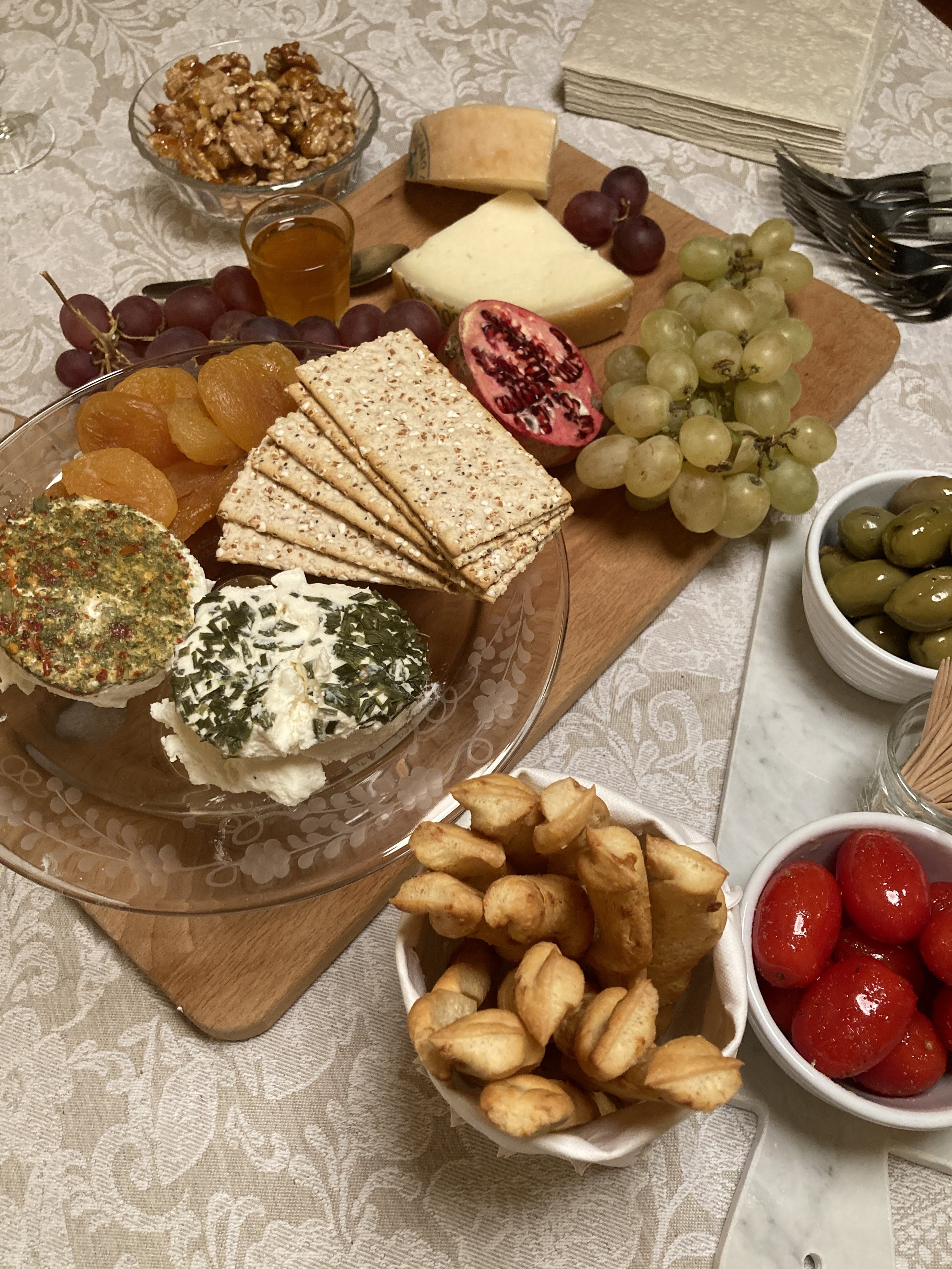
I purchased rounds of a creamy herb-crusted goat cheese (2 varieties, chive and red pepper) at the local grocery. They paired well with a wedge of good quality pecorino fresca from one of Lucca’s specialty cheese shops. A bit of jam or honey alongside the pecorino added a bit of flavor complexity.

The twisted shape gives these bread sticks an added visual boost

Next, some type of bread to go with the cheese. Using a variety of shapes, sizes, and forms makes the presentation more interesting.

Crackers are easier than fresh bread as there is no last minute slicing and the crispness holds up well with just about any cheese. For my board I purchased some pretty bread stick twists and two types of crackers.

These marinated green olives are salty and a bit briny, they complement the cheeses nicely.

Now, add in some salty and stronger flavors. Good olives are perfect. Marinated small tomatoes or cornichons work well too. For a more hearty appetizer tray, some flavorful meats are a good addition. Prosciutto or salami would be typical Italian choices.

Next comes fruit. Grapes always go well with cheese. Added bonus - they look great on the platter! Apples or pears would have been another good choice (but grapes don’t require any slicing and can be put out well ahead of time, making them the perfect no-fuss choice). Dried fruit adds additional flavor, color, and texture. Dried apricots worked especially well with the pecorino.

Last, some sweet flavors. In this case I used candied walnuts, the only thing that actually required me to cook (if melting sugar and tossing in the nuts really counts as cooking). The combination of sweet and crunchy was a good contrast to the salty olives and creamy cheese. A small cup of honey to drizzle over the pecorino added another layer of sweet flavor.

Something bubbly to toast with comes next. Prosecco is ideal for an aperitivo and is the perfect choice for any celebration.

Start with a simple cutting board or platter, add a pedestal dish for height, and begin layering foods until you are happy with the presentation.

Once all the foods are chosen, the next consideration is presentation. This is the fun and creative part; a chance to tap into your inner Martha Stewart!

Cutting boards, platters, and trays can all serve as a base for a cheese board. I don’t have a fancy cheese board, but my IKEA wooden cutting board worked just fine as a base for the grapes and cheeses. For some height variation, a small pedestal plate on, or alongside, the cutting board adds a bit of “oomph” to the presentation. Tall breadsticks standing upright in a glass do the same.

Color and texture are also important. Two colors of grapes, one green and one red, colorful herbs topping the goat cheese, and a combination of creamy and firm cheeses is a good start. A halved pomegranate provided color variation, contrasting texture, and served as a space filler on the cheese board. Plus it was a sparkly seasonal fruit. Additional color and texture came from the dried apricots.

Pomegranates are “jewels” that add sparkle to a cheese board

A variety of plates, bowls, and boards can be positioned alongside the main board to expand the spread. No need for everything to match! And no special tableware is needed, just mix and match whatever you have available (though having some good cheese knives is a big help; I borrowed some from a friend). And a pretty table cloth always helps to set the stage.

Ready to serve !

With everything in place I was able to enjoy my guests with no worry about keeping things warm or fussing over serving. All I had to do was pour the Prosecco (and truth be told, a friend volunteered for that job!).

There you have my strategies for no-fuss holiday entertaining. What tricks do you use for stress-free parties at this time of year?

With New Year’s Eve right around the corner, another no-fuss cheese board just may be in my future.

Happy New Year! Buon Anno !


December 27, 2021 /Joanne Bartram
cheese boards, holiday entertaining, aperitivo
Cooking, entertaining, food, Living in Italy

A formal table setting is perfect for an afternoon tea.

Cook Once and Entertain Twice: An Afternoon Tea and Evening Aperitivo

November 22, 2021 by Joanne Bartram in Cooking, food, entertaining

I’ve always adhered to the “cook once, eat twice” school of meal prep. This was especially true in the days when I was working full time and doing most of the cooking for my family. Even now, when I am usually cooking for just one in my tiny Italian kitchen, I love making extra and having leftovers. Soups, stews, extra salad ingredients all prepped - these things make life much easier.

One lump or two ? The quintessential tea question.

But I’ve never really applied that approach to entertaining. It was just a bit of serendipity that recently saw me doing some culinary recycling, stretching the preparations over two separate events.
I had carefully planned the first event - an afternoon tea for a a group of friends, one of whom is soon to depart Lucca for her home across the sea.

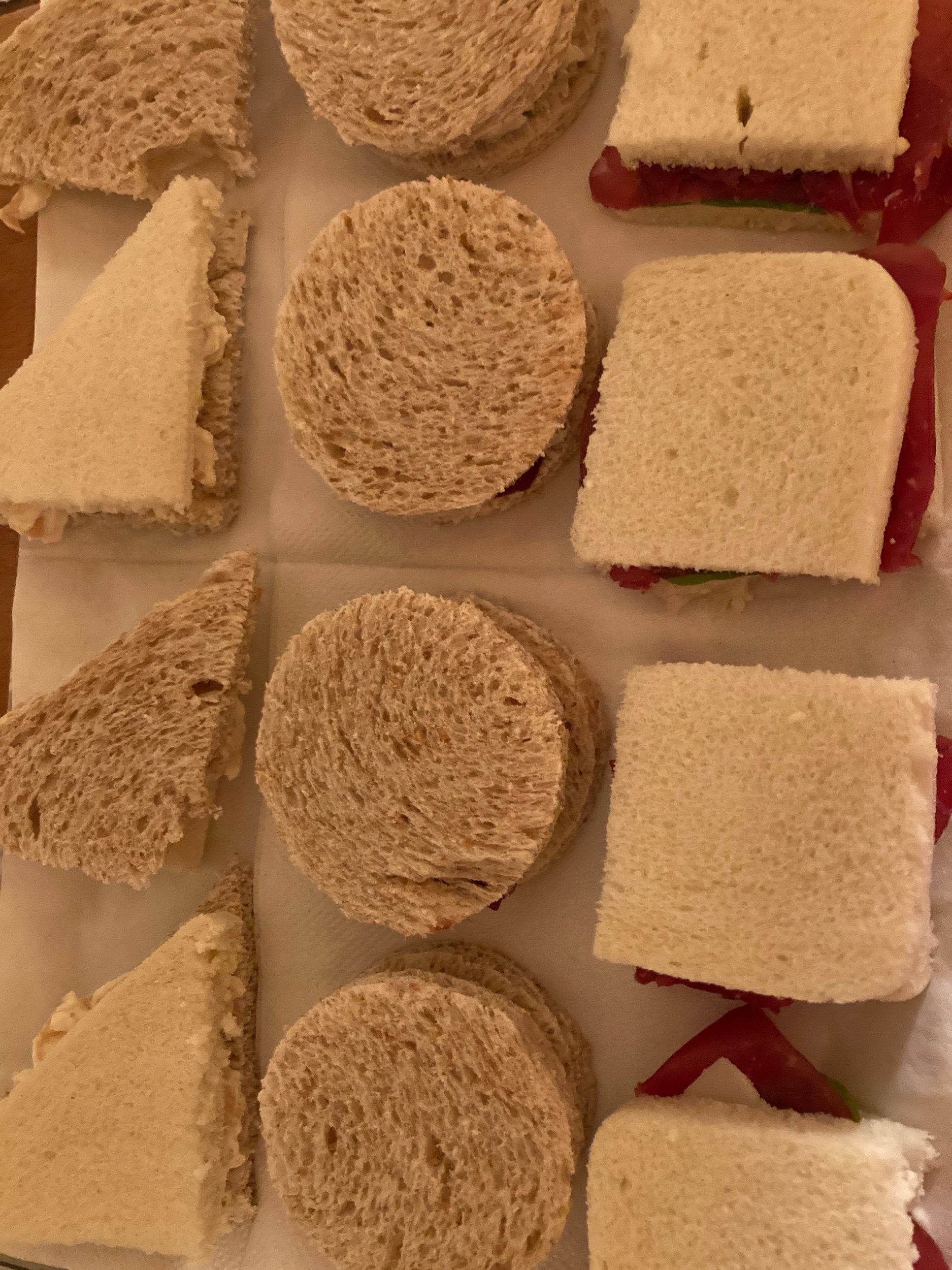
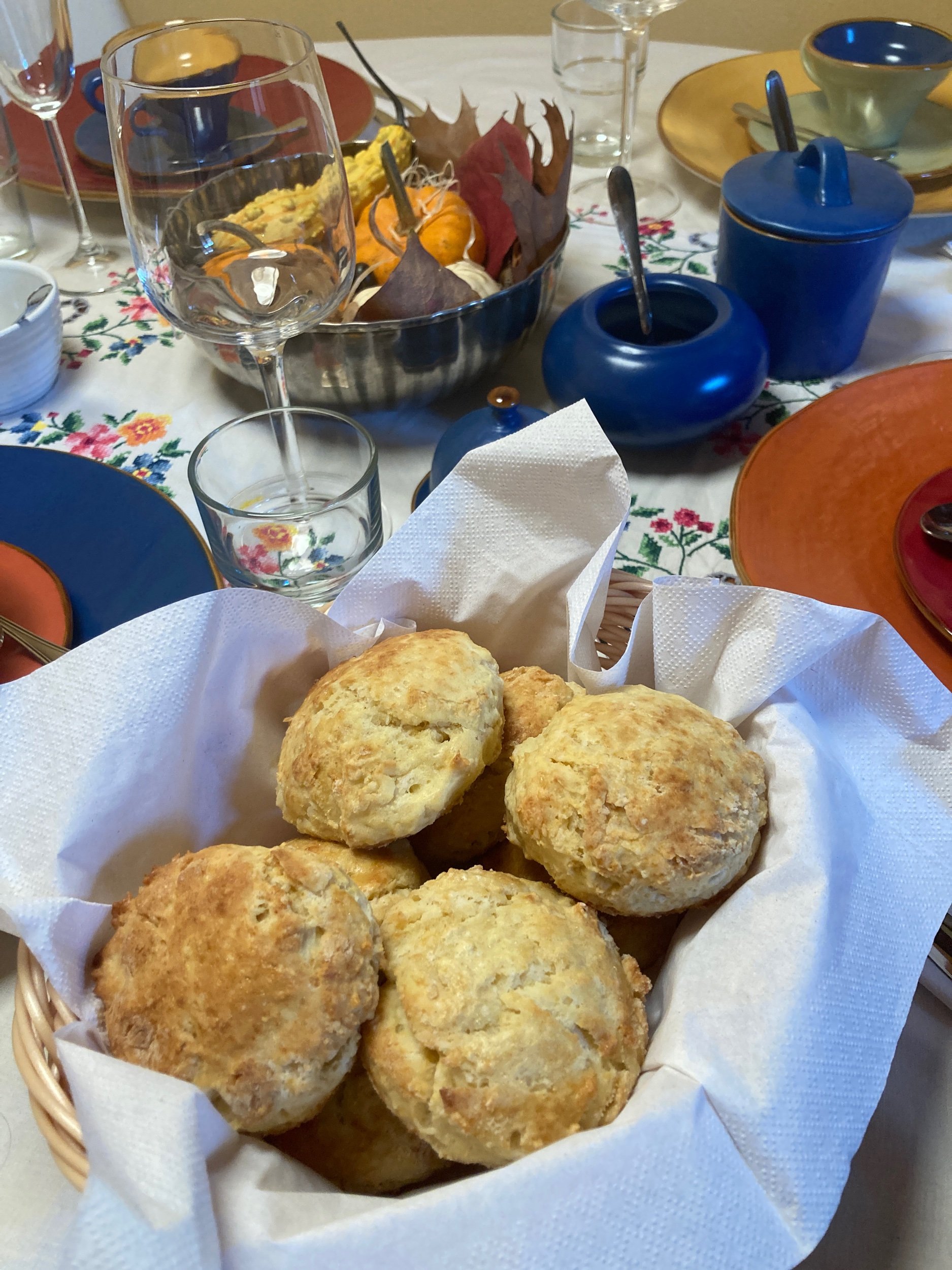
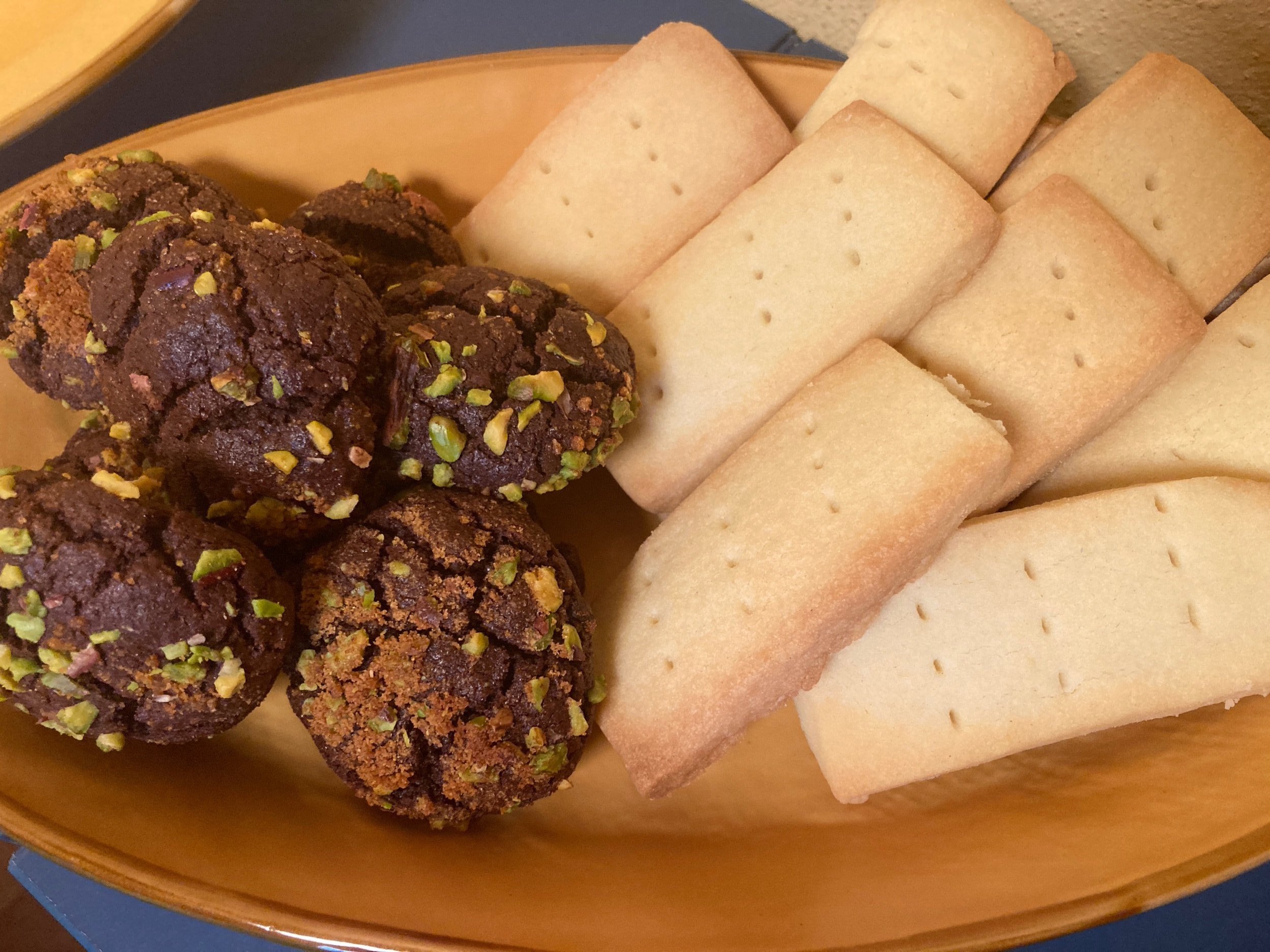
The tea was a fairly formal affair with dainty tea sandwiches, scones with lemon curd, and the Queen’s own shortbread (or so the recipe claimed) along with chocolate cookies rolled in pistachio bits.

It was served in proper courses - first savories, then scones, and finally sweets. Very ladylike!

IMG_0581.jpeg
IMG_0569.jpeg
IMG_0571.jpg

With plenty of leftovers, I turned around the next day and hosted an impromptu rainy evening aperitivo. One key - there was no overlap in the two groups that I hosted, so that no one was seeing the same dishes twice. I did fess up to the aperitivo group that I had served some of the same things, though in slightly different form, the day before. They did not seem to mind at all! Of course a formal tea with scones and the like is not appropriate fare for an evening aperitivo, so I had to change things up a bit.

A buffet rather than a formal table setting worked best for the aperitivo. But the fall centerpiece and even the tablecloth worked for both.

For the aperitivo I did make one platter of small sandwich rounds filled with a gorgonzola pecan spread and some cherry jam (exactly the same as I’d served for tea the day prior). But I changed the other sandwich offering - the one with a salmon cream cheese filling. For the aperitivo, I served the salmon filling as a spread for crackers rather than in the little triangular sandwiches I had made for the tea.

What was a salmon sandwich filling for tea became this spread with crackers for the aperitivo

I added a bowl of potato chips and a couple of bottles of wine and - voila! - an Italian aperitivo. We ended up talking for hours, solving many of the world’s problems, which gave me a perfect excuse to set out the leftover cookies.

Doing the two events back to back was fun and used my leftover ingredients to great advantage. And it really cut prep time! With slight modification, the table setting morphed from formal tea to informal aperitivo. Even the fall centerpiece of leaves (collected on Lucca’s walls) and local gourds and pumpkins made the transition nicely. Plus, I was able to see two different sets of friends and enjoy two very different events. That was the best part.
Cook once and entertain twice or, in Italian, cucina una volta e intrattieni due volte, just may be my new motto.

Fall days in Lucca are perfect for entertaining.

November 22, 2021 /Joanne Bartram
afternoon tea, high tea, aperitivo, entertaining
Cooking, food, entertaining
A variety of quiches at the aptly named La Quiche in Albuquerque, NM

A variety of quiches at the aptly named La Quiche in Albuquerque, NM

Brushing Up on French and Greek

July 19, 2021 by Joanne Bartram in food, New Mexico, Albuquerque

I’m spending some time in the United States right now, enjoying family time and avoiding the heat and humidity of the Italian Summer. While I miss Italy, I’m using this time away to brush up on my French and Greek. Not the languages - I’ve trouble enough trying to improve my Italian - I’m brushing up on French and Greek dining. Fair warning - these pictures may make you hungry!

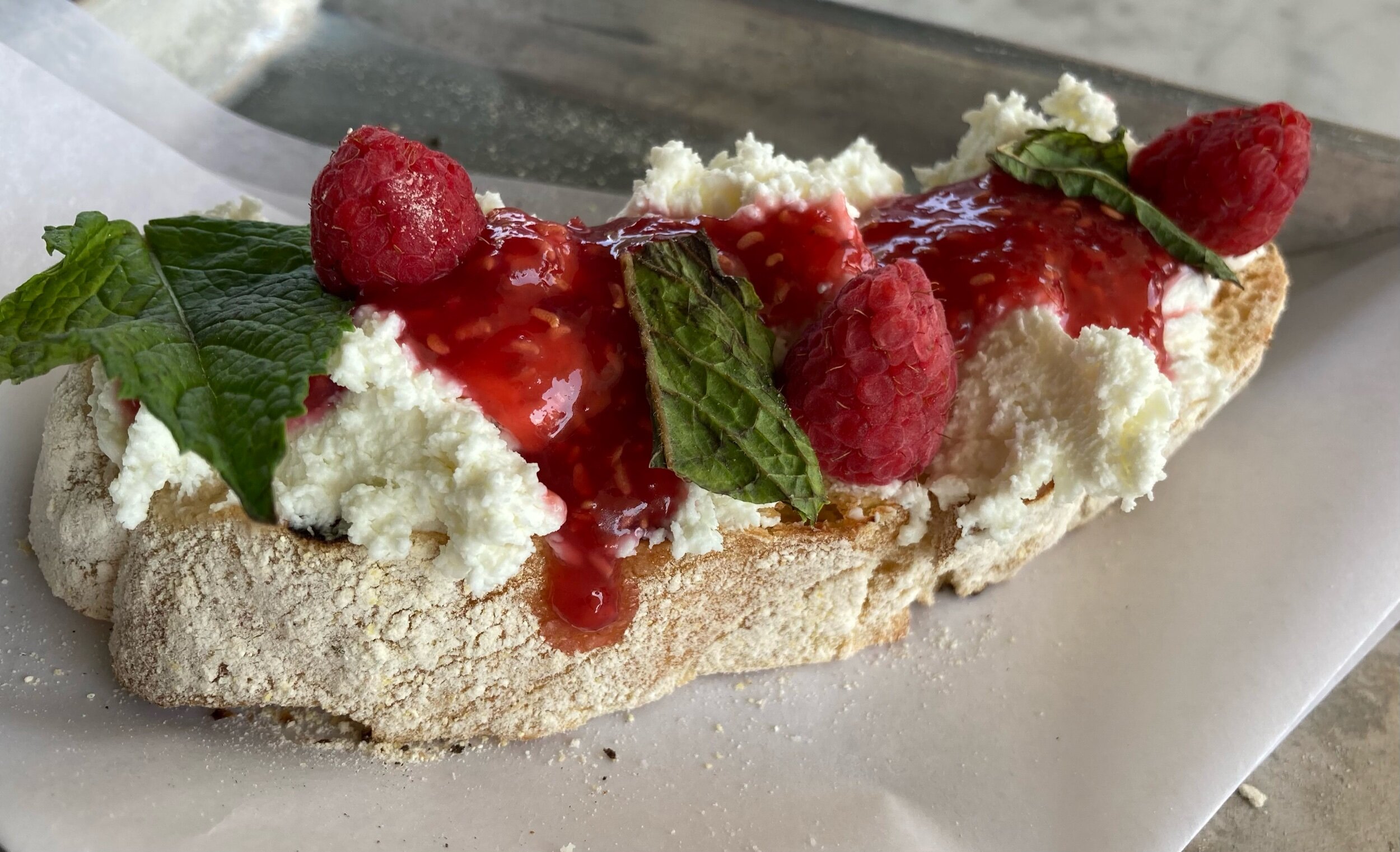
Toast with goat cheese, raspberries, and a chile infused jam at Meraki, a Greek cafe in Albuquerque, NM

Toast with goat cheese, raspberries, and a chile infused jam at Meraki, a Greek cafe in Albuquerque, NM

I rarely eat Italian food when I’m in New Mexico (it just doesn’t measure up to the real thing), but I do find myself missing the variety of flavors and the ambiance of European cafes. Lucky for me just a short distance from my New Mexico condo are two cafes, one French and one Greek. These go a long way to satisfying my hunger for a bit of European flavor in New Mexico. And since the kitchen in my New Mexico condo is currently undergoing renovation, I’ve had the perfect (all too perfect perhaps) excuse to eat out.

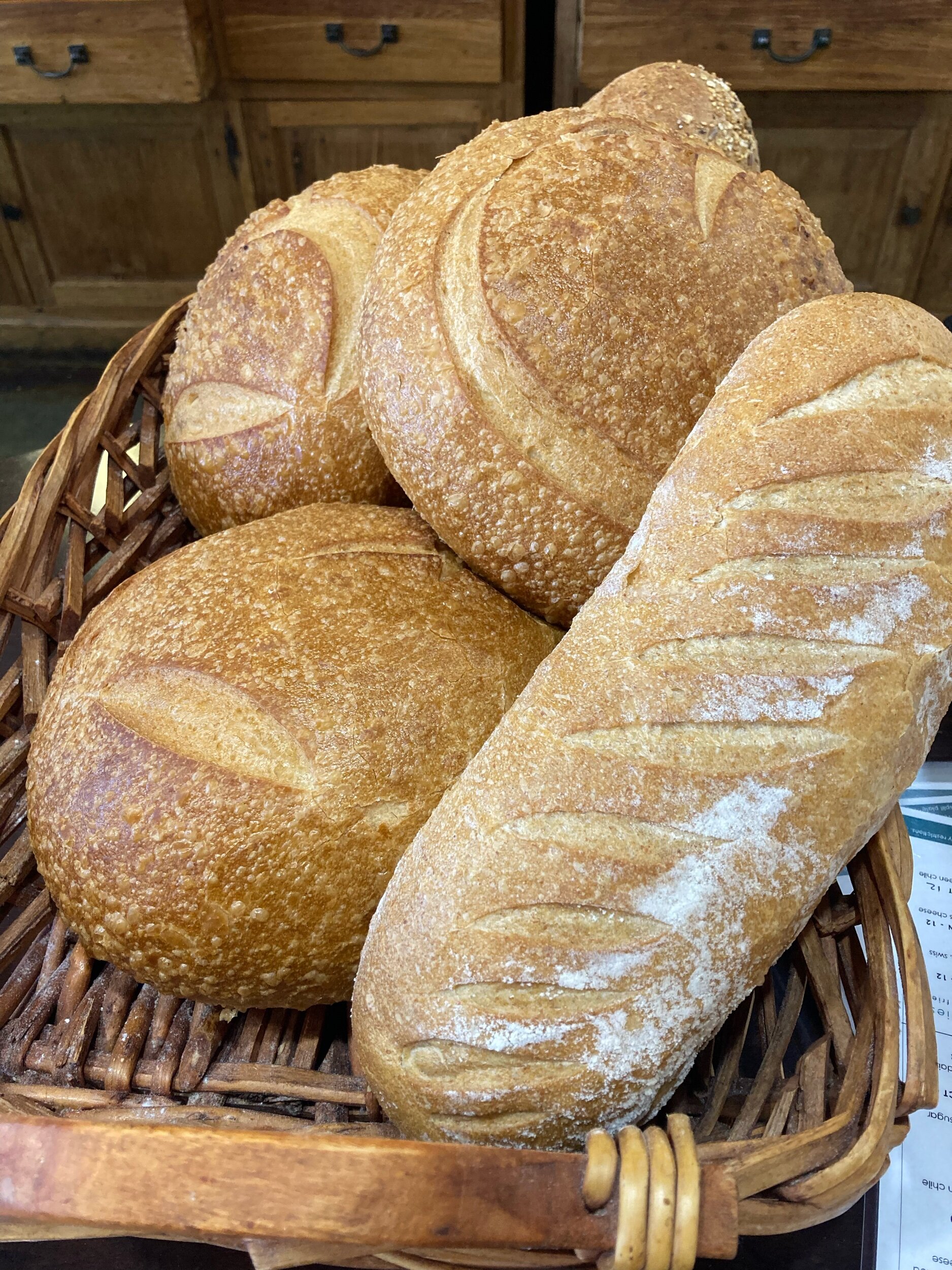
For a taste of France I visit La Quiche, which serves up beautiful French food, breads, and pastries.

IMG_0204.jpeg
IMG_0206.jpeg

The murals in the dining room transport me to Paris, as do the French accents of the staff. A good cafe au lait and a croissant, or a delicate fruit and cream filled pastry, make for the perfect occasional breakfast treat. If I close my eyes the quiches, omelets, and French-inspired salads carry me straight to Provence.

Meraki, a Greek cafe and market, offers another taste of Europe, both Greece and Italy. The word Meraki has no exact English translation, but in Greek it conveys work that reflects great love and care. That concept is certainly reflected in the quality of their food (fresh, seasonal, and carefully sourced) and in the warm, friendly service. This is a small cafe with a big heart. It may sit in a busy shopping center, but the clean white decor and the interesting flavors provide a hint of blue seas and Greek islands.

My friend Alexa enjoying lunch at Meraki.  Just look at all those fresh and colorful ingredients.

My friend Alexa enjoying lunch at Meraki. Just look at all those fresh and colorful ingredients.

This is one of my go-to places for really good coffee. Don’t ask for an artificial sweetener here - or even sugar. The coffees are sweetened with a house made simple syrup. Simply wonderful. For a real treat, pair the coffee with a traditional Greek sweet - Loukoumades. These are Greek style donut holes, drizzled with honey and topped with crushed walnuts and powdered sugar. It’s best to bring a friend or two as this order is big enough to share!

Loukoumades

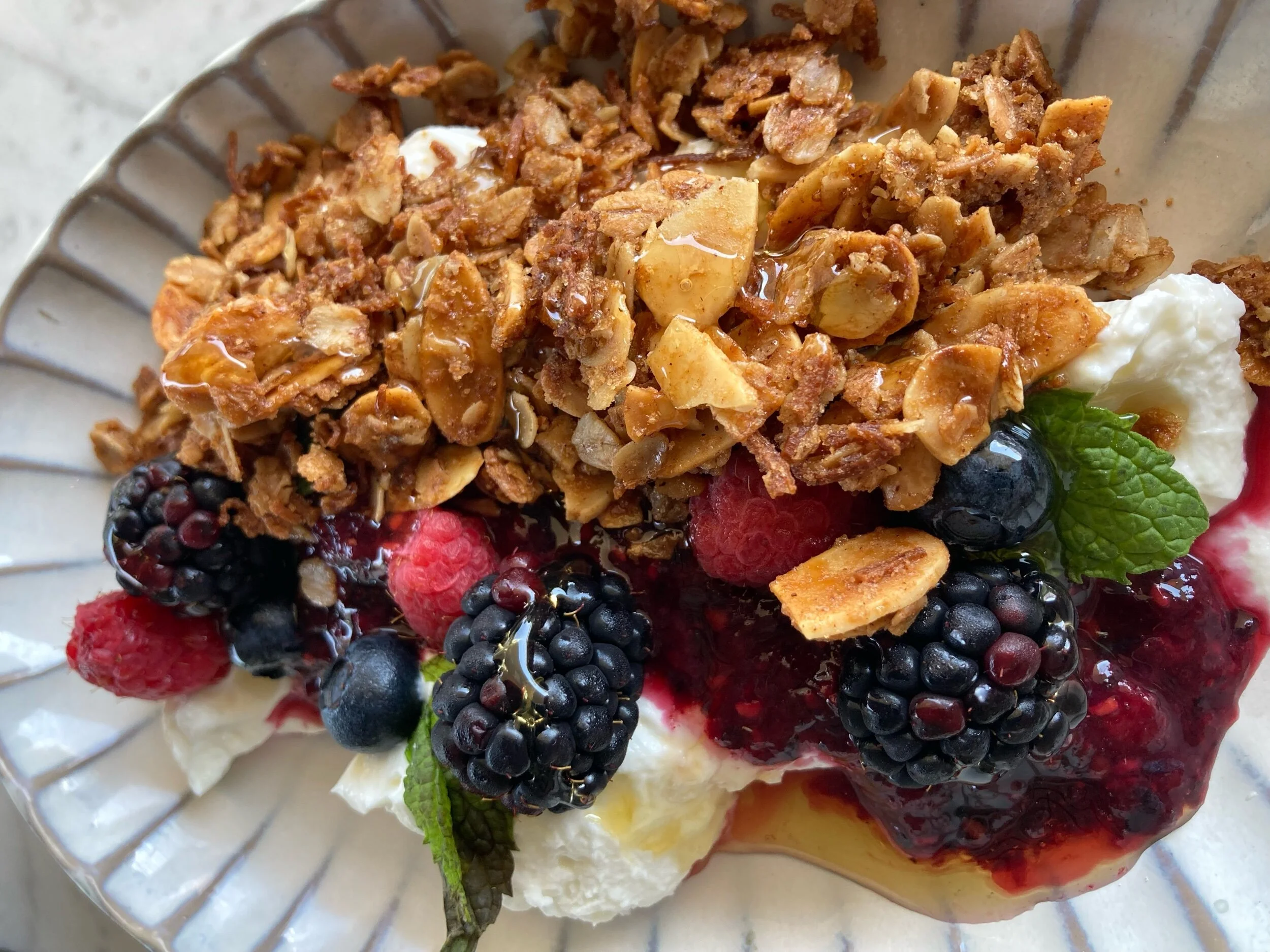
For a recent breakfast I had the homemade Greek yogurt topped with berries, honey, mint, and a really good house made granola. The yogurt was the best I have ever had - creamy without any sharpness. My friend had an equally delightful toast topped with soft goat cheese, raspberries, and a spicy ancho chile jam - a bit of Greek and New Mexico fusion. How does one say “yum” in Greek ?

Almost too pretty to eat - greek yogurt with berries, granola, and honey.

Almost too pretty to eat - greek yogurt with berries, granola, and honey.

The sandwiches at Meraki cross over into Italy with ingredients like ciabatta bread, prosciutto, and provolone cheese. In the afternoons and evenings they serve cocktails, wine, bruschetta, and meat/cheese boards along with salads, mussels, and burgers. An evening return is definitely on my list of things to do before I return to Italy next month. After all, I’m still working on my Greek and French!

July 19, 2021 /Joanne Bartram
Restaurants Albuquerque, Greek food New Mexico, French food New Mexico
food, New Mexico, Albuquerque
  • Newer
  • Older

Powered by Squarespace