Two Parts Italy

Exploring Italy, travel, and living a flavorful life

  • Blog
  • About This Blog
  • Start Here
  • Recent Posts
  • Archives by Topic
  • Subscribe
  • Contact me
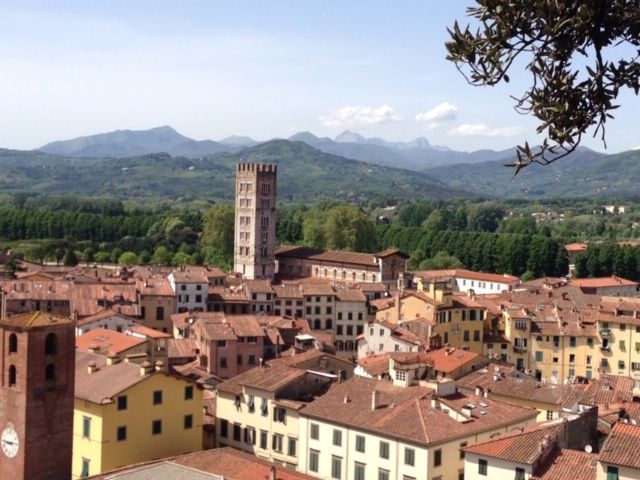
The rooftops of Lucca, and the hills beyond, as seen from atop the Torre Guinigi. I can hardly believe I will be living here!

The rooftops of Lucca, and the hills beyond, as seen from atop the Torre Guinigi. I can hardly believe I will be living here!

A Home in Lucca

December 03, 2018 by Joanne Bartram in Italy, Living in Italy

Back in September I returned to Italy with a big question on my mind. Did I want to move to Lucca, making it my home for the foreseeable future, or did I want to continue to maintain a home base in the U.S., and remain a part-time visitor to Lucca? Not an easy decision - there are trade-offs and compromises either way (but then that’s life, right?). 

I heard from several readers after that post. Some offered encouragement and others asked me to please share my final decision, as well as some of the details involved in searching for an apartment and obtaining residency. I get the feeling that many of us “of a certain age” are day dreaming about making this type of life change. 
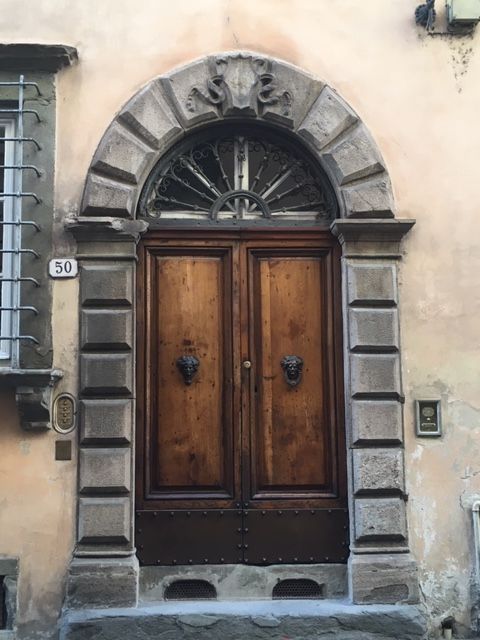
The front door to my new apartment in Lucca

The front door to my new apartment in Lucca

Key to my decision was finding a reasonably priced and suitable apartment. Luckily, I have worked over several years with Debora del Sonno of Lucca Holiday Homes and she very patiently searched available apartments and showed me a number of options. 

A terrace was high on my priority list and this small one is perfect! (photo from Lucca Holiday Homes website)

A terrace was high on my priority list and this small one is perfect! (photo from Lucca Holiday Homes website)

The entry has 38 steps - good exercise! (photo from Lucca Holiday Homes website)

The entry has 38 steps - good exercise! (photo from Lucca Holiday Homes website)

Just as when looking for a home in the USA, it is important to remember to set priorities but also to stay flexible and be prepared to compromise. That was particularly important for me to remember when the owners of my first-choice apartment decided they didn’t want a long-term tenant after all and so my search had to begin anew. The apartment I eventually chose met my big priorities – central location, a terrace, nicely furnished.  The compromise was the number of steps up to the apartment (38). I also increased my budget a bit to afford a two-bedroom, two-bath apartment with loads of Italian charm. 

I did find an option for a much smaller and less expensive apartment, but it had no outdoor space or views. To make a final decision I had to balance budget, amenities, and space. The apartment I chose has slanted old wood ceilings, a view of the Torre Guinigi from the terrace, and one of the clock tower and Campanile of San Michele from the bedroom - those views were pretty seductive and definitely influenced my choice.
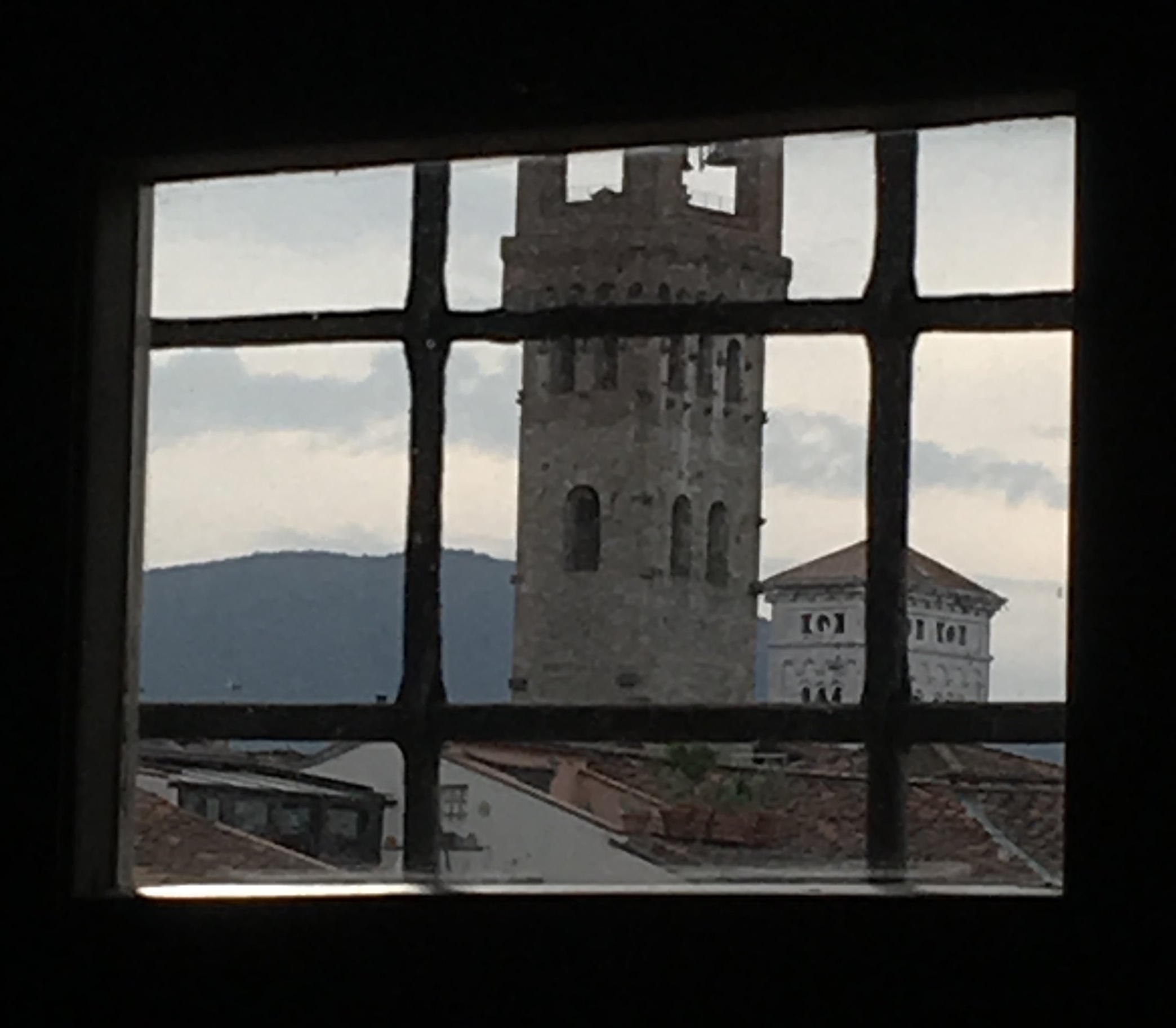
The clock tower and the bell tower of the church of San Michele as seen through a small bedroom window

The clock tower and the bell tower of the church of San Michele as seen through a small bedroom window

I was able to live with the decision for several days before meeting with my new landlords to sign the contract. This was a good test of my confidence in the decision to make this move. It also gave me a chance to doublecheck my finances and make sure my budget was realistic. In the end, I signed on the dotted line without hesitation and started planning my move. There were a couple of complications, mostly related to the process of applying for citizenship on my return to Italy (rather than beforehand at an embassy in the U.S.) and whether I needed to first obtain an elective residency visa in the U.S. More on that process in a later post.

Brick and beam ceilings in the mansarda (attic) give the bedrooms a rustic Tuscan feel

Brick and beam ceilings in the mansarda (attic) give the bedrooms a rustic Tuscan feel

Based on my experience, here are a few things to consider when thinking about a long-term rental:

1. I was glad that I had a good agent. Debora provided me with information about the process of long-term rentals, answered my many questions, and also provided a copy of the contract (in Italian and English) well ahead of signing. She promptly registered the contract and provided copies of the signed lease and the registration. Having her help took much of the stress out of the process. It was well worth the agency fee to have her assistance and advice.

2. A common form of rental contract in Italy is the “4+4,” which means the lease is for four years, during which time you can keep the apartment on the initial terms. The four-year term protects the renter (no rent increases, you cannot be forced out of the apartment except for non-payment or not adhering to the terms of the lease) but the renter has the ability to cancel the contract with written notice (usually three months). At the end of the initial four years, the renter has the option for another four-year contract.

3. Budget for significant upfront costs, including an agency fee (of about one month’s rent) and the first two to three months’ (or even more) rent at the time the contract is signed. There is also a security deposit (mine was equal to two months’ rent, refundable at the end of the lease). These costs add up to about six months’ rent and I was glad I had set aside enough funds to cover them. On the plus side, in December when I move in I will have already paid rent for December, January, and February so won’t have another payment due for three months. Even better, I was able to put the upfront costs on a credit card which means I earned a lot of airline points!

4. Most landlords will want rent paid via bank transfer directly into their accounts. Not all U.S. banks will do online bank transfers (in fact, the bank I use in New Mexico would not, insisting that I had to physically come into the local branch to make an international bank transfer - not very practical). It took some time to investigate other banks and other methods of transferring money. TransferWise looks like a good option with low costs to transfer money internationally and good exchange rates from U.S. dollars to euros. I felt I also needed a back-up method, and so also arranged for an account at a bank that will do online transfers, though the cost is higher than TransferWise. The U.S. banks I found that do online transfers include Bank of America, Wells Fargo, and TIAA bank. 

5. Renters in Italy are responsible for utilities (gas, electric, water, trash, internet, TV) as well as everyday small repairs and upkeep (for example, routine boiler checks, a dripping faucet, etc) while the landlord remains responsible for major mechanical repairs. In my case, Debora provided me with the average utility costs for the past 18 months so I could budget appropriately. To keep utility costs reasonable, it’s important to realize that Italians do not heat and cool their homes to the same extent that Americans do. If you like your home at a constant 72 degrees, prepare to pay a lot in utility costs! (Note that the above information is based on my experience and applies to 4+4 rental contracts negotiated through an agency / real estate company.  When renting directly from a landlord or on a shorter term contract, terms and costs will vary.)

With the apartment contract signed, I headed back to New Mexico for one month to finish up some part-time work, make the needed arrangements for a move to Italy, and spend Thanksgiving with my family. But I will spend Christmas in my new apartment - and for the first time I can say that I have truly come home to Lucca.    - post by JMB


lucca walls.JPG
December 03, 2018 /Joanne Bartram
moving to Lucca, Lucca Italy, #move to Italy, moving to italy
Italy, Living in Italy
IMG_5675.JPG

A Rainy Sunday Morning in Florence

November 26, 2018 by Joanne Bartram in Florence, Tuscany

I arrived in Florence for two full days, my last days in Italy before flying back to the United States. I was hoping for a low-key visit, which can be a challenge in crowded and hectic Florence. I planned to wander the streets, explore the markets, hang out in the Oltrarno side of town, sip cappuccino outdoors, and soak up the atmosphere of Florence. I didn’t plan to do any of the large museums but thought I might stop by the Bargello, my favorite of all the museums in Florence.

As it turned out, the Bargello was closed both days and the weather turned wet and windy (the beginning of the terrible storms that ravaged Italy in late October/early November). Flexibility is a must when traveling - no whining about rain or unexpected closings allowed! With a little adjustment in plans, my rainy visit in Florence turned out to be most enjoyable, beginning with a memorable Sunday morning.

IMG_5464.JPG

After waking up to the sound of rain and church bells, I had a relaxed breakfast at my hotel (already a great day). Then, umbrella in hand, it was off to the Duomo (officially the Cattedrale di Santa Maria del Fiore). The most famous landmark in Florence, approaching it from any direction is unforgettable. How can such majesty sit just up a city street? It looms large over shops and cafes, daring anyone to forget, even for a moment, that they are in Florence.

IMG_5751.JPG
IMG_5704.JPG

Up close, the Duomo is even more impressive. The cathedral itself is huge - long and tall and capped with its famous dome. The elaborate facade is marble - in green, white, and soft pink - and full of carvings, statues, decoration, ornate windows and carved doors under elaborate arches.

IMG_5456.JPG

The tall campanile (bell tower) and adjacent octagonal baptistery are also dressed in marble. What a feast for the eyes (though like all feasts, it can leave you reeling trying to digest it all).

The baptistry under gray skies and rain

The baptistry under gray skies and rain

The cathedral is a huge tourist draw and there are usually long lines to enter. But on Sunday mornings, it is open only to those attending Mass - an ideal way to experience this church.  

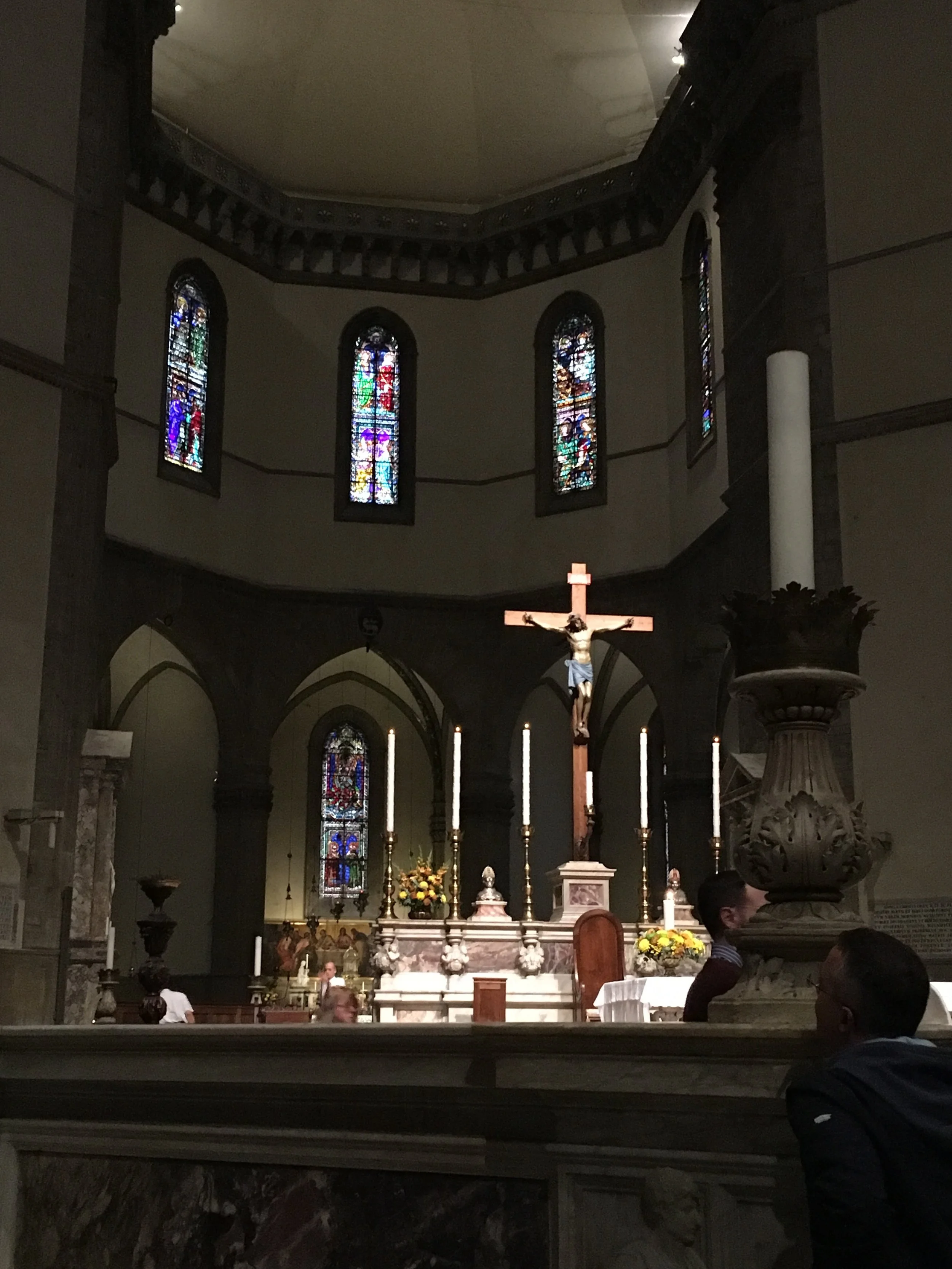
Main altar, Santa Maria del Fiore (Duomo), Florence

Main altar, Santa Maria del Fiore (Duomo), Florence

As I entered, a small service (the Lodo mattitini - morning lauds) was being chanted in a side chapel. Is anything more peaceful then the sound of Gregorian chant? As that service ended, the 10:30 a.m. Mass began. Rather than sitting out in the large church, attendees were invited to come up to the area surrounding the main altar, just beneath the dome.

Brunelleschi’s Dome.

Brunelleschi’s Dome.

The service began with organ music filling the cathedral, the sound and vibration making the music one with body and soul. The Mass itself (a cultural experience even for the non-religious, as well as a good way to practice Italian comprehension) was beautiful with prayer, incense, music and chorus. And all the while I sat under Brunelleschi’s dome - soaring high above the altar, with its majestic painted cupola. 

Detail, Brunelleschi’s Dome

Detail, Brunelleschi’s Dome

It sure seemed like a glimpse of heaven to me.     -post by JMB


November 26, 2018 /Joanne Bartram
Italy travel, Duomo, Italy, Firenze, Brunelleschi’s dome, Florence
Florence, Tuscany
The village of Colognora di Pescaglia

The village of Colognora di Pescaglia

A Fall Festival in Tuscany

November 19, 2018 by Joanne Bartram

When you think of fall in Tuscany, what are the first things that come to mind?

Chestnuts with their inedible shells

Chestnuts with their inedible shells

My list would include porcini mushrooms, the harvest of grapes and olives, and chestnuts. No surprise that I associate fall with food because in Italy, the seasonal influence on food is fundamental. And, for me, food and travel are always woven together. 

Fall is also a season of sagras, community festivals celebrating local foods. One is the Festa della Castagna (Chestnut Festival) in the Tuscan hamlet of Colognora di Pescaglia. Colognora is a small hilltown with about 70 year-round inhabitants. It has a film-set quality about it with its uneven cobbled streets winding uphill, beautiful stone houses, and small lanes leading to beautiful vistas (in fact, this town was used as the set for Spike Lee’s film “Miracle at St. Anna”). It’s hard to believe that villages like this still exist; what a joy that they do!

A vicolo (small lane) in Colognora di Pescaglia ends with a stunning view.

A vicolo (small lane) in Colognora di Pescaglia ends with a stunning view.

A few more pictures of Colognora:

View fullsize
View fullsize
View fullsize

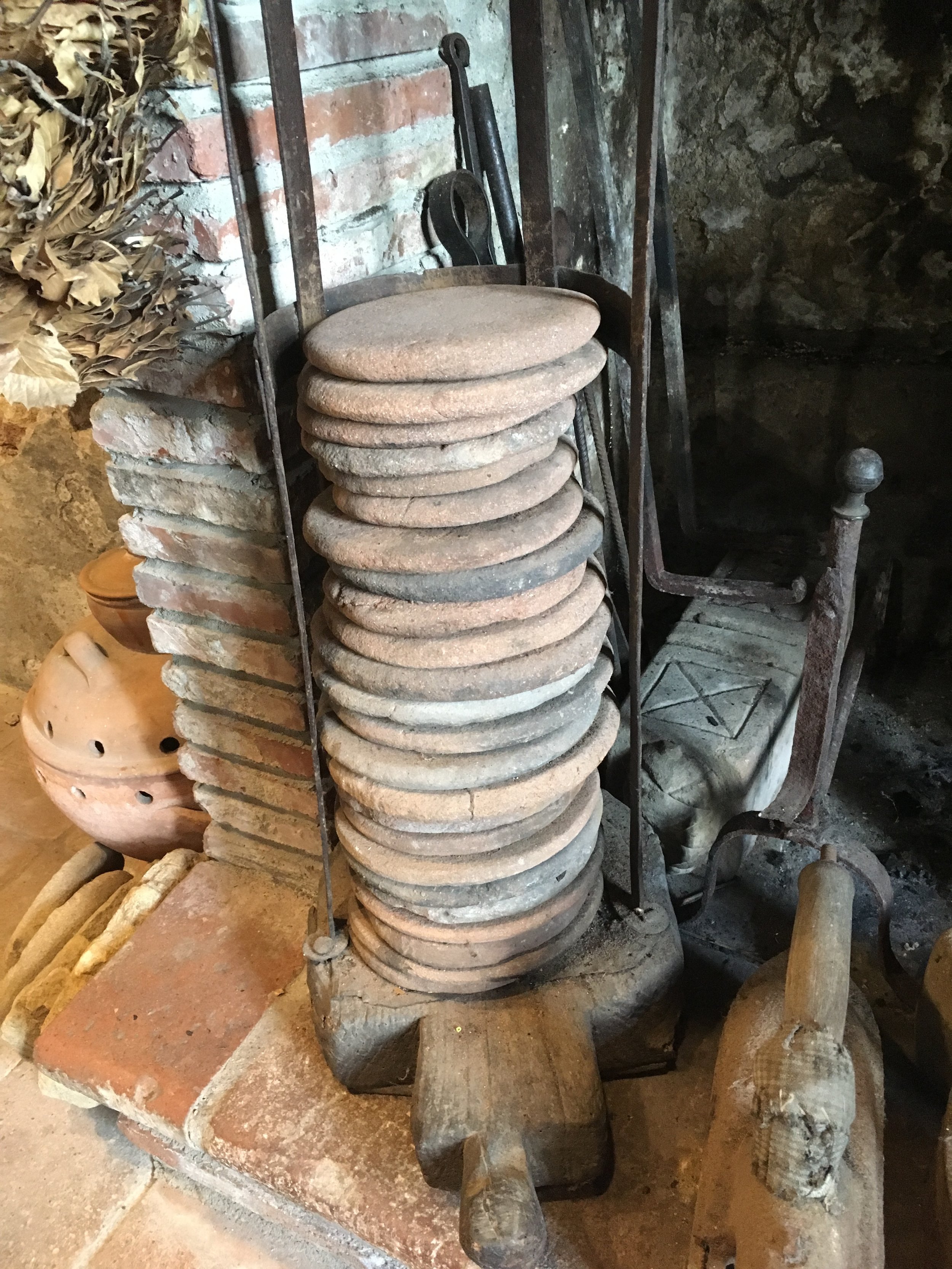
 Chestnuts are an important aspect of the culture in this part of northern Tuscany. The hilly terrain around Colognora - lying between plains and mountains - is perfect for growing chestnut trees. The many uses of the chestnut, as food, lumber, raw material for baskets and other household goods, and fuel are demonstrated in a small but interesting museum, the Museo di Castagna. It provides a peek into the past, when the chestnut was essential to life in this area. History comes alive with displays of the many ways the chestnuts were used, the tools used in processing (to shell, dry, grind, weigh, store, saw, and smoke the wood), along with displays of the many implements made using the wood.

View fullsize Scales in the Chestnut Museum
Scales in the Chestnut Museum
View fullsize Stone plates used for cooking neck (a chestnut flour crepe)
Stone plates used for cooking neck (a chestnut flour crepe)
View fullsize Chestnut wood was used to make carbone (charcoal)
Chestnut wood was used to make carbone (charcoal)
F59ABB9C-371C-42AE-A58F-8092D2B3296F.JPG

In times of hardship, chestnuts were a life-sustaining food source, an element of “cucina povera.” Flour made from dried chestnuts is still uses to produce breads, cakes, cookies, pasta, and (my personal favorite) necci - a thick crepe often served filled with sweetened ricotta. But at the Festa della Castagna, the real star is the flame-roasted chestnut with charred skin bursting open to reveal a soft, tasty middle. 

Perhaps the only thing better than the taste is the fragrant scent of roasting chestnuts filling the air and drawing visitors to the site of the roasters. Here, in the center of the village, music played, children and couples danced, a group of men did the roasting and women handed out small bags of hot, freshly roasted chestnuts.

FullSizeRender.jpg

The only scent that could compete with the chestnuts was the perfume of frying frittelle dolce (loose translation, sweet fritters). These doughnut-style sweets were fried outdoors, rolled in sugar, and served hot. The smell was tantalizing, as evidenced by the lines of people patiently waiting for their turn to taste one.

IMG_5216.JPG

The fall festa is a big event - visitors fill the narrow streets, visit the chestnut museum, and browse the many artisans who demonstrate working with chestnut wood to produce baskets, brooms, foods, and even iron implements (using charcoal made from chestnut wood to fire their stoves). Other artisans sell a variety of handmade crafts, art, and food along the streets. 

View fullsize
View fullsize
View fullsize
View fullsize

Visiting this festival on a Sunday afternoon in fall was my idea of a perfect day. Gentle weather, a beautiful off-the-beaten-track Italian village, a unique sagra celebrating local customs, and a chance to try new food with a cultural connection. What could be better!

EE481A1C-3AC6-46B9-B6ED-39A696DBDD6D.JPG

A big thanks to Angelo Giannini at Lucca Italian School for accompanying our group to this festa, sharing the unique local history and customs, and serenading us too!    -Post by JMB 
November 19, 2018 /Joanne Bartram
FullSizeRender.jpg

The Church of Santa Caterina - A Small Jewel in Lucca

November 12, 2018 by Joanne Bartram

Lucca has an abundance of beautiful churches. The small historic center of town was once known as the city of 100 churches. Not all 100 remain today and yet I could write a blog post about a different church every month and it would take years to tell the story of each of them.

Marble detail, Chiesa di Santa Caterina

Marble detail, Chiesa di Santa Caterina

Some of the churches are large, still active, and well known for both their architecture and the art they contain. Chief among these are the basilicas: San Michele, San Frediano, and San Martino. Others are small and hidden away on back streets where tourists rarely venture. Some are completely abandoned but others are active churches or have been converted into event / performance spaces.

Statue, Chiesa di Santa Caterina

Statue, Chiesa di Santa Caterina

One such church is the small Chiesa di Santa Caterina, which lies in the western part of the historic center of Lucca, at the corner of Via Vittorio Emanuele and Via del Crocifisso, right across from the old tobacco factory. In fact, the church of Santa Caterina has also been called the “Chiesa delle Sigaraie” (Church of the Cigar Makers) for the tobacco workers who once came here for a prayer before beginning their work day.

A bit of history: Santa Caterina was constructed in the later part of the 16th century, one component of the monastery that used to exist on this site. The original church was renovated around 1748. Over time, it stopped serving as a church and was used for a variety of non-religious purposes. Later still the building was abandoned entirely and stripped of much of its art. It had been closed for more than 40 years when the Fondo Ambiente Italiano (FAI) undertook its restoration in 2013. Today it is a little jewel, hiding a spectacular baroque interior behind its plain exterior. It is only sporadically open, often for a special event, such as a concert. In October, it was opened for a fall season FAI event in which historic properties all across Italy were open to the public for one weekend. I was excited to have the chance to visit, as this is one of my favorite churches in Lucca.

Altar, Chiesa di Santa Caterina

Altar, Chiesa di Santa Caterina

Santa Caterina is unusual for several reasons. First, for its unique size and shape. The angled entrance opens into a small but quite tall oval shaped chapel.  There is a small main altar and two even smaller side altars. No grand cathedral this; the small size feels intimate and personal. 

Detail, ceiling fresco

Detail, ceiling fresco

Also unique is the baroque interior, full of ornate decoration. Though tiny, the space is filled with visual delights - statues, marble carvings that circle the room at the top of the walls, ornate iron grates, cherubs atop altars, and captivating frescoes. 

View fullsize one of the ornate iron grates
one of the ornate iron grates
View fullsize Detail from ceiling fresco
Detail from ceiling fresco
View fullsize marble ornament
marble ornament

The structure of the painted ceiling is the most fascinating part of the church. The ceiling consists of a painted dome with an oculus at the center. Above the oculus lies a second frescoed ceiling, giving depth and a soft light to the ceiling.

The painted dome, seen from the chapel below

The painted dome, seen from the chapel below

But it isn’t enough to just look up at the ceiling. Behind the main altar is a narrow, winding stairway that climbs up above the dome. From there the rough stone top of the dome with its central opening is visible as is the thin frescoed ceiling that floats above it.  

The oculus and top of the dome, viewed from above

The oculus and top of the dome, viewed from above

The frescoed ceiling seen above the edge of the oculus

The frescoed ceiling seen above the edge of the oculus

The original structure of wooden beams and bricks is now reinforced with steel cables - but I still marvel at the master architects who created this special place and the artists who filled it with such beauty.              -post by JMB

November 12, 2018 /Joanne Bartram
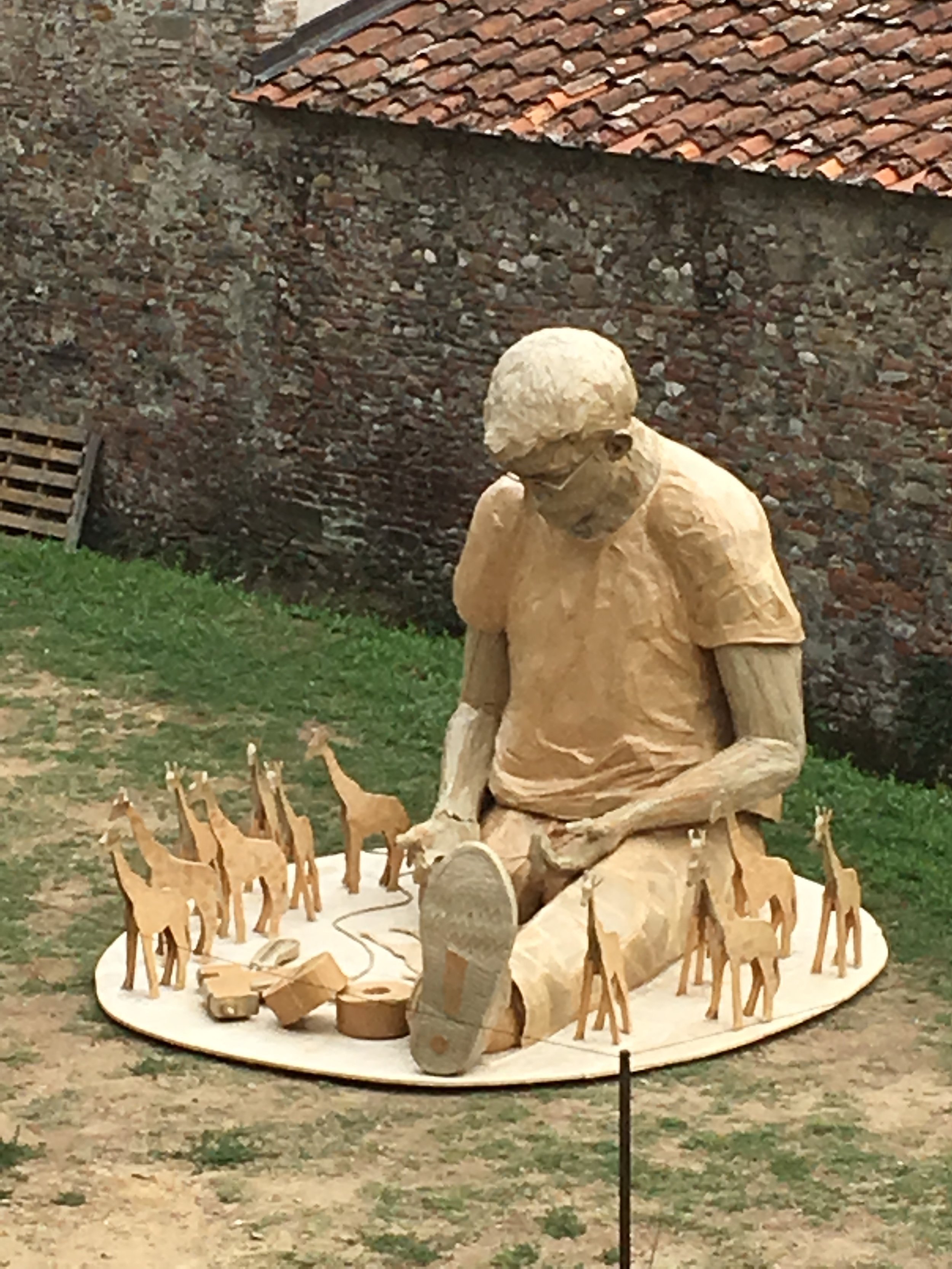
Turtle Woman (Silent Shell, Chaotic Shell). Eu Taze’

Turtle Woman (Silent Shell, Chaotic Shell). Eu Taze’

An International Fesival of Paper Art in Lucca

November 05, 2018 by Joanne Bartram

Did you know that Italy is one of the world’s leading producers of paper? This is especially true in the area of Tuscany surrounding Lucca. Paper mills have existed in this region since the 16th century, thriving because of the abundance of water and raw material needed for paper production. Today the vast majority of tissue paper for Italy is produced just outside of Lucca. This history makes Lucca the perfect setting for a biennial international exhibition of paper art and design.

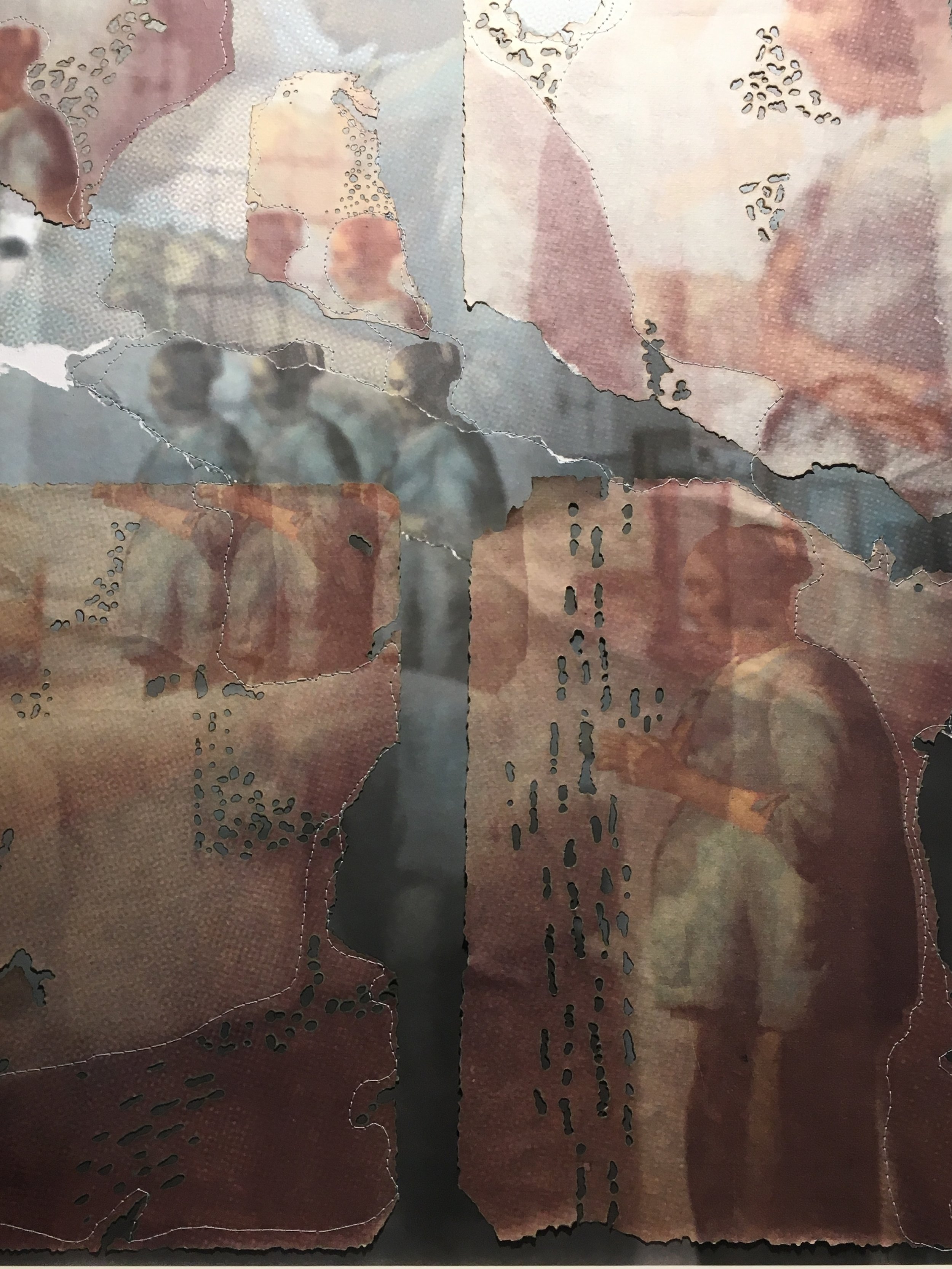
Detail from an intricate paper cut design, China Academy of Fine Art

Detail from an intricate paper cut design, China Academy of Fine Art

The festival began in 2004 as Cartasia, with the goal of promoting the tradition of papermaking using artistic creations related to an annual theme. 

The event has grown, and this year the name was changed to Lucca Biennale Paper, Art, Design. 

Also for the first time this year a guest country was featured in the exhibit; this year China was chosen and collaborated with the local committee on the exhibits. The Chinese influence can be seen in many of the art works displayed.

No More Message. Wu Wai Chung

No More Message. Wu Wai Chung

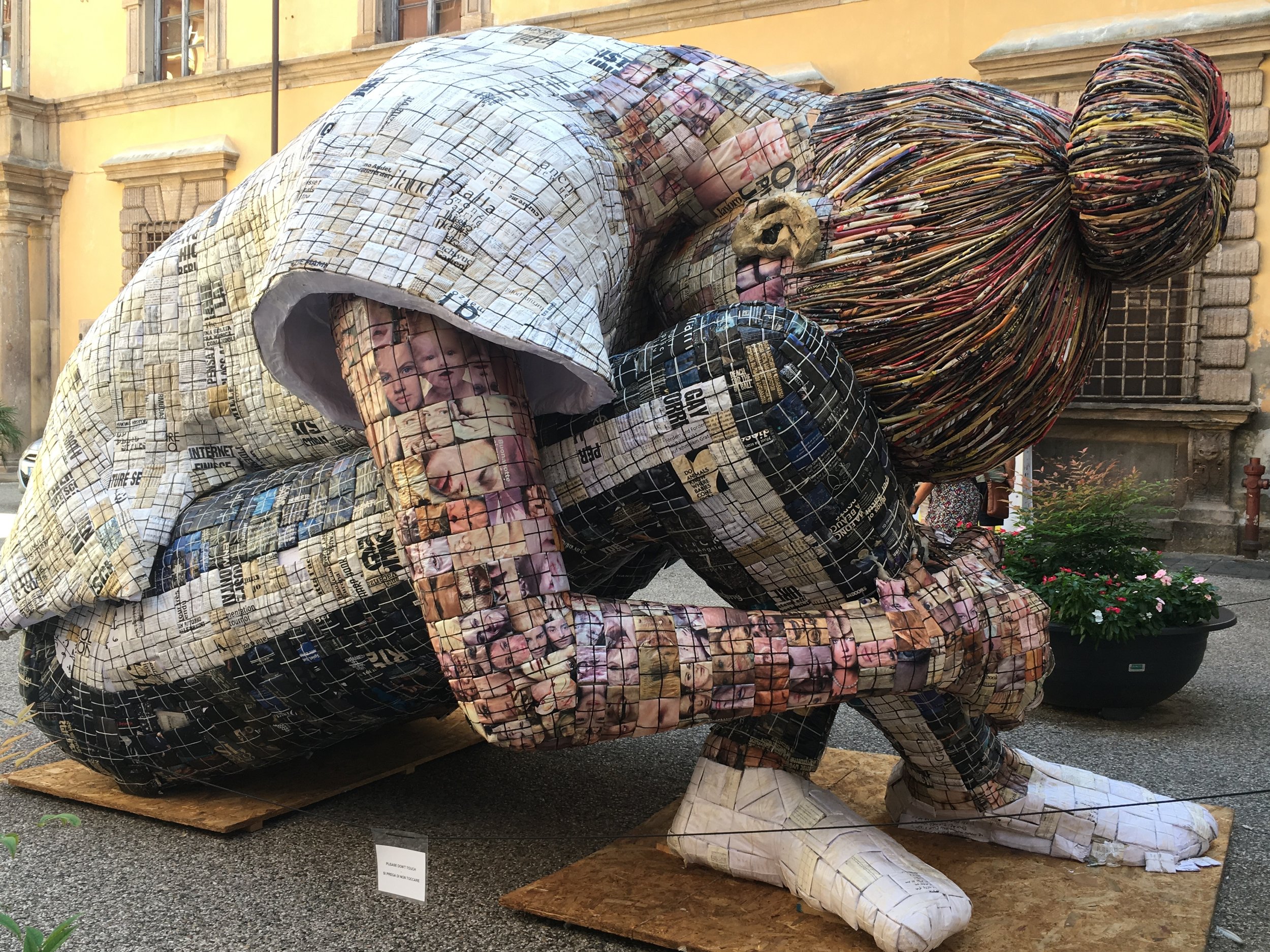
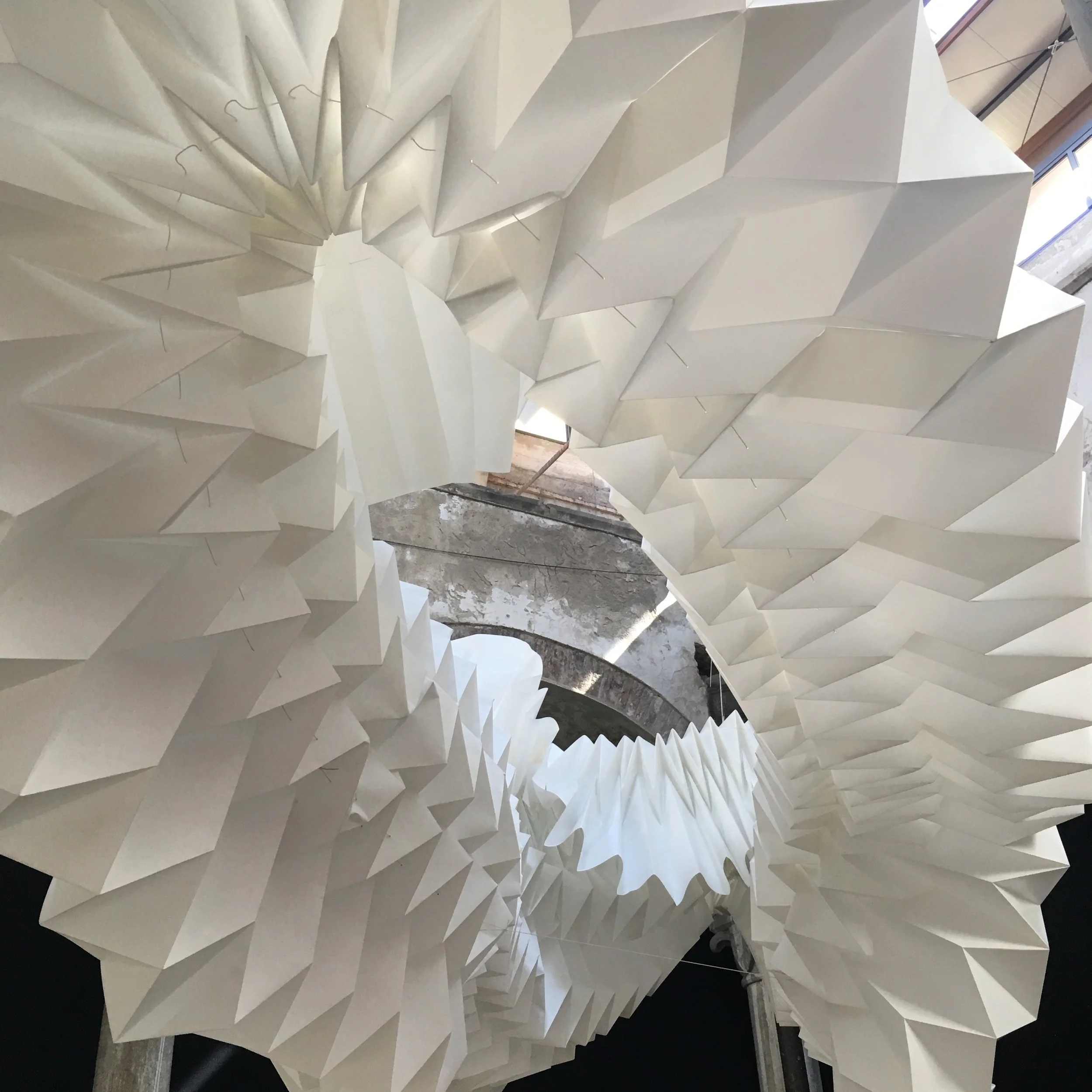
Prior to each festival, there is a competition to select the pieces to be displayed.  Artists from around the world submit art (sculptures, paintings, installations, videos, architecture) based around a chosen theme. This year the theme was Chaos and Silence, described in the exhibit materials as the “search for silence, clarity, peace among chaos.” Each selected piece relates to this theme, as interpreted by the individual artist. The chosen pieces, representing Italy, Germany, Denmark, Finland, Poland, Korea, Venezuela, the United States, and China, were displayed throughout Lucca throughout August and September. Pictured in this post are just a sampling of the displayed pieces, my favorites.

View fullsize I Don’t Know Who I Am Anymore, Michele Landel
I Don’t Know Who I Am Anymore, Michele Landel
View fullsize I Don’t Want to Have Another Kid, Michele Landel
I Don’t Want to Have Another Kid, Michele Landel
View fullsize I’m Exhausted All the Time, Michele Landel
I’m Exhausted All the Time, Michele Landel

Many of the larger sculptures were displayed outdoors in public places - making the art easily accessible to everyone. The pieces themselves were fantastic, and watching as people walked by and discovered them was part of the fun.

View fullsize Liminal Space. Manuela Granziol
Liminal Space. Manuela Granziol
View fullsize Paperman. James Lake
Paperman. James Lake

Other pieces were displayed indoors in the Palazzo Ducale and the Mercato del Carmine (the admission fee to the indoor exhibit included a color brochure describing each piece). These included more delicate sculptural pieces, framed art, diverse art installations). The architecture of the historic buildings added to the drama of the art.

Radiate Eternal, Marie Schirrmacher-Metz, displayed in the old Mercato building

Radiate Eternal, Marie Schirrmacher-Metz, displayed in the old Mercato building

In past years, once the exhibit ended, the larger sculptures were move to protected areas in the passageways underneath the walls surrounding the city, where they remained for the two years between festivals. I’m hoping that will also be the case this year, as the festival included some exceptional pieces. If you are coming to Lucca, you’ll want to look for these.   -post by JMB

The Sights and Sounds of the Cosmos. Anton Mitra

The Sights and Sounds of the Cosmos. Anton Mitra

November 05, 2018 /Joanne Bartram
  • Newer
  • Older

Powered by Squarespace