Two Parts Italy

Exploring Italy, travel, and living a flavorful life

  • Blog
  • About This Blog
  • Start Here
  • Recent Posts
  • Archives by Topic
  • Subscribe
  • Contact me

These barrels at Villa Medici Ermete are used for aging traditional balsamic vinegar

Tasting Parma Part Two: Traditional Balsamic Vinegar

February 07, 2022 by Joanne Bartram in #italytravel, Cooking, food, Food tours Italy, Parma, Modena, Reggio Emilia, Traditional product Italy

Some words just don’t translate well.  Such is the case with the Italian word acetaio.  Google translate will say that it means “vinegar maker”.  But that does not begin to describe the people who produce traditional balsamic vinegar. An acetaio is so much more – an artisan, the keeper of an ancient tradition, and a gustatory magician.  They are, justifiably, also a proud group of craftsmen.  And they are perhaps the most patient people on earth, for the process of producing a traditional balsamic vinegar takes a minimum of 12 years and often much longer.  The prized extravecchio (extra old) balsamics are aged 25 or more years.  The acetaio often begins to ferment a batch of balsamico that won’t mature in his (or her) lifetime. 


We are not talking your supermarket balsamic vinegar (a poor imitation of the real thing) but rather authentic Aceto Balsamico. As a Denominazione di Origine Protetta (DOP) product it may only be produced in the small geographically designated area of Modena and Reggio Emilia in the Emilia-Romagna region of northern Italy. Once rival cities in the making of traditional balsamic vinegar, today both towns are entitled to use the DOP designation. Having the DOP label also means that there are tight controls to ensure that the balsamico produced is of the highest quality.  The controls extend to bottle size, labeling, and even to the classic red wax seal.

On my recent food tour in and around Parma (arranged by Get Your Guide), I had the opportunity to visit the Villa Medici Ermete near the town of Reggio Emilia.  The villa and surrounding vineyards are owned by the Medici family whose main business is tending the vineyards and making Lambrusco wine.  

Looking out over the vineyard from the acetaia at Villa Medici Ermete. If only all workplaces offered such a view!

Alongside wine making, they have also produced small batches of traditional aceto balsamico for the last 100 years. Long ago, the vinegars produced were reserved for family use or given as gifts and wedding dowries. Today they are bottled and offered for sale. Alessandra Medici, who oversees the process, describes the making of her aceto balsamico as both a hobby and a passion.  In addition to managing the production, Alessandra gives wonderful tours during which she describes the traditional processes used to make and age the vinegar and invites guests into the attic to see (and breath in the scent) where the aging takes place. As a bonus, the tour concludes with a tasting.

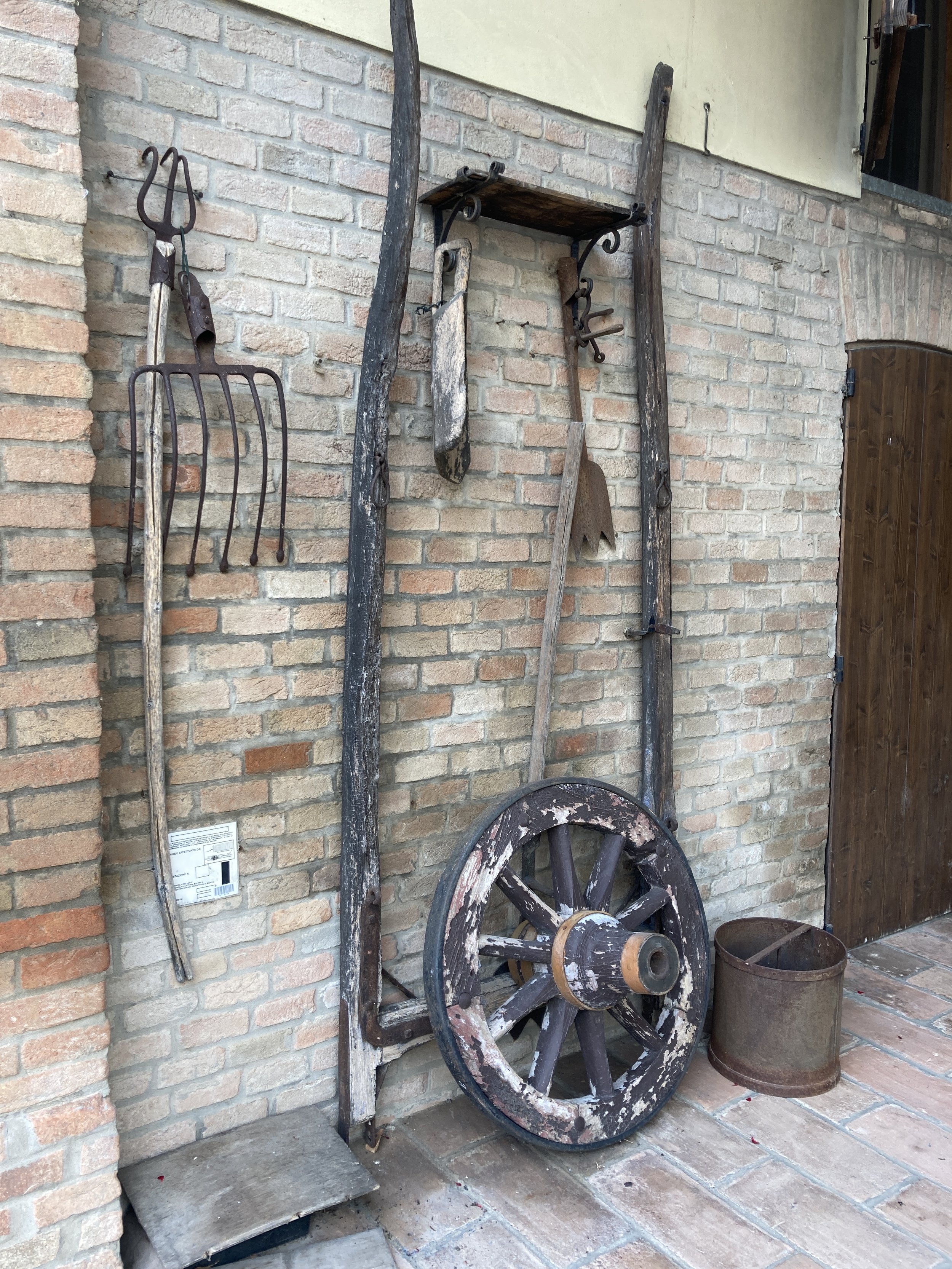
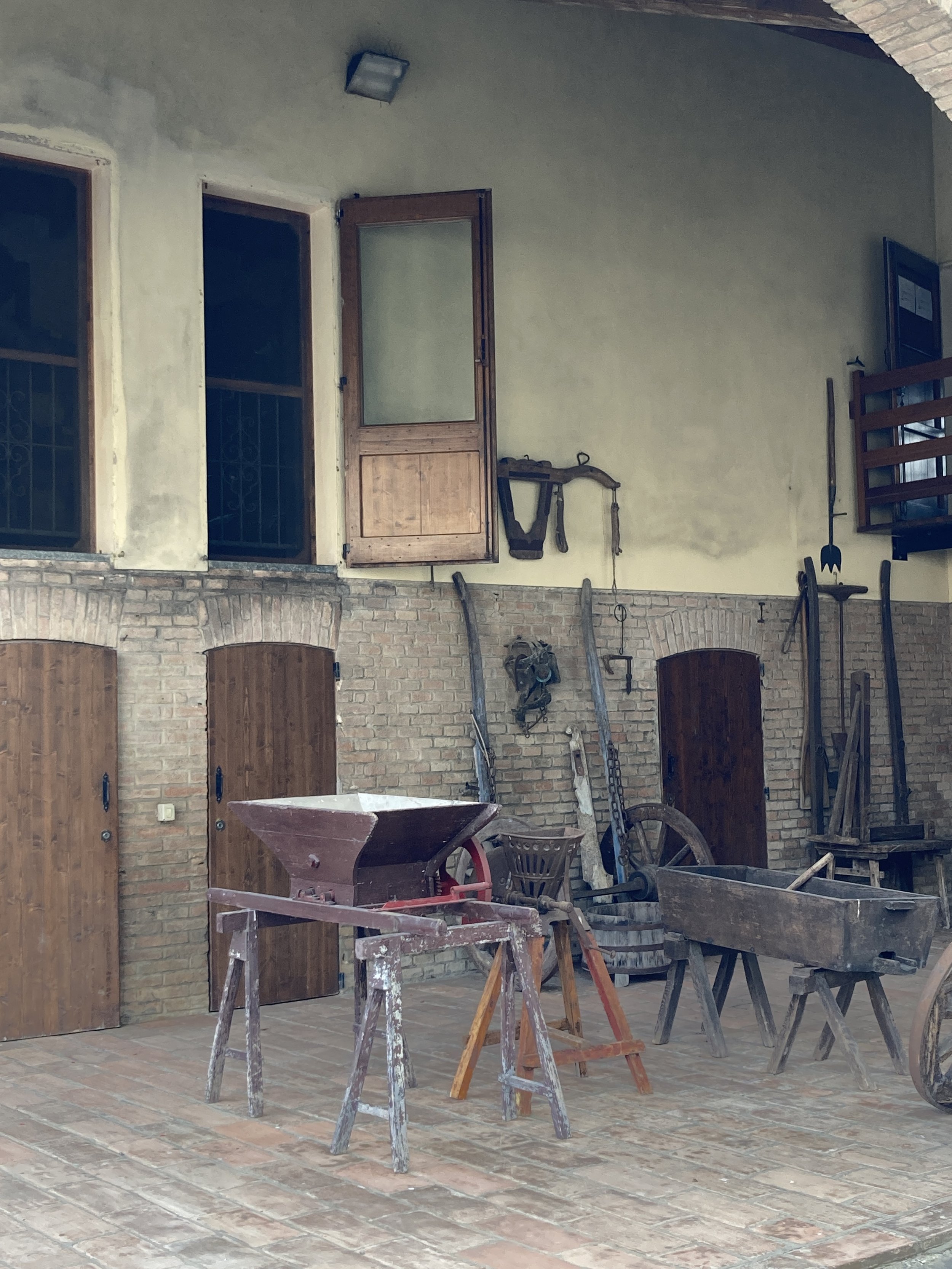
 The vineyard estate, with its central Villa Medici Ermete, is beautiful. The tour begins in a small museum in the open-air barn where old farm tools and wine-making equipment tell of the long history of wine and vinegar production on the estate. 
94EB963A-1A8E-4468-934B-8877EF1BF912.jpeg
A5D40383-BF1F-4CBD-A185-93BB15D74E82.jpeg

 Upstairs, above the barn, are rooms filled with wooden casks and the fragrance of fermenting balsamico.  This is the acetaia, the attic where the grape must (the crushed grapes) ferments and becomes more and more concentrated over time.

 As our guide explained, the process is fascinating yet quite simple.  There is only one ingredient used – the must of grapes grown on the estate. The first step is to cook the grape must in a cauldron over an open flame for a full day to begin the process of evaporation. The liquid is then placed in the largest of a series of ever-smaller barrels. A set of barrels is called a battery and at the Villa Medici Ermete each battery consists of 5 barrels.  In a long-standing tradition, a new battery is started and labeled with the name of each new baby born into the family.  It matures as the child does, aging long past the minimum 12 years and passing on an important heritage.  In the acetaia there was one battery which was started nearly 100 years ago, labeled with the name of an ancestor from several generations past.

 Fermentation occurs in warm weather (a little bit of older fermented balsamico may be added to begin the process) and then in the winter of each year the liquid is moved to the next smaller barrel.  The barrels are made of several different types of wood including oak, cherry, and chestnut.  Each will contribute to the flavor of the vinegar.  The barrels are left open to air, the vent at the top covered by a thin piece of linen, to allow for evaporation.  Eventually the concentrated liquid moves from the last barrel in the battery to some even smaller barrels to finish aging. One room in the acetaia was lined with these small barrels.

These small barrels, of several different kinds of wood, contain the balsamic vinegar during the many years of aging.

 Before the balsamico can be bottled for sale, it must be submitted to the local Consortium of Growers.  

There, a panel of 5 expert tasters judge its characteristics (color, density, aroma, taste).  If approved, the aceto (vinegar) can be bottled (under supervision) and labeled with the seal of the consortium and the red and yellow DOP symbol.  That label verifies that the balsamic is a DOP Aceto Balsamico di Modena or di Reggio Emilia. 


A dollop of thick, syrupy balsamic vinegar adds to the flavor of aged parmigiano reggiano cheese

A traditional aged balsamic is a joy to taste and I was fortunate to sample three different ones at the end of the tour.  All were delicious, with clear differences in taste and consistency.  The younger vinegars (red label, 12 years of aging) were sharper in flavor and thinner than the older ones. They are recommended for everyday use in salads or as a condiment for raw vegetables, fish, or carpaccio. The 18 year vinegars (silver label) were less acidic, a bit sweeter and smoother.  Suggested uses include in sauces or on meat or to drizzle on top of paté.  They are also wonderful paired with chunks of Parmigiano Reggiano cheese.

Lastly we tasted the oldest, 25 year balsamic (gold label).   This is the highest quality and most prized balsamic vinegar. It is not used in cooking, but is wonderful on strong cheese and also on desserts.  The syrupy sweetness compliments strawberries and is wonderful drizzled on some gelato.  It may even act as a sort of digestive taken by a spoonful at the end of a meal (in years past is was taken this way to ward off the plague!). The flavor of this long-aged balsamic is a true luxury.  

 As with most things, quality and price go hand in hand.  The long process of aging, the use of traditional methods, and the relatively small production mean that authentic balsamic vinegars can be quite expensive.  The intense flavors, and the way a small amount can turn a dish from ordinary to extraordinary, make it a worthwhile investment.  A bottle of the 18 year, silver balsamic now adds wonderful flavor to my kitchen in Lucca.  Having seen how it is produced at Villa Medici Ermete family just makes it all the more delicious.  

Next week: Part three of the series, Prosciutto di Parma
February 07, 2022 /Joanne Bartram
aceto balsamico, traditional balsamic vinegar, balsamico di Modena, Balsamico di Reggio Emilia, Balsamic vinegar production
#italytravel, Cooking, food, Food tours Italy, Parma, Modena, Reggio Emilia, Traditional product Italy

No-Fuss Holiday Entertaining

December 27, 2021 by Joanne Bartram in Cooking, entertaining, food, Living in Italy

This is a busy time of year! The days between Thanksgiving and the New Year are filled with activities -shopping, decorating, holiday baking, and dinners just for starters. For me, these weeks have also included a couple of out-of-town visitors, two quick trips out of town, and the birthdays of four friends. It has been a happy whirlwind as every week seemed to include a gathering or a short trip.

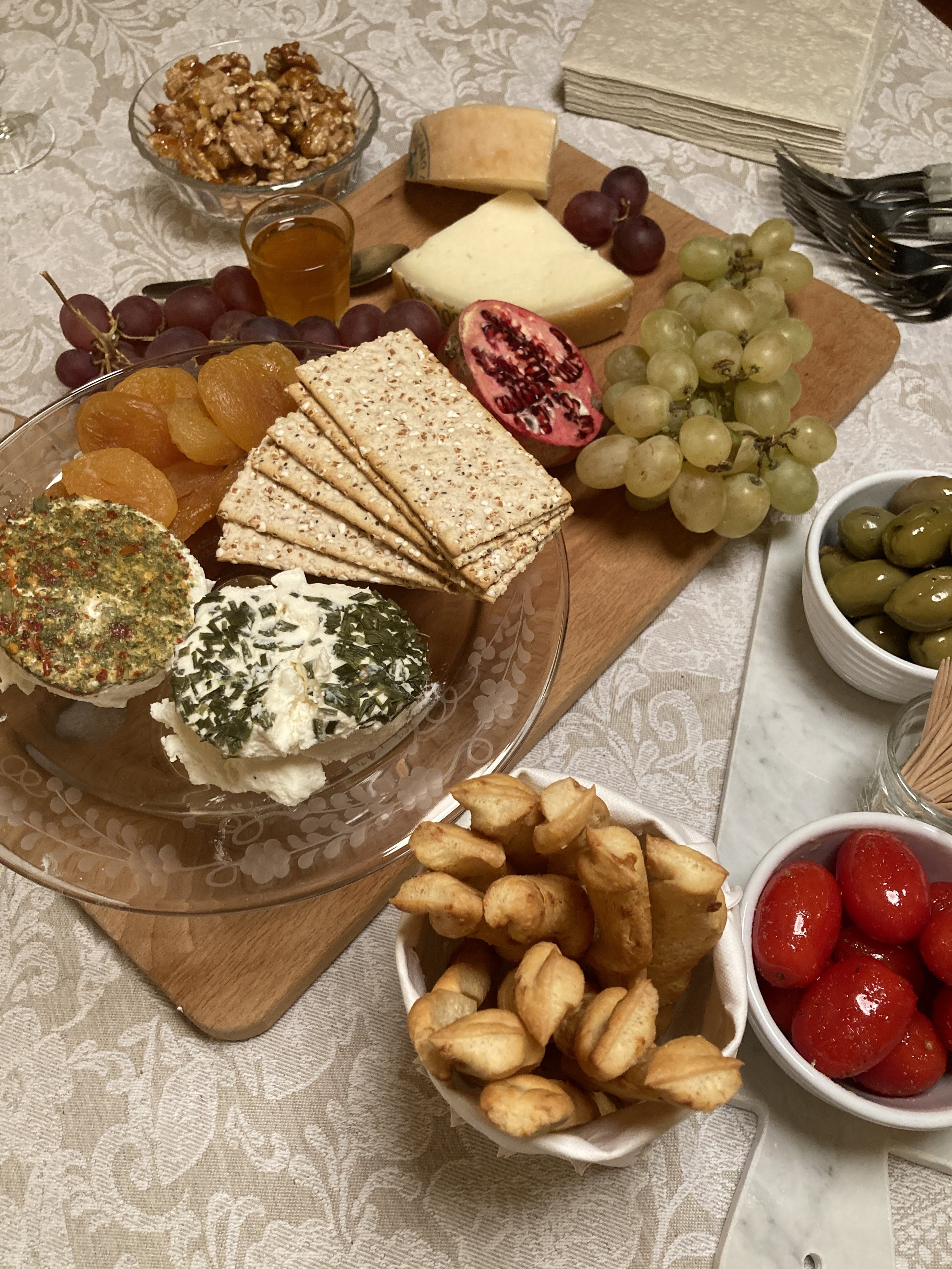
With all this activity, entertaining can either be a joy or it can cause stress. And stress is no fun! To keep the holidays fun and avoid entertaining burn-out, opting for a no-fuss approach is the way to go. No-fuss means that most of what is served can be purchased or prepared in advance with a minimum of actual cooking. That way, the effort goes into choosing a good mix of items with a variety of tastes and textures, presenting them in a visually appealing way, pouring something festive to drink and then relaxing with the guests. This is just the approach I used for the small gathering that I recently hosted. My no-fuss choice was to create a festive cheese board for an aperitivo celebration. No cooking required!

Here are some ideas for putting together a tasty cheese board.

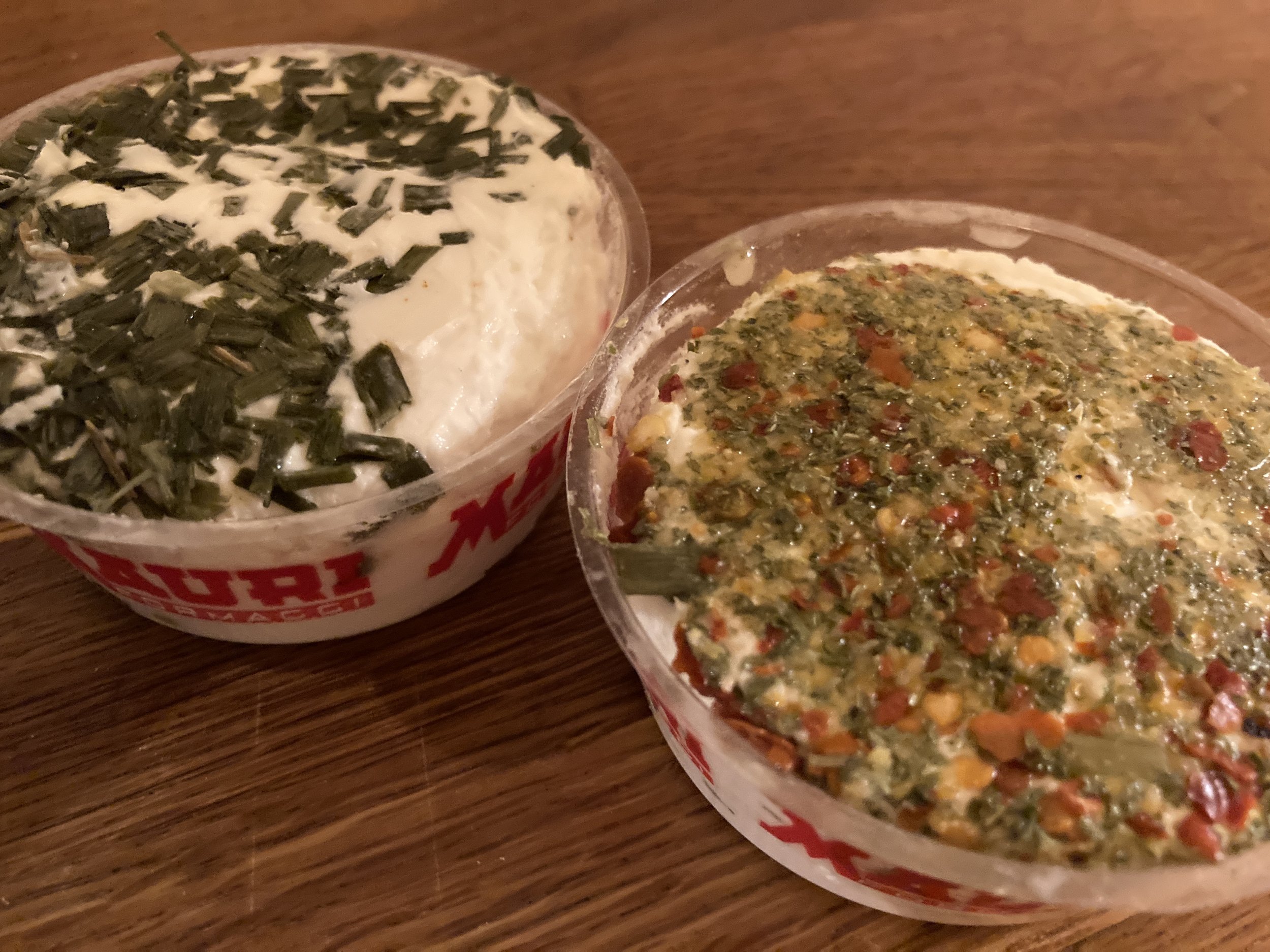
Herbed goat cheese - tangy, creamy, spicy and store bought

First, choose a variety of cheeses, even better if they are local specialties. For a light cocktail hour, an ideal combination is one soft cheese and one that is medium or hard. For a more substantial appetizer add a third cheese. Since my gathering was a pre-dinner aperitivo, I kept things light with just two cheeses.

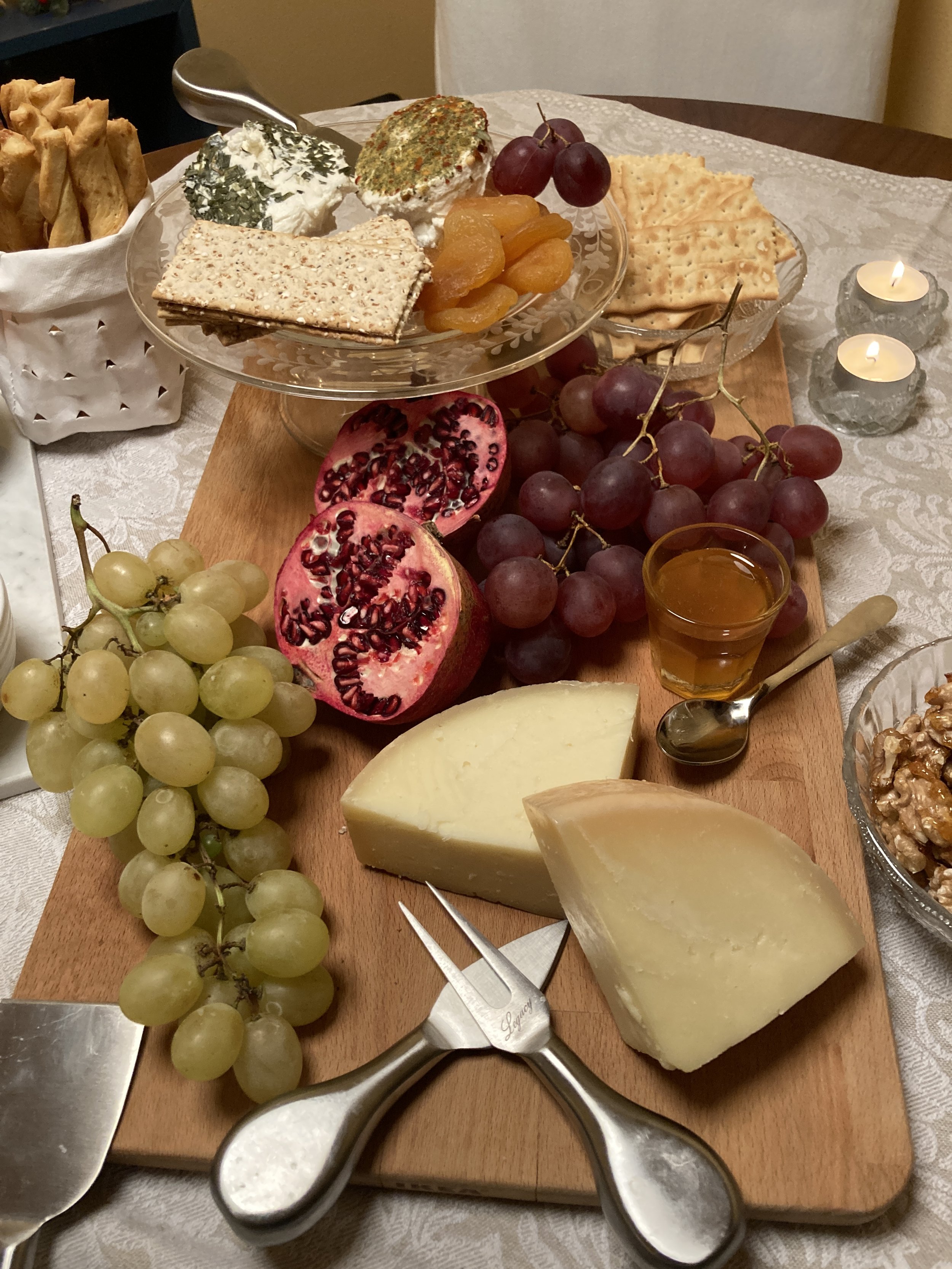
I purchased rounds of a creamy herb-crusted goat cheese (2 varieties, chive and red pepper) at the local grocery. They paired well with a wedge of good quality pecorino fresca from one of Lucca’s specialty cheese shops. A bit of jam or honey alongside the pecorino added a bit of flavor complexity.

The twisted shape gives these bread sticks an added visual boost

Next, some type of bread to go with the cheese. Using a variety of shapes, sizes, and forms makes the presentation more interesting.

Crackers are easier than fresh bread as there is no last minute slicing and the crispness holds up well with just about any cheese. For my board I purchased some pretty bread stick twists and two types of crackers.

These marinated green olives are salty and a bit briny, they complement the cheeses nicely.

Now, add in some salty and stronger flavors. Good olives are perfect. Marinated small tomatoes or cornichons work well too. For a more hearty appetizer tray, some flavorful meats are a good addition. Prosciutto or salami would be typical Italian choices.

Next comes fruit. Grapes always go well with cheese. Added bonus - they look great on the platter! Apples or pears would have been another good choice (but grapes don’t require any slicing and can be put out well ahead of time, making them the perfect no-fuss choice). Dried fruit adds additional flavor, color, and texture. Dried apricots worked especially well with the pecorino.

Last, some sweet flavors. In this case I used candied walnuts, the only thing that actually required me to cook (if melting sugar and tossing in the nuts really counts as cooking). The combination of sweet and crunchy was a good contrast to the salty olives and creamy cheese. A small cup of honey to drizzle over the pecorino added another layer of sweet flavor.

Something bubbly to toast with comes next. Prosecco is ideal for an aperitivo and is the perfect choice for any celebration.

Start with a simple cutting board or platter, add a pedestal dish for height, and begin layering foods until you are happy with the presentation.

Once all the foods are chosen, the next consideration is presentation. This is the fun and creative part; a chance to tap into your inner Martha Stewart!

Cutting boards, platters, and trays can all serve as a base for a cheese board. I don’t have a fancy cheese board, but my IKEA wooden cutting board worked just fine as a base for the grapes and cheeses. For some height variation, a small pedestal plate on, or alongside, the cutting board adds a bit of “oomph” to the presentation. Tall breadsticks standing upright in a glass do the same.

Color and texture are also important. Two colors of grapes, one green and one red, colorful herbs topping the goat cheese, and a combination of creamy and firm cheeses is a good start. A halved pomegranate provided color variation, contrasting texture, and served as a space filler on the cheese board. Plus it was a sparkly seasonal fruit. Additional color and texture came from the dried apricots.

Pomegranates are “jewels” that add sparkle to a cheese board

A variety of plates, bowls, and boards can be positioned alongside the main board to expand the spread. No need for everything to match! And no special tableware is needed, just mix and match whatever you have available (though having some good cheese knives is a big help; I borrowed some from a friend). And a pretty table cloth always helps to set the stage.

Ready to serve !

With everything in place I was able to enjoy my guests with no worry about keeping things warm or fussing over serving. All I had to do was pour the Prosecco (and truth be told, a friend volunteered for that job!).

There you have my strategies for no-fuss holiday entertaining. What tricks do you use for stress-free parties at this time of year?

With New Year’s Eve right around the corner, another no-fuss cheese board just may be in my future.

Happy New Year! Buon Anno !


December 27, 2021 /Joanne Bartram
cheese boards, holiday entertaining, aperitivo
Cooking, entertaining, food, Living in Italy

A formal table setting is perfect for an afternoon tea.

Cook Once and Entertain Twice: An Afternoon Tea and Evening Aperitivo

November 22, 2021 by Joanne Bartram in Cooking, food, entertaining

I’ve always adhered to the “cook once, eat twice” school of meal prep. This was especially true in the days when I was working full time and doing most of the cooking for my family. Even now, when I am usually cooking for just one in my tiny Italian kitchen, I love making extra and having leftovers. Soups, stews, extra salad ingredients all prepped - these things make life much easier.

One lump or two ? The quintessential tea question.

But I’ve never really applied that approach to entertaining. It was just a bit of serendipity that recently saw me doing some culinary recycling, stretching the preparations over two separate events.
I had carefully planned the first event - an afternoon tea for a a group of friends, one of whom is soon to depart Lucca for her home across the sea.

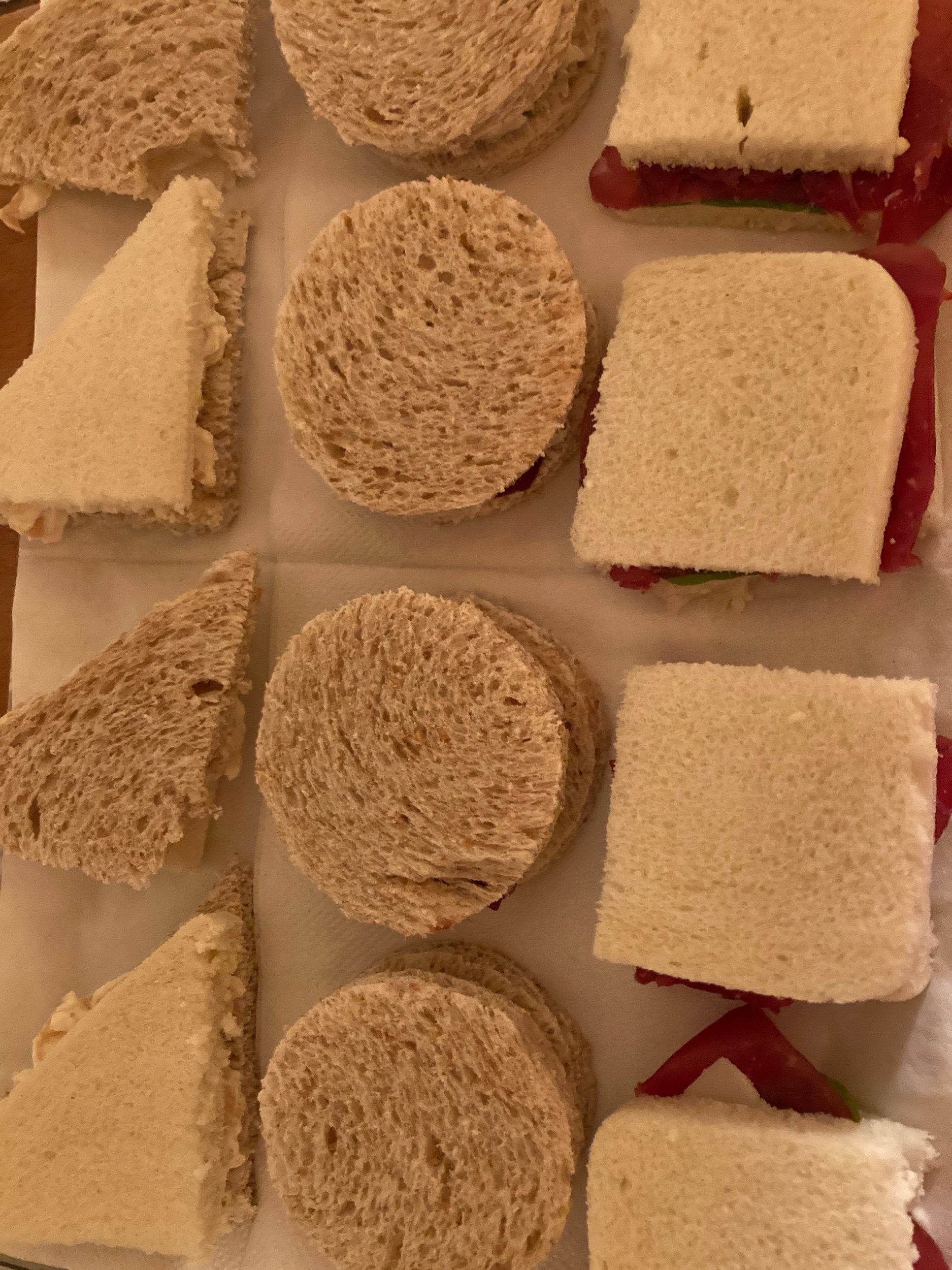
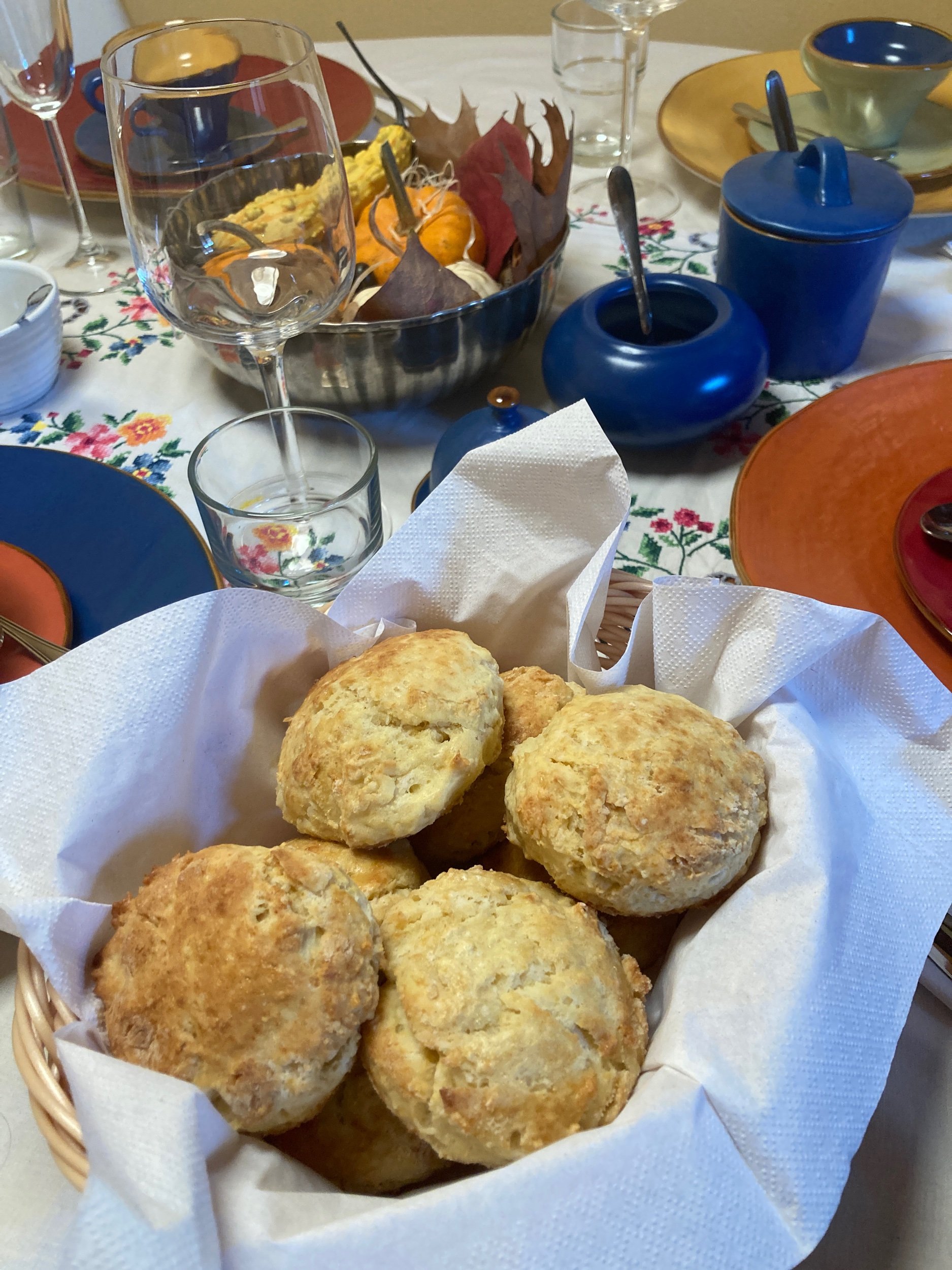
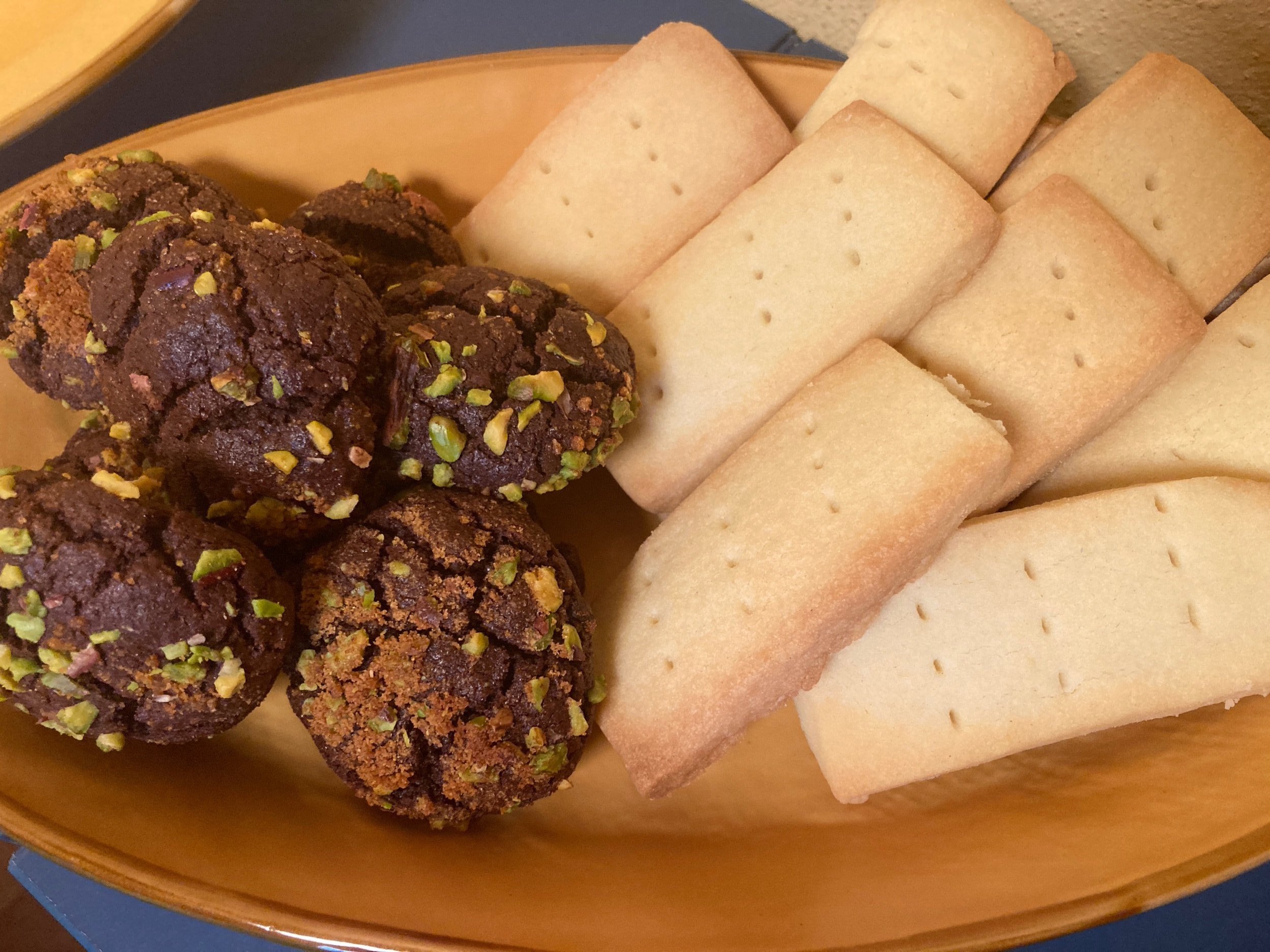
The tea was a fairly formal affair with dainty tea sandwiches, scones with lemon curd, and the Queen’s own shortbread (or so the recipe claimed) along with chocolate cookies rolled in pistachio bits.

It was served in proper courses - first savories, then scones, and finally sweets. Very ladylike!

IMG_0581.jpeg
IMG_0569.jpeg
IMG_0571.jpg

With plenty of leftovers, I turned around the next day and hosted an impromptu rainy evening aperitivo. One key - there was no overlap in the two groups that I hosted, so that no one was seeing the same dishes twice. I did fess up to the aperitivo group that I had served some of the same things, though in slightly different form, the day before. They did not seem to mind at all! Of course a formal tea with scones and the like is not appropriate fare for an evening aperitivo, so I had to change things up a bit.

A buffet rather than a formal table setting worked best for the aperitivo. But the fall centerpiece and even the tablecloth worked for both.

For the aperitivo I did make one platter of small sandwich rounds filled with a gorgonzola pecan spread and some cherry jam (exactly the same as I’d served for tea the day prior). But I changed the other sandwich offering - the one with a salmon cream cheese filling. For the aperitivo, I served the salmon filling as a spread for crackers rather than in the little triangular sandwiches I had made for the tea.

What was a salmon sandwich filling for tea became this spread with crackers for the aperitivo

I added a bowl of potato chips and a couple of bottles of wine and - voila! - an Italian aperitivo. We ended up talking for hours, solving many of the world’s problems, which gave me a perfect excuse to set out the leftover cookies.

Doing the two events back to back was fun and used my leftover ingredients to great advantage. And it really cut prep time! With slight modification, the table setting morphed from formal tea to informal aperitivo. Even the fall centerpiece of leaves (collected on Lucca’s walls) and local gourds and pumpkins made the transition nicely. Plus, I was able to see two different sets of friends and enjoy two very different events. That was the best part.
Cook once and entertain twice or, in Italian, cucina una volta e intrattieni due volte, just may be my new motto.

Fall days in Lucca are perfect for entertaining.

November 22, 2021 /Joanne Bartram
afternoon tea, high tea, aperitivo, entertaining
Cooking, food, entertaining
Fresh asparagus in the market - I like the big ones on the left for this recipe

Fresh asparagus in the market - I like the big ones on the left for this recipe

Prosciutto and Asparagus Bundles Marcella Style

June 14, 2021 by Joanne Bartram in Cooking, Italian recipes, Living in Italy, recipes

Marcella Hazan introduced me, and many Americans, to authentic Italian recipes. Her food, and the details she described about Italian cuisine, were part of what first brought me to Italy in search of the flavors and ingredients in her dishes. (For more on her story, here is a link to a post from the summer of 2018: https://www.twopartsitaly.com/blog/2018/8/8/cooking-with-marcella).

IMG_4001.jpeg

On that first trip I marveled at the fresh produce in the markets, the meats, the cheeses, the variety of fresh pasta, and the delicious meals I had in Florence, Venice, and along the shores of Lake Como. And I took notes!

Returning home, I began a journey to recreate all those flavors with the best ingredients I could find, often guided by one of Marcella’s cookbooks. Now that I live most of the year in Italy (something I never even dreamed of back then) I have access to those wonderful ingredients and I enjoy making these recipes even more.

When spring arrives in Italy so does asparagus season. Heading into summer, the markets in Tuscany have gorgeous bright green bundles of asparagus - I try to pick the nice fat ones which I prefer to the more slender stalks.

When the asparagus appears, I know that it is time to make one of my favorite Marcella recipes - Involtini di Asparagi e Prosciutto (originally published in her book More Classic Italian Cooking). The flavors of fresh asparagus, slightly salty prosciutto, fontina cheese and a generous amount of butter combine to make a flavorful dish perfect for a spring or early summer brunch or luncheon.

3 basic ingredients - prosciutto, fontina cheese, fresh asparagus.  Just add some butter !

3 basic ingredients - prosciutto, fontina cheese, fresh asparagus. Just add some butter !

The prosciutto is topped with the asparagus, cheese, and butter before rolling into a tight bundle.

The prosciutto is topped with the asparagus, cheese, and butter before rolling into a tight bundle.

The preparation is easy and involves only 4 ingredients. The asparagus is cooked ever so briefly in boiling water (my non-Marcella shortcut is to wrap the spears in a wet paper towel and microwave for 90 seconds or so) and then flash cooled in cold water. 3 spears are placed across a slice of prosciutto, topped with slices of fontina, dabbed with butter, and rolled up tight.


Another couple of cheese slices are placed on top, with a bit more butter (ok, maybe more than a bit), and baked until the cheese is melted and golden, a quick 15 - 20 minutes. They look beautiful on a platter drizzled with the flavorful pan drippings. For exact measurements, just google “Marcella’s Asparagus Prosciutto Bundles” and the recipe will pop up - or better yet get a copy of the cookbook which is chock full of wonderful recipes.

Ready to bake !

Ready to bake !

A couple of keys: Medium to large asparagus are best, and that first cooking in boiling water is just until they begin to soften. If overcooked they will get mushy in the oven. It’s also important to use a good quality, soft prosciutto. If the prosciutto is leathery to begin with it will become more so when baked and that’s not good (the same is true if baked too long). In Italy I buy “prosciutto di Parma morbida” (morbida means soft). My Italian butcher tells me that one end of the prosciutto is actually softer than the other, and so that is what he slices for me. Who knew? In the US, I find that Costco actually has a nice, fairly soft, thinly sliced imported prosciutto that works quite well (brand name Citterio). If the slices are small I overlap two for each bundle so that the prosciutto base is wide enough to just let the tips and ends of the asparagus spears stick out.

These involtini make a wonderful brunch / lunch when paired with a poached egg or a salad. For dinner, a side of rice goes nicely.

Grazie Marcella !

Involtini di asparagi e prosciutto - flavorful rolls of prosciutto filled with asparagus and fontina cheese.

Involtini di asparagi e prosciutto - flavorful rolls of prosciutto filled with asparagus and fontina cheese.

June 14, 2021 /Joanne Bartram
asparagus, cooking with asparagus, prosciutto recipe, italian cooking, italian food, Marcella Hazan
Cooking, Italian recipes, Living in Italy, recipes
Polleria Volpe (all decorated for Valentine’s Day)

Polleria Volpe (all decorated for Valentine’s Day)

La Polleria (The Poultry Shop)

May 24, 2021 by Joanne Bartram in #lucca, Cooking, food, Italian culture, Italian markets, Living in Italy, Lucca

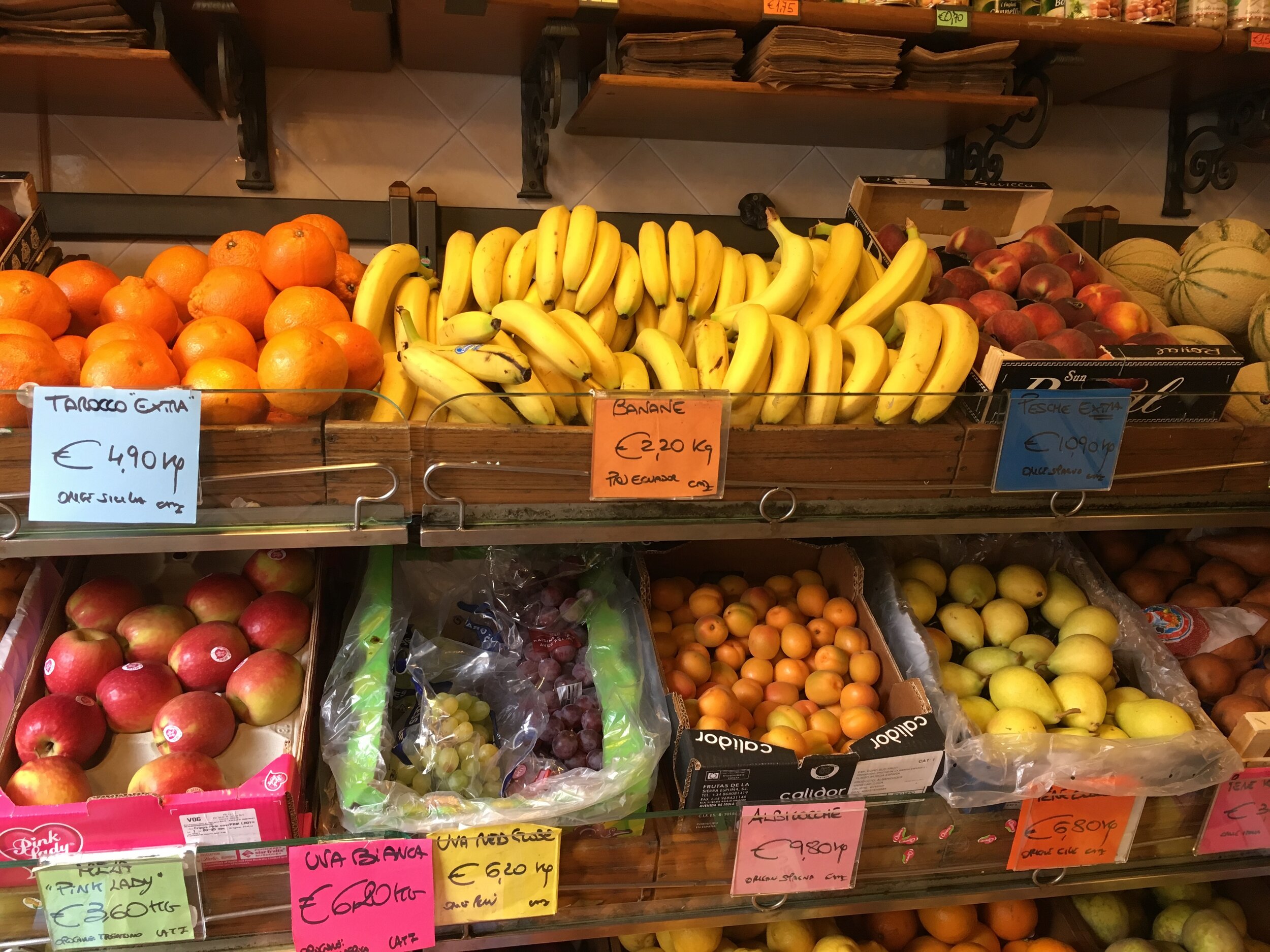
Shopping for groceries (fare la spessa in Italian) is one of the great cultural experiences for stranieri (foreigners) living in Italy. Food, and the process of obtaining it, helps to define a culture. And the act of shopping itself provides a language lesson as it requires use of a specialized vocabulary - after all one wouldn’t want to request uva (grapes) when needing uova (eggs) or pesche (peaches) instead of pesce (fish). I look forward to grocery shopping in Lucca with an enthusiasm that I lack when in the United States.

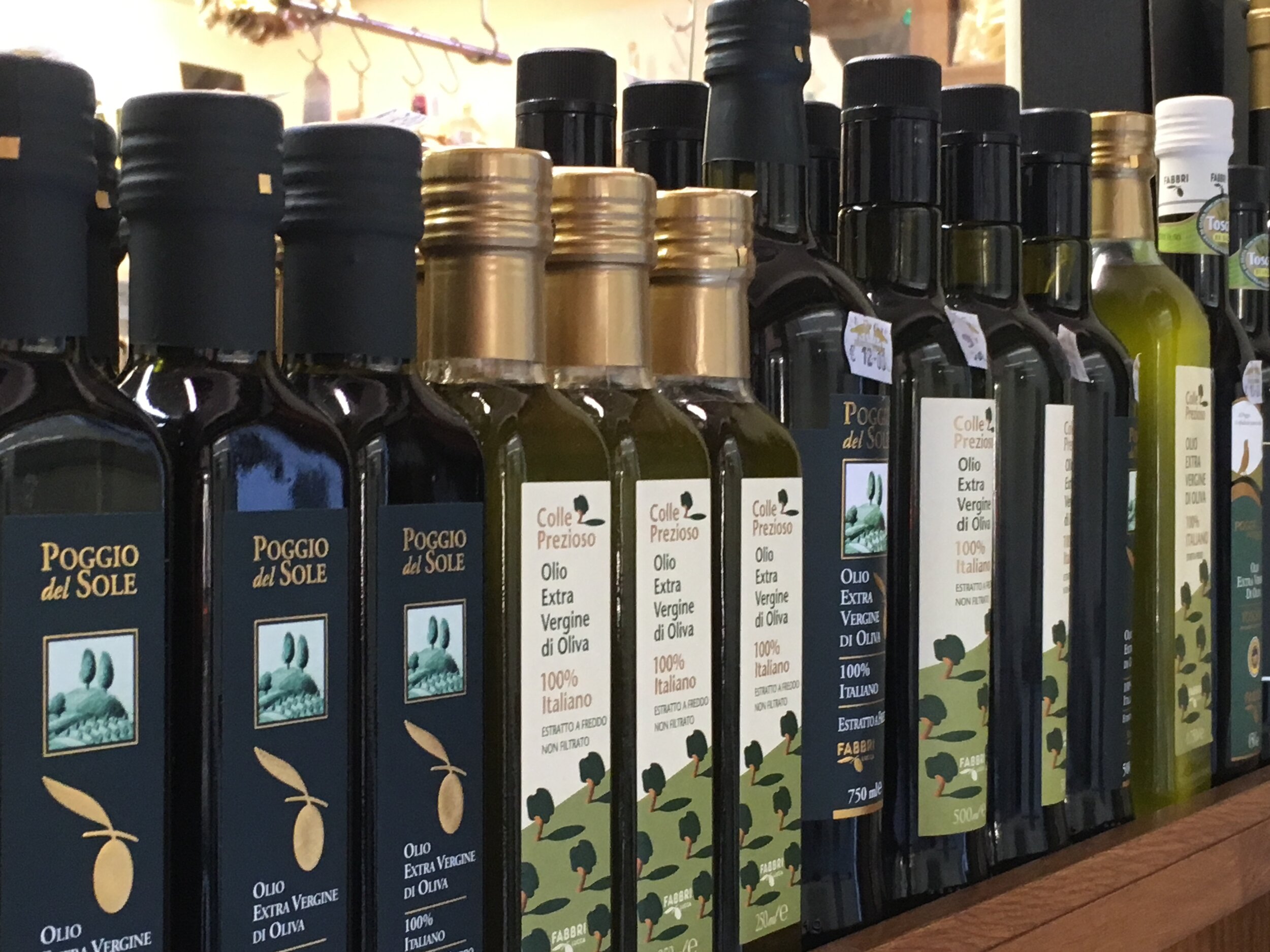
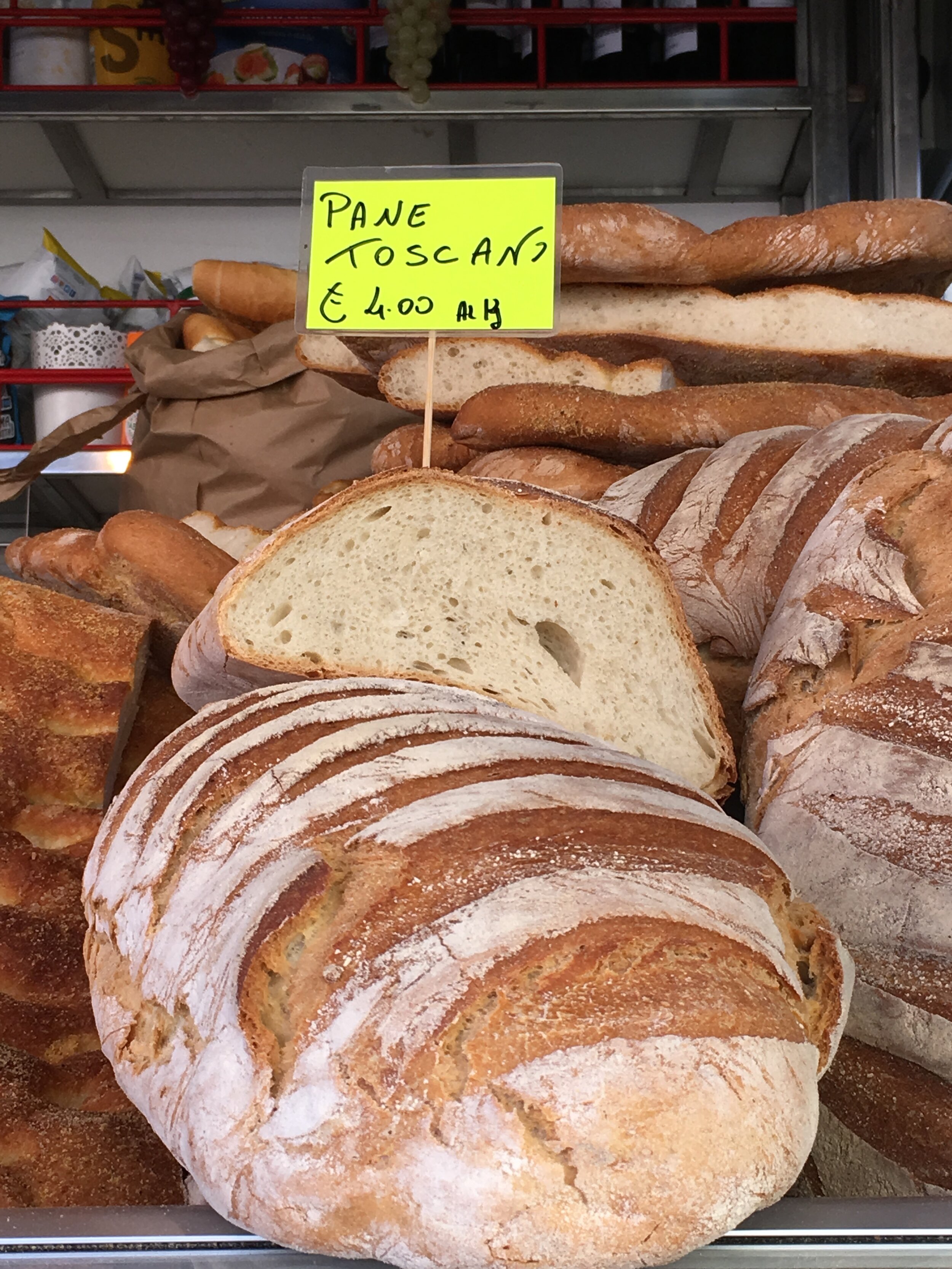
While there are some big grocery stores here (true supermarkets), they are outside of the historic center of the town where I live. I do use one of the small grocery stores inside Lucca’s walls for essentials - pasta, rice, coffee, sugar, etc. But for other items it remains common in Lucca to visit a number of small specialty shops, something I love to do. Two years of living here has made me a bit fussy about foods. I prefer milk from the region of the Maremma, available at a nearby latteria (dairy store). It just tastes better than what I can buy at the grocery store, plus that same latteria sells the nicest cheeses and lovely little slices of frittata and vegetable tartlets. I buy only local olive oil, freshly pressed each fall. I have a couple of favorite meat markets, delis, and vegetable markets. As for bread - well it seems everyone has their favorite panificio (bread bakery). I will gladly walk across town for the best focaccia.

IMG_8425.JPG
IMG_4137.JPG
IMG_4817.JPG
IMG_6444.JPG

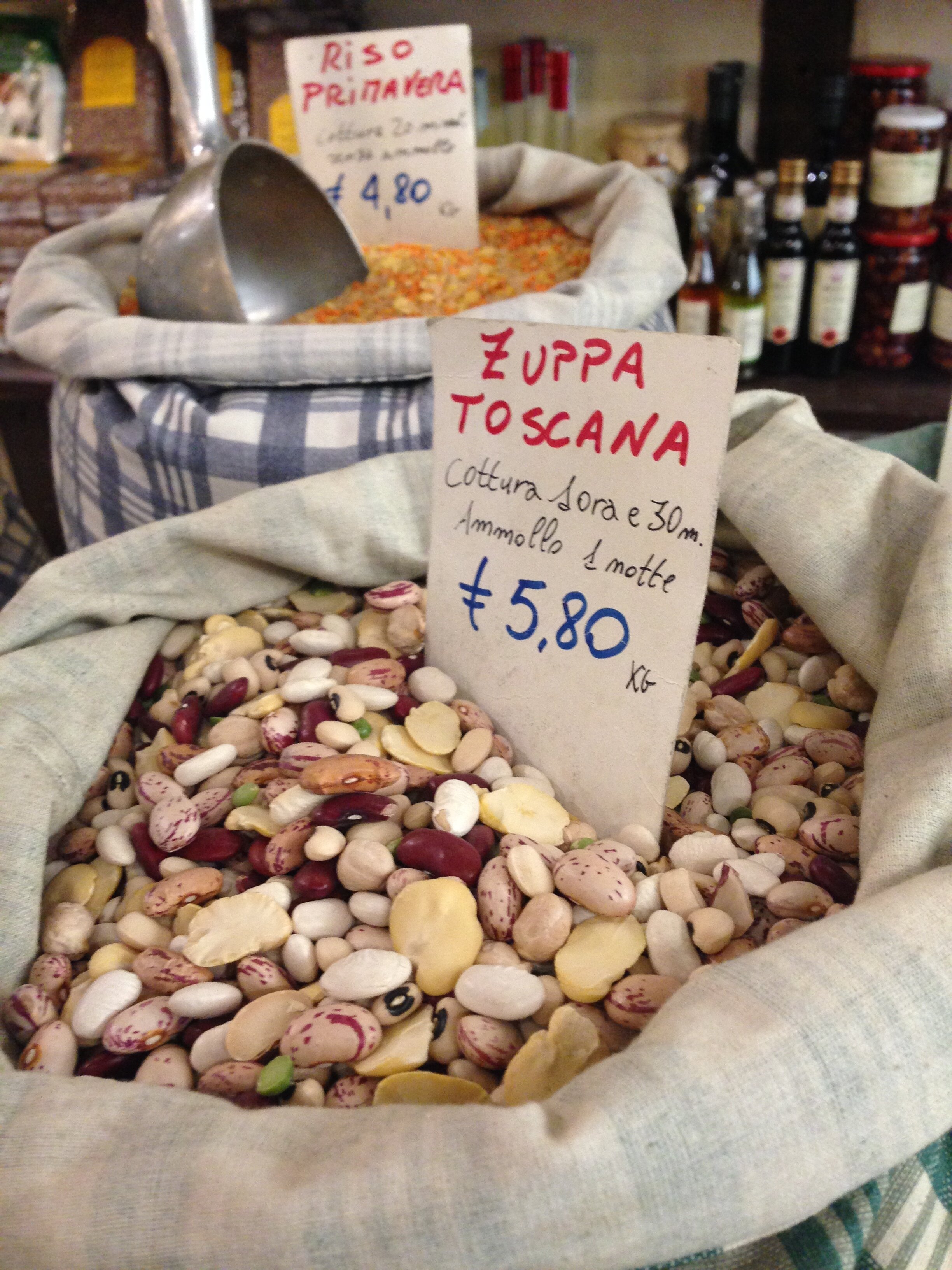
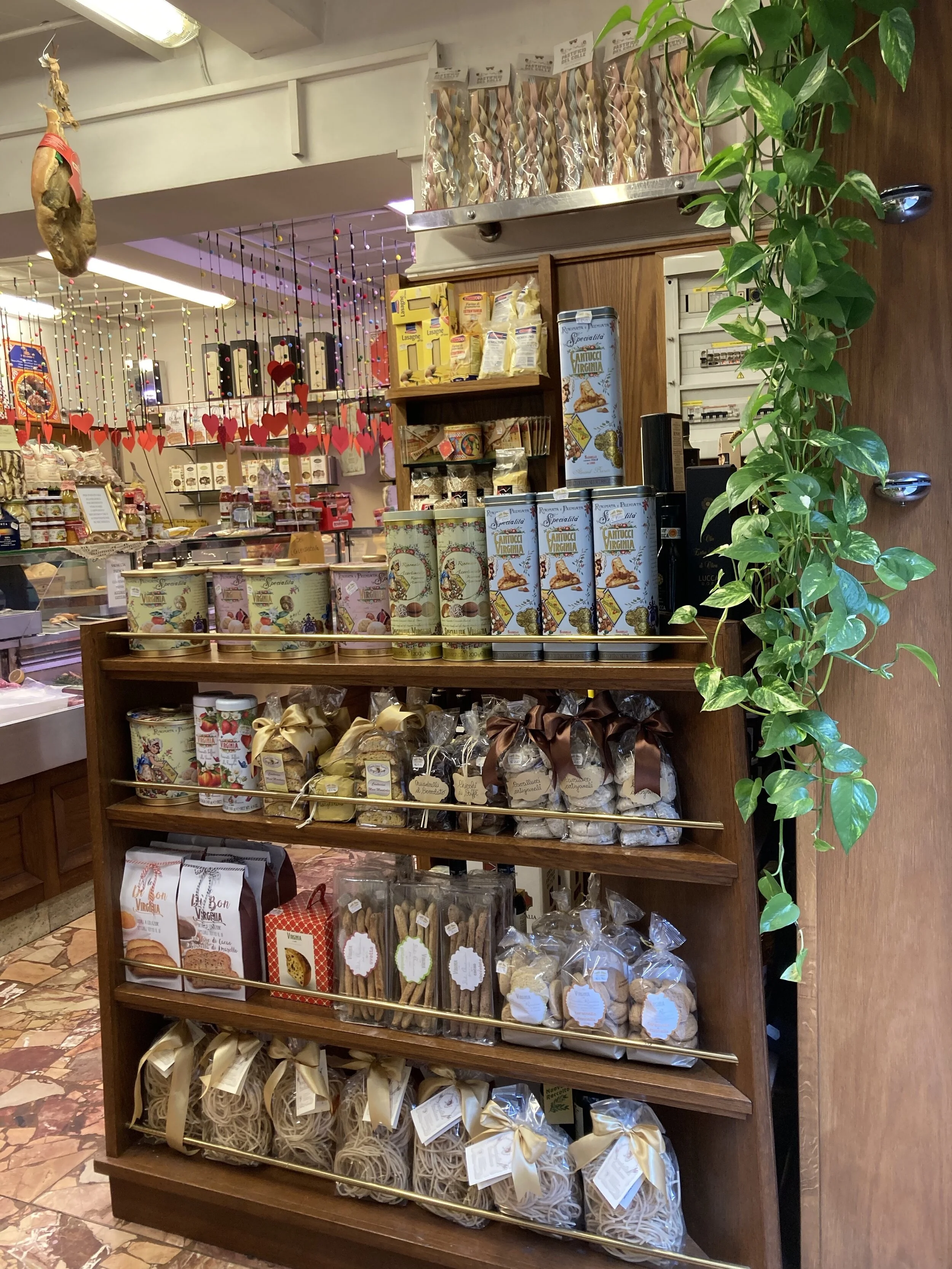
One of my favorite shopping experiences is to venture to the local polleria (poultry shop) where they specialize in the freshest, tastiest chicken. In Lucca that’s the Polleria Volpe on Via San Paolino. In addition to wonderful chicken they also have a variety of other meats and shelves full of pasta, beans, olive oils, and other staples.

Just some of the ready-to-cook meats available at Polleria Volpe

Just some of the ready-to-cook meats available at Polleria Volpe

The yellowish color is typical of chicken found in Italy (apologies to my vegetarian friends, but these birds are tasty!)

The yellowish color is typical of chicken found in Italy (apologies to my vegetarian friends, but these birds are tasty!)

As someone who was used to purchasing chicken on a white styrofoam tray wrapped in plastic, my first visit to Polleria Volpe was an eye-opener. I did not see what I wanted in the display case, so I asked if they had chicken thighs of the bone-in and skin-on variety. They did, but would need to cut them for me. The macellaio (butcher) then proceeded to remove a large chicken from a huge box full of chickens. Next, out came a big cleaver which she used to expertly removed the thigh / leg quarters from the chickens. Then she separated the thighs from the lower legs with a slightly smaller knife. They way she did it made it look more like an art form, or an ancient weaponry display, then butchering. Along the way she taught me the difference between cosce (which my dictionary said was a thigh but actually means the thigh / leg combination) and anca (hip - meaning just the upper thigh).

As if that weren’t enough, she then asked me “bruciate?”. HUH? Burned? Why would I want my chicken thighs burned? As it turned out, she was asking if I wanted her to singe the bits of remaining feathers, something no American butcher has ever asked me. That process leaves little brown singe marks on the skin and I swear it adds to the flavor once those thighs are roasted. That first visit to the polleria was a valuable cultural, language, and culinary, experience!

Who knew a butcher shop could be this colorful and interesting ?

Who knew a butcher shop could be this colorful and interesting ?

Over time, I’ve come to know the butchers at Volpe and depend on their recommendations. They were most helpful in picking out a large roasting chicken to do stand-in for a Thanksgiving turkey last year. I was only a bit surprised when the chicken they pulled out for me had both its head and two very, very long legs. Thankfully the butcher removed both before wrapping it up in paper for me to take home. The bird also came with their best wishes for a Happy Thanksgiving, which they called the “American holiday”.

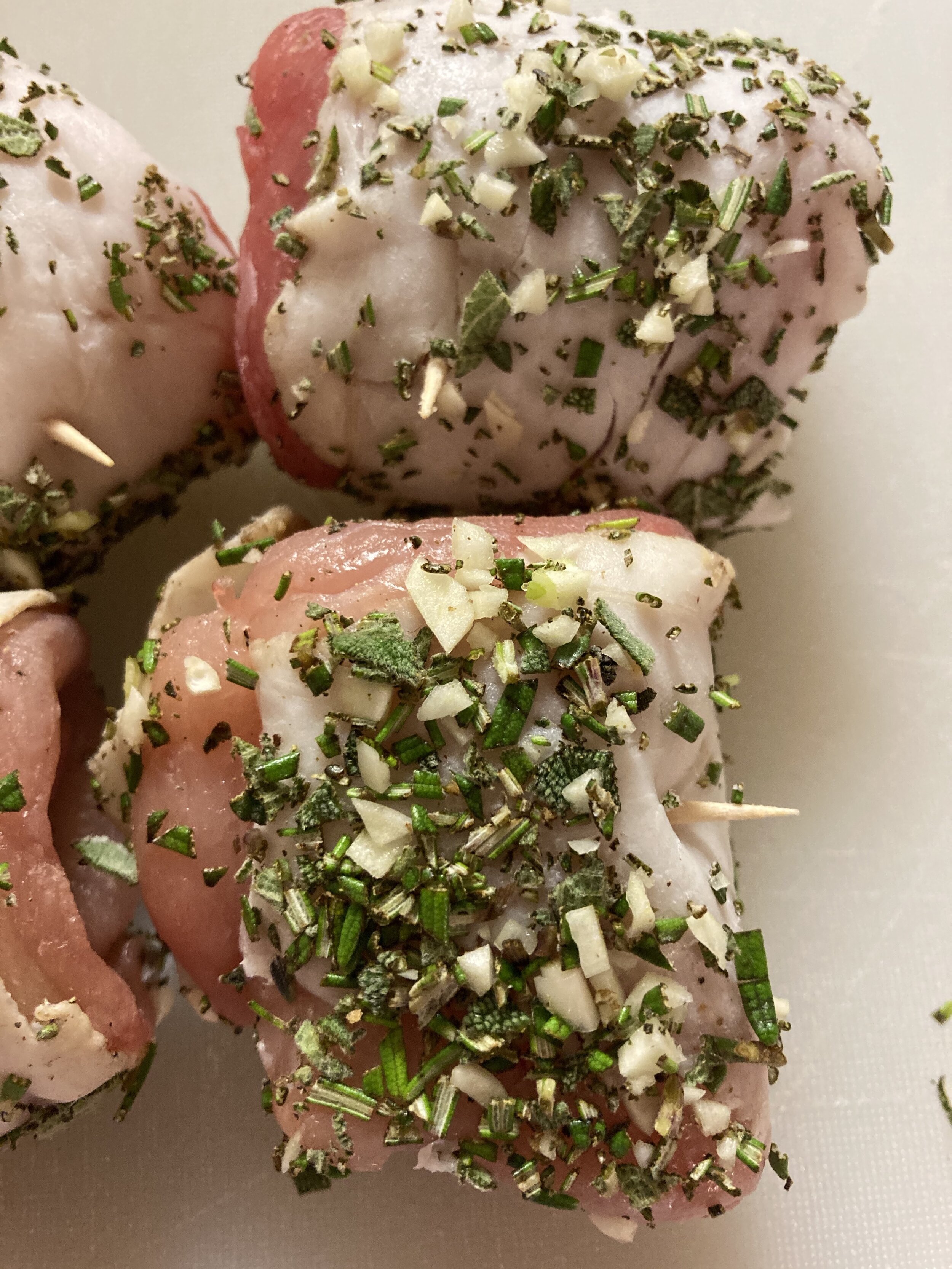
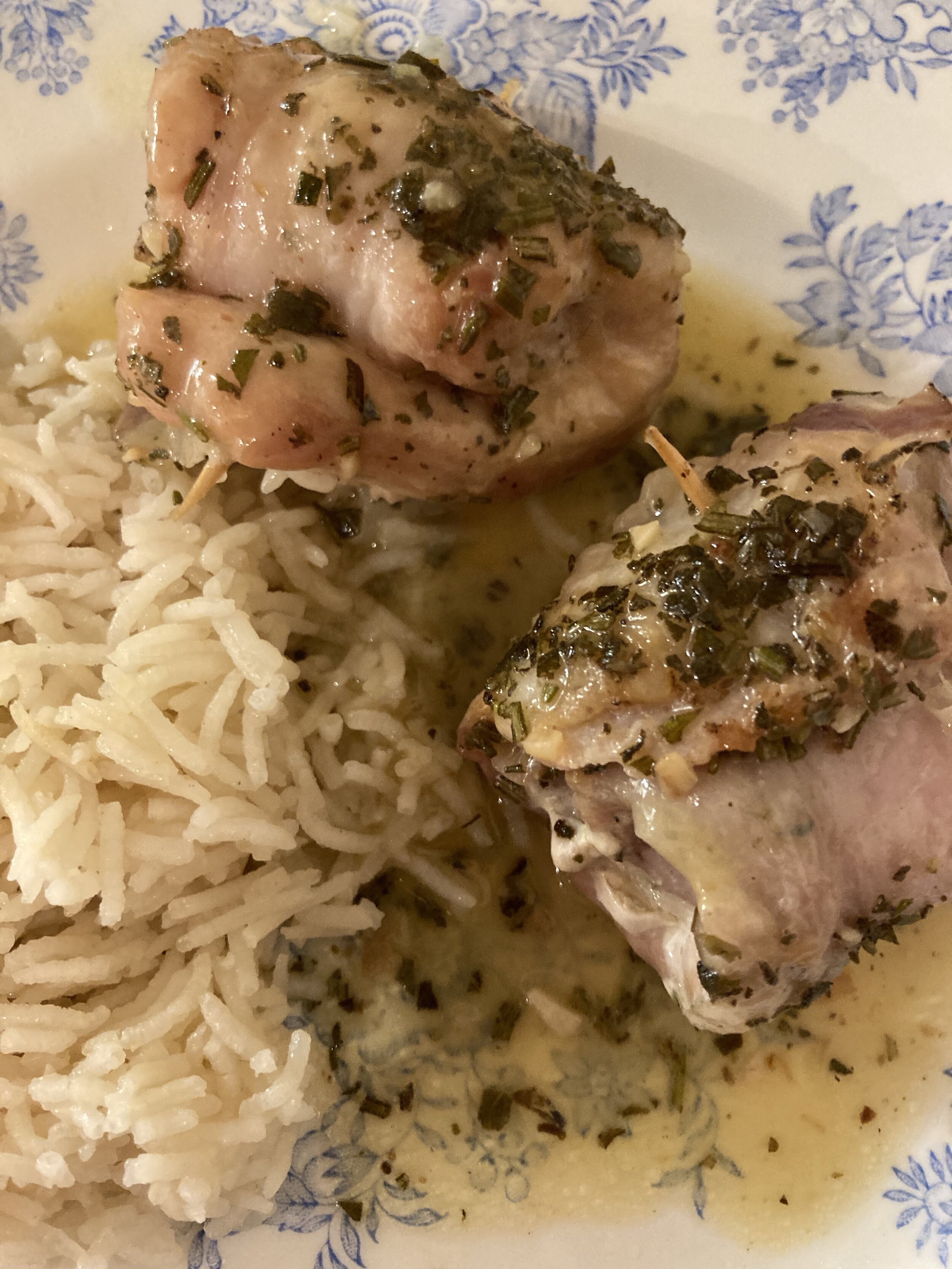
A while back I saw small involtini (little rolled pieces of meat) in their display case. At first I thought they were chicken but they were actually strips of rabbit (coniglio) laid on top of thin strips of lardo (pork fat), rolled up and secured with a toothpick. I was intrigued, but since I had never cooked rabbit I asked the butcher how to prepare it - in the forno (oven) or in a padella (frying pan)? Her recommendation: frying pan with a bit of olive oil and some white wine. I followed those instructions, but first I rolled them in finely chopped herbs (sage and rosemary) along with salt & some garlic. Then I seared them, added the white wine, squeezed in a bit of lemon juice, and let them cook for about 30 minutes. I finished the sauce with a little knob of butter and served the finished involtini over rice. The flavor was heavenly!

bBc2Tv7XTbOBLctUByoXpQ.jpg
DN7qFBKsT8GO+zGOAUFW+w.jpg

Pre-packed chicken wrapped in plastic just can’t compete, either for flavor or for the sheer delight of shopping at the polleria. And trying new dishes, like the rabbit involtini, adds to the fun! I wonder what I’ll find on my next visit ?

May 24, 2021 /Joanne Bartram
farelaspesa, groceries Italy, italian foods, polleria, Italian cooking
#lucca, Cooking, food, Italian culture, Italian markets, Living in Italy, Lucca
  • Newer
  • Older

Powered by Squarespace