Two Parts Italy

Exploring Italy, travel, and living a flavorful life

  • Blog
  • About This Blog
  • Start Here
  • Recent Posts
  • Archives by Topic
  • Subscribe
  • Contact me

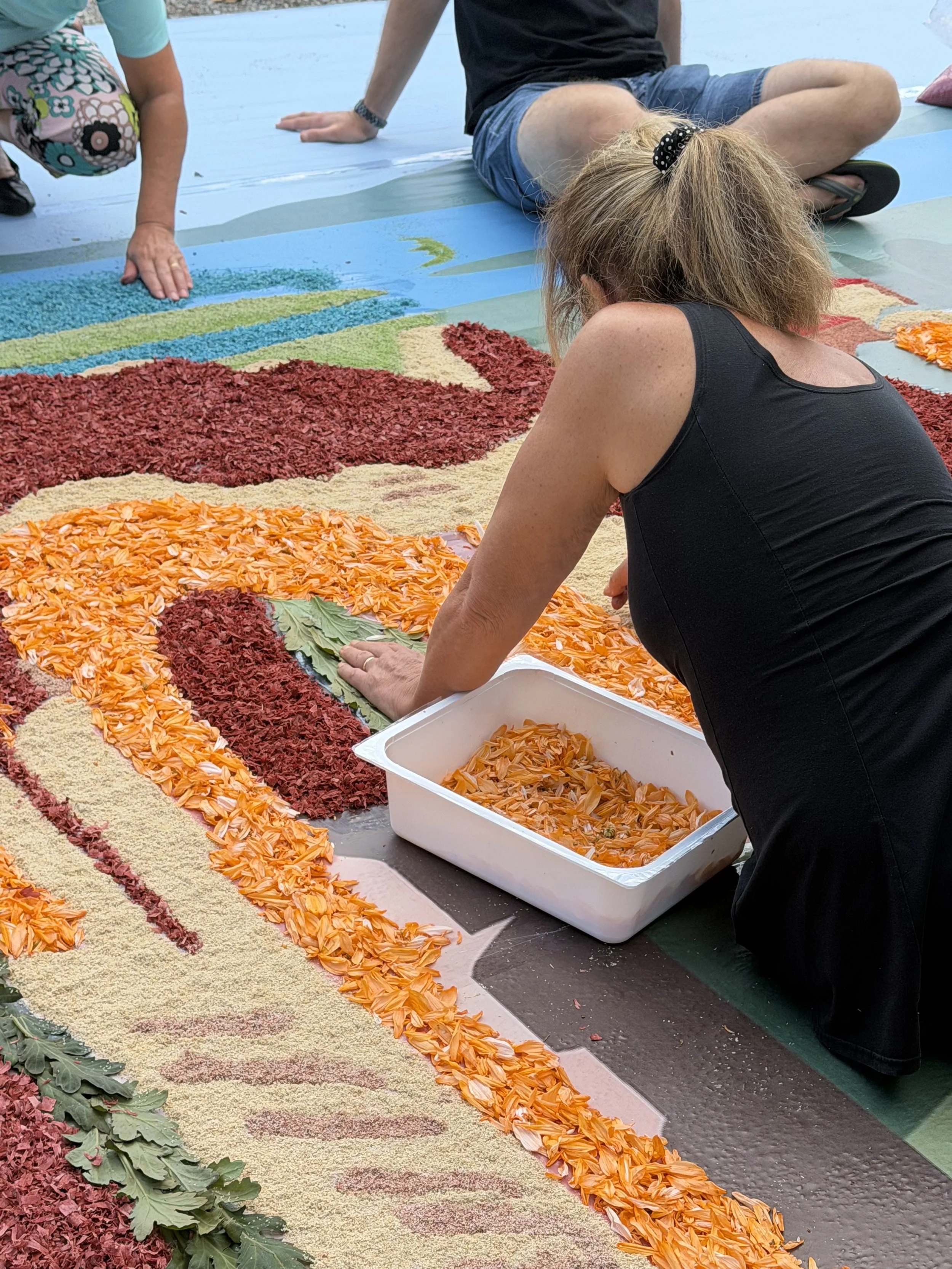
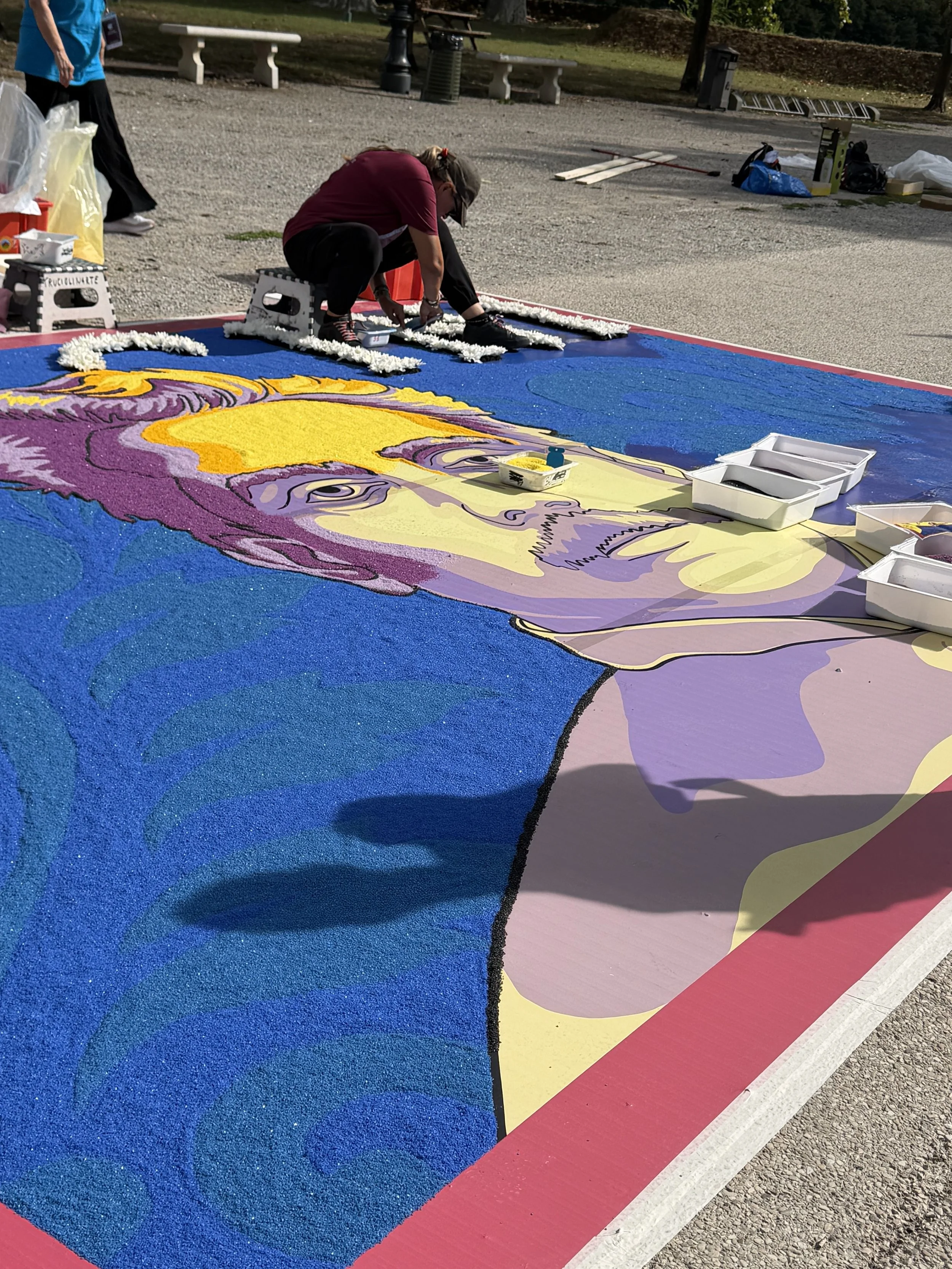
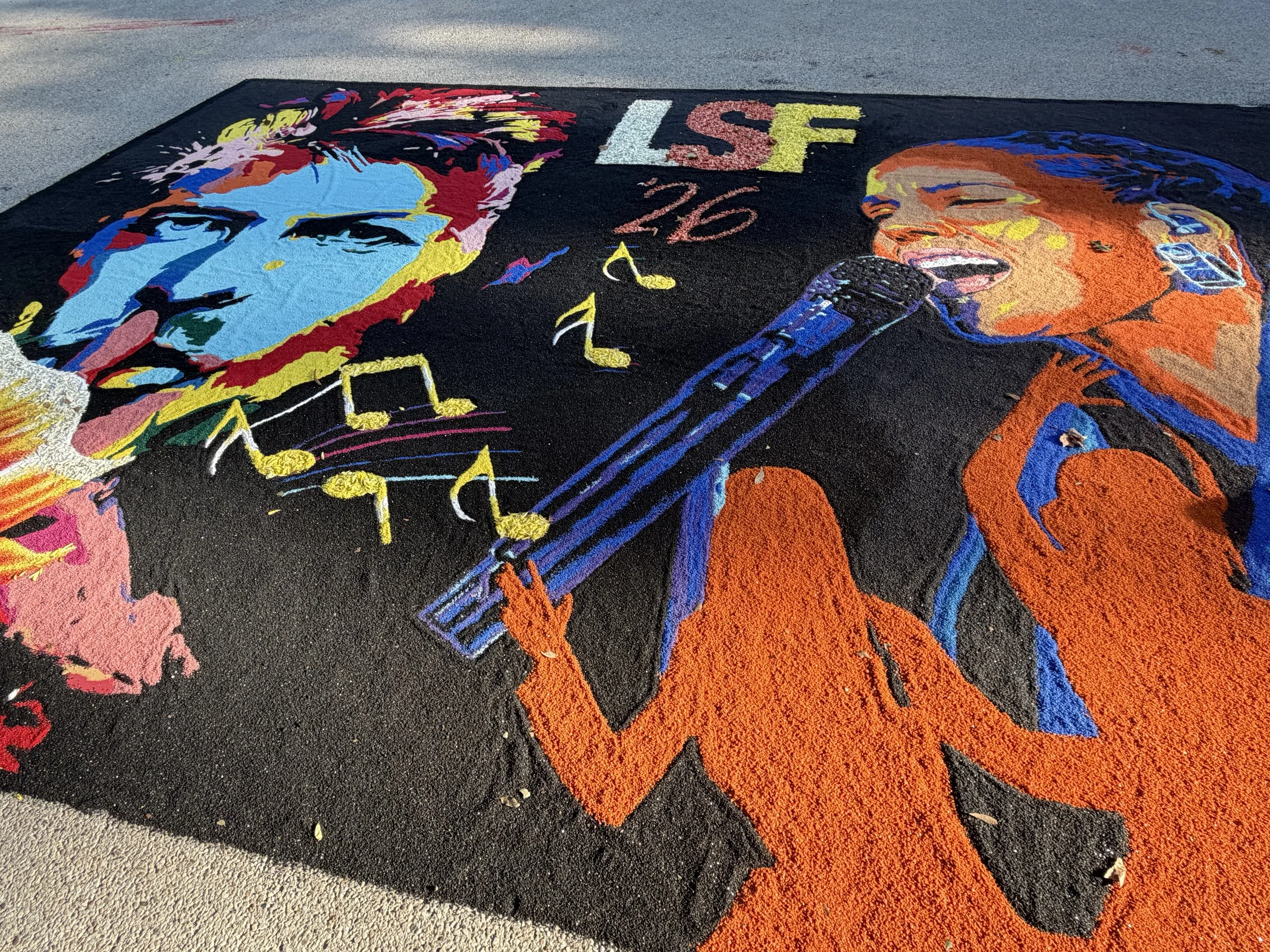
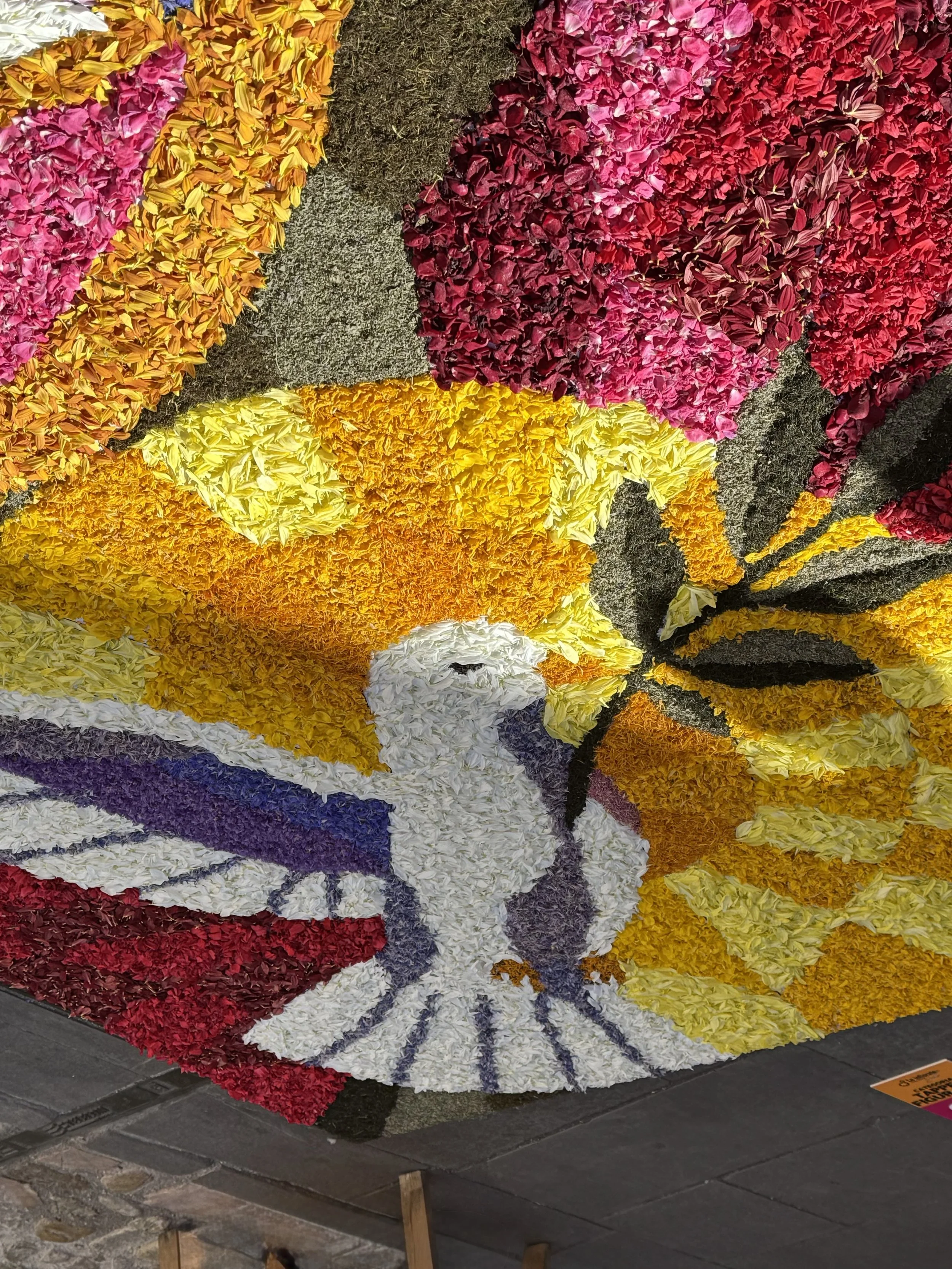
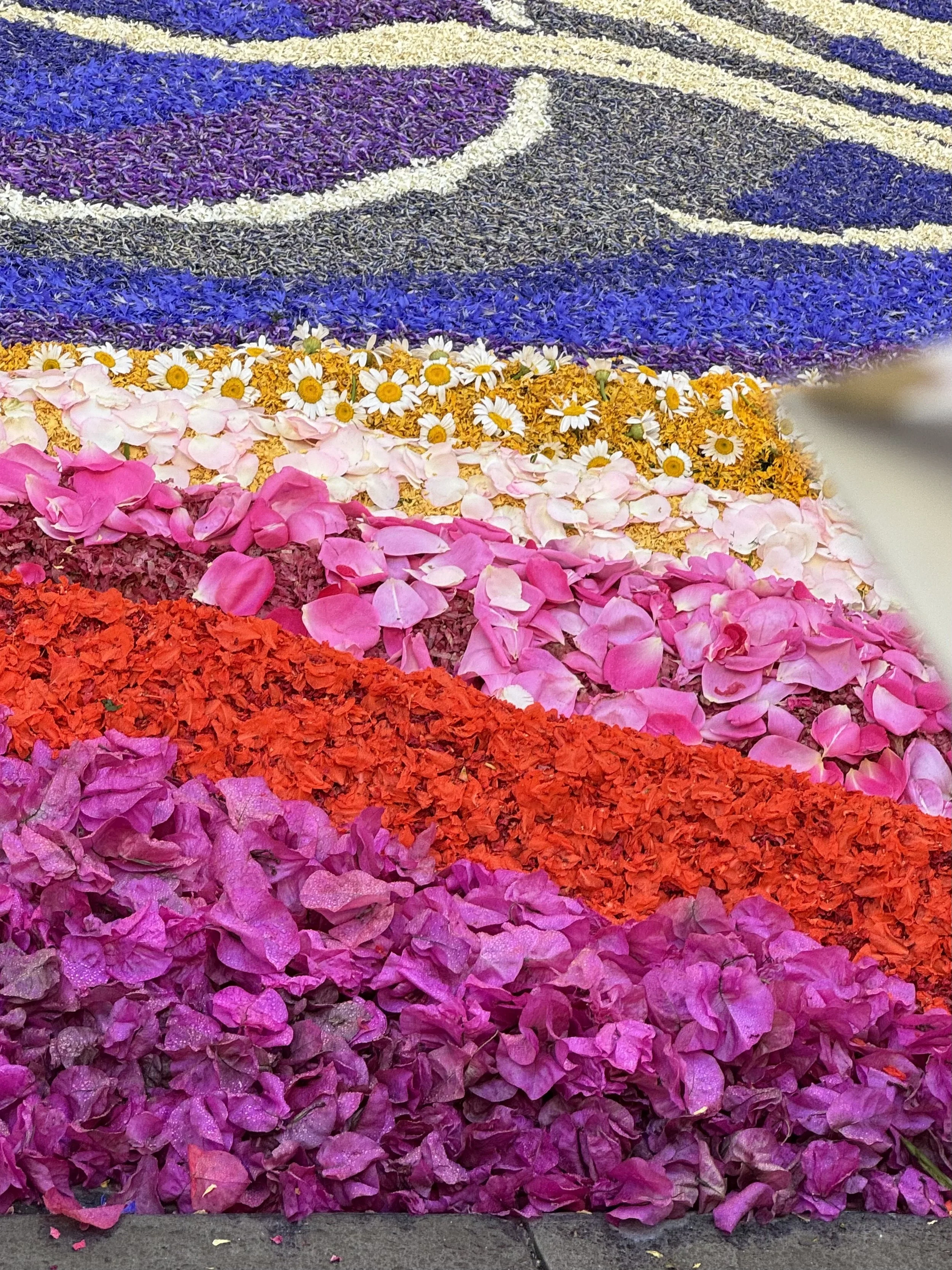
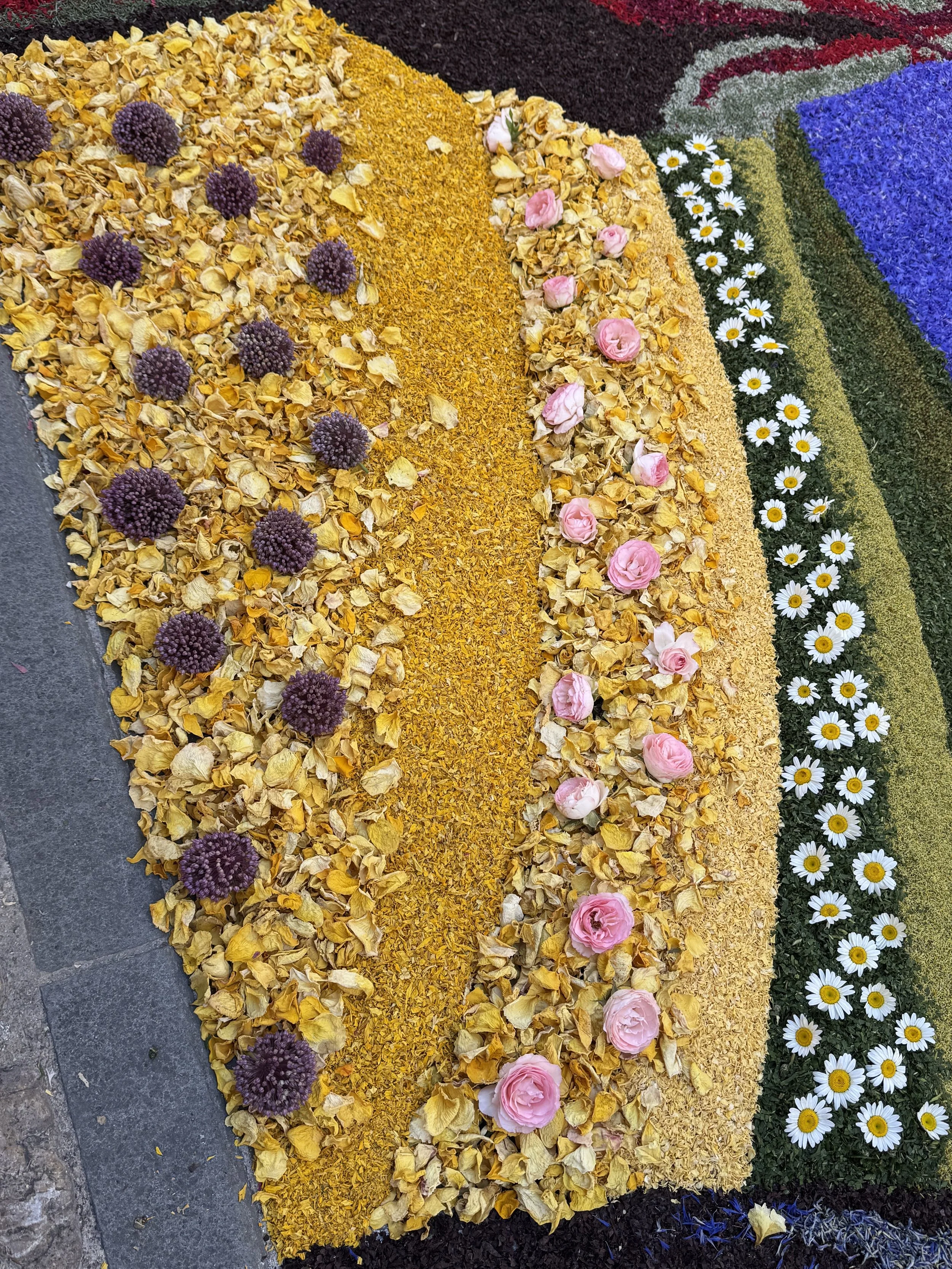
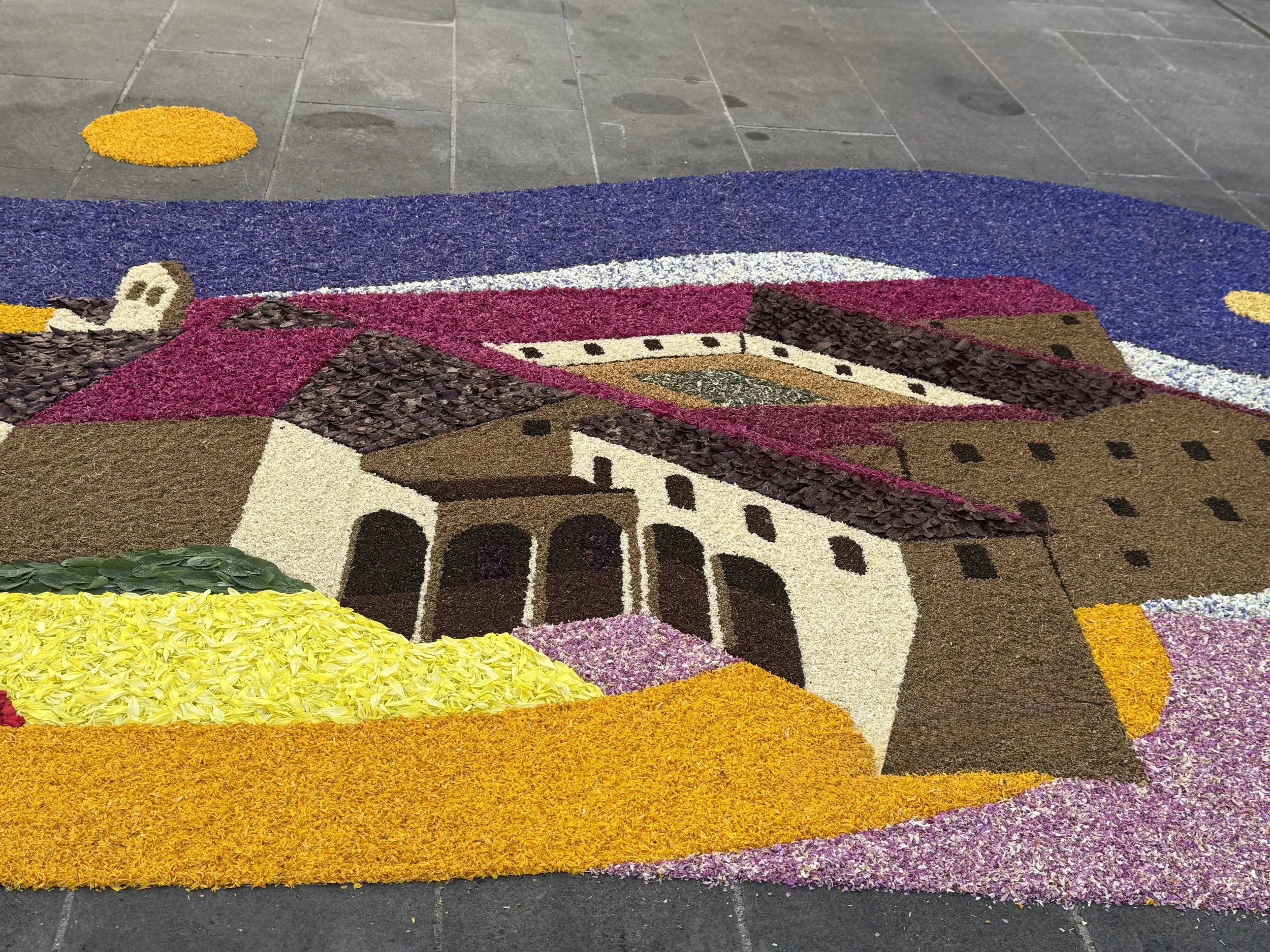
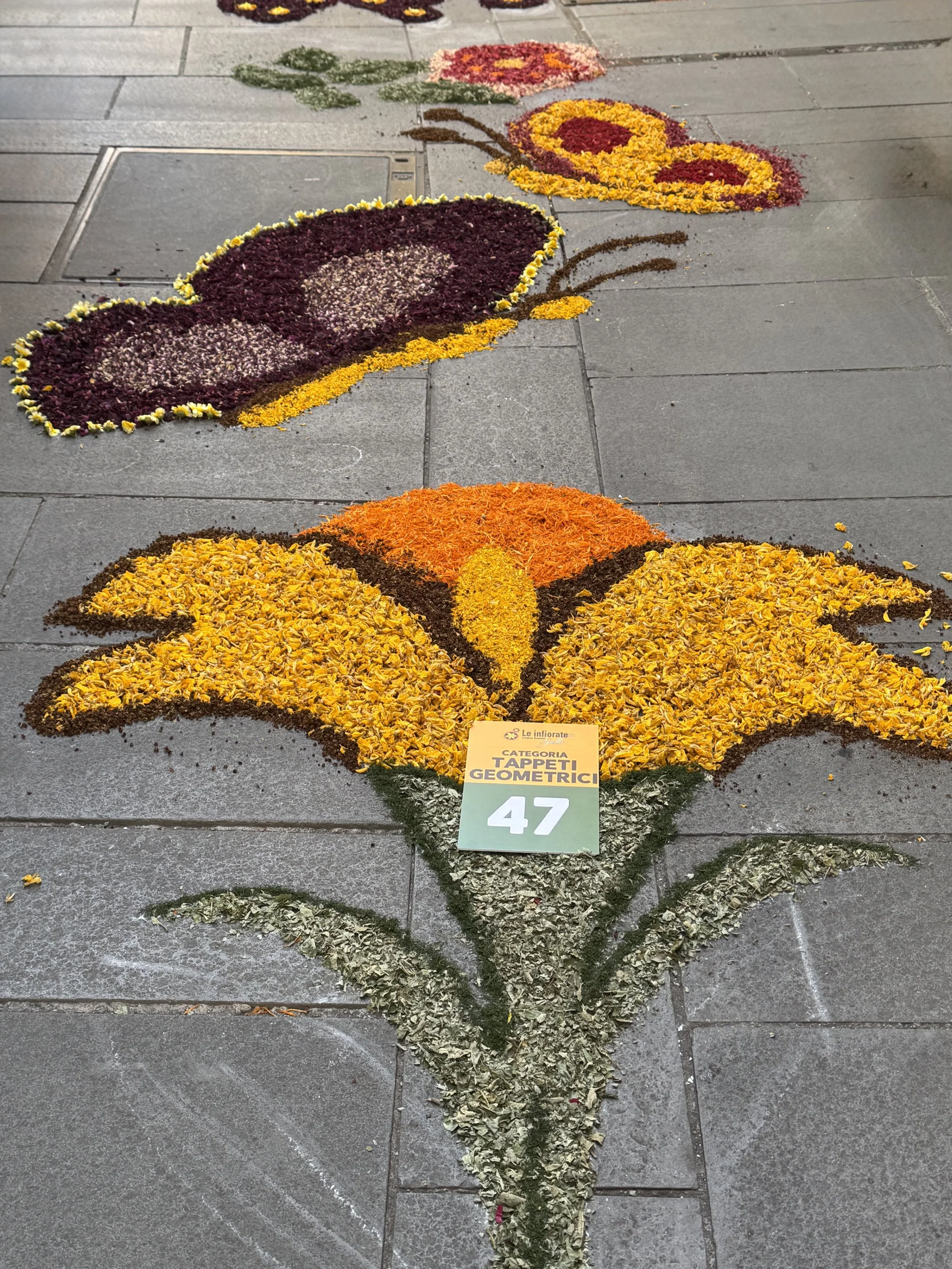
A close look at this display reveals that it is created 100% from flowers

The Infiorata of Spello

June 15, 2026 by Joanne Bartram in #italytravel, Festivals Italy, Italian art architecture, Italian Art, Italian culture, Umbria

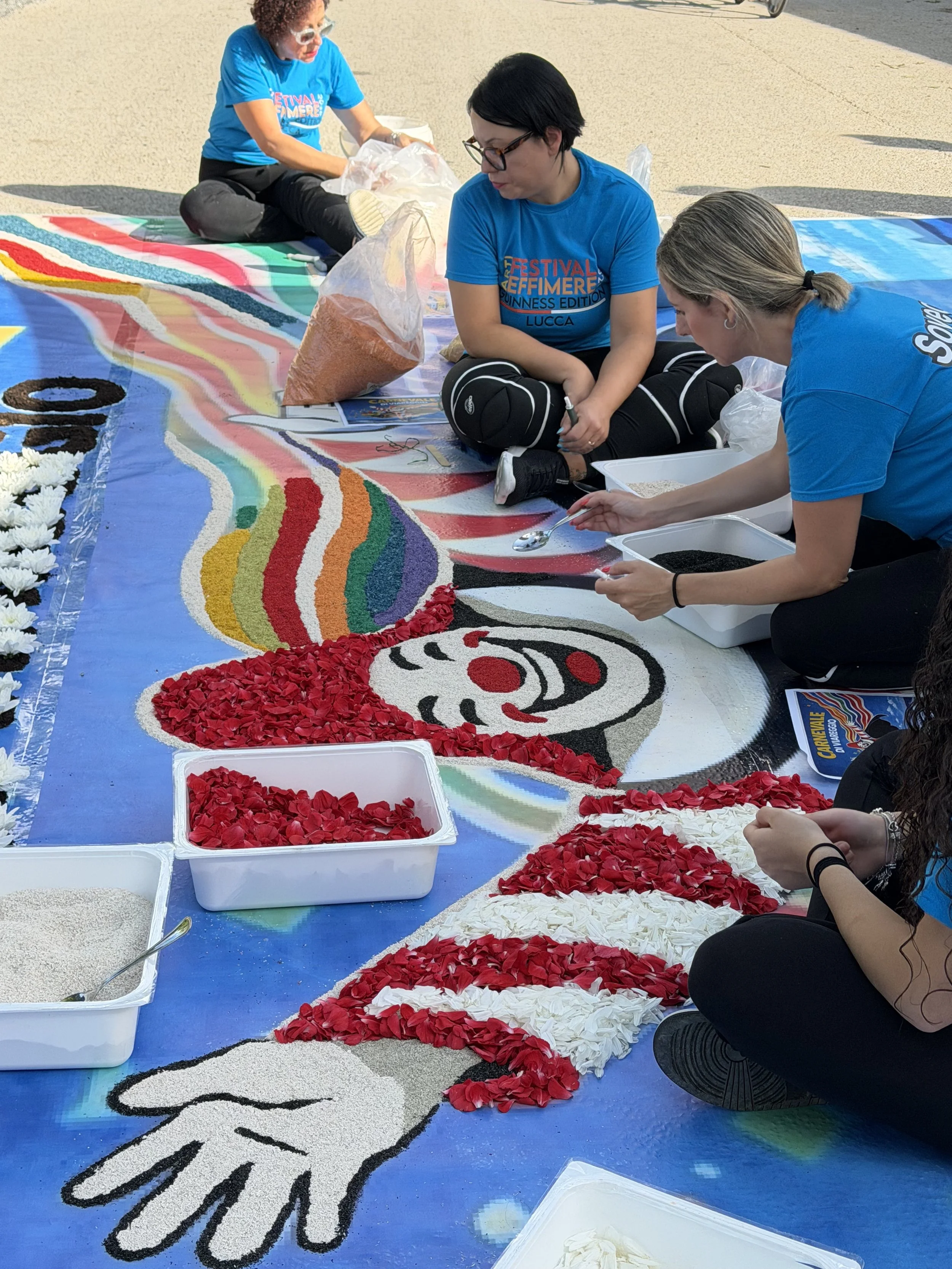
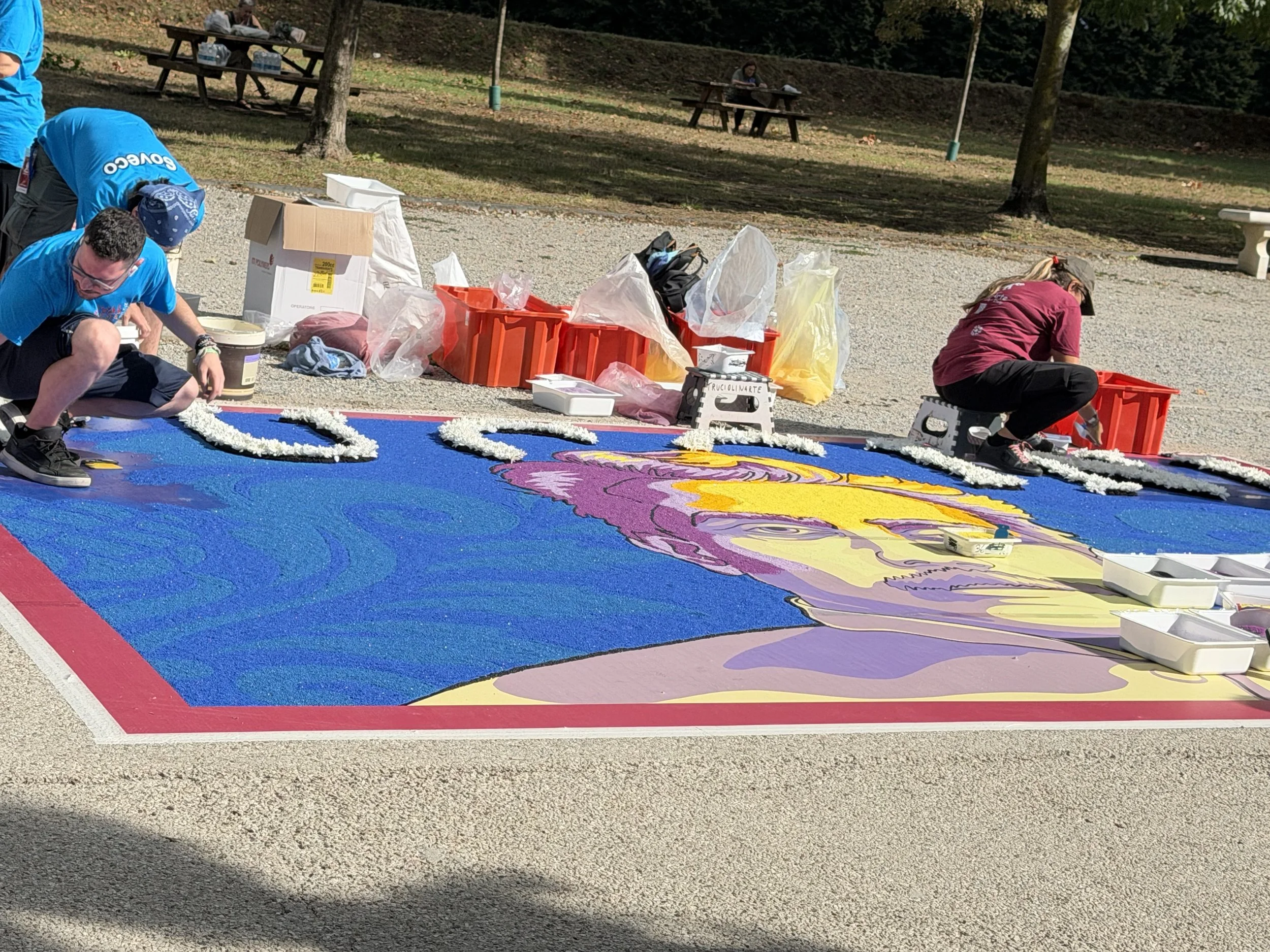
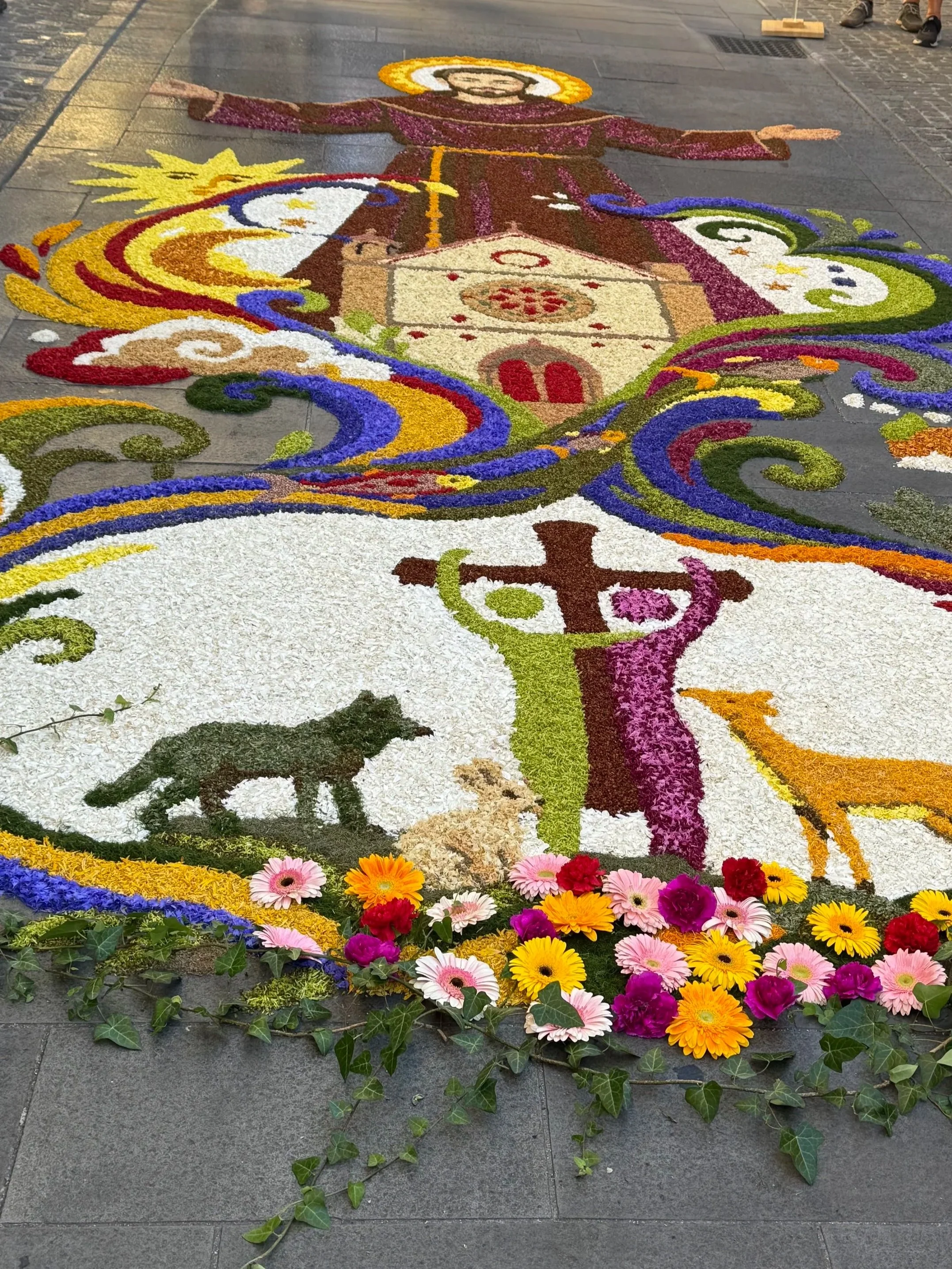
In Italian, the word fiore means flowers. An infiorata is a festival in which flowers are used to create stunning, but temporary, works of art.  A wonderful tradition in Italy is to celebrate the Feast of Corpus Domini, which falls about 60 days after Easter, with an infiorata.  Many towns participate in this tradition, some are small local celebrations, while others are large events which draw thousands of visitors.  The celebrations are not just about art or flowers – they are at heart religious celebrations in which the fleeting designs are offerings – and they guide people up the village streets to the church.

 On any normal day, the town of Spello is filled with flowers.  They spill from window boxes, fill pots in little alleys, and line the steps of buildings, creating one of Umbria’s most charming villages. But on the Sunday of the annual Infiorata, Spello takes flower displays to exponentially greater levels.  It is one of the most famous Infiorate in Italy, and something I have long wanted to experience.  This year I finally got my chance when a visit to the event was included as part of a 4-day cooking class in Umbria (more about that in upcoming posts).

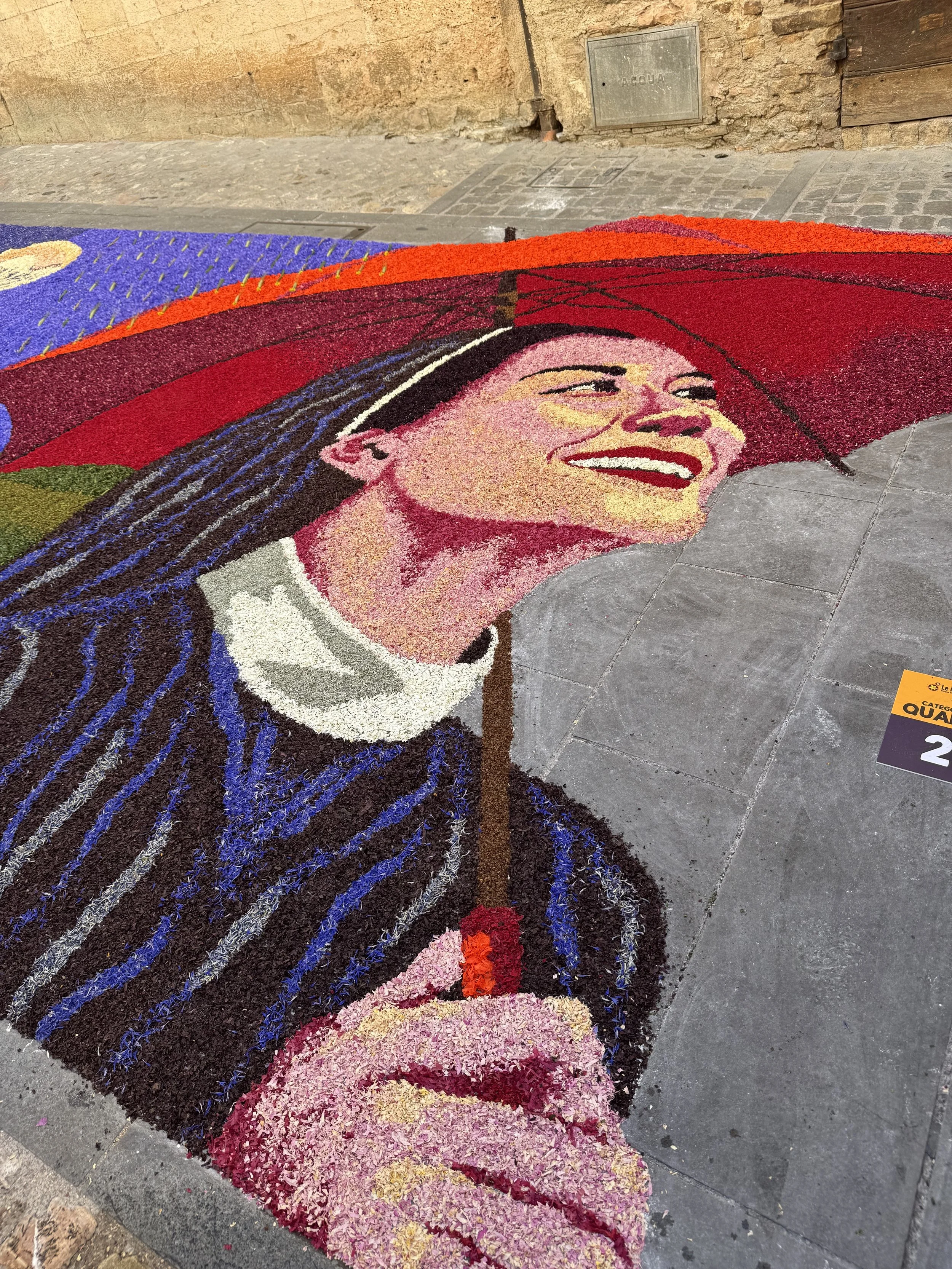
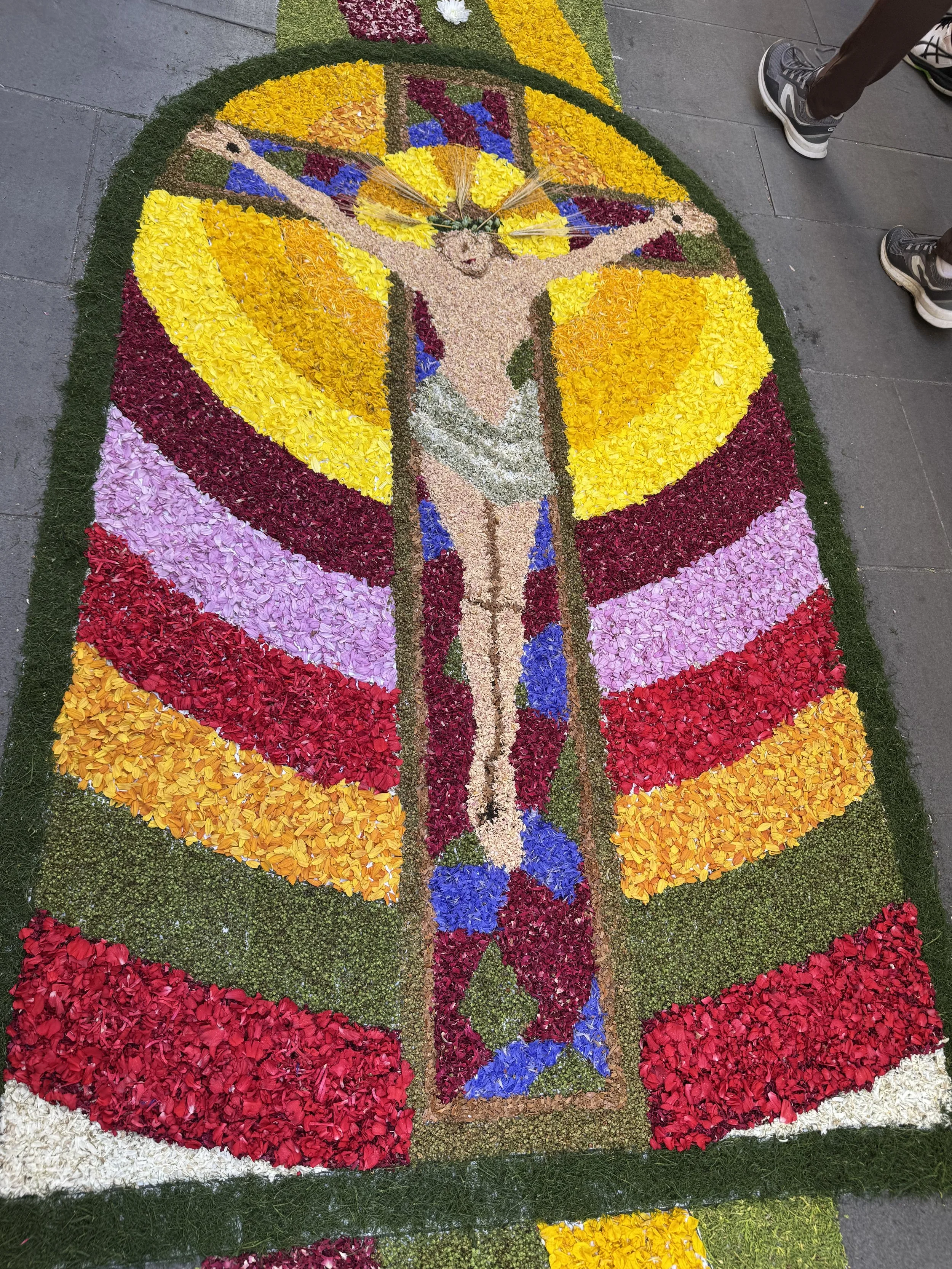
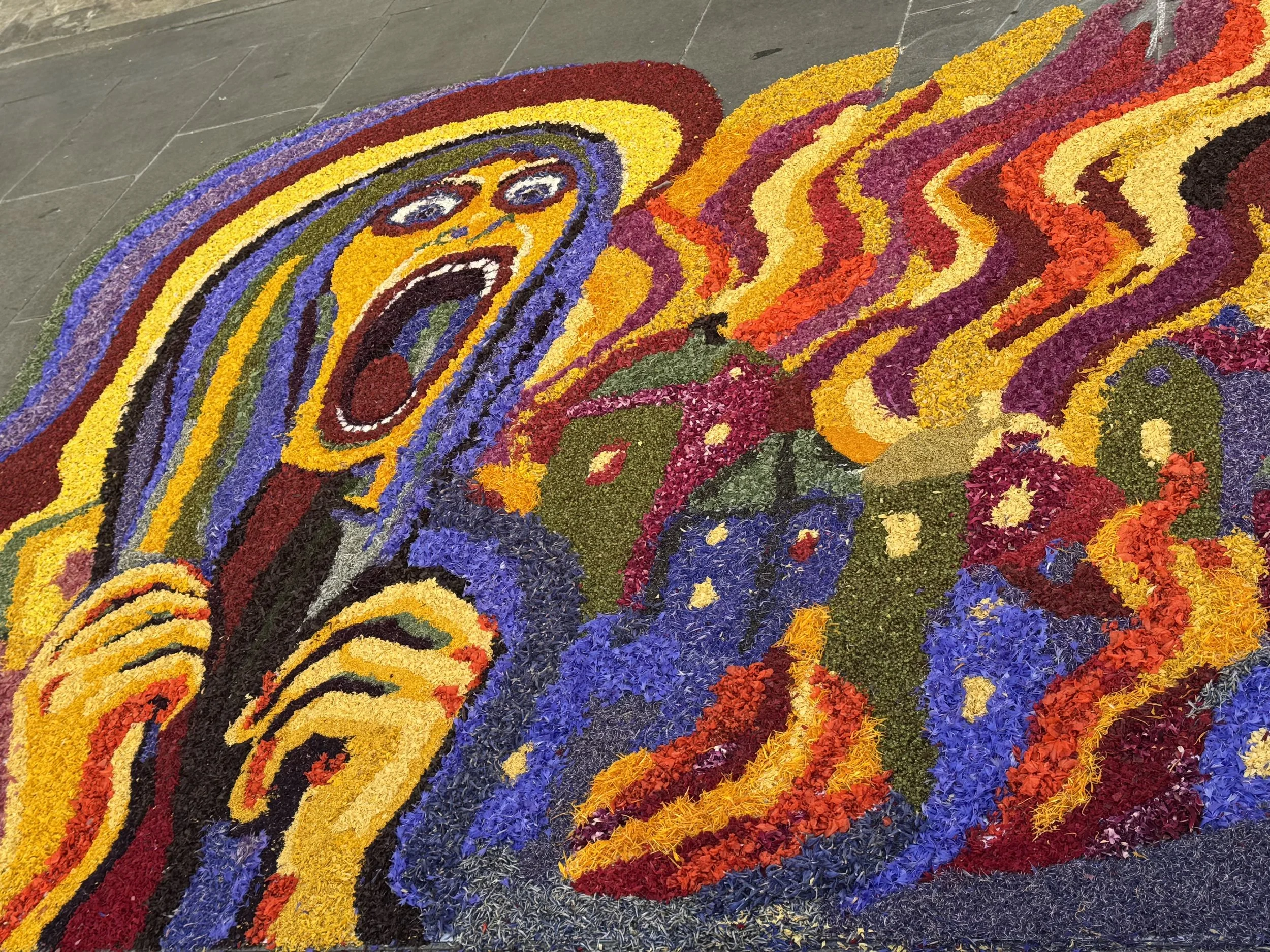
A detail from one of my favorite quadri

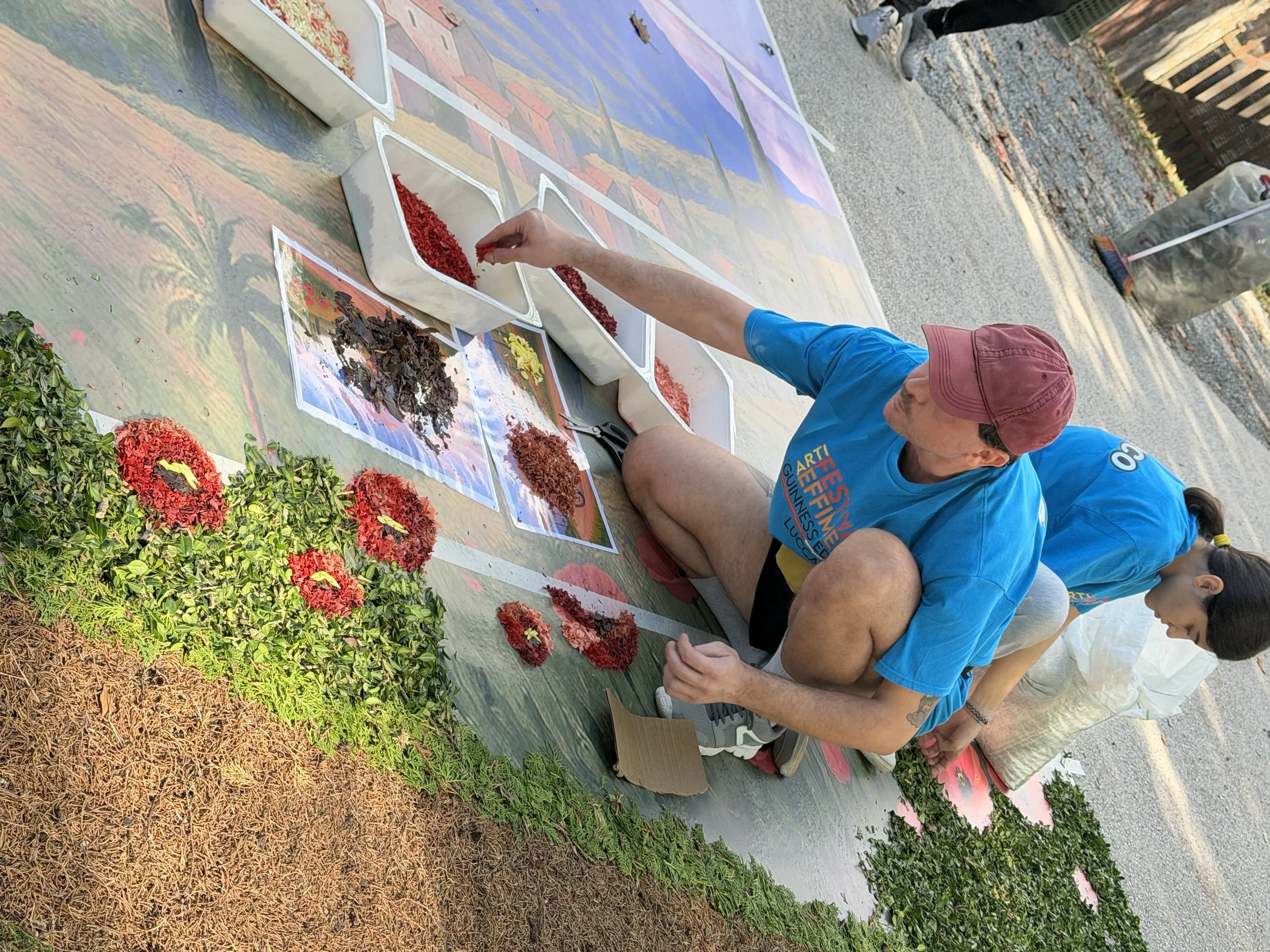
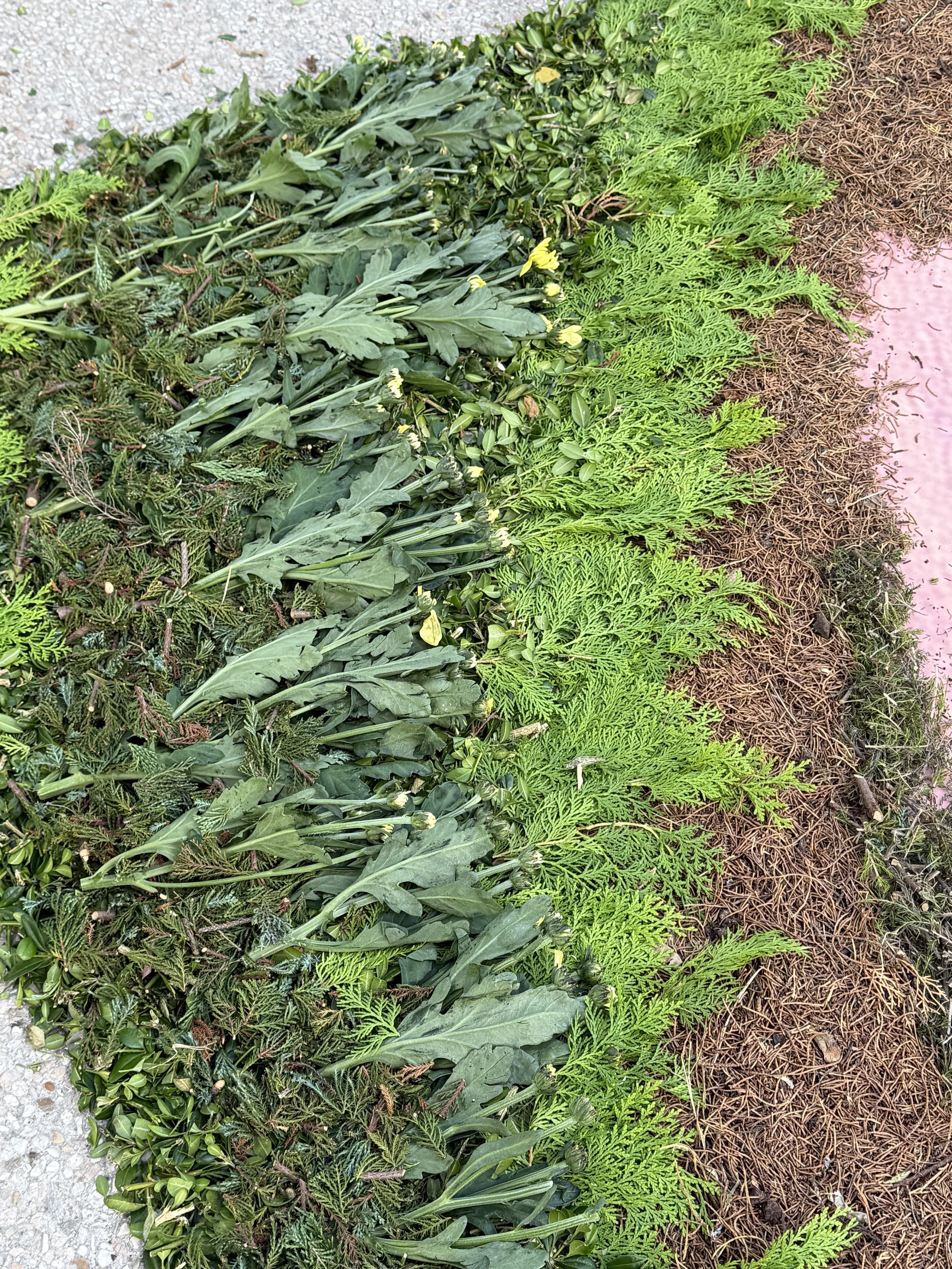
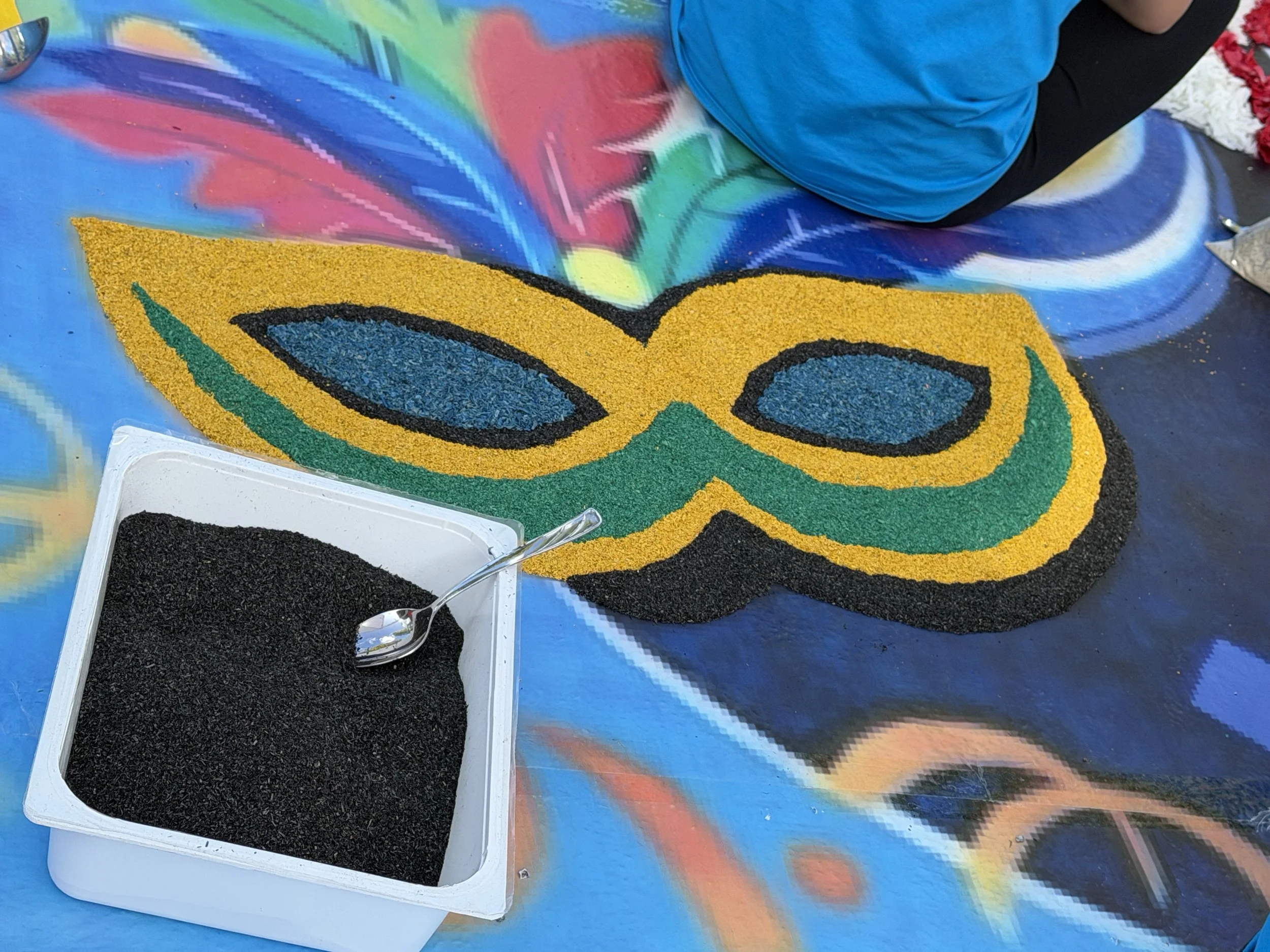
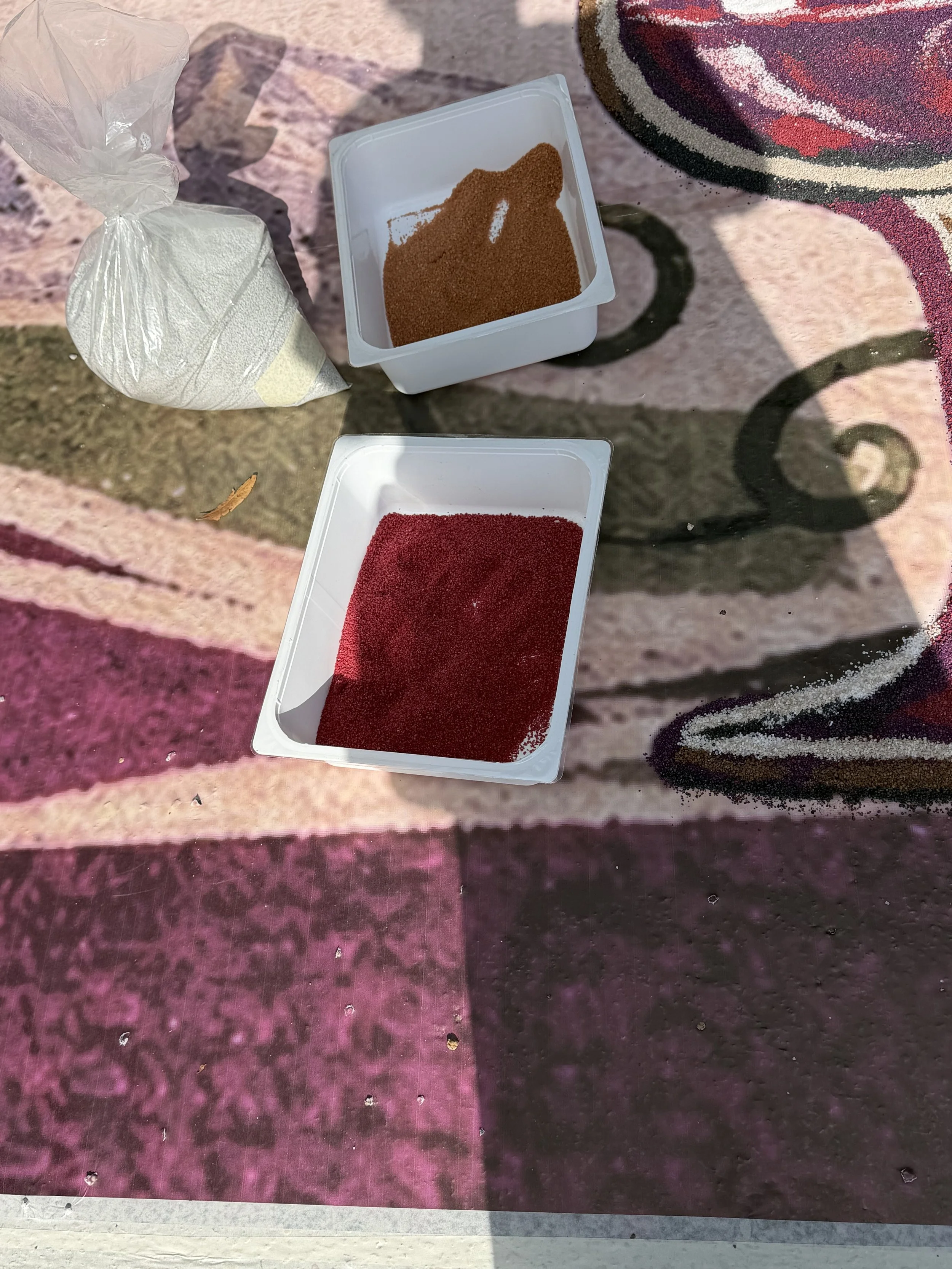
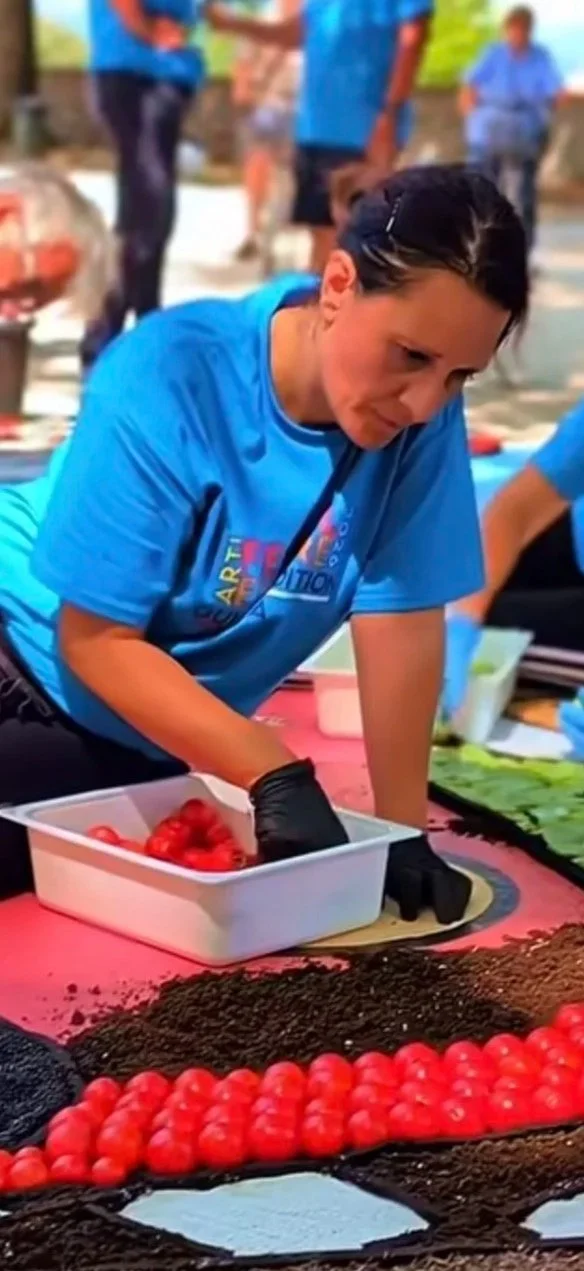
 The city of Spello closes to traffic on Saturday evening when tarp coverings are placed over the streets.  Teams work under the lighted tarps throughout the night, using only natural plant materials (petals, stems, leaves, herbs) to create detailed designs.  The materials can be fresh or naturally dried but no artificial colors or materials can be used. The labor is intensive, placing petals by hand, making a design come to life, keeping the petals moist, and staying up all night to do it!

IMG_0990.jpeg
IMG_0988.jpeg

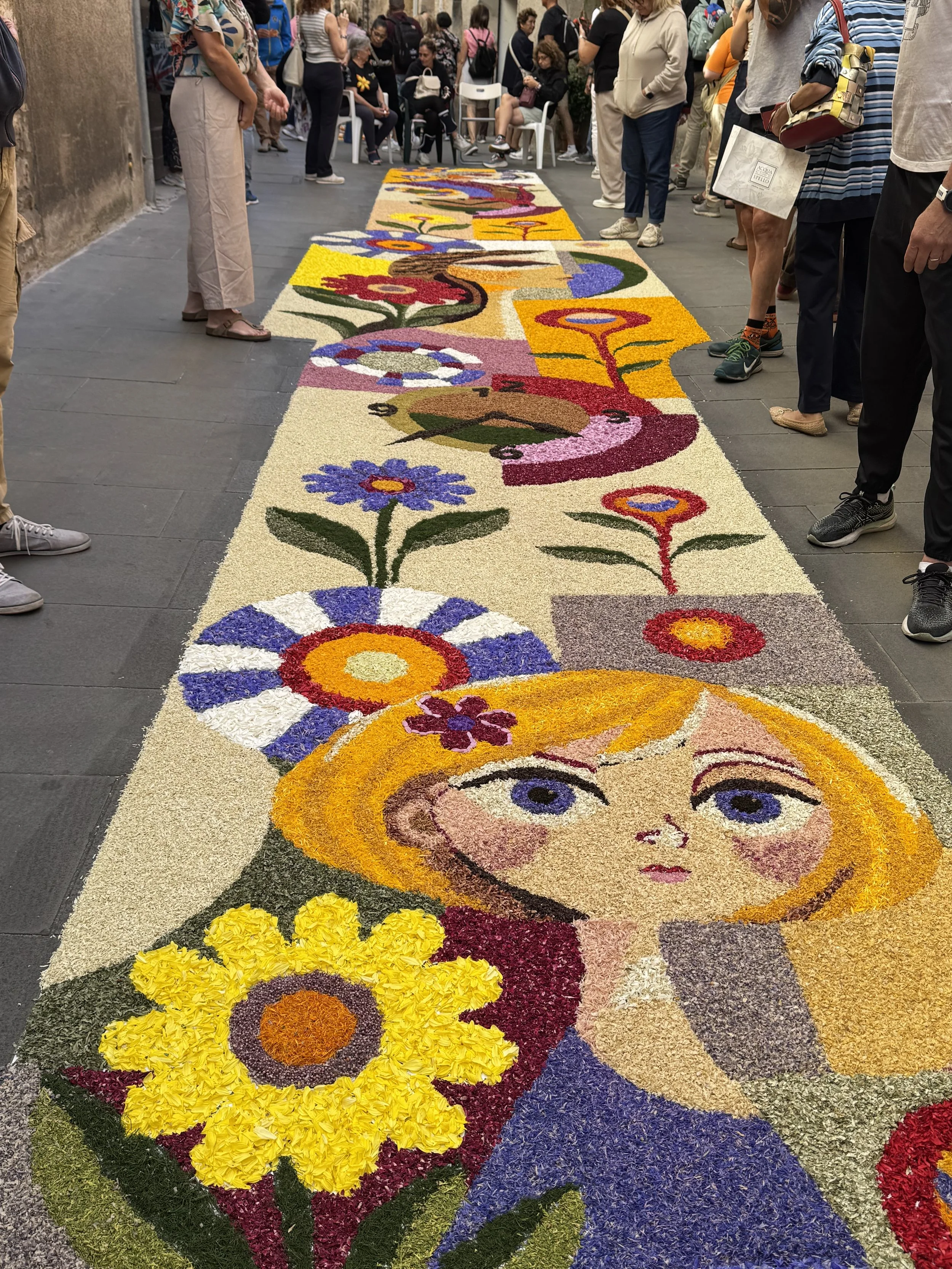
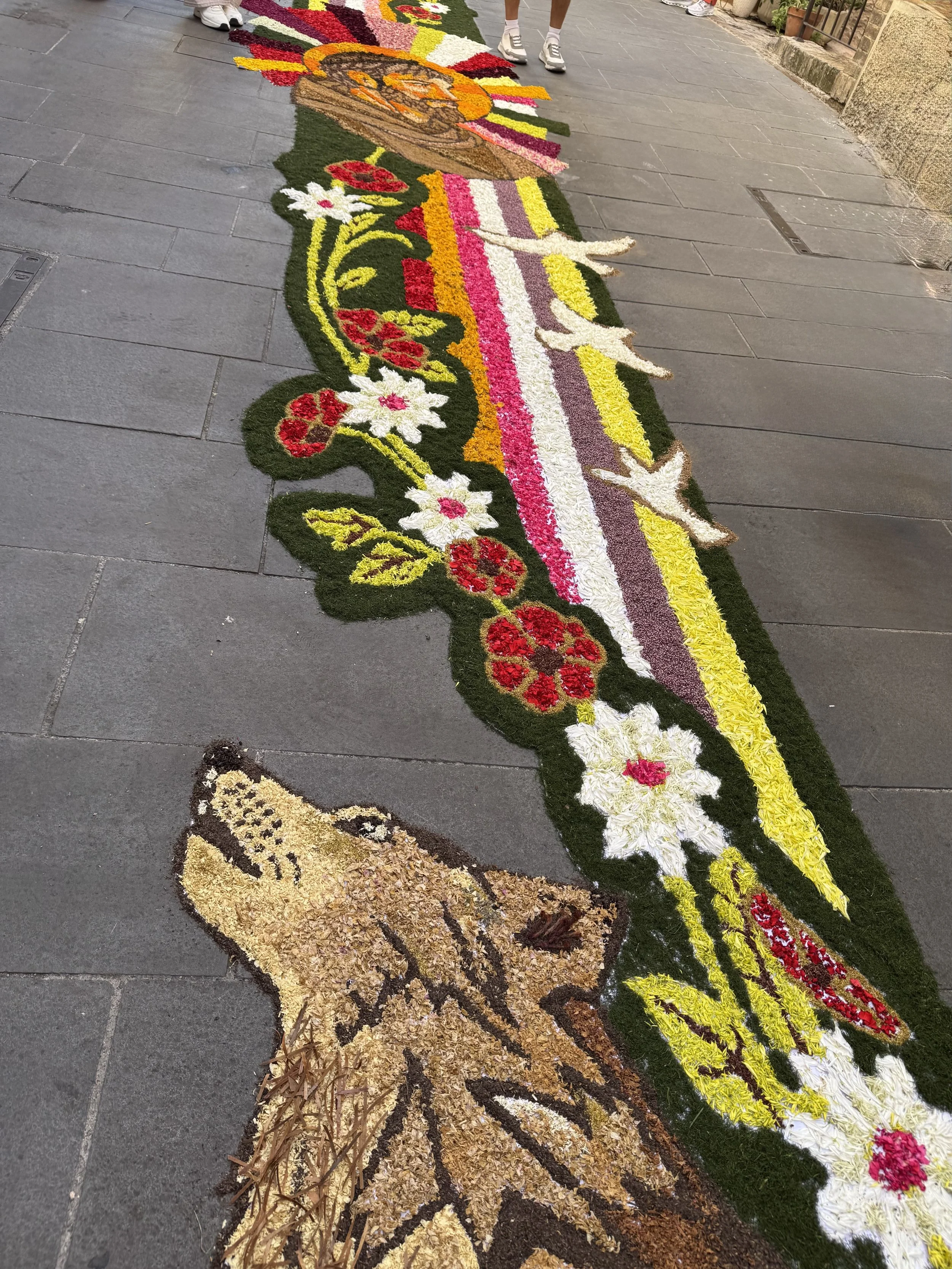
One of the most elaborate of the tappeti at this year’s Infiorata

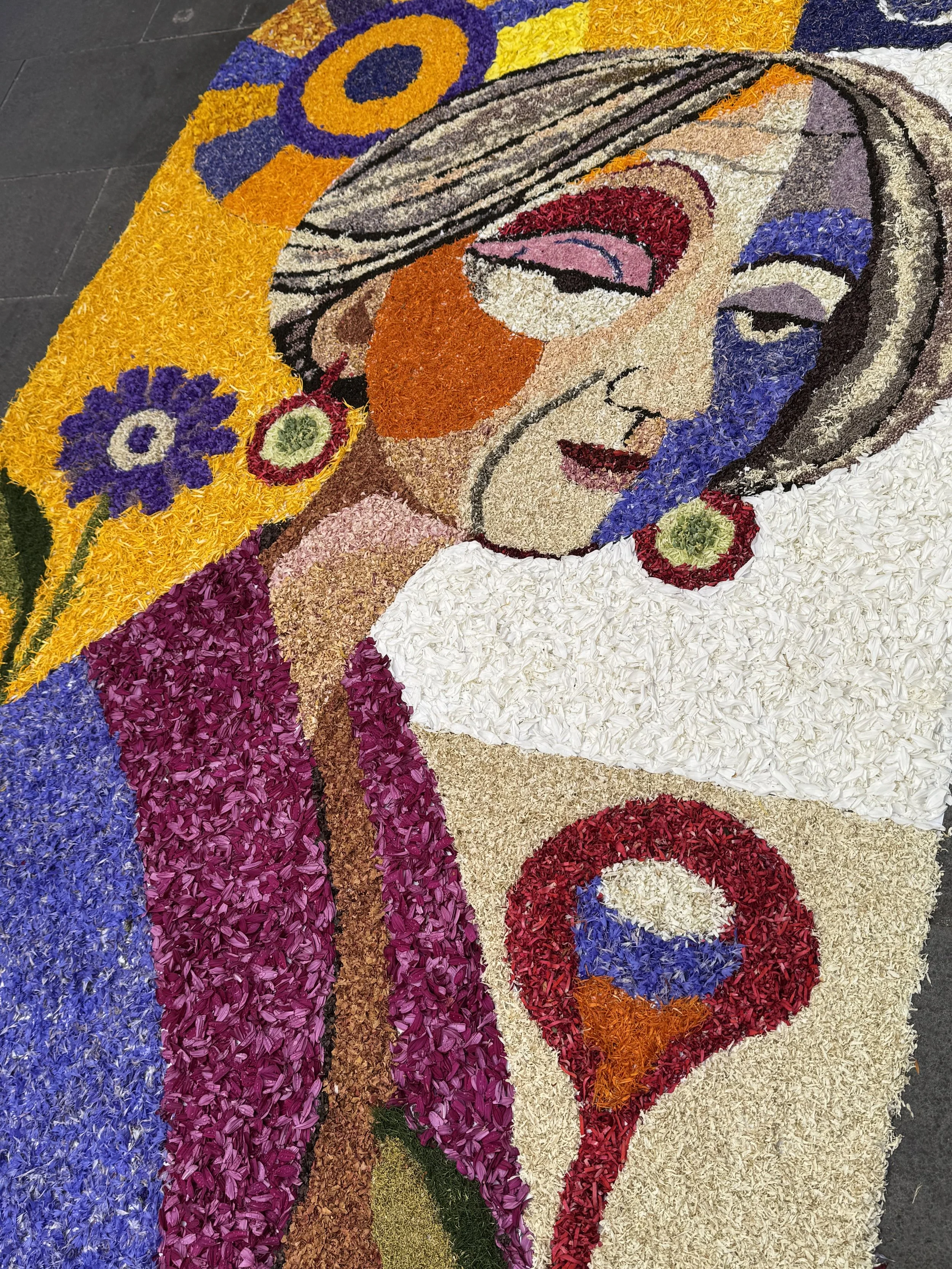
There are two main types of works –  quadri, which are large scale “paintings” and tappeti, long “carpets” of designs which are often geometric shapes.  Templates with the designs are worked on over time and then taped to the ground and used to create the displays.


It is hard to describe the scale of the Infiorata.  The designs wind up hill from the entrance to Spello near Porta Consolare, fill the Piazza della Republica, and continue up through the city up to its highest point.  The route is about a mile long in total.  Along the way are spectacular works of art, many reflecting religious themes (this is after all a celebration of a Catholic feast day), others have broader messages, and some are just pretty reflections of nature.  The event is also a competition, with winners in several categories announced at the end of the celebration.
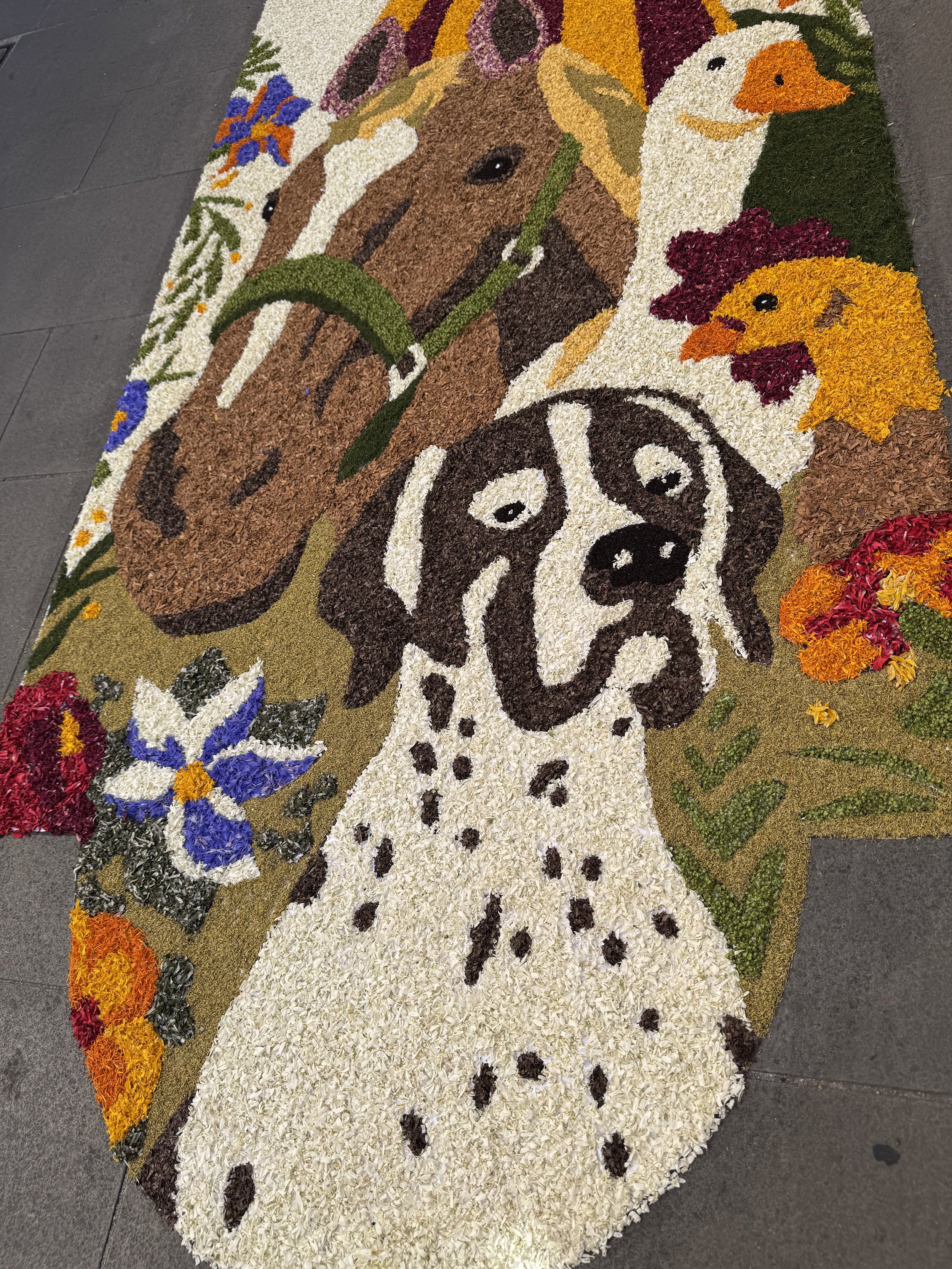
My favorite work featured these delightful animals

It is best to arrive early (or even stay in town the night before) as the tarps start to come down by 8:00 am, the crowds are waiting, and arriving later can mean a long wait to get in.  The climb can be strenuous if you happen to have a really hot day, so earlier is better.  Luckily our weather was perfect and not hot at all, and the way the displays wound gradually up hill made the walk easy.  One confession though, I did most of the route but skipped the steepest part at the end. It can be a challenge to get photos of the larger works as everyone is trying to get close enough and to find the right just the right angle. There are some scaffolds that can be climbed to get shots from above, and I bet the photos from drone that was flying overhead were amazing. Most of my photos have lots of feet in them! The best photos zoom in on details - are here are some of the most intriguing ones.

IMG_1052.jpeg
IMG_1070.jpeg
IMG_1044.jpeg
IMG_1026.jpeg
IMG_1001.jpeg
IMG_1016.jpeg

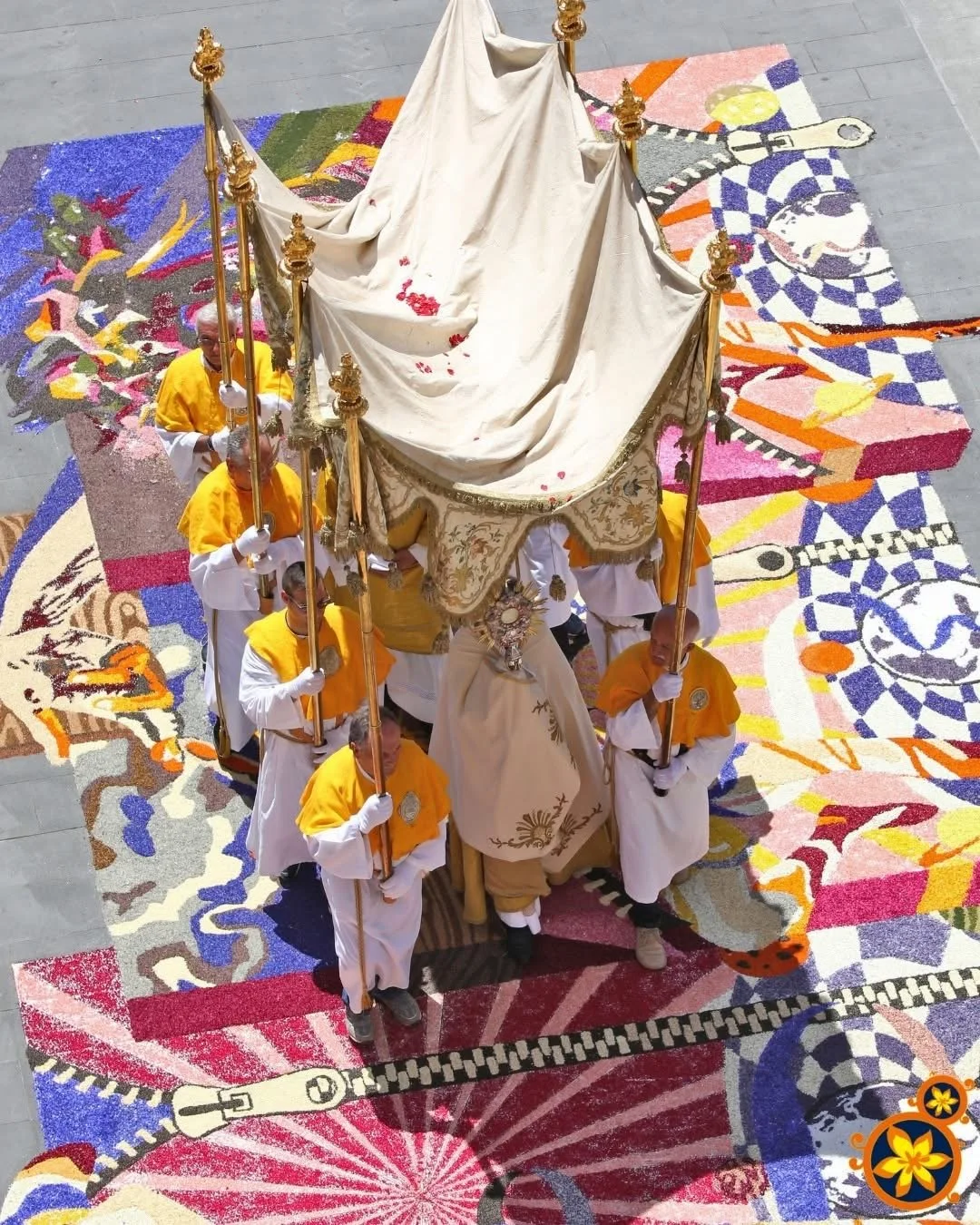
The procession moves through the flower art on the way to the church (photo from the Commune of Spello)

Come too late and you’ll miss the fun all together. The works provide a path for a procession led by the Bishop, who walks right over the beautiful creations.  The procession begins around 11 am.  By the end of the day, it will all be swept away.  But this is not sad – it is as it is meant to be.

And now begins the planning for next year’s Infiorata.  Easter comes early next year, on March 28th.  The Infiorata will be Sunday May 30, 2027.   Now’s the time to think about coming!


June 15, 2026 /Joanne Bartram
Infiorata, Infiorata Spello, Feast Corpus Domini Italy, Flower Festival Spello
#italytravel, Festivals Italy, Italian art architecture, Italian Art, Italian culture, Umbria

During the time when Napoleon was in charge, we might have seen a soldier like this with his companion

Walking Through Lucca’s History

June 08, 2026 by Joanne Bartram in #italytravel, #lucca, #medievalitaly, Festivals Italy, History, Italian culture, Italy travel, Lucca, Tuscany

In Italian, the verb rievocare means to recall, commemorate, or evoke.   Lucca is, for the most part, a Medieval city.  That history can be recalled easily in the current street plan, Medieval towers, and the many churches from that era that can be found throughout town.  To “rievocare” that Medieval history is easy. 

There are of course vestiges of earlier eras, the outline of a Roman amphitheater, remnants of the Roman wall, and some remarkable Roman ruins lying under churches and houses.  The later Renaissance history can also be spotted, most clearly in the walls that surround the historic city center.   But when it comes to celebrating historical events, it is usually the Medieval period that is recreated through costumes, processions, music, and competitions.

How would one even go about planning an event that would recall the broader scope of Lucca’s history?  From before the Roman era and through the period at the end of World War II?   Well, fortunately, someone decided to do just that, and in late May a festival took place – Rievocando Lucca, A Festival of History.

A call to arms for Roman soldiers

 The event took place on the city walls, a perfect way to present, in chronological order, a series of vignettes tracing Lucca’s history from pre-Roman/Etruscan times through the city’s liberation at the end of WWII.  Each stop along the walls featured costumed actors, period specific crafts and weapons, and representations of daily life during the time period.  The actors were a wealth of information, explaining the displays, answering questions, and demonstrating the use of tools and weapons.

IMG_0427.jpeg
IMG_0423.jpeg
IMG_0247.jpeg
IMG_0288.jpeg

 Some highlights:

The Roman Legionaires made camp along one section of the wall and they were fierce!  Dressed for battle, armed, and bearing shields, they made an impressive sight during the commander’s morning call to arms.  Marching through town one evening, they caused quite a stir with their chants and battle cries. 

IMG_0319.jpeg
IMG_0317.jpeg
IMG_0306.jpeg

 In the Medieval village, a candlemaker described the process and coloring agents used in making her candles. Nearby, a woodcarver demonstrated his skills.   The Medieval costumes were beautiful too.

IMG_0330.jpeg
IMG_0332.jpeg
IMG_0333.jpeg

Piazza Napoleone and the Ducal Palace, both created by Elisa Bonaparte.

 Napoleon also left a mark on Lucca’s history – gifting the city to his sister Elisa who ruled as the Princess of Lucca and Piombino in the early years of the 1800’s.  Her influence can still be seen in Lucca -  the largest piazza is the Piazza Napoleone and it sits in front of the Palazzo Ducale, the palace Elisa Bonaparte built.
 For the Rievocando festival, a Napoleonic camp was filled with French soldiers in their colorful uniforms.   Alongside were a group of French ladies taking tea, as they might have done once upon a time in the Palazzo Ducale.
IMG_0404.jpeg
IMG_0395.jpeg
IMG_0393.jpeg

 The final vignette was of WWII, during a time when American and Brazilian troops played an important role in and around Lucca.  It was American Buffalo soldiers who entered Lucca in September 1944, ending the occupation by Nazi forces.   

IMG_0367.jpeg
IMG_0370.jpeg
IMG_0371.jpeg
IMG_0374.jpeg

 Also fun was walking around town and seeing the many costumed participants having lunch or strolling the walls.  The weekend event provided little glimpses of Lucca as it once was. 

IMG_0414.jpeg
IMG_0413.jpeg
IMG_0250.jpeg
IMG_0252.jpeg
June 08, 2026 /Joanne Bartram
Lucca History, Rievocando Lucca, Napoleon in Lucca, Romans in Lucca
#italytravel, #lucca, #medievalitaly, Festivals Italy, History, Italian culture, Italy travel, Lucca, Tuscany

The Castello di Duino

Castello di Duino

May 11, 2026 by Joanne Bartram in Friuli-Venezia Giulia, Friuli Venezia Giulia, Italian art architecture, Italian culture, Italian gardens, Trieste

If I were to buy a castle in Italy, the Castello di Duino would do very nicely.  Unfortunately, the current owner, Prince Carlo Alessandro della Torre e Tasso, Duke of Castel Duino, seems unlikely to sell it to me, especially at a price I could afford.  Yet, after visiting, it is easy to daydream about living in this castle with its beautiful interior and views of the coastline over the Gulf of Trieste. 

Breakfast on one terrace and wine on another, a stroll near the lower garden with the pretty pool, gazing over to the ruins of the 11th century Castello Vecchio - yes, it would be easy to spend my days here. 

IMG_9683.jpeg
IMG_9652.jpeg

 The castle was built in the 14th century and acquired in the 19th by Prince Alexander von Thurn und Taxis and his wife Princess Marie, one branch of a German noble family.  After moving to the Italian castle, they changed their name to a more Italian form, becoming the della Torre e Tasso family.  They were great patrons of the arts and hosted both musical and literary guests, including Liszt, Strauss, Twain, and Rilke.

The castle has remained in their family, passed down from generation to generation. Today it is open as a museum, presented very much like the home it once was. 

IMG_9607.jpeg
IMG_9600.jpeg
IMG_9682.jpeg
IMG_9678.jpeg

It is possible to climb to the top of this tower to take in the view

If the exterior of the castle looks familiar to you - it might be because it was used in filming Monty Python and the Holy Grail.

The approach to the castle is along a path lined with statues and with views down to both the garden area and out to the sea.

Inside the castle grounds, a courtyard leads to an imposing tower. A climb will reward you with 360 degree views.

The castle’s interior is elegant, detailed, and beautifully furnished. 

There is a wood paneled library and several drawing rooms one of which has a piano that Liszt once played.


IMG_9653.jpeg
IMG_9662.jpeg
IMG_9647.jpeg

The dining room, with a table set as if guests were expected any minute, was especially lovely. It was so easy to imagine the fascinating guests that once gathered here. I can just imagine the sound of their conversations and clinking wine glasses; perhaps stepping out onto the balcony for a smoke, the views, and a whispered conversation.

IMG_9666.jpeg
IMG_9671.jpeg

Another fascinating detail was the elegant spiral staircase which connects several floors. Designed by Palladio, with pretty bannisters and gorgeous light fixtures, it is functional art.

IMG_9675.jpeg
IMG_9625.jpeg

The visit to Duino, arranged by the Piccola Università language school in Trieste, was a highlight of my visit to this region. Oh to time travel and visit in past centuries.

The ruins of the 11th century castle

May 11, 2026 /Joanne Bartram
Duino, Castello di Duino
Friuli-Venezia Giulia, Friuli Venezia Giulia, Italian art architecture, Italian culture, Italian gardens, Trieste

Piazza San Frediano, all dressed up for the Santa Zita Festival

3 Days of Music and Flowers in Lucca

April 27, 2026 by Joanne Bartram in #lucca, Festivals Italy, Italian culture, Italy, Living in Italy, Lucca, Tuscany, Italian Opera

The last weekend in April was a busy one here in Lucca. The weekend began on Friday evening with the smallest of the weekend events – a performance by two choral groups in the Oratorio San Giuseppe, a small chapel built in the early 1500’s.  Napoleon once used it as a warehouse, but today it is a small performance space with a historic interior and great acoustics.  Better still, my favorite local a cappella group, Coro Puntaccapo, performed.  Their style is swing, classic and modern pieces, in both English and Italian.  I never miss a chance to see them perform. 

IMG_8446.jpeg
IMG_8444.jpeg
IMG_8452.jpeg

For this evening, they were joined by Coro Melisma, a large chorus from Göteborg, Sweden.  They came to Lucca with wonderful harmonies, full sound, vocal runs, and their dry, Swedish sense of humor.   Each group performed individually at first but later as an ensemble singing everything from swing to pop to something you might expect from a Swedish group – a three minute mash up of Abba songs.  A fun evening to kick off a busy weekend.  (video on IG two_parts_italy and on Facebook)

 Saturday, April 25th, was a national holiday in Italy, la Festa della Liberazione (Liberation Day), marking Italy’s liberation from Nazi Occupation at the end of WWII. 

There were local ceremonies to mark this important date in history, a wreath was placed at the war memorial, and, as a national holiday, many visitors came to celebrate.  

Another big event, the Santa Zita festival, was ongoing throughout the weekend.  An annual celebration for Lucca’s own very popular saint, the festival has two main components.  The first takes place inside the Basilica San Frediano where Santa Zita (yes, the actual saint’s body) is placed front and center so that people may pay homage to her.  

Santa Zita in the San Frediano Basilica

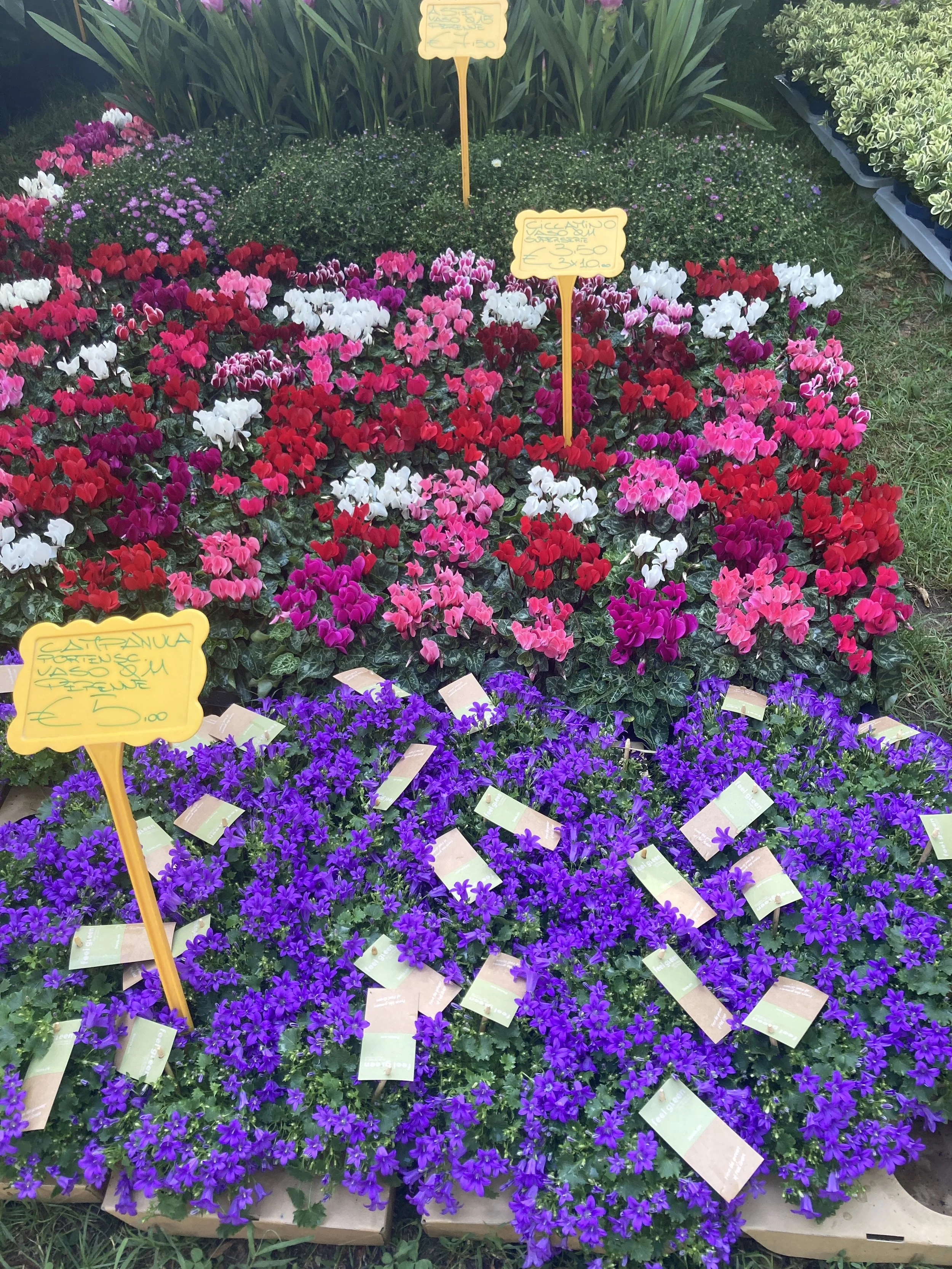
And because Santa Zita is known for the miracle of the flowers, the second event fills the Piazza in front of the church with a floral “island” and fills the nearby Piazza Anfiteatro with a flower market.  This is an event that I always look forward to, especially since my own superstition is that a visit to Santa Zita on this day guarantees that I will be in Lucca for the next year.  In my experience it is more effective than coins in the Trevi Fountain and I am not about to take a chance by skipping it!

IMG_8492.jpeg
IMG_8469.jpeg
IMG_8480.jpeg

Sunday afternoon brought more music, this time in Lucca’s Teatro del Giglio with a performance of Puccini’s opera Turandot, 100 years after it made its debut.

Turandot was Puccini’s final opera, as he died before its completion. The final scenes were completed by another Italian composer, Franco Alfano.

When the opera permiered, with Toscanini conducting, he stopped the performance at the point in the opera that marked the end of Puccini’s work, not performing those final scenes. The performance today chose to end in the same way, presenting the uncompleted work just as Puccini left it. The performance was wonderful with dramatic stage sets, unique costuming, tremendous voices, and of course a moving Nessun Dorma.

IMG_8513.jpeg
IMG_8511.jpeg
IMG_8510.jpeg
IMG_8501.jpeg

It seems there is always something happening in Lucca, especially at this time of year.

April 27, 2026 /Joanne Bartram
Turandot, Opera Lucca, Puccini opera
#lucca, Festivals Italy, Italian culture, Italy, Living in Italy, Lucca, Tuscany, Italian Opera

Wisteria in bloom means April in Lucca

One Spring Weekend in Lucca

April 20, 2026 by Joanne Bartram in #italytravel, #lucca, #springintuscany, Italian culture, Italy, Italy travel, Living in Italy, Lucca, spring in italy, Tuscany

Jazz at Caffè di Simo

Perfect spring weather has finally arrived!  Blue skies, temperatures in the mid to high 70’s, and slight breezes made for a wonderful weekend in Lucca. The weekend was full of activity and the city was filled with blossoms. There is no better time to be in Tuscany than spring.

On Friday, the first of a series of events took place at the Antico Caffè di Simo. The caffè has been closed since 2012, other than for a brief reopening for performances 2 years ago to mark the 100 years since Puccini’s death.  The historic café, with its elegant wood and glass interior, was a favorite “hang-out” for Puccini and his pals and looks untouched from his time.  It’s easy to imagine him sitting here, smoking (of course), and having great discussions with the literati of his time.  

This year a collaboration between the city government, a local cultural group, and the owners of the property will see the caffè opened for music, dance, and literary events on weekends from mid-April until mid-June.  This past Friday, the first performance was jazz with a lovely singer and an outstanding pianist.  At one point a man in the audience, who seemed to know the singer, got up and spontaneously began singing with her.  So much fun to watch!   No tickets needed, the free performances are limited only by the small number of seats in the caffè.  What a great way to start a weekend. Of course spring weather means outdoor aperitivi and the official start of Aperol Spritz season.  No one had to twist my arm to get me to enjoy a post-concert aperitivo on a pretty piazza.

The monthly antiques market is always fun to visit.

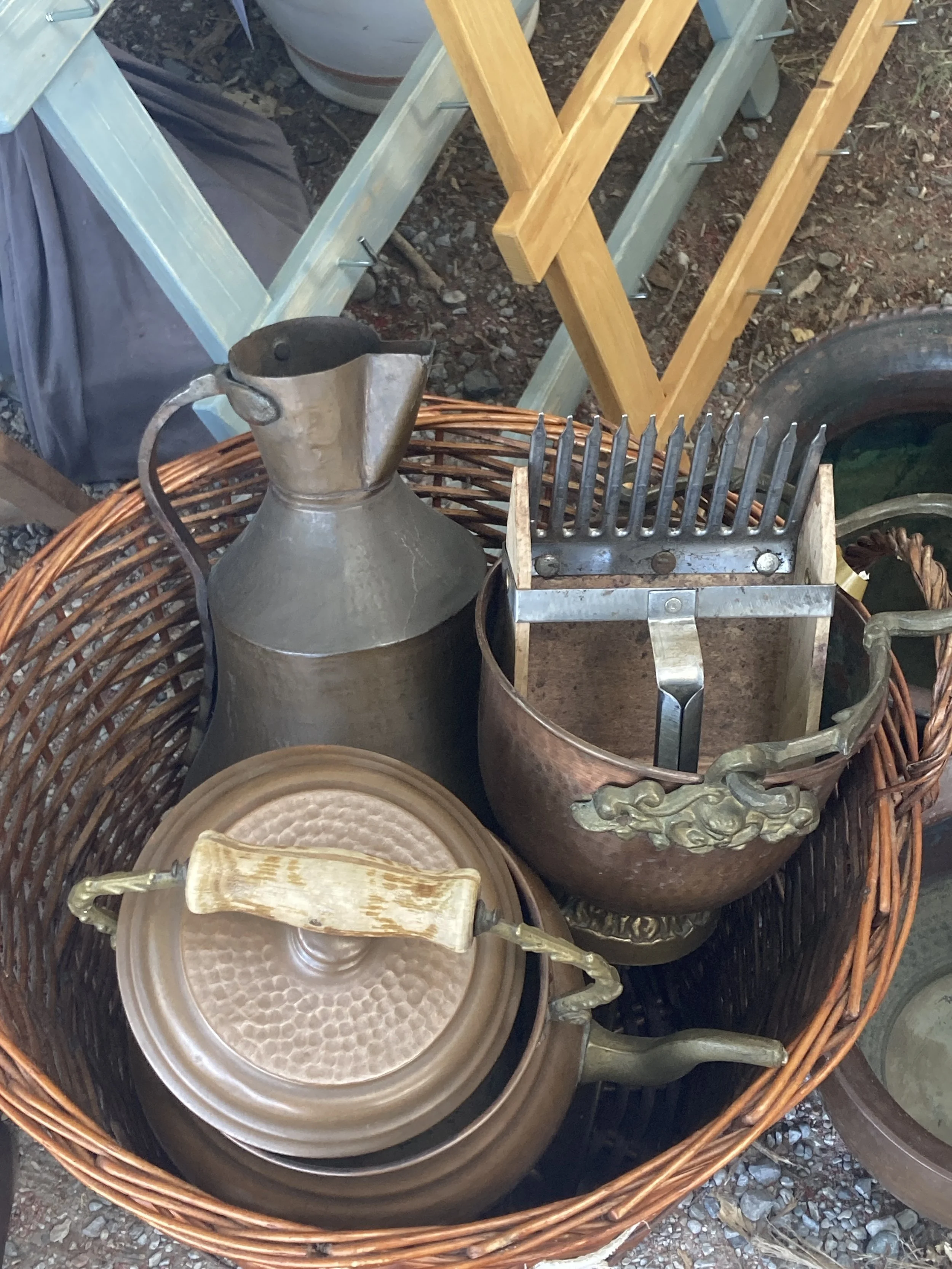
Saturday also brought the monthly antiques market, especially enjoyable with the spring weather.  The vendors are nearly always the same, but they bring some new and interesting items each time they set up their booths.  I still daydream about buying some of the bigger pieces of furniture (not practical with my small apartment) but have a hard time resisting other items - especially the vintage linens.

IMG_8393.jpeg
IMG_8388.jpeg
IMG_8386.jpeg
IMG_8387.jpeg
IMG_8390.jpeg
IMG_8382.jpeg

The local Misericordia (the ambulance service) hosted a Saturday fair in Piazza Napoleone. On display were some very old wooden “ambulances” alongside the more modern ones. Need to learn how to use a defibrillator? This was the place to go.

IMG_8398.jpeg
IMG_8399.jpeg

Sunday brought church bells and more great weather - a perfect morning for a coffee with a friend. We weren’t the only ones with that idea, as many of the pastry shops and cafes were filled with people enjoying the chance to sit outside, enjoying the weather and a simple breakfast.

Pasticerria Pinelli has a great spot under the arches on Via Beccheria

After coffee, a wander through town led to Piazza San Michele where the local Puccini Marching Band, complete with baton twirlers, was performing. The youngest twirlers were a delight. Always fun to watch, the music was lively and the crowd that gathered appreciative. (You can find a short video on IG two_parts_italy and on Facebook).

IMG_8427.jpeg
IMG_8419.jpeg
IMG_8421.jpeg

On a different side of the musical spectrum, a one-man band street musician entertained passersby on a street corner. From the look of his harmonipan, you might have expected some Ragtime music. Instead, he was playing a lovely Ave Maria.

IMG_8404.jpeg
IMG_8405.jpeg

It is hard to navigate around big tour groups

Spring weather also means an influx of visitors to Lucca.  Walking through town this weekend I’ve heard German, French, Japanese, and a variety of English accents spoken along with lots of Italian speaking visitors too. I enjoy meeting the visitors that spend some time here, especially blog readers who write me to say they are coming to Lucca.  I’ve met several of them in just the past week – all delightful.

The big tour groups however can be trying.  I admit to already having had a few moments of frustration with groups who take up an entire street, oblivious of people trying to get around them.  I am trying to remember to be patient, but I definitely do some mumbling about this.  An occasional Italian parolaccia (swear word) might creep in, sotto voce (under my breath).   If only I had a euro for each time I had to say “permesso” and squeeze by. Those euros just might overcome the worsening dollar to euro exchange rate!

It’s hard to beat a spring weekend in Lucca. I can’t wait to see what next week brings!

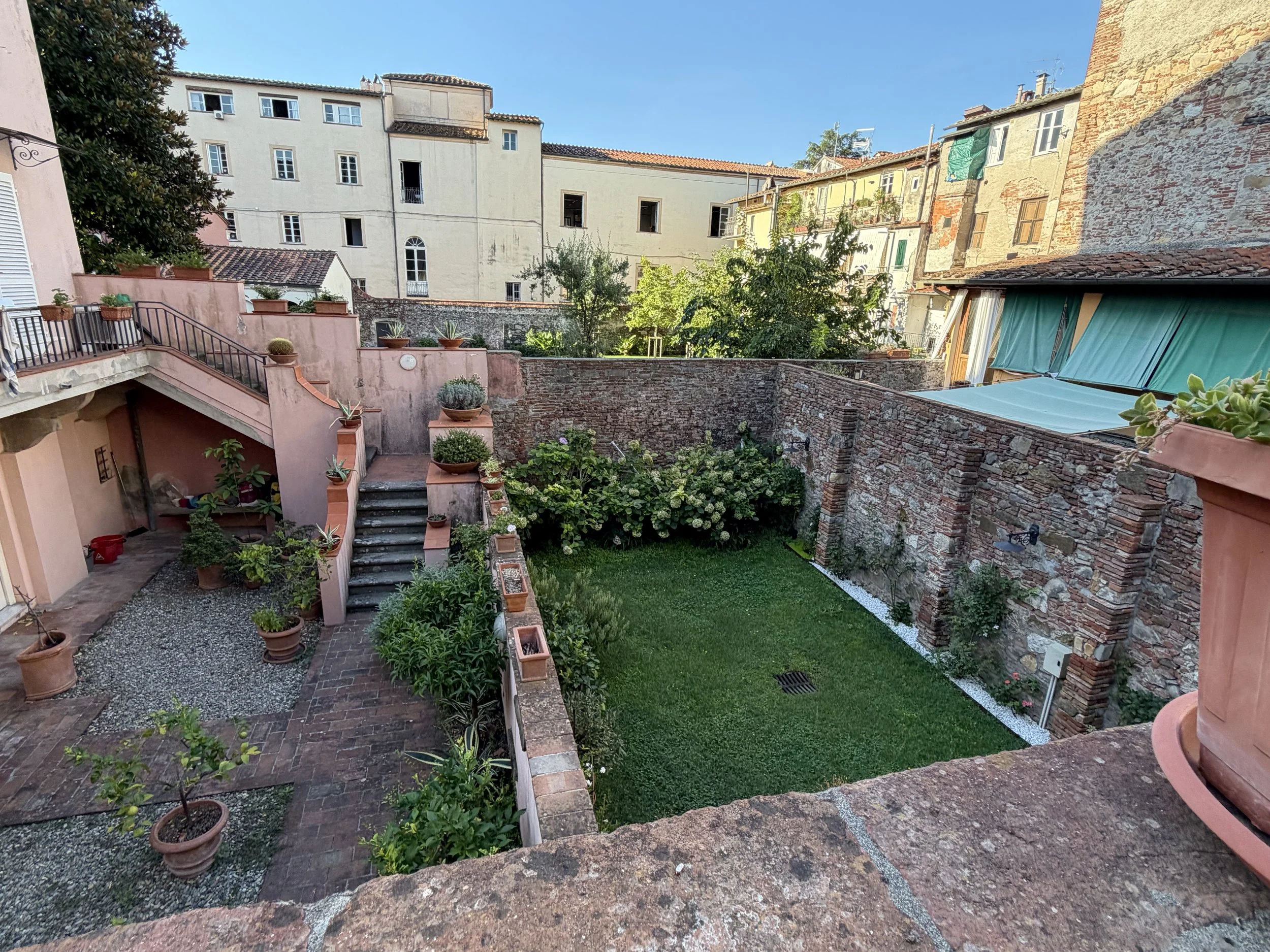
A tucked away garden in Lucca - a favorite spot to sit and read.

April 20, 2026 /Joanne Bartram
spring in italy, Lucca in spring, Puccini Marching Band
#italytravel, #lucca, #springintuscany, Italian culture, Italy, Italy travel, Living in Italy, Lucca, spring in italy, Tuscany
  • Newer
  • Older

Powered by Squarespace