Two Parts Italy

Exploring Italy, travel, and living a flavorful life

  • Blog
  • About This Blog
  • Start Here
  • Recent Posts
  • Archives by Topic
  • Subscribe
  • Contact me

Bold color along the east side of the walls that surround Lucca.

November

November 15, 2021 by Joanne Bartram in #fallinitaly, #lucca, Italy, Living in Italy, Lucca

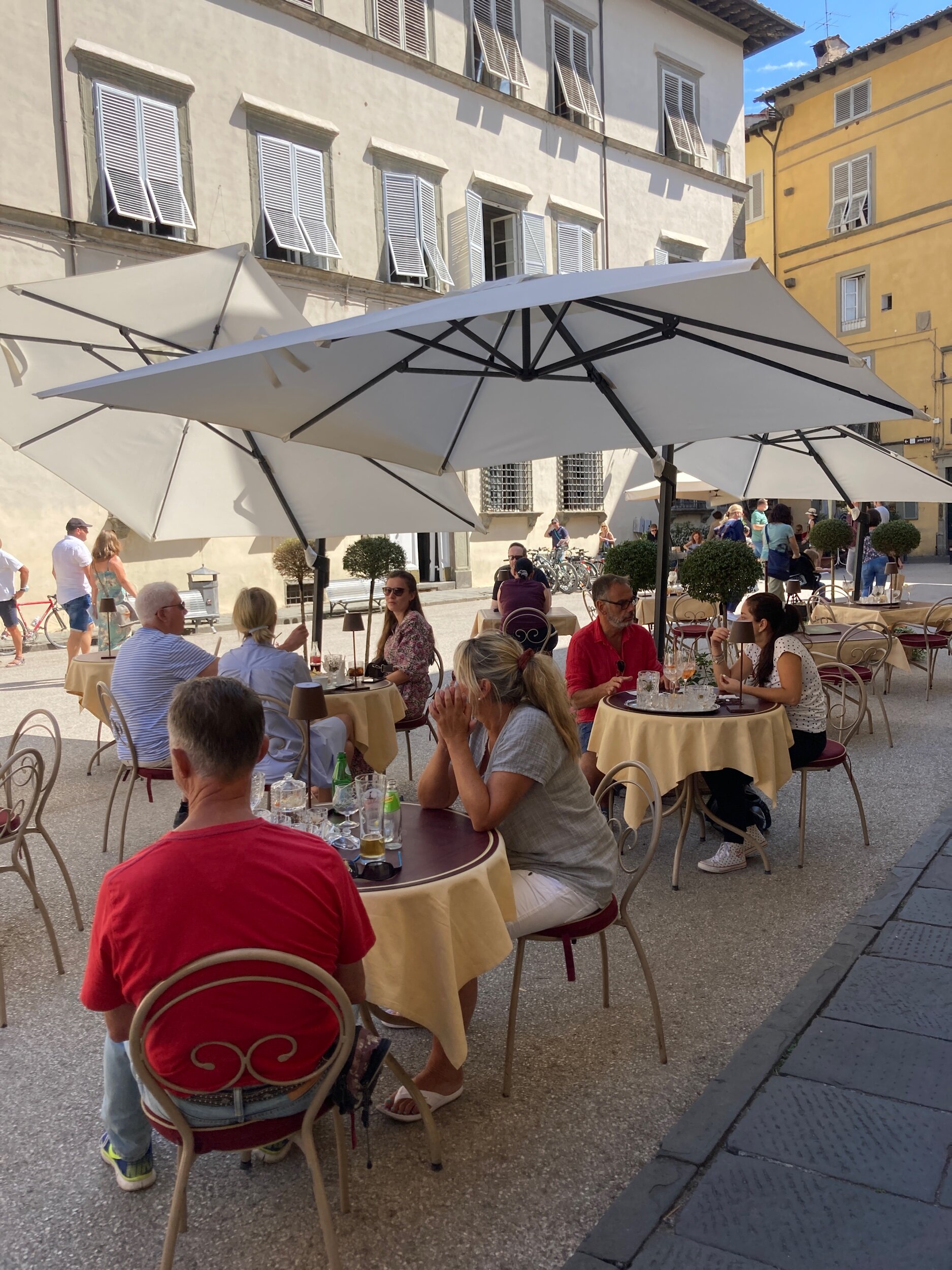
November is a gentle month here in Lucca. The tourists, who returned this summer and lingered into September and October, have mostly returned to their homes. Lucca Comics and Games, smaller than usual this year but still bringing lots of costumed visitors to town over the Halloween weekend, has come and gone. We may have given up our summer Aperol Spritzes in favor of deep red wines but we are still enjoying outdoor seating at cafes. I am thankful for the ones that have set up heaters so that we can continue to sip a morning cappuccino or an evening aperitivo outside in a pretty piazza.

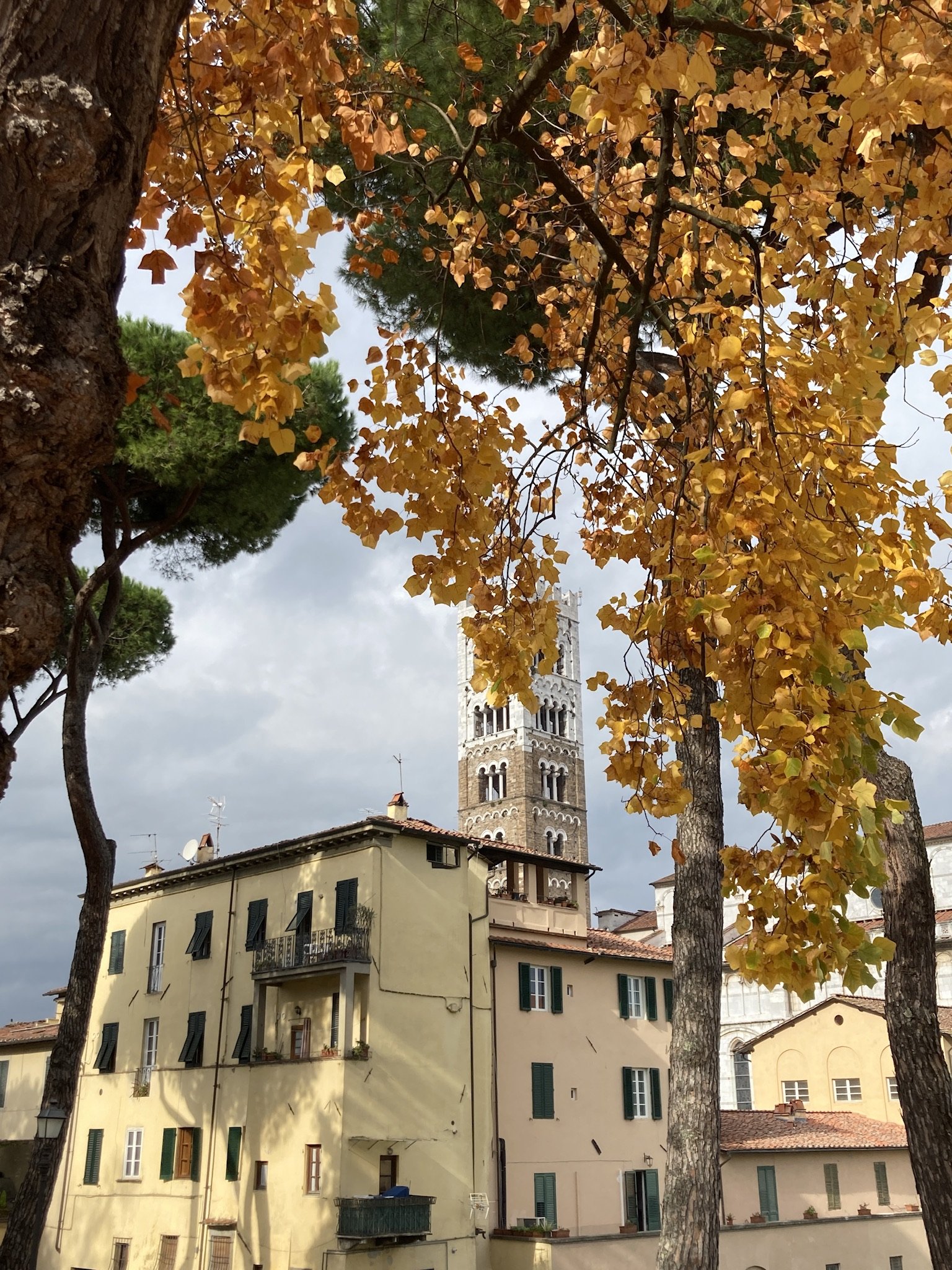
Of course the very best part of November is the explosion of color throughout Lucca. A walk along Le Mura (the ancient wall surrounding the historic center of town) is a kaleidoscope of changing views. The wall makes a complete circuit, so that some parts face north, others south, still others east or west. Each section is planted with different types of trees and receives varied amounts of sun and shade, so the type of foliage varies as does the progress of color change and the dropping of leaves. In November, the reds, golds, yellows, and browns provide a complex palette of hues. They contrast with the evergreen pine trees, the green of grass and moss, and the ever changing skies.
ADDD542D-E11A-48E8-9E67-12BC400B1CFD.jpeg

Along the southern stretch of the wall.

November walks along the wall engage other senses as well - the sound of dried leaves crunching under foot (or the squish of wet ones on rainy days) and the gentle touch of leaves drifting overhead like a colorful snow storm. But beware the less gentle feel of a chestnut falling on your head! And as a bonus - the distant sound of church bells ringing gives many of my November walks a pleasing soundtrack.

A view towards the Church of St. Gemma, outside the walls of Lucca.

Not all the colorful action takes place on the walls. From the walls, the views out over the larger city of Lucca are also full of fall beauty. And those distant hills!
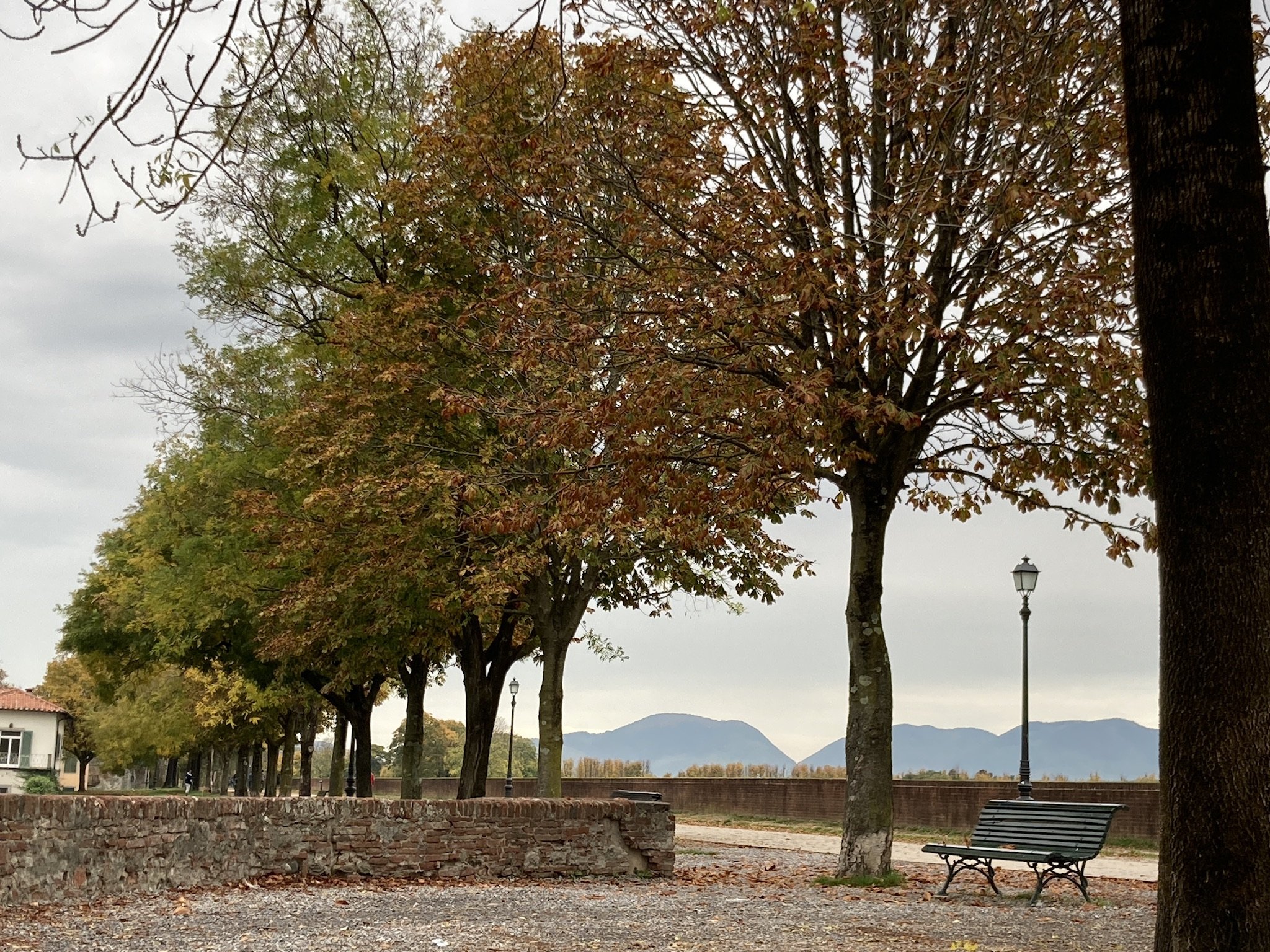
Distant hills make a dramatic backdrop to the walls northern section.

Throughout town the season is changing too. A walk through the botanic gardens is enchanting at this time of year. The trees ringing Piazza Napoleone are changing colors too. Not all the color is on the trees - colorful scarfs are wrapped around the necks of everyone to ward off the chilly weather.

Piazza Napoleone

Street vendors are beginning to roast chestnuts, a smell that hints of winter just around the corner. And while many of the Americans here are beginning to plan Thanksgiving dinners (we are oh so thankful that we can gather together this year), local shops are already beginning to display Christmas goods (I am not ready for that yet!)
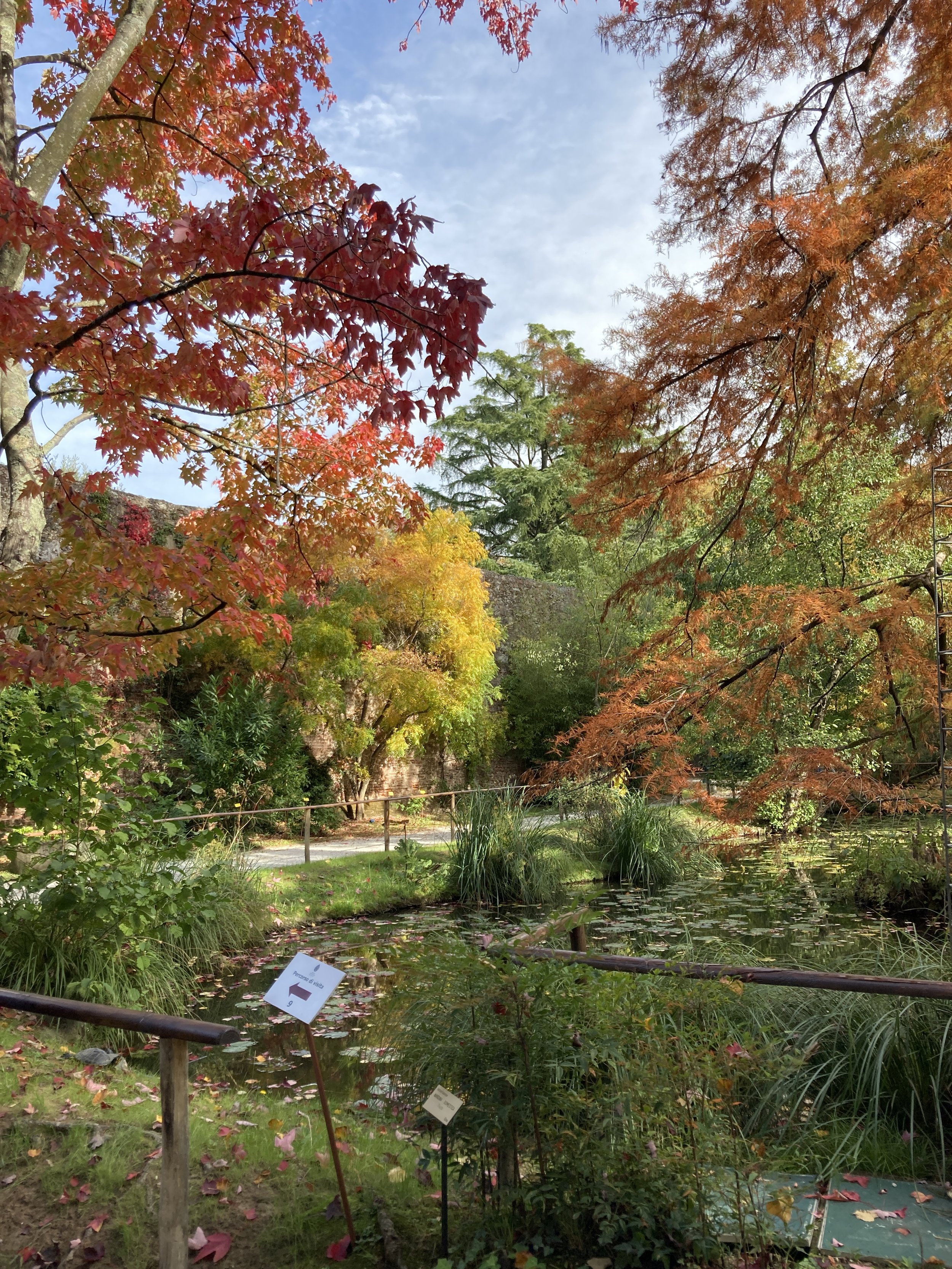
Fall in the Orto Botanico (Botanic Garden)

November here is so lovely - the chilly mornings, the long hours of dusk, the mild temperatures, the colorful trees, even the scattered rain showers. Lucca continues to enchant.
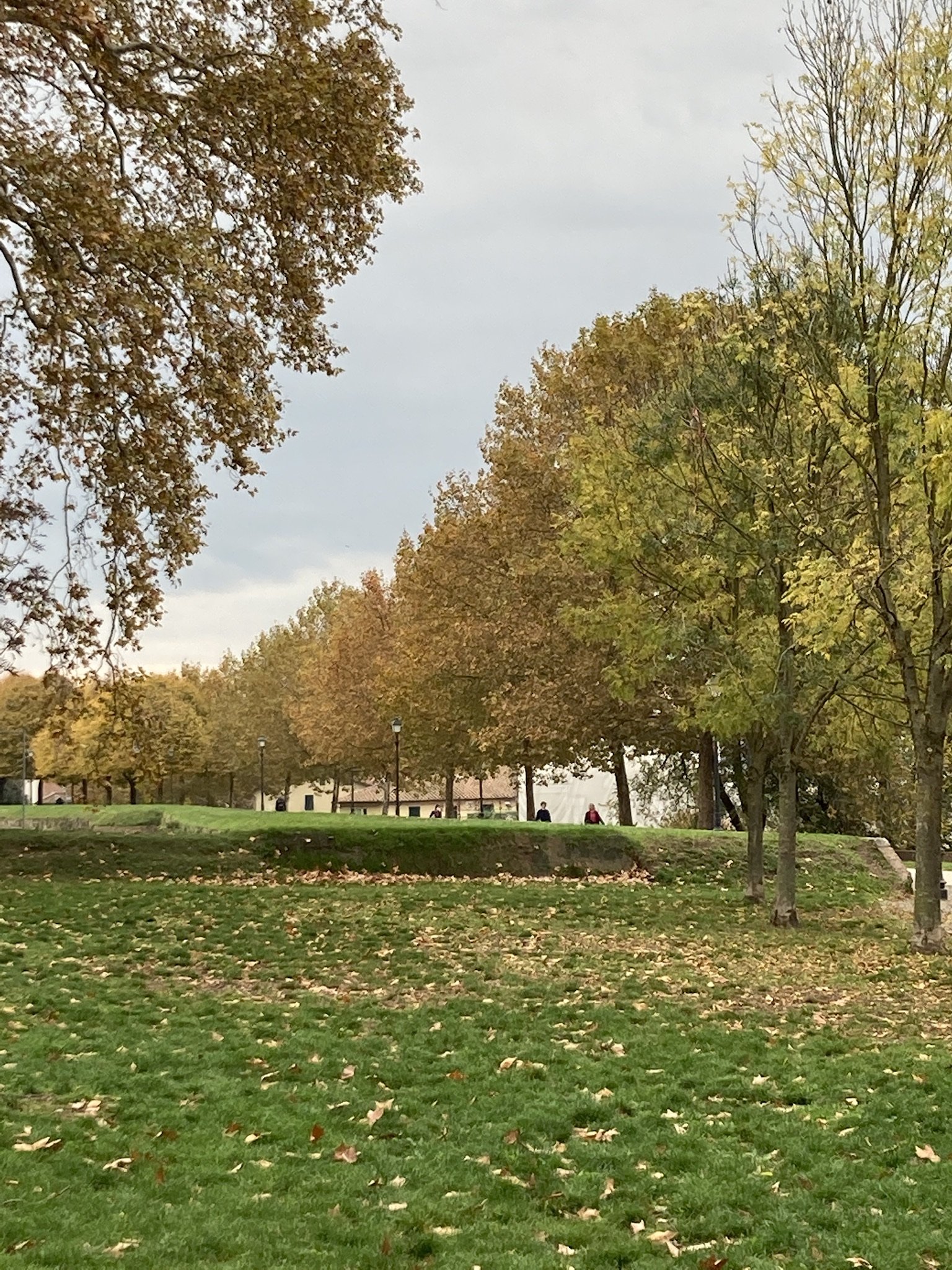
November 15, 2021 /Joanne Bartram
Fall Italy, Fall Lucca, Lucca
#fallinitaly, #lucca, Italy, Living in Italy, Lucca
A panoramic view of Lucca and the surrounding hills (taken from atop the Torre Guinigi)

A panoramic view of Lucca and the surrounding hills (taken from atop the Torre Guinigi)

Hello Lucca

September 06, 2021 by Joanne Bartram in #fallinitaly, #italytravel, #lucca, Italy travel, Living in Italy, Lucca

After several months away, it is a joy to be back in Lucca. I feel a bit like the little bunny in the children’s book Goodnight Moon - only instead of saying goodnight to every little thing, I wander around Lucca saying hello as I greet my favorite sights, sounds, and people.

Piazza San Frediano

Piazza San Frediano

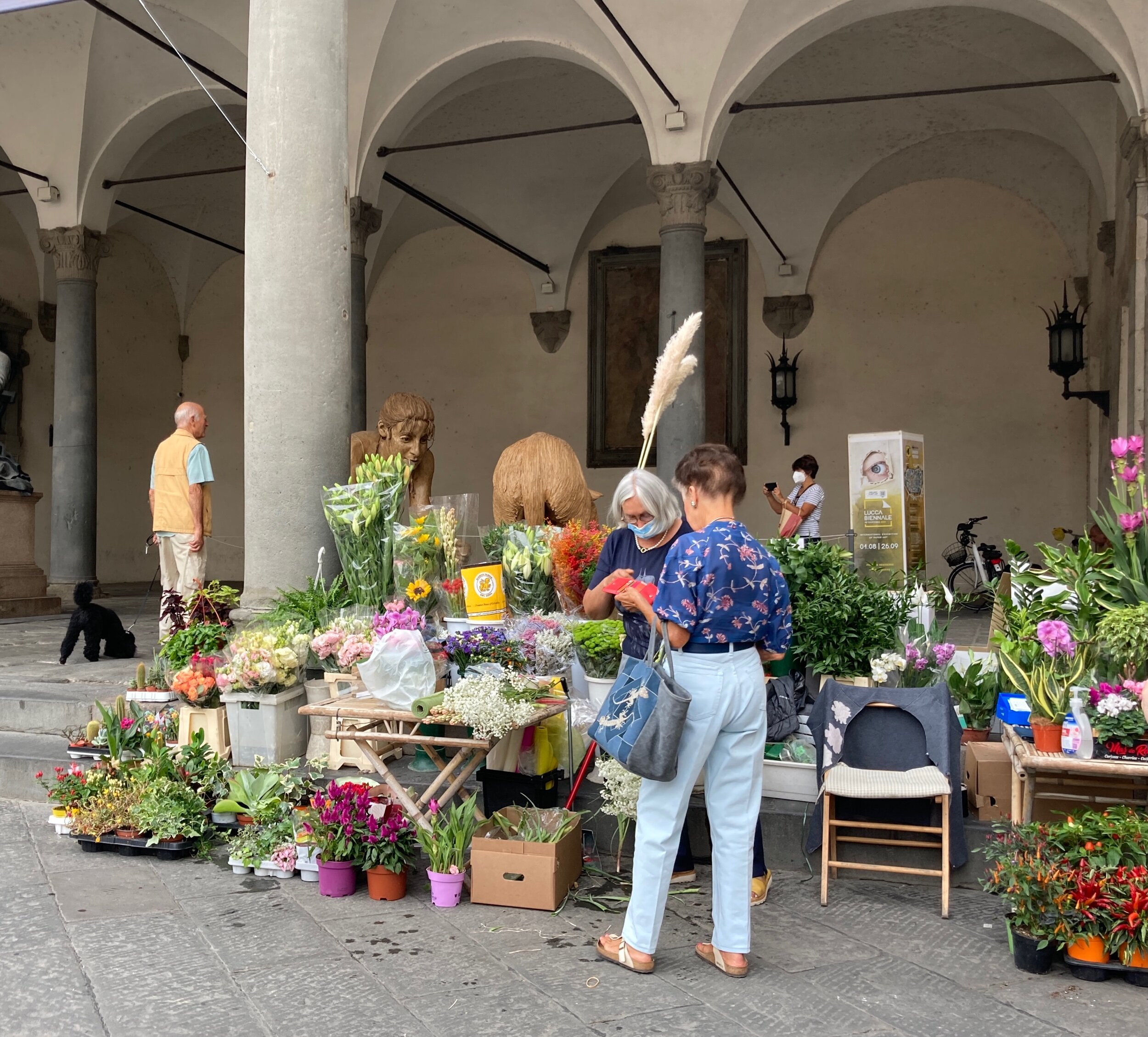
Hello pretty square where I can sip a morning cappuccino or an evening cocktail. Hello Torre Guinigi with your tall trees on top. Hello church bells. Hello Saturday flower market in Piazza San Michele.

Hello to the music school with the sounds of practicing students spilling from the windows. Hello stunning architecture. Hello blue Tuscan skies. Hello to Le Mura, the tree-lined wall surrounding the historic center. Hello flower filled balconies. Hello to “La Pupporona”, the graceful nymph who sits atop my very favorite Lucchese fountain.

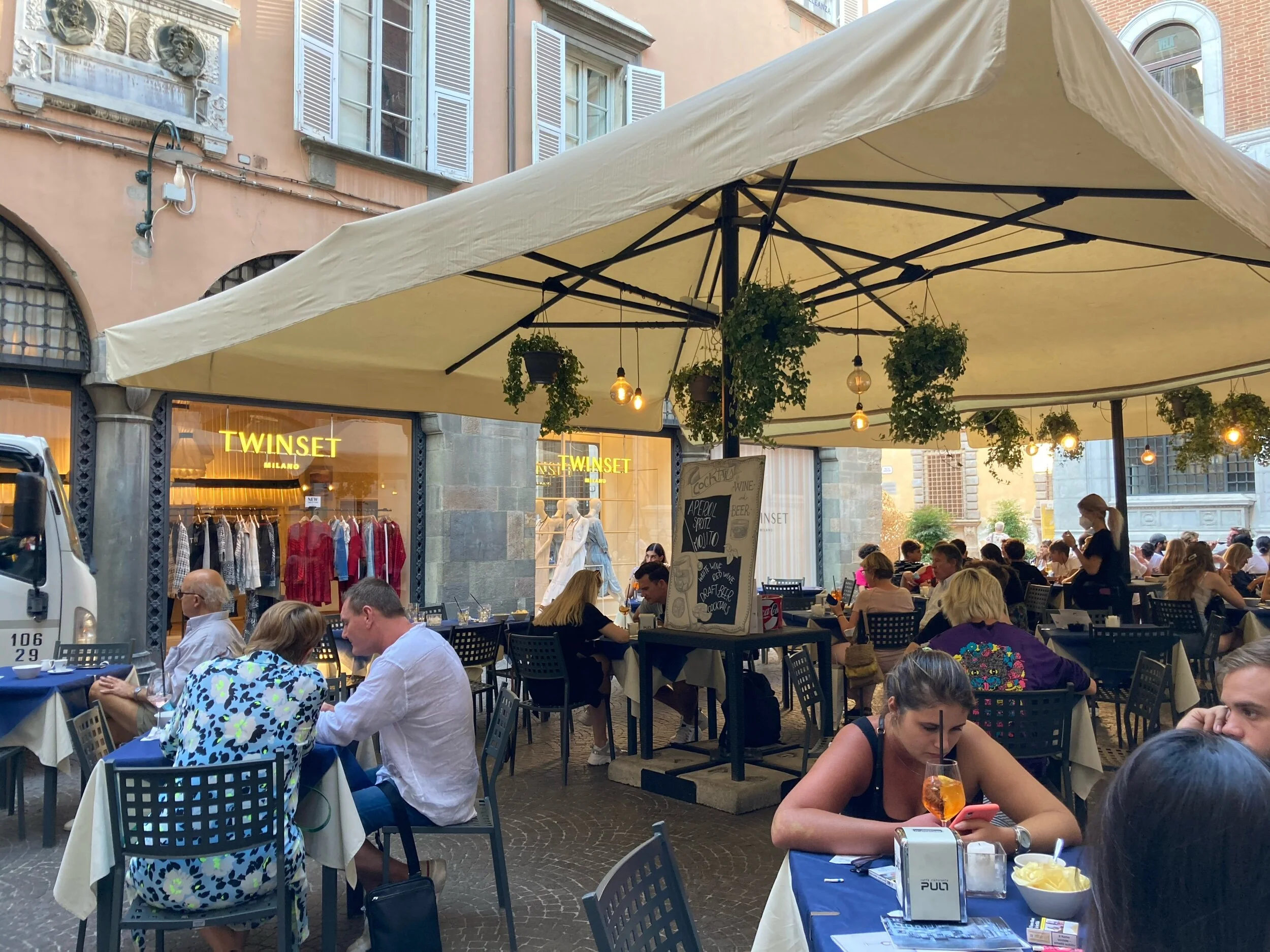
Hello to the musical Italian language. Hello Maestro Puccini. Hello aperol spritzes on warm summer evenings. Hello gelato! How I’ve missed you all.

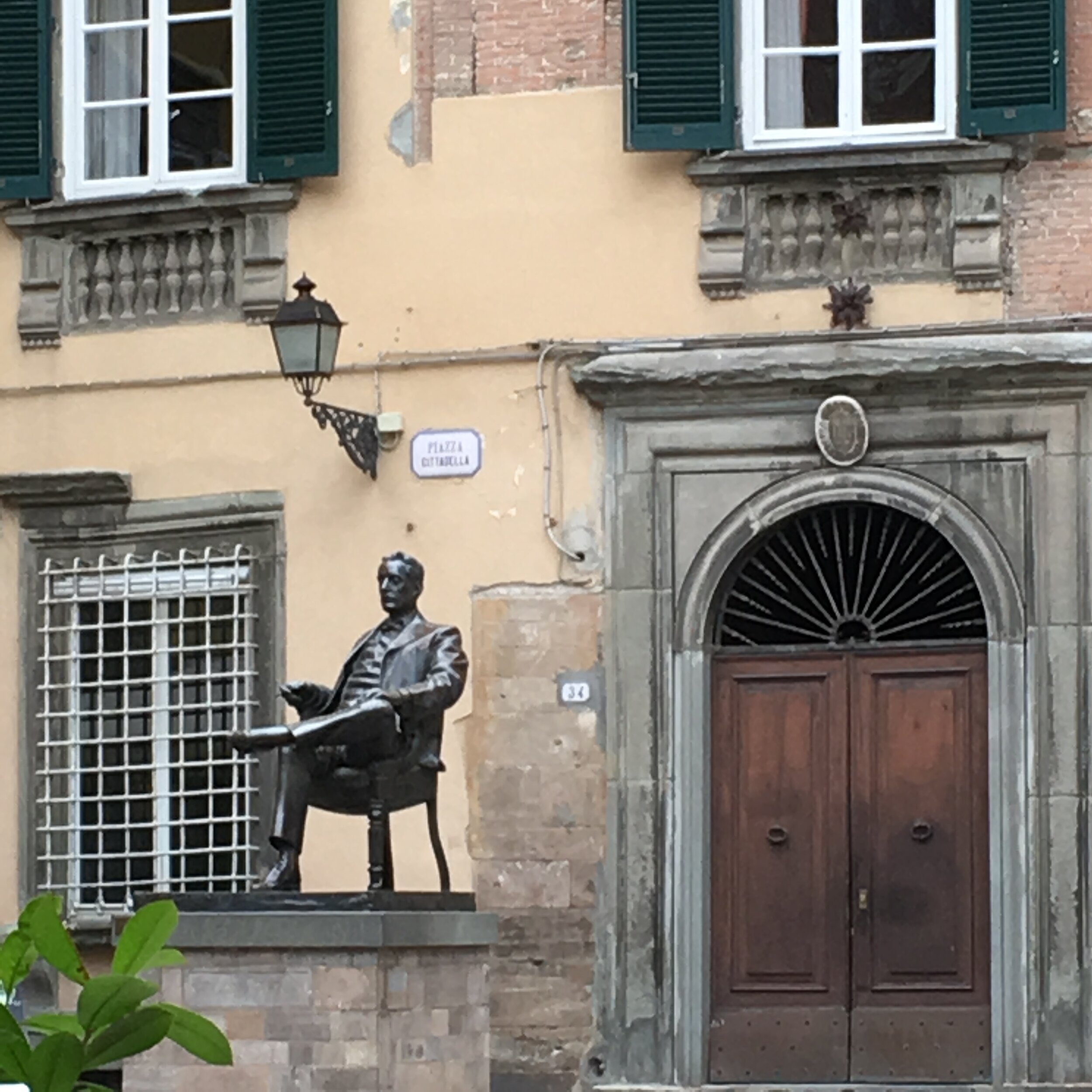
Piazza Cittadella - always a favorite spot.  That’s Puccini keeping watch over the piazza.

Piazza Cittadella - always a favorite spot. That’s Puccini keeping watch over the piazza.

It’s wonderful to say hello to friends I’ve missed while I was away. We have so much catching up to do. And to all my favorite shopkeepers, teachers, and restaurant staff - hello and please excuse my rusty Italian

Some things have surprised me as I’ve slipped back into life in Lucca. I had almost forgotten how lively it is here in a “normal” summer. And while we are not really back to normal yet (masks are still required indoors, the green pass is the new essential, and COVID still poses a threat) there is a definite upbeat change in atmosphere. The streets are busy, tourists have returned, and social groups are meeting once again (outdoors mostly).

While most of the visitors right now are from EU countries, the Americans and Canadians are arriving too, despite frequently changing requirements. One example of those changes - when I arrived on August 28th I needed only to show proof of vaccination status and complete the EU PLF (the on-line passenger tracking form). As of September 1 however, visitors from the US and Canada also need a negative covid test 72 hours before arrival. No quarantine required if fully vaccinated and COVID negative but be prepared to show proof of vaccination and a photo ID to enter most venues.

The return of art exhibits is definitely something to savor.  This one is a personal favorite of mine.

The return of art exhibits is definitely something to savor. This one is a personal favorite of mine.

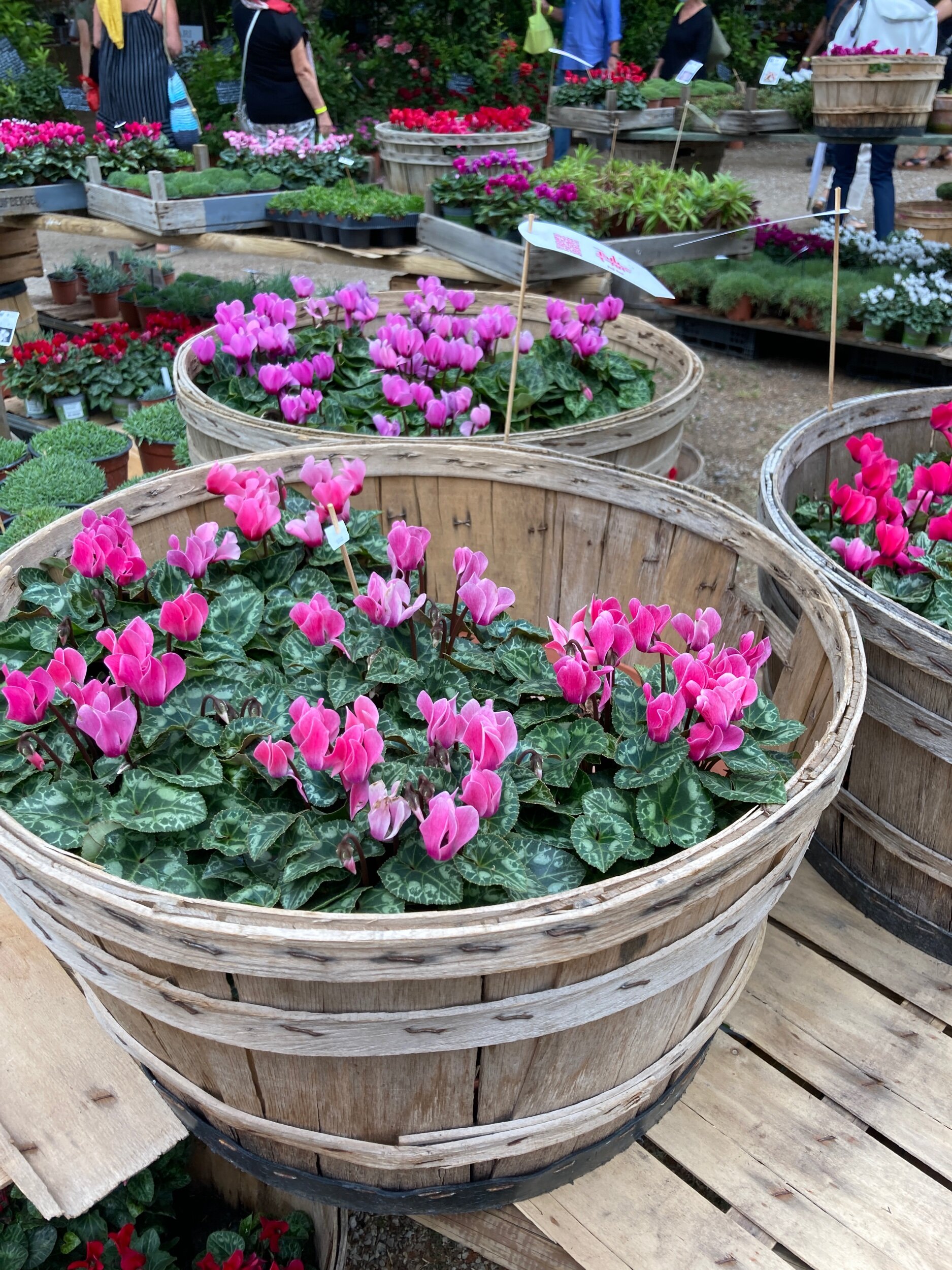
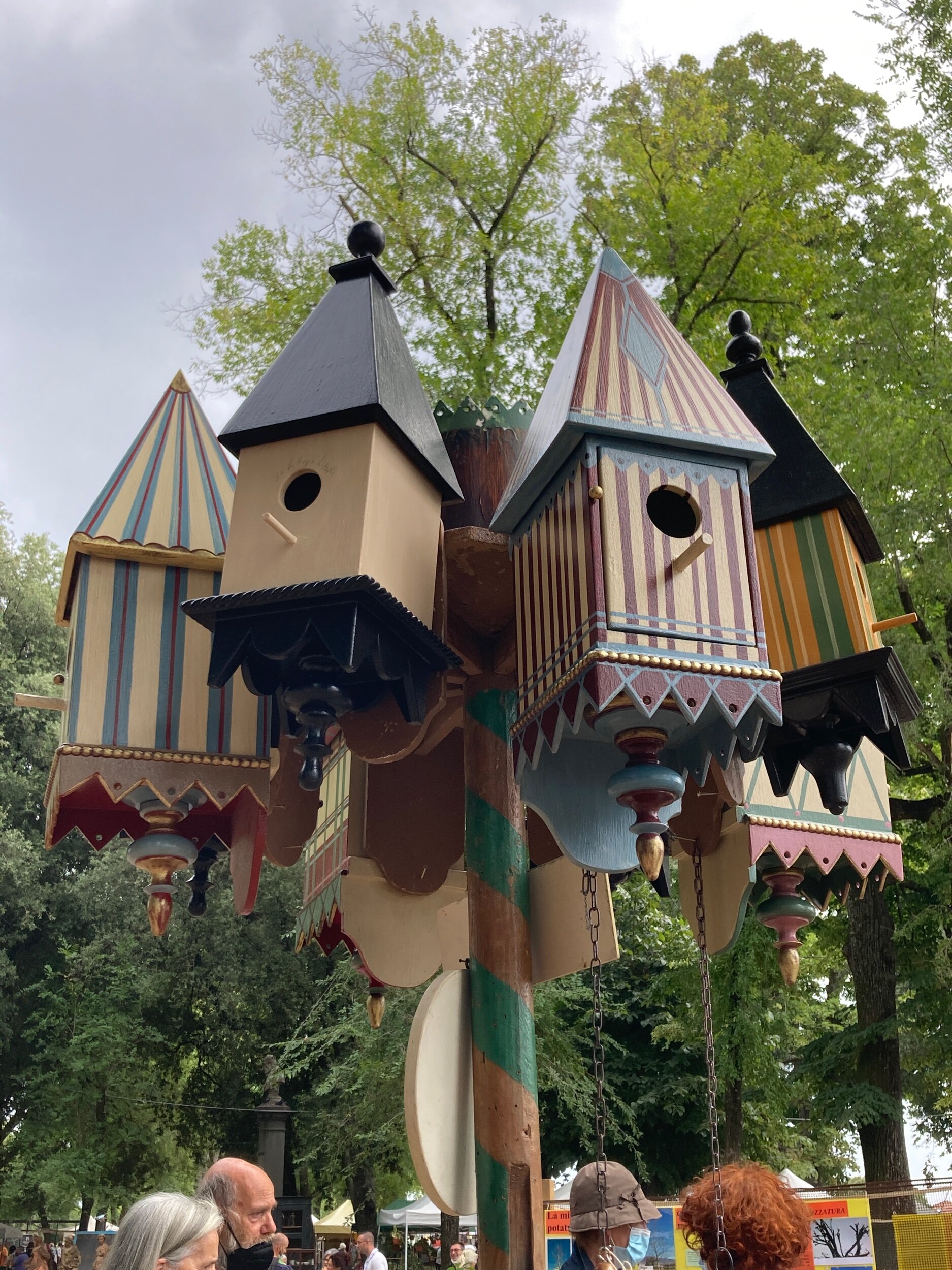
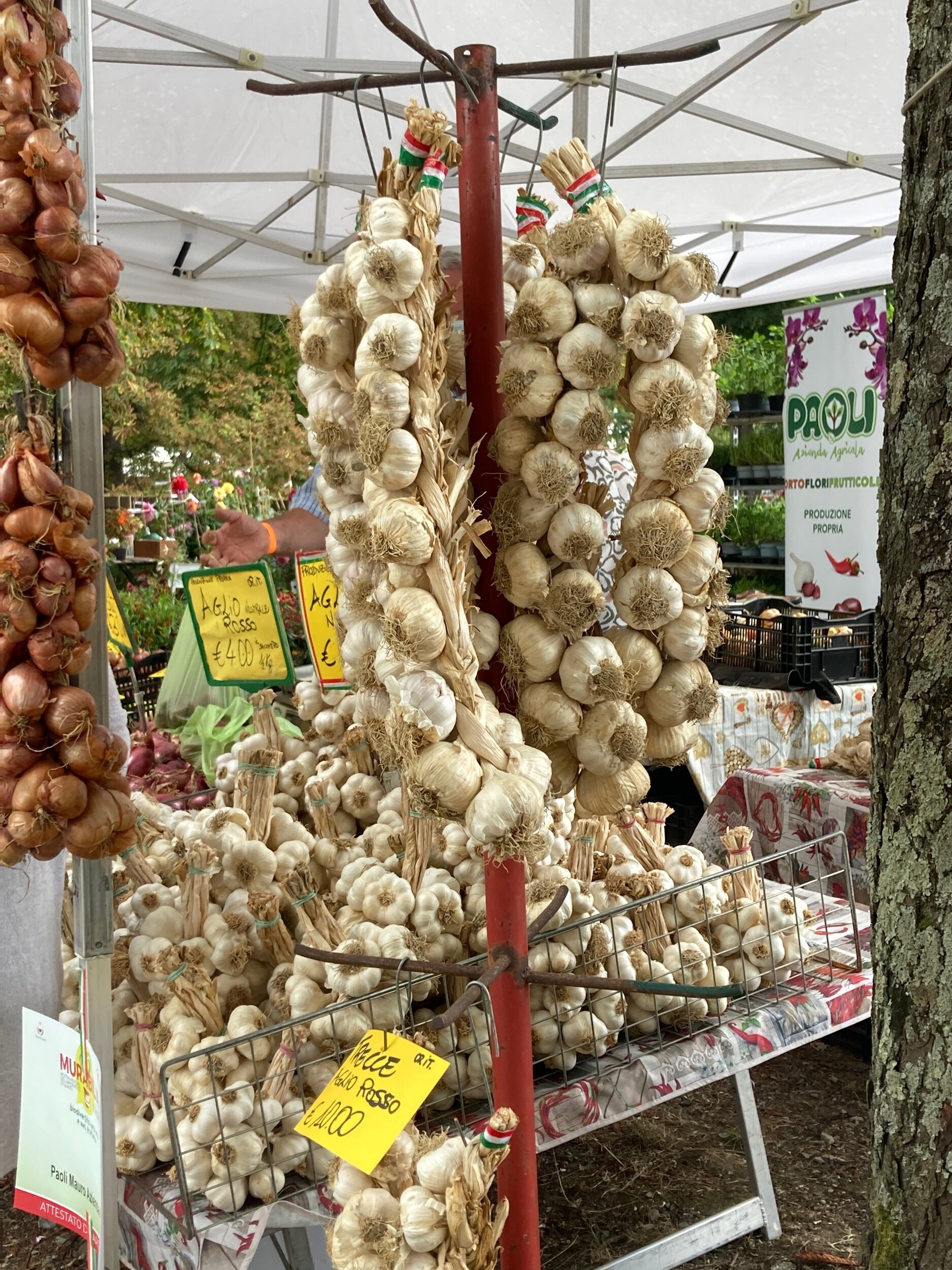
Another pleasant find is that while summer 2020 saw the cancellation of almost all events, this summer there are posters up throughout the city advertising concerts, garden shows, art exhibits, and other upcoming events. This past weekend the fall garden show (Murabilia), cancelled last September, took place along the city walls.

IMG_2214.jpeg
IMG_2204.jpeg
IMG_2201.jpeg

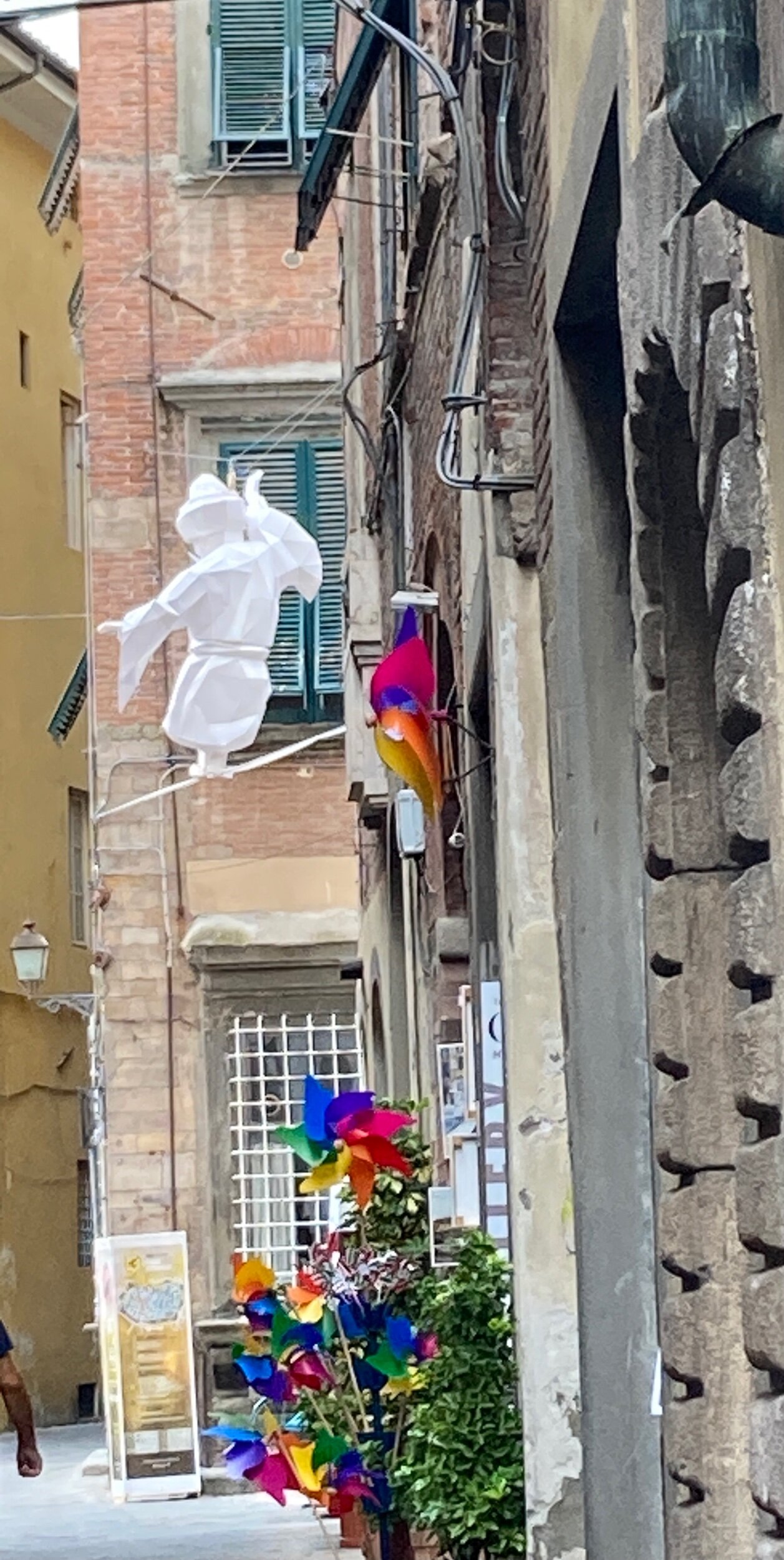
Perhaps best of all, the Cartasia (Biennale poster above) art show has returned (after a year’s delay) with installations all through town. I’m looking forward to exploring this always fascinating display of paper art.

One of the many paper art installations around Lucca, part of the Lucca Biennale Cartasia show.

One of the many paper art installations around Lucca, part of the Lucca Biennale Cartasia show.

I’m looking forward to visits from several American friends in the next few weeks and to doing some fall travel within Italy. And even though I already miss my family and friends in the US, it is good to be back. Hello Lucca!

September 06, 2021 /Joanne Bartram
lucca exhibits
#fallinitaly, #italytravel, #lucca, Italy travel, Living in Italy, Lucca
Blue sky in Lucca, as seen from under the arches of the Church of San Martino

Blue sky in Lucca, as seen from under the arches of the Church of San Martino

Under Italian Skies

August 16, 2021 by Joanne Bartram in Italian light, Italy, Italy travel, Living in Italy

Another week of August vacation, another photo post. This week, Italian skies.

It is hard to describe what is so special about the sky in Italy. There is just some combination of color, light, and connection to land, sea, or city that work in harmony. No matter the season or whether the skies are bright blue, filled with soft clouds, or dark and stormy, they are always beautiful. And the sky at sunset, that’s simply magic! I feel so fortunate to be living under Italian skies and I can hardly wait to return to Lucca in late August.

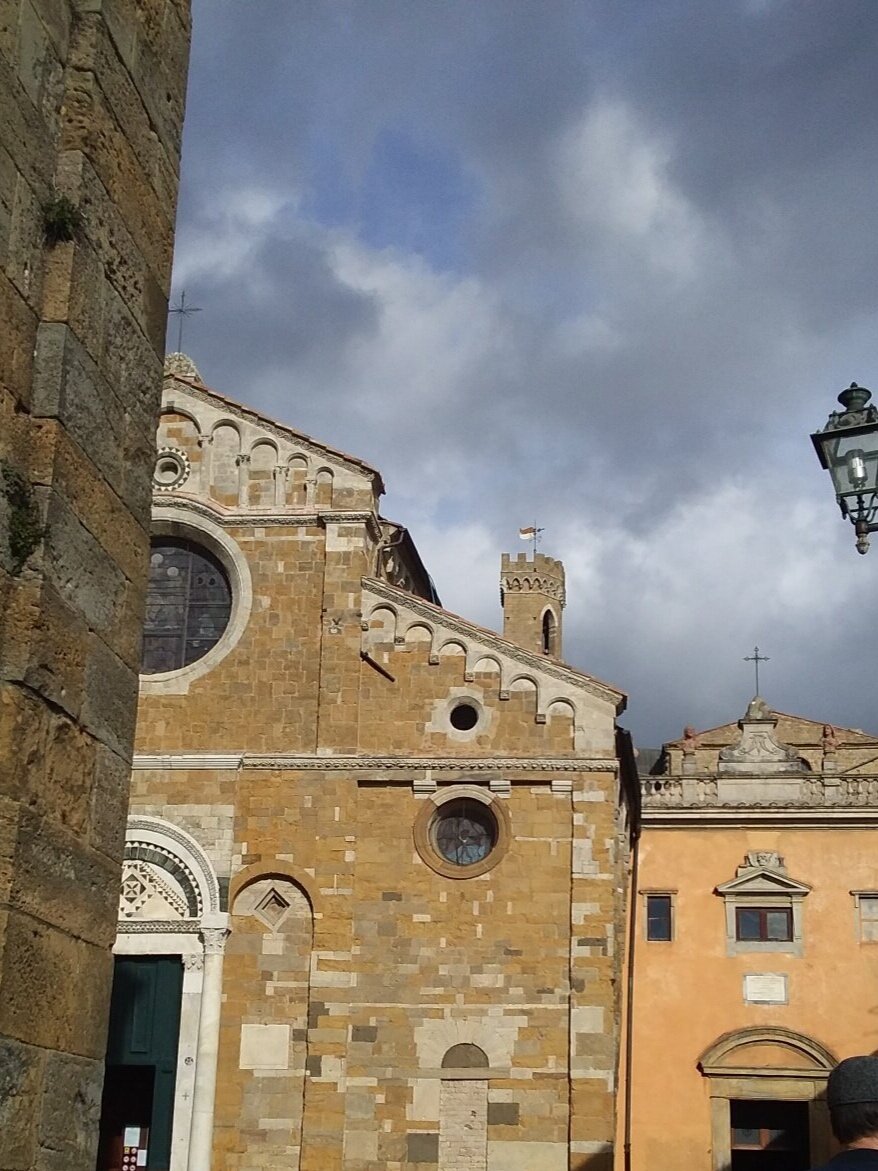
A storm brewing in Volterra

A storm brewing in Volterra

A clear summer day’s sky in Lerici

A clear summer day’s sky in Lerici

An early spring sky in Sant’Andrea di Compito

An early spring sky in Sant’Andrea di Compito

Wispy clouds in Bagnone

Wispy clouds in Bagnone

Dramatic skies over Pisa

Dramatic skies over Pisa

The sky in Lucca makes the perfect back drop for sculpture.

The sky in Lucca makes the perfect back drop for sculpture.

This sky along the River Arno in Florence almost looks like a painting.

This sky along the River Arno in Florence almost looks like a painting.

Sunset in the Val d’Orcia turns the sky a beautiful shade of pink.

Sunset in the Val d’Orcia turns the sky a beautiful shade of pink.

Dusk along the wall in Lucca.

Dusk along the wall in Lucca.

August 16, 2021 /Joanne Bartram
Italy, Italian sky, Scenic Italy
Italian light, Italy, Italy travel, Living in Italy
Rome, 1996.  My first trip to Italy. Laundry was one of many things that fascinated me.

Rome, 1996. My first trip to Italy. Laundry was one of many things that fascinated me.

Laundry Day in Italy

July 12, 2021 by Joanne Bartram in Italian culture, Italy, Italy travel, Living in Italy

When I am in the United States I rarely give much thought to laundry. From hamper to washing machine and on to dryer it’s an easy, uncomplicated task. Not so when I am in Italy. First, I need to be sure that no other appliance is in use when I run the washing machine. The electric circuits simply can’t handle the washing machine running at the same time as the oven, dishwasher, or hair dryer. I learned this the hard way when I once tried to blow dry my hair while doing a load of laundry. Picture me taking out the power in mine plus several adjoining apartments. Lesson learned!

Laundry or art ?

Laundry or art ?

Next, drying times can be much longer in humid Italy (especially compared to my former home in the dry climate of New Mexico). In the winter, hanging things near (or over) the radiators speeds things up. But when the weather is warm and damp, and heat not in use, a pair of jeans can take a long time to dry. It helps to have access to “solar powered” drying (ie, sunshine on a terrace or a window line).

In a country with few clothes dryers, laundry hanging from a window line is a common sight.  It always makes me smile.

In a country with few clothes dryers, laundry hanging from a window line is a common sight. It always makes me smile.

Next, there are space concerns. My apartment in Lucca is small with no outdoor space. And being on the ground floor means that I don’t have a window high above the street with a clothes line. Setting up a drying rack inside takes up a lot of space and is only big enough for some clothes or towels, and not many at any one time. Hanging sheets to dry is nearly impossible. I now take my bed linens to the lavanderia where they wash, dry, press, and fold them. They return to me wrapped in paper and soft as can be. A touch extravagant but worth it!

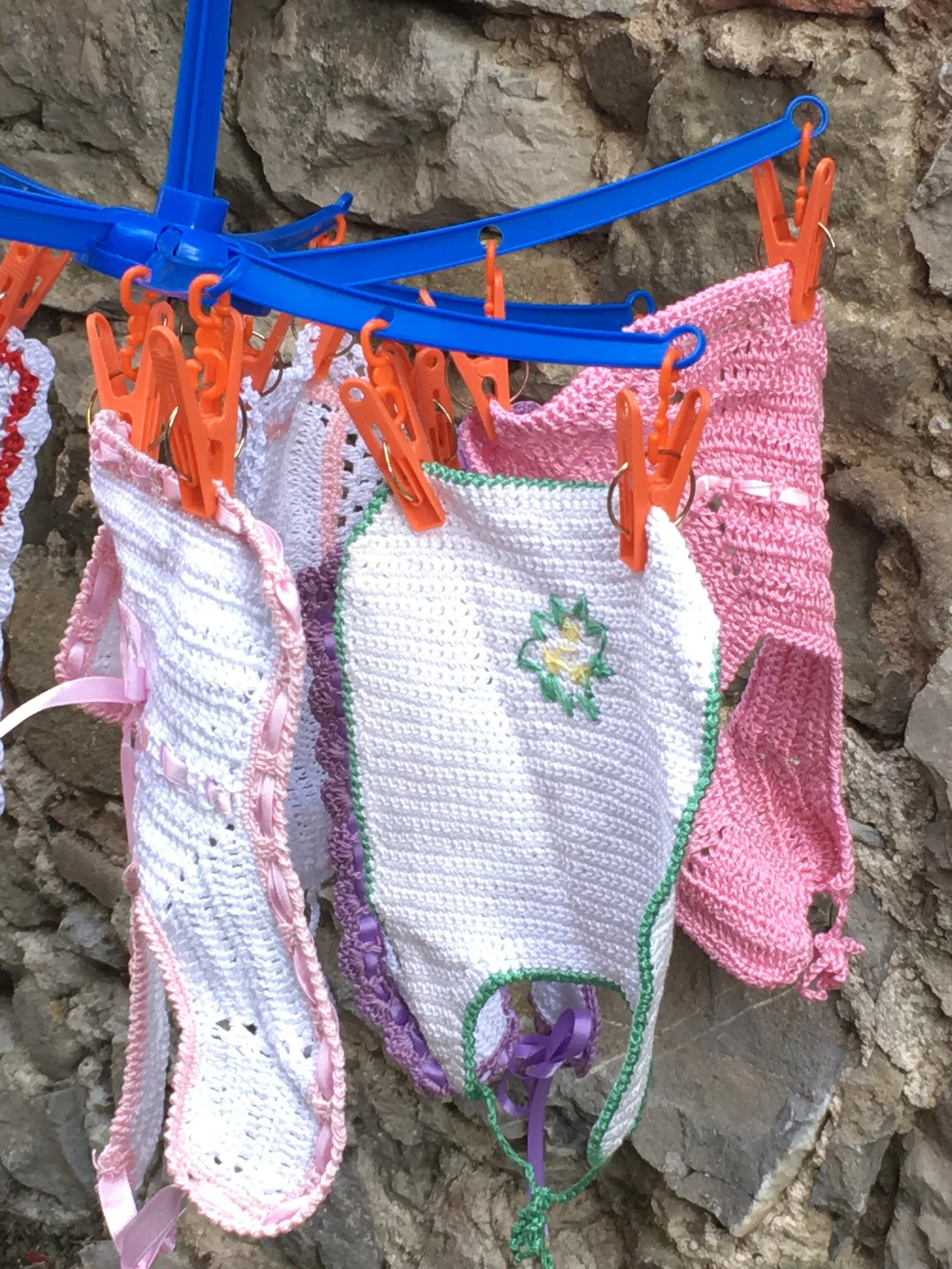
Laundry day in the Cinque Terre.

Laundry day in the Cinque Terre.

E5E95AE3-08D2-4CE8-9B85-C2B3C8249A6C.jpeg

Clothes and linen drying outside is a common sight in Italy (although some historic districts ban this practice). To me, there is something delightful about seeing colorful laundry hung up to dry on a line. It is quintessentially Italian. I often make up theories about the residents of a building based on their laundry - the orange worker’s pants, the individually hung socks, the unabashedly public hanging of “tighty whiteys”, the pretty dresses, the colorful linens, the baby clothes. They all say something about the lives if the people doing the wash. Over the past year I’ve even seen rows of blue surgical masks hung out to dry. Somehow all of these scenes seem like art, or prayer flags, to me.

I’m spending a couple of months visiting my family in the United States right now. I miss those neatly pressed and folded sheets from the lavanderia and the sight of laundry hanging from balconies. I wonder what my neighbors would think if I hung my laundry from my window here in Albuquerque? No doubt the HOA would not be amused.

Color coordinated laundry

Color coordinated laundry

July 12, 2021 /Joanne Bartram
italian life, italian culture, laundry in italy
Italian culture, Italy, Italy travel, Living in Italy
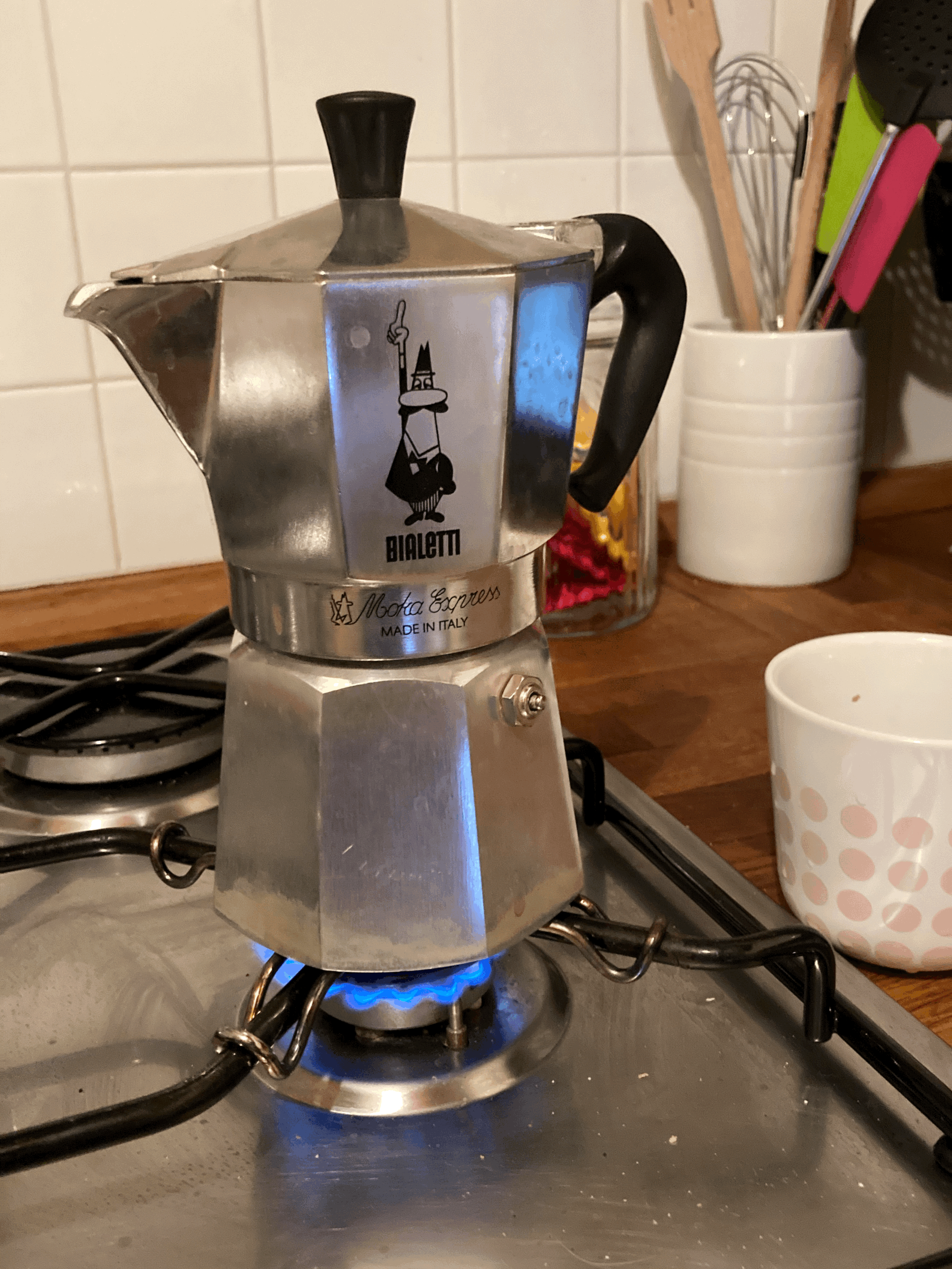
The “omino con I baffi” (little man with the mustache) is the symbol of the Moka Express. He was based on the image of Renato Bialetti, son of the company’s founder

The “omino con I baffi” (little man with the mustache) is the symbol of the Moka Express. He was based on the image of Renato Bialetti, son of the company’s founder

Italian Coffee Part Two : La Moka

June 28, 2021 by Joanne Bartram in Italian culture, Living in Italy

 Many objects are representative of Italian design – the Fiat Cinquecento, the Ferrari, the fashions of Armani, the shoes of Ferragamo.  But perhaps nothing is more emblematic of Italian design than the simple Moka Express coffee pot.  

Almost every Italian home has at least one Moka.  The original design is easily recognizable by its octagonal shape and the “omino con i baffi” (little man with the mustache) that appears on every pot.  Perhaps the true measure of “Italian-ness” lies in the number of Moka pots someone owns.  I have 5, 3 in my Italian apartment and 2 in my other home in New Mexico.

tempImage8YOWaS.gif

A Moka Express has several parts – a lower base for water (caldaia), a funnel / filter basket for the ground coffee (filtro imbuto), a gasket / seal (guarnizione), and an upper chamber to collect the brewed coffee (bricco).  They come in a variety to sizes, mostly commonly from 3 – 12 cups but there are Moka pots as large as 50 cups.  Don’t be fooled by those cup sizes though – they represent espresso cups (about 2 ounces each) and not an American style 6-8 ounce cup.   My most used Moka, labeled 3 cups, makes one nice sized mug or two smaller cups of coffee (about 6 ounces total).  That explains why I have several – brewing coffee for company means I usually need to brew more than one pot at a time. 

The coffee “bar” in my New Mexico condo within two Moka Express pots.

The coffee “bar” in my New Mexico condo.

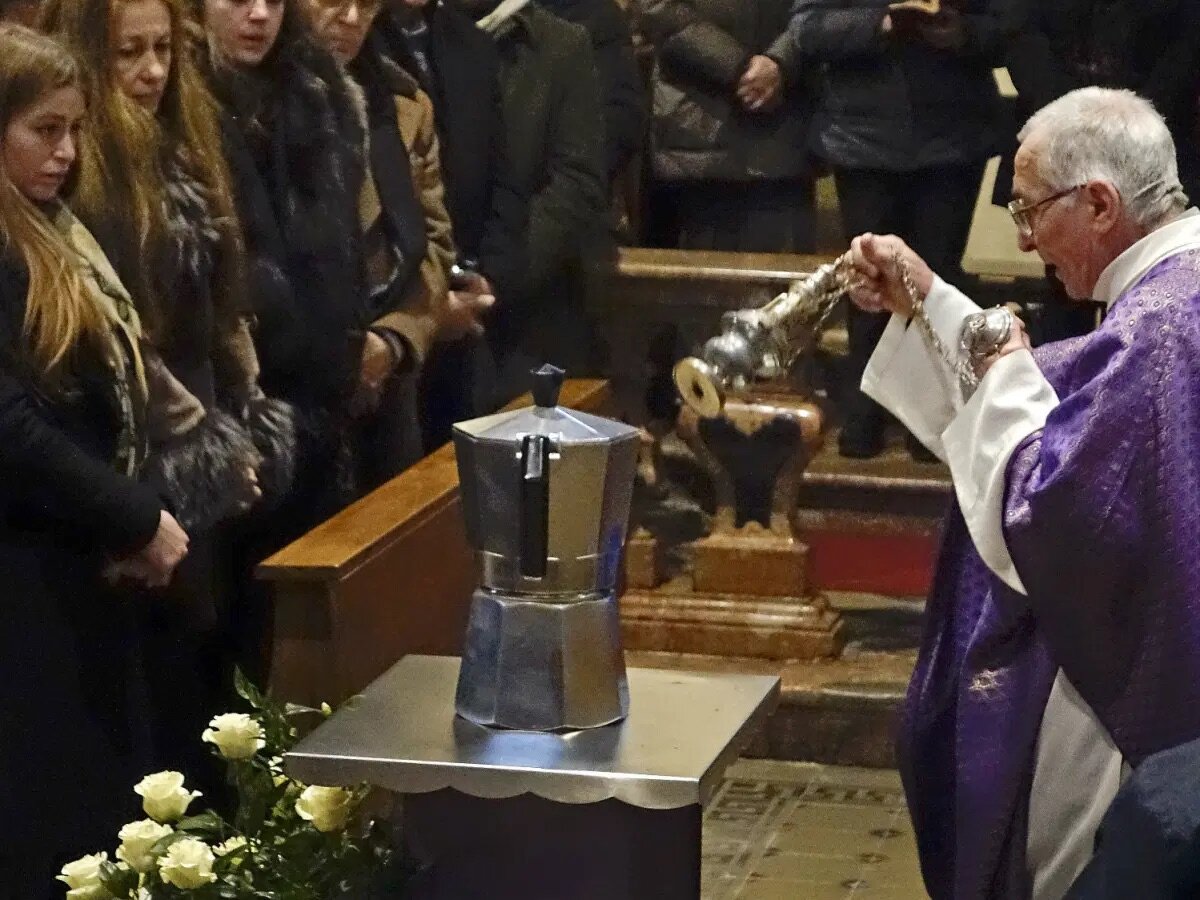
 Alfonso Bialetti, an Italian machinist and tool maker, designed the Moka in 1933 and founded Bialetti Industries to produce it.  It was first sold in the weekly markets of the Piedmont region in northern Italy. Alfonso’s son Renato took over following World War II.  It was Renato who added the mustachioed man, expanded marketing, and made the Moka the symbol of Italian coffee culture that is today.  It is no exaggeration to say the Renato lived and died thinking of the Moka.  When he died, at age 93, his ashes were placed in an oversized Moka pot.  Really! Photographic proof below.

Renato Bialetti’s funeral.  He must have had quite the sense of humor to have his ashes placed in a Moka Express shaped urn!

Renato Bialetti’s funeral. He must have had quite the sense of humor to have his ashes placed in a Moka Express shaped urn!

 In recent years newer home machines, using pre-filled coffee capsules, have become more popular, decreasing sales of the traditional Moka.  There were fears that the Moka would become obsolete. However, if you ask me, those “modern” machines cannot brew coffee that compares with the flavor of Moka brewed coffee (not to mention that a Moka produces no waste other than coffee grounds which can be composted). The trend may be reversing though, sales of the traditional Moka are on the rise again.  Sometimes the traditional methods really are best.

tempImagexOYZhO.gif

To brew the best coffee in a Moka, there are some things to keep in mind: The water chamber is filled just up to the pressure valve, ideally with room temperature filtered water.  Better water = better coffee. Using room temperature rather than cold water decreases the brewing time and the exposure of the grounds to heat, making for a better brew.  Some sources recommend using pre-heated water in the water chamber, but I find that doing so makes the chamber too hot to handle when starting my coffee.

It’s important to loosely fill the filter basket and not tamp down the grounds

It’s important to loosely fill the filter basket and not tamp down the grounds

The ground coffee is spooned loosely into the filter basket and, unlike what the barista does in the bar, never packed down.  The Moka is not a professional style espresso maker (it really isn’t espresso at all, just a close relative). The steam pressure in a Moka is much less than in a true espresso machine.  Less steam pressure requires a less dense fill of coffee, otherwise the steam never makes it through the grounds.  When filling the filter basket it is also important to make sure that there are no grounds on the top edge which would prevent a good seal.

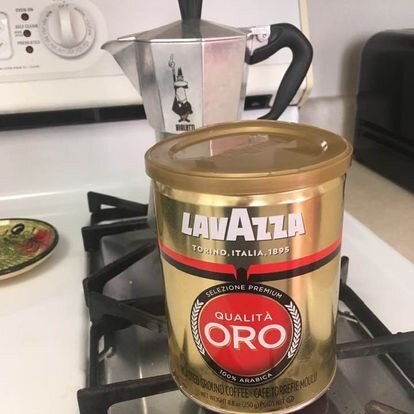
Just like better water makes better coffee, the same is true for better beans.  Though everyone’s taste in coffee intensity and flavor varies, the grind should always be designed for a Moka.  I find that Lavazza makes two good choices – Lavazza Gold and Lavazza Caffe` Espresso (both also available in the US and on-line). In Italy, I often buy fresh ground coffee from a local shop. There are many choices, experimenting to find the perfect bean is part of the fun.  I also find that the coffee tastes better when the ground coffee is stored in an air tight container at room temperature, rather than in the refrigerator, and used up fairly quickly.

To brew the coffee, the Moka is placed over a low flame on a gas stove.  The flame should never extend beyond the edges of the pot.  Low and slow makes the perfect cup of coffee.  Yes, it takes longer than a Nespresso machine but the wait is worth it. As the coffee brews, the sound changes from barely audible to a louder bubble.  As soon the louder bubble starts, turn off the flame and allow the brewing to finish off the heat.  Too much “cooking” isn’t good for flavor. Be careful when handling the pot after brewing - the handle is heat proof but accidentally touching the metal is a painful experience!

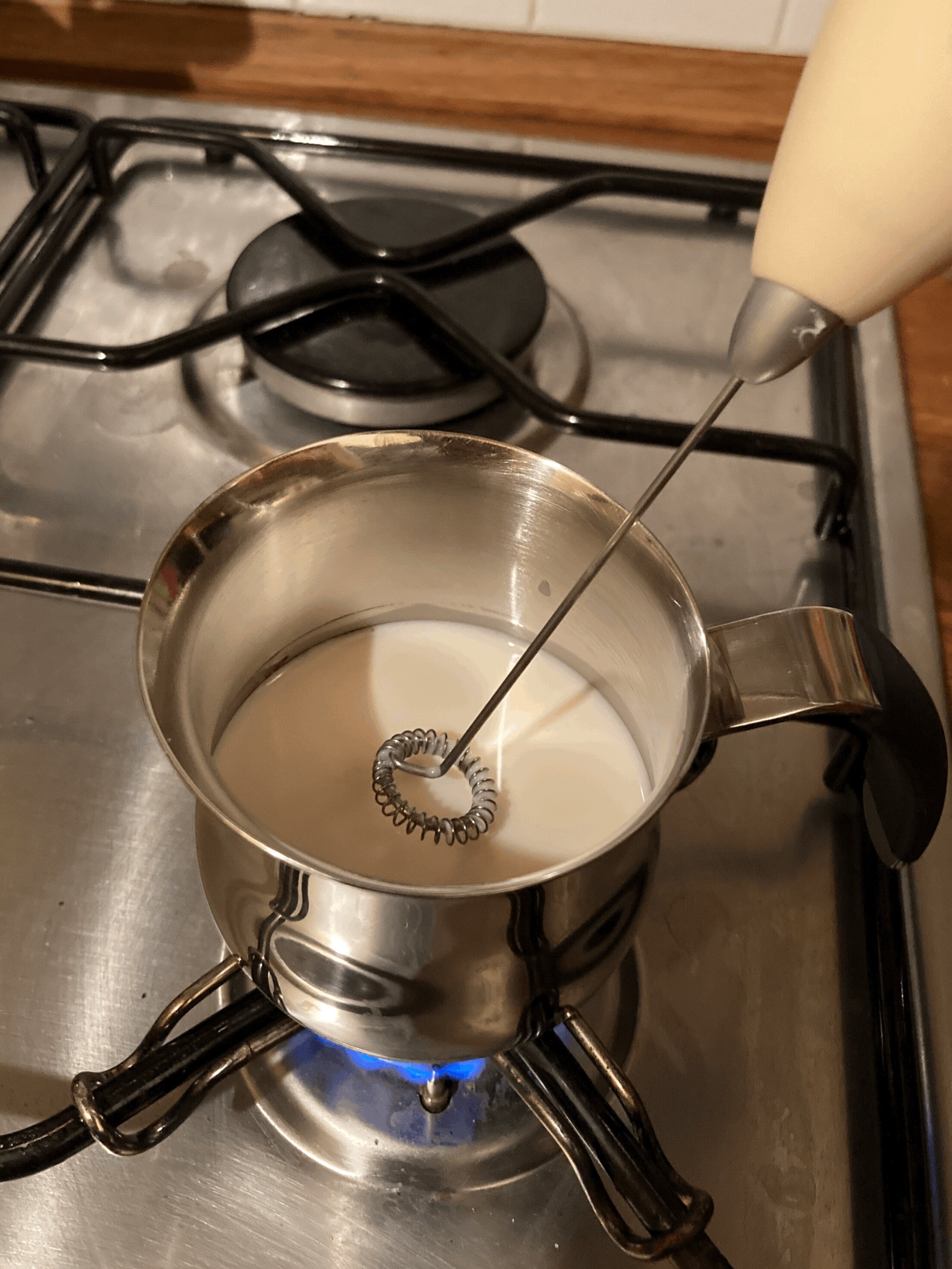
Hot milk and a battery operated whisk - on my way to a cappuccino.

Hot milk and a battery operated whisk - on my way to a cappuccino.

 Something I didn’t know, but learned when doing some research for this post, is that before serving the coffee that has collected in the upper chamber should be stirred.  This blends the first bit of coffee with what comes later, evening out the taste.  Good tip.

While the Moka does not make a true espresso, it makes a nice “almost cappuccino” with the addition of some hot, frothed milk. The milk can be heated on the stovetop in a specially designed stainless cup or in a microwave. A battery operated whisk does a good job of frothing the milk. Low fat works best!

 It’s also important to know how to care for the Moka. New pots need to be “seasoned” by brewing, and discarding, 2 pots of coffee.  This eliminates any metallic taste or residue left over from manufacture.   

The inside of the aluminum pots should never be washed with soap.  Some hot water and a wipe will suffice.  A bit of coffee oil will collect and that’s ok – better than coffee that tastes of soap!   And never, ever put a Moka in the dishwasher. After cleaning, all parts of the Moka should be dried well. Ideally, the pot is stored in pieces rather than completely sealed to prevent growth of “fuzzy stuff” in the lower chamber.

 The rubber seals will fail over time and need to be replaced.  Seals are sold separately and have to match the size of the Moka.  Forgetting the pot on the heat will melt the seal and, if left on the heat while empty for too long, can ruin the pot itself.  Can you guess how I learned this? 

Newer versions of the Moka exist – a stainless steel one, an electric model, and ones for induction stove tops.   I’m partial to the original aluminum 3 and 6 cup models with the omino con I baffi used on a gas burner. A bit old fashioned, but really satisfying to use. In fact, I think I will go brew some right now.   

363C647E-7DFD-4E93-B57C-F73B1D1D7E71_1_105_c.jpeg
June 28, 2021 /Joanne Bartram
caffe`, Moka Express, Moka Coffee, Italian Coffee, #moka
Italian culture, Living in Italy
  • Newer
  • Older

Powered by Squarespace