Two Parts Italy

Exploring Italy, travel, and living a flavorful life

  • Blog
  • About This Blog
  • Start Here
  • Recent Posts
  • Archives by Topic
  • Subscribe
  • Contact me

Rich with vegetables and sausage, this lentil soup is sure to bring good fortune in the new year.

From My Italian Kitchen: Lentil Soup for the New Year
December 30, 2024 by Joanne Bartram in #italiancooking, food, Italian culture, Italian recipes, Living in Italy

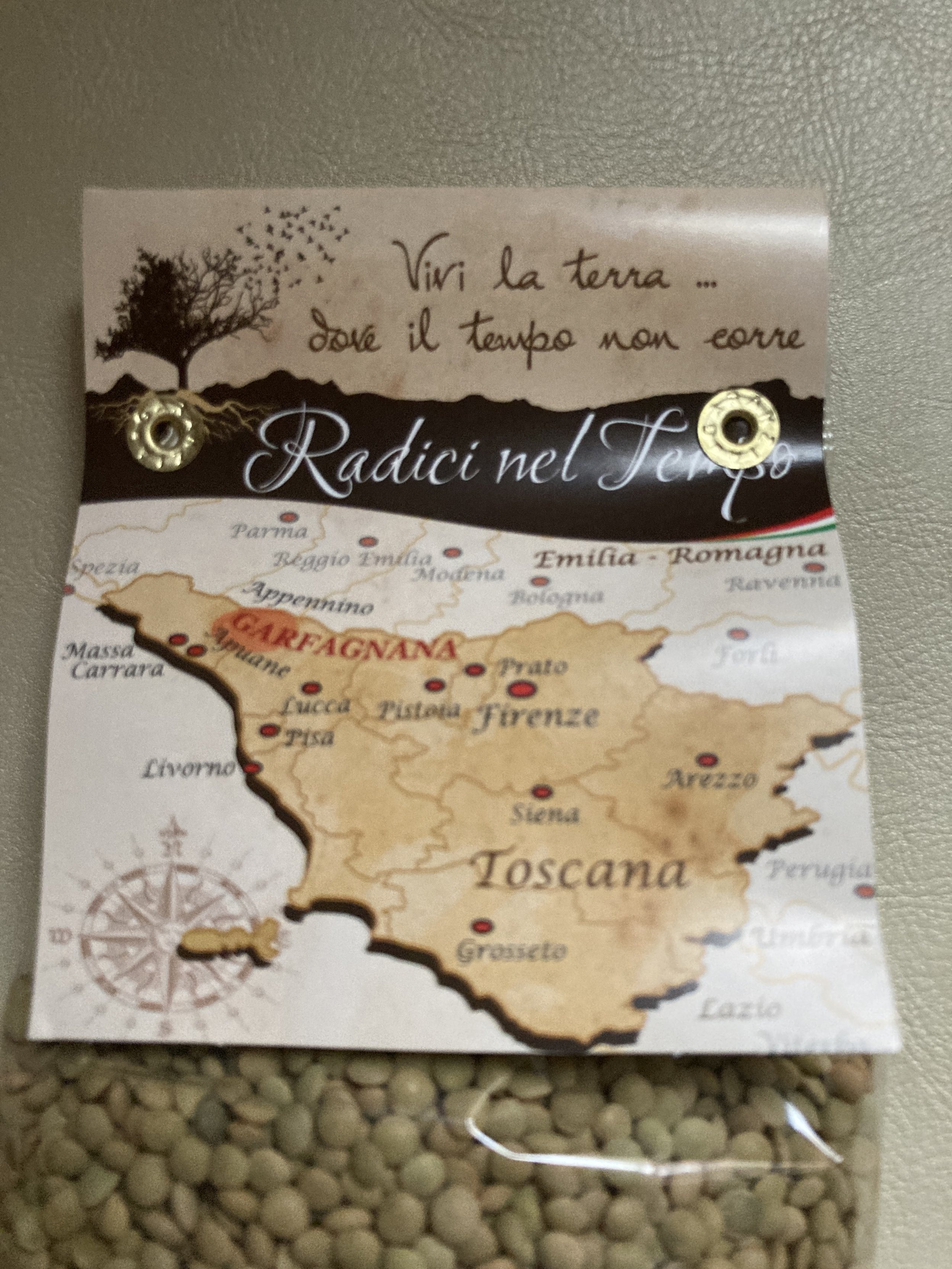
Tiny green lentils, grown near Lucca in the Garfagnana are my choice as a base for lentil soup

Lentils (Lenticchie in Italian) are a traditional food in Italy at the New Year.  The round shape resembles a coin and those tasty little coins portend fortune in the new year.  And who couldn’t use that?

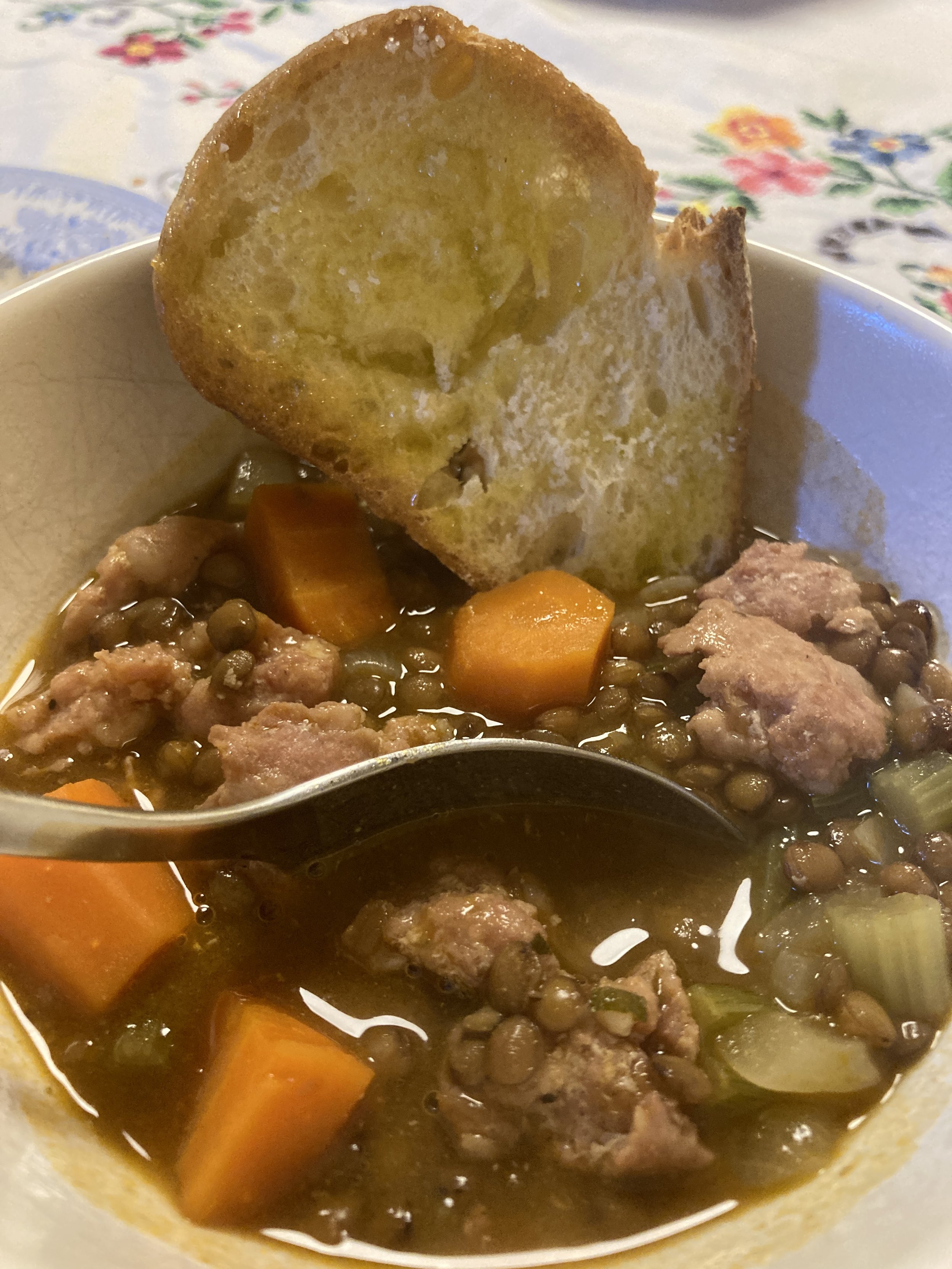
Since I love soups, my Italian new year tradition is a rich lentil soup filled with veggies and sausage.

 For this soup, the perfect lentils (both for texture and flavor) are the tiny green ones. Here in Italy I use ones from the Garfagnana, the area of Tuscany northwest of Lucca.


In the US, finding imported Italian lentils may be a challenge, but some type of tiny green ones can often be found in the supermarket.  They work almost as well as Italian ones in this soup.  Do they bring Italian fortune?  Hmm.  That I can’t guarantee.

Simple crostini are perfect alongside this soup. Good bread toasted, good EVOO, a rub of garlic and a sprinkle of salt are all you need.

Simple crostini - thin slices of toast rubbed with garlic, drizzled with really good extra virgin olive oil, and sprinkled with a touch of salt - makes the perfect accompaniment for this soup.
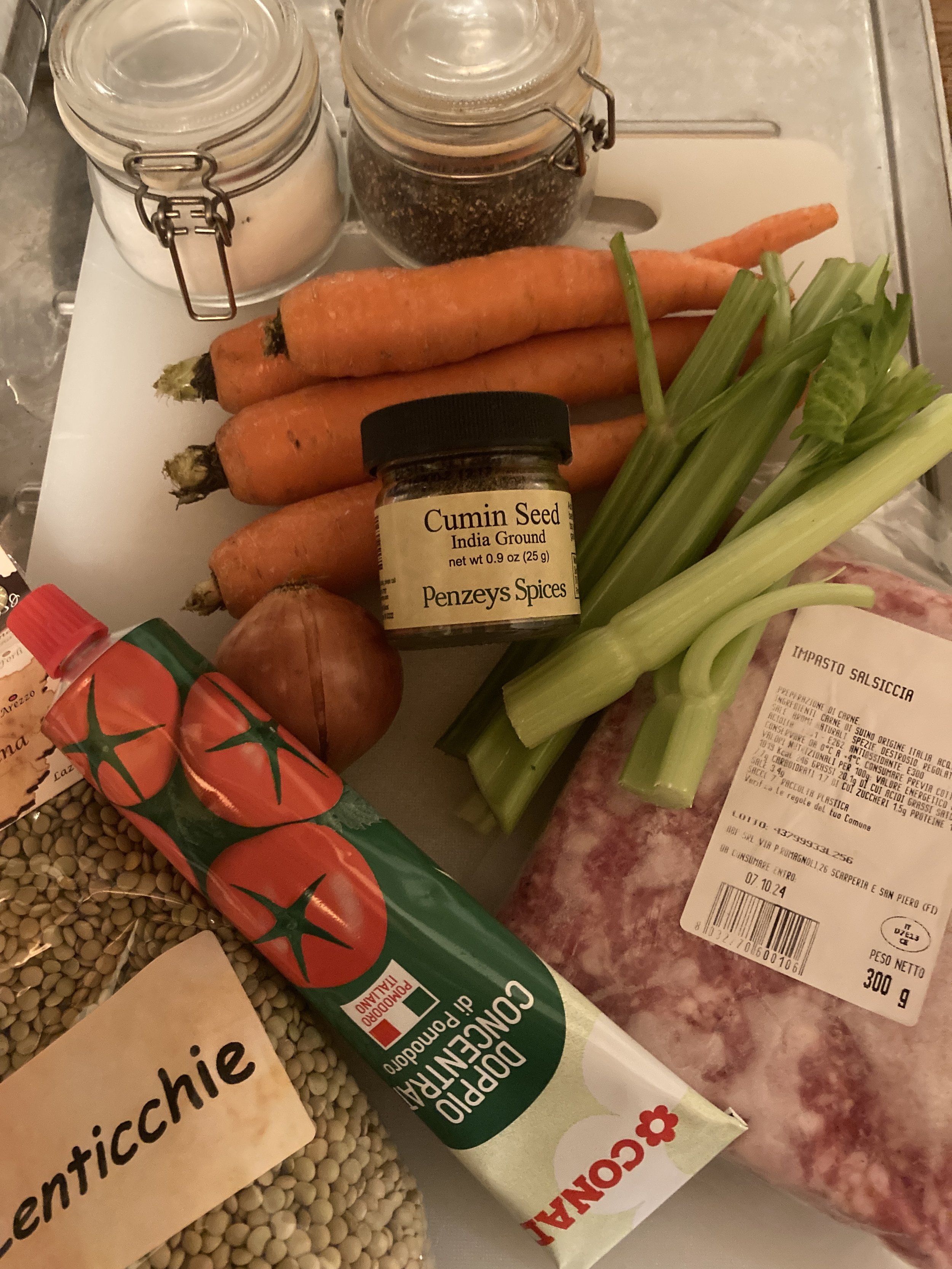
Here’s my recipe:

Zuppa di Lenticchie (Lentil Soup)

 190 grams small green lentils (1 rounded cup)

1 medium red or yellow onion, chopped

2 ribs celery, cut as small dice (about ¾ cup)

2 – 3 carrots, cut as medium dice (about 1 ½ cups)

2 tablespoons double concentrated tomato paste

¼ teaspoon course ground black pepper

½ teaspoon ground cumin

½ teaspoon salt

1 tablespoon chopped fresh parsley

200 grams pork sausage, crumbled
1 ounce container of Knorr vegetable stock *

 Cover lentils with boiling water, soak x 15 minutes and then drain

Cover drained lentils with 1 inch of water, bring to a boil and simmer x 15 minutes

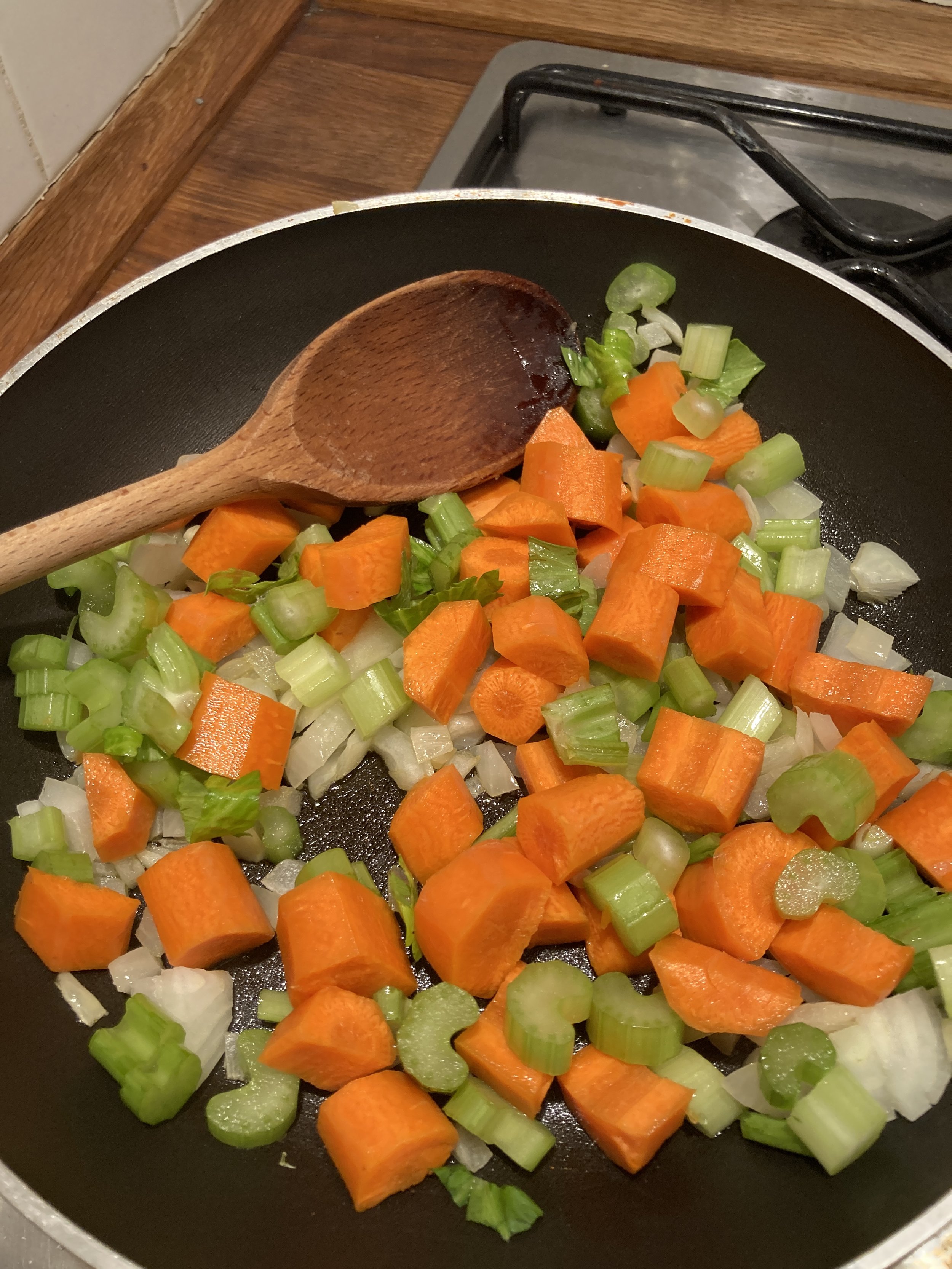
Meanwhile, sauté onion in 1 tablespoon extra-virgin olive oil until onion softens and is transparent. Add celery and carrots and sauté another 5 minutes.

Add sautéed veggies, spices, tomato paste, and chopped parsley to the lentils.

In a frying pan, crumble the sausage and brown until cooked through, add to lentils along with the Knorr vegetable stock or bouillon cubes.

Add ½ cup water and simmer everything x 30 minutes, adding more water as needed to thin the soup.
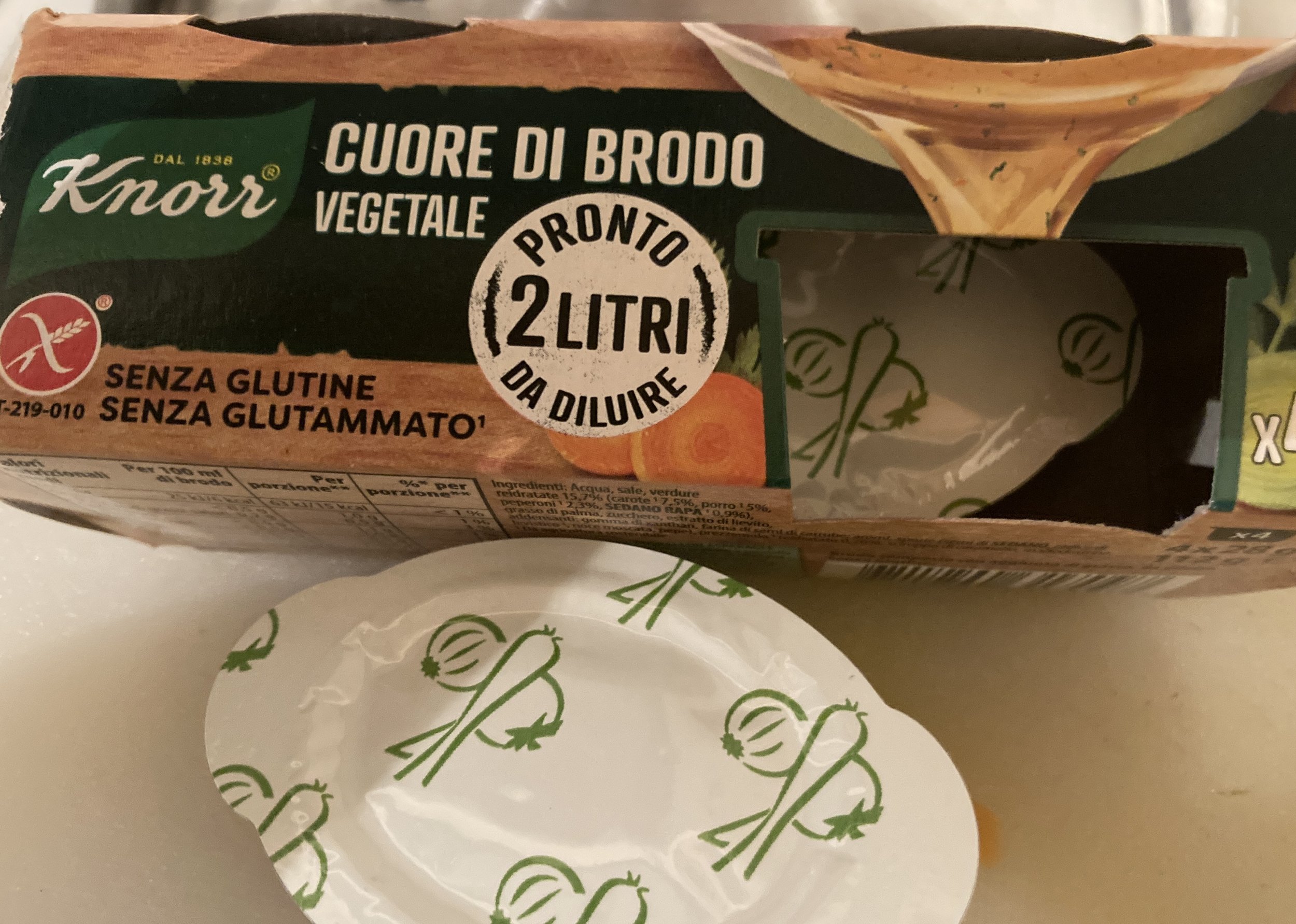
 *In Italy, Knorr vegetable stock is called Cuore di Brodo Vegetale and comes in a package of little 1 ounce plastic cups of jellied stock.  These are sometimes available in the US, but can be hard to find at least in New Mexico where I am from so I usually bring some from Italy.  If not available, just substitute a low salt vegetable bouillon cube or two or homemade vegetable broth in place of the water. 

Buon appetito, Buon Anno Nuovo


December 30, 2024 /Joanne Bartram
lentils, italian soups, lentil soup, new year traditions italy
#italiancooking, food, Italian culture, Italian recipes, Living in Italy

This pumpkin soup, from Cibrèo Trattoria in Florence, was my inspiration.  

From My Italian Kitchen, Roasted Pumpkin Soup

December 02, 2024 by Joanne Bartram in #fallinitaly, #italiancooking, Autumn in Italy, Cooking, Fall in Italy, food, Italian recipes

Fall in Italy is pumpkin season. Pumpkin shows up in many dishes - in creamy risottos, as the filling for tortelli, and as the base for a warming soup. Each fall I look forward to the appearance of all of these dishes on the menus of local trattorie, a sure sign of fall’s arrival.

This fall I have been experimenting with recipes for two of these dishes, a risotto and a zuppa di zucca (pumpkin soup). While it is always a treat to have these dishes in a restaurant, there is something very satisfying about making them at home.

For the pumpkin soup, I have tried to recreate the one I enjoyed last fall at Cibrèo Trattoria in Florence. It was a vellutata (a smooth, velvety soup) topped off with a drizzle of olive oil and a bit of sweetness from crushed amaretti. Unfortunately, their recipe was nowhere to be found, so I had to experiment to come up with something close. My version is not an exact replica of their’s, but it is pretty tasty!

The key to this soup is starting with chunks of roasted pumpkin and some roasted garlic. Canned pumpkin just won’t do - it doesn’t have the right flavor or texture. Roasting both the pumpkin and the garlic are essential for creating a complex flavor. Turmeric, cinnamon, and maple syrup pair perfectly with pumpkin. And, for a bit of tang, feta cheese. Lastly, crisp Italian Amaretti cookies add just the right touch of sweetness on top of the finished soup.

 Ingredients:

6 cups cubed pumpkin

1 head of garlic

3 tablespoons Extra Virgin Olive Oil (EVOO) + more to garnish finished soup

1 medium potato (~ 150 grams), cooked until soft

¼ cup onion, finely diced

2 tablespoons finely diced carrot

The sweetness in the amaretti adds a perfect touch to this soup.  Be sure to use the crisp ones.

10 ounces feta, crumbled

800 ml (~ 3 1/3 cups) chicken broth

¾ teaspoon salt

½ teaspoon coarse black pepper

1 teaspoon turmeric (or more to taste)

¼ teaspoon cinnamon

3 tablespoons maple syrup

¼ cup half and half (or whole milk)

1 package crisp Italian Amaretti cookies.  2 cookies, crumbled, per bowl of soup

 Directions:

Peel and cube the pumpkin (even easier if you can find it already peeled and cubed in the market). Toss with 2 tablespoons of EVOO and place on a rimmed baking sheet. 

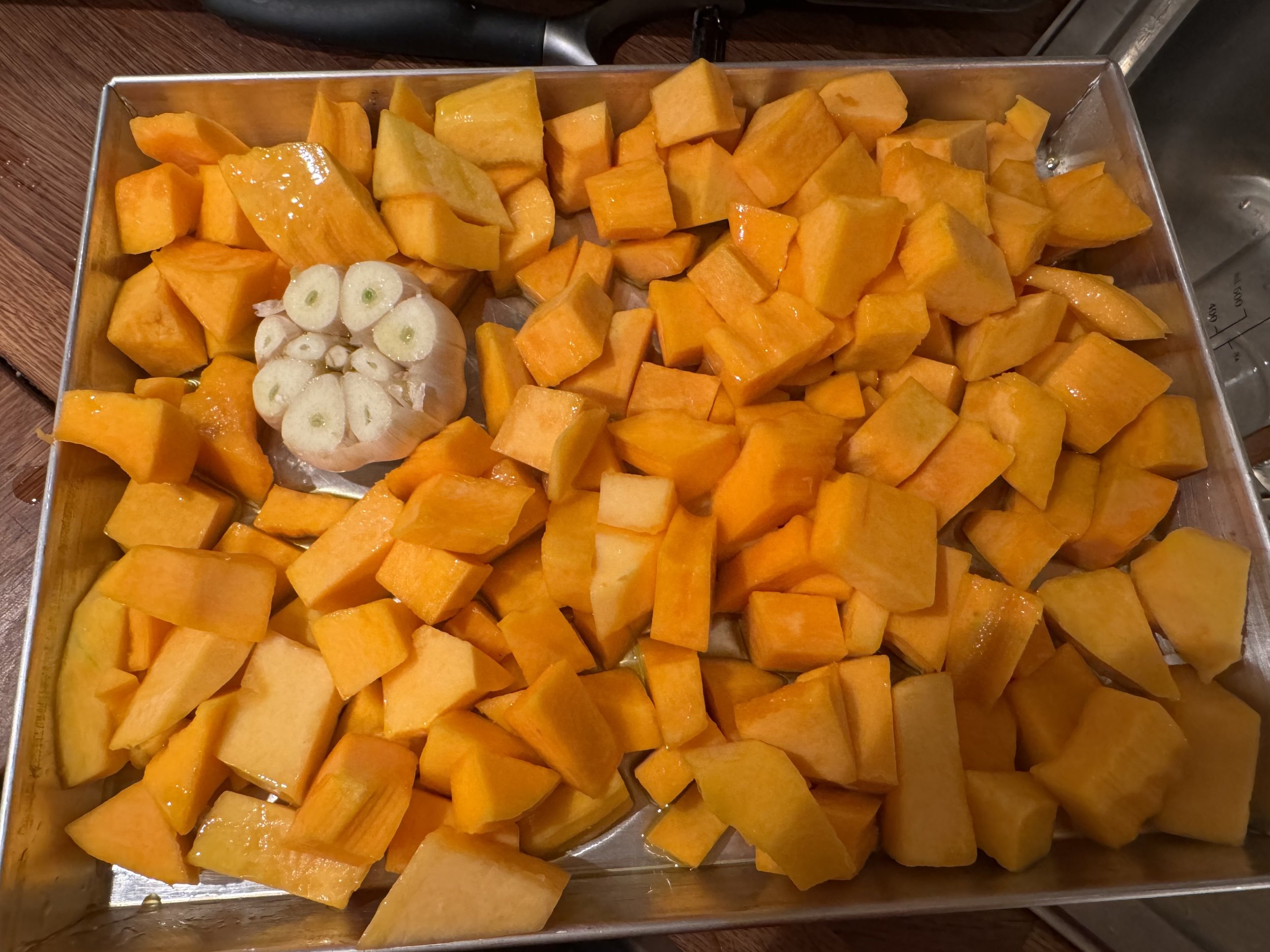
Pumpkin chunks and garlic ready to roast

Cut the top third off a head of garlic, remove the loose skins, and place the intact head in the pan with the pumpkin.  Pour 1 tablespoon of EVOO directly on top of the garlic and then flip it over so that the cut side is down.  Drizzle 2 tablespoons of EVOO over the pumpkin cubes.

Roast at 400 degrees for 45 – 75 minutes until pumpkin is soft and garlic soft and fragrant.   The more the pumpkin is spread out on a large pan, and the smaller the pieces, the quicker it will cook.  60 minutes is about average.

 While the pumpkin is roasting, boil the potato, mash, and set aside.   Sautè the onion and carrots in a little bit of EVOO until softened.  Set aside.

Roasting the garlic keeps the flavor mellow, start with half the head of garlic and add more to taste

Place the roasted pumpkin, along with any accumulated juices, into a large soup pot.  Add the feta, mashed potato, and carrot / onion mixture to the warm pumpkin.  Squeeze the roasted garlic cloves into the mixture (depending on how much garlic flavor you like, start with half the head of garlic and then add more to suit your taste).  Mash all with a potato masher.

Add the chicken broth (substitute vegetable broth for a vegetarian version), spices, and maple syrup.  Heat soup over low heat and simmer x 15 minutes. 

Blend with an immersion blender, then add the half and half

To serve:  drizzle a small amount of EVOO over each bowl of soup.  Top with 2 crushed amaretti cookies.  The slight sweetness of the cookies makes the soup sing!  For a bit more tang, crumble a tablespoon of feta on top.

This soup tastes even better gently reheated the next day.  It also freezes well, just defrost in the fridge overnight before reheating.

My version - I may have used a bit more amaretti than Cibrèo did.  I like the sweetness.

December 02, 2024 /Joanne Bartram
fall recipes, pumpkin soup
#fallinitaly, #italiancooking, Autumn in Italy, Cooking, Fall in Italy, food, Italian recipes

My pasta making friends Cindy and Lauresa

An Evening of Pasta Making

August 19, 2024 by Joanne Bartram in #italiancooking, food, Italian recipes

 It’s always fun to cook with friends. That is especially true when it comes to making pasta.   Making pasta fatta a mano (handmade pasta) is enjoyable work and it’s always more fun when there is someone (better yet a group) to share the work.  

My 12 year old grandson is a pro !

I am not a professional pasta maker by any means, but I’ve had some experience and have been successful at teaching my 12-year-old grandson, Jack.  He is now an independent pasta maker and my chief pasta making buddy.  So, when a trio of friends recently asked if I would teach them how to make pasta, I felt up to the task and quickly suggested an afternoon of pasta making followed by dinner.  

We quickly agreed to a plan - they provided wine, salad, and dessert while I collected all the ingredients for the pasta and put together a simple pre-pasta making aperitivo. Game on !

There are probably a thousand recipes for pasta dough.  Proportions vary as do some of the ingredients – with eggs or without?  All 00 flour or some semolina?  Salt?  Oil?   I’ve tinkered with all of these and have found what works best for me is 2/3 flour (type 00) mixed with 1/3 semolina, a pinch of salt, eggs, a drizzle of olive oil and sometimes, especially when working in a dry climate, 1-2 tablespoons of water.   This combination makes a great tagliatelle - an egg based pasta, cut into wide strips, perfect for holding onto a sauce. (detailed recipe at end of post)

 My friends arrived and, after a fortifying round of white wine sangria and some nibbles, we got to work.    

Fortification for the work to come!

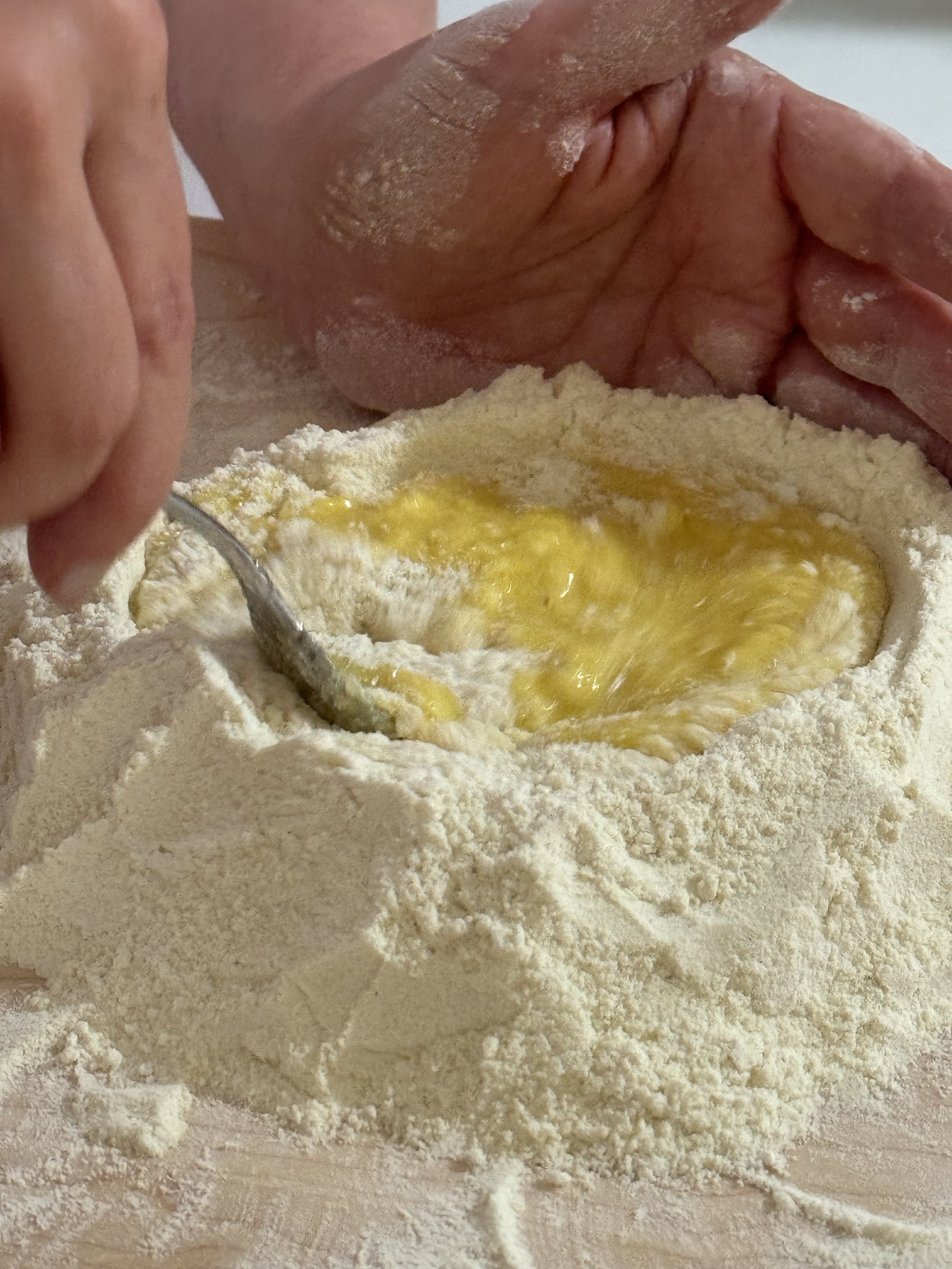
After mixing the 00 flour, semolina, and salt, they each made “the volcano”.   Into the center went the eggs, olive oil, and 1 tablespoon water.   Rule one – don’t break the sides of the volcano and allow the eggs to flow out !   

I am happy to report that the eggs were mixed and the volcano walls remained intact as they slowly incorporated the flour into the eggs to make the dough.  Success!

Next step was kneading after which the dough was wrapped in plastic wrap to rest for 30 minutes. This was just enough time for another glass of wine, to put the water on to boil, to heat the Amatriciana sauce which I had made the day before, to toss the salad, and set the table.  Quick work with several people!

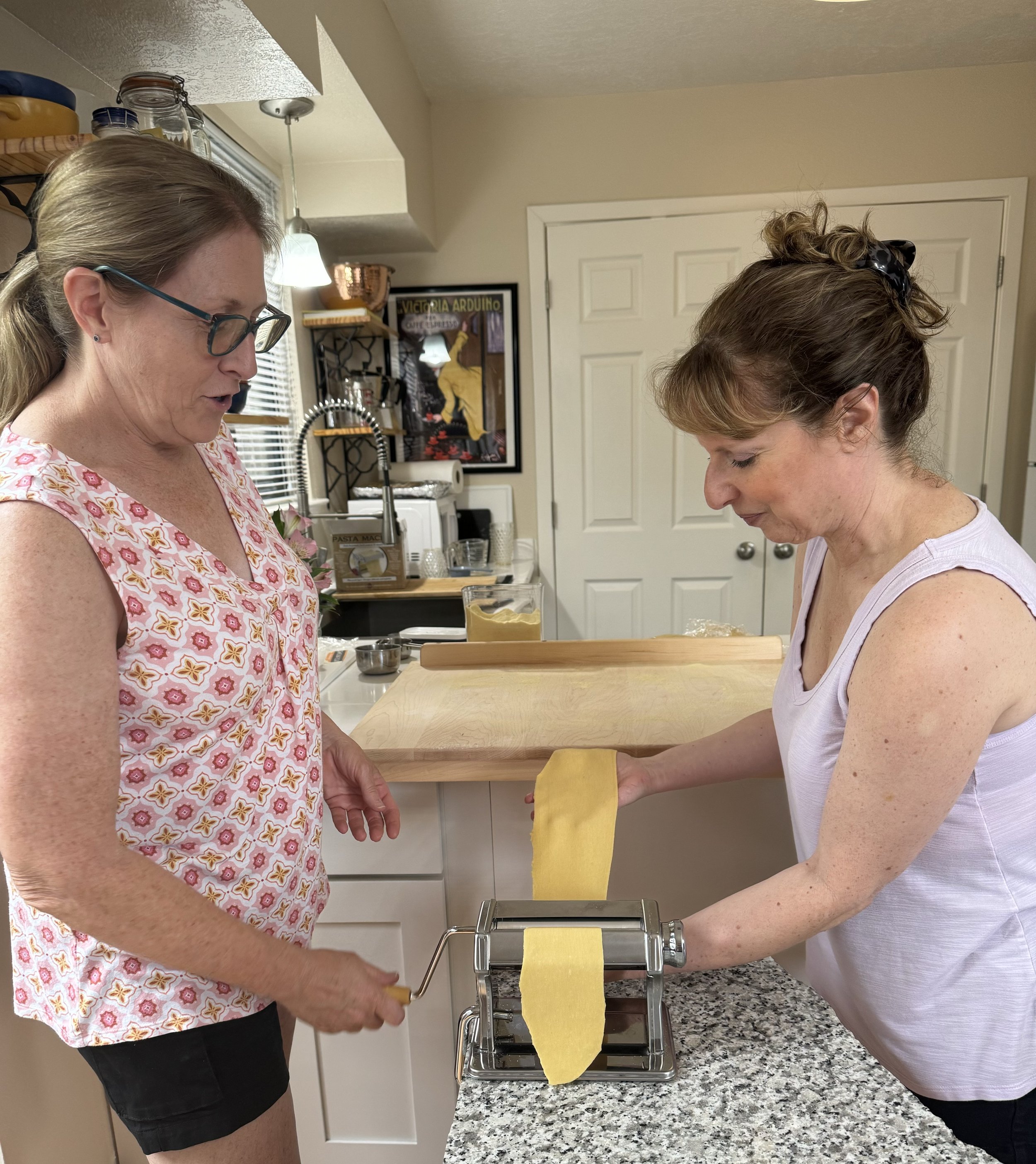
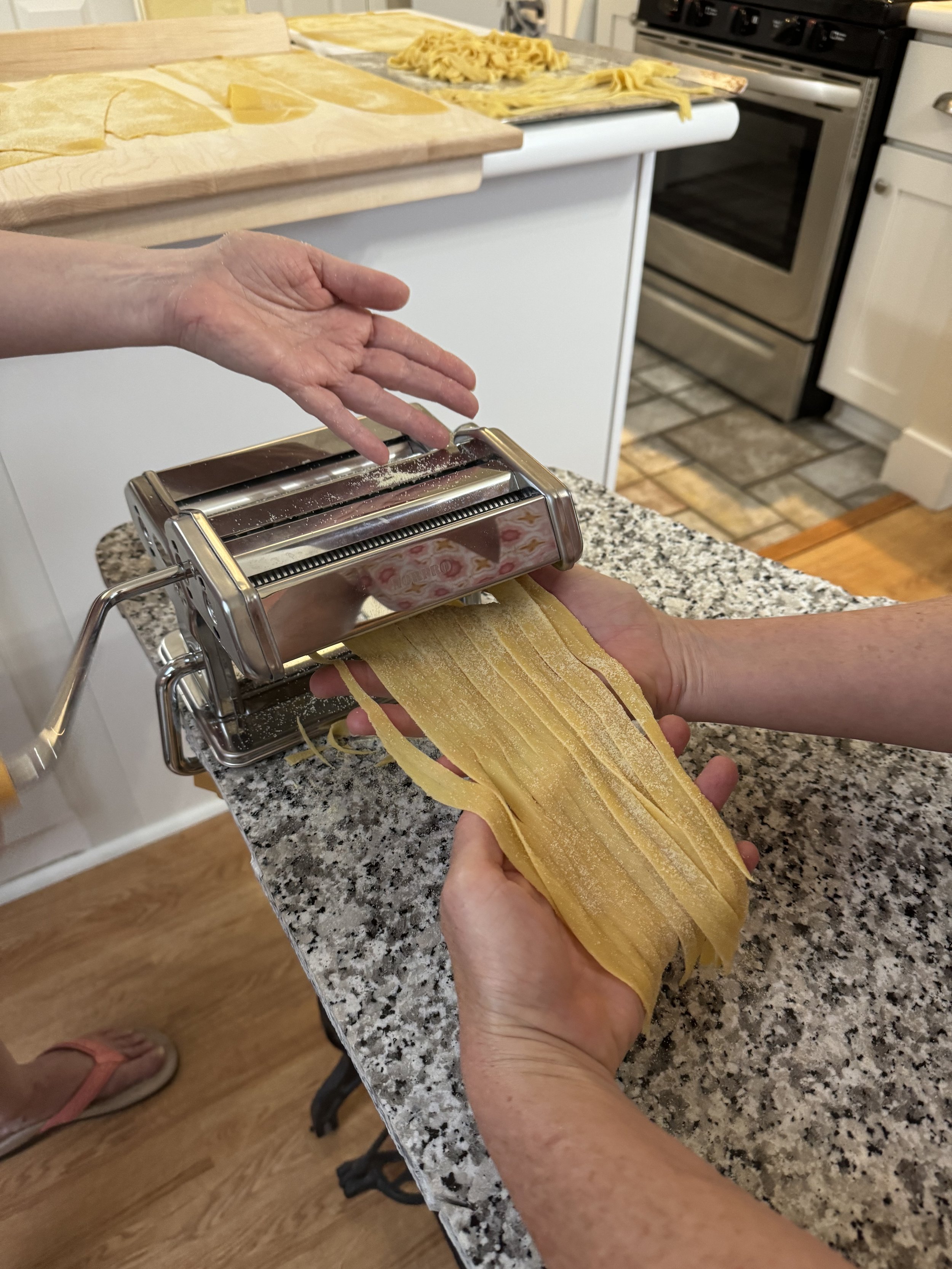
The next step surprised my pasta makeing friends in that the work of rolling the pasta dough into thin sheets took quite a bit of time – even with the use of a pasta machine.  

Several hands made the job much easier.  After the thin sheets were created, the actual cutting into tagliatelle was much faster.  Soon they had a tray full of beautiful, thin strands of tagliatelle.   Lots and lots of tagliatelle. Way more than the 4 of us could possibly eat, so some went straight into the freezer.

Cooking the fresh pasta took almost no time.  We tossed it with the sauce, some grated parmesan, and wow, perfect pasta !

My friends were pleased with their efforts and pronounced that pasta making was fun work. Dinner was tasty and we had a lot of fun along the way.  What a great way to spend a Friday evening! 

Time to enjoy all our hard work!

I’ll look forward to our next adventure in pasta making.  Maybe pici next time?

Basic Fresh Pasta Recipe

 1 cup 00 flour

½ cup semolina flour

Pinch of salt  

2 eggs

1 teaspoon extra virgin olive oil (EVOO)

1-2 Tablespoons of water if needed

Combine 00 flour, semolina, and  salt.  Place on board and make a well in the center. Into the well put the eggs and EVOO. Mix with a fork until yolk and white are well blended, being careful to keep the liquid inside the well of the flour.  Slowly incorporate flour, finishing with a firm but not dry dough.  Add 1-2 tablespoons water if dough seems too dry (but dough should not be sticky).  

Knead dough until smooth and slightly springy.  Wrap in plastic wrap and rest for 30 minutes to an hour. 

Roll dough into thin sheets (if using a machine start on #1 (the widest setting). Roll, fold in half and roll again.  Then roll on progressively higher numbers, ending with #6.   Dust sheets of pasta with semolina until ready to cut.

The extra pasta went into the freezer and the next week made a wonderful pasta carbonara.

Cut sheets into desired shape (my machine has rollers to cut either tagliatelle or spaghetti) and toss cut pasta with a small amount of semolina to prevent sticking.

Drop into boiling salted water 6-10 minutes (al dente).  Drain and toss with your choice of sauce.

 Note: the cut pasta freezes well. A week later it was perfect in a pasta carbonara.

August 19, 2024 /Joanne Bartram
freshpasta, pasta making, pasta fatta a mano, italian cooking
#italiancooking, food, Italian recipes

Wild fig tree growing along the Serchio river near Lucca

The Gift of Figs

July 15, 2024 by Joanne Bartram in #italiancooking, #italiansummer, food, Italian markets

It’s fig season!   

Black figs at an Italian market

One of my strongest taste memories is of eating a ripe fig, straight from the tree and warm from the Italian sun.  It happened on a trip long before I moved to Italy. I could not tell you exactly where I was or who I was with, but I recall standing in the front yard of private home, speaking with the owner (an American who had moved to Italy), listening to his story and picking figs from his tree. I remember the taste of that fig with longing.  And its taste is interwoven with the beginnings of my dreams of moving to Italy. That was one important fig!

In Italian, a fig is a fico.  Two figs are fichi.  An albero di fichi is a fig tree.  But use these words with caution.  Substituting the wrong vowel at the end changes the meaning entirely and is quite vulgar.  Avoid that at all costs!   You may also hear the word fico used to mean “cool”.    If someone tells you “sei fico” that’s a compliment – you’re cool.

Both black and green figs grow throughout Italy, especially in the south.  There is even a wild fig tree growing beside a bridge over the Serchio river between Lucca and nearby Monte San Quirico.   Pretty tempting to pick one of those beauties.

Green and black figs at a market in Italy

 In Italy, figs are popular in both sweet and savory dishes.  They can be wrapped with prosciutto, added to a salad, baked in a crostata, or made into jam.  Figs and nuts are a popular combination, baked into a sweet roll they make a decadent but tasty prima colazione (breakfast) or dessert.

 In the US, figs are mostly grown in California and parts of the south, though they seem much less popular in the US than in Italy.   I don’t think I had ever tasted a fig before that fresh-from-the-tree one in Italy (Fig Newtons don’t count). Since I most often spend the summer months in New Mexico, where my kids and grandkids live, I usually miss out on much of the Italian fig season. 

 It was a real treat then, and a surprise, when a friend gifted me a mix of black and green figs grown in the small town of Tijeras, in the hills east of Albuquerque. I had no idea that figs grew here. The question became what to do with them.   One of the black ones, large and sweet, found its way into my morning yogurt.   But the others were saved for a late afternoon aperitivo that I was planning to host a few days later.

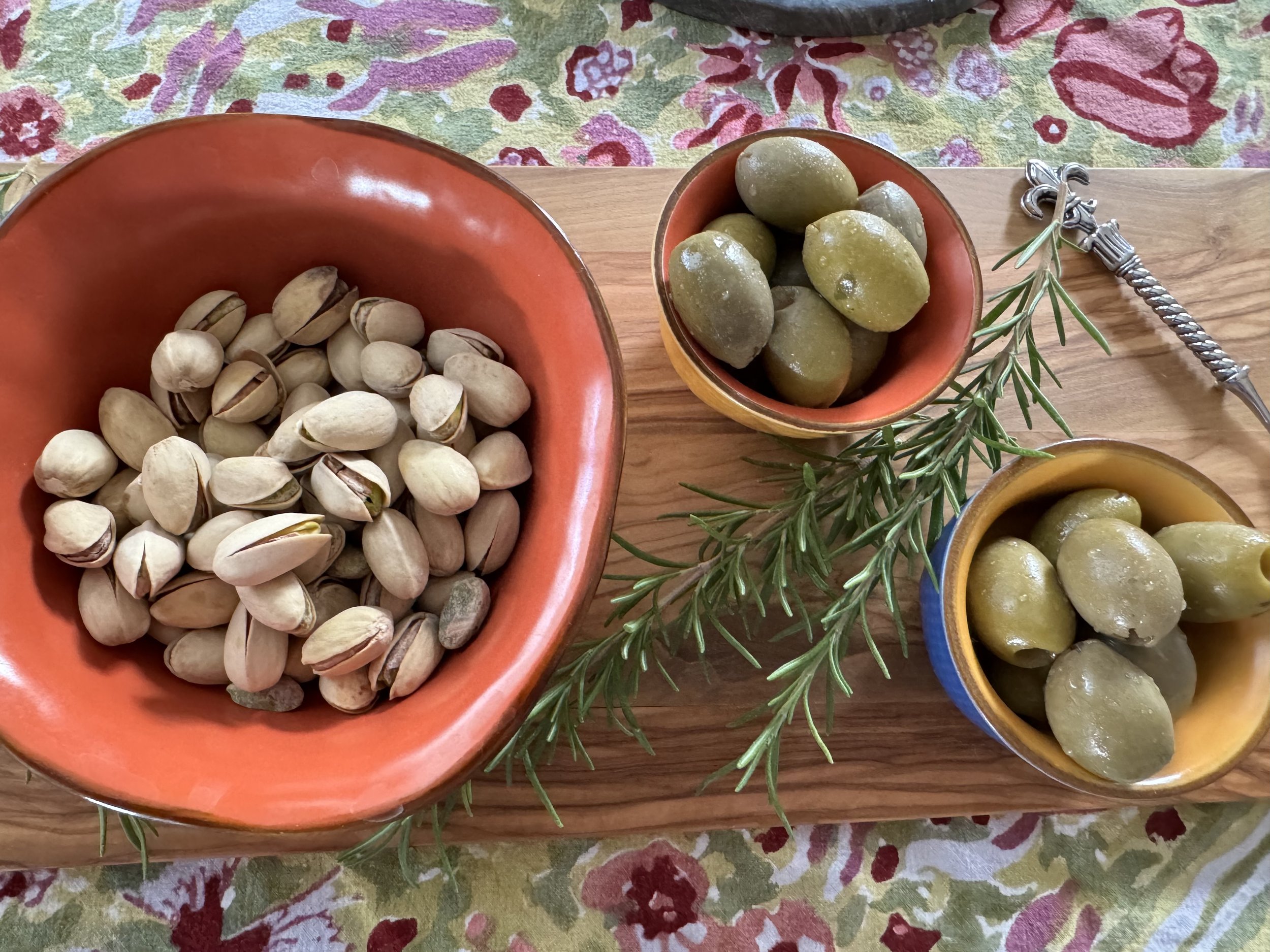
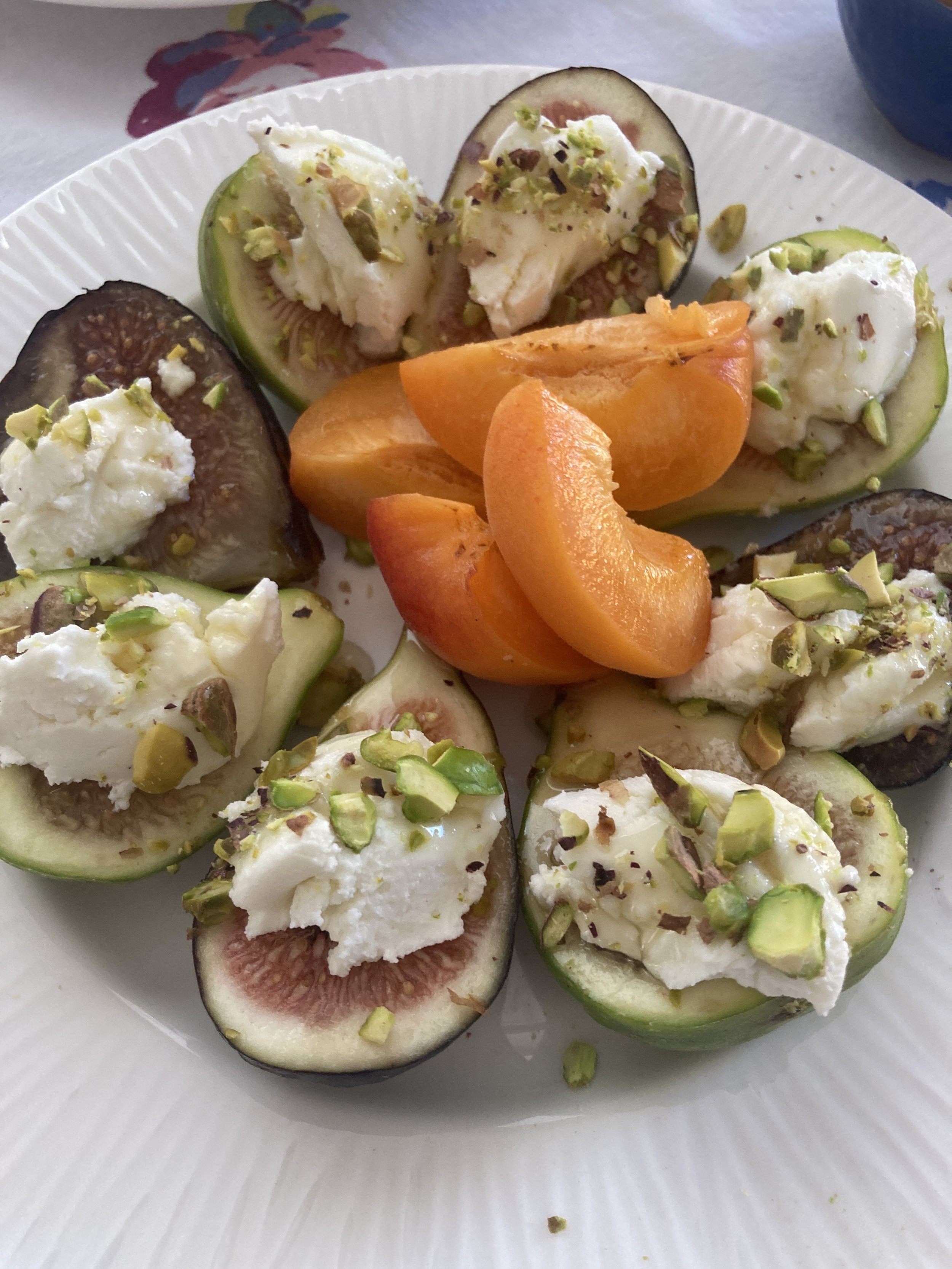
For the aperitivo, I cut each fig in half and topped it with mild goat cheese (softened at room temperature).  Next, a drizzle of honey.  It looked like it needed just a little something more, so the final touch was a sprinkle of chopped salted pistachios.  It could not have been more simple, yet the combination of flavors was anything but.  The black figs were larger and definitely sweeter than the green. But the green ones, firmer and a bit less sweet, were also delicious.   For a bit of added color, I added some apricots to the plate. The aperitivo was rounded out with a few other tidbits (hummus with carrots, some green olives, and a few salty pretzels).   All went well with a pitcher of Aperol Spritz. 

 My friend Julie, the giver of the gift of figs, made a variation using ricotta flavored with a little Amaretto in place of the goat cheese. She was happy with that combination and I am anxious to try it. And how pretty was her presentation?

I’ll return to Italy in August and fortunately figs will still be in season.  I am looking forward to Italian fichi con formaggio di capra (goat cheese) e pistacchio. 

July 15, 2024 /Joanne Bartram
italian figs, figs, appetizers
#italiancooking, #italiansummer, food, Italian markets

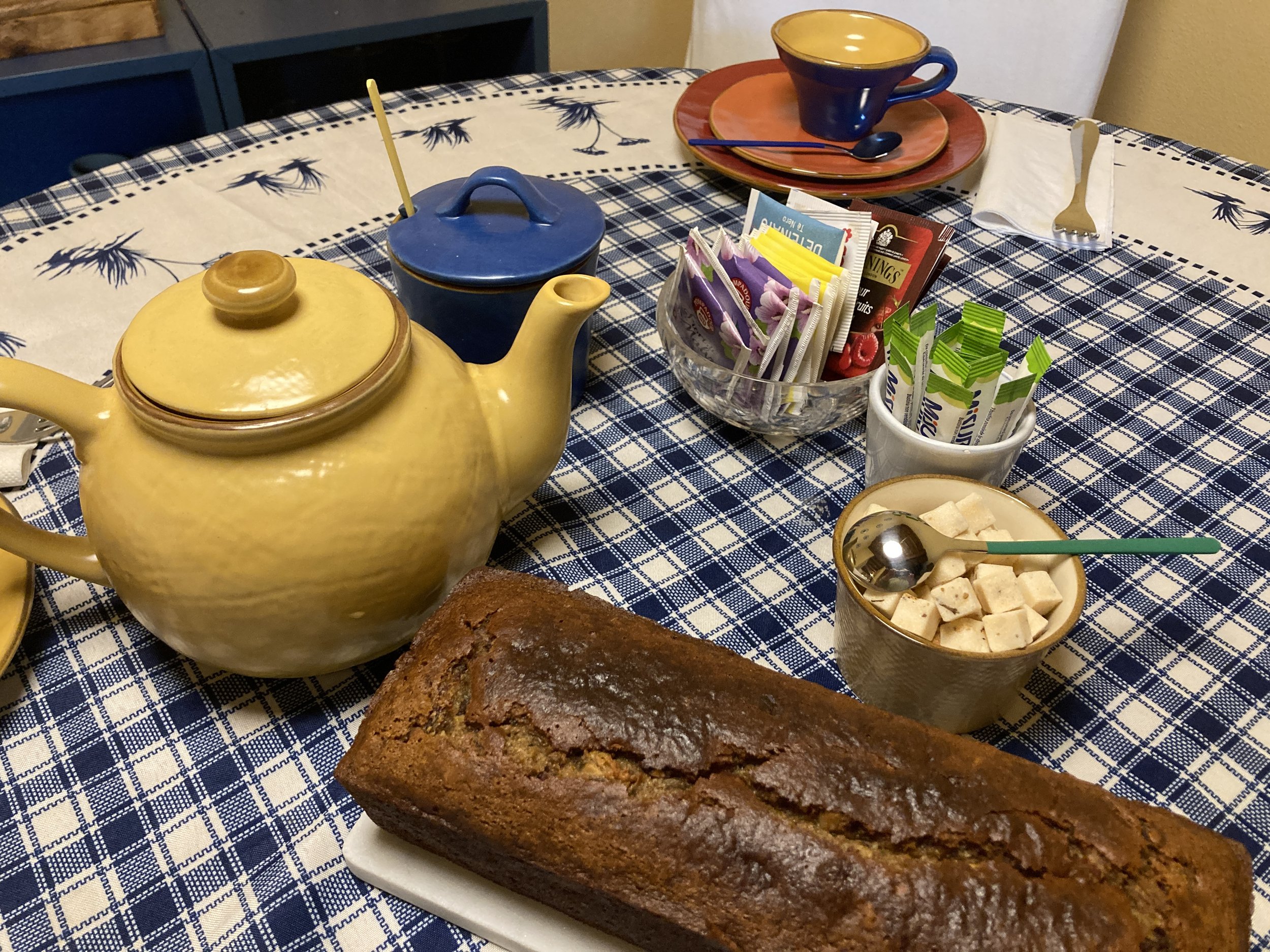
Afternoon tea with date “pudding”

A British Style Sweet With an Italian Twist

February 12, 2024 by Joanne Bartram in Cooking, food, Italian recipes, Living in Italy

Before I get to the description and recipe for this British-with-an-Italian-twist sweet, we must take a minute to talk about the word “pudding”.

Date “pudding”, served alongside some fruit, goes well with a morning coffee.

I remember being quite confused hearing my friend, a lovely English lady whom I was visiting in Hampshire, ask her cat if he was ready for his pudding. Pudding for a cat?  I must have misunderstood.  My friend explained that in this context pudding simply meant a mid-afternoon treat. Not literally what I thought of as a pudding.  An English pudding, in a general sense, can also refer to an after dinner desert. Dinner is over, bring on the pudding! Again, not what we Americans think of as pudding (a milk-based custard that definitely requires a spoon), but any type of a sweet desert.   Ok, I thought that I was beginning to understand (maybe).

If only it were that simple. But it’s not, because there is also a more specific meaning to the word pudding, British style. Historically, pudding is a steamed concoction which can be either sweet or savory.  At least it was originally steamed.  These days it might just as easily be baked. The one I am most familiar with is Sticky Toffee Pudding. Though as an American I would describe that as a type of very moist, very sweet cake with a sauce on top. 

As for an Italian equivalent of a British steamed pudding, I am not aware of one.  There are wonderful custard based Italian desserts (budino, zuppa inglese, tiramisu) but these are neither steamed nor baked and so are a different thing entirely.

Call this dense, moist, sweet a pudding, a cake, or a loaf. It is delicious no matter what it’s called.

This leads me to my British-with-an-Italian-twist sweet.  I first had this at an American friend’s home in Lucca.  She referred to it as Date Pudding, the name given in the recipe from the King Arthur Baking Company.  For just a bit more confusion – King Arthur sounds like it should be a British company, but it is actually an American flour producer.  And yet…. pudding.   What she served was a wonderful, not too sweet, very moist, slightly sticky cake. No jiggly American style pudding in sight. 

 My friend had tinkered with the recipe some, substituting a whole grain flour for the King Arthur white and decreasing the sugar to make a healthier version.  Whether it was called pudding or cake it was delicious.

Because I had been experimenting with Italian farina di castagna (chestnut flour), I decided to try the recipe using half chestnut and half white flour.  Like my friend I decreased the sugar by 25% and I upped the spices a bit.  The chestnut flour added an extra dimension of nuttiness to the flavor, and added the Italian twist. The original recipe called for baking the “pudding” in a square pan, but I tried it in a loaf pan with a slight increase in baking time which worked great. I liked being able to turn it out of the loaf pan and slice it for serving

 I made this recently for a morning coffee with a friend in New Mexico.  I could not find any chestnut flour in my local stores, so substituted all white flour.  I missed the nuttiness of the chestnut flour a bit, but it was still delicious and made for a very nice mid-morning coffee treat. It seems the type of flour is quite flexible with this recipe (shh… don’t tell King Arthur, he might not be pleased).

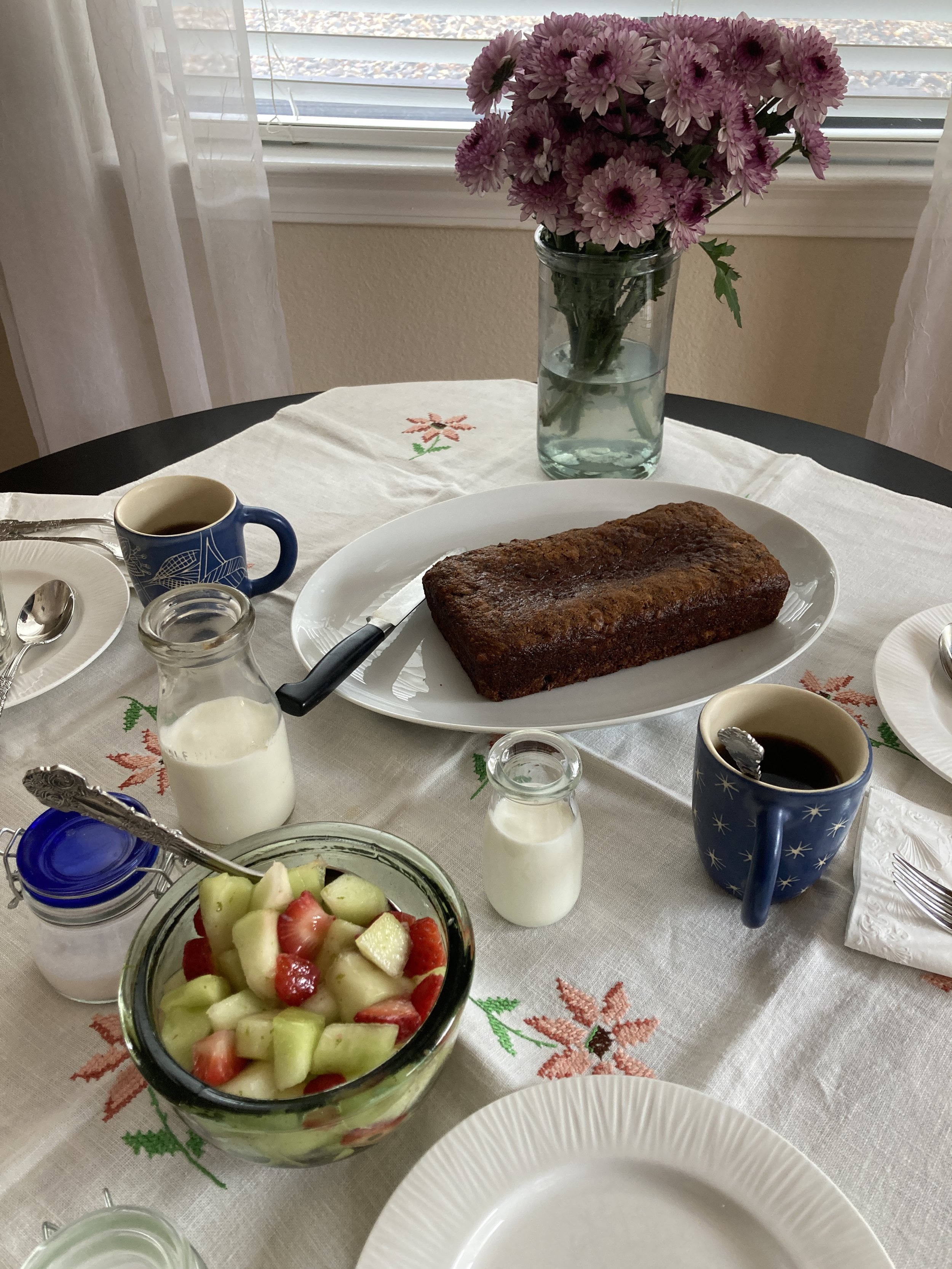
A morning coffee with date loaf as the centerpiece. It is normal for this moist loaf to sink in the middle.

Here’s my version of the recipe, which I will call Date Loaf rather than pudding. A big thanks to King Arthur for the original and my friend in Lucca for introducing me to this treat.

 Date Loaf Recipe

1 cup pitted dates, chopped (be sure to use unsweetened dates, not the kind dipped in glucose syrup)

¾ cup sugar

1 Tablespoon butter (omit for a vegan version)

1 ½ teaspoons baking soda

¼ teaspoon salt

1 teaspoon cinnamon

½ rounded teaspoon ground ginger

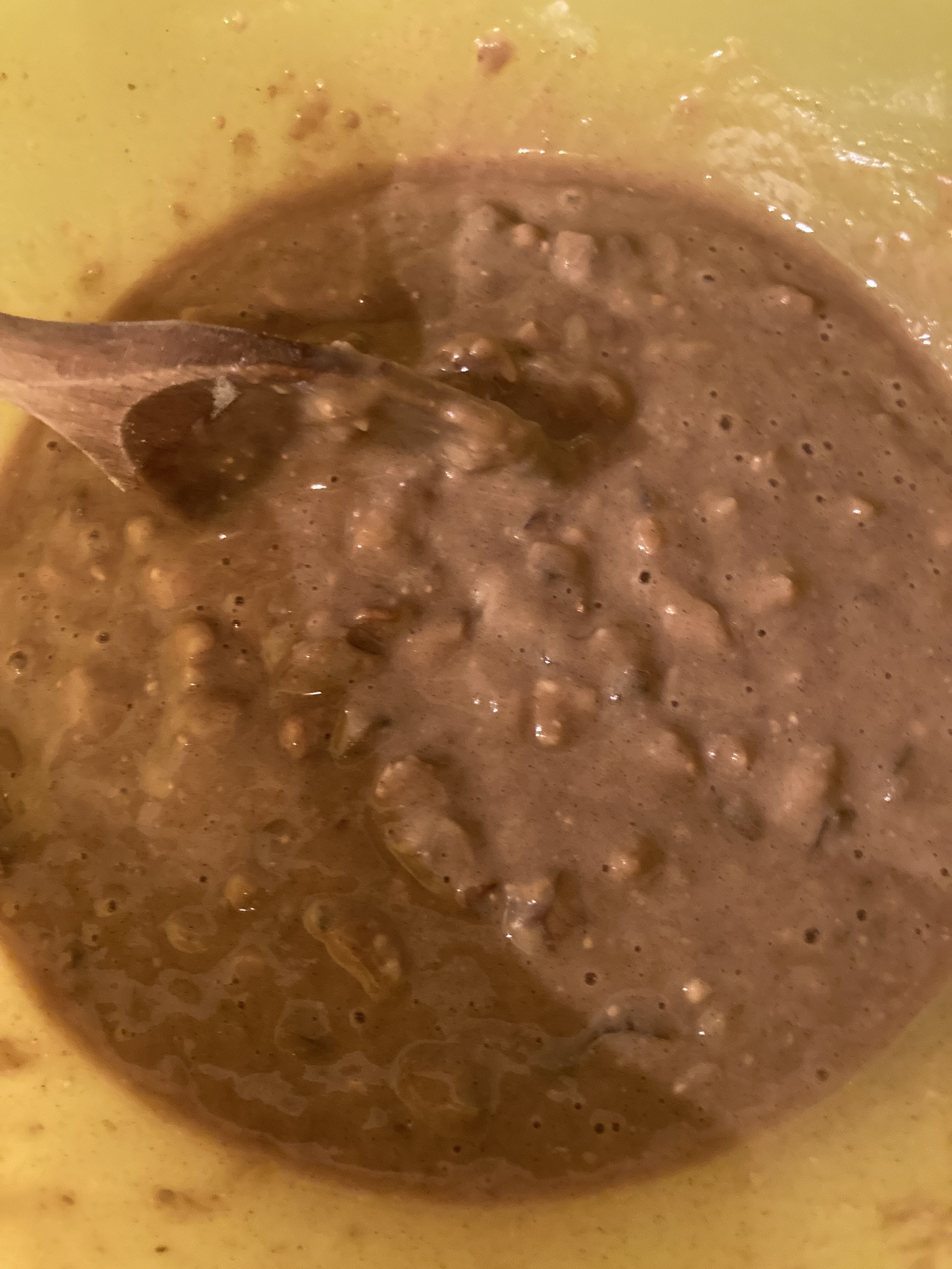
The batter will be quite moist

1 cup boiling water

½ cup finely chopped walnuts

1 1/3 cups flour (half chestnut, half white is my go to blend)

 Preheat oven to 350 degrees. Butter a loaf pan and line the bottom with parchment paper.

Chop the dates and add the sugar, butter, baking soda, salt, cinnamon and ginger.

Pour 1 cup of boiling water over the date mixture.   Let cool to room temperature.

Stir in the flour and the nuts. The batter will be wet.

Put the batter into the prepared loaf pan (it’s ok to lick the spoon since there are no raw eggs in the batter; taste and add more ginger if you want!)

Bake for 30 minutes until set but moist.   A toothpick will come out sticky but without any wet batter clinging. (Baking time may be longer if using a long, narrow European loaf pan rather than a wider US style loaf pan and shorter for an 8x8 square pan).

Cool in pan on a rack x 10 minutes.  Turn out of loaf pan and remove parchment paper.

Serve warm or at room temperature. The loaf slices best with a serrated knife.

 The date loaf is tasty served plain for a coffee or a tea gathering. It works well as a dessert too, just top with a small scoop of vanilla ice cream or a dollop of whipped cream. Leftovers keep in the fridge for a few days.

Topped with vanilla ice cream, date loaf makes a nice dessert

February 12, 2024 /Joanne Bartram
Date Pudding, Date Loaf, Chestnut flour baking
Cooking, food, Italian recipes, Living in Italy
  • Newer
  • Older

Powered by Squarespace