The Neptune Fountain, Florence
Florence, Fontana Nettuno
Neptune was one of the most important Roman gods, second in importance only to Jupiter. Like the Greek Poseidon, Neptune ruled over the seas. Italy is surrounded by seas, so his domain was considerable. A symbol of strength, power, and authority, he is often portrayed larger than life, holding a trident and surrounded by sea creatures.
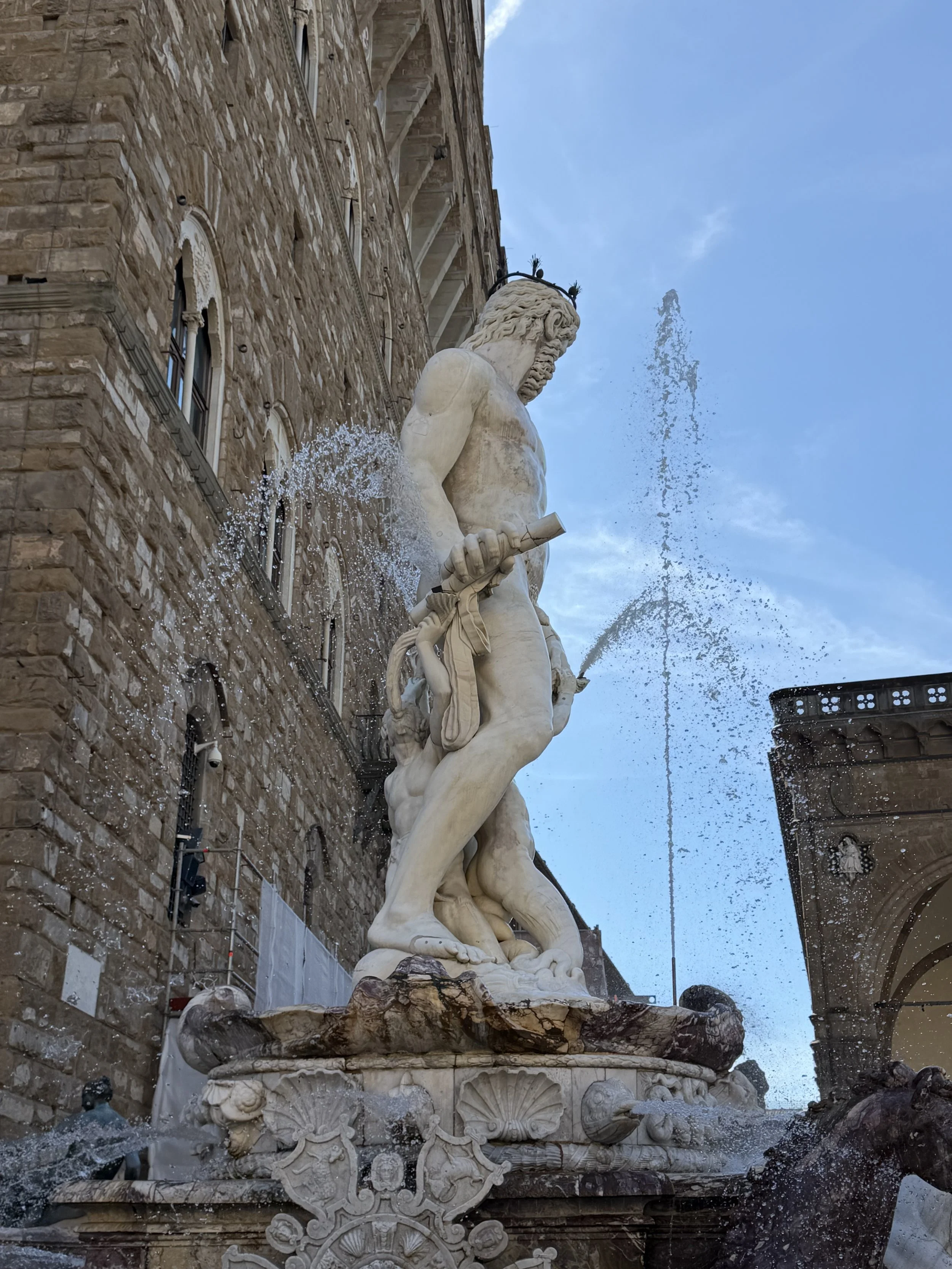
Neptune - bringing fresh water to the Florentines of the Medici era
But Neptune was also the god of springs and rivers, fresh water that was key to Roman and later civilizations. So, it is no surprise that many cities in Italy have Neptune Fountains. From Messina and Naples in the south to Rome, Bologna, Florence, and Trieste in the north, Italians have a long history with Neptune.
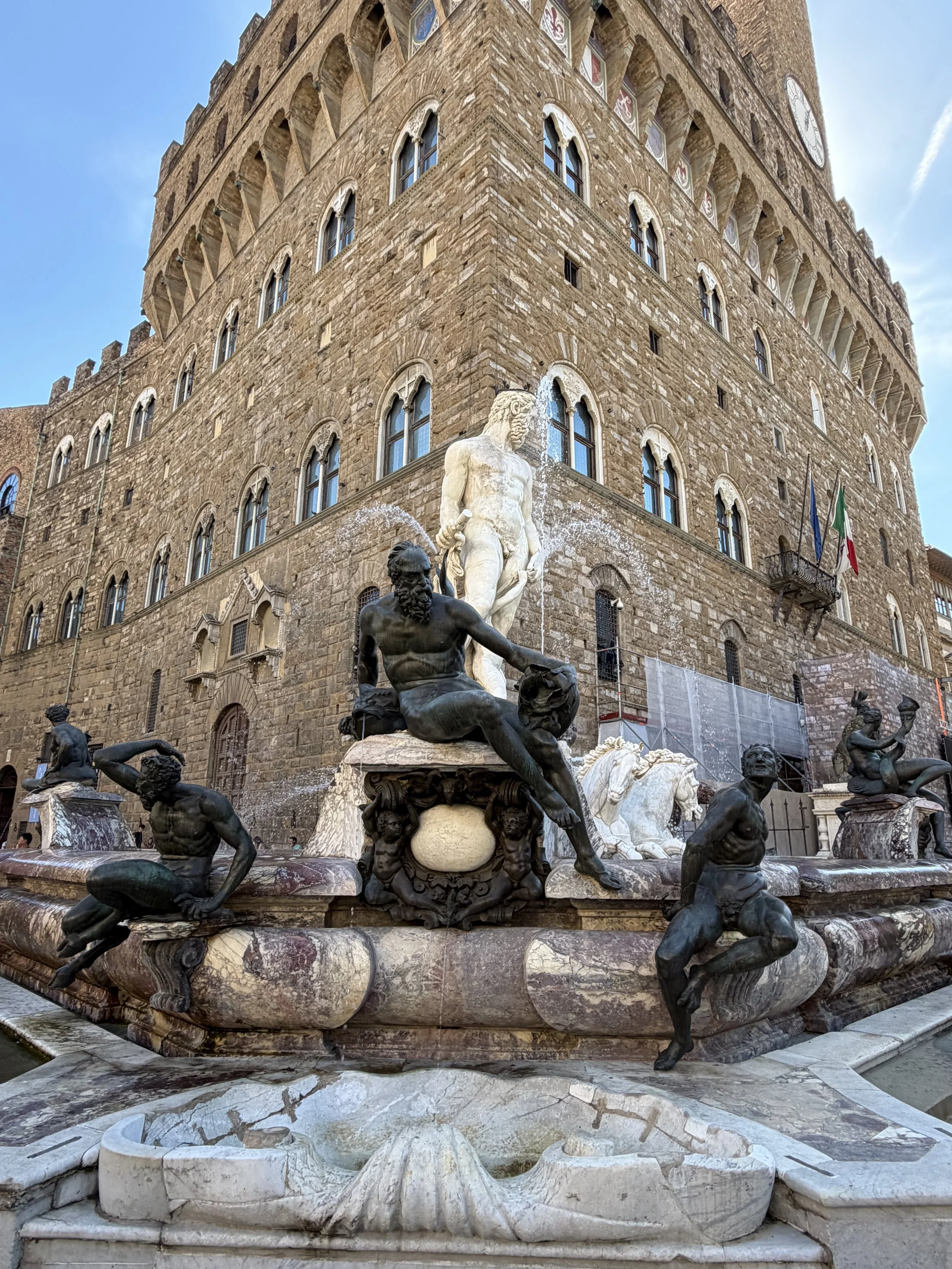
One famous Neptune Fountain, la Fontana del Nettuno, is in Florence. Situated in the Piazza della Signoria, right next to the Palazzo Vecchio, Neptune dominates the piazza.
The sculpture, by Bartolomeo Ammannati, was completed in 1565 to celebrate two events – a new aqueduct bringing fresh water to the city and the marriage of Francesco de’ Medici, son of Cosimo I, to the Duchess Joanna of Austria.
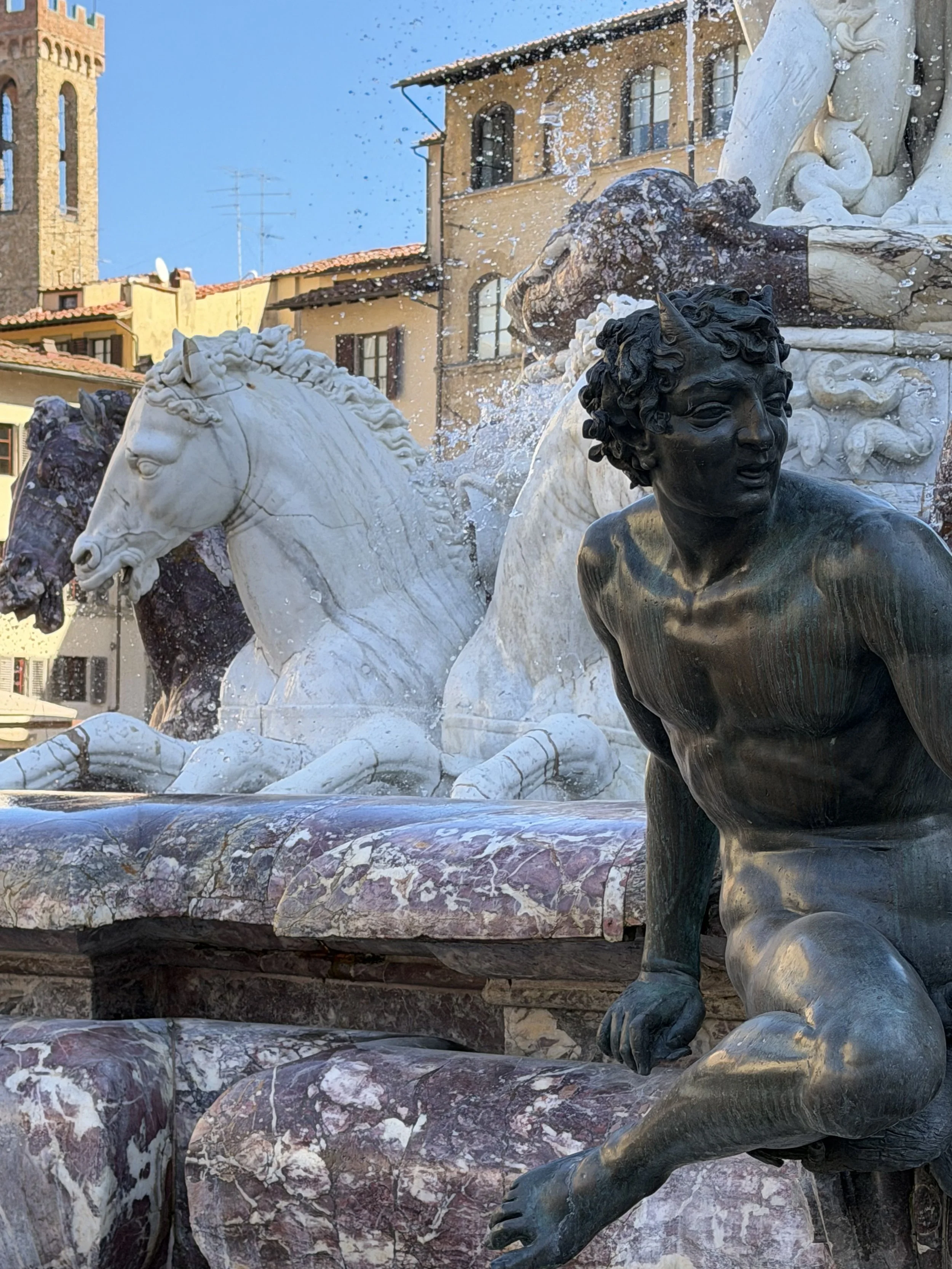
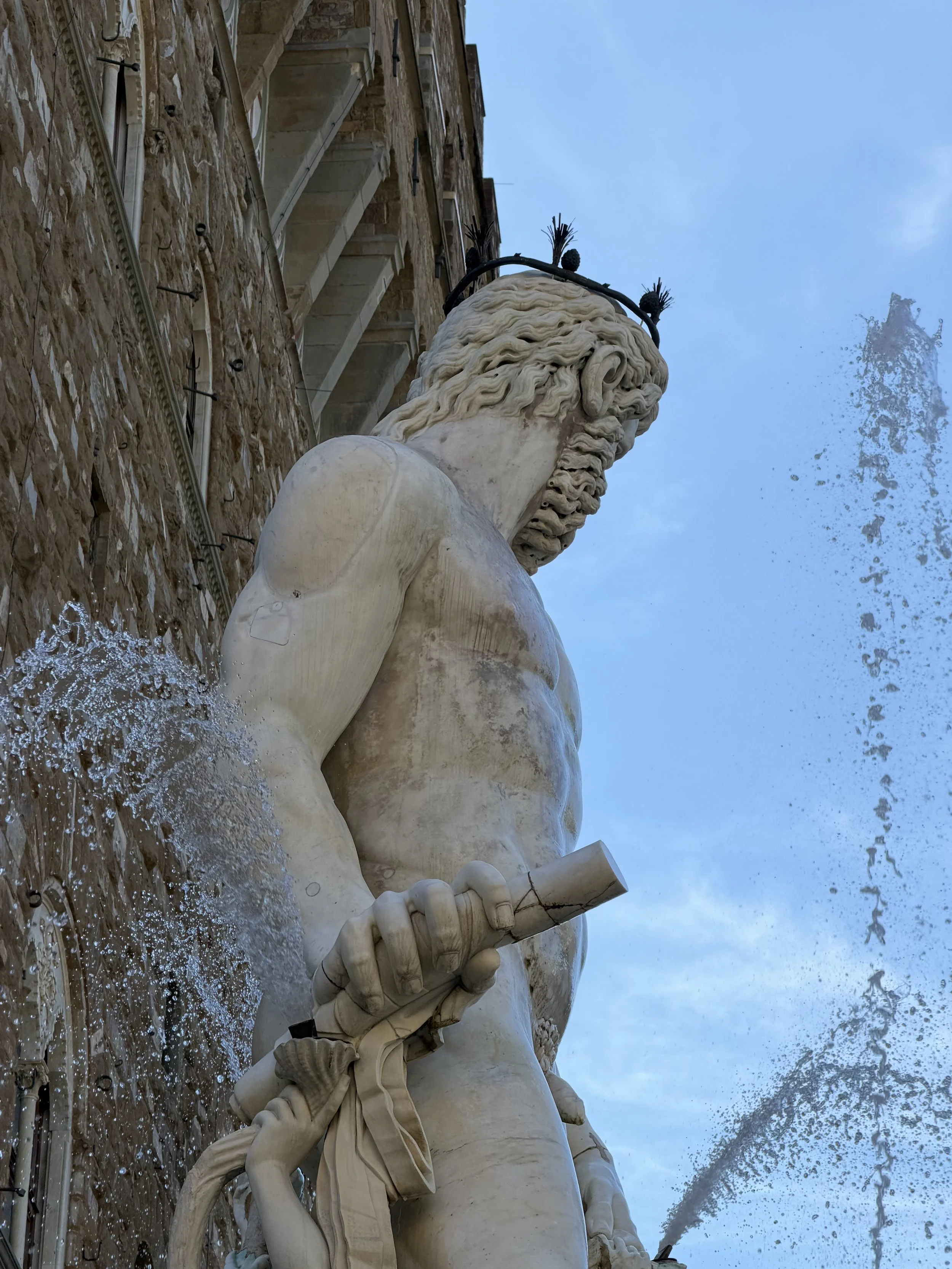
The massive white marble sculpture presents the powerful bearded Neptune atop a chariot pulled by four horses. Two of the horses are the same white marble as the statue and two are of darker mischio marble. Look closely at Neptune’s face – he just might bear a striking resemblance to Cosimo I. Ammannati’s Neptune does not carry a trident, which is unusual. Did he originally have one that has been lost over the centuries? Some say no, some say yes. Today he carries a sort of blunt club in his right (trident) hand.
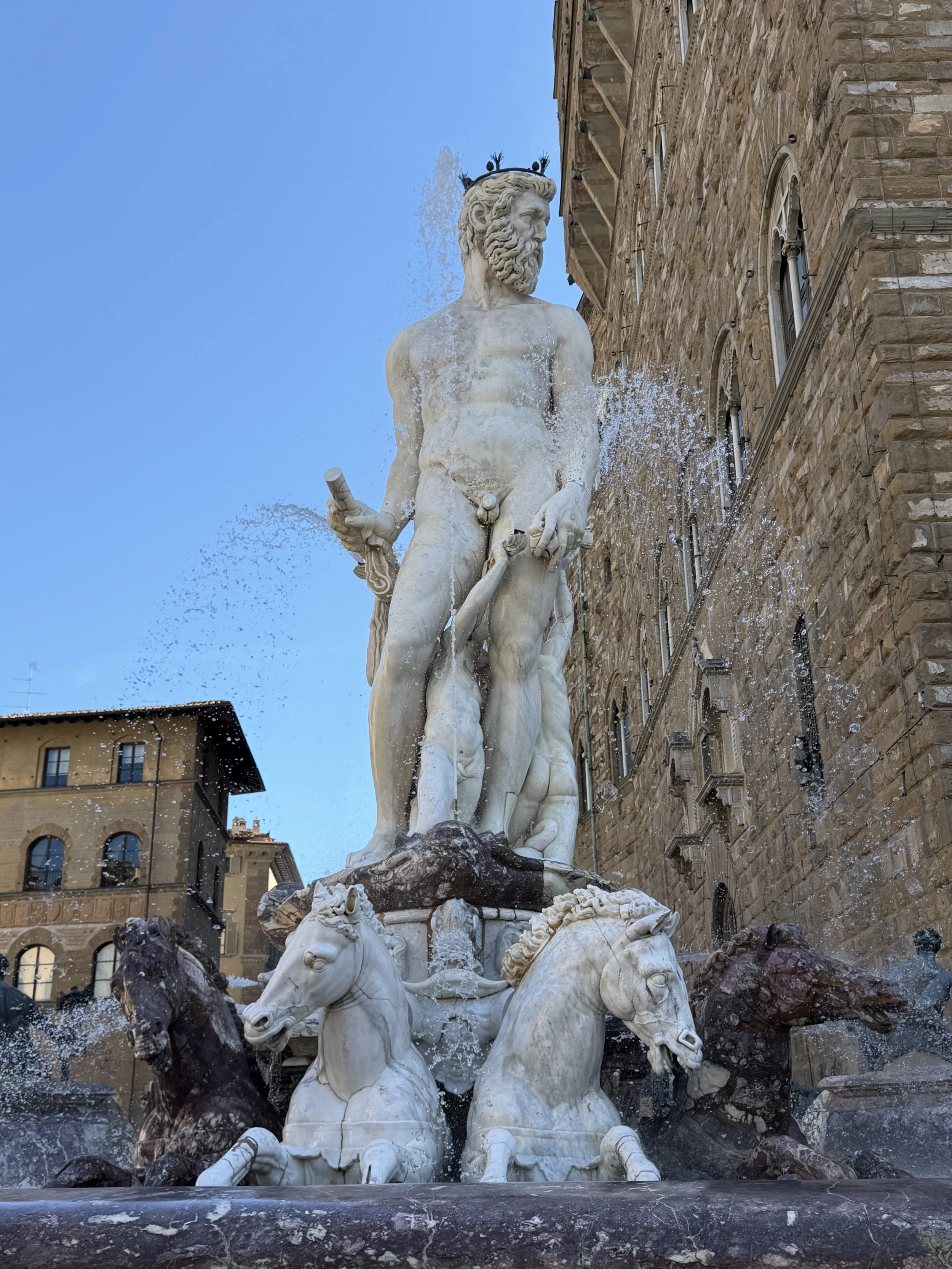
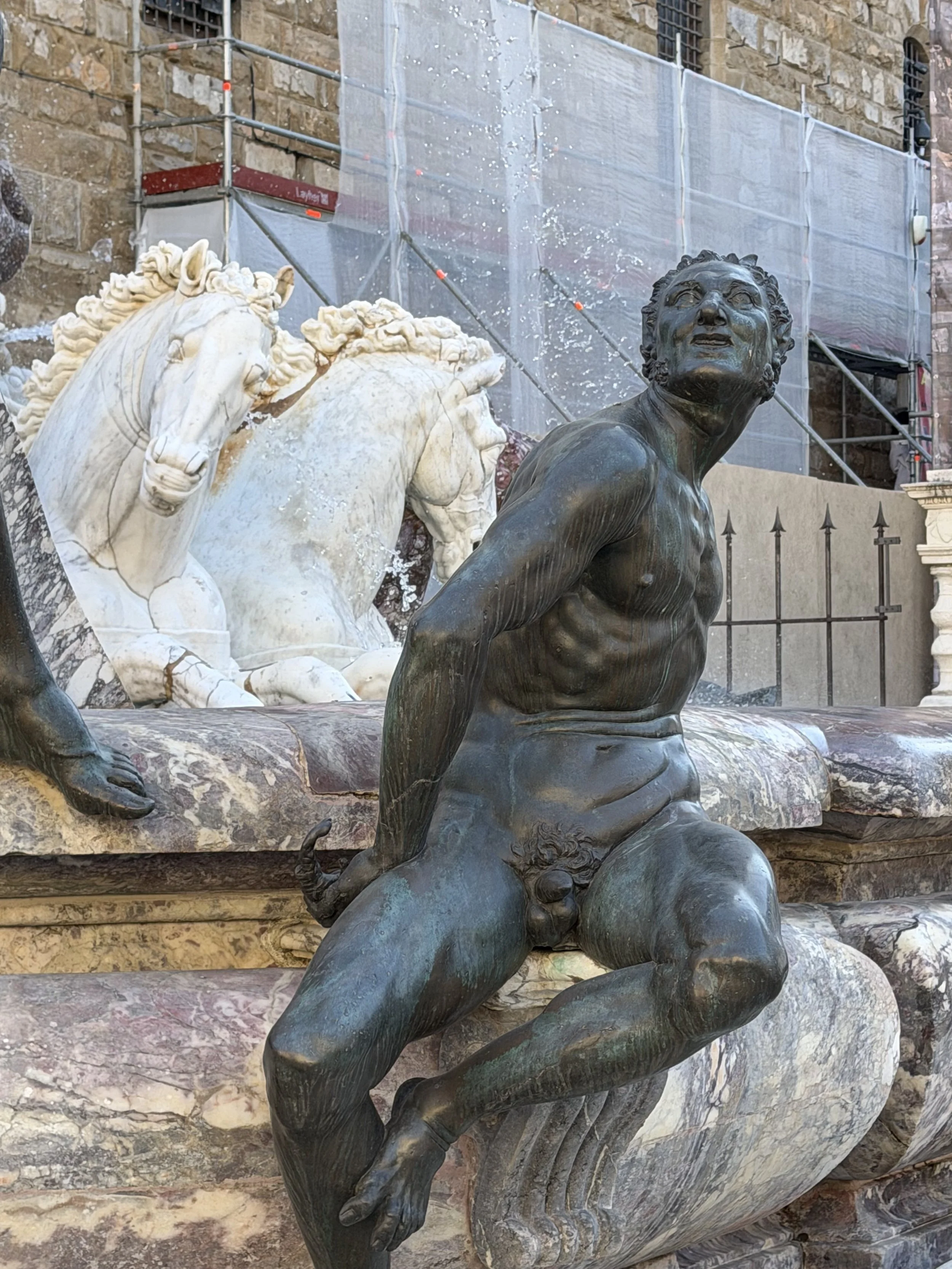
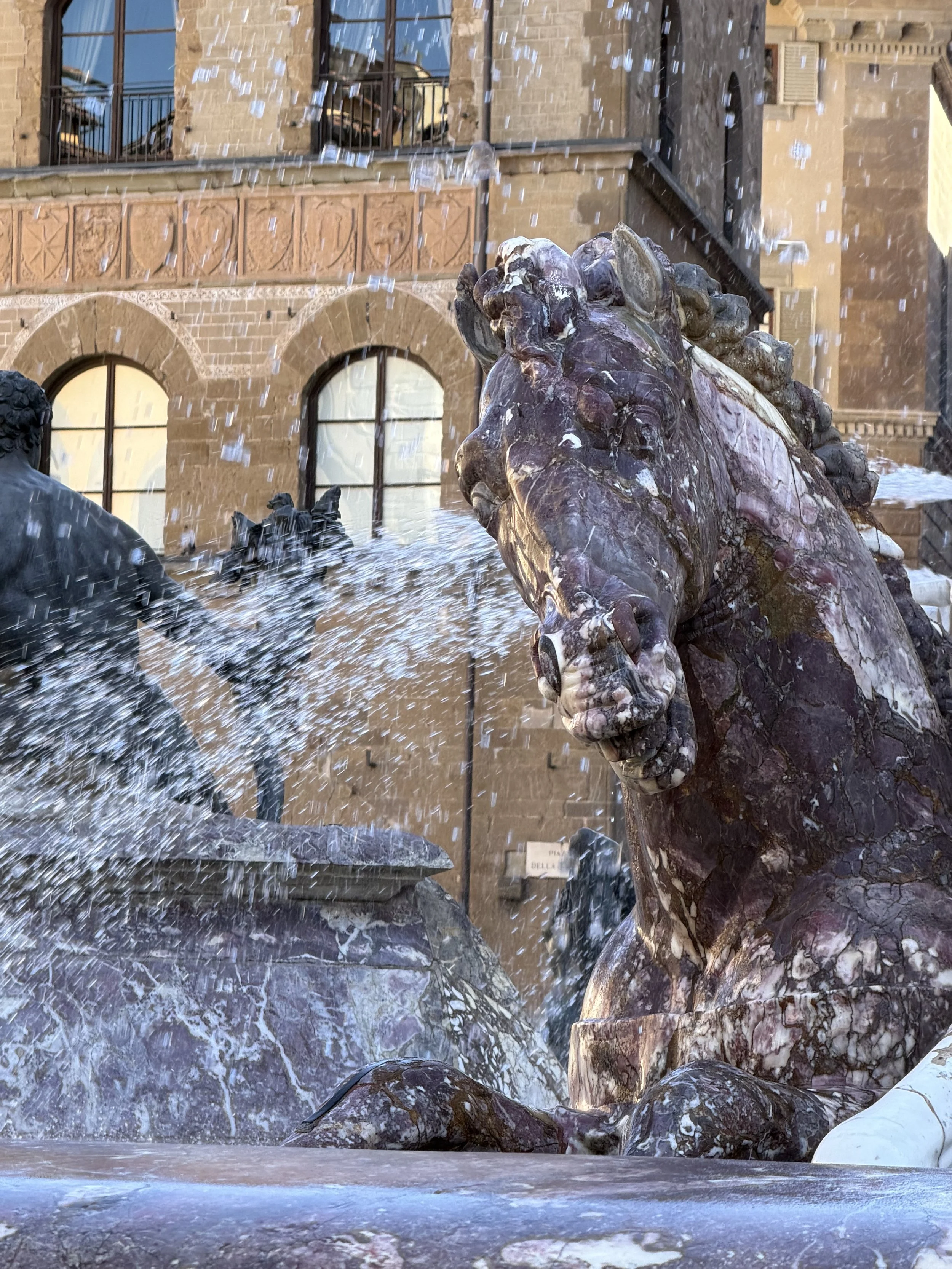
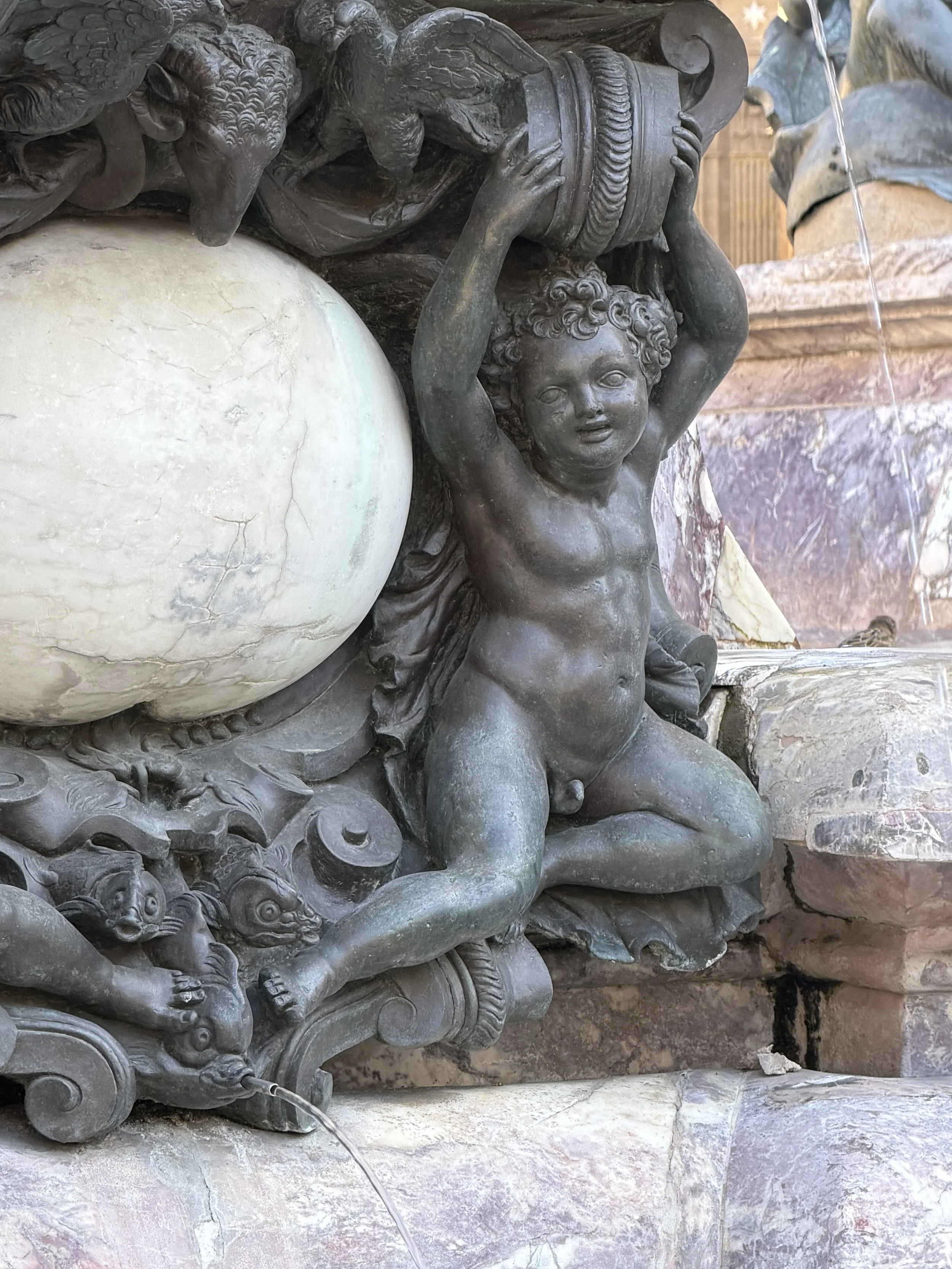
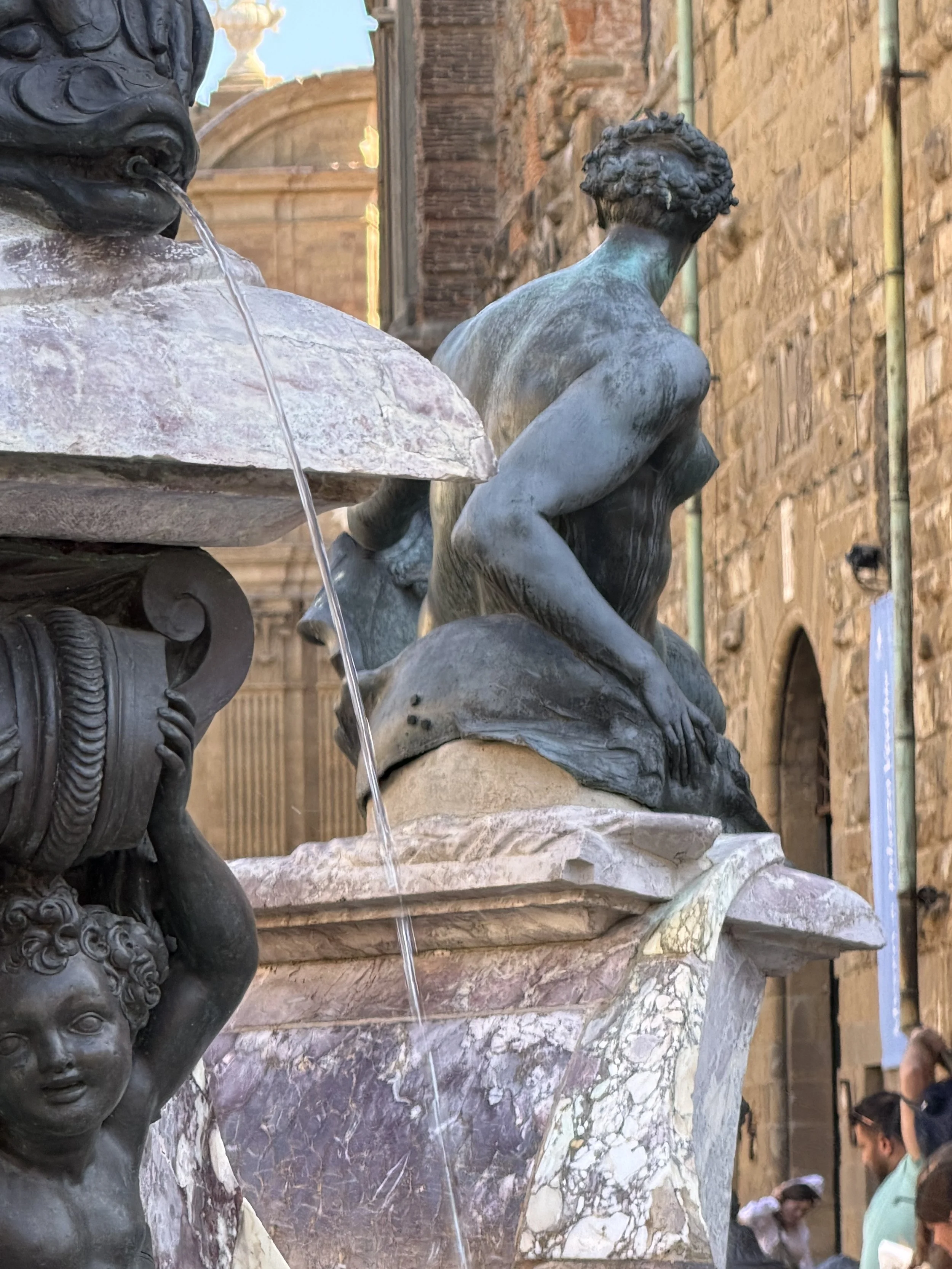
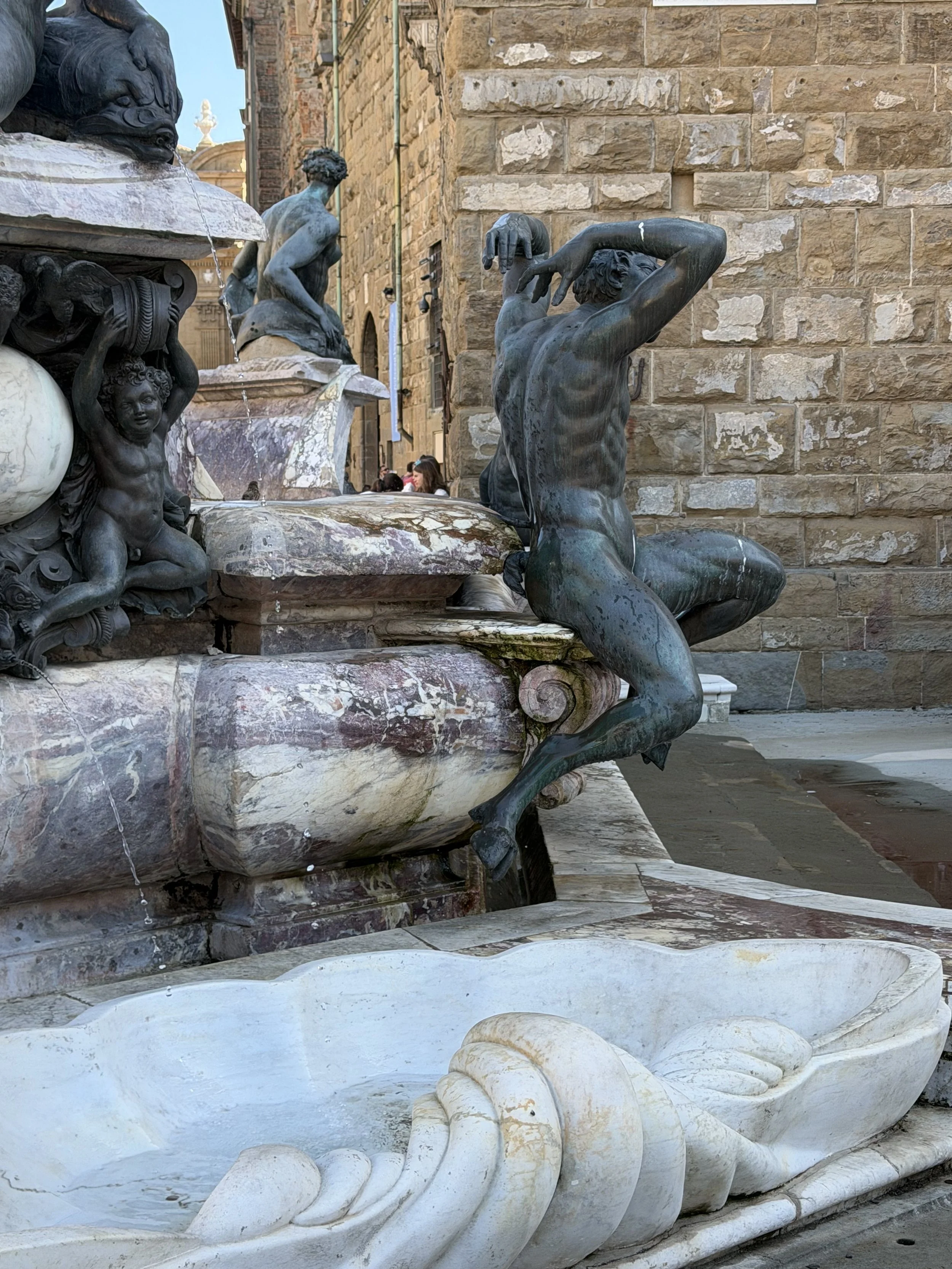
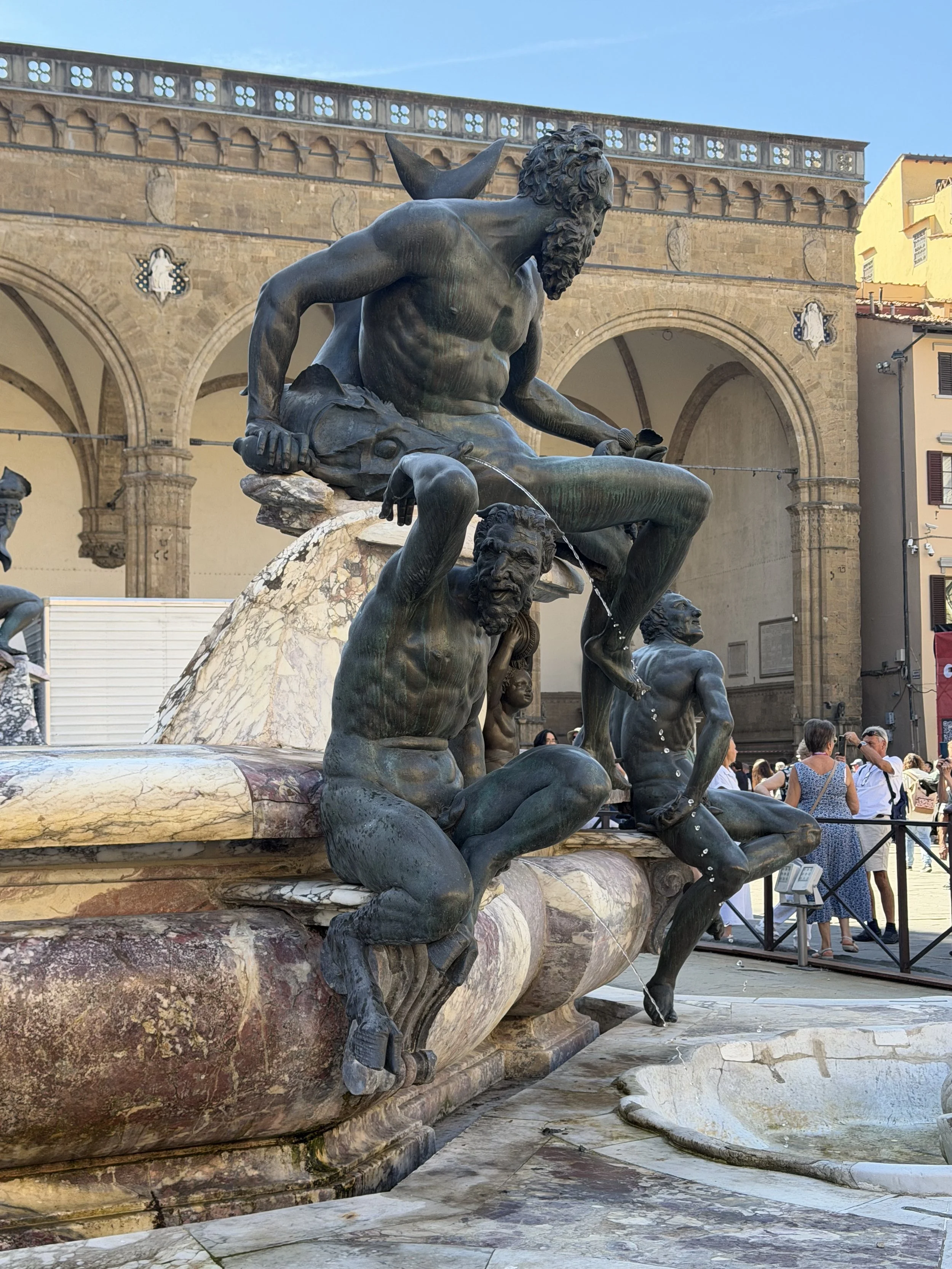
Florence’s Neptune sits atop an octagonal fountain basin, surrounded by bronze statues of sea gods, tritons (half man – half fish sons of Neptune), water nymphs, satyrs, and fauns. These sculptures are by Ammannati and as well as Florentine artists Rossi and Giambologna.
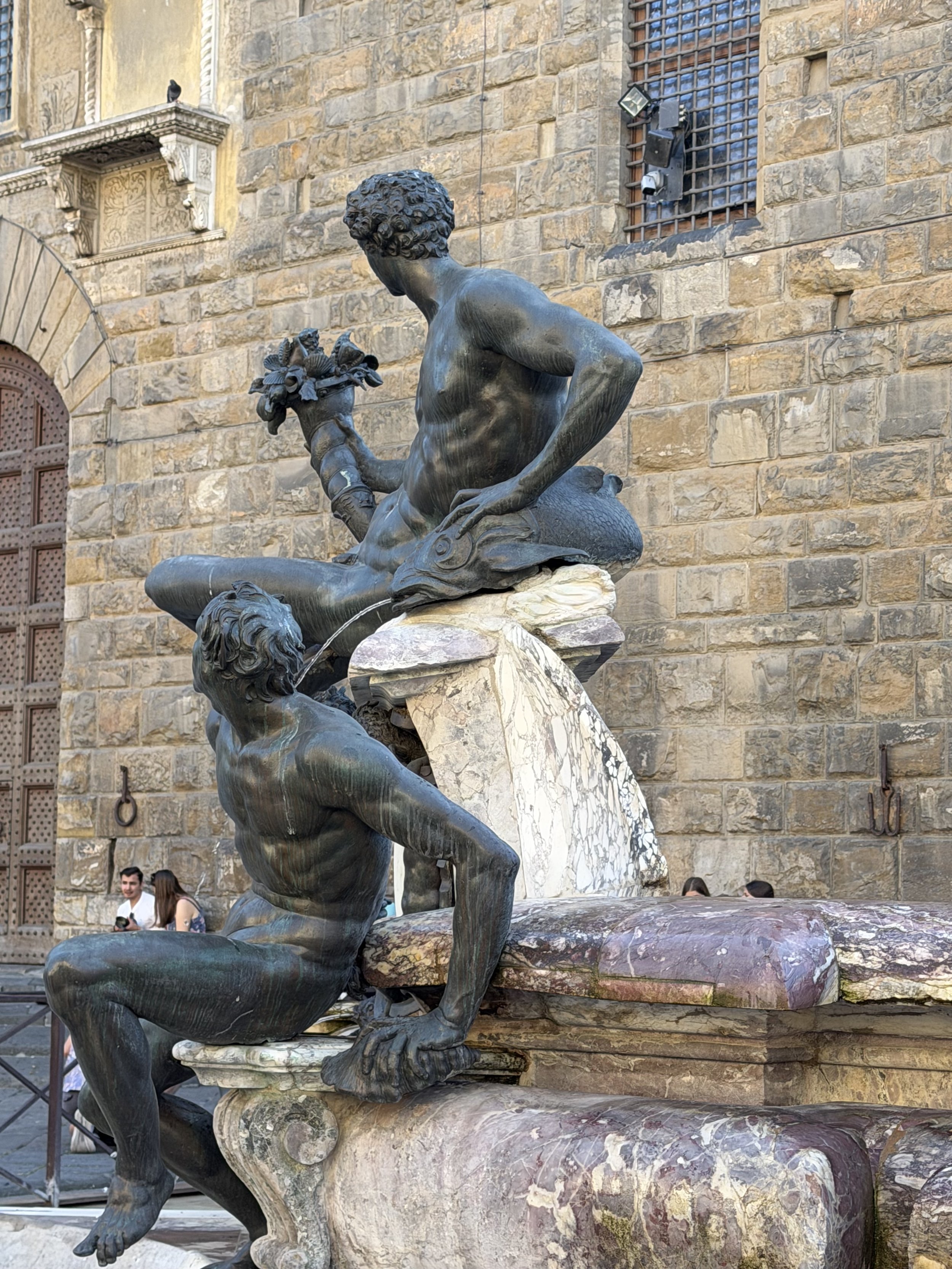
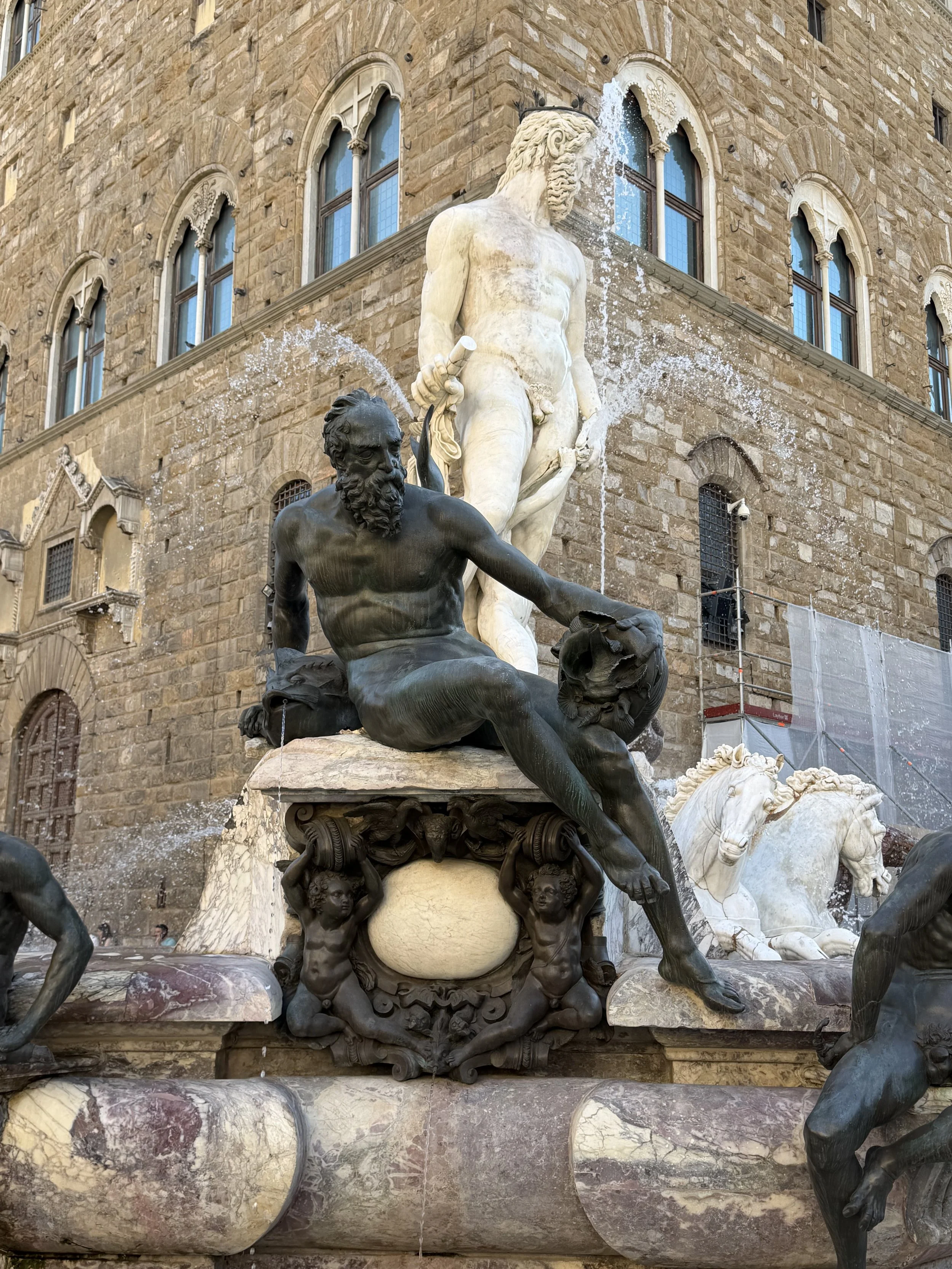
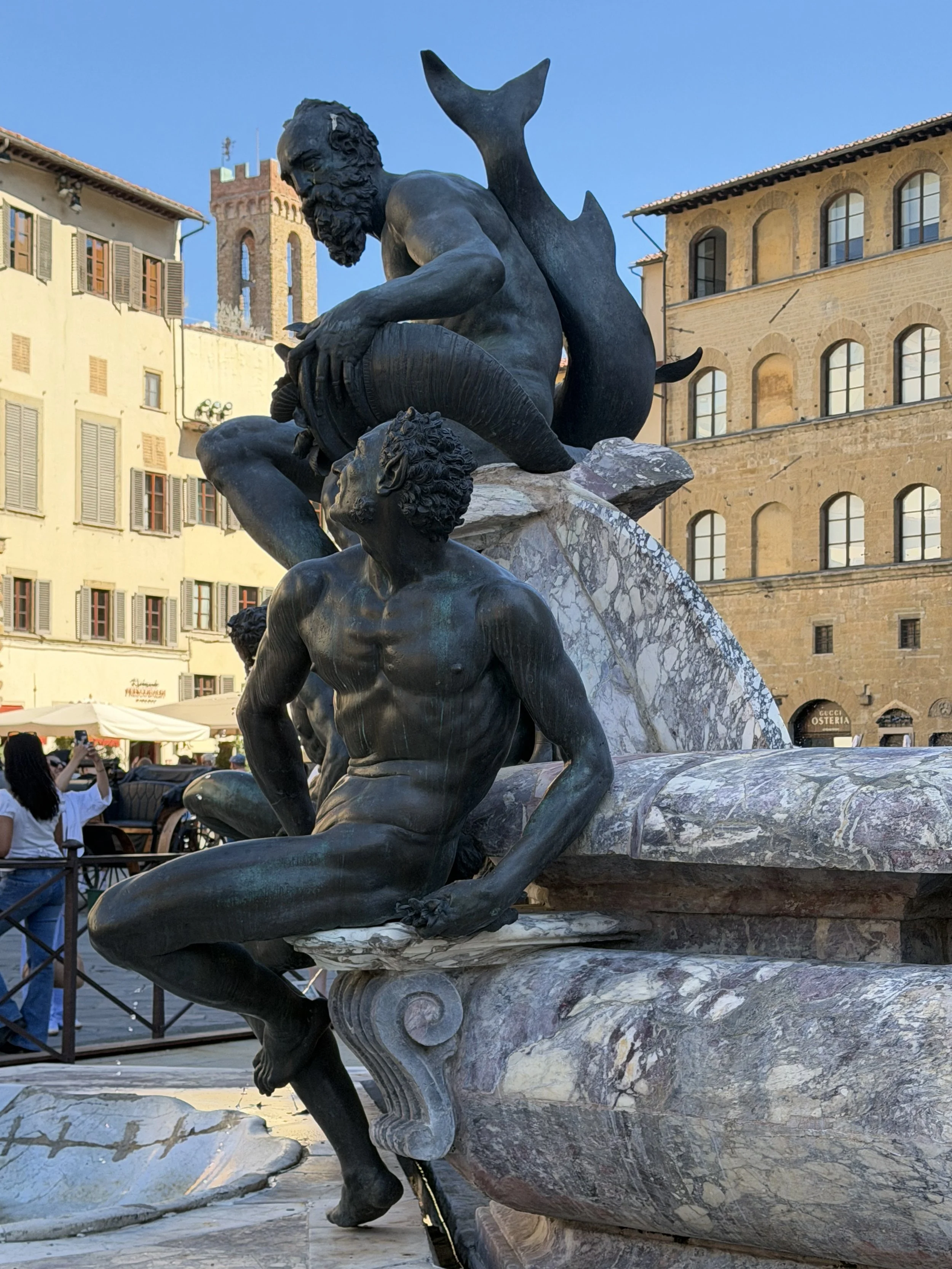
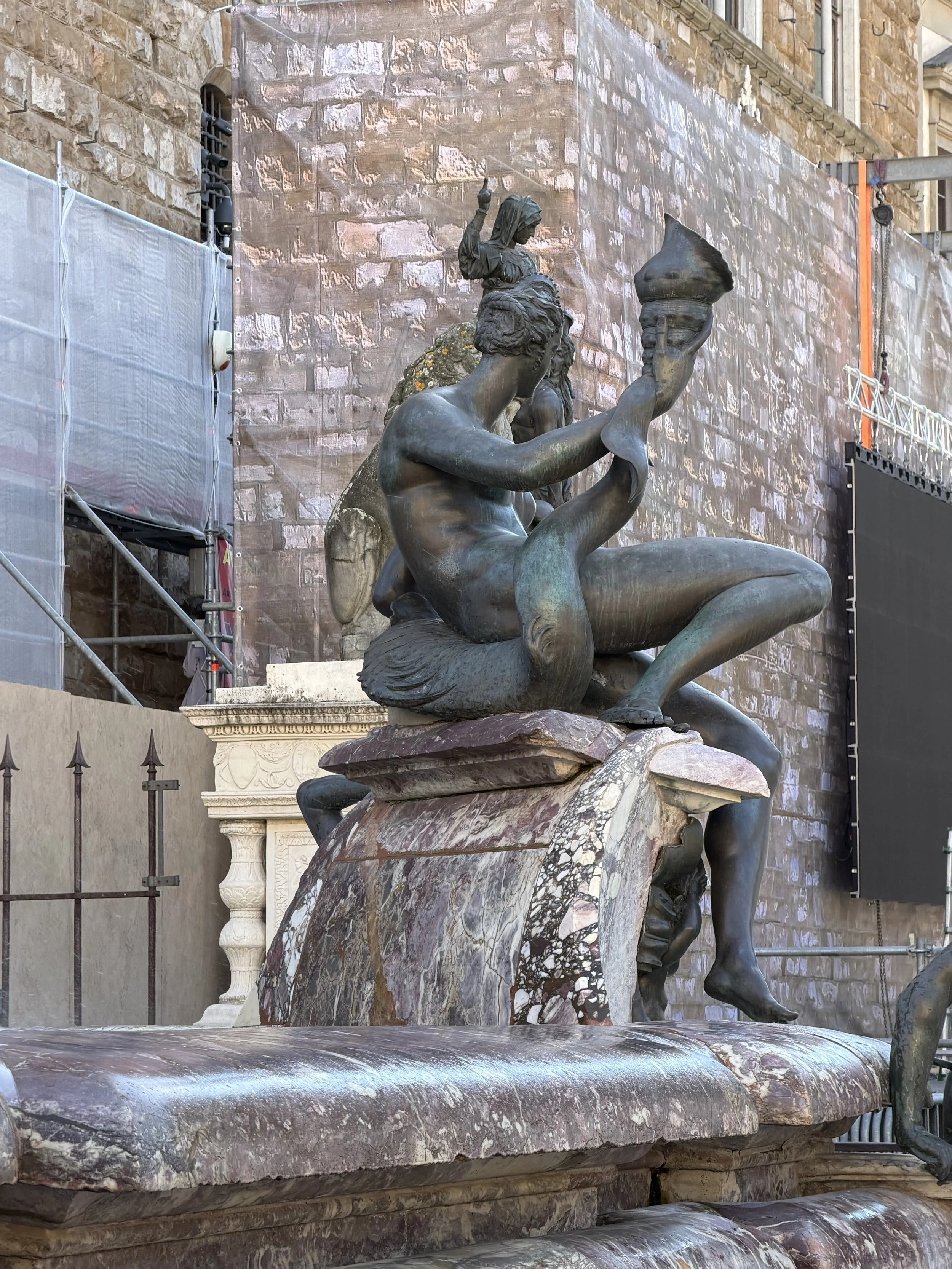
Today the fountain is appreciated by Florentines and visitors alike. But that was not always the case. Early on, locals derided the sculputure and gave it a less than appreciative nick name - Il Biancone – the big white one. In the 1500’s they used the basin to clean clothes and inkpots, staining the marble.
Vandalism and thefts began early on, causing damage to both Neptune himself and the surrounding figures. Someone even once stole one of the satyrs. Most recently, just this year, a women climbed up onto the horses in an attempt to touch Neptune’s… well, let’s just say his naughty bits, on a pre-wedding dare. In the process she damaged the horse’s hooves and a part of the basin doing €5000 of damage. Seriously, who does this??
A major restauration in 2018 has Neptune looking fresh and impressive and surrounded by sprays of water. As good as he looks, the basin’s bronzes along with the little details and minor figures carved and sculpted into the basin are just as wonderful to explore. With the crowds thinning a bit now in early November, it is a perfect time to stand in front of the fountain and appreciate all of its details.