Two Parts Italy

Exploring Italy, travel, and living a flavorful life

  • Blog
  • About This Blog
  • Start Here
  • Recent Posts
  • Archives by Topic
  • Subscribe
  • Contact me

Rothko in Florence

May 18, 2026 by Joanne Bartram in #florence, #italytravel, Florence, Italian Art, Italian art architecture

As if the beauty, pageantry, history, art, and architecture that is Florence every single day were not enough, the city also frequently hosts special art exhibits. There are many exhibit venues in Florence; one of the best is the Palazzo Strozzi.  Built around 1500, the palazzo is a stunning example of Renaissance architecture.  The building is a wonder, especially its central courtyard with its columns and arches, open to the windows and loggia of the upper floors.  After centuries of ownership by the Strozzi family, today the palazzo is the property of the city of Florence.  The courtyard often hosts small art installations, with the major exhibits displayed on the floor above, the piano nobile.

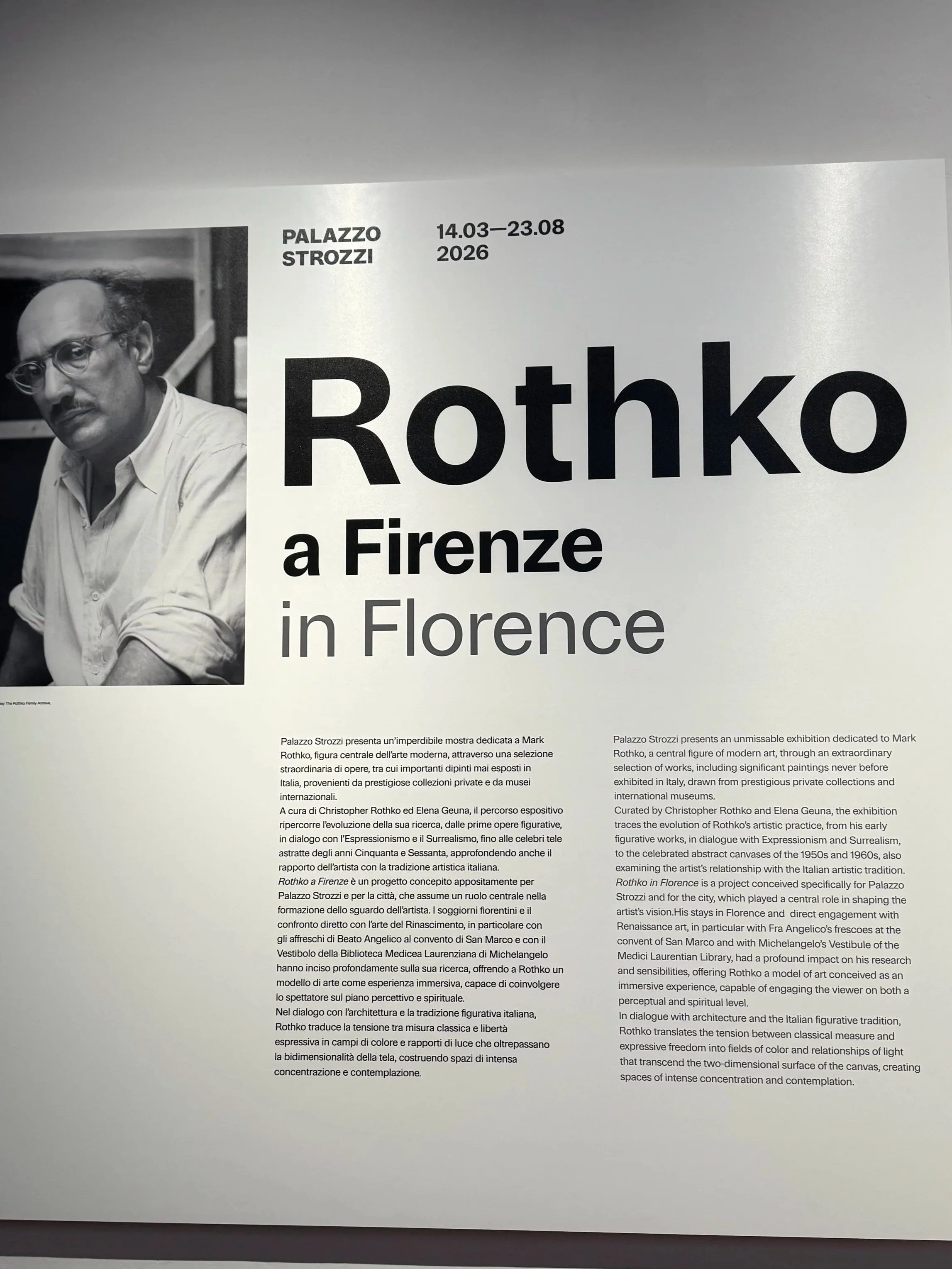
This month, and through August 23, the Strozzi is host to a presentation of works by Mark Rothko, one of modern art’s most well known painters.   The exhibit, curated by Christopher Rothko and Elena Geuna, spans Rothko’s career and includes works gathered from both private collections and museums from around the globe.

Rothko, born Marcus Rothkowitz in what is now Latvia, emigrated as a child, arriving in the US with his family in 1913.  His art career began in New York in the 1920s and over the course of his lifetime was shaped by many influences – surrealism, impressionism, war, religion, Greek mythology, spirituality, Italian classical art (especially that of Fra Angelico and Michelangelo), and his own, sometimes turbulent, life. 
IMG_0135.jpeg
IMG_0139.jpeg
IMG_0142.jpeg

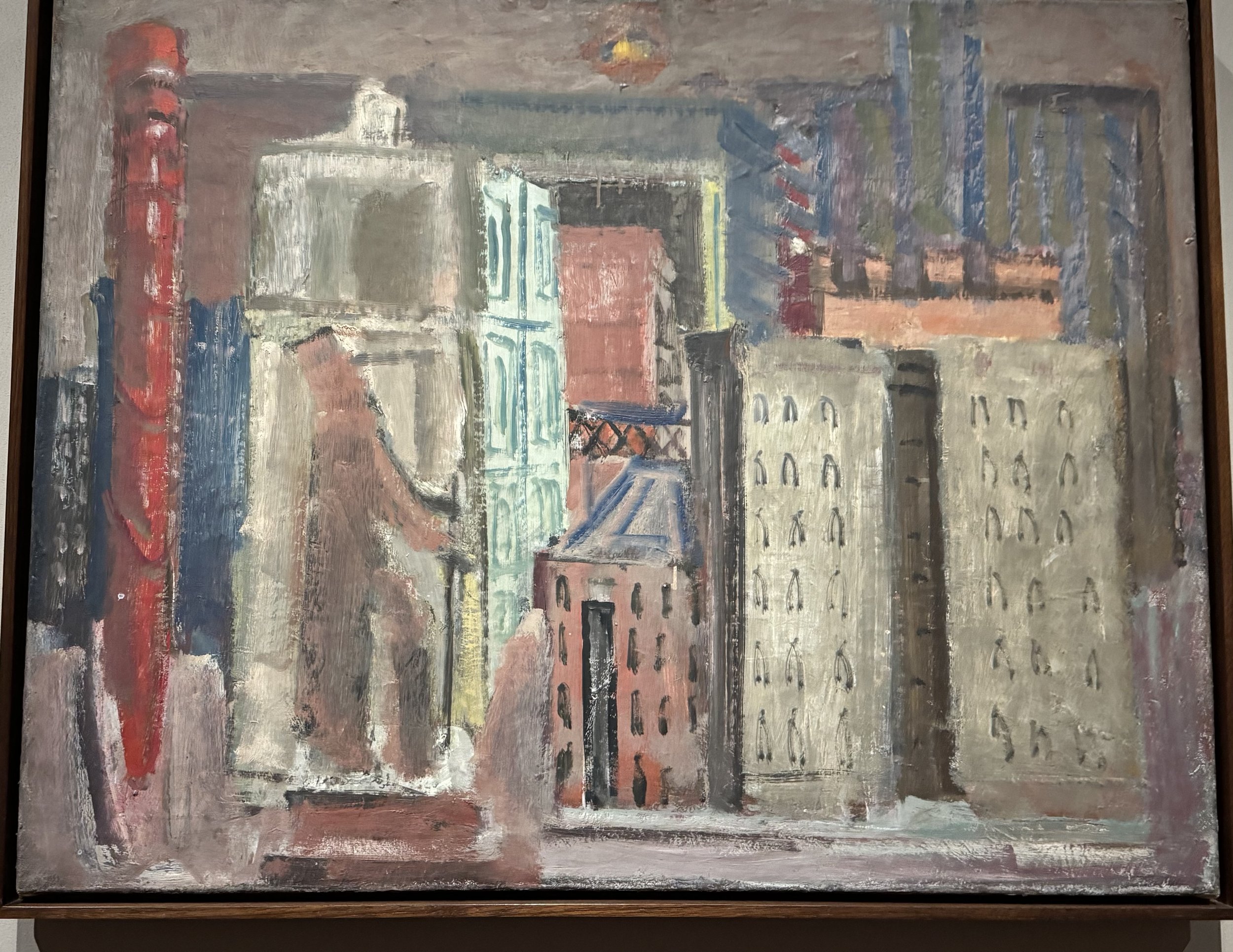
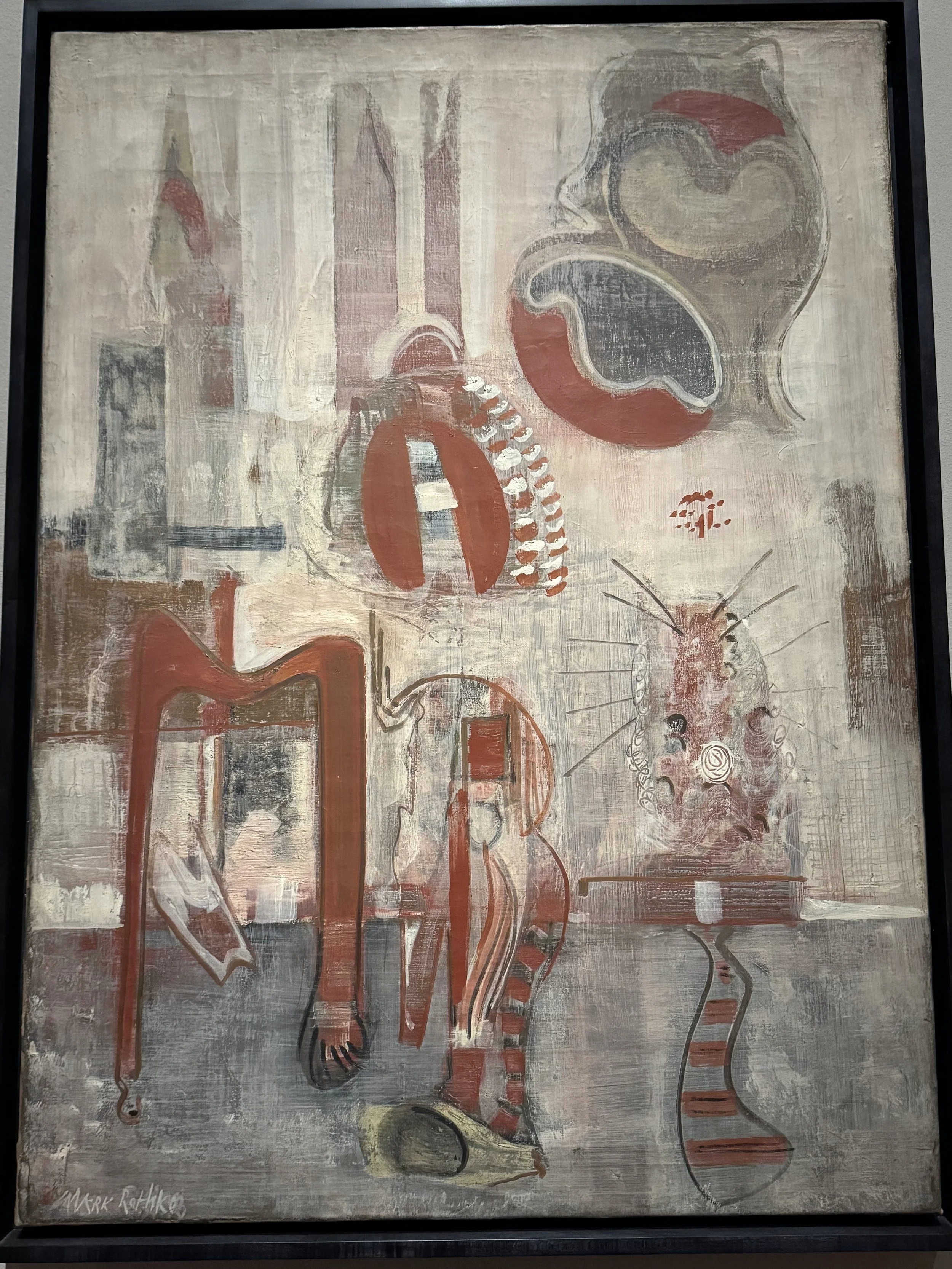
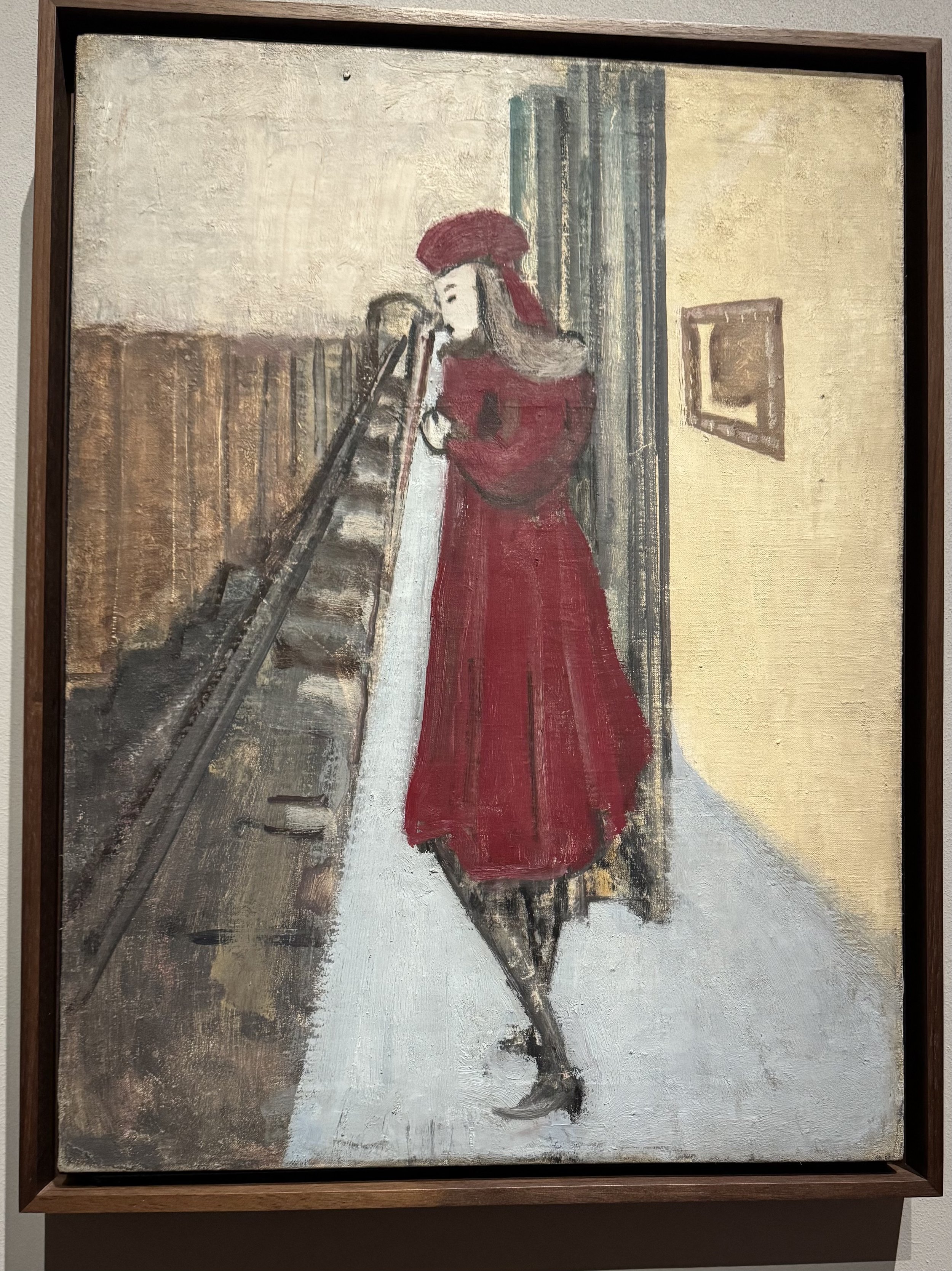
 I was not familiar with Rothko’s early works which include portraits, city scenes, watercolors, and drawings.  I was drawn to them in a different way than to his later works. Above: Untitled (Woman in Subway, 1938; Untitled (Cityscape) 1936, and Room in Karnak, 1946)

I have a friend who, when visiting a gallery or museum, often asks “If you could take home one piece, which one would it be?”. For me, it would be the one below, an untitled watercolor, ink, and graphite piece from 1945.
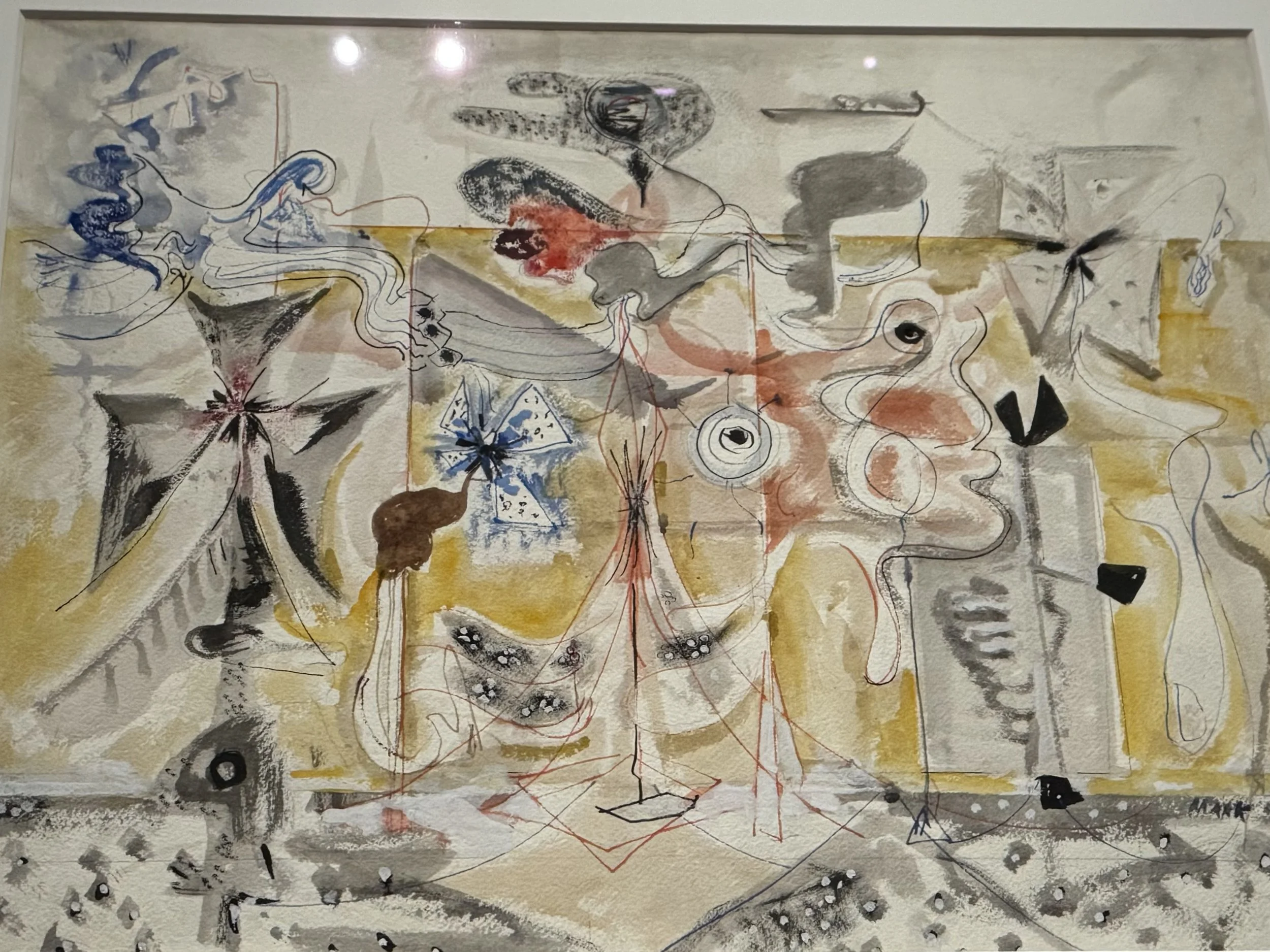
This piece seems to dance across the paper; it is the one I would take home and be enchanted by every day.

As with many artists, Rothko’s style evolved over time. His later works are quite different from his early pieces.  The one constant seems to be his use of color as a form of expression.

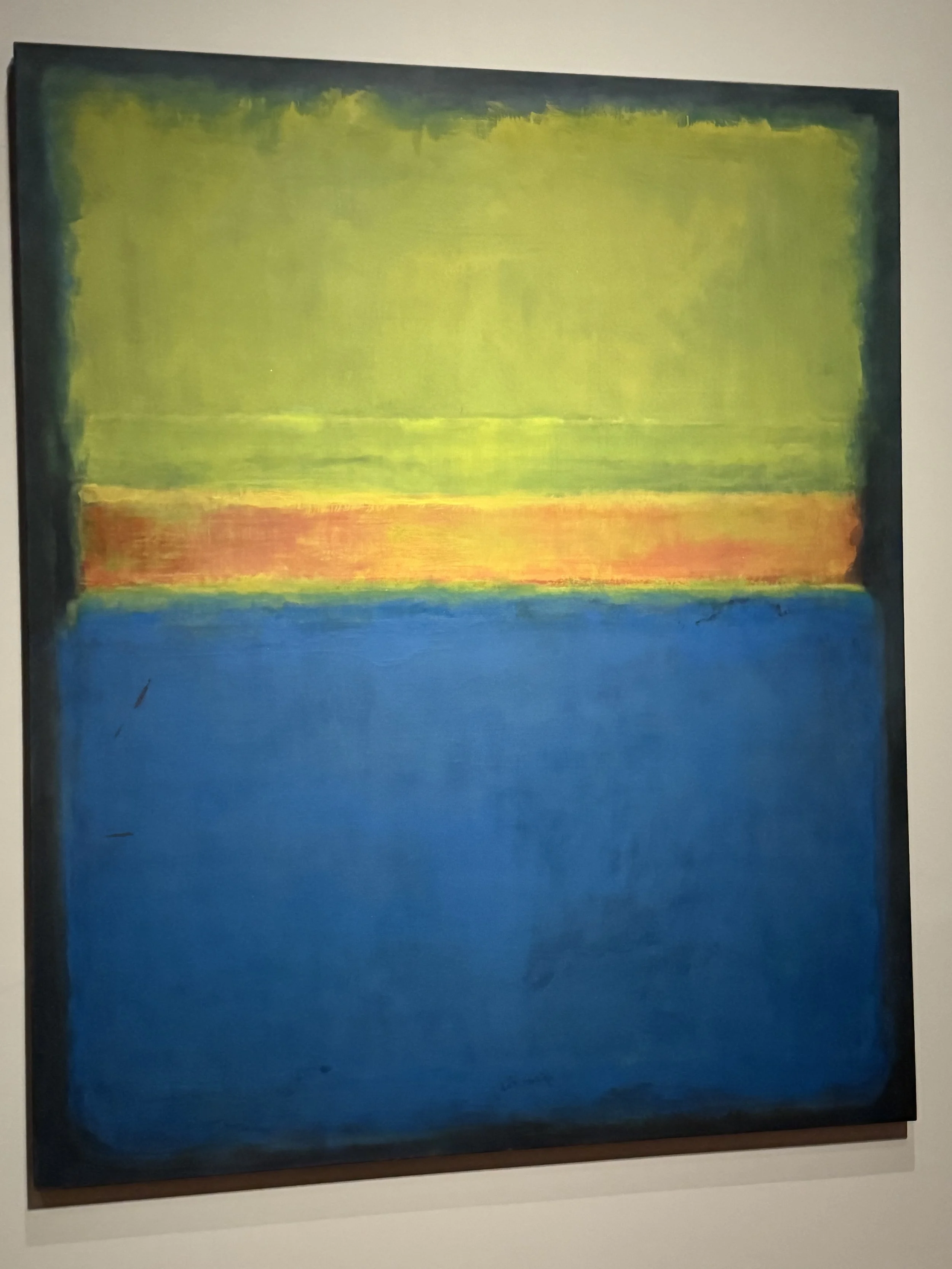
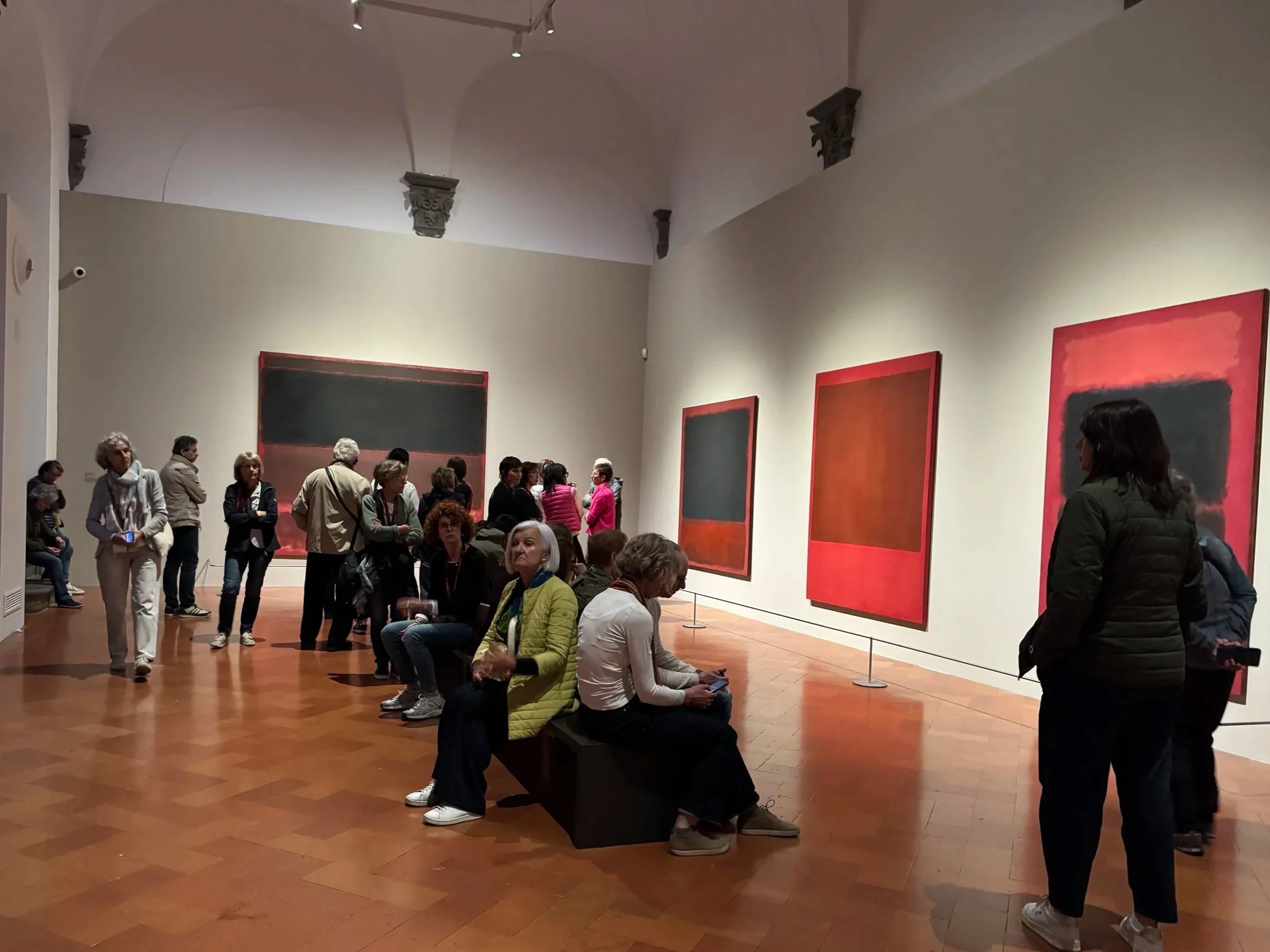
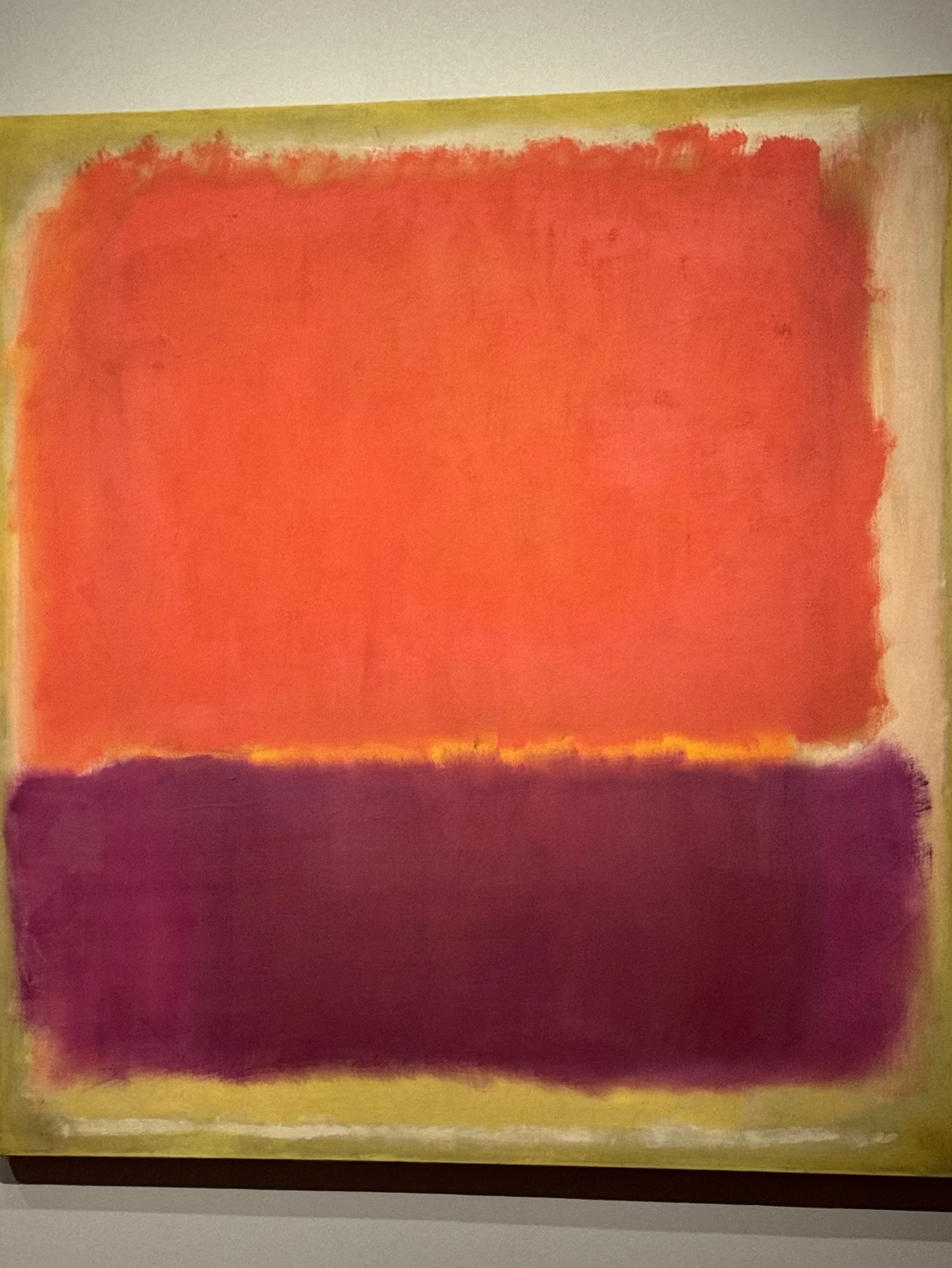
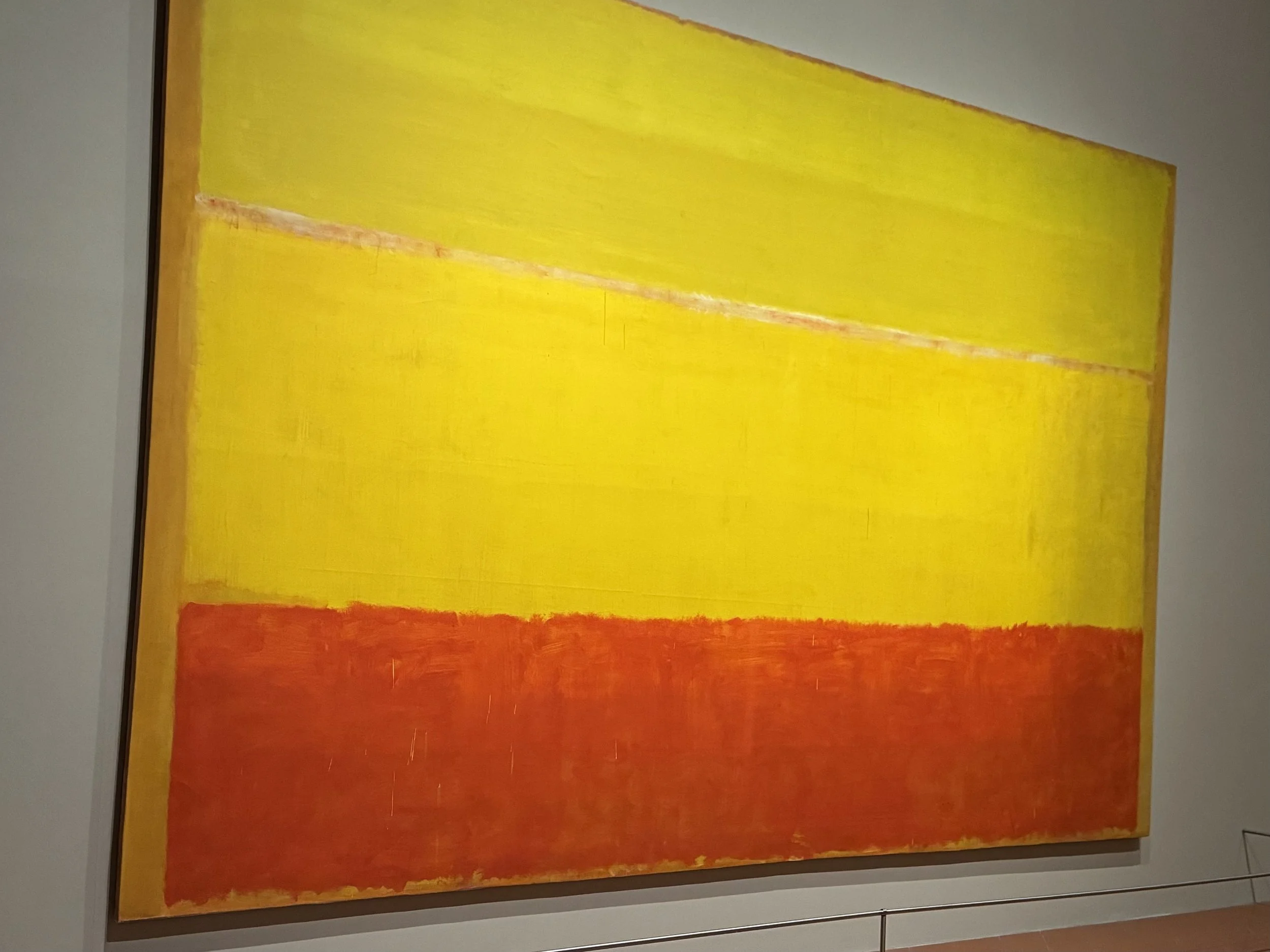
It is his abstract art, known as Multiforms, which began in the late 1940’s, that was a later step in his evolution and which produced the works for which he is best known.  These are large pieces which feature dramatic blocks of color. Gone are the people, buildings, or indeed any figures at all. Below from left to right are works from 1951 (#12), 1953 (untitled), and another from 1953 (#2). Interestingly, Rothko did not name his paintings, leaving each person viewing the work to have his own reaction, without the influence of a name.
IMG_0154.jpeg
IMG_0157.jpeg
IMG_0160.jpeg

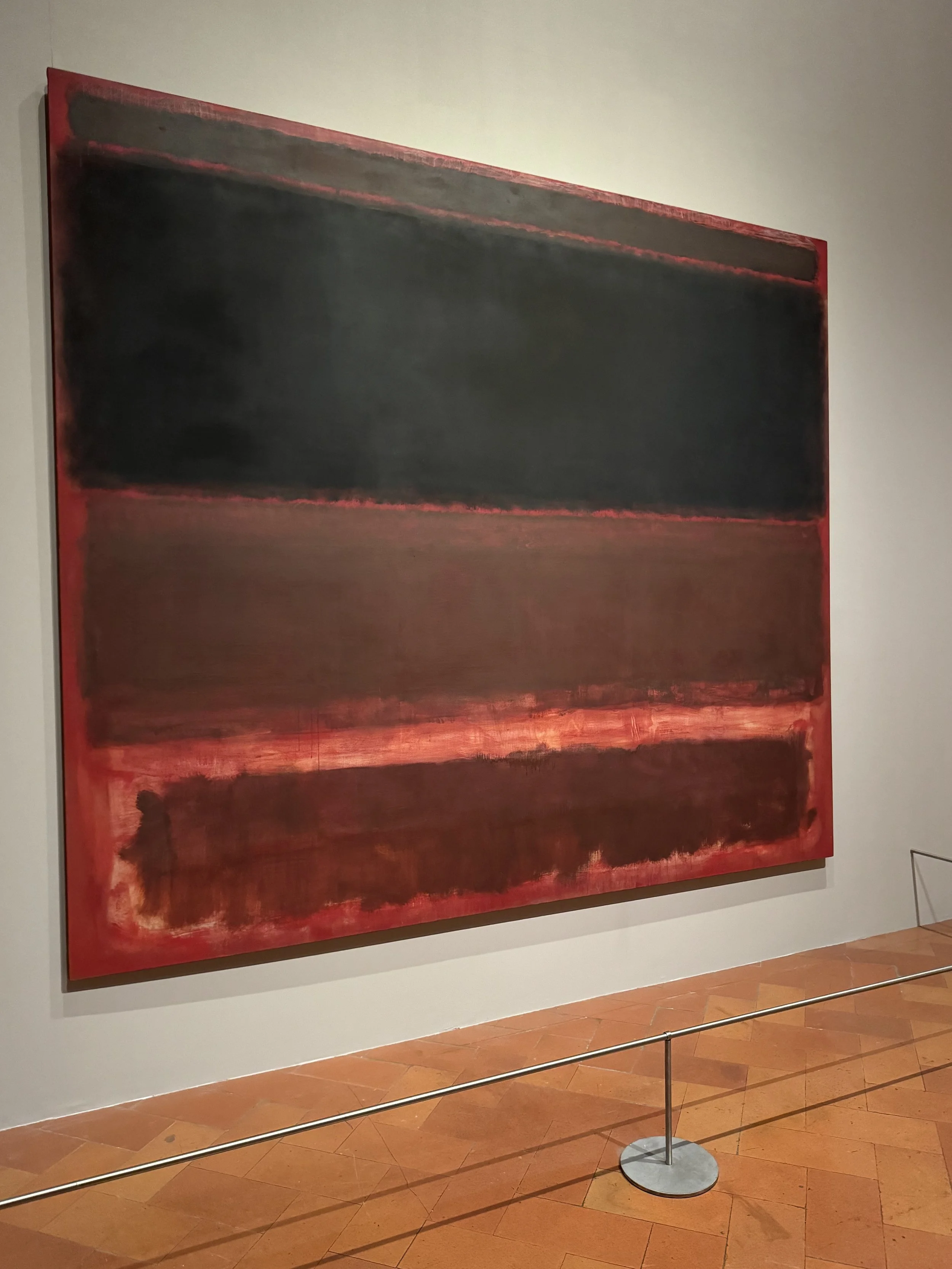
In the 1950’s and 60’s Rothko worked on several commissions, including a series of murals for a chapel in Texas (named the Rothko Chapel after the artist’s death). He also painted the Seagram Murals, a series originally intended for a restaurant in New York’s Seagram building.   Realizing that a restaurant was not the appropriate setting for his work, he instead donated several of the pieces to London’s Tate museum.  Sadly, they arrived on the same day that Rothko took his own life. None are included in the Strozzi exhibit as they are a permanent exhibit in the Tate Museum and only displayed as a group. Some sketches for them can be seen in the Laurentian Library as part of the exhibit in Florence. There are also some additional small works in Museum of San Marco, a link to Rothko’s appreciation of Fra Angelico.

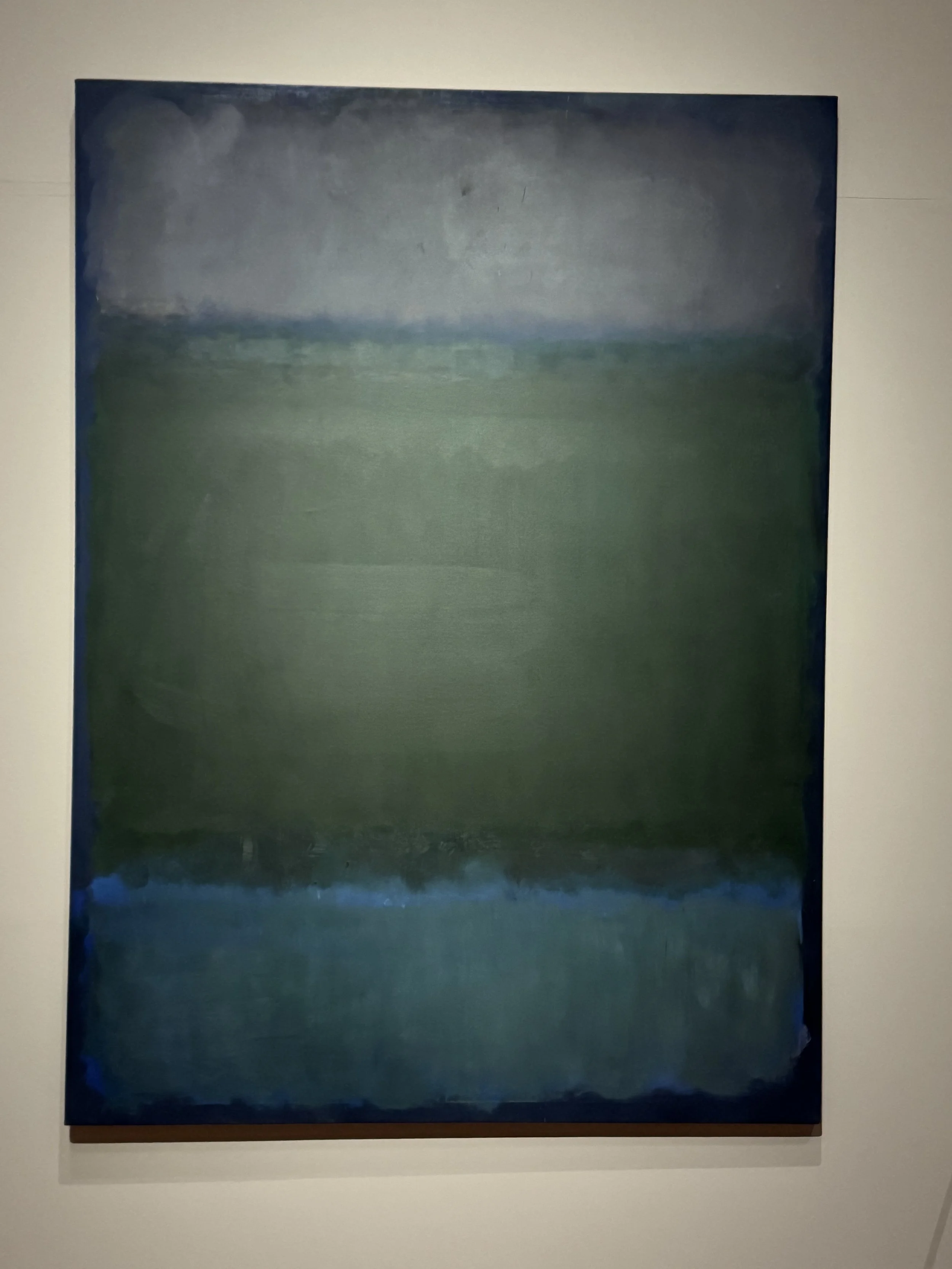
Below are pieces from 1955, 1958, 1964, about the same time as the Seagram works.
IMG_0162.jpeg
IMG_0174.jpeg
IMG_0177.jpeg

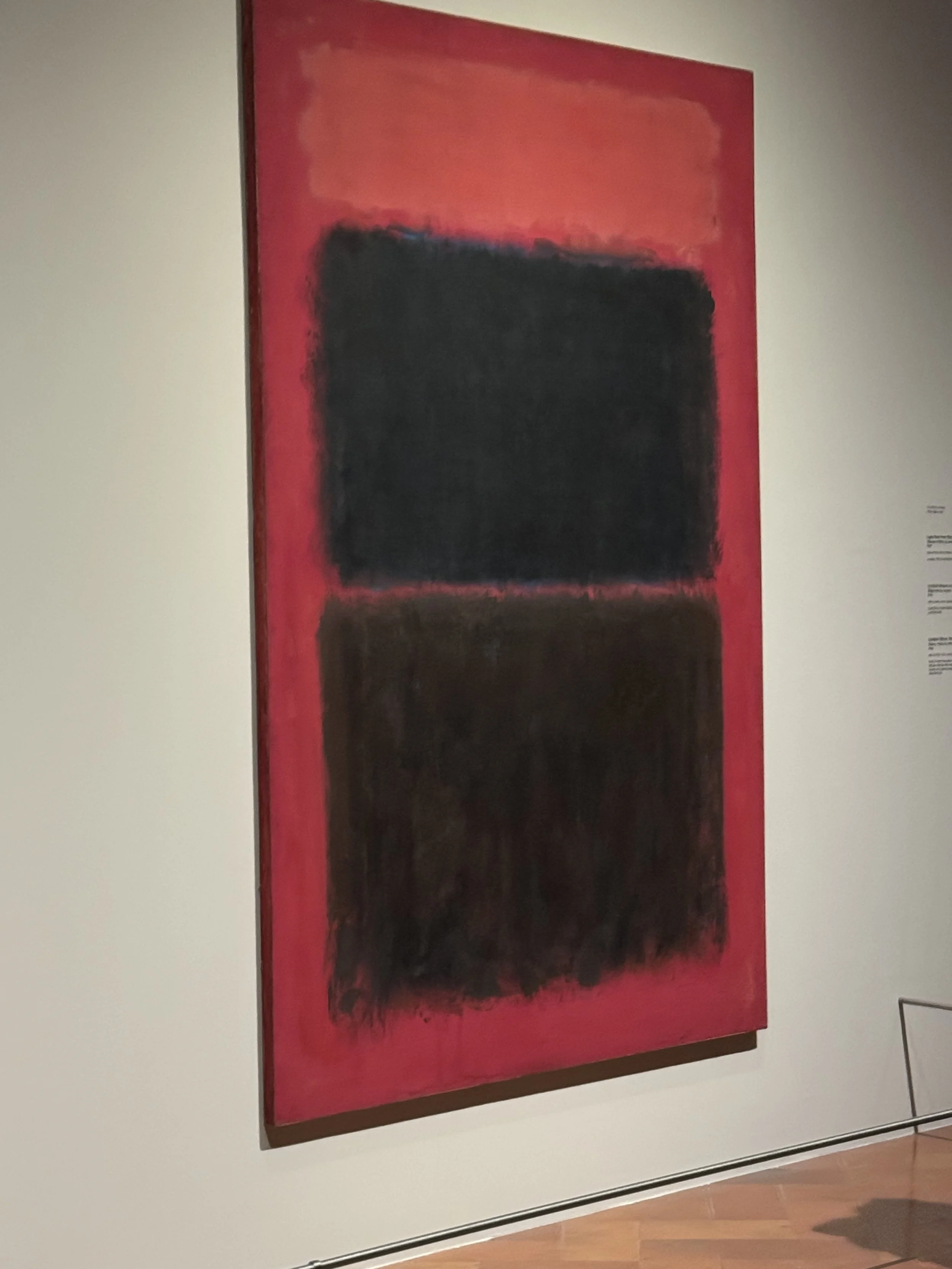
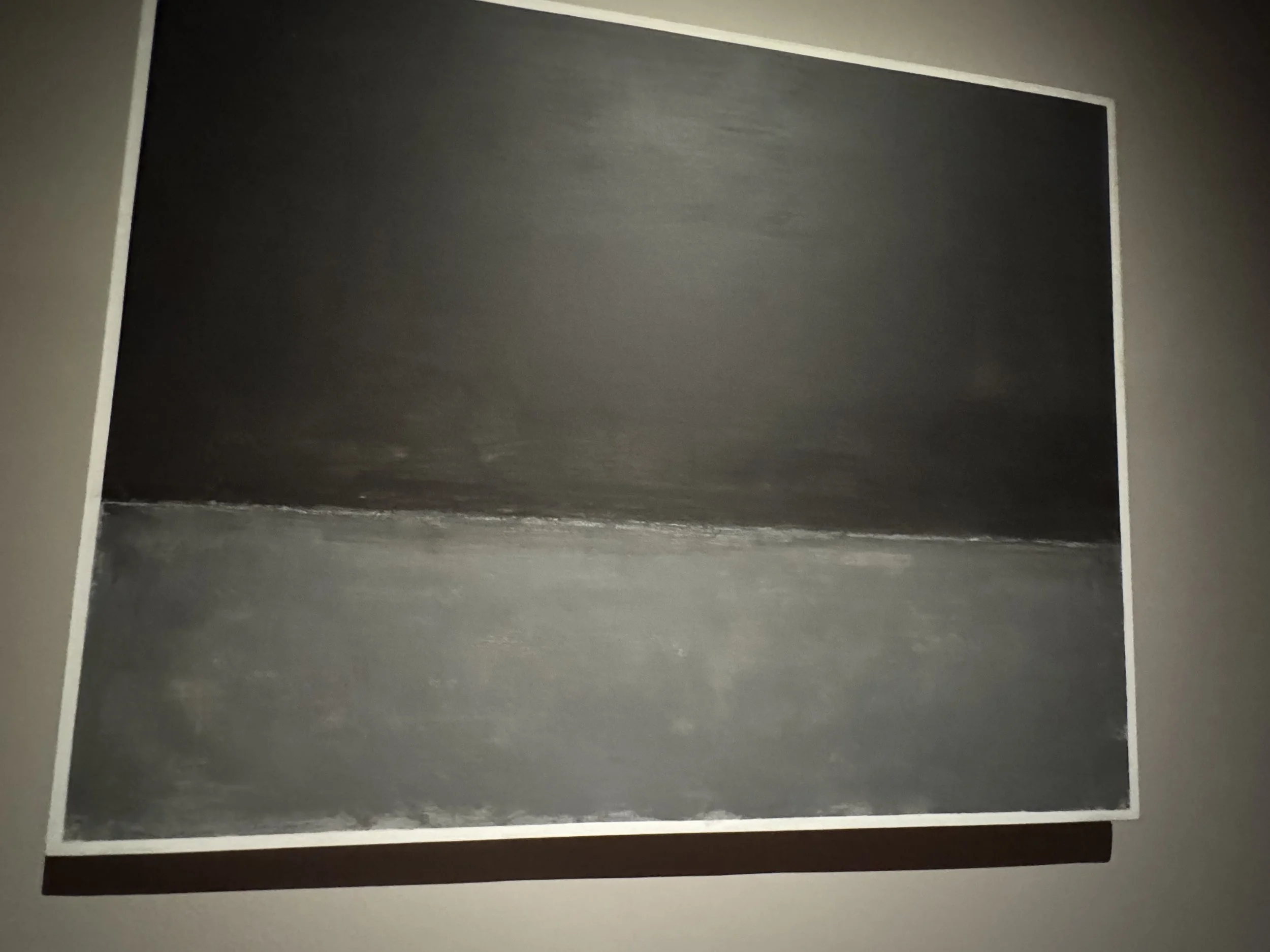
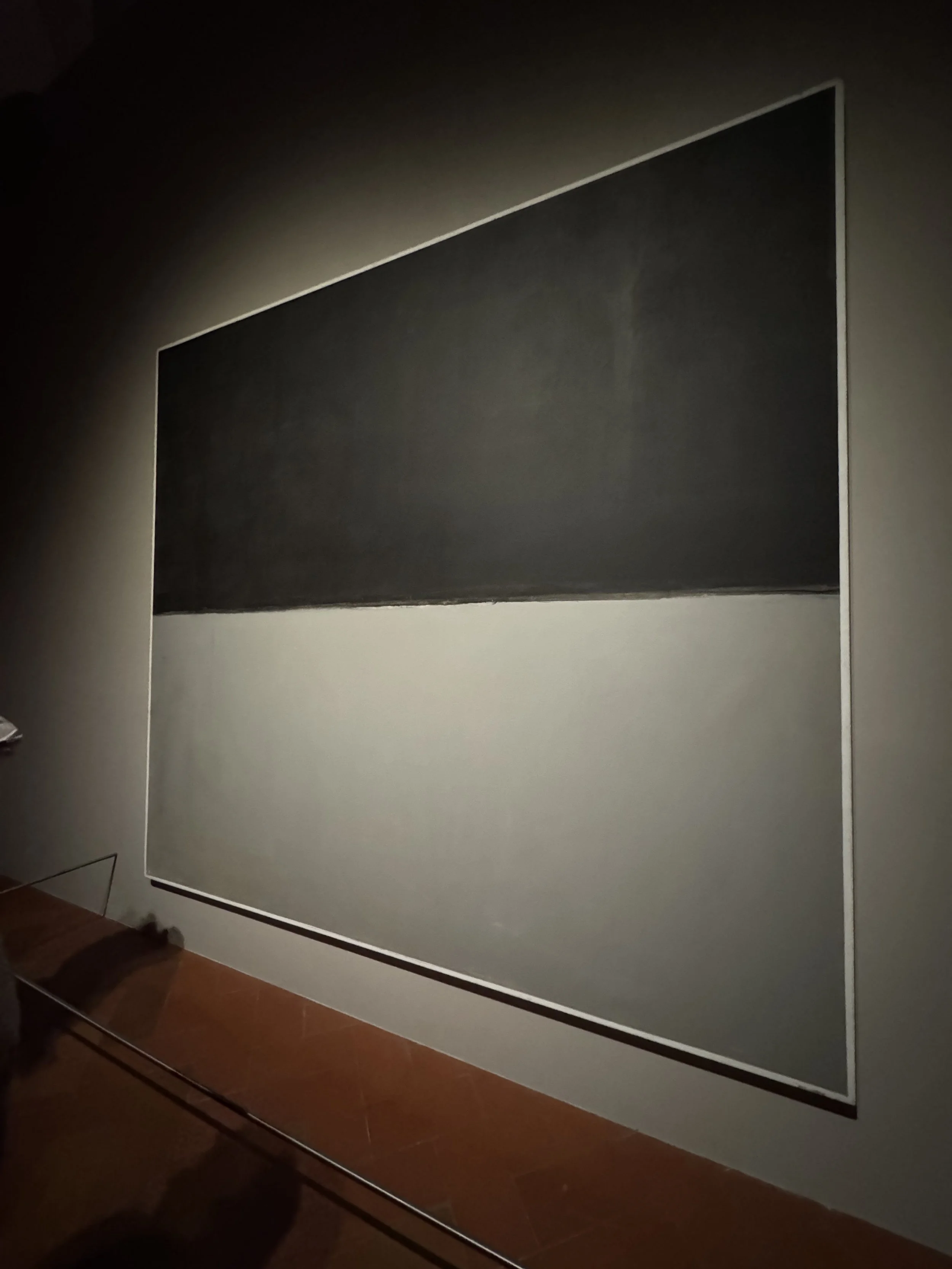
The chronological presentation of Rothko’s paintings at the Strozzi allow the observer to follow Rothko’s evolution as an artist, being drawn in to what seems to be an increasingly dark mood as his colors change from bright yellows, vibrant greens and blues, to more somber dark reds and browns and finally to gray and black.  The two below are from 1969.
IMG_0183.jpeg
IMG_0187.jpeg

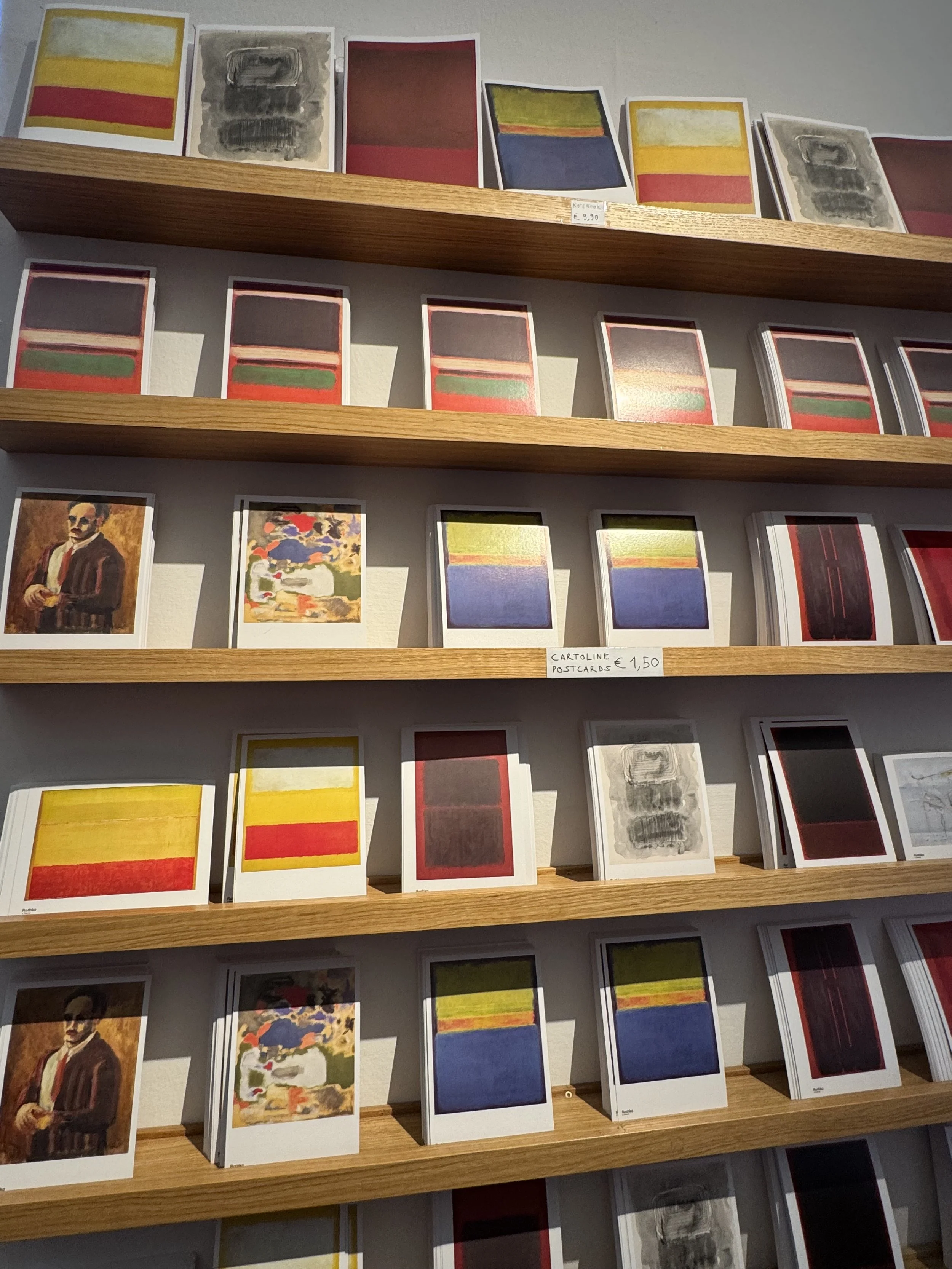
Rothko a Firenze is a well curated exhibit, with detailed information in both Italian and English, and a must see for those with an interest in modern art.  The gift shop has posters and cards with many of the paintings as well as books about the artist.
May 18, 2026 /Joanne Bartram
Rothko, Rothko florence exhibit, modern art Florence
#florence, #italytravel, Florence, Italian Art, Italian art architecture

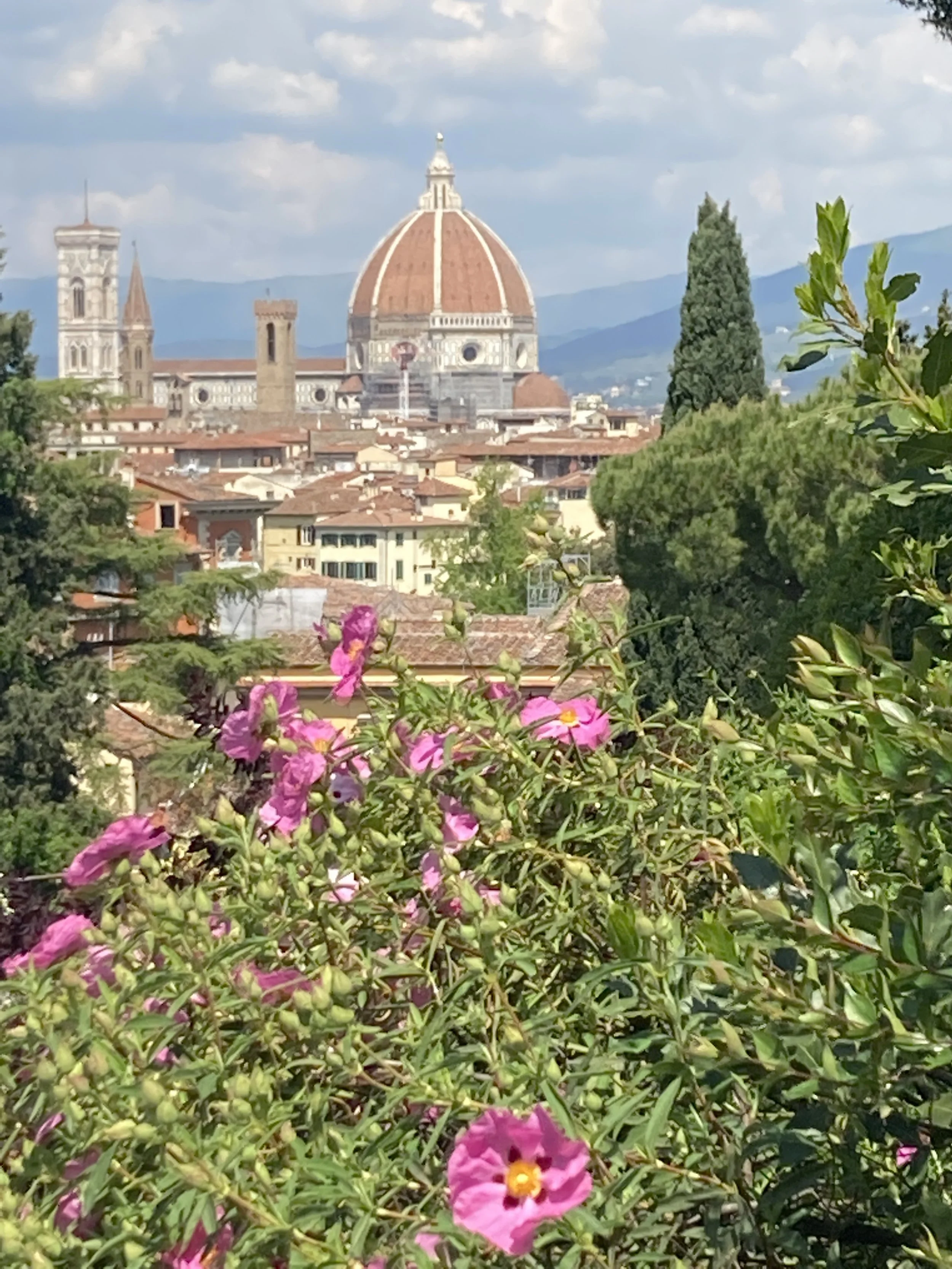
Florence’s Duomo as seen from the Giardino Delle Rose (Rose Garden) at Piazzale Michelangelo

Daydreaming of Spring in Italy

January 12, 2026 by Joanne Bartram in #florence, #italiangardens, #italytravel, #lucca, #springintuscany, Camellia Festival Italy, Garden Festivals Italy, Italian gardens

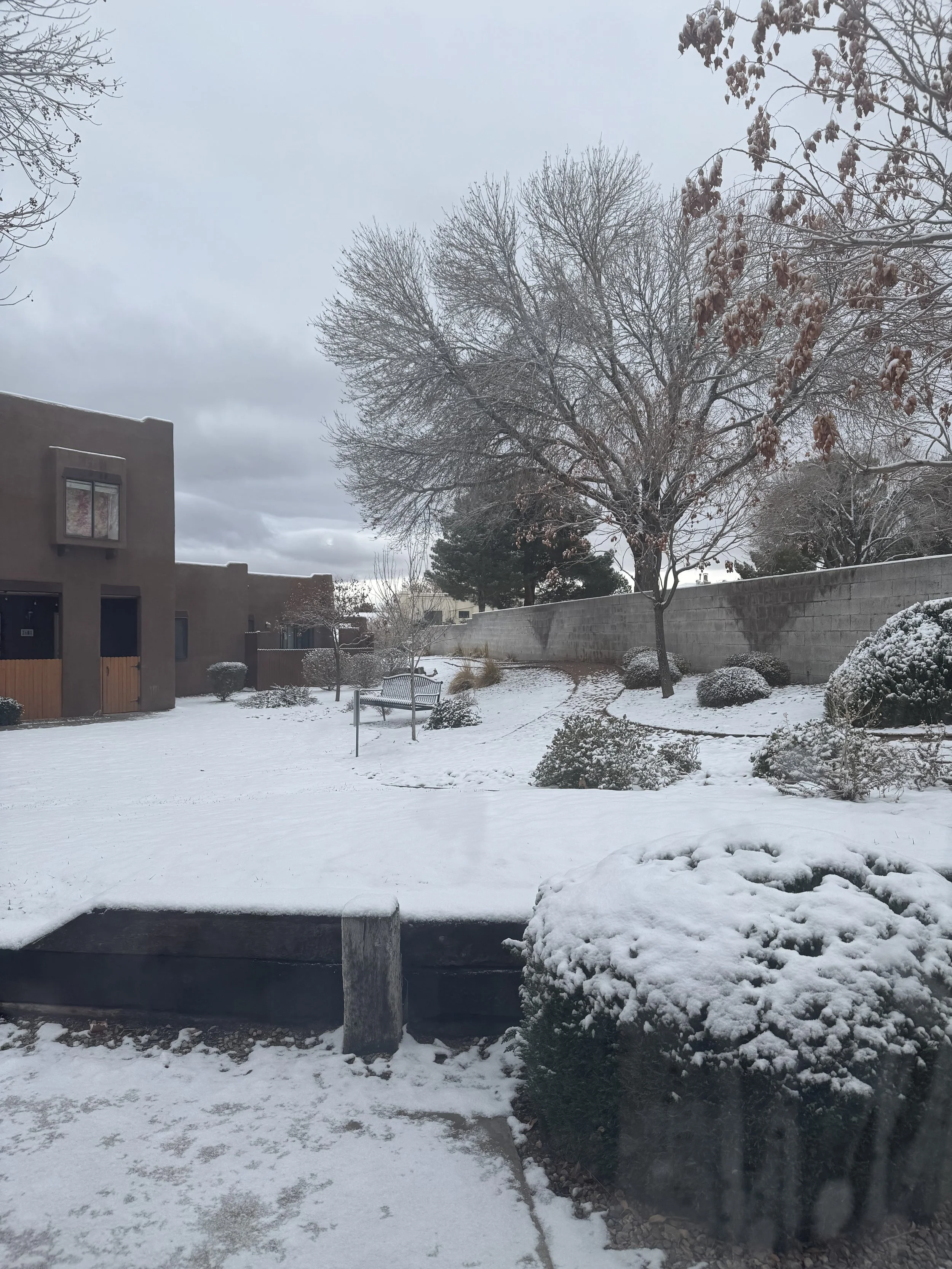
Cloudy and cold in Albuquerque. I need some spring!

Most years I am well into February before the “winter blahs” hit me, but for some reason they’ve come early this year.  It might just be the weather - the last 24 hours have brought cold, rain, hail, gray skies, and overnight snow to New Mexico where I am visiting my family this month. 

Today it is cold, windy, and overcast with intermittent snowflakes. Usually snowy days in New Mexico are gorgeous, especially once the sun comes out and makes everything sparkle. But today there is not enough snow to create a pretty winter scene and no clearing skies to bring the sparkle.  It is just cold and dreary.  It is a good day to stay inside, sip some chai, write a blog post, and daydream about spring – sunshine, green leaves on trees, flowers – along with spring travel plans.  And that is exactly what I am doing today.  

These little yellow blossoms are one of the first signs of spring along Lucca’s walls

As for travel, I am finalizing plans for spending two weeks in Trieste in early March with a friend from Albuquerque. It is a part of Italy that I have never visited, with a unique culture that is part Italian and part Eastern European.  I have been warned that it will still be chilly and quite windy, so may not quite bring me the dose of spring I am craving but it does give me something to look forward to. The trip is centered around some time in a special language program for seniors age 60+ and it includes several excursions into the surrounding areas. I’ll let you know how it goes!

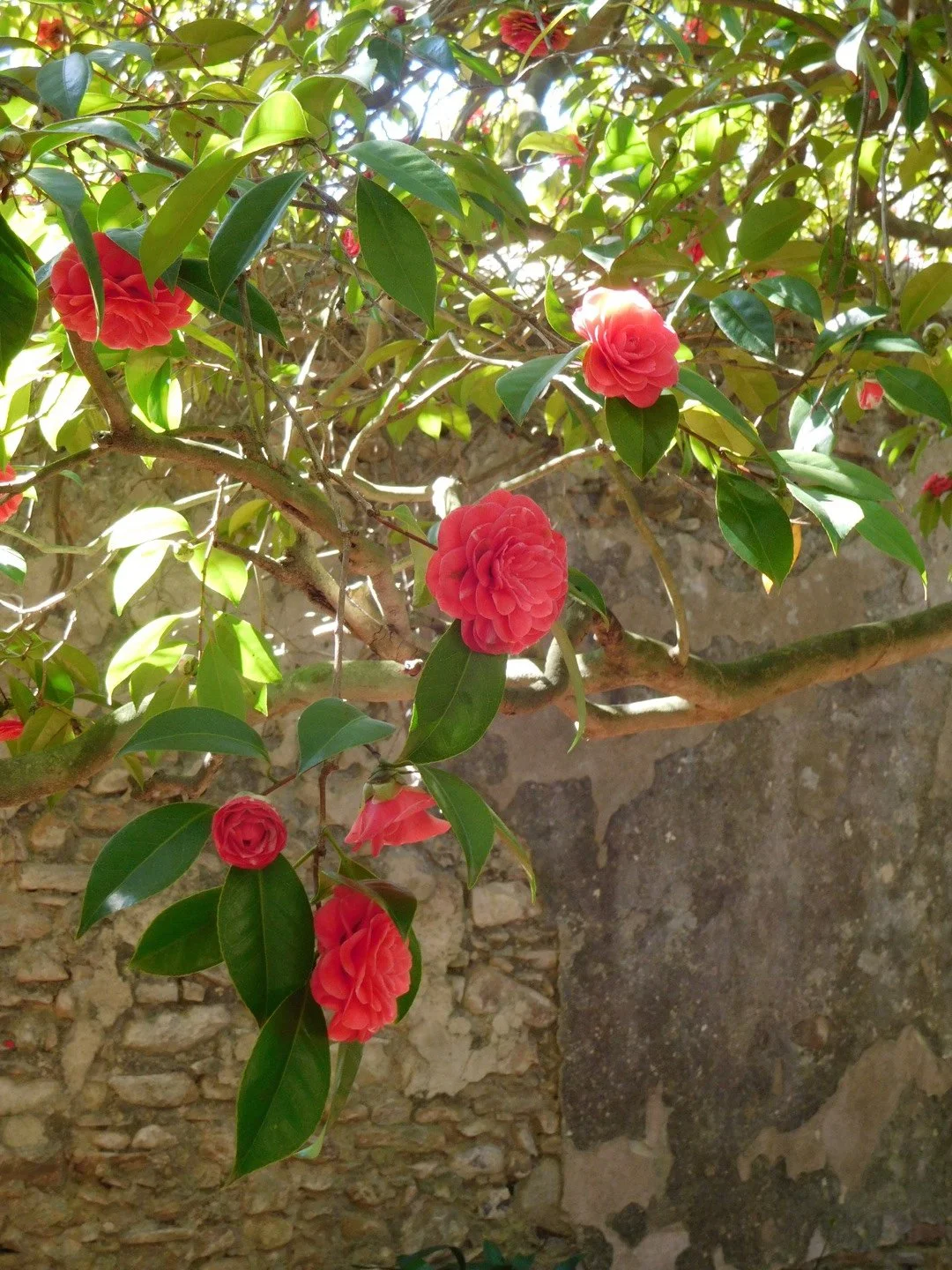
March is the time for Camellias, especially in the small village of Sant’Andrea di Compito

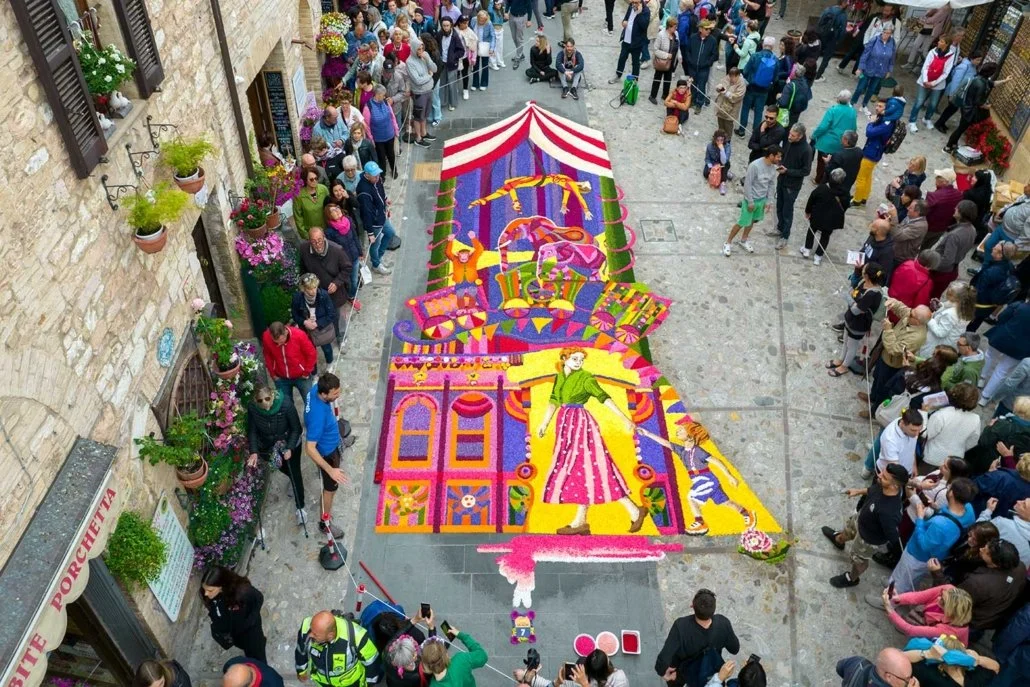
Flower art in Spello for the Infiorata (photo from the Le Infiorate website)

I will get the taste of spring I need in the first week of June when I will do a few days of cooking classes on an agriturismo outside of Perugia in Umbria.  That program will include a visit to the famous Infiorata in Spello, a celebration of the Feast of Corpus Domini, where the streets are paved in designs made from flower petals. .  Visiting Spello for the Infiorata has long been on my list of things to experience, and this is the first time the opportunity has worked out for me.  Definitely a spring event to look forward to.

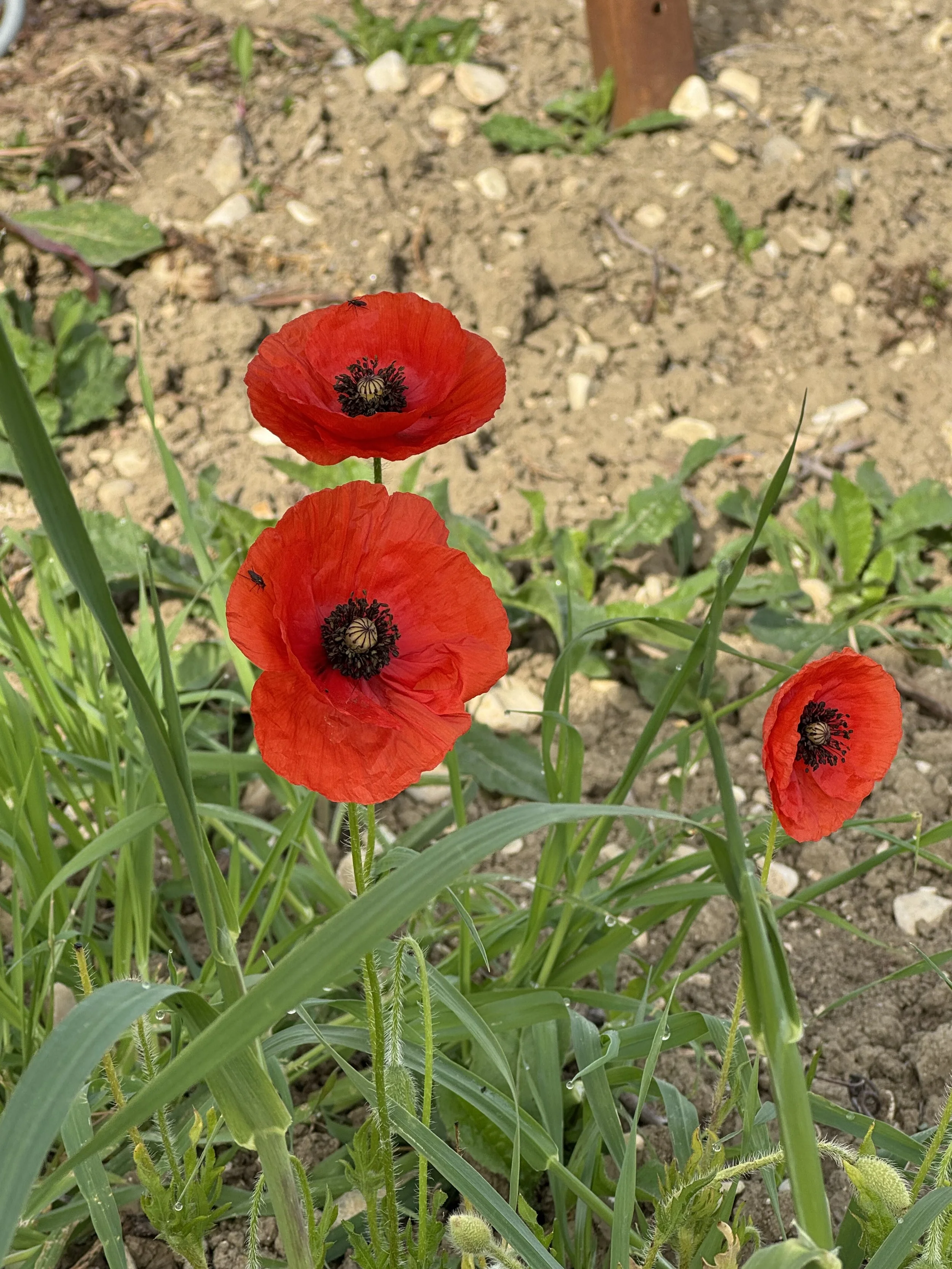
April poppies in Umbria last spring

In the meantime, I am looking back on springtime photos from a variety of places in Italy.

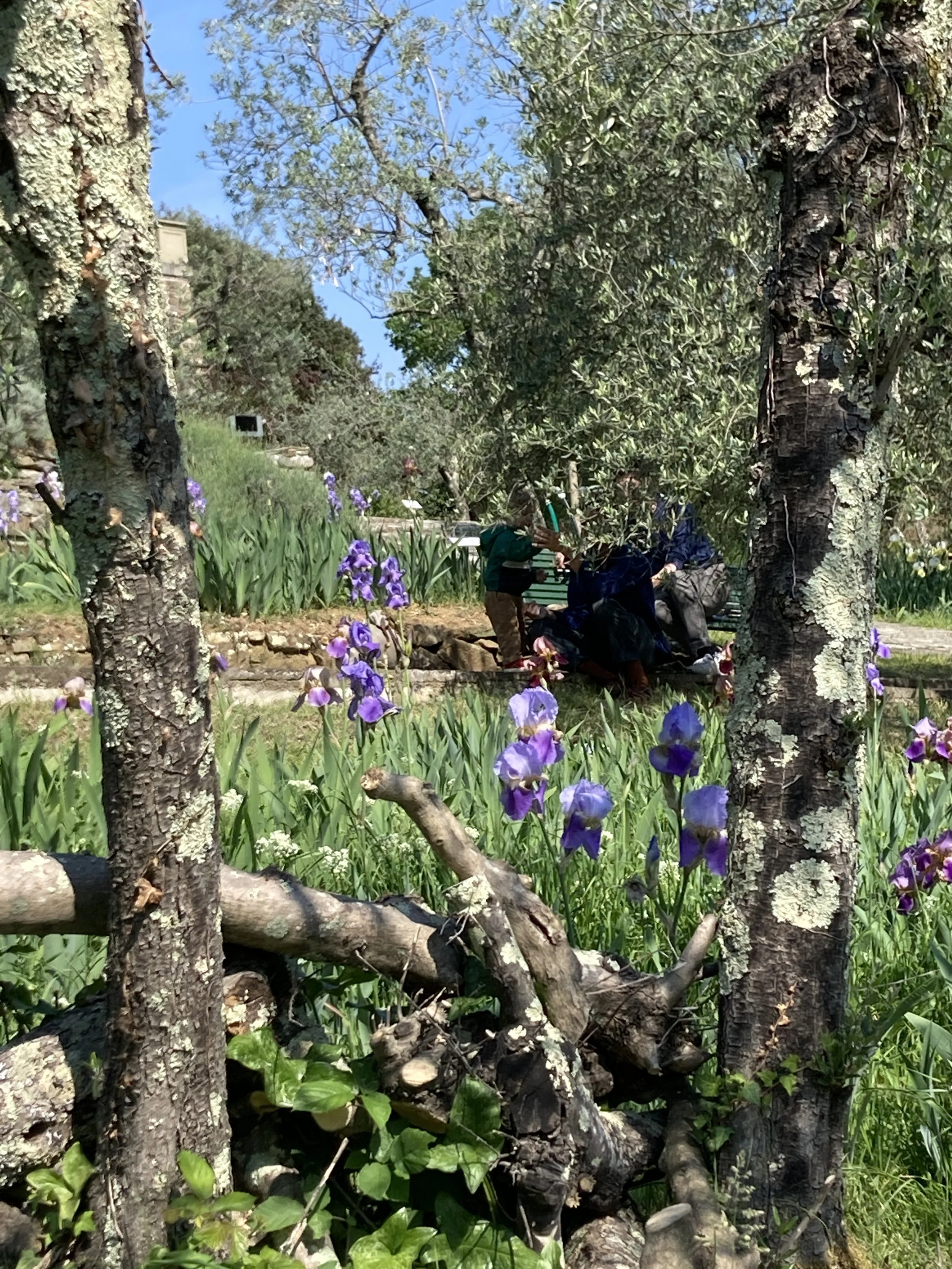
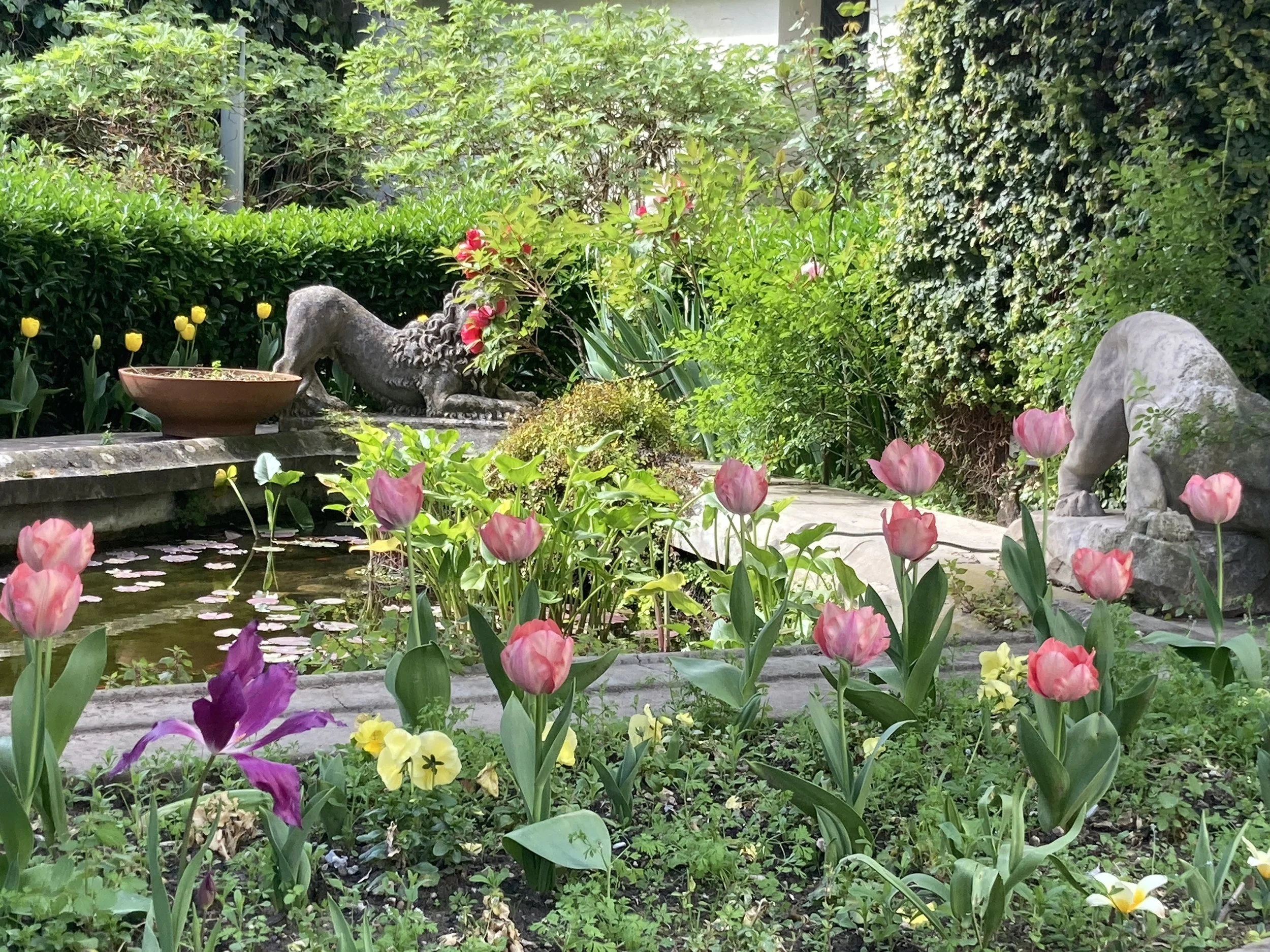
The Iris garden in Florence is opened for just a few weeks in May each year

They are chasing away this gloomy, cold day and making me smile. 

I hope these hints of spring in Italy make you smile too.  And just maybe they will get you started planning some travel!

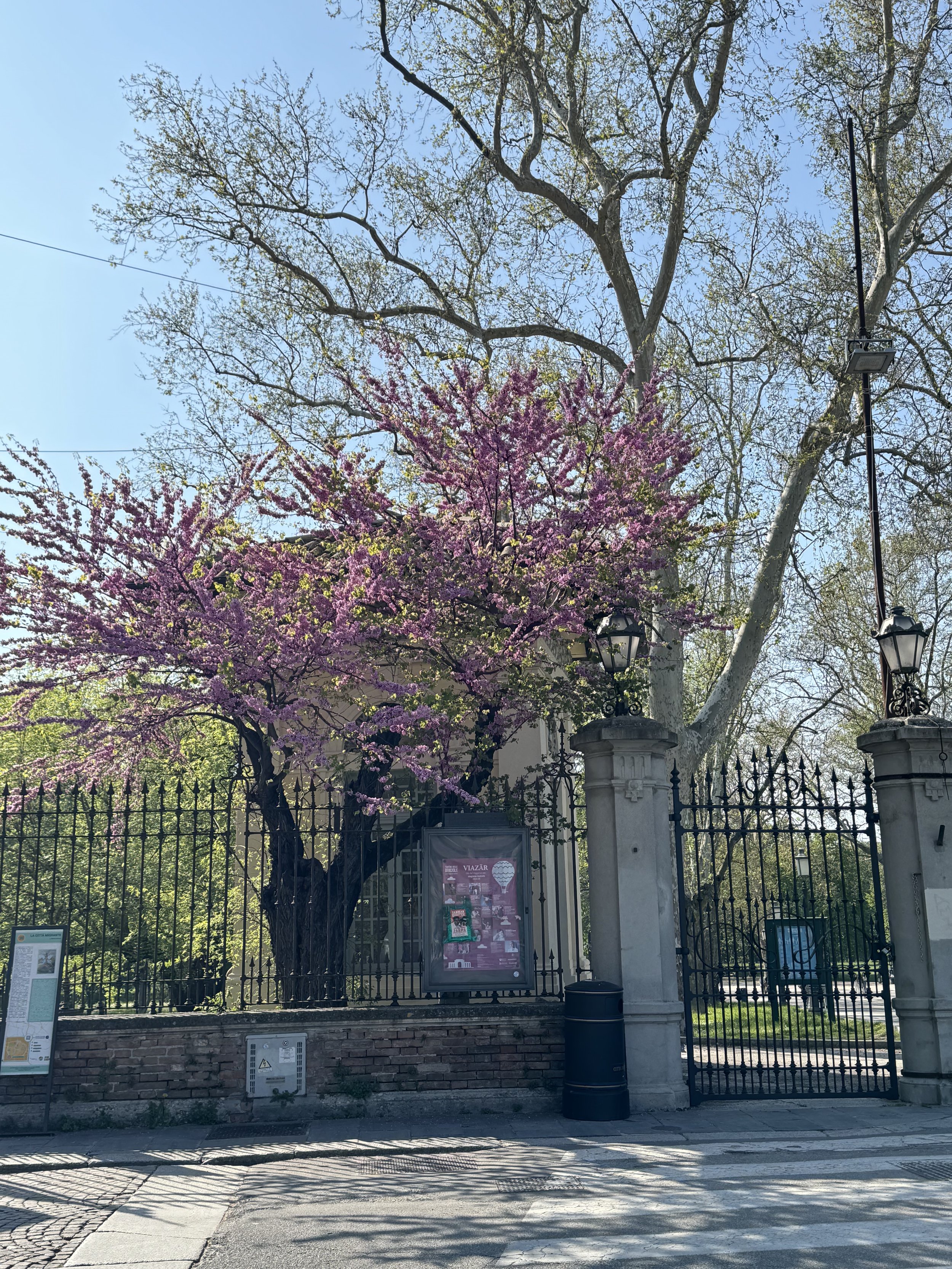
Parma is lovely in Spring, especially in the Giardino Ducal

Spring Tulips in Lucca

January 12, 2026 /Joanne Bartram
spring italy
#florence, #italiangardens, #italytravel, #lucca, #springintuscany, Camellia Festival Italy, Garden Festivals Italy, Italian gardens

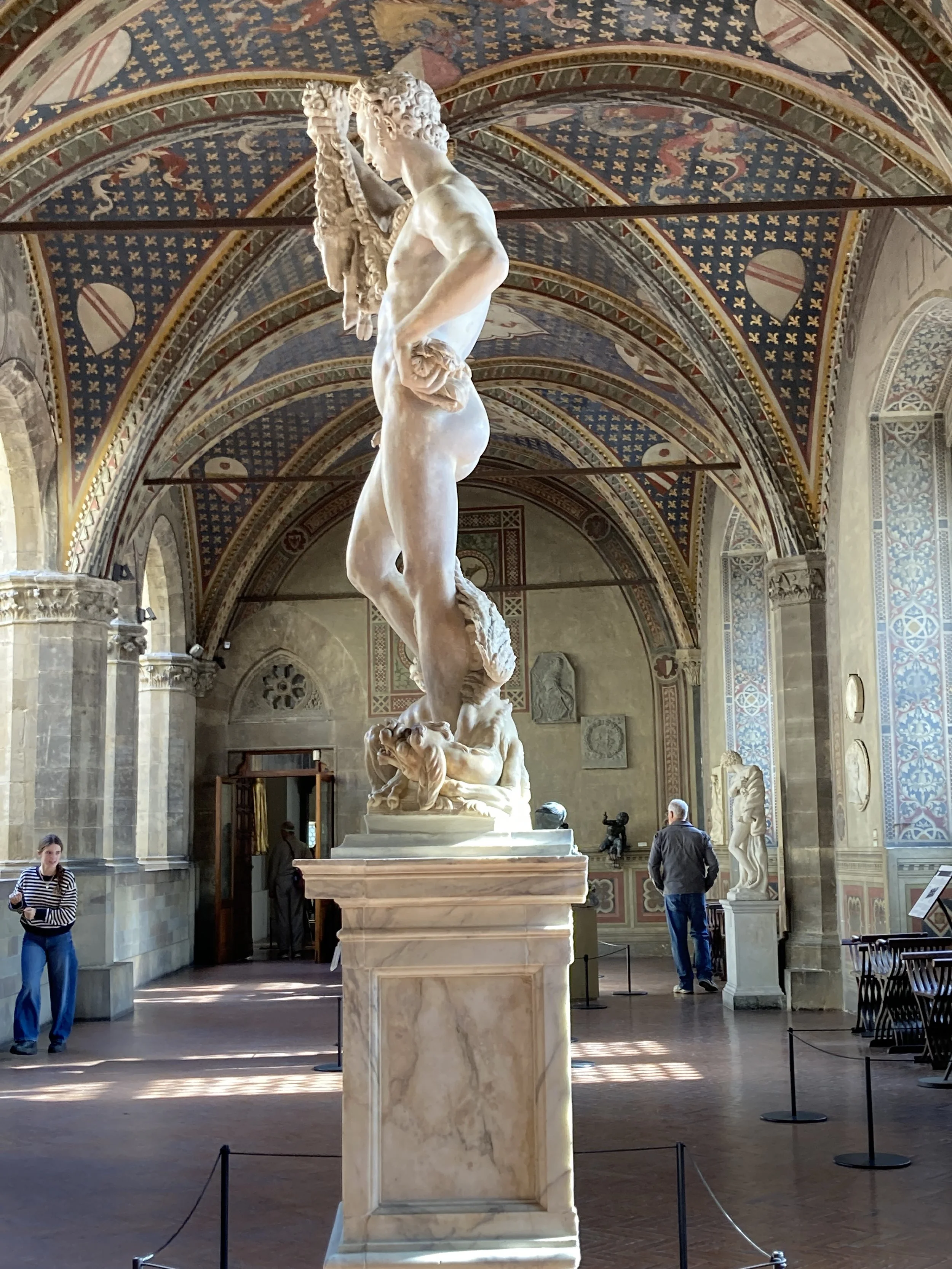
Jason with the Golden Fleece, marble statue from 1589 by Francavilla, in the loggia of the Bargello Museum, Florence

Museo Nazionale del Bargello

October 06, 2025 by Joanne Bartram in #florence, #italytravel, #medievalitaly, Florence, Italian Art, Italian art architecture, Italy, Italy travel, Museums Italy, Tuscany

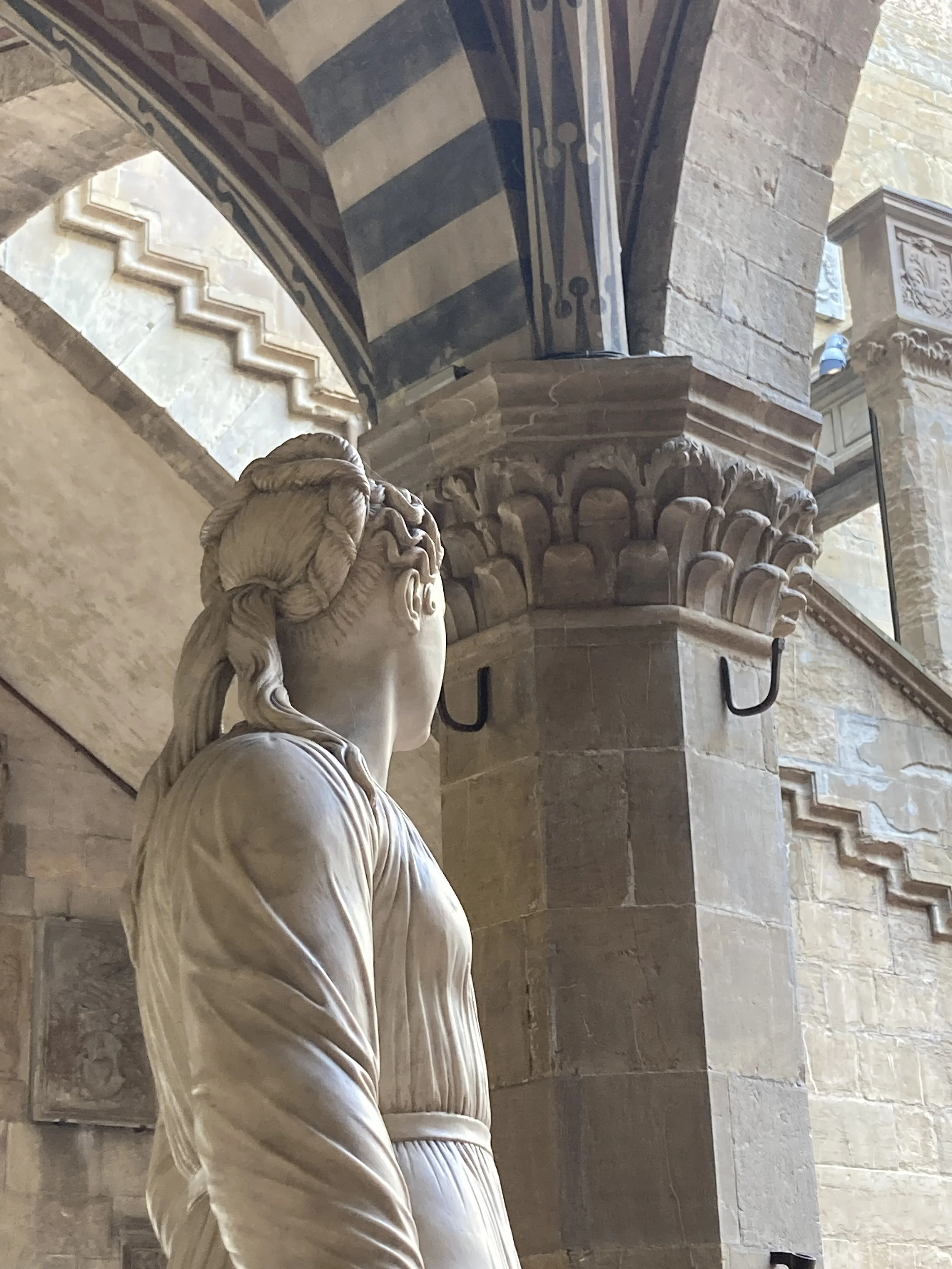
One of many statues in the courtyard of the Bargello, this one, from 1579 by Domenico Poggini, is particularly lovely

I could spend the next 20 years in Florence and still not have studied all the art that can be found there.  There is so much to experience - in public buildings, palaces, churches, and museums - that it can be overwhelming, especially if trying to see as much as possible on a short visit. How fortunate it is to spend most of the year just an hour or so away in Lucca, making it easy to return over time, taking in a new museum, seeing just a few artistic highlights, or returning to a favorite place.

One place that I have returned to over the years is the Museo Nazionale del Bargello.  There are many things to love about the Bargello; it is one of my favorite museums anywhere in the world.

First, the history.  Constructed in the 13th century as Florence’s first public building, it began its existence as a place to protect the rights of the people.  Over its long history it has served many purposes and experienced many periods of destruction and rebuilding. After its noble beginning, the palazzo was later used as a justice hall and later a prison.  Political prisoners were tried, jailed, and executed here up until the late 1700’s when the death penalty was banned. Perhaps the most famous political convict was Dante. He received a death sentence here in the year 1302; luckily he had fled Florence and the sentence was never carried out. Instead, he was exiled from Florence.   

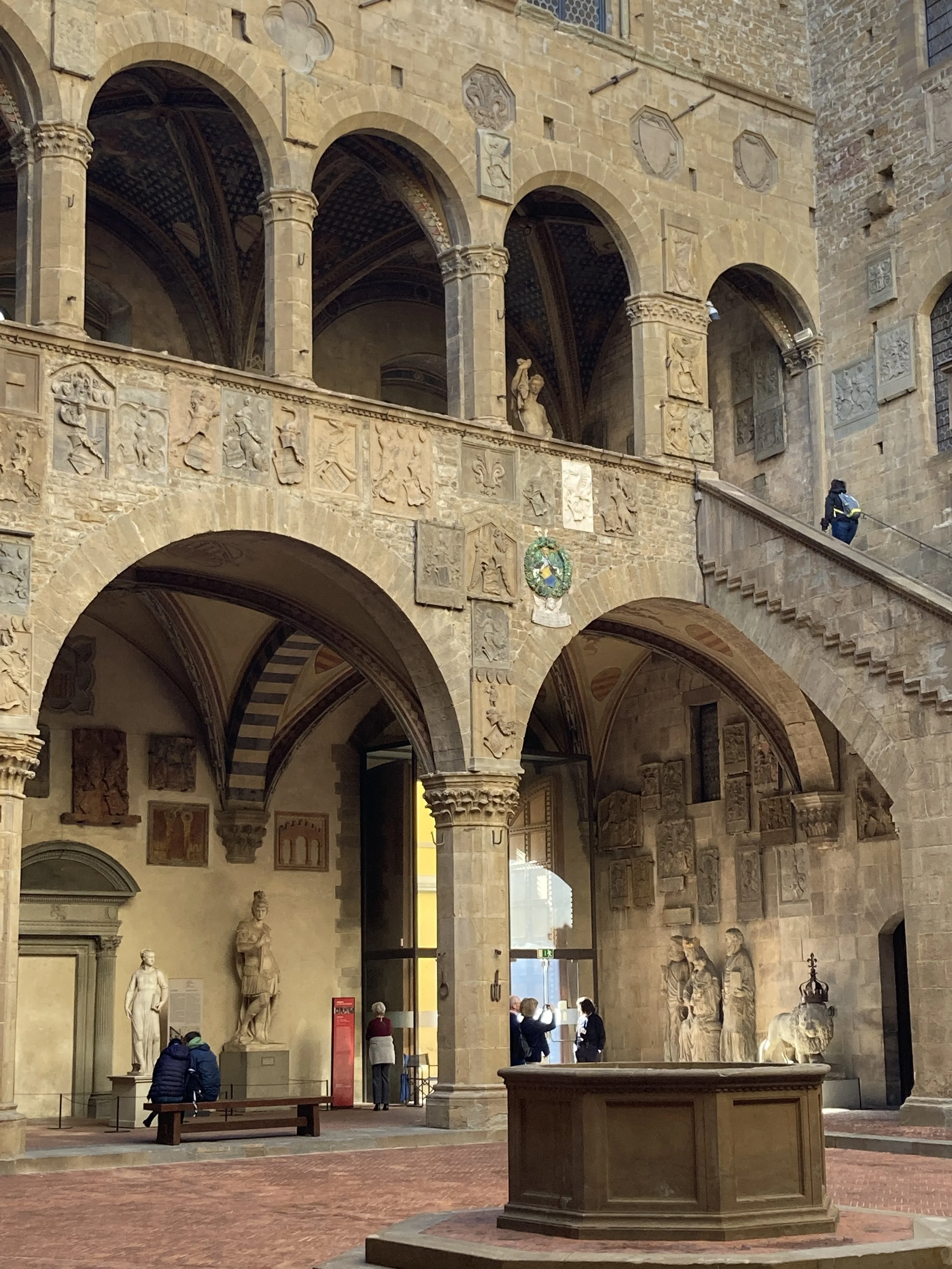
The courtyard, looking up to the loggia

Since 1865 the palazzo has served as a museum, housing treasures created by some of Italy’s most famous artists.  Even before viewing the art, the palazzo is magnificent for its architecture.  Standing in the courtyard, with it’s central well, coats of arms, and grand staircase, and looking up toward the first-floor loggia, is a wonder.  Many of the pieces here are recreations of works that had been destroyed during the years when the Bargello served as a prison. 

Ammannati’s Juno Fountain, 1555. (Juno and the peacocks are copies)

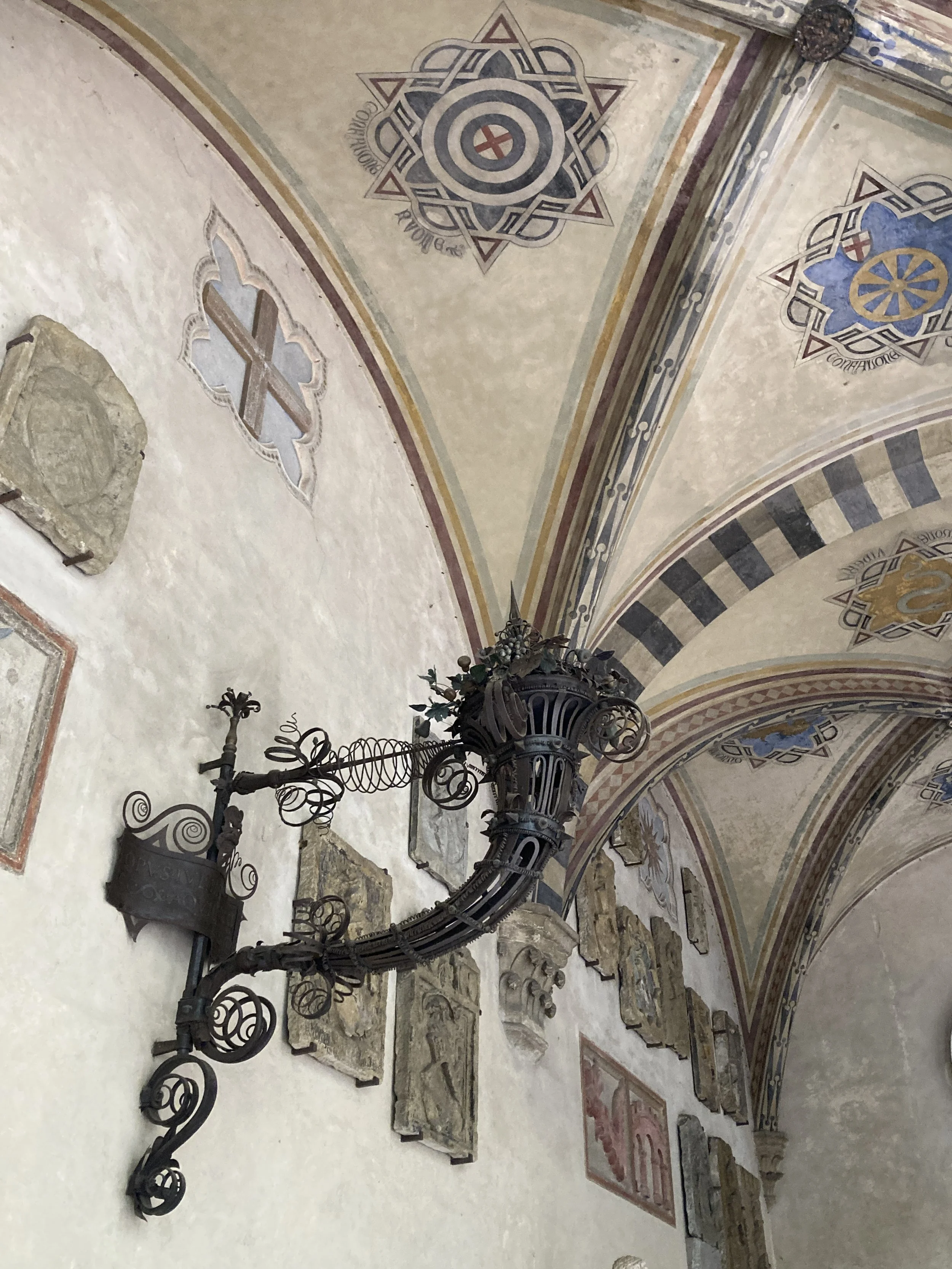
Detail, courtyard ceiling

Other pieces were relocated here from various buildings in Florence, including the Juno fountain which was originally meant for the Palazzo Vecchio. Over time it was deconstructed and the 8 statues scattered to different locations. Now, with all the figures reunited, it is a perfect fit in the Bargello’s grand courtyard. 

The courtyard is a peaceful spot to sit and enjoy the start of a visit to this wonderful and generally uncrowded museum. Informational signs, in English, provide an overview of the buildings history, a good beginning to any visit.

The floors above the courtyard hold an abundance of treasures.  I think of the Bargello as primarily a sculpture museum, for it is the sculpture that pulls me back time and again.  The sculptures include a who’s who list of Italy’s most famous artists – Bernini, Donatello, Cellini, Michaelangelo, Verrocchio, Giambologna. 

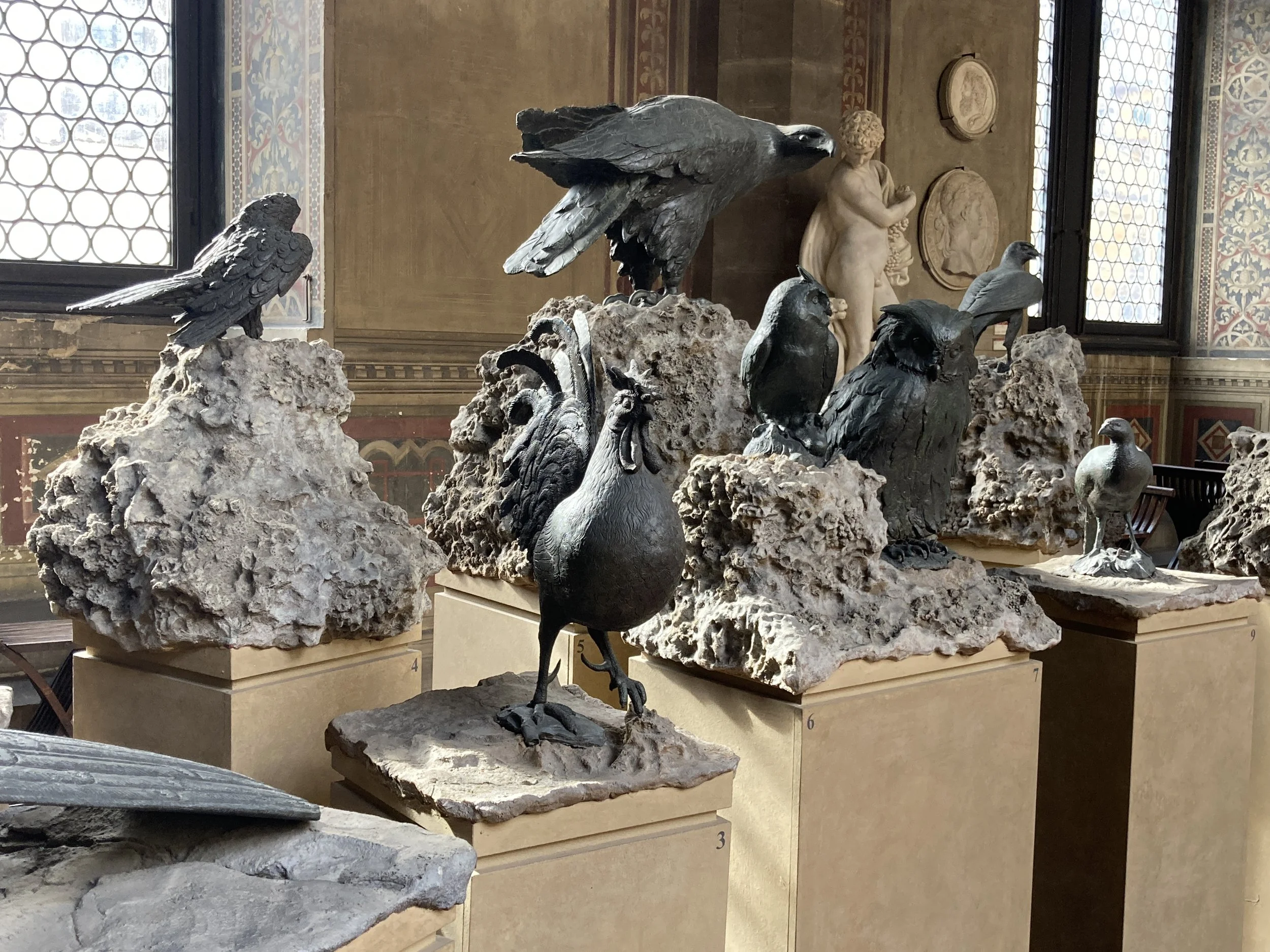
Bronze Birds by Giambologna, c. 1570

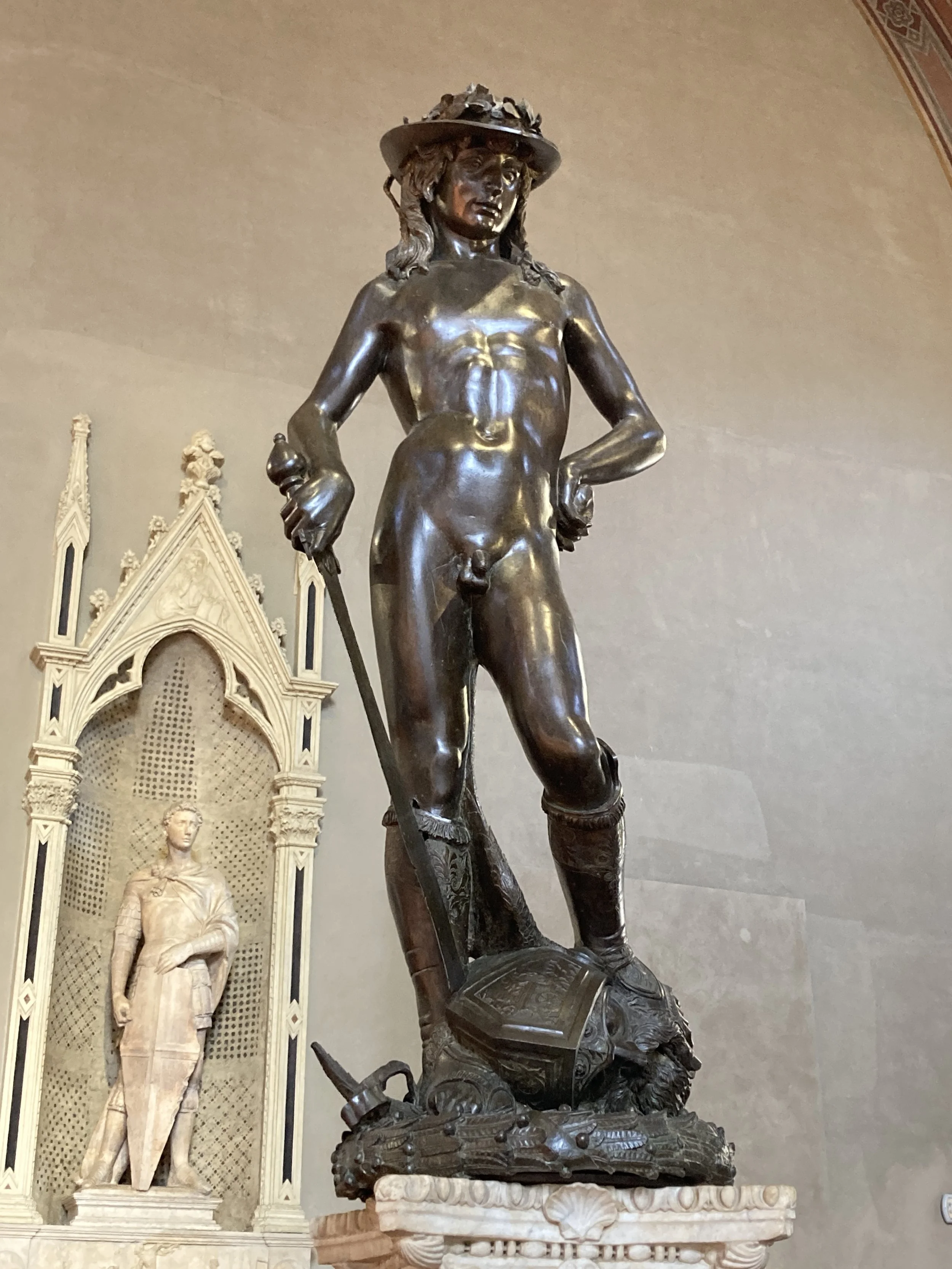
Many of the most famous works can be found in the Donatello Room, originally the palazzo’s grand hall, including both a bronze and a marble David by Donatello. While this room showcases several works by Donatello, others are also represented including the competition pieces by Brunelleschi and Ghiberti for the Baptistery doors. The Donatello room is newly refurnished, with this David right in the center.

A bronze David by Donatello, c.1440 (the marble St. George in the background is also by Donatello)

There is much more to see at the Bargello in addition to sculpture.  There are Della Robbia glazed ceramics, paintings, decorative arts, ivories and paintings. 

IMG_6775.JPG
IMG_6757.JPG
IMG_6764.JPG
IMG_6768.JPG
IMG_6770.JPG
IMG_6774.JPG

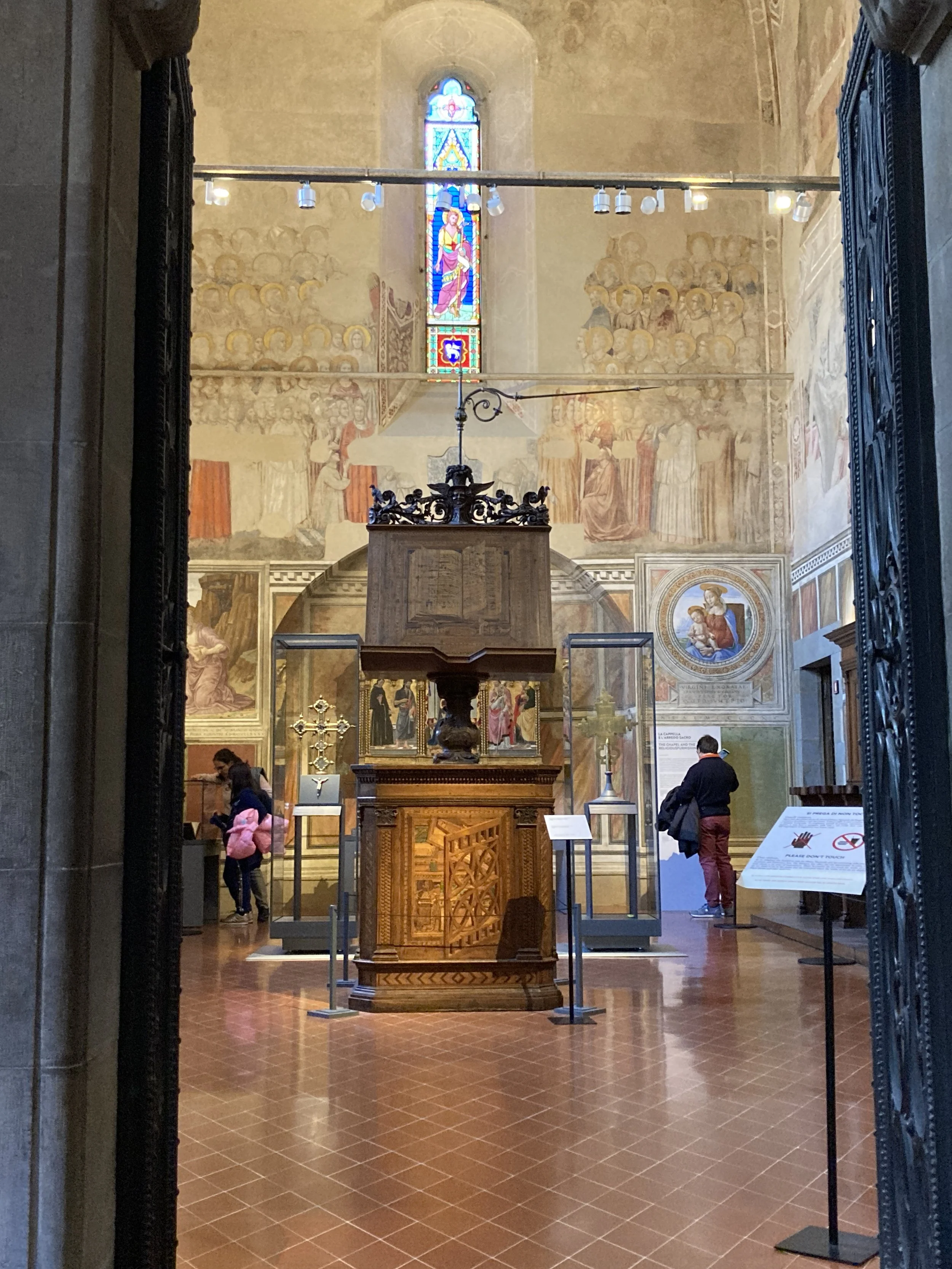
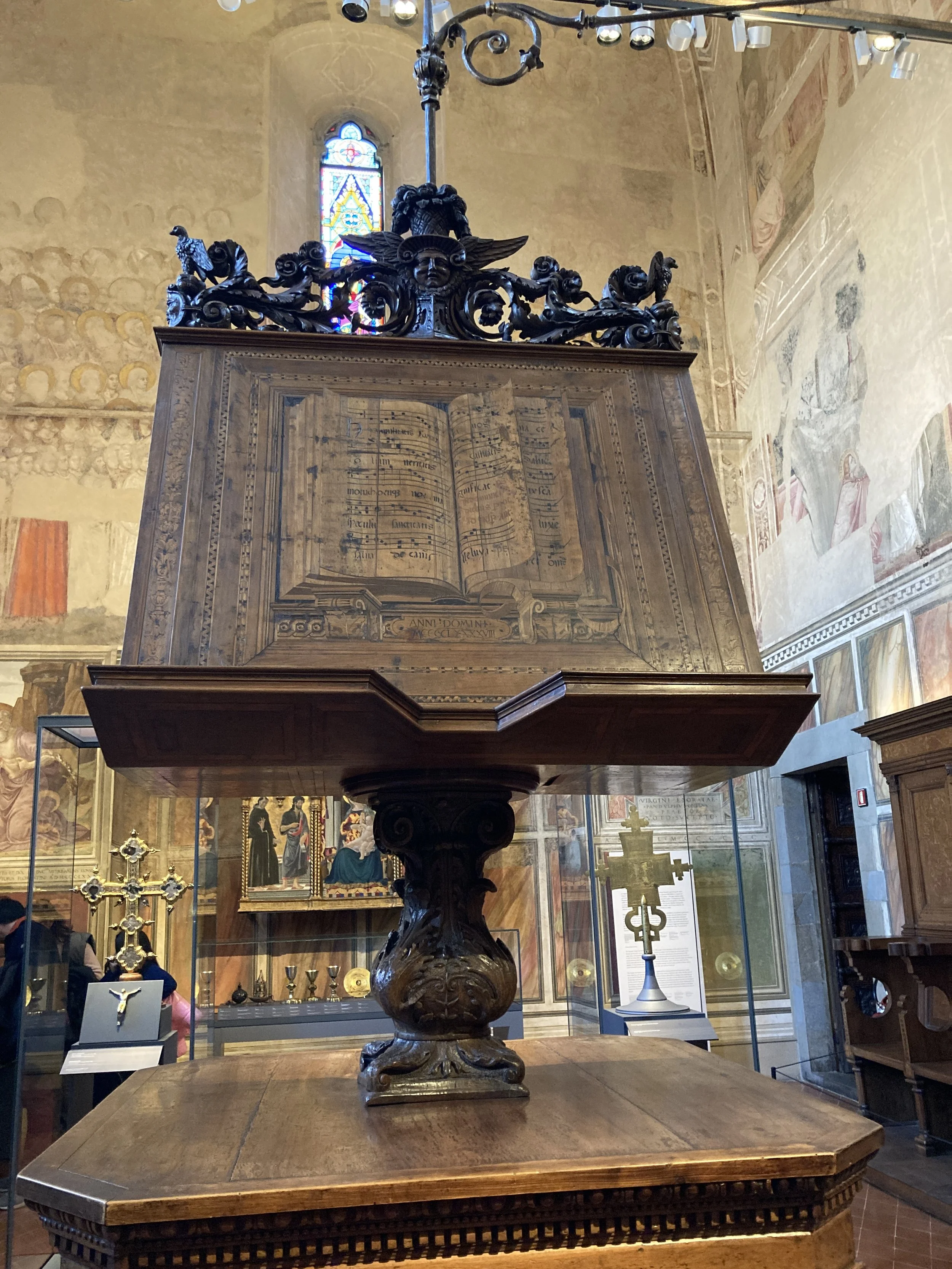
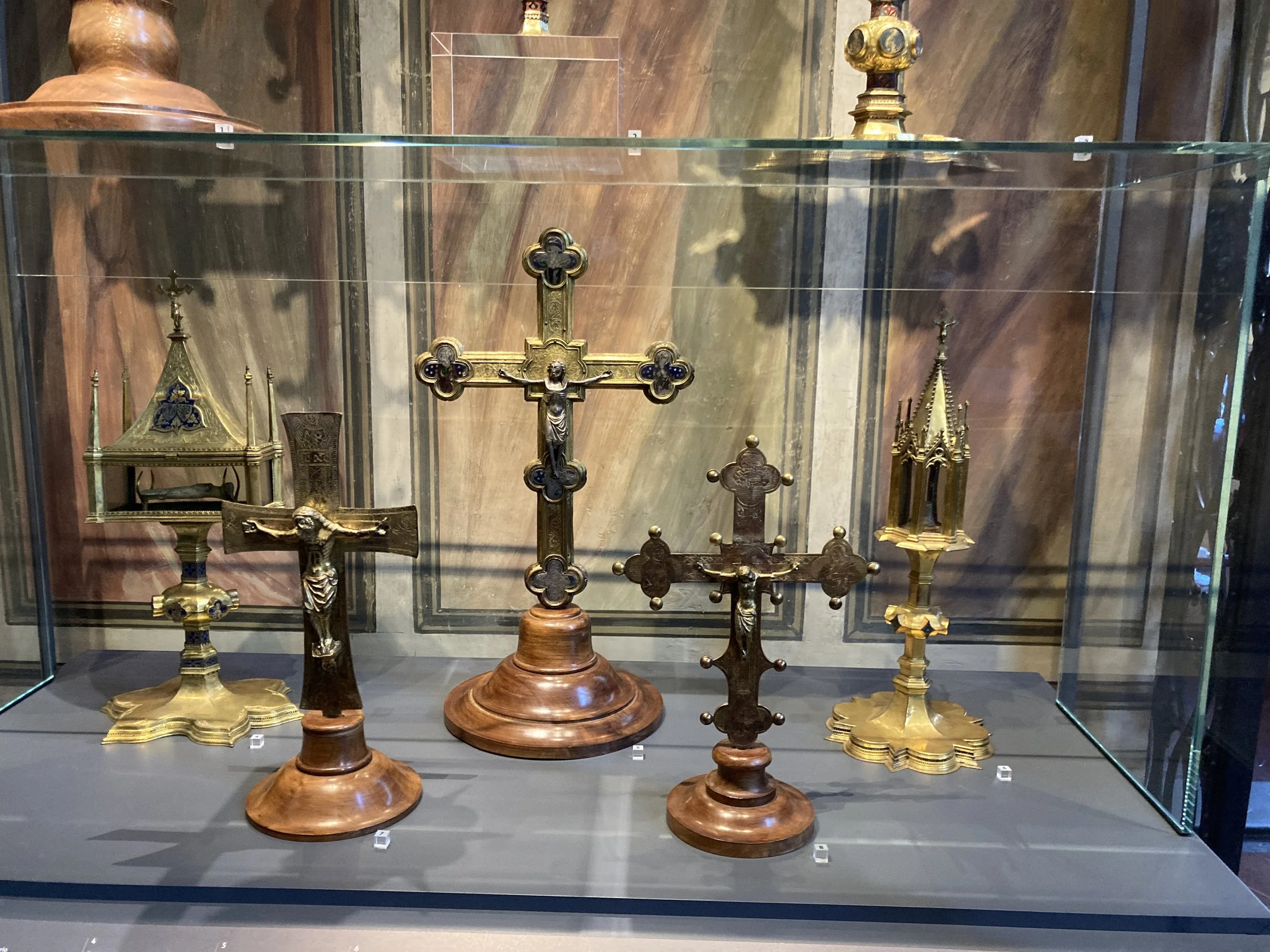
A small chapel, with frescoes by Giotto, was where prisoners would be given last rites prior to their execution. Today, it houses religious artifacts including an intricate carved choir lectern.

IMG_6777.JPG
IMG_6781.JPG
IMG_6778.JPG
IMG_6790.JPG

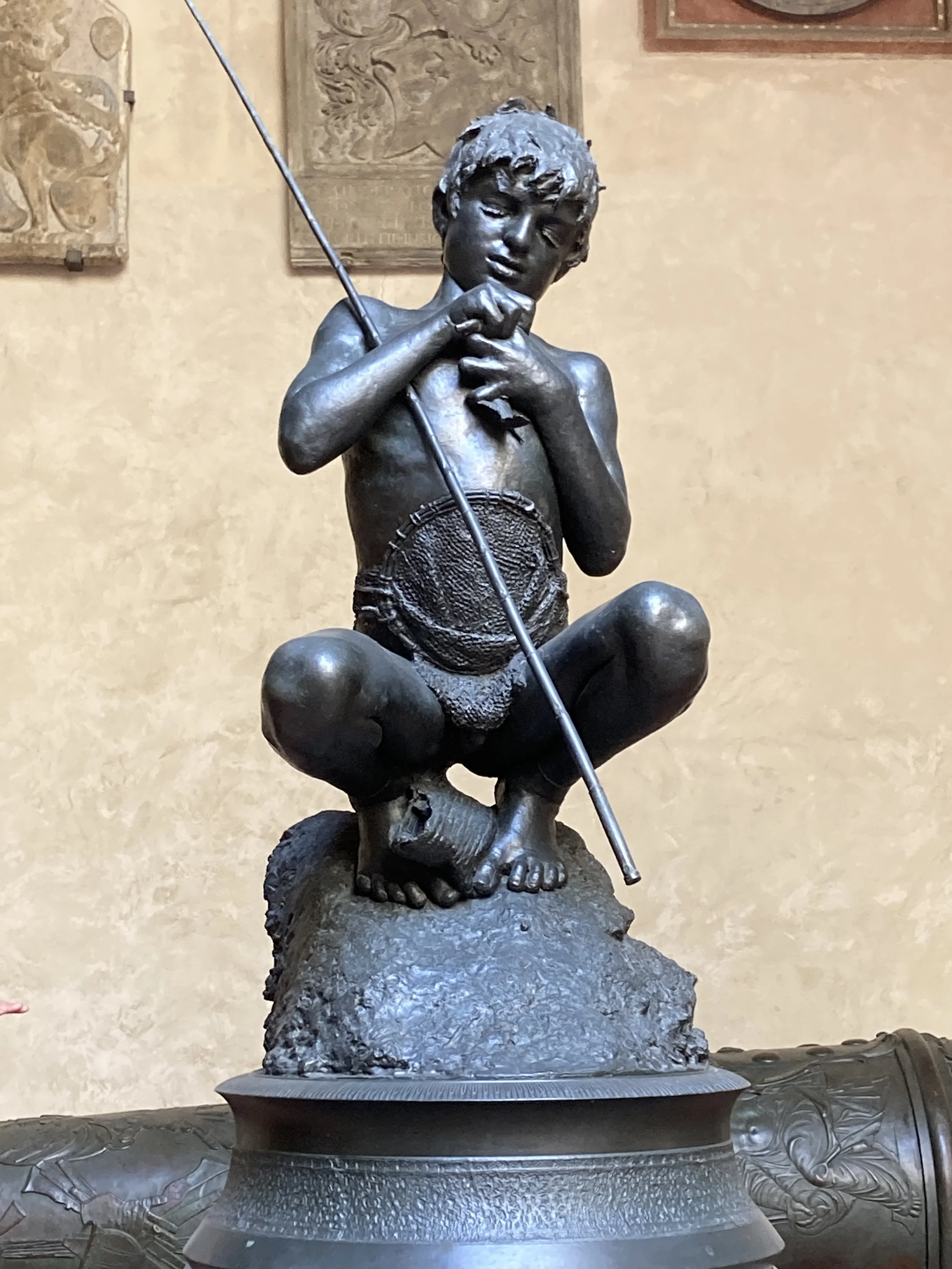
Il Pescatore (The Fisher Boy), Vincenzo Gemito 1877

The photos here are just a hint of what can be found in the Bargello.  So many visitors to Florence head to the Accademia to see the David and the Uffizi for the famous paintings, and both are wonderful.  But to miss the Bargello is a shame. 

The art there can be viewed close up – but don’t be like the tourists I saw reach beyond the rope to touch a marble statue!  The guard was right on that and after she scolded them she looked at me, shook her head, and said “every day there is at least one like that”.  I would hate to see all these wonderful works of art get hidden behind glass enclosures because of visitors who don’t keep their hands to themselves. 

As they are displayed today, it is a joy to be able to walk around each piece, admiring the different angles and perspectives. I am headed back to Florence for a week’s stay at the end of October with a friend who is a first time visitor.  You can bet the Bargello is one of the places we will go.

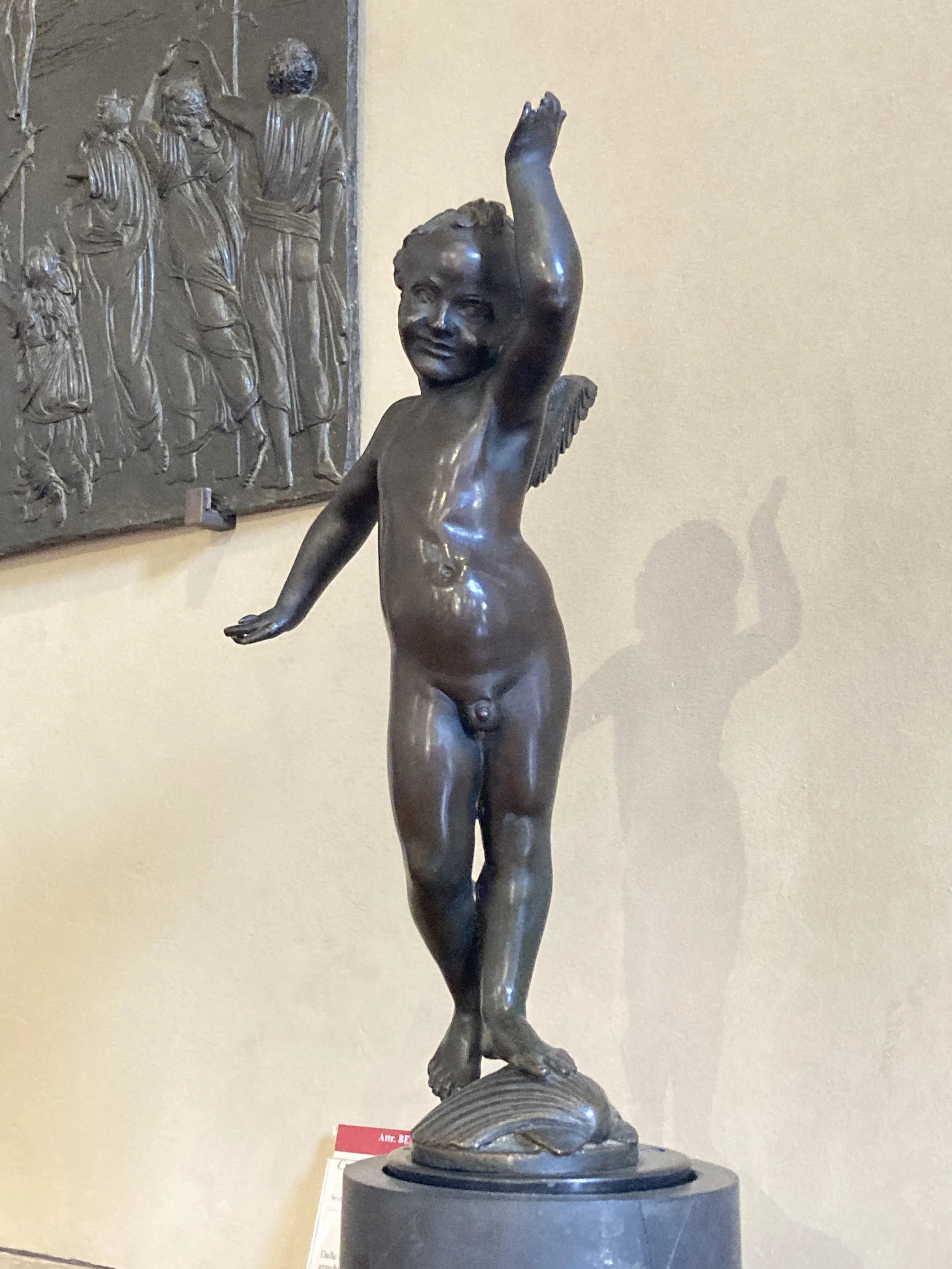
The Dancing Cherub, a more playful Donatello

October 06, 2025 /Joanne Bartram
museums florence, The Bargello, Florence Bargello, Sculpture Florence, Firenze
#florence, #italytravel, #medievalitaly, Florence, Italian Art, Italian art architecture, Italy, Italy travel, Museums Italy, Tuscany

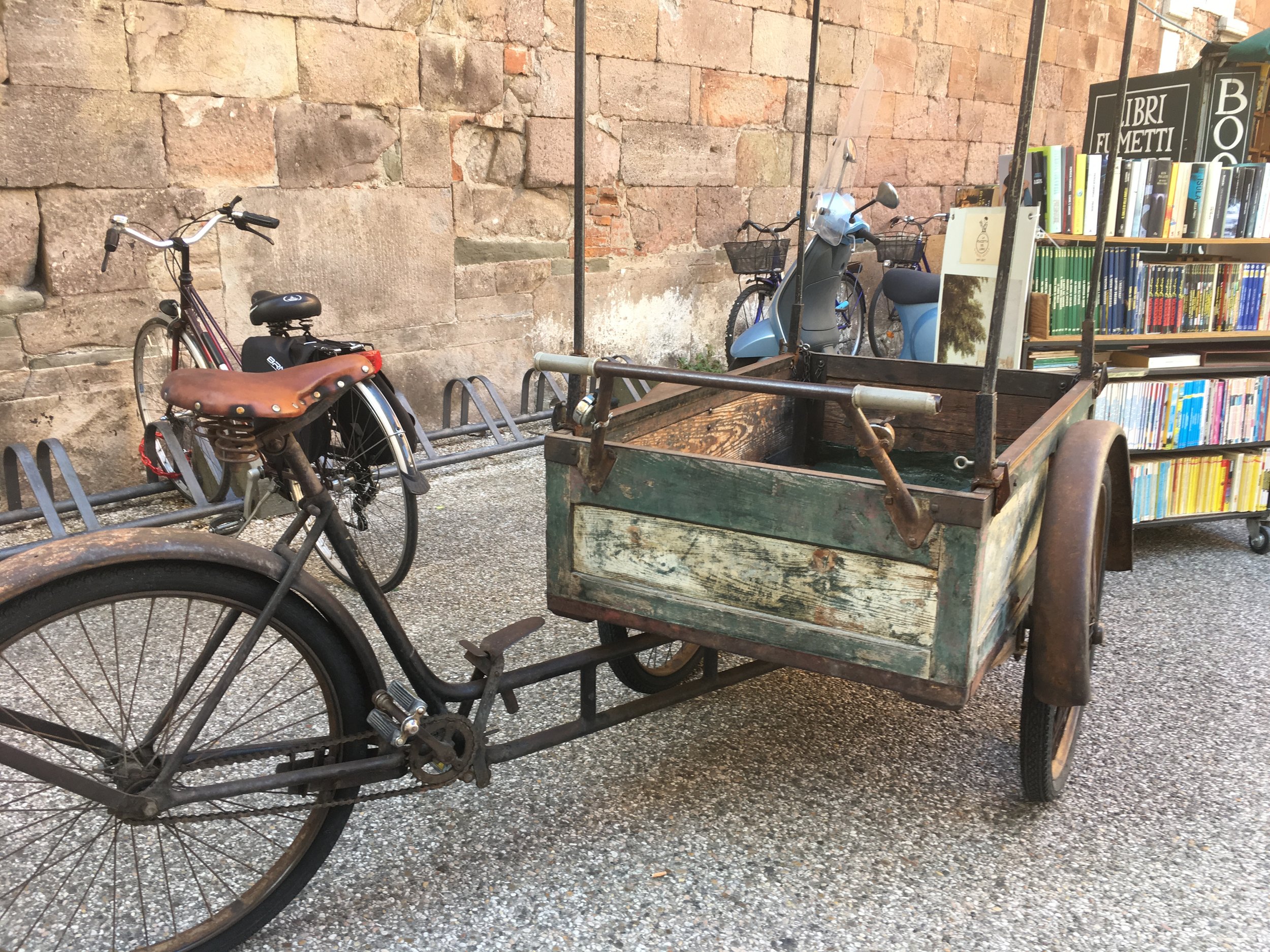
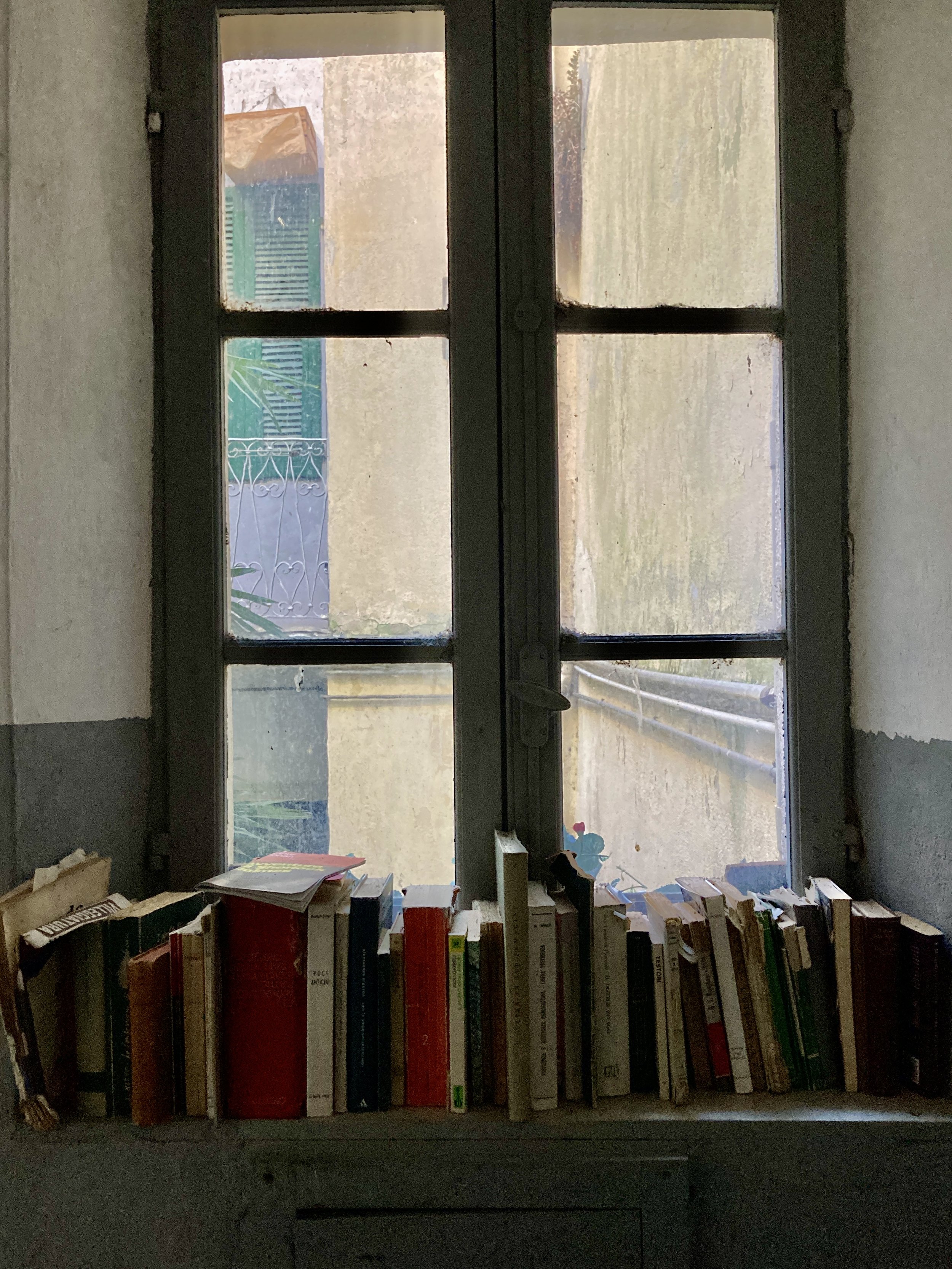
A booksellers stall, Lucca

Winter Reading, Italian Stories

February 05, 2024 by Joanne Bartram in #florence, Florence, History, Italian Art, Italian art architecture

January has finally dragged itself into February on its slow crawl out of winter.  Is it just me or did last month seem unusually dreary?  And long.  I spent all of January in New Mexico so I can’t speak for the weather anywhere else, but in New Mexico it was cloudy, gray, and drizzly for days on end which is quite unusual here in the land of sunshine.  Two light snowfalls were pretty but cold.   

Pontremoli, a city where books are everywhere.

Dreary winter days are perfect for sitting with a cup of coffee and reading a good book.  When I am away from Italy, as I have been for the last 6 weeks or so, I find myself drawn to books set in Italy. There are endless choices – memoirs, travel diaries, historical pieces. 

There are Donna Leon mysteries and Camilleri’s Inspector Montalbano.  Who hasn’t fallen under the spell of A Room With a View or Enchanted April? More recent books have been best sellers - Under the Tuscan Sun and My Brilliant Friend (though I admit I struggled a bit through that one) - come to mind.  Perhaps Umberto Eco’s Name of the Rose or Giovanni Boccaccio’s Decameron (which I found my grandson reading recently) is on your reading list.  The list could go on and on.
 I am currently enjoying two series that may not be as universally known. Both are by contemporary authors.  The two series are quite different, but if you love Italy, and especially Tuscany, then I recommend them as perfect for winter reading.

Don’t you love it when a novel takes you to a familiar location in Tuscany ?

The first is a series of historical novels by the art historian Laura Morelli.  Her well-researched novels intertwine Italian art, craftsmanship, long-ago artists, and history in compelling reads.  Through her writing I have sat by Da Vinci’s side as he painted, walked with Lisa Gheradini through Florence, hid vanities from Savonarola, and worked alongside a gondola craftsman in Venice.  Parts of her novels are set in 15th and 16th century Italy, but the stories often move between time periods - from Renaissance era Italy to World War II when Italian masterpieces were being hidden from, or acquired by, the Nazis. If not familiar with her books, The Stolen Lady, which revolves around the painting of the Mona Lisa and life in Florence during that time period, and how the painting was hidden during WWII, is a great place to start.   If Venice calls to you, then The Gondola Maker will transport you to the 16th century workshop of a family of gondola craftsman.   

A very different series is written by Camilla Trinchieri.  Set in the present day, her 3 novels are what the Italians call gialli.  The word giallo literally means “yellow” (the plural is gialli), so called for the yellow covers that were traditionally used for Italian mysteries. 

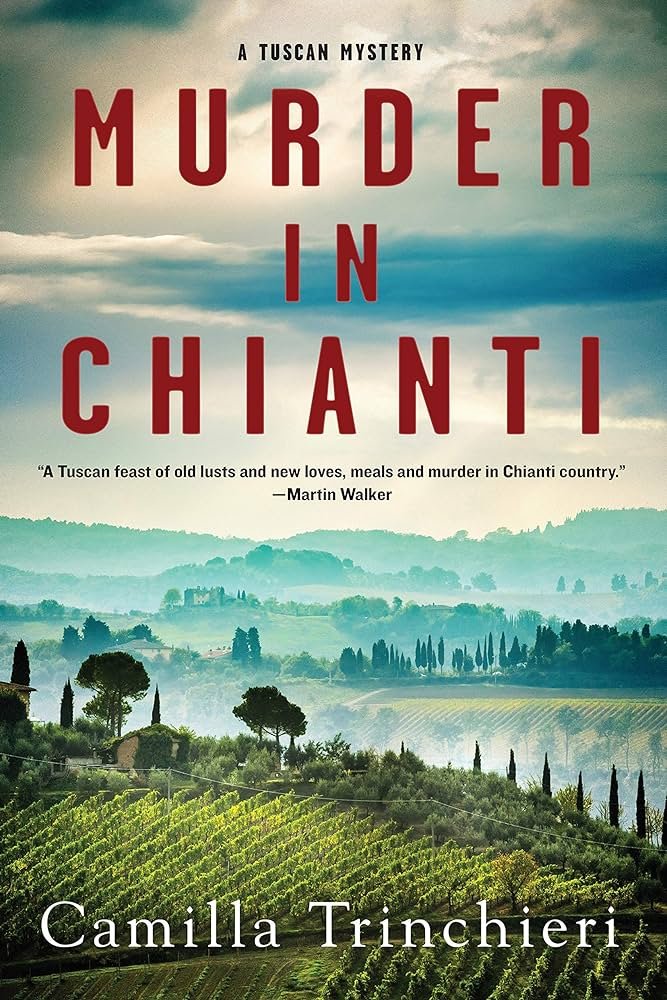
Trinchieri’s protagonist is a very likable retired American cop, widowed and living in the Chianti region.  There is an appealing Italian maresciallo (a type of local policeman) stationed in Greve, his endearing young second in command, and a host of interesting Italian characters.   Reading these novels are like taking a vacation in Chianti, one where you recognize the towns immediately and feel right at home.   Best to read these in order, starting with Murder in Chianti.   A 4th book in the series is due out this year, so I am rereading the series this winter in preparation.

What’s next on my reading list?   I have just started The Sixteen Pleasures, set in Florence after the big flood of 1966. So far I’ve learned quite a bit about the restoration of water damaged books and an American book conservator volunteering in a convent library. A scandal is just unfolding - a book of erotic drawings hidden away in the convent’s library. I wonder where that will lead?

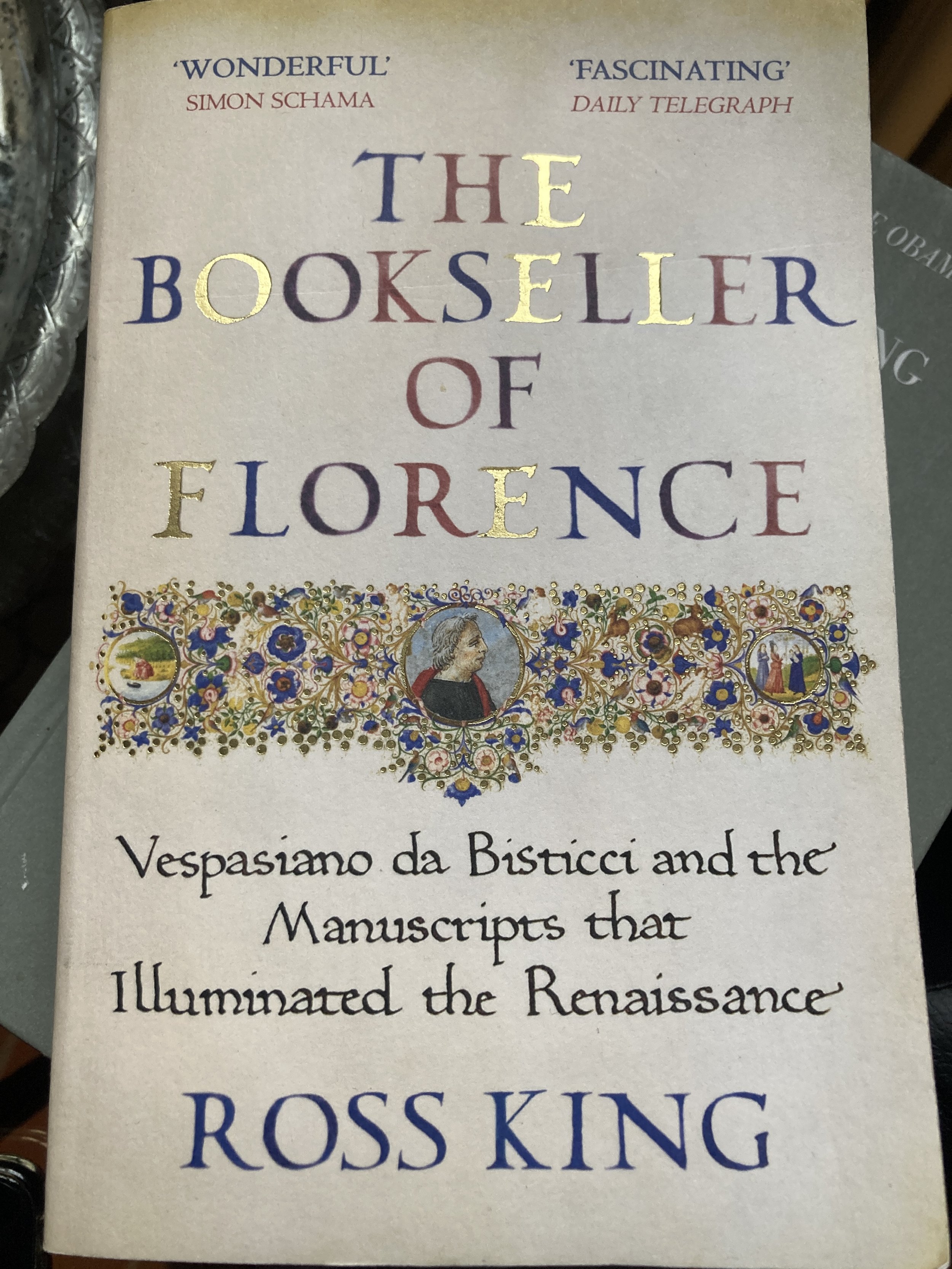
I head back to Italy soon and there will still be a month of winter ahead. I am looking forward to starting the Bookseller of Florence by Ross King.  It is sitting by the reading chair in my Lucca apartment just waiting for me.

Do you have favorite books set in Italy?   Please share your favorites on the Two Parts Italy Facebook page.   Happy winter reading!


February 05, 2024 /Joanne Bartram
set in italy, books set in italy, novels set in italy
#florence, Florence, History, Italian Art, Italian art architecture

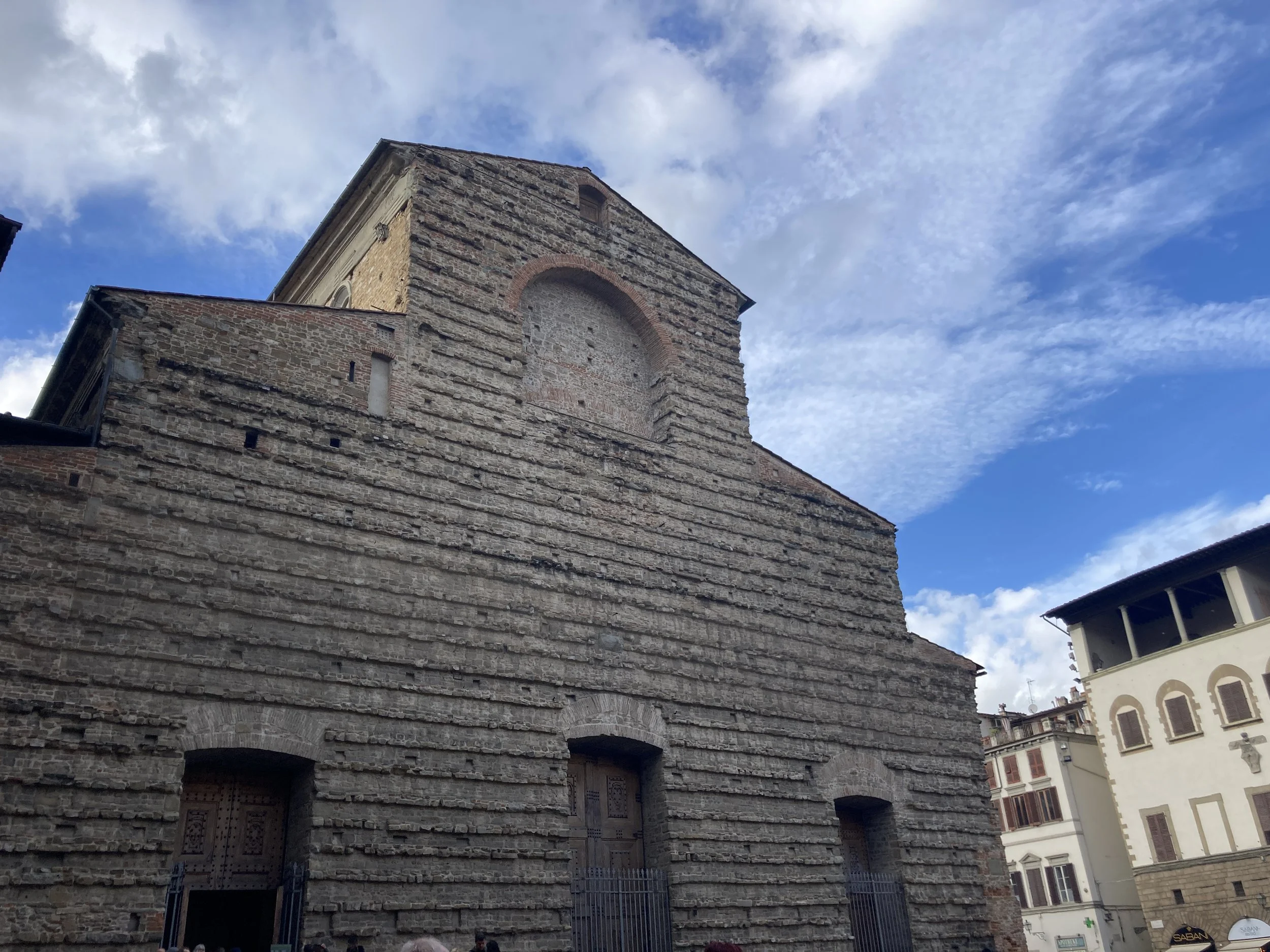
Basilica of San Lorenzo, Florence.

The Basilica of San Lorenzo in Florence

January 29, 2024 by Joanne Bartram in #florence, #italytravel, #medievalitaly, Churches Italy, Florence, Italian art architecture, Italian culture, Italy travel, Tuscany

It’s hard to have a favorite church in Florence.  It may even be wrong to choose a favorite considering the number of historic and significant churches in the city.  The Duomo, officially the Church of Santa Maria del Fiore, with its magnificent façade and campanile, is famous for good reason.  Consider Santa Maria Novella, Santa Croce, Santissima Annunziata – and those are just the basilicas inside the historic center.  Add in smaller churches, chapels, baptisteries, oratorios, bell towers and wonderful churches outside the center and, well, it would take years to explore them all.  How could anyone choose a favorite?

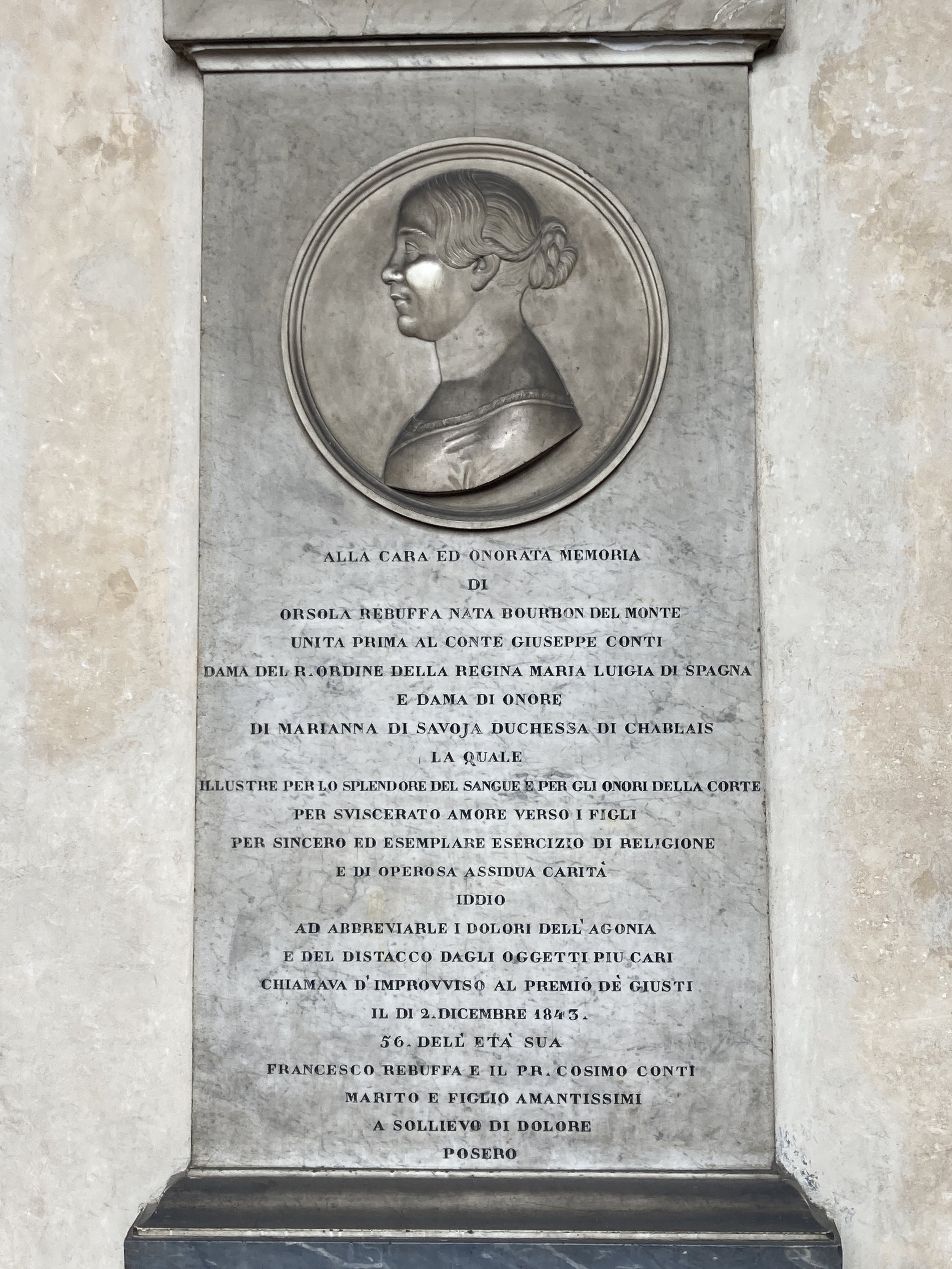
Tomb of Berta Moltke Hwitfeldt, Corbelli Chapel, Basilica of San Lorenzo

 And yet, I do have a couple of favorites.   One is the Basilica of San Lorenzo, whose 4th century origins make it the oldest church in Florence.  Redesigned by Brunelleschi in the 15th century, and completed after his death, it was the parish church of the Medici family, many of whom are buried there.

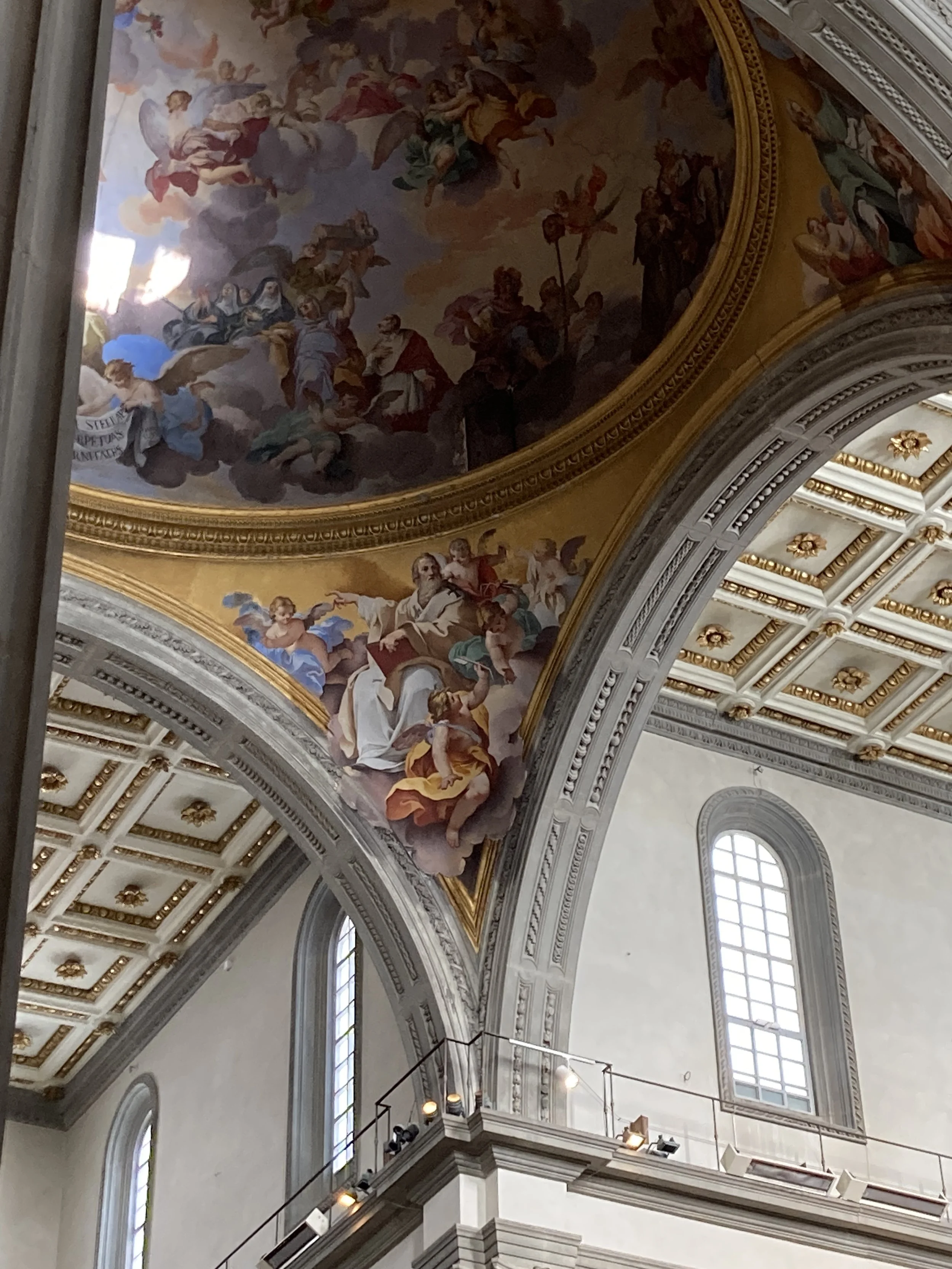
Detail, Basilica of San Lorenzo, Florence

 San Lorenzo is more than just a church – the complex also has a museum, the Laurentian Library, and the Medici Chapels.  Underneath the Medici chapels is a recently discovered hidden room with rough sketches by Michelangelo covering the walls. Right now it’s the hottest attraction in town but it was not yet opened during my November stay in Florence. The library is not always open, and a special ticket is needed for the Medici Chapel.  The entire complex is a bit too much for one visit.

On my recent off-season stay in Florence, I stopped by on the spur of the moment and purchased a ticket which included only the cloister and church, both of which were uncrowded and just right for a short visit.

What is it that makes the San Lorenzo Basilica one of my favorites?   It starts with the rough stone exterior.  Unlike the polished marble façade of the Duomo, the San Lorenzo stands unadorned and underdressed.  It was meant to have a white marble façade, designed by Michelangelo at the request of the Medici Pope Leo X.   But the pope died, the money dried up, and the façade was never installed. 

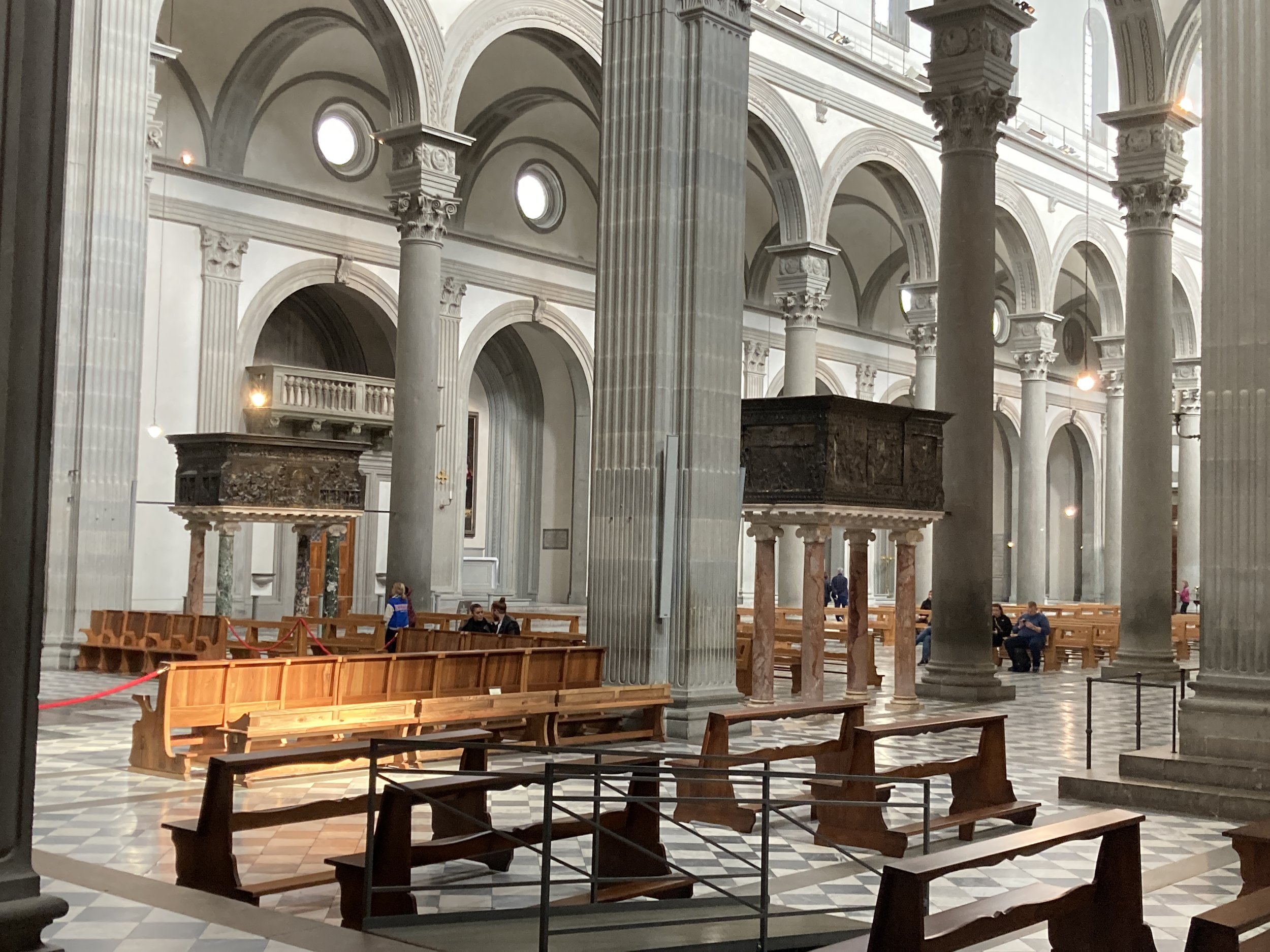
Inside, the basilica feels quiet and peaceful with its simple geometric floor anchoring graceful arches and columns in gray Pietra Serena (Serene Stone).  The high, round, windows let in light through their clear glass.  Even the ceiling, with its gold edged squares and central medallions (look for the Medici coat of arms) feels calming. Unlike more ornate churches (such as my other favorite, the very Baroque Santissima Annunziata), San Lorenzo has low contrast colors and finishes. This allows it to feel open and airy. The Basilica is a soothing space that supports quiet contemplation and an uncluttered mind. 

Another reason to love this church is the way in which it showcases the work of Donatello.  His two ornately carved pulpits, raised high atop marble columns in the center of the church, are considered his final masterpieces.

Donatello’s pulpits , Basilica of San Lorenzo

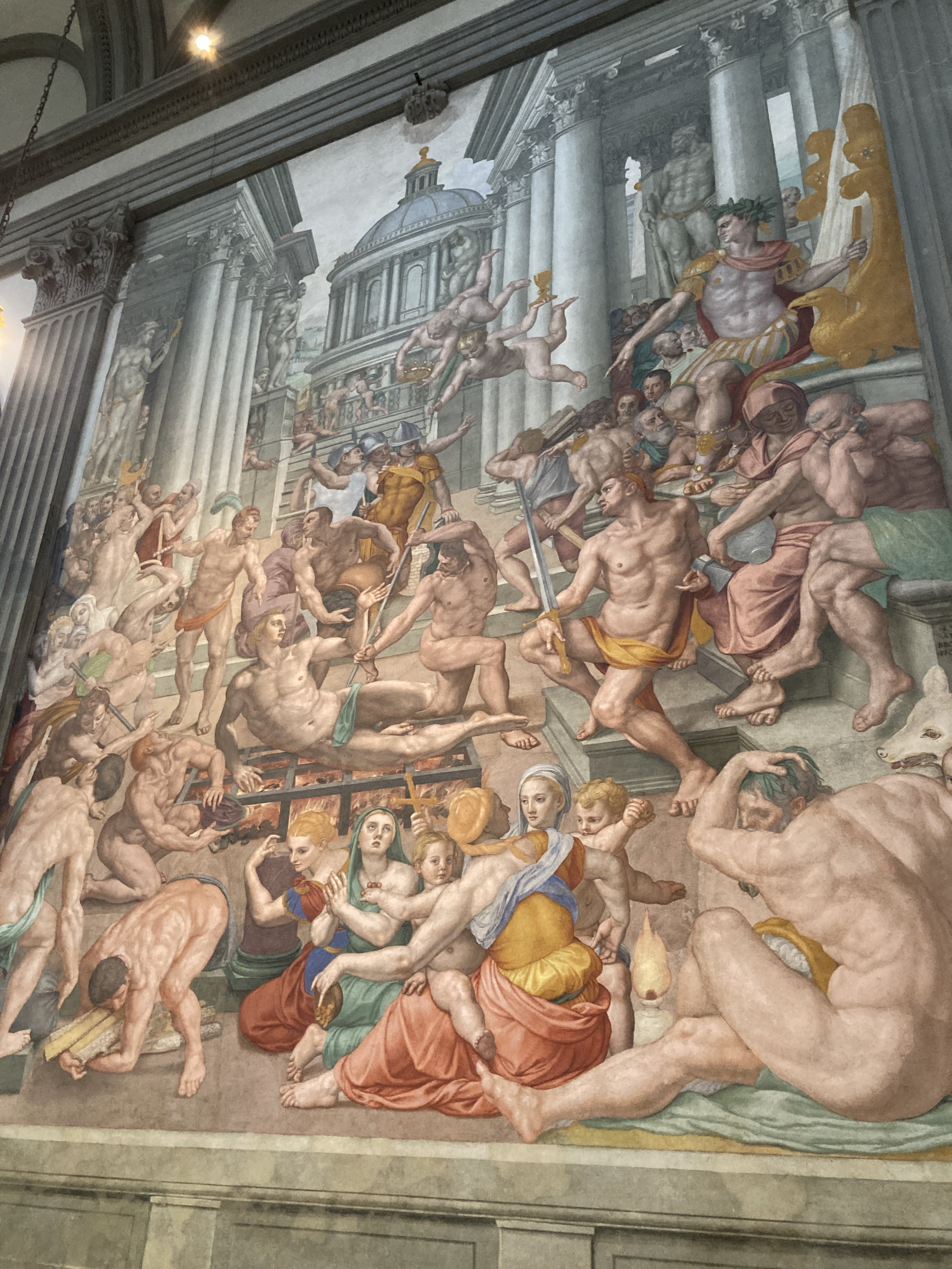
The church holds many remarkable pieces of art, but not so many as to be overwhelming.  There are sculptures, including graceful tomb markers, and some significant paintings, many of which sit in small side chapels.

Bronzino’s The Martyrdom of St. Lawrence

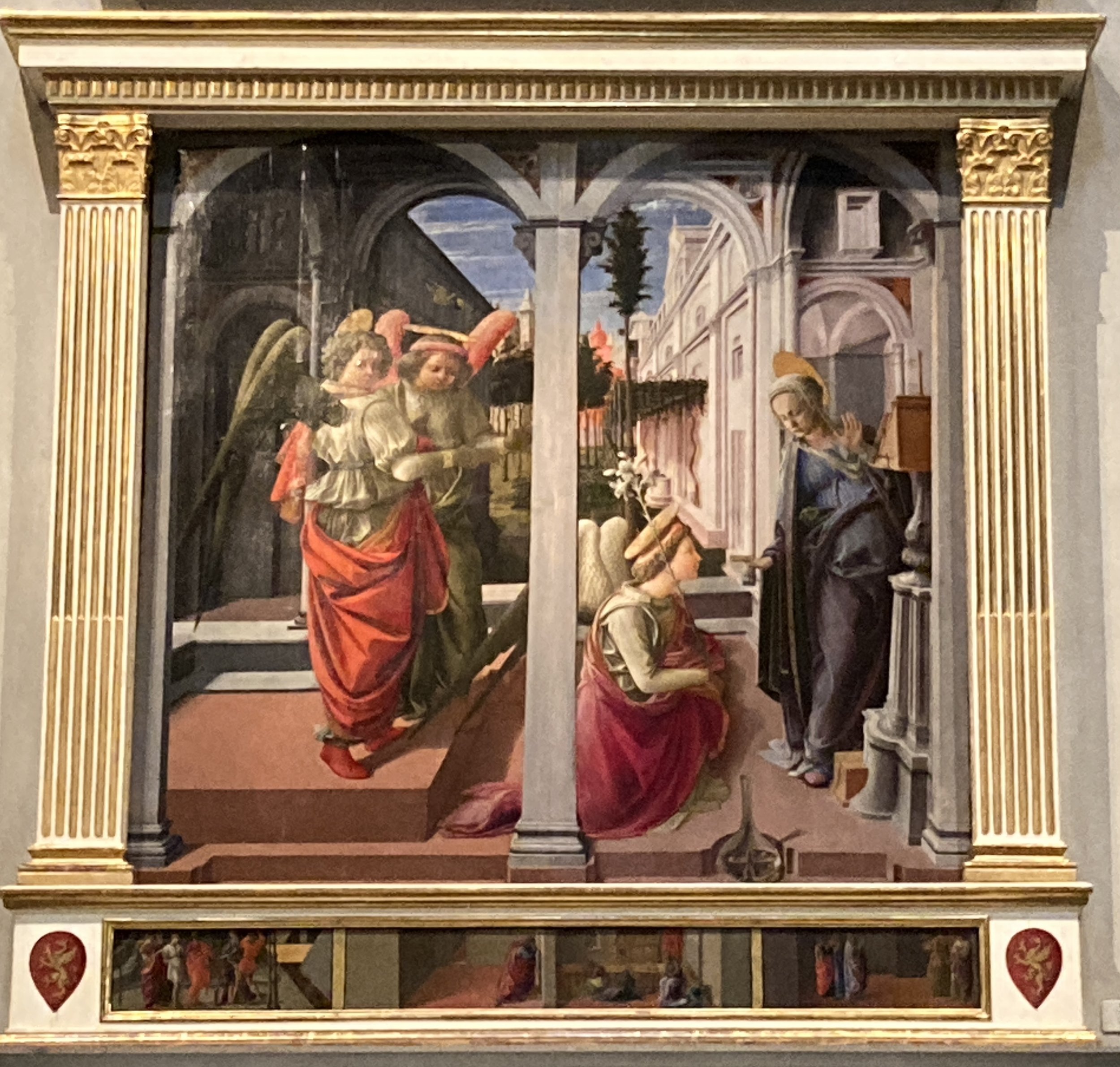
Perhaps the two most well-known paintings are an Annunciation by Filippo Lippi (below, right) and the Betrothal of the Virgin by Rosso Fiorentino (below, left).  Two very different styles, both captivating.   

BDE79584-8F80-47E8-81DD-5A0C9B04510C_1_201_a.jpeg
2A67D836-A358-4A1A-BD0B-42BDDE455A1A_1_201_a.jpeg

Old Sacristy, Basilica of San Lorenzo

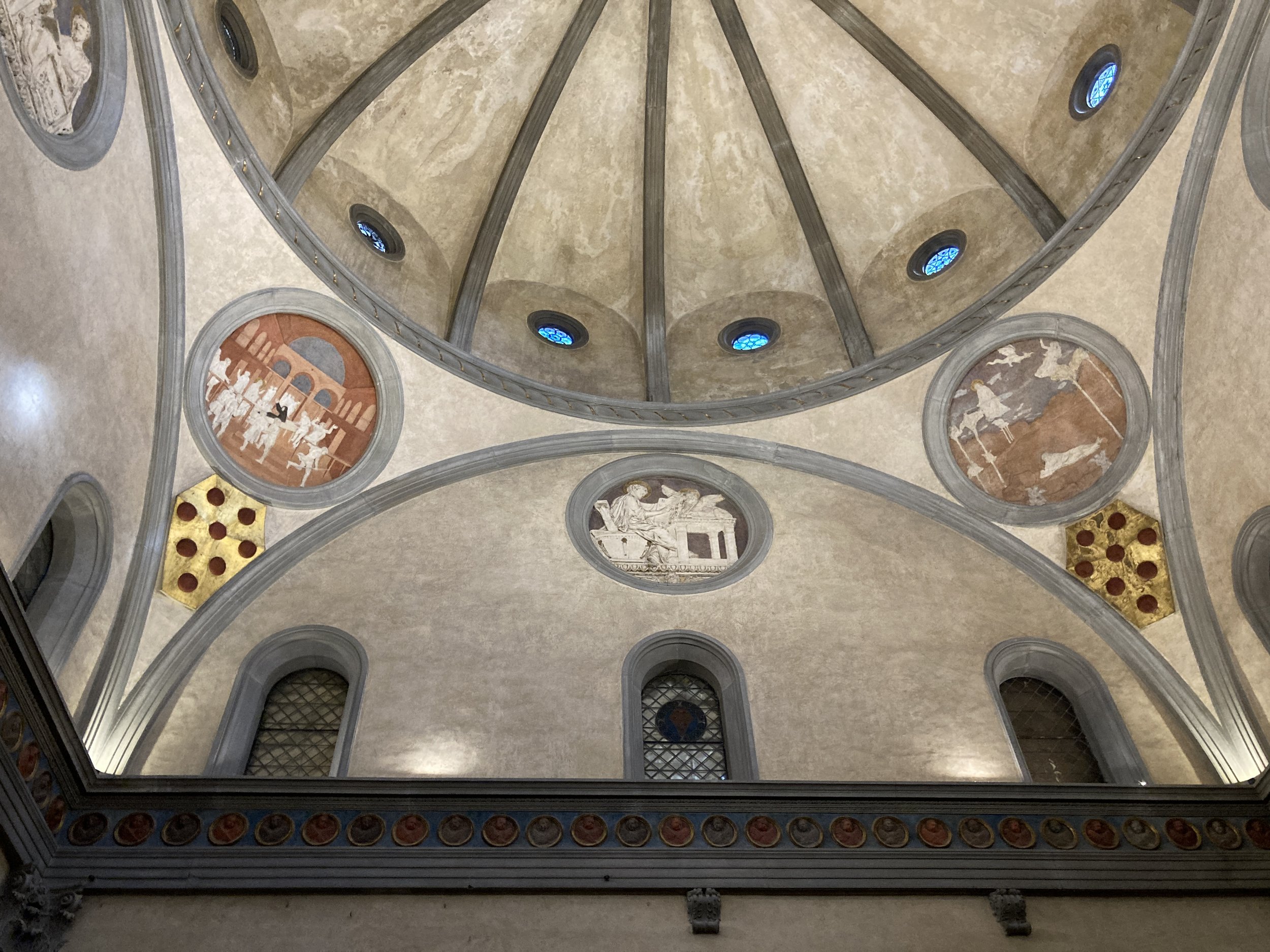
The biggest reason for my love of this church is the small Sagrestia Vecchia (Old Sacristy).  Designed by Brunelleschi, it was the only portion of the church completed before his death.  His perfectly proportioned design incorporates a square room with a ribbed dome on top, several graceful arches, and the same gray and white colors of the main church. 

 Opposite the entry into the sacristy is a small marble altar, its design in white marble is in keeping with the simplicity of the rest of Brunelleschi’s design.  Above the altar, in a smaller dome, is a remarkable blue and gold night sky.  There has been some debate about the date represented by the constellations pictured.  Initially it was thought to represent the day the altar was consecrated in July of 1422.  Newer theories give the date as July 6, 1439, the date of the accord uniting the Eastern and Western branches of Christianity.  Whichever date is correct, the constellations unite the sacristy with the heavens.

The constellations above the altar in the Old Sacristy, Basilica of San Lorenzo

 In the center of the sacristy is the tomb of a Giovanni di Bicci de’Medici and his wife Piccarda Bueri.  It was Giovanni who founded the Medici bank and set the stage for the Medici era in Florence.  This seems like a fitting place for him to rest.
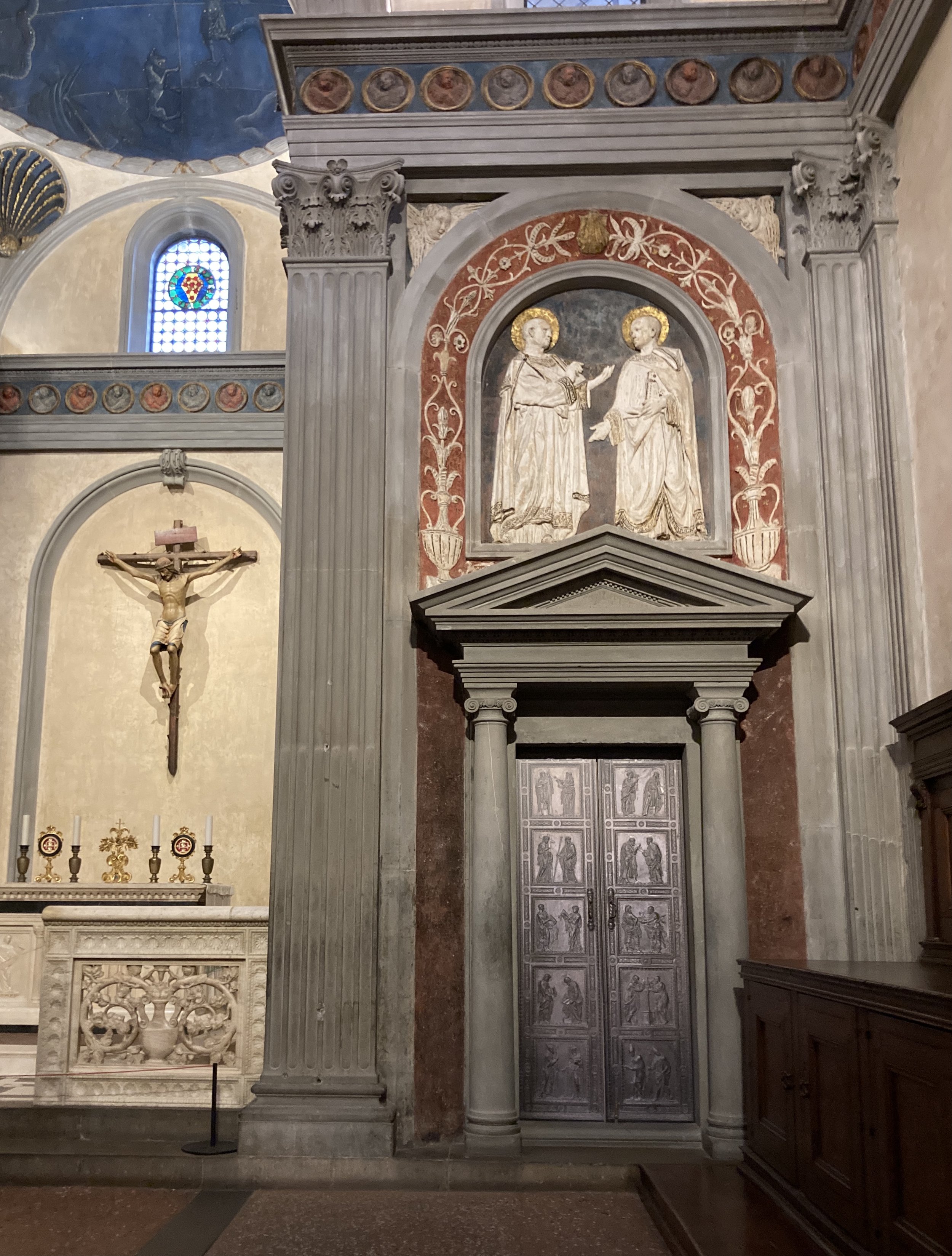
Not part of Brunelleschi’s original design, several elements were later added by Donatello at the request of the Medicis.  These include a series of tondi (round decorations) which lie below the dome.  The 4 in the corners represent the life of Saint John the Evangelist.  
 

Detail, Donatello’s bronze doors, Old Sacristy

Donatello also designed the two bronze doors that flank the altar.

Apostles to the left, martyrs on the right.

The large reliefs above the doors, with St. Cosmos and St. Damian on the right and St. Stephen and St. Lawrence on the left, are also the work of Donatello.

(Note: There is also a New Sacristy but it is not accessible from inside the church, only from the Medici Chapels)


One of the relief decorations by Donatello above the bronze doors in the Old Sacristy.


The Basilica of San Lorenzo is not the largest or most ornate church in Florence.  It wears no colorful marble facade. But it is stunning in its simplicity and is of great historical and architectual importance. When visiting, don’t miss the literature with a QR code which links to an audio guide. The audio descriptions greatly enhanced any visit.

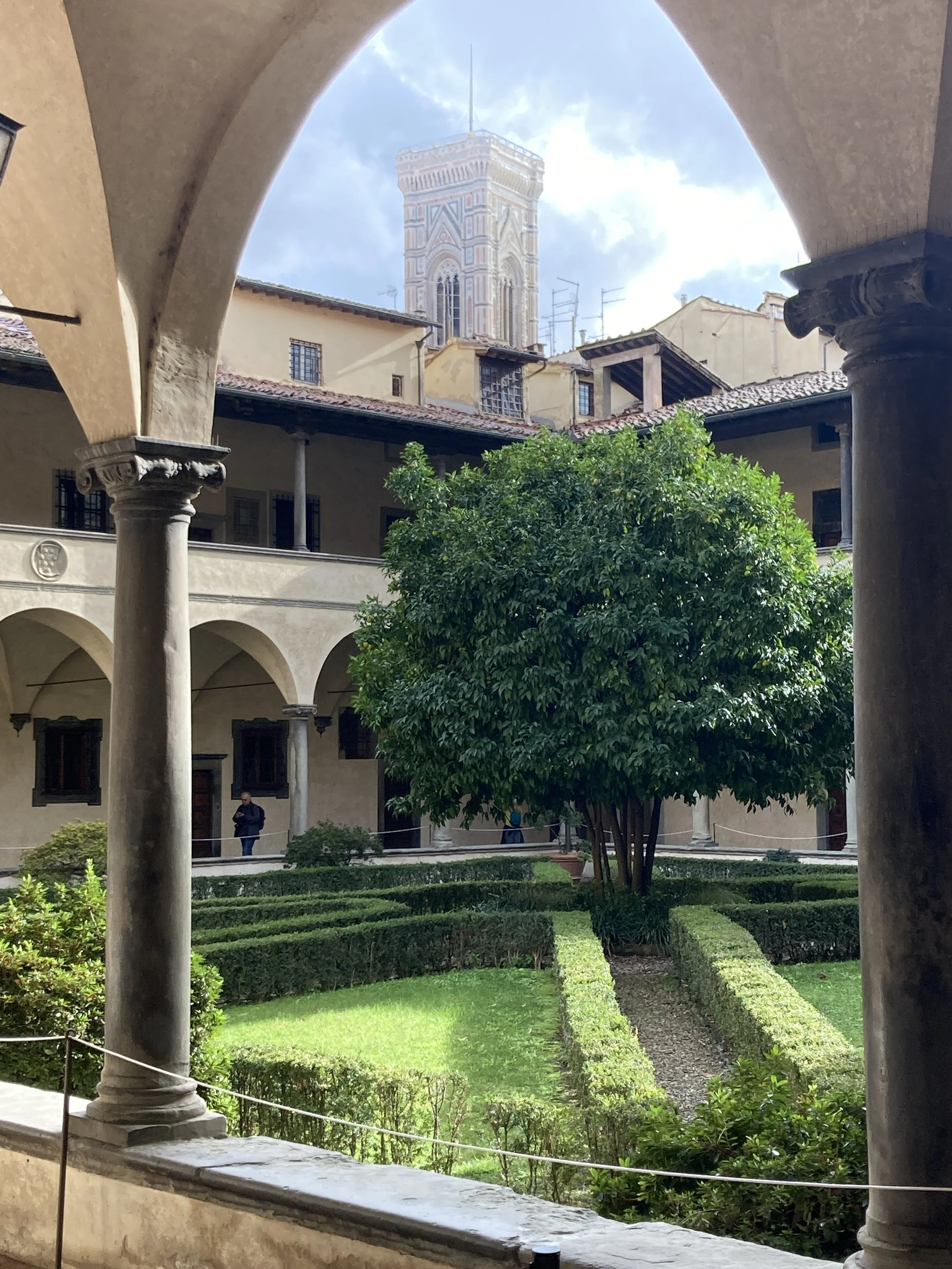
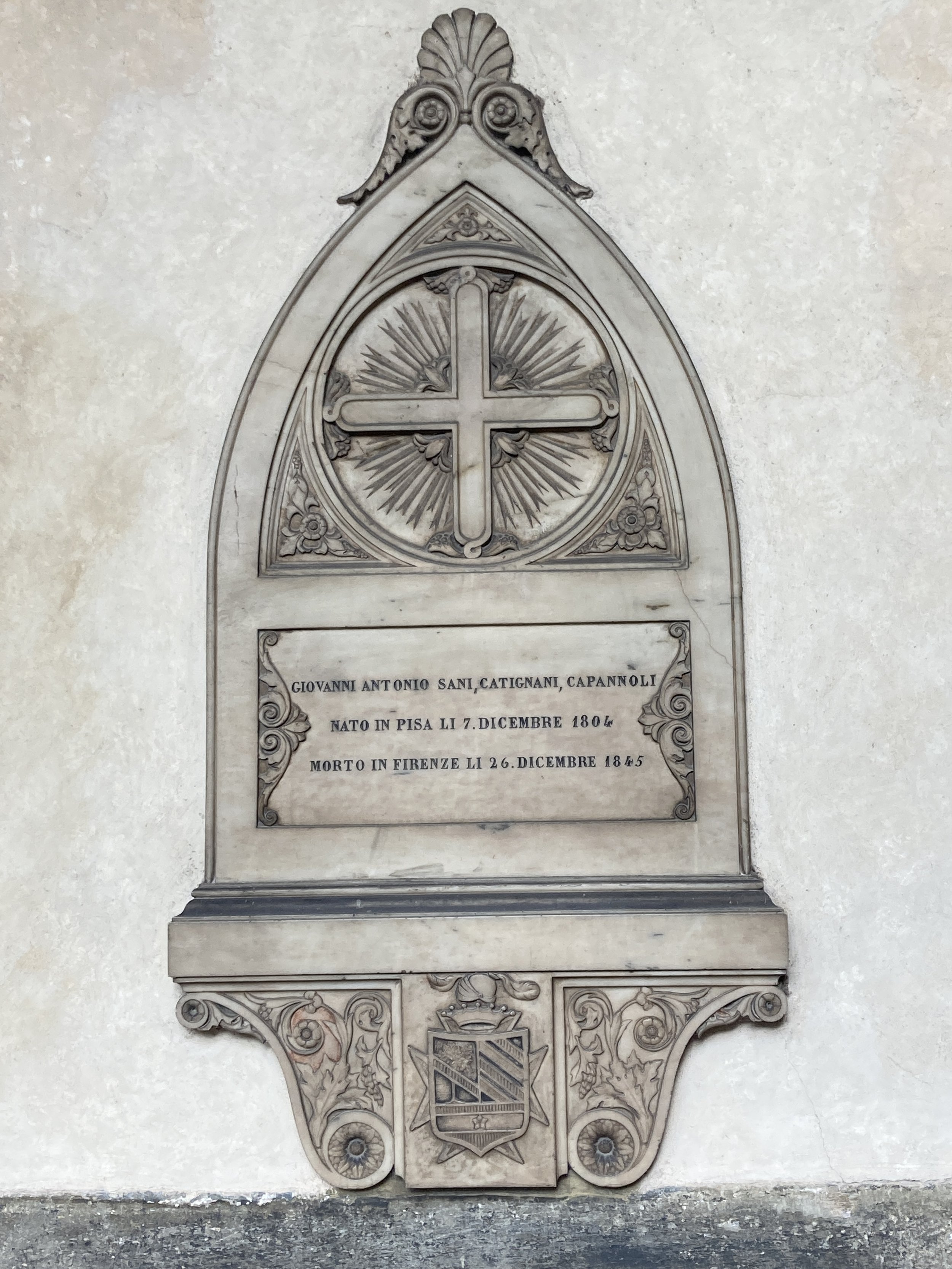
Entry and Exit to the church is through the cloisters.  This green space, surrounded by a two-story loggia, is a destination all of its own. The lower floor of the loggia surrounds a neatly kept space with low hedges and a big central tree.  Under the arches is a walkway with walls filled with memorials to long ago Florentines.  It’s a moving space embracing both the quiet of the church and views out into the “real world” of Florence.  You can almost hear the rustling robes of those long ago monks as they walk through the cloister.

Cloister, Basilica of San Lorenzo

748FC455-2804-4D11-A170-32C8A4F9BDD6.jpeg
5343E7A4-1C72-41FD-9E54-5149601E7ADD.jpeg
81959226-65B3-448A-8D77-A556BC6DAFC3.jpeg

 Hungry afterwards?  Just outside the front entry is a wonderful lunch spot – the Trattoria San Lorenzo.  A perfect way to end a visit to the church, enjoy a meal, and have time to organize memories of the basilica.

January 29, 2024 /Joanne Bartram
San Lorenzo, Basilica San Lorenzo, Florence Churches, Medici Church, Brunelleschi Florence, Donatello Florence
#florence, #italytravel, #medievalitaly, Churches Italy, Florence, Italian art architecture, Italian culture, Italy travel, Tuscany
  • Newer
  • Older

Powered by Squarespace