Two Parts Italy

Exploring Italy, travel, and living a flavorful life

  • Blog
  • About This Blog
  • Start Here
  • Recent Posts
  • Archives by Topic
  • Subscribe
  • Contact me

The Quadrilatero Romano : A Different Side of Torino

November 08, 2021 by Joanne Bartram in Italian art architecture, Italian culture, Italy, Italy travel

Like many Italian cities, Torino (Turin) has Roman roots. But that history is less obvious here than in places like Rome, Verona or even the small town of Lucca where I live. In Torino, you have to hunt a bit for its Roman beginnings.

The Quadrilatero Romano is where Torino began; where the Roman city stood. It stretches north and west from the Palazzo Madama. Today it is a characteristic and vibrant neighborhood. But look closely and the traces of Rome appear.

The most obvious Roman feature is the Porta Palatina, the only one of the Roman gates into the city which remains. It rises at the northern end of the Quadrilatero, where it has stood since the 1st century BC. The central portion has a stretch of arches, larger ones for vehicles and pedestrians at ground level with two levels of windows above . The archways are flanked at either end by a pair of polygonal towers. It’s easy to imagine Roman chariots passing under the large main arch. Nearby is a stretch of Roman wall, in the same brick. The Roman theater was also located in this area and other Roman ruins can be found nearby.

3B455D5F-D4C0-4D96-8BF0-4454C2C72A6E.jpeg

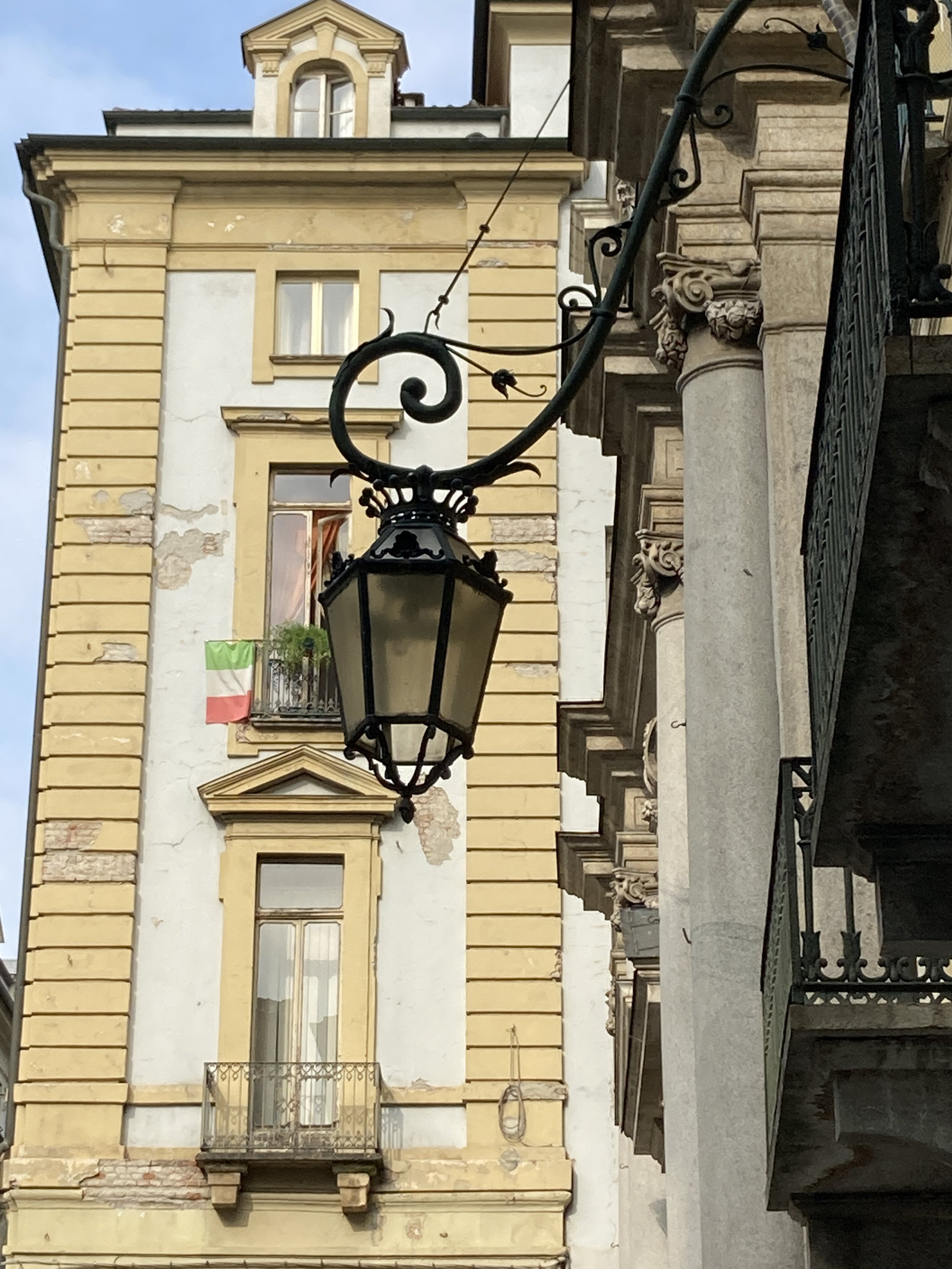
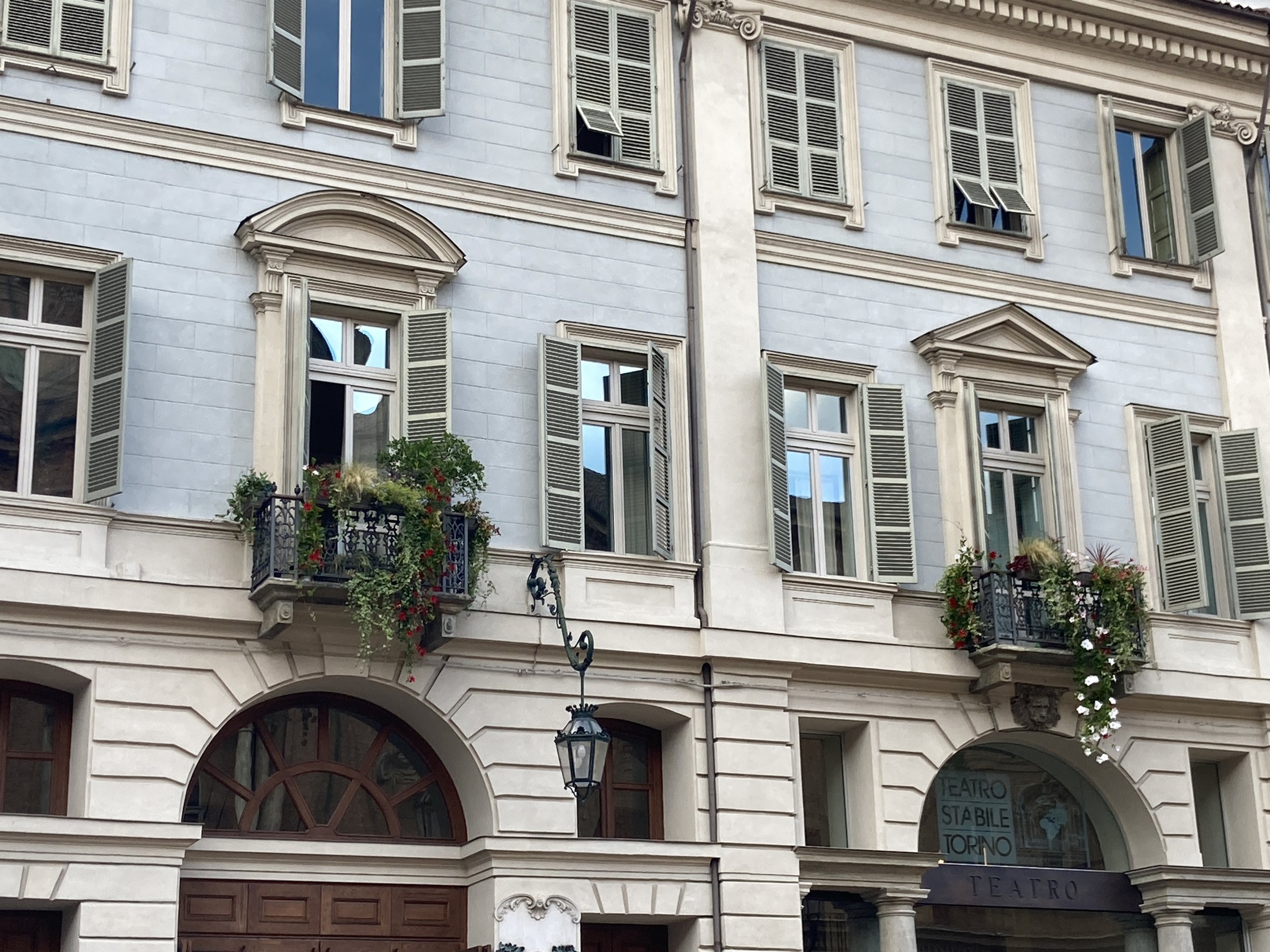
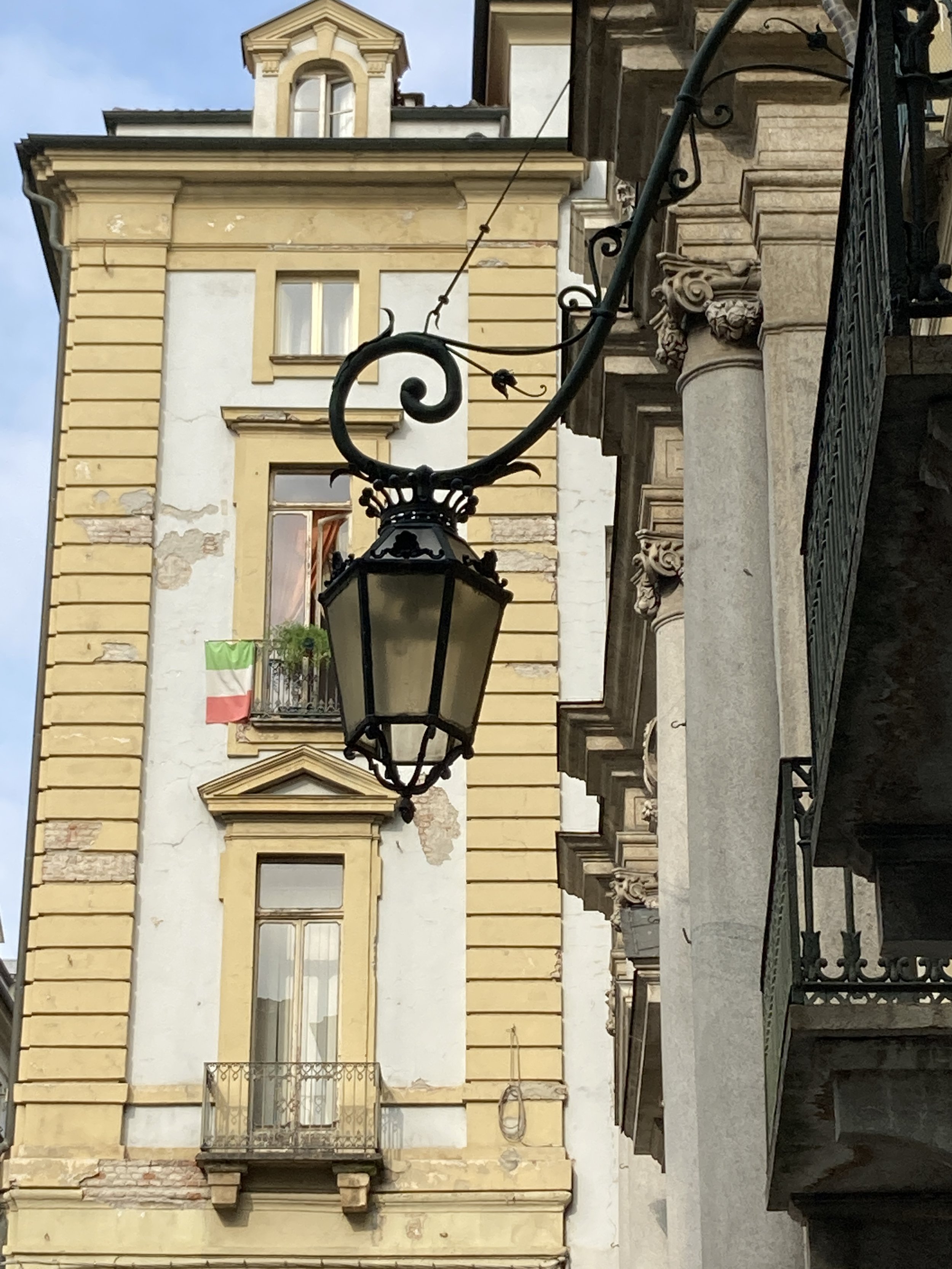
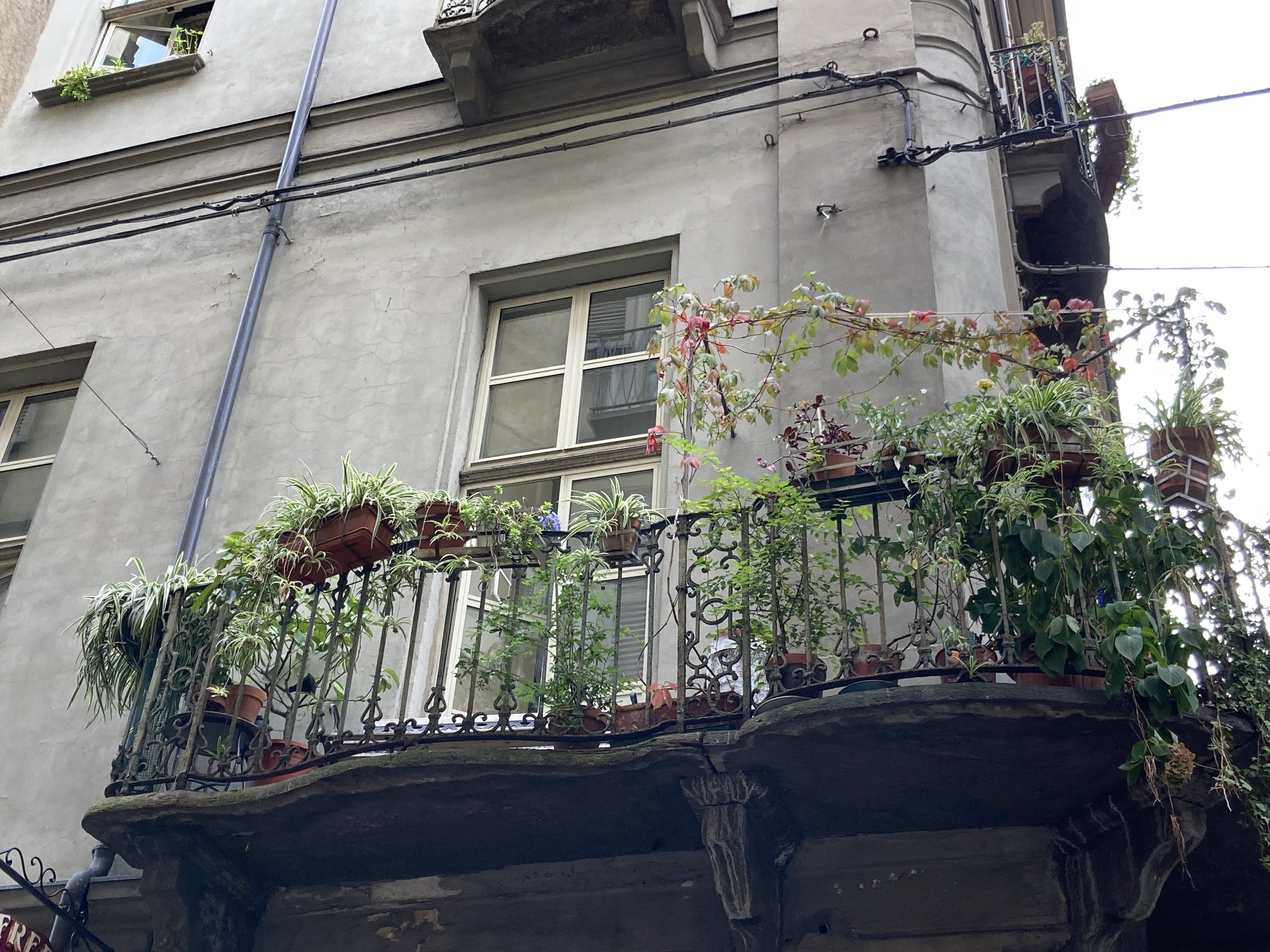
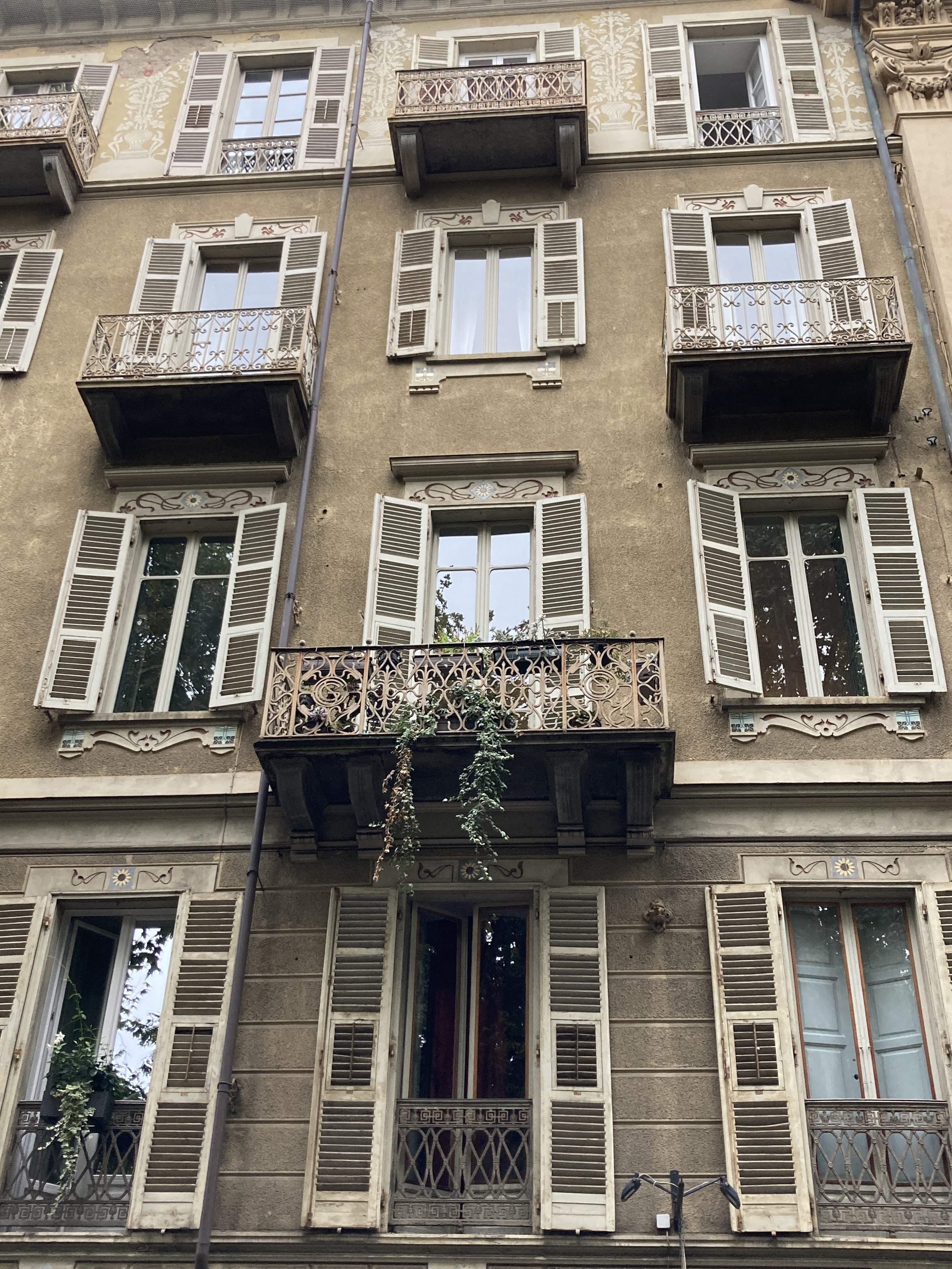
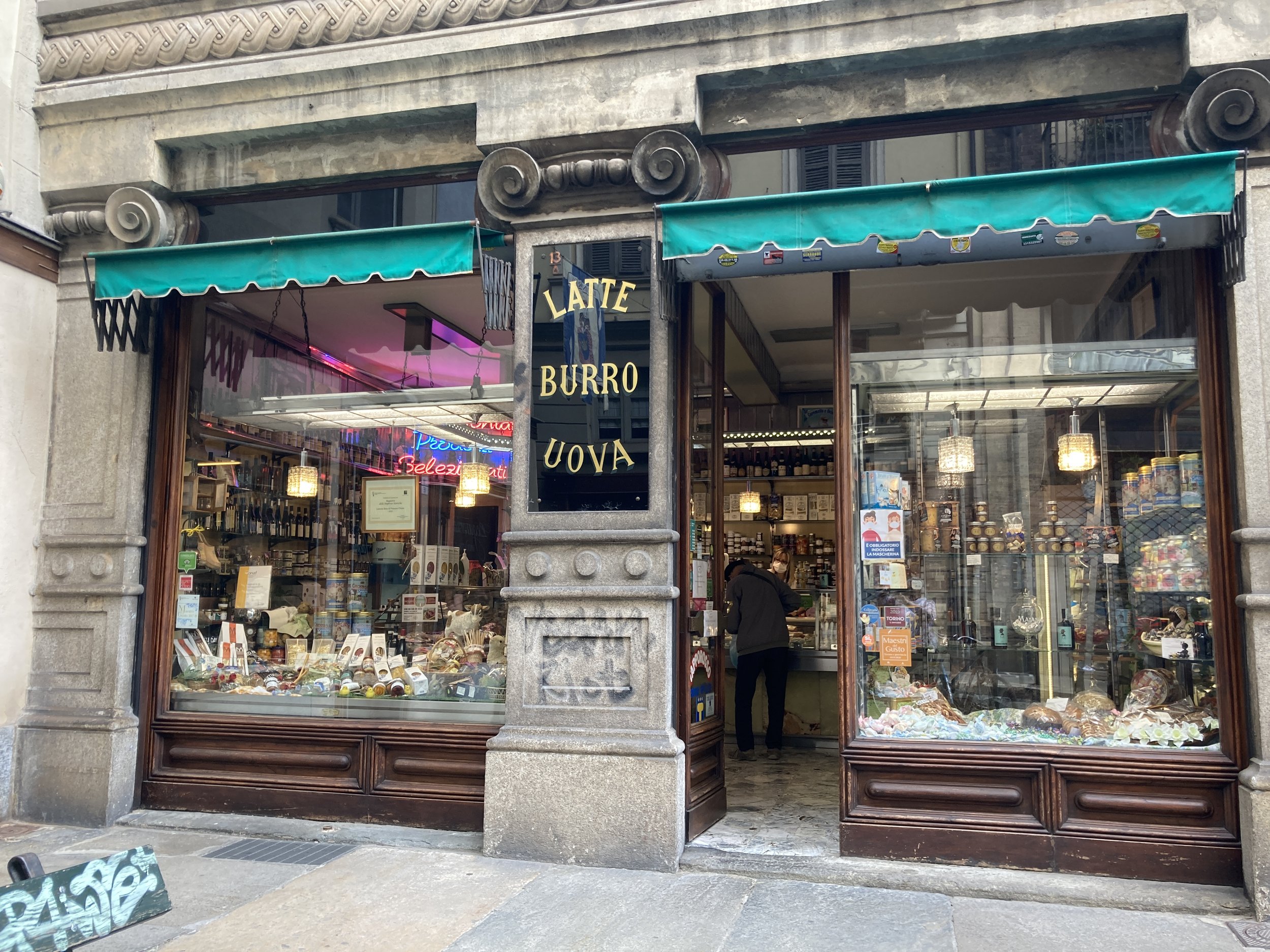
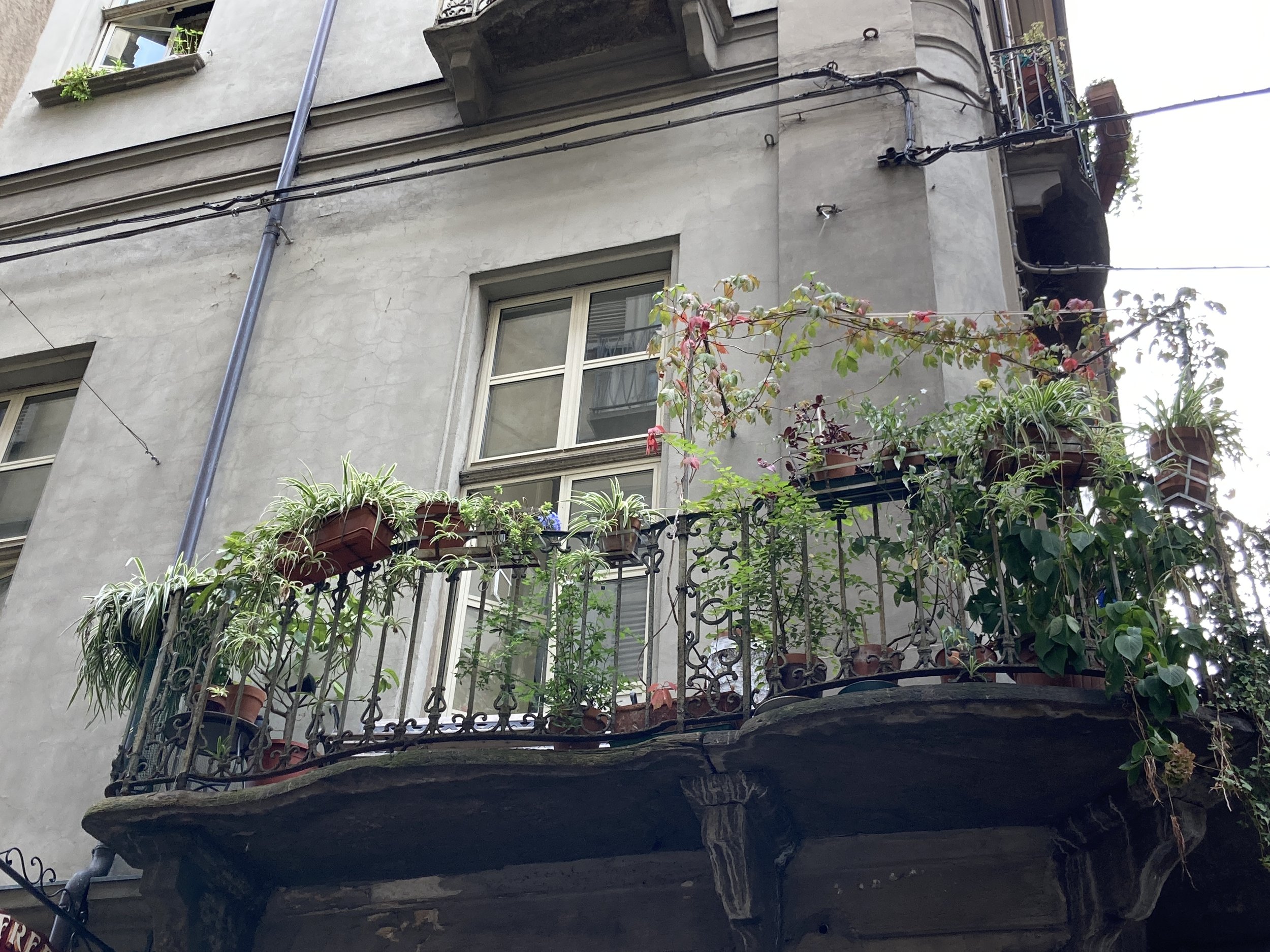
Beyond its Roman roots, the Quadrilatero is a unique area with a small village feel, quite different from the other areas of central Torino. The streets are narrow and dressed up with pretty street lamps and small balconies. Interesting shops, cafes, and restaurants dot the streets. It’s a place that makes you want to linger.
157D4F4F-CF6E-4F12-96C6-2C243CC2EB75.jpeg
3337233F-BA7F-4696-835E-D850FEA69A37.jpeg
ABA44425-A5CA-4C2B-B688-40B503F1A15F.jpeg
5E6392FE-7492-4473-8F69-0D0769E1F55B.jpeg

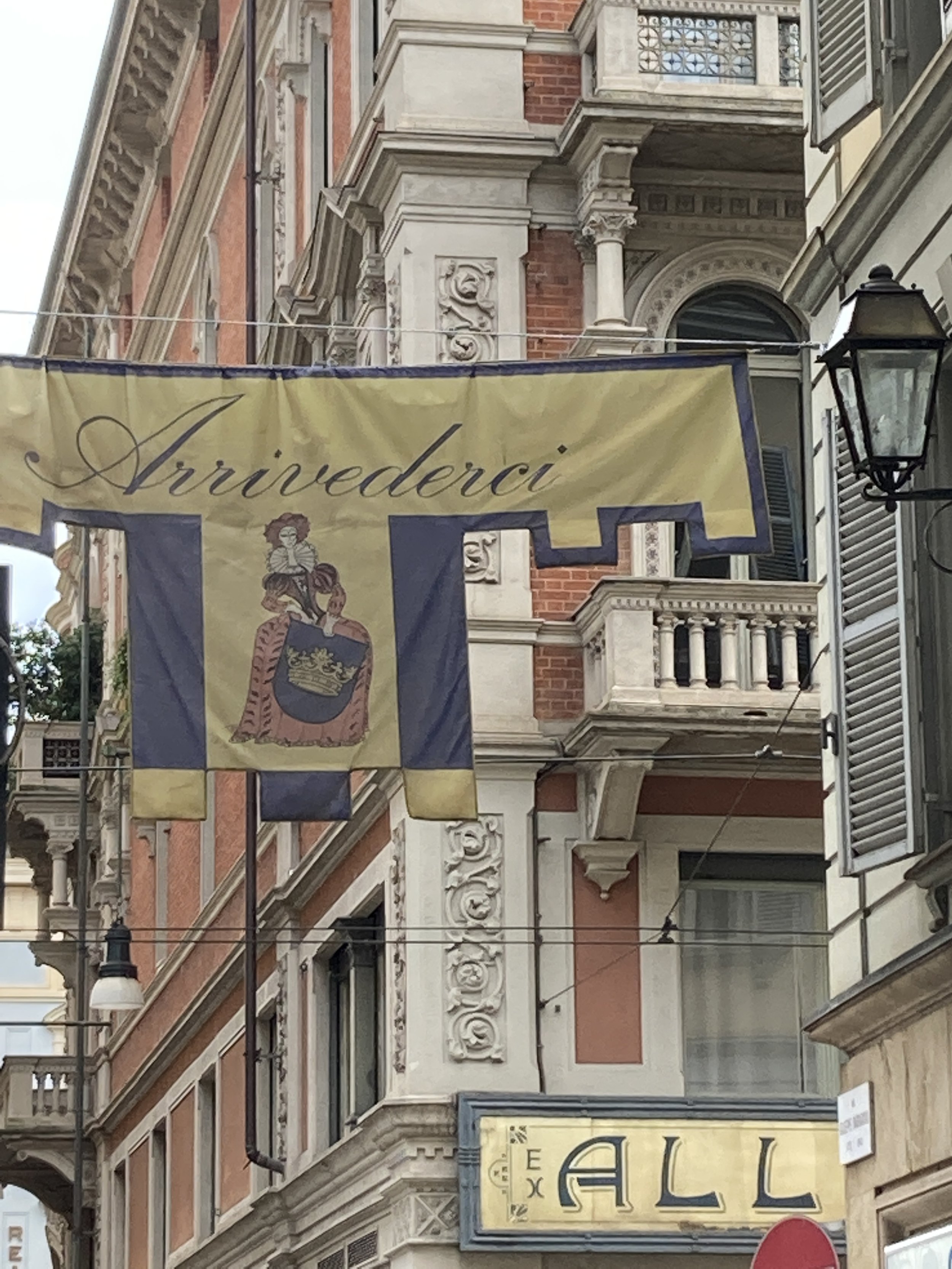
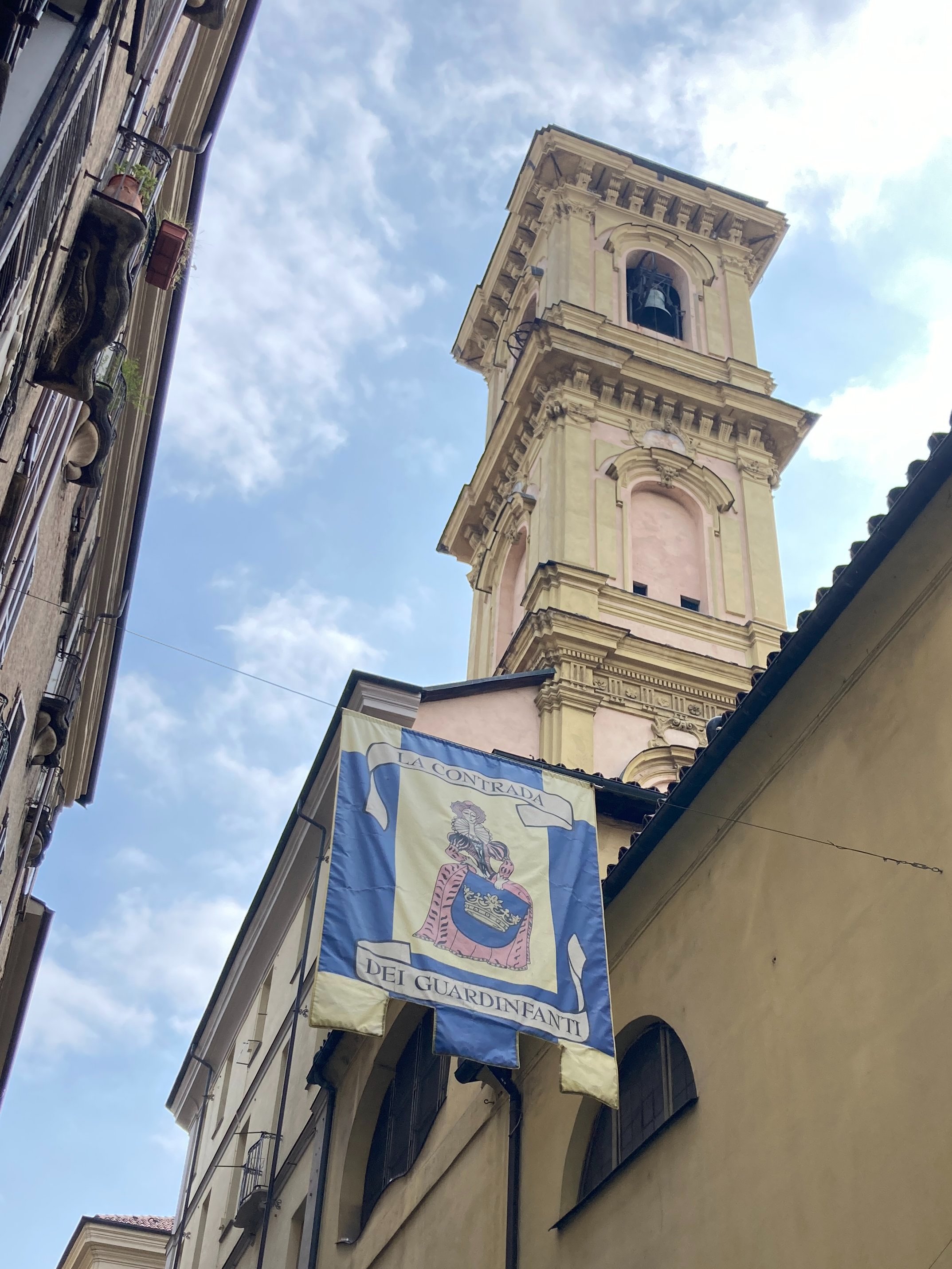
Overhead are a series of colorful banners identifying the Contrada dei Guardinfanti. A contrada is a district, but I have to admit that I had no idea what a guardinfanti was. Something for guarding babies? Nope, not even close. The banners mark this area as the district where merchants of the particular contraption which went under a ladies dress giving it a full appearance - called guardinfanti - had their shops. Clearly these were not Roman merchants, but from a later more fashionable era! Today their banners contribute to the unique old world feel of this neighborhood.
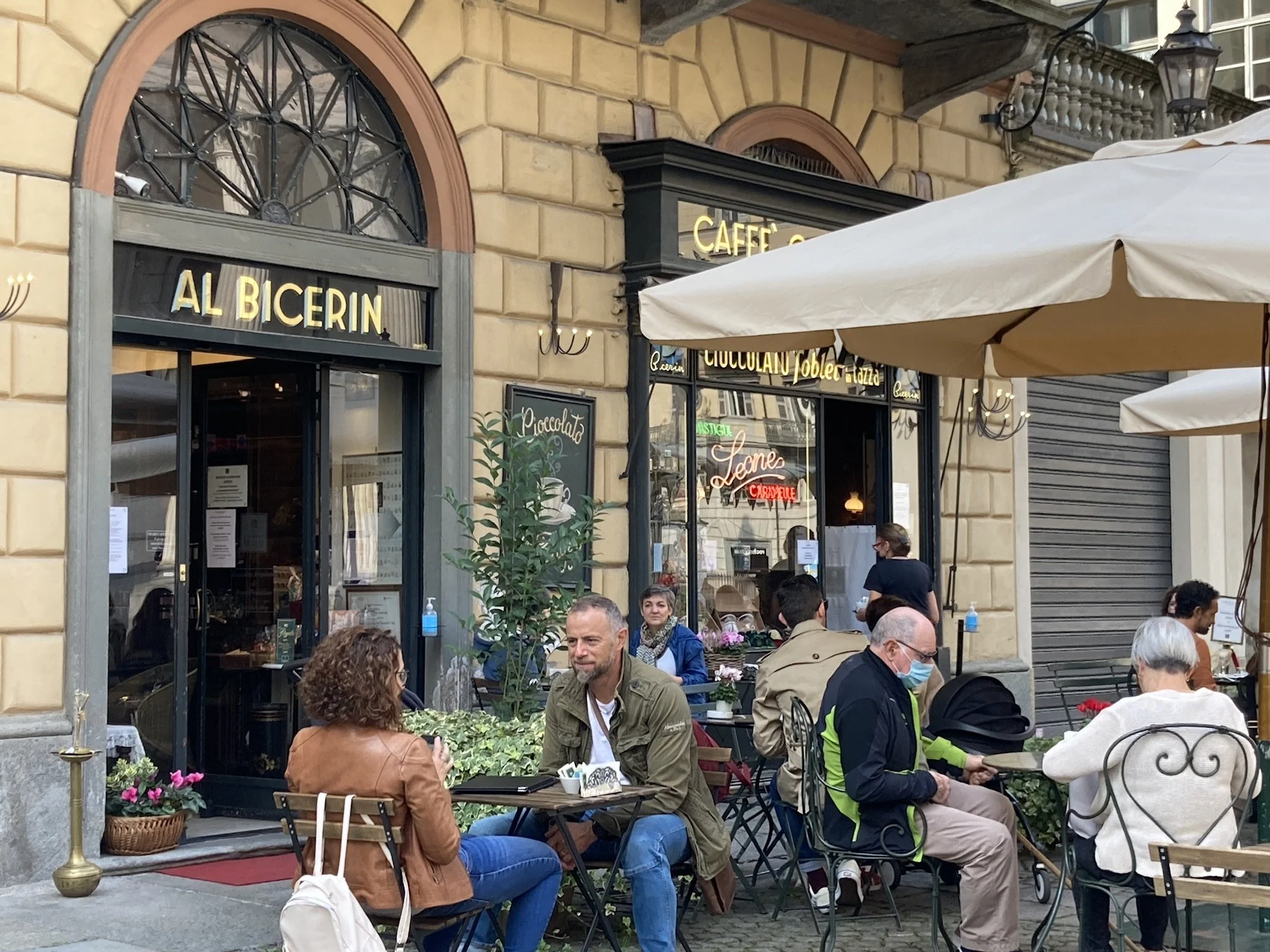
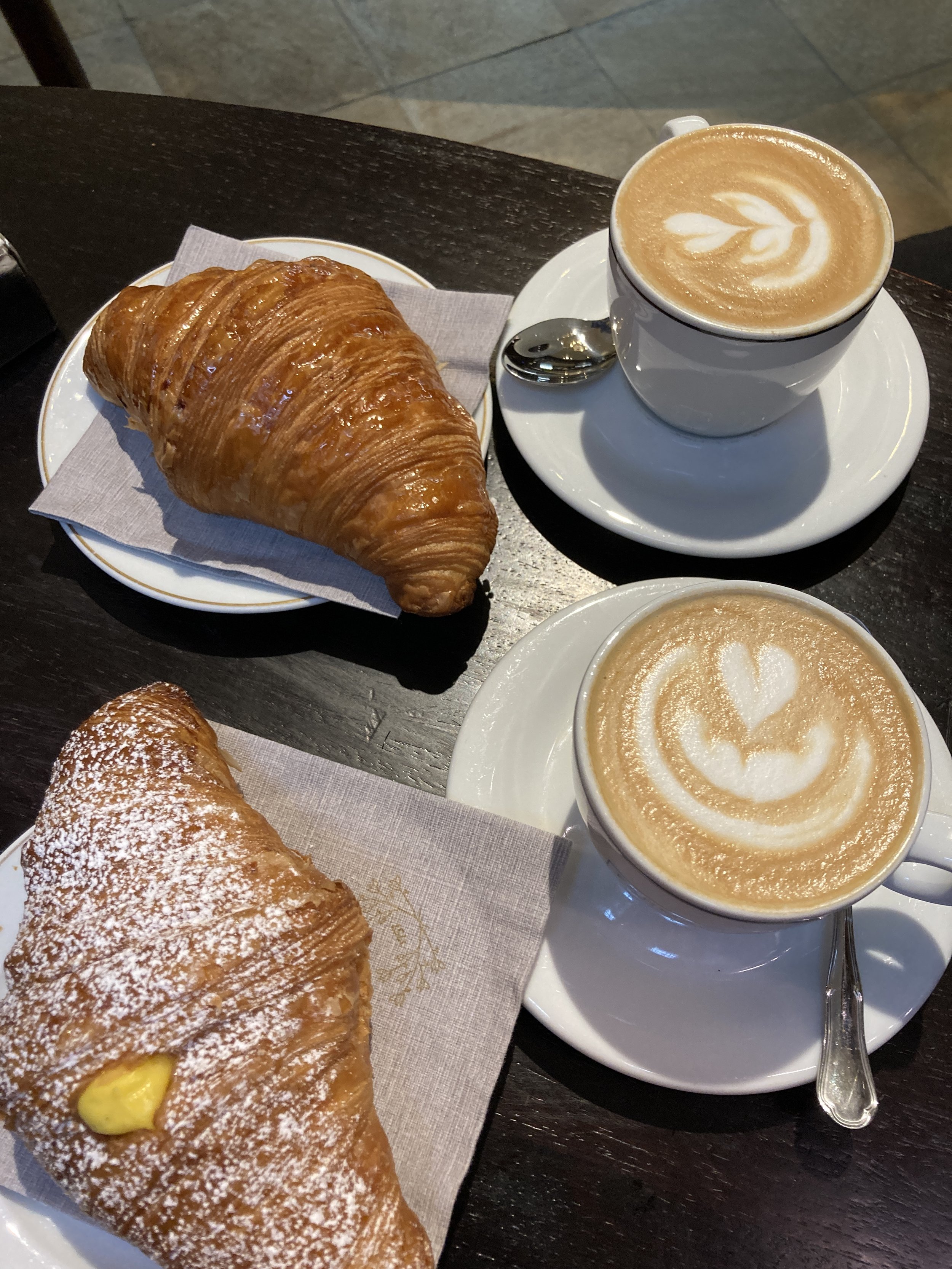
One of the largest piazzas in the Quadrilatero, at its western edge, is the Piazza della Consolata. This is a lovely square and the perfect place to stop for one of Torino’s signature treats - a Bicerin. The Bicerin is a hot drink with layers of coffee, chocolate, and cream. I saw two variations in Torino - one with 3 distinct layers and another with two layers (with the coffee and chocolate combined in a single layer). There is no better spot to sample one than at Caffe` Bicerin in Piazza della Consolata. Not too sweet, with just the right blend of coffee and chocolate. I had to try one in the name of research, right? As for the accompanying plate of cookies, I have no excuse!

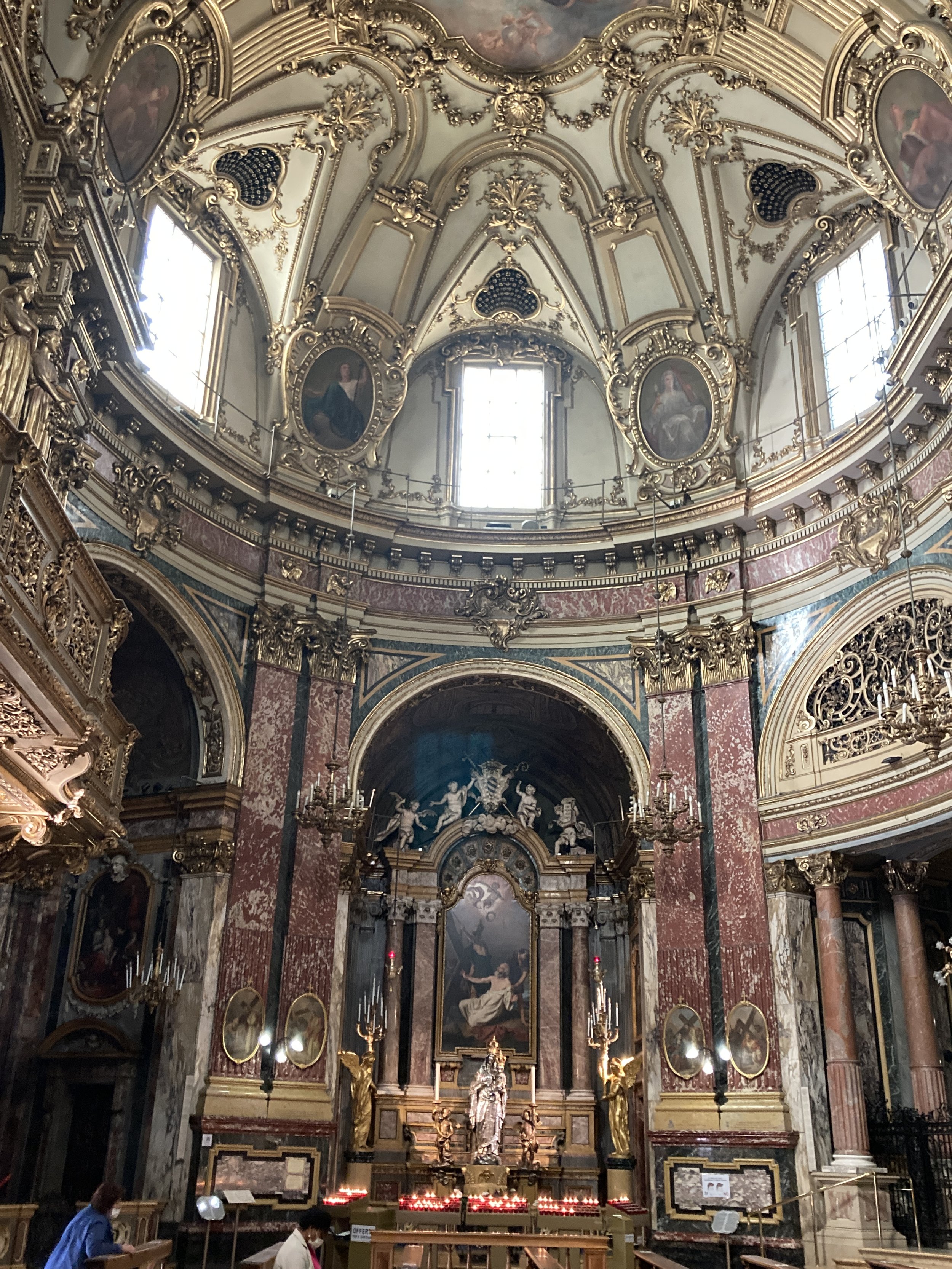
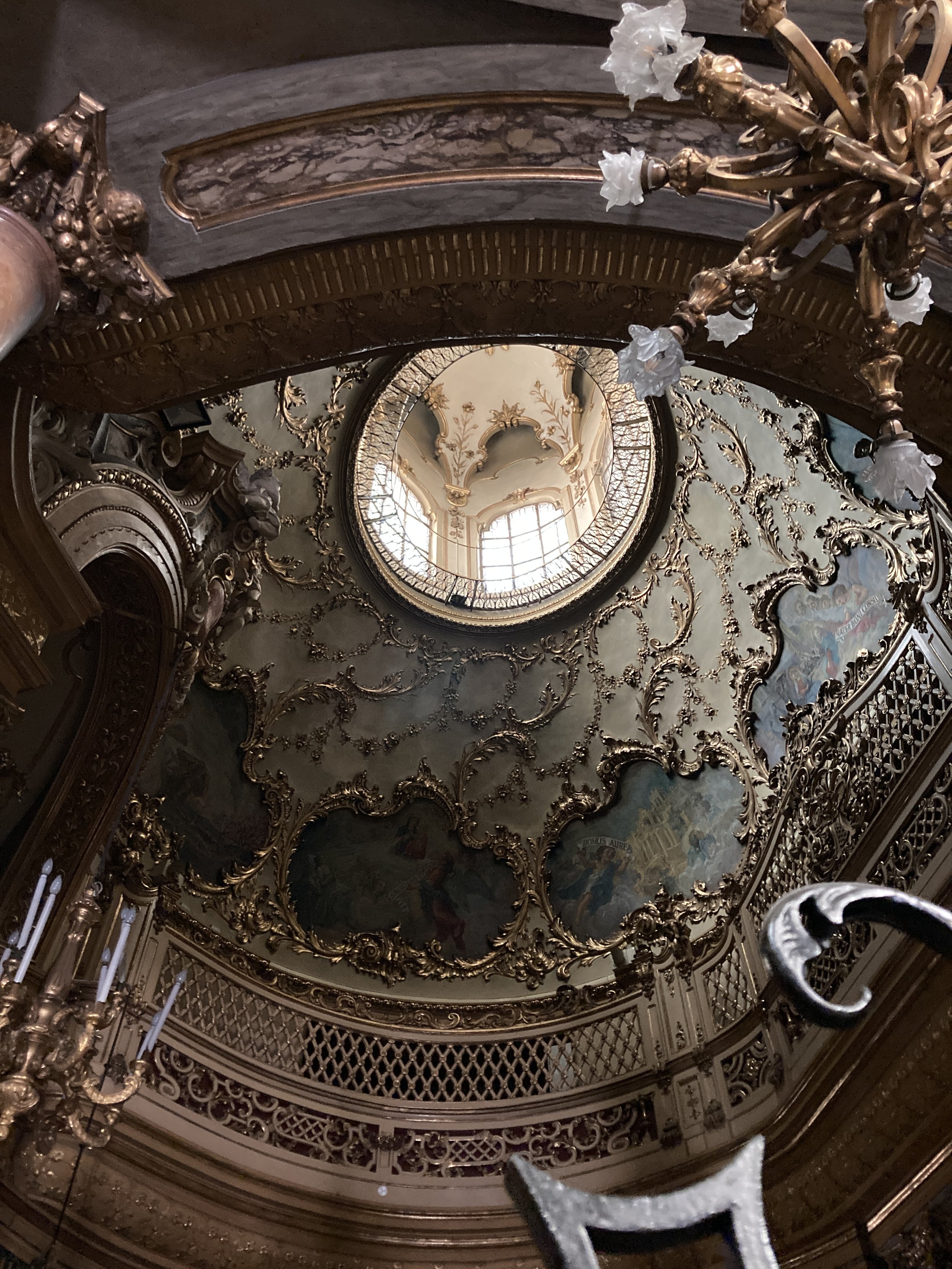
After sipping a Bicerin, a step across the piazza leads to the Santuario della Consolata (Church of the Virgin of the Consolation). The somewhat plain exterior of this church did nothing to prepare me for the ornate and colorful interior, including a most interesting crypt. Unlike most crypts, which tend to be dark and undecorated, this one was spectacular with very elaborate decoration. A jewel box of a small church.
CD6BF4B3-02A3-44C2-966F-310AEB4B1284.jpeg
6CCAB271-46A4-46E8-B69A-19CB8E9A59BA.jpeg

Whenever I visit a new place I always find myself wondering what it would be like to live there. In the case of Torino, I would happily live in the trendy Quadrilatero neighborhood. But I’d have to remember to limit my Bicerin consumption!

November 08, 2021 /Joanne Bartram
Turin, Torino, Quadrilatero Romano, Neighborhoods Torino, Bicerin, #torino
Italian art architecture, Italian culture, Italy, Italy travel

Wandering Through the Center of Torino (Turin) Italy

November 01, 2021 by Joanne Bartram in #italytravel, Italian art architecture, Italian culture, Italy travel, Northern Italy Regions

I had few preconceived notions about the city of Torino. I’d heard about the famous Shroud of Turin (something my mother and grandmother longed to see), knew that the Winter Olympics had been held in and around the city in 2006, and had been told that there was great shopping. Despite knowing nothing more than that, I was curious to visit a northern Italian city that promised to be quite different from the part of Tuscany in which I live.

A train trip with wonderful views of the Ligurian coastline

When a visiting friend proposed a long weekend trip, I quickly agreed. We left Lucca by train on a Friday morning to spend 4 days exploring Torino. The train trip itself was wonderful, zipping along the coastline from Viareggio to Genoa and then turning abruptly inland towards Torino. The trip took about 4 hours during which time we read, had an on-board picnic, and admired the passing views of the Ligurian coastline. A good start to a long weekend in a new city !

We arrived to the Porta Nuova train station, a busy transportation hub in an impressive 1860’s building. It is right in the city center and a short walk to our base in Torino, the Hotel Astoria (three stars, small clean rooms, good breakfast, friendly service, and a convenient location). The first afternoon was spent settling in to the hotel and setting out on an orientation walk in the center of town.

Some First impressions: Torino has a large, busy but very walkable city center. The vibe is quite different from the Roman to Medieval feel of Florence, Rome, or the small hilltop towns of Tuscany. There is a sense of history but an even bigger sense that the city is modern, northern, and “happening”. With its long blocks of graceful apartments and large squares ringed with cafes and shops, it reminded me a bit of Prague or Paris, but with a somewhat grittier more hectic Italian flair.

3EB9D9C1-8E7E-4DF2-B2BB-E75CEBAC91F3.jpeg
ABA44425-A5CA-4C2B-B688-40B503F1A15F.jpeg
3337233F-BA7F-4696-835E-D850FEA69A37.jpeg
AD787FD9-ACB3-4351-A95C-8EDD36D28F69.jpeg

There is a definite French influence in Torino, starting with the local dialect - locals say brioche instead of cornetto for a breakfast pastry, dehors instead of fuori to mean outside. Torino was home to the Savoia (Savoy) family, with their French roots. Their influence is everywhere - palaces, museums, architecture, monuments, and in the local history. After all, it was the House of Savoy which provided Italy with kings and also played a key role in Italian unification, establishing Torino as the first capital of the newly unified nation.

I always find that the best way to get oriented to a new place is by wandering around, taking in the city and stumbling into interesting squares, monuments, bits of history, unique neighborhoods and hidden gems. Torino is perfect for that and my orientation walk in Torino began in the very center of town .

Piazza San Carlo, Torino

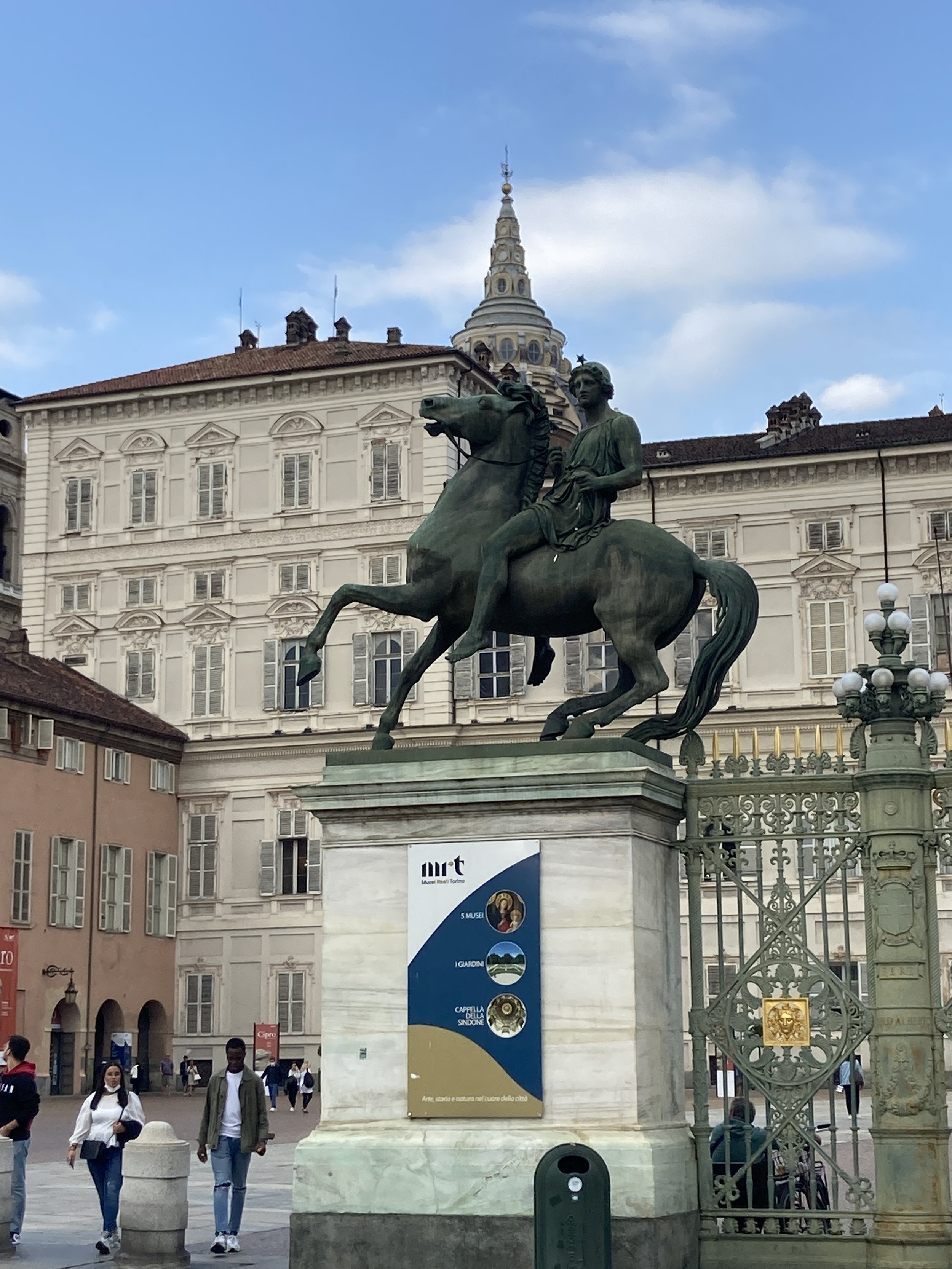
The Via Roma Piazzas. A pair of lovely squares are to be found along Via Roma. Piazza San Carlo is a good place to start. In the center is a large statue of Duke Emanuele Filiberto on horseback (the first of many monuments to members of the Savoy clan).

The Church of Santa Cristina (left) and San Carlo Borromeo (right) in Piazza San Carlo

Stratta - a good spot for a snack or aperitivo in Piazza San Carlo.

At the southern entrance to the piazza stand two small churches - Santa Cristina and San Carlo Borromeo. Small and intimate, they are definitely worth a stop. Around the rest of this large, graceful piazza are a series of cafes and shops stretched out under long arcades. This is a good spot for a light lunch, coffee, or an aperitivo (a just reward for an afternoon of wandering). The people watching is great too - performers, shoppers, wedding parties, daily life.

To the north is another large square, the Piazza Castello. Here 4 modern fountains bubble and spray in front of the Palazzo Madama. Yes, you guessed it, a member of the Savoy family once lived in this stately palazzo which anchors the east side of the square. Those Savoys certainly had exquisite taste in housing! Today the palazzo houses the museum of ancient art.

Piazza Castello

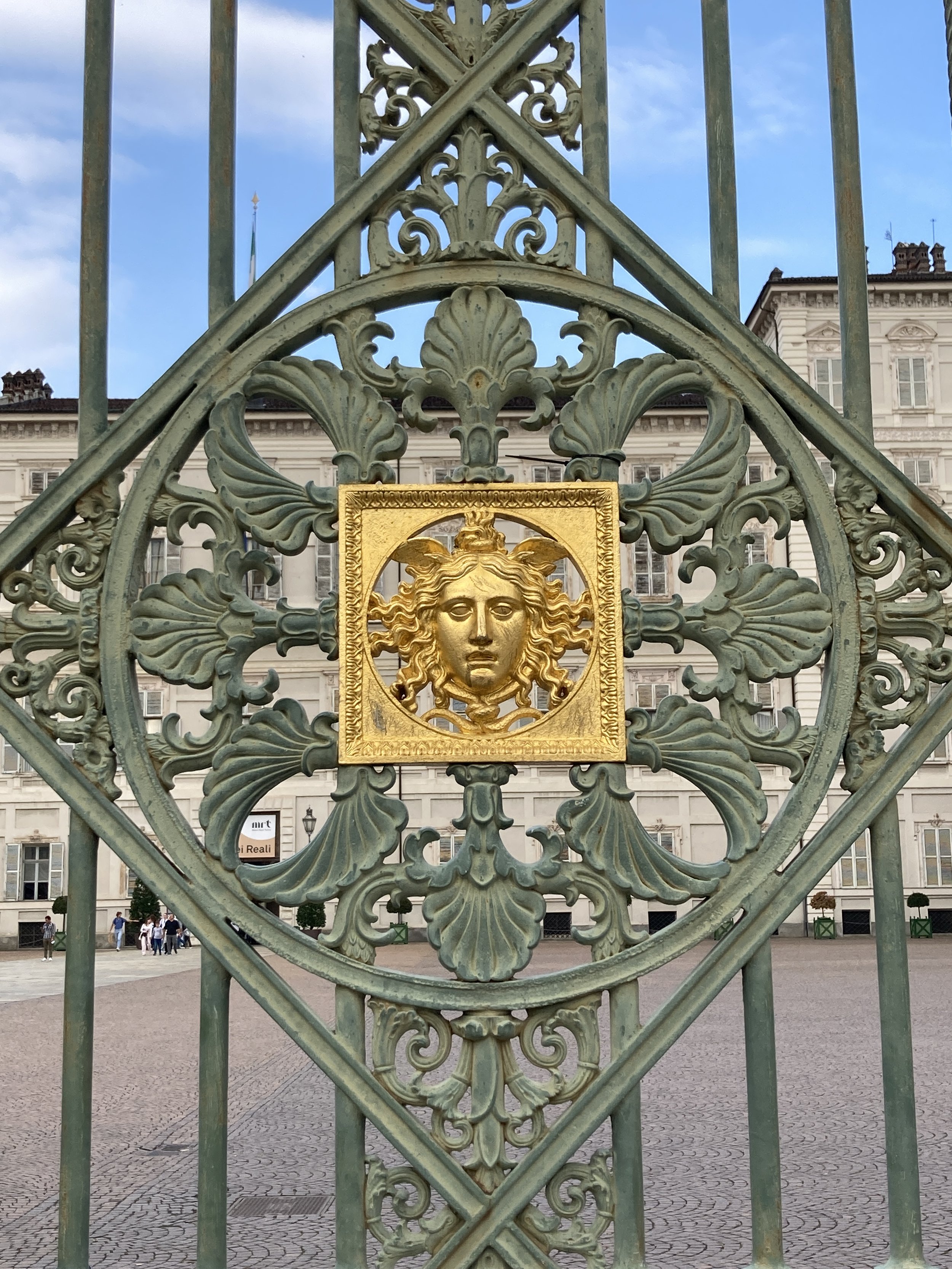
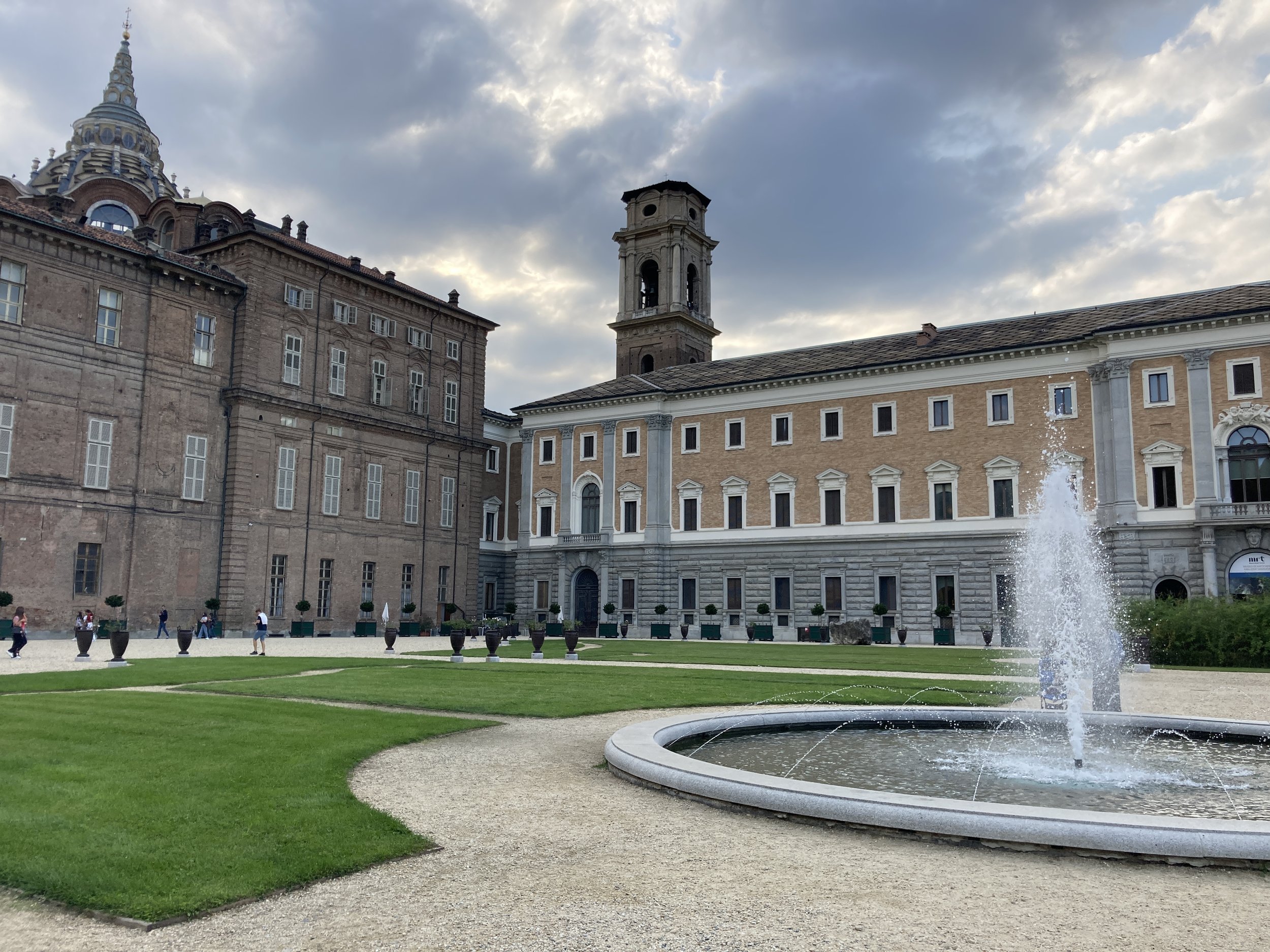
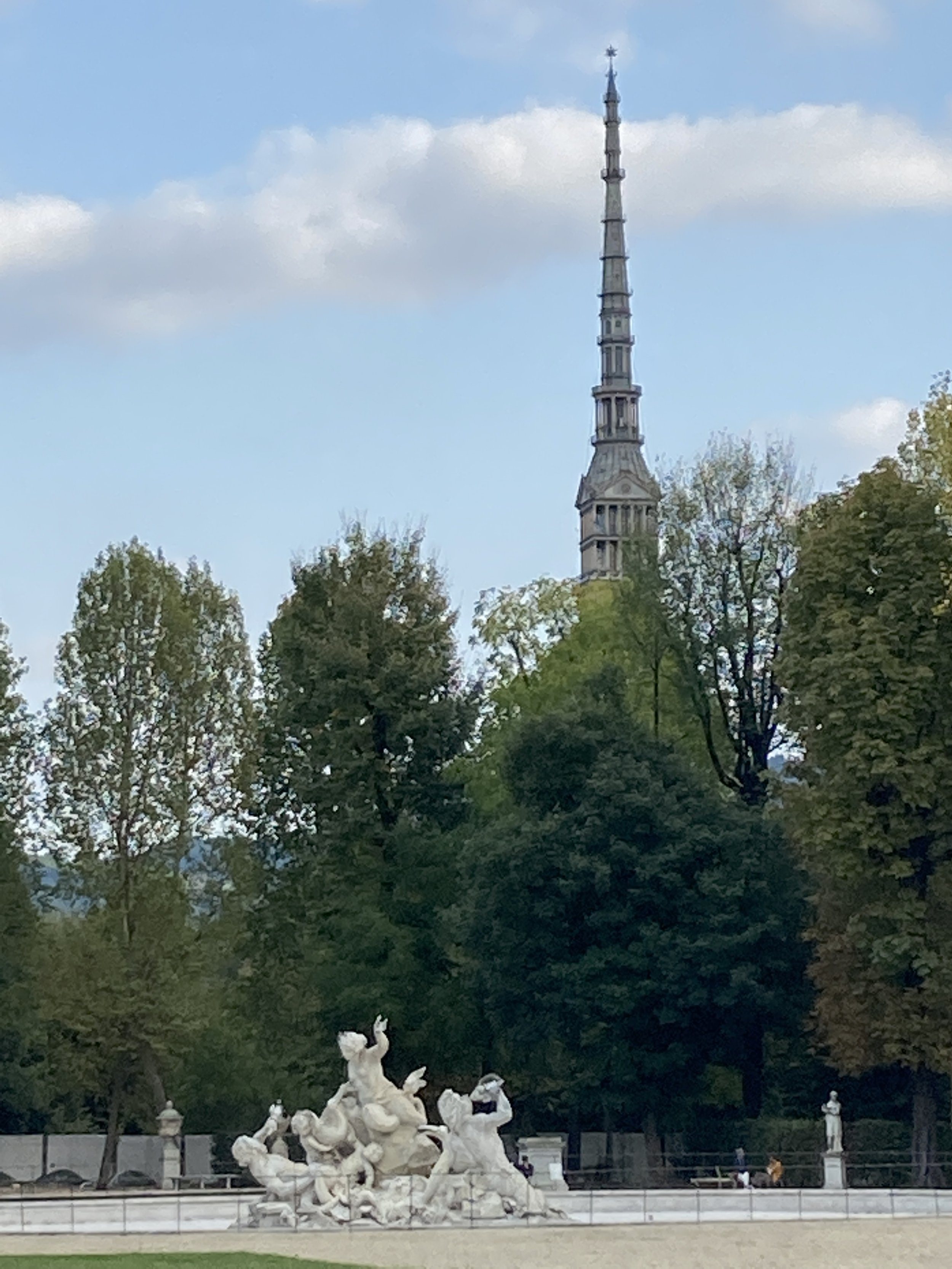
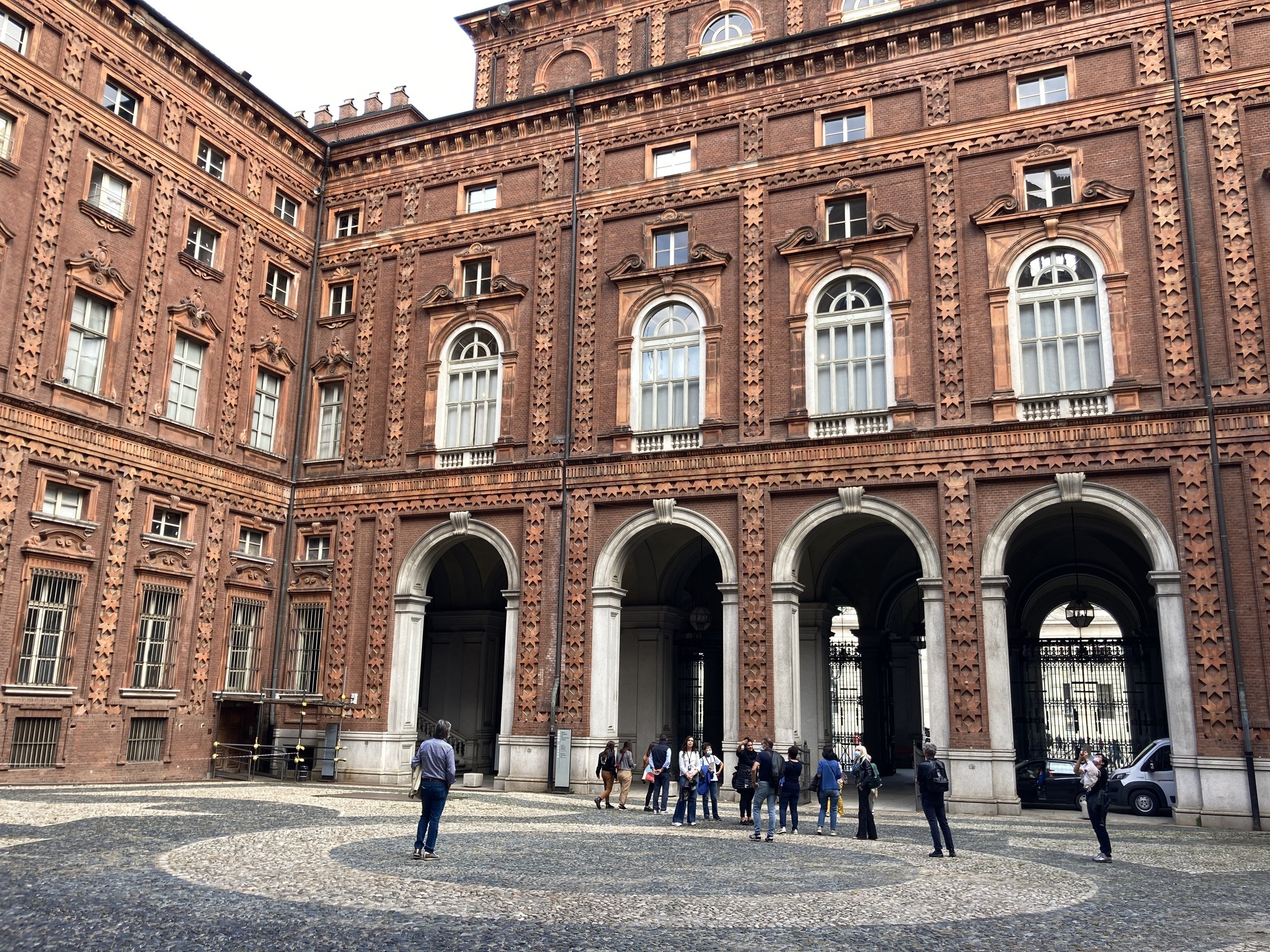
To the north end are the large iron gates which mark the entrance to the Musei Reali (Royal Museums). This is the former palace of the Savoy family, a complex which also includes the Chapel of the Sacred Shroud. Entry to the museum requires a ticket but there is no cost to walk through the courtyard and into the beautiful Giardini Reali (the palazzo gardens). The museum itself is a must see sight, but for the first afternoon of wandering I stuck to the courtyard and gardens.

D496798F-F080-4E18-B058-7A65FBA0EFC4.jpeg
BB00F056-8607-45BB-A1C0-6600732EAC9E.jpeg
B5991128-CA4D-4775-B61C-15EBD8AB8D7B.jpeg
70506BE0-81E2-4600-990A-A7D5CE8752E0.jpeg

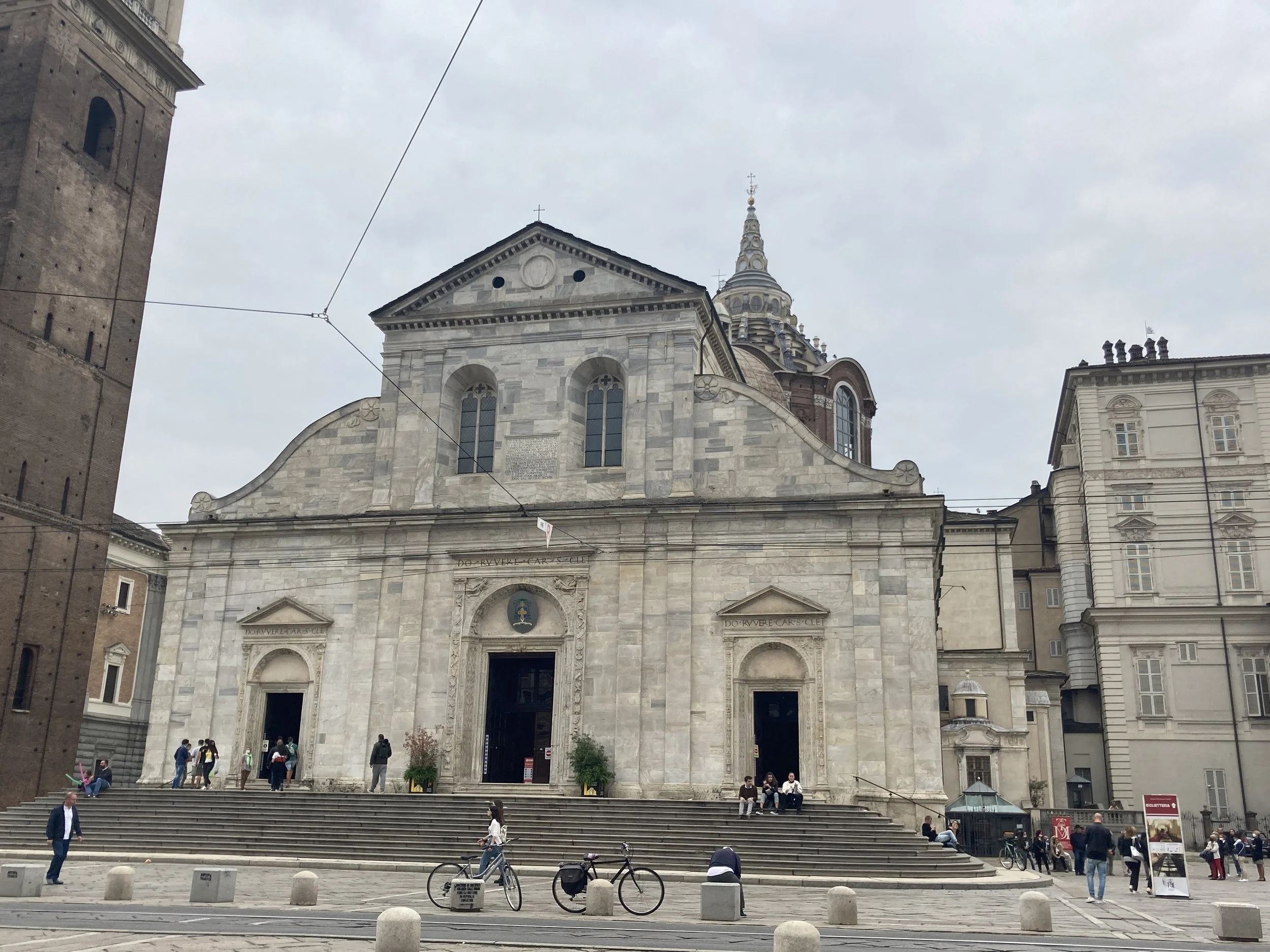
The Duomo, officially the Church of San Giovanni. The ornate dome and spire behind houses the Chapel of the Holy Shroud, not accessible through the church but only through the Musei Reali.

Around the corner from the Musei Reali is the Duomo of San Giovanni with its quite plain facade and video presentation on the Shroud of Turin (though the shroud itself is not displayed).

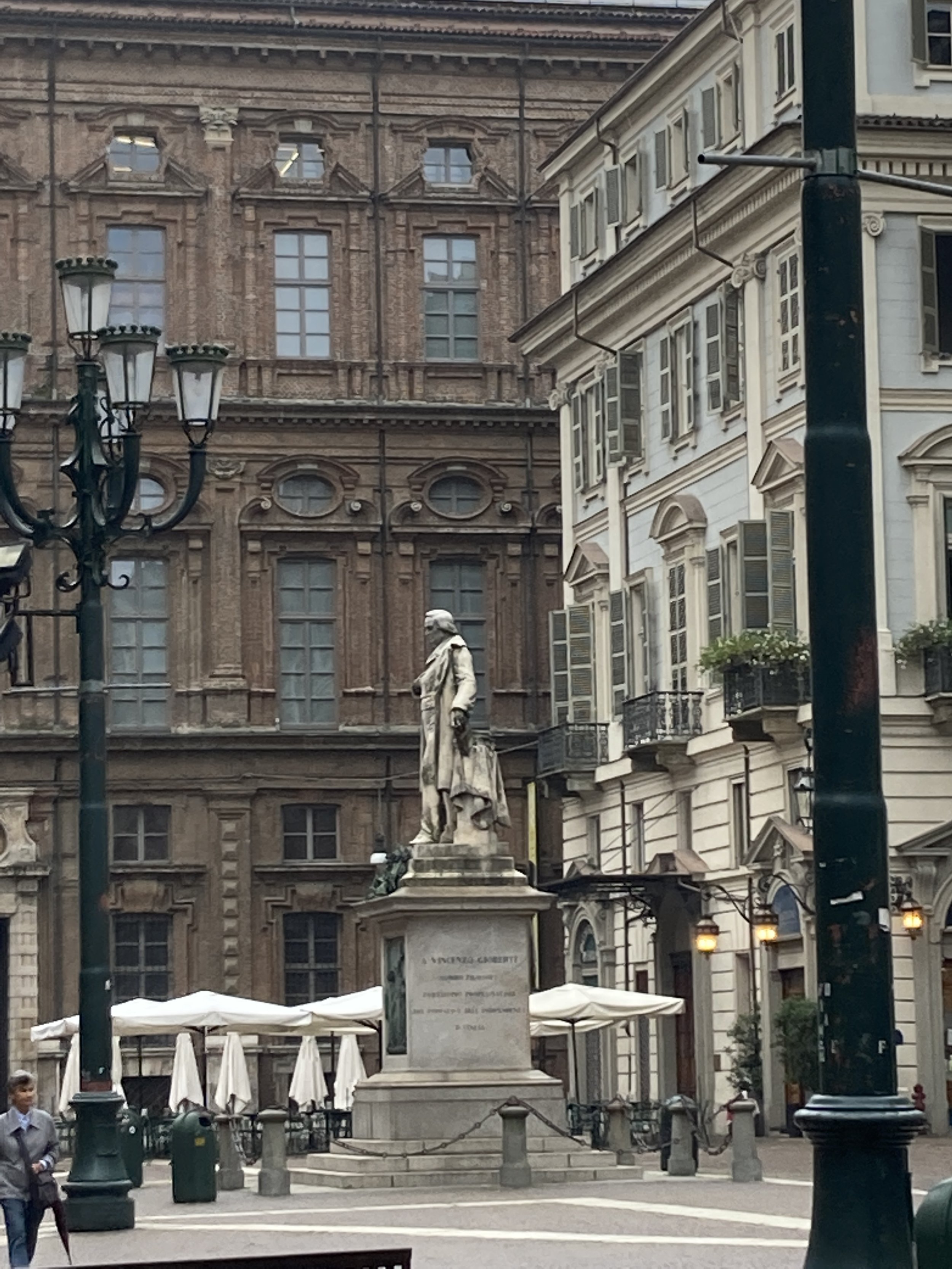
Nearby Piazzas. Just a block or so to the east is one of the prettiest squares - the Piazza Carignano, home to the Museo Nazionale del Risorgimento (Unification Museum). A pop into the entry of the museum gives a quick peek at this fabulous building (below). No time for a tour this time, but my next visit to Torino will surely include a tour of this museum both to explore the gorgeous architecture and for the history lesson.

BDEF676F-275B-4601-B40D-18E296D04AEC.jpeg
C77964D0-0950-4A74-80D8-9BCEB882ABD7.jpeg
55F0CA1B-DC16-4BC3-BCA3-1AD8BA74C0FE.jpeg
26300453-DFB8-405A-ABF5-5E6D04D07B9B.jpeg

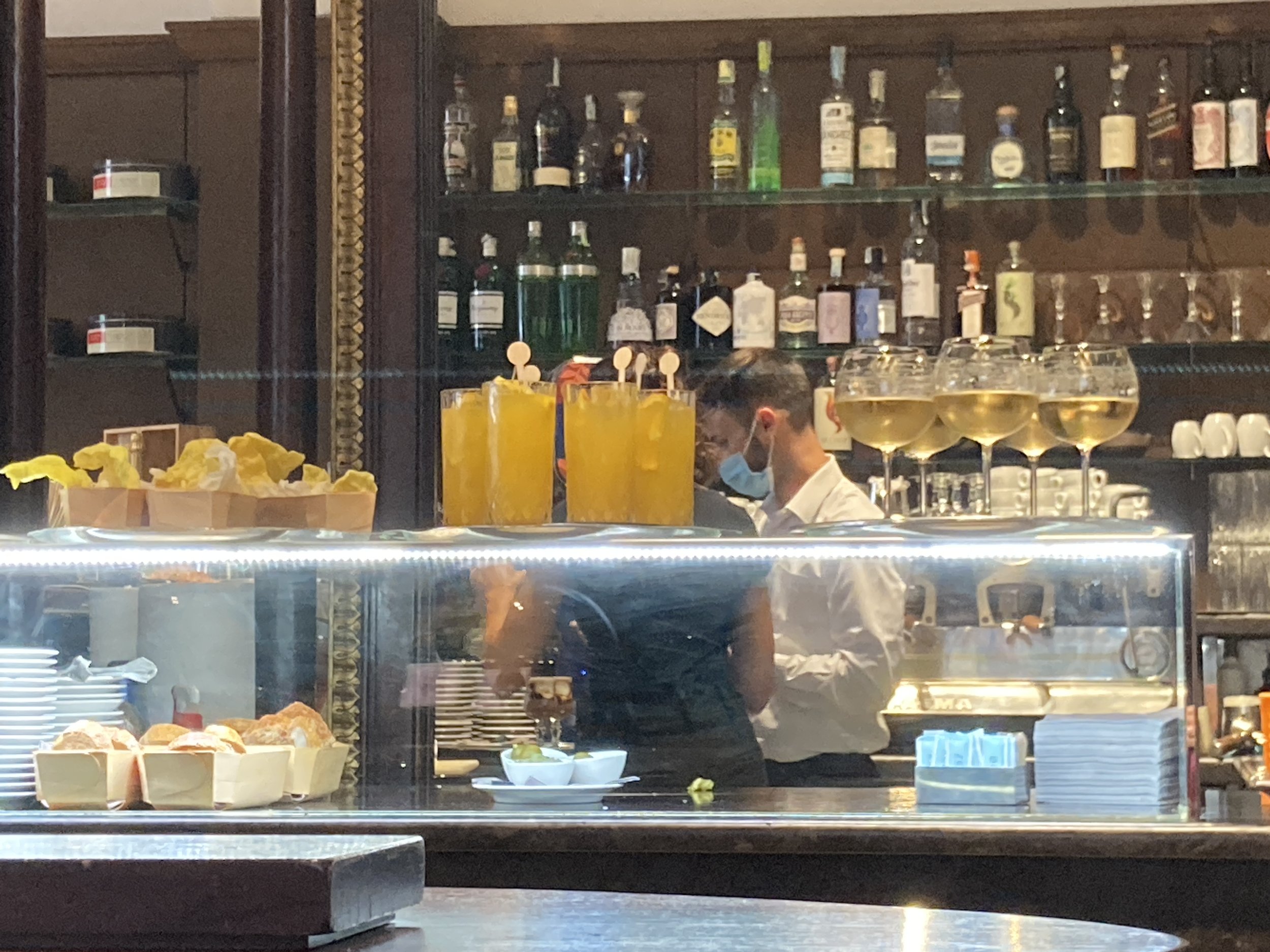
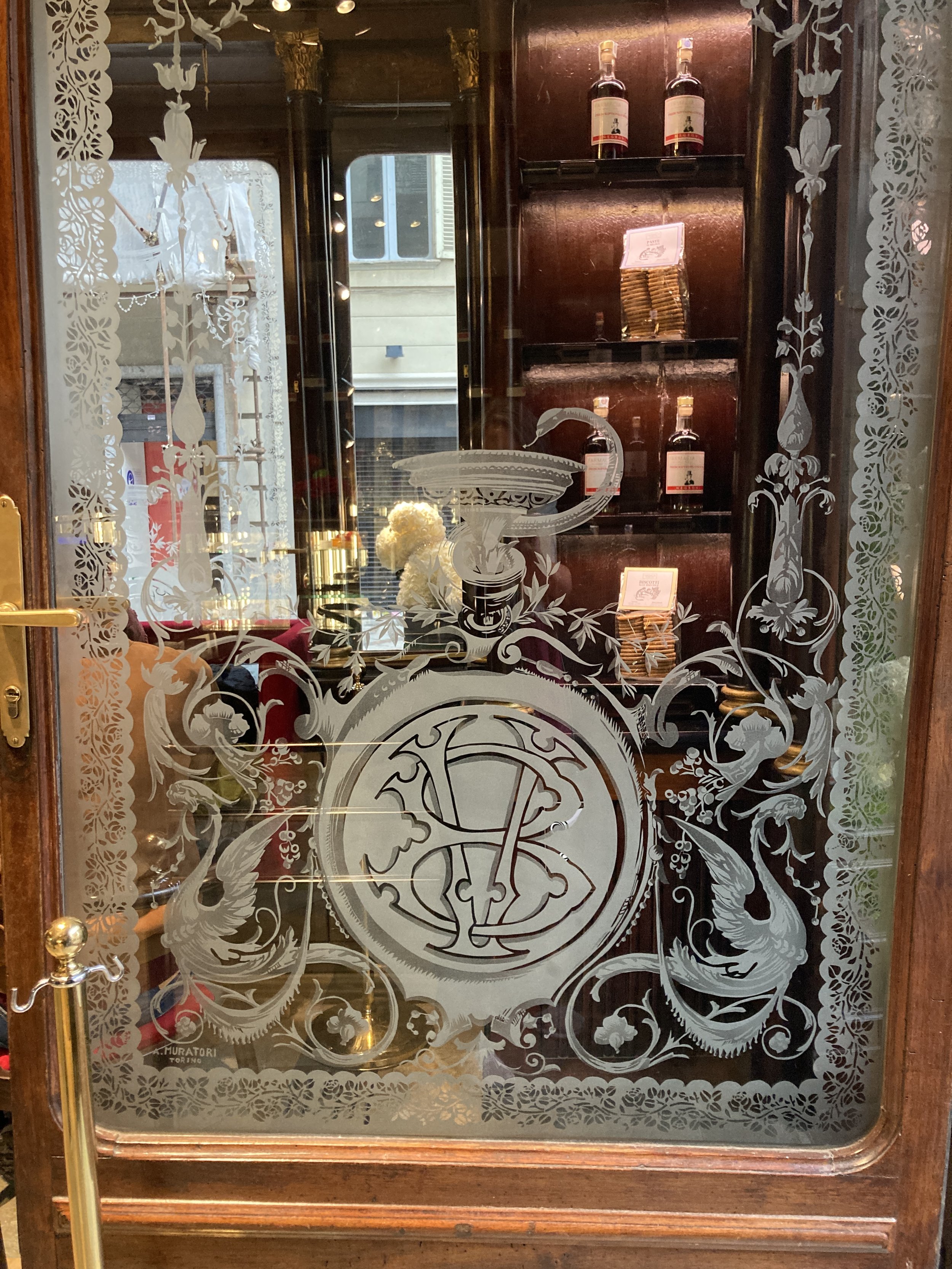
Need a coffee stop? The piazza Carignano is home to the Farmacia del Cambio, an antique pharmacy reborn as an elegant eatery. Coffee, pastry, lunch, aperitivo - this is a great choice. The interior oozes old world elegance and the outdoor seating area provides great views of this very beautiful piazza.

B5A1E8E3-F2FB-4E5D-9C66-3C6CAB1A5282.jpeg
484852CC-4D88-4F1A-93EB-23A3BB9D6749.jpeg
44040F31-835A-4719-A42F-099CF8808365.jpeg

One street to the east is Piazza Carlo Alberto, a pedestrian square with a larger than life monument of the former Savoy king of Sardinia. The square is flanked by one side of Palazzo Carignano (which was built for the king) with the beautiful National Library building across the piazza.

The monument to Carlo Alberto of the House of Savoy

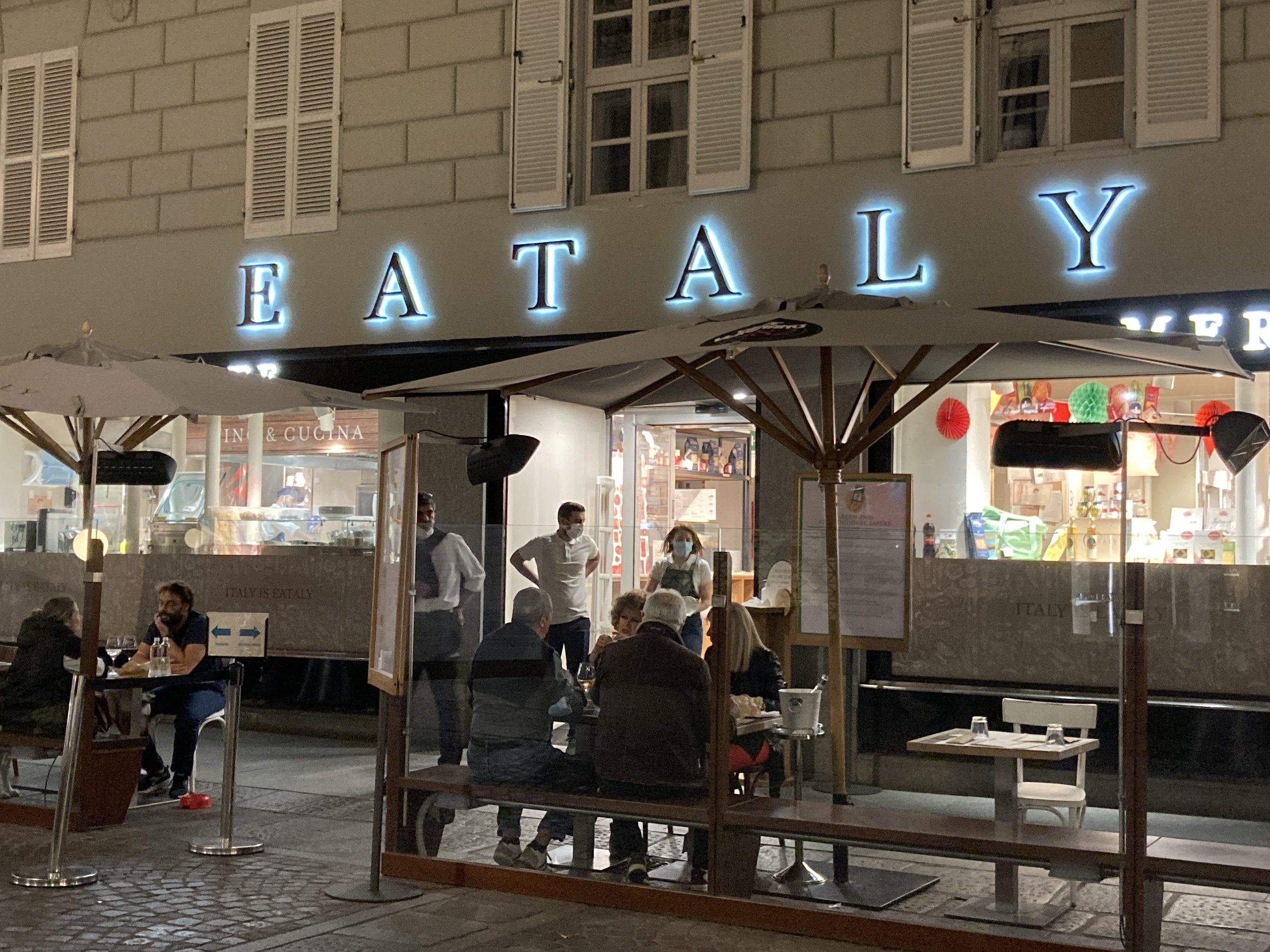
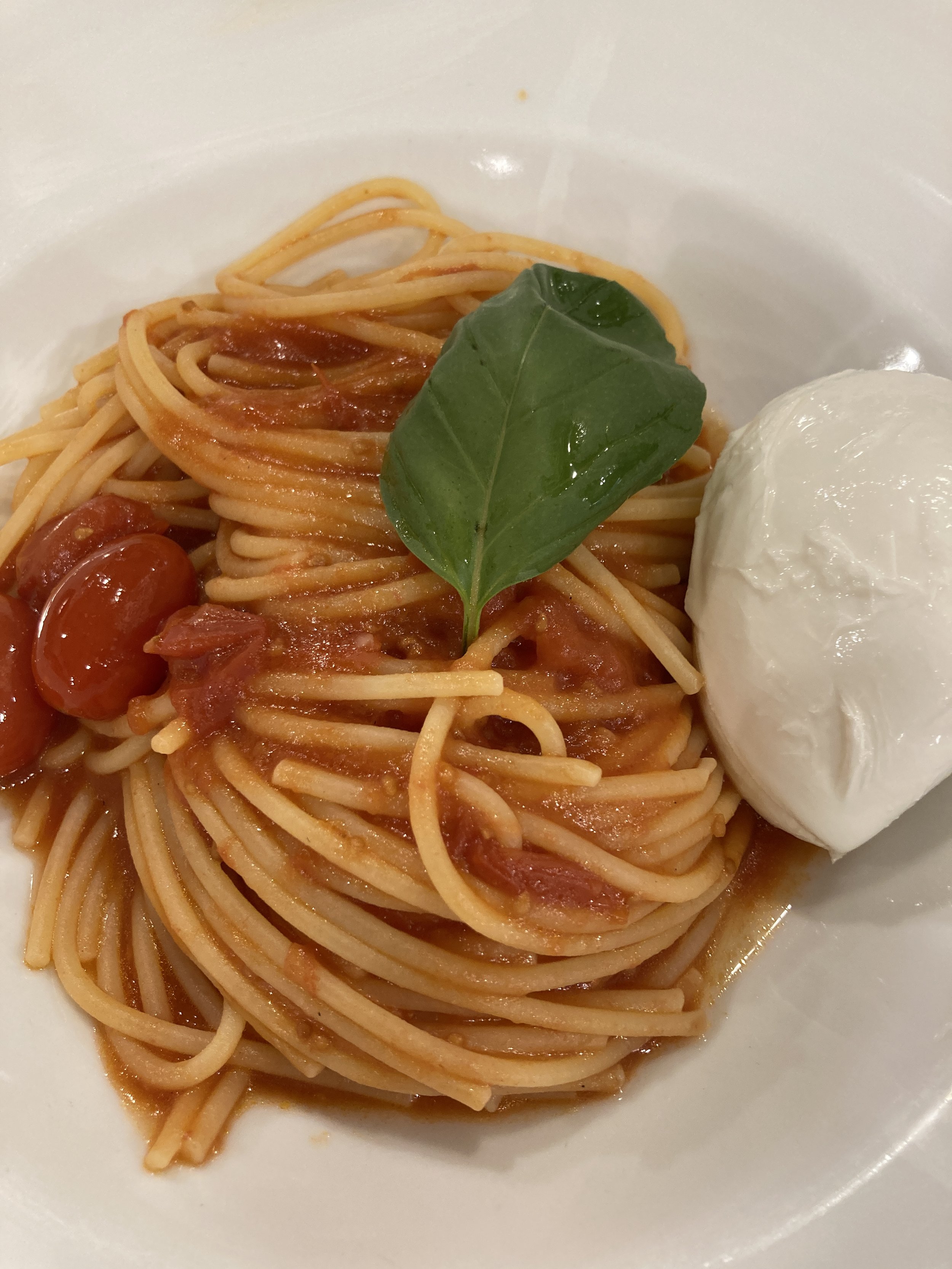
After an afternoon of wandering, it was time to think about dinner. A walk down Via LaGrange presented some good choices. From small, very casual student hang-out spots to a small Eataly and a lively Signor Vino, it is easy to find good and moderately priced food along this street.

A32B5817-C7A8-4AD0-B284-BB7020647A34.jpeg
D041F9E3-3436-48FB-B0D1-5B90F04EE4B9.jpeg
81671075-E991-4DCF-9CFB-63D5658301C6.jpeg

My first afternoon and evening of wandering around the center of Torino was a great way to get oriented to this intriguing city. The next days held even more adventure - the Quadrilatero Romano, the search for an authentic Bicerin, beautiful churches, fascinating museums, more wandering. But this post is getting long, so more on Torino next week.

November 01, 2021 /Joanne Bartram
Torino, Turin, Piedmont, #turin, #tornino
#italytravel, Italian art architecture, Italian culture, Italy travel, Northern Italy Regions
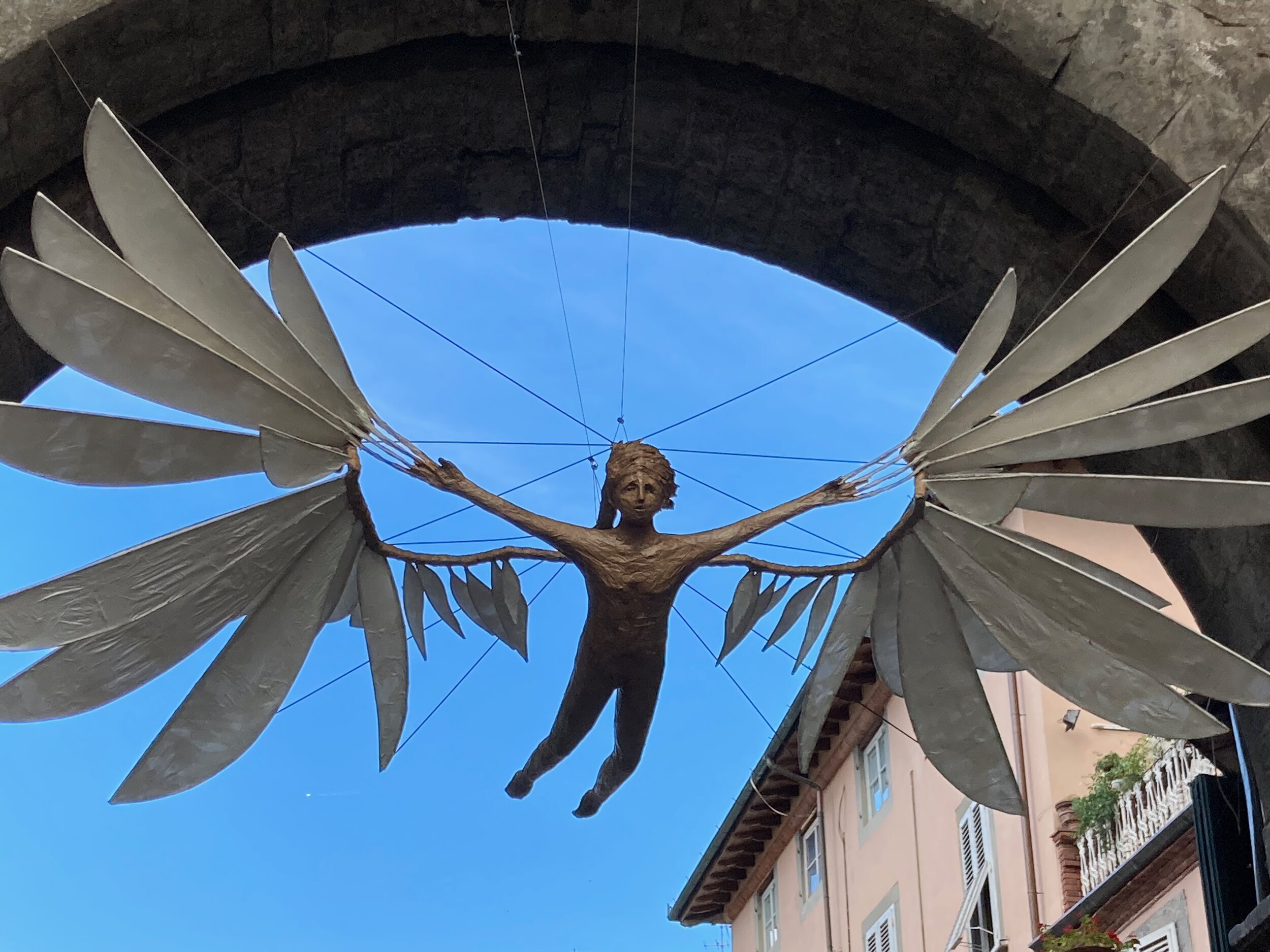
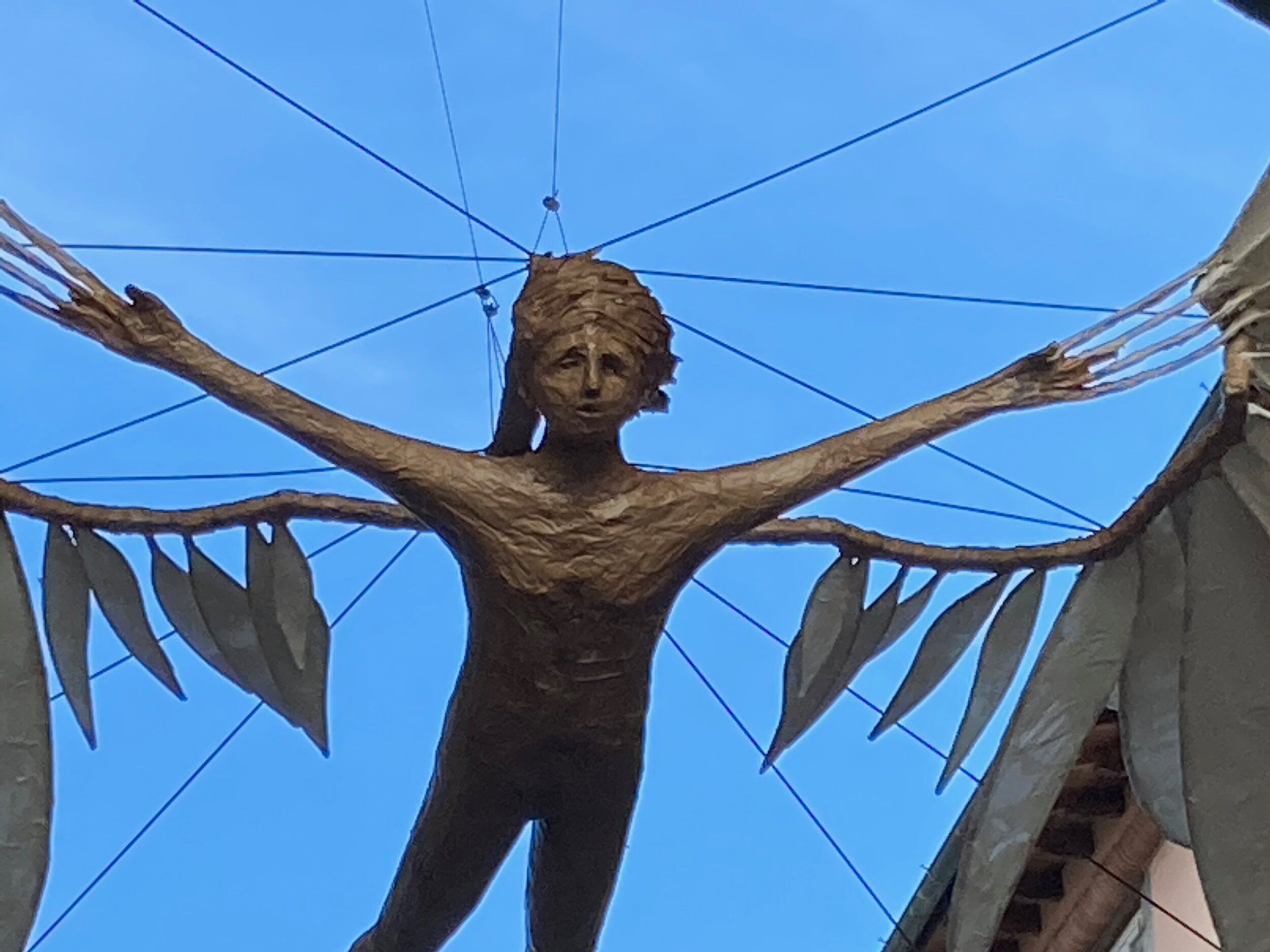
“Hybris” Officina Chiodo Fisso & Matteo Raciti

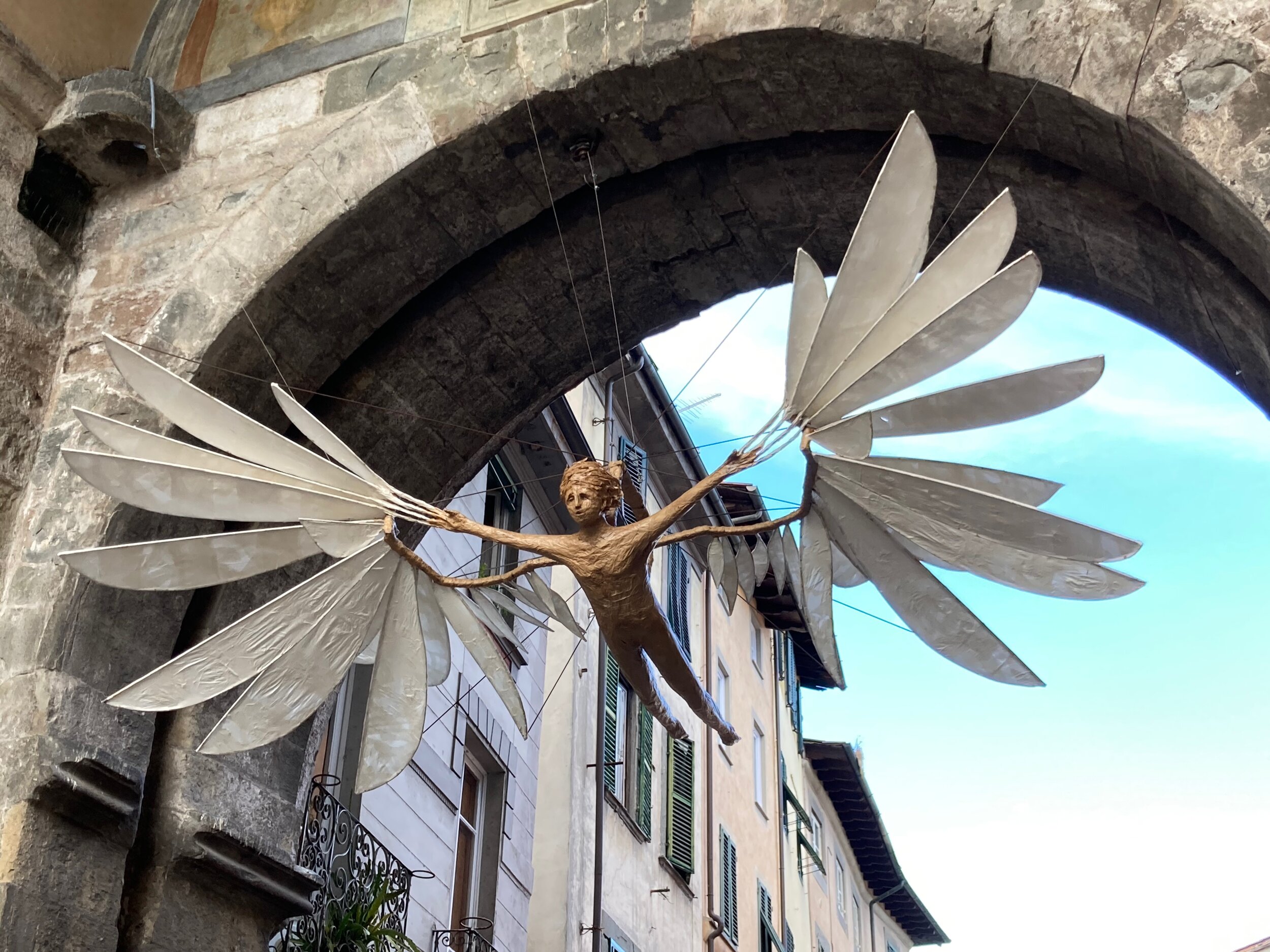
“Hybris” Officina Chiodo Fisso & Matteo Raciti

Lucca Biennale Cartasia: Artistic Expression in Paper

September 20, 2021 by Joanne Bartram in #lucca, Festivals Italy, Italian culture, Italy travel, Lucca, Italian Art

Lucca has a long history of paper production, producing household paper goods and cardboard for much of Europe. That history makes Lucca the natural host city for Cartasia, a biennial celebration of art and design in paper. The event premiered in 2004 and has been held every two years since, with a one-year delay in 2020 due to the pandemic.  

 The art of Cartasia ranges from ethereal to whimsical, from statements of social commentary to massive creations with subtle meaning. The exhibit includes visual art, fashion, architecture – all created entirely from various forms of paper.  The last two programs have included a focus on an individual country, this year Japan was selected and an entire room of the indoor exhibit is devoted to Japanese paper art.

“First of All Movement”. Factoria Papel , Claudio Acuña. Displayed in Piazza San Francesco

“First of All Movement”. Factoria Papel , Claudio Acuña. Displayed in Piazza San Francesco

 After a 2020 marked by so many cancelled events, it’s a joy to have Cartasia return for its 10th edition.  This year’s theme, Paura e Desiderio (Fear and Desire), explores the competing human experiences of fear and desire as interpreted by the various artists.  Also included this year is a retrospective of the first 10 editions of the festival.

“In Between” Paper Atelier (Turker Akman and Deniz Yilmaz Akman).  Displayed in Piazza Cittadella

“In Between” Paper Atelier (Turker Akman and Deniz Yilmaz Akman). Displayed in Piazza Cittadella

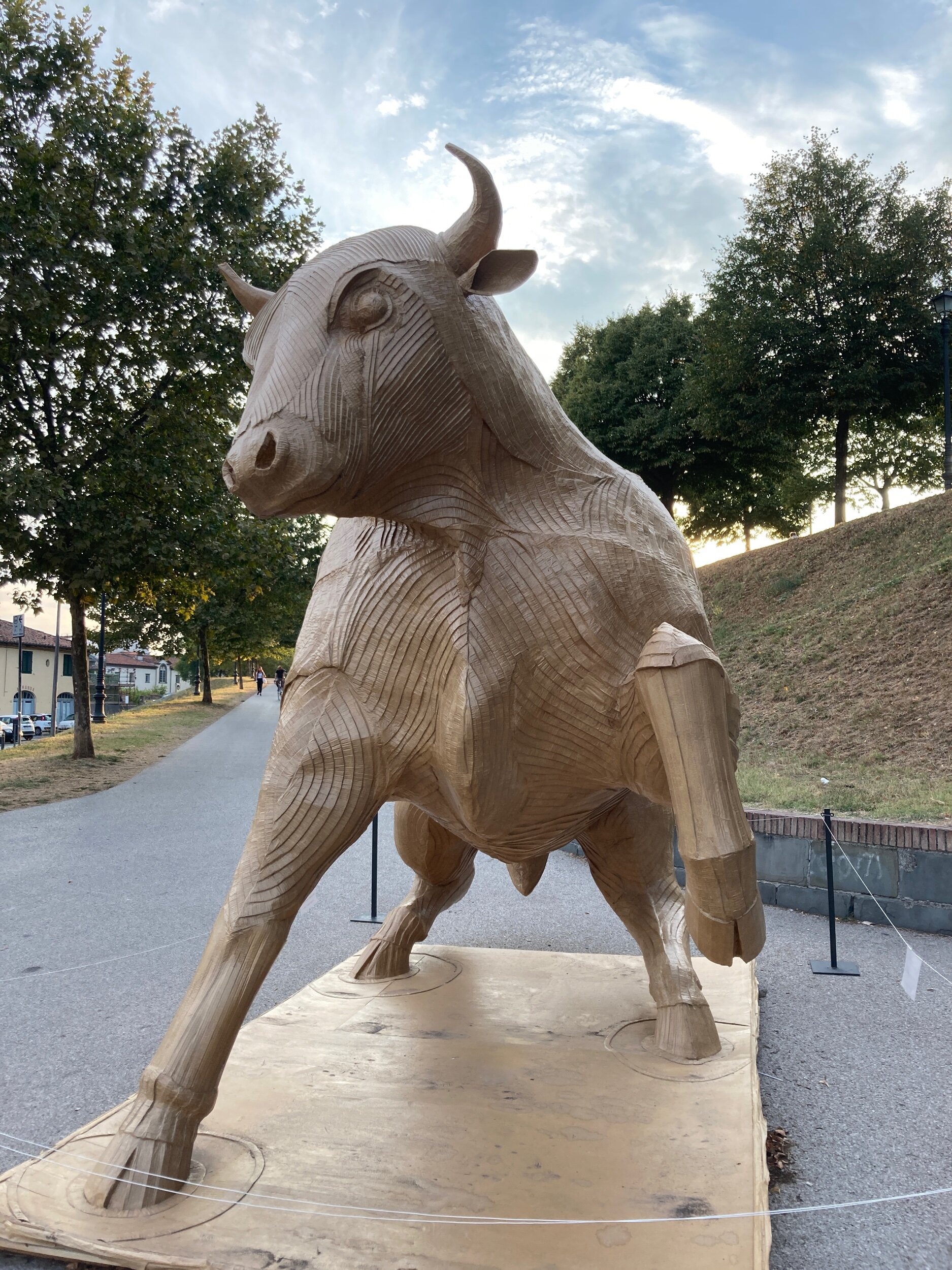
 Although the delicate nature of art made with paper requires a definite “hands-off” viewing experience, the art is not hidden away and hard to access.  In fact, the largest and sturdiest cardboard pieces are displayed outdoors throughout Lucca.  They are built during a month-long stay in Lucca by the artists and then moved to the beautiful piazzas and courtyards of the city to be enjoyed by all. 

“Crossing Borders” Sebastian Blomqvist.  Displayed in Piazza Santa Maria

“Crossing Borders” Sebastian Blomqvist. Displayed in Piazza Santa Maria

 It’s hard to choose a favorite among the large outdoor pieces, but there is something especially enticing about the work called Hybris, placed high above the street under the Porta dei Borghi at the north end of Via Fillungo.  I can’t pass by without stopping to marvel at its graceful sense of movement.

Cartasia 2021 - 13 of 35.jpeg
Cartasia 2021 - 9 of 35.jpeg
Cartasia 2021 - 14 of 35.jpeg

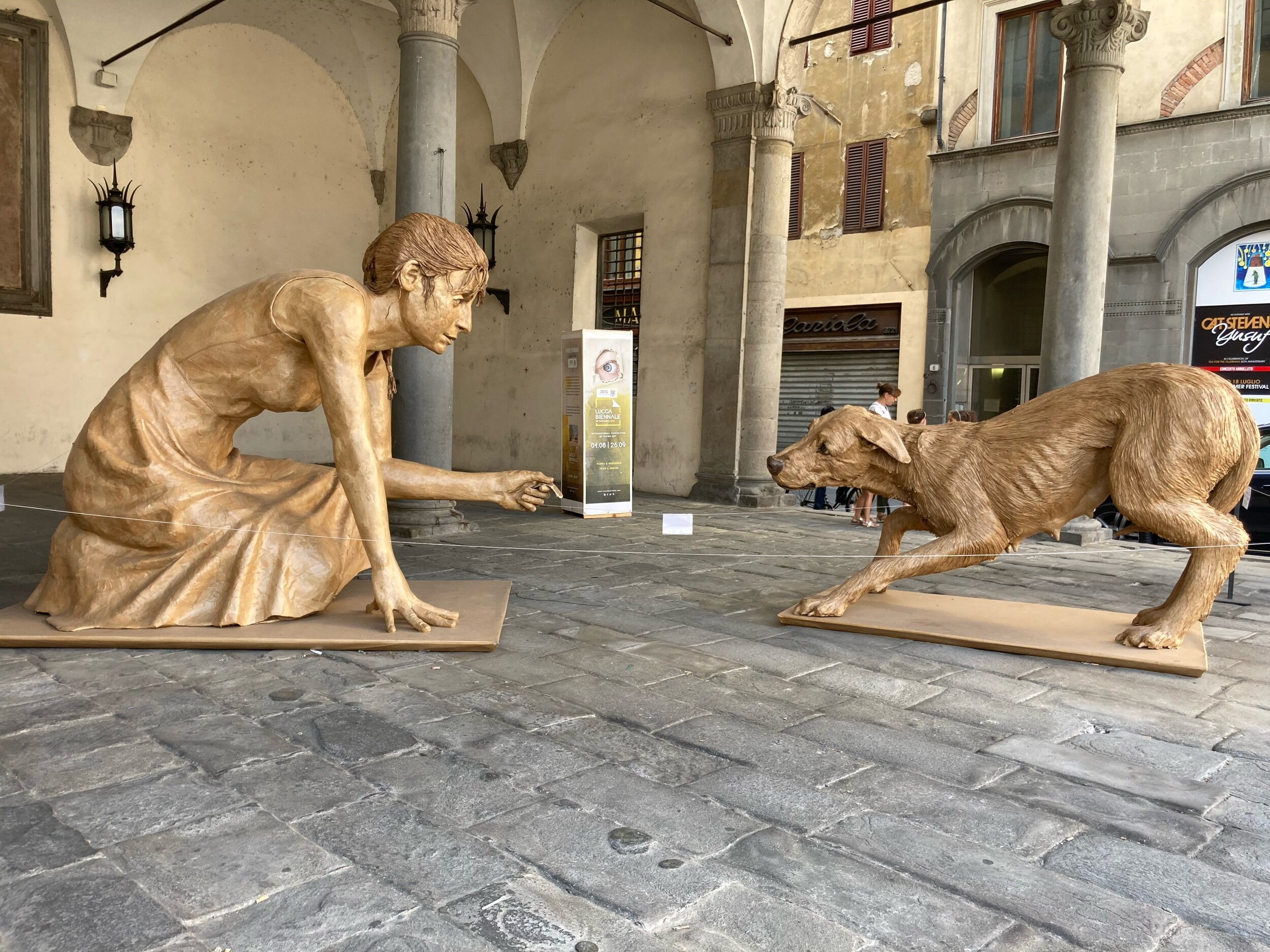
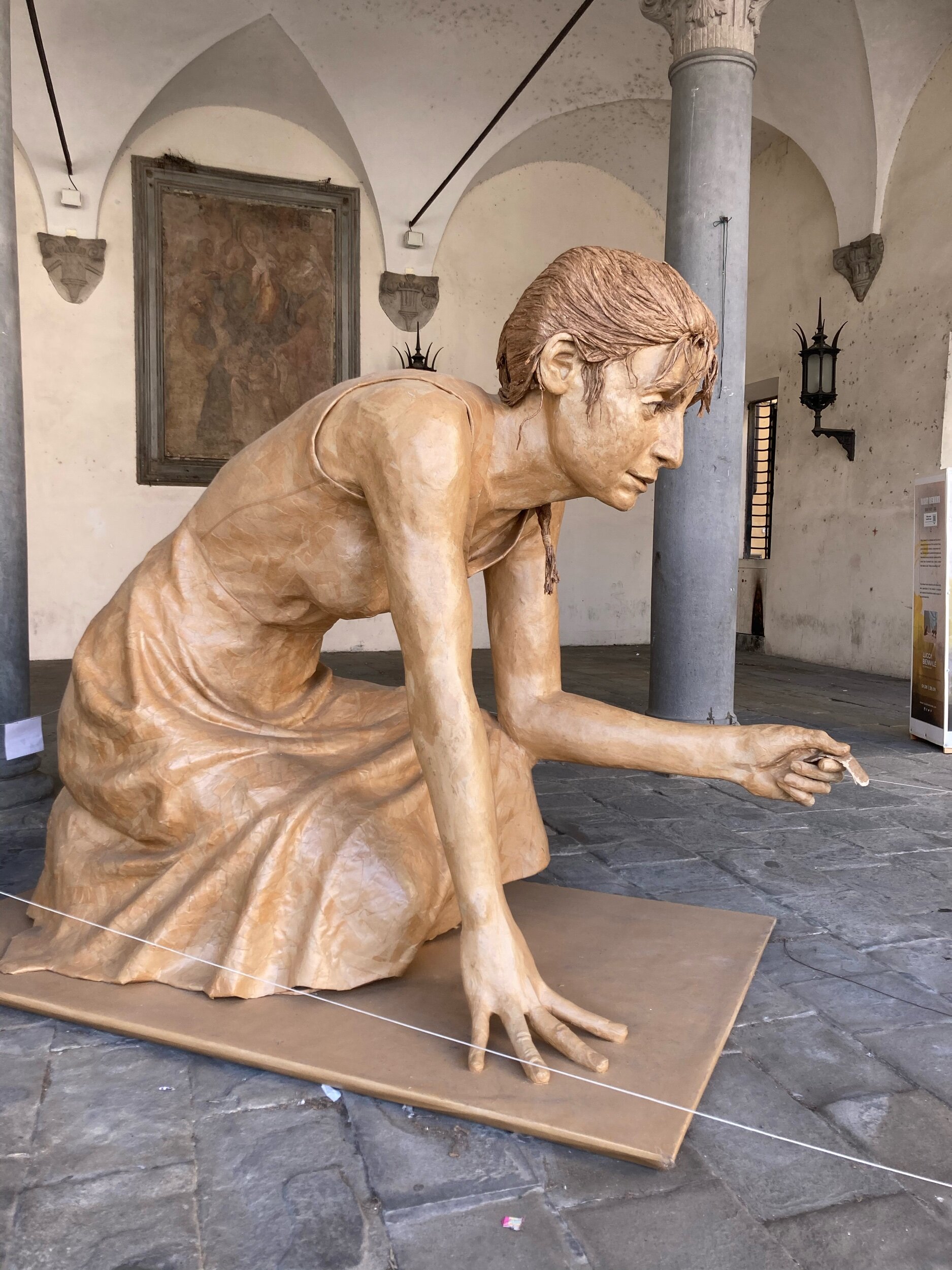
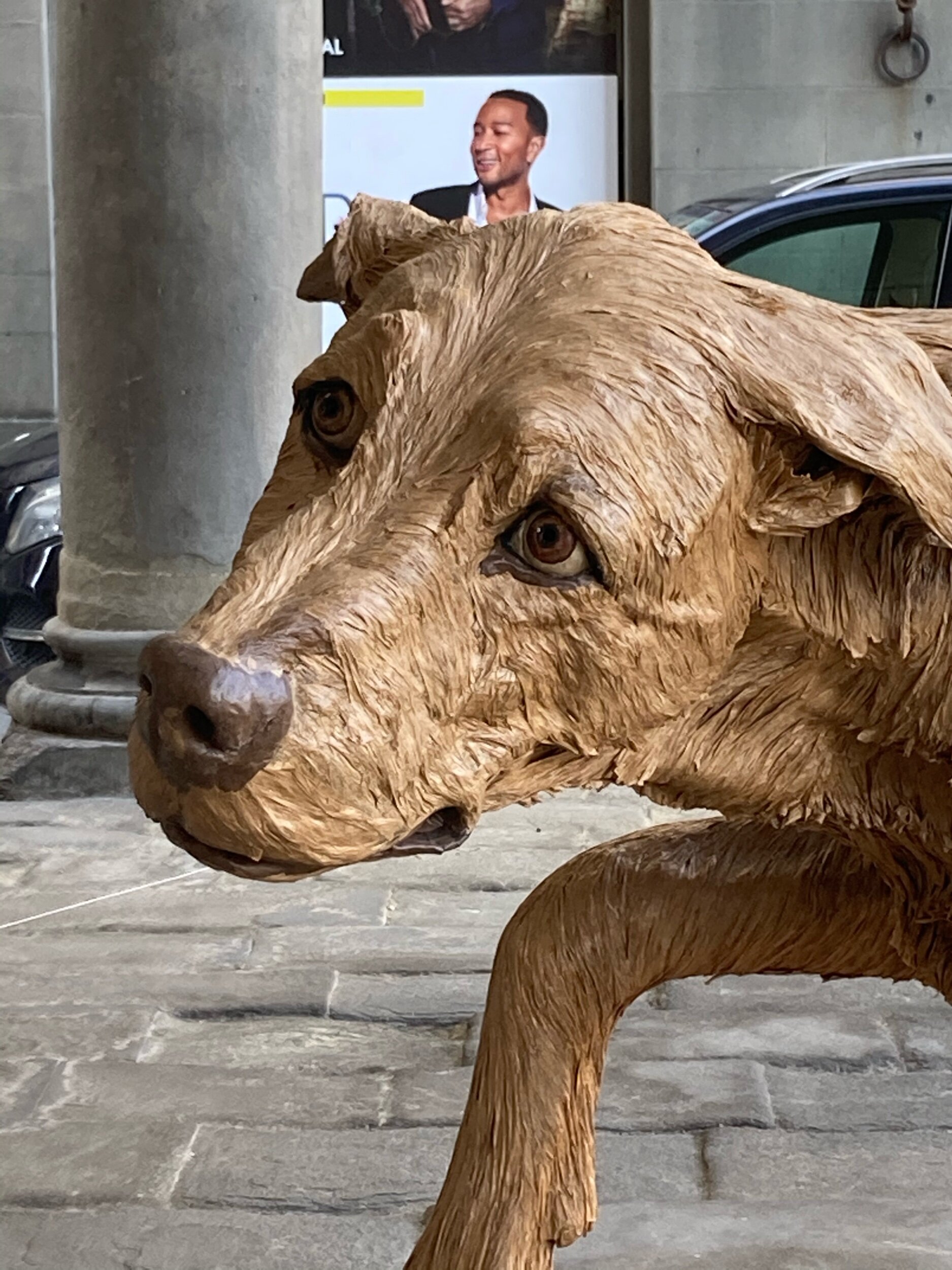
And who could pass by the expressive face of the dog in “Risky Rewards” by Emma Hardy (below) found under the loggia in Piazza San Michele. Delightful!

IMG_2137.jpeg
IMG_2138.jpeg
IMG_2139.jpeg

Next week I’ll write more about Cartasia, with a look at the indoor exhibits. These include the special section of Japanese paper art and some amazing and creative paper fashions.  

September 20, 2021 /Joanne Bartram
Lucca Biennale, Cartasia 2021, Paper Art Italy, Lucca Art
#lucca, Festivals Italy, Italian culture, Italy travel, Lucca, Italian Art
Rome, 1996.  My first trip to Italy. Laundry was one of many things that fascinated me.

Rome, 1996. My first trip to Italy. Laundry was one of many things that fascinated me.

Laundry Day in Italy

July 12, 2021 by Joanne Bartram in Italian culture, Italy, Italy travel, Living in Italy

When I am in the United States I rarely give much thought to laundry. From hamper to washing machine and on to dryer it’s an easy, uncomplicated task. Not so when I am in Italy. First, I need to be sure that no other appliance is in use when I run the washing machine. The electric circuits simply can’t handle the washing machine running at the same time as the oven, dishwasher, or hair dryer. I learned this the hard way when I once tried to blow dry my hair while doing a load of laundry. Picture me taking out the power in mine plus several adjoining apartments. Lesson learned!

Laundry or art ?

Laundry or art ?

Next, drying times can be much longer in humid Italy (especially compared to my former home in the dry climate of New Mexico). In the winter, hanging things near (or over) the radiators speeds things up. But when the weather is warm and damp, and heat not in use, a pair of jeans can take a long time to dry. It helps to have access to “solar powered” drying (ie, sunshine on a terrace or a window line).

In a country with few clothes dryers, laundry hanging from a window line is a common sight.  It always makes me smile.

In a country with few clothes dryers, laundry hanging from a window line is a common sight. It always makes me smile.

Next, there are space concerns. My apartment in Lucca is small with no outdoor space. And being on the ground floor means that I don’t have a window high above the street with a clothes line. Setting up a drying rack inside takes up a lot of space and is only big enough for some clothes or towels, and not many at any one time. Hanging sheets to dry is nearly impossible. I now take my bed linens to the lavanderia where they wash, dry, press, and fold them. They return to me wrapped in paper and soft as can be. A touch extravagant but worth it!

Laundry day in the Cinque Terre.

Laundry day in the Cinque Terre.

E5E95AE3-08D2-4CE8-9B85-C2B3C8249A6C.jpeg

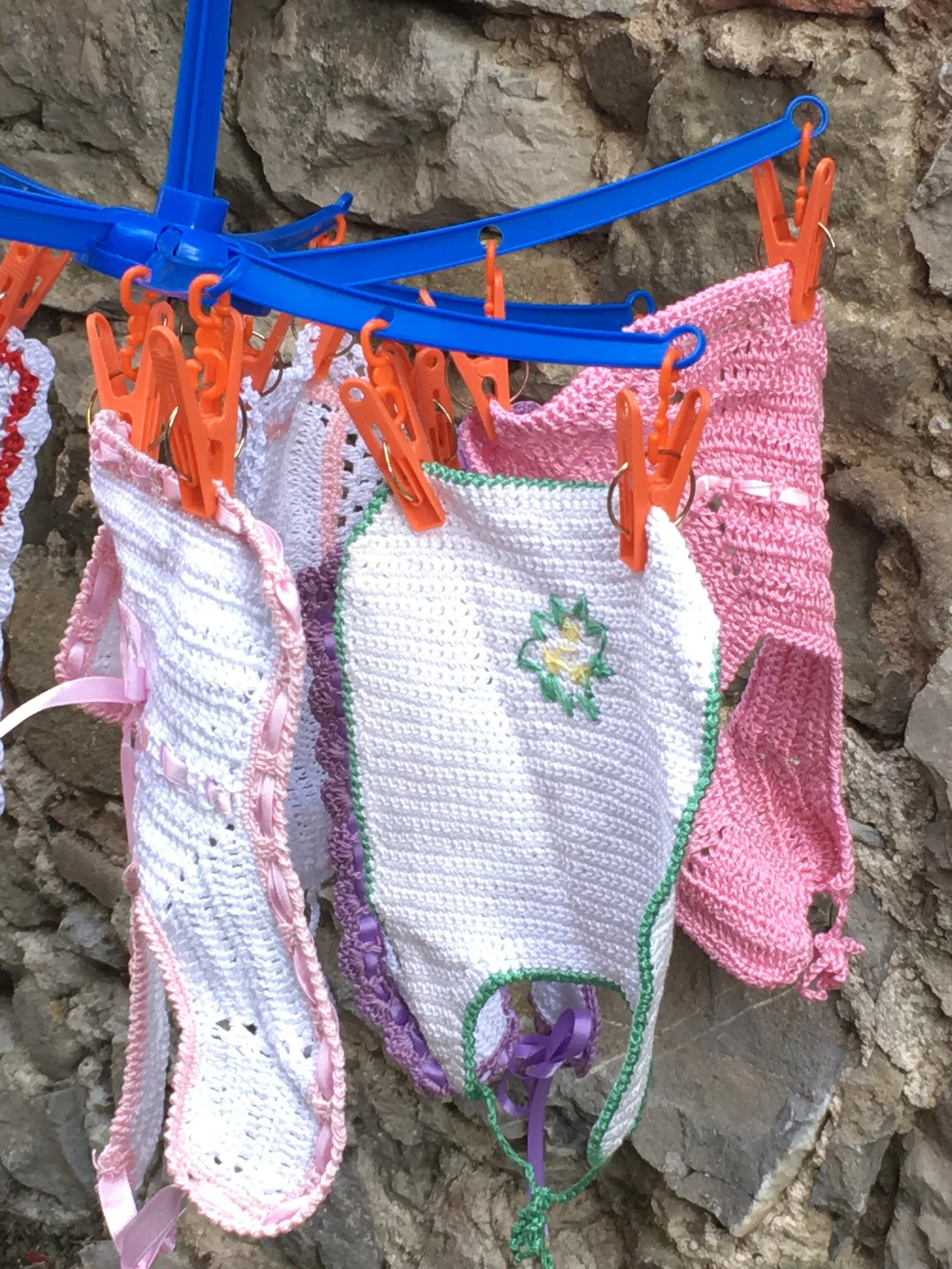
Clothes and linen drying outside is a common sight in Italy (although some historic districts ban this practice). To me, there is something delightful about seeing colorful laundry hung up to dry on a line. It is quintessentially Italian. I often make up theories about the residents of a building based on their laundry - the orange worker’s pants, the individually hung socks, the unabashedly public hanging of “tighty whiteys”, the pretty dresses, the colorful linens, the baby clothes. They all say something about the lives if the people doing the wash. Over the past year I’ve even seen rows of blue surgical masks hung out to dry. Somehow all of these scenes seem like art, or prayer flags, to me.

I’m spending a couple of months visiting my family in the United States right now. I miss those neatly pressed and folded sheets from the lavanderia and the sight of laundry hanging from balconies. I wonder what my neighbors would think if I hung my laundry from my window here in Albuquerque? No doubt the HOA would not be amused.

Color coordinated laundry

Color coordinated laundry

July 12, 2021 /Joanne Bartram
italian life, italian culture, laundry in italy
Italian culture, Italy, Italy travel, Living in Italy
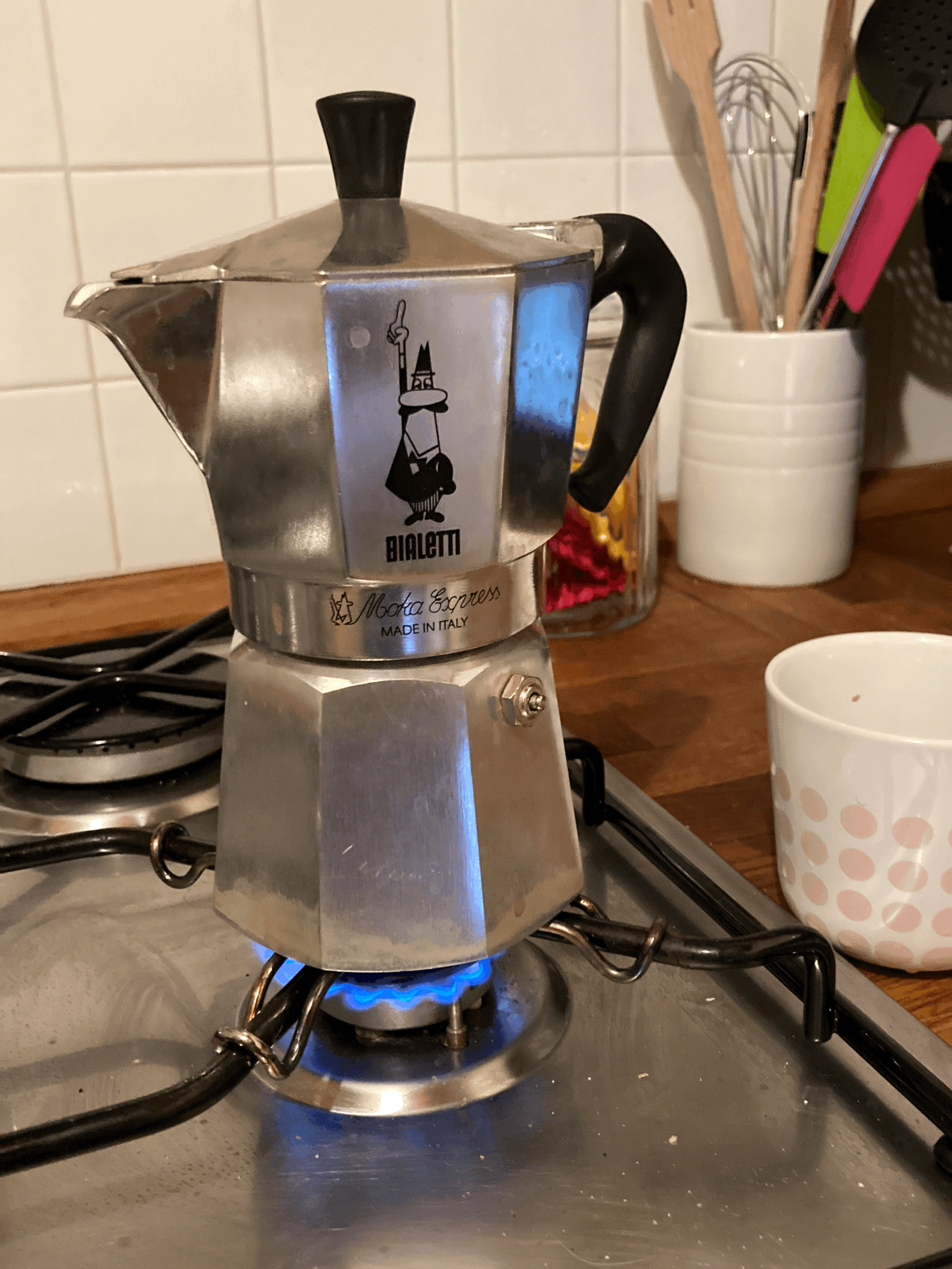
The “omino con I baffi” (little man with the mustache) is the symbol of the Moka Express. He was based on the image of Renato Bialetti, son of the company’s founder

The “omino con I baffi” (little man with the mustache) is the symbol of the Moka Express. He was based on the image of Renato Bialetti, son of the company’s founder

Italian Coffee Part Two : La Moka

June 28, 2021 by Joanne Bartram in Italian culture, Living in Italy

 Many objects are representative of Italian design – the Fiat Cinquecento, the Ferrari, the fashions of Armani, the shoes of Ferragamo.  But perhaps nothing is more emblematic of Italian design than the simple Moka Express coffee pot.  

Almost every Italian home has at least one Moka.  The original design is easily recognizable by its octagonal shape and the “omino con i baffi” (little man with the mustache) that appears on every pot.  Perhaps the true measure of “Italian-ness” lies in the number of Moka pots someone owns.  I have 5, 3 in my Italian apartment and 2 in my other home in New Mexico.

tempImage8YOWaS.gif

A Moka Express has several parts – a lower base for water (caldaia), a funnel / filter basket for the ground coffee (filtro imbuto), a gasket / seal (guarnizione), and an upper chamber to collect the brewed coffee (bricco).  They come in a variety to sizes, mostly commonly from 3 – 12 cups but there are Moka pots as large as 50 cups.  Don’t be fooled by those cup sizes though – they represent espresso cups (about 2 ounces each) and not an American style 6-8 ounce cup.   My most used Moka, labeled 3 cups, makes one nice sized mug or two smaller cups of coffee (about 6 ounces total).  That explains why I have several – brewing coffee for company means I usually need to brew more than one pot at a time. 

The coffee “bar” in my New Mexico condo within two Moka Express pots.

The coffee “bar” in my New Mexico condo.

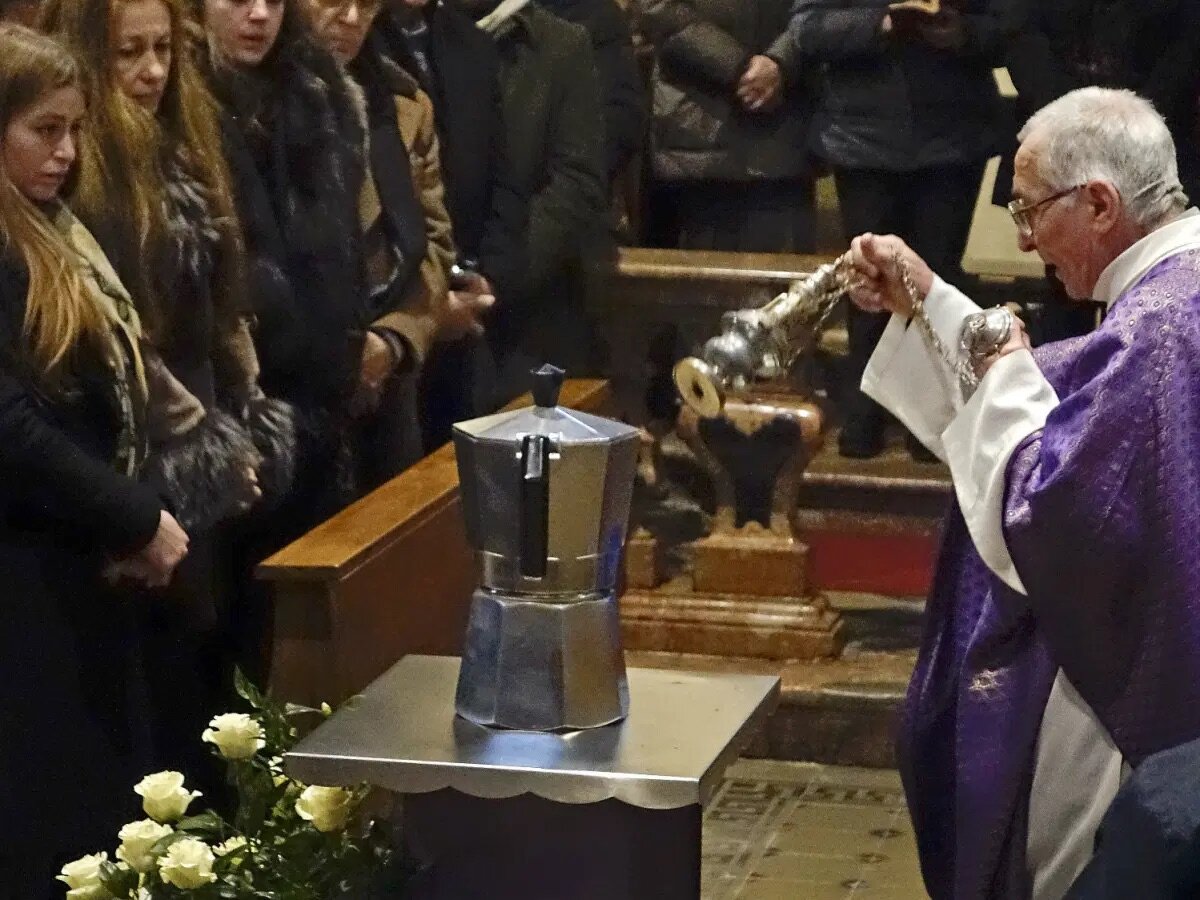
 Alfonso Bialetti, an Italian machinist and tool maker, designed the Moka in 1933 and founded Bialetti Industries to produce it.  It was first sold in the weekly markets of the Piedmont region in northern Italy. Alfonso’s son Renato took over following World War II.  It was Renato who added the mustachioed man, expanded marketing, and made the Moka the symbol of Italian coffee culture that is today.  It is no exaggeration to say the Renato lived and died thinking of the Moka.  When he died, at age 93, his ashes were placed in an oversized Moka pot.  Really! Photographic proof below.

Renato Bialetti’s funeral.  He must have had quite the sense of humor to have his ashes placed in a Moka Express shaped urn!

Renato Bialetti’s funeral. He must have had quite the sense of humor to have his ashes placed in a Moka Express shaped urn!

 In recent years newer home machines, using pre-filled coffee capsules, have become more popular, decreasing sales of the traditional Moka.  There were fears that the Moka would become obsolete. However, if you ask me, those “modern” machines cannot brew coffee that compares with the flavor of Moka brewed coffee (not to mention that a Moka produces no waste other than coffee grounds which can be composted). The trend may be reversing though, sales of the traditional Moka are on the rise again.  Sometimes the traditional methods really are best.

tempImagexOYZhO.gif

To brew the best coffee in a Moka, there are some things to keep in mind: The water chamber is filled just up to the pressure valve, ideally with room temperature filtered water.  Better water = better coffee. Using room temperature rather than cold water decreases the brewing time and the exposure of the grounds to heat, making for a better brew.  Some sources recommend using pre-heated water in the water chamber, but I find that doing so makes the chamber too hot to handle when starting my coffee.

It’s important to loosely fill the filter basket and not tamp down the grounds

It’s important to loosely fill the filter basket and not tamp down the grounds

The ground coffee is spooned loosely into the filter basket and, unlike what the barista does in the bar, never packed down.  The Moka is not a professional style espresso maker (it really isn’t espresso at all, just a close relative). The steam pressure in a Moka is much less than in a true espresso machine.  Less steam pressure requires a less dense fill of coffee, otherwise the steam never makes it through the grounds.  When filling the filter basket it is also important to make sure that there are no grounds on the top edge which would prevent a good seal.

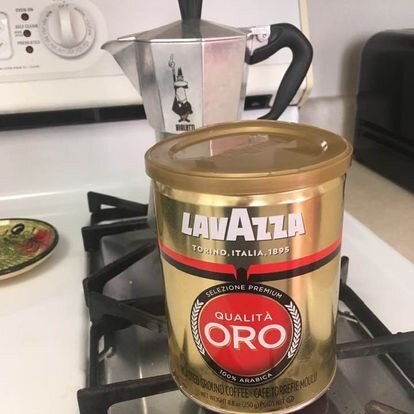
Just like better water makes better coffee, the same is true for better beans.  Though everyone’s taste in coffee intensity and flavor varies, the grind should always be designed for a Moka.  I find that Lavazza makes two good choices – Lavazza Gold and Lavazza Caffe` Espresso (both also available in the US and on-line). In Italy, I often buy fresh ground coffee from a local shop. There are many choices, experimenting to find the perfect bean is part of the fun.  I also find that the coffee tastes better when the ground coffee is stored in an air tight container at room temperature, rather than in the refrigerator, and used up fairly quickly.

To brew the coffee, the Moka is placed over a low flame on a gas stove.  The flame should never extend beyond the edges of the pot.  Low and slow makes the perfect cup of coffee.  Yes, it takes longer than a Nespresso machine but the wait is worth it. As the coffee brews, the sound changes from barely audible to a louder bubble.  As soon the louder bubble starts, turn off the flame and allow the brewing to finish off the heat.  Too much “cooking” isn’t good for flavor. Be careful when handling the pot after brewing - the handle is heat proof but accidentally touching the metal is a painful experience!

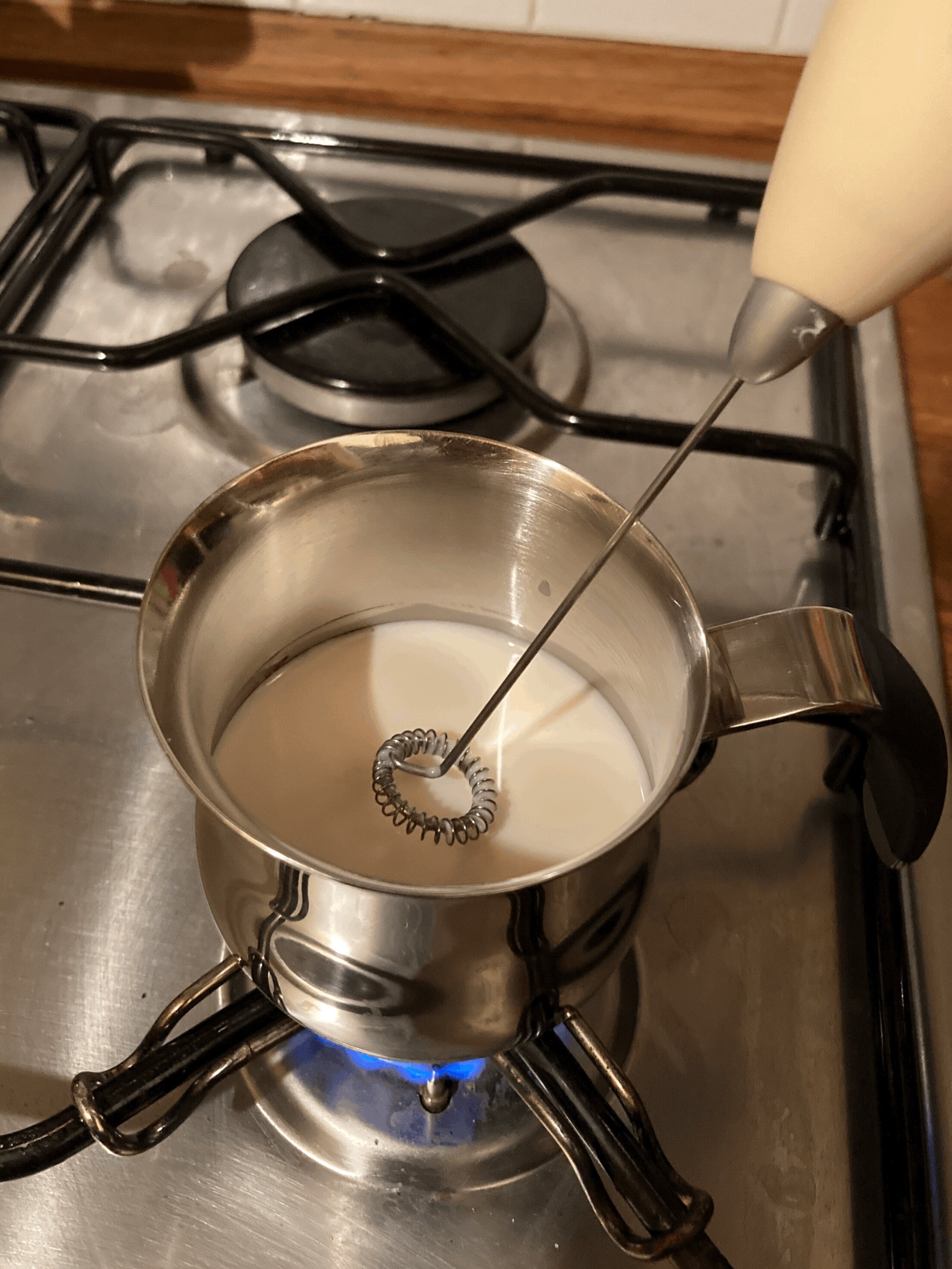
Hot milk and a battery operated whisk - on my way to a cappuccino.

Hot milk and a battery operated whisk - on my way to a cappuccino.

 Something I didn’t know, but learned when doing some research for this post, is that before serving the coffee that has collected in the upper chamber should be stirred.  This blends the first bit of coffee with what comes later, evening out the taste.  Good tip.

While the Moka does not make a true espresso, it makes a nice “almost cappuccino” with the addition of some hot, frothed milk. The milk can be heated on the stovetop in a specially designed stainless cup or in a microwave. A battery operated whisk does a good job of frothing the milk. Low fat works best!

 It’s also important to know how to care for the Moka. New pots need to be “seasoned” by brewing, and discarding, 2 pots of coffee.  This eliminates any metallic taste or residue left over from manufacture.   

The inside of the aluminum pots should never be washed with soap.  Some hot water and a wipe will suffice.  A bit of coffee oil will collect and that’s ok – better than coffee that tastes of soap!   And never, ever put a Moka in the dishwasher. After cleaning, all parts of the Moka should be dried well. Ideally, the pot is stored in pieces rather than completely sealed to prevent growth of “fuzzy stuff” in the lower chamber.

 The rubber seals will fail over time and need to be replaced.  Seals are sold separately and have to match the size of the Moka.  Forgetting the pot on the heat will melt the seal and, if left on the heat while empty for too long, can ruin the pot itself.  Can you guess how I learned this? 

Newer versions of the Moka exist – a stainless steel one, an electric model, and ones for induction stove tops.   I’m partial to the original aluminum 3 and 6 cup models with the omino con I baffi used on a gas burner. A bit old fashioned, but really satisfying to use. In fact, I think I will go brew some right now.   

363C647E-7DFD-4E93-B57C-F73B1D1D7E71_1_105_c.jpeg
June 28, 2021 /Joanne Bartram
caffe`, Moka Express, Moka Coffee, Italian Coffee, #moka
Italian culture, Living in Italy
  • Newer
  • Older

Powered by Squarespace