Two Parts Italy

Exploring Italy, travel, and living a flavorful life

  • Blog
  • About This Blog
  • Start Here
  • Recent Posts
  • Archives by Topic
  • Subscribe
  • Contact me

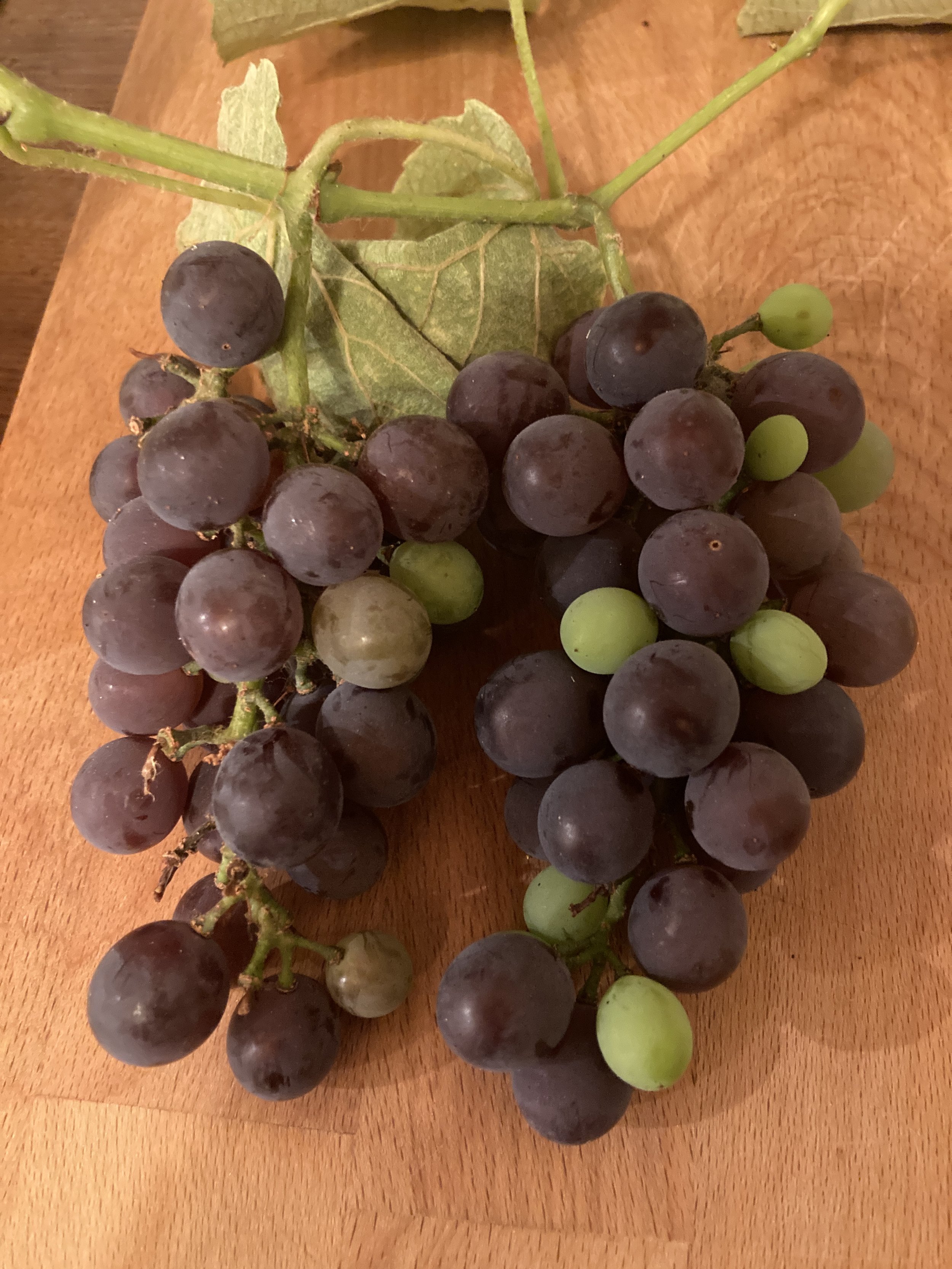
Uva Fragola, ripe and ready to harvest. Photo thanks to M. Boyd

Uva Fragola

October 16, 2023 by Joanne Bartram in #fallinitaly, Cooking, Italian culture, Italian recipes, Living in Italy

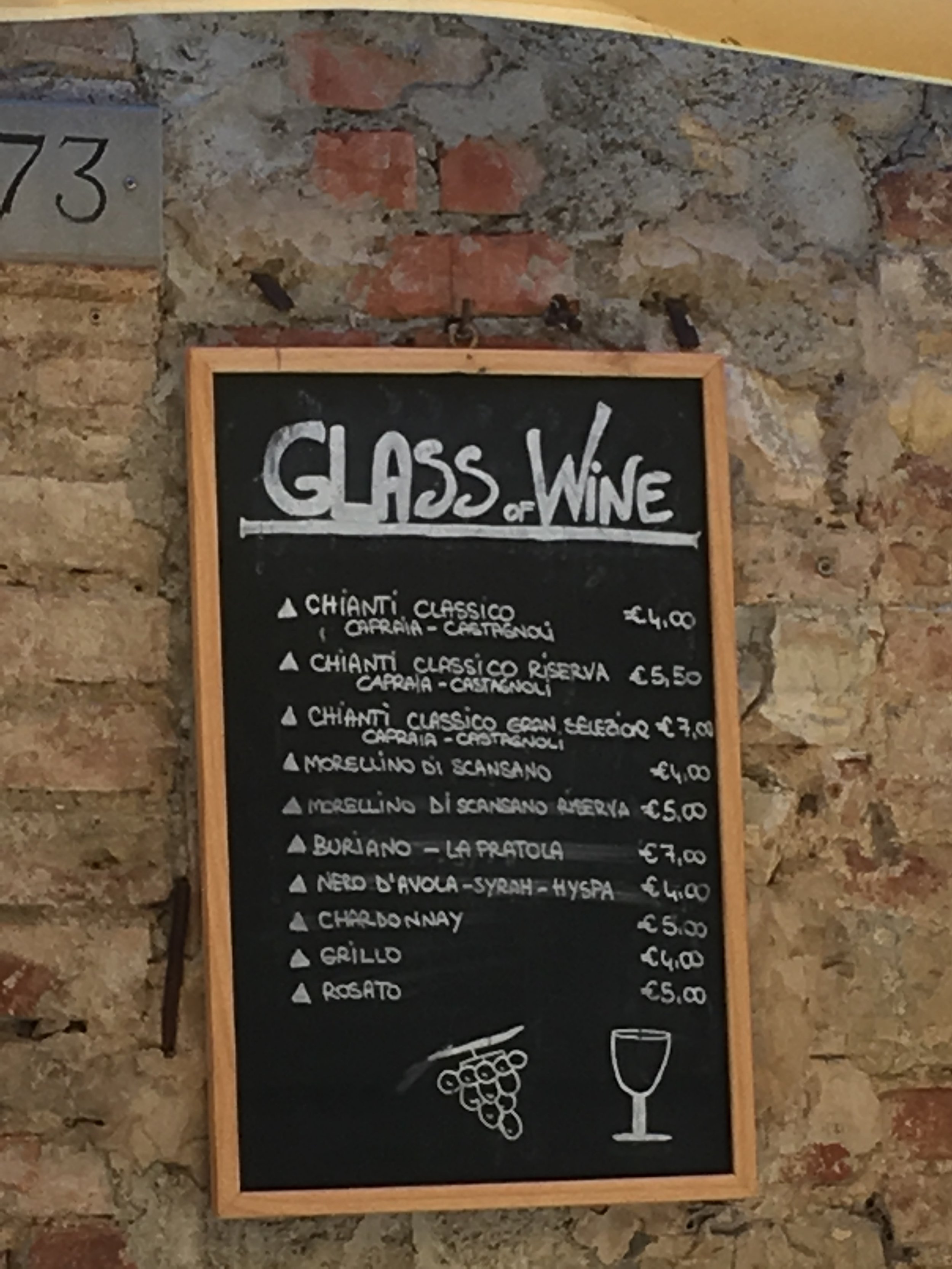
Chianti Classico Wines - mostly Sangiovese grapes

Fall is harvest season in Italy.   First comes the vendemmia, the grape harvest, followed by the raccolta delle olive (olive harvest).  Both have important significance economically and culturally.  Participating in either is a combination of hard work and great fun.

 Many varieties of grapes are grown in Italy and produce excellent wines.  The names are familiar – Sangiovese, Nebbiolo, Trebbiano, Lambrusco, Pinot Grigio and Vermentino to name a few.   All of those grapes are cultivated varieties of the Vitis Vinifera species.

B3AB8740-2939-4D6F-9B5A-B0B36B455B47_1_201_a.jpeg
F208D213-9449-4453-810E-29B8883538AB.jpeg
EFC0A775-107E-4EC7-9CDD-0270756318B3.jpeg

And then there is the Uva Fragola (Strawberry Grape). It is a different species all together, the Vitis Labrusca. Not just that, but (gasp!) it is an American grape imported into Italy in part due to its resistance to the Phylloxera insect. This is a bit controversial as some sources say it is that very resistance to Phylloxera which allowed the American grapes to carry the insect to Europe where it devastated less resistant Italian vines.  Which story is true?  I don’t know nearly enough about grapes to offer an opinion.

 What I do know is that the Uva Fragola is not a respected wine grape. In fact, the EU bans it for commercial wine production due to high levels of methane, a poison, that occur in the distillation process.  There may be some home made Fragolino about if you are brave enough to drink it. Despite not being used in wine production, the grape is still grown in Italy where it is appreciated for its unique quality - grape with an underlying strawberry flavor. 

One interesting surprise for me was finding that the Uva Fragola is actually a type of Concord Grape.  Yes, this type of grape is the source of the Welch’s Grape Jam that topped all my peanut butter sandwiches when I was a kid.  A jam I abandoned as I grew up in favor of more interesting flavors.  I have to believe that, like most things (and people) transplanted to Italy, the American Concord Grape was transformed by the Italian soil, air, water, and perhaps even the music of the language.  The Italian Uva Fragola is delicious!
September is Uva Fragola season. The big, plump, purple grapes are used in several ways.

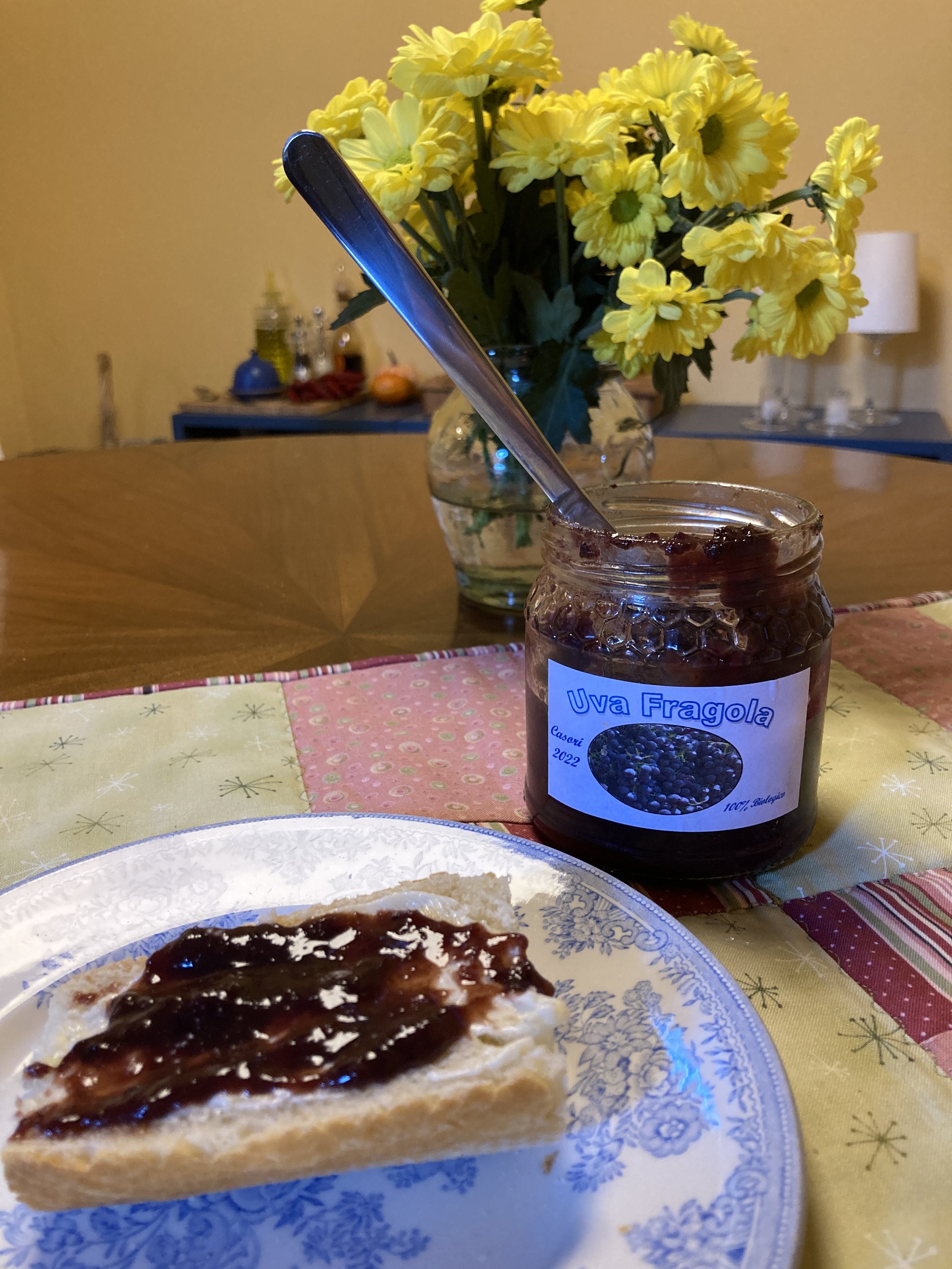
The grapes make wonderful jams and jellies. 

I was fortunate to receive a jar made from last year’s crop, a just-sweet-enough jam filled with bits of grape.  It was nothing like the Welch’s Grape of my childhood.

This was grape jam for grownups!


Another traditional use of the Uva Fragola is in a focaccia dolce, a grape studded bread glazed with sugar. It’s a simple, straightforward snack, perfect alongside a cup of coffee, and a great use for the September grape crop.

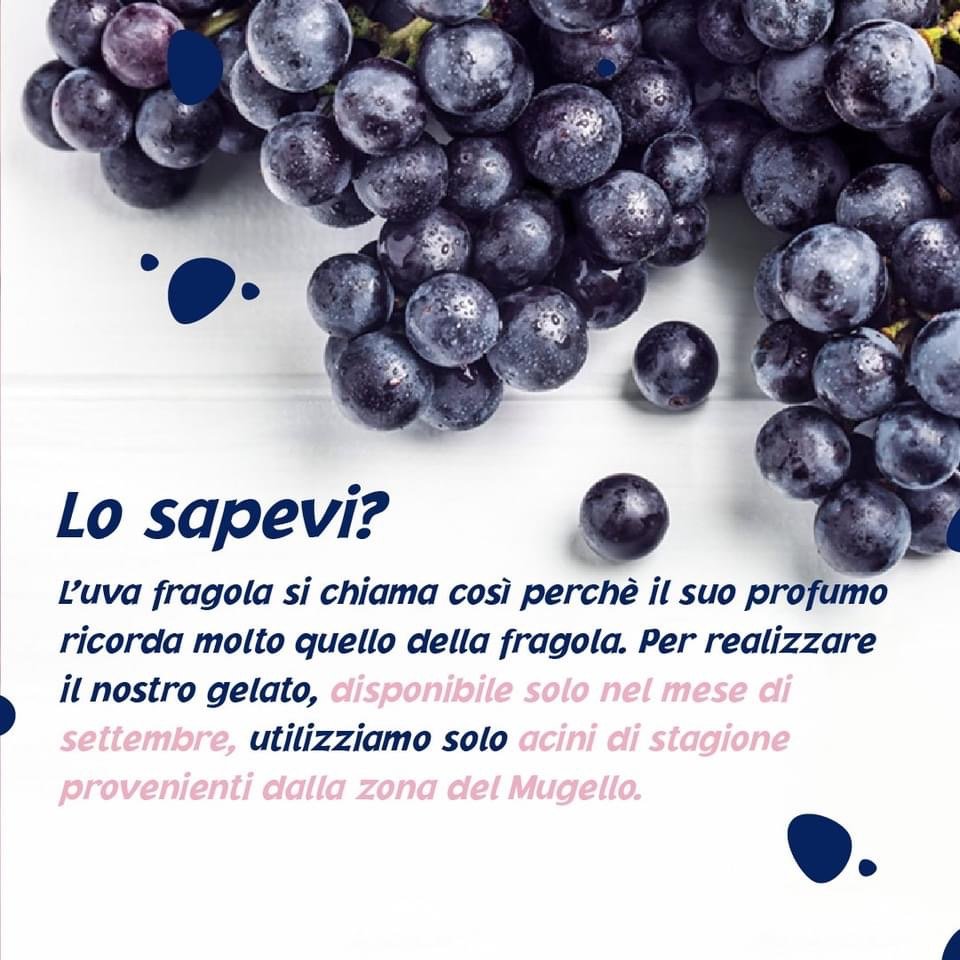
My favorite way to consume Uva Fragola is as gelato.  I was happy when a local gelateria advertised their September-only special of Uva Fragola gelato, made using local Tuscan grapes.  With its rich color and berry flavor it is the perfect end of summer treat.  With such a short season, one must take advantage with at least a weekly gelato serving, right?
BD7F4A21-4180-4D2A-A63F-38DD608CFFF6.jpeg
C75C0323-1FC4-4EB8-87D7-785D4C1A45E3.jpeg

Uva Fragola grapes grown right here in the historic center of Lucca.

Last week, a friend in Lucca invited me to snip some of the ripe bunches of Uva Fragola grapes that grow along the terrace above his apartment.  I was more than happy to help with his small harvest but wasn’t quite sure what I would do with so many grapes. 

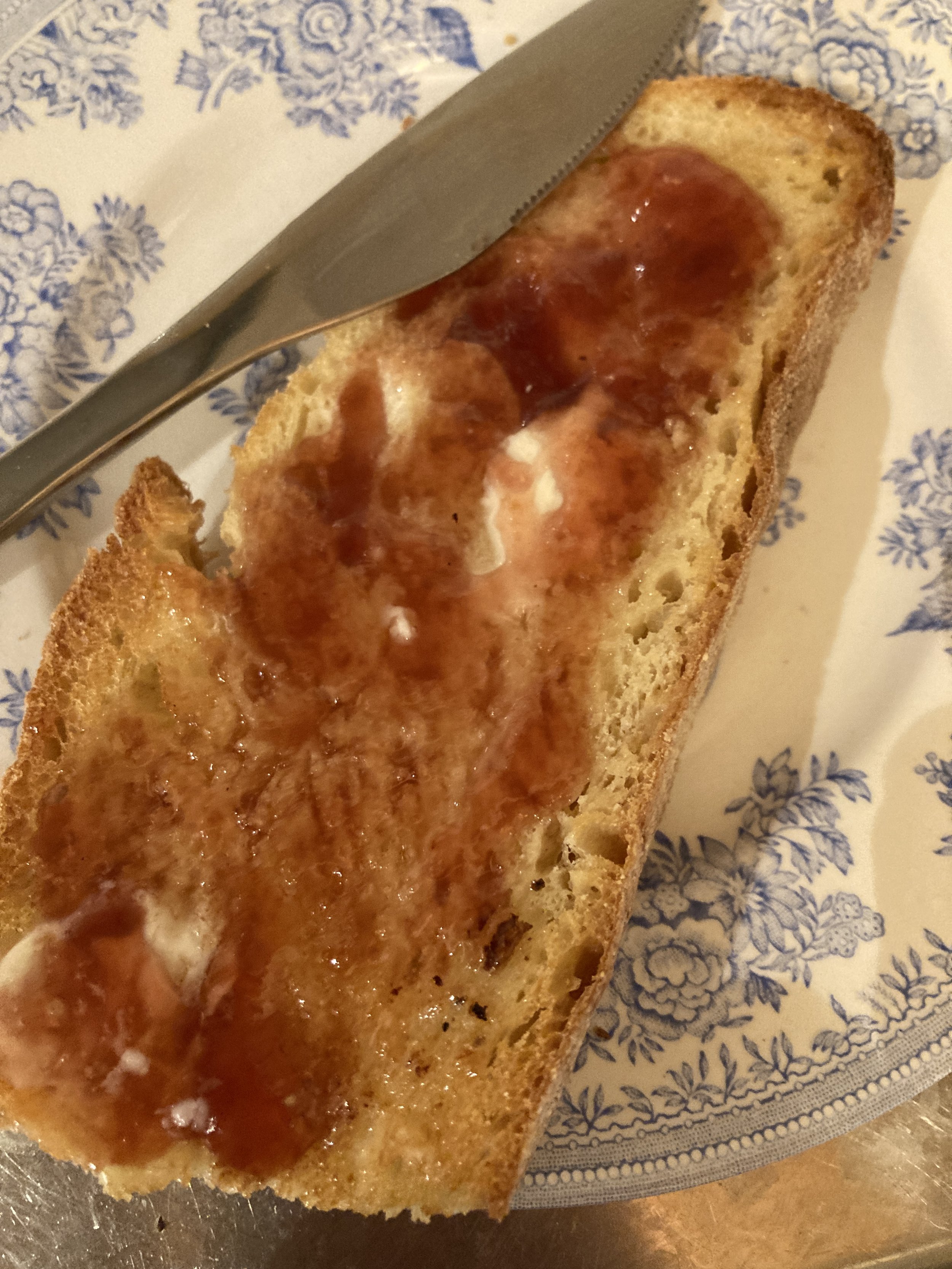
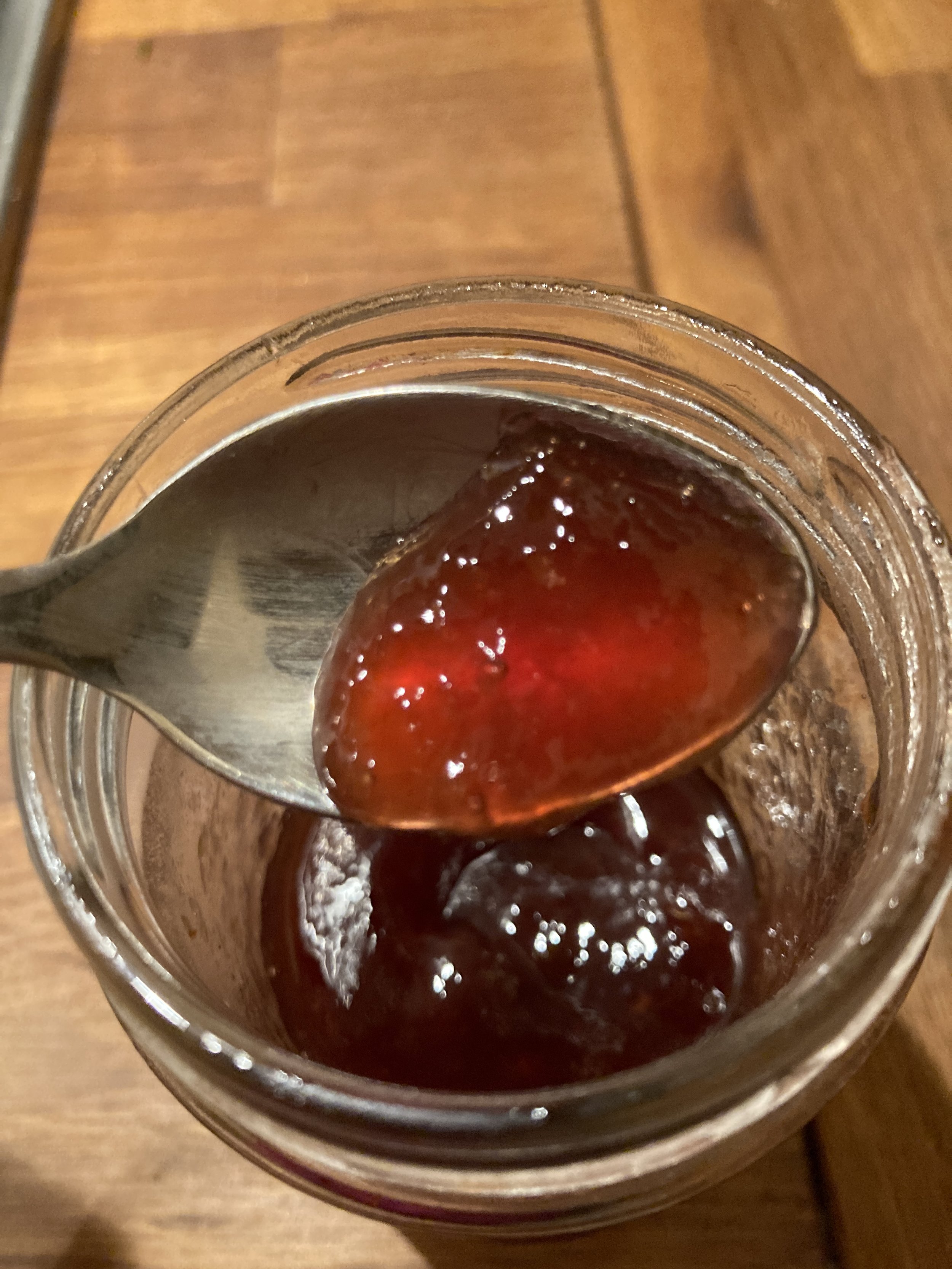
I decided to make a syrup to drizzle over soft cheese, gelato, or perhaps pancakes.  I didn’t have an exact recipe, but used a proportion of grapes to sugar suggested in a jam recipe I found on line. I just didn’t add the pectin that the recipe called for.  In a happy accident, I reduced the grape syrup enough that it thickened into more of a jelly than a syrup even without adding pectin.  Perfect on my morning toast and still good as a topping for cheese.

Here's how I made the jelly:

Remove the Uva Fragola grapes from the stems, rinse them and discard any green ones. Hint: twisting the grapes from the stem instead of pulling them avoids that little bit of stem that can cling to the grape.  Twisting also opens the skin at the top of the grape which helps them soften as they cook.

To 700 grams of grapes add 200 grams (1 cup) of sugar and 3 tablespoons of water in a heavy bottom pot.

Heat the mixture over a low to medium flame, stirring frequently, until the sugar dissolves and the mixture begins to bubble gently.

Reduce the flame to low and cook for 1 hour, stirring and scrapping down the sides of the pot every once in a while.  Be sure the flame is low enough that the mixture doesn’t stick to the bottom of the pot. The kitchen will smell wonderful at this point!

After cooking for one hour, crush the grapes in the pan to release all the juices and then strain to remove the skins, leaving only the juice behind.   A food mill would work here, but I don’t have one so I just crushed the grapes well with a wooden spoon to squeeze out the juices.

Return the juice to the pan, bring to a simmer, and cook on low.  Less time would result in a syrup, 45 minutes and I got jelly.  Isn’t kitchen chemistry fun!   My 700 grams of grapes made one 6 oz jar of jelly.
FFE0F4BD-71A2-45E7-B360-A32C3C374800.jpeg
6E02CF59-C24C-4A6E-892A-8BBF1DD38158.jpeg


October 16, 2023 /Joanne Bartram
uva fragola, italian grapes, vendemmia
#fallinitaly, Cooking, Italian culture, Italian recipes, Living in Italy

From My Italian Kitchen: Pasta Primavera

July 03, 2023 by Joanne Bartram in Italian markets, Italian recipes, summer Italian food

“Piselli pigri” fresh from the market, with Tropea onions, mushrooms and asparagus

When the warmer weather of spring and early summer arrives, it is time to put away winter recipes and start cooking with the best produce the season has to offer. Later in summer, ripe tomatoes will take center stage as the basis for Caprese and Panzanella salads, but right now fresh peas and bright green asparagus are at the top of my list.

For the past couple of months both have been available at the markets in Italy.  Even better for me, I can buy piselli pigri (lazy peas) at the Ortofrutta (vegetable and fruit market) in Lucca. I call them lazy peas, but it is really the cook (me) who is pigra (lazy).  Piselli pigri are fresh peas already shelled at the Ortofrutta and placed in bags, eliminating all the work but none of the flavor. A lazy cook’s dream!

 The combination of fresh peas and asparagus, along with some onion (I like to use Tropea but yellow onion works just fine too), a lot of mushrooms, and a bit of diced prosciutto cotto (cooked ham) comes together to make a tasty Pasta Primavera (a spring style pasta). This is the perfect warm weather pasta dish, chock full of veggies and with very light on the sauce. 

 The little bit of sauce it does have, just enough to slightly moisten the pasta, comes from cooking the onion, peas, and asparagus in butter, allowing the veggie juices to mingle with the butter flavor. More flavor comes from quick cooking the mushrooms in hot butter in a separate pan. These ingredients are then combined with cooked linguine tossed in, yes, more butter. The last step is to sprinkle the pasta with parmesan cheese. The simple fresh flavors taste just like spring.

8B22A808-A080-49A0-B572-1D9742A791A4.jpeg
76E00046-AE59-4DDD-9F7C-180DB3E3F017.jpeg
A9586961-C736-485A-9500-D1BCA01AEA57.jpeg

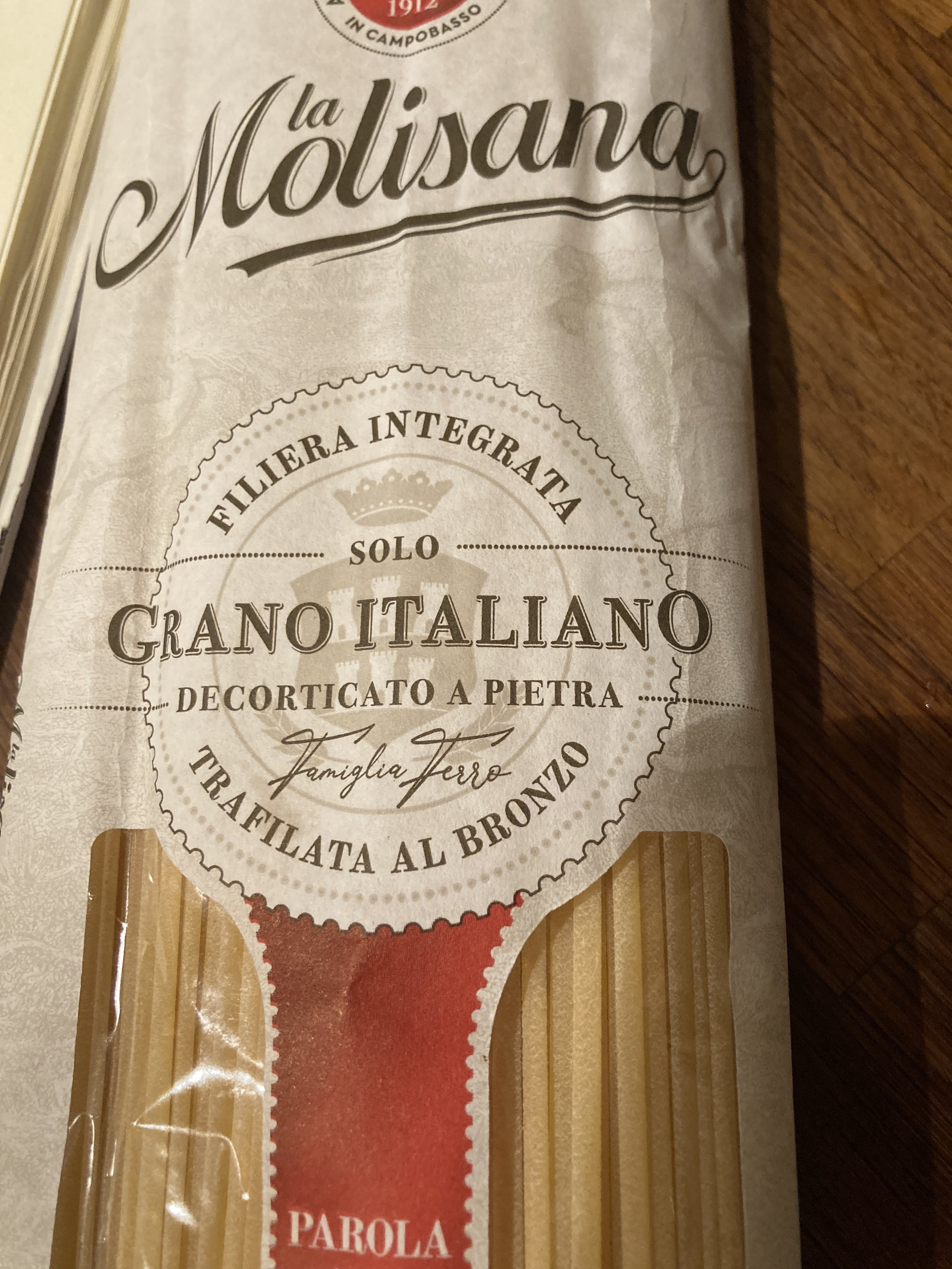
Notice the rough surface of this pasta - perfect for making the very light sauce cling to the pasta.

The recipe is quite flexible.  When fresh asparagus isn’t available I simply leave that out and increase the amounts of the other veggies.  No fresh peas?  Frozen ones will work too.  In the United States I use a thick slice of Virginia ham in place of the prosciutto cotto.  And sometimes, just for fun, I use cubes of crisp pancetta in place of the ham. This is a dish that lends itself to experimentation.  To get the best results, use the best pasta available. The one pictured here, La Molisana brand, uses a bronze extruder to form the pasta, leaving it just a bit rough and able to cling to the light sauce of this pasta dish. It also helps to use a good quality parmesan. Freshly grated is always best, though I am not above buying some already grated (another shortcut for the pigra cook). 

 The basic recipe serves 3 as a main dish, 4 as a side.

¾# linquine

8 tablespoons butter

¾ cup fresh peas, blanched for about 5 min (or use frozen peas straight from the freezer without blanching)

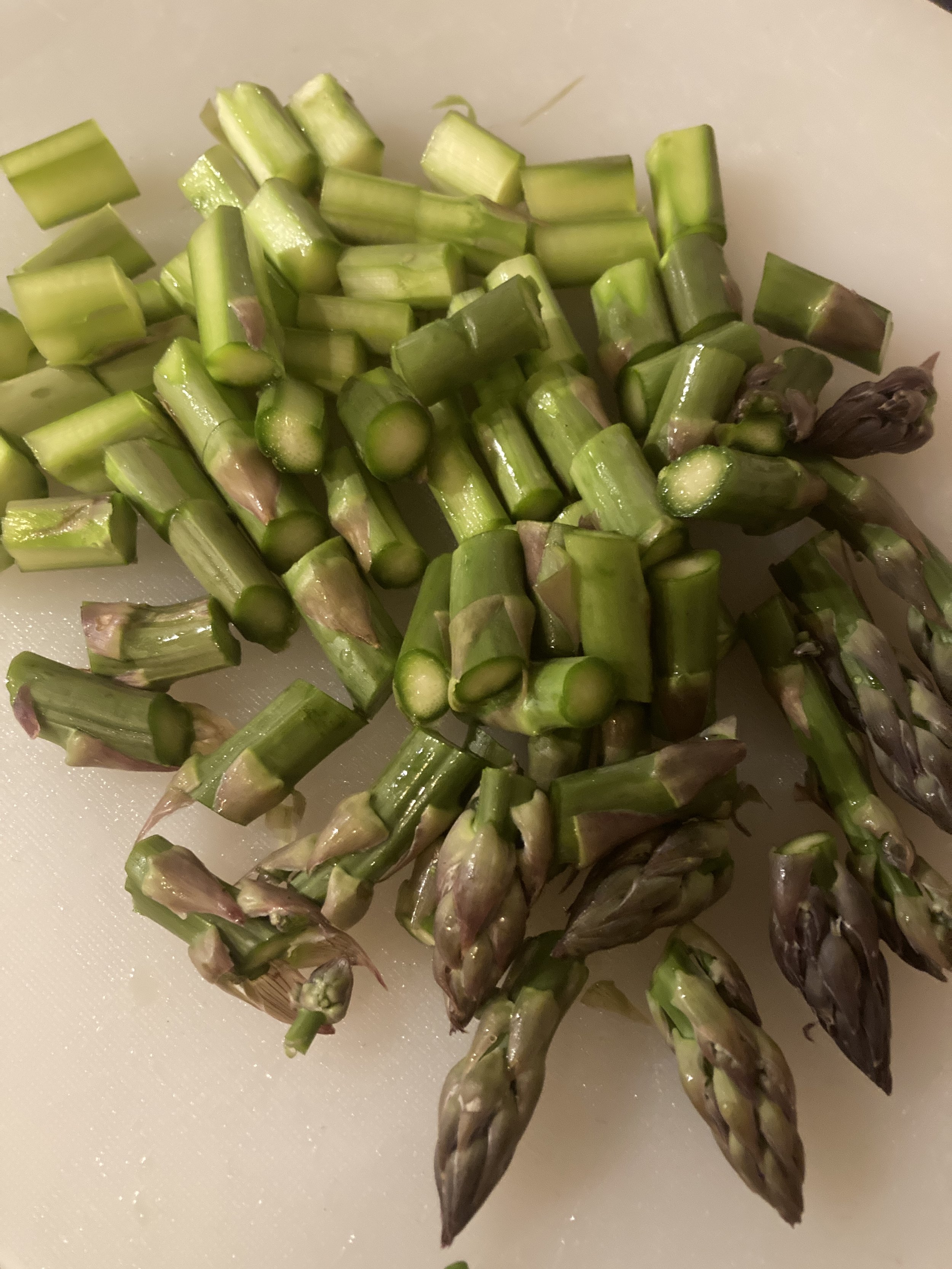
¾ cup fresh asparagus, cut into 1” pieces and blanched for 3-4 minutes. Medium size asparagus, a little larger than the width of a pencil work best.  If using really thin ones you may skip the blanching, if using really fat ones it is best to trim the thickest part of the stalk with a vegetable peeler before using.

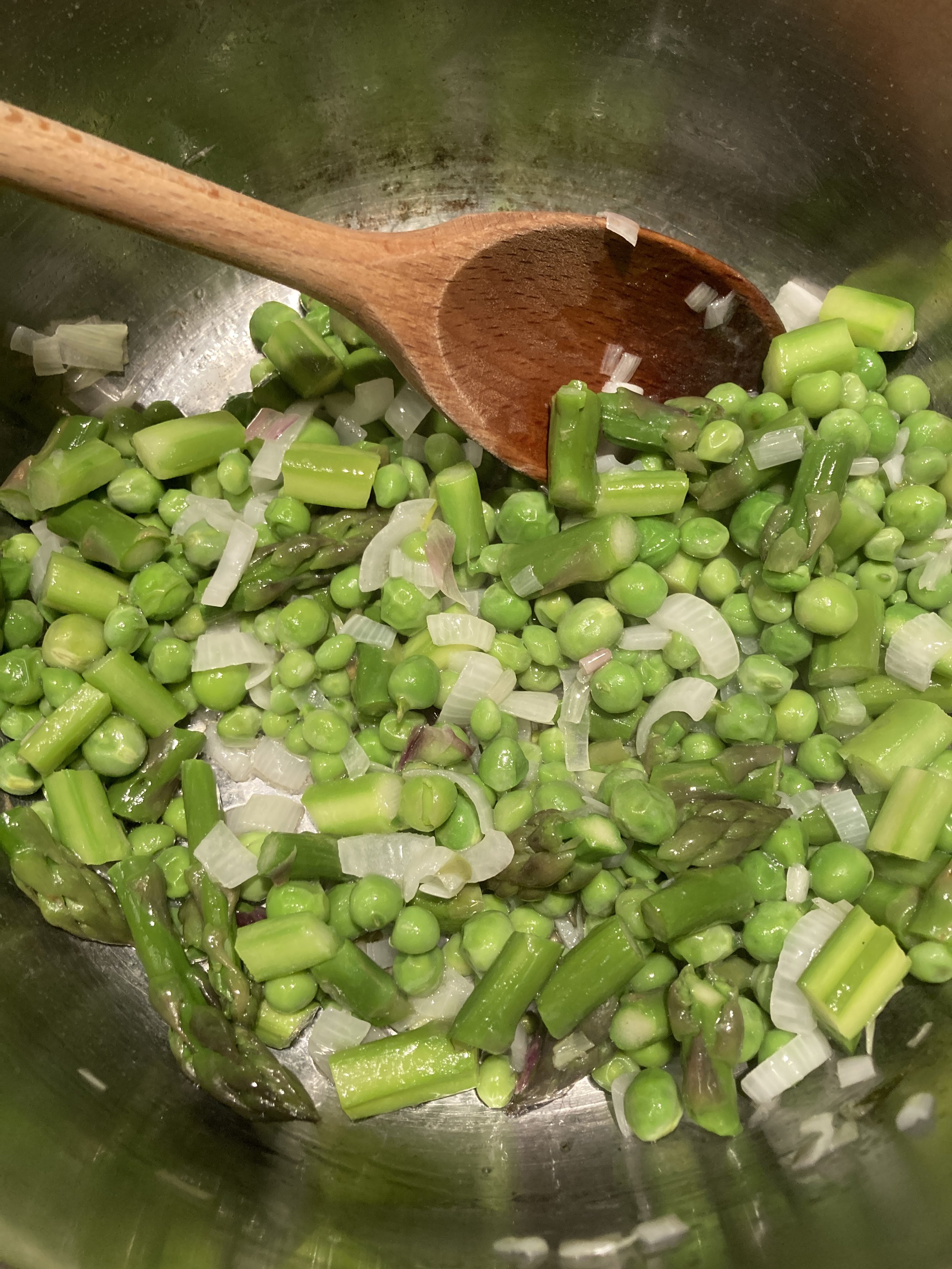
The bright green peas and asparagus look just like spring.

¼ of a yellow onion, sliced thin

½ cup cubed ham

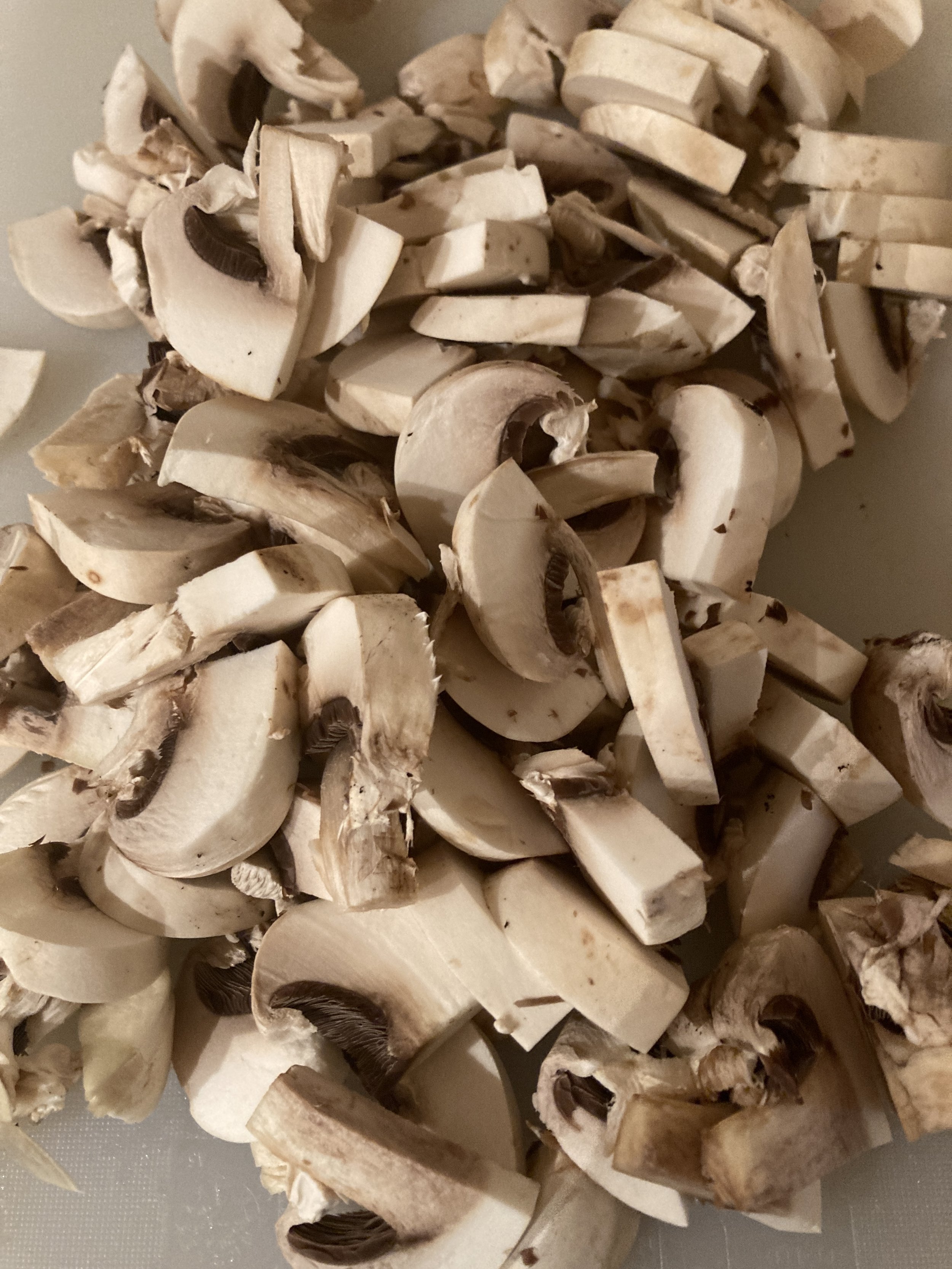
8 oz mushrooms (white or small portobellas) ,sliced thin. Love mushrooms? Use more!

¼ cup parmesan cheese, grated

Sea salt and coarse ground pepper to taste

Melt 4 tablespoons butter in a heavy pan. Add the peas, onion, and asparagus.  Sauté for about 10 minutes until the veggies are almost tender.  Add the cubed ham and cook to heat through.

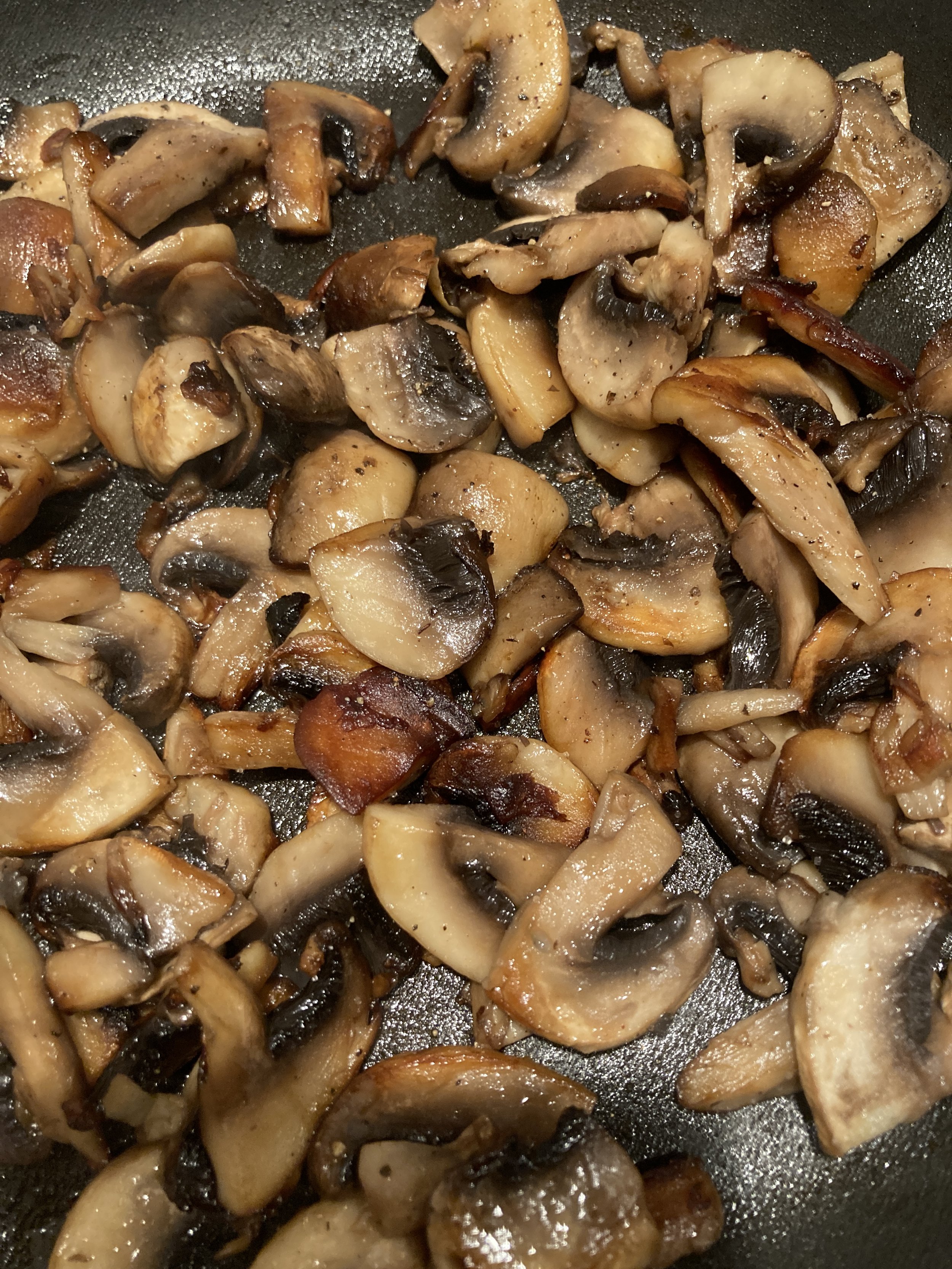
 In a separate frying pan, heat 2 tablespoons of butter.  Add the mushrooms to the hot butter and cook over a medium high heat.  The mushrooms should cook quick enough that they hold their juices in and brown rather than simmer. 

While the vegetables are cooking, cook the pasta.   Toss the al dente pasta with 2 tablespoons of butter and toss with the grated parmesan cheese.  Add the cooked veggies and ham with all of the accumulated juices. Add salt and pepper to taste.  Top with the mushrooms and a sprinkle of cheese.. Serve with some extra grated parmesan.

A crisp white wine goes really well with this pasta. Perhaps a Gavi, a Grillo, or a Catarratto. Enjoy!

Pasta Primavera


July 03, 2023 /Joanne Bartram
Pasta Primavera, Spring Pasta, pasta
Italian markets, Italian recipes, summer Italian food

I wasn’t the only one to get caught in the heavy rains !

Rainy Day Risotto

May 22, 2023 by Joanne Bartram in Cooking, Italian recipes, Living in Italy, Lucca

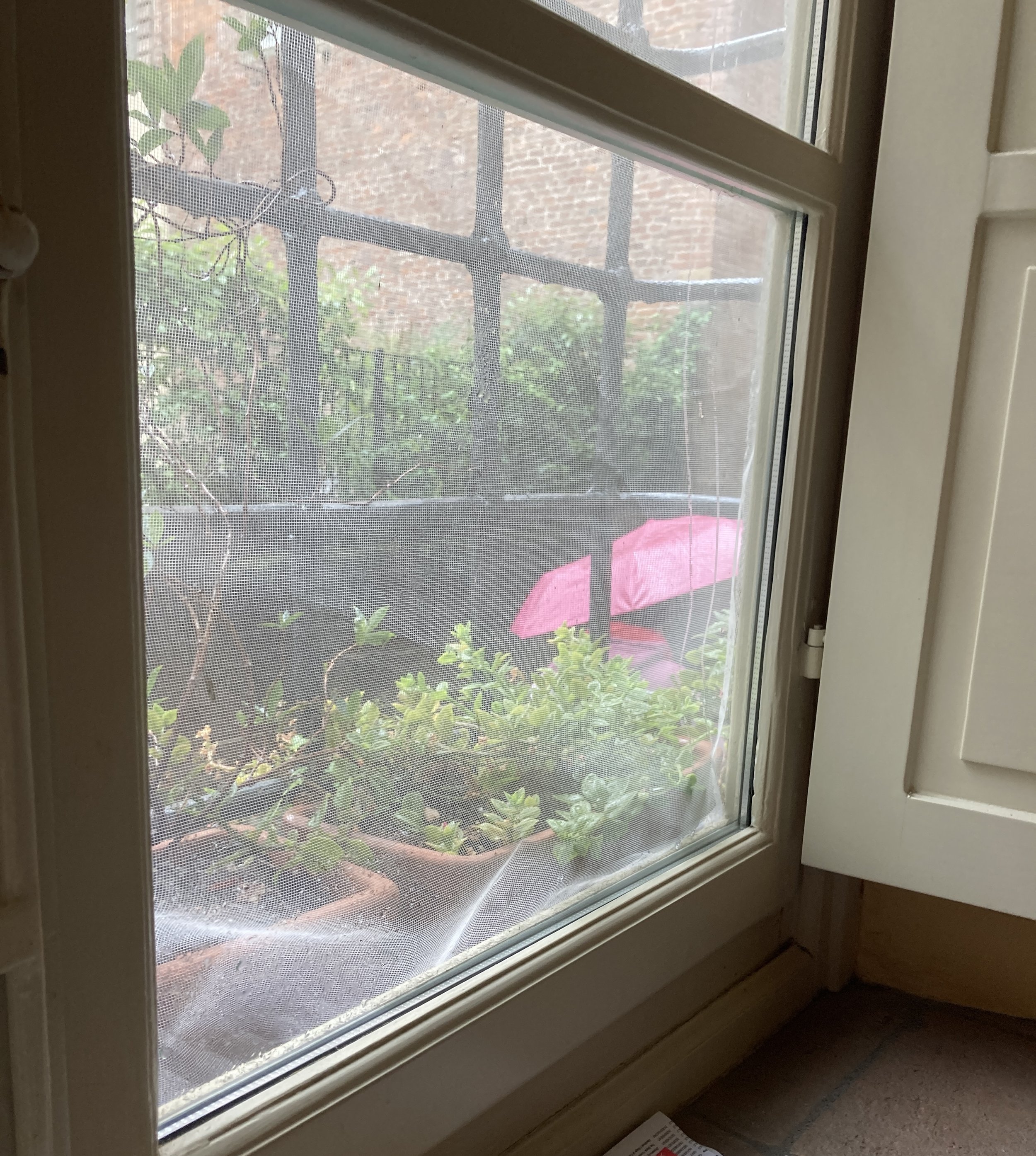
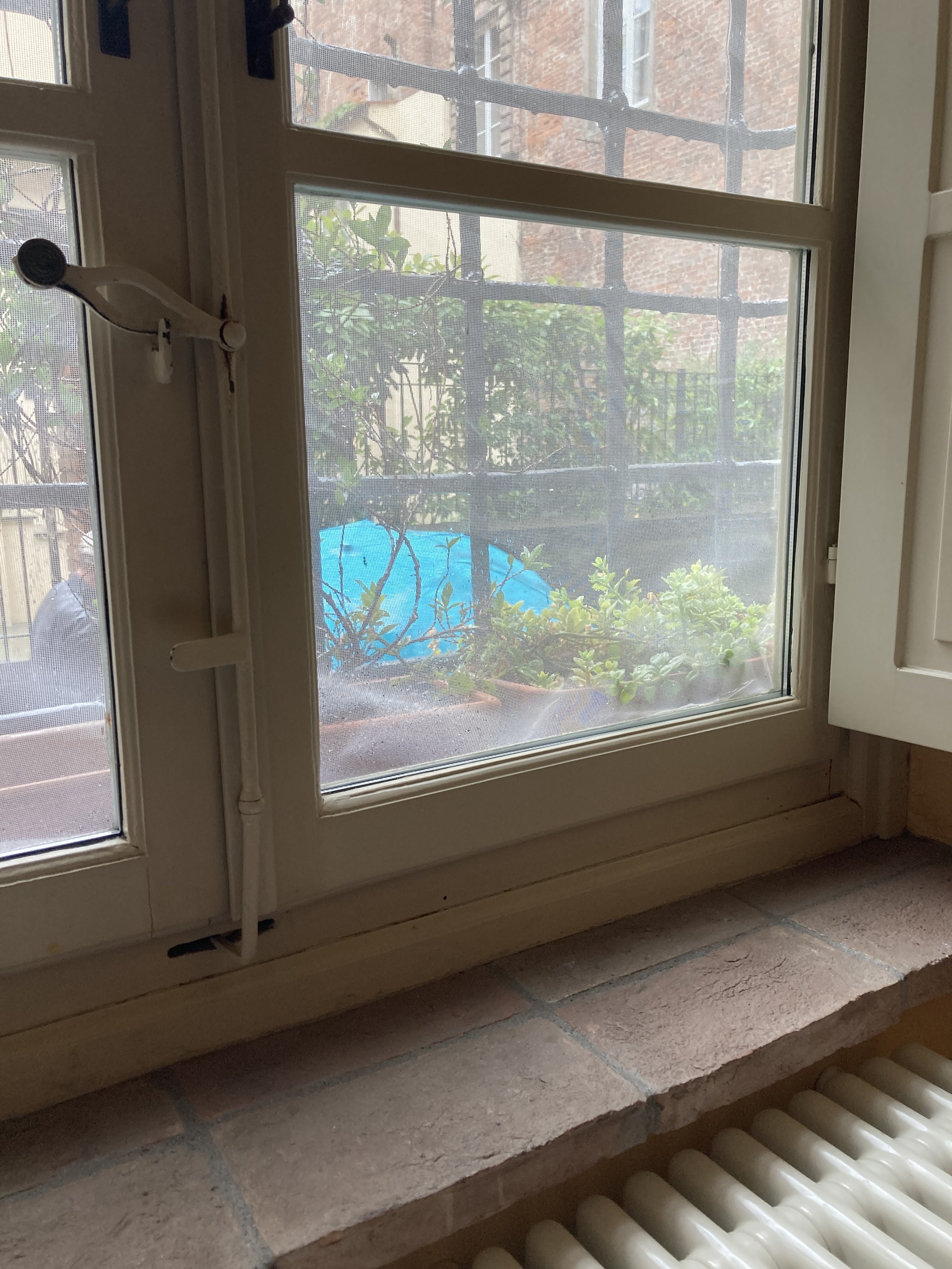
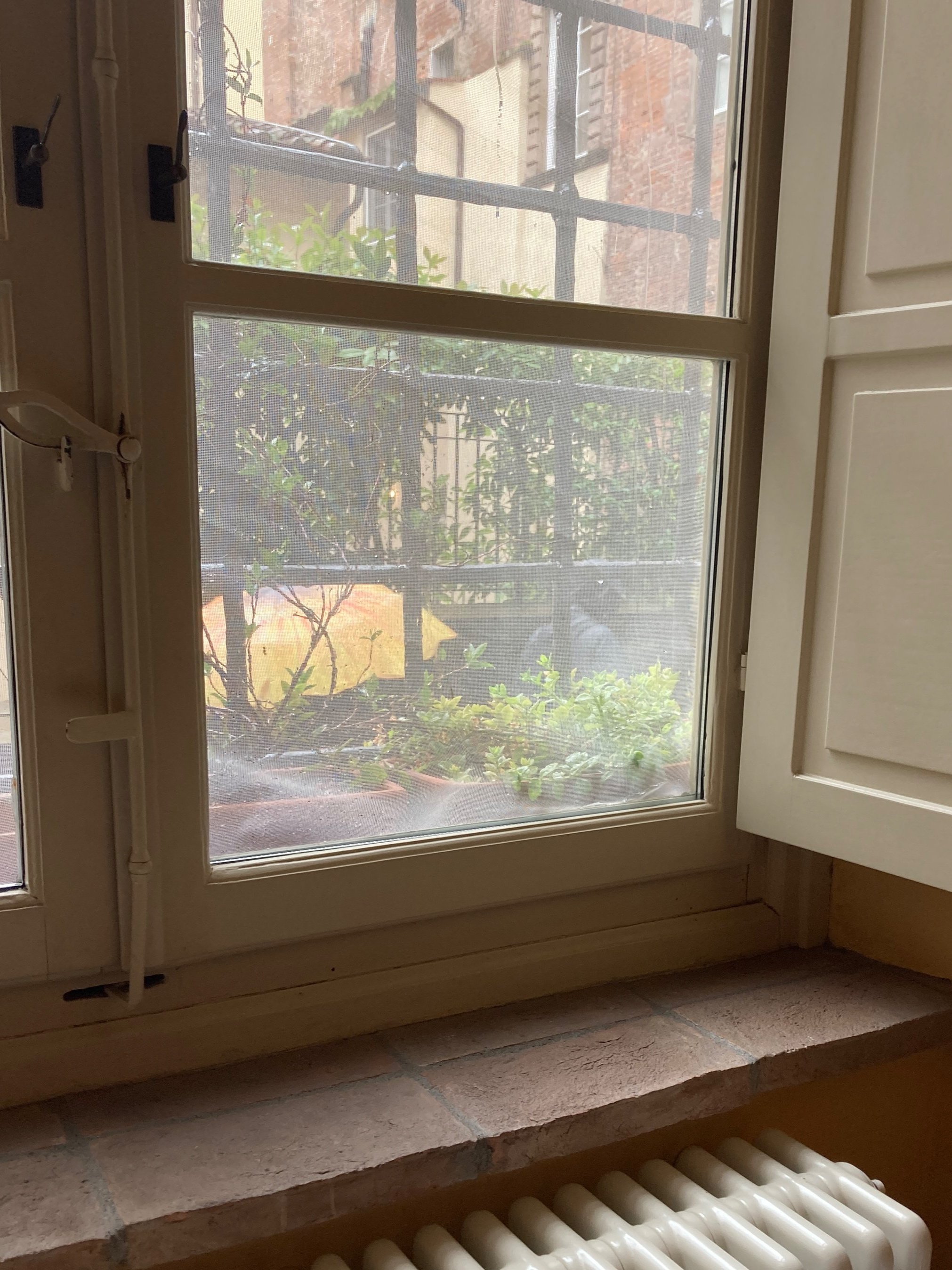
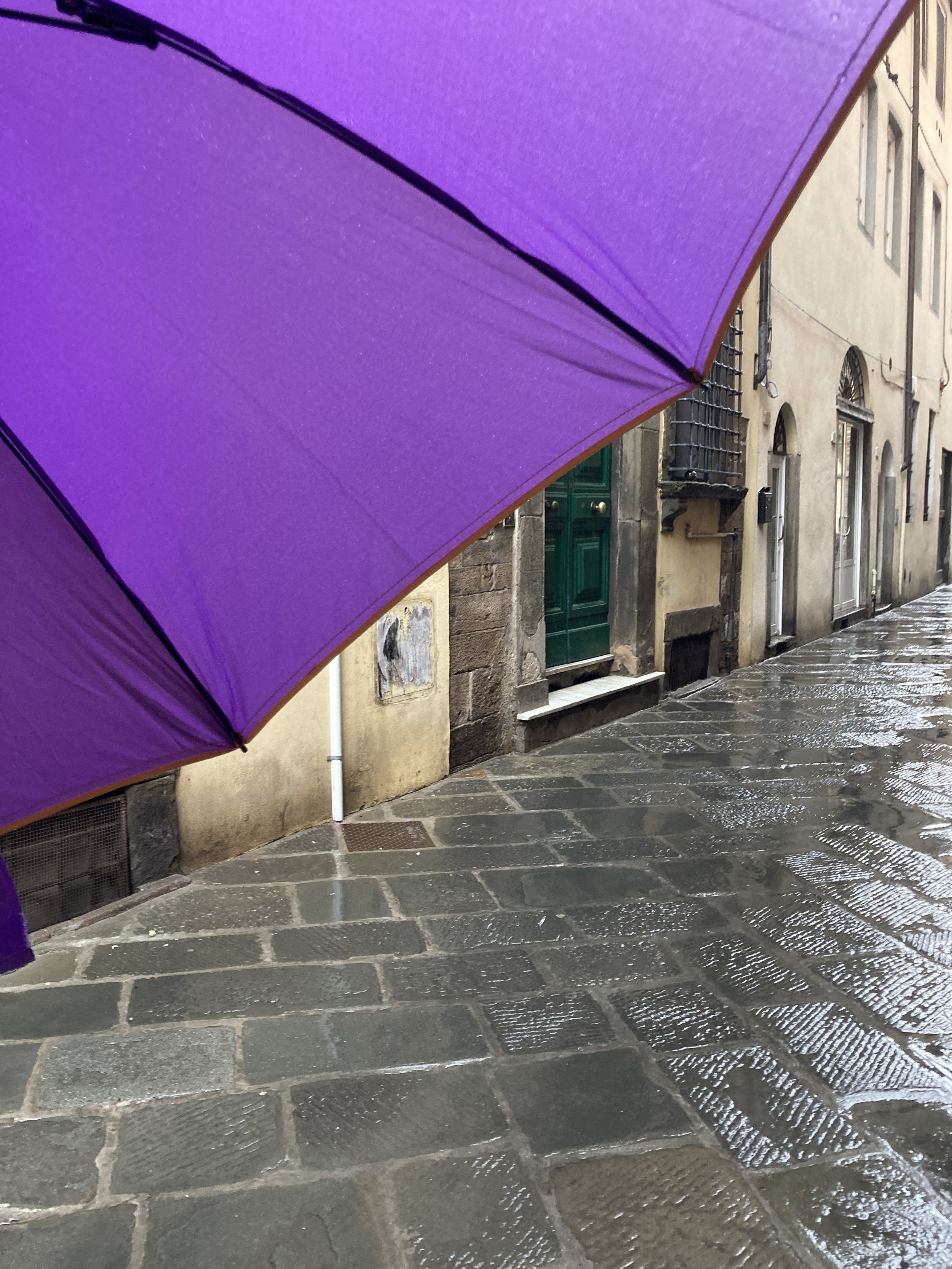
A week or so ago we had a terrific rainstorm in Lucca. I got caught in it and, despite my big purple umbrella, came home soaking wet. I spent the rest of the afternoon sitting near my window, listening to rain fall and watching colorful umbrellas pass by. 
0BF4ADD5-8AFF-4ED5-8C23-7A13EF59D068_1_201_a.jpeg
AF67130D-FF60-4964-885C-821C86087F75.jpeg
9422BEB2-F2C4-42ED-AEF5-53E04121699F.jpg
2A895721-5FFB-4516-8D35-F10E2F6B14BD.jpeg

After a week of warm spring weather, that cold and rainy day felt as if we’d stepped back into March.  Rainy weather is perfect for staying inside, reading, and sipping a coffee.  I had a good book and my Moka pot was fired up so no complaints about the weather from me!


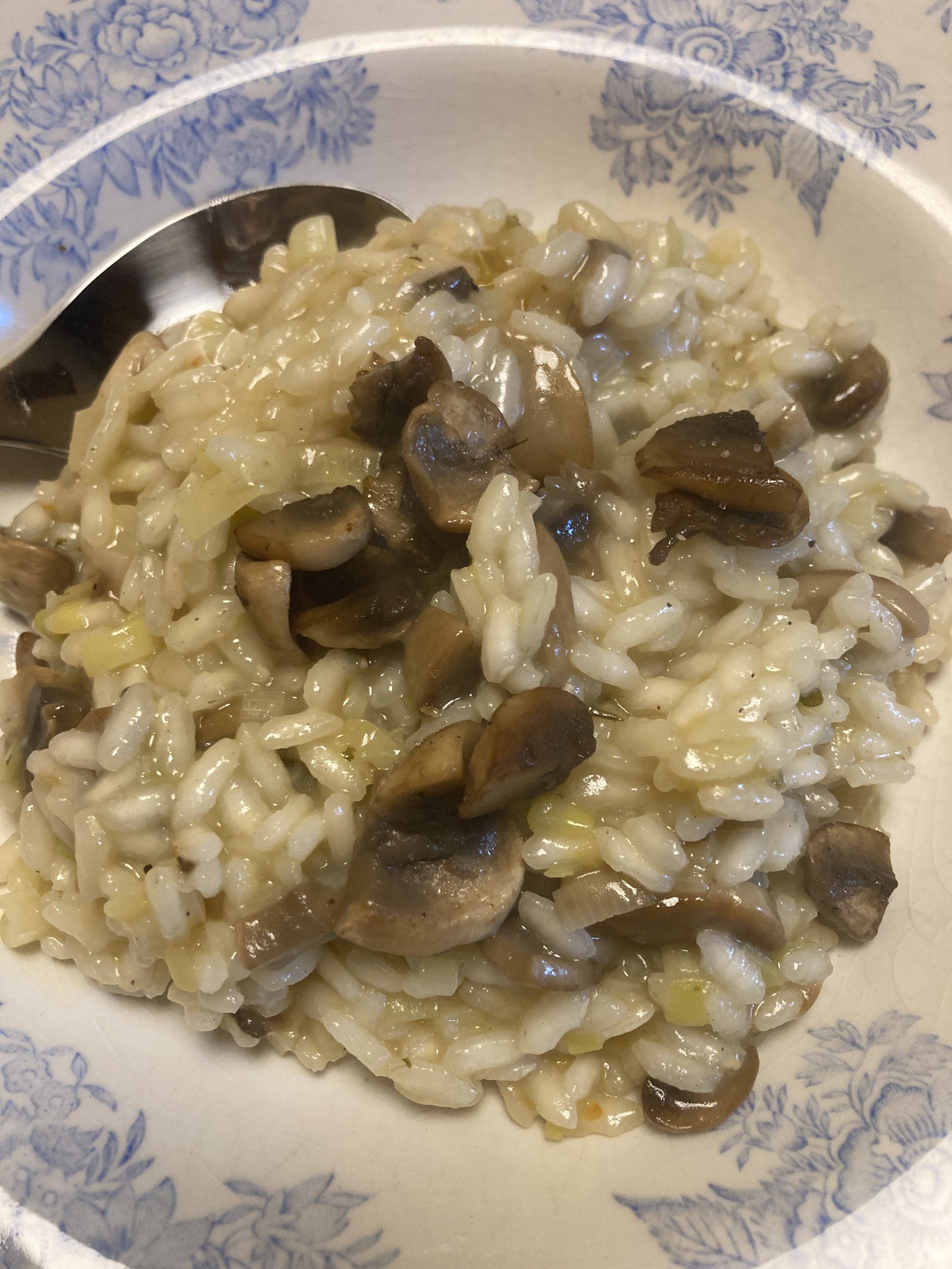
It was also perfect weather for my favorite Italian comfort food – risotto.  Luckily, I happened to have some great risotto ingredients in my fridge – a leek and some mushrooms.  I also always have some Arborio rice on hand, so there was no need to venture out again into the storm in order to make dinner.

Simple ingredients, but fabulous flavor!

I didn’t have a recipe for this risotto, so I just improvised as I went along.  The results were delicious and just the perfect meal for a wet and chilly evening. I am glad I made notes as I cooked, because this is a risotto I will definitely make again. Here’s the recipe:

  Mushroom and Leek Risotto (serves 2)

 ¾ cup risotto rice  (Carnaroli or Arborio)

1 and ½ oz dry white wine

2 tsp extra virgin olive oil

2 c. hot vegetable broth

2 and ½ tablespoons butter, divided

 1 medium leek, (about 1 cup sliced)

4-5 oz mushrooms , sliced fairly thin.

Bring vegetable broth to a simmer while prepping the other ingredients.  Is homemade broth  best?  Of course, but let’s be real –  a good quality store bought vegetable broth works just fine and saves a lot of time and effort.  Just be sure it isn’t too salty!

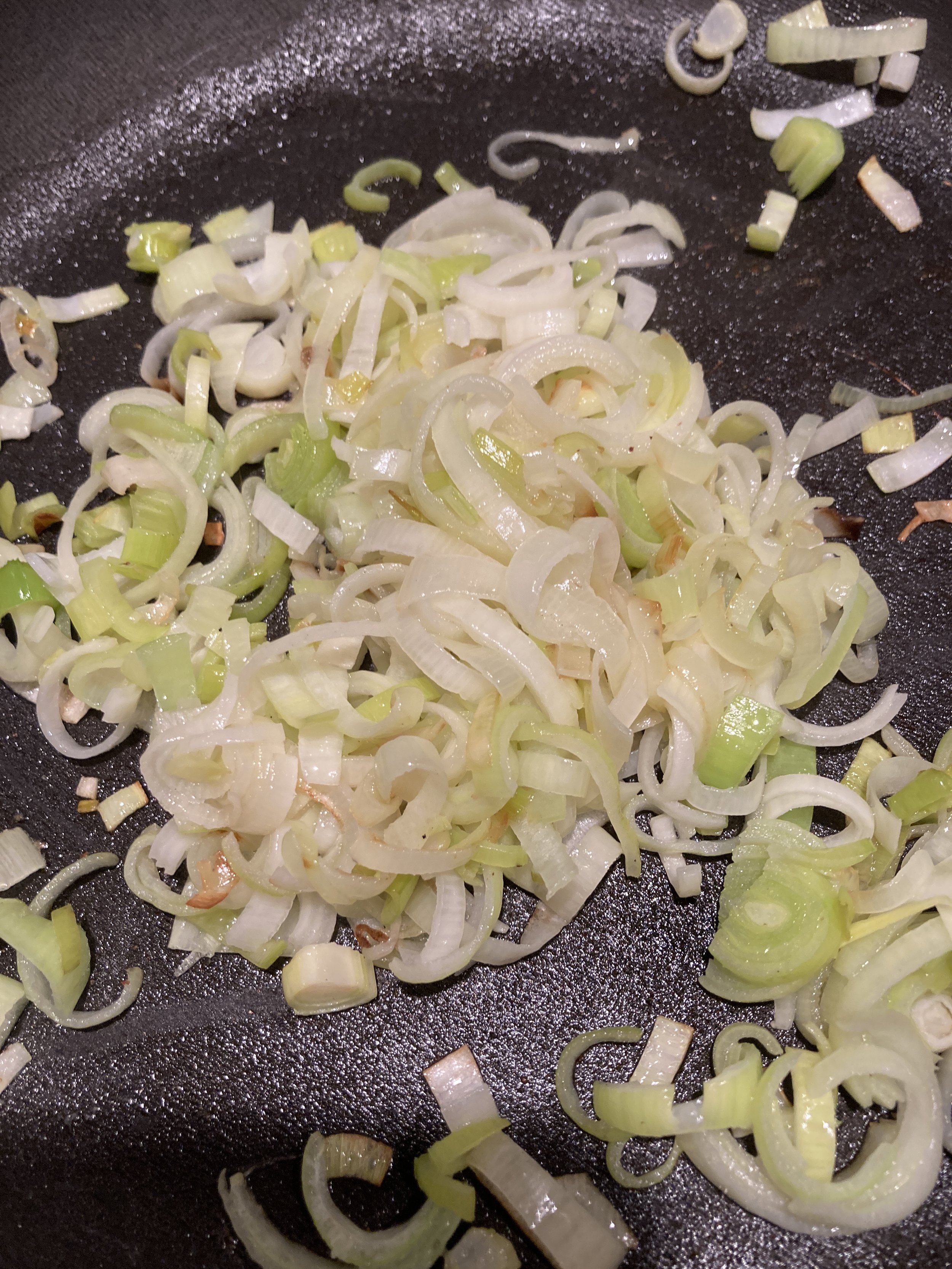
Cut the white and light green part of a leek in half lengthwise and then slice each half thinly across.   Sauté the leeks in ½ tablespoon of butter until soft.  Set aside for now.

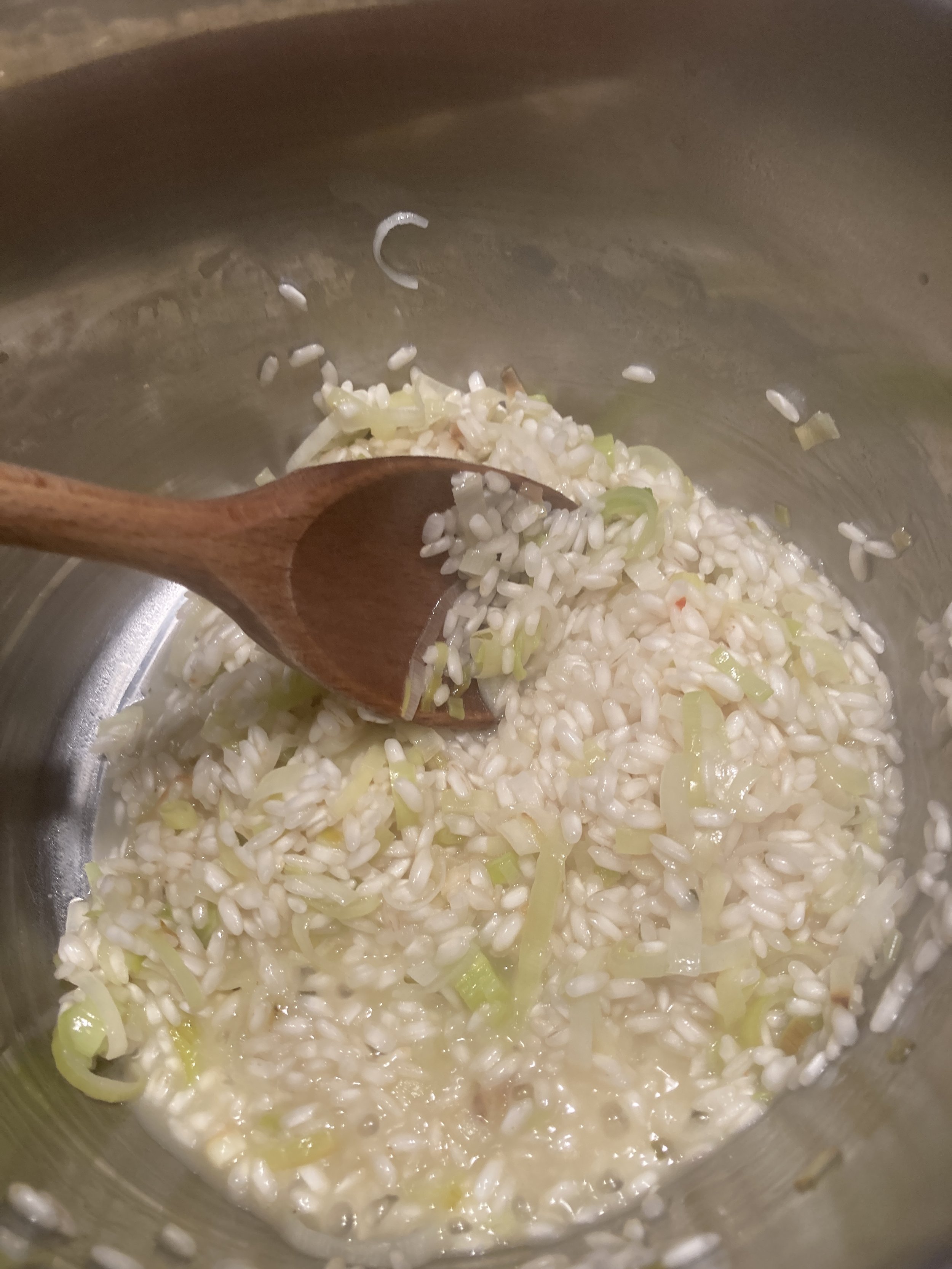
 In medium sized heavy bottom pot, heat the olive oil and add the rice.  Toss to coat rice with oil and cook gently for ~ 2 minutes.

Next, add the wine and allow it to evaporate quickly.   This is where it starts to smell wonderful!

A6C8AD73-8259-4C92-9E4D-1BC1E6E1434B.jpeg
BBAC7B0F-F67C-4AE8-9984-F48DFFFB3D7C.jpeg
8DC65559-F815-4D36-9690-9FE031949661.jpeg

Once the wine evaporates, add ½ c. of the hot broth and all of the cooked leeks.  Stir well. Reduce the flame to low and stir frequently while the broth is slowly absorbed.  

 Continue adding broth in about ¼ cup increments, stirring while the rice absorbs each addition.  Always allow the broth to be absorbed before adding the next amount. Keep stirring frequently. 

 Meanwhile, heat 1 tablespoon of butter in a large frying pan, add the mushrooms, and cook over a medium-high flame, stirring as needed to prevent sticking.  The goal is to brown the mushrooms quickly and to hold the juices in rather than allow the mushrooms to simmer in their pooled juices.  When finished they should be browned, dry, but not crispy.  Add a pinch of salt and about 5 grinds of black pepper.  Set aside for now.

 With the last ¼ cup of broth, add ¾ of the mushrooms.  Keep stirring while the last of the broth is absorbed.  Taste (cook’s benefit!) and add salt if needed.  Risotto should look creamy but not soupy or gummy.  When done, add 1 tablespoon of butter.  Stir and serve immediately.  Top each serving with a few of the reserved mushrooms.

This recipe makes a small batch of risotto, enough for two people.  It can easily be doubled.

Note that there is no cheese in this risotto.  Adding cheese during cooking tends to result in a gummy rather than creamy dish.   You can always add a bit of parmesan at the table but I think this risotto is best without any cheese at all.  Just let that mushroom flavor shine! 


May 22, 2023 /Joanne Bartram
Risotto, Leek Mushroom Risotto
Cooking, Italian recipes, Living in Italy, Lucca

Farina di Castagne

February 27, 2023 by Joanne Bartram in Italian culture, Italian recipes, Italy travel, Living in Italy, Lunigiana, recipes, Tuscany

A list of the ingredients important in Italian cooking often includes olive oil, tomatoes, pancetta, artichokes, garlic, lemons, basil, Parmigiano Reggiano cheese, and balsamic vinegar.  But let’s not forget about a more humble ingredient - chestnuts (castagne or marroni in Italian).

In Tuscany, the mountains are full of chestnut trees.  It is no surprise then that the chestnut tree became a vital source of food, as well as of fuel and building material, especially during times of war, famine, and poverty. 

Abundant and nutritious, the chestnut became an essential ingredient in Italian “cucina povera”. That traditional continues to this day. Chestnuts are eaten roasted or steamed. They are also dried and ground into flour, farina di castagne, for use in breads, pastas, and sweets. 

Chestnut Roasting in Colognora di Pescaglia

Dishes made with farina di castagne appear on fall and winter menus.  With its naturally sweet and nutty flavor, chestnut flour has become one of my favorite ingredients for baking. 

 My fondness for these dishes began at a fall festival where I first tasted Necci. Necci are round and flat, somewhere between a crepe and a pancake in thickness.

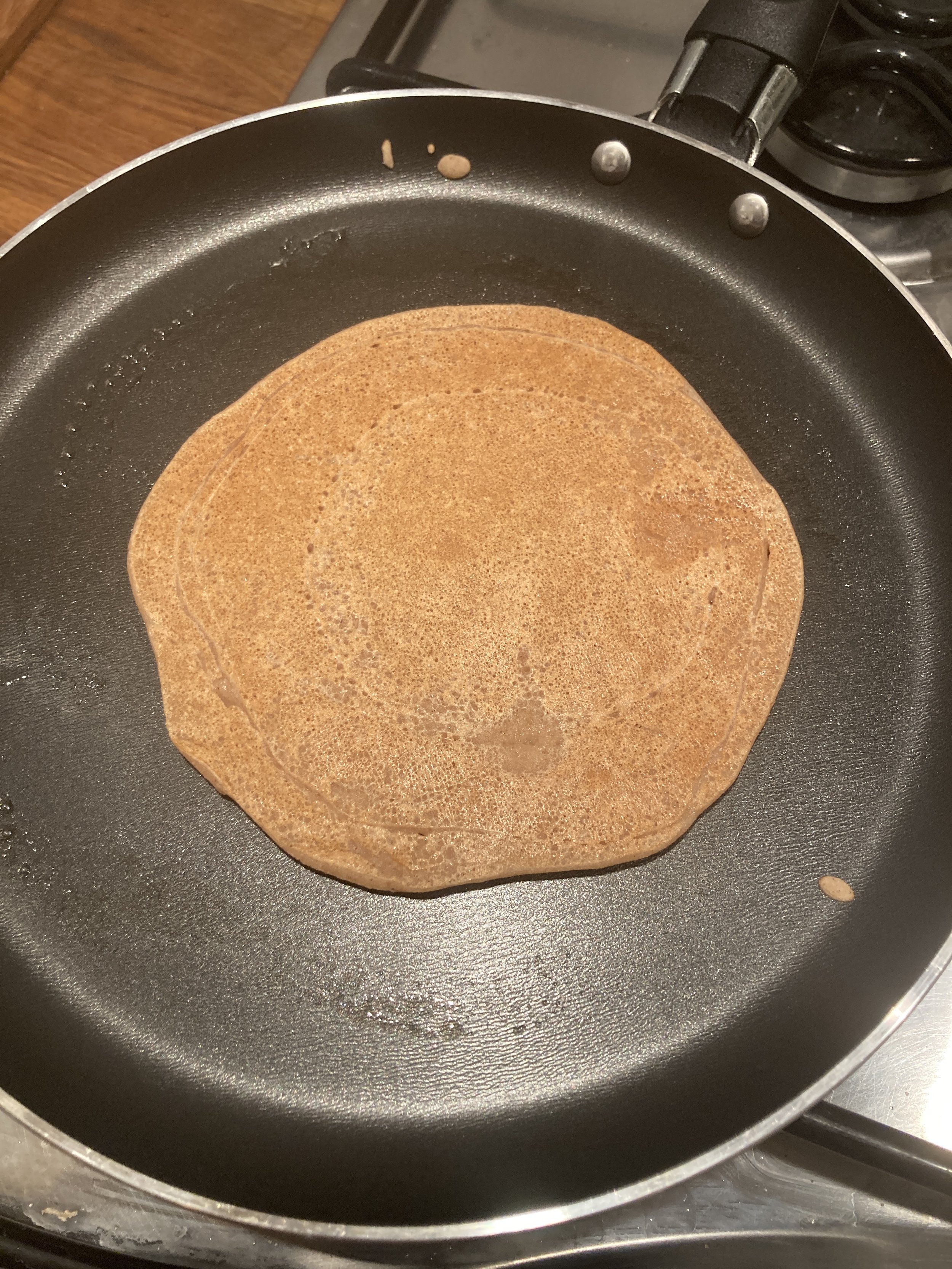
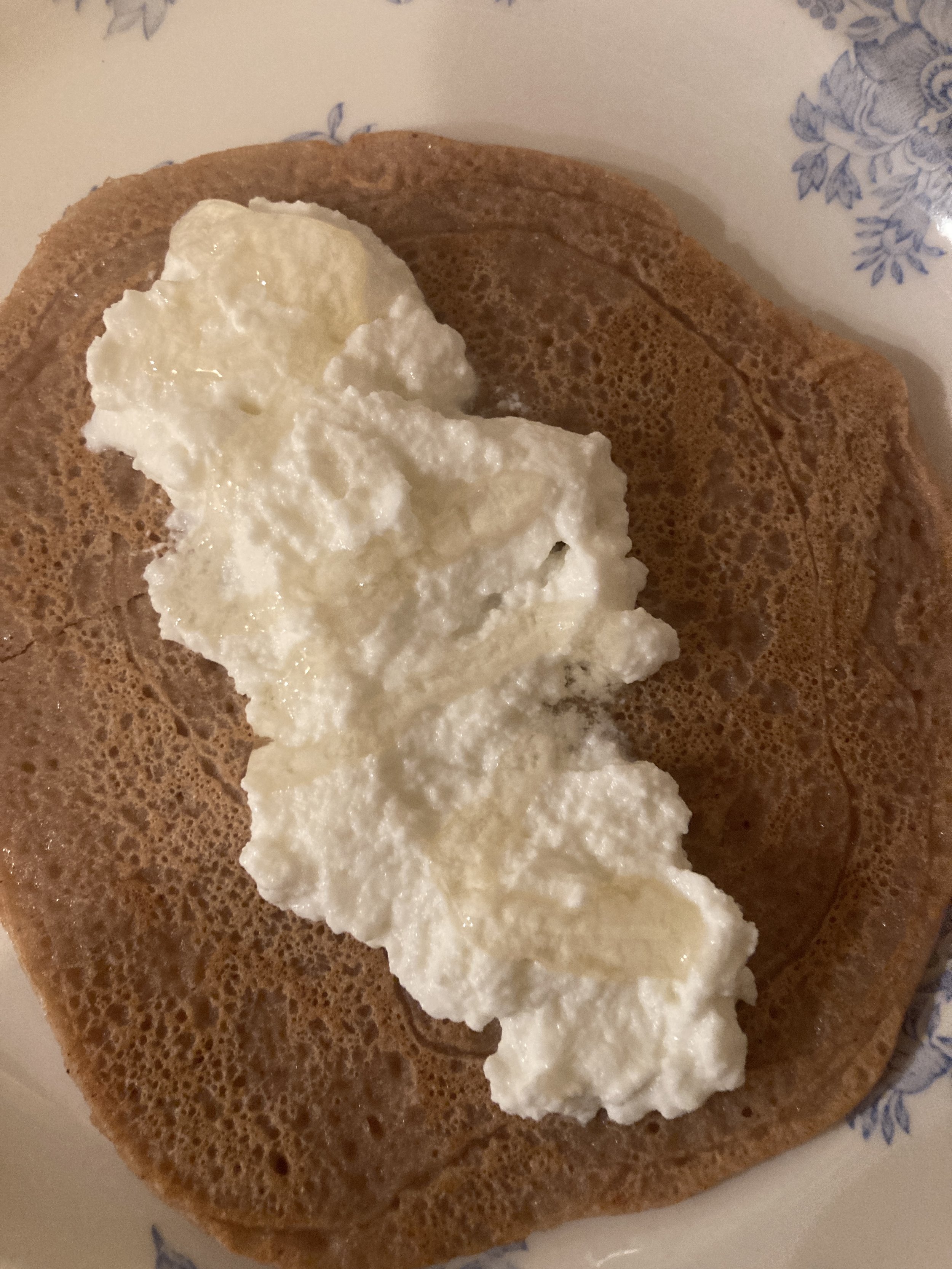
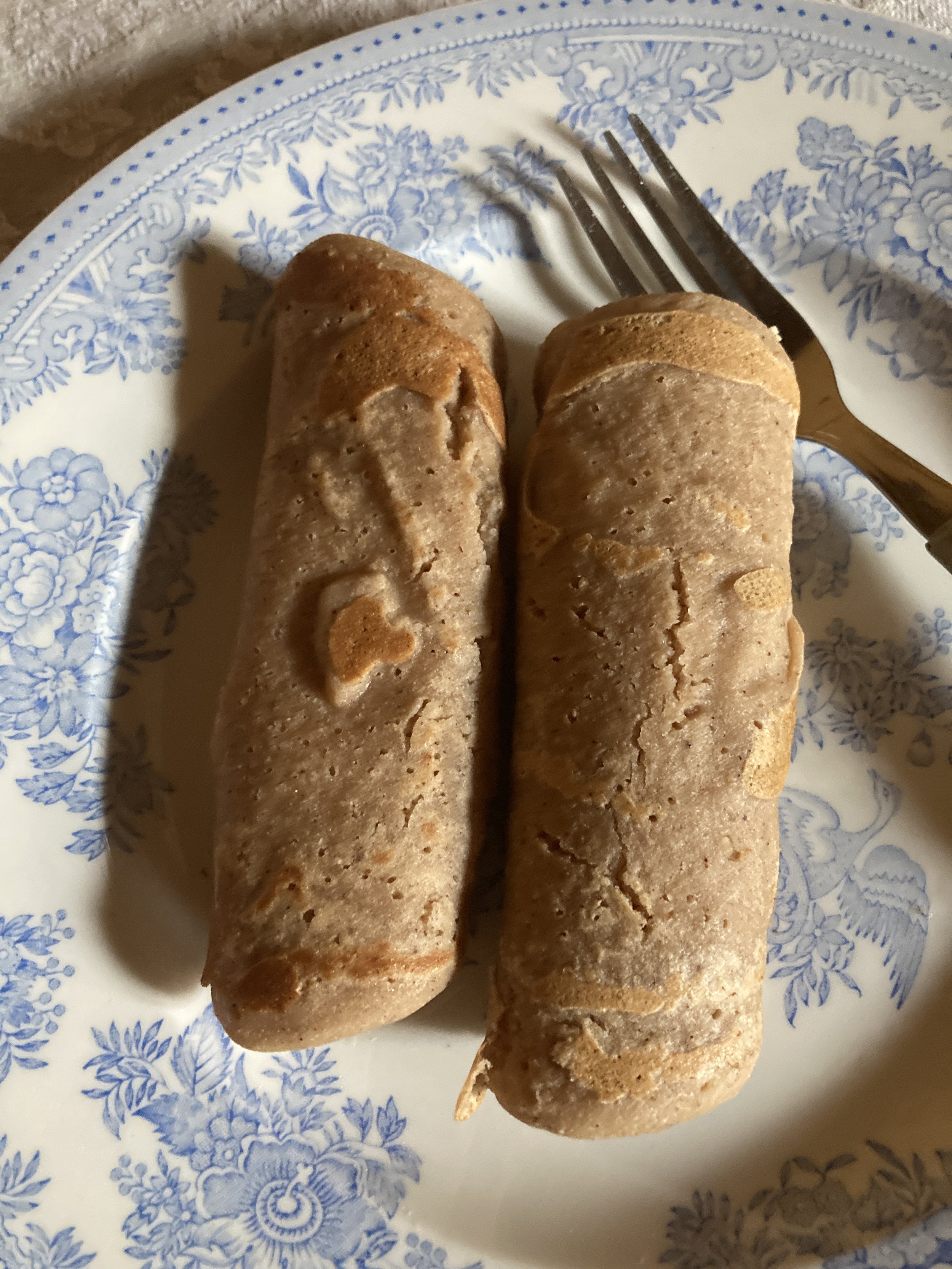
Like a crepe they can be rolled around a filling.  The batter is very simple -  just chestnut flour, water, and a pinch of salt.  Traditionally, necci were cooked between testi, round stones heated over a fire.  Today Necci are usually cooked between two long-handled, flat cast iron plates.  The warm necci are then filled, most commonly with fresh ricotta and a drizzle of honey.  Delicious! 

These round stones, called testi, were the traditional method used to cook Necci. To learn more about chestnuts, visit the Chestnut Museum in Colognora di Pescaglia where this photo was taken.

Frittelle di Castagne, little fried chestnut fritters, served as an appetizer alongside fresh ricotta in the town of Pontremoli.

Similar to Necci are Frittelle di Castagne, often found in the areas of Tuscany known as the Lunigiana and the Garfagnana, both hilly areas in the north. 

The batter is similar to Necci, but the preparation is different.  Small scoops of batter are fried in oil, creating a crisp outside and tender inside. 

While I think of frittelle as breakfast or dessert items, lightly sprinkled with sugar, they can also be served unsweetened as an appetizer with a bit of ricotta.  That’s how I first encountered them last fall in a restaurant in the town of Pontremoli.

I have been working on learning to make both Necci and Frittelle di Castagne at home. 

For Necci, simply combine 1 cup of chestnut flour (100-120 gm), sifted after measuring, with ¾ - 1 cup of warm water. Mix well.

Take a little taste of the batter – the sweetness will surprise you!  

Either a heavy crepe pan or a non-stick skillet works to cook the Necci.  Lightly butter the pan to prevent sticking, pour in about ¼ cup batter and spread with a fork or spoon to create a thin crepe.  Cook until set, flip, and cook on the second side. Fill while warm with a couple of tablespoons of ricotta, drizzle with a little honey, roll up and enjoy! Makes 4-5 Necci.

90B3AD38-7BA1-4C9D-9F43-A1C39294C47B.jpeg
415C4496-7A63-4821-97CB-70268C7A2103.jpeg
94DC0143-E1F9-43DC-BC1A-FD4BEA52A5E0.jpeg


For Frittelle di Castagne, combine 1 cup of chestnut flour (100-120gm), 1 teaspoon of baking powder, and a pinch of salt. Sift and add about 1 c. warm water (add about 3/4 of the water and then enough more to make a fairly thin batter). Mix well.  Heat vegetable oil in a frying pan, deep enough to cover the bottom of a pan and about half-way up the frittelle (I use ¼ c. oil in a small 8 in frying pan, frying 2-3 frittelle at a time).  Test the oil with a small drop of batter - it should have a lively sizzle and the batter should puff up slightly. Drop spoonfuls of batter into the hot oil, cook until the top is set and small bubbles appear, flip, and continue cooking until crisp and brown on both sides. Smaller is better for these fritters - small enough to cook through in just a couple of minutes and be crisp outside and not doughy inside.  Remove from the oil and place on a paper towel to drain.  Serve warm sprinkled with sugar or room temperature with a side of plain ricotta.   Makes about 18 - 20 small fritters.

Now that I’ve learned how to make these traditional Italian dishes, I am working on incorporating chestnut flour into some other baked goods. Stay tuned!


February 27, 2023 /Joanne Bartram
chestnuts in Italian cooking, castagne, Necci, Frittelle di Castagne, italian foods
Italian culture, Italian recipes, Italy travel, Living in Italy, Lunigiana, recipes, Tuscany

Our pici making group at Cretaiole

Making Pici at Cretaiole

November 28, 2022 by Joanne Bartram in #italytravel, Italian recipes, Italy travel, Tuscany, Val d'Orcia

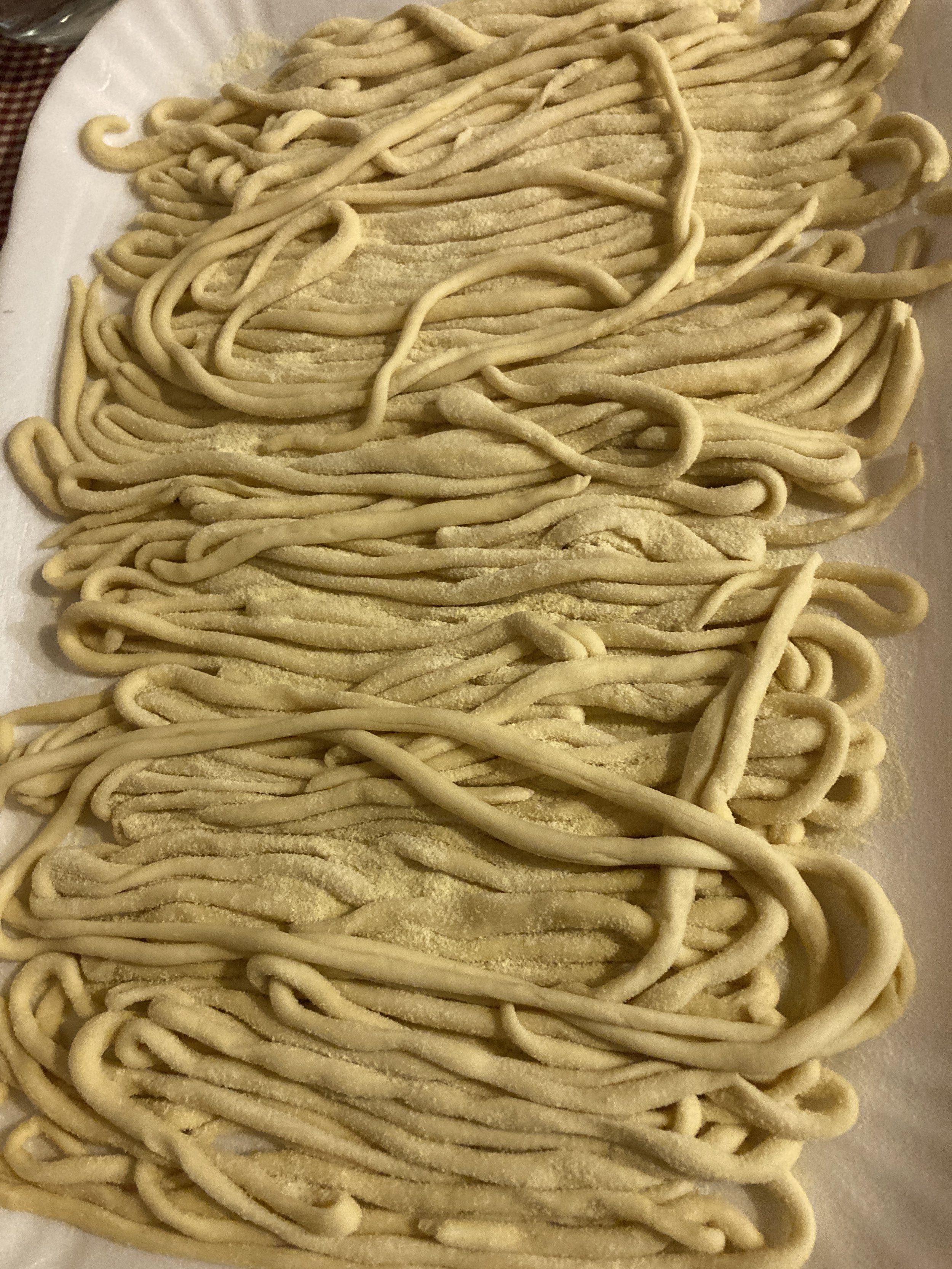
One of the highlights of any week spent at Agriturismo Cretaiole is the Pici class. Pici are strands of hand-rolled pasta, a sort of fat spaghetti, common in the part of Tuscany in and around the Val d’Orcia. At Cretaiole, be prepared to don an apron and participate! And bring an appetite for the big group dinner that takes place after the work of pici making is done.

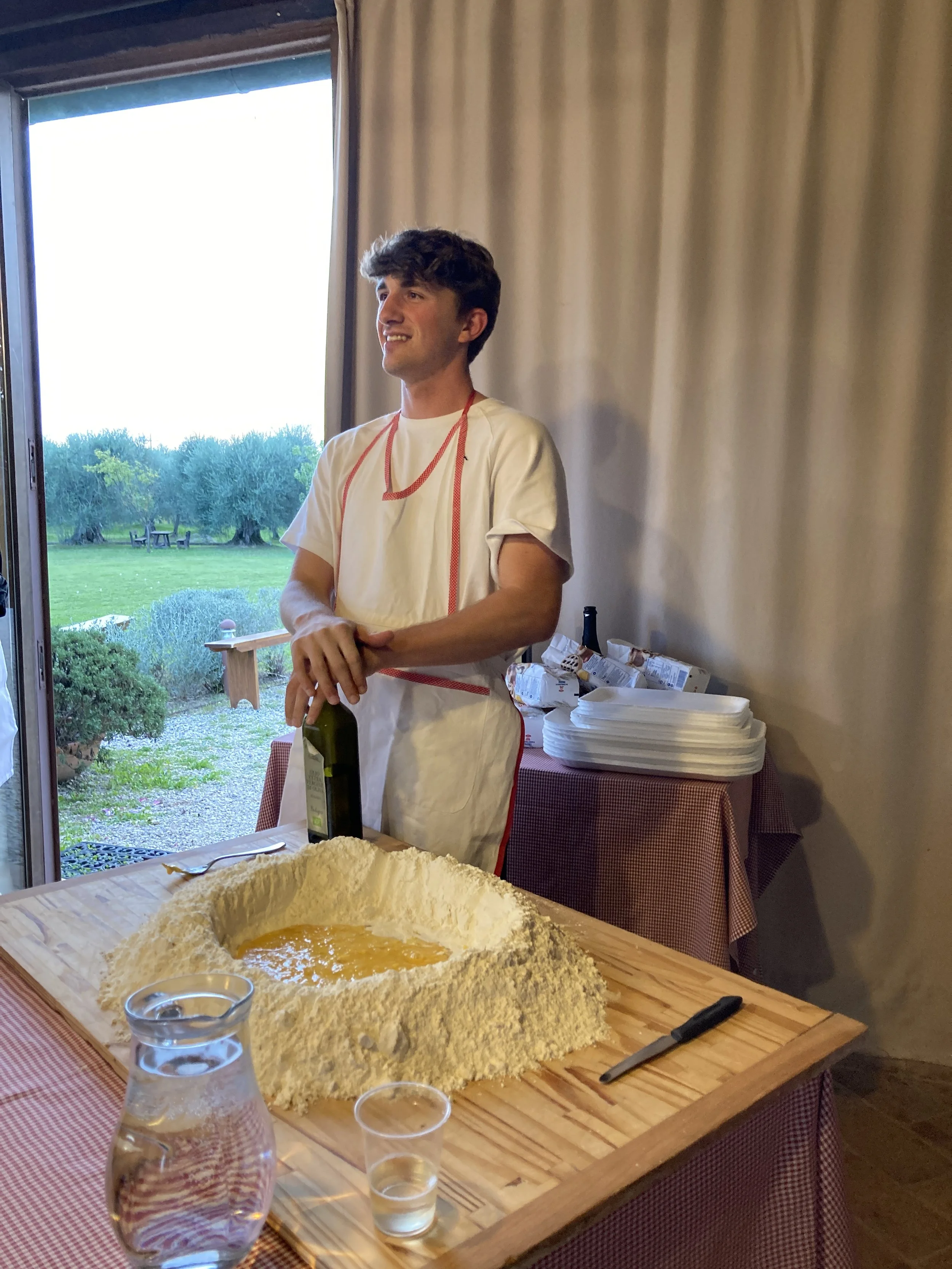
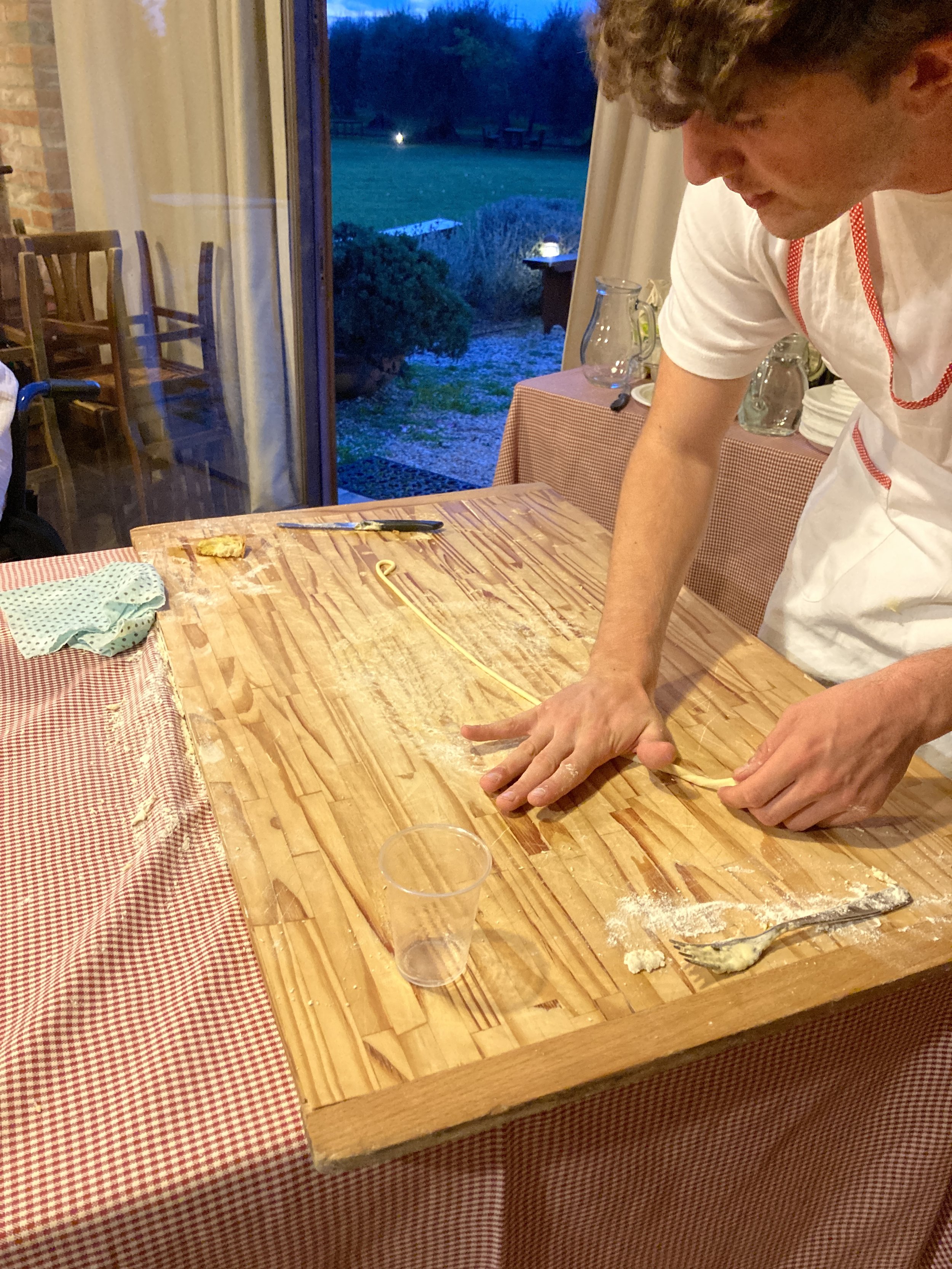
Nicco teaching us how to make pici

Nicco Moricciani is the grandson of Luciano, Cretaiole’s founder, and the son of Carlo who tends the vines and olives. Nicco has recently taken over teaching the pici class from his mother Isabella. Isabella is quite proud of Nicco’s pici making skills and for good reason. Not only is Nicco an experienced pasta maker but he is also a fun and interactive teacher, sharing information and family stories throughout the class. Under Nicco’s guidance pici making is fun, rewarding, and occasionally hilarious. Let’s just say that there was a lot of laughter and good-natured teasing among the participants as we honed our skills (or lack thereof).

Class began with a demonstration of how to make the dough the way the family has done for generations.

Flour (type 00) is spread out on a big wooden board and then arranged volcano style in a circle with high sides to contain the wet ingredients. Some pici recipes add only water and a bit of extra virgin olive oil but at the Moricciani farm there are chickens and that means lots of fresh eggs. No surprise then that the Moricciani family recipe adds several eggs to the flour, water, and drizzle of oil. The wet ingredients are combined with a fork in the middle of the flour circle and then, little by little, the flour is coaxed from the sides of the ring into the egg mixture. It’s important not to break the flour ring lest the egg mixture leak out and dribble away. Nicco demonstrated this skill perfectly.

After the flour is incorporated, it is time for the guests to begin their work. Each gets their own wooden board and a portion of the dough to knead. When the dough is smooth and elastic it’s time for it to rest and for the guests to enjoy break time. A bit of Prosecco helped us get ready to the real fun - hand rolling the pici.

40273CB6-76A8-4AA4-8D8E-A569500EE6A4.jpeg
2245A7E3-FBB3-4B6B-B73B-0ABFD2C67706.jpeg
42737BCF-8D23-4CDC-92A7-0539BC3EAC36.jpeg

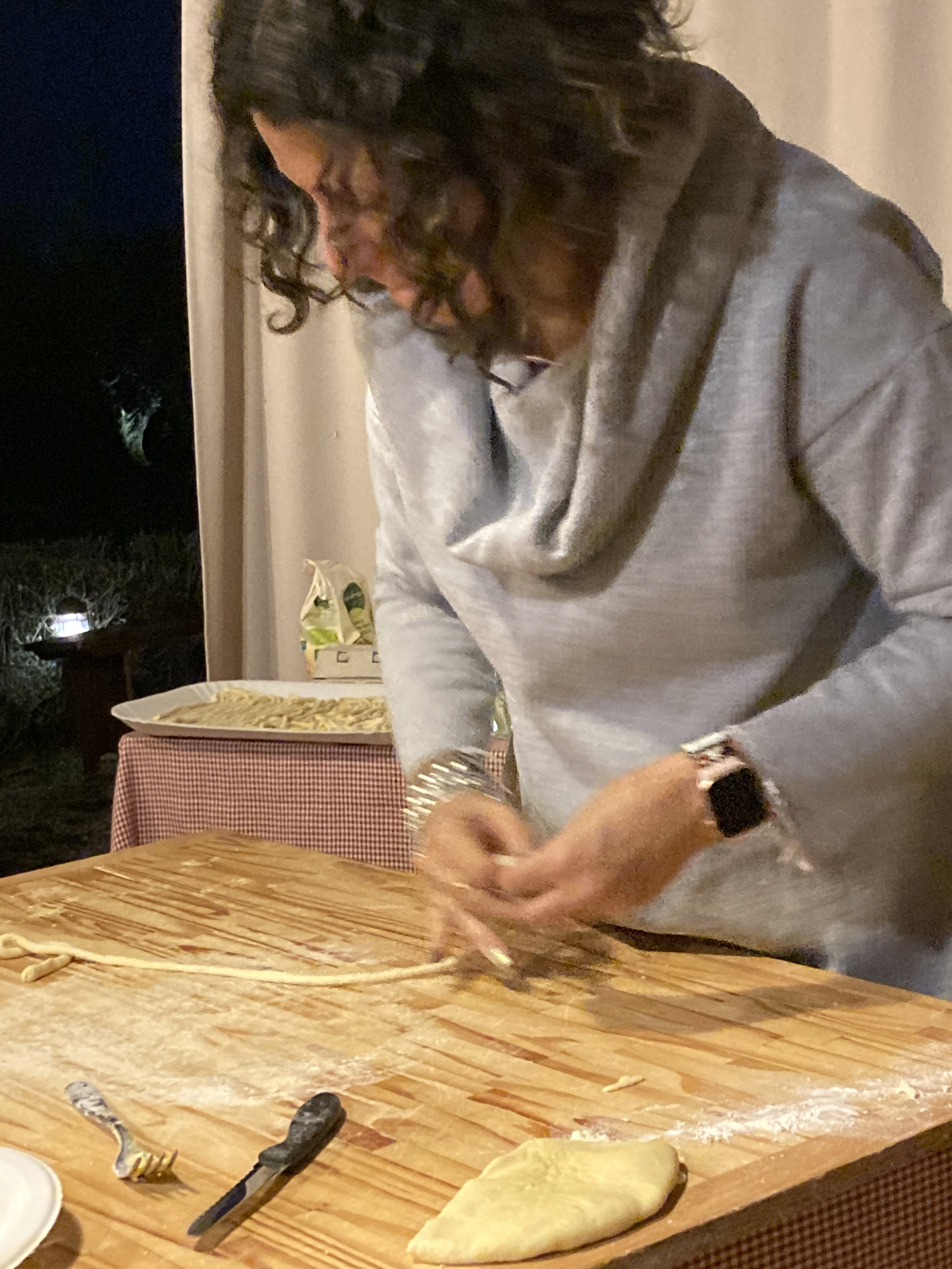
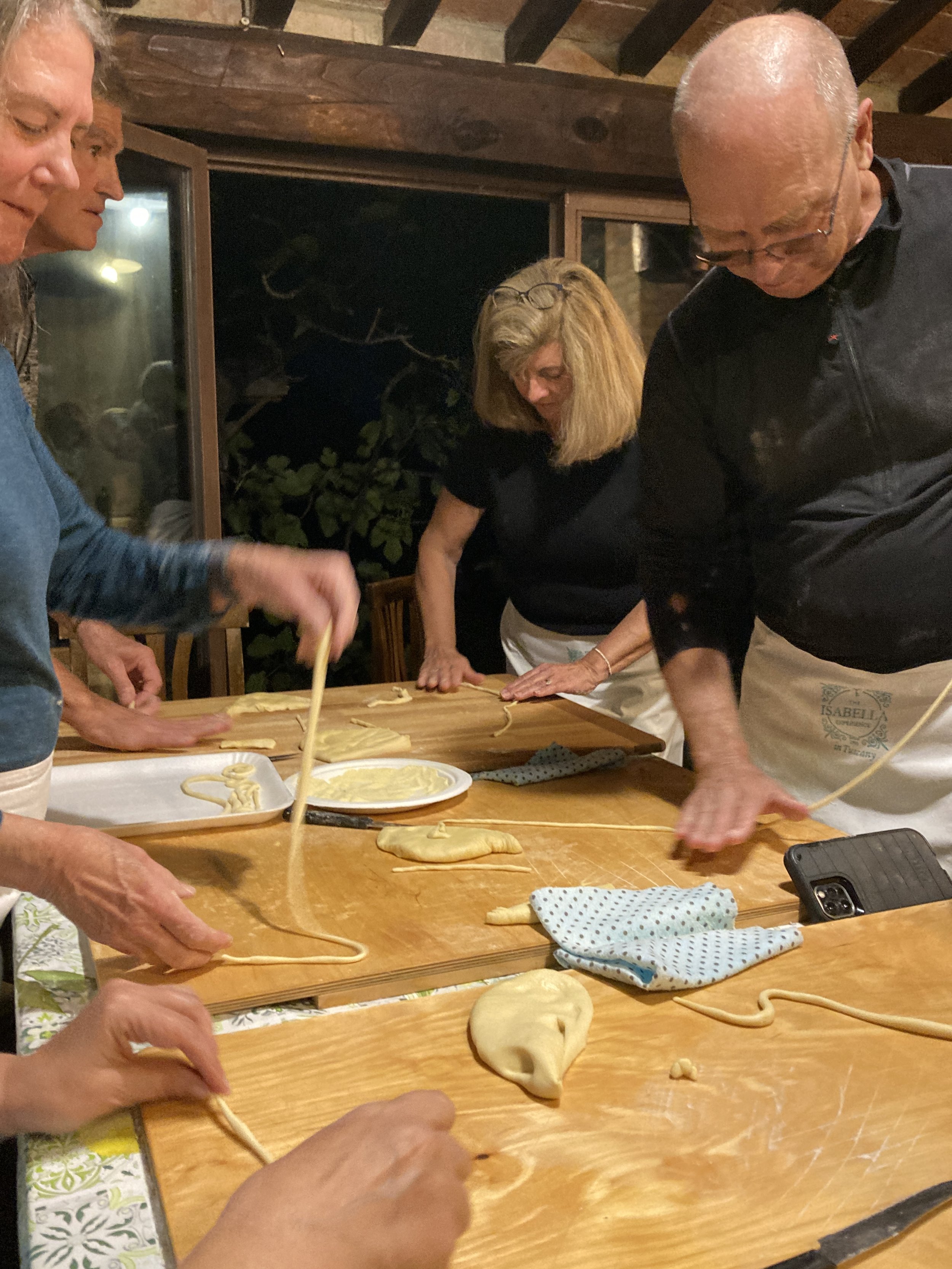
Rolling pici is an art and one that takes some practice. A bit of dough is rolled into a log and then the magic happens. One hand rolls the log while the other hand stretches the dough gently, eventually forming a long string of pasta. Not too fat and not too thin, all the pici should be about the same diameter. And with 20+ cooks each learning the process that was no easy feat!

The winner of the longest pici competition !

There was a friendly competition to see which guest could get the longest pici - and some gentle ribbing of those with the shortest pieces. All the laughter worked up an appetite!

Even those of us who managed fairly long and right-sized pici could not match the speed with which Nicco turned them out. We might have been there all night had not Cretaiole’s fabulous chief organizer, and really fast pici maker, Fernanda come along to help out. Our efforts were also bolstered by more wine and slices of toasted bread rubbed with garlic and generously topped with good Cretaiole Extra Virgin Olive Oil. It’s good to feed the pasta makers!

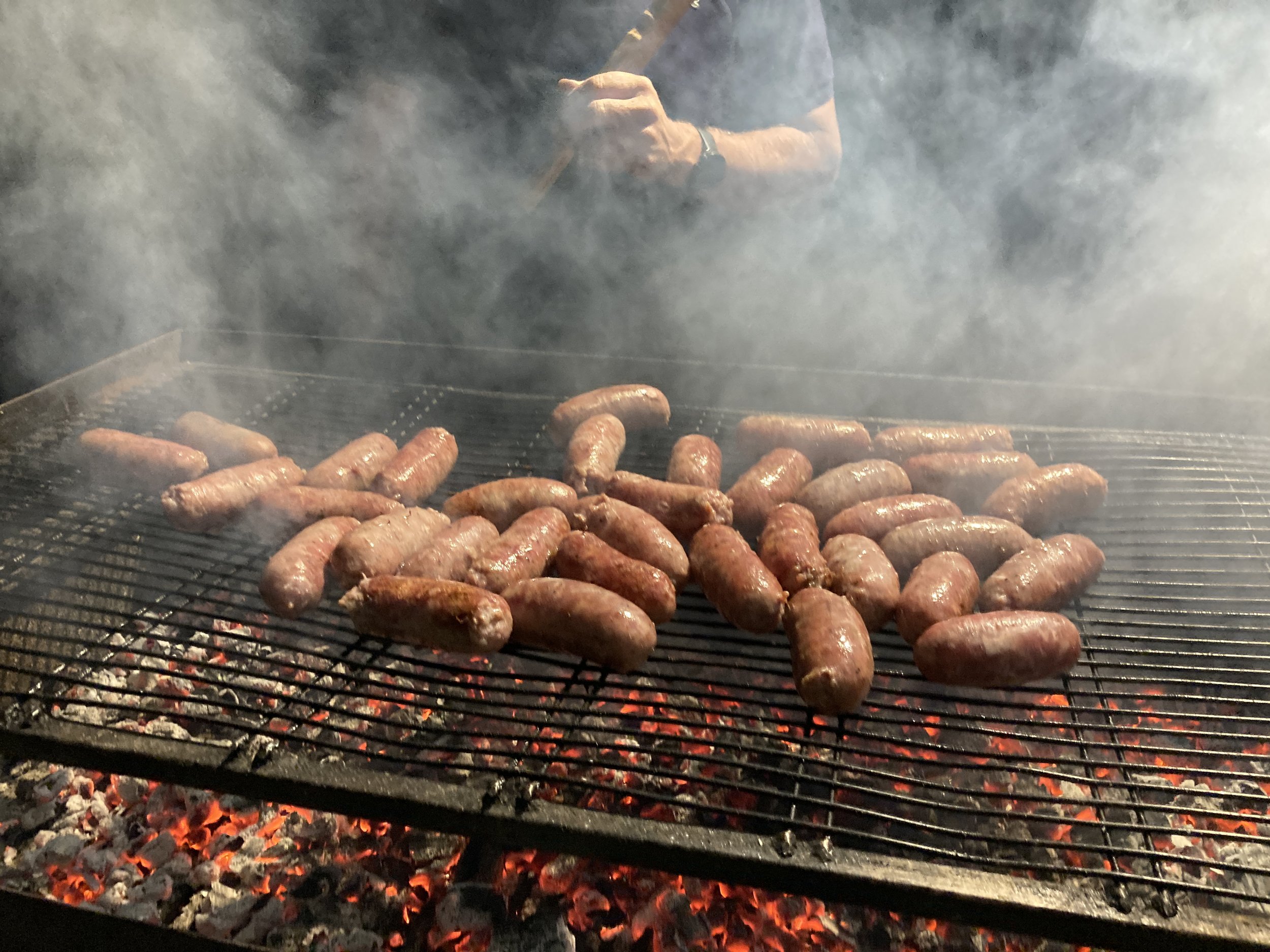
While we were making the pici the sun set, a fire was lit in the fire pit, more wine poured, and appetizers set out. Carlo also arrived to light the grill. He brought the farm’s meats to grill - sausage, pork ribs, and thick strips of pancetta. Can anything top the smell of a Tuscan barbecue on a mild fall evening? Carlo is the master of the grill!

0F5A521D-DCCD-44C8-91A8-BC69977B0B17.jpeg
IMG_0385.jpeg

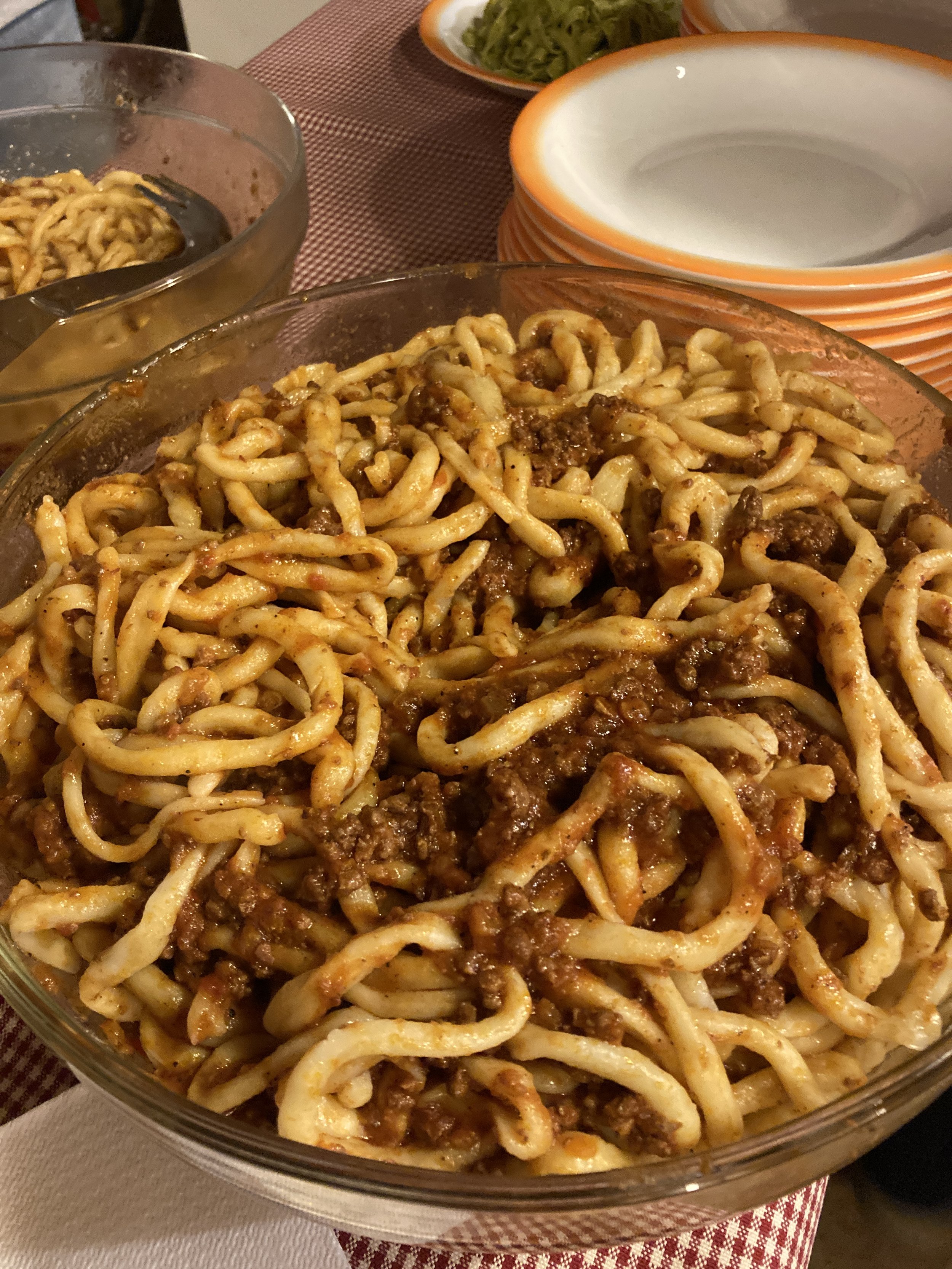
Dinner started with our pici topped with Nicco’s ragu. We were pleased with our efforts as the pici was wonderful, though perhaps it was the delicious ragu that guaranteed great flavor. Cretaiole red wine was a perfect accompaniment. Later came salad and those tasty grilled meats. Just when we thought we couldn’t eat another bite, Fernanda brought out her homemade tiramisu. It’s a good thing Italian dinners are spread out over several hours.

So many things came together to make this a memorable evening. The setting was spectacular. The group of guests were a huge part of the fun - all were friendly, interesting, and enthusiastic about their time at Cretaiole. We shared stories and began friendships, with hopes to meet again.

The Moriccianis - Nicco, Carlo, and Luciano (who to everyone’s delight joined us for the evening) - are warm, welcoming, and fun. Fernanda (below, right) makes everything work, including this big event, and makes it look easy even though it certainly is not.

It was a perfect Tuscan evening full of friends, fun, good food, wine, and laughter. Who could ask for anything more?

286A7879-7D5D-4275-96E5-37DB0CFDFD36.jpeg
A136222D-08AE-44E3-821E-7BB3FEB1FBFB.jpeg
November 28, 2022 /Joanne Bartram
Cretiaole, agriturismo Tuscany, Agriturismo Cretaiole, Pici Pasta, #cretaiole
#italytravel, Italian recipes, Italy travel, Tuscany, Val d'Orcia
  • Newer
  • Older

Powered by Squarespace