Two Parts Italy

Exploring Italy, travel, and living a flavorful life

  • Blog
  • About This Blog
  • Start Here
  • Recent Posts
  • Archives by Topic
  • Subscribe
  • Contact me
Blue sky in Lucca, as seen from under the arches of the Church of San Martino

Blue sky in Lucca, as seen from under the arches of the Church of San Martino

Under Italian Skies

August 16, 2021 by Joanne Bartram in Italian light, Italy, Italy travel, Living in Italy

Another week of August vacation, another photo post. This week, Italian skies.

It is hard to describe what is so special about the sky in Italy. There is just some combination of color, light, and connection to land, sea, or city that work in harmony. No matter the season or whether the skies are bright blue, filled with soft clouds, or dark and stormy, they are always beautiful. And the sky at sunset, that’s simply magic! I feel so fortunate to be living under Italian skies and I can hardly wait to return to Lucca in late August.
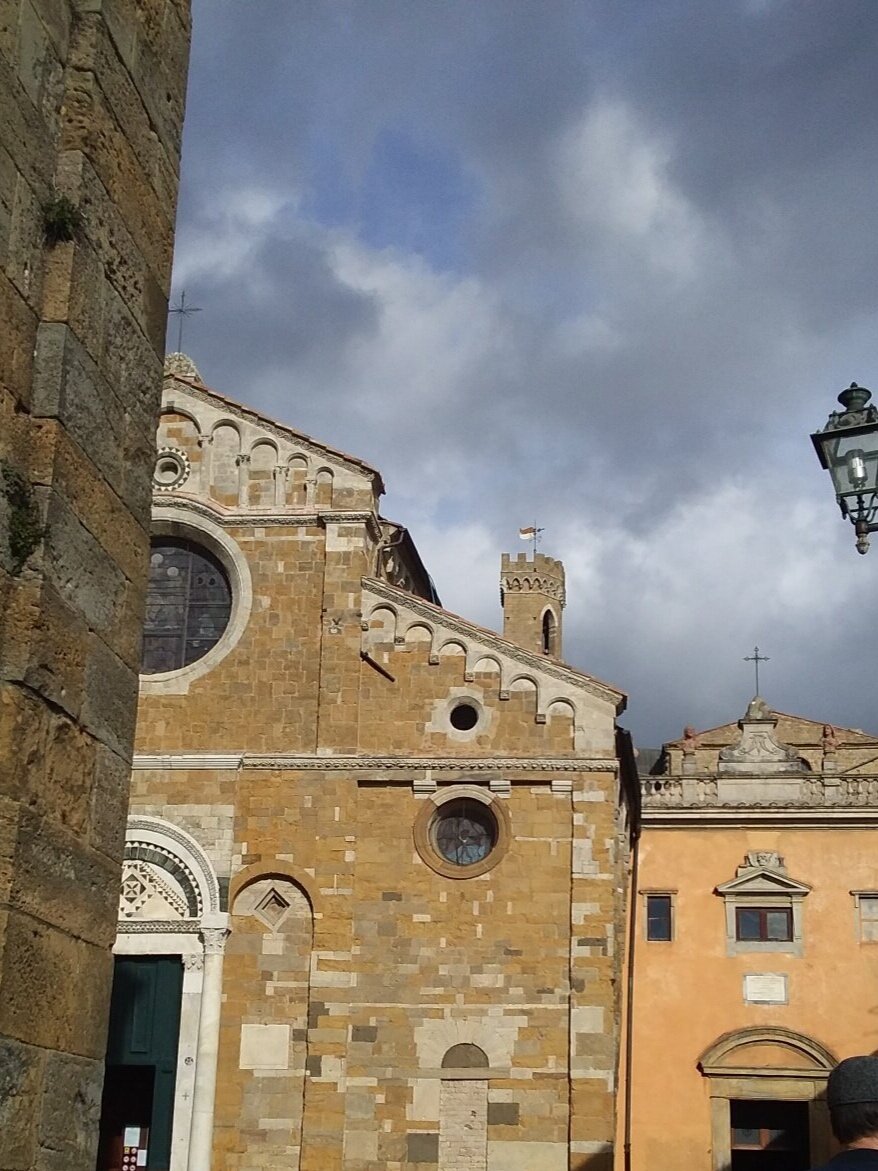
A storm brewing in Volterra

A storm brewing in Volterra

A clear summer day’s sky in Lerici

A clear summer day’s sky in Lerici

An early spring sky in Sant’Andrea di Compito

An early spring sky in Sant’Andrea di Compito

Wispy clouds in Bagnone

Wispy clouds in Bagnone

Dramatic skies over Pisa

Dramatic skies over Pisa

The sky in Lucca makes the perfect back drop for sculpture.

The sky in Lucca makes the perfect back drop for sculpture.

This sky along the River Arno in Florence almost looks like a painting.

This sky along the River Arno in Florence almost looks like a painting.

Sunset in the Val d’Orcia turns the sky a beautiful shade of pink.

Sunset in the Val d’Orcia turns the sky a beautiful shade of pink.

Dusk along the wall in Lucca.

Dusk along the wall in Lucca.

August 16, 2021 /Joanne Bartram
Italy, Italian sky, Scenic Italy
Italian light, Italy, Italy travel, Living in Italy
Rome, 1996.  My first trip to Italy. Laundry was one of many things that fascinated me.

Rome, 1996. My first trip to Italy. Laundry was one of many things that fascinated me.

Laundry Day in Italy

July 12, 2021 by Joanne Bartram in Italian culture, Italy, Italy travel, Living in Italy

When I am in the United States I rarely give much thought to laundry. From hamper to washing machine and on to dryer it’s an easy, uncomplicated task. Not so when I am in Italy. First, I need to be sure that no other appliance is in use when I run the washing machine. The electric circuits simply can’t handle the washing machine running at the same time as the oven, dishwasher, or hair dryer. I learned this the hard way when I once tried to blow dry my hair while doing a load of laundry. Picture me taking out the power in mine plus several adjoining apartments. Lesson learned!

Laundry or art ?

Laundry or art ?

Next, drying times can be much longer in humid Italy (especially compared to my former home in the dry climate of New Mexico). In the winter, hanging things near (or over) the radiators speeds things up. But when the weather is warm and damp, and heat not in use, a pair of jeans can take a long time to dry. It helps to have access to “solar powered” drying (ie, sunshine on a terrace or a window line).

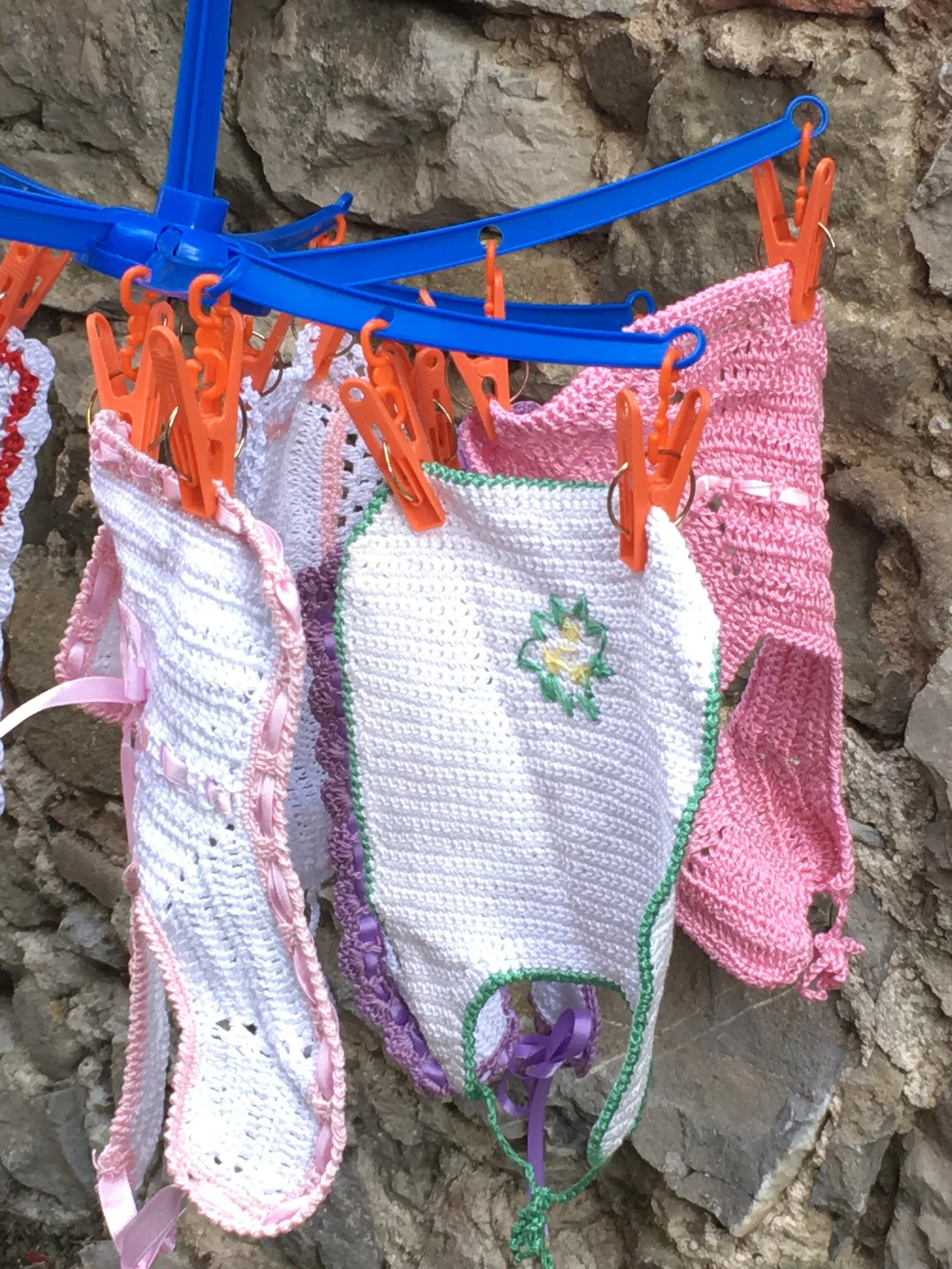
In a country with few clothes dryers, laundry hanging from a window line is a common sight.  It always makes me smile.

In a country with few clothes dryers, laundry hanging from a window line is a common sight. It always makes me smile.

Next, there are space concerns. My apartment in Lucca is small with no outdoor space. And being on the ground floor means that I don’t have a window high above the street with a clothes line. Setting up a drying rack inside takes up a lot of space and is only big enough for some clothes or towels, and not many at any one time. Hanging sheets to dry is nearly impossible. I now take my bed linens to the lavanderia where they wash, dry, press, and fold them. They return to me wrapped in paper and soft as can be. A touch extravagant but worth it!

Laundry day in the Cinque Terre.

Laundry day in the Cinque Terre.

E5E95AE3-08D2-4CE8-9B85-C2B3C8249A6C.jpeg

Clothes and linen drying outside is a common sight in Italy (although some historic districts ban this practice). To me, there is something delightful about seeing colorful laundry hung up to dry on a line. It is quintessentially Italian. I often make up theories about the residents of a building based on their laundry - the orange worker’s pants, the individually hung socks, the unabashedly public hanging of “tighty whiteys”, the pretty dresses, the colorful linens, the baby clothes. They all say something about the lives if the people doing the wash. Over the past year I’ve even seen rows of blue surgical masks hung out to dry. Somehow all of these scenes seem like art, or prayer flags, to me.

I’m spending a couple of months visiting my family in the United States right now. I miss those neatly pressed and folded sheets from the lavanderia and the sight of laundry hanging from balconies. I wonder what my neighbors would think if I hung my laundry from my window here in Albuquerque? No doubt the HOA would not be amused.

Color coordinated laundry

Color coordinated laundry

July 12, 2021 /Joanne Bartram
italian life, italian culture, laundry in italy
Italian culture, Italy, Italy travel, Living in Italy
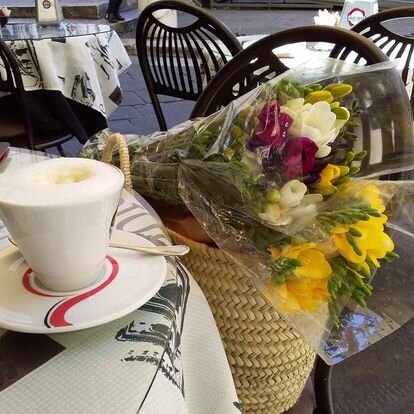
A cappuccino in a little bar, a perfect ending to a morning of errands and a stop at the flower market

A cappuccino in a little bar, a perfect ending to a morning of errands and a stop at the flower market

Italian Coffee (Part One)

June 21, 2021 by Joanne Bartram in Italian culture, Italy travel, Living in Italy

If you ask an American to name the Italian national drink, they will likely answer “wine”, but they’d be wrong. In Italy, the national drink is coffee - un caffe` - generally meaning an espresso. Coffee wasn’t invented here, but it just may have been the Italians who perfected it. Coffee is an important part of daily life, almost a ritual. Most Italians drink at least 1 cup a day (for breakfast). But it is not uncommon to add a mid-morning, after lunch, mid-afternoon, and even an after dinner or late night cup. There certainly are Italians who don’t drink coffee, but they are a definite minority.

I wasn’t much of a coffee drinker before I started visiting Italy. I grew up with an Irish mother and we drank a lot of tea. The occasional cup of coffee she made generally meant instant Sanka. I was not impressed. Later, as a nurse working night shifts, coffee became a necessity. I brought a thermos of it to work every night. I experimented with drip coffee, percolated coffee, and cold brew concentrate mixed with boiling water. To each I added lots of milk and sugar. I drank it, it helped get me though those night shifts, but I still wasn't a big fan. I didn’t love it.

Italian coffees - a cappuccino (left) and a macchiato (right)

Italian coffees - a cappuccino (left) and a macchiato (right)

And then I came to Italy. My first Italian coffee was served on the shores of Lake Como during breakfast at a small family run inn. “Cosa prende signora”, asked the server, “un caffe` latte”? I was presented with a pot of freshly brewed espresso and a second pot of steamed milk. Whether it was the fabulous coffee, the beautiful service, the musical sound of the Italian language, or the views of the lake doesn’t really matter. I was hooked. Many things kept me excited about coming back to Italy after that trip and coffee was definitely one of them.

A caffe` latte, hot milk and a shot of espresso - in this version you mix it yourself

A caffe` latte, hot milk and a shot of espresso - in this version you mix it yourself

Now that I live in Italy, I can indulge my love of Italian coffee on a daily basis. Standing at the bar for a quick morning coffee is the Italian way. It’s practically medicinal and it costs less (around 1.20 Euro) if you stand rather than sit at a table. But for me, sitting at a table in a cafe, snug inside in winter or outdoors with a glorious view of a piazza in warmer weather, is one of the joys of life in Italy. I’ll pay a little more for that joy. It’s one of the things I’ve missed most during the past year when bars and cafes were closed for long stretches of time due to COVID restrictions. Anytime there was a pause in the lockdown you could find me at an outside table in a bar or cafe ordering a coffee. What a joy that the cafes have now reopened!

And what exactly does one order ? Well, certainly not a half-caff, skinny latte! In fact, don’t ask for a “latte” at all as that will get you just a cup of milk.

Italian coffee drinks can be divided into 3 categories: straight coffee, coffees with varying amounts of milk, or coffees with an added punch from alcohol.

In Italy, ask for un caffe` and you will get a shot of espresso in a tiny cup. A caffe` ristretto is even smaller, an espresso brewed with half as much water. A caffe` lungo is brewed with extra water and a caffe` doppia is simply a double shot of espresso (that will get you going!). None of these drinks come with milk. A caffe` Americano is a bit different - rather than varying the amount of water used to brew the espresso, an Americano is a normally brewed shot of espresso with hot water added after brewing.

A cappuccino is a perfect breakfast coffee

A cappuccino is a perfect breakfast coffee

Espresso drinks often have milk added, either steamed or as a topping of frothy goodness (the froth is la schiuma) or some of each. For the most milk, order a caffe` latte which has one shot of espresso and lots of milk (more milk than espresso). This is Italian coffee for beginners. My grandchildren, then ages 10 and 13, started each day with one when they visited me. “Nana”, the 10 year old would say, “I’m not awake yet. I need my coffee”.

Caffe` shakerato con latte - my favorite summertime coffee drink.  In Lucca the best ones are found at Manon Lescaut in Piazza Cittadella.

Caffe` shakerato con latte - my favorite summertime coffee drink. In Lucca the best ones are found at Manon Lescaut in Piazza Cittadella.

A cappuccino is espresso with some streamed milk topped with a layer of schiuma - about equal parts of each - served in a medium size cup. Italians typically only drink cappuccino in the mornings, as milk is considered not compatible with digestion after meals later in the day. Ordering a cappuccino in the afternoon is possible but definitely brands you as a straniero (foreigner).

In summer a cold coffee with milk (a caffe` shakerato con latte) is a treat !

Later in the day, if you aren’t up for a straight espresso, try a caffe` macchiato. This drink is a shot of espresso with just a splash of milk. I’ve found a lot of variation in the preparation of macchiato. Some have just the tiniest spot of milk, others have milk equivalent to about half the volume of the espresso, still others serve the milk on the side. After living here for a couple of years I have acquired a taste for a macchiato - but I had to work at it.

fullsizeoutput_1c2.jpeg

The Ponce Livornese, made with espresso and rum, is a type of caffe` corretto unique to the town of Livorno

Then there is the caffe` corretto, or “corrected” coffee. Mostly served as an after dinner or evening drink, this is espresso laced with a small amount of grappa, sambuca, or rum. It’s a good nighttime choice, as the caffeine and alcohol balance each other and soften that caffeine buzz.

What happens when it is not possible to go out for an espresso drink at a bar or cafe? Good coffee can be brewed at home, but usually does not result in a true espresso as few homes have the needed equipment. One alternative is a machine that uses coffee in a pod (a Nespresso type machine) but it just isn’t the same. A better alternative for home brewed coffee exists - the Moka Express pot - more about that in Italian Coffee Part 2.

June 21, 2021 /Joanne Bartram
espresso, italian coffee, caffe` latte, caffe` macchiato, #espresso, #italiancoffee
Italian culture, Italy travel, Living in Italy
Pietrasanta (with the old city wall visible up on the hill)

Pietrasanta (with the old city wall visible up on the hill)

Heaven and Hell in Pietrasanta

May 31, 2021 by Joanne Bartram in #italytravel, Hill Towns Italy, Italian art architecture, Italian culture, Italy travel, Tuscany

Pietrasanta has long been an artistic center in the Versilia (the coastal area of Tuscany).  It is not far from the Carrara marble quarries favored by Michelangelo in the 16th century and by generations of sculptors ever since.  The name itself reflects this history, Pietra = stone and Santa = sacred or holy.  Marble, and the art of sculpture, is the artistic heart of this small town but sculpture is not the only art form to see in Pietrasanta. Art in all of its forms can be found here in museums, churches, galleries, studios, and in the ever-changing outdoor exhibits in piazzas and parks throughout the city. 

How graceful is this outdoor sculpture ?

How graceful is this outdoor sculpture ?

 My last visit to Pietrasanta was just before the COVID emergency began. Now that Italy is opening up to travel again, it is one of the places I can hardly wait to revisit.  My next visit is sure to include two of my favorite places – The Museo dei Bozzetti and the Church of the Misericordia (officially named the church of Sant’Antonio abate e San Biagio).

One of a group of sculpted nudes who seem to be watching and waiting in the Museo dei Bozzetti

One of a group of sculpted nudes who seem to be watching and waiting in the Museo dei Bozzetti

For anyone with an interest in sculpture, the Museo dei Bozzetti is a must see.  Bozzetti are small scale “rough drafts” of sculptures.  The museum includes hundreds of these along with many scale models, displays demonstrating the process of creating sculptures, and stunning full-size works.  Entrance is free, the museum is located just off Pietrasanta’s main square, near the Duomo.   Below are some photos from my pre-COVID visits to the Bozzetti.

B5A4D684-BF3F-4CFE-A0D0-4AA67E41E2D1.jpeg
4B5F5CF6-7DD3-4938-8F57-FB69CC184BA5.jpeg
C0D6B166-E1C6-4805-B66D-6EB13AB87006.jpeg

My second “must” is a visit to the Church of the Misericordia. This small church is easy to miss, nestled between store fronts on Via Mazzini.  But once seen, it is not easily forgotten.  Here the Colombian artist Fernando Botero, who has lived and worked in Pietrasanta, painted two large panels – The Gates of Paradise and the Gates of the Inferno.  In typical Botero style the figures are large, round, and fleshy (he has been quoted as saying that he doesn’t paint fat people but rather paints volume).  This work is clearly modern (from 1993) and not at all in the style of the ancient frescoes that are usually found in Italian churches.  

Botero’s Paradise

Botero’s Paradise

There are vivid colors and even more vivid depictions, especially of the horrors of hell.  Look closely at the details below and you’ll find some recognizable figures.  Mother Teresa resides in heaven, Hitler in hell. Every time I look at these two paintings I discover something new and something thought provoking.  I wonder why the artist placed his own self-portrait in the inferno panel?   More of Botero’s work can be found outdoors in Pietrasanta where his super sized Roman Warrior stands in Matteotti Piazza.

61EBCDEE-CD3B-4200-9814-DD62777FFF0E.jpeg
30FA410B-4816-48D6-9D1D-CAA86B9E3073.jpeg

Spending a day in Pietrasanta is a treat. The main square is a wonderful place to sit and have a coffee or an aperitivo, with a view of the old town walls and the Rocca di Sala fortress up the hill. The Duomo is beautiful and peaceful. Artists are often set up around town; watching them work is fun. The artists studios welcome visitors. The outdoor sculptures surprise and delight. All this is easily reachable by train from Lucca or Viareggio. Andiamo!

910AA4EE-AD81-4340-8A58-E3EDFA55BBA7_1_201_a.jpeg
F11FEB86-A09E-4D66-8C36-3DAE59DD5380_1_201_a.jpeg
DC0DECE9-8677-42D2-9886-C23D055501B6.jpeg
B16BEAA2-DD72-4CC7-8261-6B0FB10C68D4.jpeg
May 31, 2021 /Joanne Bartram
pietrasanta, Italian sculpture, marble, Botero, Art Italy, #pietrasanta
#italytravel, Hill Towns Italy, Italian art architecture, Italian culture, Italy travel, Tuscany
The simple joy of sitting outdoors at a cafe in Lucca.  Photo by C. LaSpina.

The simple joy of sitting outdoors at a cafe in Lucca. Photo by C. LaSpina.

When Italy's Prime Minister Speaks, Would-be Travelers Listen

May 10, 2021 by Judy Giannnettino in Italy travel

Things are looking up in Italy. COVID infection rates are falling, with the all important Rt rate last week at 0.81 (this value reflects the number of people who will become infected by one person with the virus). A number below 1.0 is good and means that the rate of spread is decreasing. That doesn’t mean the pandemic is over, or that we should throw caution to the wind, but new infections are down significantly, a hopeful sign.

In the last week of April most of Italy returned to the yellow zone, with the least restrictive measures. Last week Sardinia remained red and 5 regions (mostly in the south) remained orange. As of today, no regions are in the dreaded red zone and only Sardinia and Sicily remain in the orange zone. The rest of Italy is yellow. That’s progress!

The view from the terrace at Lucca Italian School.  With the lovely weather, and Italy getting ready to welcome tourists, lessons on the terrace or down in the large garden are once again possible.

The view from the terrace at Lucca Italian School. With the lovely weather, and Italy getting ready to welcome tourists, lessons on the terrace or down in the large garden are once again possible.

With the decrease in restrictions in much of Italy, including Tuscany, life has become a bit more normal. The restaurants, bars, and cafes have dusted off their tables and chairs, put out the umbrellas, and opened for outdoor dining. For the first time in a very long while both daytime and evening meals can be served (though a mandatory 10pm closure remains in place, very early by Italian standards). Movie theaters have reopened at 50% capacity, museums and galleries are also open with controlled numbers admitted. Language schools are able to hold in-person classes. A huge development is the ok to travel outside of one’s community to visit other yellow zone areas.

On June 1st beach clubs can re-open.  No doubt the chairs will be a bit further apart than in this photo from Lerici in the summer of 2020.

On June 1st beach clubs can re-open. No doubt the chairs will be a bit further apart than in this photo from Lerici in the summer of 2020.

Is there an aperitivo in your future ?  It is once again possible in bars throughout most of Italy.

Is there an aperitivo in your future ? It is once again possible in bars throughout most of Italy.

June 1st will see beach clubs and swimming pools reopen - just in time for summer recreation. Masks are still important, as is hand washing and social distancing. But, to sit in a piazza and share a drink with friends, go to a movie, visit a friend’s home, head to the beach, take a day trip or an out of town vacation - those are things everyone has missed. I hope we never take them for granted! Mask wearing and attention to social distancing seem a small price to pay for the return of these possibilities.

Immunizations, which have progressed very slowly in Italy due to limited supplies, are also picking up. Efforts to increase the supply are on-going and more doses are expected soon. This is further cause for optimism.

Italy’s Prime Minister, Mario Draghi, made big news last week when he declared “Italy is ready to welcome back the world” and “The time has come to book your vacations in Italy” (of course he said it in lovely Italian, making the announcement even sweeter). This is news that many have been waiting for. Italy is heavily dependent on tourism, especially visitors from North America, and their return will go a long way to helping the economy begin to recover.

Early October is a perfect time to visit Lake Como

Early October is a perfect time to visit Lake Como

Rome awaits tourists with the Green Pass

Rome awaits tourists with the Green Pass

Both Italy and the EU Commission are supporting the relaxation of travel restrictions, both for EU and non-EU visitors. In the most recent proposal, entering Italy will require proof of one of these 3 criteria: fully vaccinated status, documented recovery from previous COVID infection, or a negative COVID test within days of travel. This is referred to as a “green pass”. Those with the green pass will not have to quarantine when entering Italy (or anywhere in the EU). The details aren’t entirely clear, and the procedure for obtaining the green pass has not yet been published. More specifics are expected in the next weeks with travel set to resume as early as later this month in Italy. A slightly later mid-June date was set by the EU commission. These announcements are exciting news for Americans and Canadians who want to visit Italy and for the many part-year residents who have been anxiously awaiting a return to their Italian homes.

But there is also concern - many who live in Italy remember that the arrival of European tourists last summer led to an increase in COVID cases and a new round of restrictions. The hope is that with vaccinated tourists, or those screened for disease, there will not be a repeat of that increase. It will be necessary for all visitors to follow the rules for masking, avoid large gatherings, and to not travel with any signs of illness.

And so … travel planning begins anew. With caution. With immunizations. With joy.

May 10, 2021 /Judy Giannnettino
italy covid, Green Pass Italy, Italy reopens, tourism italy
Italy travel
  • Newer
  • Older

Powered by Squarespace