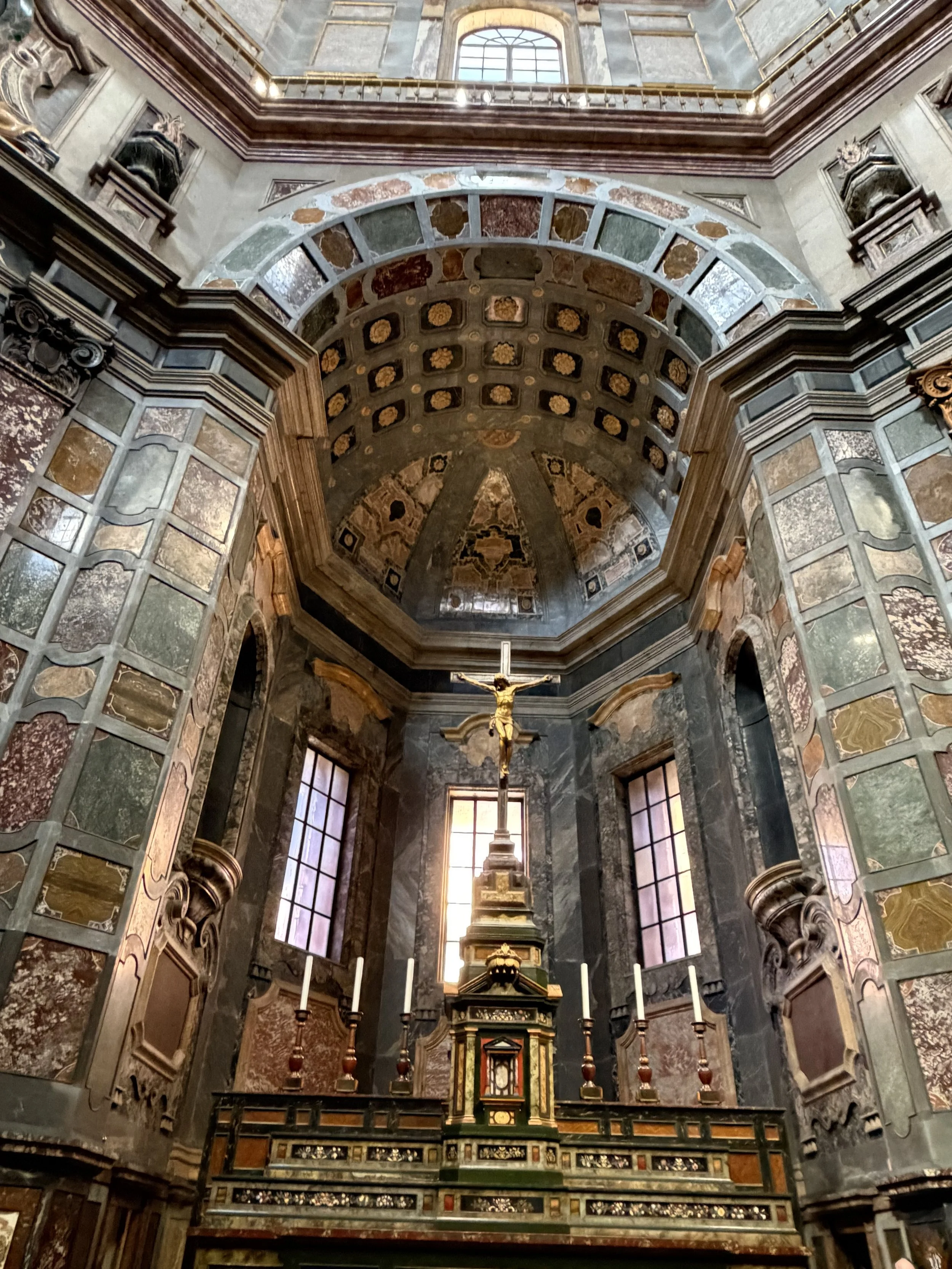
The Medici Chapels
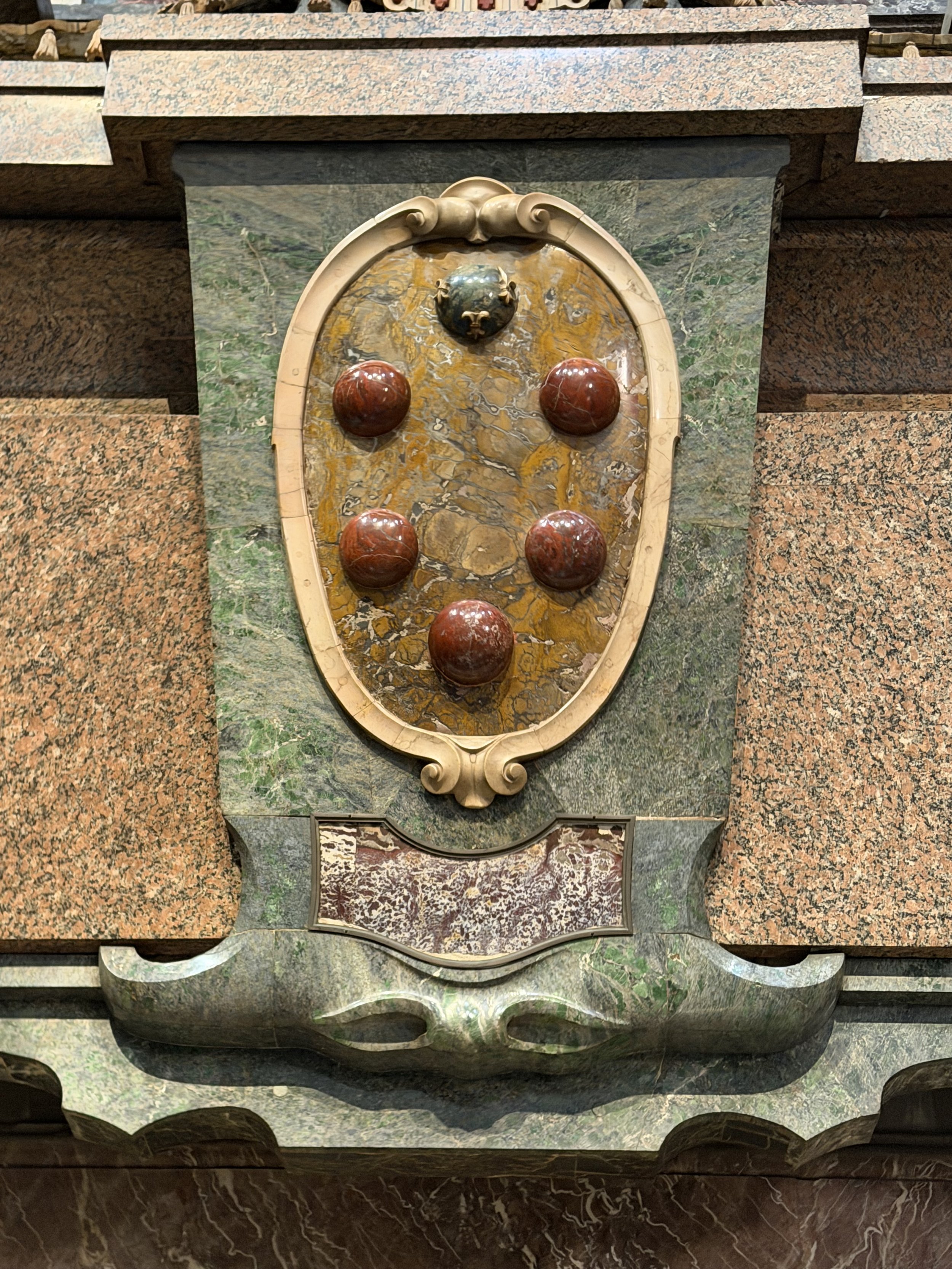
The Medici crest in the Cappella di Principi
It is impossible to think of Florence without thinking of the Medici family. From Cosimo the Elder in the early 1400’s, to Lorenzo the Magnificent, ruler of the Florentine Republic and key figure during the Renaissance period, to the Grand Dukes from Cosimo I to the last Medici ruler Gian Gastone, the Medici family had an enormous impact over the centuries of their rule. Bankers, Rulers, Tyrants, Popes, Assassins, Queens, and patrons of the arts, their influence is impossible to overstate. The family crest, a gold shield with five red palle (balls) and one blue palle with three fleur-de-lis, can be seen on buildings throughout Florence.
Following the death of the last ruler, Gian Gastone, in 1737, his sister Anna Maria Luisa transferred the family’s art and treasures to the city of Florence with the caveat that the collection always remains in Florence. And so it has, filling the Uffizi Gallery as well as many other museums and palazzi.
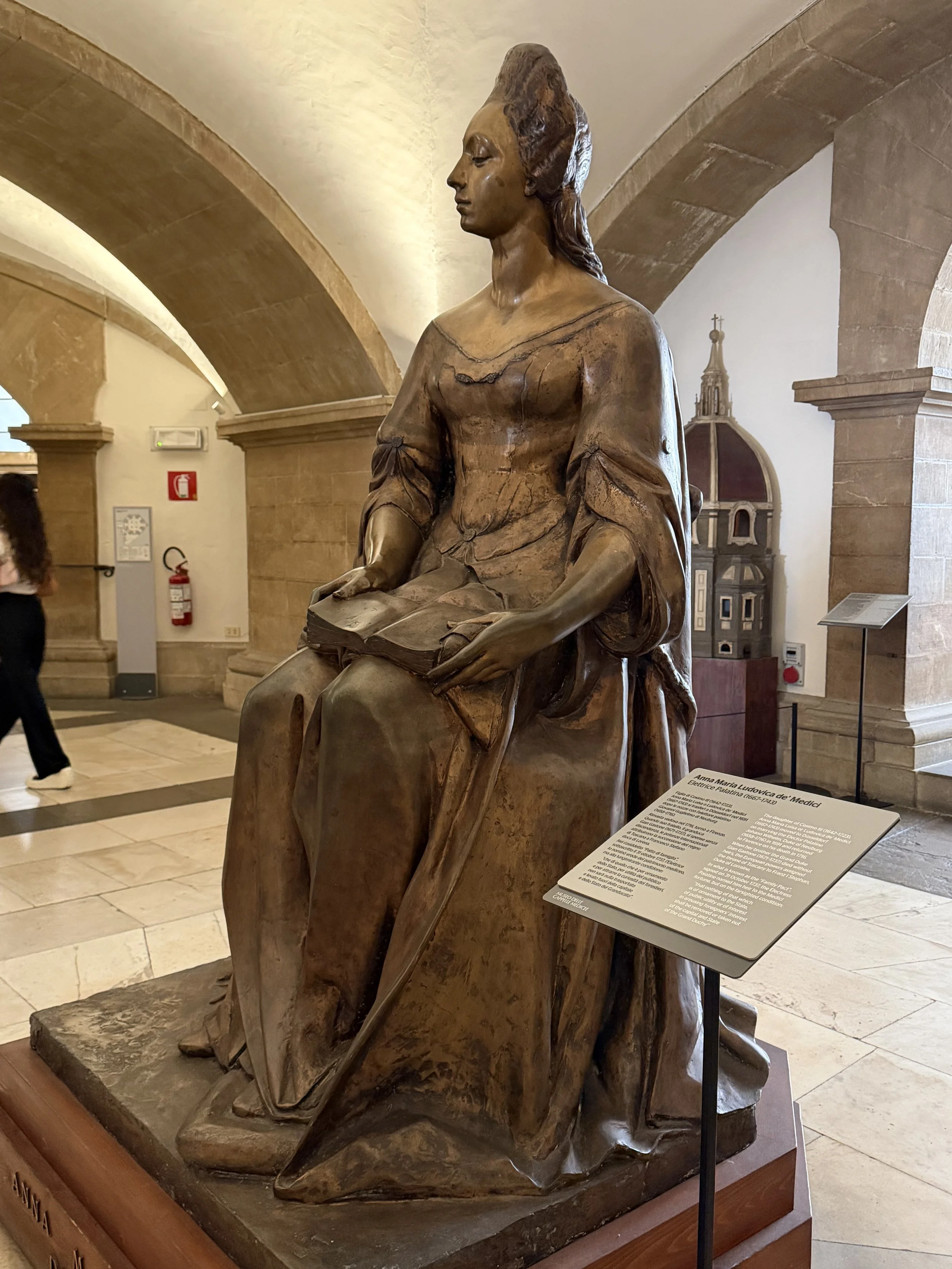
Anna Maria Luisa, the last heir of the ruling Medici family
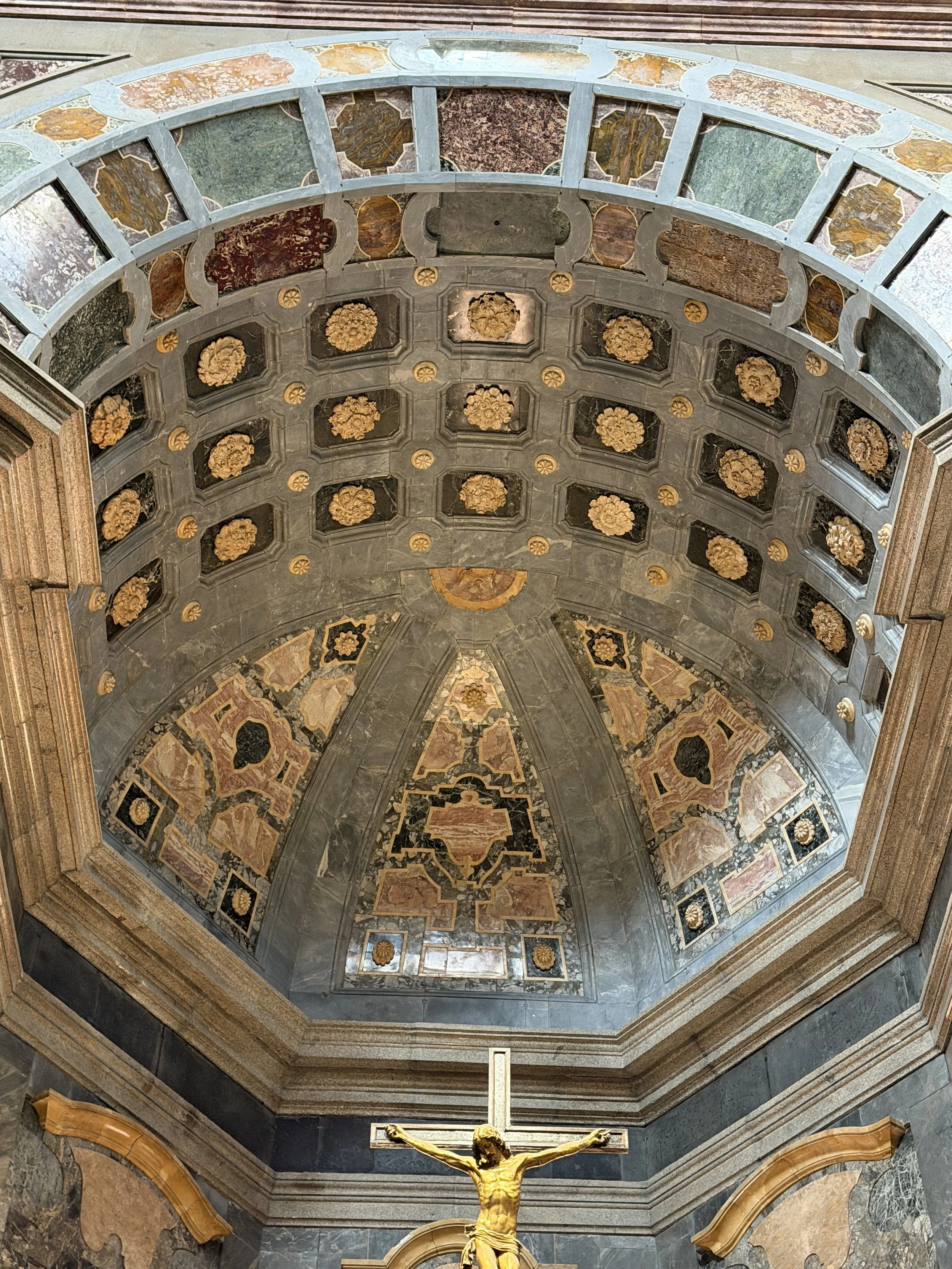
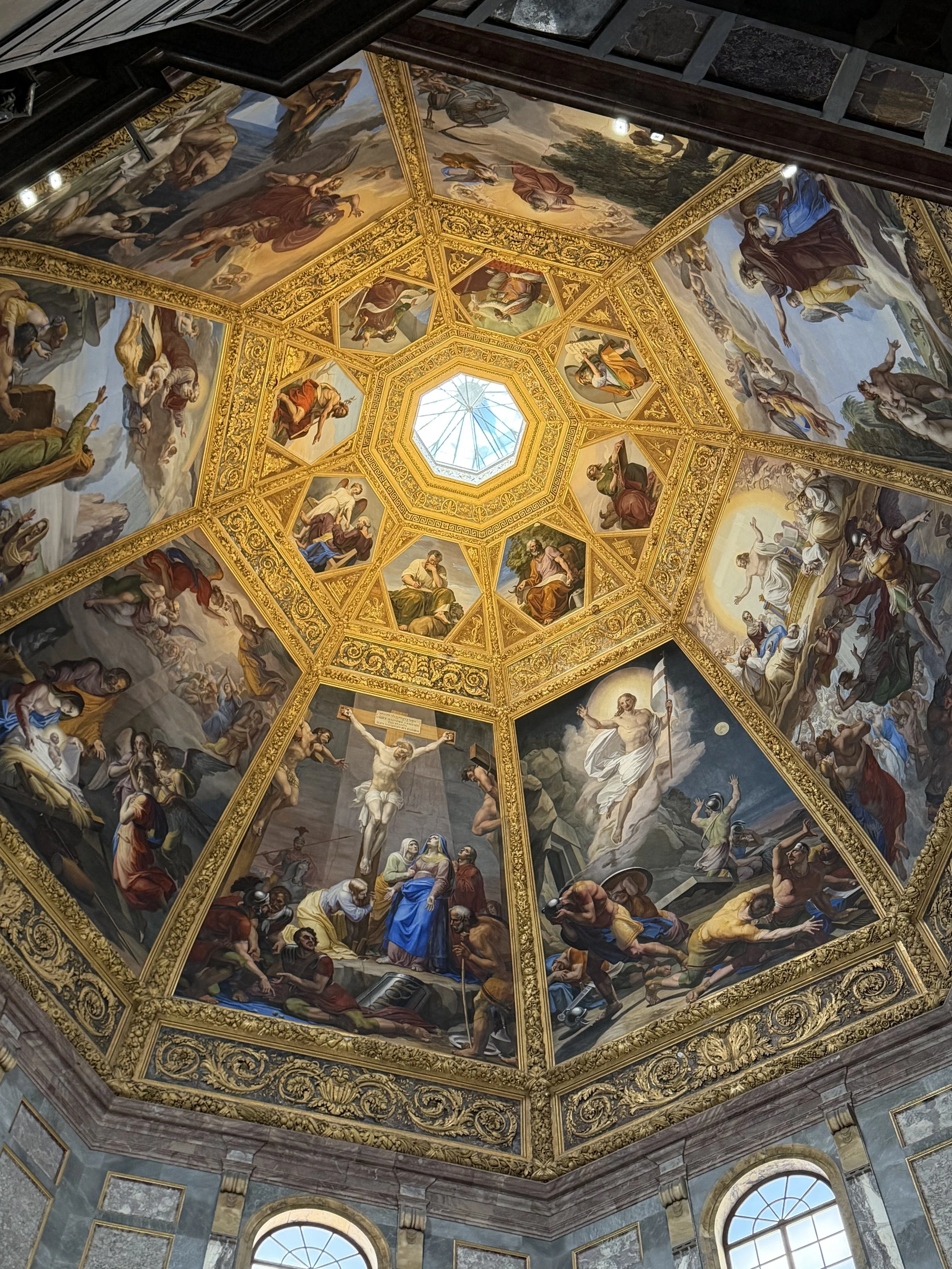
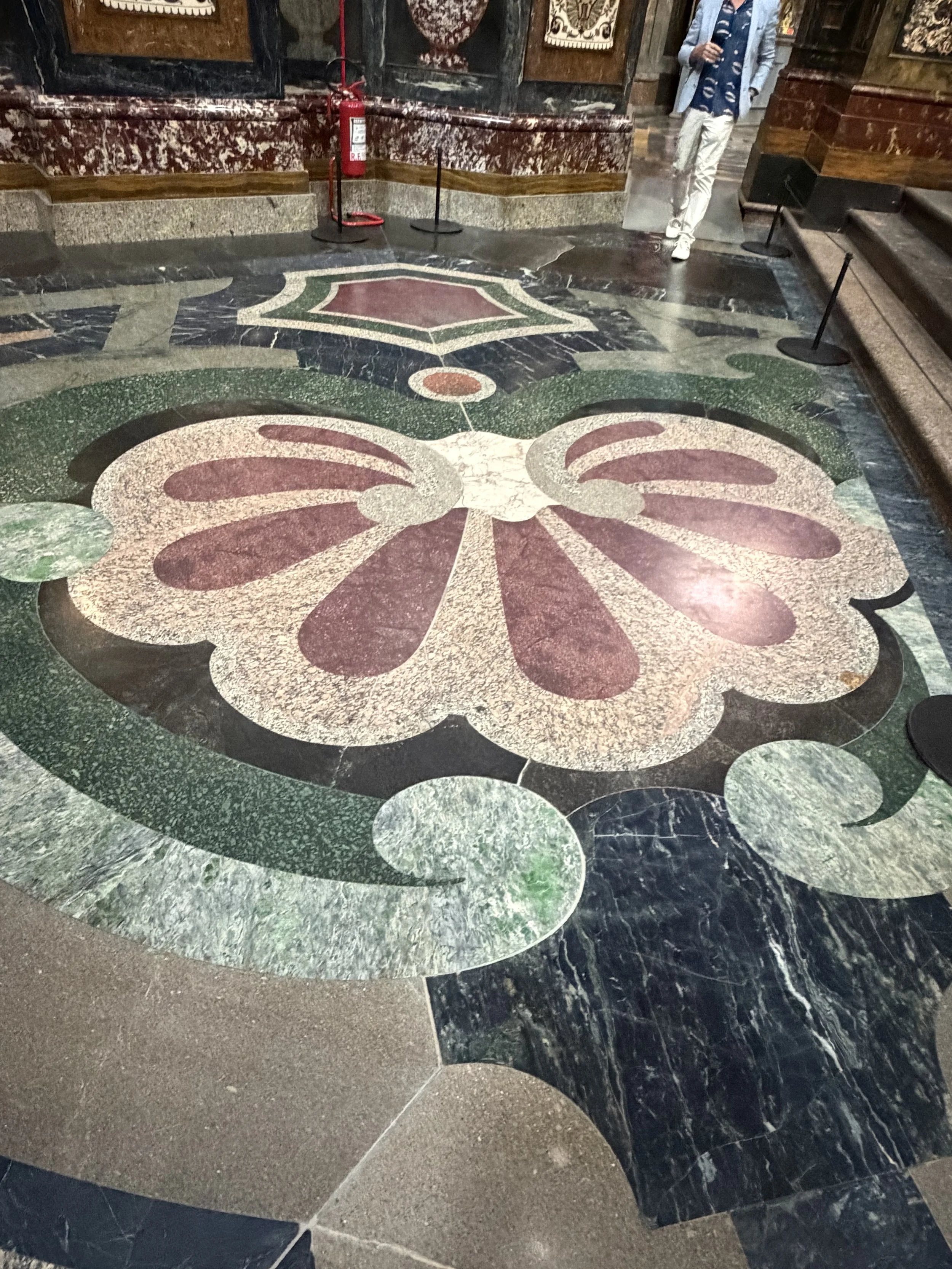
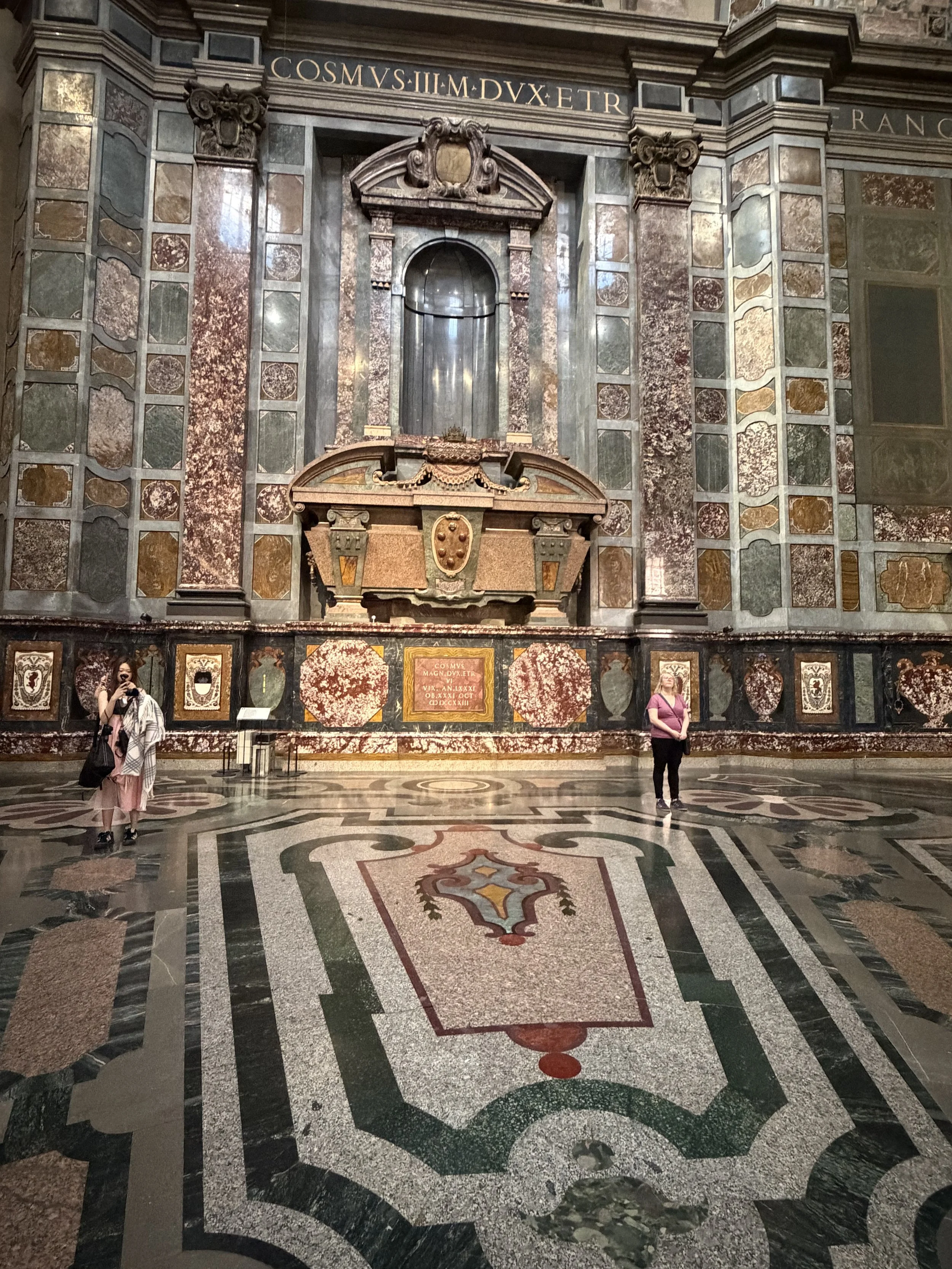
It is no surprise that such an important family would have a dedicated mausoleum. The Medici Chapel, an addition to the church of San Lorenzo, is where the Medicis were laid to rest. It is a spectacular place to visit, especially the Cappella di Principi (Prince’s Chapel), an octagonal room filled with decoration in marble, granite, mosaics, and semi-precious stones.
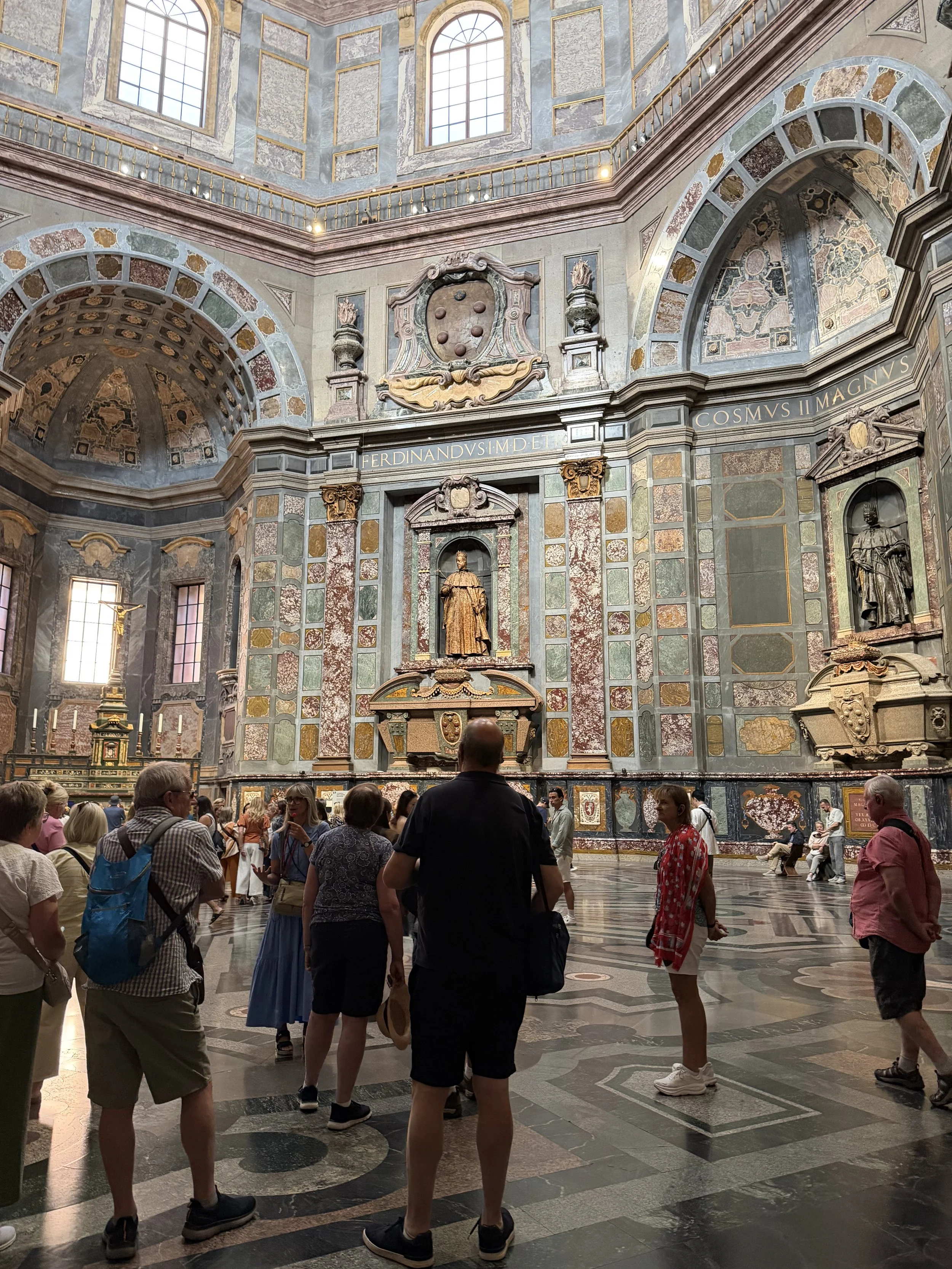
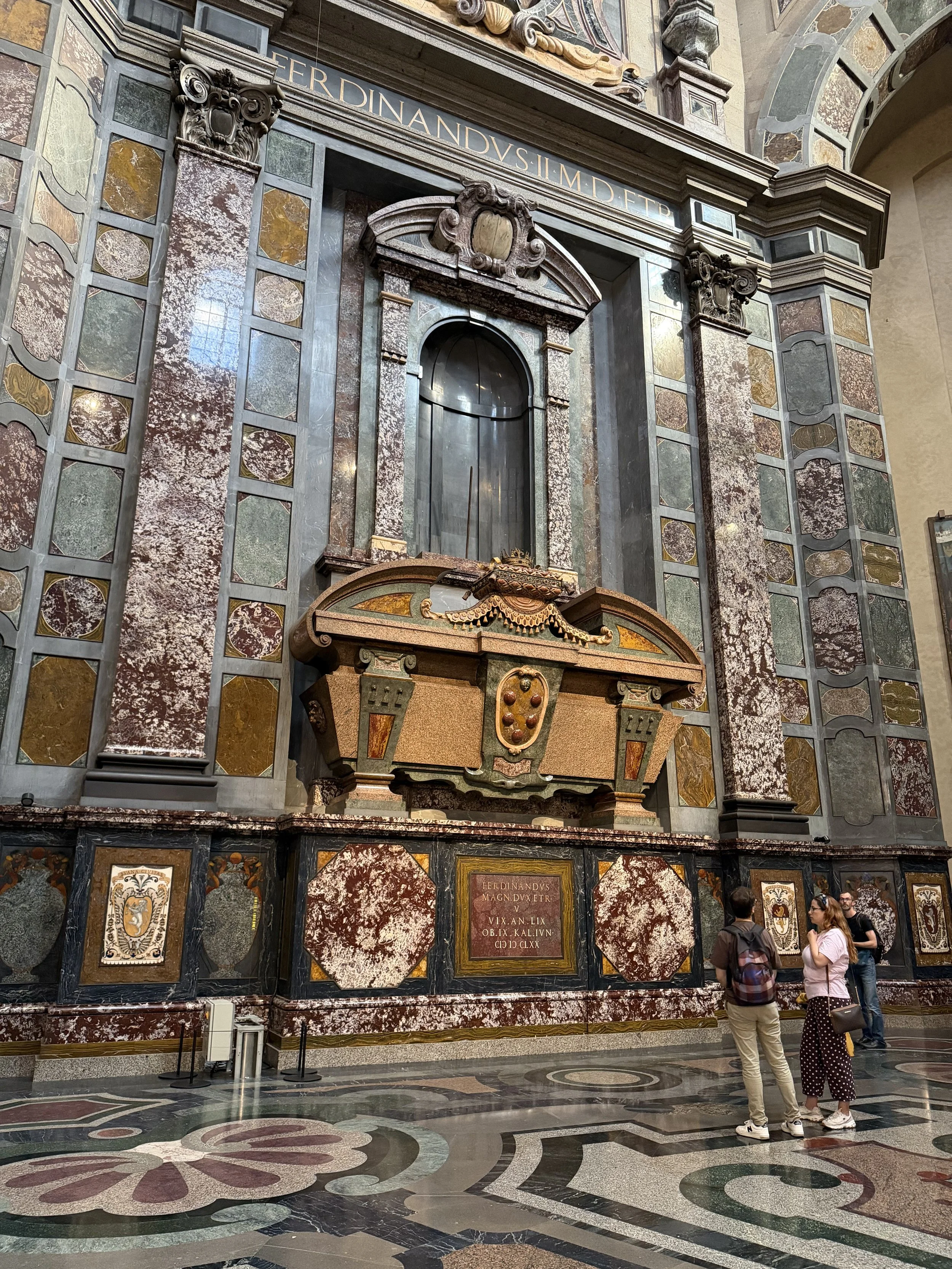
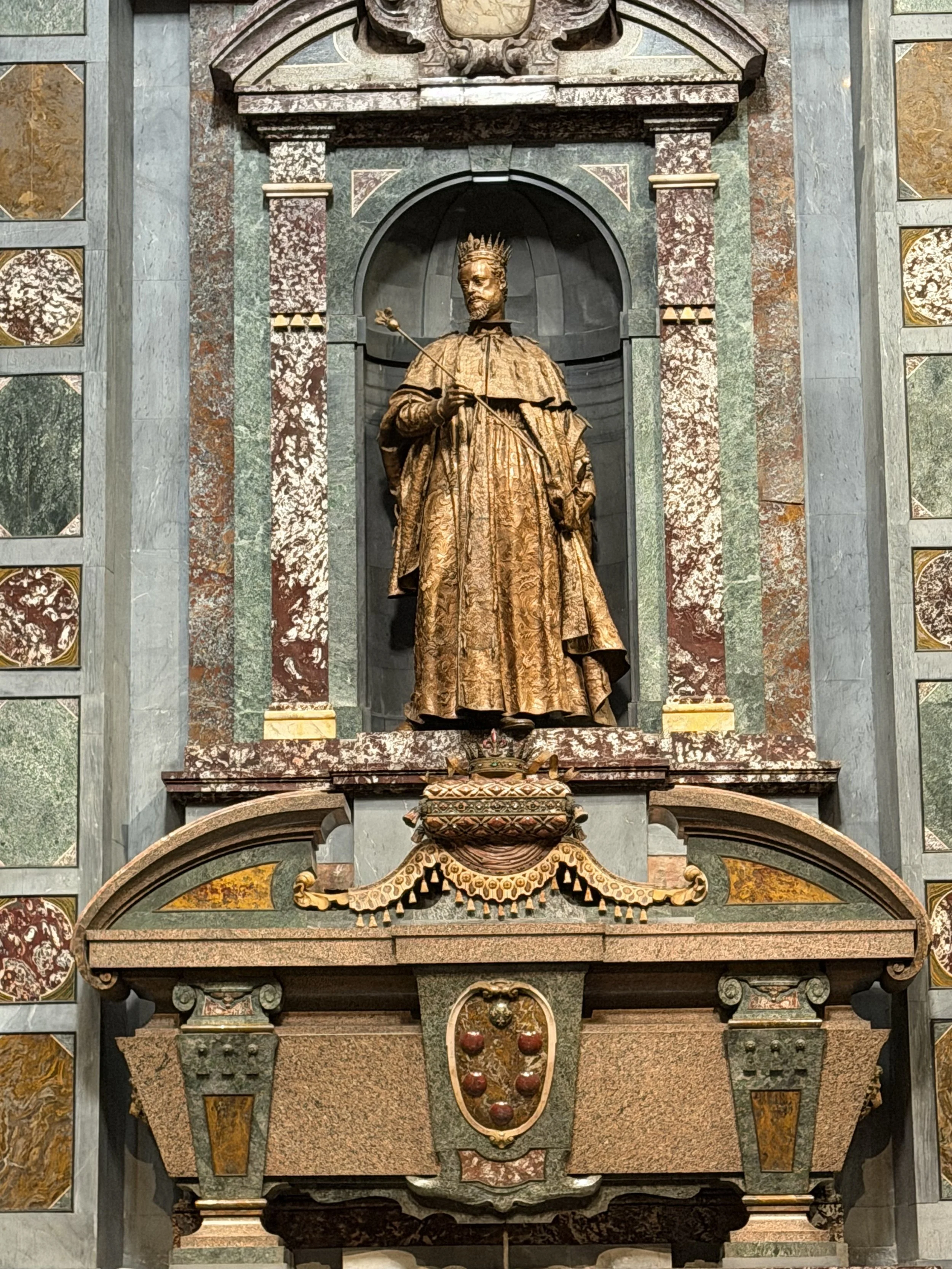
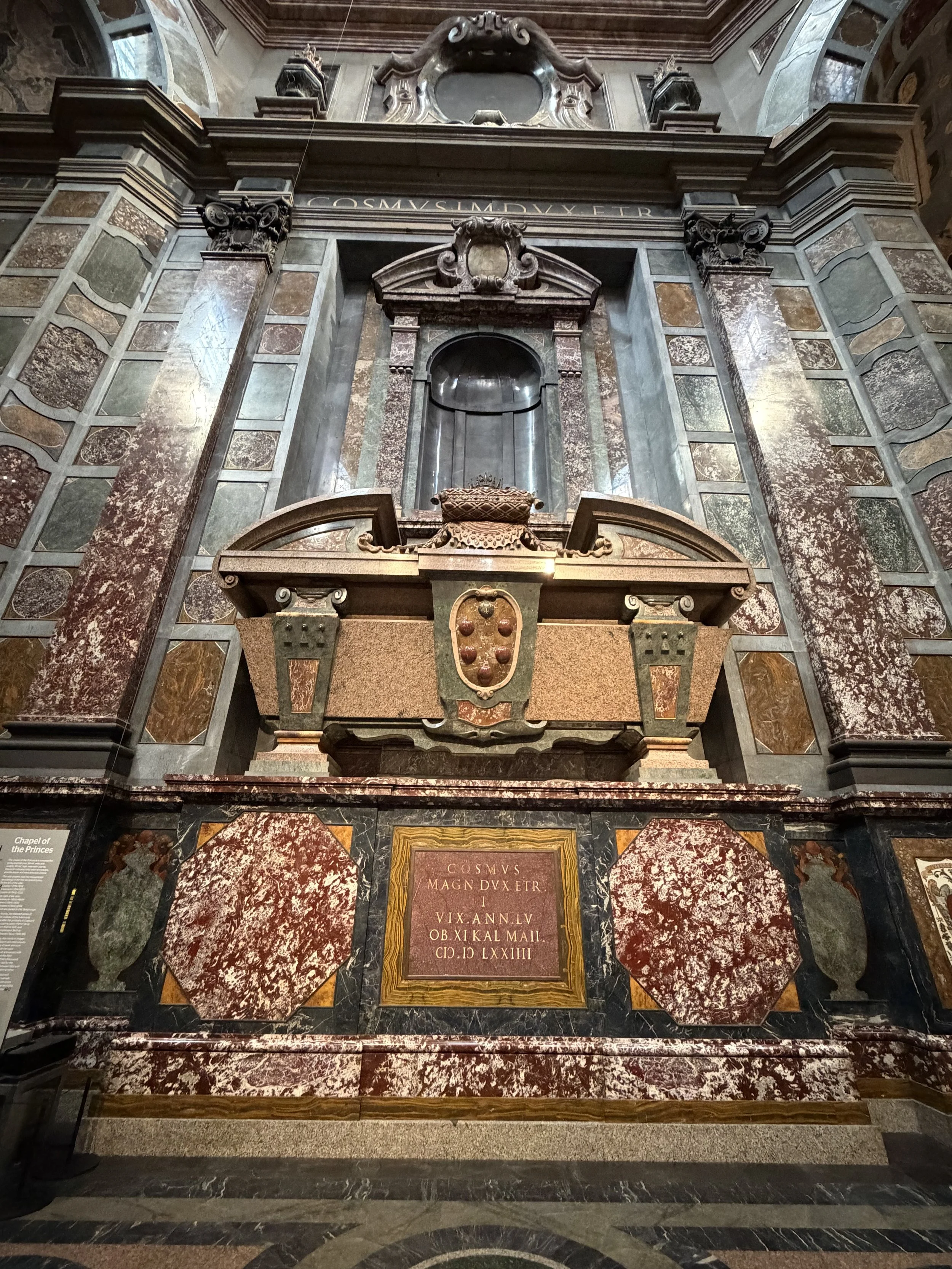
High up on the walls are the cenotaphs, each one dedicated to a Medici luminary (Cosimo I, Francesco I, Ferdinando I, Cosimo II, Ferdinando II, and Cosimo III). They are composed of sculpted “caskets”, each topped with a crown. Above each is an arch designed for a statue, though only two were completed –those of Cosimo 1 and Ferdinando 1. The others stand empty. No physical remains are present in the Cappella di Principi, the bodies were interred in the crypt.
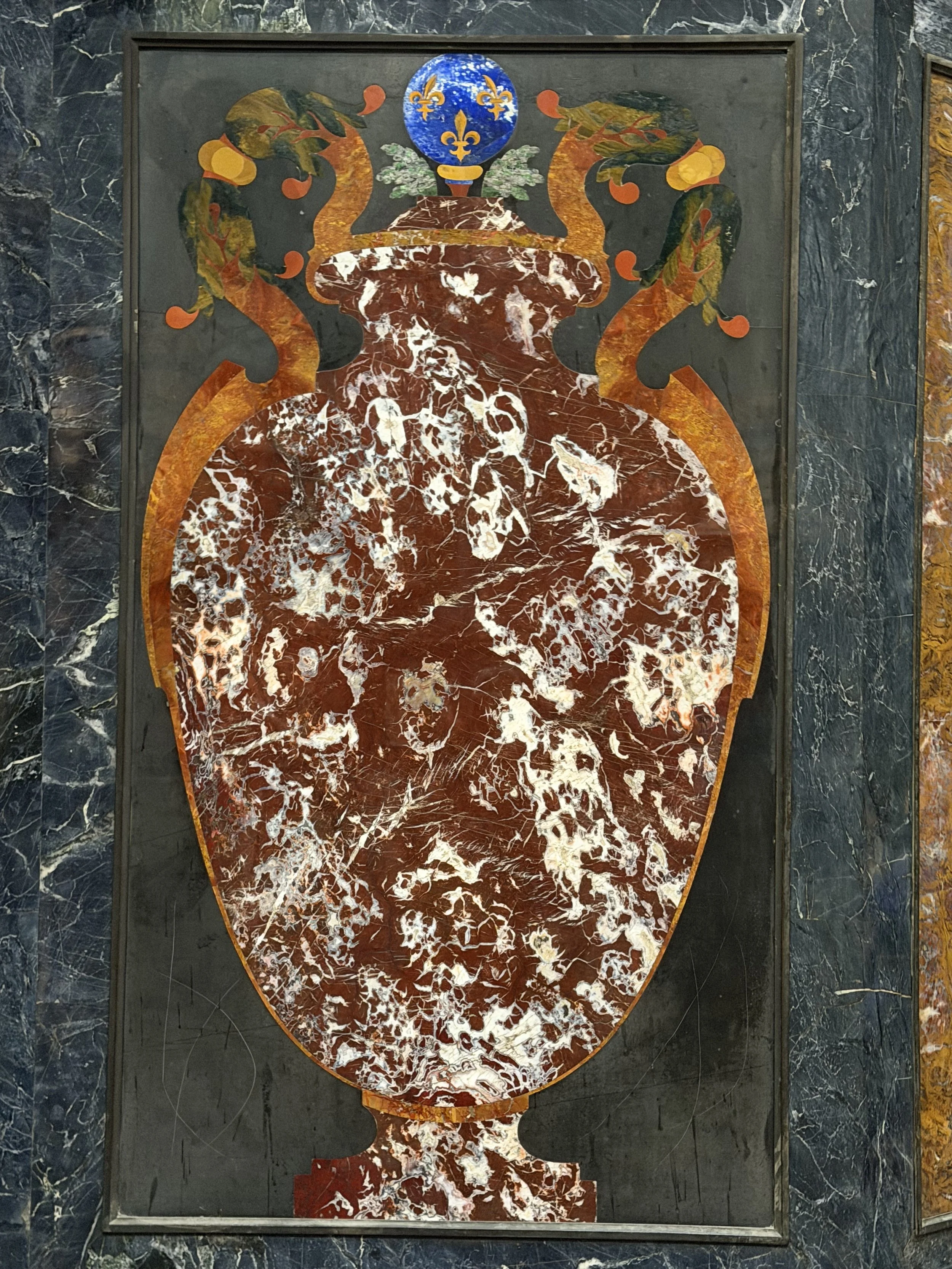
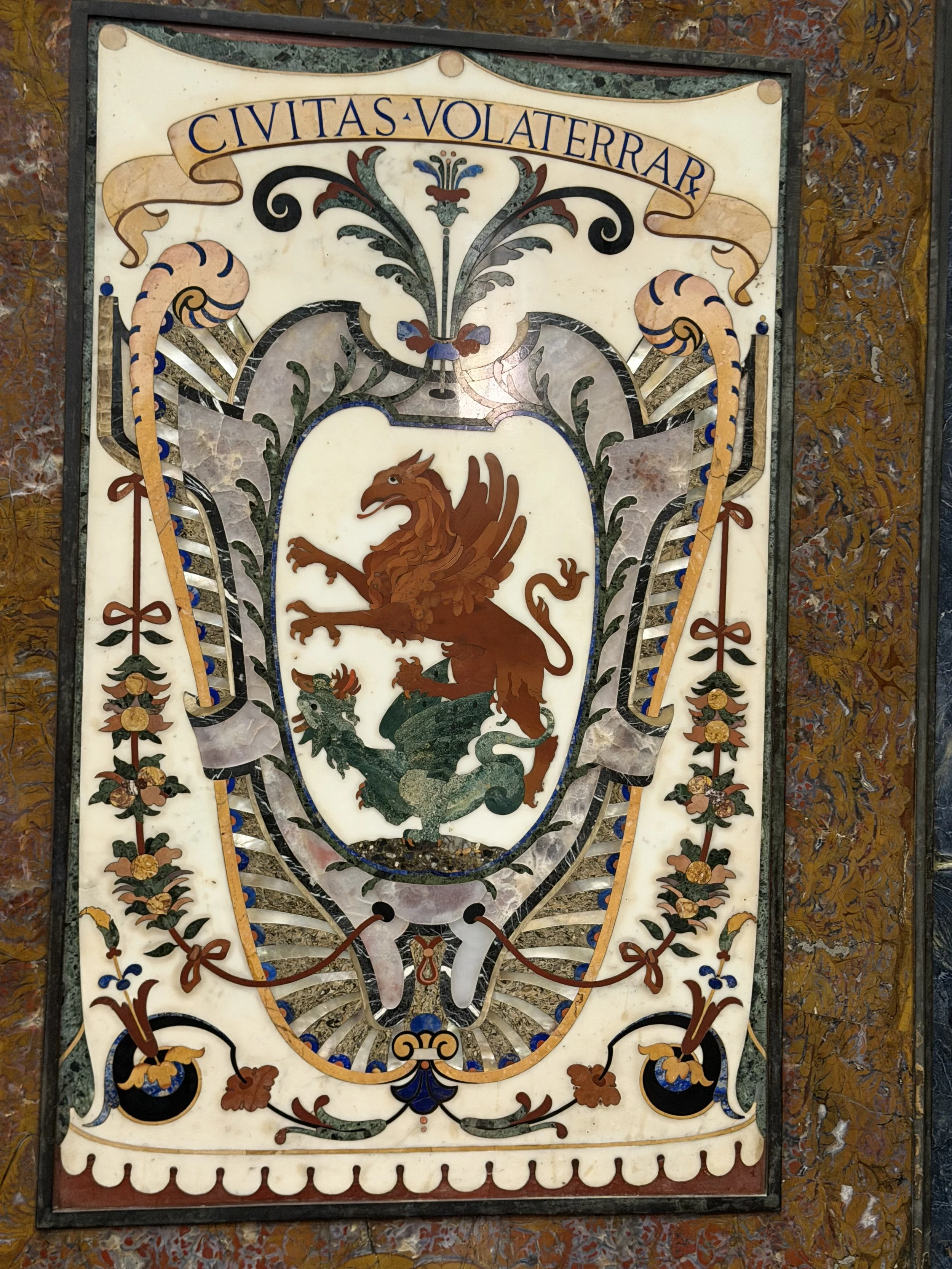
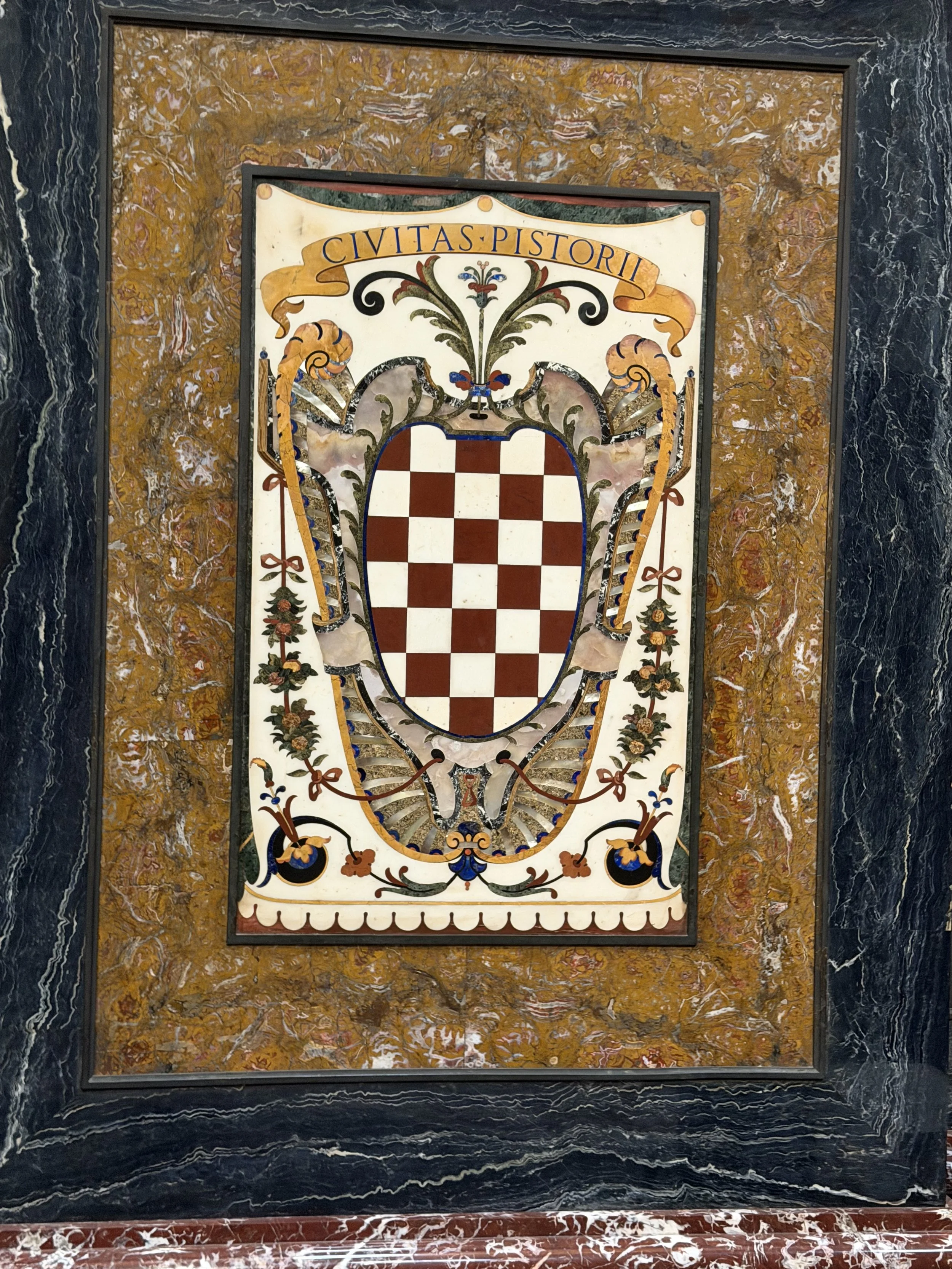
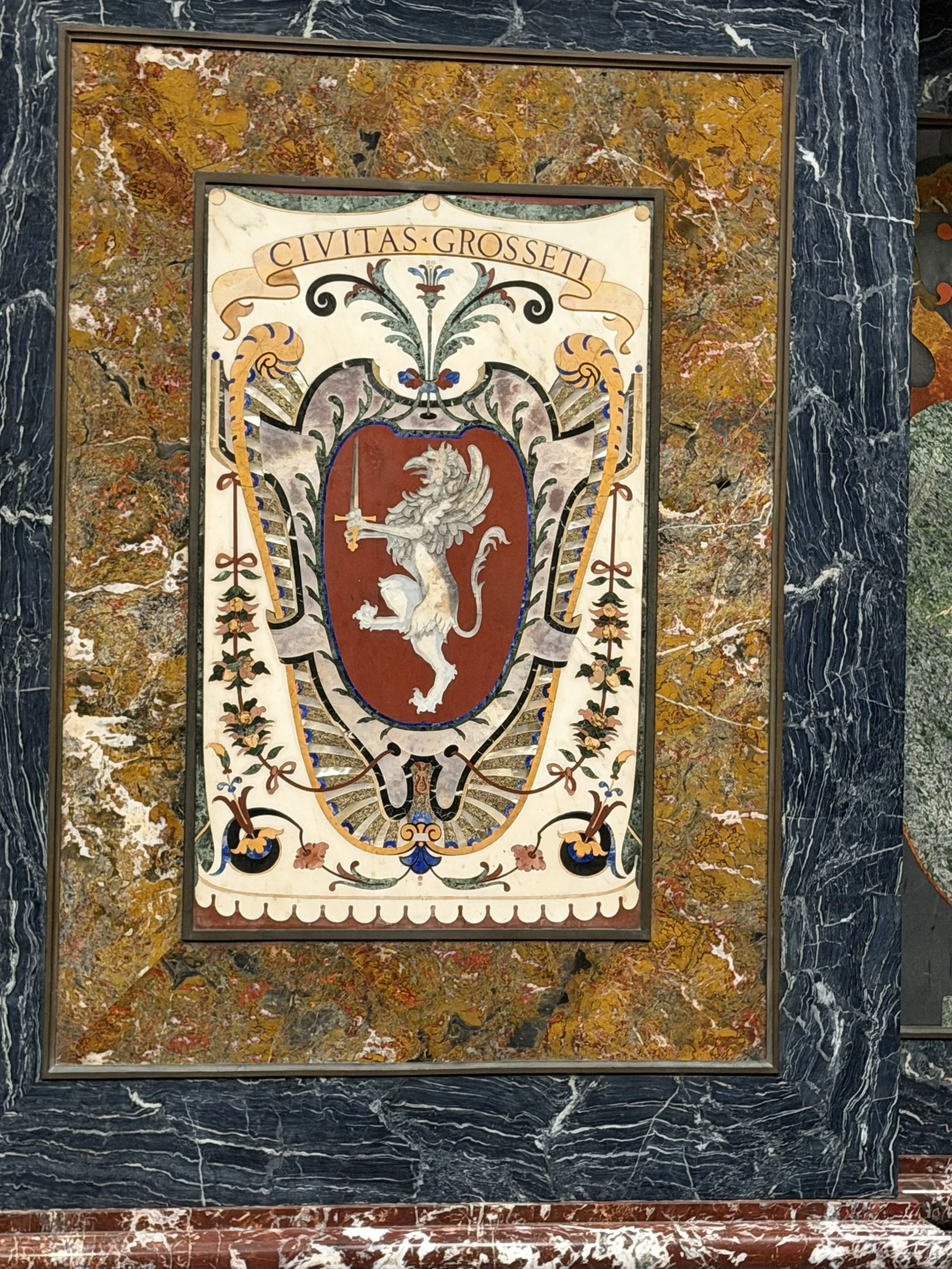
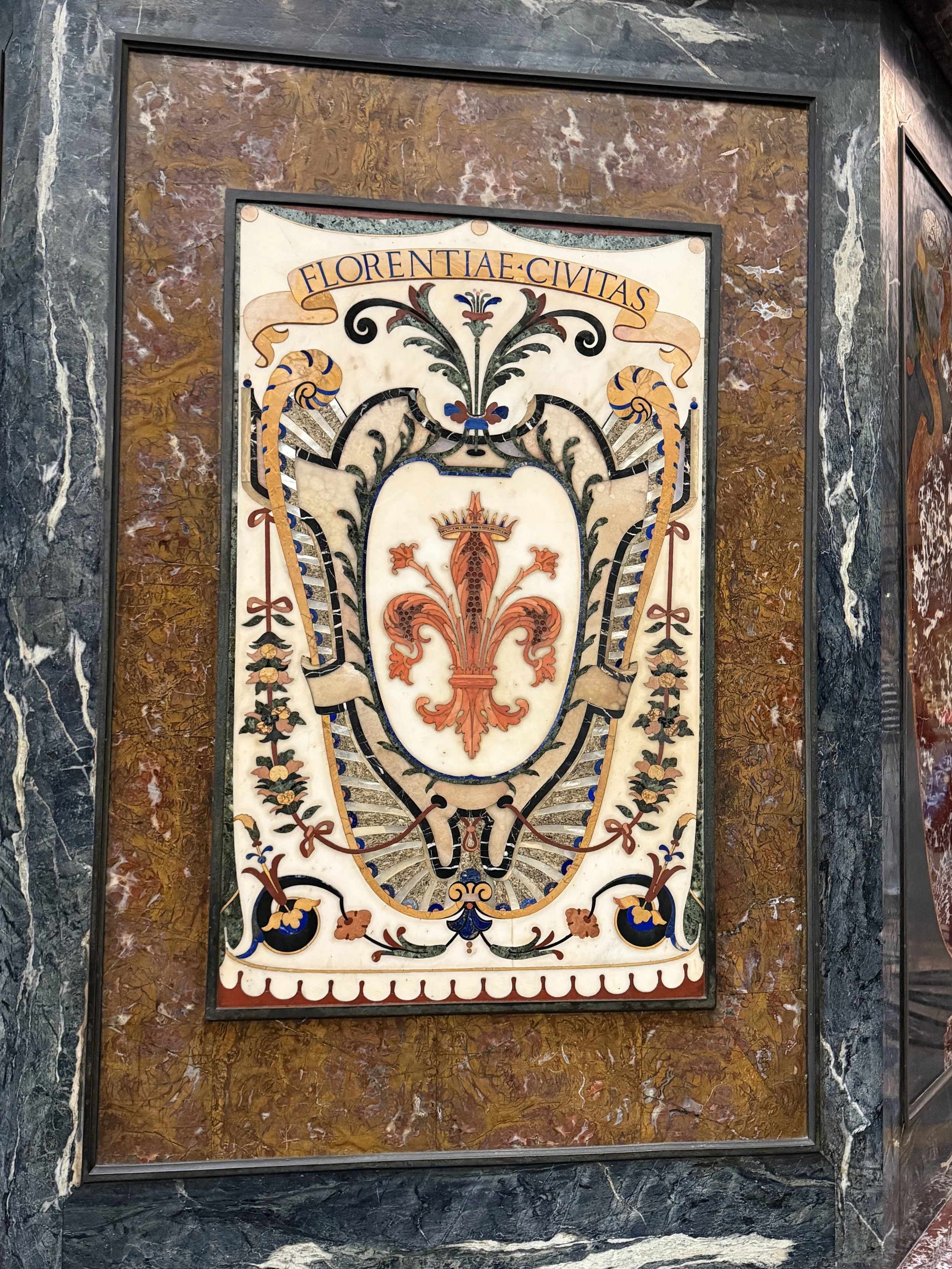
Around the perimeter are the coat of arms of various Tuscan cities which were under Medici control. They are stunning - crafted from mother of pearl, quartz, alabaster, lapis lazuli and other stones.
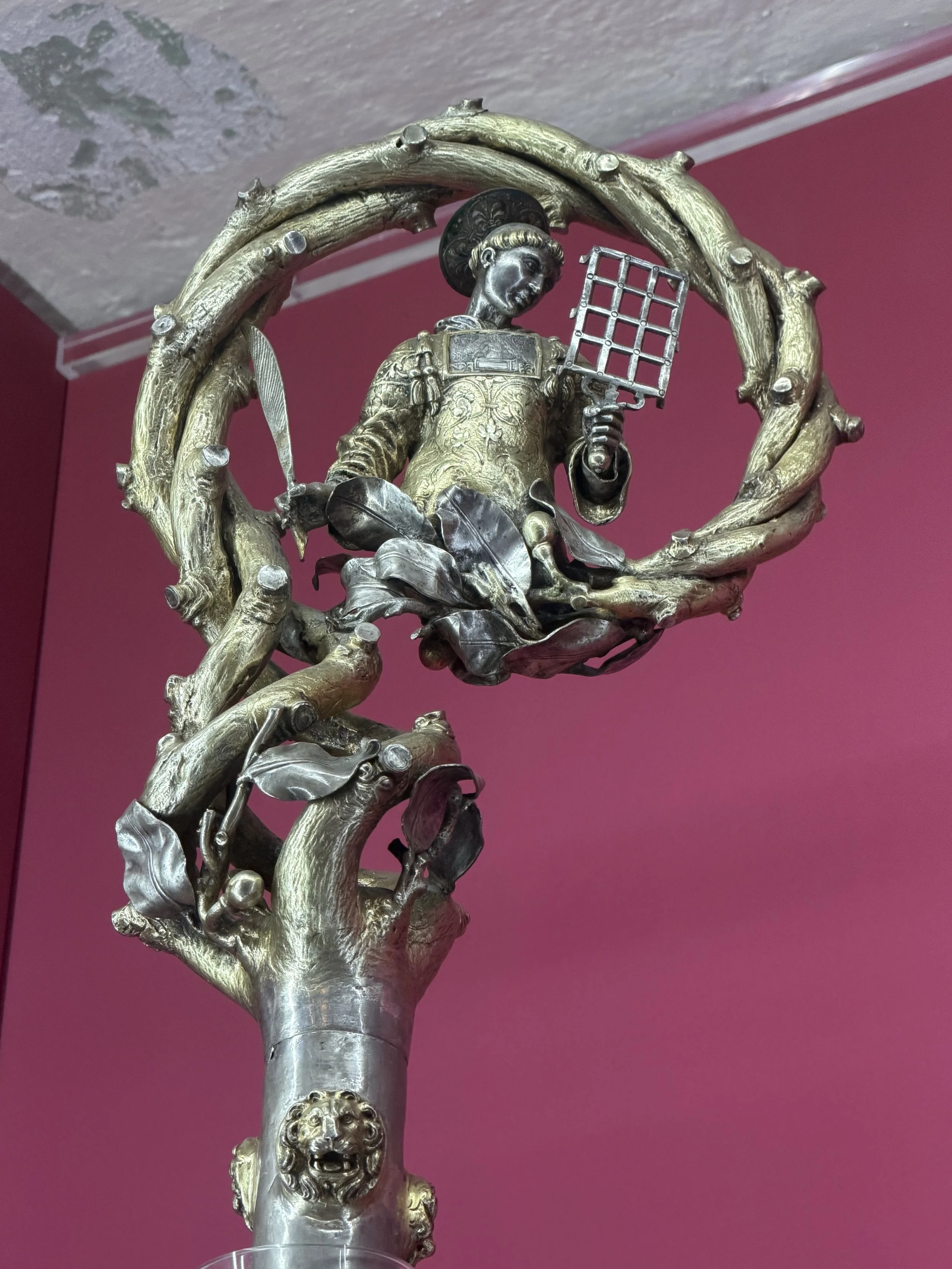
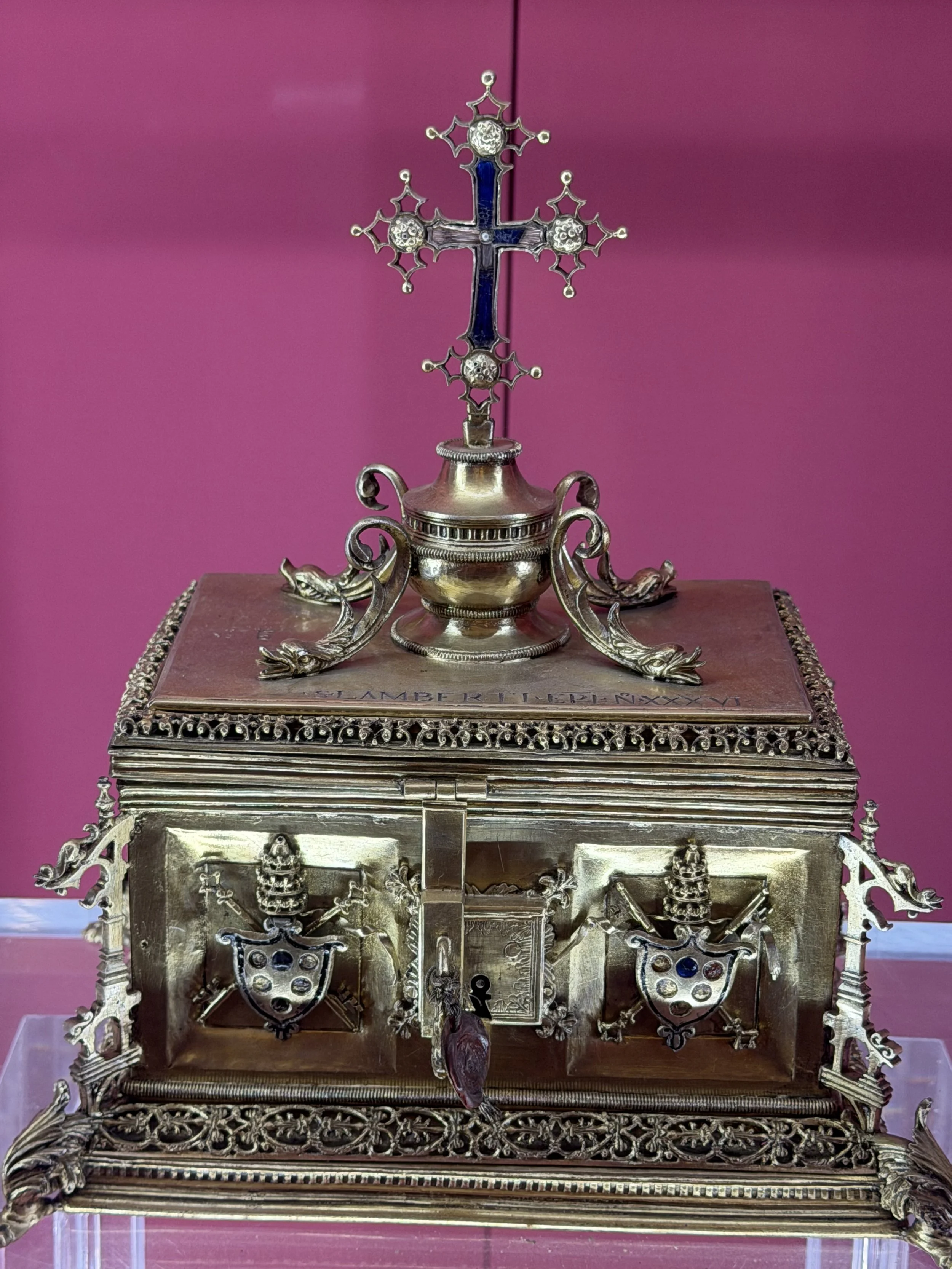
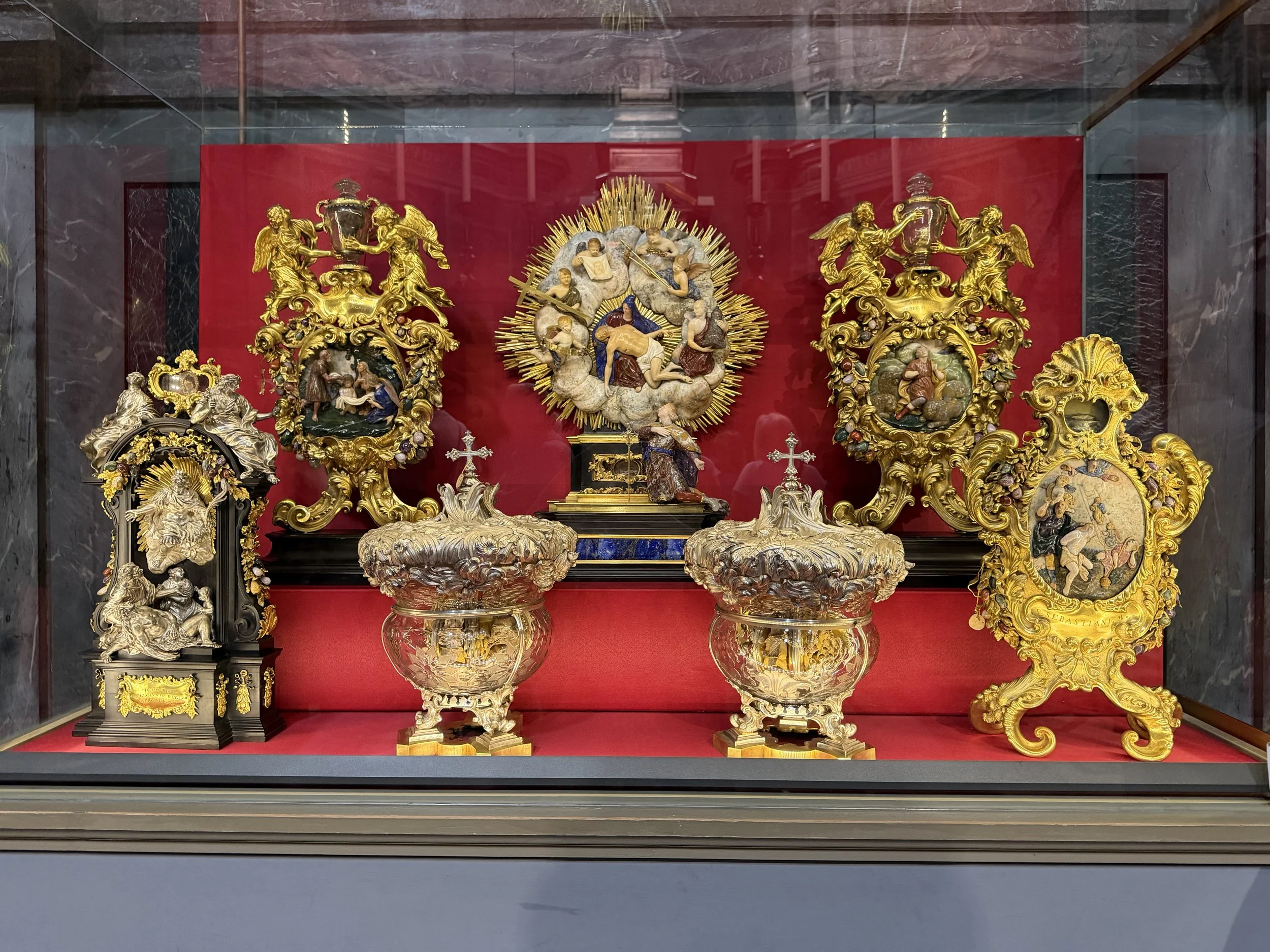
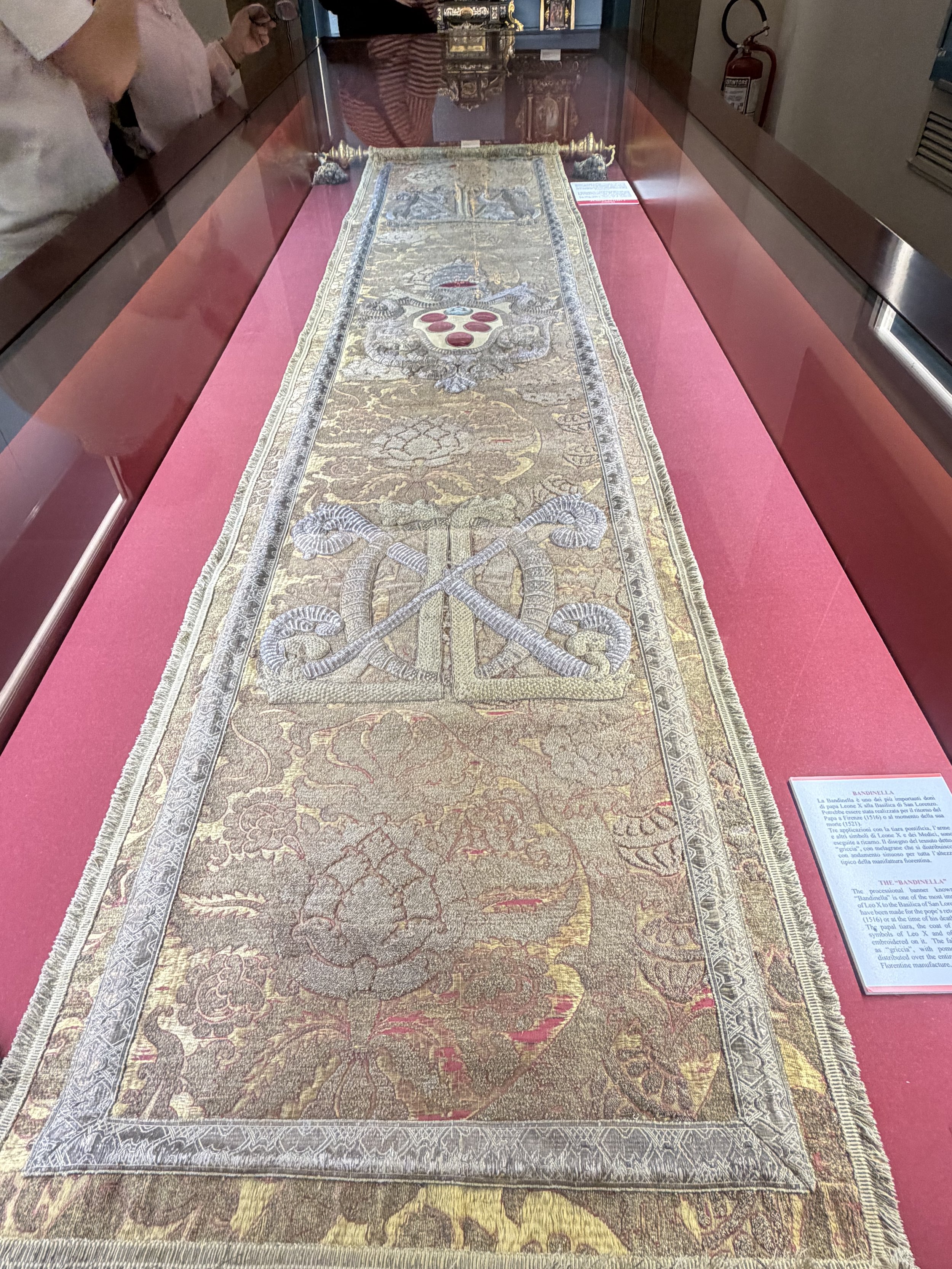
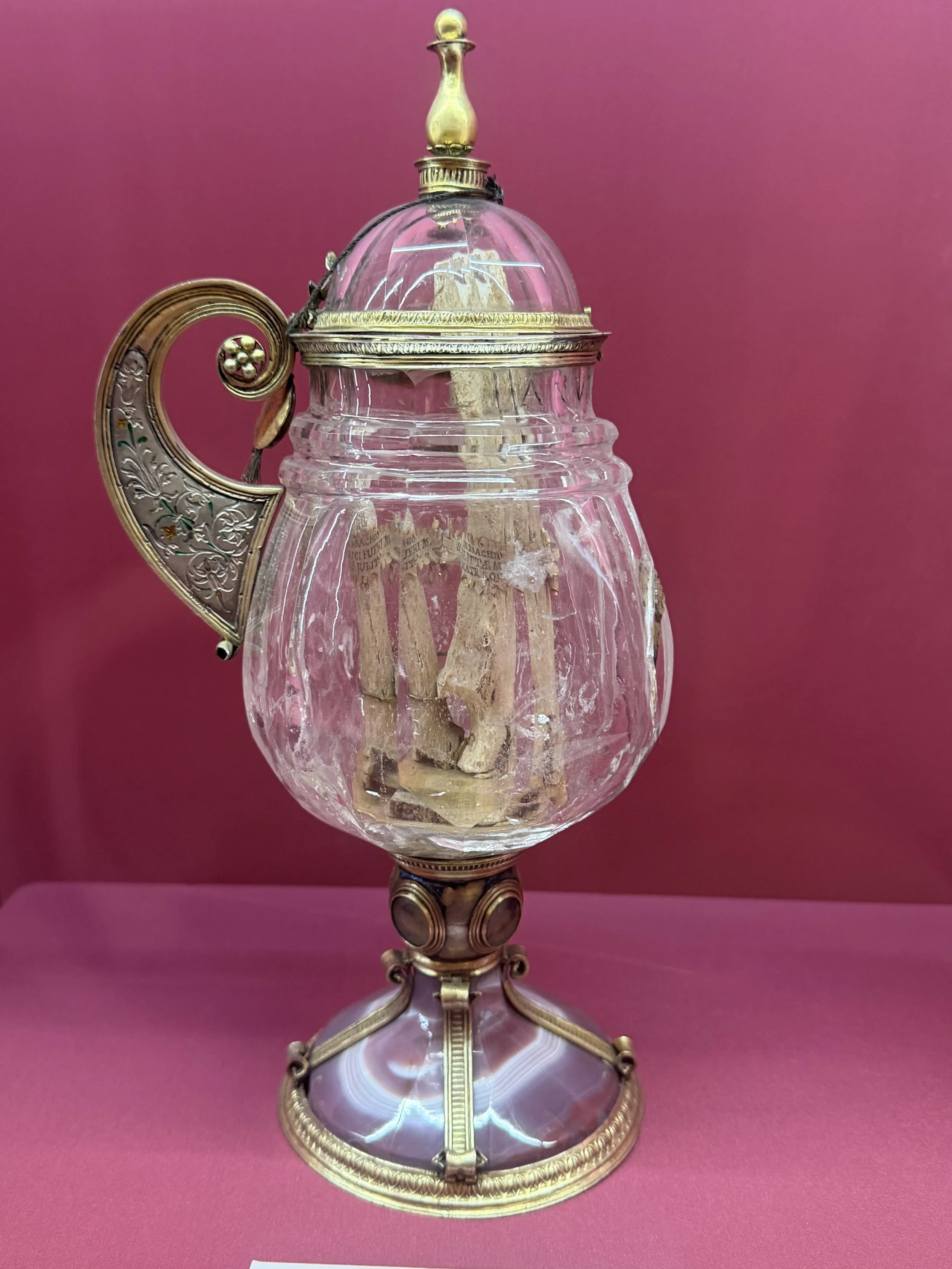
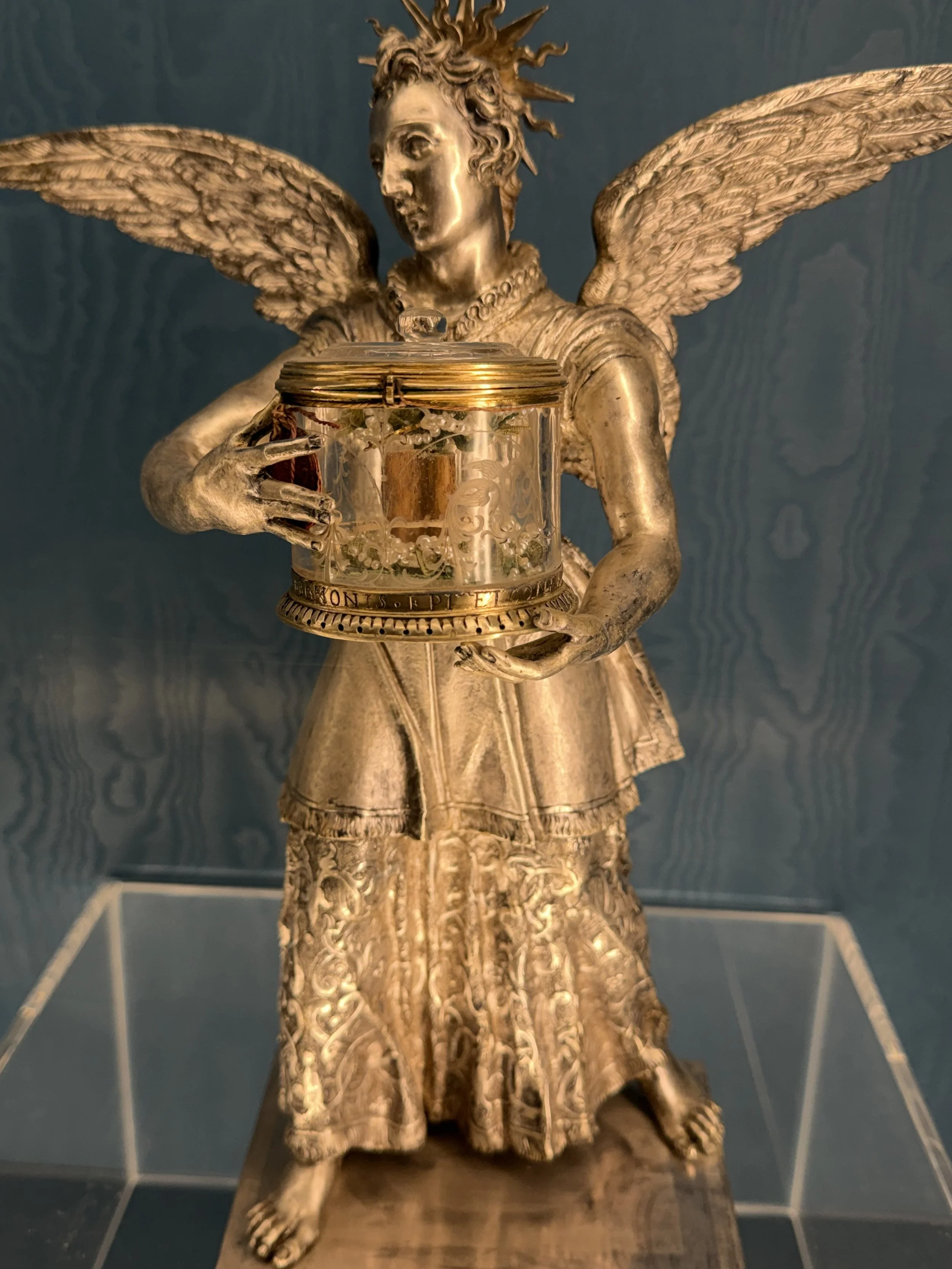
Behind the altar are rooms containing the Treasure of San Lorenzo. This is a vast collection of reliquaries and other artifacts including an intact processional banner, beautifully embroidered, that belonged to the Medici Pope Leo X.
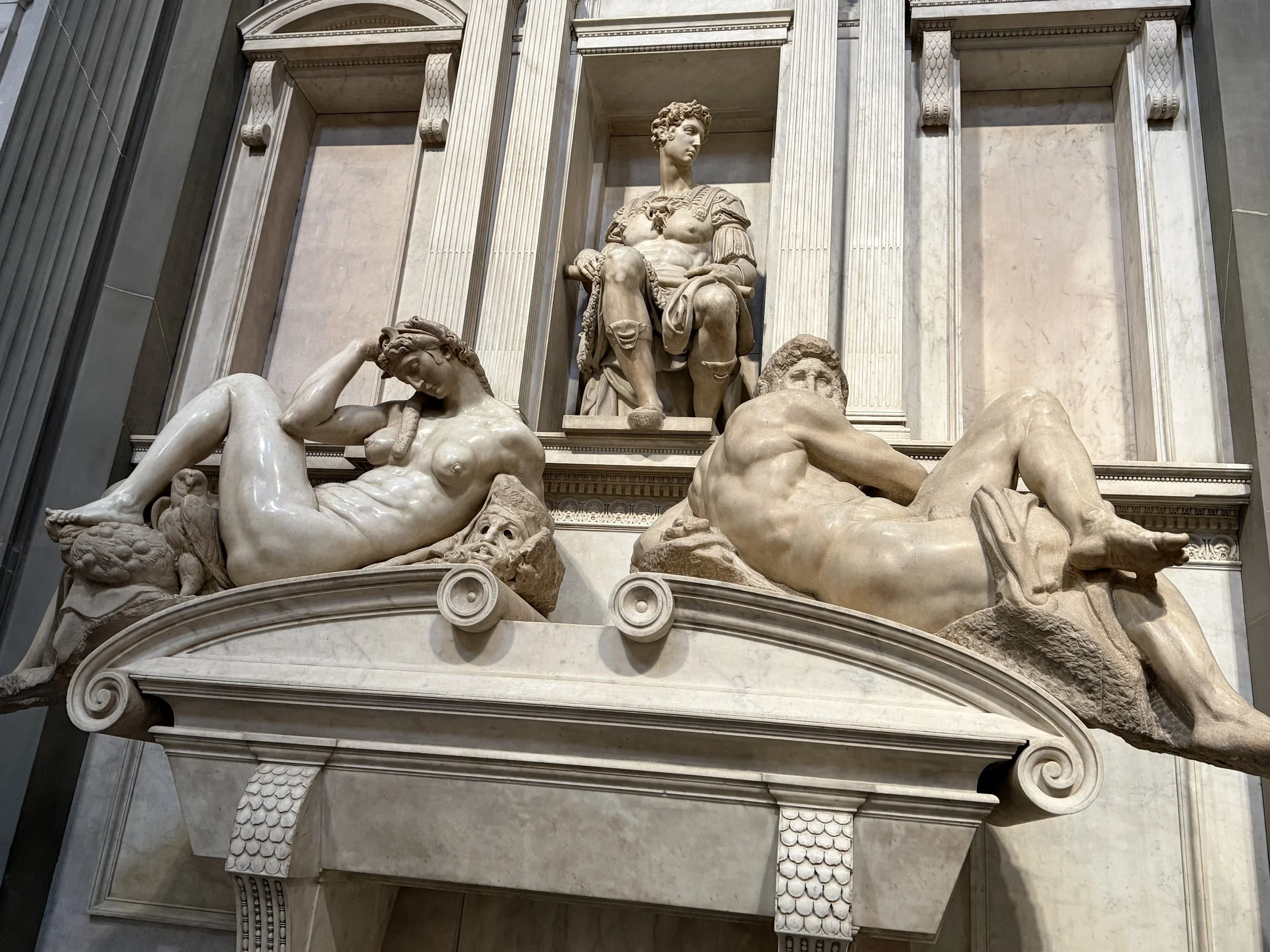
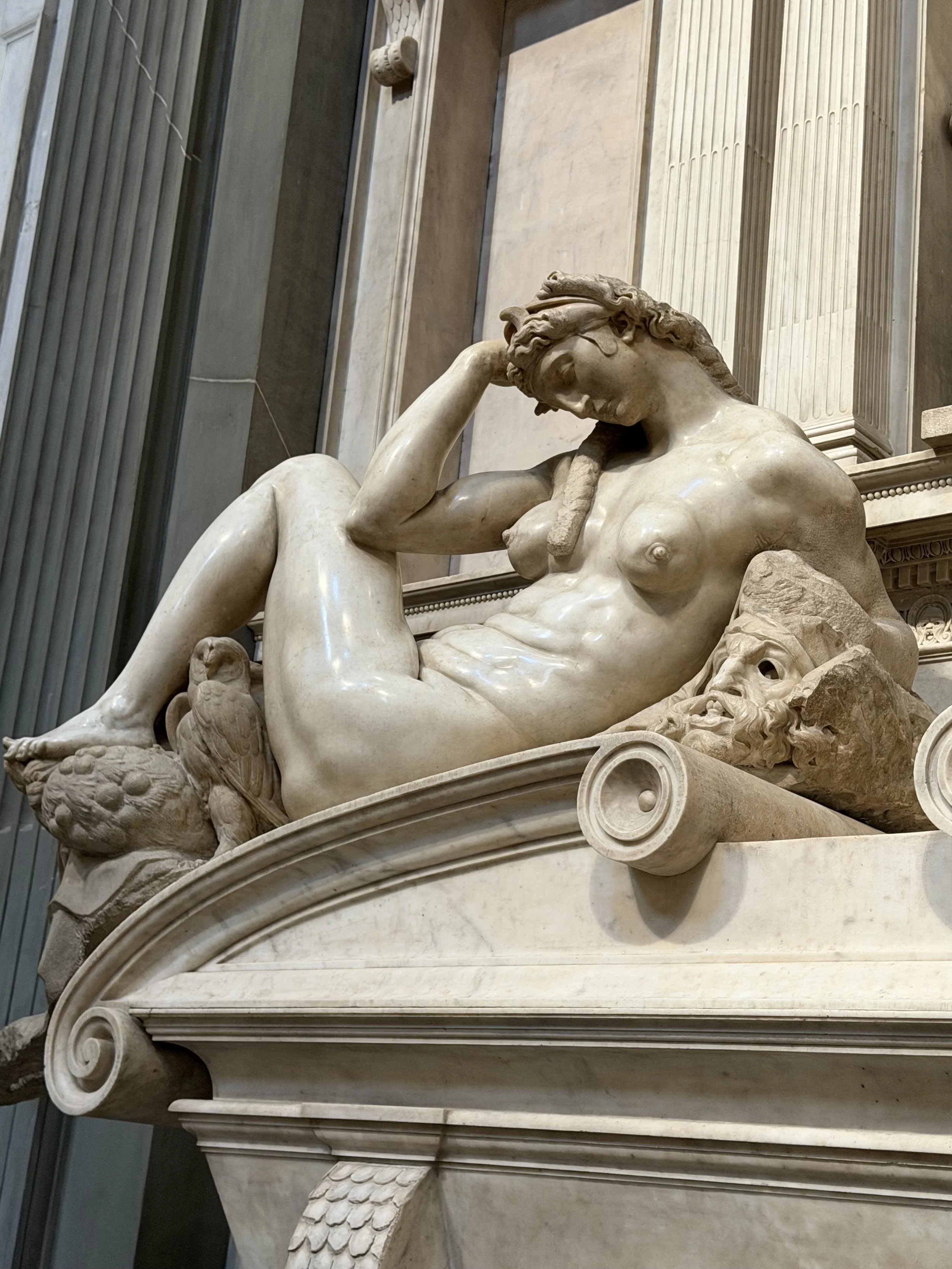
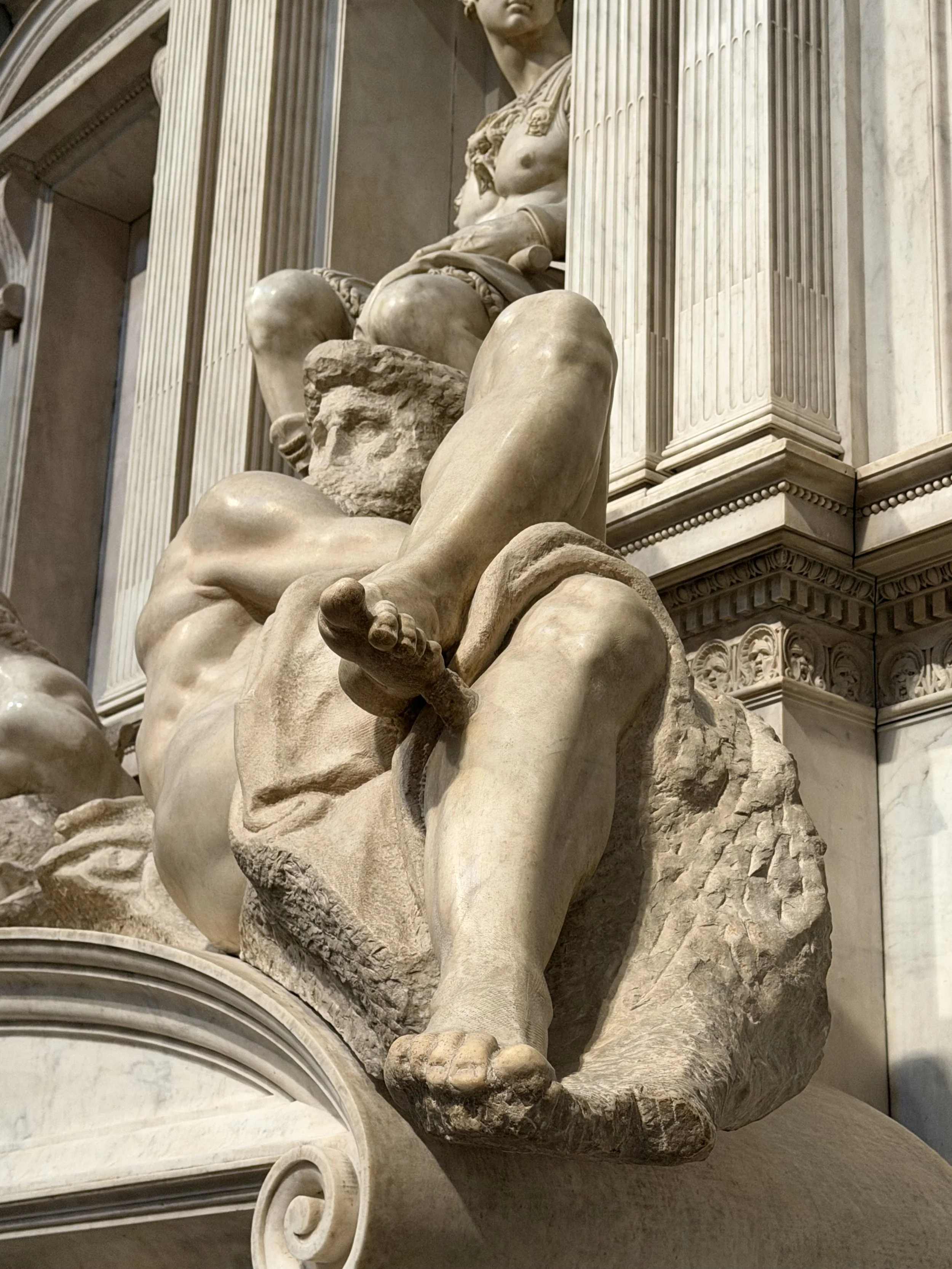
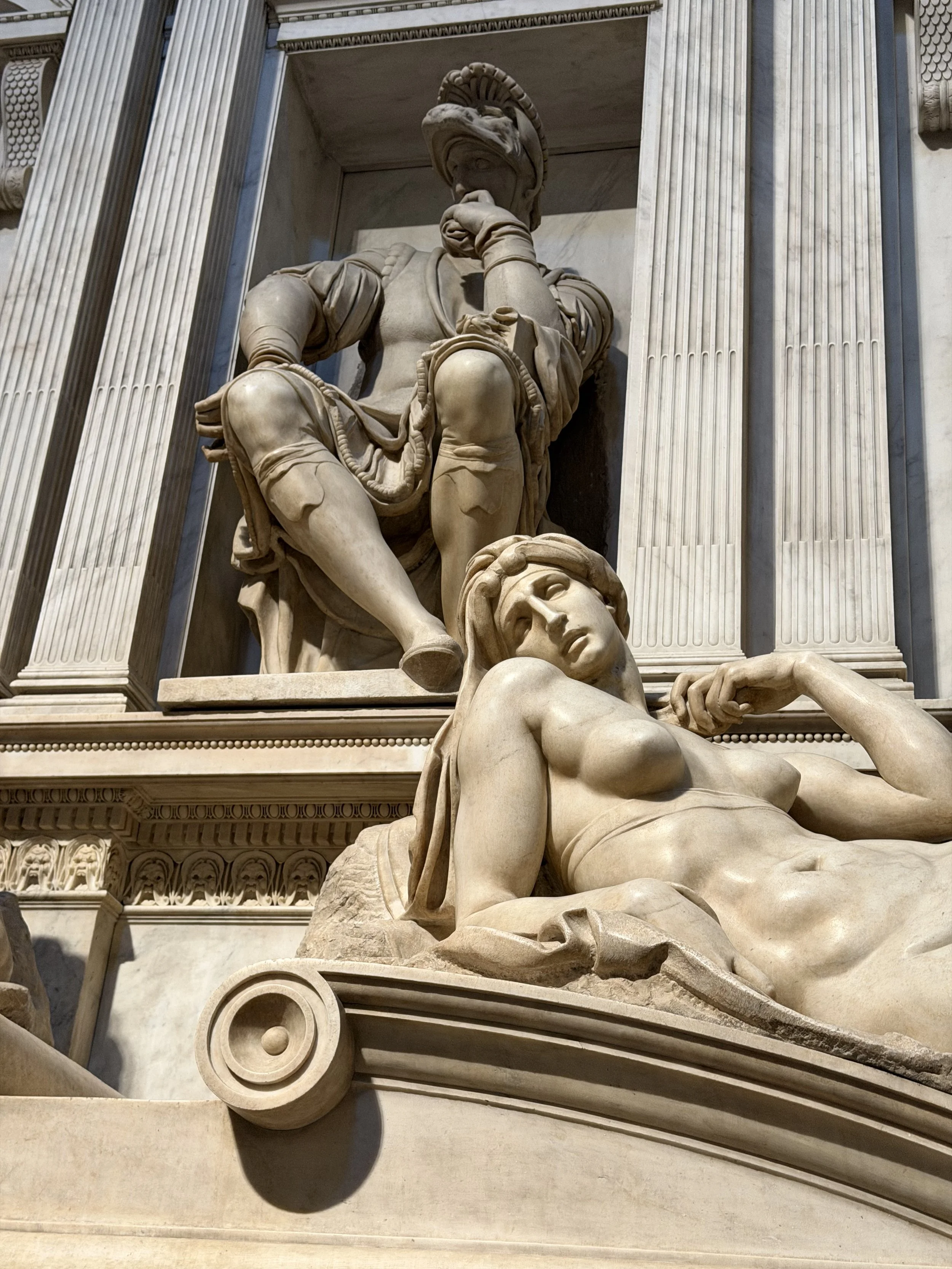
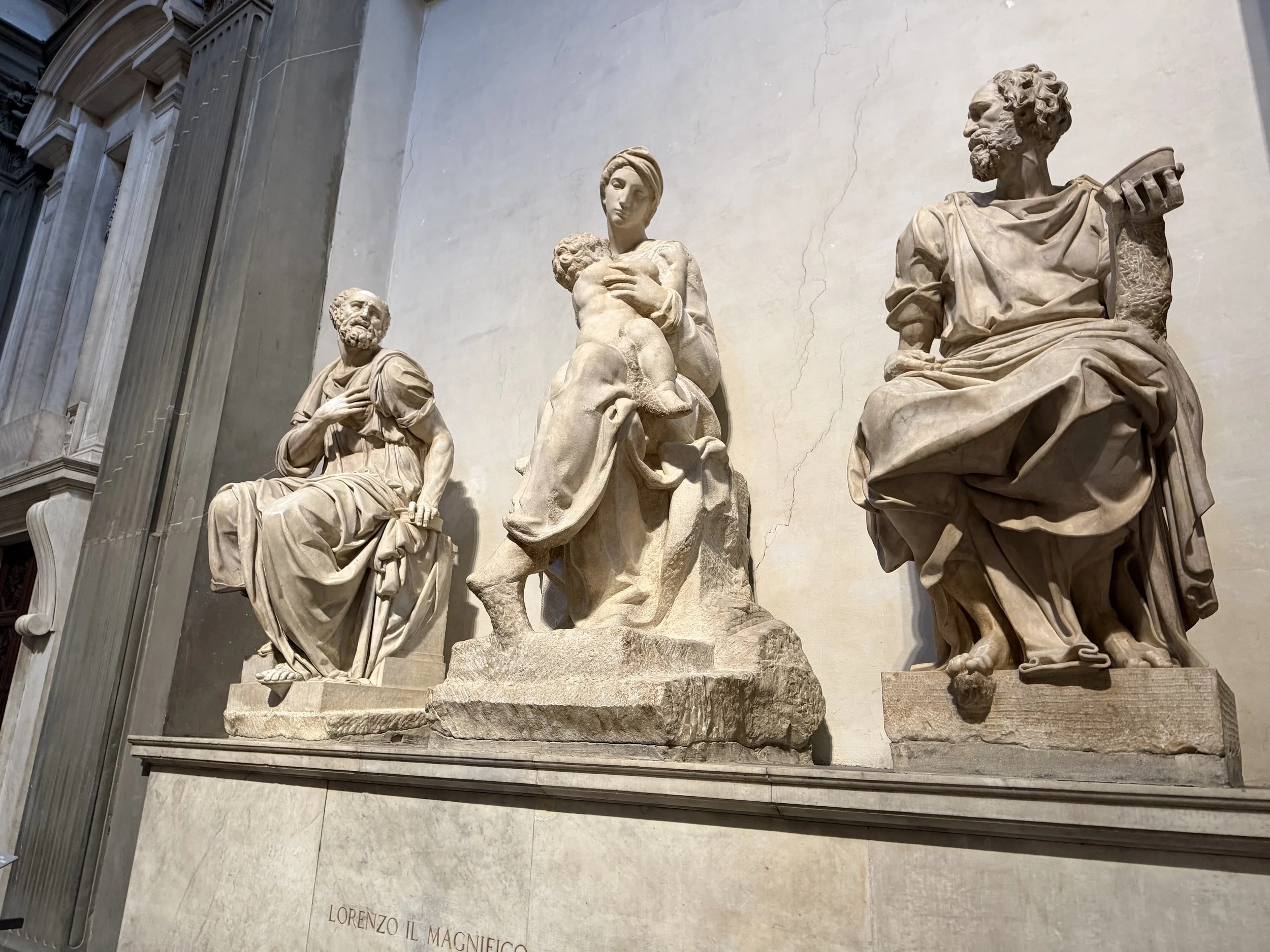
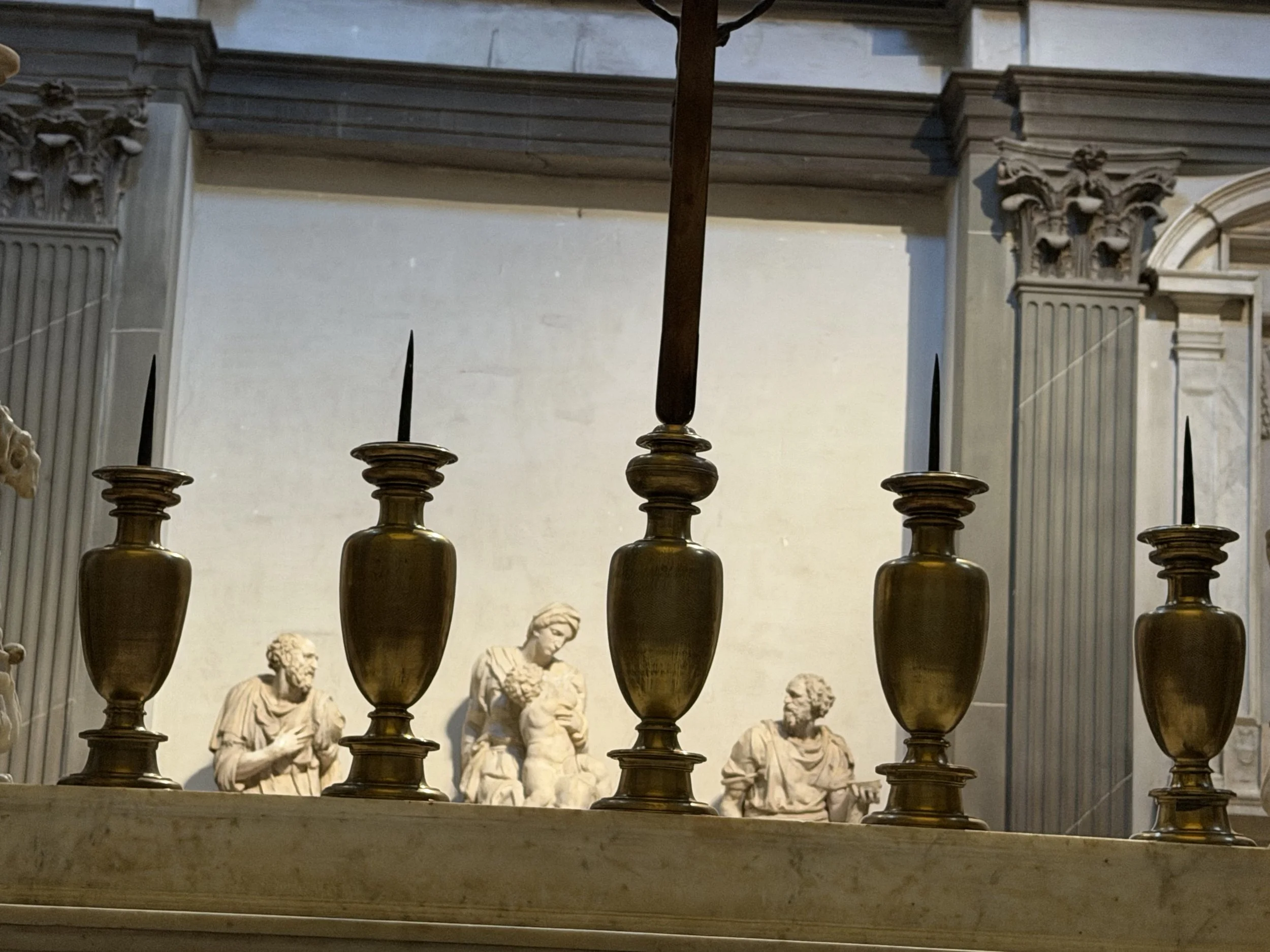
On the same level is the Sagrestia Nuova (New Sacristy) designed by Michelangelo in 1520. The actual tombs of brothers Lorenzo and Giuliano di Medici are here, under the altar. Two monuments to them are adorned with sculptures representing Day and Night (Guiliano’s monument) and Dawn and Dusk (Lorenzo’s). Small and intimate, the sacristy is beautiful in its simplicity, especially placed so near to the ornate Cappella di Principi.
Almost hidden beside the altar is a simple staircase leading down to what was a storeroom. That is where wall drawings made by Michelangelo can be found. No entrance to that space is possible though – it requires a separate ticket for which there is a two month wait. I’ll save that for a future visit.
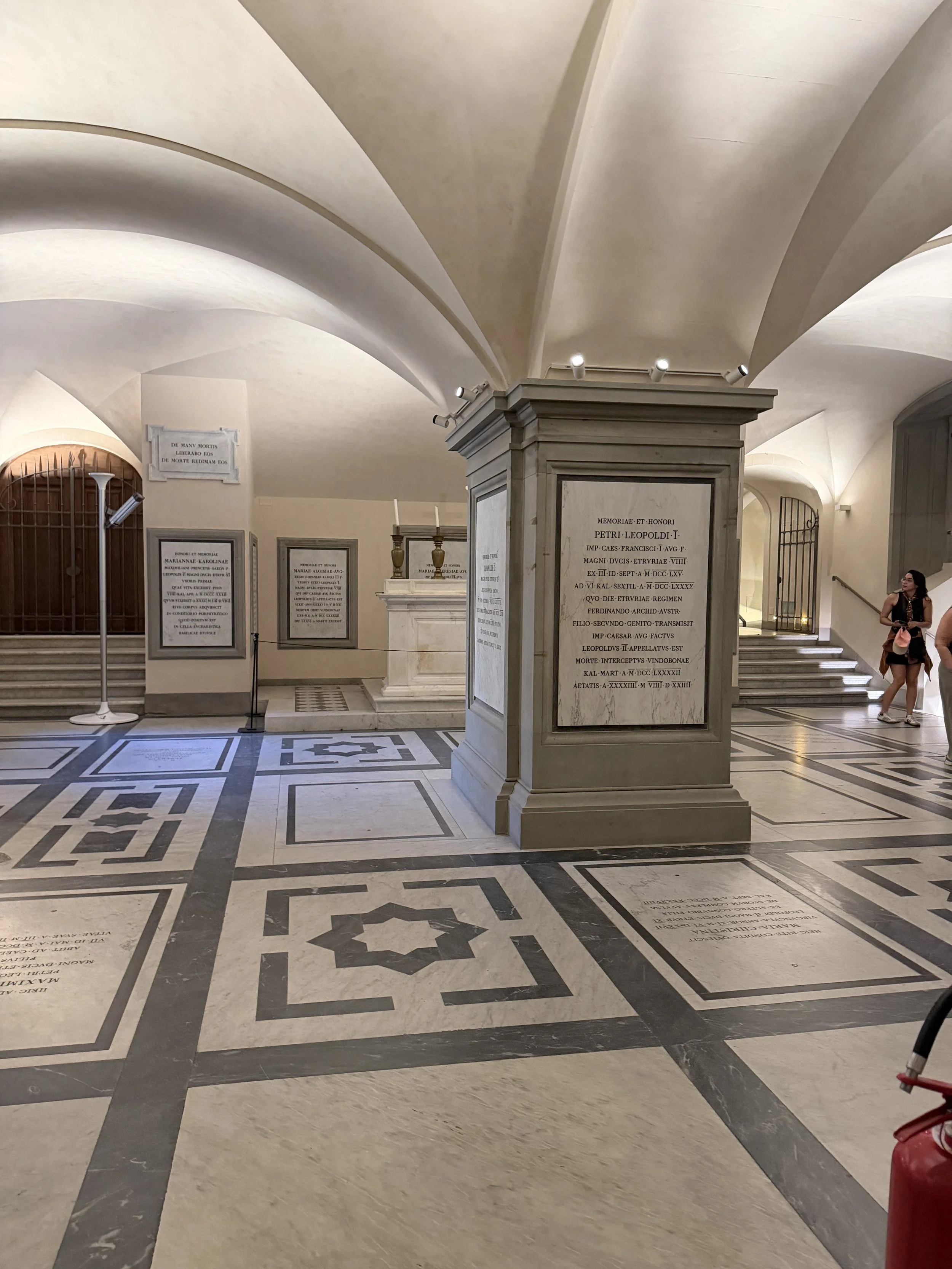
The crypt contains the actual tombs of the Medici