Two Parts Italy

Exploring Italy, travel, and living a flavorful life

  • Blog
  • About This Blog
  • Start Here
  • Recent Posts
  • Archives by Topic
  • Subscribe
  • Contact me

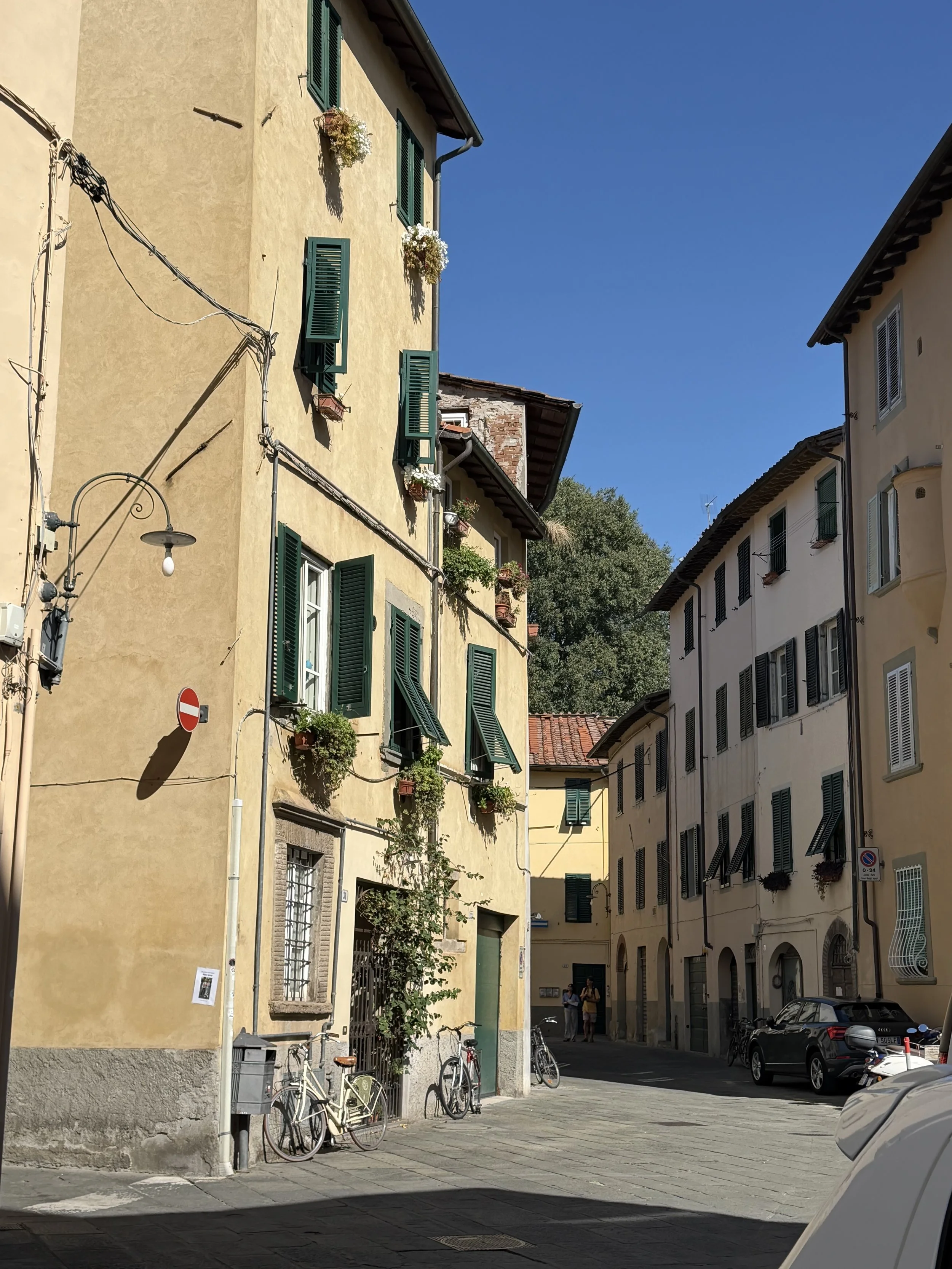
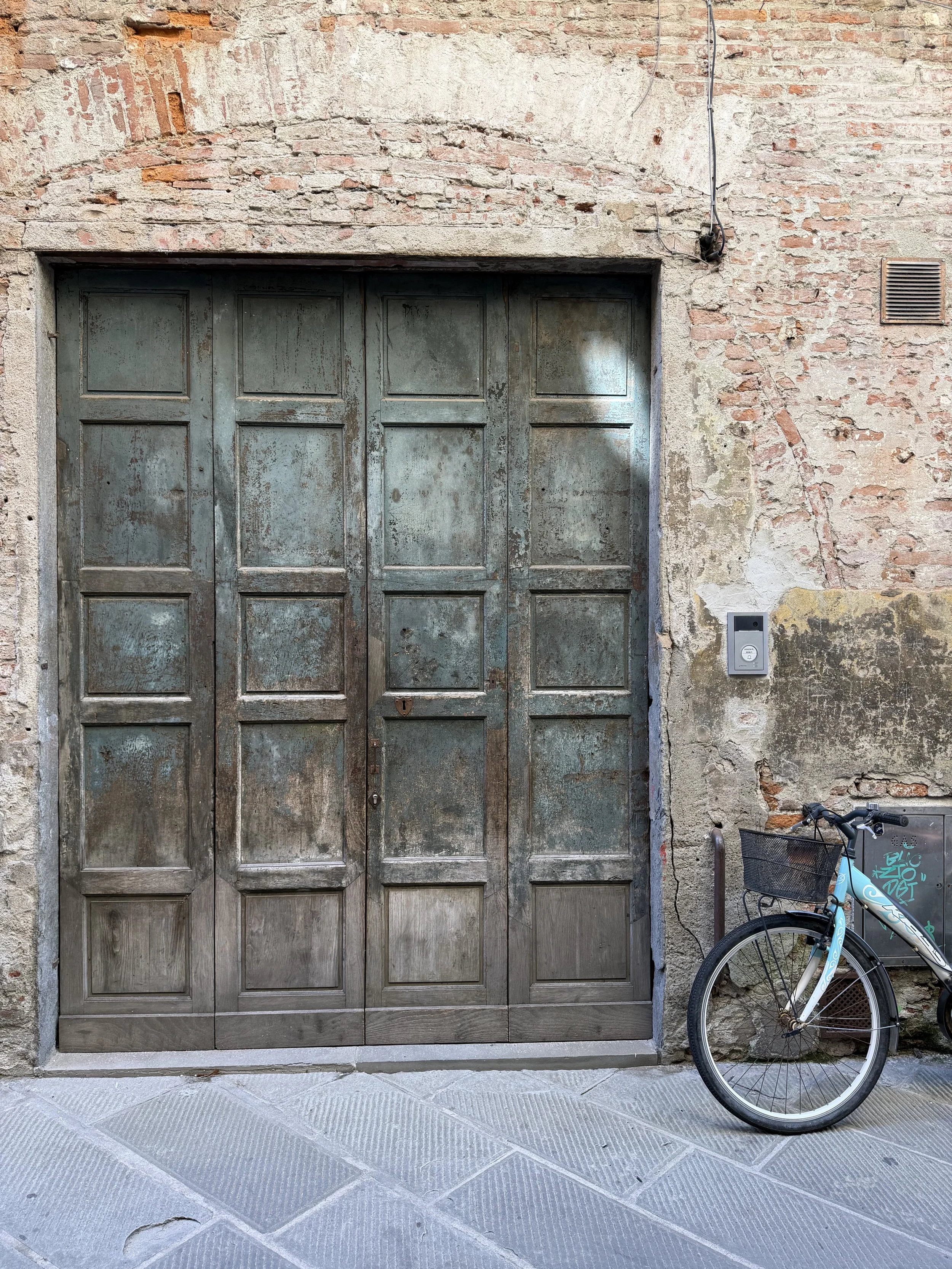
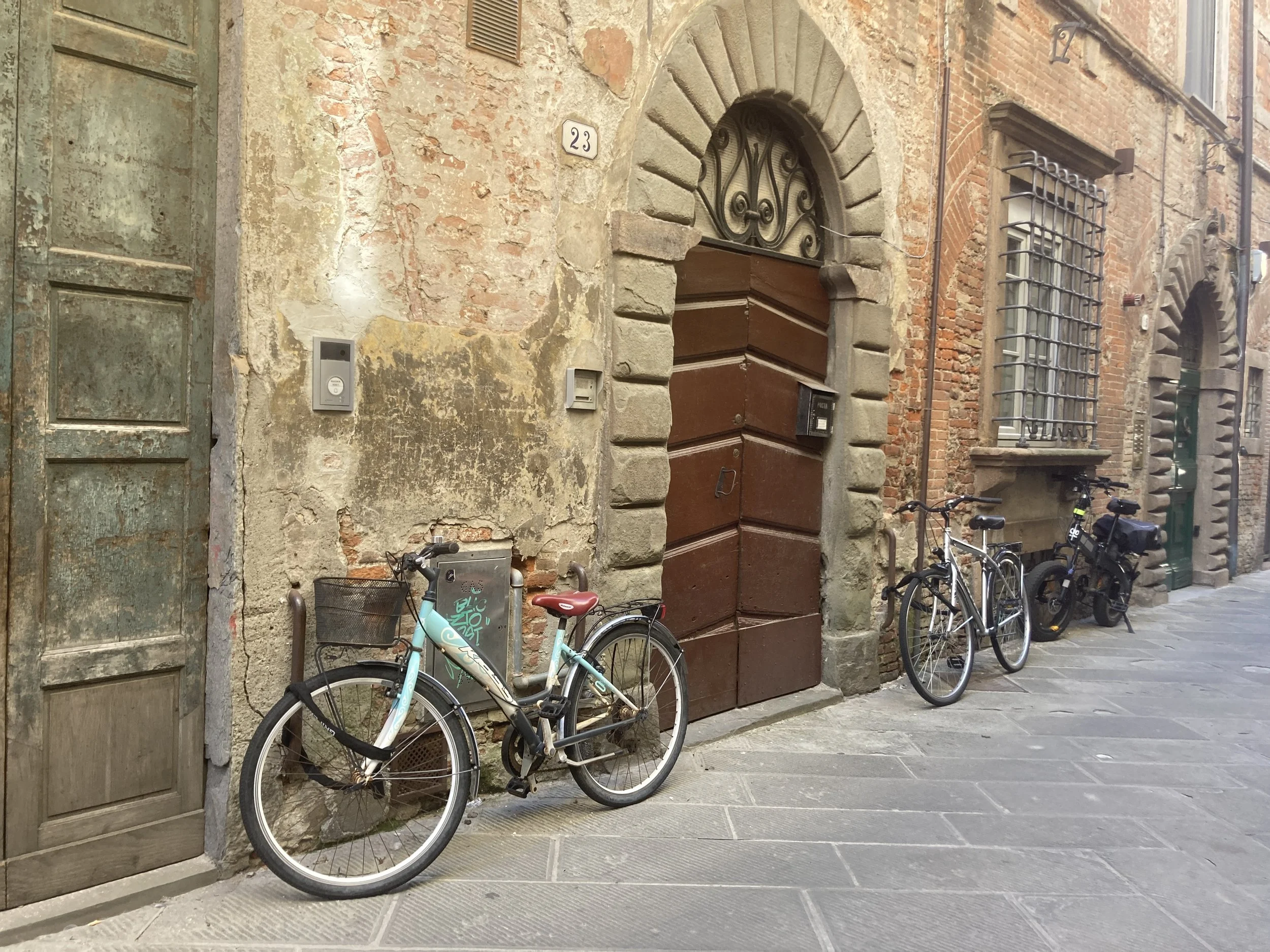
Via Pelleria, in the San Paolino neighborhood of Lucca

A New, Very Old Neighborhood

September 14, 2026 by Joanne Bartram in #lucca, Italian culture, Italian light, Italy, Living in Italy, Lucca, small spaces, Tuscany

The historic center of Lucca is small, lying within a 4.2 km (2.5 mile) surround of Renaissance era walls.  It is easy to walk from one side of town to the other in just 20 minutes. It might seem that such a small area would feel like one cohesive neighborhood, but nothing could be further from the truth.

Historically, in the Medieval and in the Renaissance period, Lucca was divided into 3 terzieri (thirds of the town) each with its own administration.  The terzieri were further divided into 4 smaller sections called gonfaloni.  Each gonfalone (singular form of gonfaloni) had a unique name and symbol, which was carried on a banner.   
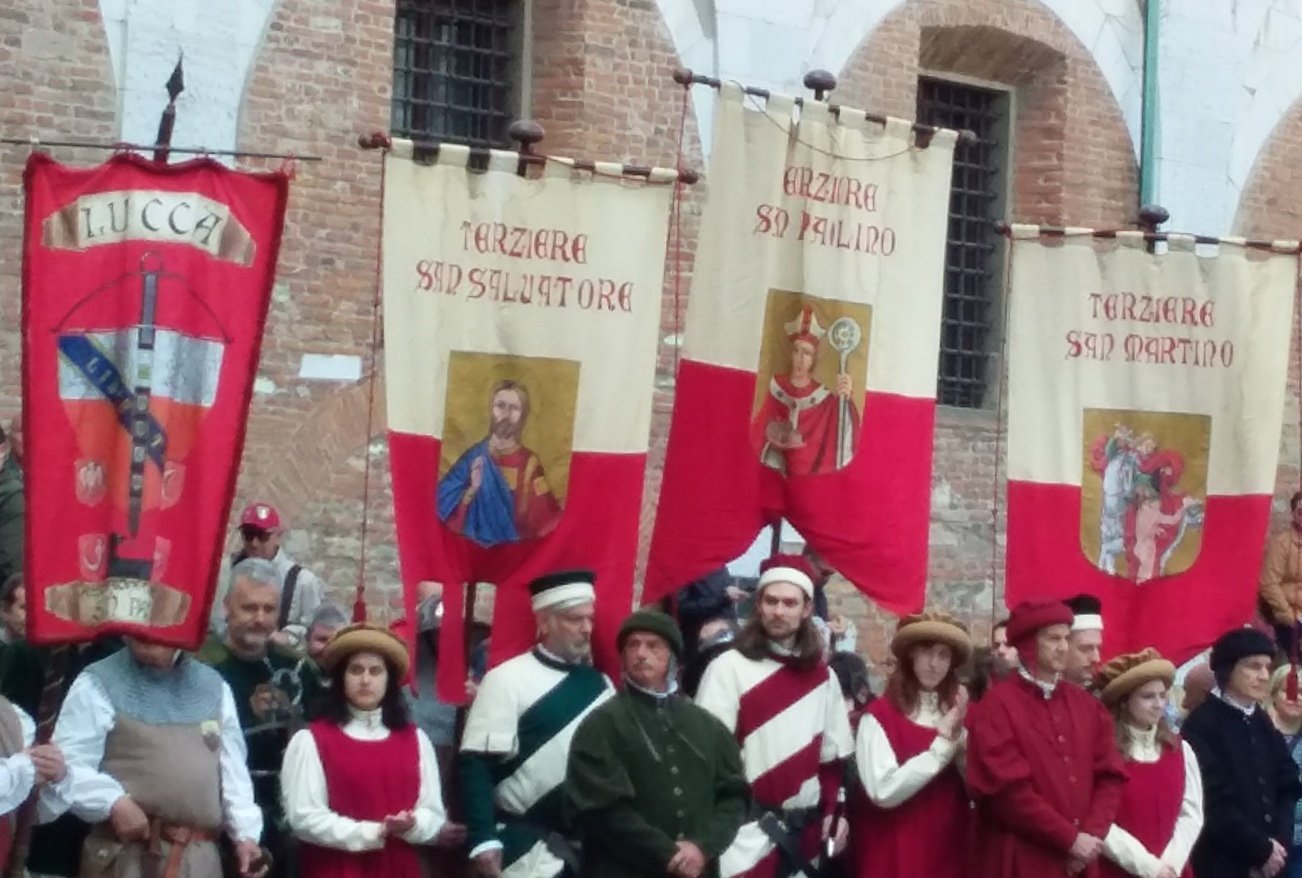
The 3 terzieri are represented in the many Medieval events held in Lucca
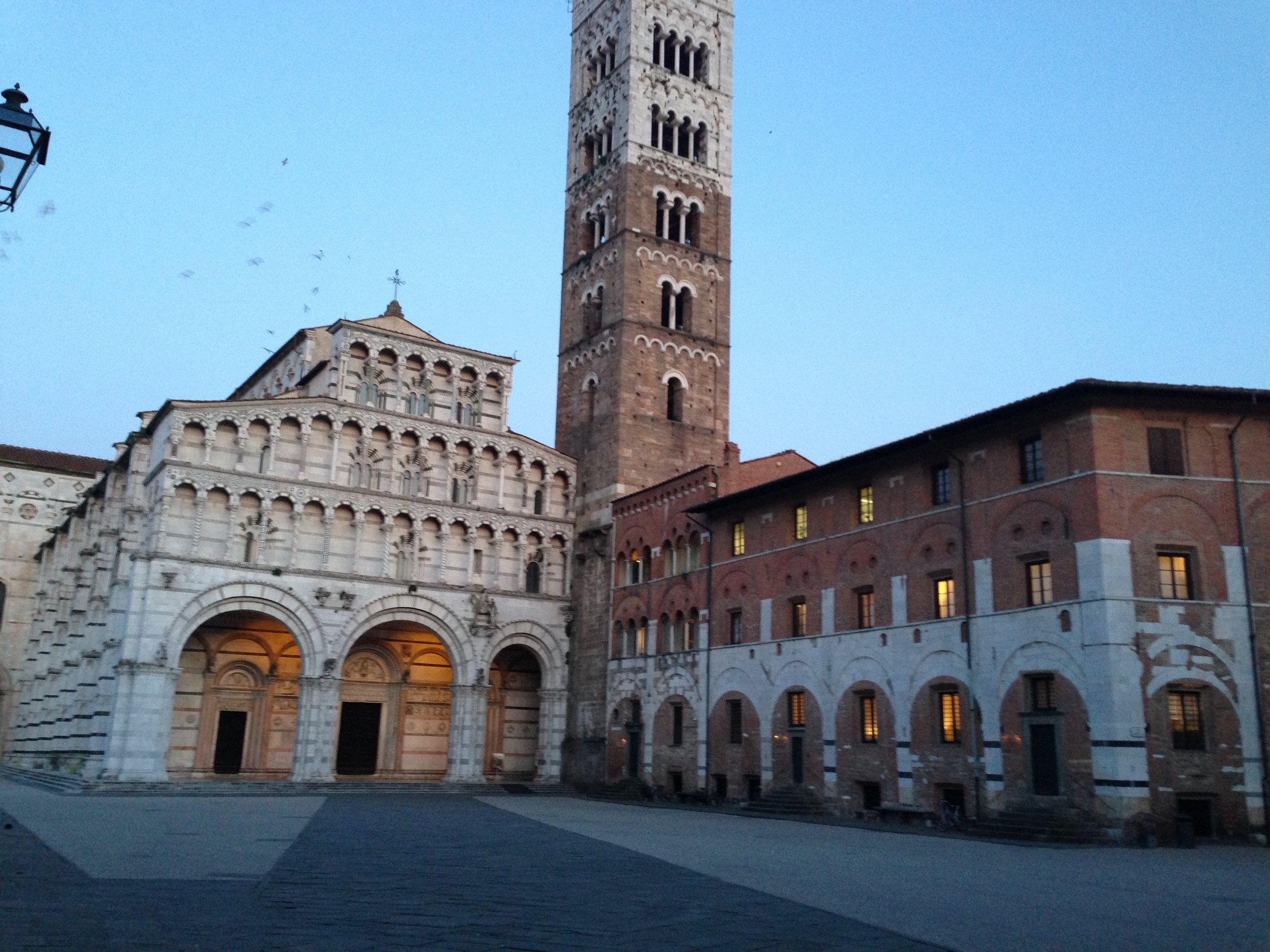
San Martino Cathedral lends its name to the terziere on Lucca’s eastern side

The terzieri in Lucca were the Terziere of San Martino, Terziere of San Salvatore, and Terziere of San Paolino.  San Martino was the largest of the three, though least populated, taking up much of the eastern and central part of the city, from north to south. 

Next, San Paolino, in the western section of Lucca, was the oldest terziere of the city. It had the largest population and held a position of importance within the historic city.
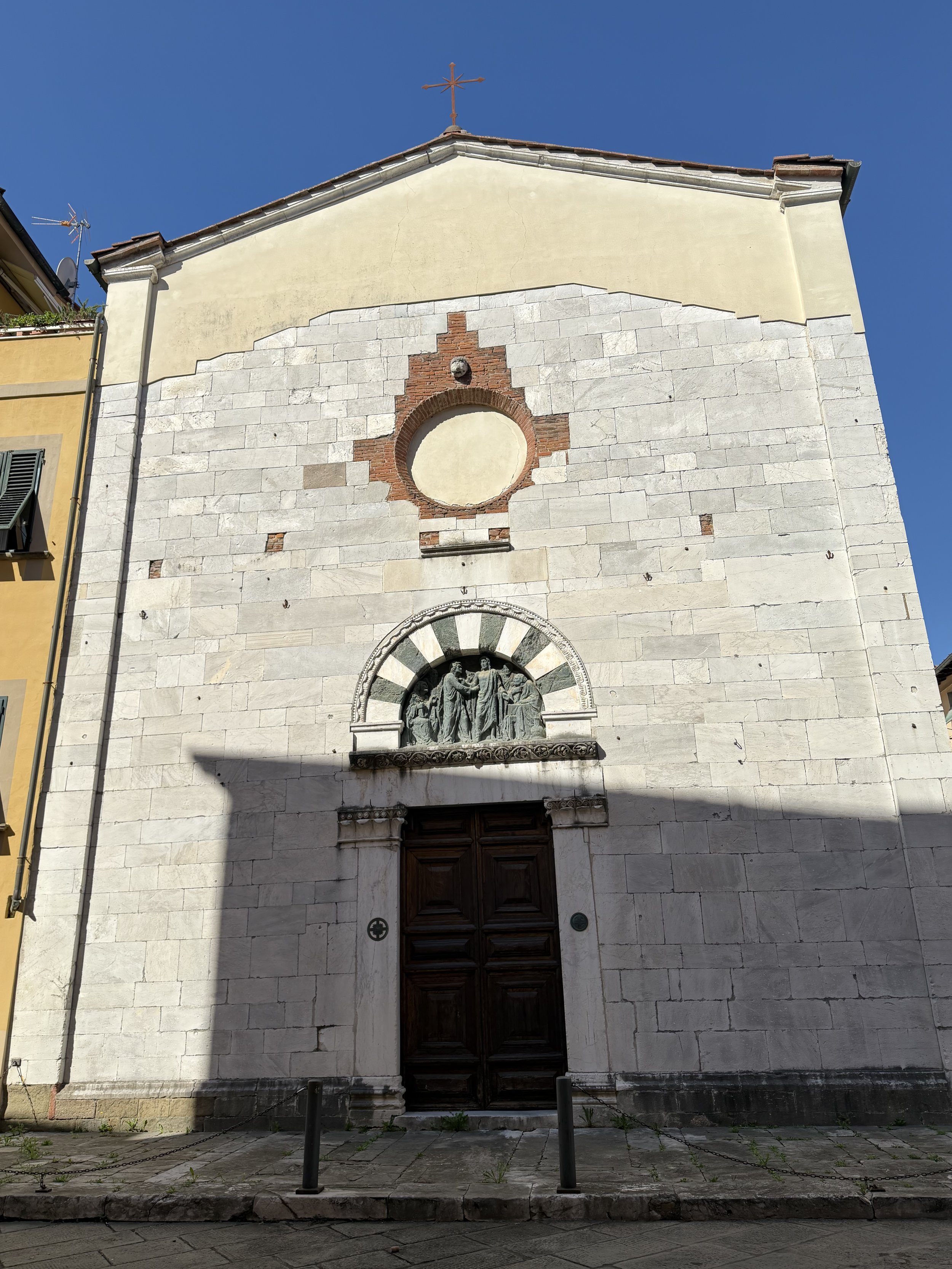
The Church of San Tommaso in the terziere of San Paolino, is one of Lucca’s oldest churches.

The smallest of the terziere was San Salvatore, in the north central part of Lucca. 
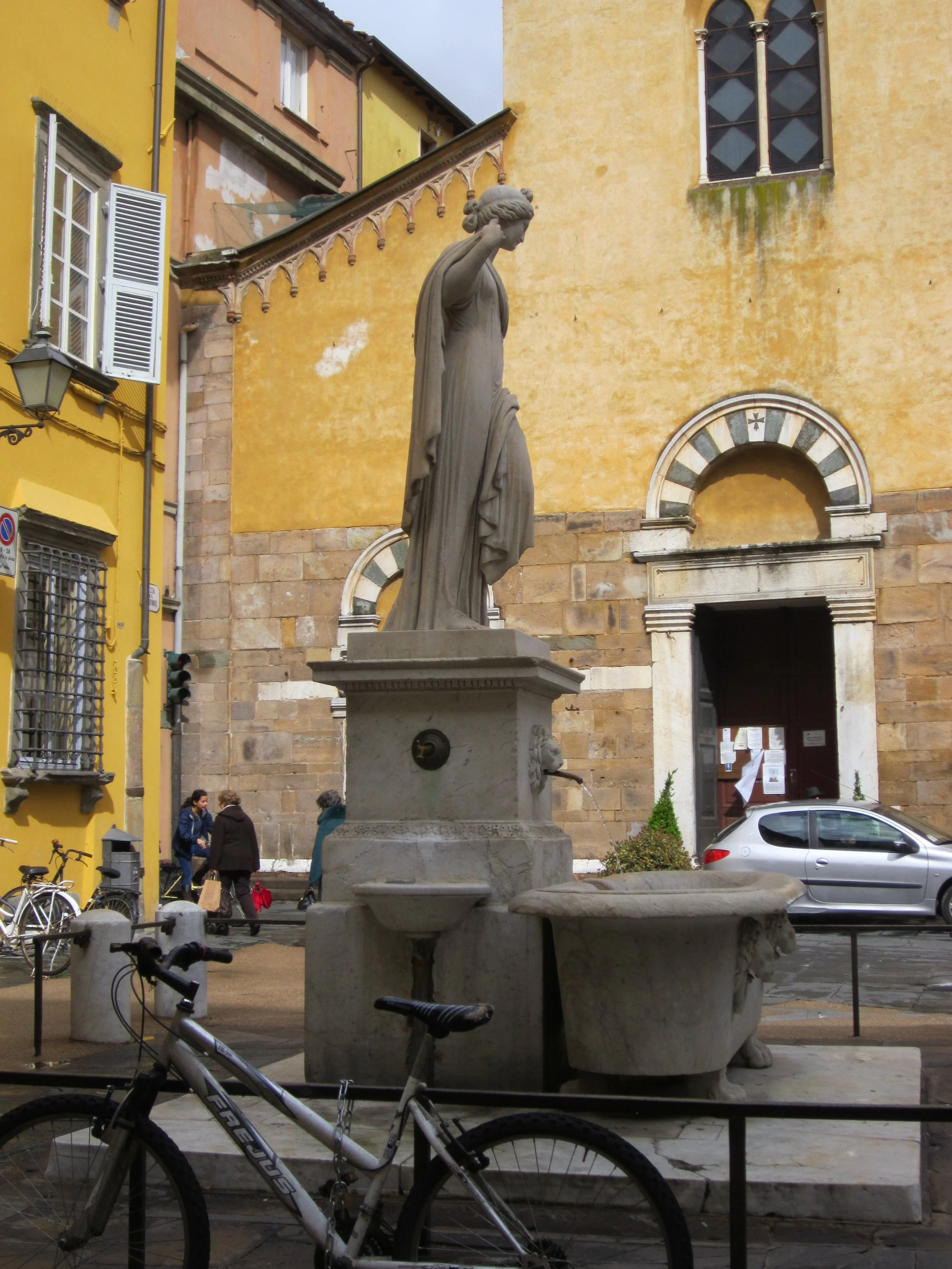
One of the most famous fountains in Lucca stands in Piazza San Salvatore in the terziere of the same name, the building behind is the Church of San Salvatore, another of Lucca’s oldest churches. It gave the terziere its name.

Today, there are many echoes of those long-ago neighborhoods in Lucca.   While the modern city has one unified city government, the names of the old terzieri persist, and the churches and piazzas that anchored them are still standing as the cornerstones of unique neighborhoods. 

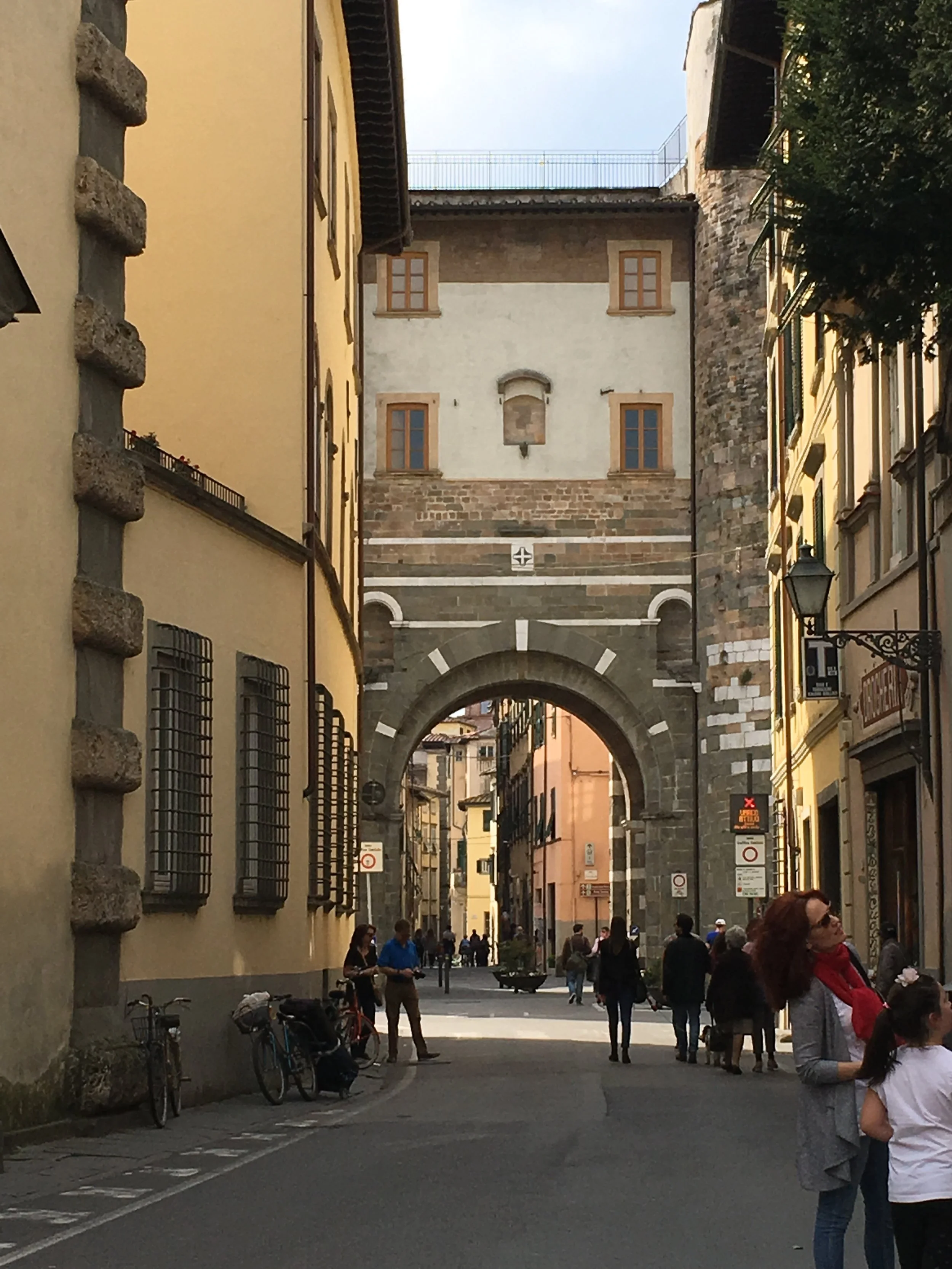
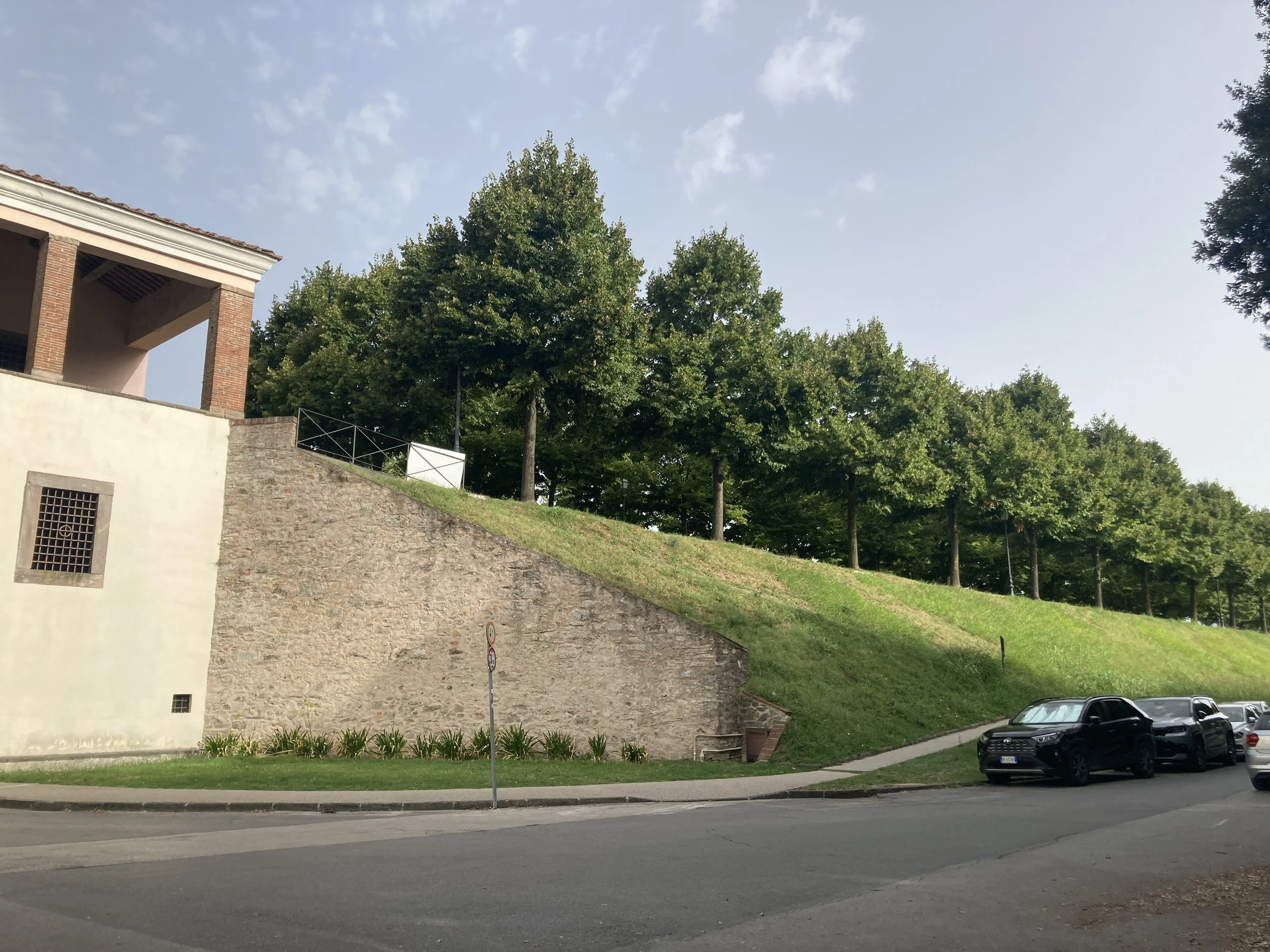
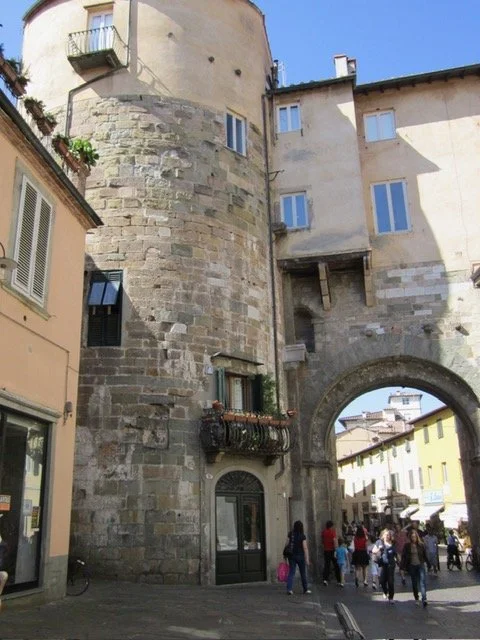
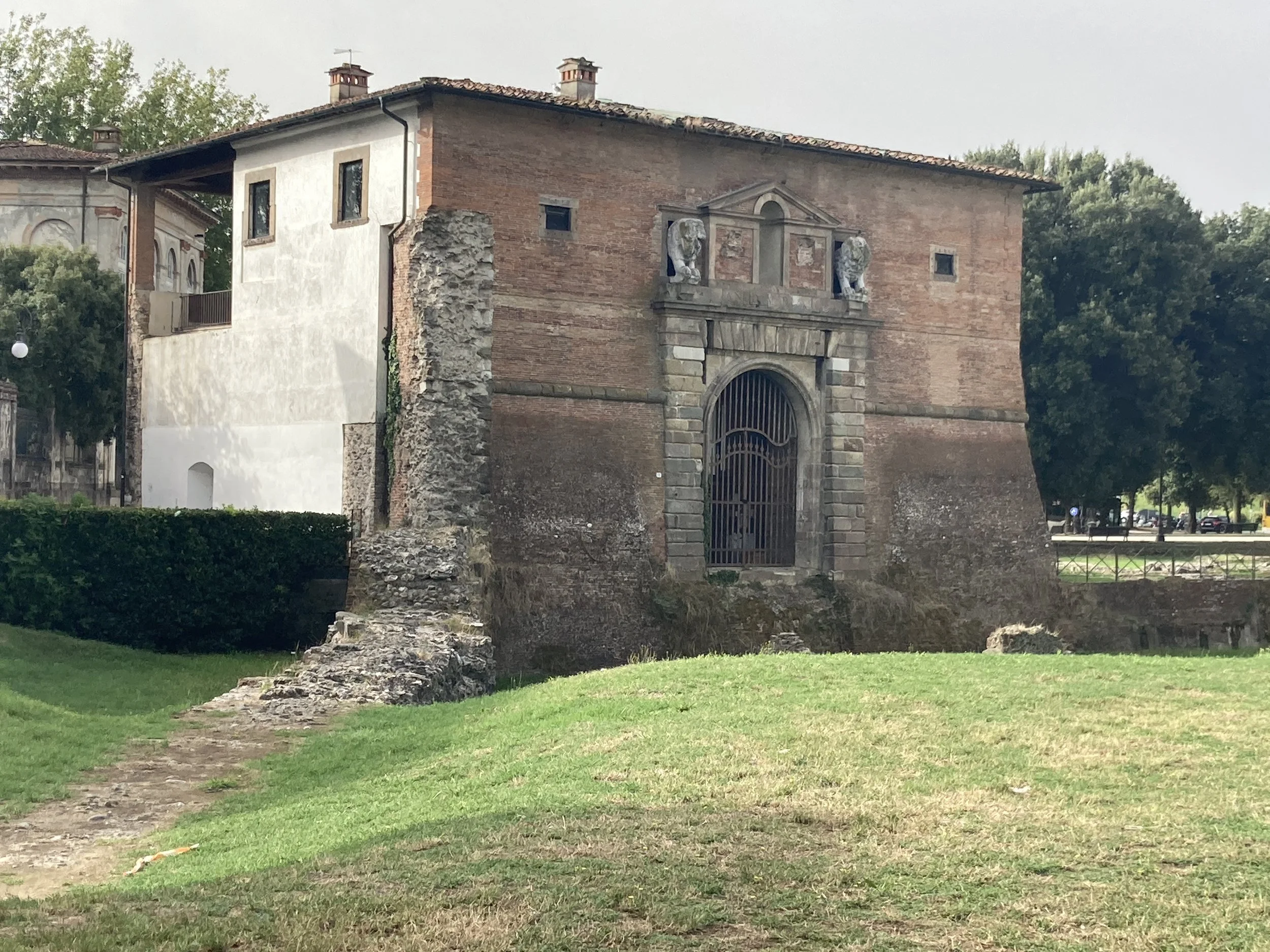
Two of the Medieval city gates are still used. Both sit within the San Martino terziere and mark the limits of what was the Medieval city. Today, locals and visitors alike walk under the arches each day as they head toward the center of town. A third gate, the Porta San Donato, has been replaced by a newer, larger entrance to the city in the Renaissance era wall.  However, part of the old gate (middle photo below) can still be seen nearby as part of the tourist information center.
IMG_0361.jpg
IMG_8741.JPG
IMG_1246.JPG

The historic divisions are perhaps best represented in Lucca’s frequent Medieval themed events which often involve competitions with costumed teams from each of the terzieri carrying their unique banners.  The Terzieri of San Paolino is still important - it often takes the prize in archery competitions.

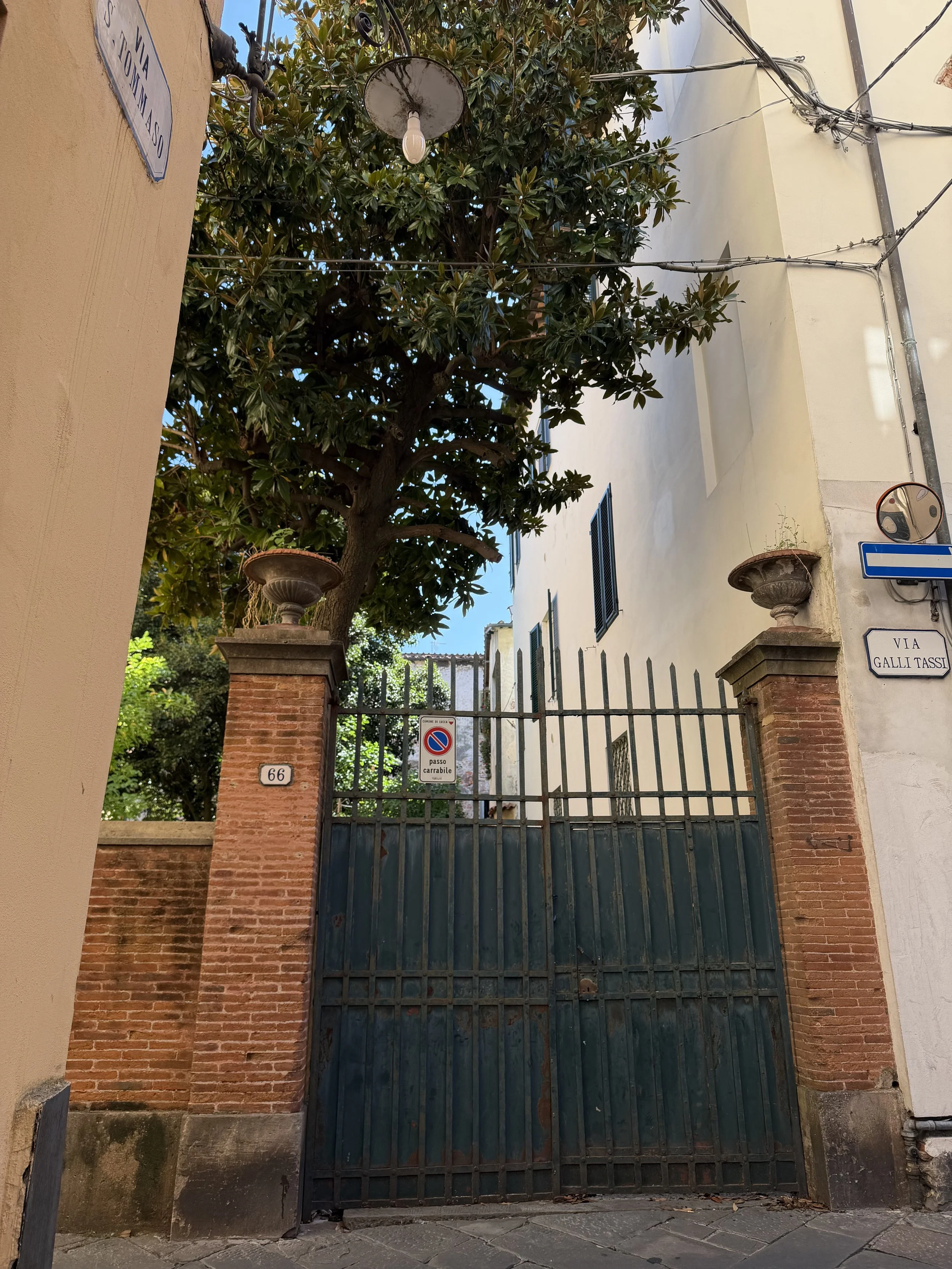
This history has been on my mind since I recently moved from an apartment in the San Martino neighborhood to one in the San Paolino area.  Historically speaking, my new apartment is in the Terzieri San Paolino, the Gonfalone della Serena (the subdivision of the Siren).  And even though I am just about a 10-minute walk to the west of my old apartment, this part of town has a very different vibe.  I would describe it as being off the beaten path, a slice of Lucca before the “spiffing up” for tourists.  It is definitely a residential area, not a souvenir shop to be found.  
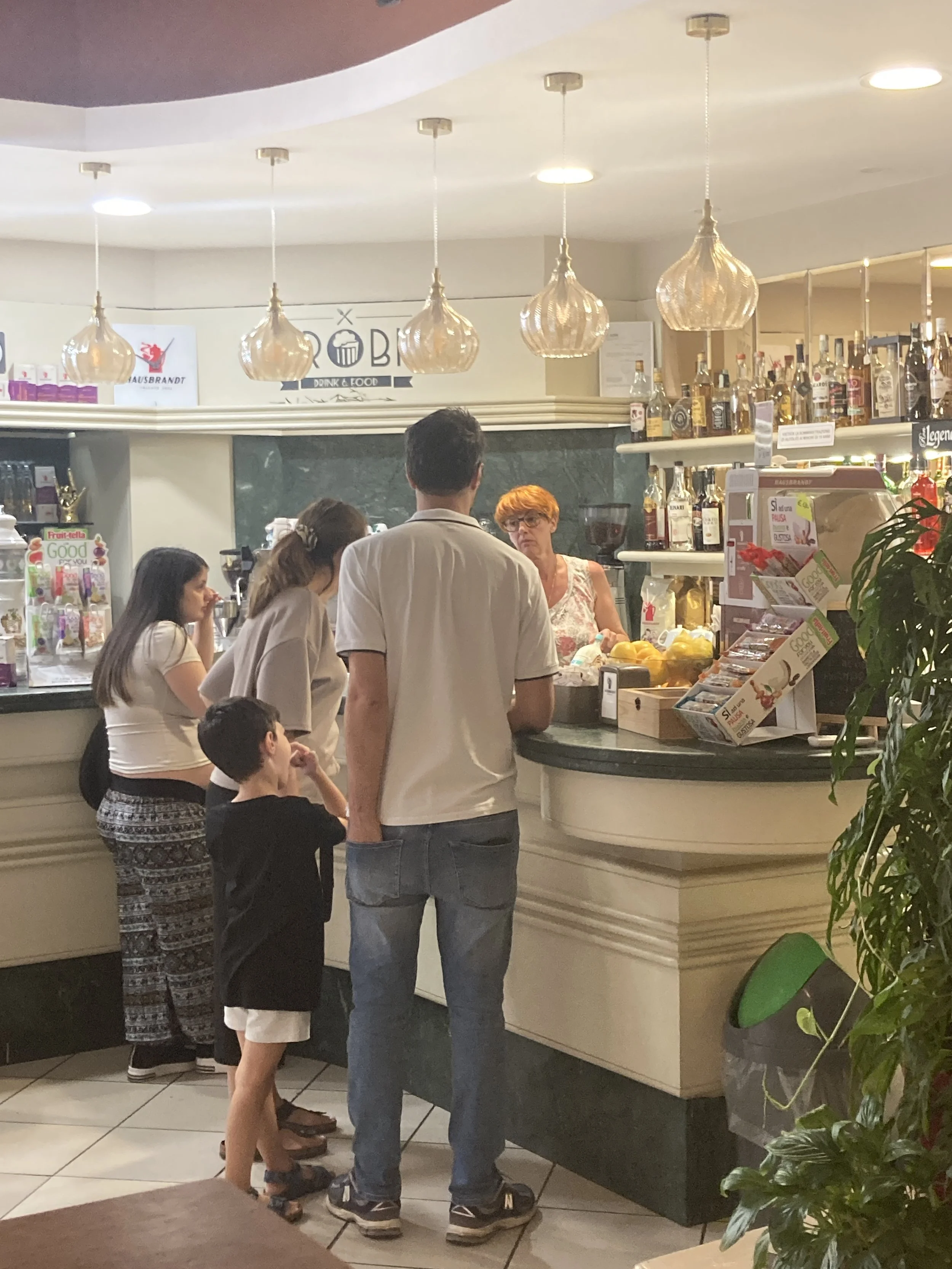
Bar Probi

I have been exploring the area for the last couple of weeks.  I’ve found one nearby bar for morning coffee, run by a pair of friendly sisters.  It sits just across from a court building and is very popular with the people working there. A cornetto and a cappuccino here costs €2.80. Definitely a taste of old Lucca and certainly not tourist prices.

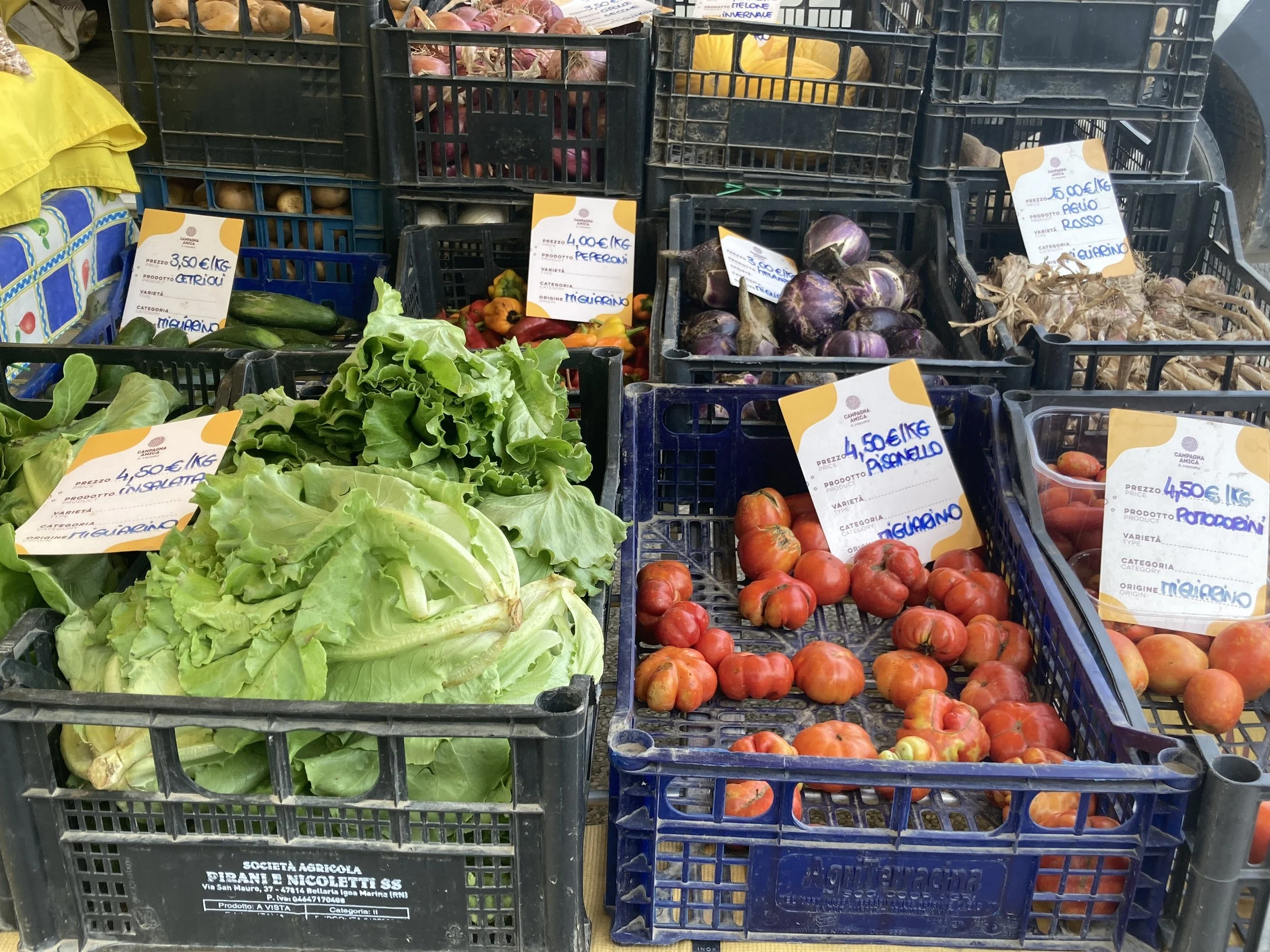
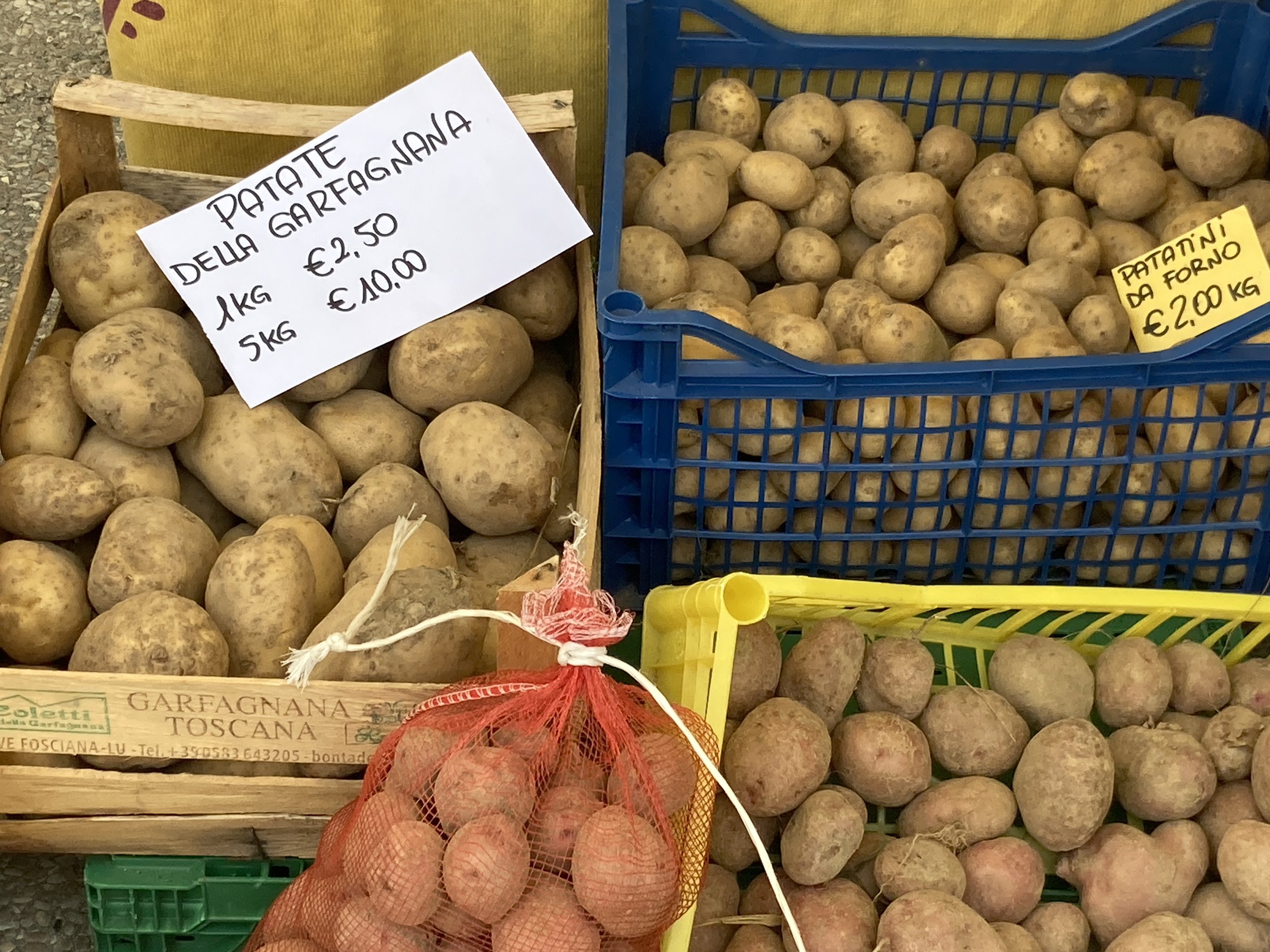
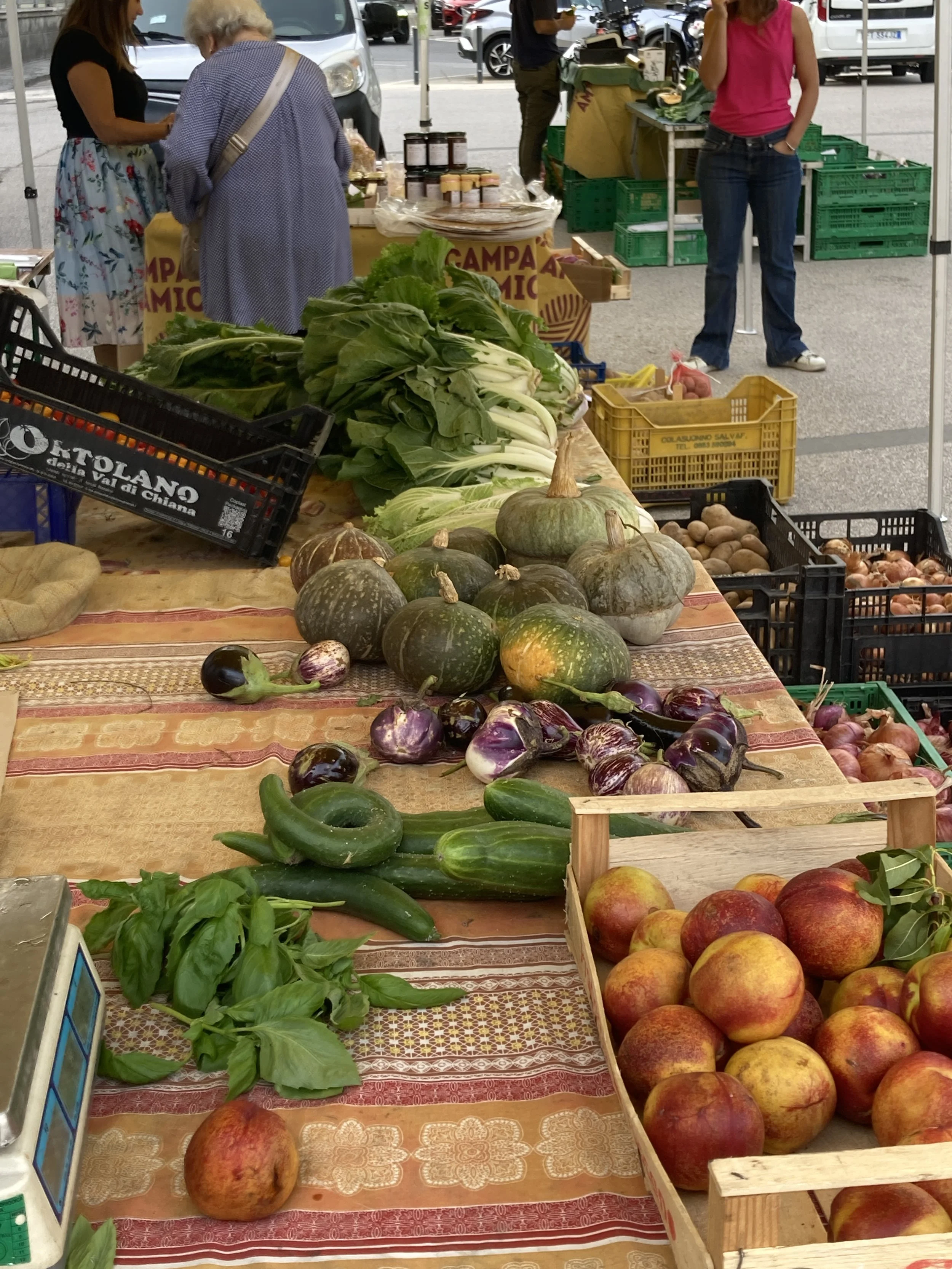
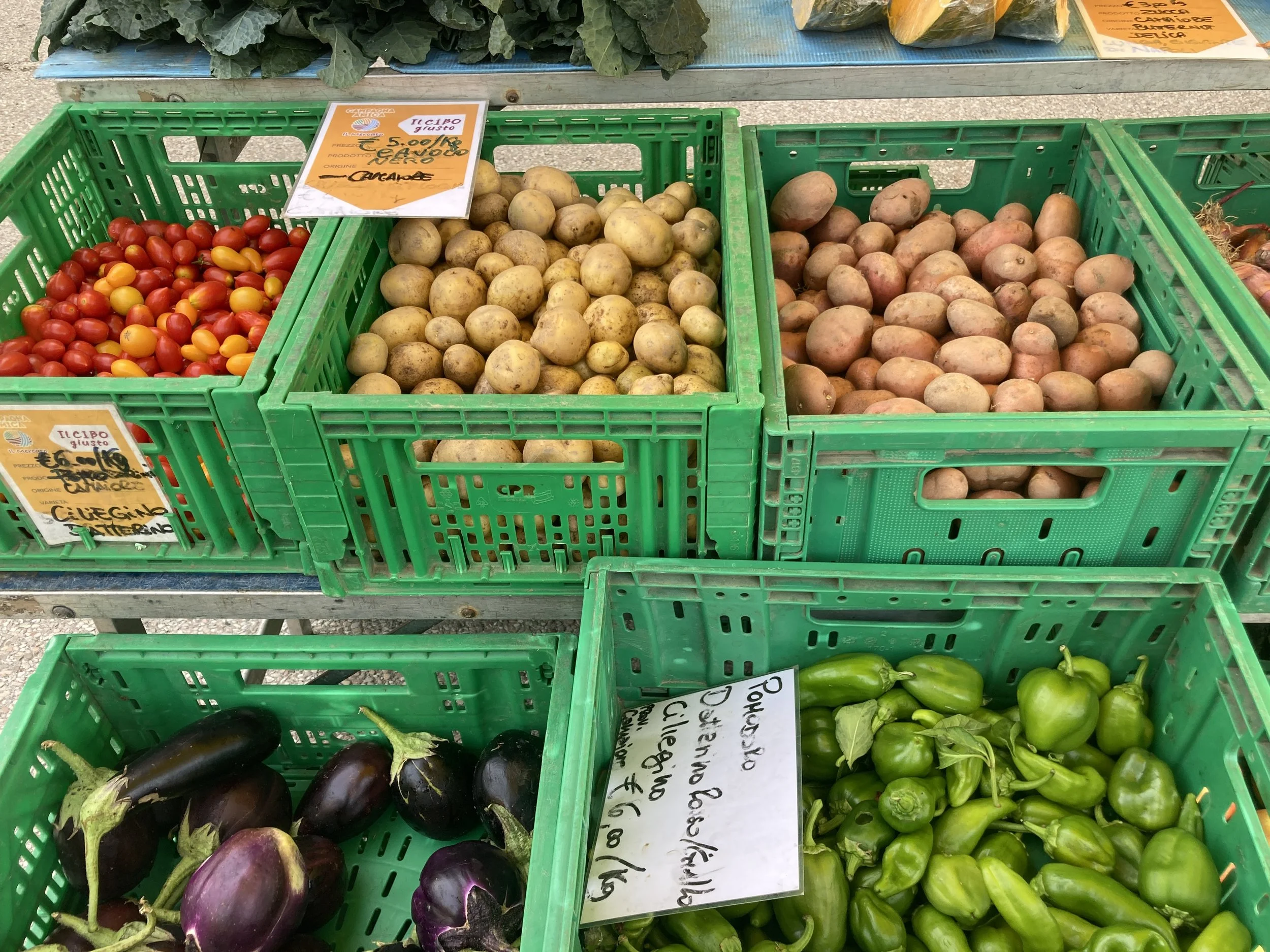
When I introduced myself to one of the owners, saying that I had just moved to this part of town, her response was “well, then this is your bar, see you tomorrow”.  A nice welcome!   A second bar, Bar Tiani, has welcomed Lucchese since the 1950’s. It is located right next to the neighborhood grocery store. Full of locals, it is a lively place full of the music of spoken Italian. And who doesn’t need a caffè before grocery shopping? A bonus is the small Thursday morning market, just a block or two from my new place. It has wonderful fruits and vegetables straight from area farms.
IMG_8745.JPG
IMG_8748.JPG
IMG_8746.JPG
IMG_8747.JPG

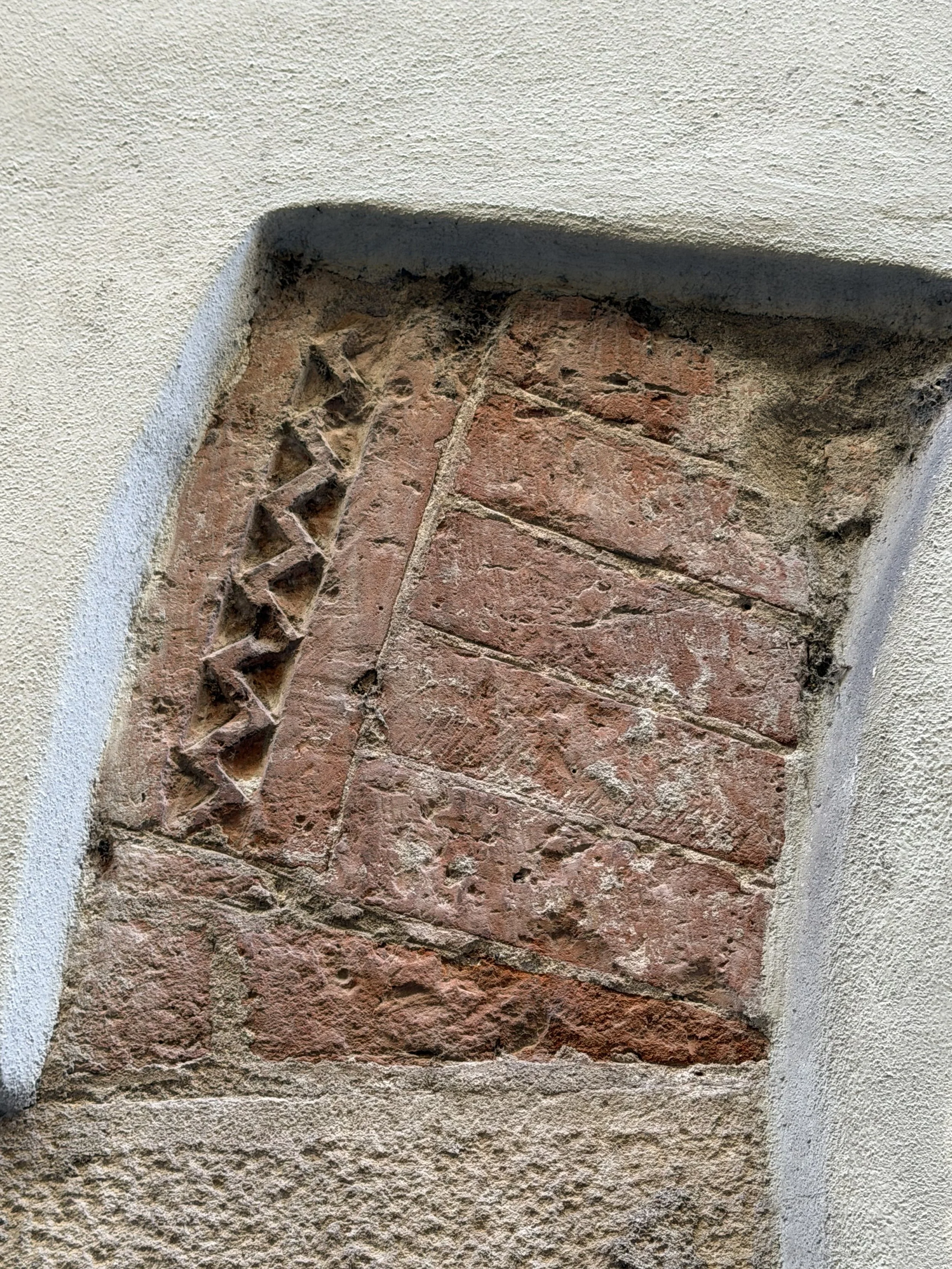
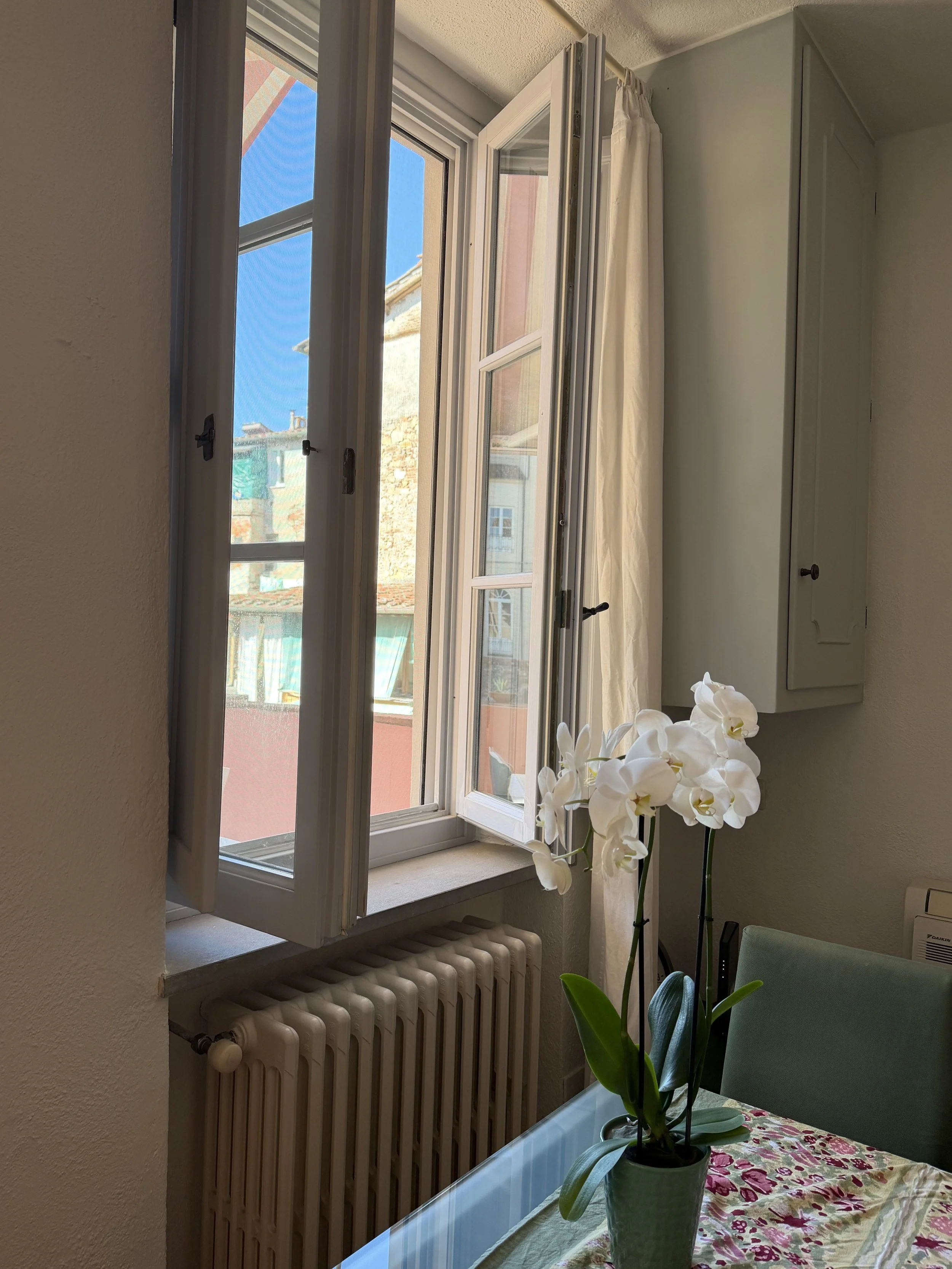
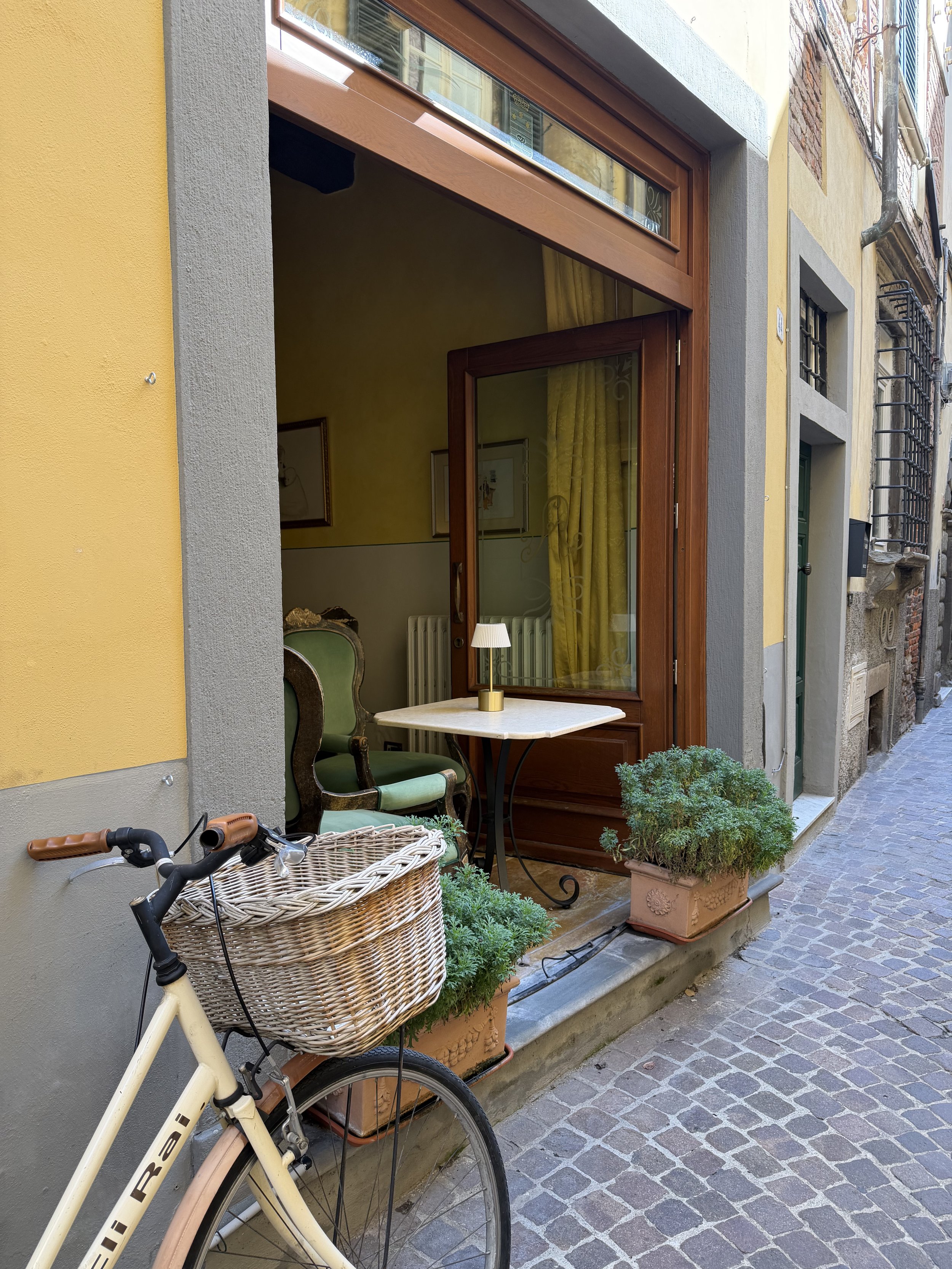
 I’ve mostly organized my new apartment, a small studio inside a former convent, the style of which is what I call “Ikea chic”.  I now know where the breakers are – an important detail after the power went out in a storm, not an unusual occurrence here in Italy.  I’ve explored the nearest way out of the walls through the very interesting Porta San Donato.  And I am finding new details in doors, windows, bricks, and streets each time I set out. 
IMG_0435.jpeg
IMG_0424.jpeg
IMG_0423.jpeg
IMG_8737.JPG
IMG_0417.jpeg
IMG_0416.jpeg
IMG_0420.jpeg
IMG_0421.jpeg

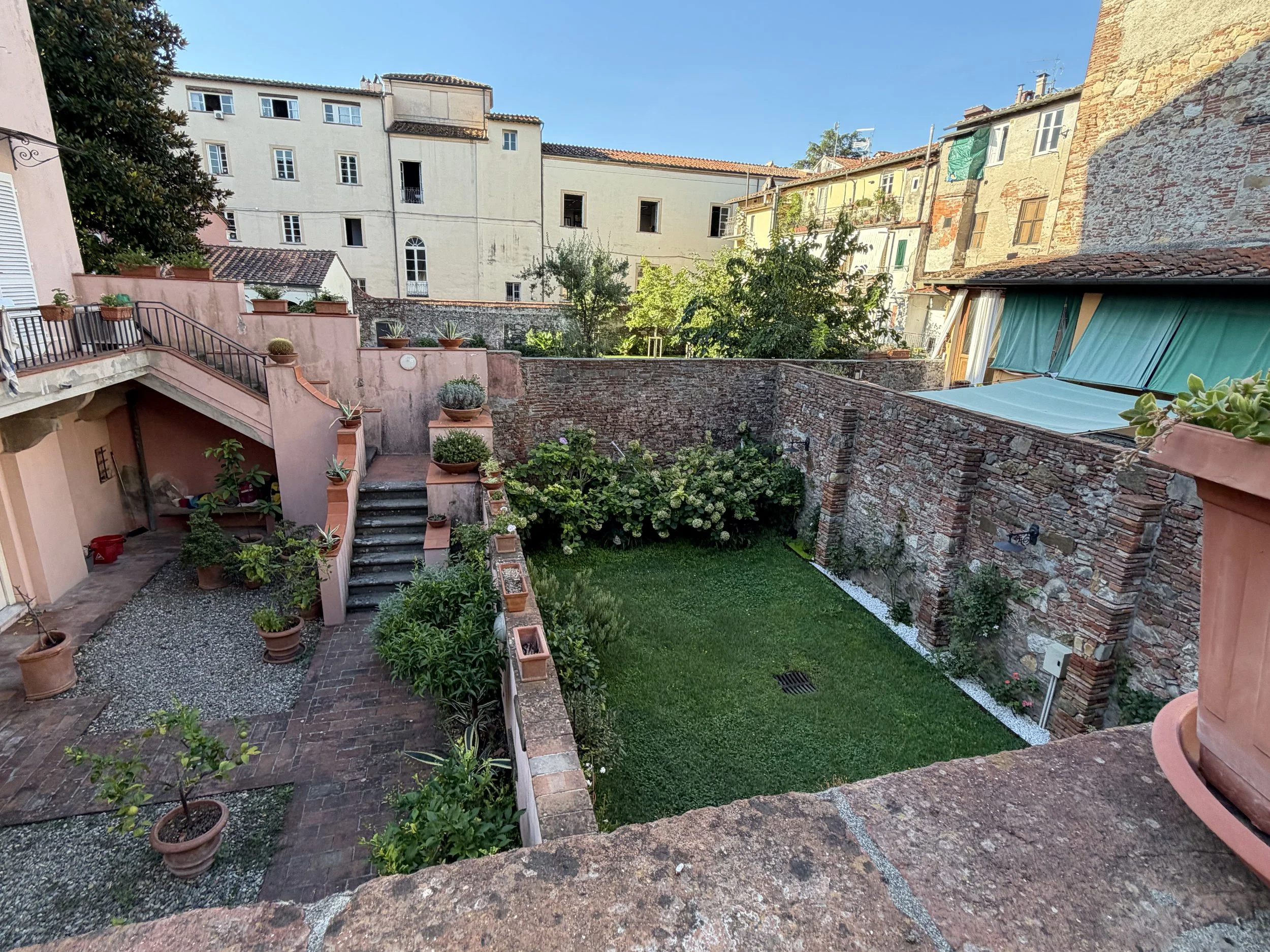
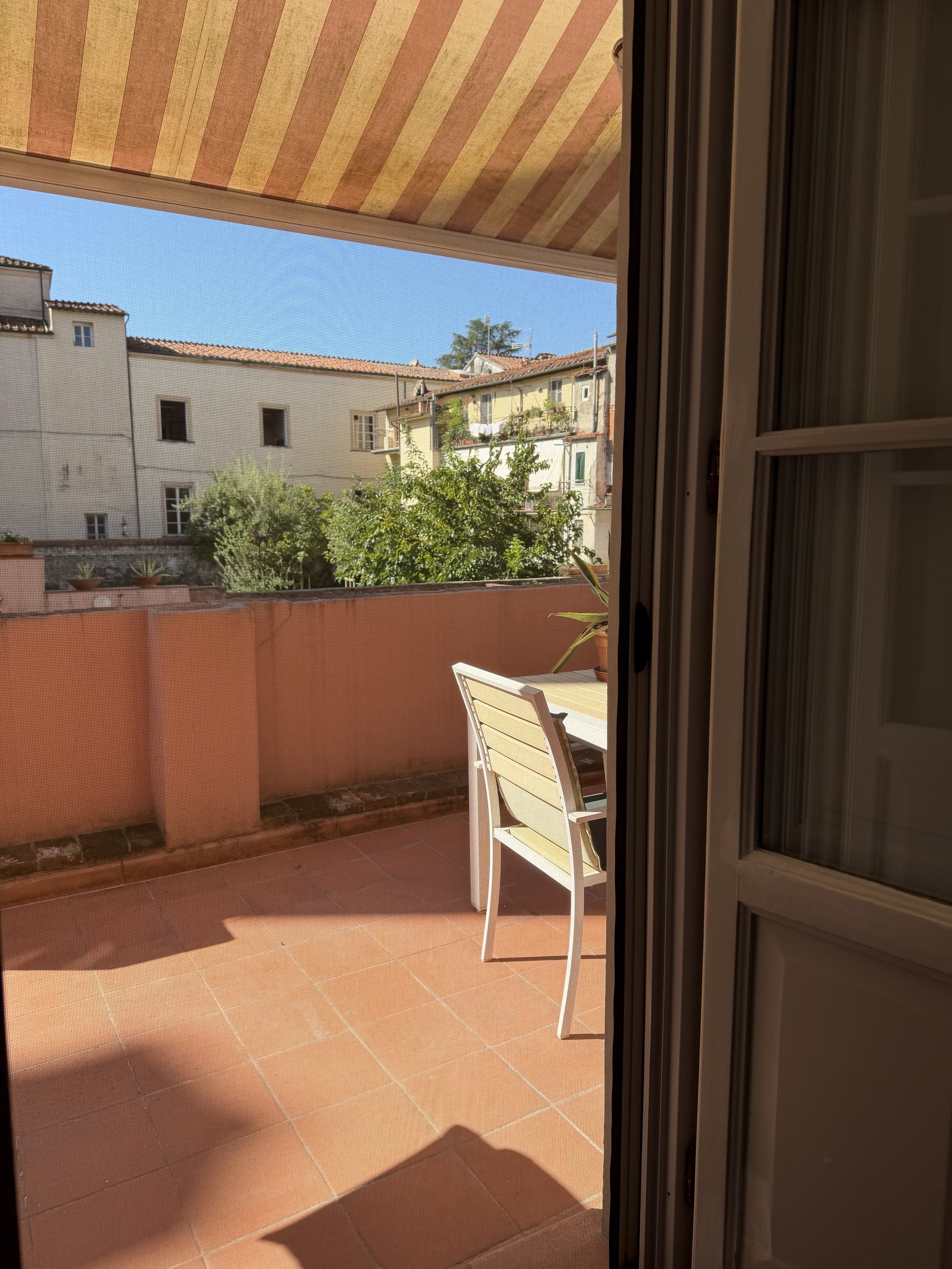
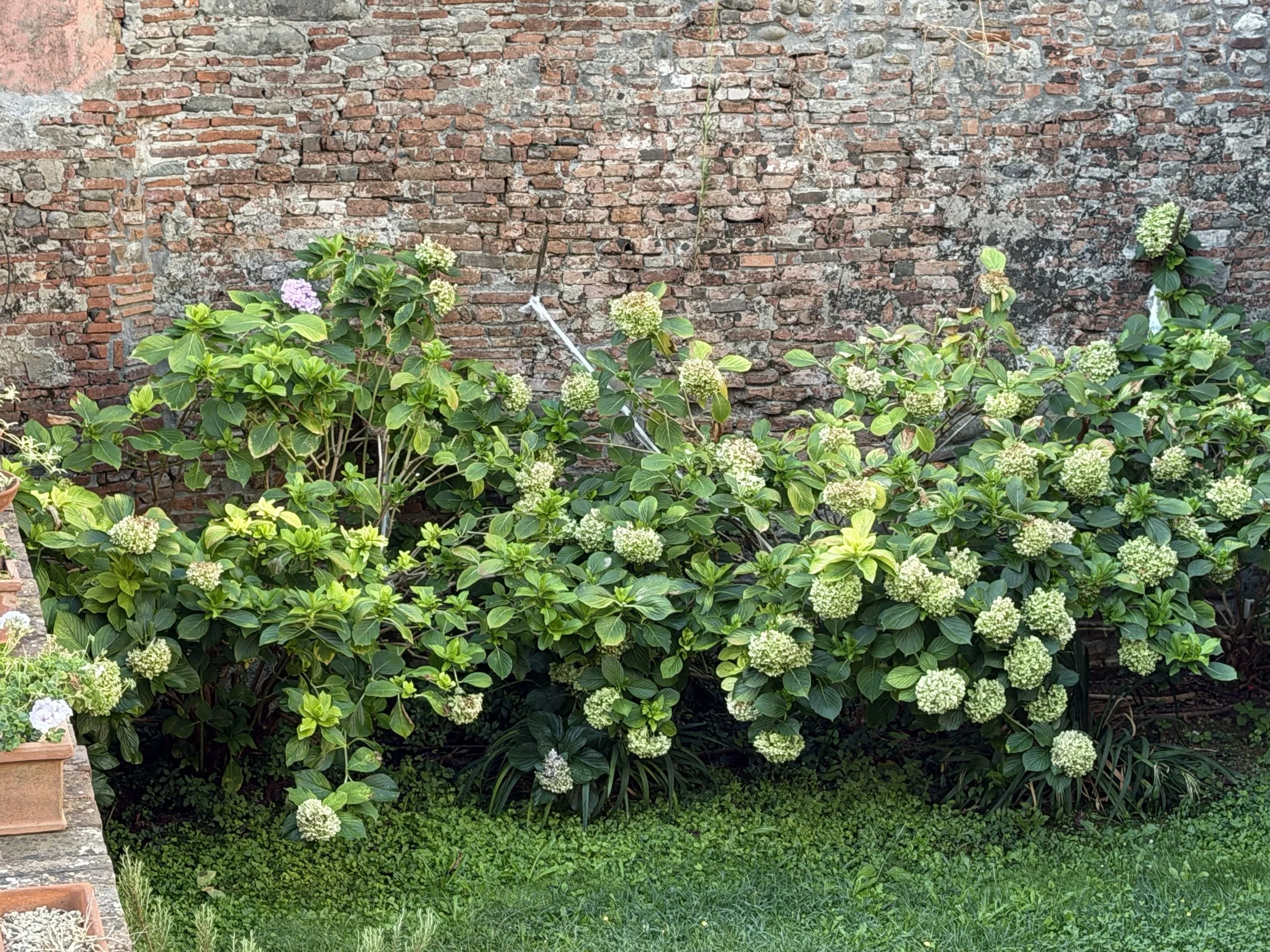
I am enjoying things that seem small but have a big impact of quality of life – a complete kitchen (no more Easy Bake oven for me!), good AC (critical in hot, hot August), and – best of all – a terrace which looks out at roof tops and gardens. Opening the doors to the terrace first thing each morning, with beautiful southern light, makes me smile.  That I found this small, affordable place feels like a miracle.
IMG_0374.jpeg
IMG_0407.jpeg
IMG_0375.jpeg
IMG_0405.jpeg

Living in Italy has taught me many things – the joys of a simple apartment, a good local bar for morning coffee, the sound of the Italian language drifting through my doors, church bells ringing, looking out over a hidden garden, and a community of nice people - these are the things of value.

And cool, rainy weather!  I vote for more of that.
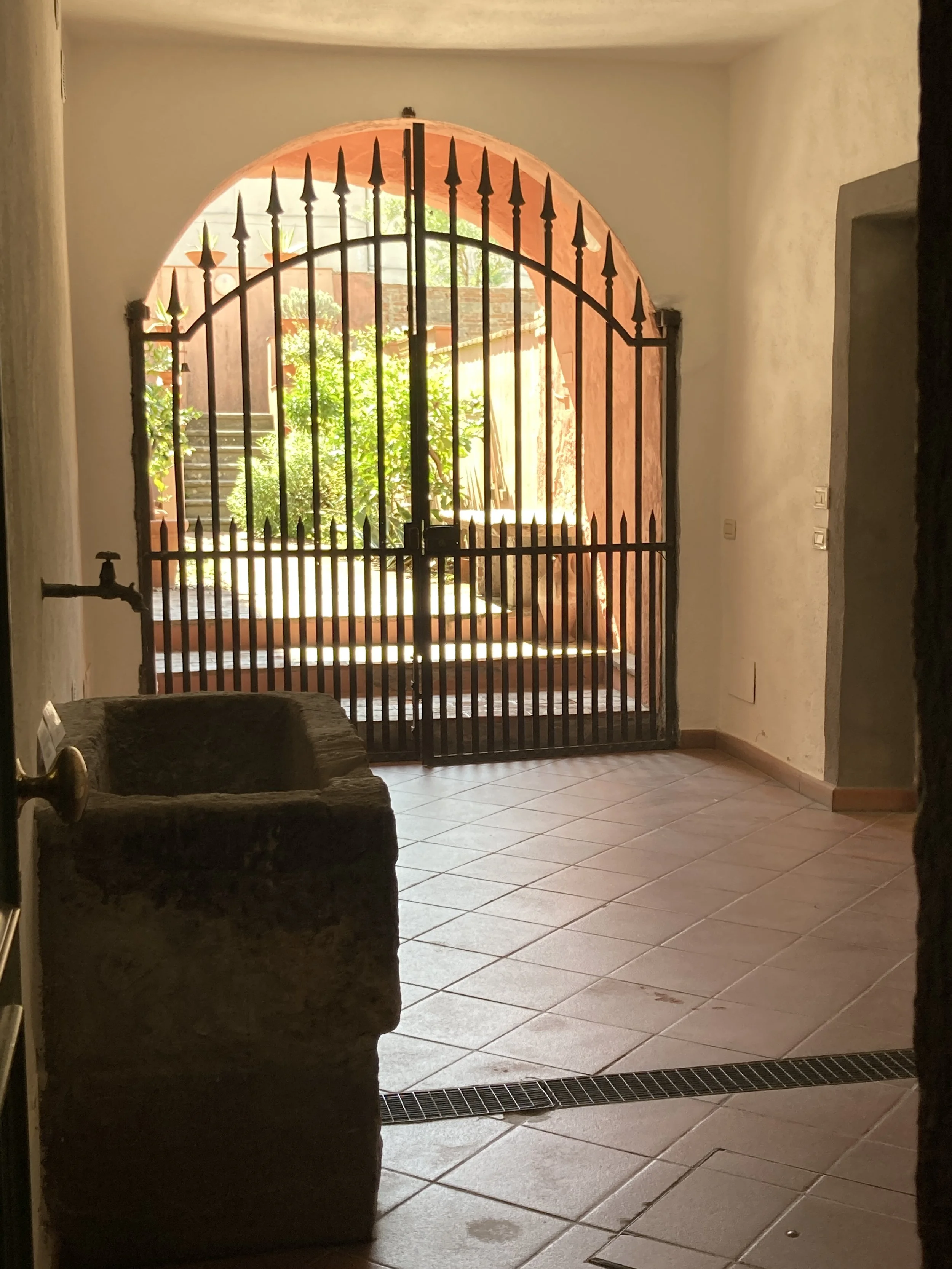
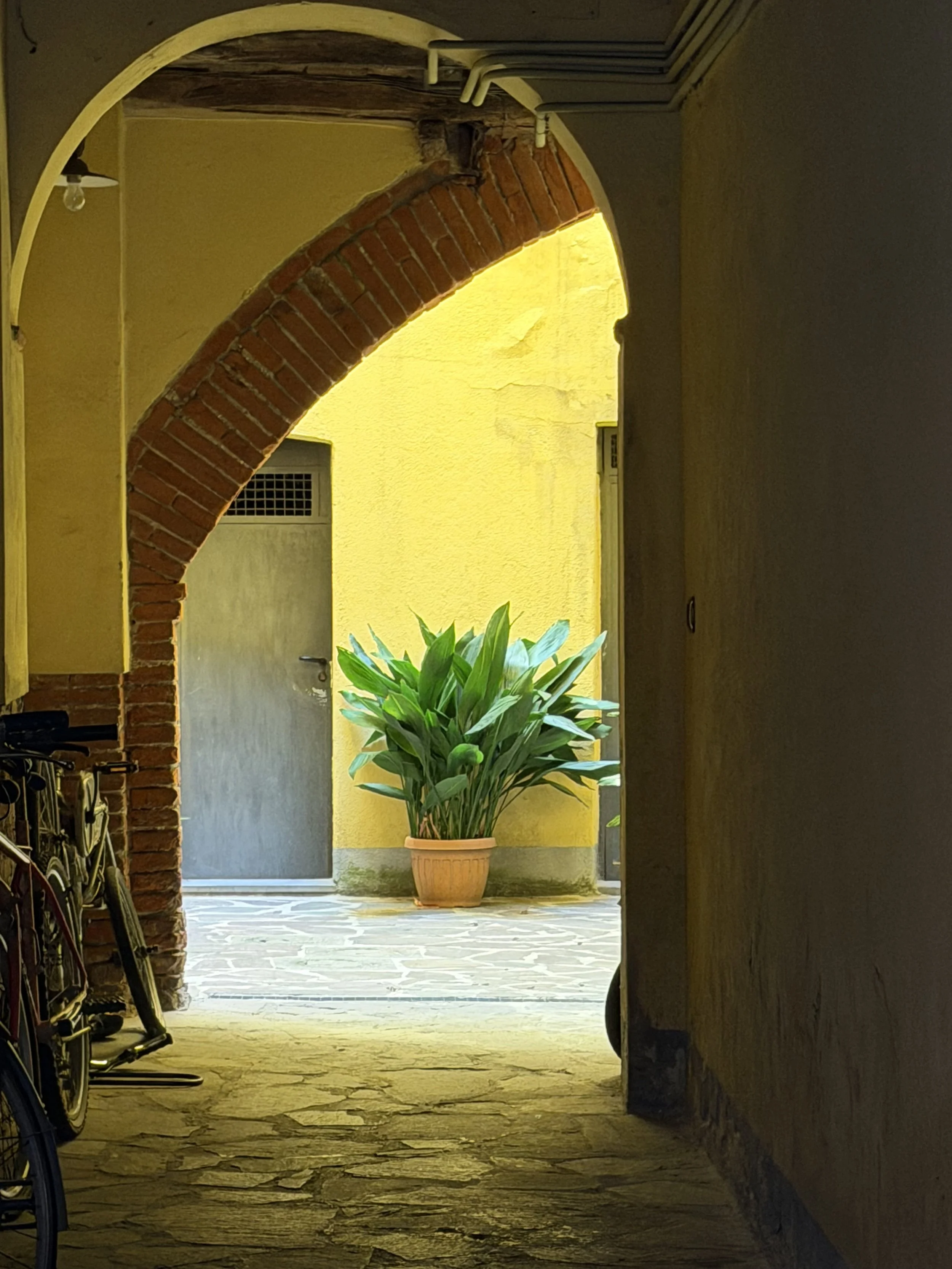
The entry way to my building, once a convent.

September 14, 2026 /Joanne Bartram
lucca, terzieri lucca, neighborhoods lucca
#lucca, Italian culture, Italian light, Italy, Living in Italy, Lucca, small spaces, Tuscany
IMG_1768.jpeg

Una Cucina Piccola

June 15, 2020 by Joanne Bartram in Living in Italy, small spaces

There is a saying in Italian,  “Una cucina piccola fa una casa grande,” which roughly translates to “a small kitchen makes for a big home.” I certainly hope that is true because the kitchen in my new apartment is not just small but laughably tiny (really, at least one friend broke out in peels of laughter when I showed her the kitchen). Because I love to cook, this kitchen was a definite compromise and almost a deal breaker. 

Not only is it tiny, but while equipped with a four-burner stove and dishwasher, it actually has no oven! I missed this fact when I first looked at, and fell in love with, the rest of the apartment. It was only after leaving and trying to imagine where I would put all my pots, pans, plates, etc. in that tiny kitchen that I began to wonder why I couldn’t remember where the oven was. Then it dawned on me - OMG, there is no oven!

Though small, the apartment has charming spaces - like this cozy reading nook. For me, it was love at first sight.

Though small, the apartment has charming spaces - like this cozy reading nook. For me, it was love at first sight.

My first instinct was that I couldn’t possibly live without an oven. But the apartment had most everything else I was looking for - top of the list being that it was on the ground floor. It also had big windows with a pretty view, was beautifully furnished, and loaded with Italian charm. Though small (roughly 600 square feet), it felt bigger due to its high-beamed ceilings and two lofts. It was also priced right and in my preferred area of the city. It was missing only two things: outdoor space (I do miss the terrace I had in my former apartment) and that oven. In the spirit of adventure, and because I really did need to give up the 38 steep steps to my old apartment, I decided to take the smaller, oven-less apartment and somehow make it work.

No microwave? No problem - this little stainless-steel pitcher allows me to heat milk for coffee right on the gas burner.

No microwave? No problem - this little stainless-steel pitcher allows me to heat milk for coffee right on the gas burner.

The first purchase I made for my new space was a DeLonghi countertop electric oven and some small pans to fit into it. Because my counterspace is limited, I sacrificed the microwave that originally sat on the counter to make room for the electric oven. I also had an IKEA rail installed above the stove to hang pots, utensils, and a shelf for some spices. In a tiny kitchen, little space savers like this make a big difference.

This IKEA rail system adds functional storage.

This IKEA rail system adds functional storage.

As I began writing this post, I had some tarragon chicken thighs in the oven, my first attempt at roasting. So far, so good. It smelled delicious and turned out perfectly - crisp skin on the outside, tender and moist on the inside. The next day I made a batch of roasted cauliflower in anchovy oil, another favorite of mine. With the chicken and the cauliflower I encountered one limitation of my little oven (besides its size) - the maximum temperature is 200 degrees Centigrade (400 Fahrenheit). Because both these recipes called for a hotter oven, I made a few adjustments in cooking time and used the convection setting on the oven. With these minor adjustments, both dishes turned out just as tasty as in a regular oven.

 Tarragon Chicken Thighs
 Cauliflower roasted in anchovy oil - YUM!

My little oven has also worked well for toast, reheating foods, and my first attempt at baking - a batch of lemon-glazed muffins, which turned out perfectly.  

Making just a third of a lemon bread recipe equals six perfect muffins,

Making just a third of a lemon bread recipe equals six perfect muffins,

Though small, the kitchen is quite comfortable to work in thanks to a cutting board that fits over the sink drainboard to expand the counter prep space, deep drawers that house cookware, and some high-level organization on my part. Eliminating all the kitchen items that aren’t essentials and donating my full-size baking dishes to a friend helped too. Luckily I have extra space in a dining room china cabinet and some pretty blue IKEA storage cubes, which moved with me from my old apartment, for extra storage.

Small spaces demand creative storage solutions - baskets and exposed shelving really expand storage possibilities.

Small spaces demand creative storage solutions - baskets and exposed shelving really expand storage possibilities.

I’ve actually looking forward to seeing just what kinds of cooking I can do in my tiny space. So far, soups, stews, pastas, and frittatas have been easy. And though my cooking and entertaining spaces are smalI, I had a group of friends over for a Sunday lunch just before lockdown was declared. I found I could sit five to six people comfortably around my dining room table and that cooking for that size group was no problem. For entertaining, stovetop cooking and dishes I can make ahead (like the crepes I served for dessert) are my best bets. But I definitely will not be cooking the turkey for Thanksgiving this year.  -post by Joanne

June 15, 2020 /Joanne Bartram
smallitaliankitchens, smallitalianapartments, toasterovencooking, smallkitchenorganization, italiankitchens, #smallspacecooking, #tinykitchens
Living in Italy, small spaces

Powered by Squarespace