Two Parts Italy

Exploring Italy, travel, and living a flavorful life

  • Blog
  • About This Blog
  • Start Here
  • Recent Posts
  • Archives by Topic
  • Subscribe
  • Contact me

A Historic Garden In Collodi, Italy

June 20, 2022 by Joanne Bartram in #italytravel, #lucca, Italian art architecture, Italian gardens, #italiangardens

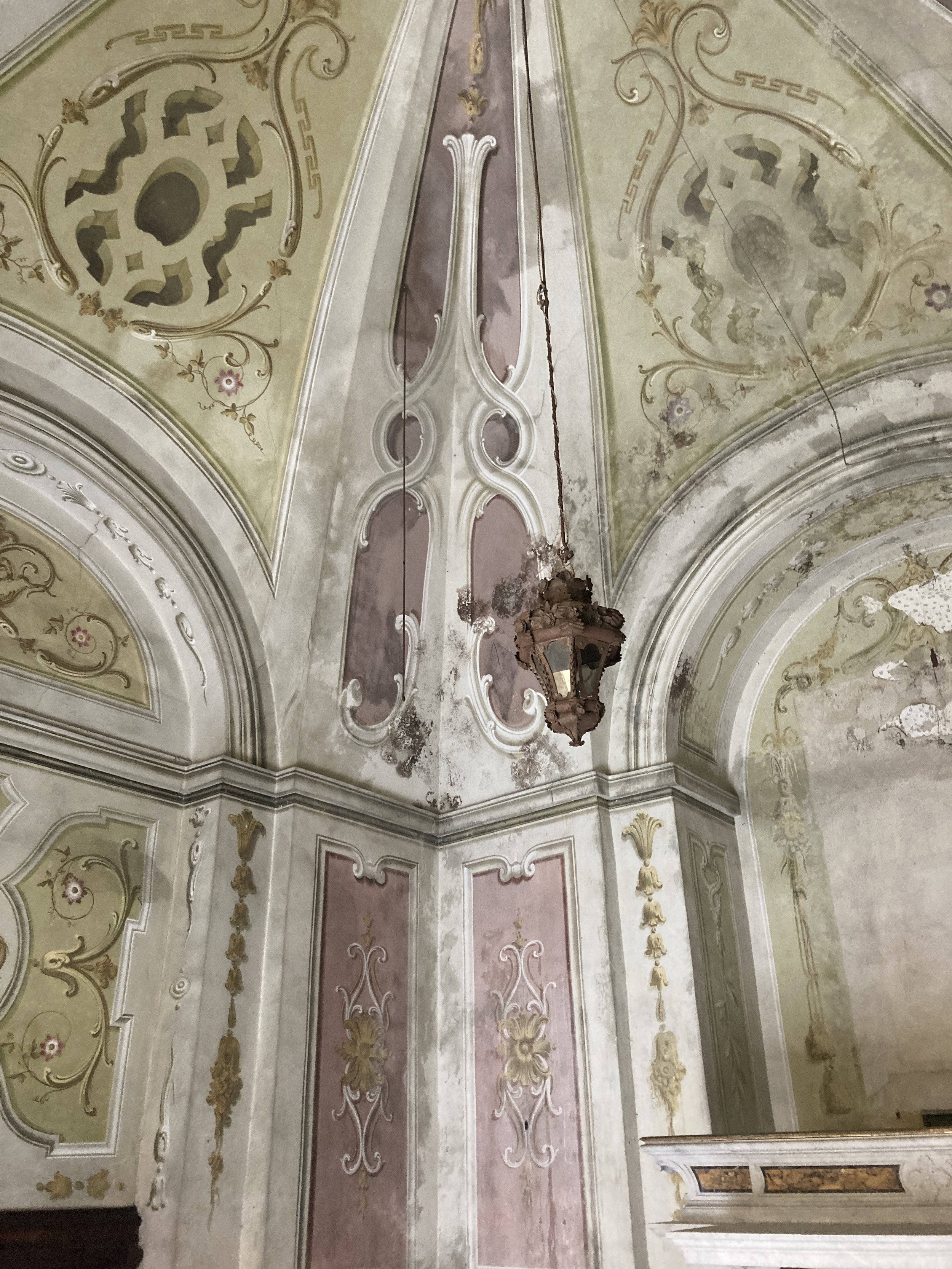
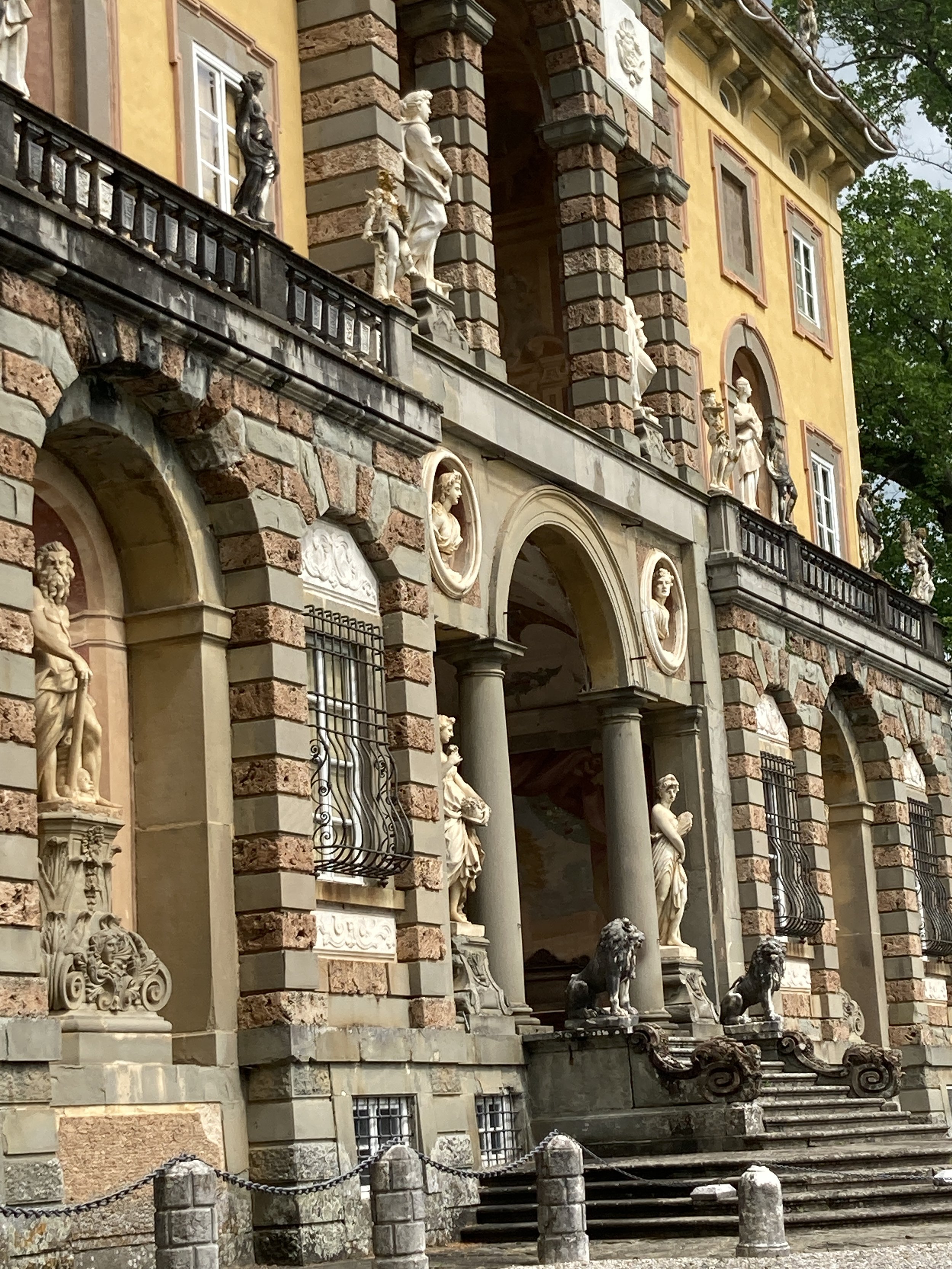
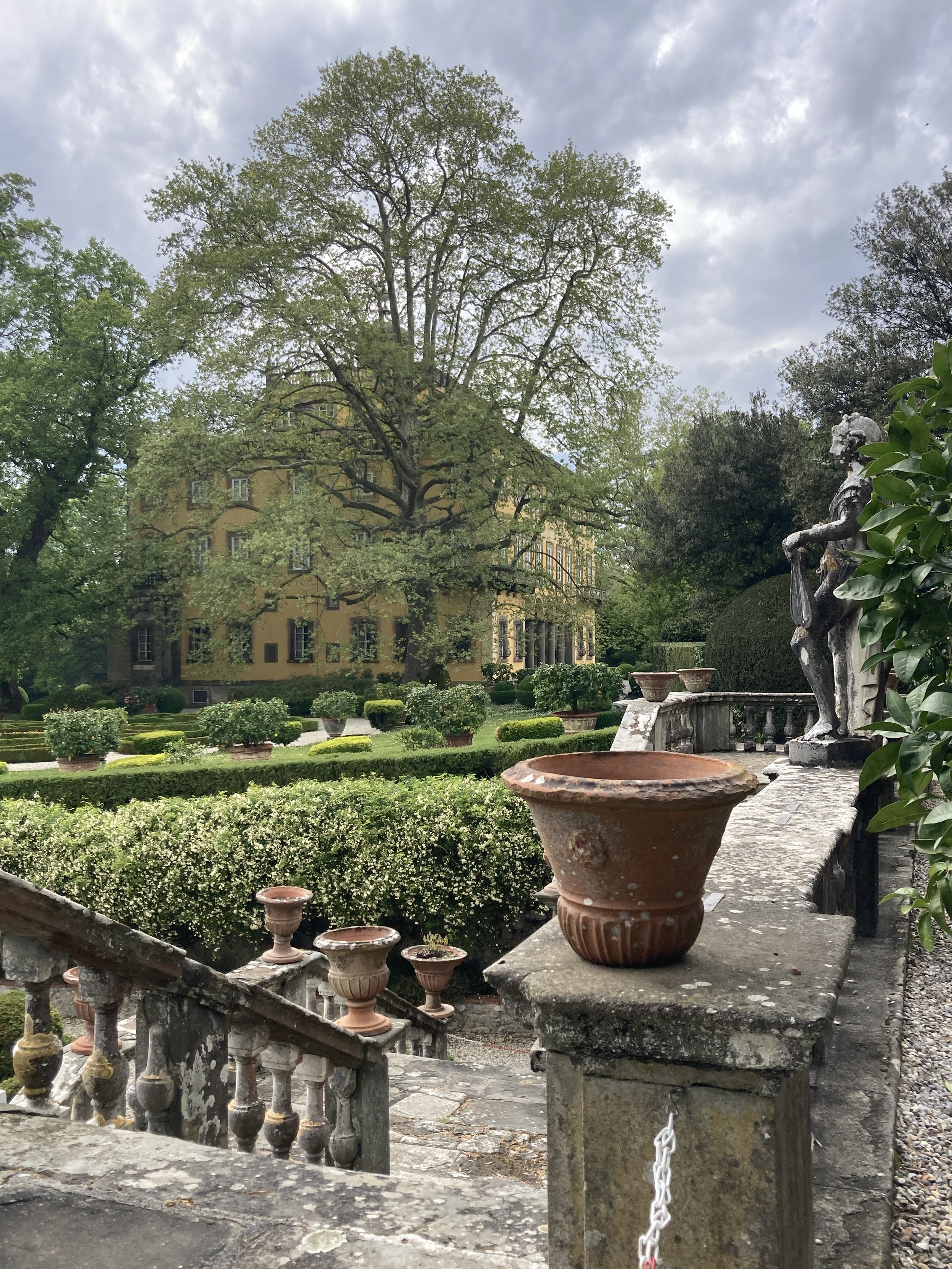
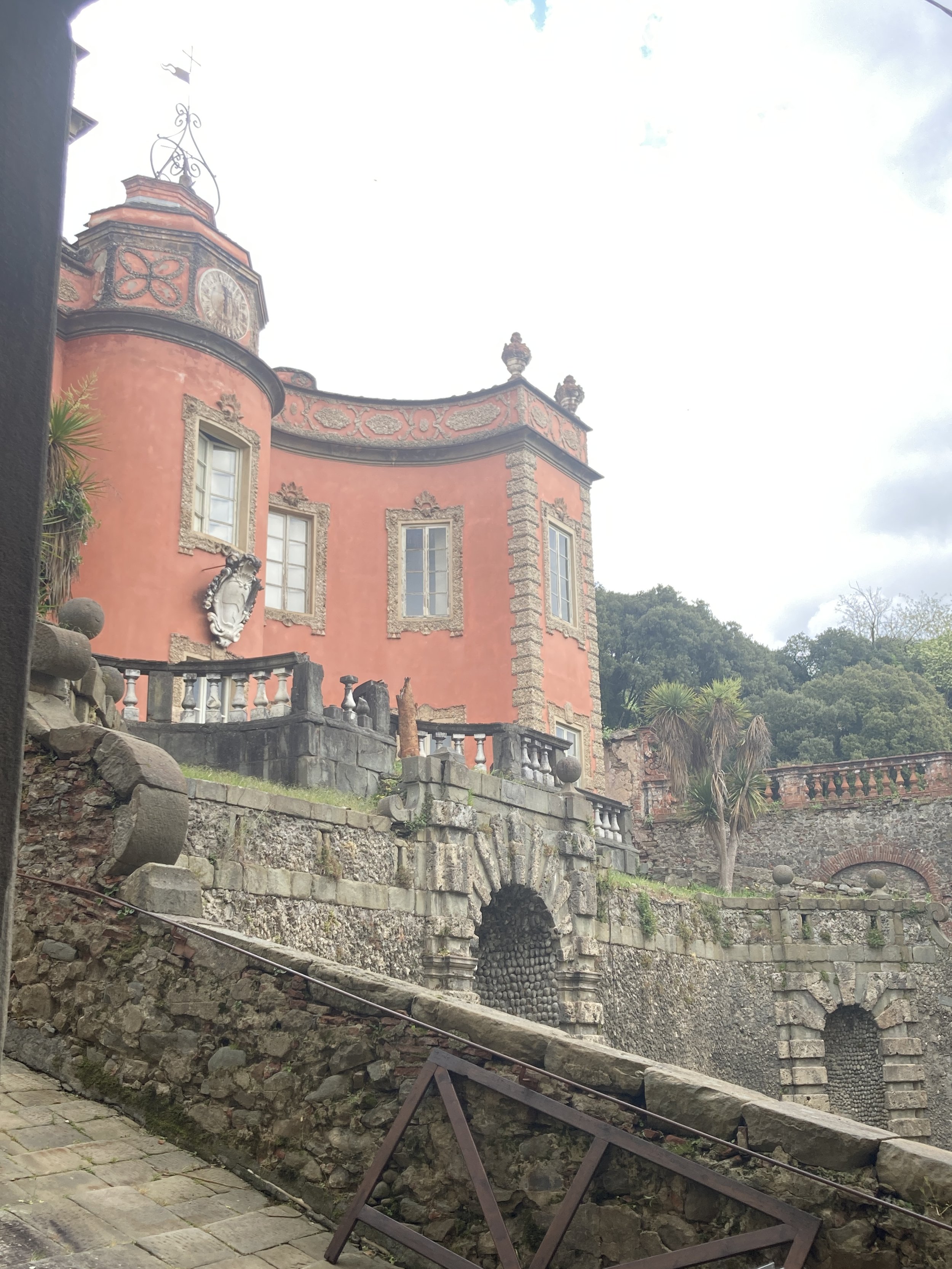
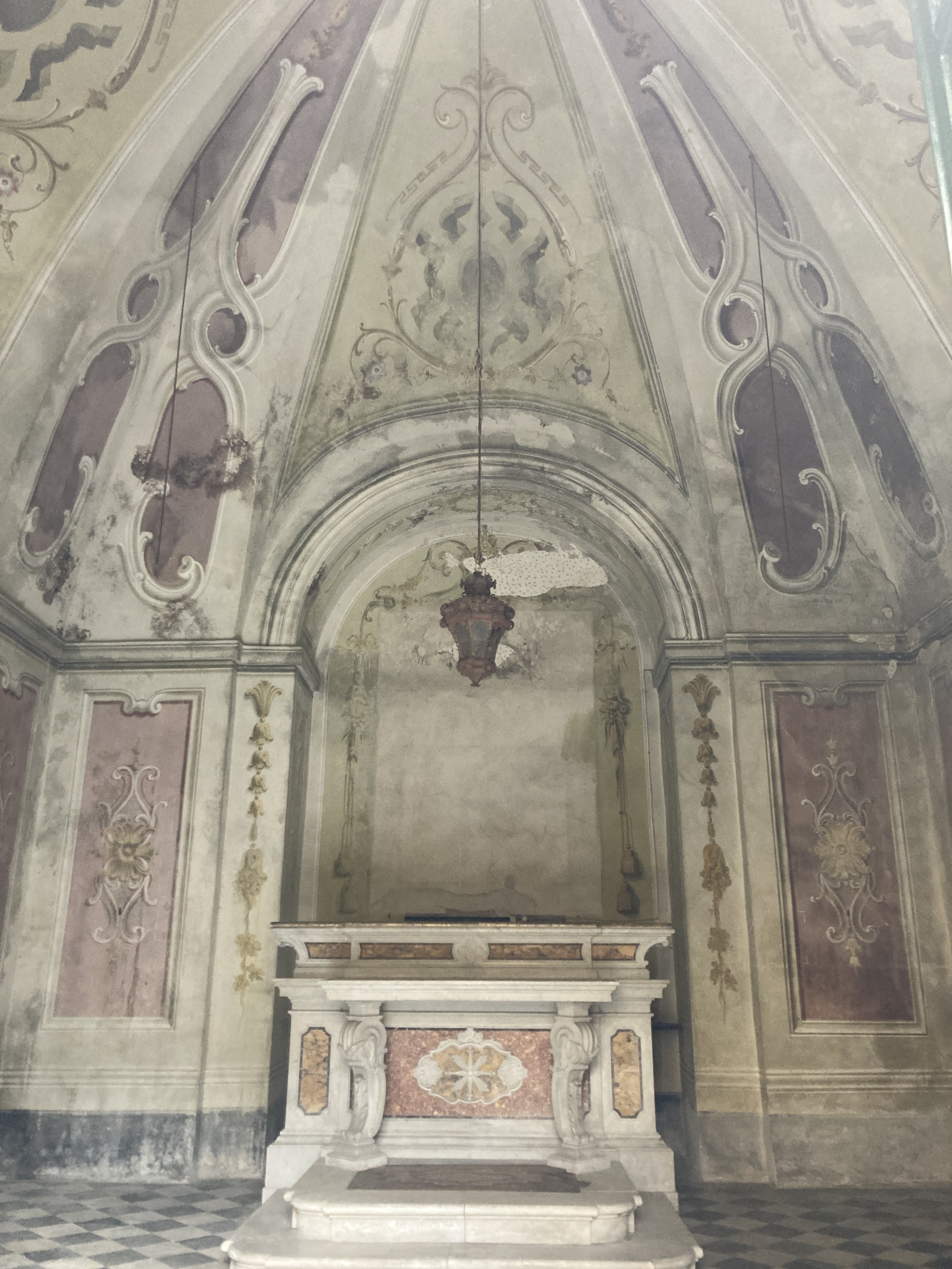
Collodi is a fairy tale place. It is not the Tuscany of rolling hills, carefully tended vines and olive trees that most people picture when they think of this region. Instead, the small village of Collodi seems to climb straight up a mountainside in the middle of a forest, hanging precariously on the slope. At the top is the medieval fortress La Rocca and a small church. At the bottom is the Villa Garzoni, built on the ruins of a Medieval Castle. An imposing structure, with its yellow color and 100 windows, the villa sits at the entrance to the town of Collodi. The villa itself is not open to the public, nor is the colorful Palazzina d’Estate (Summer Palace) which sits directly behind it. The only part of either that it is possible to enter is the Palazzina’s chapel, pictured below.
9DFA9511-6FEF-4380-A2BF-4261B0A85370.jpeg
DF584B98-13D0-4F46-852F-65D999BAA00B.jpeg
2BDA4BB3-4EB6-48BA-A65E-B3142501FCDD.jpeg

And then of course there is Pinocchio. Carlo Lorenzini, the author of Pinocchio, used the pen name Collodi as an homage to this village where his mother once worked. Many families come to Collodi to visit the Parco di Pinocchio (Pinocchio Park), a children’s adventure theme park based on the storybook character. But it was not the Pinocchio story that drew me to Collodi. Instead, I went with friends who were in Italy to visit classic gardens. The historic Giardino Garzoni, dating from the mid-1600’s and completed by the Lucchese architect Ottaviano Diodati in the 17th century, was on their “must see” list. I was delighted to join them for a day of visiting gardens near my home in Lucca.
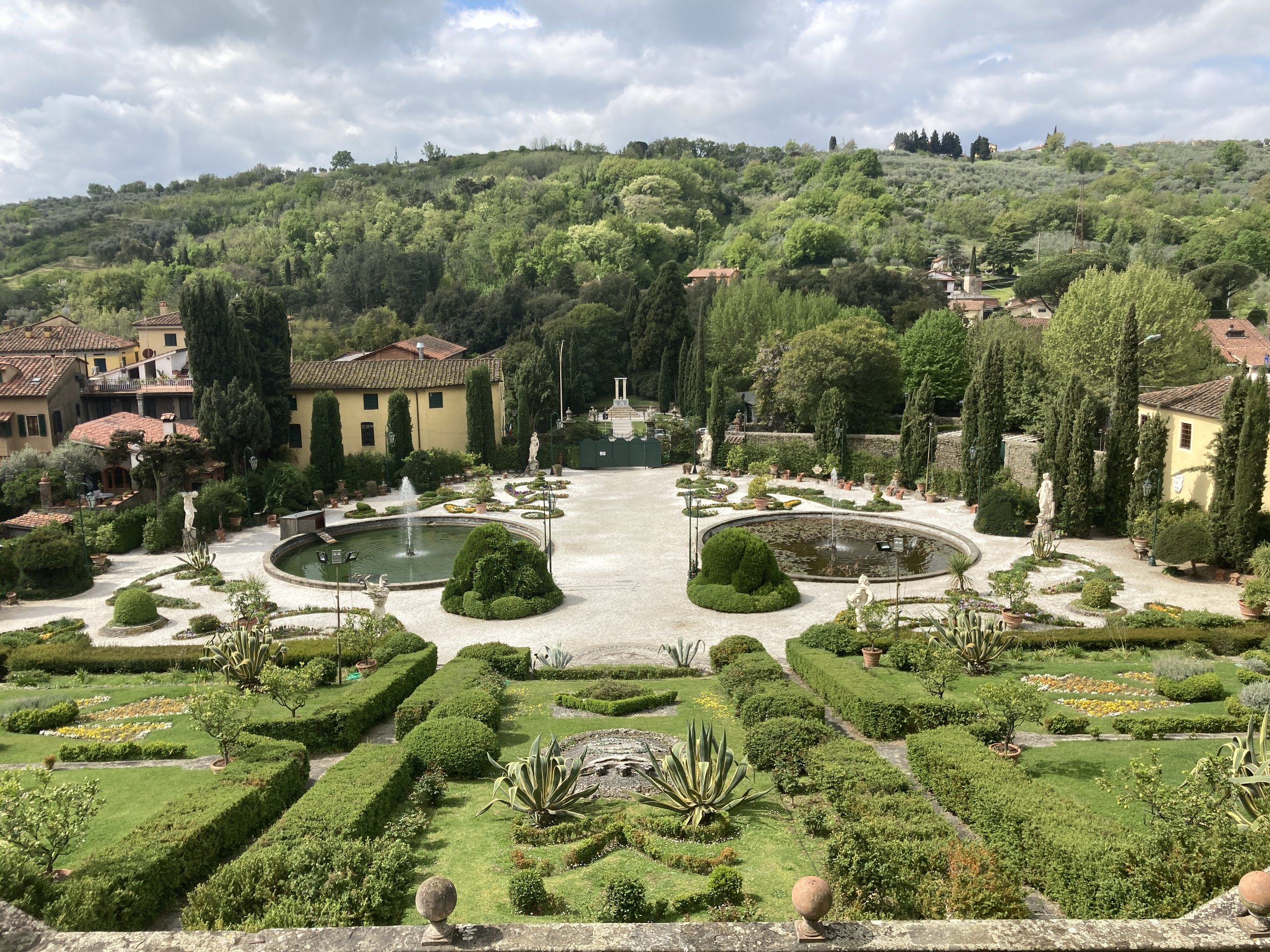
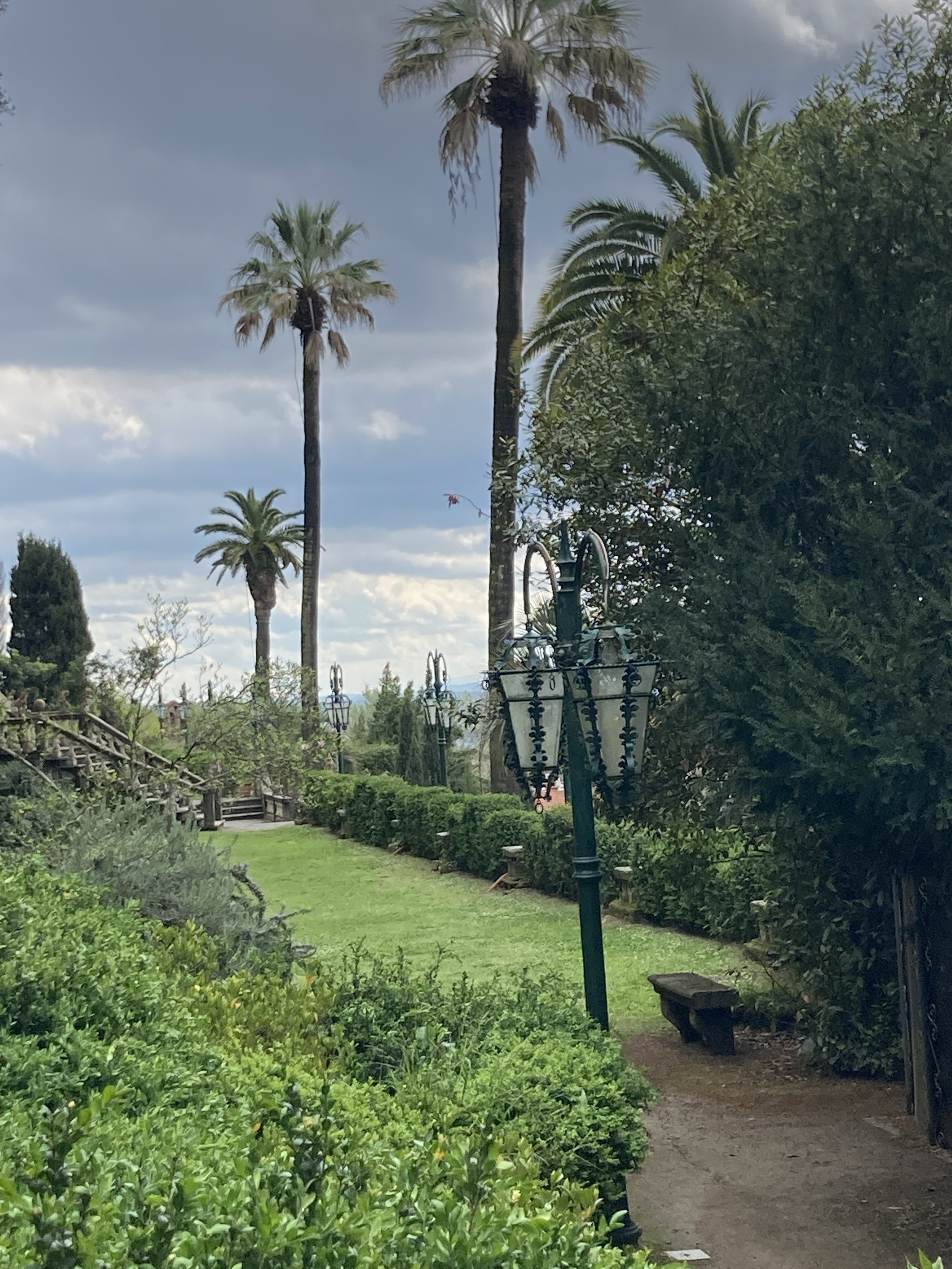
Looking down on the lowest part of the garden, from an upper terrace

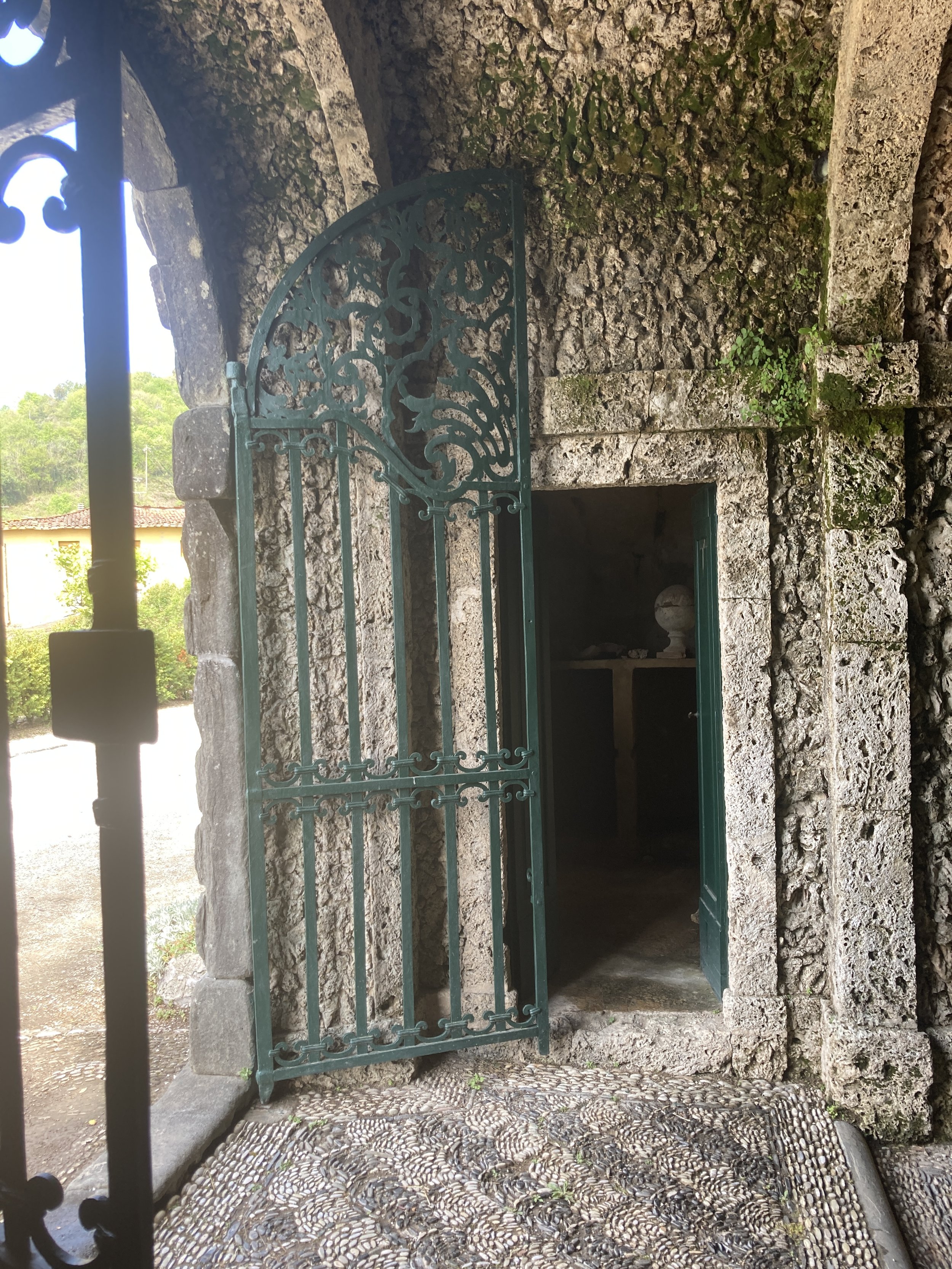
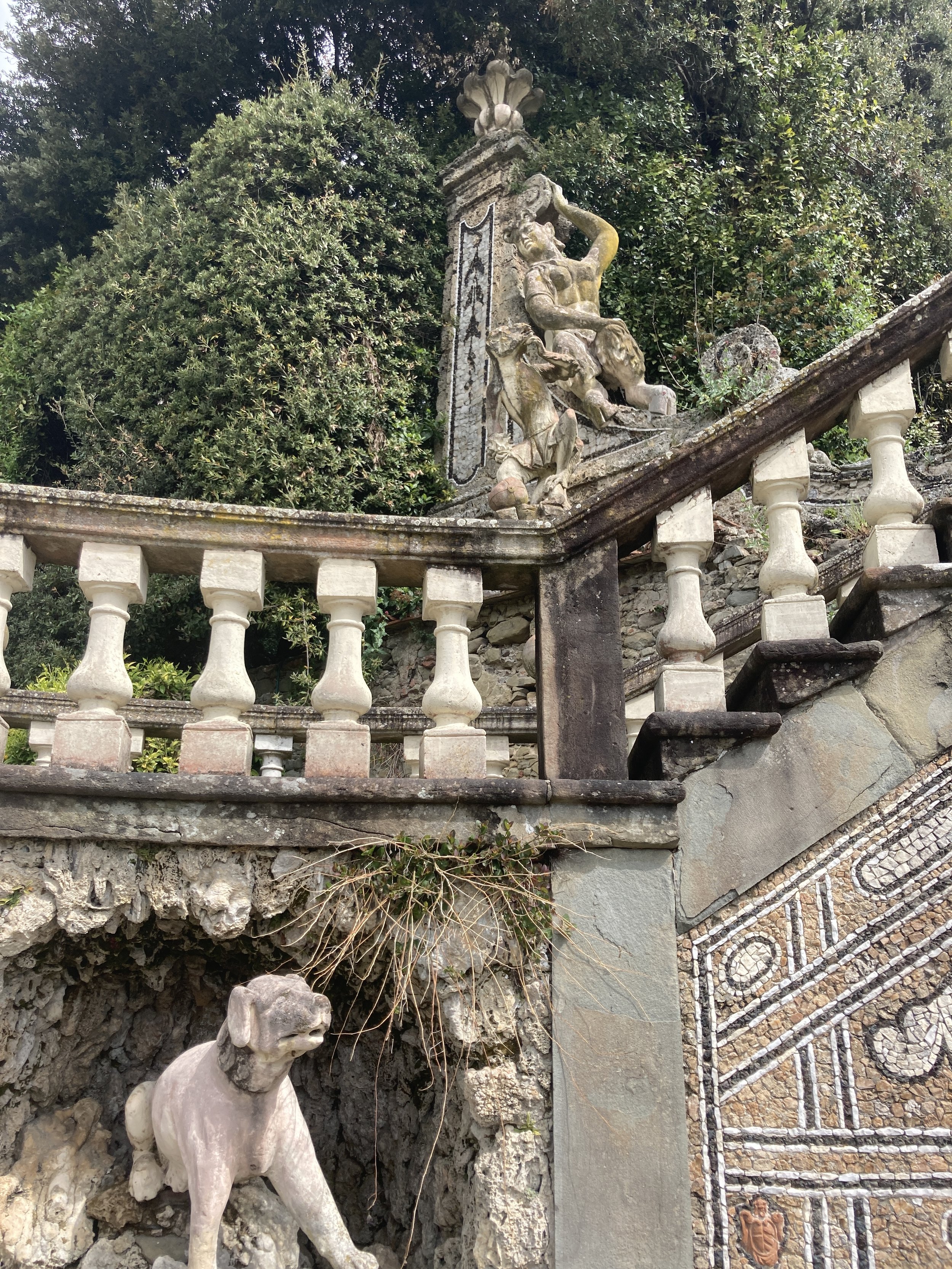
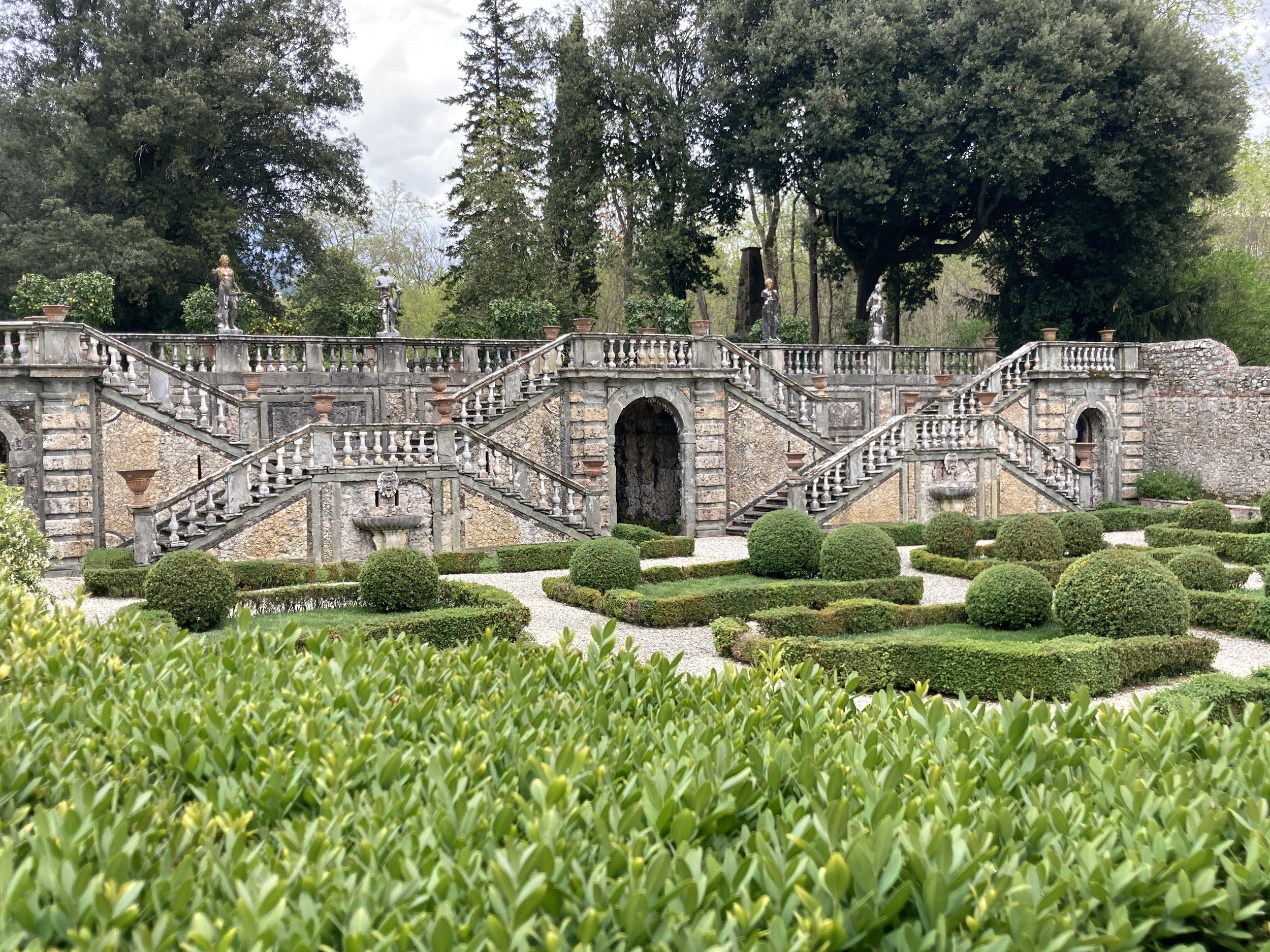
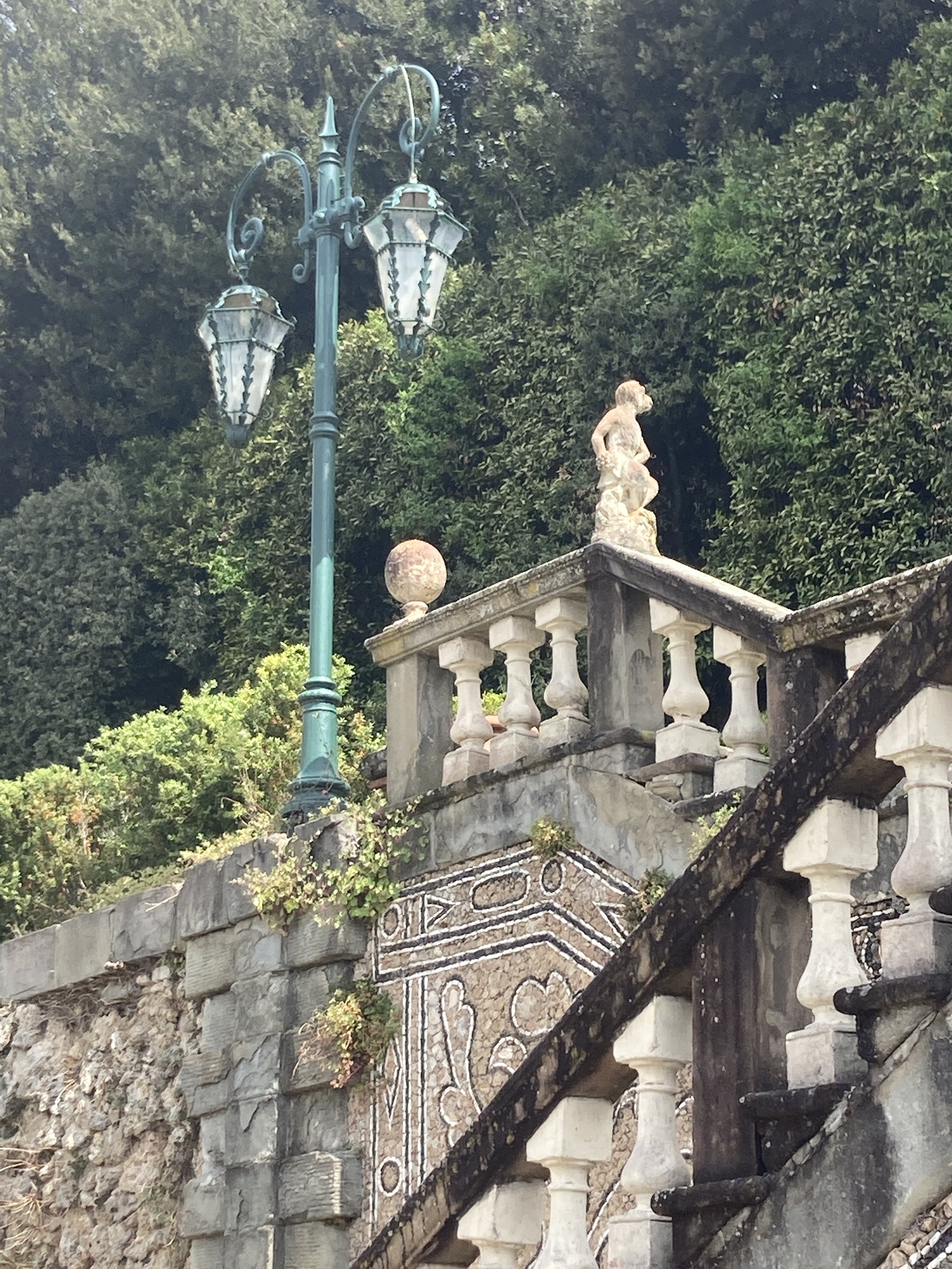
The Garzoni garden is a wonder, with something enchanting to see at every turn as it climbs the steep slope beside the villa. Like many Italian Renaissance gardens there is amazing architectural detail including a dramatic twin staircase (which contains a hidden grotto)

The twin staircases to the upper terraces

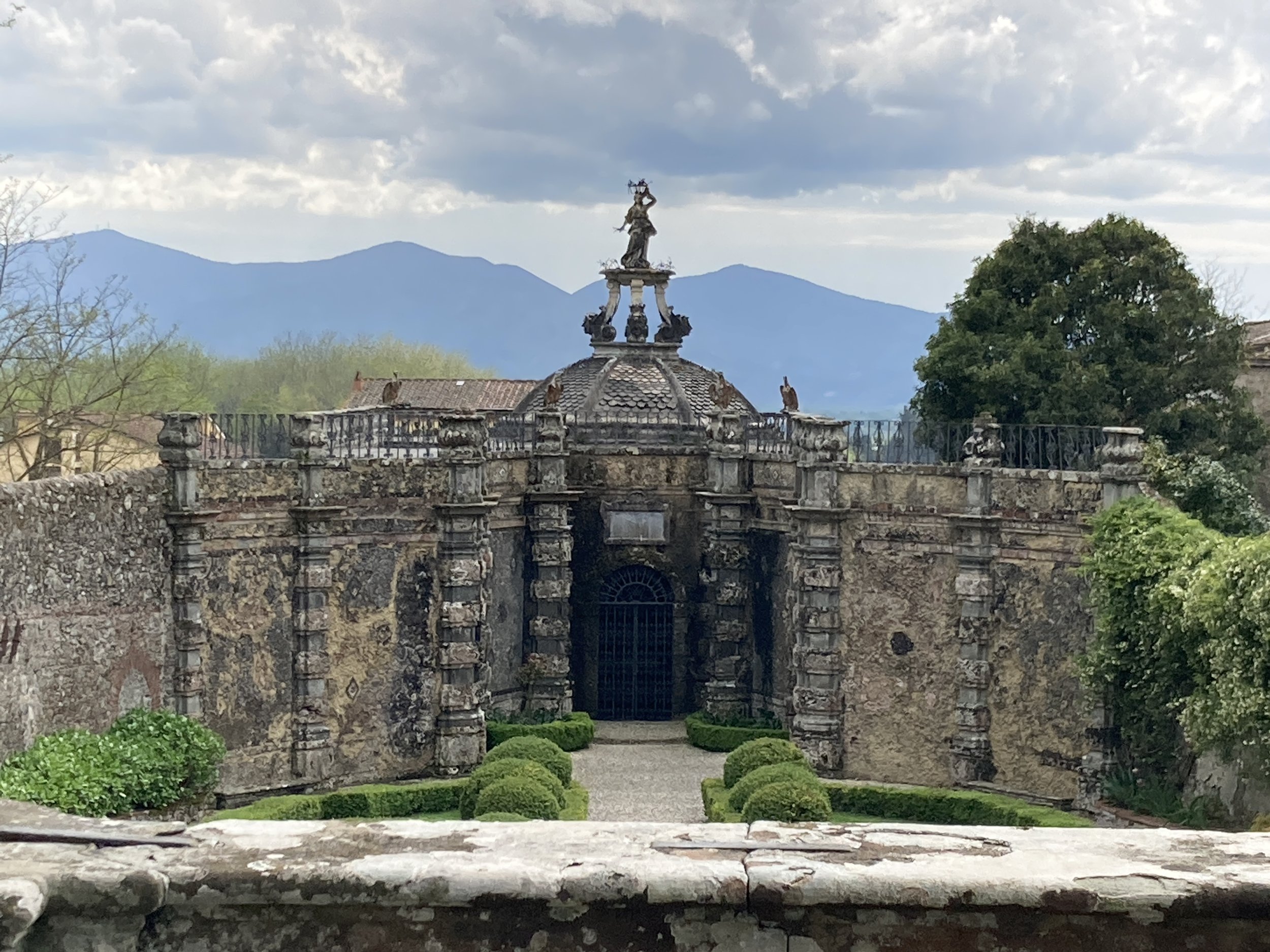
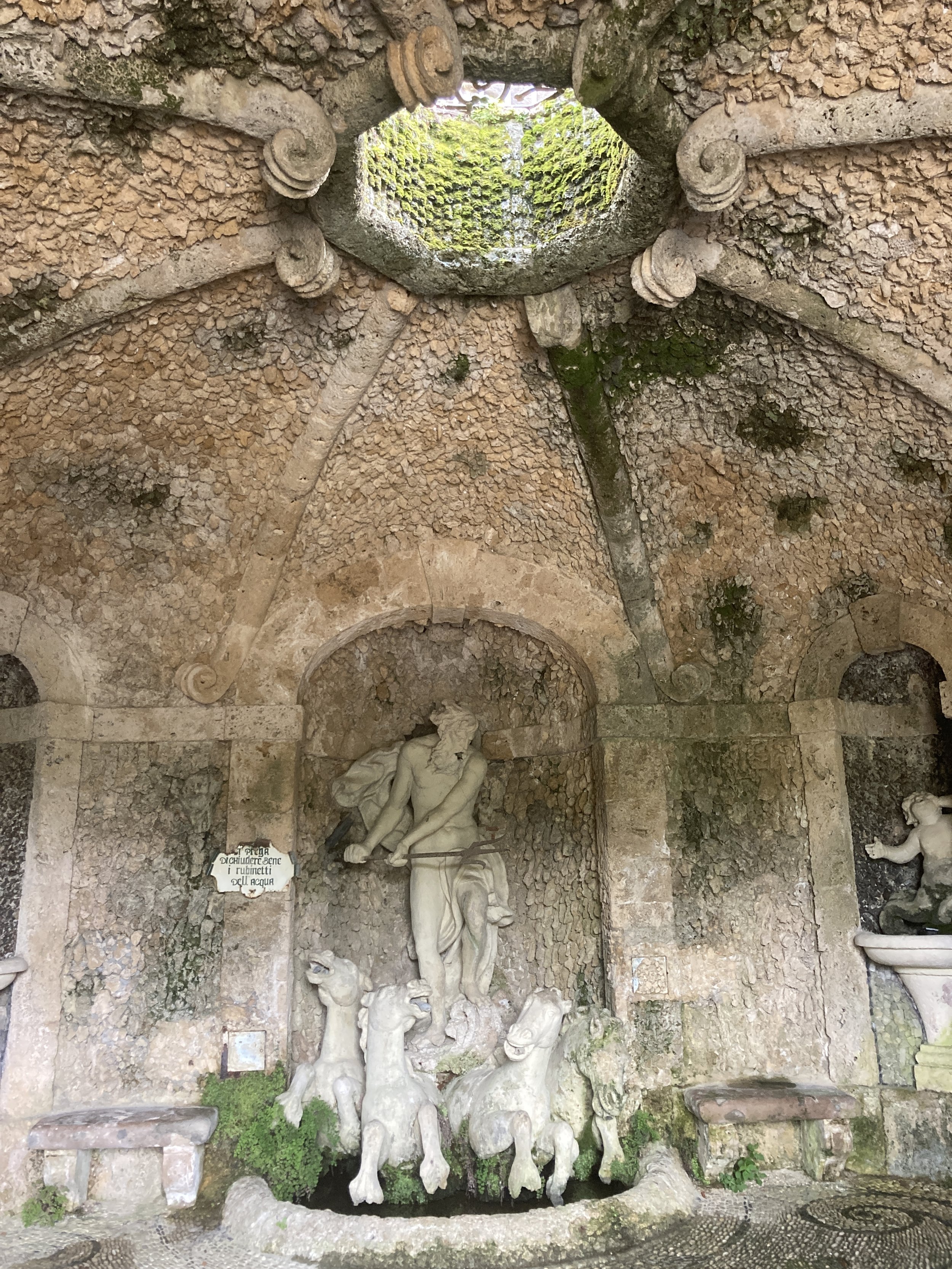
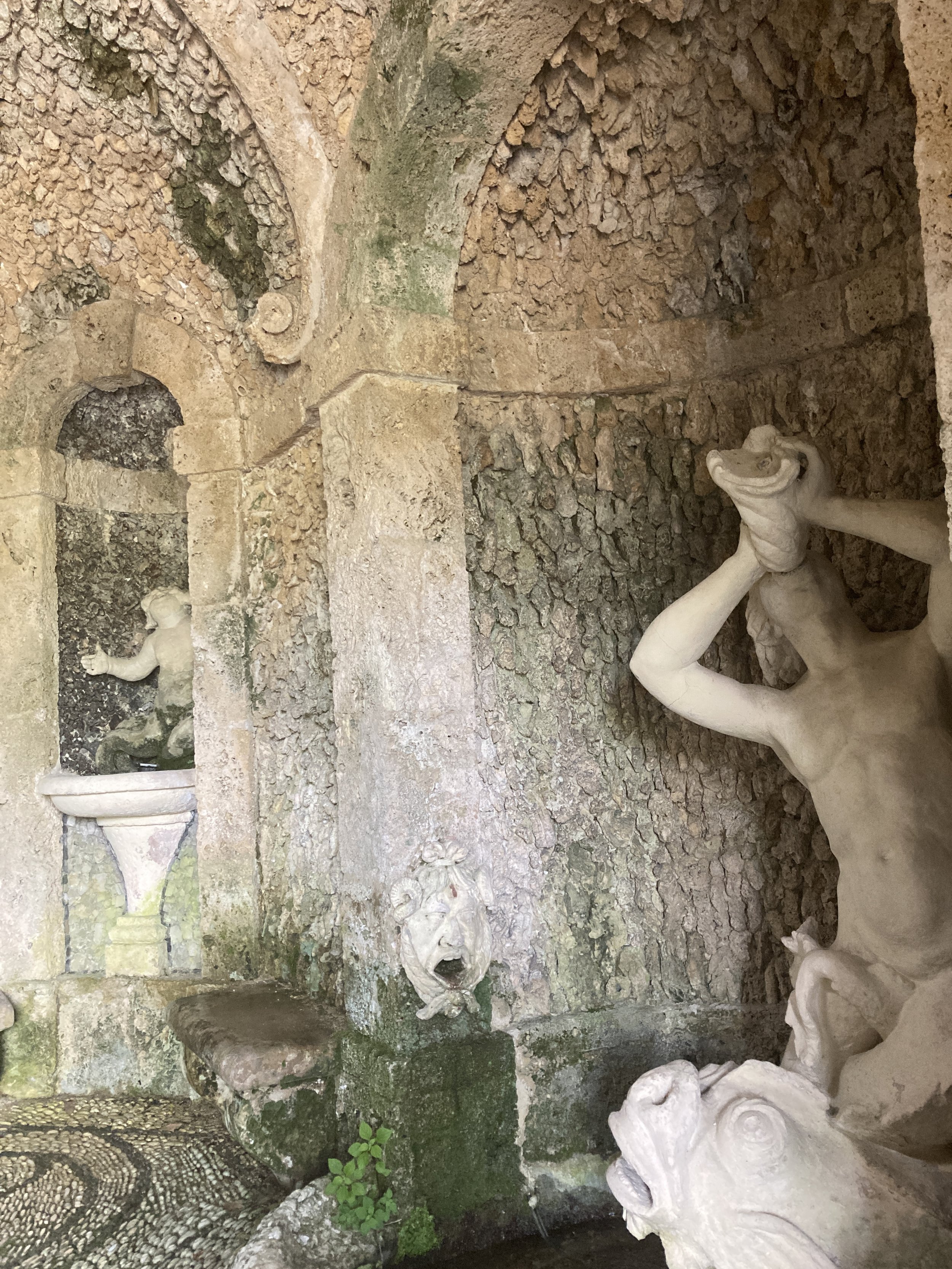
Water also plays a starring role in the garden, with a series of fountains and cascades of water tumbling down the slope. Tucked under the stairs is the Grotto of Neptune, another watery feature.
54918553-507D-437A-9CF9-106DD7D72F0F.jpeg
31FF995C-A5D0-4F05-B5EE-5BA7E8DBEADF.jpeg
F88BEB8E-BA6C-4C11-875F-7FF1162CA8DE.jpeg

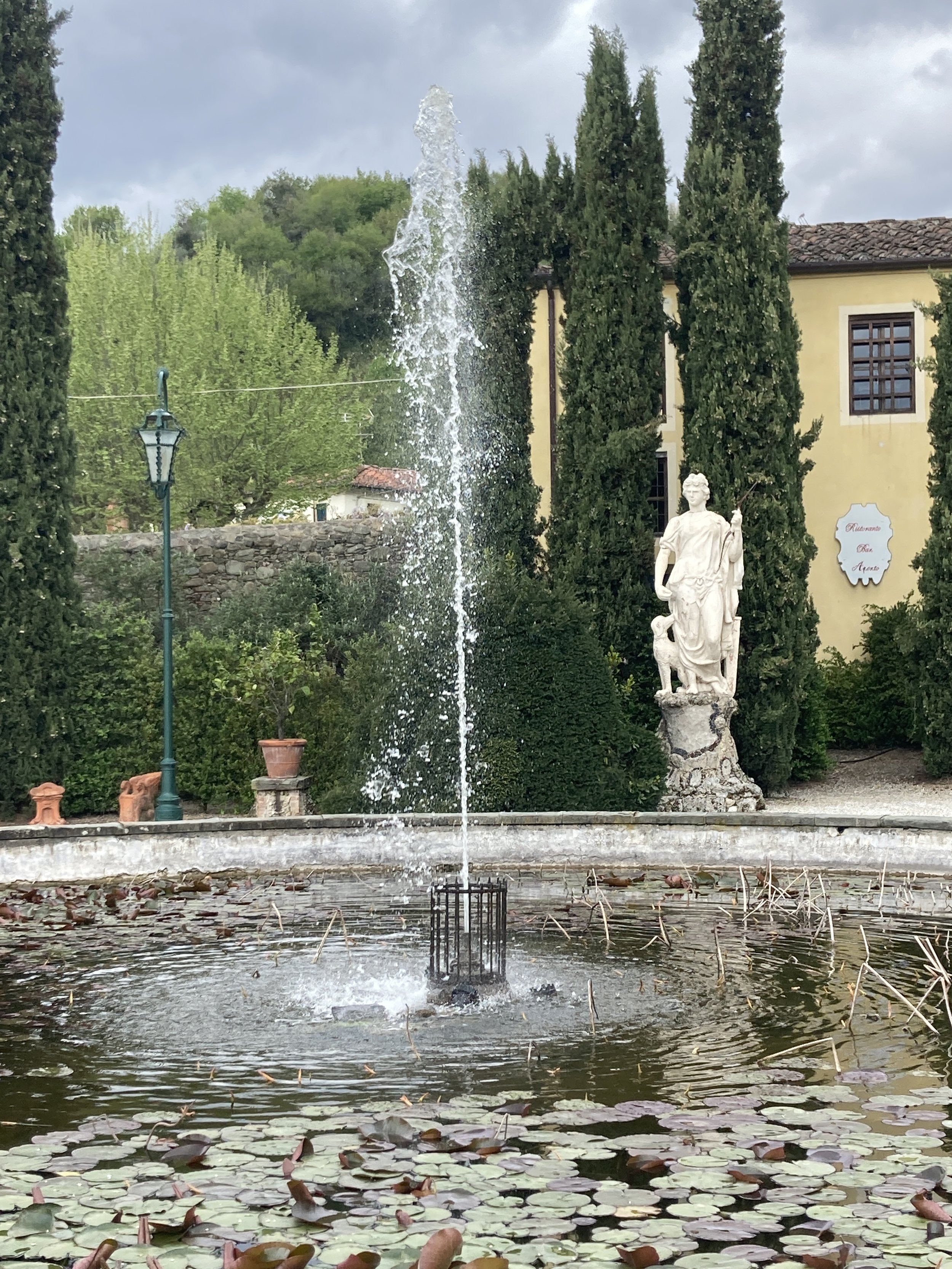
Two round pools lie at the bottom of the garden, just below a parterre full of greenery and flowers. Above that lies the staircase which begins the upward climb through several levels of terrace.
5959F94E-8F8E-4AF7-B080-CEE61A1FE216.jpeg
80E83EC6-70D4-49ED-BD15-01CE7D7006AD.jpeg
08A3977C-664F-4375-8134-0D265B098A70.jpeg

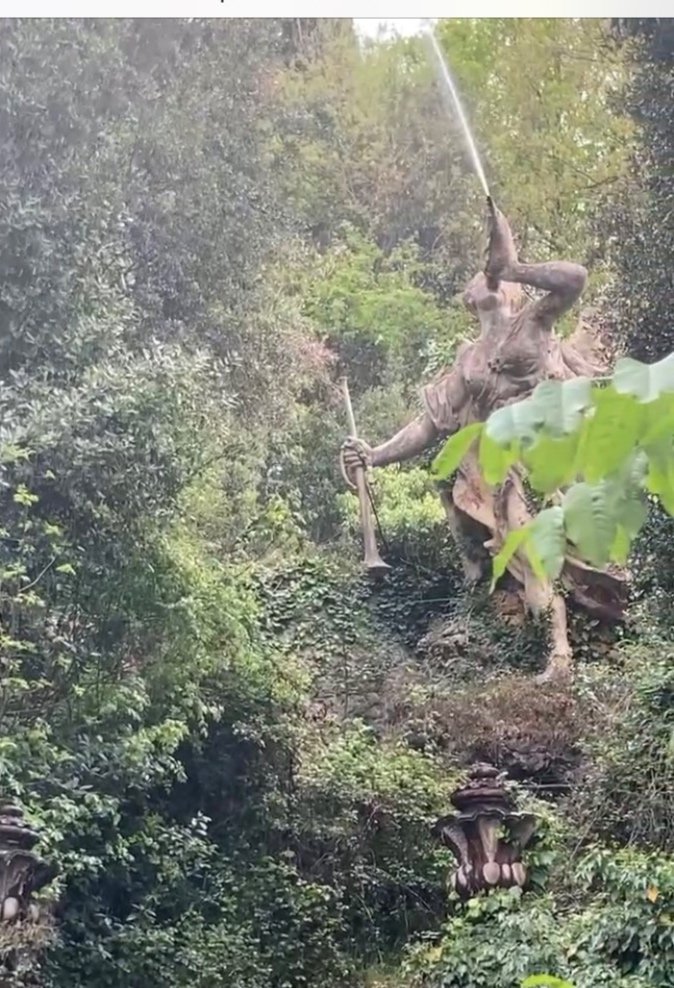
Keep climbing to the water stairs which flank the cascade that runs down to the lower garden. At the top of the climb lies a pool with a statue of Fame, who blows jets of water from a horn in dramatic fashion.
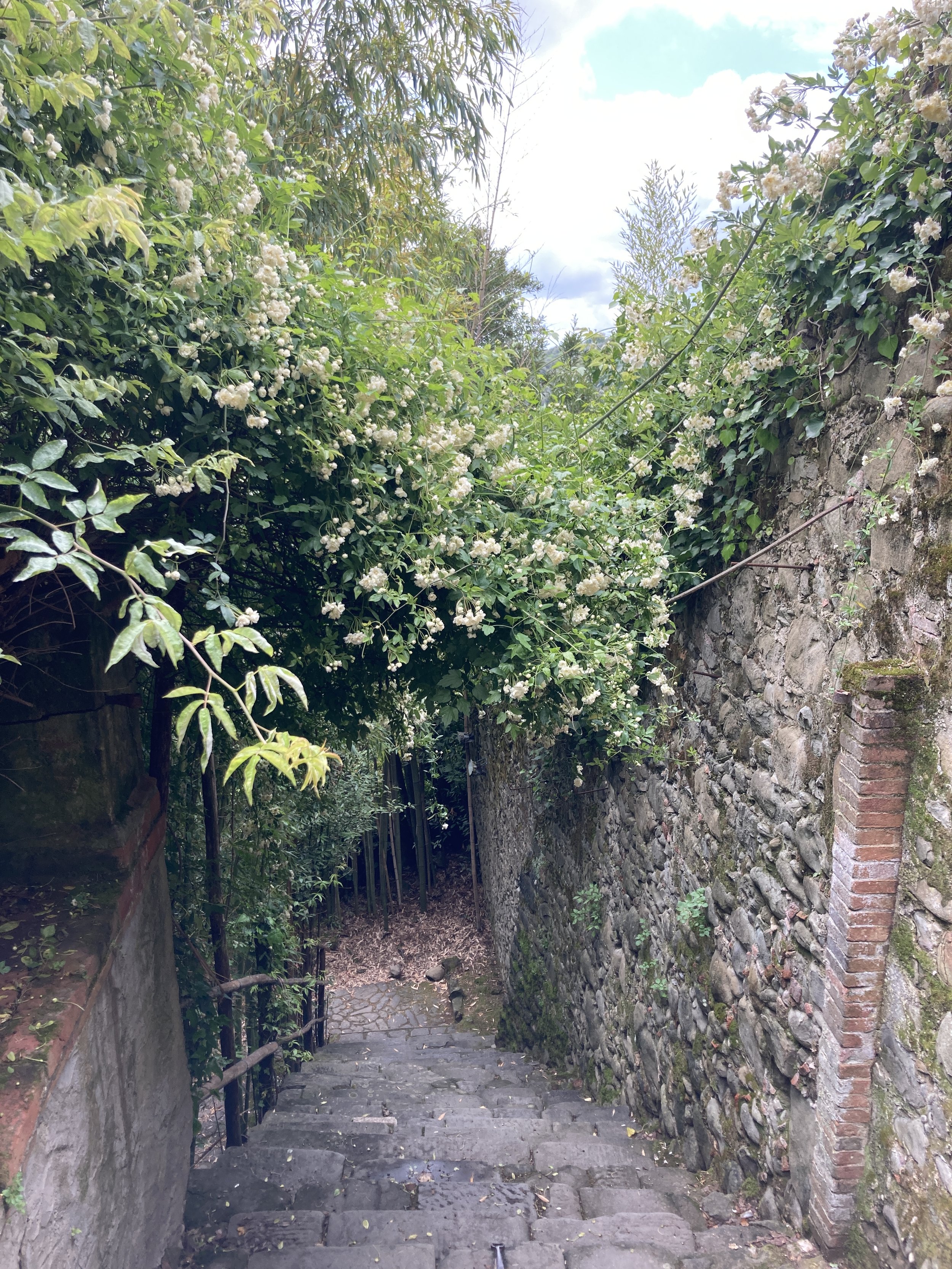
From the top of the water stairs lies a path, lined with camellias, which leads to the villa and the summer palace. This path too is lined with statues and interesting architectural details.
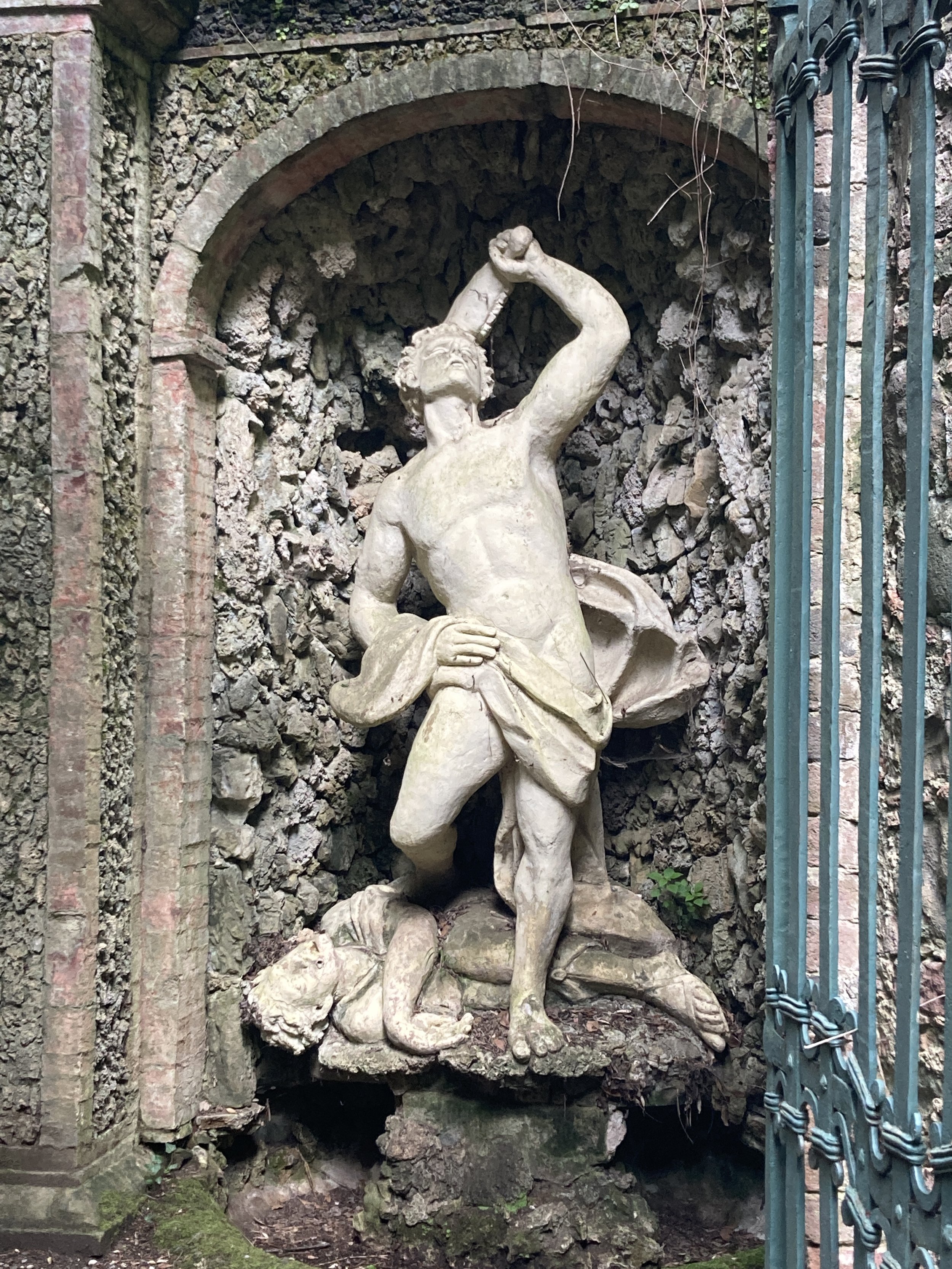
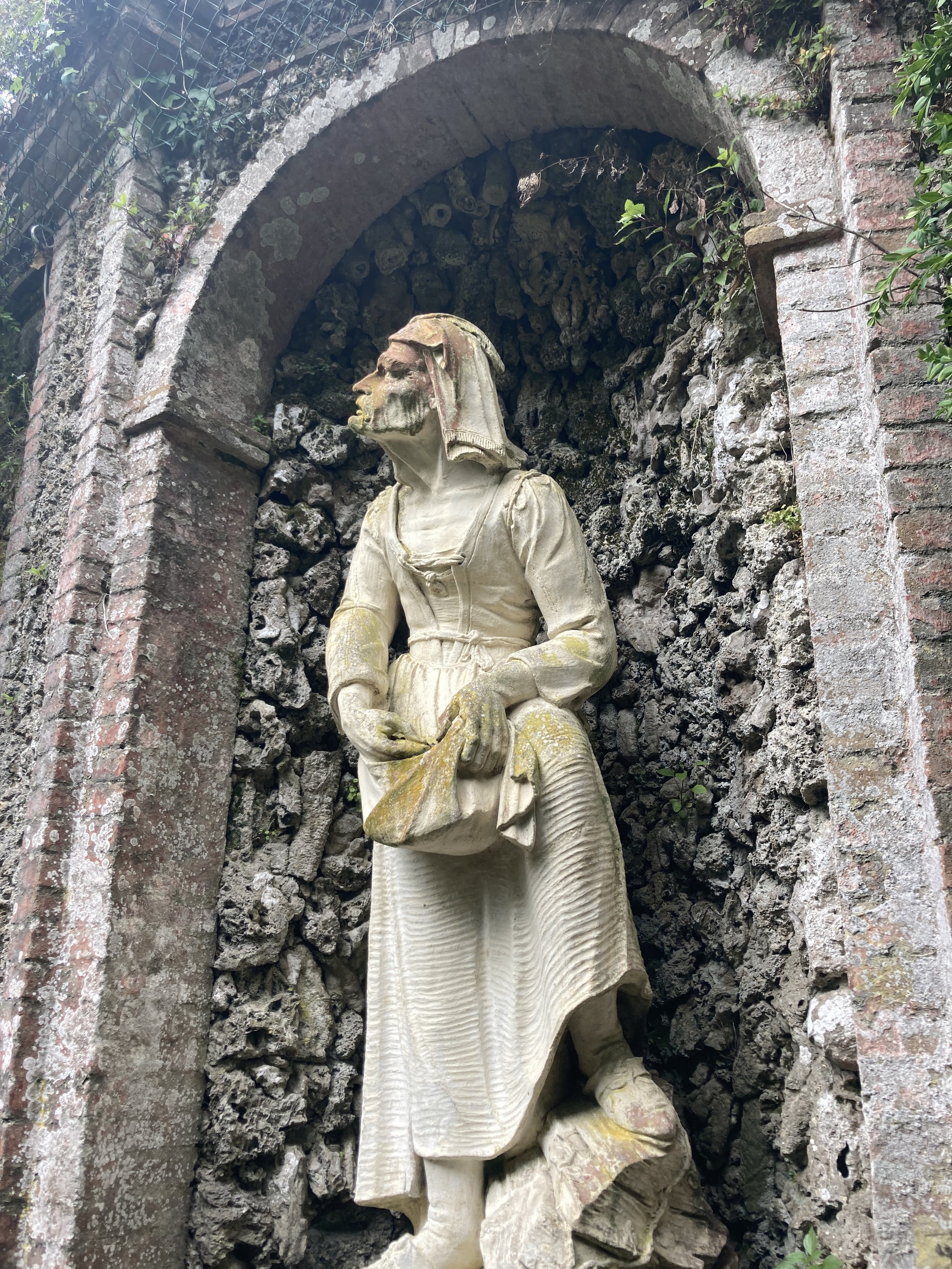
E6D24FC7-13D3-43FB-9B3E-80F803AA8BF3.jpeg
561F8C24-B9B2-4494-8E8E-707C32D5B359.jpeg
375B7A9E-1693-4824-943F-7E1F0DF5ADE7.jpeg

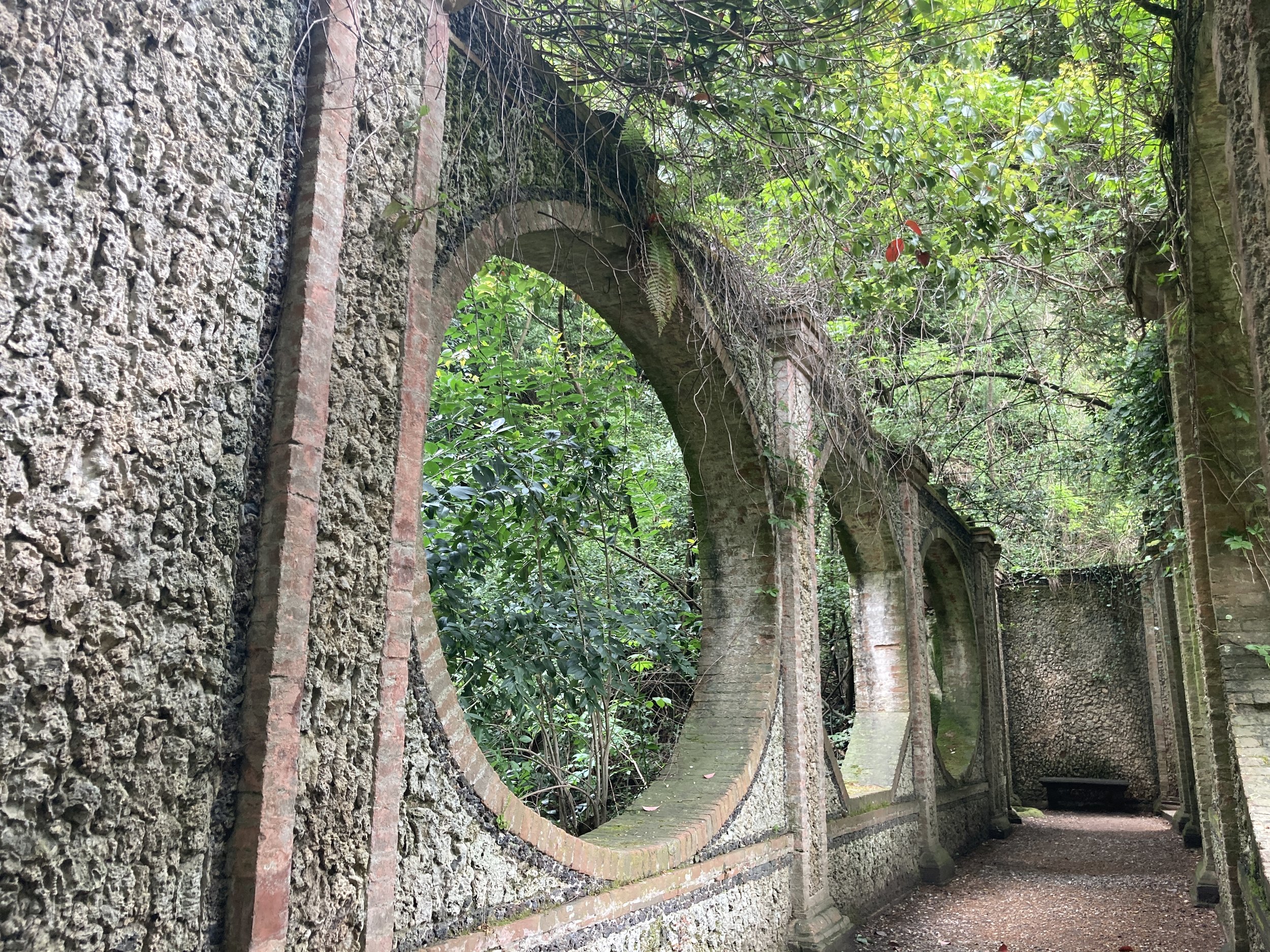
The fantastical nature of the garden reveals itself in places like in Neptune’s grotto, secret pathways and hidden spots, a labyrinth, and statues of mythical creatures and assorted ancient gods, goddesses, and legendary figures.
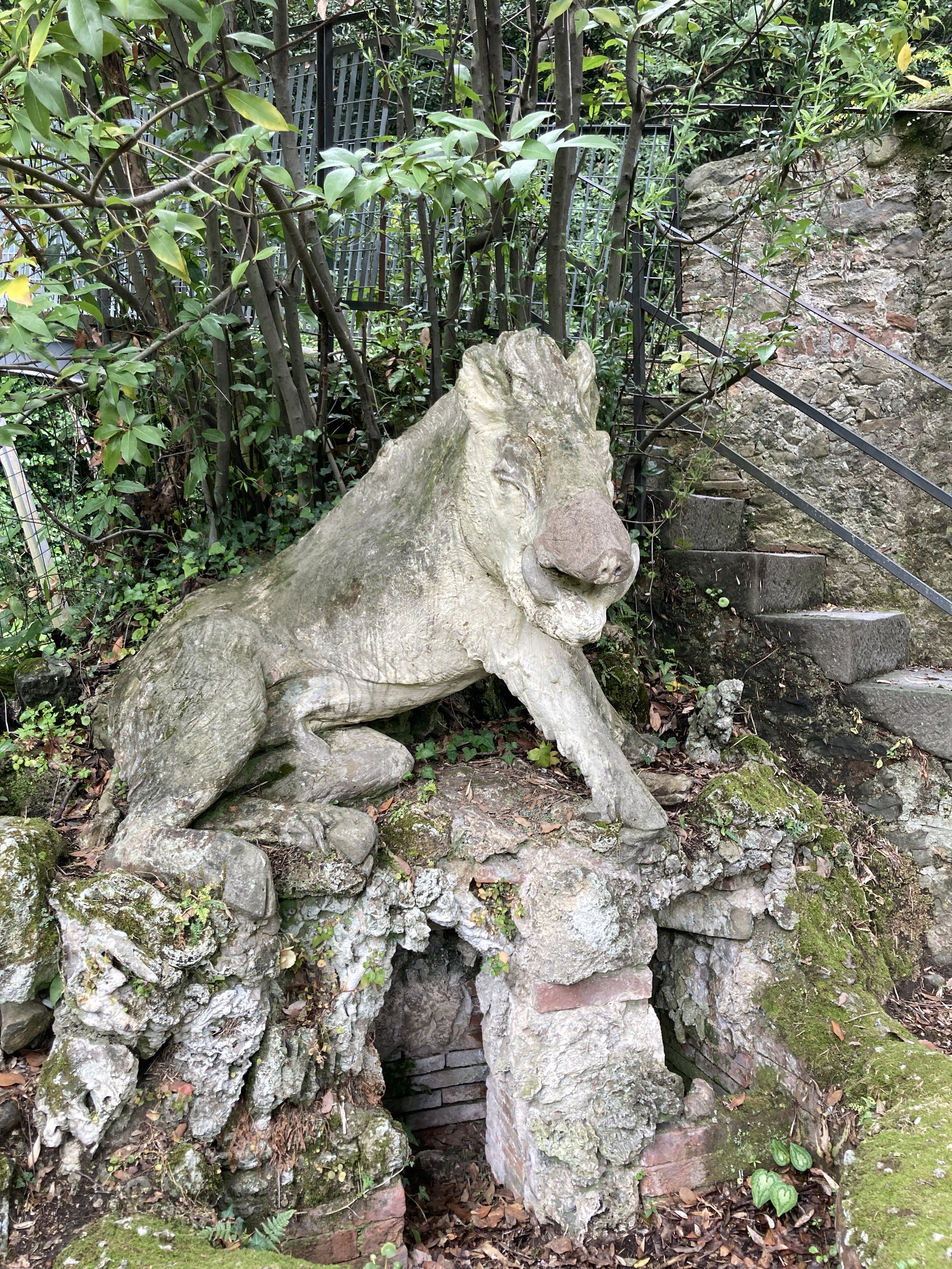
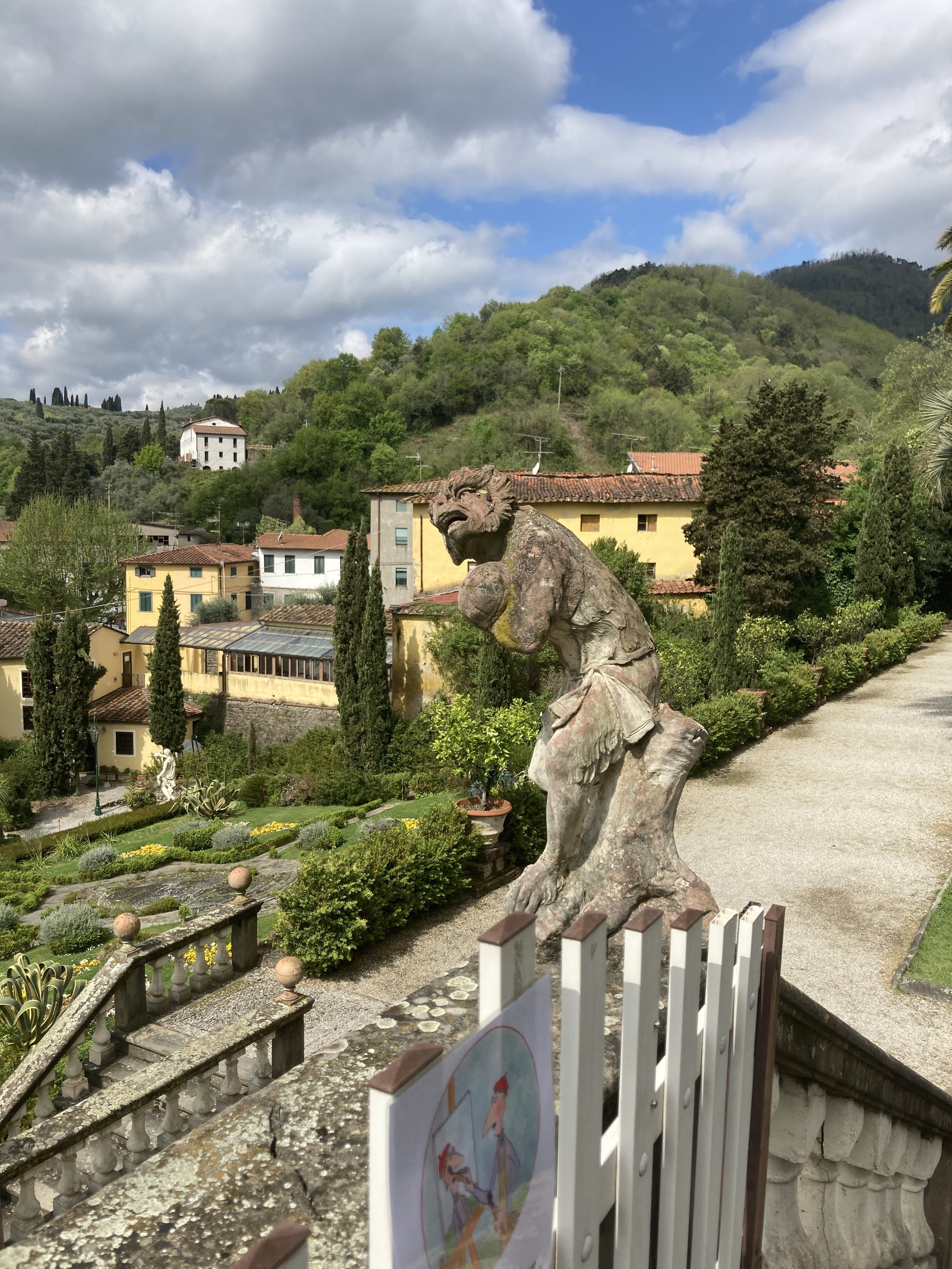
66559127-1DF6-4101-A6FD-8968B36D355B.jpeg
2B651C3B-A1D0-465E-A3C7-7317DE9ADC79.jpeg
21E19A7D-5460-45DE-9C0D-F6BEF54CBF21.jpeg
2E008148-4D9A-45B3-9536-9CC61212527D.jpeg

A visit to the gardens of Villa Garzoni provides a glimpse into leisure activities of a powerful family during the Renaissance. It is one of the finest examples of an Italian Renaissance garden and a lovely destination for anyone interested in classic gardens. A perfect way to spend a spring morning in the Tuscan countryside.

June 20, 2022 /Joanne Bartram
Giardino Garzoni, Italian Gardens, Garzoni Garden, Tuscan Gardens
#italytravel, #lucca, Italian art architecture, Italian gardens, #italiangardens

Spring in Pietrasanta: Art, Philosophy, and Giraffes

May 16, 2022 by Joanne Bartram in #lucca, Italian art architecture, Italian culture, Italy travel, Italy, Tuscany

Pietrasanta has everything a small town in Italy should have - beautiful scenery, a lively main piazza, historic buildings and statues, a lovely church, cafes, and good food. And art. It is the art that draws me back time after time.

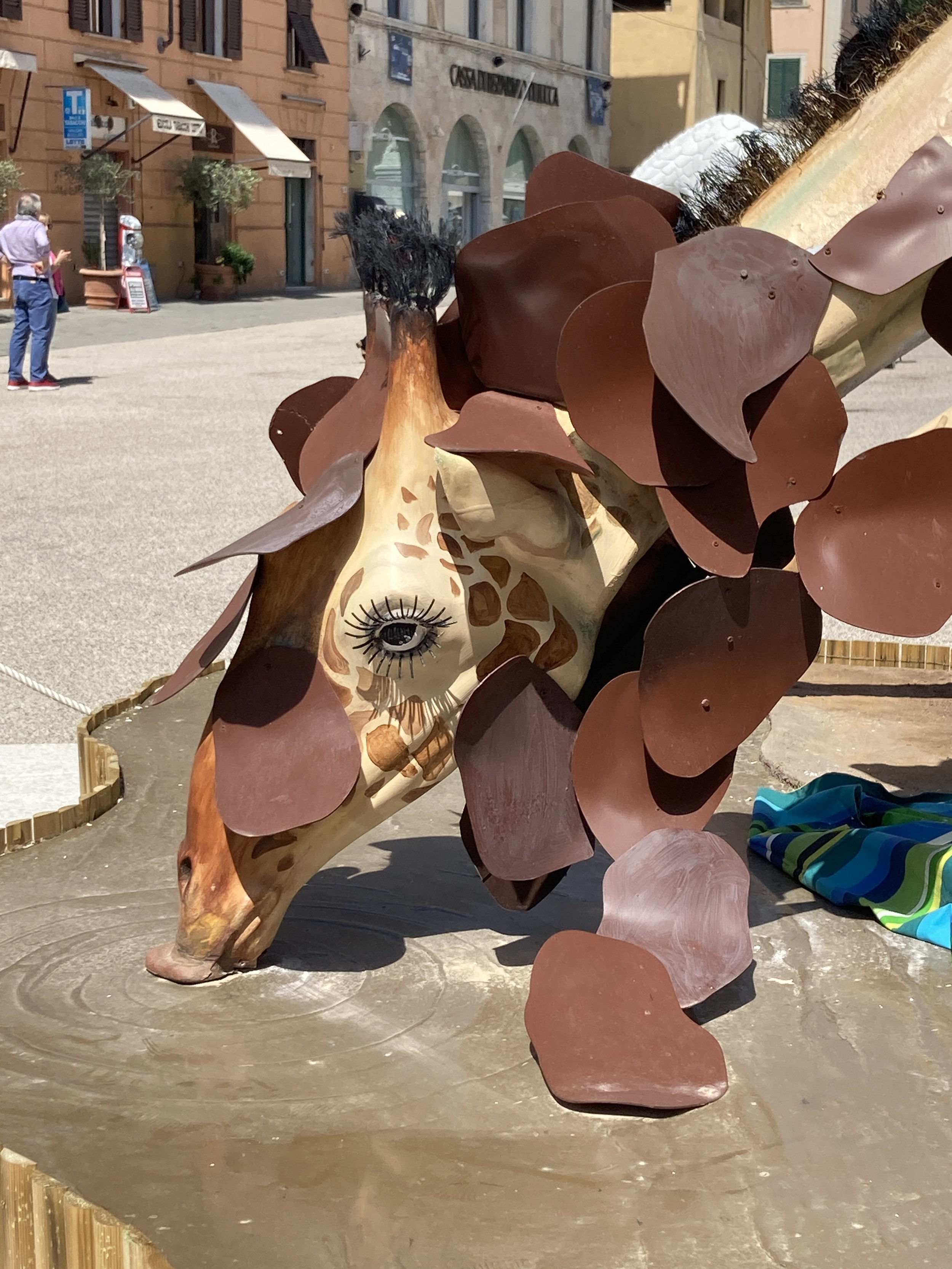
One of many whimsical giraffes that can be seen throughout Pietrasanta this month.

Visiting is easy as it is just an hour-long train ride from my home in Lucca. Unless of course, as in my most recent visit, there is an interruption on the tracks, train delays, an extra change of trains, a track in a tiny station with no signage, and you hop on the wrong train and have to double back. But don’t let that discourage you! My friend and I laughed it off and eventually arrived to spend a lovely day in Pietrasanta.

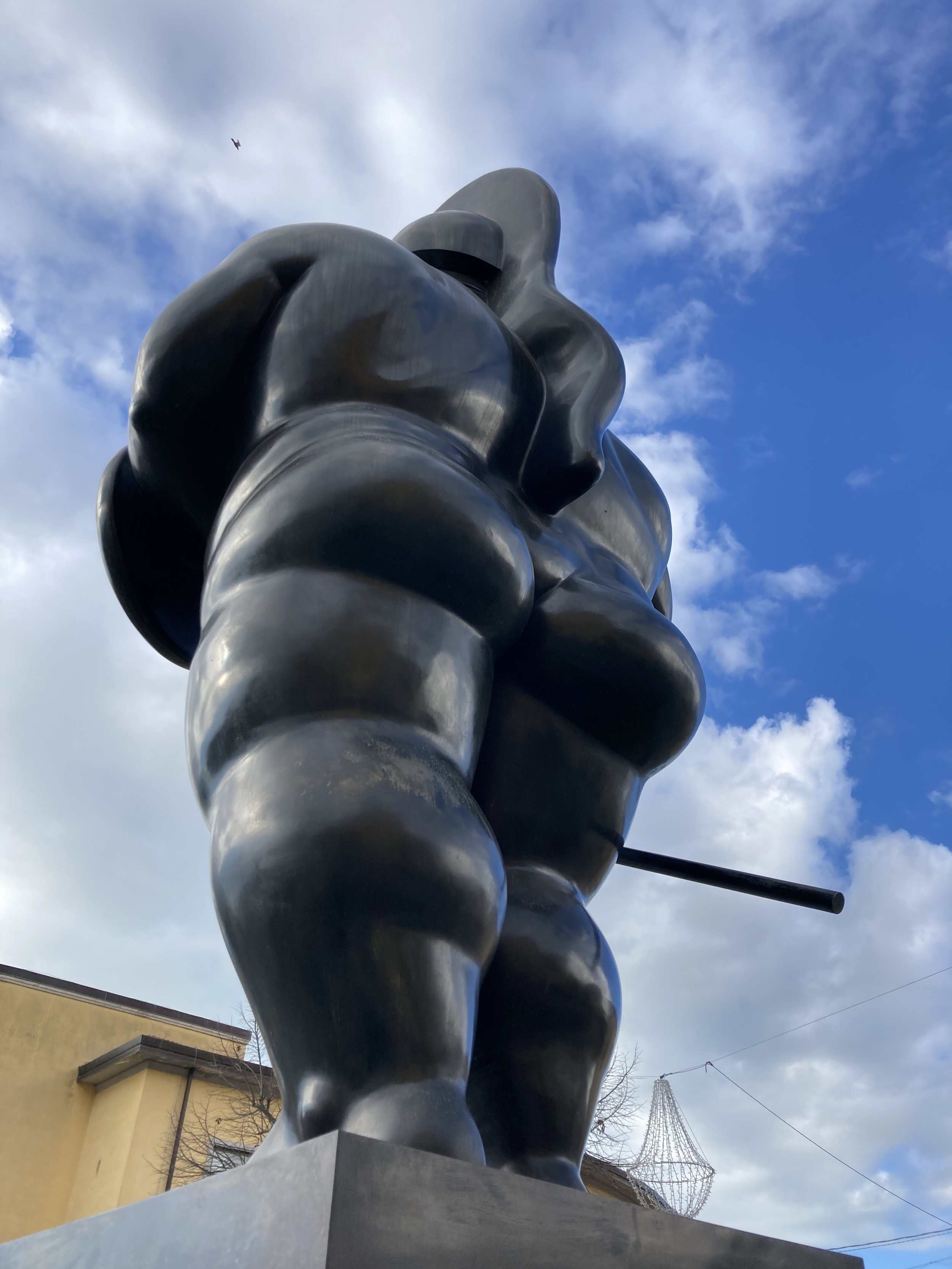
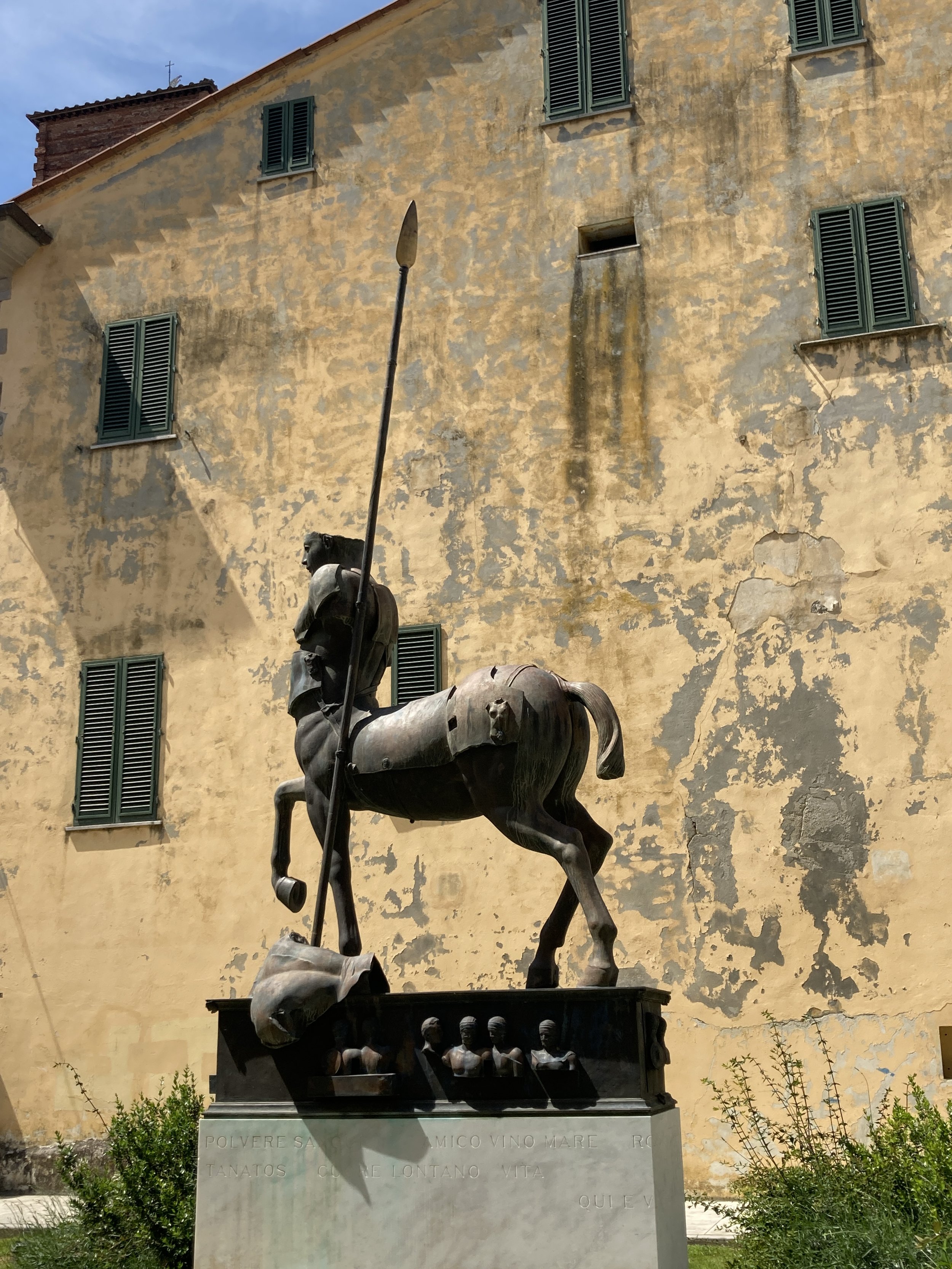
Famous as a center of sculpture (the marble quarries of Carrara are nearby), the town has permanent outdoor installations of bronze and marble sculptures, from smaller pieces to Botero’s massive bronze warrior (below).

CC1D846C-D0C6-4EB9-98AD-96C87DFFC193_1_201_a.jpeg
5853D5E2-CBB7-4A7E-9C0E-F90E3295F19A.jpeg
C95C05B5-2B06-4416-84BA-41EE353B441E.jpeg

In addition to these permanent works, Pietrasanta hosts temporary exhibits which fill the main piazza and nearby spaces (as well as some indoor spots) with an ever-changing display of works by contemporary artists.

The current exhibit, in place until June 5th, features the artistry of Sandro Gorra. Gorra’s background is in commercial art where he worked as an illustrator and creative director for advertising campaigns. That was his work. Today, he concentrates on his art which includes sculpture, illustrations, and a sort of philosophical short poetry which accompanies his works. And then there are his giraffes.

Gorra says that this piece, made from 4 tons of marble, is one of his favorites. A loving mother giraffe tending to her baby.

Why giraffes? According to a published interview with Gorra, the giraffes serve as a parable, representing man’s desire for superiority. A giraffe towers above, looking down on everyone. Each one is unique in his spotted form.

This begs the question - without those spots, what would the giraffe be? Anonymous! Naked!

Change - a predictable part of life - in progress.

Change is inevitable and the spots on Gorra’s giraffes do indeed change. They fade away, they fall off, new ones appear. In fact, during my visit, two men, one looking suspiciously like the artist himself (or was that just my imagination?) were busy painting new spots on two of the giraffes. This would be consistent with Gorra’s view that change is to be expected and that irony is a part of the human (and giraffe) condition.

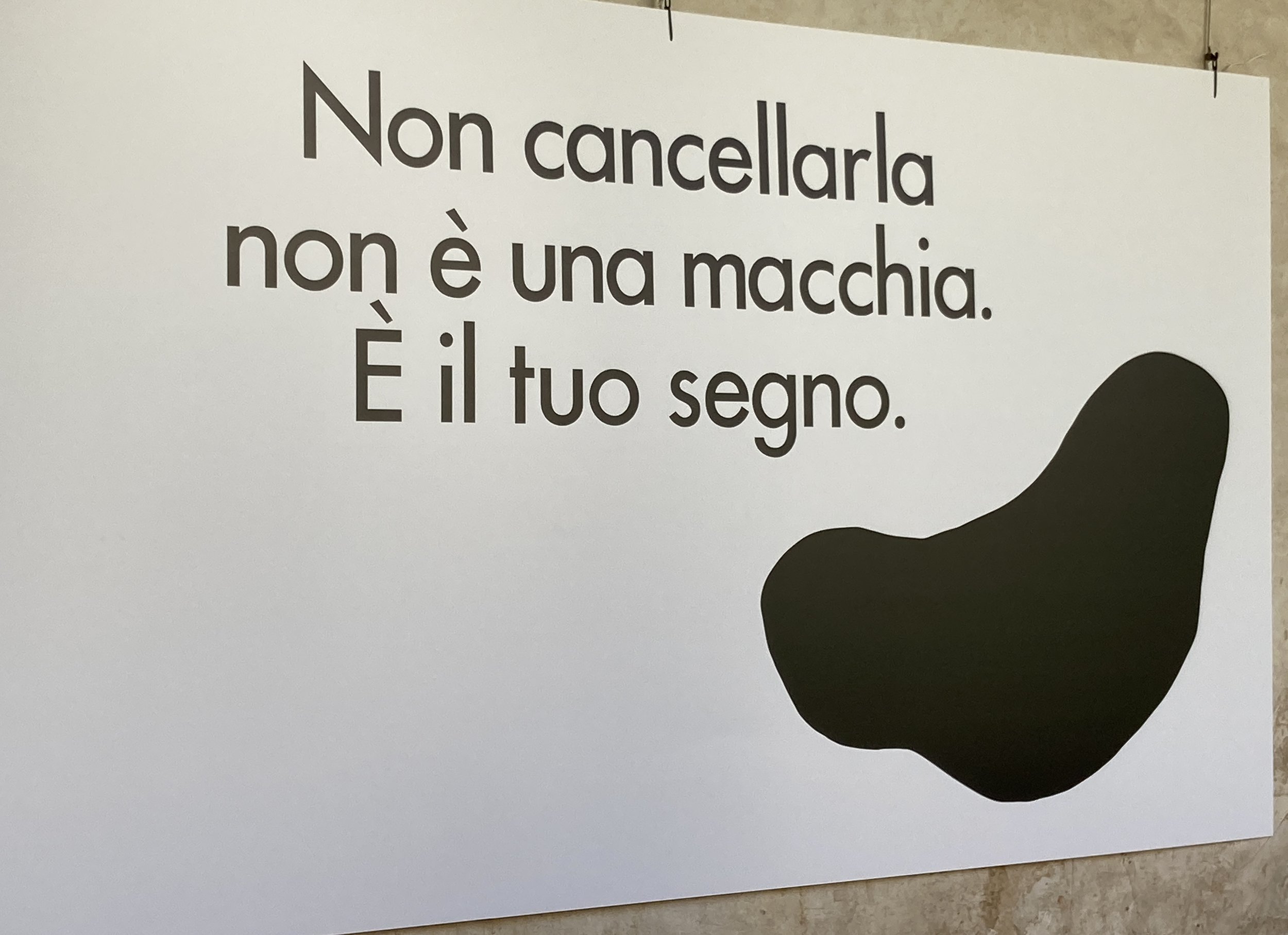
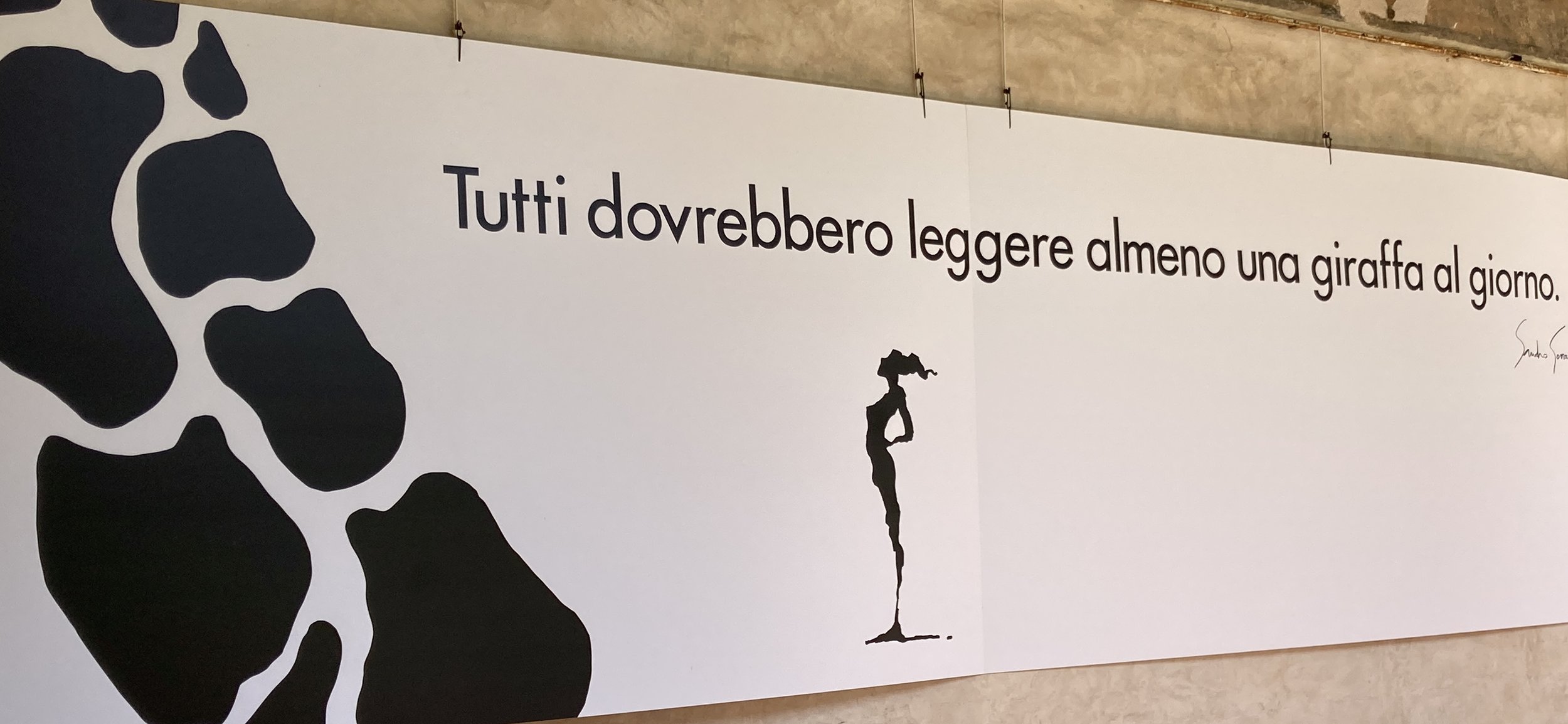
Alongside the works of art are illustrated phrases, providing an intriguing look into the artist’s mind and bits of his philosophy. I enjoyed these sprigs of wisdom just as much as the sculptures. Both made me smile, both made me think. Isn’t that the best part of art?

Here are some examples (any mistakes in translation are entirely my fault).

Don’t erase it, it is not a stain. It is your sign.

Ideas are always around, but if you don’t notice them they go away

And my favorite one of all - it just may become my personal mantra:

Everyone should read at least one giraffe a day.

A day in Pietrasanta is always a joy. Sipping a cafe in the Piazza del Duomo. Strolling through the piazza and the Chiostro di Sant’Agostino. A quick visit to the beautiful Duomo. Wandering the side streets. A quick stop at the Misericordia Chapel to see Botero’s Heaven and Hell frescoes. A relaxed lunch at a favorite spot. Add in Gorra’s giraffes and the day is just perfect!

May 16, 2022 /Joanne Bartram
Pietrasanta, Sandro Gorra, Contemporary Italian Art, #italy, #artitaly, #sandrogorra
#lucca, Italian art architecture, Italian culture, Italy travel, Italy, Tuscany

Villa Torrigiani di Camigliano

Villa Torrigiani di Camigliano

May 02, 2022 by Joanne Bartram in #italytravel, #lucca, Italian art architecture, Italian gardens, Lucca

For wealthy and prominent citizens of Lucca in the 16th and 17th century, having a villa outside of the city was both a summer getaway to the cool, fresh air of the hills and a status symbol. The villas were set in farmland, olive groves, or amid grape vines and were often surrounded by lovely gardens. Luckily for us, many of those historic villas still exist, are open to visitors, and are just a short distance from Lucca. A perfect day excursion.

The worker’s cottages are in Borgo Parigi, just outside the villa’s gates.

One such place is the Villa Torrigiani in the tiny village of Camigliano, in the commune of Capannori, about 6 miles from Lucca. The villa is framed by stone walls with large gates. The approach brings you slowly closer to the villa on a path that cuts through open fields. When I visited in mid-April, the fields were full of vibrant yellow buttercups and small purple flowers.

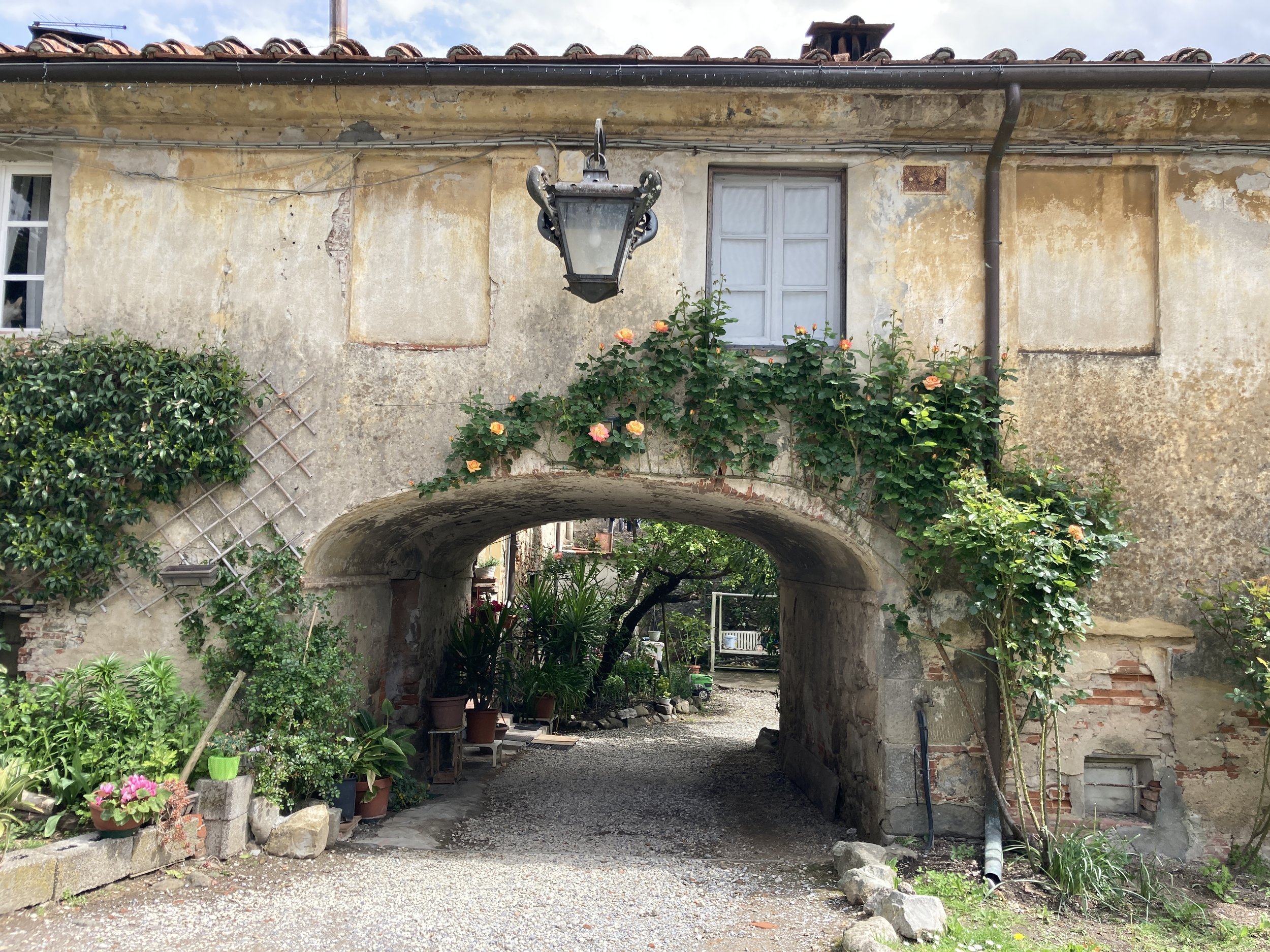
Close to the villa’s gates lies the small, picturesque Borgo Parigi which at one time housed the estate’s workers. After passing through the stone buildings of Borgo Parigi it is on to the villa itself, just across the road.

The “new” facade, from the 1600’s, was much more ornate than the original one

Villa Torrigiani sits in a park-like setting, surrounded by reflecting pools, broad lawns, trees, water features, and manicured gardens. The history of the villa is fascinating. The summer home of Lucca’s Buonvisi family in the 1500’s, it had a simple facade and was surrounded by vegetable gardens. When the Buonvisi fortunes changed (because the King of France failed to repay them money he owed) the villa had to be sold. Enter Marquis Nicolao Santini, the Ambassador from Lucca (at that time Lucca was an independent republic) to Versailles and the court of Louis XIV. Santini purchased the Villa in 1636 and began to rework the more simple Italian villa into a French style building and garden - a smaller version of Versailles. The facade was changed to the more elaborate style that we see today, complete with the columns, statues, arches, and a variety of colors.

This staircase leads down to the lower level garden and it hides a surprise - a narrow grotto passage full of mythical creatures. Don’t be afraid to enter!

The Marquis Santini also banished the vegetable gardens in favor of elegant reflecting pools surrounded by flower gardens and avenues of cypress trees. A stunning tiered staircase leading from the foot of a long pool down to a sunken garden, complete with a nymphaeum (the Ninfeo di Venti, middle photo below) at one end and a hidden grotto passage at the other, were also added. To create that French feel in the garden, the Marquis employed André Le Nötre, one of the designers of Versailles.

B9C91F7D-0C2F-4477-B873-528379C99A90.jpeg
60748F34-32E1-4F06-8701-742074067258.jpeg
C98556F7-83FD-463F-9B8F-C678DF341497.jpeg

The villa landscape has continued to undergo changes, the biggest being a change in the 18th century to a more English style garden. Out went the flower beds around the reflecting pools and in came broad lawns, imported trees (including Magnolias, Cedars, and Camellias), and a wooded area. At some point the vineyards behind the house were also removed (though the old wine cellar remains).

BAB4F339-A1C6-4F84-B534-BFEA152C3D37.jpeg
8260784A-E010-4FB9-816B-424D4DF97000.jpeg
9E42DBD1-0ED0-4A20-98CD-4A639D573EC3.jpeg

The villa itself is also interesting. The ground floor is open for tours (arranged at the ticket booth just inside the entry gates). The tour guides provide wonderful historical perspective, plus with much of the information I’ve recounted here, along with family history of the occupants from the earliest Marquis to the present day owners. The glimpse inside the house is a chance to admire the still vibrant ceiling frescoes (look for camellias, a symbol of the family), the trompe l’oeil wall decorations, and many other artifacts on display.

The rear loggia of the Villa Torrigiani and the meeting place for tours of the home.

The villa is large but once past the ornate facade it has a very human scale. Perhaps that is because it remains to this day the summer home of descendants of the Santini-Torrigiani family. Family photos are scattered throughout, original fabrics adorn the beds, the dining table is set, there is even a dress worn by a previous occupant (1920’s style) on display in her bedroom. It is easy to imagine sitting on the back loggia with a book and a cup of tea, enjoying the birdsong, the breeze, and the history. Because this is still a family home (the family quarters are upstairs, tucked away from the visitors downstairs) photography is not permitted inside the villa. It was a challenge to keep my camera in my pocket and not to dash up the stairs to see the upper floors!

Just as it did for Lucca’s historic families, a visit to a villa outside of town provides a countryside experience different from that of the walled city. There are 6 historic villas to visit close to Lucca, Villa Torrigiani is a good place to start.

The villa is open from March through November. 10am - 1pm and 2:30 pm - 6 pm. Note that they may close earlier in bad weather.

Contact Info: Villa Torrigiani del Camigliano. Via del Gomberaio 3, Camigliano email: villacamigliano@gmail.com phone: +39 0583 928041 tickets available on site, 8€ for the garden only, 15€ garden plus villa

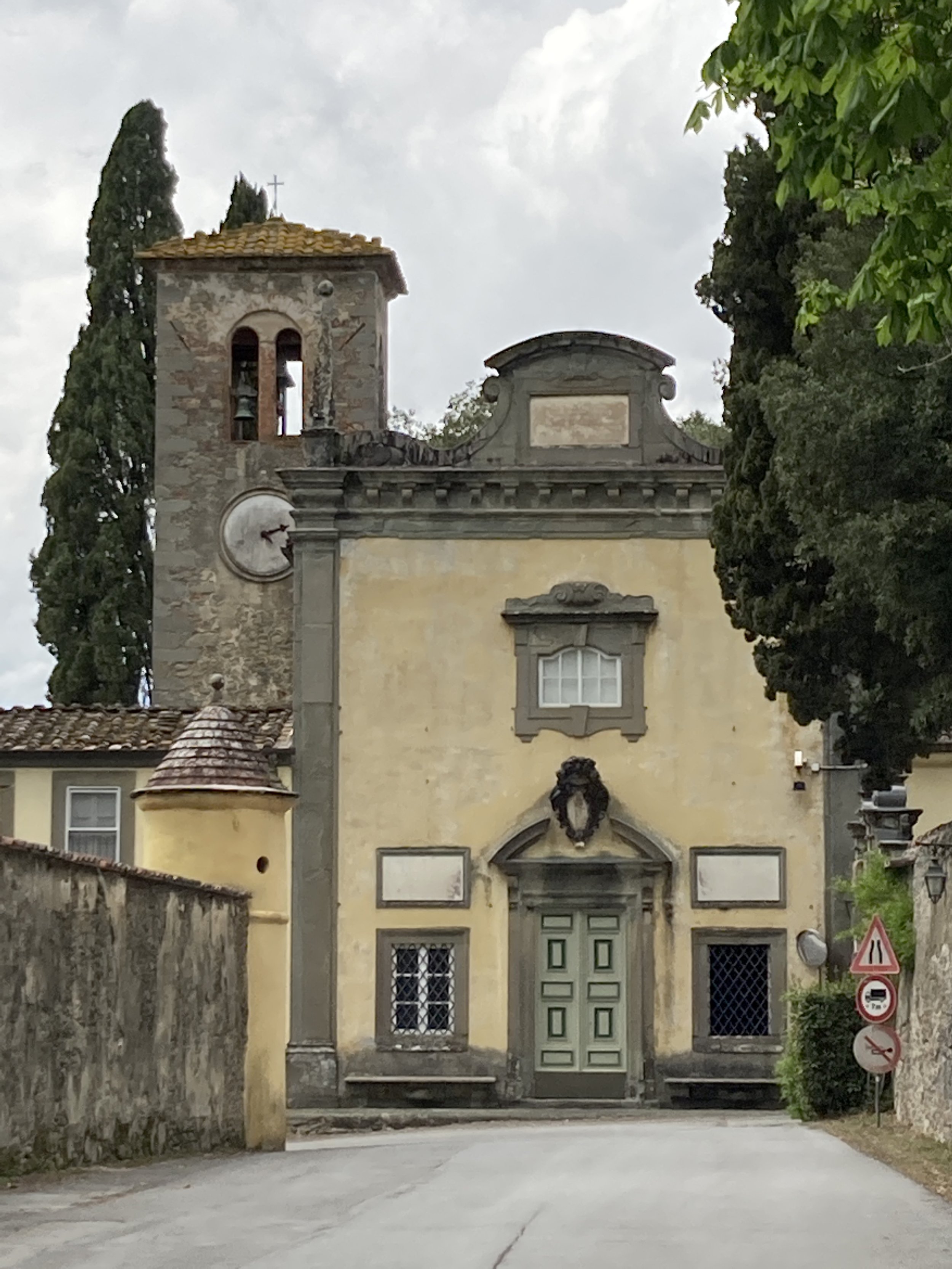
The family chapel on the grounds of the Villa Torrigiani


May 02, 2022 /Joanne Bartram
Italian Villas, Italian Gardens, Villa Torrigiani, Lucca villas, Lucca
#italytravel, #lucca, Italian art architecture, Italian gardens, Lucca

The entrance to the Musei Reale (Royal Museums) in Torino, Italy. The spire in the background sits atop the Chapel of the Shroud.

Torino: 4 days, 3 Museums

January 17, 2022 by Joanne Bartram in #italytravel, Italian art architecture, Italy, Italy travel

Pausing for some down time between museum visits is essential!

I love visiting Italian cities and their many fabulous museums. But … too much museum time can be overwhelming! The last thing I want to do when exploring a new place is to spend all of my time dashing from one museum to the next in an effort to see it all. Travel is so much more enjoyable when there is a balance between select museum visits and time for all the other things a city has to offer - gardens, architecture, music, nature, markets (especially markets!), out-of-the-way neighborhoods, outdoor monuments, shops. Just sitting in a cafe sipping a cappuccino or a having a glass of wine in a local enoteca, watching daily life unfold around me, is a huge part of the fun.

When I visited Torino last fall I spent many happy hours wandering through the center of town, exploring the Quadilatero Romano neighborhood, enjoying the large piazzas and doing some window shopping. I also made plans to visit two museums - the Musei Reale (The Royal Museums, which include the Palace of the Savoys and the Chapel of the Shroud) and the Museo Egizio (Egyptian Museum). Truth be told, it was the Savoy Palace that I most wanted to see. The whole idea of Egyptians in Italy seemed a bit strange to me, but it was top of the wish list for my travel companion, and highly recommended by several friends, so I was game to give it a try (and I am very glad that I did).

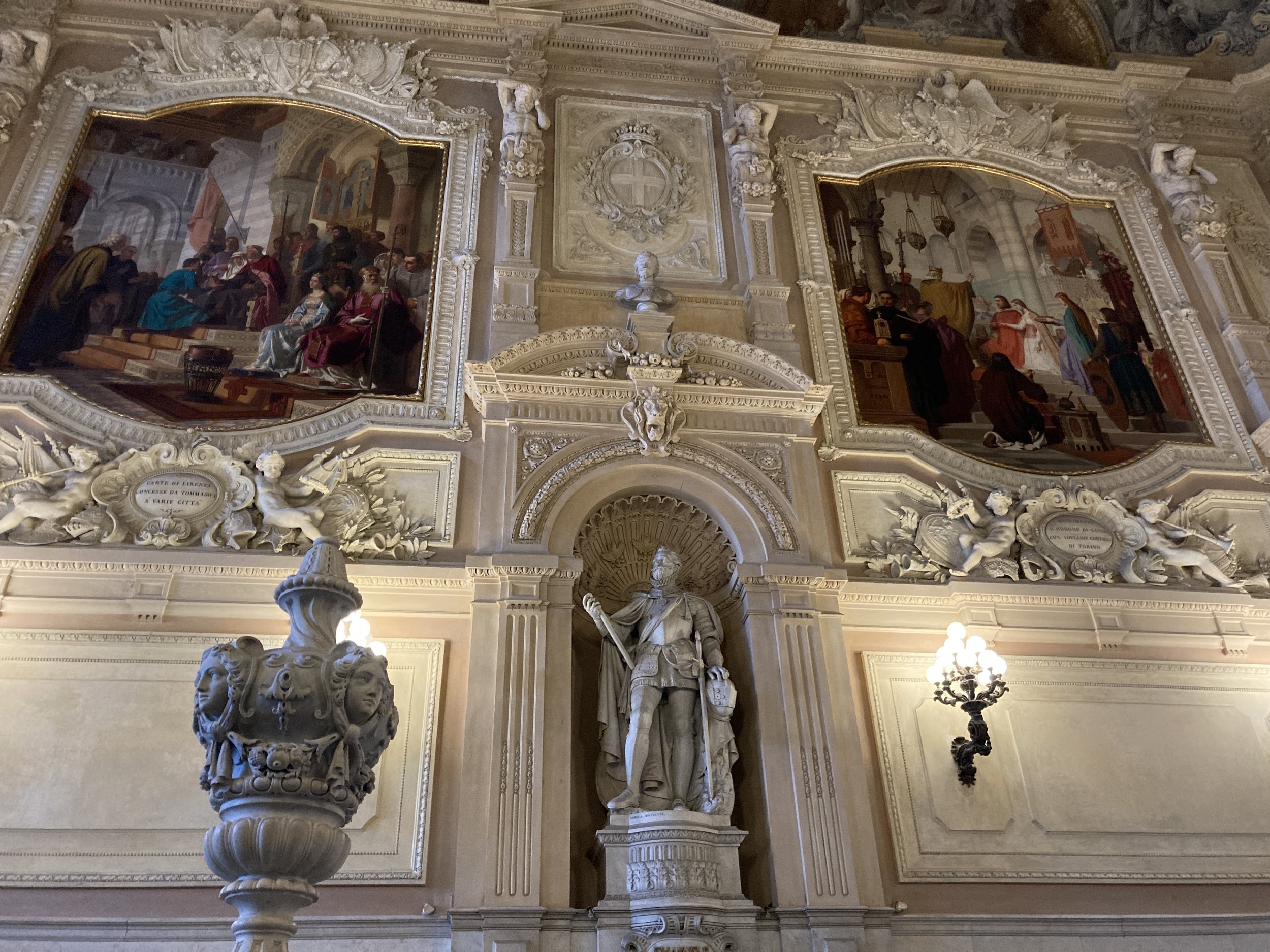
The entrance hall of the Royal Palace in Torino.

To fit both venues into a short visit, and avoid museum overload, we booked a combined tour through the agency Get Your Guide. The approximately 4 hour tour began at the Royal Museums and finished in the Egyptian Museum. Sofia, our tour guide, was fantastic and balanced explanations in both Italian and English for our mixed-language group of about 10 people. She was equally knowledgeable about the Royal Museums and the Egyptian Museum. She achieved the perfect mix of fact, legend, history, and interpretation of the exhibits.

Throne Room, Royal Palace

The two museums are dramatically different. The grand staircase in the Savoy Palace, the beautiful furnishings, the history of the Savoy family which is integral to the birth of modern Italy, all speak of a gracious and easily imagined era. Because the palace is still furnished, there is a real sense of how the Savoys lived here - the elegant Throne Room, the opulent dining room, the ball room, the hidden balconies for musicians, the exquisite wood work, the sculptures. The opulence is dazzling.

IMG_3017.jpeg
IMG_2975.jpeg
IMG_3025.jpeg

There is also a long gallery filled with a collection of armor and armaments. You can even get to know the former king’s favorite horses! Something fascinating is to be found around every corner.

IMG_2990.jpeg
IMG_2998.jpeg
IMG_3001.jpeg

The tour of the palace ended in the chapel build to house the Shroud of Turin. The chapel was fairly recently reopened after more than 20 years of restoration following a fire. The Shroud itself is nowhere to be seen (the nearby Duomo hosts an informative shroud exhibit but the real thing is too valuable to display), but the chapel itself is a work of art. The architecture, especially of the unique cupola (dome), and the sculptures are breathtaking (or, to use one of my favorite Italian words, mozzafiato!). The chapel was the perfect ending to the Royal Museums tour.

The multilayer hexagonal dome in the Chapel of the Holy Shroud rises high above the dark marble interior of the chapel.

On the other hand, and from a very different era, the Egyptian museum is filled with mummies and sarcophagi.

The story of how Torino came to host this collection of artifacts - and the faked Egyptian artifact that started the collection - made a fun story at the start of the tour. The guide’s explanations put this remote era into perspective and helped the artifacts blend together into a cohesive story. I was glad to have experienced this!

IMG_3066.jpeg
IMG_3043.jpeg
IMG_3065.jpeg
IMG_3047.jpeg

Although my goal was to just see these two museums, our last morning in Torino was gray and rainy. Not a good day for the outdoor exploration we had planned.

Instead, my companion and I walked over to see the Mole Antonelliana. This architectural stunner, designed by Alessandro Antonelli, is the symbol of Torino. It is such an iconic image in Italy that it is engraved on the Italian 2 euro coin. The spire rises high above the city and is visible from quite a distance. Once upon a time this was the tallest brick building in the world, it may still be the most beautiful. The bottom of the building is square, with another square portion siting on top. Above that rises a dome, topped by a very tall spire.

The Mole Antonelliana as seen from the gardens of the Royal Museums

Up those cables travels the elevator - quite the view !

Right through the middle of the building’s interior a glass elevator rides up cables to give visitors a view from high above.

Originally destined to become a synagogue (no doubt without that elevator), today the building houses the Museo Nazionale del Cinema (National Cinema Museum).

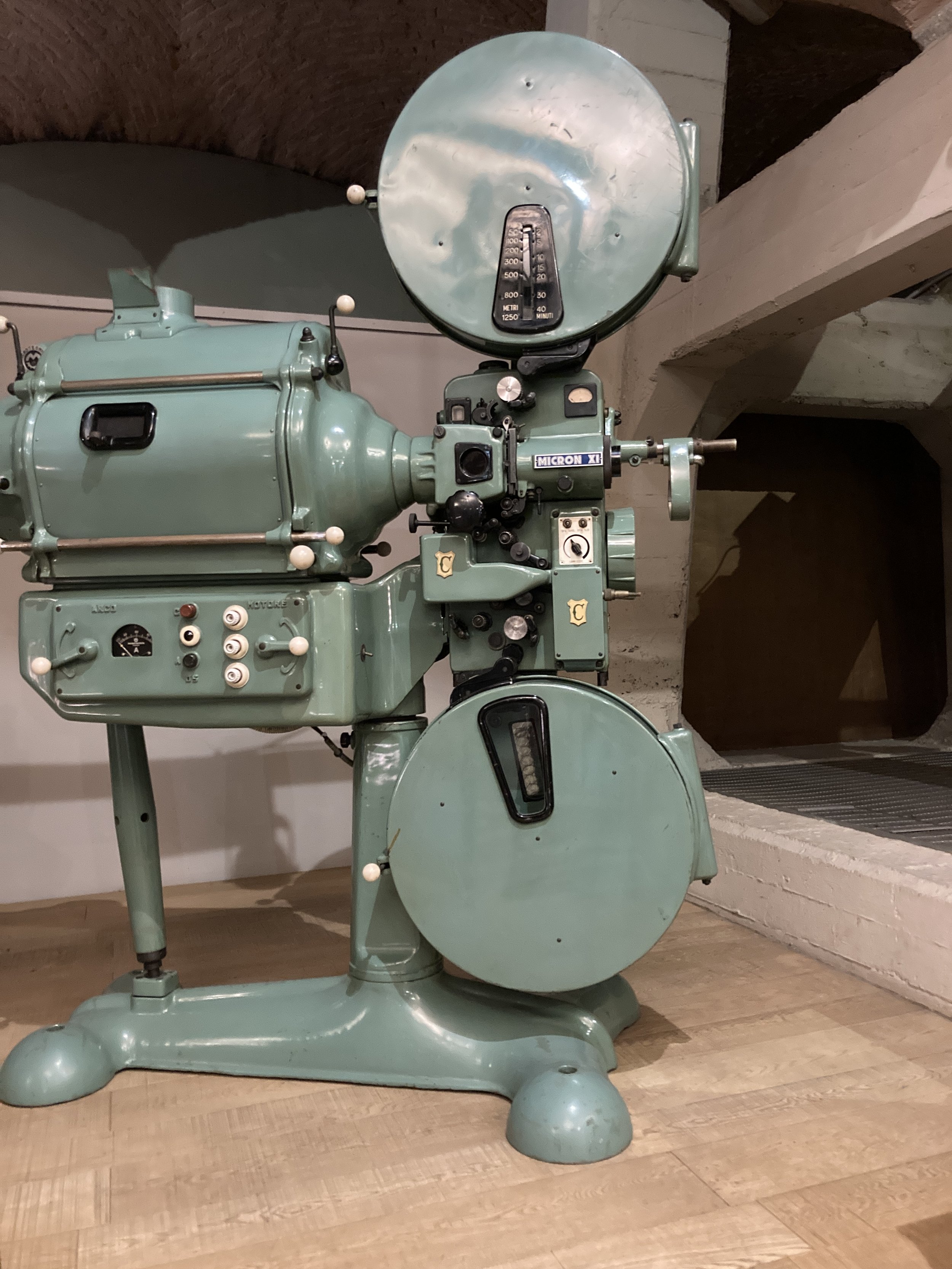
I had not intended to go to inside the museum, but the outside of the building was so impressive that I really wanted to get a peak inside. I was totally unprepared for the experience of the cinema museum inside the Mole Antonelliana. A riot of sound, color, and visual effects fill the main hall. Big screens around the room show a variety of videos - there were even lounge chairs to sit back and take it all in! Exhibits trace the history of movies back to shadow images, stereoscopes, and the science of optics. There are collections of movie posters, costumes, special effects, and characters. It was too much to appreciate in a single short visit and definitely a place I will return to on my next trip to Torino (I think my grandkids would love it too).

05F3E678-90F9-4CE2-8C68-E44B13B790F0.jpeg
CCF732E8-8EFD-435A-9187-C298B67F4595.jpeg
027A5566-AD3E-4701-B241-1050DE02F012.jpeg
DBBECC60-7D67-464E-A7F8-093DF313FAD2.jpeg

The next time I get to Torino there are even more museums to visit - Ancient art in the Palazzo Madama and Italian national history at the Museo Nazionale del Risorgimento. I am glad that I didn’t try to do them all in a single trip!

January 17, 2022 /Joanne Bartram
Turin, Torino, #torino, #turin, Musei Reale Turin, Museu Egizio Torino, Museums Turin Italy, Get your Guide tours
#italytravel, Italian art architecture, Italy, Italy travel

The Quadrilatero Romano : A Different Side of Torino

November 08, 2021 by Joanne Bartram in Italian art architecture, Italian culture, Italy, Italy travel

Like many Italian cities, Torino (Turin) has Roman roots. But that history is less obvious here than in places like Rome, Verona or even the small town of Lucca where I live. In Torino, you have to hunt a bit for its Roman beginnings.

The Quadrilatero Romano is where Torino began; where the Roman city stood. It stretches north and west from the Palazzo Madama. Today it is a characteristic and vibrant neighborhood. But look closely and the traces of Rome appear.

The most obvious Roman feature is the Porta Palatina, the only one of the Roman gates into the city which remains. It rises at the northern end of the Quadrilatero, where it has stood since the 1st century BC. The central portion has a stretch of arches, larger ones for vehicles and pedestrians at ground level with two levels of windows above . The archways are flanked at either end by a pair of polygonal towers. It’s easy to imagine Roman chariots passing under the large main arch. Nearby is a stretch of Roman wall, in the same brick. The Roman theater was also located in this area and other Roman ruins can be found nearby.

3B455D5F-D4C0-4D96-8BF0-4454C2C72A6E.jpeg

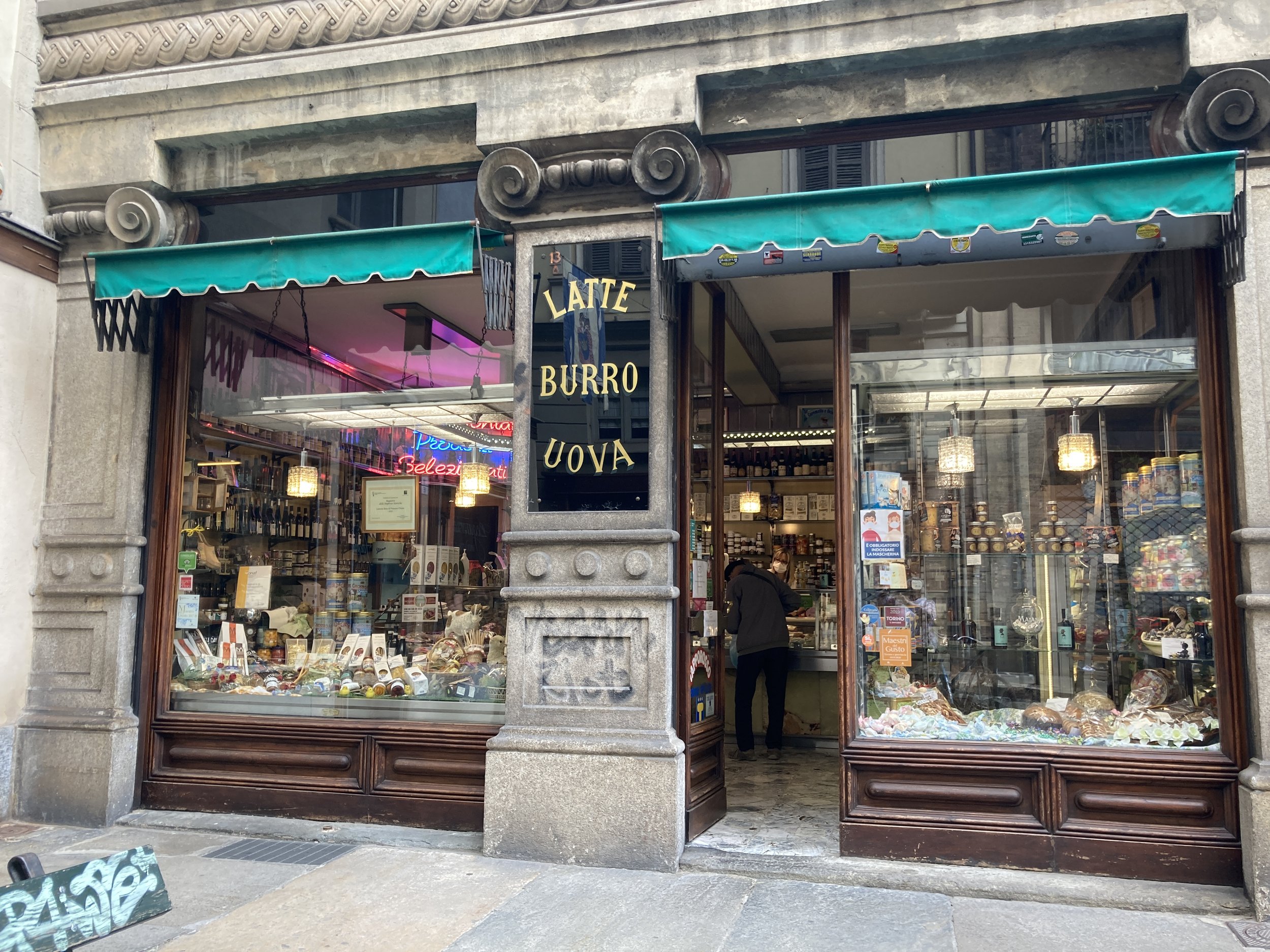
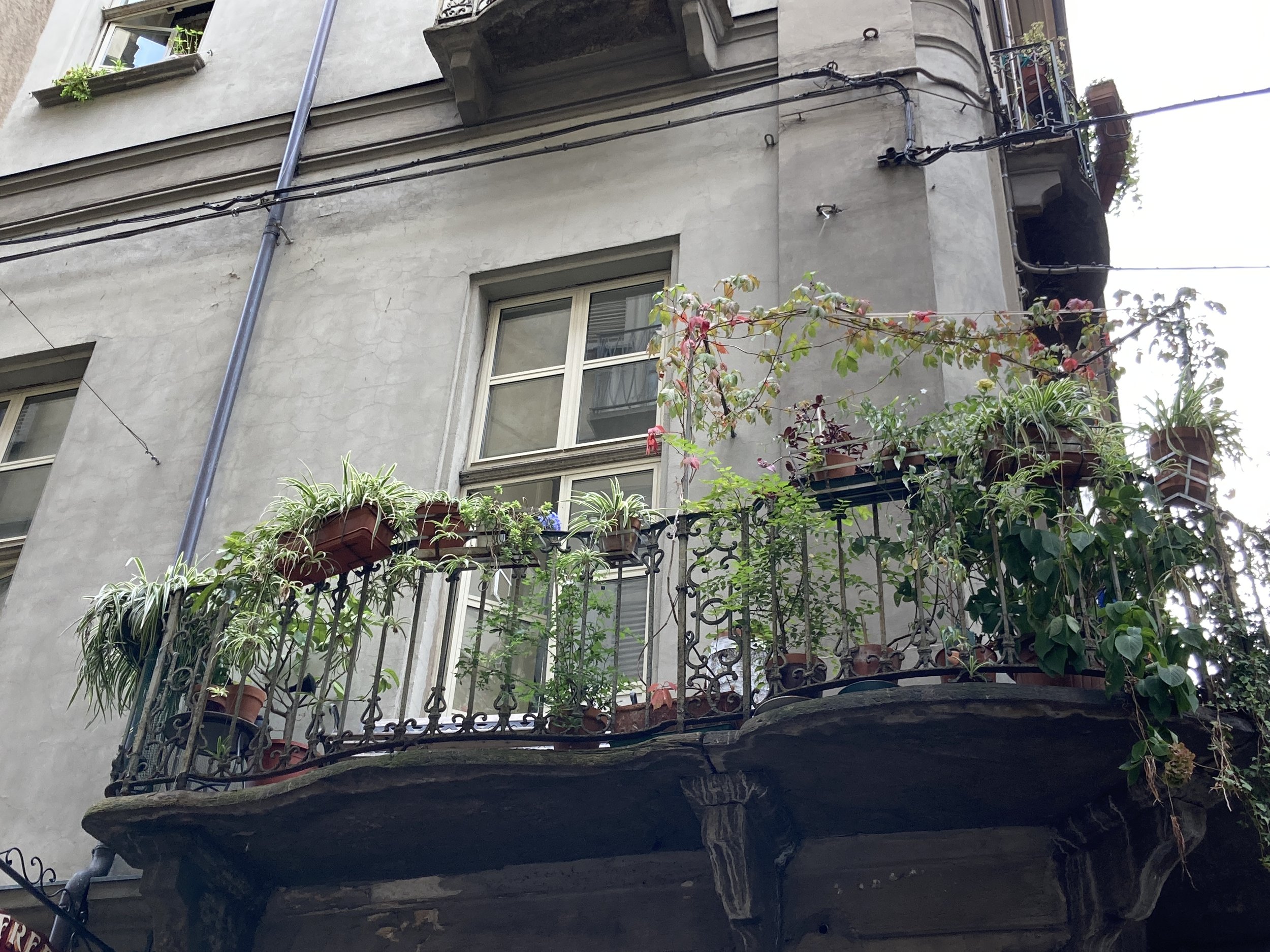
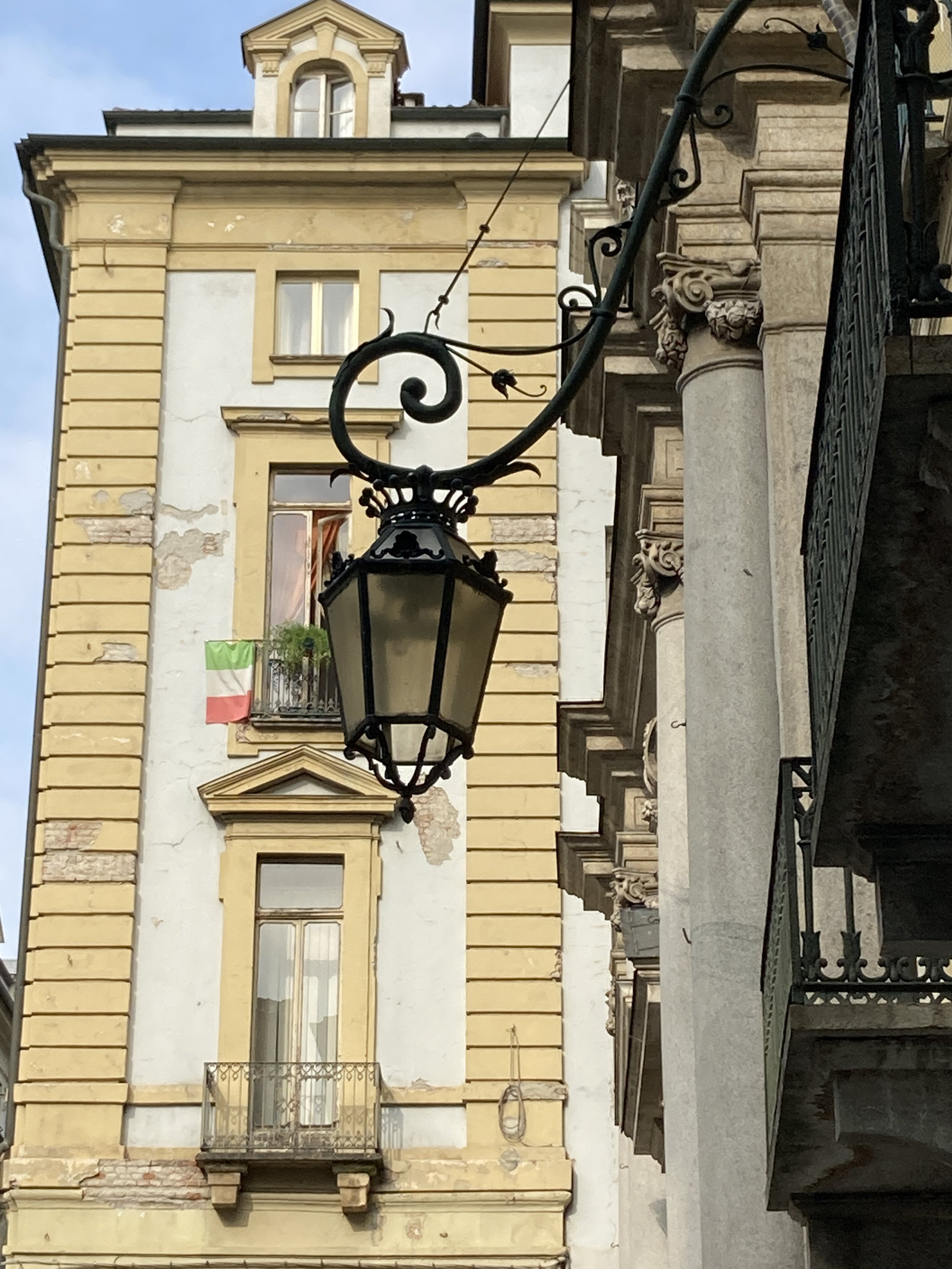
Beyond its Roman roots, the Quadrilatero is a unique area with a small village feel, quite different from the other areas of central Torino. The streets are narrow and dressed up with pretty street lamps and small balconies. Interesting shops, cafes, and restaurants dot the streets. It’s a place that makes you want to linger.

157D4F4F-CF6E-4F12-96C6-2C243CC2EB75.jpeg
3337233F-BA7F-4696-835E-D850FEA69A37.jpeg
ABA44425-A5CA-4C2B-B688-40B503F1A15F.jpeg
5E6392FE-7492-4473-8F69-0D0769E1F55B.jpeg

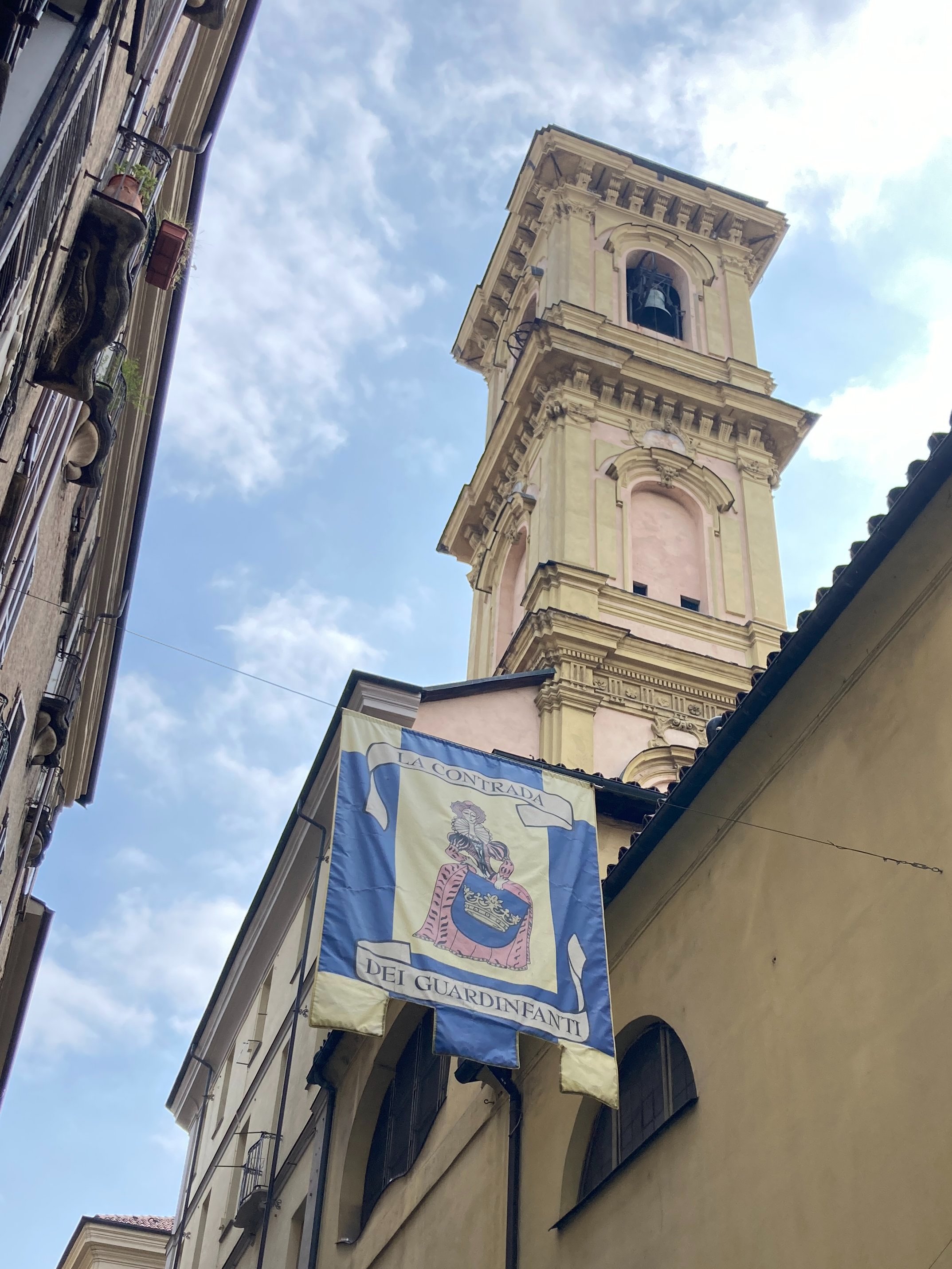
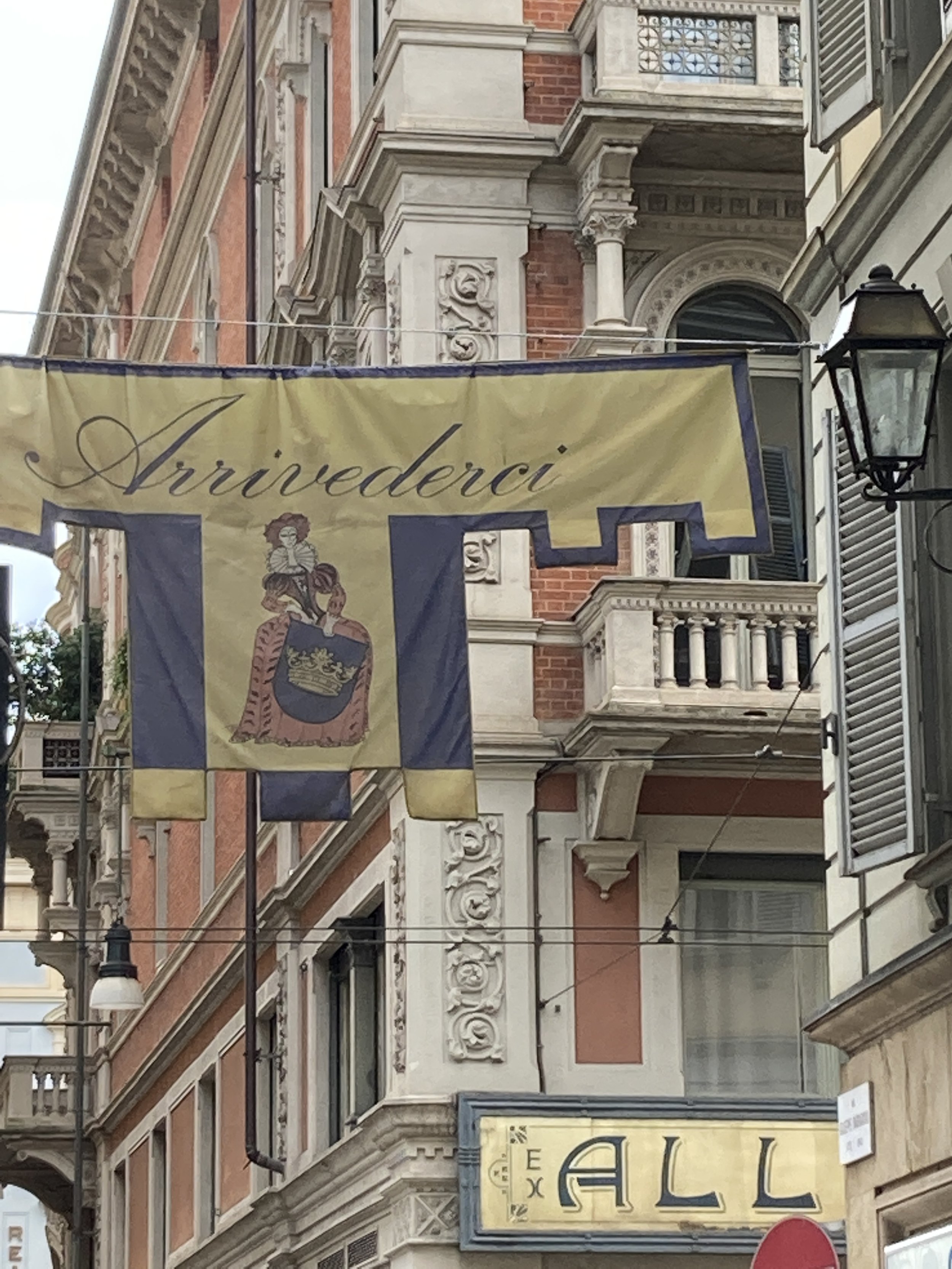
Overhead are a series of colorful banners identifying the Contrada dei Guardinfanti. A contrada is a district, but I have to admit that I had no idea what a guardinfanti was. Something for guarding babies? Nope, not even close. The banners mark this area as the district where merchants of the particular contraption which went under a ladies dress giving it a full appearance - called guardinfanti - had their shops. Clearly these were not Roman merchants, but from a later more fashionable era! Today their banners contribute to the unique old world feel of this neighborhood.

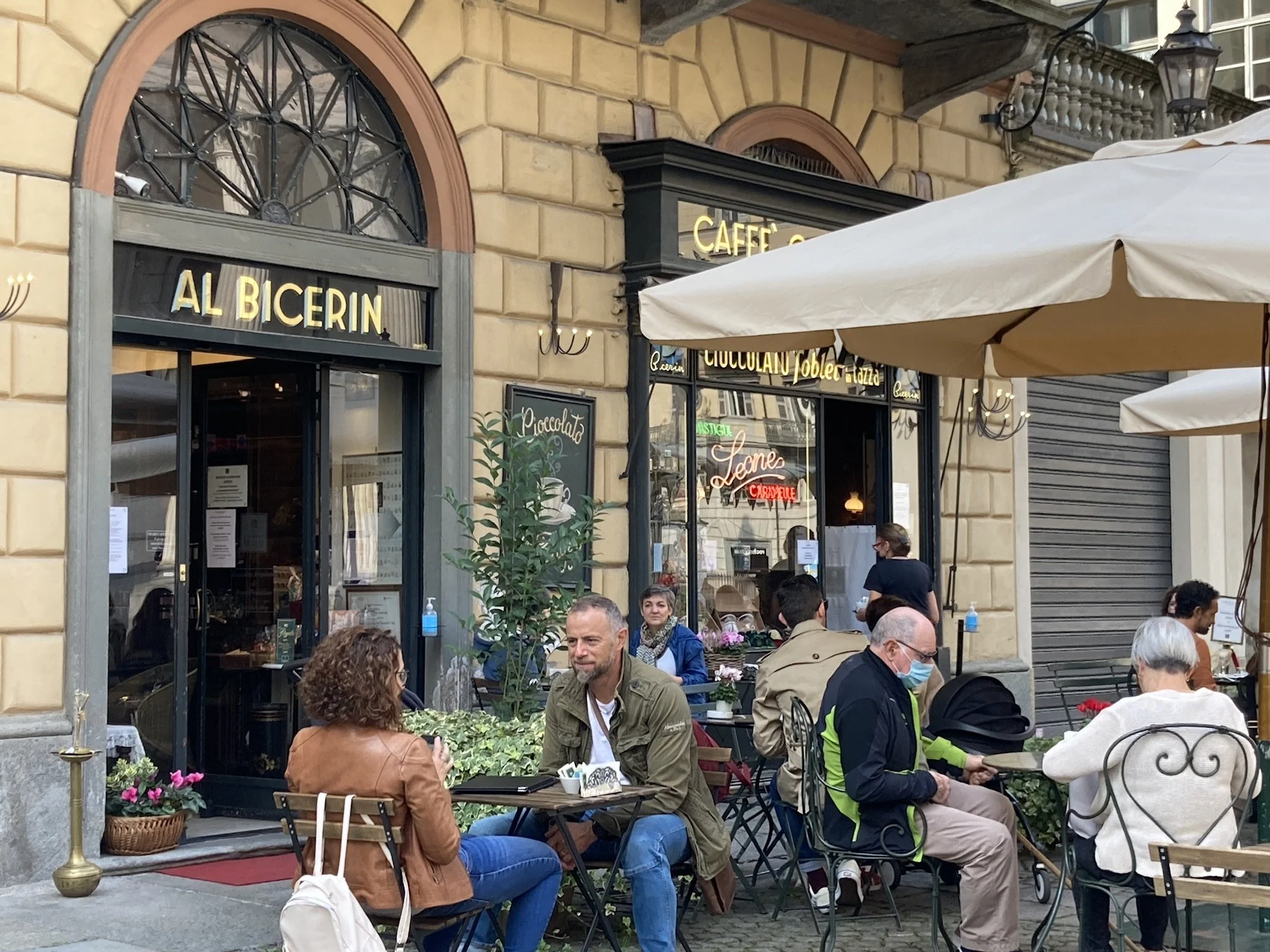
One of the largest piazzas in the Quadrilatero, at its western edge, is the Piazza della Consolata. This is a lovely square and the perfect place to stop for one of Torino’s signature treats - a Bicerin. The Bicerin is a hot drink with layers of coffee, chocolate, and cream. I saw two variations in Torino - one with 3 distinct layers and another with two layers (with the coffee and chocolate combined in a single layer). There is no better spot to sample one than at Caffe` Bicerin in Piazza della Consolata. Not too sweet, with just the right blend of coffee and chocolate. I had to try one in the name of research, right? As for the accompanying plate of cookies, I have no excuse!

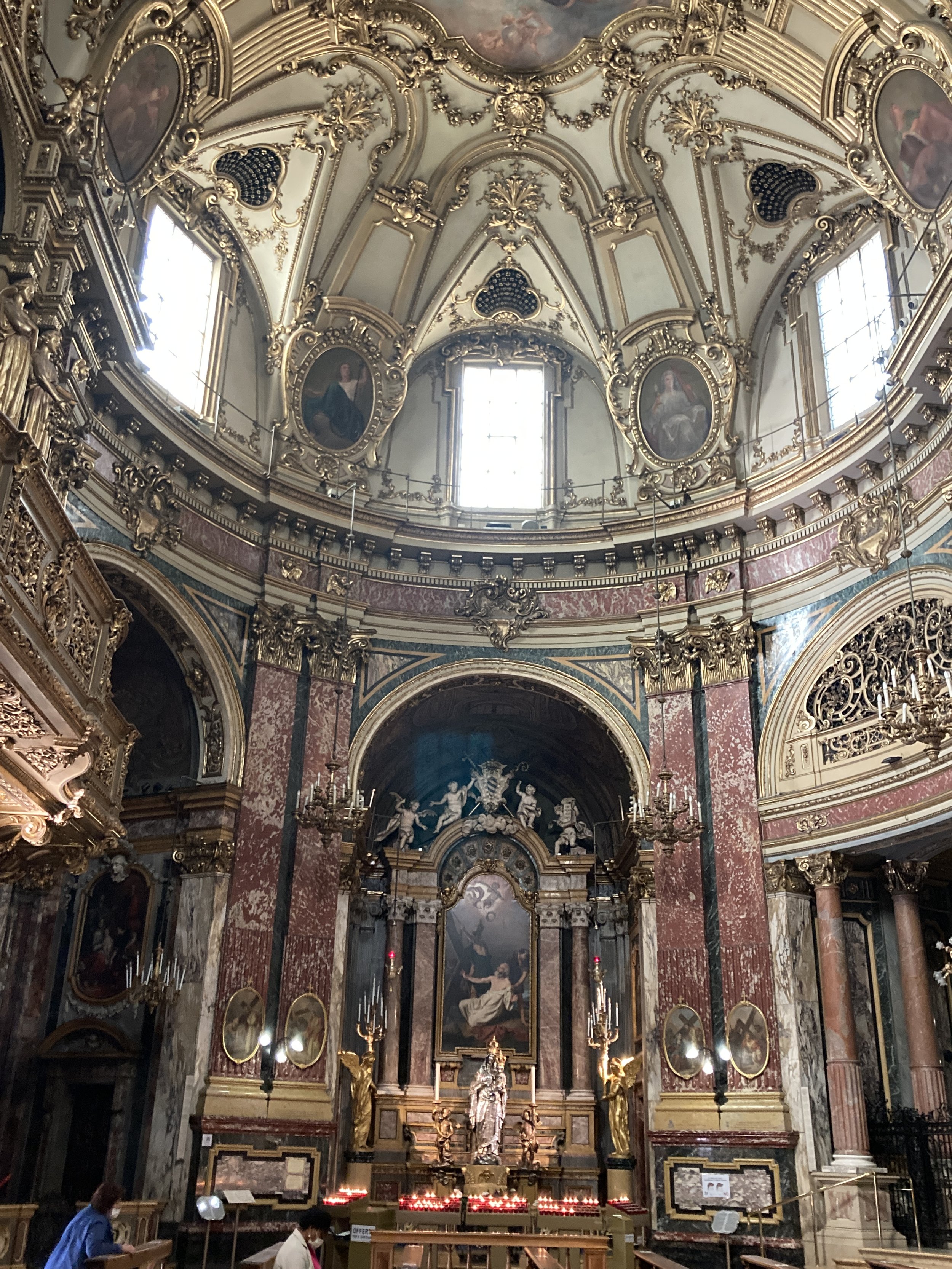
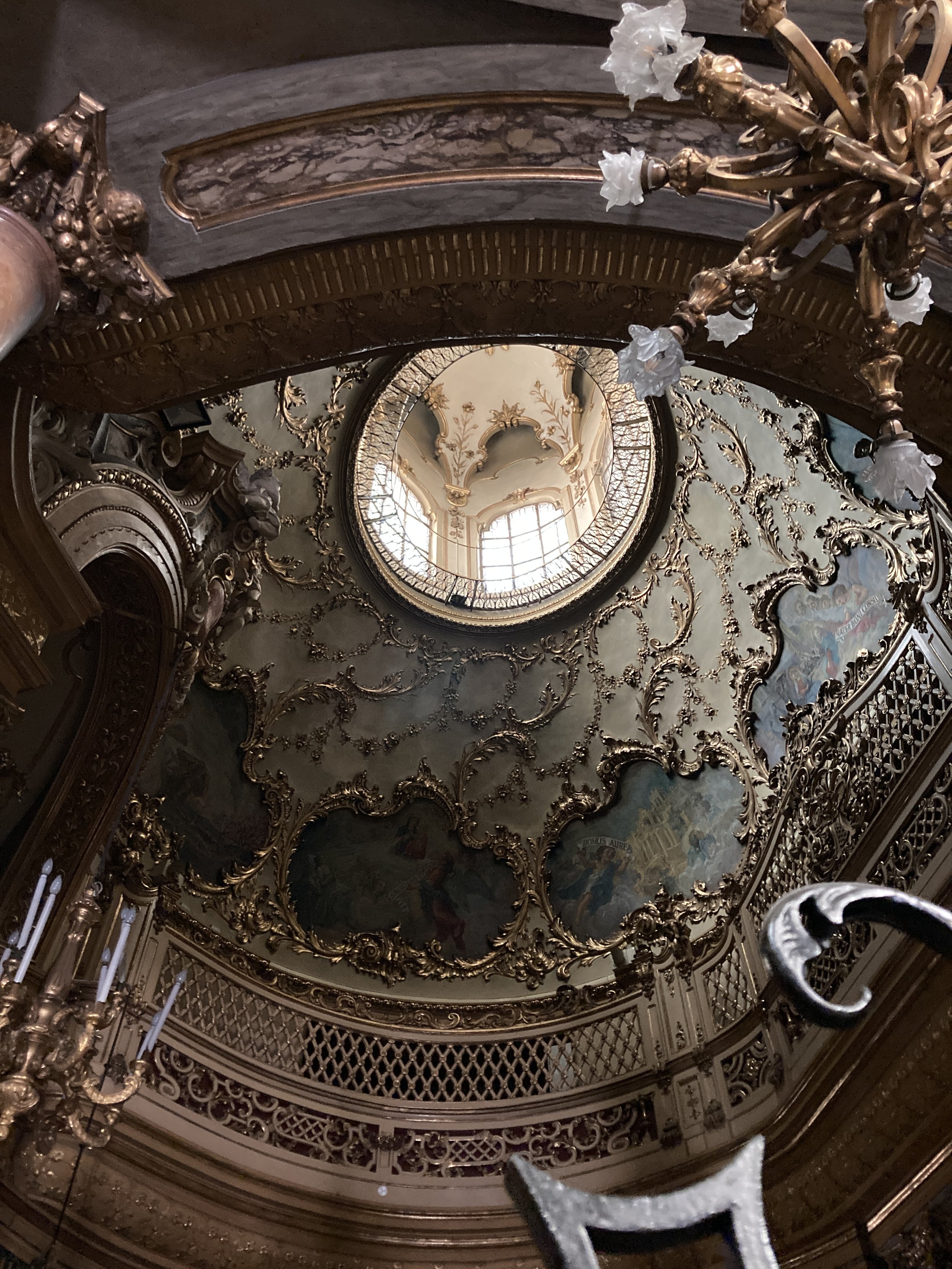
After sipping a Bicerin, a step across the piazza leads to the Santuario della Consolata (Church of the Virgin of the Consolation). The somewhat plain exterior of this church did nothing to prepare me for the ornate and colorful interior, including a most interesting crypt. Unlike most crypts, which tend to be dark and undecorated, this one was spectacular with very elaborate decoration. A jewel box of a small church.

CD6BF4B3-02A3-44C2-966F-310AEB4B1284.jpeg
6CCAB271-46A4-46E8-B69A-19CB8E9A59BA.jpeg

Whenever I visit a new place I always find myself wondering what it would be like to live there. In the case of Torino, I would happily live in the trendy Quadrilatero neighborhood. But I’d have to remember to limit my Bicerin consumption!

November 08, 2021 /Joanne Bartram
Turin, Torino, Quadrilatero Romano, Neighborhoods Torino, Bicerin, #torino
Italian art architecture, Italian culture, Italy, Italy travel
  • Newer
  • Older

Powered by Squarespace