Two Parts Italy

Exploring Italy, travel, and living a flavorful life

  • Blog
  • About This Blog
  • Start Here
  • Recent Posts
  • Archives by Topic
  • Subscribe
  • Contact me
The northwest tower of Holyroodhouse with it’s 17th century fountain

The northwest tower of Holyroodhouse with it’s 17th century fountain

Holyroodhouse: A Palace Fit for a Queen

April 26, 2021 by Joanne Bartram in #edinburgh, History, Travel, Travel Scotland, Royal Palaces

It’s been hard to miss the news out of England lately, even for those who aren’t typically “royal watchers”. From family drama to sadness about the death of Prince Phillip to a royal birthday, all eyes have been on The Queen. And no matter what we think about the life of royals (or if we think about them at all), we must admit that they have some pretty amazing real estate. All those palaces fit for a queen!

So much talk of England reminds me of the one royal palace I have visited - The Palace of Holyroodhouse in Edinburgh, Scotland. No dusty historical monument, Holyroodhouse is still The Queen’s official residence in Scotland. And though she only spends about one summer week per year there, it remains the site of royal functions and is an important part of the culture of Scotland. The palace anchors one end of Edinburgh’s Royal Mile, with the Edinburgh Castle at the other end and a world of interesting things along the way between the two.

The entry courtyard to the palace with its two towers at either end.

The entry courtyard to the palace with its two towers at either end.

The good news is that, except for that one week per year when Queen Elizabeth visits, the palace is open to visitors. Well, at least in a non-COVID year it is. While the palace has been closed during the pandemic, it is has recently reopened with limited visitation (tickets must be purchased ahead of time). With that in mind, it seems timely to write about this interesting, beautiful, and historic place.

I visited the Palace at Holyroodhouse as part of a visit to Edinburgh for the Fringe Festival in 2019. I was traveling with two very British friends who said that they’d seen enough royal palaces to last them a lifetime, but I couldn’t pass up the chance to explore the palace, its gardens, and the museum. So while my friends went off to a Fringe Festival show, I headed to the palace.

This carving over the entrance to the quadrangle includes elements of Scotland’s Royal Coat of Arms

This carving over the entrance to the quadrangle includes elements of Scotland’s Royal Coat of Arms

The guided tour inside the palace was fascinating and full of historic detail, murderous intrigue, and a healthy dose of royal comings and goings. It was fun to hear details such as “when The Queen visits, this is where she hosts visitors for lunch” or “in this room, the Italian Rizzio, private secretary to Mary, Queen of Scots, was murdered in the year 1566”. Was he Queen Mary’s lover? It is said her jealous husband ordered the murder. A 16th century drama with Scottish and Italian players - who doesn’t love a drama with a 16th century Italian twist?

Also interesting were the furnishings and many artifacts. Unfortunately, photography was not allowed in the interior of the palace, so other than this one view of the entry hall, all my photos are of the exterior. A good collection of interior photos can be found on the website of the Royal Collection Trust.
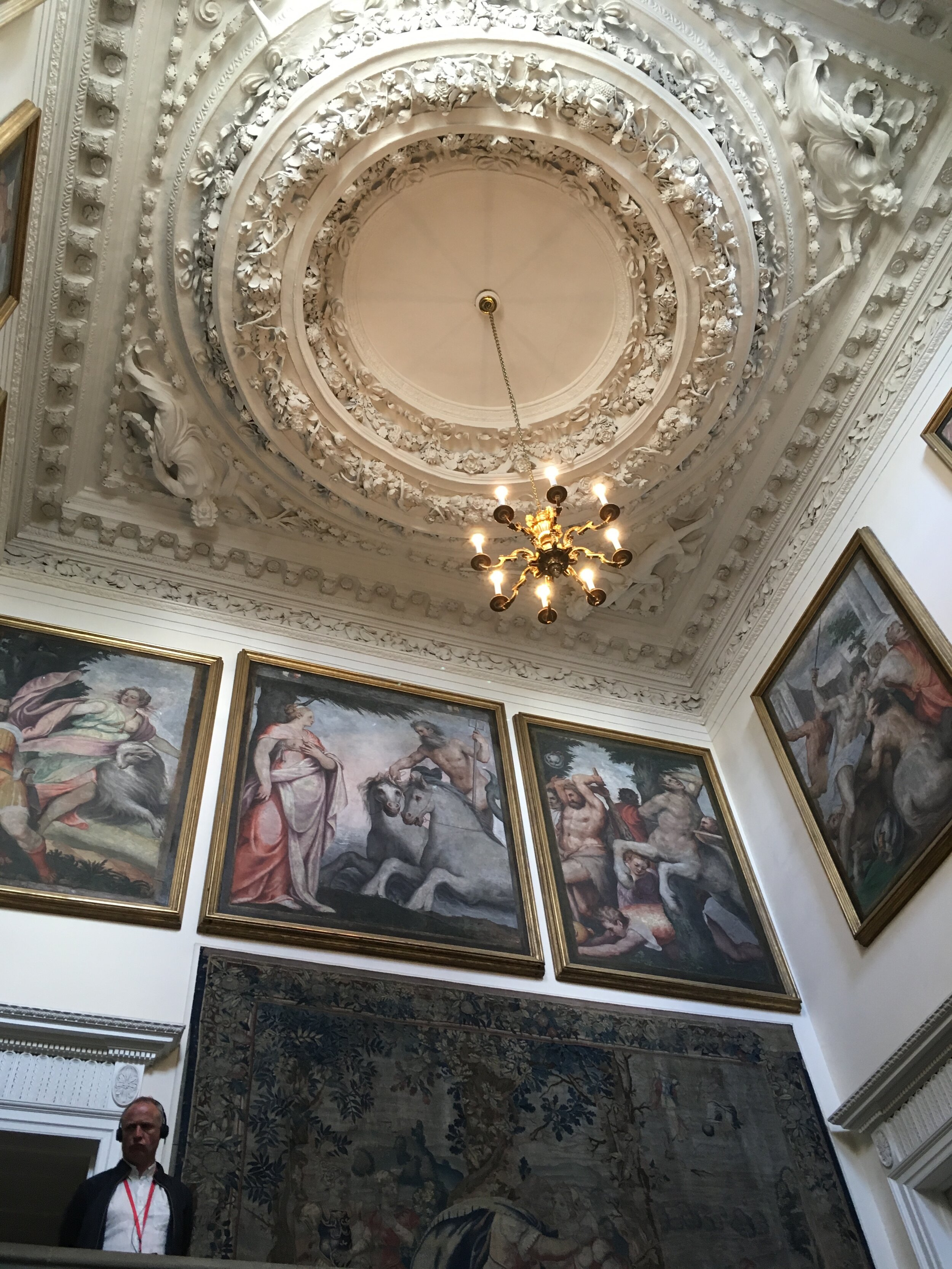
Such detail in this entryway.  But the serious guard says no more photos allowed!

Such detail in this entryway. But the serious guard says no more photos allowed!

The gardens surrounding the palace are also lovely with long stretches of green lawn, trees, and flowers. Just imagine attending one of The Queen’s garden parties there. I’d have to step up my wardrobe, and add a hat and gloves, to be sure!

A glimpse of the gardens through this old iron gate

A glimpse of the gardens through this old iron gate

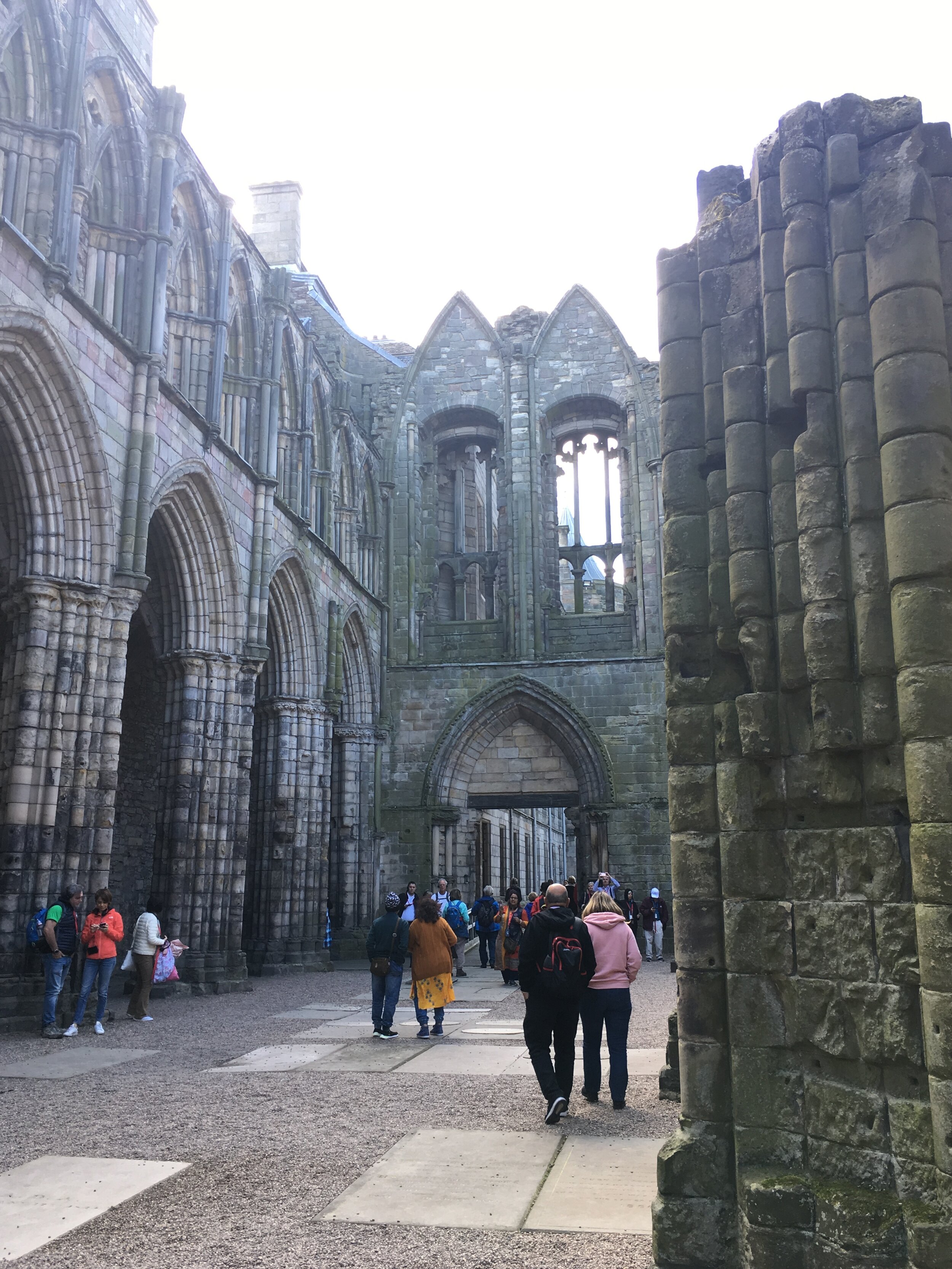
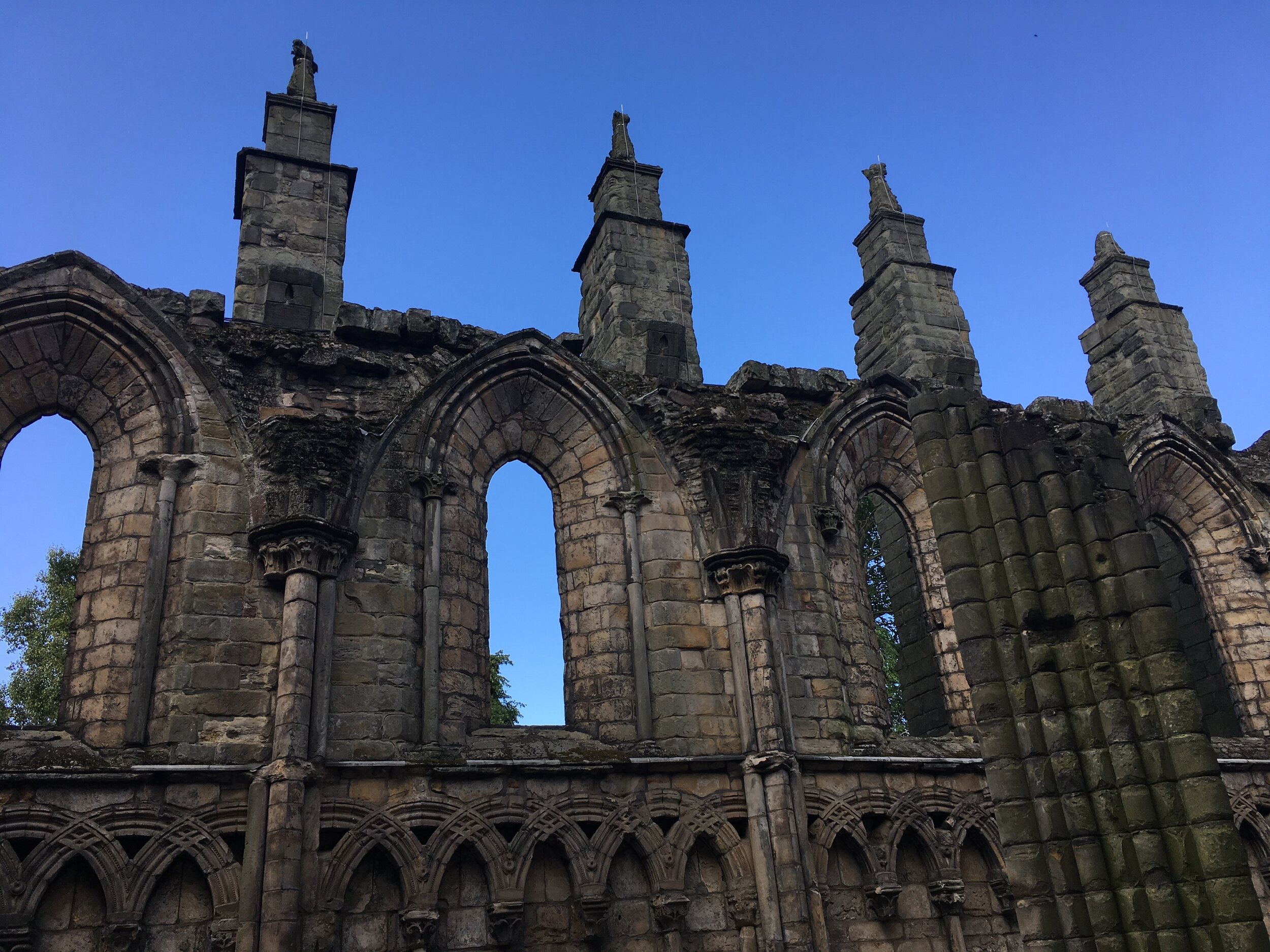
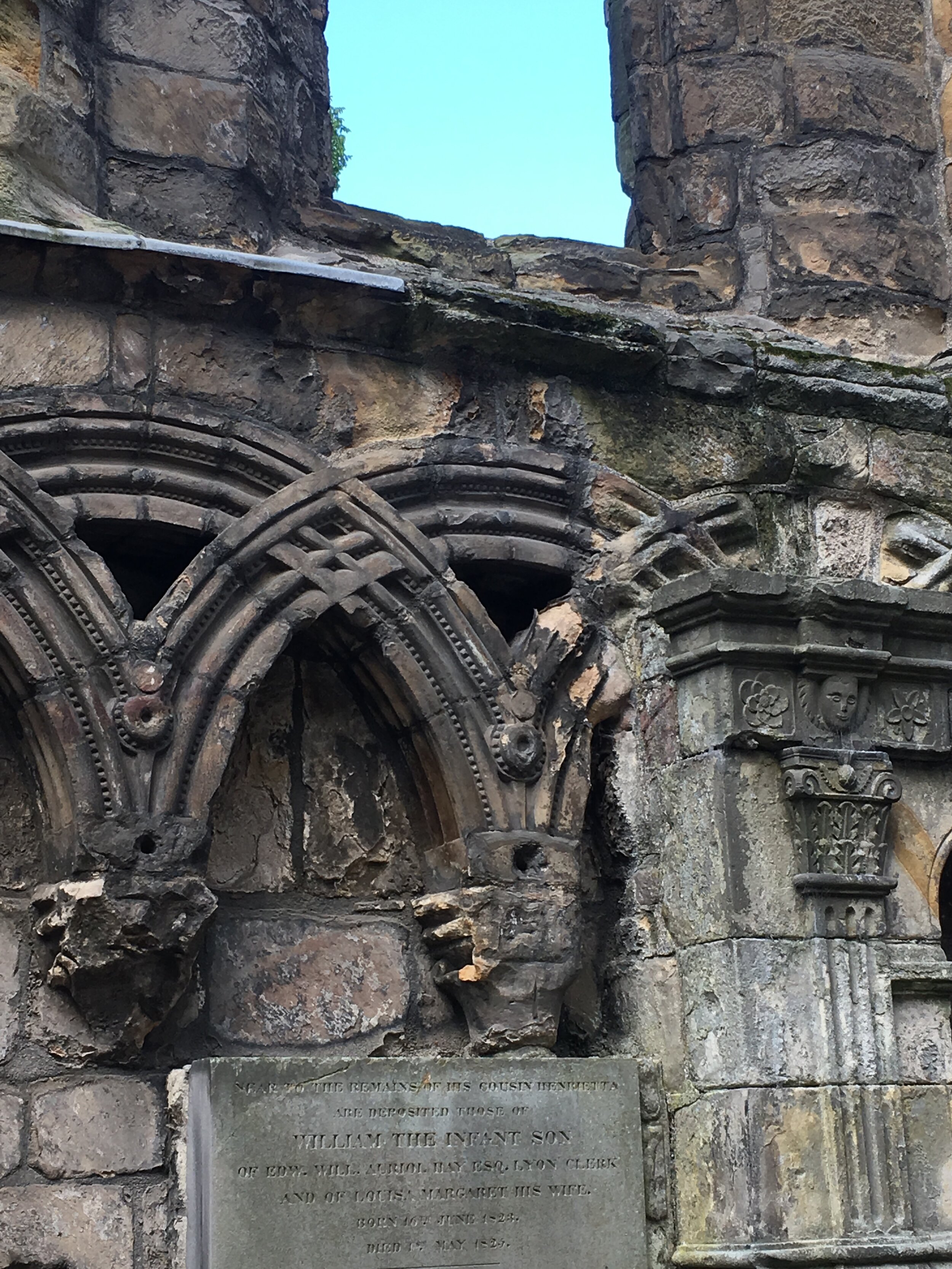
One of the most striking features is found outside of the palace - the ruins of Holyrood Abbey. The abbey dates back to the 12th century when it was founded by King David I. The legend is that he founded the abbey in thanks after he survived an accident in the nearby woods.

8FA1ED49-9744-441D-8BCD-D0CE22702ACF.jpg

The abbey has been in ruins since 1768 when the roof collapsed. The parts still standing are beautiful, with stone walls, arches, and carvings. It is a place of quiet and stark grace with a fairytale-like soft light filtering through the missing windows.
F962AF9B-25BD-4815-A9DB-F1507EA8BE53.jpeg
D88D14FB-ADE0-47AB-B18A-2A421692B56C.jpeg
B81A5F35-81FA-46C3-9245-4EE8B70C8429.jpeg

After touring the palace and wandering through the ruined abbey and the well-tended gardens there was just enough time left for the small museum displaying art from the royal collection, a look in the gift shop, and lunch in the restaurant on the palace grounds (with some very tasty Scottish meat pie). This was a wonderful way to spend a late summer afternoon and a fascinating glimpse into royal life. With the palace beginning to reopen and long delayed travel planning now beginning, this is definitely a place to include if Scotland is on your travel list.

April 26, 2021 /Joanne Bartram
Holyroodhouse, Holyrood Palace, Holyrood Abbey, Edinburgh, Scotland
#edinburgh, History, Travel, Travel Scotland, Royal Palaces
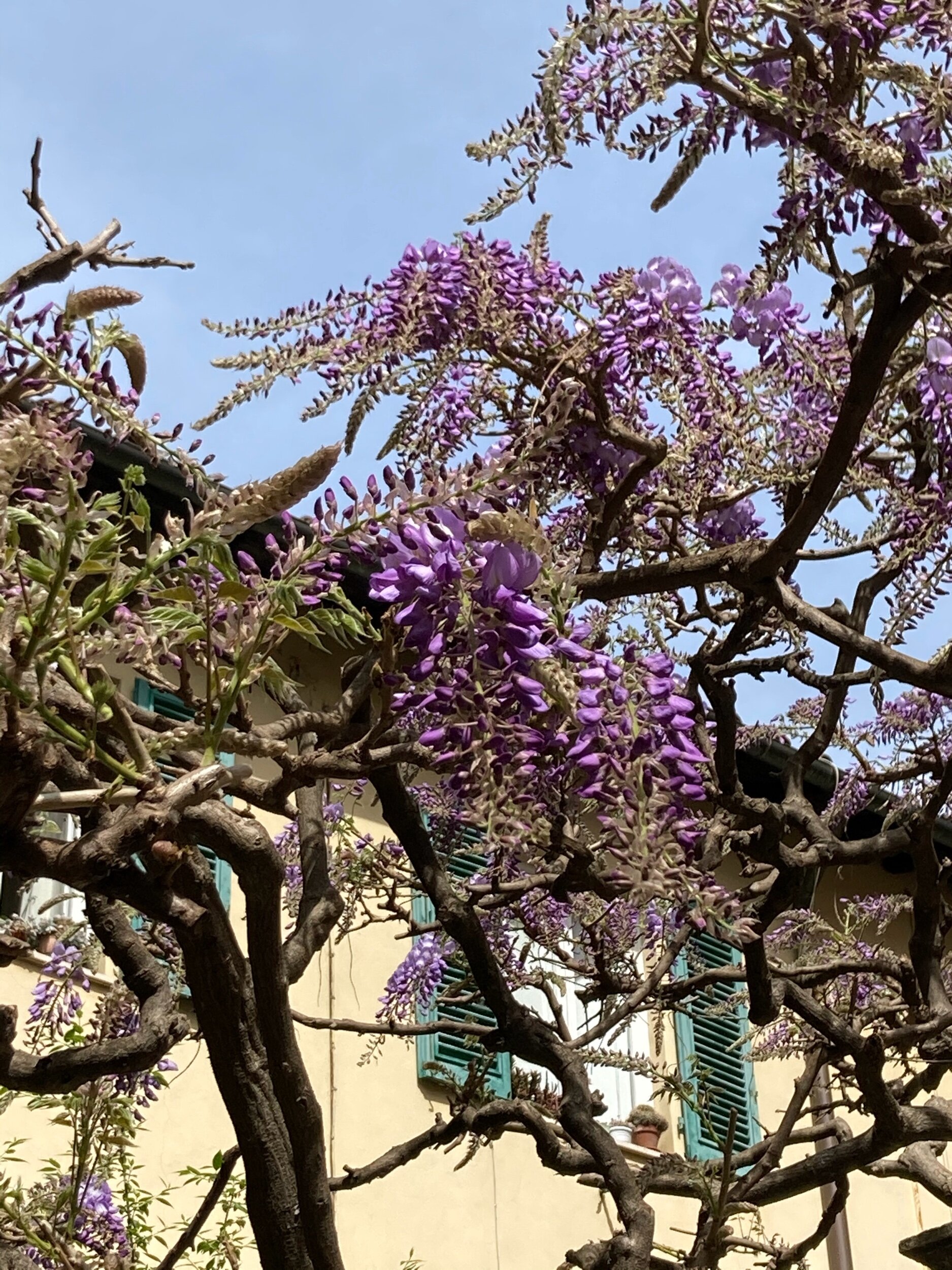
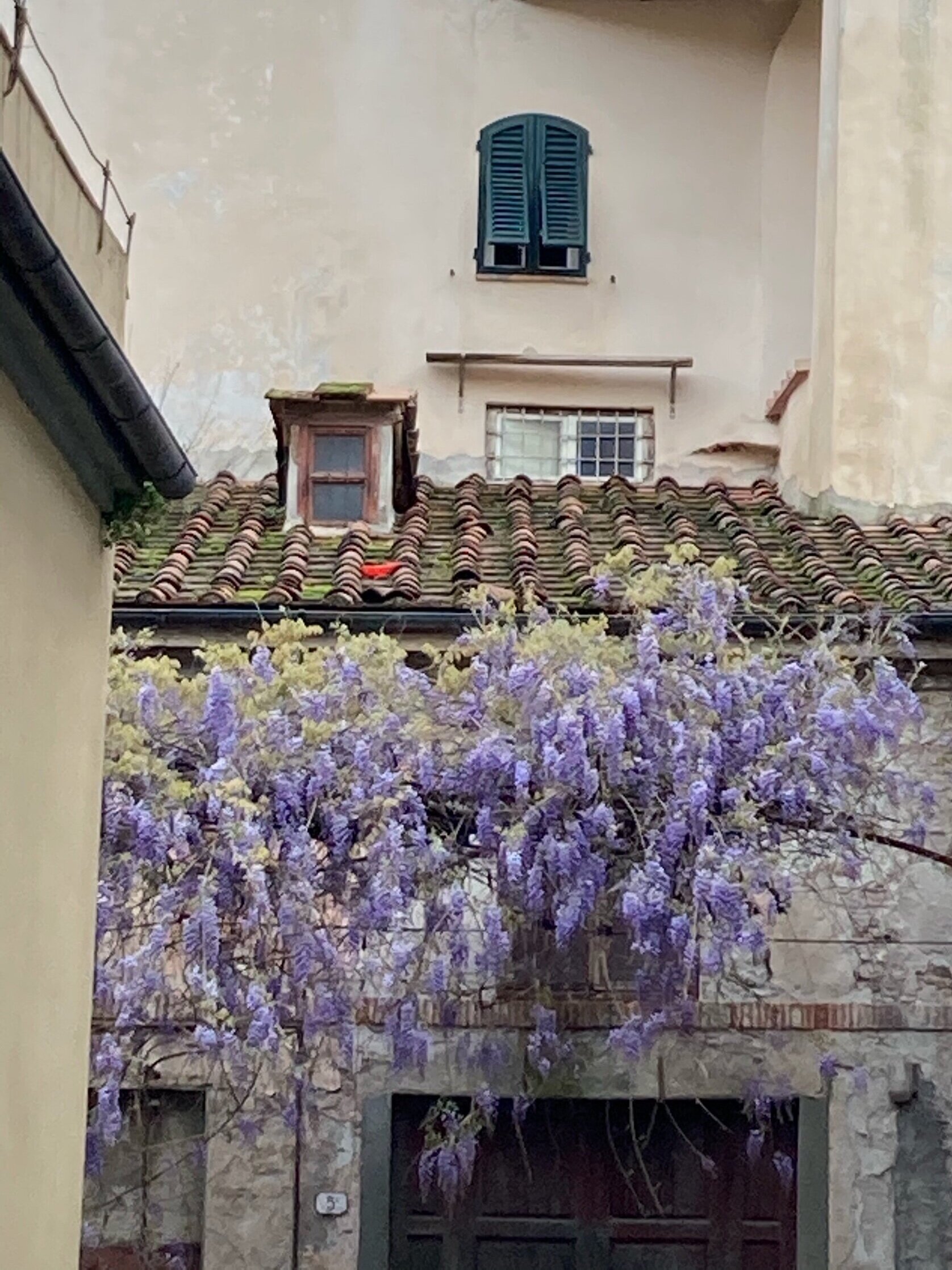
Some of the first wisteria to bloom in Lucca this year were along Via Busdraghi.  To see how they changed over time, scroll down to the bottom photo.

Some of the first wisteria to bloom in Lucca this year were along Via Busdraghi. To see how they changed over time, scroll down to the bottom photo.

A Wisteria Walk Through Lucca

April 19, 2021 by Joanne Bartram in #italytravel, #lucca, #springintuscany

Lucca has to be one of the most wonderful places for walking. For starters, the renaissance wall surrounding the city provides a long path, a tree-lined beauty, perfect for both a passeggiata (stroll) and for people watching. Not far outside the city is an old aqueduct which provides several miles of walking path along its beautiful arches. Inside the historic center of town the streets are lined with medieval buildings, unique patterned brickwork, remnants of Roman civilization, churches, and piazzas. There is no shortage of interesting paths to take or beauty to behold.

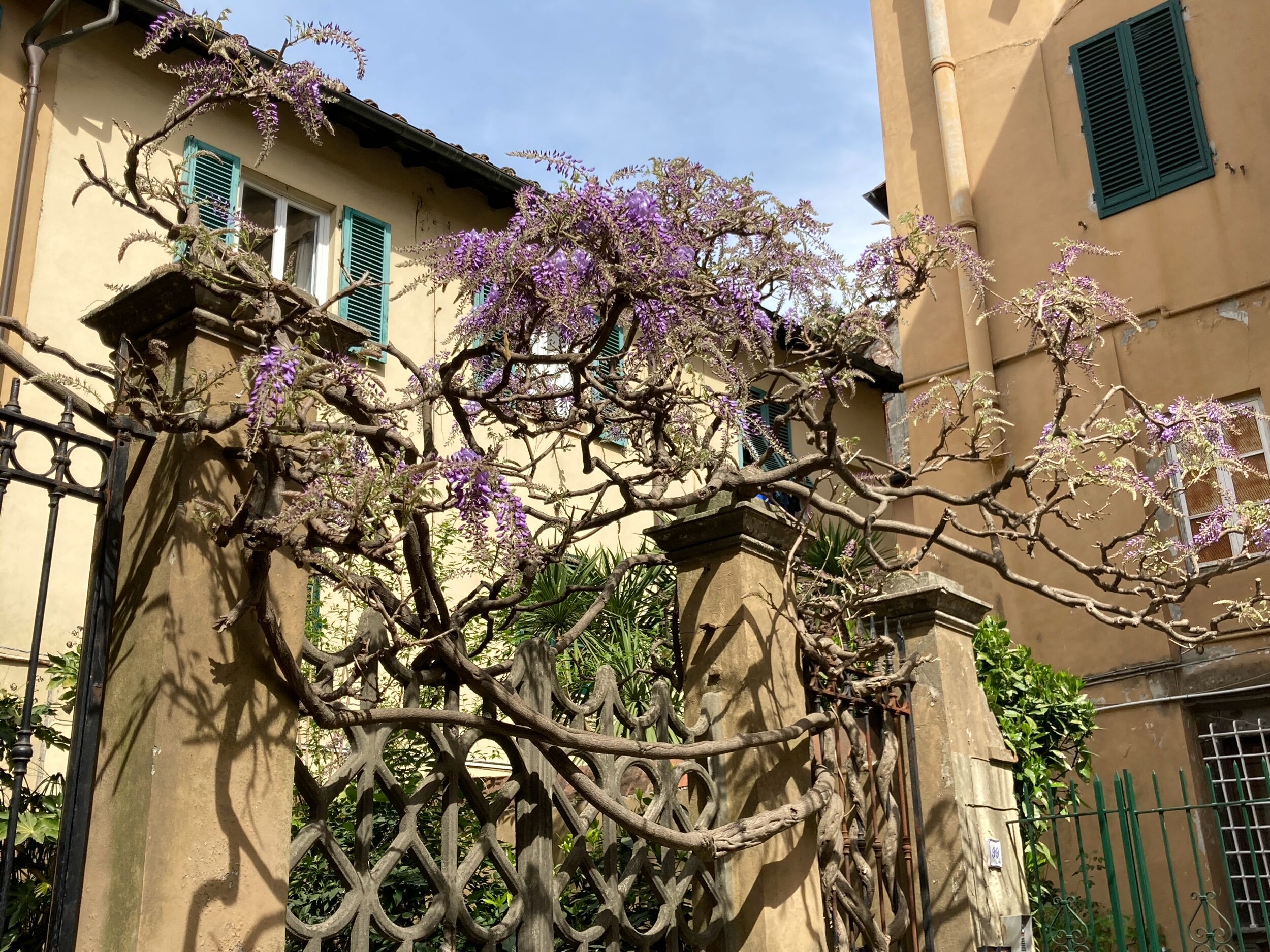
The shadows cast by this wisteria are just as interesting as the blooms themselves.

The shadows cast by this wisteria are just as interesting as the blooms themselves.

And while just wandering through all of these fabulous sights is wonderful, sometimes I feel that I need a purposeful walk. Not purposeful as in needing to walk to the grocery store or bakery but rather a focused walk, one to discover something specific. Some days I go walking and try to find a street I’ve never seen before. Often I do a photography walk - last week I searched for and took photos of old, neglected doors. The week before it was door knockers and doorbells.

This glorious wall of wisteria is in Piazza Antelminelli.  The church of San Giovanni is in the background.

This glorious wall of wisteria is in Piazza Antelminelli. The church of San Giovanni is in the background.

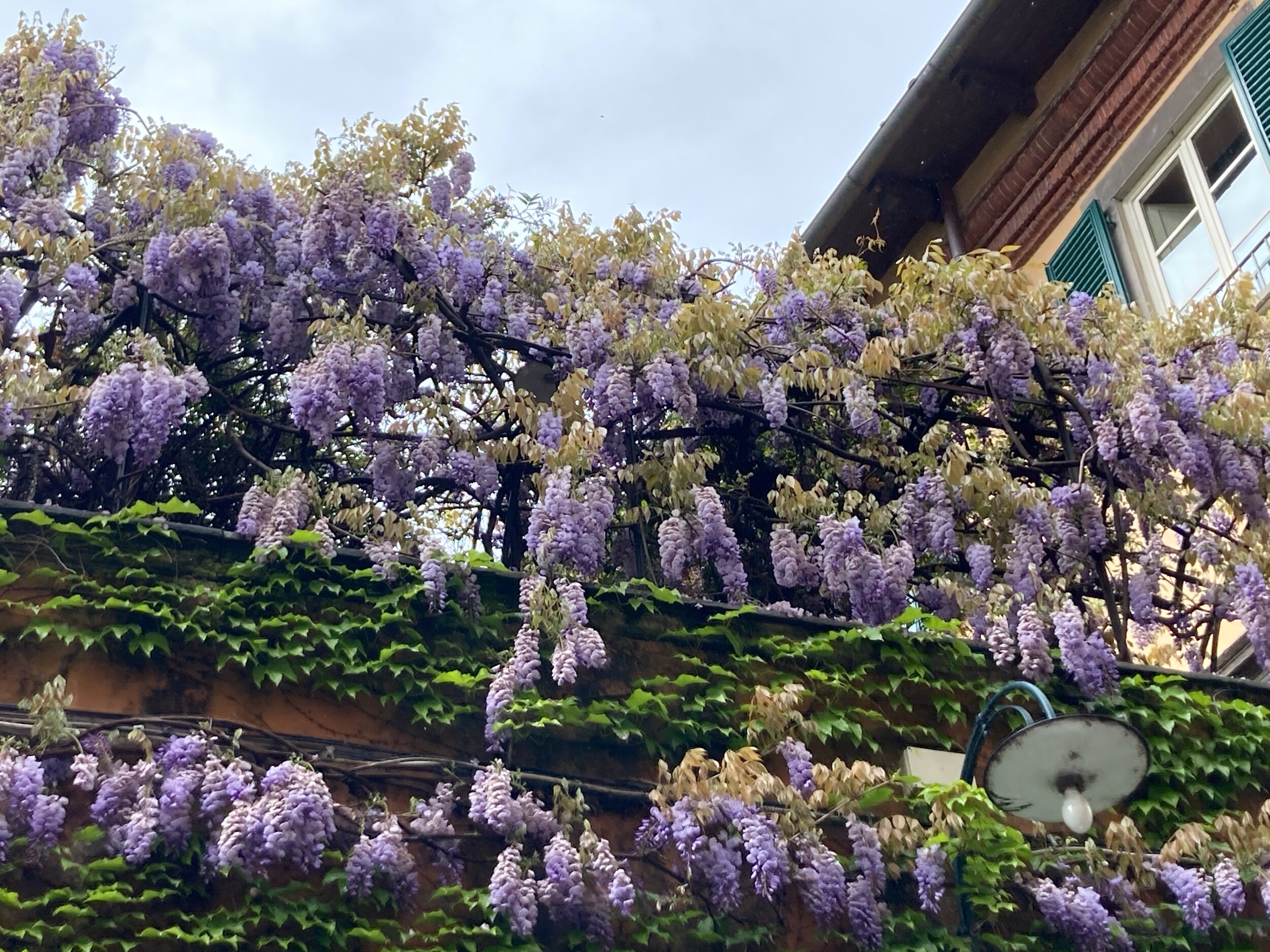
In spring, my favorite walks are to discover what is blooming. In March I took an almost daily walk down Corso Garibaldi, a street in Lucca that is lined with Magnolia trees. They are beautiful, but they don’t last long. In the last couple of weeks I’ve watched the trees along the wall begin to sprout their leaves and right now the wisteria are blooming all around town. The wisteria (glicine in Italian) are spectacular as they tumble over walls and across trellises. It seemed as though the vines were bare one day and full of early blossoms the next. A week or so later they were spectacular in full bloom.

Less common here, but no less beautiful, are these white wisteria in Piazza San Giovanni.

Less common here, but no less beautiful, are these white wisteria in Piazza San Giovanni.

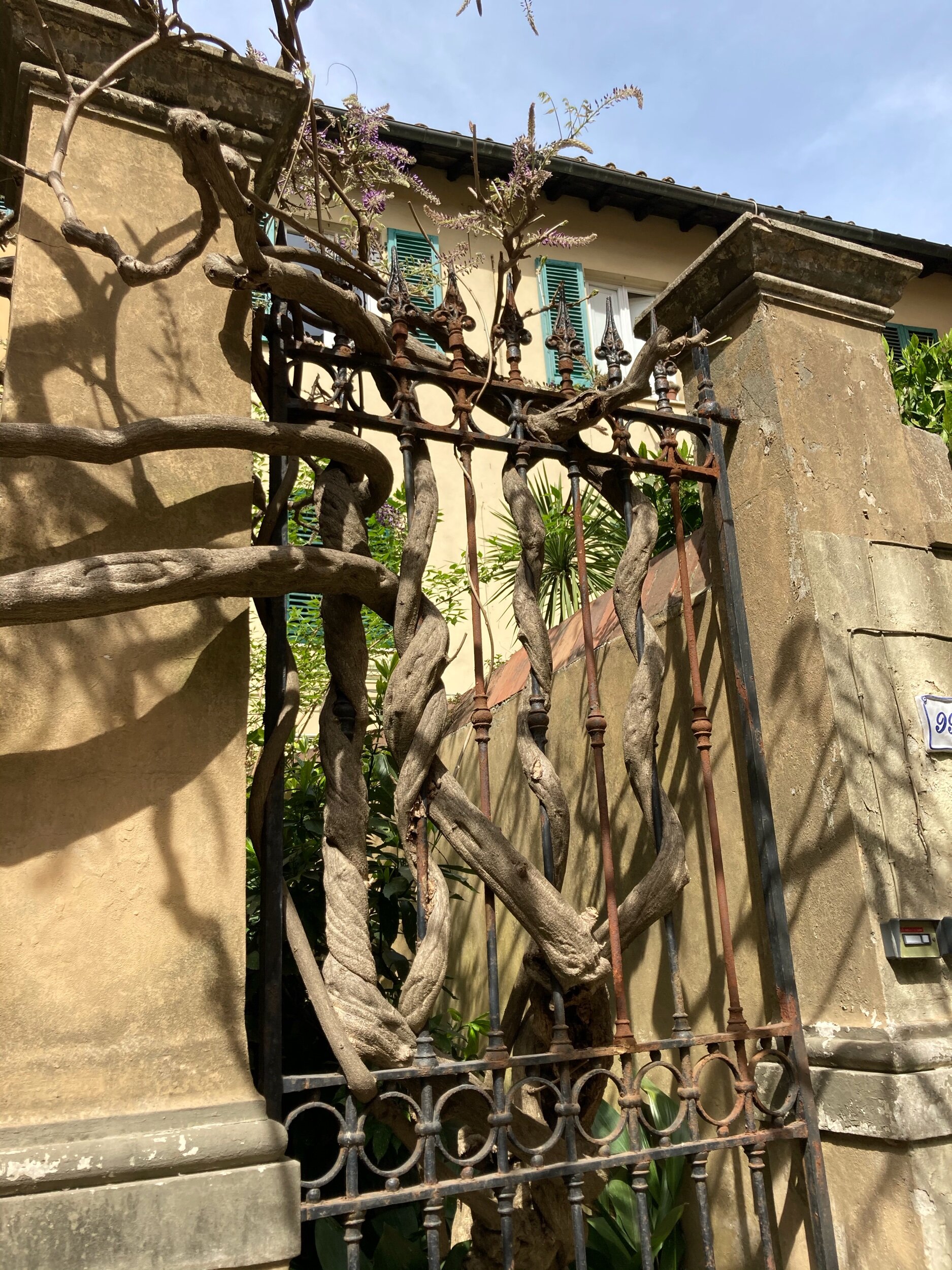
My favorite stand of wisteria is in tiny Piazza Parigi. The trunks are old and thick and they twist their way through an old iron fence. The blooms spill over the top and fill the small piazza with a soft scent.

IMG_1773.jpeg
IMG_1774.jpeg
IMG_1772.jpeg

Watching the wisteria blooms unfold this spring has been a treat for me, even more so because last year I missed them as Italy was on strict lockdown throughout March and April, which meant no strolls through town to watch them bloom. That makes them even more special this year when I can freely wander through town to see, smell, and photograph them!

Tucked away in a small alley off Via Cenami.

Tucked away in a small alley off Via Cenami.

Not all of the wisteria action takes place inside the walls. There are some beautiful villas, many in Liberty Style, just outside the walls and several are draped in blooms.

This Liberty Style villa, surrounded by wisteria, is just outside the walls north of the historic center.

This Liberty Style villa, surrounded by wisteria, is just outside the walls north of the historic center.

Wisteria - a springtime gift from Italy.

The same wall of wisteria as in the top photo, but about 10 days later in full bloom.

The same wall of wisteria as in the top photo, but about 10 days later in full bloom.

April 19, 2021 /Joanne Bartram
wisteria, glicine, italy spring, Lucca
#italytravel, #lucca, #springintuscany
87149CC1-FA2A-4C43-8DDA-E8C675BA6E4A.jpeg

A Spring Brunch at Home in Italy

April 12, 2021 by Joanne Bartram in #springintuscany, Cooking, food, Living in Italy

Warning: this post may make you hungry !

The very small size of my Italian apartment, not to mention the lack of a real oven in the minuscule kitchen, makes entertaining a challenge. I’ve managed as many as 6 for a dinner but that took a lot of juggling and some very cozy seating around the table. And now, when social distancing is the norm, even 6 is way too many. But it’s spring, the weather is gorgeous, the markets are full of beautiful strawberries and asparagus, and I’ve been itching to prepare a meal for friends. When the pandemic rules limiting visitors were relaxed over Easter weekend I was able to invite 2 friends to my home for a meal. With that in mind, I happily started planning a brunch menu. Sometimes it’s fun to get a little fancy and this was one of those times. When you find me ironing a vintage table cloth, you know I’m about to get fancy! Pretty flowers, a nicely set table, the good dishes, and soft music set the stage.

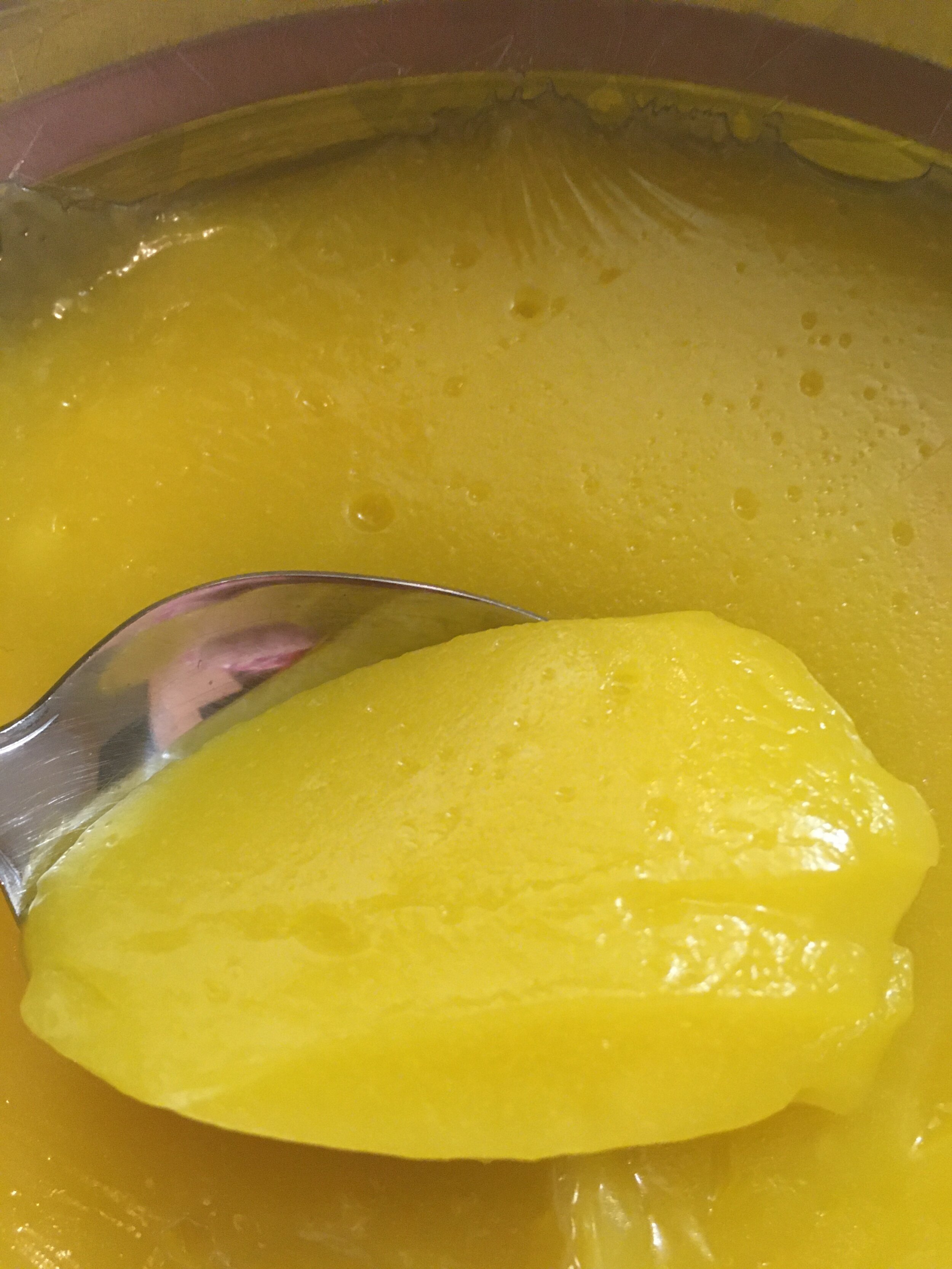
Homemade lemon curd - nice and tart with a smooth as silk texture.

Homemade lemon curd - nice and tart with a smooth as silk texture.

The brunch menu combined some wonderful Italian ingredients with some of my American standards and gave me chance to fix some of my favorite dishes.

Preparations started a couple of days beforehand with the making of lemon curd. This no-fail recipe from Fine Cooking magazine is better than any lemon curd I have ever purchased. (https://finecooking.com/recipe/classic-lemon-curd). It’s my go to recipe for a fancy brunch or tea menu. Using juicy Italian lemons makes it even better. The hardest part was setting it aside until the day of the brunch. I may have sampled just a taste (or two) beforehand.

Of course where there is lemon curd there must be scones. I prepped the dry ingredients a couple of days before; it was easy to finish the dough and bake them on the morning of the brunch. The scones and lemon curd paired nicely alongside a bowl of bright red strawberries.

EDAB3A6D-785C-4387-9814-84B45C86A2C1.jpeg

The main dish was a crustless quiche, another Fine Cooking recipe (https://finecooking.com/recipe/crustless-quiche-with-red-peppers-goat-cheese).

These small  tin foil baking dishes aren’t very elegant, but they fit nicely in my little countertop oven.

These small tin foil baking dishes aren’t very elegant, but they fit nicely in my little countertop oven.

This is a versatile recipe because it is so easy to vary the ingredients. I have only a small countertop electric oven (two steps above the Easy Bake oven I had as a kid), so I divided the quiche base into two smaller pans. In one, I used the red peppers and goat cheese from the original recipe. In the second pan, I crumbled crisp pancetta, sautéed mushrooms, and fontina cheese. My tiny oven only baked one pan at a time but, covered with foil and set on top of the oven while the second one baked, the first one stayed nice and warm. And they were delicious - soft and light as clouds. All the credit goes to this fantastic recipe - it’s a snap to make and always a hit.

I couldn’t resist the fat stalks of asparagus I found in the market. Cooked quickly and drizzled with a lemony vinaigrette they made a simple and tasty addition to the menu. Both asparagus and the quiche go well with some slightly salty prosciutto, so I added a small platter of that and the meal was complete.

Is there a better combination than fresh spring asparagus and prosciutto?   Well, maybe a summertime prosciutto with melon, but that’s a few months off yet.

Is there a better combination than fresh spring asparagus and prosciutto? Well, maybe a summertime prosciutto with melon, but that’s a few months off yet.

Well, almost complete. We were celebrating spring so mimosas made with Prosecco and orange juice made brunch even more festive.

Good company, good food, and lots of laughter. A good way to welcome spring !

April 12, 2021 /Joanne Bartram
italian food, brunch, easter italy
#springintuscany, Cooking, food, Living in Italy
Easter decorations in a shop in Lucca

Easter decorations in a shop in Lucca, before the start of the red zone restrictions

Pasquetta - Easter Monday in Italy

April 05, 2021 by Joanne Bartram in #italytravel, #springintuscany, Living in Italy

The day after Easter is officially the Lunedì dell’Angelo (the Monday of the Angel) but I’ve never heard anyone here in Lucca refer to it by that name. Here it is known simply as Pasquetta (little Easter). Pasquetta is a national holiday and one that marks the beginning of the spring season. Traditionally, it is a day for Italians to venture into the countryside for a day of picnics and outdoor fun. But not this year. For the second year in a row, Easter celebrations are limited by COVID restrictions. Last week, all of Tuscany (along with much of the rest of Italy) was declared a red zone. For the last three days, over the Easter weekend, the whole country has been “in the red”. For now, it is not possible to leave one’s home city and we are supposed to stay at home except for necessary things like trips to the pharmacy or grocery store. That means no trips to the countryside for Pasquetta and no picnics either.

Traditional Easter Colomba (dove) cakes, in fancy tins by Dolce & Gabbana.

Traditional Easter Colomba (dove) cakes, in fancy tins by Dolce & Gabbana.

All but essential shops are closed. Luckily, chocolate shops are considered essential (one more reason to love Italy). This is a good thing - can you imagine an Easter without chocolate?

How cute are these?   Chocolate chickens are much more common than bunnies here at Easter.  These are from the artisanal shop Chocolat in Chiasso Barletti, Lucca.

How cute are these? Chocolate chickens are much more common than bunnies here at Easter. These are from the artisanal shop Chocolat in Chiasso Barletti, Lucca.

Even the local woodwork shop has a window decorated for Easter

Even the local woodwork shop has a window decorated for Easter

It is still permissible to go out for a walk, though the guidelines include a vague statement about staying “close to home”. The wall around Lucca remains open (unlike last Easter when it was off-limits) and it certainly qualifies as close to home for those of us who live within its embrace. But don’t forget to carry your self-certification documents!

Fortunately, the rules were relaxed a bit for the 3 days over the Easter holiday (the weekend of Easter plus today’s Pasquetta holiday). For these 3 days, we have been allowed two persons to come into our homes for a visit or meal. I took full advantage of this, cooking an Easter brunch for 2 friends. A pretty table, good food, great company, a little Prosecco, and lots of laughter made for a wonderful Easter morning. Today I will celebrate Pasquetta with a long walk along the wall, enjoying the new green leaves on the trees, the wildflowers, and the views of distant hills.

Despite everything that has occurred over the past difficult year, life goes on. Shops are decorated for Easter, people wish each other “Buona Pasqua” in the streets, we are enjoying some beautiful spring weather, the gelato shops have opened for the season (gelato is the perfect take out food), the wisteria are blooming, and the church bells ring. There is reason for optimism and everyone is looking towards next year when, hopefully, I will be able to host a big group for an Easter luncheon.

Buona Pasquetta !

IMG_1711.jpeg
April 05, 2021 /Joanne Bartram
Pasquetta, Pasqua, Easter in Italy
#italytravel, #springintuscany, Living in Italy
This daily special at restaurant Nonna Clara caught my eye.  Cacciucco is not a common dish here in Lucca.

This daily special at restaurant Nonna Clara caught my eye. Cacciucco is not a common dish here in Lucca.

Cacciucco: An Italian Fisherman's Stew

March 29, 2021 by Judy Giannnettino in Cooking, food, Italian recipes, Living in Italy

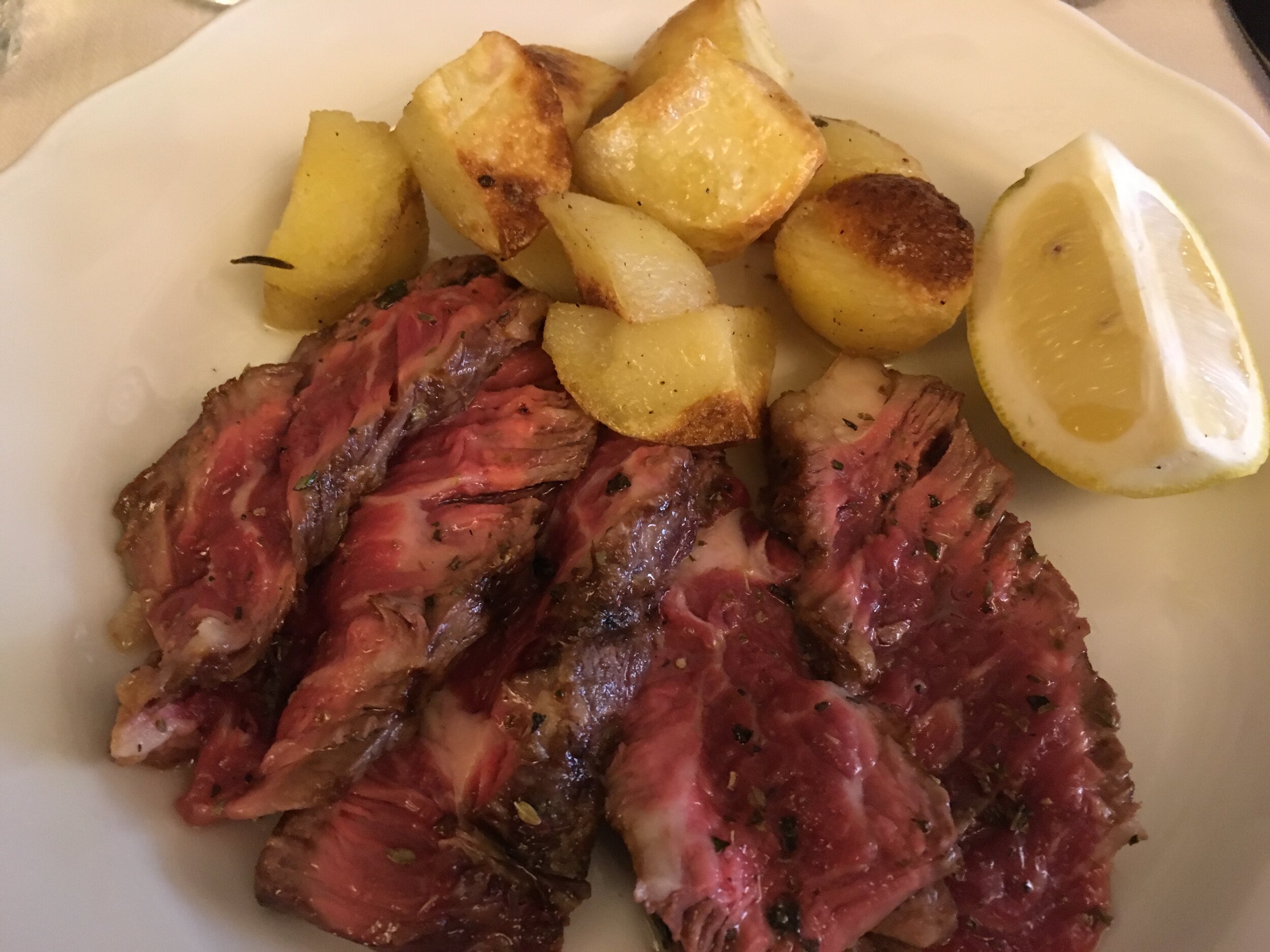
One of the things that most surprised me when I first started visiting Lucca is that, while we are only about 30 minutes from the sea, the traditional cuisine here is very meat-based. There is not a seafood market to be found within the centro storico (the historic center of town) and restaurants serve far more meat than fish. I’m not complaining, the meats are fabulous - porchetta (spit roasted pork), tender tagliata (slices) of beef, huge grilled Tuscan steaks, thin but oh-so-flavorful lamb chops, perfectly roasted chicken, cinghiale (wild boar). Even the traditional pasta of Lucca, Tordelli Lucchese, is a meat filled pasta topped with a meat sauce.

IMG_0551.JPG
IMG_6050.JPG
IMG_1347.JPG
A shellfish carbonara at Osteria Via San Giorgio, Lucca

A shellfish carbonara at Osteria Via San Giorgio, Lucca

There are some fish dishes to be found. The seafood carbonara at one local osteria is a particular favorite of mine, but these dishes are definitely in the minority.

I’ve searched for why this meat preference is so strong and the only answer I’ve found is that in times past wealthy people ate meat and poor people fished, cooking with whatever they caught. Lucca was historically a very wealthy town, so meat was plentiful and nobody fished.

That fish is less common here made it all the better when, on a recent chilly and windy March day, I walked past a restaurant take-out window advertising a daily special of cacciucco. Cacciucco is a fisherman’s stew with origins in the areas along the coastline of Tuscany which includes the port towns of Viareggio and Livorno. It is a bit like cioppino, the fish stew brought to San Francisco by Italian immigrants. However, cacciucco’s ingredients are more of a poor fisherman’s mix compared to the more expensive ingredients found in cioppino (crab, shrimp, scallops).

Cacciucco - thick with seafood and covered in a fragrant broth

Cacciucco - thick with seafood and covered in a fragrant broth

Of course there are legends surrounding the beginnings of cacciucco. It is said that the widow of a drowned fisherman made the first cacciucco from odds and ends of fish collected by her children from local fisherman. They took the mix of fish home and the mother cooked them (the fish, not the children) in a broth which she then spooned over day old bread. The neighbors caught the delicious scent and before long the dish became a local favorite. One whiff of a good cacciucco made me a believer in this legend! Another legend about cacciucco is that, to be authentic, it must contain 5 different types of fish - one for each C in the word cacciucco.

The recipe begins with a broth made from fish parts and white wine. To that base are added spices, tomatoes, and a mix of fish. The fish can include white fish along with octopus, mussels, cuttlefish, calamari, red fish, and scampi (or whatever else is available).

A mix of local seafood makes cacciucco a type of cucina povera (poor man’s food)

A mix of local seafood makes cacciucco a type of cucina povera (poor man’s food)

The ingredients vary from city to city and there is of course disagreement about which city makes the best version. According to one article I read (La Repubblica, 2010) the differences between a cacciucco in Viareggio versus one made in Livorno is that the Viareggio version is lighter and a bit more refined. There is no garlic and the fish is boned and filleted. In Livorno the dish is more rustic, including garlic and a soffritto (a sauté of onion, celery, carrot). Also, in the Livornese version, the fish is in chunks, including some pieces with bones.

If the sight of tentacles, scampi with heads, and fish bones bothers you then this may not be the dish for you. As for me, those little tentacles are tender and tasty and all the bits of fish are wonderful. Even better is mopping up the broth with a good piece of rustic bread.

If you’ve been watching the CNN program “Stanley Tucci Searching for Italy”, you may have seen him eating a cacciucco in Livorno during the Tuscany episode. That was definitely an upscale version, with the addition of lobster. Rather than mopping up the sauce with bread they tossed the leftover sauce with some pasta. Something to try!

This is not a dish I’d ever attempt to make at home. But I think I am going to have to make a pilgrimage to both Livorno and Viareggio as soon as possible to compare the two versions, all in the name of culinary research of course.

With restaurants closed to seating due to COVID restrictions, these take out windows are becoming more popular.  This one is in front of the restaurant Nonna Clara in Lucca.  Along with the street food some items from the regular menu are available …

With restaurants closed to seating due to COVID restrictions, these take out windows are becoming more popular. This one is in front of the restaurant Nonna Clara in Lucca. Along with the street food some items from the regular menu are available to go, including this day’s special of cacciucco .

March 29, 2021 /Judy Giannnettino
italian seafood, cacciucco, italian food
Cooking, food, Italian recipes, Living in Italy
  • Newer
  • Older

Powered by Squarespace