Two Parts Italy

Exploring Italy, travel, and living a flavorful life

  • Blog
  • About This Blog
  • Start Here
  • Recent Posts
  • Archives by Topic
  • Subscribe
  • Contact me

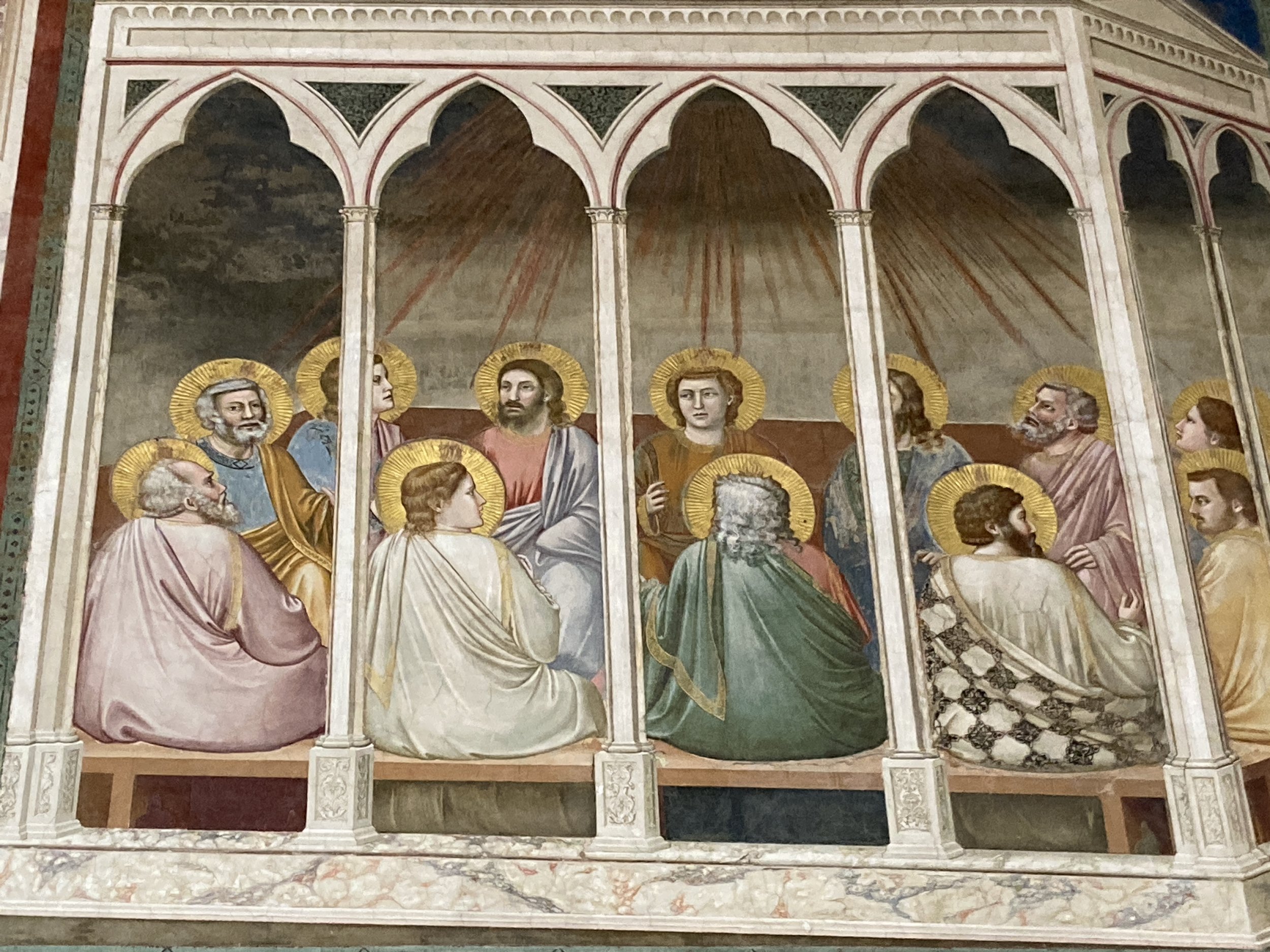
Giotto Panel #37. Pentecost Scrovegni Chapel

And Then Came Giotto

August 29, 2022 by Joanne Bartram in #italytravel, Churches Italy, Italian Art, Italian art architecture, Italy, Padova, Padua

I am not an art historian; far from it.  I don’t even claim to be a serious student of art.  And yet, it is impossible to live in Italy and not develop a profound appreciation for art. There are museums full of ancient art – Etruscan and Roman – displaying artifacts from those eras, from tiny jewelry pieces to funeral urns, mosaics, and classic statuary.  And though there were also Roman painters, the examples that have survived are relatively few.  In contrast, paintings from the late Medieval (Middle Age) and Renaissance periods fill Italian churches and museums.  The differences between the two eras can be appreciated by even an untrained observer like myself.
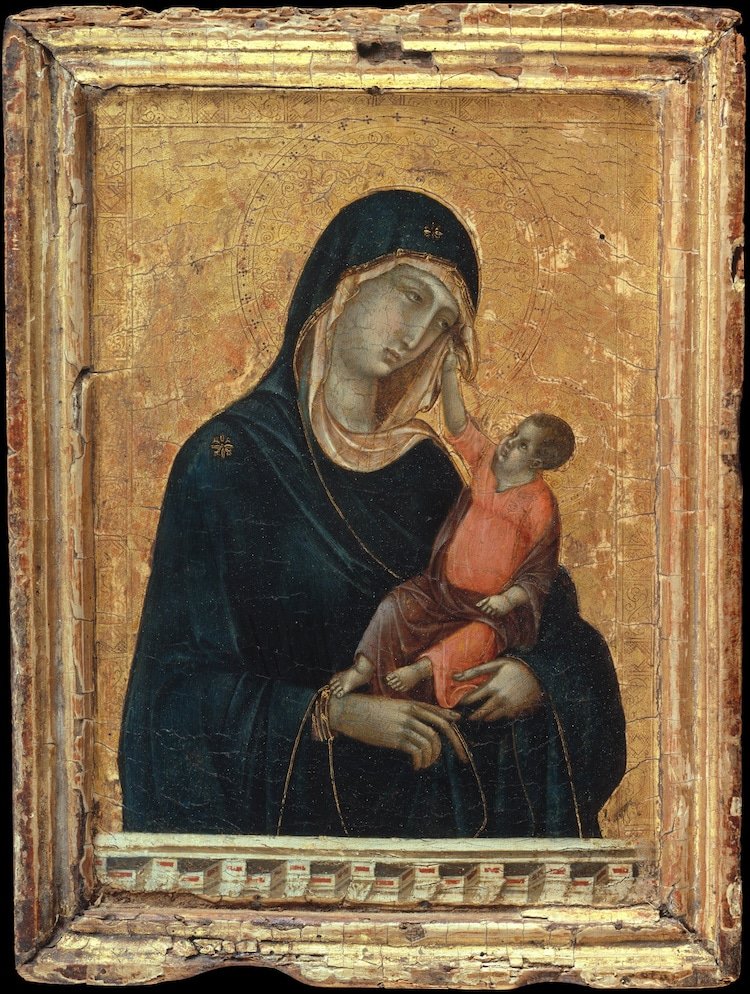
Madonna and Child ca. 1300 artist: Duccio. (photo from Wikimedia Commons Public Domain). An example of painting from the Medieval era.

Prior to the Renaissance, Medieval paintings were characterized by religious subjects, often a single figure filling the center of a painting.  The figures were flat and the faces often expressionless.  The human form was not natural looking or sensuous.  These were icons, not neighbors.

Backgrounds and perspective were not very important components of medieval painting.  And all that gold!  Gold shows up everywhere in Italian art of the middle ages.  In backgrounds, in halos, in elaborate detailing.  Imagine how that gold appeared – as the richness of God, the divine light – and also, perhaps, an symbol of the wealth of the patron or church who commissioned the work.

In contrast, paintings from the Renaissance era (1400 – 1600 AD) make wonderful use of perspective and often place subjects in natural settings.  The figures are realistic, their human-ness evident.  The clothing drapes and swirls, the faces show a full range of emotions.  The subjects are still largely religious, though portraits were also painted, usually for wealthy patrons (think of Da Vinci’s Mona Lisa, painted in 1503).  The names of Renaissance artists are familiar: Donatello, Da Vinci, Michelangelo, and Raphael being perhaps the most widely known artists from the 1400’s.

An unfinished Da Vinci portrait painted between 1500 - 1505. La Scapigliata (the word scapigliata refers to her disheveled hair) hangs in the National Museum in Parma, Italy. The difference between this Renaissance painting and earlier Medieval ones is pretty clear!

And in between the two periods, the Medieval and the Renaissance, came Giotto di Bondone (1267-1337). Giotto was that rare artist who was appreciated, even famous, during his lifetime. He even merited a mention by his contemporary Dante in The Divine Comedy. 

 Giotto revolutionized Italian art, creating life-like figures and placing them in more natural settings. Giotto’s figures show a full range of emotions through their facial expressions. No flat, lifeless saints and madonnas here!   Giotto’s scenes are populated by people who look like the neighbors down the street (at least what the neighbors would have looked like in 1300).  His men are placed in realistic poses and settings, his ladies have (gasp!) breasts over which their garments drape. His angels fly, his flames flicker.  And while the saints still have halos of gold, their clothing is colorful and the background is the most heavenly blue. 
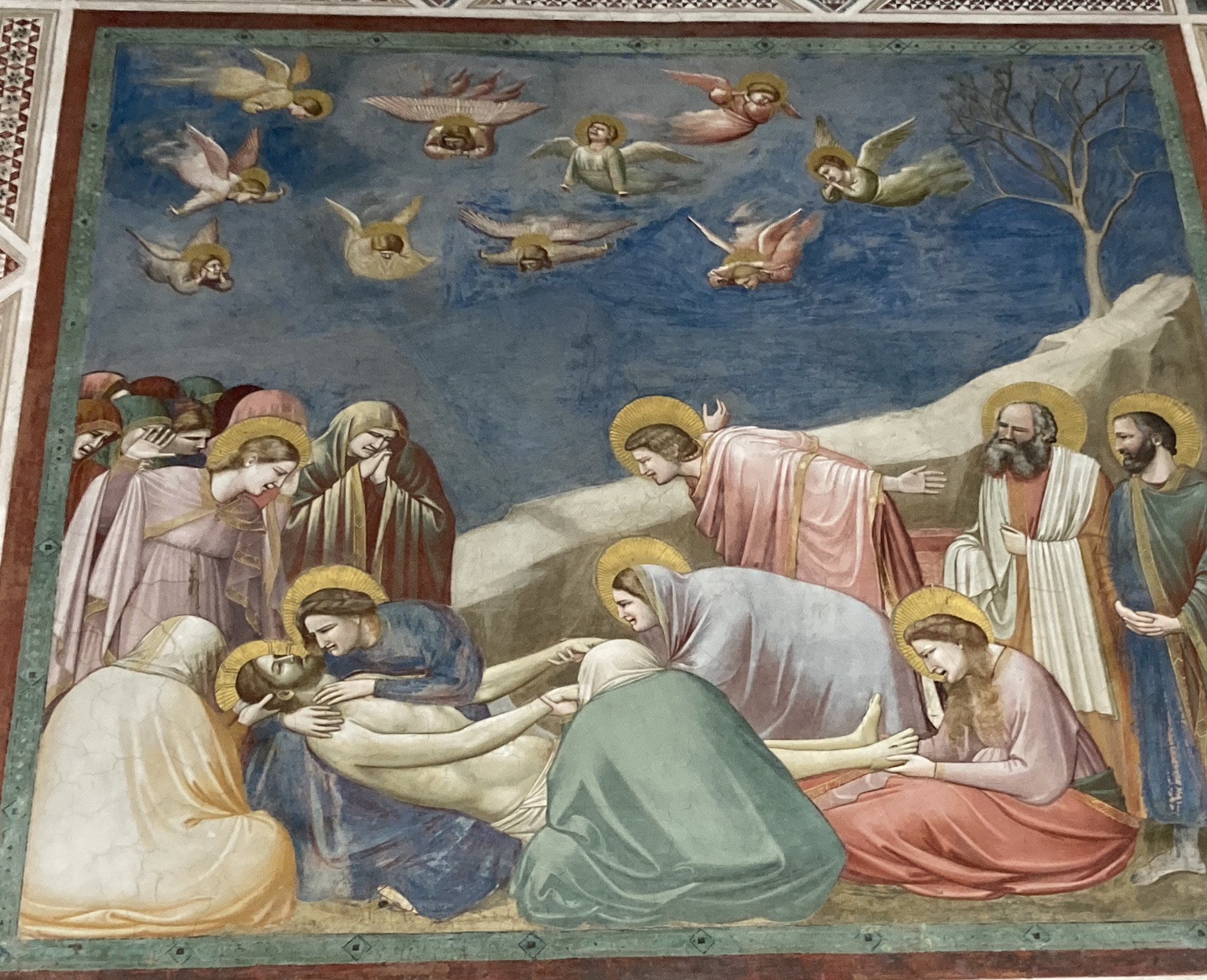
Panel # 34. Weeping over the Body of Christ. Scovegni Chapel.

Sadly, much of Giotto’s work has been destroyed, by time and by fire.  Of the works that remain, the Scrovegni Chapel in Padova is Giotto’s capolavoro (masterpiece). A chance to see the frescoes there was the main reason for my trip to Padova last fall. The church is small and intimate, built as a private chapel for the Scrovegni Family.  The frescoes are in wonderful condition, the figures beautiful, and the colors spectacular.

Panel #35. The Resurrection

The frescoes wrap around the chapel, in a three-tiered series of panels, telling stories from the life of Joachim and Anne, Mary, and Christ. The scenes are full of life, there is movement and emotion, the figures pull you in to their story. Through it all Giotto proves to be not just an accomplished artist but a master storyteller as well.

Panels #8 (Presentation of the Virgin), 21 (Baptism of Jesus), and 33 Crucifixion (top to bottom)

The far end of the chapel has the largest scene - the Last Judgement. It is stunning in both its beauty and its brutality. 

To the left, heaven. To the right, a hell that is terrifying!

 Look closely and you will find Enrico Scrovegni, offering up the chapel in atonement for the sin of usary (the Scrovegni family were money lenders). This is no doubt an attempt to avoid Giotto’s graphic depiction of hell.
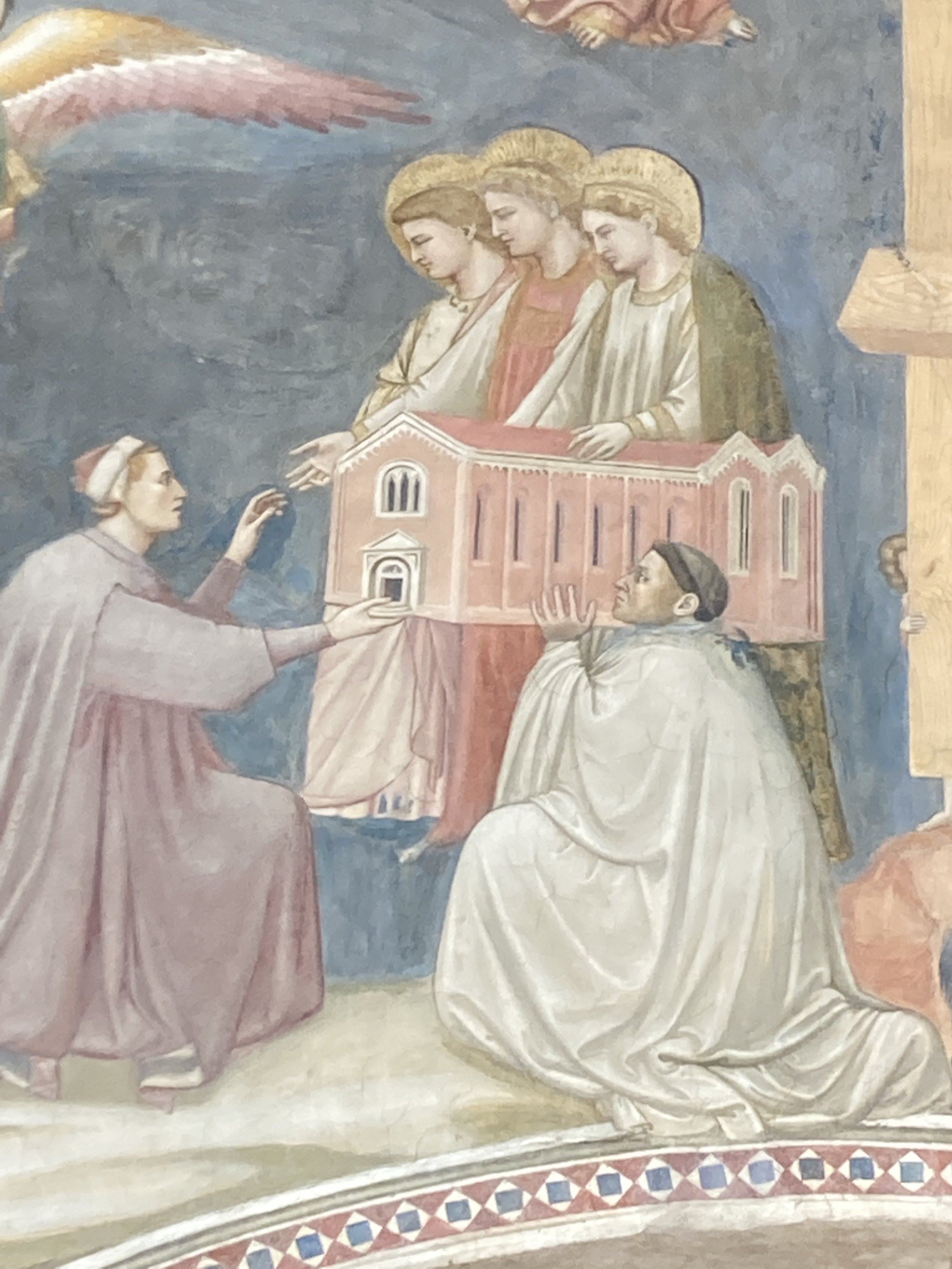
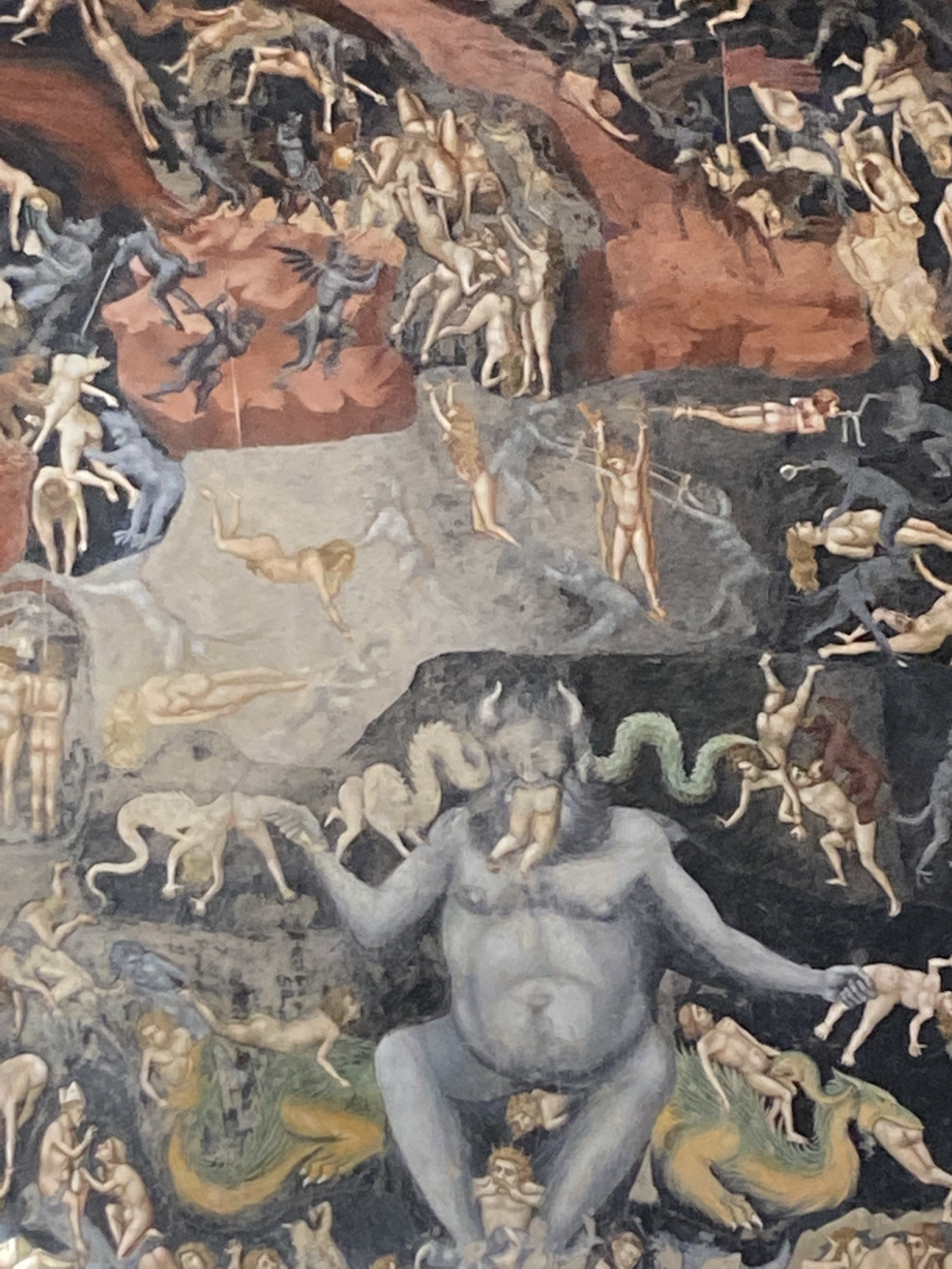
02953DB2-70B8-4662-A9C2-A2BE98E6AB8A.jpeg
7BD86F30-D7B3-4FED-8BA1-94BDF522EBC5.jpeg

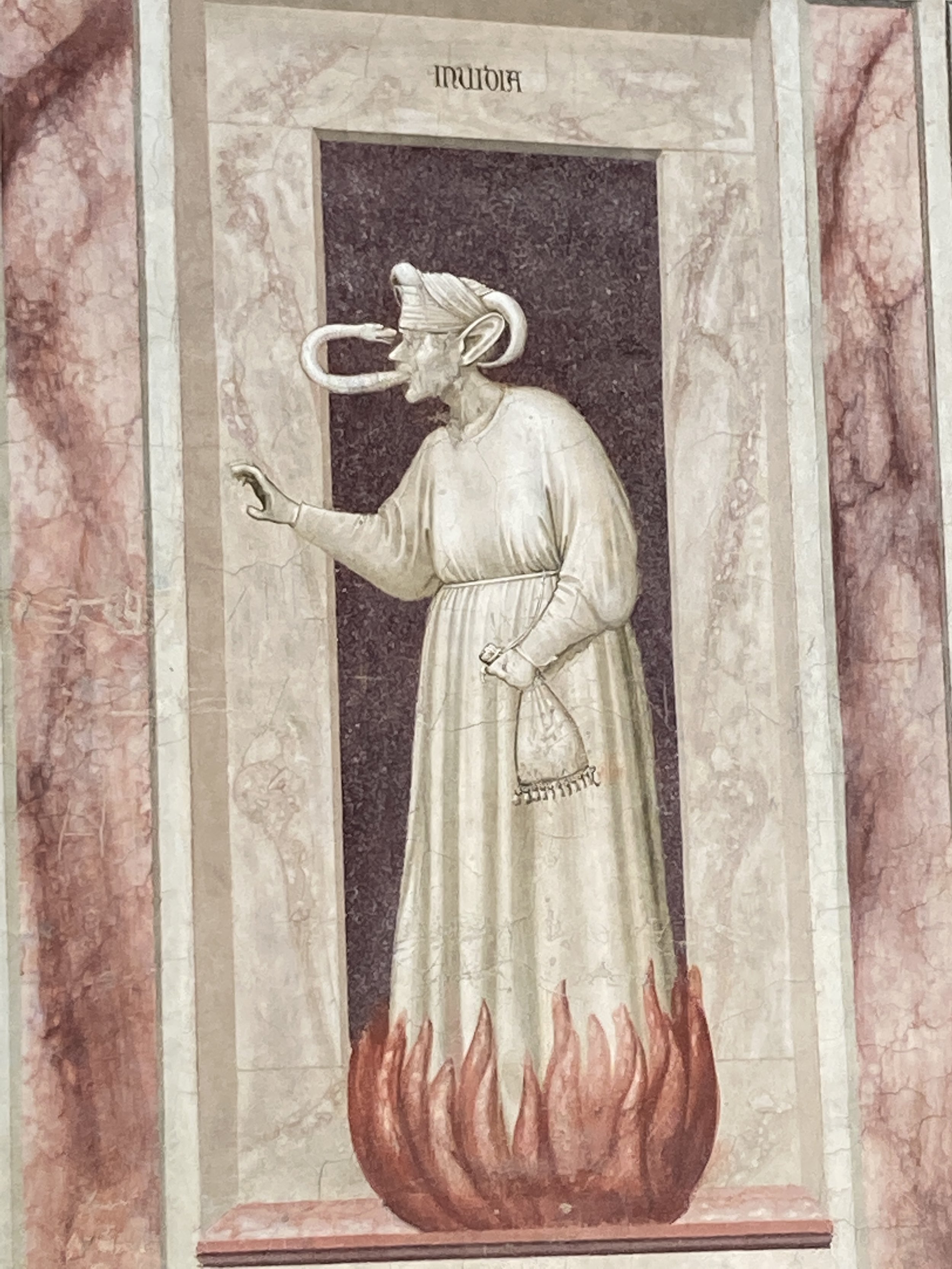
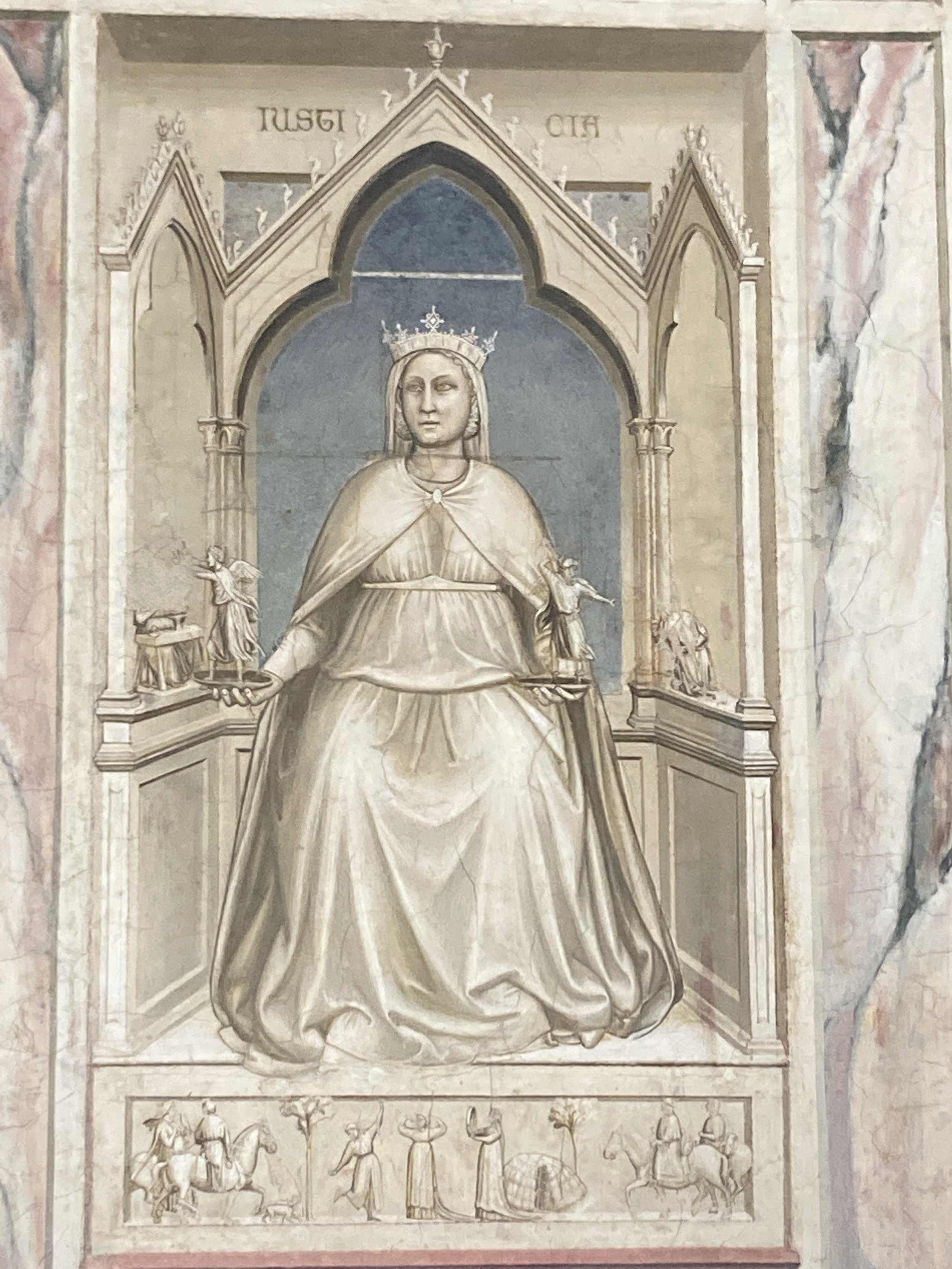
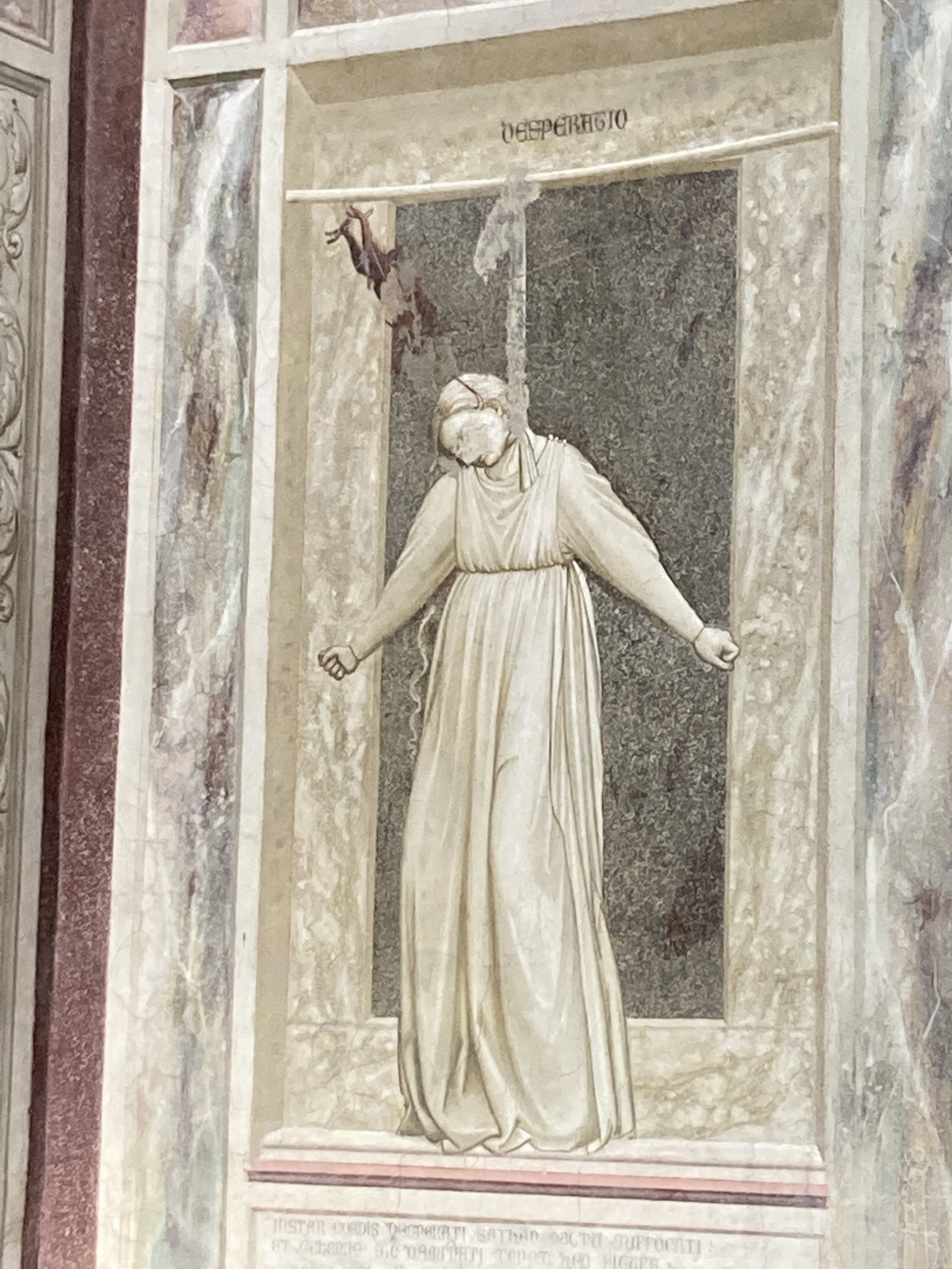
 Aside from bible tales, the allegories of Virtues and Vices are fascinating. Simplistic in design and color compared with the rest of the frescoes, without much adornment, the contrasting figures are as relevant and thought-provoking today as when painted in the early 1300’s.  Pictured below (left to right): Hope, Envy, Justice, Despair.
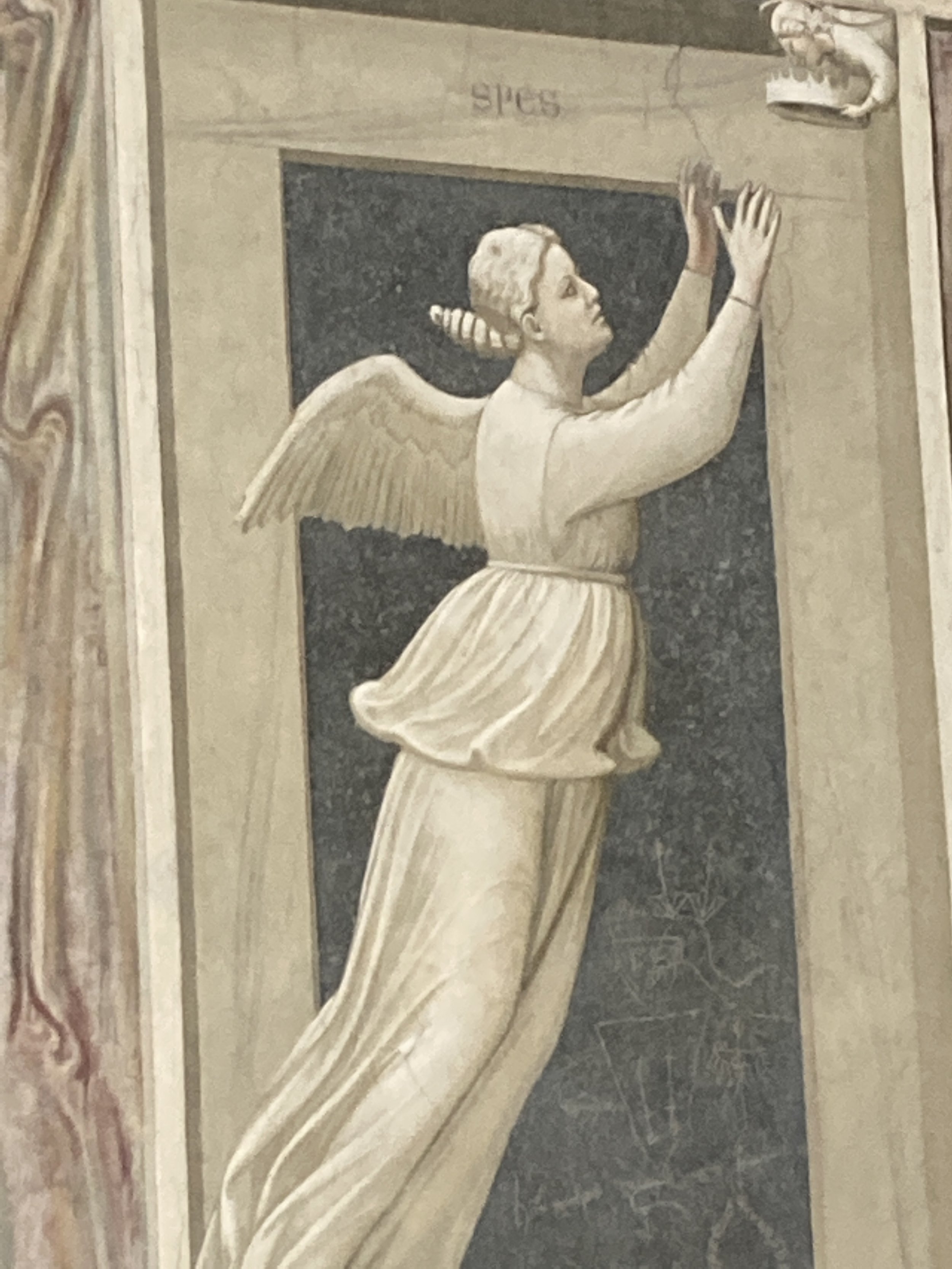
4C5AD129-D59F-470B-9EB2-322FA661A3CE.jpeg
110BAAAB-A1DC-4E39-BE86-AC7E7CF8B802.jpeg
AA4E6AA0-D7A2-4A57-B40C-BBAB6230F9CA.jpeg
95B4E54D-C0CD-4780-A163-280A71D38E4A.jpeg

The Scrovegni chapel is simply astonishing (my photos can’t capture its majesty).  One does not have to be an art historian, a religious scholar, or even a believer, to appreciate Giotto’s artistic brilliance and the power of these frescoes.  And for anyone with an interest in art, or simply in beauty, the Scrovegni Chapel in Padova is an experience not to be missed.

Detail from panel #33. The Crucifixion

 Even the smallest decorations - such as these quatrefoils - have incredible detail and depth. I could spend hours here looking at everything from the largest scene to the smallest detail. I think I’ll need to go back to Padova before too long.
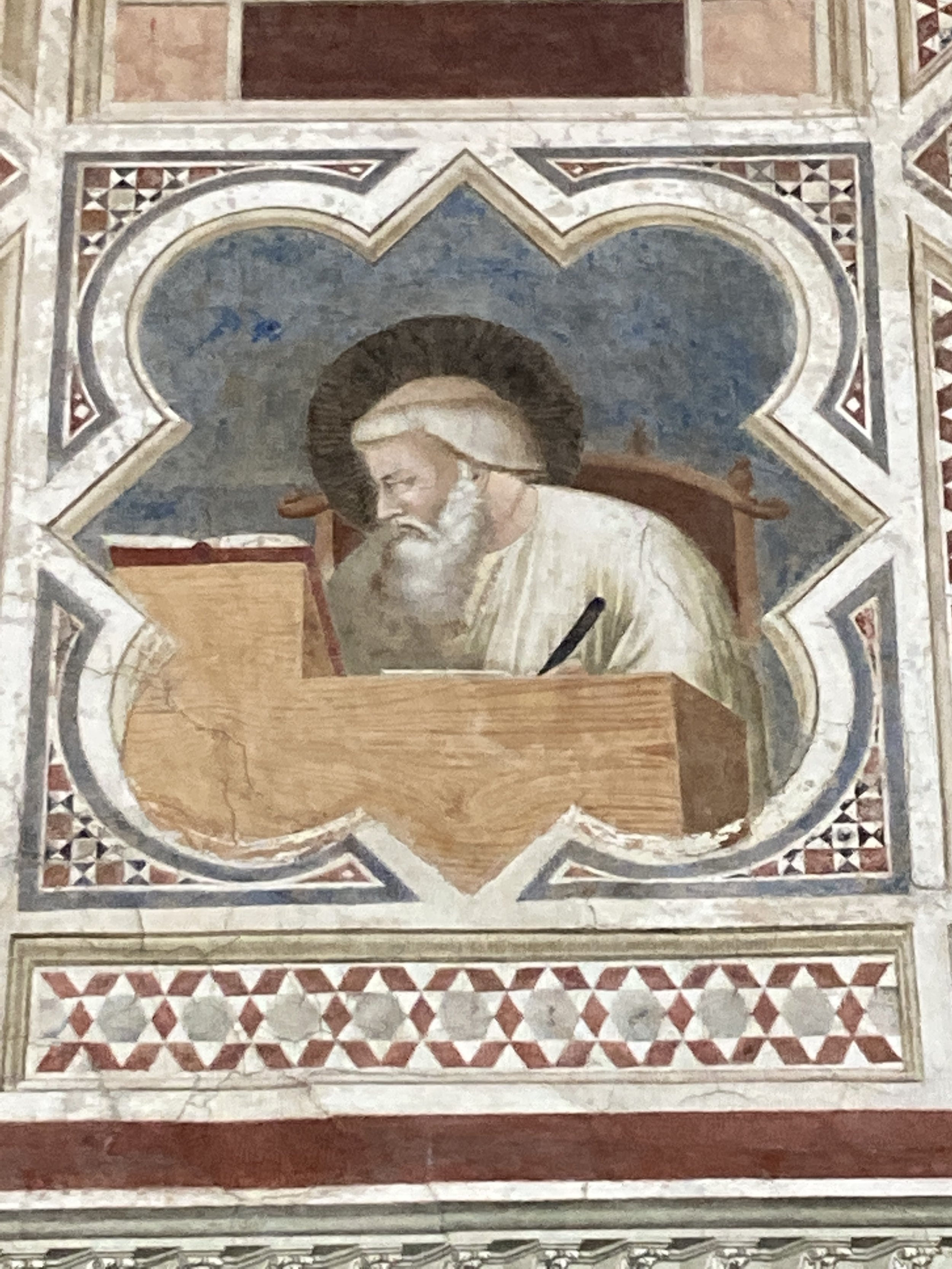
26CB2995-5E02-4711-ACAD-BD0C8393CDD6.jpeg
03182354-7136-4950-8E3D-A19F2B689A3E.jpg

Note: The Scrovegni Chapel is open to the public with advanced reservation tickets only. Before entering the chapel itself there is a short video (with subtitles in English) which gives a good history of the chapel. Admission is limited to about 25 people at a time with a time limit in the chapel of 15 minutes per group. A short time, but well worth it and sufficient to see this small space (especially after some pre-visit reading).

August 29, 2022 /Joanne Bartram
Scrovegni Chapel, Padova, Padua
#italytravel, Churches Italy, Italian Art, Italian art architecture, Italy, Padova, Padua

The Mystery In Italian Details

August 22, 2022 by Joanne Bartram in #lucca, Italian art architecture, Italy travel, Living in Italy, Lucca, Tuscany

Italy’s “big picture” is full of things to love - culture, art, architecture, music, food. Everywhere you turn there is something wonderful to be experienced. But sometimes, there is enchantment to be found in the smallest of details and in the little mysteries that no guide book can describe.

I am still amazed that after 3+ years of living in Lucca, I continue to find new small details to appreciate. The iron fixture near my apartment door that I noticed for the first time in April, the decorative brick arch just down the street, a small fountain tucked away in a rarely visited courtyard. Lucca presents a never ending series of discoveries!

Sometimes those little details are just noted in passing. Other times, a bit of mystery draws me back again and again, examining details, feeling intrigued, painting imaginary explanations in my mind. Often this occurs with some of Lucca’s many ruins and abandoned places. How I wish I could explore all the abandoned and locked churches, those ruined buildings with their encroaching vines and empty windows, the slowly decaying wooden doors.

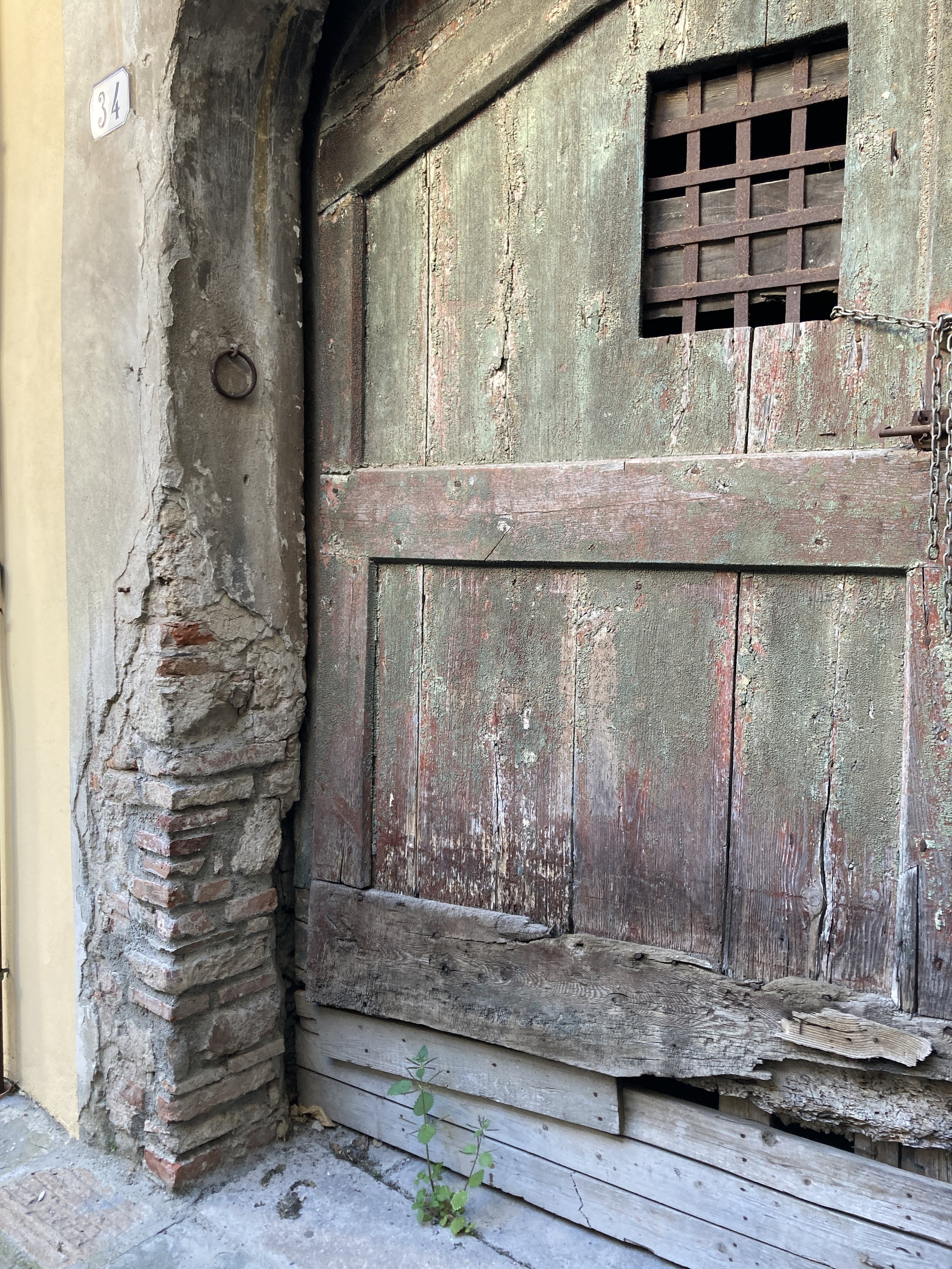
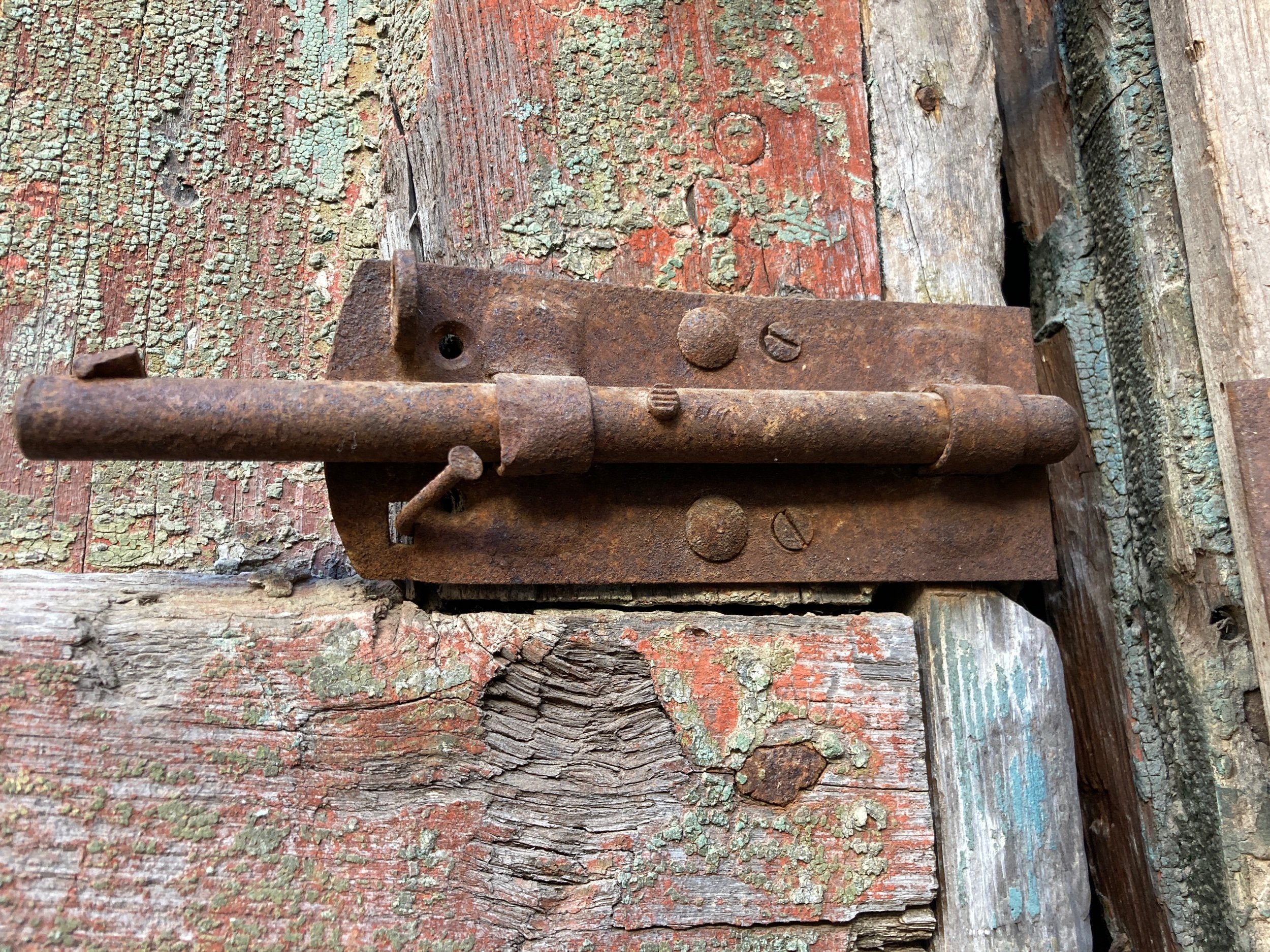
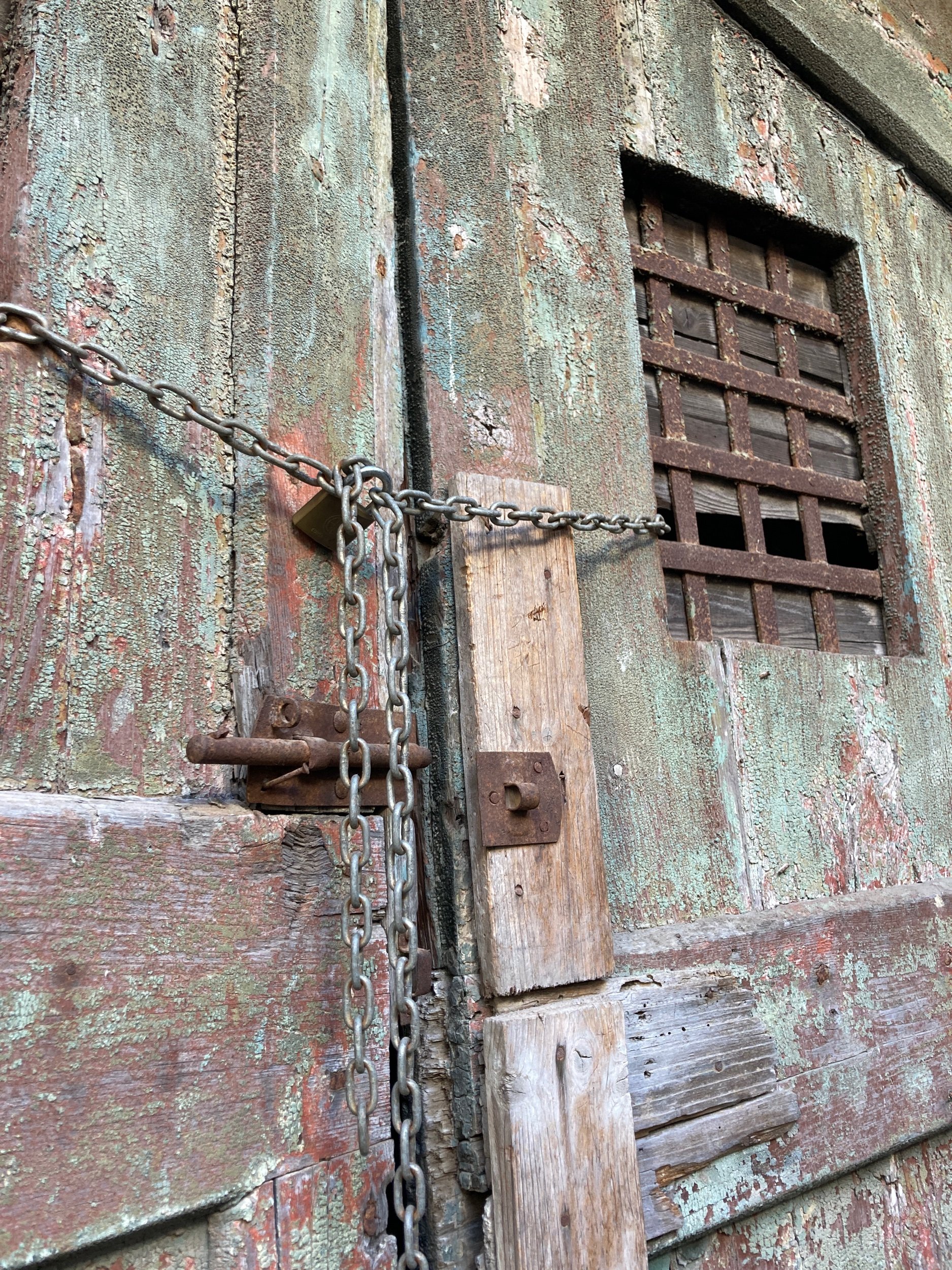
Behind my apartment building lies one of those abandoned places. The mystery is why this one spot - a garage - lies abandoned. It is surrounded on all sides by restored buildings, in fact the rest of the attached building is painted a sunny yellow and is full of apartments, flower boxes, and pretty doors. A simple line of color separates the two spaces.

So why is this place, a garage with old wooden doors, chained shut and abandoned? And is the window above a sign that there might have once been a living space up there? Was it perhaps the home of a carriage driver for one of the surrounding palazzi? A rough apartment for a not-so-favorite relative? A storage space, hay for the horses? Who knows? Certainly not I. But I often find myself stopping to look at it, as if someday I expect the answer to come to me.

There is beauty in this abandoned structure, especially in the small details. My camera loves this space with its rusting bolts, peeling paint, and crumbling wood. I think I will be disappointed if ever anyone comes along and restores it. It is perfect just as it is, mysterious and aged.

IMG_5384.jpeg
IMG_5383.jpeg
August 22, 2022 /Joanne Bartram
old doors italy, italian ruins, photo essay, rusted latches
#lucca, Italian art architecture, Italy travel, Living in Italy, Lucca, Tuscany

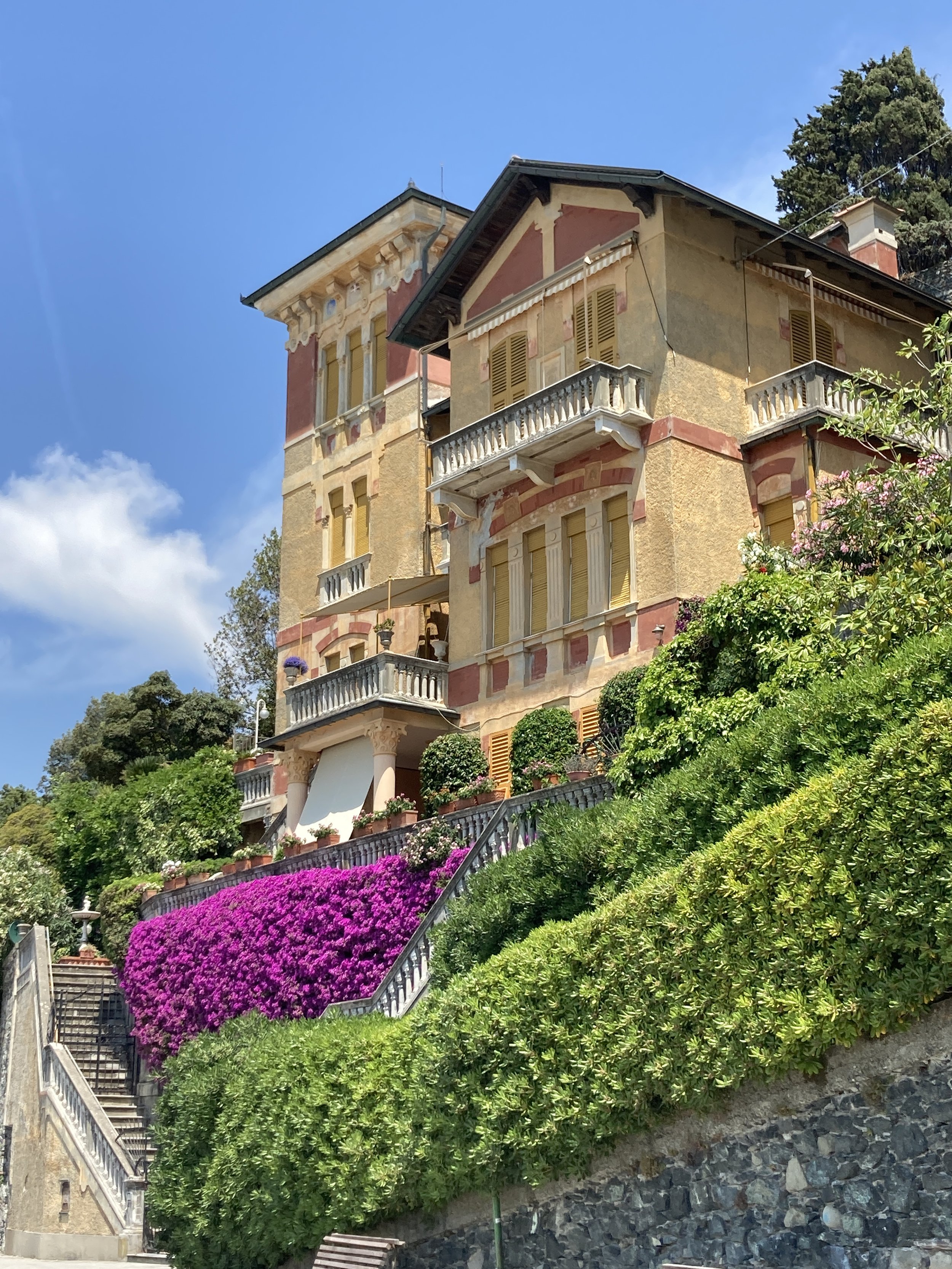
A beautiful villa, perched on the hillside above the harbor in Levanto.

Levanto: The Perfect Base for Exploring the Cinque Terre

August 15, 2022 by Joanne Bartram in #italiansummer, #italytravel, Italy travel, Liguria, summer in Italy

I am still enjoying my August break, so I’m posting mostly photos again this week, all from the town of Levanto, my favorite base for exploring the Cinque Terre.

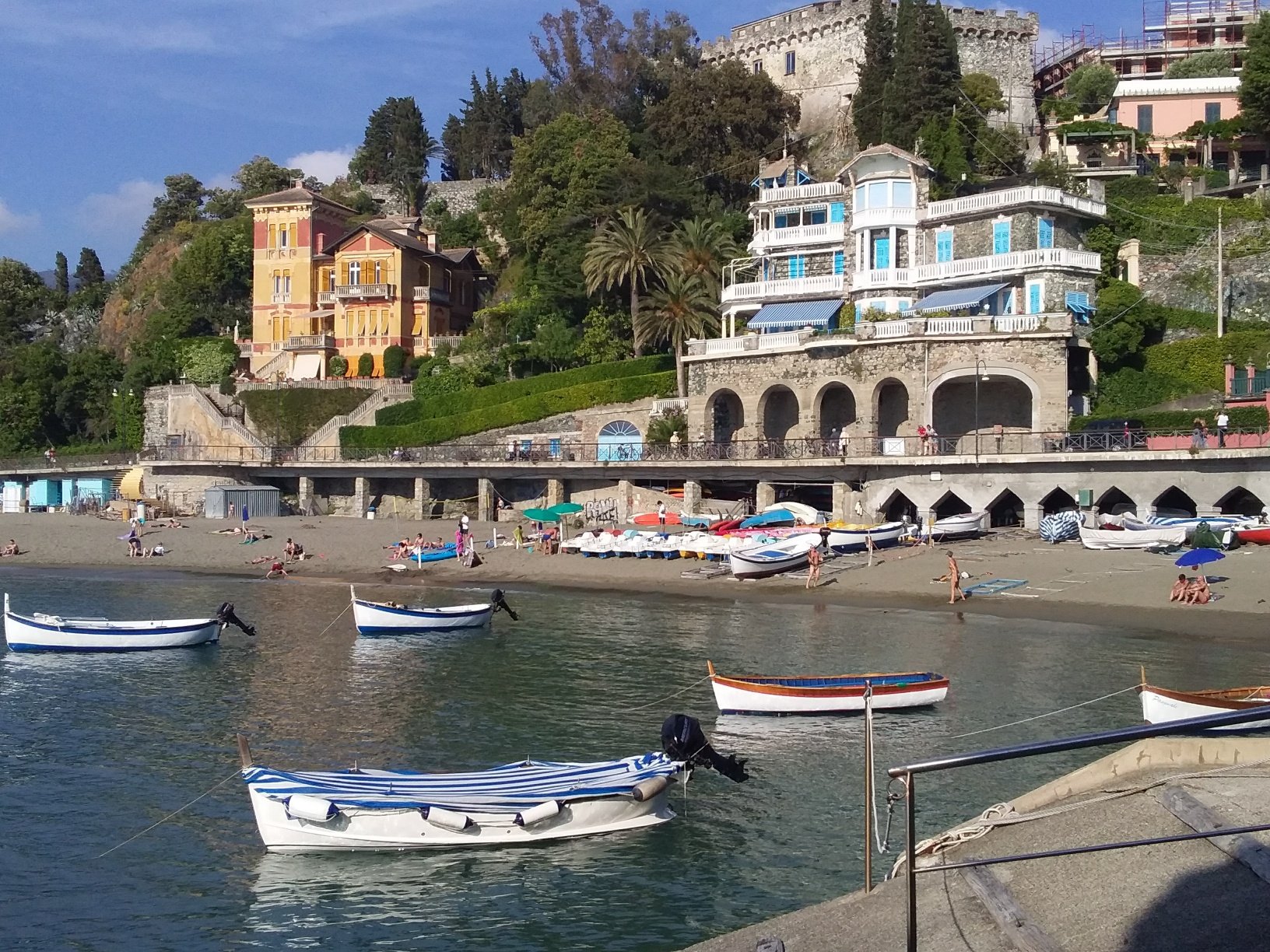
The harbor at Levanto. Ferries to the Cinque Terre and Portovenere call here.

Levanto is the first town just to the north of the Cinque Terre. It has many things in common with the 5 villages: beautiful views, a charming pedestrian center, good restaurants, a ferry dock with connections to the Cinque Terre villages.

010BFC00-82E1-40C2-A62D-9093BF684398.jpeg
B470825C-8415-4B1E-8F5C-0C3C38A11315.jpeg
CC8B806C-8914-4C25-A12B-41A12CF762C1.jpeg

Levanto (the locals pronounce it with the accent on the first syllable Lay-vanto) also has fewer crowds, lower prices, and a great stretch of sandy beach. There are gorgeous villas and gardens, an historic old town with winding lanes, a medieval loggia, ancient churches, and an easy hike to an old castle.

708D1ECC-794B-408F-A2A9-92D37DF6B86B.jpeg
D6BFE041-4B7A-4B5D-9933-3305019BB988.jpeg
6E5E095F-5729-4793-B089-EE8017F2D0CB.jpeg
F017068E-D5AB-4BEC-80CB-98A389B8F99C.jpeg

Although it is a definitely a beach town, somehow it feels more like a community, a place to settle in and relax. For me, this is in part because of the friendly welcome I always find at the charming B&B A Durmì where sisters Chiara and Elisa make you feel like part of their family. They have great rooms, the prettiest courtyard, and delicious breakfasts. All that and beach towels, umbrellas, and great recommendations for dining and local activities.

0D31BA42-C31D-4DAF-85DF-FD374D2E28B7.jpeg
21A7B2F5-27EB-41F3-AA95-92FB59CE009E.jpeg
8ECDC314-0C30-4844-B57F-E388C4A9372C.jpeg
F1AFF8CD-8714-420B-B9F2-5DCDBC9DDCC7.jpeg

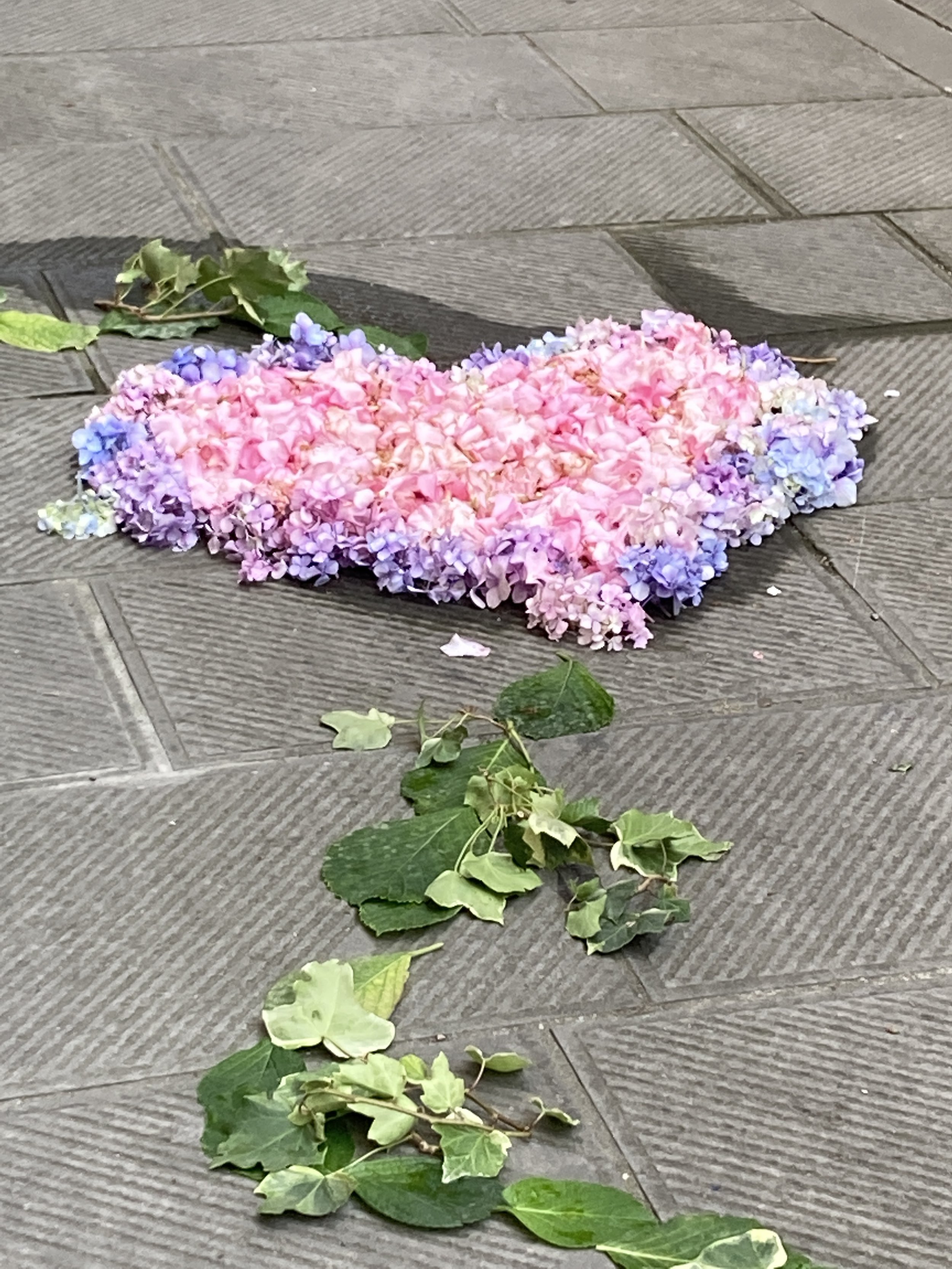
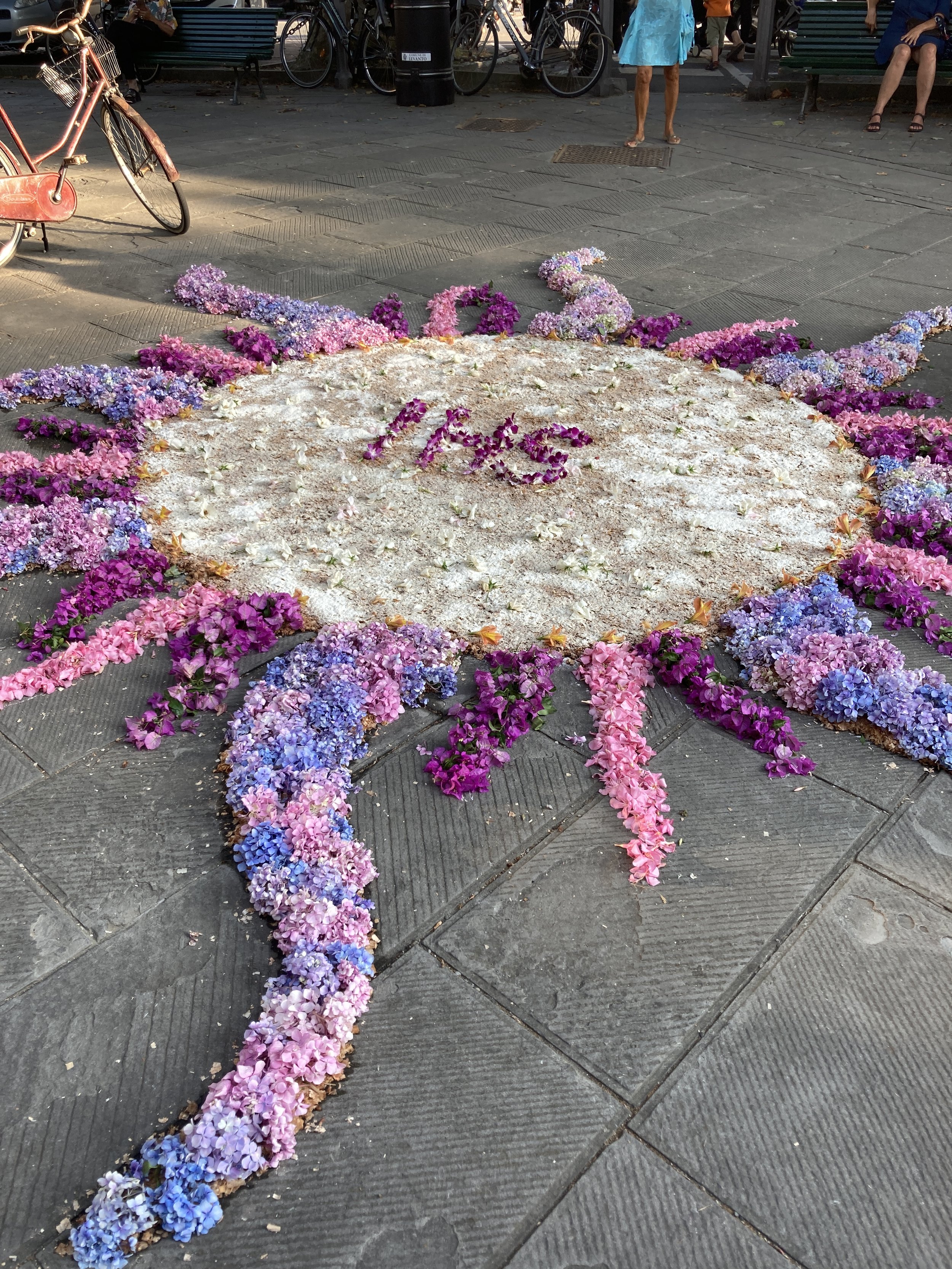
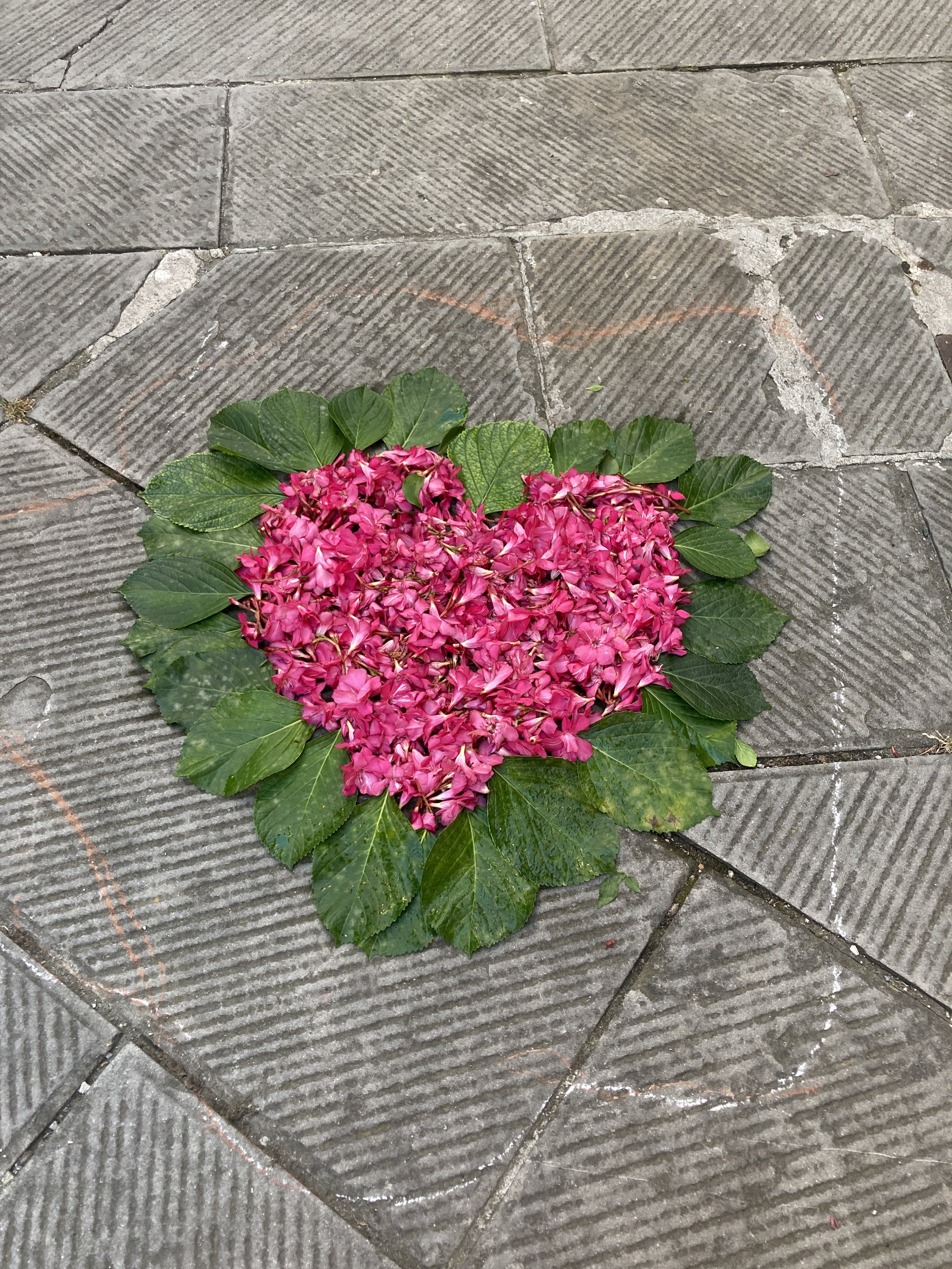
Or maybe it’s the small town activities, like the Infiorata Festival that took place during my June visit. A team of local women and children arranged a path of flower displays leading through town to the church in celebration of a religious holiday.

96AE74E8-2F9D-453F-A23E-4EF414218577.jpeg
5611B771-8A41-4AFA-A91F-9DF105230321.jpeg
4787ADBF-C96E-4A13-8FD5-514ED917C944.jpeg

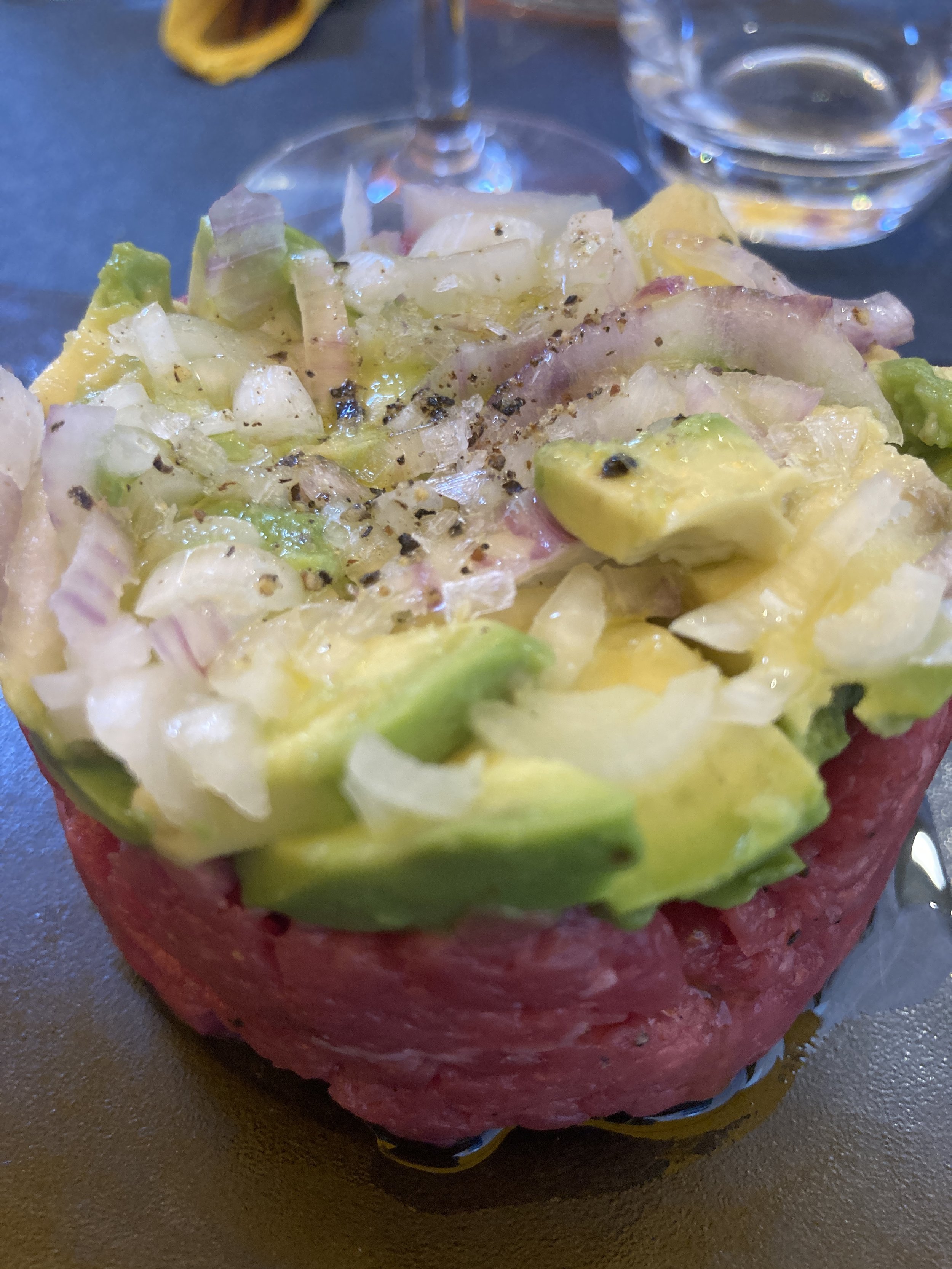
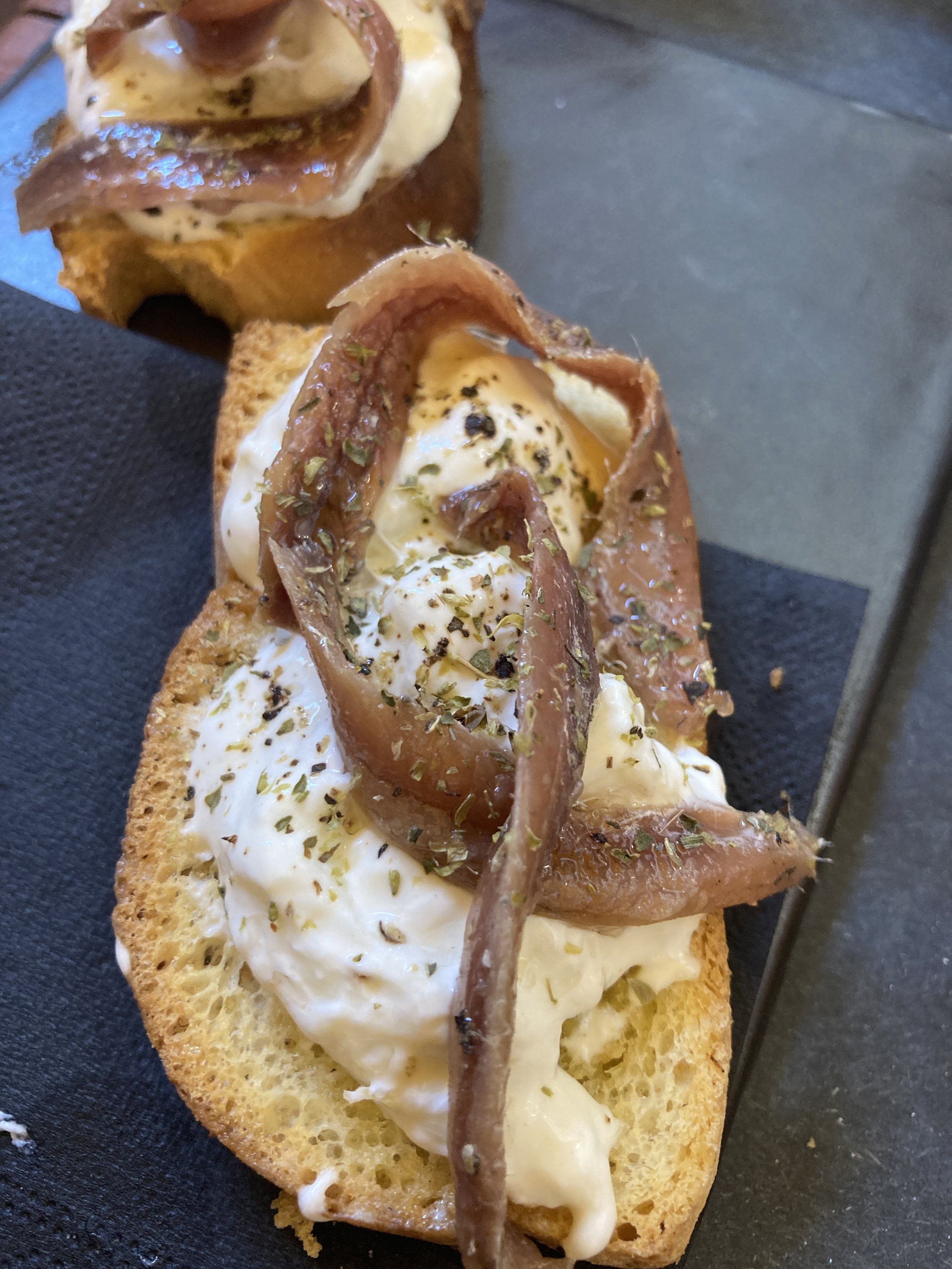
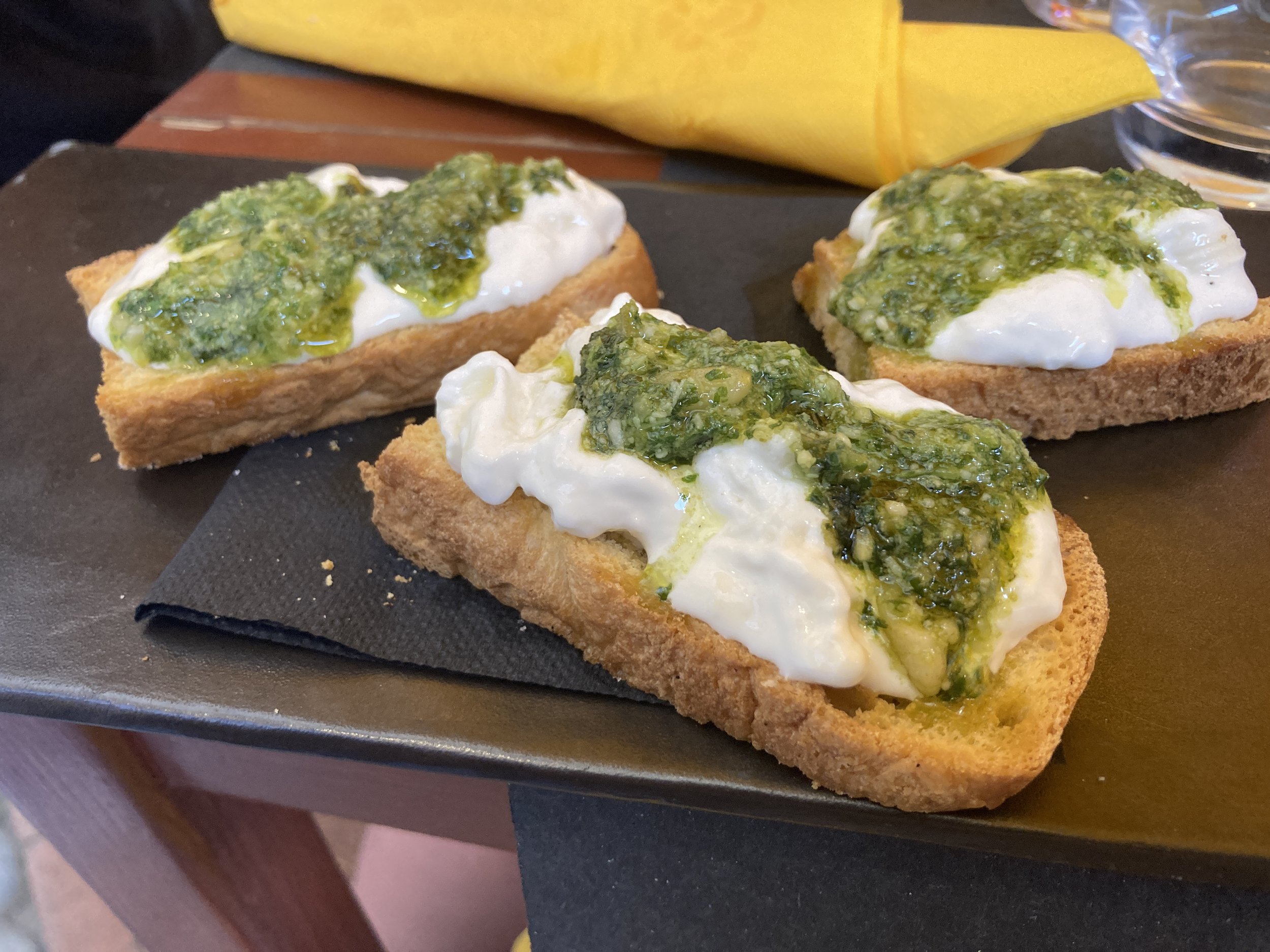
Of course there is also great food to be found in Levanto - seafood, pesto, and a local specialty of giant fried ravioli stuffed with herbs. It’s worth the effort to find wine bar La Compera. This is a small place tucked away in a hidden piazza, away from the tourist center. They serve amazing bruschetta and local delicacies along with a nice wine list and great cocktails. They even made “mocktails” for the kids!

CFC9DEE7-7C2B-474B-ACB1-C716D6616897.jpeg
9A21CC3A-089C-49F5-8A9A-449595D05B7E.jpeg
700D2B4B-6589-48E8-B38C-7675982E36CE.jpeg
9591952C-08D1-4AC5-8117-492CFEB898F5.jpeg

Summer holidays + Levanto + the amazing coastline of Liguria = summer perfection!
Contacts: A Durmì Via Viviani 12 19015 Levanto SP email: info@adurmi.it

La Compera. Piazza della Compera 3. 19015 Levanto SP. email: lacompera@gmail.com

August 15, 2022 /Joanne Bartram
Levanto, A Durmì BNB, Liguria, Cinque Terre
#italiansummer, #italytravel, Italy travel, Liguria, summer in Italy

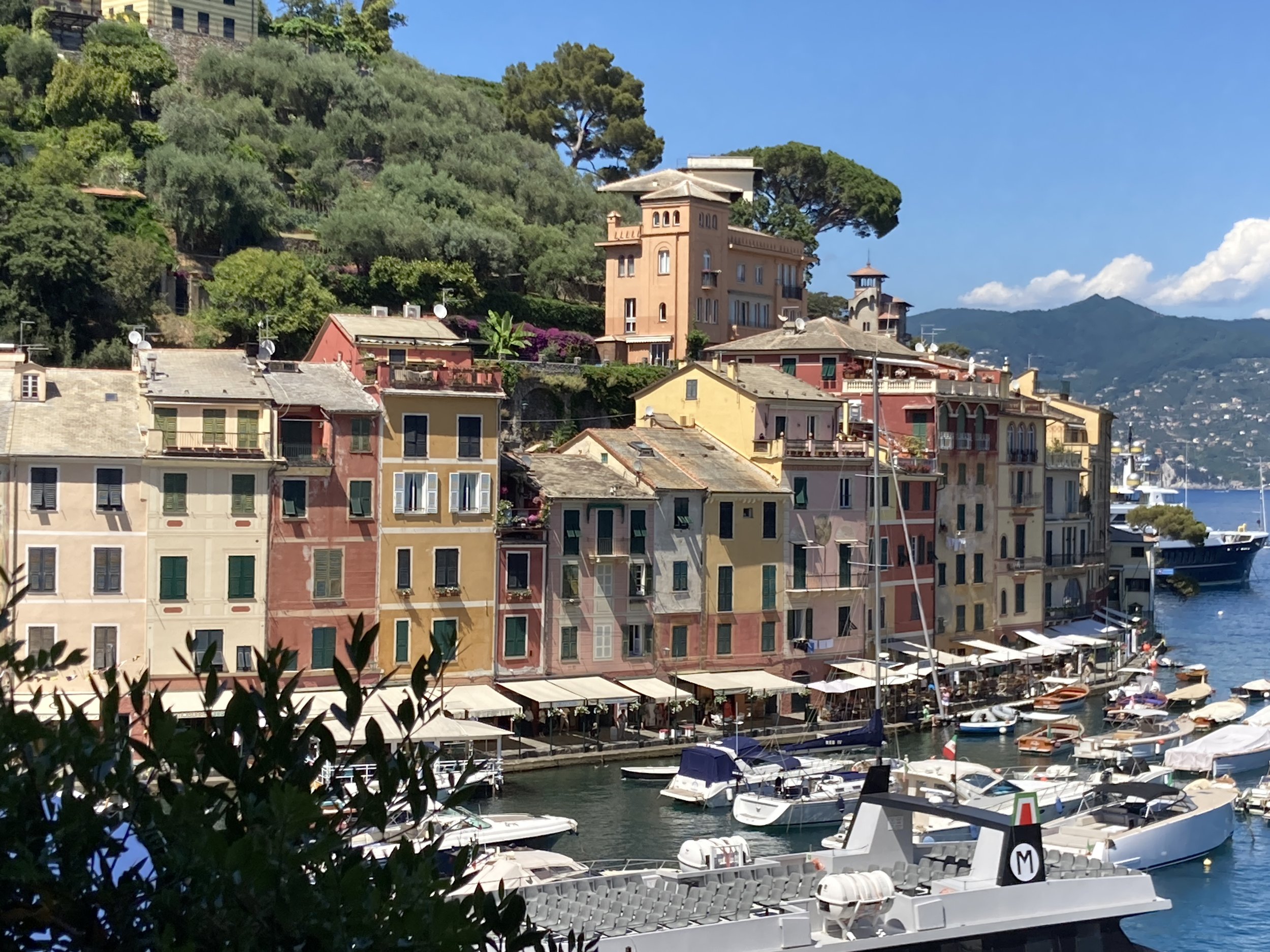
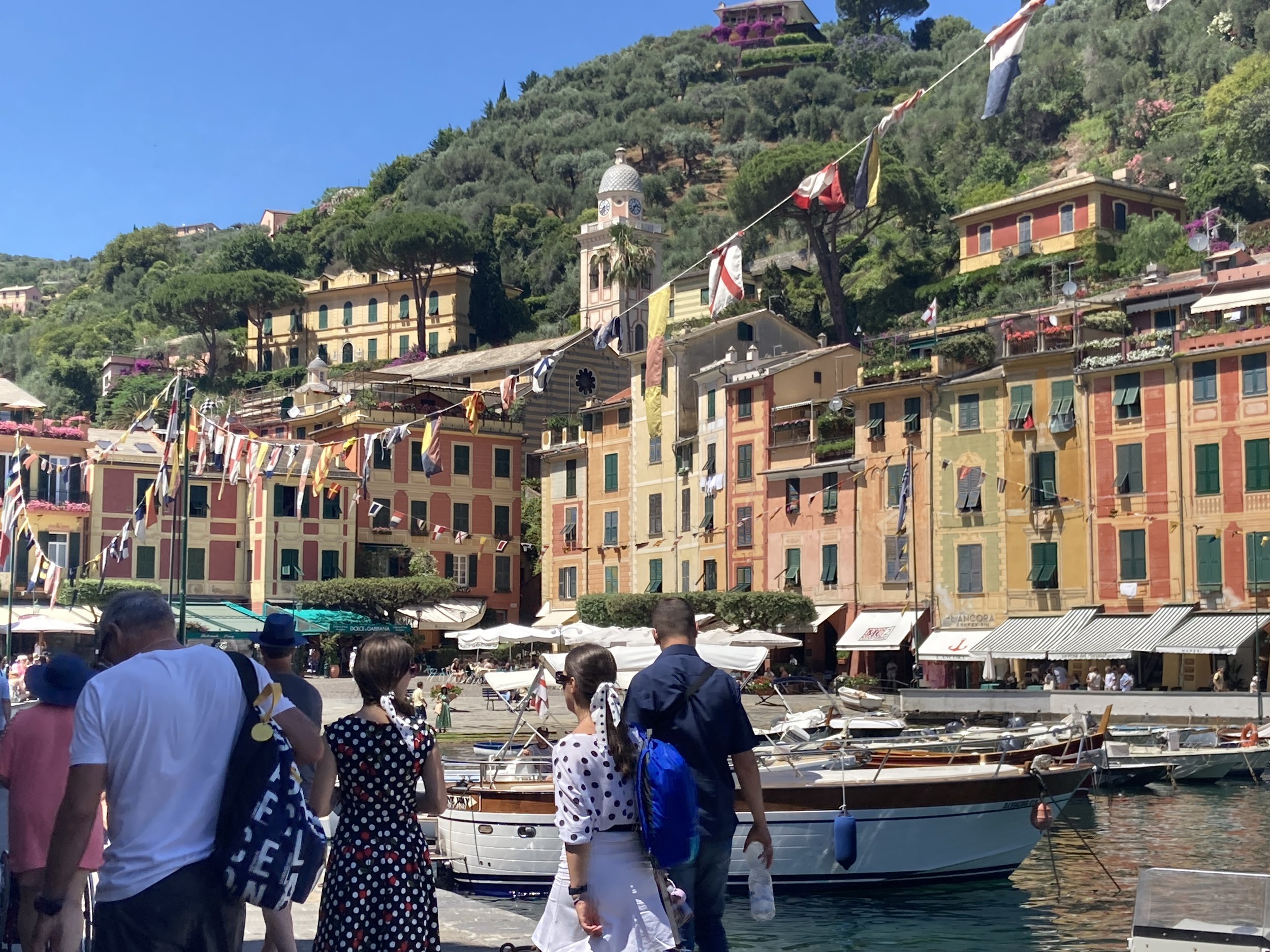
Portofino, where the rich come to play and the rest of us come to watch.

August Holidays in Italy

August 08, 2022 by Joanne Bartram in #italiansummer, #italytravel, Italy travel, Liguria

Italians head to the beach in August. This is a typical beach club in Bonassola.

It’s August, the Italian holiday month. Tradition says to close down the shops, take time off work, and head out of town.

Don’t be surprised to see the “chiuso per ferie” (closed for holiday) sign on a favorite restaurant or shop, especially mid-month for the Ferragosto public holiday.

The beach is a favorite destination, providing time to swim, relax, read, do crossword puzzles by the sea, or just refresh and cool off.

Think colorful beach umbrellas, boats on the horizon, and lots of bronzed bodies off all ages, sizes, and shapes - that is the unabashed Italian way. Isn’t it wonderful?


In that spirit, I am taking an August writing break. The next few posts will be mostly photos, many taken along Italy’s dramatic coastline. I hope they keep you cool and daydreaming of summer in Italy.

CE65F2EB-6415-4942-9901-E9F49FE2B290.jpeg
6D88F809-F6FC-41E8-8037-EA31E359E047.jpeg
FA456B16-F475-4E41-B6D9-364588401D9B.jpeg

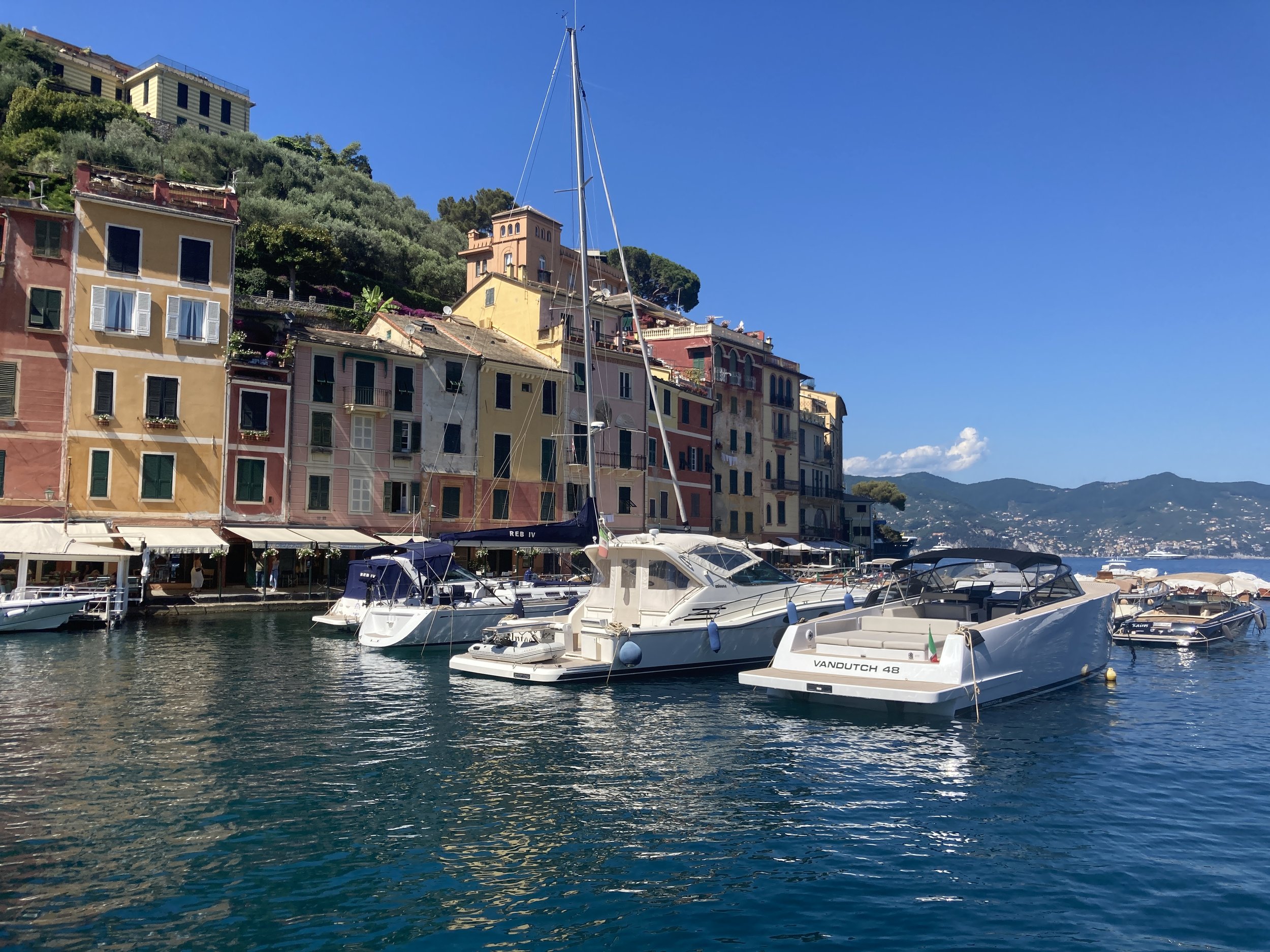
Today - Portofino, enclave of the rich and famous. The water is blue, the harbor charming, the surrounding cliffs dramatic, and the yachts the stuff of fantasy. It’s a picture postcard of a town.

Yachts from all over the world anchor in Portofino’s harbor. Here, if you have to ask what it costs, you definitely can’t afford it ! And that includes the gelato.

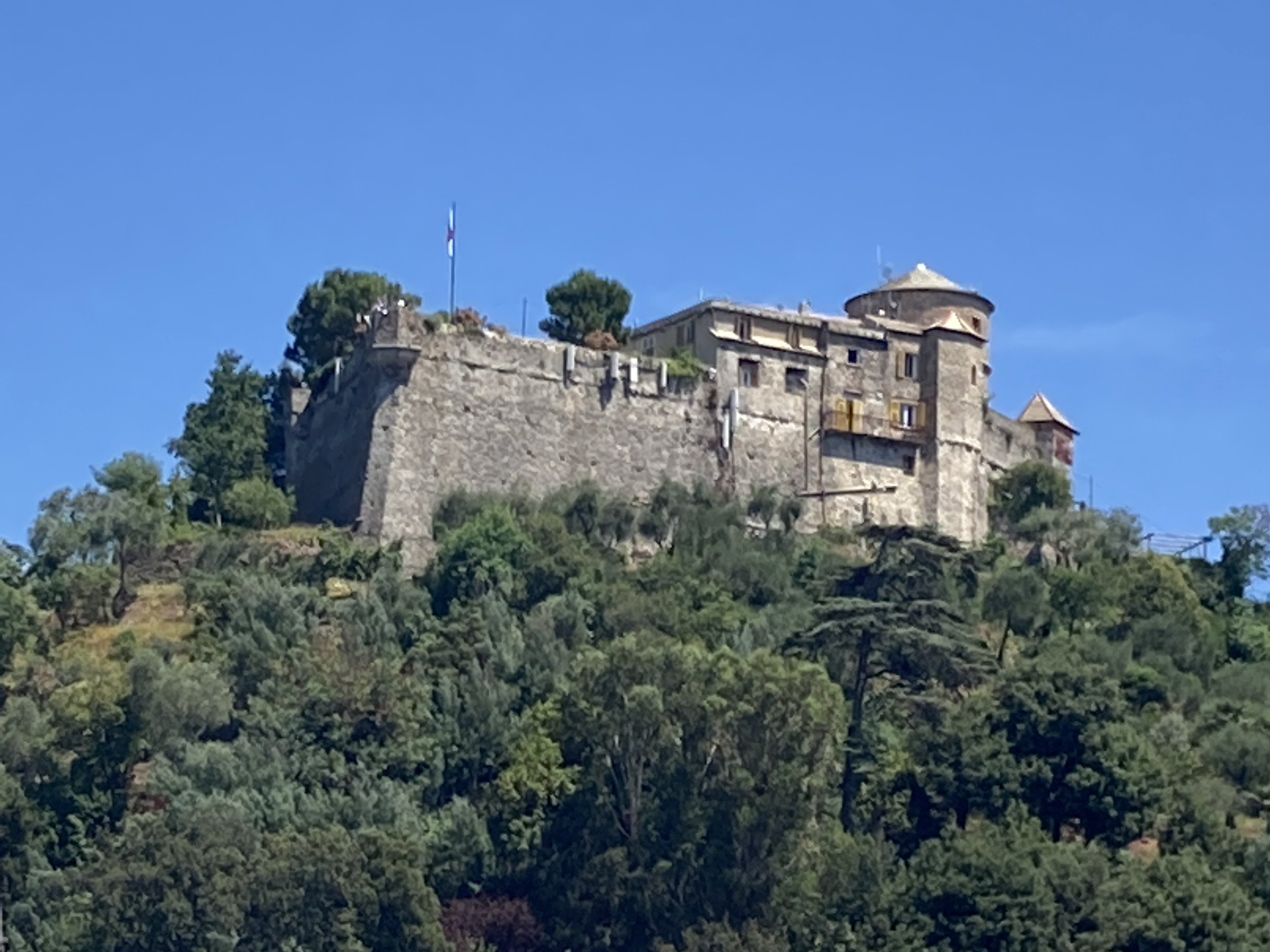
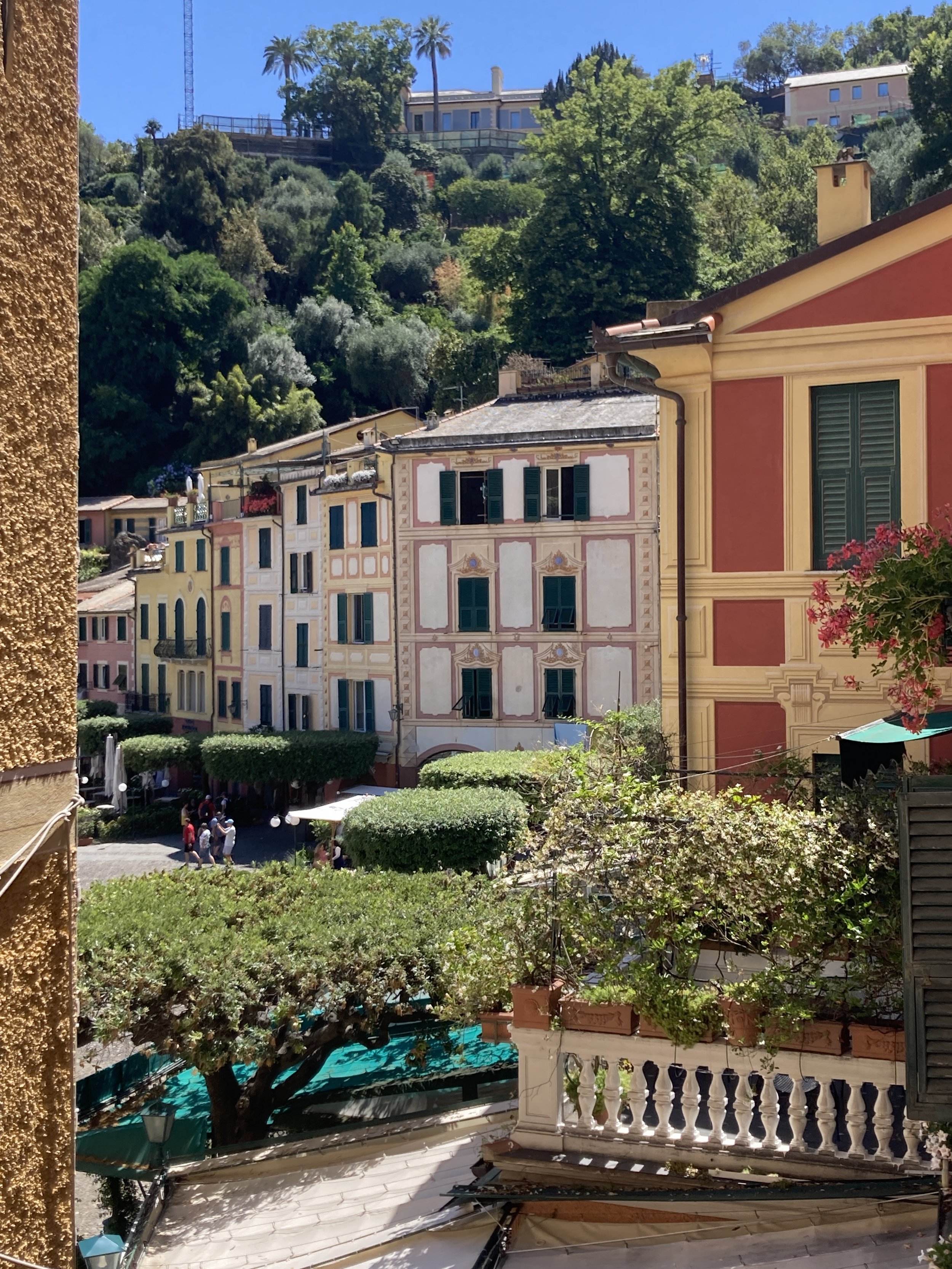
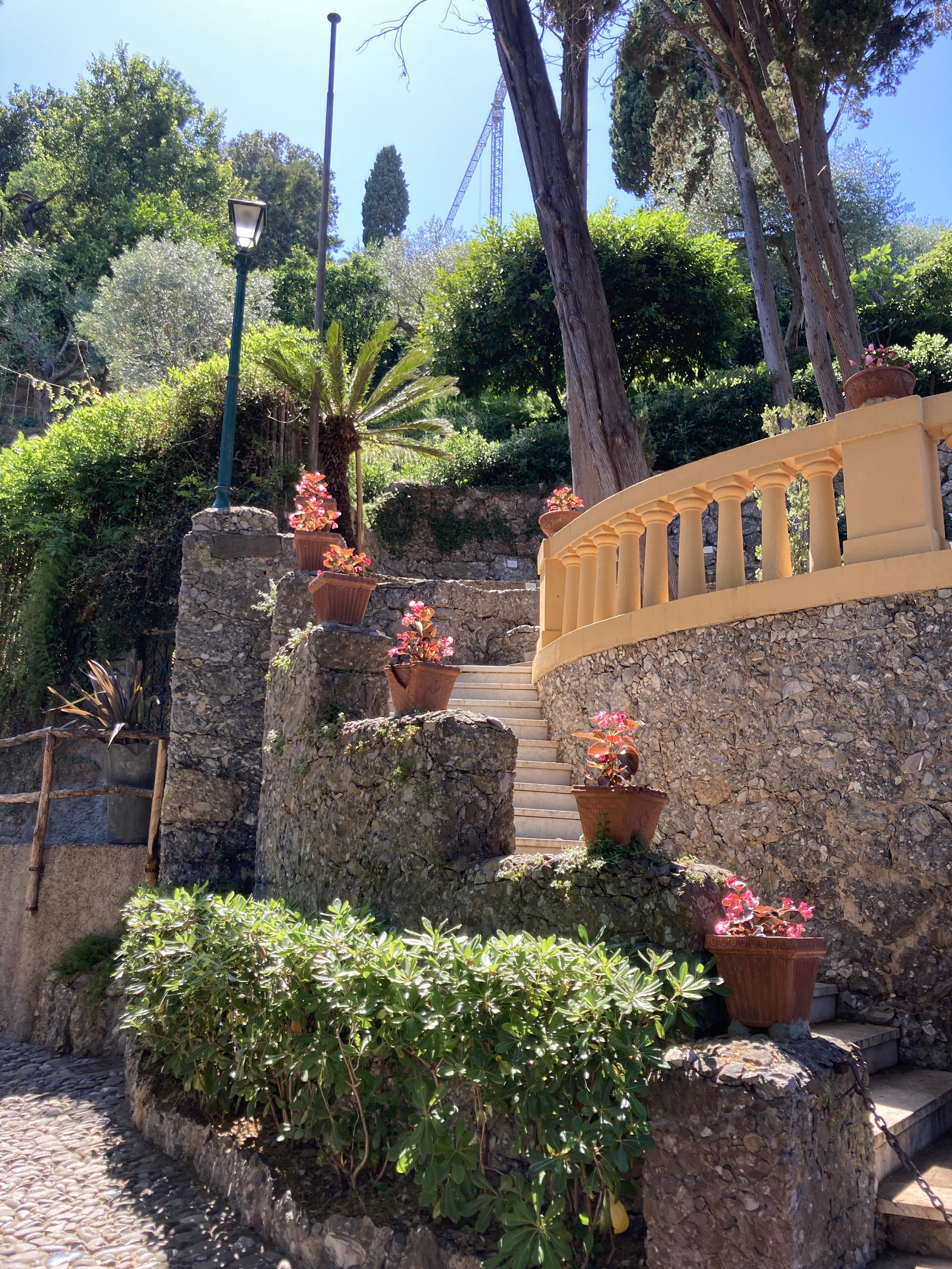
A walk through town weaves past colorful houses, pretty gardens, high-end shops, small churches, and even a view of the castle up on the cliff. Stop for a harbor side gelato before boarding the ferry back to Rapallo or Santa Margarita. It’s hard to beat summer along the Ligurian coast !

EF502767-02C5-4711-AB14-76E609D57F19.jpeg
1E5A1FA9-33A1-4E58-94F4-967D3CA3278D.jpeg
7DCE40E3-3093-4F49-A780-BC35B3C6D7DB.jpeg
30874D6C-39DD-4C98-8370-A3423089E3B4.jpeg
August 08, 2022 /Joanne Bartram
Portofino, Italian Summer, Liguria
#italiansummer, #italytravel, Italy travel, Liguria

The church of Santa Margherita D’Antiochia sits just off the harbor and Piazza Marconi in Vernazza.

Off The Beaten Path in Vernazza

August 01, 2022 by Joanne Bartram in #italiansummer, #italytravel, Italy travel, Italy, Liguria, summer in Italy

Vernazza is crowded in June (even before peak season).
Vernazza is one of the five little villages that make up the Cinque Terre, stretching along the Ligurian coast of Italy. 4 of the 5 towns are perched right along the sea (from north to south: Monterosso al Mare, Vernazza, Manarola, and Riomaggiore). The fifth village is Corniglia which sits nearly 400 steps up a hillside. Once a string of isolated fishing villages, the railroad made the region more accessible and the tourists soon followed. Today the Cinque Terre is a UNESCO World Heritage site, part of a national park, and a popular tourist destination.

Many would argue that the whole region has become much too popular with tourists and that is probably most true of picturesque Vernazza. It can be a very crowded place, especially in the summer.

And yet, it is a magical place to visit. Vernazza has a natural harbor surrounded by dramatic cliffs with the ruins of a castle and tower, an ancient defense against pirates, facing out to sea. The small harbor plays host to the ferry dock, fishing boats, lots of sunbathers along the rocks, and a small beach.

Colorful boats in Vernazza’s harbor

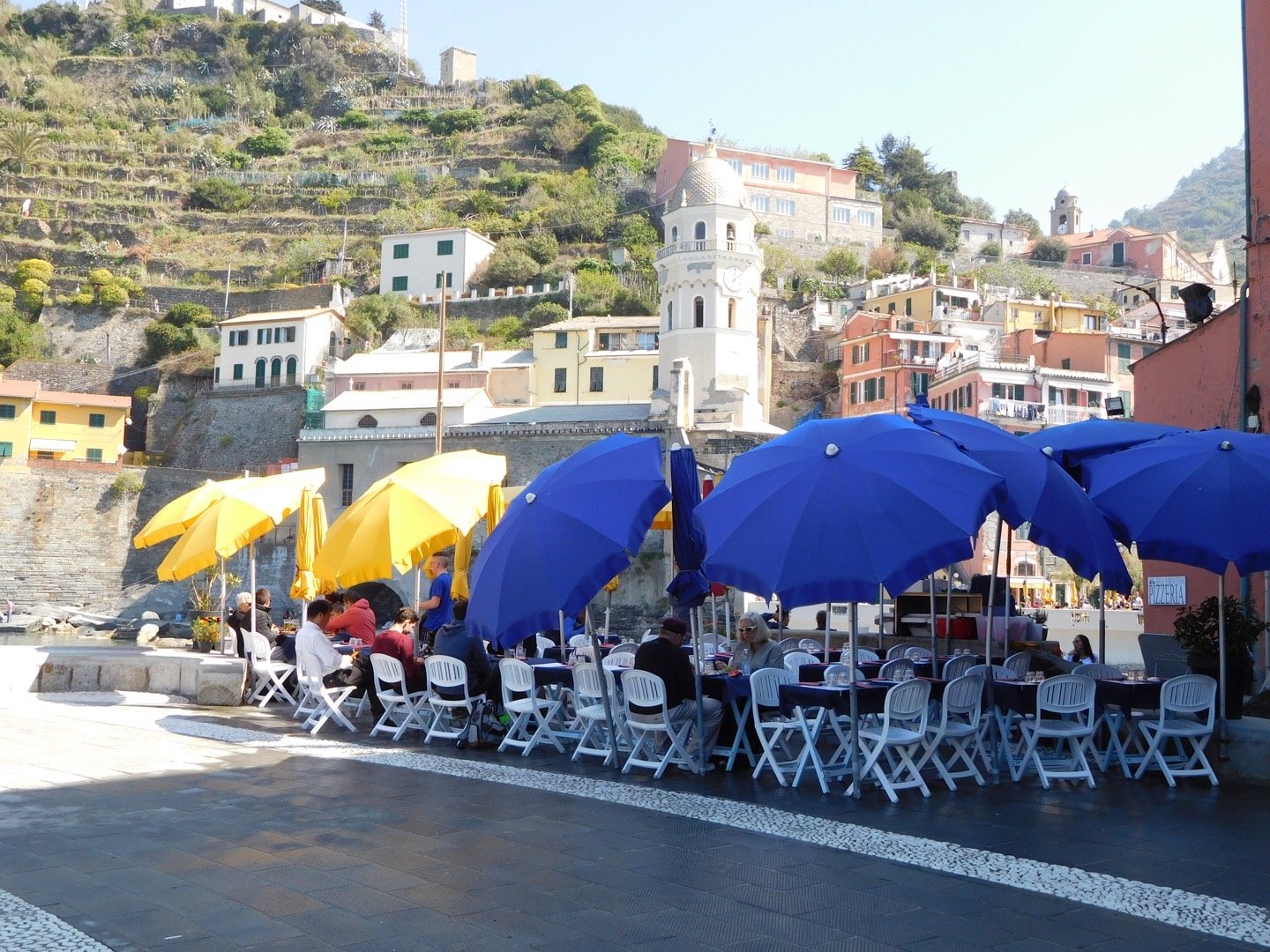
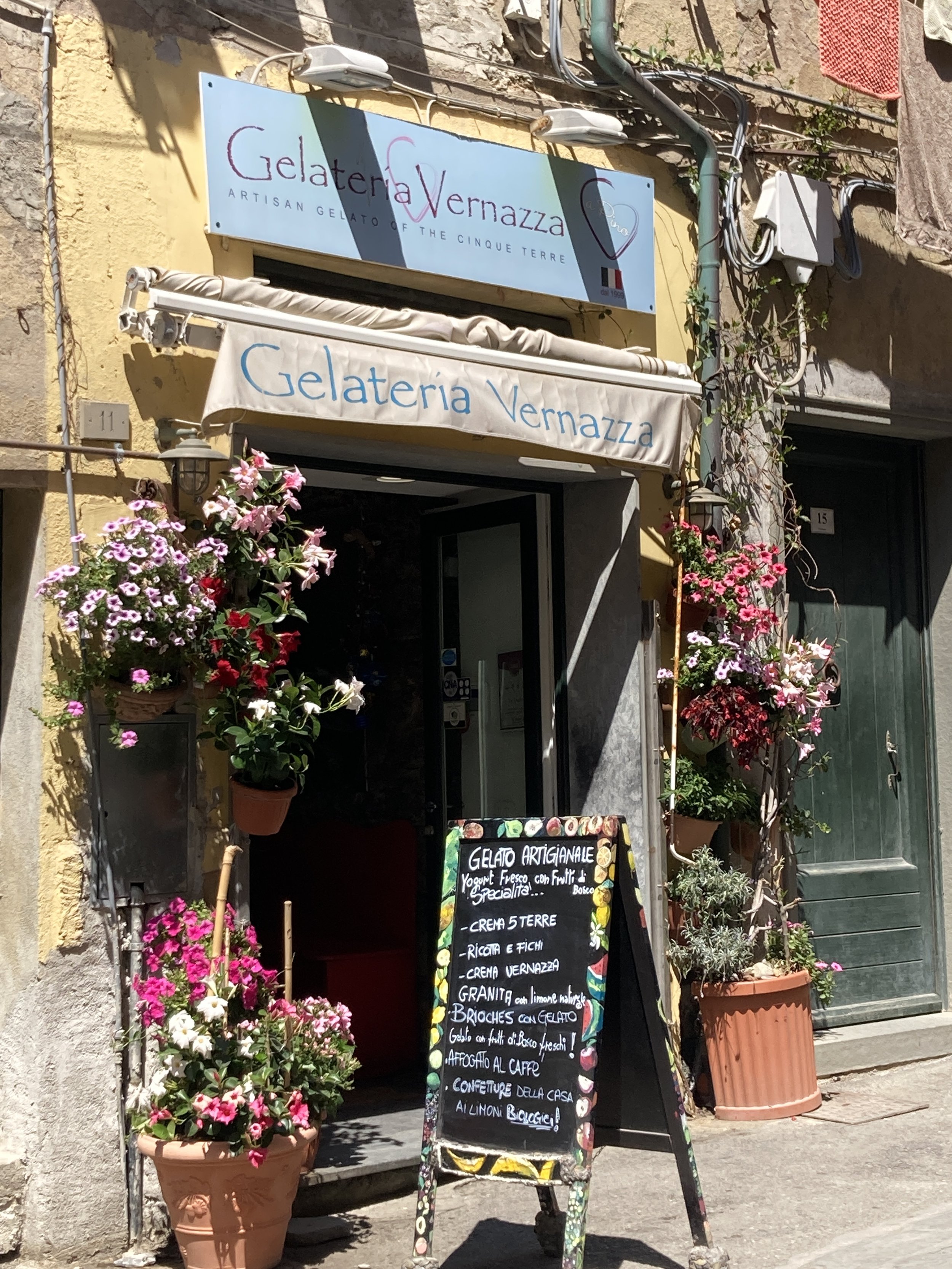
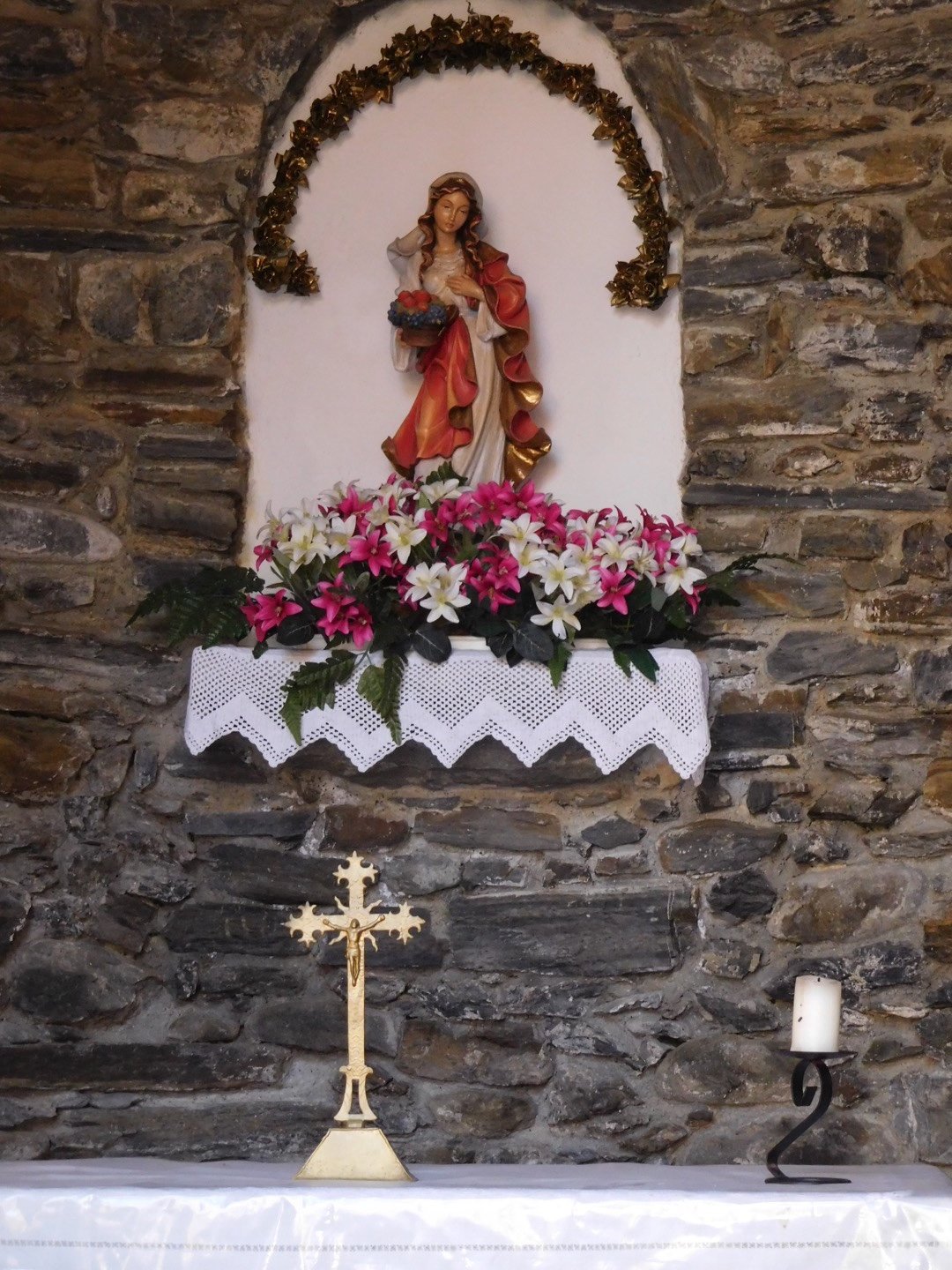
Standing tall above the harbor is the church of Santa Margherita D’Antiochia with it’s unusual octagonal campanile (bell tower). It is this church and the harbor that is the classic view of Vernazza and the photo taken my countless visitors (top photo). Nearby is pretty Piazza Marconi ringed with cafes and restaurants. From there a single main street links the harbor with the train station on the opposite side of town. Along the street is an arch leading to another small beach, shops, gelaterie, a small street-side chapel, and lots and lots of tourists.

AF37F48E-7A46-403A-9273-78A24AC98B73.jpeg
D6220FF9-BC83-44B7-8F97-FFAC8F26974B.jpeg
952770A5-35EC-46E8-9A37-0A1627B23C26.jpeg
570048BE-1841-4C8A-8A00-CD1C43052AF2_1_201_a.jpeg

When I visited in mid-June, with my daughter and two oldest grandkids, the crowds had already arrived though had not yet peaked. After a harbor side lunch we headed out along Via Roma. After a while we decided to escape the crowds by taking a left hand turn and heading up some steps to get above the fray. What a good decision!

49DC892C-04FB-4B6F-91BC-30FF1BC14C2A.jpeg
C397EF48-EBA5-4E86-B309-97D14521693C.jpeg
C5AD0CAA-22A8-4C12-9FA2-19E3E69DEBDB.jpeg
65DA7A51-7025-44D8-9BDA-D76C892B5C83.jpeg

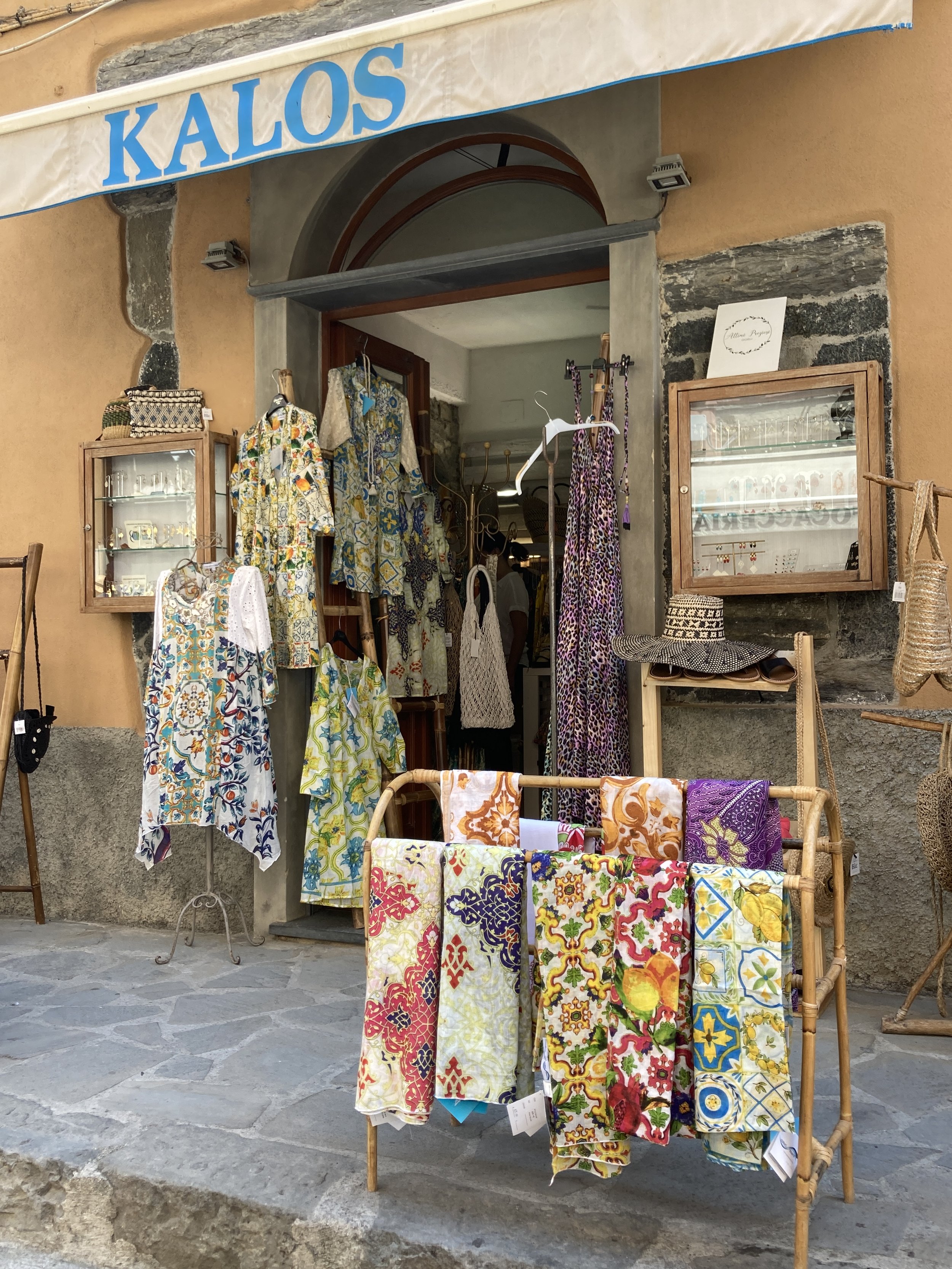
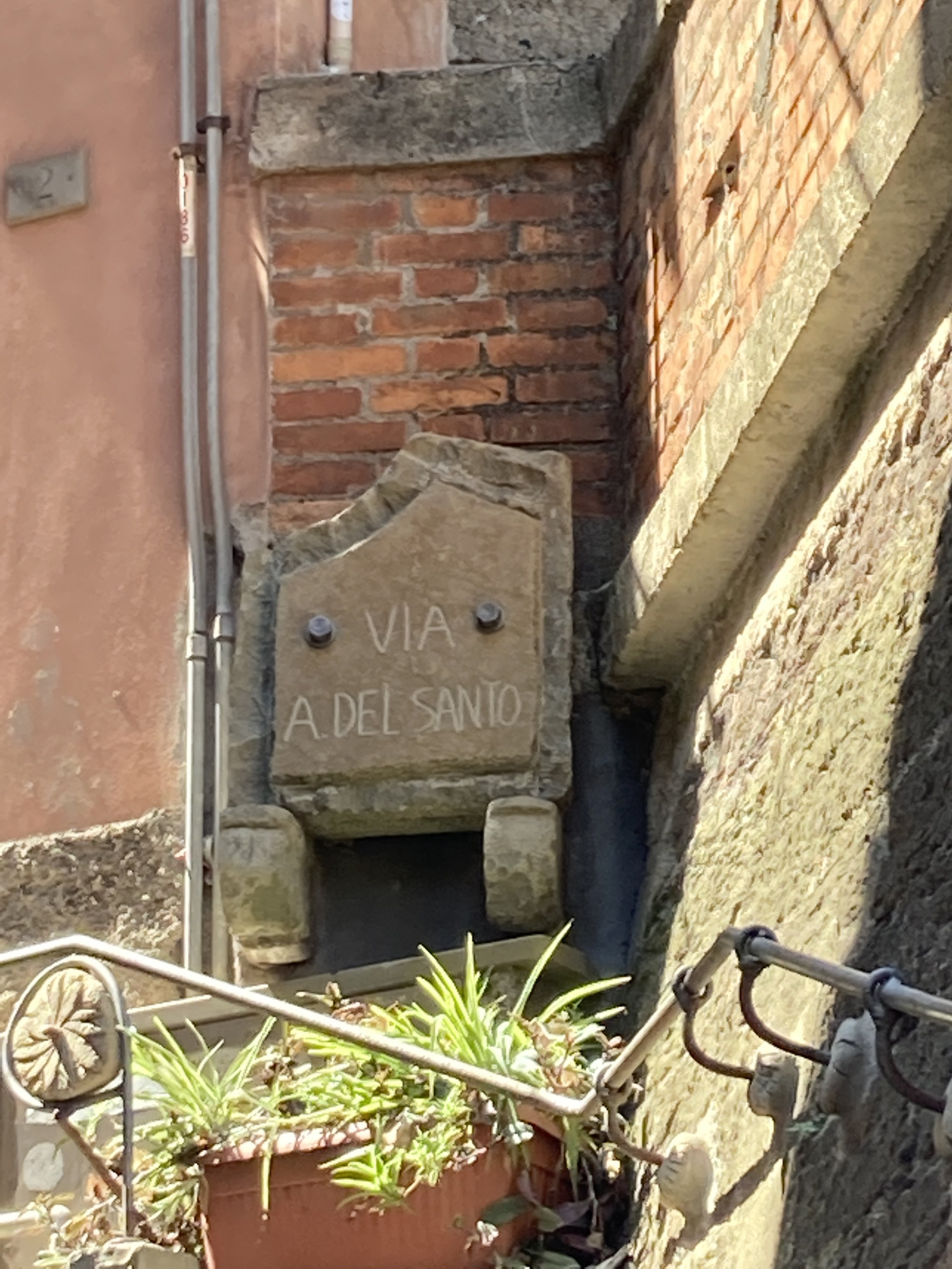
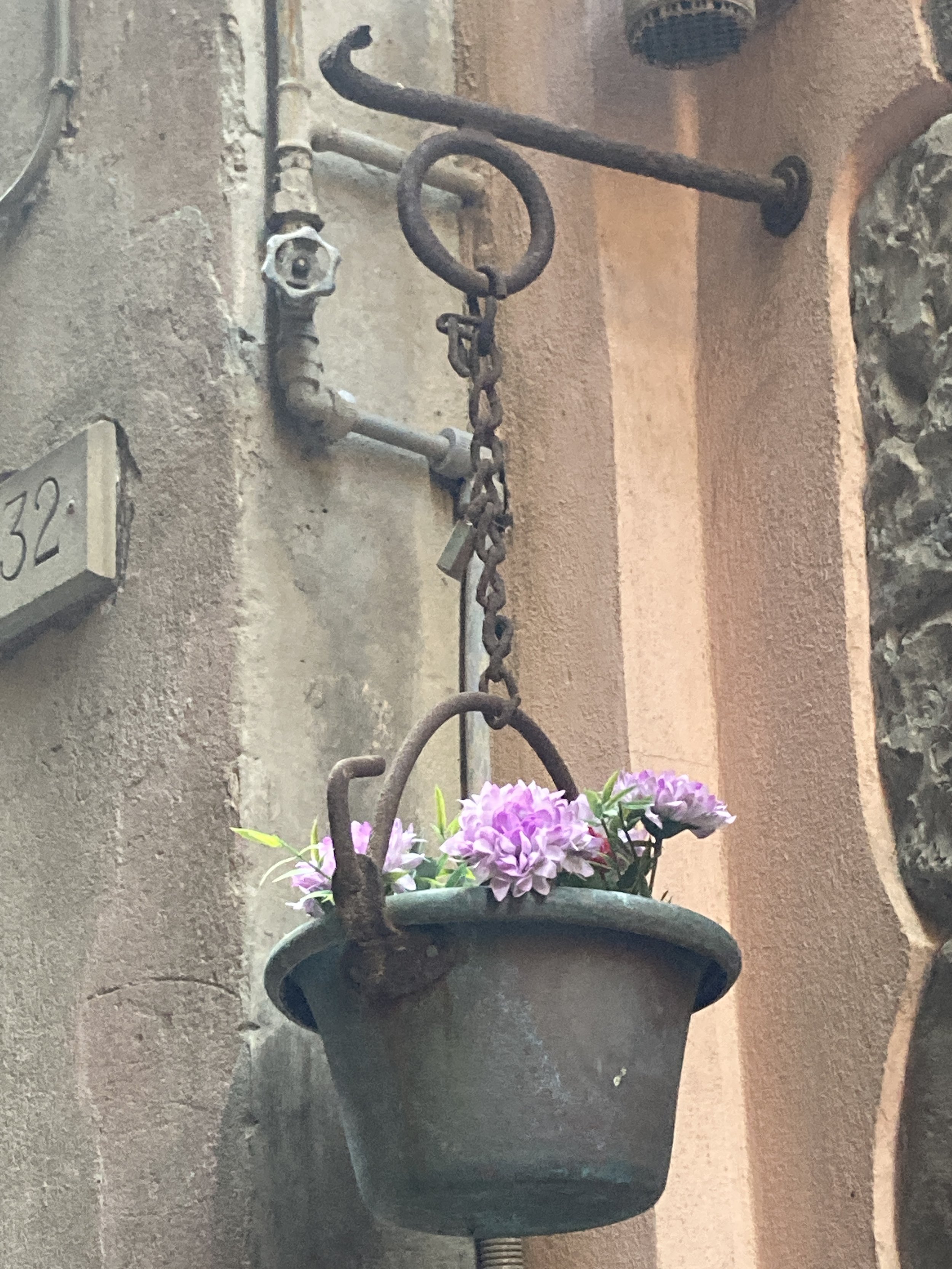
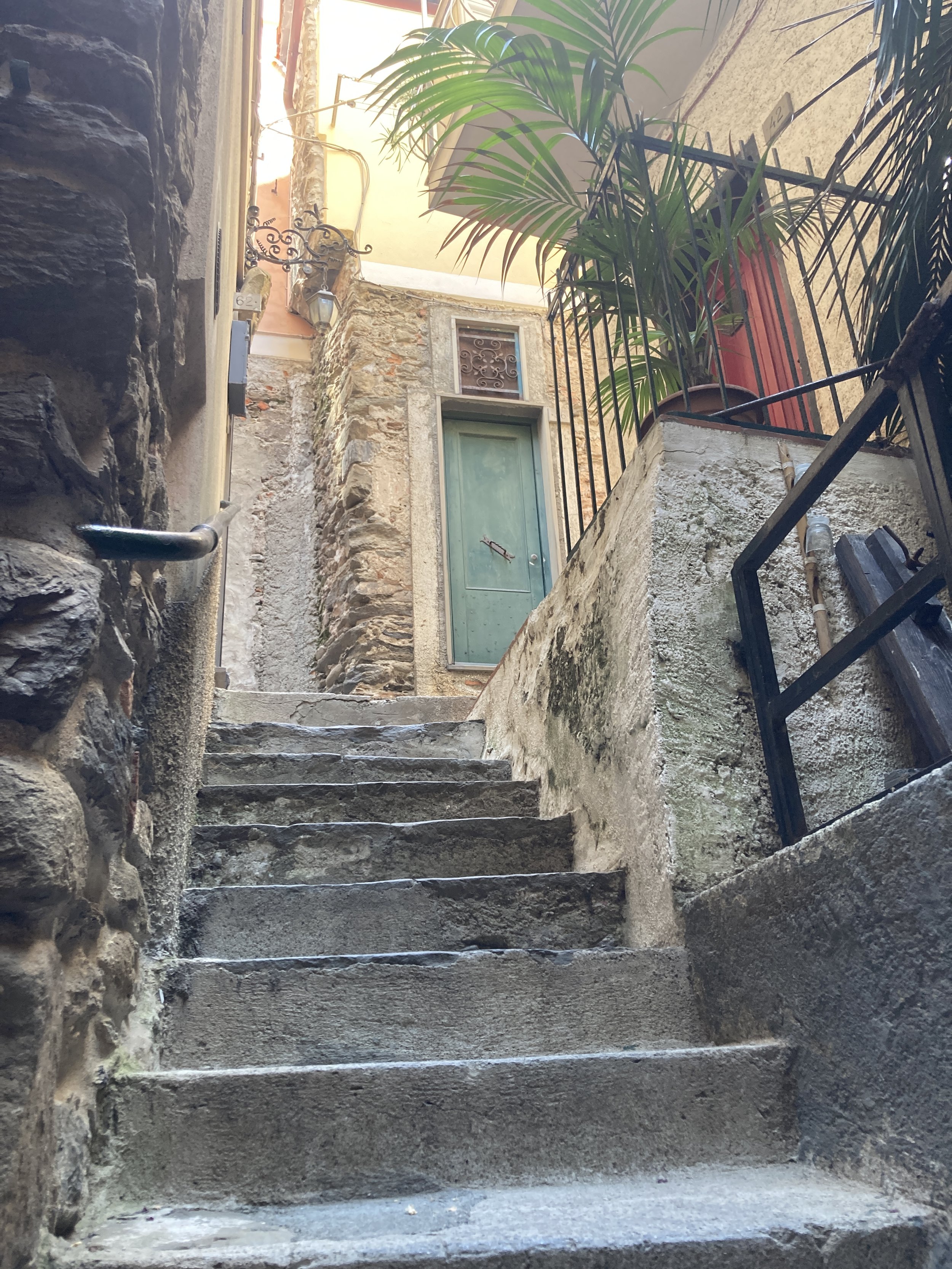
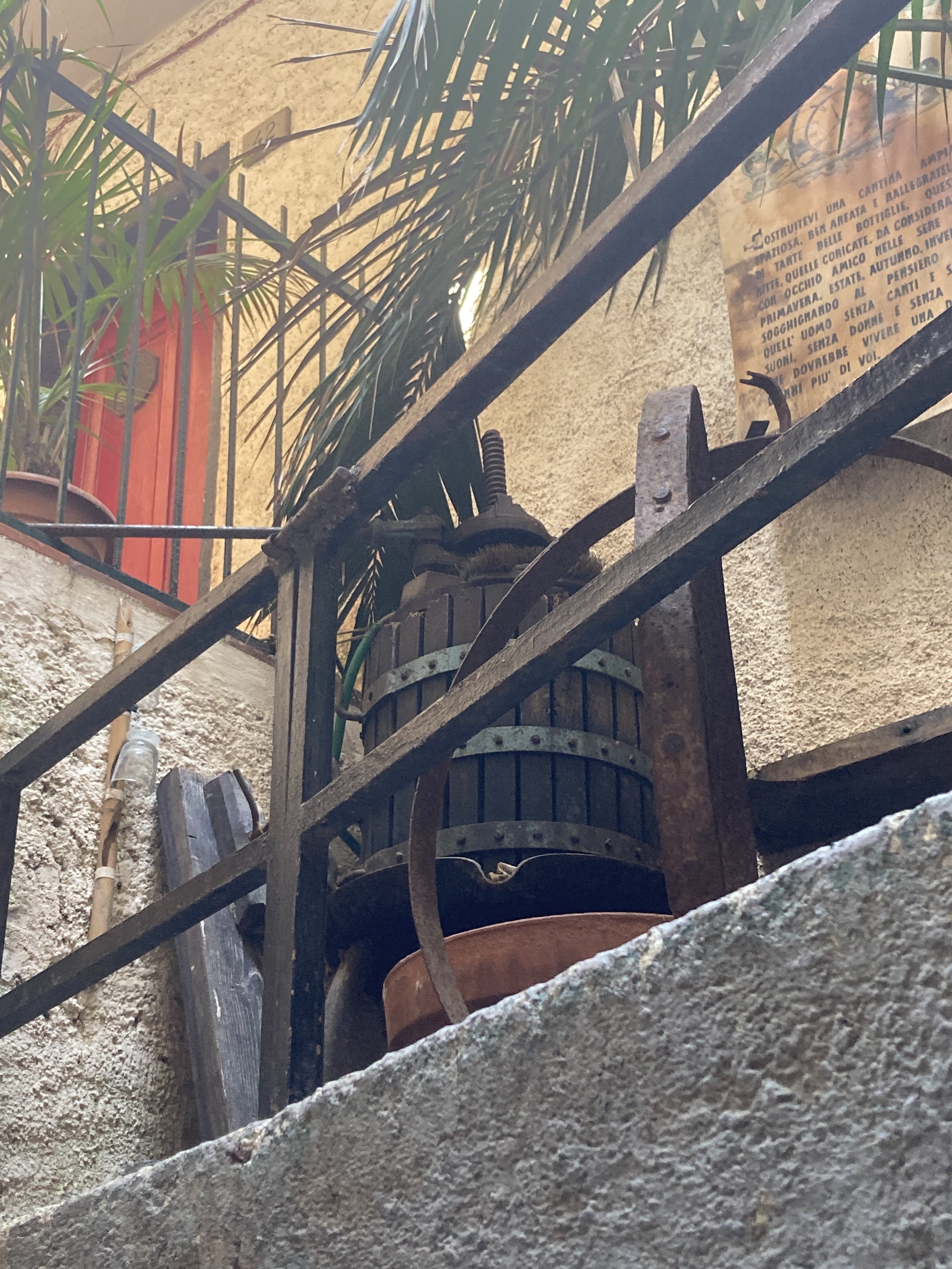
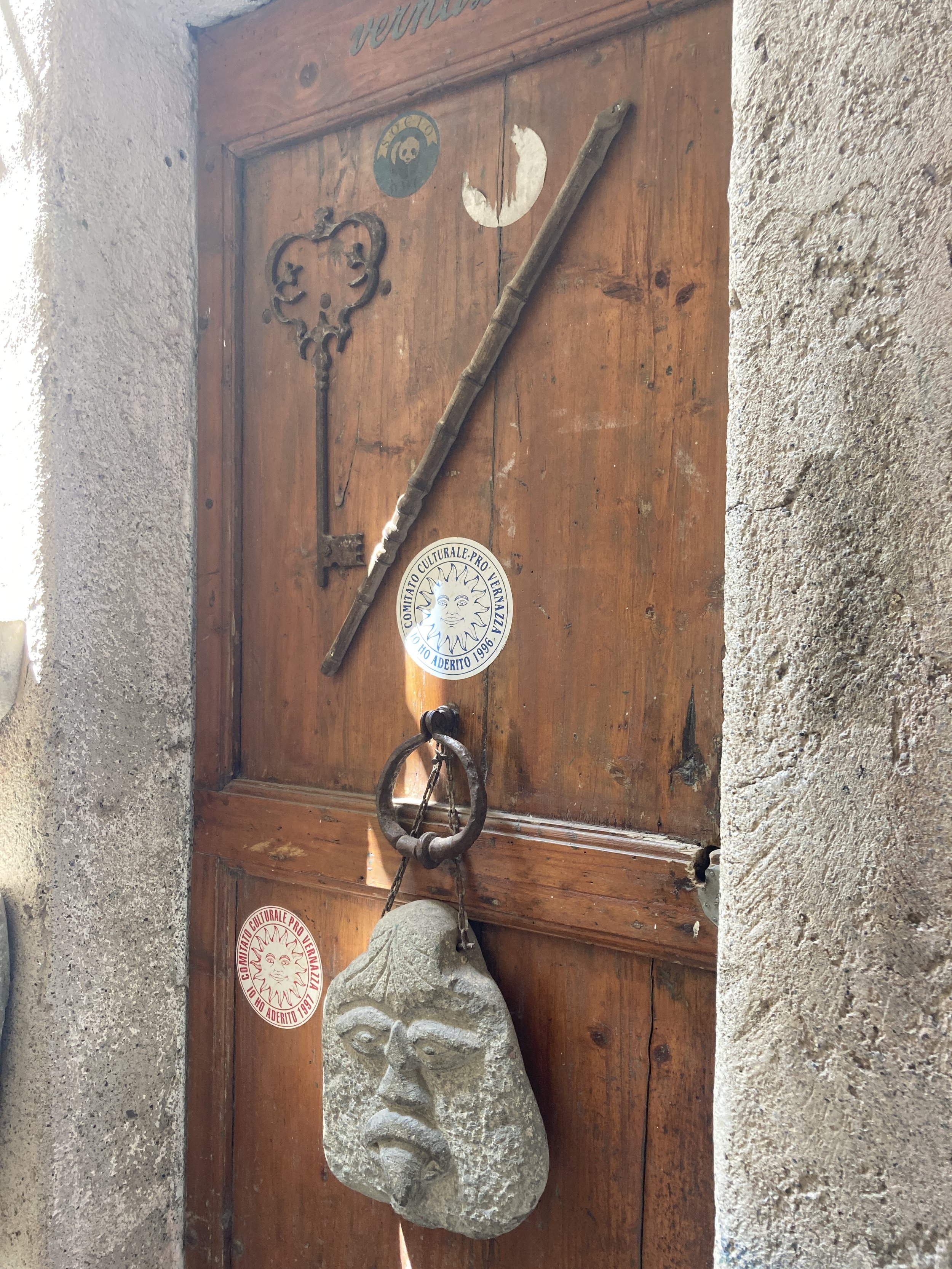
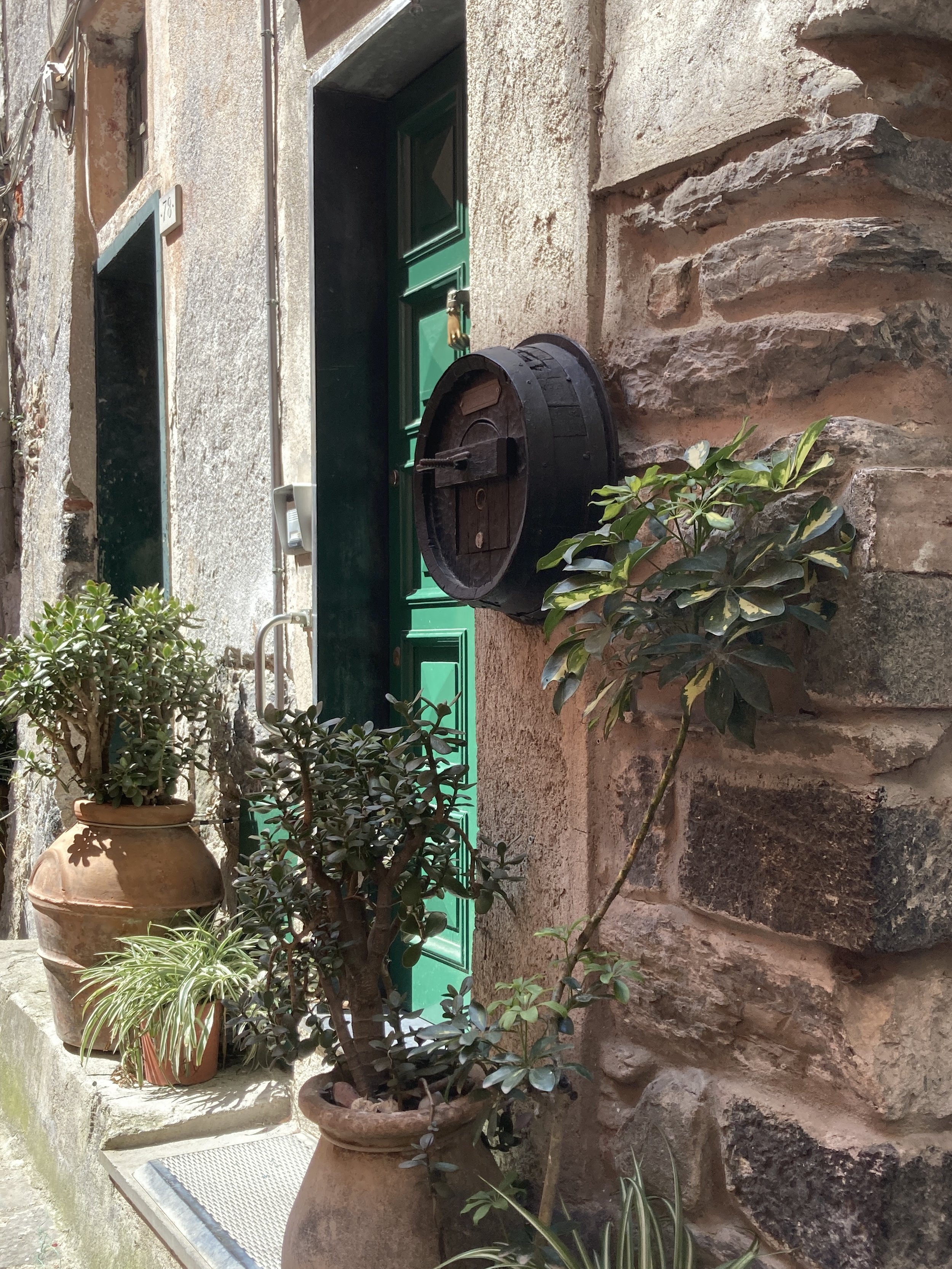
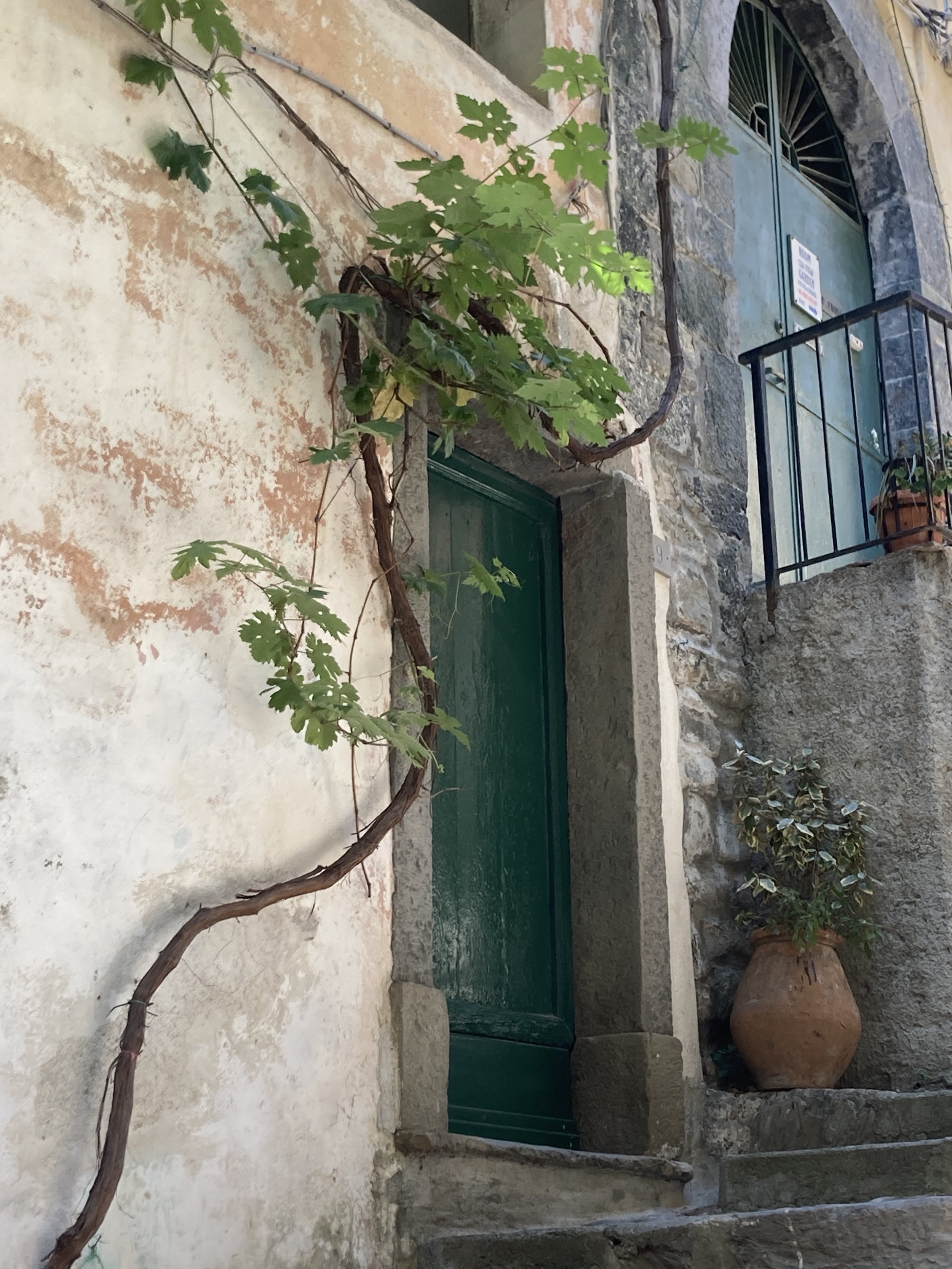
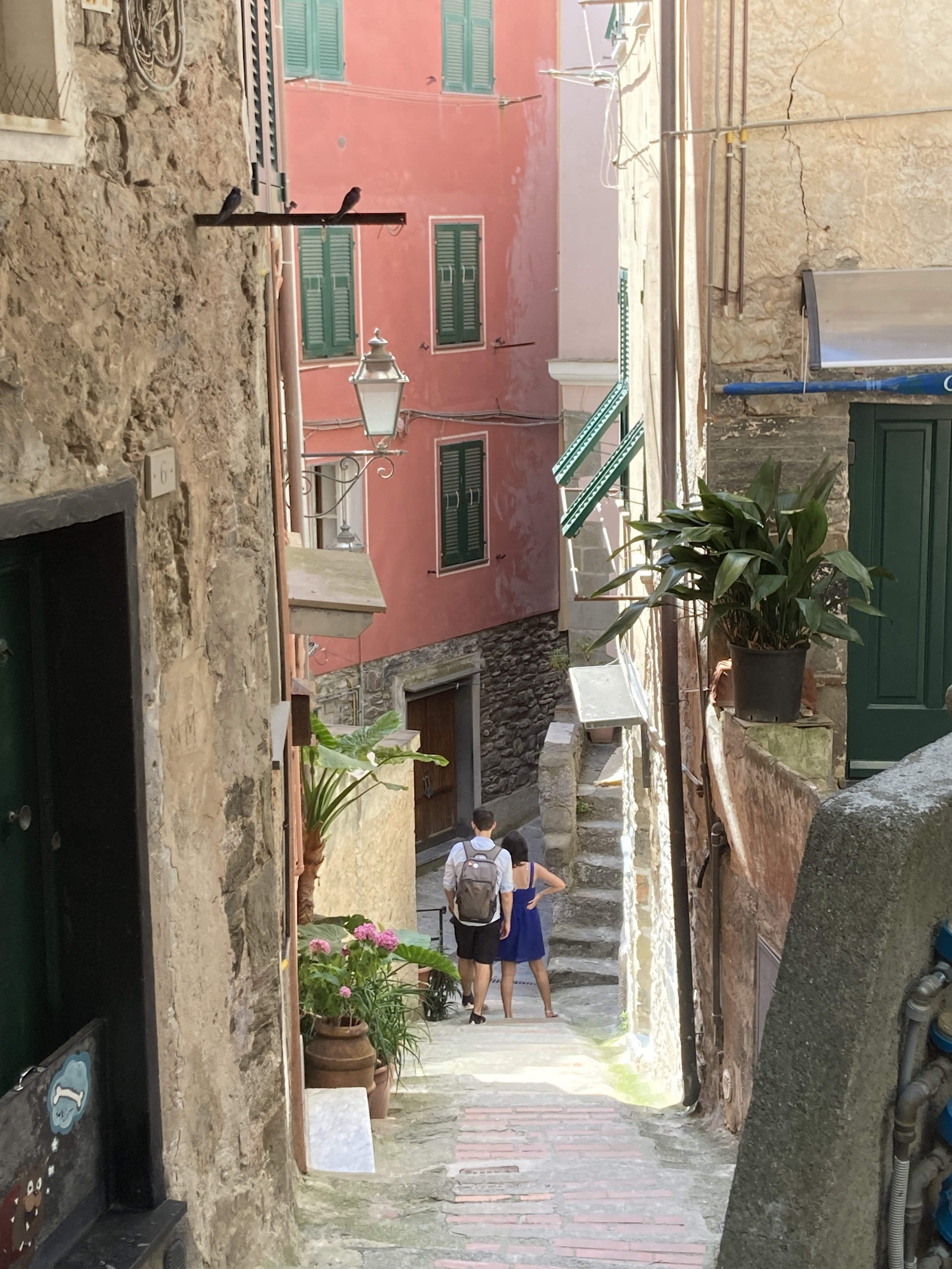
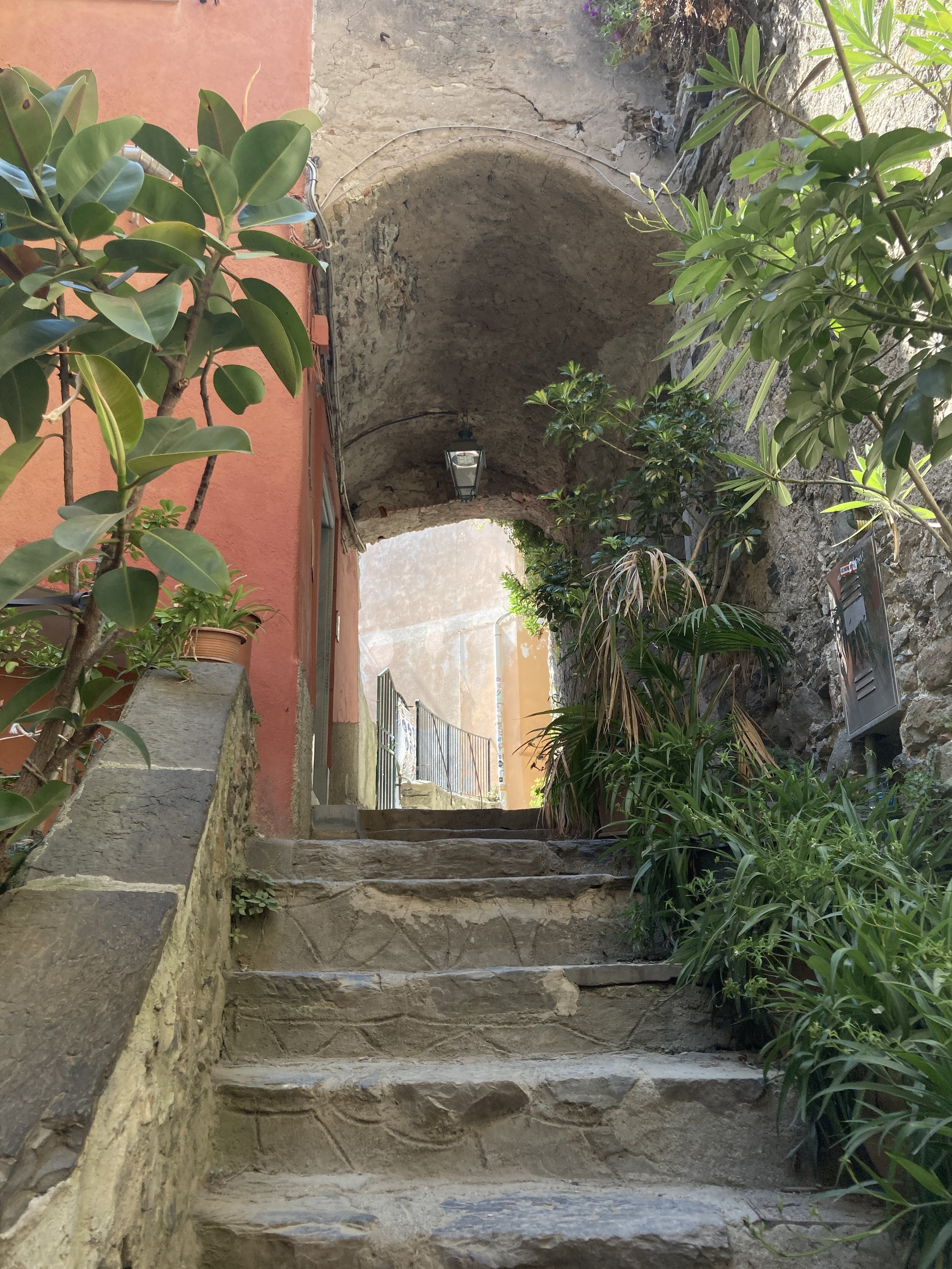
Just one street off the busy “main drag”, Via Agostino del Santo is another world entirely. Few people, no tourists spots. But so much to enjoy - small houses with painted doors, steep streets, little hidden alleys, a couple of galleries, enchanting corners, and a walk that ended high above the harbor with great views.

7D01CE80-98DD-4B4D-B326-3BF378EC0B6A.jpeg
55B4C9F3-4AD5-41EF-B9FA-1F0192380CE6.jpeg
3DE02CC7-51E3-40B1-9B43-124FC783395B.jpeg
DF993D7F-8AEC-4FD0-8057-D81001C99C8F.jpeg
738F99FA-841C-45CF-BDDD-AE6A40A490EA.jpeg
1730E68C-CDAB-4ACE-8DC1-63F09DA58A63.jpeg

This off the beaten path walk was a wonderful break from the crowds and a glimpse of Vernazza that most visitors never see. As is so often the case when visiting Italy, it is the slices of everyday life and the hidden spots that are the most enchanting.


August 01, 2022 /Joanne Bartram
#vernazza, #cinqueterre, Vernazza
#italiansummer, #italytravel, Italy travel, Italy, Liguria, summer in Italy
  • Newer
  • Older

Powered by Squarespace