Two Parts Italy

Exploring Italy, travel, and living a flavorful life

  • Blog
  • About This Blog
  • Start Here
  • Recent Posts
  • Archives by Topic
  • Subscribe
  • Contact me

Fall color along the Torrente Verde in Pontremoli

An Autumn Weekend in Pontremoli

November 14, 2022 by Joanne Bartram in #fallinitaly, #italytravel, #medievalitaly, Hill Towns Italy, Italian culture, Italy travel, Northern Italy Regions, Tuscany, Lunigiana

For 5 days at the end of October and beginning of November my Italian hometown of Lucca hosts the huge Lucca Comics and Games event.   Picture 75,000+ people a day descending on the small, walled city and a series of white tents lining the historic walls and filling the piazzas.   It is an important economic event for the city and a big deal for afficionados of costumes, gaming, anime, superheroes and the like.  Lots of people love it, but for some of us it is simply crowds and chaos.  This year, after two pandemic years in which the festival was cancelled (2020) or scaled back (2021), the crowds were predicted to be bigger than ever.  That made it the perfect time to for me to plan an out-of-town escape. 
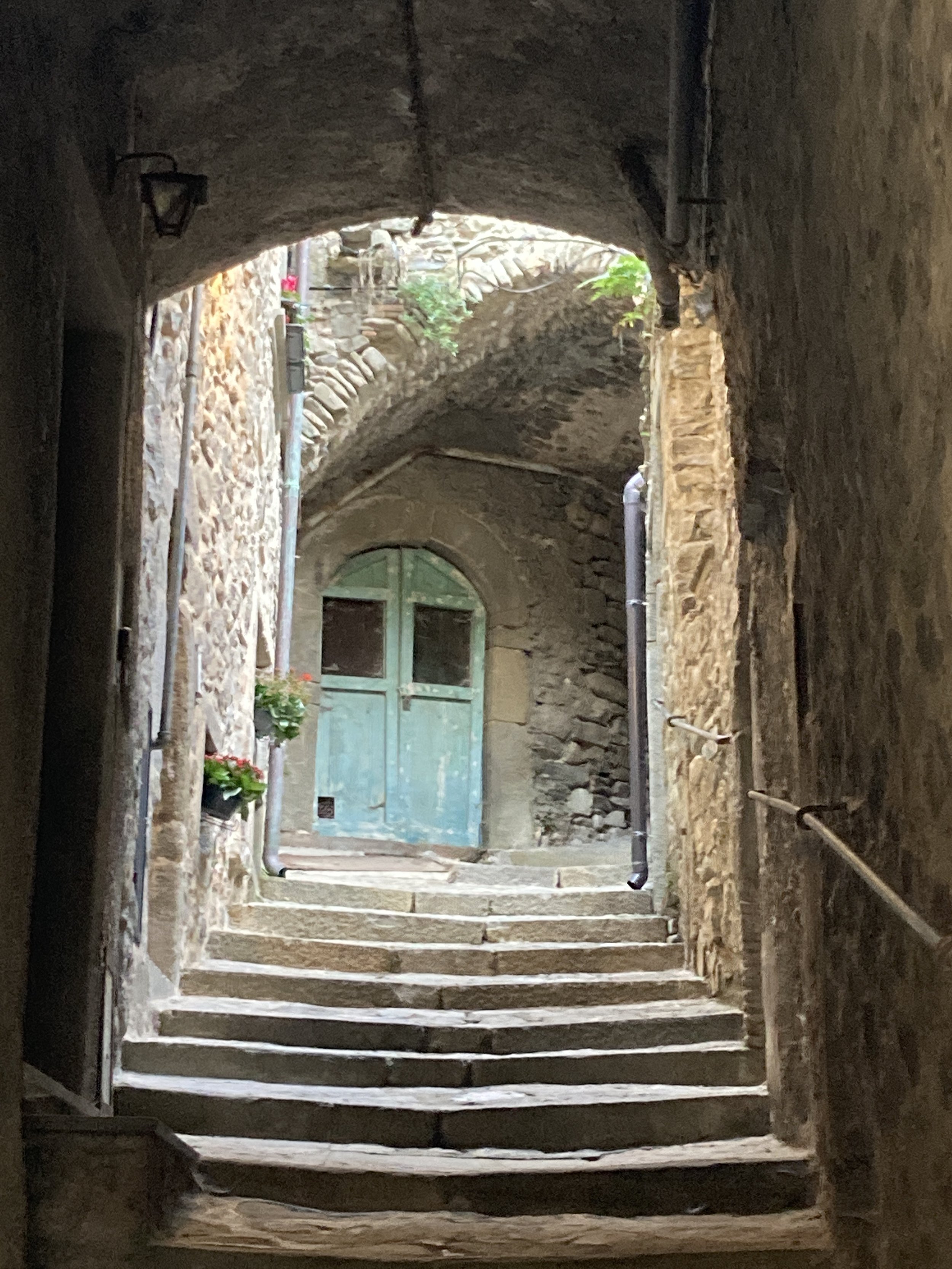
One of Pontremoli’s small alleyways - an invitation to explore!

 This year my “escape from comics” destination was suggested by Nancy, one of Two Parts Italy’s readers. Just as I was trying to decide where to go over comics, I received a lovely email from her asking if I’d ever been to Pontremoli.  She went on to say that she had just spent several days there and thought it was just the kind of place I would love.  She included photos and recommendations for things to do.  What serendipity!  I had never been to Pontremoli and receiving that email was all the inspiration I needed.  I quickly found that I could get to Pontremoli by train from Lucca in under 2 hours.  I found a lovely Airbnb apartment to rent and a friend who was ready to share the adventure.  The more I read about the town, the more excited I was to visit. I am so glad that Nancy took the time to write to me!


Pontremoli is a village in the Massa-Carrara Province of Tuscany, population around 7000.  The town lies in the historical region of the Lunigiana, which straddles the regions of Tuscany and Liguria.  It is a region of mountains, forests, rivers, old towers, castles, and small medieval hamlets.  The Via Francigena, the pilgrim’s route between Canterbury and Rome, crosses the area including right through Pontremoli. 

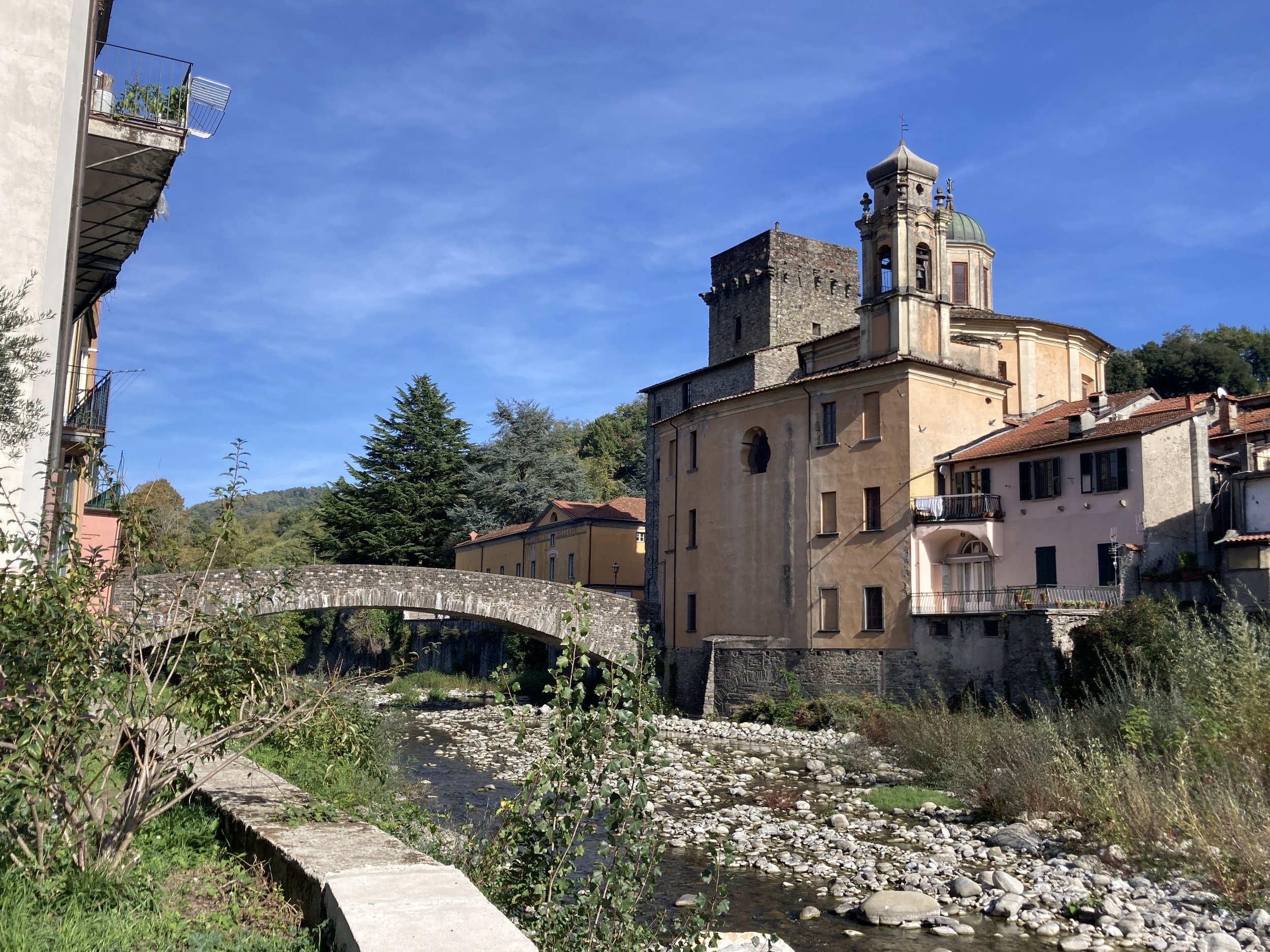
Pontremoli’s historic center as seen from one of the foot bridges over the Torrente Verde

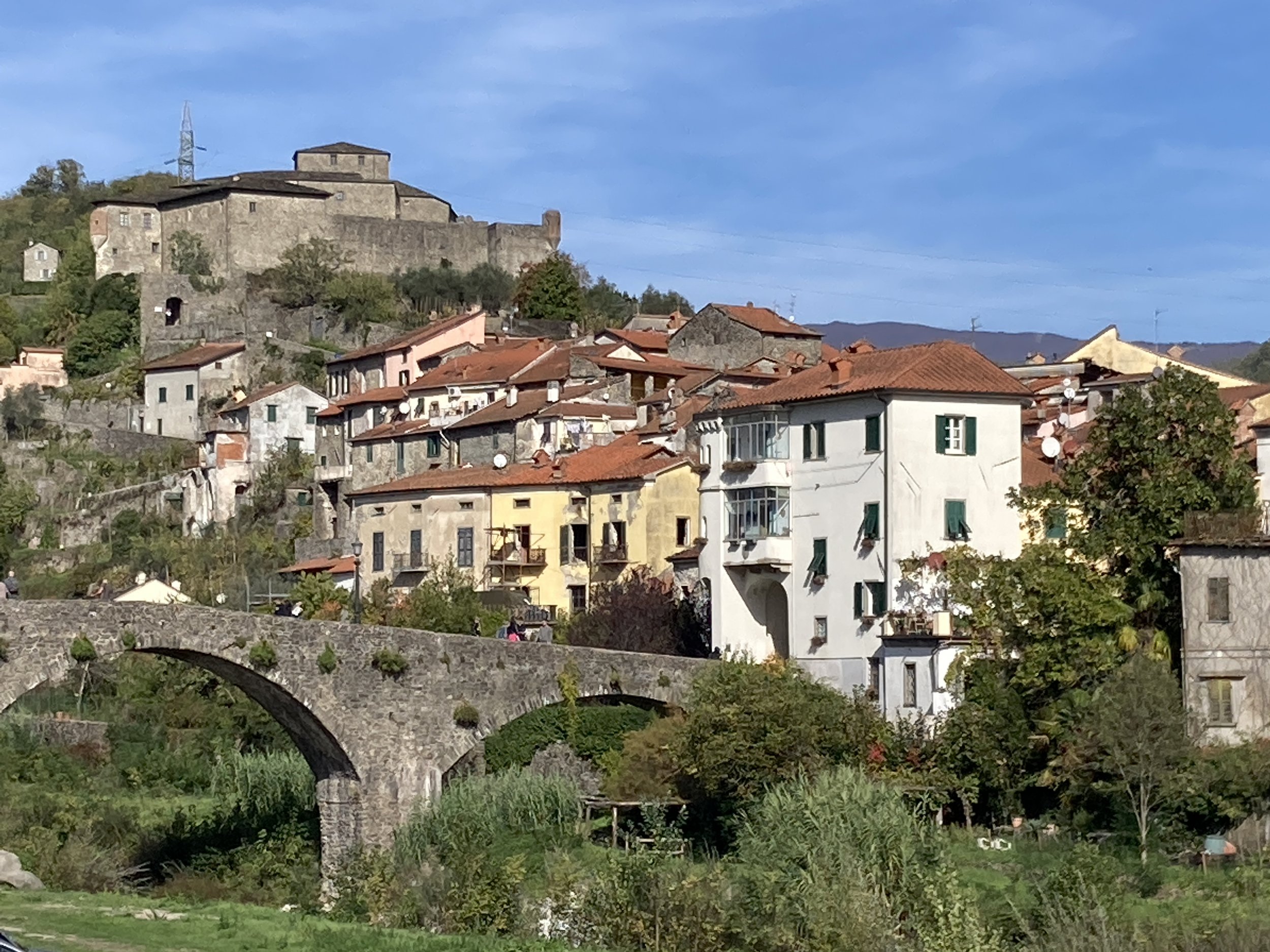
 Like many of the medieval towns in the region, Pontremoli has a well-preserved centro storico (historic center) which feels a world apart from the more modern town beyond.  The centro storico is wedged between two rivers, the Torrente Verde and the Fiume Magra.  The rivers are crossed by a series of old stone bridges.  Ponte is the Italian word for bridge and Pontremoli means trembling bridge.  Perhaps the original, ancient wooden bridges trembled, but today the bridges are rock solid. 
1B34118F-99DC-4576-95FB-EF42C881526A.jpeg
5EFFD362-E7FB-4045-B827-47DA511BC042.jpeg
AC812B49-3805-4834-B110-525E0AC32783.jpeg

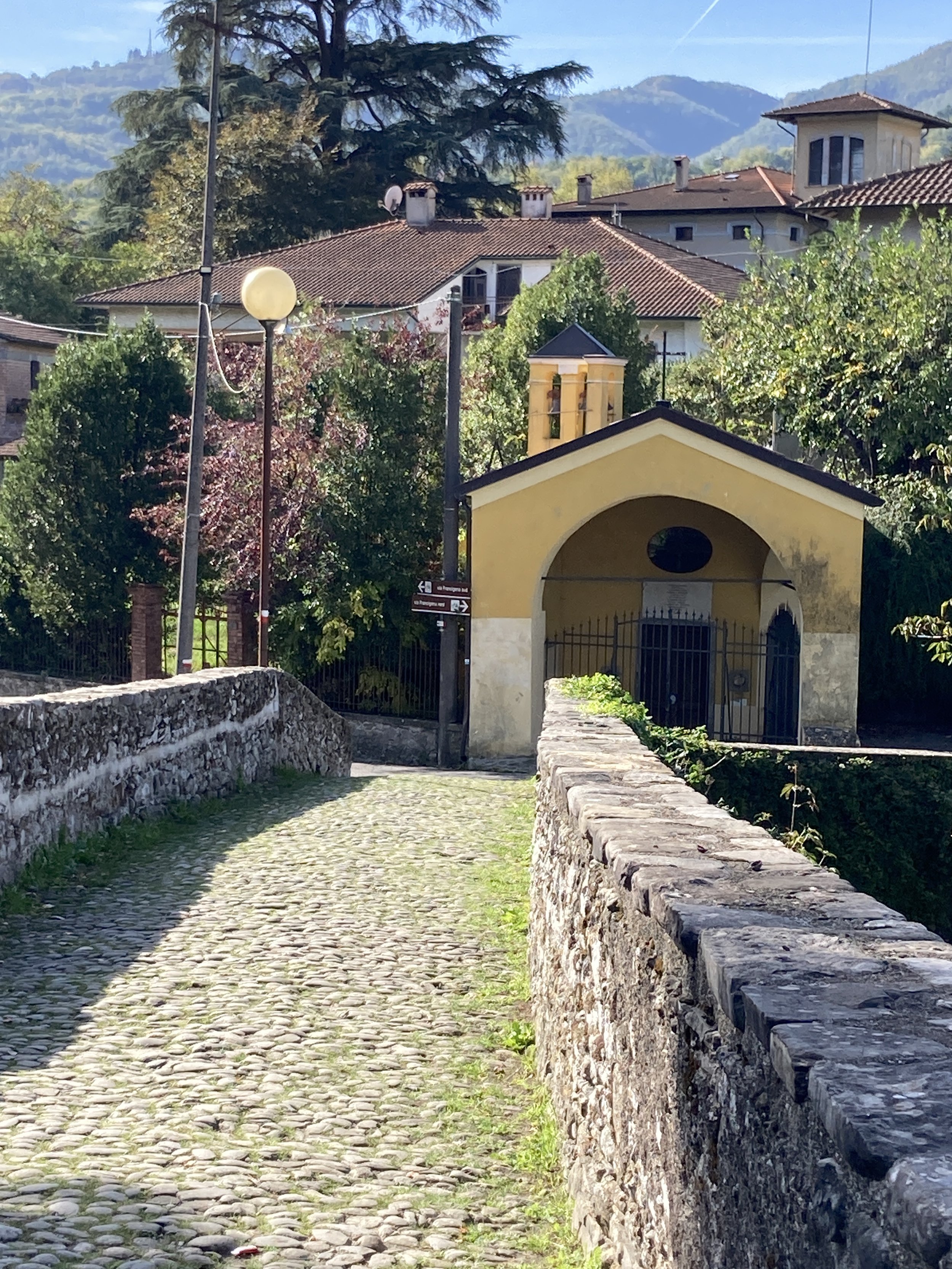
Several of the bridges are for foot traffic only. Strolling across them gives views of the green riverbanks, parks, medieval buildings, and the Castello del Piagnaro which sits high above the village. 

My companion and I quickly settled into the habit of a daily walk across the Ponte della Cresa to the north, down the green space along the Torrente Verde, across the Ponte Stemma on the south, and to the tip of Pontremoli where the Torrente Verde joins the Fiume Magra, forming one larger river. A green and peaceful park sits at this spot, quiet other than the sound of the tumbling waters of the two rivers. 
16A972E4-CC5F-4054-B22C-E5268989CC37.jpeg
7DC8AA3E-4B59-4E2B-9A8A-8378E1D5D078.jpeg
10D683C6-85BC-4233-BD07-763D29168676.jpeg

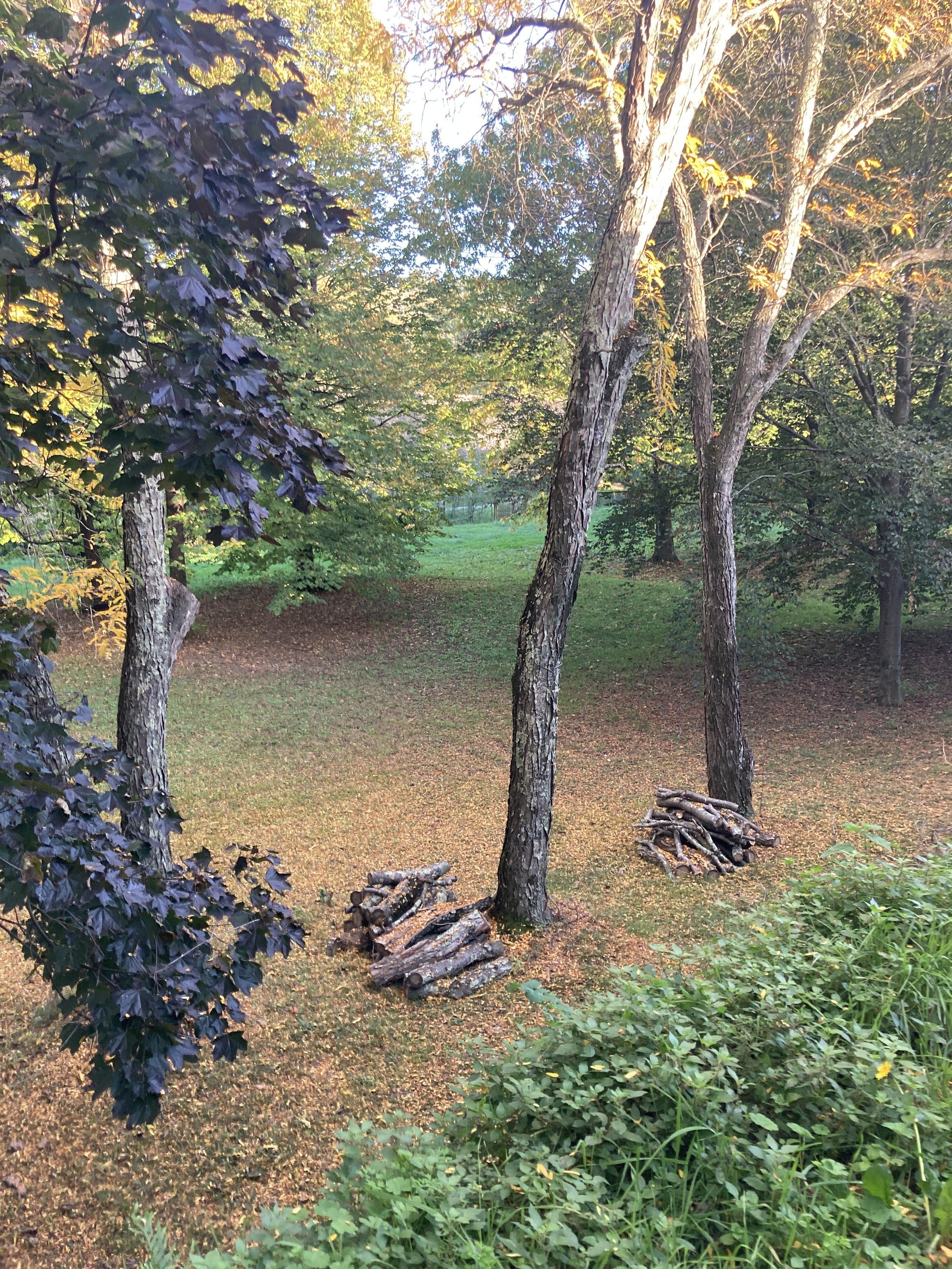
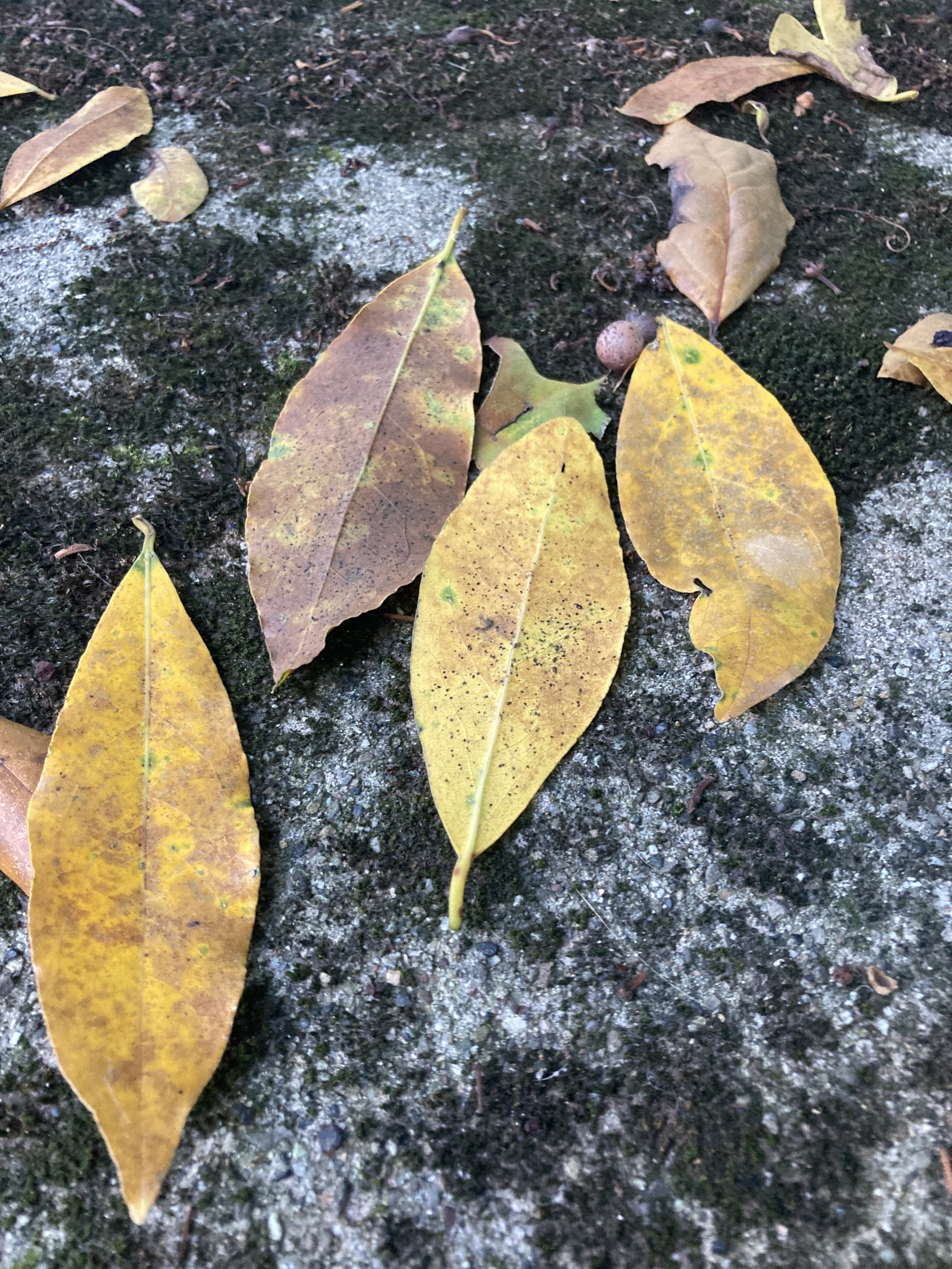
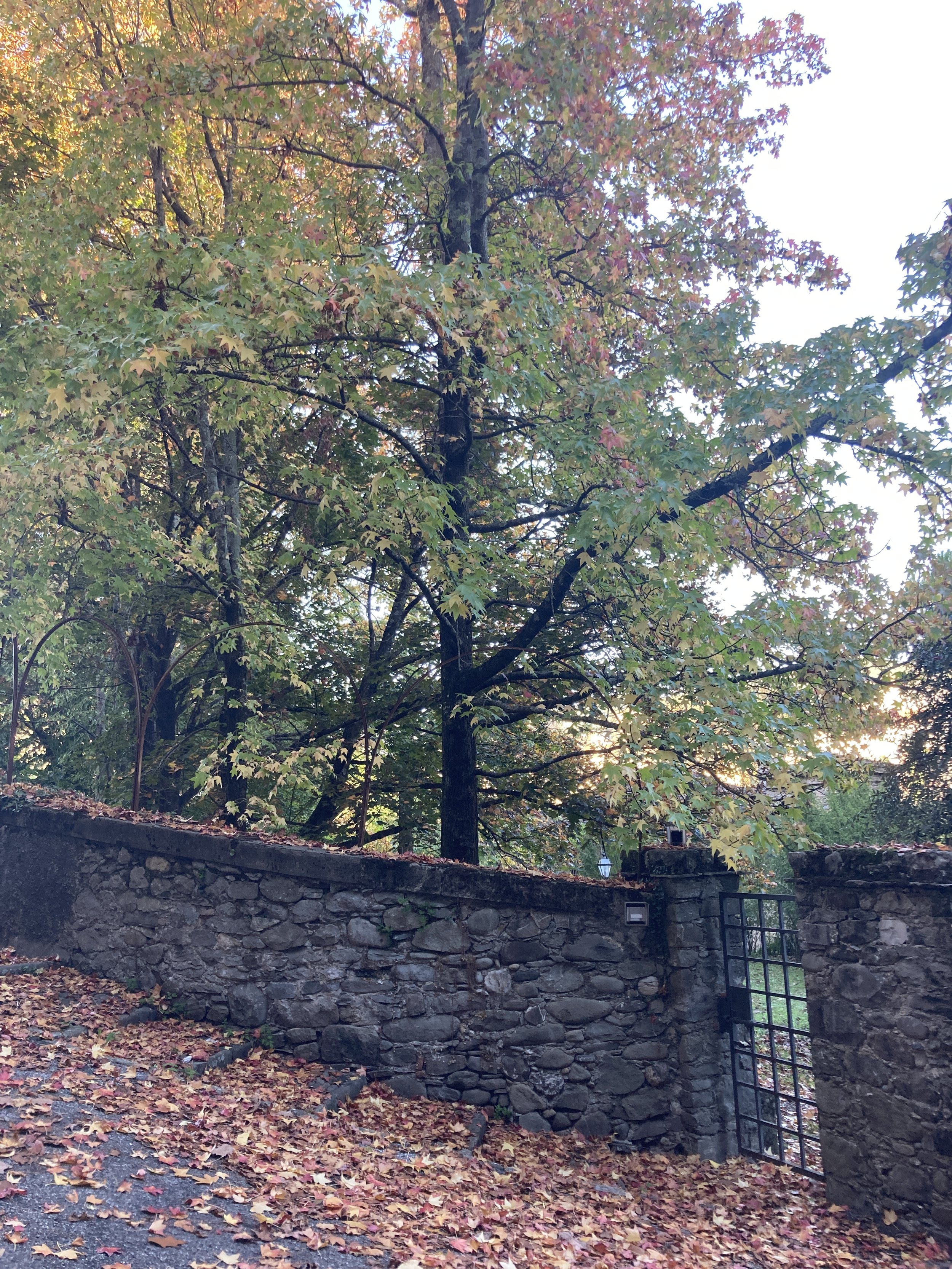
During this October visit the trees where changing colors and the fallen leaves made for a special landscape during our walks.
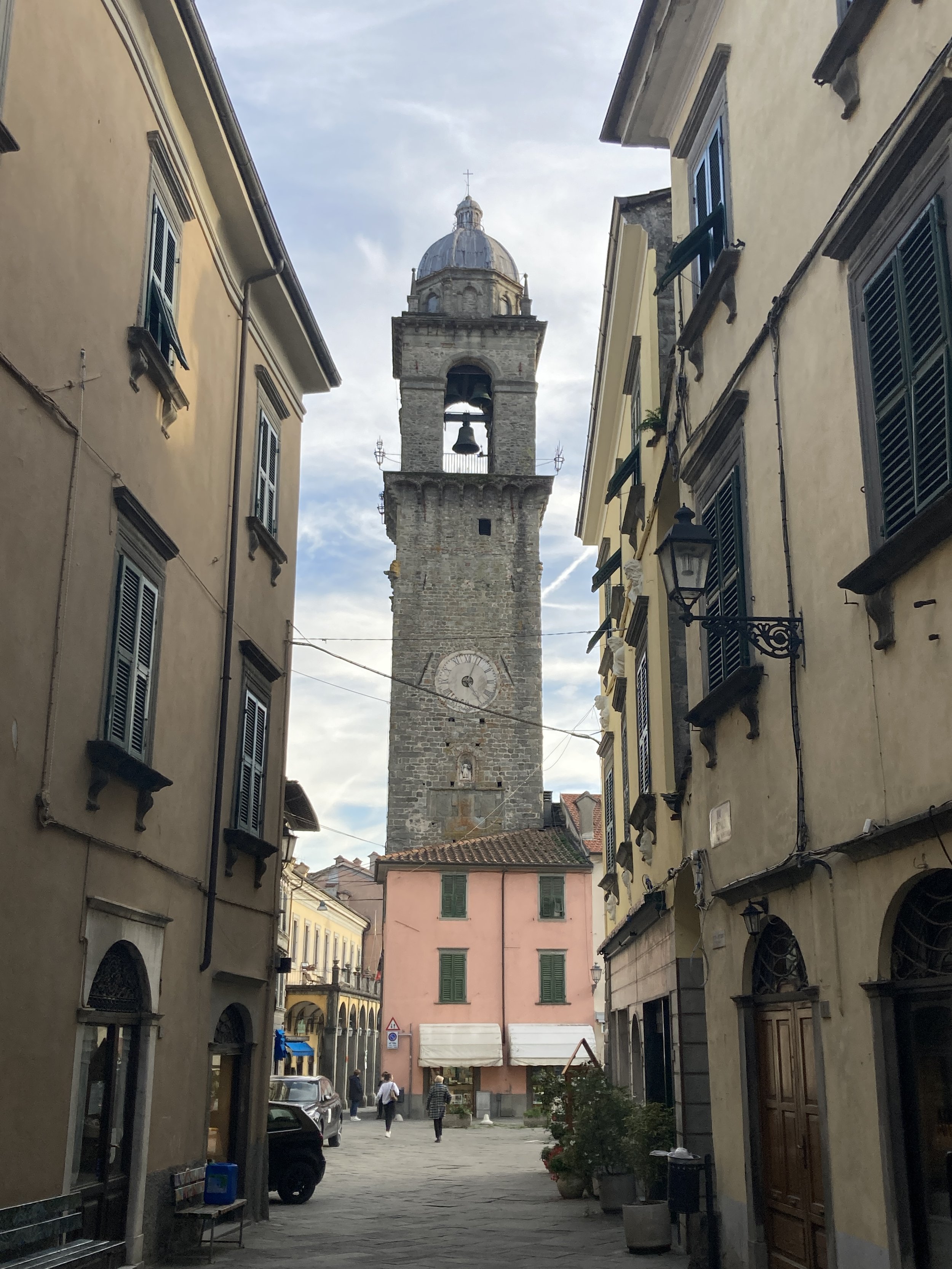
The Torre del Cacciaguerra, Pontremoli

 The historic center stretches between two tower gates along what is basically one long street, although the street name changes several times from Via Cavour to Via Armani to Via Garibaldi. 

Along the way are two side-by-side piazzas, the Piazza della Repubblica and the Piazza del Duomo.  Long ago the two piazzas divided the town between two opposing groups, the Guelphs and Ghibellines, preventing all-out conflict. 

A very tall campanile (bell tower), built in 1322 as part of a city fortress, stands between the two piazzas and is known by two names – The Campanone (meaning really big bell tower) and the Torre del Cacciaguerra (Tower of the War Fighters). 


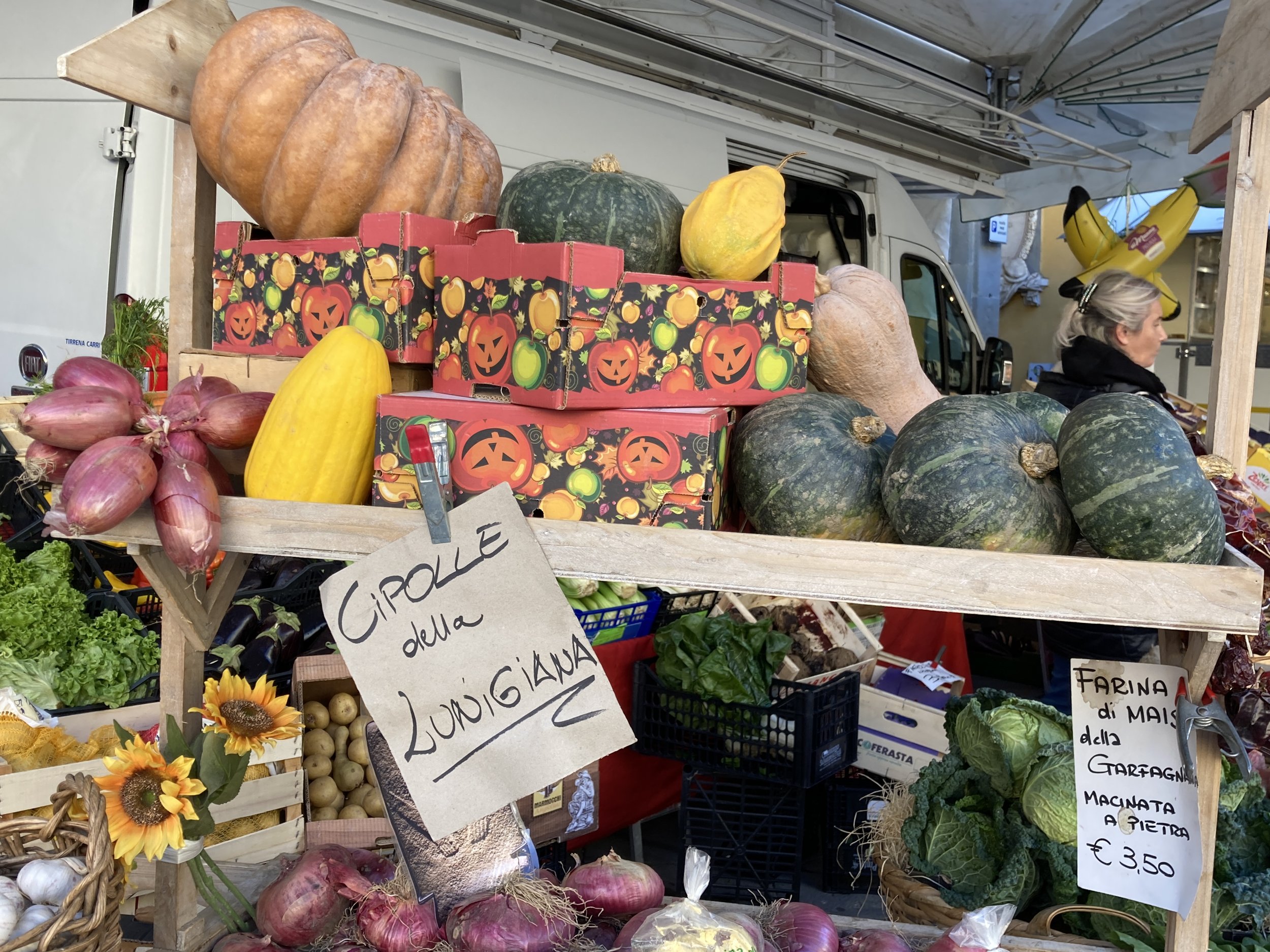
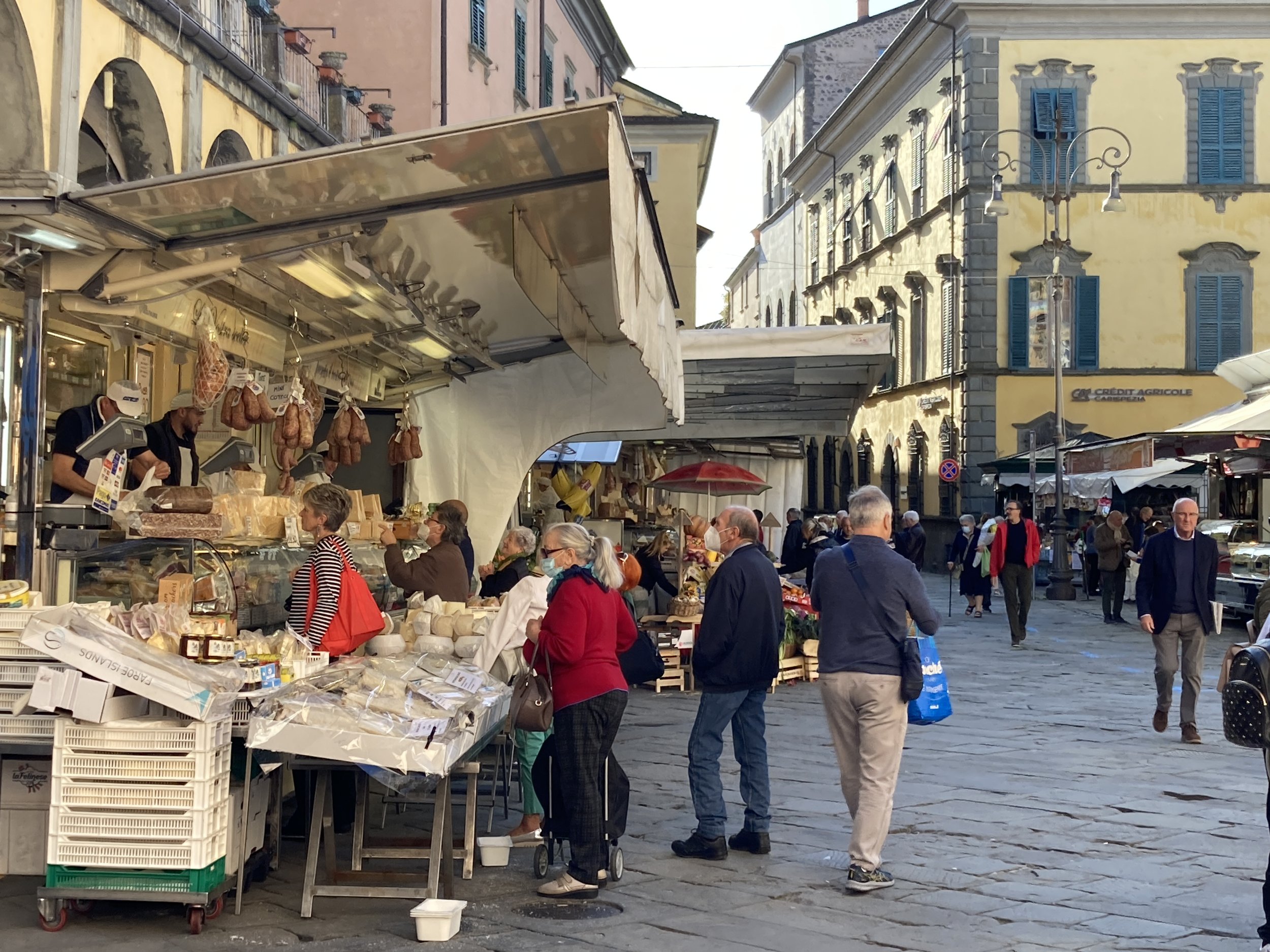
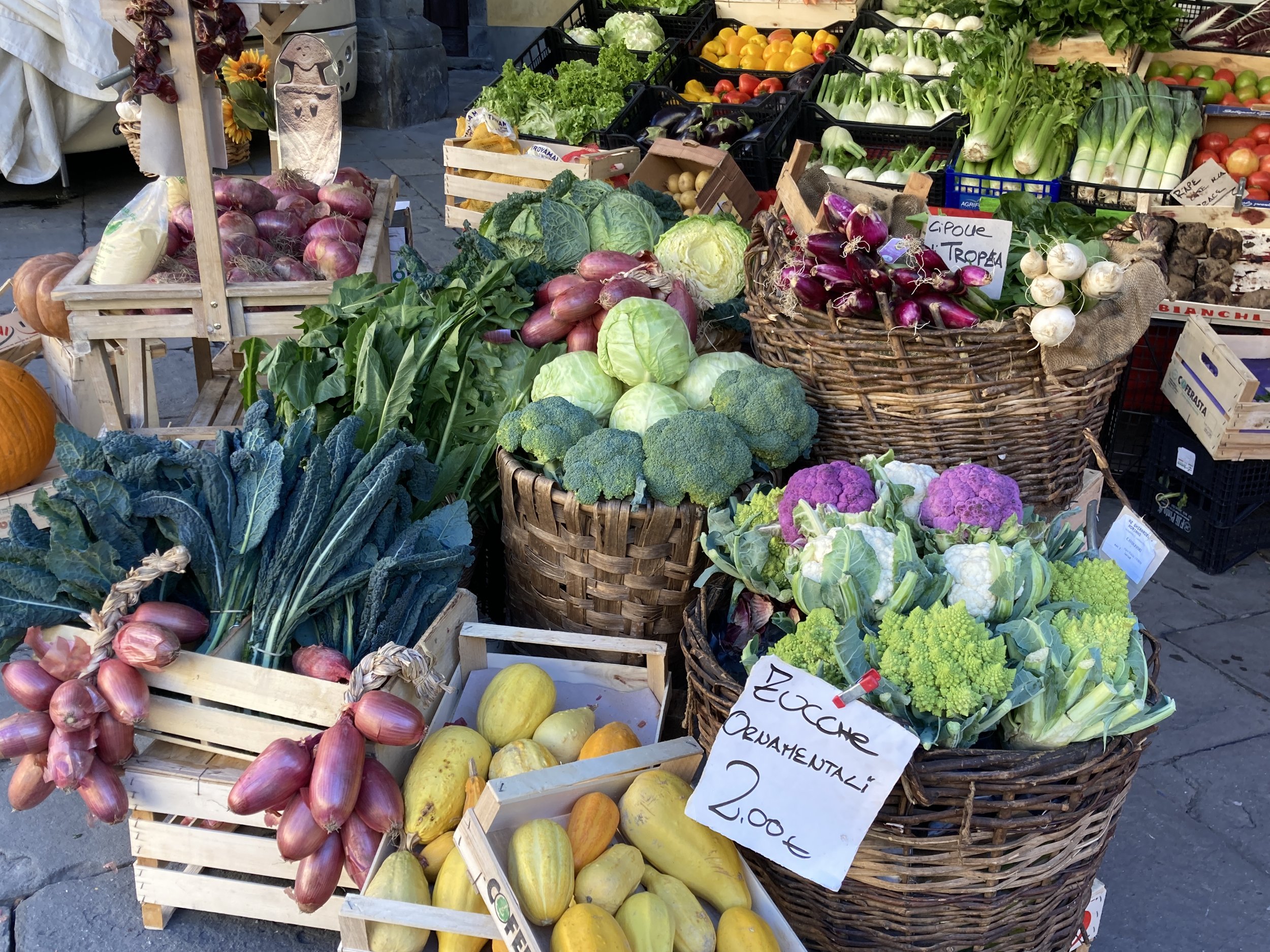
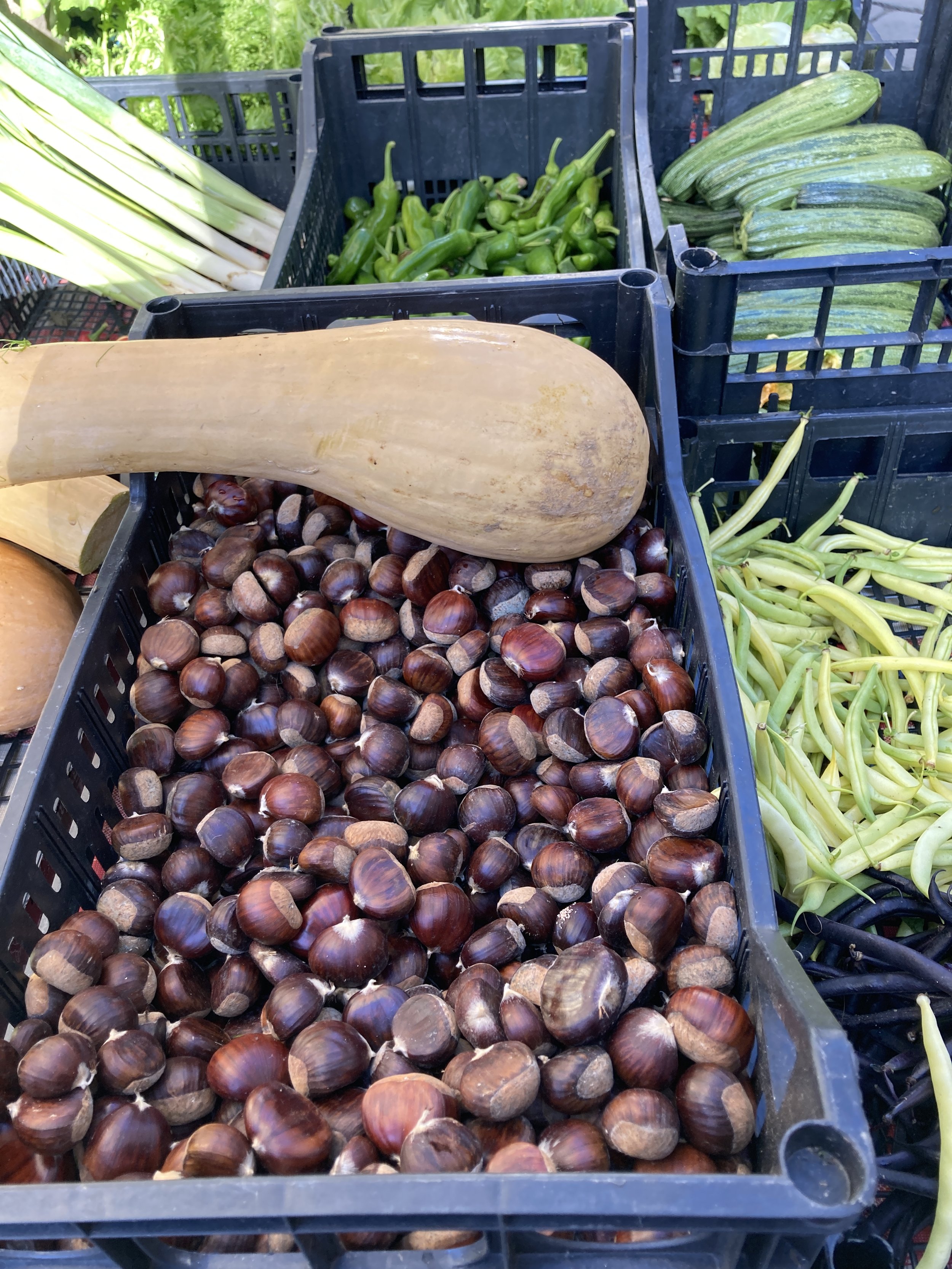
Today there are no warring factions and the two pretty squares are ringed with cafes and shops. The piazzas are also where the Saturday market is held. Visiting a local Saturday market is a great cultural experience in any small village and the one in Pontremoli was no exception. Local produce, especially from the fall harvest, made for a colorful market.
14526706-831A-4DCC-BD33-E3C631B82F4D.jpeg
73773C82-B169-47E7-A917-9550B3E02DE3.jpeg
C3A5D80D-AD8A-4F26-8E07-A4D86E29EC97.jpeg
DC502C04-C50C-4234-B71A-E7F3F5745A90.jpeg

The route to the castle

 Off the main street are several alleys which climb up towards the castle.  The walk is uphill but not terribly steep and the experience of wandering through the medieval castle village is well worth the climb.  The castle also houses a museum with pre-historic rock carvings called Stele.  More on the castle and the Stele in a future post !

 Pontremoli was a perfect fall getaway and wonderful spot for a long weekend.  Views over the river, the sound of rushing water, green spaces, changing leaves, and stone bridges made for a perfect weekend escape.

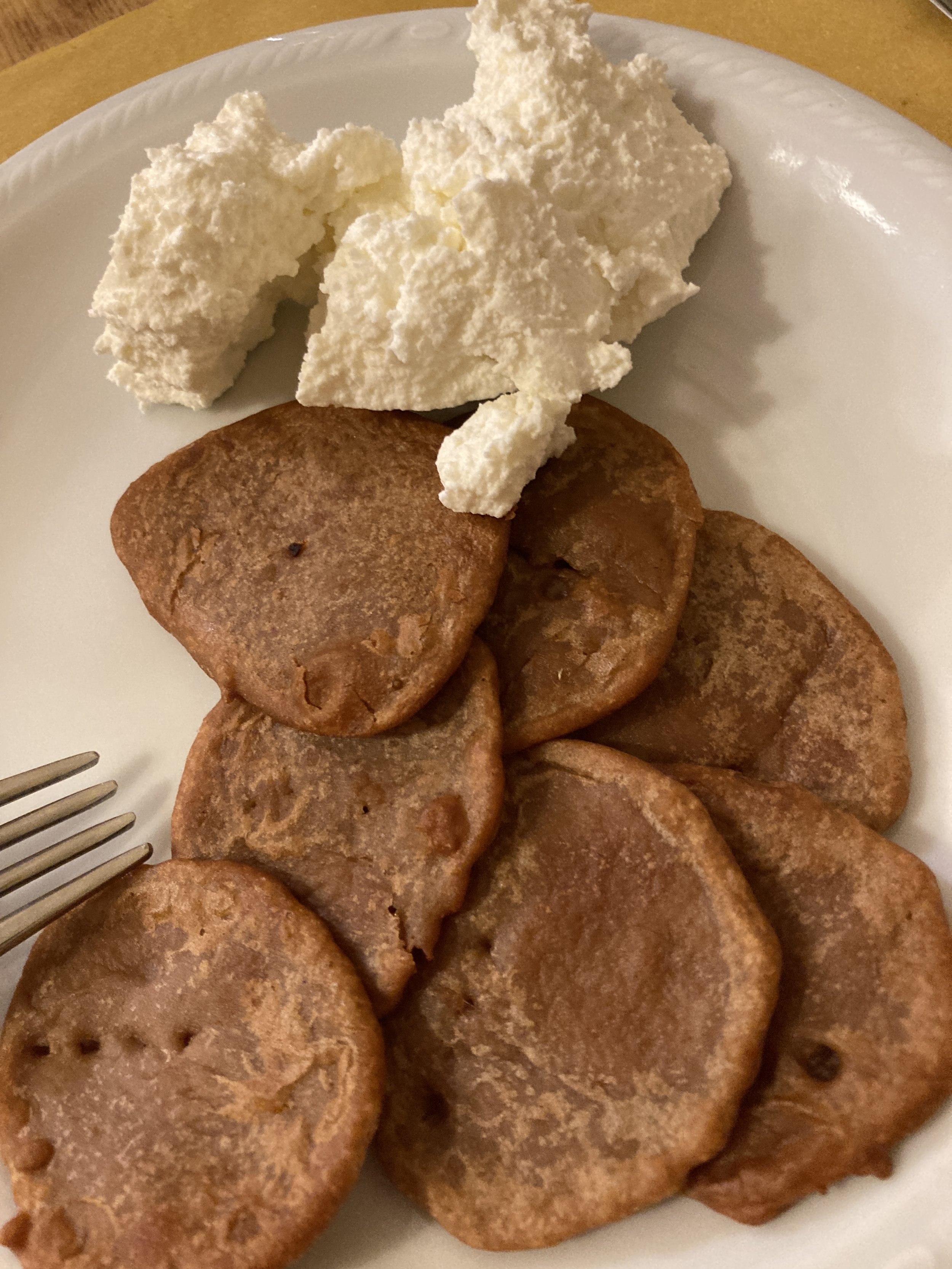
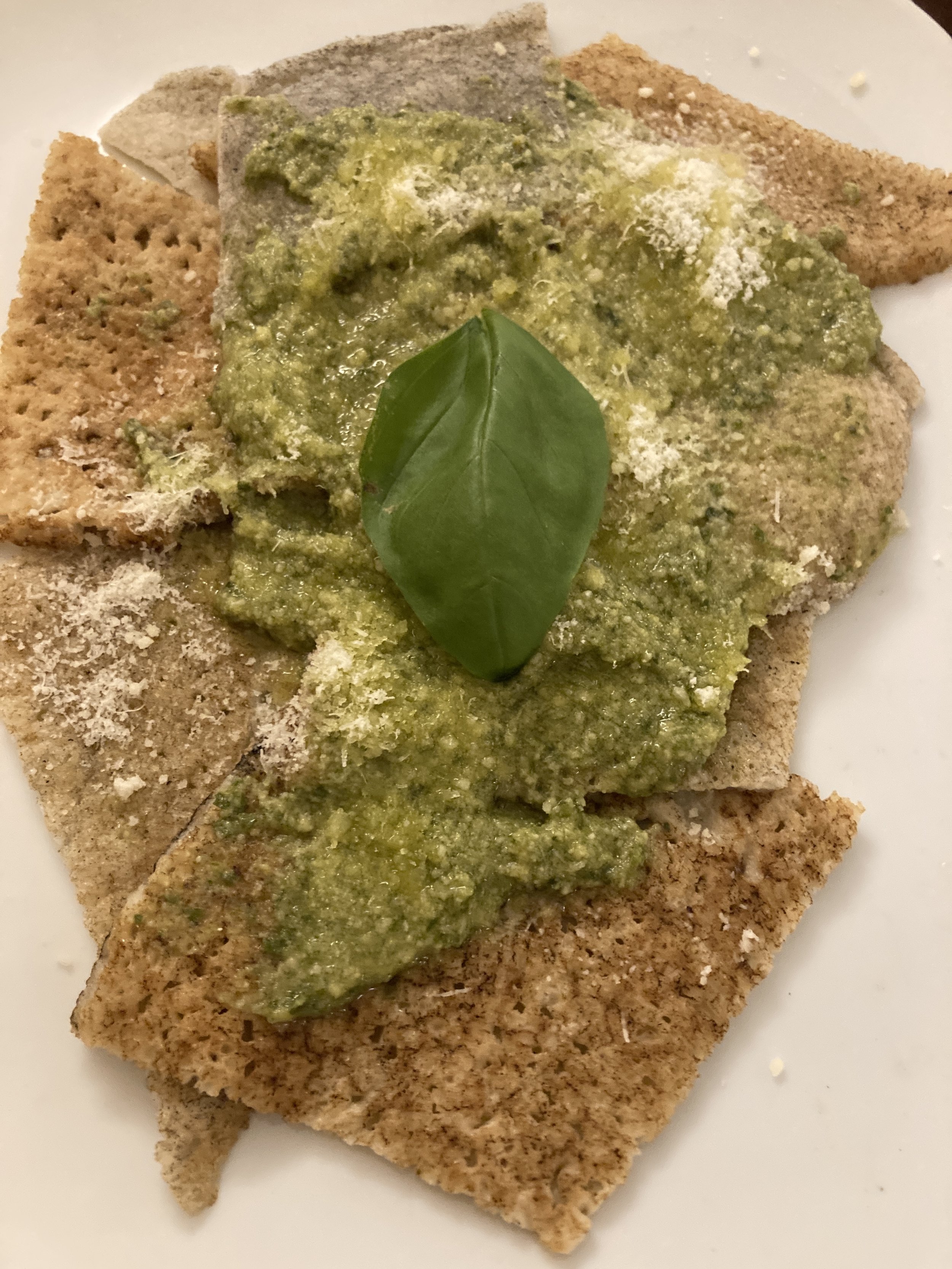
Adding to the fun, we found some wonderful restaurants serving local dishes such as Testaroli (a type of large round crepe) with Pesto and Frittelle di Farina di Castagna (little fried chestnut flour cakes) con Ricotta. 

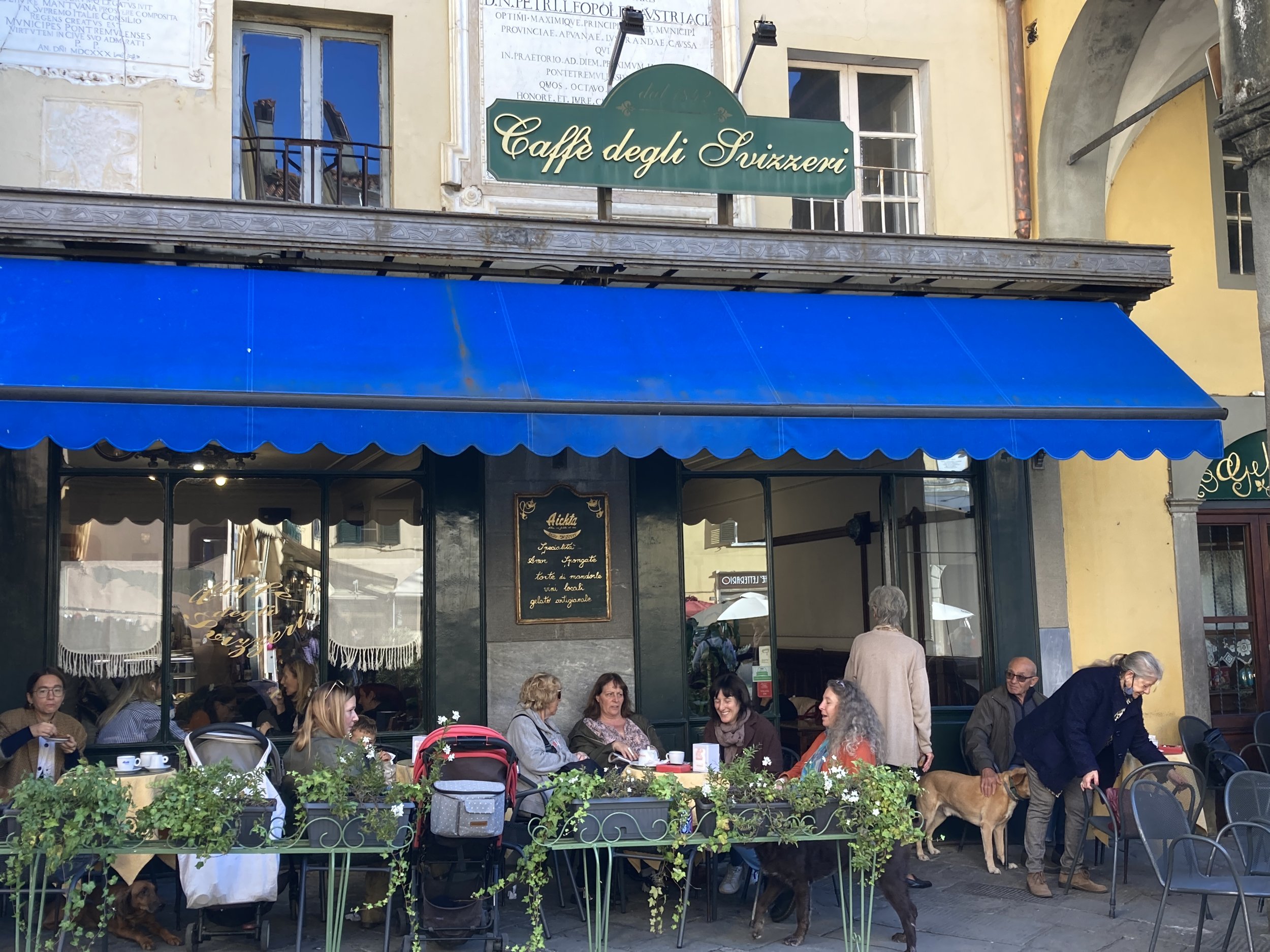
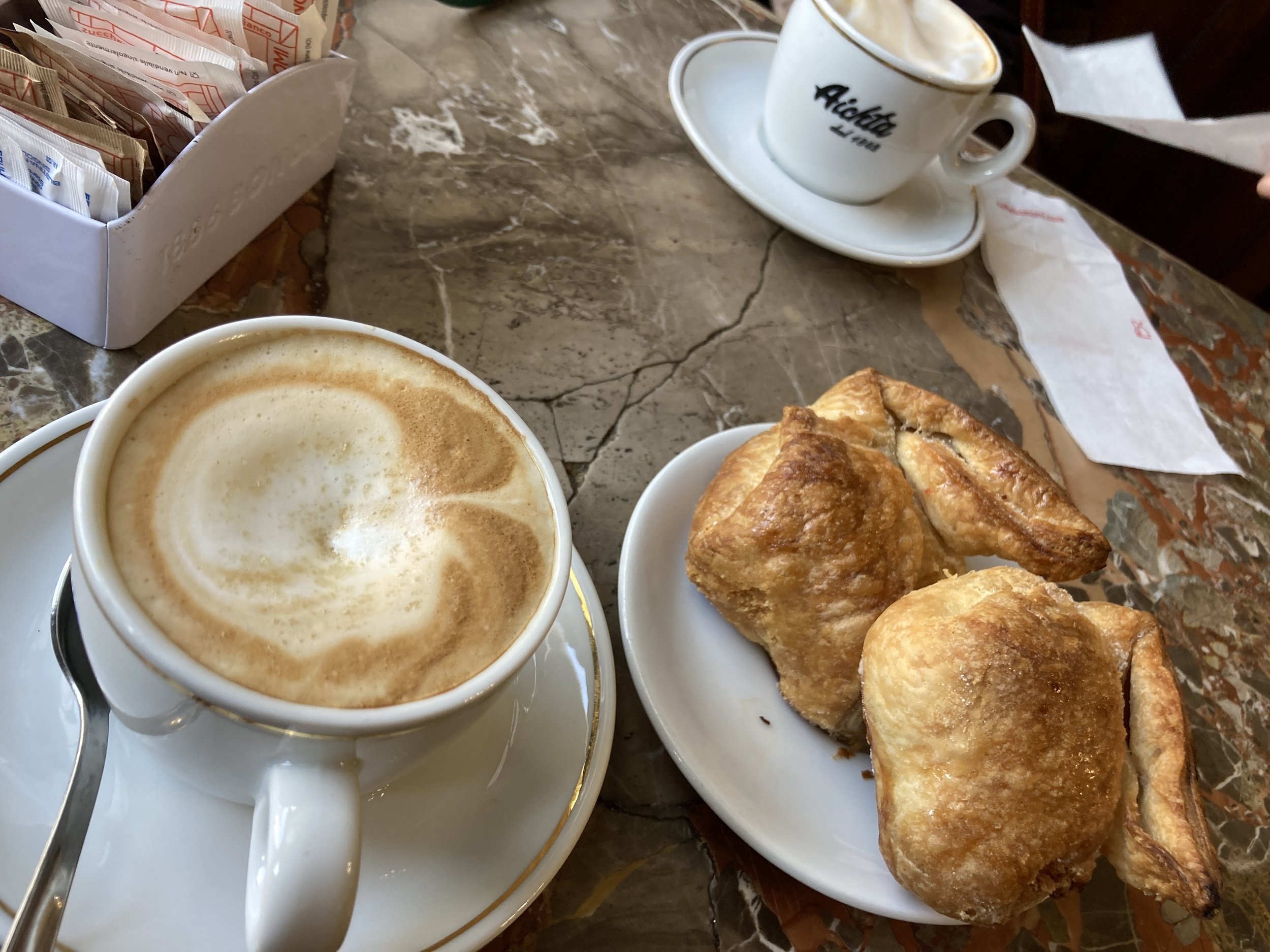
For morning coffee and a pastry, the Antica Pasticceria e Caffè degli Svizzeri with its scrumptious pastries and beautiful liberty-style café, can’t be beat. 
D8869A6C-961B-497B-BFA1-CC8A02ACF114.jpeg
8B38178A-E3FA-4977-B2CD-2F2F073589EA.jpeg
3000B10A-D2A8-4294-B4EE-3A8FF553F874.jpeg
30C6E67D-664E-4B35-8254-BCF7923C8FB9_1_201_a.jpeg

Where the Torrente Verde joins the Fiume Magra

November 14, 2022 /Joanne Bartram
Pontremoli, Lunigiana, #pontremoli, #lunigiana, Italian fall getaway, Italy in fall
#fallinitaly, #italytravel, #medievalitaly, Hill Towns Italy, Italian culture, Italy travel, Northern Italy Regions, Tuscany, Lunigiana

Cripta Rasponi e Giardini Pensile, Ravenna

The Rasponi Gardens in Ravenna

November 07, 2022 by Joanne Bartram in #italytravel, #ravenna, Italian art architecture, Italian gardens, Italy travel

With all of the important historic sights and stunning mosaics to see in Ravenna it is important to take some time out. A stop for a coffee or a leisurely lunch provides time to reflect and organize one’s impressions and memories. Even better is to stop by a pretty garden for a few moments of quiet between all the monuments. On a recent trip to Ravenna, two small gardens provided a much needed break in my sightseeing. Both were created by the Rasponi family, who were important economic and political forces in the years between the 1500’s and 1800’s.

Giardino delle Erbe Dimenticate (also called Giardino Rasponi), Ravenna

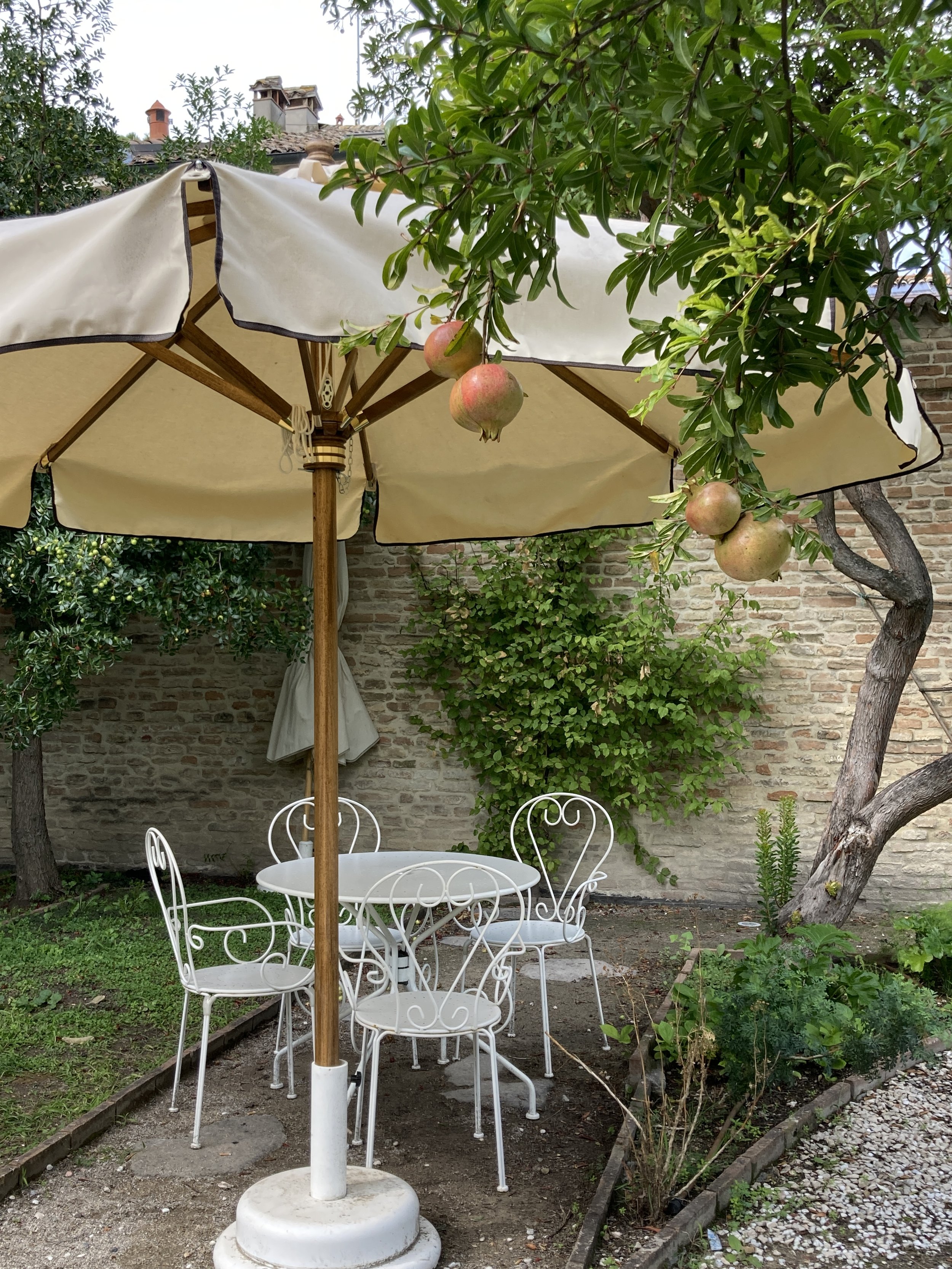
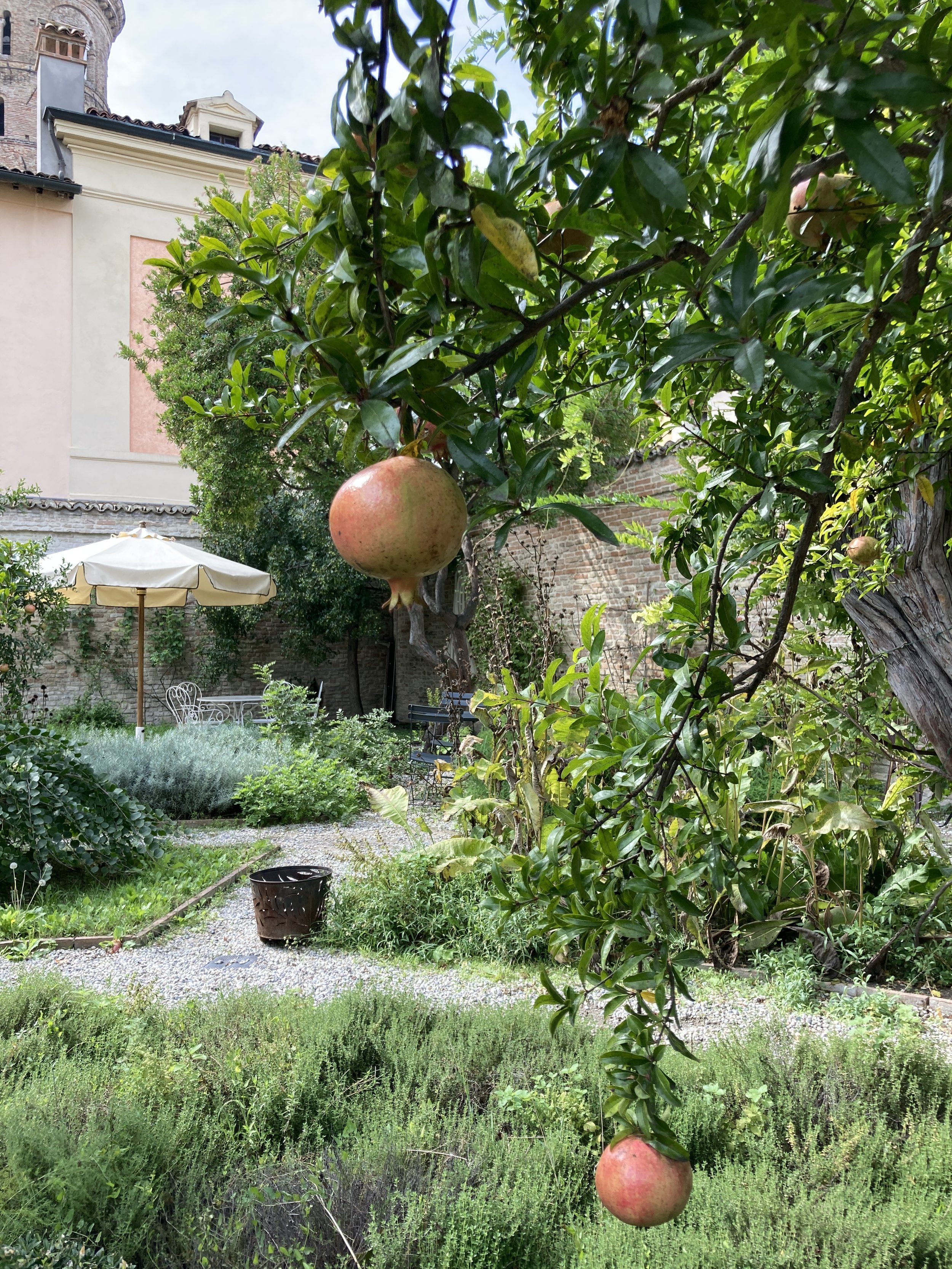
The first garden was a purely accidental find. While walking across town I spotted a sign for a botanic garden just off Piazza J.F. Kennedy and behind the Palazzo Rasponi dalle Teste. Inside was the sweetest small space called the Giardino delle Erbe Dimenticate (The Forgotten Herb Garden). Originally a walled garden for the oldest Rasponi palazzo in Ravenna, it was recently restored and now serves as a public space. It is not a big garden, just large enough to have a central fountain surrounded by flower and herb beds. Pomegranate and apple trees provide shade. Small tables are scattered throughout - perfect spots for a break from sightseeing or for a bit of lunch from the cafe at the front of the garden. These little almost-hidden spots are some of the most enchanting places to discover.

9113AAC6-6A0B-4D8F-BB08-42C4119AD778.jpeg
999DF77A-7DC0-4CBB-84FE-2F46EC74E112.jpeg

The second garden space was the Giardini Pensili (Hanging Gardens). The gardens, along with the Rasponi Crypt, are the oldest surviving parts of another Palazzo Rasponi, dating from the late 1700’s, most of which was destroyed by fire in the 1920’s. Today the gardens and crypt lie within the Palazzo della Provincia complex in Piazza San Francesco, not far from Dante’s tomb. The gardens are spread over several terraces which climb up around the central tower housing the crypt. The first garden is on the ground floor and set around a large 3-tiered central fountain. There are hedges and trees and a wonderful feeling of serenity here. From the entry garden, a path leads to the crypt.

The lowest level of the Giardini Pensili (Hanging Gardens)

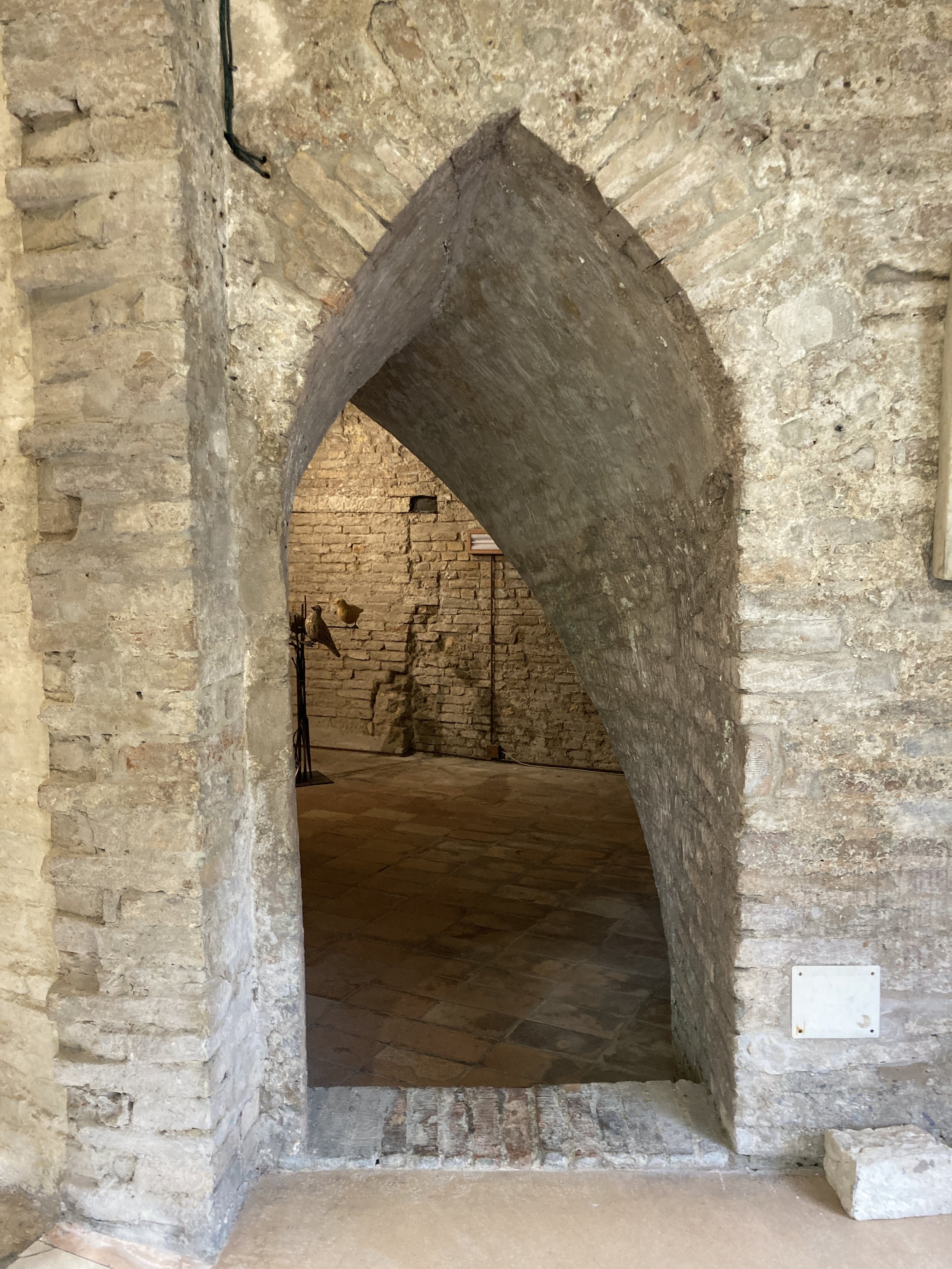
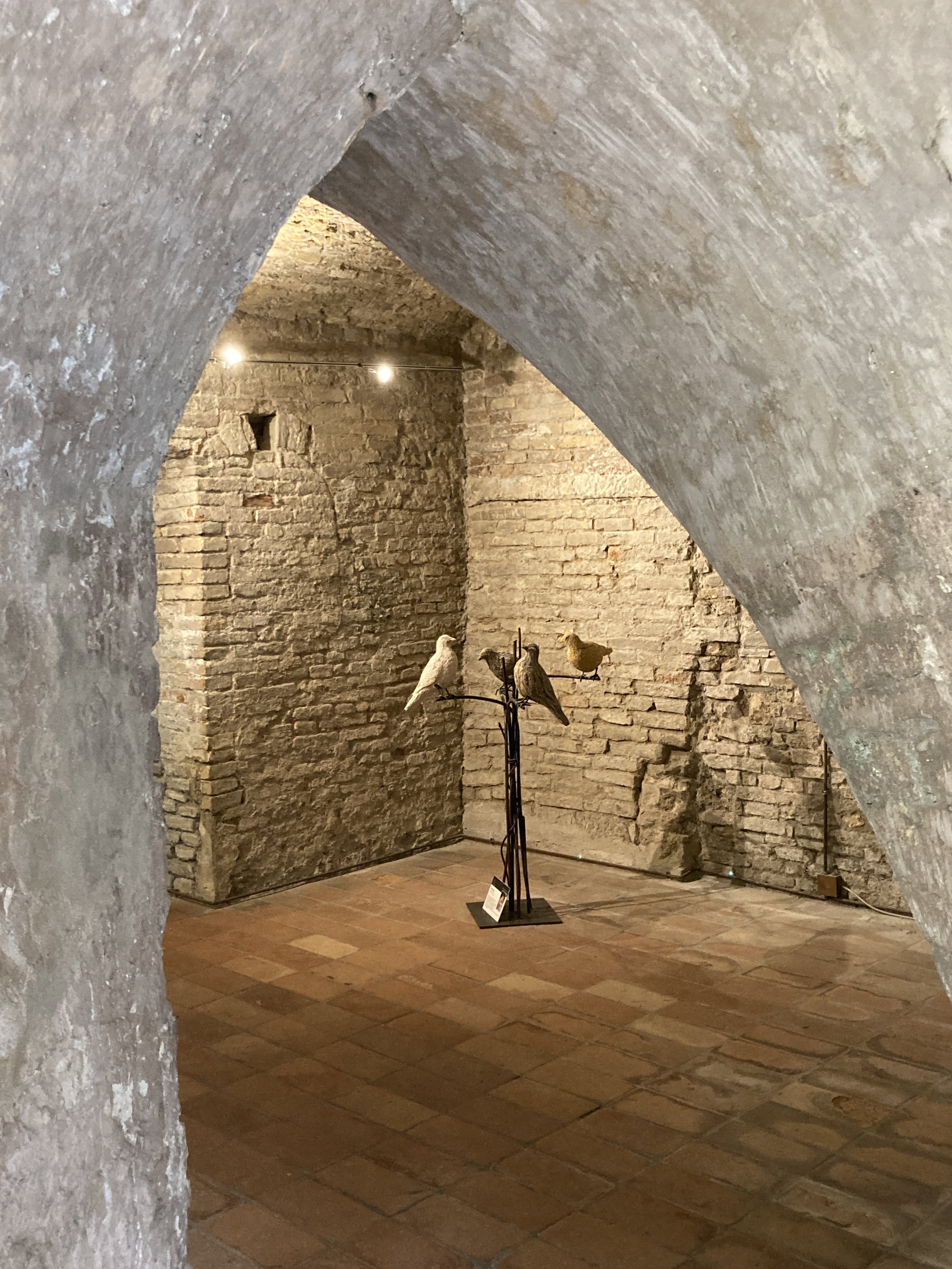
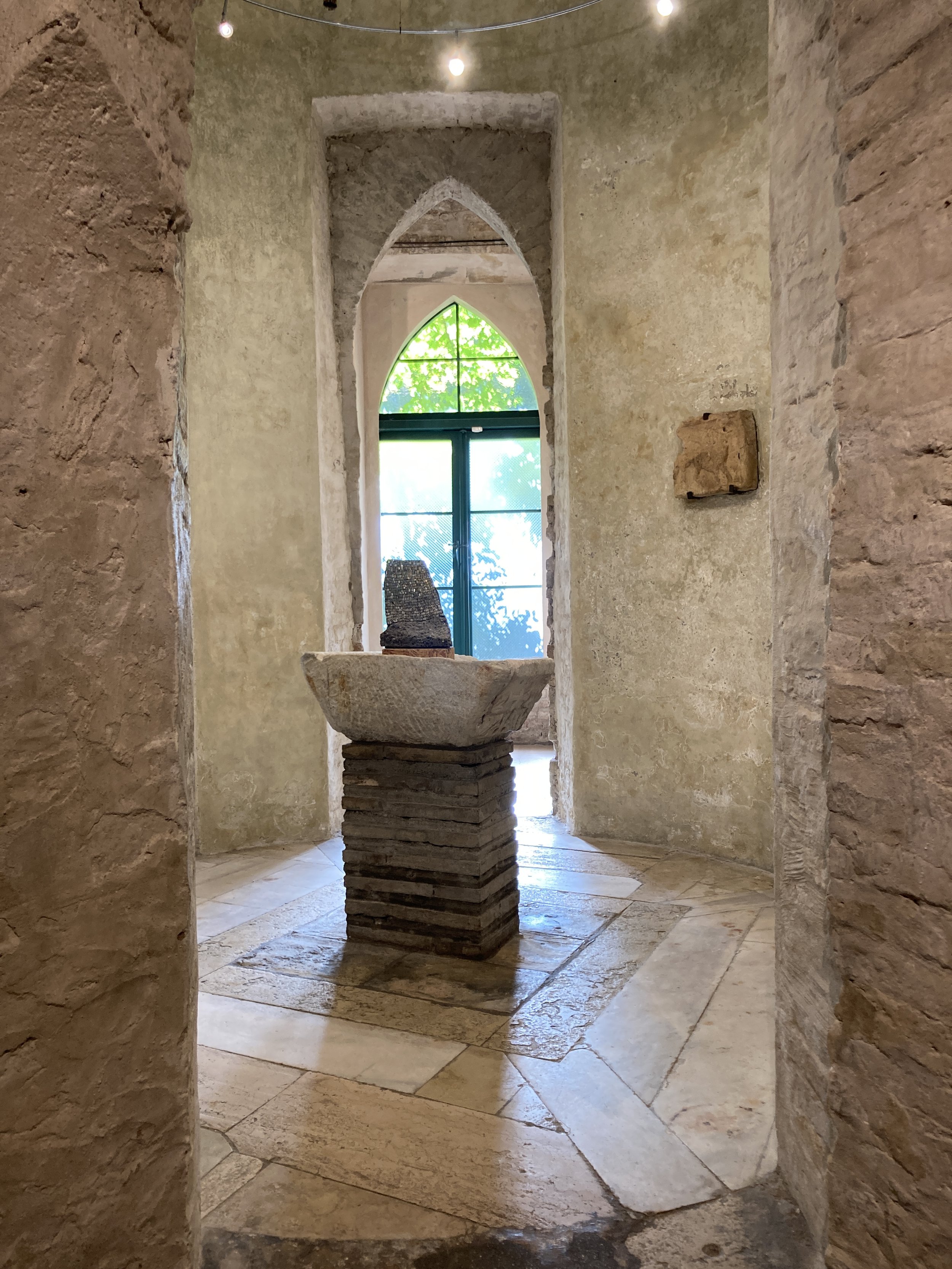
The crypt most likely served as a small family chapel, it was never used as a burial space. It has wonderful curved brick walls with deep arches between several small rooms. The floors contain some ancient mosaics. Today small art pieces are on display.

8E08CD9E-61D9-4D98-9D66-38843A1EC159.jpeg
6F6F6F38-58E8-43AD-ADE3-891F7C003C1E.jpeg
7ADC348D-6A33-4CCE-9728-B6AFB752E170.jpeg

Outside the crypt, a staircase leads to the next level of the gardens. Here is a wonderful, restful spot - a shaded arbor with views over the lower garden. What a cool and refreshing spot this must have provided the long ago Rasponi family. Or perhaps it was under this shade that Lord Byron sat with his lover, the Contessa Guiccioli, when he was in Ravenna. The arbor certainly has a romantic air about it.

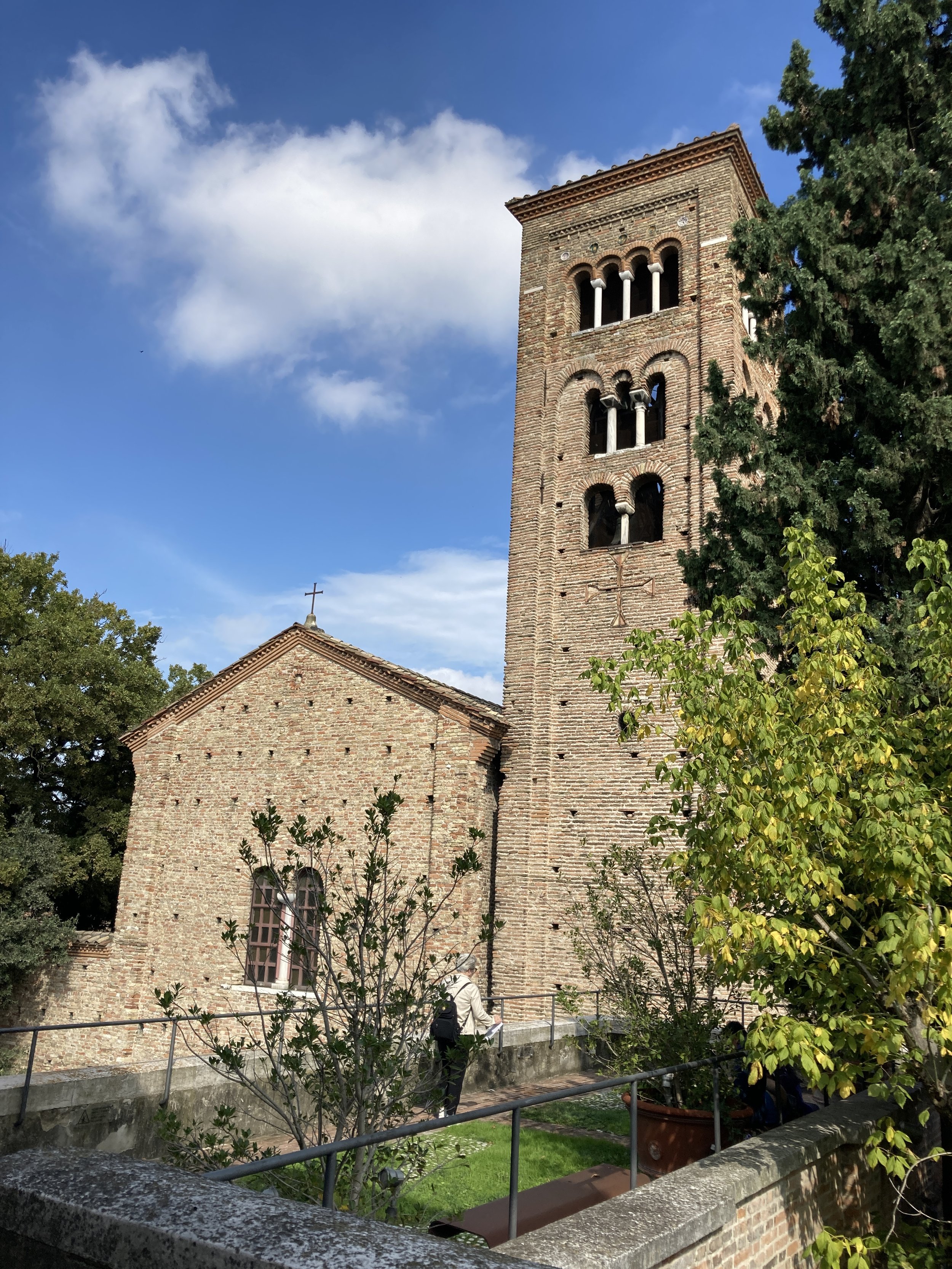
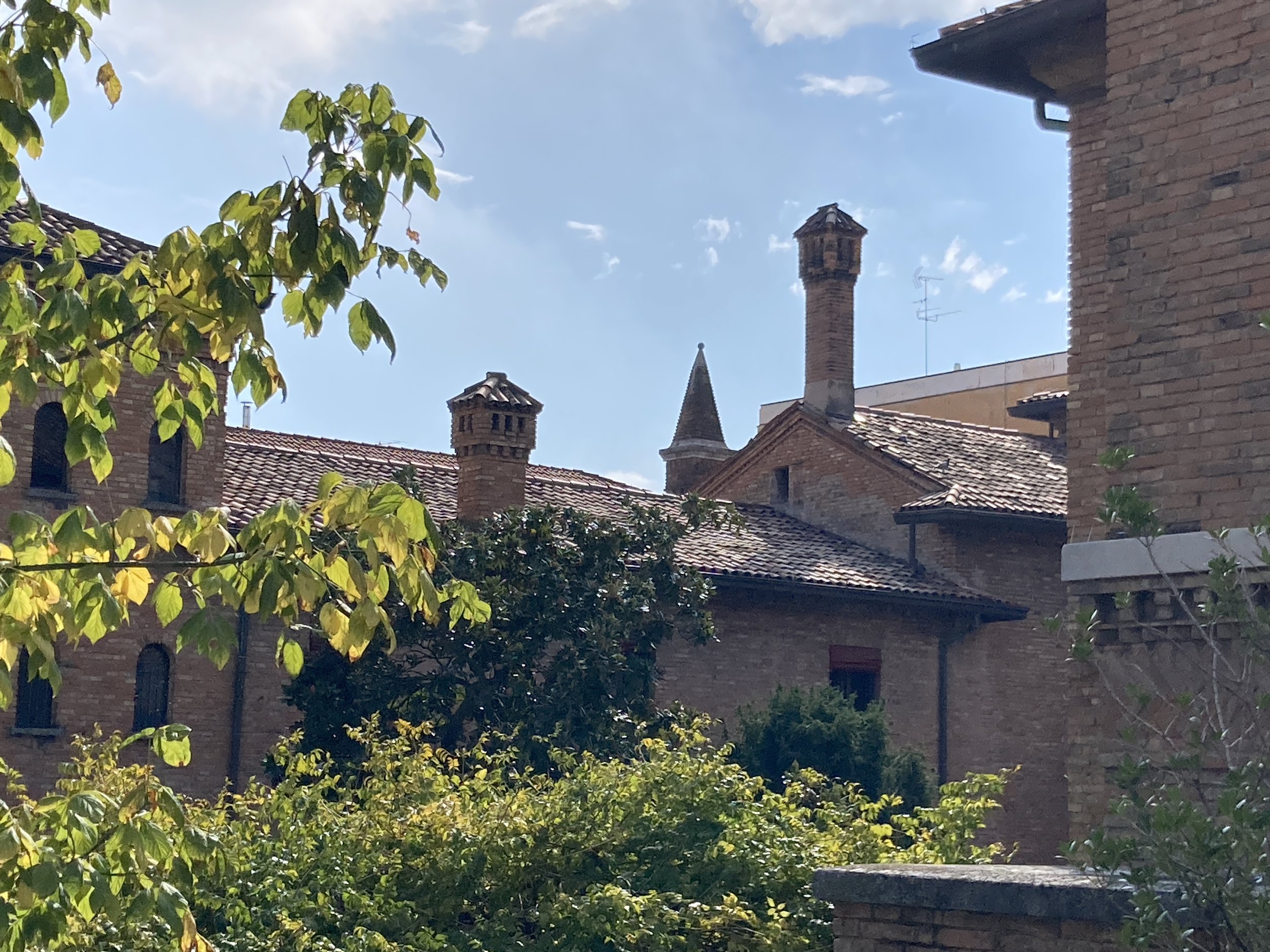
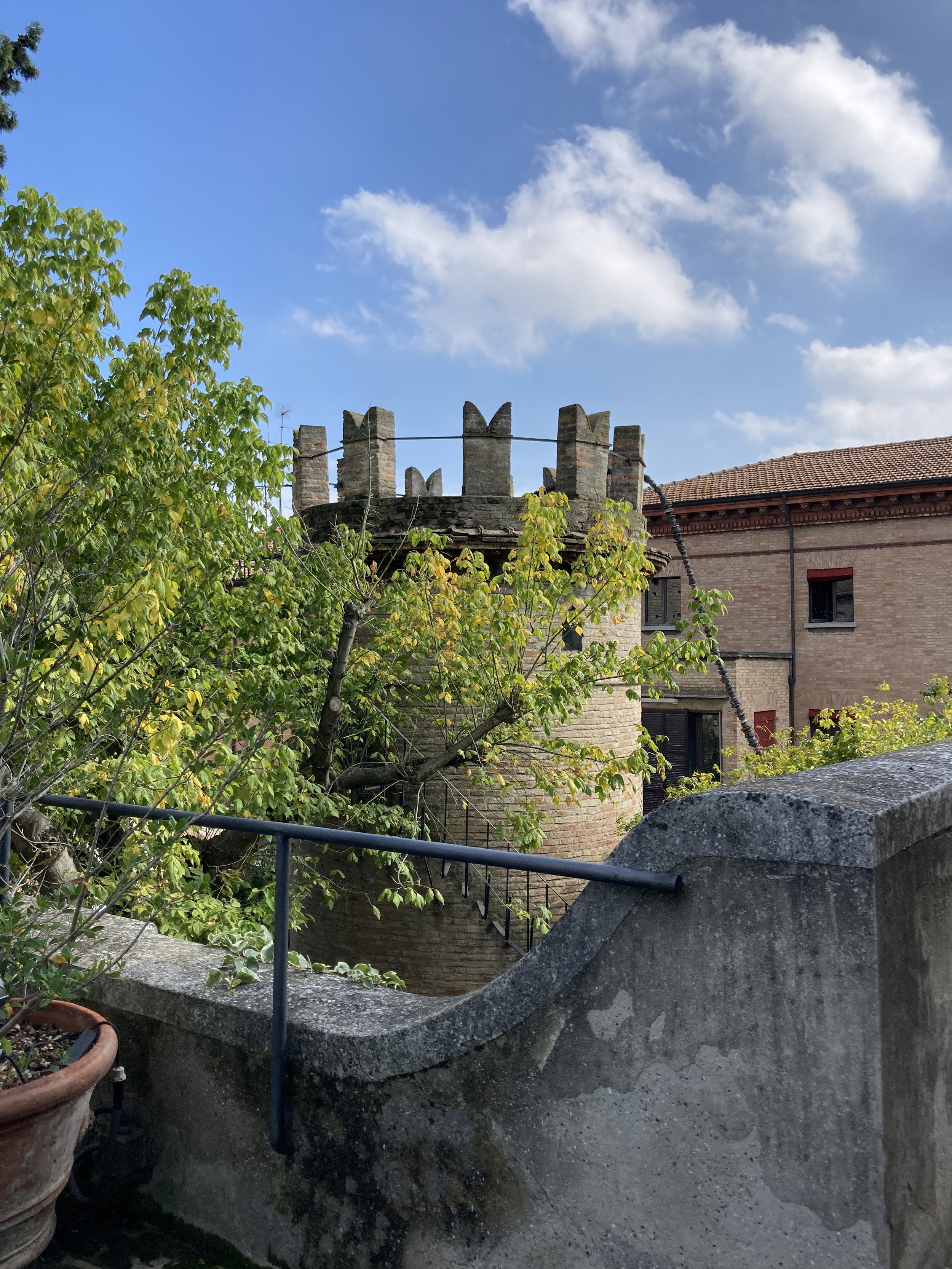
The top level of the gardens shift the view from the interior of the complex to the outside world. The Basilica of San Francesco and its campanile (bell tower), along with distant views of rooftops and towers, can be seen from this open platform with its interesting ground cover of grass and white rock. There is also a great view of the merlons atop the tower which houses the crypt (the merlons are the M-shaped brick pillars at the very top of many towers and castles).

BF61DFC7-4EF9-4CD3-B38A-9B64532DCA97.jpeg
CC051145-8588-497E-85F7-49F304AF44E1.jpeg
7F2964D5-EEF2-42C7-8DF7-74B762AAFF5B.jpeg

The climb down from the top gives a different perspective on the gardens and the tower housing the crypt.

Just outside the complex is a perfect place for another break - the Caffè Pasticceria Palumbo, set just under the portico in Piazza San Francesco.

November 07, 2022 /Joanne Bartram
Rasponi gardens, Giardino Pensile Ravenna, #ravennagardens, #rasponigardens
#italytravel, #ravenna, Italian art architecture, Italian gardens, Italy travel

Sunrise at Cretaiole. The valley below is filled with early morning fog and the bell tower of Pienza can be seen across the valley. It’s definitely worth getting up early for this view!

Agriturismo Cretaiole and Luciano's Farm

October 31, 2022 by Joanne Bartram in #fallinitaly, #italytravel, Hill Towns Italy, Italian culture, Italy travel, Tuscany, Val d'Orcia

Some places, and some people, are special.  Agriturismo Cretaiole is one such place and Luciano Moricciani, its founder, is the special person who started it all.  Son Carlo and grandson Nicco, both of whom are pretty special too, have taken over much of the day-to-day operations at the Cretaiole with the help of the delightful Fernanda who is a whiz at organizing everything for guests. But it is Luciano, at 82 years of age, who remains the steady hand, keeper of history, and the warm heart behind the agriturismo and farm.  

Agriturismo Cretaiole, near Pienza

Agriturismo Cretaiole - a classic Tuscan stone farmhouse with beautiful accommodations for up to 20 guests.

 I’ve written about Cretaiole before – after my first visit in 2016 and again in 2020. The 2020 visit took place during the pandemic when no other tourists were around. At that time, Carlo kindly allowed my friend and I to stay and participate in the olive harvest.  The quiet of that visit was quite a contrast to the laughter and activity during my first stay. For more info, the previous posts can be found here: www.twopartsitaly.com/2020/11/2/1erwrj2r1njhhb89nvw9j1b43wv5ic. www.twopartsitaly.com/2016/12/14/a-week-at-agriturismo-cretiaole

The living room / kitchen of the Il Granaio apartment at Cretaiole

This year the visitors have returned, many of whom waited nearly three years to reschedule pandemic cancelled trips.  They came for many reasons – the beauty of the Val d’Orcia, the excellent local wines, the peacefulness of Cretaiole’s setting. They also arrived to take part in the wonderful activities included in Cretaiole’s “Dolce Vita” package - pici making, truffle hunting, early morning hikes, group dinners, wine and olive oil tasting. And then there is “The Isabella Experience” which includes luxury linens and many special touches as well as the opportunity to visit all the small villages of the Val d’Orcia which are just a short drive from Cretaiole. 

And, as one guest told me, she came because she’d read about Luciano in several blog posts and had been waiting for 3 years to drink grappa with him! 

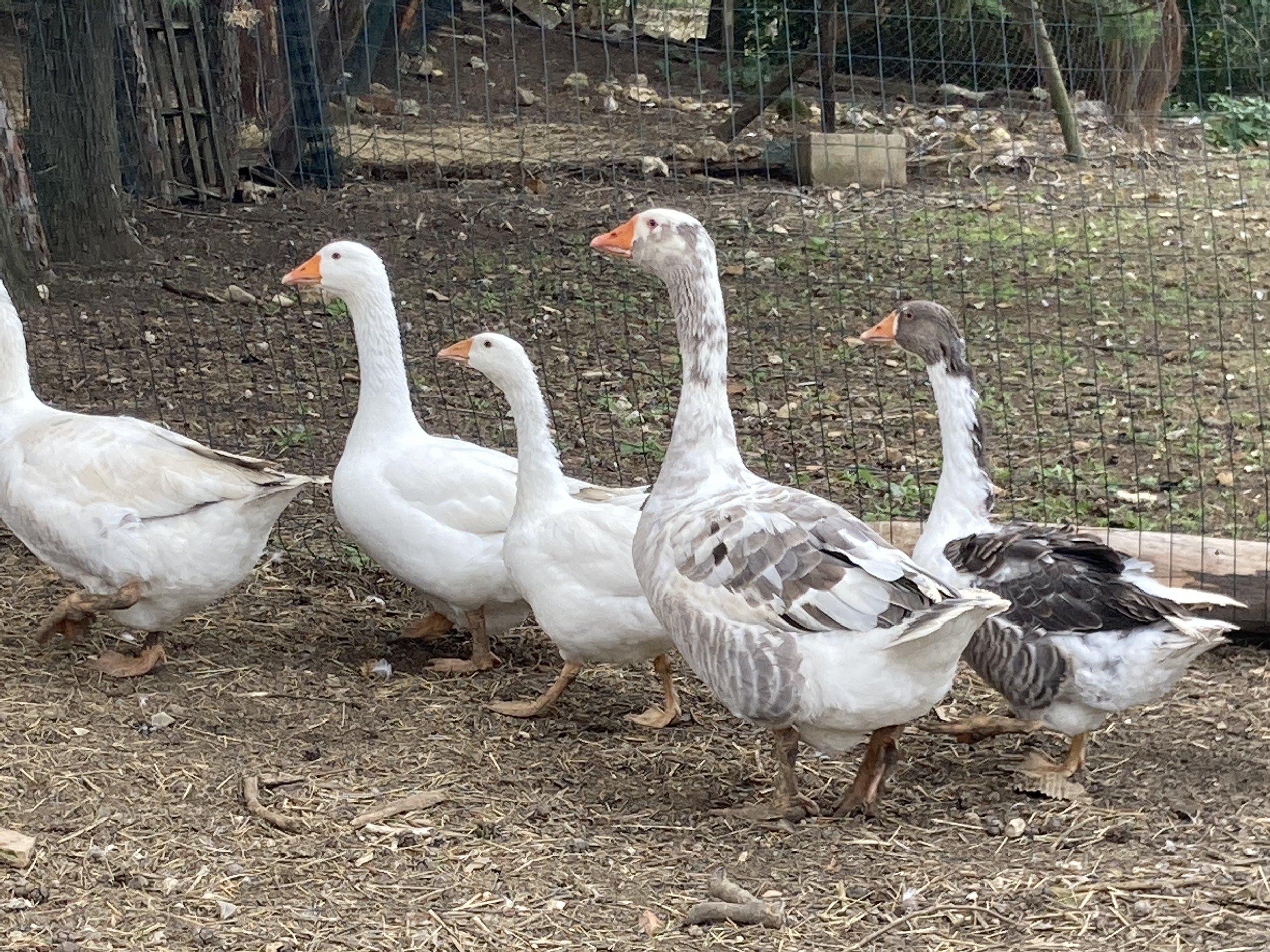
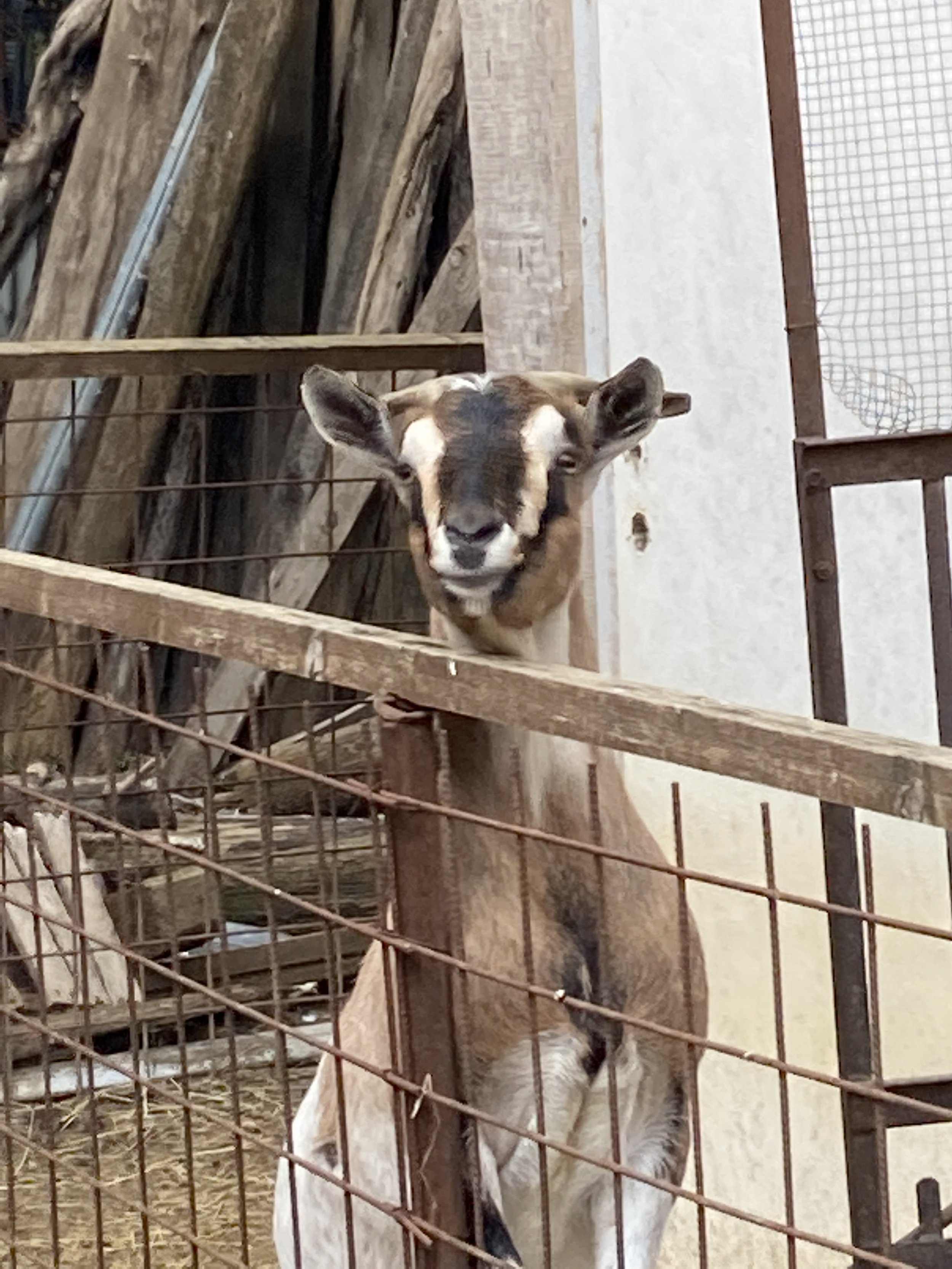
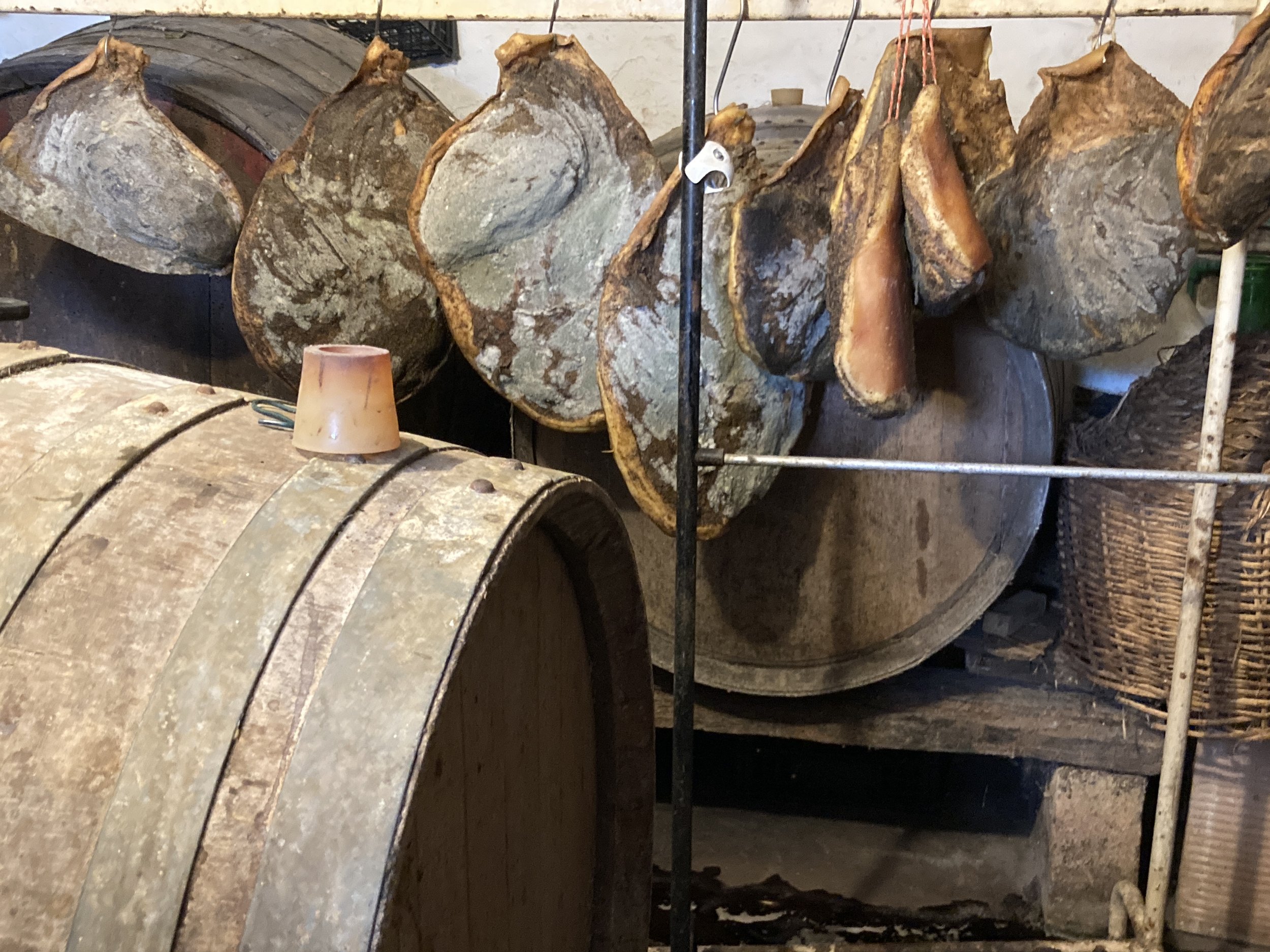
 One of the highlights of a Cretaiole stay is a chance to visit Luciano’s farm, Podere San Gregorio, just 10 minutes from Cretaiole.  During my October visit Luciano was recovering from a fall but he was still enthusiastic about walking the farm with us.  He is the person most involved with the animals including sheep, chickens, geese, guinea fowl, one goat, a friendly dog, and some very large pigs.  The sheep are pretty much pets but the pigs are the source of some of the farm’s specialties – prosciutto and salami – all prepared on-site. 

F9C25B92-D23B-4000-BC3E-C8806147BB2D.jpeg
E5E305D7-8276-4F57-93F3-4ABED5844F37.jpeg
56508ED3-E782-47E6-919C-A388956F8D83.jpeg
9C5D6DE4-1F15-47BA-8BCF-6F2903F85B60.jpg

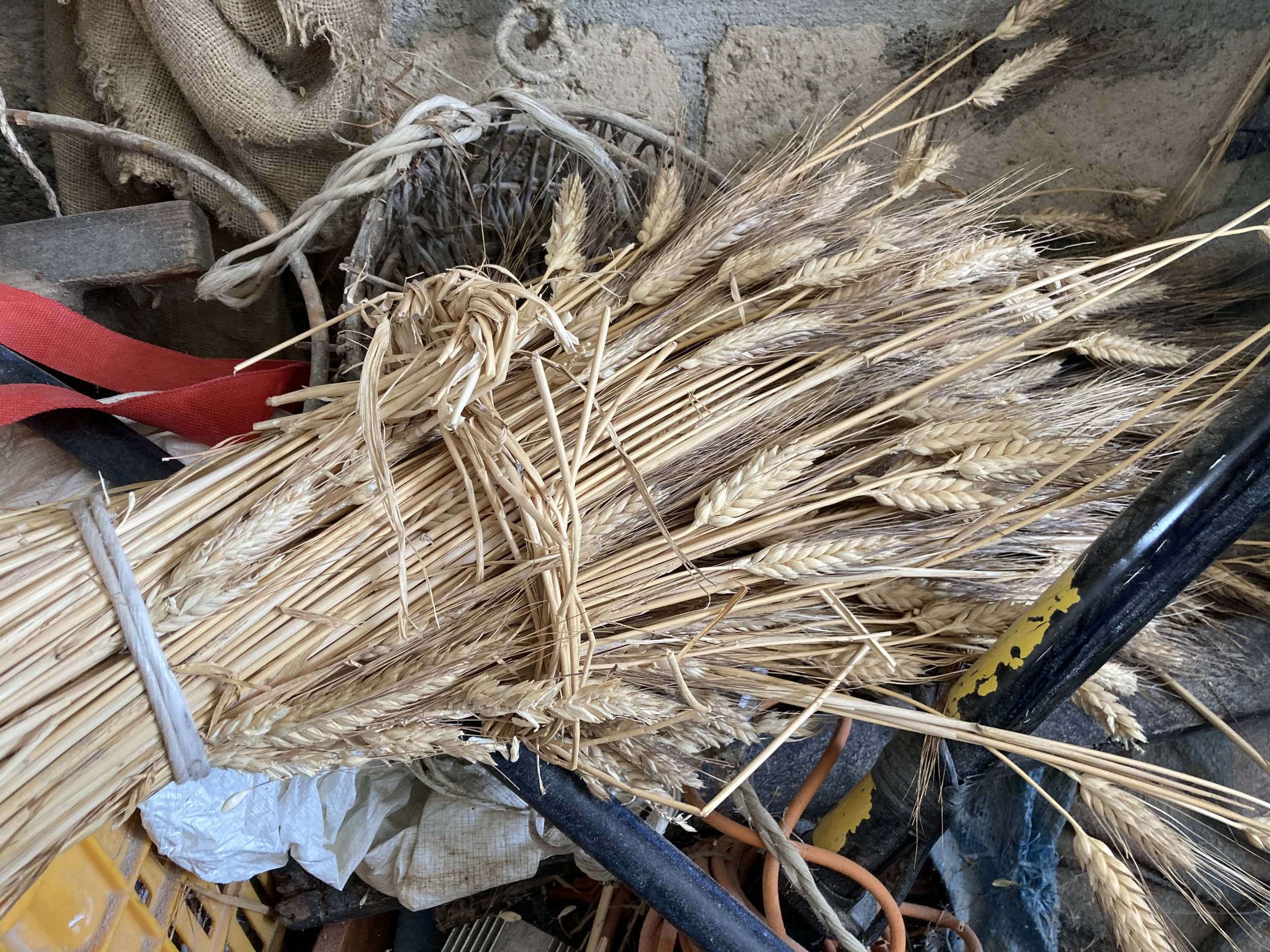
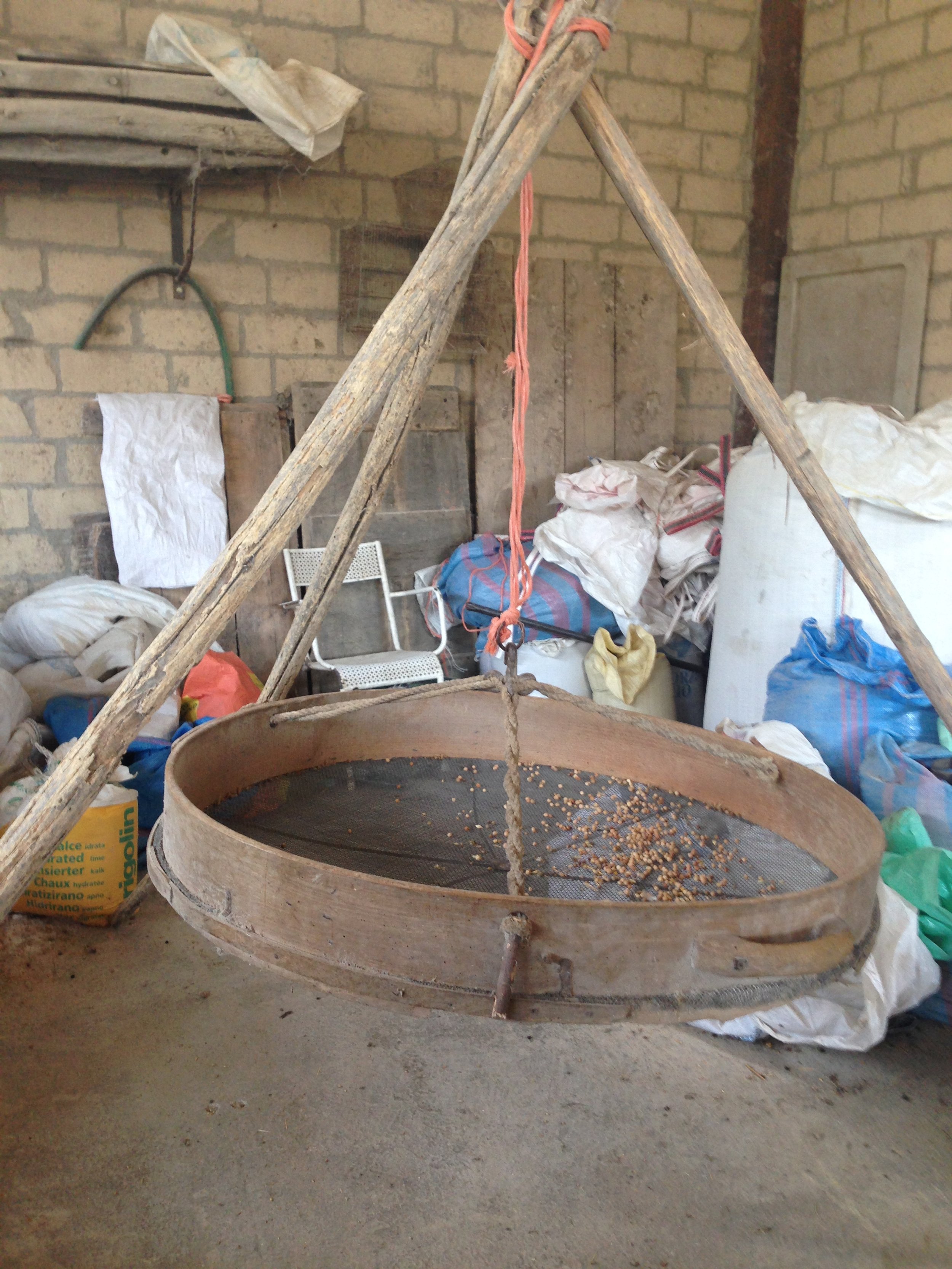
The farm tour includes a stop at the barn where some of the oldest farm tools can be seen and where fascinating tales of the old ways of picking olives and harvesting wheat are told by both Luciano and grandson Nicco.  It is easy to imagine the young Luciano scrambling up the trees on the rather rickety ladder that still hangs in the barn, basket at his waist, collecting olives and trying not to fall out of the tree (a common hazard in those days).

9E9195F8-DF6D-44B4-A4D3-7F00AD1DCA3F.jpeg
E7C3C44D-2347-442A-BA2B-6E81A5EA8437.jpeg
2123638E-F0F3-4CDD-9AE3-5CDB197EAE5F.jpeg

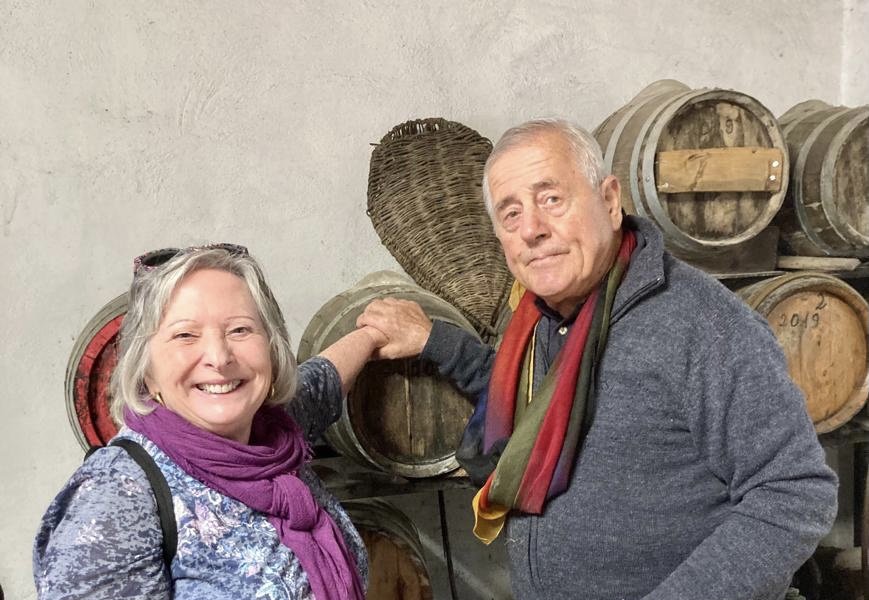
Luciano and me at Podere San Gregorio. I will present this photo on my return to claim a bottle of his Vin Santo.

Next stop: the building where the preparation of meats, sauces, and Vin Santo takes place.  A promise was made that anyone who returns to the farm and presents a photo of themselves with Luciano, hands on the Vin Santo casks, takes home a free bottle.  You can bet I have that photo saved, more because I hope to have another visit with Luciano then for the free bottle. Although that Vin Santo is really tasty!

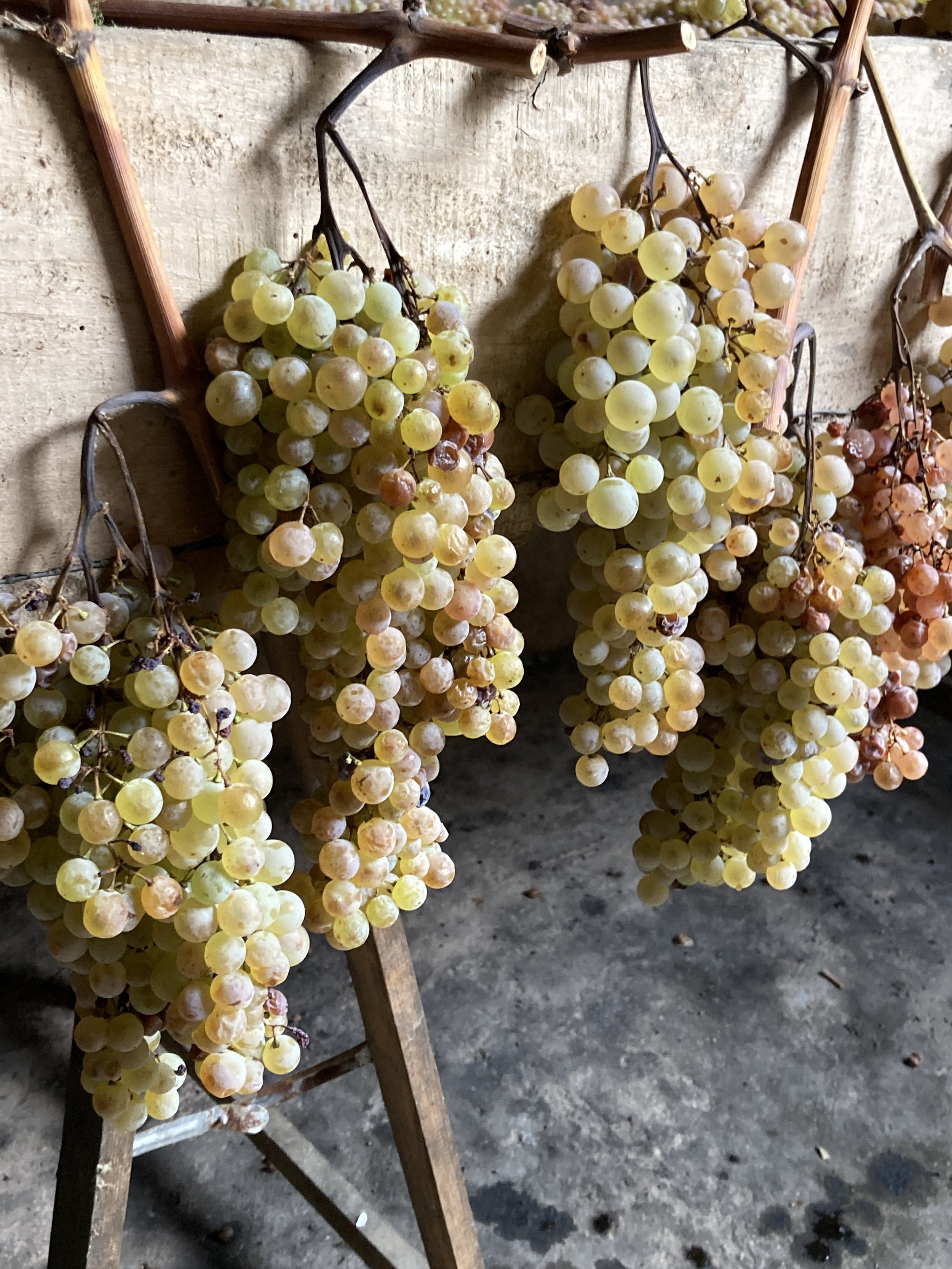
 Behind the work room is the small room where the white grapes for vin santo are dried. The grapes were still quite moist in mid-October, having only been harvested two weeks before.  They tasted sweet and the aroma was wonderful.

D50FC0A2-30A6-48D8-B821-B985115728DE.jpeg
A26DF7C7-CC97-43C7-9BA0-200D09518730.jpeg

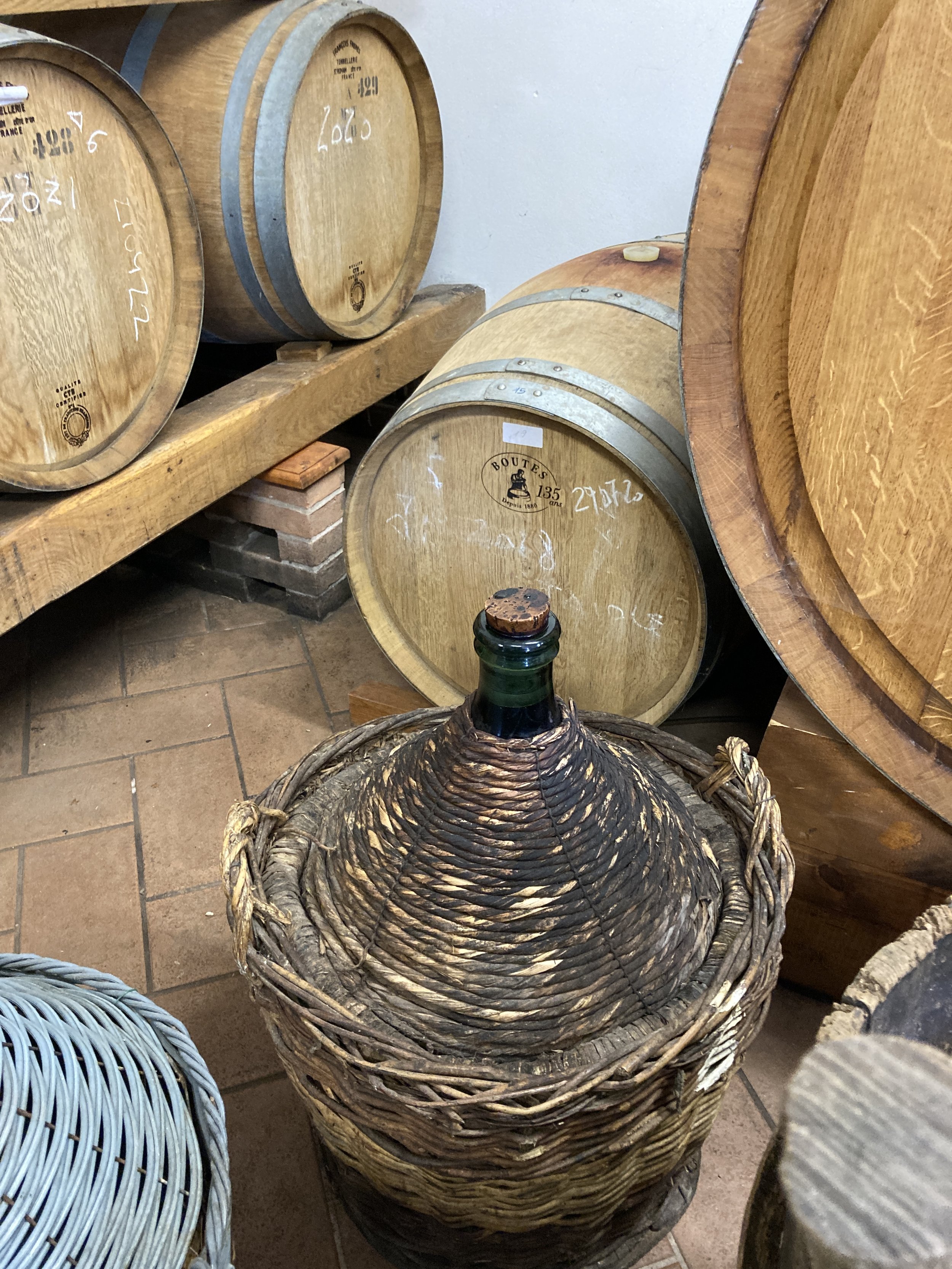
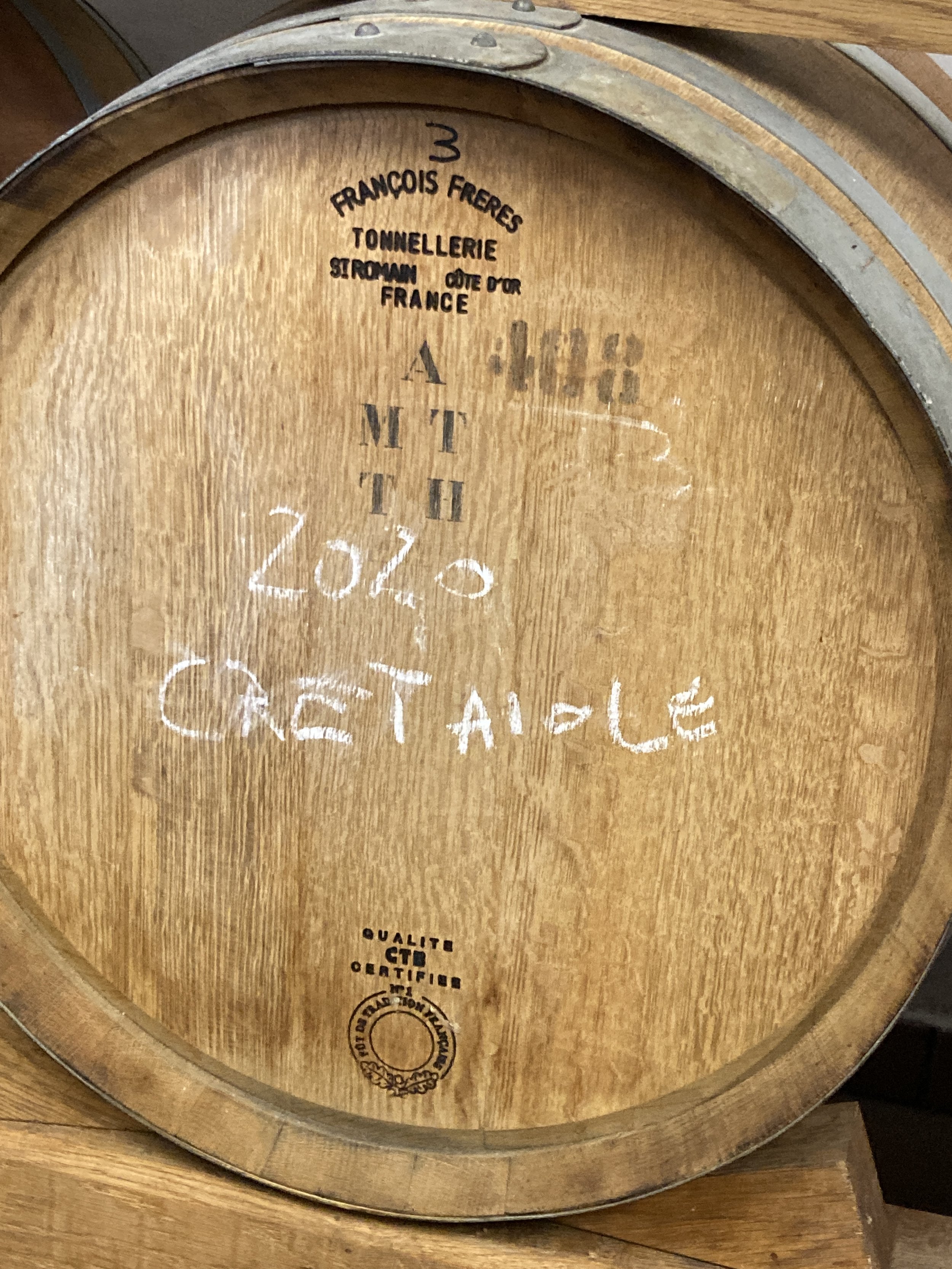
 Besides the barn, garden, work rooms, and animals there is also the large space where the wine is made and the olive oil stored.  Next door is an aging room for pecorino cheese, prosciutto, and salami. The grape harvest had taken place a week or two before, the grapes pressed and the wine placed into the large vats to begin fermenting.  Huge piles of dried grape skins remained, waiting to be sent off to grappa makers.  The olive harvest will take place in late October / early November, so soon the olive oil tanks will be filled with the new 2022 oil.  I would like to go back even if just to buy some of the new oil.

A4F46751-7051-4622-975C-DB8880AB09D0.jpeg
CA8542B7-7B7F-47D9-8D3A-842AAC1C316E.jpeg
006C40A7-DEF5-4F70-BA28-B11279385868.jpeg
1EF345E7-7552-427F-84C0-FDD2E4AF0A1D.jpeg

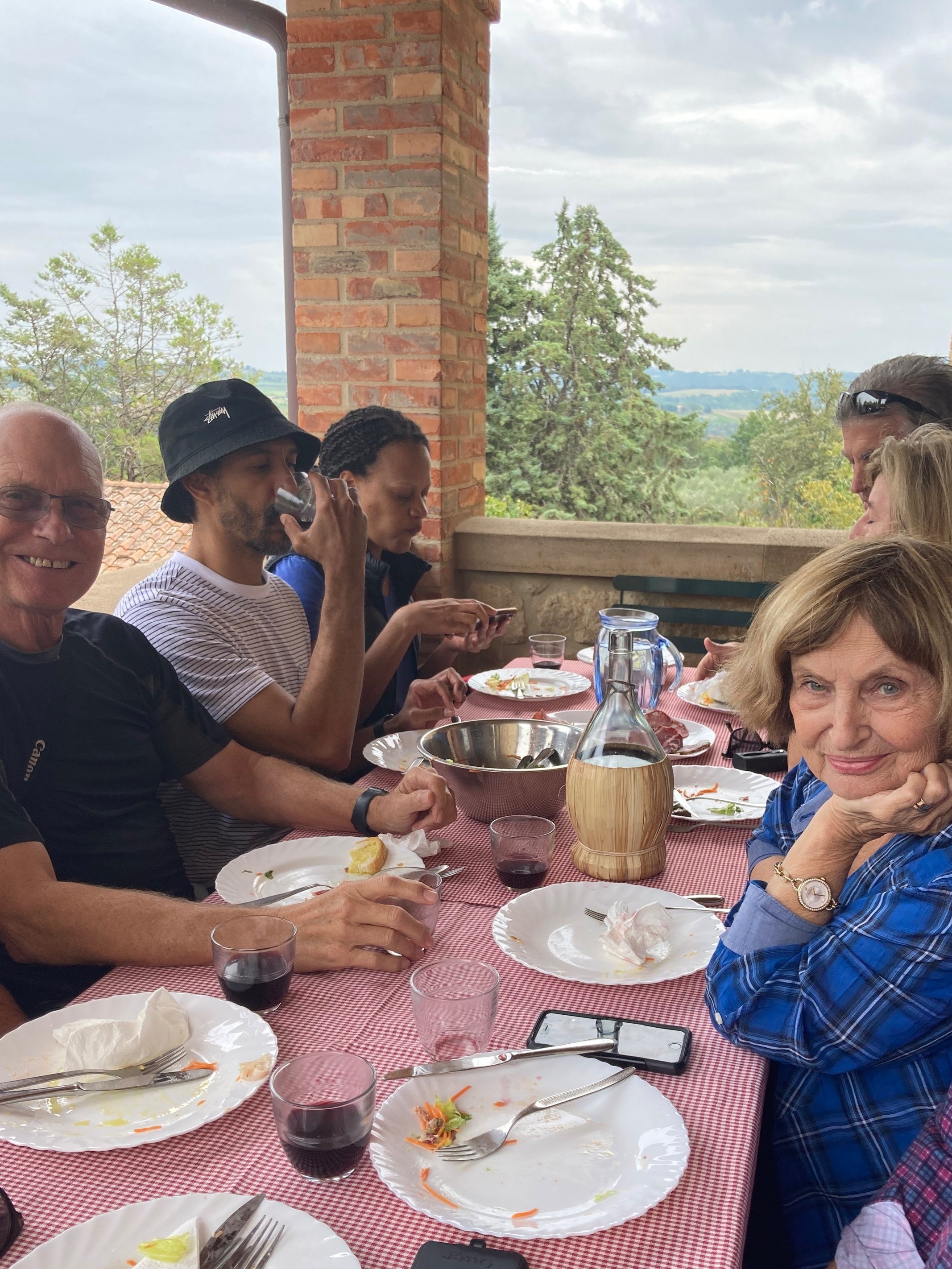
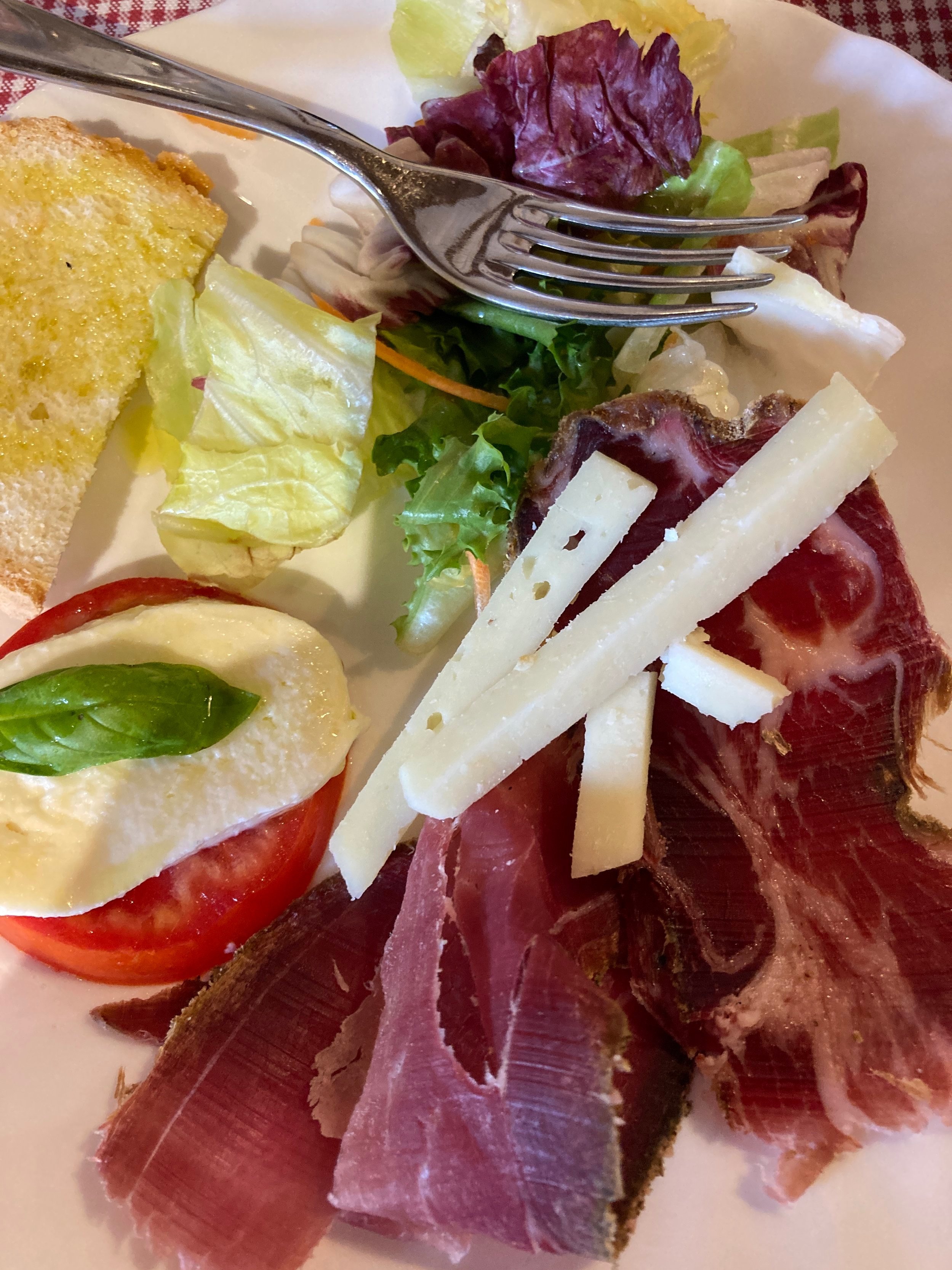
 After the farm tour we all gathered around tables for a straight-from-the-farm lunch.  Slices of bread with Cretaiole olive oil (it is really, really good), local pecorino aged on the farm, platters of prosciutto and salami, caprese salad, and Cretaiole red wine (also quite good).  We finished with some of Luciano’s very special Vin Santo and cantucci for dipping. There may even have been a bit of grappa poured.

BBED3E30-9FBF-4CC4-A586-6B52FB3FEA6A.jpg
C25B1D81-A907-406D-8F05-D12075B7B416.jpg
3D06BB10-CE36-4BDD-926C-9CF418F74B85.jpg
A225B062-28DA-483B-B6CD-41F0210448B5.jpg


It was wonderful to have Luciano with us on the farm tour and again at Cretaiole’s group pici dinner.   He clearly enjoys sharing his stories and his farm with visitors.  He also enjoys talking with visitors and hearing the stories they tell (he speaks Italian and is also great at using google translate to speak with English speaking visitors).  He has a lifetime of experience as an authentic Tuscan contadino (farmer) but, even better, he shares the joy of his land, his family, his farm, and his heart.  Luciano is one very special part of the Cretaiole experience. 

Ti voglio bene Luciano!

October 31, 2022 /Joanne Bartram
#cretaiole, cretiaole, agristurismo cretaiole, tuscan farm stay, #tuscanfarmstay, Pienza, Val d'Orcia
#fallinitaly, #italytravel, Hill Towns Italy, Italian culture, Italy travel, Tuscany, Val d'Orcia

Ravenna Part Two: Basilica di San Vitale and the Galla Placidia Mausoleum

October 24, 2022 by Joanne Bartram in #italytravel, #mosaicsravenna, #ravenna, Emilia-Romagna, Italian Art, Italian art architecture, Italian culture, Italy, Italy travel, Museums Italy

This week, more about Ravenna and another two of the city’s important historical sites. One is quite small and the other much larger.

First, the smaller of the two, the Mausoleum of Galla Placidia. Galla Placidia, born around 390 AD, was the daughter of a Roman Emperor (Theodosius I) and wife to both Ataulf, king of the Visigoths, and the Roman Emperor Constantius III. She was also the mother of an emperor. She was powerful in her own right, playing a major role in Roman life and politics. Her contributions to society included construction and restoration of churches, including the mausoleum named for her in Ravenna. Although it is called a mausoleum, the building was used as a chapel and it is not Galla Placidia’s final resting place.

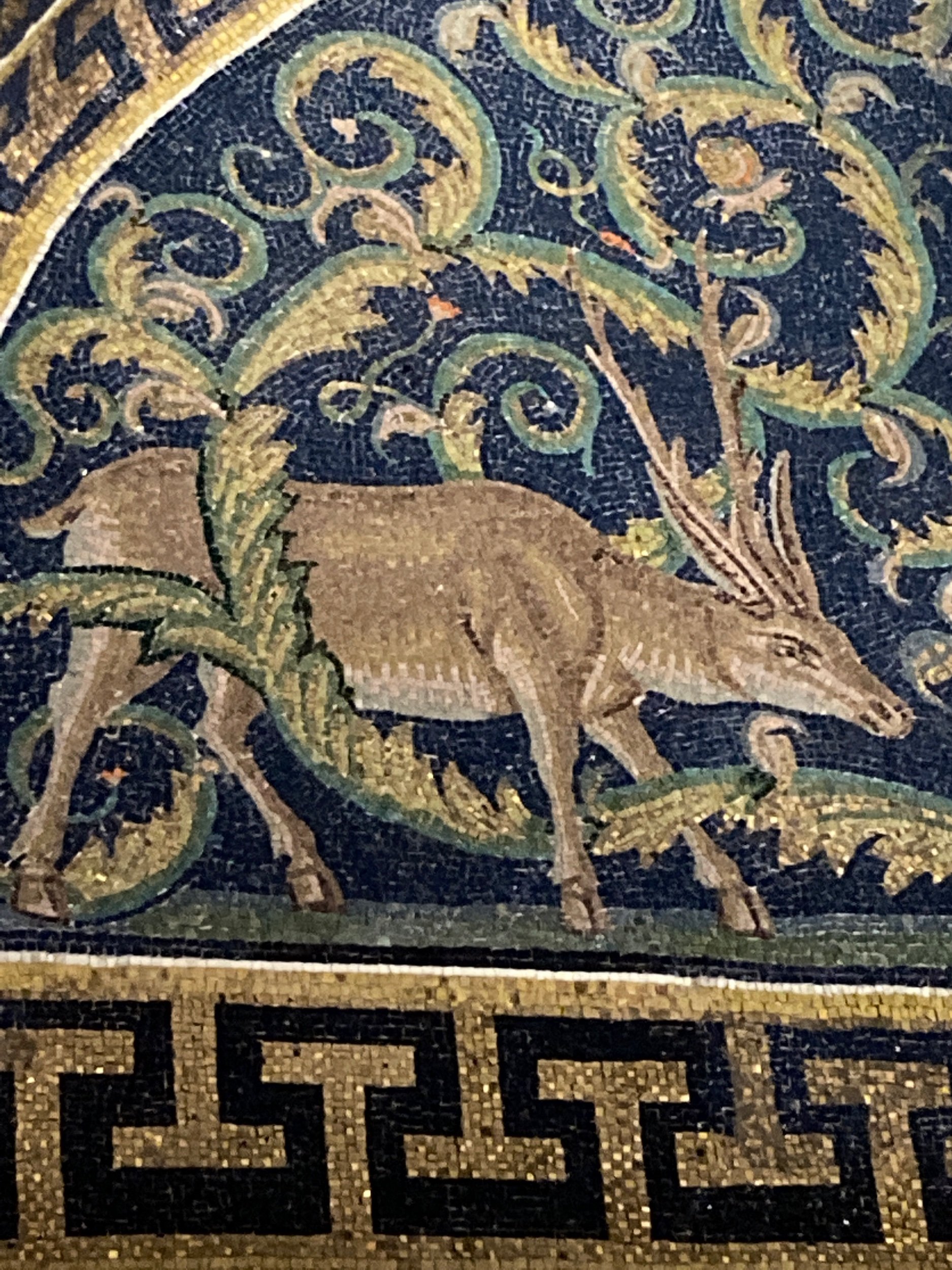
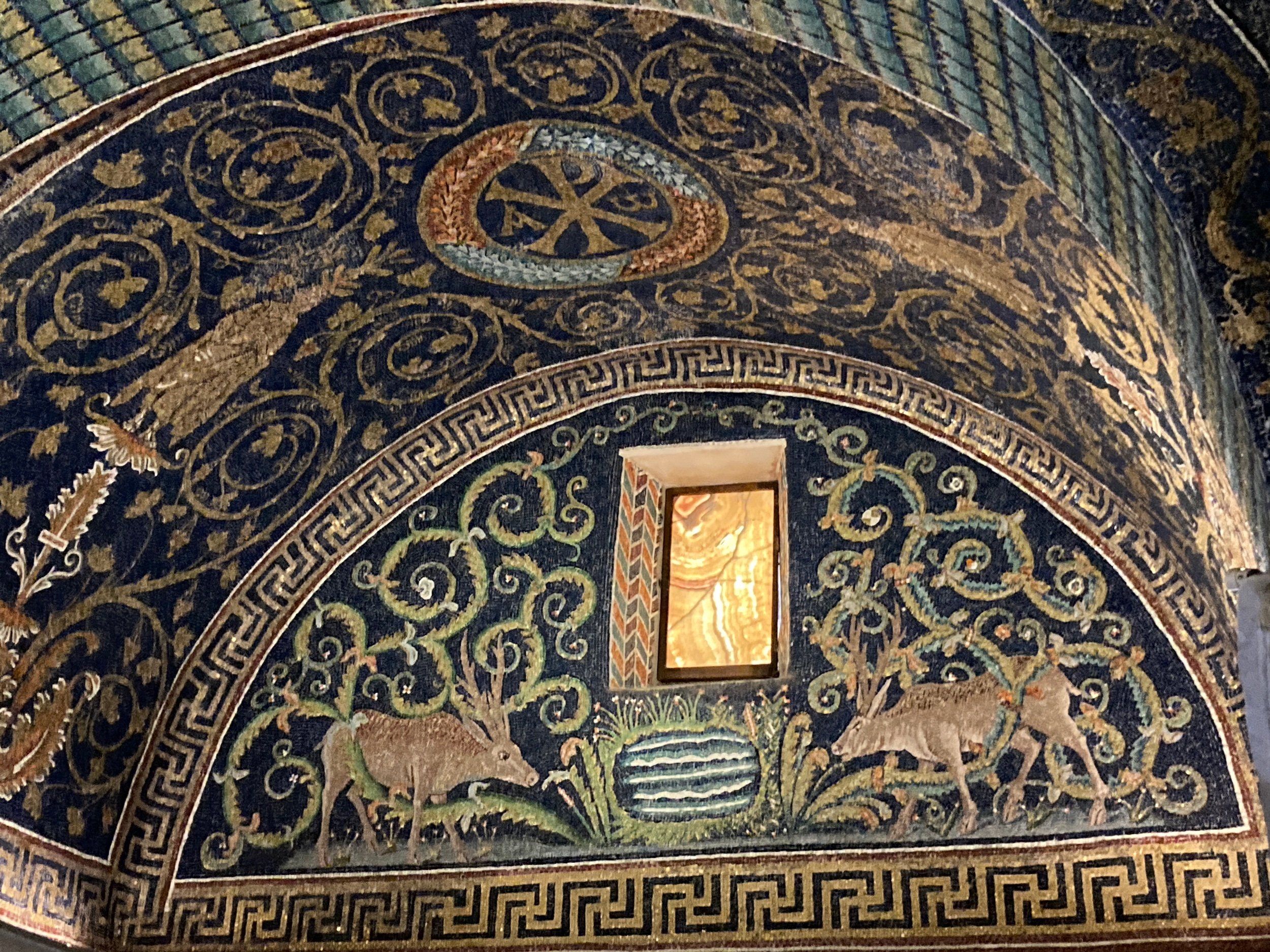
The mausoleum is small and intimate, constructed in the shape of a cross. Plain on the outside, it is stunningly beautiful inside - full of mosaics in dazzling blues and greens, touches of red, and white robed prophets. All of the upper portions of the interior, including the dome, the vaults, and the arches, are filled with brilliant detail and symbolism. There are starry skies, flowers and vines, animals, and a host of religious figures.

IMG_8900.jpeg
IMG_8895.jpeg

So much beauty in such a small space is breathtaking. The intimate size is welcoming and It feels a bit like a spiritual hug.

Detail of one of the lunettes, the Mausoleum of Galla Placidia

I didn’t imagine anything could compare, and yet, just across the grassy field, lies the Basilica of San Vitale…..

The Basilica of San Vitale, Ravenna

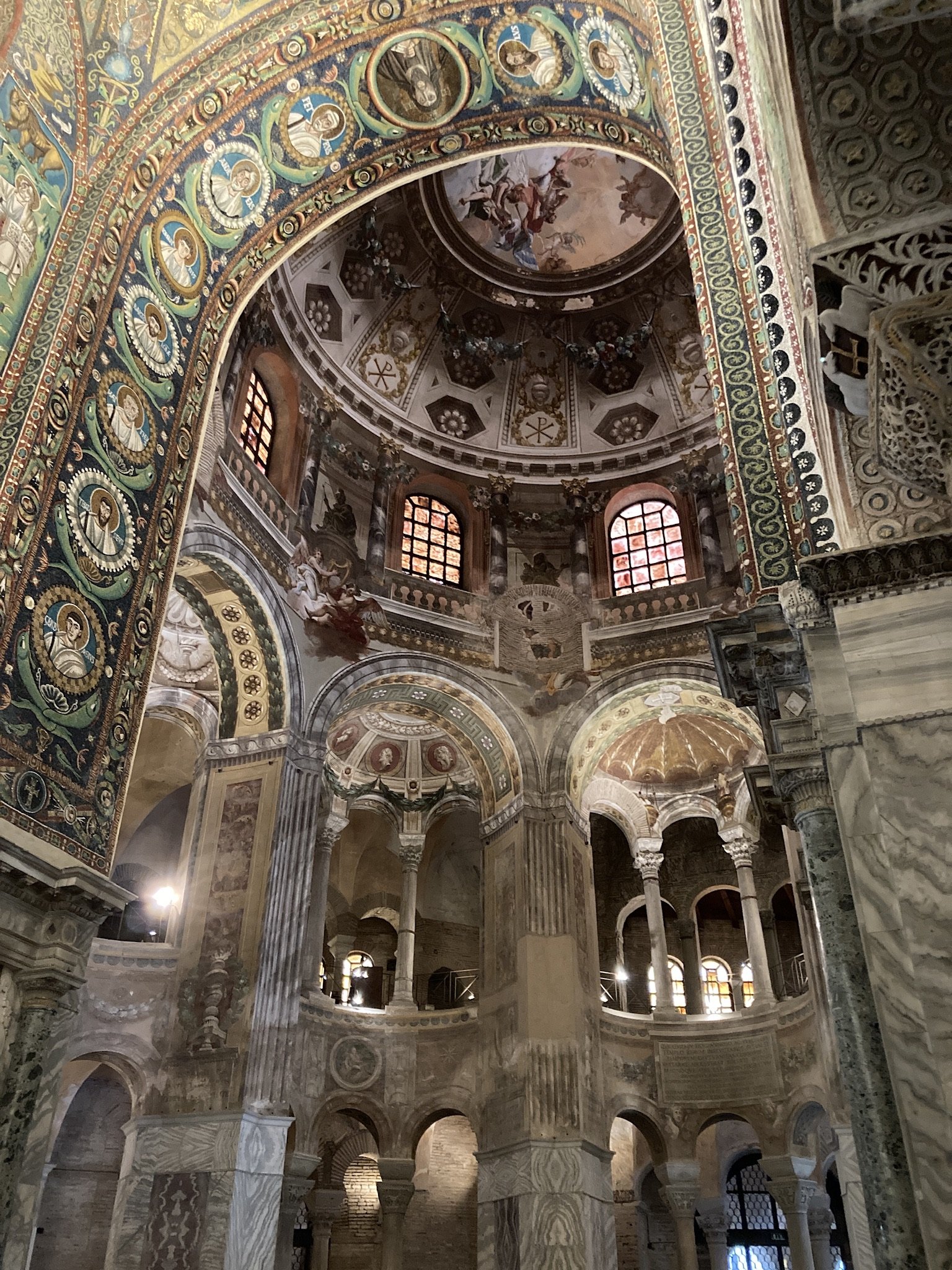
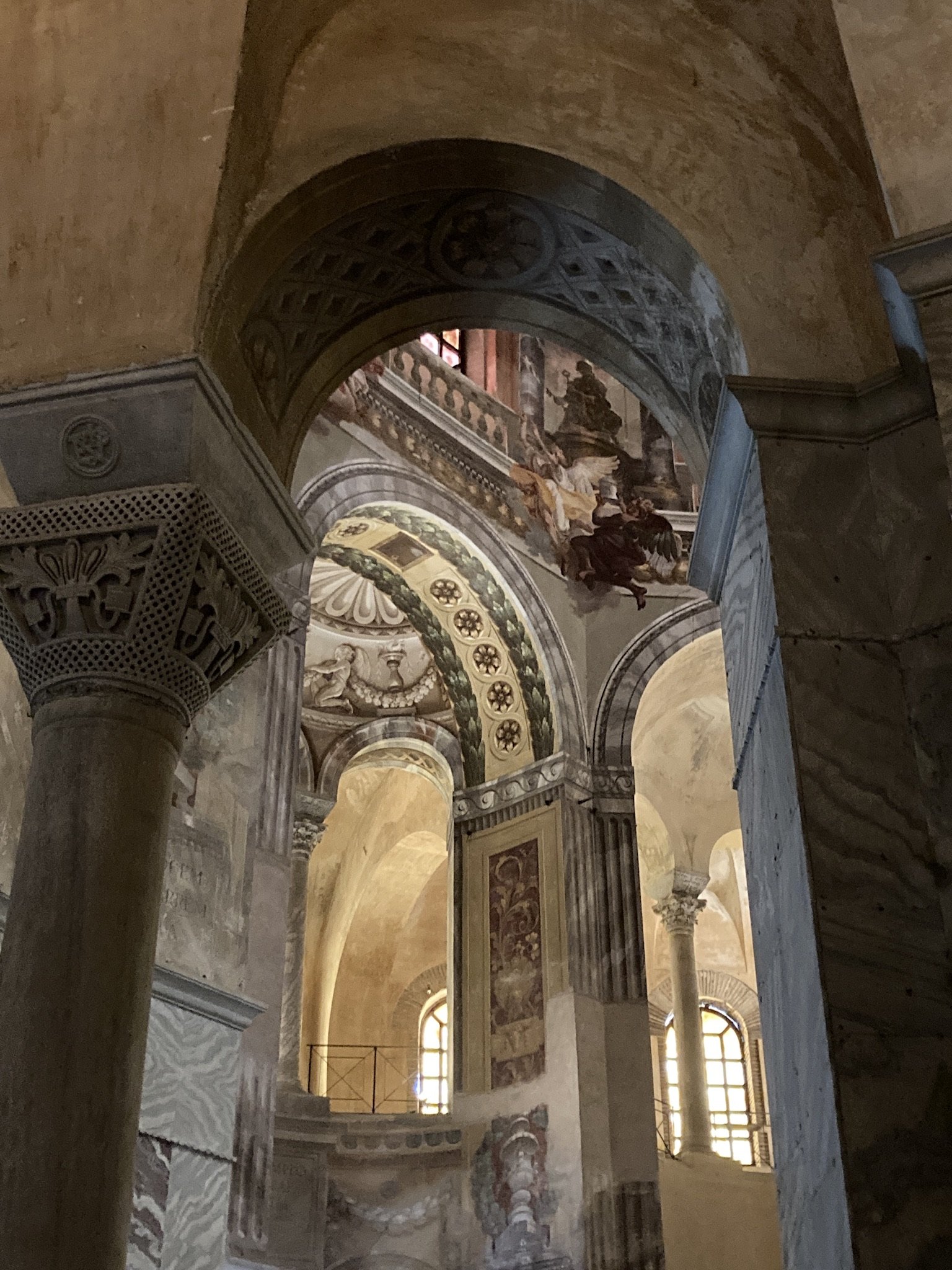
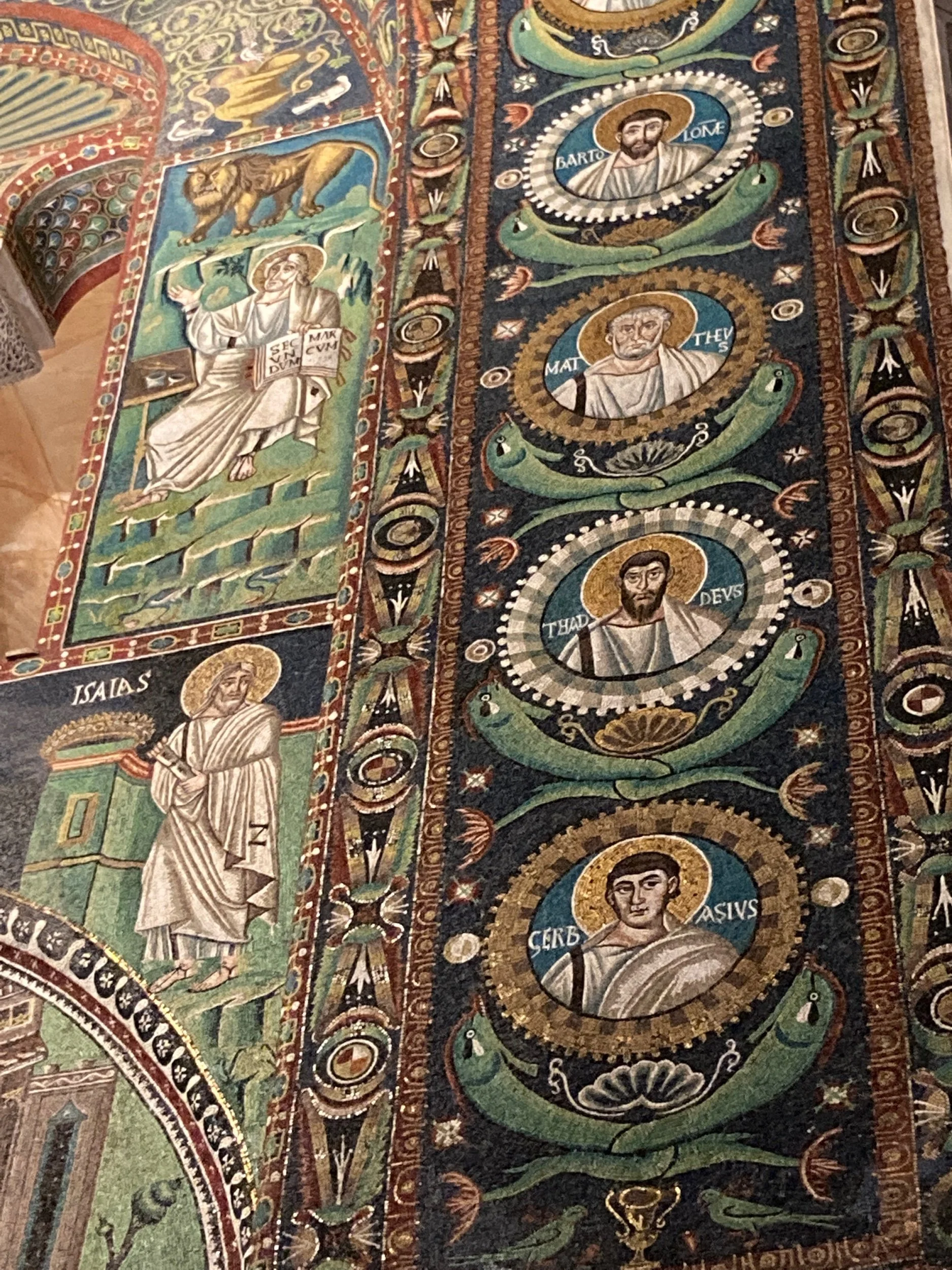
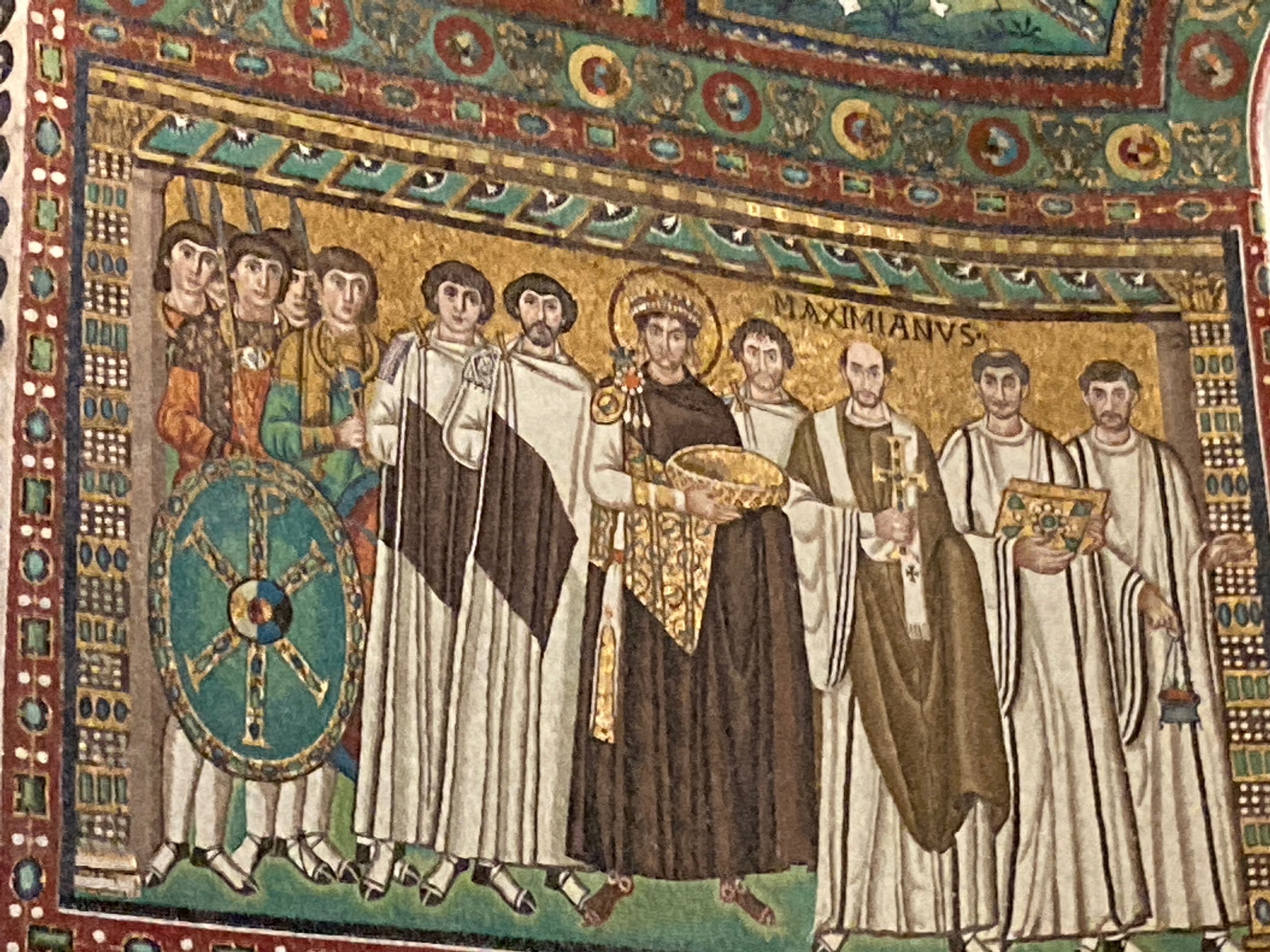
The much larger Basilica of San Vitale is different - less intimate, the building more angular outside with more distinct spaces inside. With decoration that goes from floor to ceiling it is hard to know where to look first.

Interior, Basilica of San Vitale, Ravenna


The mosaics are somehow less soft and more crisp, the imagery more clear. Where the Galla Placidia enchants you in to a mystic spirituality the San Vito demands you step up and take note.

Is one more beautiful than the other? Absolutely not, the Basilica is just as amazing but in a different way.

IMG_8964.jpeg
IMG_8946.jpeg

The Basilica’s website says that “getting out of San Vitale is not getting out of a church, is like being torn from a mother’s womb. You have to close your eyes because the light blinds (even if it’s not sunny), the voices deafen (even if people are not there), the world pushes and impacts”. I cannot argue. Stepping inside is to be transported to another world and on leaving it is quite a shock to discover the same old cacophonous world outside. It is that beautiful and enveloping.

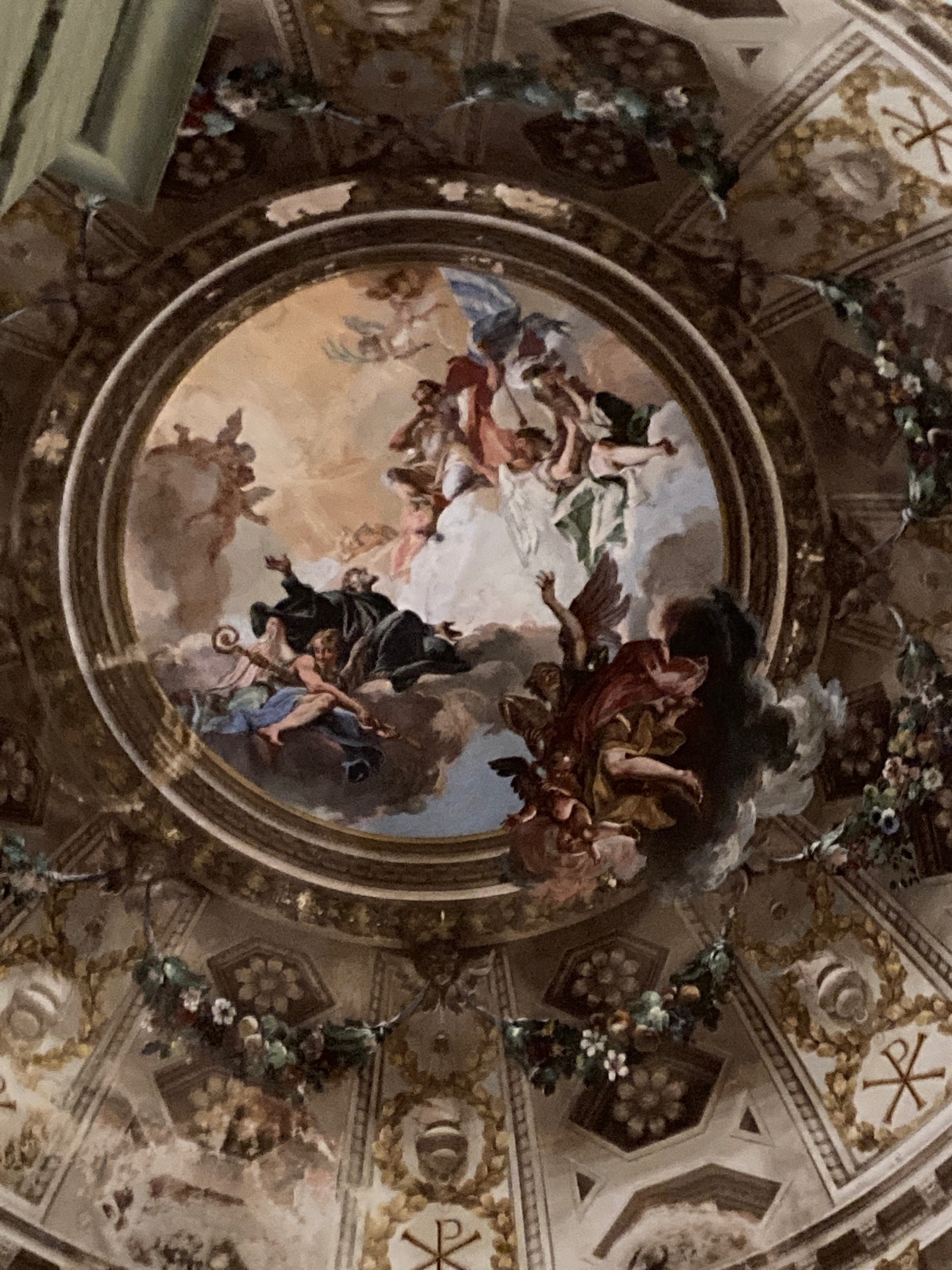
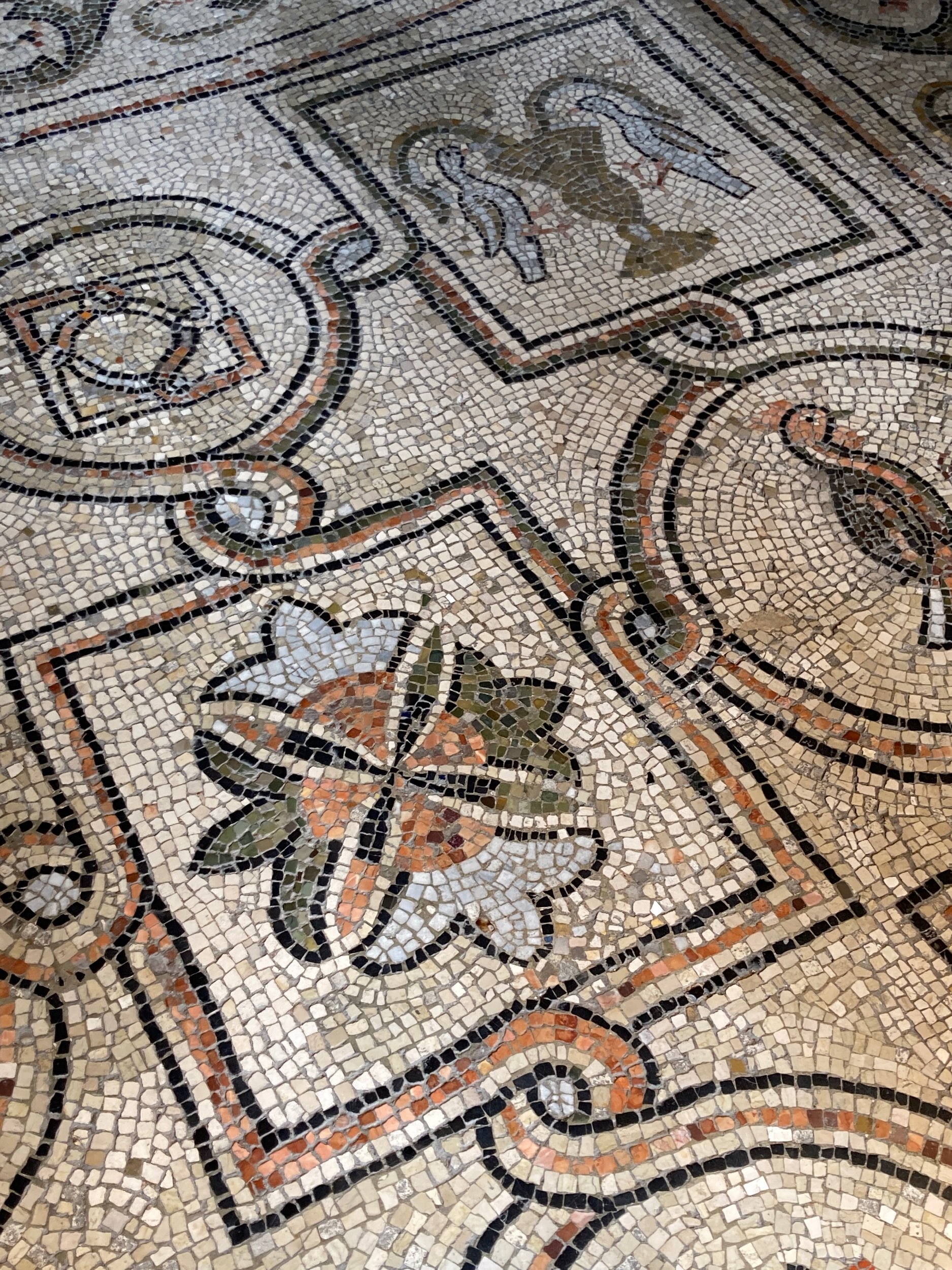
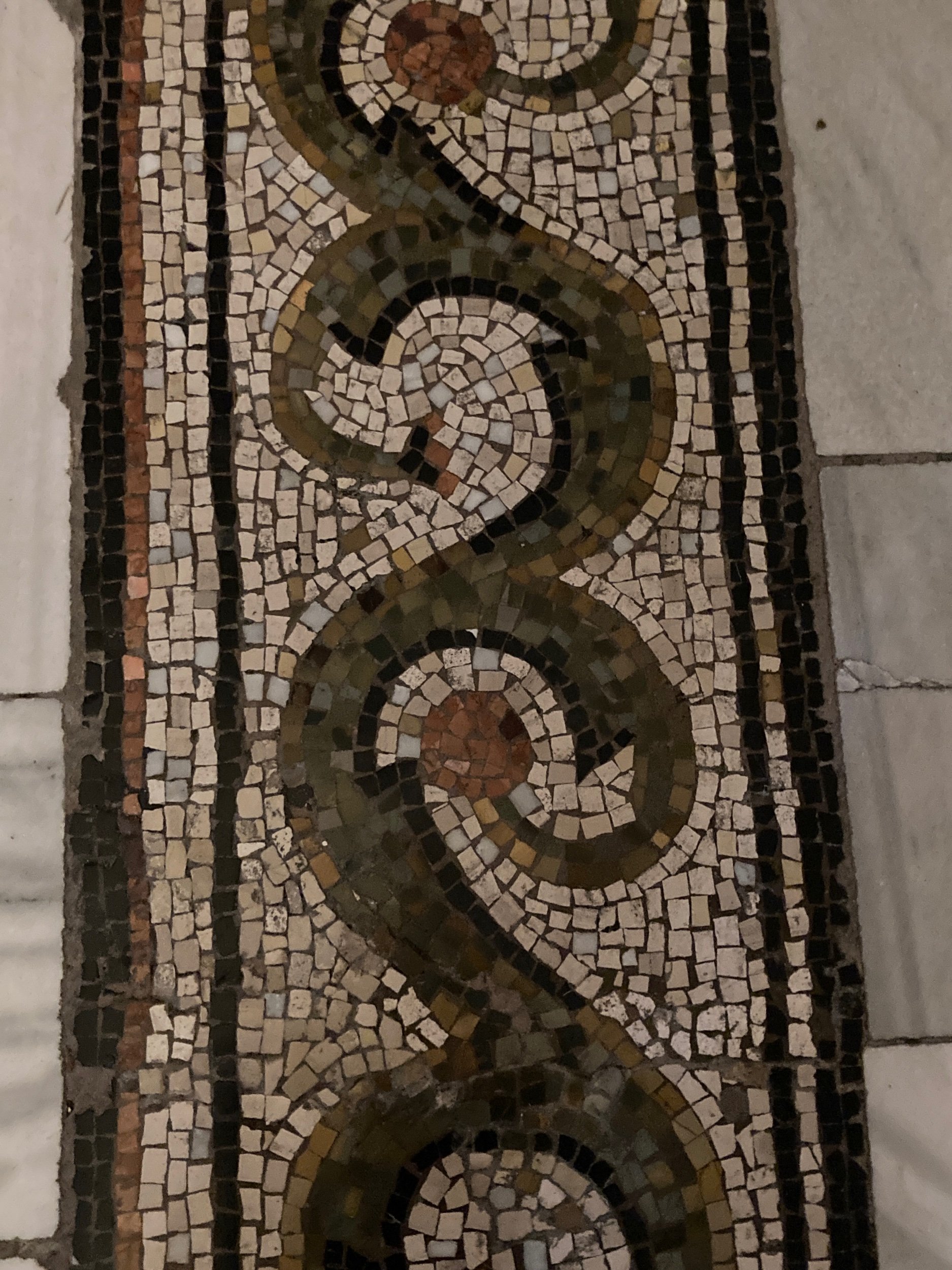
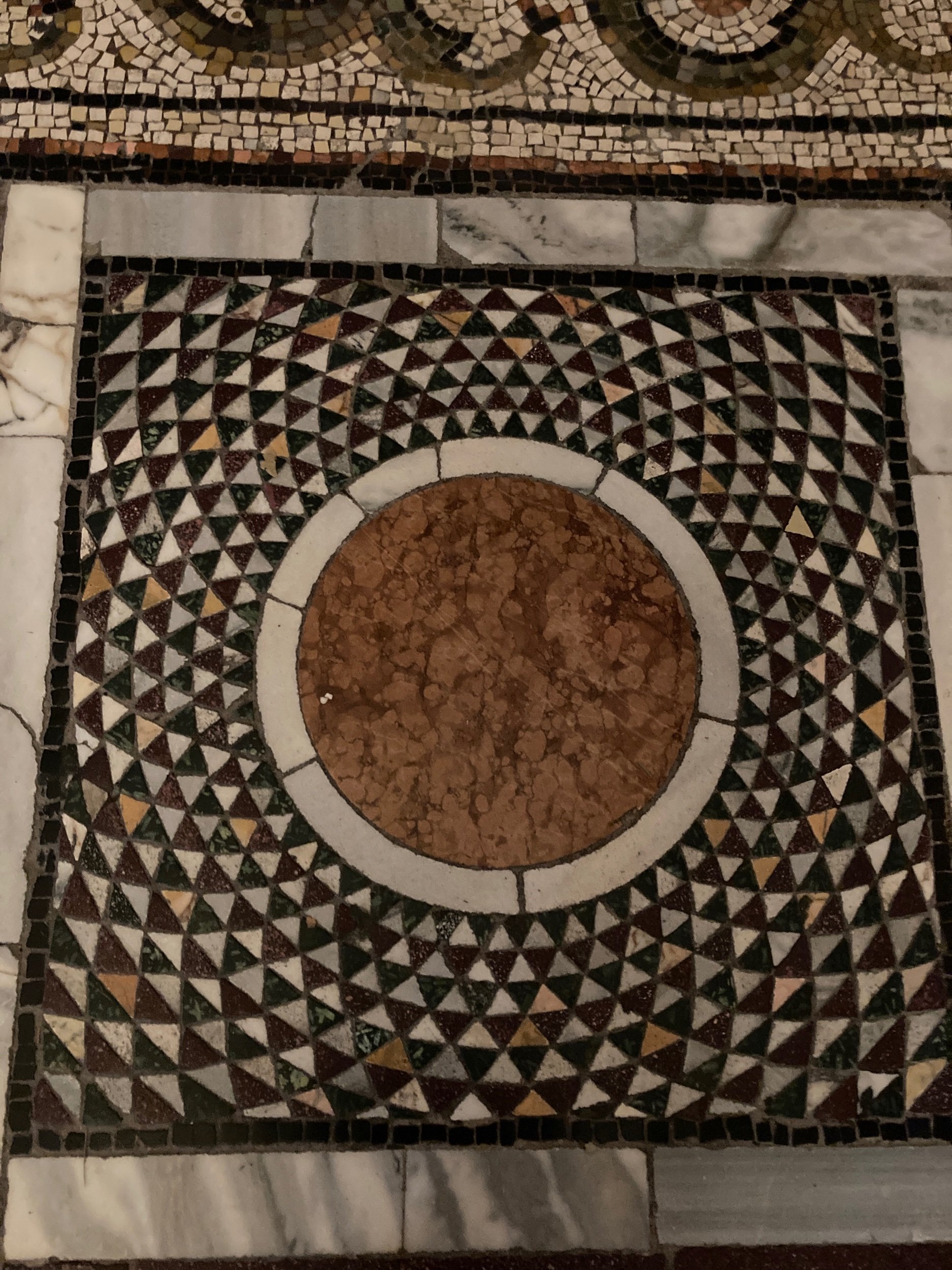
The exterior of the Basilica is octagonal, unusual for a basilica, with buttresses. Inside there are huge columns, a central dome, two stories filled with arches and smaller columns (with some of the arches with painted ceilings rather than mosaics), and several alcoves. Pale translucent windows filter the light. Mosaic floors (detail below) are filled with pattern and muted color.

IMG_8983.jpeg
IMG_8971.jpeg
IMG_8970.jpeg

And the mosaics! The dominant color here is a soft green, with plenty of gold too. And almost every surface is decorated in mosaic scenes, even the arched entrances into each alcove. Bible scenes, saints, angels and apostles are everywhere.

IMG_8956.jpeg
IMG_8976.jpeg
IMG_8958.jpeg
IMG_8978.jpeg

With all of the mosaic filled churches in Ravenna, it is impressive that each has its own character and beauty. I couldn’t begin to choose a favorite among them. Put them all together and it is easy to see why Ravenna is filled with UNESCO World Heritage sites. What a treasure!

October 24, 2022 /Joanne Bartram
Galla Placidia, San Vitale Ravenna, Mosaics Ravenna, Italy Mosaics, #gallaplacidia, #sanvitaleravenna, #mosaicheaven
#italytravel, #mosaicsravenna, #ravenna, Emilia-Romagna, Italian Art, Italian art architecture, Italian culture, Italy, Italy travel, Museums Italy

Basilica di Sant’Apollinare, Ravenna

Ravenna (Part One)

October 17, 2022 by Joanne Bartram in #ravenna, #mosaicsravenna, #italytravel, Italian Art, Italian art architecture, Italian culture, Italy travel

In 25 years of travels in Italy, how did I miss Ravenna?  My first visit came just last month when I spent a few days there with two friends at the end of our trip on the Treno di Dante (Dante’s Train). While a short visit wasn’t enough time to explore everything Ravenna has to offer, I was able to stand in wonder before the mosaics for which the city is famous, visit Dante’s tomb, and soak in the special atmosphere of this city on Italy’s Adriatic coast.

The tomb of Dante Alighieri in Ravenna

 Living in the Medieval city of Lucca, I thought I had a real appreciation for all things “old”.  But while Lucca brings to mind the 1400’s, Ravenna evokes an era nearly 1000 years before that.  Many of the buildings, with their Byzantine mosaic decorations, date from the 5th century, after the fall of Rome and at the very beginning of the middle ages.  By the time Dante arrived in the city, in 1321, the mosaics were already ancient and provided inspiration for his poetry. 

 It would be easy to be overwhelmed by the number of historic and art filled spaces in Ravenna, so it is important to not try to see them all in one day, or even one visit.  Our first afternoon was spent mostly wandering through town and getting a feel for the city. We also made a stop at Dante’s tomb.

The Basilica of Sant’Apollinare Nuovo, Ravenna


The next two days were devoted to viewing mosaic filled buildings: churches, a baptistery, a museum, and two mausoleum / small chapels. A couple of gardens provided a refreshing break between historic sights and a chance to see another side of Ravenna.

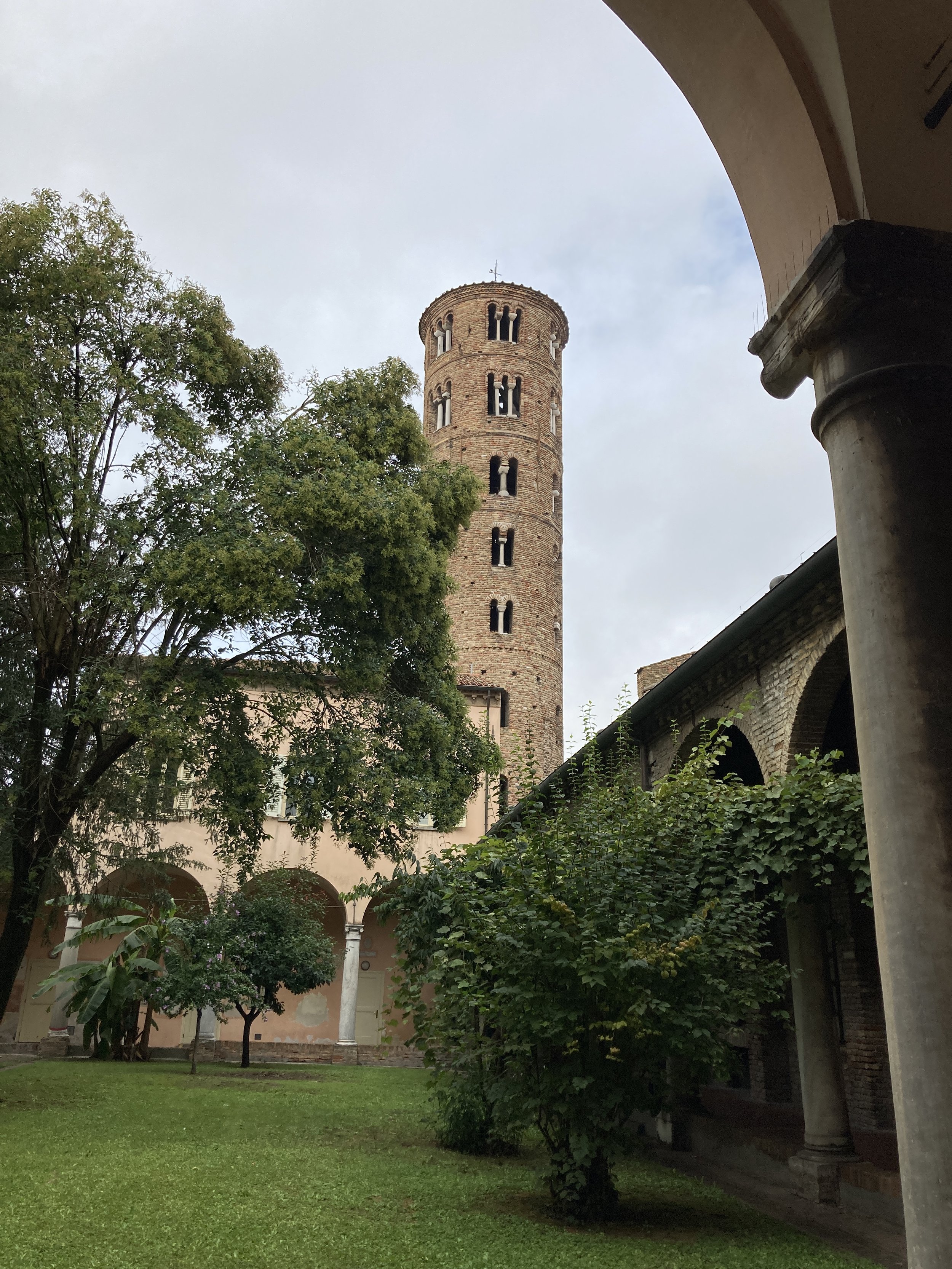
 Our first stop was the Basilica di Sant’Apollinare Nuovo, built near the beginning of the 6th century as a chapel for King Theodoric.  It has had some restoration and remodels over the years along with several name changes. The current name comes from the fact that the church contains relics from Saint Apollinare and it is the newer of two Sant’Apollinare Basilicas in town (the other is Sant’Apollinare in Classe, a bit outside of the city center). The exterior is plain brick but oh, the interior!  The whole room seems infused with color, especially gold. The basilica provided the first of many WOW moments in Ravenna.

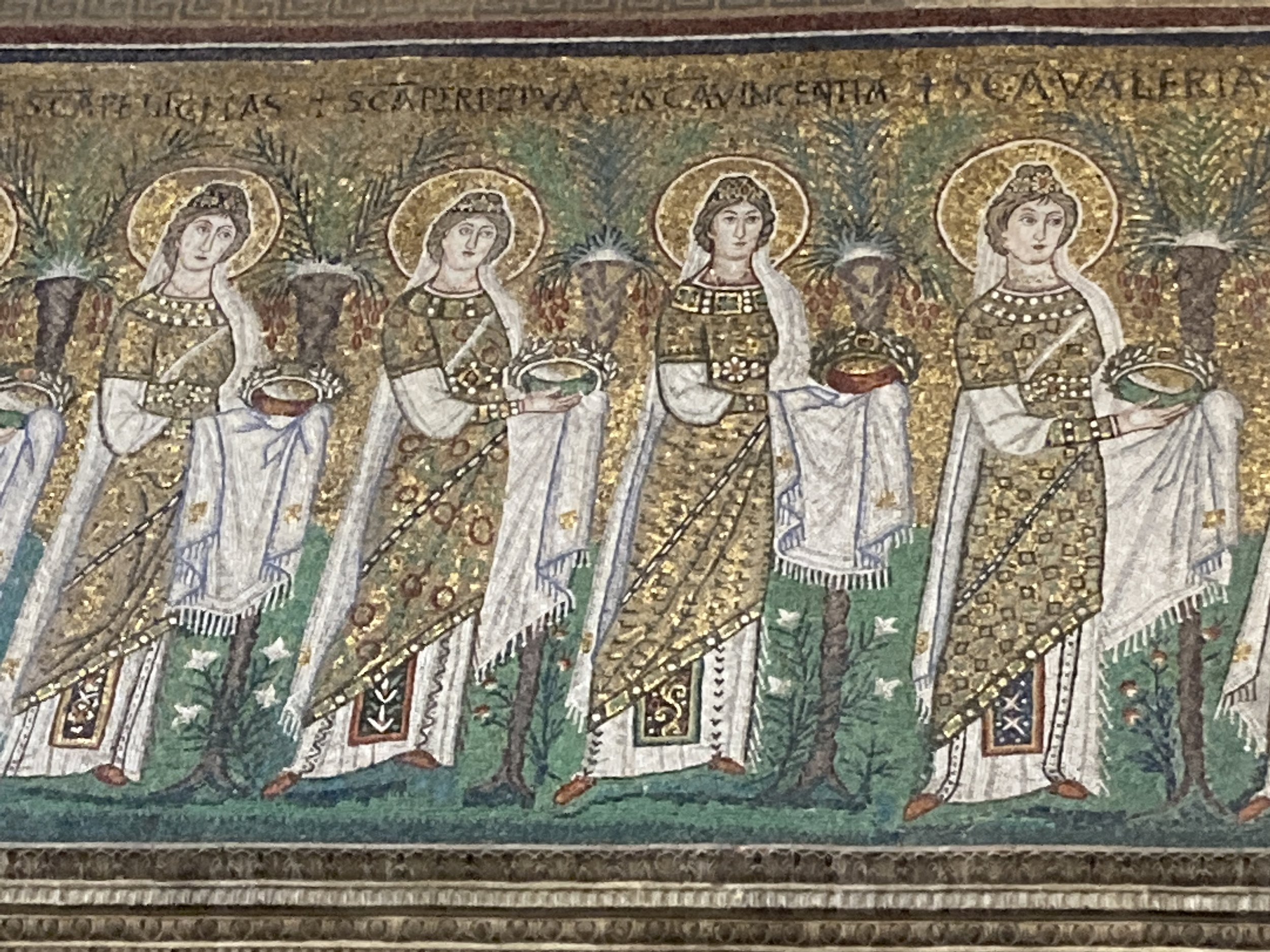
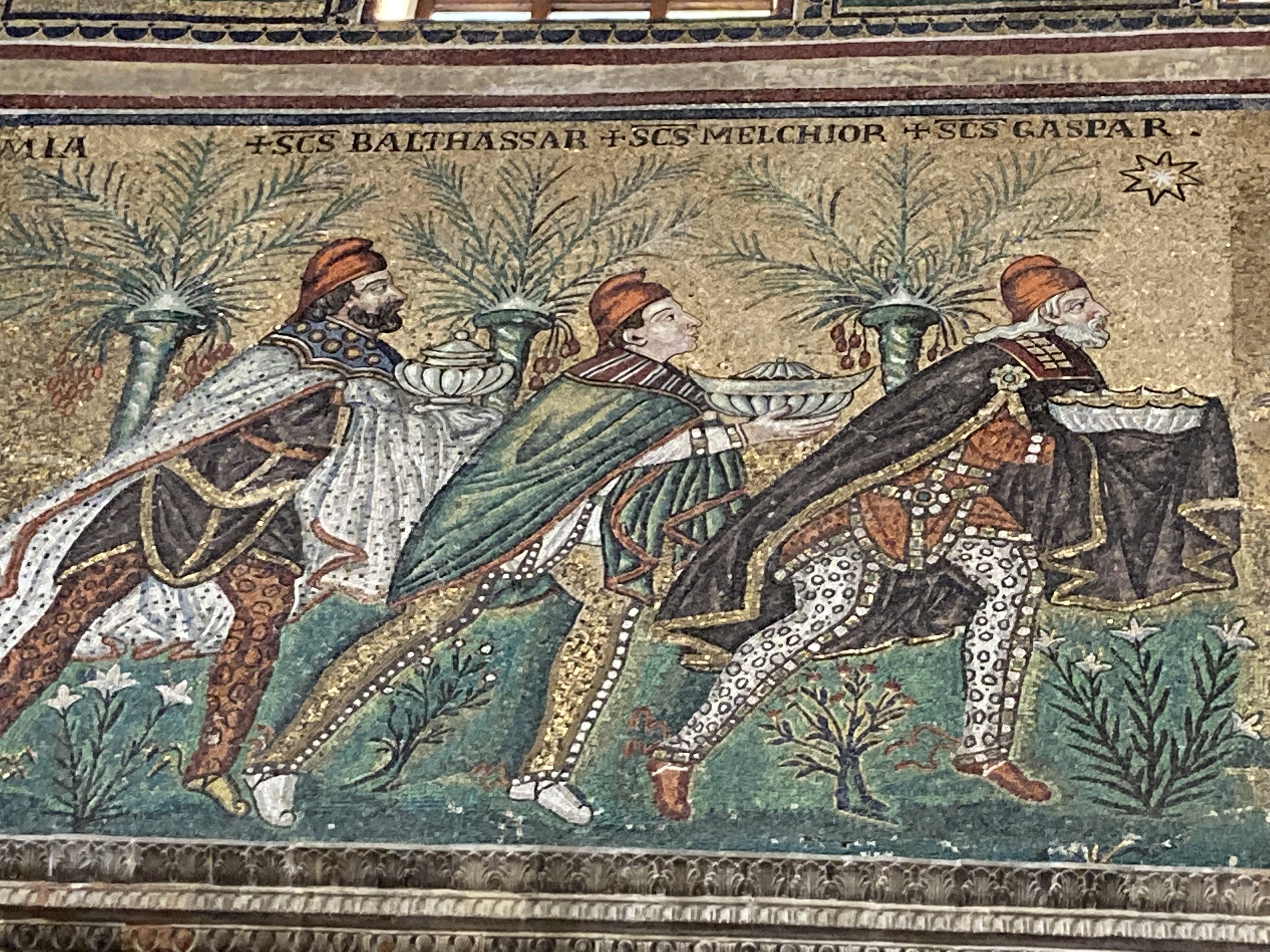
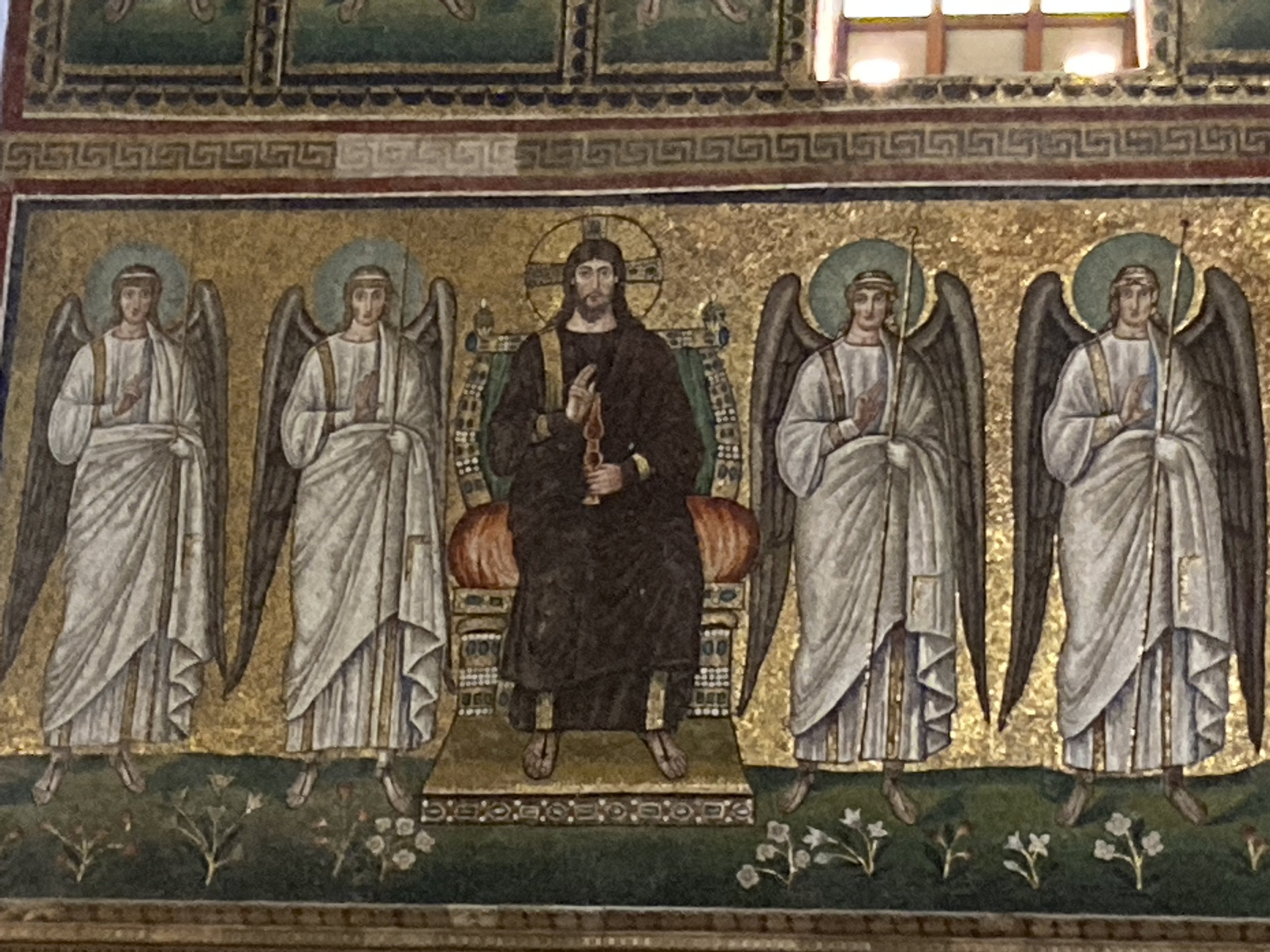
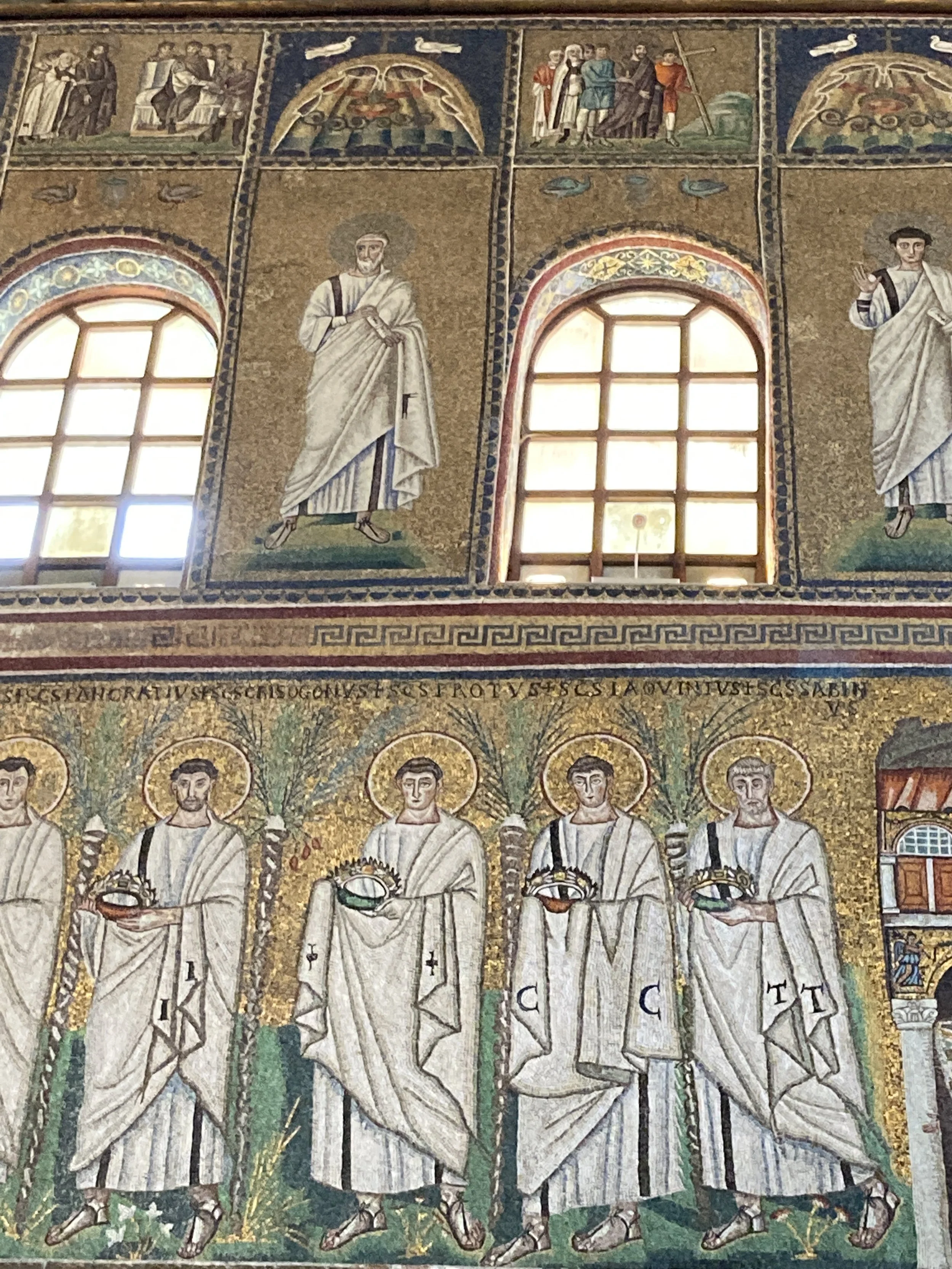
The church has a long, tall central nave, with columns supporting arches along both sides (top photo).  Above the arches are three levels of mosaics, small ones at the top and larger ones in the middle and bottom rows.  Depicted are events from the New Testament along with a parade of saints, martyrs, wise men, and virgins.  There are also scenes of miracles and of the Ravenna of more than 1000 years ago.  I doubt that photos can do justice to the mosaics, but here are a few of the scenes that entranced me.

607C3847-59F2-40C0-A8A3-2DC2CA9A0308.jpeg
59B217C8-115C-41D5-98E7-526B723FCC40.jpeg
4B050947-5EF3-47B3-A5AA-E3E8617049DE.jpeg
3DD017C2-8182-4563-A3C4-14217D3F3AC9.jpeg

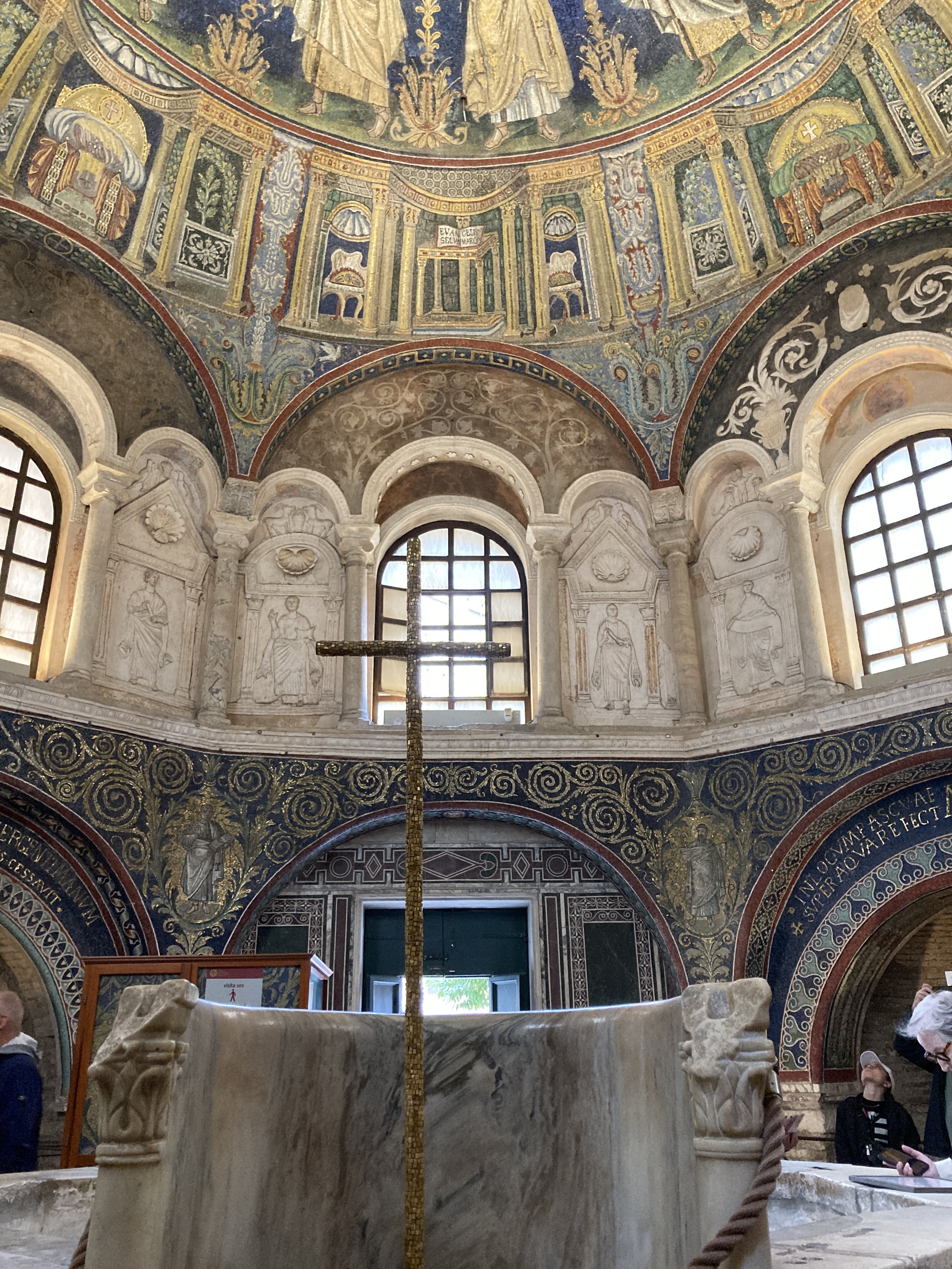
 From the large basilica we headed to the small Battistero Neoniano (Neonian Baptistery, entry ticket and reservation required). This is one of the oldest sites in Ravenna, built early in the 5th century when Ravenna was the seat of the Western Roman Empire.  Like many baptisteries, it is octagonal in shape and contains a large marble baptismal font. 

Central mosaic, Battistero Neoniano, Ravenna

The central dome has a mosaic image of the baptism of Christ – one of the earliest known images of this type.  Moving out from that central image is a mosaic parade of the 12 apostles.  Around the dome’s edges are a series of alternating thrones and altars. The dominant color here is a vibrant blue, although there is still plenty of gold. The walls below the dome also have beautiful decorations with marble carvings and intricate mosaic work. The detail and color fill the small space and feel like a genuine miracle.

6173B8E4-175D-4294-A06B-A32301A9C44E.jpeg
A9CC1BB6-D8C5-4EE6-BF67-FAF5E82F89F4.jpeg
06C627F9-5A05-4BE5-9EA4-0292F216D29A.jpeg

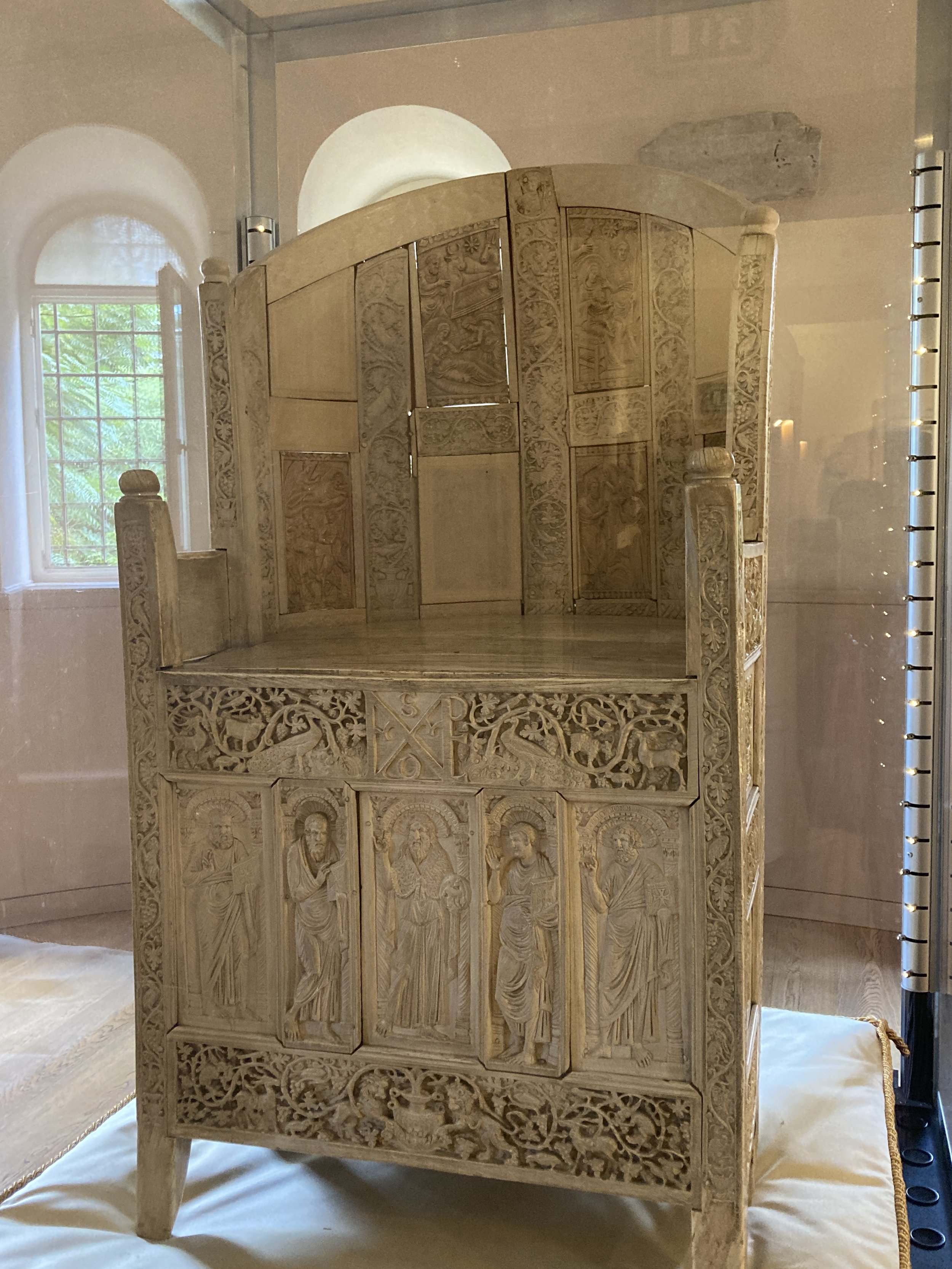
Bishop’s chair, Museo e Cappella Arcivescovile, Ravenna

In the Museo e Cappella Arcivescovile (Bishop’s Museum and Chapel) there are many interesting things to see, including fragments of mosaics from an ancient destroyed church and an intricately carved bishop’s chair (almost a throne really).

The most compelling feature is the tiny chapel, built for the private worship of a long ago Bishop, which is set inside the museum.

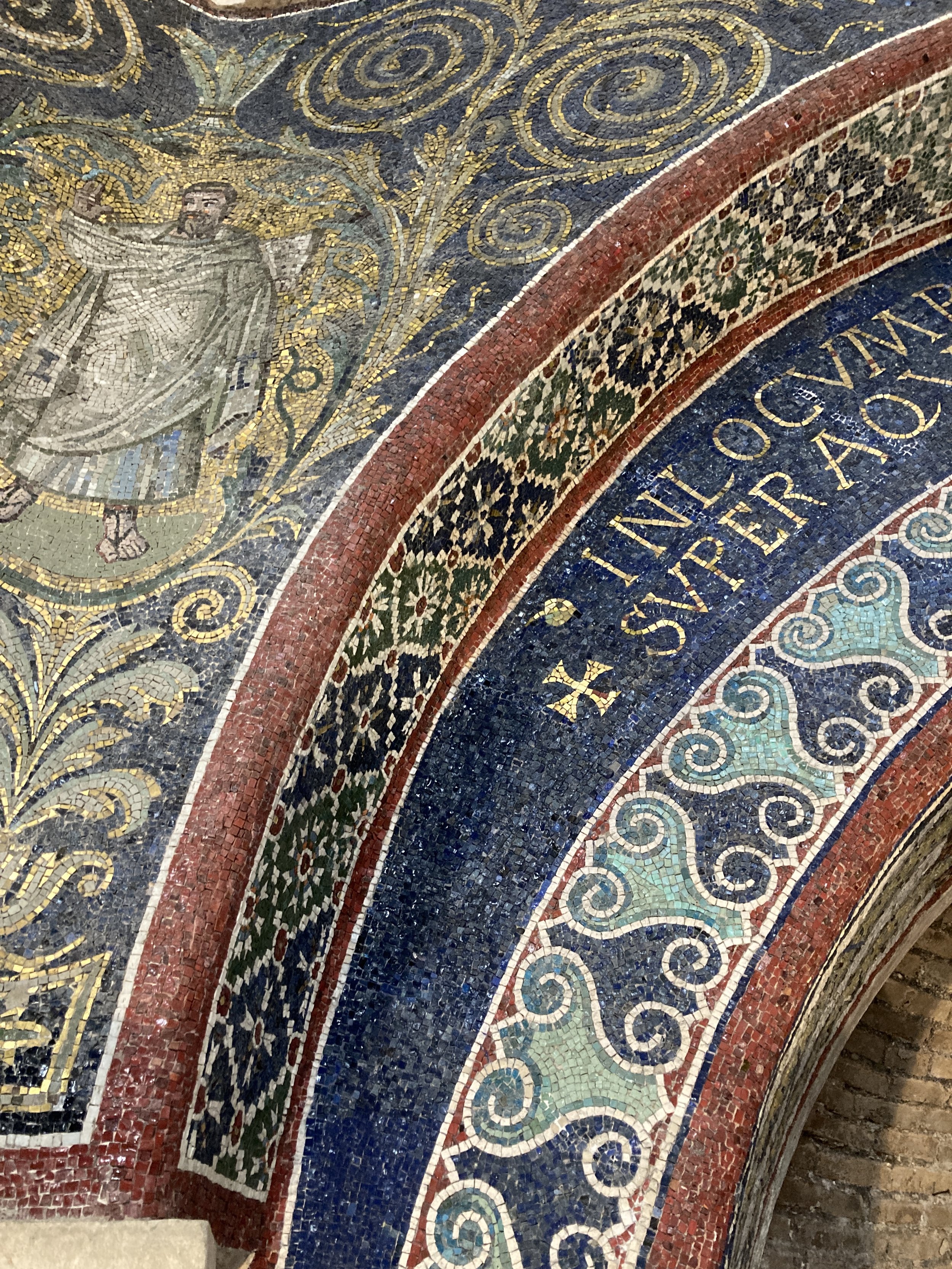
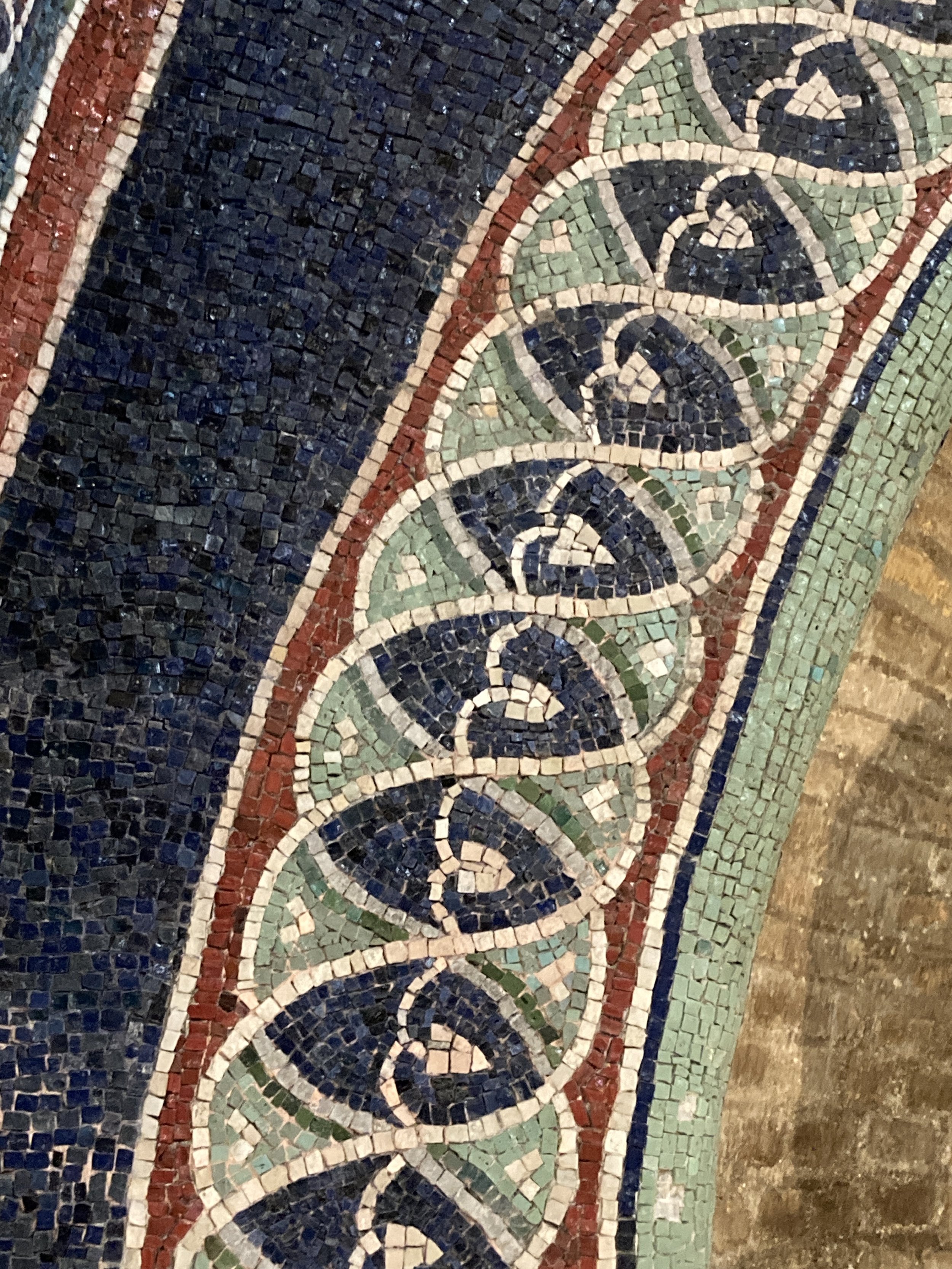
The entry mosaics are colorful and depict Ravenna’s aquatic birds The apse is topped by a starry heaven. The small space is intimate and welcoming.

Cappella Arcivescovile, Ravenna

Just as trying to see all of Ravenna’s important sights in one day can be overwhelming, so can reading about them. Look for more about Ravenna including the Basilica di San Vitale and the Galla Placidia Mausoleum in the coming weeks.

October 17, 2022 /Joanne Bartram
Ravenna, #ravenna, Battistero Neonian, Sant'Apollinare Ravenna, Italy Mosaics, Ravenna Mosaics
#ravenna, #mosaicsravenna, #italytravel, Italian Art, Italian art architecture, Italian culture, Italy travel
  • Newer
  • Older

Powered by Squarespace