Two Parts Italy

Exploring Italy, travel, and living a flavorful life

  • Blog
  • About This Blog
  • Start Here
  • Recent Posts
  • Archives by Topic
  • Subscribe
  • Contact me
This daily special at restaurant Nonna Clara caught my eye.  Cacciucco is not a common dish here in Lucca.

This daily special at restaurant Nonna Clara caught my eye. Cacciucco is not a common dish here in Lucca.

Cacciucco: An Italian Fisherman's Stew

March 29, 2021 by Judy Giannnettino in Cooking, food, Italian recipes, Living in Italy

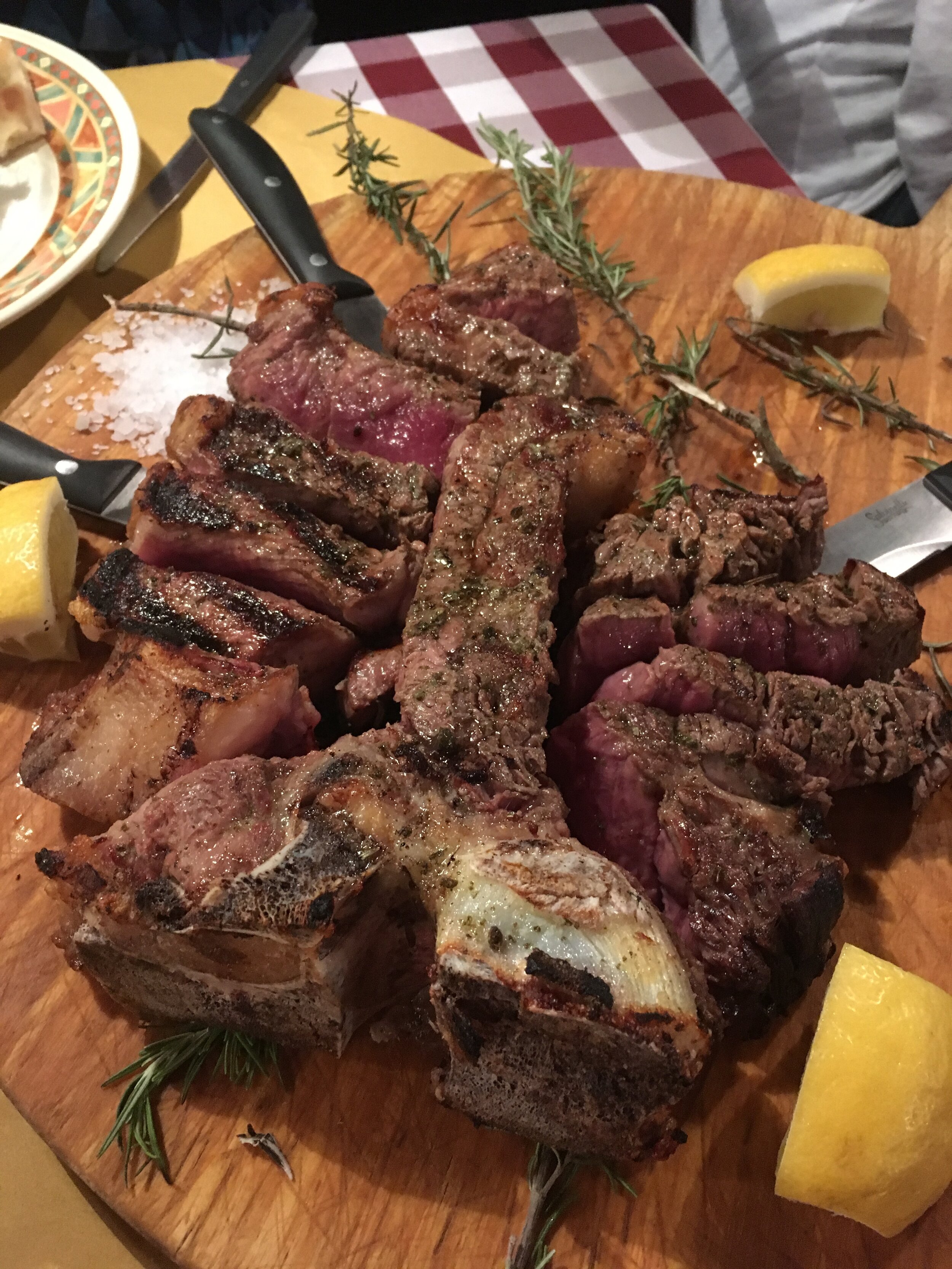
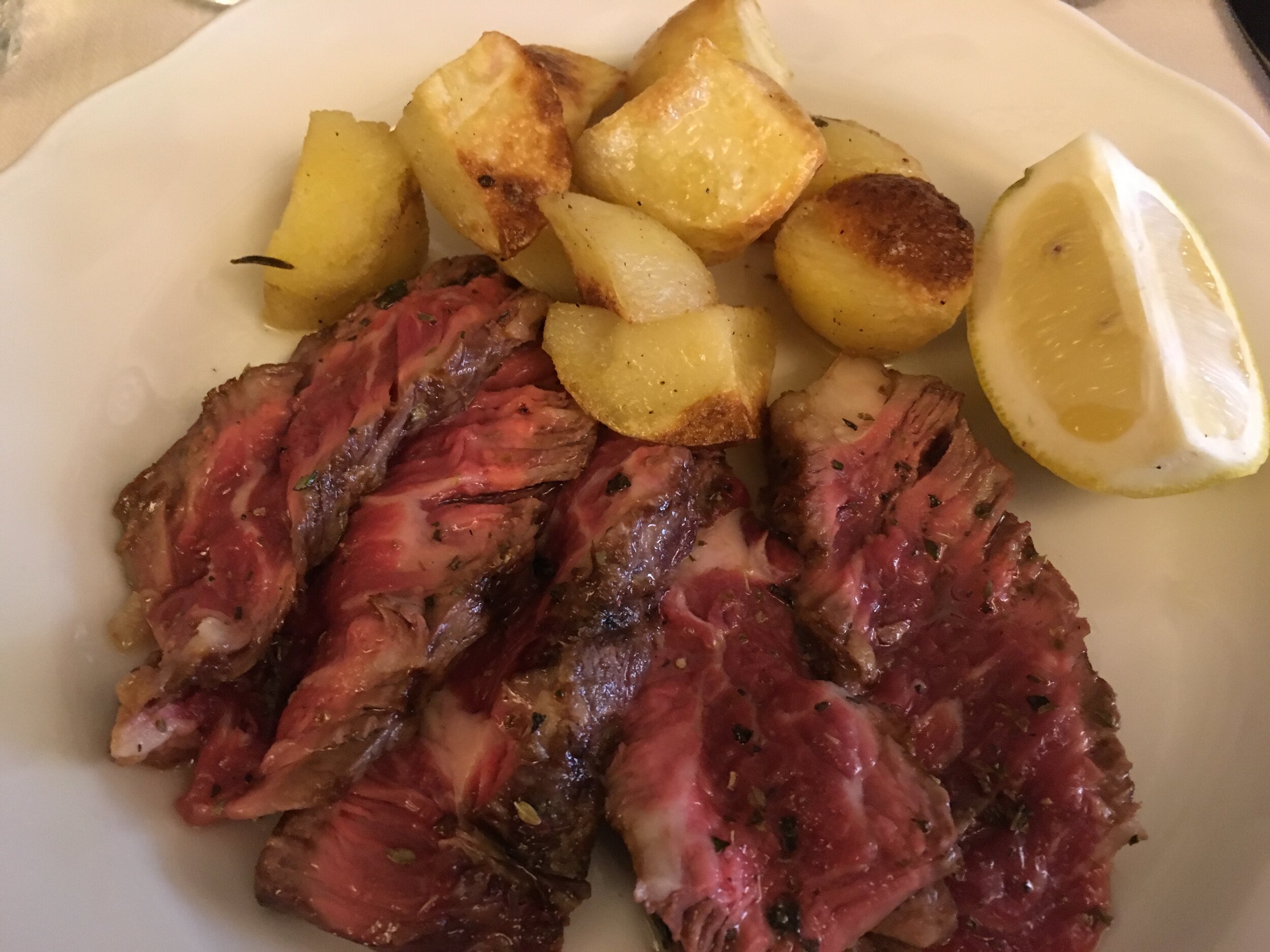
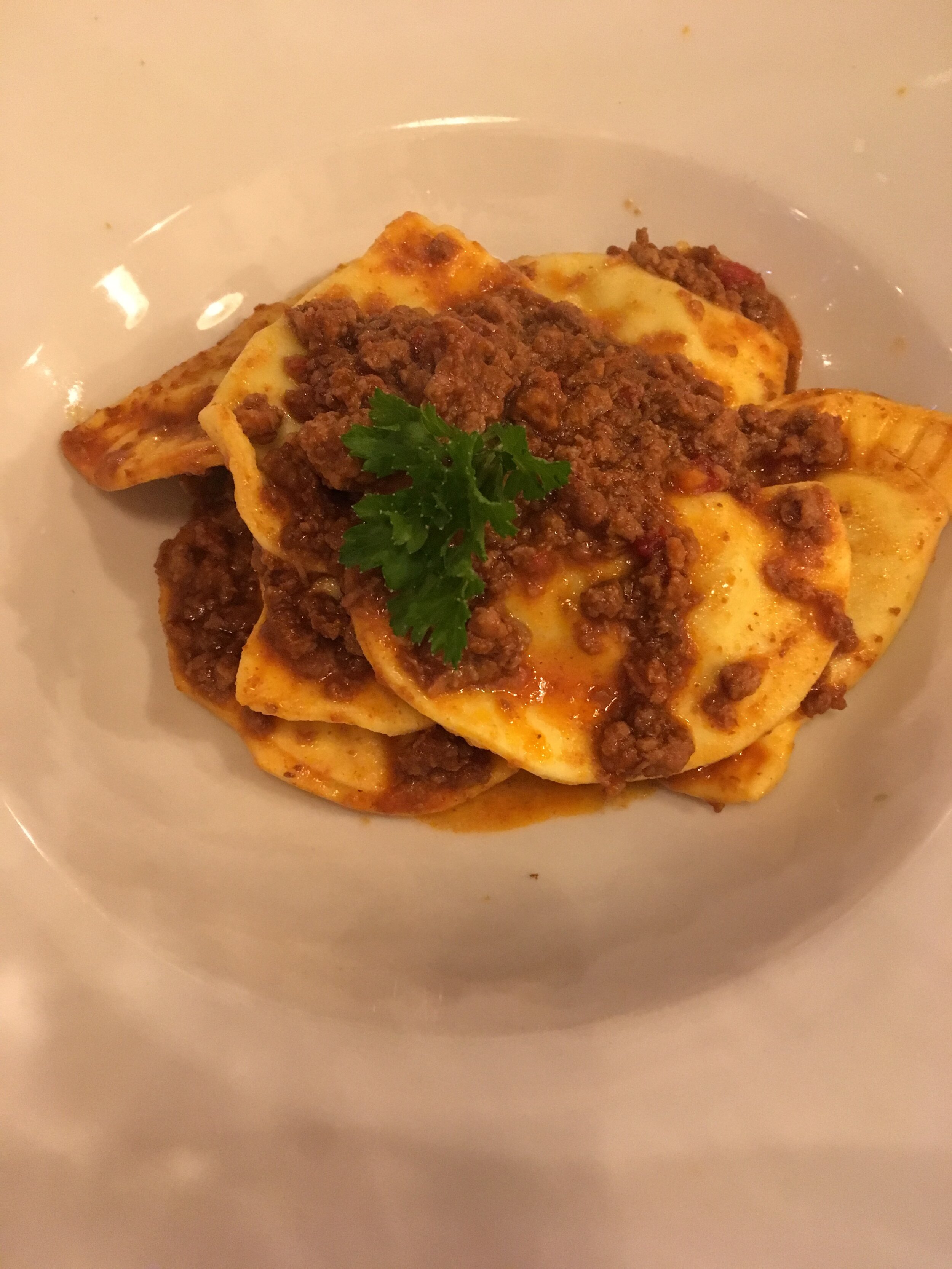
One of the things that most surprised me when I first started visiting Lucca is that, while we are only about 30 minutes from the sea, the traditional cuisine here is very meat-based. There is not a seafood market to be found within the centro storico (the historic center of town) and restaurants serve far more meat than fish. I’m not complaining, the meats are fabulous - porchetta (spit roasted pork), tender tagliata (slices) of beef, huge grilled Tuscan steaks, thin but oh-so-flavorful lamb chops, perfectly roasted chicken, cinghiale (wild boar). Even the traditional pasta of Lucca, Tordelli Lucchese, is a meat filled pasta topped with a meat sauce.
IMG_0551.JPG
IMG_6050.JPG
IMG_1347.JPG
A shellfish carbonara at Osteria Via San Giorgio, Lucca

A shellfish carbonara at Osteria Via San Giorgio, Lucca

There are some fish dishes to be found. The seafood carbonara at one local osteria is a particular favorite of mine, but these dishes are definitely in the minority.

I’ve searched for why this meat preference is so strong and the only answer I’ve found is that in times past wealthy people ate meat and poor people fished, cooking with whatever they caught. Lucca was historically a very wealthy town, so meat was plentiful and nobody fished.

That fish is less common here made it all the better when, on a recent chilly and windy March day, I walked past a restaurant take-out window advertising a daily special of cacciucco. Cacciucco is a fisherman’s stew with origins in the areas along the coastline of Tuscany which includes the port towns of Viareggio and Livorno. It is a bit like cioppino, the fish stew brought to San Francisco by Italian immigrants. However, cacciucco’s ingredients are more of a poor fisherman’s mix compared to the more expensive ingredients found in cioppino (crab, shrimp, scallops).

Cacciucco - thick with seafood and covered in a fragrant broth

Cacciucco - thick with seafood and covered in a fragrant broth

Of course there are legends surrounding the beginnings of cacciucco. It is said that the widow of a drowned fisherman made the first cacciucco from odds and ends of fish collected by her children from local fisherman. They took the mix of fish home and the mother cooked them (the fish, not the children) in a broth which she then spooned over day old bread. The neighbors caught the delicious scent and before long the dish became a local favorite. One whiff of a good cacciucco made me a believer in this legend! Another legend about cacciucco is that, to be authentic, it must contain 5 different types of fish - one for each C in the word cacciucco.

The recipe begins with a broth made from fish parts and white wine. To that base are added spices, tomatoes, and a mix of fish. The fish can include white fish along with octopus, mussels, cuttlefish, calamari, red fish, and scampi (or whatever else is available).

A mix of local seafood makes cacciucco a type of cucina povera (poor man’s food)

A mix of local seafood makes cacciucco a type of cucina povera (poor man’s food)

The ingredients vary from city to city and there is of course disagreement about which city makes the best version. According to one article I read (La Repubblica, 2010) the differences between a cacciucco in Viareggio versus one made in Livorno is that the Viareggio version is lighter and a bit more refined. There is no garlic and the fish is boned and filleted. In Livorno the dish is more rustic, including garlic and a soffritto (a sauté of onion, celery, carrot). Also, in the Livornese version, the fish is in chunks, including some pieces with bones.

If the sight of tentacles, scampi with heads, and fish bones bothers you then this may not be the dish for you. As for me, those little tentacles are tender and tasty and all the bits of fish are wonderful. Even better is mopping up the broth with a good piece of rustic bread.

If you’ve been watching the CNN program “Stanley Tucci Searching for Italy”, you may have seen him eating a cacciucco in Livorno during the Tuscany episode. That was definitely an upscale version, with the addition of lobster. Rather than mopping up the sauce with bread they tossed the leftover sauce with some pasta. Something to try!

This is not a dish I’d ever attempt to make at home. But I think I am going to have to make a pilgrimage to both Livorno and Viareggio as soon as possible to compare the two versions, all in the name of culinary research of course.

With restaurants closed to seating due to COVID restrictions, these take out windows are becoming more popular.  This one is in front of the restaurant Nonna Clara in Lucca.  Along with the street food some items from the regular menu are available …

With restaurants closed to seating due to COVID restrictions, these take out windows are becoming more popular. This one is in front of the restaurant Nonna Clara in Lucca. Along with the street food some items from the regular menu are available to go, including this day’s special of cacciucco .

March 29, 2021 /Judy Giannnettino
italian seafood, cacciucco, italian food
Cooking, food, Italian recipes, Living in Italy
Frittelle di San Giuseppe

Frittelle di San Giuseppe

Frittelle for San Giuseppe

March 22, 2021 by Judy Giannnettino in Festivals Italy, food, Italian culture, Living in Italy, Lucca

Italians must be the world champions of celebrations. There seems to be a festa (party) or a celebration for just about every occasion - saint’s days, onomastic (name) days, major religious holidays, national holidays, birthdays, sagras to celebrate regional foods. When you live in Italy, you festiggiare (celebrate) all of life’s special events. It is one of the things I love about living here. As an added bonus, many of these events include special foods. And although the pandemic has for the last year limited gathering for most of these events, small celebrations and culinary specialities continue to mark the occasions.

IMG_1621.jpeg

March is generally a quiet month in terms of celebrations. Epiphany is long over, the Carnevale season has ended (and this year it was cancelled almost entirely), Easter is not yet here. Food wise, the Carnevale sweets are gone and Easter cakes and chocolates are just beginning to show up in shop windows.

But all is not lost! In mid-March there is the Feast Day of San Giuseppe. It is the official onomastic day for the name Giuseppe and so a special day for anyone who carries that moniker. Because of San Giuseppe’s religious role as a father, the Feast of San Giuseppe has also become the Italian Father’s day. And … falling on March 19th it is also on the cusp of the spring equinox. Certainly this day deserves a special culinary treat!

A frittella makes a perfect sugary treat

A frittella makes a perfect sugary treat

To mark the day, pastry shops across Lucca are filled with Frittelle di San Giuseppe. Frittelle are delicious! A sweet batter, often flavored with a bit of lemon peel, is dropped by spoonfuls into hot oil (fritta = fried), filled, and then rolled in sugar. The traditional filling in Lucca is riso (a second cousin to rice pudding but more firm). Other varieties include chocolate, Nutella, and (my personal favorite) a delicious pastry cream. Some are vuoto (empty) with no filling to distract from the sugary treat.

Frittelle are crisp and sugary outside, light and often cream filled inside.  Yum!

Frittelle are crisp and sugary outside, light and often cream filled inside. Yum!

It was hard work having to taste test frittelle before writing about them, but I made the sacrifice. Crisp on the outside with a slight crunch from the sugar crystals, airy dough on the inside, and a delicious eggy custard filling. Scrumptious. In fact, I just may need another one to go with my coffee this afternoon. I think I’ll invite a friend to share !

IMG_1589.jpeg
March 22, 2021 /Judy Giannnettino
frittelle, feast San Giuseppe, Italian dolci
Festivals Italy, food, Italian culture, Living in Italy, Lucca
March 2020 - Lucca’s walls were deserted as the nationwide quarantine began.  The silence and emptiness was eerie.

March 2020 - Lucca’s walls were deserted as the nationwide quarantine began. The silence and emptiness was eerie.

COVID-19 in Italy : One Year Later

March 08, 2021 by Judy Giannnettino in #lucca, Italian culture, Italy, Living in Italy, Lucca
By mid-February 2020 Venice’s Carnevale celebration had been halted and the city emptied almost overnight.

By mid-February 2020 Venice’s Carnevale celebration had been halted and the city emptied almost overnight.

It was during this week one year ago that the Italian Government announced a nation-wide quarantine in an effort to contain COVID-19 in Italy. The first known case had been identified at the end of January and by mid-February it was clear that the virus was spreading in northern Italy. There were hints that a lockdown was coming. In February, one of Italy’s biggest annual events, the Venetian Carnevale, was cancelled just after its opening weekend. That provoked a good deal of outrage as many people felt it was an over reaction to a limited problem (knowledge of COVID’s impact was not well understood at that point). Soon, local travel restrictions were imposed, though not always effectively implemented. People from the first affected communities fled and took the virus with them. For the rest of 2020 all major festivals, and most smaller community festivals, were cancelled as the need to limit large gatherings became much more clear.

In early March of 2020, bars, cafes, and restaurants began to distance tables. I remember well my “last coffee” before lockdown. I sat with two friends at a local bar. We spread out across two tables, empty seats and space between us, wondering what would come next. I remember someone saying that we should all make hair appointments soon in case the salons closed (they did, the very next day).

Hospitals soon began to fill with gravely ill patients. Shortages of personnel and equipment became critical issues. And people began to die, especially the elderly. Some people still did not take COVID seriously (both here in Italy and across the world) while other’s became paralyzed with fear. Most of us existed in a middle space - concerned, taking precautions, reordering priorities and routines, and slowly adjusting to what would become a long period of restrictions. We learned to carry paperwork with us when we left the house, to not go more than 200 meters from home without a valid reason, to wear masks, and to spend most of our time at home. We kept busy. Most importantly, we searched for new forms of connection - zoom and google chats, on-line apperitivos, daily “check-ins” to be sure friends were ok and coordinated “accidental” meetings while in line for groceries or at the trash bins. We kept in touch with our families and watched grandkids grow via FaceTime. I can not imagine what the last year would have been like without this ability to connect.

Andra` tutto bene - a sign of hope during the lockdown.

Andra` tutto bene - a sign of hope during the lockdown.

A great boost throughout the last year has been the Italian sense of hope and of community spirit - we would get through this together. Italians sang on balconies, displayed the national flag, and hung signs declaring all would be ok. They swept us up in their optimism. As hard as this has been, I will be forever thankful for the spirit of my Italian friends and neighbors and for those strangers across Italy making music on balconies.

I think perhaps it was a blessing to not have known then that one year later we would still be in such a struggle with this (damn) virus. Still, life is certainly much easier, less restricted than one year ago. Shops are open, Lucca’s famous wall is once again a place where we can walk, and we can go anywhere in our community without paperwork. The Italians have embraced (or at least adapted to) the concept of take out meals, and we all feel it is our civic duty to order meals to go often, a definite plus when we can’t dine out. A real bonus is that we can have people to our homes, though the rules say only 2 at a time. Just having a friend over for an occasional coffee or a meal becomes a highlight social occasion. Mask wearing has become automatic and not such a big deal for most of us (a bonus in cold winter weather, though not so great on these warm spring days). This is the new normal.

Thankfully it is once again possible to walk along Lucca’s walls.  It’s a joy to be able to walk with a friend (though group gatherings and picnics are not yet permitted).  Don’t forget your mask!

Thankfully it is once again possible to walk along Lucca’s walls. It’s a joy to be able to walk with a friend (though group gatherings and picnics are not yet permitted). Don’t forget your mask!

The latest color coded map showing Italy’s restrictions.  Only one area, Sardegna, is white meaning that they have essentially no restrictions.  Red zones are the most restricted. Tuscany remains in the Orange zone, though rumor has it we may change…

The latest color coded map showing Italy’s restrictions. Only one area, Sardegna, is white meaning that they have essentially no restrictions. Red zones are the most restricted. Tuscany remains in the Orange zone, though rumor has it we may change to red next week.

There have even been a few periods when restrictions have been lifted to allow the opening of restaurants and museums as well as travel outside of one’s home community (most recently in late October/November and again for 5 weeks in January/February). These periods of respite have provided glimpses of normalcy and have been the best therapy! However, the rules are ever changing based on the most current statistics related to COVID cases, variants, transmission, and hospitalizations so what is allowed one week can be forbidden the next. We are learning to take this week by week, some of us more gracefully than others. I must admit that I am among the group that finds the constant changes, and the weekly “statistic watch” more than a little anxiety provoking.

At the end of this year there is hope but there is also grief for what has been lost, both the big and the everyday small things. Mostly, I think people are tired. At the end of a year there are fewer flags flying, not so many optimistic banners on display, and it has been a long time since I’ve seen a video of balcony singing. Many festivals are cancelled for a second year. Museums are currently closed again in Tuscany. The economy here has been devastated and economic help has been slow to arrive. Families remain separated, lives disrupted. Some political discord was inevitable. In all of these ways, Italy is not so different than most other places in the world.

But vaccines are coming and with them the hope that things will improve, infection numbers fall, tourists return, and the economy begin to recover. In the meantime, spring is almost here. The skies are blue and the temperatures mild. Italy is as beautiful as ever, a walk across Lucca still takes my breath away. Music streams from the windows of the music school near my home. The magnolias are in bloom and the wisteria will soon follow. Before long the fields will be dotted with red poppies. The ancient walls still offer a giant hug, encircling this historic city and making me feel safer for being tucked within them. I hope that, wherever you are, you have comforts that make you feel safe and connected. And that you are still dreaming of the day when it is possible to return to Italy.

Magnolias in bloom along Corso Garibaldi, Lucca.  March 2021.

Magnolias in bloom along Corso Garibaldi, Lucca. March 2021.

March 08, 2021 /Judy Giannnettino
#lucca, Italian culture, Italy, Living in Italy, Lucca
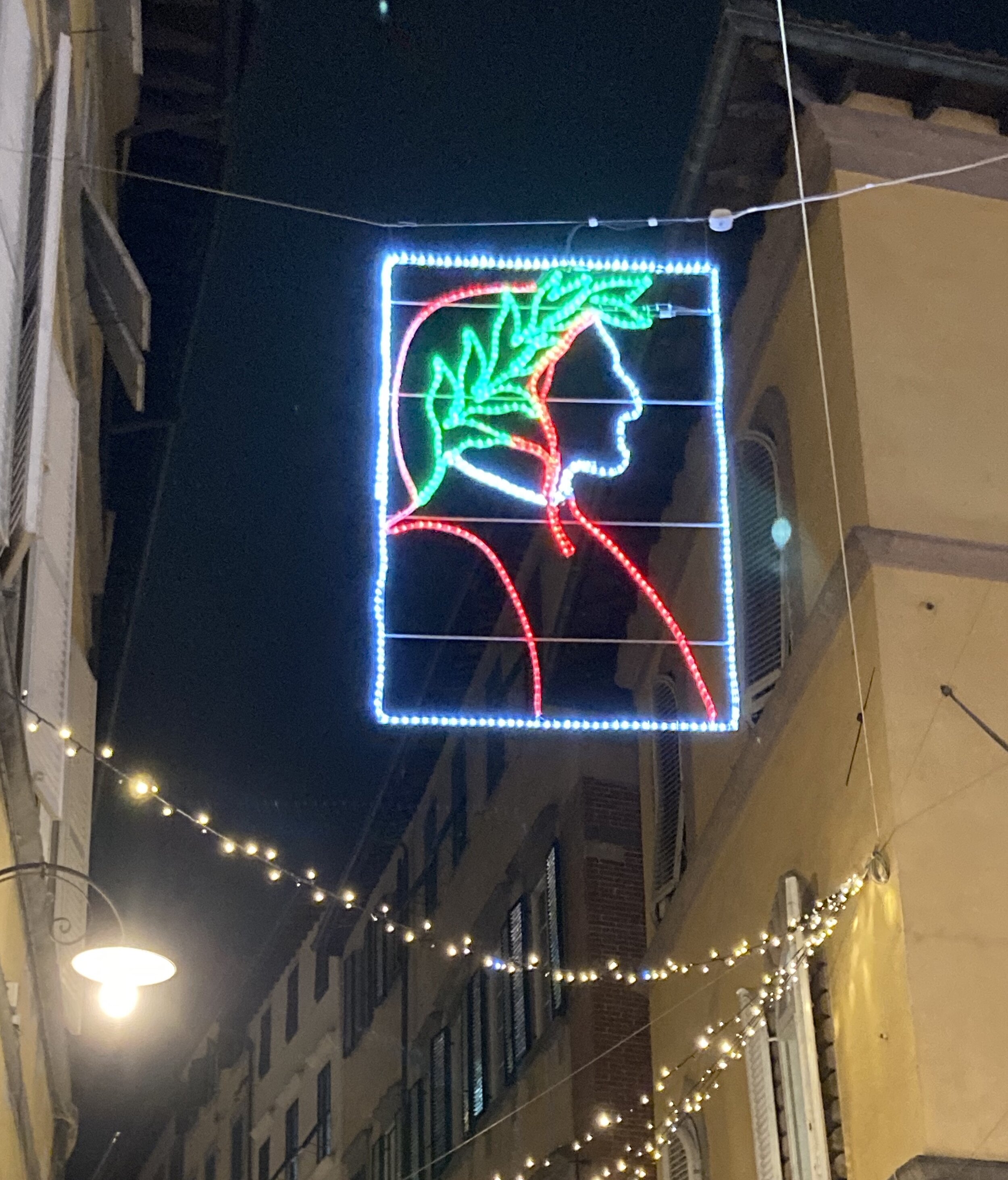
Dante’s recognizable profile in lights high above a street in the historic center of Lucca, Italy

Dante’s recognizable profile in lights high above a street in the historic center of Lucca, Italy

Spending Christmas with Dante

December 21, 2020 by Judy Giannnettino in Italian culture, Italy, Living in Italy, Lucca, Italian Christmas

 I love Italy year-round, through rain and shine, ordinary days and extraordinary ones, warm springs and crisp autumns, rare snowy days, and yes, even in this year of pandemic. But Christmas time remains just about my favorite season.

The holidays are pure delight in Lucca - streets aglow with lights, small alleys filled with trees and lined with colorful shop windows, whole buildings wrapped in lights or bows, skating rinks, decorated doorways and windows, nativity scenes large and small, Babbo Natale (the Italian version of Santa Claus) and Old Befana (the best witch ever).  From the simplest touch to the most elaborate display, it’s all magic to me.

ni6ceTxiS52Szm4OOZZPKA.jpg

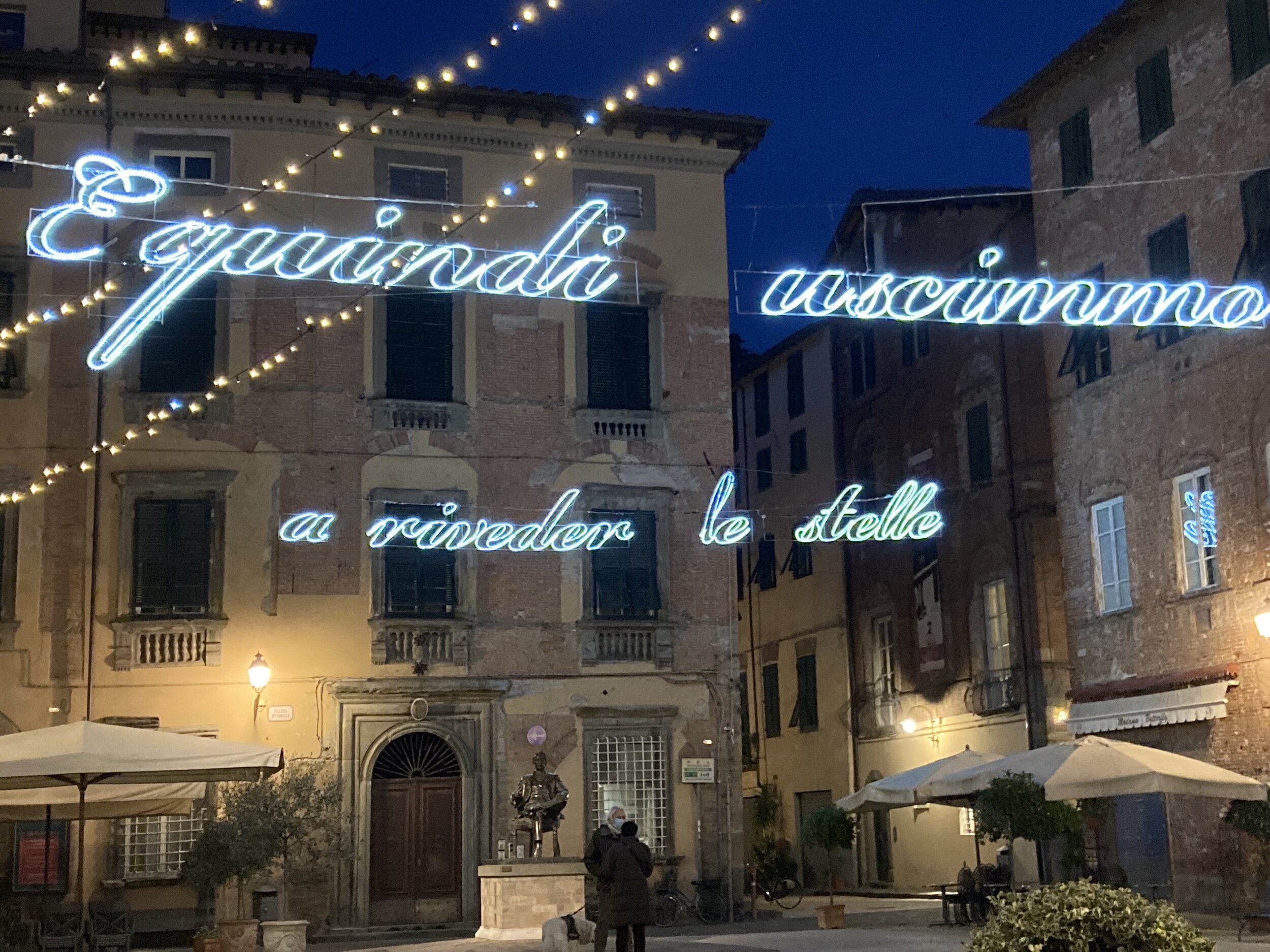
This month, despite Italy’s very difficult year, Lucca is once again all dressed up for Christmas.  And, really, how can you not love a city where the piazzas are decorated for the holiday with poetry by Dante spelled out in lights?  Not visions of hellish infernos (though many might think that fitting this year), but rather words with eyes toward the stars and full of hope. In piazza San Frediano (pictured above) the message is: L’amor che move il sole e l’altre stelle (the love that moves the sun and other stars).

A short walk over to Piazza Cittadella, there is another quote from Dante: E quindi, usciamo a reveder le stelle. (and then, we go out to again see the stars).

N6OMX+TrRY2Od%N56BJbjA.jpg

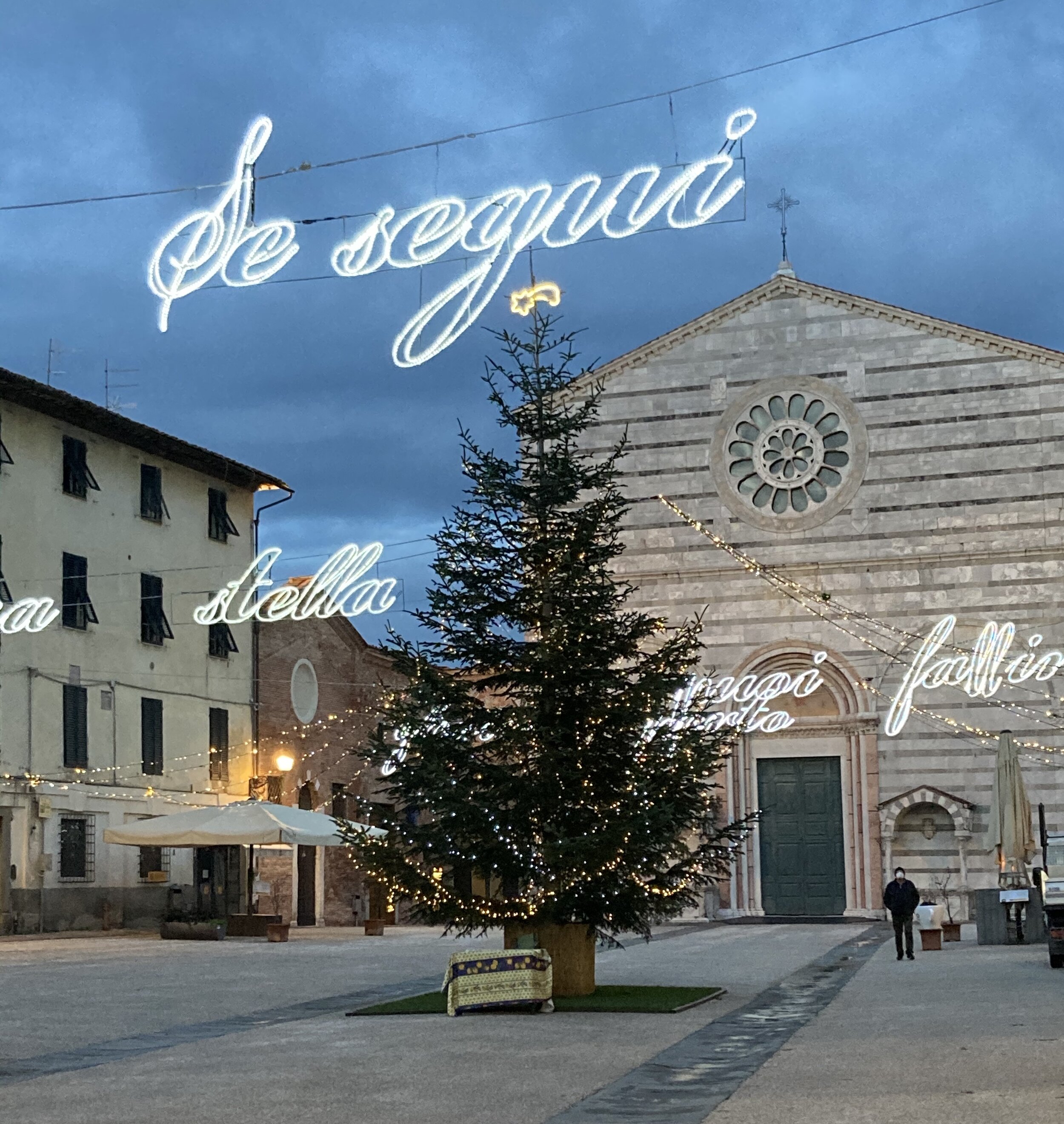
In Piazza San Francesco the words drift above the large Christmas tree - Se segui la tua stella, non poi faillire glorioso porto (loose translation - if you follow your star, you cannot fail to reach a glorious place).

fullsizeoutput_1cf5.jpeg

This year, Dante’s star filled words offer a perfect glimpse of hope and light. And isn’t that a perfect way to end this year?

I wish you all a happy and safe holiday season. Buone Feste !


December 21, 2020 /Judy Giannnettino
Dante, Christmas Lucca, Christmas Italy, Christmas
Italian culture, Italy, Living in Italy, Lucca, Italian Christmas
Changing, and falling, leaves along the walls of Lucca

Changing, and falling, leaves along the walls of Lucca

A Fall Day in Lucca

October 12, 2020 by Judy Giannnettino in Italy, Italy travel, Living in Italy, Lucca, Tuscany

Fall is my favorite time of year whether I’m in the United States or in Italy. I love the changing leaves, the autumn scents (roasting green chile in New Mexico, chestnuts in Italy), the colorful gourds and pumpkins, and the feel of crisp air on my face. But to spend fall in Lucca - now that is seasonal bliss.

I spent a good part of this summer outside of Italy, returning in mid-September. With a two week quarantine on arrival, I watched from my window as the last days of summer slipped away and fall crept in. What a relief to finish those two confined weeks and step out into an Italian autumn.

Looking down from the walls into the city of Lucca

Looking down from the walls into the city of Lucca

Fall began with a spell of stormy weather marked by cloudy skies, rolling thunder, falling tree branches, and periods of heavy rain. Everyone tried to take advantage of breaks in the storms to get outside, run errands, stop for an outdoor coffee, and go for walks. That’s exactly what my Saturday consisted of this past weekend. The best part of the day was a mid-afternoon walk along le mura (the walls that enclose the historic city center). It took place under dramatic skies and a mist in the air that almost, but not quite, required an ombrello (umbrella).

Storm clouds over Piazza Santa Maria, Lucca

Storm clouds over Piazza Santa Maria, Lucca

The city walls are lined with trees which, at this time of year, make a colorful statement. Looking up into the branches is an artist’s palette of color. Looking down, the falling leaves cover the ground in shades of gold and yellow. Chestnuts fall and crunch under foot, their spiny outer shells and dark brown nuts symbolizing the season.

Adjustments.jpeg
A tree trunk covered in moss and “Venus’s belly button”

A tree trunk covered in moss and “Venus’s belly button”

Many of the trees along the walls are covered in moss (something I certainly don’t see in arid New Mexico).

This year, for the first time, I’ve noticed another plant growing through the moss on one of the trees - delicate stalks with small, round, green tops. I’m told they are called Venus’s Belly Button (officially Cotyledon Umbilicus). An internet search tells me they are used in homeopathic medicine. Fascinating!

As my walk around the walls continued, each bend in the path brought a different view of the increasingly dark and cloudy sky. It was an if an artist were painting individual scenes with expert use of light and dark against trees and sky. If only I could paint! Instead, I pulled out my camera in an attempt to capture the beauty of the day.

I could not have asked for a more perfect autumn afternoon or a more beautiful setting in which to enjoy it. I arrived home just as the mist turned into rain. Perfect timing, perfect fall day.

A storm brewing on an October afternoon in Lucca

A storm brewing on an October afternoon in Lucca

October 12, 2020 /Judy Giannnettino
lucca, Le mura Lucca, autumn italy, fall italy, #fallinitaly
Italy, Italy travel, Living in Italy, Lucca, Tuscany
  • Newer
  • Older

Powered by Squarespace