Two Parts Italy

Exploring Italy, travel, and living a flavorful life

  • Blog
  • About This Blog
  • Start Here
  • Recent Posts
  • Archives by Topic
  • Subscribe
  • Contact me

Sunrise at Cretaiole. The valley below is filled with early morning fog and the bell tower of Pienza can be seen across the valley. It’s definitely worth getting up early for this view!

Agriturismo Cretaiole and Luciano's Farm

October 31, 2022 by Joanne Bartram in #fallinitaly, #italytravel, Hill Towns Italy, Italian culture, Italy travel, Tuscany, Val d'Orcia

Some places, and some people, are special.  Agriturismo Cretaiole is one such place and Luciano Moricciani, its founder, is the special person who started it all.  Son Carlo and grandson Nicco, both of whom are pretty special too, have taken over much of the day-to-day operations at the Cretaiole with the help of the delightful Fernanda who is a whiz at organizing everything for guests. But it is Luciano, at 82 years of age, who remains the steady hand, keeper of history, and the warm heart behind the agriturismo and farm.  

Agriturismo Cretaiole, near Pienza

Agriturismo Cretaiole - a classic Tuscan stone farmhouse with beautiful accommodations for up to 20 guests.

 I’ve written about Cretaiole before – after my first visit in 2016 and again in 2020. The 2020 visit took place during the pandemic when no other tourists were around. At that time, Carlo kindly allowed my friend and I to stay and participate in the olive harvest.  The quiet of that visit was quite a contrast to the laughter and activity during my first stay. For more info, the previous posts can be found here: www.twopartsitaly.com/2020/11/2/1erwrj2r1njhhb89nvw9j1b43wv5ic. www.twopartsitaly.com/2016/12/14/a-week-at-agriturismo-cretiaole

The living room / kitchen of the Il Granaio apartment at Cretaiole

This year the visitors have returned, many of whom waited nearly three years to reschedule pandemic cancelled trips.  They came for many reasons – the beauty of the Val d’Orcia, the excellent local wines, the peacefulness of Cretaiole’s setting. They also arrived to take part in the wonderful activities included in Cretaiole’s “Dolce Vita” package - pici making, truffle hunting, early morning hikes, group dinners, wine and olive oil tasting. And then there is “The Isabella Experience” which includes luxury linens and many special touches as well as the opportunity to visit all the small villages of the Val d’Orcia which are just a short drive from Cretaiole. 

And, as one guest told me, she came because she’d read about Luciano in several blog posts and had been waiting for 3 years to drink grappa with him! 

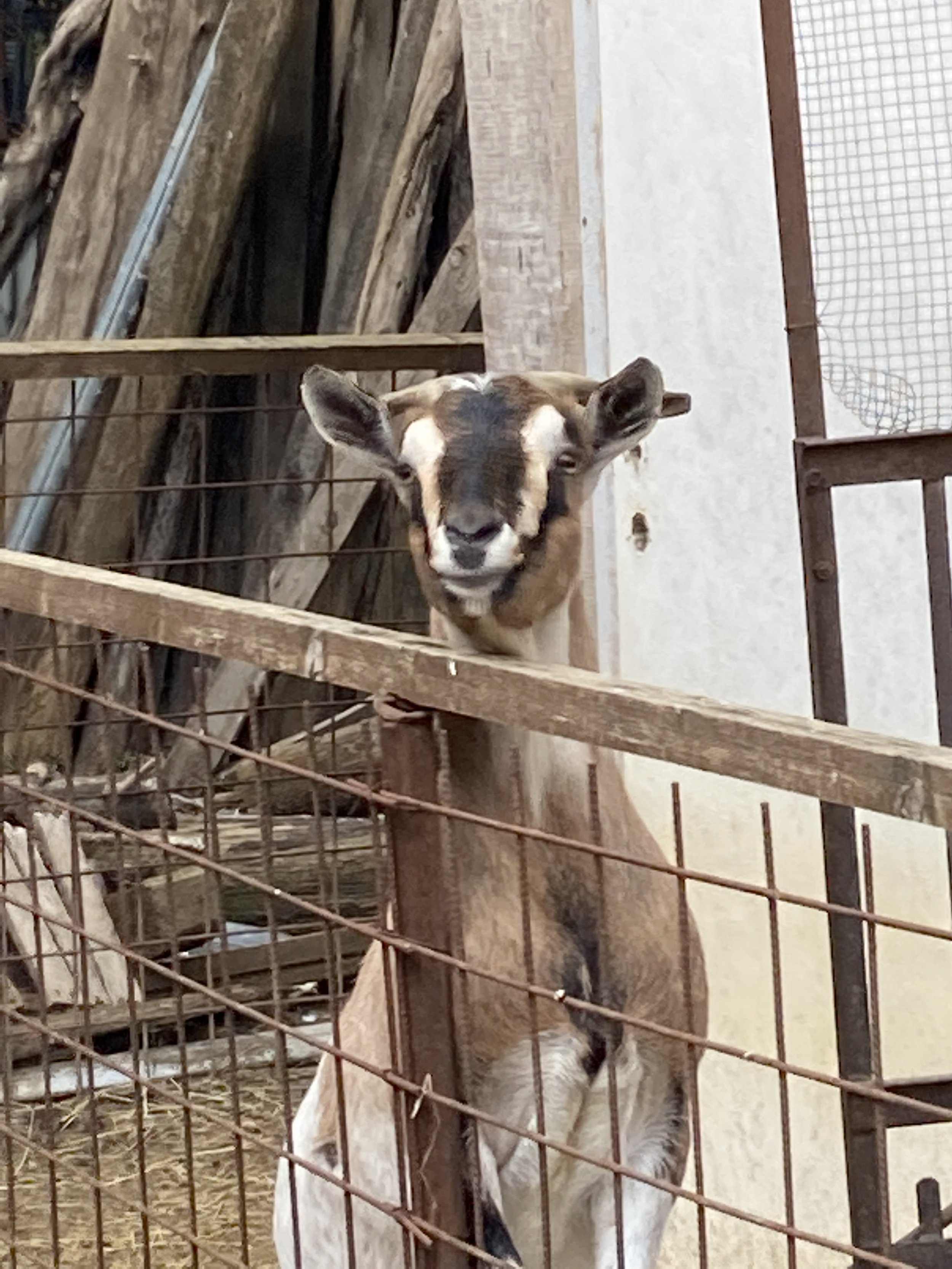
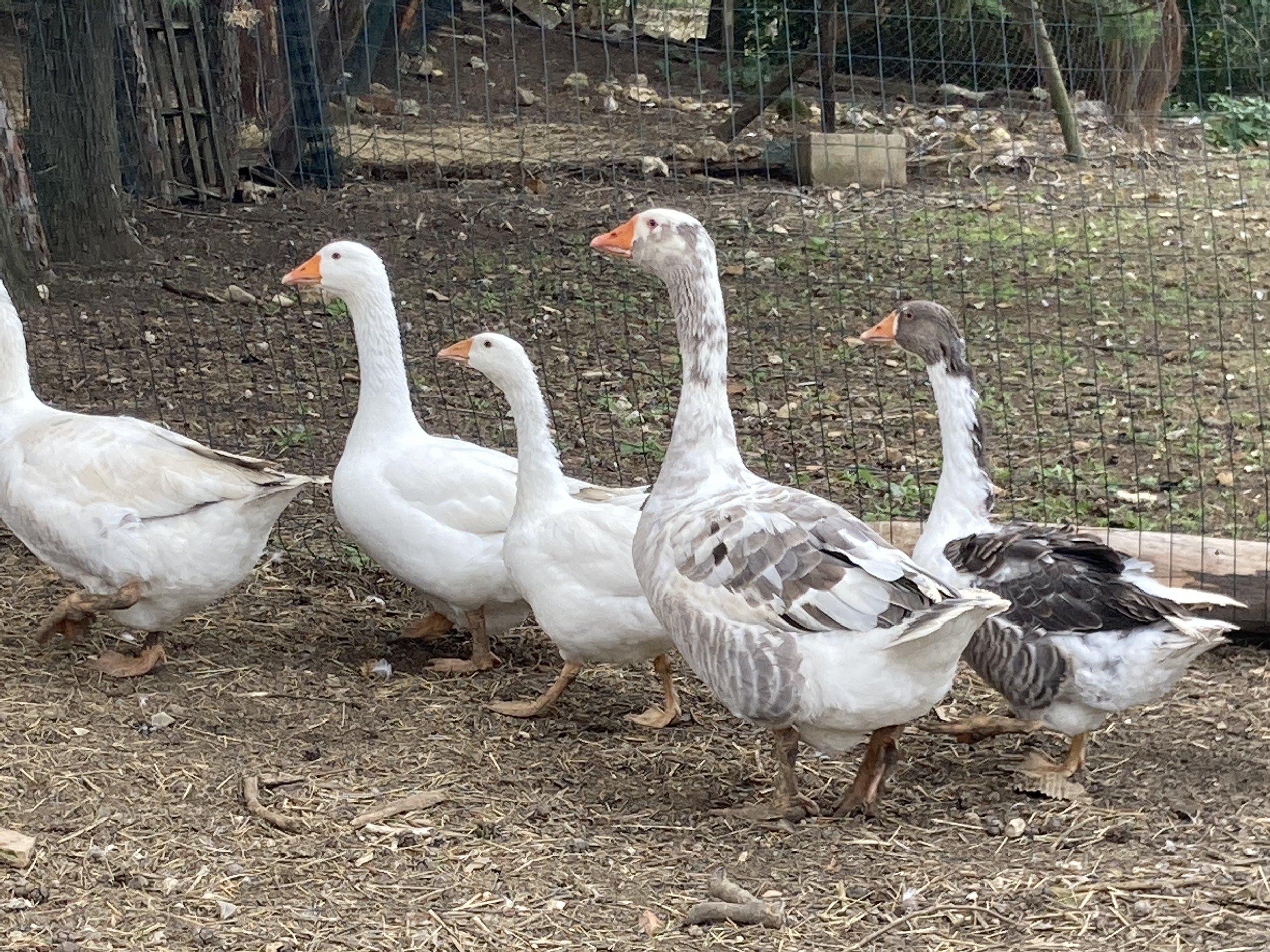
 One of the highlights of a Cretaiole stay is a chance to visit Luciano’s farm, Podere San Gregorio, just 10 minutes from Cretaiole.  During my October visit Luciano was recovering from a fall but he was still enthusiastic about walking the farm with us.  He is the person most involved with the animals including sheep, chickens, geese, guinea fowl, one goat, a friendly dog, and some very large pigs.  The sheep are pretty much pets but the pigs are the source of some of the farm’s specialties – prosciutto and salami – all prepared on-site. 
F9C25B92-D23B-4000-BC3E-C8806147BB2D.jpeg
E5E305D7-8276-4F57-93F3-4ABED5844F37.jpeg
56508ED3-E782-47E6-919C-A388956F8D83.jpeg
9C5D6DE4-1F15-47BA-8BCF-6F2903F85B60.jpg

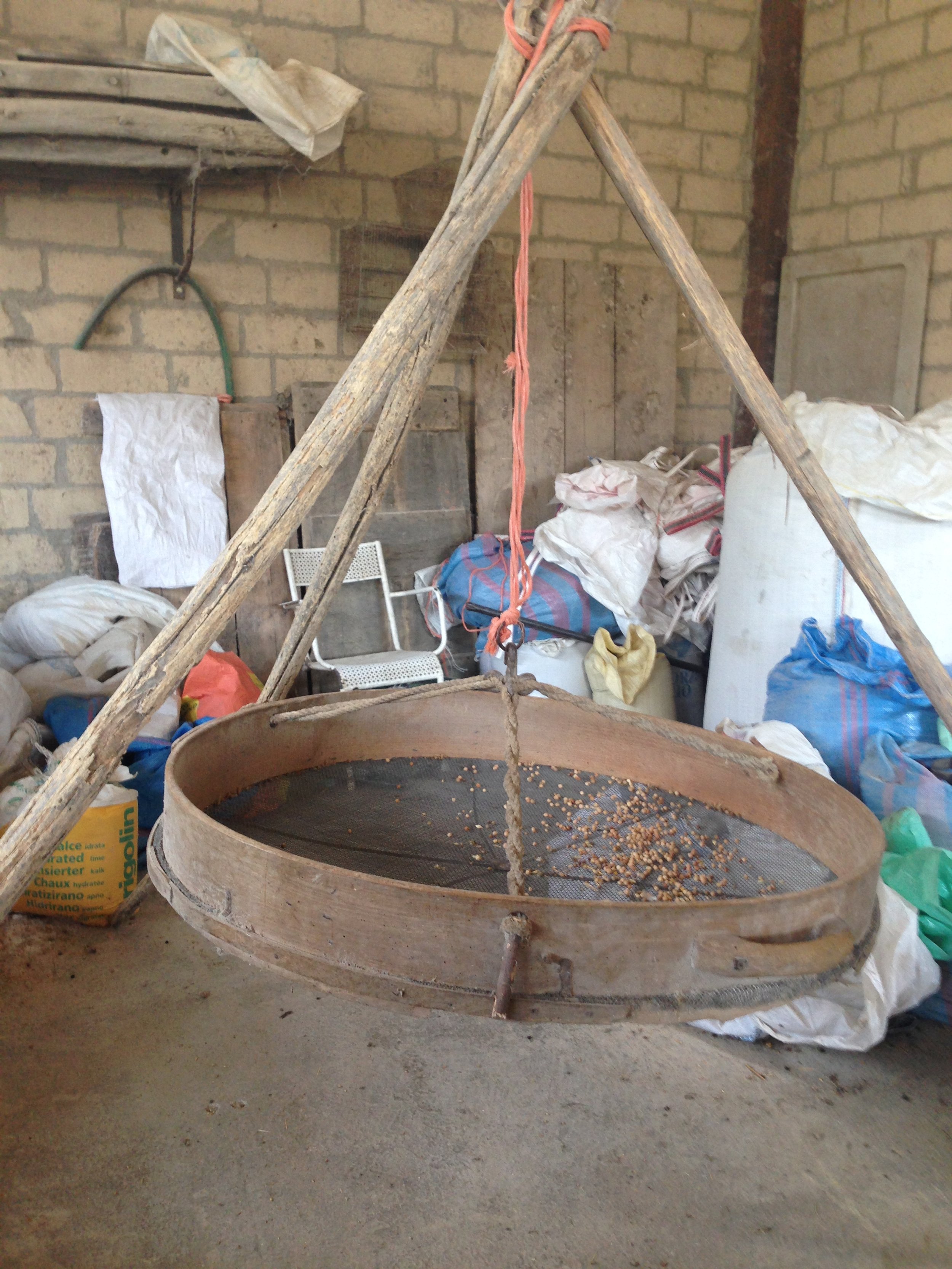
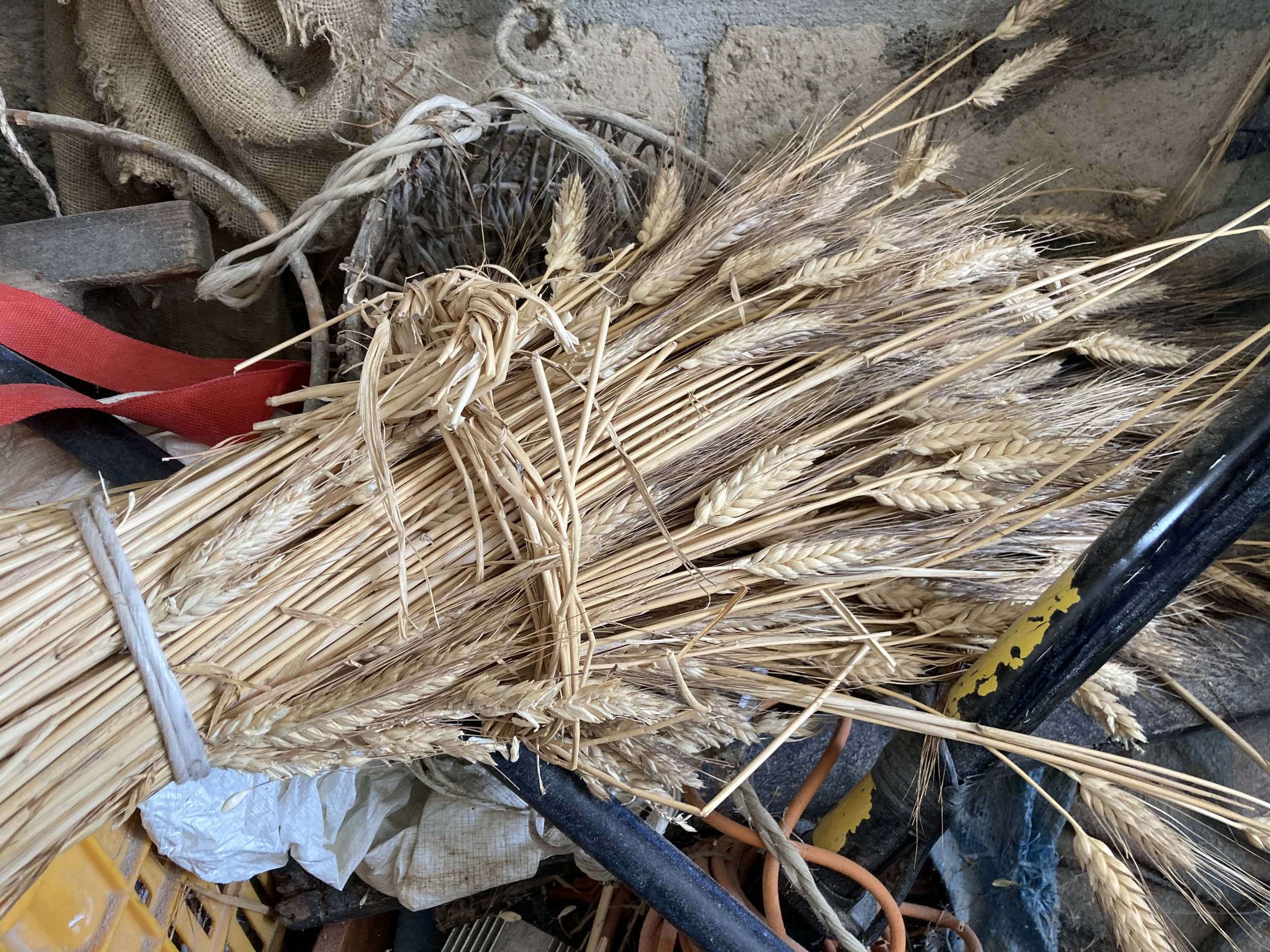
The farm tour includes a stop at the barn where some of the oldest farm tools can be seen and where fascinating tales of the old ways of picking olives and harvesting wheat are told by both Luciano and grandson Nicco.  It is easy to imagine the young Luciano scrambling up the trees on the rather rickety ladder that still hangs in the barn, basket at his waist, collecting olives and trying not to fall out of the tree (a common hazard in those days).

9E9195F8-DF6D-44B4-A4D3-7F00AD1DCA3F.jpeg
E7C3C44D-2347-442A-BA2B-6E81A5EA8437.jpeg
2123638E-F0F3-4CDD-9AE3-5CDB197EAE5F.jpeg

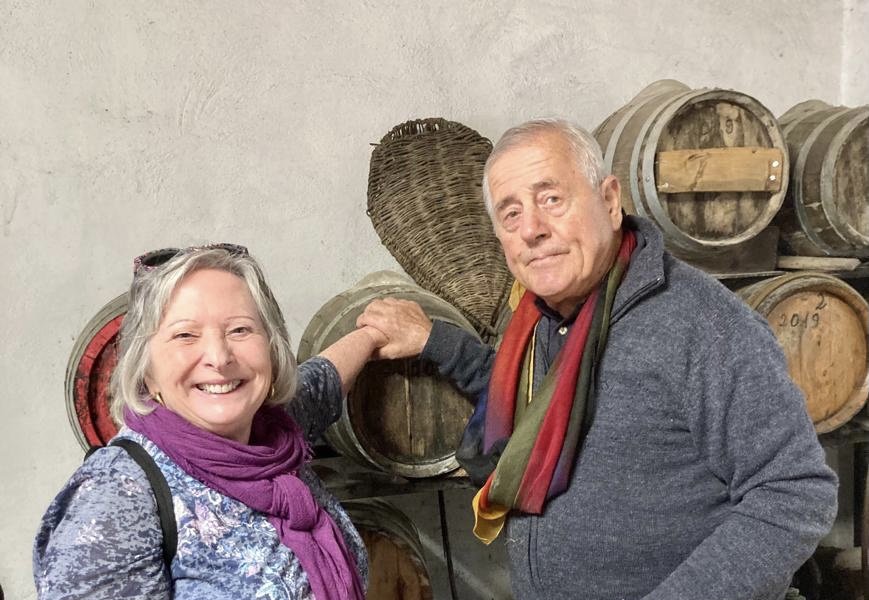
Luciano and me at Podere San Gregorio. I will present this photo on my return to claim a bottle of his Vin Santo.

Next stop: the building where the preparation of meats, sauces, and Vin Santo takes place.  A promise was made that anyone who returns to the farm and presents a photo of themselves with Luciano, hands on the Vin Santo casks, takes home a free bottle.  You can bet I have that photo saved, more because I hope to have another visit with Luciano then for the free bottle. Although that Vin Santo is really tasty!

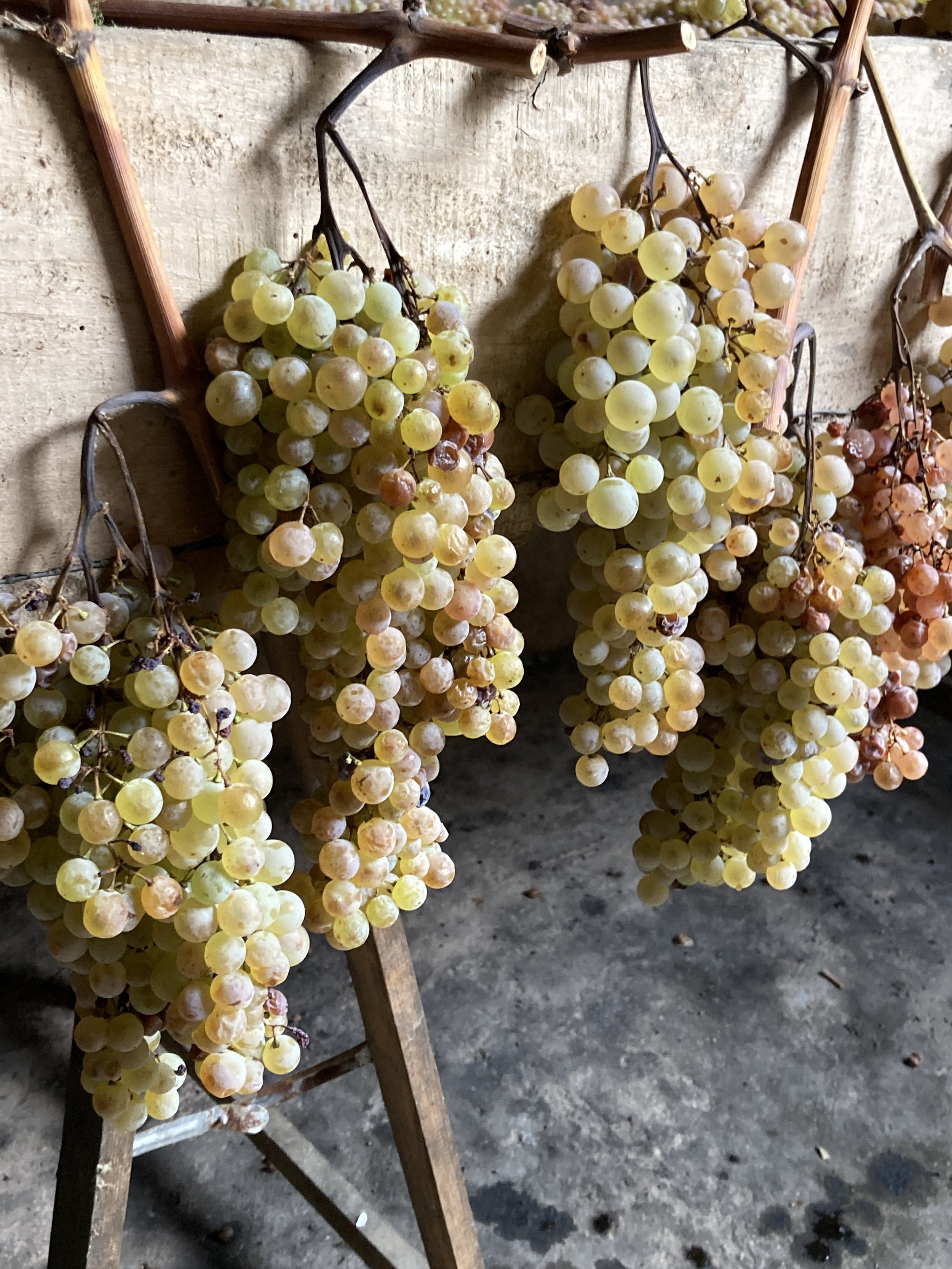
 Behind the work room is the small room where the white grapes for vin santo are dried. The grapes were still quite moist in mid-October, having only been harvested two weeks before.  They tasted sweet and the aroma was wonderful.

D50FC0A2-30A6-48D8-B821-B985115728DE.jpeg
A26DF7C7-CC97-43C7-9BA0-200D09518730.jpeg

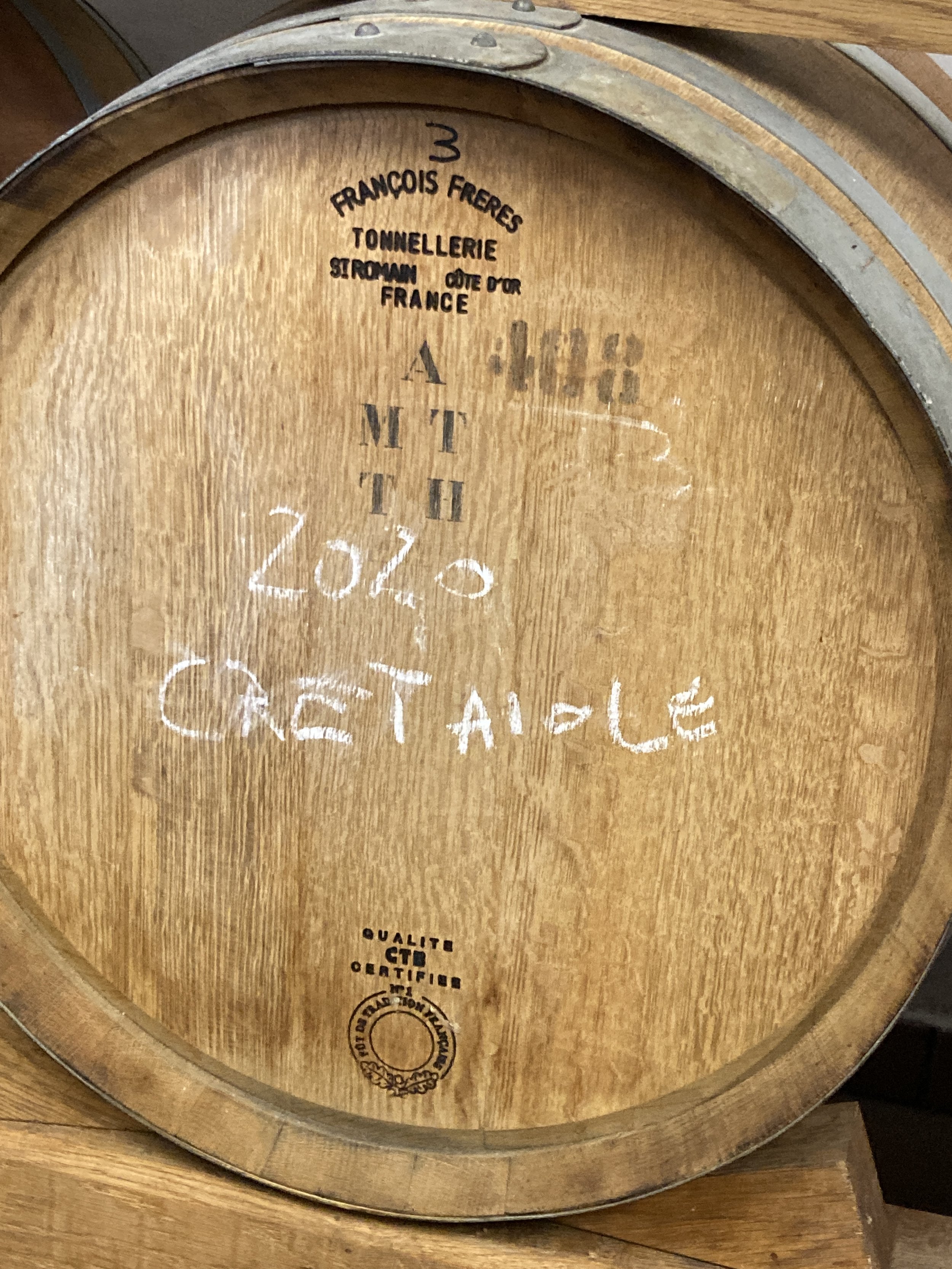
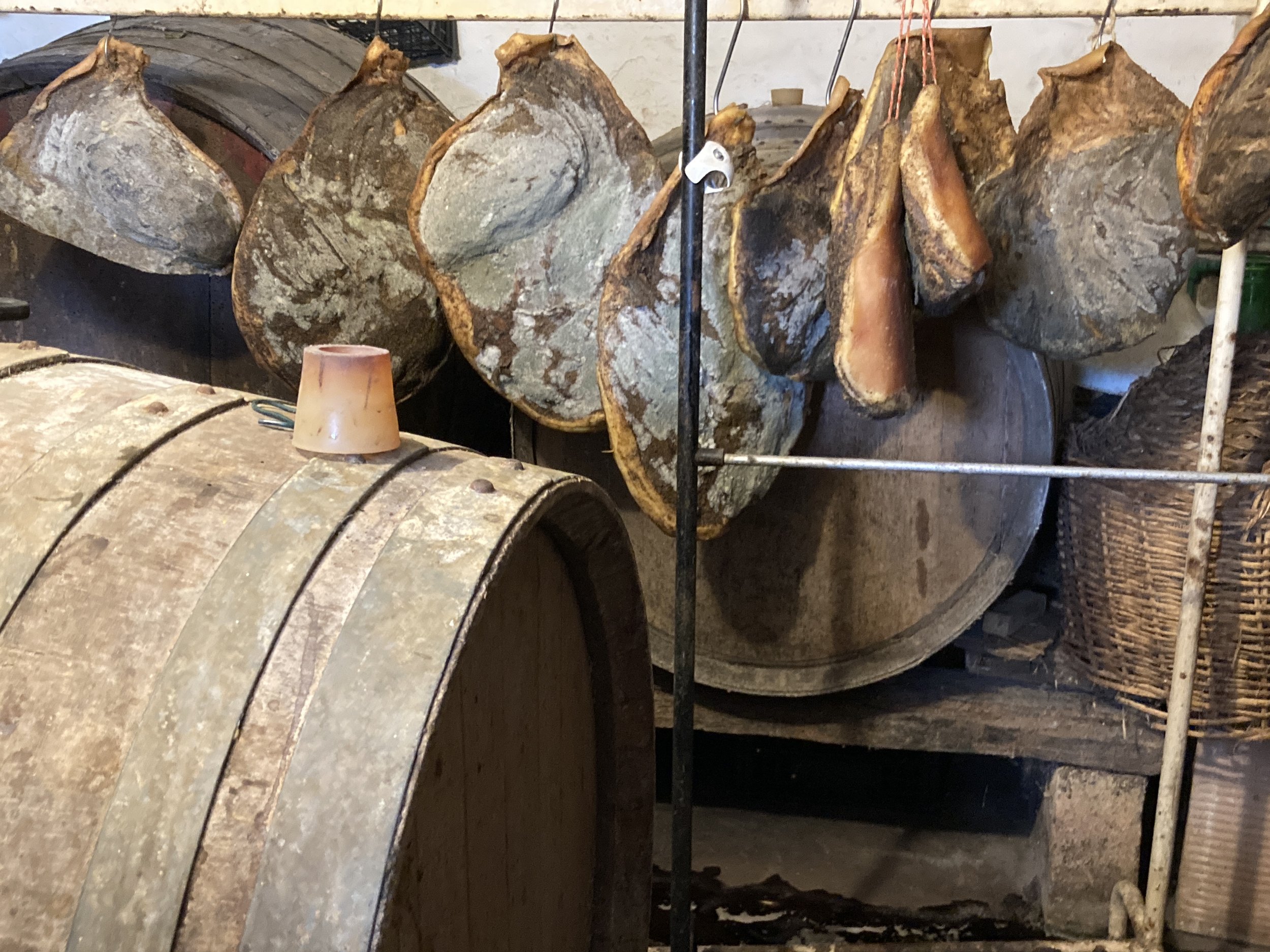
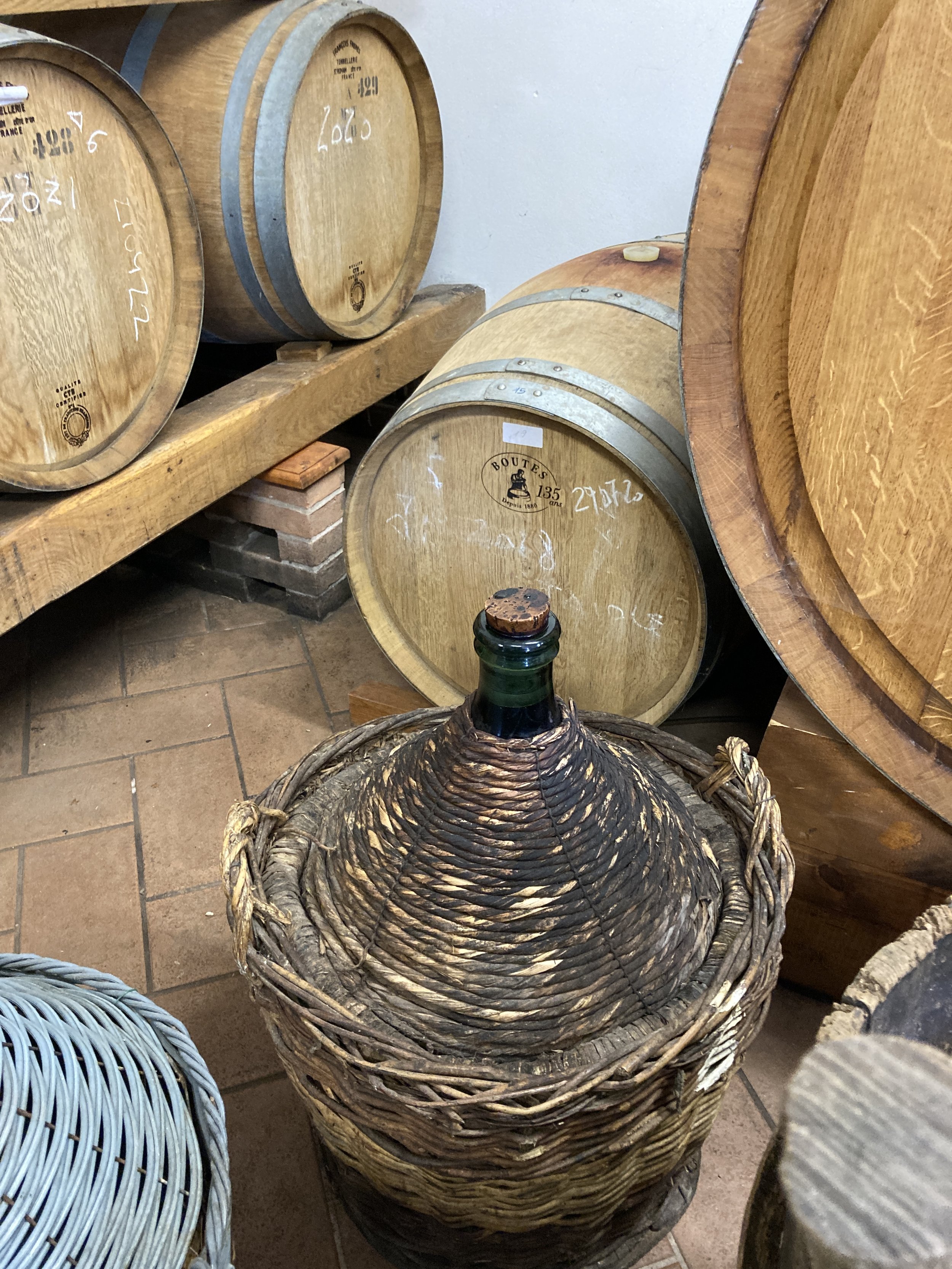
 Besides the barn, garden, work rooms, and animals there is also the large space where the wine is made and the olive oil stored.  Next door is an aging room for pecorino cheese, prosciutto, and salami. The grape harvest had taken place a week or two before, the grapes pressed and the wine placed into the large vats to begin fermenting.  Huge piles of dried grape skins remained, waiting to be sent off to grappa makers.  The olive harvest will take place in late October / early November, so soon the olive oil tanks will be filled with the new 2022 oil.  I would like to go back even if just to buy some of the new oil.
A4F46751-7051-4622-975C-DB8880AB09D0.jpeg
CA8542B7-7B7F-47D9-8D3A-842AAC1C316E.jpeg
006C40A7-DEF5-4F70-BA28-B11279385868.jpeg
1EF345E7-7552-427F-84C0-FDD2E4AF0A1D.jpeg

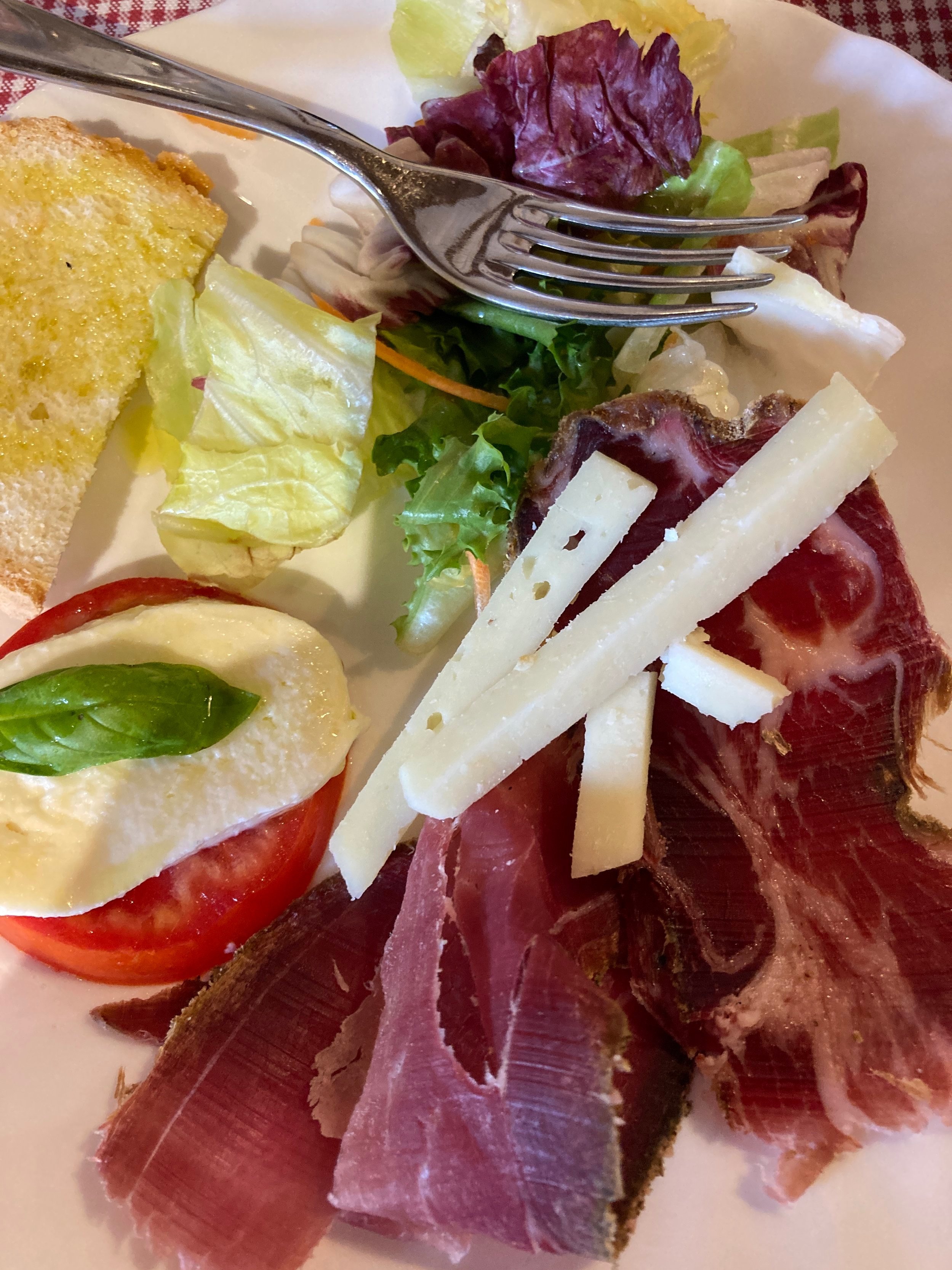
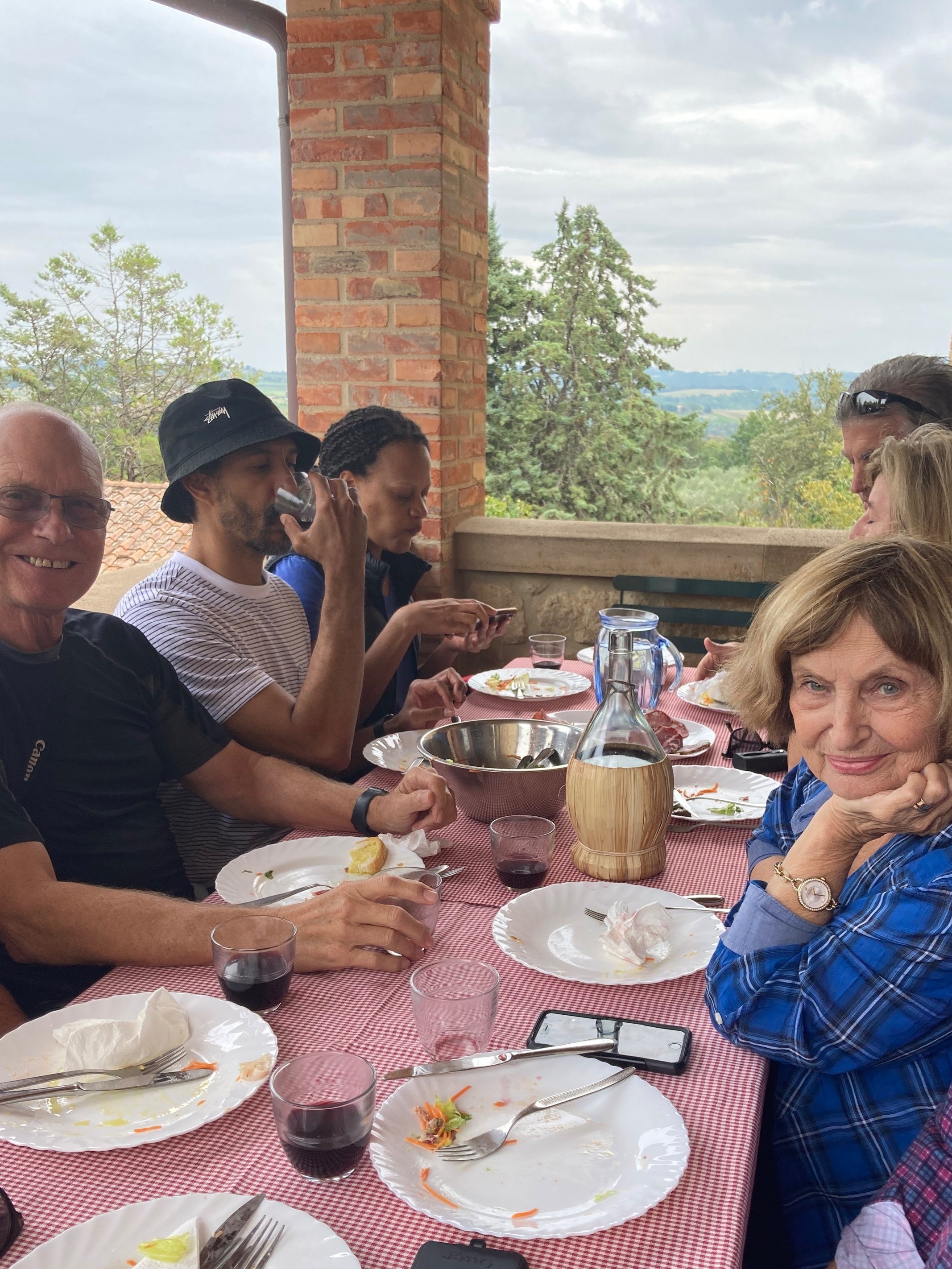
 After the farm tour we all gathered around tables for a straight-from-the-farm lunch.  Slices of bread with Cretaiole olive oil (it is really, really good), local pecorino aged on the farm, platters of prosciutto and salami, caprese salad, and Cretaiole red wine (also quite good).  We finished with some of Luciano’s very special Vin Santo and cantucci for dipping. There may even have been a bit of grappa poured.

BBED3E30-9FBF-4CC4-A586-6B52FB3FEA6A.jpg
C25B1D81-A907-406D-8F05-D12075B7B416.jpg
3D06BB10-CE36-4BDD-926C-9CF418F74B85.jpg
A225B062-28DA-483B-B6CD-41F0210448B5.jpg


It was wonderful to have Luciano with us on the farm tour and again at Cretaiole’s group pici dinner.   He clearly enjoys sharing his stories and his farm with visitors.  He also enjoys talking with visitors and hearing the stories they tell (he speaks Italian and is also great at using google translate to speak with English speaking visitors).  He has a lifetime of experience as an authentic Tuscan contadino (farmer) but, even better, he shares the joy of his land, his family, his farm, and his heart.  Luciano is one very special part of the Cretaiole experience. 

Ti voglio bene Luciano!

October 31, 2022 /Joanne Bartram
#cretaiole, cretiaole, agristurismo cretaiole, tuscan farm stay, #tuscanfarmstay, Pienza, Val d'Orcia
#fallinitaly, #italytravel, Hill Towns Italy, Italian culture, Italy travel, Tuscany, Val d'Orcia

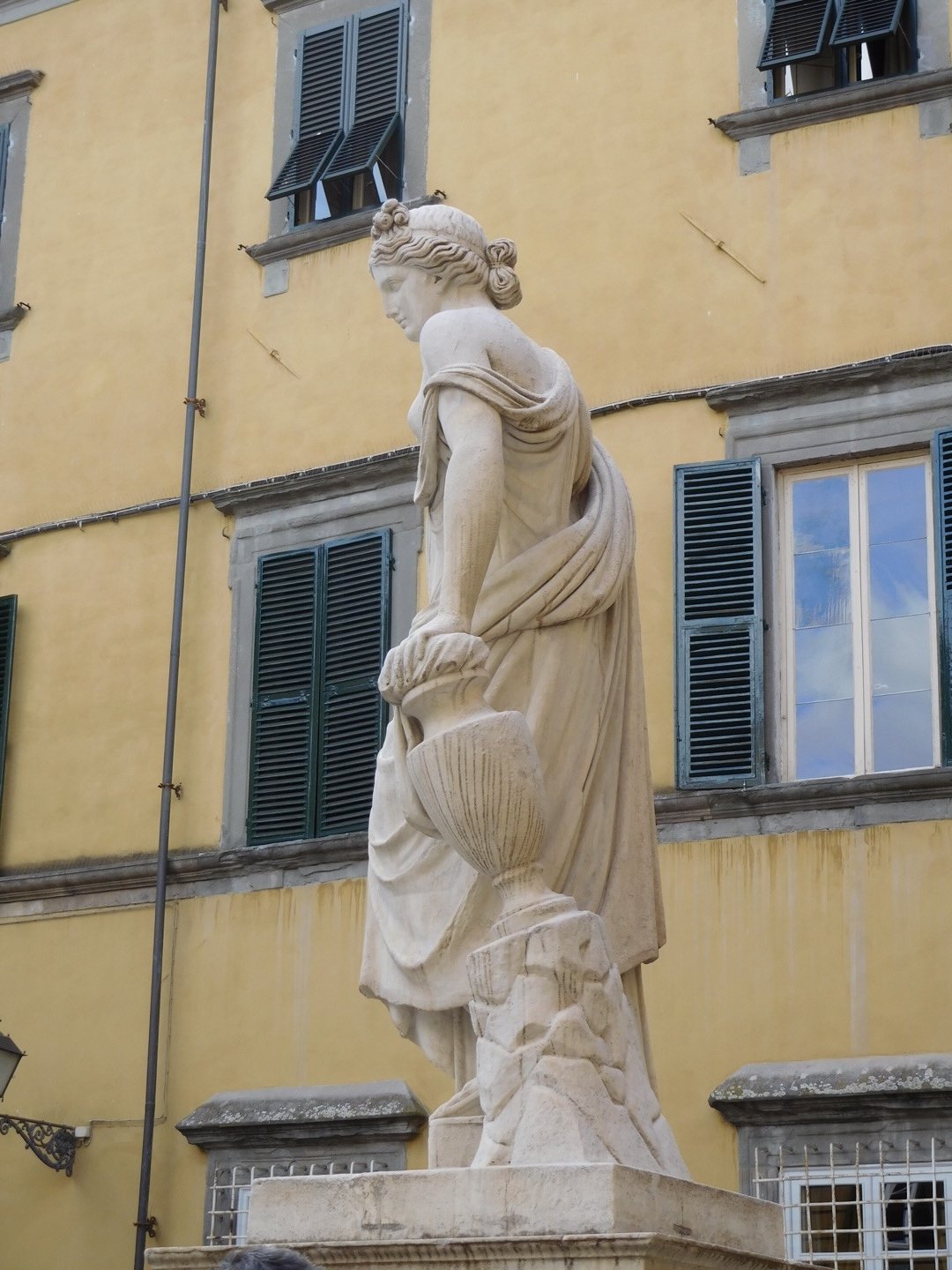
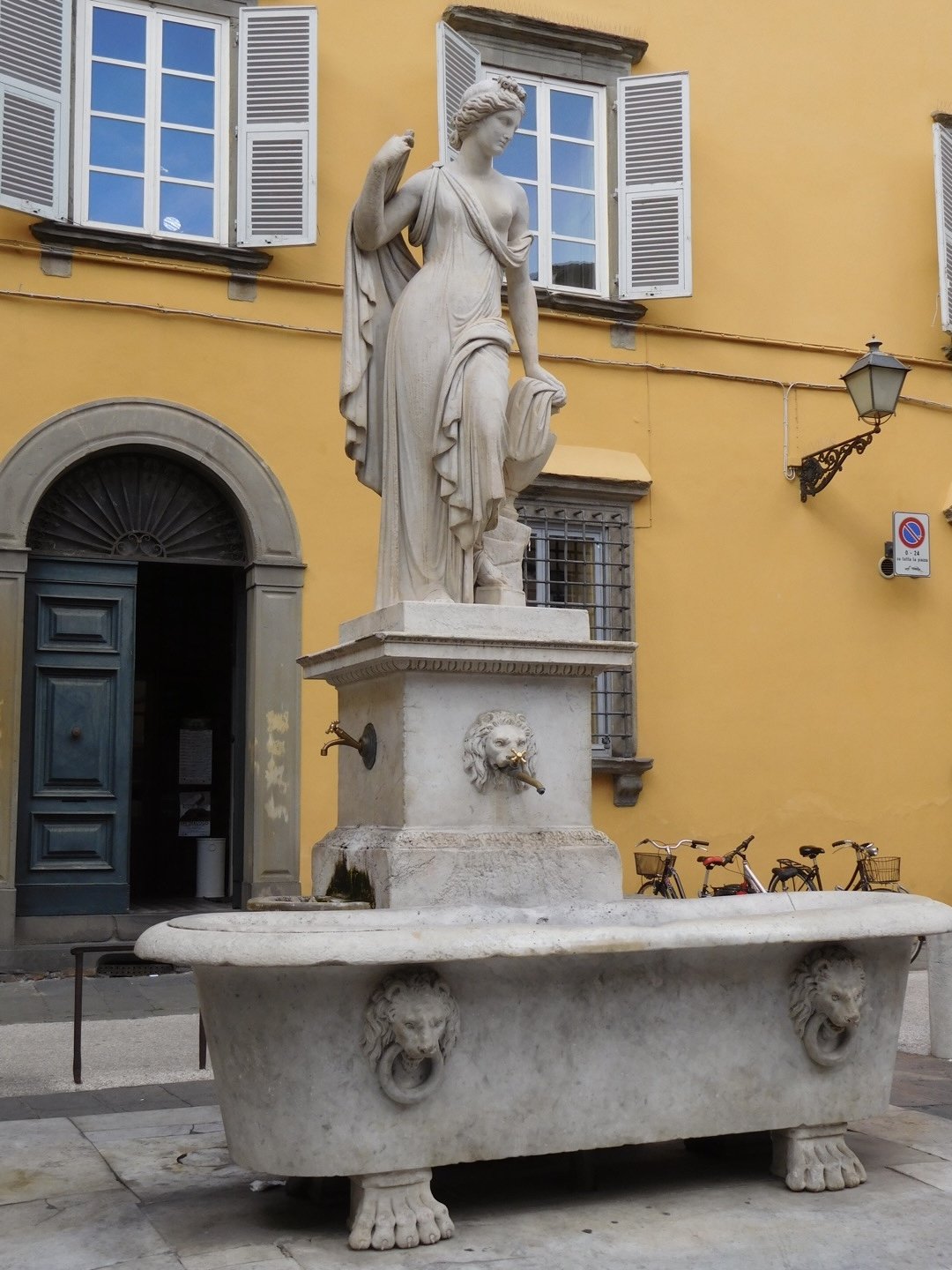
The statue of the Naiade atop a fountain in Lucca

A Fountain of Beauty in Lucca

September 26, 2022 by Joanne Bartram in #lucca, Italian art architecture, Italy, Lucca, Tuscany, #luccafountains

I probably have more photos of her than of any other subject in Lucca - photos taken from every angle, in every light, in every season.  She is a fascinating subject and one of Lucca’s most graceful landmarks.  She is The Naiade or Water Nymph.

 The Naiade rests atop one of Lucca’s many fountains, built in the 1800’s to bring fresh water to the city via Nottolini’s aqueduct. 

Some of the fountains are simple utilitarian structures but are few are quite decorative, none more so than the Naiade fountain. 

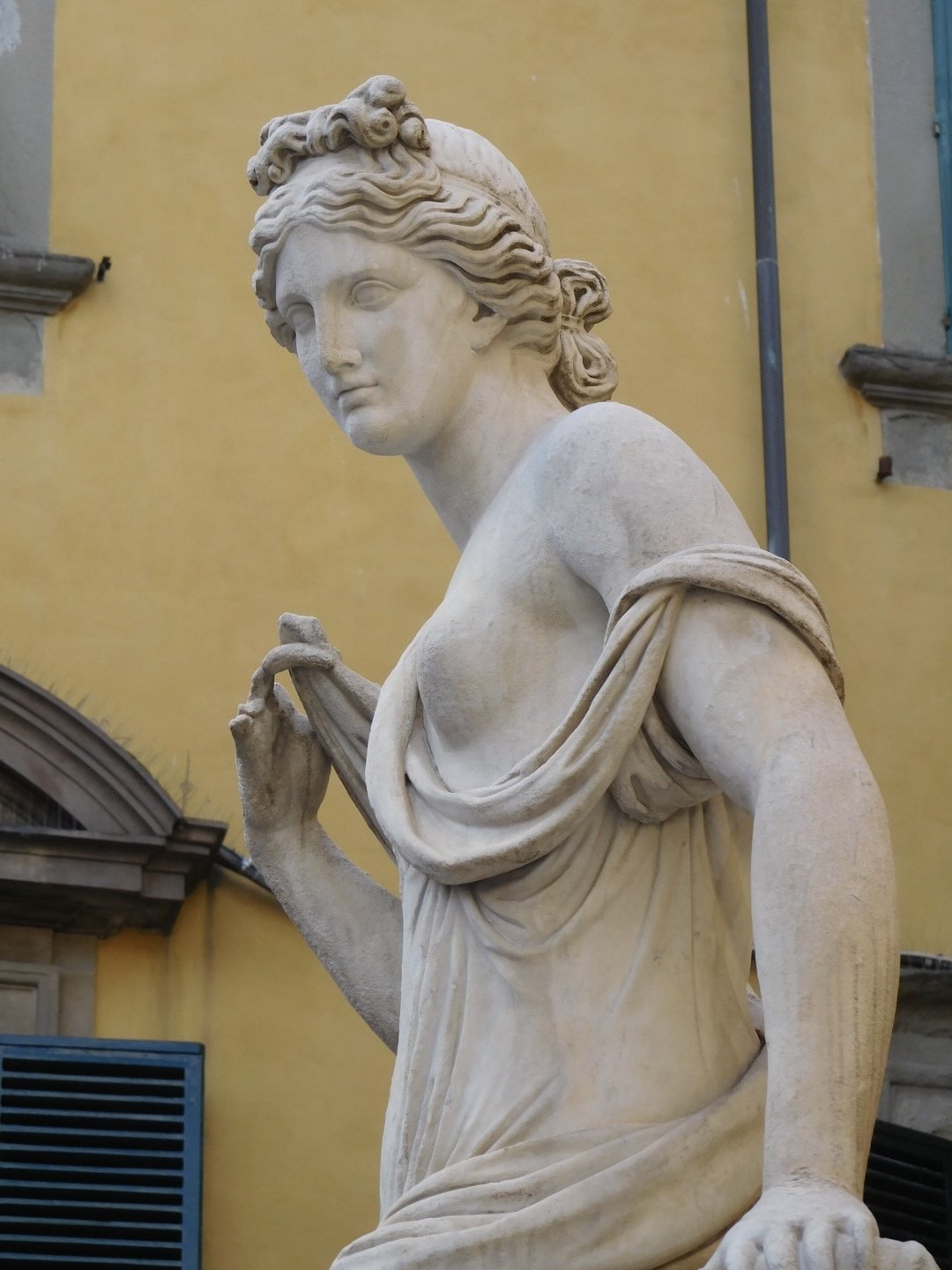
She was sculpted by Luigi Camolli from a design by Nottolini, one of Lucca’s most famous architects and sculptors.  She turns an ordinary fountain into a work of art.

The fountain itself is a marvel.  At the base is a large bathtub-like marble basin resting on claw feet and decorated with lion’s heads.  Above the large basin is a rectangular marble column with water spigots on 3 sides, each one placed above a small basin.  This is where so many Lucchese come to fill containers with fresh water direct from the hills beyond Lucca.  Locals swear this water is much better, and much more tasty, than either tap or bottled water.  Some even have a preferred spigot, always filling their bottles from one side of the fountain.   More than just a place to get water, this is also a gathering spot and a place for social connections.

 Above the fountain sits the Naiade who is commonly known by a much less proper nickname.  To locals she is “La Pupporona” which loosely translates to “The Busty One”, so called because of her one exposed breast (in Tuscan dialect the word puppora means breast).  That breast so scandalized a long-ago bishop that he tried to have the statue removed.  Fortunately he did not succeed! 

 The Pupporona is elegant, with softly draped folds in her garments, curvy hips, and perfectly coiffed hair.  She is made even more striking by the backdrop offered by the surrounding buildings, including the oche colored Church of San Salvatore (also known as the Church of the Misericordia).  The piazza where she resides is also named Salvatore, but don’t be surprised to hear it called Piazza della Pupporona, such is her fame.    

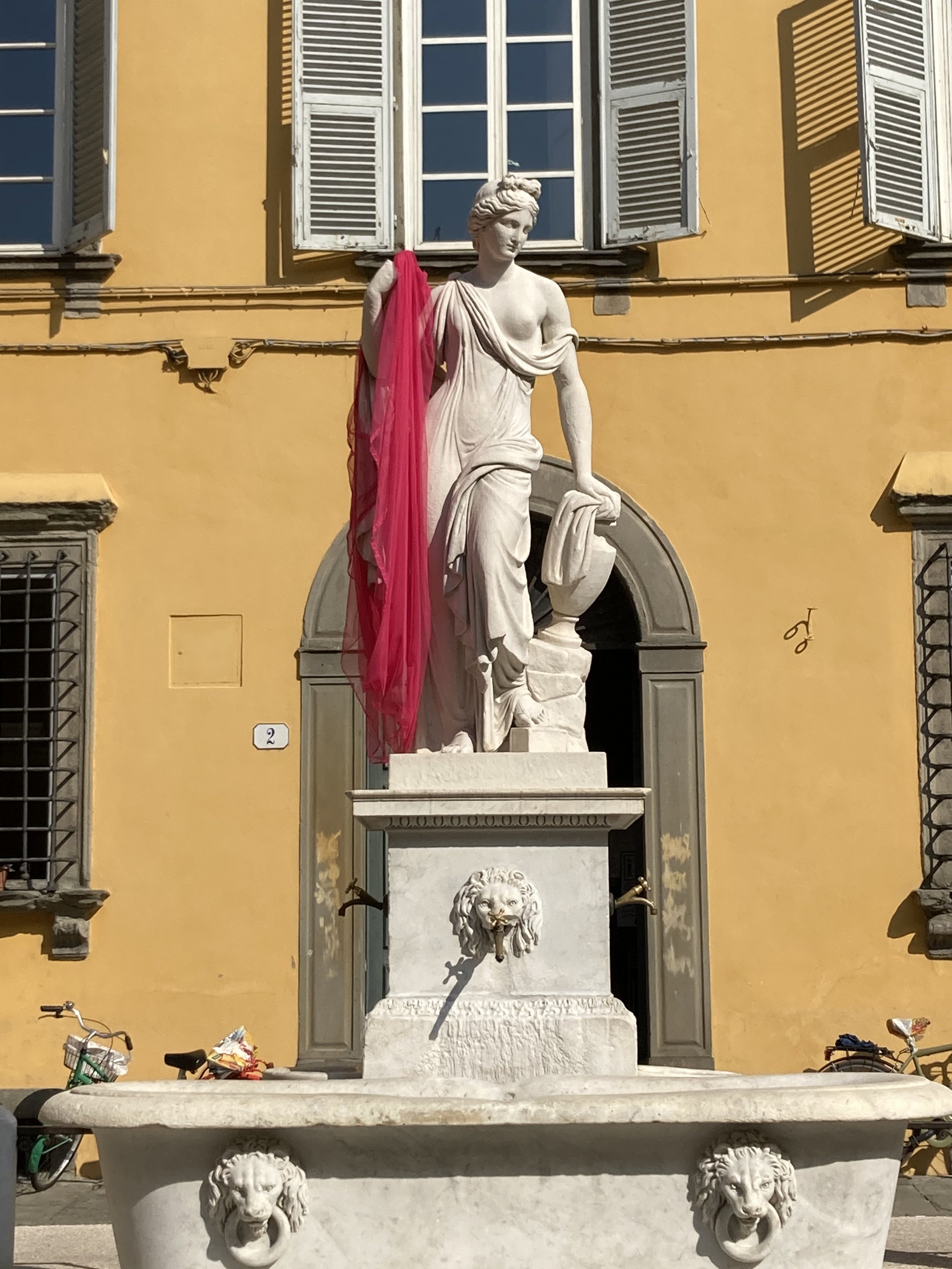
 Much loved by locals, she is occasionally adorned with a red scarf, a symbol of support for female victims of domestic violence.  Once, back in 2017, she was vandalized when someone drew a mustache on her face during the night.  Che peccato! The damage was quickly repaired.  I don’t believe the culprits were ever caught, but the vandalism caused quite an uproar. 
 On one of my first visits to Lucca I snapped a photo of the Naiade long before I knew the story behind her creation.  I just knew that she was lovely and she quickly became the representative image of Lucca in my memory.  Today, that photo is one I use as the symbol for Two Parts Italy and which accompanies each Monday morning email to subscribers.  It is still one of my all time favorite photos.  Be sure to stop by this small piazza when you visit Lucca. And don’t forget to fill your water bottle!

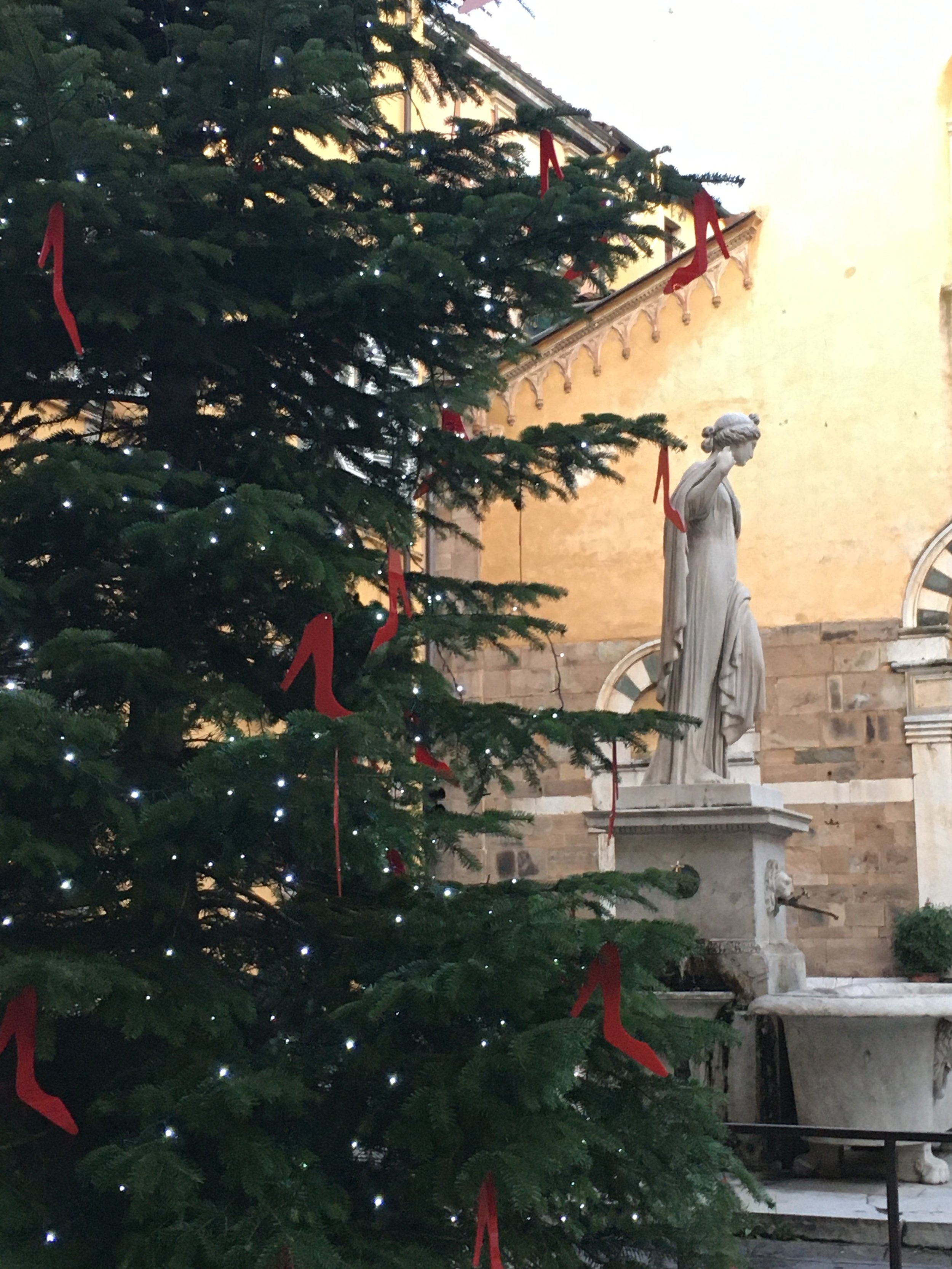
The statue of the Pupporona at Christmas time


September 26, 2022 /Joanne Bartram
Lucca fountains, Nottolini fountains, Pupporona, Naiade Fountain Lucca
#lucca, Italian art architecture, Italy, Lucca, Tuscany, #luccafountains

The Mystery In Italian Details

August 22, 2022 by Joanne Bartram in #lucca, Italian art architecture, Italy travel, Living in Italy, Lucca, Tuscany

Italy’s “big picture” is full of things to love - culture, art, architecture, music, food. Everywhere you turn there is something wonderful to be experienced. But sometimes, there is enchantment to be found in the smallest of details and in the little mysteries that no guide book can describe.

I am still amazed that after 3+ years of living in Lucca, I continue to find new small details to appreciate. The iron fixture near my apartment door that I noticed for the first time in April, the decorative brick arch just down the street, a small fountain tucked away in a rarely visited courtyard. Lucca presents a never ending series of discoveries!

Sometimes those little details are just noted in passing. Other times, a bit of mystery draws me back again and again, examining details, feeling intrigued, painting imaginary explanations in my mind. Often this occurs with some of Lucca’s many ruins and abandoned places. How I wish I could explore all the abandoned and locked churches, those ruined buildings with their encroaching vines and empty windows, the slowly decaying wooden doors.

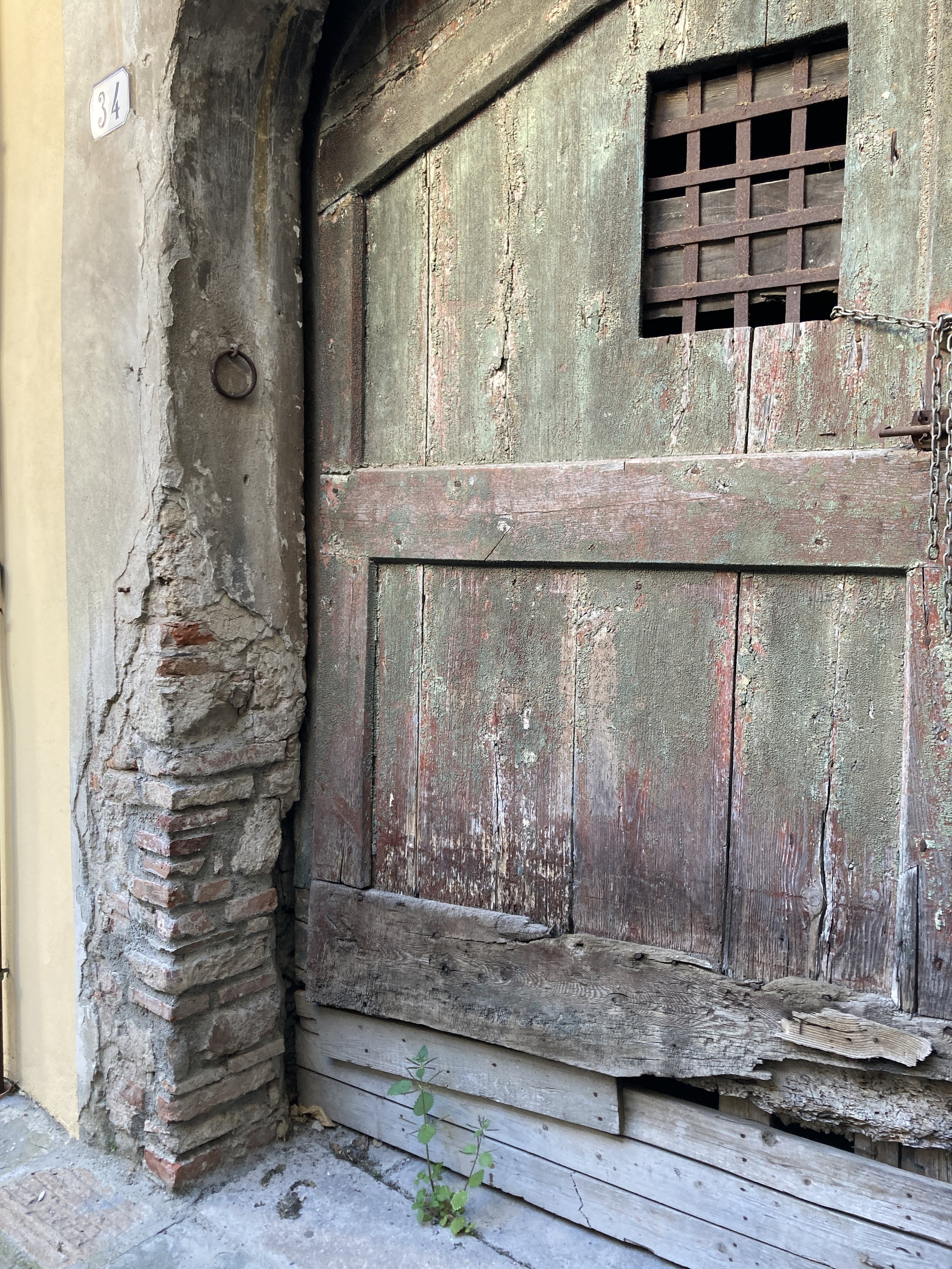
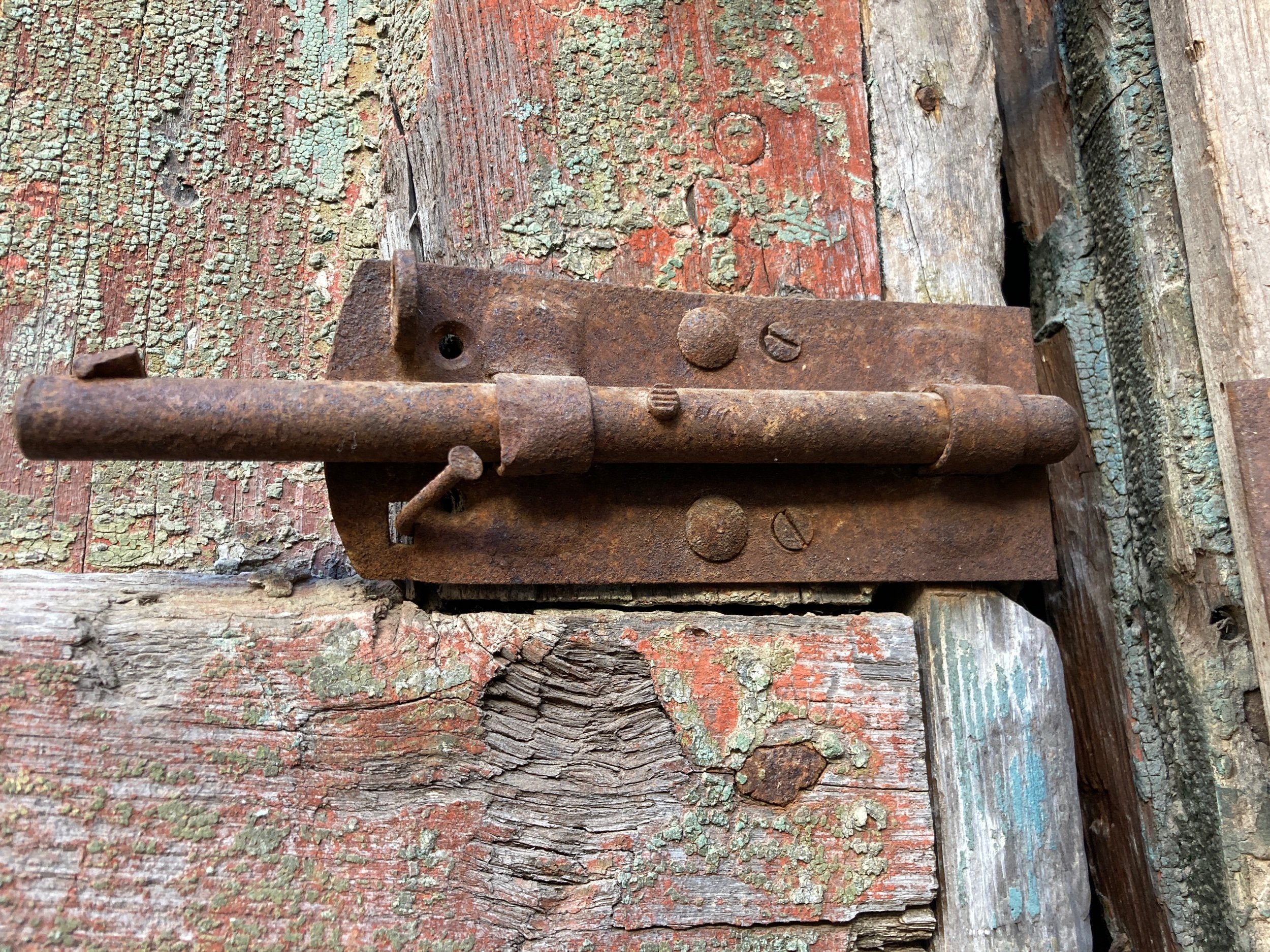
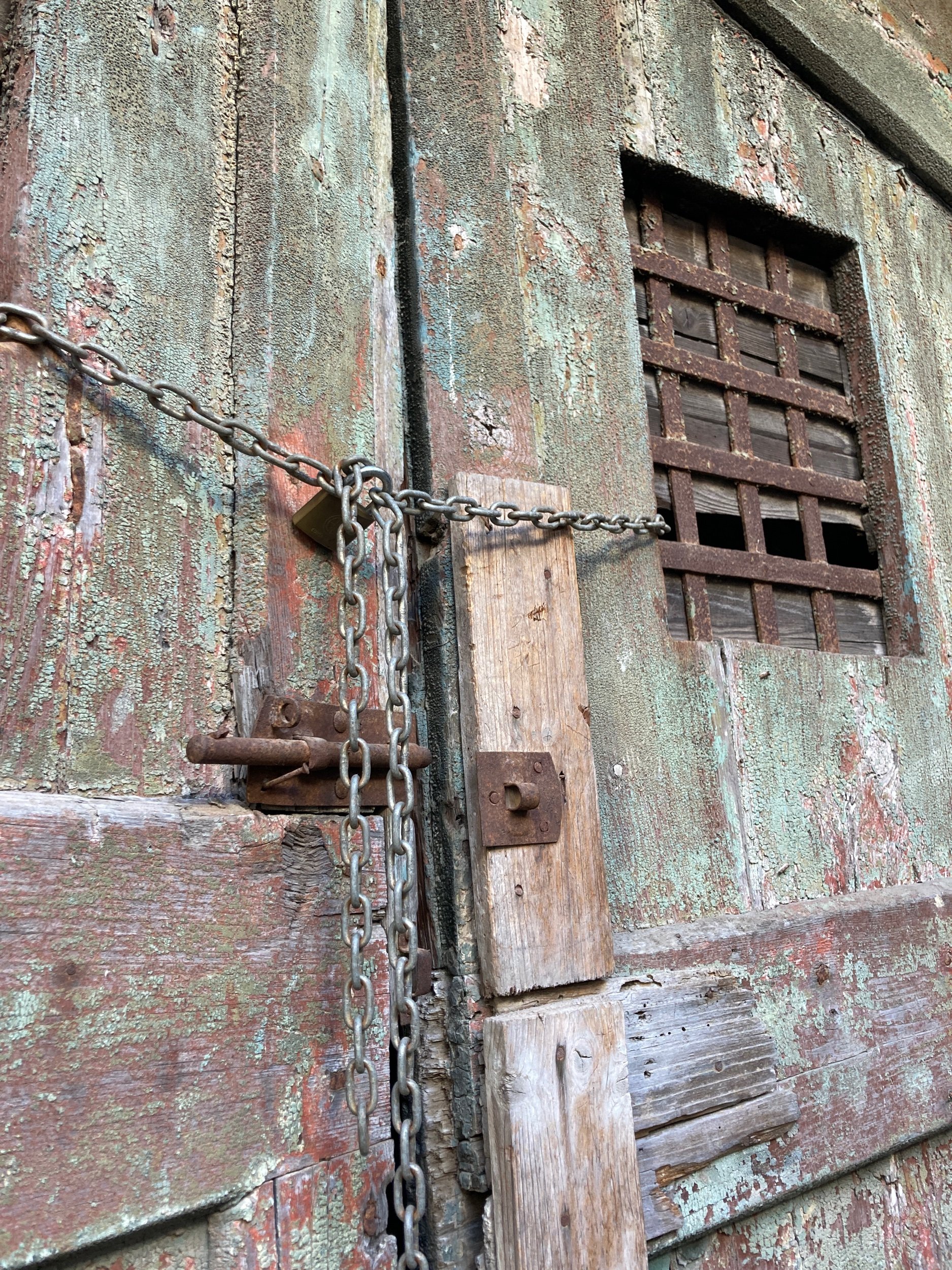
Behind my apartment building lies one of those abandoned places. The mystery is why this one spot - a garage - lies abandoned. It is surrounded on all sides by restored buildings, in fact the rest of the attached building is painted a sunny yellow and is full of apartments, flower boxes, and pretty doors. A simple line of color separates the two spaces.

So why is this place, a garage with old wooden doors, chained shut and abandoned? And is the window above a sign that there might have once been a living space up there? Was it perhaps the home of a carriage driver for one of the surrounding palazzi? A rough apartment for a not-so-favorite relative? A storage space, hay for the horses? Who knows? Certainly not I. But I often find myself stopping to look at it, as if someday I expect the answer to come to me.

There is beauty in this abandoned structure, especially in the small details. My camera loves this space with its rusting bolts, peeling paint, and crumbling wood. I think I will be disappointed if ever anyone comes along and restores it. It is perfect just as it is, mysterious and aged.

IMG_5384.jpeg
IMG_5383.jpeg
August 22, 2022 /Joanne Bartram
old doors italy, italian ruins, photo essay, rusted latches
#lucca, Italian art architecture, Italy travel, Living in Italy, Lucca, Tuscany

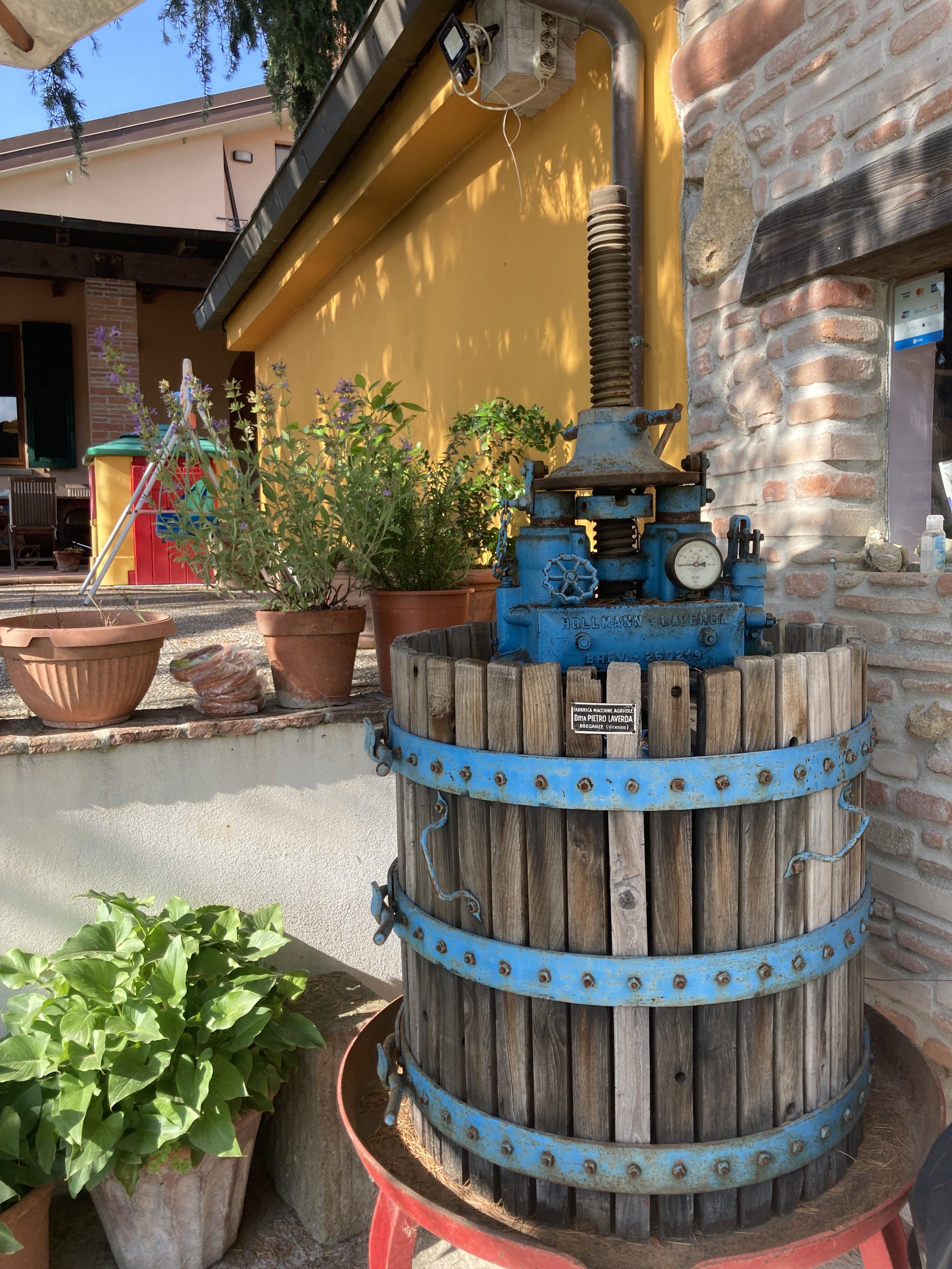
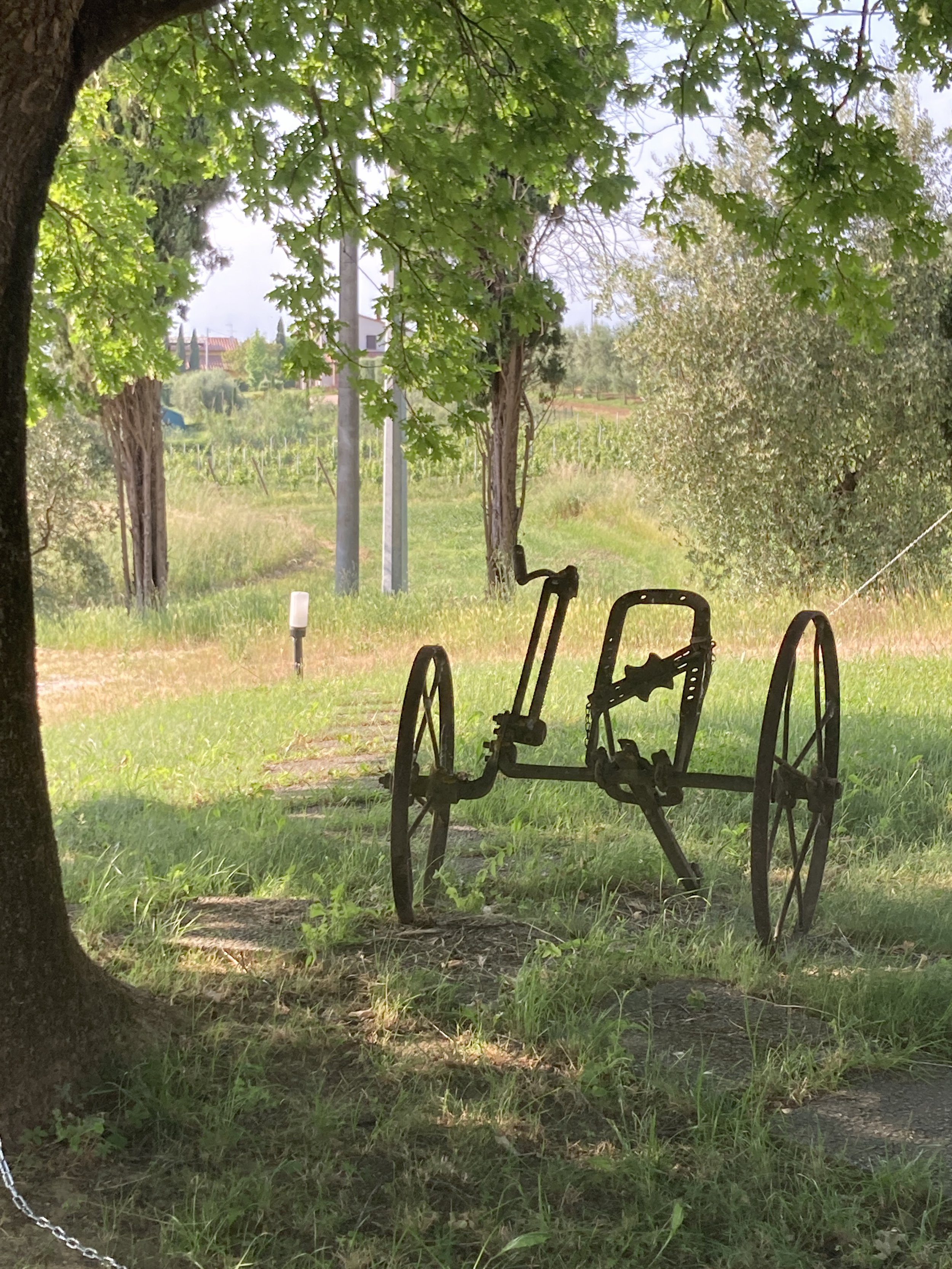
An old grape press at the Beconcini Vineyard

A Tuscan Grape Mystery

May 30, 2022 by Joanne Bartram in #italytravel, Tuscany, Wine

4 generations ago, around the year 1950, Pietro Beconcini began to work land he had purchased near the city of San Miniato in Tuscany. His land was located along the ancient Via Francigena, the route pilgrims, from England, France, and Spain traveled to reach Rome. The importance of these passing pilgrims was likely not known to Beconcini at the time, but 4 generations later this has proved to be an important and most interesting fact. It has also contributed to a mystery.

The land Beconcini purchased was used to raise crops and animals. It also had some very old grape vines which were tended along with other crops.

Later generations of the family moved away from tending crops and instead turned their attention to those grapevines. Today the Pietro Beconcini Vineyard, now run by Leonardo Beconcini and Eva Bellagamba, produces several grape varieties and some very, very good wine.

Ah - but there is that mystery. A bit of a twist.

Some of those very old vines, at least 100 years old and perhaps as much as 900 years old, looked a bit strange. Unlike the other more typical vines of Sangiovese grapes grown throughout Tuscany, this vine was a mystery. They called the vines “X” for unknown.

Fast forward to modern viticulture and the ability to identify the genetic origins of grapes. It turns out these grape vines are actually Tempranillo. Tempranillo? Isn’t that a Spanish grape?

Let’s back up to those pilgrims walking the Via Francigena. Many came through Spain along the Santiago di Compostola. Those pilgrims likely carried grape seeds (not cuttings which would have been too hard to transport) some of which ended up in this very vineyard. The exact way that happened is unknown. Did clerics tending vineyards in the area plant them? Were they used in trade? Did some unlucky pilgrim spill them? This remains a mystery. But the production in the modern day Beconcini vineyard is now 30% Tempranillo. The Tempranillo grapes have of course changed a bit over time due to evolution and the unique terroir of this region which is rich in fossils and minerals.

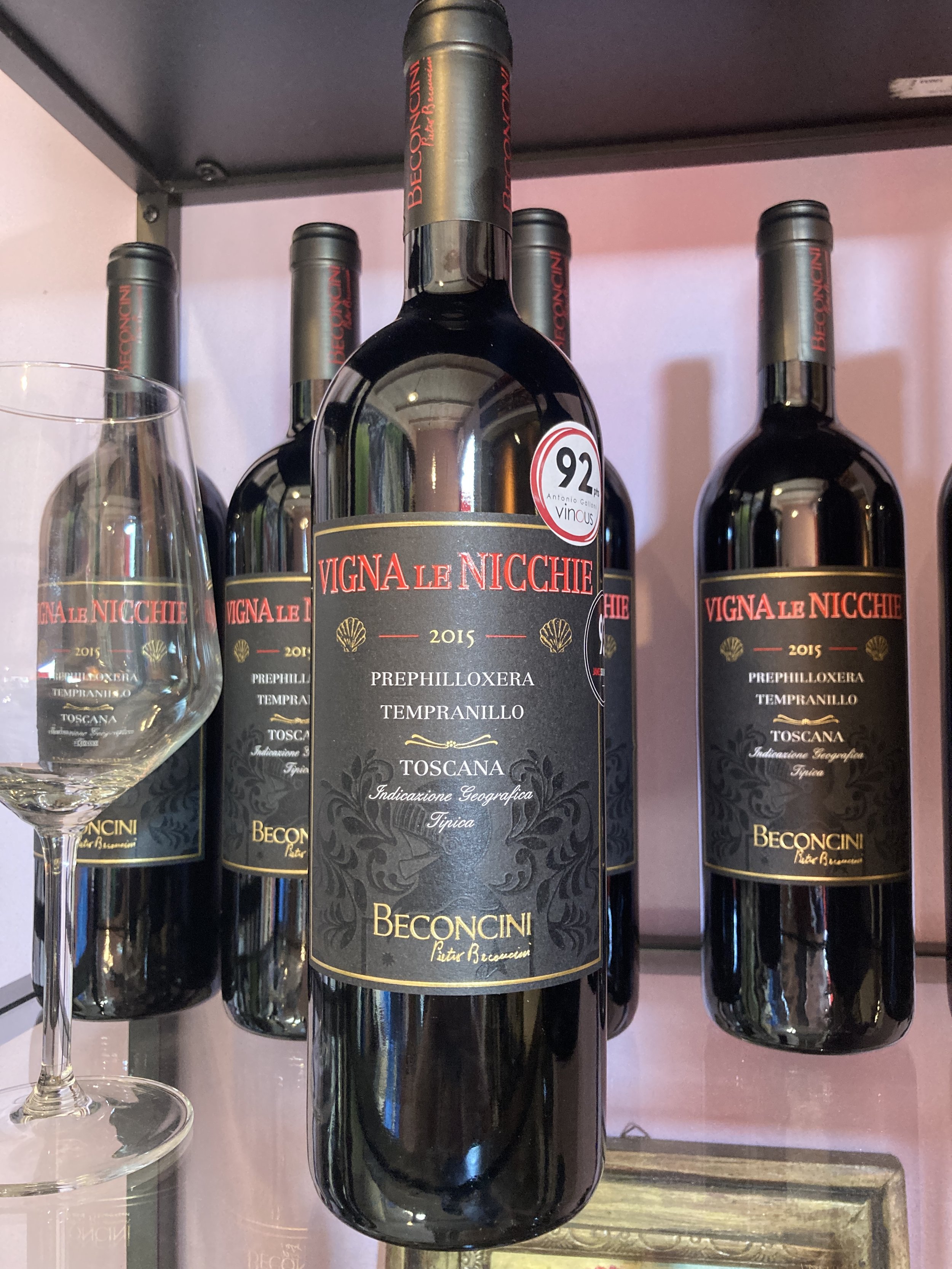
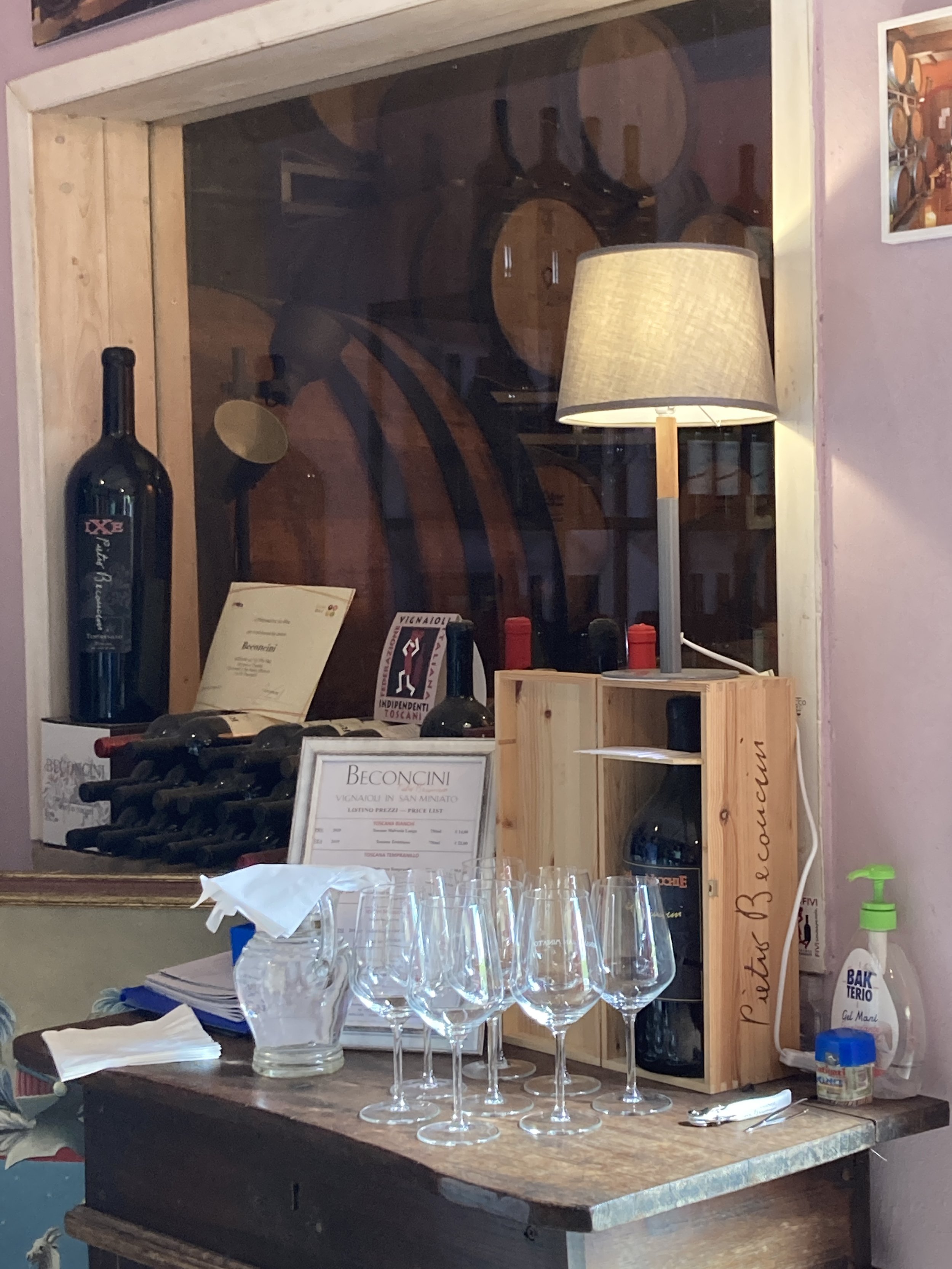
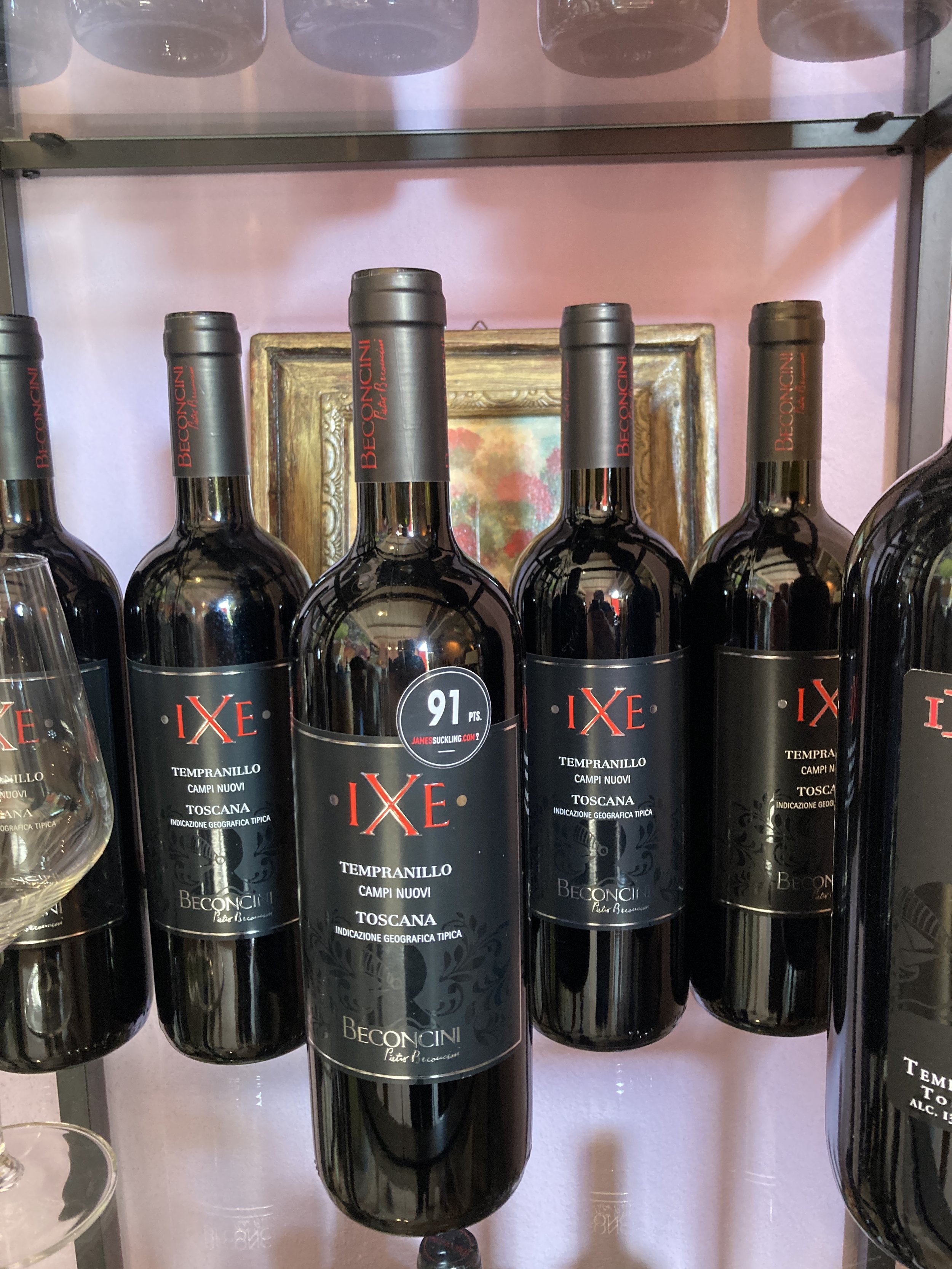
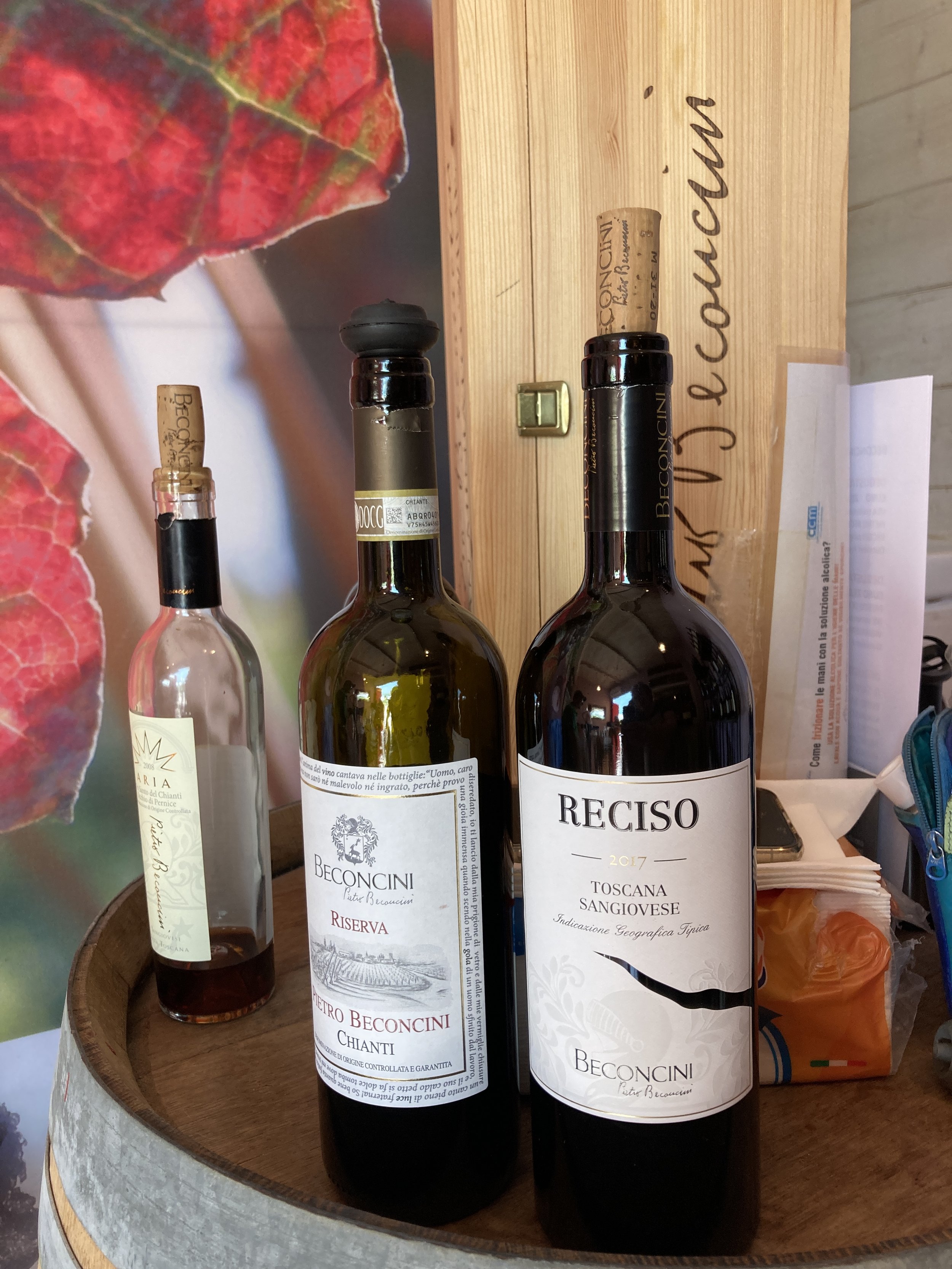
I visited the Agricola Pietro Beconcini last week, along with a group of friends, for an afternoon of wine tasting. Definitely a family operation, Leonardo and Eva welcomed us, provided some of the history I have recounted here, and poured some of their wines. We tasted 3 wines made from Tempranillo grapes - a rosé and two 100% Tempranillo wines, the iXe and the Vigna Le Nicchie. The later comes from the oldest vines, those very hardy 100+ year old ones, vines that survived phylloxera. The flavors are a bit different than a Spanish Tempranillo, both due to the terroir here and to the way in which they are produced (less time in wood barrels, beginning fermentation in cement vats). Not being anything close to a wine expert, I would find it hard to describe the difference - perhaps a bit lighter, less intense than a Spanish wine. Both were good, the Vigna Le Nicchie was outstanding. Picture me carting home a bottle and wishing I could carry a case.

03105A6F-17B4-45DB-ABC9-AE67F625EB13.jpeg
DD8FD299-B808-4BFA-A57C-ADAFF793E975.jpeg
2B2344B7-B0DE-47CB-9D85-AFB88CED34B6.jpeg

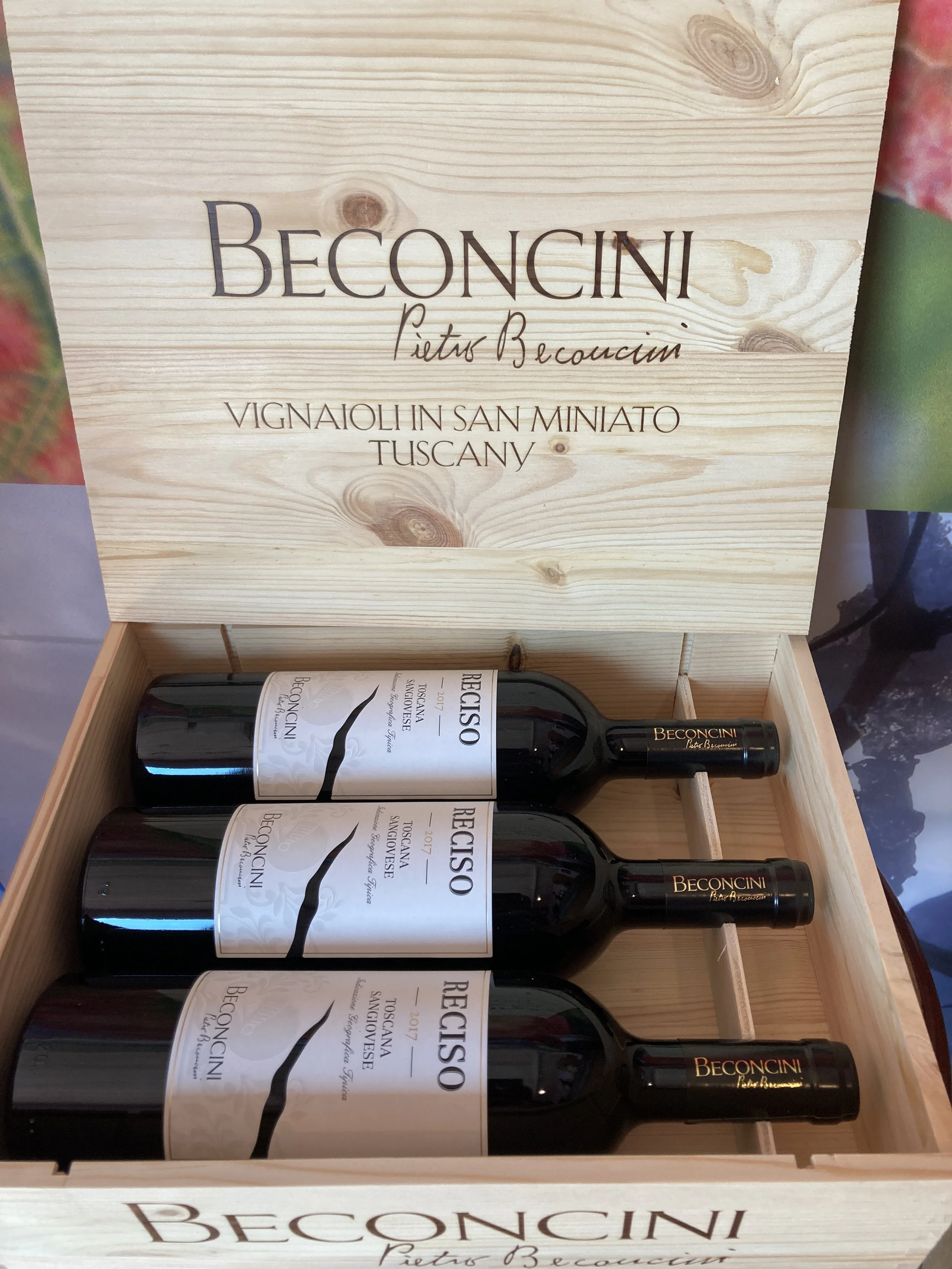
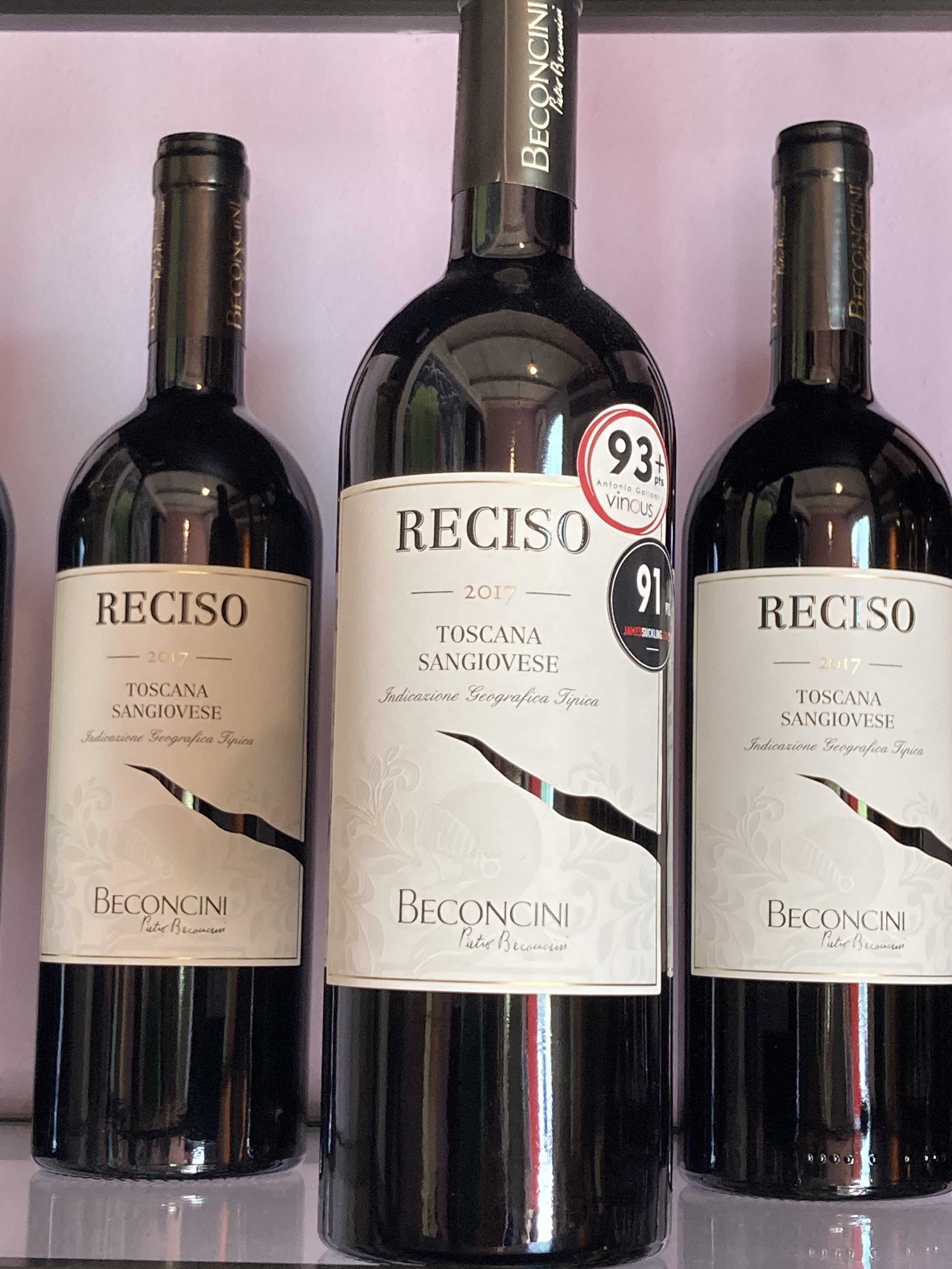
We also tasted a wine that was a 50/50 Sangiovese Malvasia blend (Maurleo) and one that was 100% Sangiovese (Reciso). The Recisco is the winery’s signature Sangiovese wine, the one that best represents the vines and their methods of production. Both were wonderful and a significant number of bottles accompanied our group back to Lucca. With this much wine tasting we were quite happy that we had arranged a driver to transport us to and from the winery!

76839201-D77D-48B3-84A3-943772D88788.jpeg
A384E776-954F-4A98-B3E5-ED028879F493.jpeg
4D6337BF-0B58-48F1-BEED-F6C3208F16D8.jpeg

We arrived back to Lucca happy with our day of wine tasting and pleased to have learned about the mystery and delight of Tuscan Tempranillo. We are looking forward to the Tempranillo Festival in San Miniato which takes place the first weekend in September. Ci vediamo lì ! (see you there)

May 30, 2022 /Joanne Bartram
Beconcini wine, Tuscan Tempranillo, San Miniato, Italian Wine, Wine Tasting Tuscany
#italytravel, Tuscany, Wine

Spring in Pietrasanta: Art, Philosophy, and Giraffes

May 16, 2022 by Joanne Bartram in #lucca, Italian art architecture, Italian culture, Italy travel, Italy, Tuscany

Pietrasanta has everything a small town in Italy should have - beautiful scenery, a lively main piazza, historic buildings and statues, a lovely church, cafes, and good food. And art. It is the art that draws me back time after time.

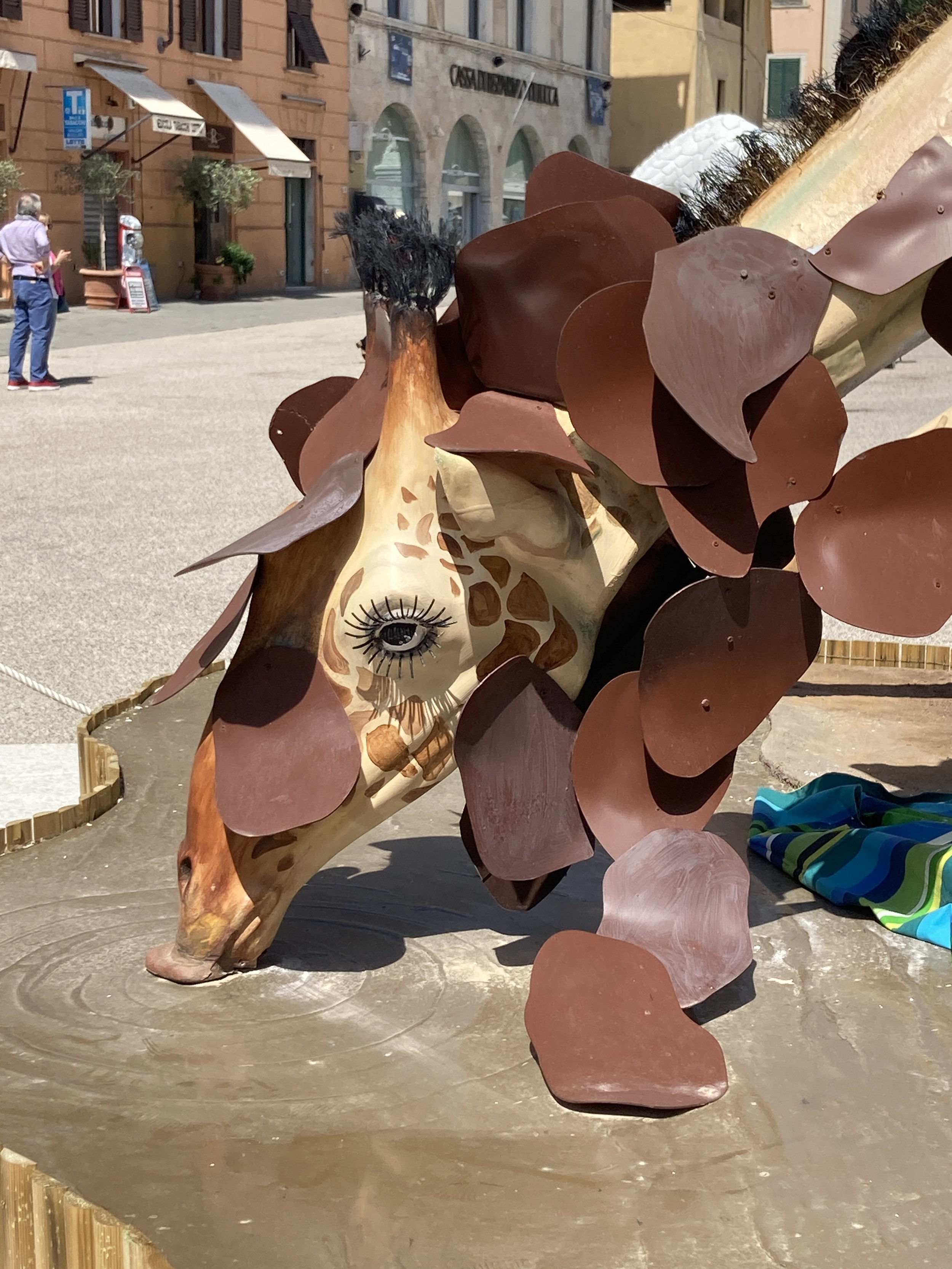
One of many whimsical giraffes that can be seen throughout Pietrasanta this month.

Visiting is easy as it is just an hour-long train ride from my home in Lucca. Unless of course, as in my most recent visit, there is an interruption on the tracks, train delays, an extra change of trains, a track in a tiny station with no signage, and you hop on the wrong train and have to double back. But don’t let that discourage you! My friend and I laughed it off and eventually arrived to spend a lovely day in Pietrasanta.

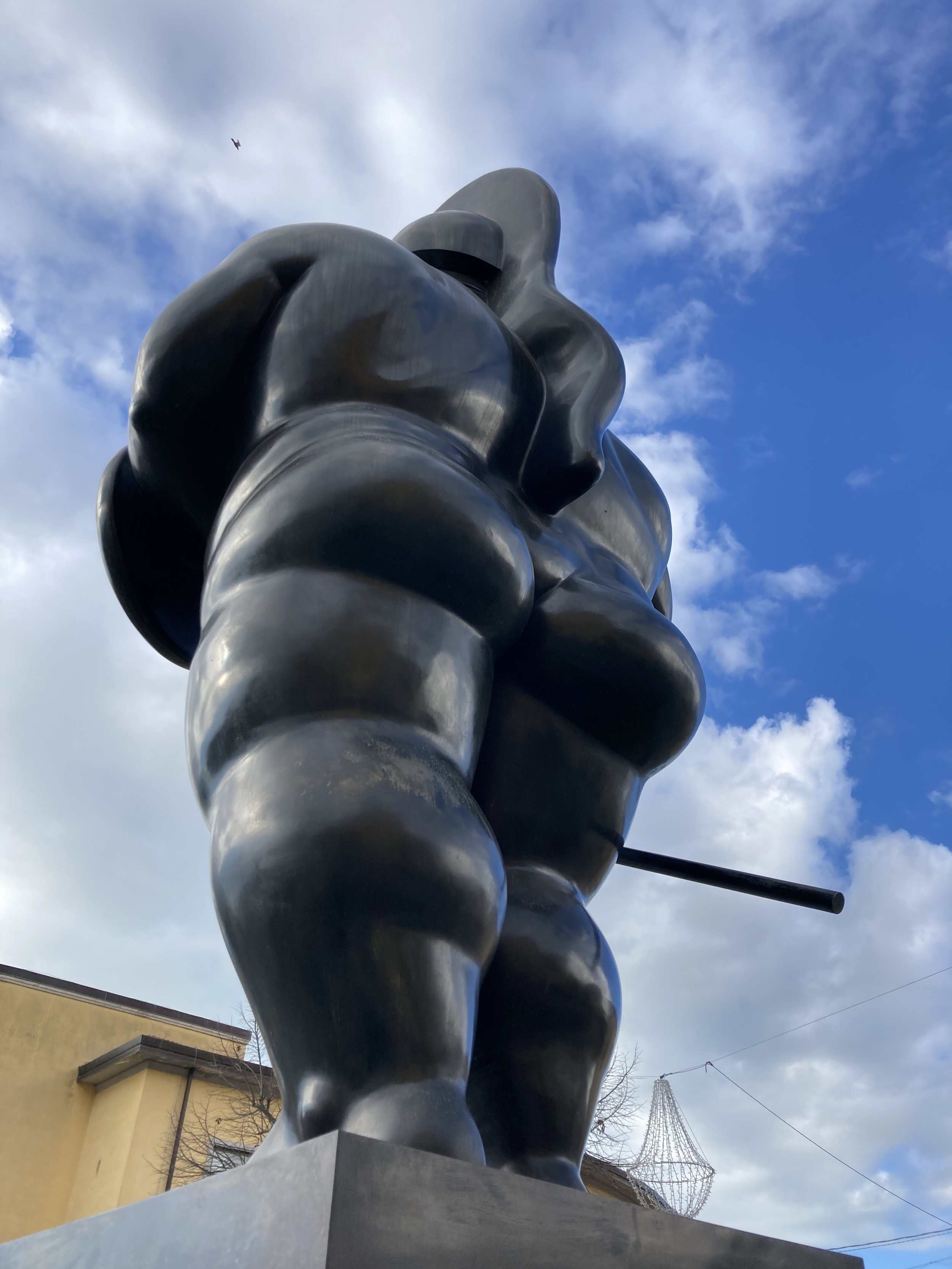
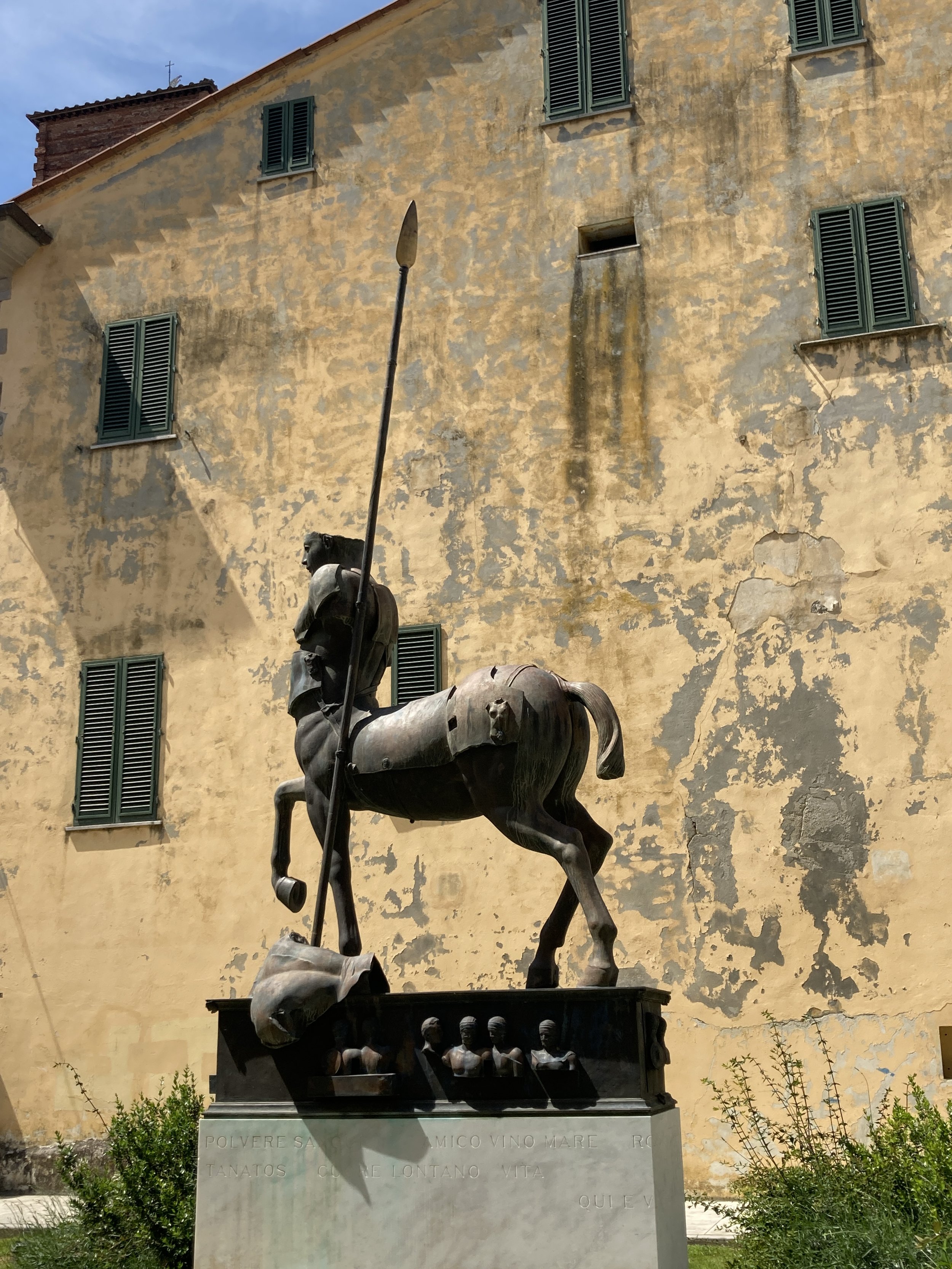
Famous as a center of sculpture (the marble quarries of Carrara are nearby), the town has permanent outdoor installations of bronze and marble sculptures, from smaller pieces to Botero’s massive bronze warrior (below).

CC1D846C-D0C6-4EB9-98AD-96C87DFFC193_1_201_a.jpeg
5853D5E2-CBB7-4A7E-9C0E-F90E3295F19A.jpeg
C95C05B5-2B06-4416-84BA-41EE353B441E.jpeg

In addition to these permanent works, Pietrasanta hosts temporary exhibits which fill the main piazza and nearby spaces (as well as some indoor spots) with an ever-changing display of works by contemporary artists.

The current exhibit, in place until June 5th, features the artistry of Sandro Gorra. Gorra’s background is in commercial art where he worked as an illustrator and creative director for advertising campaigns. That was his work. Today, he concentrates on his art which includes sculpture, illustrations, and a sort of philosophical short poetry which accompanies his works. And then there are his giraffes.

Gorra says that this piece, made from 4 tons of marble, is one of his favorites. A loving mother giraffe tending to her baby.

Why giraffes? According to a published interview with Gorra, the giraffes serve as a parable, representing man’s desire for superiority. A giraffe towers above, looking down on everyone. Each one is unique in his spotted form.

This begs the question - without those spots, what would the giraffe be? Anonymous! Naked!

Change - a predictable part of life - in progress.

Change is inevitable and the spots on Gorra’s giraffes do indeed change. They fade away, they fall off, new ones appear. In fact, during my visit, two men, one looking suspiciously like the artist himself (or was that just my imagination?) were busy painting new spots on two of the giraffes. This would be consistent with Gorra’s view that change is to be expected and that irony is a part of the human (and giraffe) condition.

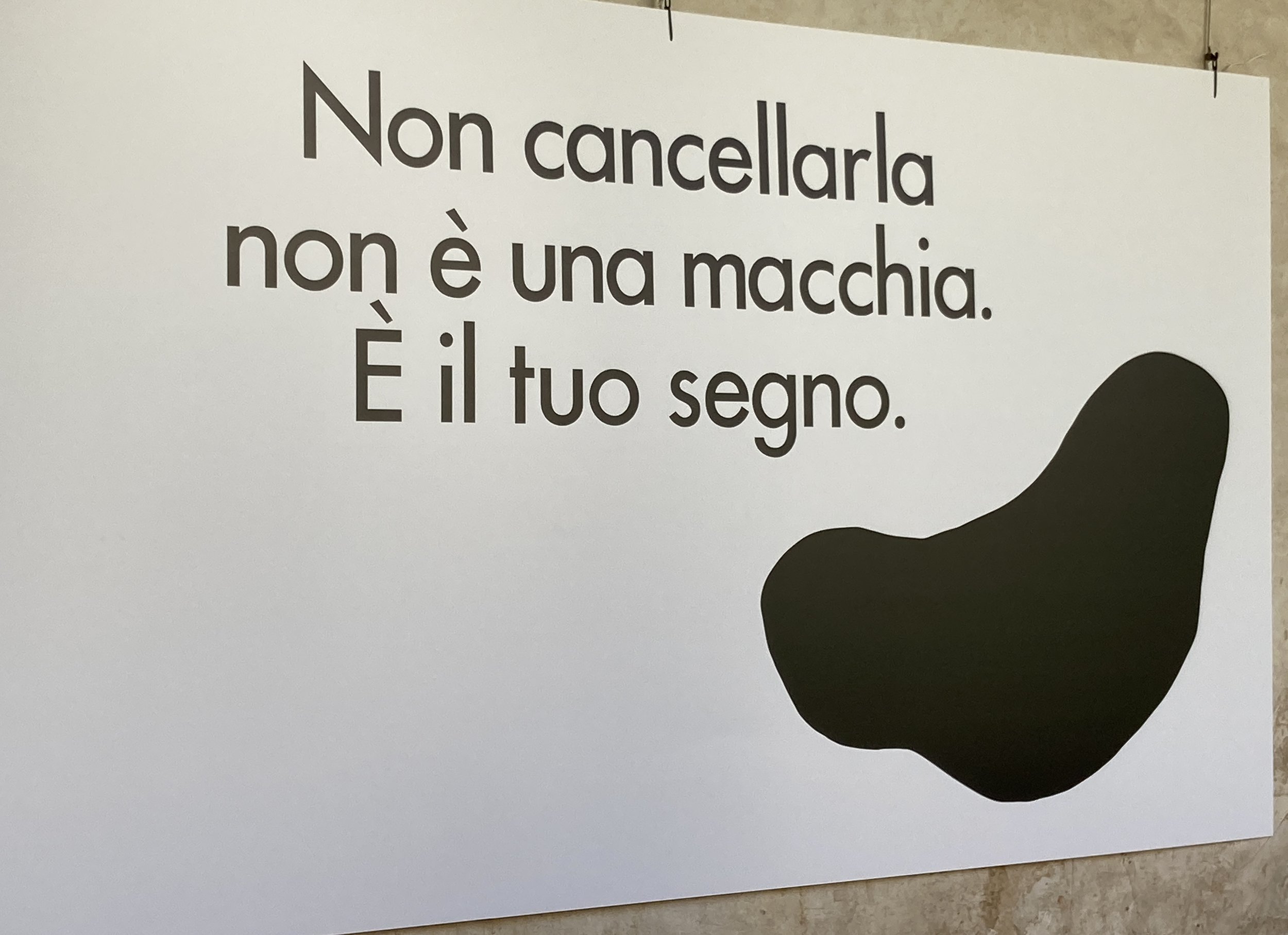
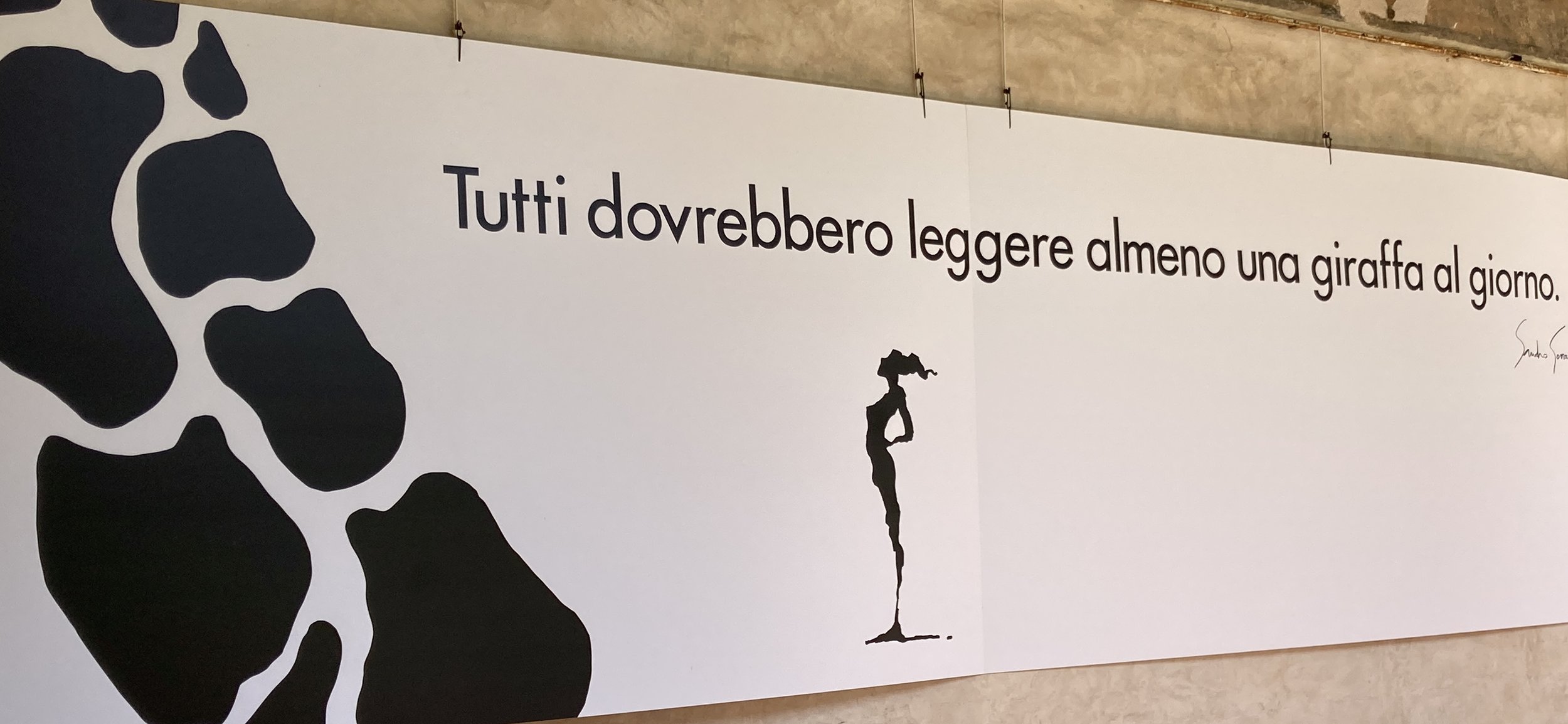
Alongside the works of art are illustrated phrases, providing an intriguing look into the artist’s mind and bits of his philosophy. I enjoyed these sprigs of wisdom just as much as the sculptures. Both made me smile, both made me think. Isn’t that the best part of art?

Here are some examples (any mistakes in translation are entirely my fault).

Don’t erase it, it is not a stain. It is your sign.

Ideas are always around, but if you don’t notice them they go away

And my favorite one of all - it just may become my personal mantra:

Everyone should read at least one giraffe a day.

A day in Pietrasanta is always a joy. Sipping a cafe in the Piazza del Duomo. Strolling through the piazza and the Chiostro di Sant’Agostino. A quick visit to the beautiful Duomo. Wandering the side streets. A quick stop at the Misericordia Chapel to see Botero’s Heaven and Hell frescoes. A relaxed lunch at a favorite spot. Add in Gorra’s giraffes and the day is just perfect!

May 16, 2022 /Joanne Bartram
Pietrasanta, Sandro Gorra, Contemporary Italian Art, #italy, #artitaly, #sandrogorra
#lucca, Italian art architecture, Italian culture, Italy travel, Italy, Tuscany
  • Newer
  • Older

Powered by Squarespace