Two Parts Italy

Exploring Italy, travel, and living a flavorful life

  • Blog
  • About This Blog
  • Start Here
  • Recent Posts
  • Archives by Topic
  • Subscribe
  • Contact me
Pienza, as seen from a distance.  The bell tower of the church rises above the town (scaffolding in place as it is being restored). The smaller tower is a clocktower.

Pienza, as seen from a distance. The bell tower of the church rises above the town (scaffolding in place as it is being restored). The smaller tower is a clocktower.

Pienza - A Renaissance Jewel of a Town

January 11, 2021 by Joanne Bartram in Hill Towns Italy, Italian art architecture, Italy, Italy travel, Tuscany
This frescoed arch tops the entry gate in Pienza.  Note the marker saying it was destroyed in 1944 and restored in 1955.  Near the end of WW II, an RAF bomb hit Pienza (which was occupied by the German army), destroying buildings on this end of the …

This frescoed arch tops the entry gate in Pienza. Note the marker saying it was destroyed in 1944 and restored in 1955. Near the end of WW II, an RAF bomb hit Pienza (which was occupied by the German army), destroying buildings on this end of the city and killing 22 residents.

Now that the holidays are over, it is time to return to writing about the Val d’Orcia. Today - the city of Pienza. To really appreciate Pienza, a little history provides important context.

During the 15th and 16th centuries, the Italian Renaissance led Europe out of the Dark Ages. With a fresh look at classical Greek and Roman culture, and a hefty dose of humanistic philosophy, this was a period of great advances in science, art, literature, and economics.

One important figure during this time was Eneo Silvio Piccolomini, born in 1405 in the village of Corsignano near Siena. Eneo Piccolomini grew up to become Pope Pio (Pius) II. A true Renaissance man, he was a poet, historian, humanist, and - something I greatly appreciate - a proponent of urban planning based on Renaissance principles of beauty, proportion, and classical form.

As Pope, Piccolomini decided to restructure Corsignano, transforming it from a Medieval village into the ideal Renaissance city. The newly renamed Pienza (meaning the City of Pius - I guess he wasn’t a modest man) would serve as his summer residence, a respite from the Vatican. Working with the architect Bernardo Rossellino, the new town was designed to maximize the views from its hilltop position above the surrounding valley as well as to create a beautiful and harmonious atmosphere inside the city walls.

Pienza is situated high above the valley, with beautiful views.

Pienza is situated high above the valley, with beautiful views.

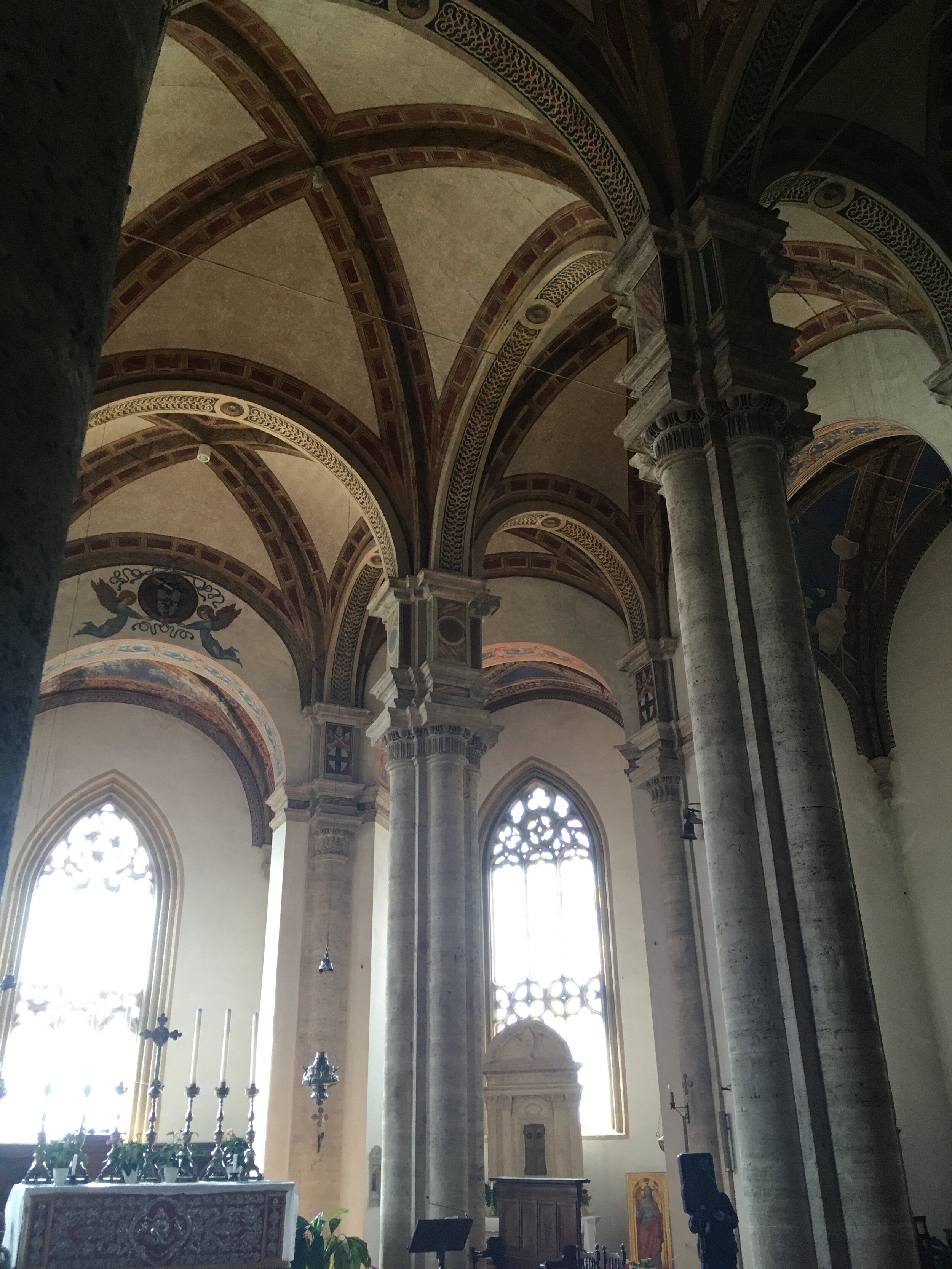
Today, the historic center of Pienza remains much as it was during Renaissance times. The central square, Piazza Pio II, is anchored by the duomo (cathedral). A modest size church, it makes a statement with gorgeous painted and arched ceilings and a central nave lined with massive stone pillars. The soaring bell tower guarantees that Pienza can be seen, sitting high on the hill top, from across the valley.
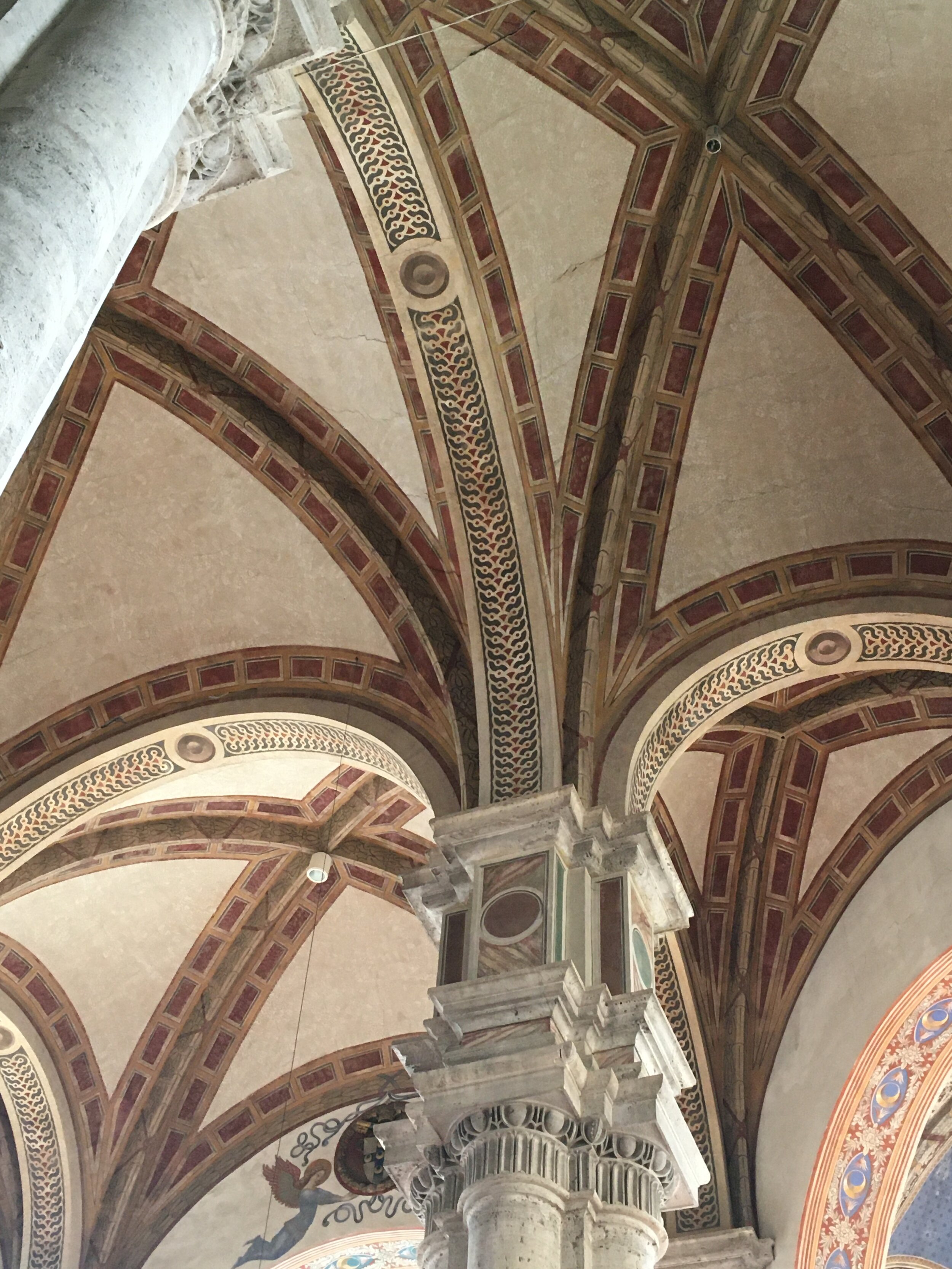
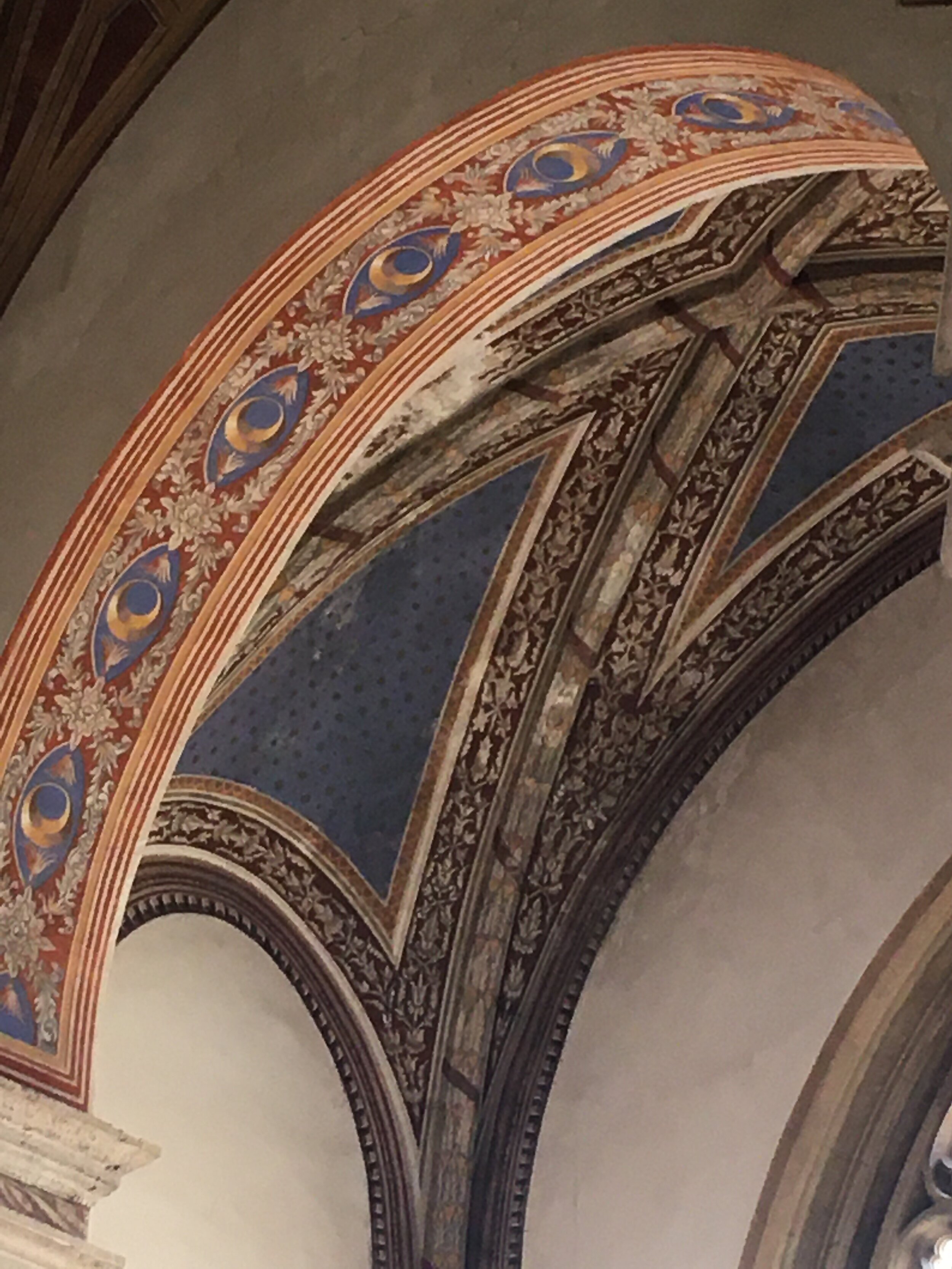
IMG_3320.JPG
IMG_3319.JPG
IMG_3313.JPG

On one side of the church is the Piccolomini Palace, once home to Pope Pio II. This is a beautiful building with an inner courtyard surrounded by an arched loggia. The rear of the palace has 3 levels of terrace overlooking gardens and the valley - it’s a “can’t miss” place for the spectacular views. The palace is open for tours and also has a wonderful small gift shop. Opposite the Piccolomini Palace is a second palace, the Palazzo Vescovile, now a museum. These buildings, along with the duomo, frame three sides of Piazza Pio.
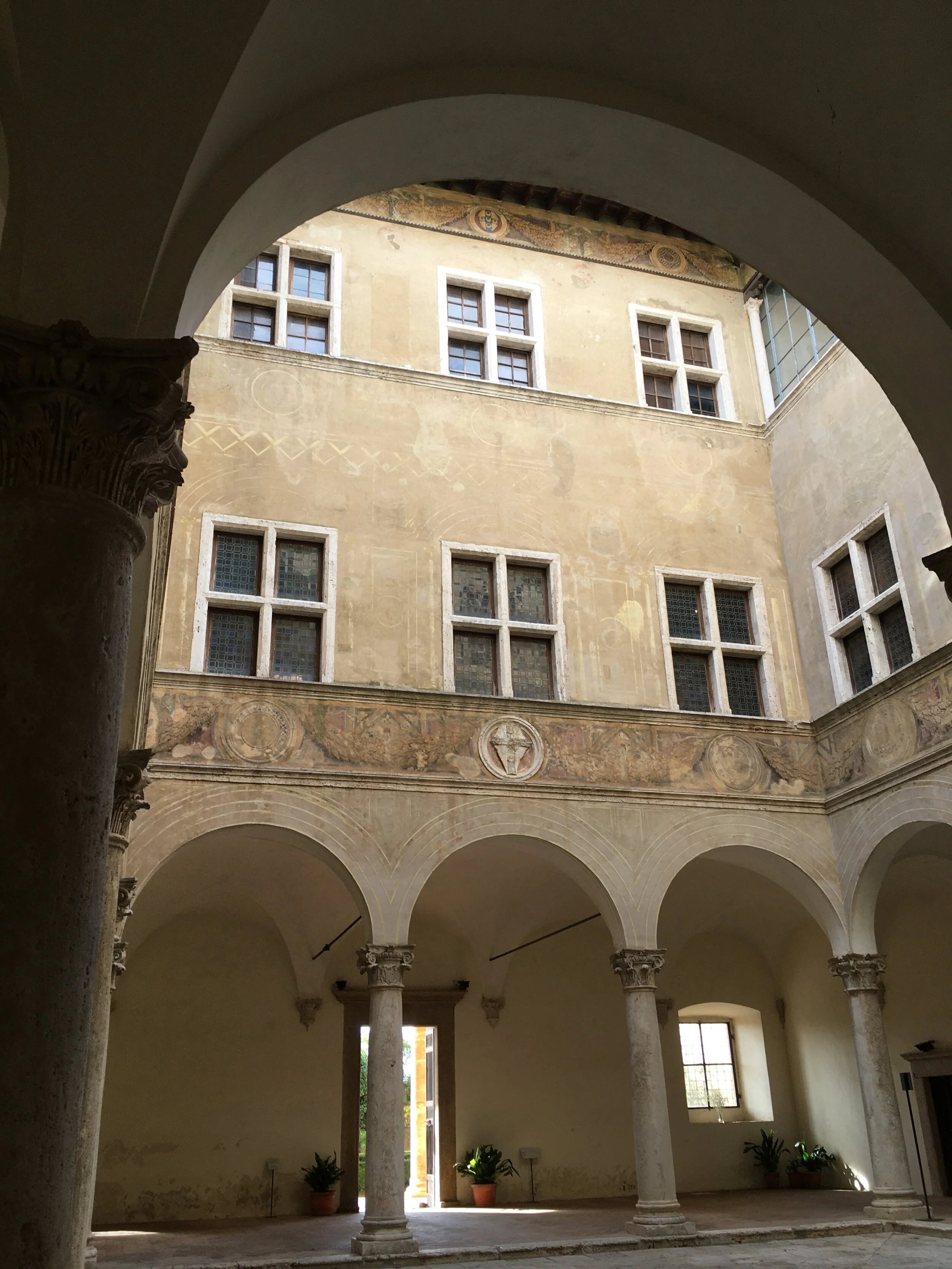
The interior courtyard of the Piccolomini Palace

The interior courtyard of the Piccolomini Palace

The final anchor in the piazza is the Palazzo Comunale, a civic building. Small in size, the building has a beautiful loggia complete with historic markers and faded emblems as well as a clock tower. A stop for coffee at the nearby Caffe la Posta, provides an opportunity to sit and imagine this piazza as it must have been in the time of Pope Pio II while simultaneously experiencing a small slice of life in modern day Pienza (and a really good cappuccino).

Clocktower of Palazzo Comunale, Pienza

Clocktower of Palazzo Comunale, Pienza

IMG_3703.JPG

Pienza is not just a place of history. It is also a vibrant small community and one of the prettiest villages I have ever seen.

There is one main street, Corso Rossellino, lined with shops and cafes, and several smaller, charming side streets. As a plus, Pienza sits atop a flat mesa rather than a steep hill which makes for easy walking. For shoppers, Pienza is a treat. There are several shops selling local products, including its most famous product, Pecorino cheese. Just follow your nose and you can’t miss them!

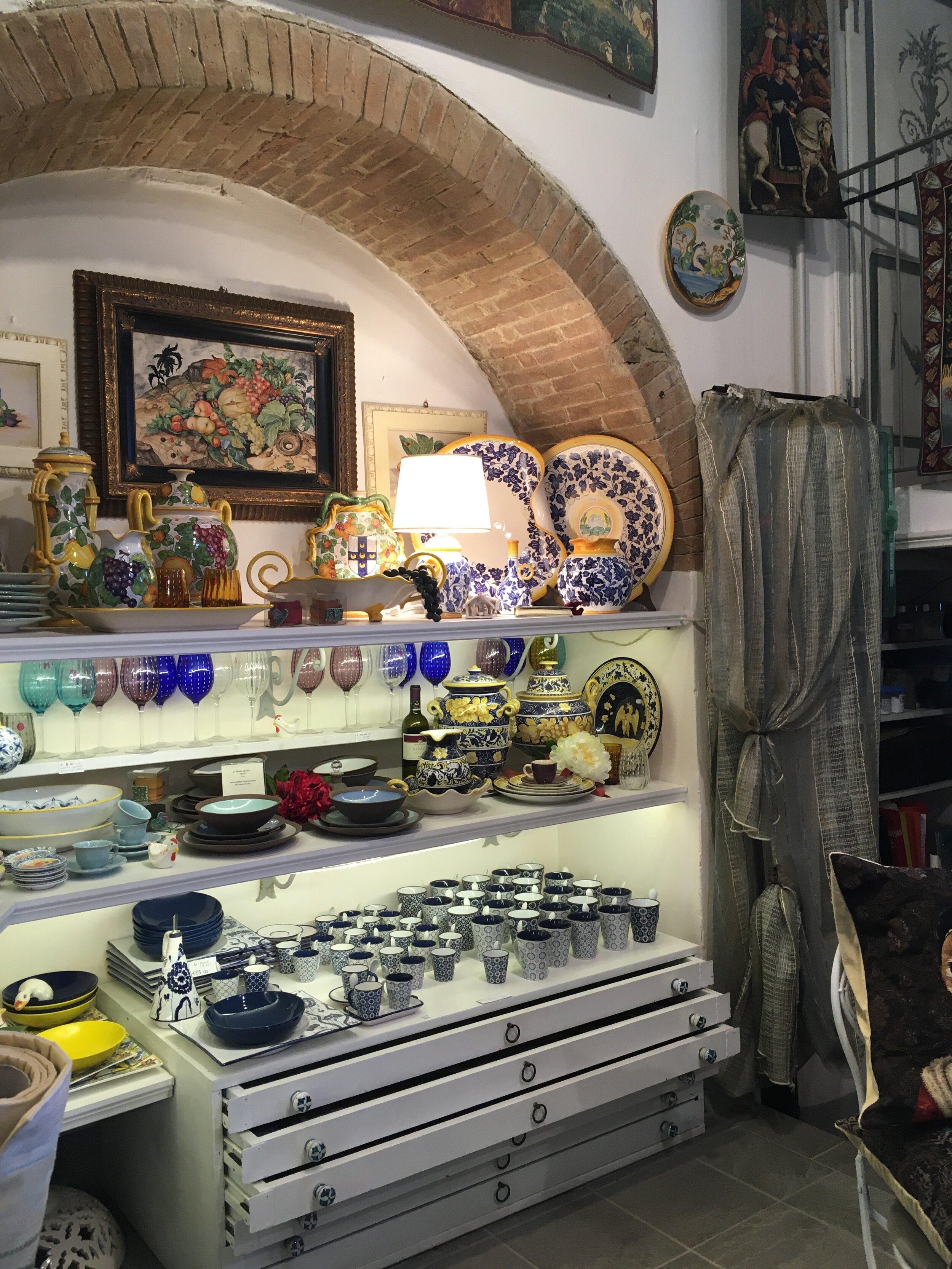
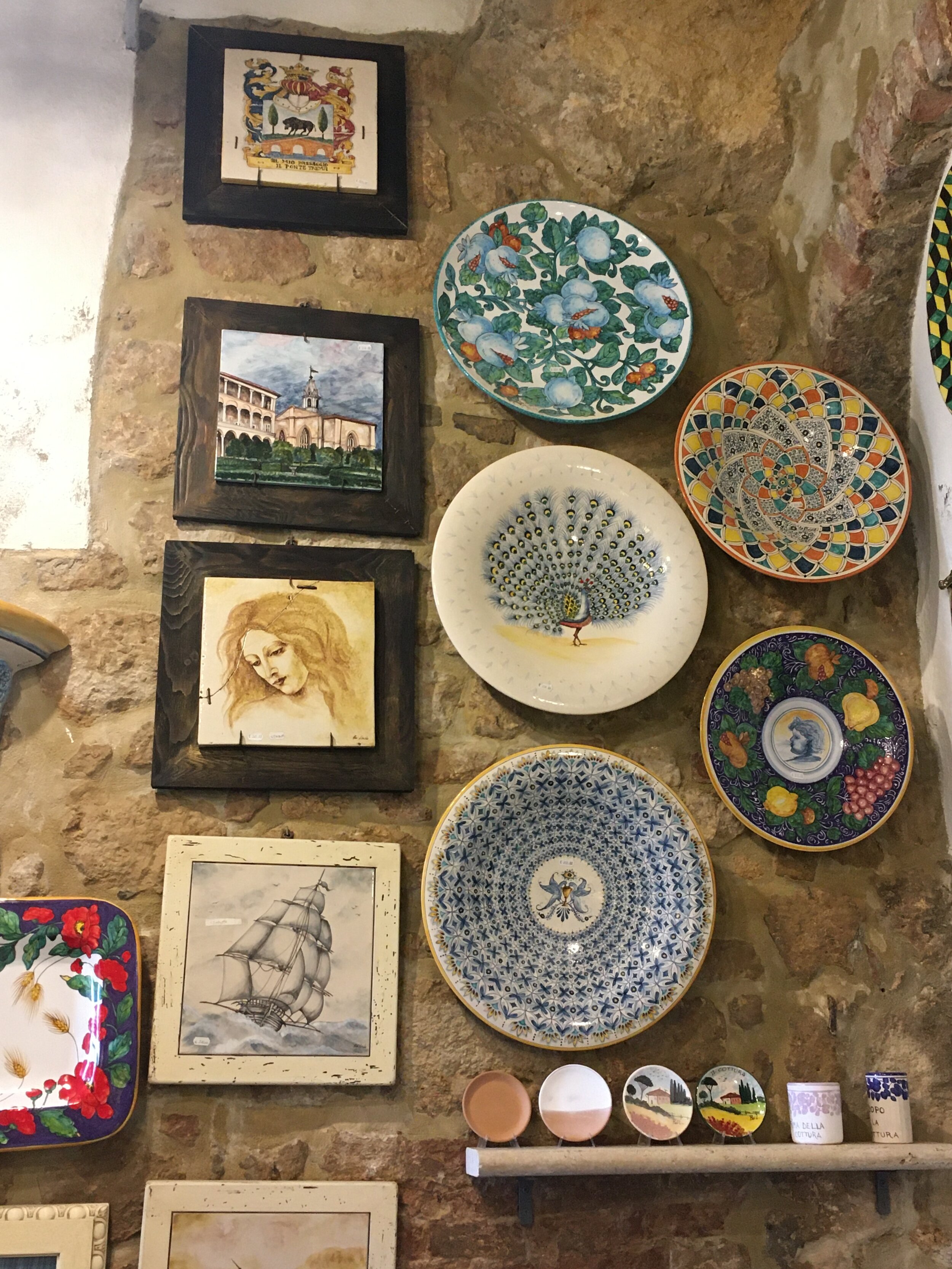
Pienza is a great place to buy artisanal crafts including art work and ceramics. My favorite shop - the sign at the door says Bai Laboratorio Ceramica (officially it’s called Ceramiche d’Arte Bai Linda) - is a bit off Corso Rossellino at Via Gozzante 33. The shop is built into an Etruscan cave, the beautiful ceramics are made and painted on site (you might even get a glimpse of the artist at work in her studio), and the husband and wife owners are warm and friendly. On the day I visited they were about to host a workshop on-line because the pandemic had cancelled the in-person visit of an American group. At the end of my visit they gave me a painted ceramic magnet, a wonderful souvenir which now sits above my stove and reminds me to plan a return visit ASAP. This is exactly the type of small, local artisan’s shop that I like to support.
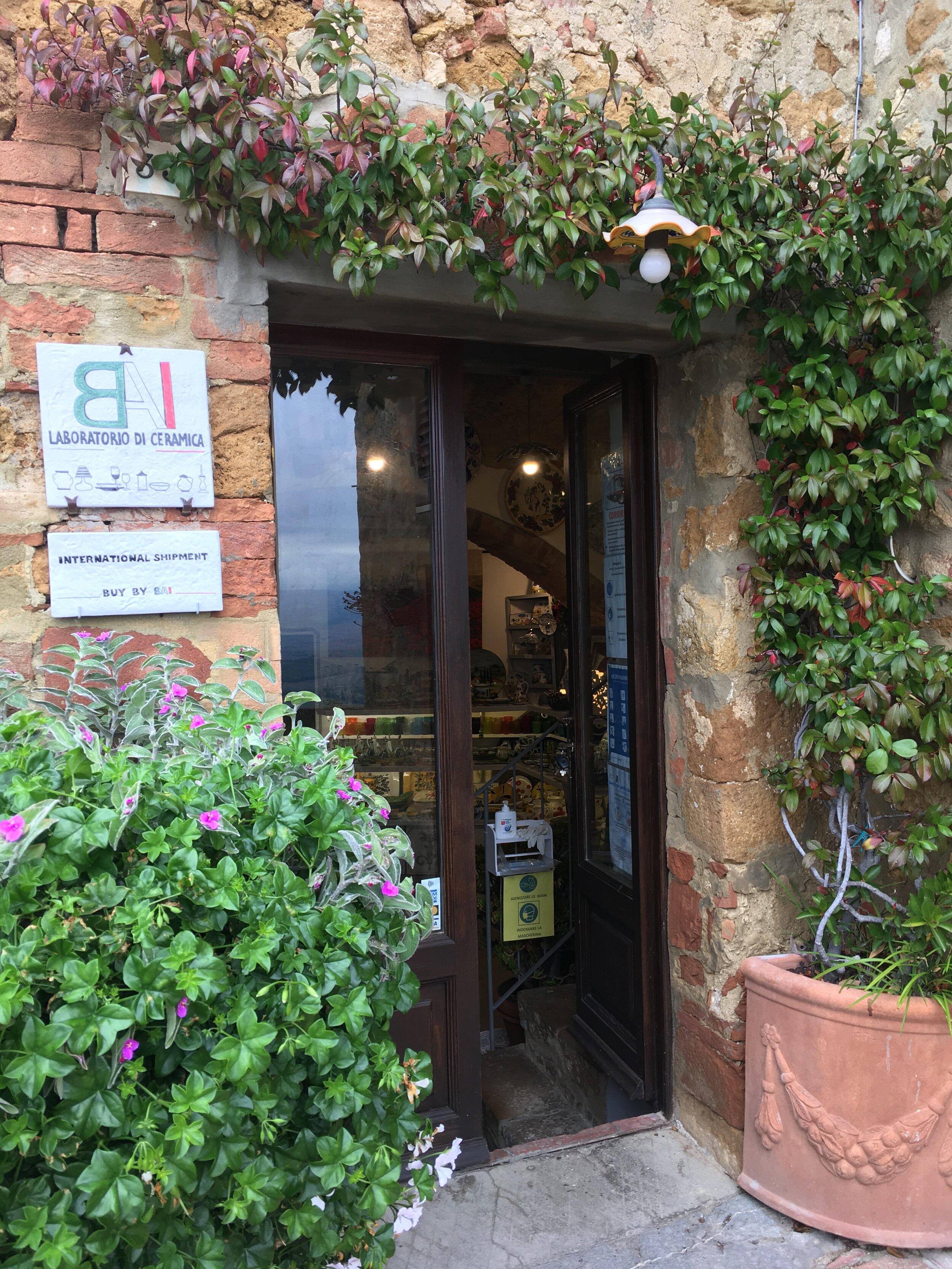
IMG_3690.JPG
IMG_3687.JPG
IMG_3685.JPG

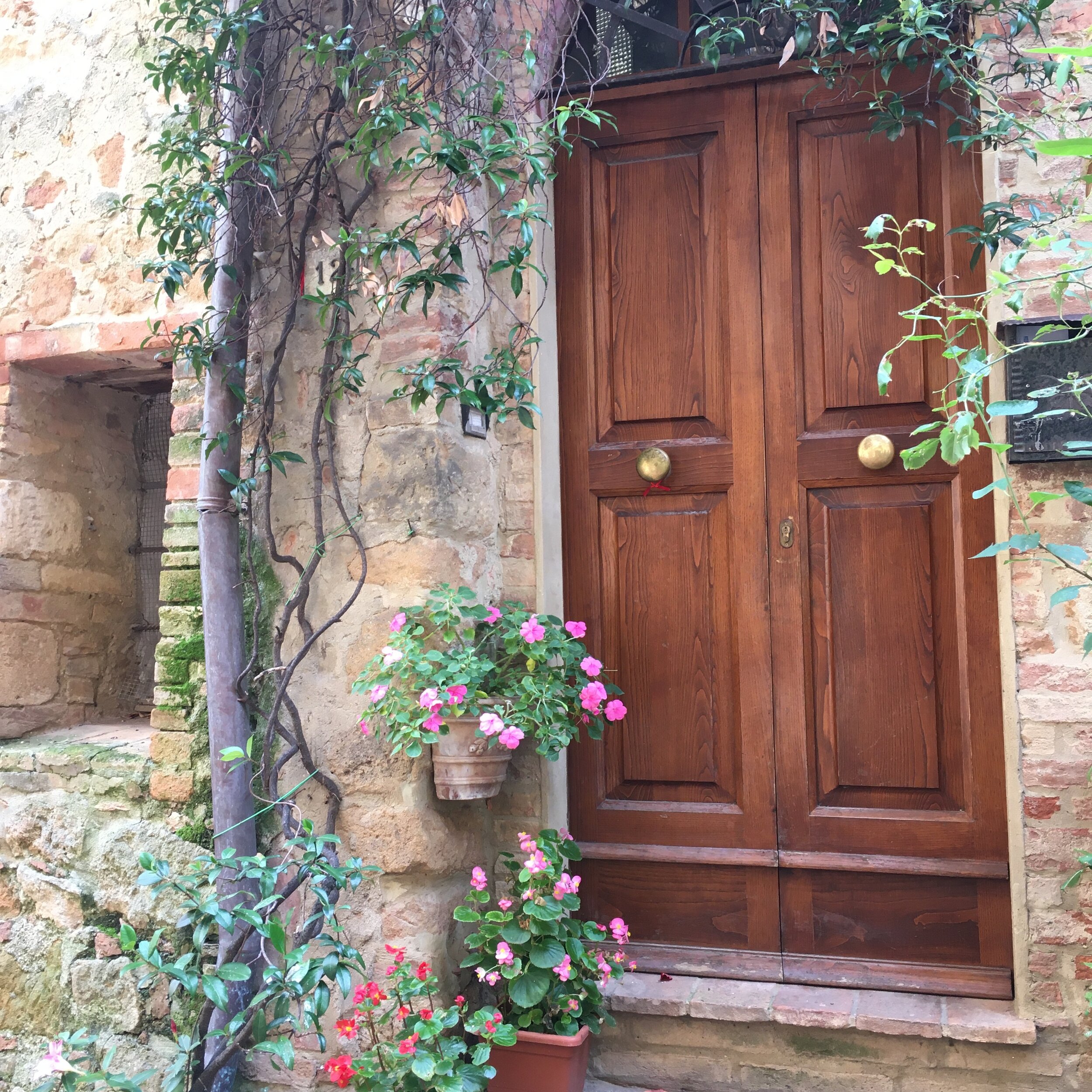
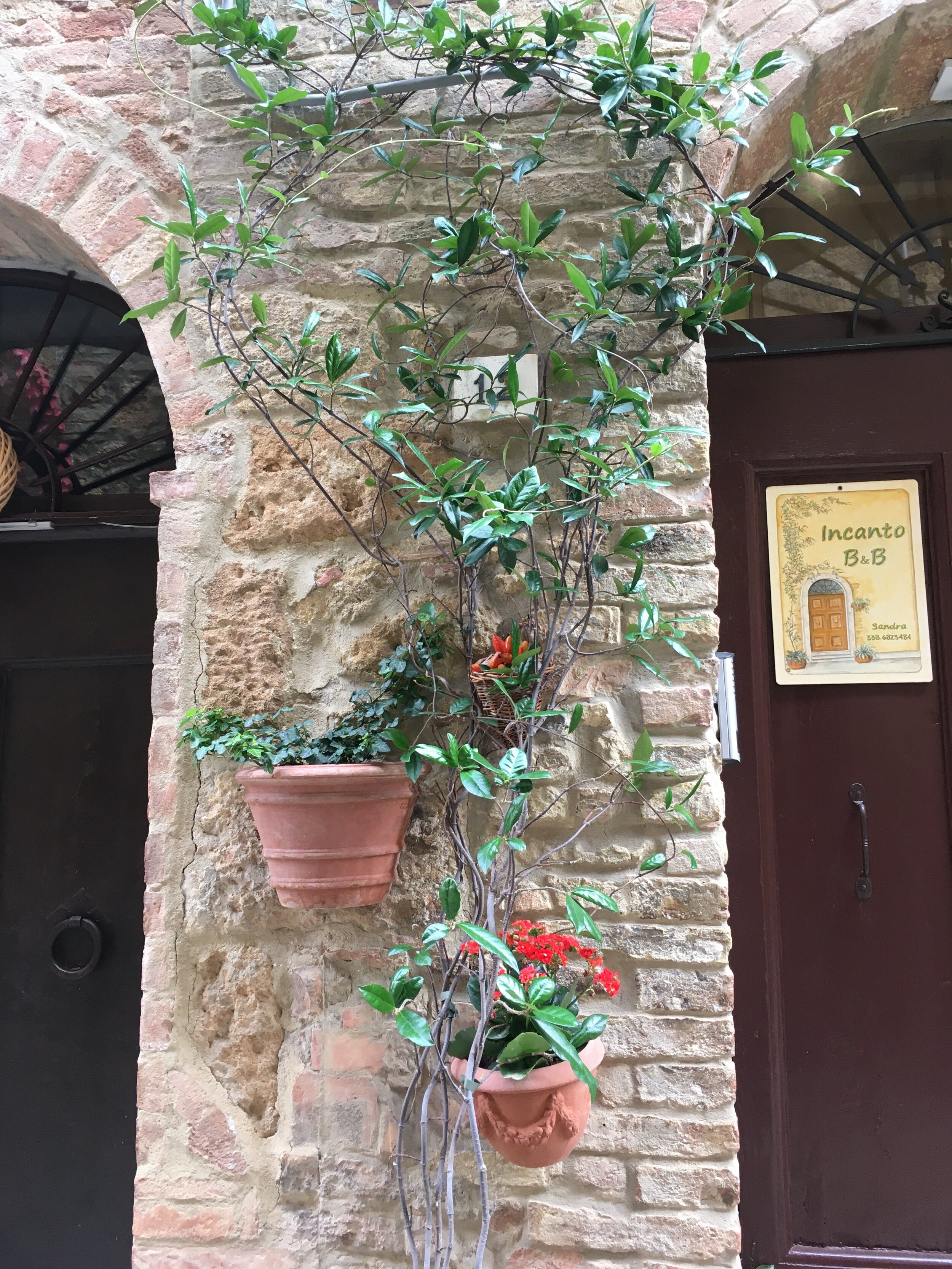
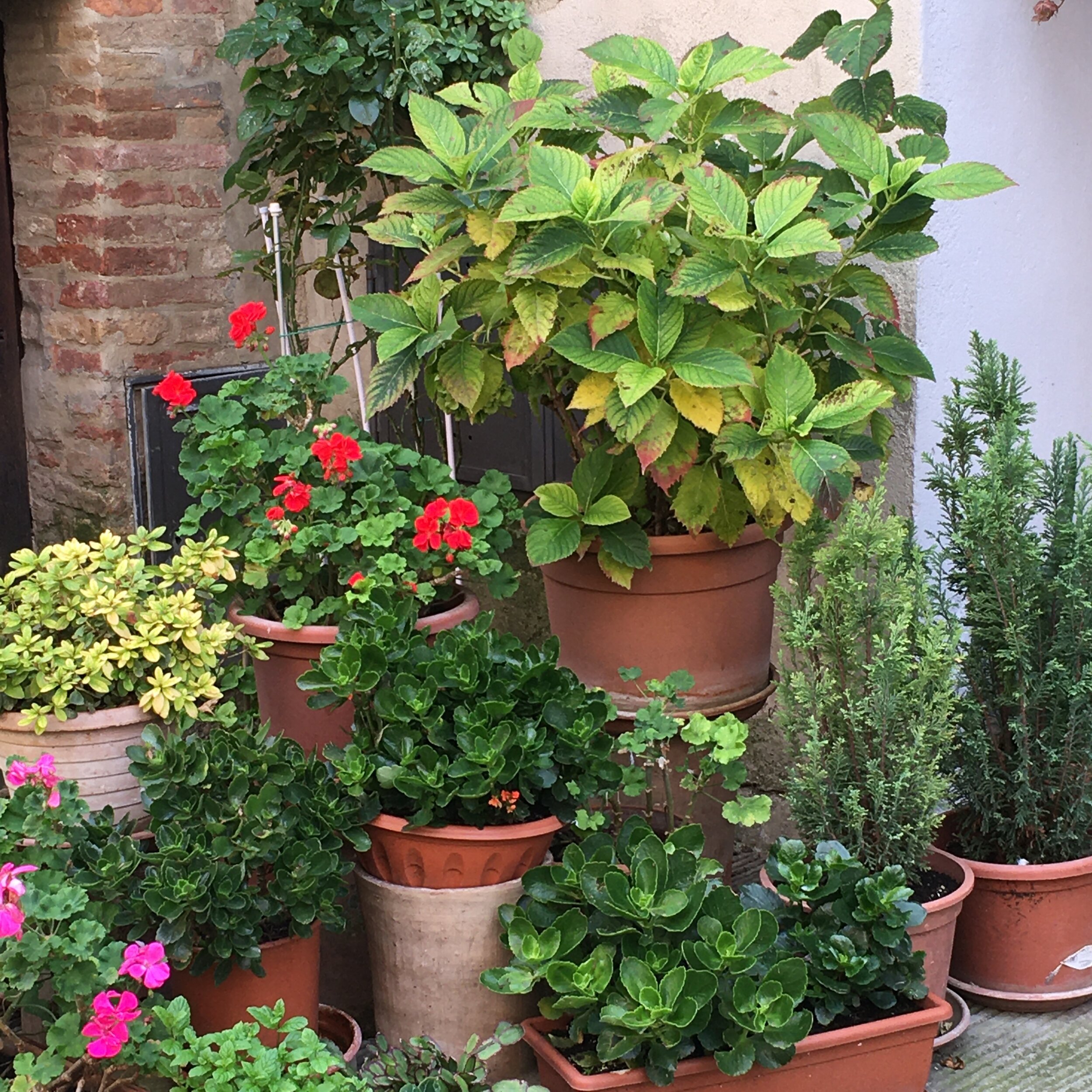
Much of the pretty in Pienza comes from the homes found on the smaller streets. They are immaculate townhomes made of stone with pretty wooden doors and ceramic house numbers. There are vines climbing the stone walls and flowers spilling from window boxes, steps, and railings. With such beautiful surroundings, it is easy to imagine living here.
IMG_3339.JPG
IMG_3384.JPG
IMG_3370.JPG

Pienza is one of my favorite places to visit. The village is small but full of life, the surrounding countryside is peaceful and spectacularly gorgeous, the food is wonderful (I can still taste the delicate lemon pasta I had at La Bandita Townhouse), the people are friendly and welcoming, and the artisan workshops delightful. And, just outside of Pienza (a 10 minute drive), is the wonderful Agriturismo Cretaiole, which provides the perfect home base for exploring Pienza and the surrounding areas. Staying there makes any trip magical.

Agriturismo Cretaiole, a wonderful home base for exploring Pienza and the whole of the Val d’Orcia

Agriturismo Cretaiole, a wonderful home base for exploring Pienza and the whole of the Val d’Orcia

January 11, 2021 /Joanne Bartram
Pienza, Renaissance Italy, Val d'Orcia
Hill Towns Italy, Italian art architecture, Italy, Italy travel, Tuscany
A cold morning, along the walls of Lucca, December 2020

A cold morning, along the walls of Lucca, December 2020

Looking Back on 2020 in Italy

January 04, 2021 by Judy Giannnettino

What a difference a year makes.  This time last year I was enjoying a few days in Rome and preparing for a trip to Venice for Carnevale.  By the time I left Venice in early February, the remainder of Carnevale had been cancelled and (though we didn’t realize it at the time) for the rest of 2020 nearly every other cultural event and festival would suffer the same fate. The virus had arrived and life in Italy (and around the world) was fundamentally changed.  As 2020 ends and a new year begins, I find myself looking back and looking inward to the things that have been essential this year and those that simply ceased to matter, to the things I missed most, and the people who made life joyful even in the most challenging of times. 

Rome, January 2020

Rome, January 2020

My essential list begins with people and connections. Messages from friends in the US and beyond, Zoom apperitivos, daily check-ins with friends living here – all made a difference in coping with the isolation of that first lockdown and the months that followed.

My small “bubble” of friends, the ones I’ve been able to see in person when the rules allowed (and the ones I “accidentally” met at the trash bins or in the line for groceries during the height of restrictions) were essential to both spirit and sanity. Not to mention the ones who stopped by periodically to ring my bell and wave from across the street or to drop off a treat from their kitchen. They are my community and they are the best.  Other essentials during this time have been the things that filled time, and engaged my mind, during the lockdown: books, music, writing, cooking (yes, I even did the sourdough thing), puzzles, a pretty view from my window, and Face Time chats with my family. The occasional binge-watch of a good TV series was important too.

In the summer, and again in the fall, restrictions were “softer” and it became possible to visit different cities within one’s home region (Tuscany for me). The short trips I made provided a dose of freedom and a burst of joy. Little outings, mask and hand sanitizer at the ready, were wonderful. A week in south central Tuscany was a gift that will see me through the first months of 2021. Simply sitting an an outdoor cafe and sipping a coffee in a little piazza in a new town - heavenly!

The Capella della Madonna di Vitaleta, near Pienza, on a foggy morning.  October 2020.  This is one of the most photographed places in Tuscany.

The Capella della Madonna di Vitaleta, near Pienza, on a foggy morning. October 2020. This is one of the most photographed places in Tuscany.

A rare selfie - sipping a cappuccino in Pienza. Early November, 2020

A rare selfie - sipping a cappuccino in Pienza. Early November, 2020

Things that really didn’t matter much included all non-essential “stuff”.  Pretty much anything that didn’t play a role in physical or mental health, in personal connections, or in spiritual well-being was an unneeded extra. That was especially obvious this Christmas when the best gifts were simple but meaningful. A Christmas candle, chocolate, homemade foods, a bag of really good coffee, wine - perfect. No dust collectors there! Giving of one’s time, thoughtfulness, and hope are of much more value than things.  If that wasn’t clear to all of us before, it certainly is now. Also completely unimportant is dressing up (hooray for comfy clothes and slippers), coloring my hair (after months of salon closures the silver started to show, now, nearly a year later, the gray is full on and suits me just fine).  To this list add lipstick (not much need when wearing masks, though sometimes it feels good just to know you are wearing it underneath, sort of like wearing your best lacy underwear even if no one will see it). Mascara on the other hand remains a must.  It’s all about the eyes above the mask.

 Of all the things I miss, people, smiles, and hugs top the list.  I appreciate smiles that spread all the way up to the eyes because that is often all of someone’s face that can be seen.  I desperately miss hugs (and those Italian two cheek kisses) and I hate that I feel startled when someone grabs me unexpectedly in a big hug (but I admit that secretly I love that forbidden hug as long as the hugger is wearing a mask). 

Missing people is the hardest. I miss family and friends in New Mexico along with several friends who left Italy because of the pandemic. Still others friends are waiting in the US, Canada, or Australia to return to Lucca just as soon as possible.  Worst of all was the loss of my good friend Ola, who left this world unexpectedly and all too soon last summer. The fact that the last time I saw her, as she left Italy to return to Canada at the start of the pandemic, we couldn’t even hug, is especially painful. How I wish I had hugged her anyway!  

Street art, Lucca Fall 2020

Street art, Lucca Fall 2020

Other things I miss include the “normal” daily life in Italy. A coffee in a café, an apperitivo in a sunny piazza, a sagra in a small town, festivals and ceremonies, art shows and concerts. I miss my face-to-face language lessons at Lucca Italian School but am thankful for their on-line lessons. I find it sad that the Italian government has not helped support language schools as essential businesses and many of them struggle to survive.  I encourage everyone to sign up for an on-line Italian class and plan a study trip to Lucca just as soon as possible!

Just the ability to take a walk through Lucca is a treat.  I spotted this pretty window on a December stroll.

Just the ability to take a walk through Lucca is a treat. I spotted this pretty window on a December stroll.

I especially miss the opportunity to travel more.   I was fortunate to have had a couple of trips before lockdown and during periods of lighter restrictions. But other trips were cancelled and planning travel is uncertain. As the new year begins, one of the hardest things for me is having no upcoming trips on my calendar.  Not even a day trip. And there are so many places to see in Italy, it is part of the reason I moved here (below, Volterra, Siena, Rome). As for travel back to the US to see family, that is nearly impossible right now.  That’s a hard one! Hopefully, flights will resume and vaccines will make transatlantic travel possible soon.

Zu6lY4bGQxSFL5jxWHRaqg.jpg
PjyecBNmTLe2XJzFxKYzwg.jpg
20200107_124206_resized.jpg

 Those are the personal things that I miss.  But in a larger sense, I am saddened by what has happened in Italy this year - the loss of life, the isolation of many persons (especially the elderly), the family disruption, and Italy’s economic losses.  Watching the crisis unfold here in Lucca has been heartbreaking.  It is marked by daily tolls of illness and death in the news, cycles of closures of schools, museums, and shops, and by empty streets. There are many shuttered businesses (especially restaurants), empty storefronts, and a tremendous anxiety in workers and families.  Italy will need our help to recover and one of my greatest hopes for 2021 is that travel will open up and tourists (and tourist dollars) will return to Italy.  Italy remains a special place – full of history, art, beauty, and its musical language. The people here are kind, resilient, and hopeful. I hope to see many of you here in 2021 (after 2 doses of the vaccine and with a supply of masks).  Buon Anno! Andra` Tutto Bene !

fullsizeoutput_1d18.jpeg
January 04, 2021 /Judy Giannnettino
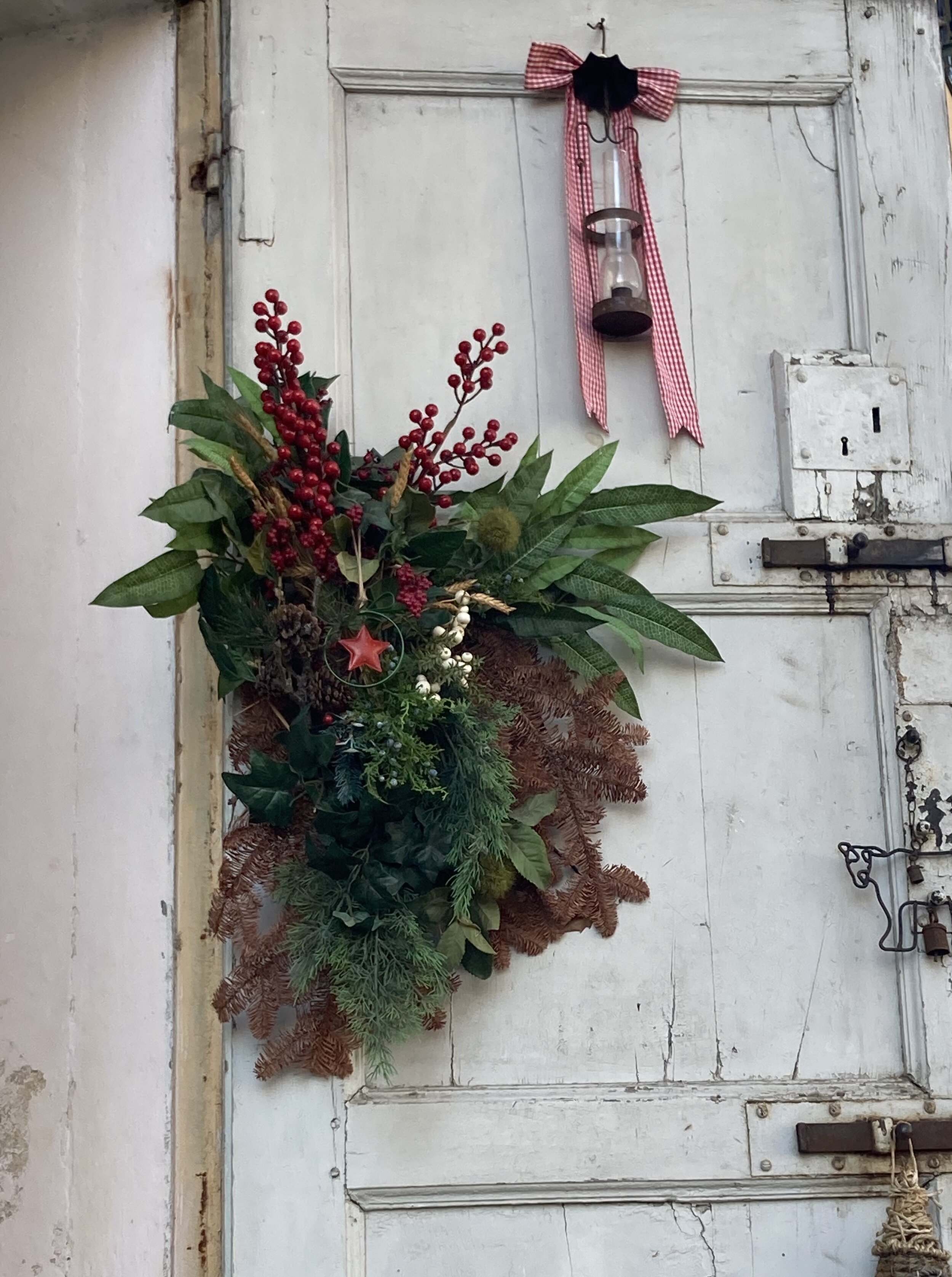
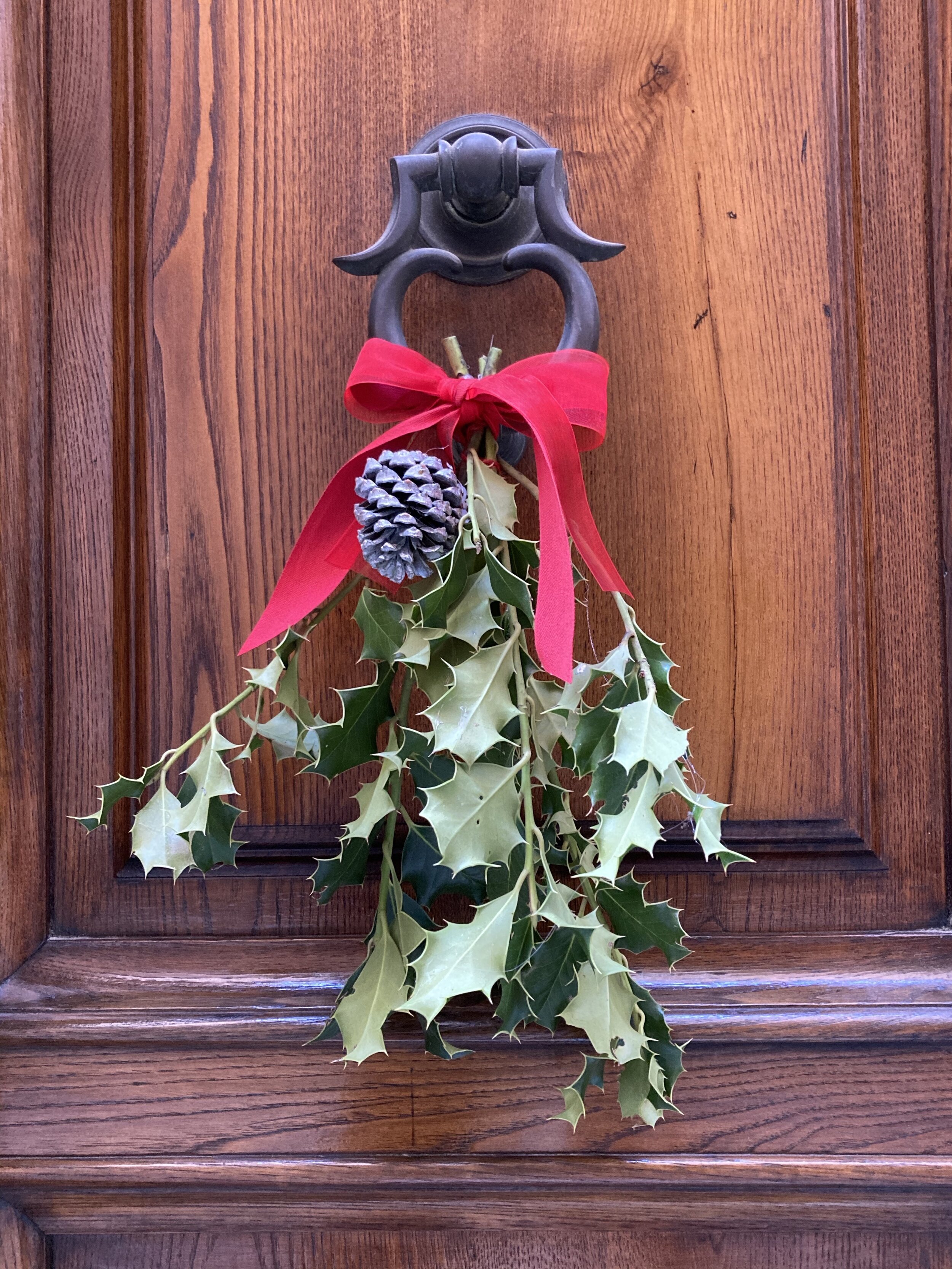
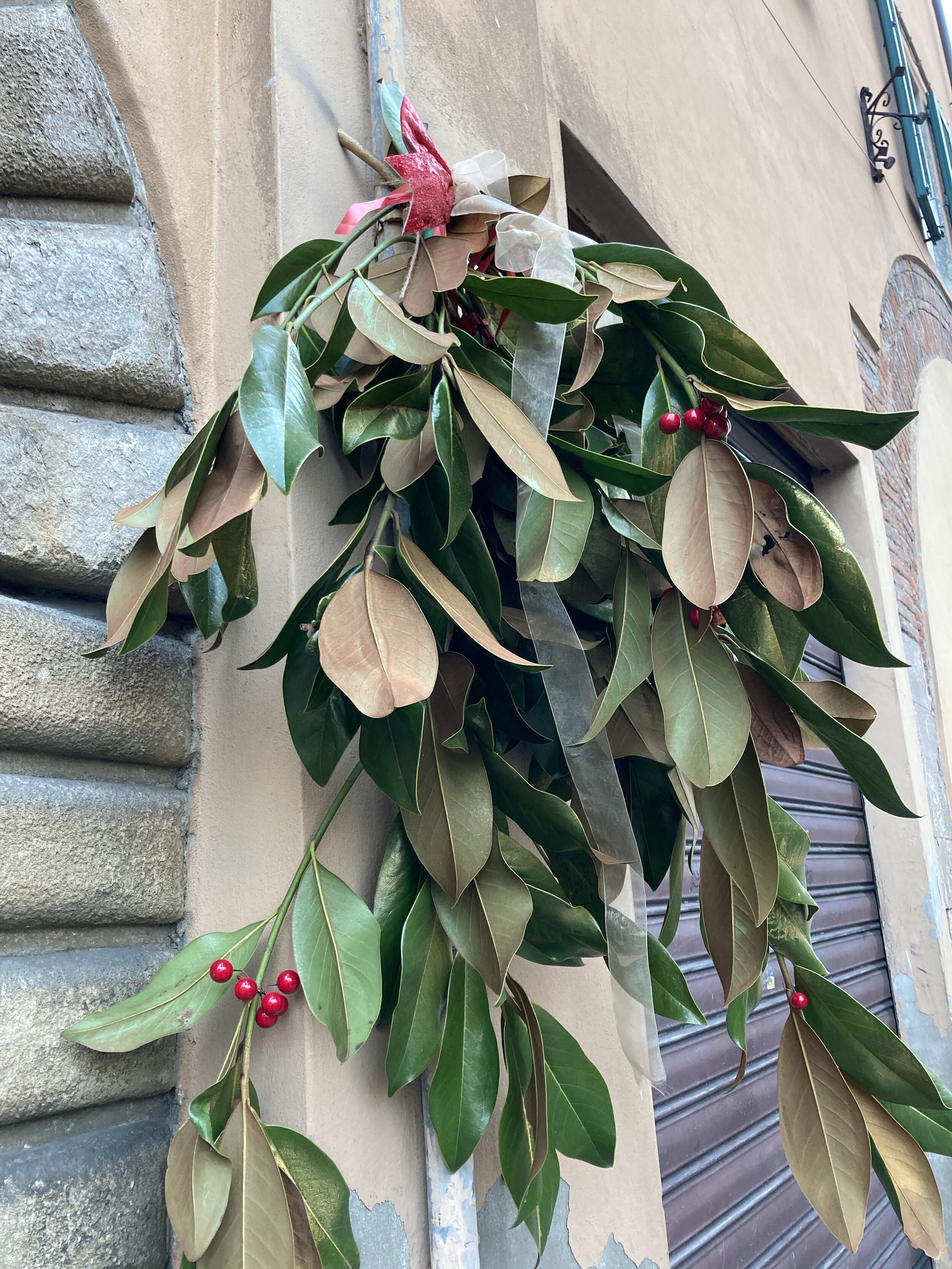
This simple door decoration was my favorite one this year

This simple door decoration was my favorite one this year

Christmas in Italy 2020

December 28, 2020 by Judy Giannnettino in Italian Christmas, Italy travel, Lucca, Tuscany

In the weeks leading up to Christmas, Lucca remained stubbornly in the Orange Zone of Covid restrictions. Shops were open, but restaurants and cafes stayed closed except for “to-go” food and drink. It also meant no trips to nearby cities to marvel at the decorations (how I miss seeing Florence at Christmas).

Via Sant’Andrea, Lucca looking very festive with the Torre Guinigi in the distance

Via Sant’Andrea, Lucca looking very festive with the Torre Guinigi in the distance

Mild weather and a few days of being in the yellow zone made it possible to enjoy a holiday coffee with a friend

Mild weather and a few days of being in the yellow zone made it possible to enjoy a holiday coffee with a friend

And then, a small Christmas gift. For 4 short days before Christmas, Dec 20 - 23, Tuscany became a yellow zone. Overnight cafes reopened and the piazzas and city streets once again seemed lively. This of course was a mixed blessing. It was a delight to sit in a cafe and sip a cappuccino with a friend, but the temptation to let down one’s guard also became a little more challenging.

With fears that holiday gatherings would lead to an increase in COVID spread, those 4 days came to an end on Christmas Eve as all of Italy was placed back into the red zone - maximum restrictions.

But that did not stop Lucca from displaying holiday spirit. The piazzas and main streets of the historic center are strung with lights, including those wonderful words from Dante pictured in last week’s post.

Piazza Anfiteatro, Lucca. Christmas 2020

Piazza Anfiteatro, Lucca. Christmas 2020

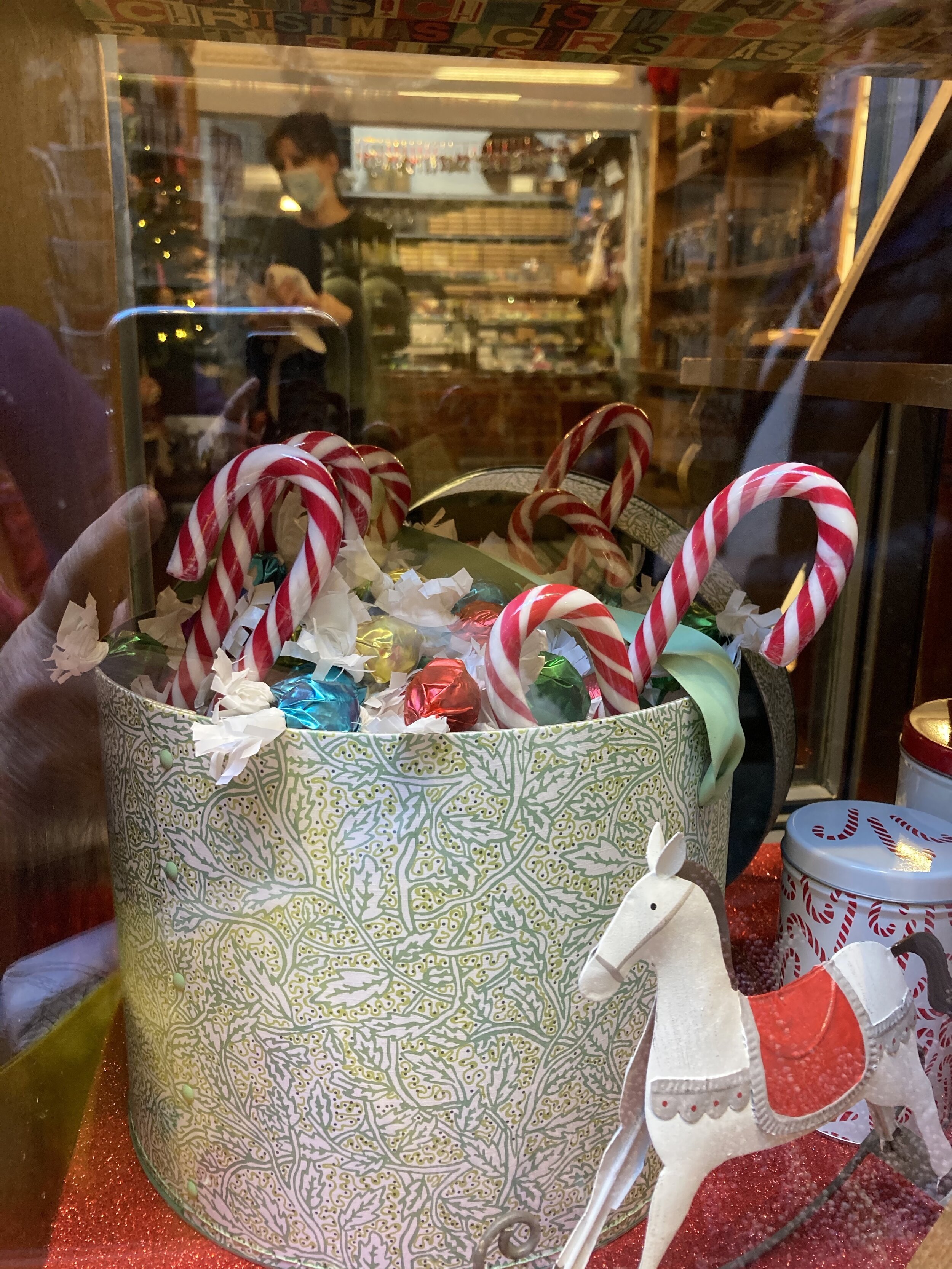
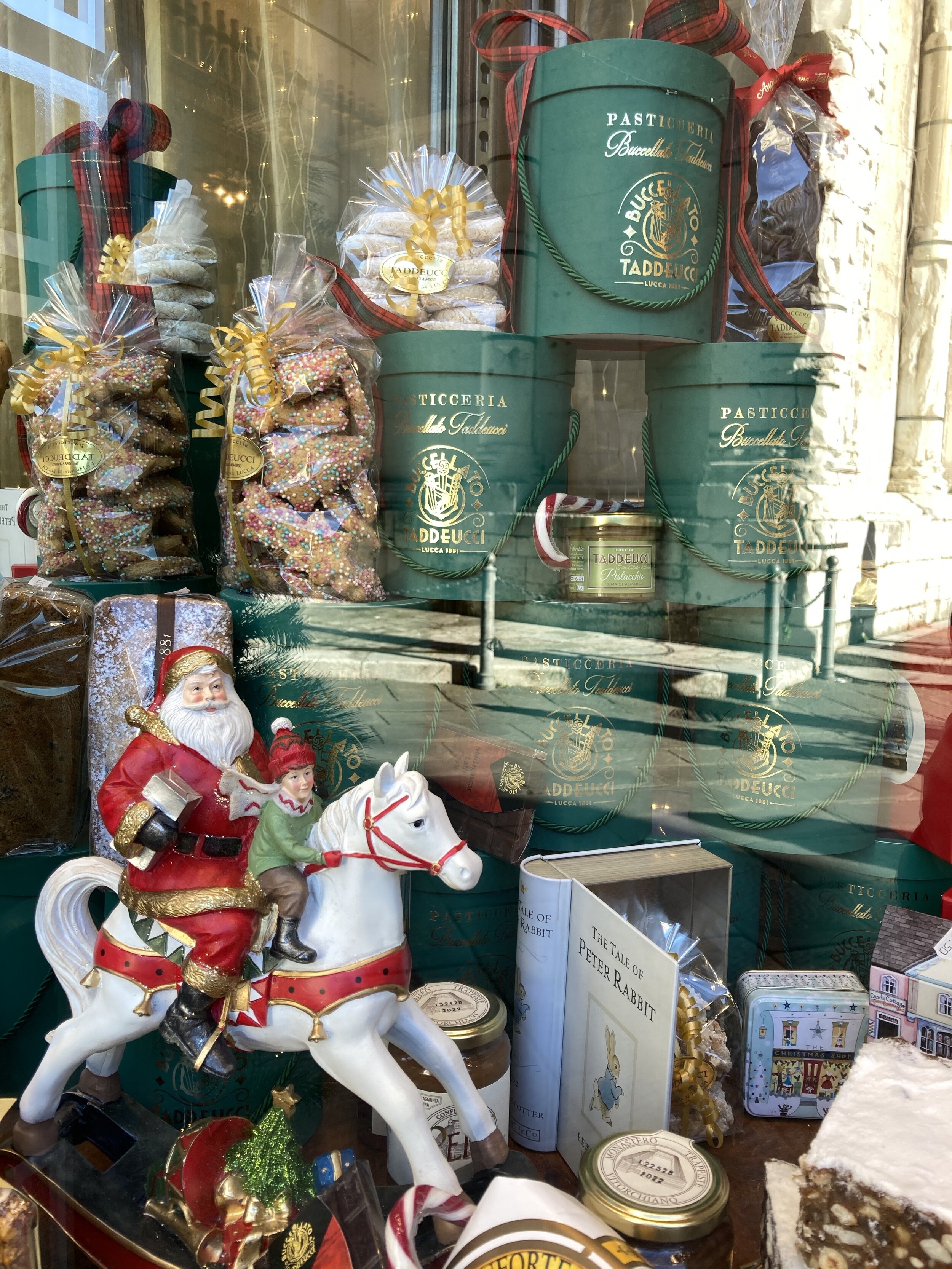
Doorways are decorated on homes throughout town. Shop windows are full of holiday treats and Christmas trees have appeared in piazzas.

fullsizeoutput_1d03.jpeg
lipRi6tZRNyzUfgDxXrqMg.jpg
BKpIe8vOR2OnSL443X6ANw.jpg
qxhLUxxVSTKRCg86epRv2w.jpg
S9F1FtU4T325PBfLyJqcIw.jpg
dKM8zF4OQ%2YZdK0vAnngw.jpg

The always charming Chiasso Barletti is once again the prettiest little alley in town. It’s also one of the best places to buy gifts with its artisan shops (think chocolate, ceramics, jewelry, hats) and Etta’s - the most wonderful English language bookstore.

sotwEHaORwWJOmjD7aJ2Ww.jpg

Even though our holiday get togethers are limited this year (if not discouraged all together) it is still possible to wander the streets, gaze into windows, stroll down red-carpeted alleys filled with little Christmas trees, pop into churches to see the presepe (nativity scenes), and to enjoy the decorated doorways.

San Michele Church, Lucca at Christmas

San Michele Church, Lucca at Christmas

And because the holiday season here lasts all the way to Epiphany on January 6th, the day when Old Befana arrives with gifts of socks and candy, there is still plenty of time to enjoy the festivities. Buon Feste!

December 28, 2020 /Judy Giannnettino
christmas Lucca, Christmas Italy
Italian Christmas, Italy travel, Lucca, Tuscany
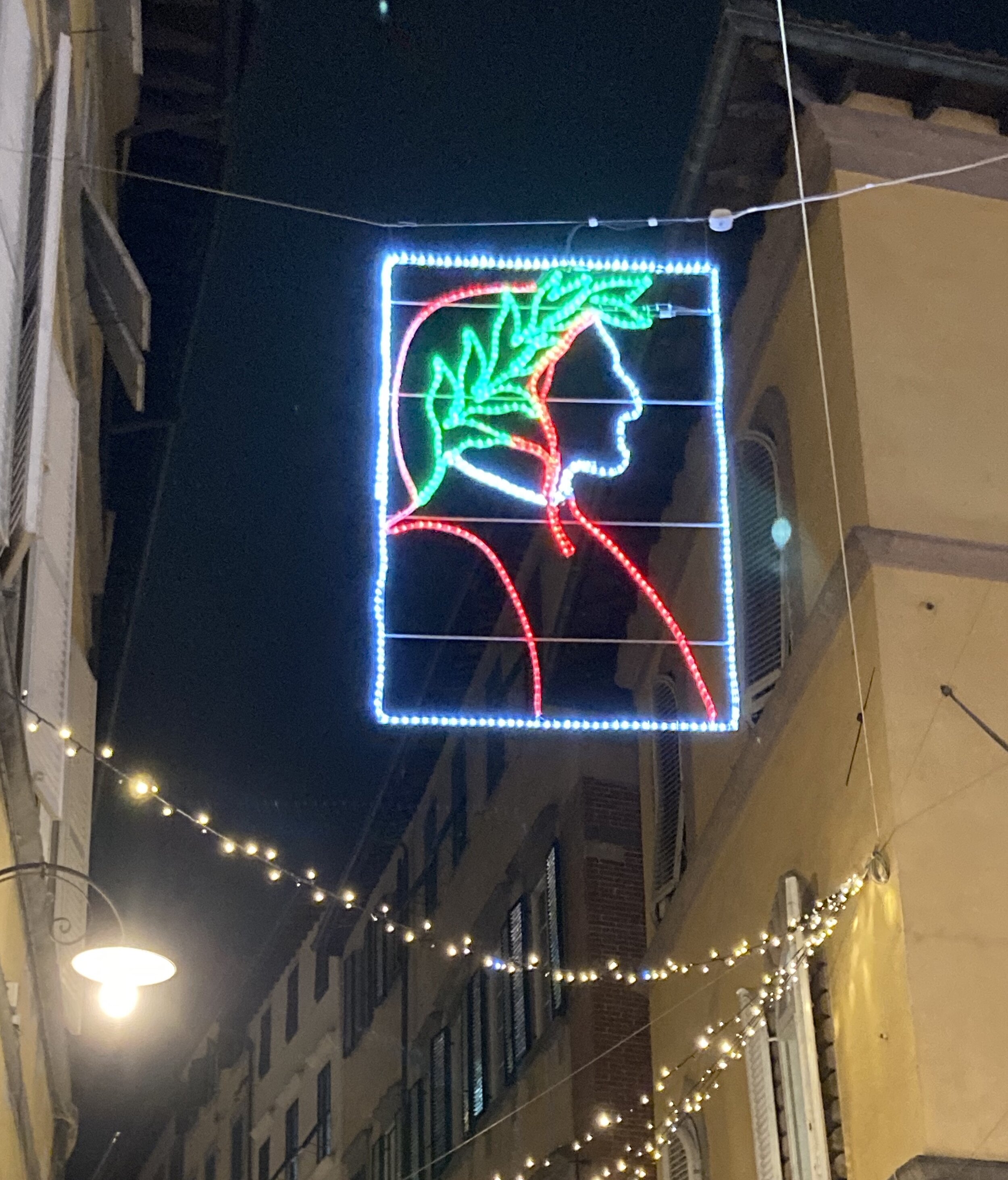
Dante’s recognizable profile in lights high above a street in the historic center of Lucca, Italy

Dante’s recognizable profile in lights high above a street in the historic center of Lucca, Italy

Spending Christmas with Dante

December 21, 2020 by Judy Giannnettino in Italian culture, Italy, Living in Italy, Lucca, Italian Christmas

 I love Italy year-round, through rain and shine, ordinary days and extraordinary ones, warm springs and crisp autumns, rare snowy days, and yes, even in this year of pandemic. But Christmas time remains just about my favorite season.

The holidays are pure delight in Lucca - streets aglow with lights, small alleys filled with trees and lined with colorful shop windows, whole buildings wrapped in lights or bows, skating rinks, decorated doorways and windows, nativity scenes large and small, Babbo Natale (the Italian version of Santa Claus) and Old Befana (the best witch ever).  From the simplest touch to the most elaborate display, it’s all magic to me.

ni6ceTxiS52Szm4OOZZPKA.jpg

This month, despite Italy’s very difficult year, Lucca is once again all dressed up for Christmas.  And, really, how can you not love a city where the piazzas are decorated for the holiday with poetry by Dante spelled out in lights?  Not visions of hellish infernos (though many might think that fitting this year), but rather words with eyes toward the stars and full of hope. In piazza San Frediano (pictured above) the message is: L’amor che move il sole e l’altre stelle (the love that moves the sun and other stars).

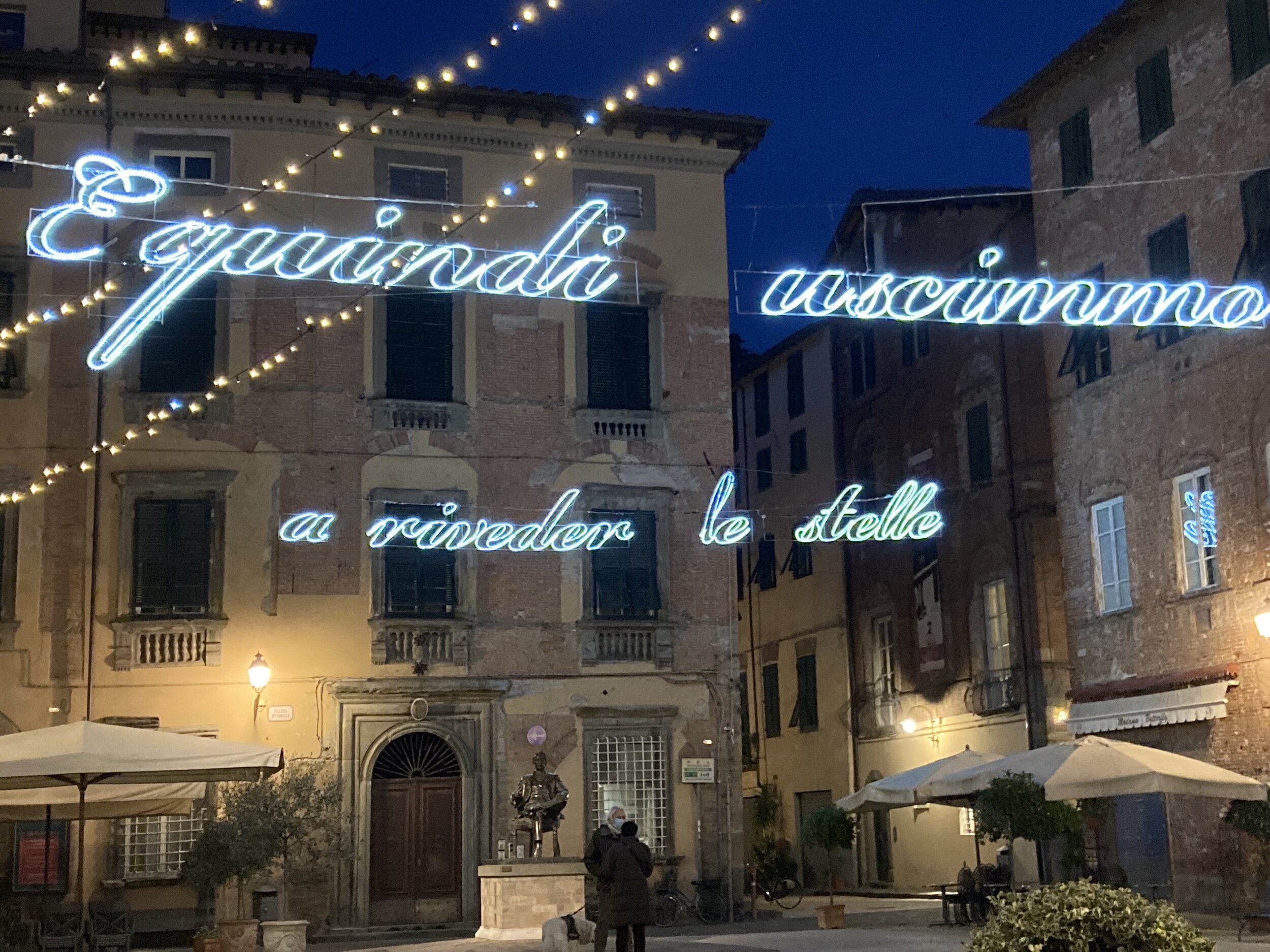
A short walk over to Piazza Cittadella, there is another quote from Dante: E quindi, usciamo a reveder le stelle. (and then, we go out to again see the stars).

N6OMX+TrRY2Od%N56BJbjA.jpg

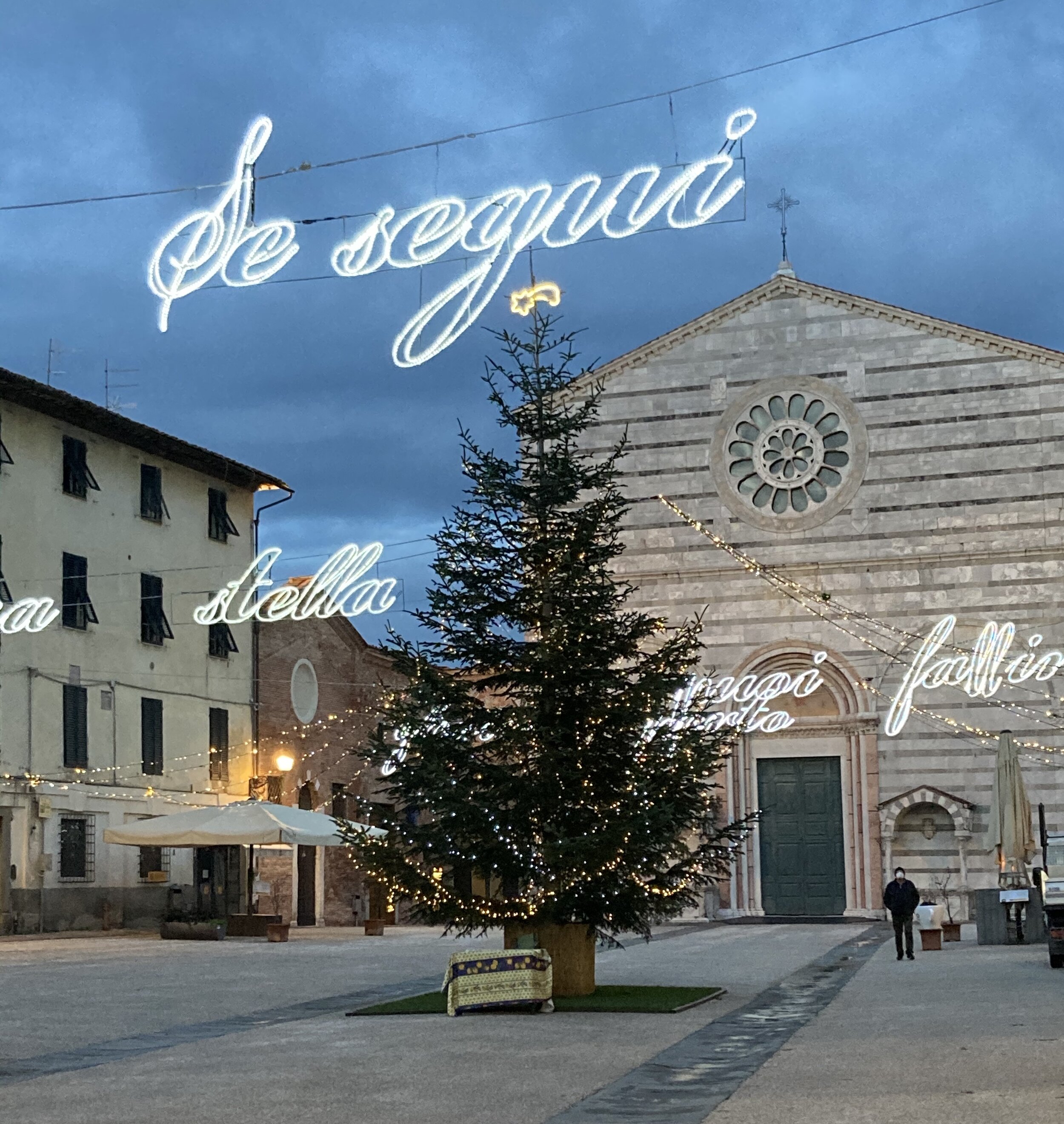
In Piazza San Francesco the words drift above the large Christmas tree - Se segui la tua stella, non poi faillire glorioso porto (loose translation - if you follow your star, you cannot fail to reach a glorious place).

fullsizeoutput_1cf5.jpeg

This year, Dante’s star filled words offer a perfect glimpse of hope and light. And isn’t that a perfect way to end this year?

I wish you all a happy and safe holiday season. Buone Feste !


December 21, 2020 /Judy Giannnettino
Dante, Christmas Lucca, Christmas Italy, Christmas
Italian culture, Italy, Living in Italy, Lucca, Italian Christmas
The Piazza delle Sorgenti in Bagno Vignoni.  The large pool is the Baths of St. Catherine.

The Piazza delle Sorgenti in Bagno Vignoni. The large pool is the Baths of St. Catherine.

Bagno Vignoni

December 14, 2020 by Judy Giannnettino in #medievalitaly, Hill Towns Italy, Italy travel, Val d'Orcia

Looking back over the past several posts, it is easy to understand why the entire Val d’Orcia is a UNESCO world heritage site. It would be impossible to pick just one town, one church, one monument with places like the Abbazia Sant’Antimo and Monticchiello in the running. To add one more reason why this valley is so special, add to the list the tiny hamlet of Bagno Vignoni.

In Italian bagno means bath, and here in Bagno Vignoni the baths are the hot spring fed pools for which this small hilltop village is famous. While there are certainly more modern spas located here today, the uniqueness of the town lies in its historic pools - sulfurous and hot, they’ve been used since Roman times. Pilgrims, popes, future saints, artists, and a host of important persons from centuries past have come to soak in the warm waters. Even before the medieval baths were built, the Etruscans came to the natural hot springs in this area.

Another view of the Baths of St. Catherine

Another view of the Baths of St. Catherine

At first glance, it would be easy to believe the village hasn’t changed for centuries. The main piazza in Bagno Vignoni is ancient and unlike any other I’ve seen in Italy. No central square with historic statue or fountain here. Instead, the central Piazza delle Sorgenti is a large, rectangular pool, fed by the hot springs just below. It dates back to the 1500’s and has changed little since that time. The pool is surrounded on 3 sides by a wall and, just beyond that, beautiful stone buildings. There are homes, shops, and a church standing just outside the wall of the baths.

An doorway in central Bagno Vignoni

An doorway in central Bagno Vignoni

On the fourth side of the large pool is the Loggia of Saint Catherine of Siena. Imagine her sitting there (well before she achieved sainthood) to admire the view of the pools. History says she did just that.

i0ifZp7rQSqUdy7qaV239g.jpg

The Loggia of Saint Catherine (on the right)

On closer inspection, there are definitely signs of a more modern life here. Shops and cafes surround the main pool and branch out into the pretty side streets. A bit further on are hotels advertising spa services.

U6AoWSmeT+iqgAQcnWkOfg.jpg
tdVfrdDoROq2iJwj%MPN%A.jpg
ofOSitVFTNuOVZ%NAJohYw.jpg

Not far from the central pool there is a series of small channels where the water flows to the cliffs that overlook the valley. Once upon a time these channels fed mills which were important to the economy of the town.

One of the abandoned buildings in the Parco dei Mulini

One of the abandoned buildings in the Parco dei Mulini

Today the Parco dei Mulini (Park of the Mills) is a place to dip your hands into the warm water and also to enjoy the expansive views. Looking down, the water runs over the cliff and way down below is a large pool for bathing.

A large pool lies at the foot of the cliffs of the Parco dei Mulini

A large pool lies at the foot of the cliffs of the Parco dei Mulini

Looking up, towards Castiglione d’ Orcia, is a huge ancient fortress, the Rocca a Tentennano (sometimes called the Rocca d’Orcia).

Rocca a Tentennano, a short drive from Bagno Vignoni

Rocca a Tentennano, a short drive from Bagno Vignoni

Bagno Vignoni is a marvel - and one more reason to spend some time exploring the Val d’Orcia.

December 14, 2020 /Judy Giannnettino
Bagno Vignoni, Spa Italy
#medievalitaly, Hill Towns Italy, Italy travel, Val d'Orcia
  • Newer
  • Older

Powered by Squarespace