Two Parts Italy

Exploring Italy, travel, and living a flavorful life

  • Blog
  • About This Blog
  • Start Here
  • Recent Posts
  • Archives by Topic
  • Subscribe
  • Contact me

The Pont du Gard

The Pont du Gard

August 26, 2024 by Joanne Bartram in Travel France, Roman ruins, Roman Architecture

The early Romans left some very impressive structures for us to admire. 

The Church of Santa Maria della Rosa in Lucca was built right up against this section of the old Roman wall.

Public baths, colosseums, pagan temples, villas, fortresses, intricate mosaics, paved roads, artwork, and catacombs exist throughout what was once the Roman Empire.  

In Lucca, where I spend most of the year, Roman ruins can be found both above ground and below. As is true in many Italian cities, if you start to dig you just might find signs of earlier Roman inhabitants.


Perhaps the most impressive artifacts of Roman civilization are the ancient aqueducts. Built to move water from sources in the hills to the towns below, these massive structures are amazing testaments to Roman engineering.  They brought fresh water into cities, filling fountains and communal baths and supplying homes, mills, and farmland.

Though built for very practical purposes, the aqueducts are also beautiful. Tall structures with tiers of arches crossed valleys to support the water channels above as they made their way downhill. And while the ones that still stand are no longer used to supply water, they remain as impressive landmarks and reminders of those long ago Roman engineers.

Some of the most spectacular Roman ruins are found well beyond Italy’s borders.  Perhaps the best example of a Roman aqueduct - the Pont du Gard - is found in France, near the town of Uzes.

Pont du Gard

Long ago graffiti carved into the limestone of the Pont du Gard

The Pont du Gard was built across the Gardon River, bringing millions of gallons of water to the city of Nimes.  Its series of arches stand 164 feet high with a length of nearly 1200 feet, making it the tallest of all the Roman aqueducts.  Constructed of massive limestone blocks, it is strong enough to support the water channel without mortar but soft enough to allow inscriptions to be carved into the stones. 

 A stop at the Pont du Gard, a UNESCO World Heritage site, is a highlight of any visit to this region of France.  The visitor’s center museum provides an overview of the construction of the aqueduct and its importance to the region. After a stop in the small museum, a short walk leads to the bridge of the aqueduct. 

The short walk to the aqueduct is beautiful, especially on a beautiful spring day.

 Walking across the bridge, high above the Gardon, provides a view up and down the river.  Below there is a lot of activity. It’s fun to watch people floating by in kayaks and the swimmers and picnickers who line the river banks. 

IMG_8962.jpeg
IMG_8950.jpeg
IMG_8936.jpeg

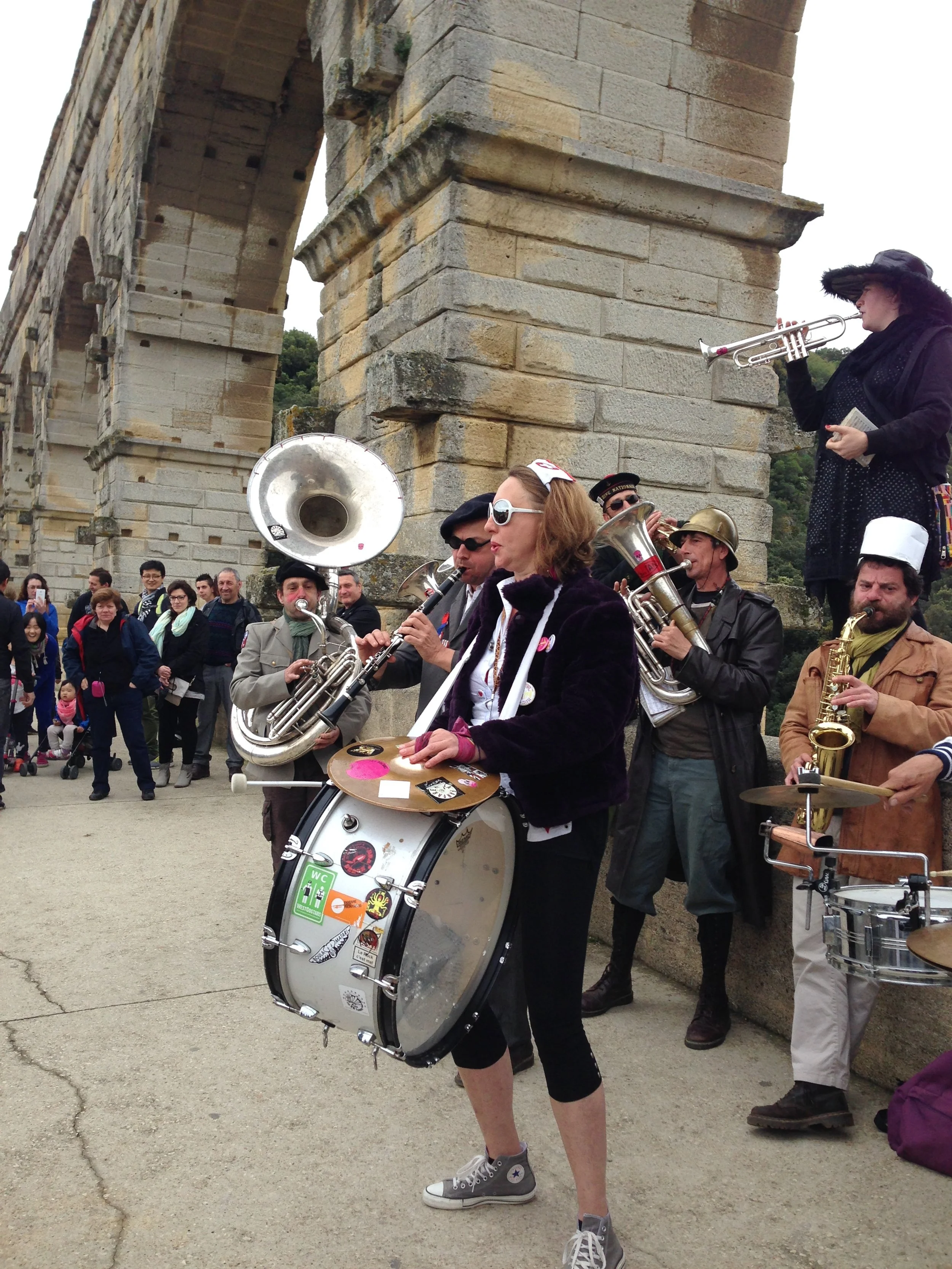
A wild time on the Pont du Gard, 2014

The first time I visited the Pont du Gard, a rag tag group of musicians played on the bridge providing a festive atmosphere.   

With or without the band, spending time at the Pont du Gard is a treat.  
August 26, 2024 /Joanne Bartram
Pont du Gard, Roman aqueducts
Travel France, Roman ruins, Roman Architecture

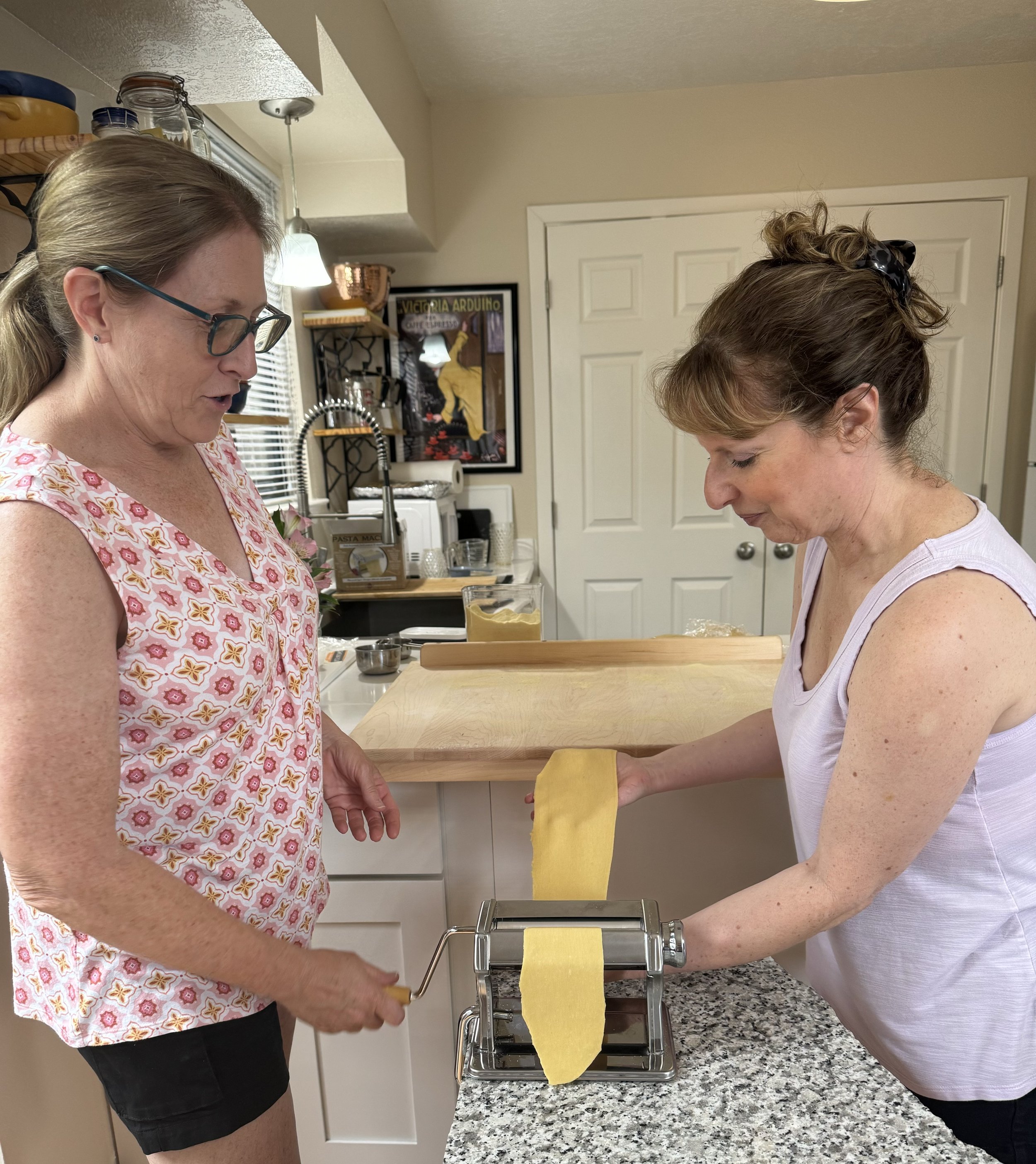
My pasta making friends Cindy and Lauresa

An Evening of Pasta Making

August 19, 2024 by Joanne Bartram in #italiancooking, food, Italian recipes

 It’s always fun to cook with friends. That is especially true when it comes to making pasta.   Making pasta fatta a mano (handmade pasta) is enjoyable work and it’s always more fun when there is someone (better yet a group) to share the work.  

My 12 year old grandson is a pro !

I am not a professional pasta maker by any means, but I’ve had some experience and have been successful at teaching my 12-year-old grandson, Jack.  He is now an independent pasta maker and my chief pasta making buddy.  So, when a trio of friends recently asked if I would teach them how to make pasta, I felt up to the task and quickly suggested an afternoon of pasta making followed by dinner.  

We quickly agreed to a plan - they provided wine, salad, and dessert while I collected all the ingredients for the pasta and put together a simple pre-pasta making aperitivo. Game on !

There are probably a thousand recipes for pasta dough.  Proportions vary as do some of the ingredients – with eggs or without?  All 00 flour or some semolina?  Salt?  Oil?   I’ve tinkered with all of these and have found what works best for me is 2/3 flour (type 00) mixed with 1/3 semolina, a pinch of salt, eggs, a drizzle of olive oil and sometimes, especially when working in a dry climate, 1-2 tablespoons of water.   This combination makes a great tagliatelle - an egg based pasta, cut into wide strips, perfect for holding onto a sauce. (detailed recipe at end of post)

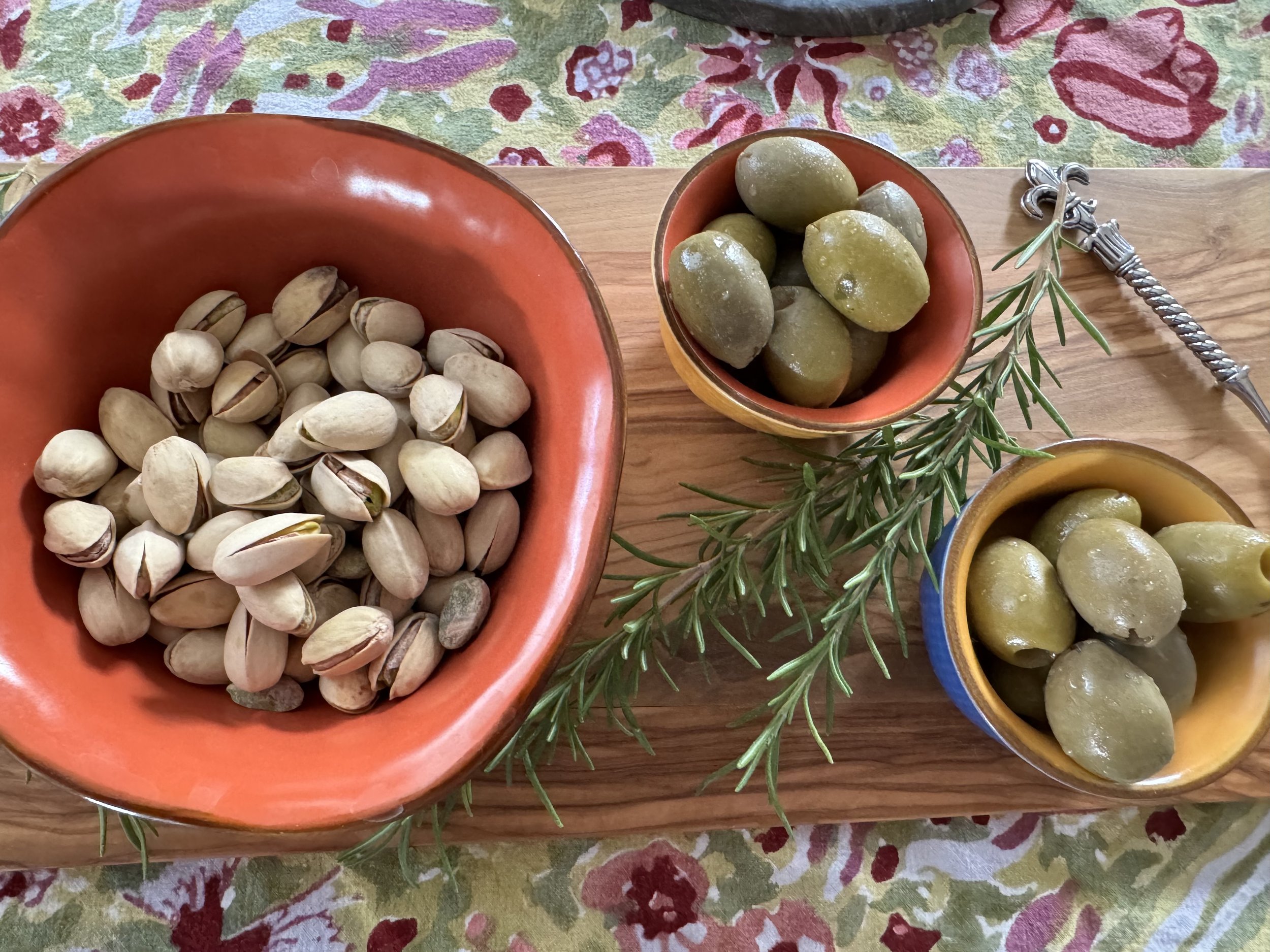
 My friends arrived and, after a fortifying round of white wine sangria and some nibbles, we got to work.    

Fortification for the work to come!

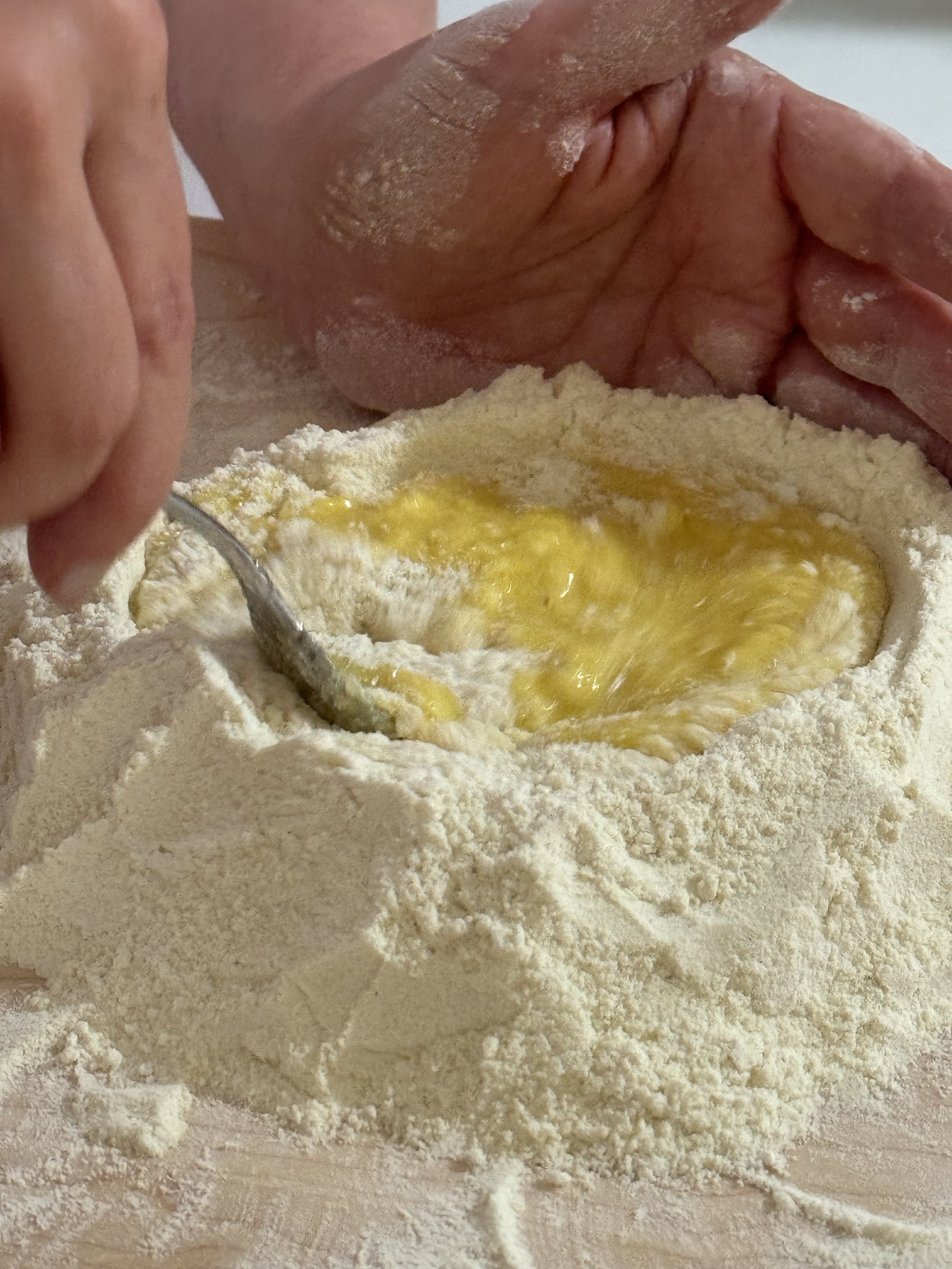
After mixing the 00 flour, semolina, and salt, they each made “the volcano”.   Into the center went the eggs, olive oil, and 1 tablespoon water.   Rule one – don’t break the sides of the volcano and allow the eggs to flow out !   

I am happy to report that the eggs were mixed and the volcano walls remained intact as they slowly incorporated the flour into the eggs to make the dough.  Success!

Next step was kneading after which the dough was wrapped in plastic wrap to rest for 30 minutes. This was just enough time for another glass of wine, to put the water on to boil, to heat the Amatriciana sauce which I had made the day before, to toss the salad, and set the table.  Quick work with several people!

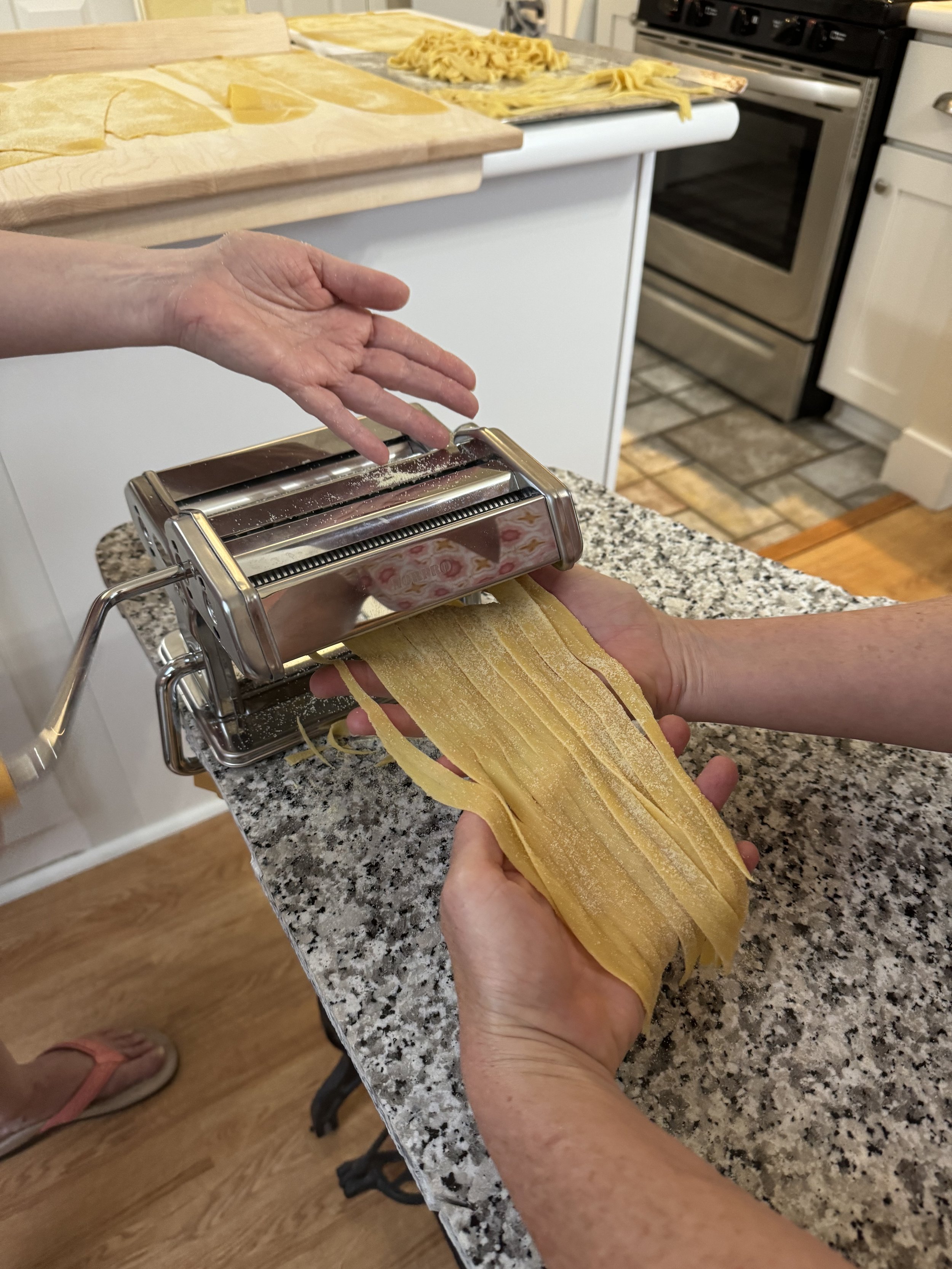
The next step surprised my pasta makeing friends in that the work of rolling the pasta dough into thin sheets took quite a bit of time – even with the use of a pasta machine.  

Several hands made the job much easier.  After the thin sheets were created, the actual cutting into tagliatelle was much faster.  Soon they had a tray full of beautiful, thin strands of tagliatelle.   Lots and lots of tagliatelle. Way more than the 4 of us could possibly eat, so some went straight into the freezer.

Cooking the fresh pasta took almost no time.  We tossed it with the sauce, some grated parmesan, and wow, perfect pasta !

My friends were pleased with their efforts and pronounced that pasta making was fun work. Dinner was tasty and we had a lot of fun along the way.  What a great way to spend a Friday evening! 

Time to enjoy all our hard work!

I’ll look forward to our next adventure in pasta making.  Maybe pici next time?

Basic Fresh Pasta Recipe

 1 cup 00 flour

½ cup semolina flour

Pinch of salt  

2 eggs

1 teaspoon extra virgin olive oil (EVOO)

1-2 Tablespoons of water if needed

Combine 00 flour, semolina, and  salt.  Place on board and make a well in the center. Into the well put the eggs and EVOO. Mix with a fork until yolk and white are well blended, being careful to keep the liquid inside the well of the flour.  Slowly incorporate flour, finishing with a firm but not dry dough.  Add 1-2 tablespoons water if dough seems too dry (but dough should not be sticky).  

Knead dough until smooth and slightly springy.  Wrap in plastic wrap and rest for 30 minutes to an hour. 

Roll dough into thin sheets (if using a machine start on #1 (the widest setting). Roll, fold in half and roll again.  Then roll on progressively higher numbers, ending with #6.   Dust sheets of pasta with semolina until ready to cut.

The extra pasta went into the freezer and the next week made a wonderful pasta carbonara.

Cut sheets into desired shape (my machine has rollers to cut either tagliatelle or spaghetti) and toss cut pasta with a small amount of semolina to prevent sticking.

Drop into boiling salted water 6-10 minutes (al dente).  Drain and toss with your choice of sauce.

 Note: the cut pasta freezes well. A week later it was perfect in a pasta carbonara.

August 19, 2024 /Joanne Bartram
freshpasta, pasta making, pasta fatta a mano, italian cooking
#italiancooking, food, Italian recipes

Vieux Lyon is the Medieval part of Lyon. I wonder how old this door is and how it is still standing?

Ferragosto 2024

August 12, 2024 by Joanne Bartram in #lyon, Lyon, travel France, Doors Lyon, Old doors

Here we are in the middle of August, just in time for the Italian celebration of Ferragosto on the 15th.

A national holiday in Italy, the Italians often stretch it beyond a single day as families head to the beach, the lake, or the mountains for some extended summer R&R time.

Ferragosto is one holiday I wish would be adopted in the US. After all, who doesn’t need a middle of summer break from heat, storms, and work?

While I will miss the holiday in Lucca as I am in New Mexico visiting family, I will embrace it here as my very own mid-August break.


In that spirit, I will take a break from writing this week and just post some photos of one of my favorite photographic subjects - doors.

Doors are fascinating, especially the really old ones. Who passed through them? What secrets do they hide? What history did they witness?


All of these beautiful old doors were photographed in the Vieux Lyon area of Lyon, France. Some of the doors really do hide secrets as several seemingly ordinary ones open onto secret passage ways with hidden courtyards, fountains, and apartments.

Happy Ferragosto week. PS: It’s a good week to start planning winter and spring travel ! Lyon would make a great destination !

August 12, 2024 /Joanne Bartram
Lyon, French doors, Old doors France, Doors Lyon
#lyon, Lyon, travel France, Doors Lyon, Old doors

Villa Foscari, also known as Villa Malcontenta, majestic even on a gray day along the Brenta Canal.

Brenta Canal Part 4: Villa Foscari (Malcontenta)

August 05, 2024 by Joanne Bartram in #italy2024, #italytravel, #padova, #padua, Italian art architecture, Italian gardens, Italy travel

The final stop on our day-long journey along the Brenta Canal was at Villa Foscari, the closest to Venice of the three villas on the itinerary. 

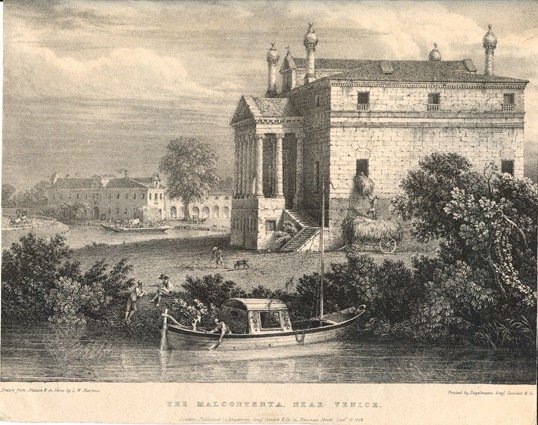
Vintage drawing of Villa Foscari

The villa rests in an enchanting spot along the canal – with a private landing spot, wonderful views, large lawns, willow trees, and carefully tended gardens. 

 Villa Foscari is the oldest of the three villas visited on our one day canal cruise.  It was built between 1554 and 1557 with an entirely different architectural and decorative style. Compared to the grand ballrooms and ornate details of Villas Pisani and Widmann  (both built in the 1700’s), the Villa Foscari feels much more serious, more subtle, more lived in, and also a bit more mysterious.

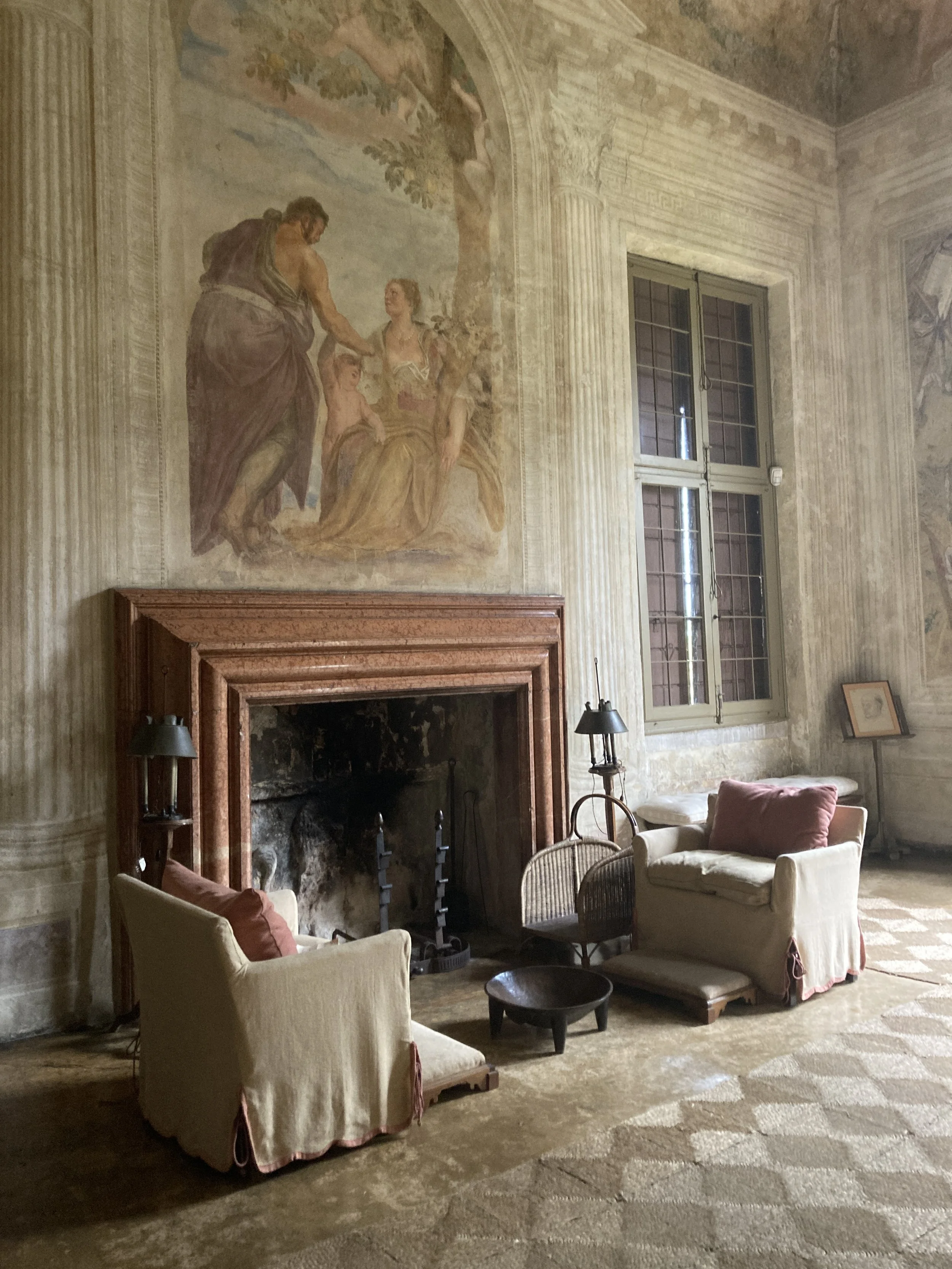
Living room, just off the entry, Villa Foscari. Pretty cozy!

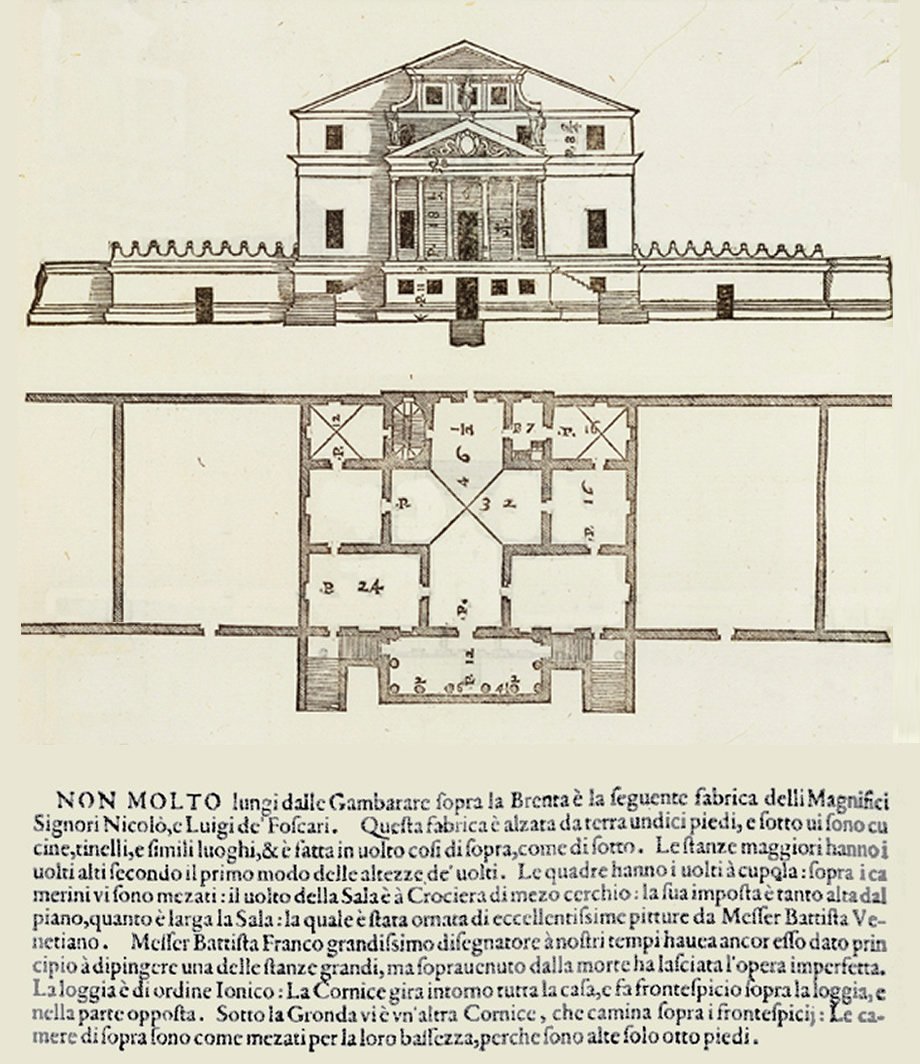
 The villa was designed by Andrea Palladio and is considered one of his masterpieces.   It has many typical features of Palladian design. The front facade is a symmetrical 3 stories with a grand front portico. There are classical details - massive columns, a triangular pediment, and dual external staircases all leading to the piano nobile (top photo).  There are few decorative details on the exterior, also typical of Palladian architecture. The villa could easily be mistaken for an ancient Roman temple. The architecture also takes into consideration the building’s position in the landscape, so the views can be appreciated from both the front and rear of the building. 

Rear facade, Villa Foscari, with an ancient wisteria vine. Less classical in design than the front facade, but still beautiful, this would have served as an entrance for the villa’s staff. It is actually the first glimpse of the villa when walking from the boat dock.

Vintage drawing of the front facade and floor plan of Villa Foscari

 Palladio designed and built Villa Foscari for brothers Nicolò and Alvise Foscari.  The brothers were members of the Venetian upper class and descendants of Francesco Foscari, the longest serving Venetian Doge ( he ruled Venice from 1423 to 1457).  This was an important family and the villa reflects that. The interior of the villa was designed with the brother’s needs in mind - there are two symmetrical apartments, one for each brother, separated by the common space of the impressive entry. 

 Inside, the entry hall is expansive with vaulted ceilings, exquisite frescoes, and sunny windows flanked by perfect reading nooks looking out over the rear of the house.  The other rooms on piano nobile are simply furnished but decorated with wonderful frescoes and details. 

IMG_5235.jpeg
IMG_5240.jpeg
IMG_5231.jpeg

 It is a spectacular yet comfortable and warm home.   If I lived here, I would be hard pressed to ever tear myself away from the reading nook.  A cup of tea, a good book (perhaps one of the ones written by the current owner on the history of the villa), and those views! And then maybe a walk through the gardens.

At the far side of the entry, this windowed reading nook looks out over the landscape.

 The air of mystery surrounding the villa is what gives rise to its other name – The Villa Malcontenta.  The legend (as recounted by our tour guide) is that one of the Foscari brothers married later in life to a very beautiful, vivacious, and young woman.  As his business activities meant long stretches away from Venice, the young wife found ways to amuse herself - parties, balls, and young men!   Her older husband was not pleased and so he banished her from the social whirl of Venice to his estate along the Brenta Canal where she would spend her life away from the temptations of Venice, in relative isolation.  Her nickname, La Malcontenta, means the unhappy one.  Today, the villa itself is often referred to as Villa Malcontenta.  A sad name for such a beautiful home.

One of several gardens on the property.

looking down into one of the gardens from the front portico.

 As was the case for so many of the Brenta Canal villas, the Foscari family was forced to sell the property after the fall of Venice.  The estate fell into ruin in the 1800’s and stood mostly empty until restoration work began towards the end of that century.   Both the villa and the gardens were restored after its purchase in 1926 by a trio of wealthy friends.  After that the estate changed hands several times, always as a private home.  In 1973 it was purchased by Count Antonio Foscari, returning it to the ownership of Foscari family.   Antonio Foscari is both an architect and an expert on Palladian villas, the perfect person (along with his architect wife) to restore and preserve the villa.  The villa remains a private home but is also open to tours.  It was certainly a highlight on our one day cruise along the Brenta Canal.

The villa sits along the Brenta Canal and is surrounded by lawns, gardens, trees and wonderful views.

 After visiting Villa Foscari, we headed off across the lagoon and entered Venice itself.  Wandering a bit though the city we stopped for cicchetti at Cantina Do Spado and then wandered our way back to the train station. After that it was a short train ride back to our base in Padova. A perfect end to a fascinating day. 

Arriving in Venice after cruising the Brenta Canal.

August 05, 2024 /Joanne Bartram
Villa Foscari, Villa Malcontenta, Brenta Canal
#italy2024, #italytravel, #padova, #padua, Italian art architecture, Italian gardens, Italy travel

A mother and daughter on a rainy day stroll along the cobbled streets of Vieux Lyon.

A Brief Introduction to Lyon, France

July 29, 2024 by Joanne Bartram in Europe Cruises, River Cruise, Travel, Viking River Cruise

I first visited Lyon a decade ago.  That visit was much too brief – just a day long stop on a river cruise through southern France.  But I knew without a doubt that I would someday return for a longer visit.  

Lyon is France’s 3rd largest city (Paris and Marseille are numbers 1 and 2) and – though Parisians may argue – France’s gastronomic capital. Lyon is known for its markets, cafes, bakeries, bouchons (we might call them bistros), and restaurants. 
Below: A street market along the banks of the river Saône.

IMG_5608.jpeg
IMG_5632.jpeg
IMG_5638.jpeg
IMG_5637.jpeg
IMG_5624.jpeg
IMG_5609.jpeg

One of many hidden courtyards in Vieux Lyone

The opportunity to return to Lyon came this past May when a friend and I headed to Lyon for 3 days at the start of a longer trip through the south of France.   I had a few goals in mind for this visit –  first, an exploration of the oldest part of the city, Vieux Lyon, with its tiny alleys, secret passageways, hidden courtyards, Renaissance era architecture and fascinating history. 

Next, getting to know the Presqu’ile, the area tucked between the Rhône and Saône rivers.  It’s an elegant neighborhood full of classic Parisian-style buildings, impressive fountains, large public squares, theaters, museums, and several of Lyon’s famous building murals.  It’s also the neighborhood for great shopping, classy hotels, and wonderful food.   

This stunning fountain anchors the Place des Jacobins in the Presqu’ile district of Lyon.


Also on my must-do list was a visit to what has to be one of the world’s finest markets, Les Halles di Lyon Paul Bocuse.  Exploring local markets is something I love to do when traveling. I must have thousands of market photos from cities in Europe and the US.   Each country’s markets have a unique character. They are a great way to gain insight into the local culture and also great places to sit and people watch over a coffee, to pick up supplies for a picnic lunch, or to grab a simple yet tasty meal. Based on Lyon’s reputation as a mecca for good food, I arrived anticipating fresh seafood (oh the moules!), classic quenelles (a type of fish dumpling and a regional specialty), great bread, croissants (of course), and good wine.  Lyon did not disappoint and a visit to Les Halles market was a highlight.!

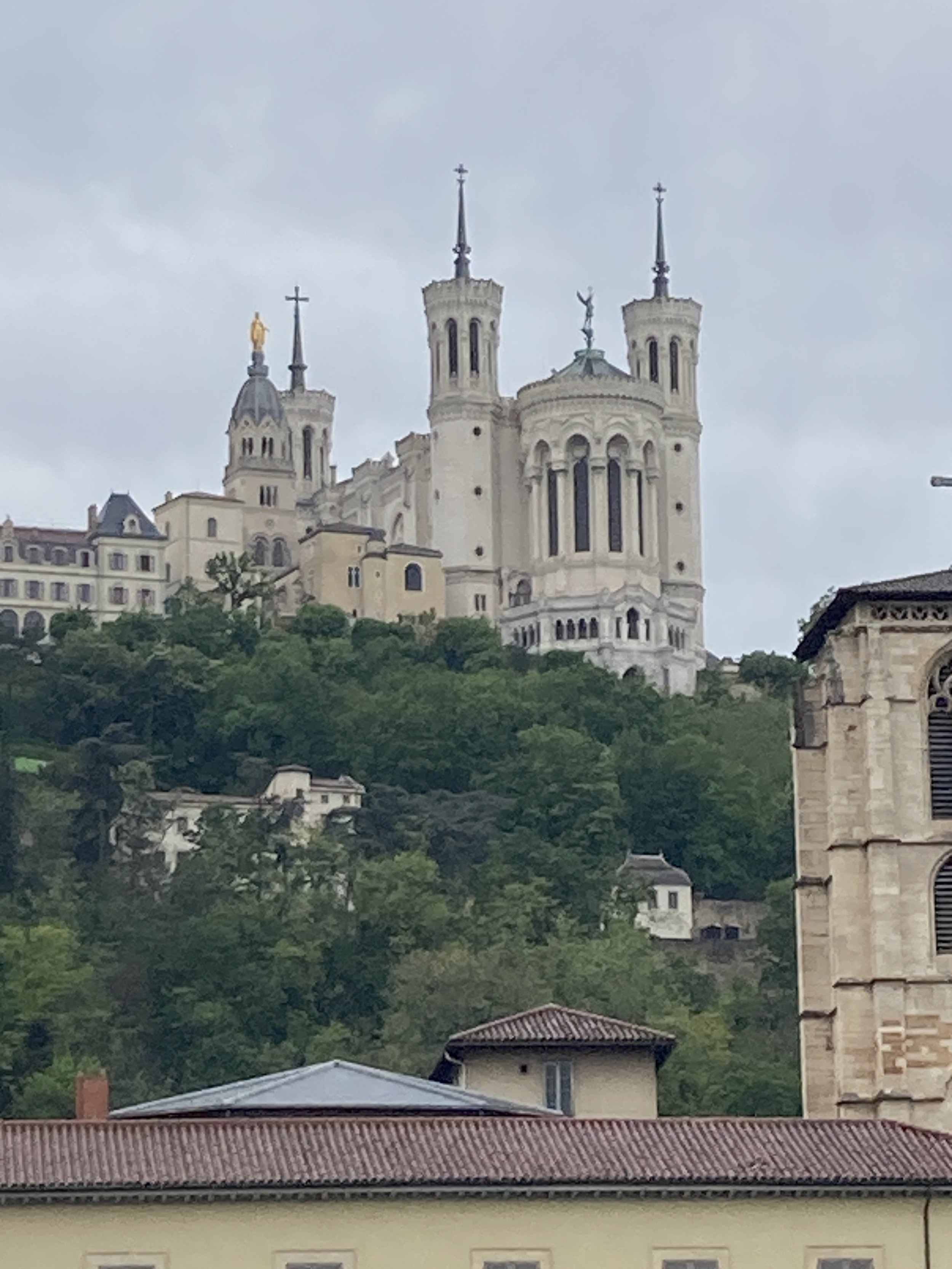
The Basilica of Notre-Dame as seen from along the Saône River, Lyon

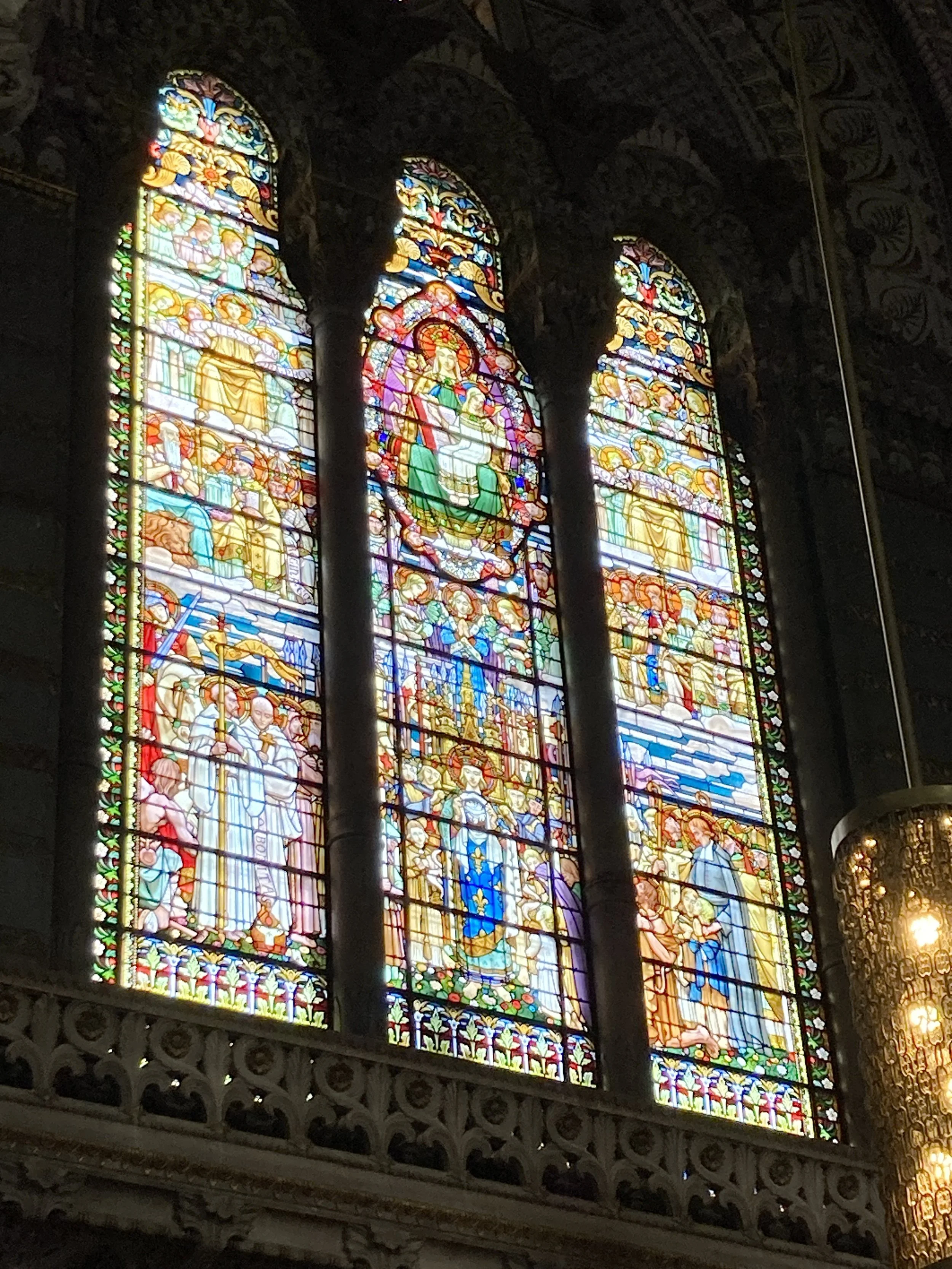
Fourvière Hill is another can’t miss spot in Lyon. It sits high above the city’s historic old town (Vieux Lyon) and is home to the Basilica of Notre-Dame. The mosaic and sculpture filled interior of the church is breathtaking and the views over the city are fantastic from this vantage point.

IMG_8339.jpeg
IMG_8348.jpeg
IMG_8325.jpeg
IMG_8342.jpeg
IMG_8344.jpeg
IMG_8332.jpeg

Lyon is a joy to visit and was a great way to begin a longer trip in France. More details on Lyon in upcoming blog posts.  Stay tuned!

July 29, 2024 /Joanne Bartram
Lyon, LyonFrance, #lyon, Viking River Cruise France
Europe Cruises, River Cruise, Travel, Viking River Cruise
  • Newer
  • Older

Powered by Squarespace