Two Parts Italy

Exploring Italy, travel, and living a flavorful life

  • Blog
  • About This Blog
  • Start Here
  • Recent Posts
  • Archives by Topic
  • Subscribe
  • Contact me

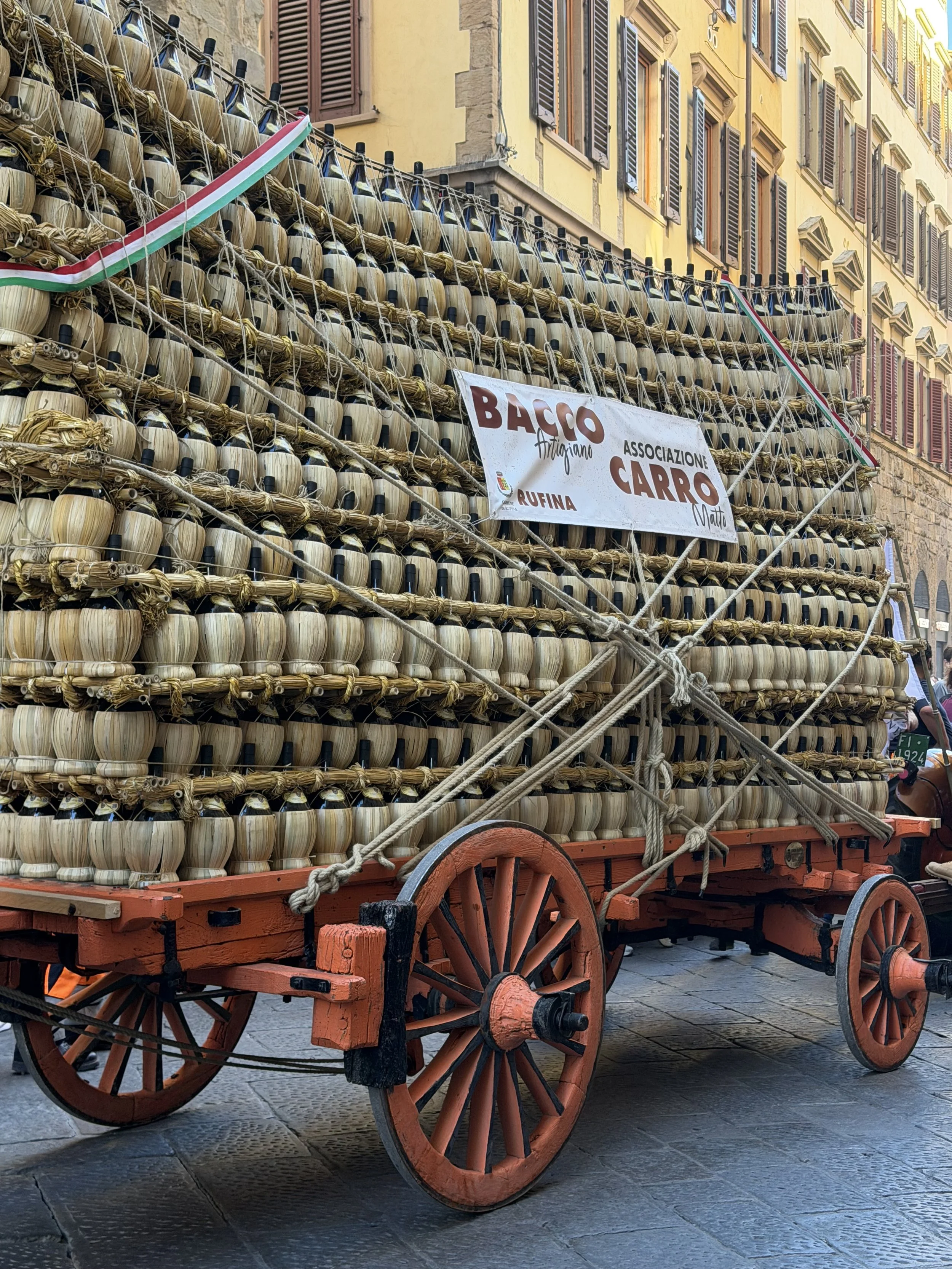
The Carro Matto, loaded with fiaschi of Chianti wine

Blessing The New Wine
October 05, 2026 by Joanne Bartram in #florence, #italytravel, #medievalitaly, Autumn in Italy, Chianti Region, Festivals Italy, Italian culture, Italy, Tuscany

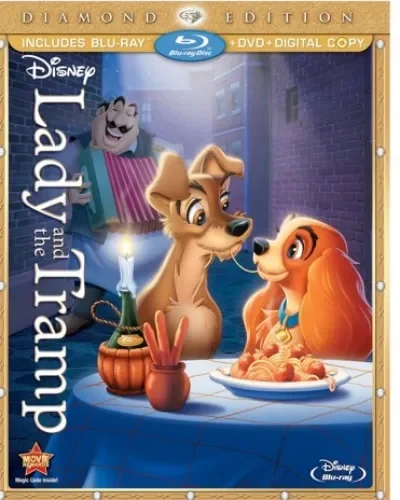
Even Lady and the Tramp had a fiasco on their dinner table

It is easy to recognize the classic bottle of a Chianti wine – a fiasco (flask) with a rounded base wrapped in straw.  After all, is there an Italian restaurant in the US that doesn’t have a fiasco on the table, usually topped with a candle and covered in dripping wax?  A fiasco even made an appearance in Disney’s Lady and the Tramp!

Chianti wine is produced in an area of Tuscany that stretches roughly from Florence south to Siena, a specially designated region since the time when the Medici family ruled Florence.  Historically, the classic straw wrapped bottles were made in the city of Florence, creating a special relationship in which the Florentine bottles were sent to the wineries outside of the city where the new Chianti was bottled, and then the filled bottles were sent back to merchants in Florence.  Of course, this transport began long before there were trucks to move the bottles back and forth, so how did the wine bottles return to Florence after they were filled? 
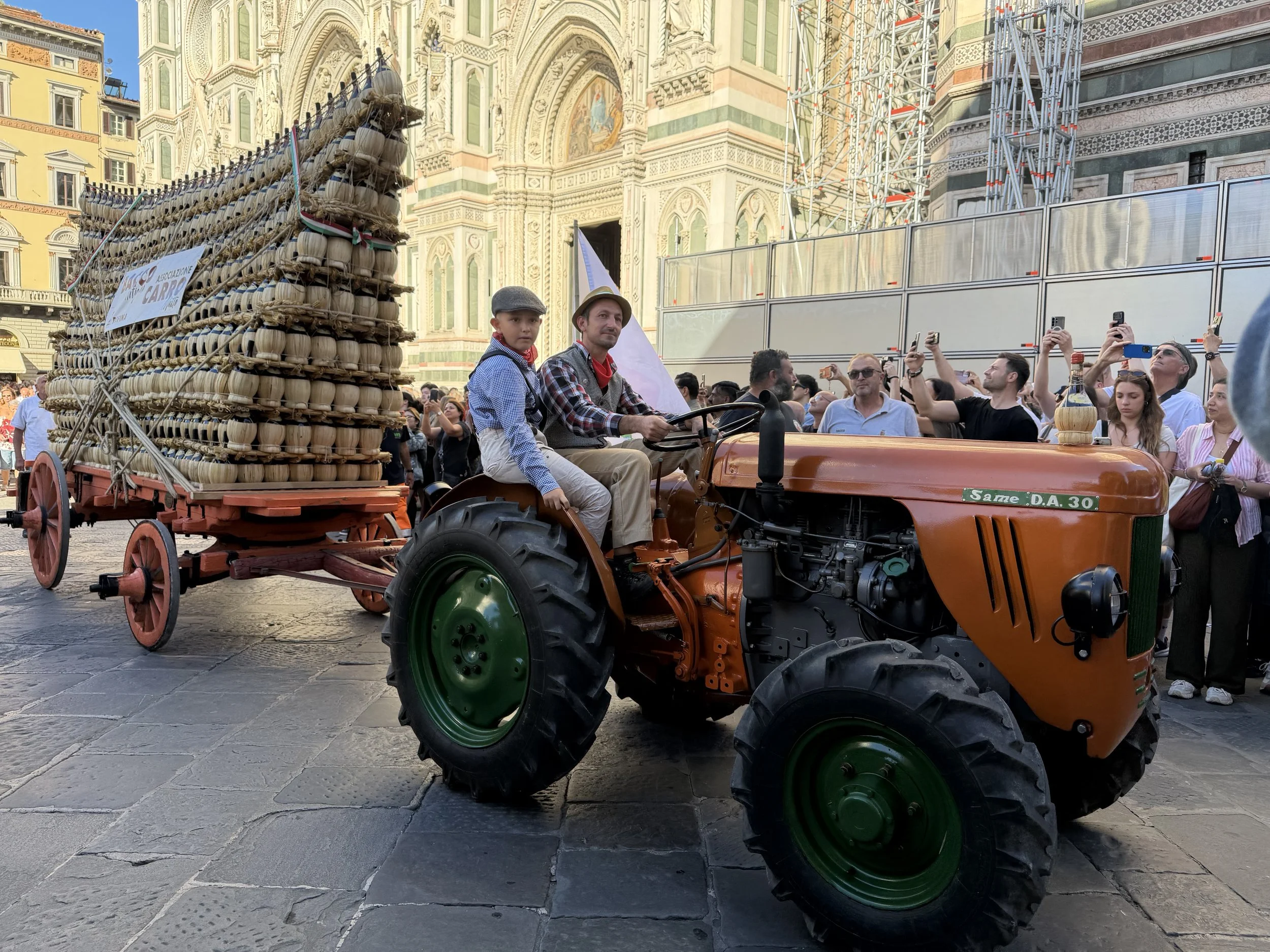
The Carro Matto arrives to Florence’s Duomo

In centuries past, the new wine was brought from the countryside on an ox cart.  Once in Florence, the wine was blessed by the church and the first bottles presented to city leaders.  Then It was time to celebrate.

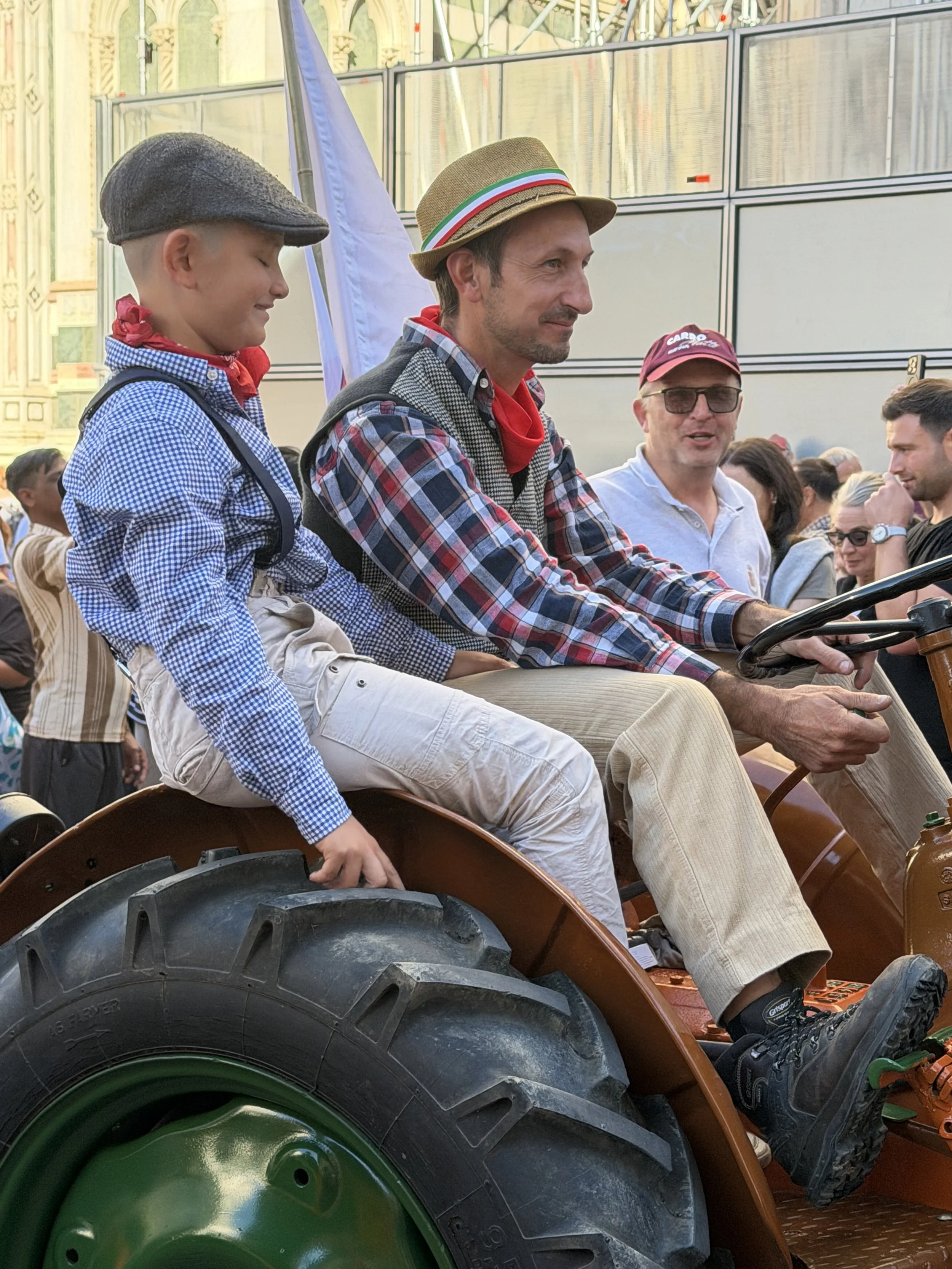
Today, the tradition of blessing the new Chianti is celebrated on the last Saturday in September when the Carro Matto (crazy cart) procession takes place.  Once pulled by oxen, this year it was a tractor that pulled the cart which was piled high with over 1000 bottles of wine in the classic fiaschi. 

The procession began in front of the Duomo and moved down Via Calzaiuoli.  Along the way it made a brief stop at the small Church of San Carlo dei Lombardi, very near the part of the city where a traditional maker of the flasks (a fiascaio) would have had his workshop.  The procession ended in Piazza Signoria where a fiasco was presented to city leaders.  In the 1400 and 1500’s the first bottle might have gone to a Medici – today it was given to the elected mayor. 
IMG_0796.jpeg
IMG_0713.jpeg
IMG_0760.jpeg

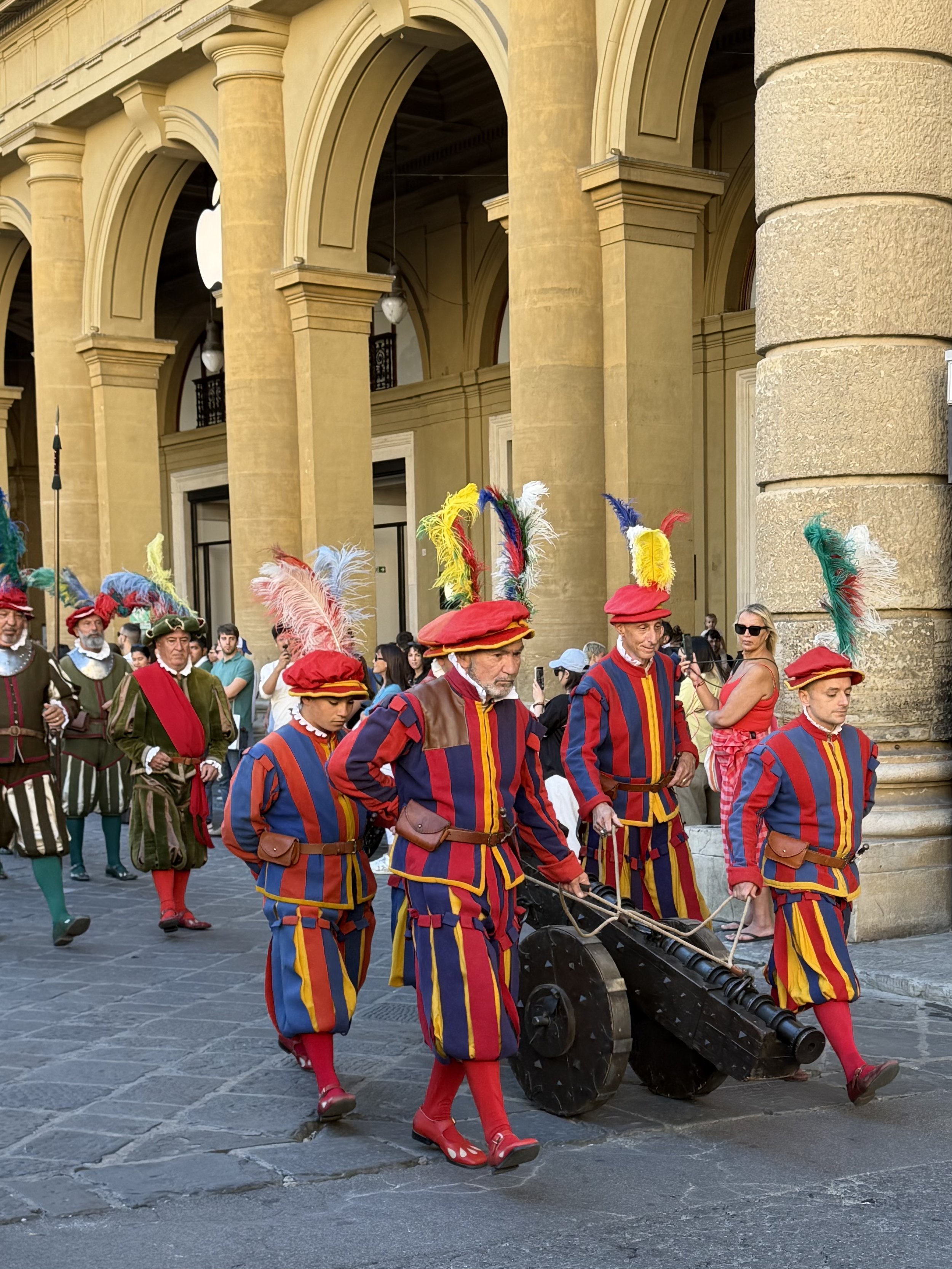
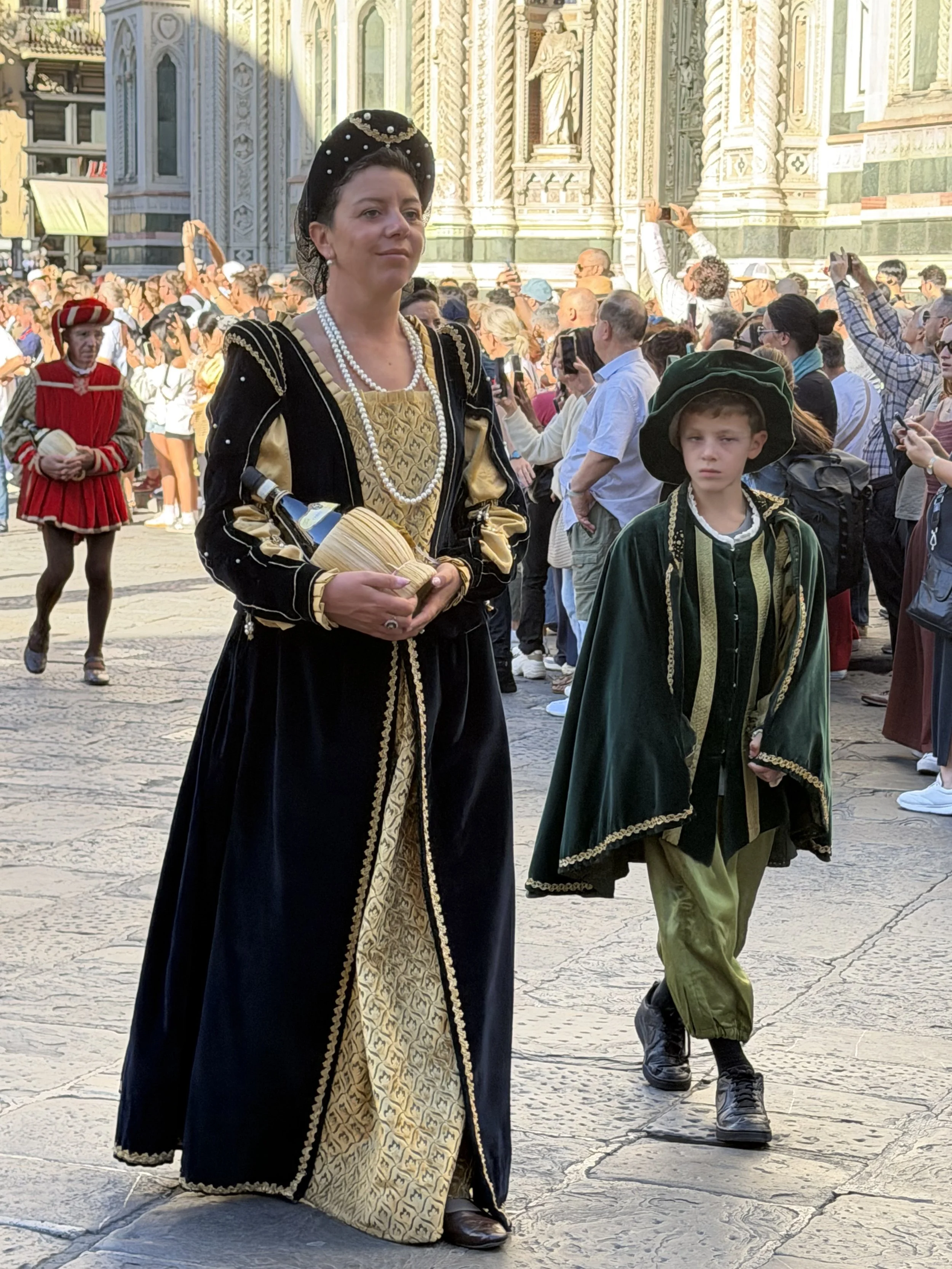
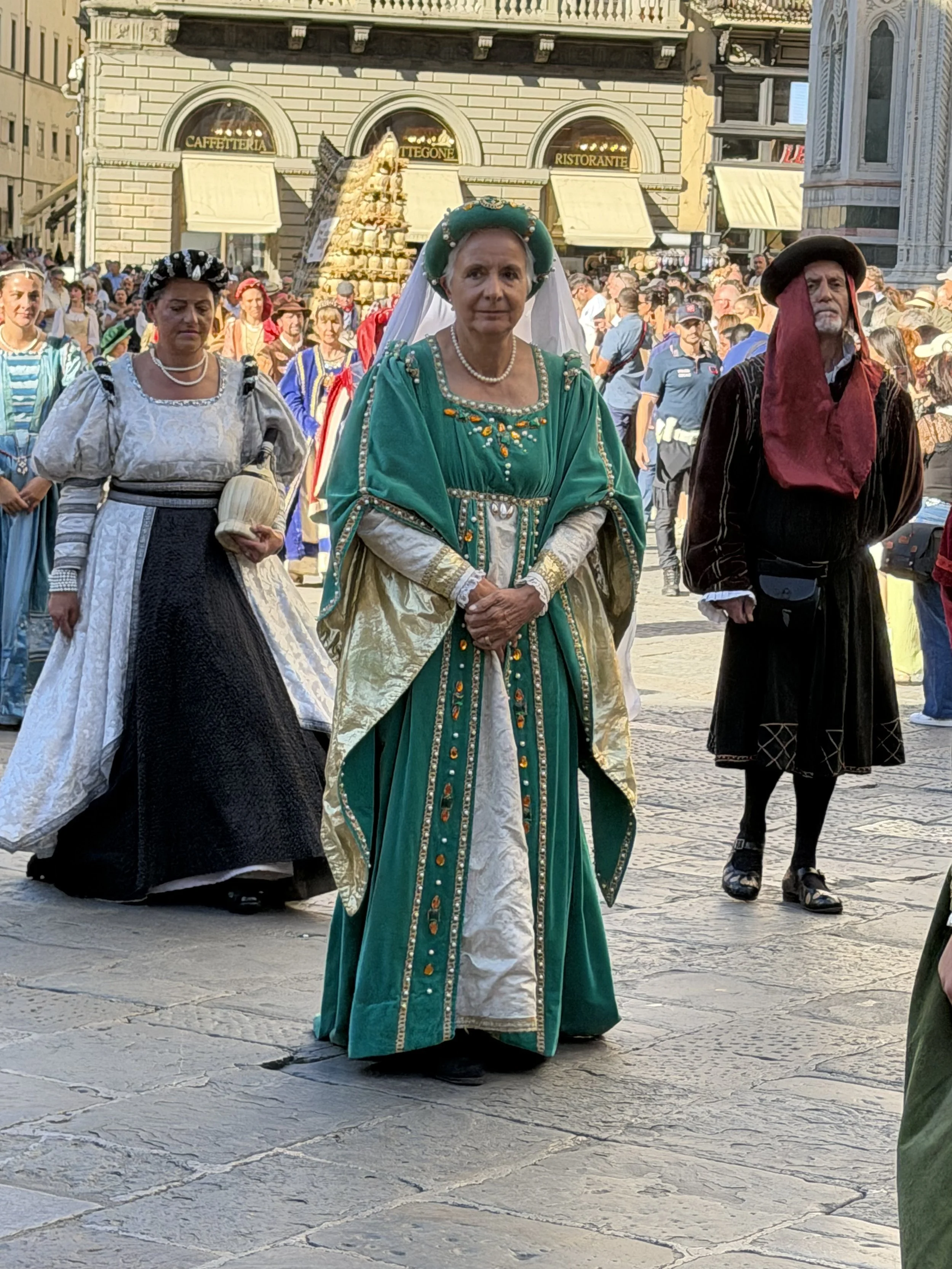
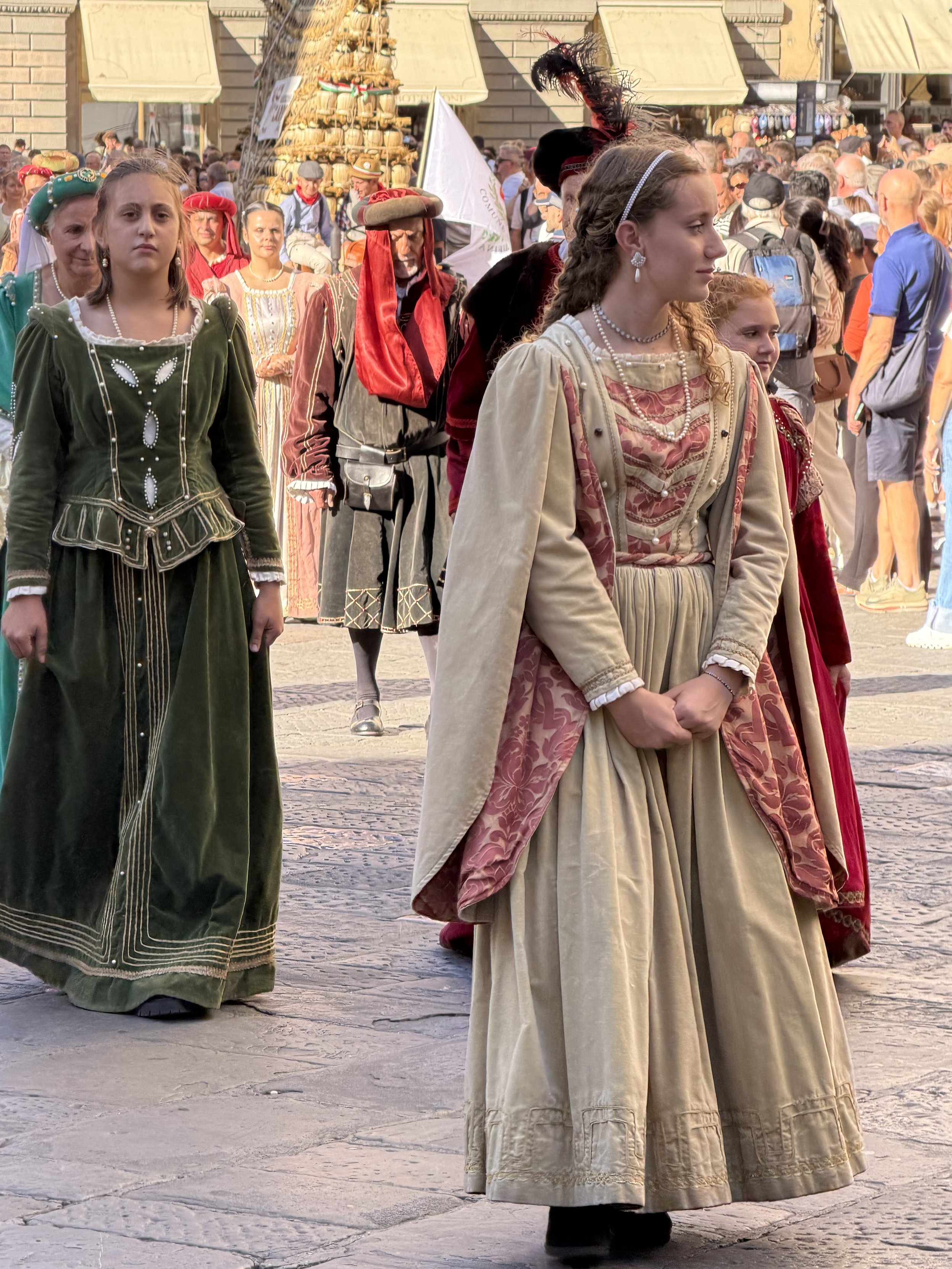
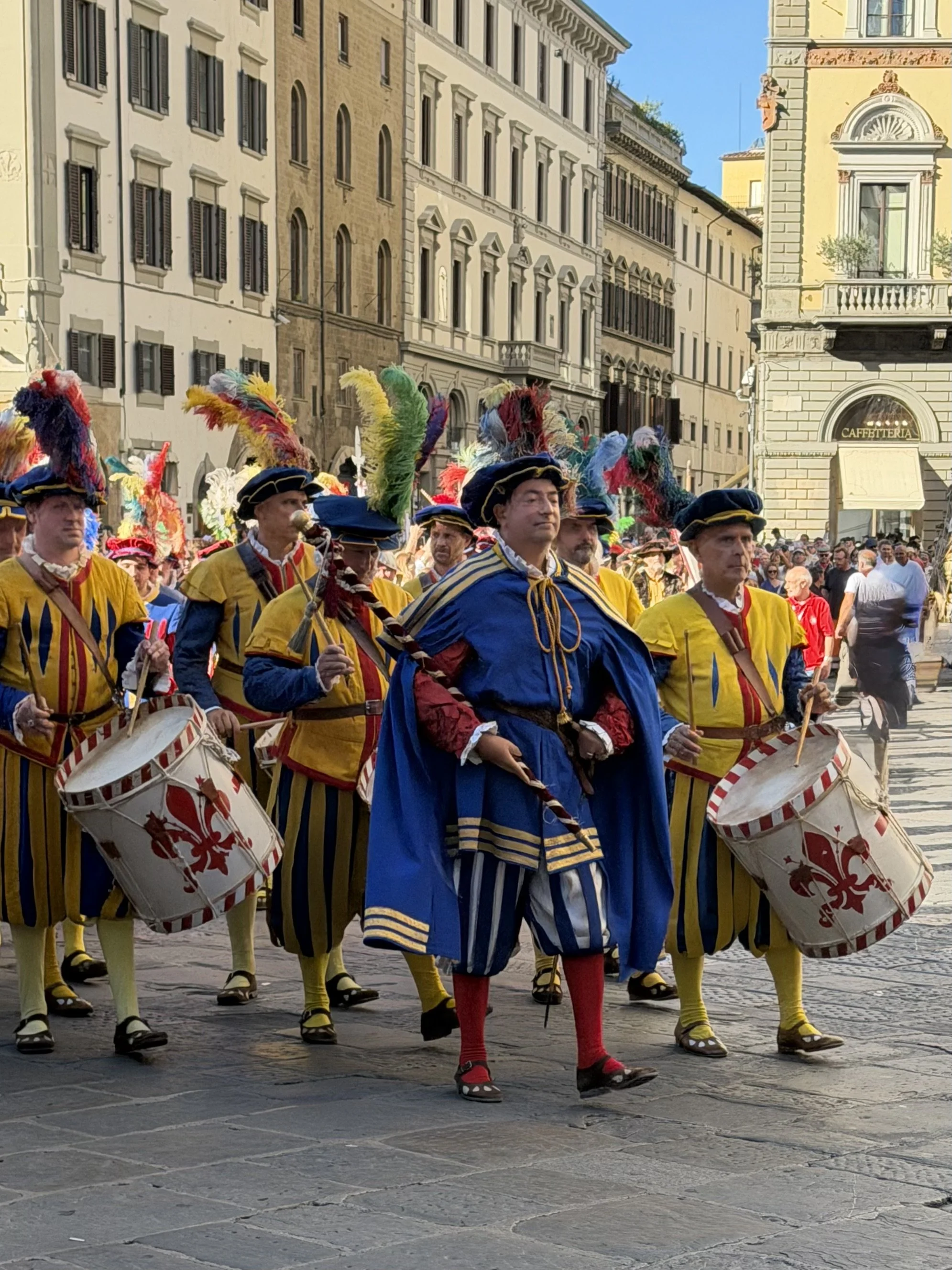
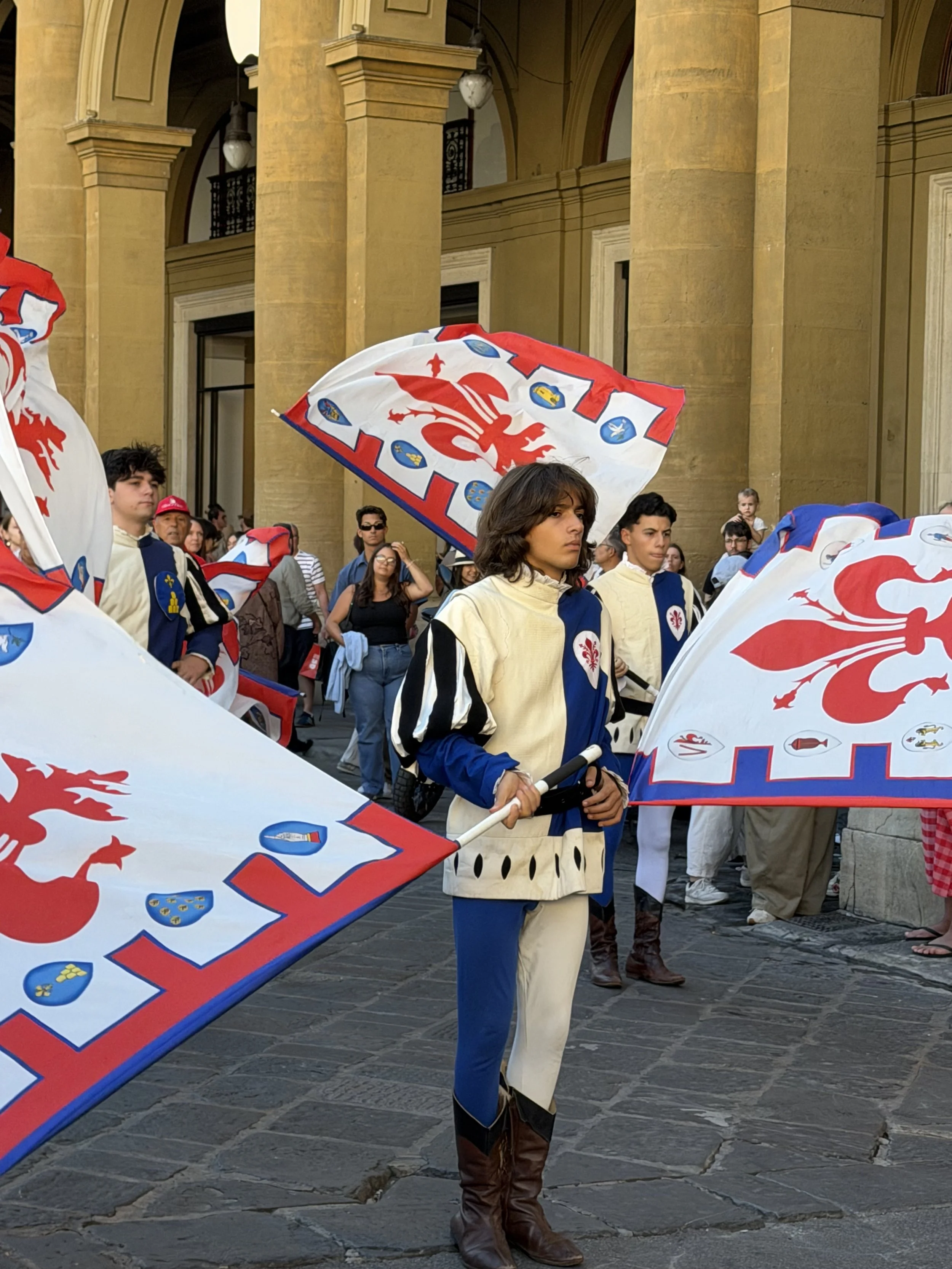
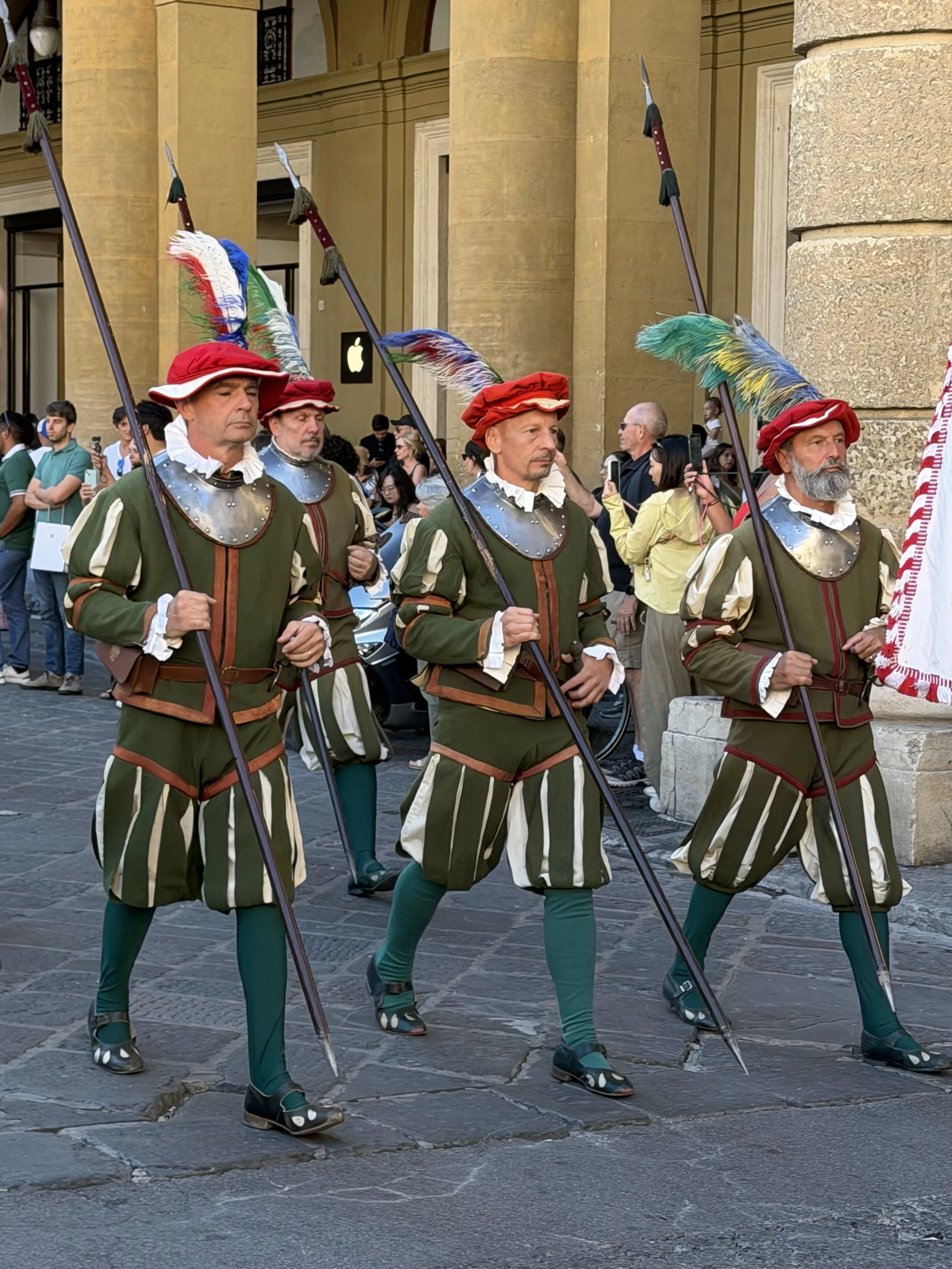
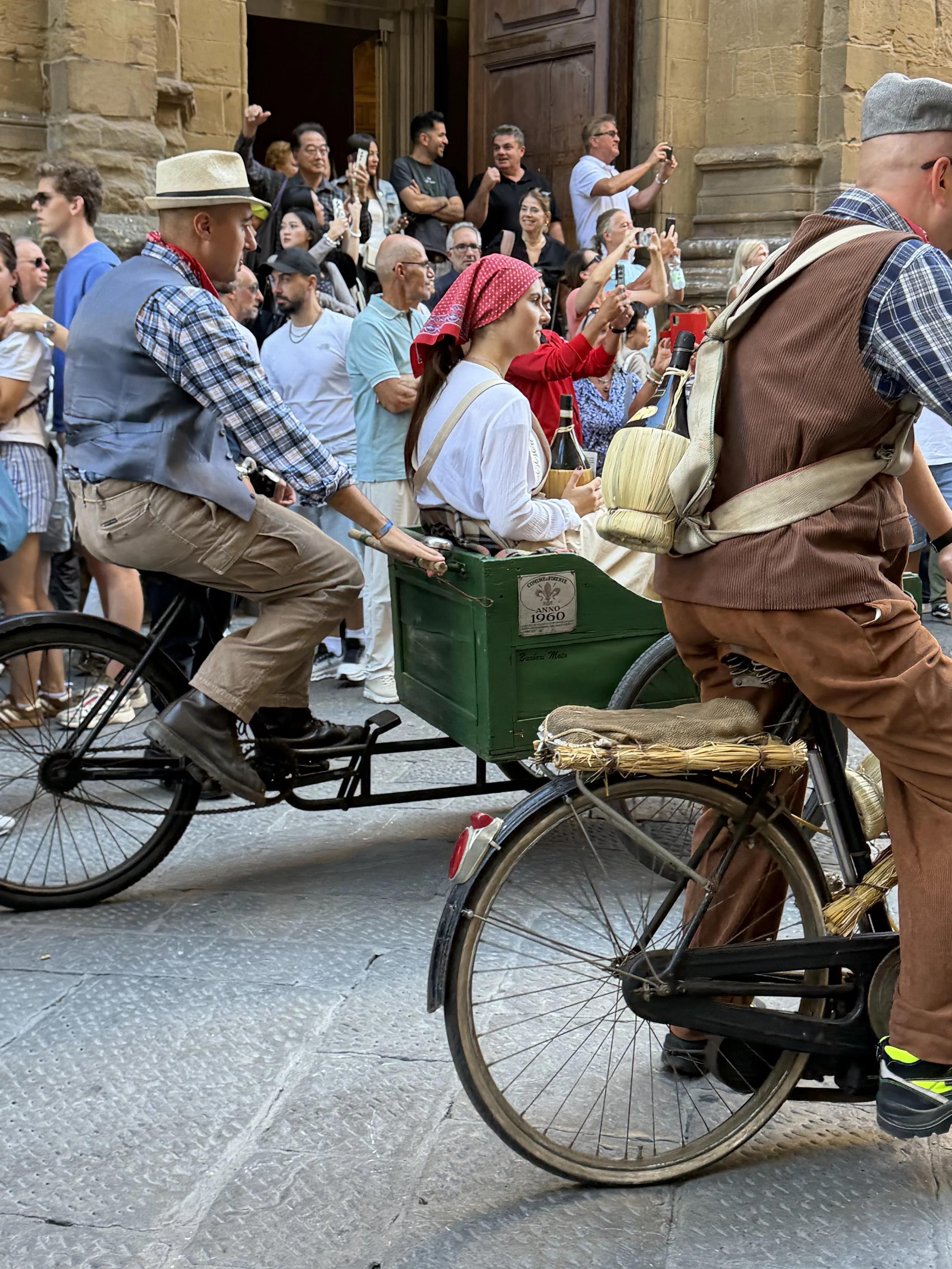
Accompanying the Carro Matto were people dressed in historic costumes, helmeted guards, musicians, and the Bandierai degli Uffizi (traditional flag bearers) who delighted the crowd with their flag-throwing.  Women carried individual fiaschi to be presented to the dignitaries. 
IMG_0776.jpeg
IMG_0751.jpeg
IMG_0748.jpeg
IMG_0741.jpeg
IMG_0721.jpeg
IMG_0715.jpeg

Crowds watched as the cart made its way along the route, looking as if the bottles could topple at any minute.  A crazy cart indeed.   Fortunately, the bottles remained in place, the wine was blessed, and the celebrations continued.  Time to toast the new wine with a glass of Chianti!    
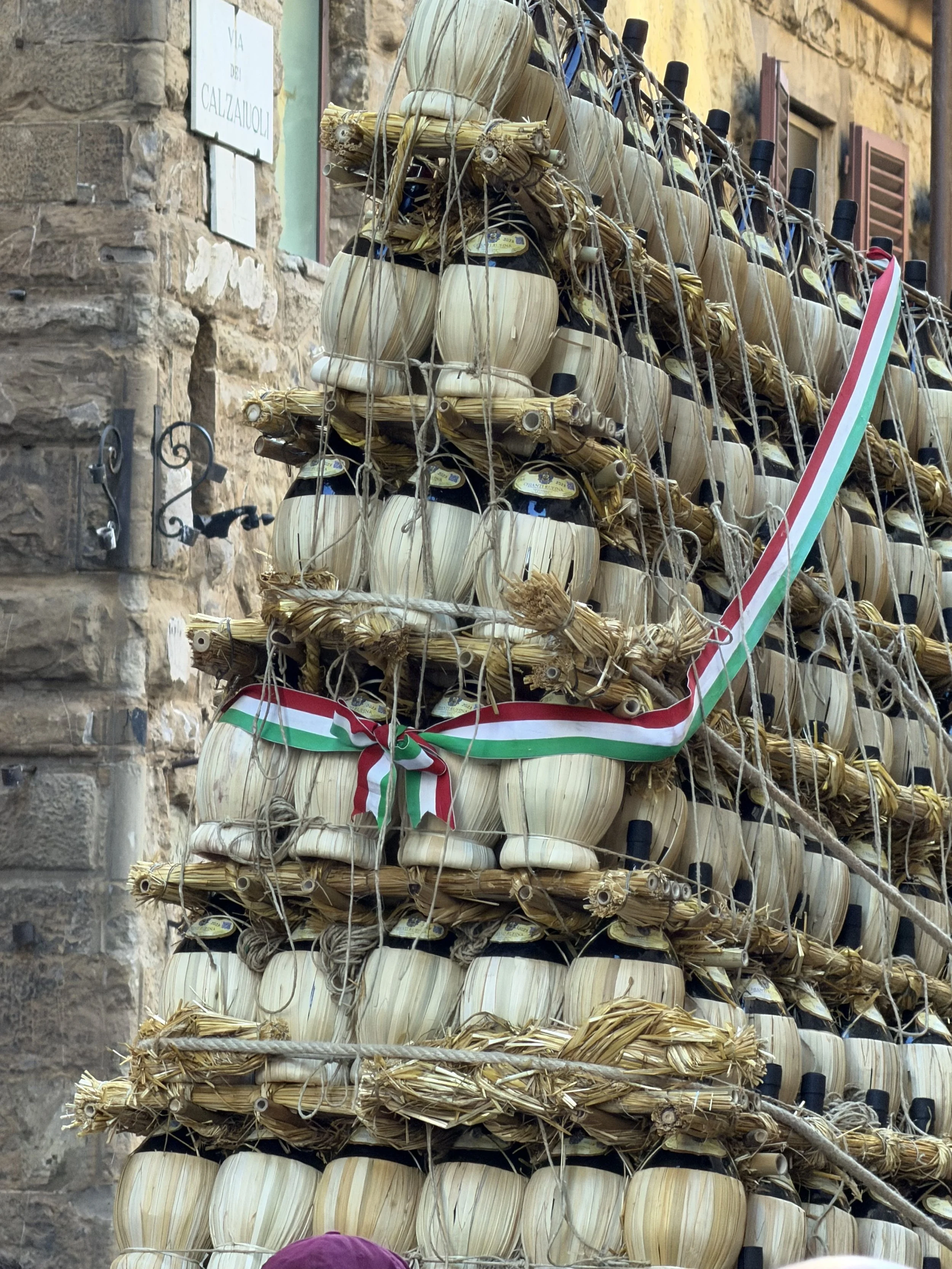
Hard to believe this doesn’t topple over!

October 05, 2026 /Joanne Bartram
Carro Matto, Blessing the Wine, Chianti Wine
#florence, #italytravel, #medievalitaly, Autumn in Italy, Chianti Region, Festivals Italy, Italian culture, Italy, Tuscany
The vineyards of the Chianti Classico Region, as seen from the bell tower at Canonica a Cerreto Winery

The vineyards of the Chianti Classico Region, as seen from the bell tower at Canonica a Cerreto Winery

Wine Tasting in Tuscany

September 16, 2019 by Joanne Bartram in #italytravel, Chianti Region, Italy travel, Tuscany, Wine
20190828_165445_resized.jpg

In fall 2018, I spent a day driving through the Chianti region with friends (see A Taste of Chianti, October 2018). I’d been itching to get back to that area ever since, for its beauty and for the opportunity to do some wine tasting. The regional wine is Chianti Classico - a medium-bodied, dry red wine made mostly from Sangiovese grapes, grown and produced in the limited geographic area of the original five Chianti villages (outside of this small region the wine might be called Chianti, but it can not be labeled Chianti Classico nor can it carry the Gallo Nero (black rooster) symbol). And while I appreciate good wine, and loved my first experience with genuine Chianti Classico last year, I am definitely not a wine expert. And that’s where Mirko Gosgnach and Frontier Wine Tours enter the picture.

20190828_122945.jpg

Mirko is an Italian/Canadian who knows a lot about wine, especially Chianti Classico.

He works with a small group of wine experts to help support smaller vineyards in the Chianti Classico region, to market their wines and to teach people like me about vines, grapes, wine production and the beauty of the Chianti region.

And since you can’t properly learn about wine without visiting the vineyards and tasting, Mirko leads wine-tasting tours, which is how I came to join a group of friends for a day with Mirko exploring the wines of the Chianti Classico region.

The day began in Italian style with a cappuccino at a local bar in Lucca where our group gathered to meet Mirko. We settled into his big, comfy SUV and quickly learned that we were in for a fun day visiting two wineries, one of which was on the grounds of a historic villa. The villa was not open to the public but, lucky us, Mirko had the keys! We also discovered that he not only speaks perfect English (along with fluent Italian) but he is charming, funny, knowledgeable, and flexible. And, he is prone to breaking into song as he drives through beautiful Tuscan landscapes.

Canonica a Cerato (the chapel)

Canonica a Cerato (the chapel)

Our first stop was at Canonica a Cerreto, just east of Siena in the comune of Castelnuovo Berardenga, part of the Chianti Classico region. The first wines were produced here a thousand years ago for the monks of Siena. The name, Canonica, reflects its origins as a summer rectory for the monks, and Cerreto, the name of the oak trees in the surrounding woods. Loosely translated: Little Chapel in the Oak Woods.

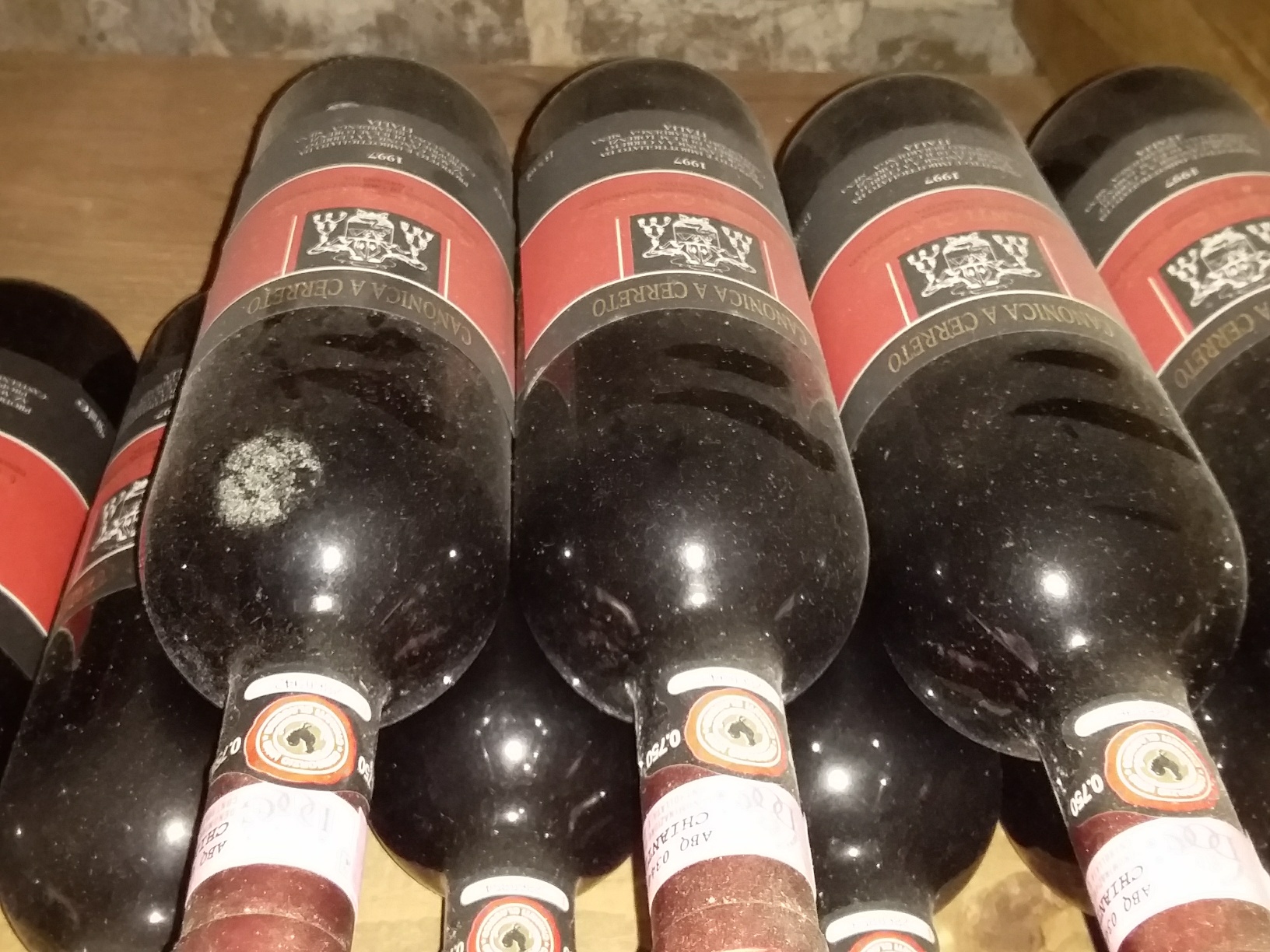
Today the vines cover gentle hills and the grapes are harvested by hand and aged in oak barrels. Around 120,000 bottles are produced each year, some of which are exported to the United States but many of which remain in local wine shops. And while the modern area for processing and bottling the wine is new, the older cellar is where we tasted the wines.

The old wine cellar and tasting room at Canonica a Cerreto

The old wine cellar and tasting room at Canonica a Cerreto

What lovely wines they were! Some were DOCG wines (this designates a wine of highest quality under Italian standards, with strict requirements for production and taste), including a wonderful Chianti Classico Riserva.

20190828_142242.jpg
20190828_122549_resized.jpg
20190828_122540_resized.jpg

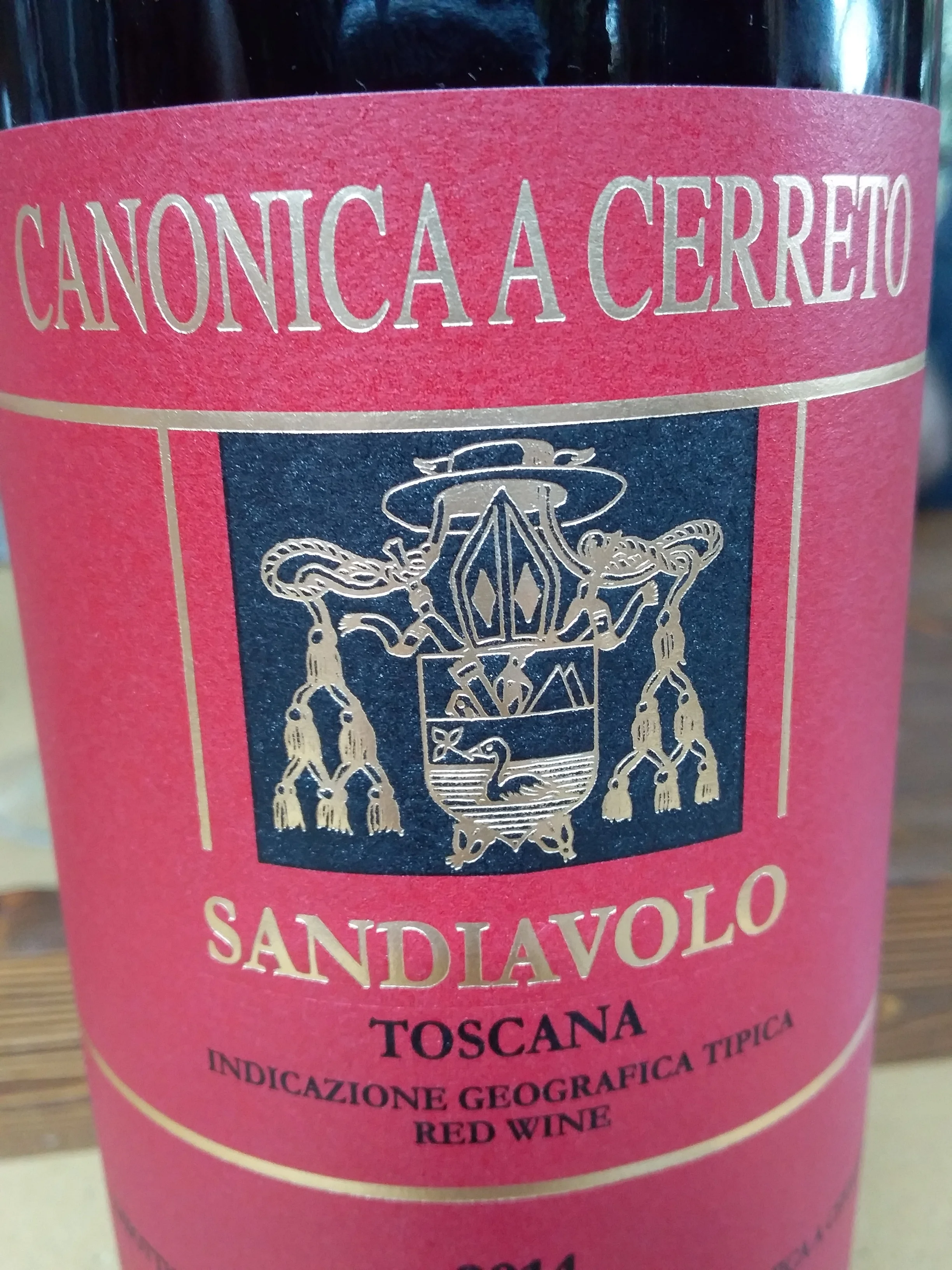
My favorite wine was the Sandiavolo (a bit of an oxymoron, which translates to Saint Devil). Sandiavolo carries an IGT (Indicazione Geografica Tipica) label. Restrictions for IGT wines are less strict and allow producers more flexibility in the blends of grapes used, though the grapes still come from a single region. This type of wine is often called “Super Tuscan.” And the Sandiavolo really was super! A blend of Sangiovese, Merlot and Cabernet Sauvignon grapes, it was … well, I can only say it was smooth, dry yet fruity, with not too much tannin. I am not nearly wine savvy enough to say things like “notes of blackberry, a hint of mineral” but Wine Spector gave the 2006 vintage this review: “generous, complex, elegant, and sweet. Small red and blackberries are in perfect equilibrium with a hint of forest floor, mineral notes, and sweet balsamic spice.” Uh huh … that’s just what I meant.

View from the terrace at Canonica a Cerreto

View from the terrace at Canonica a Cerreto

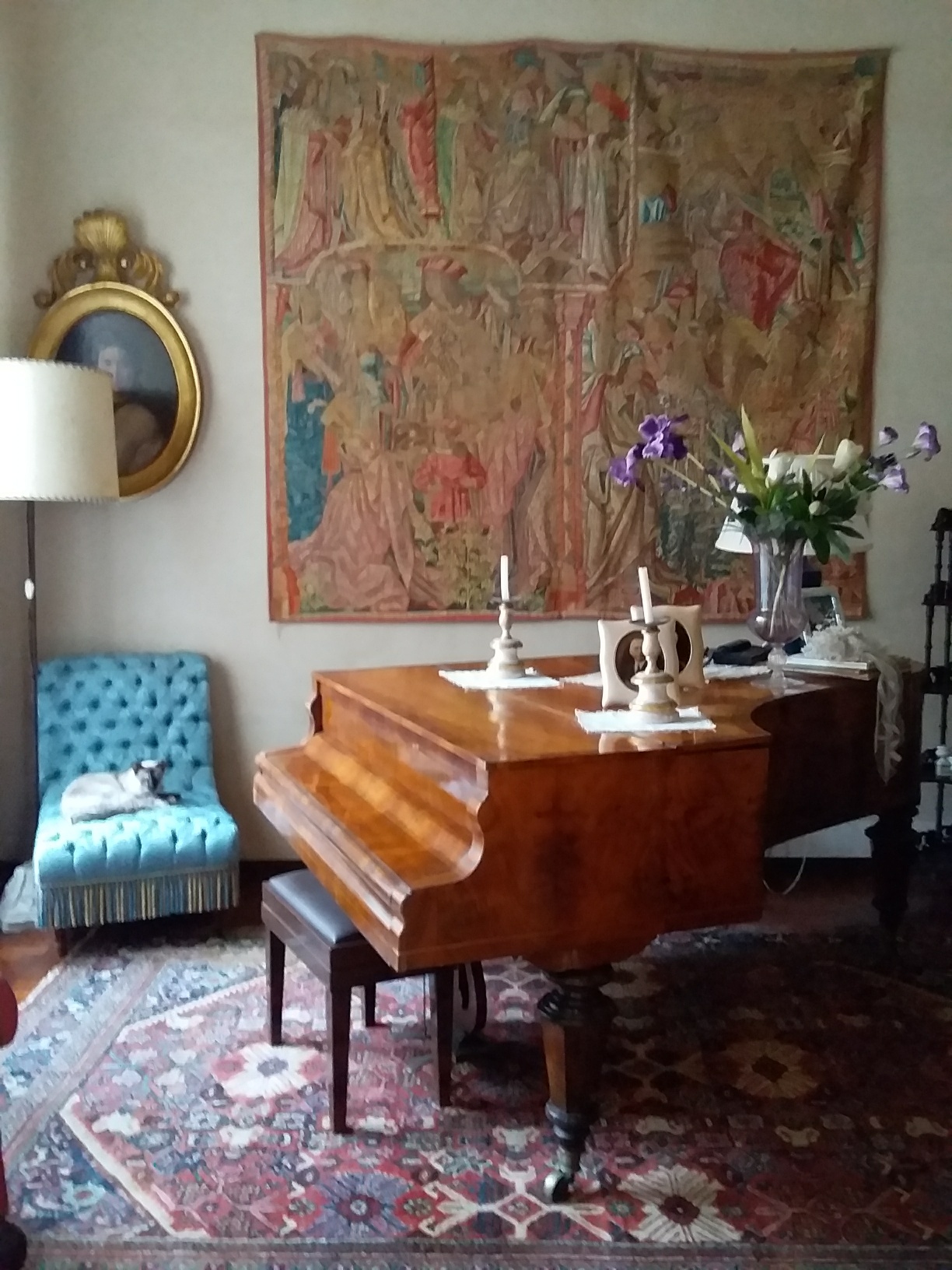
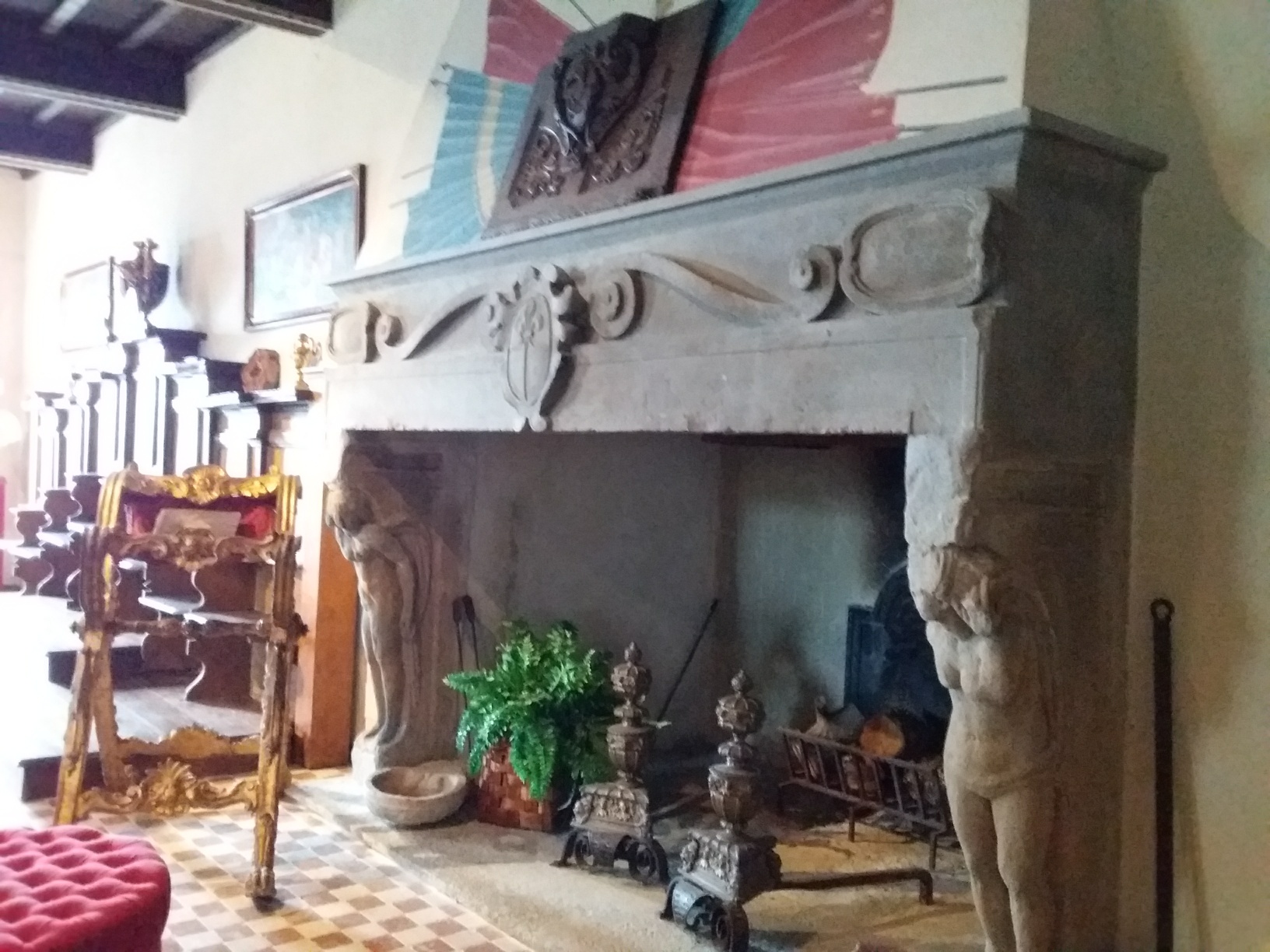
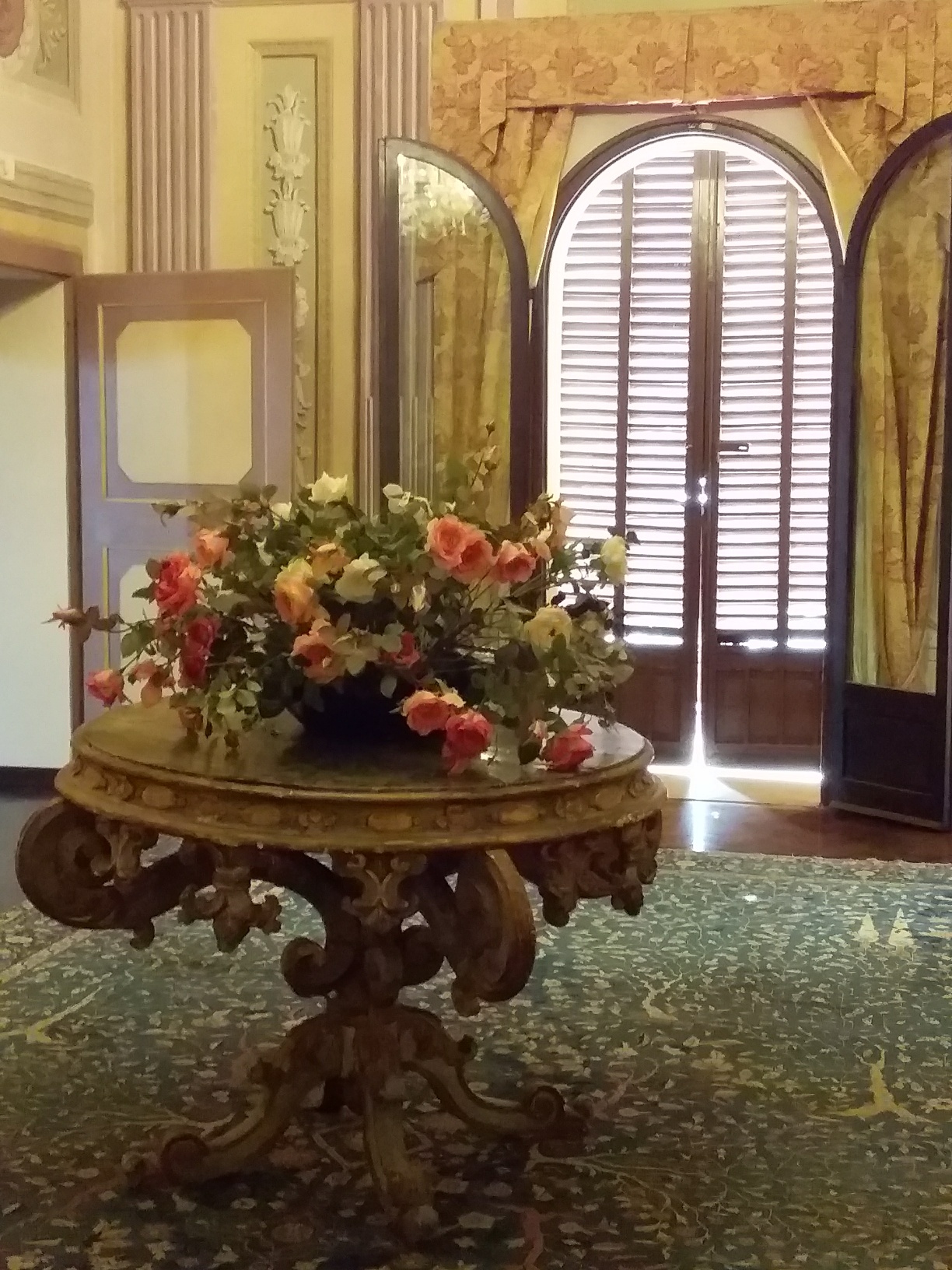
Canonica a Cerreto is also a stunning villa. Initially built as a retreat for clergy from Siena, remodeled by the Bishop of Siena in the 1700s. It passed into private hands in the early 1900s and sat abandoned from about 1930 until 1978. Since then it has been owned by the same Italian family who have restored the property, maintaining original character wherever possible. The results are a home elegant and comfortable filled with art and unique furnishings. And views to the Tuscan countryside!

20190828_111501_resized.jpg
20190828_115417_resized.jpg
20190828_113538_resized.jpg
20190828_113340_resized.jpg
20190828_115108_resized.jpg
20190828_115120_resized.jpg

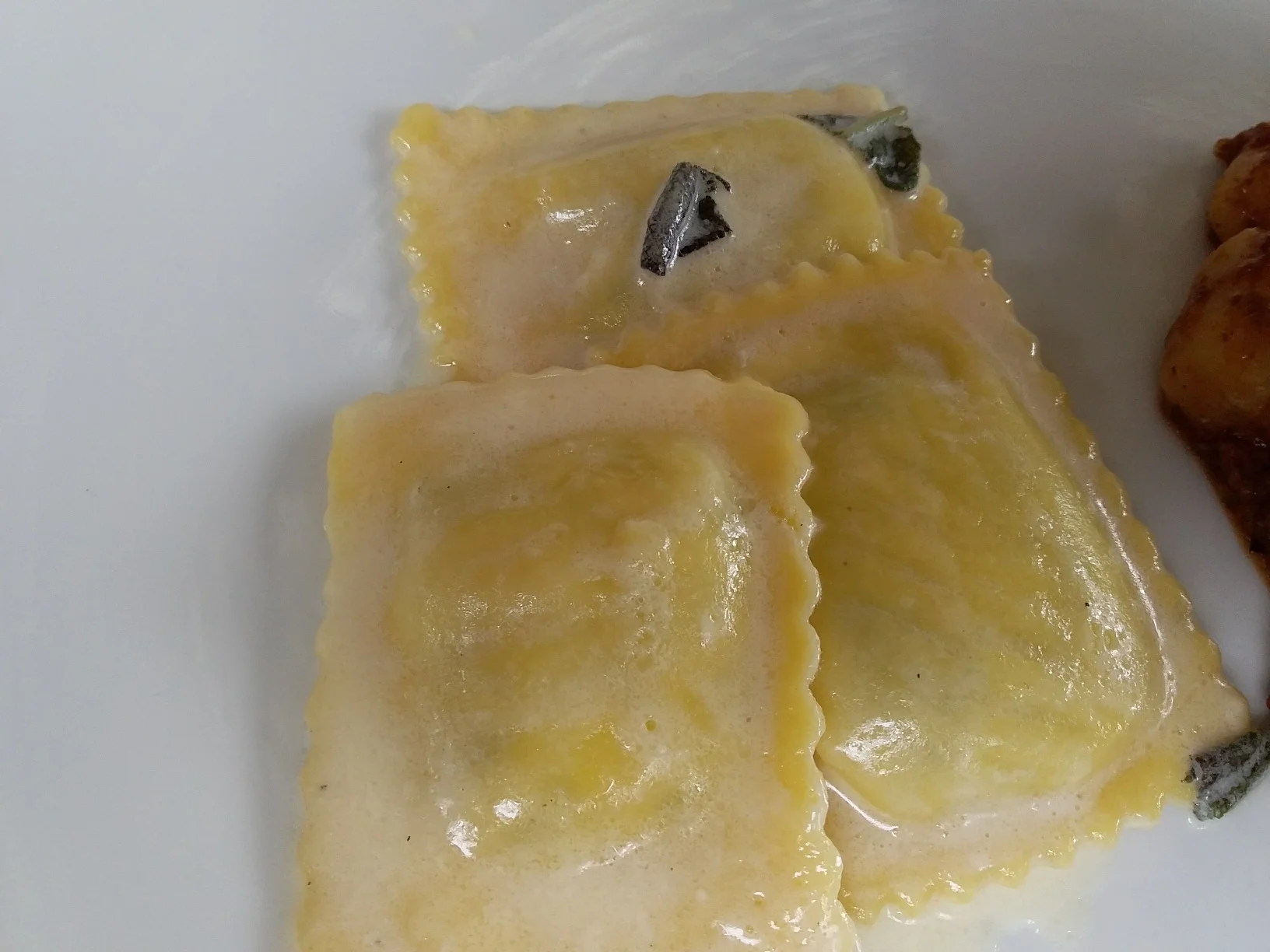
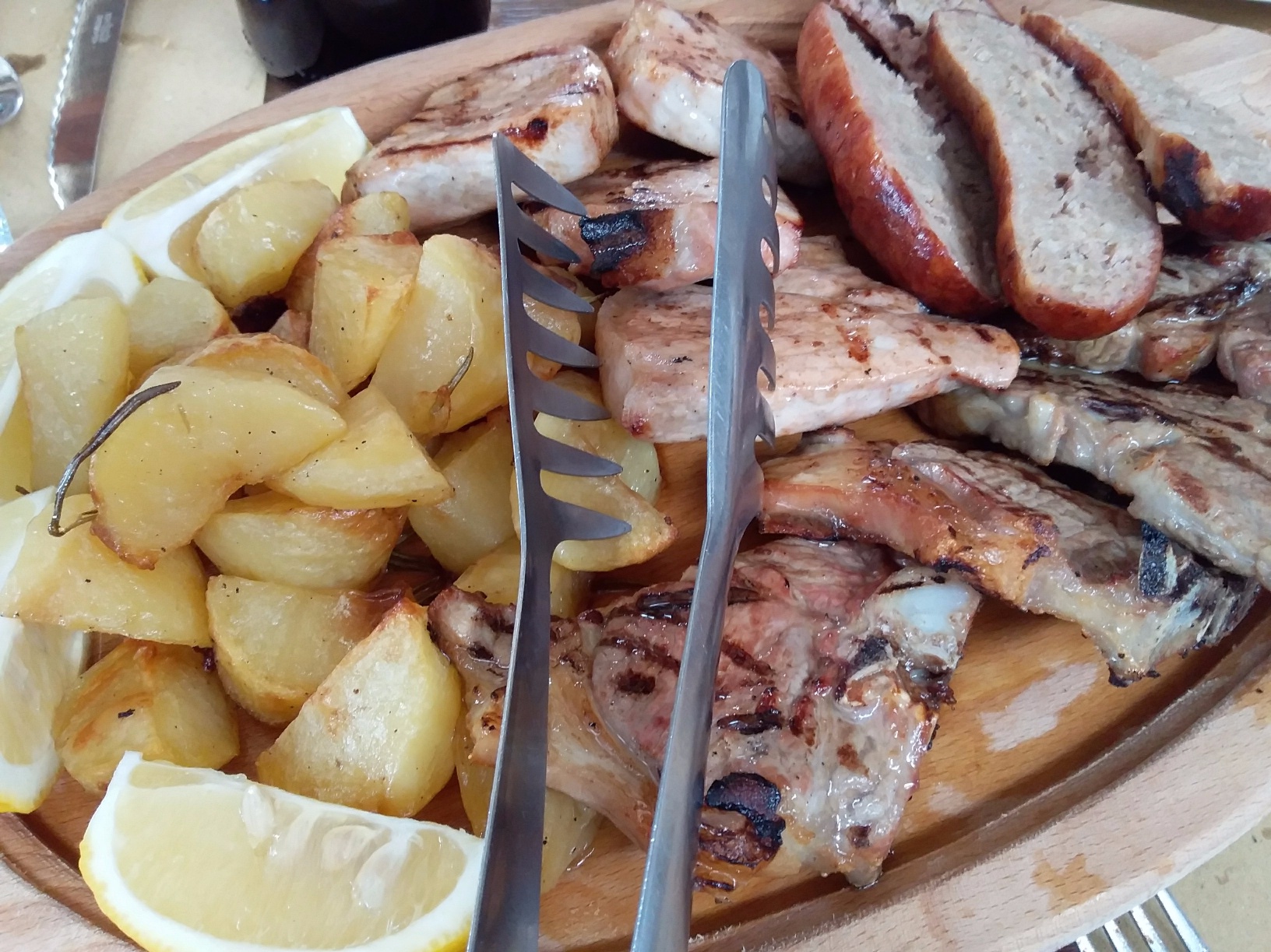
Armed with several bottles of Canonica wine, we headed to lunch at restaurant Peposo in the nearby village of Pianella. Lunch featured regional Tuscan food - a starter of several types of cold cuts, cheese, a bruschetta with sausage and stracchino cheese, and some stuffed zucchini blossoms. Next came a primi (first course) of two types of pasta (light as a feather gnocchi with Bolognese sauce and a ricotta-filled ravioli with sage and butter) followed by a second course of roast meats (sausage, pork, and lamb). All were delicious and the setting, a long table on a pretty outdoor patio, made for a relaxed lunch with good conversation. The meal ended with coffee and a desert of a grilled peach topped with amaretti crumbles. If you find yourself driving through the hills of Chianti, it’s worth a stop here for lunch or dinner. The day was already perfect, and we had one more winery to visit after lunch.

20190828_135227_resized.jpg
20190828_142607_resized.jpg
20190828_145306_resized.jpg

The second winery, Fattoria Lornano, also operates as an agriturismo, hosting visitors who can enjoy their lovely gardens, pool, and Tuscan views. Here we tasted light summery rosato (rose) wines, a couple of Chianti Classicos (one a Reserva and one their most special Gran Selezione - a limited production of a fantastic wine).

Fattoria and Agriturismo Lornano

Fattoria and Agriturismo Lornano

We ended with tasting a Vin Santo that one of our party called “nectar of the Gods.” It was simply the best Vin Santo I have ever tasted.

The wines of Fattoria Lornano

The wines of Fattoria Lornano

The day was one of those peak experiences - good company, great wines, wonderful food, and Tuscany. It doesn’t get much better. . There might even have been singing on the drive home. -post by Joanne

Contact information : www.Frontierwinetours.com

Mirko Gosgnach email: contact@frontierwinetours.com +39 338 608 5634

September 16, 2019 /Joanne Bartram
Chianti Wine Tours, Chianti Wine, Tuscan Wine Tours, Tuscany, Wine tasting italy, #tuscanwinetour, #frontierwinetours
#italytravel, Chianti Region, Italy travel, Tuscany, Wine

Powered by Squarespace