Two Parts Italy

Exploring Italy, travel, and living a flavorful life

  • Blog
  • About This Blog
  • Start Here
  • Recent Posts
  • Archives by Topic
  • Subscribe
  • Contact me

Lucca’s mostly empty Old Mercato is currently undergoing renovation. Sadly, it is unlikely that it will ever be a true mercato again.

A Butcher, A Baker, A Pasta maker And More
November 27, 2023 by Joanne Bartram in #florence, Florence, Italian culture, Italian markets

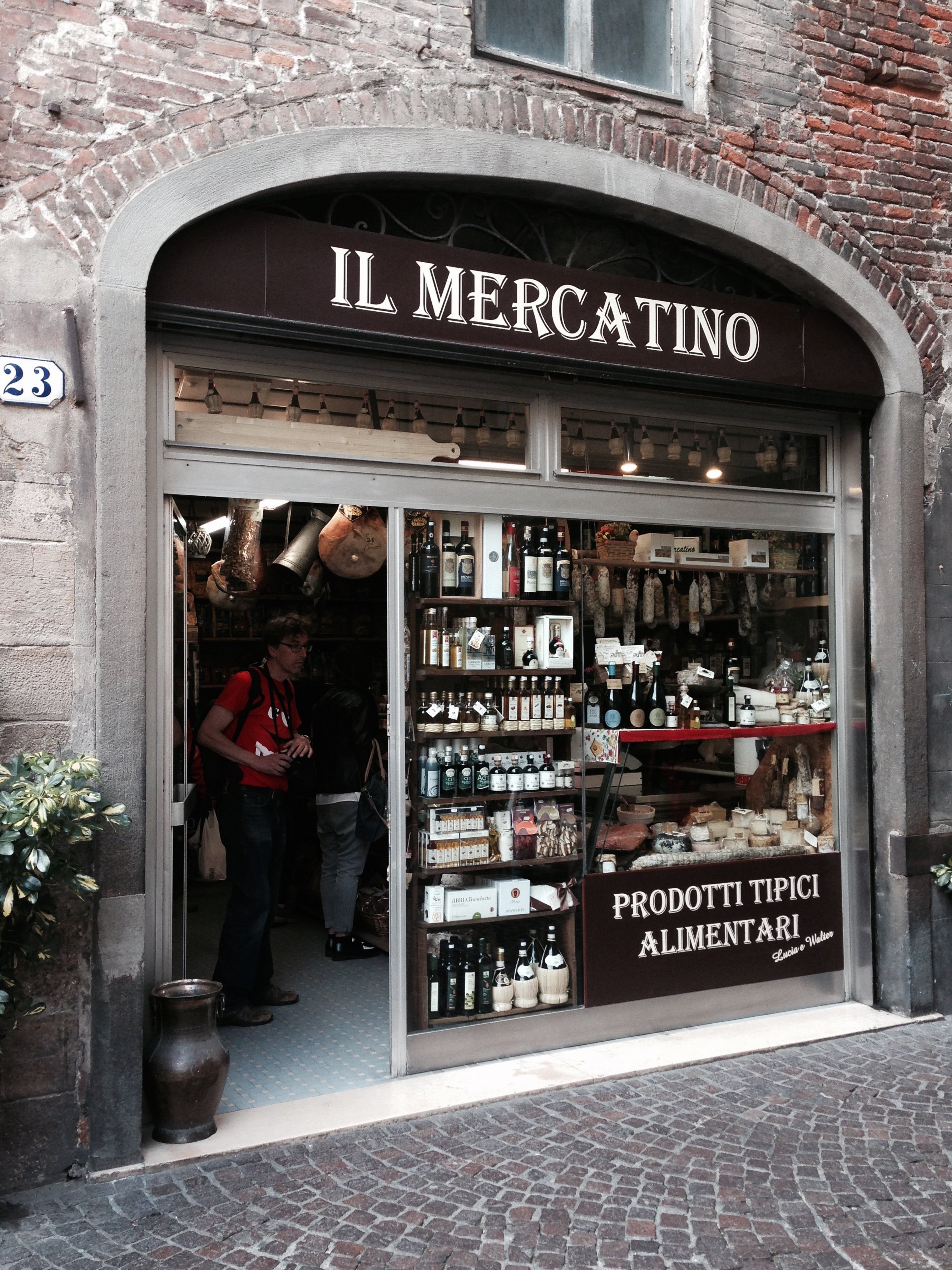
One of my favorite small shops in Lucca.

 Lucca has a host of small, family run food shops – places that specialize in salumi (cured meats), formaggio (cheese), frutta e vedure (fruit and vegetables), or dolce (sweets).  

The forno is the place to go to buy bread, the pasticceria for pastries and cakes, the latteria for milk products, and a macelleria for meats.  There is even a polleria that has the most delicious chicken.   Shopping for a meal might involve three or more shops. There is also a Wednesday afternoon organic market in Piazza San Francesco and a large outdoor market on Saturdays, a bit outside of the historic center of town.  All have high quality products, many from local producers. 

 As much as I love shopping at these local places, there is one thing I long for that is nowhere to be found in Lucca – a good daily covered market.  There once was a small permanent market in Lucca in the building that is still called Il Mercato, but that was long ago.  Other than a few small shops (a butcher, a greengrocer, a chocolate shop) and a much loved local bar, most of the market has stood empty at least for the 5 years I have lived in Lucca (and probably much longer).  The old Mercato building is currently undergoing restoration, which has sadly displaced most of the small vendors that had remained, including the Bar del Sole, which has caused a major controversy in town. Sadly, the restoration plan does not seem to include turning it back into a thriving food market.
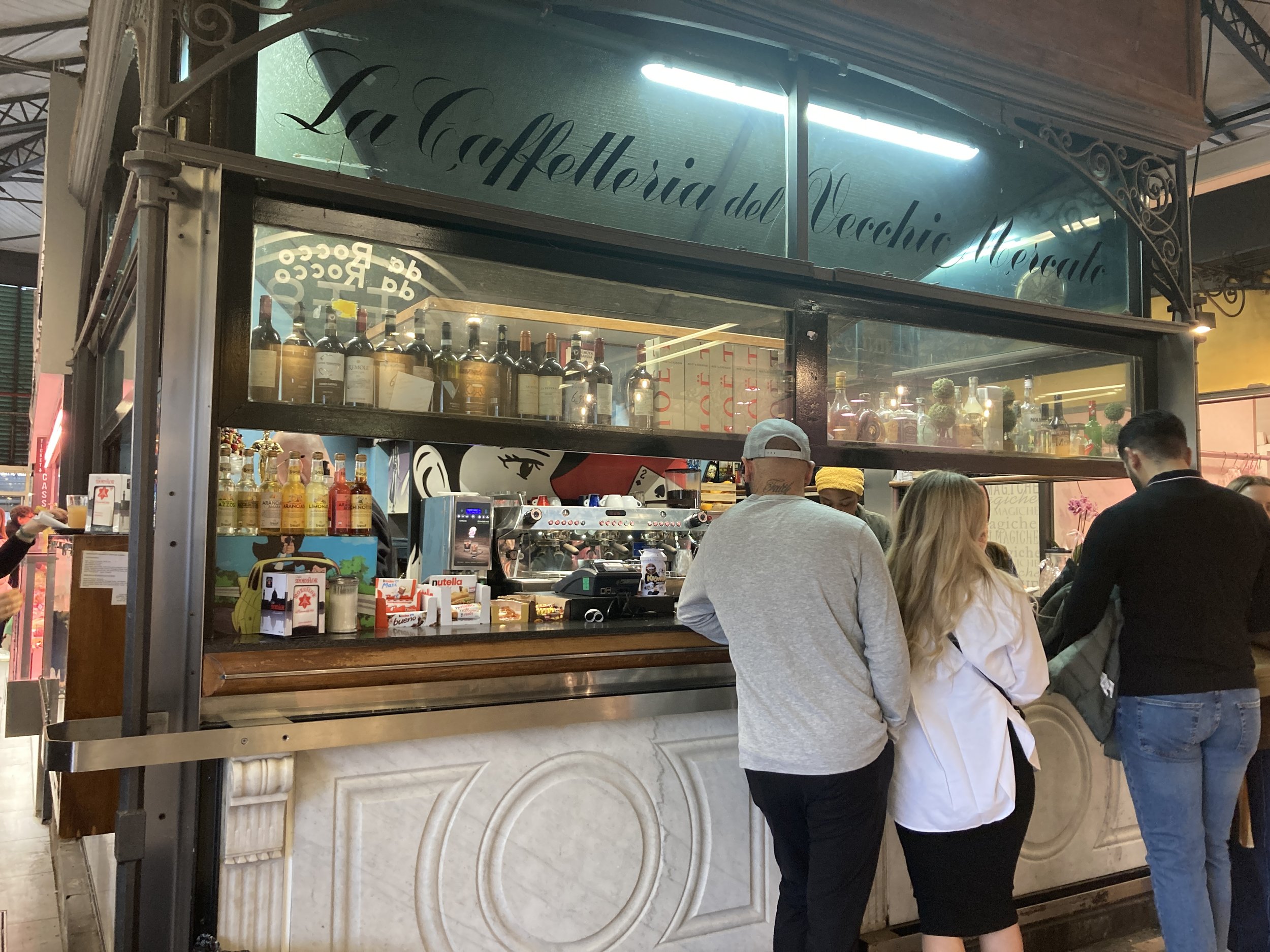
The caffè inside the Sant’Ambrogio market.

 The market I fantasize about having here in Lucca does actually exist – but it is in Florence. 

Located in the Santa Croce district, the Mercato Sant’Ambrogio is the oldest indoor food market in Florence, in business since 1873.  The colors, aromas, and sounds of the market give it a vibrant, full-of-life feel. Layer in the sound of Italian chatter and it is wonderful. The Sant’Ambrogio is my favorite place for an authentic Italian shopping experience.  I can spend a whole morning just wandering through the  market, with a quick stop for a coffee at the caffè. Or maybe a post-shopping lunch at the trattoria. This is one-stop-shopping at its finest!

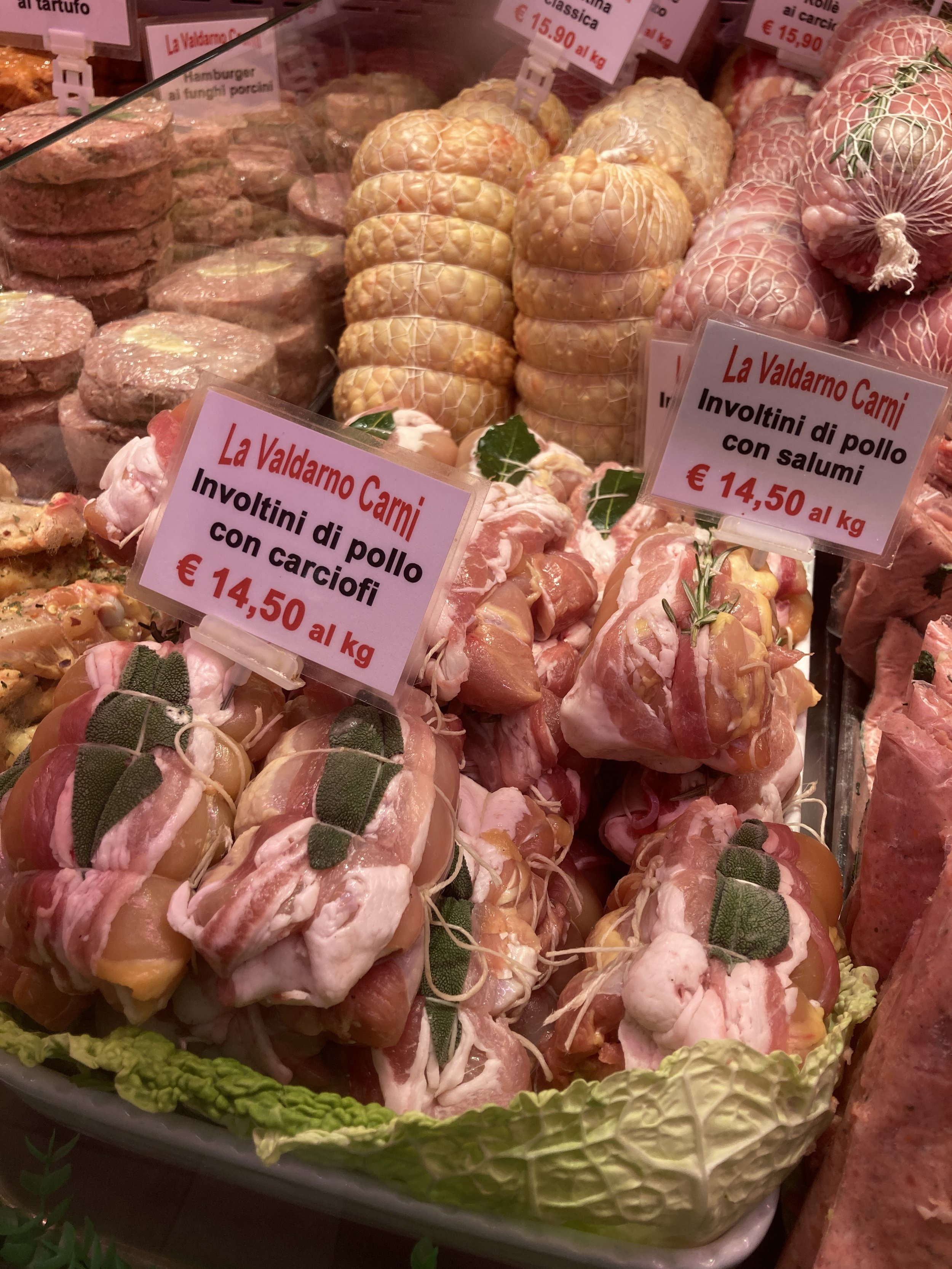
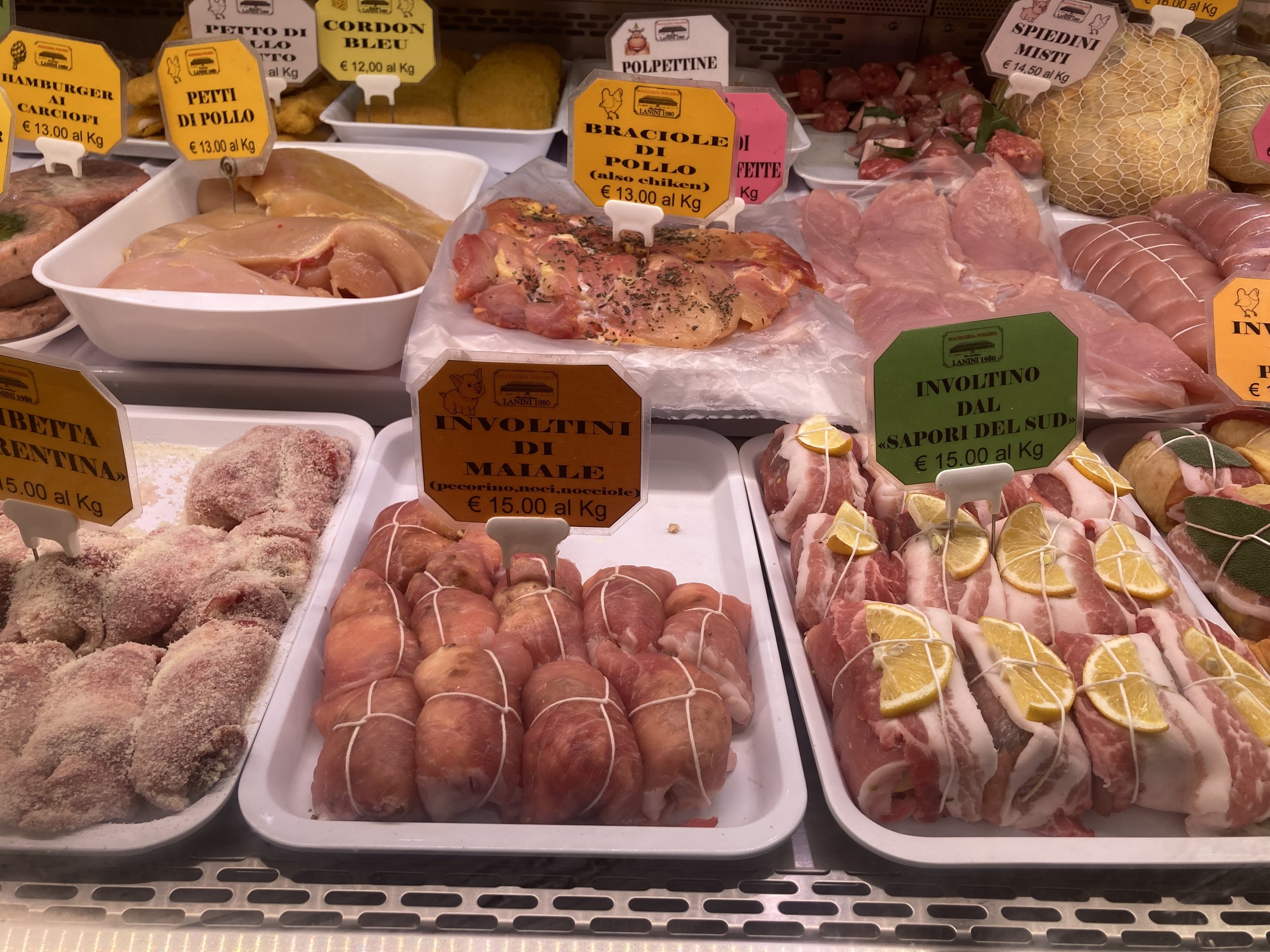
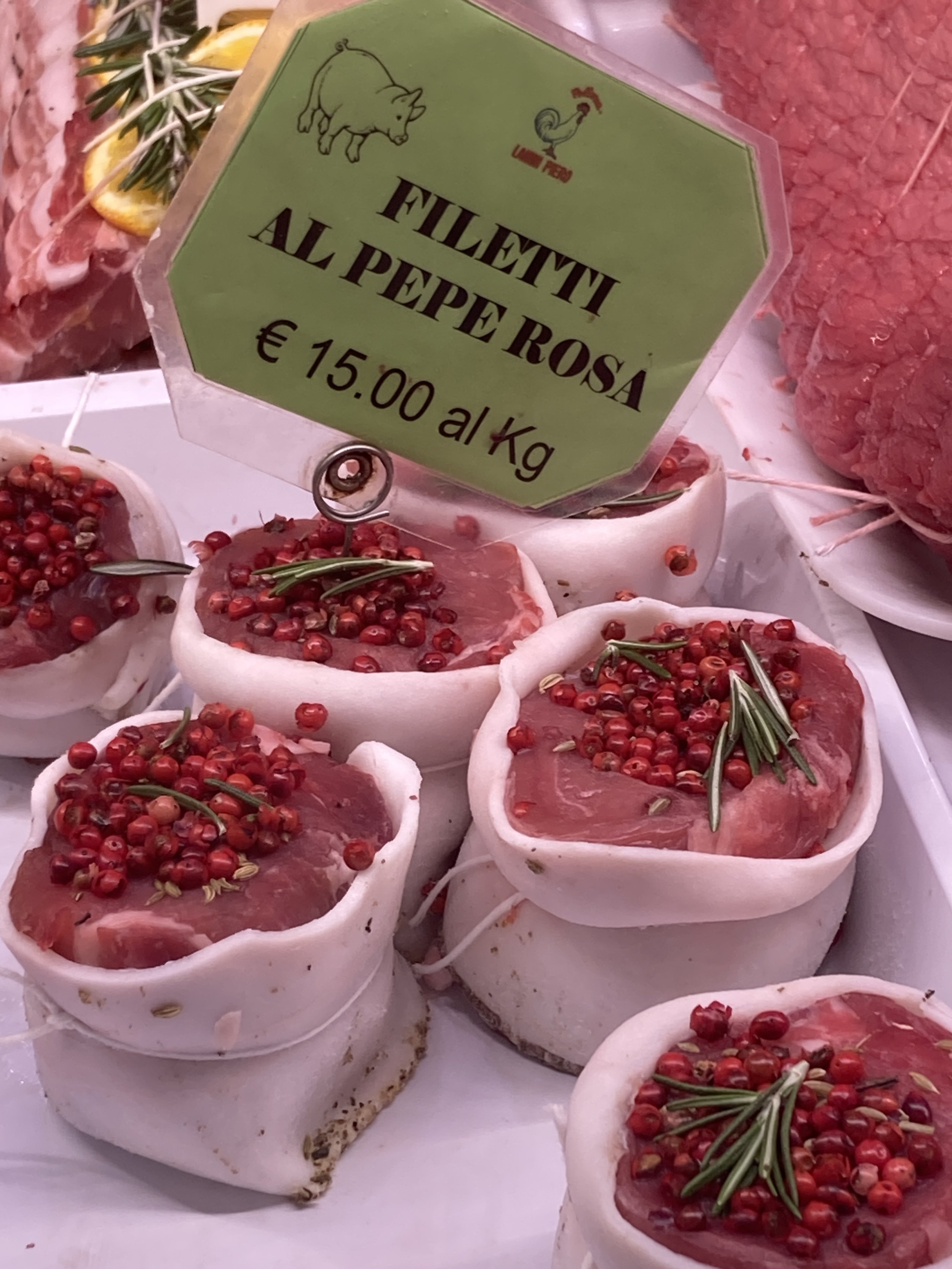
The butcher counters are marvels.  Not only are they full of standard cuts of meat (steaks, roasts, chicken, rabbit, lamb, pork) but also polpetti (meatballs), involtini, small packages of meat rolled around a variety of fillings, and larger roasts filled with a variety of stuffings. It’s a carnivores delight.
DED6CEAE-D0DF-4895-BE0A-012488CC8719.jpeg
91FED908-979F-4BD5-B23E-86634130F3C2.jpeg
EC2DA78B-5DFD-4871-96BD-4871C3DD2B31.jpeg

 The different types of fish look as fresh as can be.  A wide selection of fiish is difficult to find in Lucca and the Sant’Ambrogio has two large fish stalls. If I lived in Florence you would find me here every week buying some of the large shrimp, fish fillets, squid, or anchovies. 

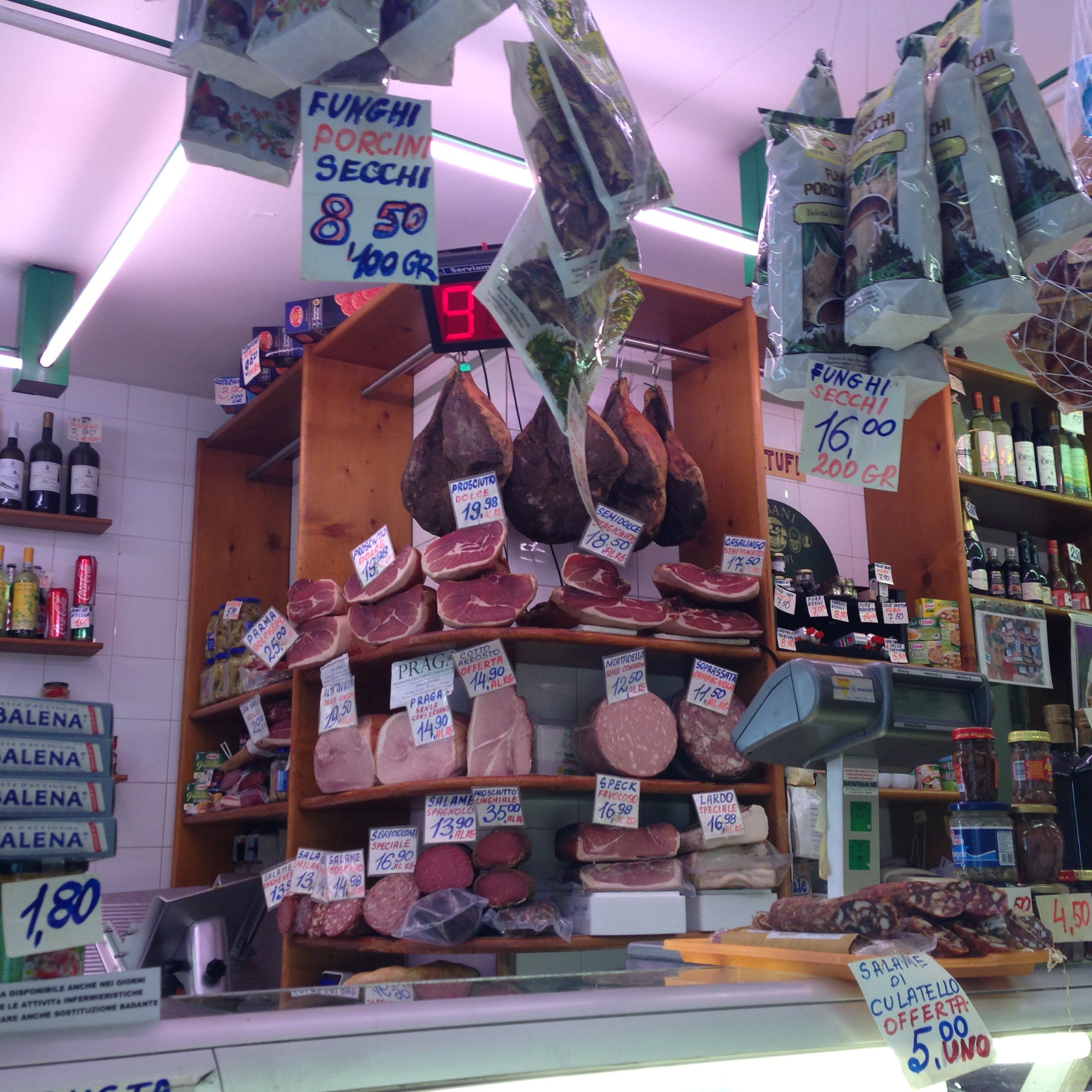
 There are several stalls with cured meats. Large legs of prosciutto crudo (Italy’s famous cured but uncooked ham) hang overhead or sit on the counter waiting to be sliced.  And not just one variety, but prosciutto from different regions, aged for different lengths of time, with different levels of sweetness vs saltiness, and different textures. Then there is prosciutto cotto (a cooked ham), and all types of salami.  
968C532C-603A-43A6-90FC-03188EA818CB.jpeg
35A53301-EE78-4931-A066-BD80736ED3CB.jpeg

 And the cheese stalls!  Tubs of fresh ricotta, rounds of pecorino, little goat cheeses, big rounds of gorgonzola, and balls of mozzarella just for starters.  Soft cheese, hard cheese, and pretty little herb encrusted cheeses call my name as I pass by. There are more varieties of cheese than I could possibly name. I would like to try them all.

27FE683F-8171-4A0D-BC4A-3E1613EA17FF.jpeg
1139CBCF-9B22-4943-8159-0B30E57FD84F.jpeg

There are plenty of marinated goodies too – artichokes, olives, peppers, dried tomatoes, grilled eggplant, anchovies.  

Add some of those to the cured meats and cheeses and you have an instant aperitivo spread or a tasty lunch.

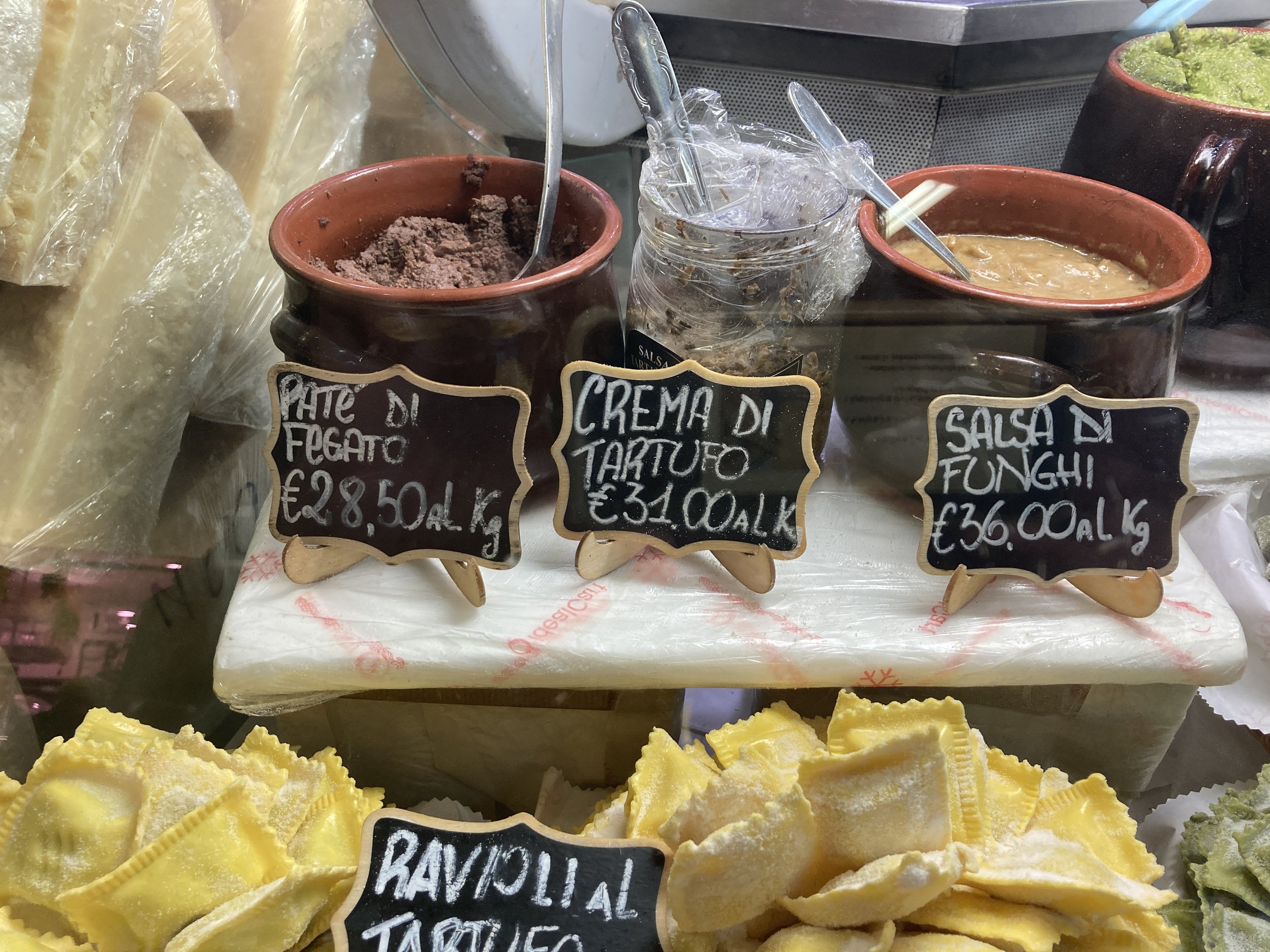
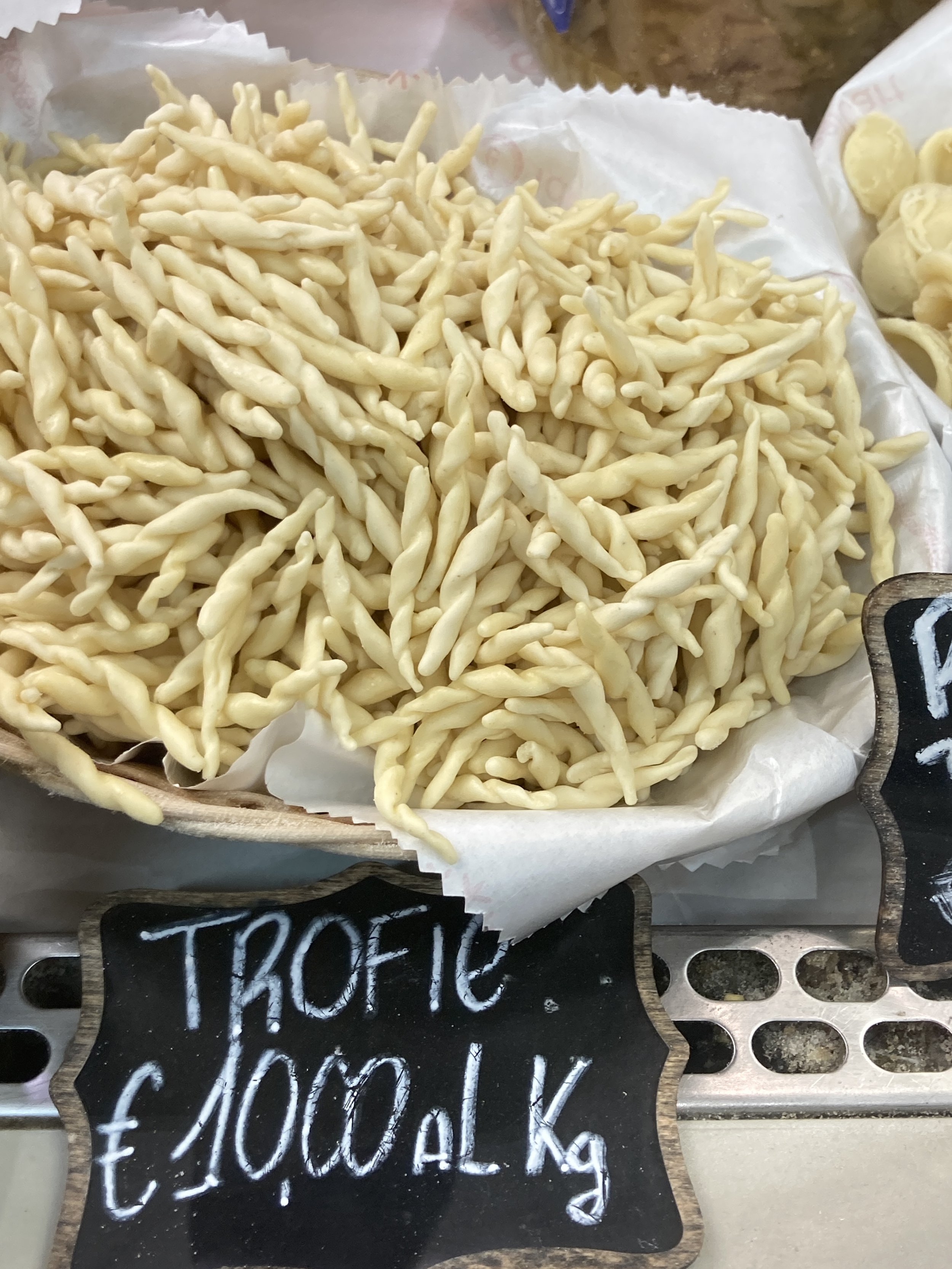
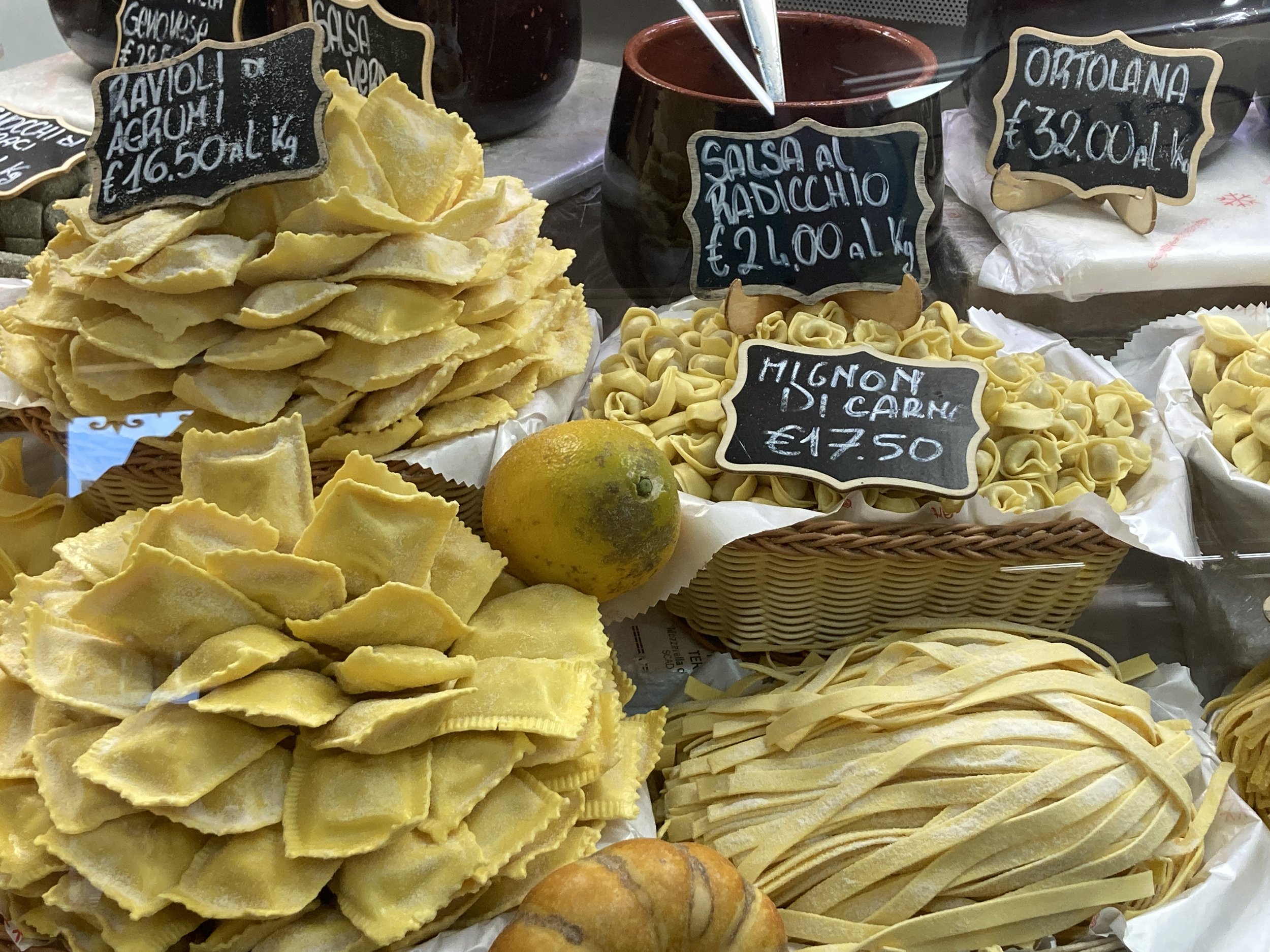
Oh those fresh pastas! Plain or filled, they are a carb lovers treat.  There are mounds of fresh linguini, filled ravioli, trofie, and gnocchi.   Crocks of prepared sauces hold the perfect toppings for the various pastas.
B6509D41-CBB8-4CBB-A8BD-6DC0E62DAC37.jpeg
D0CC0A70-5CBE-44CC-B315-225AC39EE778.jpeg
C857E07C-857B-4469-A043-C4A8F32EB4DB.jpeg

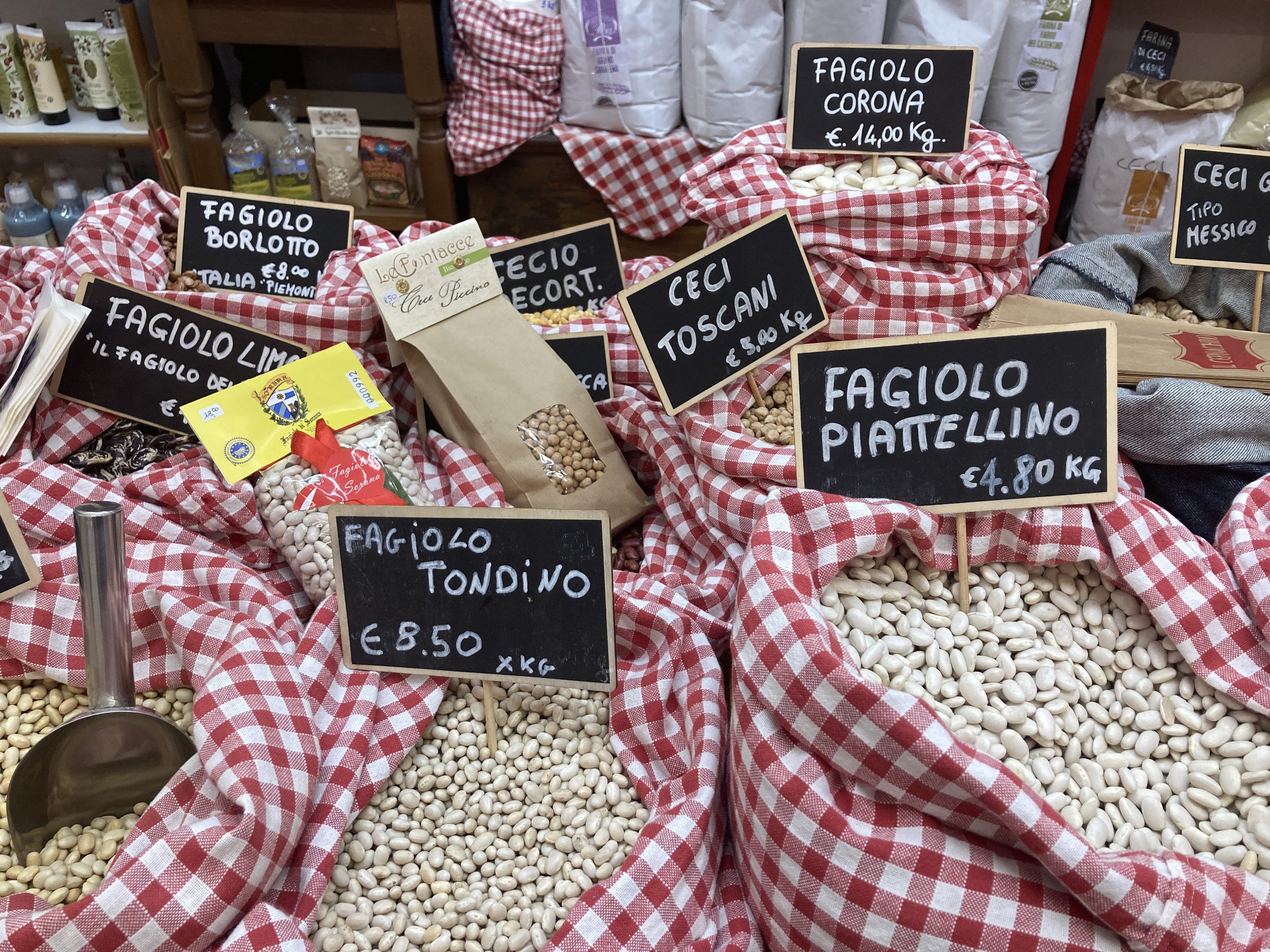
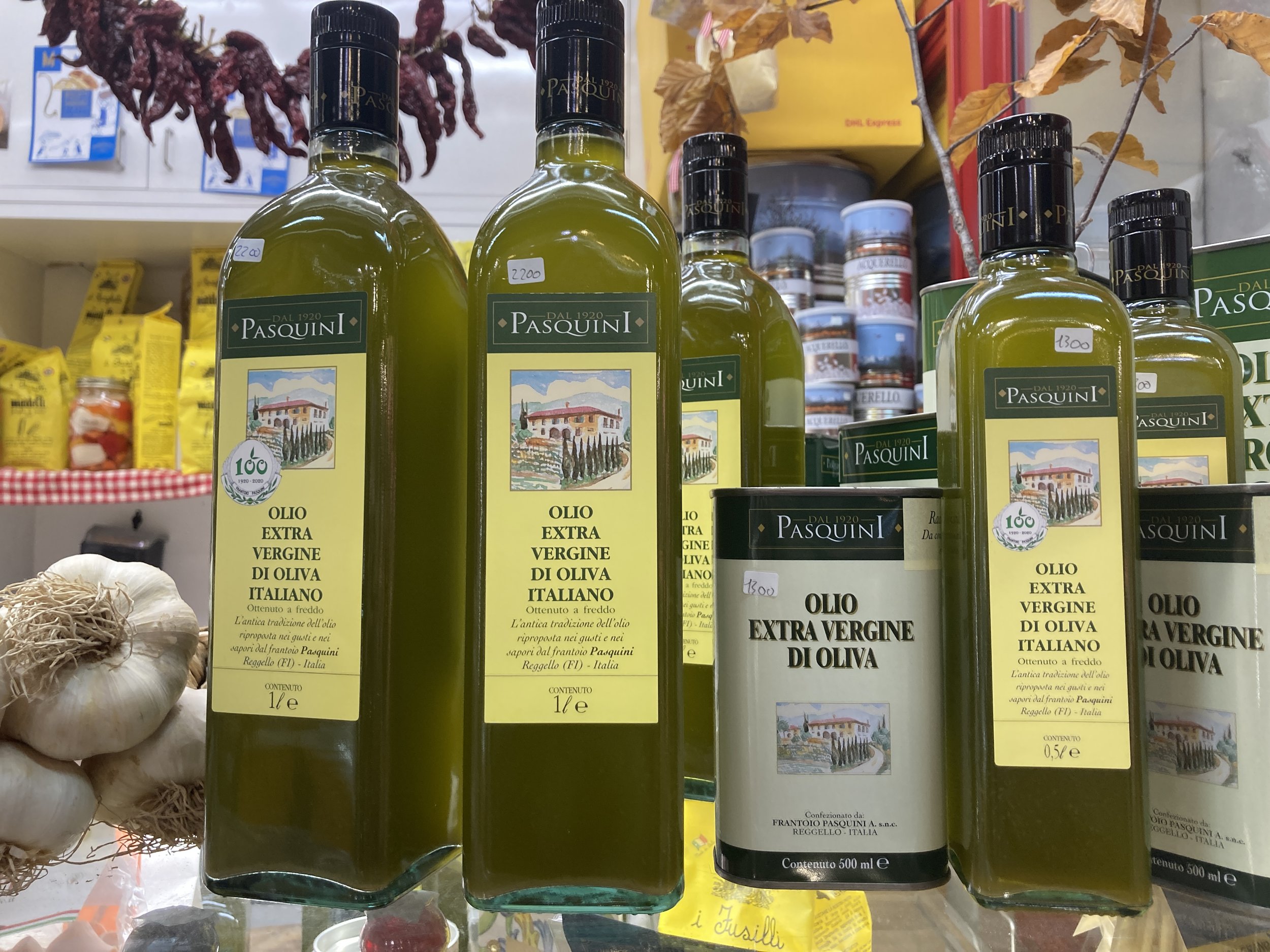
 What else is needed to stock the kitchen?   You can find most everything here. Stalls of spices, beans, dried pasta, olive oil, and wine. 

E8D3E87C-E7F6-44FD-BEC7-79797F7464DA.jpeg
FA76BE1C-5782-47F5-B1F3-92D4FAE578A4.jpeg
6C18A1BE-231E-4B15-86E2-1147B7A8C076.jpeg

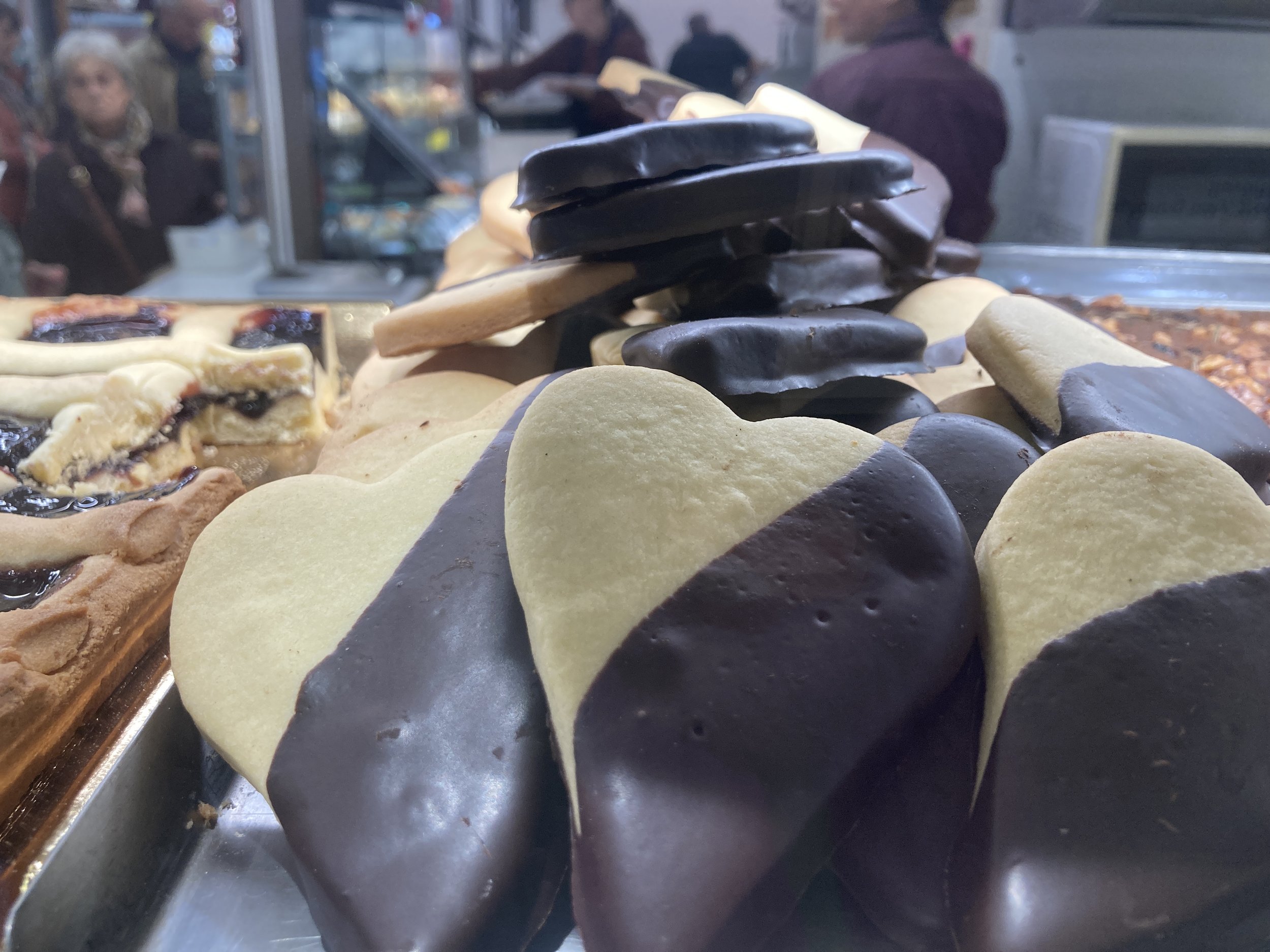
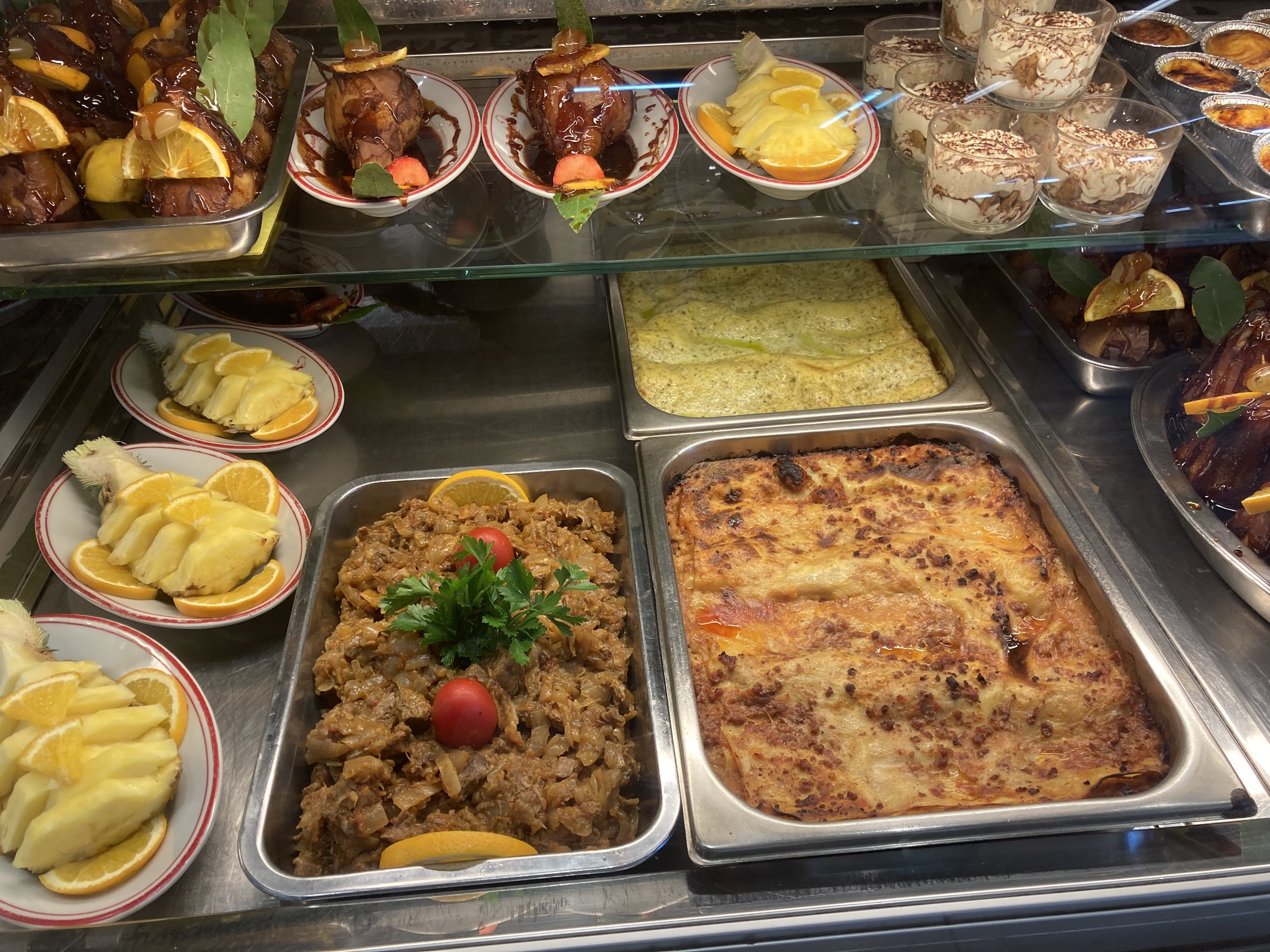
Probably the only thing that I skip is the lampredotto (tripe) booth.  It smells wonderful but I just can’t convince myself to try this Tuscan delicacy. But for fans, the Sant’Ambrogio market is said to be one of the best places in Florence for a lampredotto panino. I will stick to some of the other booths serving prepared ready-to-go foods. And then a quick stop at one of the bakeries.
3CDEEAF4-F593-467D-A300-33C2747C5D54.jpeg
A22198DF-D897-498B-94CB-EB4B203F7175.jpeg
5FD3A922-F436-4135-8ACF-7B8513FA5923.jpeg

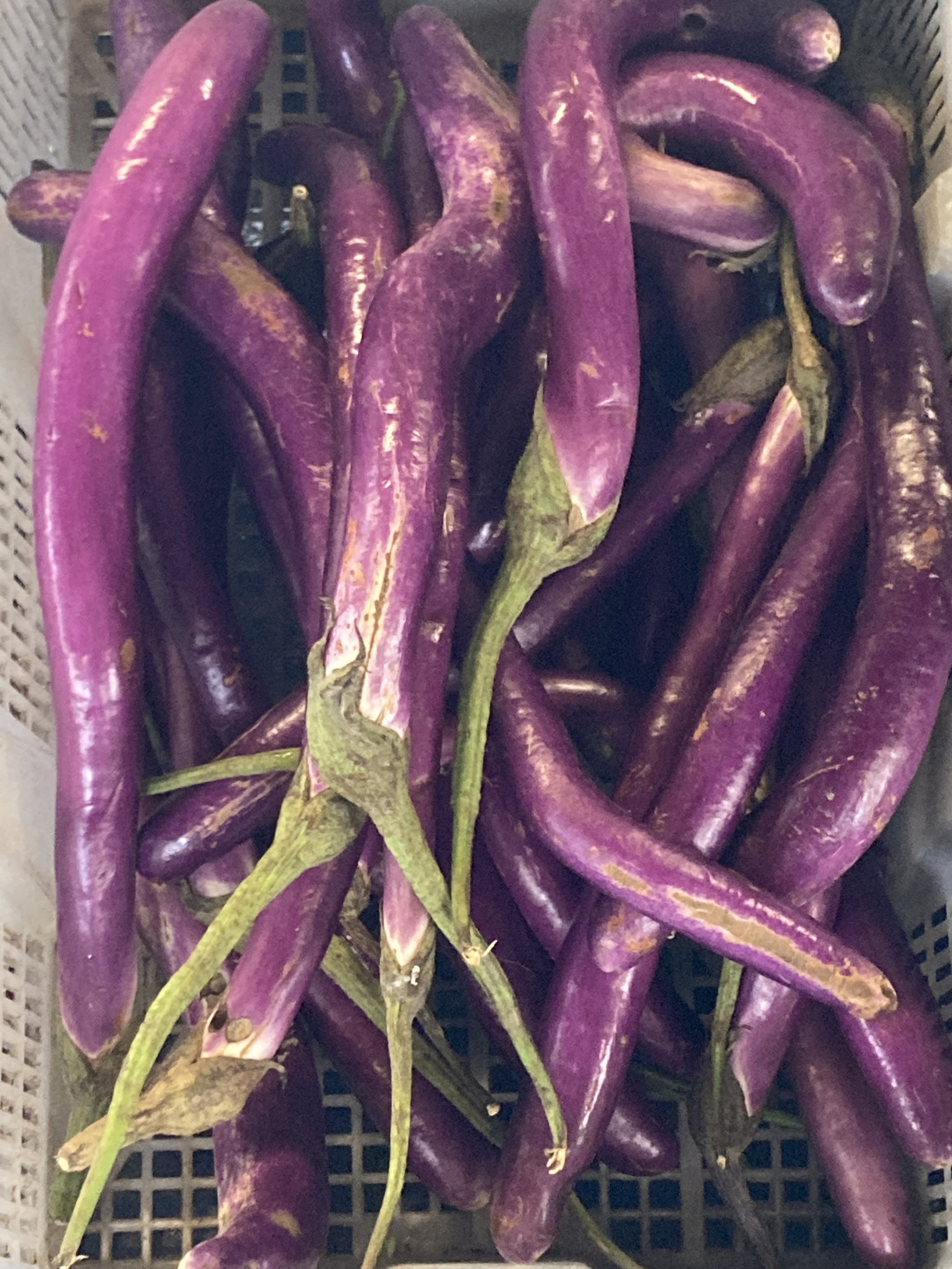
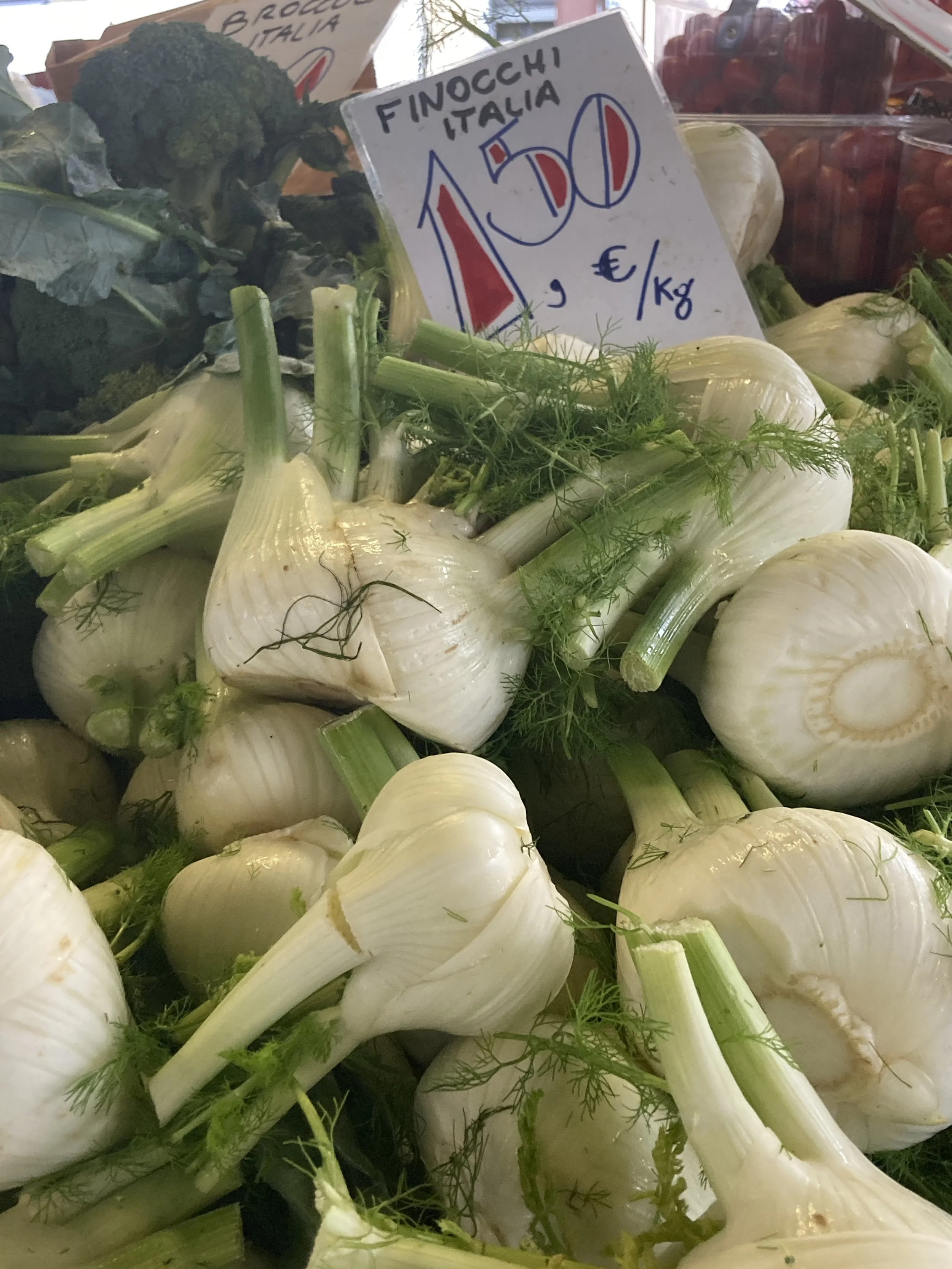
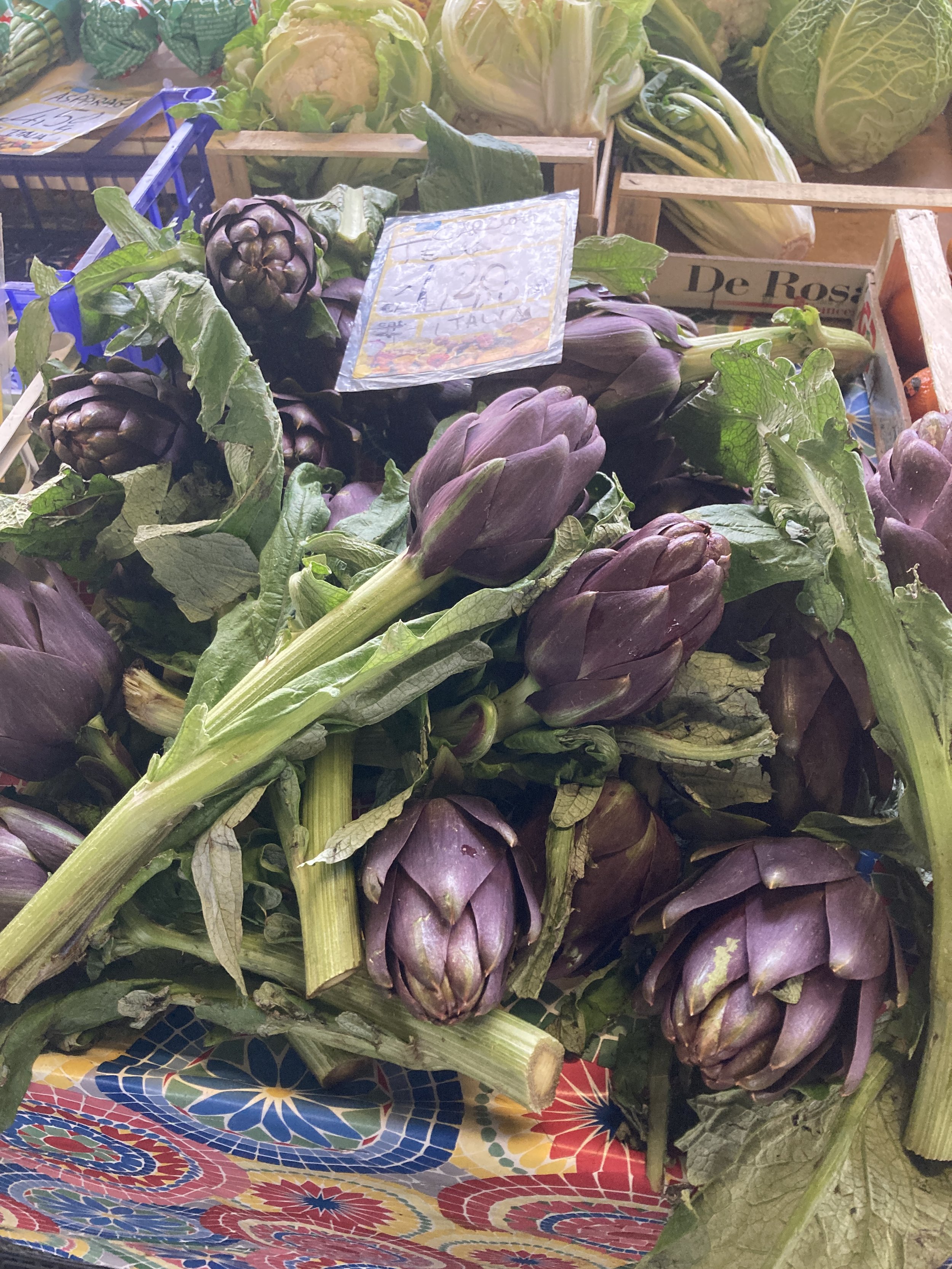
Just outside the covered market, outdoor vendors sell fruits, vegetables, nuts, olives, and breads.  The produce looks like art to me with the variety of colors, shapes, and textures.
A852B156-C1E4-4E09-941E-EC2BABC7EDC7.jpeg
980FA2AE-6CDC-4A64-946E-6C6A4CF482C0.jpeg
12C2C8F8-7F3B-42DA-89F8-49D214B11D0C.jpeg
B7FA7253-E378-40FD-9116-3E0027A558A6.jpeg
C170F82A-E177-4270-8F3E-0CFD5EA69F95.jpeg
A250D7C5-F648-4035-9C1E-72F2DB2C8FD4.jpeg

 I spoke with one of the market vendors, telling him that I was from Lucca and, sadly, that we didn’t have a market like this.   He gave me a knowing smile and said yes, it’s better in Florence. The merchants and the shoppers here seem to know what a gem they have in the Mercato Sant’Ambrogio.  If only I could transport it to Lucca. But it sure is fun to visit when I am in Florence!

One of the bakeries in the Mercato Sant’Ambrogio
November 27, 2023 /Joanne Bartram
Sant'Ambrogio market, Mercato Sant'Ambrogio, #Sant'Ambrogio market, #firenze, #florence
#florence, Florence, Italian culture, Italian markets

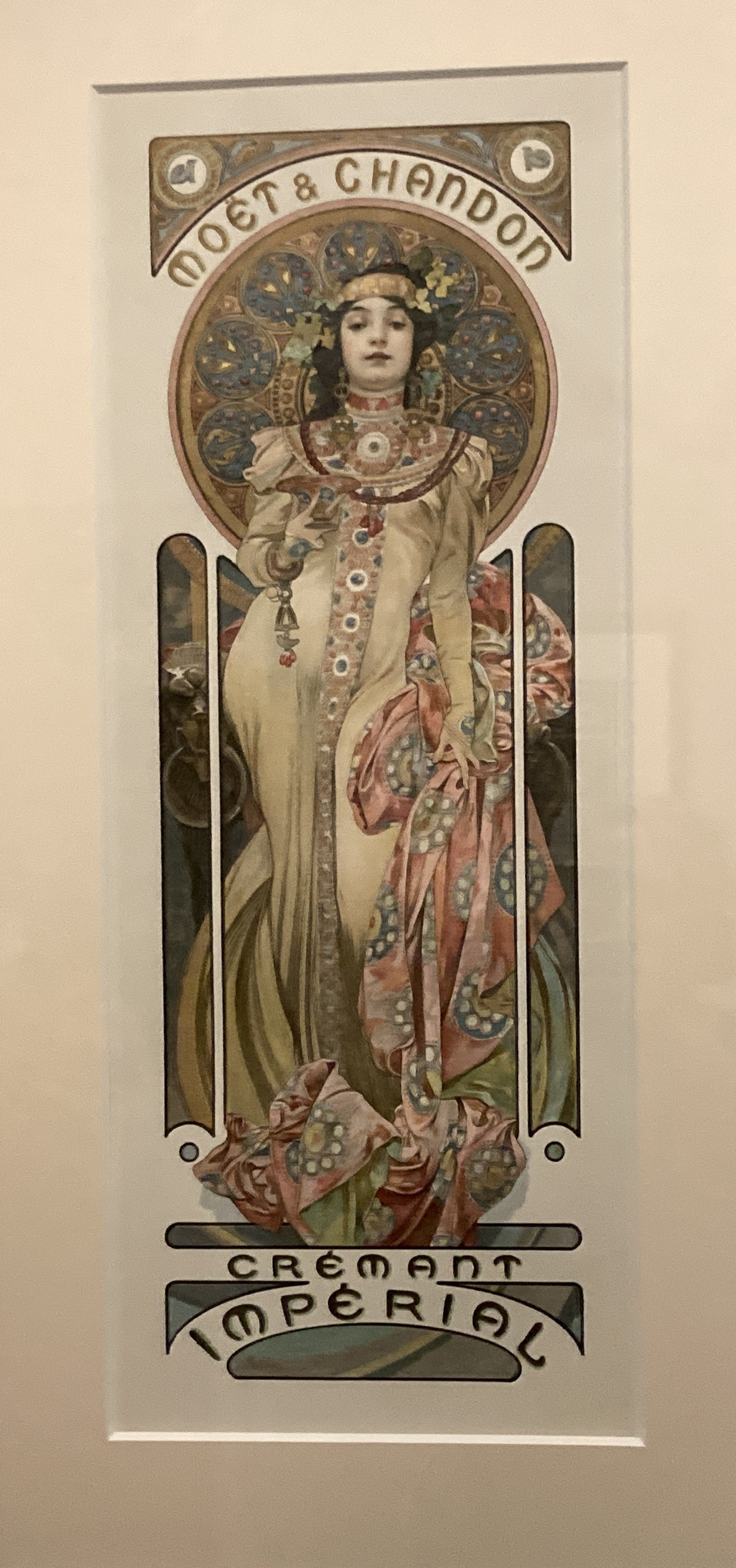
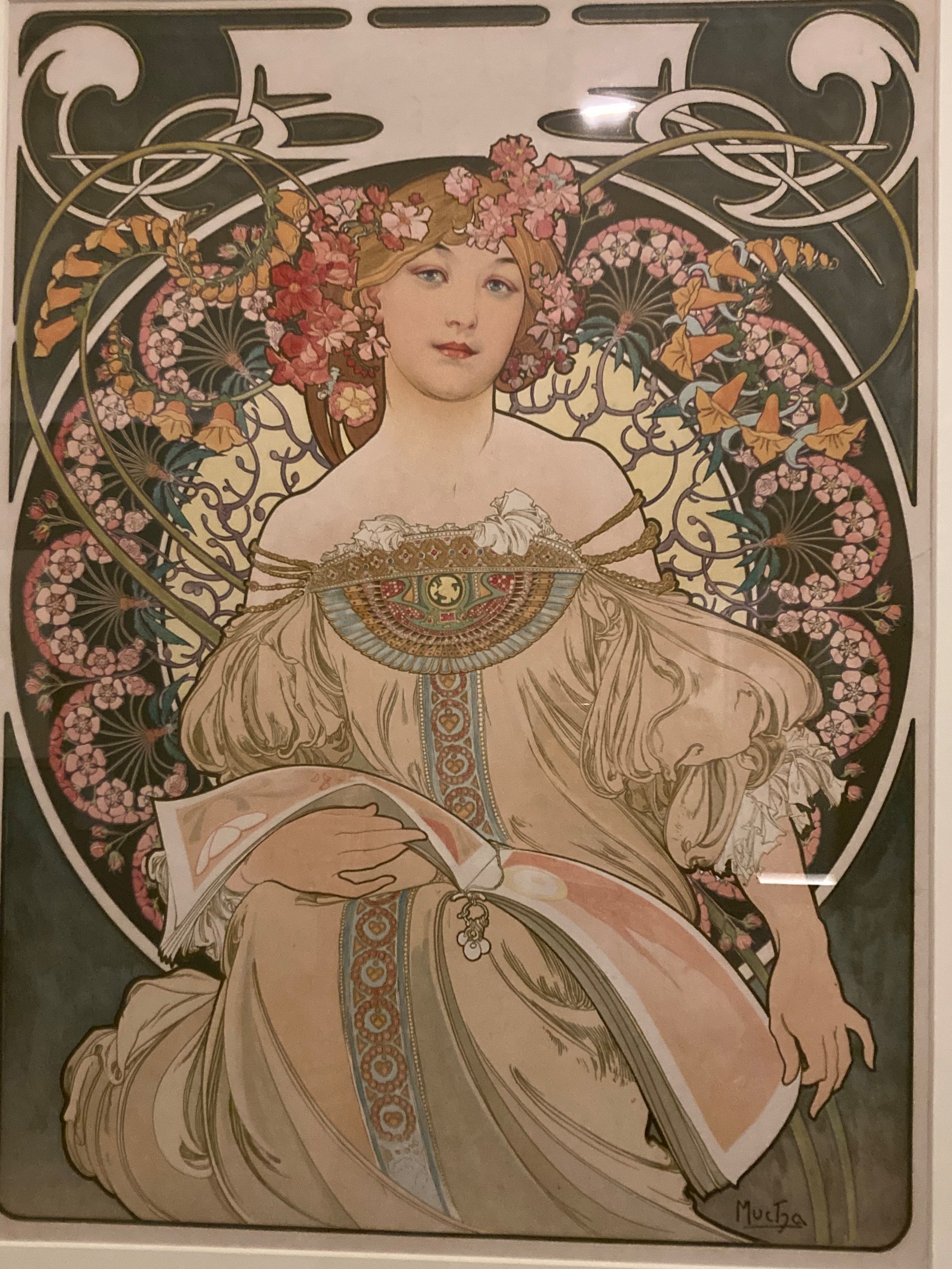
Daydream Alphonse Mucha, 1897.

Art Nouveau in Florence

November 13, 2023 by Joanne Bartram in #florence, Florence, Italian art architecture, Italy travel

 Classic art is everywhere in Florence.   It’s there in intimate chapels and majestic cathedrals, in museums small and large, in civic buildings and Medici palaces. Outside there are fountains, sculptures, fabulous doors, and art tucked above doorways.  It is impossible to be in Florence and not encounter classic art.
 In addition to the classics, it is not unusual to find more contemporary art in the city, both in galleries and as temporary exhibits.   One such exhibit, currently on display in the museum of the Ospedale degli Innocenti, features the works of Alphonse Mucha.

 Mucha worked in Paris in the years just before and after 1900 - the Art Nouveau period.  He worked primarily as an illustrator and graphic designer but also with photography, painting, and jewelry design.  He remains one of the most influential and well-known Art Nouveau artists (though he never described himself with that label).

Mucha created theater posters and programs, magazine and book illustrations, and advertising designs.  His work from that period include the many theater posters he designed for plays starring Sarah Bernhardt.

IMG_6428.jpeg
IMG_6432.jpeg

A Mucha illustration advertising beer


Women are the subjects of Mucha’s illustrations - young, flawless, and dressed in beautiful clothing. No classic goddesses here - these are lively and sensuous ladies.

Mucha surrounds his female subjects with arches, circles, and curves.  Flowers appear in many ways – in the background, as hair decorations, and as intricate border designs.  The colors are beautiful, - soft, warm, complex, floral. 

D5DD5C97-9D3A-47B5-ADB5-BB769613CEF8_1_201_a.jpeg
33DC8C43-230E-46E2-A914-60C2CC732CF9.jpeg
5850AD7F-8318-41E4-AD87-4EEAB180B3D6.jpeg

The exhibit in Florence has several components, including multimedia experiences. At the beginning is a short film, in Italian with English subtitles, plus a timeline. Together, they set the stage for viewing Mucha’s work. 

The poster display begins with his Bernhardt theater posters – large works with fabulous costumes unique to each play.  

Moving through the exhibit you find advertising posters, other forms of advertising (perfume bottles, boxes, menus, fans), and decorative posters.

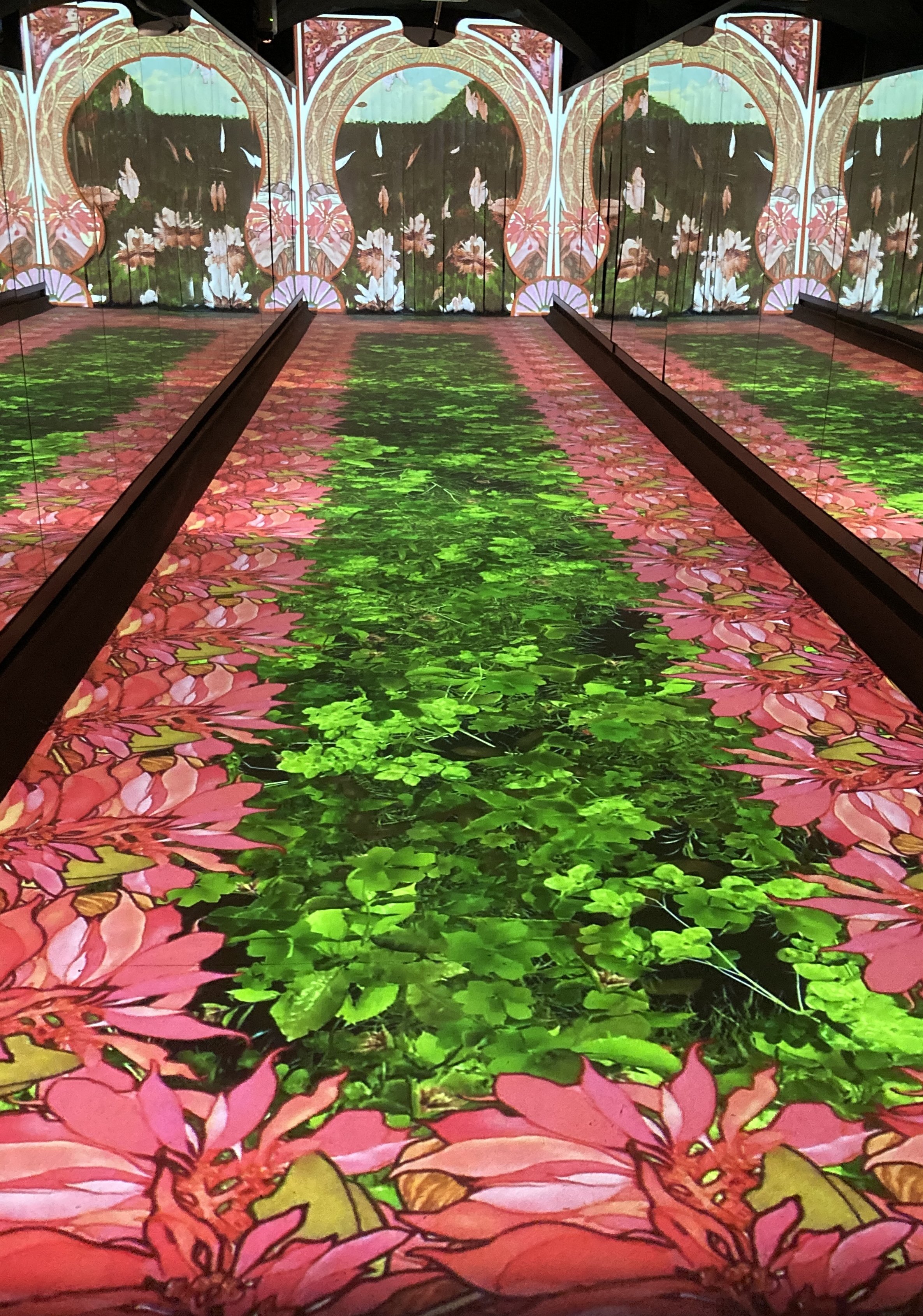
One fascinating part of the exhibit is an immersive experience. A long hallway, flanked by mirrors, filled with ever-changing projections of Mucha’s floral designs. The flowers shift and change creating explosions of color. At the far end are large projections of his works.  It’s a visually beautiful experience that puts the viewer right in the middle of a Mucha illustration. (I’ll post a short video clip on the Two Parts Italy Facebook page).

B63203D4-EED1-4A00-9679-62B3043D2241_1_201_a.jpeg
7D617F84-41A9-434A-ADD5-74A7F60B1AAF.jpeg
377D486C-EA50-4E79-9E4B-1EEC514CB6E4_1_201_a.jpeg

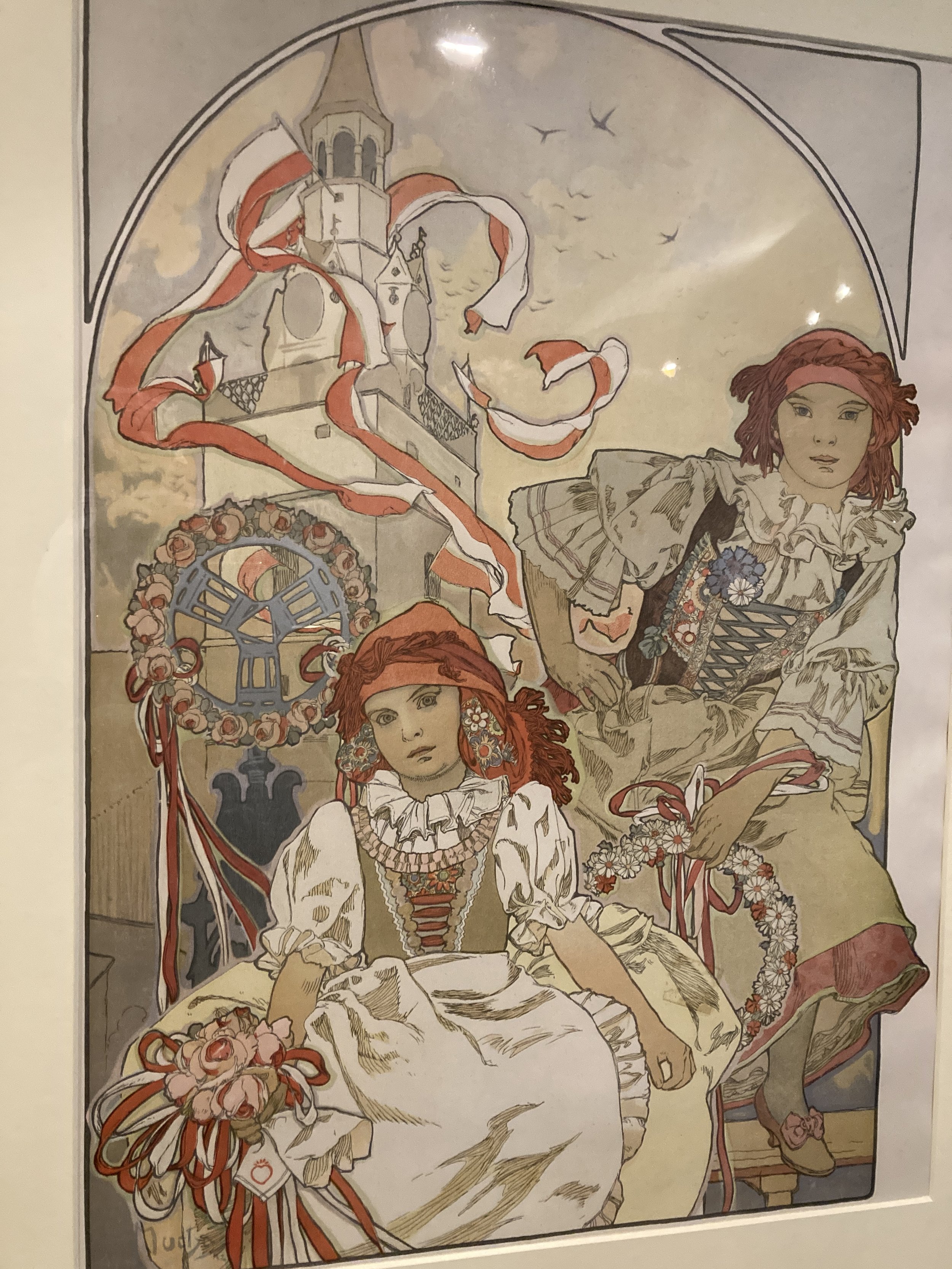
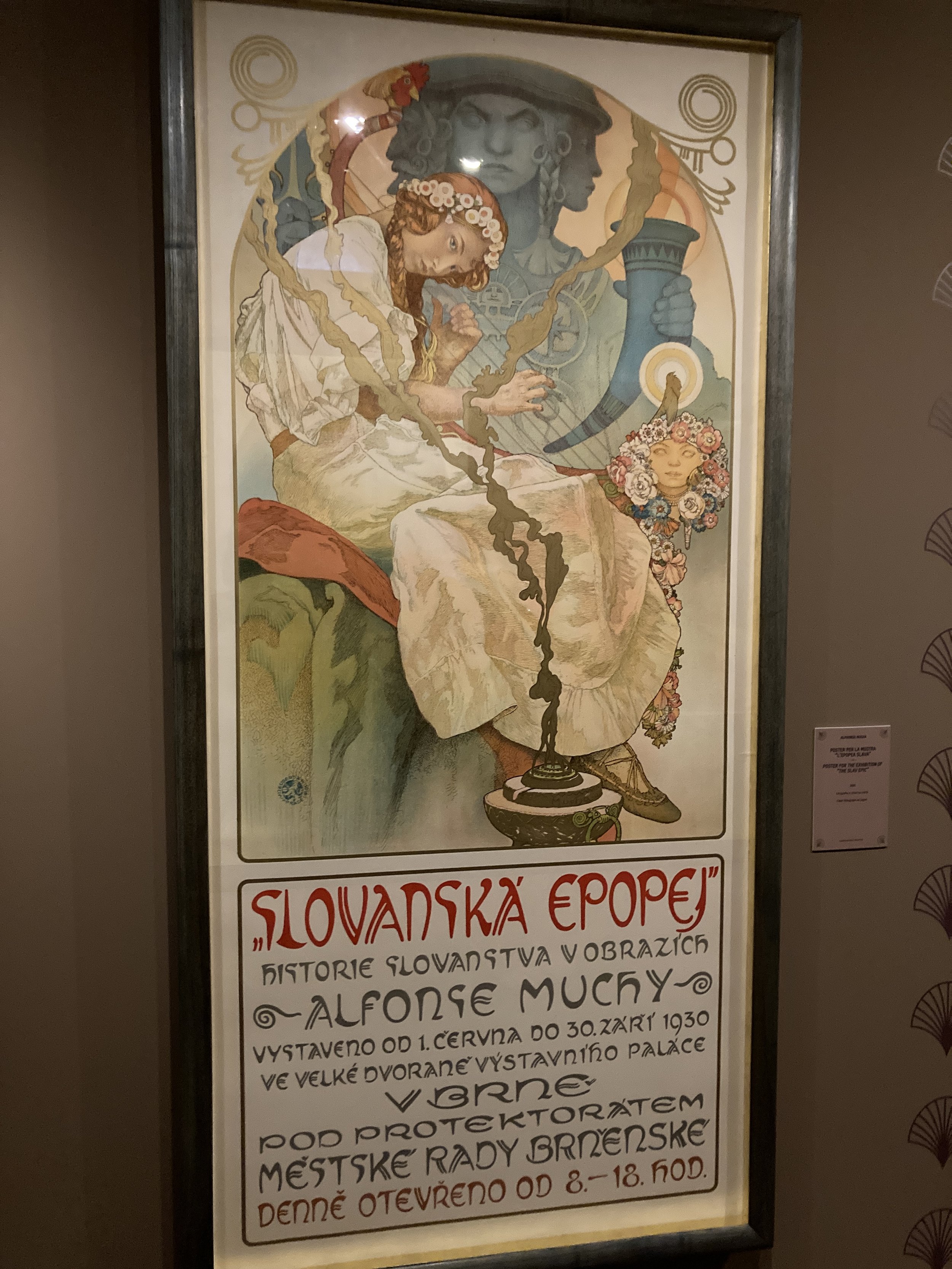
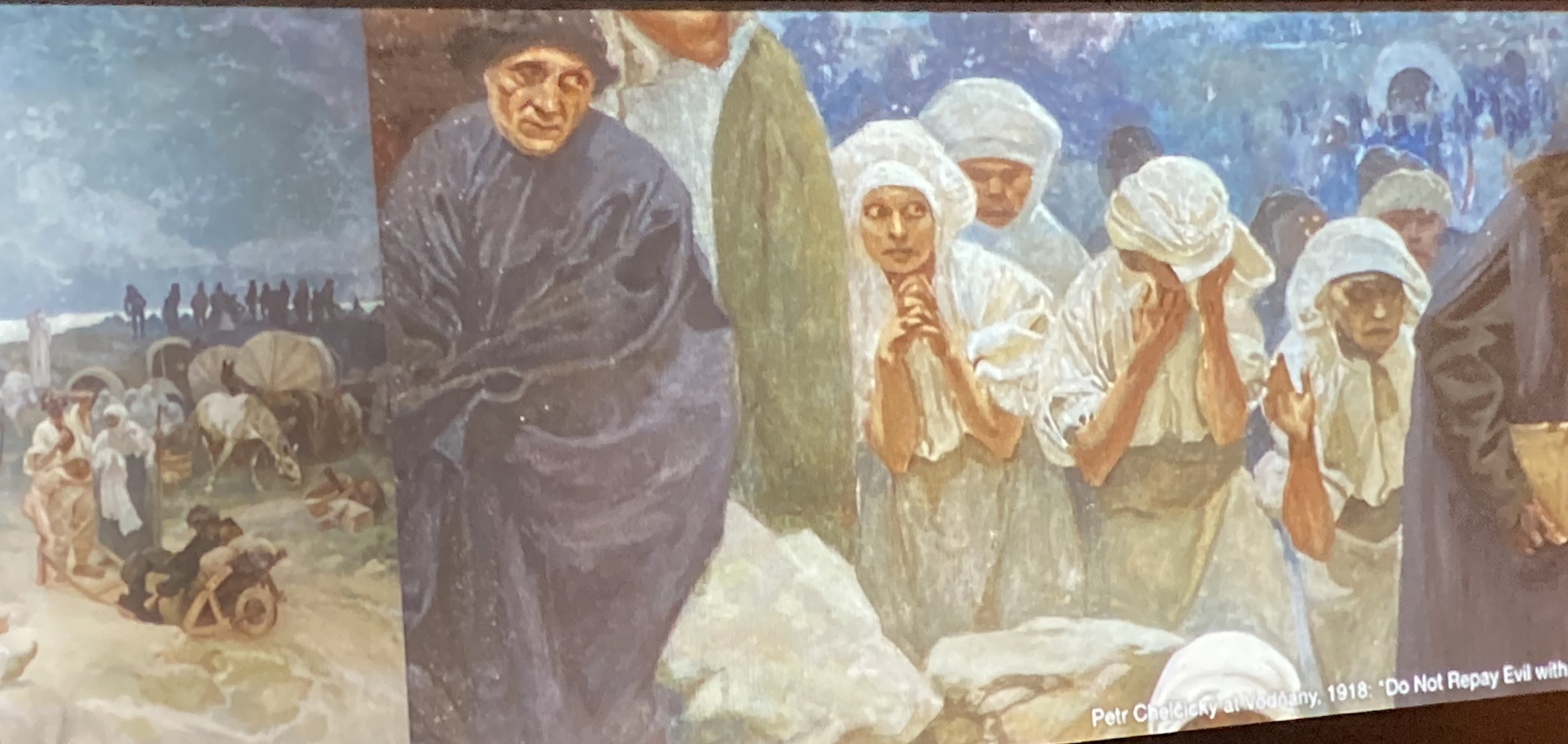
 Not all of Mucha’s works were of beautiful and serene women dressed in alluring clothing.   His posters also reflect his commitment to all Slavic peoples, their customs and their struggles.

86C208A2-540C-4734-B9C1-F4B72226ECE4.jpeg
F4063B9A-57E3-44D3-A689-F861A48985EB.jpeg
58D2EF50-324D-449E-BA40-87707E144E56.jpeg

Mucha considered his most important work to be his Slav Epic, a series of huge paintings telling the history of the Slavic people.  The project was completed over 18 years and then donated to the city of Prague.

Panel from the Slav Epic

Mucha’s political beliefs, commitment to the independence of the Slavic people, and participation in the Czech Freemasons led to his arrest by the Nazis in 1939.  He was in his 70’s at the time of his arrest and, even though he was released after a few weeks, he died of pneumonia shortly after.  The Nazis also removed his Slav Epic works and they remained hidden for many years.  They are now on display in Prague. Reproductions of several panels are included in the exhibit in Florence.

 The Mucha exhibit will be in Florence through April 7, 2024.  The museum is open daily from 9:30 am to 7 pm with some exceptions (be sure to check on-line for changes to this schedule). A not-to be-missed experience for those who are interested in Art Nouveau.


November 13, 2023 /Joanne Bartram
Mucha, Alphonse Mucha, Mucha exhibit Florence, Art Nouveau, #artnouveauinflorence
#florence, Florence, Italian art architecture, Italy travel

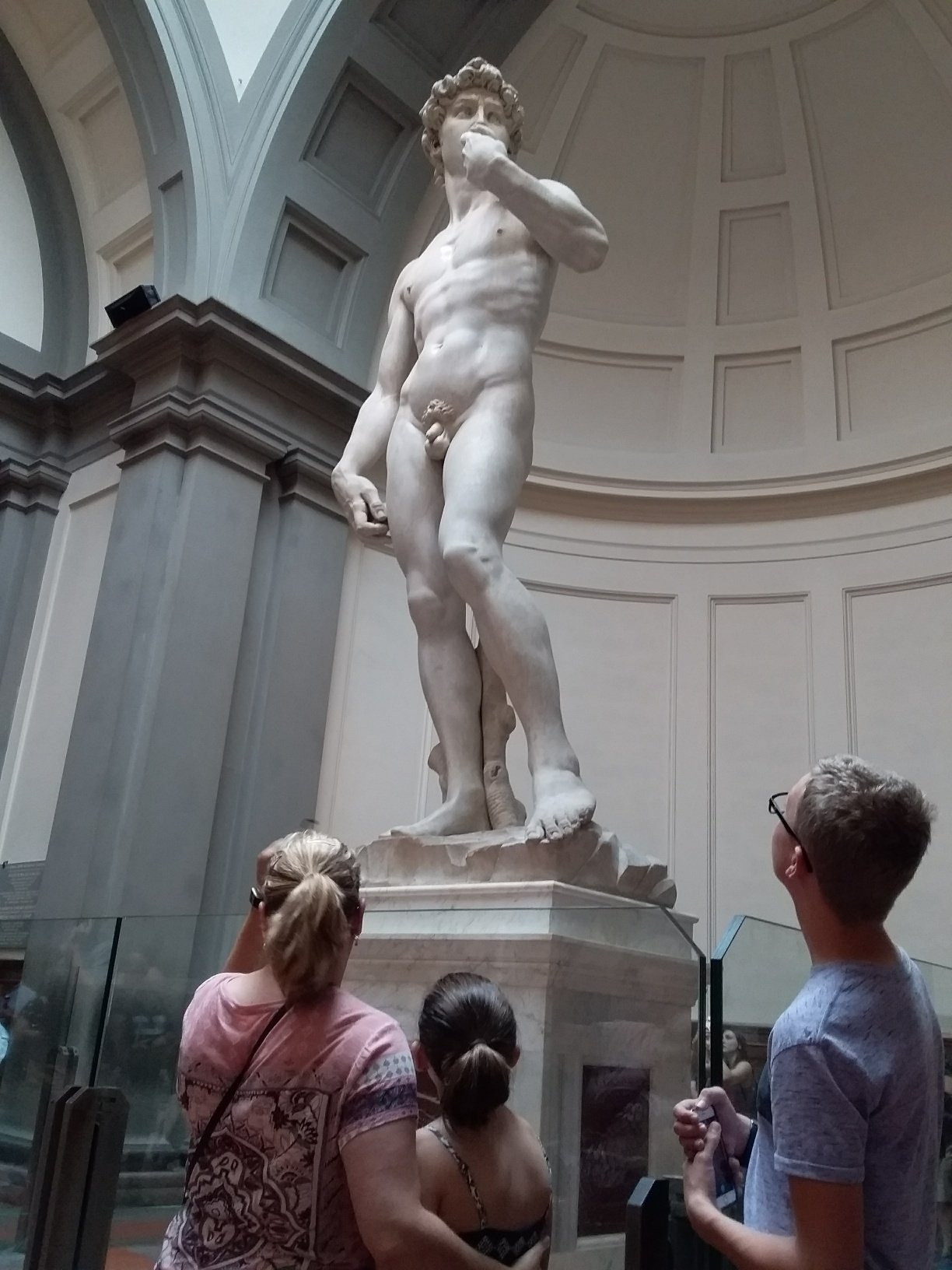
My daughter and two oldest grandchildren admiring Michelangelo’s David in Florence several years ago

Yes, David is Naked

June 05, 2023 by Joanne Bartram in #florence, Florence, Italian Art, Italian culture, Italy

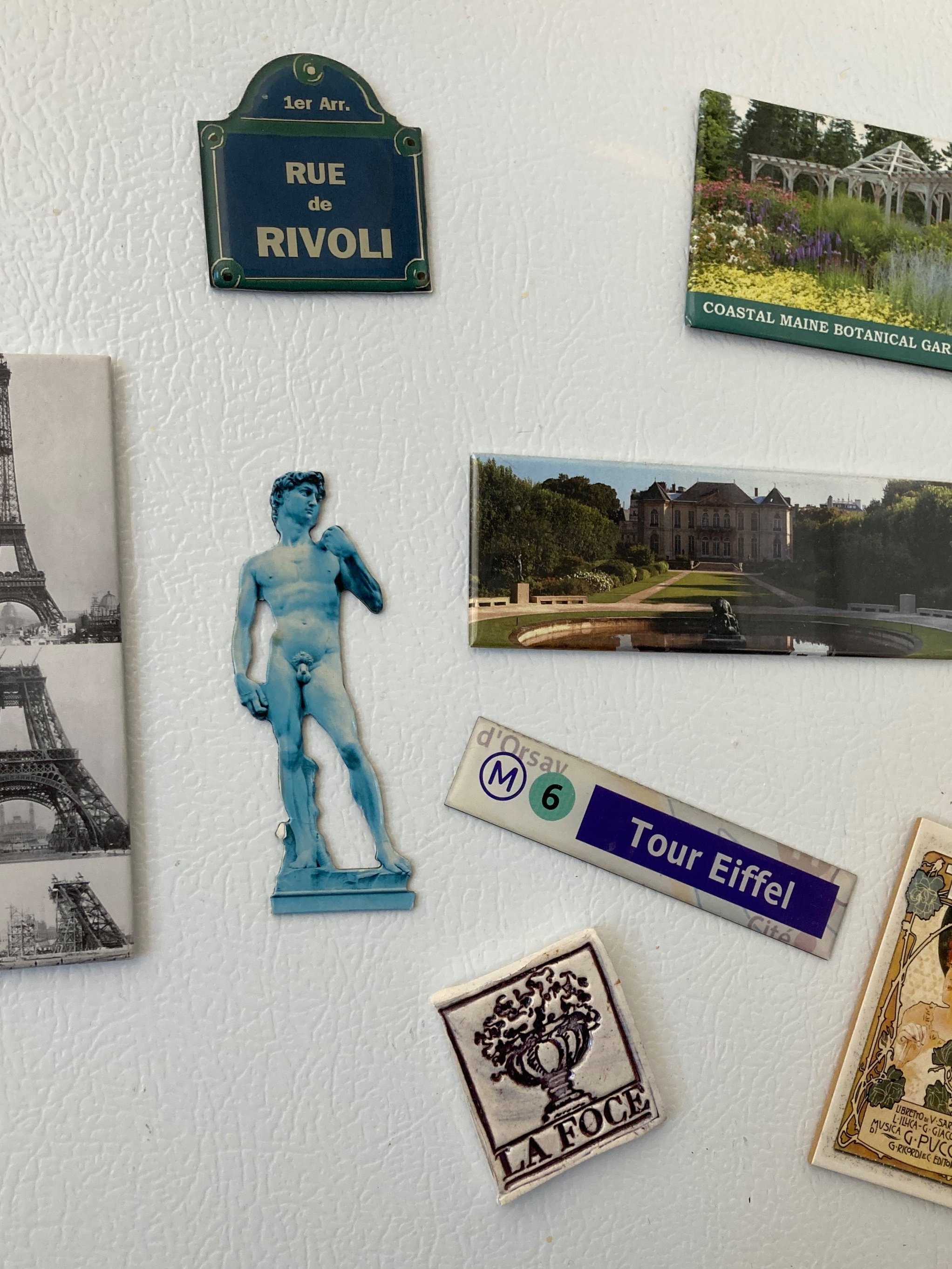
When I travel, I often collect magnets from various places. Monet’s Giverny, La Foce Gardens, the Eiffel Tower - all reside on my refrigerator, a constant reminder of wonderful trips.   

One of the magnets, which I brought home from an early trip to Florence, is of the David.

Years ago, I noticed my then 8-year-old grandson staring at it.  “Nana”, he asked, “why do you have a naked man on your fridge?”.   That was a great opportunity to begin a conversation about classical art, the Italian renaissance, a sculptor’s skill in recreating the human body, and the nude as an art form.  My grandson was not buying any of it.  “Well’, he countered, “I just think it’s inappropriate”.   All I could do was laugh.   

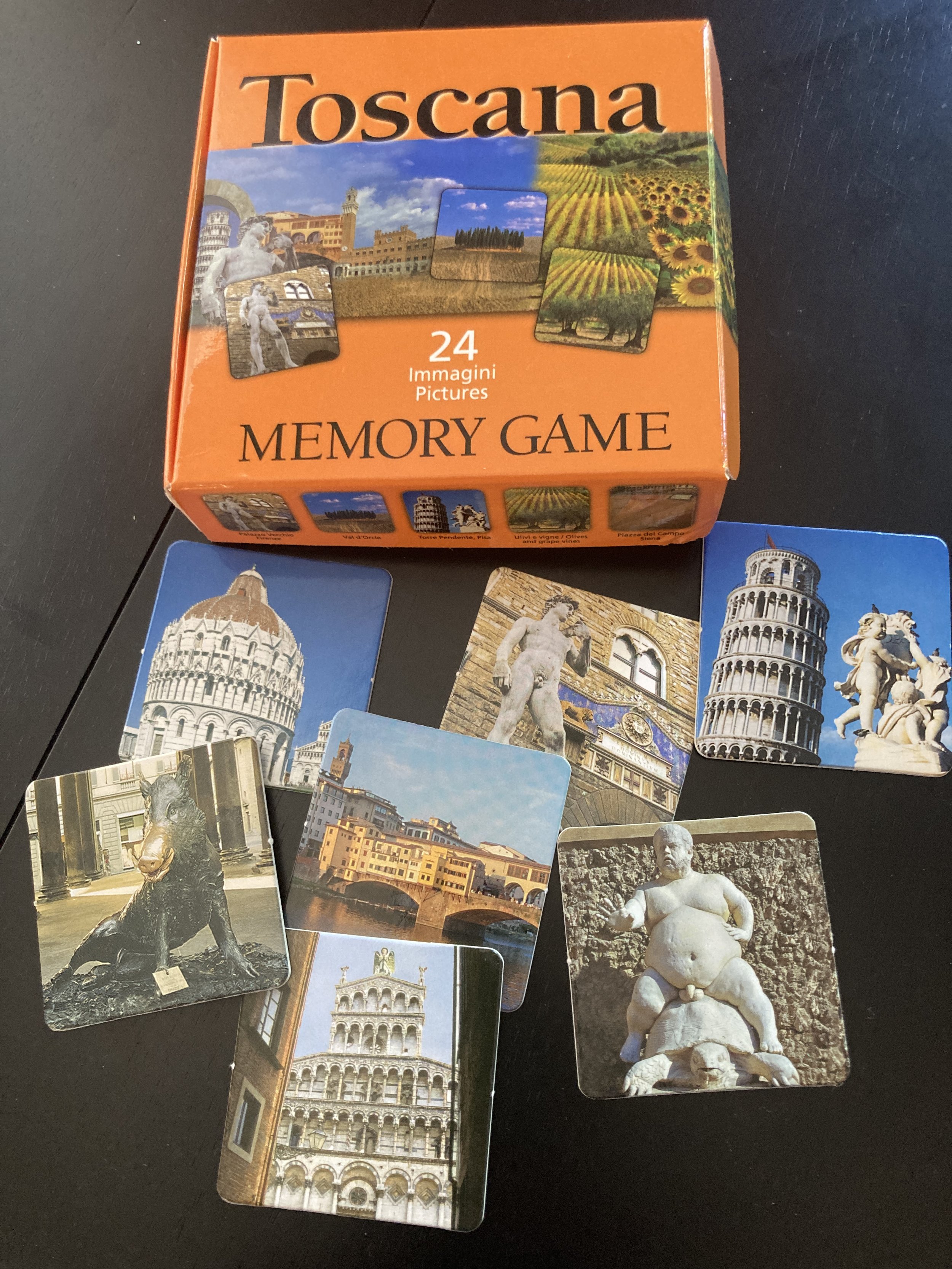
On a later trip I purchased a matching game for my even younger grandkids.  Each card had a photo of a famous Tuscan landmark or piece of art.  Included were, I think you can guess this, a photo of the David. Another card had a photo of Morgante the Dwarf, often known as the “Fat Man on the Turtle”, from the Boboli Gardens. Morgante is, of course, naked. This matching game has been a favorite of my grandkids for years.  And yes, the two nudes get lots of giggles, but the kids have learned a lot about art and Tuscany in their search to be the first one to uncover “the naked guy”.  All 4 grandkids have survived the nudity just fine. 

 My grandson’s opinion, as an 8-year-old, was understandable.  But I expect a more sophisticated and open-minded attitude from adults.  I am still scratching my head over the outrage of some parents in Florida over photos of the David used in a 6th grade art class.  Male nudes have been present in classic sculpture since at least the time of the Greeks.  Most people understand the artistic value and the role of important art pieces in education.  And most understand the difference between art and pornography.  But, a few parents in that school did not and wielded an inordinate amount of influence, leading to the principal resigning.

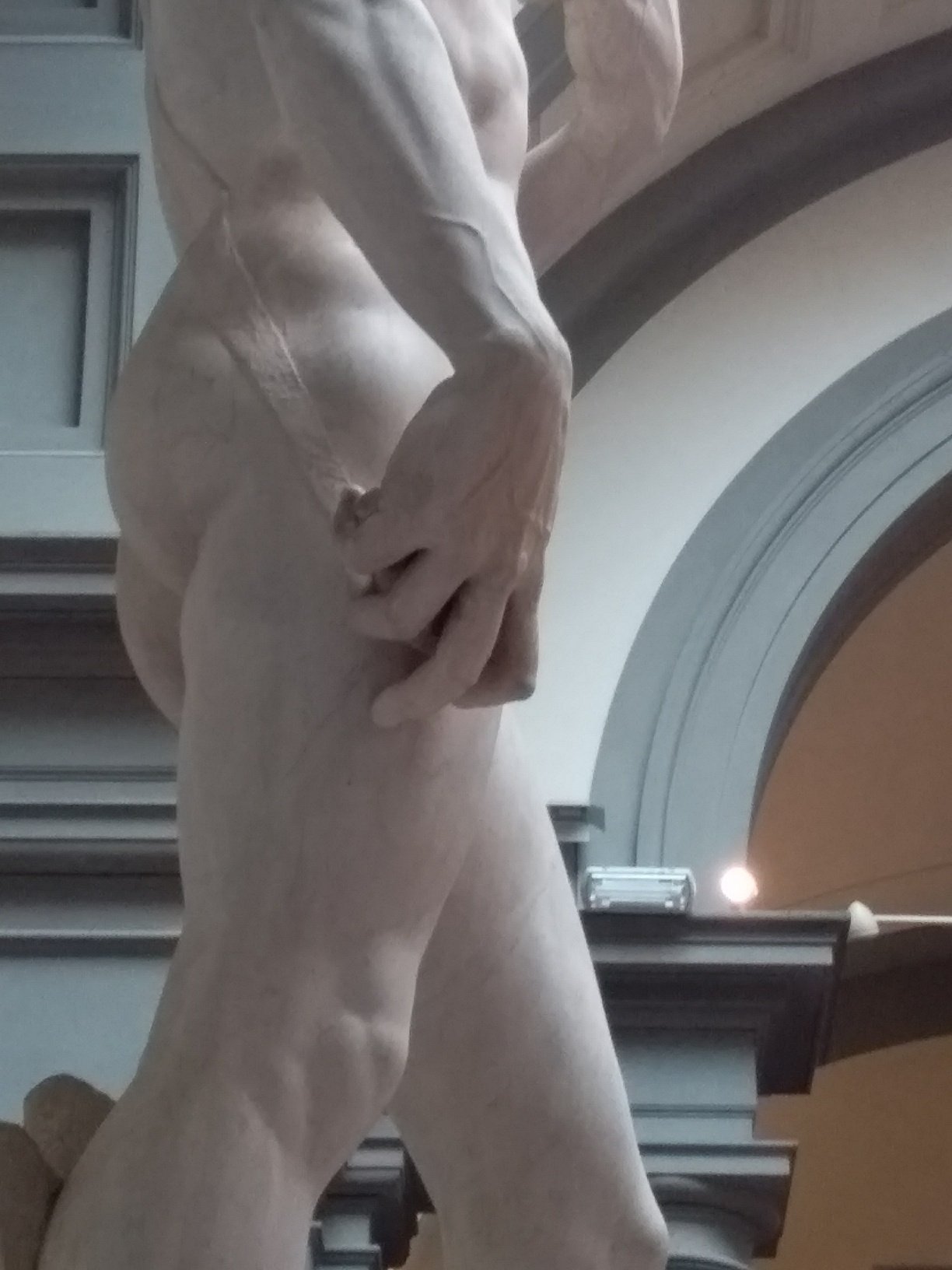
The much discussed and analyzed hand of David.

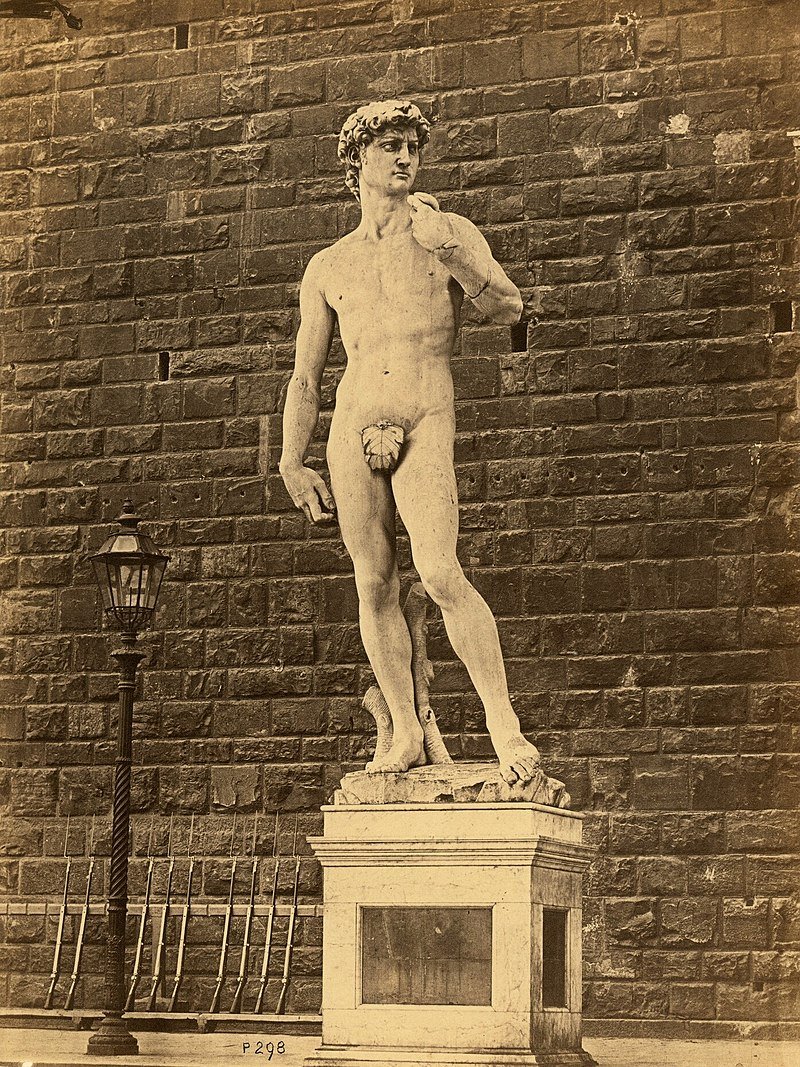
David during the fig leaf years (public domain photo)

Granted, Floridians are not the only ones to be a bit bothered by David’s nudity.  Some long-ago residents of Florence also objected, and after the statue’s completion Michelangelo was asked to cover the genitals with leaves.  Those were later removed, restoring the statue to Michelangelo’s original vision. It has remained thus ever since.  A replica of the David in the Victoria and Albert Museum in London was covered in a fig leaf whenever Queen Victoria visited.  Apparently, the Queen was outraged.  One wonders if Albert was asked to sport a fig leaf when visiting the Queen’s chamber.

 Still, I was saddened to see a principal lose her job over the inclusion of the biblical David in a class.  But I was delighted when the city of Florence brought that school principal to Florence to see the statue in person. How great was that?

This reproduction stands in the Piazza della Signoria in Florence, where the original statue was displayed before being moved to the Accademia Gallery.

I am happy to say that as my grandson has grown so has his appreciation for this magnificent work of art. When he visited me in Italy for the first time several years ago, along with his sister and their mother (my daughter), I took them all to Florence to the Academia Gallery where the David commands an entire room. 

We walked around him, noting the unique size of his…. hands. We marveled at the muscles in his legs and his 6-pack abs. In the end both of my grandkids found that the David was so amazing that they hardly noticed he was naked! 

David is, of course, not the only naked statue in Florence.  There are many nudes, partial nudes, and exposed breasts in Italian sculpture.  Many of the fountains in Italy are anchored by nudes, including the Fountain of Neptune in Florence (below).

Fountain of Neptune, Florence

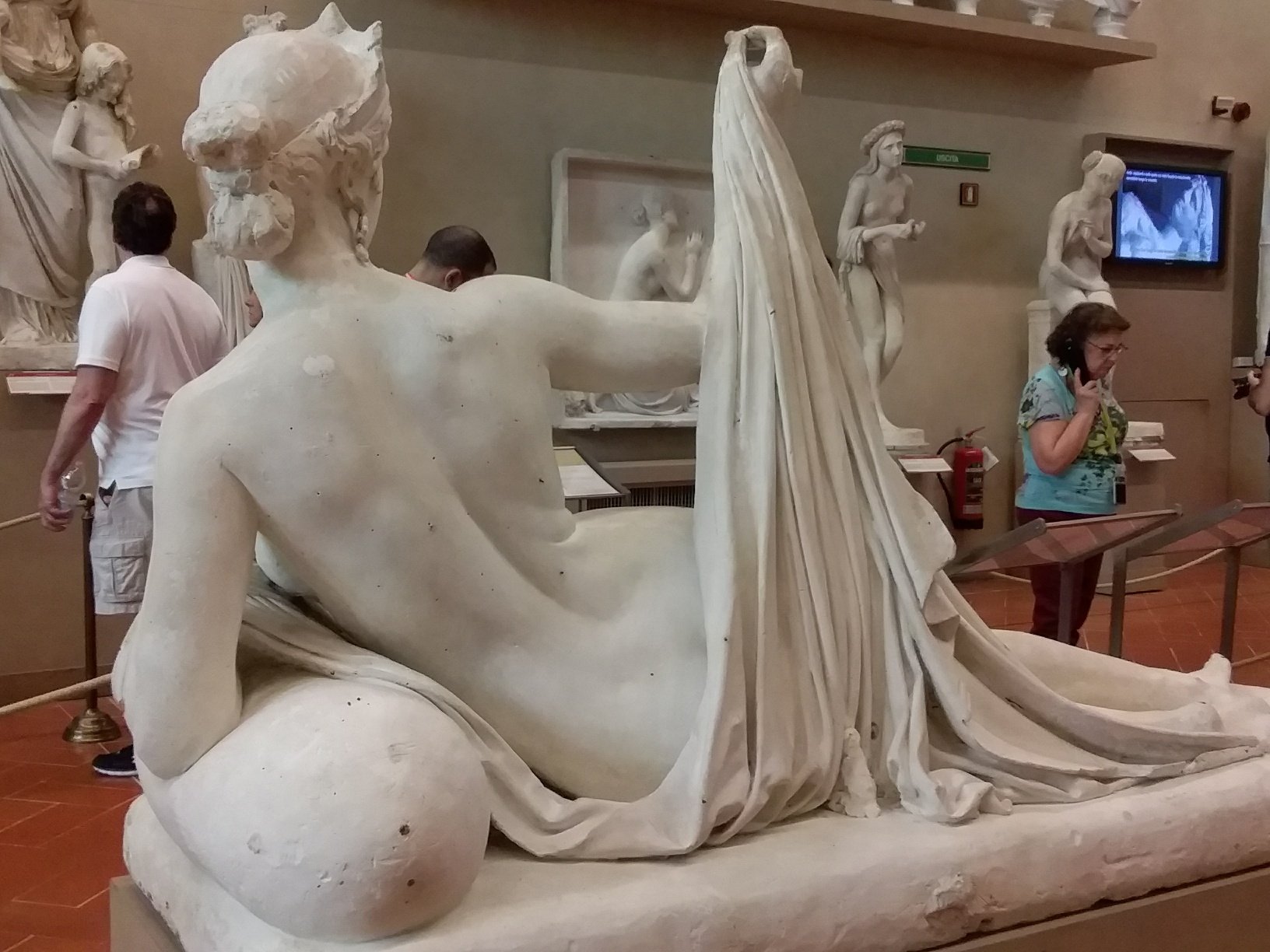
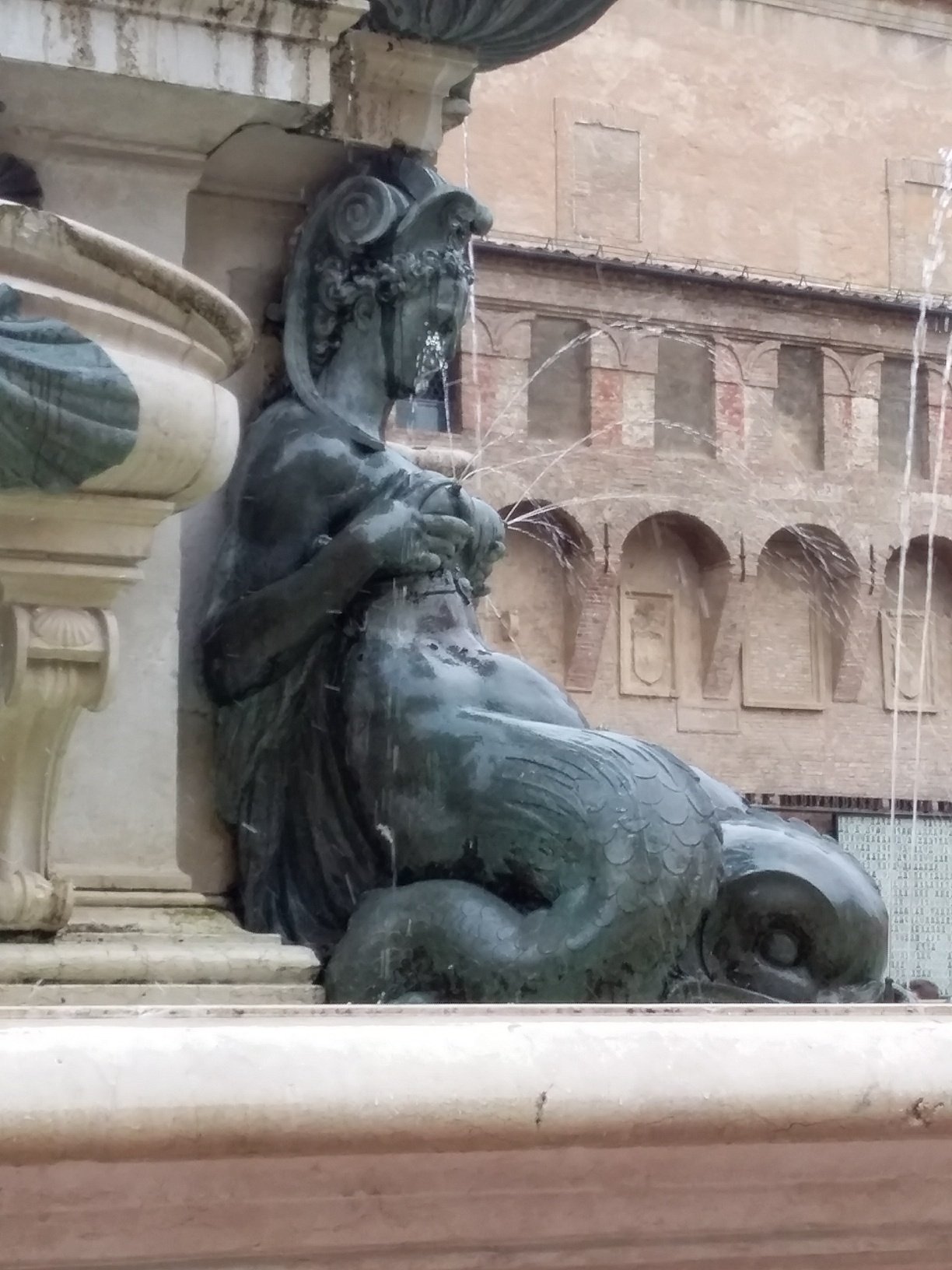
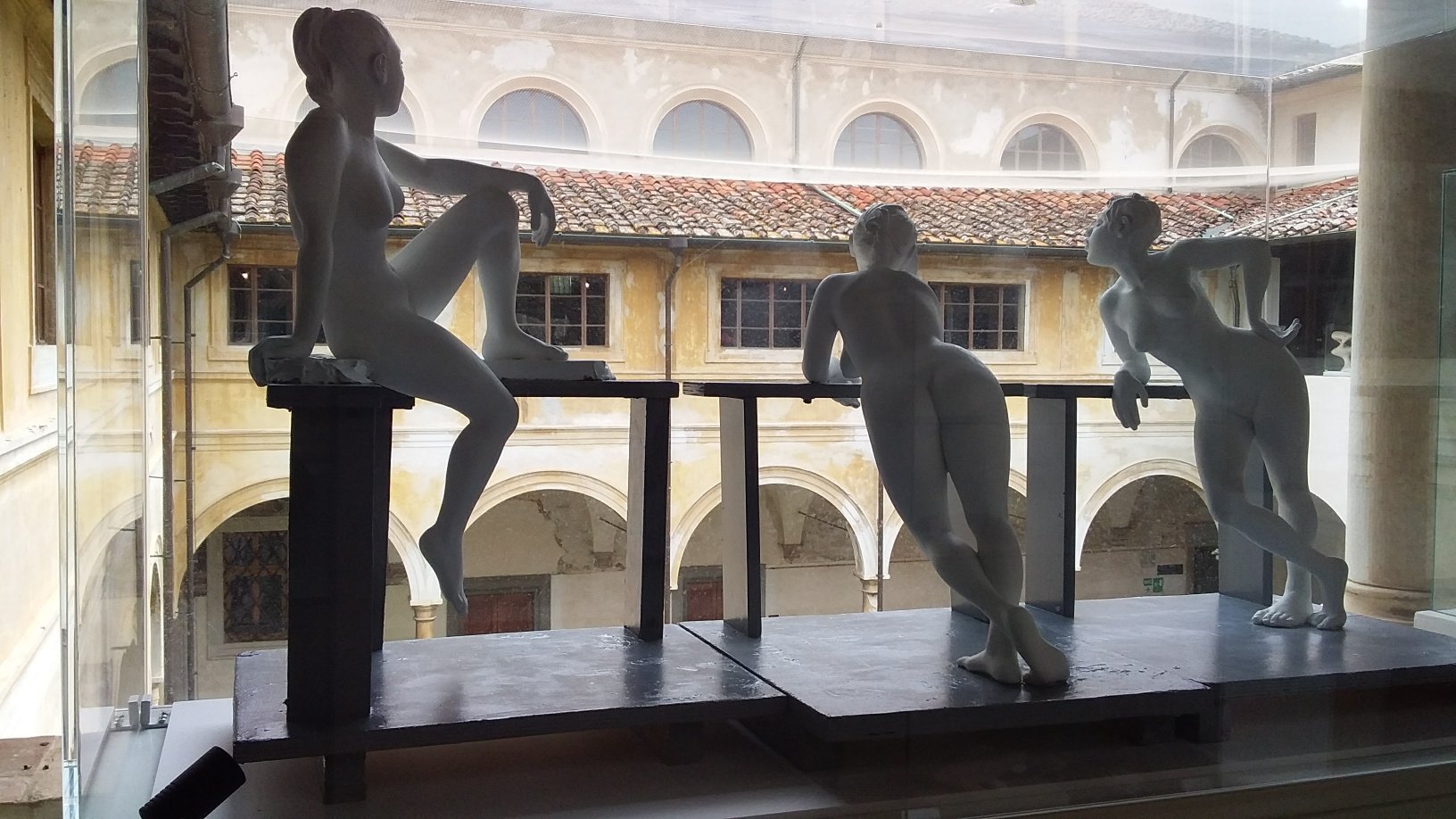
And not all the nudes are male. There are some beautiful female nudes to be found. Here are a few of my favorites from the Accademia Gallery in Florence, the Neptune Fountain in Bologna, and a modern piece in the Museo del Bozzetti in Pietrasanta. I hope you find all of these sculptures as beautiful as I do.

A364132D-CED8-4952-9EF4-B9F47C8B98CE.jpeg
F186AC38-284E-4F30-8FA9-DBBE14E803EA.jpeg
8BF5AD34-C5C4-46D1-BCC5-E3D0C73544DD.jpeg
June 05, 2023 /Joanne Bartram
The David, Nudes in Italian Art, Michelangelo's David
#florence, Florence, Italian Art, Italian culture, Italy

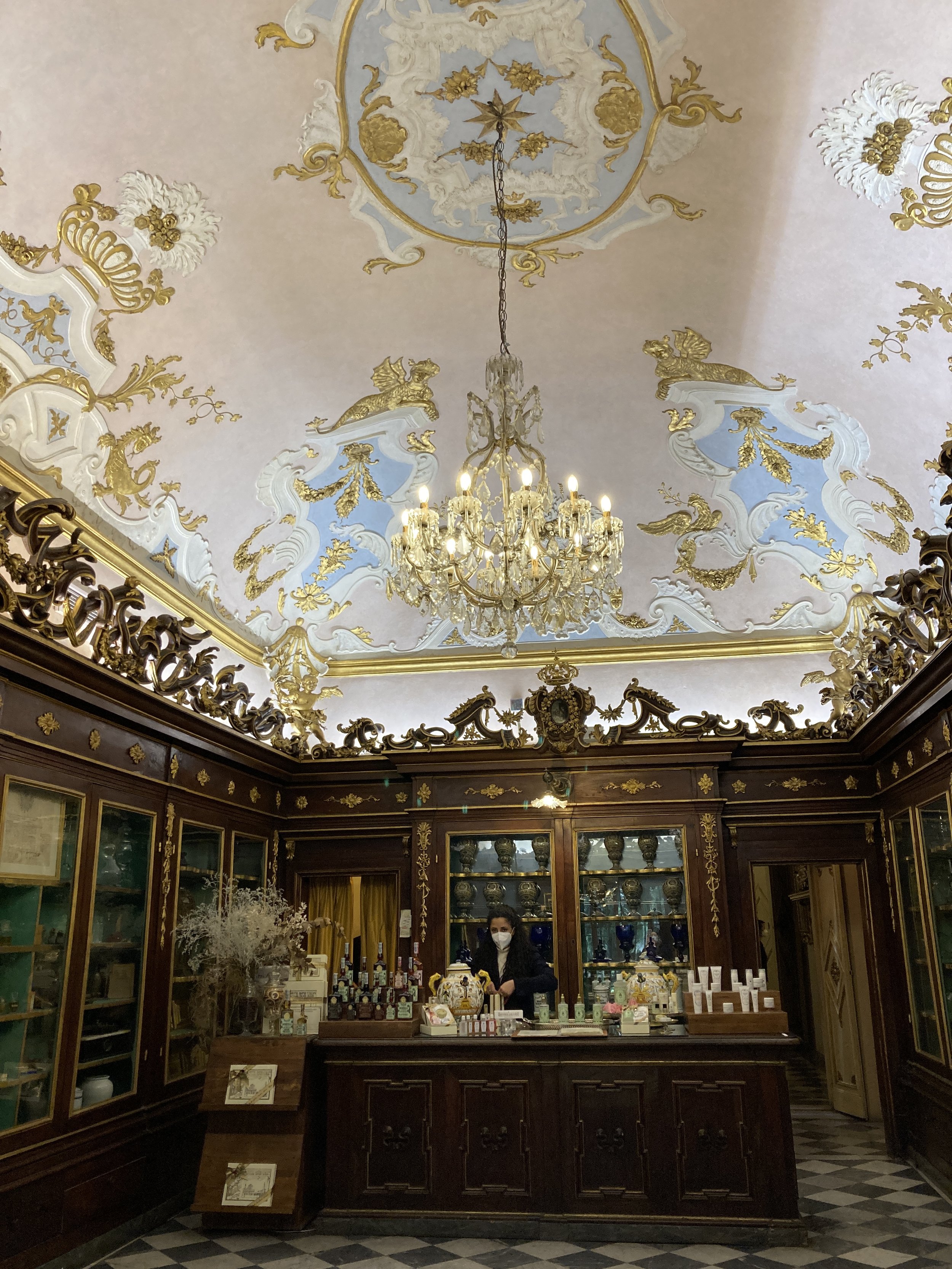
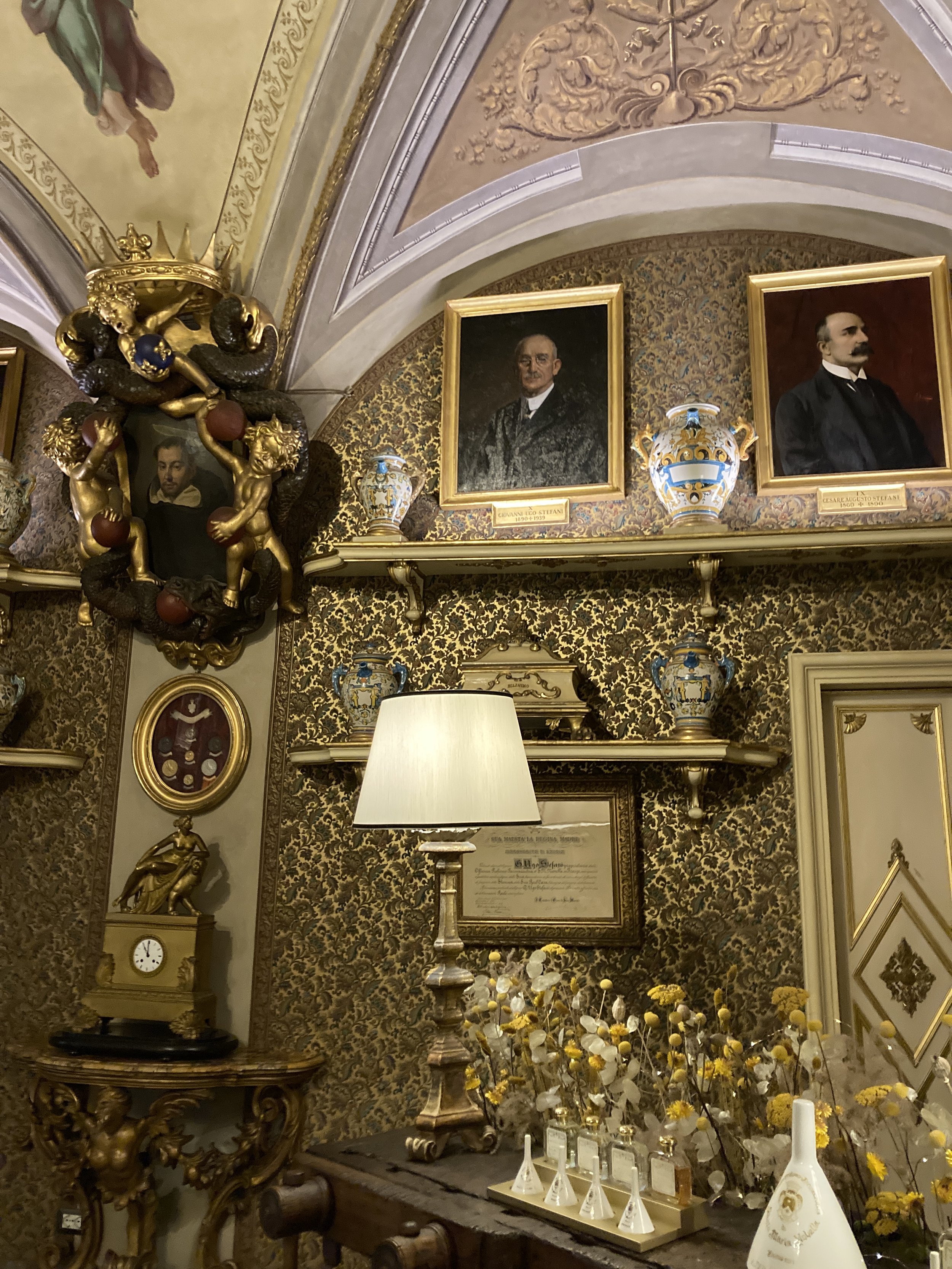
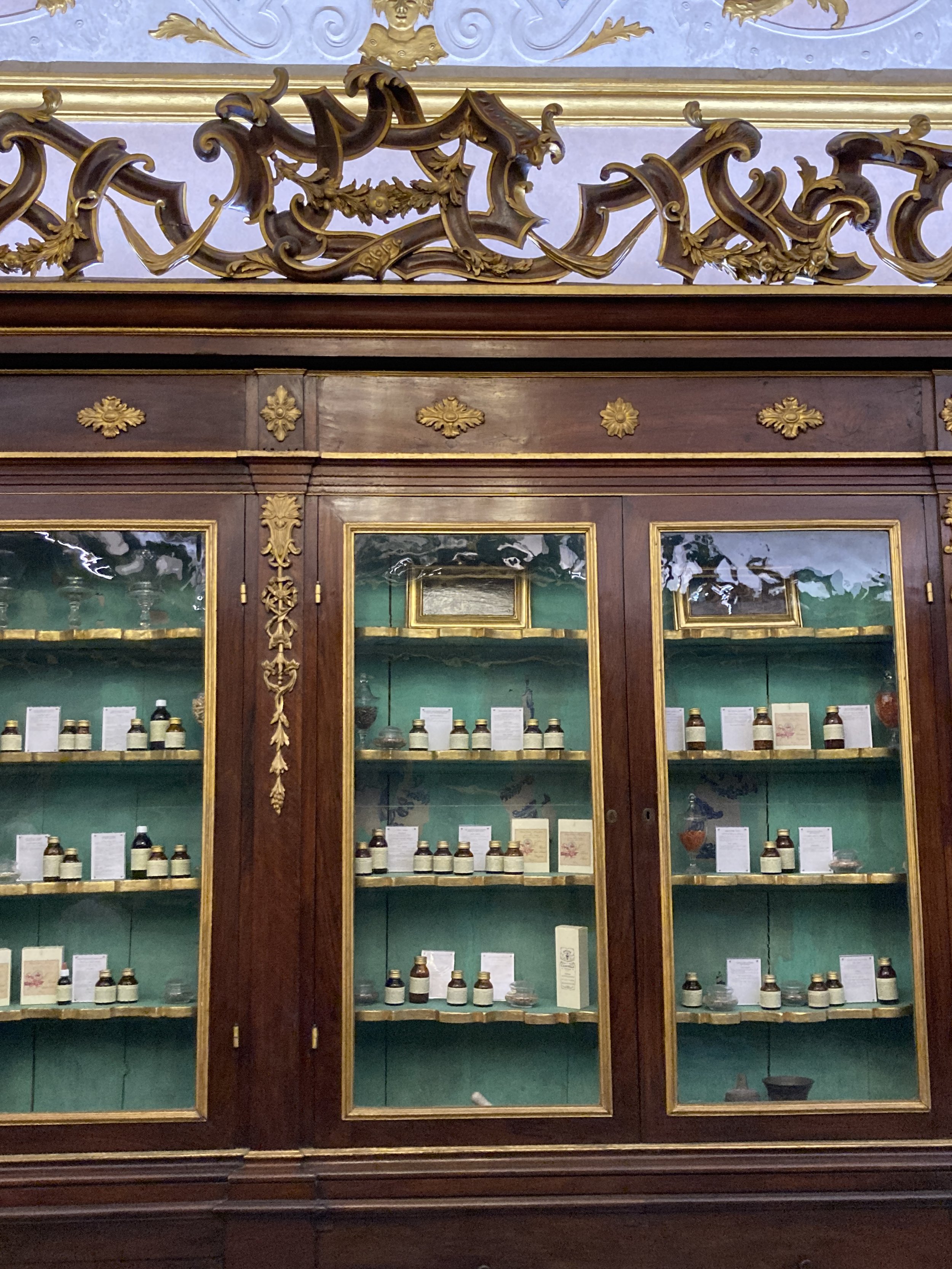
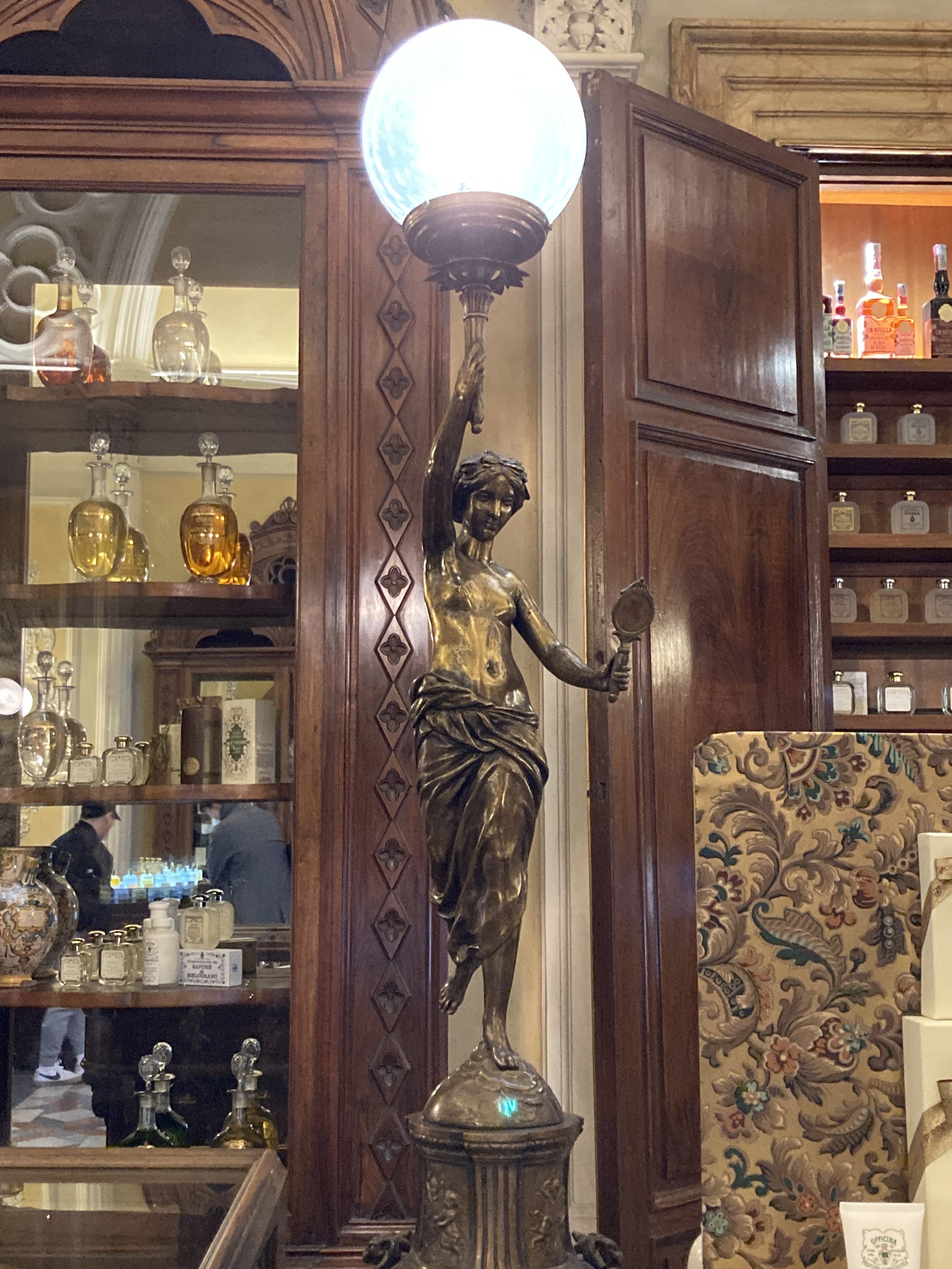
One of the sales rooms in the Officina Profumo-Farmaceutica di Santa Maria Novella

The Pharmacy of Santa Maria Novella in Florence

January 03, 2022 by Joanne Bartram in Florence, History, Italian Christmas, Italian culture, Italy travel, #italytravel, #florence

As I stand at the entrance to the Pharmacy of Santa Maria Novella I have a sudden thought - this must be what heaven smells like. I can hardly wait to go inside!

The official name is Officina Profumo-Farmaceutica di Santa Maria Novella, in English that translates to the Workshop of Perfumes and Pharmaceuticals of Santa Maria Novella. That is a fairly ordinary name for an extraordinary place.

66A60A4E-287E-47DD-A917-4A7609EBD8A7.jpeg
1B566B01-38F2-4846-B707-19E9F2584317.jpeg
A4B30864-63C1-4B59-B534-89CDD6095090.jpeg

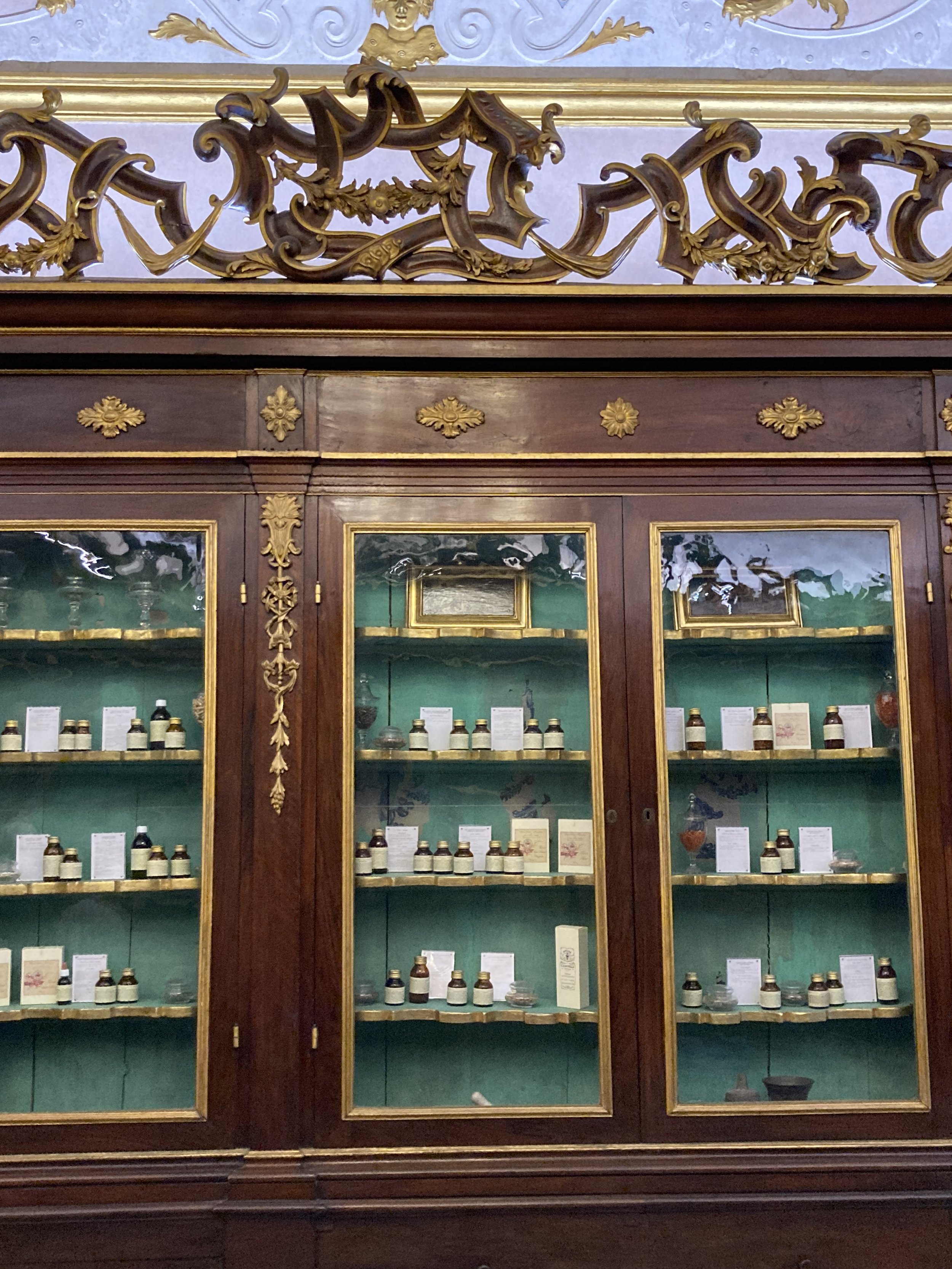
The pharmacy was established by Dominican friars from the nearby church of Santa Maria Novella during the early 13th century, making it one of the oldest European apothecaries still in operation. Centuries ago the friars cultivated herbs and used them to make herbal medicines, tinctures, and ointments for the monastery. Some of their brews, scented with rose water, herbs, and spices, were designed to fight the plagues that ravaged Florence and to treat a variety of other ailments. The friars became famous for their potions and in the 1600’s they opened their pharmacy to the public.

It has been a long time since the pharmacy was run by monks. Fortunately they left behind both their legacy and the formulas they created. For several generations the pharmacy was owned by a family who honored the traditions left by those long-ago friars. They expanded the business to many countries and gave it an on-line presence (in the US the website is: us.smnovella.com). This year ownership was acquired by an Italian beauty products company, Italmobiliare. Let’s hope they continue the wonderful legacy of those long ago monks.

The pharmacy still operates in its historic location on Via della Scala in what was once the Chapel of San Niccolò. The original chapel was built in thanks for the care given to a local merchant, Dardano Acciaioli, by the friars of the church of Santa Maria Novella. It is no surprise then that a trip to the pharmacy feels a bit like a religious pilgrimage.

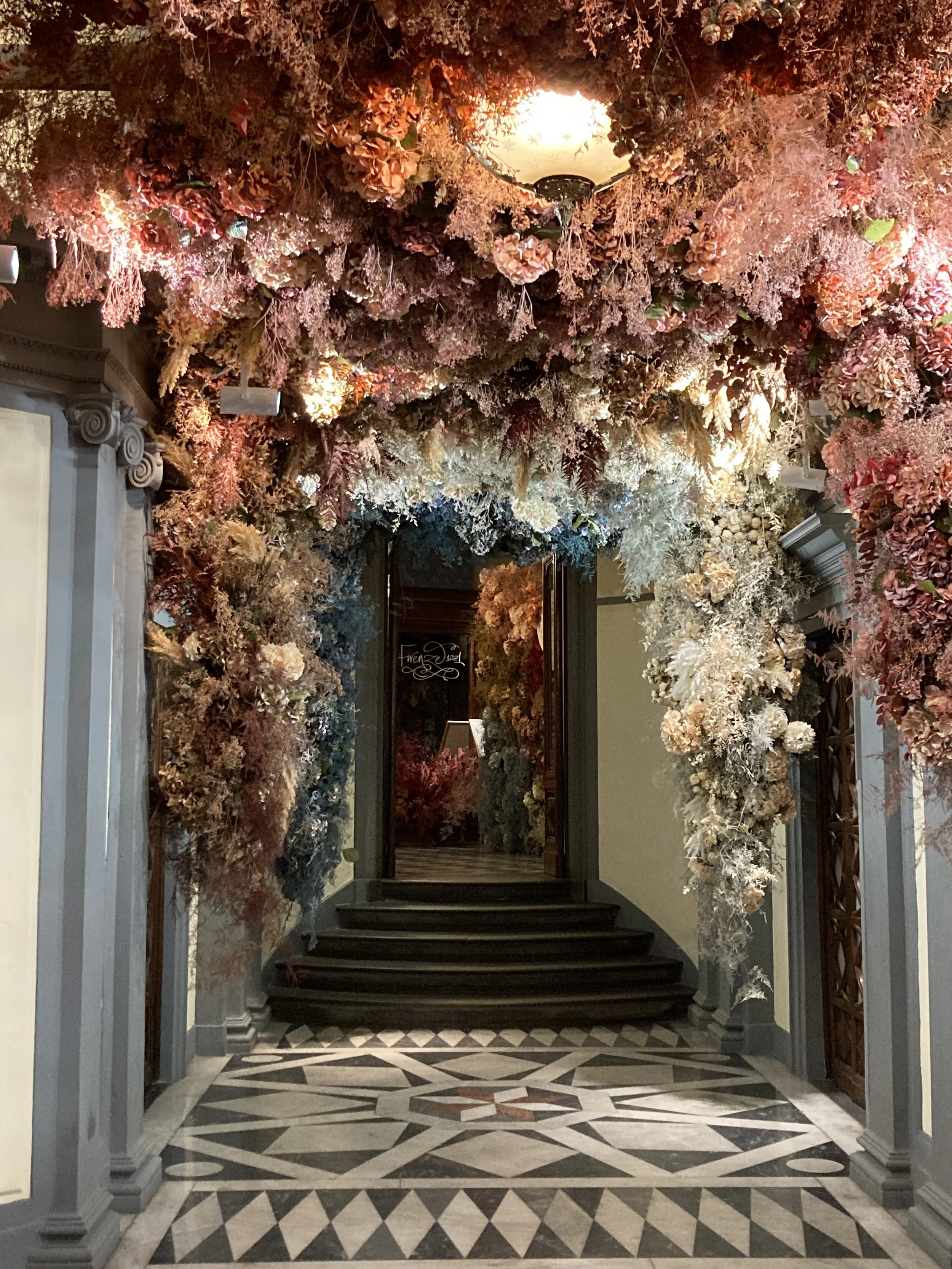
Walking down Via della Scala towards number 16, you will know you have arrived when you become aware of that most enticing scent. The outside of the building is unremarkable, so allow the scent to draw you in. The experience begins just inside the doors as you cross the ornate marble floor and pass through the elaborate floral decorations. Just follow that scent!

The experience begins at the entrance to the antique pharmacy

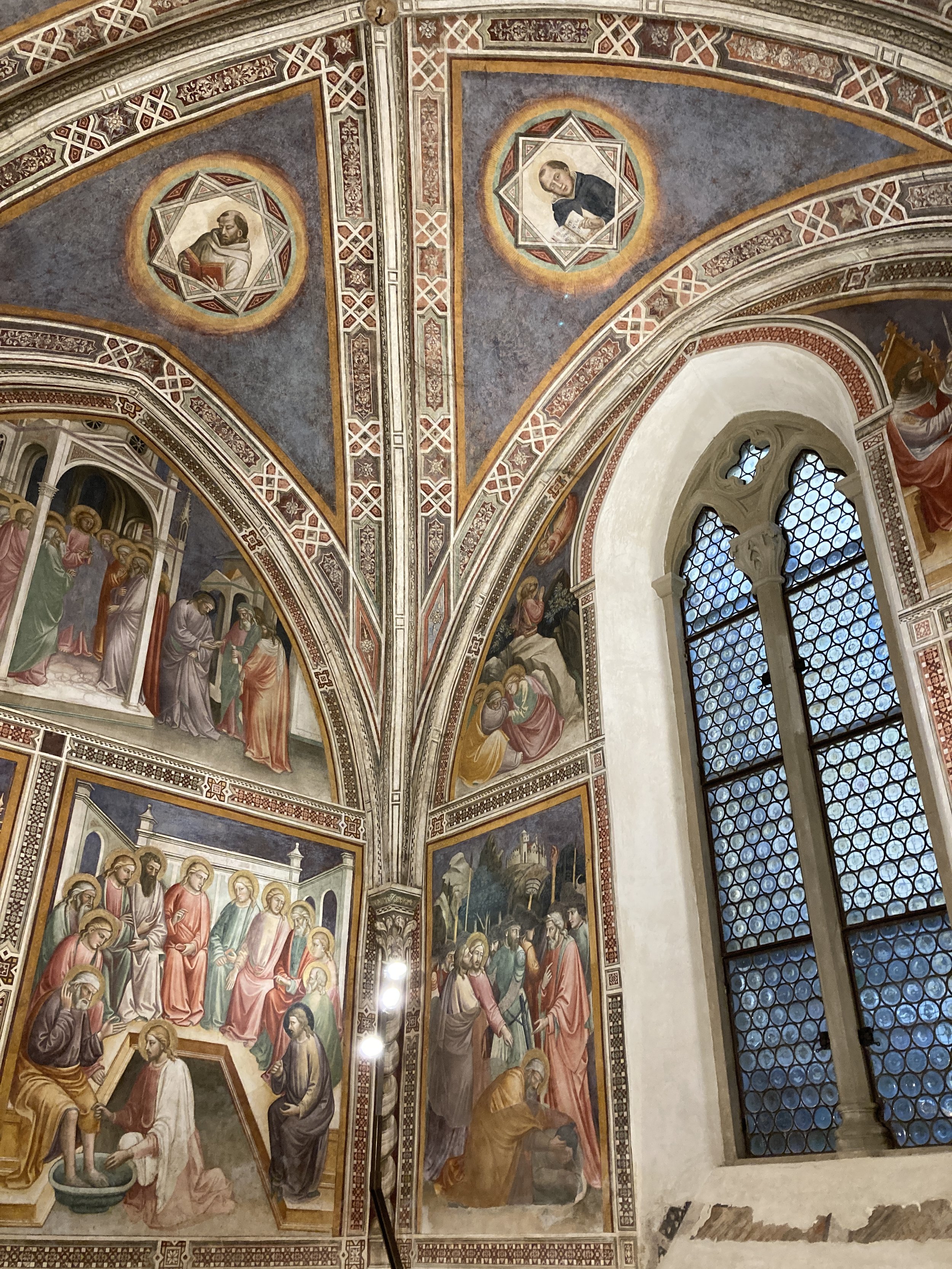
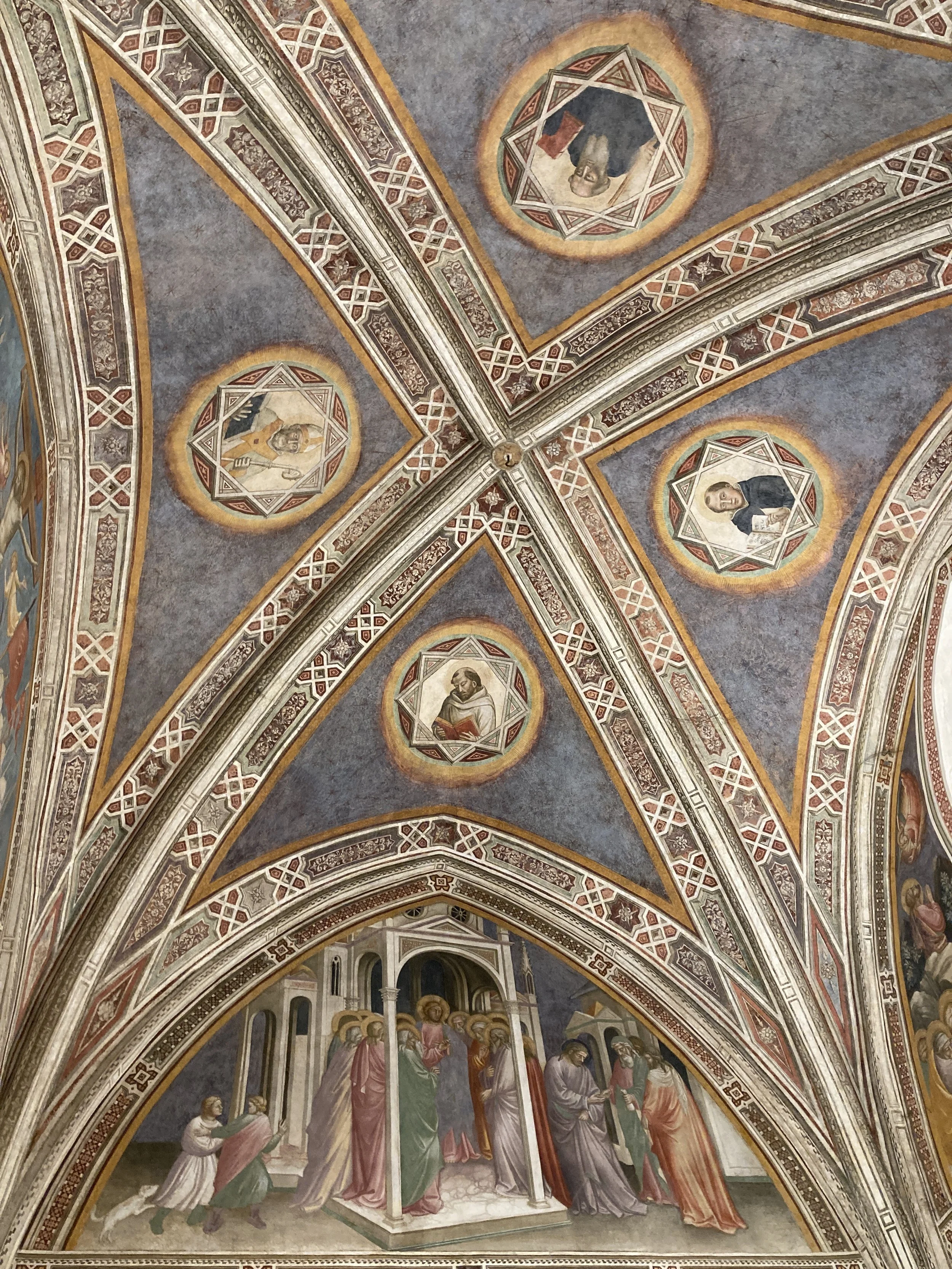
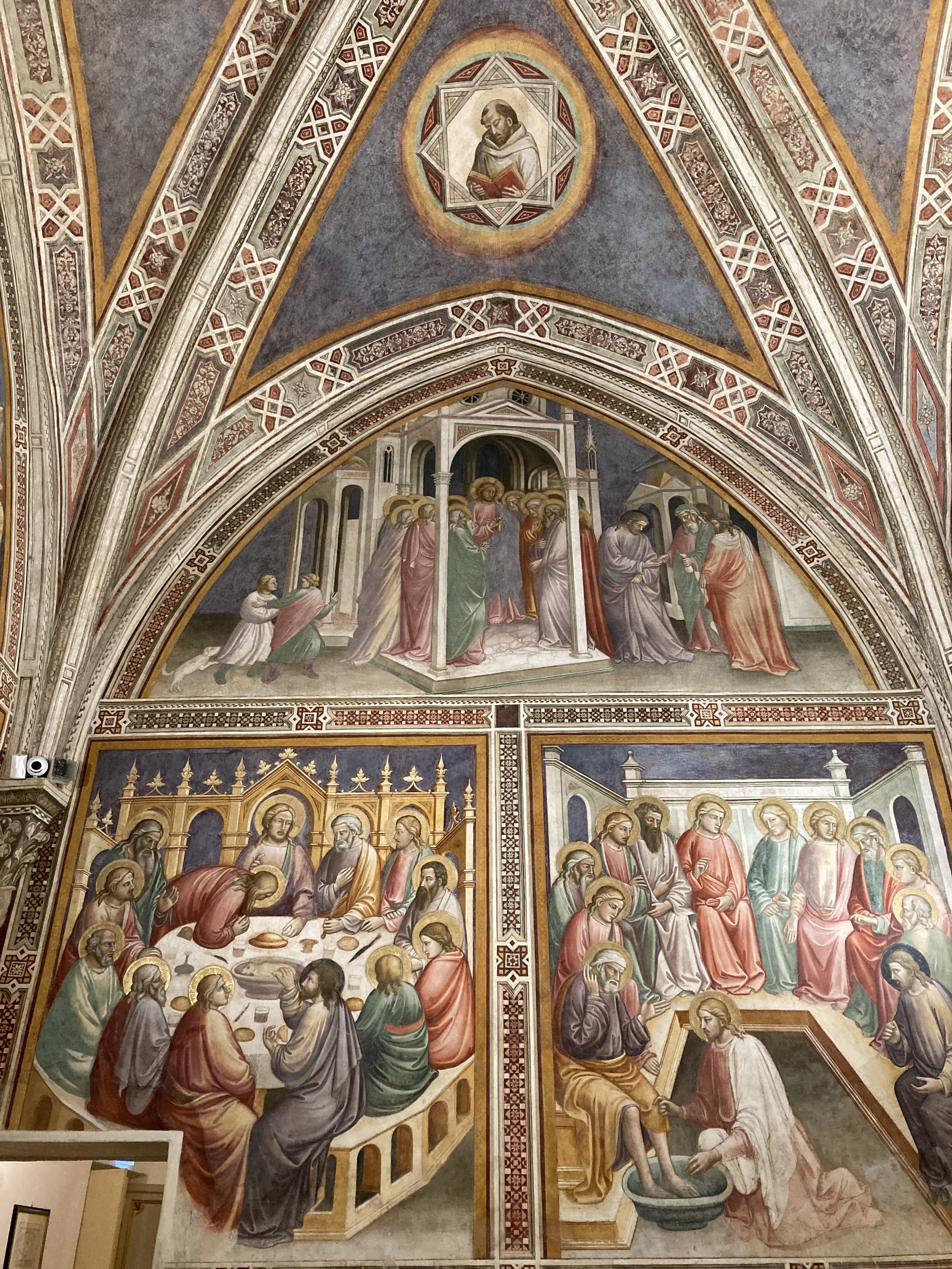
Just off the entry hall is a room that was once the sacristy of the the Chapel of San Niccolò. Adorned with beautiful frescoes from around the year 1400 (below), today this room is part museum and part showroom.

8AB73F3D-3F9B-488F-9226-2C4A838525AF.jpeg
61FE2B3B-8BB4-4376-93EC-84BD6CA043A0.jpeg
FB59B2E1-BB0B-4C1E-9068-465F3D5B26F8.jpeg

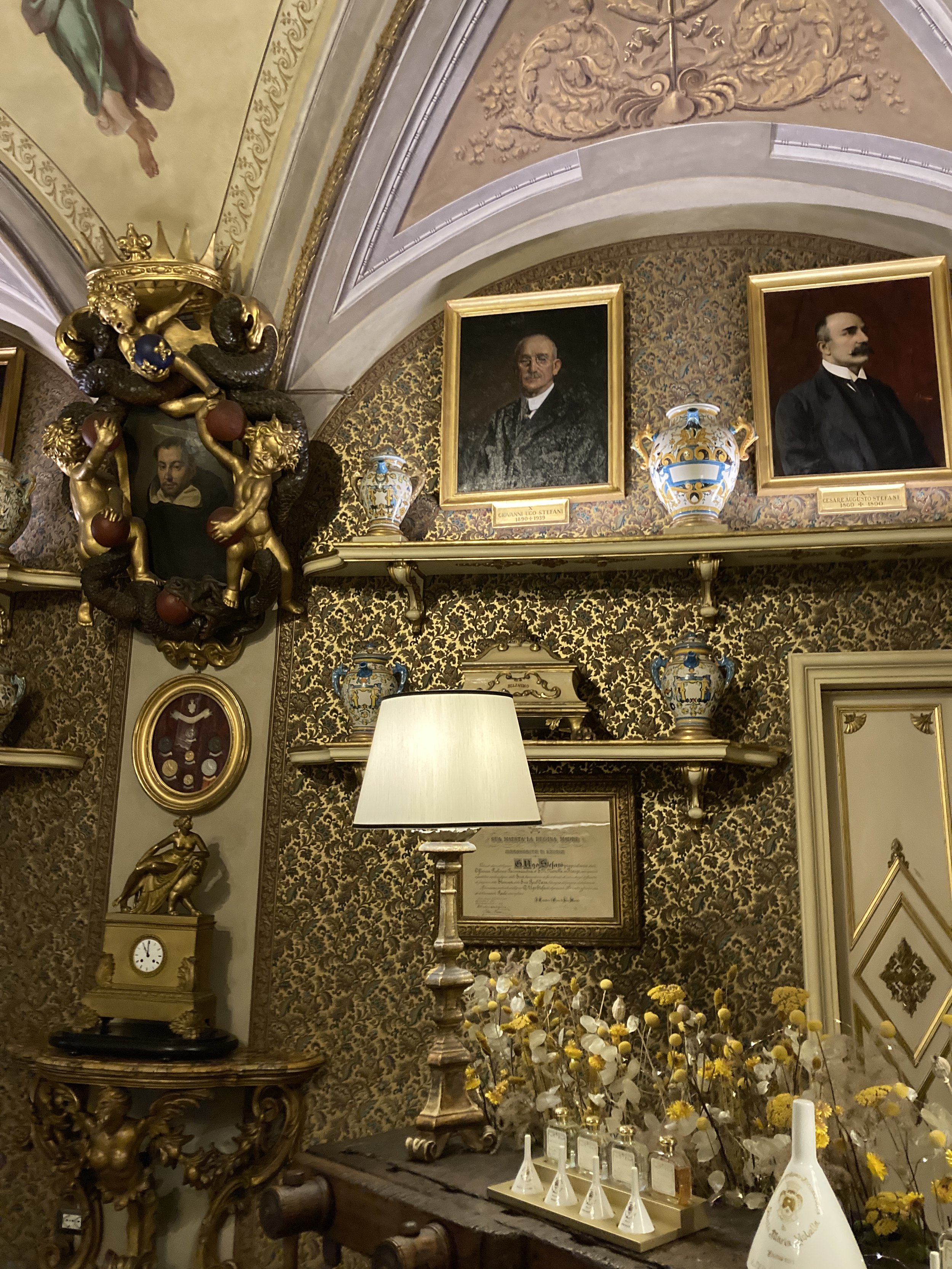
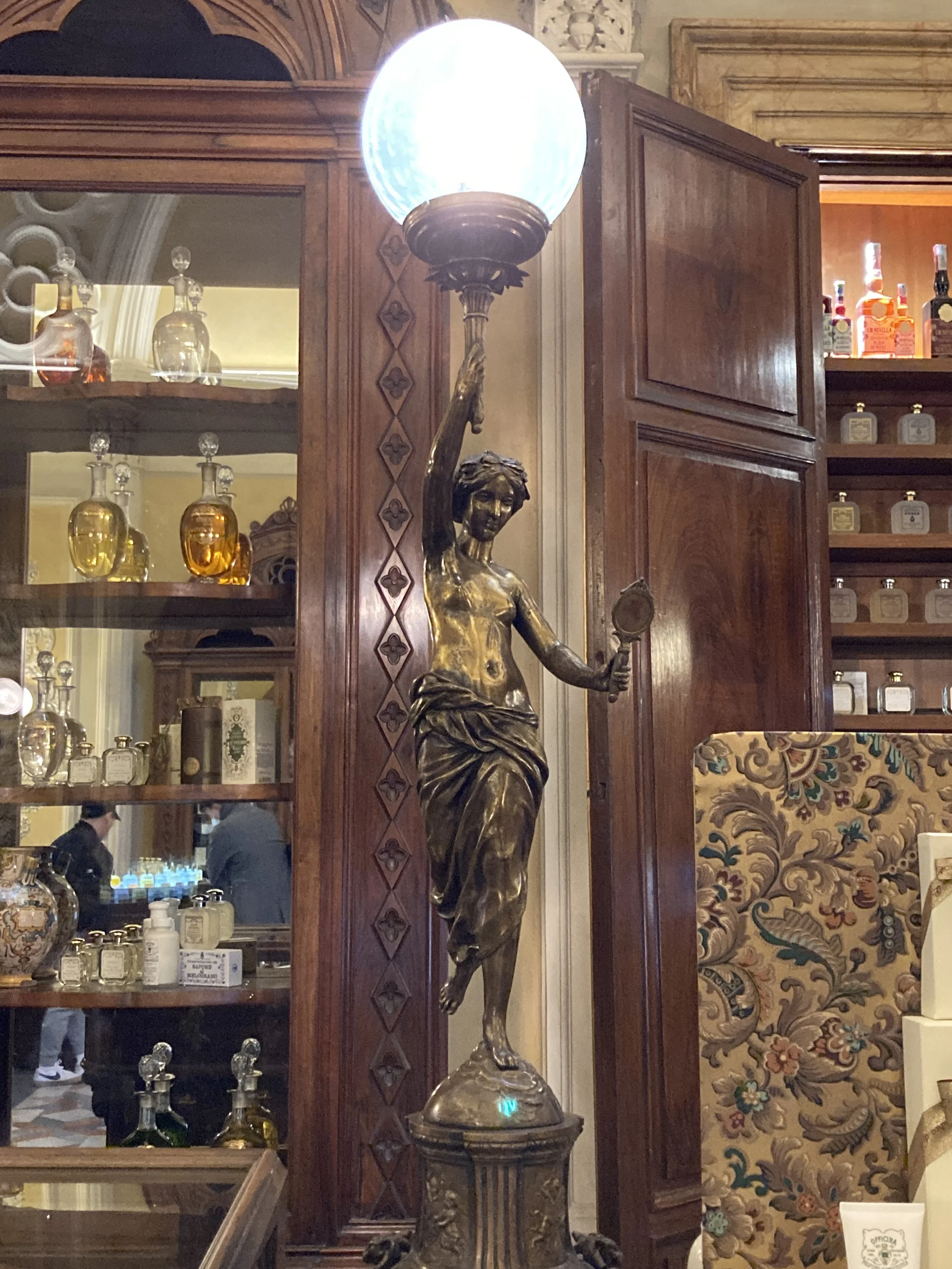
Each subsequent room in the pharmacy evokes the ancient apothecary, provides interesting historical artifacts, and contains elegantly displayed products.

66A60A4E-287E-47DD-A917-4A7609EBD8A7.jpeg
1B566B01-38F2-4846-B707-19E9F2584317.jpeg
A4B30864-63C1-4B59-B534-89CDD6095090.jpeg

Shop here and you follow in the footsteps of Catherine di Medici, an early patron of the pharmacy. A unique perfume was developed for her, named Acqua della Regina. It was the first perfume to be made with alcohol as a base and it traveled with her to France. The scent is still produced today along with a host of other wonderful scents.

Perhaps Catherine di Medici wore an amulet like this one on display in the pharmacy, filled with a potion to ward off illness.

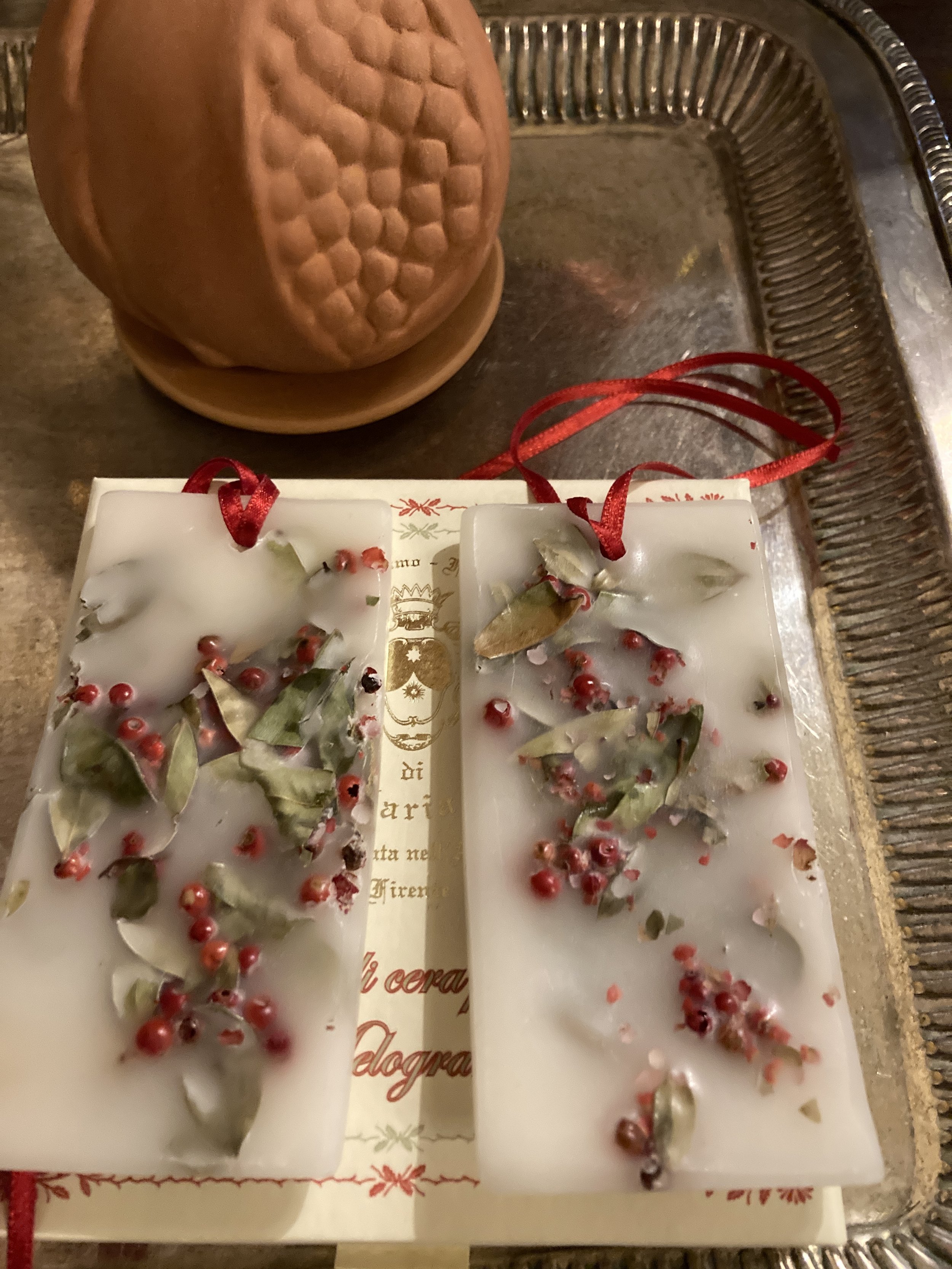
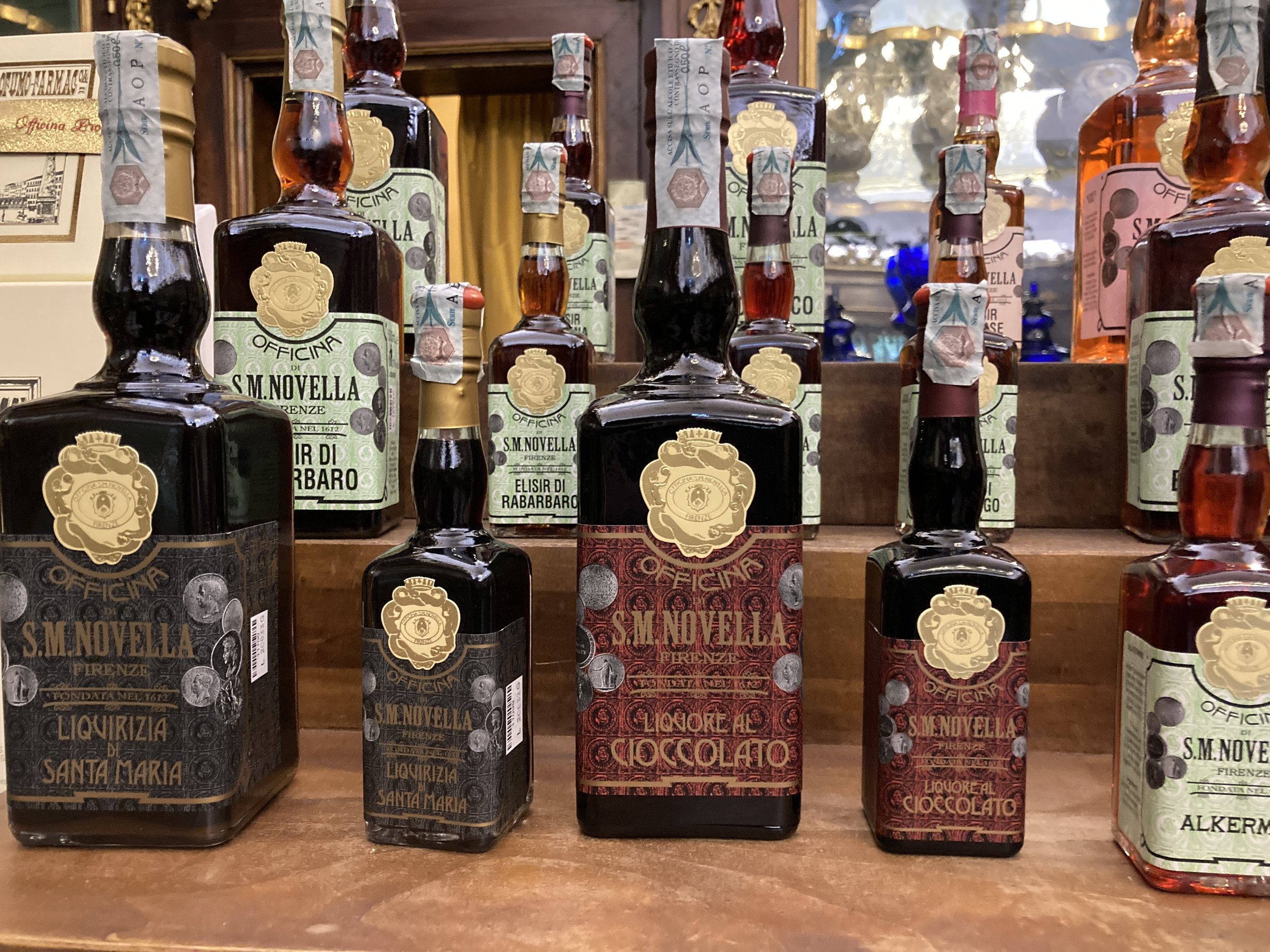
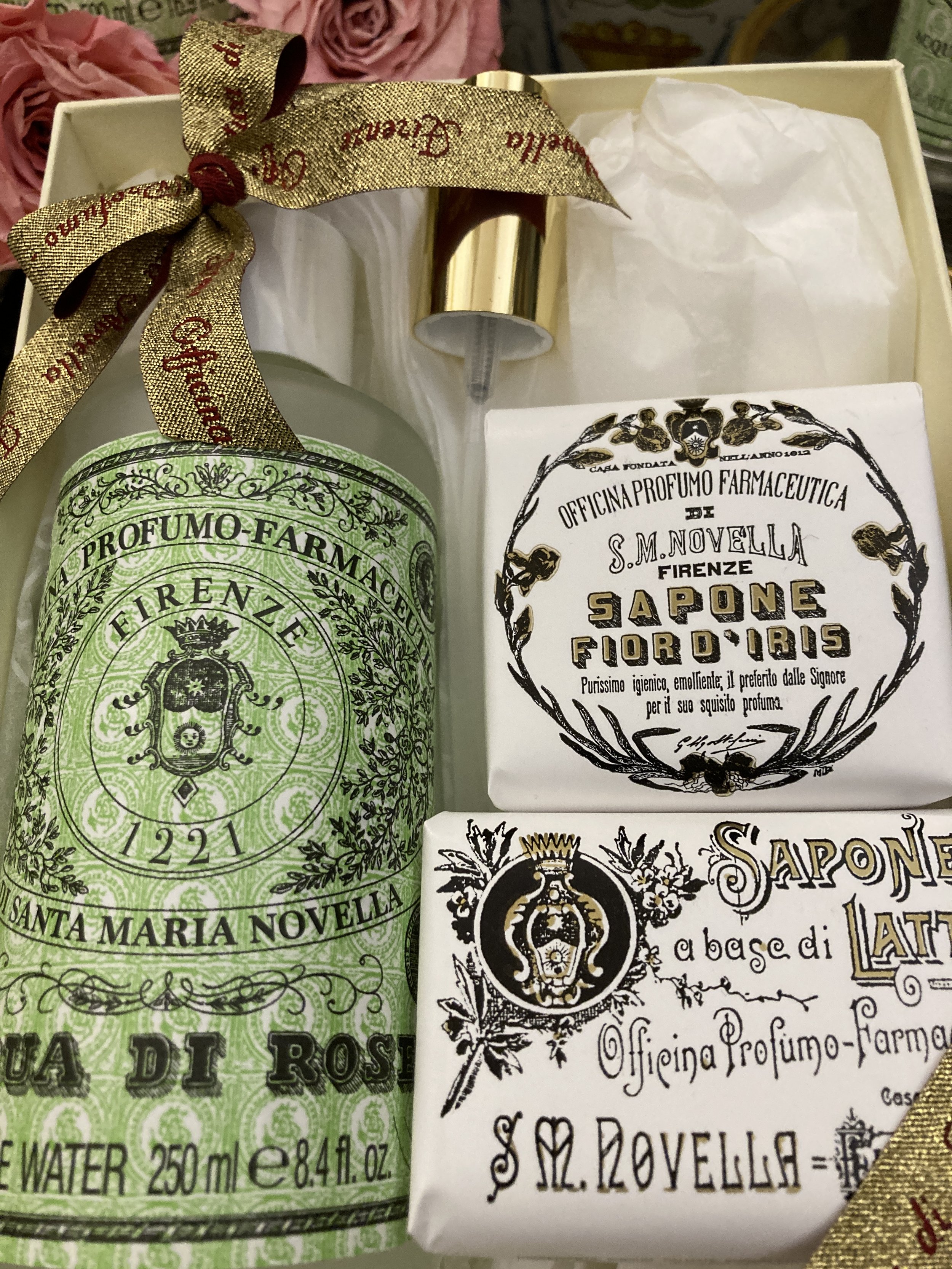
In addition to perfumes, the other products sold here include elixirs, liquors, soaps, potpourri, lozenges, scented candles, and skin care products. There are also some beautiful accessories for the home. All are manufactured locally using traditional methods.

48BAA720-B100-4279-A56B-D739A38C3FAE.jpeg
928126DA-8108-4EDC-A814-297B16E543E1.jpeg
E4F535B9-75F8-4FE3-B71B-AACE45679A21.jpeg
6B3D08AE-DBD7-4154-9E14-BD95510EDFD2.jpeg

I visited just before Christmas when the seasonal decorations were fabulous and the gift buying opportunities were endless. Every product was beautifully presented, even a simple package of mints came in an artfully designed tin. The delicate filigree items (candle and potpourri holders) are handmade by a local craftsman. They make lovely Christmas ornaments, with or without potpourri. Each gift comes in a box tied with an elegant ribbon.

The Christmas tree at Santa Maria Novella pharmacy, 2021

Florence is full of churches and museums - a host of “must see” places. The Officina Profumo-Farmaceutica di Santa Maria Novella provides a different Florentine experience. It is a feast for the senses and a taste of luxury both ancient and contemporary. It is a unique way to step back into the history of this remarkable Italian city.

January 03, 2022 /Joanne Bartram
Santa Maria Novella Pharmacy, SMN Pharmacy, Florence, Italian products
Florence, History, Italian Christmas, Italian culture, Italy travel, #italytravel, #florence
  • Newer
  • Older

Powered by Squarespace