Two Parts Italy

Exploring Italy, travel, and living a flavorful life

  • Blog
  • About This Blog
  • Start Here
  • Recent Posts
  • Archives by Topic
  • Subscribe
  • Contact me
Pietrasanta (with the old city wall visible up on the hill)

Pietrasanta (with the old city wall visible up on the hill)

Heaven and Hell in Pietrasanta

May 31, 2021 by Joanne Bartram in #italytravel, Hill Towns Italy, Italian art architecture, Italian culture, Italy travel, Tuscany

Pietrasanta has long been an artistic center in the Versilia (the coastal area of Tuscany).  It is not far from the Carrara marble quarries favored by Michelangelo in the 16th century and by generations of sculptors ever since.  The name itself reflects this history, Pietra = stone and Santa = sacred or holy.  Marble, and the art of sculpture, is the artistic heart of this small town but sculpture is not the only art form to see in Pietrasanta. Art in all of its forms can be found here in museums, churches, galleries, studios, and in the ever-changing outdoor exhibits in piazzas and parks throughout the city. 

How graceful is this outdoor sculpture ?

How graceful is this outdoor sculpture ?

 My last visit to Pietrasanta was just before the COVID emergency began. Now that Italy is opening up to travel again, it is one of the places I can hardly wait to revisit.  My next visit is sure to include two of my favorite places – The Museo dei Bozzetti and the Church of the Misericordia (officially named the church of Sant’Antonio abate e San Biagio).

One of a group of sculpted nudes who seem to be watching and waiting in the Museo dei Bozzetti

One of a group of sculpted nudes who seem to be watching and waiting in the Museo dei Bozzetti

For anyone with an interest in sculpture, the Museo dei Bozzetti is a must see.  Bozzetti are small scale “rough drafts” of sculptures.  The museum includes hundreds of these along with many scale models, displays demonstrating the process of creating sculptures, and stunning full-size works.  Entrance is free, the museum is located just off Pietrasanta’s main square, near the Duomo.   Below are some photos from my pre-COVID visits to the Bozzetti.

B5A4D684-BF3F-4CFE-A0D0-4AA67E41E2D1.jpeg
4B5F5CF6-7DD3-4938-8F57-FB69CC184BA5.jpeg
C0D6B166-E1C6-4805-B66D-6EB13AB87006.jpeg

My second “must” is a visit to the Church of the Misericordia. This small church is easy to miss, nestled between store fronts on Via Mazzini.  But once seen, it is not easily forgotten.  Here the Colombian artist Fernando Botero, who has lived and worked in Pietrasanta, painted two large panels – The Gates of Paradise and the Gates of the Inferno.  In typical Botero style the figures are large, round, and fleshy (he has been quoted as saying that he doesn’t paint fat people but rather paints volume).  This work is clearly modern (from 1993) and not at all in the style of the ancient frescoes that are usually found in Italian churches.  

Botero’s Paradise

Botero’s Paradise

There are vivid colors and even more vivid depictions, especially of the horrors of hell.  Look closely at the details below and you’ll find some recognizable figures.  Mother Teresa resides in heaven, Hitler in hell. Every time I look at these two paintings I discover something new and something thought provoking.  I wonder why the artist placed his own self-portrait in the inferno panel?   More of Botero’s work can be found outdoors in Pietrasanta where his super sized Roman Warrior stands in Matteotti Piazza.

61EBCDEE-CD3B-4200-9814-DD62777FFF0E.jpeg
30FA410B-4816-48D6-9D1D-CAA86B9E3073.jpeg

Spending a day in Pietrasanta is a treat. The main square is a wonderful place to sit and have a coffee or an aperitivo, with a view of the old town walls and the Rocca di Sala fortress up the hill. The Duomo is beautiful and peaceful. Artists are often set up around town; watching them work is fun. The artists studios welcome visitors. The outdoor sculptures surprise and delight. All this is easily reachable by train from Lucca or Viareggio. Andiamo!

910AA4EE-AD81-4340-8A58-E3EDFA55BBA7_1_201_a.jpeg
F11FEB86-A09E-4D66-8C36-3DAE59DD5380_1_201_a.jpeg
DC0DECE9-8677-42D2-9886-C23D055501B6.jpeg
B16BEAA2-DD72-4CC7-8261-6B0FB10C68D4.jpeg
May 31, 2021 /Joanne Bartram
pietrasanta, Italian sculpture, marble, Botero, Art Italy, #pietrasanta
#italytravel, Hill Towns Italy, Italian art architecture, Italian culture, Italy travel, Tuscany
Summertime shadows, just outside the walls in Lucca,

Summertime shadows, just outside the walls in Lucca,

Shadows

May 17, 2021 by Judy Giannnettino in #italytravel, Italian light

There is something special about the light in Italy. Ask any one of the painters who come here to capture that light in watercolor or oil. Ask the photographers. Ask anyone who enjoys walking through Italian villages or down country lanes bathed in light. The light here inspires and seduces. 

Shadows on the walls at the entrance to an enclosed garden in Sant’Andrea di Compito, Tuscany.

Shadows on the walls at the entrance to an enclosed garden in Sant’Andrea di Compito, Tuscany.

Where there is light, there is also shadow. As much as I love the light, it is in the shadows that I find mystery and magic. They change with the season and with the hour. They cast a spell, changing ordinary scenes and objects into works of art.

Late summer shadows on an old marble sink

Late summer shadows on an old marble sink

Shadows always make me want to pull out my camera. Few words are necessary to capture the intrigue of shadows - pictures tell the whole story. So, no more words, just a few of my favorite photos of Italy’s shadows.

Spring time shadows made by a bridge over the river Magra in Bagnone

Spring time shadows made by a bridge over the river Magra in Bagnone

Lucca, shadows atop the wall

Lucca, shadows atop the wall

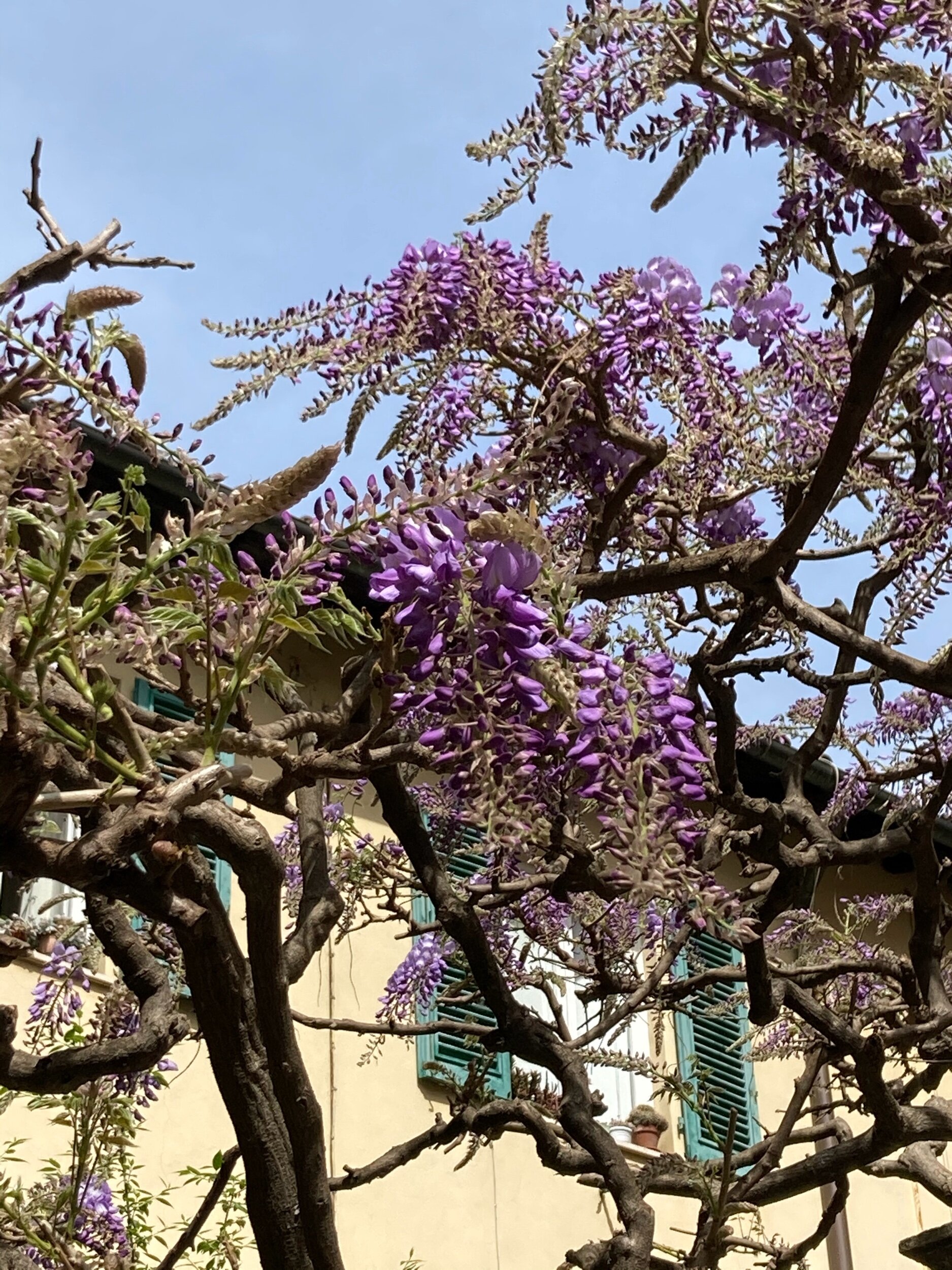
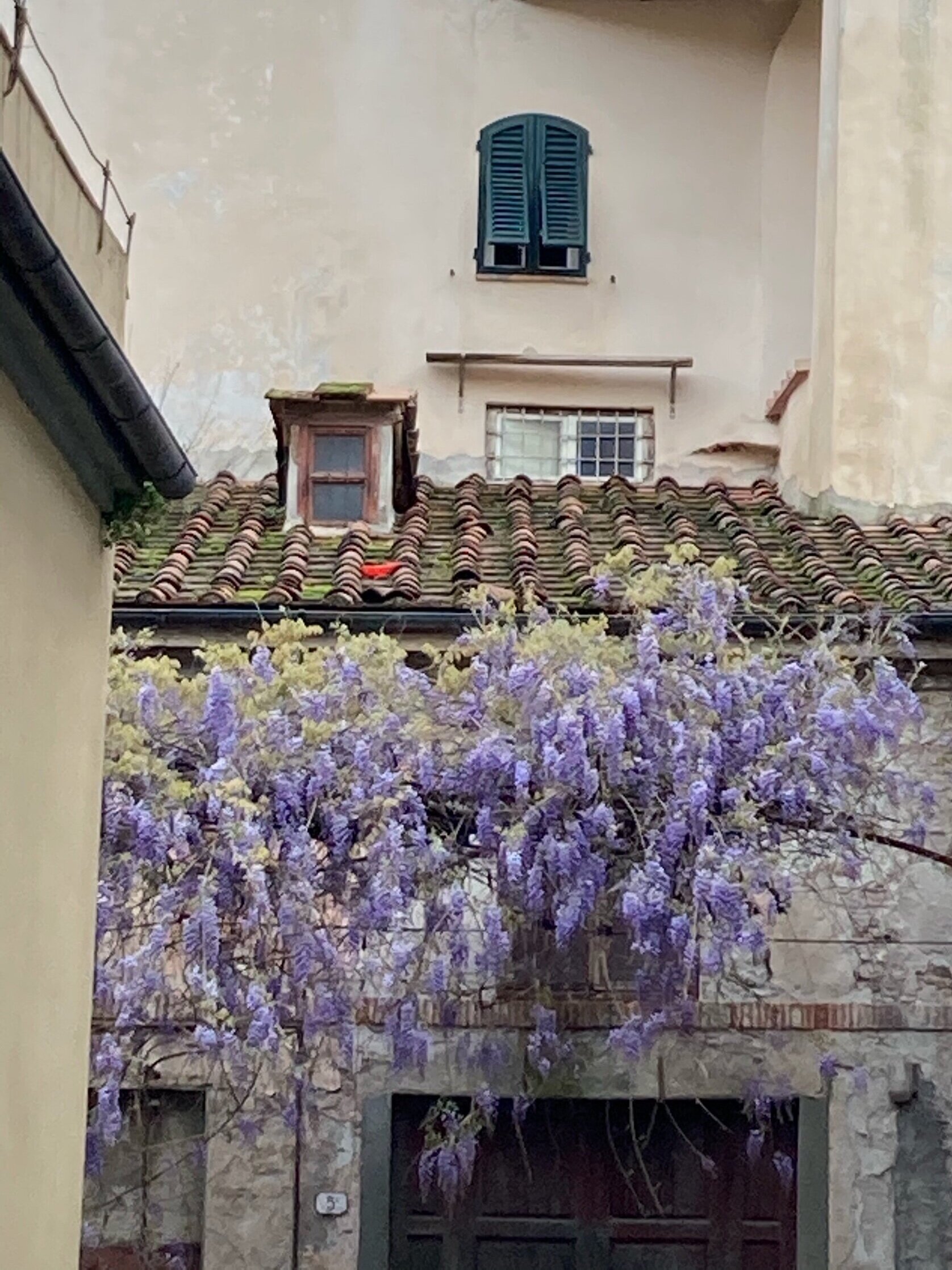
Springtime wisteria create beautiful shadows

Springtime wisteria create beautiful shadows

October shadows, Parco Ducale, Parma

October shadows, Parco Ducale, Parma

Winter time shadows, Venice

Winter time shadows, Venice

May 17, 2021 /Judy Giannnettino
Italy, light and shadow italy
#italytravel, Italian light
Some of the first wisteria to bloom in Lucca this year were along Via Busdraghi.  To see how they changed over time, scroll down to the bottom photo.

Some of the first wisteria to bloom in Lucca this year were along Via Busdraghi. To see how they changed over time, scroll down to the bottom photo.

A Wisteria Walk Through Lucca

April 19, 2021 by Joanne Bartram in #italytravel, #lucca, #springintuscany

Lucca has to be one of the most wonderful places for walking. For starters, the renaissance wall surrounding the city provides a long path, a tree-lined beauty, perfect for both a passeggiata (stroll) and for people watching. Not far outside the city is an old aqueduct which provides several miles of walking path along its beautiful arches. Inside the historic center of town the streets are lined with medieval buildings, unique patterned brickwork, remnants of Roman civilization, churches, and piazzas. There is no shortage of interesting paths to take or beauty to behold.

The shadows cast by this wisteria are just as interesting as the blooms themselves.

The shadows cast by this wisteria are just as interesting as the blooms themselves.

And while just wandering through all of these fabulous sights is wonderful, sometimes I feel that I need a purposeful walk. Not purposeful as in needing to walk to the grocery store or bakery but rather a focused walk, one to discover something specific. Some days I go walking and try to find a street I’ve never seen before. Often I do a photography walk - last week I searched for and took photos of old, neglected doors. The week before it was door knockers and doorbells.

This glorious wall of wisteria is in Piazza Antelminelli.  The church of San Giovanni is in the background.

This glorious wall of wisteria is in Piazza Antelminelli. The church of San Giovanni is in the background.

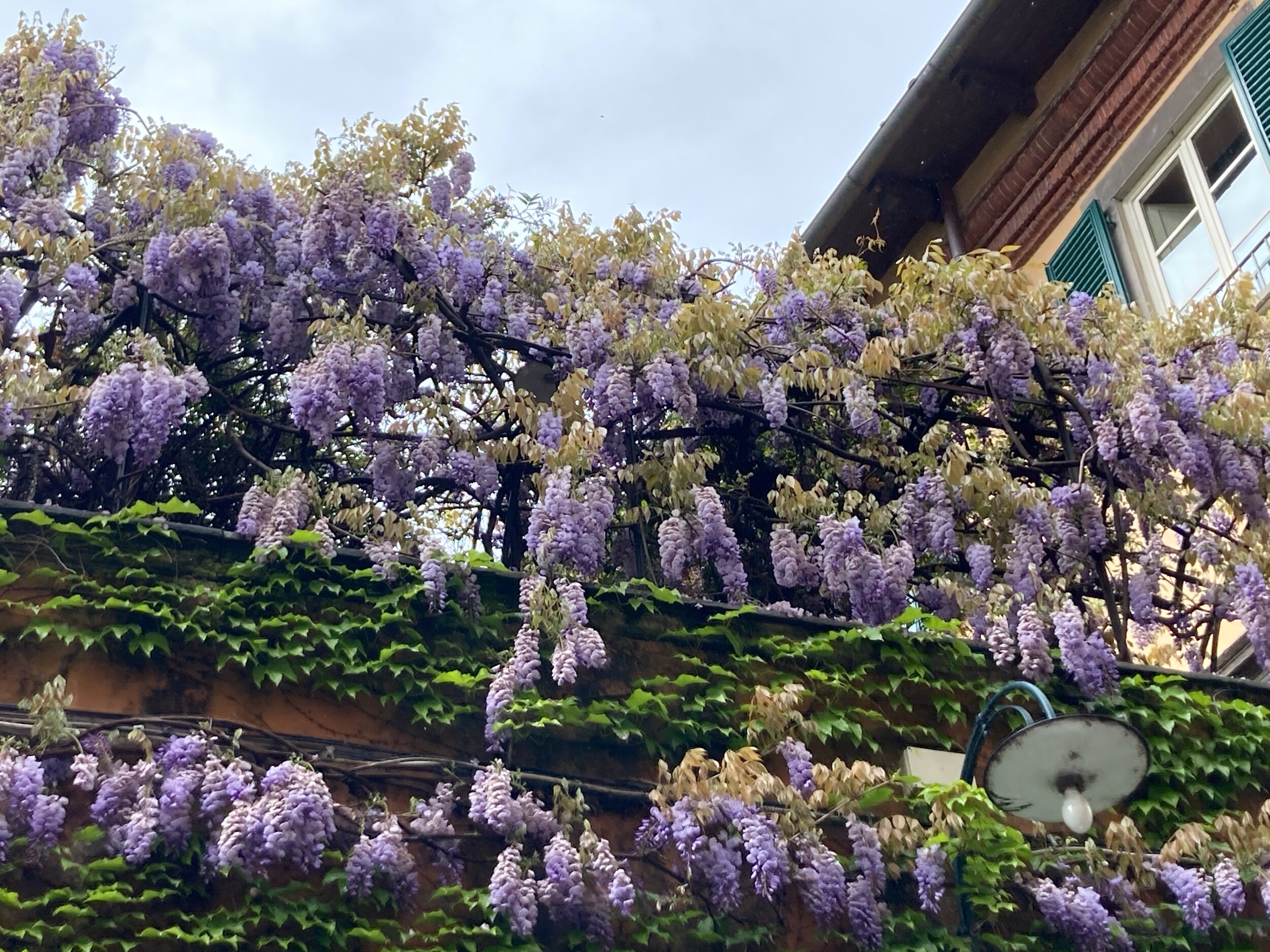
In spring, my favorite walks are to discover what is blooming. In March I took an almost daily walk down Corso Garibaldi, a street in Lucca that is lined with Magnolia trees. They are beautiful, but they don’t last long. In the last couple of weeks I’ve watched the trees along the wall begin to sprout their leaves and right now the wisteria are blooming all around town. The wisteria (glicine in Italian) are spectacular as they tumble over walls and across trellises. It seemed as though the vines were bare one day and full of early blossoms the next. A week or so later they were spectacular in full bloom.

Less common here, but no less beautiful, are these white wisteria in Piazza San Giovanni.

Less common here, but no less beautiful, are these white wisteria in Piazza San Giovanni.

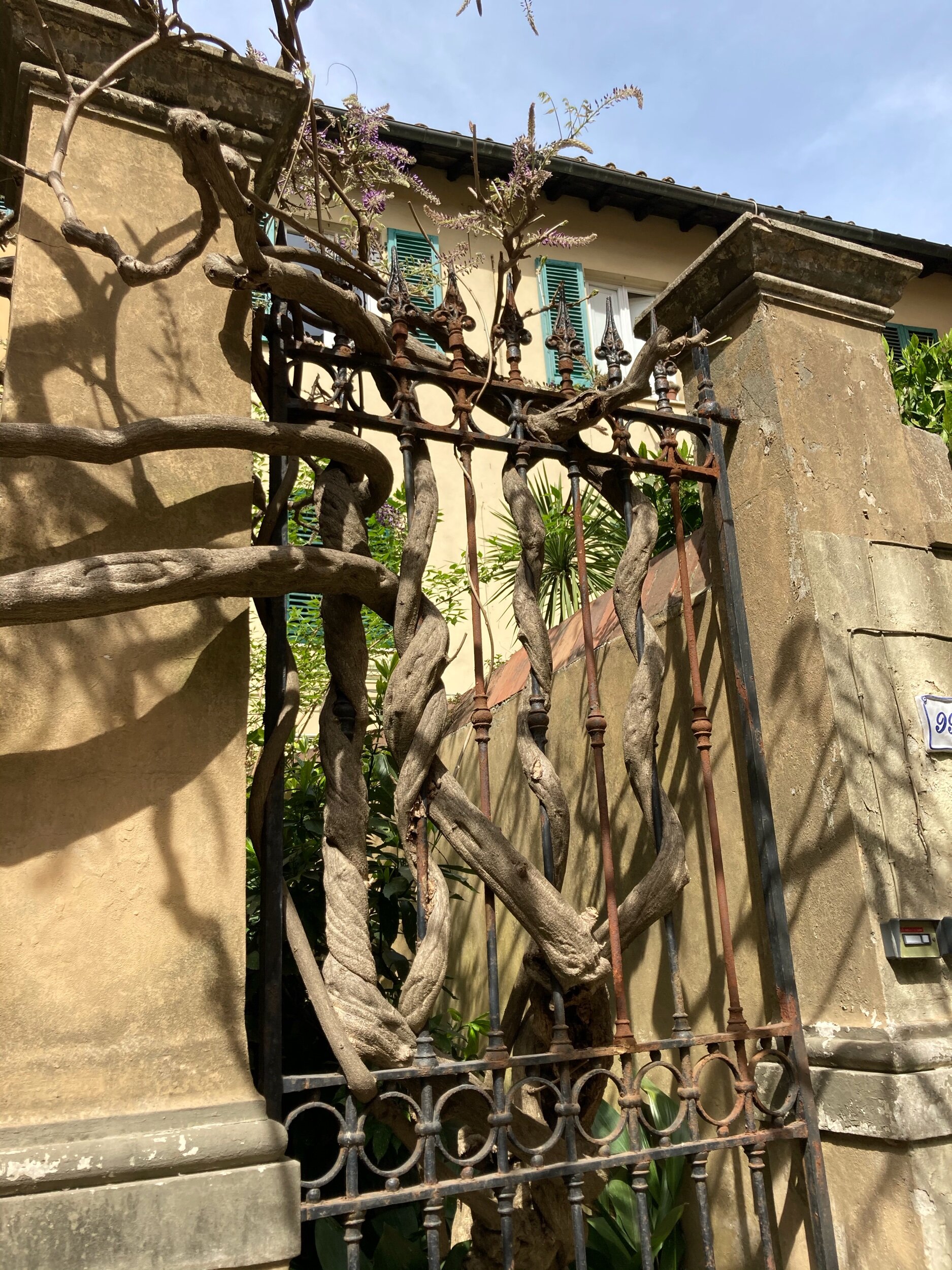
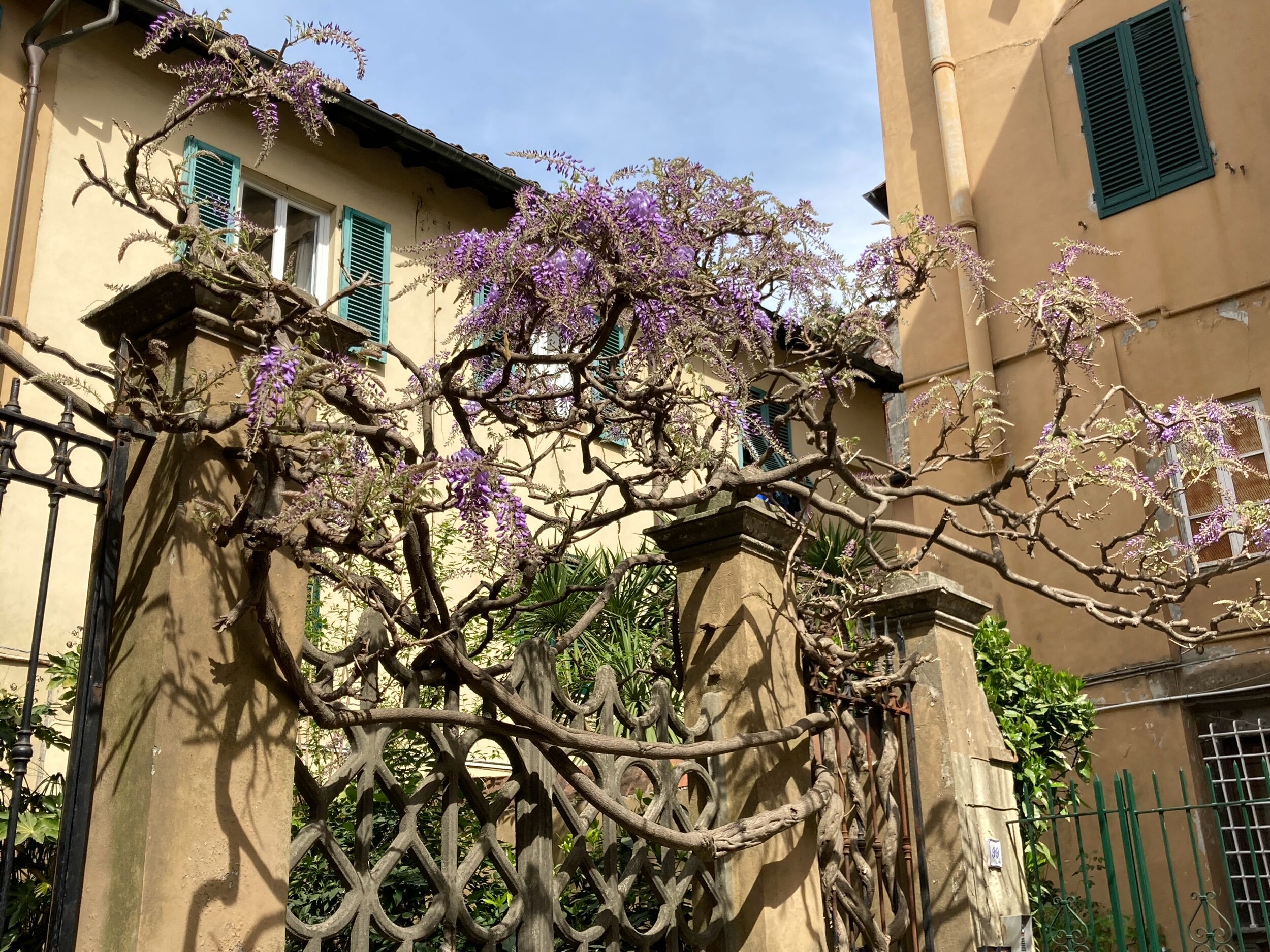
My favorite stand of wisteria is in tiny Piazza Parigi. The trunks are old and thick and they twist their way through an old iron fence. The blooms spill over the top and fill the small piazza with a soft scent.

IMG_1773.jpeg
IMG_1774.jpeg
IMG_1772.jpeg

Watching the wisteria blooms unfold this spring has been a treat for me, even more so because last year I missed them as Italy was on strict lockdown throughout March and April, which meant no strolls through town to watch them bloom. That makes them even more special this year when I can freely wander through town to see, smell, and photograph them!
Tucked away in a small alley off Via Cenami.

Tucked away in a small alley off Via Cenami.

Not all of the wisteria action takes place inside the walls. There are some beautiful villas, many in Liberty Style, just outside the walls and several are draped in blooms.

This Liberty Style villa, surrounded by wisteria, is just outside the walls north of the historic center.

This Liberty Style villa, surrounded by wisteria, is just outside the walls north of the historic center.

Wisteria - a springtime gift from Italy.

The same wall of wisteria as in the top photo, but about 10 days later in full bloom.

The same wall of wisteria as in the top photo, but about 10 days later in full bloom.

April 19, 2021 /Joanne Bartram
wisteria, glicine, italy spring, Lucca
#italytravel, #lucca, #springintuscany
Easter decorations in a shop in Lucca

Easter decorations in a shop in Lucca, before the start of the red zone restrictions

Pasquetta - Easter Monday in Italy

April 05, 2021 by Joanne Bartram in #italytravel, #springintuscany, Living in Italy

The day after Easter is officially the Lunedì dell’Angelo (the Monday of the Angel) but I’ve never heard anyone here in Lucca refer to it by that name. Here it is known simply as Pasquetta (little Easter). Pasquetta is a national holiday and one that marks the beginning of the spring season. Traditionally, it is a day for Italians to venture into the countryside for a day of picnics and outdoor fun. But not this year. For the second year in a row, Easter celebrations are limited by COVID restrictions. Last week, all of Tuscany (along with much of the rest of Italy) was declared a red zone. For the last three days, over the Easter weekend, the whole country has been “in the red”. For now, it is not possible to leave one’s home city and we are supposed to stay at home except for necessary things like trips to the pharmacy or grocery store. That means no trips to the countryside for Pasquetta and no picnics either.

Traditional Easter Colomba (dove) cakes, in fancy tins by Dolce & Gabbana.

Traditional Easter Colomba (dove) cakes, in fancy tins by Dolce & Gabbana.

All but essential shops are closed. Luckily, chocolate shops are considered essential (one more reason to love Italy). This is a good thing - can you imagine an Easter without chocolate?

How cute are these?   Chocolate chickens are much more common than bunnies here at Easter.  These are from the artisanal shop Chocolat in Chiasso Barletti, Lucca.

How cute are these? Chocolate chickens are much more common than bunnies here at Easter. These are from the artisanal shop Chocolat in Chiasso Barletti, Lucca.

Even the local woodwork shop has a window decorated for Easter

Even the local woodwork shop has a window decorated for Easter

It is still permissible to go out for a walk, though the guidelines include a vague statement about staying “close to home”. The wall around Lucca remains open (unlike last Easter when it was off-limits) and it certainly qualifies as close to home for those of us who live within its embrace. But don’t forget to carry your self-certification documents!

Fortunately, the rules were relaxed a bit for the 3 days over the Easter holiday (the weekend of Easter plus today’s Pasquetta holiday). For these 3 days, we have been allowed two persons to come into our homes for a visit or meal. I took full advantage of this, cooking an Easter brunch for 2 friends. A pretty table, good food, great company, a little Prosecco, and lots of laughter made for a wonderful Easter morning. Today I will celebrate Pasquetta with a long walk along the wall, enjoying the new green leaves on the trees, the wildflowers, and the views of distant hills.

Despite everything that has occurred over the past difficult year, life goes on. Shops are decorated for Easter, people wish each other “Buona Pasqua” in the streets, we are enjoying some beautiful spring weather, the gelato shops have opened for the season (gelato is the perfect take out food), the wisteria are blooming, and the church bells ring. There is reason for optimism and everyone is looking towards next year when, hopefully, I will be able to host a big group for an Easter luncheon.

Buona Pasquetta !

IMG_1711.jpeg
April 05, 2021 /Joanne Bartram
Pasquetta, Pasqua, Easter in Italy
#italytravel, #springintuscany, Living in Italy
One of many large statues on the exterior facade of the Duomo, surrounded by intricate carvings and marble inlay

One of many large statues on the exterior facade of the Duomo, surrounded by intricate carvings and marble inlay

Outdoor Sculpture in Florence

February 15, 2021 by Judy Giannnettino in #italytravel, Florence, Italian art architecture

The city of Florence is a gift, one I can receive time after time and find just as thrilling as I did on my first visit more than 20 years ago. There is so much to see - cathedrals, small churches, bridges, museums, architecture, hills, and beautiful Tuscan skies. Usually all of these things are enjoyed while simultaneously dealing with (and grumbling about) large groups of tourists. However, this past year has been a bit different (in so many ways) and with fewer people about, there is little competition for close-up views of Florence’s wonderful art and architecture. Even better if, like me, sculpture is one of your favorite art forms. On my last visit I was happy to just wander, never even entering a museum. Instead, I spent my time immersed in the beauty of the many outdoor sculptures and statues in Florence.
It’s impossible to see all of Florence’s sculptural wonders in one visit, but described below is a walk that I love which includes some of my Florentine favorites. And although right now travel is impossible for many of us - I can’t even go to Florence from my home an hour away in Lucca due to our most recent COVID restrictions - I hope this walk is a path we might all enjoy on a future trip to this special city.

The walk begins north of the Duomo in Piazza SS Annunziata (named for the church at the north end). When in Florence I always try to make time for this church. While the rest of my walk across Florence is outdoors, inside this church is one of the loveliest tomb monuments I’ve ever seen. How graceful, and sad, is this woman who keeps eternal watch over the tomb of a loved one? A stop here is a great way to begin a sculpture walk.

A tomb monument inside the church of SS Annunziata, Florence

A tomb monument inside the church of SS Annunziata, Florence

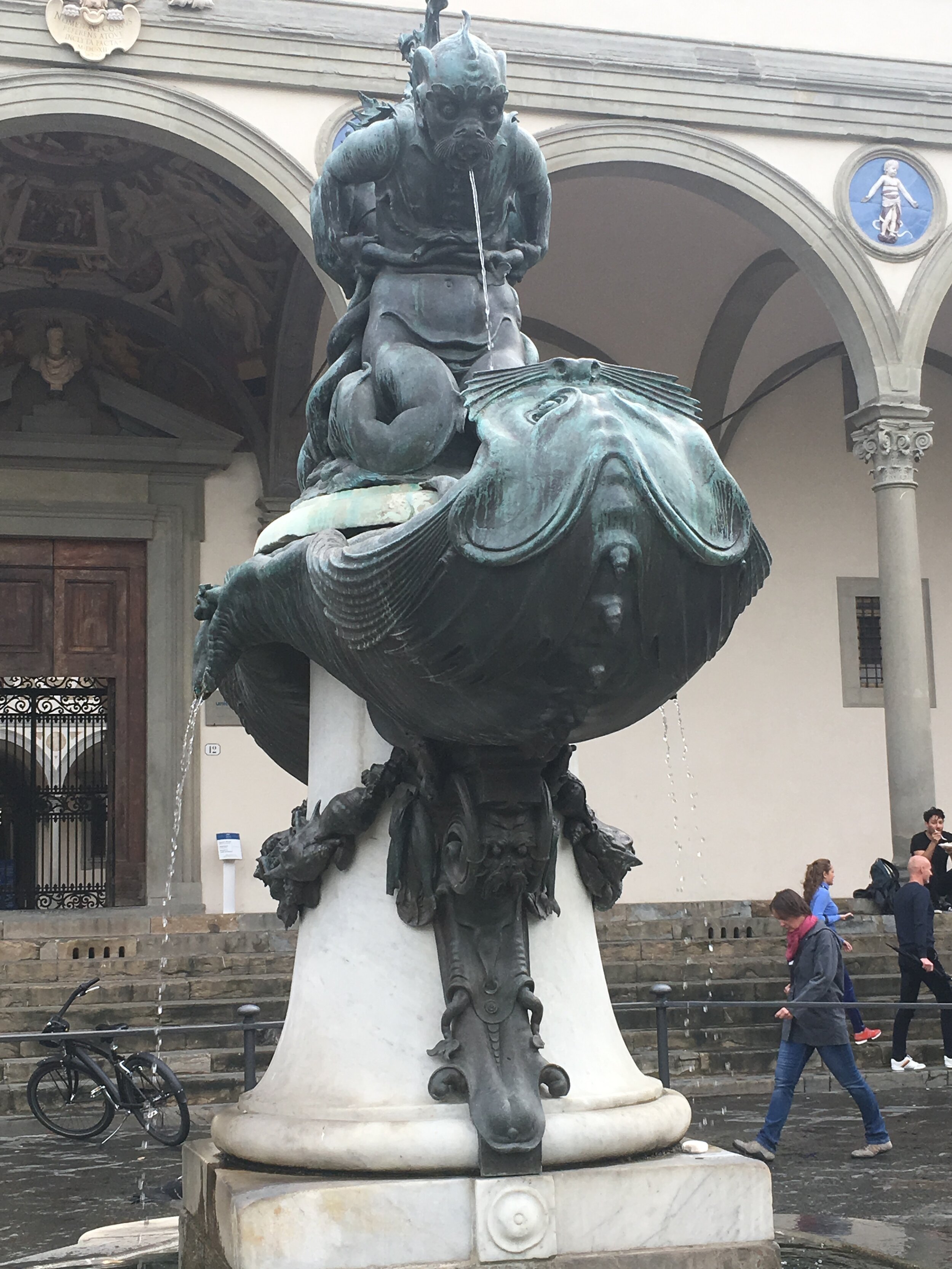
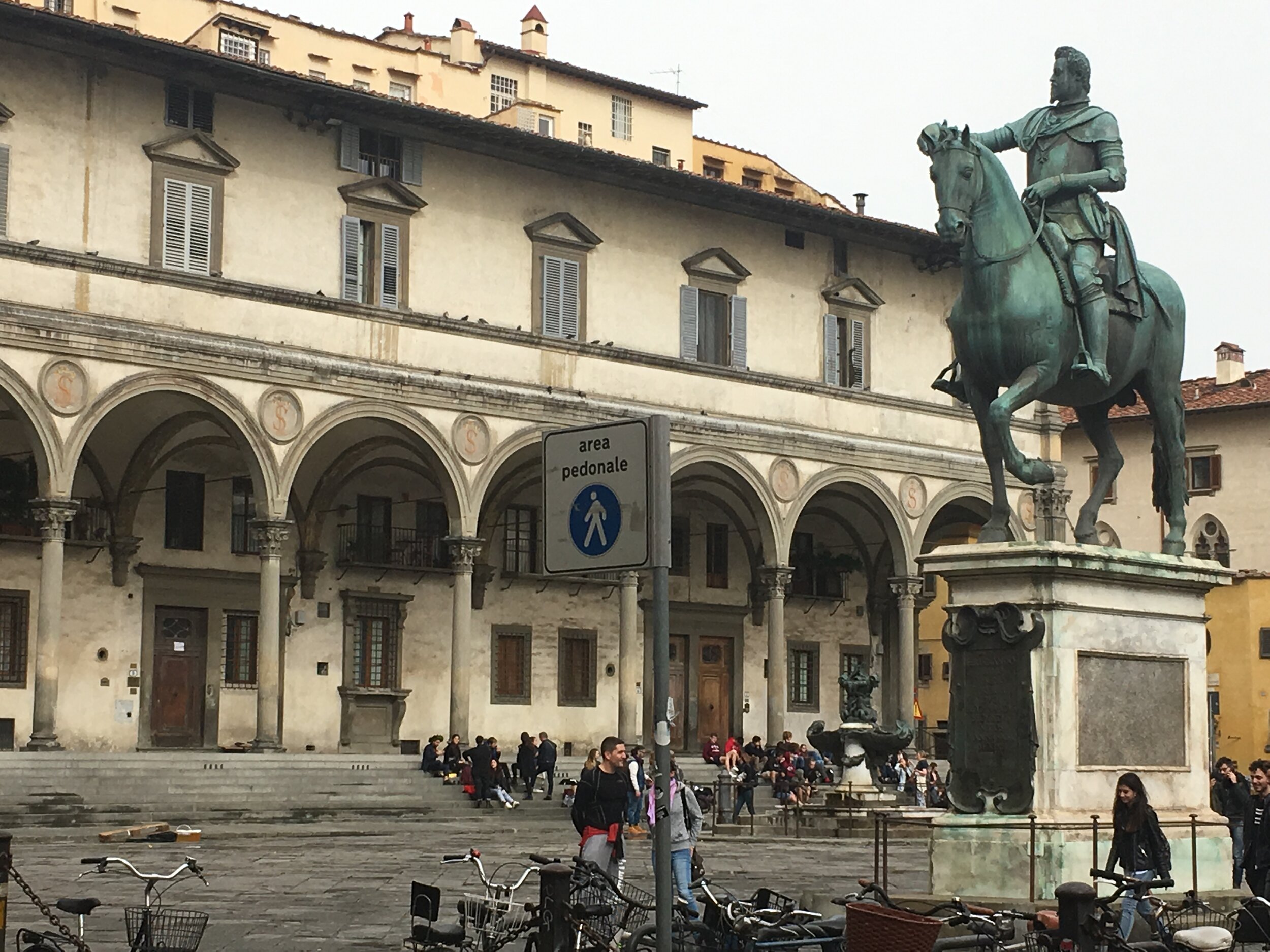
In the piazza in front of the church are two fountains featuring sculptures of mythical creatures (by the artist Pietro Tacca) as well as a massive bronze statue of Ferdinand I on horseback (by Giambologna). If you look closely, you’ll also see a series of round della Robbia pieces above the arches of the Ospedale degli Innocenti (you can see one above and to the right of the fountain in the photo below).

IMG_5678.JPG
IMG_5692.JPG
IMG_2495.JPG

Next stop - the Duomo, where the sculptures include both large statues and countless small, detailed sculptures adorning the facade and doorways.

On my last visit I did not approach them with an eye toward the historical significance of each piece - who is that saint? that pope? that angel? (for that it is better to visit the Duomo museum) but rather just with an appreciation for the craftsmanship and beauty of the work.

The intricacy of the carvings, the stunning colors, the gracefulness of the faces, they way they are placed on the colorful facade - what a display of artistry.

A much smaller, but equally beautiful sculpture. Many of these small marble figures surround the doorways and windows of the cathedral.

A much smaller, but equally beautiful sculpture. Many of these small marble figures surround the doorways and windows of the cathedral.

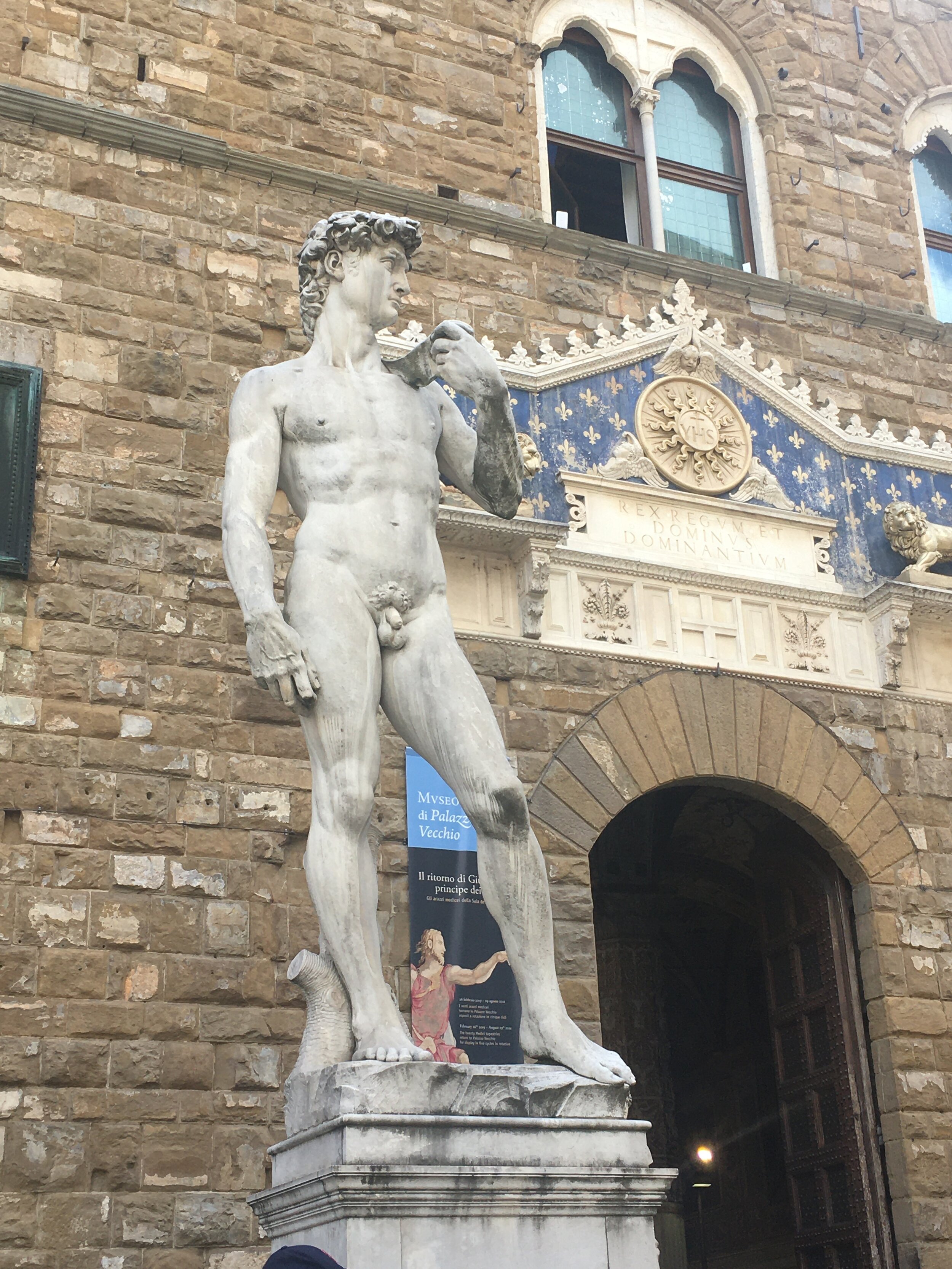
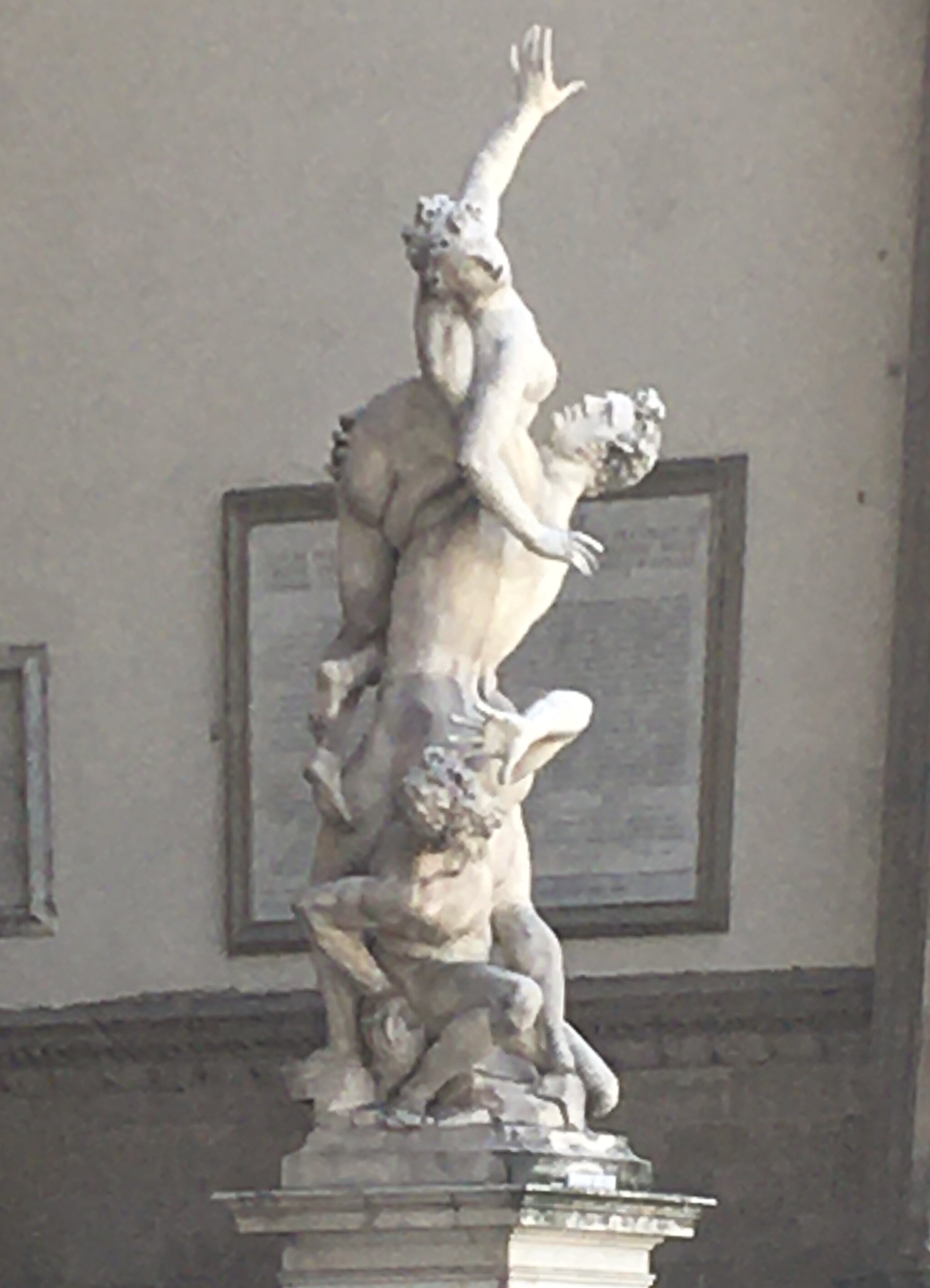
After spending time at the Duomo, the walk continues to the Piazza della Signoria and the Loggia dei Lanzi, full of famous statues including a scaled-down reproduction of Michelangelo’s David and the fascinating but brutal Rape of the Sabines by Giambologna.

IMG_2524.JPG
fullsizeoutput_11fe.jpeg

Walking further towards the river Arno, at the far end of the piazza, is the Fountain of Neptune. Statues are wonderful, but a statue that is also part of a large fountain is fantastic (especially is you happen to visit on a warm day).

The Fountain of Neptune, Florence

The Fountain of Neptune, Florence

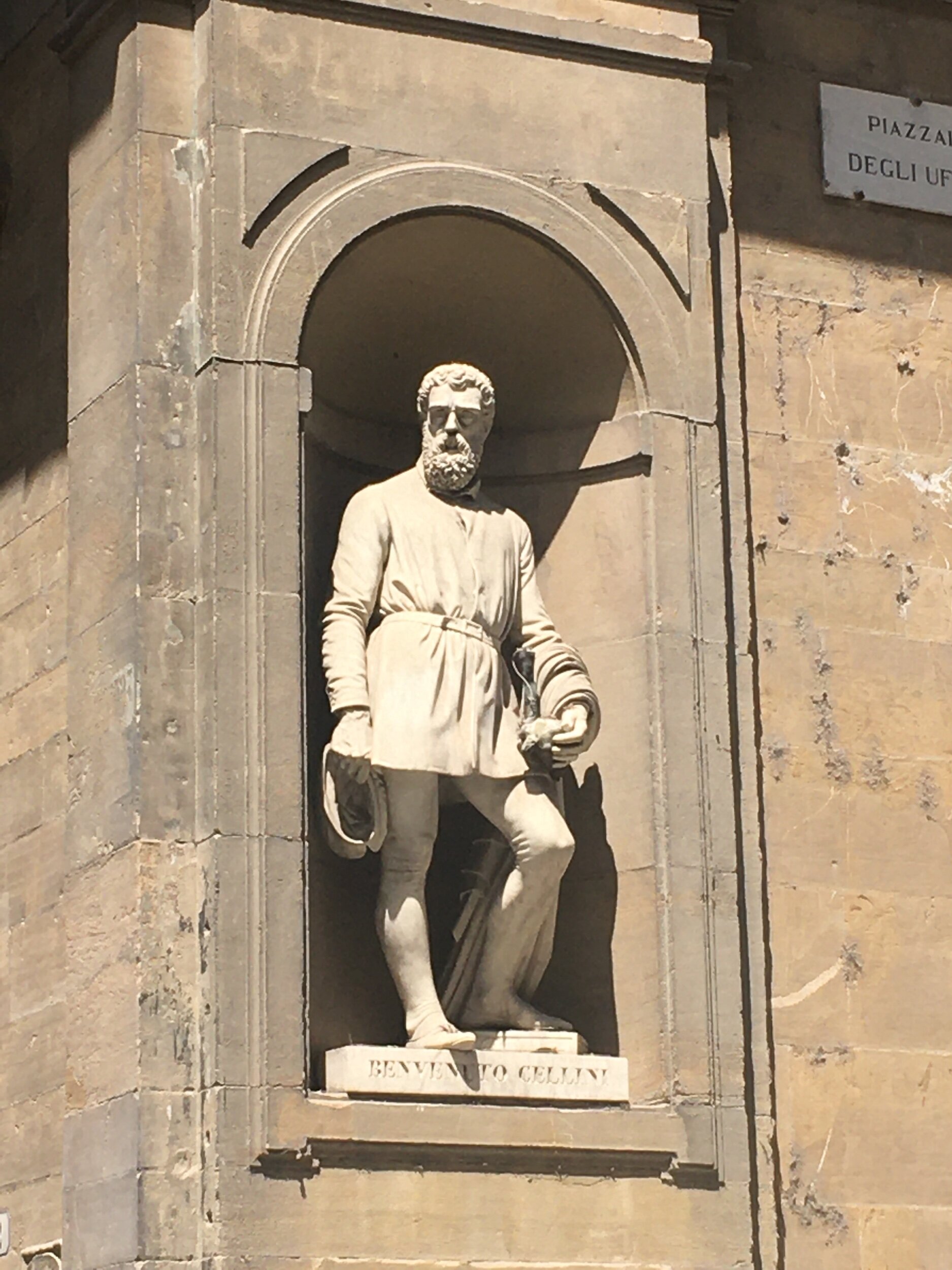
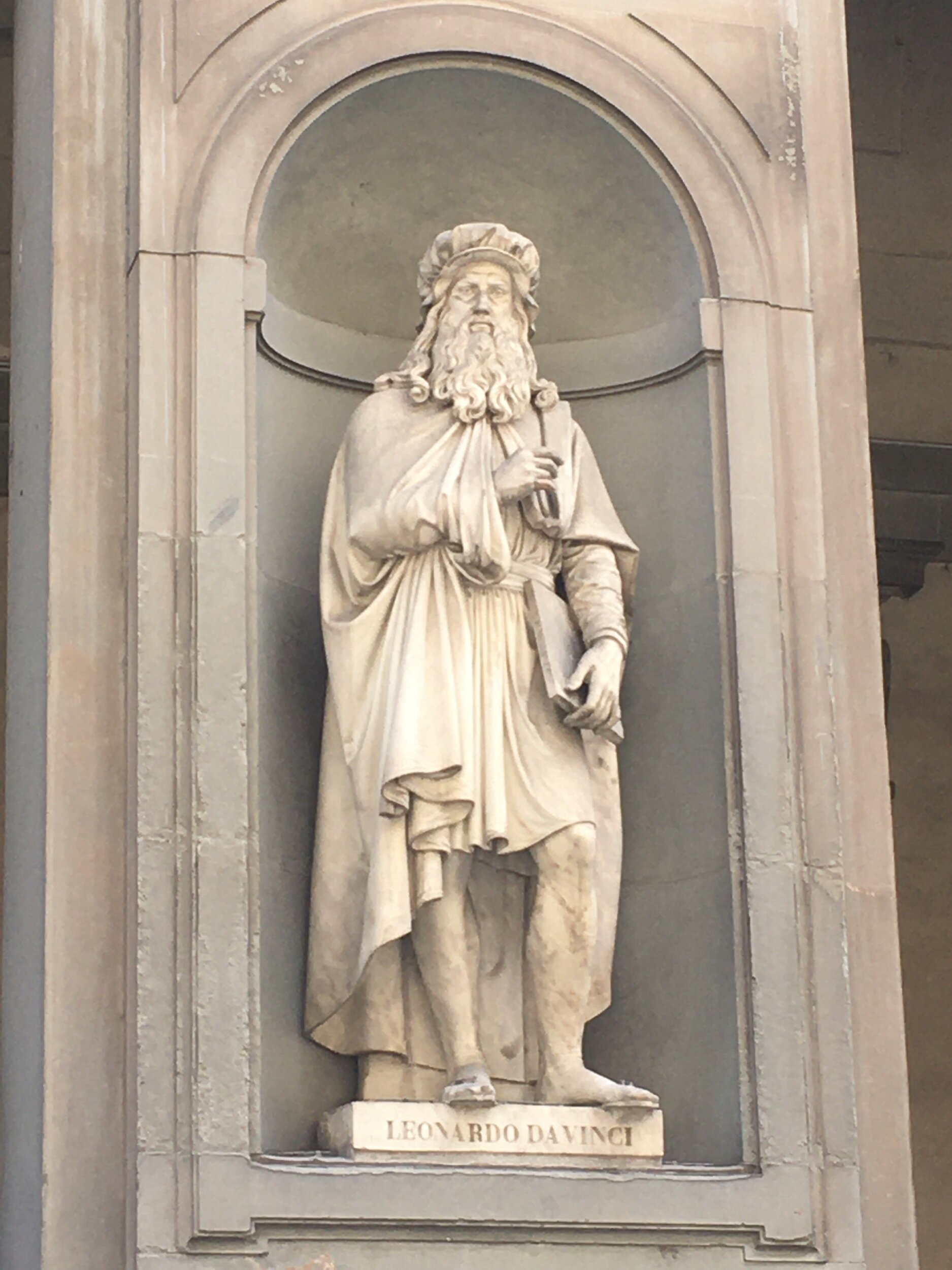
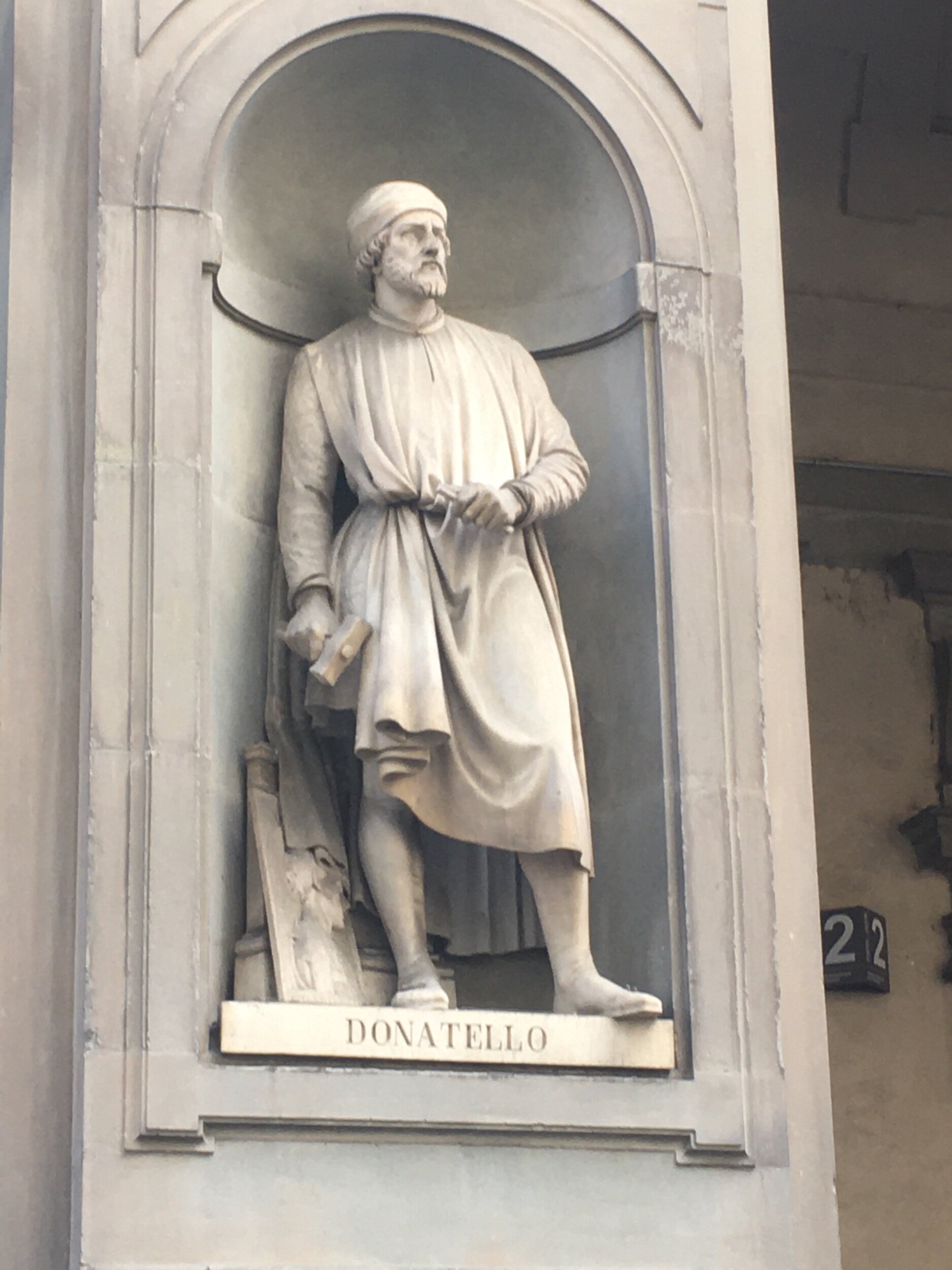
Wandering past the Palazzo Vecchio and along the Uffizi courtyard are a series of statues of famous artists, scientists, and literary giants. From left to right below: Cellini, DaVinci, and Donatello.

 Cellini
 DaVinci
IMG_2526.jpeg

Walking across the Ponte Vecchio, there is a bust of Cellini. He was a master goldsmith, as well as an artist and writer. He may have been a bit of a troublemaker, but he’s a home town boy and it is fitting to honor him on the bridge where today so much of the Florentine gold is sold.

The inscription reads: Benvenuto Cellini Maestro Gli Orafi di Firenze

The inscription reads: Benvenuto Cellini Maestro Gli Orafi di Firenze

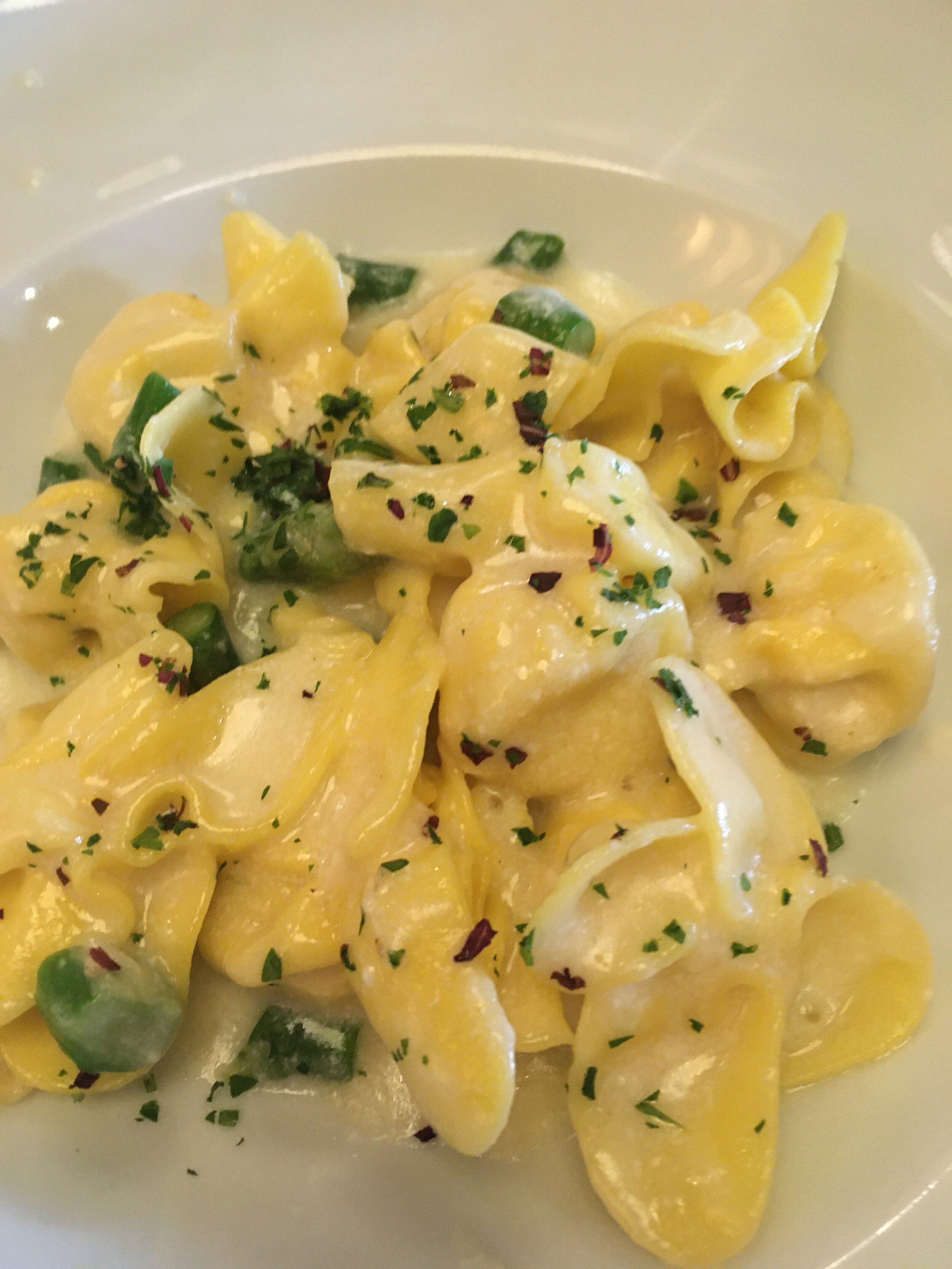
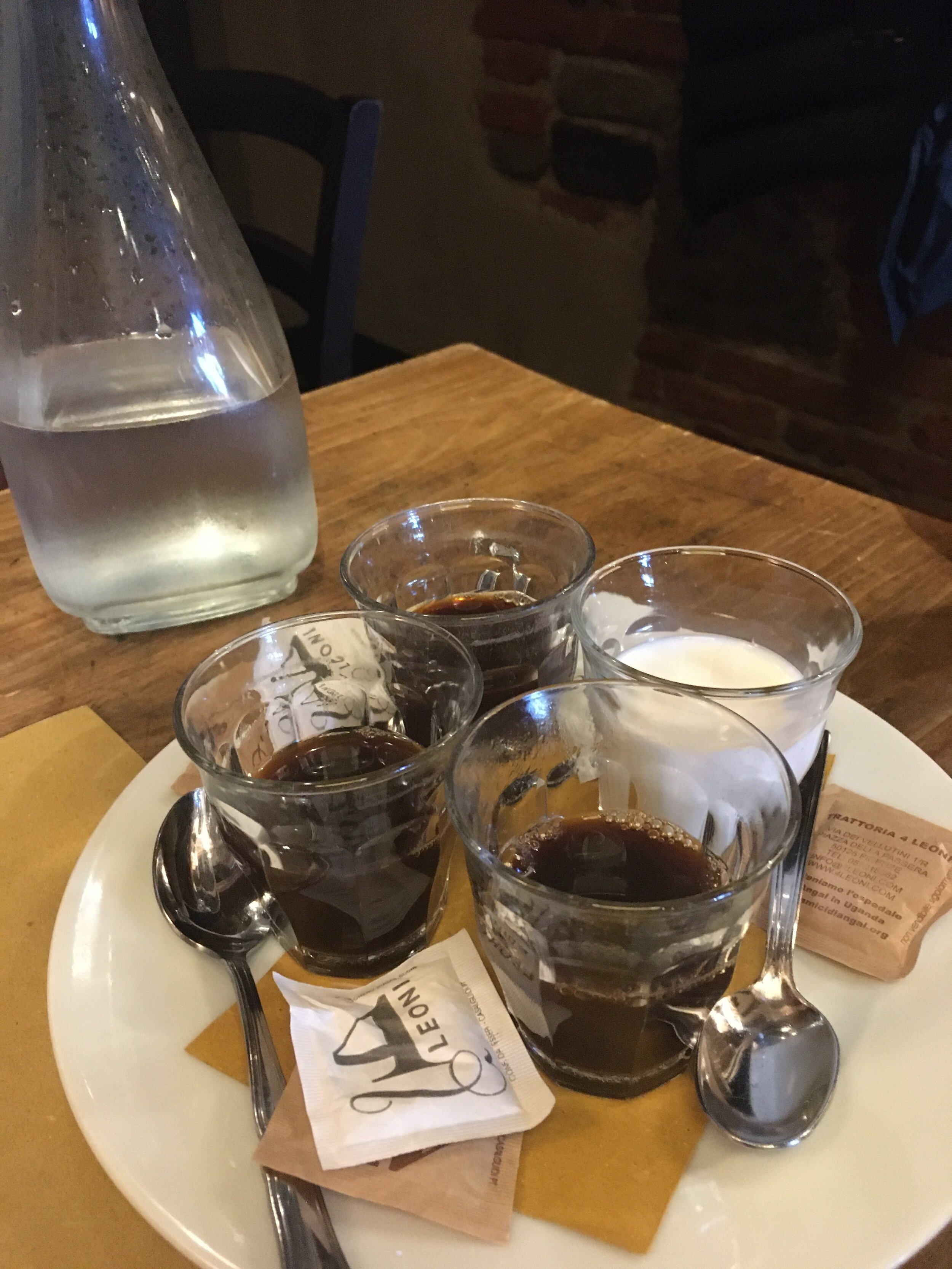
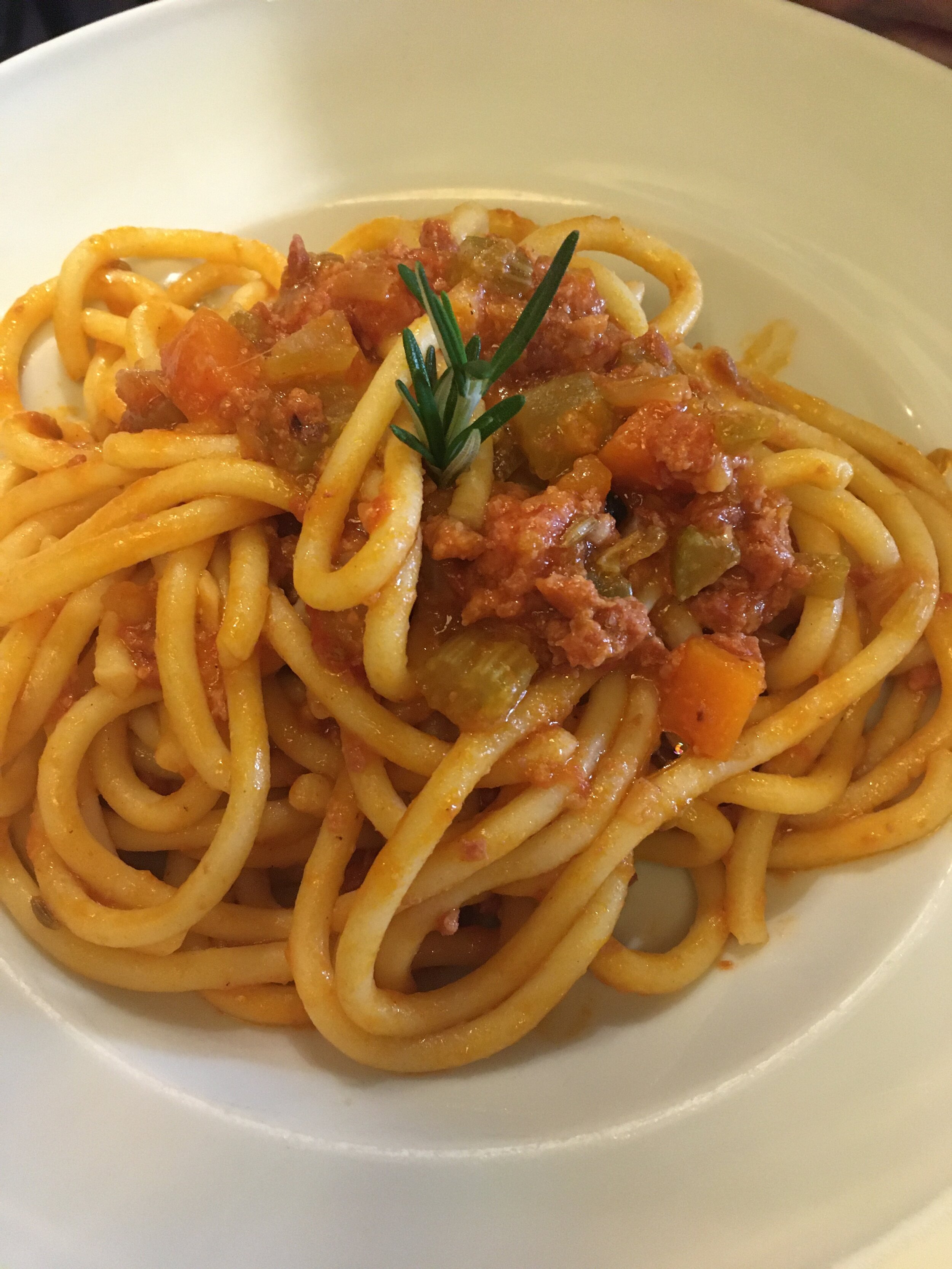
Across the Ponte Vecchio, the walk comes to an end. For me, the perfect ending to a wander through Florence’s outdoor sculptures is a lunch “oltrarno” at the restaurant 4 Leone. After all, fabulous food is another Italian art form!

IMG_0163.JPG
IMG_0167.JPG
IMG_0164.JPG
February 15, 2021 /Judy Giannnettino
#florence, florence, sculpture florence, #walksinflorence
#italytravel, Florence, Italian art architecture
  • Newer
  • Older

Powered by Squarespace