Two Parts Italy

Exploring Italy, travel, and living a flavorful life

  • Blog
  • About This Blog
  • Start Here
  • Recent Posts
  • Archives by Topic
  • Subscribe
  • Contact me

Villa Foscari, also known as Villa Malcontenta, majestic even on a gray day along the Brenta Canal.

Brenta Canal Part 4: Villa Foscari (Malcontenta)

August 05, 2024 by Joanne Bartram in #italy2024, #italytravel, #padova, #padua, Italian art architecture, Italian gardens, Italy travel

The final stop on our day-long journey along the Brenta Canal was at Villa Foscari, the closest to Venice of the three villas on the itinerary. 
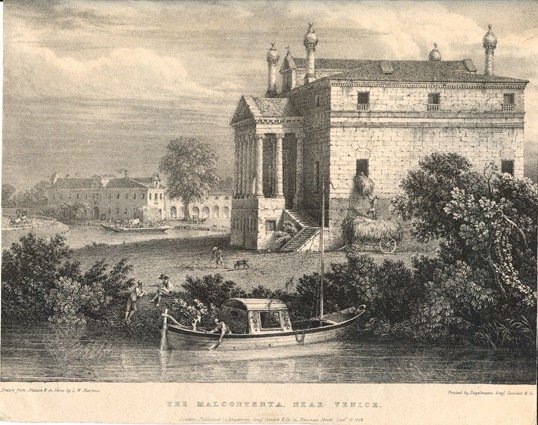
Vintage drawing of Villa Foscari

The villa rests in an enchanting spot along the canal – with a private landing spot, wonderful views, large lawns, willow trees, and carefully tended gardens. 

 Villa Foscari is the oldest of the three villas visited on our one day canal cruise.  It was built between 1554 and 1557 with an entirely different architectural and decorative style. Compared to the grand ballrooms and ornate details of Villas Pisani and Widmann  (both built in the 1700’s), the Villa Foscari feels much more serious, more subtle, more lived in, and also a bit more mysterious.
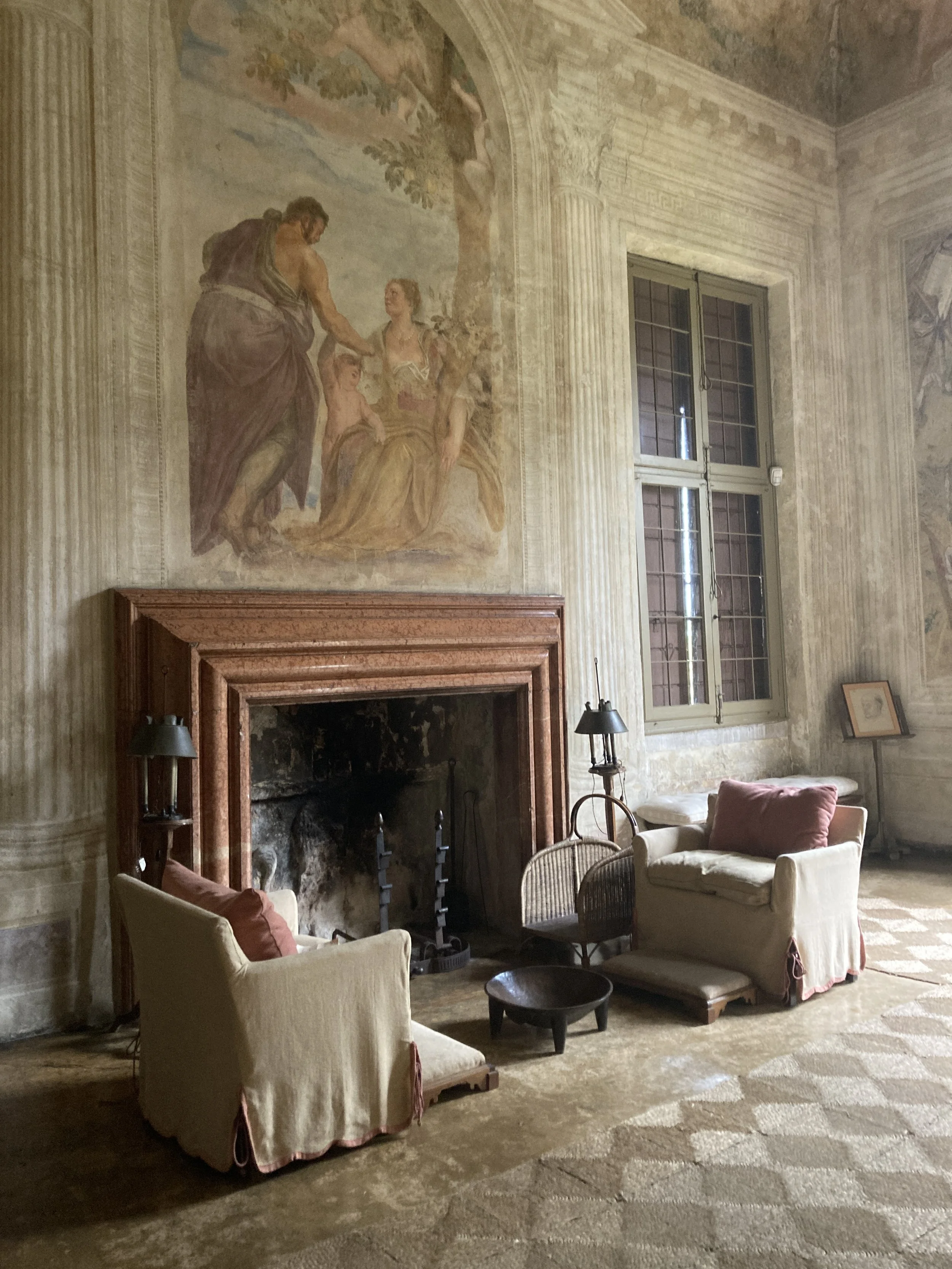
Living room, just off the entry, Villa Foscari. Pretty cozy!

 The villa was designed by Andrea Palladio and is considered one of his masterpieces.   It has many typical features of Palladian design. The front facade is a symmetrical 3 stories with a grand front portico. There are classical details - massive columns, a triangular pediment, and dual external staircases all leading to the piano nobile (top photo).  There are few decorative details on the exterior, also typical of Palladian architecture. The villa could easily be mistaken for an ancient Roman temple. The architecture also takes into consideration the building’s position in the landscape, so the views can be appreciated from both the front and rear of the building. 

Rear facade, Villa Foscari, with an ancient wisteria vine. Less classical in design than the front facade, but still beautiful, this would have served as an entrance for the villa’s staff. It is actually the first glimpse of the villa when walking from the boat dock.
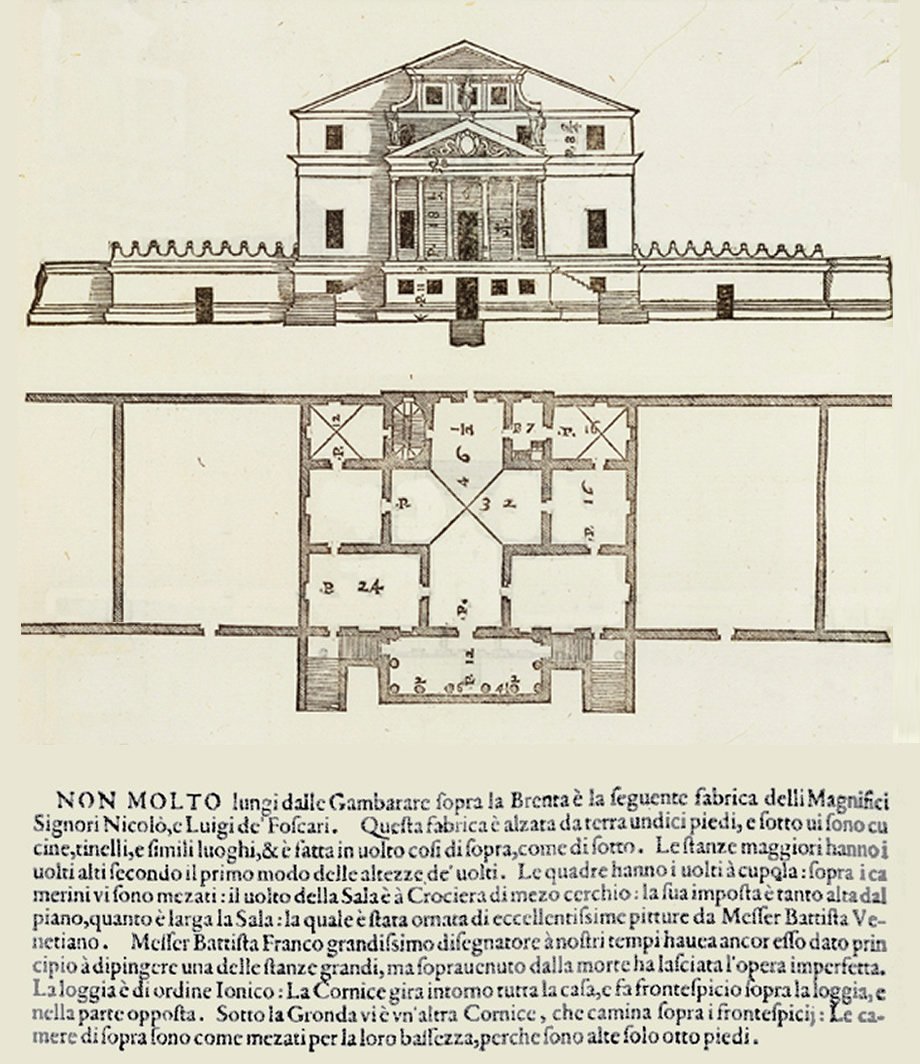
Vintage drawing of the front facade and floor plan of Villa Foscari

 Palladio designed and built Villa Foscari for brothers Nicolò and Alvise Foscari.  The brothers were members of the Venetian upper class and descendants of Francesco Foscari, the longest serving Venetian Doge ( he ruled Venice from 1423 to 1457).  This was an important family and the villa reflects that. The interior of the villa was designed with the brother’s needs in mind - there are two symmetrical apartments, one for each brother, separated by the common space of the impressive entry. 

 Inside, the entry hall is expansive with vaulted ceilings, exquisite frescoes, and sunny windows flanked by perfect reading nooks looking out over the rear of the house.  The other rooms on piano nobile are simply furnished but decorated with wonderful frescoes and details. 

IMG_5235.jpeg
IMG_5240.jpeg
IMG_5231.jpeg

 It is a spectacular yet comfortable and warm home.   If I lived here, I would be hard pressed to ever tear myself away from the reading nook.  A cup of tea, a good book (perhaps one of the ones written by the current owner on the history of the villa), and those views! And then maybe a walk through the gardens.

At the far side of the entry, this windowed reading nook looks out over the landscape.

 The air of mystery surrounding the villa is what gives rise to its other name – The Villa Malcontenta.  The legend (as recounted by our tour guide) is that one of the Foscari brothers married later in life to a very beautiful, vivacious, and young woman.  As his business activities meant long stretches away from Venice, the young wife found ways to amuse herself - parties, balls, and young men!   Her older husband was not pleased and so he banished her from the social whirl of Venice to his estate along the Brenta Canal where she would spend her life away from the temptations of Venice, in relative isolation.  Her nickname, La Malcontenta, means the unhappy one.  Today, the villa itself is often referred to as Villa Malcontenta.  A sad name for such a beautiful home.

One of several gardens on the property.

looking down into one of the gardens from the front portico.

 As was the case for so many of the Brenta Canal villas, the Foscari family was forced to sell the property after the fall of Venice.  The estate fell into ruin in the 1800’s and stood mostly empty until restoration work began towards the end of that century.   Both the villa and the gardens were restored after its purchase in 1926 by a trio of wealthy friends.  After that the estate changed hands several times, always as a private home.  In 1973 it was purchased by Count Antonio Foscari, returning it to the ownership of Foscari family.   Antonio Foscari is both an architect and an expert on Palladian villas, the perfect person (along with his architect wife) to restore and preserve the villa.  The villa remains a private home but is also open to tours.  It was certainly a highlight on our one day cruise along the Brenta Canal.

The villa sits along the Brenta Canal and is surrounded by lawns, gardens, trees and wonderful views.

 After visiting Villa Foscari, we headed off across the lagoon and entered Venice itself.  Wandering a bit though the city we stopped for cicchetti at Cantina Do Spado and then wandered our way back to the train station. After that it was a short train ride back to our base in Padova. A perfect end to a fascinating day. 

Arriving in Venice after cruising the Brenta Canal.

August 05, 2024 /Joanne Bartram
Villa Foscari, Villa Malcontenta, Brenta Canal
#italy2024, #italytravel, #padova, #padua, Italian art architecture, Italian gardens, Italy travel

Brenta Canal Part Three: Villa Widmann

July 22, 2024 by Joanne Bartram in #italytravel, #padova, #padua, Italian art architecture, Italy travel, Padova, Padua, Venezia, Venice

 After visiting Villa Pisani, the largest and most grand of the “Brenta Riviera” villas included on a recent day-long trip along the Brenta Canal, we reboarded our burchiello to continue the journey towards the Venetian Lagoon.  After passing through the Dolo and the Mira locks, the next stop was the town of Mira, mid-way between Padua and Venice. There, we paid a visit to an 18th century gem, the Villa Widmann.

IMG_5194.JPG
IMG_5193.JPG

 (Above, frescoes at Villa Widmann, artist unknown)

Villa Widmann is much smaller than Villa Pisani, but every bit as glamorous.  The size and style of the home evolved from the early 1700’s when it was built by the Serimann family of Venice to the mid-1700’s when the Widmann family purchased it.  Over time, the villa had a series of owners, a fact reflected in its complete name - the Villa Widmann-Rezzonico Foscari.  Eventually ownership returned to a later generation of Widmanns who owned the villa until 1970.  Today, it belongs to the City of Venice. The villa is open for tours, events, and exhibits. And, fortunately, it was included on our Brenta Canal day cruise.

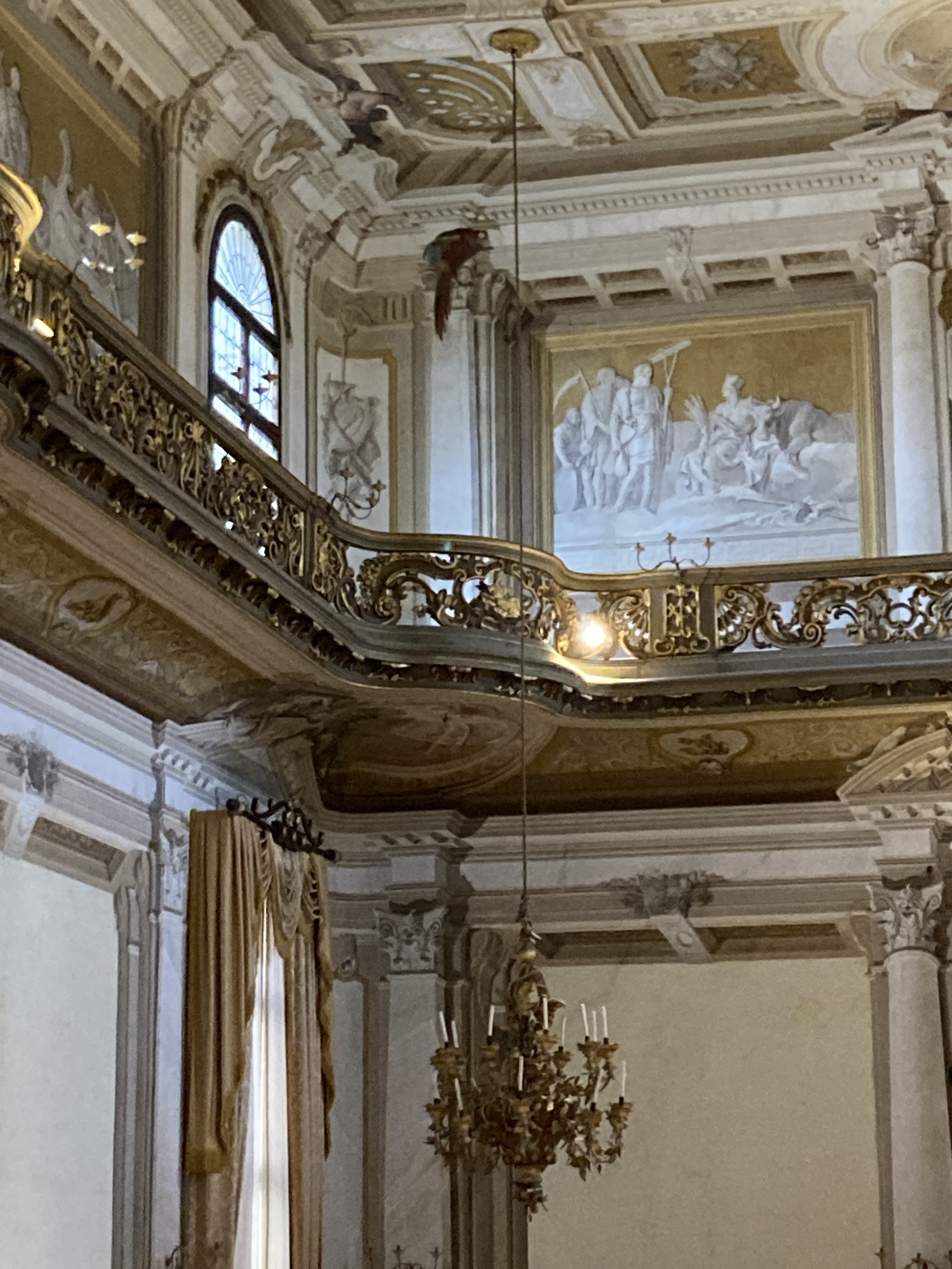
The villa is sumptuous.  Like the larger villa Pisani, the house wraps around a frescoed ballroom with a large and ornate balcony overhead.  The huge venetian glass chandeliers that light the ballroom are impressive works of art. 

 Heading upstairs, we found elegant bedrooms, sitting rooms, and en-suite bathrooms. 

The upper floor also held the entry to the lofty balcony above the ballroom.  Stepping out onto the balcony provided a wonderful birds-eye view of the frescoes overhead, the chandeliers, and ornately decorated ballroom below. 

Looking down into the ballroom from the balcony above. This is the view the musicians would have had when the entertained the guests.

The barchessa, an outdoor service building which would have housed kitchens, stables, and storage, is a long building behind a series of graceful arches.  Peek inside to see the old carriages and saddles in the stable

IMG_5211.JPG
IMG_5212.JPG
IMG_5210.JPG

  The villa is elaborate and yet somehow the scale is cozy.  It’s easy to imagine a life here - from family dinners to card games to fancy balls.

IMG_5195.jpeg
IMG_5185.jpeg
IMG_5186.jpeg

After a lunch break, we were on our way to the Villa Foscari, the closest to Venice of the three villas visited on this canal cruise and the only one by the architect Andrea Palladio.   More on that in a future post!

The gardens are filled with statues, a large greenhouse, and lots of leafy trees


July 22, 2024 /Joanne Bartram
Brenta Canal cruise, Brenta Canal Villas, Villa Widmann
#italytravel, #padova, #padua, Italian art architecture, Italy travel, Padova, Padua, Venezia, Venice

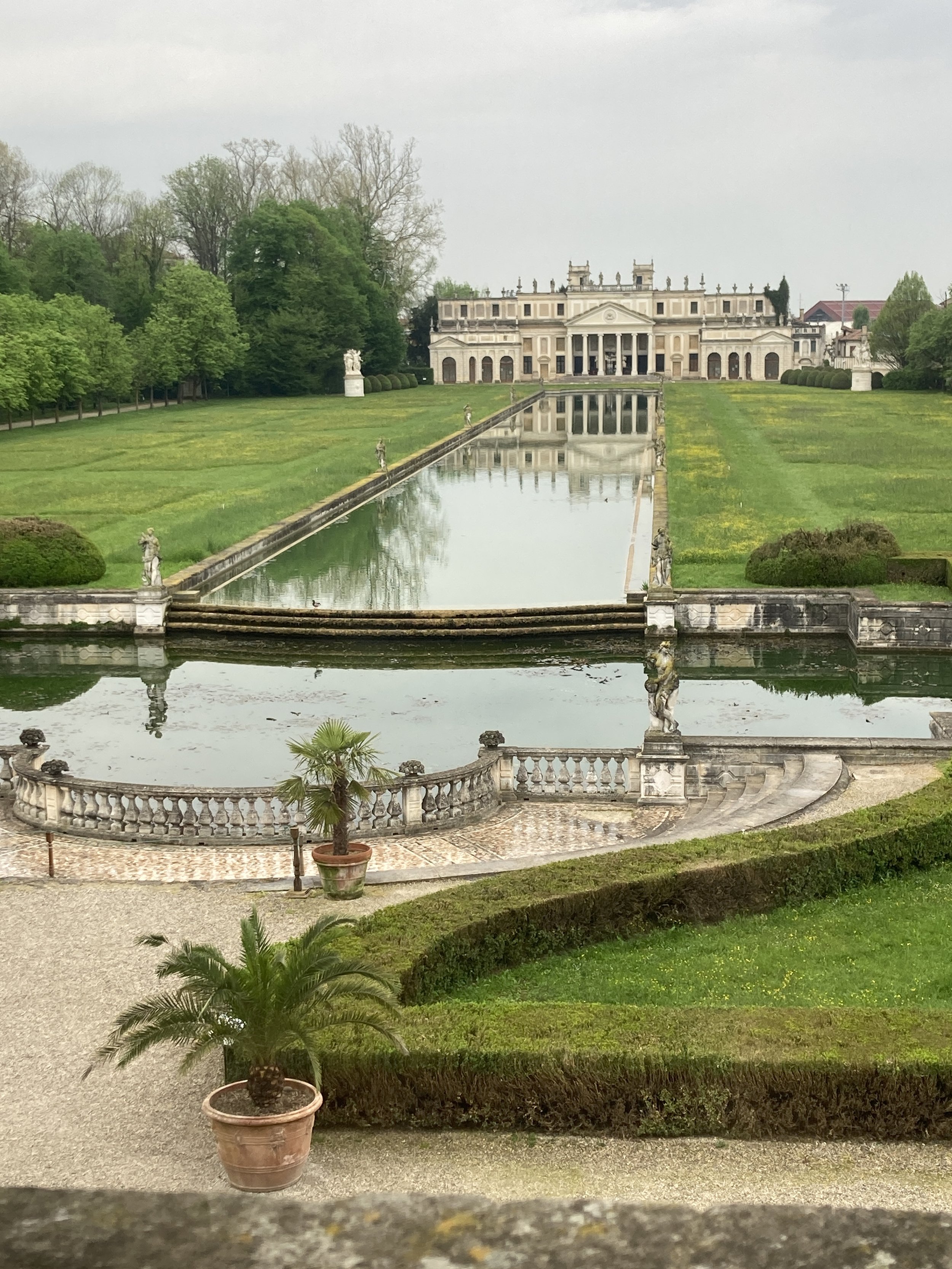
The gardens at Villa Pisani. This view is from inside the villa looking across the reflecting pool to the stables.

Brenta Canal Part Two: The Villa Pisani

June 10, 2024 by Joanne Bartram in #italiangardens, #padova, #padua, Italian art architecture, Italian gardens, Italy travel, Venezia, Venice

The Villas along the Brenta Canal were built between the 16th and 18th century.  Some were built for agriculture and commerce but many as summer getaways for rich and powerful Venetians.  They lined the canal between Venice and the city of Padova, forming an extension of Venice that became known as the “Brenta Riviera”. 

A beautifully decorated hallway in Villa Pisani

The front entrance to Villa Pisani

The villas were designed to impress.  Their ornate trimmings, art filled halls, grand ballrooms, and sweeping gardens played host to Doges, Popes, Kings, Emperors, artists and wealthy merchants during the height of the Venetian Empire.   After the fall of Venice, in 1797, with the arrival of Napoleon, many of the villas changed hands, often due to the financial problems of the owners. 

Today some villas are in disrepair (imagine the costs of upkeep!), some are abandoned, some have been converted into museums, restaurants or hotels. Others are privately owned. A few of the most spectacular ones are open to the public.

The villas can easily be visited by car, but a more elegant (though much slower) way to tour the villas is to arrive by burchiello – a modern version of the historic boats that once moved people and goods along the canal. That is exactly what a group of friends and I did recently.  The boat trip from Padua to Venice took about 9 hours, with stops at 3 villas along the way.  The visits included a guide who shared the history of each villa, details about the art and architecture, and some good 16th – 18th century gossip about villa life.
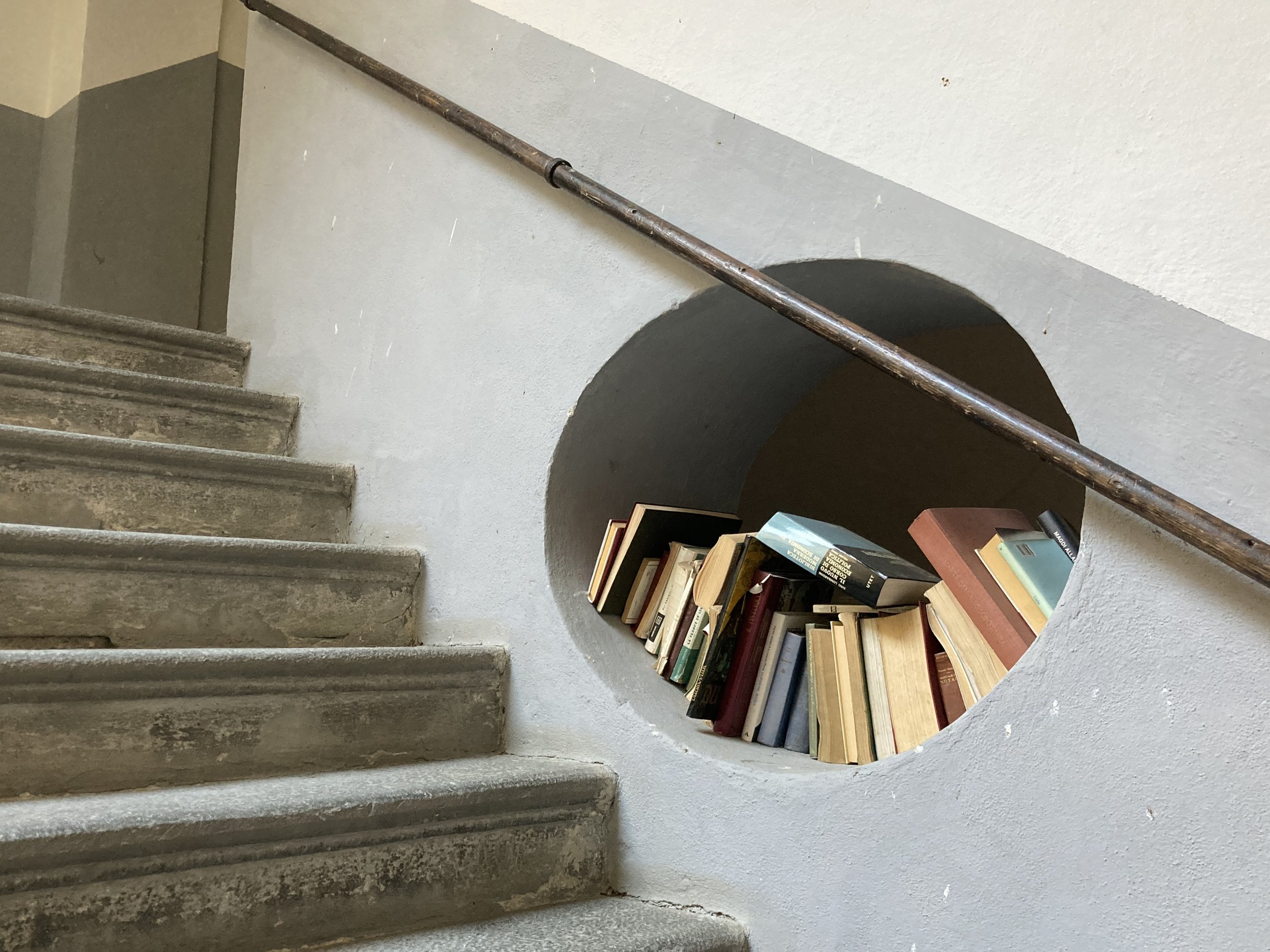
The first villa on the itinerary was Villa Pisani.  Built to celebrate the election of Alvise Pisani as the 114th Doge of Venice, the villa is the crown jewel of the Brenta Riviera.  The Pisani family owned the villa until it was sold to Napoleon in 1808.  

The villa is remarkable in many ways.  First, its size.  The place is massive!  The 144 rooms are said to represent the number of Venetian Doges up to Pisani.  One room is filled with wall mounted sculptures of the head of each doge.  Look carefully on the wall to the right to find the likeness of Alvise Pisani.   

IMG_7633.jpeg
IMG_7631.jpeg
IMG_7632.jpeg

The Pisani’s must have loved to entertain, because their ballroom is nothing short of spectacular.  The room shimmers with gold trimmings.  High above is an ornate balcony which rings the room – a place for the musicians to play.  And the ceiling! The ceiling fresco is by Tiepolo and it is a marvel. The ballroom is the truly the elegant heart of the villa. Standing here you can almost hear the music playing and can imagine the finely clothed Venetians enjoy a luxurious party.

IMG_7585.jpeg
IMG_7586.jpeg
IMG_7653.jpeg

The visit to the villa includes the piano nobile where a series of rooms are filled with history.  There is the bedroom where King Vittorio Emanuele II slept (left below).  Next door, the room of his second wife, the Contessa di Mirafiori, with a reproduction of one of her dresses (right).

IMG_7594.jpeg
IMG_7603.jpeg


The room dedicated to music and the elegant sala di pranzo (dining room) face out onto the immaculate grounds and the stable (shown below at the end of the reflecting pool and looking very much like another villa).

IMG_7609.jpeg
IMG_7622.jpeg
IMG_7627.jpeg
IMG_7616.jpeg

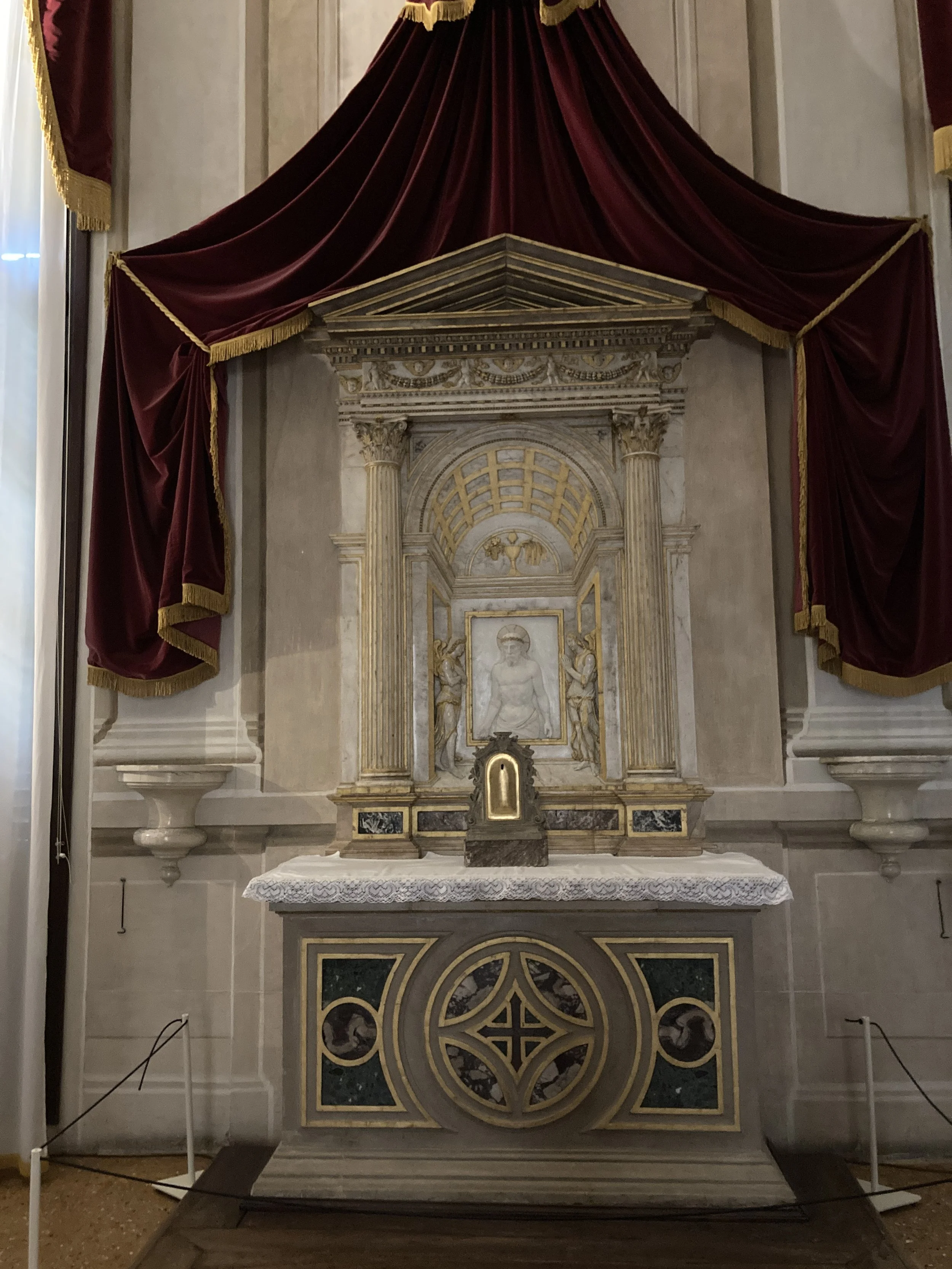
Napoleon only spent one night here, but he left the villa in the hands of his stepson, Eugene de Beauharnais, Viceroy of Italy.  The Viceroy lived there with his wife, adding fireplaces for heating (most of the Brenta Villas were not heated as they were intended to be summer homes), and creating a chapel, a study and a games room.  The study is where a later historic meeting between Mussolini and Hitler took place prior to World War II.

IMG_7639.jpeg
IMG_7635.jpeg
IMG_7646.jpeg
IMG_7647.jpeg

A peak at the grounds outside the villa. I’ll need a return visit to explore the gardens!

The grounds are equally impressive.  The 30 acres contain a large reflecting pool, stables, an orangery, ice house, and a labyrinth.

Is it true that Napoleon got lost in the labyrinth?  It is said that he did but, to use the Italian phrase, chissà (who knows)?  

The only drawback to our guided visit is that we did not have any time in the gardens.  I will need to go back and wander those beautiful spaces.

Today the Villa and surrounding park is a National Museum.  

The Villa is open from 31 March to 30 September this year, 9 am – 8pm (last admission 1 hour before closing), closed on Mondays.  The labyrinth is currently closed for restoration.

 Coming soon – Part 3, Villa Widmann

 Website: villapisani.beniculturali.it

Email: info@museovillapisani.it

Cost €12 villa + park, €6 park only

June 10, 2024 /Joanne Bartram
Villa Pisani, Brenta Canal Villas, Brenta Canal cruise, burchiello
#italiangardens, #padova, #padua, Italian art architecture, Italian gardens, Italy travel, Venezia, Venice

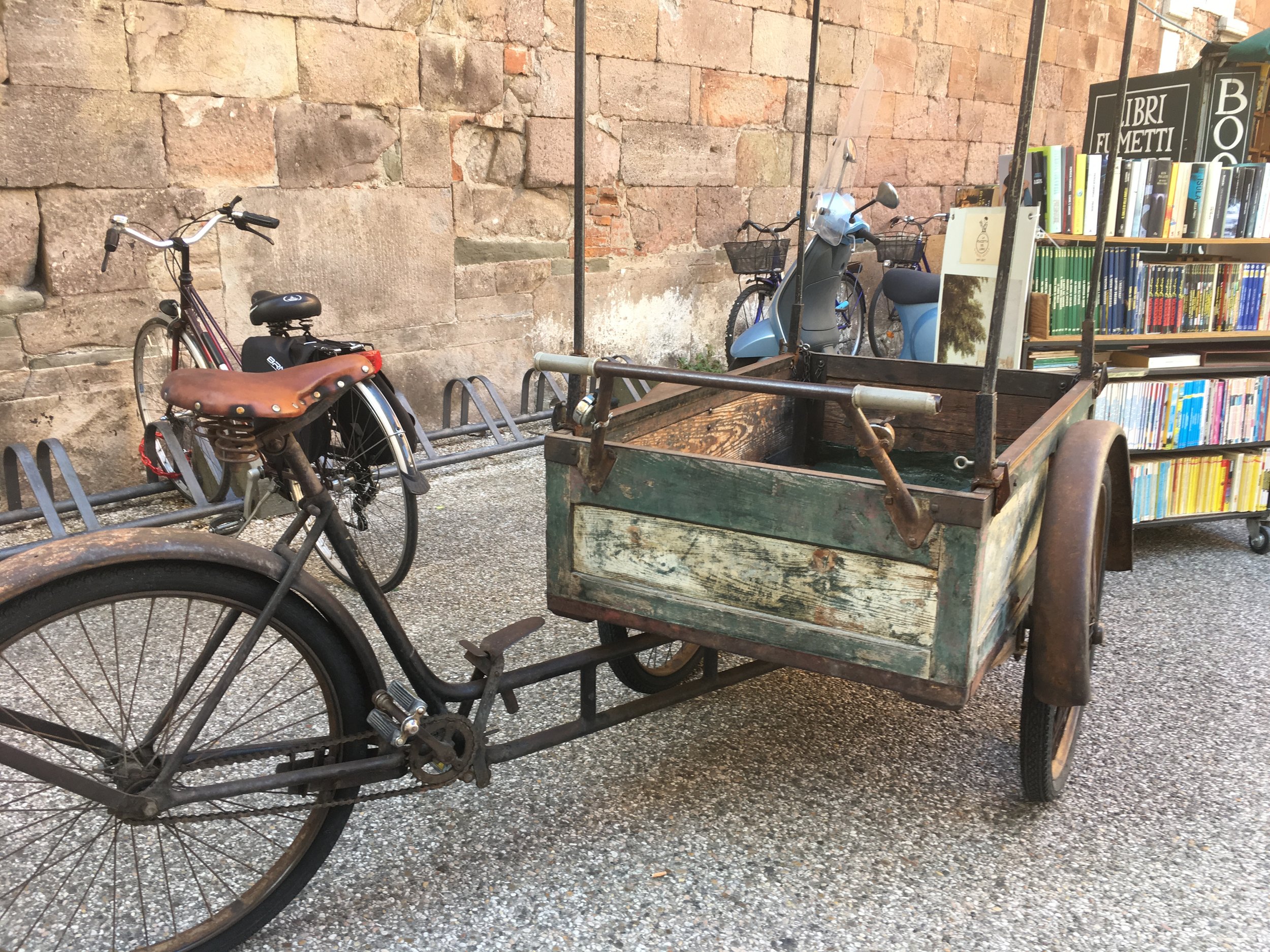
A booksellers stall, Lucca

Winter Reading, Italian Stories

February 05, 2024 by Joanne Bartram in #florence, Florence, History, Italian Art, Italian art architecture

January has finally dragged itself into February on its slow crawl out of winter.  Is it just me or did last month seem unusually dreary?  And long.  I spent all of January in New Mexico so I can’t speak for the weather anywhere else, but in New Mexico it was cloudy, gray, and drizzly for days on end which is quite unusual here in the land of sunshine.  Two light snowfalls were pretty but cold.   

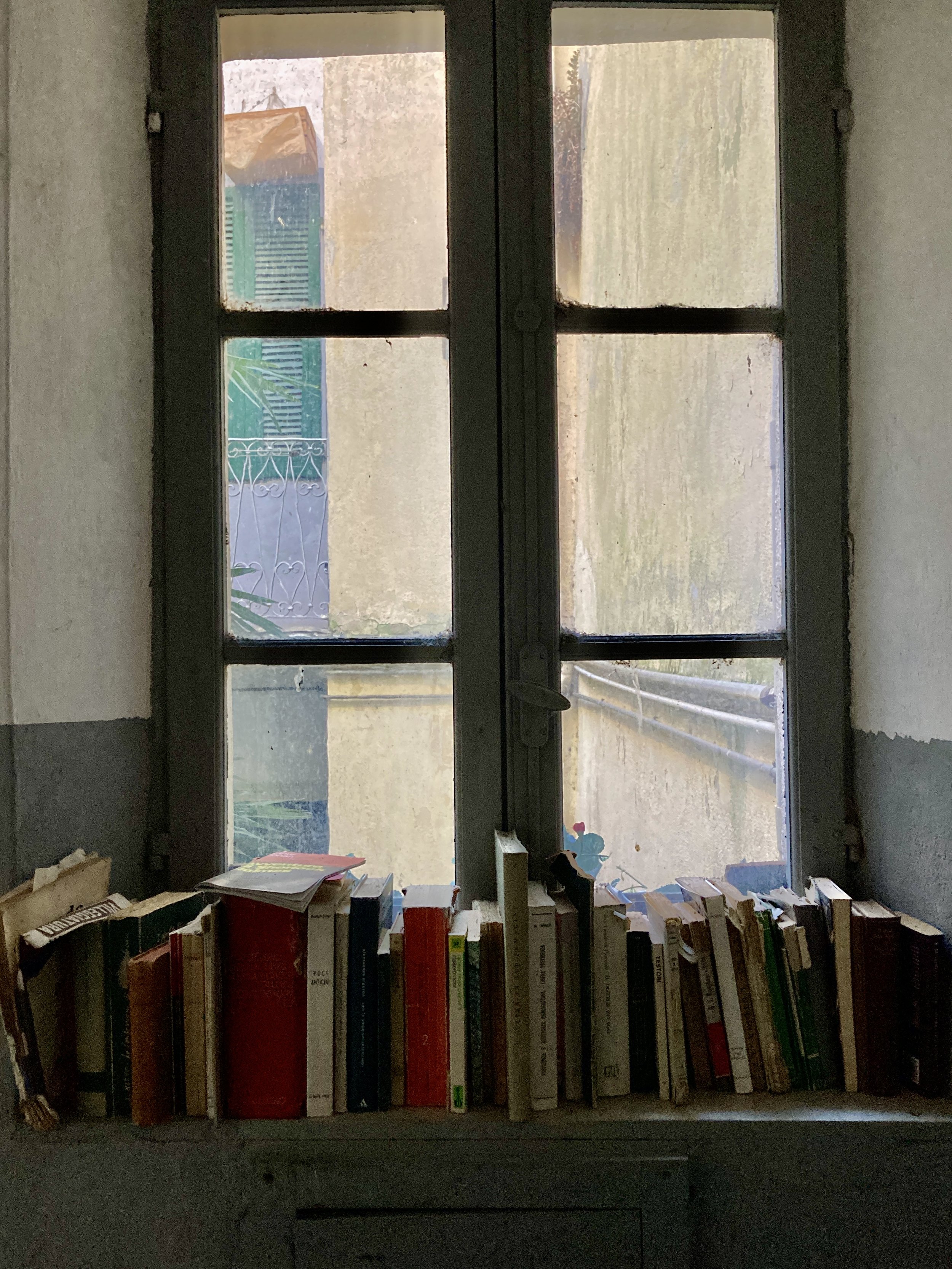
Pontremoli, a city where books are everywhere.

Dreary winter days are perfect for sitting with a cup of coffee and reading a good book.  When I am away from Italy, as I have been for the last 6 weeks or so, I find myself drawn to books set in Italy. There are endless choices – memoirs, travel diaries, historical pieces. 

There are Donna Leon mysteries and Camilleri’s Inspector Montalbano.  Who hasn’t fallen under the spell of A Room With a View or Enchanted April? More recent books have been best sellers - Under the Tuscan Sun and My Brilliant Friend (though I admit I struggled a bit through that one) - come to mind.  Perhaps Umberto Eco’s Name of the Rose or Giovanni Boccaccio’s Decameron (which I found my grandson reading recently) is on your reading list.  The list could go on and on.

 I am currently enjoying two series that may not be as universally known. Both are by contemporary authors.  The two series are quite different, but if you love Italy, and especially Tuscany, then I recommend them as perfect for winter reading.

Don’t you love it when a novel takes you to a familiar location in Tuscany ?

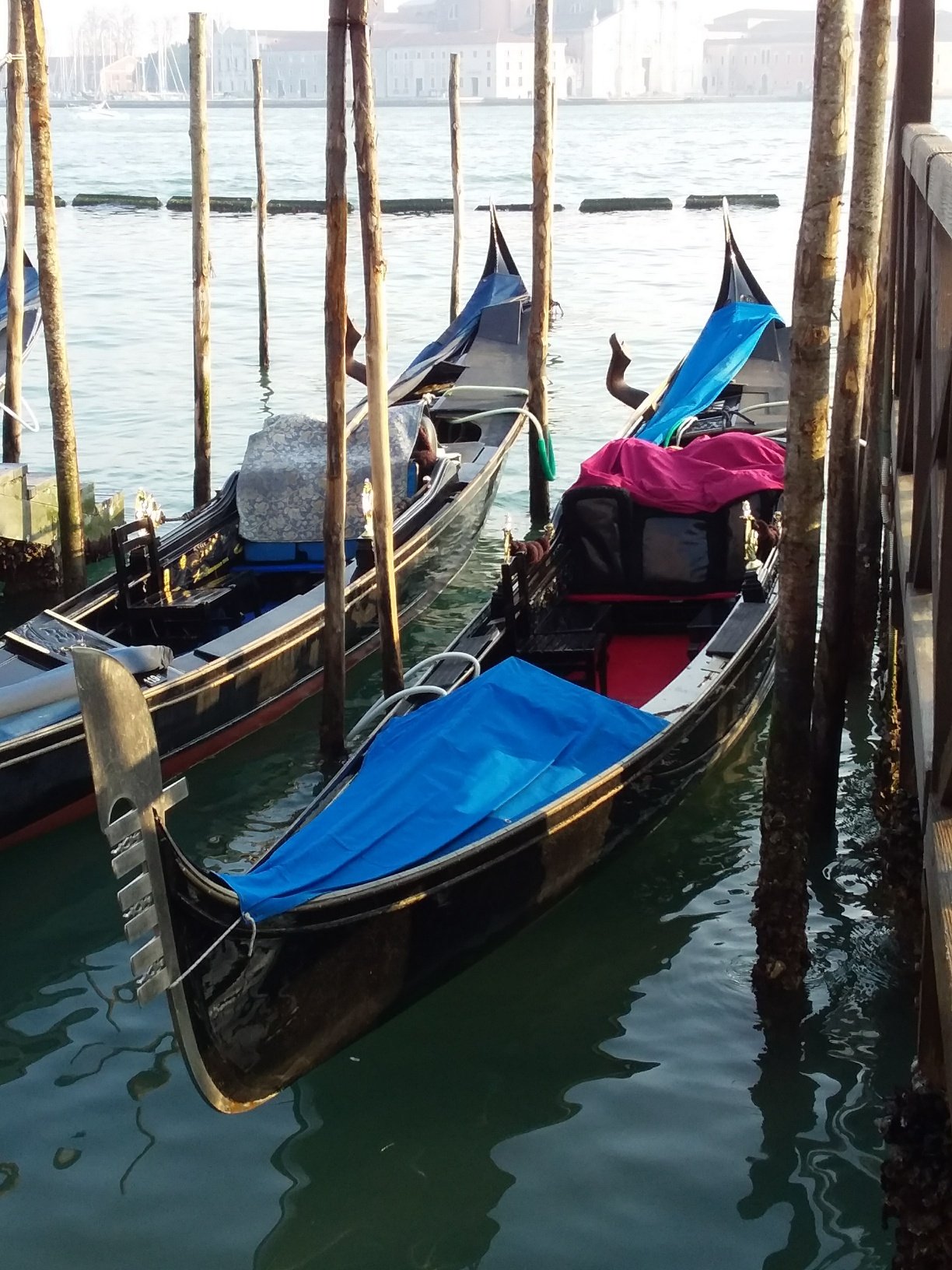
The first is a series of historical novels by the art historian Laura Morelli.  Her well-researched novels intertwine Italian art, craftsmanship, long-ago artists, and history in compelling reads.  Through her writing I have sat by Da Vinci’s side as he painted, walked with Lisa Gheradini through Florence, hid vanities from Savonarola, and worked alongside a gondola craftsman in Venice.  Parts of her novels are set in 15th and 16th century Italy, but the stories often move between time periods - from Renaissance era Italy to World War II when Italian masterpieces were being hidden from, or acquired by, the Nazis. If not familiar with her books, The Stolen Lady, which revolves around the painting of the Mona Lisa and life in Florence during that time period, and how the painting was hidden during WWII, is a great place to start.   If Venice calls to you, then The Gondola Maker will transport you to the 16th century workshop of a family of gondola craftsman.   

A very different series is written by Camilla Trinchieri.  Set in the present day, her 3 novels are what the Italians call gialli.  The word giallo literally means “yellow” (the plural is gialli), so called for the yellow covers that were traditionally used for Italian mysteries. 

Trinchieri’s protagonist is a very likable retired American cop, widowed and living in the Chianti region.  There is an appealing Italian maresciallo (a type of local policeman) stationed in Greve, his endearing young second in command, and a host of interesting Italian characters.   Reading these novels are like taking a vacation in Chianti, one where you recognize the towns immediately and feel right at home.   Best to read these in order, starting with Murder in Chianti.   A 4th book in the series is due out this year, so I am rereading the series this winter in preparation.

What’s next on my reading list?   I have just started The Sixteen Pleasures, set in Florence after the big flood of 1966. So far I’ve learned quite a bit about the restoration of water damaged books and an American book conservator volunteering in a convent library. A scandal is just unfolding - a book of erotic drawings hidden away in the convent’s library. I wonder where that will lead?

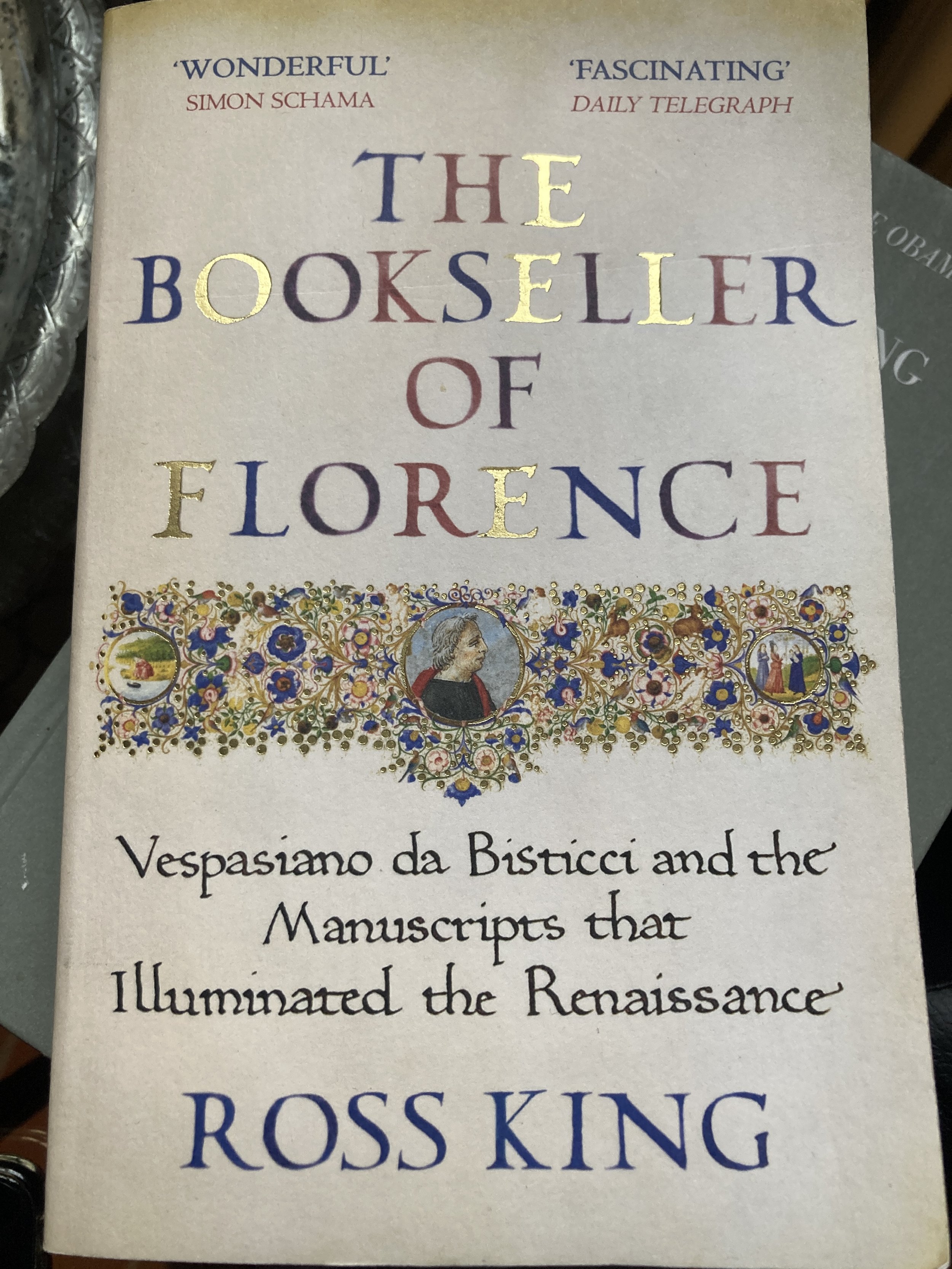
I head back to Italy soon and there will still be a month of winter ahead. I am looking forward to starting the Bookseller of Florence by Ross King.  It is sitting by the reading chair in my Lucca apartment just waiting for me.

Do you have favorite books set in Italy?   Please share your favorites on the Two Parts Italy Facebook page.   Happy winter reading!


February 05, 2024 /Joanne Bartram
set in italy, books set in italy, novels set in italy
#florence, Florence, History, Italian Art, Italian art architecture

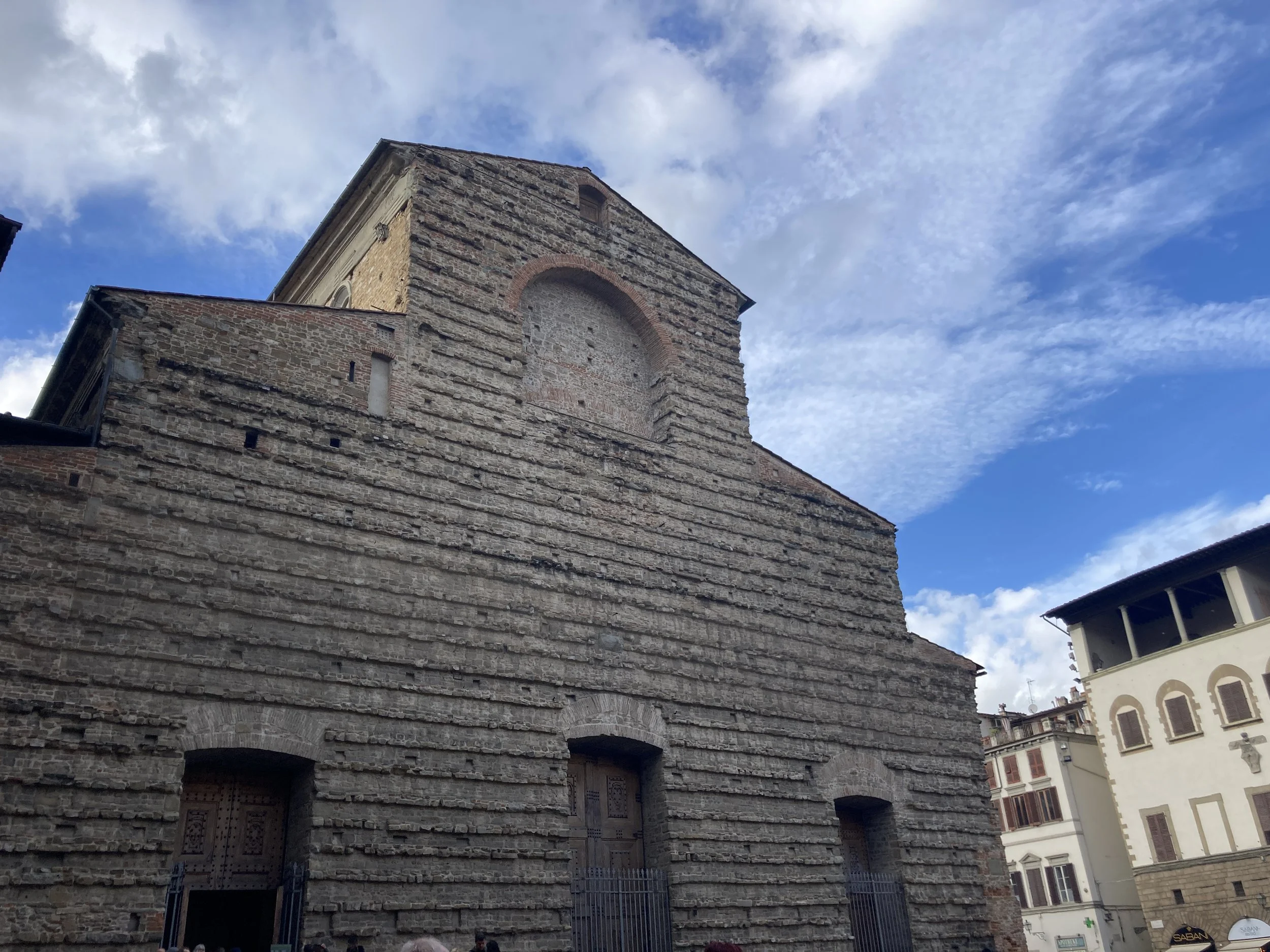
Basilica of San Lorenzo, Florence.

The Basilica of San Lorenzo in Florence

January 29, 2024 by Joanne Bartram in #florence, #italytravel, #medievalitaly, Churches Italy, Florence, Italian art architecture, Italian culture, Italy travel, Tuscany

It’s hard to have a favorite church in Florence.  It may even be wrong to choose a favorite considering the number of historic and significant churches in the city.  The Duomo, officially the Church of Santa Maria del Fiore, with its magnificent façade and campanile, is famous for good reason.  Consider Santa Maria Novella, Santa Croce, Santissima Annunziata – and those are just the basilicas inside the historic center.  Add in smaller churches, chapels, baptisteries, oratorios, bell towers and wonderful churches outside the center and, well, it would take years to explore them all.  How could anyone choose a favorite?

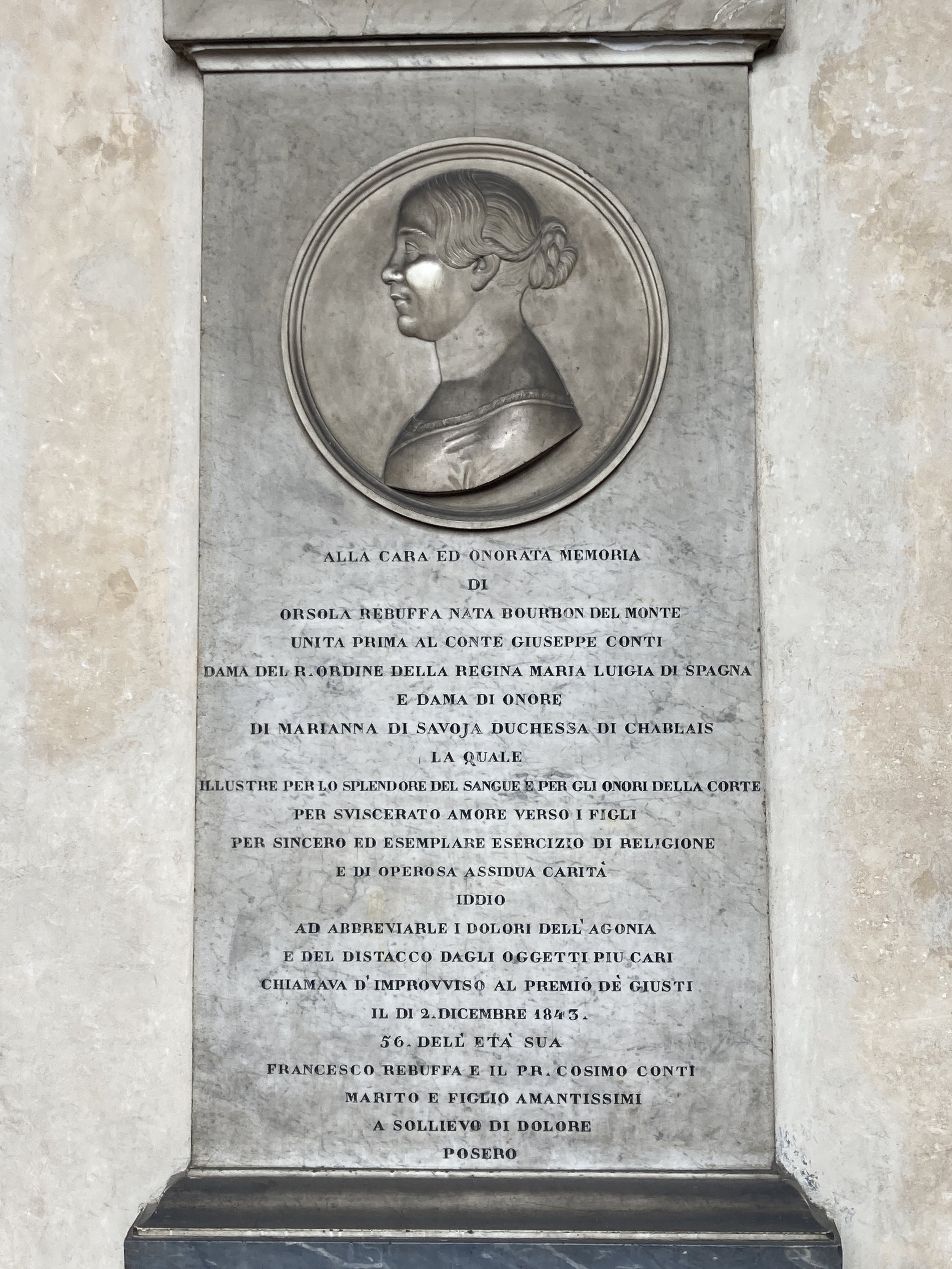
Tomb of Berta Moltke Hwitfeldt, Corbelli Chapel, Basilica of San Lorenzo

 And yet, I do have a couple of favorites.   One is the Basilica of San Lorenzo, whose 4th century origins make it the oldest church in Florence.  Redesigned by Brunelleschi in the 15th century, and completed after his death, it was the parish church of the Medici family, many of whom are buried there.

Detail, Basilica of San Lorenzo, Florence

 San Lorenzo is more than just a church – the complex also has a museum, the Laurentian Library, and the Medici Chapels.  Underneath the Medici chapels is a recently discovered hidden room with rough sketches by Michelangelo covering the walls. Right now it’s the hottest attraction in town but it was not yet opened during my November stay in Florence. The library is not always open, and a special ticket is needed for the Medici Chapel.  The entire complex is a bit too much for one visit.

On my recent off-season stay in Florence, I stopped by on the spur of the moment and purchased a ticket which included only the cloister and church, both of which were uncrowded and just right for a short visit.

What is it that makes the San Lorenzo Basilica one of my favorites?   It starts with the rough stone exterior.  Unlike the polished marble façade of the Duomo, the San Lorenzo stands unadorned and underdressed.  It was meant to have a white marble façade, designed by Michelangelo at the request of the Medici Pope Leo X.   But the pope died, the money dried up, and the façade was never installed. 

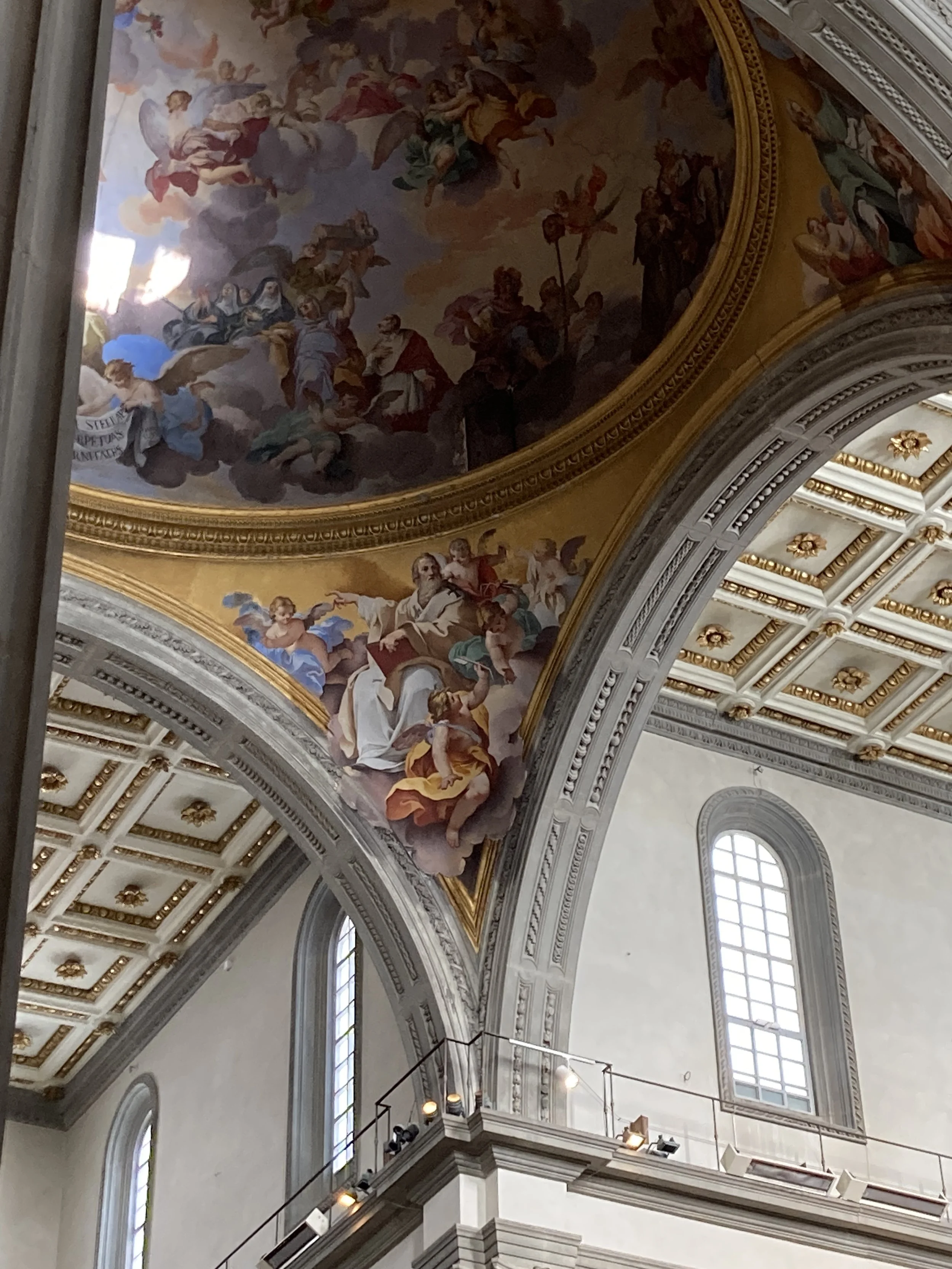
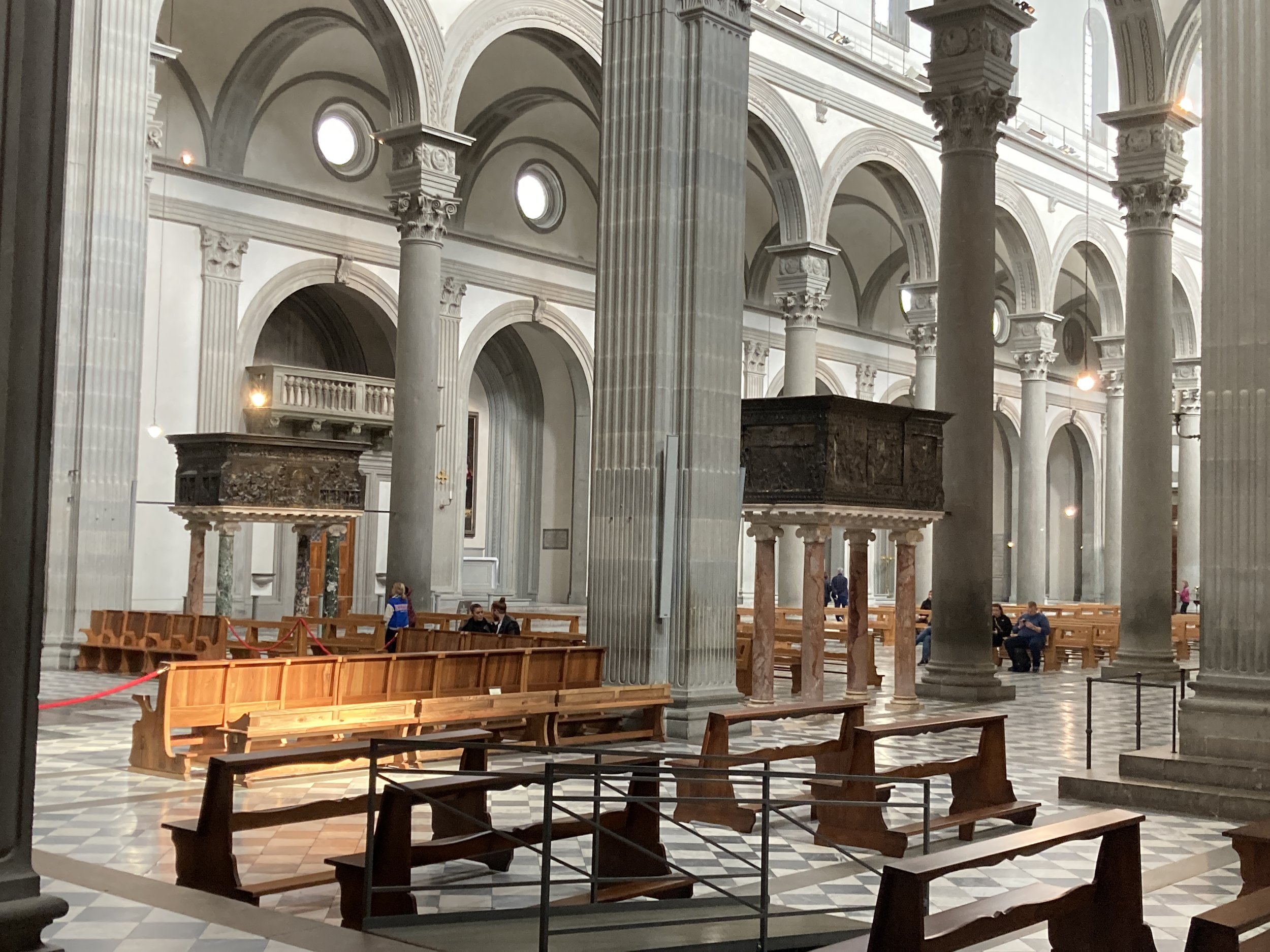
Inside, the basilica feels quiet and peaceful with its simple geometric floor anchoring graceful arches and columns in gray Pietra Serena (Serene Stone).  The high, round, windows let in light through their clear glass.  Even the ceiling, with its gold edged squares and central medallions (look for the Medici coat of arms) feels calming. Unlike more ornate churches (such as my other favorite, the very Baroque Santissima Annunziata), San Lorenzo has low contrast colors and finishes. This allows it to feel open and airy. The Basilica is a soothing space that supports quiet contemplation and an uncluttered mind. 

Another reason to love this church is the way in which it showcases the work of Donatello.  His two ornately carved pulpits, raised high atop marble columns in the center of the church, are considered his final masterpieces.

Donatello’s pulpits , Basilica of San Lorenzo

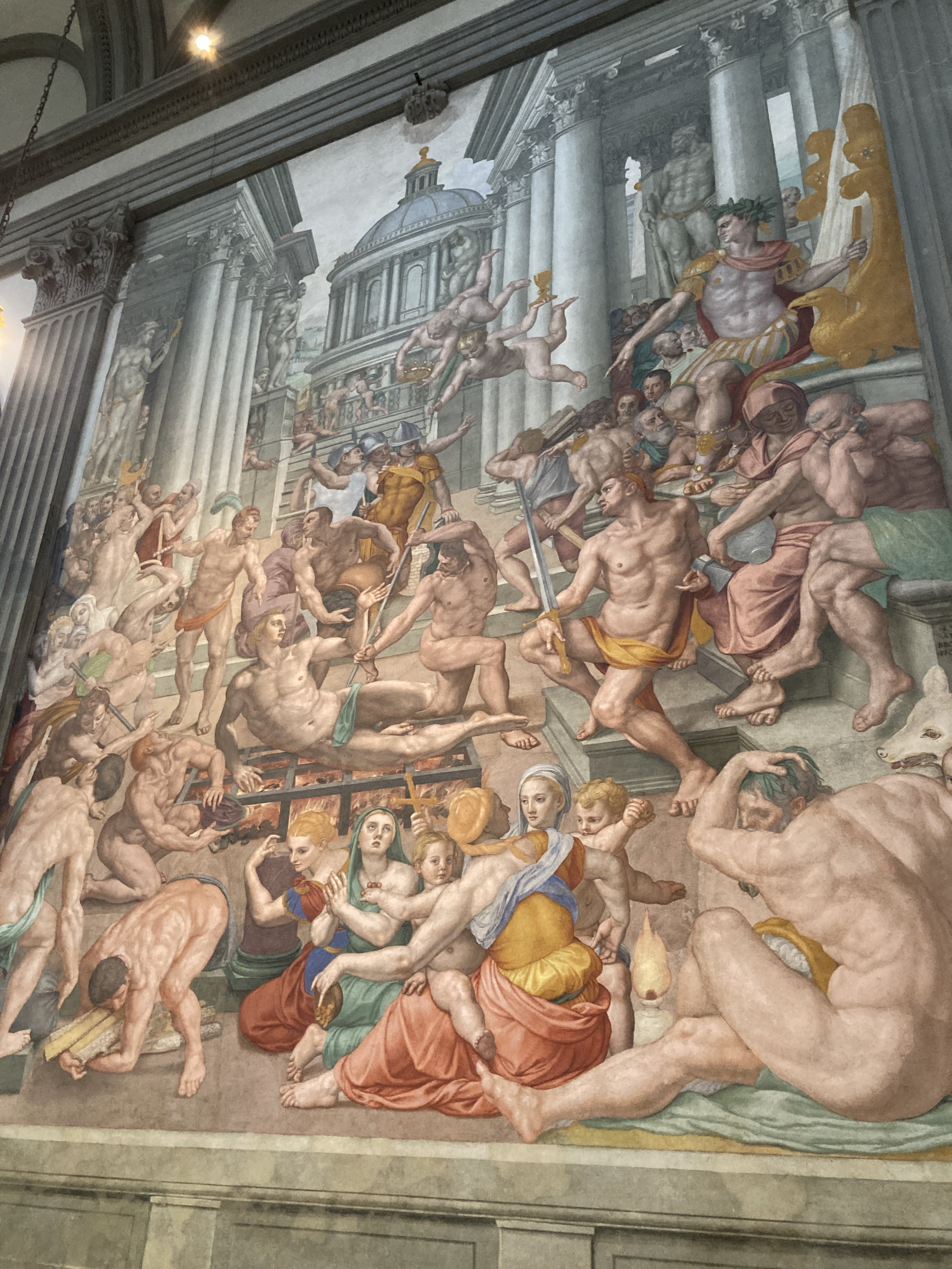
The church holds many remarkable pieces of art, but not so many as to be overwhelming.  There are sculptures, including graceful tomb markers, and some significant paintings, many of which sit in small side chapels.

Bronzino’s The Martyrdom of St. Lawrence

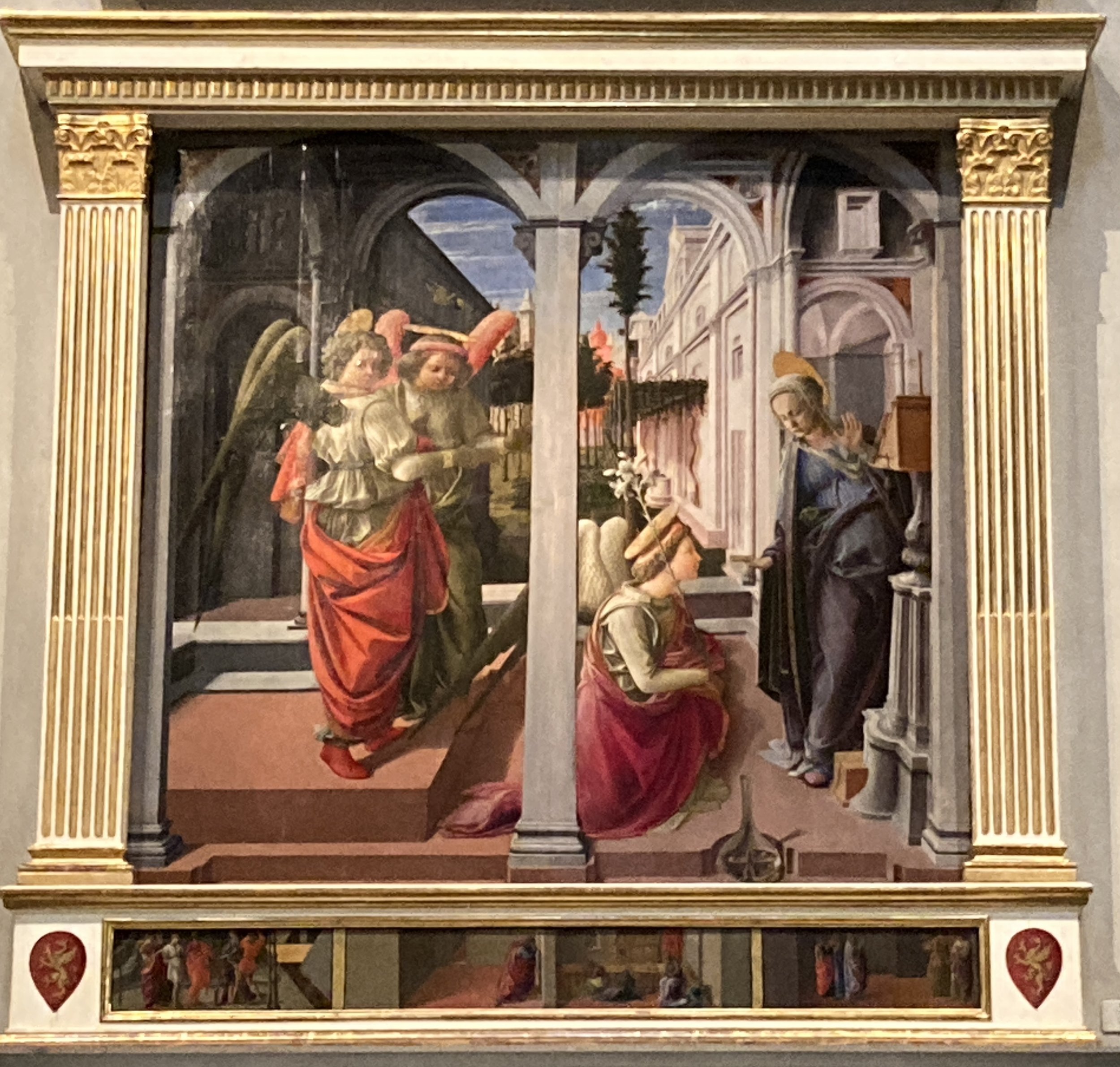
Perhaps the two most well-known paintings are an Annunciation by Filippo Lippi (below, right) and the Betrothal of the Virgin by Rosso Fiorentino (below, left).  Two very different styles, both captivating.   

BDE79584-8F80-47E8-81DD-5A0C9B04510C_1_201_a.jpeg
2A67D836-A358-4A1A-BD0B-42BDDE455A1A_1_201_a.jpeg

Old Sacristy, Basilica of San Lorenzo

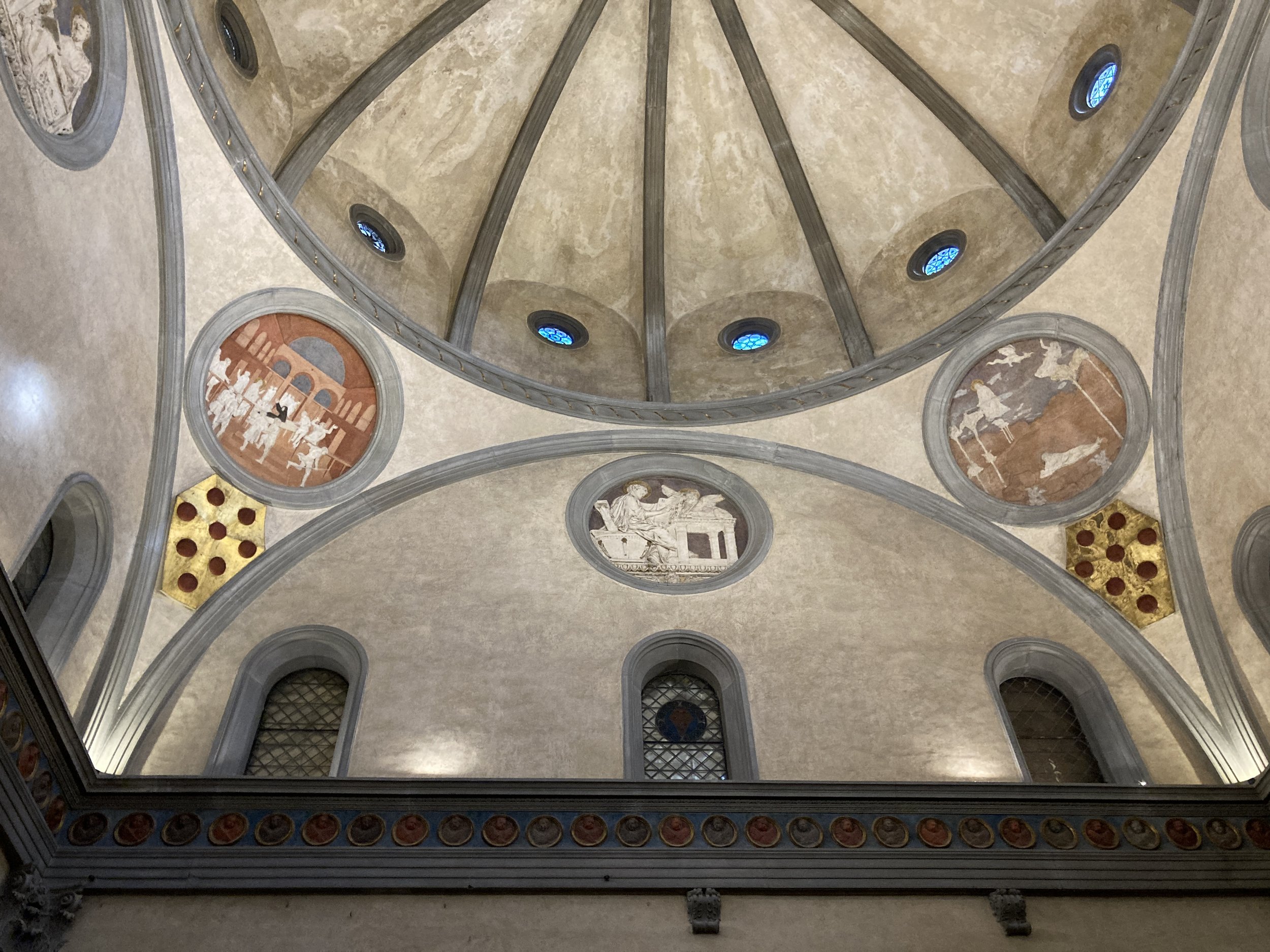
The biggest reason for my love of this church is the small Sagrestia Vecchia (Old Sacristy).  Designed by Brunelleschi, it was the only portion of the church completed before his death.  His perfectly proportioned design incorporates a square room with a ribbed dome on top, several graceful arches, and the same gray and white colors of the main church. 

 Opposite the entry into the sacristy is a small marble altar, its design in white marble is in keeping with the simplicity of the rest of Brunelleschi’s design.  Above the altar, in a smaller dome, is a remarkable blue and gold night sky.  There has been some debate about the date represented by the constellations pictured.  Initially it was thought to represent the day the altar was consecrated in July of 1422.  Newer theories give the date as July 6, 1439, the date of the accord uniting the Eastern and Western branches of Christianity.  Whichever date is correct, the constellations unite the sacristy with the heavens.

The constellations above the altar in the Old Sacristy, Basilica of San Lorenzo

 In the center of the sacristy is the tomb of a Giovanni di Bicci de’Medici and his wife Piccarda Bueri.  It was Giovanni who founded the Medici bank and set the stage for the Medici era in Florence.  This seems like a fitting place for him to rest.

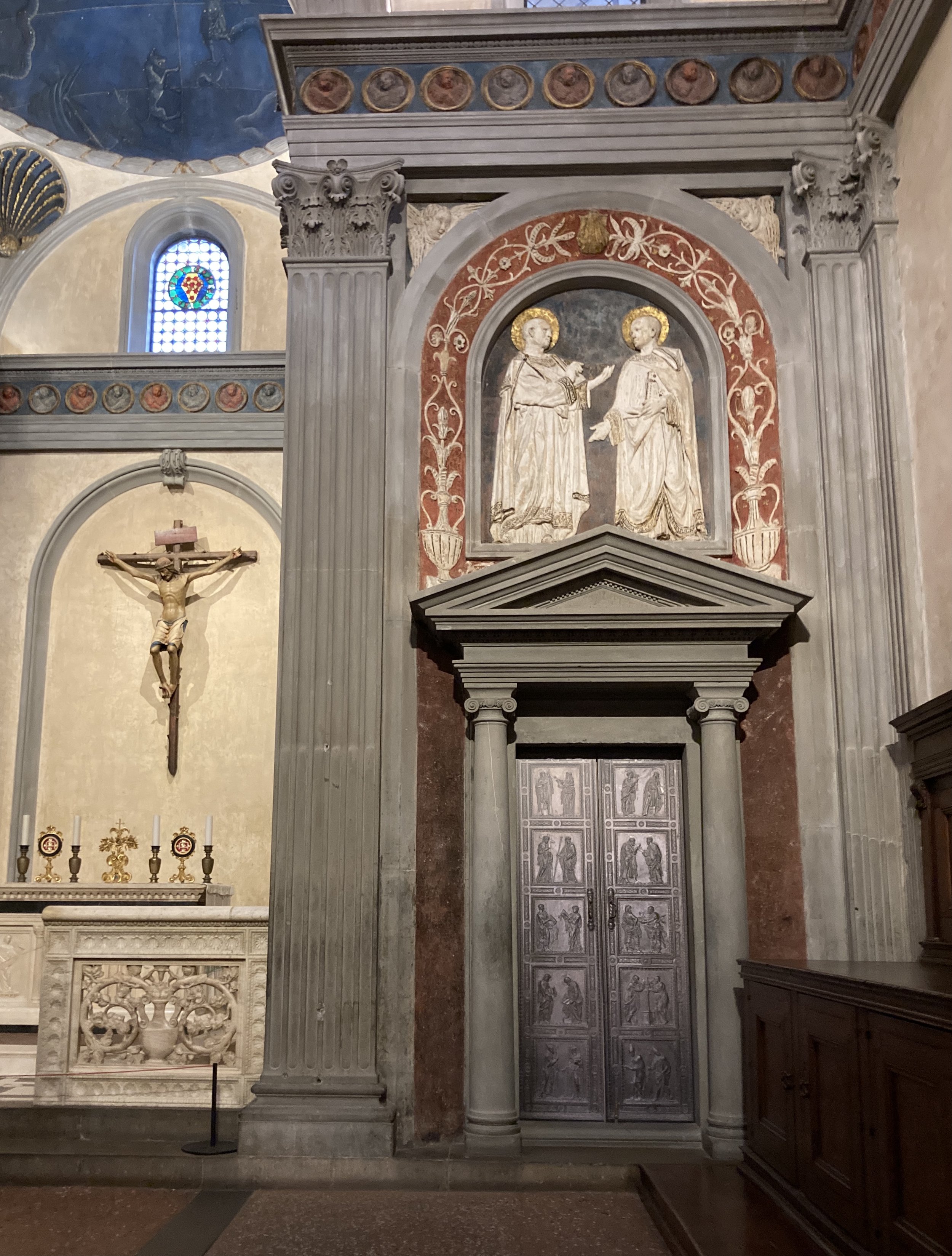
Not part of Brunelleschi’s original design, several elements were later added by Donatello at the request of the Medicis.  These include a series of tondi (round decorations) which lie below the dome.  The 4 in the corners represent the life of Saint John the Evangelist.  


Detail, Donatello’s bronze doors, Old Sacristy

Donatello also designed the two bronze doors that flank the altar.

Apostles to the left, martyrs on the right.

The large reliefs above the doors, with St. Cosmos and St. Damian on the right and St. Stephen and St. Lawrence on the left, are also the work of Donatello.

(Note: There is also a New Sacristy but it is not accessible from inside the church, only from the Medici Chapels)


One of the relief decorations by Donatello above the bronze doors in the Old Sacristy.


The Basilica of San Lorenzo is not the largest or most ornate church in Florence.  It wears no colorful marble facade. But it is stunning in its simplicity and is of great historical and architectual importance. When visiting, don’t miss the literature with a QR code which links to an audio guide. The audio descriptions greatly enhanced any visit.

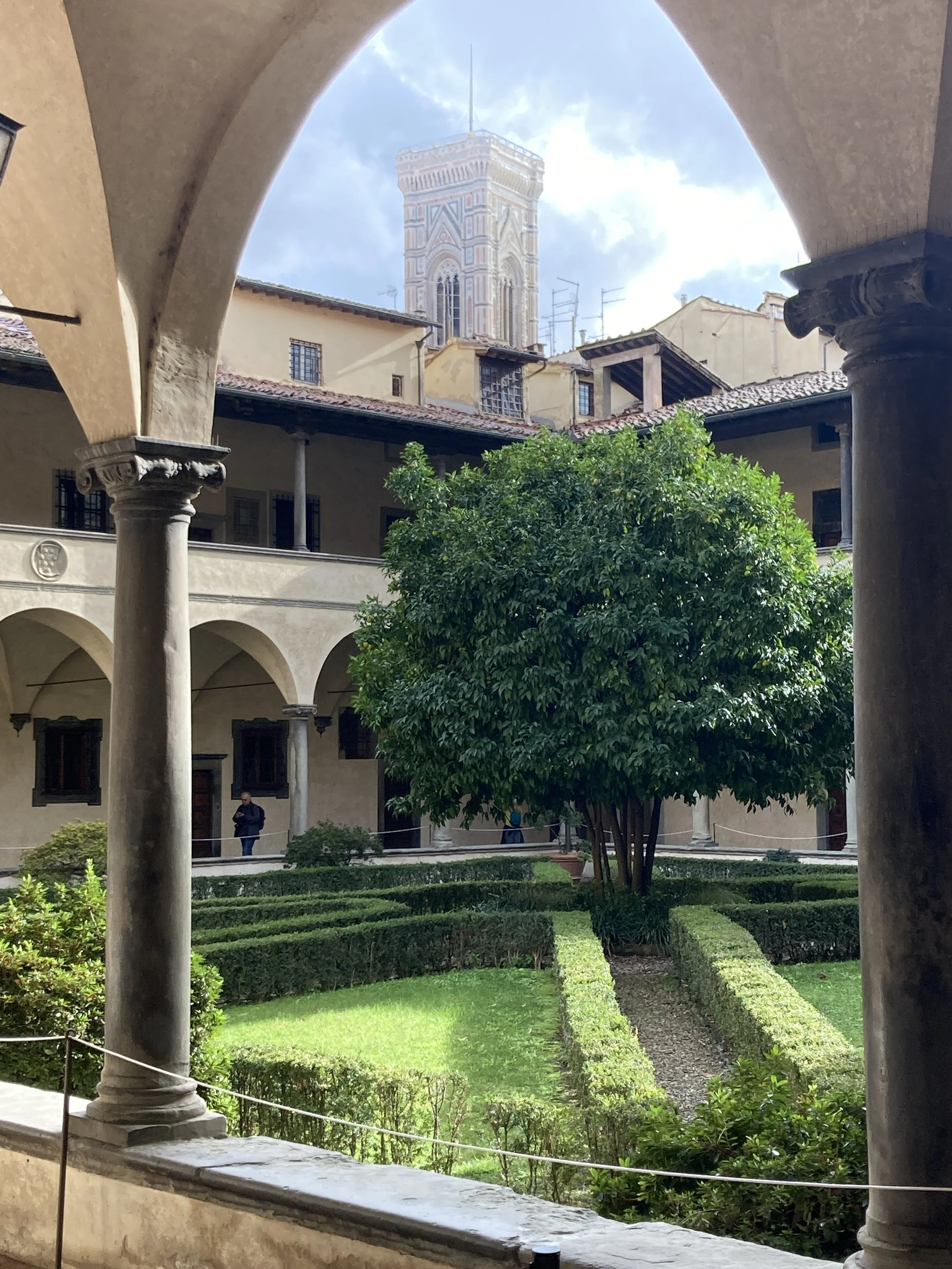
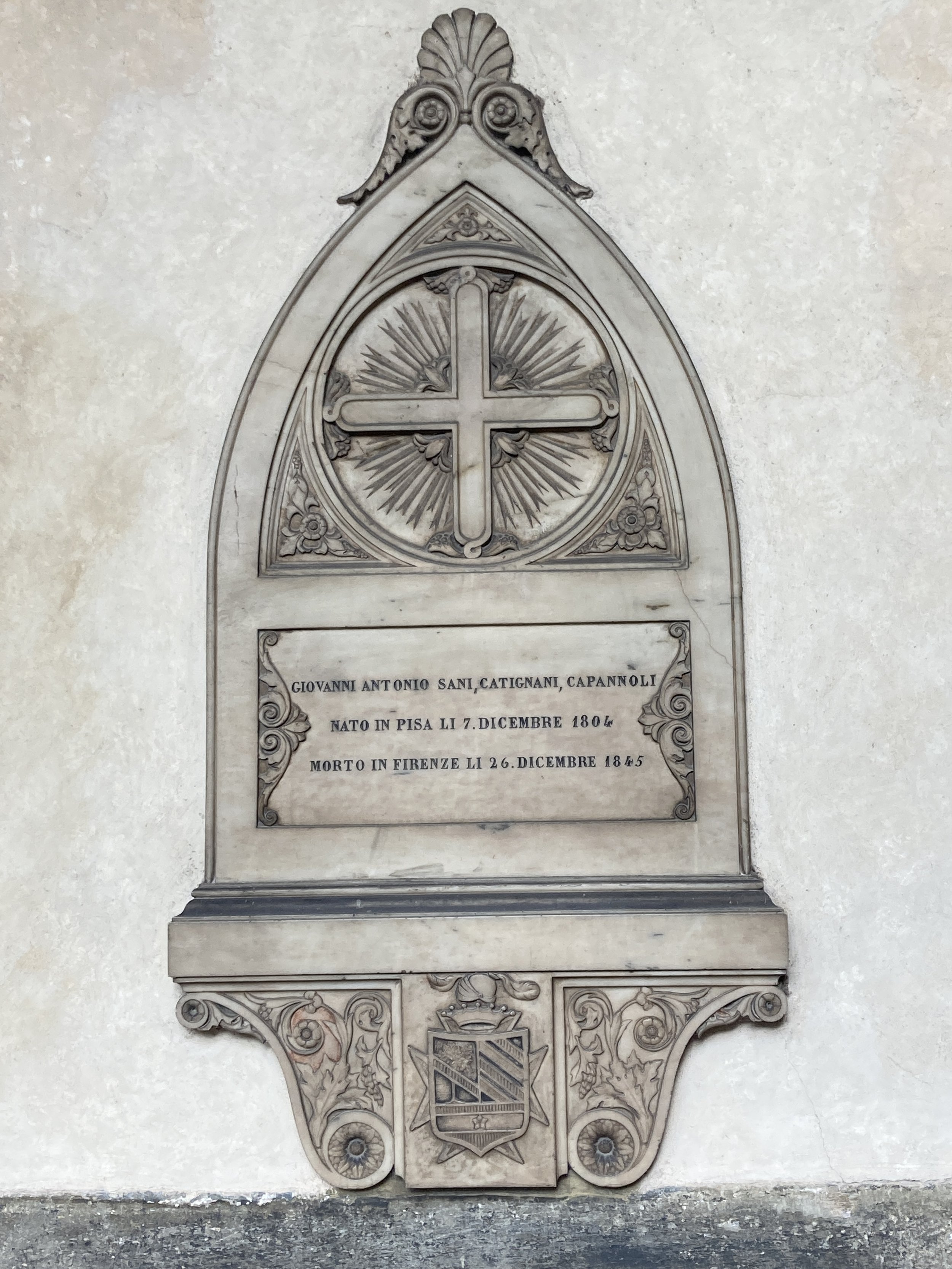
Entry and Exit to the church is through the cloisters.  This green space, surrounded by a two-story loggia, is a destination all of its own. The lower floor of the loggia surrounds a neatly kept space with low hedges and a big central tree.  Under the arches is a walkway with walls filled with memorials to long ago Florentines.  It’s a moving space embracing both the quiet of the church and views out into the “real world” of Florence.  You can almost hear the rustling robes of those long ago monks as they walk through the cloister.

Cloister, Basilica of San Lorenzo

748FC455-2804-4D11-A170-32C8A4F9BDD6.jpeg
5343E7A4-1C72-41FD-9E54-5149601E7ADD.jpeg
81959226-65B3-448A-8D77-A556BC6DAFC3.jpeg

 Hungry afterwards?  Just outside the front entry is a wonderful lunch spot – the Trattoria San Lorenzo.  A perfect way to end a visit to the church, enjoy a meal, and have time to organize memories of the basilica.

January 29, 2024 /Joanne Bartram
San Lorenzo, Basilica San Lorenzo, Florence Churches, Medici Church, Brunelleschi Florence, Donatello Florence
#florence, #italytravel, #medievalitaly, Churches Italy, Florence, Italian art architecture, Italian culture, Italy travel, Tuscany
  • Newer
  • Older

Powered by Squarespace