Two Parts Italy

Exploring Italy, travel, and living a flavorful life

  • Blog
  • About This Blog
  • Start Here
  • Recent Posts
  • Archives by Topic
  • Subscribe
  • Contact me

Farina di Castagne

February 27, 2023 by Joanne Bartram in Italian culture, Italian recipes, Italy travel, Living in Italy, Lunigiana, recipes, Tuscany

A list of the ingredients important in Italian cooking often includes olive oil, tomatoes, pancetta, artichokes, garlic, lemons, basil, Parmigiano Reggiano cheese, and balsamic vinegar.  But let’s not forget about a more humble ingredient - chestnuts (castagne or marroni in Italian).

In Tuscany, the mountains are full of chestnut trees.  It is no surprise then that the chestnut tree became a vital source of food, as well as of fuel and building material, especially during times of war, famine, and poverty. 

Abundant and nutritious, the chestnut became an essential ingredient in Italian “cucina povera”. That traditional continues to this day. Chestnuts are eaten roasted or steamed. They are also dried and ground into flour, farina di castagne, for use in breads, pastas, and sweets. 

Chestnut Roasting in Colognora di Pescaglia

Dishes made with farina di castagne appear on fall and winter menus.  With its naturally sweet and nutty flavor, chestnut flour has become one of my favorite ingredients for baking. 

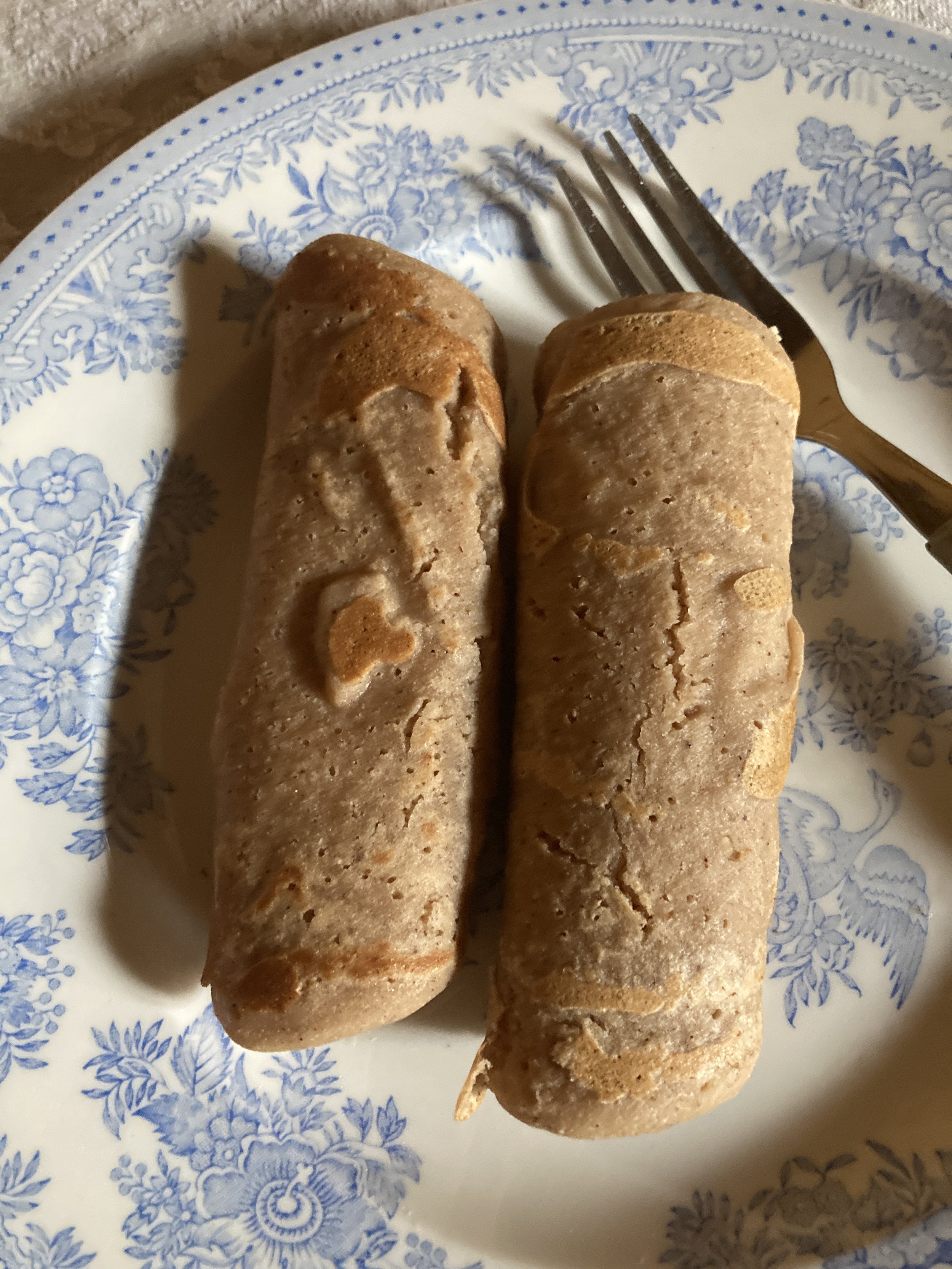
 My fondness for these dishes began at a fall festival where I first tasted Necci. Necci are round and flat, somewhere between a crepe and a pancake in thickness.

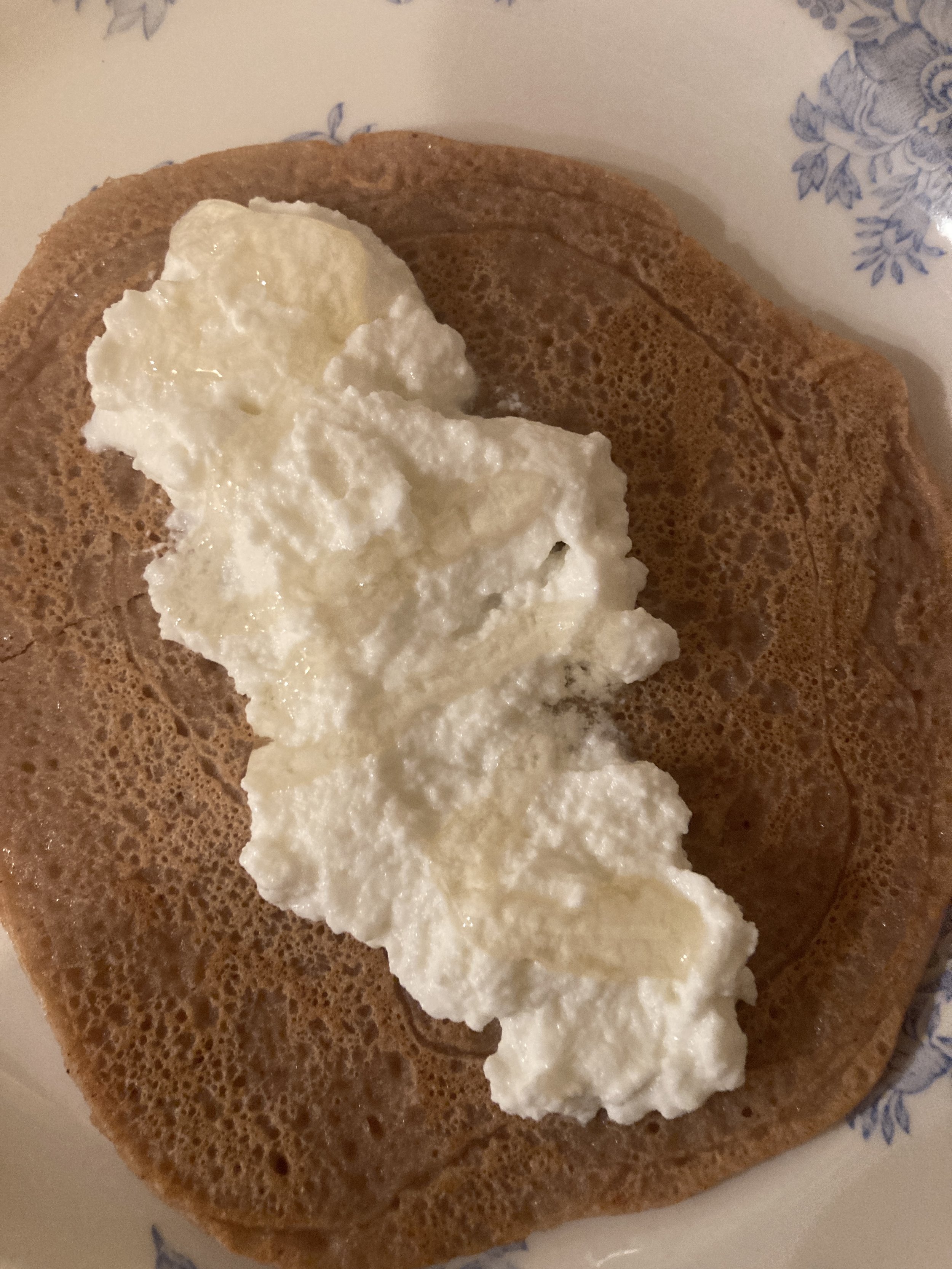
Like a crepe they can be rolled around a filling.  The batter is very simple -  just chestnut flour, water, and a pinch of salt.  Traditionally, necci were cooked between testi, round stones heated over a fire.  Today Necci are usually cooked between two long-handled, flat cast iron plates.  The warm necci are then filled, most commonly with fresh ricotta and a drizzle of honey.  Delicious! 

These round stones, called testi, were the traditional method used to cook Necci. To learn more about chestnuts, visit the Chestnut Museum in Colognora di Pescaglia where this photo was taken.

Frittelle di Castagne, little fried chestnut fritters, served as an appetizer alongside fresh ricotta in the town of Pontremoli.

Similar to Necci are Frittelle di Castagne, often found in the areas of Tuscany known as the Lunigiana and the Garfagnana, both hilly areas in the north. 

The batter is similar to Necci, but the preparation is different.  Small scoops of batter are fried in oil, creating a crisp outside and tender inside. 

While I think of frittelle as breakfast or dessert items, lightly sprinkled with sugar, they can also be served unsweetened as an appetizer with a bit of ricotta.  That’s how I first encountered them last fall in a restaurant in the town of Pontremoli.

I have been working on learning to make both Necci and Frittelle di Castagne at home. 

For Necci, simply combine 1 cup of chestnut flour (100-120 gm), sifted after measuring, with ¾ - 1 cup of warm water. Mix well.

Take a little taste of the batter – the sweetness will surprise you!  

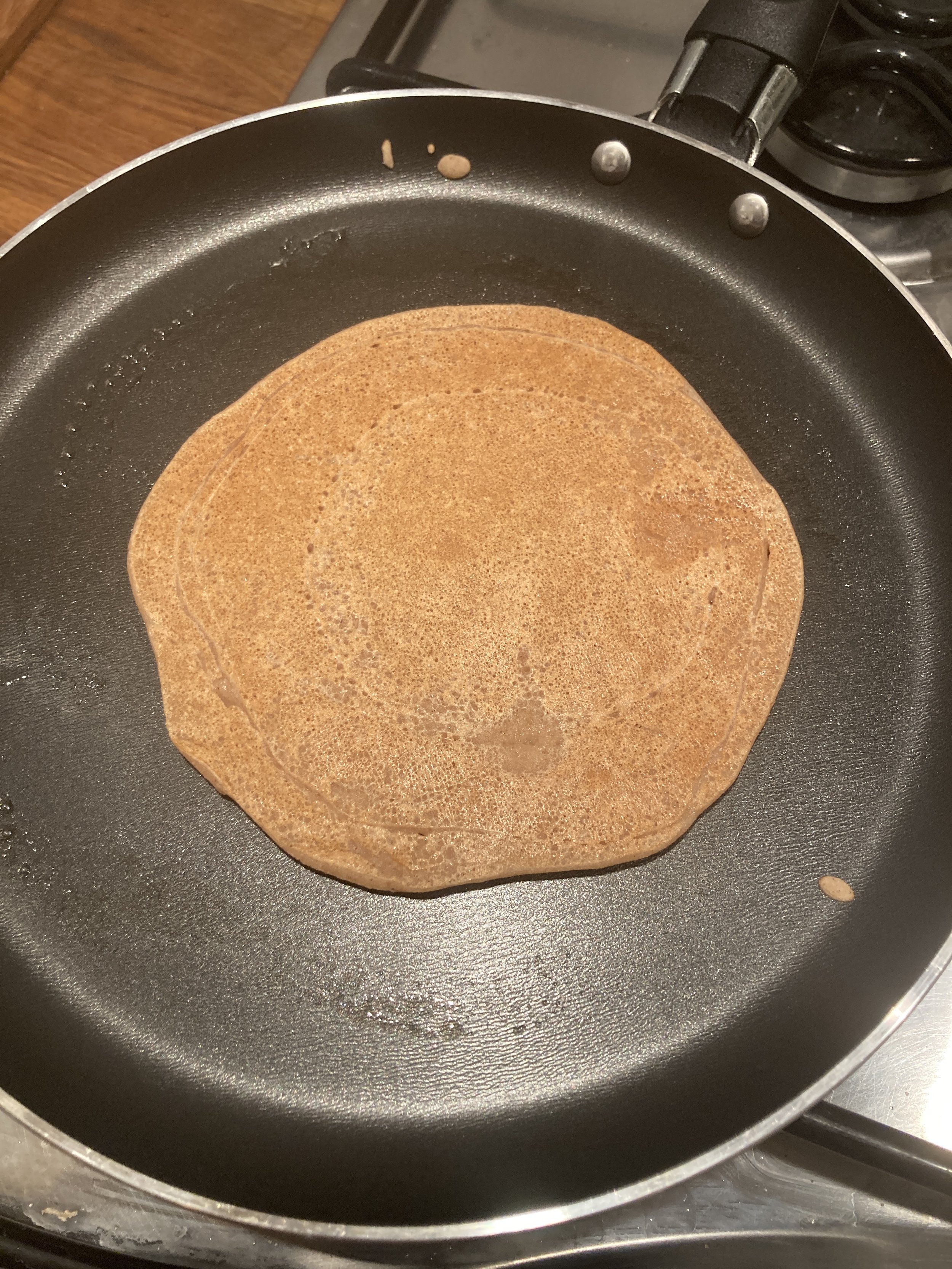
Either a heavy crepe pan or a non-stick skillet works to cook the Necci.  Lightly butter the pan to prevent sticking, pour in about ¼ cup batter and spread with a fork or spoon to create a thin crepe.  Cook until set, flip, and cook on the second side. Fill while warm with a couple of tablespoons of ricotta, drizzle with a little honey, roll up and enjoy! Makes 4-5 Necci.
90B3AD38-7BA1-4C9D-9F43-A1C39294C47B.jpeg
415C4496-7A63-4821-97CB-70268C7A2103.jpeg
94DC0143-E1F9-43DC-BC1A-FD4BEA52A5E0.jpeg


For Frittelle di Castagne, combine 1 cup of chestnut flour (100-120gm), 1 teaspoon of baking powder, and a pinch of salt. Sift and add about 1 c. warm water (add about 3/4 of the water and then enough more to make a fairly thin batter). Mix well.  Heat vegetable oil in a frying pan, deep enough to cover the bottom of a pan and about half-way up the frittelle (I use ¼ c. oil in a small 8 in frying pan, frying 2-3 frittelle at a time).  Test the oil with a small drop of batter - it should have a lively sizzle and the batter should puff up slightly. Drop spoonfuls of batter into the hot oil, cook until the top is set and small bubbles appear, flip, and continue cooking until crisp and brown on both sides. Smaller is better for these fritters - small enough to cook through in just a couple of minutes and be crisp outside and not doughy inside.  Remove from the oil and place on a paper towel to drain.  Serve warm sprinkled with sugar or room temperature with a side of plain ricotta.   Makes about 18 - 20 small fritters.

Now that I’ve learned how to make these traditional Italian dishes, I am working on incorporating chestnut flour into some other baked goods. Stay tuned!


February 27, 2023 /Joanne Bartram
chestnuts in Italian cooking, castagne, Necci, Frittelle di Castagne, italian foods
Italian culture, Italian recipes, Italy travel, Living in Italy, Lunigiana, recipes, Tuscany

Taking Tea

February 06, 2023 by Joanne Bartram in food, Italian culture, Italy travel, Living in Italy, Lucca, Paris, Travel, Travel France

While visiting, and now living most of the year in, Italy I have learned to appreciate good coffee – a foamy morning cappuccino, a fragrant afternoon macchiato.  I have even learned to drink a straight espresso on occasion, providing it is laced with plenty of sugar.  

A breakfast tea in Florence at the hotel Morandi alla Crocetta

But, thanks to an Irish mother and grandmother, I was raised on tea. They firmly believed that there was no problem in life that was too big to be solved over a cup of tea, especially when served with sugar, milk, and a side of something sweet.

 They left a lasting legacy - I still love a good cup of hot tea.  It is the way I begin every morning.  When I travel I love to find a hotel with a good morning breakfast tea service. It starts the day off right. 

But “taking tea” is so much more than just a way to start the day.  Tea is an event! One thing to remember - it is nearly criminal to order tea without something sweet to go along with it because, as a British transplant to Lucca once told me, “without some cake your tea is just too wet”.   Words of wisdom!

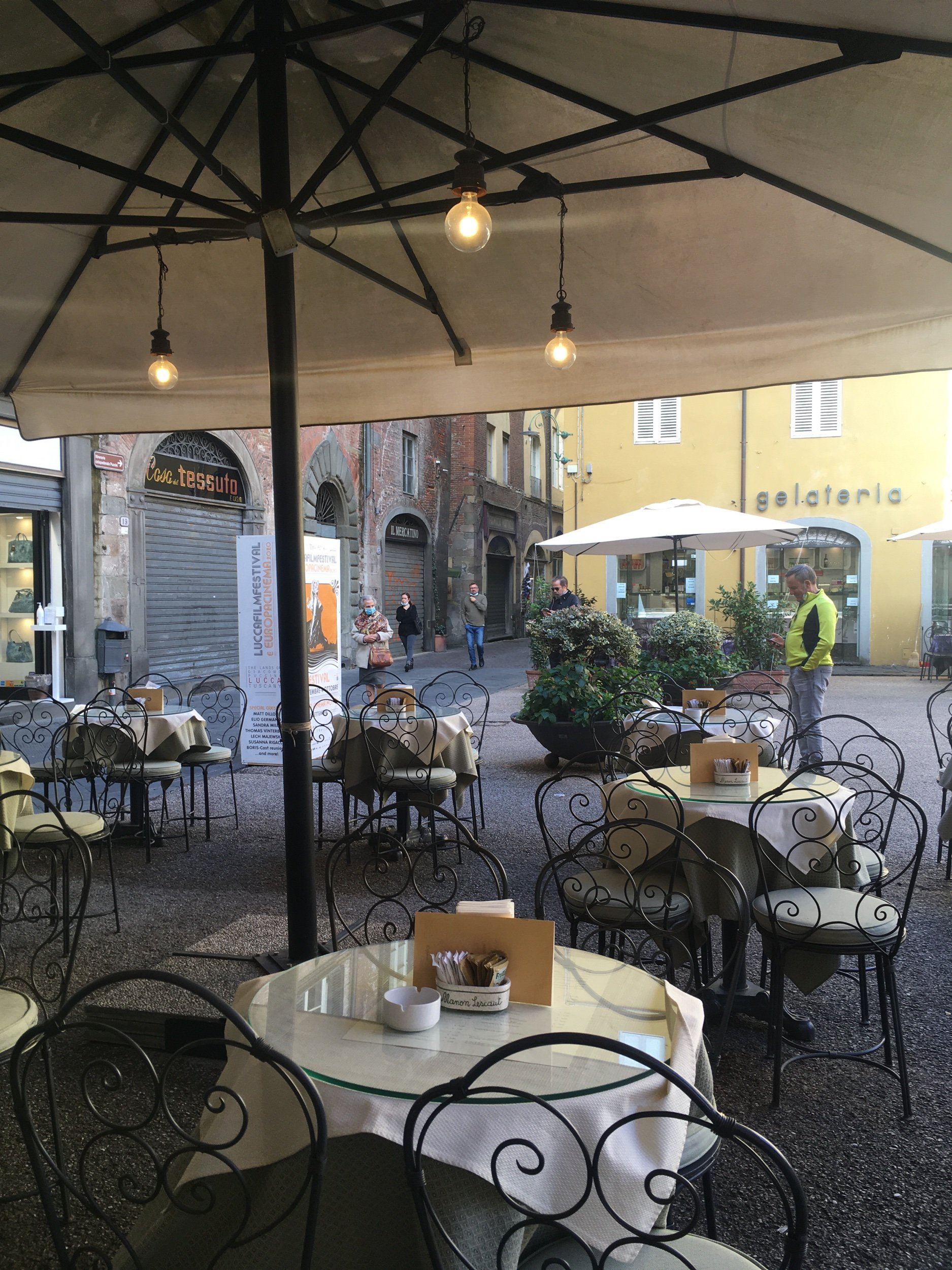
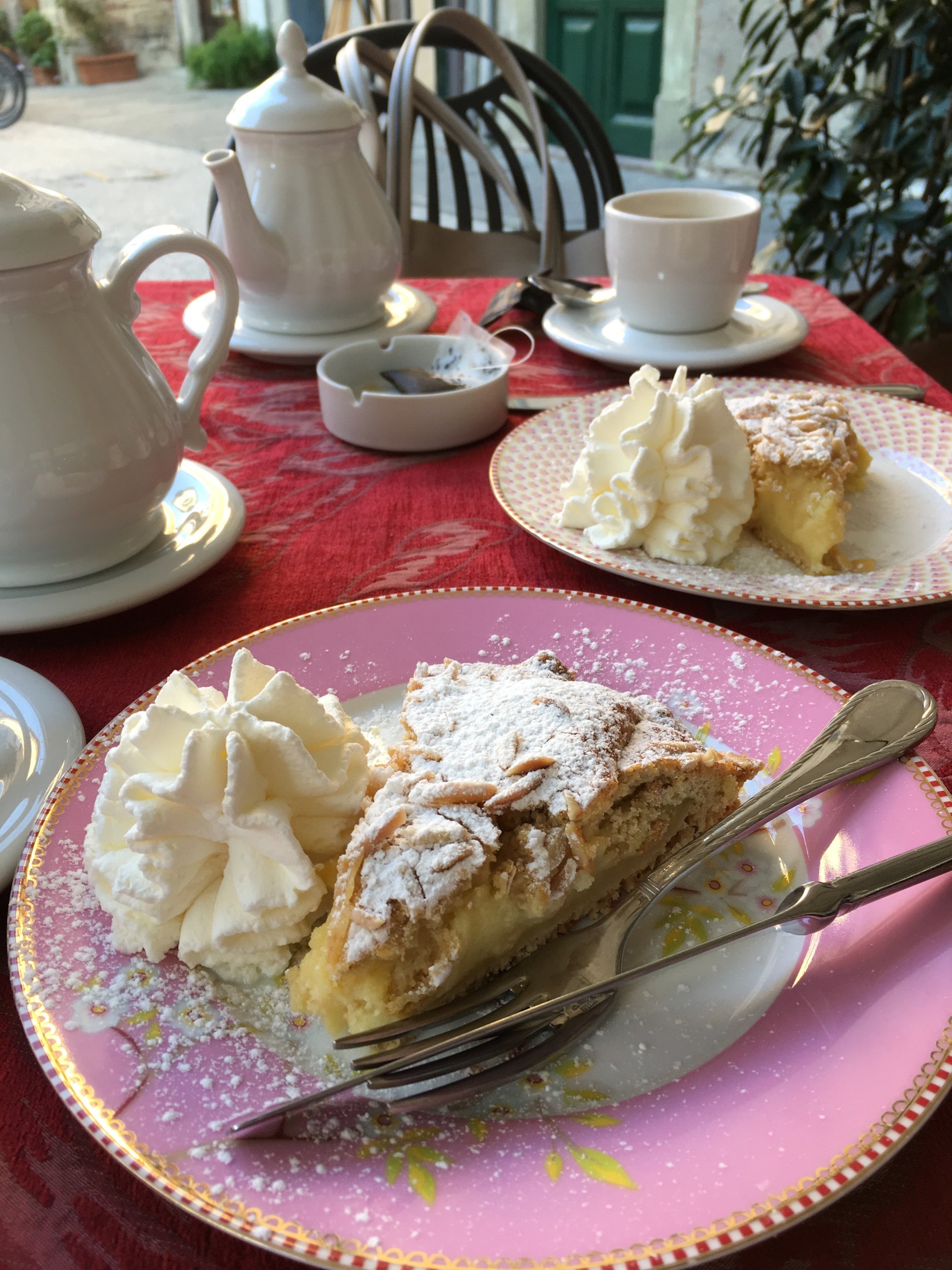
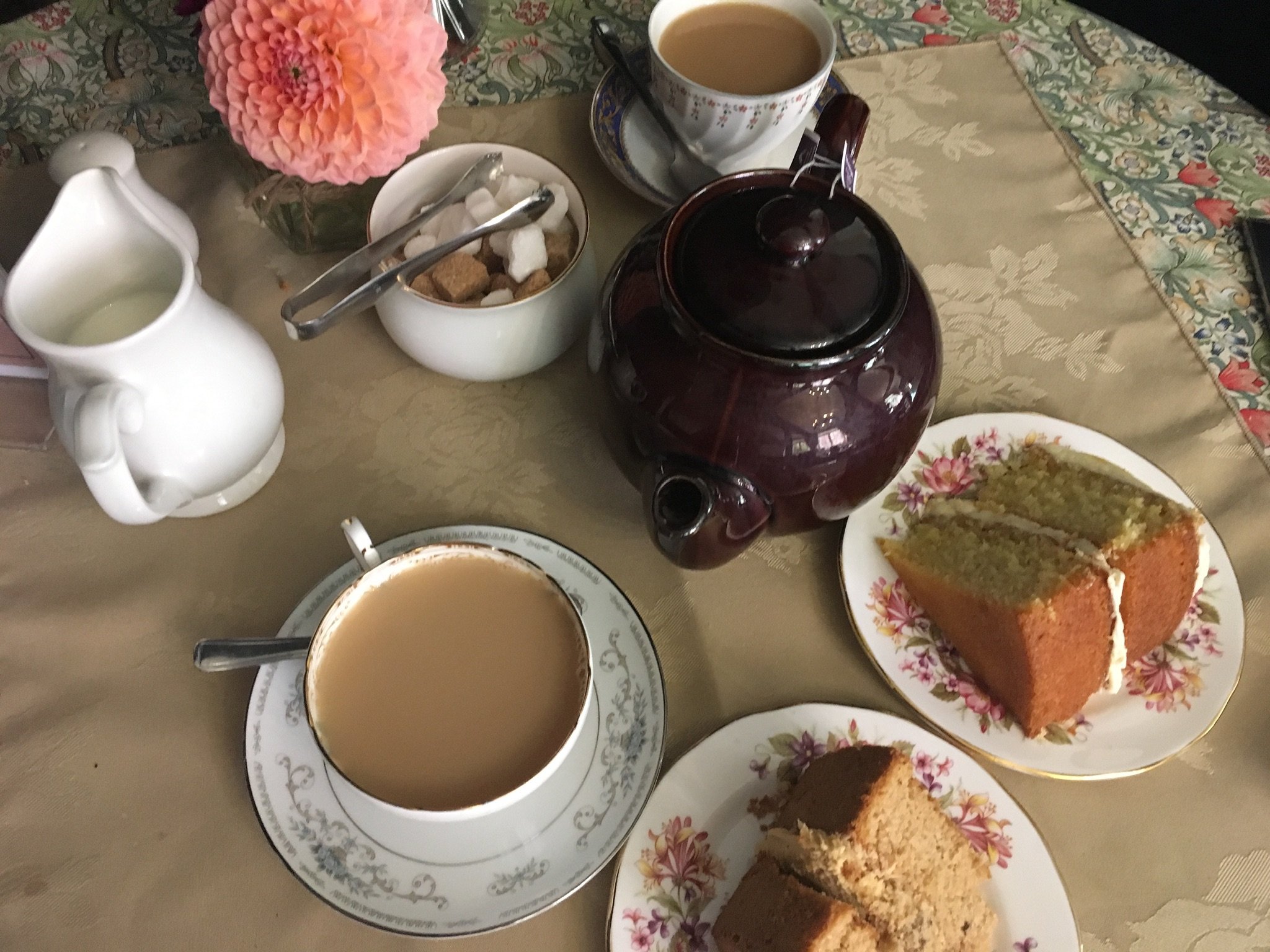
While Italy does not have as much of a tea tradition as some places, there are several spots where, in addition to great coffee, pots of tea are served along with a pastry or a slice of cake. One such spot is Cafe Manon Lescaut in Piazza Cittadella. When my British friend Judy came to visit she was delighted with the afternoon tea there (pictured below).

IMG_3062.jpeg
IMG_8328.jpeg

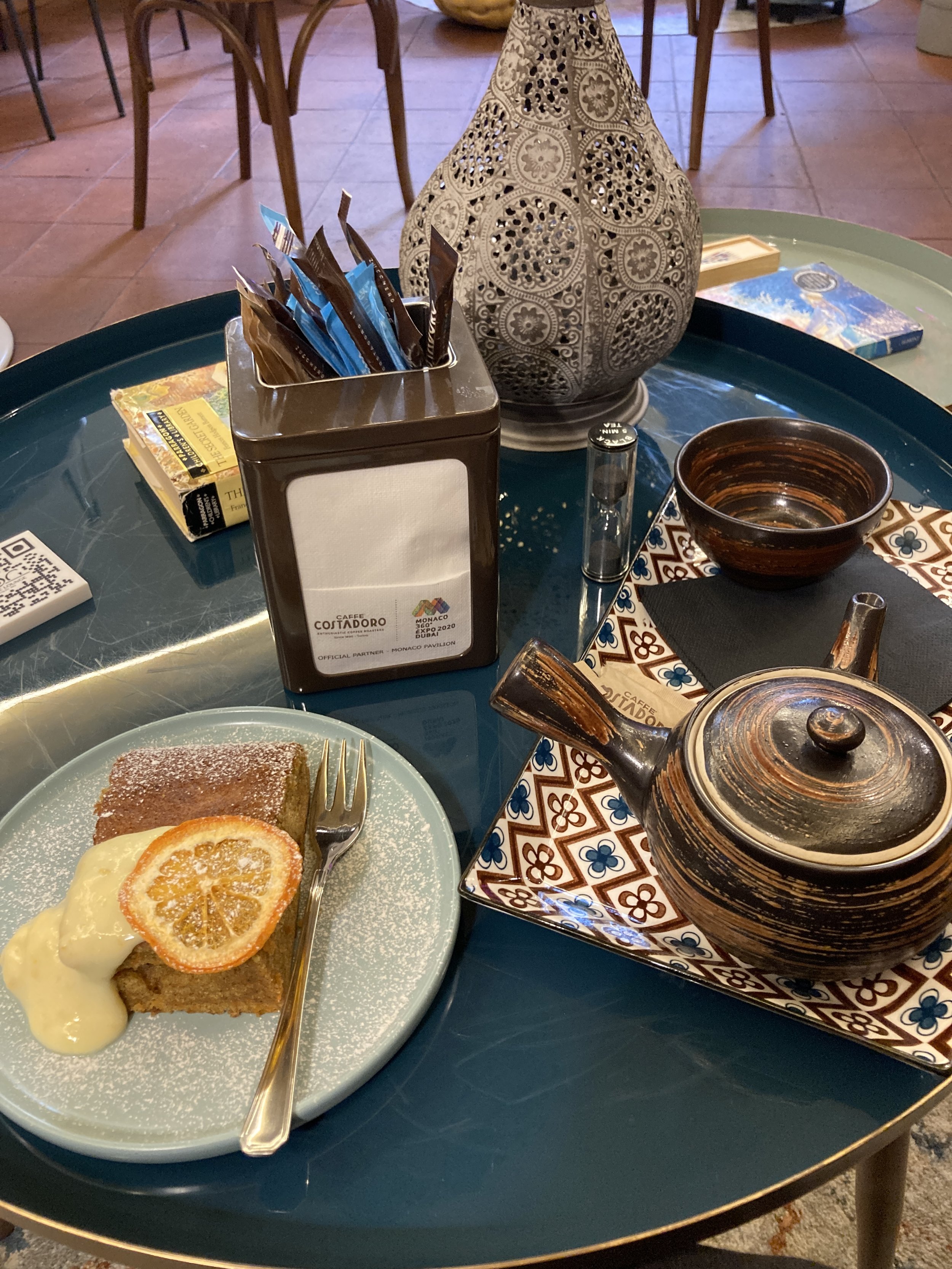
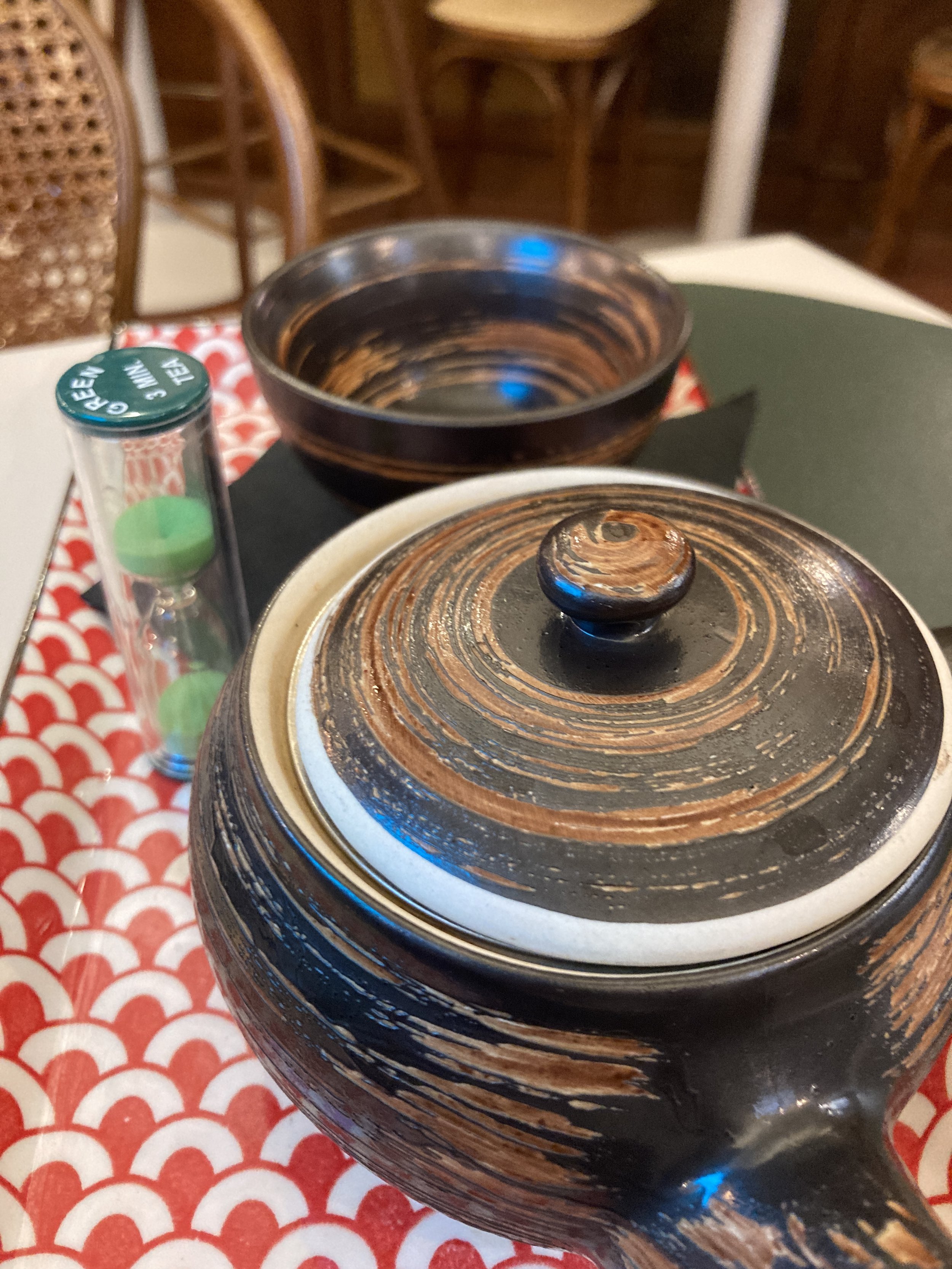
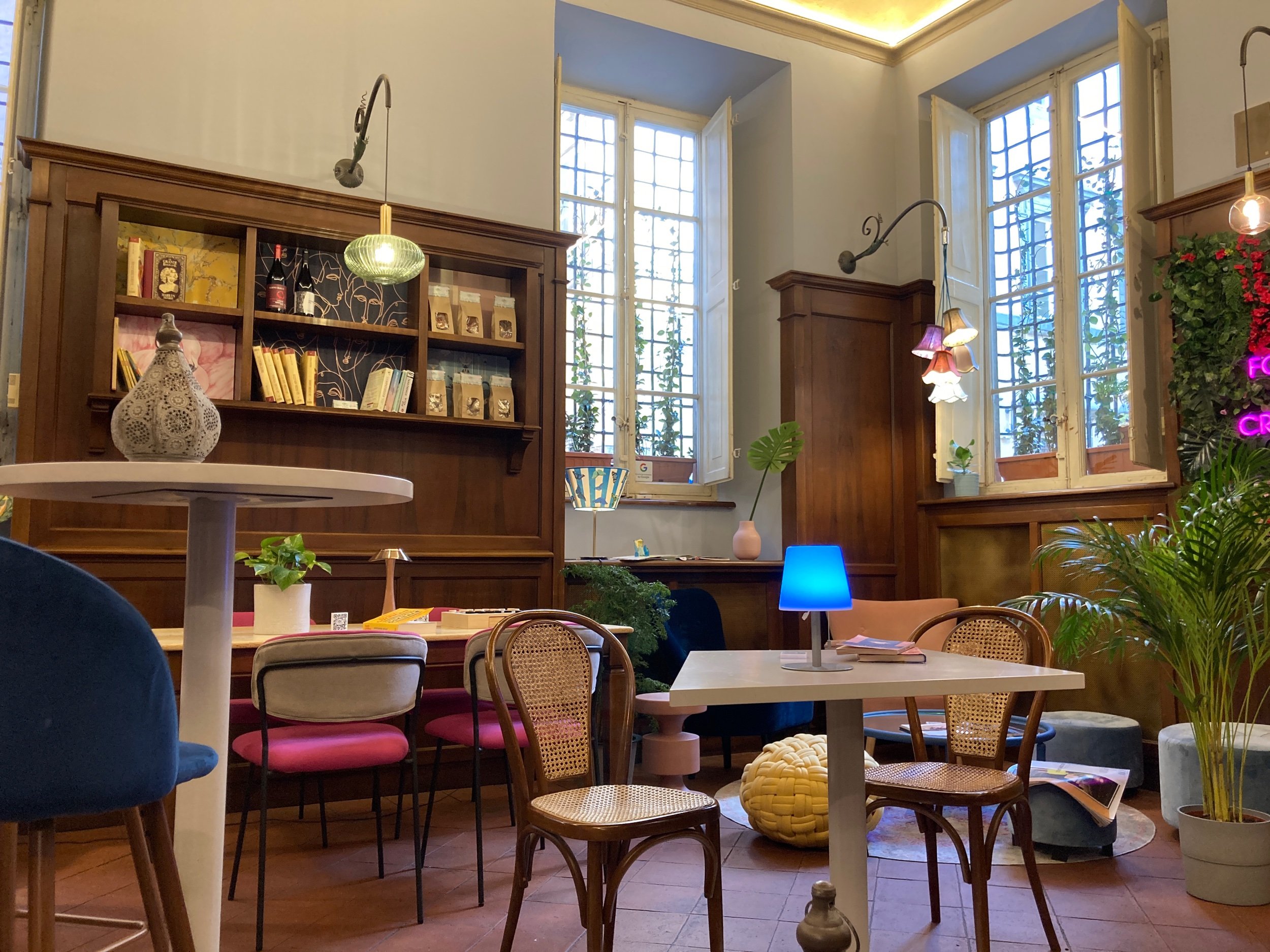
These days one of my favorite places to take tea in Lucca is the H&G Coffee Lounge.  Don’t let the name fool you, it isn’t all about the coffee.  At H&G they also brew lovely pots of tea and describe tea as a “perfectly codified ritual”.  The loose leaf tea comes in a stoneware vessel alongside a little timer so that the brewing time is just right.  And they have a selection of tasty cakes to go with.  Best of all tea is served in a pretty room with comfy chairs and quiet music.  Unlike the Italian habit of quickly downing a coffee, here you can linger with your pot of tea. Sitting at H&G on a rainy afternoon, with a good book to read and a hot cup of tea, is a joy.

955A958A-7789-4AA7-B222-CE2D69D17670.jpeg
A4A26C26-2F58-4DEB-859C-9D066B7A4FB6.jpeg
IMG_4854.jpeg

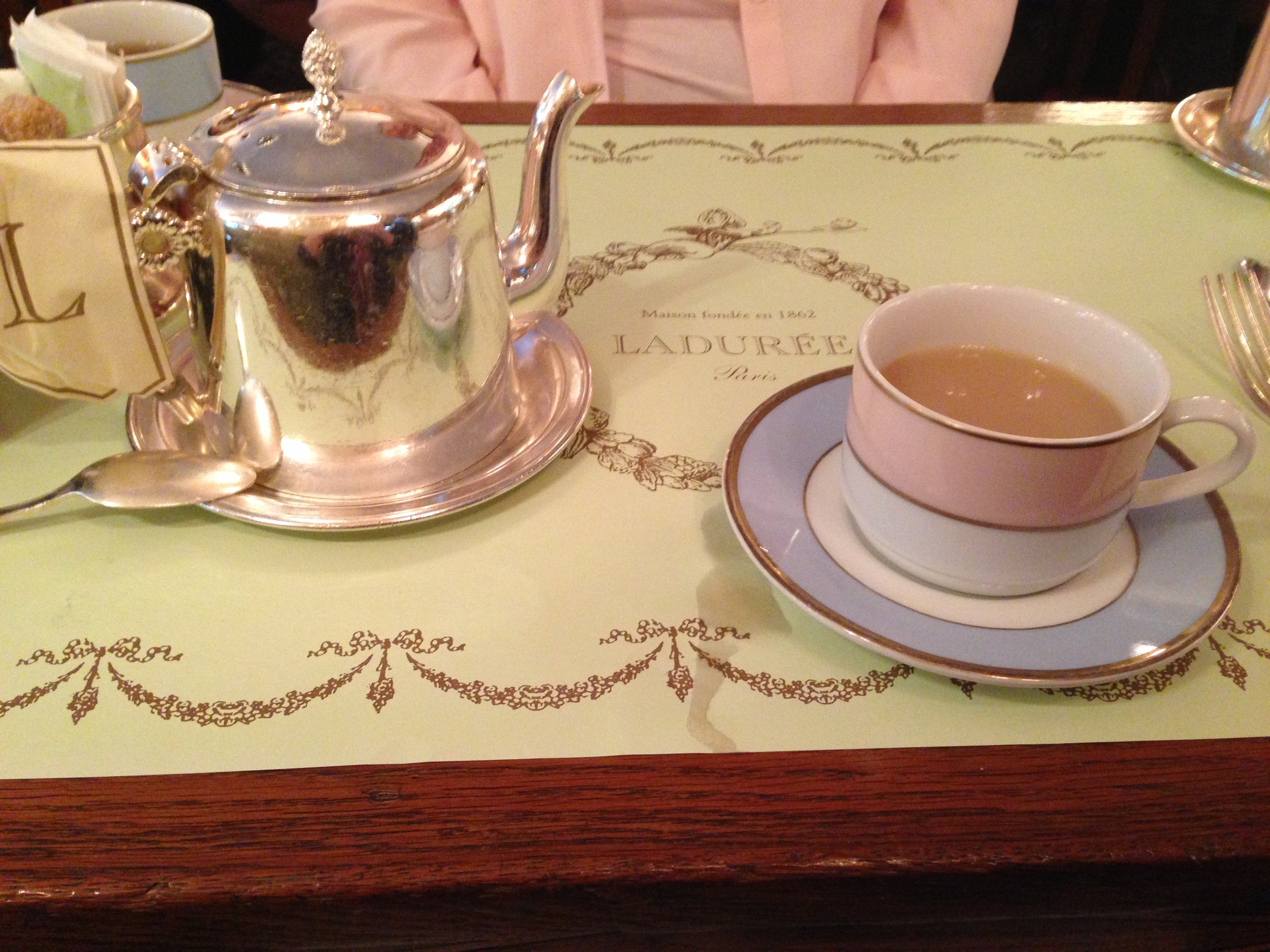
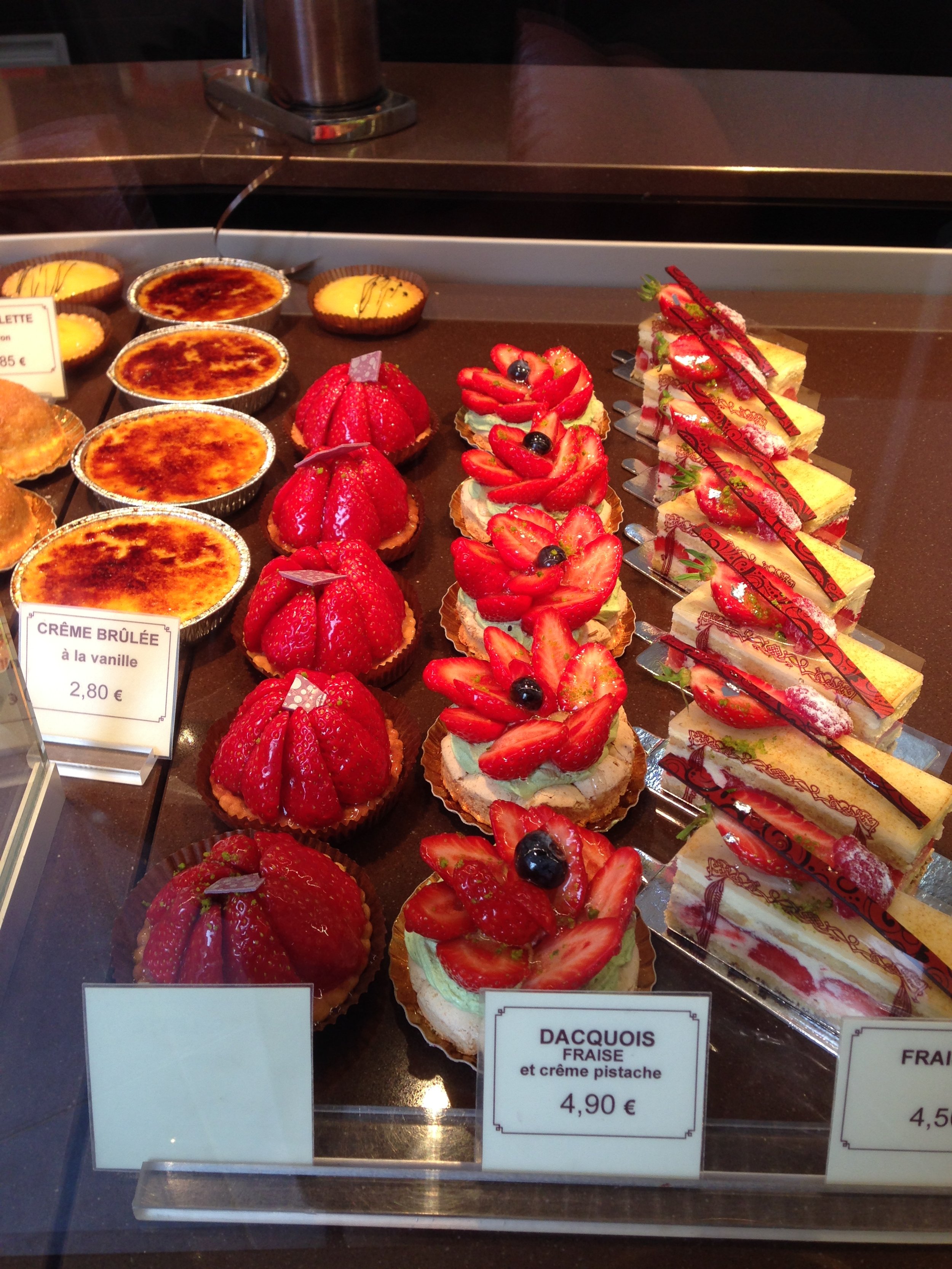
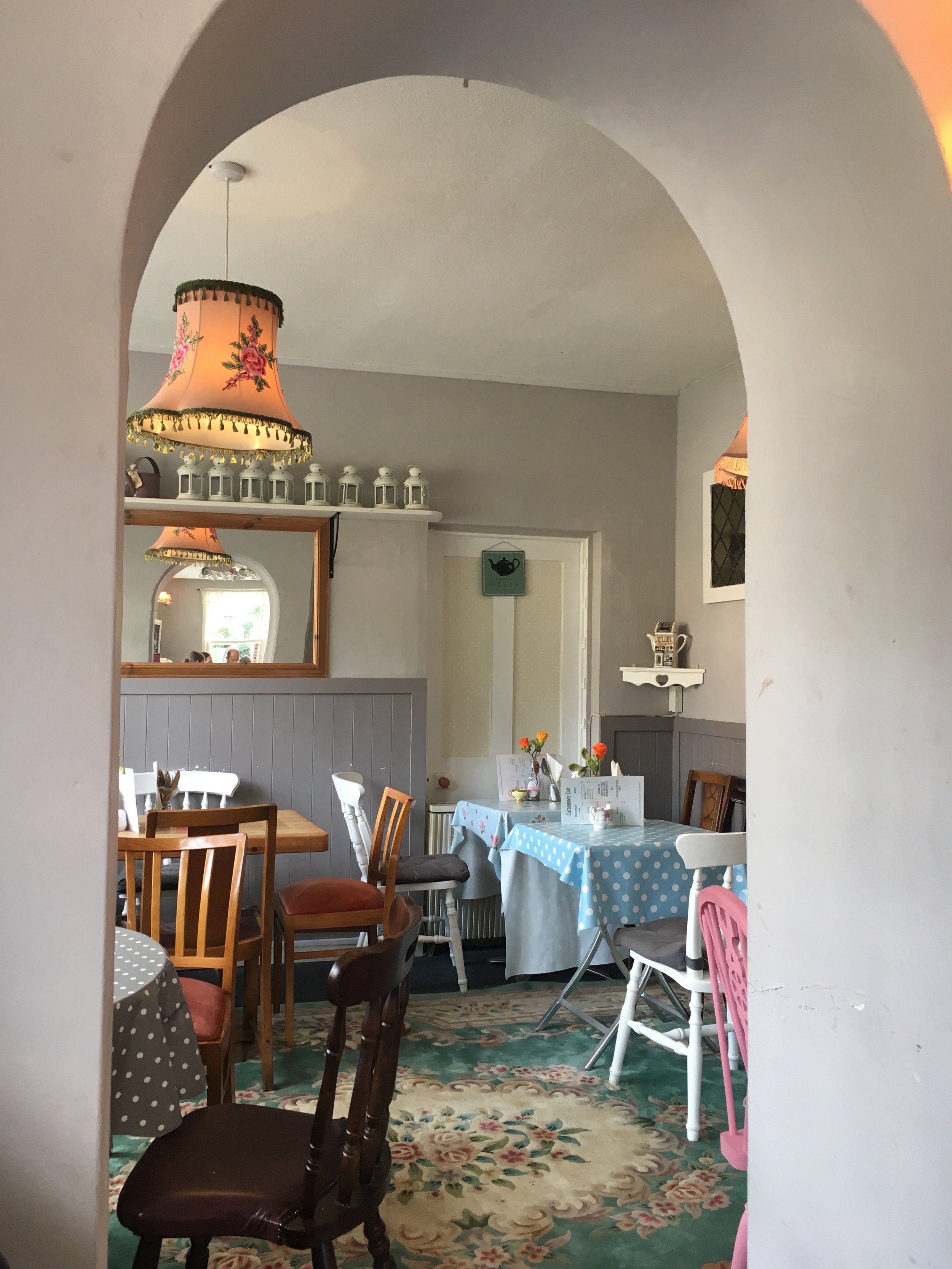
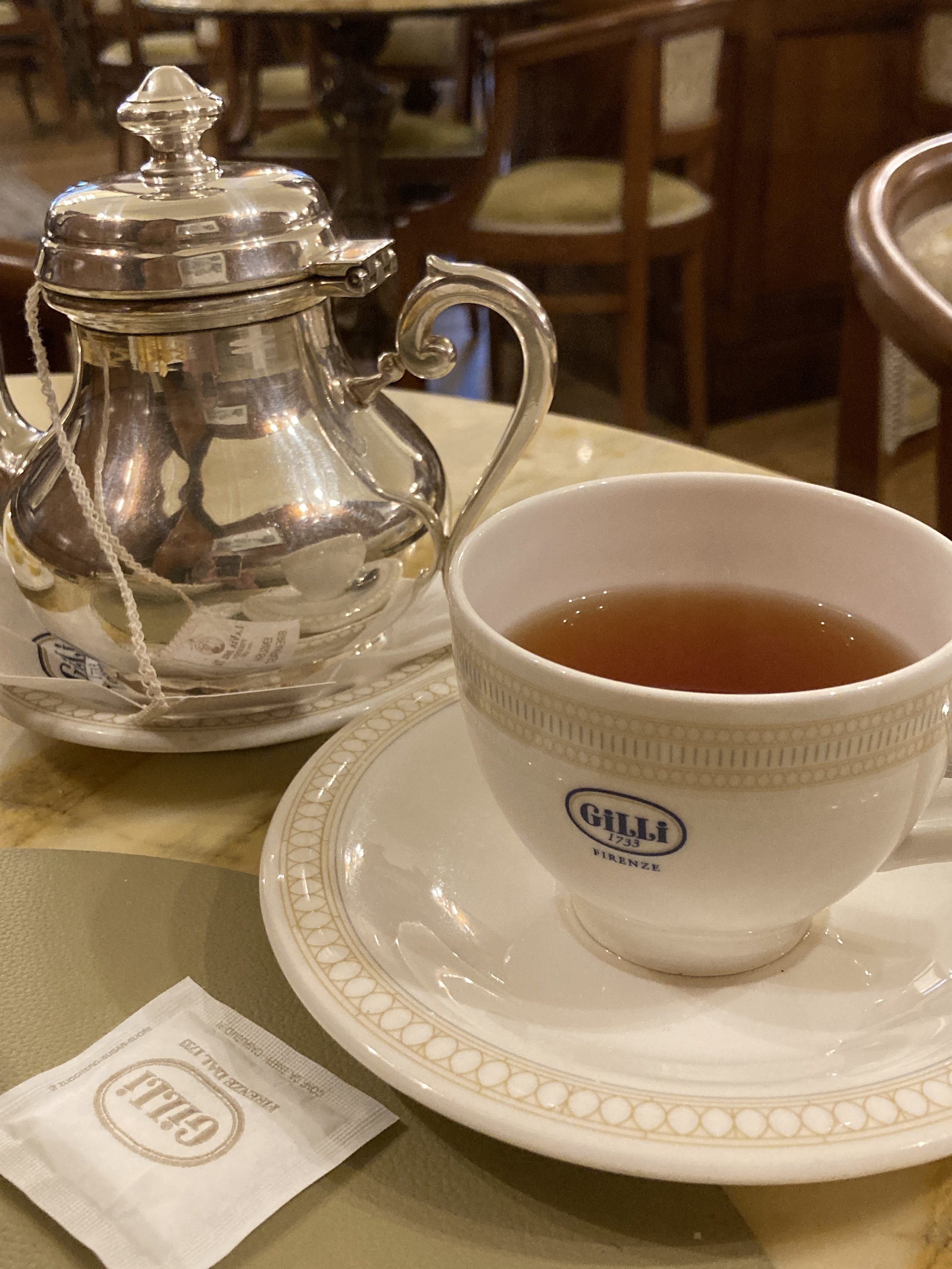
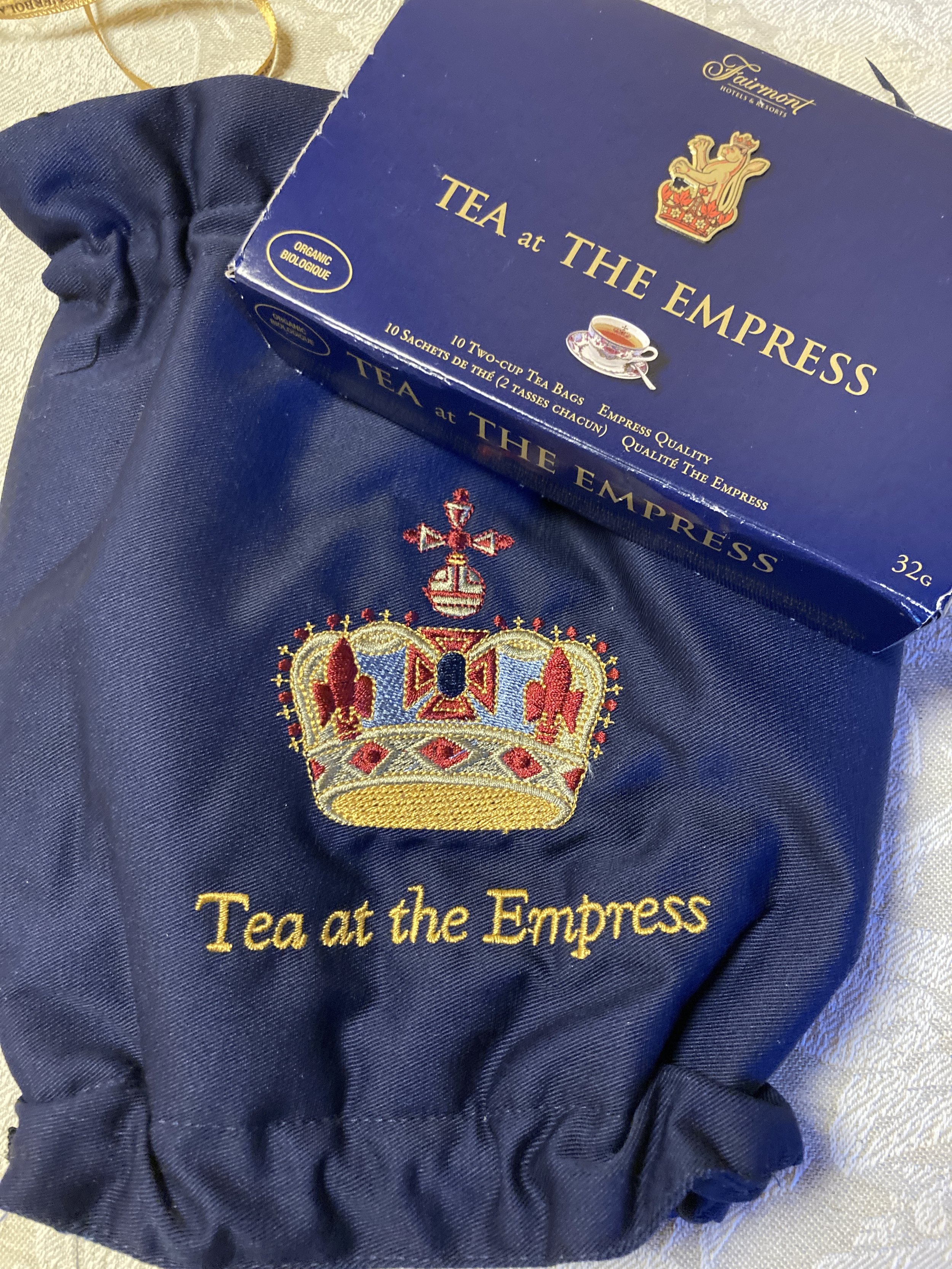
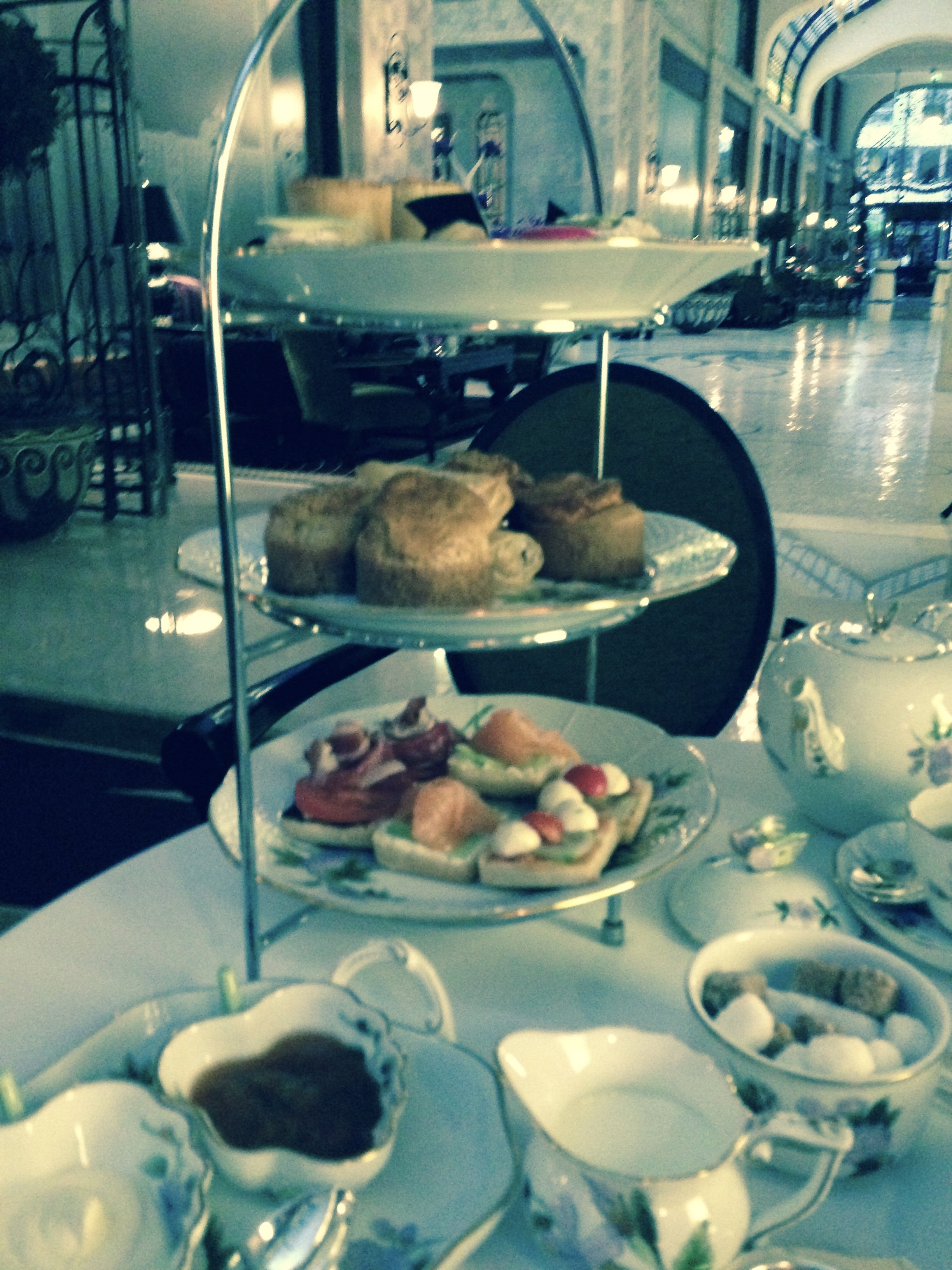
 One of my favorite things to do when I travel is to find a place, simple or elegant, to have tea.  I’ve taken tea in various US, Canadian, and European cities. Below are photos of some of my favorites. Top row: Lauduree in Paris (left and middle), Cassandras Cup Tea Room, near Jane Austen’s cottage in Chawton, England (right). Bottom row: Gilli Cafe in Florence, souvenirs from The Empress in Victoria, Canada, and (bottom right) the very elegant tea room at the Four Seasons Gresham Palace in Budapest. Each place had its own character and charm.

9B486E49-1246-4508-9082-1D840736F65D.jpeg
22EA0EF8-98FA-47FB-B54B-BFF66301C89A.jpeg
3539AFF1-66D4-4233-AB92-37C2B0E55BB4.jpeg
6800419A-09AE-48A4-A50D-A5E3580B000A.jpeg
45CD19D4-B7A2-401E-8765-C33328AF9464.jpeg
373C3D59-2D56-4C45-9513-AF749D03A67B_1_201_a.jpeg

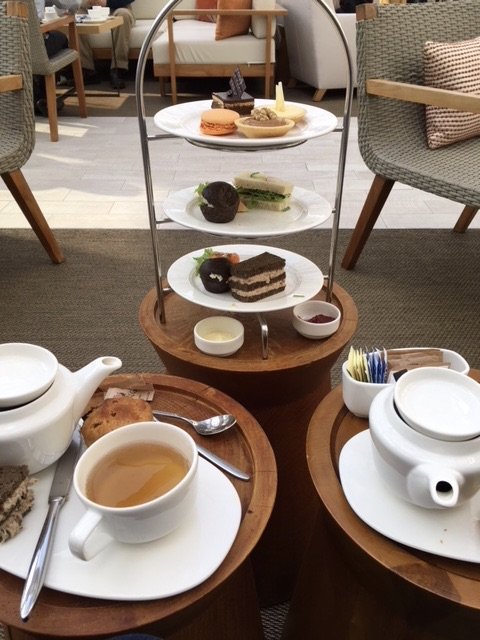
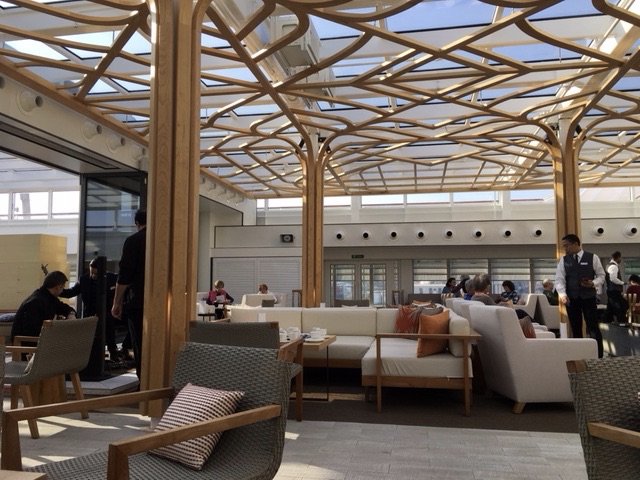
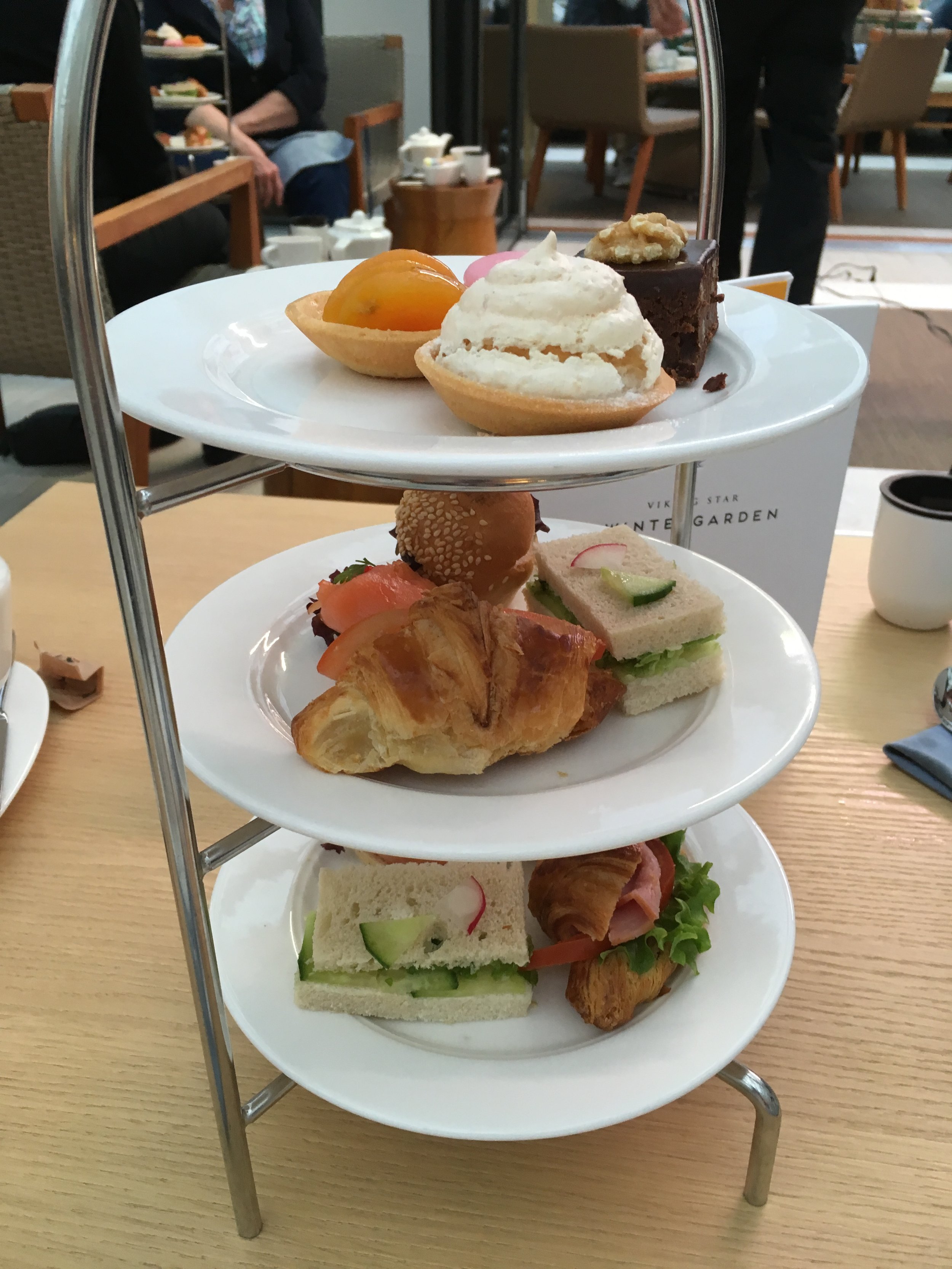
One of my all-time favorite teas was on board a Viking Ocean Cruise.  The ship had a bright and welcoming tea room that served a daily high tea.  Taking tea in their beautiful tea salon definitely made me feel spoiled! I could have gone every afternoon on the cruise, but oh the calories!
77F1D126-B6ED-4706-BA82-9BDA42C081CB_1_105_c.jpeg
F6B79A1A-ECCE-4195-9C79-36E94DE23671_1_105_c.jpeg
87EE4C1F-12F5-4891-B694-BD50F4E239A2.jpeg

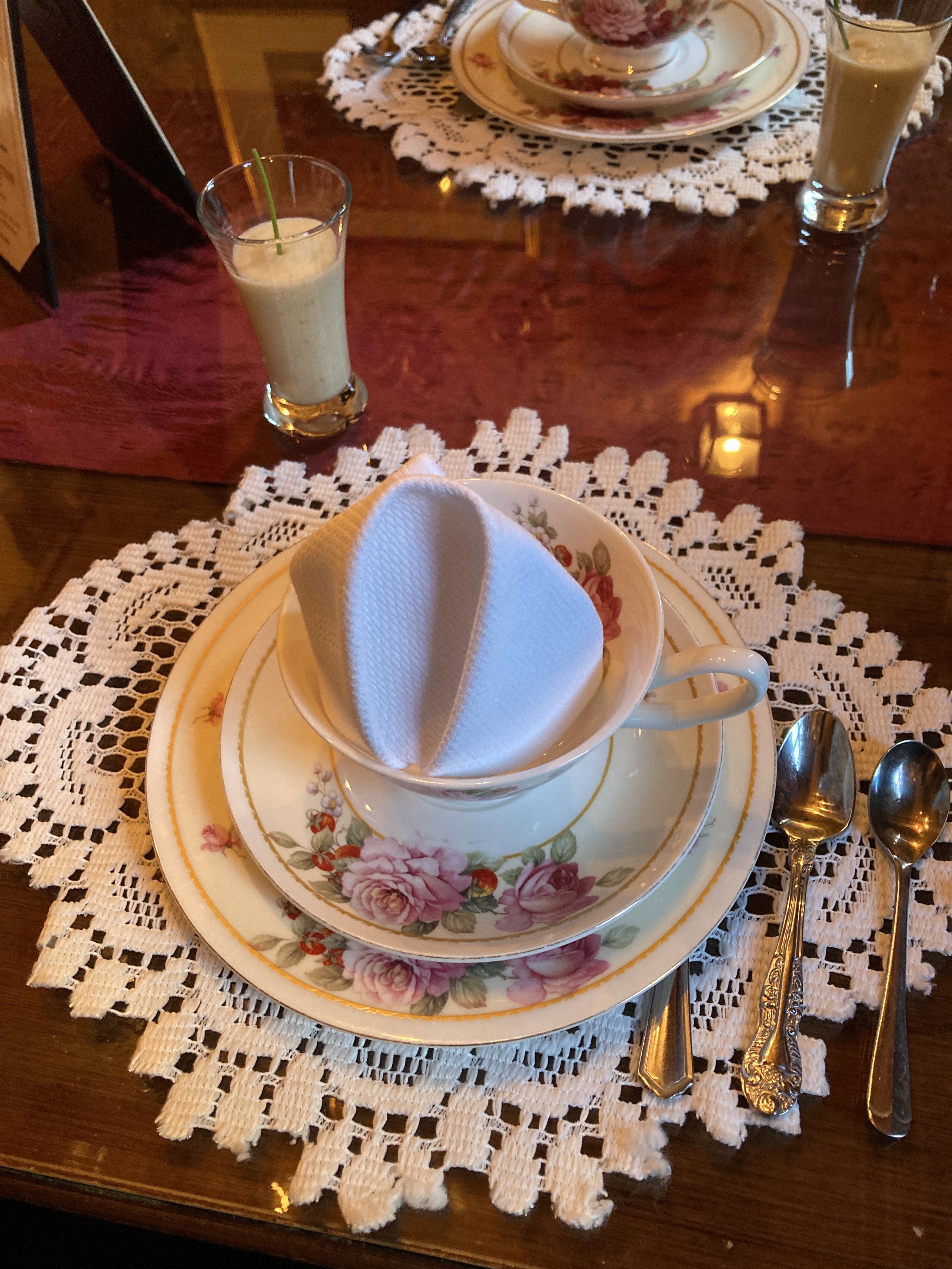
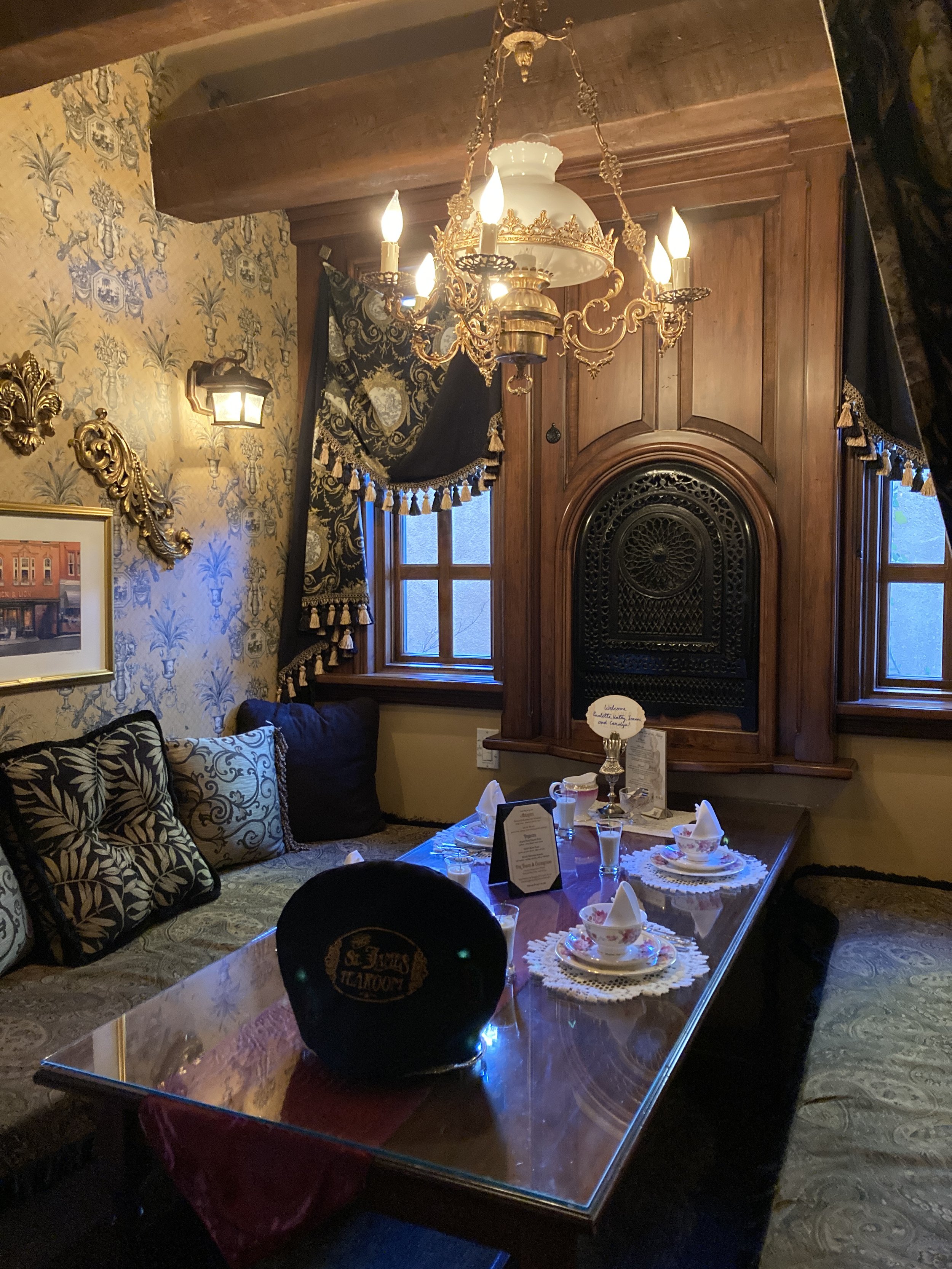
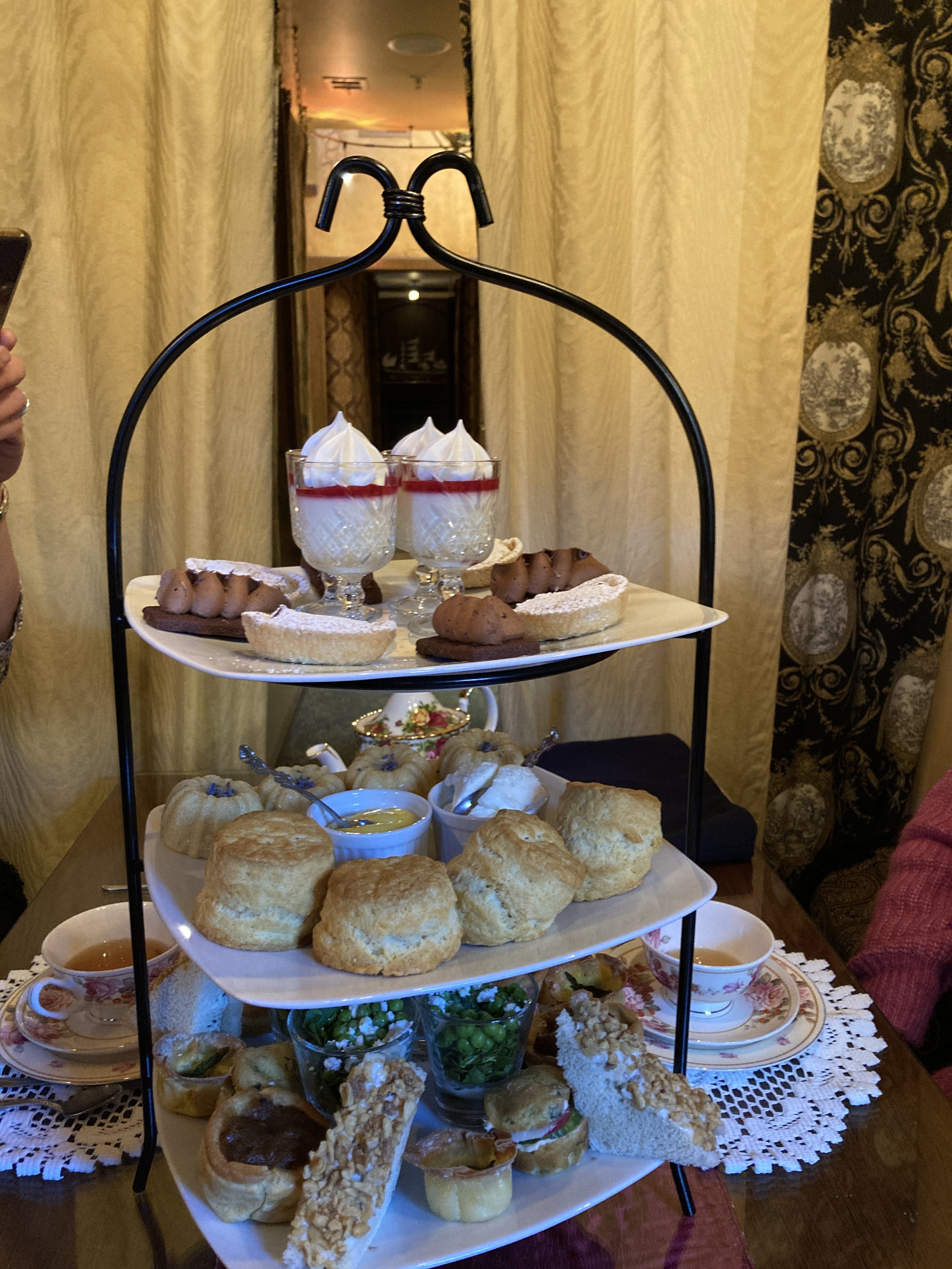
  When I return to Albuquerque to visit my family you can bet I will spend one afternoon at the Saint James Tea Room. They serve a high tea complete with savories, scones, lemon curd, and sweets.  The Saint James ranks right up there with the best tea rooms in Europe. The setting, with cozy alcoves, beautiful china, and a sweet gift shop, is part of the fun.

95A381EB-AF71-449D-B24F-988196E8D18F.jpeg
3D74843B-038C-4002-8AB5-AE9437CCD3DD.jpeg
1E373BFF-F571-4738-85D3-DB91451BE18C.jpeg

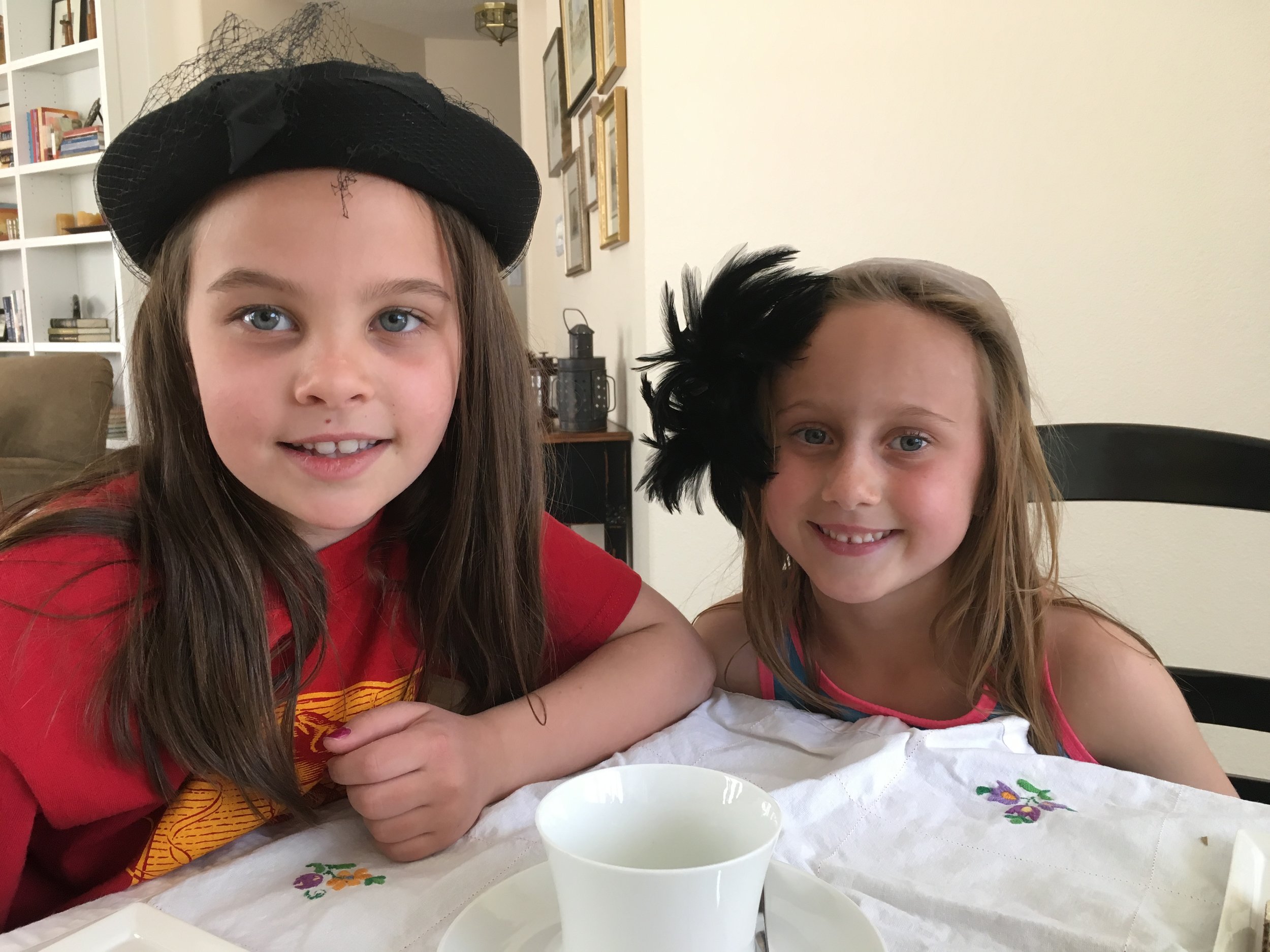
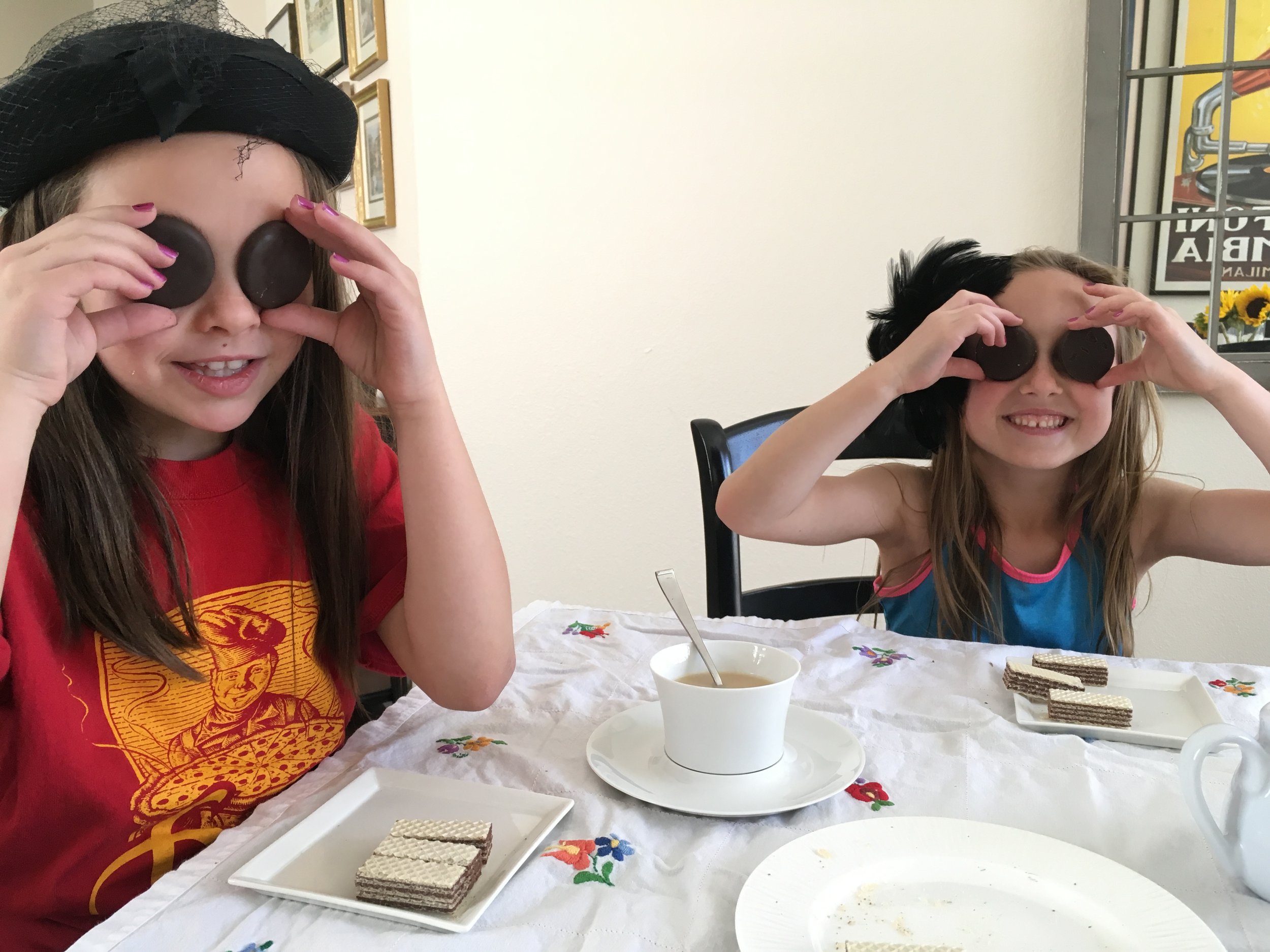
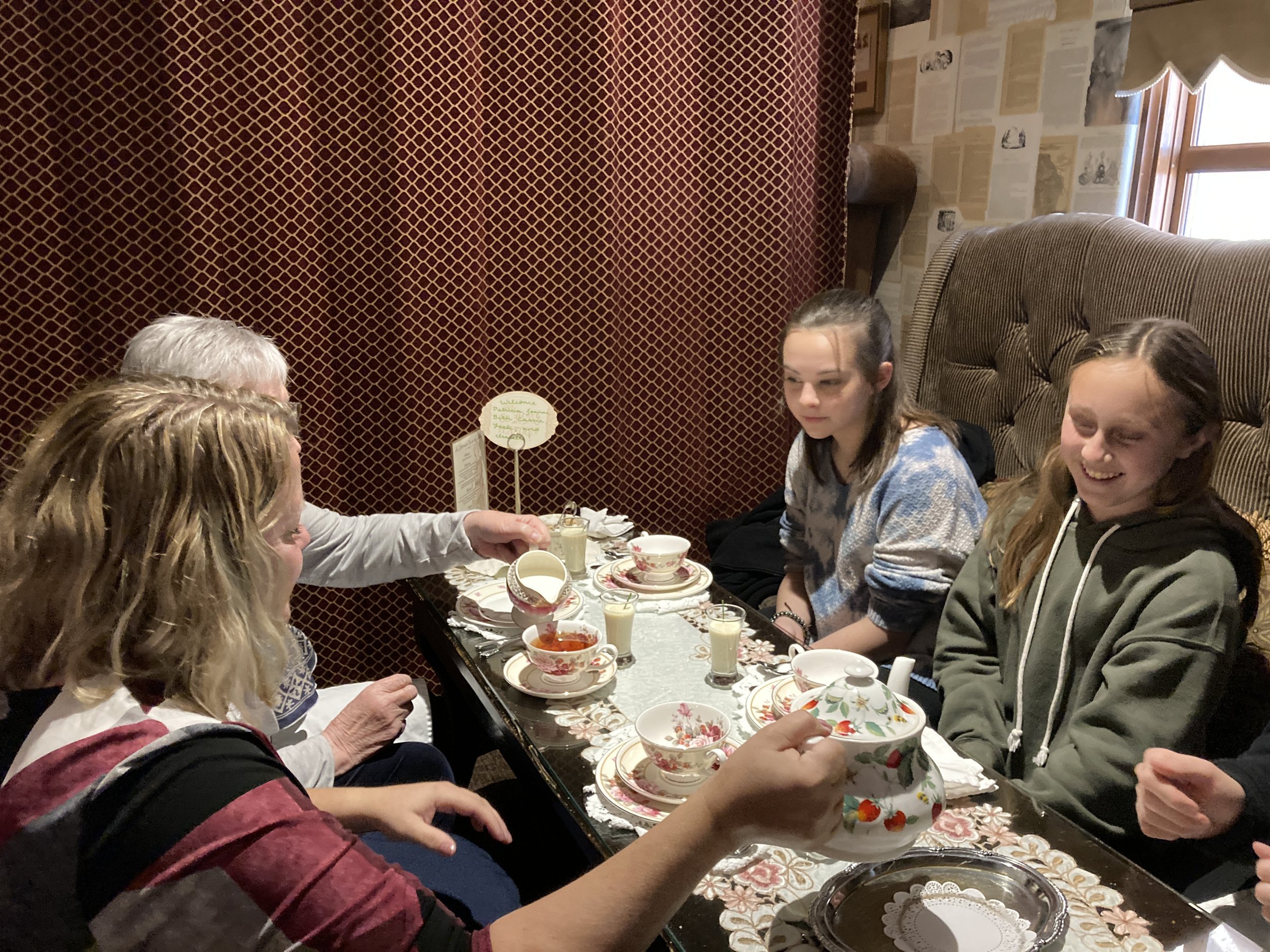
I am trying to introduce my granddaughters to the concept of tea.  I started with a simple home tea party a few years ago - complete with hats and Oreos. Tea manners were definitely in the infancy stage.

2EDD311F-807B-4717-9B19-20CDA86CA155.jpeg
095EA38C-56F7-462A-BC7C-2158090AE6A4.jpeg

They’ve now graduated to the Saint James.  Let’s just say that dressing up for tea, using soft voices, and appropriate tea conversation is still a work in progress.  This was tea with giggles.

Do you have as favorite tea spot?  I’d love to see photos on the Two Parts Italy facebook page!

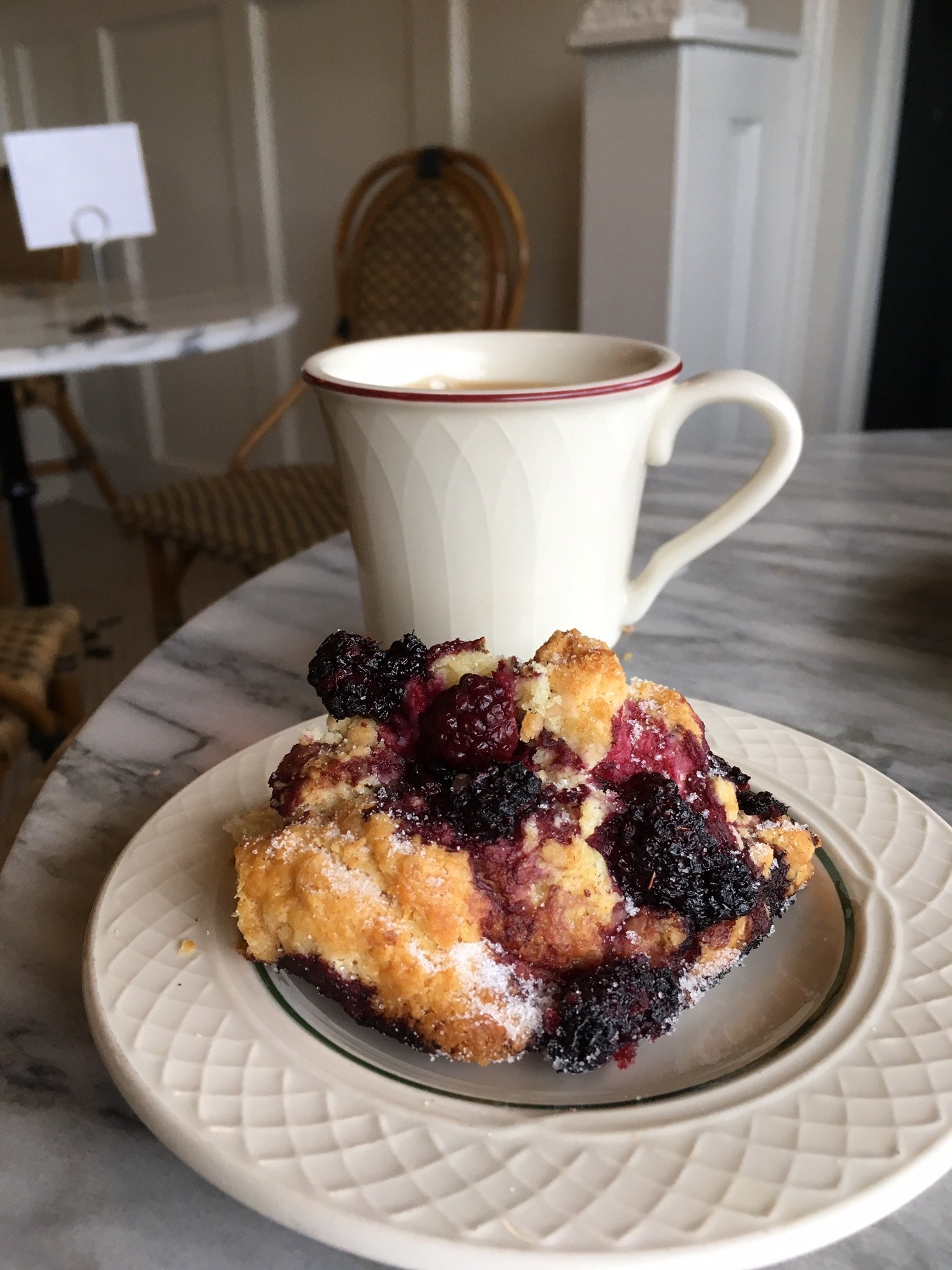
Tea and a Marionberry scone on the coast of Oregon

February 06, 2023 /Joanne Bartram
tea, afternoon tea, tea in Italy, Tea in Europe, taking tea
food, Italian culture, Italy travel, Living in Italy, Lucca, Paris, Travel, Travel France

Projected images on the walls of Piazza dell’Anfiteatro, Lucca

Christmas in the Piazza

December 19, 2022 by Joanne Bartram in #lucca, Festivals Italy, Italian Christmas, Italian culture

Piazza San Salvatore, Lucca

The historic center of Lucca has a medieval street plan which includes narrow streets, stone and brick buildings, towers, and a series of piazzas. The warmly colored buildings and the open spaces of the piazzas provide a perfect backdrop any time of year, but especially during the holiday season.

Each piazza in the historic center has some type of Christmas display. From traditional Christmas trees to oversize ornaments to metallic trees and old fashioned Christmas markets, the holiday vibe is everywhere. Overhead, the streets and piazzas have strings of lights and luminous stars. The ancient amphitheater has a projected light show on its curved walls, not to mention a giant Babbo Natale which delights the kids.


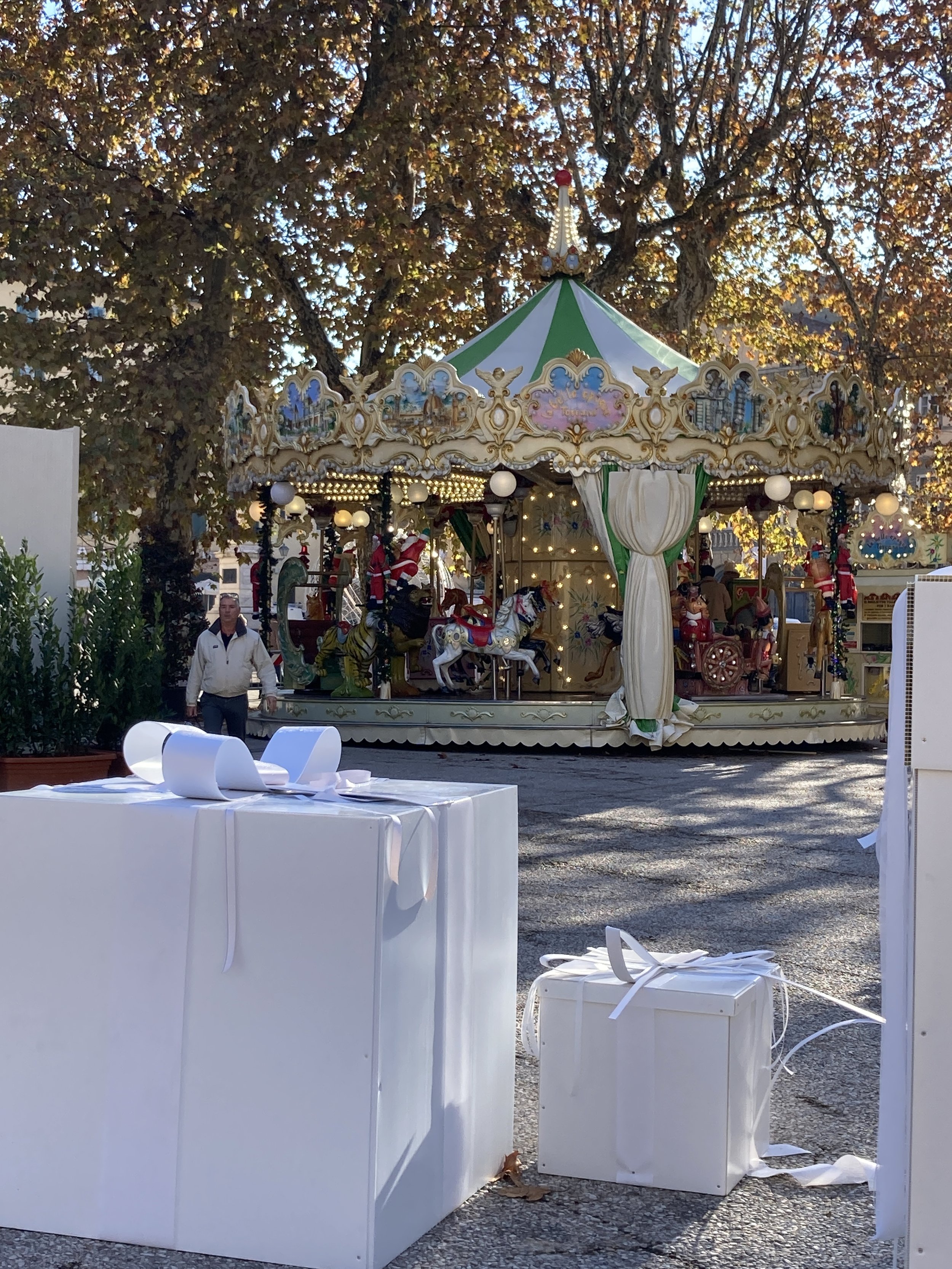
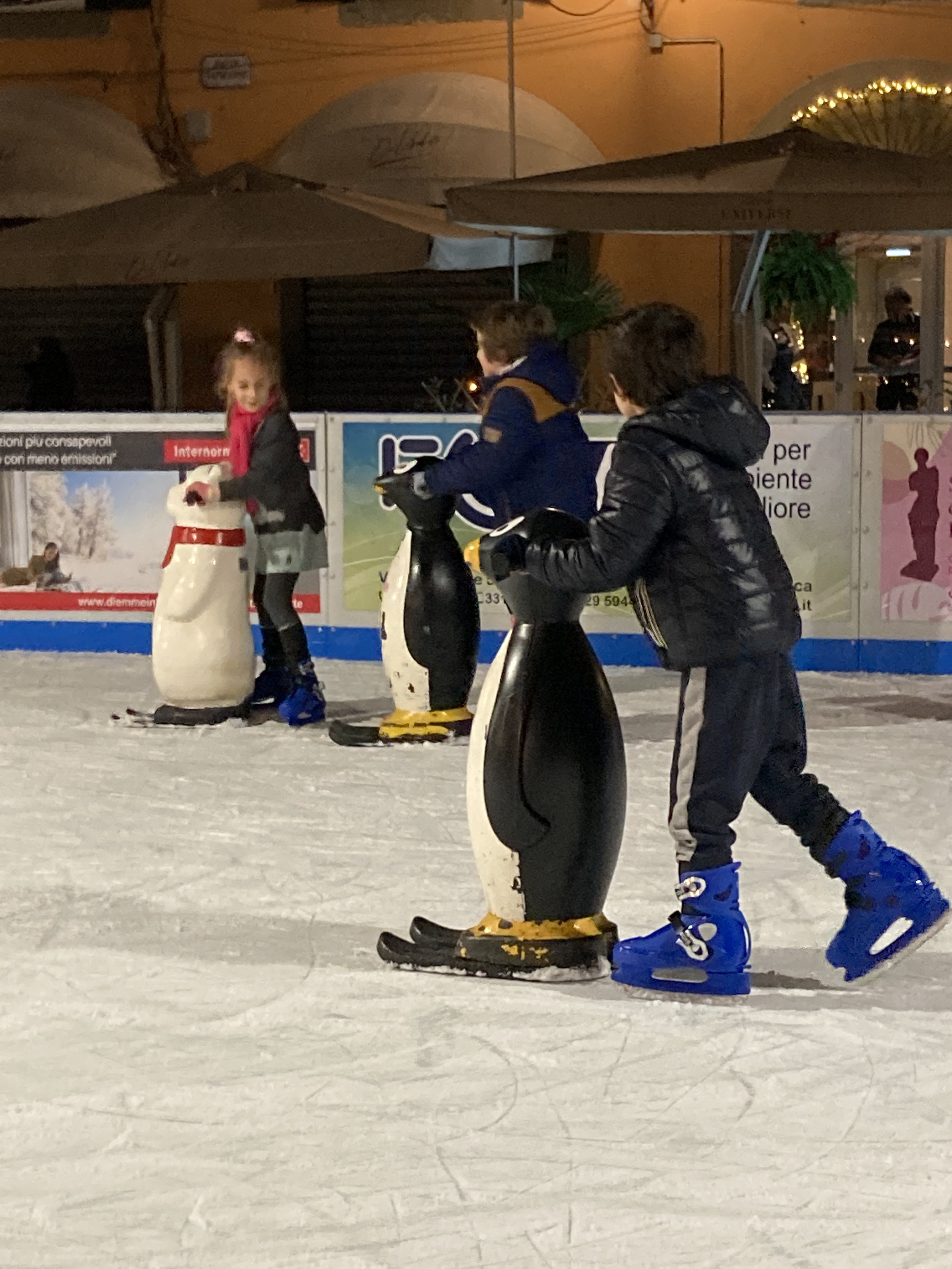
Piazza Napoleone is home to an ice skating rink and a Christmas market. The sounds of blades on ice, happy voices, and laughter accompany kids of all ages (and a few brave adults) as they skate around the rink. This is also where the carousel, decorated for the season, whirls kids and parents round and round.

32B4CA61-11CE-4AA8-88F4-A65D2C2BE39F.jpeg
4B6671E4-0A3A-48F4-9D16-FF532E7BBE30.jpeg
050581D9-8E0A-457B-A77E-876480C5174B.jpg

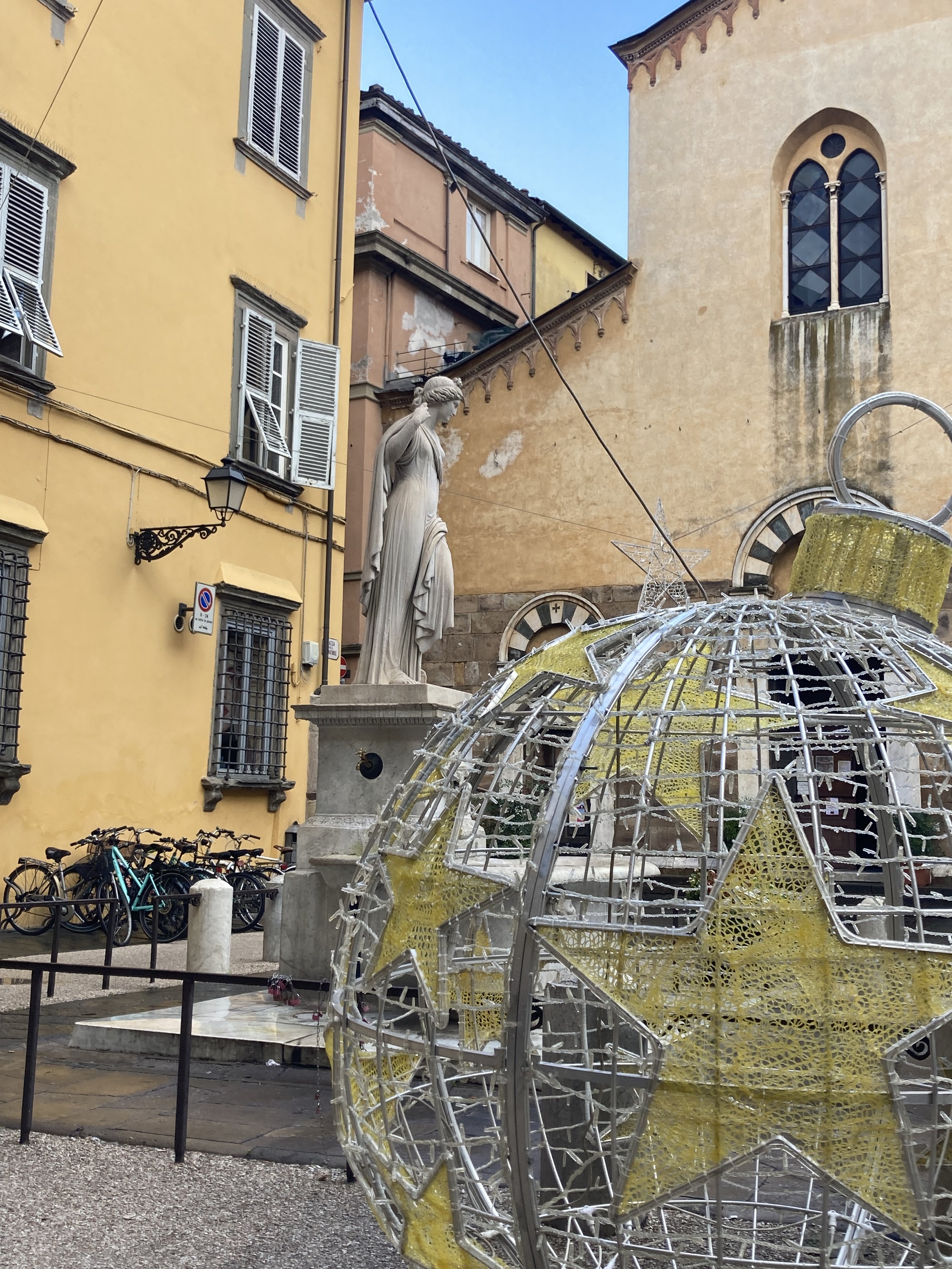
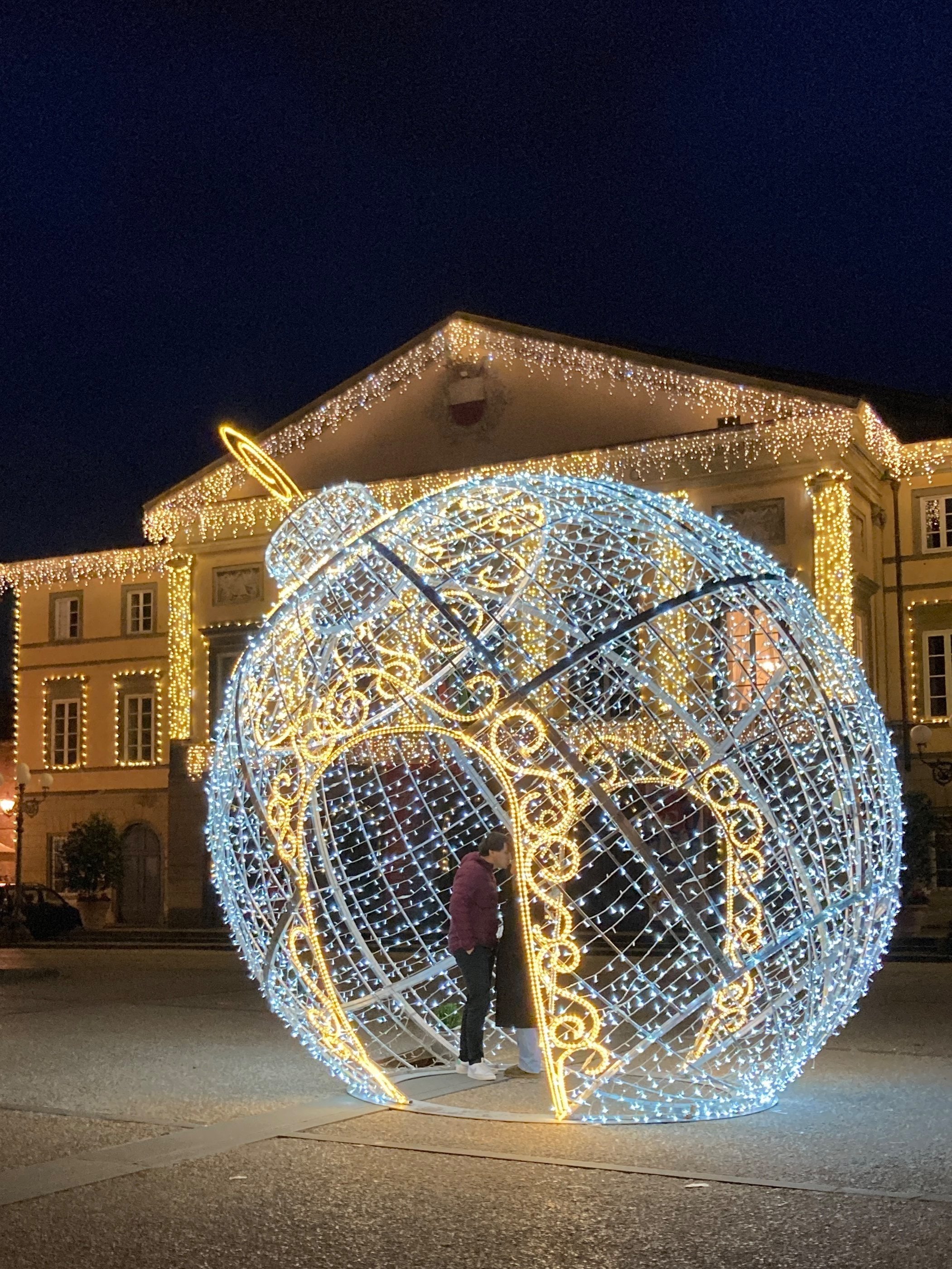
Just beyond lies Piazza del Giglio, where the theater glows with lights and an oversize Christmas ornament lights up the piazza at night. The kids particularly like that they can walk through the ornament. As for the grownups, well there seem to be a lot of couples who stop inside for a photo or a kiss.

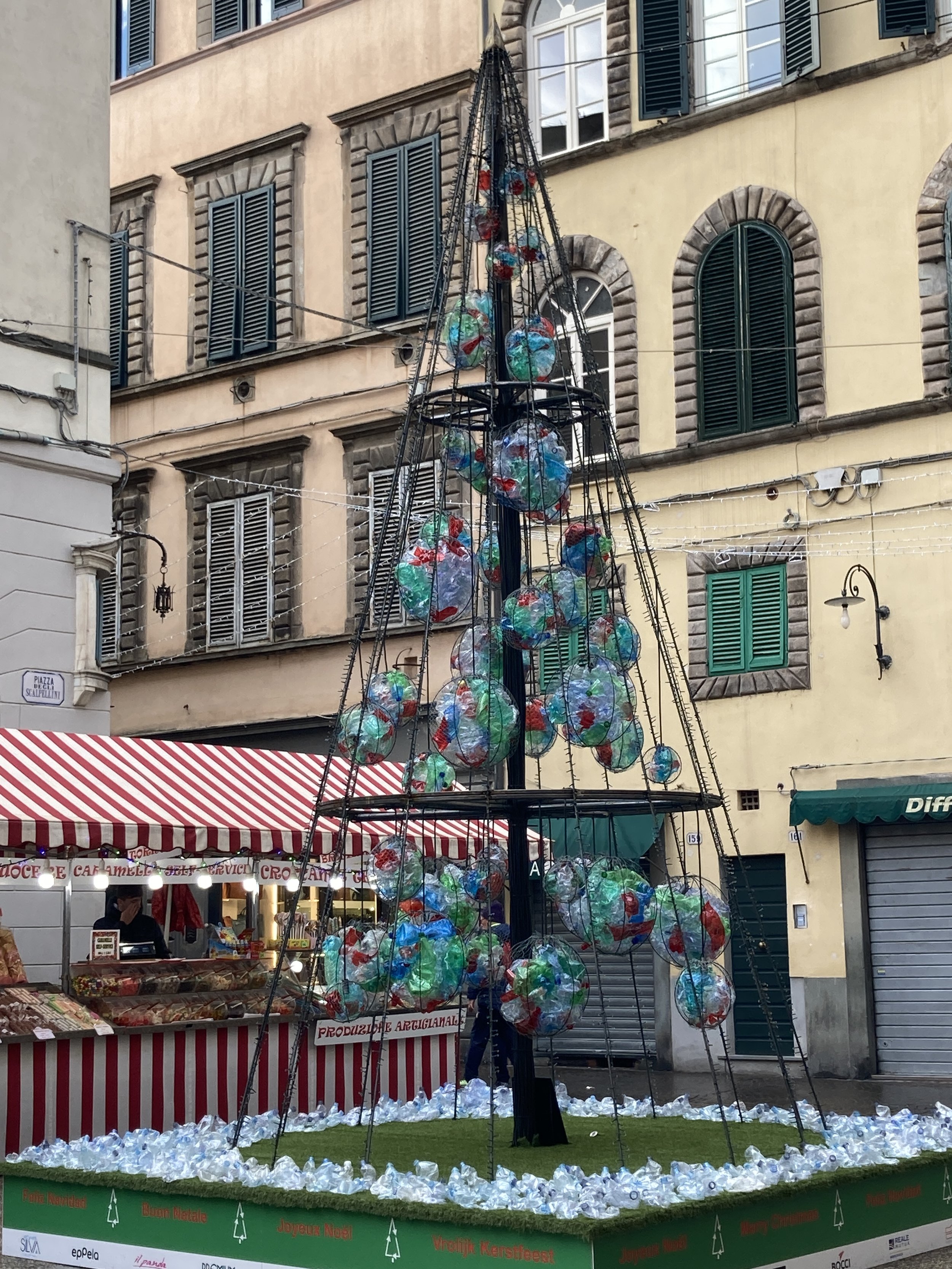
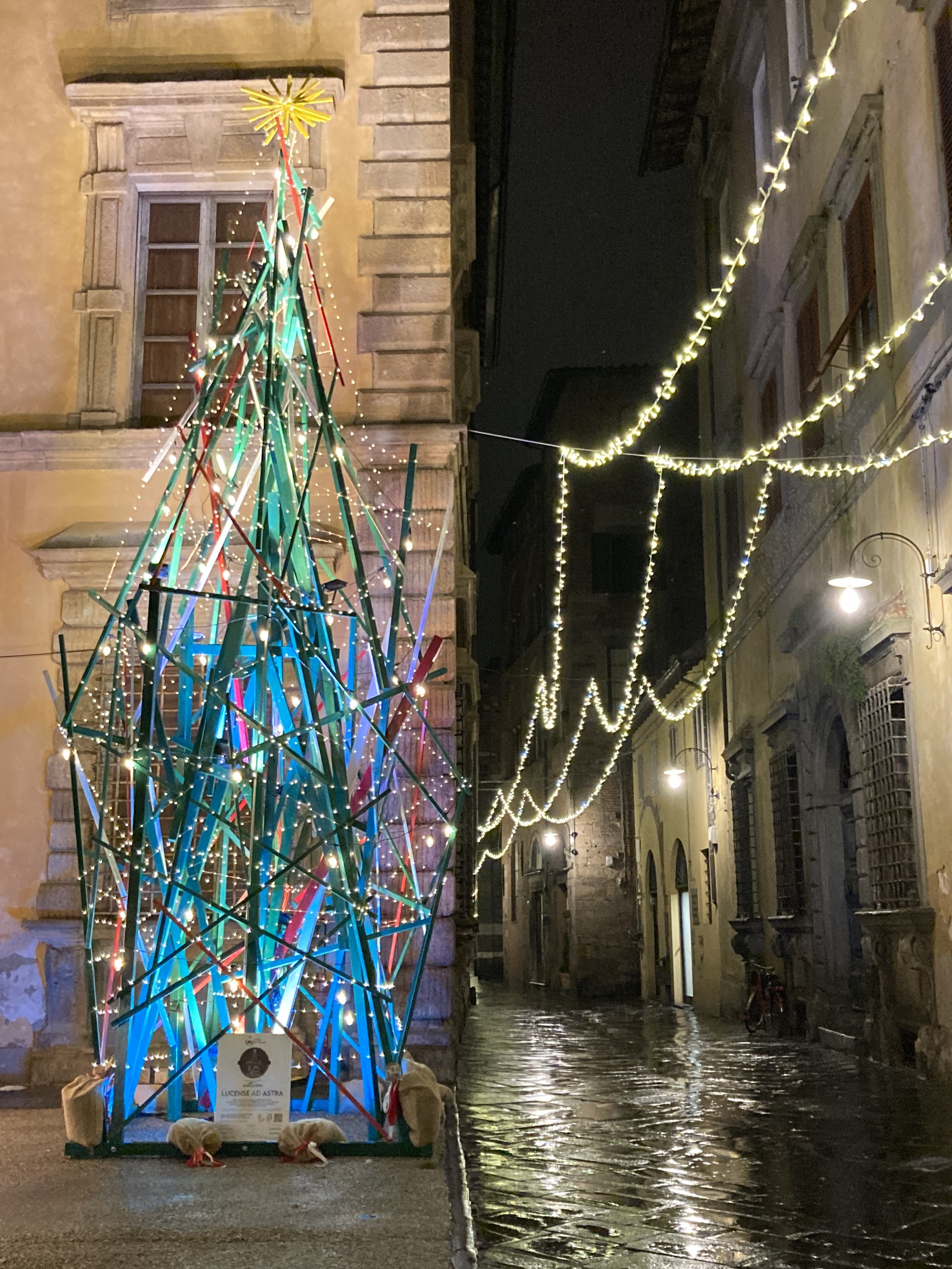
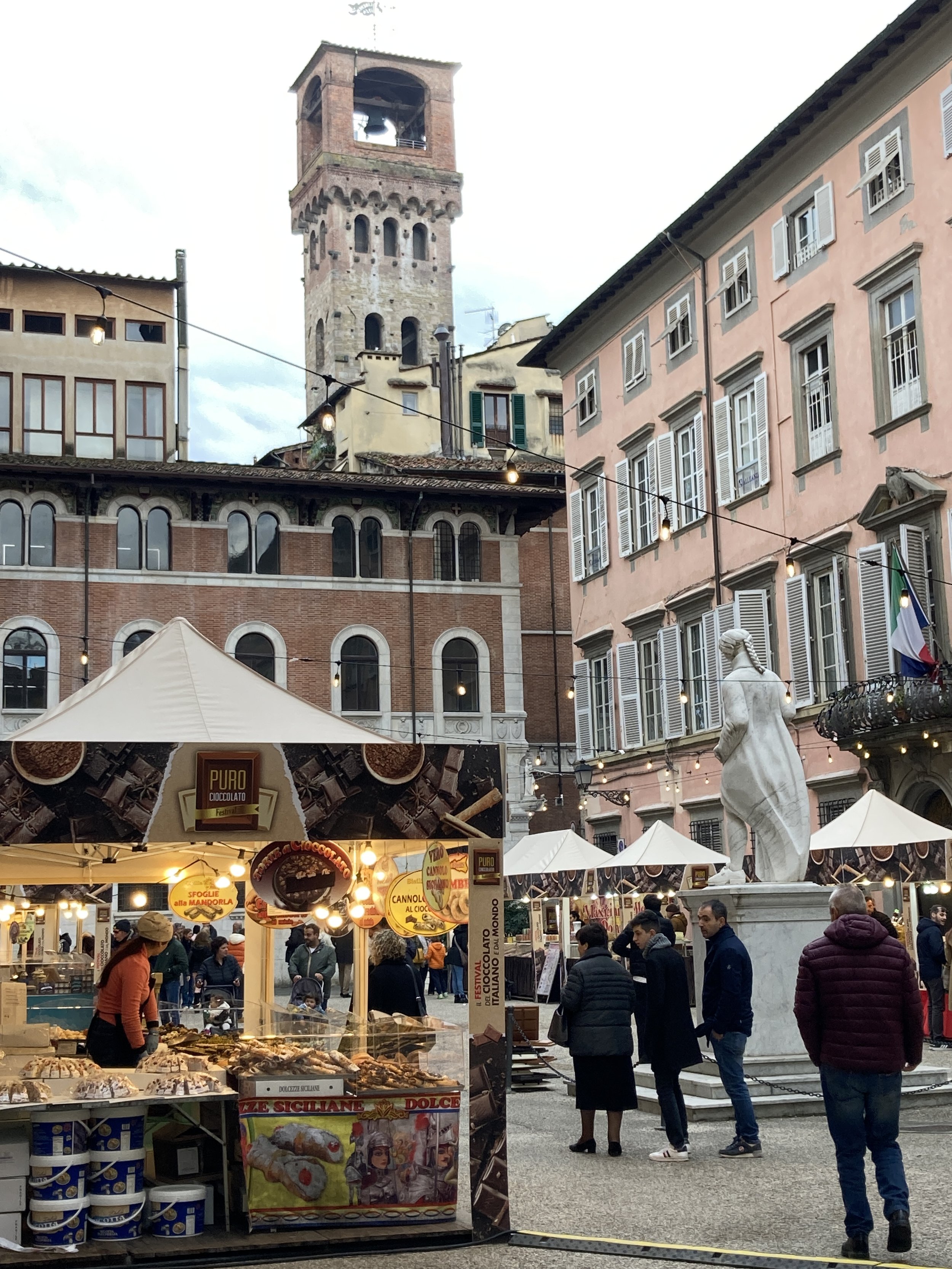
This year a group of artists were invited by the city of Lucca to create unique expressions reflecting Christmas themes. Their creativity fills the squares, streets, and even stretches to underneath the historic walls. Many of their creations are non-traditional or abstract, bringing a new sense of fun to the season. Pictured below: a recycled Christmas tree made entirely of plastic in Piazza Scalpellini and a very abstract tree, by Francesco Zavattari, which anchors a holiday chocolate market in Piazza Guidiccioni.

B08B57BF-0227-4E37-8145-4A1B6CCB18EE.jpeg
D8856FAA-8CEE-4CD0-98F6-AD7C8C8B1B36.jpeg
60AA4D6C-108F-45CE-9397-F7F531779106.jpeg

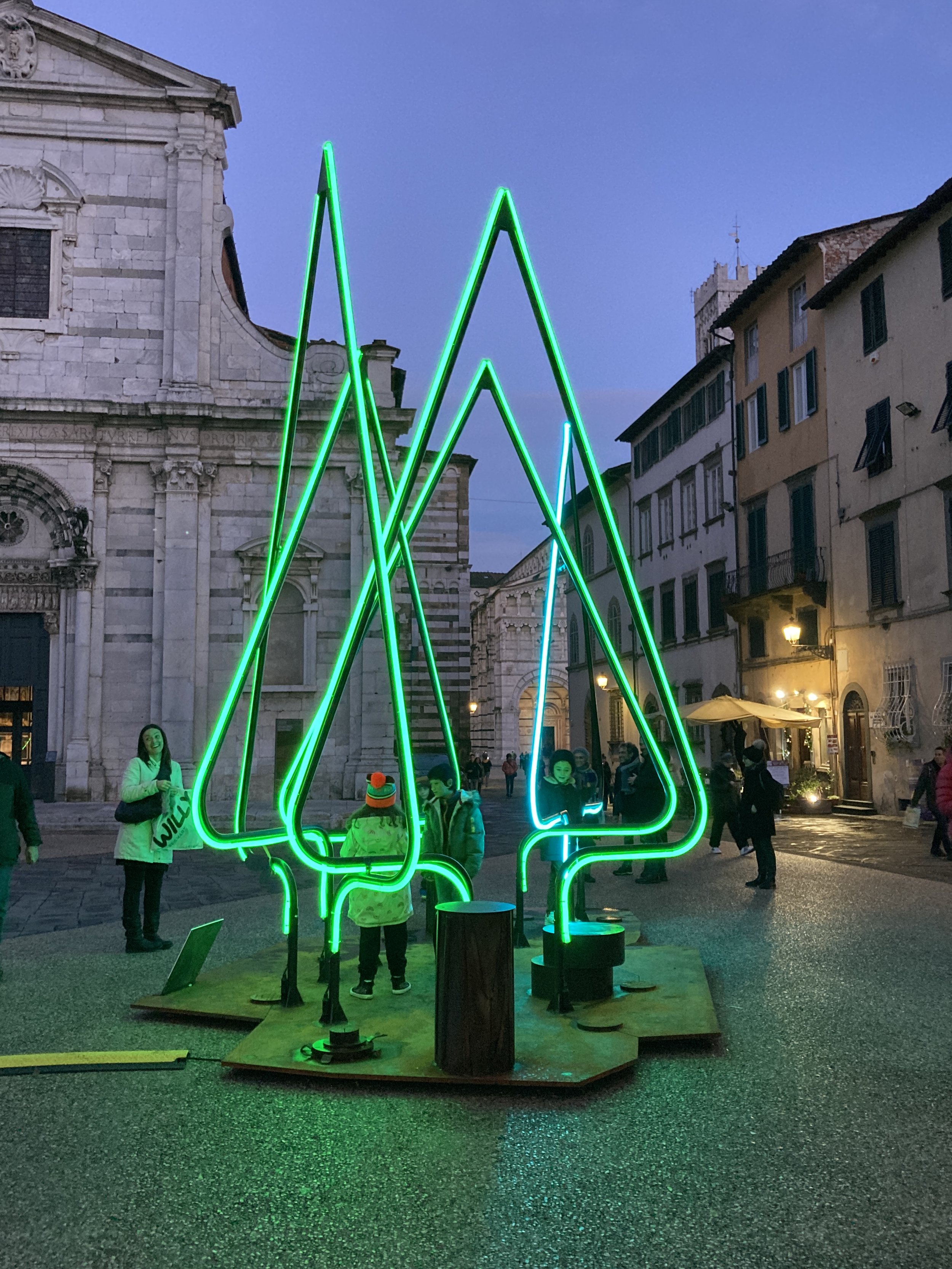
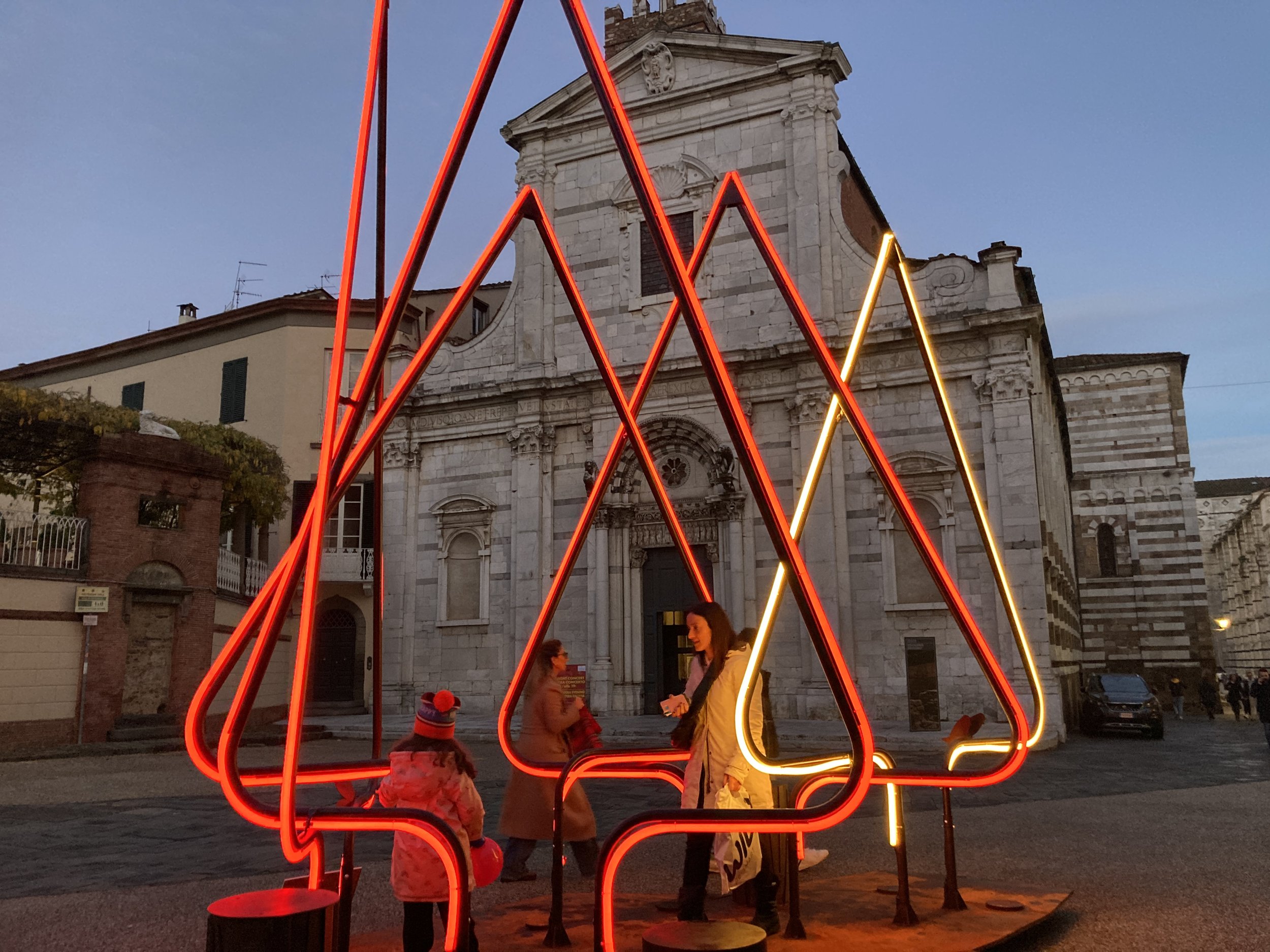
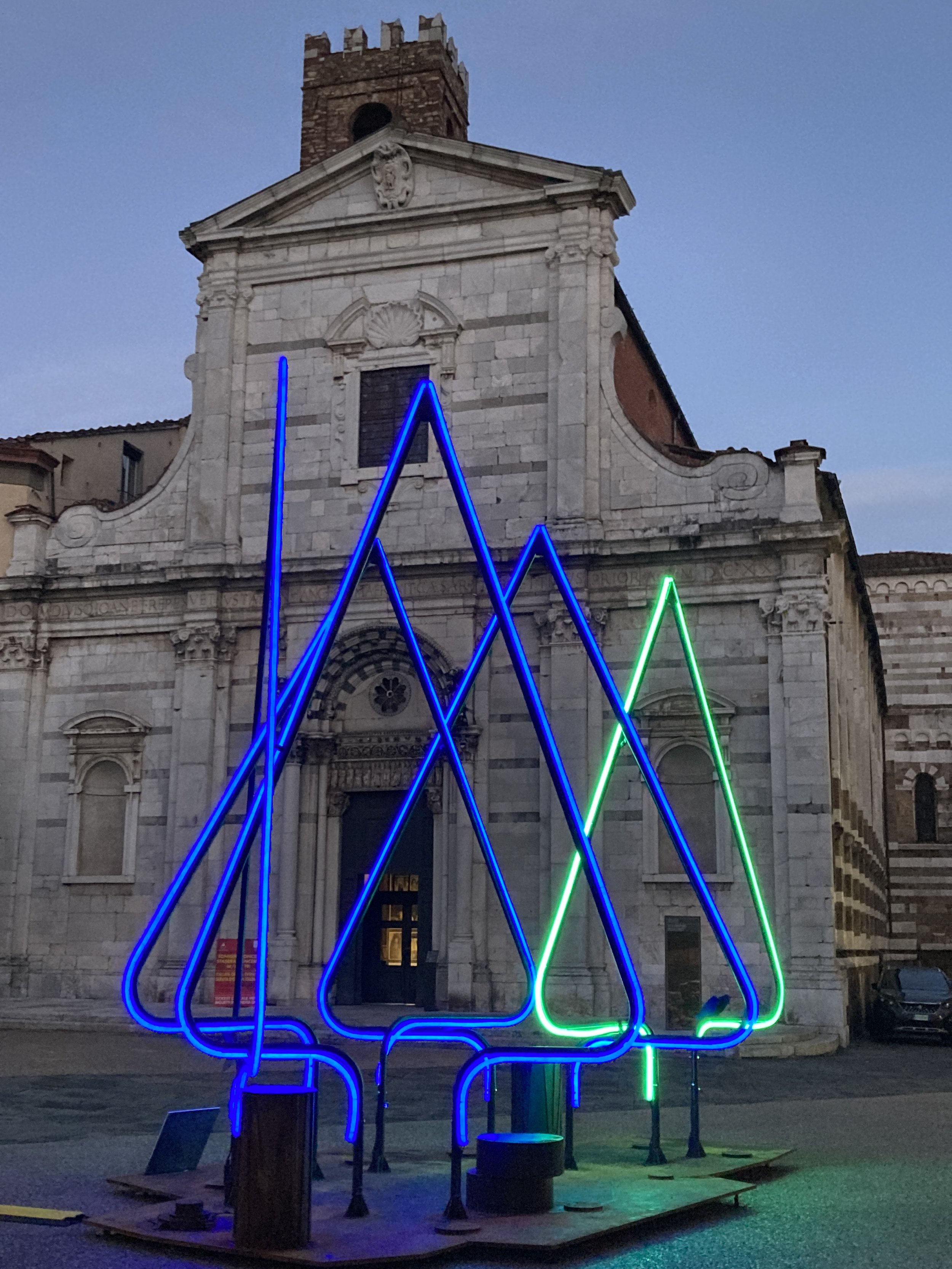
Piazza San Giovanni hosts a modern take on a woodland forest. Designed by local artist Emiliana Martinelli, it is edged with LED lights that cycle through a range of colors. Quite a contrast with the ancient church as a back drop.

0A901AFA-FFE7-422C-A365-023E8A0D0C2E.jpeg
4B244D87-8F8A-4370-A604-1750EC8CEE9A.jpeg
05E5E5DA-D3CF-448A-837F-DFAE0E1295AB.jpeg

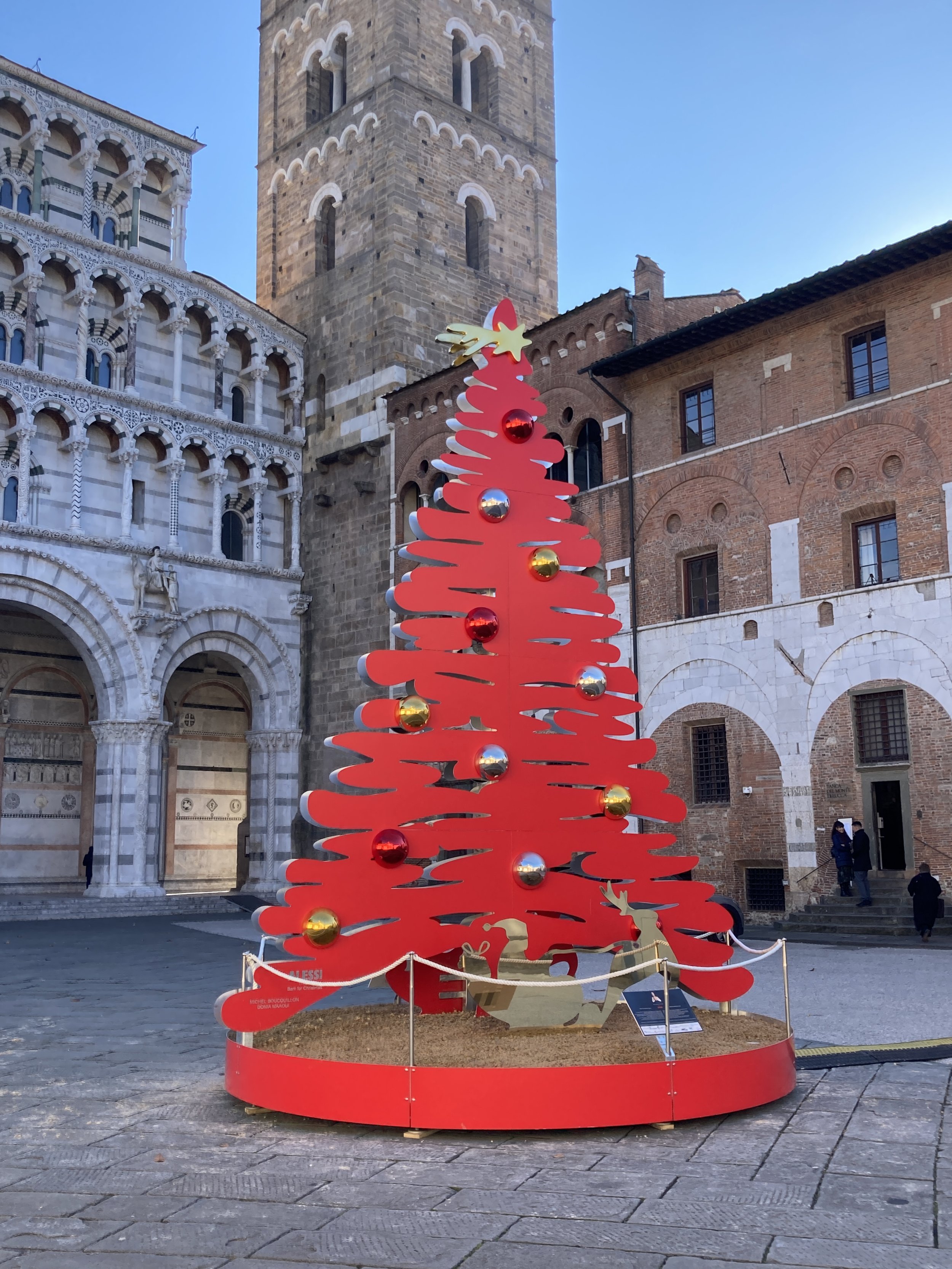
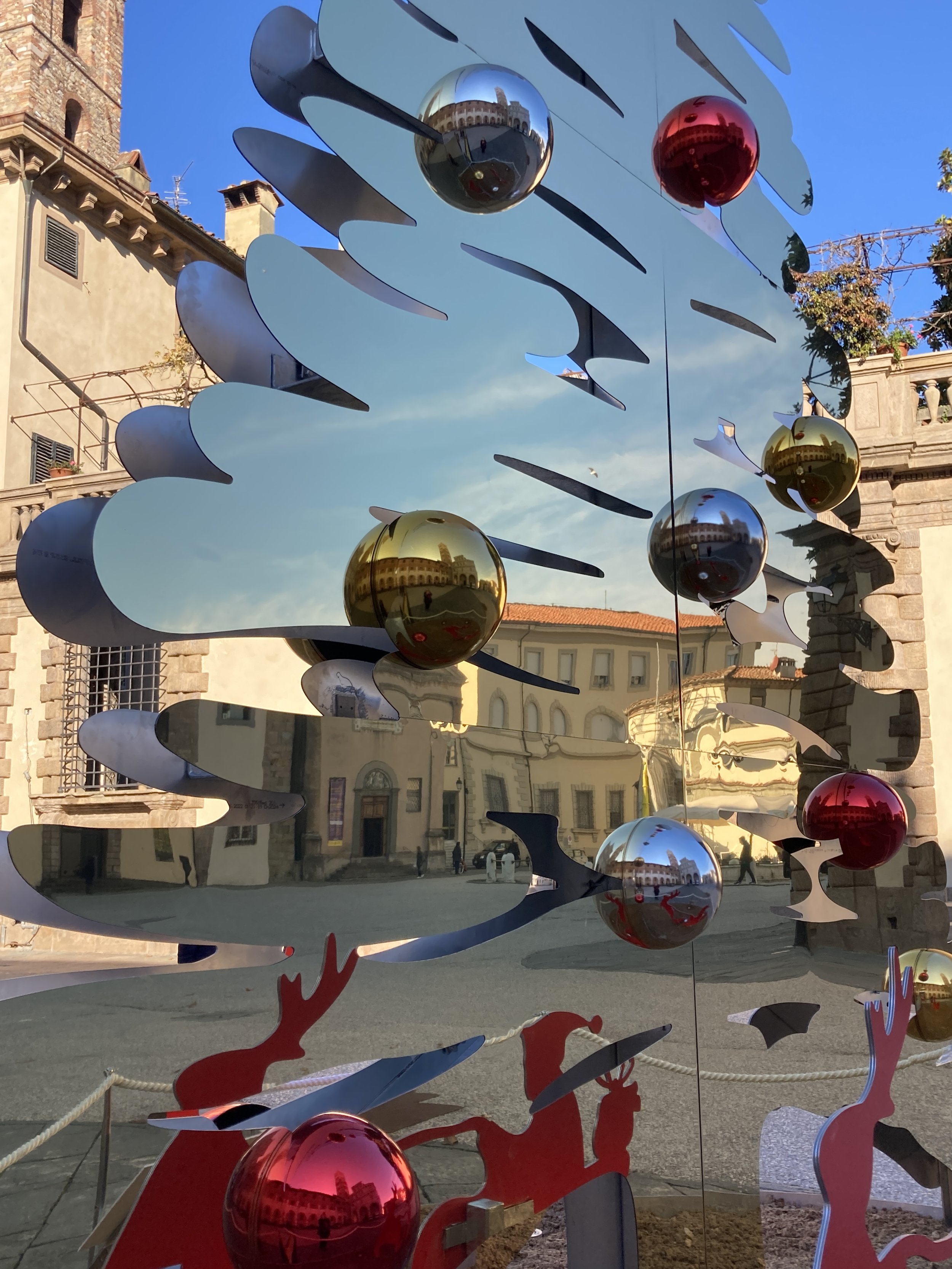
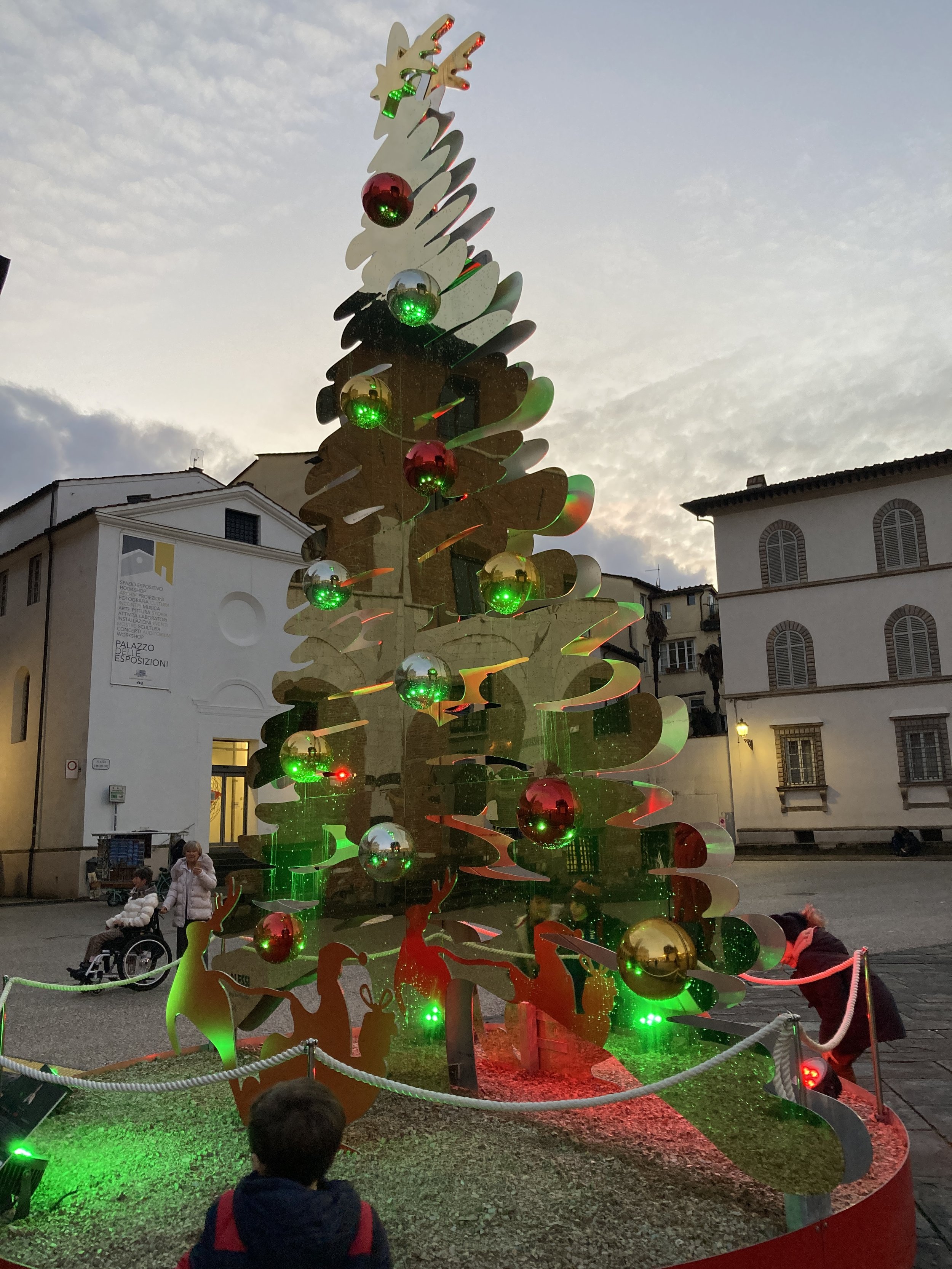
Piazza del Duomo is host to one of my favorite installations. Designed by Michel Boucquillon and Donia Maaoui for the Alessi design company, this 18 foot high metallic tree, decorated with large round ornaments and a star at the top, is red on one side and silver on the other. During the day it reflects the surrounding buildings and at night it glows with reflective lights.

B6F2CFAB-8BDD-485D-B6CA-A6628B8575E1.jpeg
4FE0DB4D-CD0E-45D4-8674-706BAB9CFE18.jpeg
E62E6876-5B14-43E9-A1CF-58F4BD658FCE.jpeg

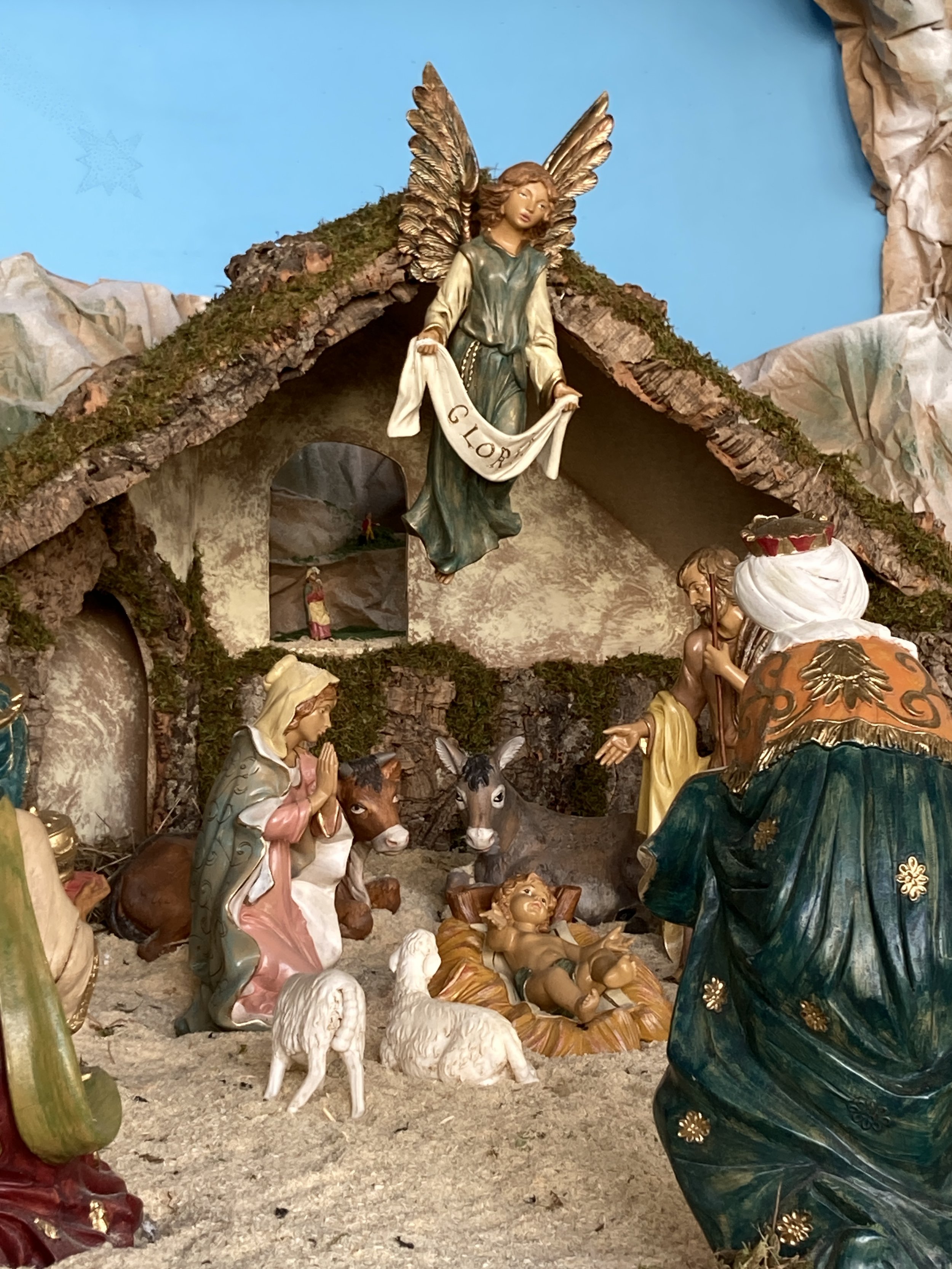
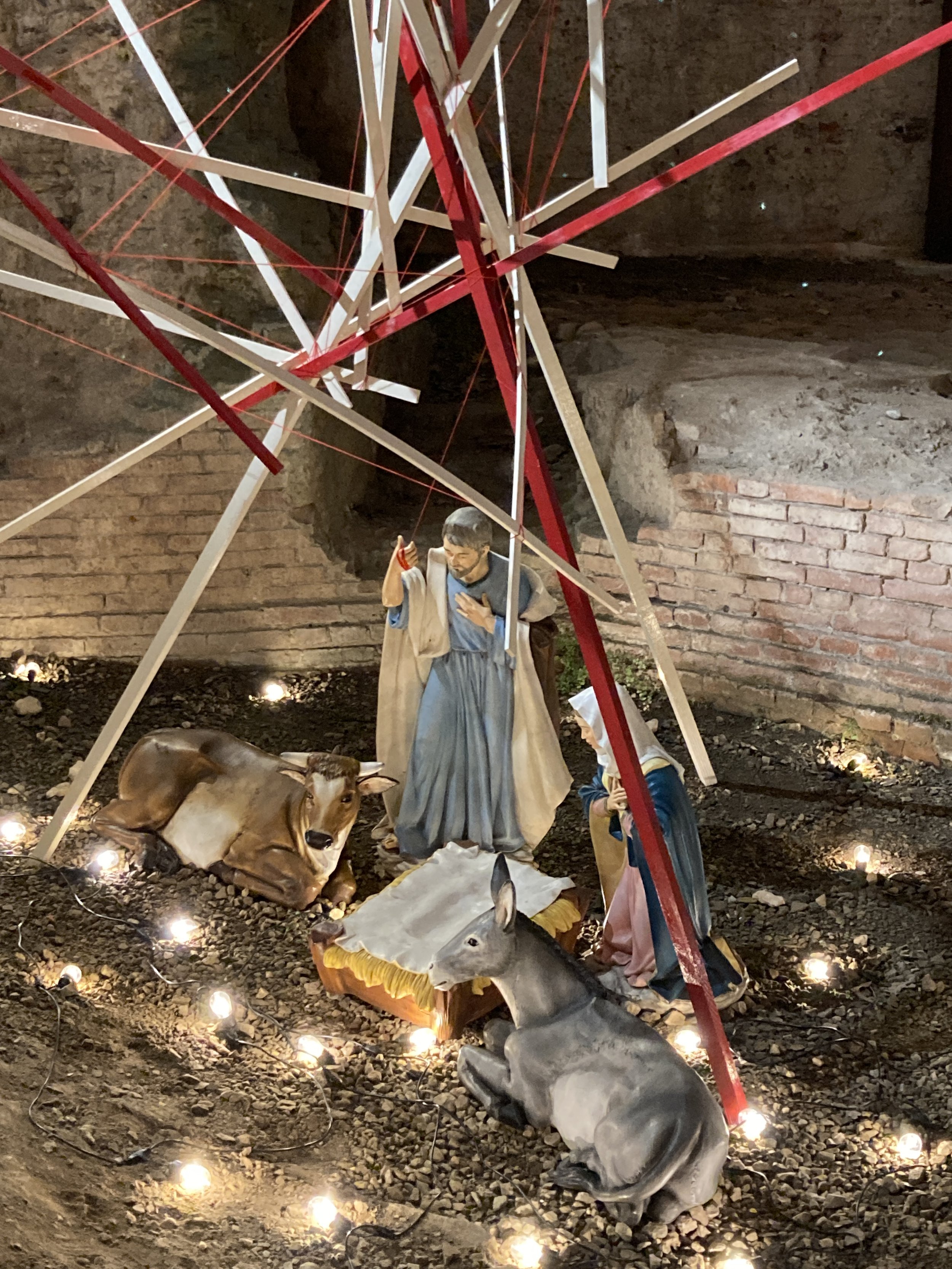
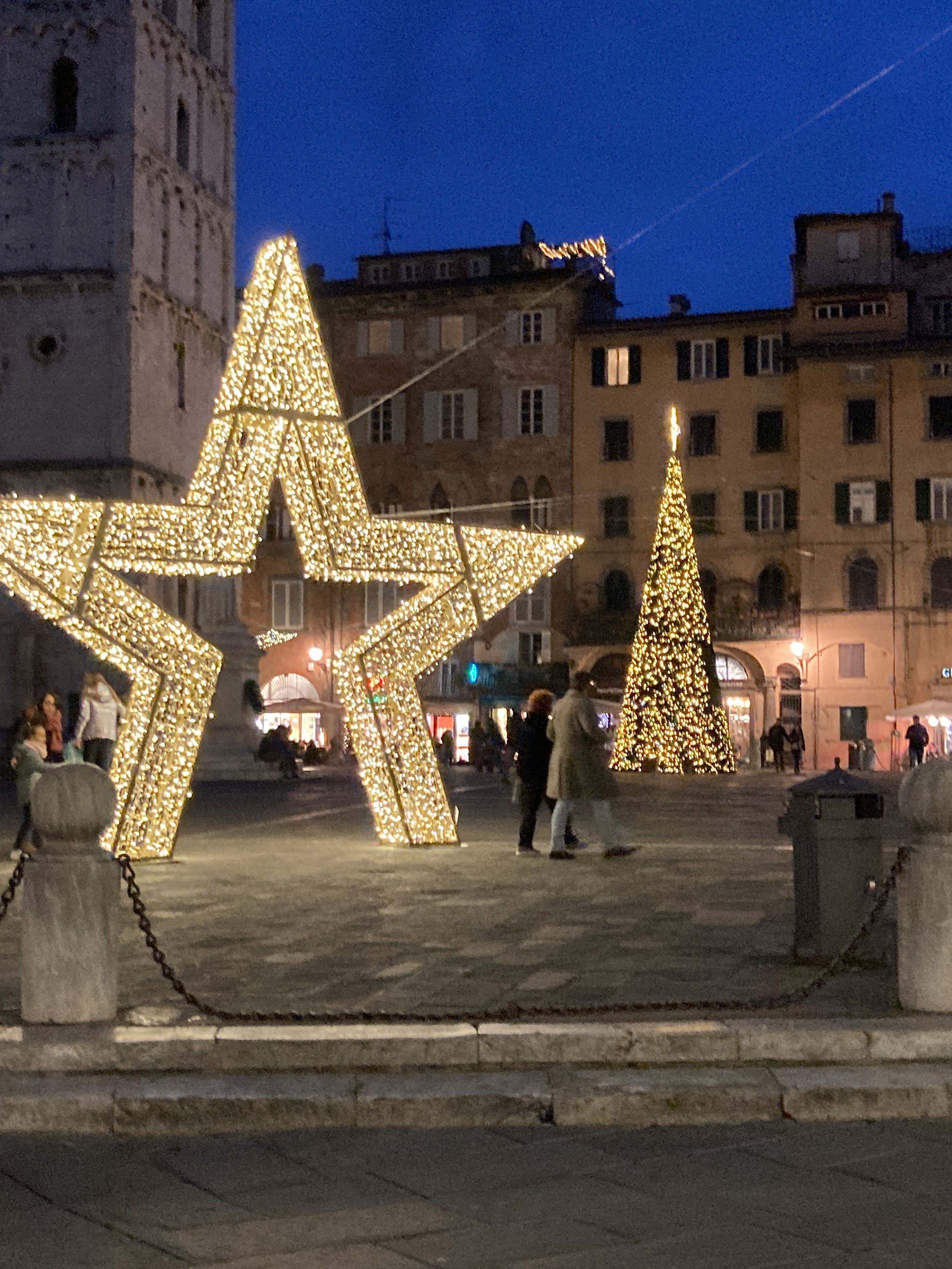
In the center of Lucca, the church of San Michele provides the backdrop for the largest Christmas tree in town. Locals turned out for the tree lighting ceremony on November 25th, a fun start to the Christmas installations throughout town. Under the loggia just across the square is a life size precepe (nativity scene). In Italy, nativity scenes include whole villages of people and this one is no exception. The figures are the work of the historic Giovacchino Marchi company, makers of nativity figurines since 1930.

413185B3-24A1-4CAA-B628-AE32A9673D03.jpeg
F06F9763-4D48-46D6-8422-7732E51AD77E.jpeg

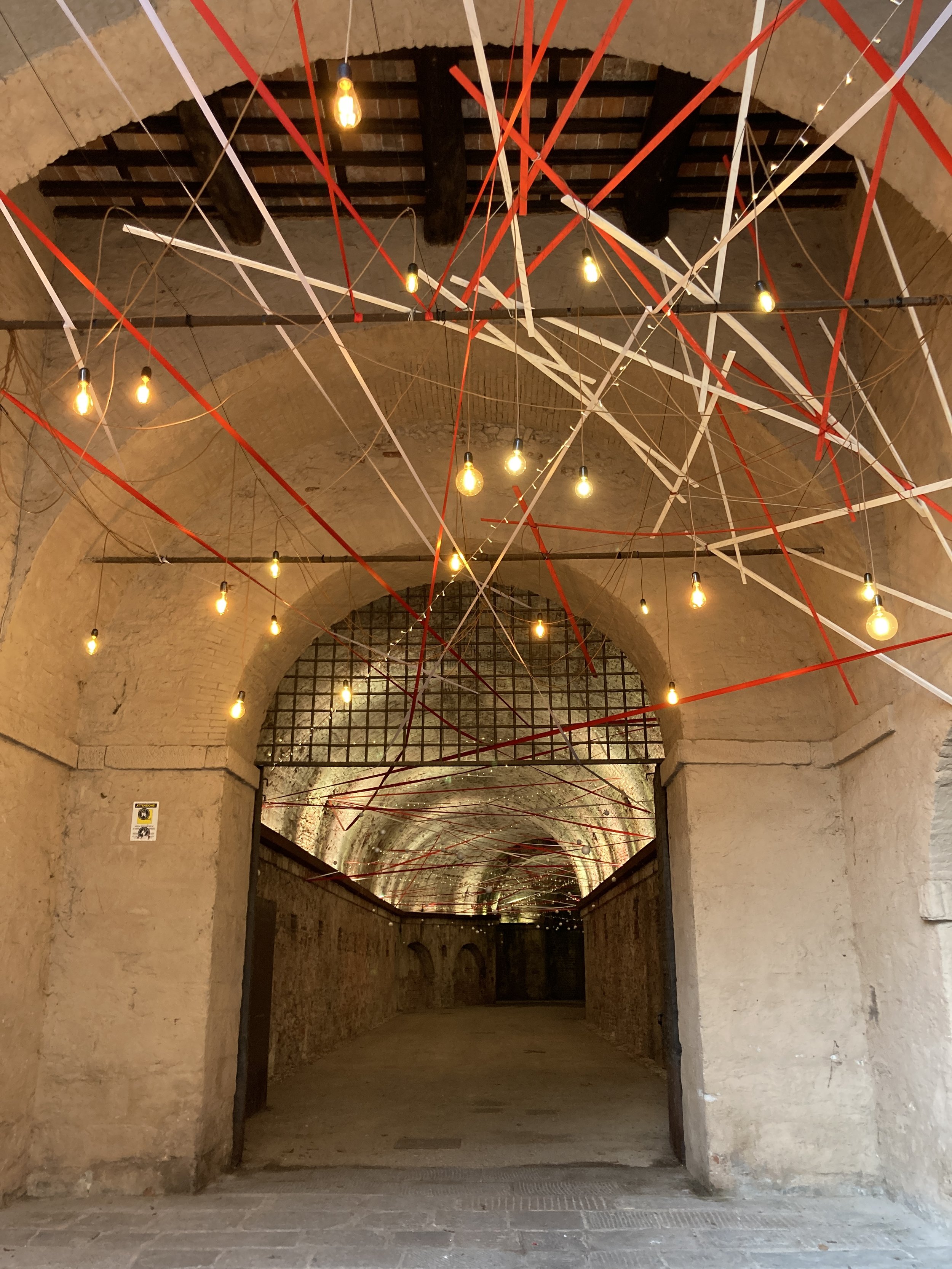
Not all of the magic happens above ground. Underneath a section of the wall is a modern fairyland of snow and stars, another work by Francesco Zavattari. It is an unexpected surprise when taking the shortcut under the walls out into Lucca beyond the center.

9CAB2E54-18F0-4675-9B63-8B578C924151.jpeg
BBF71C08-A536-40D5-9CD0-CE5786FD768D.jpeg

Cold nights, bright lights, and Christmas magic - a perfect time for a walk through Lucca.

Piazza San Frediano

December 19, 2022 /Joanne Bartram
Christmas Lucca, Christmas Italy
#lucca, Festivals Italy, Italian Christmas, Italian culture

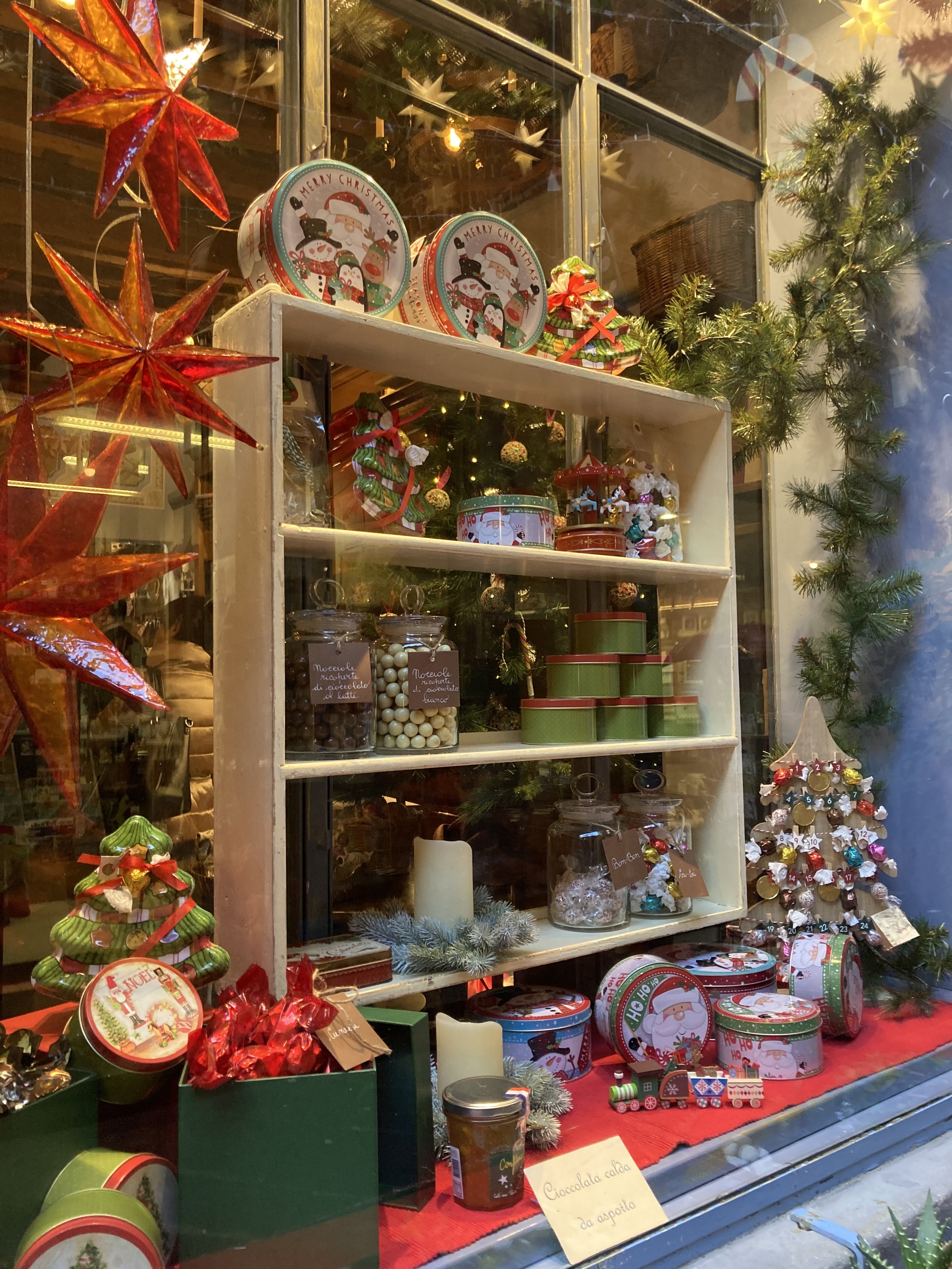
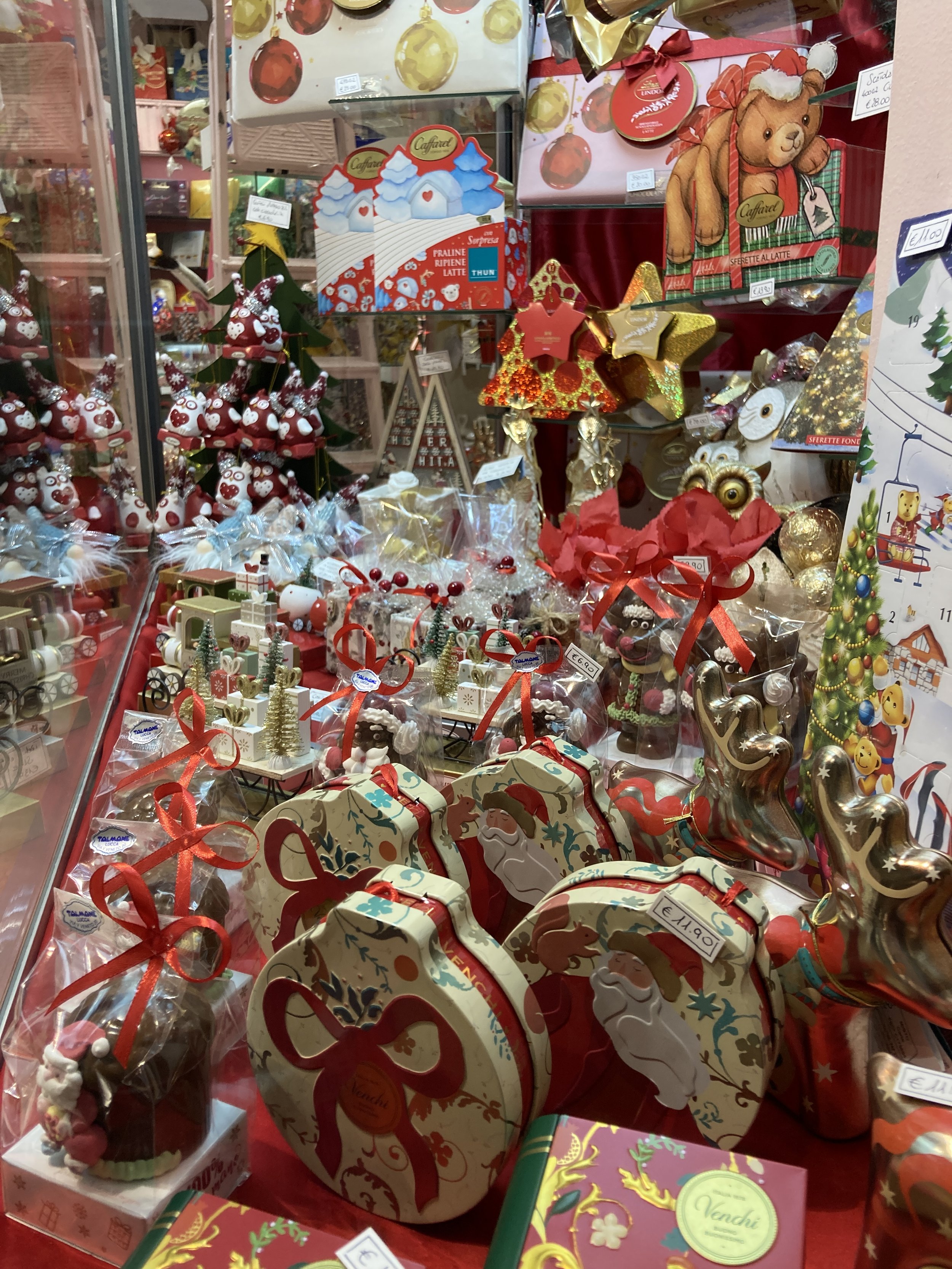
What’s Christmas without chocolate? The window at Chocolat in Chiasso Barletti is always fun.

Christmas Windows

December 12, 2022 by Joanne Bartram in Festivals Italy, Italian Christmas, Italian culture, Italy, Living in Italy, Lucca

Christmas has arrived in Lucca.

Throughout the historic center there are signs of the holiday everywhere. Piazzas large and small are home to Christmas trees, oversized ornaments, and beautiful light displays. The streets glow with overhead sparkle. It is just cold enough to feel like winter, but not too cold to be out at night enjoying the festive atmosphere.

And the shops!

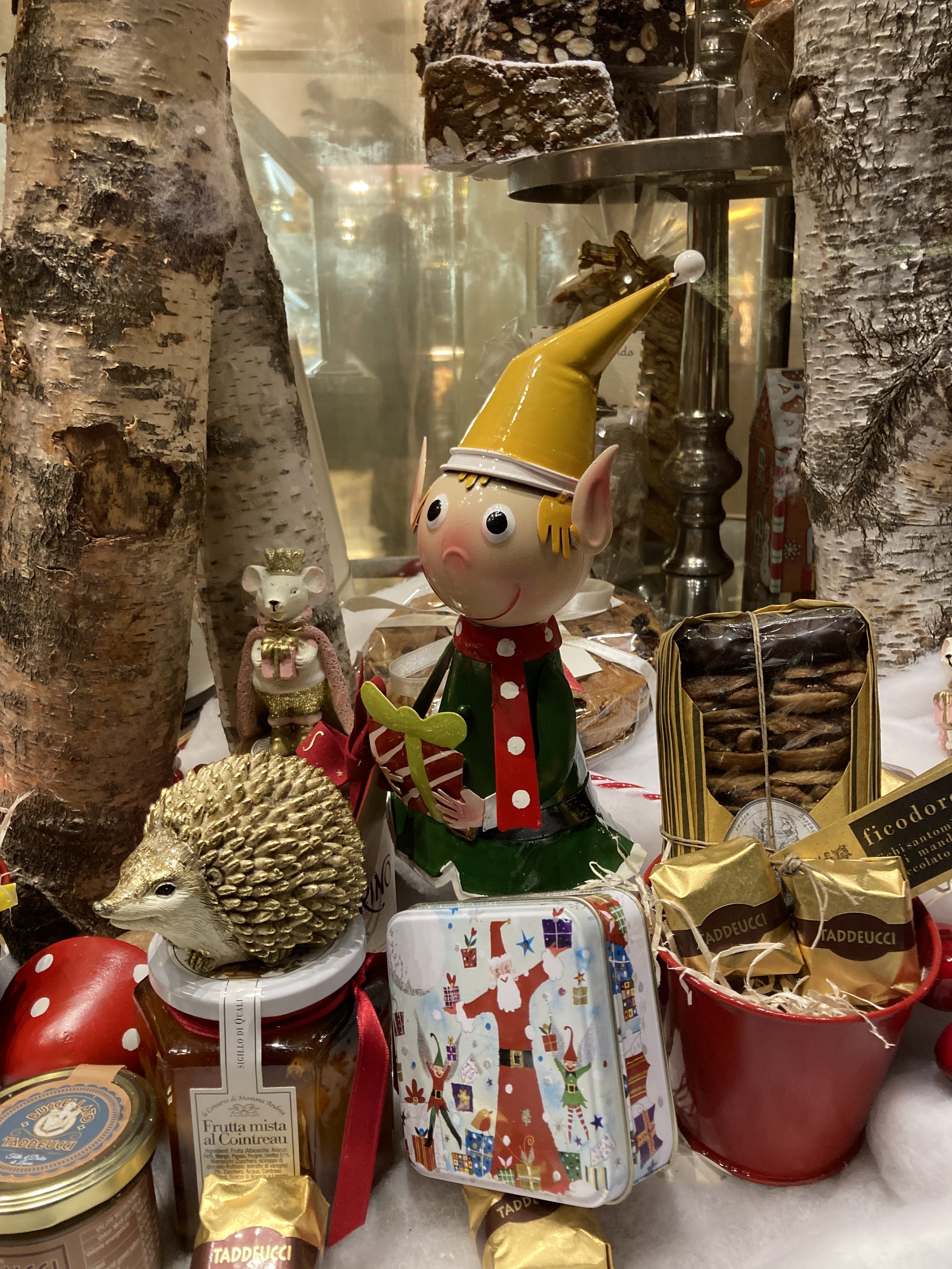
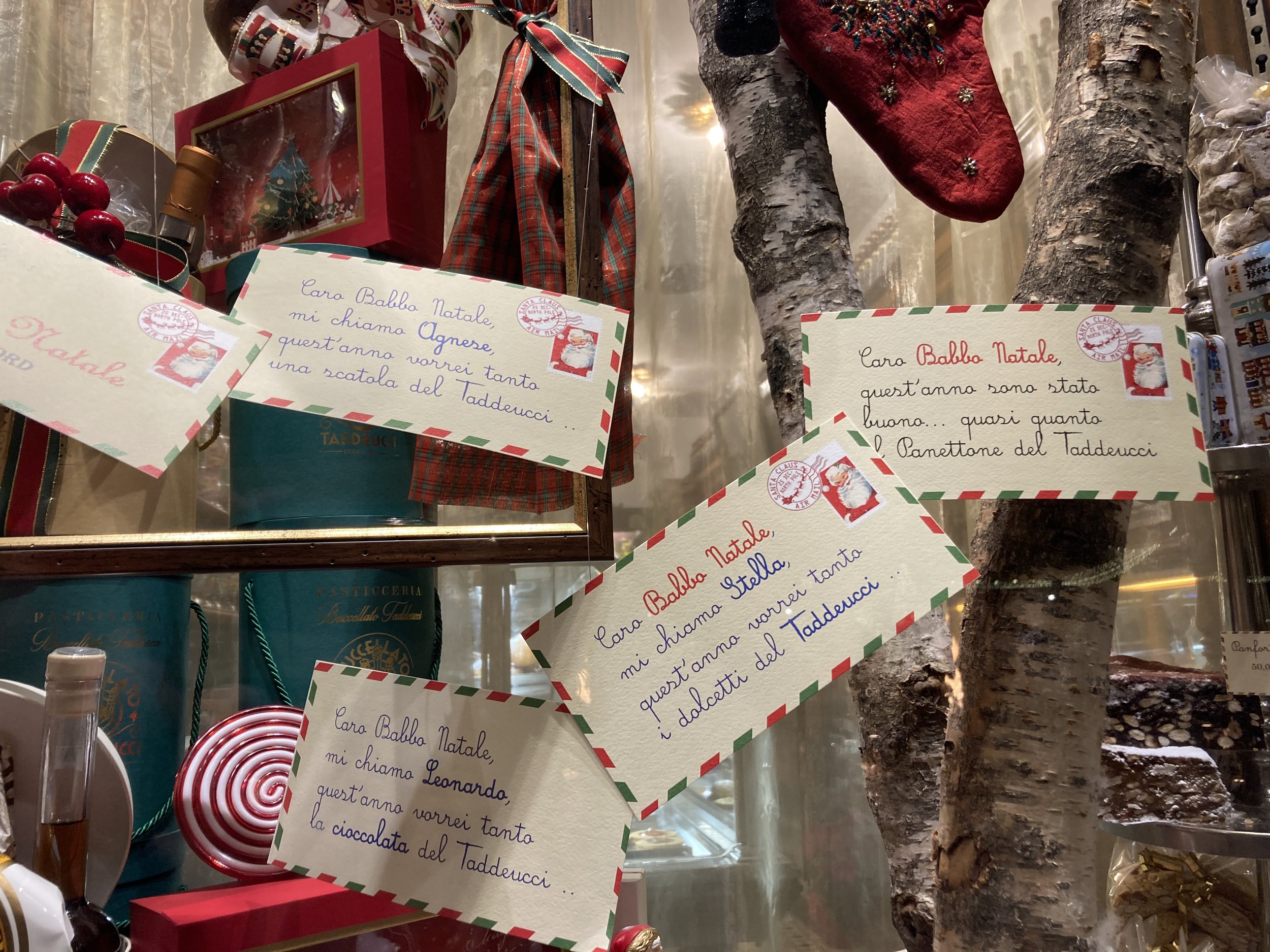
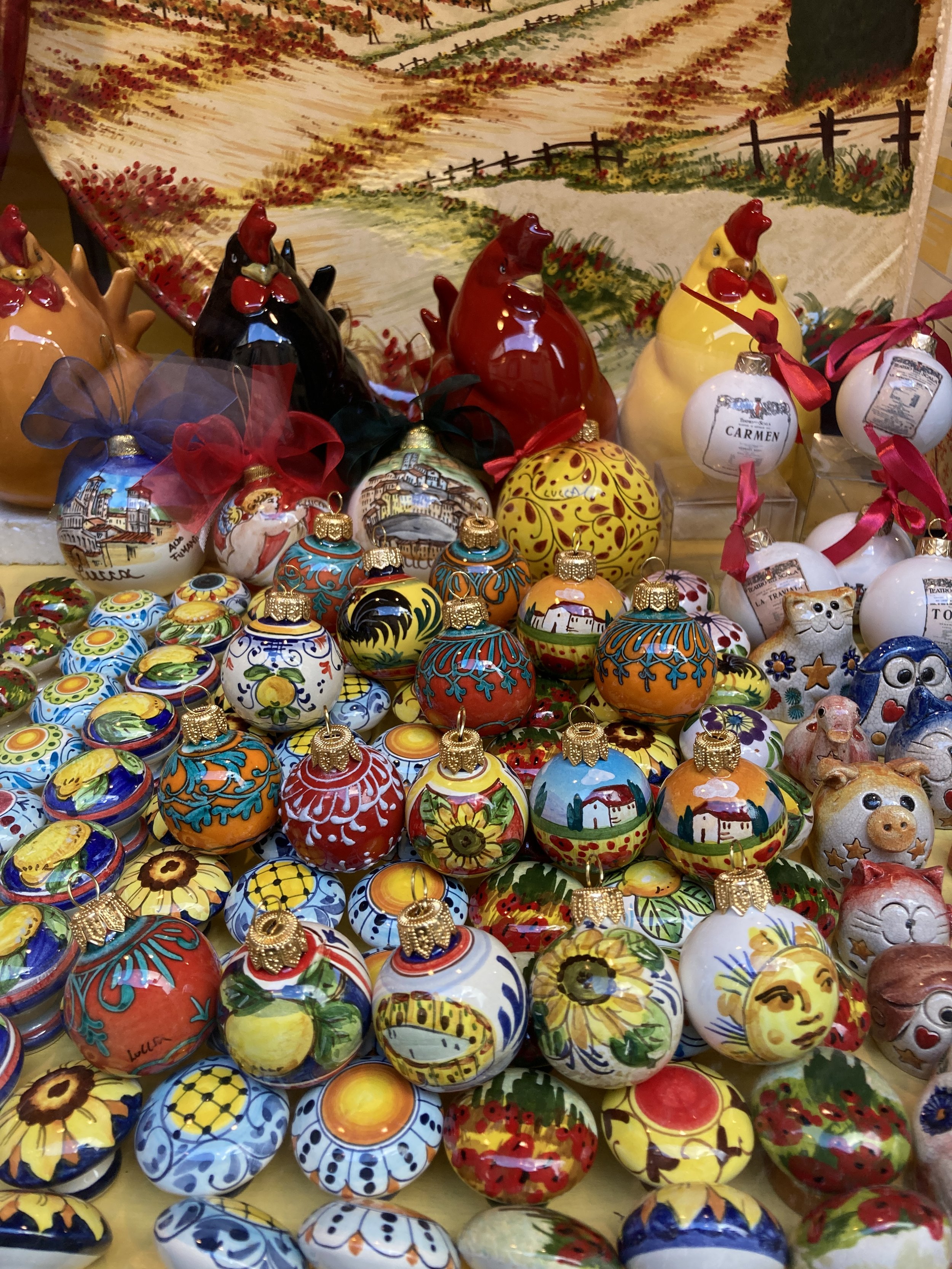
Shopping is all the more fun for the whimsically decorated windows and elegant indoor displays. One of my favorite window displays is in the historic shop Taddeucci (below).

F7E4565F-CFC4-46BD-8BFF-0EB3F51534A9.jpeg
FDE91CFF-E50A-4565-9010-D47E87AF2190.jpeg

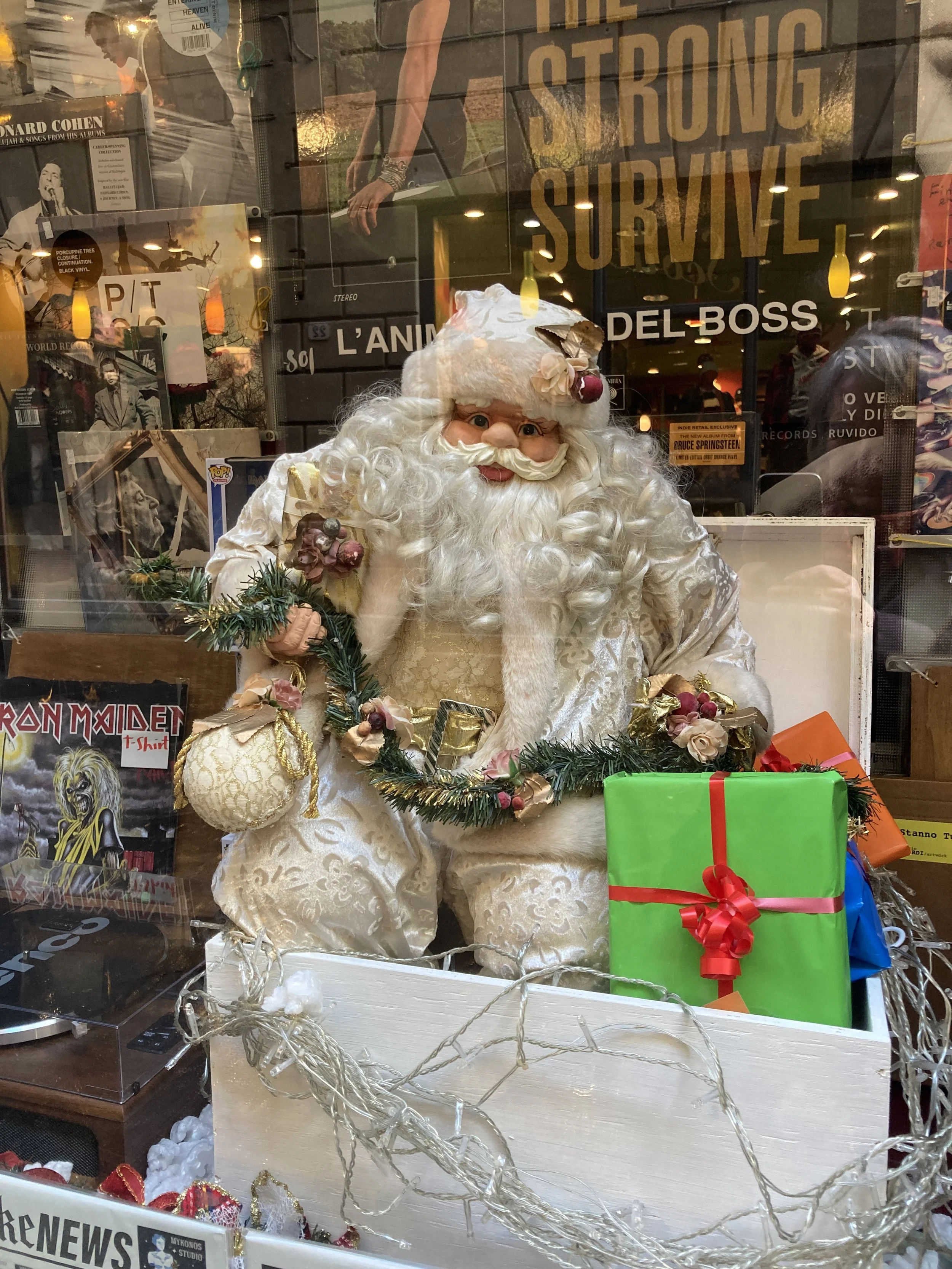
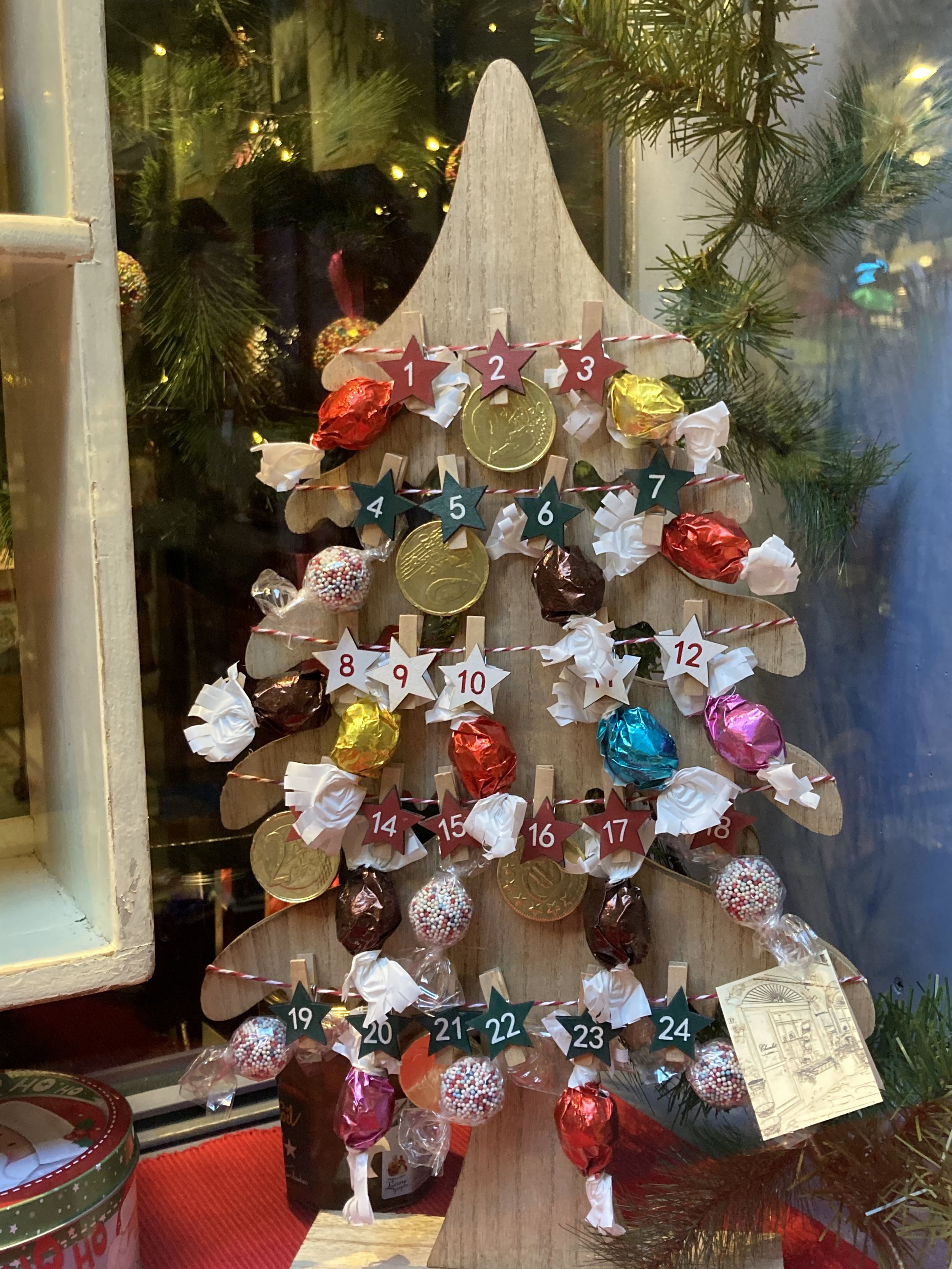
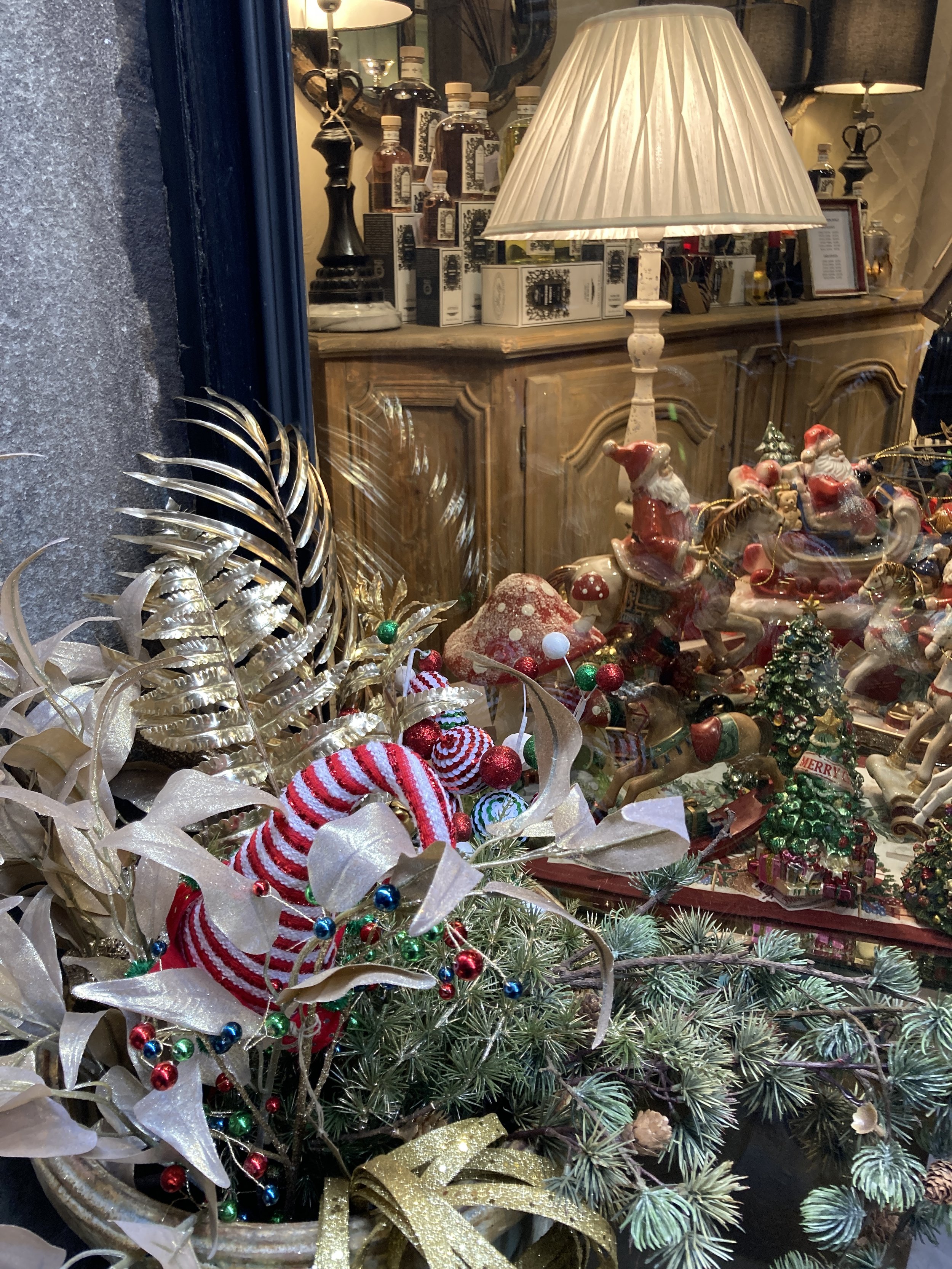
Instead of words, today I will let the photos do the talking with pictures of Lucca’s wonderful shop windows.

A4EDD952-7452-45BB-8FF3-710540777CC6.jpeg
82FA40E2-139C-48DB-8B64-52CF16A16F05.jpeg
9C7B28A8-CFC2-4F72-8CC3-1D01DC0BBA7E.jpeg
D4BDC242-2FB7-4613-895B-D3D37E04BF1C.jpeg

Christmas for grownups at bar Des Artes !

Elegant Christmas decorations from Casantica, Lucca

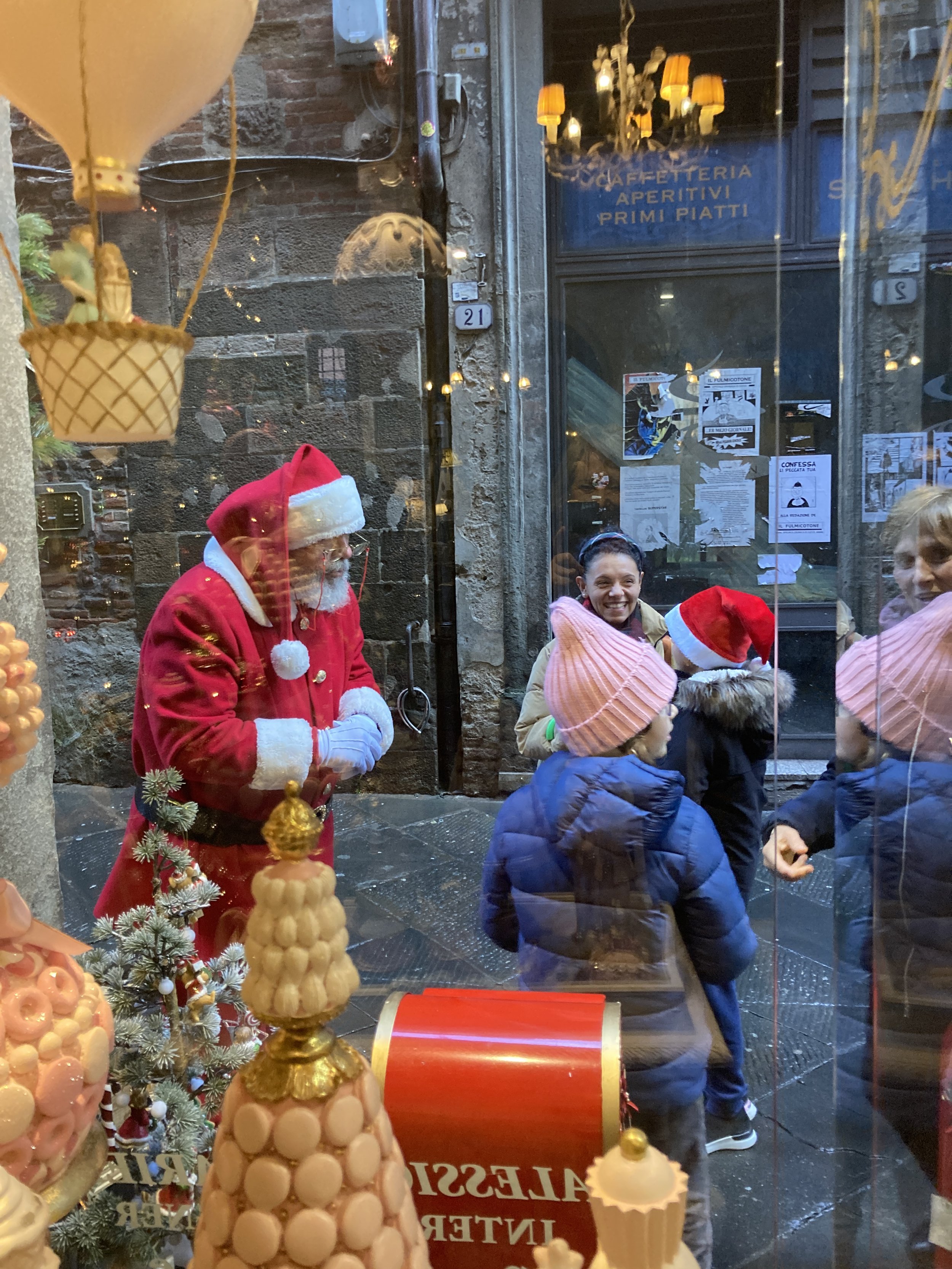
Babbo Natale even paid a visit to this shop, delighting all the kids that passed by.

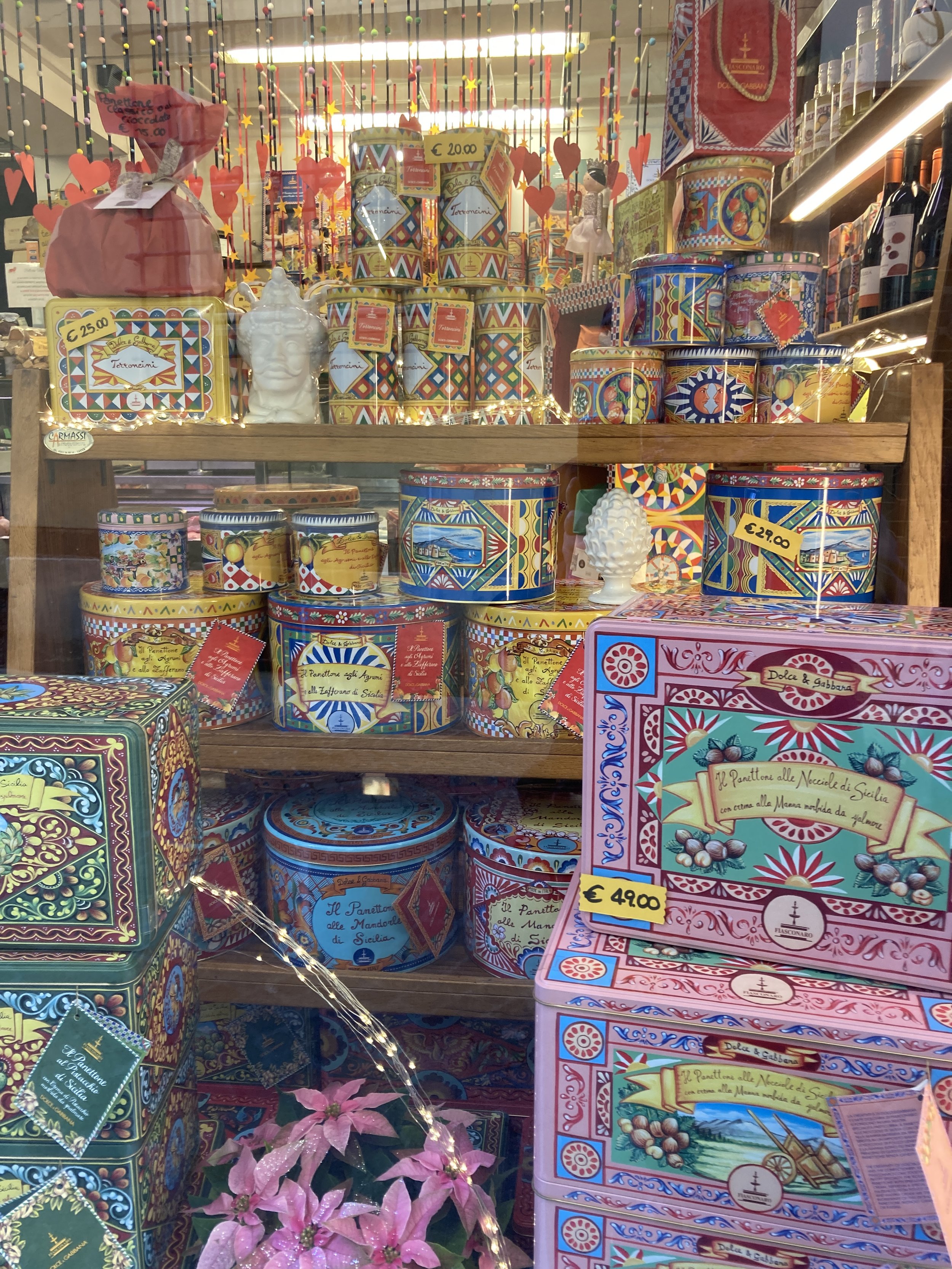
Traditional Christmas Panettone in tins designed by Dolce & Gabbana decorate the window of a local butcher.

December 12, 2022 /Joanne Bartram
#christmasintuscany, #christmasinlucca, Italian Christmas, Christmas in Lucca
Festivals Italy, Italian Christmas, Italian culture, Italy, Living in Italy, Lucca

Villa Santo Stefano, formerly the Villa Bertolli

From Villa Bertolli to Villa Santo Stefano: An Italian Story of Olives, Grapes, and Families

November 21, 2022 by Joanne Bartram in #italytravel, #lucca, Italian culture, Italy travel, Lucca, Tuscany, Wine

Most Italian fairytales begin with these words: C’era una volta (loosely translated as “once upon a time”). Today I have a bit of a true-life fairytale to tell, so I will start with those words.

C’era una volta, around 160 years ago, when Francesco and Caterina Bertolli tended to their olives, pressed them, and sold the olive oil out of a small shop in the San Donato neighborhood of Lucca in Tuscany. They also grew grapes on their land and made a little wine, though the oil was their main product.

In the late 1800’s, some Bertolli family members emigrated to the United States and began to import the family’s olive oil, making Bertolli the first Italian olive oil to establish as US presence. Eventually the business in Lucca passed down through the generations. The company was nationalized by Mussolini in the 1930’s and by 1972 the family no longer owned the company or the rights to the Bertolli name for their olive oil. Not all fairytales have happy endings! The family did still own a lovely piece of property in the hills above Lucca, the Villa Bertolli, which had olive trees and around 1 hectare (about 2.5 acres) of vineyard. The fairytale doesn’t end yet though, for there is another chapter yet to come.

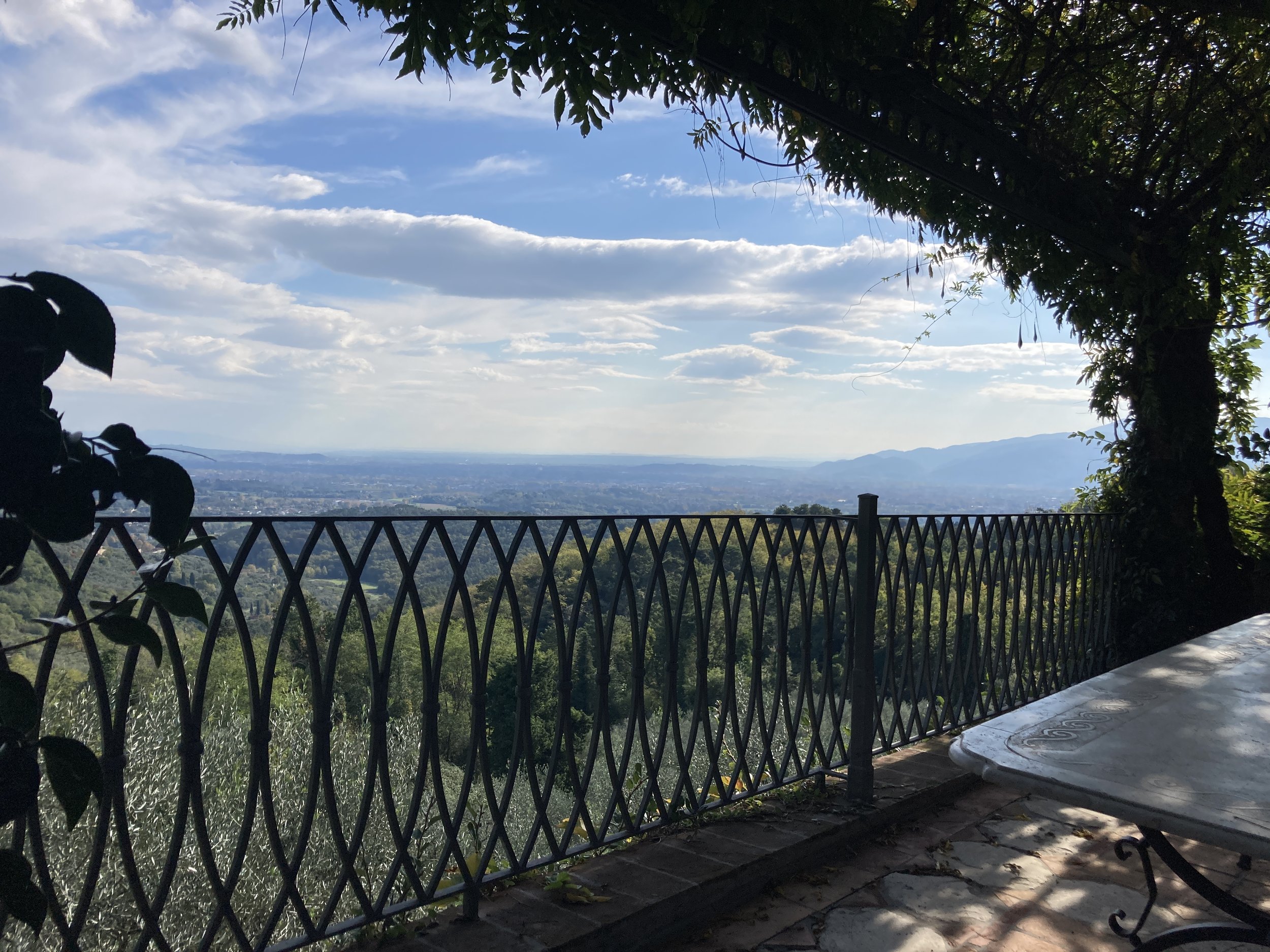
A view of the valley from the former Villa Bertolli

The tale continues in 2001 when a German couple, Wolfgang Reitzle and Nina Ruge, purchased the historic property from the Bertolli family. Originally they thought of it as a vacation property, and the property certainly had fairytale-like qualities that would make it perfect as a vacation spot. But Mr. Reitzle soon became interested in both the olive oil and the small production of wine on the estate. Since purchasing the property he has expanded it to include 12 hectares of land, made a serious study of winemaking, hired some very talented winemakers, and become the proprietor of a thriving vineyard and winery, now renamed Villa Santo Stefano. The name comes from the historic church of Santo Stefano which is just up the road from the villa. Today the villa not only produces wonderful wines but also their own label of extra virgin olive oil, a nod to those long ago Bertollis. The winery also gives tours and tastings, by appointment, and also offers guest lodging.

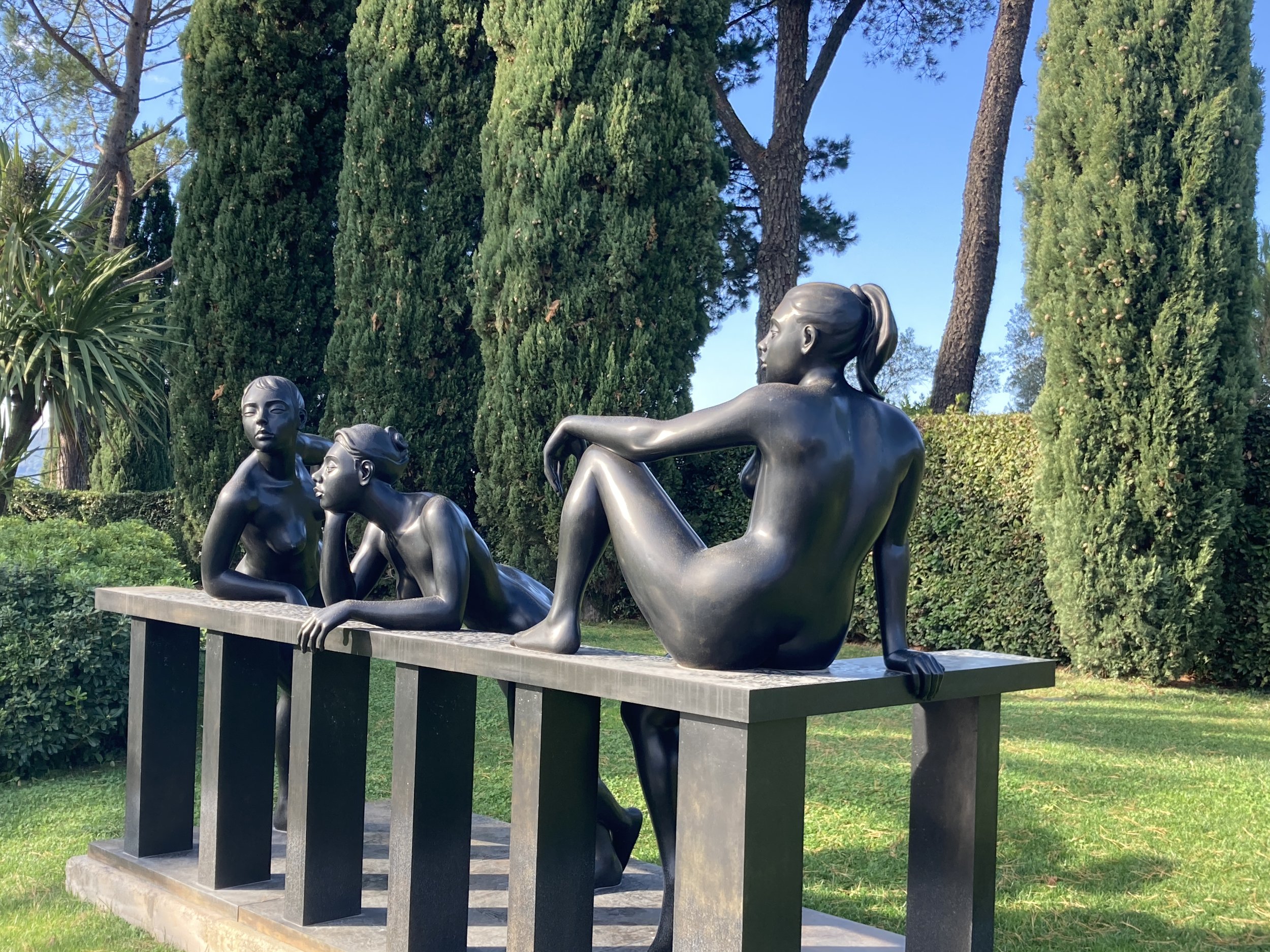
Villa Santo Stefano is an elegant estate. And the views! The property overlooks vineyards and valleys, has graceful covered pergolas, fountains, and immaculate landscaping. I would happily do any job needed, from trimming the flowers to sweeping out the cellars, if only I could live on site!

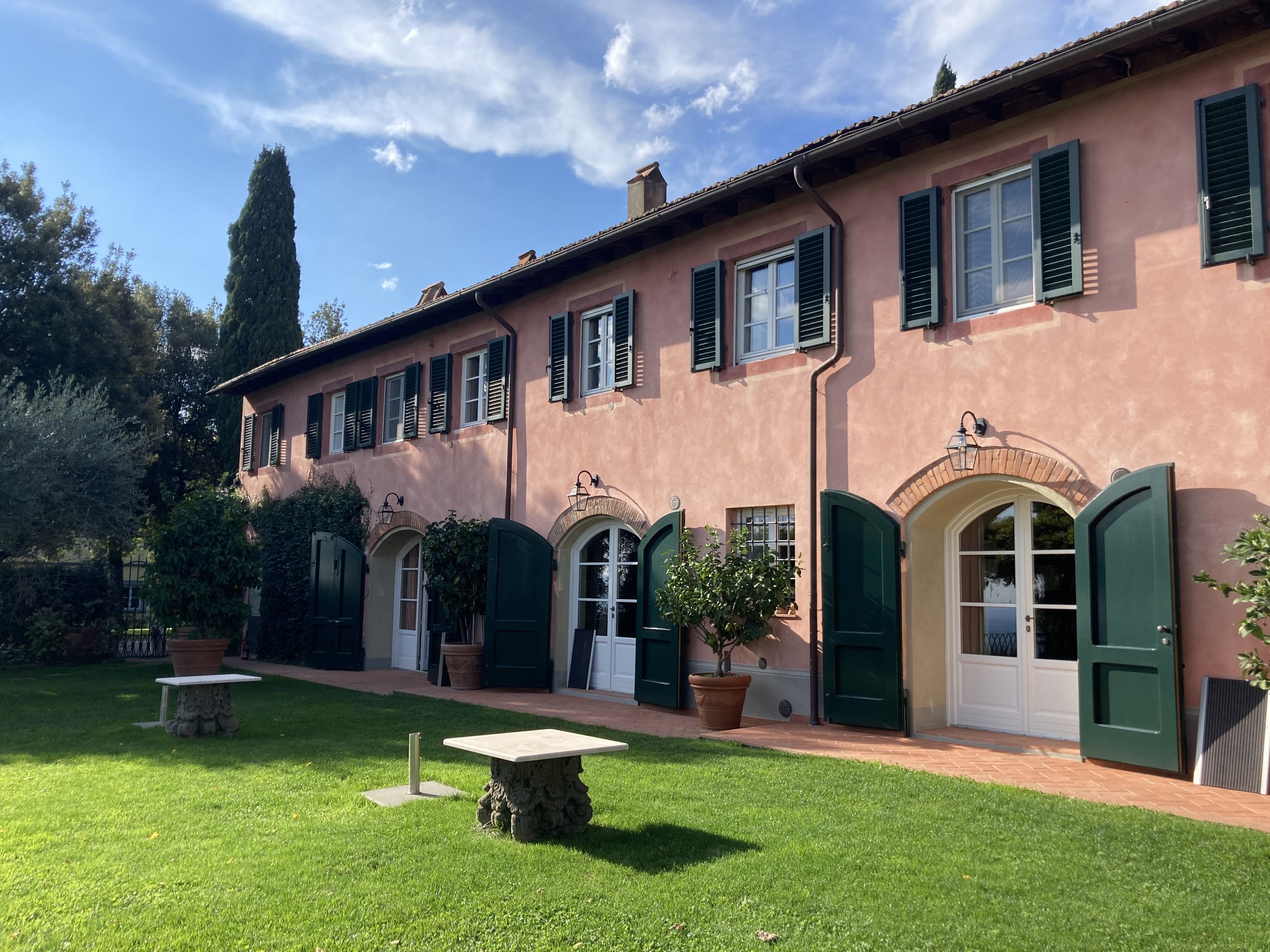
One of the restored buildings, now home to guest suites, at Villa Santo Stefano

Petra, sharing information about the wines of Vila Santo Stefano (the old rattan wrapped bottles at the bottom are left over from the Bertolli’s)

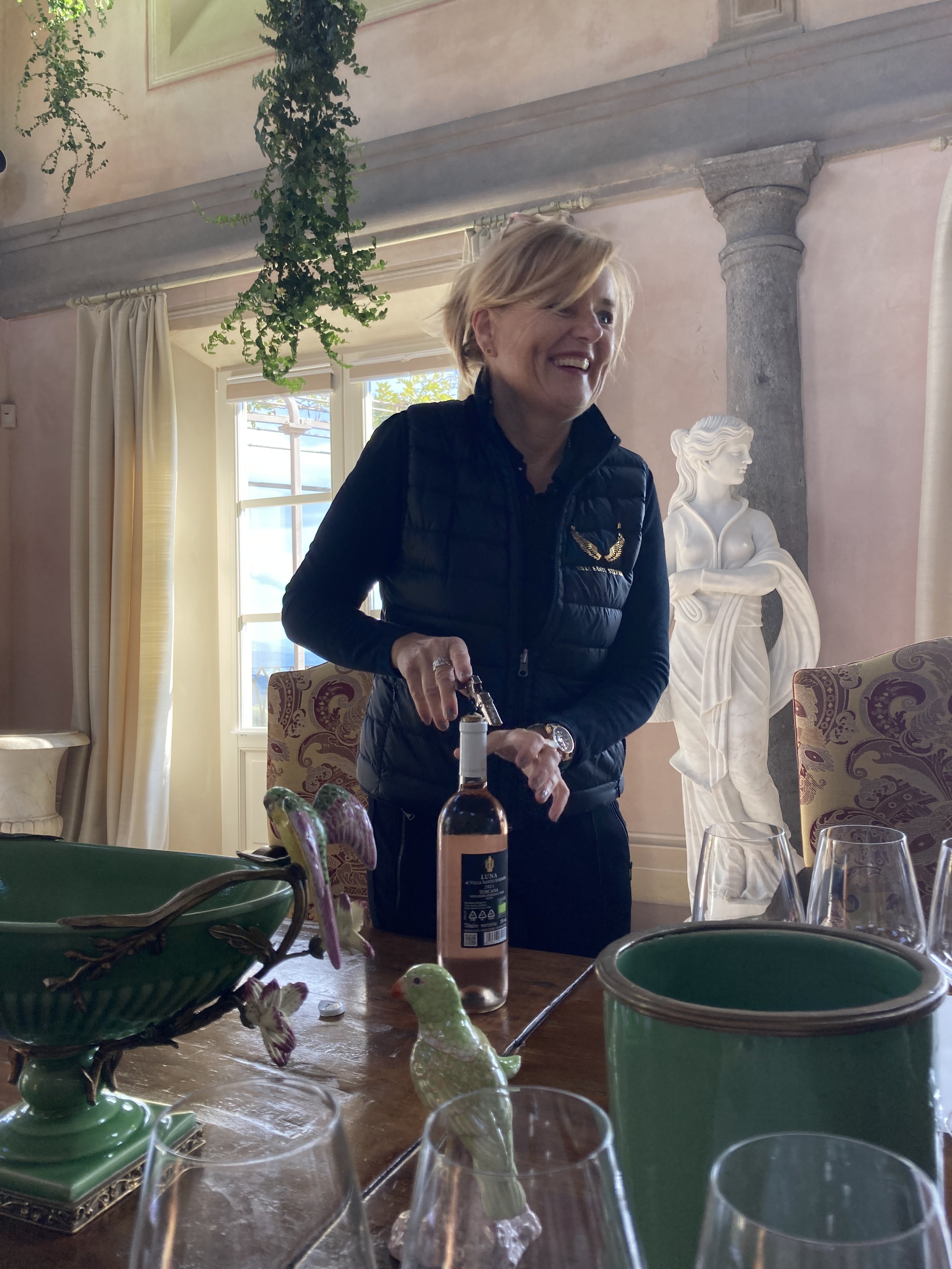
On a recent Sunday, a small group of friends and I made a visit to the villa. We were escorted through the property by the very knowledgeable estate manager, Petra Pforr.

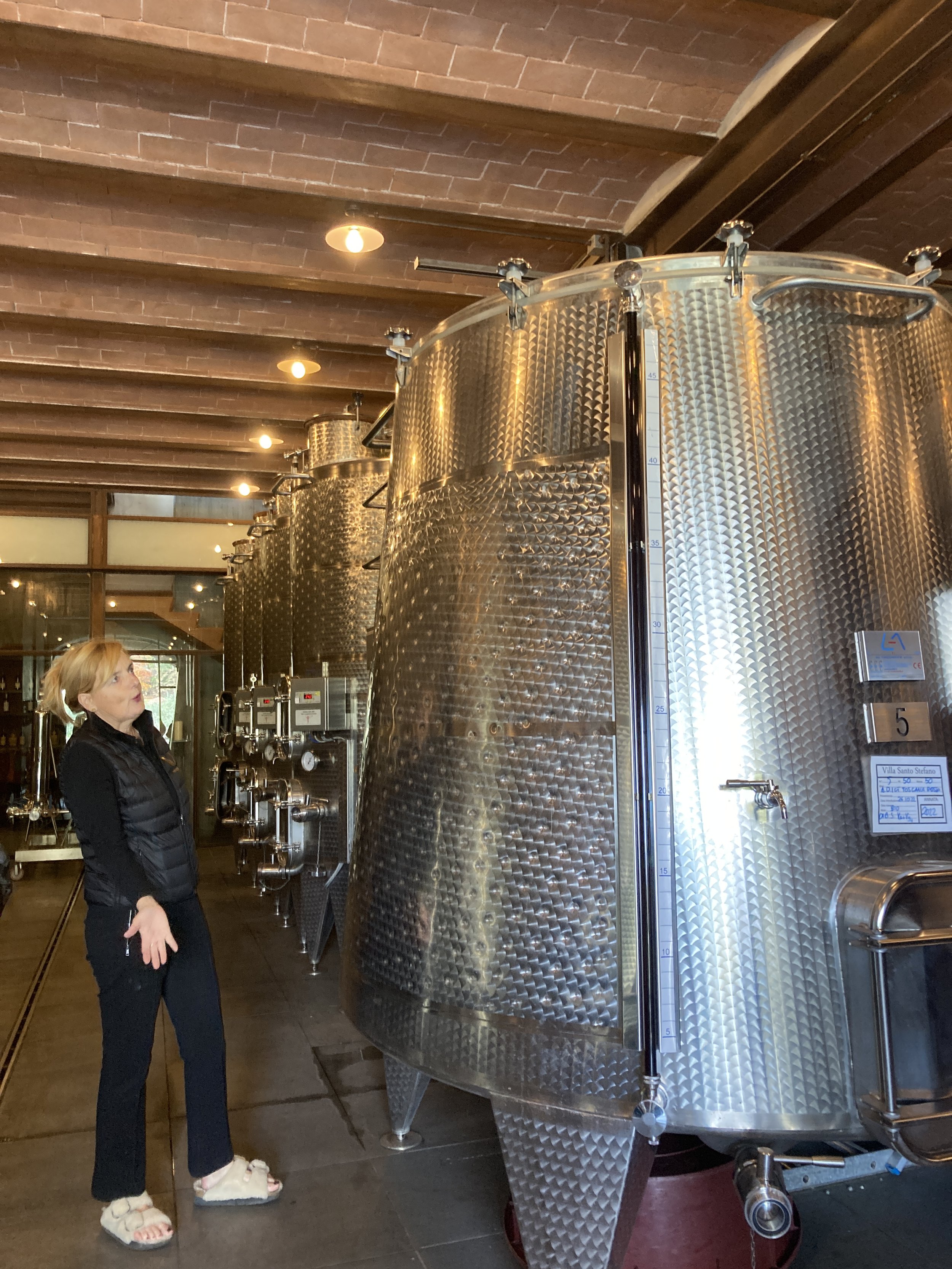
Petra shared the history of the estate, the grape varietals grown, the evolution of the wine production, along with the details of Villa Santo Stefano’s production philosophy and processes. The information she shared was fascinating!

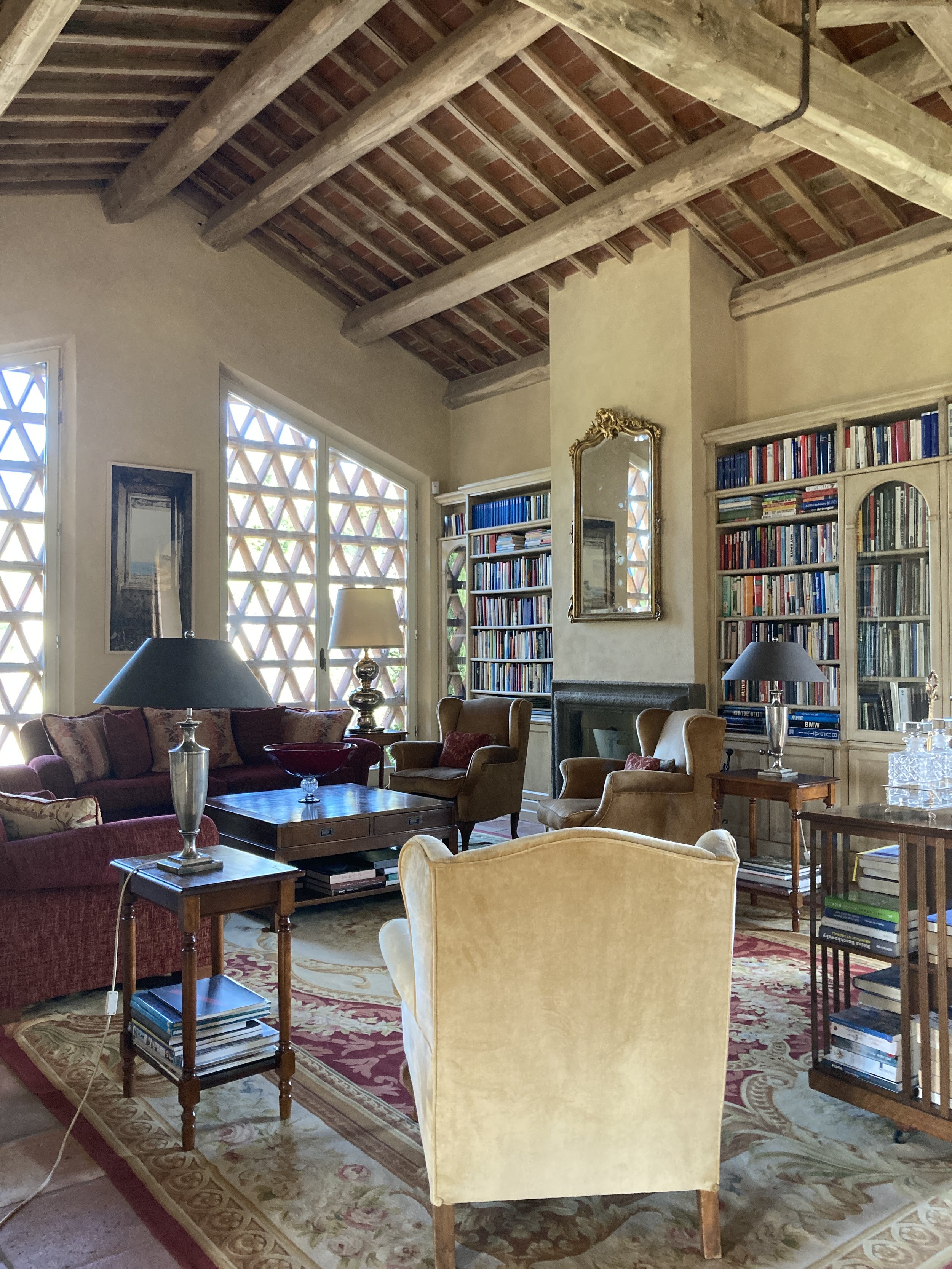
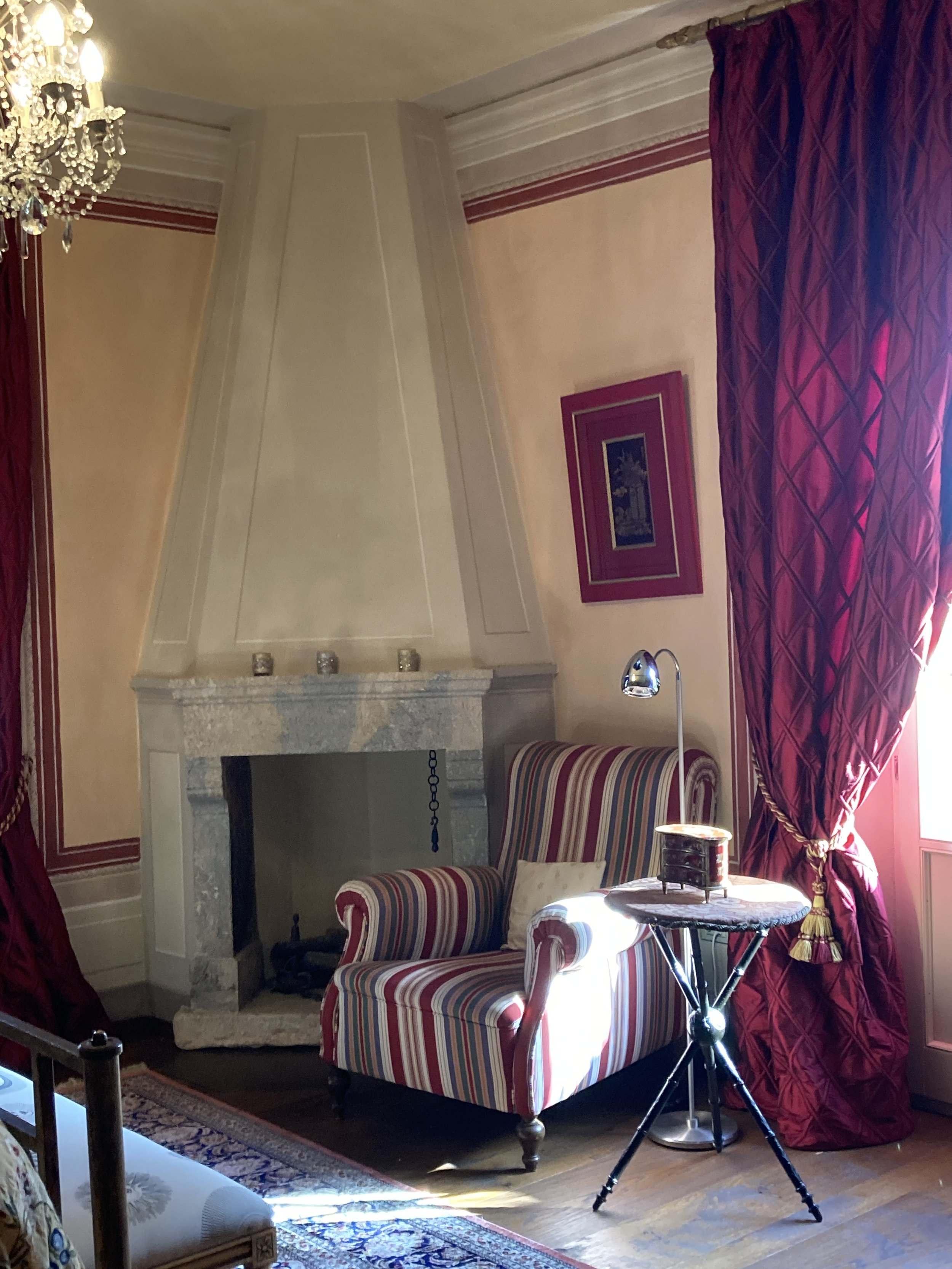
Several of the estate buildings have been restored and include exquisite, luxurious guest spaces. The suites range from cozy yet upscale mini-apartments to a large villa in the former barn. The large villa has multiple bedrooms, an elegant living room, a spectacular kitchen, and a large outdoor space with a private pool. Oh to be a guest there!

FF4575D9-50E9-4CC3-9E8F-967C3C26A519.jpeg
96BF3D6F-2AEA-46A7-959A-FC0A9A70C45F.jpeg
3FF0AE76-0A96-49B7-9D48-3AAEEF2928F9.jpeg

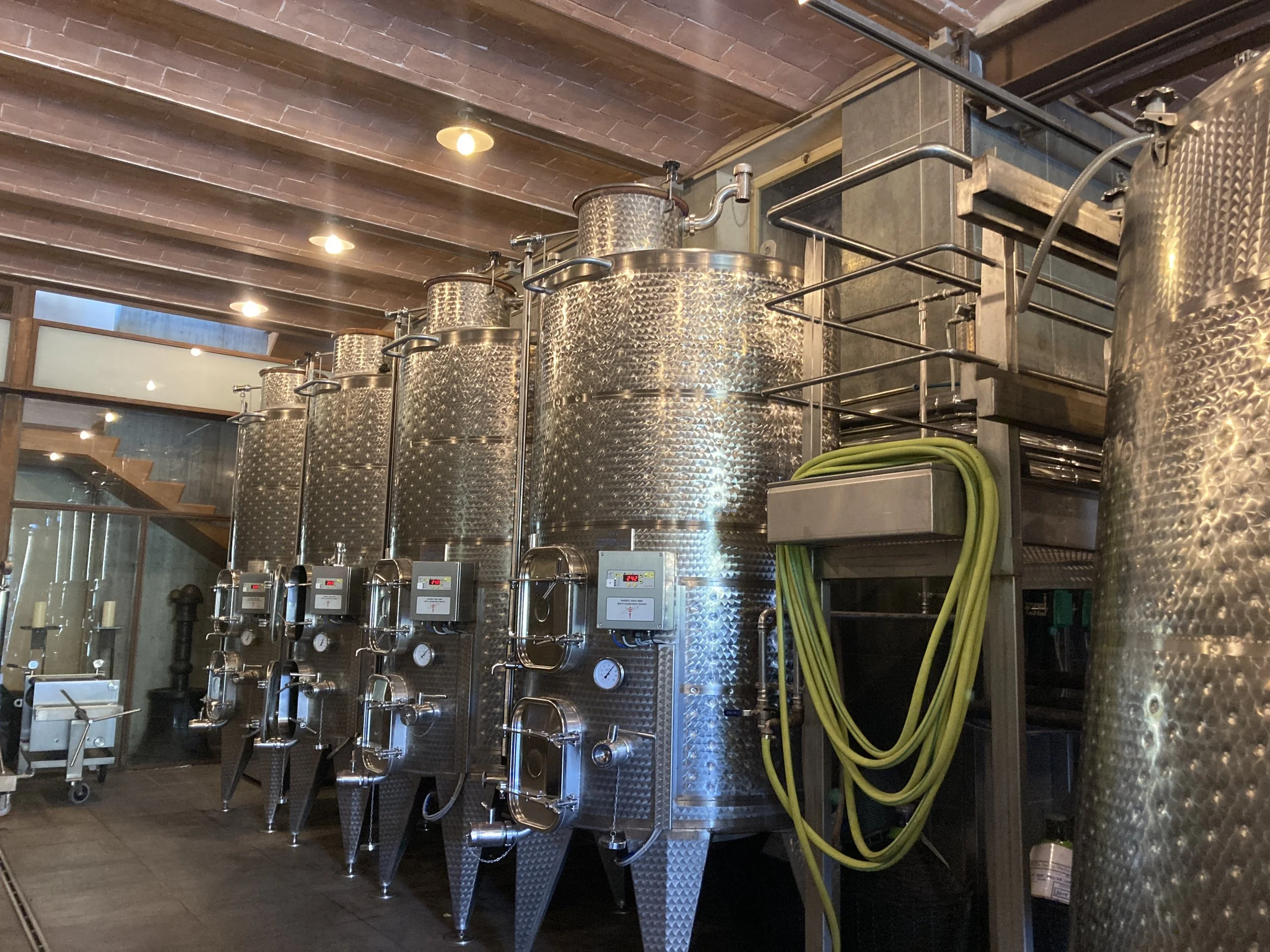
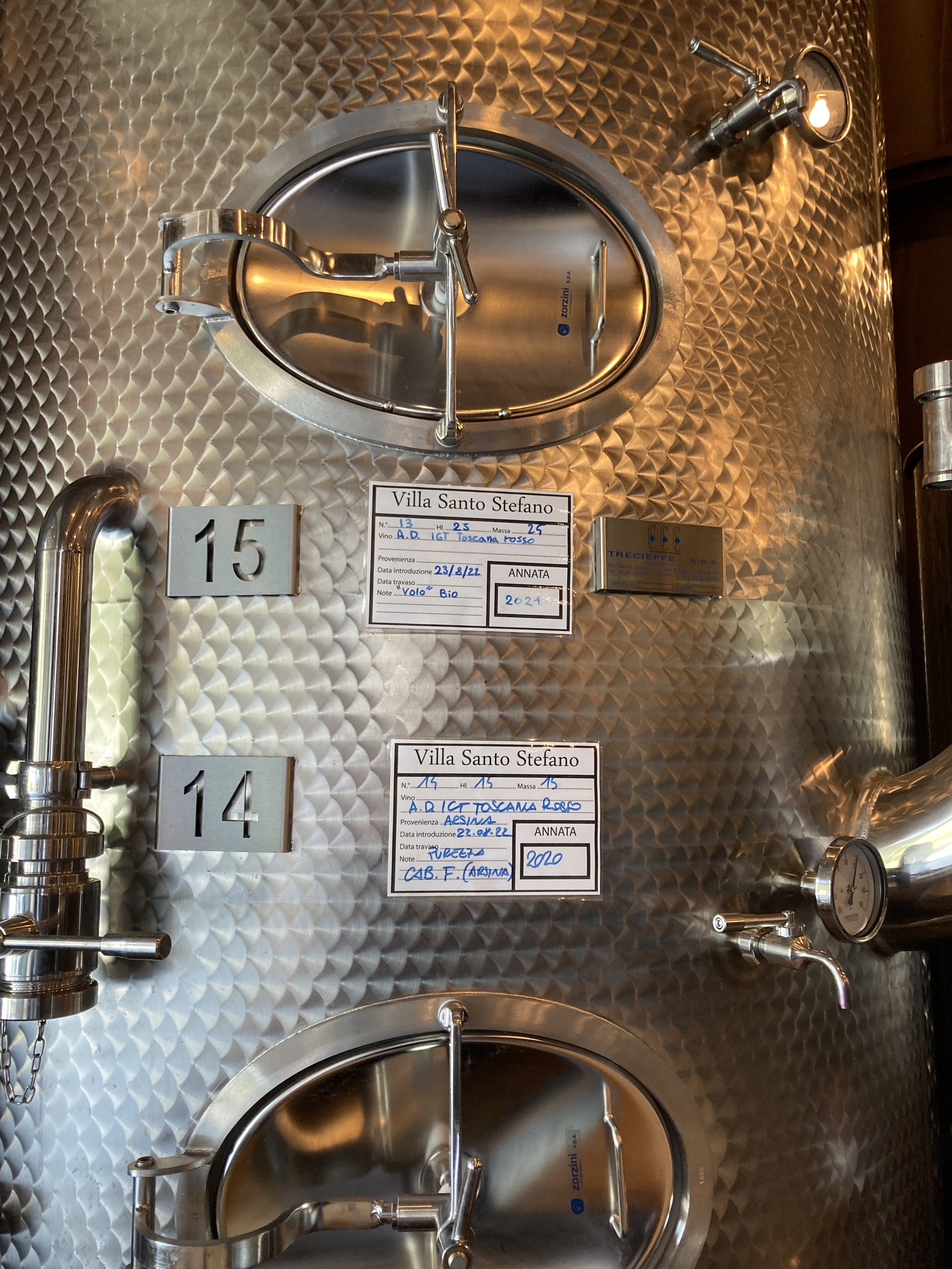
The winery may be a relatively small operation, producing around 50,000 bottles per year, but it is an incredibly high-tech one. No dark cellars or dusty old bottles here. No seen-better-days barrels. Each part of the facilty is modern and spacious. Computers control the temperature and humidity to create optimum conditions for maturing wines. The steel tanks gleam and clear glass rods along the sides of the tanks give a sneak peak of the red and rosato wines fermenting inside. I’ve never thought of steel vats as beautiful before, but the ones as Villa Santo Stefano seem like works of art crossed with modern scientific instruments.

701AFC90-3236-484E-842E-B4F0E38ED65B.jpeg
8C92E302-8164-4AC1-97CB-DCF9FFDC5D26.jpeg
F403BAFF-934C-4AEE-A6C5-217DBF665AE5.jpeg

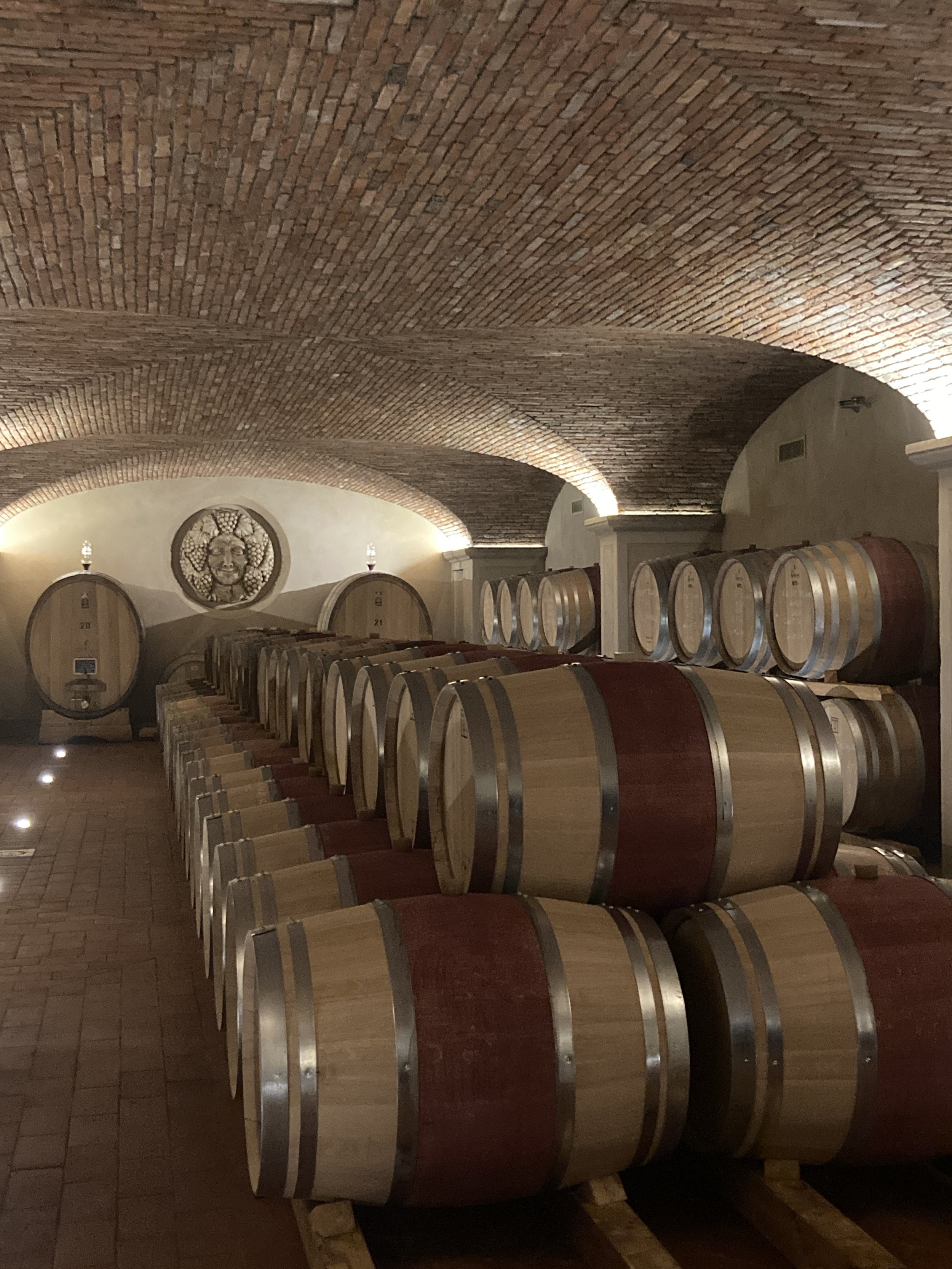
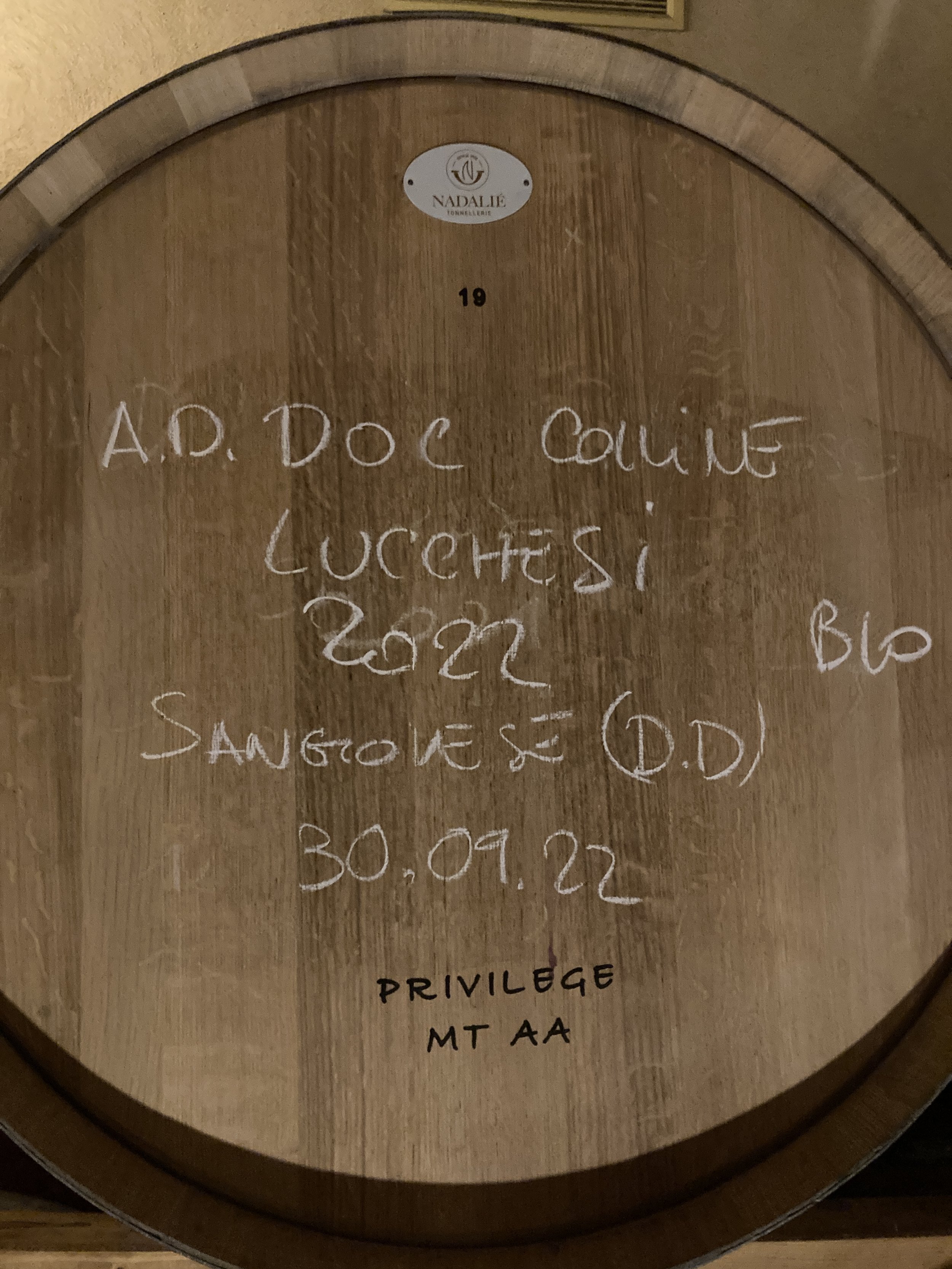
The cellar is large with vaulted brick ceilings and soft lighting. Lining the space are beautiful French oak barrels, about 1/3 of which are replaced each year. That is a costly undertaking but essential in maintaining the quality of the wines. And quality is key at Villa Santo Stefano.

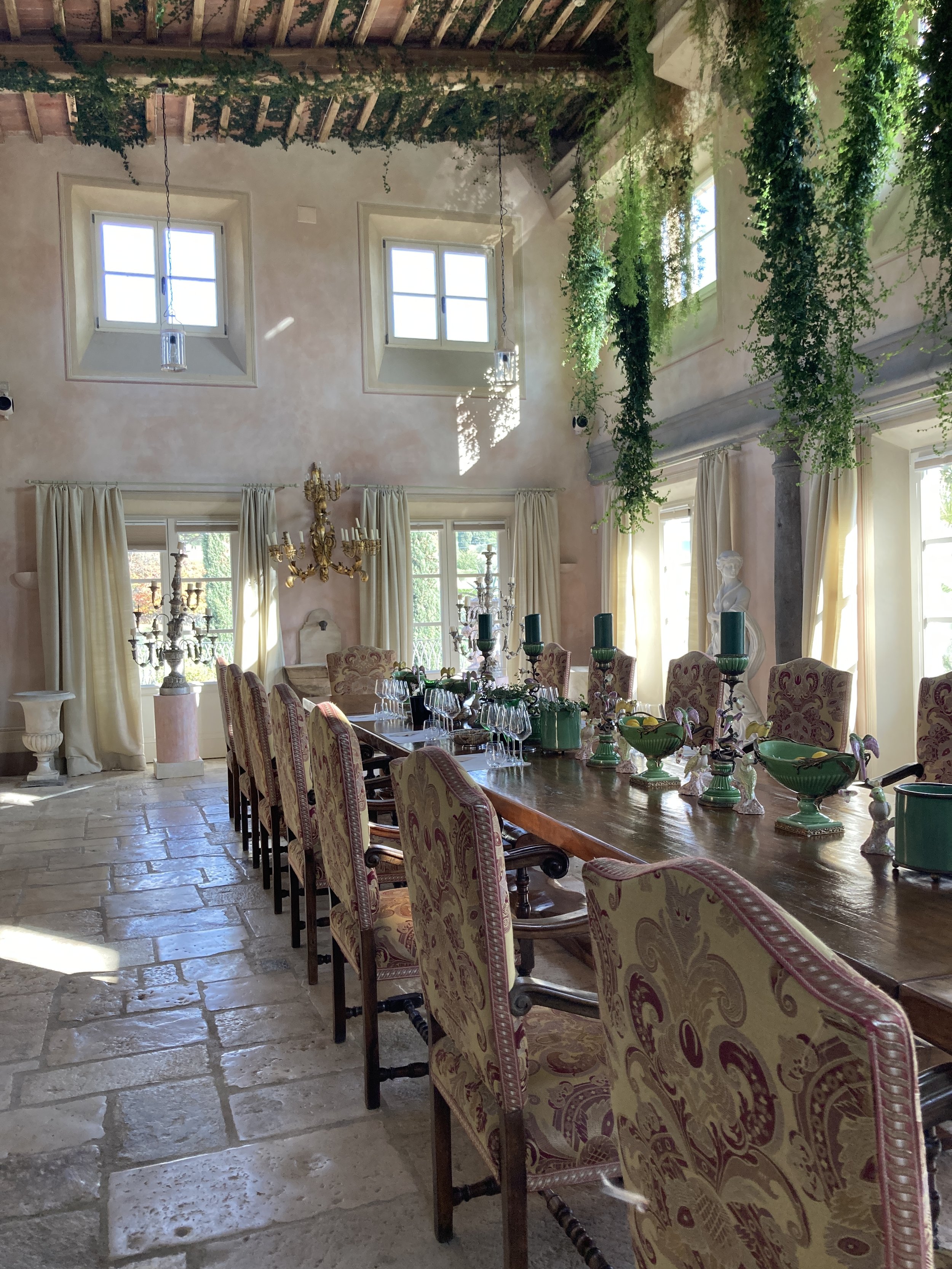
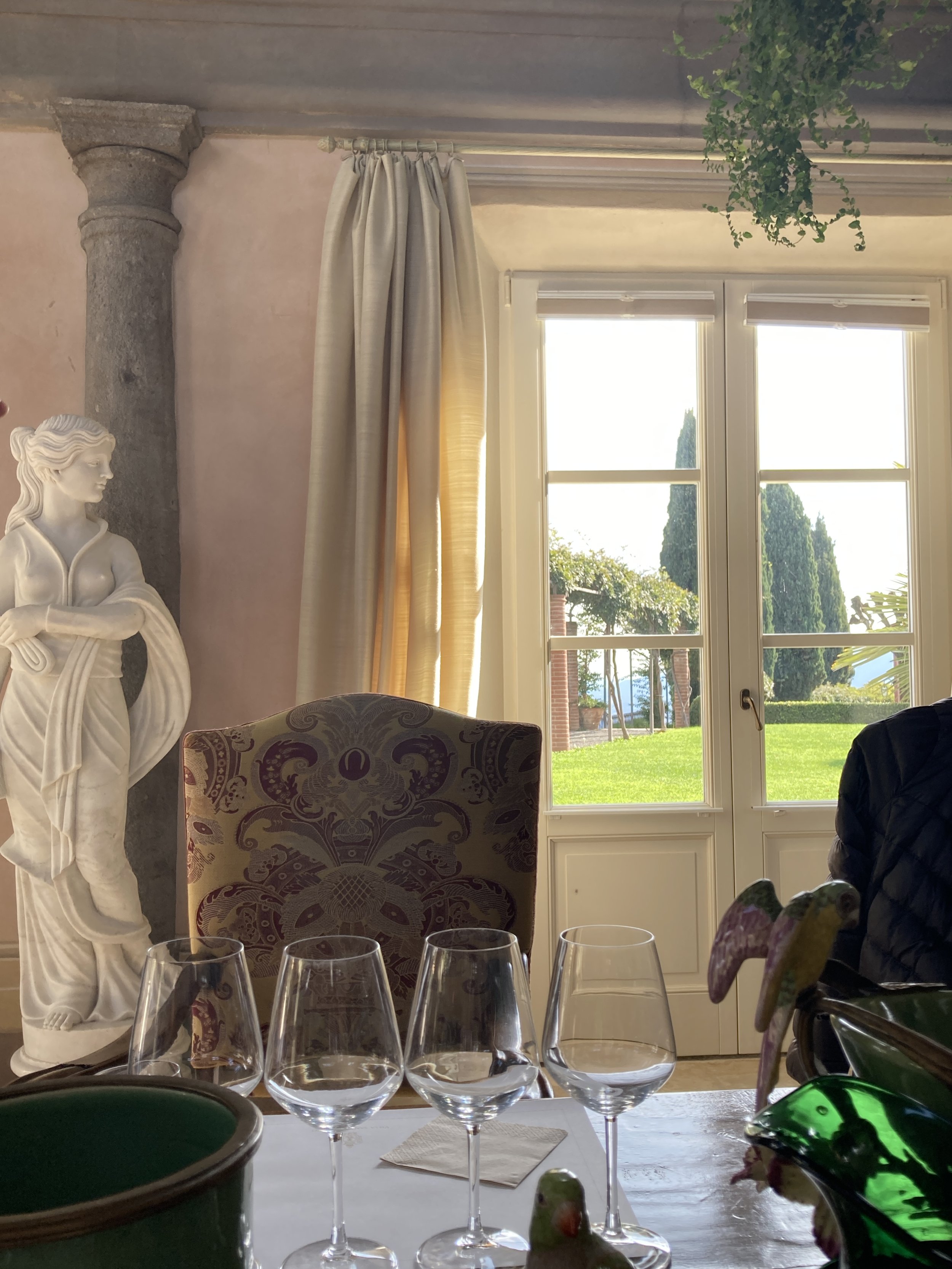
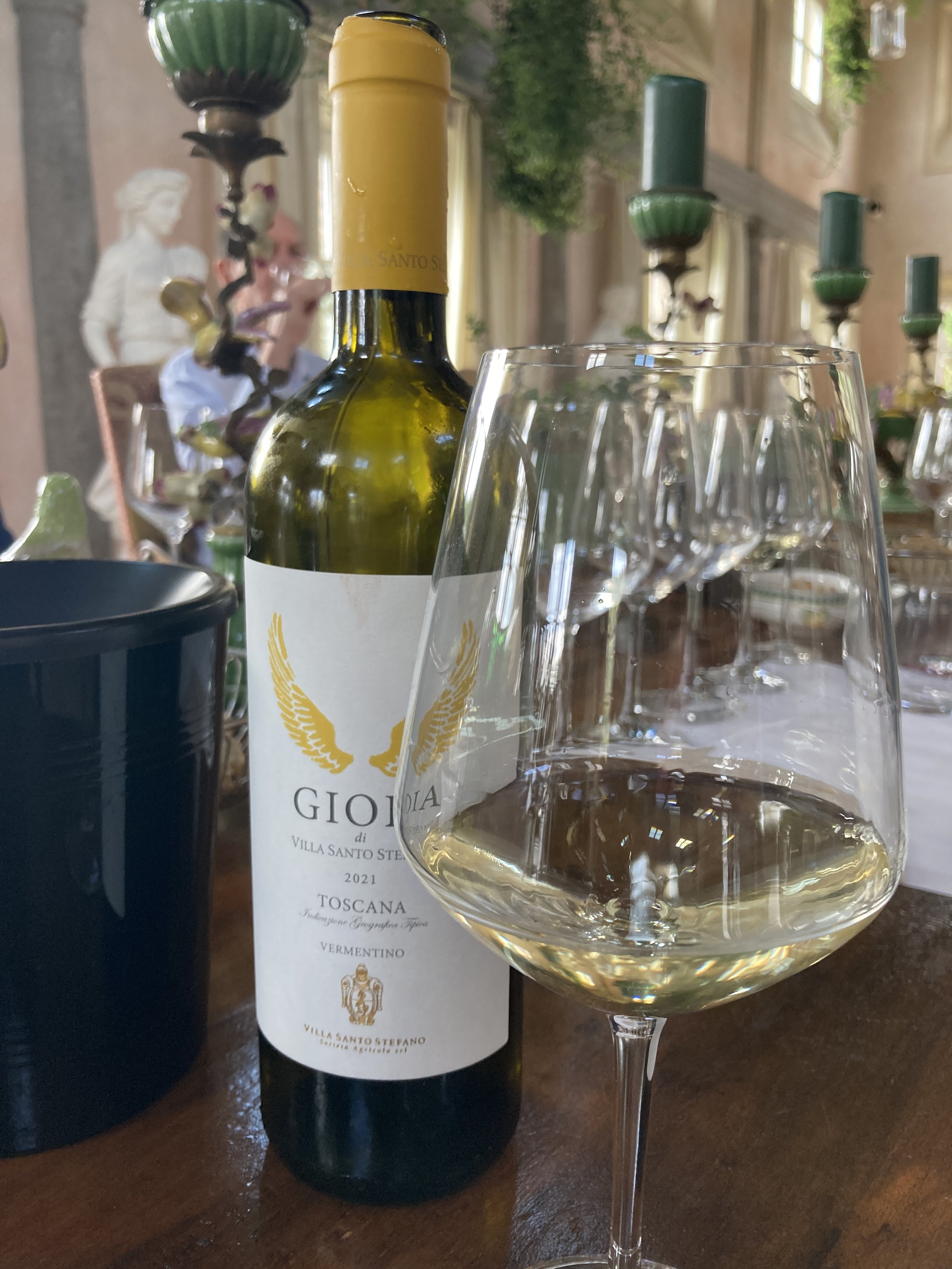
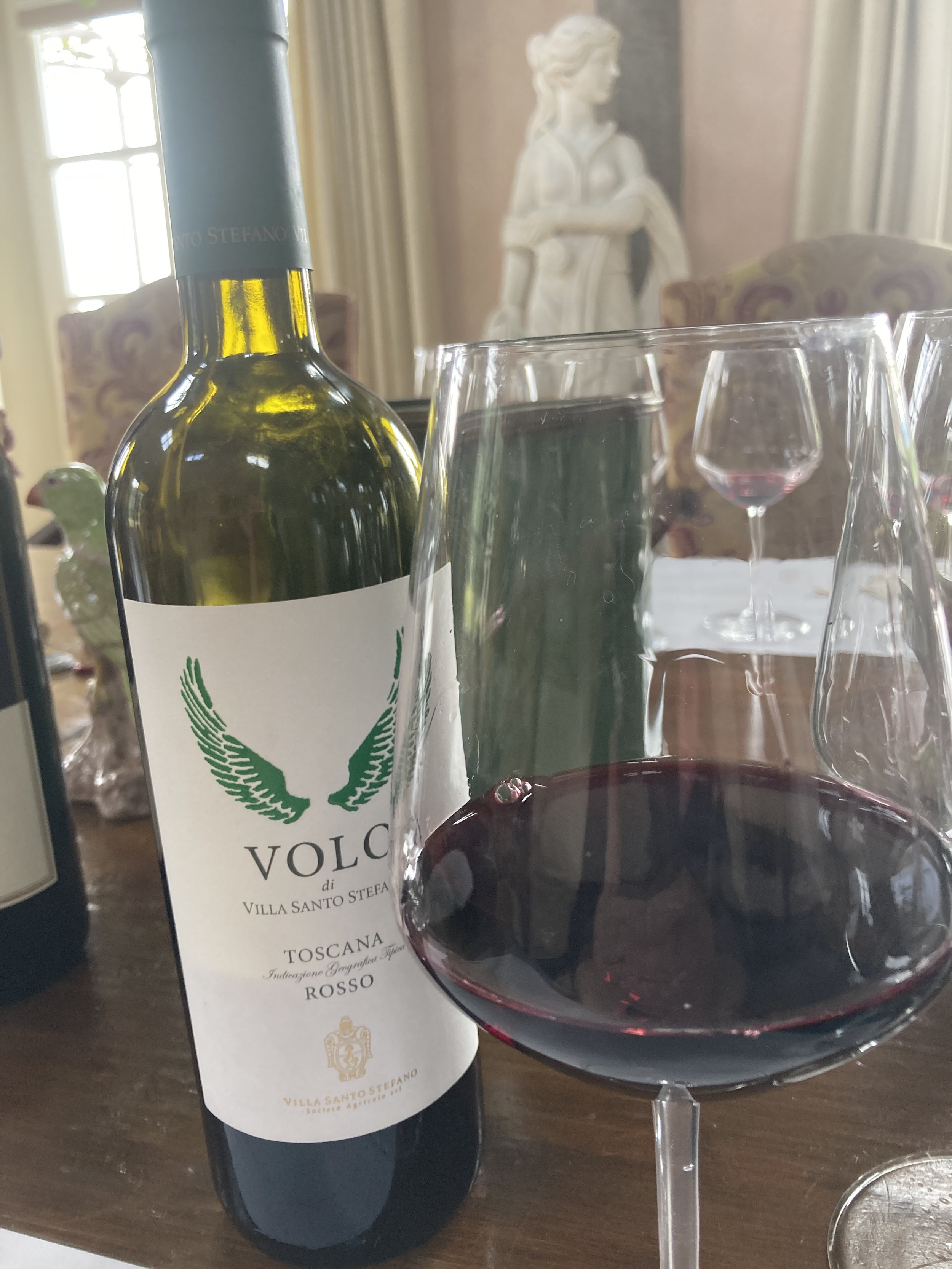
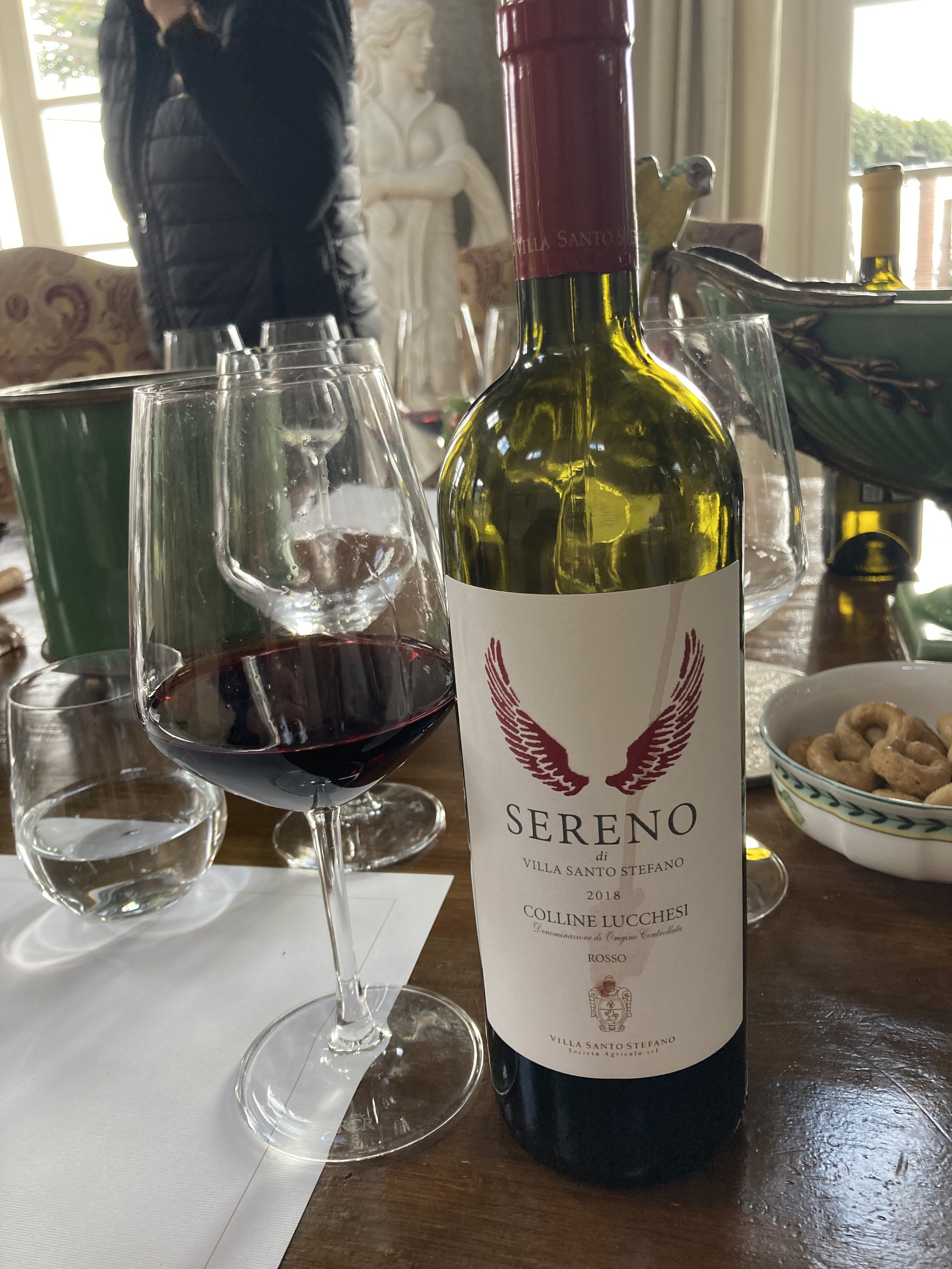
Of course the most important part of a winery is the wines themselves - and Villa Santo Stefano did not disappoint. During the tasting, in the estates beautiful banquet room, Petra discussed each wine including the grapes used and its unique characteristics.

6D95EAB6-F3EF-4CC9-9DC9-1A7DBB999D09.jpeg
6D526B1D-2290-40A7-B99B-52EF485DA0DF.jpeg
A185800F-526A-4BA5-8A8C-C969A5B45CEE.jpeg

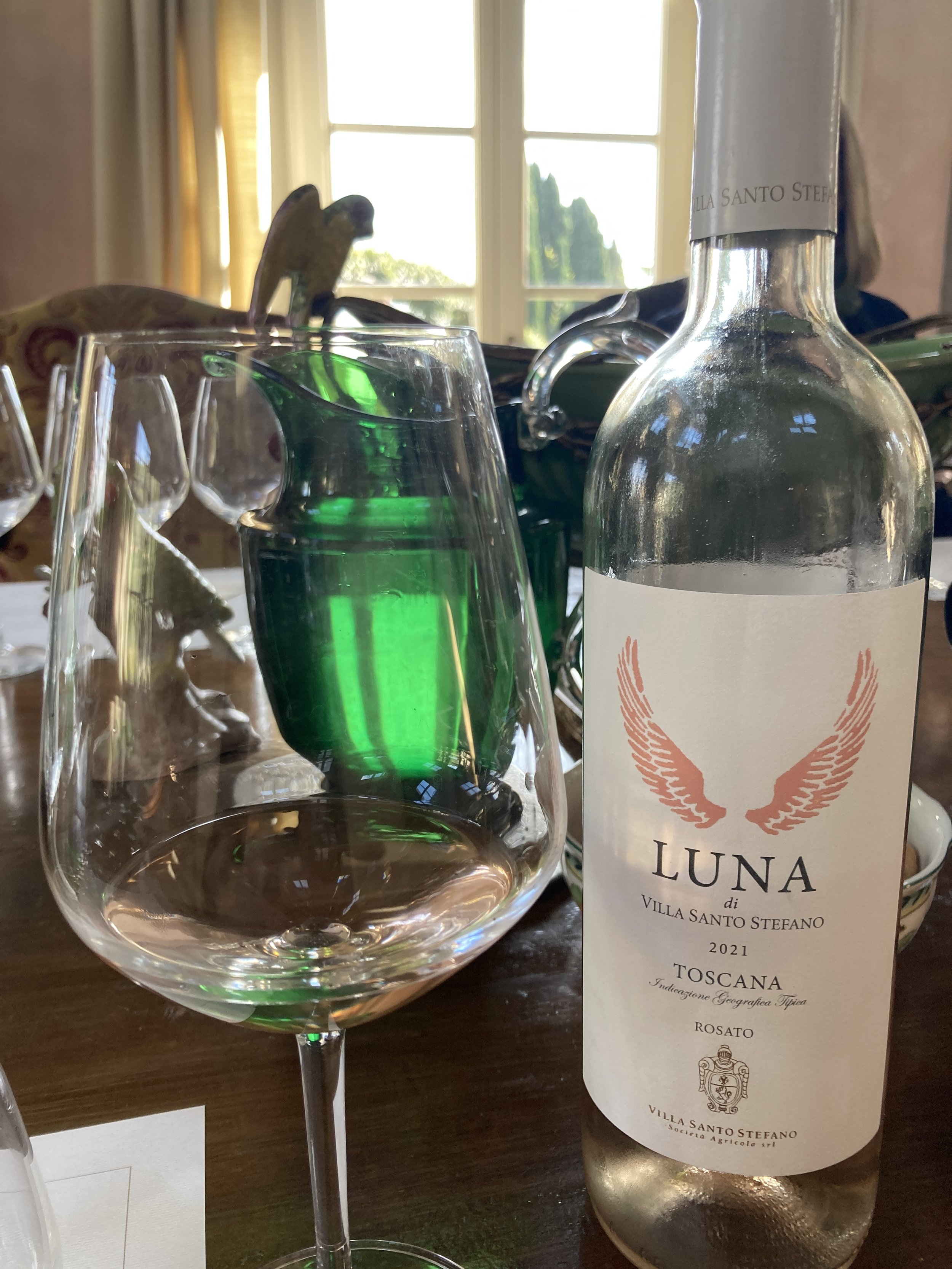
The wines we sampled included a delicate pale pink Rosato (Luna), a crisp Vermentino (Gioia), and 3 different reds (Volo, a blend of Cabernet Sauvignon, Petit Verdot, and Alicante grapes), Sereno (an 80% Sangiovese blend, a Super Tuscan) and Loto (a Cabernet, Merlot, and Petit Verdot blend).

1E9E6B13-6EAC-4FFB-B6B2-D9CA7990C99E.jpeg
38D055C8-366B-4FB1-B76F-A4346DAB583B.jpeg
6090AC66-8C8A-41DF-A428-7D05E73EBD99.jpeg
0ED12722-A5D8-496F-B1A3-38F335F49A5F.jpeg

Loto is considered the Villa’s signature wine. It was the first one produced at Santo Stefano in 2006. Lots is a lovely wine, deep red in color with just the right fullness and dryness. I could tell you I tasted berries, smoke, and vanilla but that would only mean that I read the brochure! I just know that the first taste made me smile and want to sip some more. I liked all the wines we tasted, but this is the one I took home with me - though I may have to go back in summer for some of the Rosato, which would be the perfect crisp summer wine. Then again, the Vermentino and the other two reds were really good too. I think each of my friends had a different favorite. We definitely all carried some home with us.

A visit to Villa Santo Stefano is a treat. The setting is spectacular, the guest suites drool-worthy, the production areas high-tech yet with the personal touch of the winemakers. The vats and the barrel room are the stuff of fairytales for wine lovers. Thanks so much to Petra for sharing her knowledge and love of wine and of this very special property! Thanks also go to the long ago Bertolli family and the current Reitzle - Ruge family for sharing their property and their stories.

For more information: www.villa-santostefano.it or Petra.pforr@villa-santostefano.it

November 21, 2022 /Joanne Bartram
Villa Santo Stefano Lucca, Bertolli Family Lucca, Wine Lucca, Tuscan Winery, #tuscanvilla, #tuscanwine, #VillaSantoStefanoLucca
#italytravel, #lucca, Italian culture, Italy travel, Lucca, Tuscany, Wine
  • Newer
  • Older

Powered by Squarespace