Two Parts Italy

Exploring Italy, travel, and living a flavorful life

  • Blog
  • About This Blog
  • Start Here
  • Recent Posts
  • Archives by Topic
  • Subscribe
  • Contact me

Springtime Music in Lucca

May 08, 2023 by Joanne Bartram in #lucca, #springintuscany, Festivals Italy, Italian culture, Italy, Living in Italy, Lucca, Tuscany

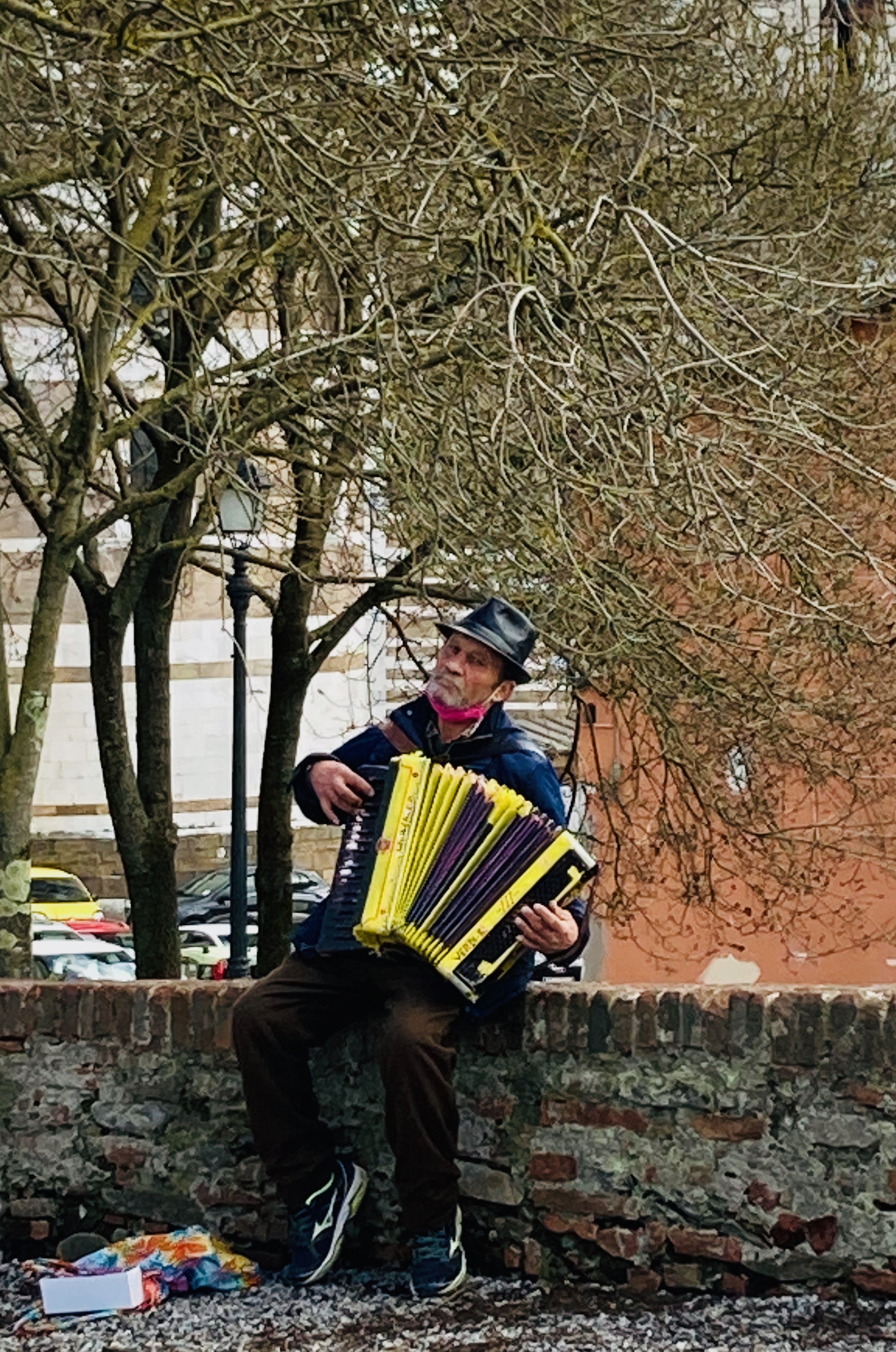
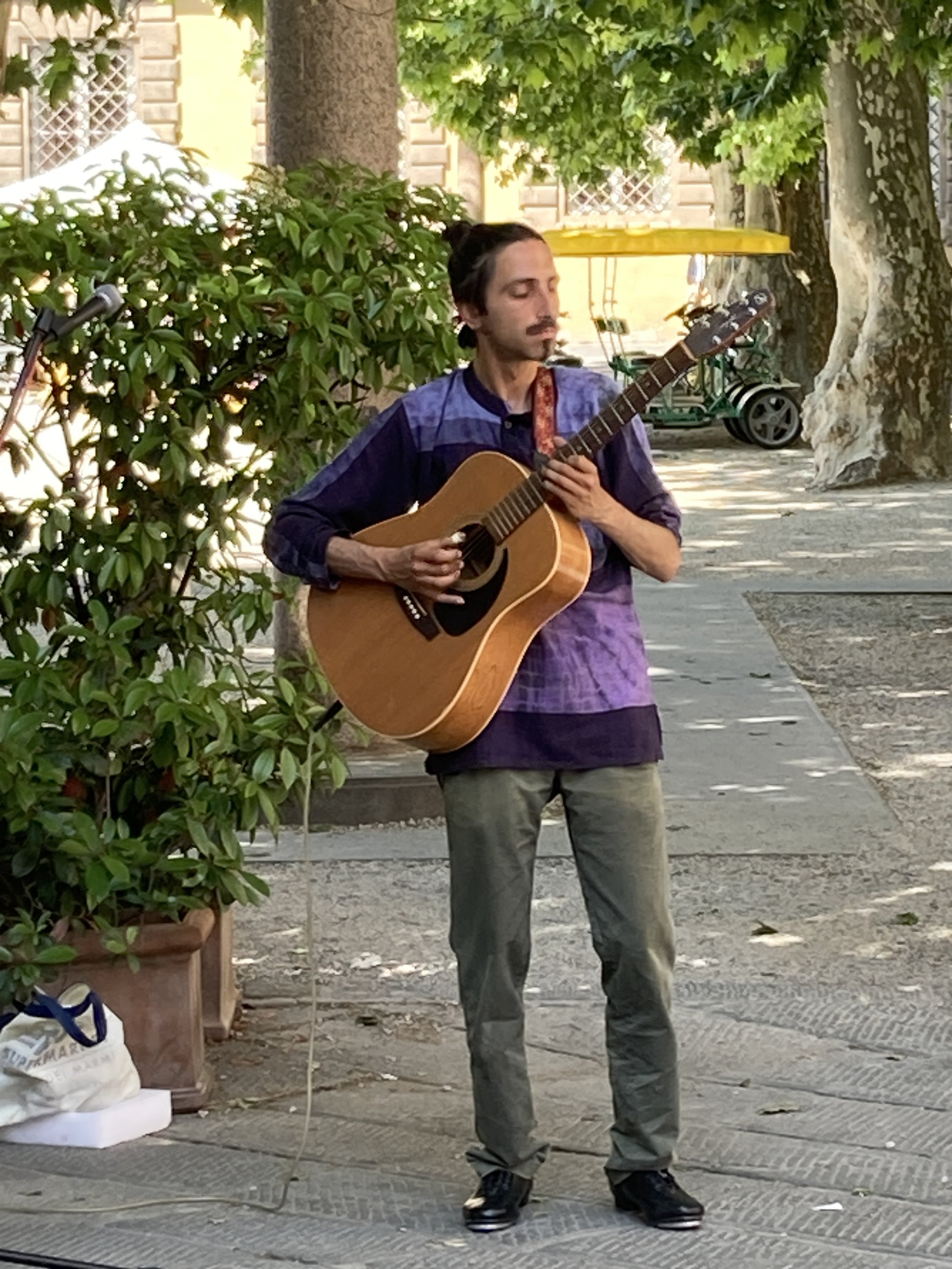
Music is an integral part of life in Lucca.   The musical heritage here is rich and spans centuries.  Buskers frequently entertain passersby with everything from classic Italian songs on an accordion to street-side opera or folk music under an ancient loggia.  
9E765546-766E-479E-94E5-8F37E5A4D076.jpeg
IMG_1348.jpeg

Local musicians perform at cafes and bars, up on the walls, and in the piazzas.  It’s hard to beat a spring evening spent sipping a spritz while listening to music in a medieval square.
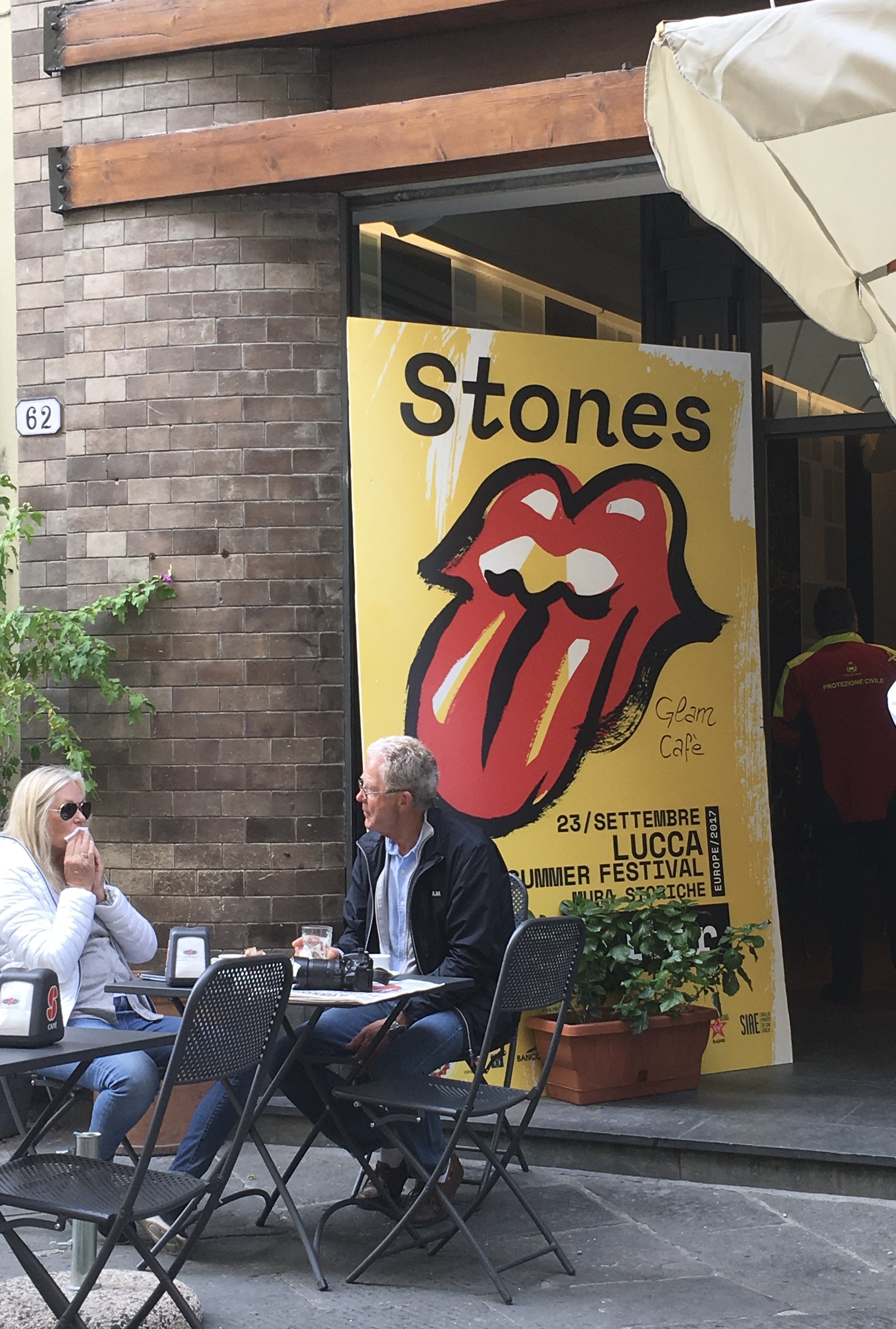
 Crowds flock to Lucca each summer for Lucca Summer Fest – a contemporary music festival with a wide variety of Italian and international performers. 

This year Norah Jones, Bob Dylan, Kiss, Pat Methany, and Lil Nas X are among the scheduled acts (quite a diverse group!).  Several years back, the Rolling Stones headlined, performing on the green space just outside Lucca’s ancient walls.  That was fun!


But my favorite musical events in Lucca involve classical composers, some of whom were born here. 

Generations of the Puccini family called Lucca home, including 4 generations of sacred music composers, all of whom served as Maestro di Cappella (choir master) at the Cathedral of San Martino. 

Puccini statue in Piazza Cittadella, Lucca. His childhood home is in the background.

The 5th generation saw the Puccini we all know best - Giacomo, born in Lucca in 1858 – shift the family musical focus to opera.

His family home is now a museum. A large bronze statue of “il Maestro”, cigarette in hand and looking rather rakish, sits in Piazza Cittadella near the museum shop. 

Puccini is revered here, so much so that a selection of his arias are performed every evening in the church of San Giovanni. 
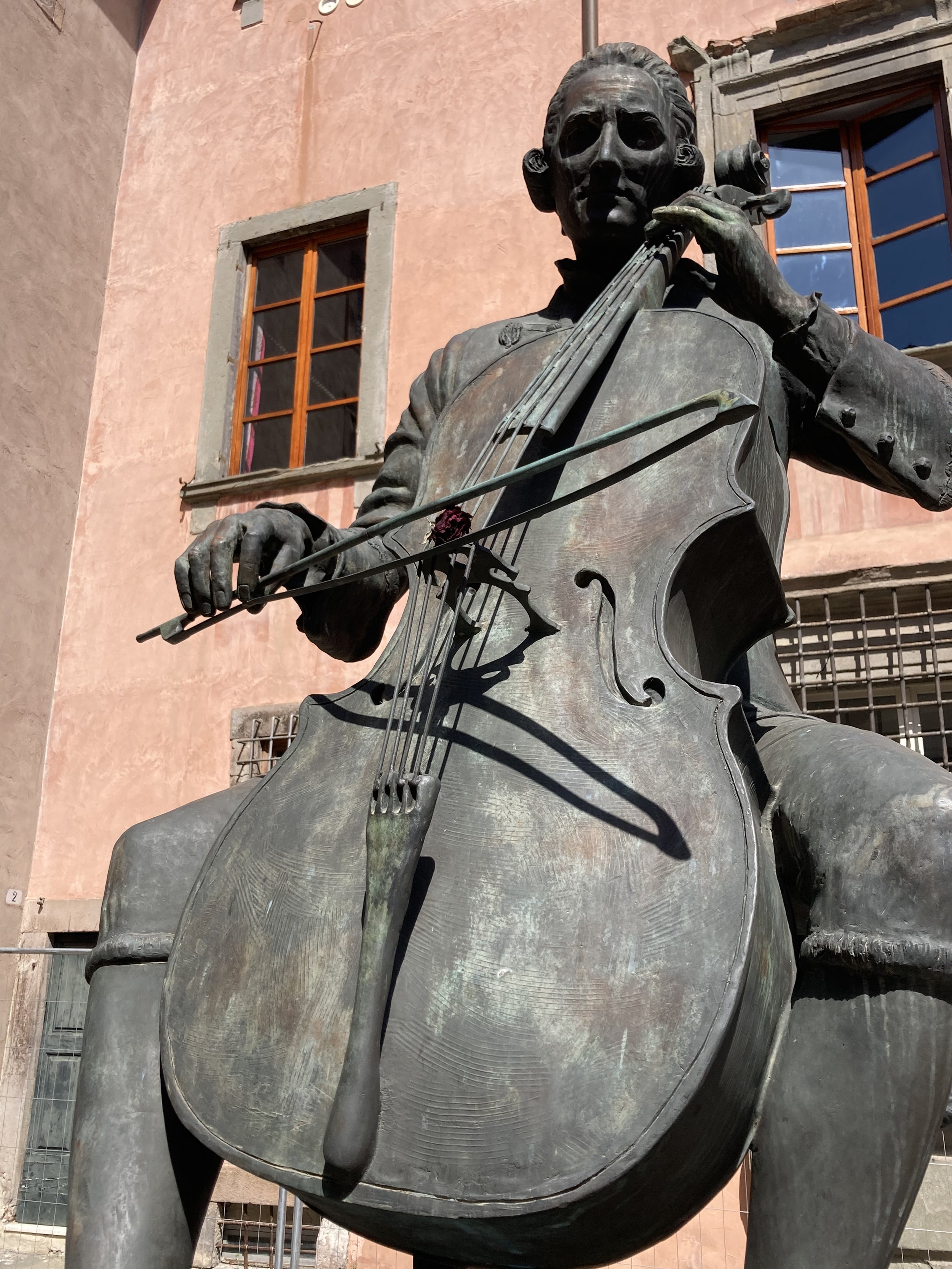
 

Statue of Luigi Boccherini in Lucca

Puccini was not the only famous composer to come from Lucca.  Luigi Boccherini was born here in 1743.  He was a cellist and an early composer of music for string quartets. 

Today, the Boccherini Institute is a place where young musicians train and perform.  Just a few steps from my apartment, the sounds of musical practice coming from the building grace my morning walk most days. 

Perhaps not as well known outside of Italy as Puccini, his cello concertos are incredibly beautiful.  When I want to relax, Boccherini is on my playlist.


To celebrate its classical musical heritage, each spring the city hosts the Lucca Classica Music Festival. 

During the event, musical performances are held throughout the historic center of town – in gardens, underneath the ancient walls, in churches, theaters, and piazzas. 

Performers come from around the world and include choruses, string quartets, orchestras, youth groups, guitarists and even brass bands!

The works of Puccini and Boccherini are well represented during the festival, along with other opera and classical music composers, jazz works, world music, and some distinctly modern pieces. 

 It’s impossible to attend all the performances and difficult to choose among them.  During this year’s festival, when I found a performance that promised Latin music in the spectacular setting of the Garden of Palazzo Pfanner, I knew I had to attend. 

The garden at Palazzo Pfanner - a wonderful, casual setting for a classical music performance during the Lucca Classical Music Festival..

The music was by Quartetto Lunae, a string quartet playing in magical harmony.  They played pieces from Cuba, Mexico, and South America, everything from a Piazzolla tango to Besame Mucho and La Bamba.  Listening to the beautiful notes, surrounded by quiet birdsong and garden roses, was incredibly moving.

Quartetto Lunae

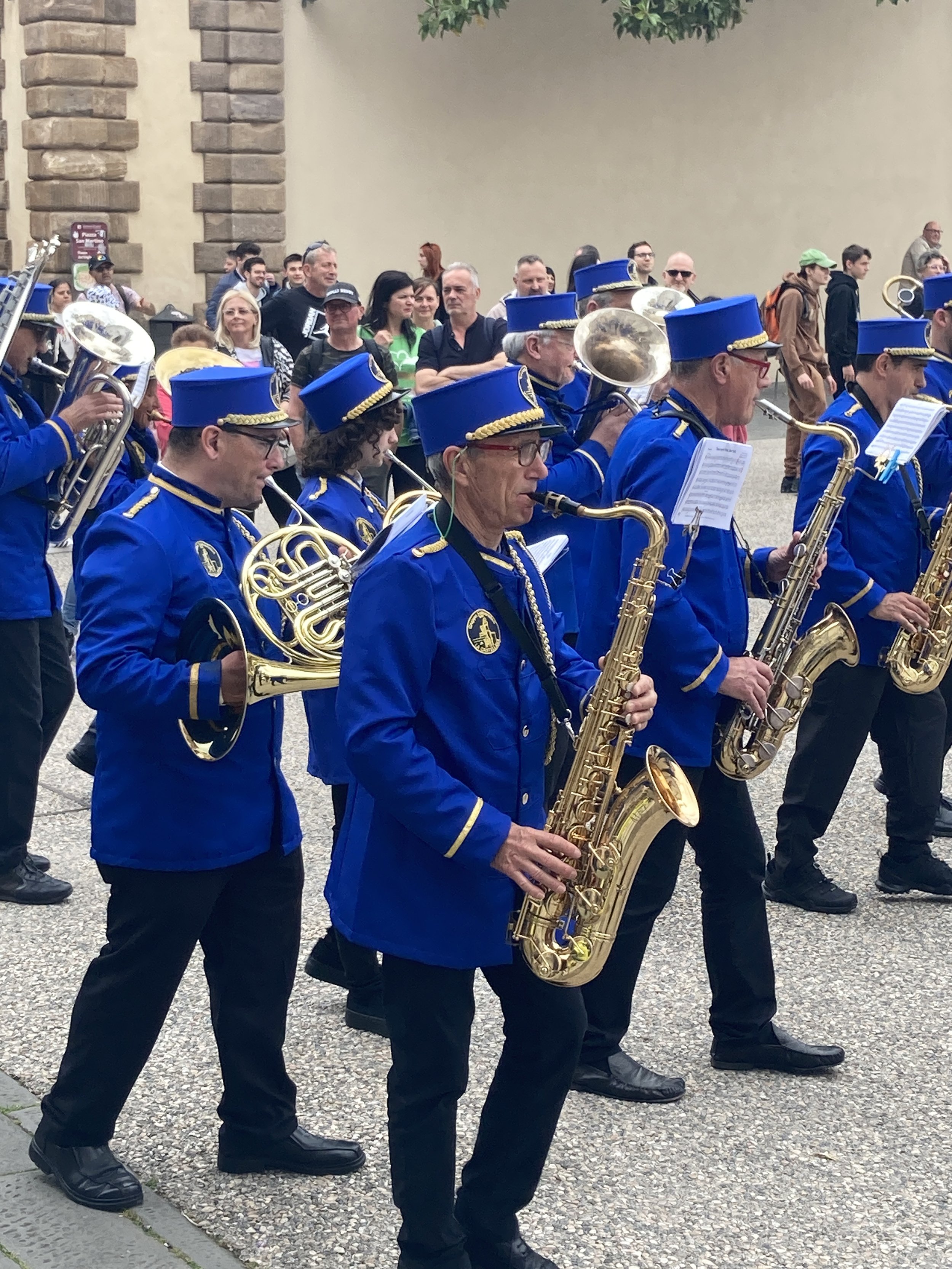
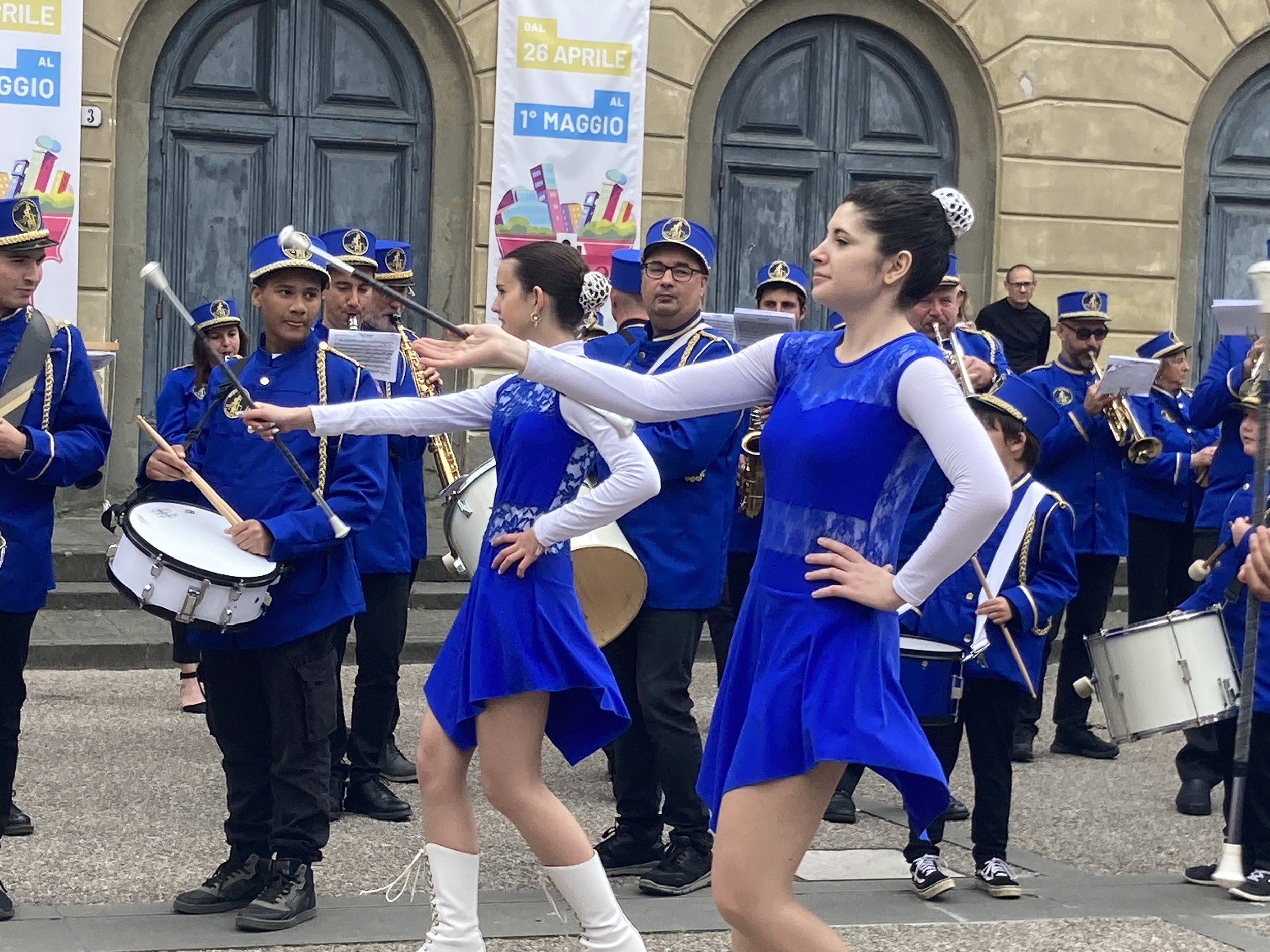
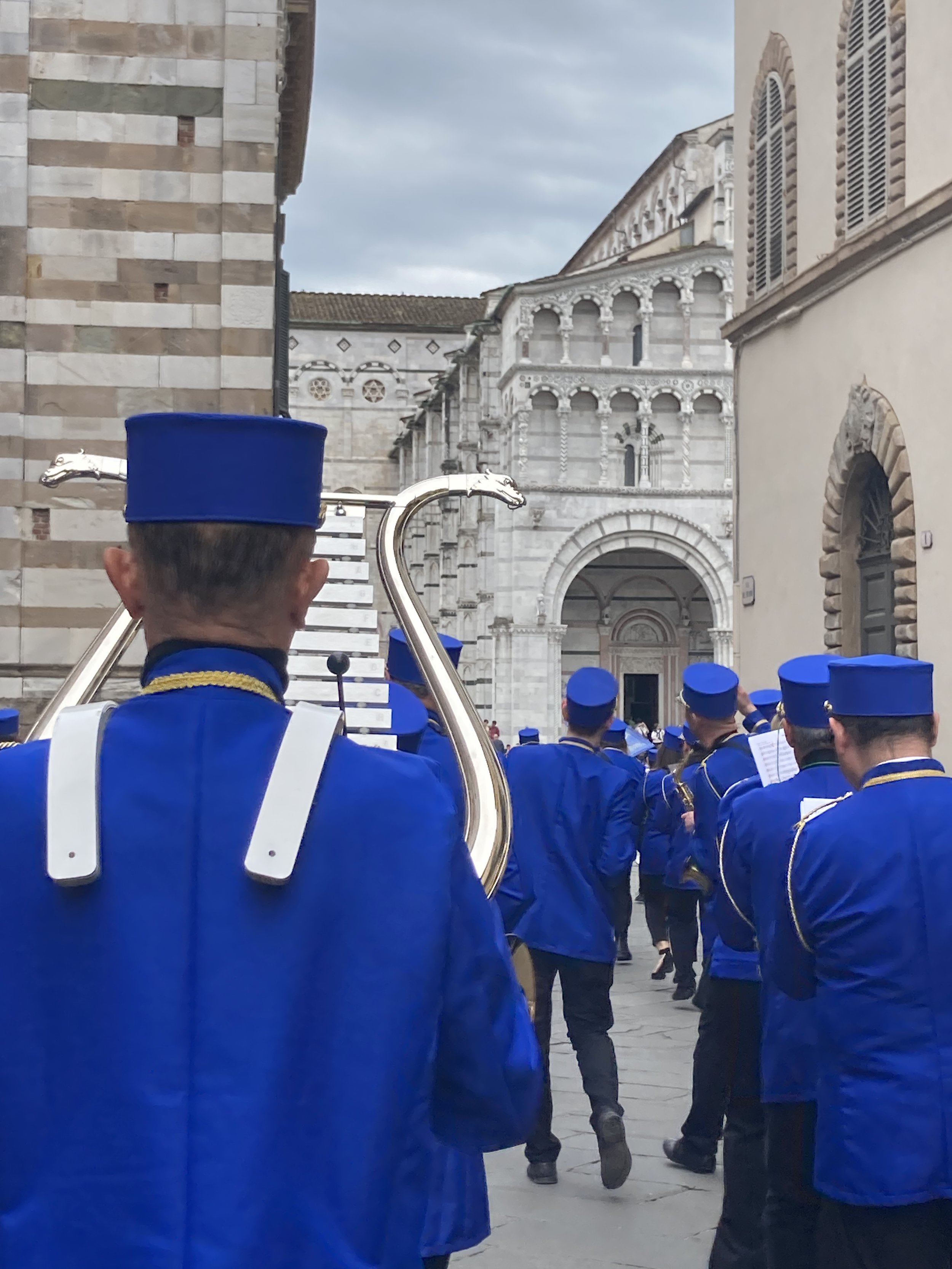
 A fun counterpoint was the performance by the Filarmonica Giacomo Puccini di Nozzano.  This large brass band assembled in Palazzo Napoleone, Lucca’s largest piazza.  From there they marched across town, stopping in a series of piazzas to play for the gathered crowds.  Add in some baton twirlers and it was quite a lively event!
746E9C19-5C61-452C-AE9B-189E43FD5933.jpeg
55F81D4F-D9FE-41E5-91E1-5703ADCFC776.jpeg
685C7255-A85C-46D7-BBF8-2C1AFFF3B9CB.jpeg

 This year’s Lucca Classica ended on May 1st.   I can hardly wait to see what next year’s festival brings!

This concert goer found the perfect seat - watching the concert from inside the limonaia at Palazzo Pfanner!

May 08, 2023 /Joanne Bartram
Lucca Classica, Music Lucca, Music Festival Italy
#lucca, #springintuscany, Festivals Italy, Italian culture, Italy, Living in Italy, Lucca, Tuscany

Wild flowers on a late April day along Lucca’s walls

Appreciating April in Lucca

April 24, 2023 by Joanne Bartram in #lucca, #medievalitaly, #springintuscany, Festivals Italy, Italian culture, Living in Italy, Lucca, Tuscany

 Apprezzare is an Italian verb meaning “to appreciate”. That word that has defined much of my time in Italy.  I appreciate the Italian culture, the beauty of this land, the musical language (even if my mastery of it is still a long way off), the people.  Not a day goes by that I am not aware of how fortunate I am to have the opportunity to live in Lucca and travel in Italy.

 But a more specific form of appreciation is on my mind this week.  After dodging the Covid virus for the last 3 years, it finally caught me this month.  Following nearly two weeks in isolation, with some unpleasant but not scary symptoms, and multiple tampone (swabs), I finally received the all-clear to resume my normal activities.  Those two weeks were tough but brought many reminders of reasons to be thankful.  I appreciate that I didn’t get sick back when Covid was ravaging this country.  Back when there were no tests, no vaccines, no treatments, only fear.  I have a renewed appreciation for the science that gave us vaccines and the boosters which I firmly believe kept me from serious, much worse symptoms. 

I appreciate the friendly local pharmacist who administered my swabs and helped me interpret the most current rules for Covid isolation.  That the pharmacy is full of old-world Italian charm makes sitting for those nasal swabs much easier.   I am beyond grateful for a good support system here and the many friends who kept in touch and surprised me with everything from soup to cheese to decadent pastries and Easter chocolates.  I have never enjoyed finding goodies on my doorstep so much!

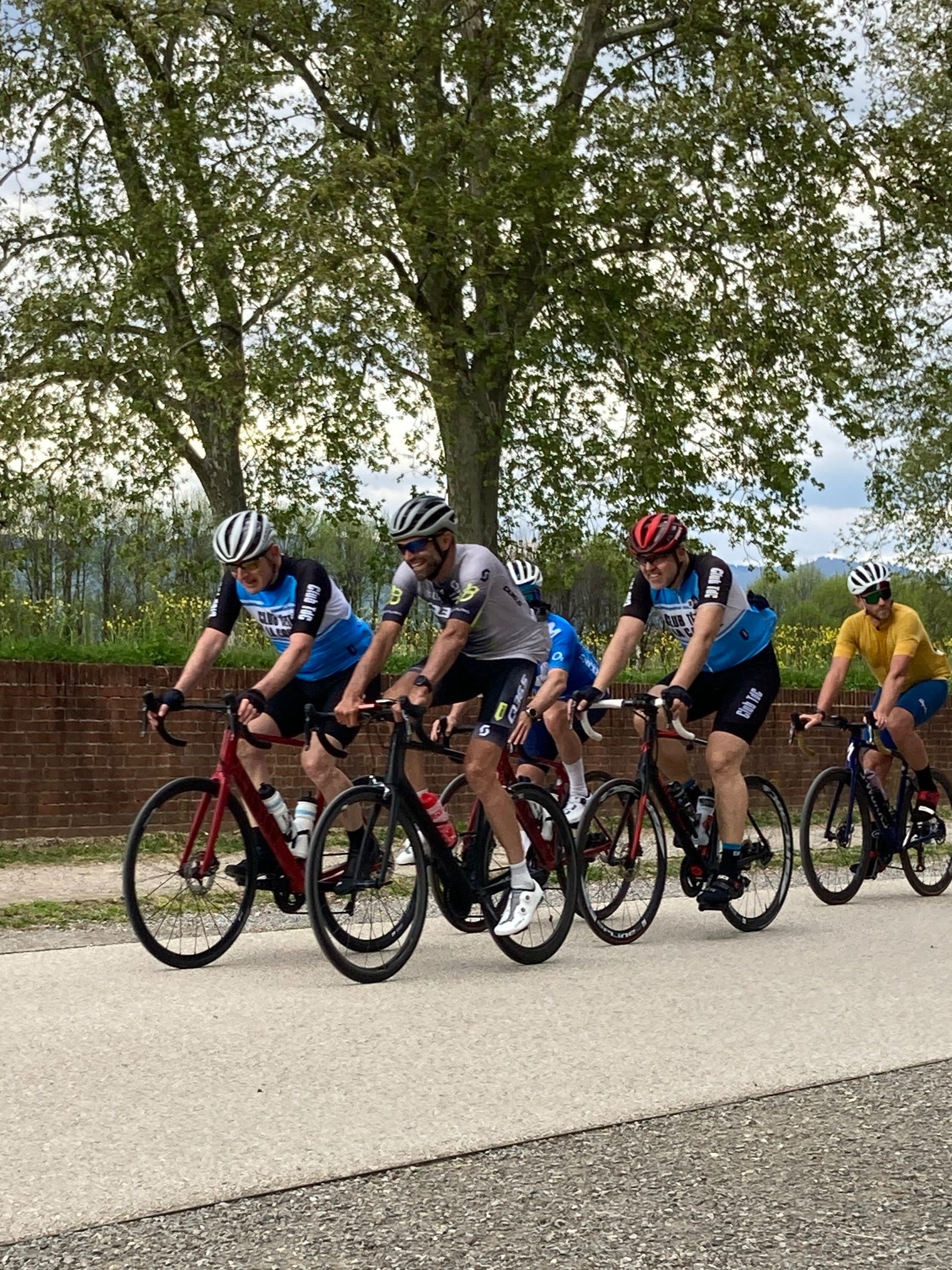
And how I appreciate being able to enjoy these last days of April in Italy.  Lucca has awakened after its winter rest and is buzzing with activity.  The wisteria are in bloom, the ancient walls are dotted with wild flowers, and trees are sprouting green leaves.  The photinia bushes outside my window are resplendent in rusty red spring leaves.  Days are getting longer and warmer.  Cafes and restaurants are setting out tables, umbrellas, and buckets of flowers.  The simple joy of an aperitivo out of doors is even better after a couple weeks of confinement. The walls surrounding the historic center of Lucca are filled with people on foot and on bicycle. Ordinary days feel extraordinary in springtime.

B3C25748-C40A-4F54-82C3-7A80A5D2D5B6.jpg
E29A17FA-083B-48DC-9D3B-F3B0B303E7C1.jpg
5CA845FC-882A-4EA9-B60A-D7FC563FEE83.jpeg

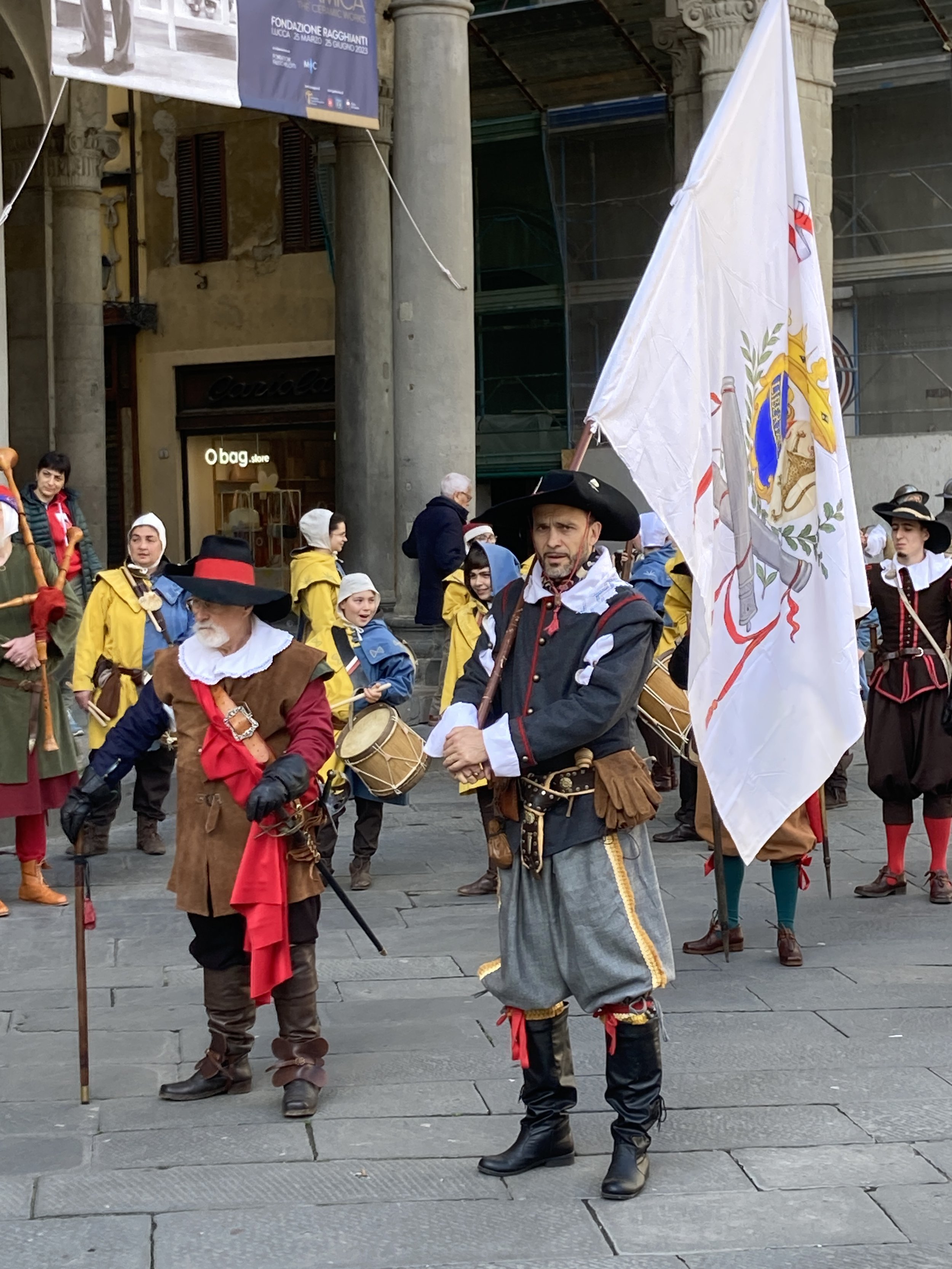
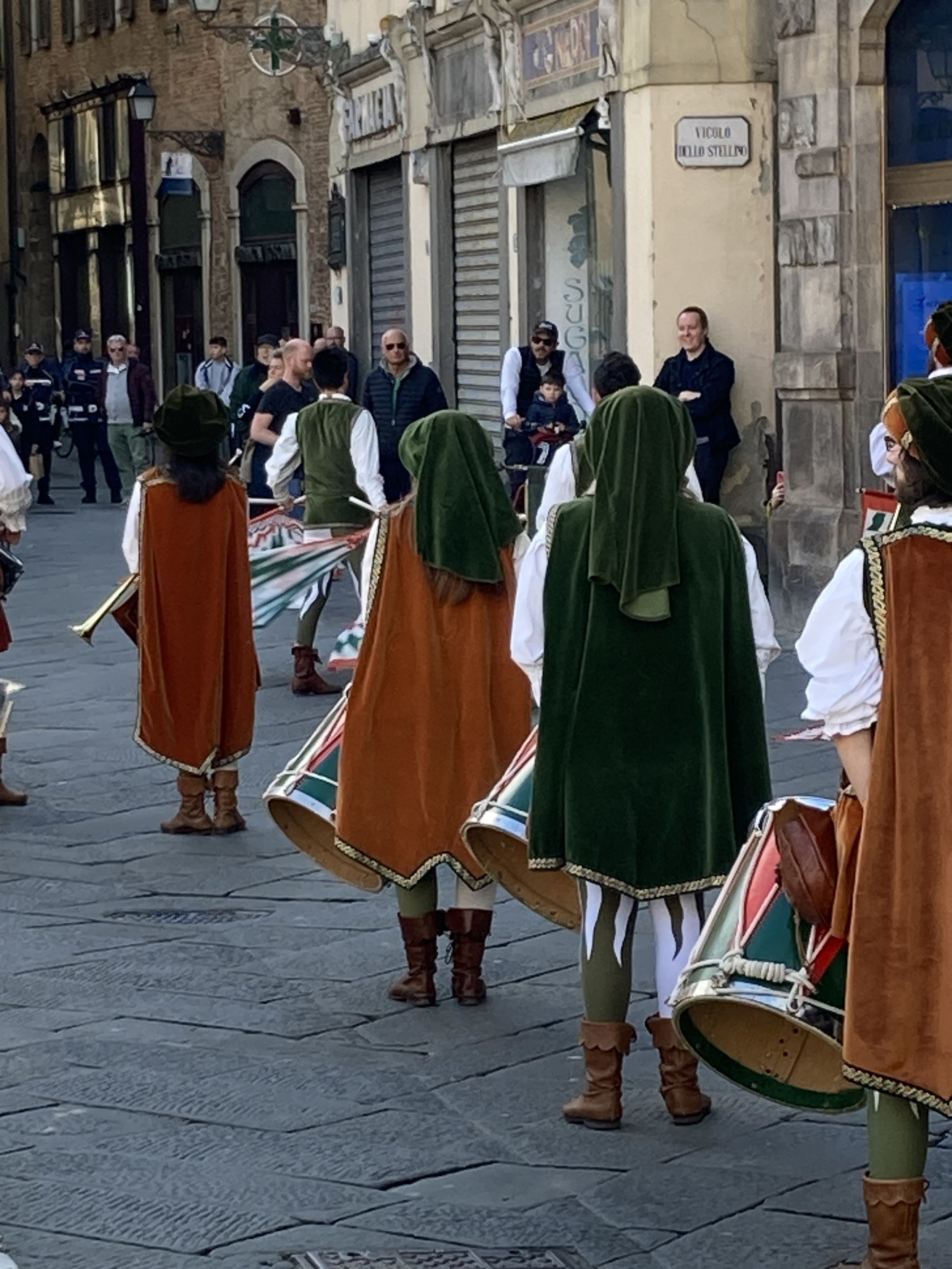
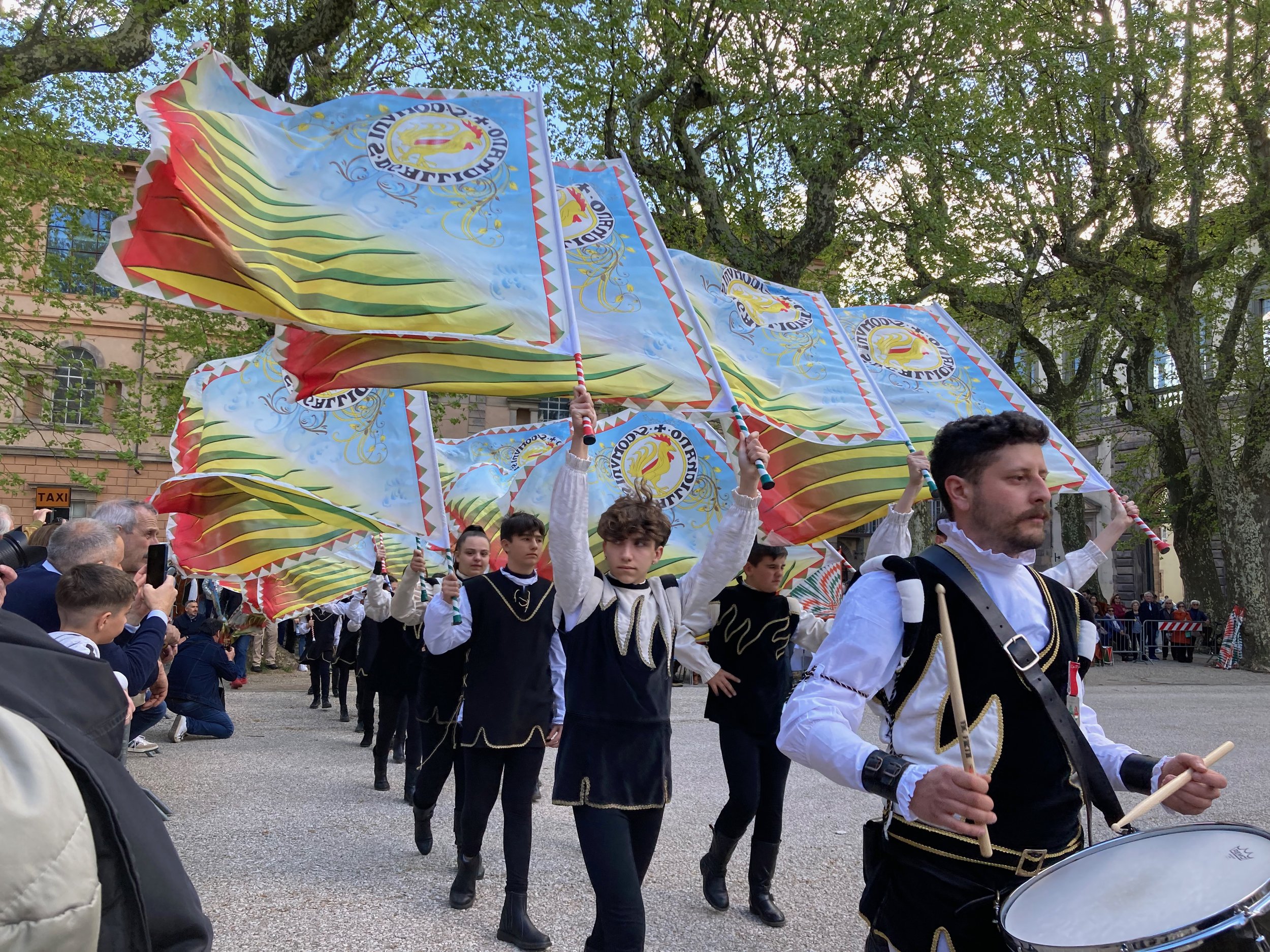
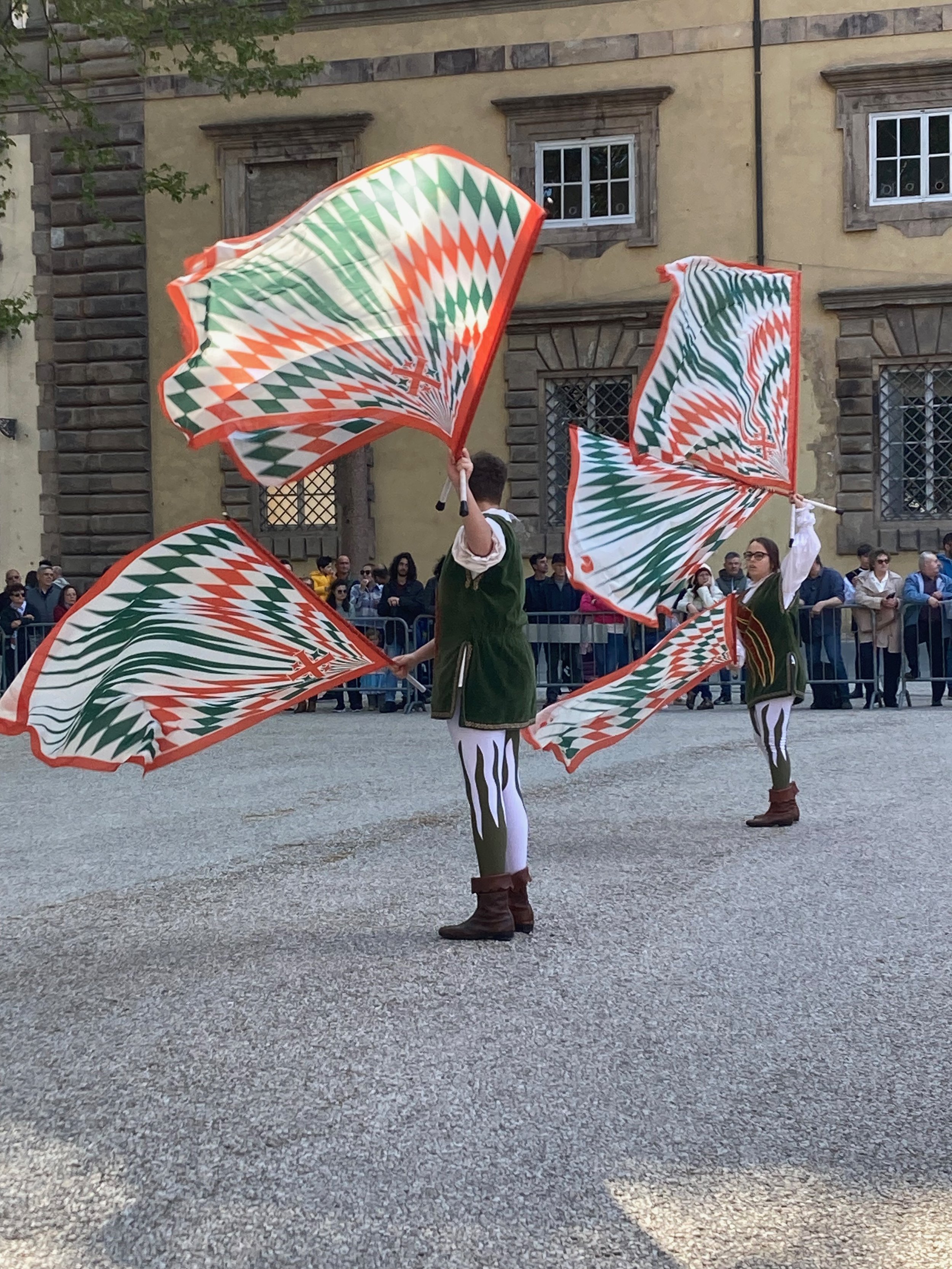
 And the spring celebrations have begun.  I may have spent Easter indoors but was free the following Sunday to see the Liberation Day pageantry.  That event, which celebrates the long ago (14th century) liberation of Lucca from control by Pisa, filled Lucca with the sound of drums.  Trumpets, played by persons in Medieval costumes, heralded the arrival of flag throwers and men carrying crossbows.  There were bow shooting competitions, flag throwing demonstrations, and a wonderful, costumed procession.  I certainly appreciate that I was recovered and able to enjoy the fun.

877E9EC3-6B99-40C9-A25D-47B28D5583EB.jpeg
704A0971-E1C1-4DB6-AB68-46DB9FCB27E4.jpeg
IMG_1925.jpeg
IMG_1986.jpeg

 Coming up next is an event I look forward to every year – the flower festival in honor of one of Lucca’s favorite saints – Santa Zita.  I will appreciate every minute !

April 24, 2023 /Joanne Bartram
covid italy, spring in Italy, lucca spring, festivals Lucca
#lucca, #medievalitaly, #springintuscany, Festivals Italy, Italian culture, Living in Italy, Lucca, Tuscany

Pontremoli. A beautiful village with an interesting literary history.

The Booksellers of Pontremoli

March 13, 2023 by Joanne Bartram in #italytravel, Festivals Italy, Hill Towns Italy, Italian culture, Italy travel, Italy, Lunigiana

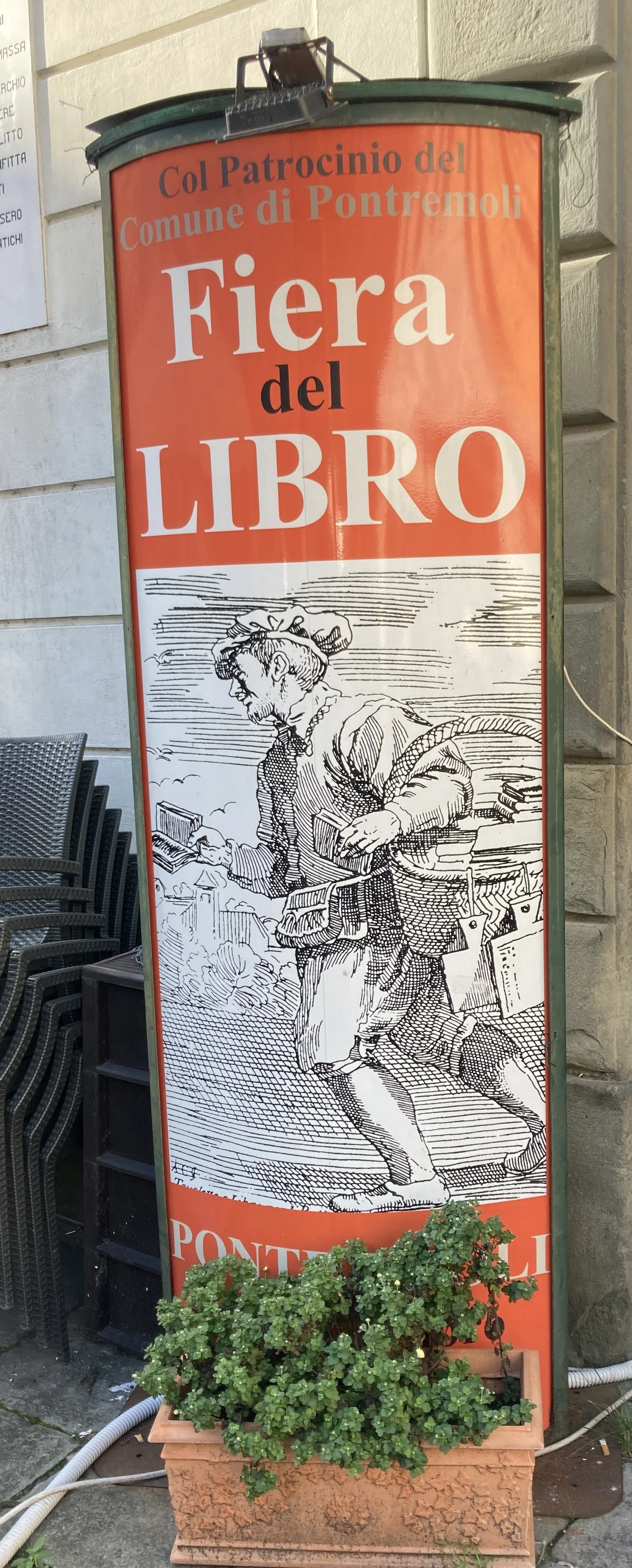
The image of an itinerant bookseller stands outside a bookshop in Pontremoli

Imagine a time, in the centuries before printing was established, when books where hard to come by.   This was certainly the situation long ago in the remote and mountainous areas of Northern Italy. Printing of books did not arrive to the area until the late 15th century. What a miracle those early books must have seemed!

In the 16th century, itinerant booksellers began to travel from town to town, carrying baskets full of books. They reached the small hamlets throughout northern Italy, even venturing all the way to Germany, setting up temporary stalls to sell books.

These traveling booksellers came from the Lunigiana region of northern Tuscany, particularly from the towns of Pontremoli and Montereggio.  The selling of books became a family business, a tradition passed down from generation to generation.  Over time the work of the booksellers became more established. Today, many bookstores in northern and central Italy can trace their roots back to Pontremoli’s traveling booksellers.

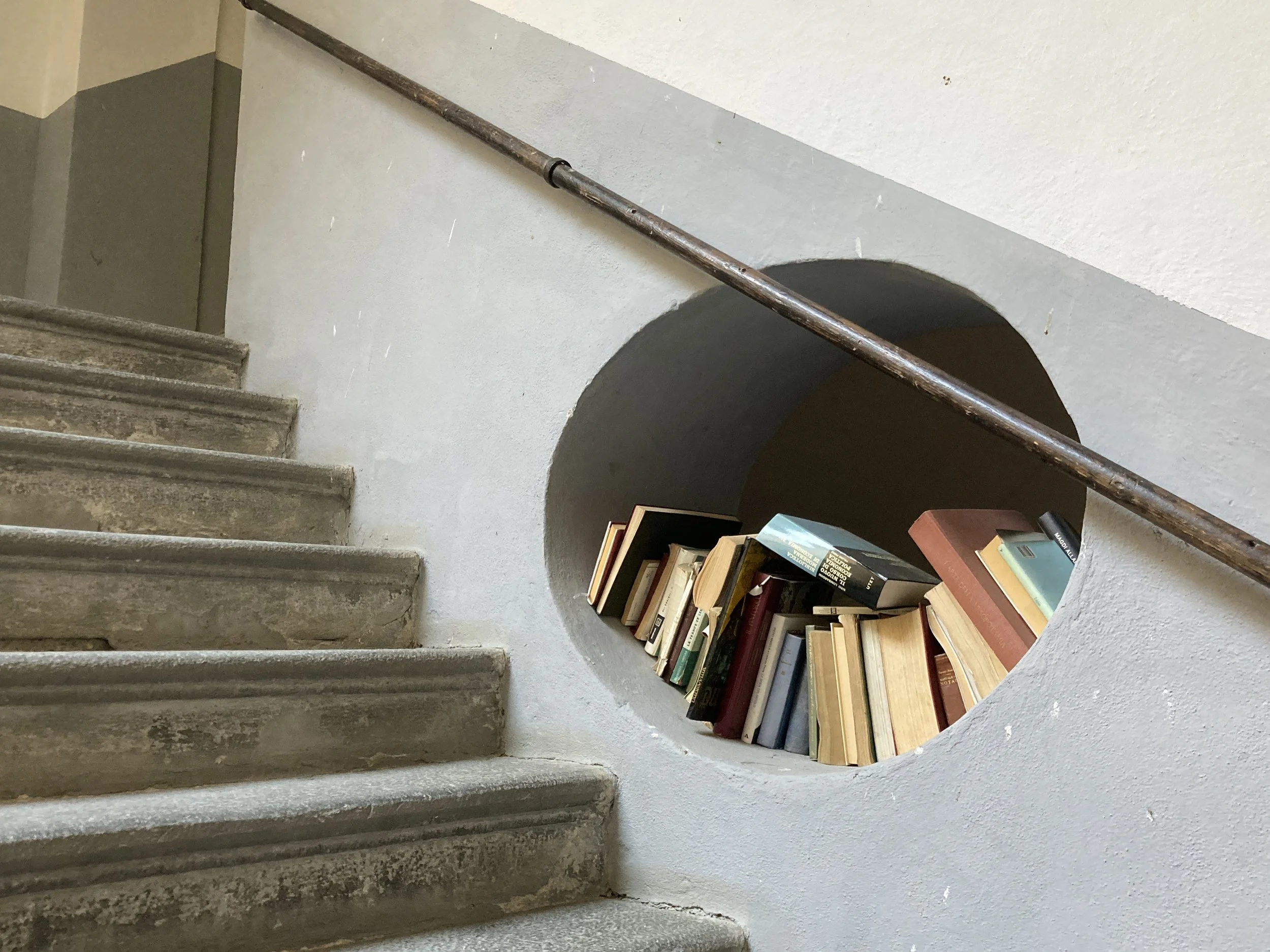
I first noticed the books of Pontremoli in this stairwell leading up to the apartment I was renting.

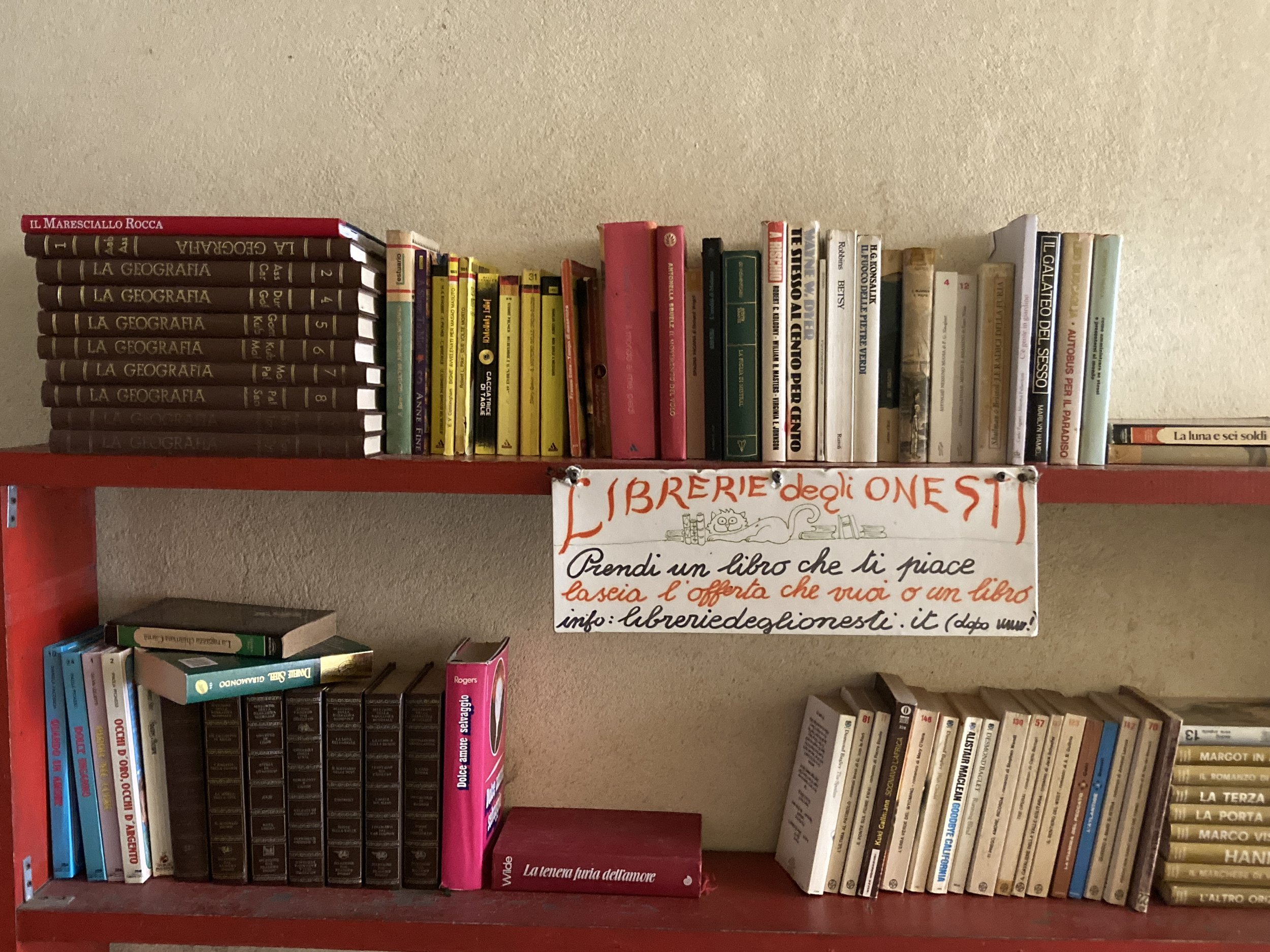
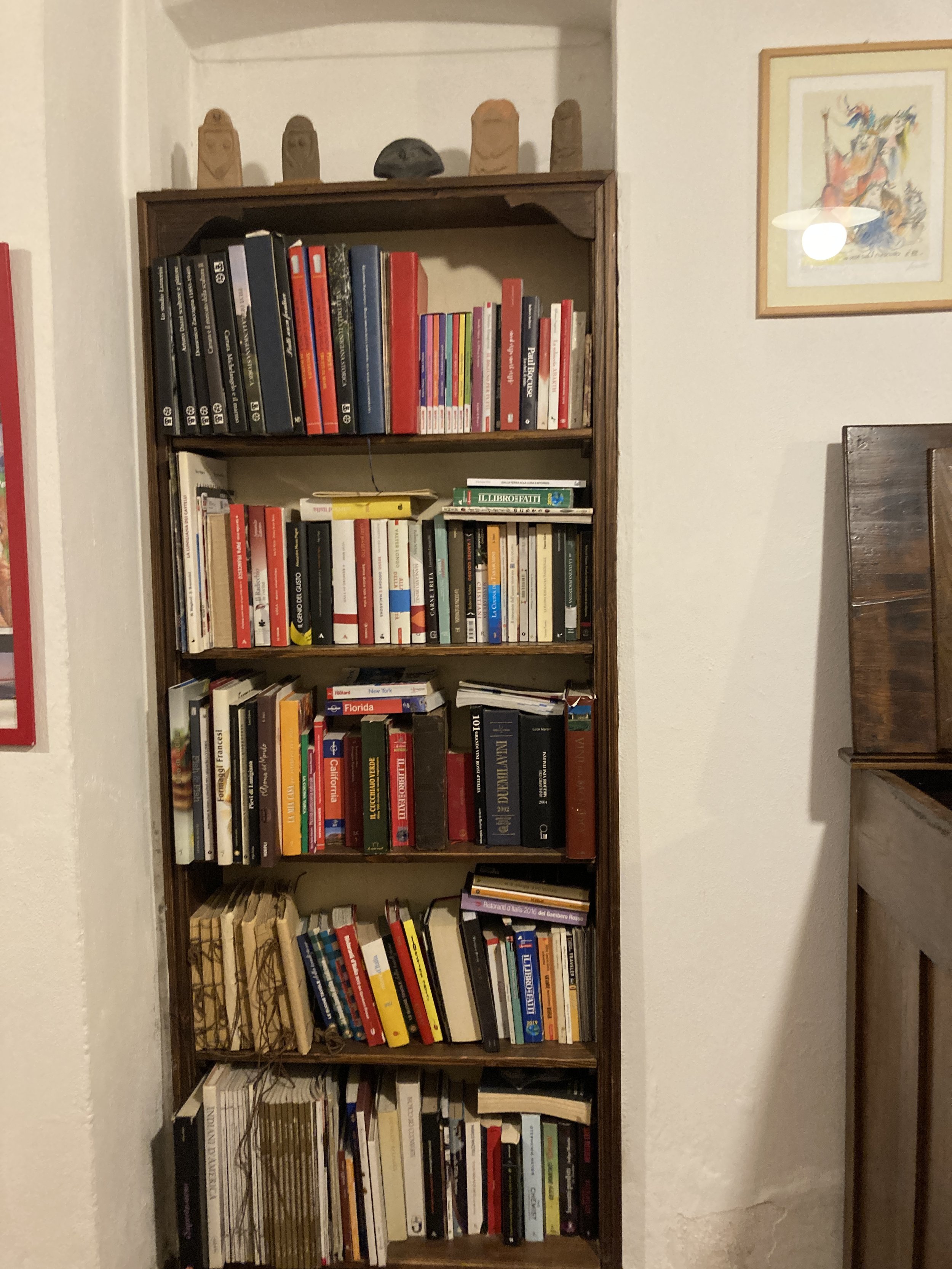
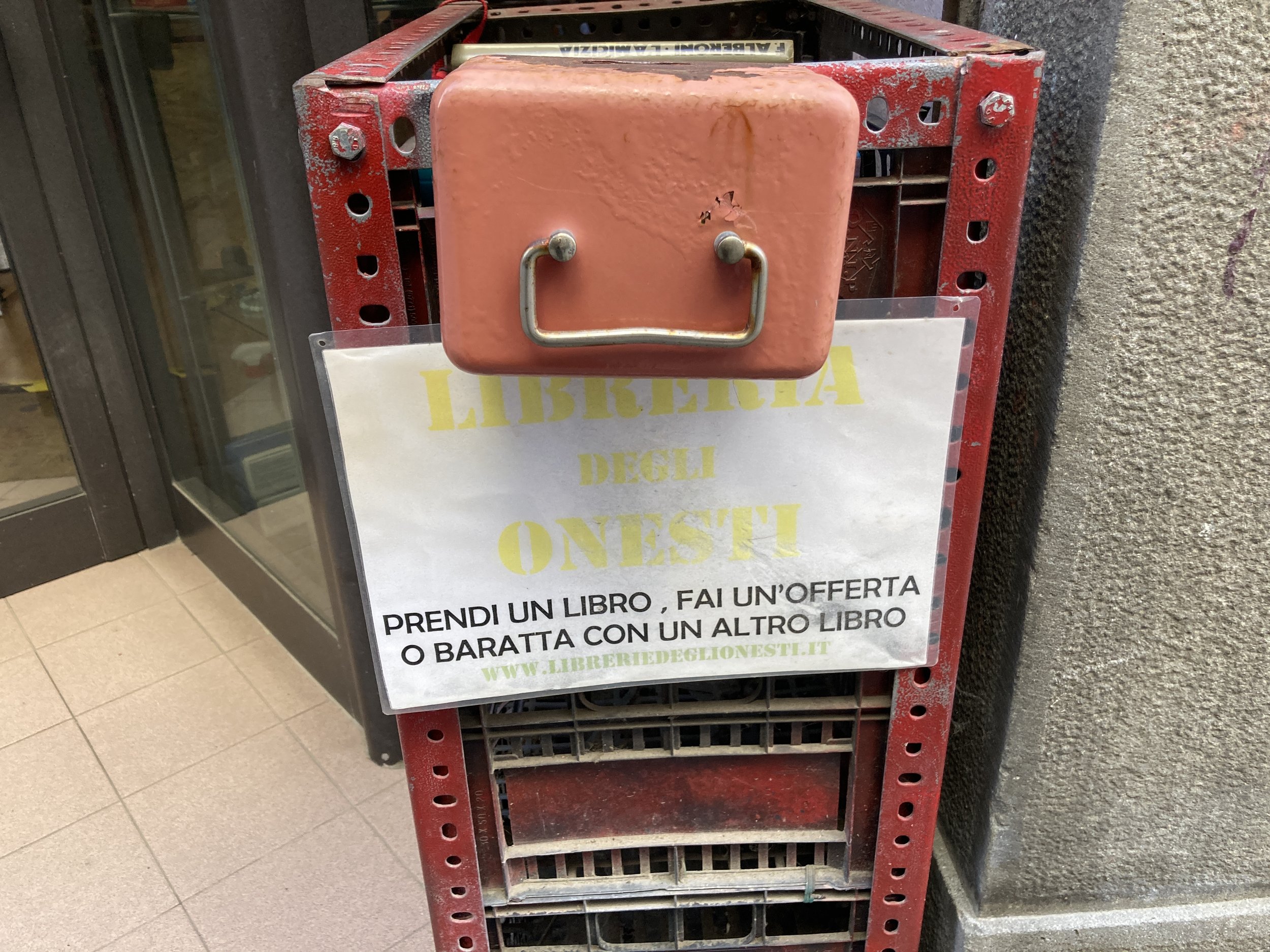
I didn’t know much about this history before I visited Pontremoli last fall.  I was immediately struck by the fact that books were everywhere.  Books filled nooks along the staircase in the Airbnb apartment where I stayed.  Books sat outside shops in small baskets, payment on the honor system.  Books lined shelves in cafes and restaurants.  There was also a large shop selling new and used books in Piazza della Repubblica, right in the heart of the historic center.  Pontremoli seemed to be a city of books.


9C69B372-51A5-4CC1-937D-D9A110A4F825.jpeg
EA1711BC-1F2A-438E-AB39-5FD5A5420E84.jpeg
F15276D3-4DAE-458C-8B80-38B6E3D4415E.jpeg

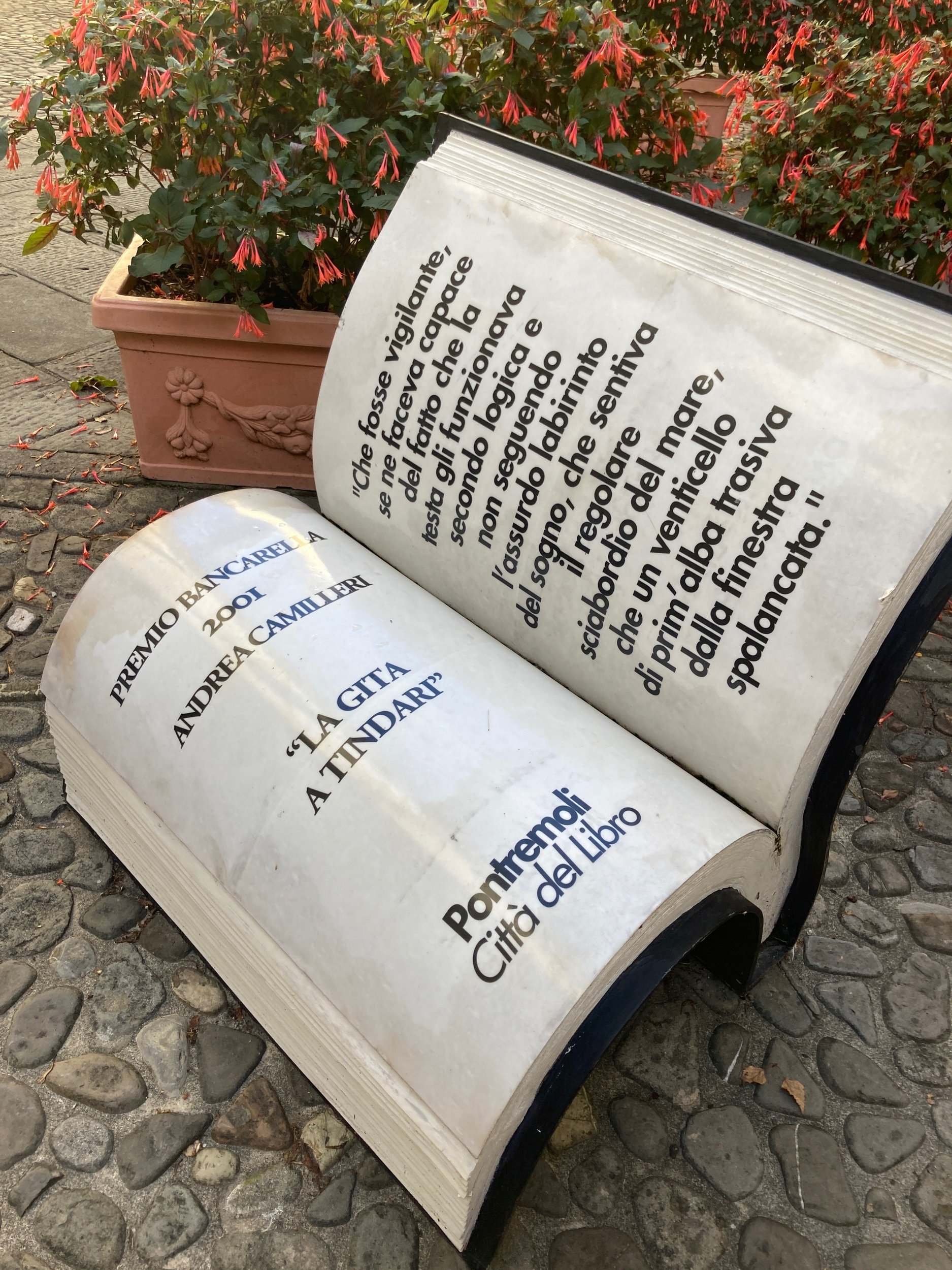
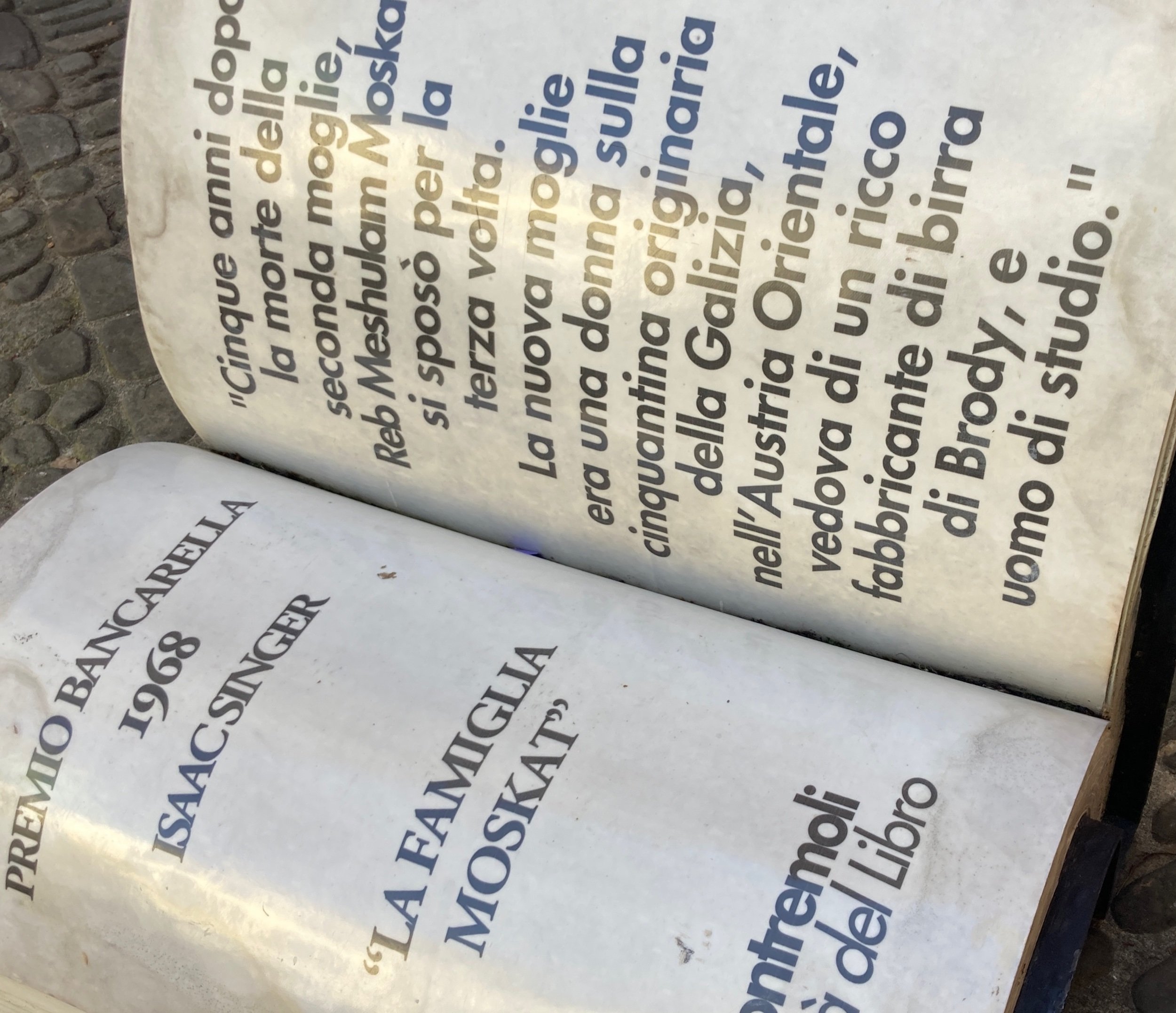
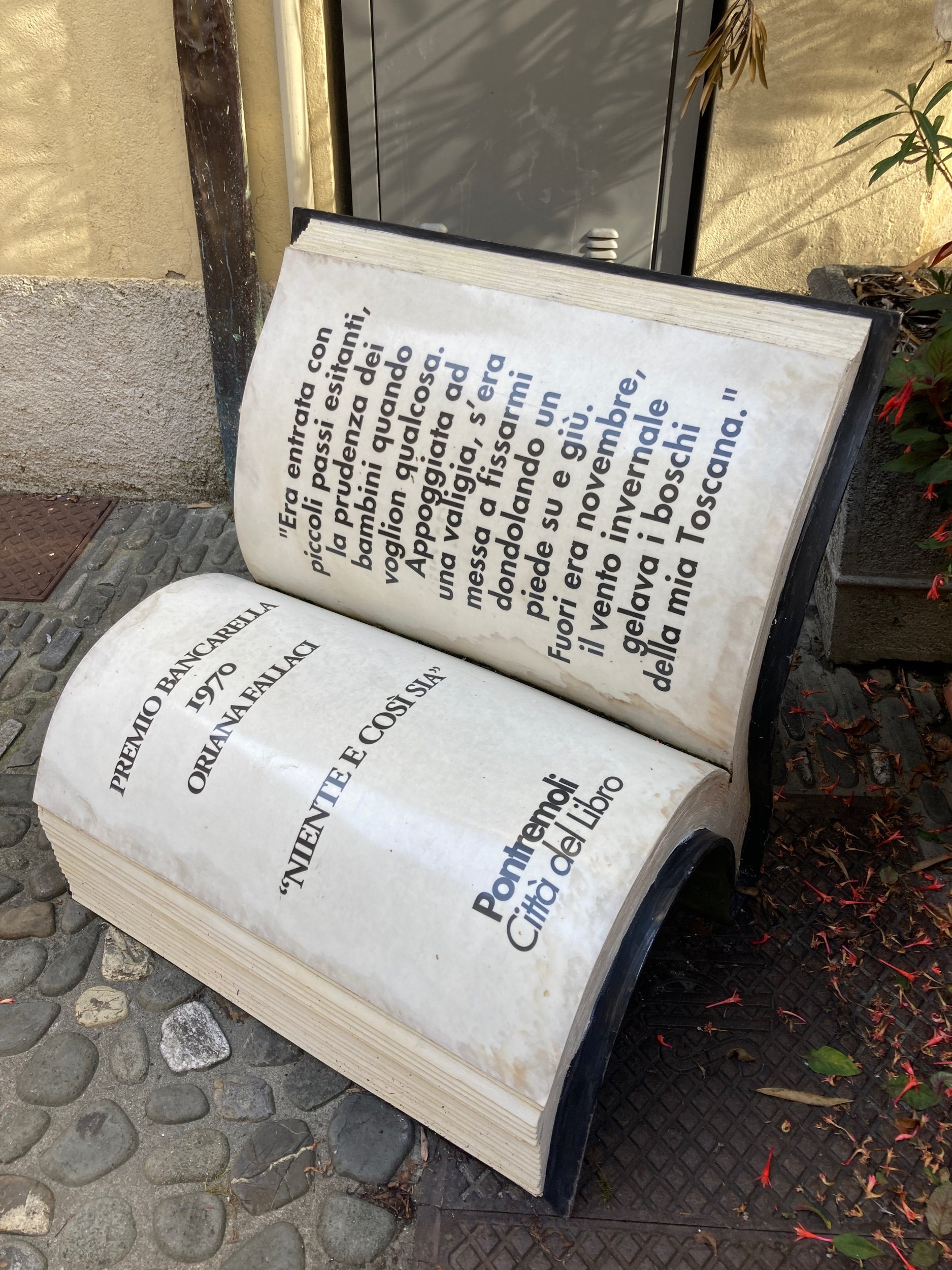
Just off Piazza della Repubblica was a courtyard filled with benches sculpted in the form of open books.  Each had a date, a title, an author’s name, and a snippet of text.  A similar book bench was found in the courtyard of the Piagnaro Castle high above town.  Curious!

IMG_0134.jpeg
IMG_0136.jpeg
IMG_0133.jpeg


New and used books displayed below an sign for the 2005 Premio Bancarella

A bit of investigation revealed that the book benches were related to an annual literary prize, The Premio Bancarella, awarded each summer in the city of Pontremoli. 

The prize has its roots in the city’s history of booksellers.  In fact, the Premio Bancarella is the only literary prize awarded by a committee made up exclusively of booksellers.  Unlike publishers and literary scholars, the booksellers know which books are popular with their customers, which ones are most in demand.  The prize is a connection from author to bookseller to reader.  And the term Bancarella, meaning stall, reflects those early booksellers who set up stalls in the smallest of towns.

Each year since 1952 a panel of booksellers has met to award the prize.  The first year the prize was awarded in nearby Montereggio. That year the winner was Hemingway for The Old Man and the Sea.  Since then the prize has been awarded each year in Pontremoli. The list of winners include Italian literary figures and authors from around the globe. 

In 2006 a category for books related to food was added, The Premio Bancarella della Cucina.  That may explain the large number of cookbooks found in the bookshop near where the prizes are awarded.

There are many things to love about Pontremoli, but the fact that the town is full of books is an added bonus.

A glimpse inside a Pontremoli book shop selling new and used books in a variety of genres

March 13, 2023 /Joanne Bartram
Pontremoli, Premio Bancarella
#italytravel, Festivals Italy, Hill Towns Italy, Italian culture, Italy travel, Italy, Lunigiana

A gray and rainy day in Lucca, late February 2023

Late Winter in Lucca

March 06, 2023 by Joanne Bartram in #lucca, Italian culture, Italy, Living in Italy, Lucca, Tuscany, Winter Travel

Hard rain outside my window kept me inside with a good book!

As February turns into March, winter is making a last stand here in Tuscany.   Some areas, especially up in the hills, have seen snow this week. 

Here in Lucca there has been no snow, just gray, cloudy skies and rain ranging from a drizzle to a hard downpour. The temperatures have been made even more chilly by the wind.  It is definitely still winter coat, hat, and scarf weather.  Not exactly the early spring weather I had hoped to find on my return to Lucca after several weeks away.

But, no complaints.  I am happy to be back in Lucca no matter the weather.  In fact, I rather like Lucca in the rain. 

The gloomy days have been perfect for staying inside, reading, sipping tea, and doing some baking.  Well, at least it was perfect until the night I turned my dishwasher on, forgetting that I also had my space heater going.  Poof – out went the power.  Picture a night without lights or heat, too late to poke around the cantina (basement) trying to find the big electric panel with the main breaker for my apartment.  Fortunately, I had a good flashlight and lots of candles.  Since the gas stove was still working, I was able to boil water to fill a hot water bottle, a fine way to keep warm through a cold night. All was sorted out the next morning when the sun came up and a neighbor showed me where to find the main electric panel down in the cantina.  Lessons learned!

Rainy, chilly, and nearly deserted - a small street in Lucca during late February.

Some of the things I enjoy about Lucca during the late winter:  

The city is very quiet. Few tourists visit, the streets are nearly empty (especially in bad weather).  Lucca seems to slow down.  It feels peaceful and restorative.

The bare trees surrounding Piazza Napoleone have a dramatic beauty, so different than in summer when they burst into green leafiness.  

In late February and early March they are less exuberant, but just as beautiful.

Piazza Napoleone on a rainy afternoon. No carousel rides today!

The earliest blossoms along the wall, late February.

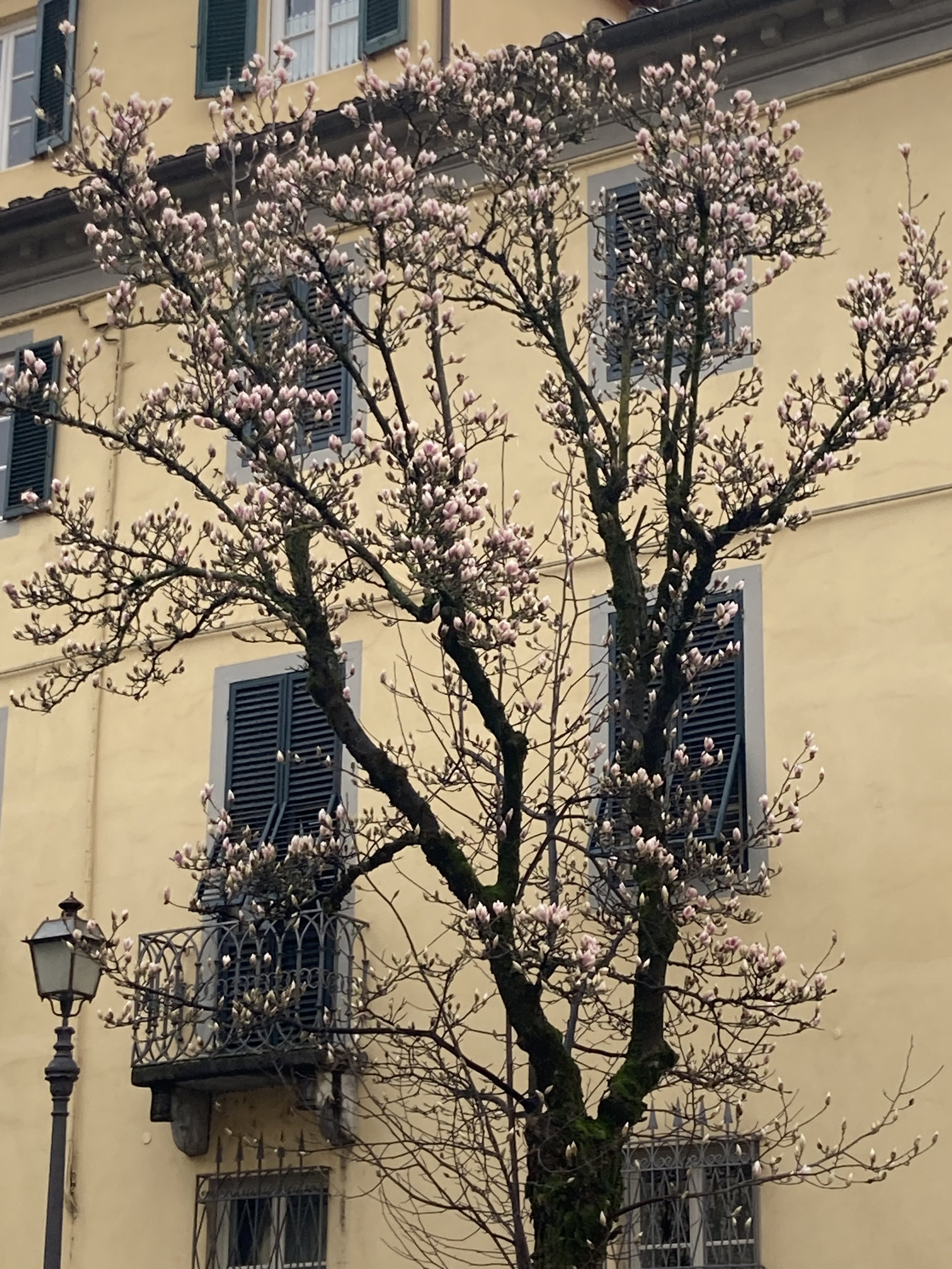
Early signs of spring evolve daily as tender shoots of bulbs spring up, tulips and daffodils appear in the weekly flower market, mimosas erupt in yellow color, and magnolias go from bud to bloom.

The days are getting longer, reminding me that dusk hour walks on Lucca’s wall are one of my favorite things to do.

Dusk along Lucca’s walls


The rain makes puddles in the streets.

The puddles reflect the ancient buildings and the cloudy skies, temporary art thanks to Mother Nature. And kids, like children everywhere, delight in splashing through the puddles.

Magnolia blossoms sparkle with drops of rain.

Magnolias, just starting to flower, look lovely glistening with rain drops

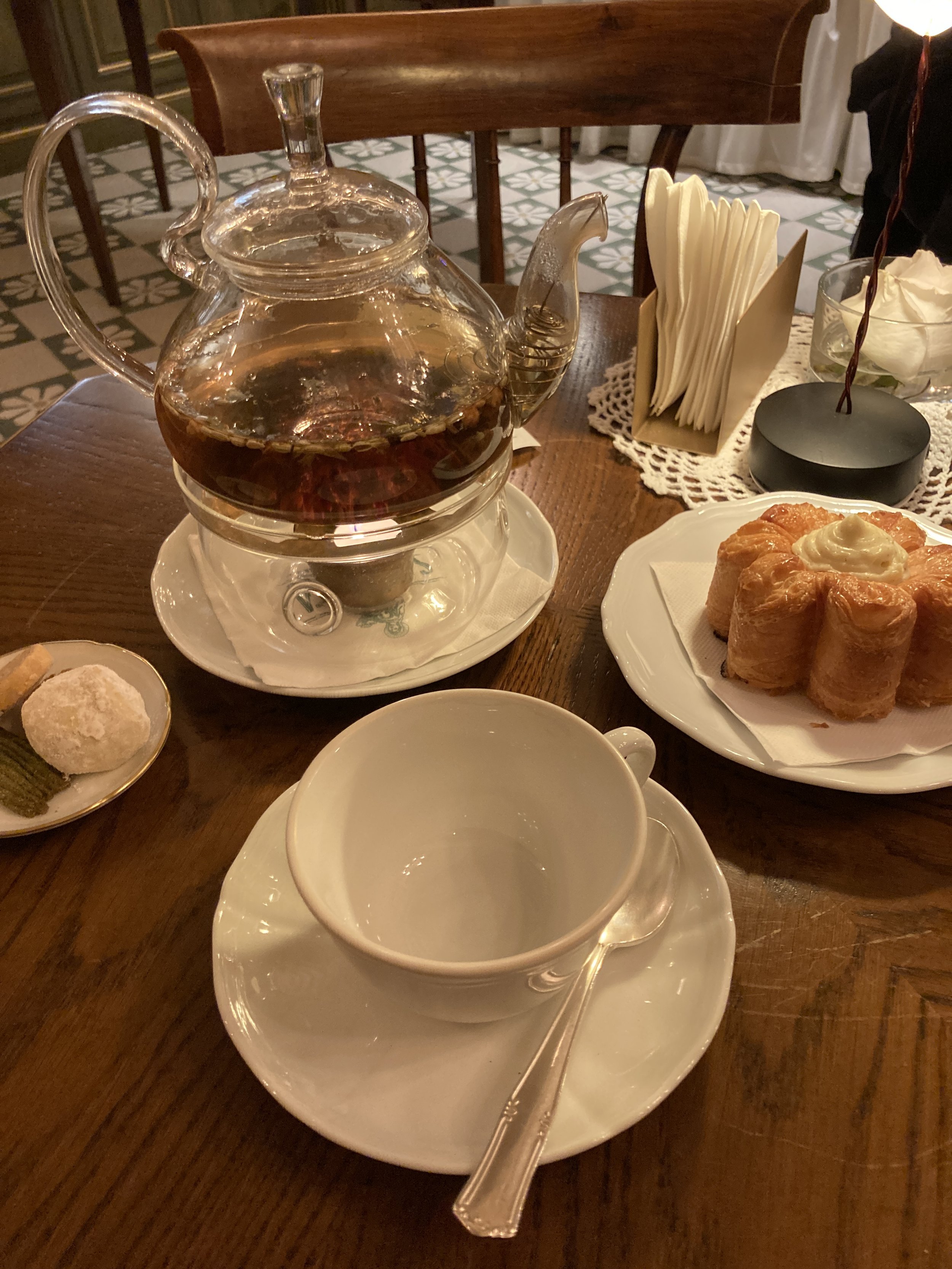
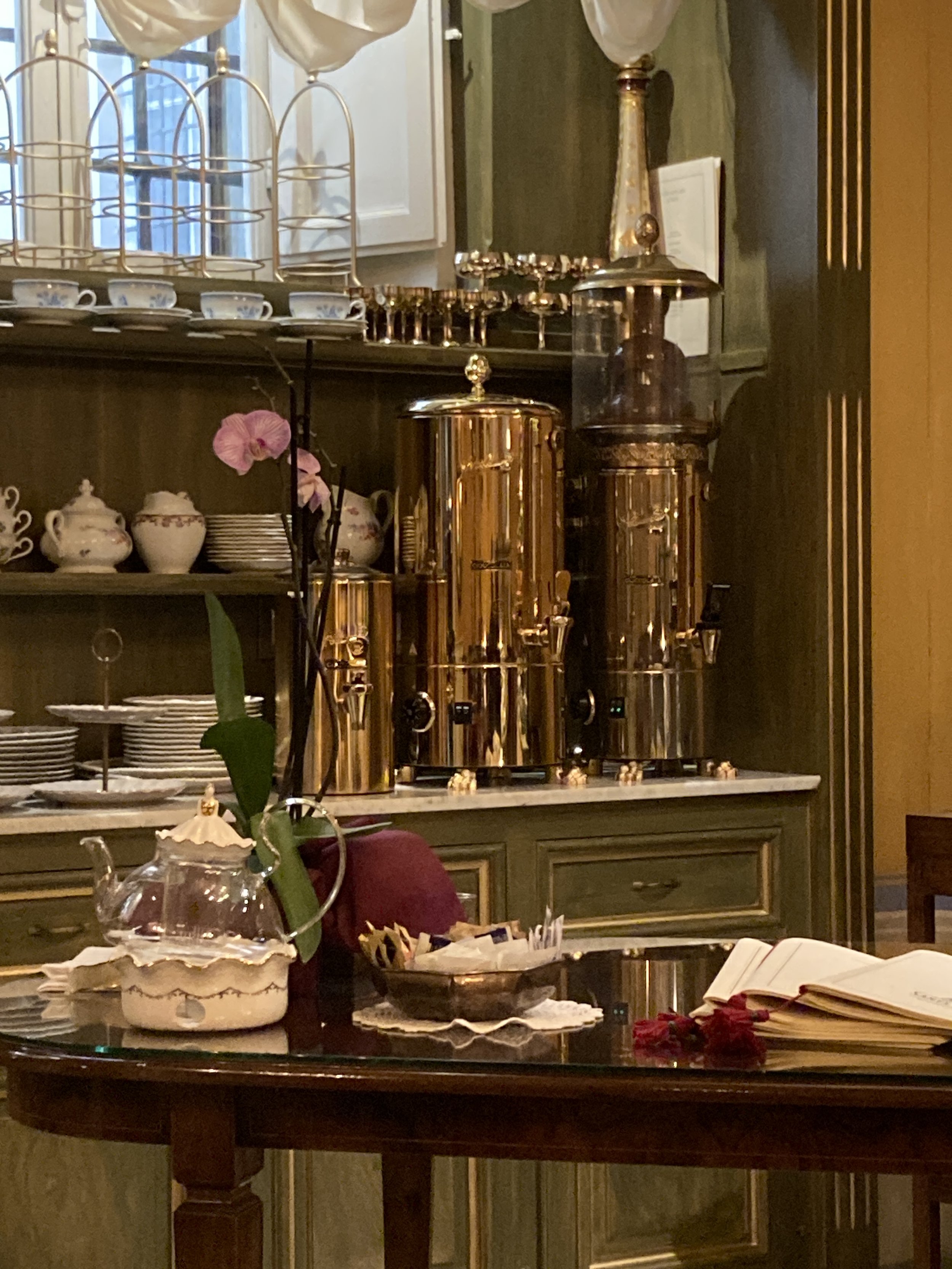
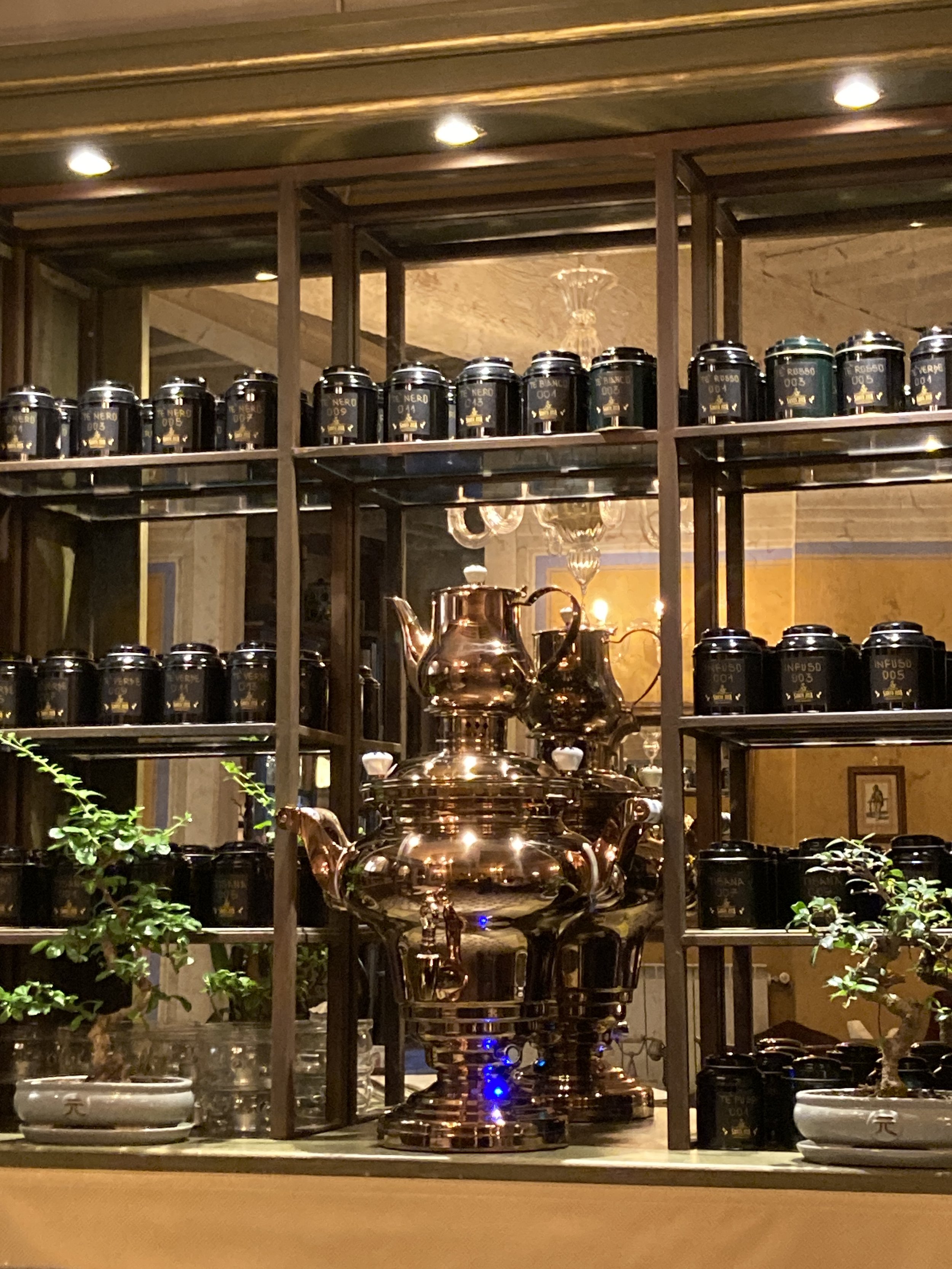
A rainy afternoon in Lucca is the perfect excuse to pop into an elegant café for a pot of tea and a sweet treat.  Caffè Santa Zita is just the place! A bit of luxury to brighten a gray day.

FF2CC6E9-D233-4289-8852-9A4B01160AFB.jpeg
60B745B1-FD0F-4F0C-99E7-679F70514FB6.jpeg
0DD0DDE4-20F3-4080-B0AB-040710B7BE49.jpeg

February skies can be quite dramatic!


The clouds make for ever changing skies, one minute blue with gentle white clouds and then suddenly dark, fast moving and threatening.

The sound of rain lulling me to sleep, either as the best reason for an afternoon nap or a gentle entry into sleep late at night.

All of these things make late winter a wonderful time to be in Tuscany.  And yet, a few weeks from now I will feel just as inspired by the onset of spring. Living through the cycle of seasons is one of the reasons I wanted to live in Italy.  I came thinking that once (or maybe twice) around the sun would be a wonderful esperience.  4+ years later I am still pinching myself and enjoying the changing season as winter slowly creeps into spring.


March 06, 2023 /Joanne Bartram
winter italy, seasons italy, rain italy
#lucca, Italian culture, Italy, Living in Italy, Lucca, Tuscany, Winter Travel

Farina di Castagne

February 27, 2023 by Joanne Bartram in Italian culture, Italian recipes, Italy travel, Living in Italy, Lunigiana, recipes, Tuscany

A list of the ingredients important in Italian cooking often includes olive oil, tomatoes, pancetta, artichokes, garlic, lemons, basil, Parmigiano Reggiano cheese, and balsamic vinegar.  But let’s not forget about a more humble ingredient - chestnuts (castagne or marroni in Italian).

In Tuscany, the mountains are full of chestnut trees.  It is no surprise then that the chestnut tree became a vital source of food, as well as of fuel and building material, especially during times of war, famine, and poverty. 

Abundant and nutritious, the chestnut became an essential ingredient in Italian “cucina povera”. That traditional continues to this day. Chestnuts are eaten roasted or steamed. They are also dried and ground into flour, farina di castagne, for use in breads, pastas, and sweets. 

Chestnut Roasting in Colognora di Pescaglia

Dishes made with farina di castagne appear on fall and winter menus.  With its naturally sweet and nutty flavor, chestnut flour has become one of my favorite ingredients for baking. 

 My fondness for these dishes began at a fall festival where I first tasted Necci. Necci are round and flat, somewhere between a crepe and a pancake in thickness.

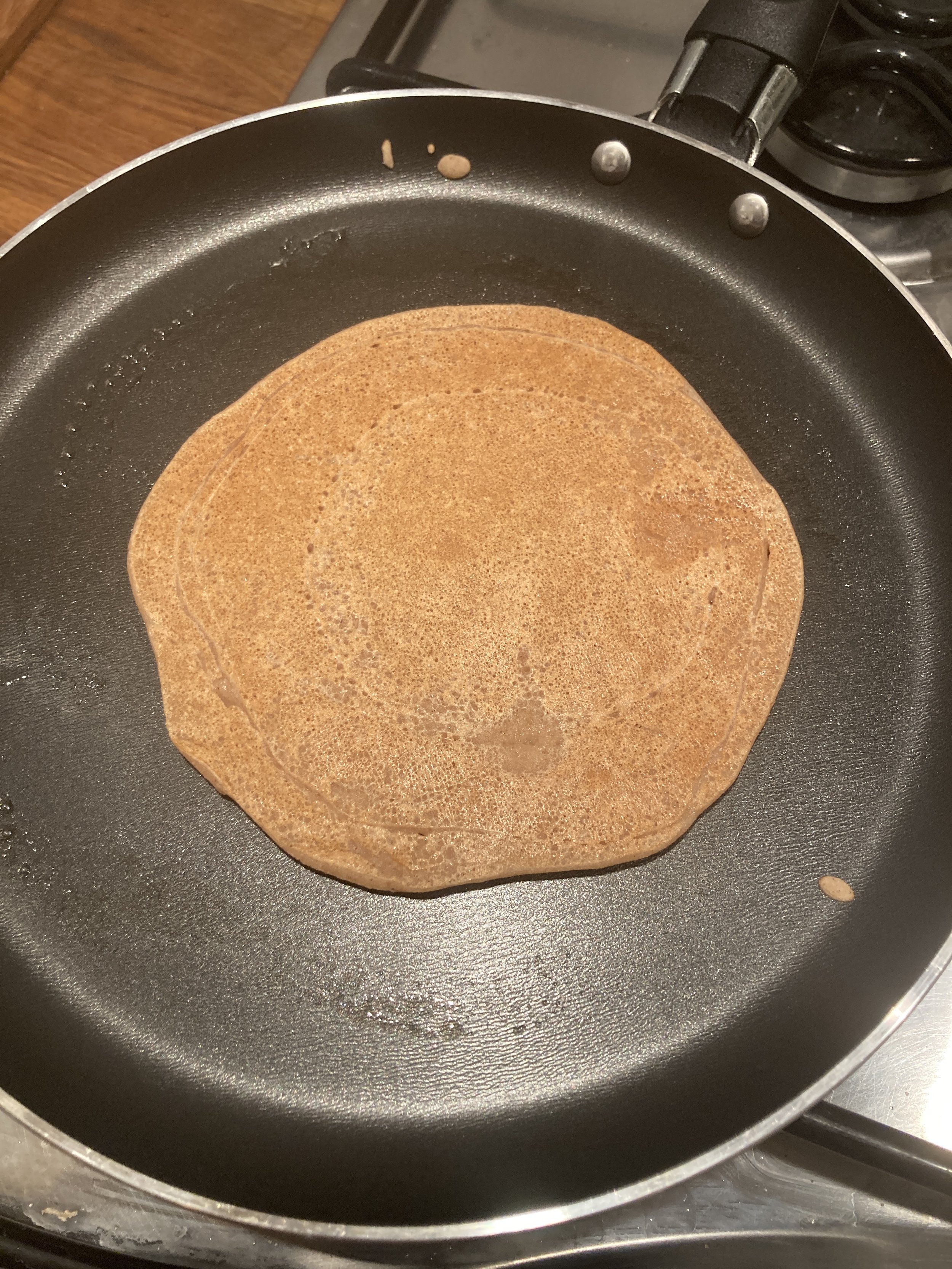
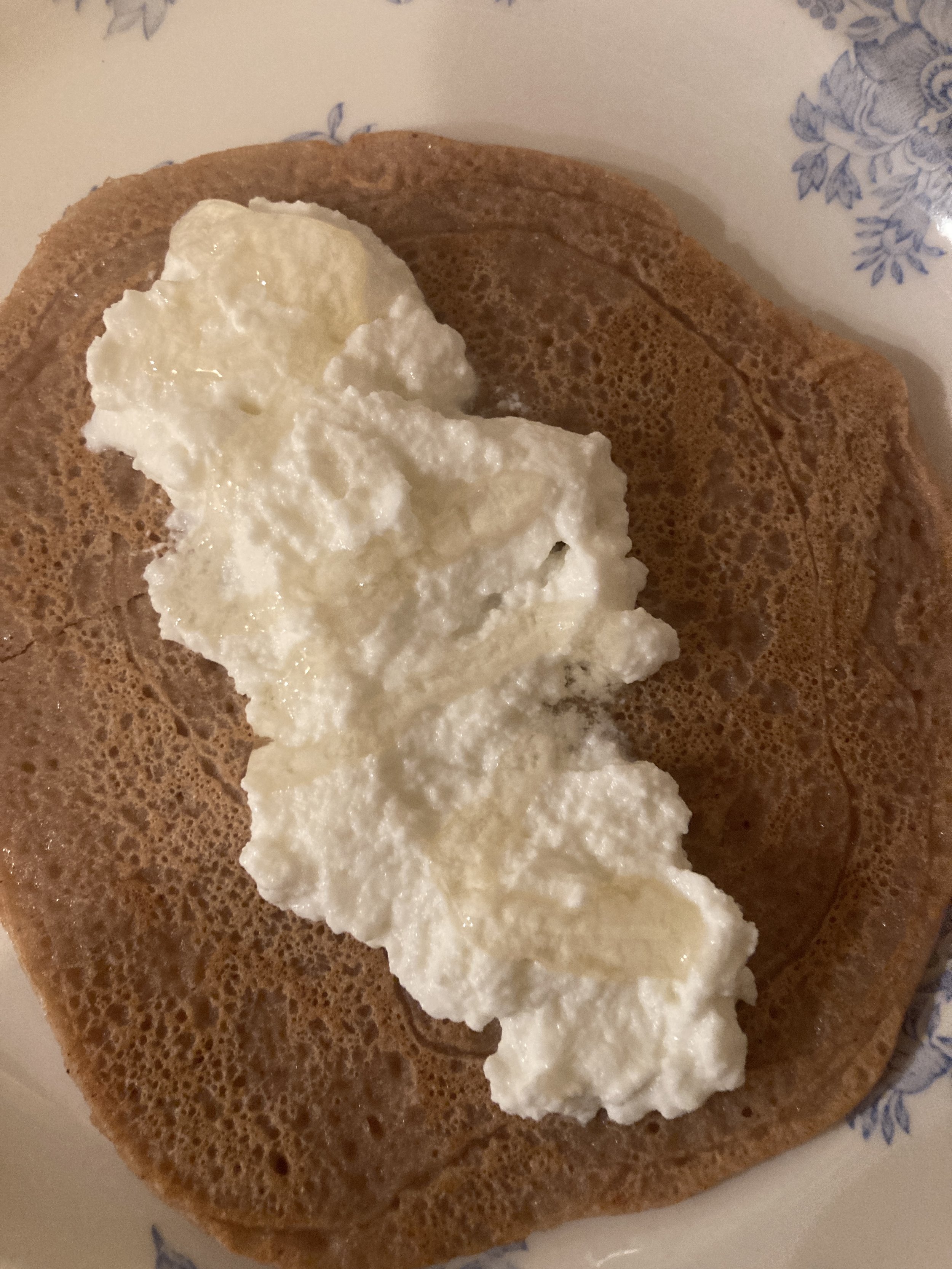
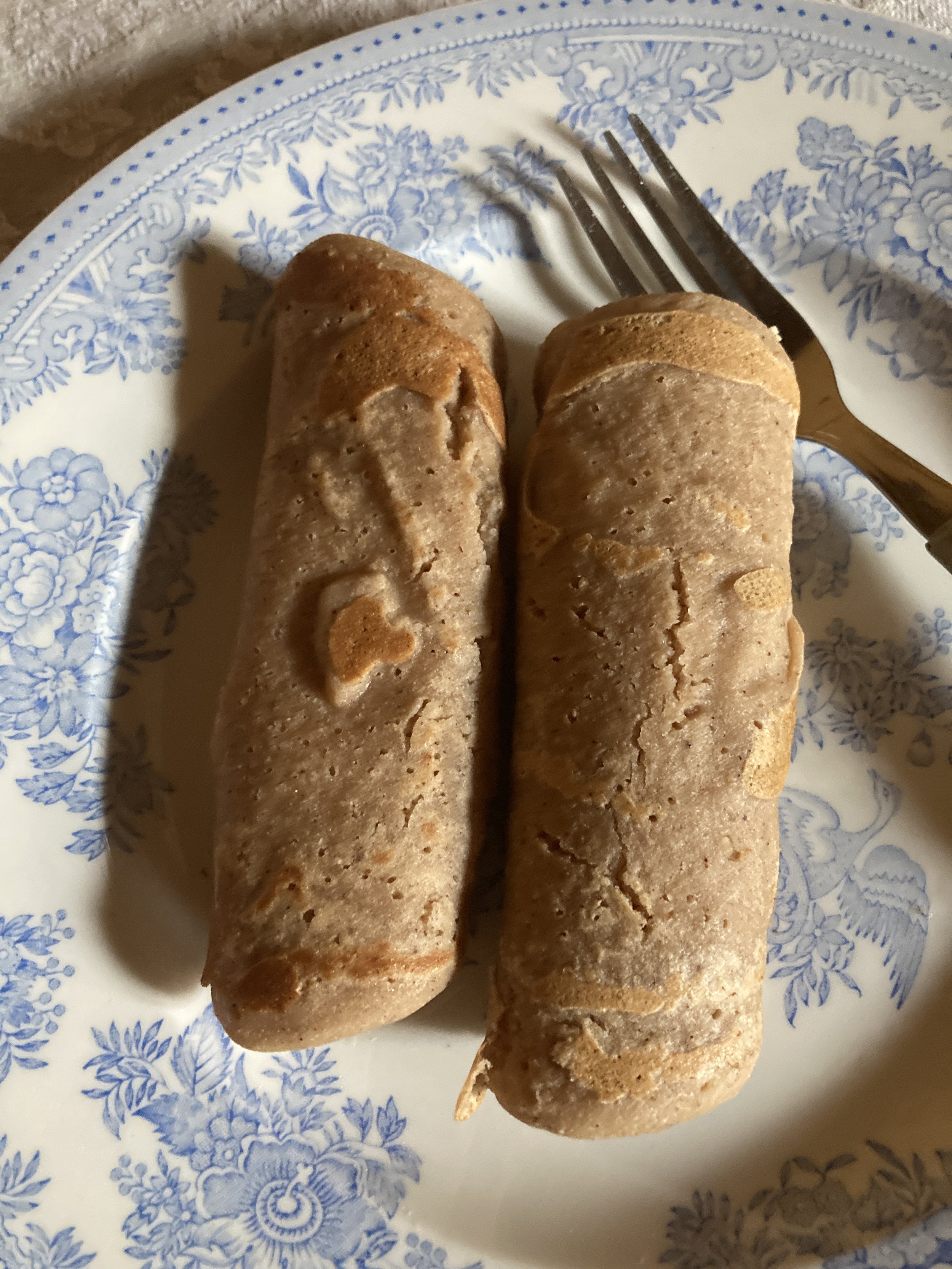
Like a crepe they can be rolled around a filling.  The batter is very simple -  just chestnut flour, water, and a pinch of salt.  Traditionally, necci were cooked between testi, round stones heated over a fire.  Today Necci are usually cooked between two long-handled, flat cast iron plates.  The warm necci are then filled, most commonly with fresh ricotta and a drizzle of honey.  Delicious! 

These round stones, called testi, were the traditional method used to cook Necci. To learn more about chestnuts, visit the Chestnut Museum in Colognora di Pescaglia where this photo was taken.

Frittelle di Castagne, little fried chestnut fritters, served as an appetizer alongside fresh ricotta in the town of Pontremoli.

Similar to Necci are Frittelle di Castagne, often found in the areas of Tuscany known as the Lunigiana and the Garfagnana, both hilly areas in the north. 

The batter is similar to Necci, but the preparation is different.  Small scoops of batter are fried in oil, creating a crisp outside and tender inside. 

While I think of frittelle as breakfast or dessert items, lightly sprinkled with sugar, they can also be served unsweetened as an appetizer with a bit of ricotta.  That’s how I first encountered them last fall in a restaurant in the town of Pontremoli.

I have been working on learning to make both Necci and Frittelle di Castagne at home. 

For Necci, simply combine 1 cup of chestnut flour (100-120 gm), sifted after measuring, with ¾ - 1 cup of warm water. Mix well.

Take a little taste of the batter – the sweetness will surprise you!  

Either a heavy crepe pan or a non-stick skillet works to cook the Necci.  Lightly butter the pan to prevent sticking, pour in about ¼ cup batter and spread with a fork or spoon to create a thin crepe.  Cook until set, flip, and cook on the second side. Fill while warm with a couple of tablespoons of ricotta, drizzle with a little honey, roll up and enjoy! Makes 4-5 Necci.

90B3AD38-7BA1-4C9D-9F43-A1C39294C47B.jpeg
415C4496-7A63-4821-97CB-70268C7A2103.jpeg
94DC0143-E1F9-43DC-BC1A-FD4BEA52A5E0.jpeg


For Frittelle di Castagne, combine 1 cup of chestnut flour (100-120gm), 1 teaspoon of baking powder, and a pinch of salt. Sift and add about 1 c. warm water (add about 3/4 of the water and then enough more to make a fairly thin batter). Mix well.  Heat vegetable oil in a frying pan, deep enough to cover the bottom of a pan and about half-way up the frittelle (I use ¼ c. oil in a small 8 in frying pan, frying 2-3 frittelle at a time).  Test the oil with a small drop of batter - it should have a lively sizzle and the batter should puff up slightly. Drop spoonfuls of batter into the hot oil, cook until the top is set and small bubbles appear, flip, and continue cooking until crisp and brown on both sides. Smaller is better for these fritters - small enough to cook through in just a couple of minutes and be crisp outside and not doughy inside.  Remove from the oil and place on a paper towel to drain.  Serve warm sprinkled with sugar or room temperature with a side of plain ricotta.   Makes about 18 - 20 small fritters.

Now that I’ve learned how to make these traditional Italian dishes, I am working on incorporating chestnut flour into some other baked goods. Stay tuned!


February 27, 2023 /Joanne Bartram
chestnuts in Italian cooking, castagne, Necci, Frittelle di Castagne, italian foods
Italian culture, Italian recipes, Italy travel, Living in Italy, Lunigiana, recipes, Tuscany
  • Newer
  • Older

Powered by Squarespace