Two Parts Italy

Exploring Italy, travel, and living a flavorful life

  • Blog
  • About This Blog
  • Start Here
  • Recent Posts
  • Archives by Topic
  • Subscribe
  • Contact me

Spring in Pietrasanta: Art, Philosophy, and Giraffes

May 16, 2022 by Joanne Bartram in #lucca, Italian art architecture, Italian culture, Italy travel, Italy, Tuscany

Pietrasanta has everything a small town in Italy should have - beautiful scenery, a lively main piazza, historic buildings and statues, a lovely church, cafes, and good food. And art. It is the art that draws me back time after time.

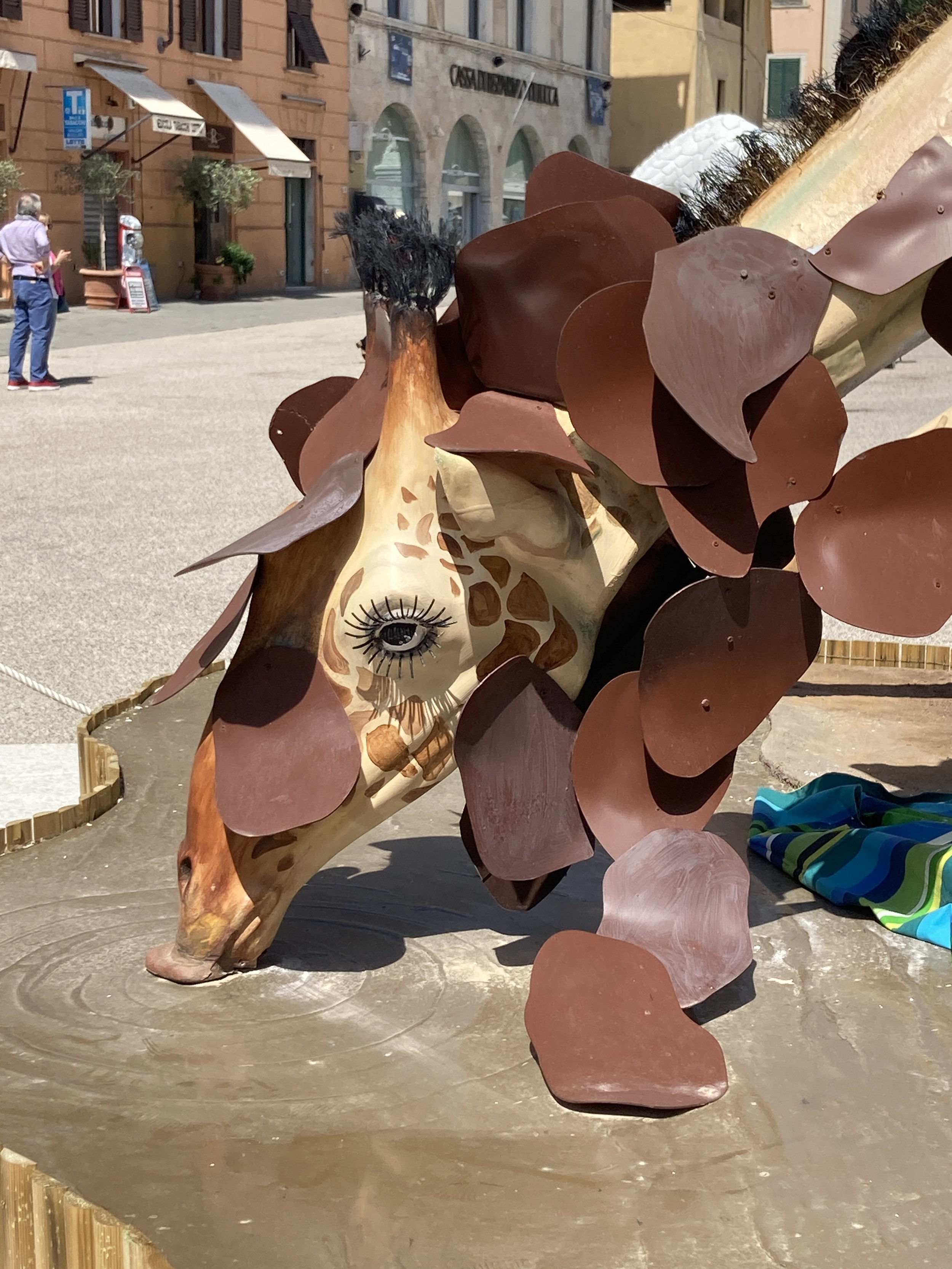
One of many whimsical giraffes that can be seen throughout Pietrasanta this month.

Visiting is easy as it is just an hour-long train ride from my home in Lucca. Unless of course, as in my most recent visit, there is an interruption on the tracks, train delays, an extra change of trains, a track in a tiny station with no signage, and you hop on the wrong train and have to double back. But don’t let that discourage you! My friend and I laughed it off and eventually arrived to spend a lovely day in Pietrasanta.

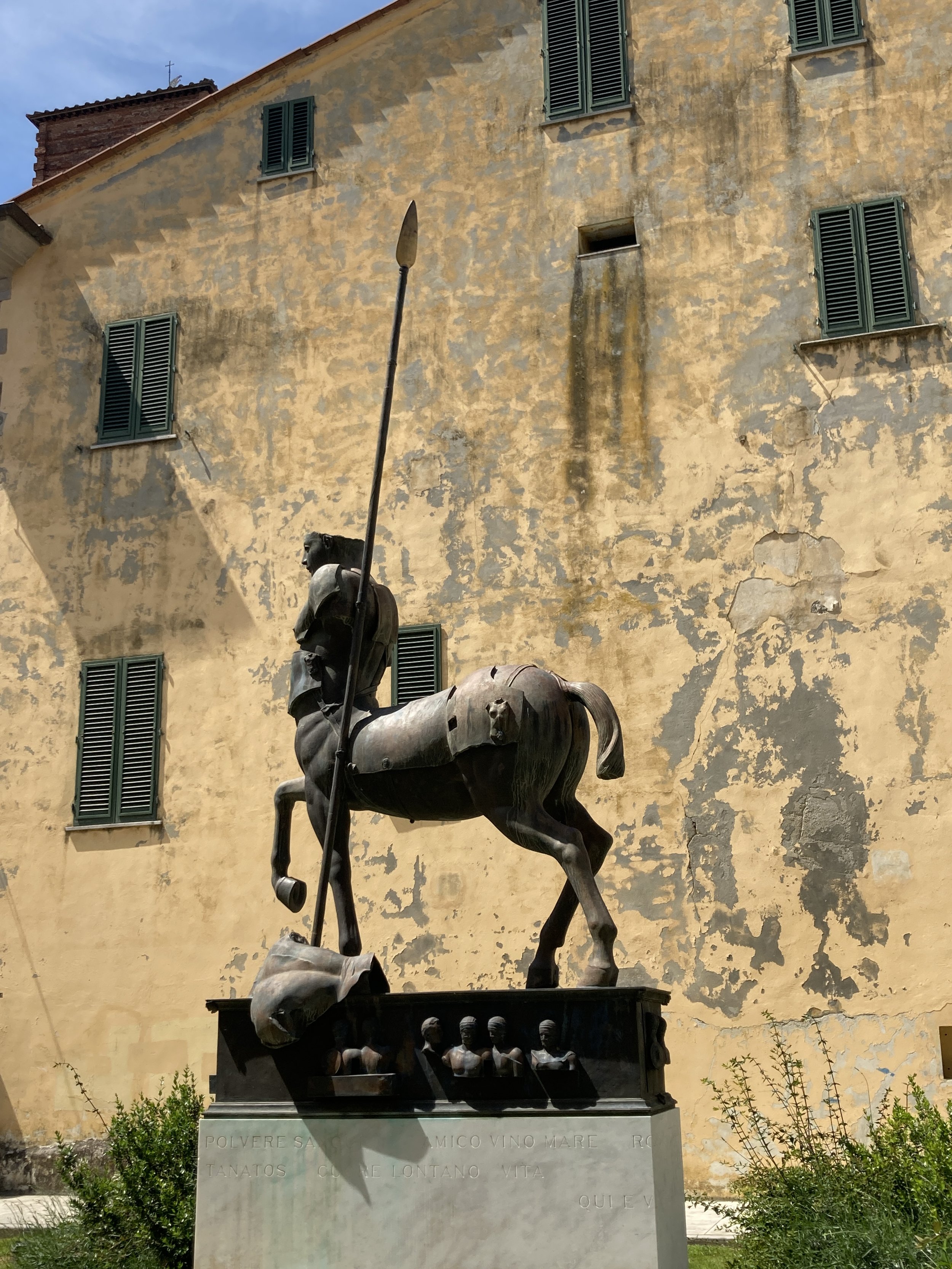
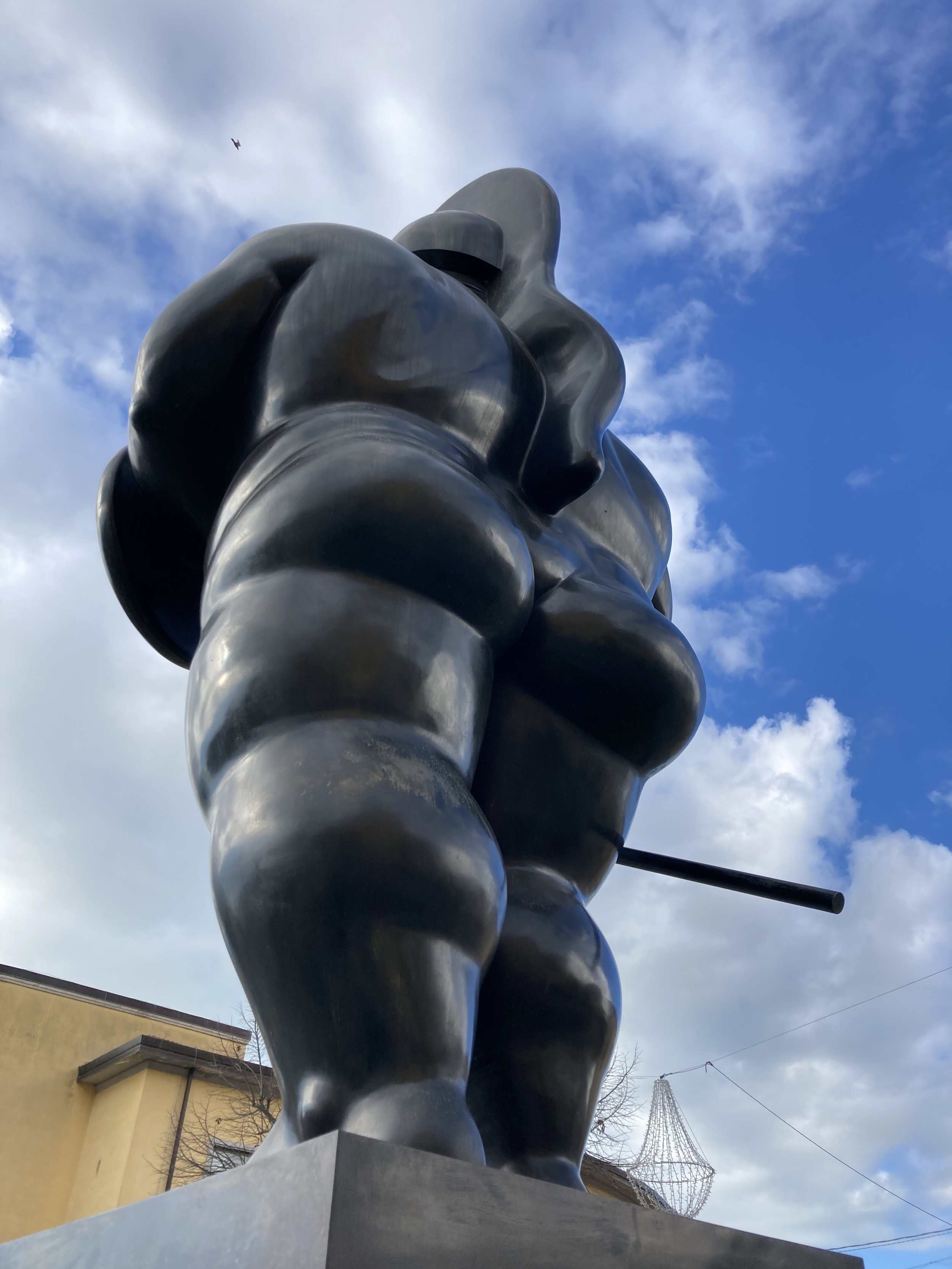
Famous as a center of sculpture (the marble quarries of Carrara are nearby), the town has permanent outdoor installations of bronze and marble sculptures, from smaller pieces to Botero’s massive bronze warrior (below).

CC1D846C-D0C6-4EB9-98AD-96C87DFFC193_1_201_a.jpeg
5853D5E2-CBB7-4A7E-9C0E-F90E3295F19A.jpeg
C95C05B5-2B06-4416-84BA-41EE353B441E.jpeg

In addition to these permanent works, Pietrasanta hosts temporary exhibits which fill the main piazza and nearby spaces (as well as some indoor spots) with an ever-changing display of works by contemporary artists.

The current exhibit, in place until June 5th, features the artistry of Sandro Gorra. Gorra’s background is in commercial art where he worked as an illustrator and creative director for advertising campaigns. That was his work. Today, he concentrates on his art which includes sculpture, illustrations, and a sort of philosophical short poetry which accompanies his works. And then there are his giraffes.

Gorra says that this piece, made from 4 tons of marble, is one of his favorites. A loving mother giraffe tending to her baby.

Why giraffes? According to a published interview with Gorra, the giraffes serve as a parable, representing man’s desire for superiority. A giraffe towers above, looking down on everyone. Each one is unique in his spotted form.

This begs the question - without those spots, what would the giraffe be? Anonymous! Naked!

Change - a predictable part of life - in progress.

Change is inevitable and the spots on Gorra’s giraffes do indeed change. They fade away, they fall off, new ones appear. In fact, during my visit, two men, one looking suspiciously like the artist himself (or was that just my imagination?) were busy painting new spots on two of the giraffes. This would be consistent with Gorra’s view that change is to be expected and that irony is a part of the human (and giraffe) condition.
Alongside the works of art are illustrated phrases, providing an intriguing look into the artist’s mind and bits of his philosophy. I enjoyed these sprigs of wisdom just as much as the sculptures. Both made me smile, both made me think. Isn’t that the best part of art?

Here are some examples (any mistakes in translation are entirely my fault).
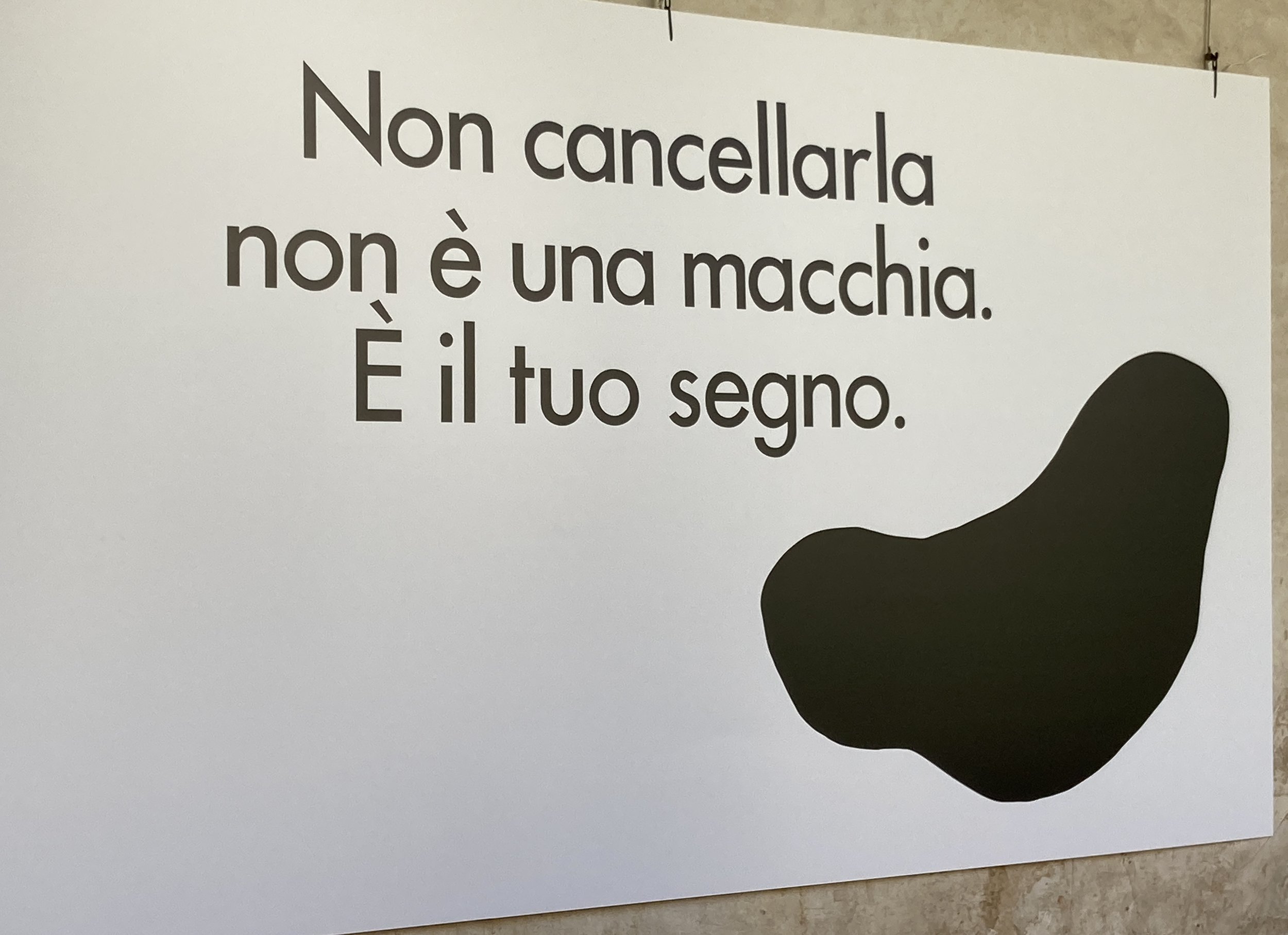
Don’t erase it, it is not a stain. It is your sign.

Ideas are always around, but if you don’t notice them they go away

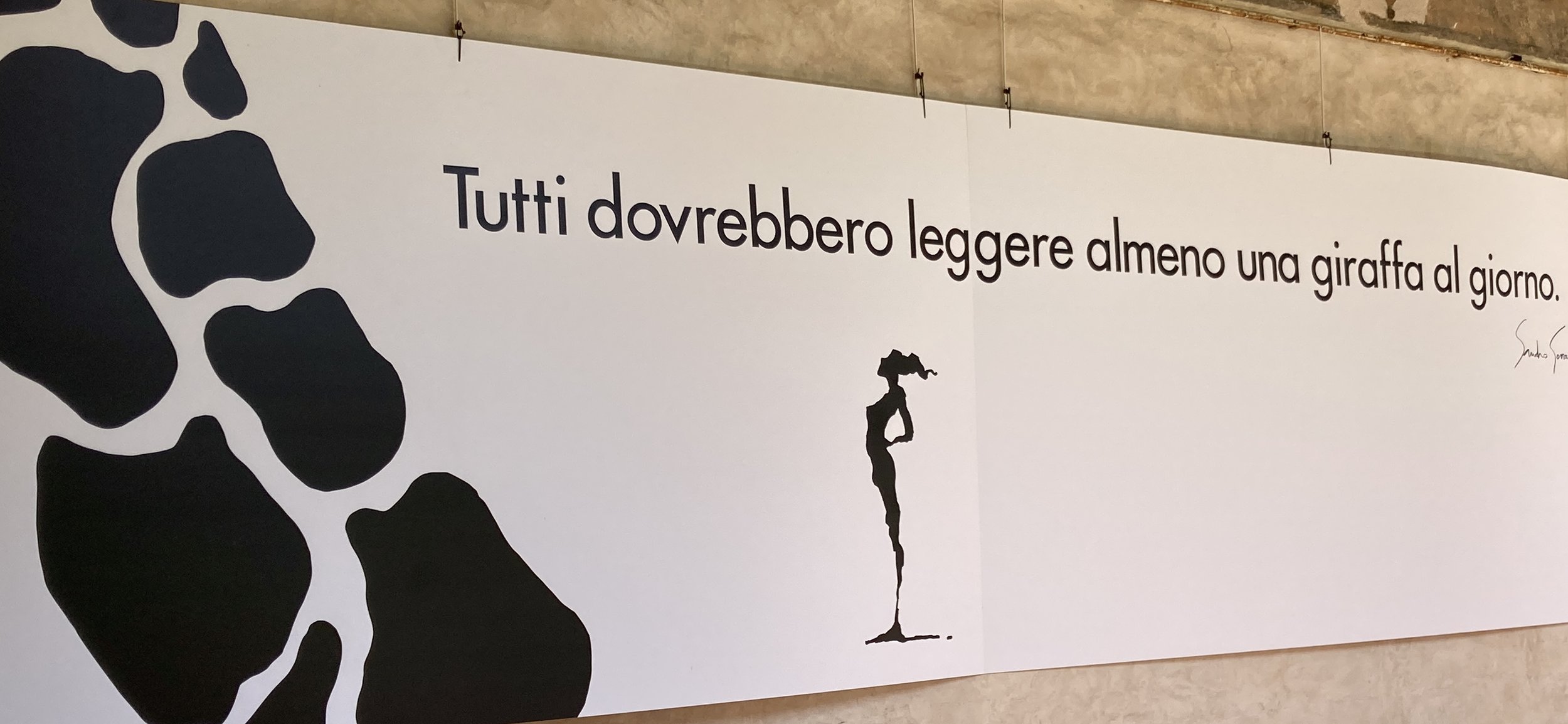
And my favorite one of all - it just may become my personal mantra:

Everyone should read at least one giraffe a day.
A day in Pietrasanta is always a joy. Sipping a cafe in the Piazza del Duomo. Strolling through the piazza and the Chiostro di Sant’Agostino. A quick visit to the beautiful Duomo. Wandering the side streets. A quick stop at the Misericordia Chapel to see Botero’s Heaven and Hell frescoes. A relaxed lunch at a favorite spot. Add in Gorra’s giraffes and the day is just perfect!

May 16, 2022 /Joanne Bartram
Pietrasanta, Sandro Gorra, Contemporary Italian Art, #italy, #artitaly, #sandrogorra
#lucca, Italian art architecture, Italian culture, Italy travel, Italy, Tuscany

Giardino dell’Iris, Firenze

The Irises of Florence

May 09, 2022 by Joanne Bartram

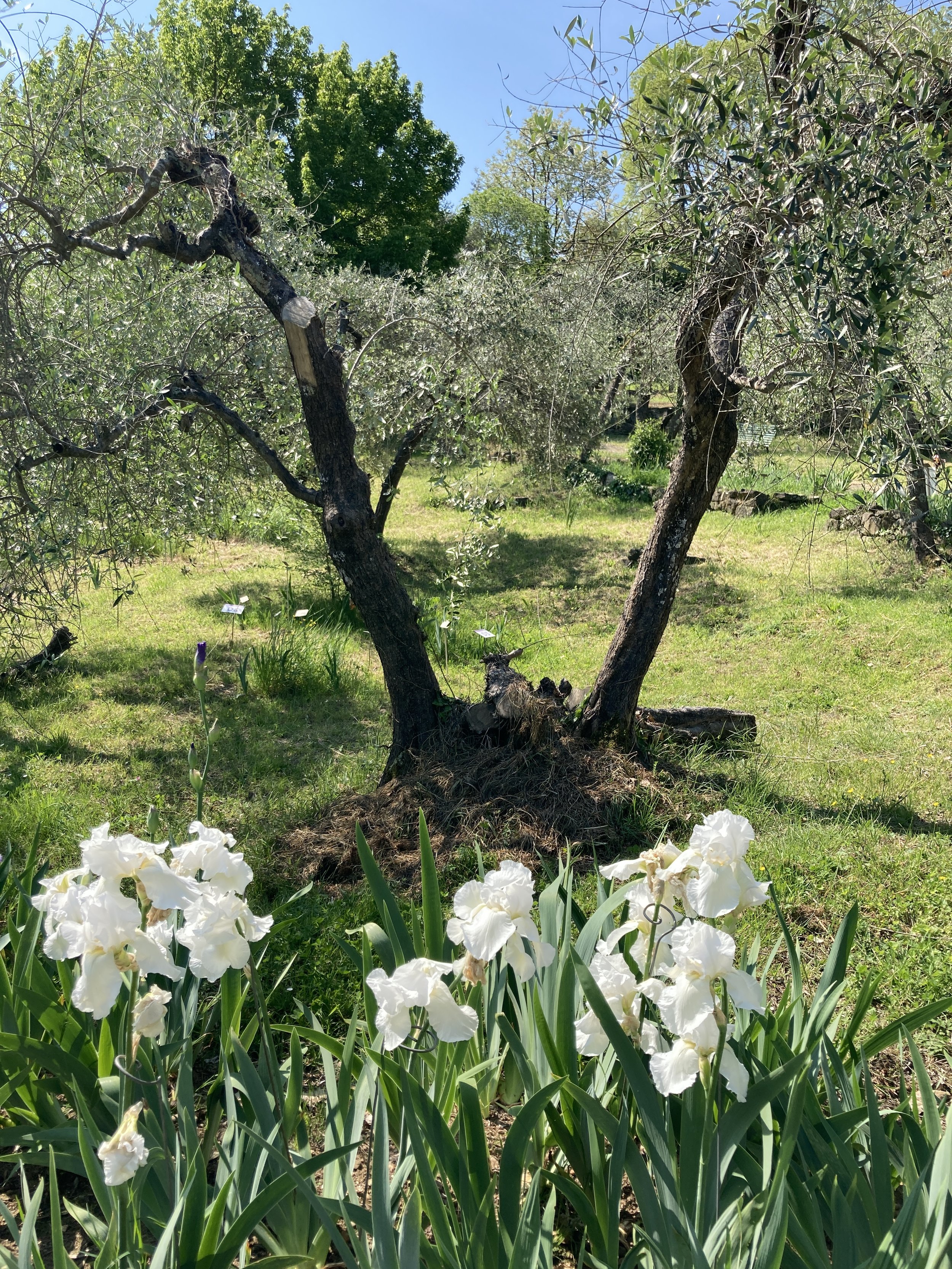
If it is spring in Tuscany, there will be irises. This is especially true in Florence where native varieties have existed dating all the way back to the Etruscan era and where they grow wild along the river Arno.

An iris and a lily look very much alike, with subtle differences in the leaves and the number of stamens. It is the fleur-di-lis, in the form of a red lily (or is it really meant to be an iris?) on a white background, that is emblematic of the city of Florence. However it is actually the look-alike iris that is much loved by Florentines.

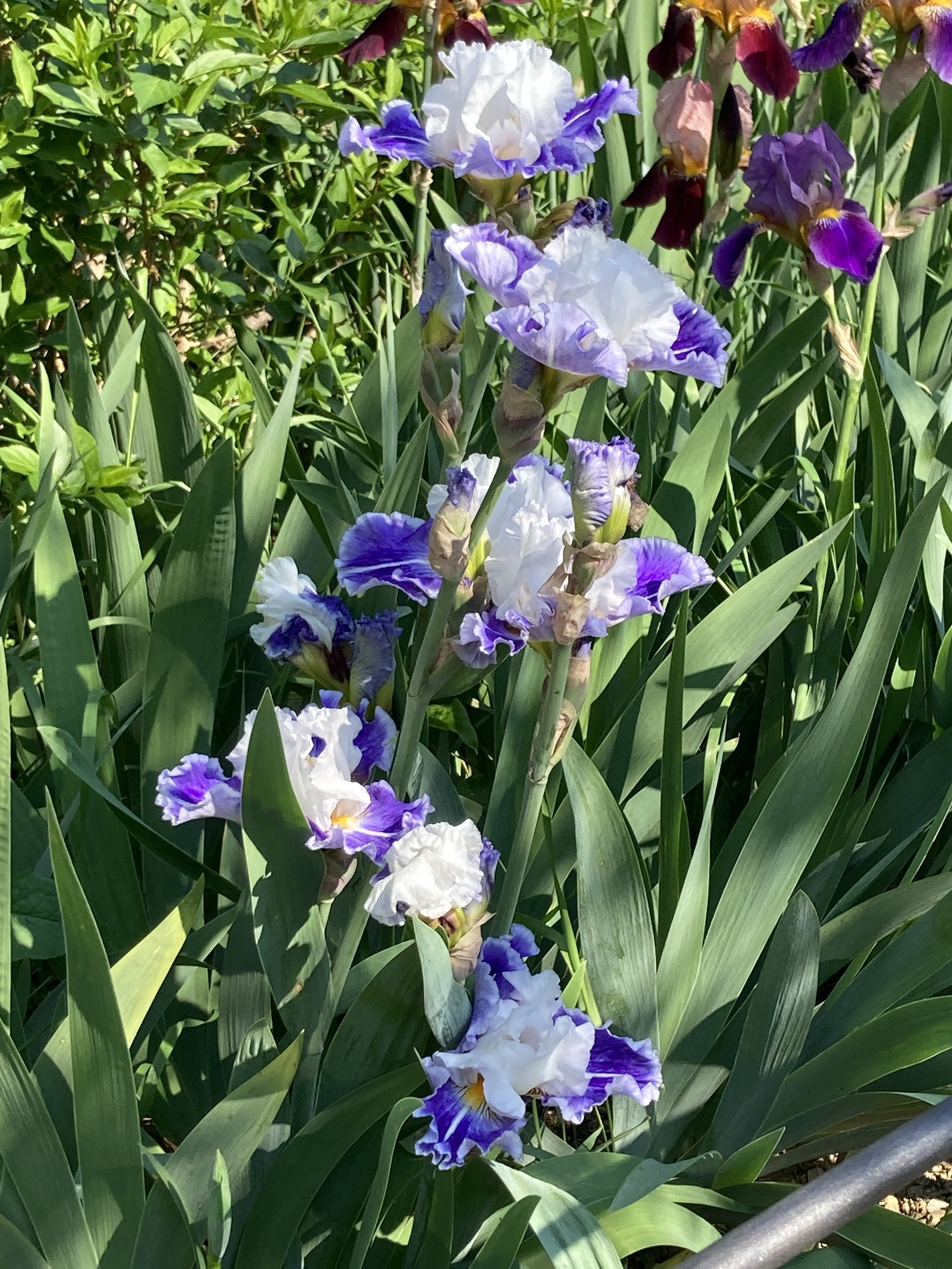
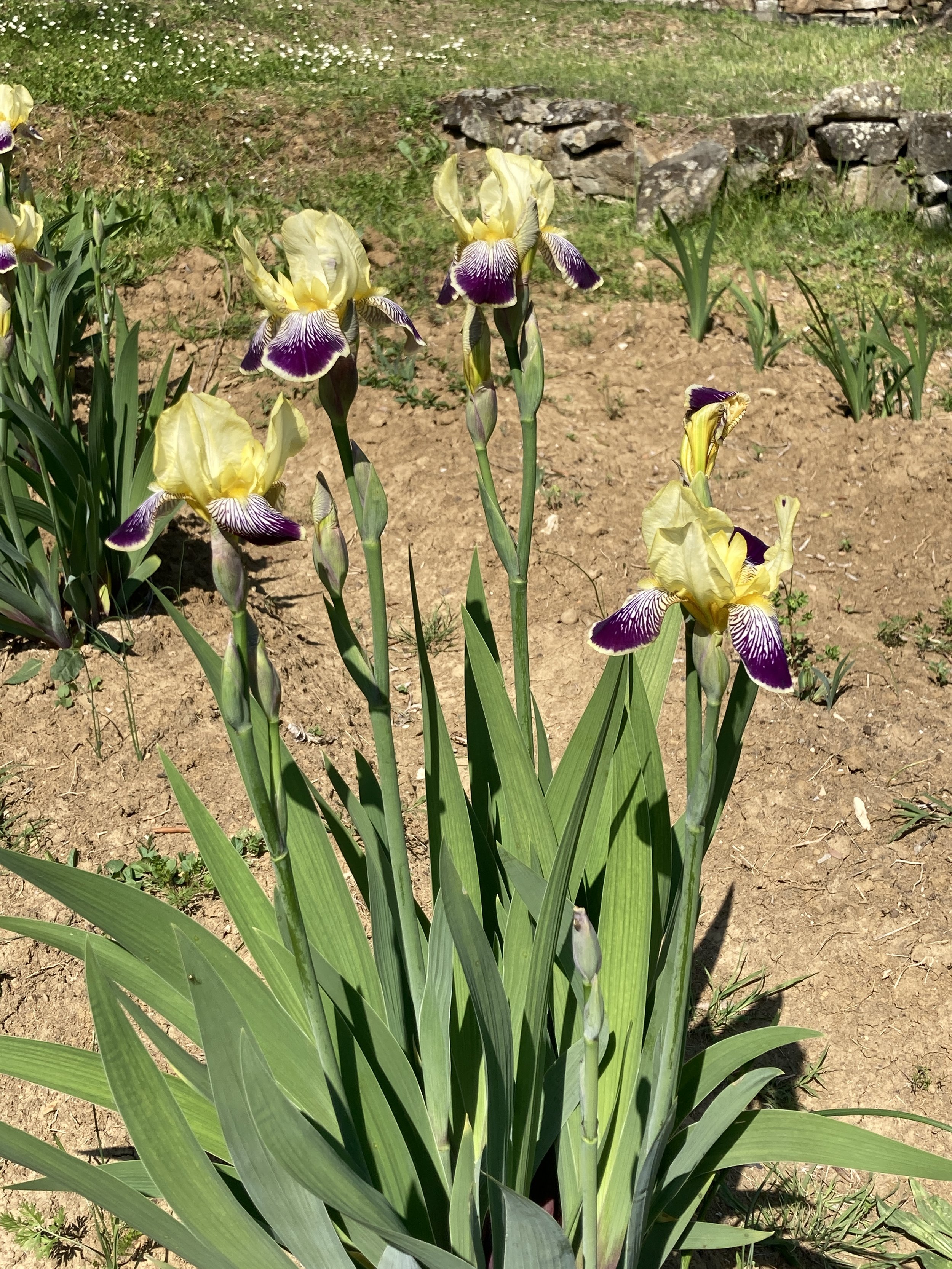
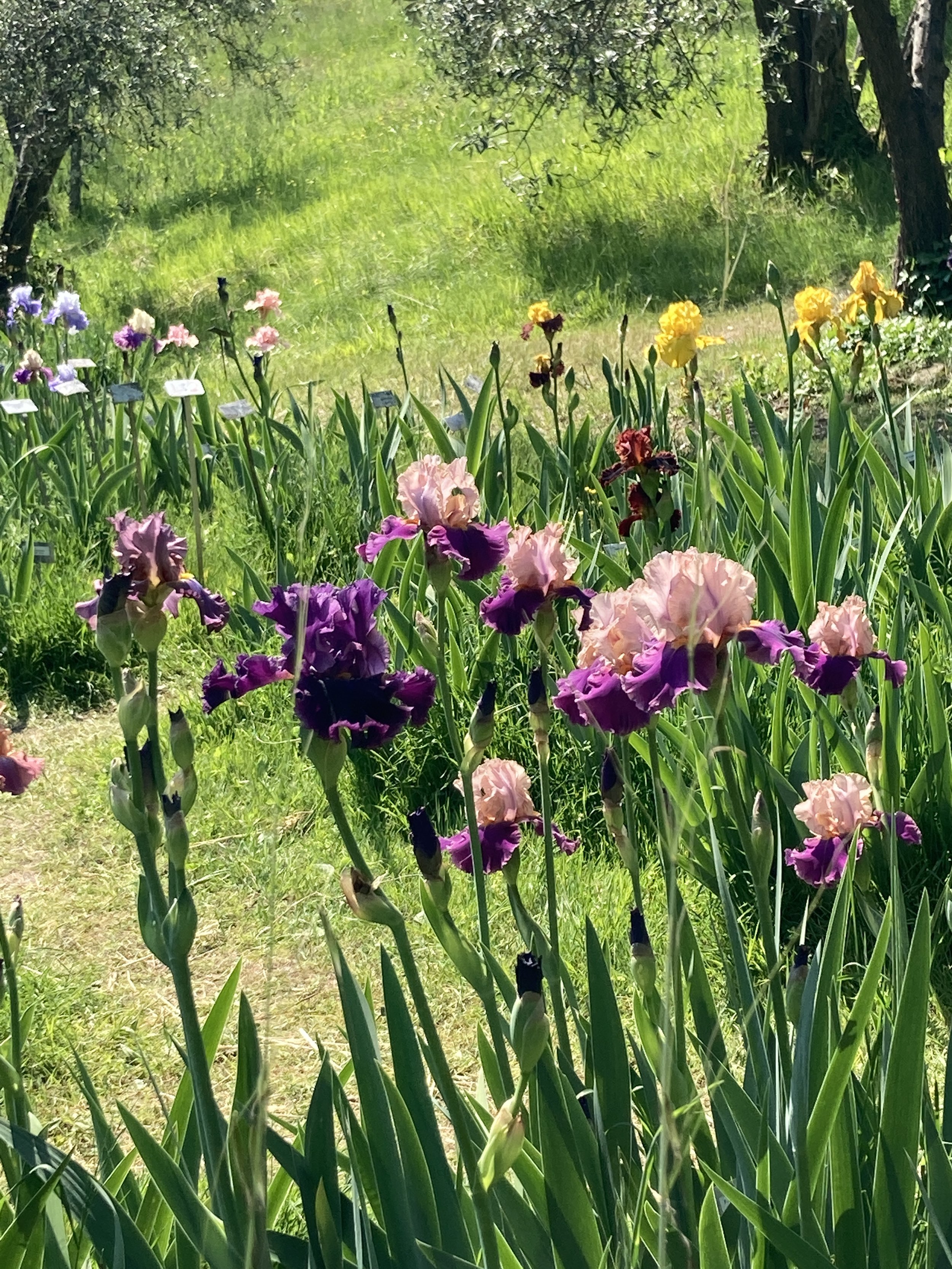
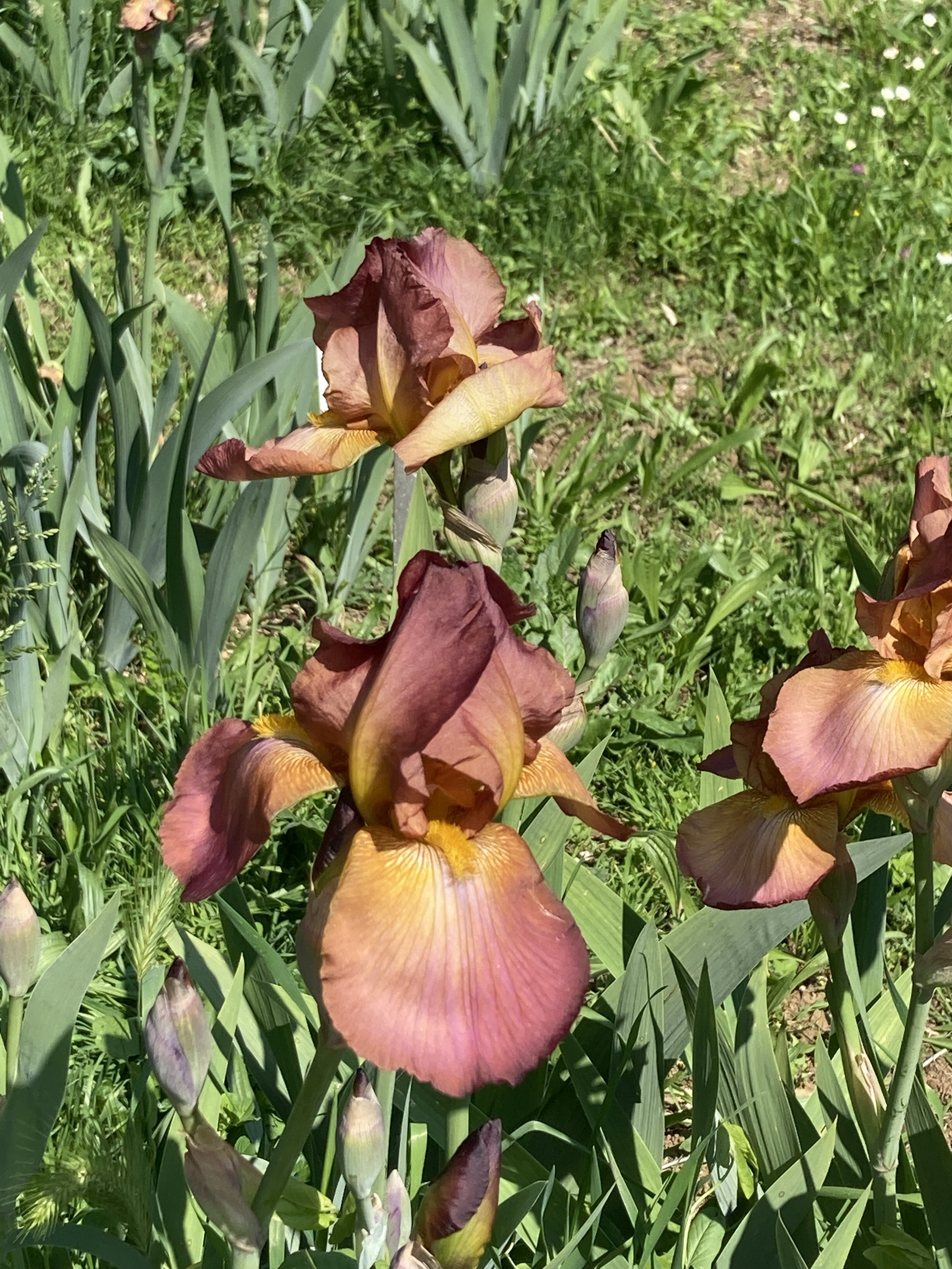
Each spring, for 3 short weeks, the Giardino dell’Iris (Iris Garden) in Florence, in existence since 1957, opens for an amazing floral display. A seemingly endless variety of irises, from all over the world, are planted within the walls of the garden which lies just off Piazzale Michelangelo, up above the city.

The color palette delights the eye with pure white, deep purple, yellow, orange, blue, rust colored, and multicolored varieties in waves of color across the garden. All are gorgeous, but the multicolored ones are especially wonderful. One color that is missing - a true red as in Florence’s red fleur-di-lis. I’ve heard that a special prize awaits the person who can cultivate such an iris.

D41213C8-FE20-43D0-91A0-93C6A3A847CD.jpeg
65C7852D-ABB1-4F2C-BA76-B9A77CFBCBDB.jpeg
8A59D60E-B319-4F72-A6E1-AB596660519D.jpeg
852E2F78-A4FE-4E3A-8CB9-9C29777C69BC.jpeg

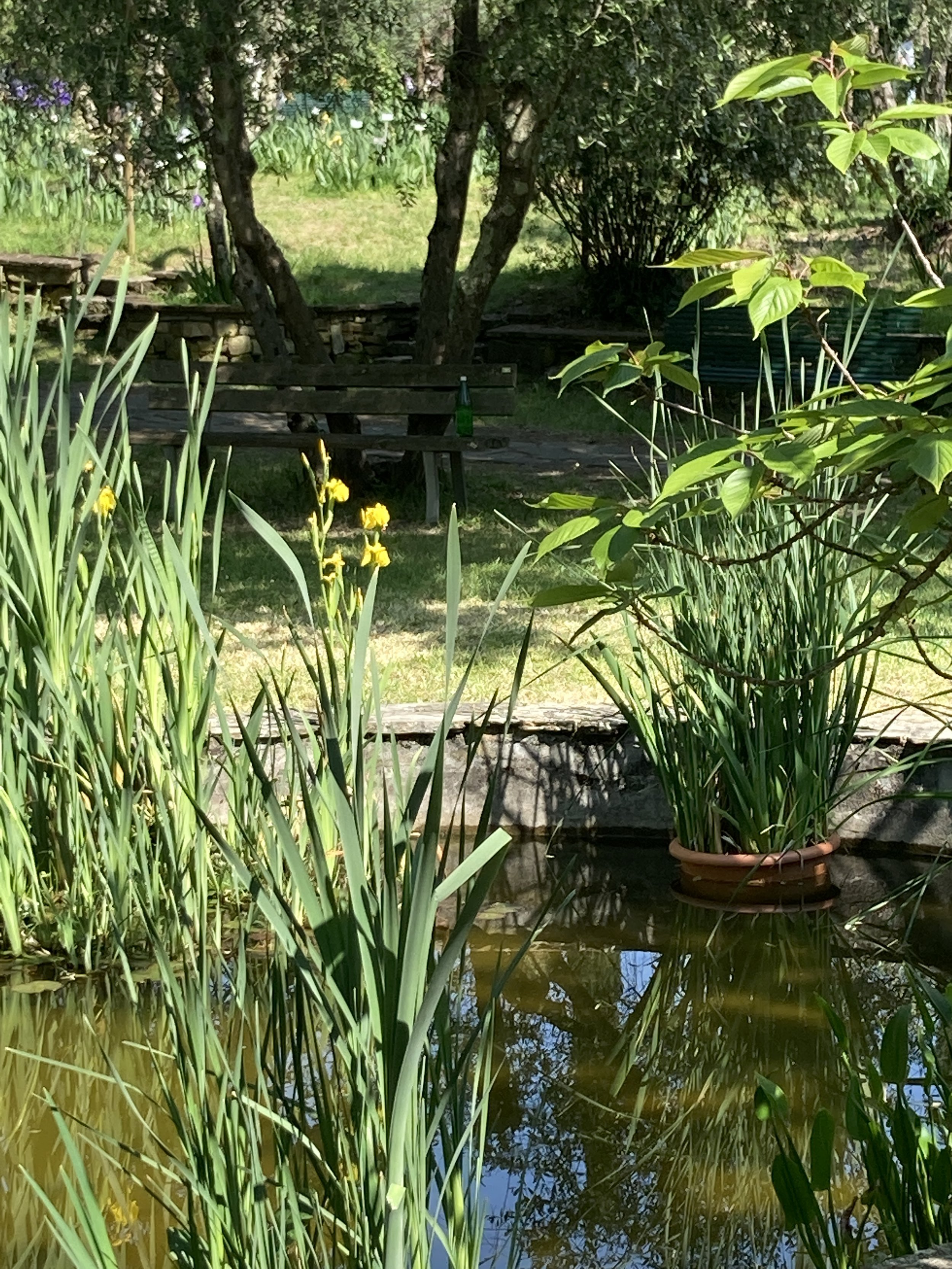
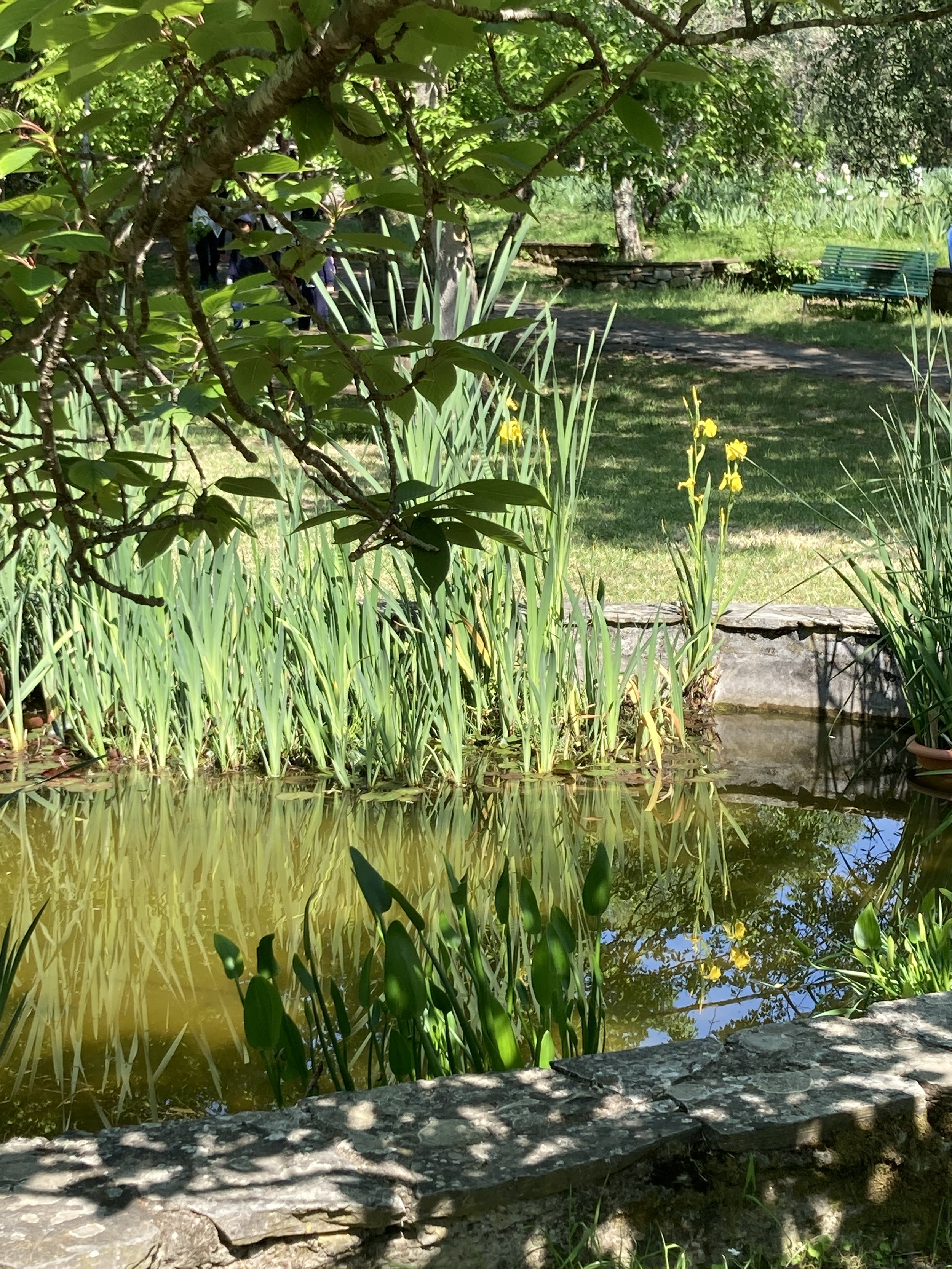
A small marsh-like pond, added in 1967, lies in a shady part of the garden. Water varieties of iris, growing quite tall, thrive there.

BD21C74A-62F3-4CB0-936E-D5BC61191B61.jpeg
F315FA7F-B9ED-4D9D-B92A-825093EA4704.jpeg

The setting, with its many olive trees and stone walls, is enchanting. Add in a few rose bushes, some grasses, rustic wooden fences, and views of Florence in the distance. The setting for the garden could not be more perfect. This was especially so on a mild spring morning under clear blue Florentine skies. Sharing the beauty with good friends made it even more special.

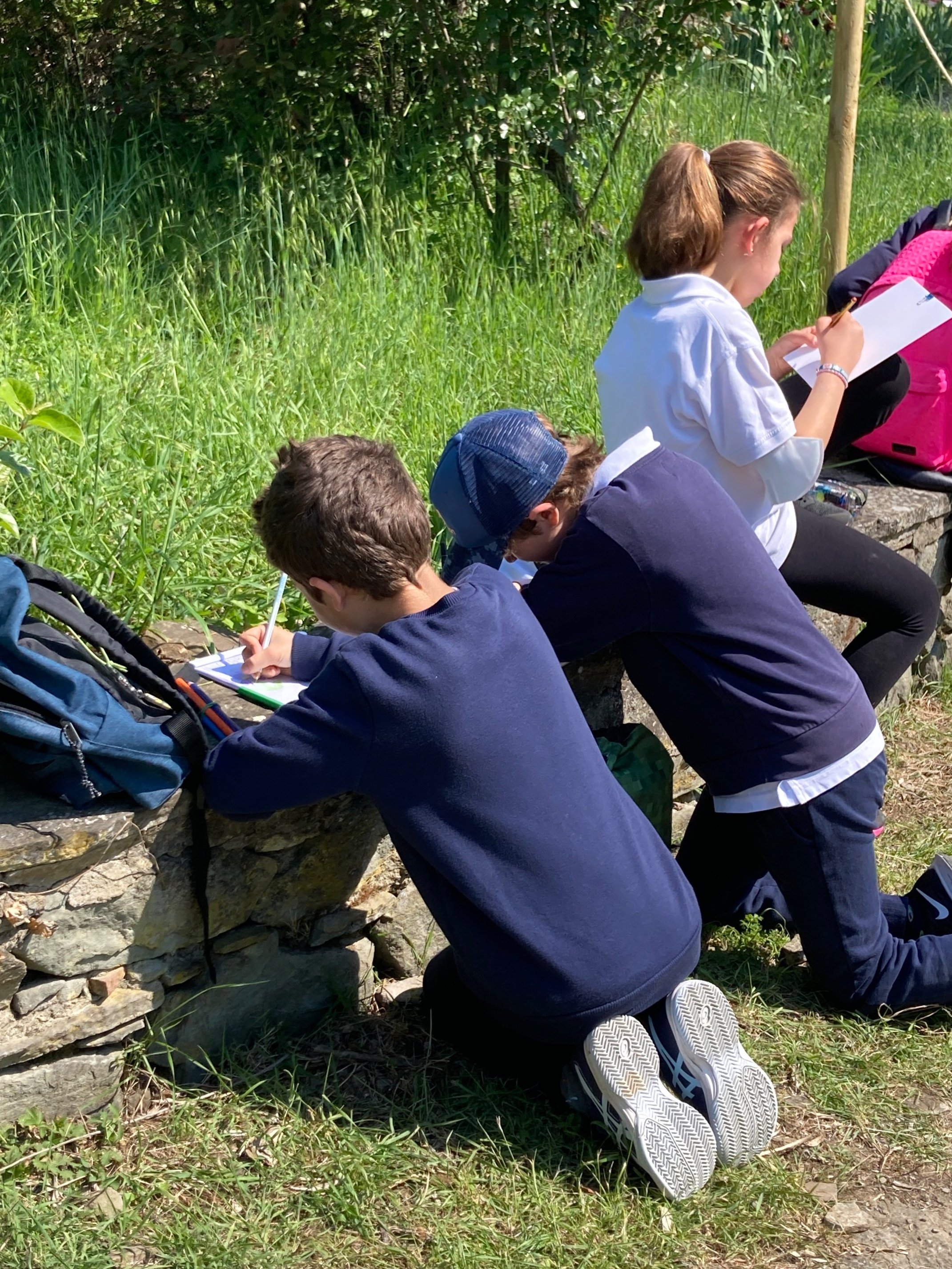
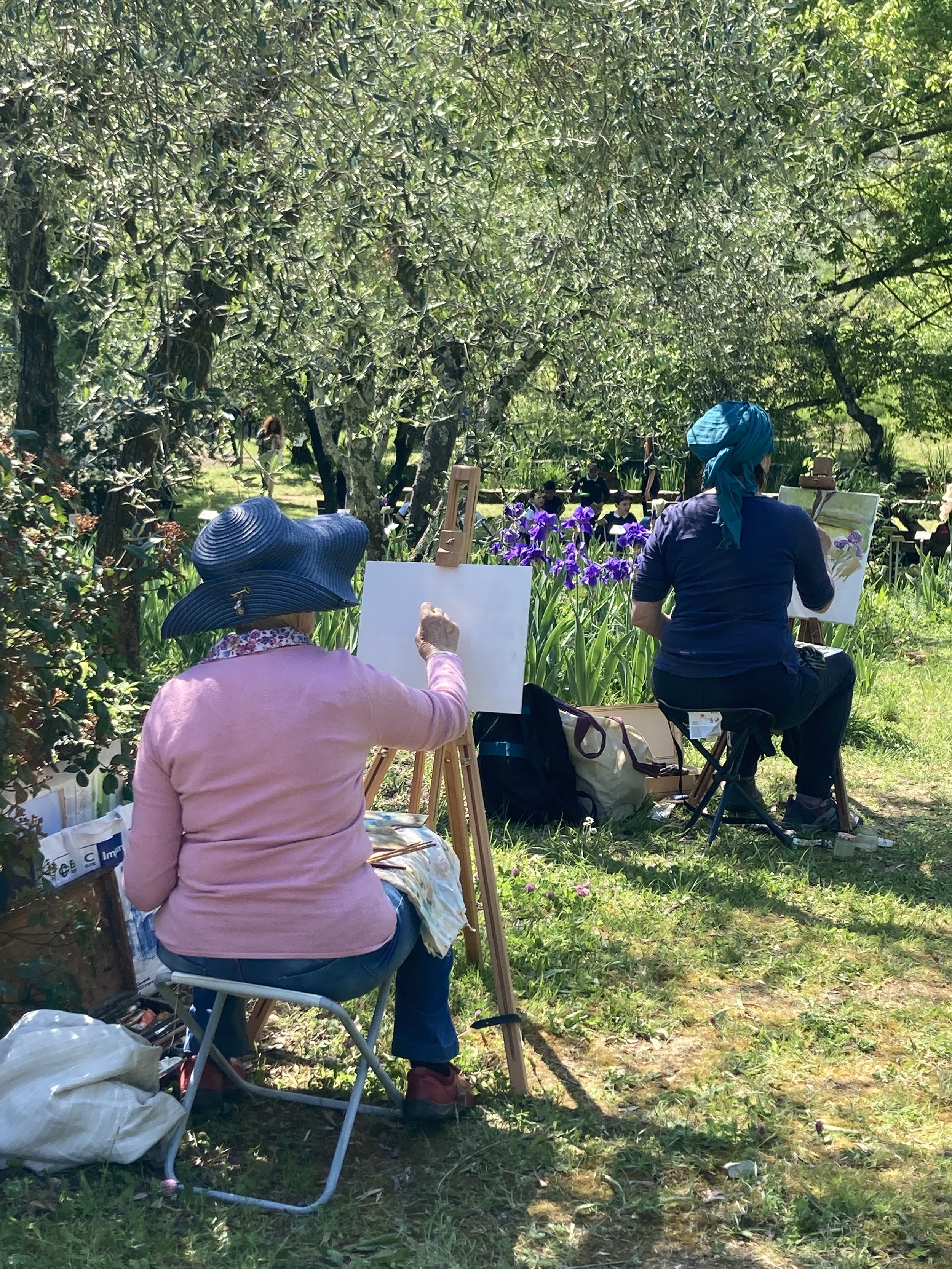
Adding to the enjoyment on the day I visited was a group of young school children in the garden. They came with sketch pads and colored pencils and were busy drawing the beautiful irises. What an experience in history, art, science, and beauty for these budding artists! There were also grown-up artists throughout the garden, with easels set up and paintbrushes in hand.

BA81DD1E-E246-4B59-8818-FD1DA3C327B0.jpg
F7E8D530-94F2-4B89-9ACB-164D8DA49800.jpeg

After visiting the garden there was ample opportunity to admire the views of Florence, and the remains of the ancient city wall, from Piazzale Michelangelo. A downhill walk through the rose garden on the other side of Piazzale Michelangelo brought us back into the city just in time for lunch.

After nearly 4 years in Italy, I still pinch myself over these small outings. What a gift to be able to hop on a train for Florence and spend a spring morning admiring her irises.

The garden is open, free of charge, from 10 am to 6 pm April 25 - May 20th in 2022. Next year’s dates will depend on the weather and the iris blooms!

May 09, 2022 /Joanne Bartram

Villa Torrigiani di Camigliano

Villa Torrigiani di Camigliano

May 02, 2022 by Joanne Bartram in #italytravel, #lucca, Italian art architecture, Italian gardens, Lucca

For wealthy and prominent citizens of Lucca in the 16th and 17th century, having a villa outside of the city was both a summer getaway to the cool, fresh air of the hills and a status symbol. The villas were set in farmland, olive groves, or amid grape vines and were often surrounded by lovely gardens. Luckily for us, many of those historic villas still exist, are open to visitors, and are just a short distance from Lucca. A perfect day excursion.

The worker’s cottages are in Borgo Parigi, just outside the villa’s gates.

One such place is the Villa Torrigiani in the tiny village of Camigliano, in the commune of Capannori, about 6 miles from Lucca. The villa is framed by stone walls with large gates. The approach brings you slowly closer to the villa on a path that cuts through open fields. When I visited in mid-April, the fields were full of vibrant yellow buttercups and small purple flowers.

Close to the villa’s gates lies the small, picturesque Borgo Parigi which at one time housed the estate’s workers. After passing through the stone buildings of Borgo Parigi it is on to the villa itself, just across the road.

The “new” facade, from the 1600’s, was much more ornate than the original one

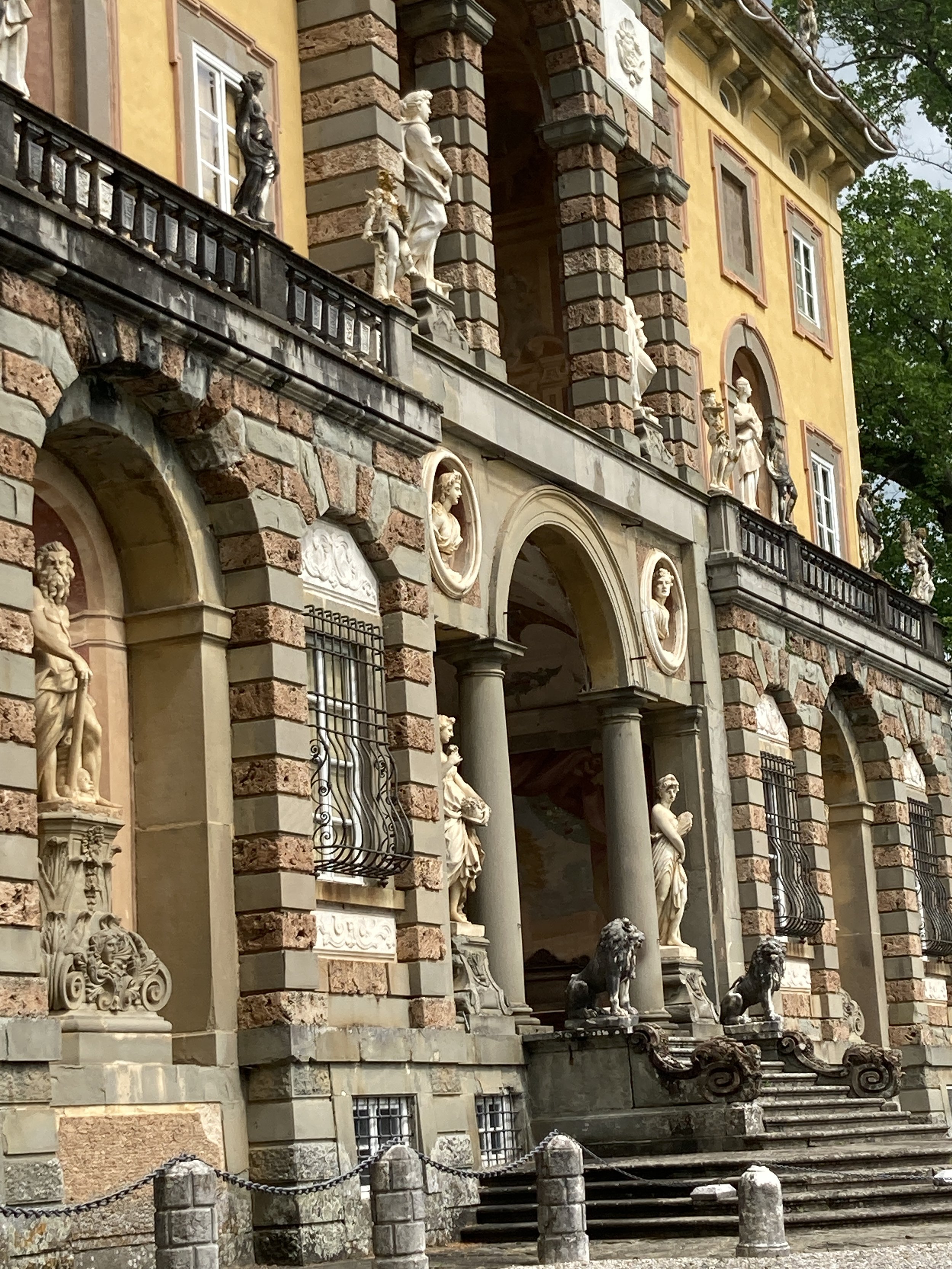
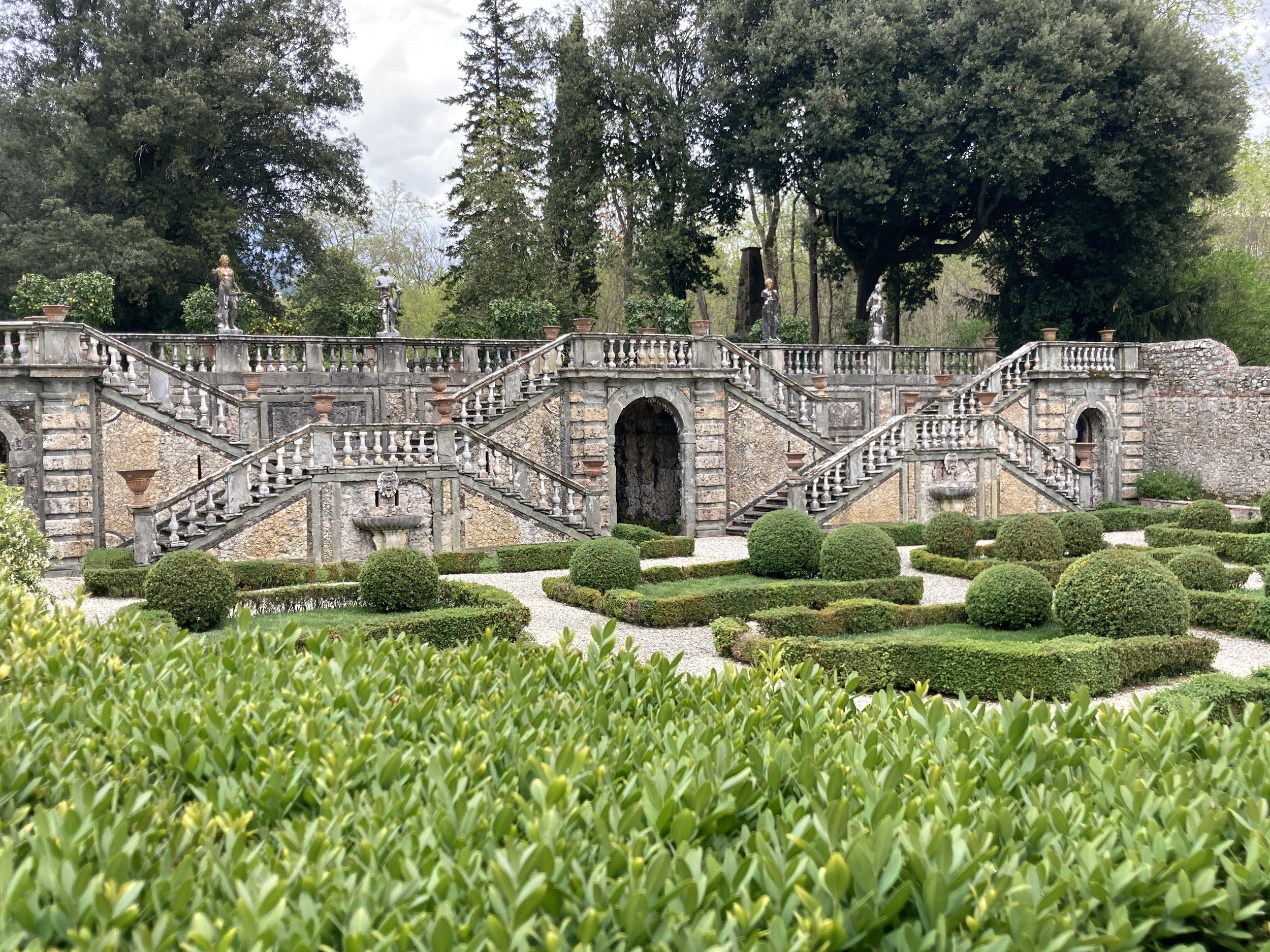
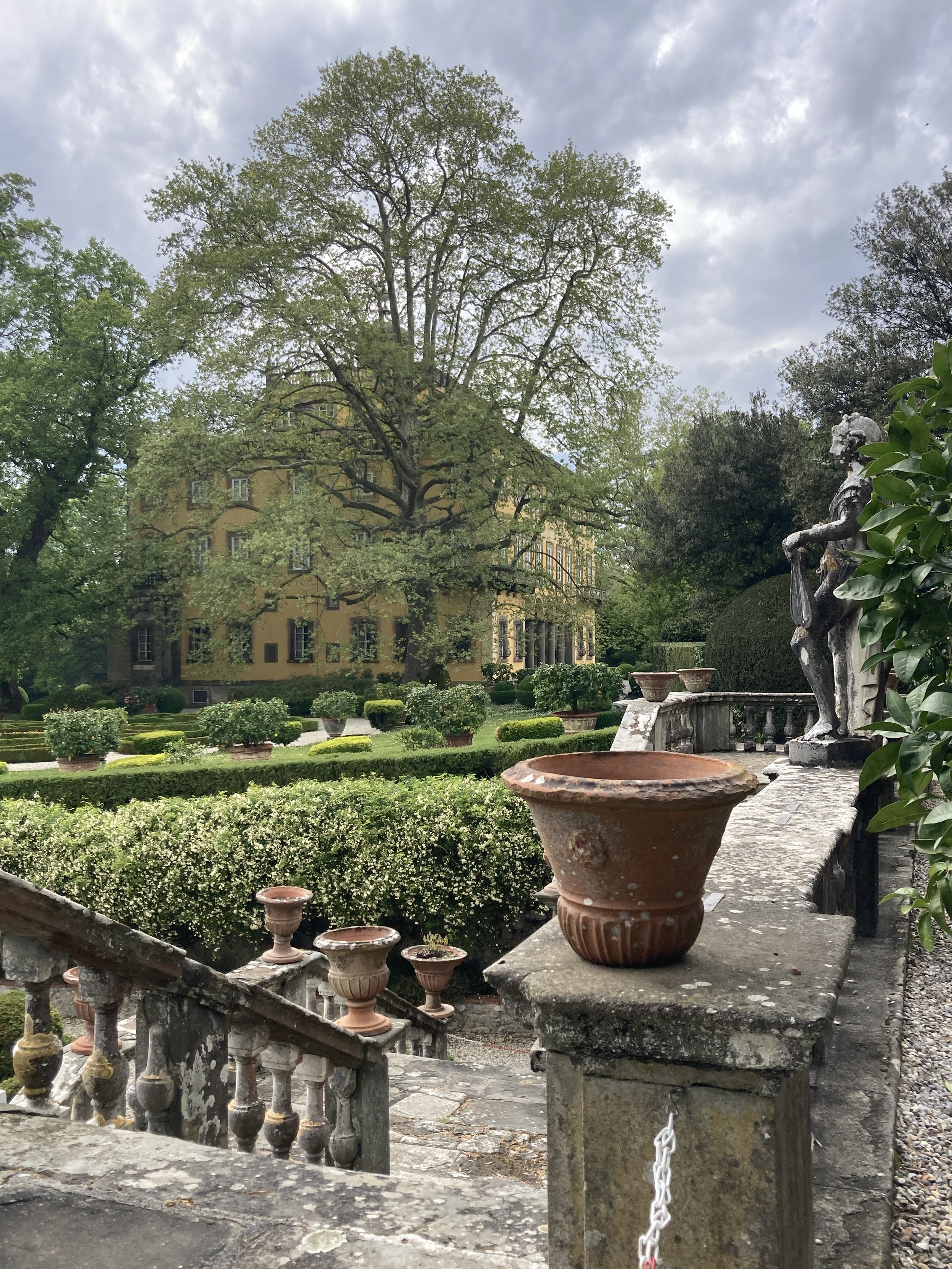
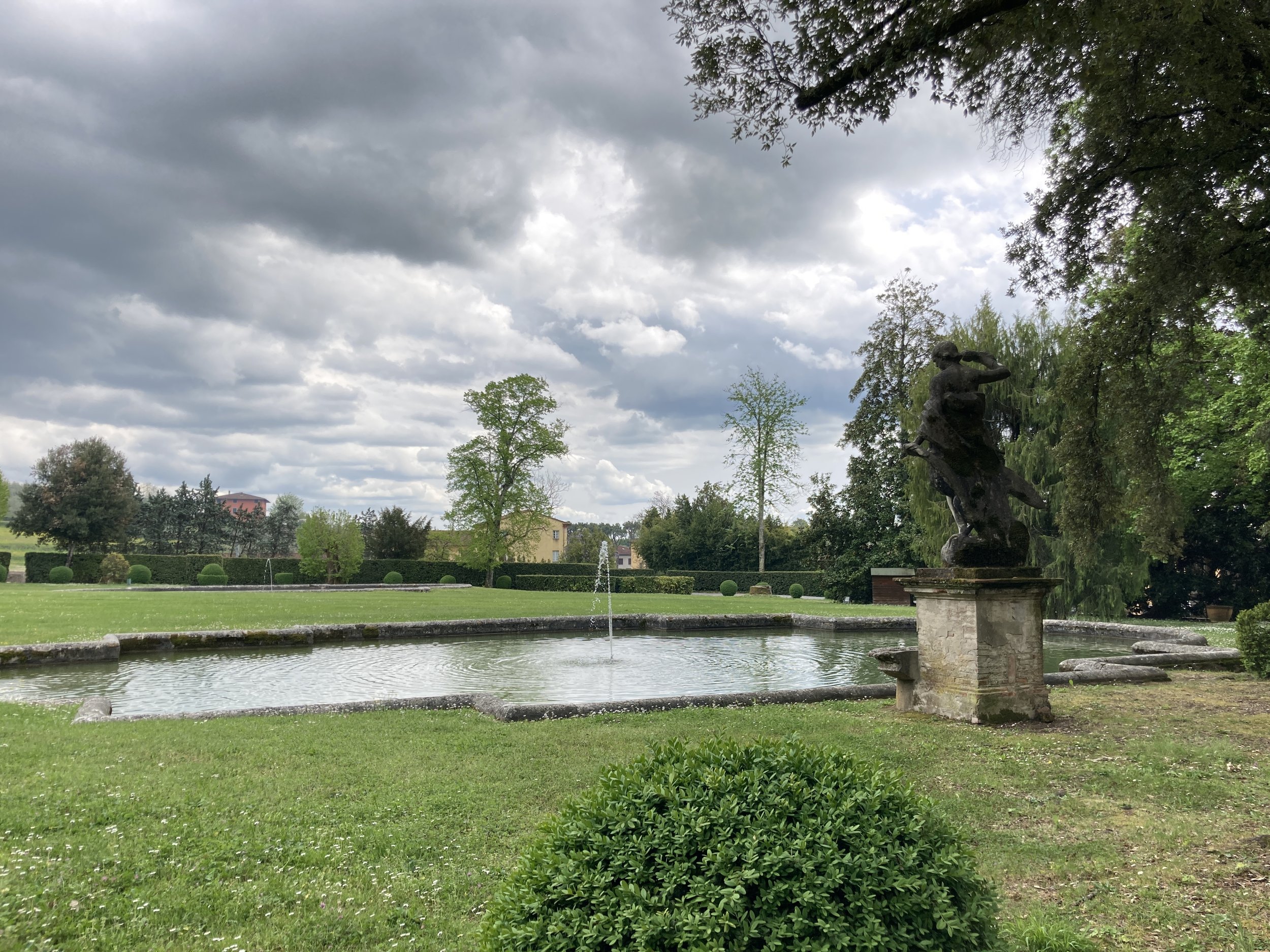
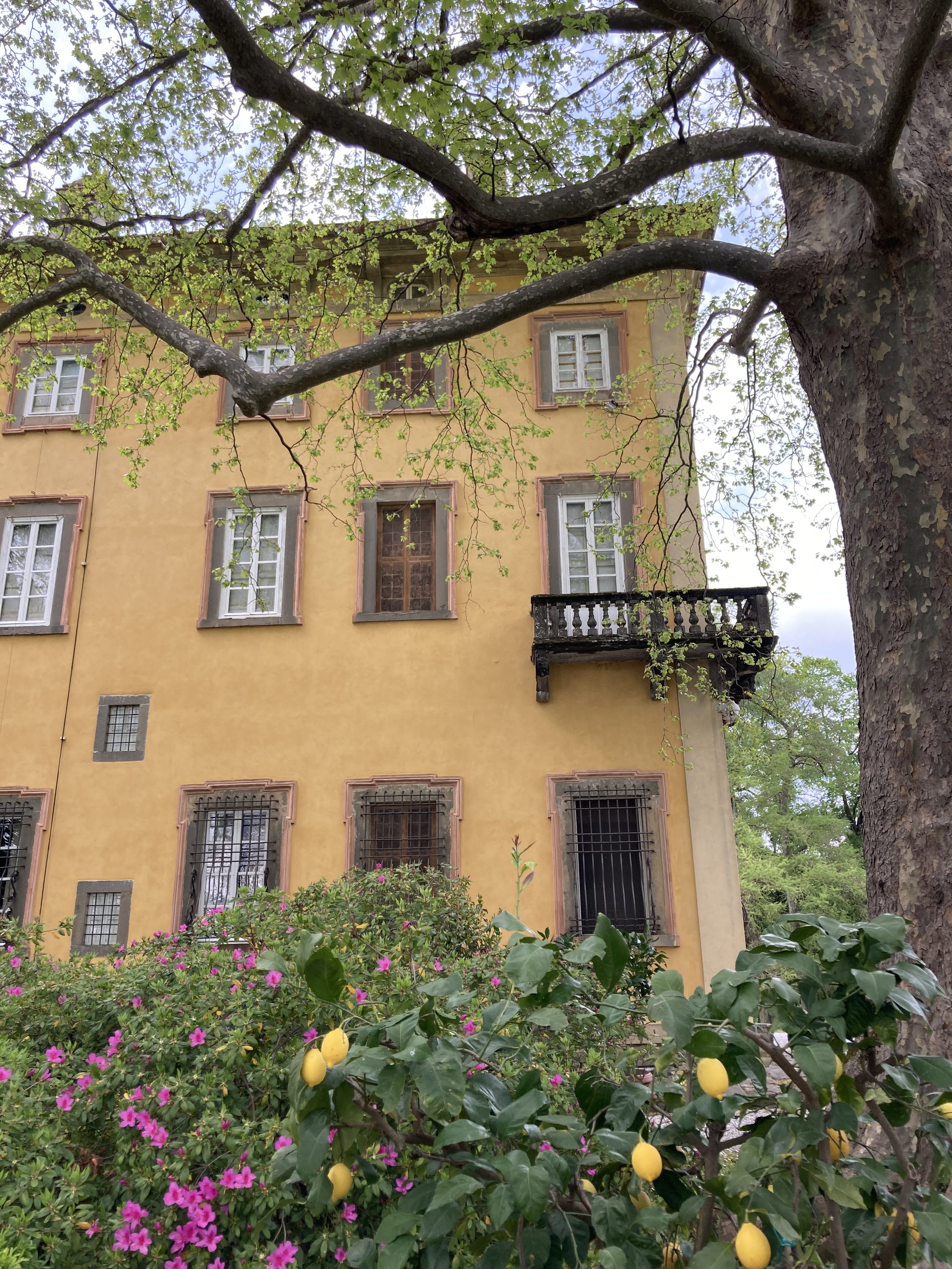
Villa Torrigiani sits in a park-like setting, surrounded by reflecting pools, broad lawns, trees, water features, and manicured gardens. The history of the villa is fascinating. The summer home of Lucca’s Buonvisi family in the 1500’s, it had a simple facade and was surrounded by vegetable gardens. When the Buonvisi fortunes changed (because the King of France failed to repay them money he owed) the villa had to be sold. Enter Marquis Nicolao Santini, the Ambassador from Lucca (at that time Lucca was an independent republic) to Versailles and the court of Louis XIV. Santini purchased the Villa in 1636 and began to rework the more simple Italian villa into a French style building and garden - a smaller version of Versailles. The facade was changed to the more elaborate style that we see today, complete with the columns, statues, arches, and a variety of colors.

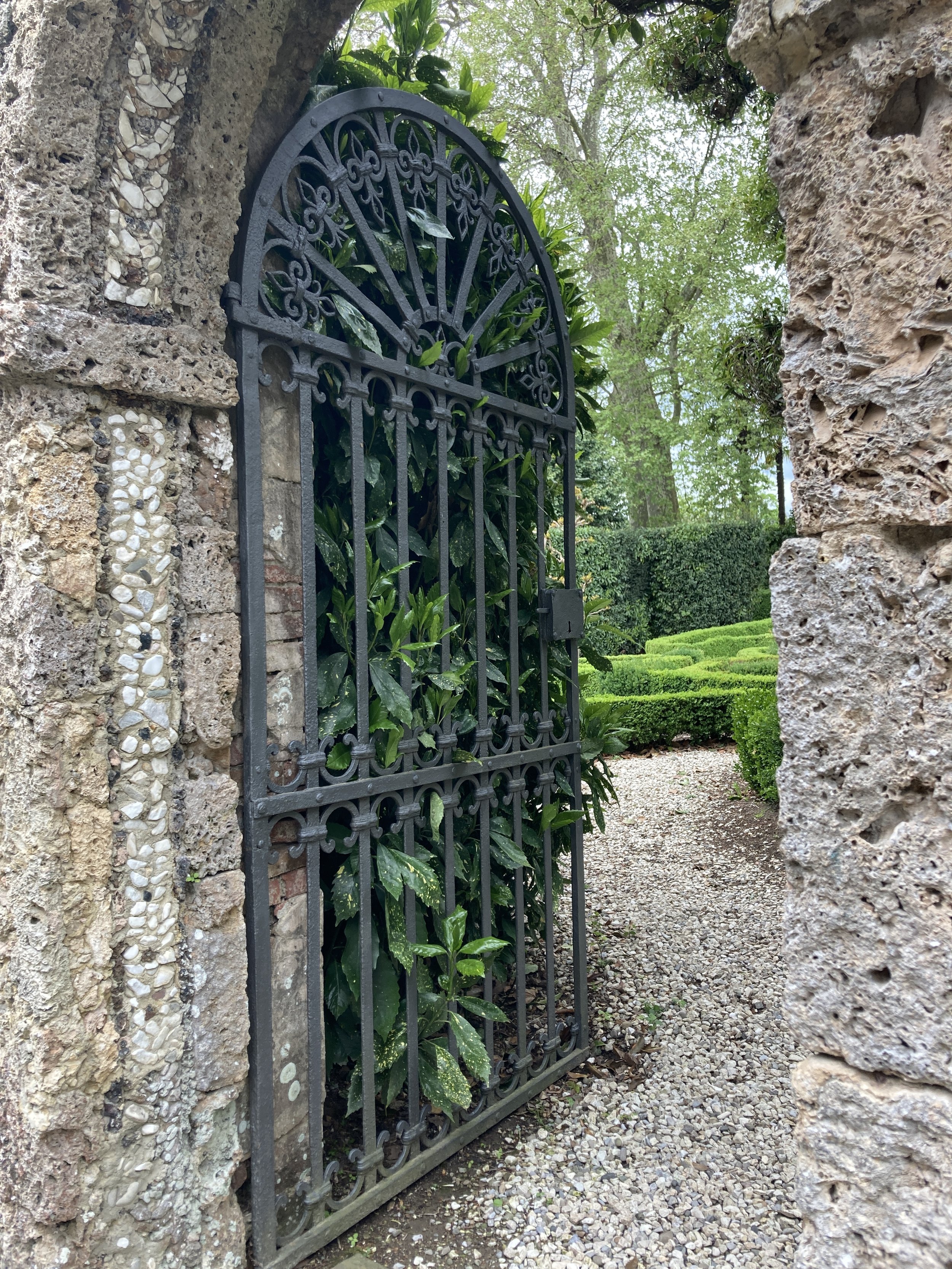
This staircase leads down to the lower level garden and it hides a surprise - a narrow grotto passage full of mythical creatures. Don’t be afraid to enter!

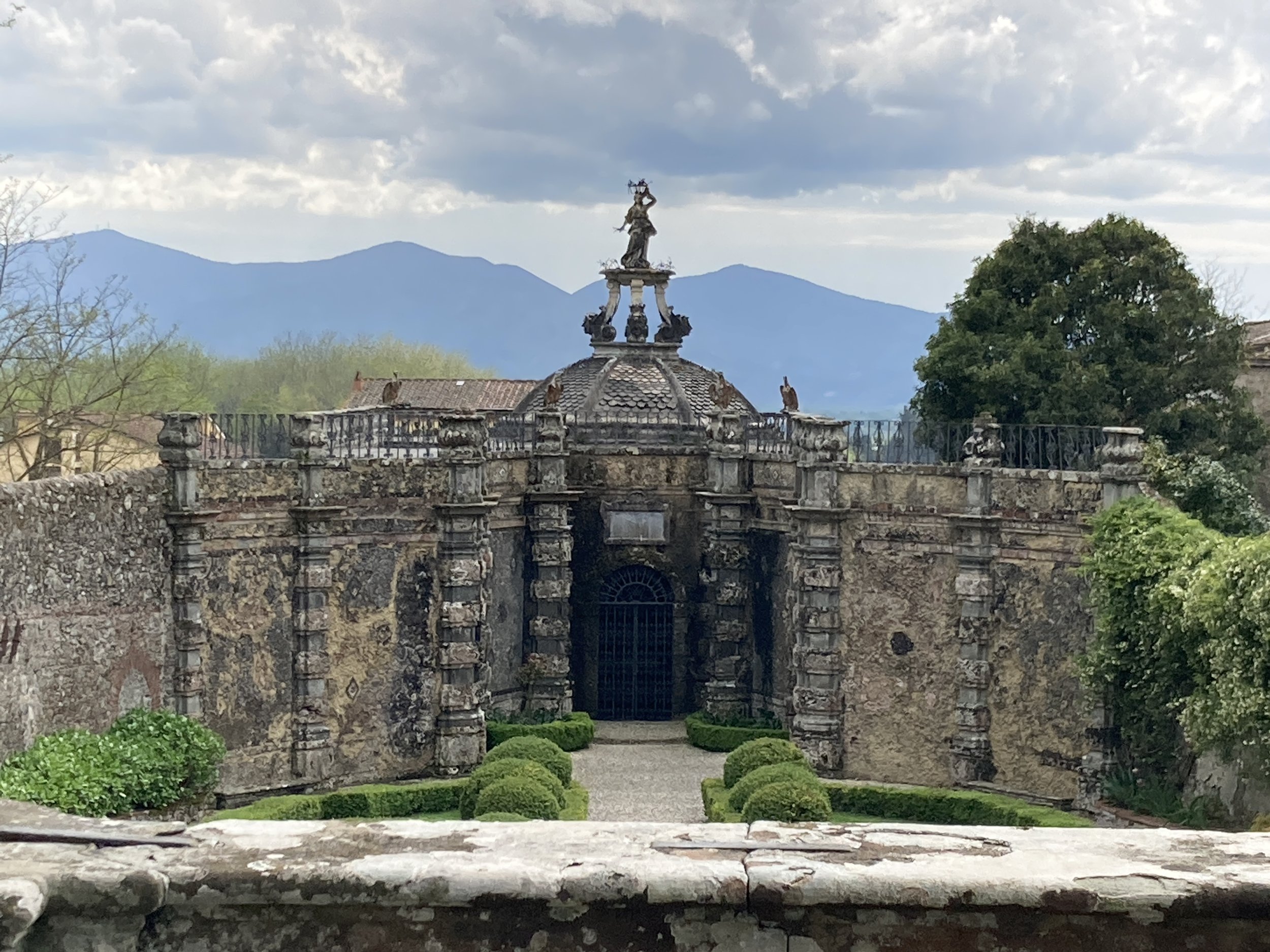
The Marquis Santini also banished the vegetable gardens in favor of elegant reflecting pools surrounded by flower gardens and avenues of cypress trees. A stunning tiered staircase leading from the foot of a long pool down to a sunken garden, complete with a nymphaeum (the Ninfeo di Venti, middle photo below) at one end and a hidden grotto passage at the other, were also added. To create that French feel in the garden, the Marquis employed André Le Nötre, one of the designers of Versailles.

B9C91F7D-0C2F-4477-B873-528379C99A90.jpeg
60748F34-32E1-4F06-8701-742074067258.jpeg
C98556F7-83FD-463F-9B8F-C678DF341497.jpeg

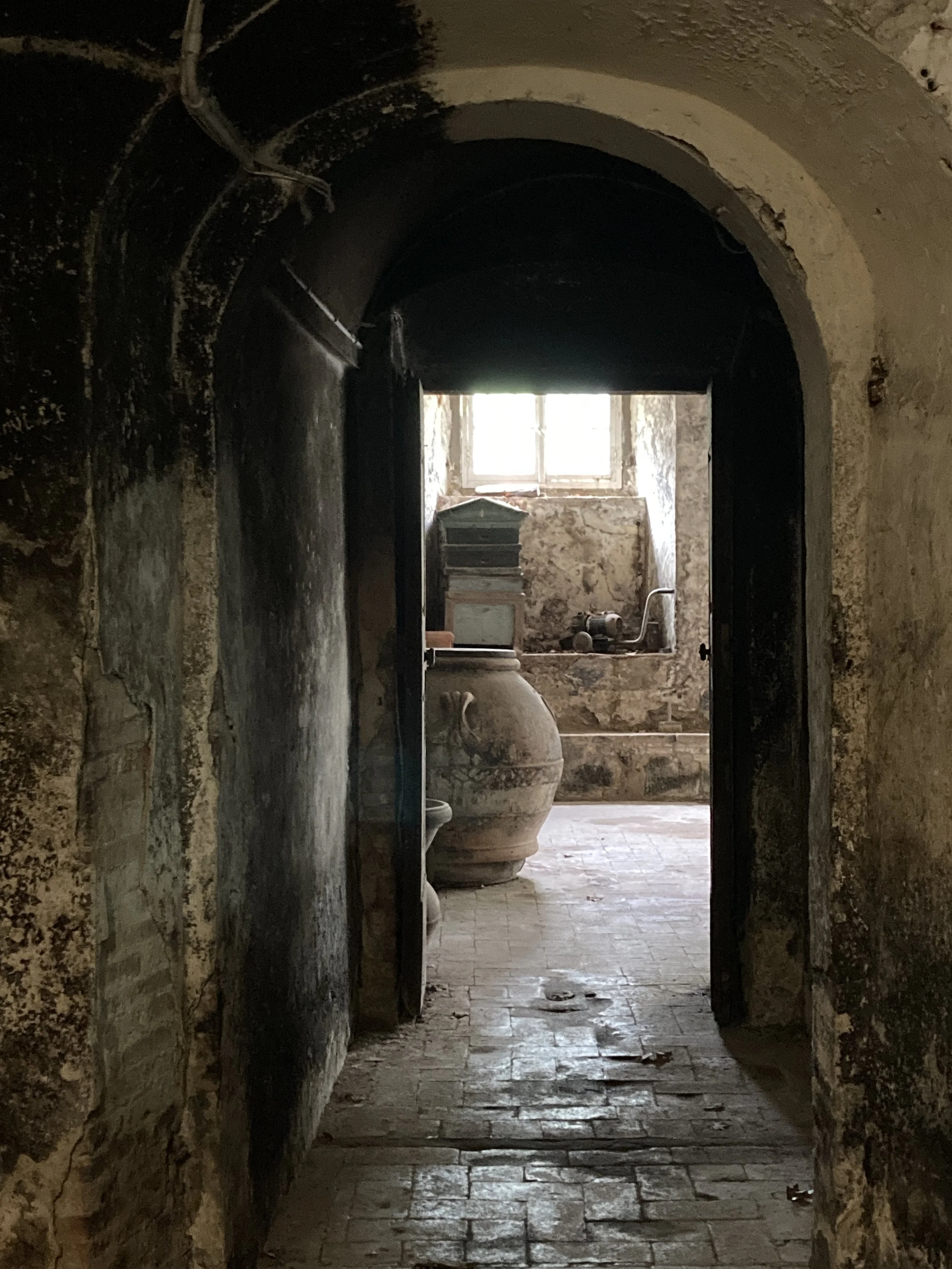
The villa landscape has continued to undergo changes, the biggest being a change in the 18th century to a more English style garden. Out went the flower beds around the reflecting pools and in came broad lawns, imported trees (including Magnolias, Cedars, and Camellias), and a wooded area. At some point the vineyards behind the house were also removed (though the old wine cellar remains).

BAB4F339-A1C6-4F84-B534-BFEA152C3D37.jpeg
8260784A-E010-4FB9-816B-424D4DF97000.jpeg
9E42DBD1-0ED0-4A20-98CD-4A639D573EC3.jpeg

The villa itself is also interesting. The ground floor is open for tours (arranged at the ticket booth just inside the entry gates). The tour guides provide wonderful historical perspective, plus with much of the information I’ve recounted here, along with family history of the occupants from the earliest Marquis to the present day owners. The glimpse inside the house is a chance to admire the still vibrant ceiling frescoes (look for camellias, a symbol of the family), the trompe l’oeil wall decorations, and many other artifacts on display.

The rear loggia of the Villa Torrigiani and the meeting place for tours of the home.

The villa is large but once past the ornate facade it has a very human scale. Perhaps that is because it remains to this day the summer home of descendants of the Santini-Torrigiani family. Family photos are scattered throughout, original fabrics adorn the beds, the dining table is set, there is even a dress worn by a previous occupant (1920’s style) on display in her bedroom. It is easy to imagine sitting on the back loggia with a book and a cup of tea, enjoying the birdsong, the breeze, and the history. Because this is still a family home (the family quarters are upstairs, tucked away from the visitors downstairs) photography is not permitted inside the villa. It was a challenge to keep my camera in my pocket and not to dash up the stairs to see the upper floors!

Just as it did for Lucca’s historic families, a visit to a villa outside of town provides a countryside experience different from that of the walled city. There are 6 historic villas to visit close to Lucca, Villa Torrigiani is a good place to start.

The villa is open from March through November. 10am - 1pm and 2:30 pm - 6 pm. Note that they may close earlier in bad weather.

Contact Info: Villa Torrigiani del Camigliano. Via del Gomberaio 3, Camigliano email: villacamigliano@gmail.com phone: +39 0583 928041 tickets available on site, 8€ for the garden only, 15€ garden plus villa

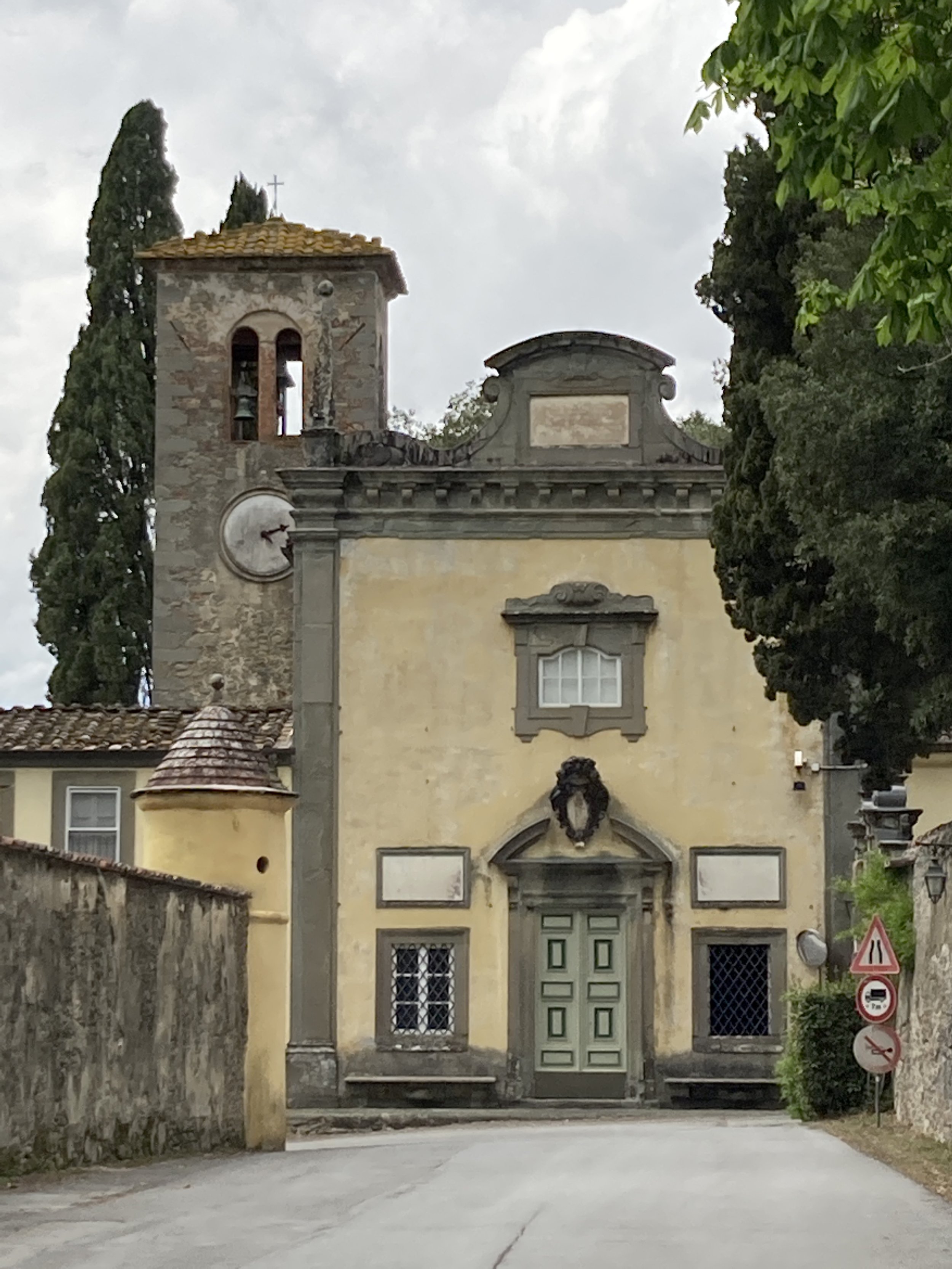
The family chapel on the grounds of the Villa Torrigiani


May 02, 2022 /Joanne Bartram
Italian Villas, Italian Gardens, Villa Torrigiani, Lucca villas, Lucca
#italytravel, #lucca, Italian art architecture, Italian gardens, Lucca

Chef Guiseppe at work in the kitchen

All The Right Ingredients: Extra Virgin Cooking Classes in Lucca, Italy

April 25, 2022 by Joanne Bartram in #lucca, Cooking, Food tours Italy, Italy travel, Lucca

One of the good things about having friends visit me in Lucca is the chance to recommend activities that I think will enhance their experience, things that may not be found in the guidebooks. Sometimes my suggestions include a visit to a “secret” garden, a hidden away little church, a walk beneath Lucca’s walls, or a local festival.

Another activity I like to recommend - and one of the most fun things to do when visiting Italy - is a cooking class with a local chef. Recently I had the pleasure of spending the day, along with some visiting friends, with Chef Giuseppe Mazzocchi at Extra Virgin Cooking Classes (EVCC) in Lucca. And what a day it was!

Tuscan cooking, and Tuscan olive oil, come naturally to Chef Giuseppe. I guess that is what happens when you are born and raised at your grandfather’s olive mill in a small Tuscan village! Giuseppe began to cook alongside his family and many of the recipes he shares come straight from his nonna (grandmother). More than being a talented chef and teacher, Giuseppe has a love for local culinary traditions and flavors that make his classes a wonderful window into Tuscan life.

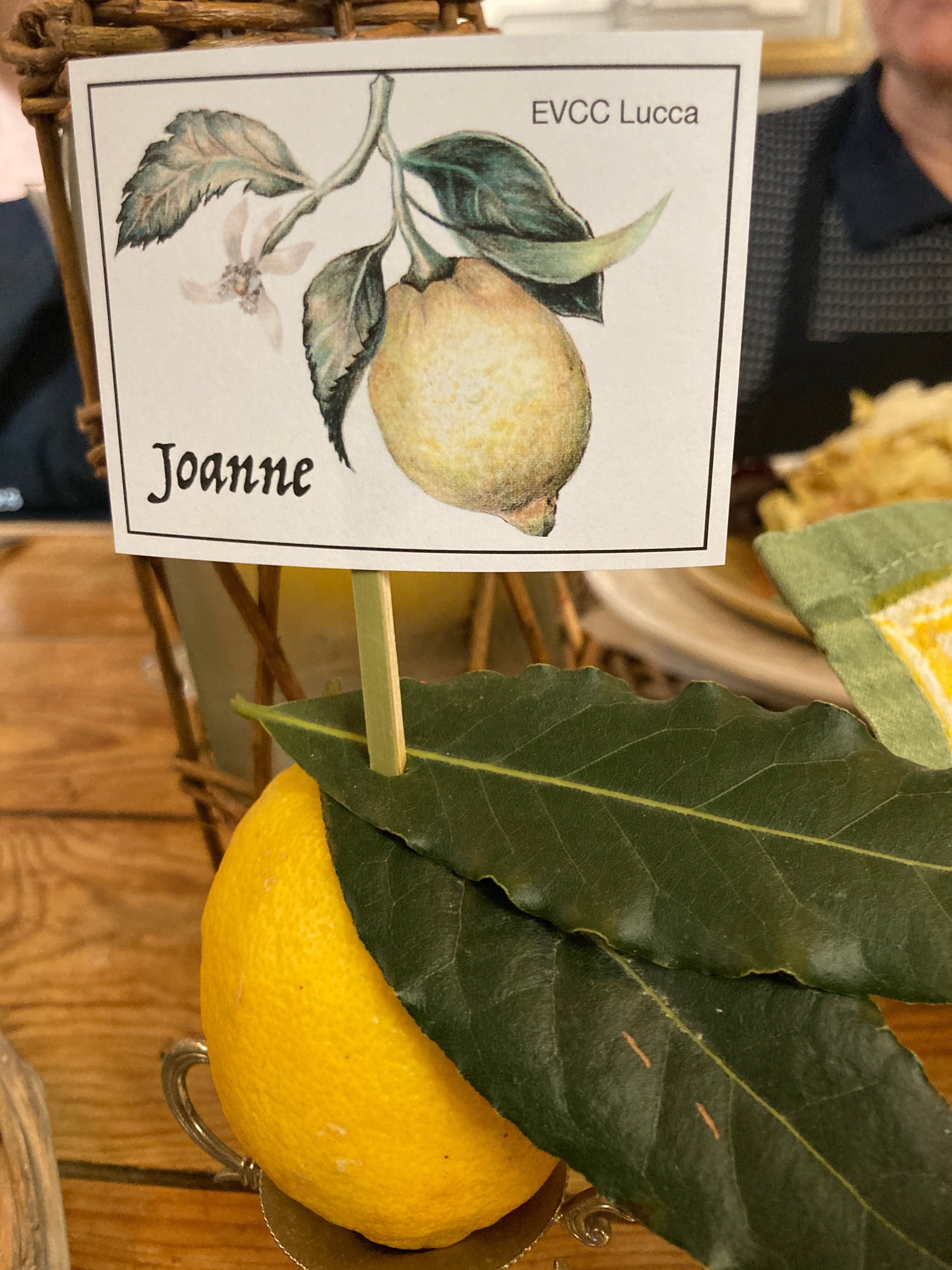
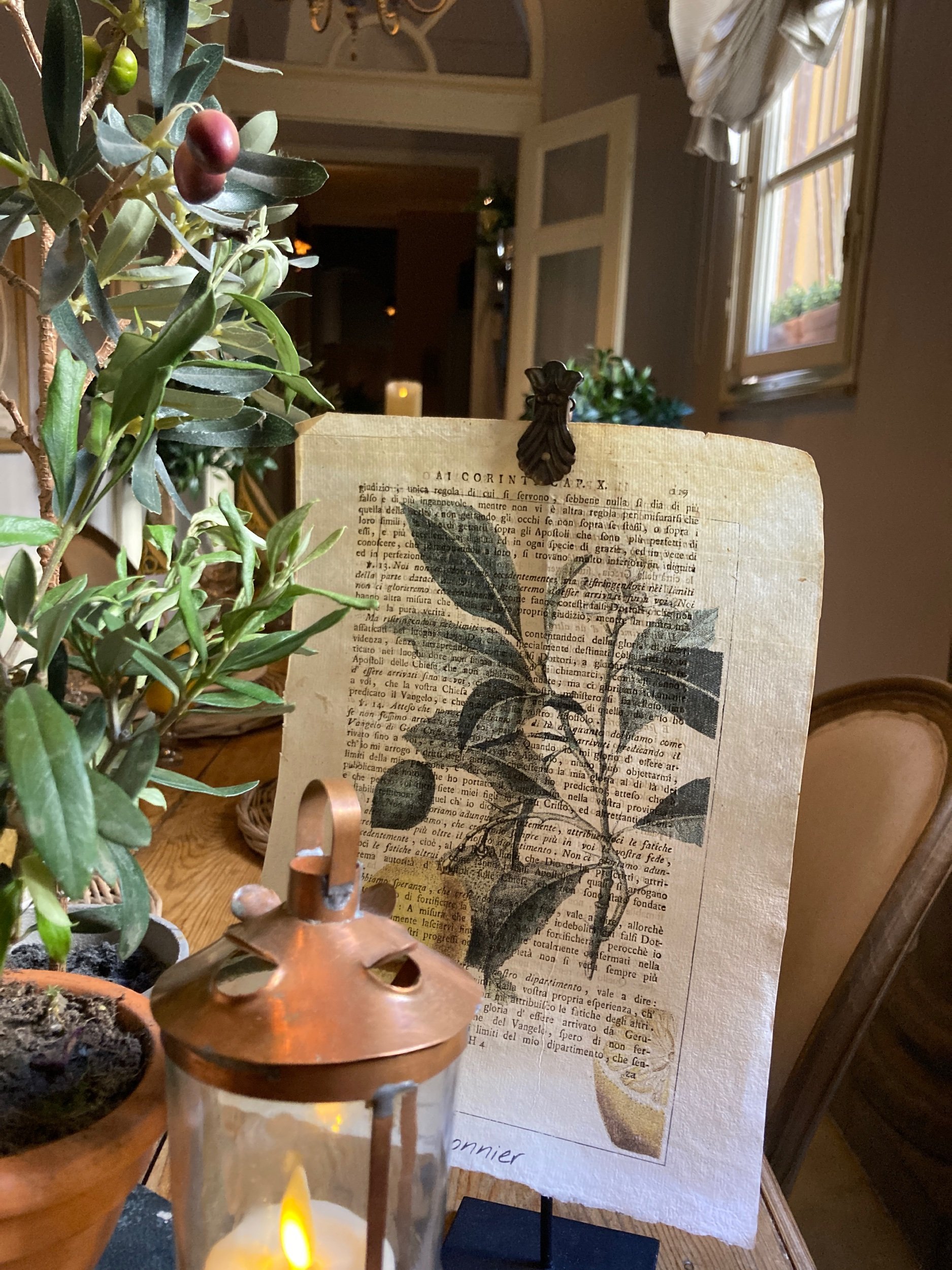
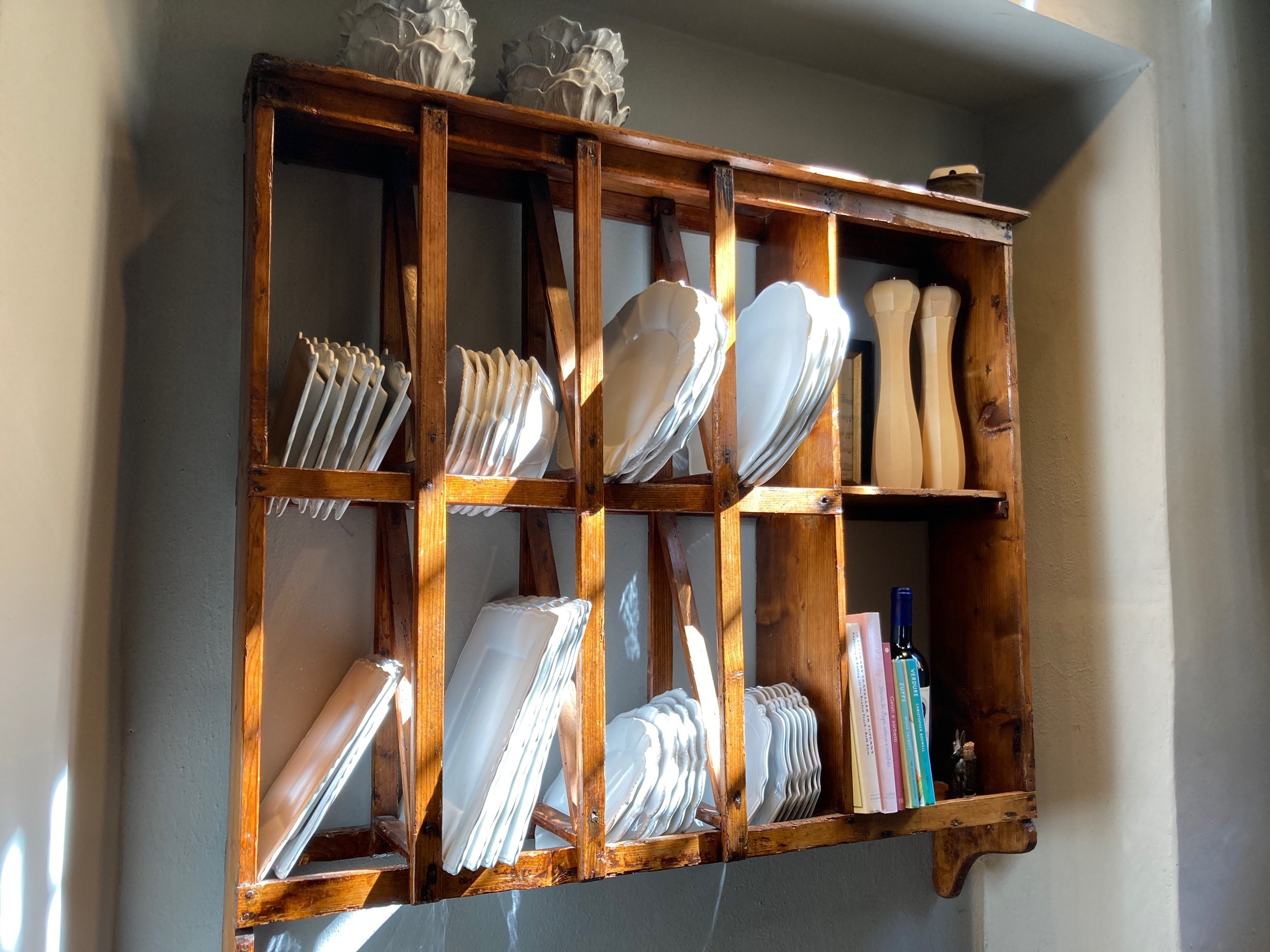
Just one detail from the elegant dining table at EVCC (designed by the talented Liz)

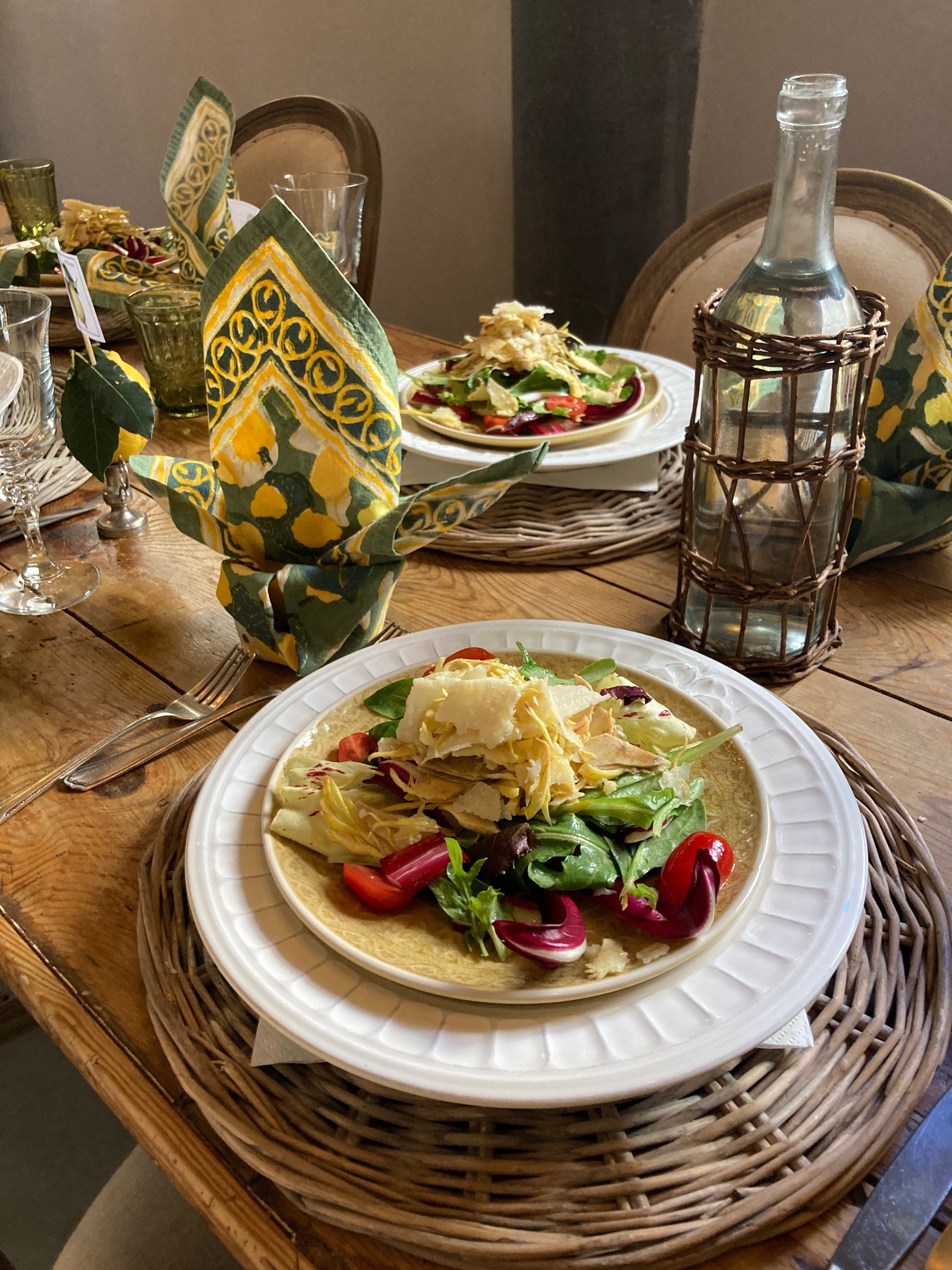
If Giuseppe is the heart of the kitchen, then it is his partner Liz who lends elegance to the dining experience. Together they welcome you into their home, invite you into their kitchen, and, once the cooking is done, present an absolutely gorgeous table setting at which to enjoy lunch. Liz’s table settings are picture-worthy touches of luxury.

IMG_5451.jpeg
IMG_5574.jpeg
IMG_5568.jpeg
IMG_5453.jpeg

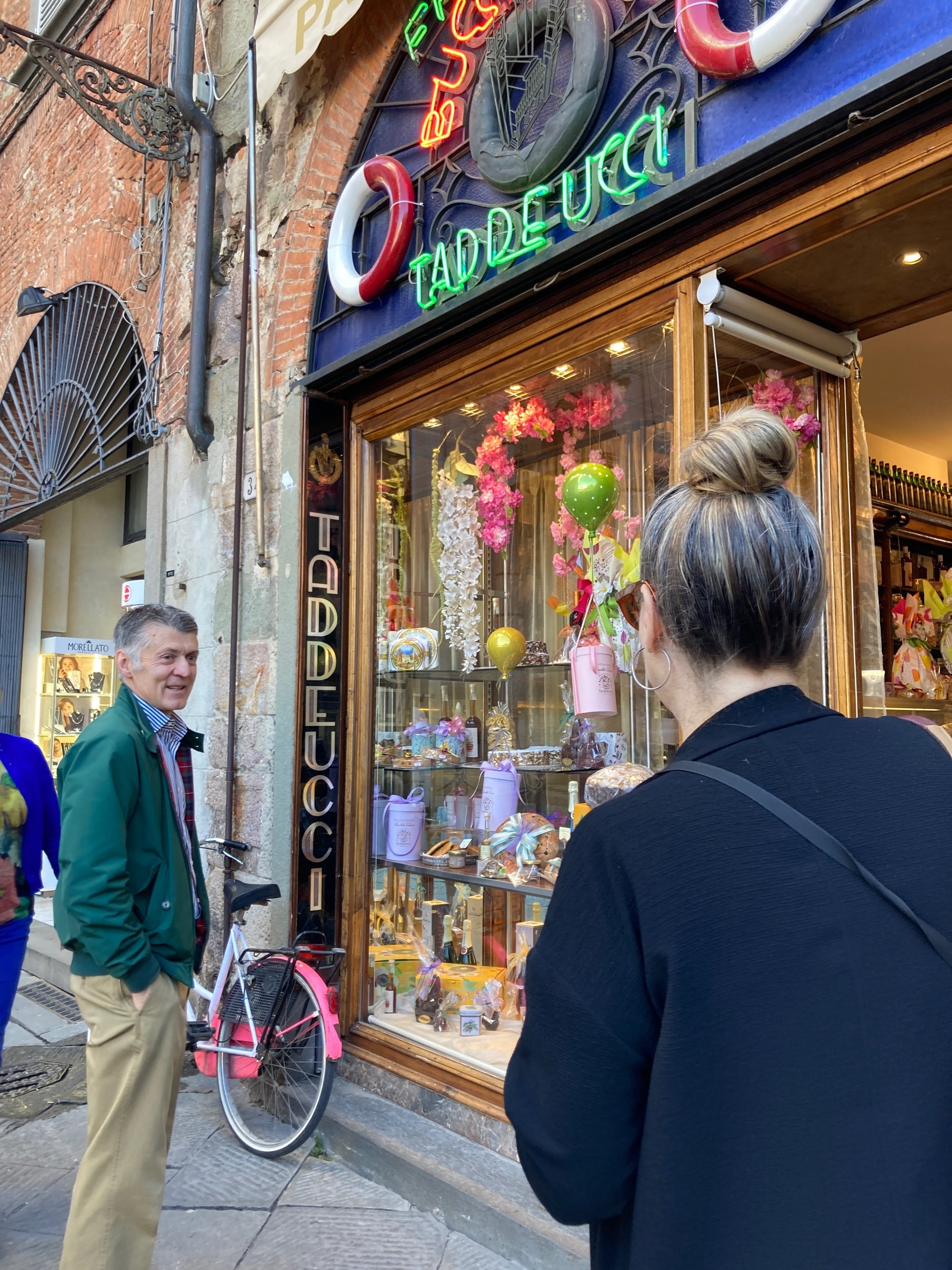
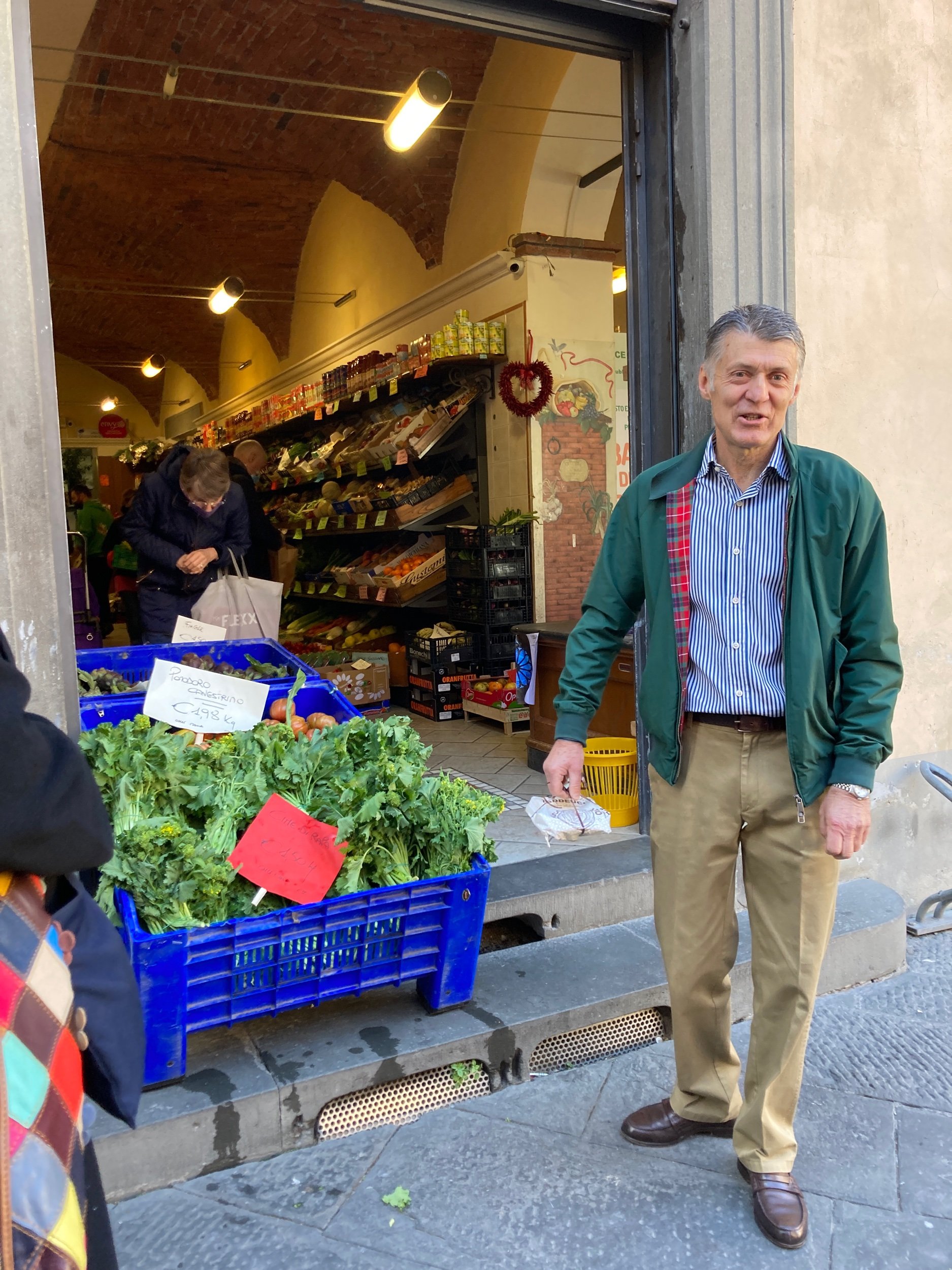
The class day began in Lucca’s historic center with stops at several small shops to gather supplies. Visits to an historic pastry shop, a fabulous bread baker, and the city’s best fruit and vegetable shop provided a fun start to a morning of cooking.

IMG_5437.jpeg
IMG_5446.jpeg

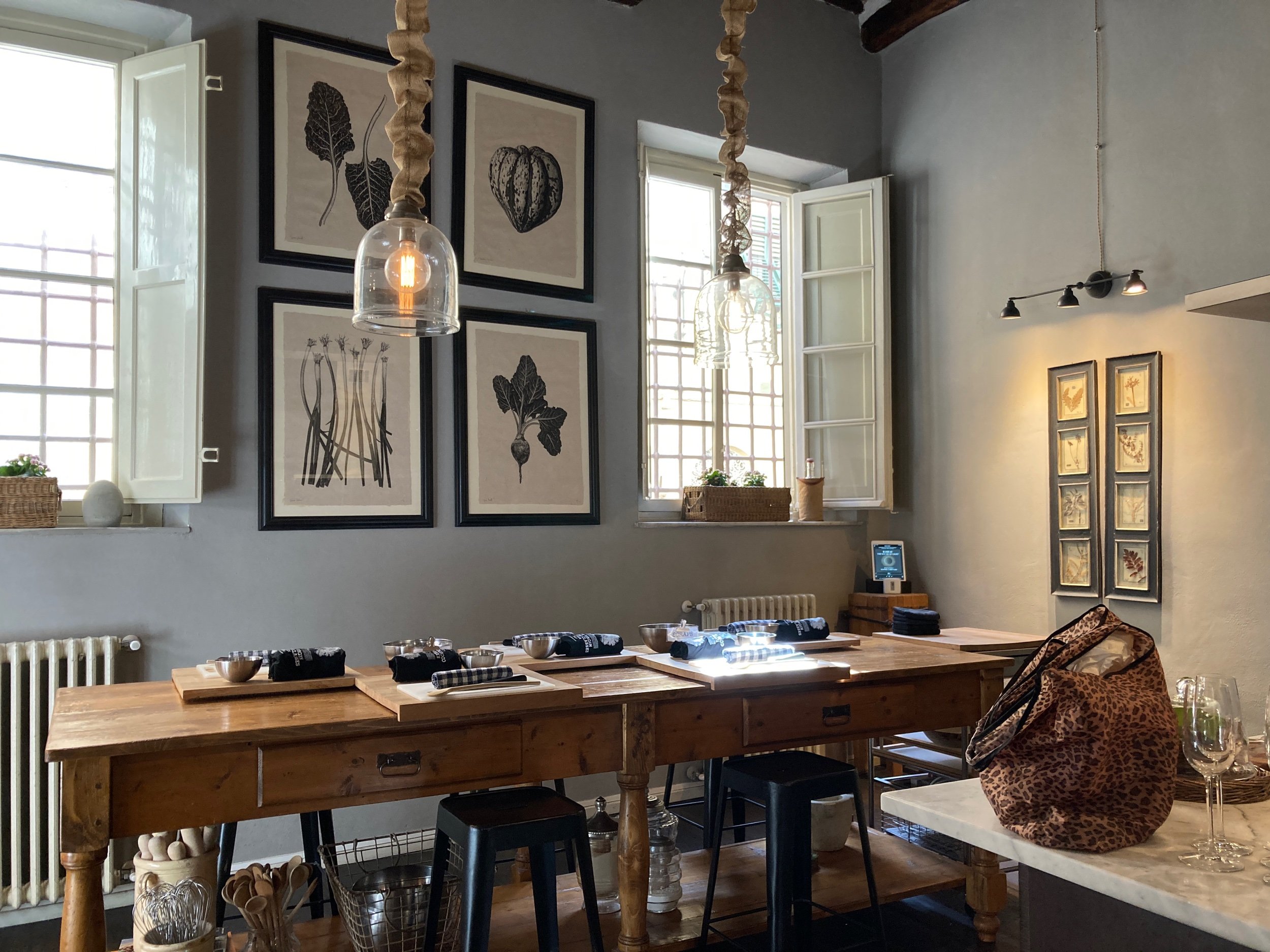
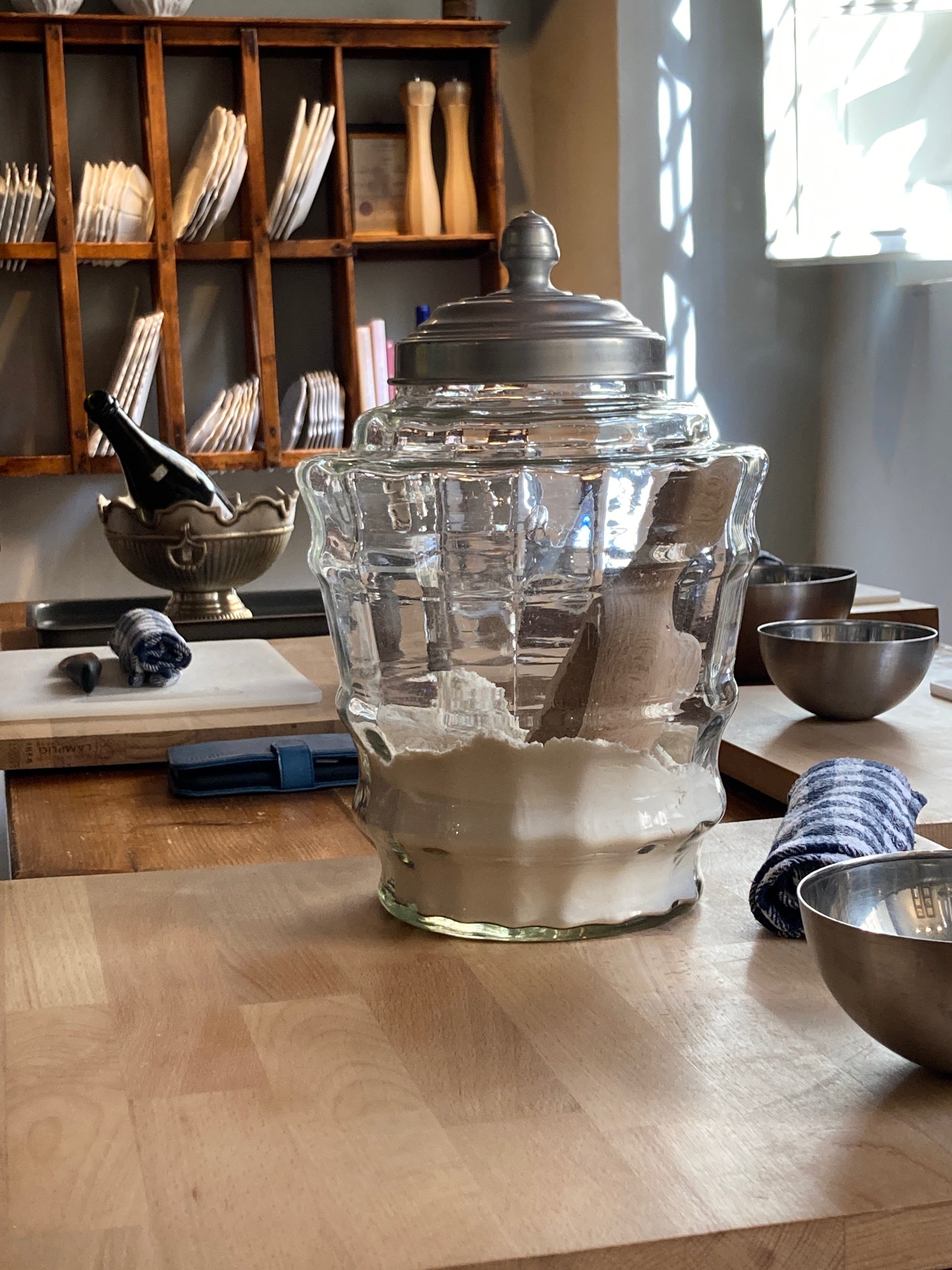
Then it was into the kitchen, a spacious, well-equipped, and charming workspace inside an historic Lucca home. I had a serious case of kitchen envy, especially for the long farmhouse work table, which I swear was larger than my entire kitchen.

IMG_5457.jpeg
IMG_5503.jpeg
IMG_5462.jpeg
IMG_5461.jpeg

Before we got to work cooking, Giuseppe led us through some tastings. First, three different types of extra virgin olive oil, including a local Tuscan oil. Next, a sampling of pecorino cheeses from fresh to aged to really aged, along with a local chestnut honey which perfectly complimented the cheese. There just may have been some sipping of Prosecco while we tasted. Shh. Don’t tell (usually I wait until afternoon for a Prosecco).

IMG_5465.jpeg
IMG_5470.jpeg

The menu this day started with a raw artichoke salad with a lemony dressing. The shaved artichoke rested on a base of the prettiest greens I’ve ever seen, including a variegated radicchio.

Now that’s a salad !

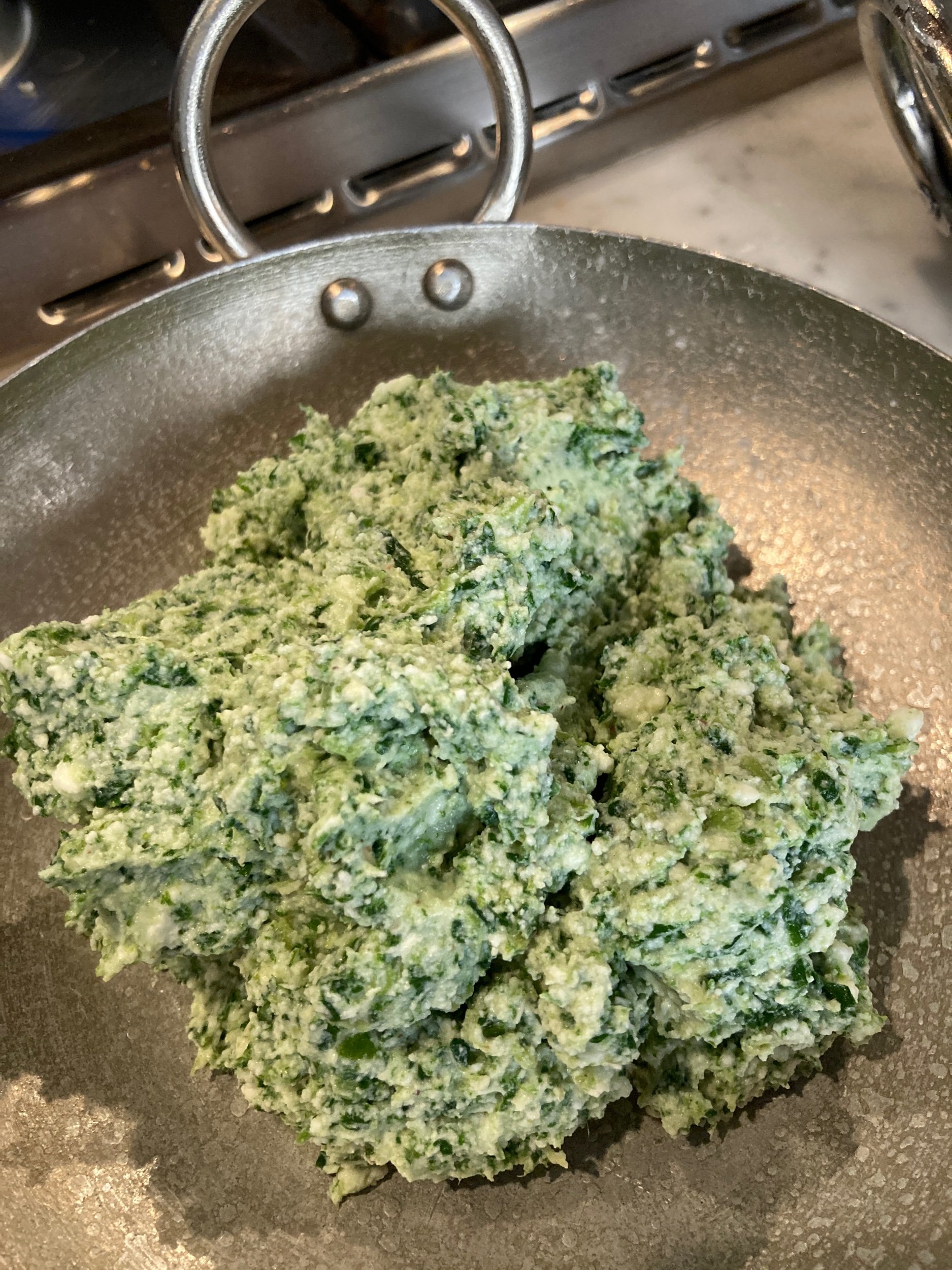
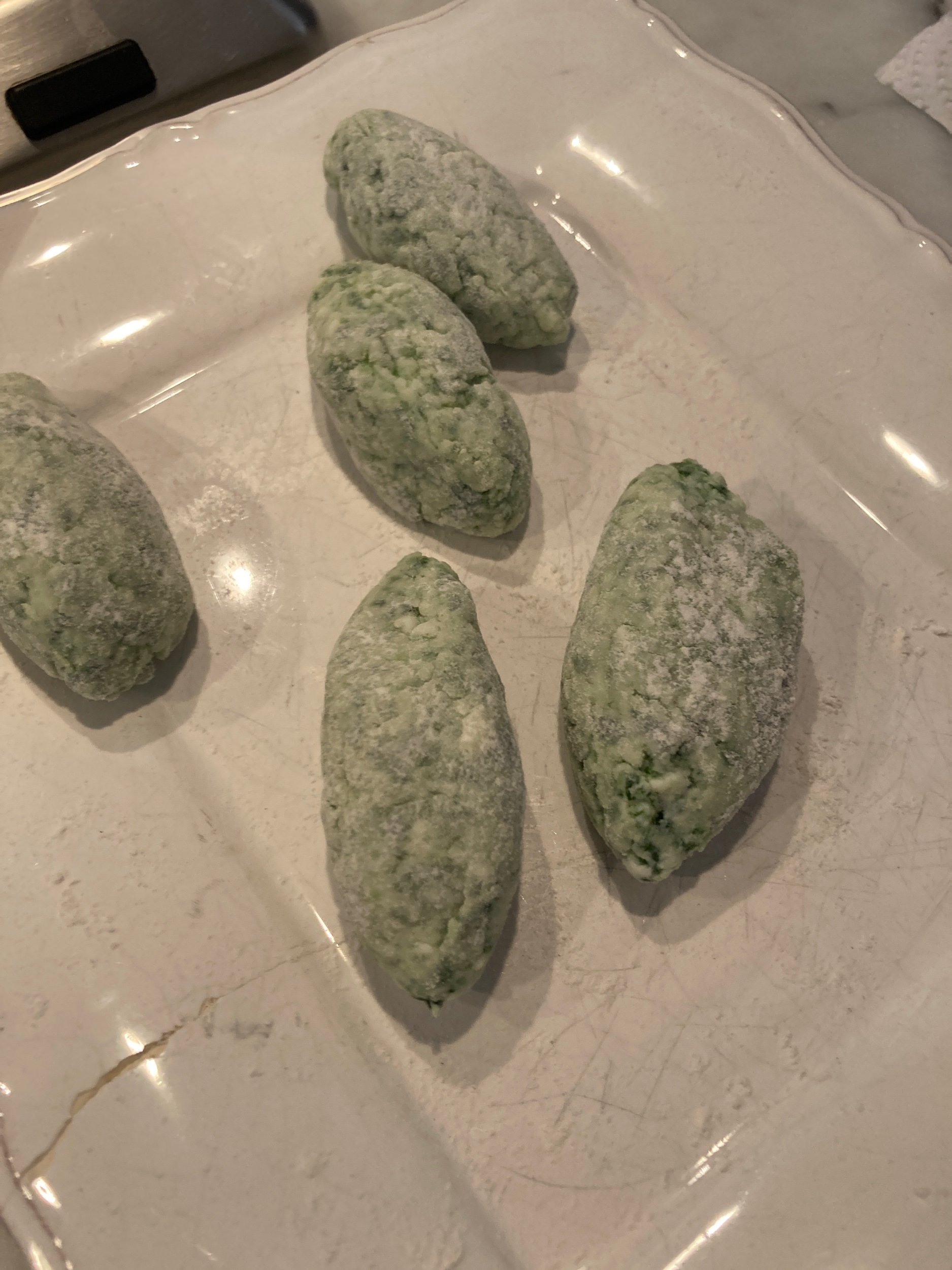
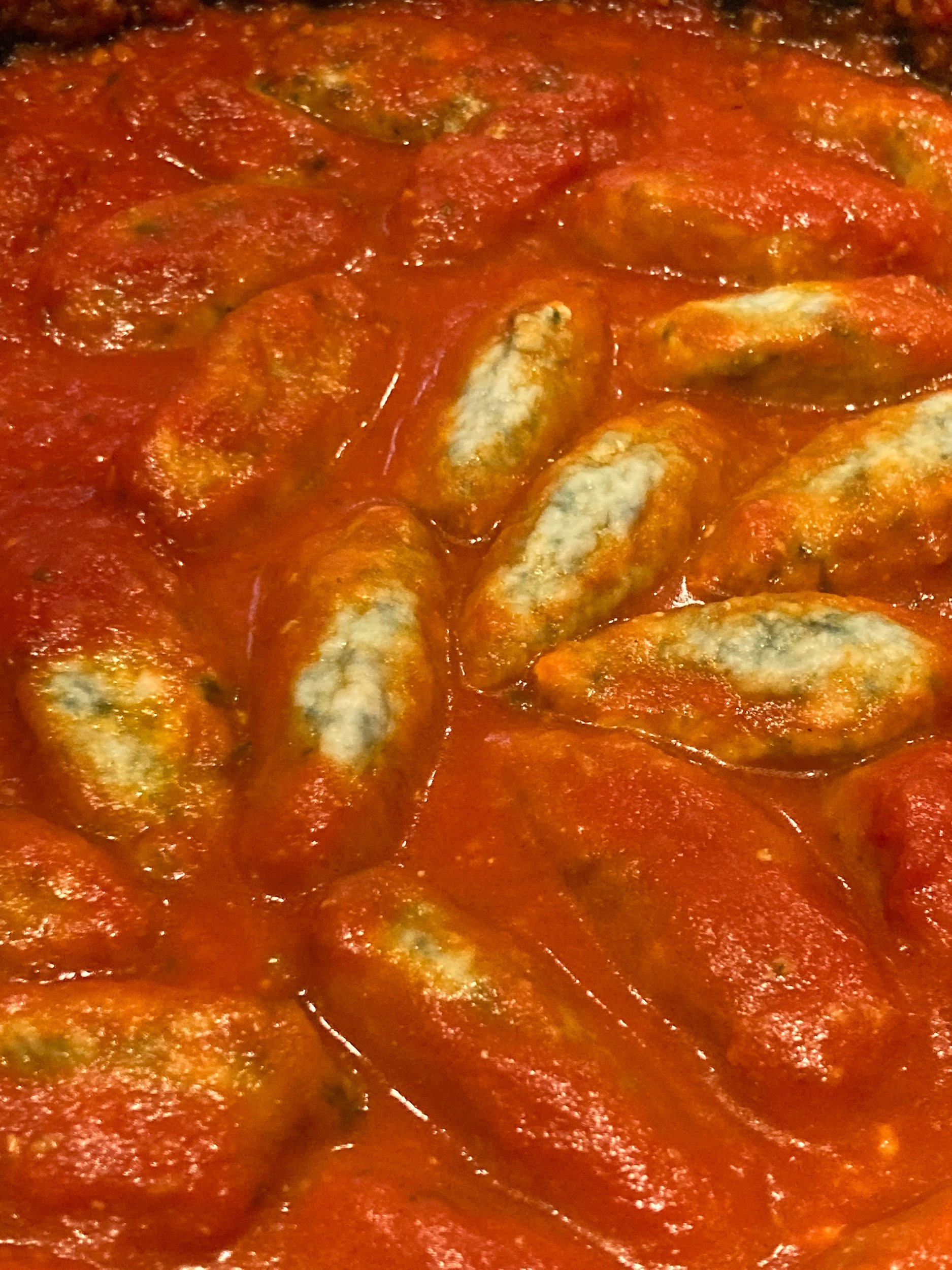
We had fun learning how to make, and then shape, the gnudi. Gnudi are interesting. They are essentially the filling for a ravioli, ricotta with chard (or spinach) and parmesan, but without being enclosed in a pasta shell. An egg white and some rice flour bind the soft gnudi together and then they are shaped using two spoons to form an oval that will hold together during a brief dance in some boiling water. We also made a quickly cooked tomato sauce which went over the gnudi at the end. The result was a tasty and light as air dish.

IMG_5502.jpeg
IMG_5512.jpeg
IMG_5577.jpeg

Next up - a fragrant risotto with leeks and just the right amount of truffle butter. If only I could share the scent here - it was intoxicating. We even learned the chef’s secret for preparing a risotto without the constant stirring.

Leek and truffle risotto alongside gnudi in tomato sauce

How gorgeous is this berry topped panna cotta? It tasted as good as it looked!

Dessert had been prepared ahead of time for us - a beautiful heart shaped panna cotta with a berry sauce.

Together we plated the panna cotta, topped them with berries, and added a garnish of chopped of fresh mint.

Just when we didn’t think we could eat another bite, cups of espresso came with tiny bites of sweet pastry. Somehow we managed!

After a fun morning preparing food, it was a treat to sit down to lunch at a beautiful table (thank you Liz) and share the meal we had prepared.

Lunch was accompanied by local wines, good conversation, and lots of laughter.

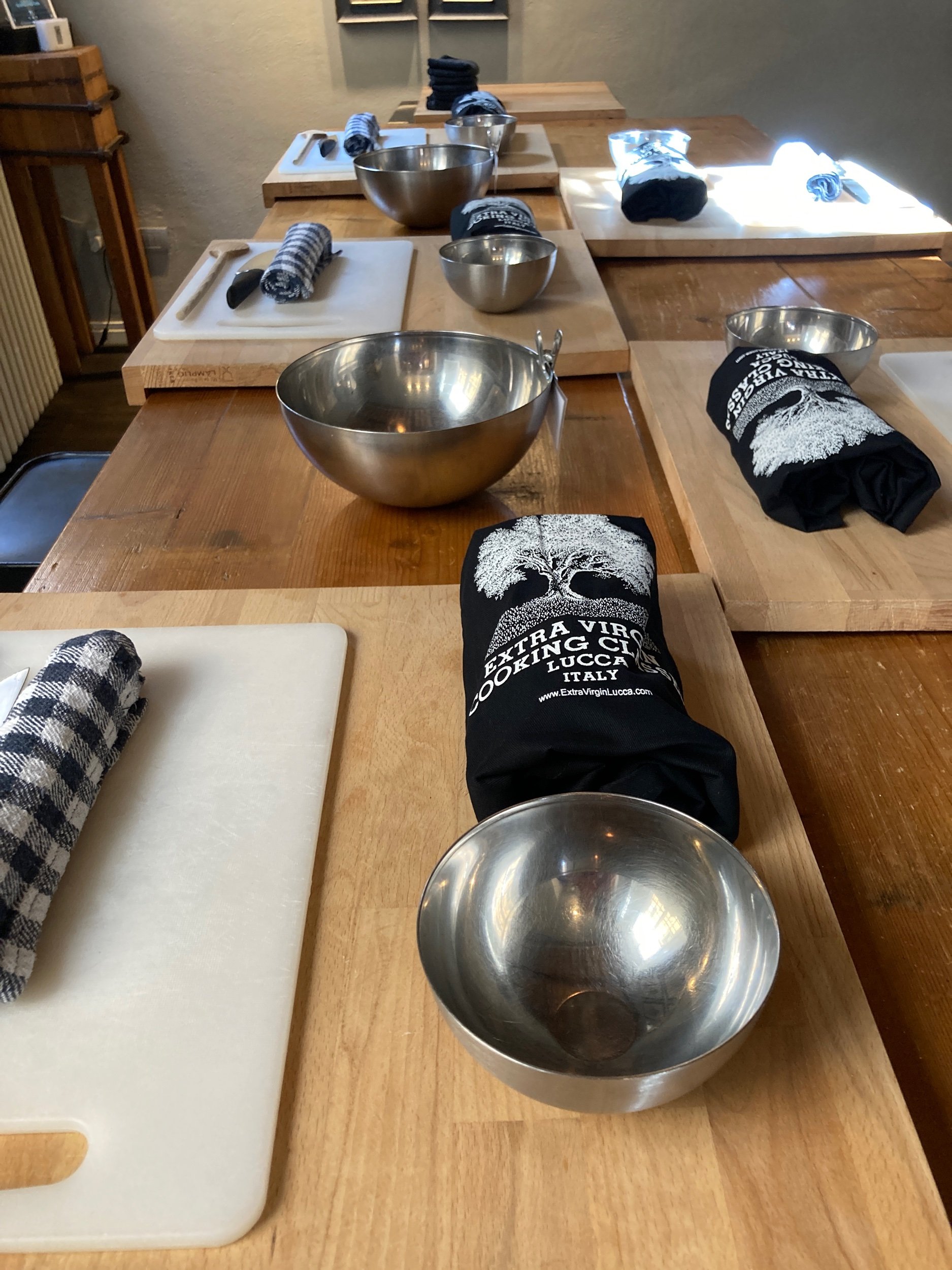
We all agreed that we had spent a perfect day in Giuseppe’s kitchen. We left with recipes, a EVCC apron, and good memories of a day well spent. And we all started planning our return.

Contact info: Extra Virgin Cooking Classes in Lucca with Chef Giuseppe Mazzocchi

Email: tuscancook@gmail.com

April 25, 2022 /Joanne Bartram
Italian Cooking Class, Extra Virgin Cooking Class, #cookingitaly
#lucca, Cooking, Food tours Italy, Italy travel, Lucca

Oxen, Doves, and Exploding Carts: Florence’s Unique Easter Celebration

April 17, 2022 by Joanne Bartram

Celebrating the season of Easter (Pasqua in Italian) in Italy is always a treat. The pageantry, the traditions, the medieval flair add up to a uniquely Italian celebration.

Holy week begins with Palm Sunday (Domenica delle Palme) mass where, here in Lucca, olive branches are handed out (much easier to obtain than palms).  Olive branches represent peace and hope, an especially poignant symbol this year with war raging not so far away in Ukraine.

Good Friday (Venerdì Santo) is marked in many Italian cities by deeply moving processions.  In Lucca, this provides instant transport back to the Middle Ages as robe clad and barefoot penitents carry a heavy wooden crucifix through the city’s ancient cobbled streets. 

Venerdì Santo procession, Lucca 2022

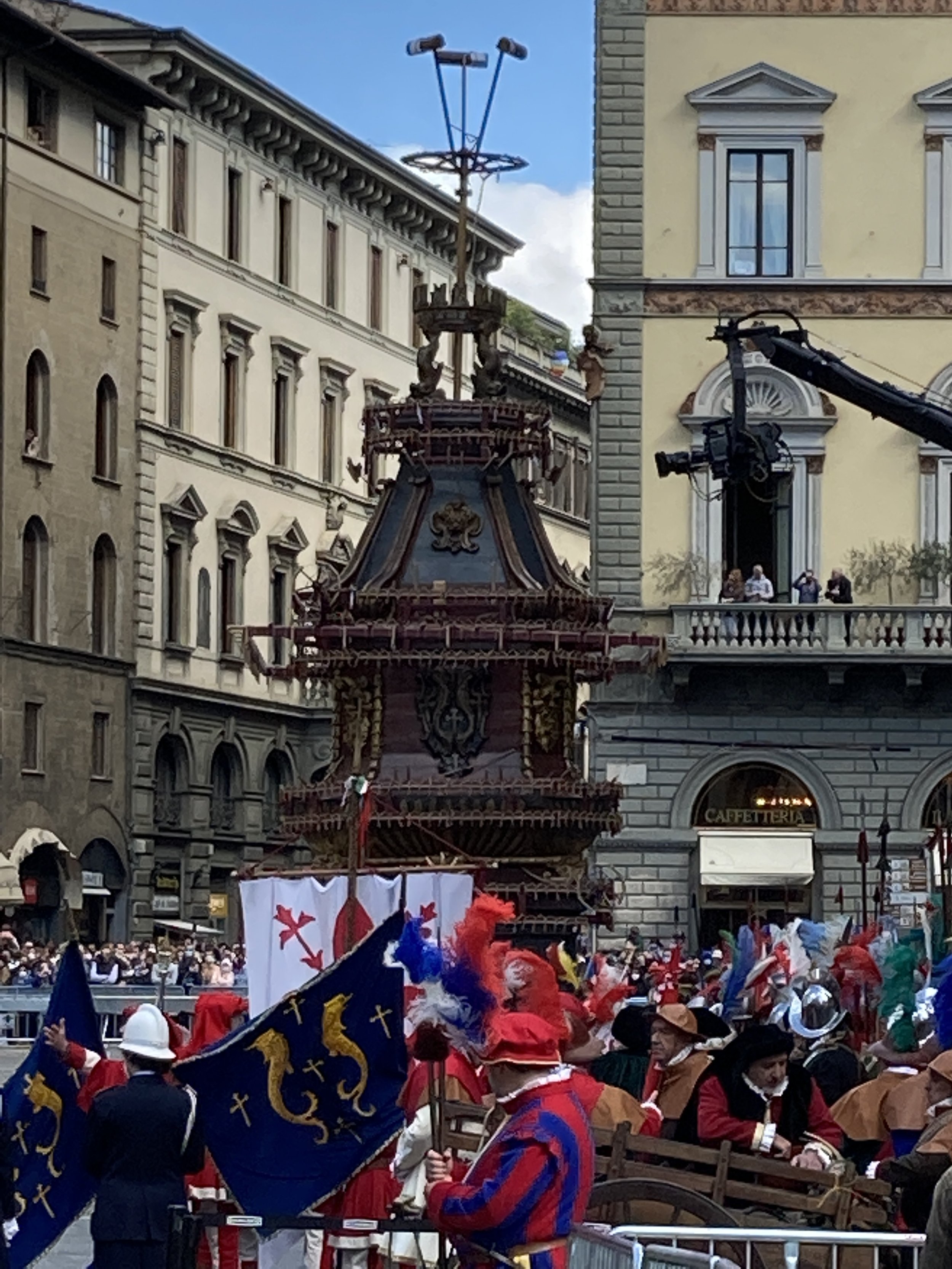
Traditions vary from city to city, but perhaps the most interesting and unique Easter Sunday celebration, the Scoppio del Carro (rough translation, the Explosion of the Cart) occurs in Florence.  Each year a cart, called a Brindellone – the suffix “one” gives a hint that this is no ordinary cart but a really, really big one – is pulled through the streets of Florence by a team of white oxen, all dressed up with flower garlands on their heads and red bows on their tails.  

The brindellone towers several stories high and is packed full of fireworks (top photo).  

The procession, which winds its way through the center of town, ends in front of Florence’s marble clad Duomo. The brindellone is escorted by a legion of costumed flag bearers, drummers, guards with plumed hats and swords, and dignitaries.

 The next step involves historic flints, a candle, and some coal.  

The ancient “fire holder” and flints are kept in the church of SS Apostoli. (photo from church website)

Legend says that the flints are from the tomb of Jesus and were awarded to a young Florentine who participated in the crusades. Today the flints reside in the SS Apostoli church.  On Easter, a spark from the flints lights a candle which plays an important in the Easter ceremony.  This is just the beginning.

 Next comes the dove.  Not a real dove but a white metallic “rocket” dove.  The dove (La Colombina in Italian) begins its Easter journey from inside the Duomo.  During mass, using the candle which was lit by the flints, the archbishop lights the dove which travels along a wire, flying through the cathedral and out to the cart where it sets off the explosion of fireworks.  All the while bells ring from the campanile (bell tower) of the church.  Imagine that!
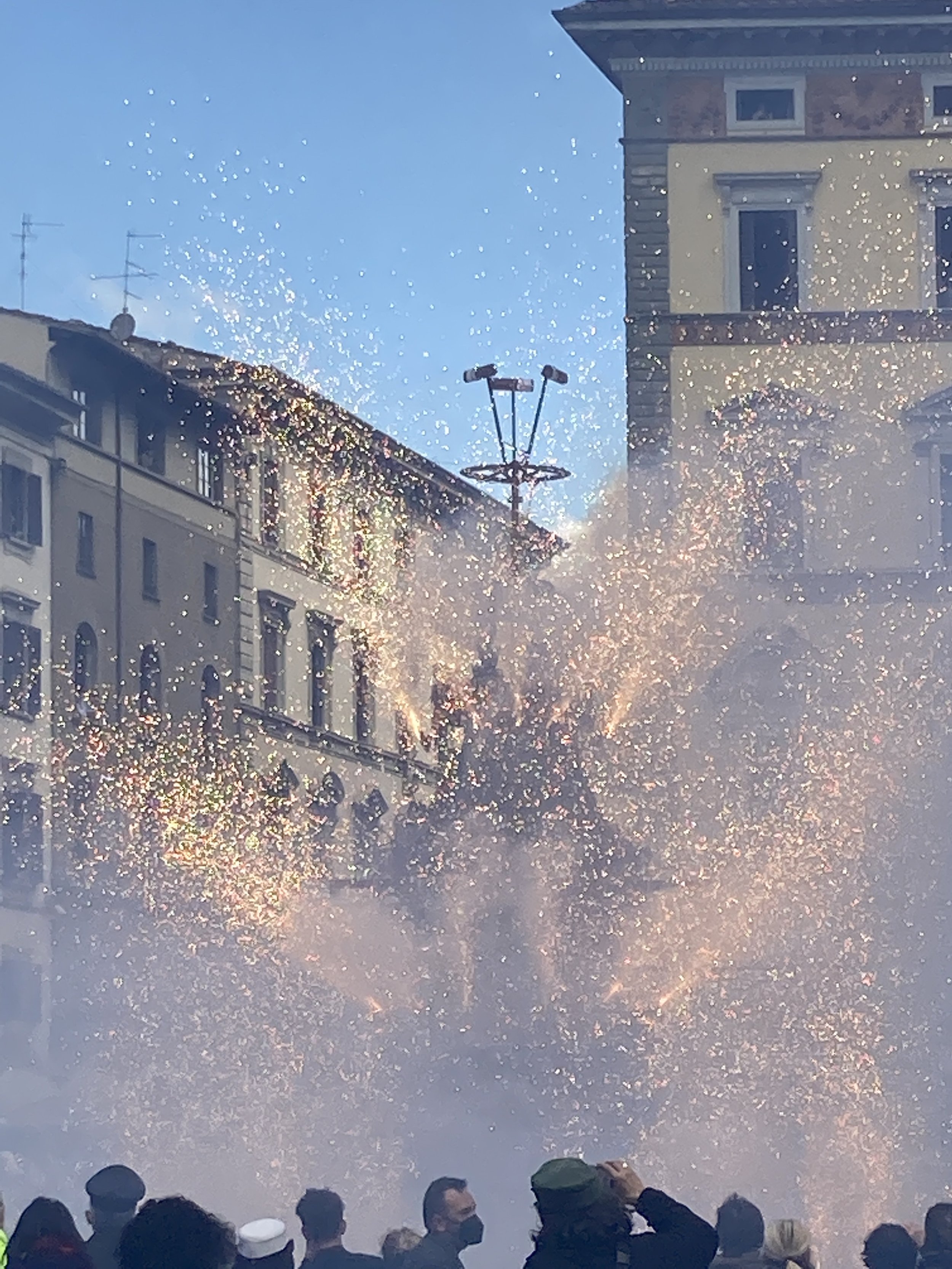
A successful flight of the dove confers good luck for the upcoming growing season and harvest. Should the dove go astray and fail on its mission - well lets not even consider that possibility. The world has had enough trouble lately without this happening! Luckily this year the dove soared down the wire, pausing briefly mid-flight, and then hit its mark. The cart exploded and sent sparks and smoke into the sky.
I had heard of this unique Easter celebration, but I had never experienced it in person.  So this year, along with some visiting friends, it was off to Florence for Easter weekend.  A trip to Florence is always wonderful, and the experience of the Scoppio del Carro was especially fun, even on a cold and windy Easter morning.  Add in a lovely Easter luncheon, and some time with friends, and this event was the perfect beginning to an Italian spring.


April 17, 2022 /Joanne Bartram
  • Newer
  • Older

Powered by Squarespace