Two Parts Italy

Exploring Italy, travel, and living a flavorful life

  • Blog
  • About This Blog
  • Start Here
  • Recent Posts
  • Archives by Topic
  • Subscribe
  • Contact me

The Mystery In Italian Details

August 22, 2022 by Joanne Bartram in #lucca, Italian art architecture, Italy travel, Living in Italy, Lucca, Tuscany

Italy’s “big picture” is full of things to love - culture, art, architecture, music, food. Everywhere you turn there is something wonderful to be experienced. But sometimes, there is enchantment to be found in the smallest of details and in the little mysteries that no guide book can describe.

I am still amazed that after 3+ years of living in Lucca, I continue to find new small details to appreciate. The iron fixture near my apartment door that I noticed for the first time in April, the decorative brick arch just down the street, a small fountain tucked away in a rarely visited courtyard. Lucca presents a never ending series of discoveries!

Sometimes those little details are just noted in passing. Other times, a bit of mystery draws me back again and again, examining details, feeling intrigued, painting imaginary explanations in my mind. Often this occurs with some of Lucca’s many ruins and abandoned places. How I wish I could explore all the abandoned and locked churches, those ruined buildings with their encroaching vines and empty windows, the slowly decaying wooden doors.

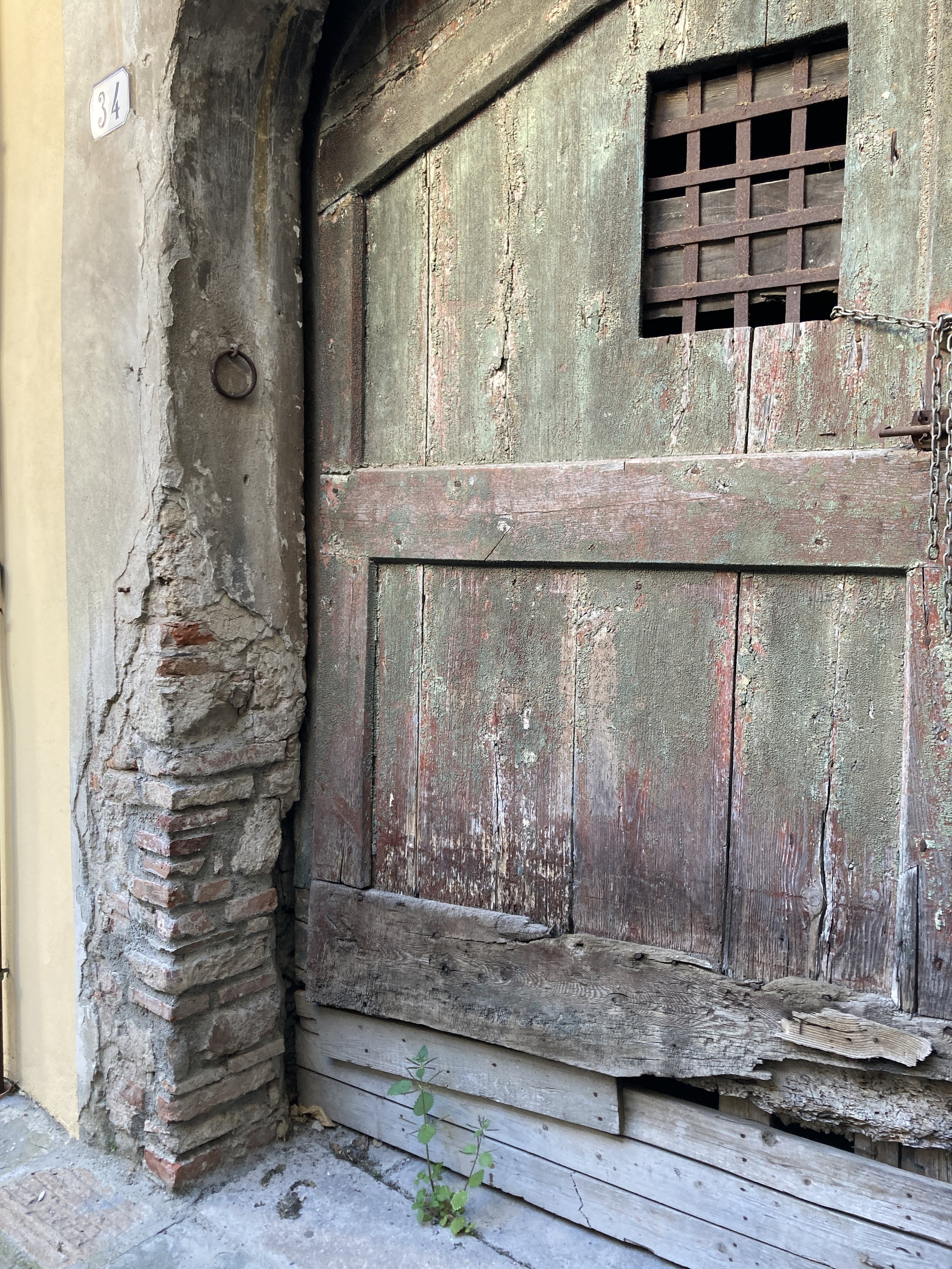
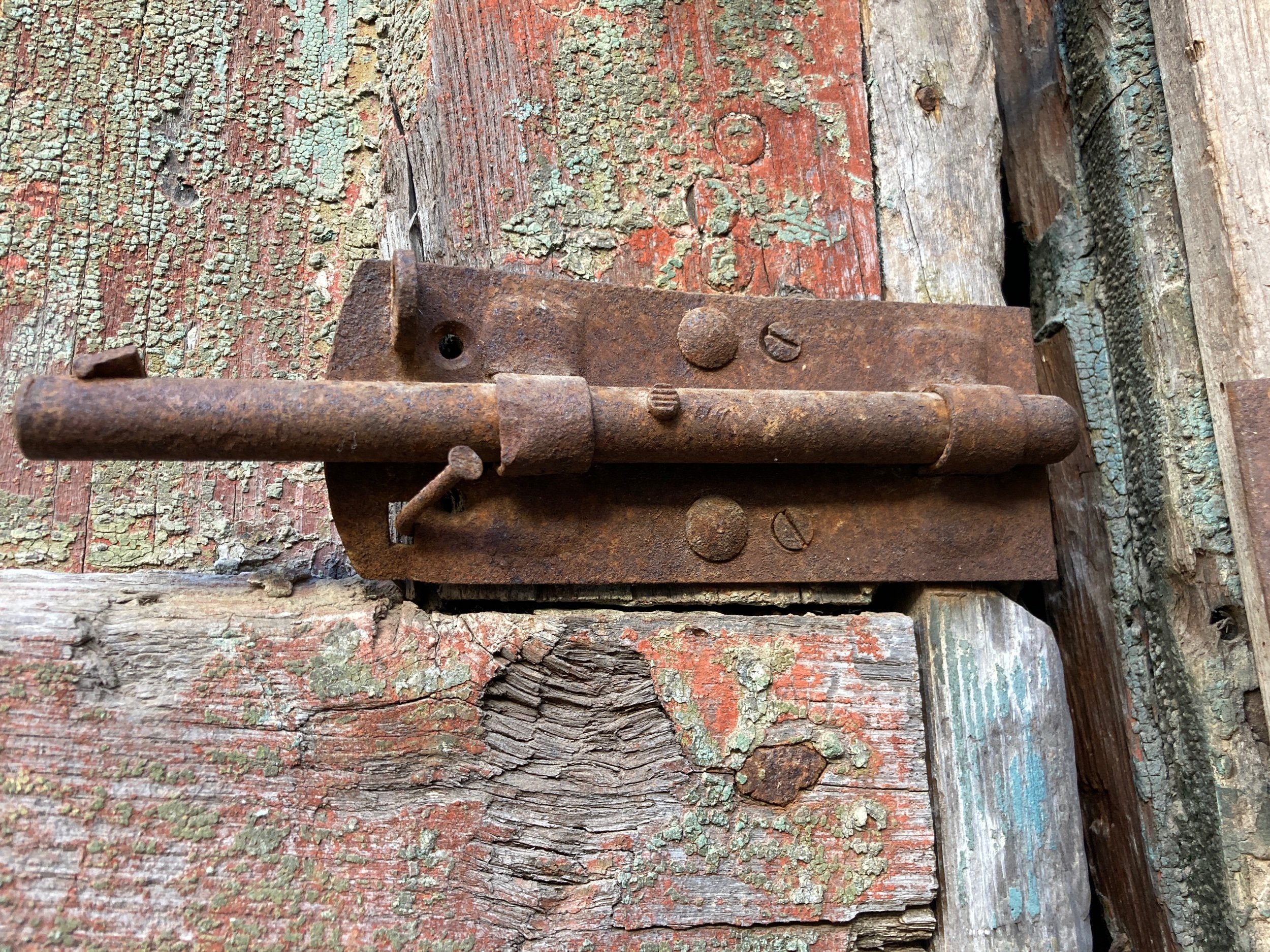
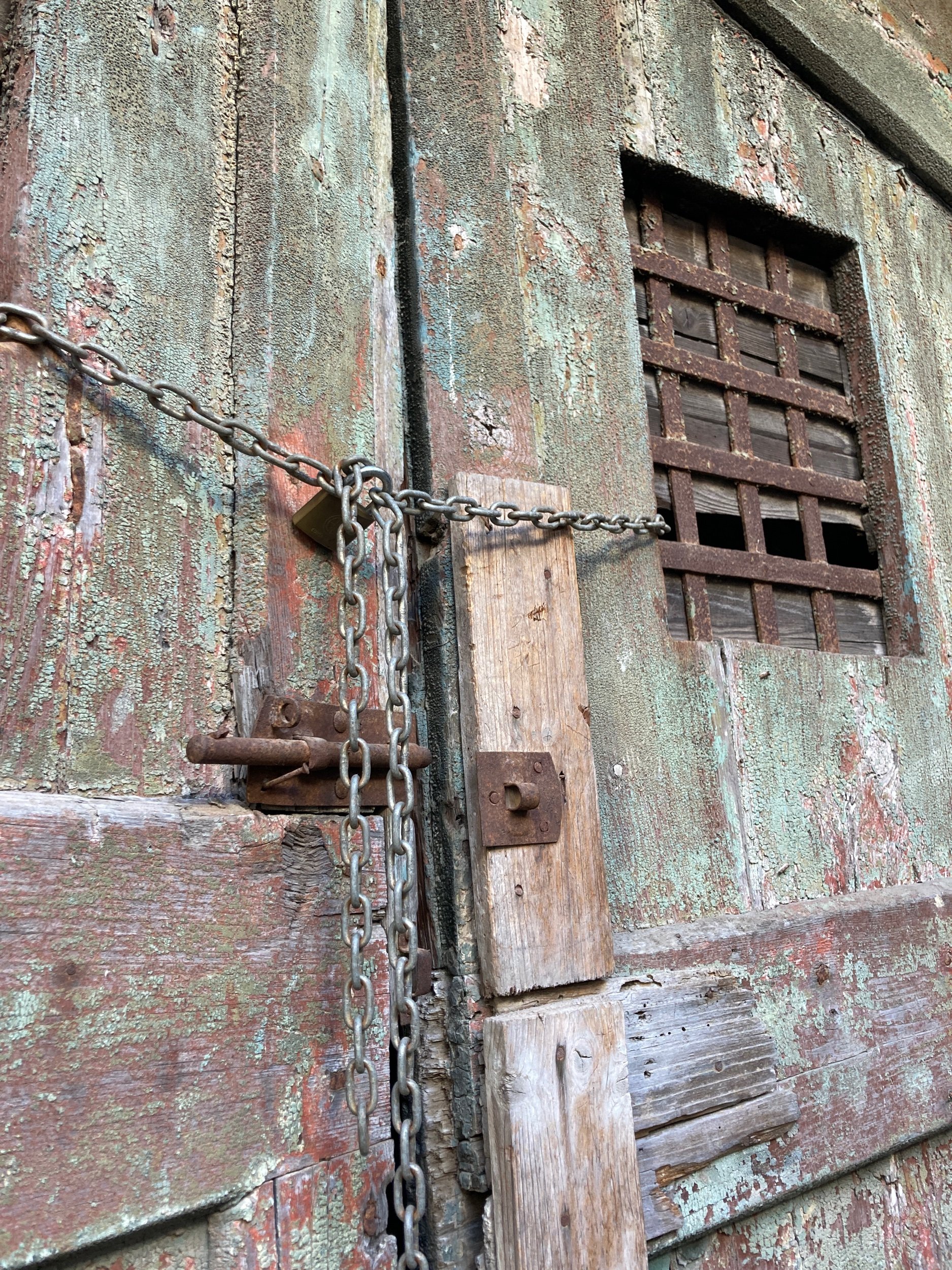
Behind my apartment building lies one of those abandoned places. The mystery is why this one spot - a garage - lies abandoned. It is surrounded on all sides by restored buildings, in fact the rest of the attached building is painted a sunny yellow and is full of apartments, flower boxes, and pretty doors. A simple line of color separates the two spaces.

So why is this place, a garage with old wooden doors, chained shut and abandoned? And is the window above a sign that there might have once been a living space up there? Was it perhaps the home of a carriage driver for one of the surrounding palazzi? A rough apartment for a not-so-favorite relative? A storage space, hay for the horses? Who knows? Certainly not I. But I often find myself stopping to look at it, as if someday I expect the answer to come to me.

There is beauty in this abandoned structure, especially in the small details. My camera loves this space with its rusting bolts, peeling paint, and crumbling wood. I think I will be disappointed if ever anyone comes along and restores it. It is perfect just as it is, mysterious and aged.
IMG_5384.jpeg
IMG_5383.jpeg
August 22, 2022 /Joanne Bartram
old doors italy, italian ruins, photo essay, rusted latches
#lucca, Italian art architecture, Italy travel, Living in Italy, Lucca, Tuscany

A Historic Garden In Collodi, Italy

June 20, 2022 by Joanne Bartram in #italytravel, #lucca, Italian art architecture, Italian gardens, #italiangardens

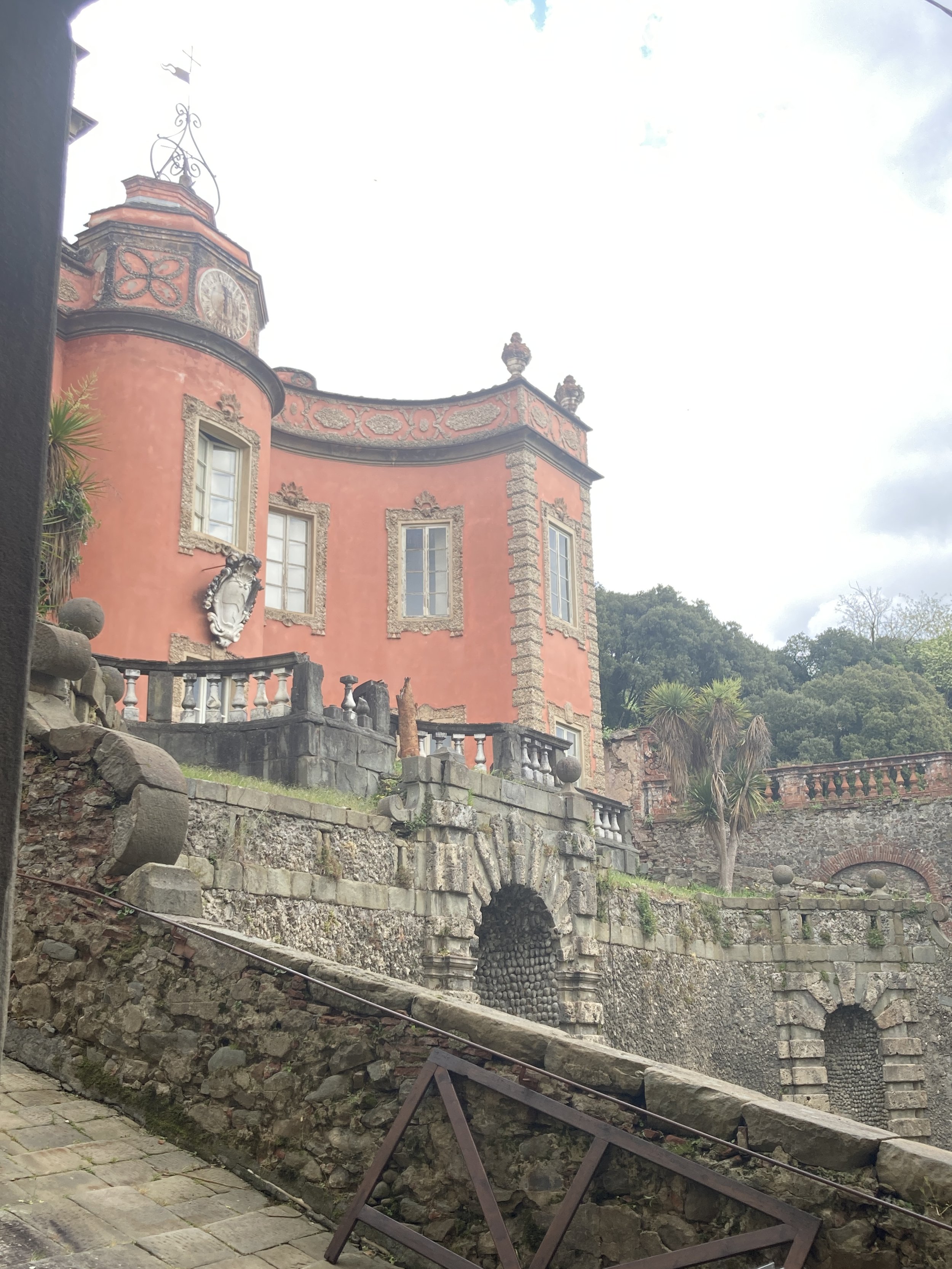
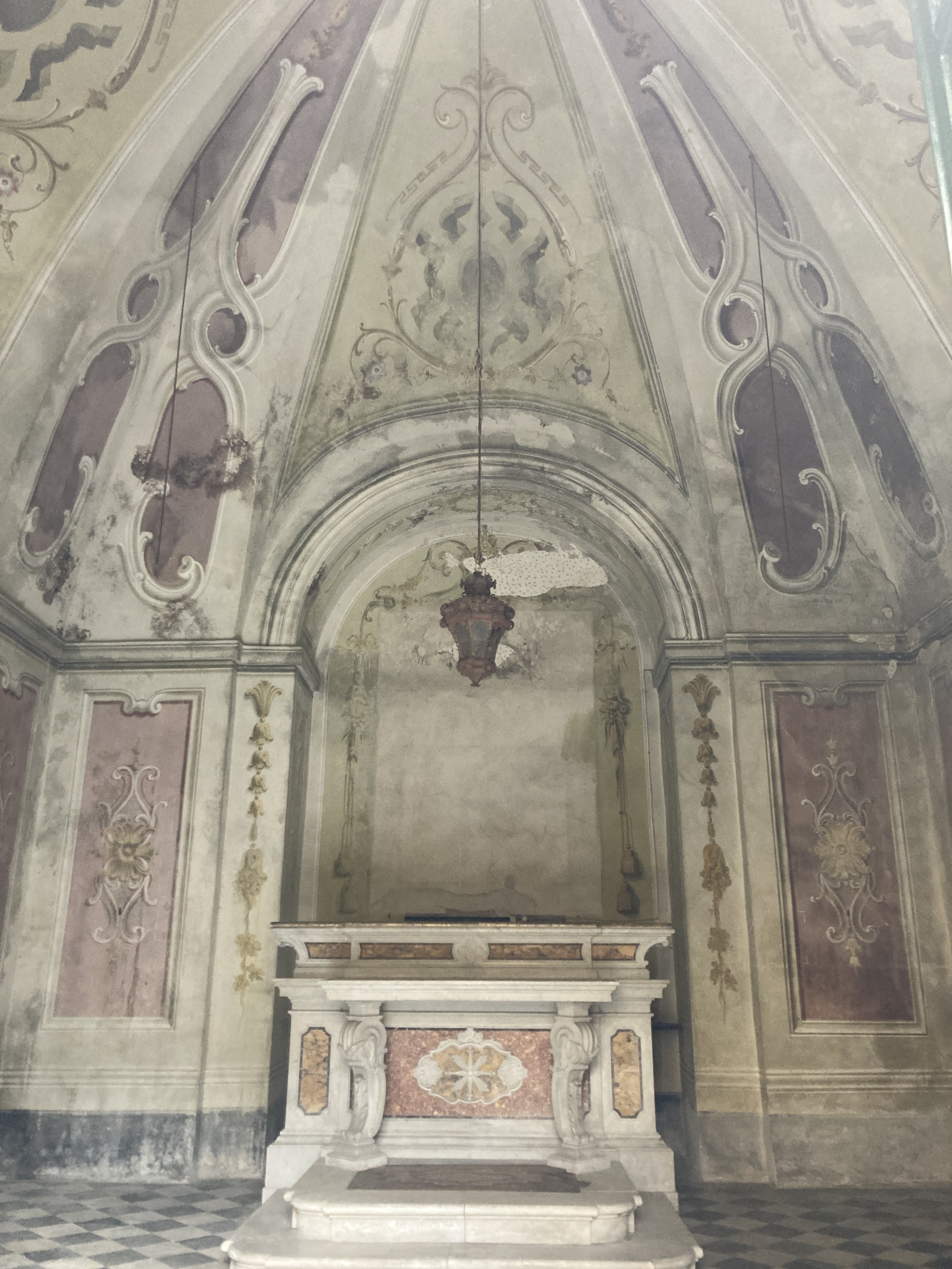
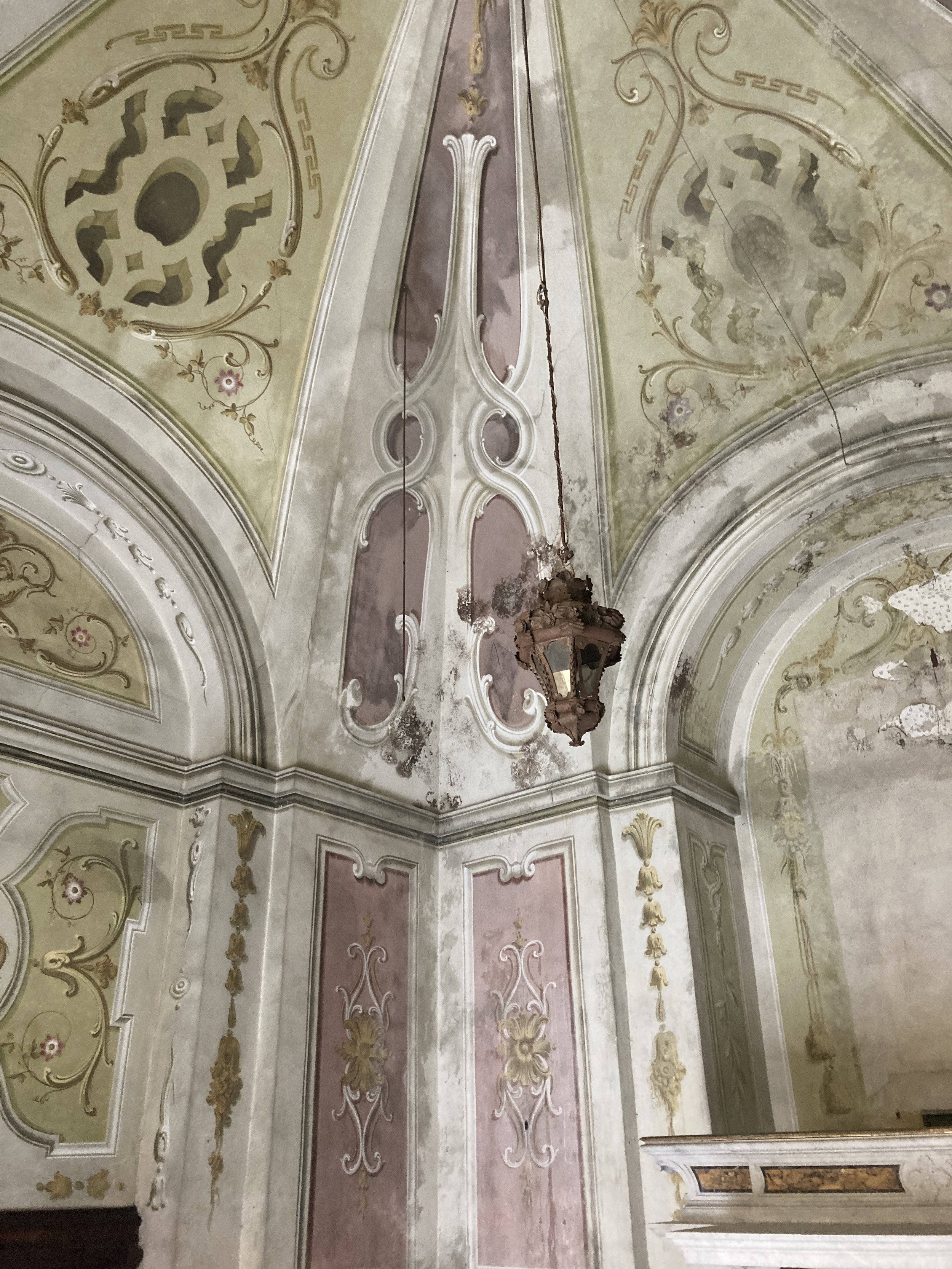
Collodi is a fairy tale place. It is not the Tuscany of rolling hills, carefully tended vines and olive trees that most people picture when they think of this region. Instead, the small village of Collodi seems to climb straight up a mountainside in the middle of a forest, hanging precariously on the slope. At the top is the medieval fortress La Rocca and a small church. At the bottom is the Villa Garzoni, built on the ruins of a Medieval Castle. An imposing structure, with its yellow color and 100 windows, the villa sits at the entrance to the town of Collodi. The villa itself is not open to the public, nor is the colorful Palazzina d’Estate (Summer Palace) which sits directly behind it. The only part of either that it is possible to enter is the Palazzina’s chapel, pictured below.

9DFA9511-6FEF-4380-A2BF-4261B0A85370.jpeg
DF584B98-13D0-4F46-852F-65D999BAA00B.jpeg
2BDA4BB3-4EB6-48BA-A65E-B3142501FCDD.jpeg

And then of course there is Pinocchio. Carlo Lorenzini, the author of Pinocchio, used the pen name Collodi as an homage to this village where his mother once worked. Many families come to Collodi to visit the Parco di Pinocchio (Pinocchio Park), a children’s adventure theme park based on the storybook character. But it was not the Pinocchio story that drew me to Collodi. Instead, I went with friends who were in Italy to visit classic gardens. The historic Giardino Garzoni, dating from the mid-1600’s and completed by the Lucchese architect Ottaviano Diodati in the 17th century, was on their “must see” list. I was delighted to join them for a day of visiting gardens near my home in Lucca.

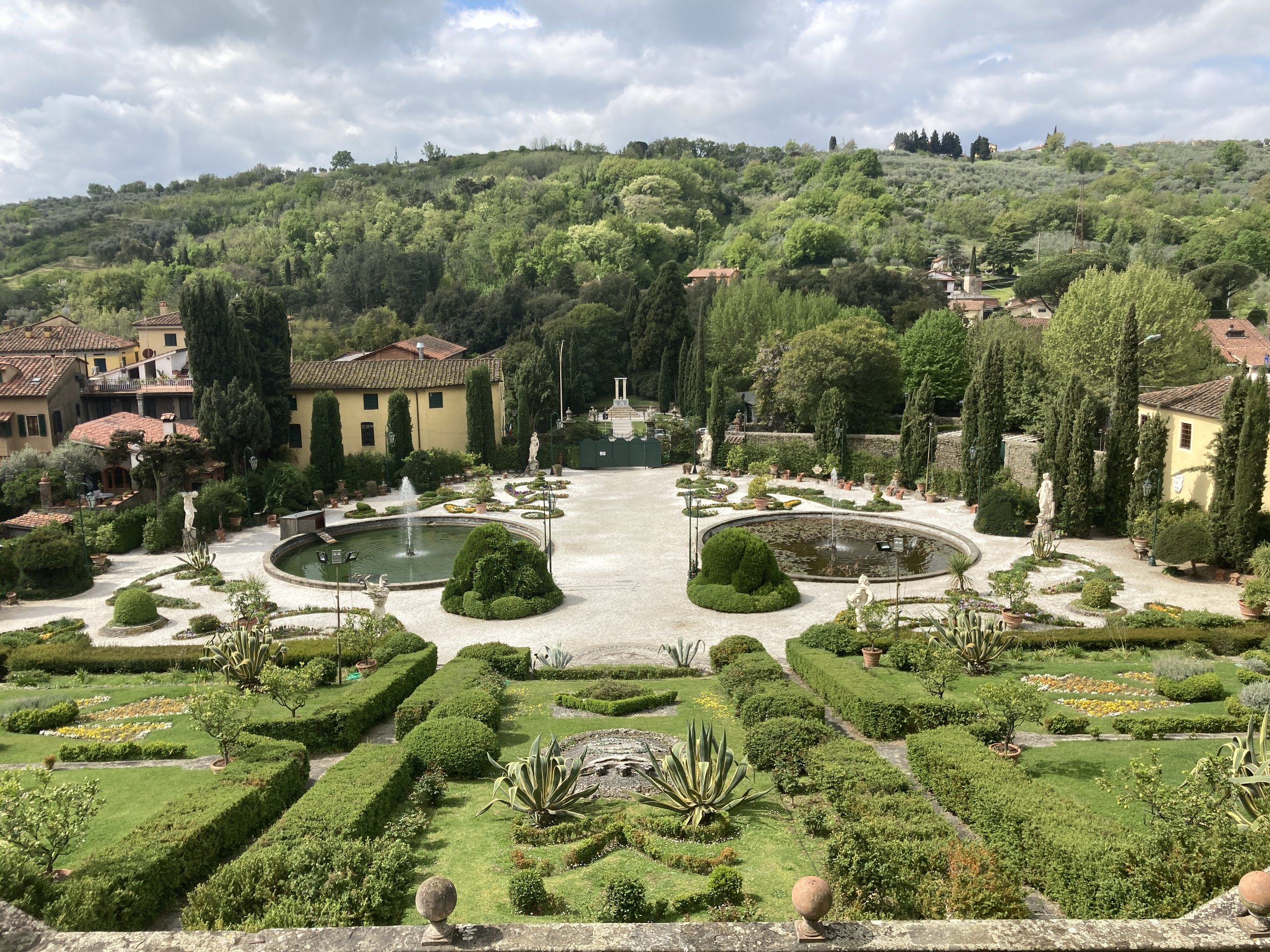
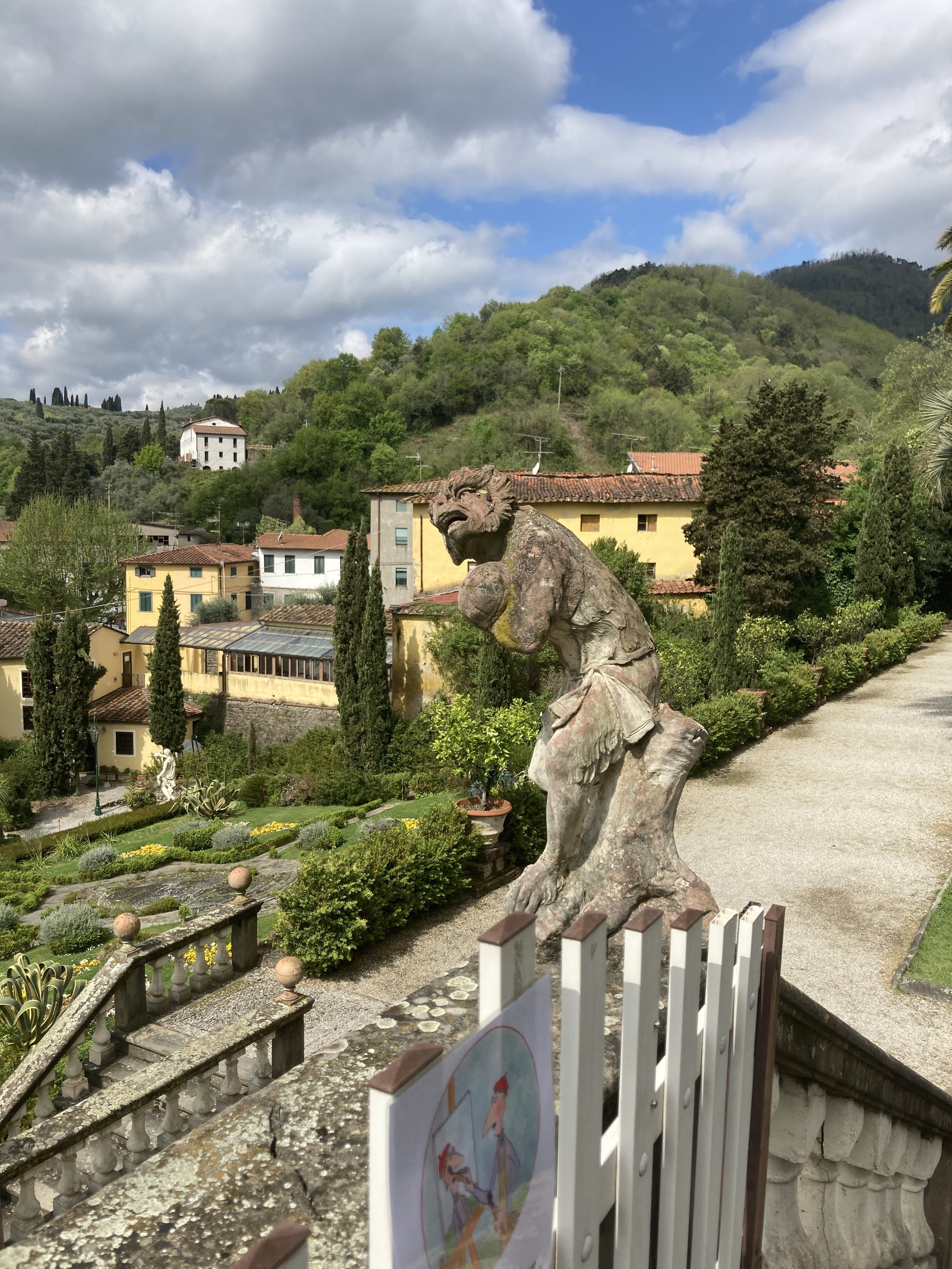
Looking down on the lowest part of the garden, from an upper terrace

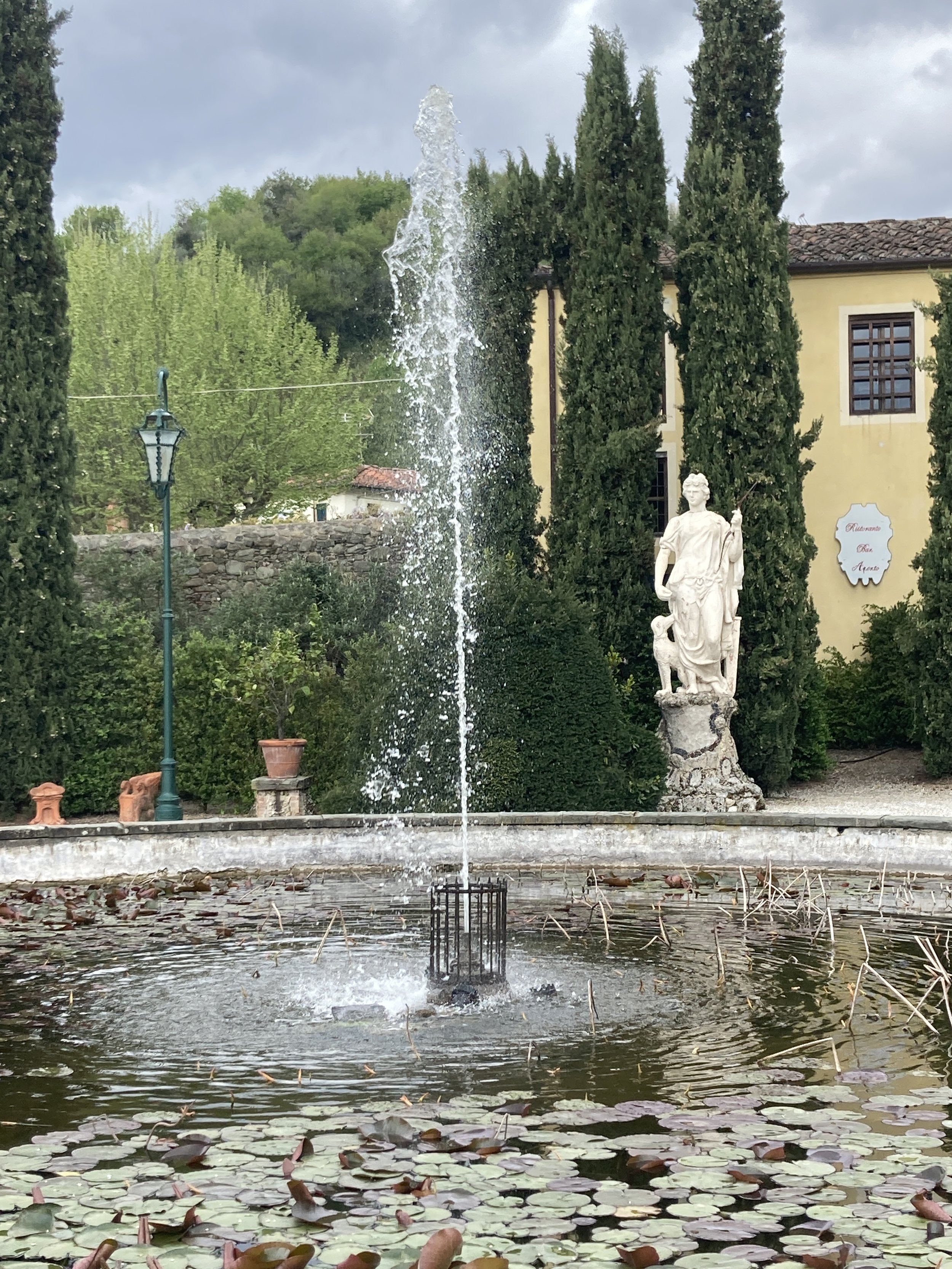
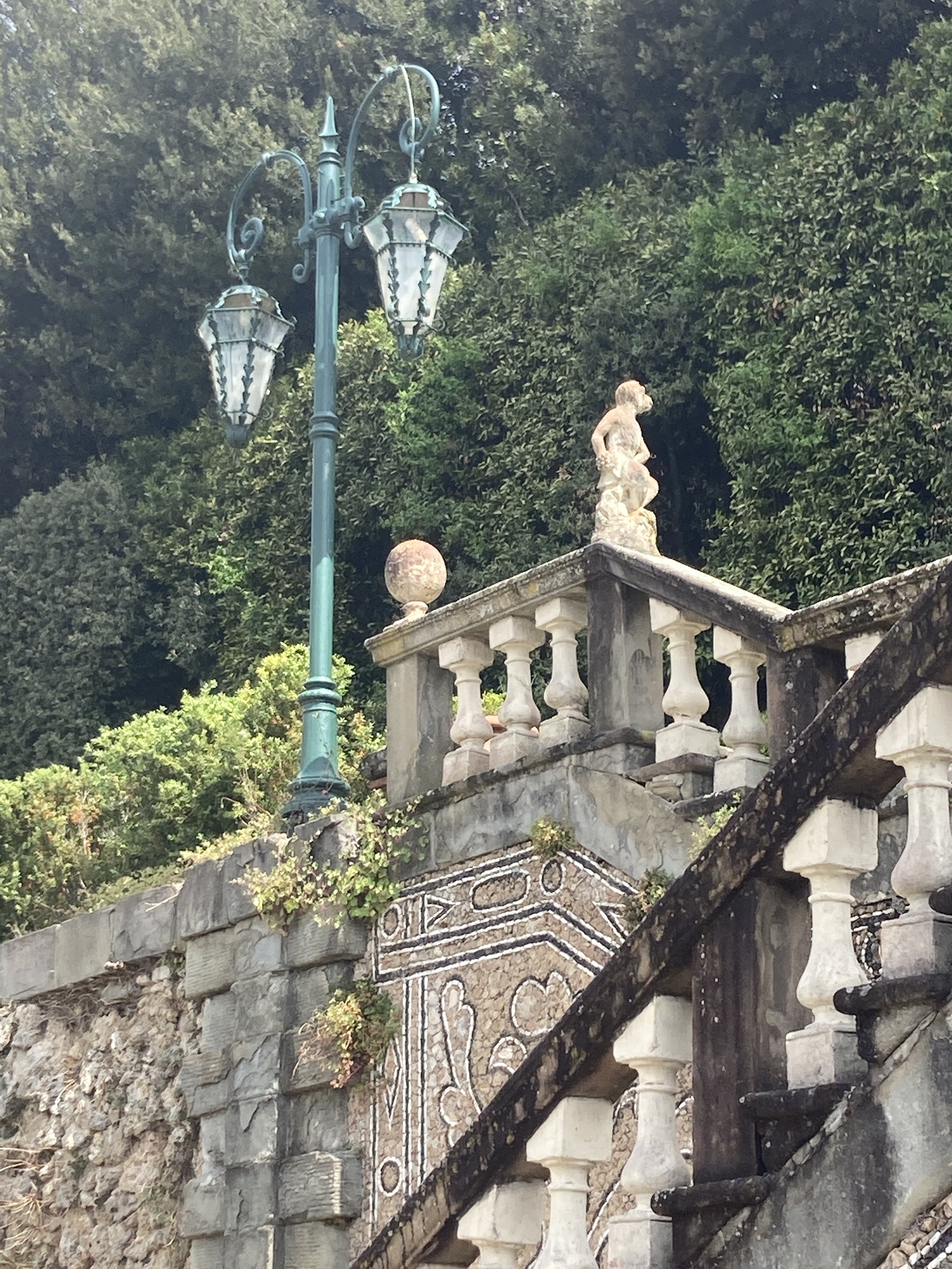
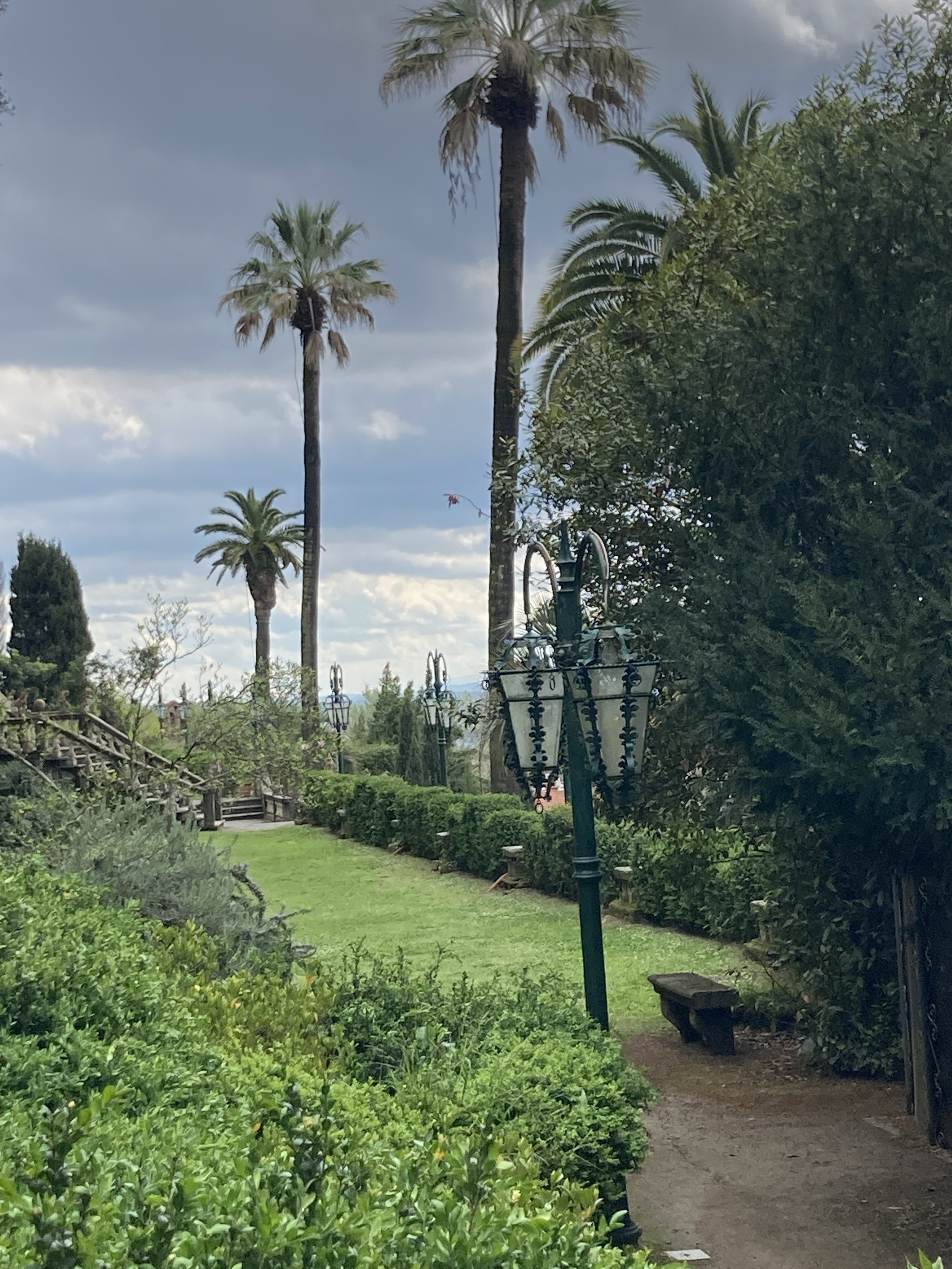
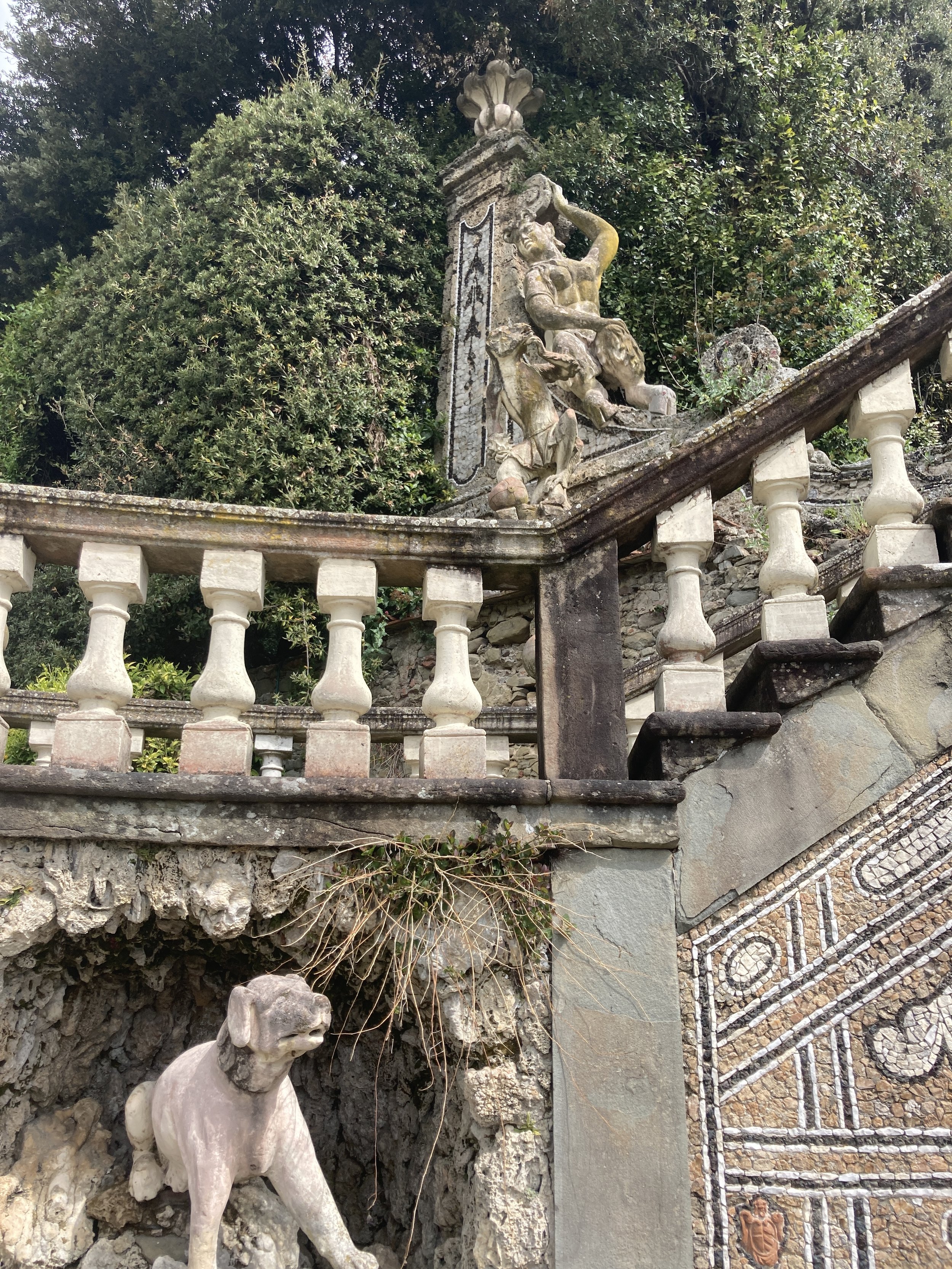
The Garzoni garden is a wonder, with something enchanting to see at every turn as it climbs the steep slope beside the villa. Like many Italian Renaissance gardens there is amazing architectural detail including a dramatic twin staircase (which contains a hidden grotto)

The twin staircases to the upper terraces

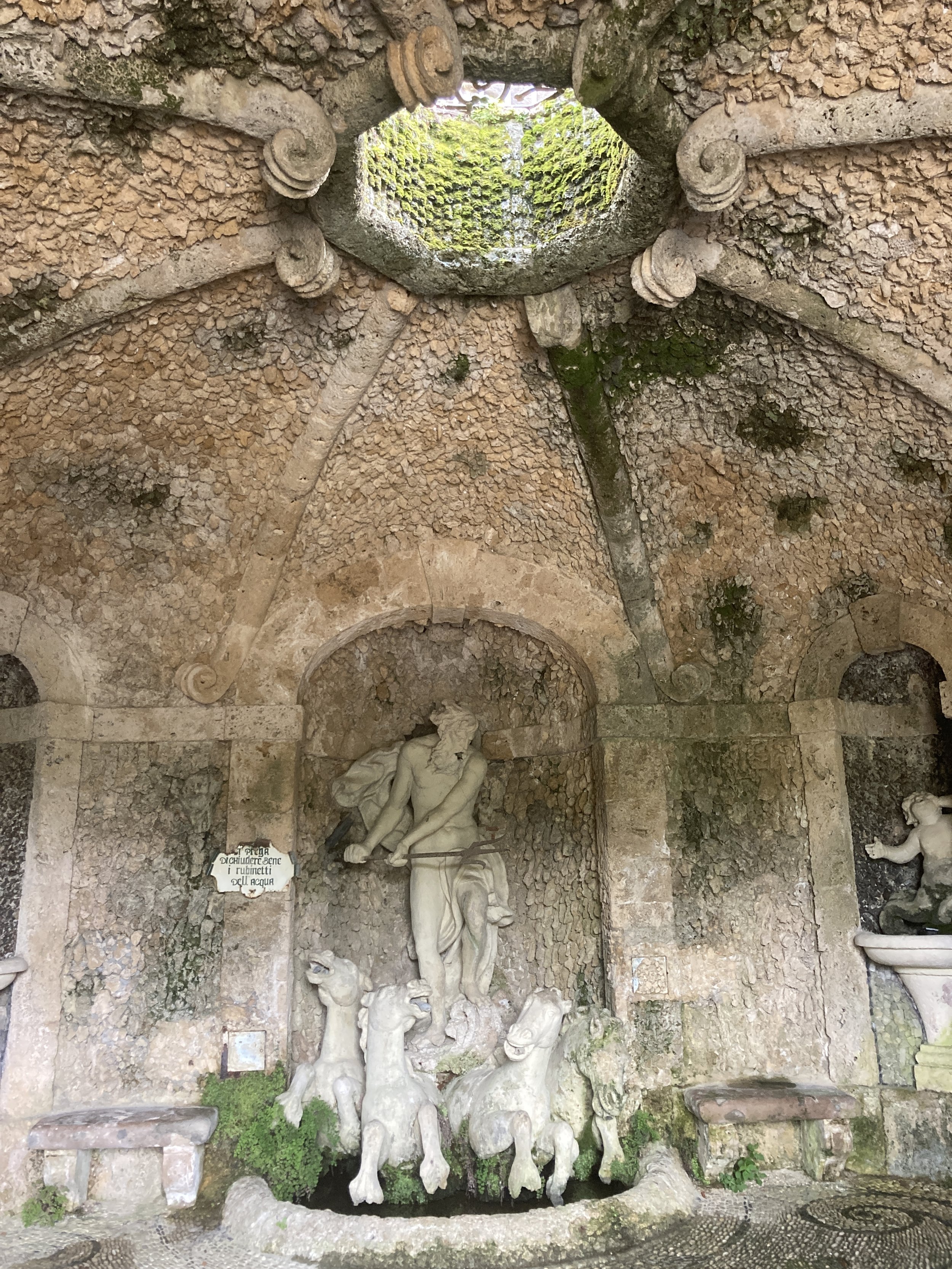
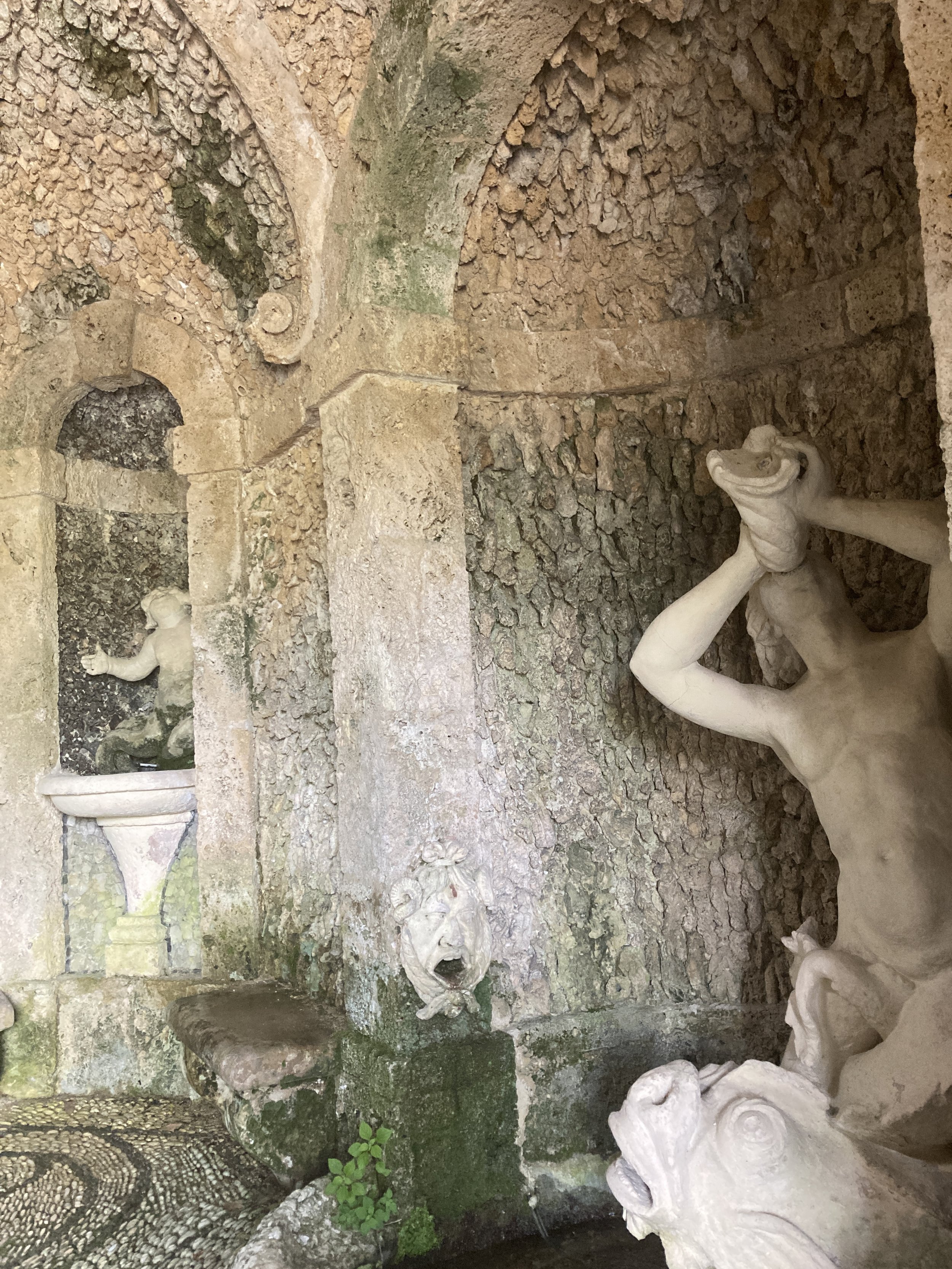
Water also plays a starring role in the garden, with a series of fountains and cascades of water tumbling down the slope. Tucked under the stairs is the Grotto of Neptune, another watery feature.

54918553-507D-437A-9CF9-106DD7D72F0F.jpeg
31FF995C-A5D0-4F05-B5EE-5BA7E8DBEADF.jpeg
F88BEB8E-BA6C-4C11-875F-7FF1162CA8DE.jpeg

Two round pools lie at the bottom of the garden, just below a parterre full of greenery and flowers. Above that lies the staircase which begins the upward climb through several levels of terrace.

5959F94E-8F8E-4AF7-B080-CEE61A1FE216.jpeg
80E83EC6-70D4-49ED-BD15-01CE7D7006AD.jpeg
08A3977C-664F-4375-8134-0D265B098A70.jpeg

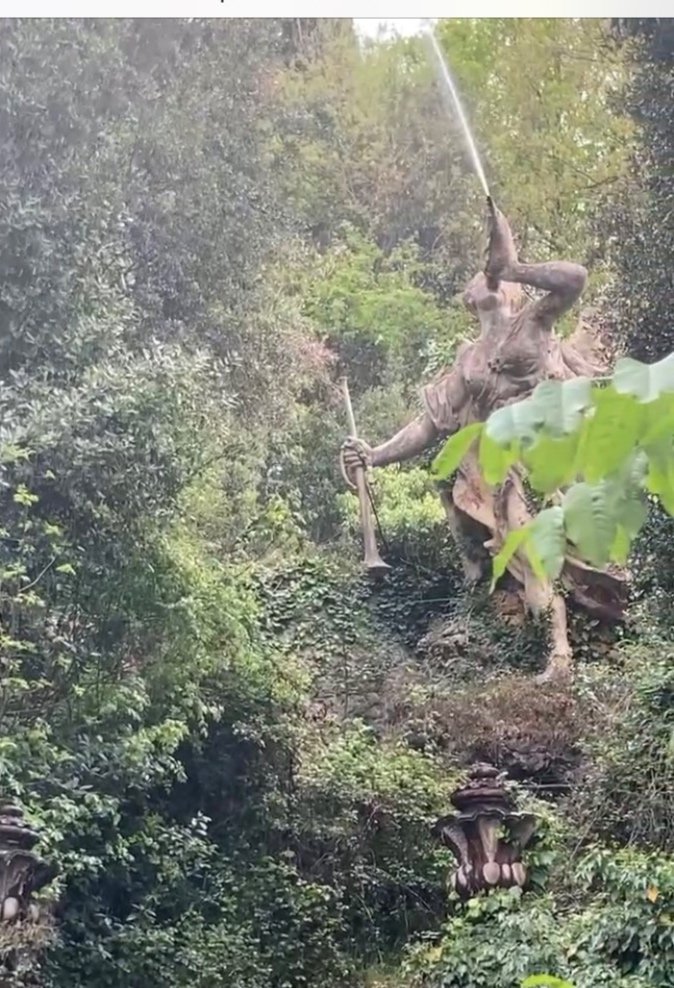
Keep climbing to the water stairs which flank the cascade that runs down to the lower garden. At the top of the climb lies a pool with a statue of Fame, who blows jets of water from a horn in dramatic fashion.

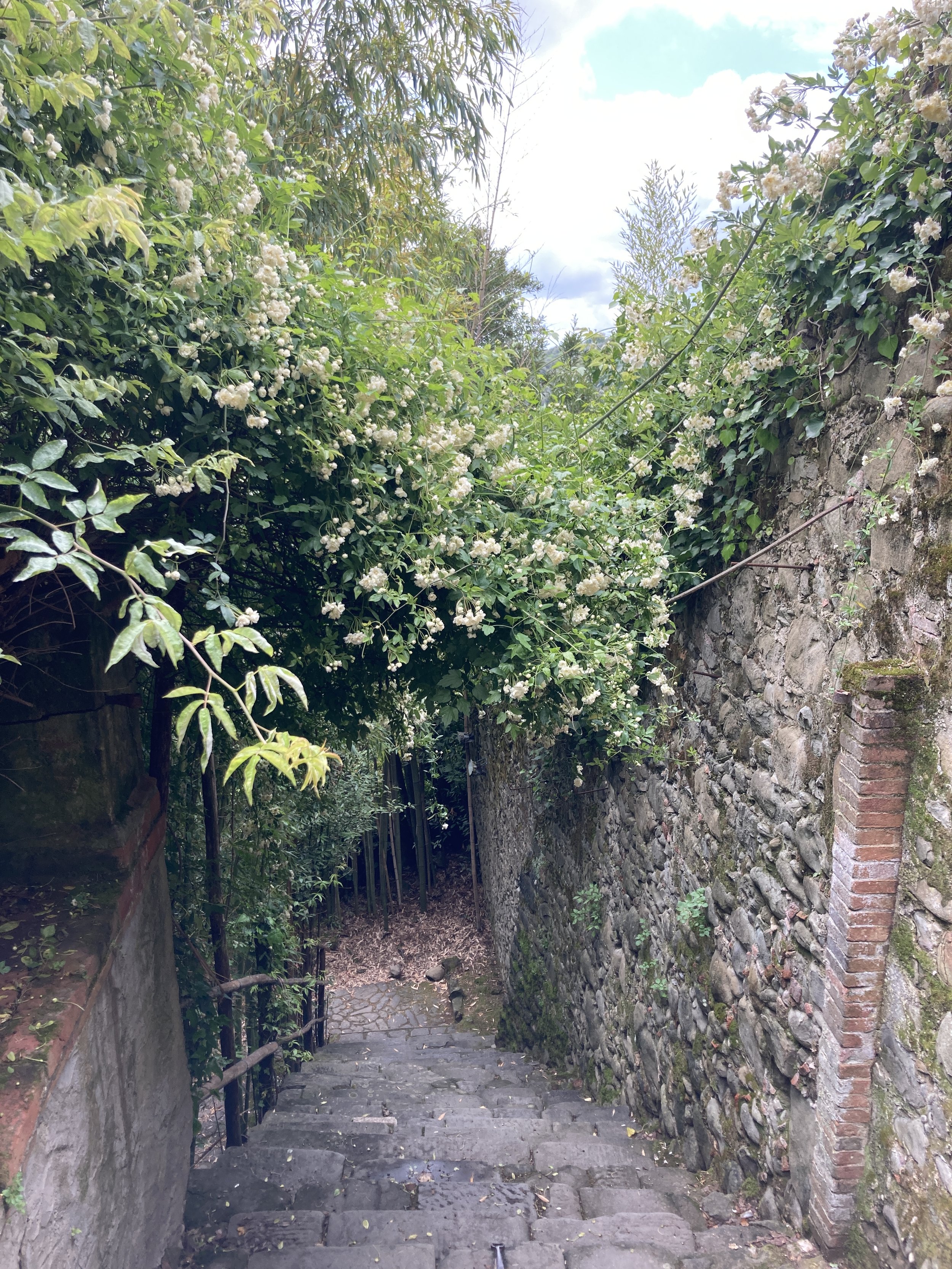
From the top of the water stairs lies a path, lined with camellias, which leads to the villa and the summer palace. This path too is lined with statues and interesting architectural details.

E6D24FC7-13D3-43FB-9B3E-80F803AA8BF3.jpeg
561F8C24-B9B2-4494-8E8E-707C32D5B359.jpeg
375B7A9E-1693-4824-943F-7E1F0DF5ADE7.jpeg

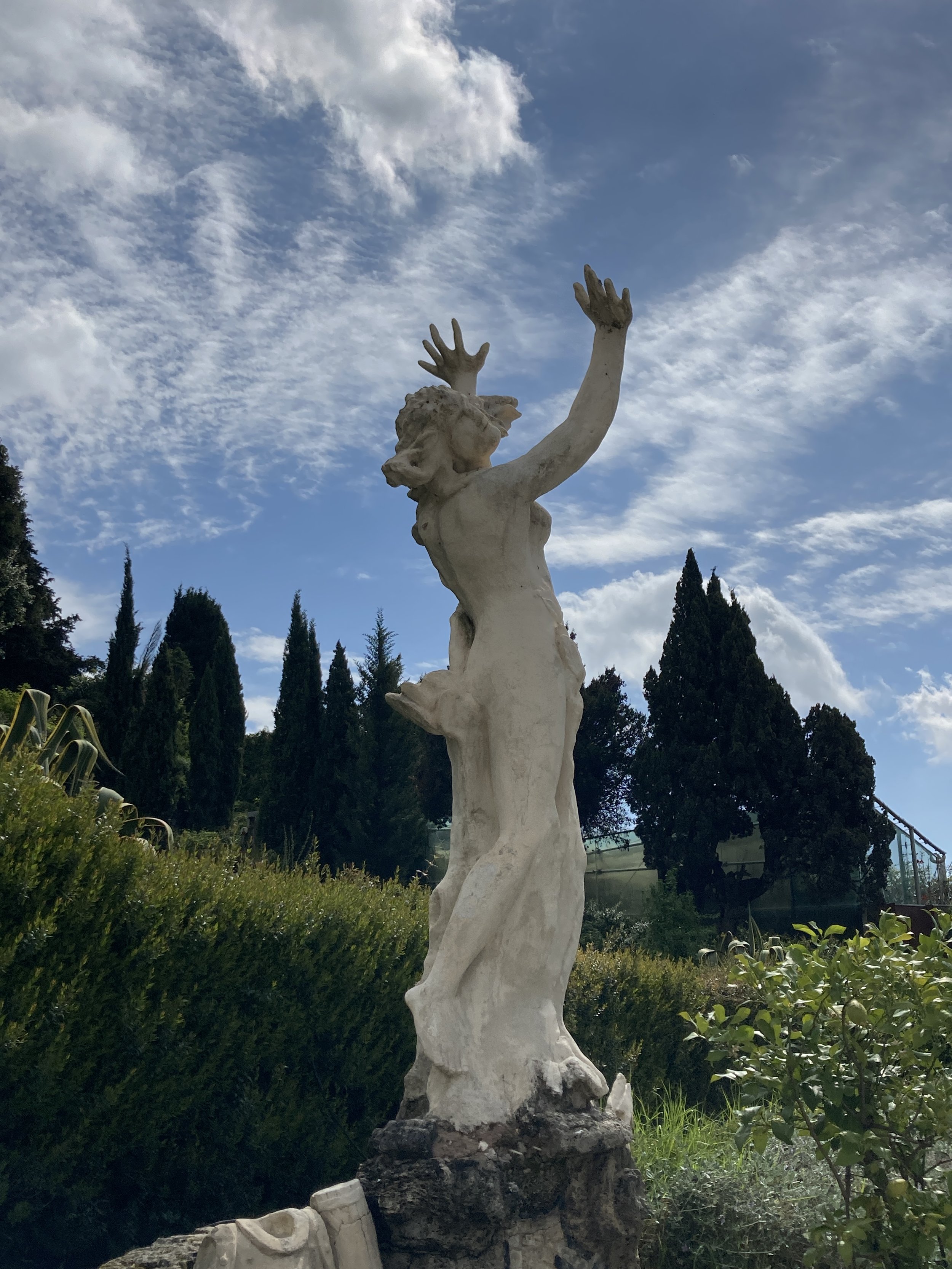
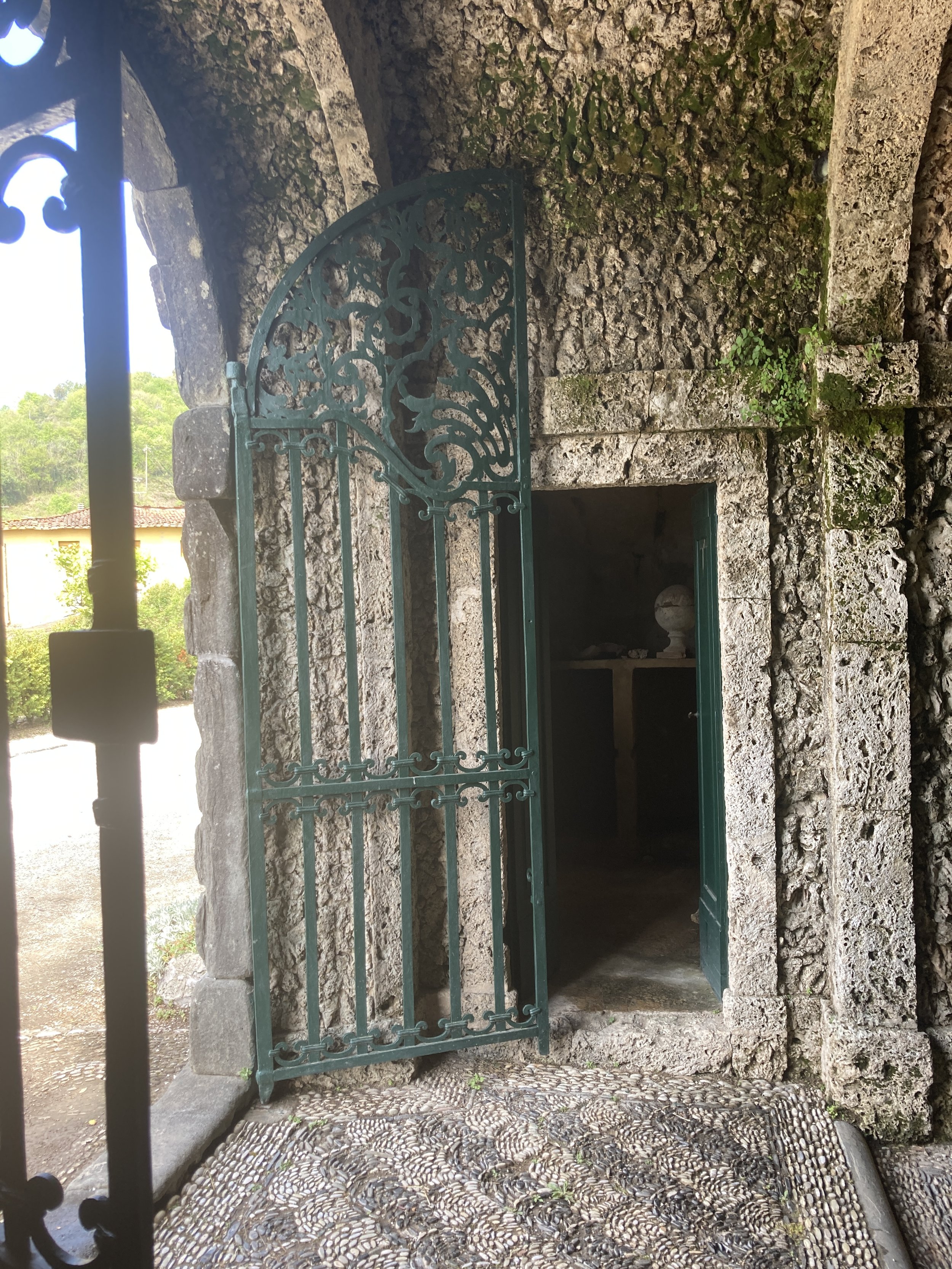
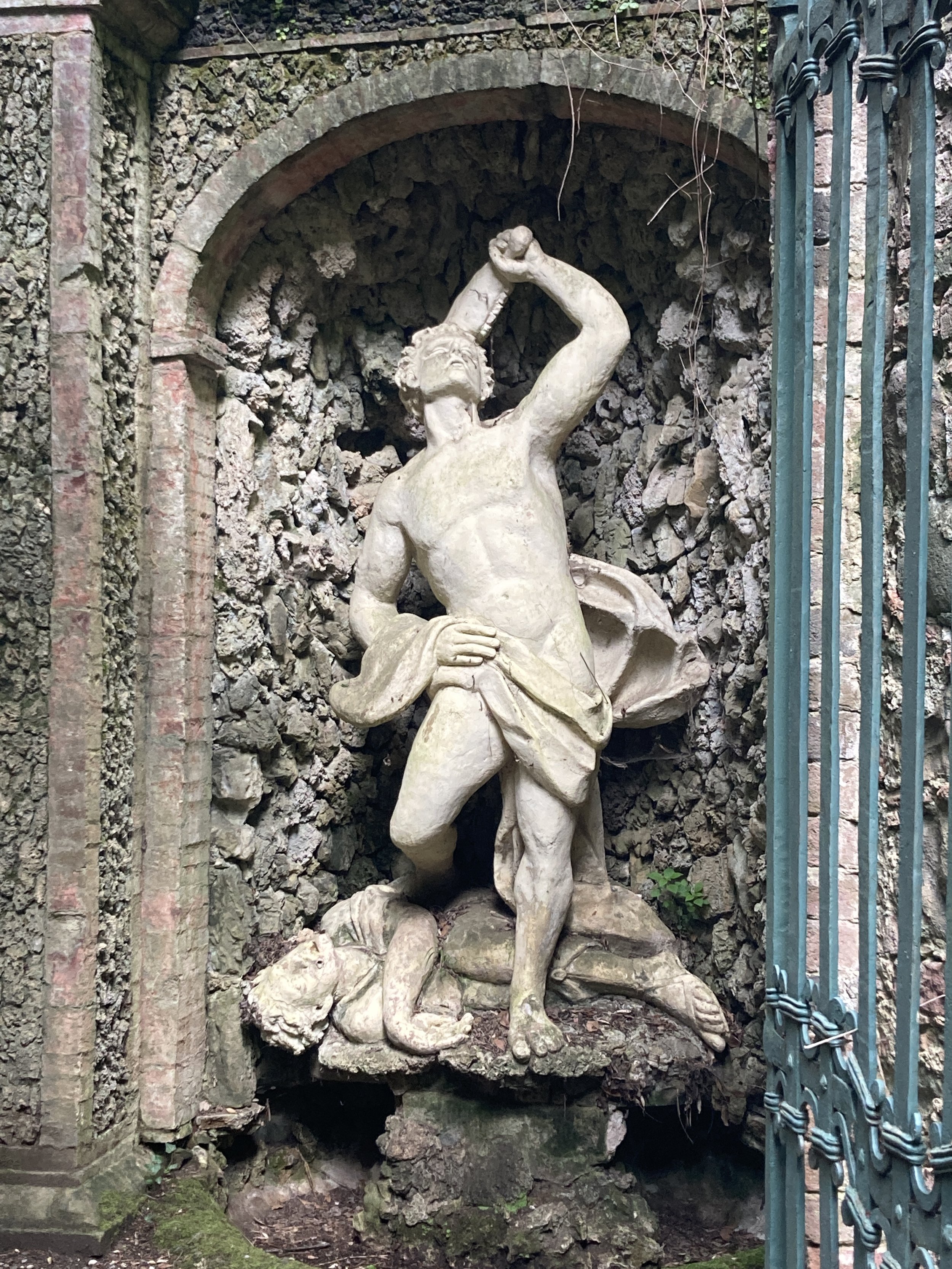
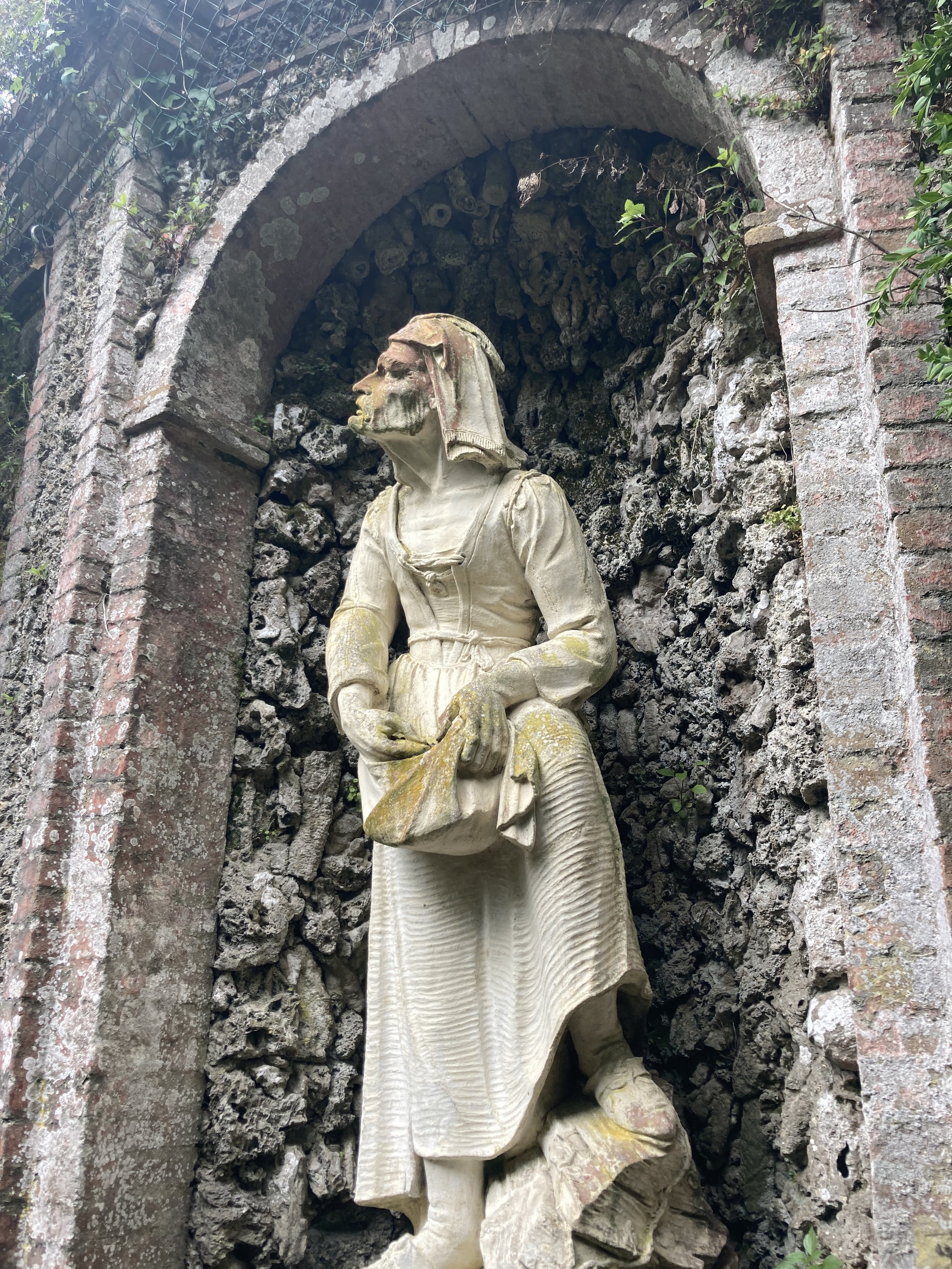
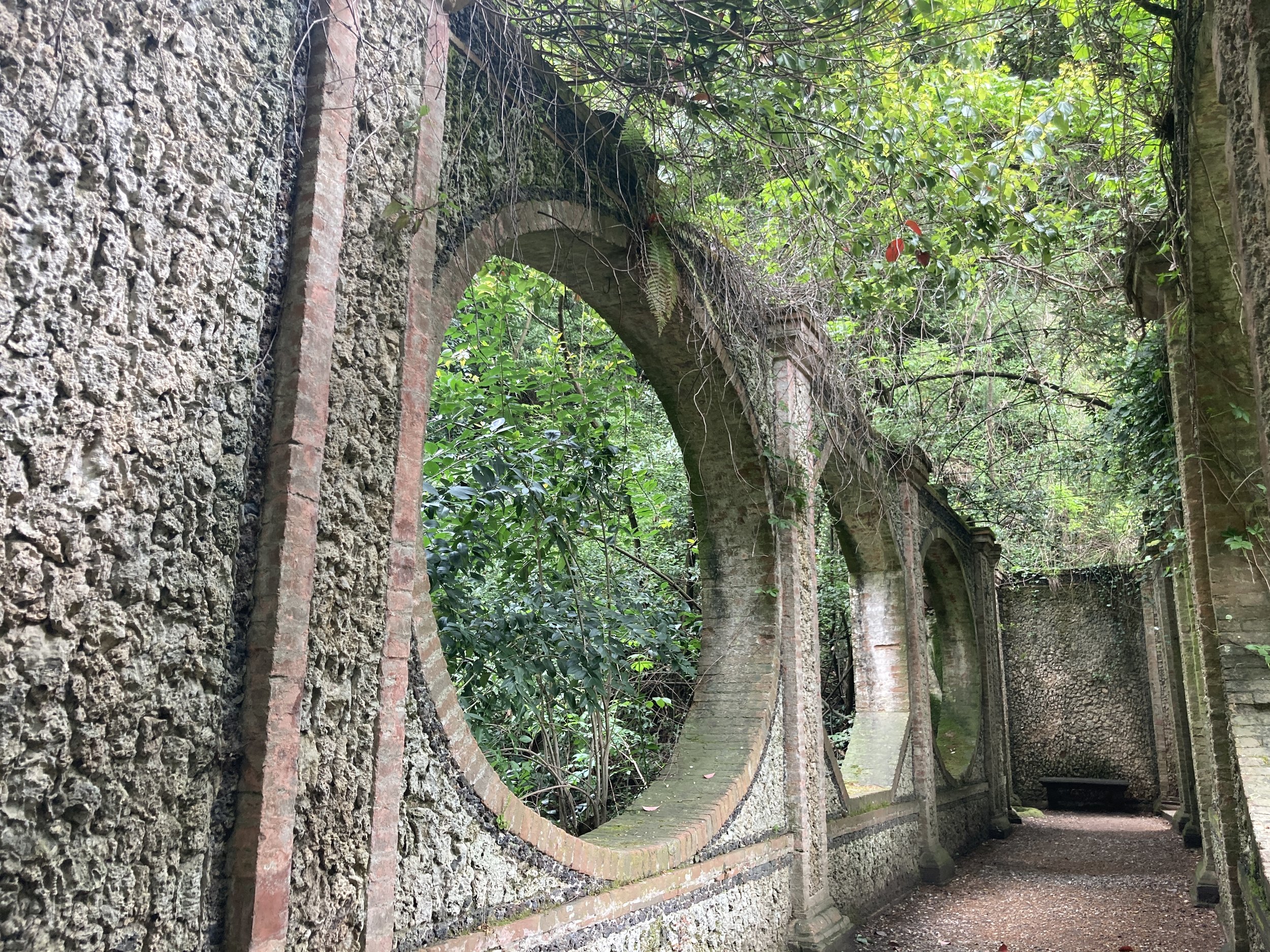
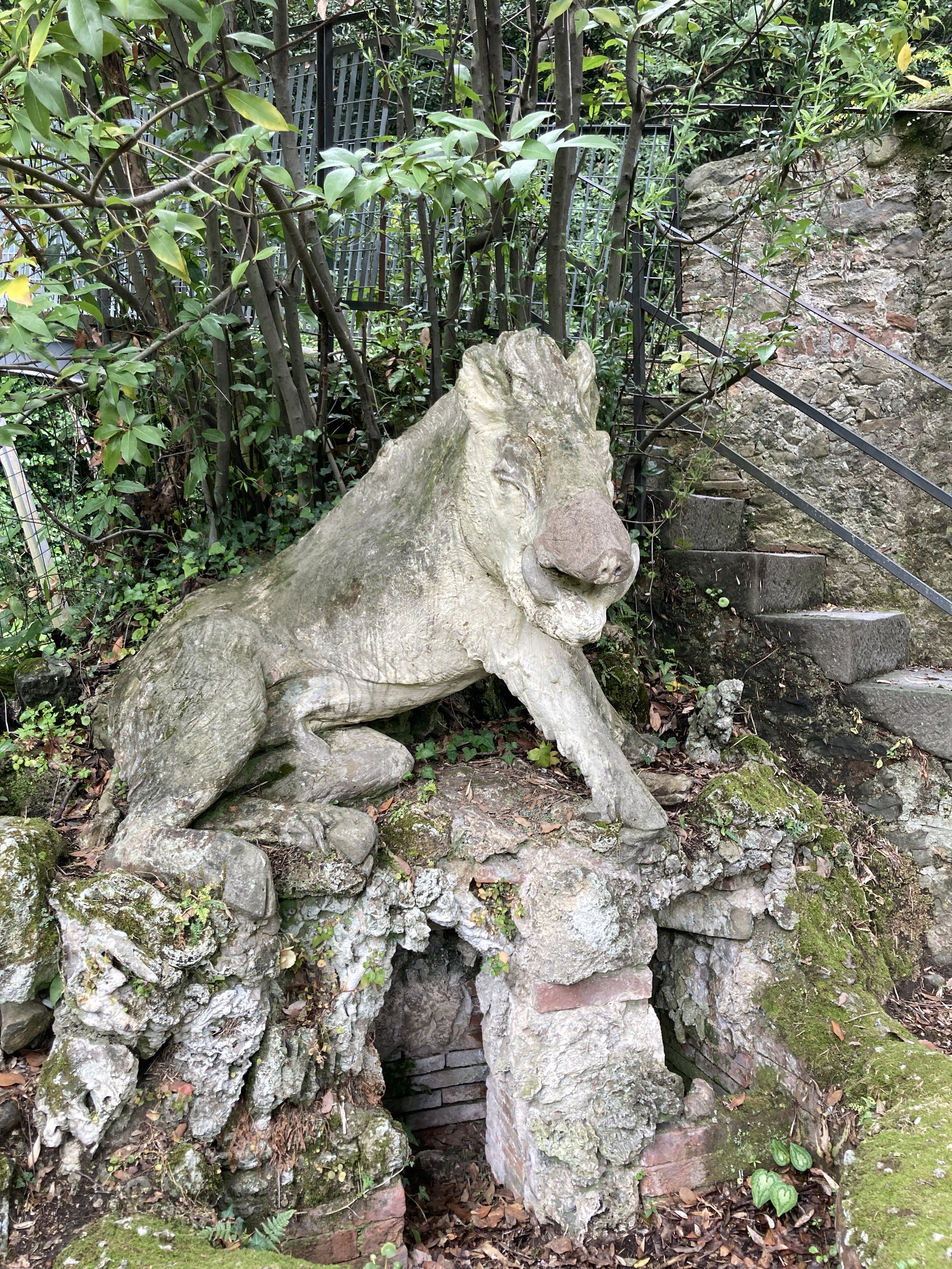
The fantastical nature of the garden reveals itself in places like in Neptune’s grotto, secret pathways and hidden spots, a labyrinth, and statues of mythical creatures and assorted ancient gods, goddesses, and legendary figures.

66559127-1DF6-4101-A6FD-8968B36D355B.jpeg
2B651C3B-A1D0-465E-A3C7-7317DE9ADC79.jpeg
21E19A7D-5460-45DE-9C0D-F6BEF54CBF21.jpeg
2E008148-4D9A-45B3-9536-9CC61212527D.jpeg

A visit to the gardens of Villa Garzoni provides a glimpse into leisure activities of a powerful family during the Renaissance. It is one of the finest examples of an Italian Renaissance garden and a lovely destination for anyone interested in classic gardens. A perfect way to spend a spring morning in the Tuscan countryside.

June 20, 2022 /Joanne Bartram
Giardino Garzoni, Italian Gardens, Garzoni Garden, Tuscan Gardens
#italytravel, #lucca, Italian art architecture, Italian gardens, #italiangardens

A maker of medieval armor

A Medieval Weekend in Lucca

June 06, 2022 by Joanne Bartram in #balestrieri, #lucca, #medievalitaly, Festivals Italy, Italian culture

3 years ago, in those distant times before the pandemic, I experienced my first Lucca Medievale (Medieval Lucca). As with so many events, the festival was cancelled in 2020 and 2021. It’s been a long wait, but 2022 is a new year and this past weekend marked the return of the festival.

From 2019, The Liberation Day ceremony which marks Lucca’s liberation from Pisa in 1369.

Lucca is a perfect place of a festival showcasing life in the Middle Ages. Much of the city maintains a medieval streetscape. A troupe of sbandieratori (flag tossers) regularly performs at events throughout the city. It is not unusual to catch a procession of people in medieval costumes parading through the streets, accompanied by batteristi (drummers). At times I’ve followed the sound of canons, to find medieval reenactors loading and firing them from Lucca’s walls. The only “open carry” you’ll find here are the balestieri (crossbow men) carrying their weapons in procession. The liberation of Lucca from Pisa (in the year 1369) is still marked annually by pageantry straight from the Middle Ages. Yes, Lucca is just the place for a medieval festival.

Turning wood on a medieval lathe

This year’s event included an encampment of tents atop Lucca’s walls around which a variety of medieval crafts, arts, scenes of daily life, and weapons were reenacted.

3BF0934B-BF29-4C77-93C8-75549640FC53.jpeg
D3954DAB-333F-4C4E-8A29-63C608079FE2.jpeg
6B328FD7-6613-42BA-9296-DFFF61426732.jpeg

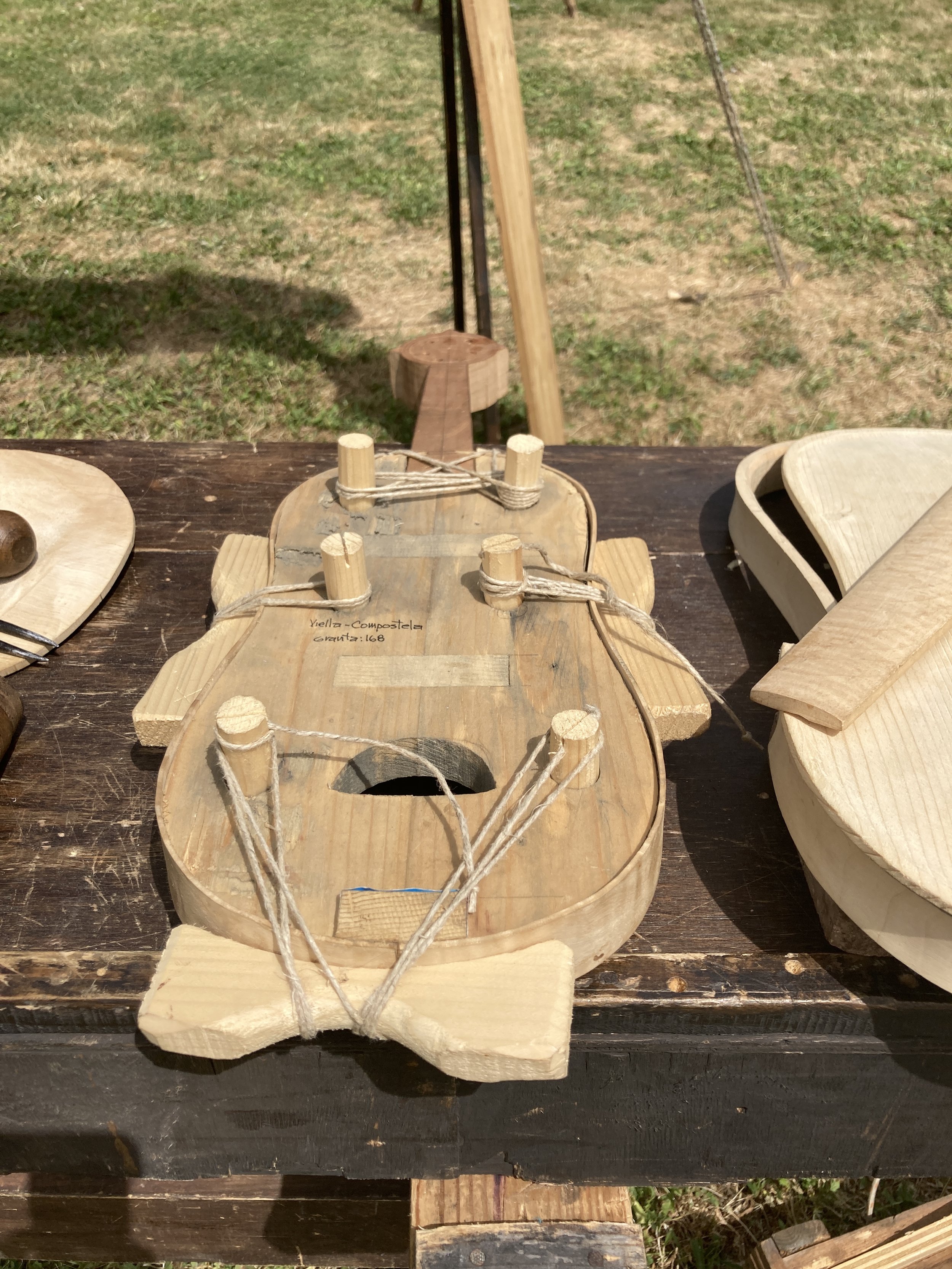
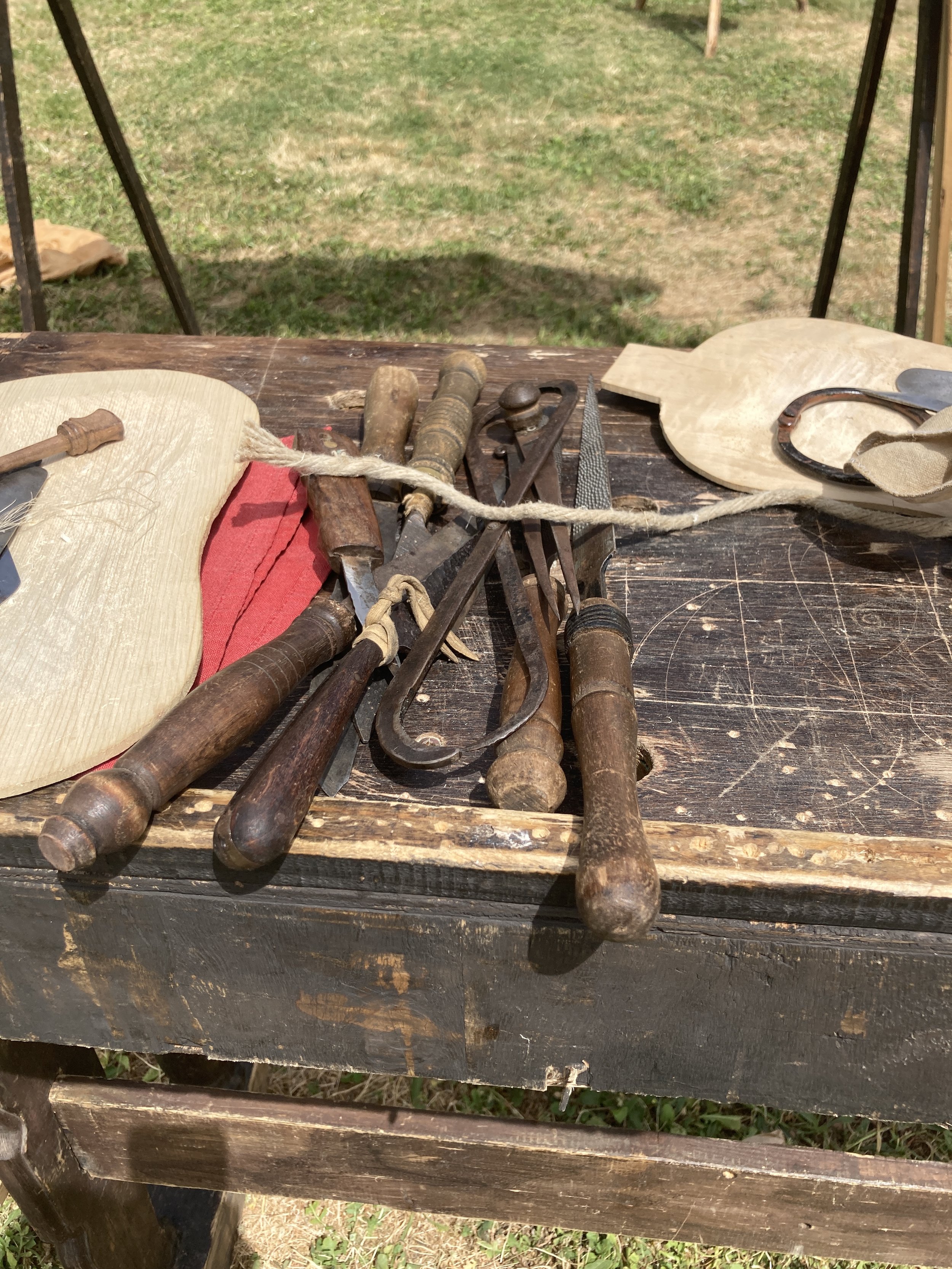
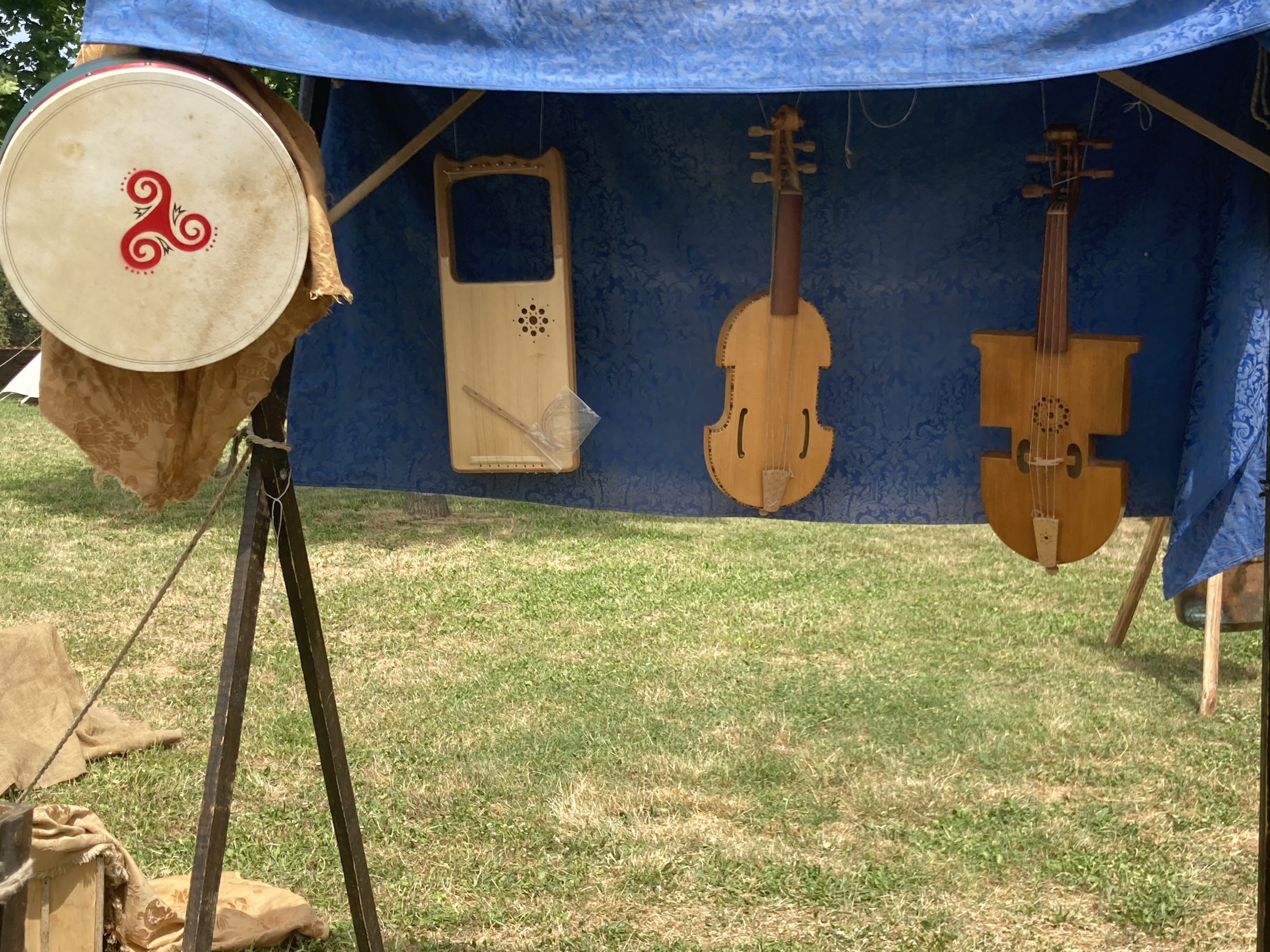
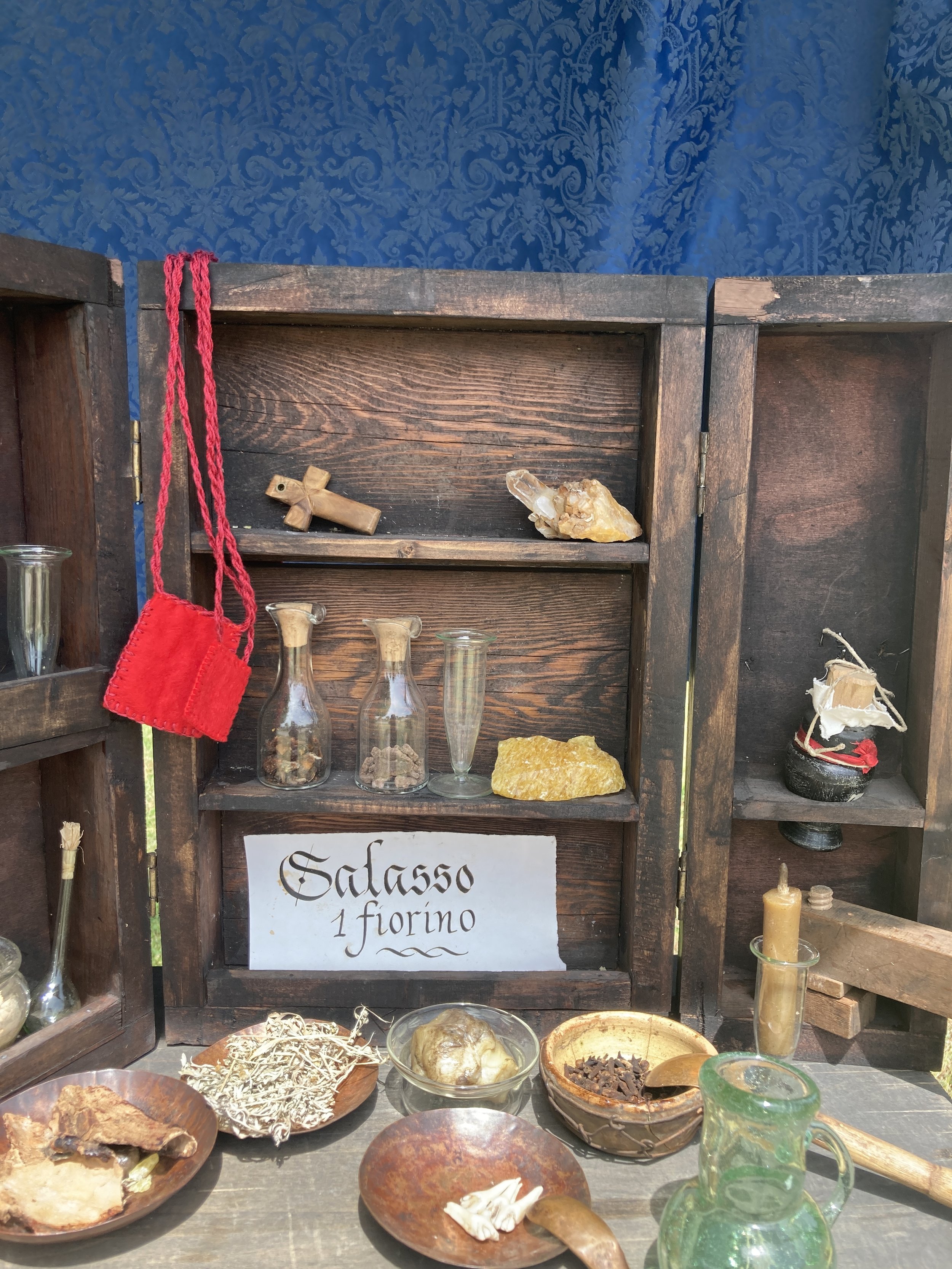
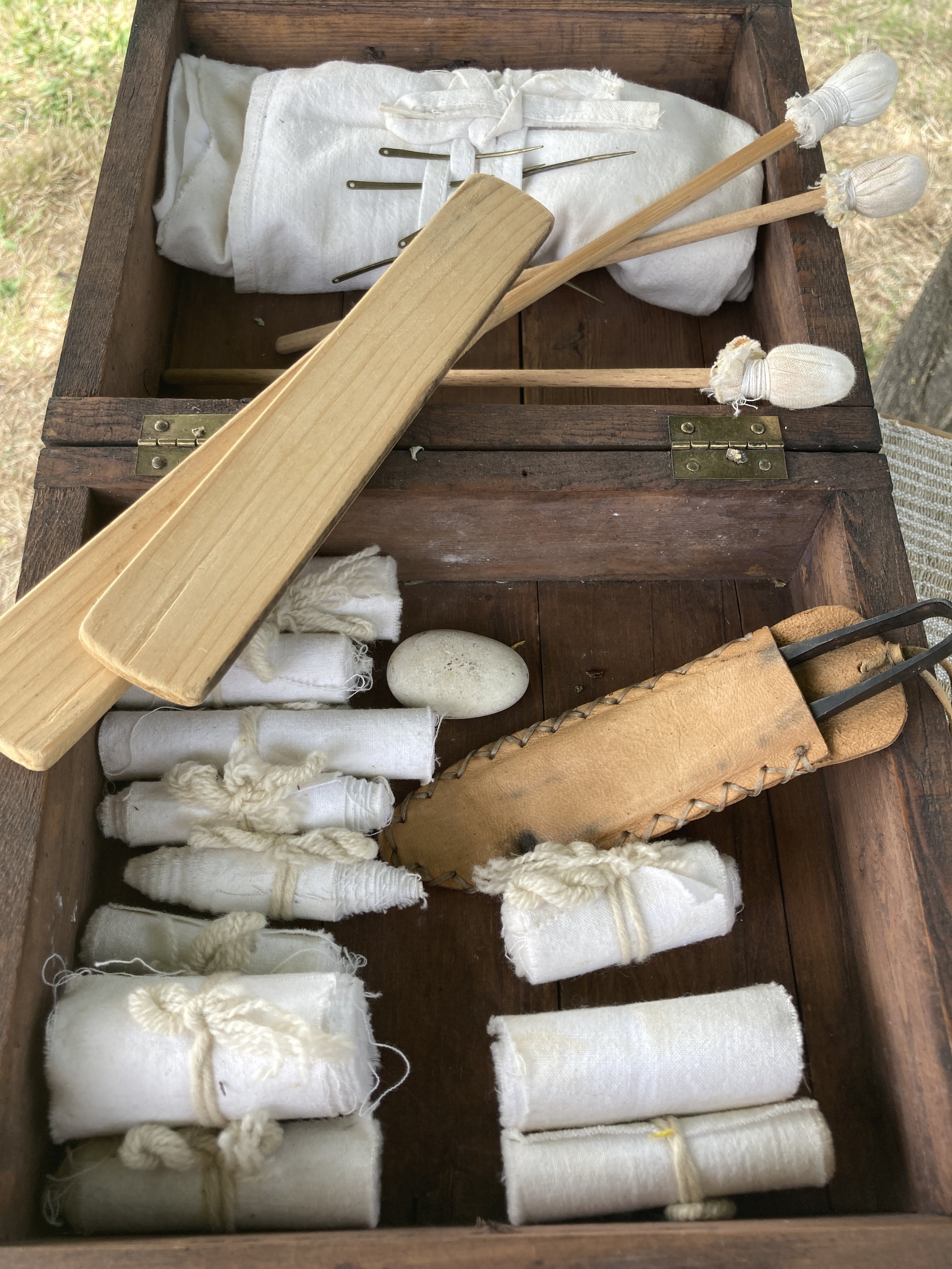
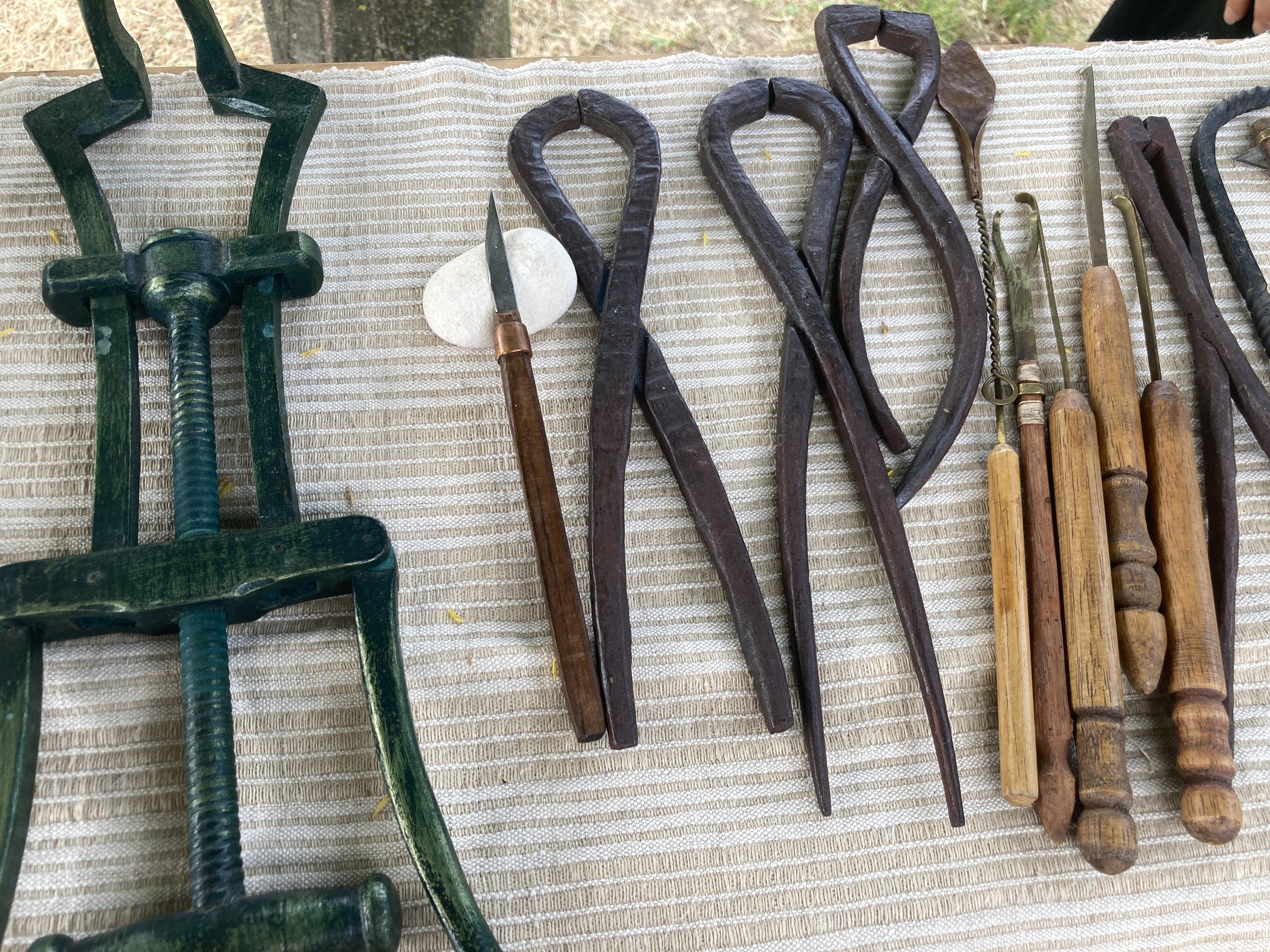
There were falconieri (falcon handlers), makers of armor, sword fighters, crossbow demonstrations, instrument carvers, musicians, dancers, food displays, potters - all in period costume. Especially fascinating was the booth with the medieval pharmacy, including dental instruments that looked downright frightening. I would not want to see these tools in my dentist’s office!
00CBC2AA-9915-4295-A495-BC9DFBE75252.jpeg
F1F50153-8C54-40E9-A89C-882F9E5833A4.jpeg
70F504DE-5834-4156-8BAB-1E6CF9CBA842_1_201_a.jpeg

It was fun to stroll though medieval times, but on a hot June day it was a relief to return to more modern times and give thanks for an air-conditioned apartment! But come next June I’ll be ready for a return to the Middle Ages.

June 06, 2022 /Joanne Bartram
medieval lucca, Lucca Medieval 2022, Lucca History, Middle Ages Italy, #festivalsitaly, #festivalslucca
#balestrieri, #lucca, #medievalitaly, Festivals Italy, Italian culture

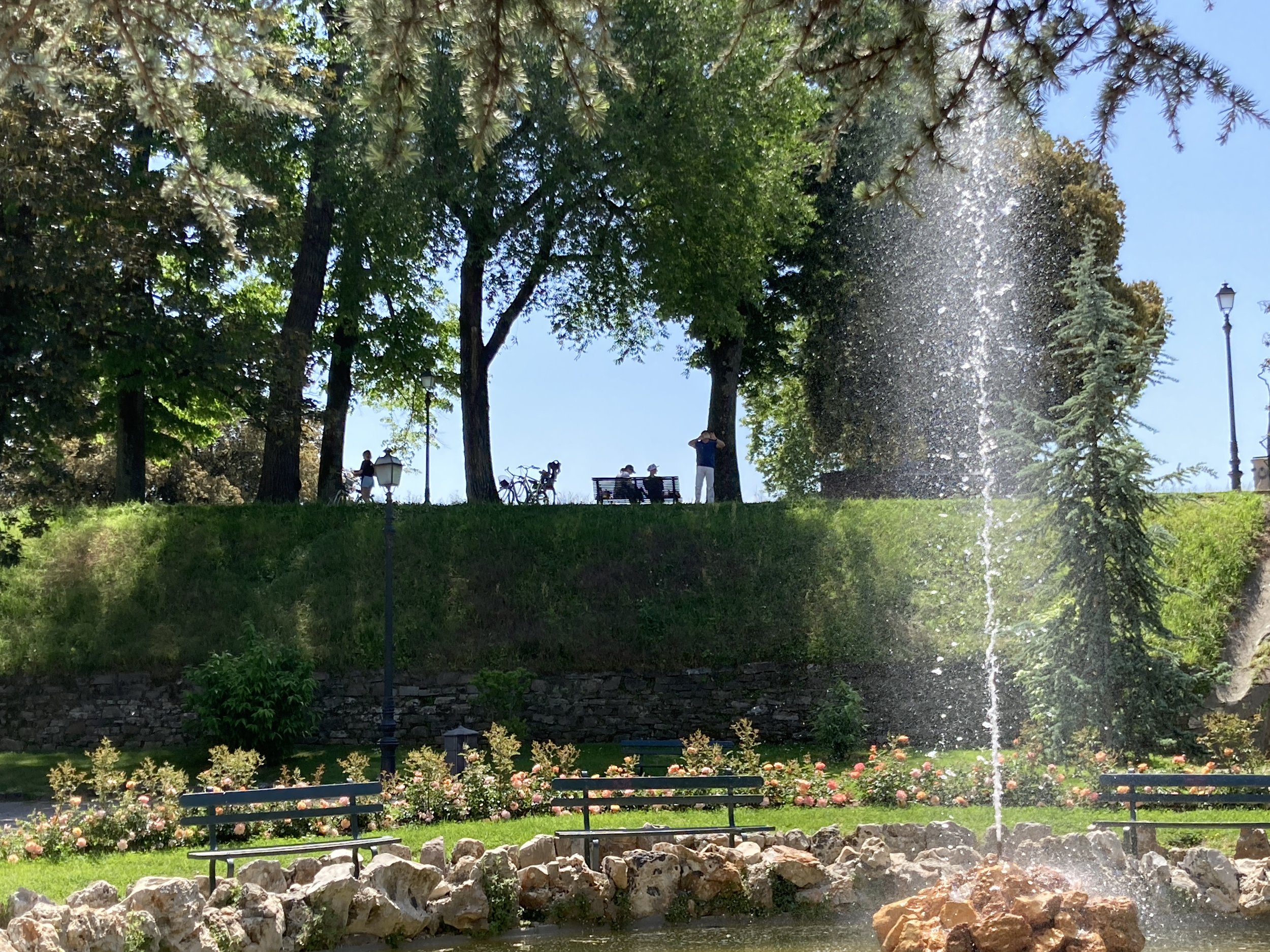
This fountain is surrounded by peach colored roses. It’s a popular spot to sit, have a gelato, and watch the activity up on the walls.

Lucca in Bloom

May 23, 2022 by Joanne Bartram in #lucca, #springintuscany, Italian gardens, Italy, Lucca

April was quite cool and rainy this year; it seemed that spring would never arrive. Perhaps that long wait for spring has made May, with its lengthening days and beautiful weather, even more welcome. Right now the temperatures are perfect - just warm enough mornings, sunny warm afternoons, perfectly comfortable evenings. There are soft breezes and plenty of opportunities to stop and enjoy the feel of the sun on one’s face. Cool weather clothes have been packed away (finally!) and the midday sun gives a hint of the hot summer weather that is just around the corner. This is the in-between season, and it is one of the best times of year to be in Tuscany.

These roses can be found in the large park just behind the Church of San Francesco.

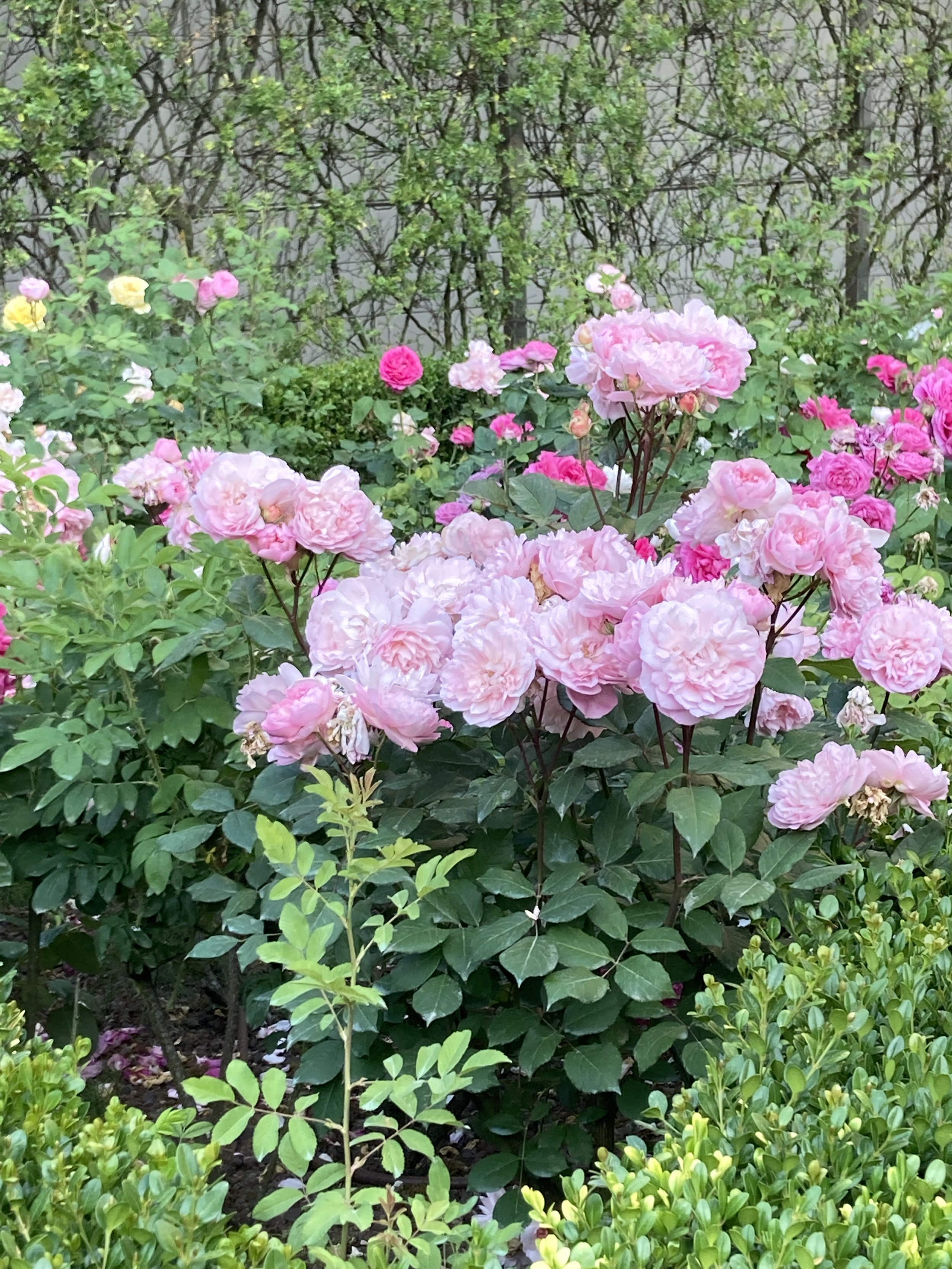
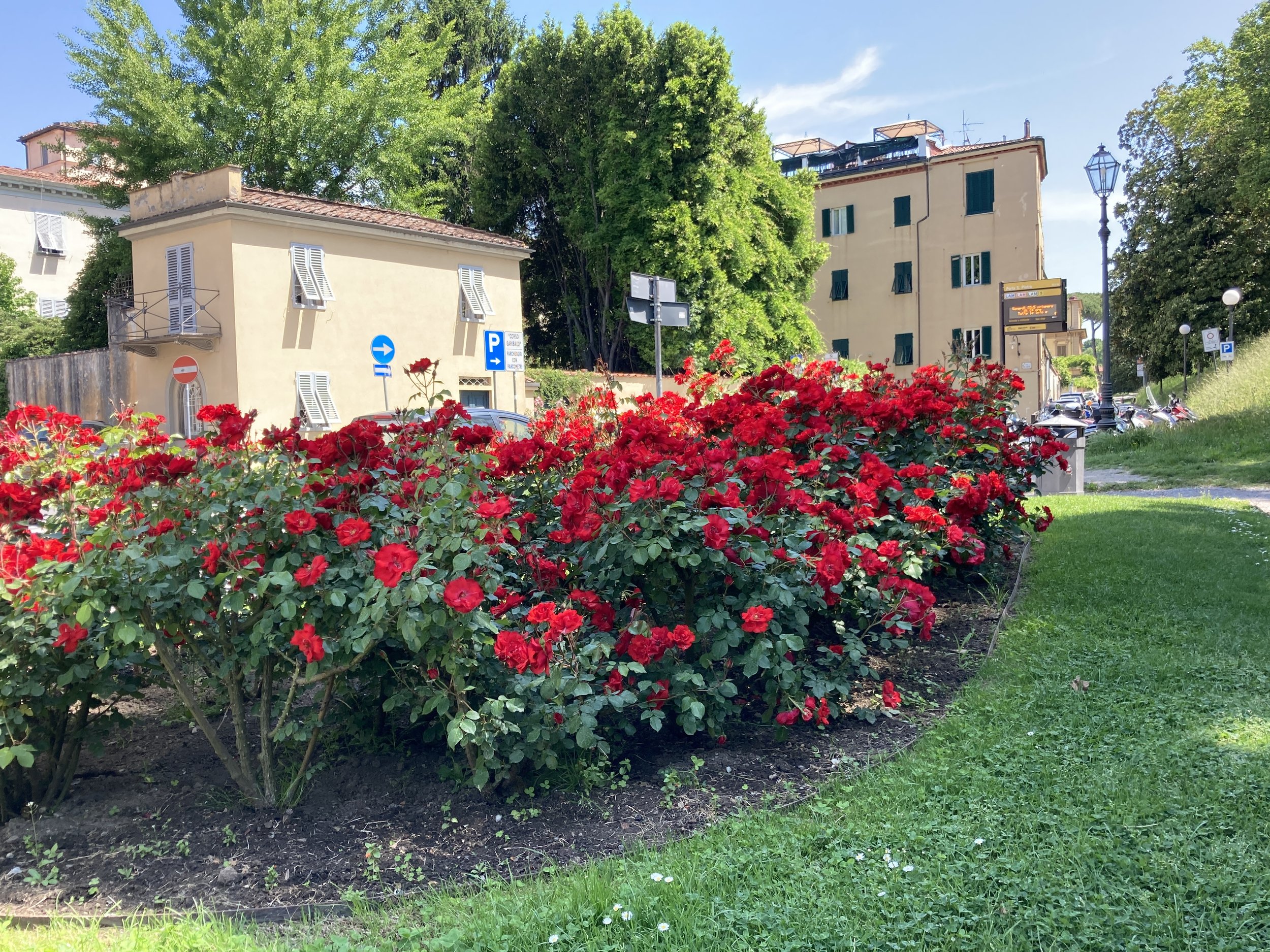
The magnolia blooms are long gone, the wisteria have mostly faded, and there are no poppies inside the historic center of the city (though they are a marvel out in the countryside). But that does not mean there is a shortage of color in town because in May Lucca erupts in roses and they are glorious.

This multi-colored rose garden is up on the walls that surround the historic center of Lucca.

I wish I could add a link that would share scent, because the roses fill the air with a soft, delicate perfume. This seems especially true for the banks of pink roses just outside Porta San Pietro, the main entrance into the city. Visitors to Lucca often enter this porta on their way from the train station into the city. And what a good first impression this makes!

Fragrant pink roses at Porta San Pietro. And why is there always a truck that “photo bombs” a good picture?

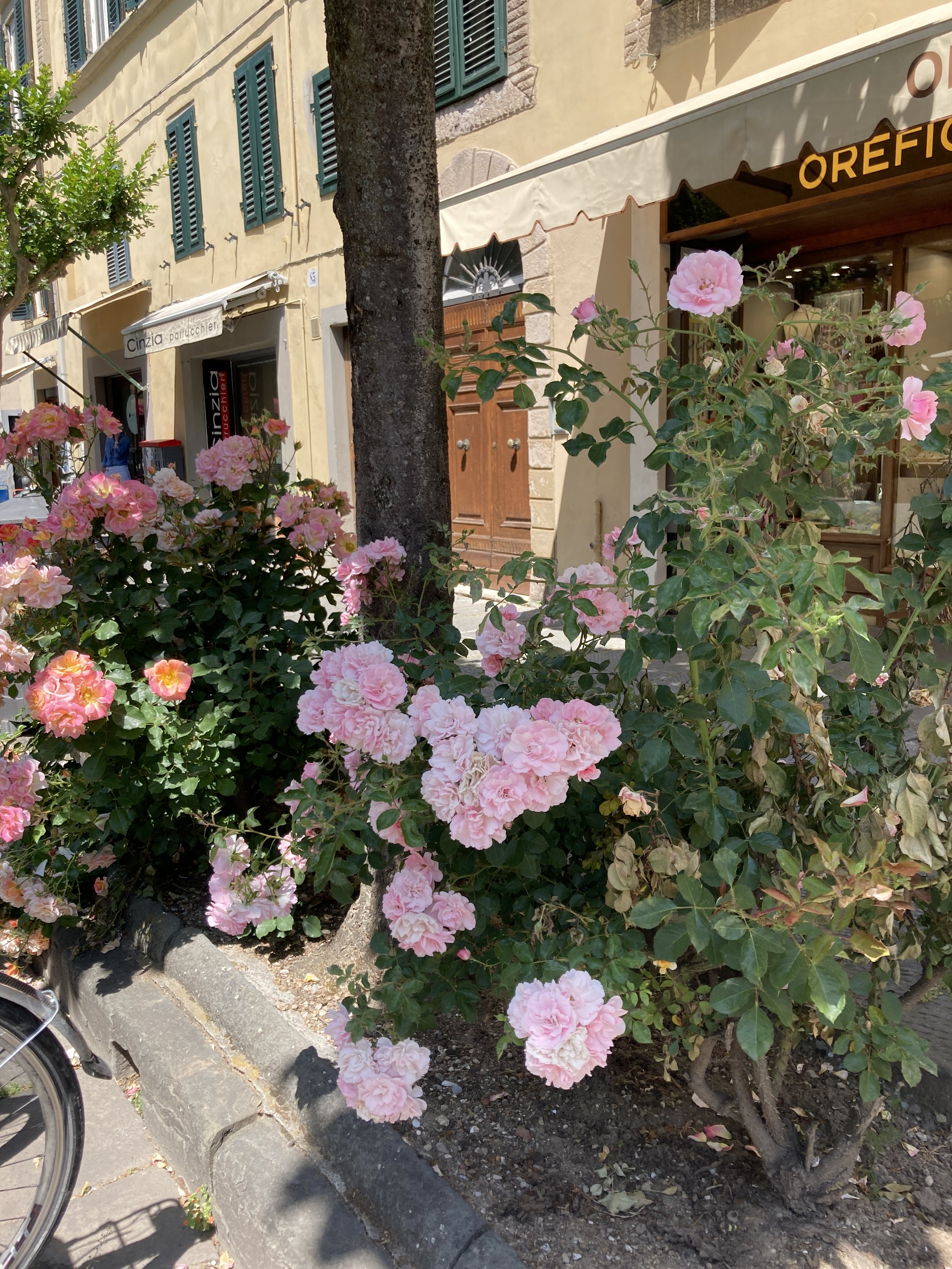
It’s impossible to walk past without stopping to appreciate the various shades of pink, the wonderful scent, the buzzing bees.

Not to be outdone by the pink roses just outside Porta San Pietro, these red ones are just inside the porta.

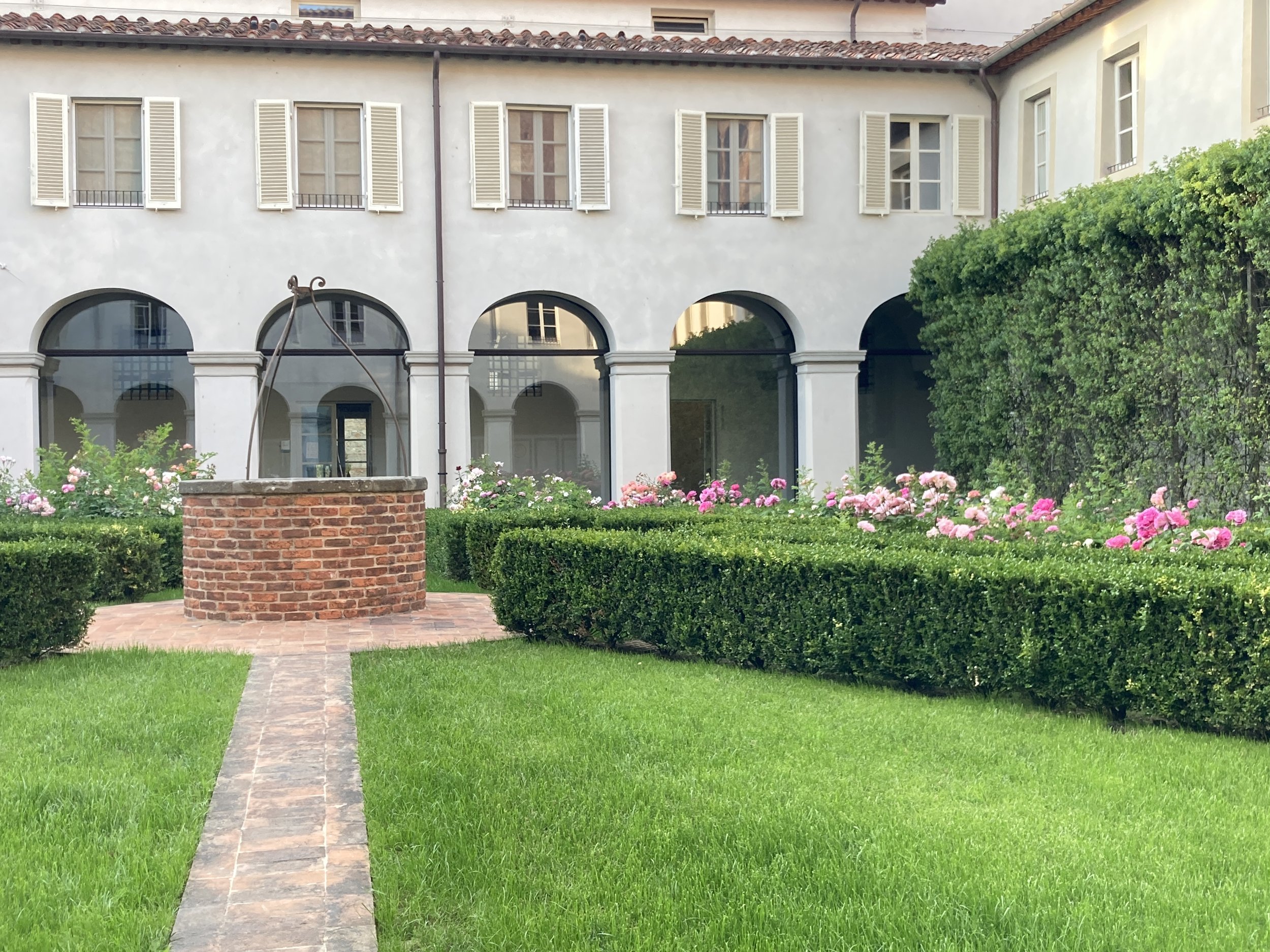
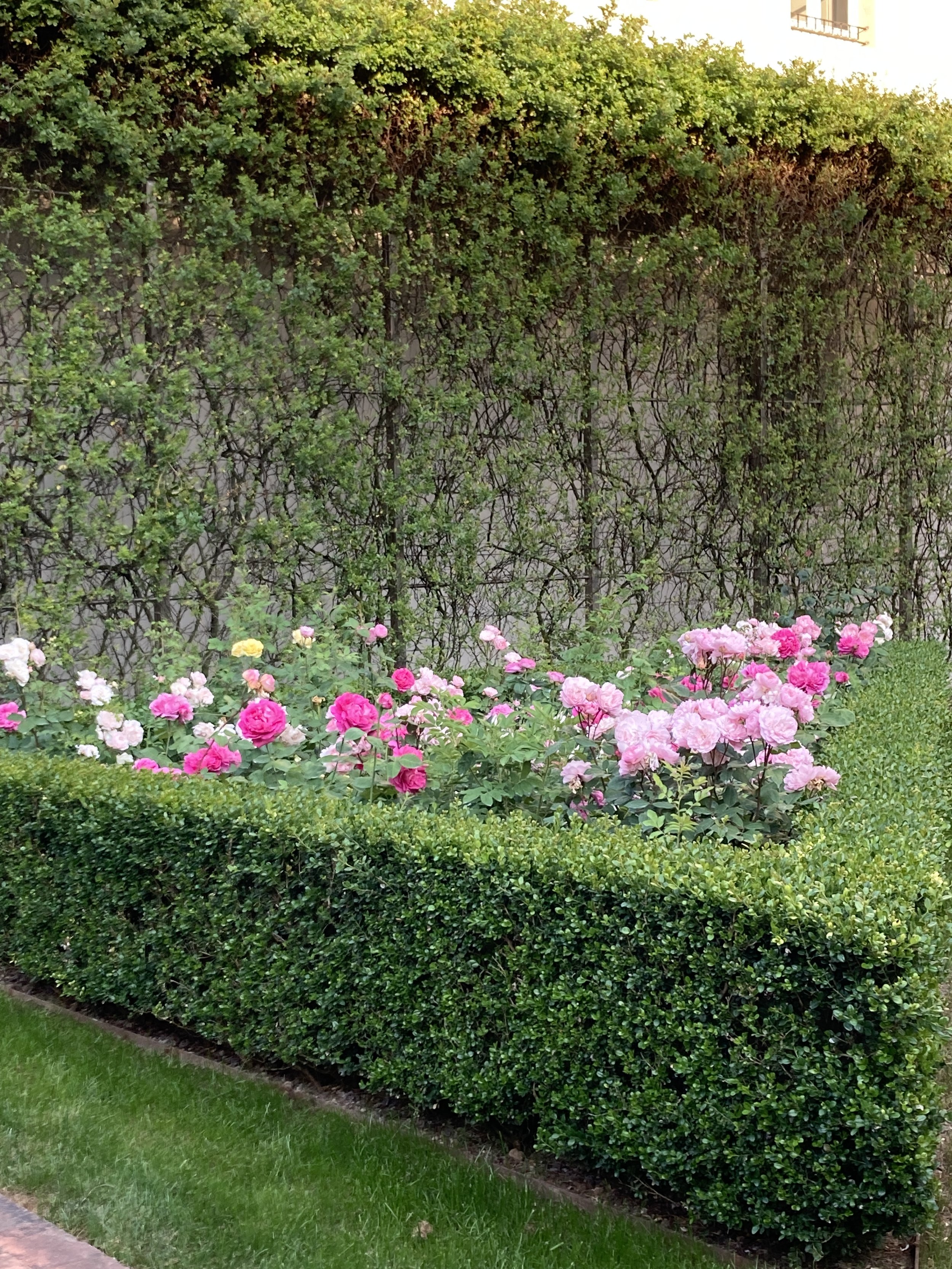
One of my favorite rose-filled places is the rose garden in the series of three small gardens in the chiostro (cloister) beside the Church of San Francesco. With an old well in the middle of the garden, and banks of roses fanning out in all directions, this is a delightful and well tended formal garden.

5681B0FD-7F0F-4416-8DF7-5B84B9ADA3AB.jpeg
AE51CB47-215C-4426-9FB6-55213CEA2666.jpeg
AD41AA51-D84B-42DD-85DB-69BA968D120B.jpeg

What a joy it is to walk through Lucca on a warm spring day and find these beautiful blooms.

Street side roses on Corso Garibaldi

May 23, 2022 /Joanne Bartram
Spring Tuscany, spring in Italy, Garden Lucca, Gardens in Italy, Italian Gardens, #roses italy
#lucca, #springintuscany, Italian gardens, Italy, Lucca

Spring in Pietrasanta: Art, Philosophy, and Giraffes

May 16, 2022 by Joanne Bartram in #lucca, Italian art architecture, Italian culture, Italy travel, Italy, Tuscany

Pietrasanta has everything a small town in Italy should have - beautiful scenery, a lively main piazza, historic buildings and statues, a lovely church, cafes, and good food. And art. It is the art that draws me back time after time.

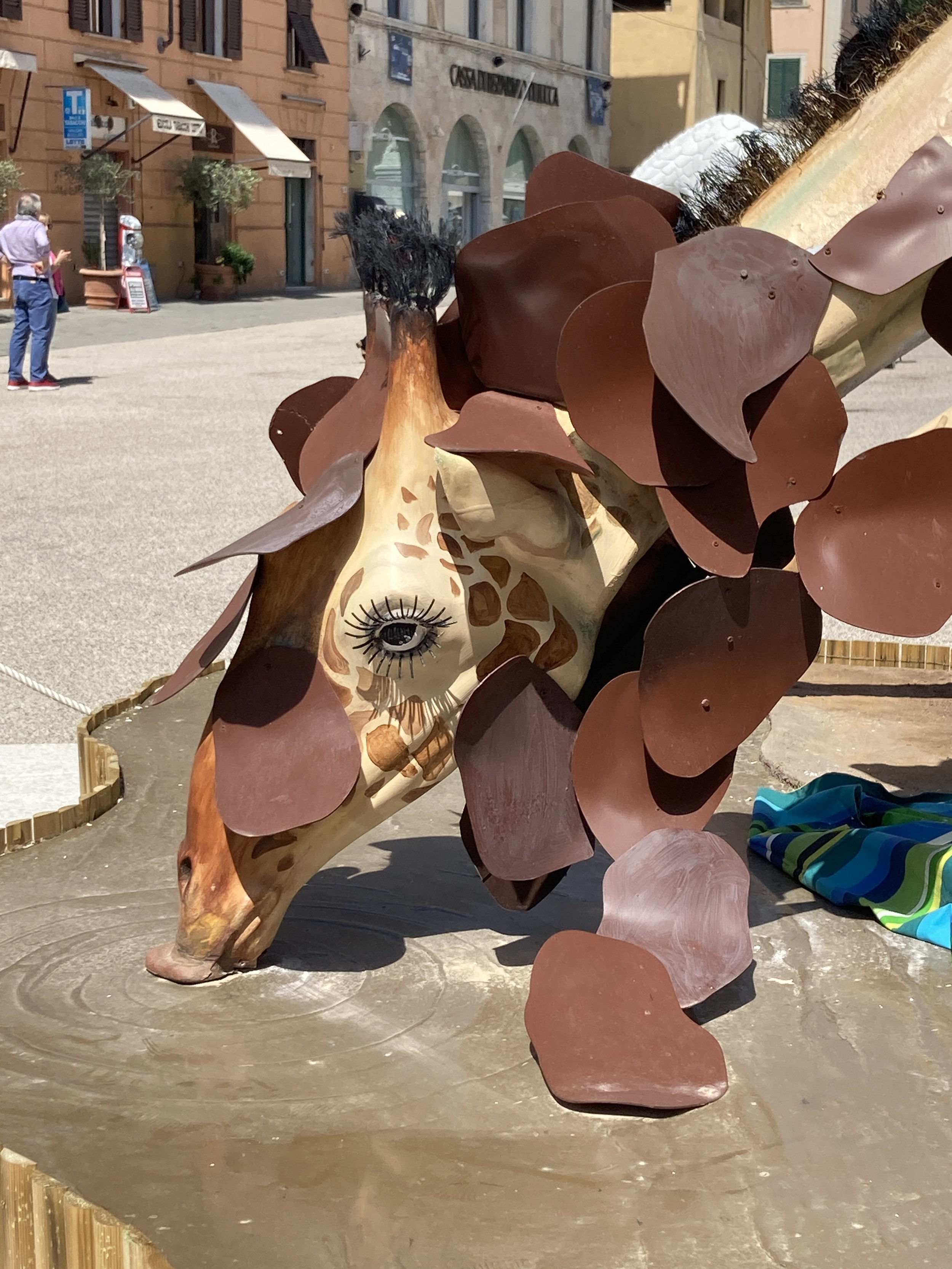
One of many whimsical giraffes that can be seen throughout Pietrasanta this month.

Visiting is easy as it is just an hour-long train ride from my home in Lucca. Unless of course, as in my most recent visit, there is an interruption on the tracks, train delays, an extra change of trains, a track in a tiny station with no signage, and you hop on the wrong train and have to double back. But don’t let that discourage you! My friend and I laughed it off and eventually arrived to spend a lovely day in Pietrasanta.

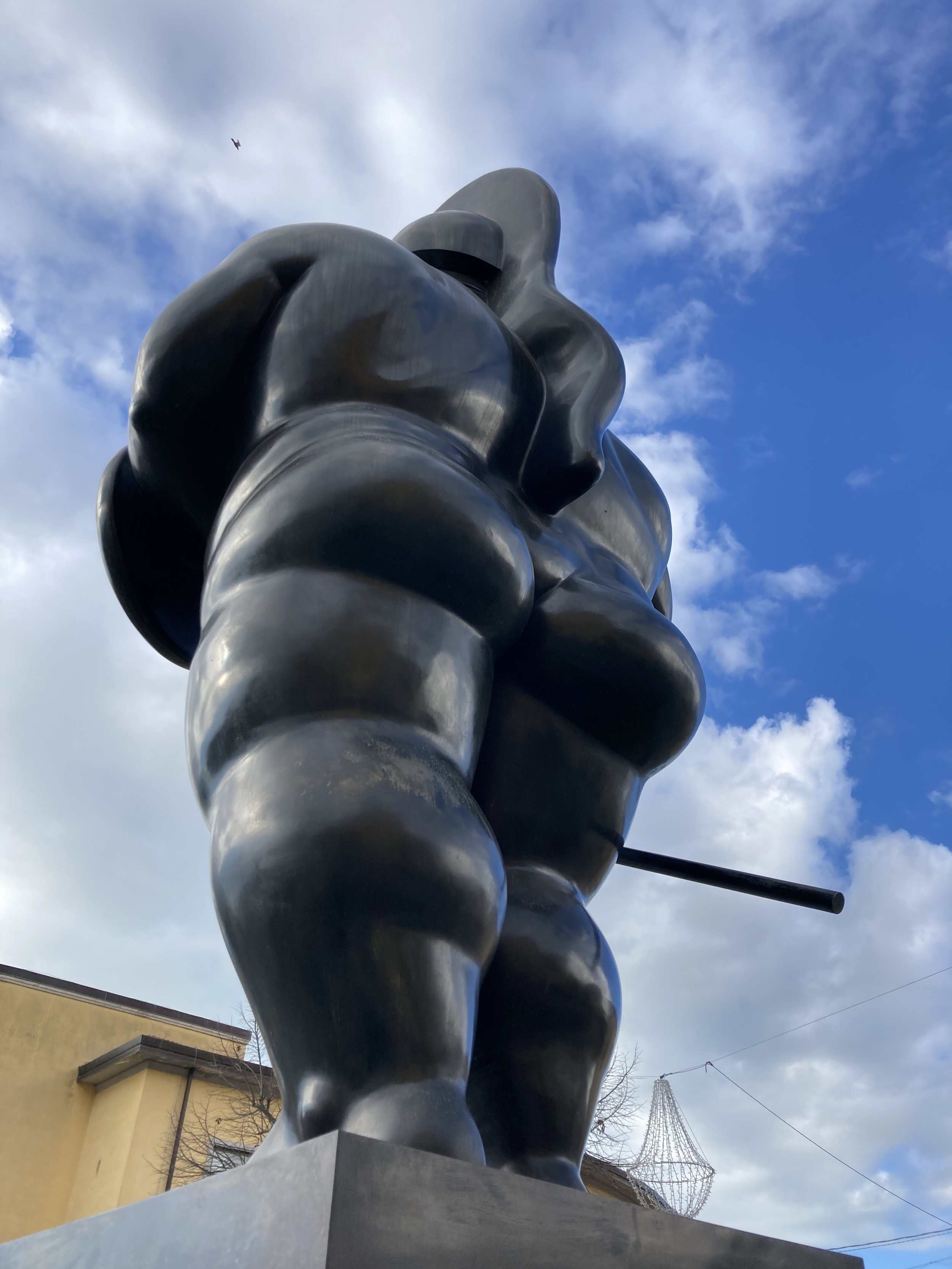
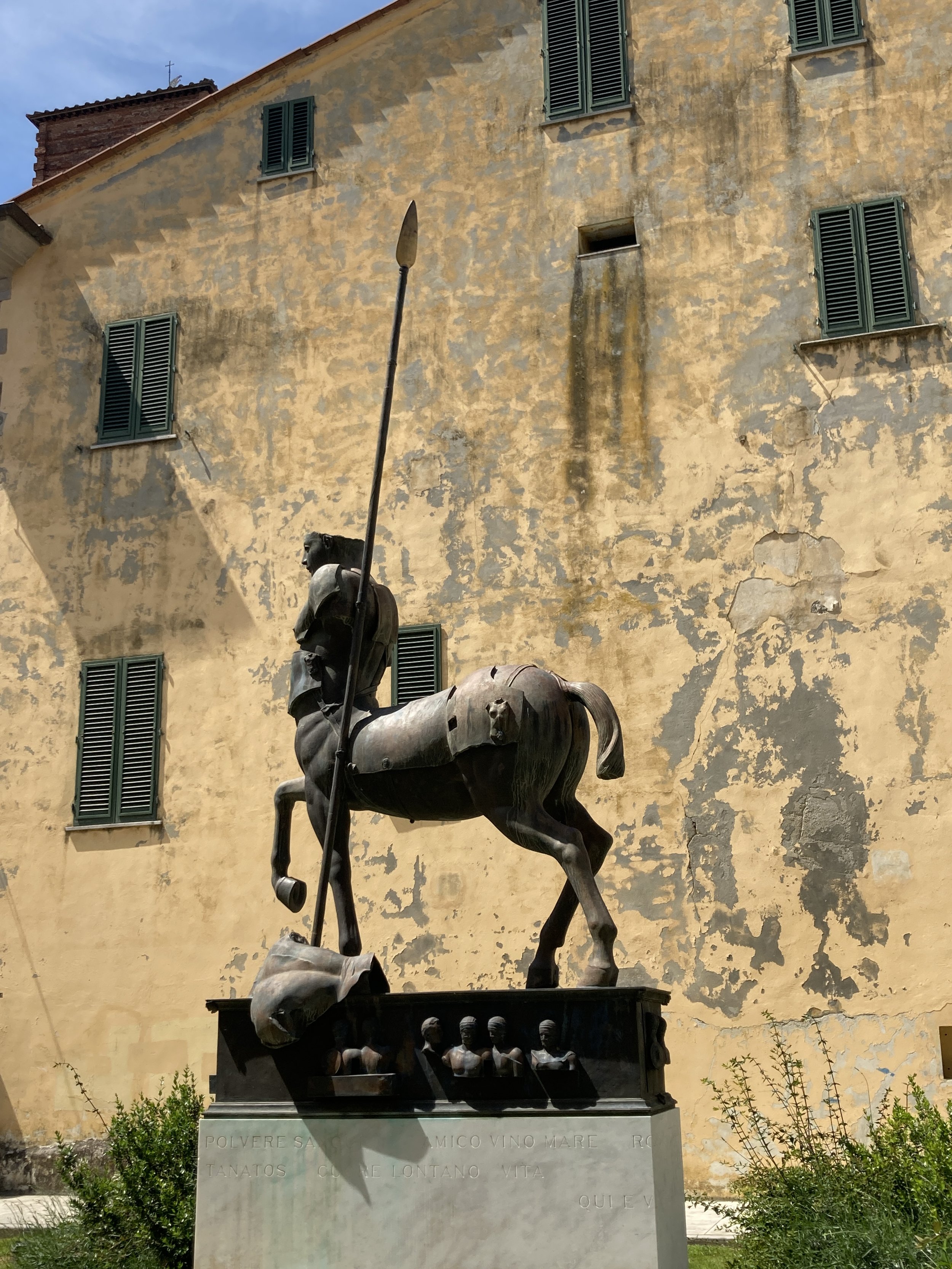
Famous as a center of sculpture (the marble quarries of Carrara are nearby), the town has permanent outdoor installations of bronze and marble sculptures, from smaller pieces to Botero’s massive bronze warrior (below).

CC1D846C-D0C6-4EB9-98AD-96C87DFFC193_1_201_a.jpeg
5853D5E2-CBB7-4A7E-9C0E-F90E3295F19A.jpeg
C95C05B5-2B06-4416-84BA-41EE353B441E.jpeg

In addition to these permanent works, Pietrasanta hosts temporary exhibits which fill the main piazza and nearby spaces (as well as some indoor spots) with an ever-changing display of works by contemporary artists.

The current exhibit, in place until June 5th, features the artistry of Sandro Gorra. Gorra’s background is in commercial art where he worked as an illustrator and creative director for advertising campaigns. That was his work. Today, he concentrates on his art which includes sculpture, illustrations, and a sort of philosophical short poetry which accompanies his works. And then there are his giraffes.

Gorra says that this piece, made from 4 tons of marble, is one of his favorites. A loving mother giraffe tending to her baby.

Why giraffes? According to a published interview with Gorra, the giraffes serve as a parable, representing man’s desire for superiority. A giraffe towers above, looking down on everyone. Each one is unique in his spotted form.

This begs the question - without those spots, what would the giraffe be? Anonymous! Naked!

Change - a predictable part of life - in progress.

Change is inevitable and the spots on Gorra’s giraffes do indeed change. They fade away, they fall off, new ones appear. In fact, during my visit, two men, one looking suspiciously like the artist himself (or was that just my imagination?) were busy painting new spots on two of the giraffes. This would be consistent with Gorra’s view that change is to be expected and that irony is a part of the human (and giraffe) condition.

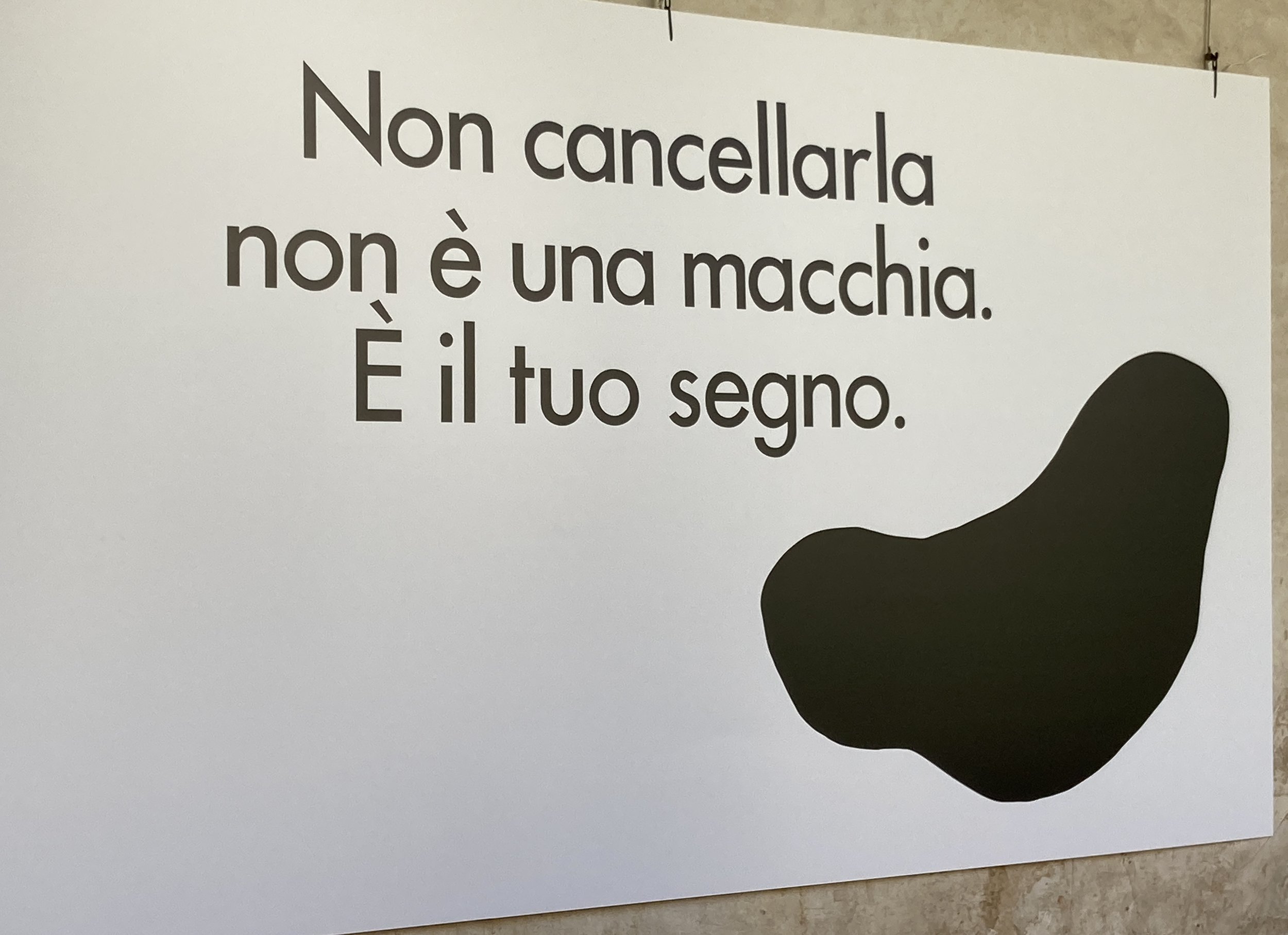
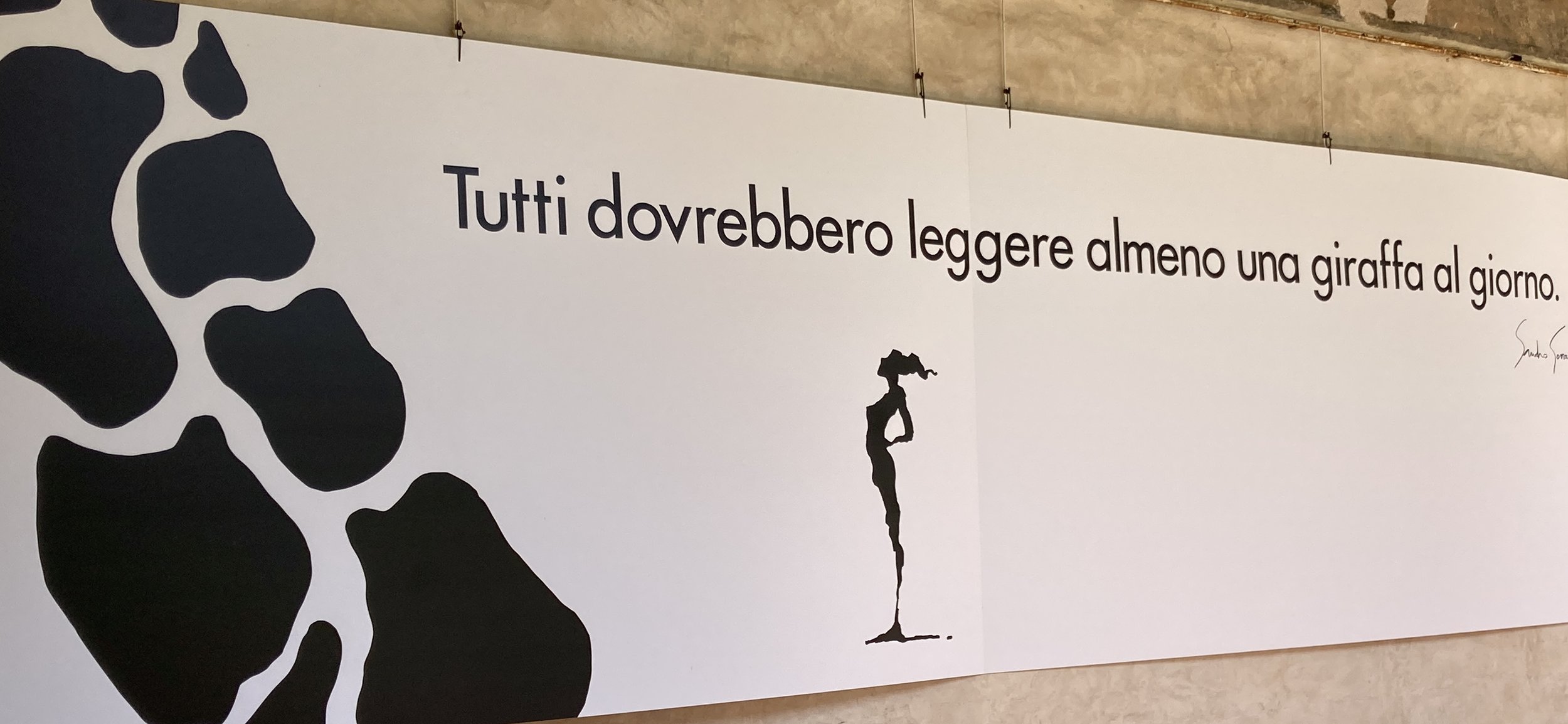
Alongside the works of art are illustrated phrases, providing an intriguing look into the artist’s mind and bits of his philosophy. I enjoyed these sprigs of wisdom just as much as the sculptures. Both made me smile, both made me think. Isn’t that the best part of art?

Here are some examples (any mistakes in translation are entirely my fault).

Don’t erase it, it is not a stain. It is your sign.

Ideas are always around, but if you don’t notice them they go away

And my favorite one of all - it just may become my personal mantra:

Everyone should read at least one giraffe a day.

A day in Pietrasanta is always a joy. Sipping a cafe in the Piazza del Duomo. Strolling through the piazza and the Chiostro di Sant’Agostino. A quick visit to the beautiful Duomo. Wandering the side streets. A quick stop at the Misericordia Chapel to see Botero’s Heaven and Hell frescoes. A relaxed lunch at a favorite spot. Add in Gorra’s giraffes and the day is just perfect!

May 16, 2022 /Joanne Bartram
Pietrasanta, Sandro Gorra, Contemporary Italian Art, #italy, #artitaly, #sandrogorra
#lucca, Italian art architecture, Italian culture, Italy travel, Italy, Tuscany
  • Newer
  • Older

Powered by Squarespace