Palazzo Davanzati. A Glimpse into a 14th Century Florentine HOme

A madonna and child tucked away in a painted niche at Palazzo Davanzati.
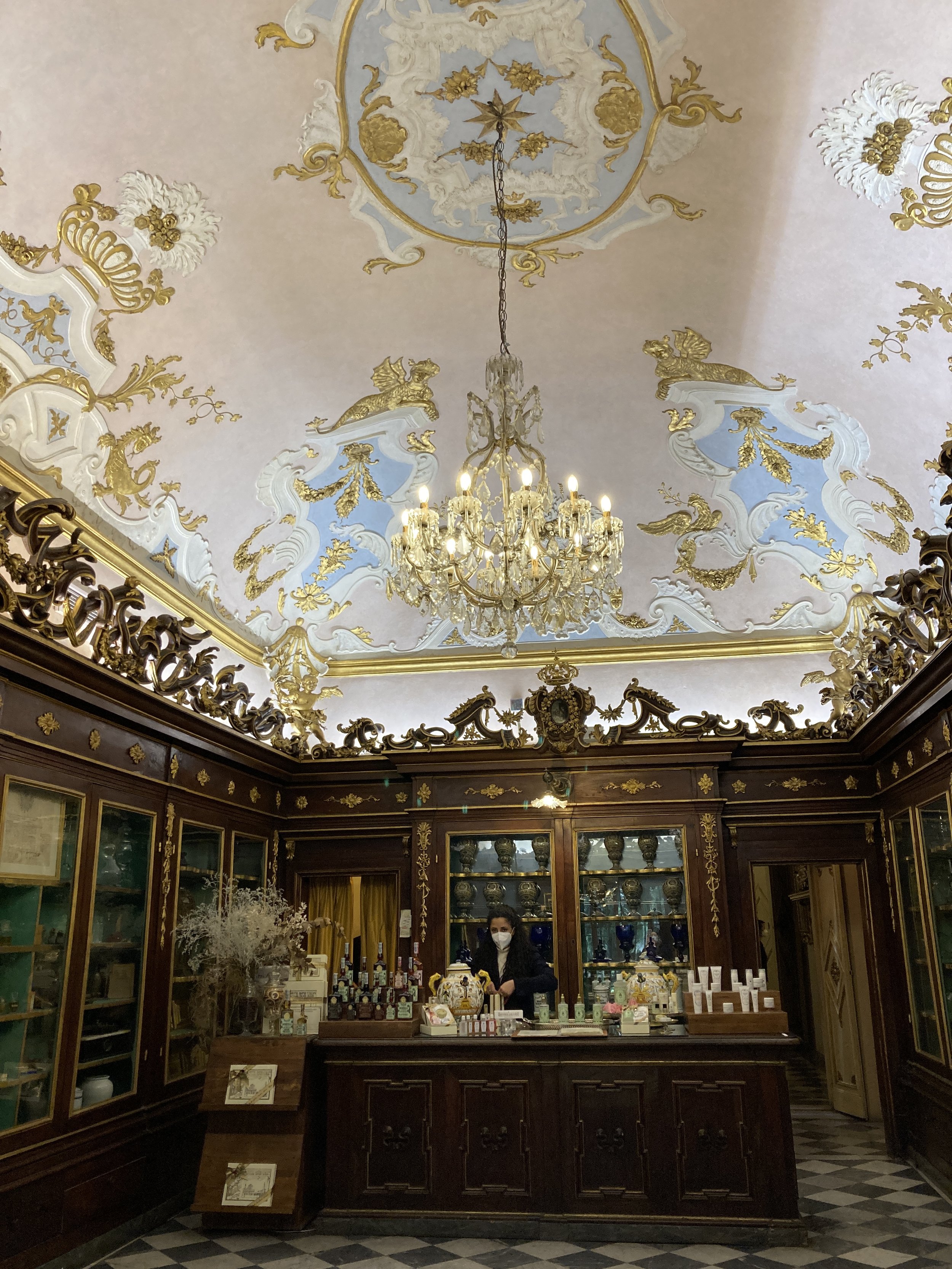
There are so many museums and historic buildings in Florence that it is all too easy to overlook some of the city’s lesser-known places. One of those is Palazzo Davanzati, the Museo della Casa Fiorentina Antica (Museum of the Antique Florentine House). The Davanzati is one of Florence’s “minor” museums, which has fewer visits by tourists but is much loved by locals. Step inside and be immediately transported back in time as you visit a 14th century home in Florence.
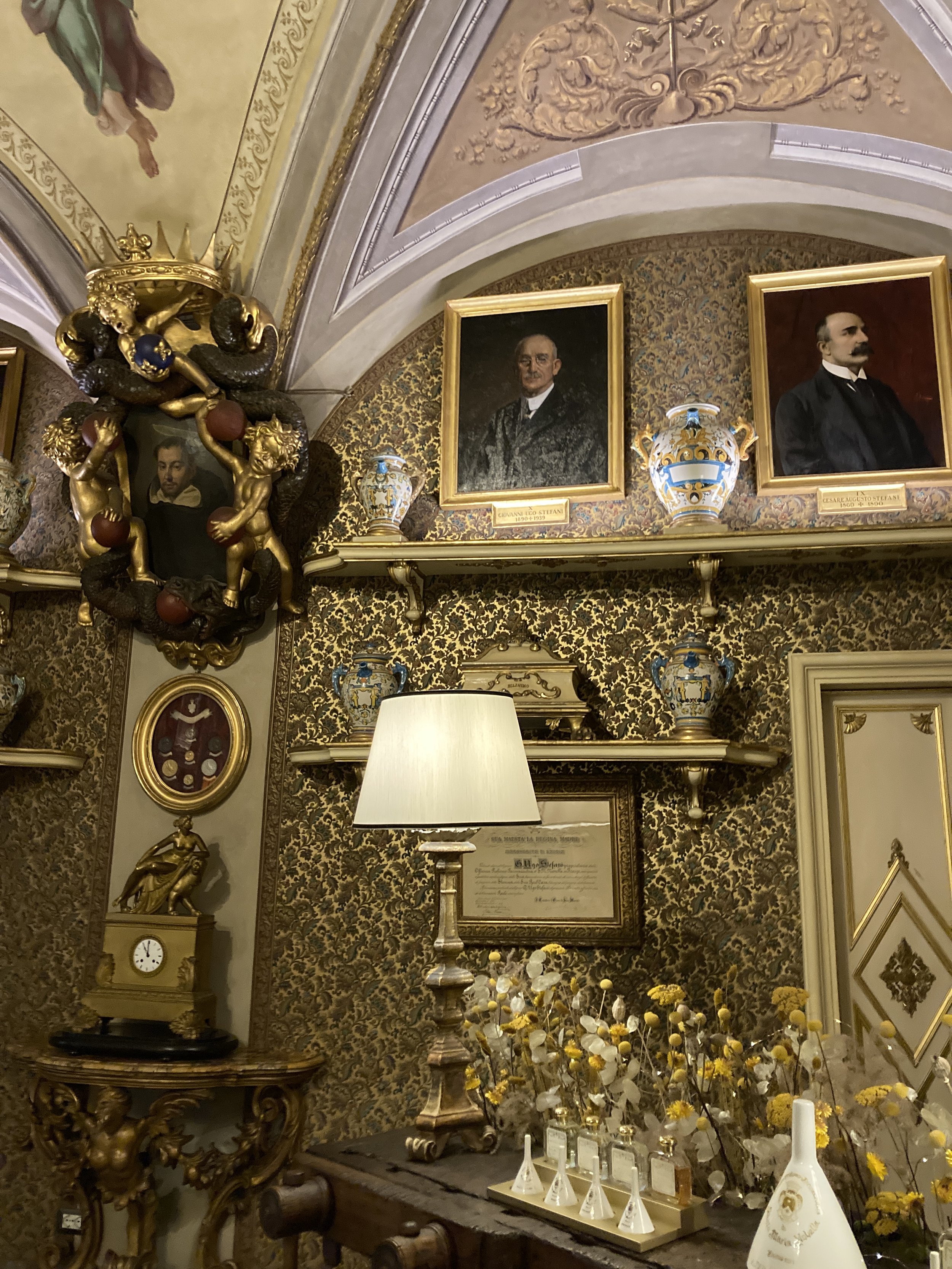
The palazzo was constructed in the mid-14th century and purchased by the Davanzatis, a family of well-to-do merchants, in 1578. It is their coat of arms that rests above the entry doors. The family occupied the residence until 1838 when it is said that Bernardo Davanzati ended his life by jumping from the loggia. A tragic ending to the families ownershop. Might his spirit still roam the palazzo?
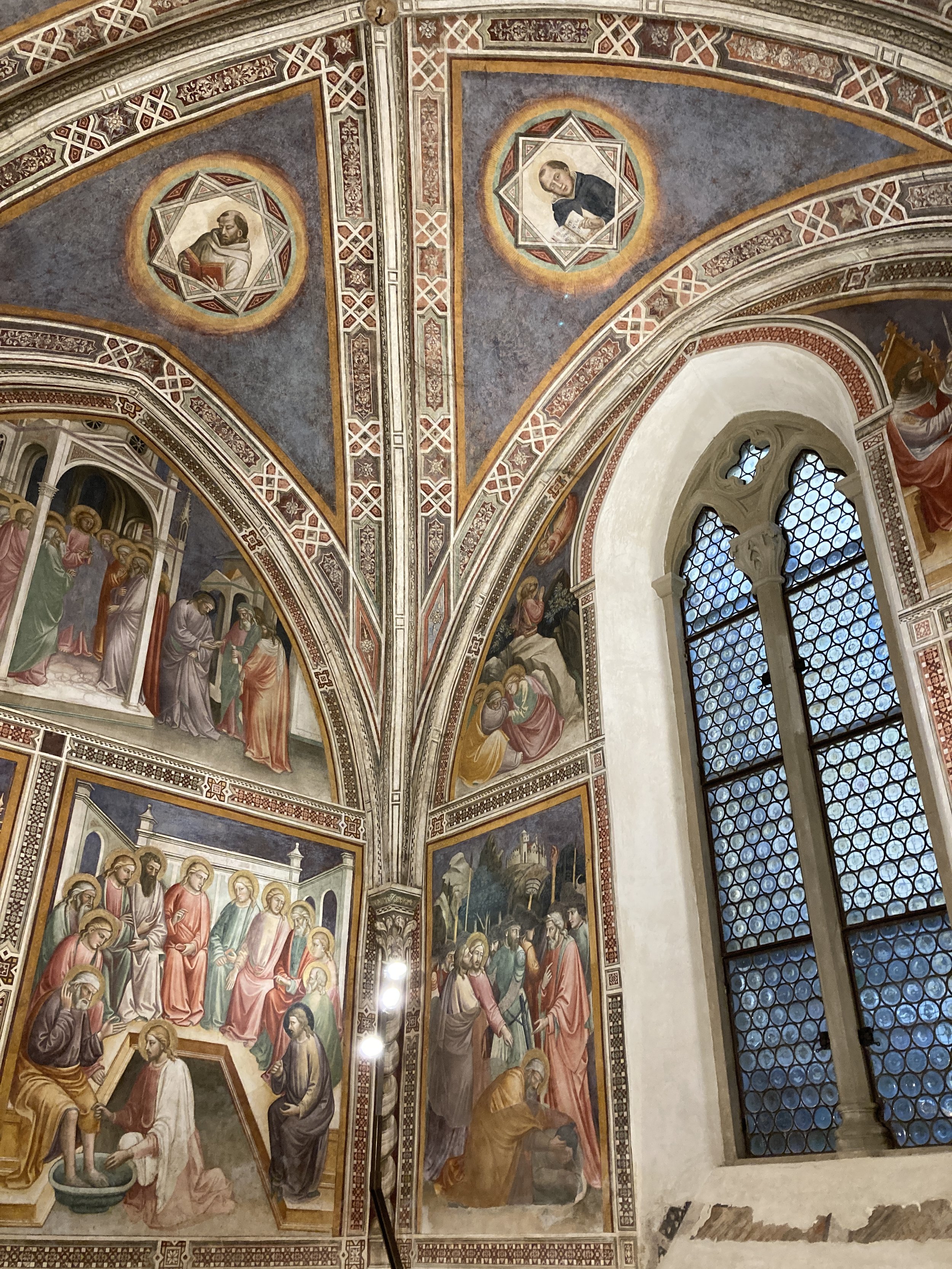
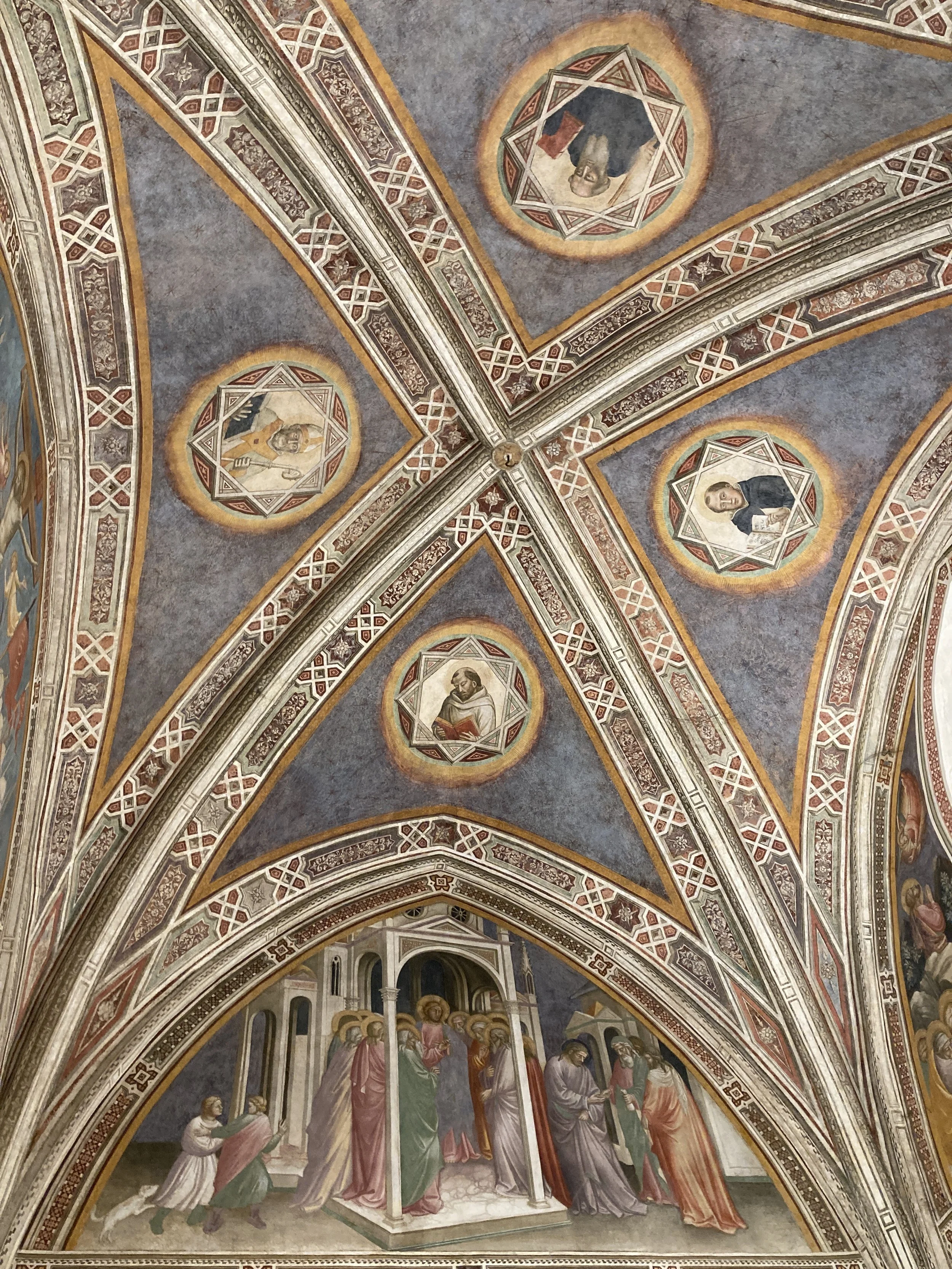
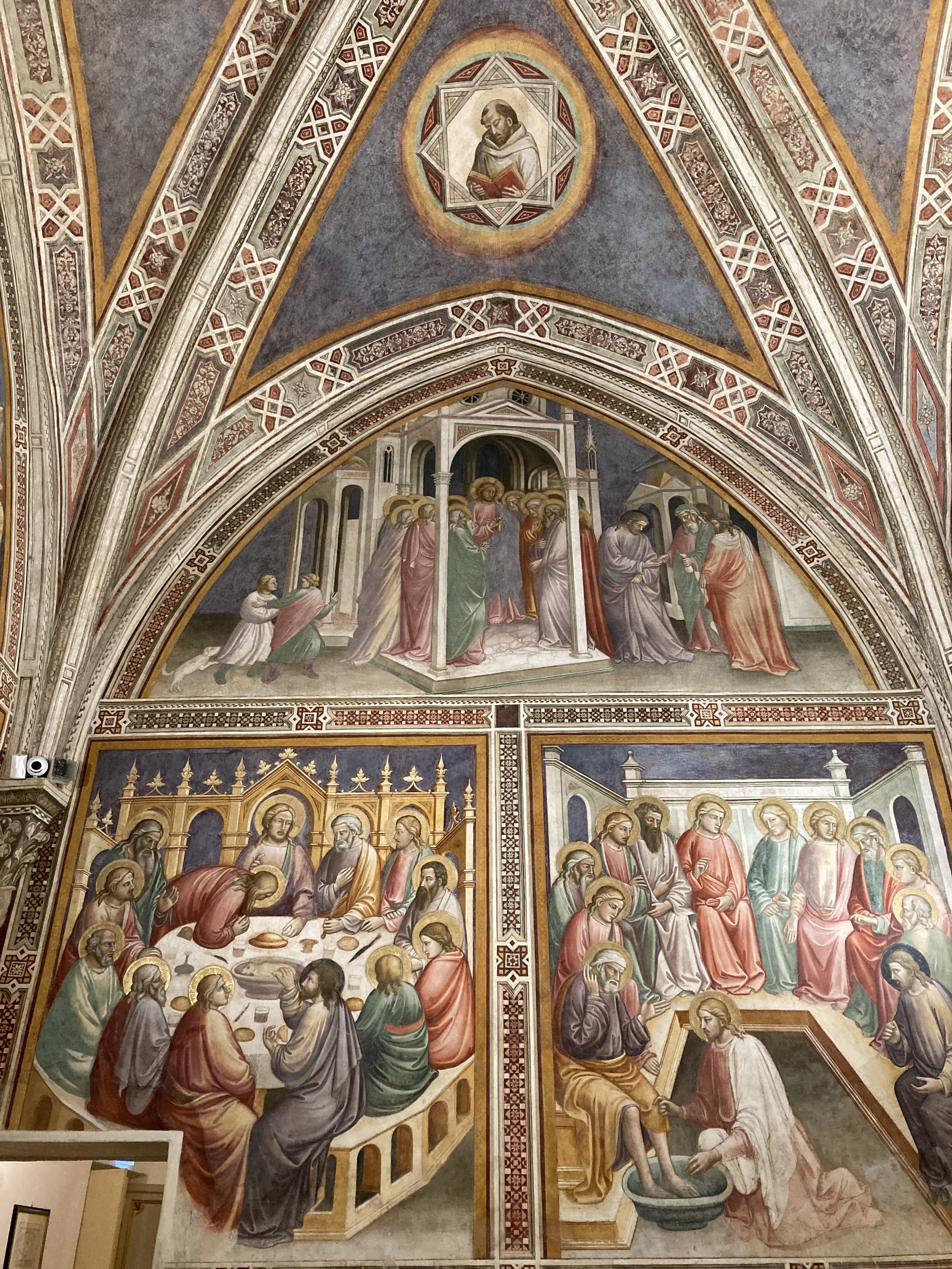
After the Davanzati’s time, the building was broken up into separate spaces, used for various purposes, and eventually abandoned. 1904 it was acquired by Elia Volpe who restored the property and opened it as a private museum. Unfortunately, Volpi auctioned off most of the property’s contents, including furnishings and art. But, importantly, he did not allow the frescoed walls, which had been covered in plaster prior to his restoration efforts, to be removed. We should all be eternally grateful to Volpi for that decision, because the paintings on the walls are spectacular and one of the best examples of such work from that time period to be preserved.
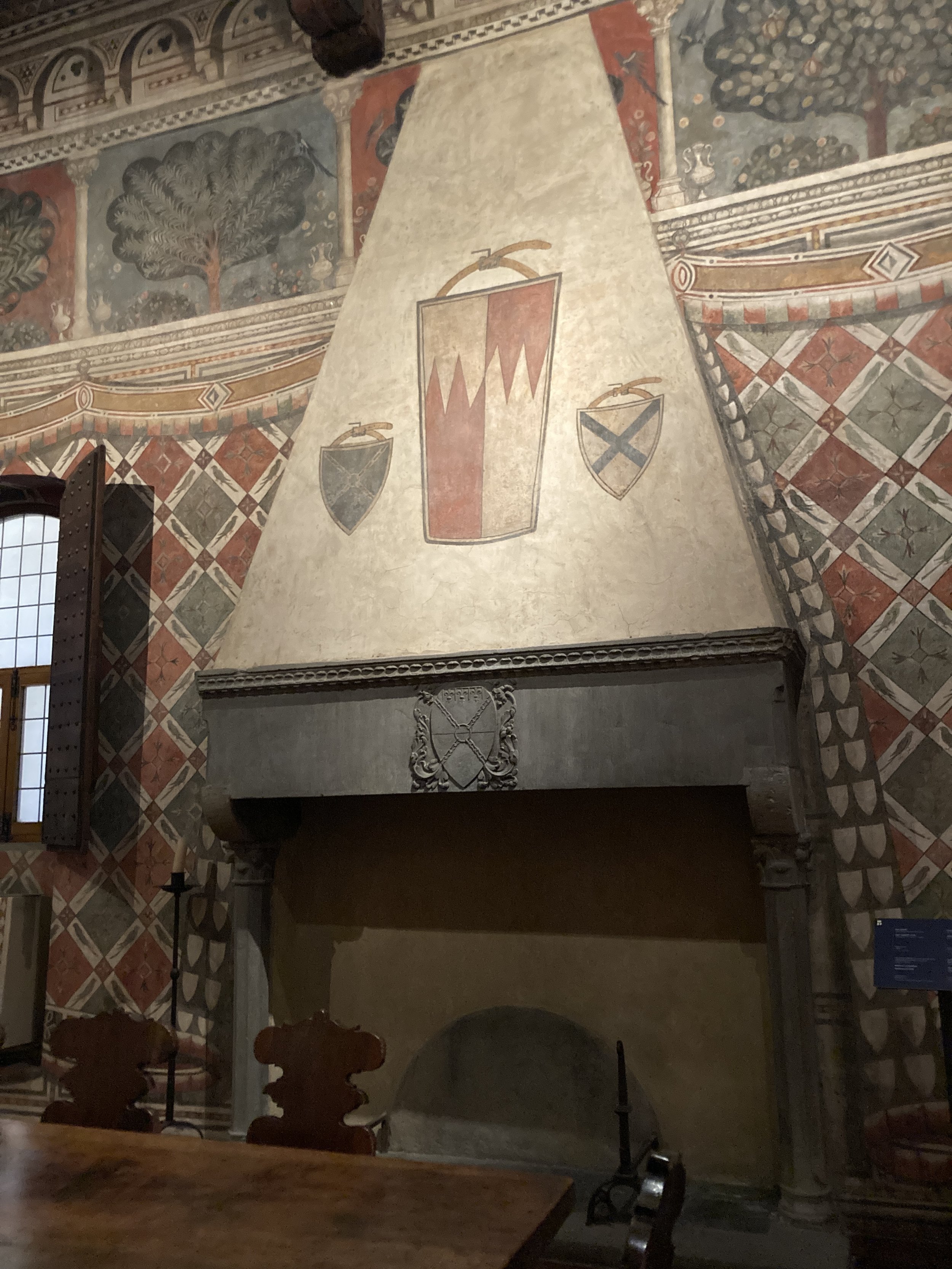
Parrot Room, Palazzo Davanzati
The palazzo changed hands after Volpi’s time, eventually purchased by the Italian State in 1951. Since that time it has undergone a series of preservation efforts. Today, the entry courtyard andnupper floors are open to visitors. The furnishings are not original to the palazzo, but are characteristic of the periods in which it served as a home. The painted rooms have been carefully restored.

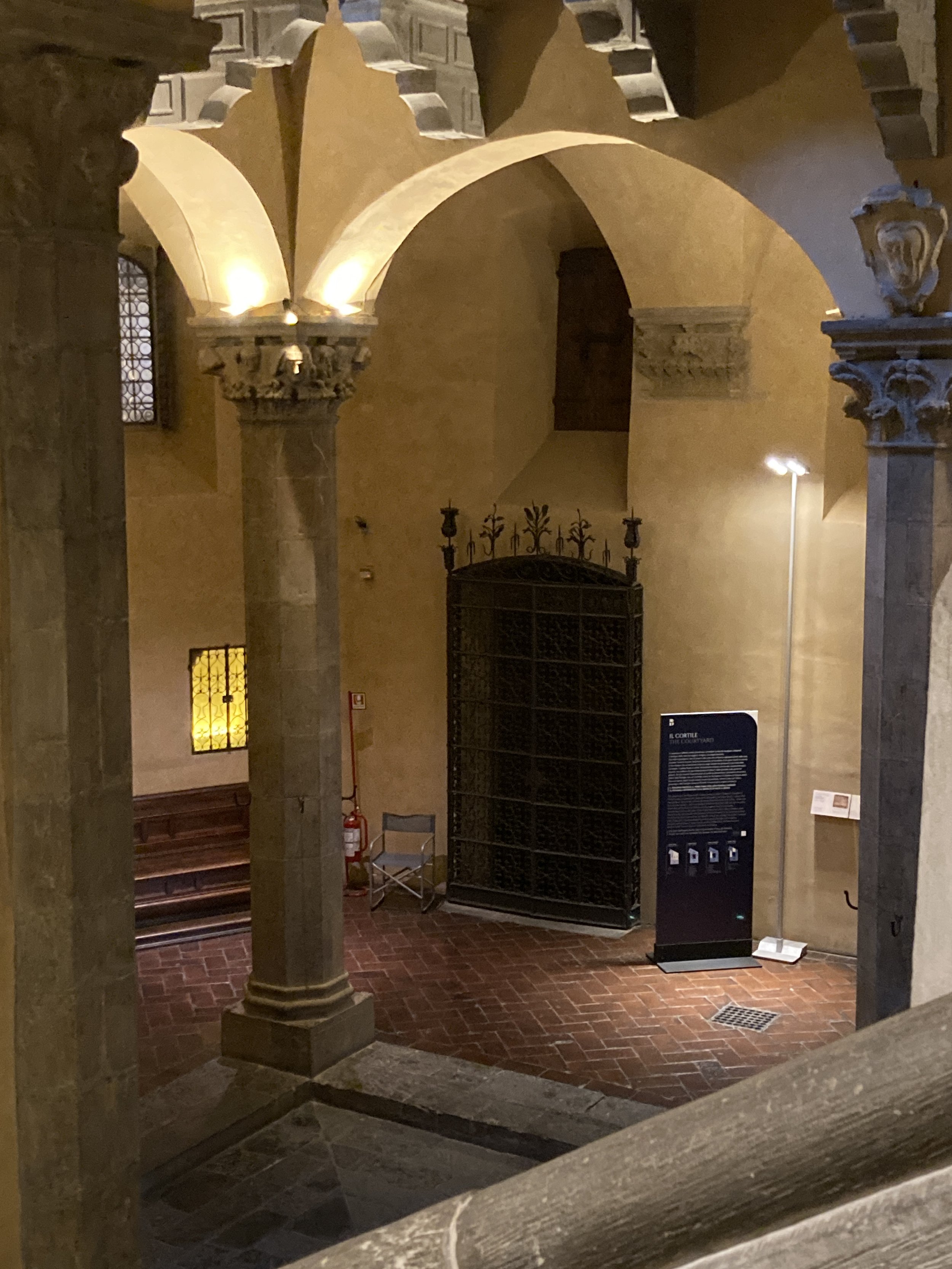
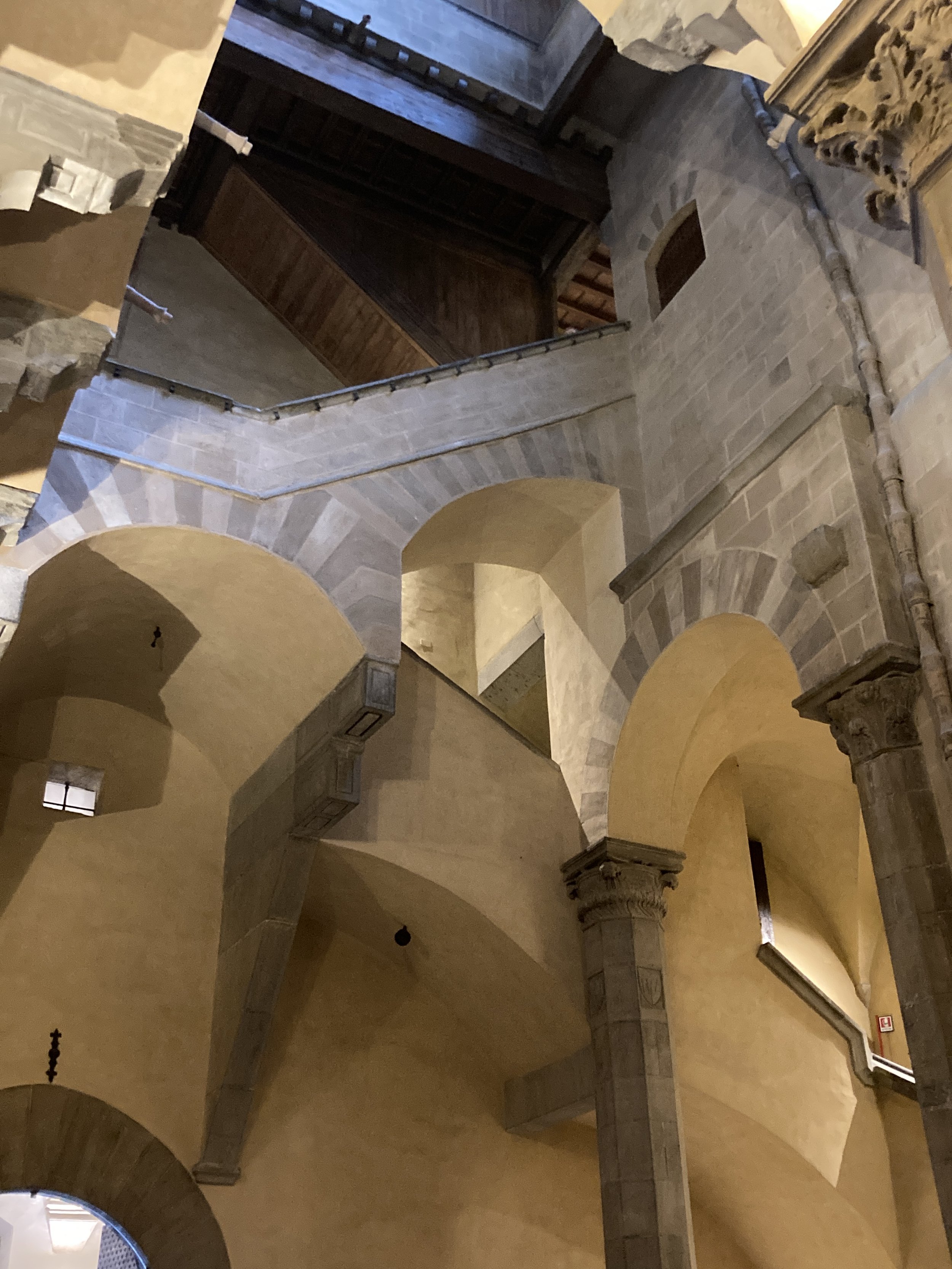
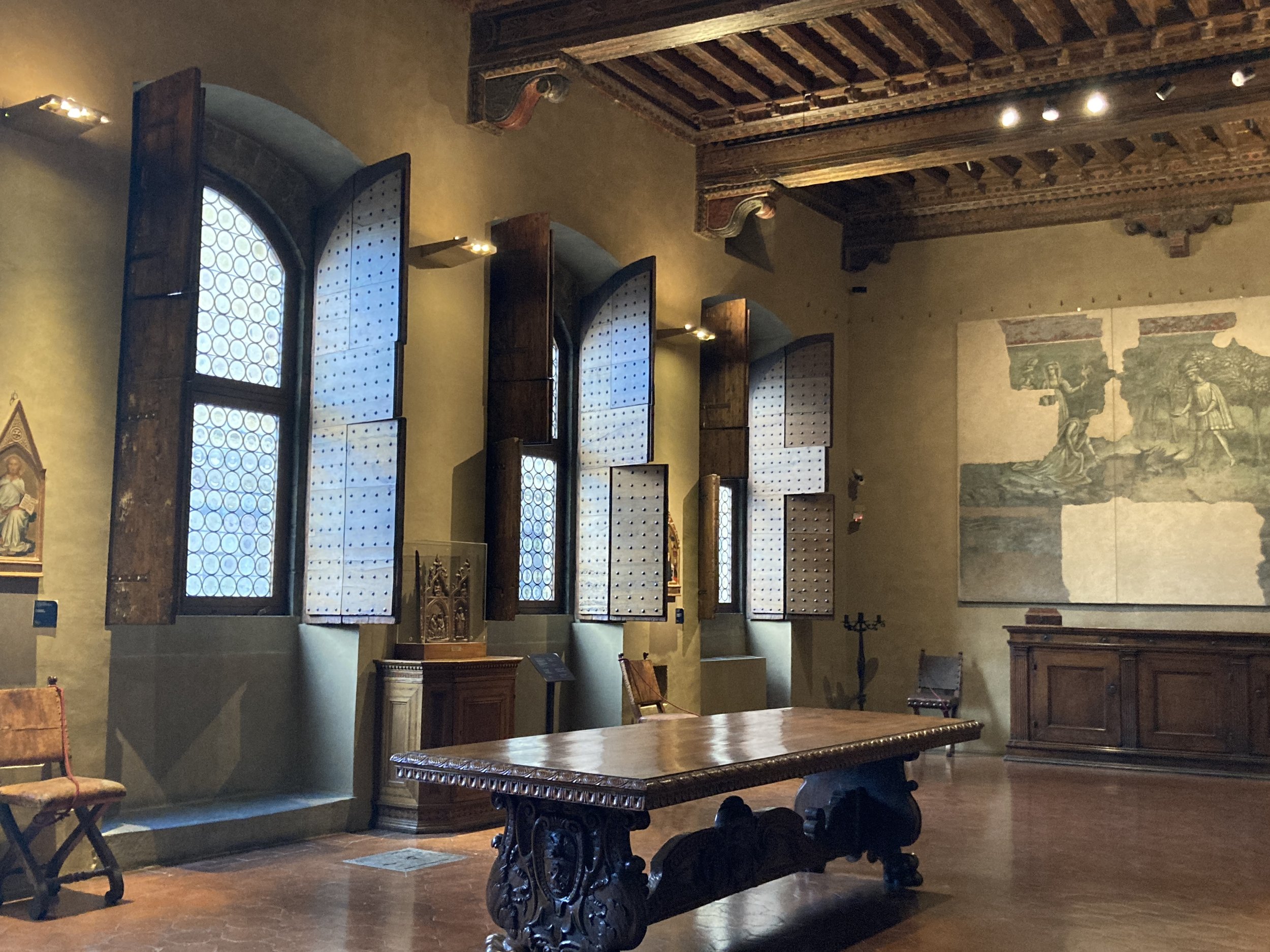
The architecture of the palazzo is remarkable. The facade with its coat of arms and open loggia up top, the large arched entry doors, and the columned courtyard add up to a truly grand entrance. Inside, the courtyard is open to the floors above and a massive stone staircase leads the way to the family quarters. The floor plan is symmetrical with one large reception room on each floor surrounded by dining rooms, bedrooms, and many with unique painted wall decorations.
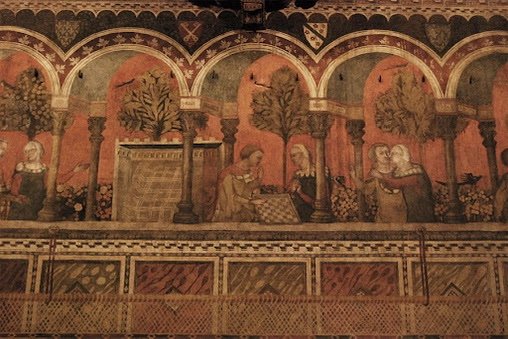
Detail, Chatelaine de Vergy fresco (photo from Museum of Florence website)
The painted rooms boast colorful and intricate patterns. I wish I had read the legend of the Chatelaine de Vergy, beautifully depicted in one of the former bedrooms, before my visit. A tragic tale of love gone wrong, it is beautifully depicted in painted panels around the room.
And the Sala dei Pappagalli (Parrots Room) is not to be missed!
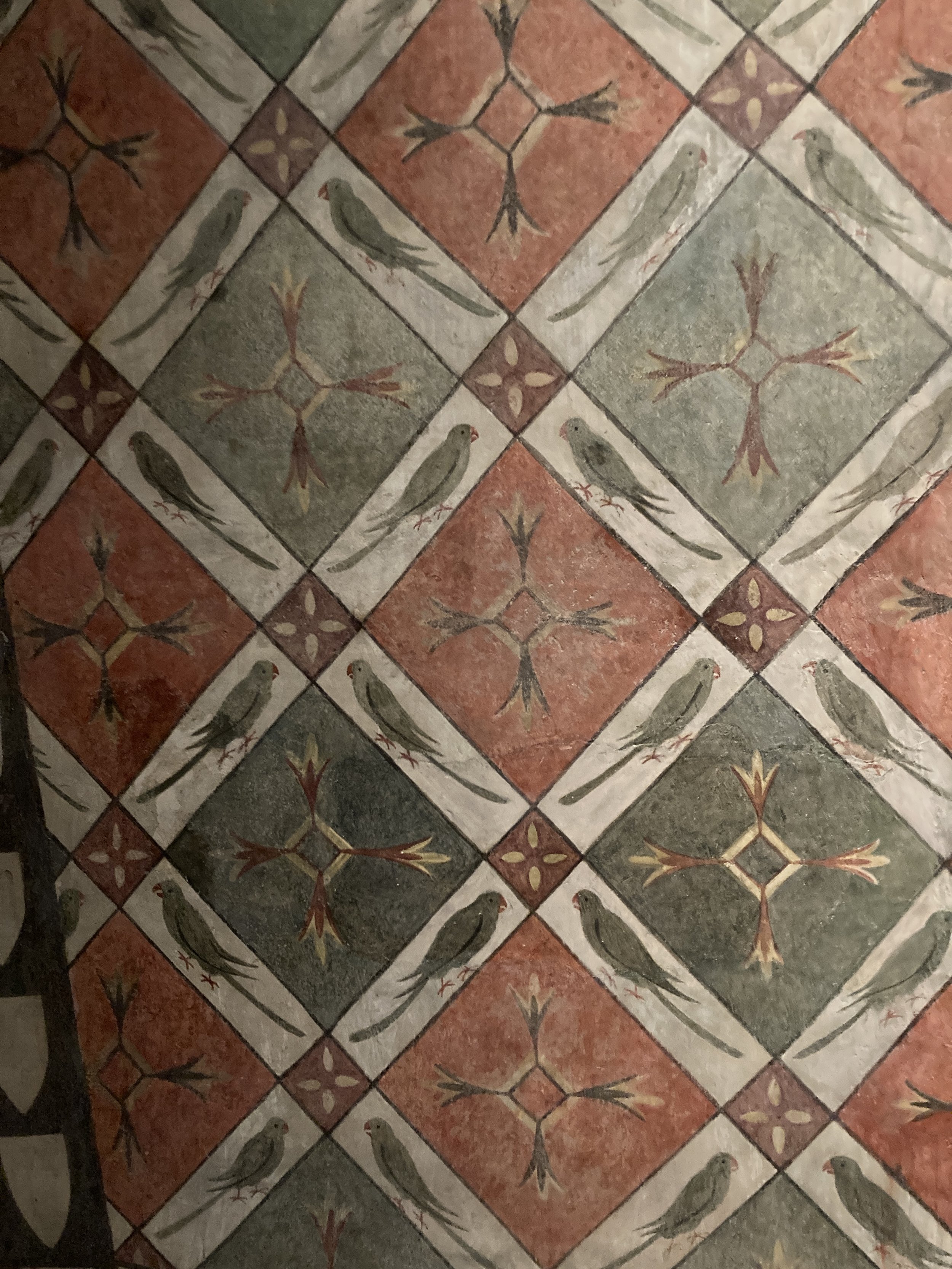
Detail, Sala dei Pappagalli
I am always most interested in the way that an old dwelling reflects how life worked during a specific time period. At Palazzo Davanzati, two things that reflected everyday life were the most intriguing to me. One, a well which runs from the top floor kitchen all the way down through the house with an opening on each floor. What a luxury during medieval times to have such a supply of water.
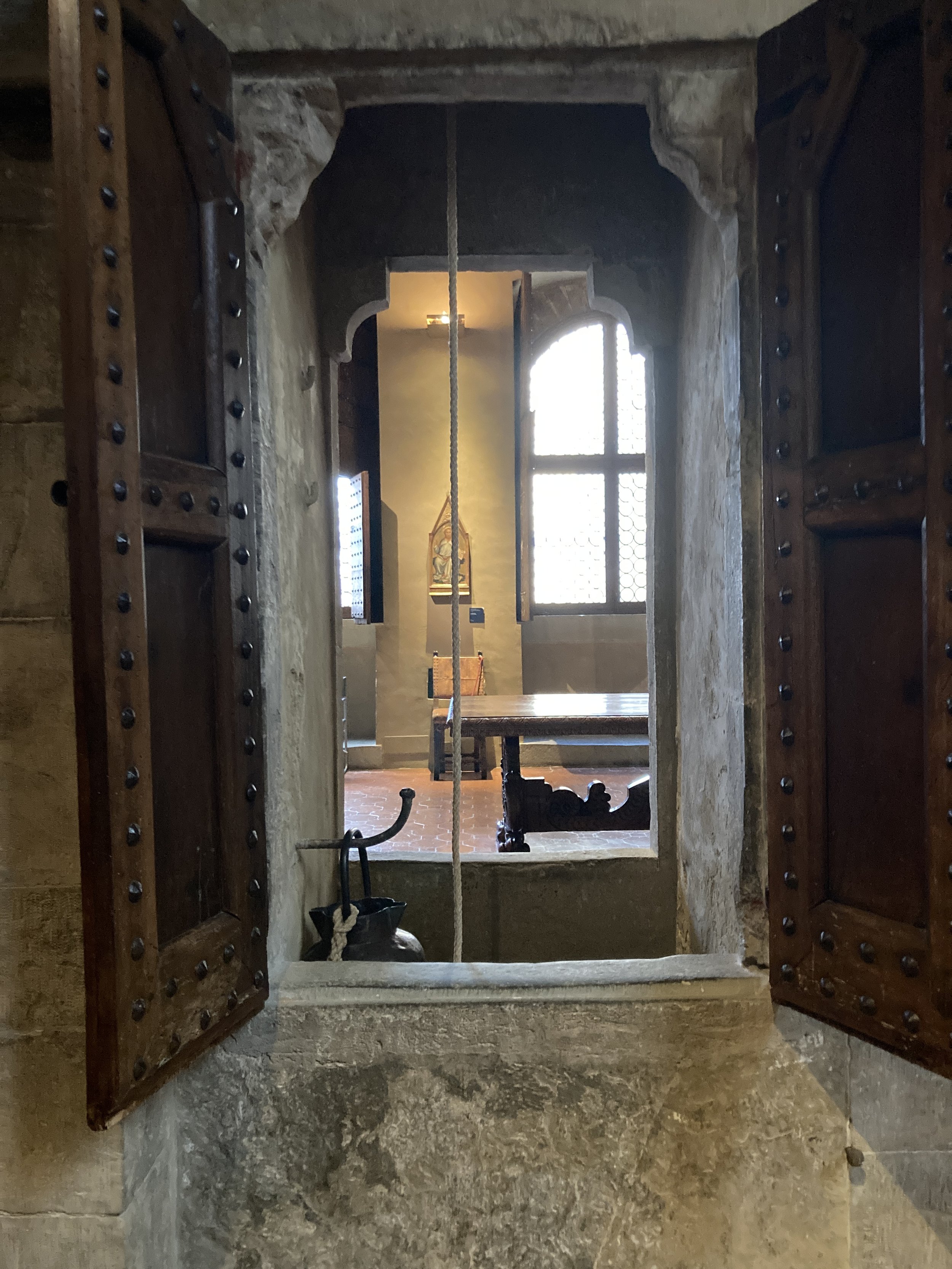
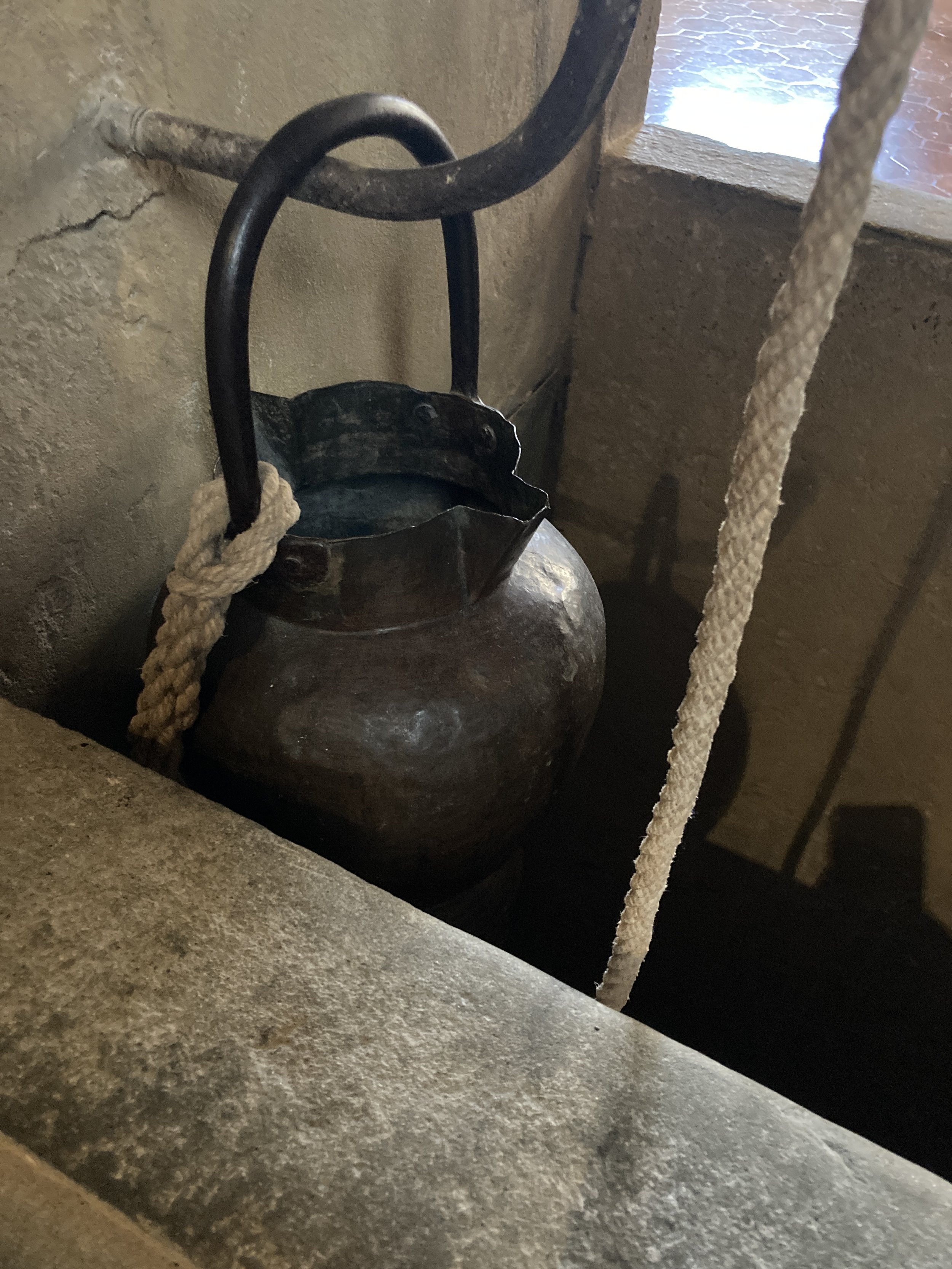
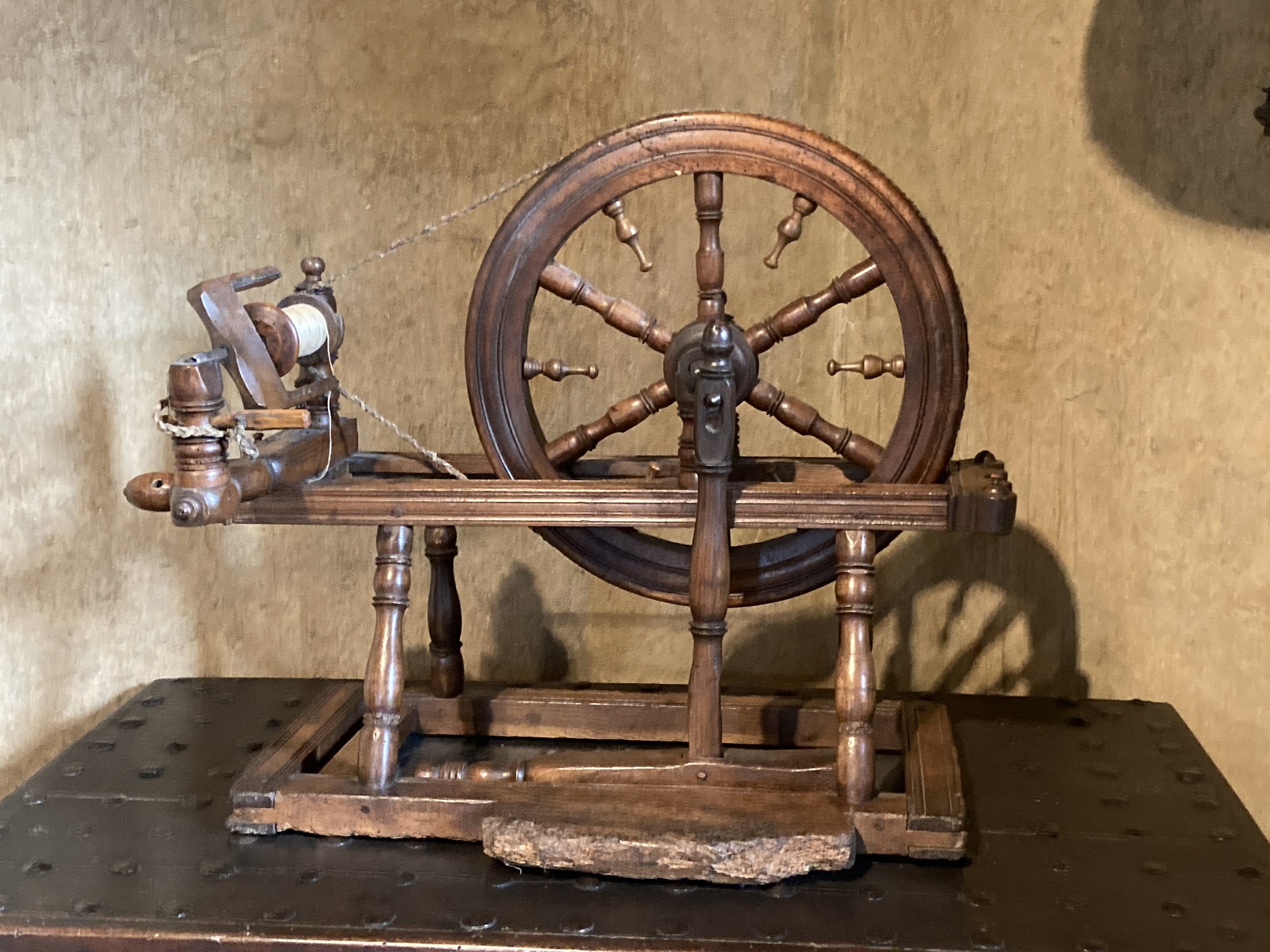
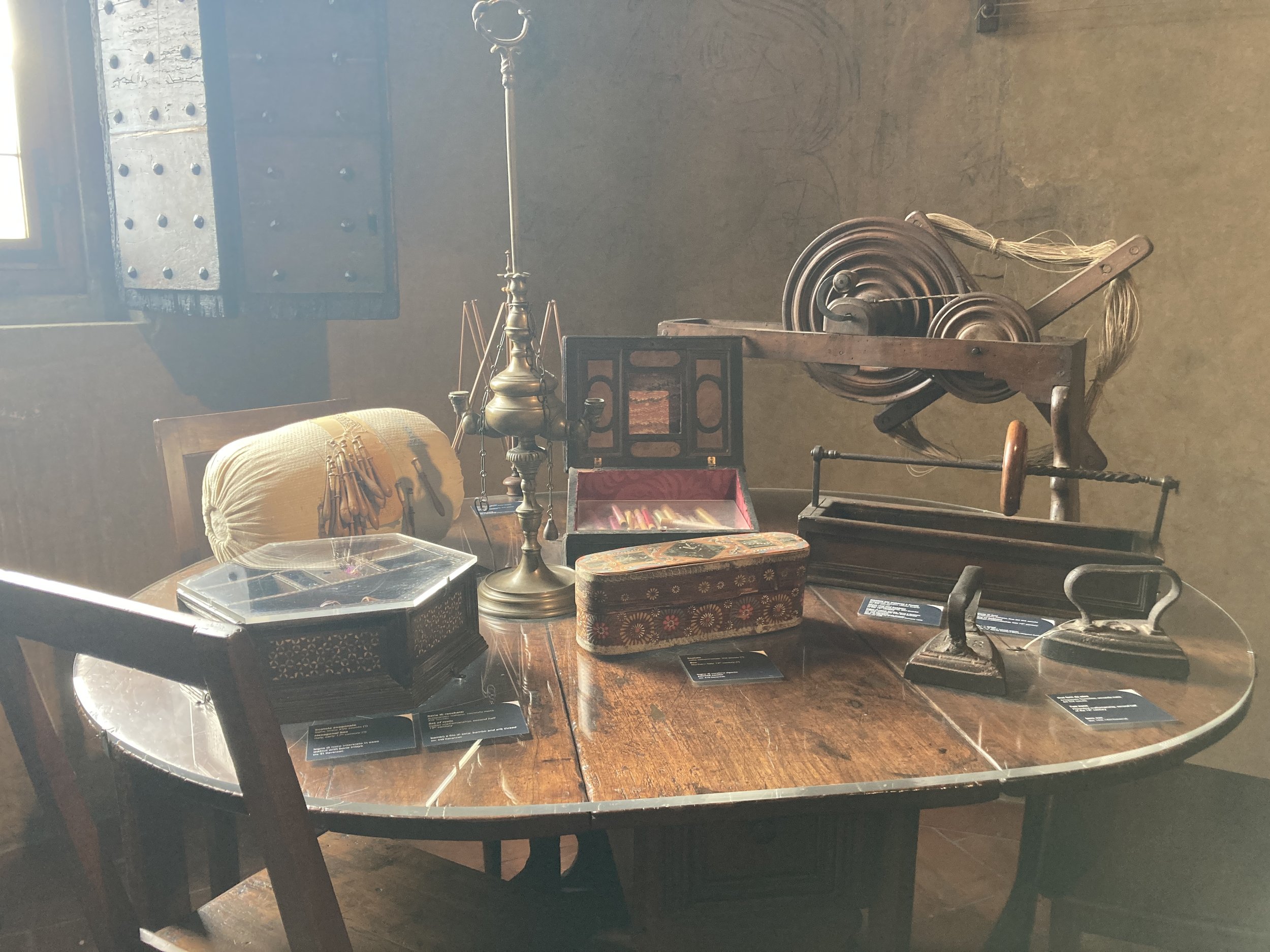
The other was the kitchen, located on the top floor. With a large fireplace, cooking utensils, and sewing tools, the room held the spirit of those long ago Davanzatis (or at least of their household staff).
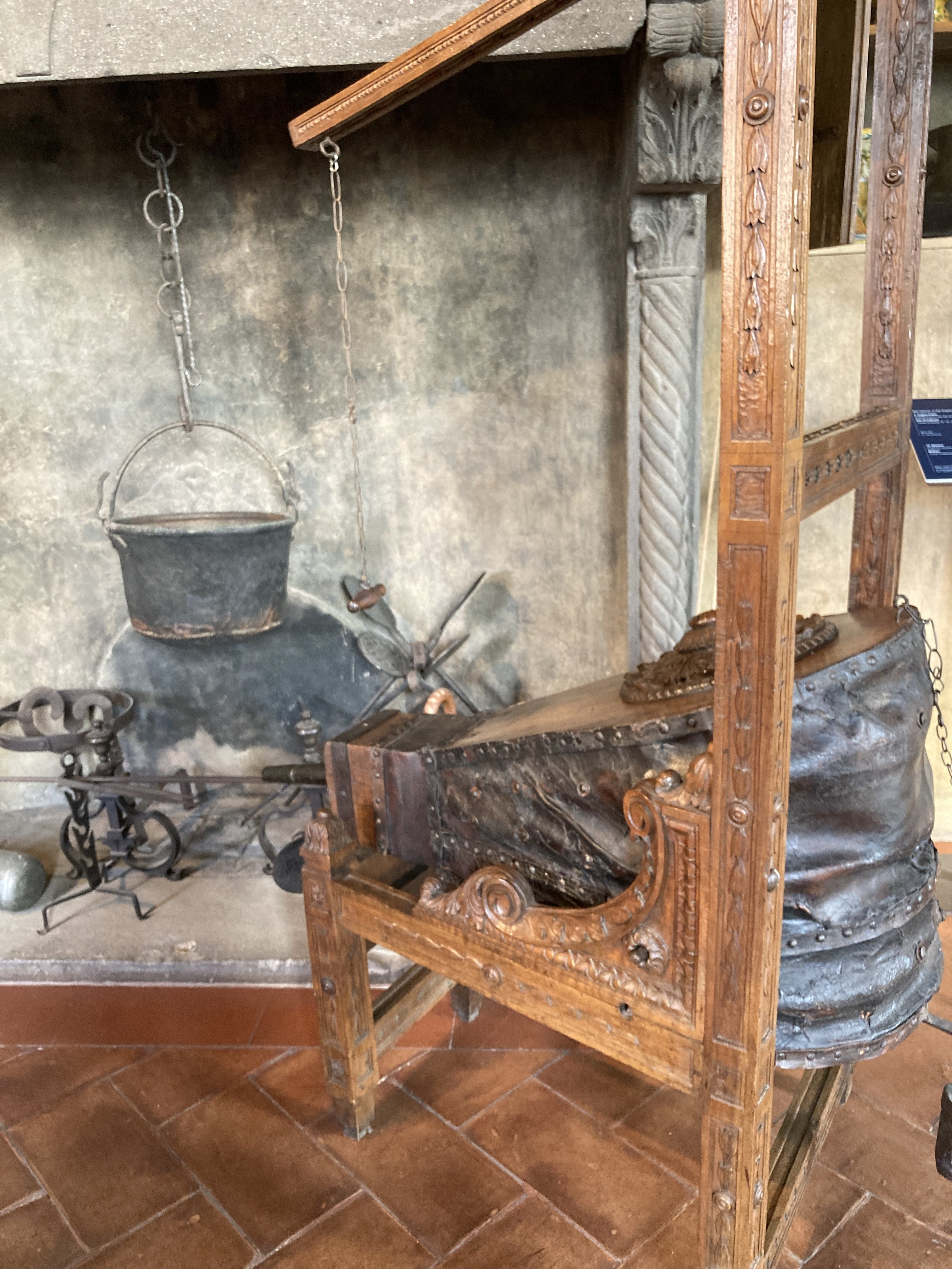
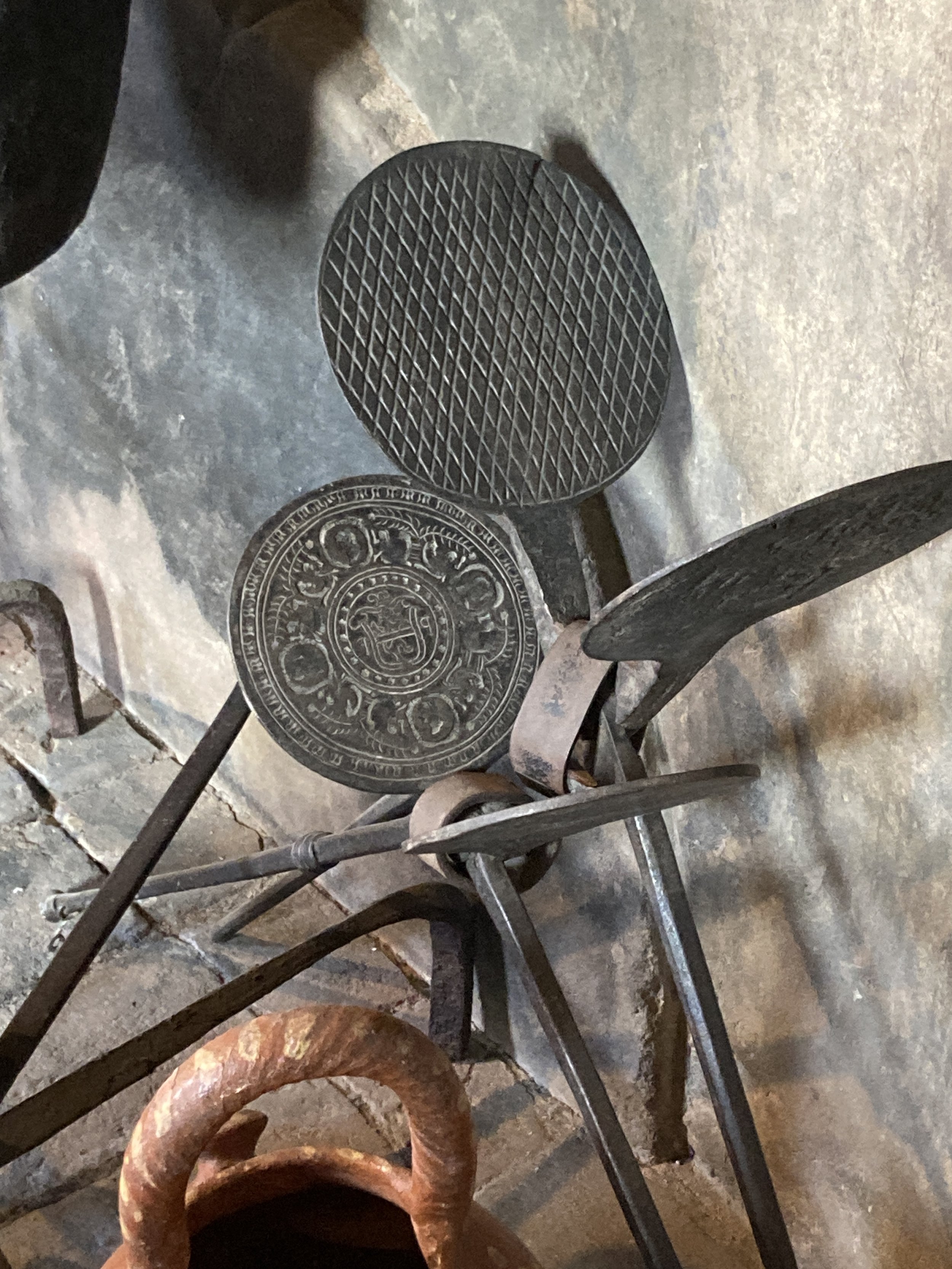
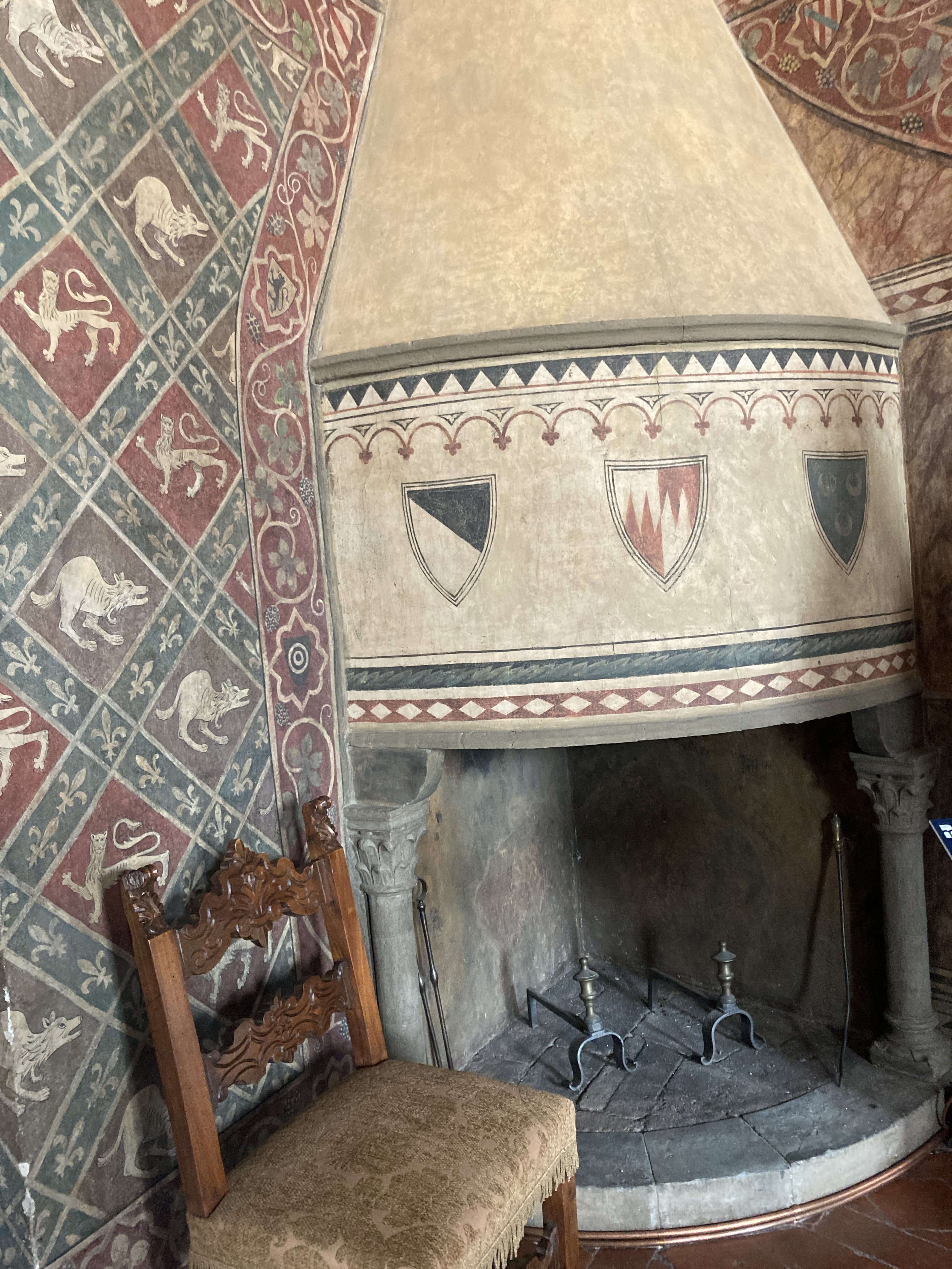
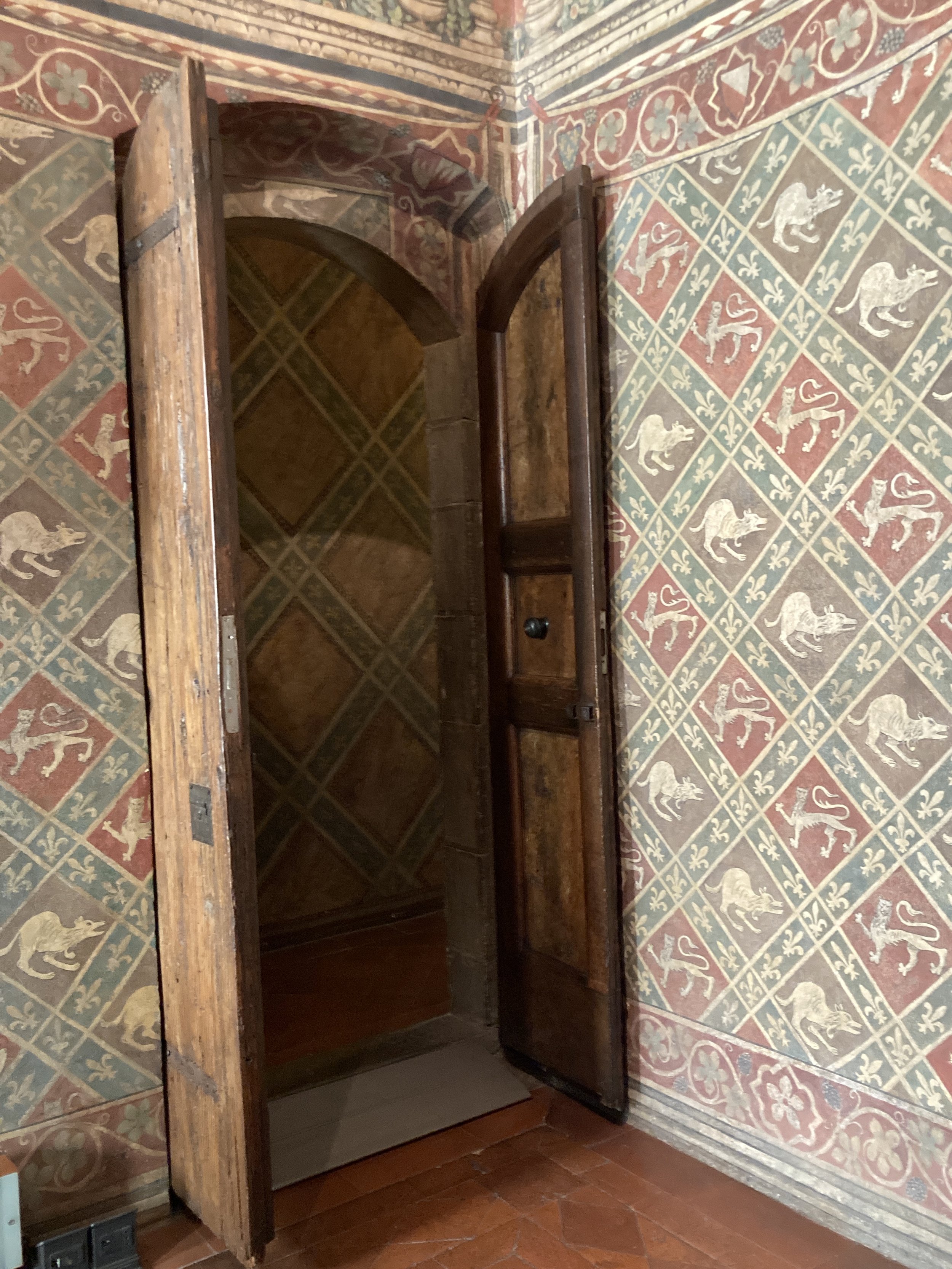
Near the kitchen was another painted room, the Camera della Impannate (camera means bedroom, impannate were fabric panels uses as window coverings in place of glass). With a small frescoed fireplace and wall paintings featuring animal designs and the Florentine fleur-de-lys, I think this was the coziest of all the bedrooms.
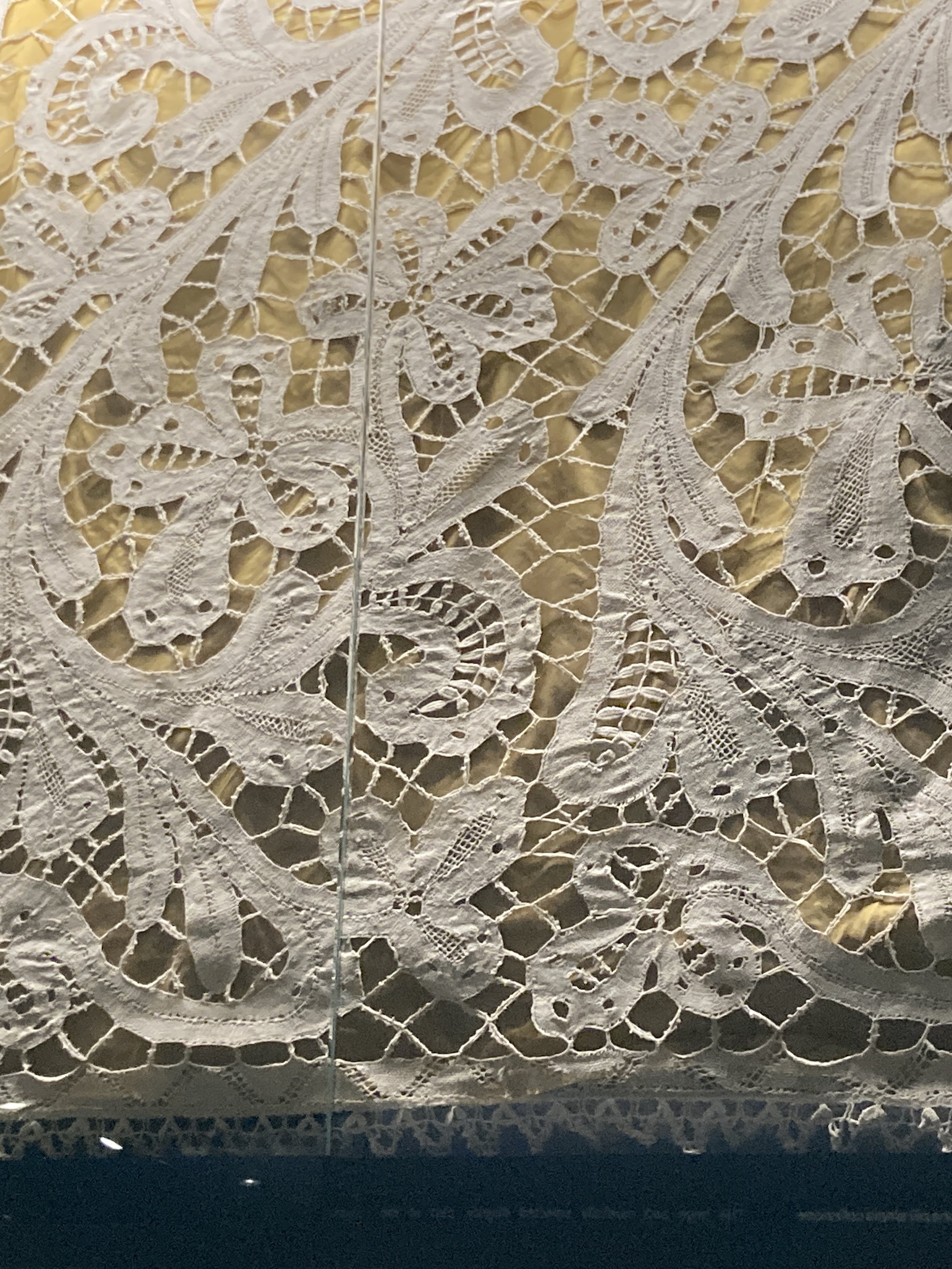
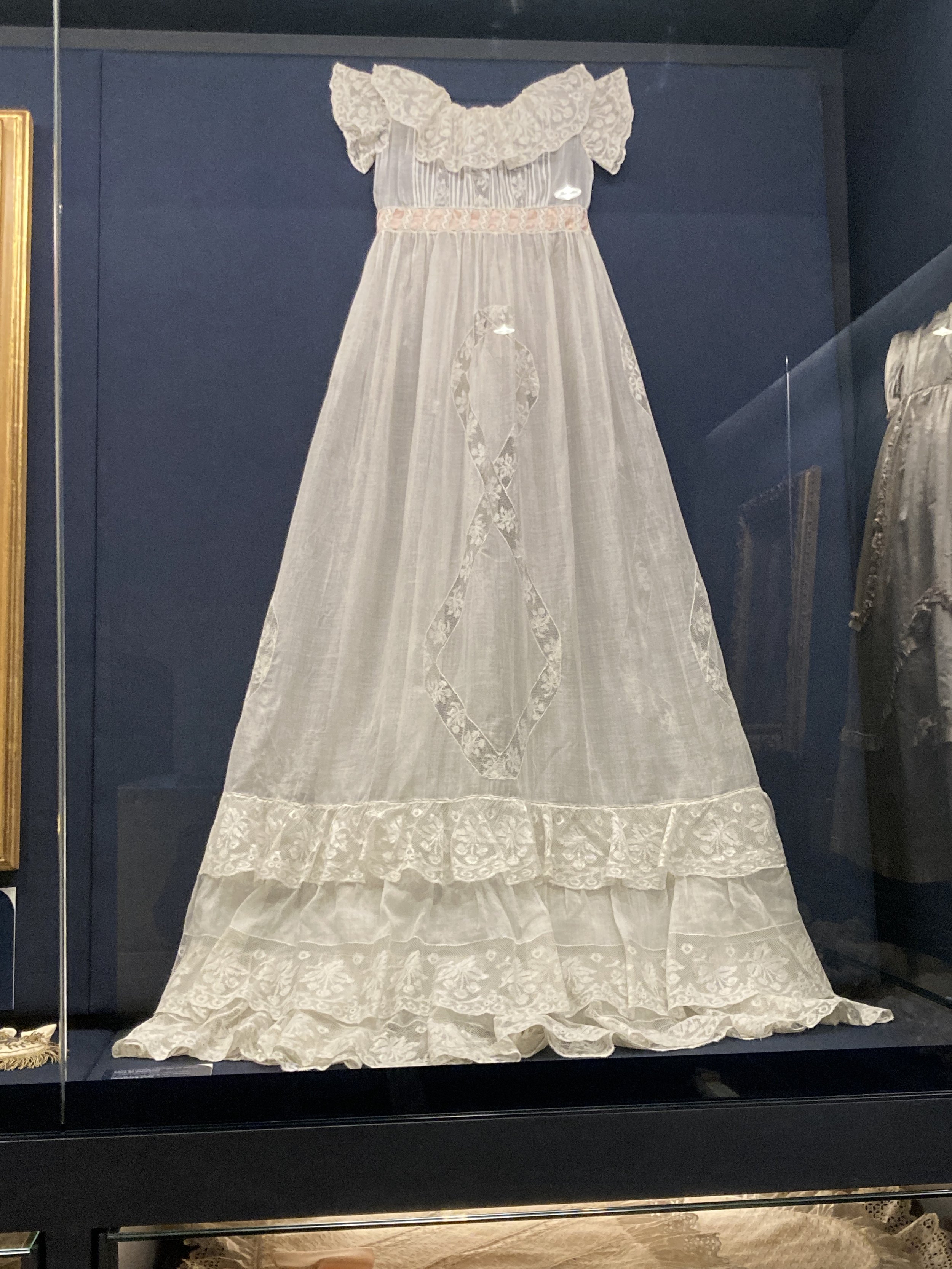
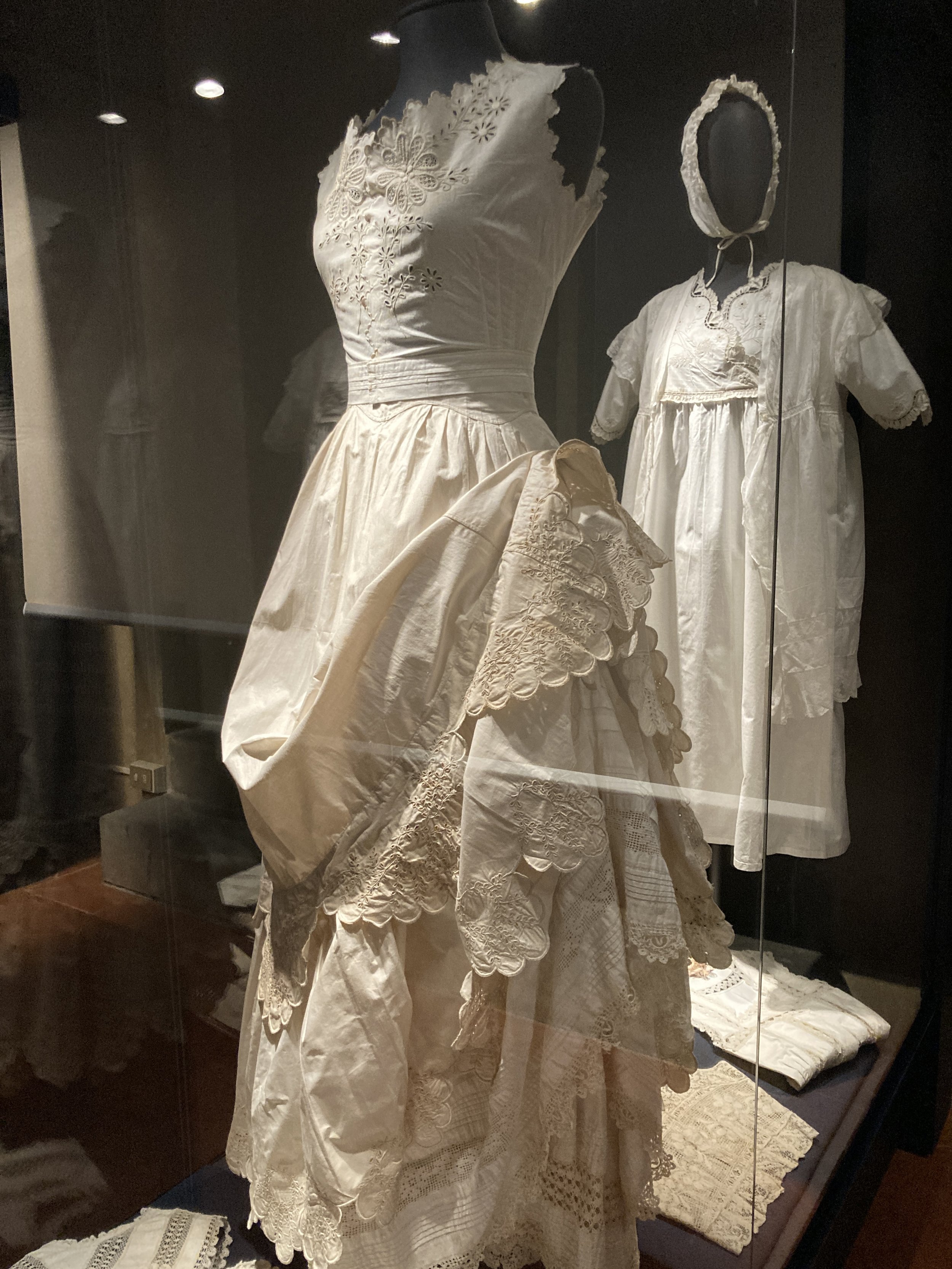
A more recent addition to the museum is a collection of vintage lace. With more than 2000 lace pieces, along with christening gowns, crocheted baby bonnets, and some lady’s “foundation wear”, it will fascinate anyone interested in fabrics and lace. Many of the lace pieces are placed in pull out drawers – be sure to open them!
I thoroughly enjoyed spending an afternoon at the Davanzati. It was uncrowded and a wonderful departure from the bigger museums. It was fascinating to glimpse into life in Florence from the 14th to the 18th century. A visit here is definitely worth adding to your next visit to Florence.
Note: There is a YouTube video of a lecture given by Paola D’Agostino, the director of the Bargello Museum, on the history of Palazzo Davanzati and its collections. A bit academic, but worth a listen to learn more about this important piece of Florentine History and the evolution of the museum’s collections. It can be found on YouTube titled Palazzo Davanzati: A Medieval Time Machine. The information on the lace exhibit is particularly interesting.