Two Parts Italy

Exploring Italy, travel, and living a flavorful life

  • Blog
  • About This Blog
  • Start Here
  • Recent Posts
  • Archives by Topic
  • Subscribe
  • Contact me
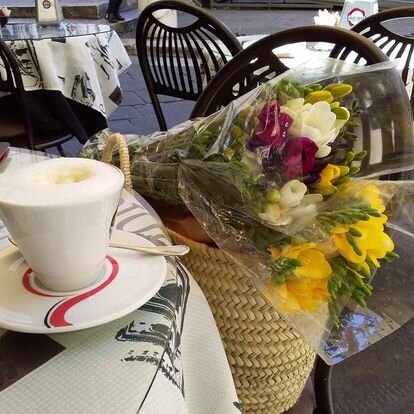
A cappuccino in a little bar, a perfect ending to a morning of errands and a stop at the flower market

A cappuccino in a little bar, a perfect ending to a morning of errands and a stop at the flower market

Italian Coffee (Part One)

June 21, 2021 by Joanne Bartram in Italian culture, Italy travel, Living in Italy

If you ask an American to name the Italian national drink, they will likely answer “wine”, but they’d be wrong. In Italy, the national drink is coffee - un caffe` - generally meaning an espresso. Coffee wasn’t invented here, but it just may have been the Italians who perfected it. Coffee is an important part of daily life, almost a ritual. Most Italians drink at least 1 cup a day (for breakfast). But it is not uncommon to add a mid-morning, after lunch, mid-afternoon, and even an after dinner or late night cup. There certainly are Italians who don’t drink coffee, but they are a definite minority.

I wasn’t much of a coffee drinker before I started visiting Italy. I grew up with an Irish mother and we drank a lot of tea. The occasional cup of coffee she made generally meant instant Sanka. I was not impressed. Later, as a nurse working night shifts, coffee became a necessity. I brought a thermos of it to work every night. I experimented with drip coffee, percolated coffee, and cold brew concentrate mixed with boiling water. To each I added lots of milk and sugar. I drank it, it helped get me though those night shifts, but I still wasn't a big fan. I didn’t love it.

Italian coffees - a cappuccino (left) and a macchiato (right)

Italian coffees - a cappuccino (left) and a macchiato (right)

And then I came to Italy. My first Italian coffee was served on the shores of Lake Como during breakfast at a small family run inn. “Cosa prende signora”, asked the server, “un caffe` latte”? I was presented with a pot of freshly brewed espresso and a second pot of steamed milk. Whether it was the fabulous coffee, the beautiful service, the musical sound of the Italian language, or the views of the lake doesn’t really matter. I was hooked. Many things kept me excited about coming back to Italy after that trip and coffee was definitely one of them.

A caffe` latte, hot milk and a shot of espresso - in this version you mix it yourself

A caffe` latte, hot milk and a shot of espresso - in this version you mix it yourself

Now that I live in Italy, I can indulge my love of Italian coffee on a daily basis. Standing at the bar for a quick morning coffee is the Italian way. It’s practically medicinal and it costs less (around 1.20 Euro) if you stand rather than sit at a table. But for me, sitting at a table in a cafe, snug inside in winter or outdoors with a glorious view of a piazza in warmer weather, is one of the joys of life in Italy. I’ll pay a little more for that joy. It’s one of the things I’ve missed most during the past year when bars and cafes were closed for long stretches of time due to COVID restrictions. Anytime there was a pause in the lockdown you could find me at an outside table in a bar or cafe ordering a coffee. What a joy that the cafes have now reopened!

And what exactly does one order ? Well, certainly not a half-caff, skinny latte! In fact, don’t ask for a “latte” at all as that will get you just a cup of milk.

Italian coffee drinks can be divided into 3 categories: straight coffee, coffees with varying amounts of milk, or coffees with an added punch from alcohol.

In Italy, ask for un caffe` and you will get a shot of espresso in a tiny cup. A caffe` ristretto is even smaller, an espresso brewed with half as much water. A caffe` lungo is brewed with extra water and a caffe` doppia is simply a double shot of espresso (that will get you going!). None of these drinks come with milk. A caffe` Americano is a bit different - rather than varying the amount of water used to brew the espresso, an Americano is a normally brewed shot of espresso with hot water added after brewing.

A cappuccino is a perfect breakfast coffee

A cappuccino is a perfect breakfast coffee

Espresso drinks often have milk added, either steamed or as a topping of frothy goodness (the froth is la schiuma) or some of each. For the most milk, order a caffe` latte which has one shot of espresso and lots of milk (more milk than espresso). This is Italian coffee for beginners. My grandchildren, then ages 10 and 13, started each day with one when they visited me. “Nana”, the 10 year old would say, “I’m not awake yet. I need my coffee”.

Caffe` shakerato con latte - my favorite summertime coffee drink.  In Lucca the best ones are found at Manon Lescaut in Piazza Cittadella.

Caffe` shakerato con latte - my favorite summertime coffee drink. In Lucca the best ones are found at Manon Lescaut in Piazza Cittadella.

A cappuccino is espresso with some streamed milk topped with a layer of schiuma - about equal parts of each - served in a medium size cup. Italians typically only drink cappuccino in the mornings, as milk is considered not compatible with digestion after meals later in the day. Ordering a cappuccino in the afternoon is possible but definitely brands you as a straniero (foreigner).

In summer a cold coffee with milk (a caffe` shakerato con latte) is a treat !

Later in the day, if you aren’t up for a straight espresso, try a caffe` macchiato. This drink is a shot of espresso with just a splash of milk. I’ve found a lot of variation in the preparation of macchiato. Some have just the tiniest spot of milk, others have milk equivalent to about half the volume of the espresso, still others serve the milk on the side. After living here for a couple of years I have acquired a taste for a macchiato - but I had to work at it.

fullsizeoutput_1c2.jpeg

The Ponce Livornese, made with espresso and rum, is a type of caffe` corretto unique to the town of Livorno

Then there is the caffe` corretto, or “corrected” coffee. Mostly served as an after dinner or evening drink, this is espresso laced with a small amount of grappa, sambuca, or rum. It’s a good nighttime choice, as the caffeine and alcohol balance each other and soften that caffeine buzz.

What happens when it is not possible to go out for an espresso drink at a bar or cafe? Good coffee can be brewed at home, but usually does not result in a true espresso as few homes have the needed equipment. One alternative is a machine that uses coffee in a pod (a Nespresso type machine) but it just isn’t the same. A better alternative for home brewed coffee exists - the Moka Express pot - more about that in Italian Coffee Part 2.

June 21, 2021 /Joanne Bartram
espresso, italian coffee, caffe` latte, caffe` macchiato, #espresso, #italiancoffee
Italian culture, Italy travel, Living in Italy
Pietrasanta (with the old city wall visible up on the hill)

Pietrasanta (with the old city wall visible up on the hill)

Heaven and Hell in Pietrasanta

May 31, 2021 by Joanne Bartram in #italytravel, Hill Towns Italy, Italian art architecture, Italian culture, Italy travel, Tuscany

Pietrasanta has long been an artistic center in the Versilia (the coastal area of Tuscany).  It is not far from the Carrara marble quarries favored by Michelangelo in the 16th century and by generations of sculptors ever since.  The name itself reflects this history, Pietra = stone and Santa = sacred or holy.  Marble, and the art of sculpture, is the artistic heart of this small town but sculpture is not the only art form to see in Pietrasanta. Art in all of its forms can be found here in museums, churches, galleries, studios, and in the ever-changing outdoor exhibits in piazzas and parks throughout the city. 

How graceful is this outdoor sculpture ?

How graceful is this outdoor sculpture ?

 My last visit to Pietrasanta was just before the COVID emergency began. Now that Italy is opening up to travel again, it is one of the places I can hardly wait to revisit.  My next visit is sure to include two of my favorite places – The Museo dei Bozzetti and the Church of the Misericordia (officially named the church of Sant’Antonio abate e San Biagio).

One of a group of sculpted nudes who seem to be watching and waiting in the Museo dei Bozzetti

One of a group of sculpted nudes who seem to be watching and waiting in the Museo dei Bozzetti

For anyone with an interest in sculpture, the Museo dei Bozzetti is a must see.  Bozzetti are small scale “rough drafts” of sculptures.  The museum includes hundreds of these along with many scale models, displays demonstrating the process of creating sculptures, and stunning full-size works.  Entrance is free, the museum is located just off Pietrasanta’s main square, near the Duomo.   Below are some photos from my pre-COVID visits to the Bozzetti.

B5A4D684-BF3F-4CFE-A0D0-4AA67E41E2D1.jpeg
4B5F5CF6-7DD3-4938-8F57-FB69CC184BA5.jpeg
C0D6B166-E1C6-4805-B66D-6EB13AB87006.jpeg

My second “must” is a visit to the Church of the Misericordia. This small church is easy to miss, nestled between store fronts on Via Mazzini.  But once seen, it is not easily forgotten.  Here the Colombian artist Fernando Botero, who has lived and worked in Pietrasanta, painted two large panels – The Gates of Paradise and the Gates of the Inferno.  In typical Botero style the figures are large, round, and fleshy (he has been quoted as saying that he doesn’t paint fat people but rather paints volume).  This work is clearly modern (from 1993) and not at all in the style of the ancient frescoes that are usually found in Italian churches.  

Botero’s Paradise

Botero’s Paradise

There are vivid colors and even more vivid depictions, especially of the horrors of hell.  Look closely at the details below and you’ll find some recognizable figures.  Mother Teresa resides in heaven, Hitler in hell. Every time I look at these two paintings I discover something new and something thought provoking.  I wonder why the artist placed his own self-portrait in the inferno panel?   More of Botero’s work can be found outdoors in Pietrasanta where his super sized Roman Warrior stands in Matteotti Piazza.

61EBCDEE-CD3B-4200-9814-DD62777FFF0E.jpeg
30FA410B-4816-48D6-9D1D-CAA86B9E3073.jpeg

Spending a day in Pietrasanta is a treat. The main square is a wonderful place to sit and have a coffee or an aperitivo, with a view of the old town walls and the Rocca di Sala fortress up the hill. The Duomo is beautiful and peaceful. Artists are often set up around town; watching them work is fun. The artists studios welcome visitors. The outdoor sculptures surprise and delight. All this is easily reachable by train from Lucca or Viareggio. Andiamo!

910AA4EE-AD81-4340-8A58-E3EDFA55BBA7_1_201_a.jpeg
F11FEB86-A09E-4D66-8C36-3DAE59DD5380_1_201_a.jpeg
DC0DECE9-8677-42D2-9886-C23D055501B6.jpeg
B16BEAA2-DD72-4CC7-8261-6B0FB10C68D4.jpeg
May 31, 2021 /Joanne Bartram
pietrasanta, Italian sculpture, marble, Botero, Art Italy, #pietrasanta
#italytravel, Hill Towns Italy, Italian art architecture, Italian culture, Italy travel, Tuscany
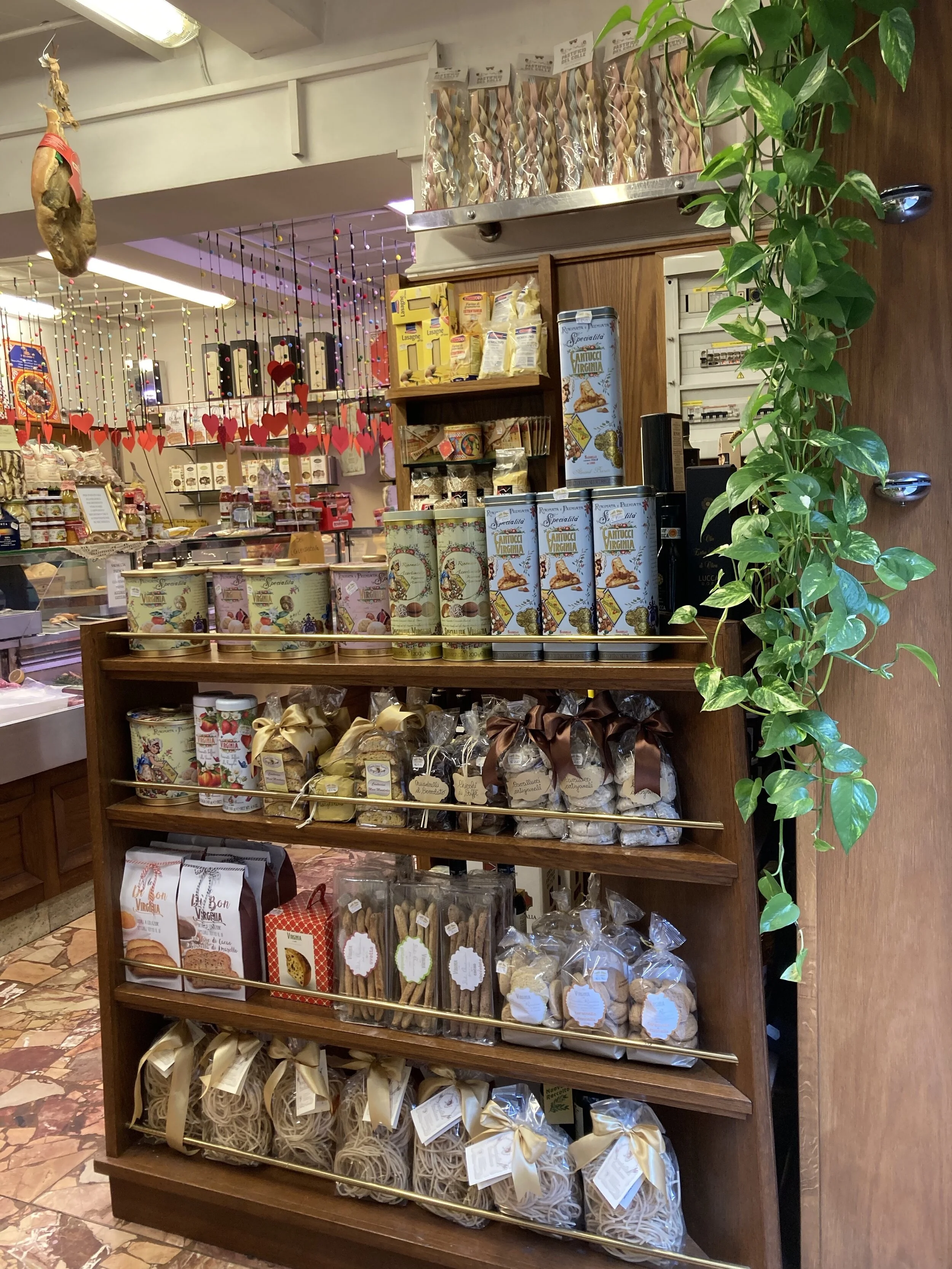
Polleria Volpe (all decorated for Valentine’s Day)

Polleria Volpe (all decorated for Valentine’s Day)

La Polleria (The Poultry Shop)

May 24, 2021 by Judy Giannnettino in #lucca, Cooking, food, Italian culture, Italian markets, Living in Italy, Lucca

Shopping for groceries (fare la spessa in Italian) is one of the great cultural experiences for stranieri (foreigners) living in Italy. Food, and the process of obtaining it, helps to define a culture. And the act of shopping itself provides a language lesson as it requires use of a specialized vocabulary - after all one wouldn’t want to request uva (grapes) when needing uova (eggs) or pesche (peaches) instead of pesce (fish). I look forward to grocery shopping in Lucca with an enthusiasm that I lack when in the United States.

While there are some big grocery stores here (true supermarkets), they are outside of the historic center of the town where I live. I do use one of the small grocery stores inside Lucca’s walls for essentials - pasta, rice, coffee, sugar, etc. But for other items it remains common in Lucca to visit a number of small specialty shops, something I love to do. Two years of living here has made me a bit fussy about foods. I prefer milk from the region of the Maremma, available at a nearby latteria (dairy store). It just tastes better than what I can buy at the grocery store, plus that same latteria sells the nicest cheeses and lovely little slices of frittata and vegetable tartlets. I buy only local olive oil, freshly pressed each fall. I have a couple of favorite meat markets, delis, and vegetable markets. As for bread - well it seems everyone has their favorite panificio (bread bakery). I will gladly walk across town for the best focaccia.

IMG_8425.JPG
IMG_4137.JPG
IMG_4817.JPG
IMG_6444.JPG

One of my favorite shopping experiences is to venture to the local polleria (poultry shop) where they specialize in the freshest, tastiest chicken. In Lucca that’s the Polleria Volpe on Via San Paolino. In addition to wonderful chicken they also have a variety of other meats and shelves full of pasta, beans, olive oils, and other staples.

Just some of the ready-to-cook meats available at Polleria Volpe

Just some of the ready-to-cook meats available at Polleria Volpe

The yellowish color is typical of chicken found in Italy (apologies to my vegetarian friends, but these birds are tasty!)

The yellowish color is typical of chicken found in Italy (apologies to my vegetarian friends, but these birds are tasty!)

As someone who was used to purchasing chicken on a white styrofoam tray wrapped in plastic, my first visit to Polleria Volpe was an eye-opener. I did not see what I wanted in the display case, so I asked if they had chicken thighs of the bone-in and skin-on variety. They did, but would need to cut them for me. The macellaio (butcher) then proceeded to remove a large chicken from a huge box full of chickens. Next, out came a big cleaver which she used to expertly removed the thigh / leg quarters from the chickens. Then she separated the thighs from the lower legs with a slightly smaller knife. They way she did it made it look more like an art form, or an ancient weaponry display, then butchering. Along the way she taught me the difference between cosce (which my dictionary said was a thigh but actually means the thigh / leg combination) and anca (hip - meaning just the upper thigh).

As if that weren’t enough, she then asked me “bruciate?”. HUH? Burned? Why would I want my chicken thighs burned? As it turned out, she was asking if I wanted her to singe the bits of remaining feathers, something no American butcher has ever asked me. That process leaves little brown singe marks on the skin and I swear it adds to the flavor once those thighs are roasted. That first visit to the polleria was a valuable cultural, language, and culinary, experience!

Who knew a butcher shop could be this colorful and interesting ?

Who knew a butcher shop could be this colorful and interesting ?

Over time, I’ve come to know the butchers at Volpe and depend on their recommendations. They were most helpful in picking out a large roasting chicken to do stand-in for a Thanksgiving turkey last year. I was only a bit surprised when the chicken they pulled out for me had both its head and two very, very long legs. Thankfully the butcher removed both before wrapping it up in paper for me to take home. The bird also came with their best wishes for a Happy Thanksgiving, which they called the “American holiday”.

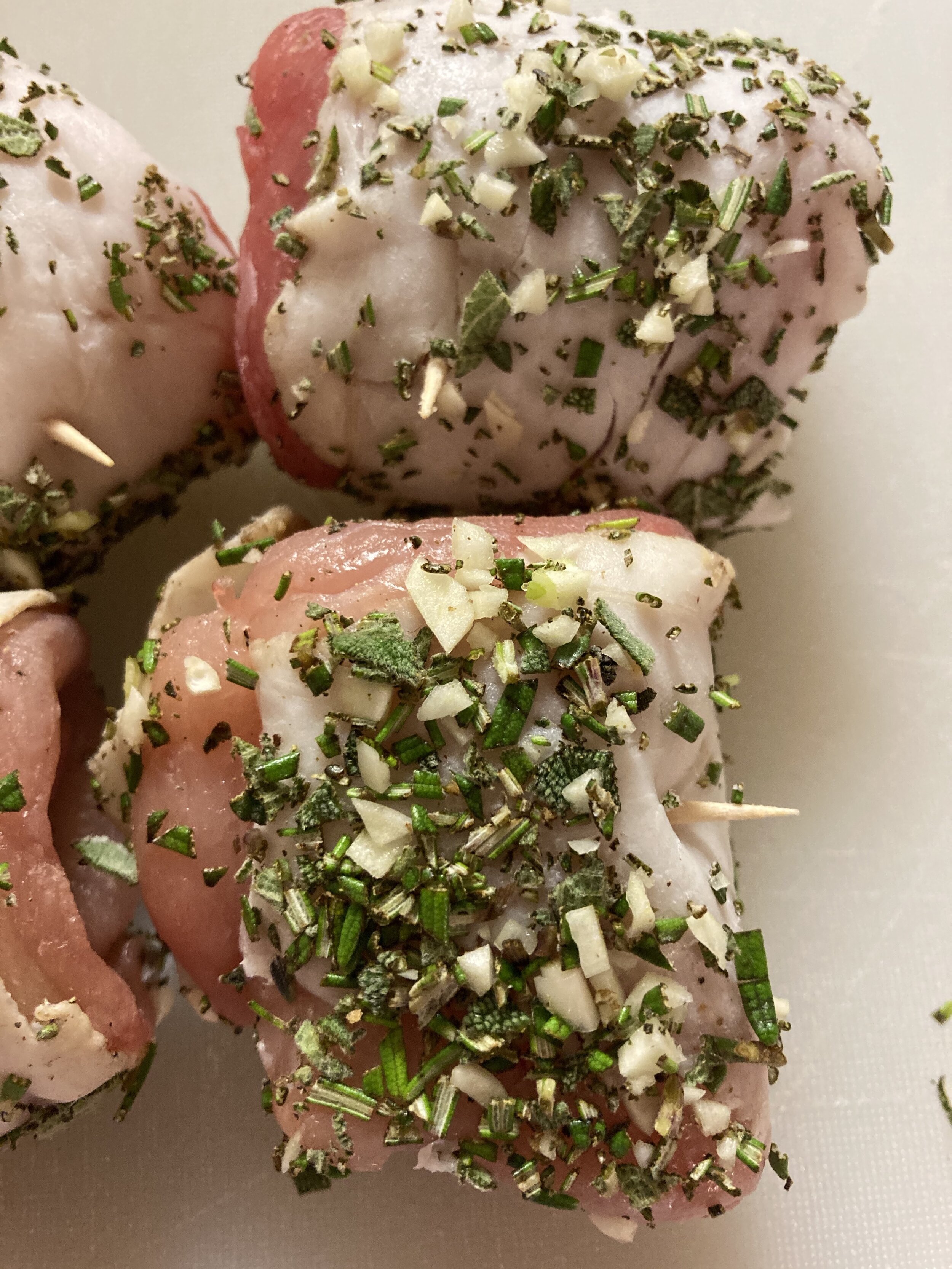
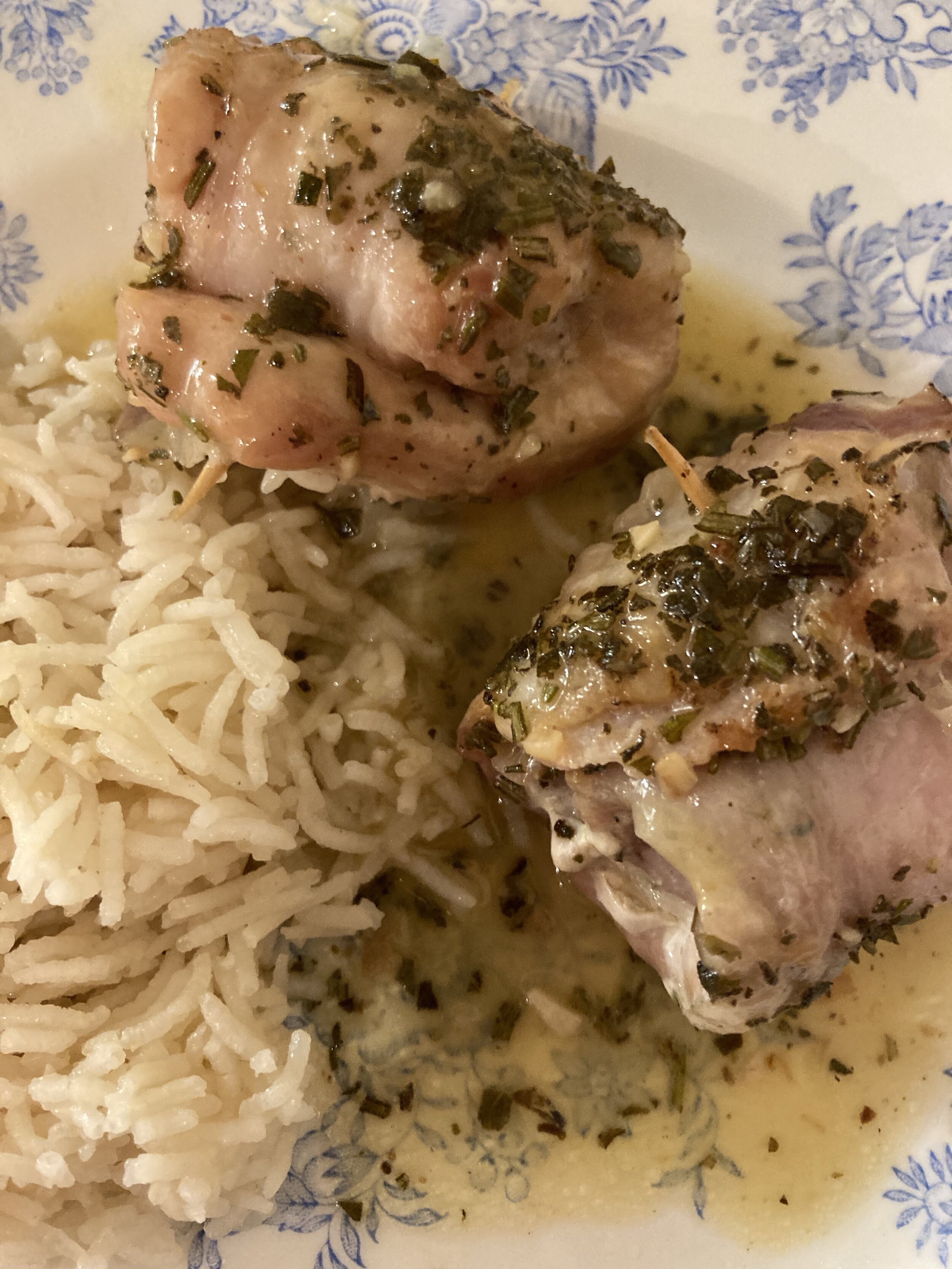
A while back I saw small involtini (little rolled pieces of meat) in their display case. At first I thought they were chicken but they were actually strips of rabbit (coniglio) laid on top of thin strips of lardo (pork fat), rolled up and secured with a toothpick. I was intrigued, but since I had never cooked rabbit I asked the butcher how to prepare it - in the forno (oven) or in a padella (frying pan)? Her recommendation: frying pan with a bit of olive oil and some white wine. I followed those instructions, but first I rolled them in finely chopped herbs (sage and rosemary) along with salt & some garlic. Then I seared them, added the white wine, squeezed in a bit of lemon juice, and let them cook for about 30 minutes. I finished the sauce with a little knob of butter and served the finished involtini over rice. The flavor was heavenly!

bBc2Tv7XTbOBLctUByoXpQ.jpg
DN7qFBKsT8GO+zGOAUFW+w.jpg

Pre-packed chicken wrapped in plastic just can’t compete, either for flavor or for the sheer delight of shopping at the polleria. And trying new dishes, like the rabbit involtini, adds to the fun! I wonder what I’ll find on my next visit ?

May 24, 2021 /Judy Giannnettino
farelaspesa, groceries Italy, italian foods, polleria, Italian cooking
#lucca, Cooking, food, Italian culture, Italian markets, Living in Italy, Lucca
Frittelle di San Giuseppe

Frittelle di San Giuseppe

Frittelle for San Giuseppe

March 22, 2021 by Judy Giannnettino in Festivals Italy, food, Italian culture, Living in Italy, Lucca

Italians must be the world champions of celebrations. There seems to be a festa (party) or a celebration for just about every occasion - saint’s days, onomastic (name) days, major religious holidays, national holidays, birthdays, sagras to celebrate regional foods. When you live in Italy, you festiggiare (celebrate) all of life’s special events. It is one of the things I love about living here. As an added bonus, many of these events include special foods. And although the pandemic has for the last year limited gathering for most of these events, small celebrations and culinary specialities continue to mark the occasions.

IMG_1621.jpeg

March is generally a quiet month in terms of celebrations. Epiphany is long over, the Carnevale season has ended (and this year it was cancelled almost entirely), Easter is not yet here. Food wise, the Carnevale sweets are gone and Easter cakes and chocolates are just beginning to show up in shop windows.

But all is not lost! In mid-March there is the Feast Day of San Giuseppe. It is the official onomastic day for the name Giuseppe and so a special day for anyone who carries that moniker. Because of San Giuseppe’s religious role as a father, the Feast of San Giuseppe has also become the Italian Father’s day. And … falling on March 19th it is also on the cusp of the spring equinox. Certainly this day deserves a special culinary treat!

A frittella makes a perfect sugary treat

A frittella makes a perfect sugary treat

To mark the day, pastry shops across Lucca are filled with Frittelle di San Giuseppe. Frittelle are delicious! A sweet batter, often flavored with a bit of lemon peel, is dropped by spoonfuls into hot oil (fritta = fried), filled, and then rolled in sugar. The traditional filling in Lucca is riso (a second cousin to rice pudding but more firm). Other varieties include chocolate, Nutella, and (my personal favorite) a delicious pastry cream. Some are vuoto (empty) with no filling to distract from the sugary treat.

Frittelle are crisp and sugary outside, light and often cream filled inside.  Yum!

Frittelle are crisp and sugary outside, light and often cream filled inside. Yum!

It was hard work having to taste test frittelle before writing about them, but I made the sacrifice. Crisp on the outside with a slight crunch from the sugar crystals, airy dough on the inside, and a delicious eggy custard filling. Scrumptious. In fact, I just may need another one to go with my coffee this afternoon. I think I’ll invite a friend to share !

IMG_1589.jpeg
March 22, 2021 /Judy Giannnettino
frittelle, feast San Giuseppe, Italian dolci
Festivals Italy, food, Italian culture, Living in Italy, Lucca
March 2020 - Lucca’s walls were deserted as the nationwide quarantine began.  The silence and emptiness was eerie.

March 2020 - Lucca’s walls were deserted as the nationwide quarantine began. The silence and emptiness was eerie.

COVID-19 in Italy : One Year Later

March 08, 2021 by Judy Giannnettino in #lucca, Italian culture, Italy, Living in Italy, Lucca
By mid-February 2020 Venice’s Carnevale celebration had been halted and the city emptied almost overnight.

By mid-February 2020 Venice’s Carnevale celebration had been halted and the city emptied almost overnight.

It was during this week one year ago that the Italian Government announced a nation-wide quarantine in an effort to contain COVID-19 in Italy. The first known case had been identified at the end of January and by mid-February it was clear that the virus was spreading in northern Italy. There were hints that a lockdown was coming. In February, one of Italy’s biggest annual events, the Venetian Carnevale, was cancelled just after its opening weekend. That provoked a good deal of outrage as many people felt it was an over reaction to a limited problem (knowledge of COVID’s impact was not well understood at that point). Soon, local travel restrictions were imposed, though not always effectively implemented. People from the first affected communities fled and took the virus with them. For the rest of 2020 all major festivals, and most smaller community festivals, were cancelled as the need to limit large gatherings became much more clear.

In early March of 2020, bars, cafes, and restaurants began to distance tables. I remember well my “last coffee” before lockdown. I sat with two friends at a local bar. We spread out across two tables, empty seats and space between us, wondering what would come next. I remember someone saying that we should all make hair appointments soon in case the salons closed (they did, the very next day).

Hospitals soon began to fill with gravely ill patients. Shortages of personnel and equipment became critical issues. And people began to die, especially the elderly. Some people still did not take COVID seriously (both here in Italy and across the world) while other’s became paralyzed with fear. Most of us existed in a middle space - concerned, taking precautions, reordering priorities and routines, and slowly adjusting to what would become a long period of restrictions. We learned to carry paperwork with us when we left the house, to not go more than 200 meters from home without a valid reason, to wear masks, and to spend most of our time at home. We kept busy. Most importantly, we searched for new forms of connection - zoom and google chats, on-line apperitivos, daily “check-ins” to be sure friends were ok and coordinated “accidental” meetings while in line for groceries or at the trash bins. We kept in touch with our families and watched grandkids grow via FaceTime. I can not imagine what the last year would have been like without this ability to connect.

Andra` tutto bene - a sign of hope during the lockdown.

Andra` tutto bene - a sign of hope during the lockdown.

A great boost throughout the last year has been the Italian sense of hope and of community spirit - we would get through this together. Italians sang on balconies, displayed the national flag, and hung signs declaring all would be ok. They swept us up in their optimism. As hard as this has been, I will be forever thankful for the spirit of my Italian friends and neighbors and for those strangers across Italy making music on balconies.

I think perhaps it was a blessing to not have known then that one year later we would still be in such a struggle with this (damn) virus. Still, life is certainly much easier, less restricted than one year ago. Shops are open, Lucca’s famous wall is once again a place where we can walk, and we can go anywhere in our community without paperwork. The Italians have embraced (or at least adapted to) the concept of take out meals, and we all feel it is our civic duty to order meals to go often, a definite plus when we can’t dine out. A real bonus is that we can have people to our homes, though the rules say only 2 at a time. Just having a friend over for an occasional coffee or a meal becomes a highlight social occasion. Mask wearing has become automatic and not such a big deal for most of us (a bonus in cold winter weather, though not so great on these warm spring days). This is the new normal.

Thankfully it is once again possible to walk along Lucca’s walls.  It’s a joy to be able to walk with a friend (though group gatherings and picnics are not yet permitted).  Don’t forget your mask!

Thankfully it is once again possible to walk along Lucca’s walls. It’s a joy to be able to walk with a friend (though group gatherings and picnics are not yet permitted). Don’t forget your mask!

The latest color coded map showing Italy’s restrictions.  Only one area, Sardegna, is white meaning that they have essentially no restrictions.  Red zones are the most restricted. Tuscany remains in the Orange zone, though rumor has it we may change…

The latest color coded map showing Italy’s restrictions. Only one area, Sardegna, is white meaning that they have essentially no restrictions. Red zones are the most restricted. Tuscany remains in the Orange zone, though rumor has it we may change to red next week.

There have even been a few periods when restrictions have been lifted to allow the opening of restaurants and museums as well as travel outside of one’s home community (most recently in late October/November and again for 5 weeks in January/February). These periods of respite have provided glimpses of normalcy and have been the best therapy! However, the rules are ever changing based on the most current statistics related to COVID cases, variants, transmission, and hospitalizations so what is allowed one week can be forbidden the next. We are learning to take this week by week, some of us more gracefully than others. I must admit that I am among the group that finds the constant changes, and the weekly “statistic watch” more than a little anxiety provoking.

At the end of this year there is hope but there is also grief for what has been lost, both the big and the everyday small things. Mostly, I think people are tired. At the end of a year there are fewer flags flying, not so many optimistic banners on display, and it has been a long time since I’ve seen a video of balcony singing. Many festivals are cancelled for a second year. Museums are currently closed again in Tuscany. The economy here has been devastated and economic help has been slow to arrive. Families remain separated, lives disrupted. Some political discord was inevitable. In all of these ways, Italy is not so different than most other places in the world.

But vaccines are coming and with them the hope that things will improve, infection numbers fall, tourists return, and the economy begin to recover. In the meantime, spring is almost here. The skies are blue and the temperatures mild. Italy is as beautiful as ever, a walk across Lucca still takes my breath away. Music streams from the windows of the music school near my home. The magnolias are in bloom and the wisteria will soon follow. Before long the fields will be dotted with red poppies. The ancient walls still offer a giant hug, encircling this historic city and making me feel safer for being tucked within them. I hope that, wherever you are, you have comforts that make you feel safe and connected. And that you are still dreaming of the day when it is possible to return to Italy.

Magnolias in bloom along Corso Garibaldi, Lucca.  March 2021.

Magnolias in bloom along Corso Garibaldi, Lucca. March 2021.

March 08, 2021 /Judy Giannnettino
#lucca, Italian culture, Italy, Living in Italy, Lucca
  • Newer
  • Older

Powered by Squarespace