Two Parts Italy

Exploring Italy, travel, and living a flavorful life

  • Blog
  • About This Blog
  • Start Here
  • Recent Posts
  • Archives by Topic
  • Subscribe
  • Contact me
These banners represent Lucca and the three terziere into which it was divided in the 1400s- each named for the major church in the neighborhood (San Salvatore, San Paolino, and San Martino).

These banners represent Lucca and the three terziere into which it was divided in the 1400s- each named for the major church in the neighborhood (San Salvatore, San Paolino, and San Martino).

Lucca In the Year 1369

June 03, 2019 by Joanne Bartram in #lucca, Italian culture, #medievalitaly, History, Italy, Festivals Italy, Italy travel, #balestrieri, Lucca, Tuscany

Italians have long memories, especially when it comes to historic events and rivalries. The Lucchese are no exception. Each spring they celebrate several long-ago events - World War II Liberation Day and the feast of Santa Zita, for starters. One unique local celebration recalls the year 1369, when the city of Lucca gained its liberty from its most hated rival - Pisa (not by war, but by declaration of the Emperor Charles IV, in exchange for a large sum of money). Today’s rivalry with Pisa mostly involves soccer and the claim to who has the best city to visit or live in, but in 1369, achieving freedom from domination by a rival city state was huge. After that, Lucca fought hard to maintain its independence from all rivals, especially Pisa and Florence, 

Fierce ladies - each with an arco lungo (long bow)

Fierce ladies - each with an arco lungo (long bow)

So, just how is this major historical event celebrated? Picture Medieval costumes, archers with long bows and cross bows, drummers and flag throwers. Add in city and church officials reading proclamations and lots of spectators,locals, tourists, and wide-eyed children, all watching history recreated in the square in front of the cathedral of San Martino, and you have an exciting and photo-worthy event. 

Lanciatori di bandiera (flag throwers) - a crowd favorite as they toss their flags high into the air

Lanciatori di bandiera (flag throwers) - a crowd favorite as they toss their flags high into the air

The celebration of Lucca’s liberation from Pisa, on the Sunday following Easter, is one of my favorite annual events and one that, for me, says welcome to spring in Lucca, a city where history comes alive.  

-post by JMB

IMG_0293.JPG
Balestrieri with their cross bows (balestre)

Balestrieri with their cross bows (balestre)

IMG_0297.JPG

The sounds of drums is a big part of the festival. These batteriste (drummers) come in all ages. 

June 03, 2019 /Joanne Bartram
Italy Travel, Liberation Day Italy, Festivals Italy, #italy, Lucca, #travel italy, #walled cities, Festivals italy, Medieval Lucca, #Lucca
#lucca, Italian culture, #medievalitaly, History, Italy, Festivals Italy, Italy travel, #balestrieri, Lucca, Tuscany
32540367-DF96-4BC9-AF27-AAA8461E5A92.JPG

A Walk Among the Ruins

May 27, 2019 by Joanne Bartram

The desire to have a summer holiday home isn’t just a modern phenomenon. Oh, to have an escape - perhaps on a hill to catch a breeze or maybe with a view of water. Better still, to have a holiday home in a rural spot but near a main route between Rome and the coast of northern Italy. A retreat along the pilgrim’s trail from Canterbury to Rome.  How perfect would that be? Not just for us today, but also for a well-to-do family during the first century AD.

3E6D53A5-F841-45E2-B80A-4E7BCF28819B.JPG

The Venulei family, from Pisa, built just such a summer villa on a hill overlooking Lake Massaciuccoli in Tuscany, not far from the coast. As with many Roman-era buildings, this one was lost to view until it was discovered and excavated during the 18th century. Work on the site has continued over the years and today includes a small museum in which the baths, with their well-persevered mosaic floor, can be viewed. There is also an outdoor area with remains of other parts of the villa. On my recent visit, the museum was closed, but the outdoor areas were completely accessible - no barriers to prevent exploration. What a thrill to walk freely through well-preserved ruins from so long ago.

C0BB7D59-DAE2-4494-B2D8-B5881226CE7F.JPG

There is some debate about the history of the site - was it just a family holiday villa, a waystation for visitors, or perhaps a part of the family’s business (the firing of bricks)?  Even with that mystery unsolved, the site is fascinating. The complex had its  own piped-in water supply (through lead pipes). The baths included  a frigidarium (cold pool) and a caldarium (heated pool and sauna room). A family had to be quite wealthy to afford these first century luxuries. 

C07D4319-81EF-45F7-8D7E-0F9F44E856F7.JPG

 Surrounded by olive trees and with a panoramic view of Lake Massaciuccoli, the ruins of the villa (known today as Massaciuccoli Romana) are open to the public. Feel free to wander about, imagining life in the first century AD, and enjoying the beautiful vistas. These ruins, just above the town of Massaciuccoli, make a nice addition to a visit to the nearby wildlife preserve at Lake Massaciuccoli.             -post by JMB

FullSizeRender.jpg
May 27, 2019 /Joanne Bartram
#italy
FullSizeRender.jpg

The Miracle of the Flowers

May 20, 2019 by Joanne Bartram in Festivals Italy, #springintuscany, Lucca, #italytravel, Tuscany

 If I were ever made a saint (highly unlikely), I would wish for two things: to have Lucca as my final resting place and to be remembered each spring with beautiful flowers. Alas, that version of sainthood is already taken by someone far more deserving. But at least I get to enjoy that saint’s feast day each spring.

Flowers outside of San Frediano church to celebrate the festival of Santa Zita

Flowers outside of San Frediano church to celebrate the festival of Santa Zita

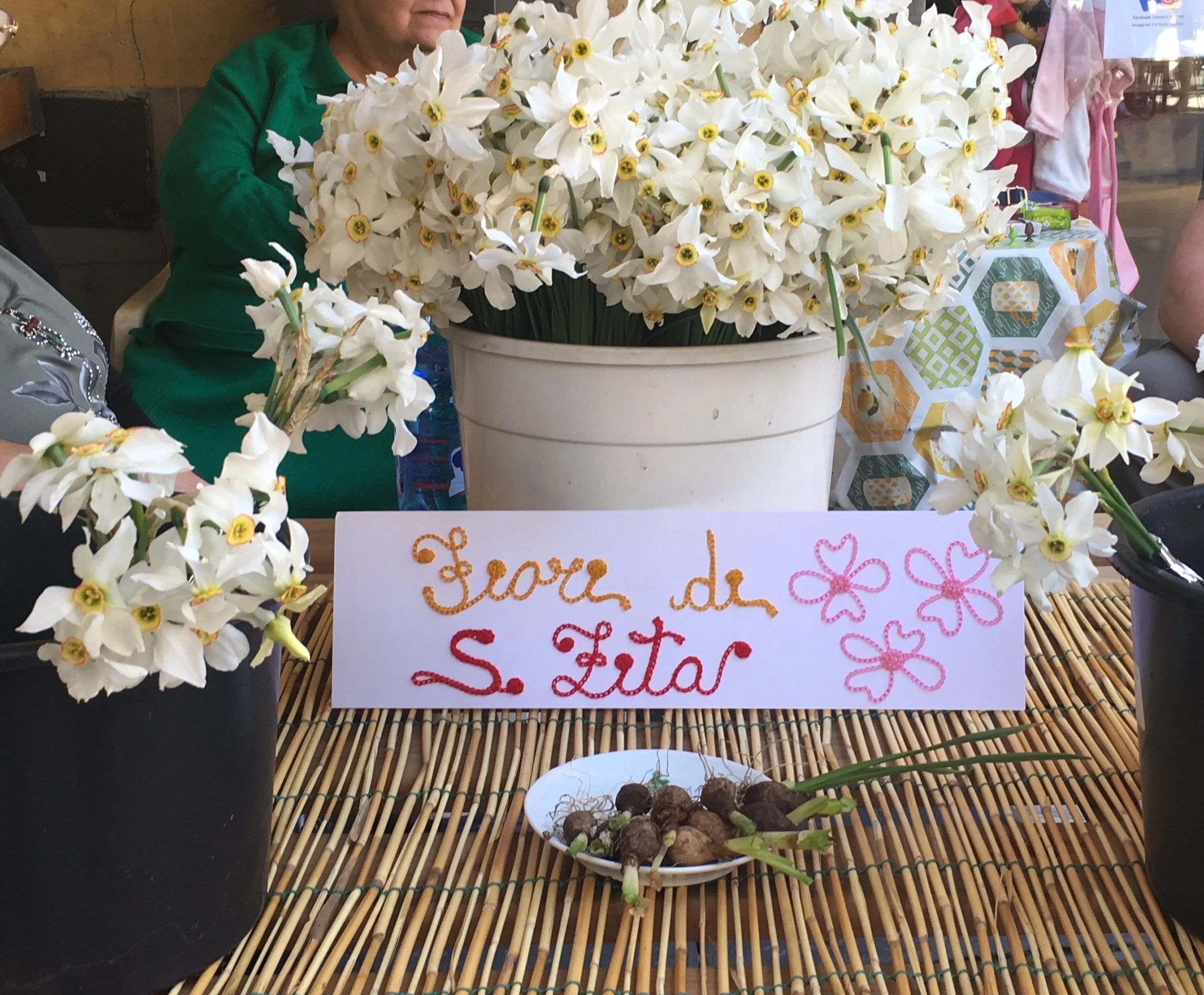
Santa Zita is the patron saint of Lucca. She was born nearby, in the 13th century, to a poor but devout family. As a girl, she entered service in the home of a well-to-do Lucchese family, the Fatinellis. Unmarried, she worked for the family for 50 years until her death in 1272.

Memorial to Santa Zita on the street where the Fatinelli home once stood (Via della Fontana, Lucca)

Memorial to Santa Zita on the street where the Fatinelli home once stood (Via della Fontana, Lucca)

Zita was known for her devotion and good works, especially in caring for the poor. This, however, did not always sit well with her employers or co-workers, especially because her good works often included giving away their bread, leftover food, and sometimes their clothing. It’s also said she sometimes neglected her morning bread baking duties to attend daily Mass (saintly, perhaps, but most annoying to her co-workers).

EA9009E0-3192-4C40-B5E9-B68B4DDAC590.JPG

As the story goes, the other household servants were jealous of her goodness and reported her “theft” of bread to the head of the family. One day, when he asked her what she was hiding in her apron (which was, of course, the bread she was taking to the poor), she answered that it was just flowers (luckily, this little white lie did not preclude later sainthood). When he demanded to be shown, she opened her apron and out tumbled flowers - a miracle!

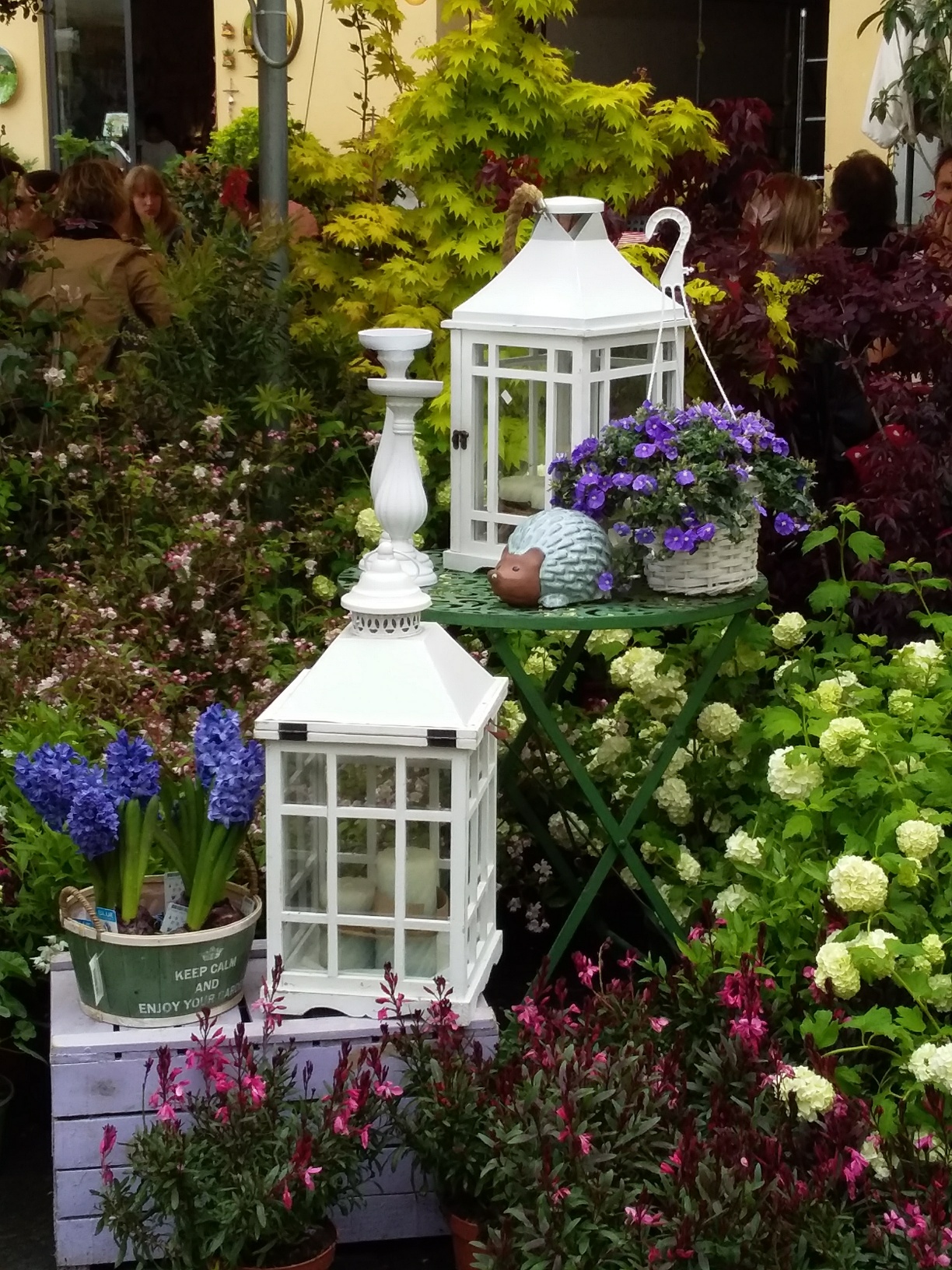
Santa Zita is remembered each year with a flower market in late April. This display was part of the 2019 market.

Santa Zita is remembered each year with a flower market in late April. This display was part of the 2019 market.

There are other miracles associated with Santa Zita, including the notion that angels staffed the Fatinelli kitchen, baking the bread while Zita went to church at nearby San Frediano.

Santa Zita flower market, 2018

Santa Zita flower market, 2018

Legend has it that when she died, the bells of San Frediano began ringing on their own. Zita was buried soon after and her legend quickly grew. Several hundred years after her death, her body was moved from its grave to her own chapel in the church of San Frediano (the chapel was built by a later generation of Fatinellis).  When exhumed, it was discovered that her body had not deteriorated but had spontaneously become mummified, another miracle.  In 1696 she was made a saint by the Catholic Church.

The body of Santa Zita is moved to the center of the cathedral of San Frediano during her annual celebration.

The body of Santa Zita is moved to the center of the cathedral of San Frediano during her annual celebration.

Today, her remains lie inside a glass coffin in San Frediano. Once a year, to mark the April 27  anniversary of her death, her coffin is moved to the central part of the church, where it is surrounded by flowers and candles. Small bunches of flowers are sold in the church and people hold them as they pass by her body, reverently laying their hands on the coffin. Whether religious or superstitious, it seems to me very good luck to join in, lightly touching the glass of the coffin, and wishing to be back in Lucca for the next celebration.  So far, that has always worked for me!

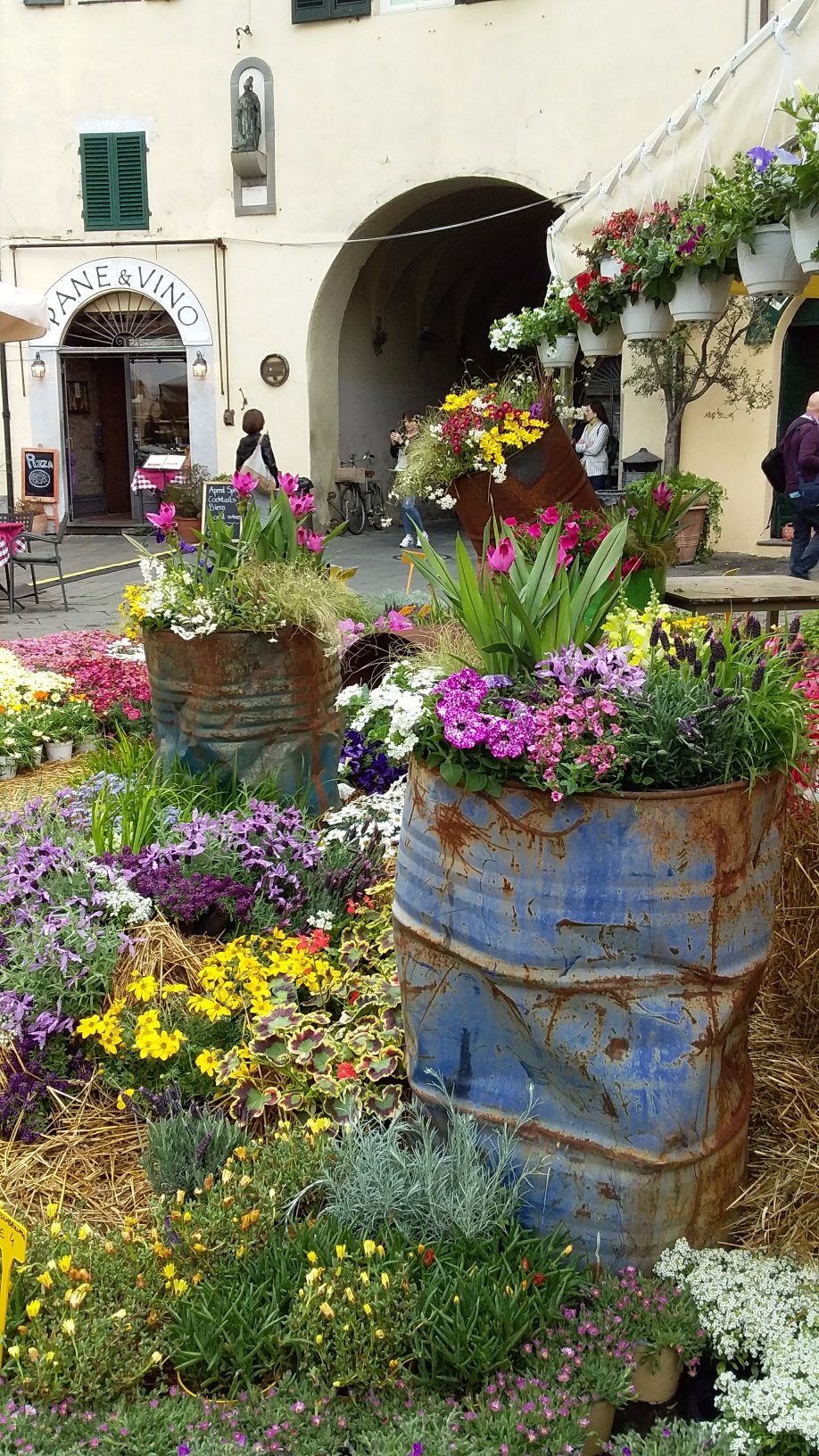
Flower market, 2019

Flower market, 2019

As part of the Festa di Santa Zita, there are also floral displays in the piazza in front of San Frediano and a colorful flower market inside the nearby amphitheater square, making the week of April 27 a lovely time to be in Lucca.          -post by JMB

Flower market (2018) in Piazza Anfiteatro for the Festa di Santa Zita

Flower market (2018) in Piazza Anfiteatro for the Festa di Santa Zita

May 20, 2019 /Joanne Bartram
#Lucca travel, Tuscan cities, Lucca, Italy Blogs, #italian markets, Lucca Churches, Spring in Italy, Italian festivals, #italy lucca, #Lucca
Festivals Italy, #springintuscany, Lucca, #italytravel, Tuscany
Vorno, Italy

Vorno, Italy

Italian Tax Codes and Back Roads

May 13, 2019 by Joanne Bartram in Living in Italy, Italy travel, #italytravel, Tuscany, Italy

There are many steps along the road to becoming Italian, or at least as Italian as “stranieri” (foreigners) can be. For me, one of the first “ah, now I really belong here” moments was when I received my codice fiscale, or tax code. That magic string of letters and numbers, uniquely mine, signified my existence here in Italy. Surely if one has a tax number he or she must be Italian, right?

The tax code is useful for longer term apartment rentals (technically required for rentals of more than 30 days, though not all landlords asked for mine). It’s an absolute necessity if signing an extended contract (one year or the more standard four-year contract) and for setting up bank and utility accounts. So, if planning a long stay in Italy, obtaining a codice fiscale is high on your to-do list.

One of the joys of wandering is finding views like this, as seen from Montecarlo.

One of the joys of wandering is finding views like this, as seen from Montecarlo.

There are two ways to obtain the codice fiscale. One is through the Italian consulate in your home country.  The other is to apply for one during a stay in Italy, in the area where you plan to reside.  In Lucca that means a trip to the nearby town of Guamo, about 15 minutes away by car.  I recently went with my co-blogger to Guamo to apply for her codice fiscale. It was an easy process, taking about 30 minutes tops (we arrived right as the office opened to avoid a wait). Be prepared to speak in Italiano.

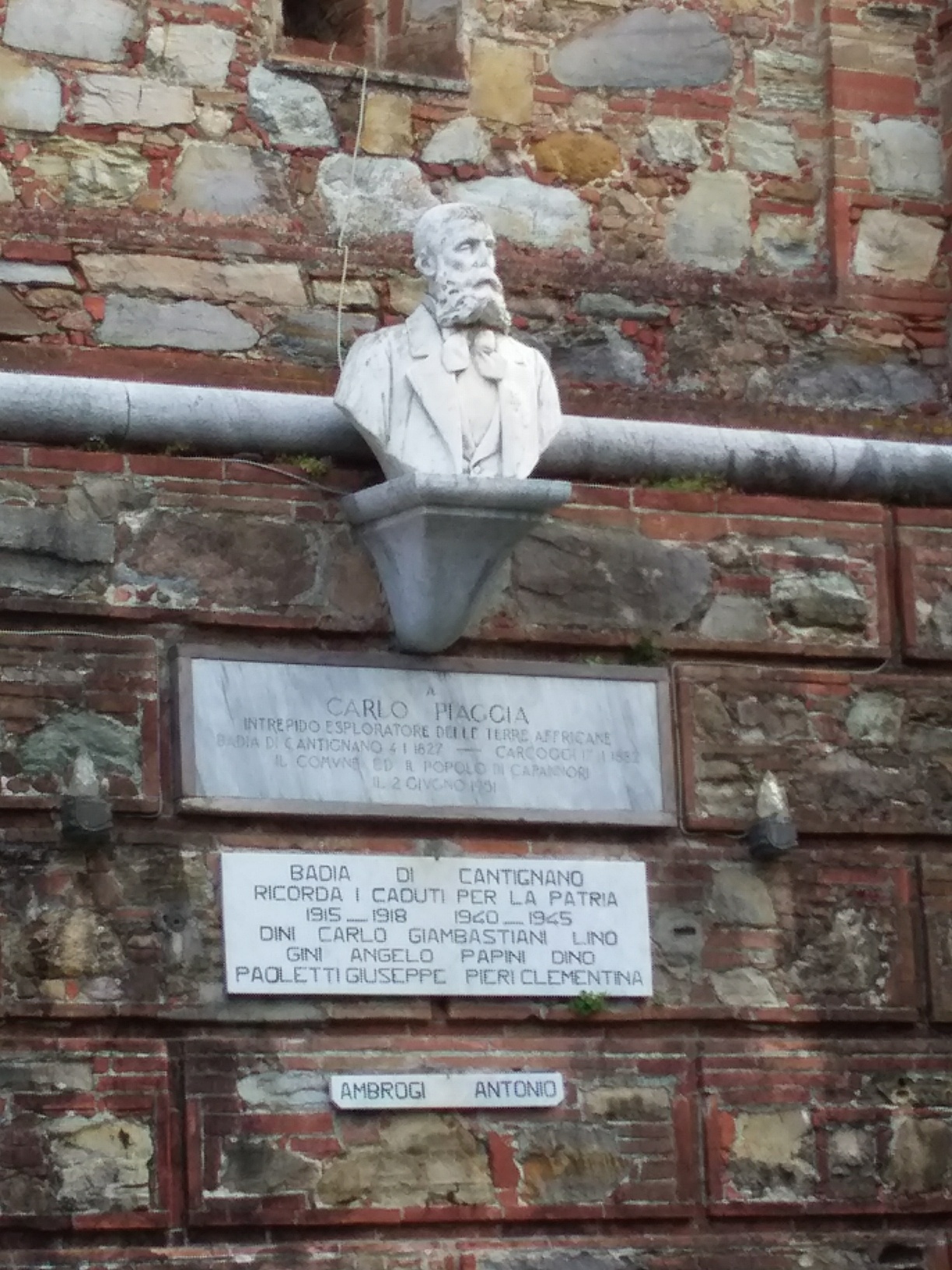
A monument on the campanile of the Badia (Monastery) di San Salvatore in Vorno

A monument on the campanile of the Badia (Monastery) di San Salvatore in Vorno

Because we were in and out of the office so quickly, we decided to spend the rest of the day wandering along back roads and ending up .... well .... wherever. Our first stop was in the small village of Vorno. This is a lovely place, full of stone walls, trellises, grape vines, and well-tended villas all set amid beautiful hills and views of distant mountains. We stopped for prima colazione (breakfast Italian style, cappuccino and a sweet) and then explored on foot, ending with a stop at the local church with its interesting campanile (bell tower) and historical monument. Carlo Piaggia, intrepid explorer (his bust is pictured above), sounds like my kind of guy!

The fortezza (fortress) in Montecarlo, Italy

The fortezza (fortress) in Montecarlo, Italy

Where to go next?  Our trip through the back roads led us to the small town of Montecarlo, famous for wines and an ancient fortress. 

Montecarlo, Italy

Montecarlo, Italy

The town was quiet, tourist season still a few weeks away. The uncrowded streets were fun to wander and I was most intrigued by the many interesting doors and windows. Fun to imagine who has passed by them and what lies within.

Montecarlo

Montecarlo

What a joy to have an unstructured day to wander the back roads in this part of Tuscany! -Post by JMB

Montecarlo

Montecarlo

May 13, 2019 /Joanne Bartram
Tuscany, Montecarlo, Drives in Tuscany, #lucca, Codice Fiscale, #italy lucca, Vorno, #Fortezza di Montecarlo
Living in Italy, Italy travel, #italytravel, Tuscany, Italy
FullSizeRender.jpg

Gentleman Drivers and Gourmands: A Classic Car Rally in Italy

May 06, 2019 by Joanne Bartram in #terredicanossa, Terre di Canossa, Classic Cars Italy, #classiccars

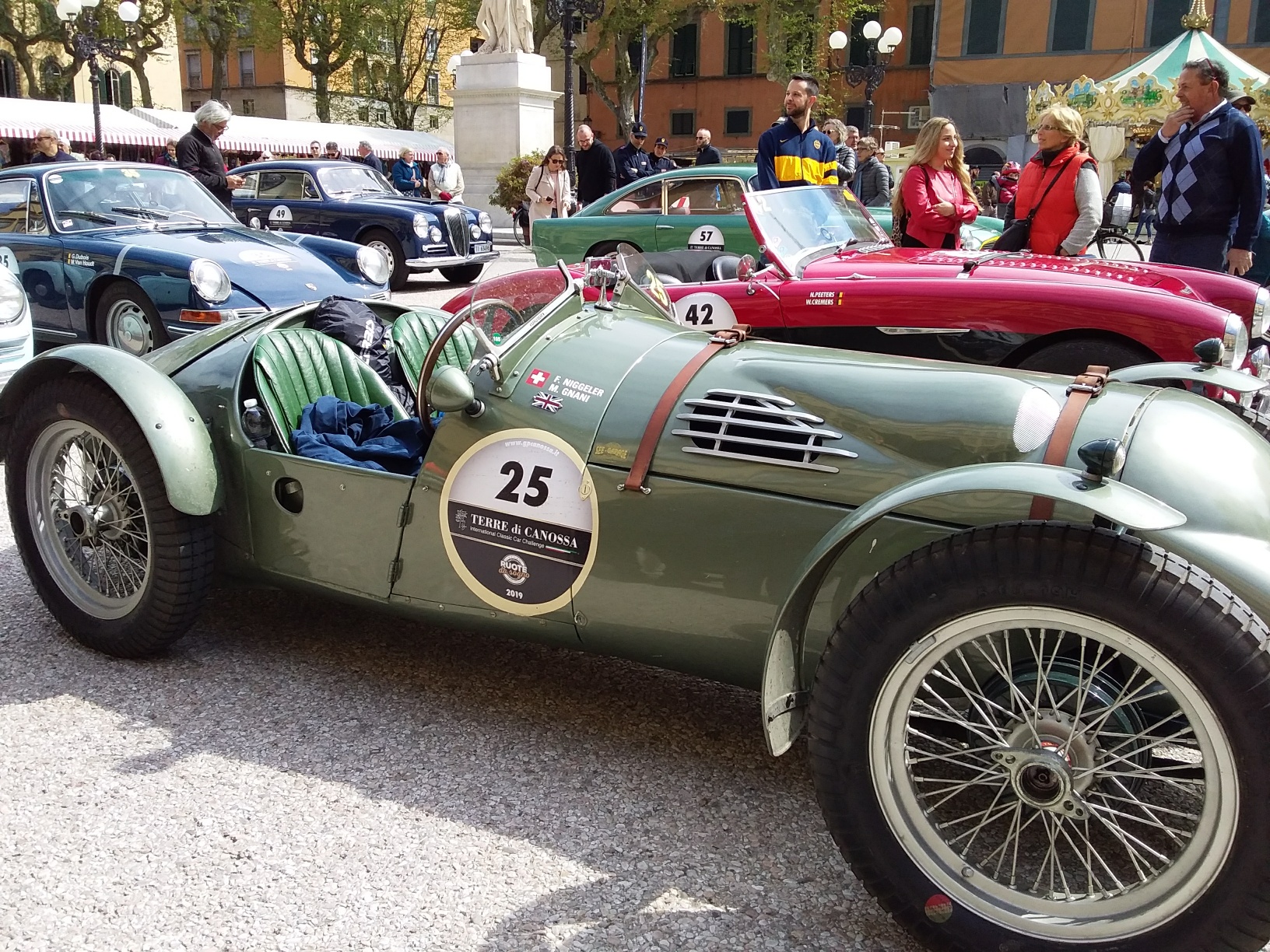
 The Terre di Canossa is a prestigious rally for classic cars that takes place in northern Italy’s villages and mountain passes before ending at the sea. According to the event’s literature, only 100 entries are accepted for the race and all cars must be from the years 1919 through 1976.  Polished and ready to roll, the cars are gorgeous and the drivers have an air of mystery, elegance, and wealth. 

DD1A9F3E-A688-470D-B315-778BF6440990.JPG

The event is named after Matilde di Canossa, an intriguing figure from the Middle Ages. A sort of warrior-queen, Matilde ruled a large swath of Italy, including what are now the regions of Emilia-Romagna, Lombardy, and Tuscany - all from her castle in the town of Canossa. Unique for her times, she was an independent woman and a bit scandalous. She left an arranged marriage, later married a teenage duke (while she was in her 40s) and is rumored to have been the paramour of a pope. Today, she is remembered with a monument in St. Peter’s Cathedral in Rome (designed by Bernini no less), a golf course that bears her name in Emilia-Romagna, and the Terre di Canossa classic car event. Somehow I believe that the classic cars would be her favorite of these tributes!

8E906D41-920F-4482-AAF4-7495C425769D.JPG

The race takes place over several days with stops in different cities to display the cars and make an overnight stay. And while the days are for driving, the nights are for food and wine, with the event billed as being for “gentleman drivers and gourmands.” I did, however, see a few gentlewomen among the drivers.

018BC011-FFE0-431F-9CA0-281A0BEC86E6.JPG

When the route passed through Lucca, the cars arrived to the fanfare of drummers and flag bearers in Medieval garb. After a stop in Piazza Napoleone to show off the cars to the gathered crowd, they set off for a circuit atop a the ancient city walls.  And then it was off to the next phase of the road race.

A5E831E9-C4C6-4EA6-B38A-3C884BBCE200.JPG

And while my knowledge of classic cars is limited, I recognized the names - Fiat, Porsche, BMW, Austin-Healey, Lancia, Alfa Romeo - and I appreciated their sleek beauty.

E0C93AD9-F3DF-49A4-8BA4-7F9FC34474D0.JPG


Just imagine driving through Italy in one of these cars - can you feel the wind in your hair?   -Post by JMB

A3295A8B-8862-4DFF-AAB3-7E52E8A935D0.JPG
May 06, 2019 /Joanne Bartram
#Lucca, #terredicanossa, #Lucca travel, #classiccars, Italian Cars, Classic Cars
#terredicanossa, Terre di Canossa, Classic Cars Italy, #classiccars
  • Newer
  • Older

Powered by Squarespace