Two Parts Italy

Exploring Italy, travel, and living a flavorful life

  • Blog
  • About This Blog
  • Start Here
  • Recent Posts
  • Archives by Topic
  • Subscribe
  • Contact me

From My Italian Kitchen: Pasta Primavera

July 03, 2023 by Joanne Bartram in Italian markets, Italian recipes, summer Italian food

“Piselli pigri” fresh from the market, with Tropea onions, mushrooms and asparagus

When the warmer weather of spring and early summer arrives, it is time to put away winter recipes and start cooking with the best produce the season has to offer. Later in summer, ripe tomatoes will take center stage as the basis for Caprese and Panzanella salads, but right now fresh peas and bright green asparagus are at the top of my list.

For the past couple of months both have been available at the markets in Italy.  Even better for me, I can buy piselli pigri (lazy peas) at the Ortofrutta (vegetable and fruit market) in Lucca. I call them lazy peas, but it is really the cook (me) who is pigra (lazy).  Piselli pigri are fresh peas already shelled at the Ortofrutta and placed in bags, eliminating all the work but none of the flavor. A lazy cook’s dream!

 The combination of fresh peas and asparagus, along with some onion (I like to use Tropea but yellow onion works just fine too), a lot of mushrooms, and a bit of diced prosciutto cotto (cooked ham) comes together to make a tasty Pasta Primavera (a spring style pasta). This is the perfect warm weather pasta dish, chock full of veggies and with very light on the sauce. 

 The little bit of sauce it does have, just enough to slightly moisten the pasta, comes from cooking the onion, peas, and asparagus in butter, allowing the veggie juices to mingle with the butter flavor. More flavor comes from quick cooking the mushrooms in hot butter in a separate pan. These ingredients are then combined with cooked linguine tossed in, yes, more butter. The last step is to sprinkle the pasta with parmesan cheese. The simple fresh flavors taste just like spring.
8B22A808-A080-49A0-B572-1D9742A791A4.jpeg
76E00046-AE59-4DDD-9F7C-180DB3E3F017.jpeg
A9586961-C736-485A-9500-D1BCA01AEA57.jpeg

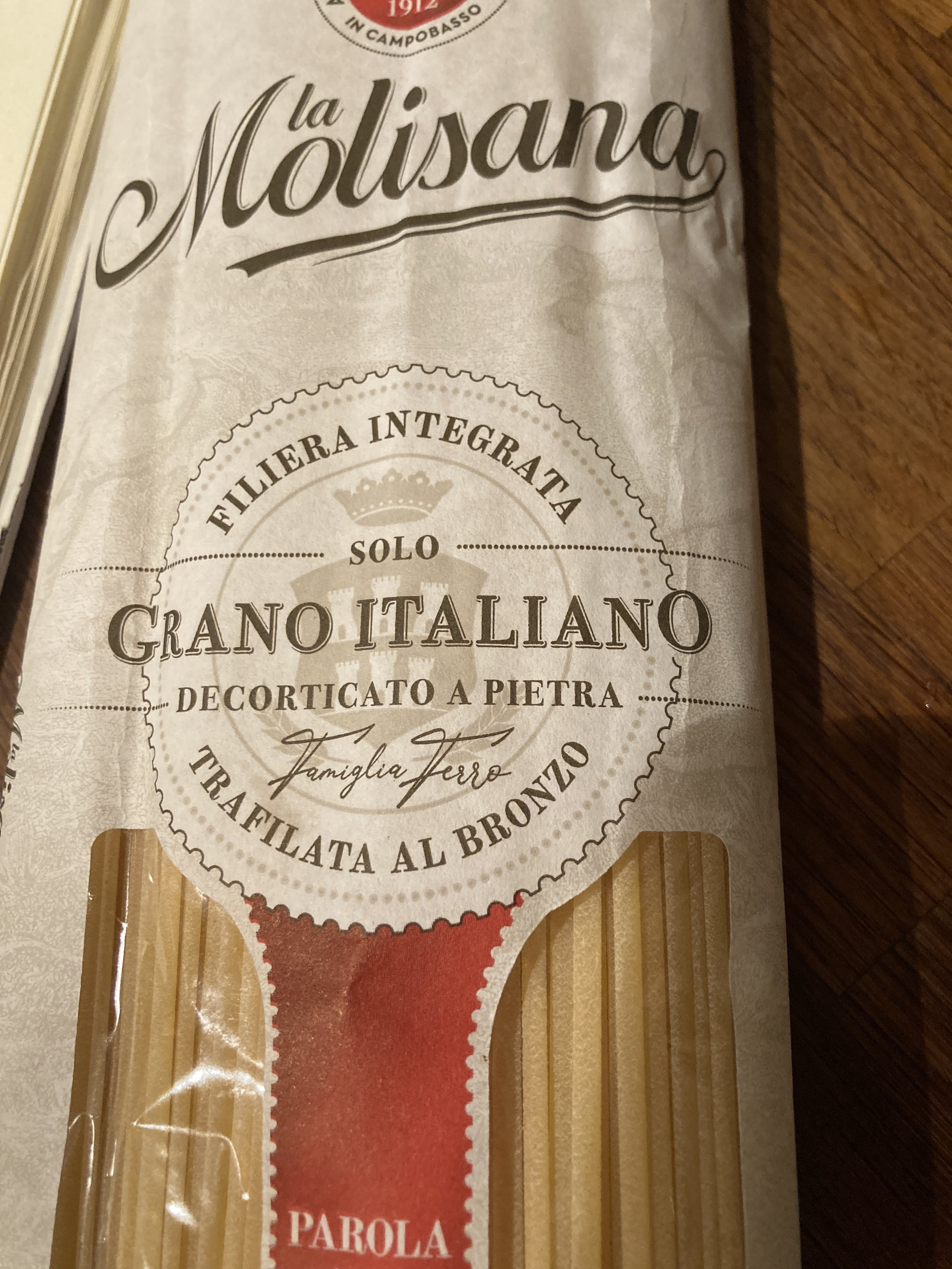
Notice the rough surface of this pasta - perfect for making the very light sauce cling to the pasta.

The recipe is quite flexible.  When fresh asparagus isn’t available I simply leave that out and increase the amounts of the other veggies.  No fresh peas?  Frozen ones will work too.  In the United States I use a thick slice of Virginia ham in place of the prosciutto cotto.  And sometimes, just for fun, I use cubes of crisp pancetta in place of the ham. This is a dish that lends itself to experimentation.  To get the best results, use the best pasta available. The one pictured here, La Molisana brand, uses a bronze extruder to form the pasta, leaving it just a bit rough and able to cling to the light sauce of this pasta dish. It also helps to use a good quality parmesan. Freshly grated is always best, though I am not above buying some already grated (another shortcut for the pigra cook). 

 The basic recipe serves 3 as a main dish, 4 as a side.

¾# linquine

8 tablespoons butter

¾ cup fresh peas, blanched for about 5 min (or use frozen peas straight from the freezer without blanching)

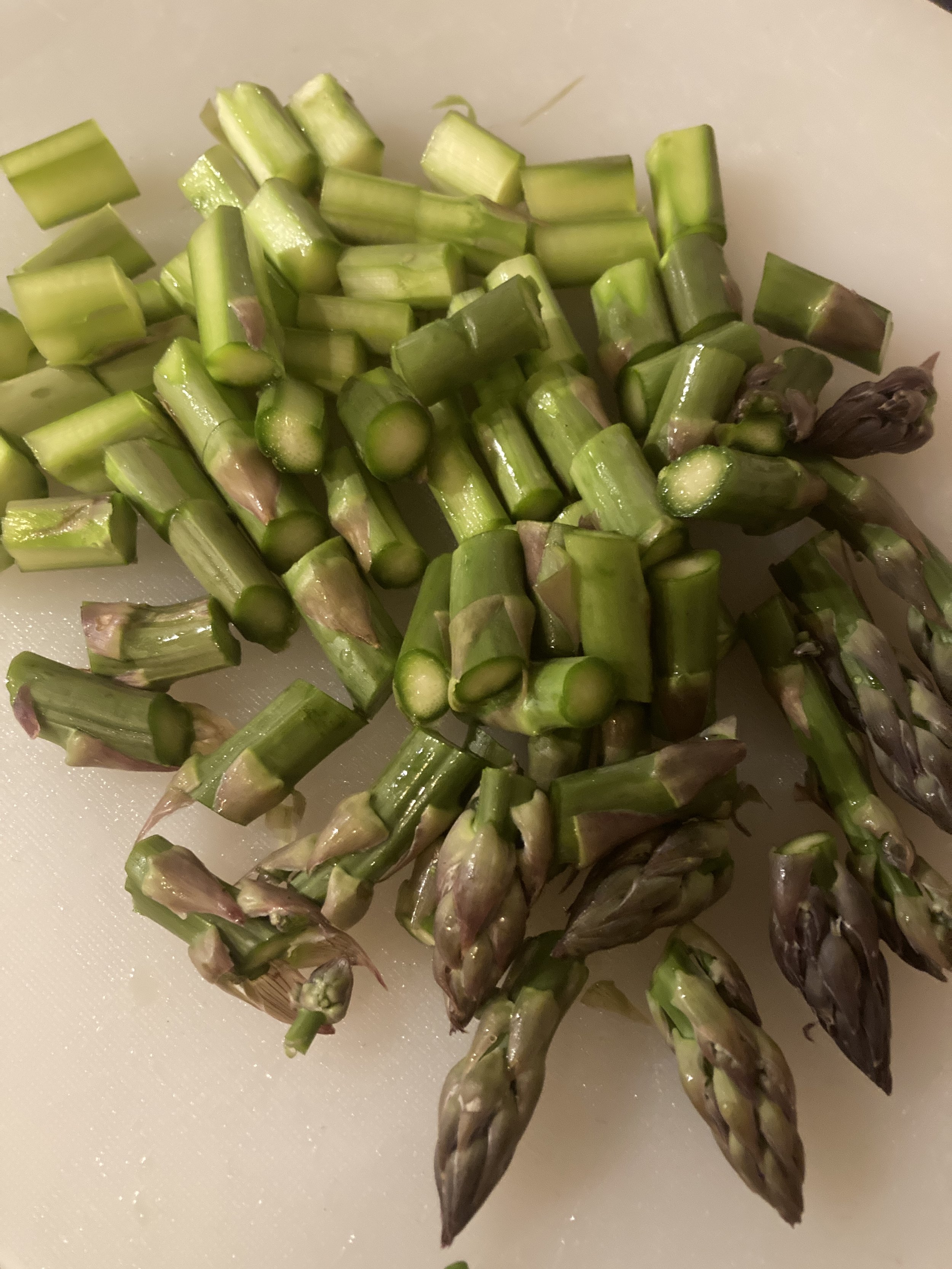
¾ cup fresh asparagus, cut into 1” pieces and blanched for 3-4 minutes. Medium size asparagus, a little larger than the width of a pencil work best.  If using really thin ones you may skip the blanching, if using really fat ones it is best to trim the thickest part of the stalk with a vegetable peeler before using.
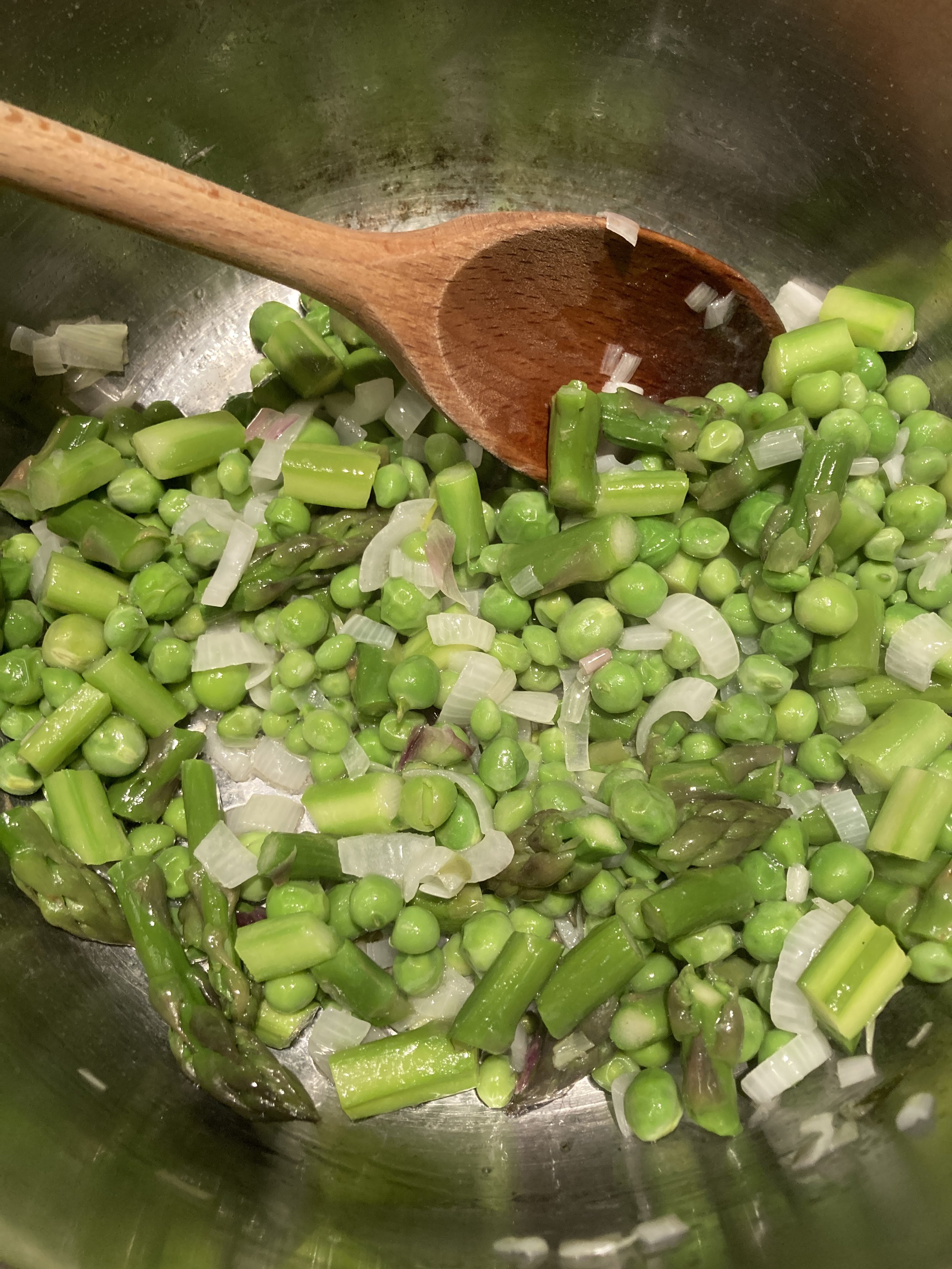
The bright green peas and asparagus look just like spring.

¼ of a yellow onion, sliced thin

½ cup cubed ham

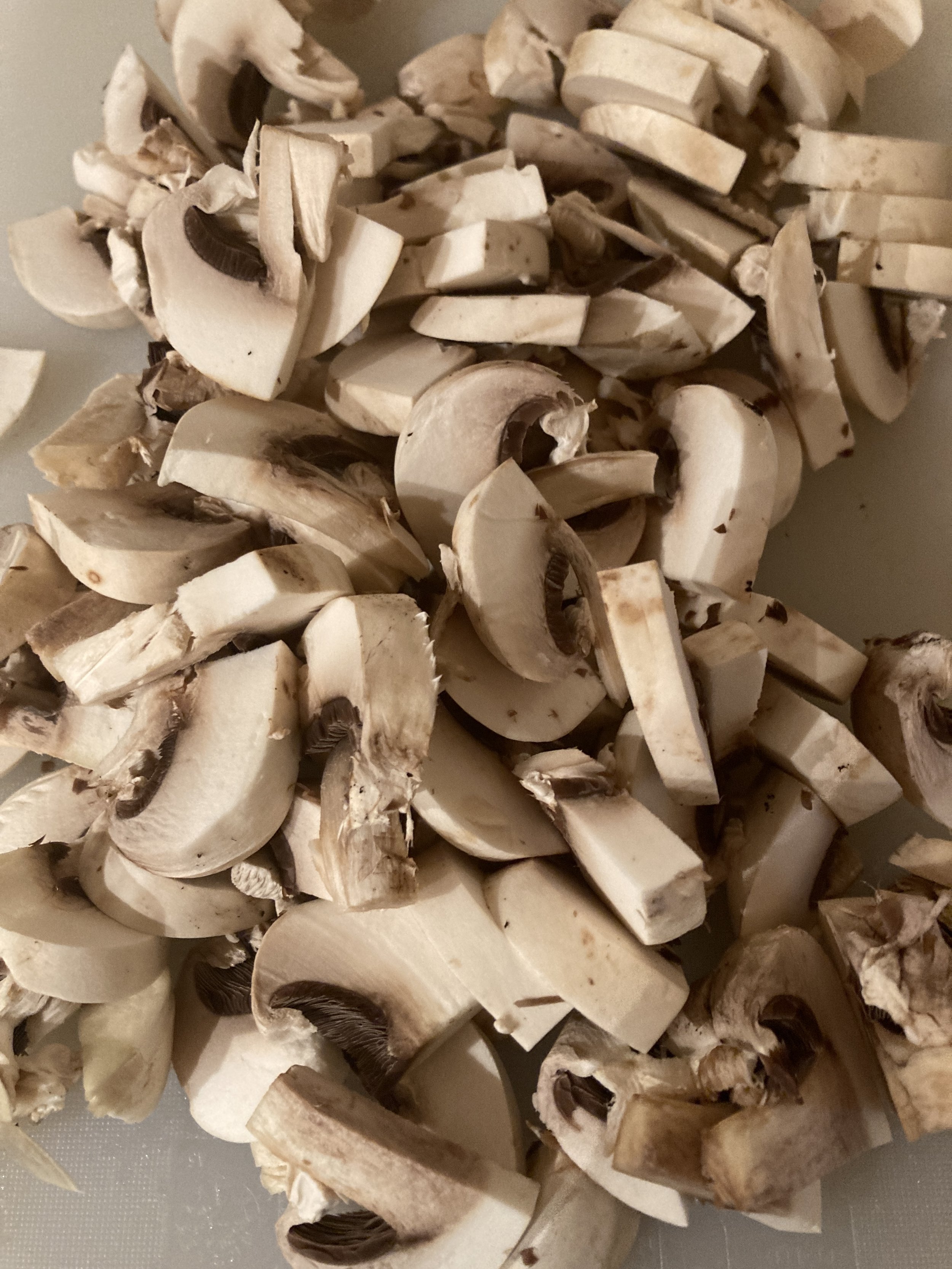
8 oz mushrooms (white or small portobellas) ,sliced thin. Love mushrooms? Use more!

¼ cup parmesan cheese, grated

Sea salt and coarse ground pepper to taste

Melt 4 tablespoons butter in a heavy pan. Add the peas, onion, and asparagus.  Sauté for about 10 minutes until the veggies are almost tender.  Add the cubed ham and cook to heat through.
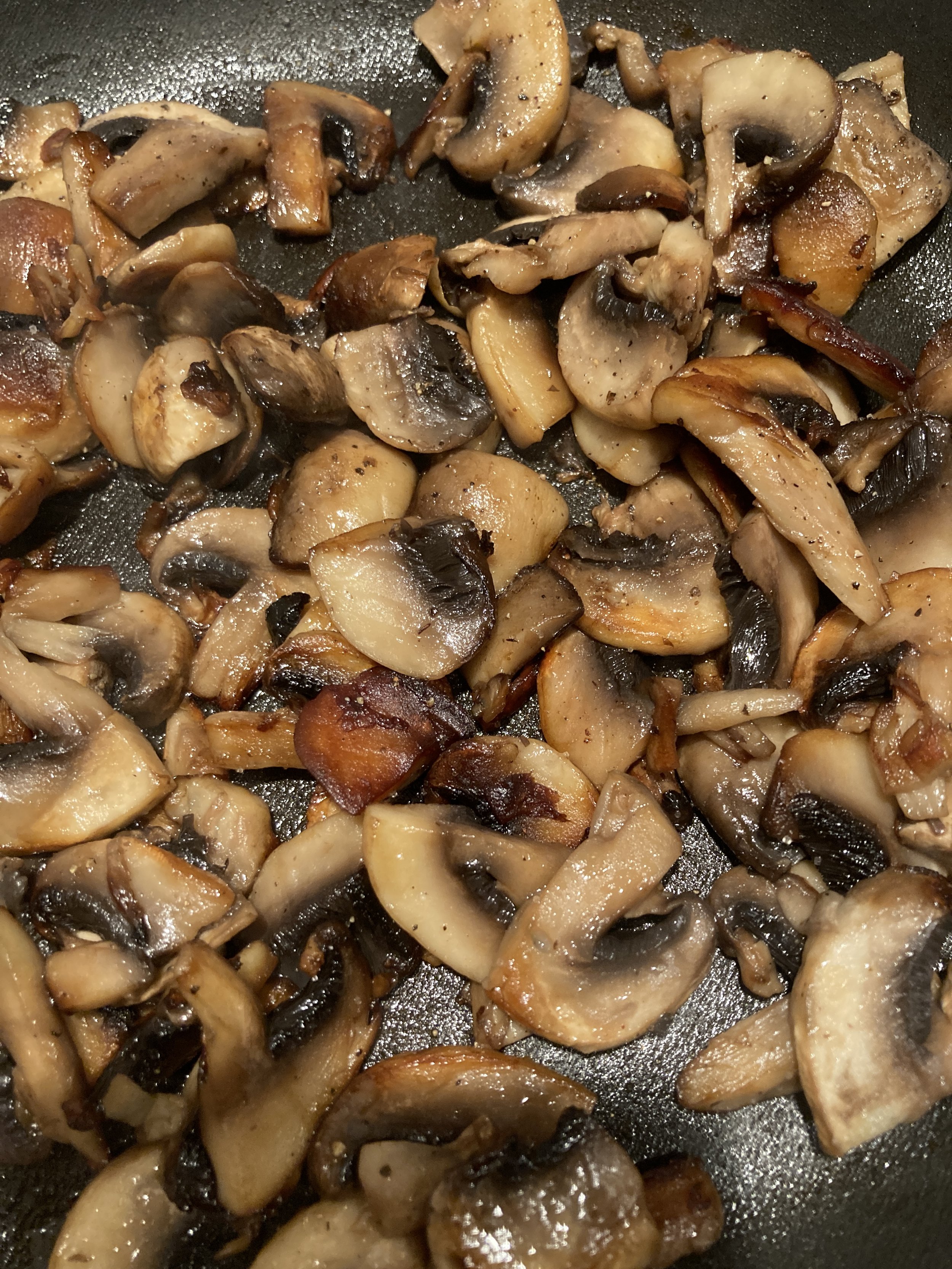
 In a separate frying pan, heat 2 tablespoons of butter.  Add the mushrooms to the hot butter and cook over a medium high heat.  The mushrooms should cook quick enough that they hold their juices in and brown rather than simmer. 

While the vegetables are cooking, cook the pasta.   Toss the al dente pasta with 2 tablespoons of butter and toss with the grated parmesan cheese.  Add the cooked veggies and ham with all of the accumulated juices. Add salt and pepper to taste.  Top with the mushrooms and a sprinkle of cheese.. Serve with some extra grated parmesan.

A crisp white wine goes really well with this pasta. Perhaps a Gavi, a Grillo, or a Catarratto. Enjoy!

Pasta Primavera

 

July 03, 2023 /Joanne Bartram
Pasta Primavera, Spring Pasta, pasta
Italian markets, Italian recipes, summer Italian food

Portofino, June 2022

An Italian June in Photos

June 26, 2023 by Joanne Bartram in #italiansummer, #italytravel, Italy, Italy travel, summer in Italy

Finally, the first week of summer has arrived.

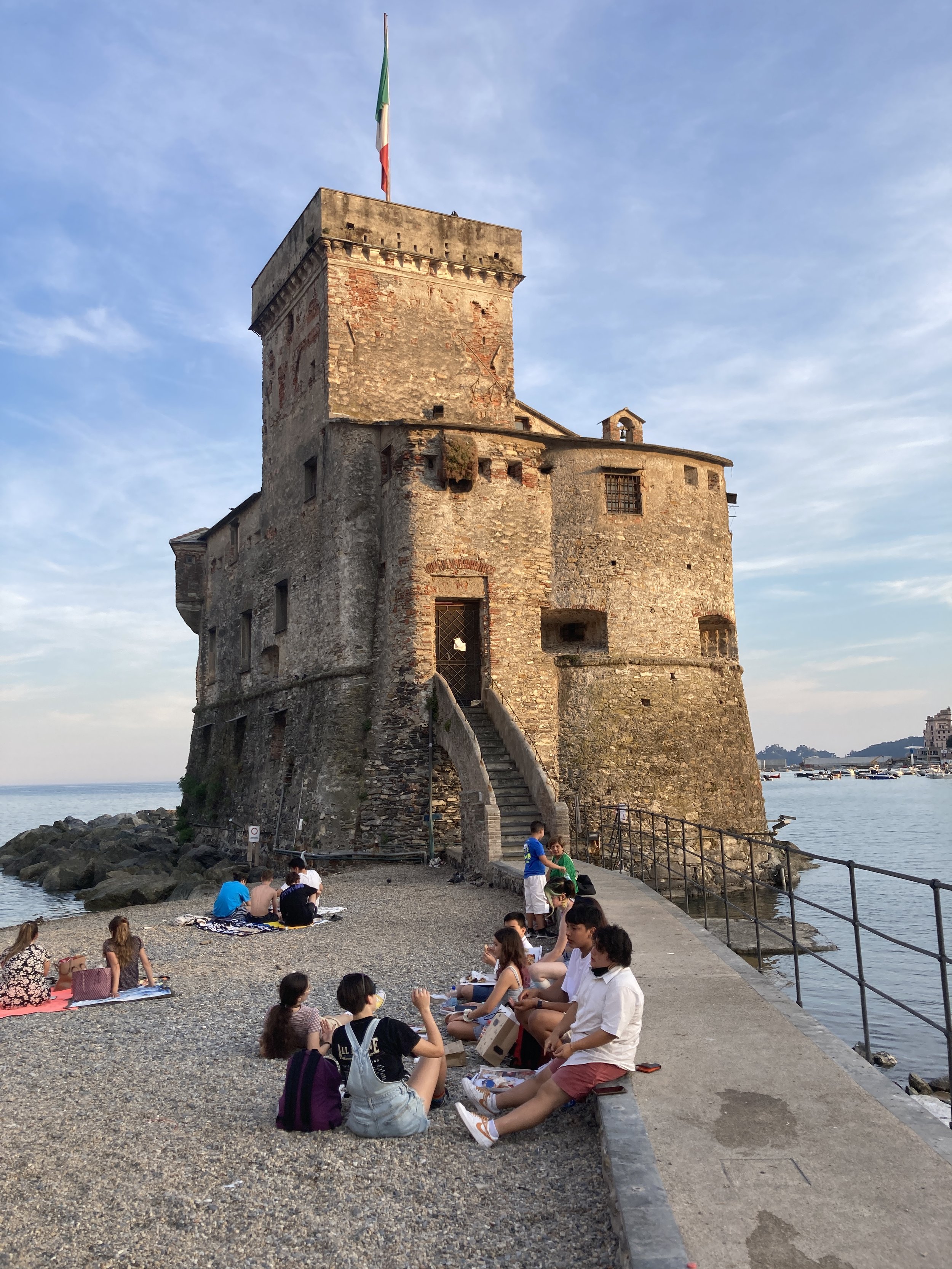
In Italy that means the start of warm humid weather, blue skies, sunshine, picnics, and beach days. And lots of tourists.

18533ACA-7F6B-4A7B-9C61-1B9FF1D7170D.jpeg
04FA27C9-70CF-4D0F-90AB-01E4A035DB7A_1_201_a.jpeg
D26353DE-F754-4C63-89C0-8D60C460D64D.jpeg
A160D66A-C6B6-4E0B-9FF4-B40D06C4C304.jpeg
6160618C-31BB-4216-96E6-523818D4597E.jpeg
C407BFD4-9C29-41C3-9003-E3934550C036.jpeg

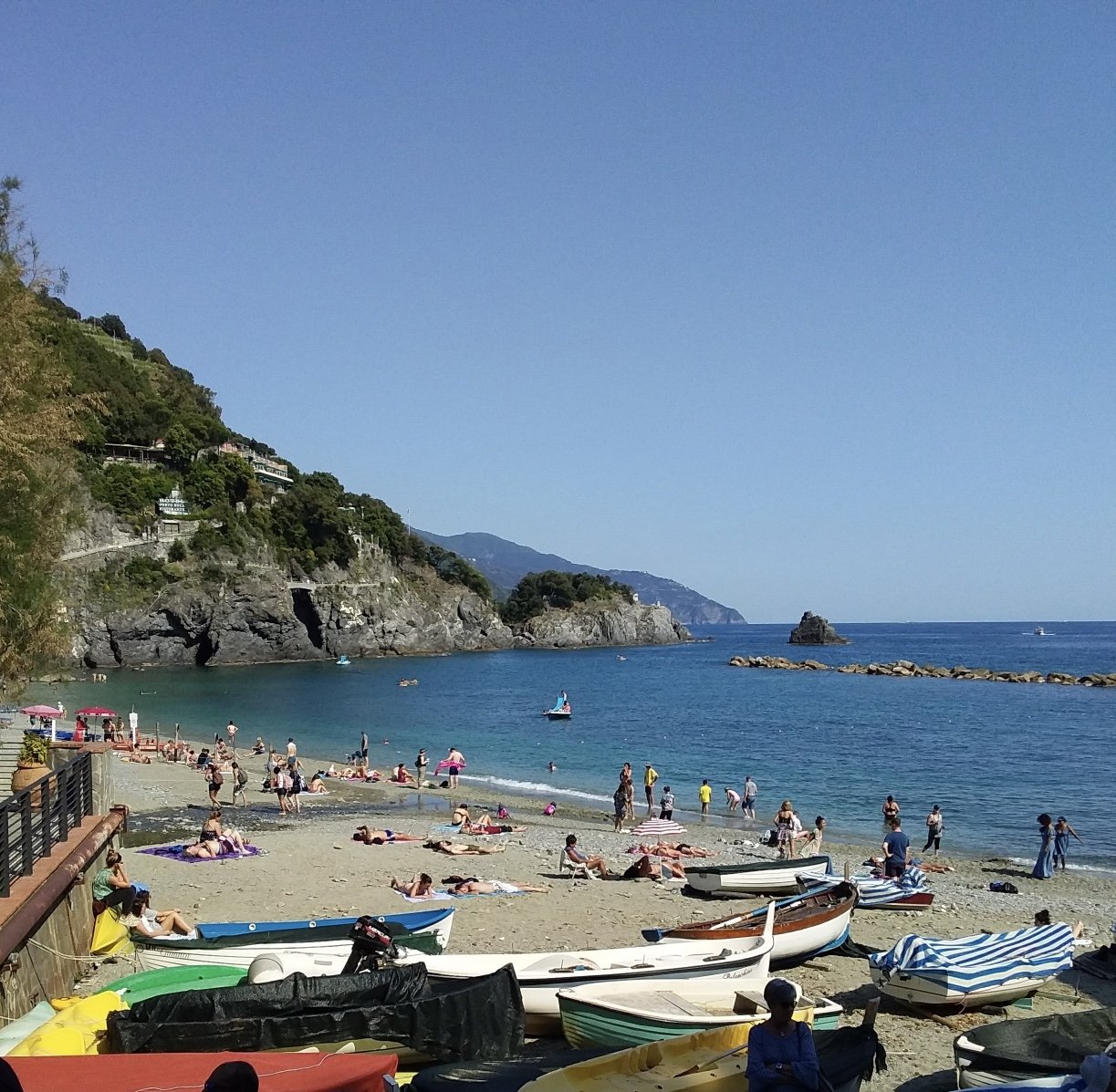
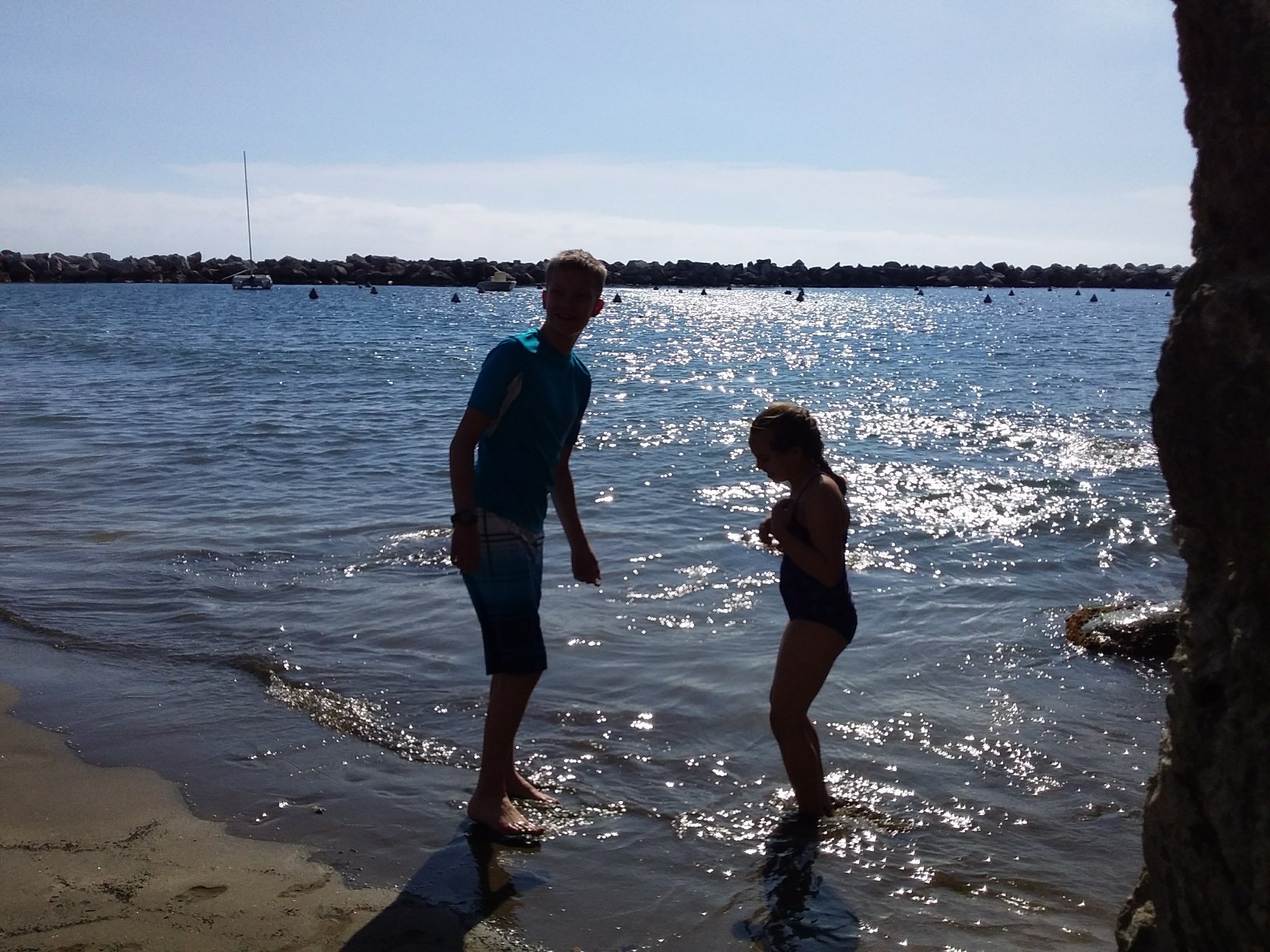
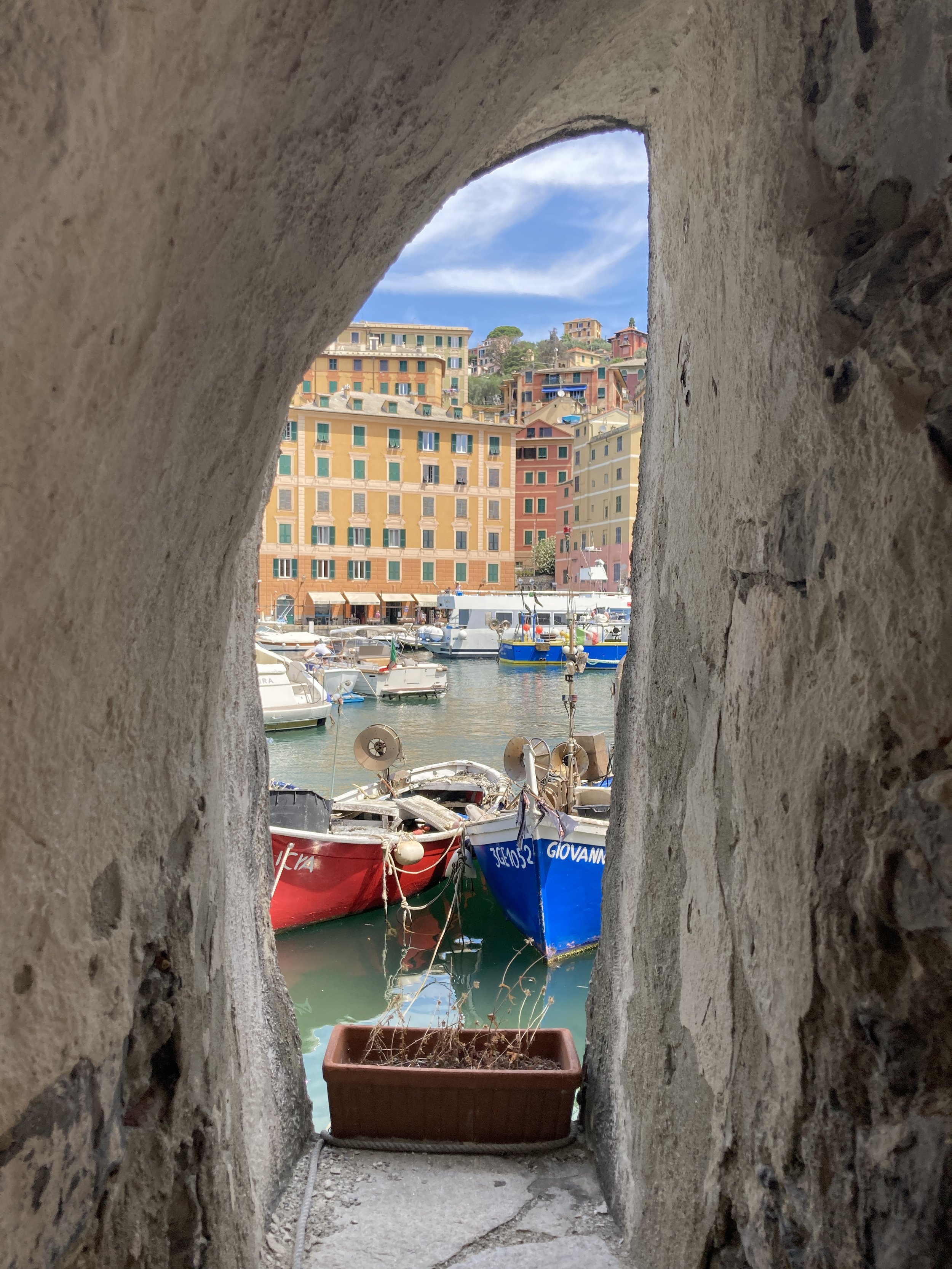
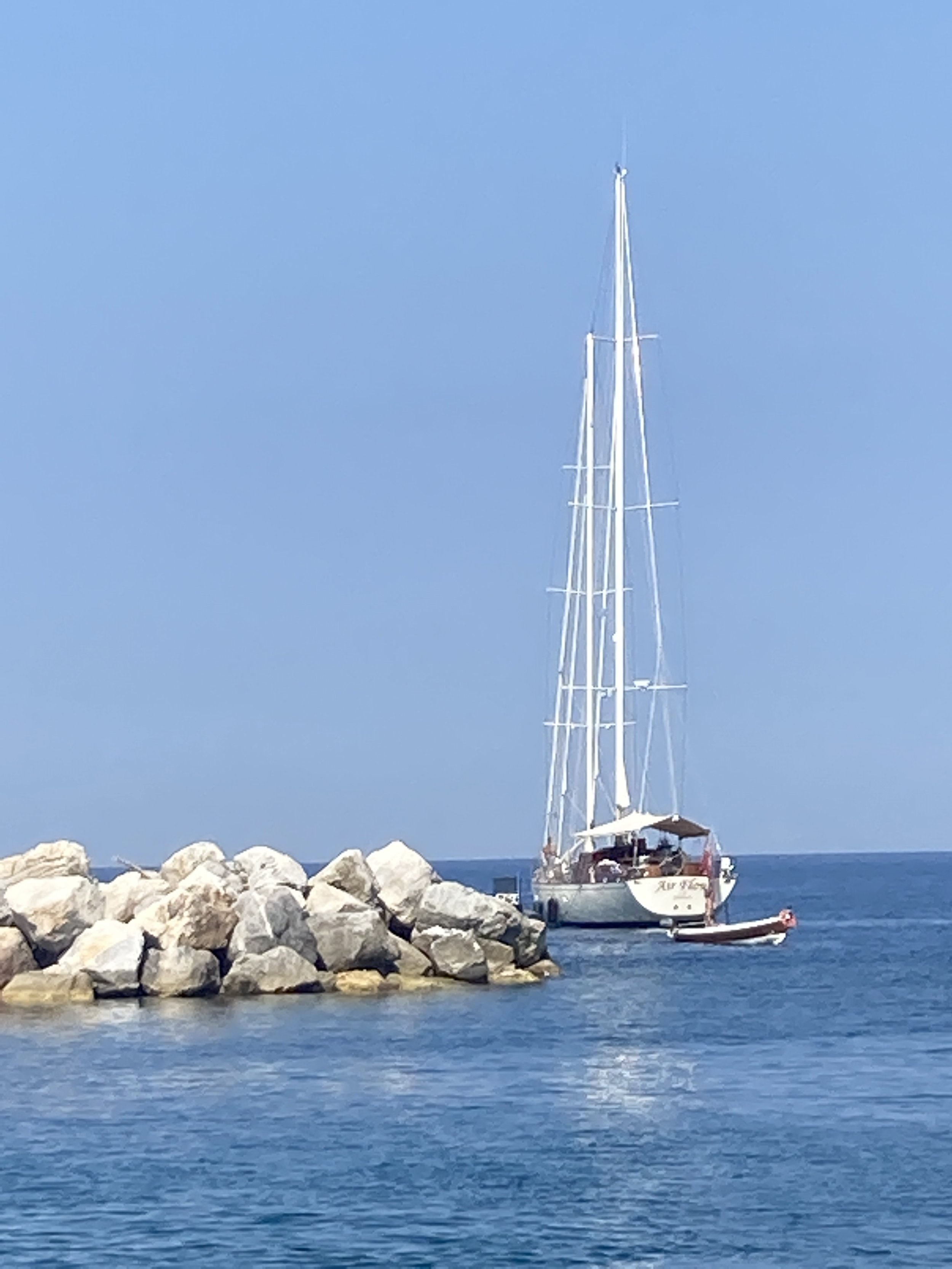
(photos above taken along the Ligurian coast, near Levanto, Camoglie, and Rapallo, June 2019 & 2022)

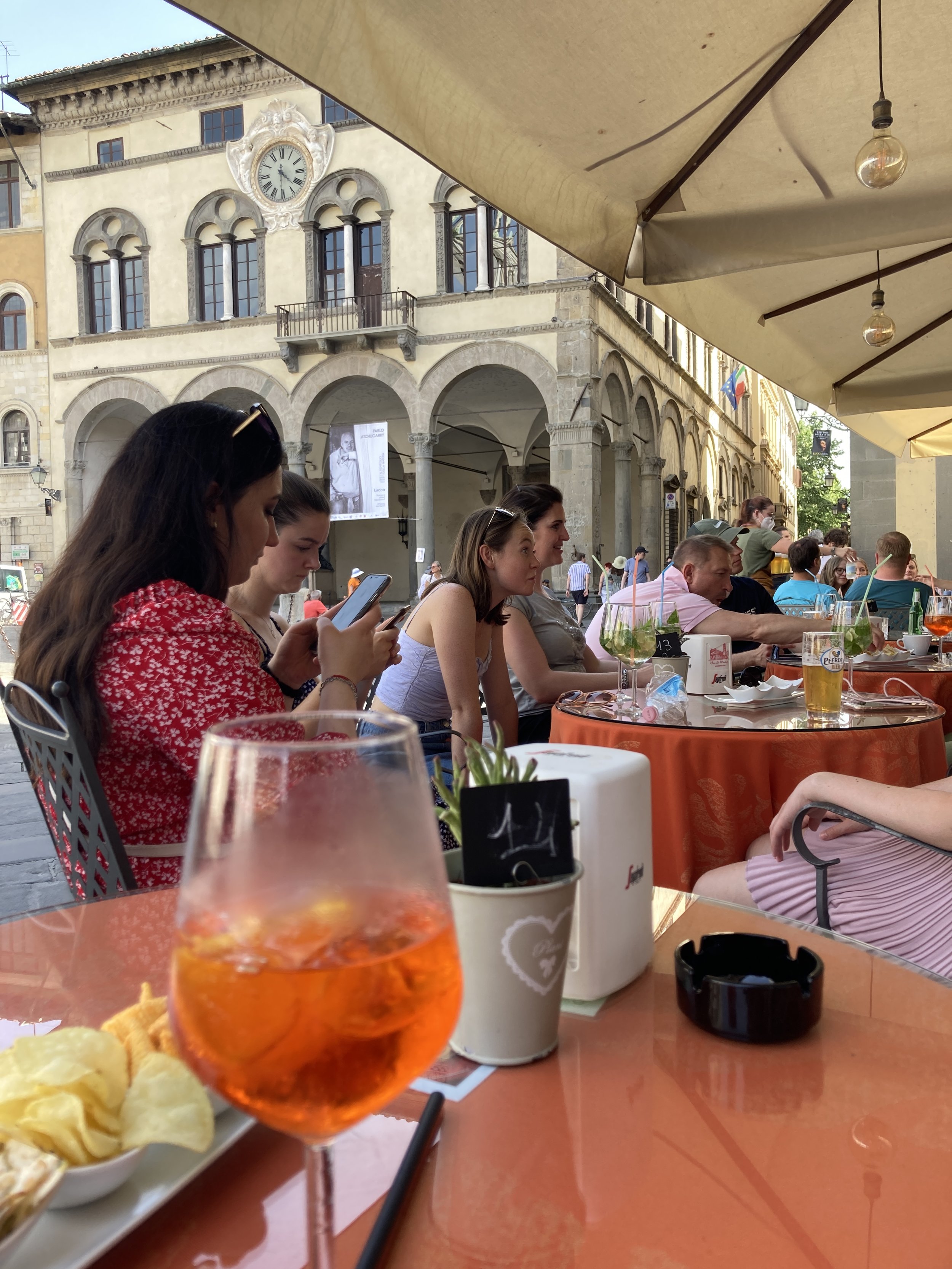
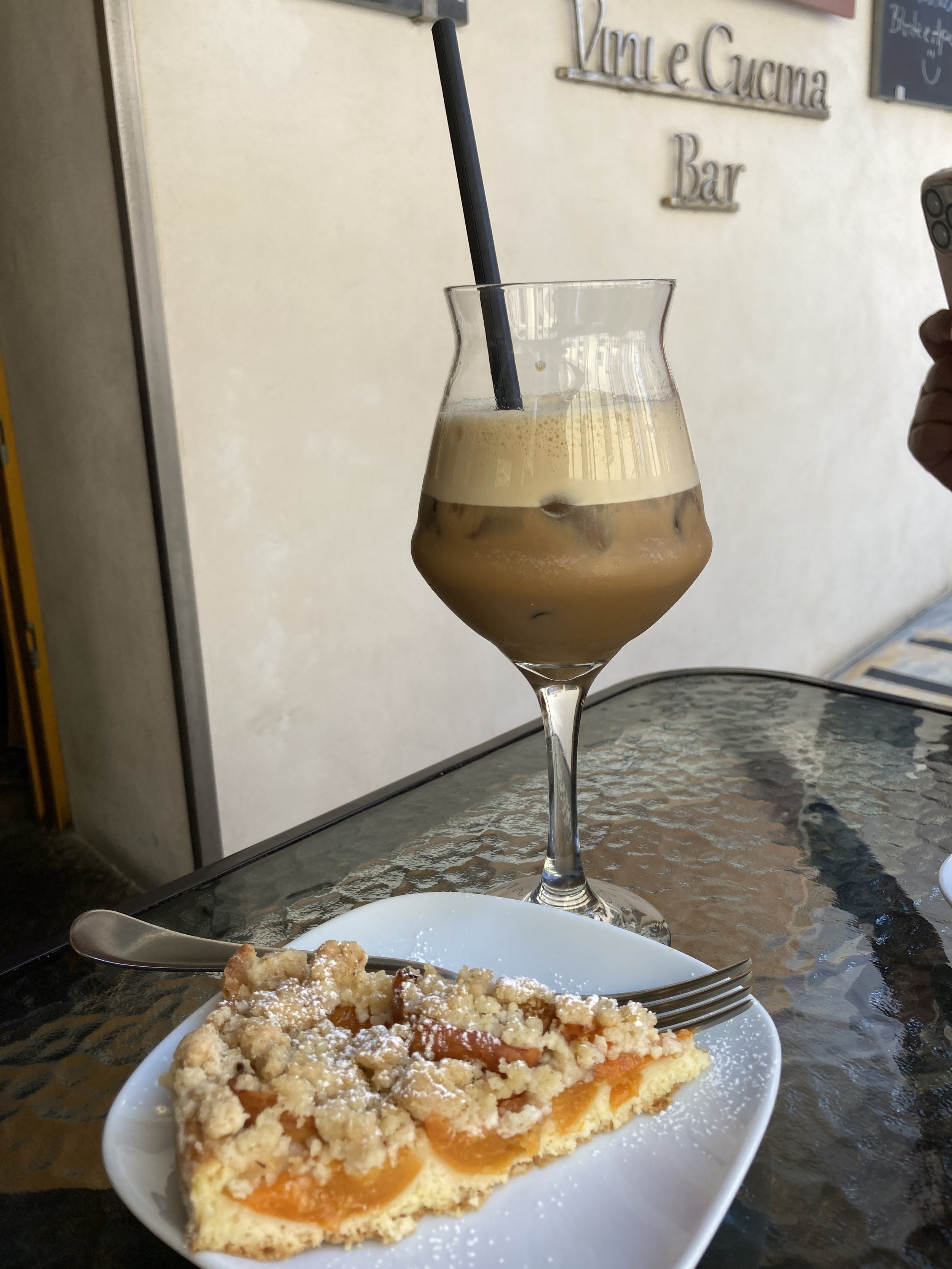
Early summer mornings and evenings are perfect for leisurely stops in umbrella filled piazzas for morning coffee or an evening cocktail. A caffé shakerato, cold and foamy espresso, is the perfect mid-day jolt of caffeine. In the late afternoon and evening, the tables in the piazzas are sure to glow with glasses of the bright orange summer drink that seems to be everywhere - the Aperol Spritz. Slightly bitter and sparkling with Prosecco, the spritz is quintessential summer in Italy.

D2558FF6-FCEB-4373-9C2C-105F654327E7.jpeg
18788228-8134-4799-AD9C-56238DF3D1A2.jpeg

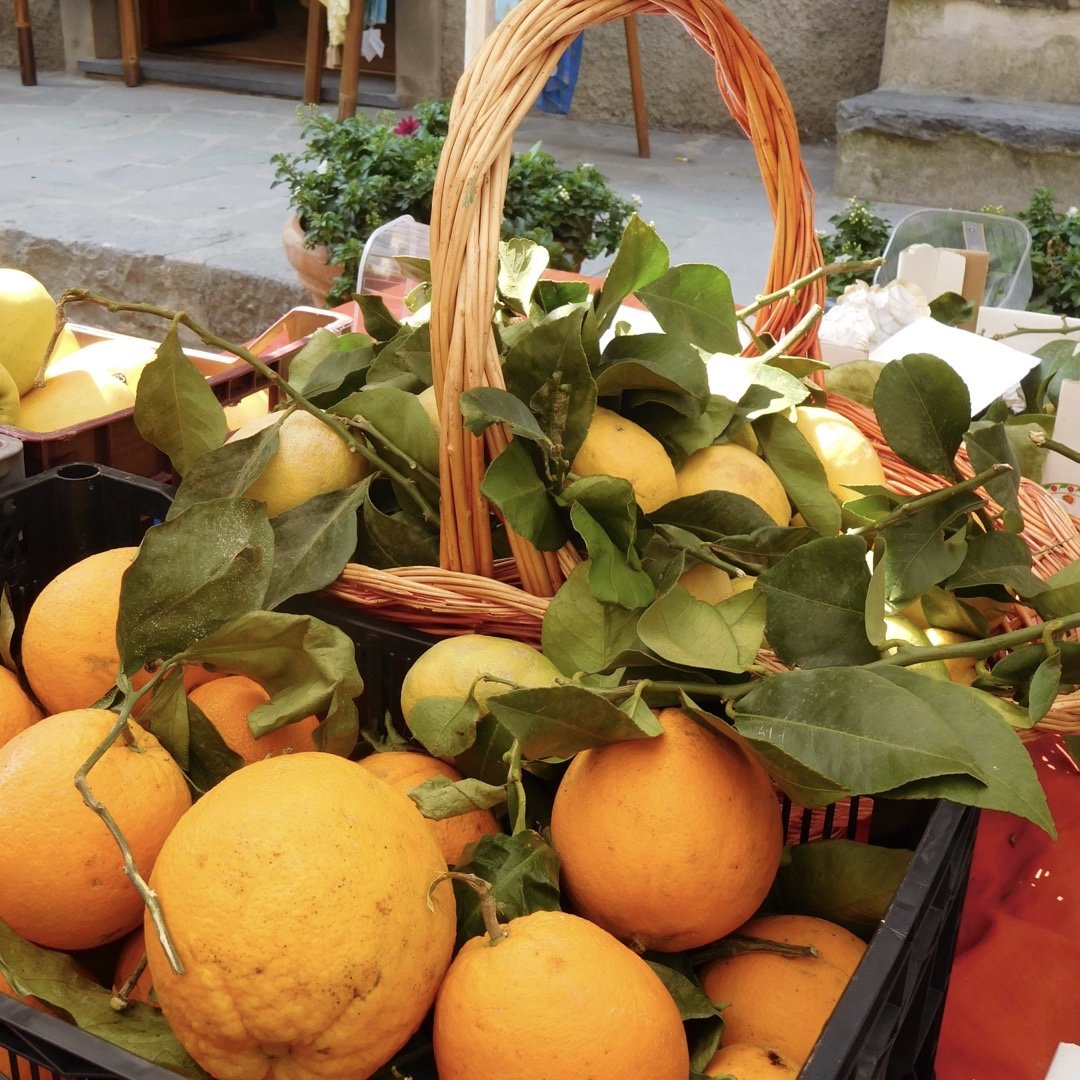
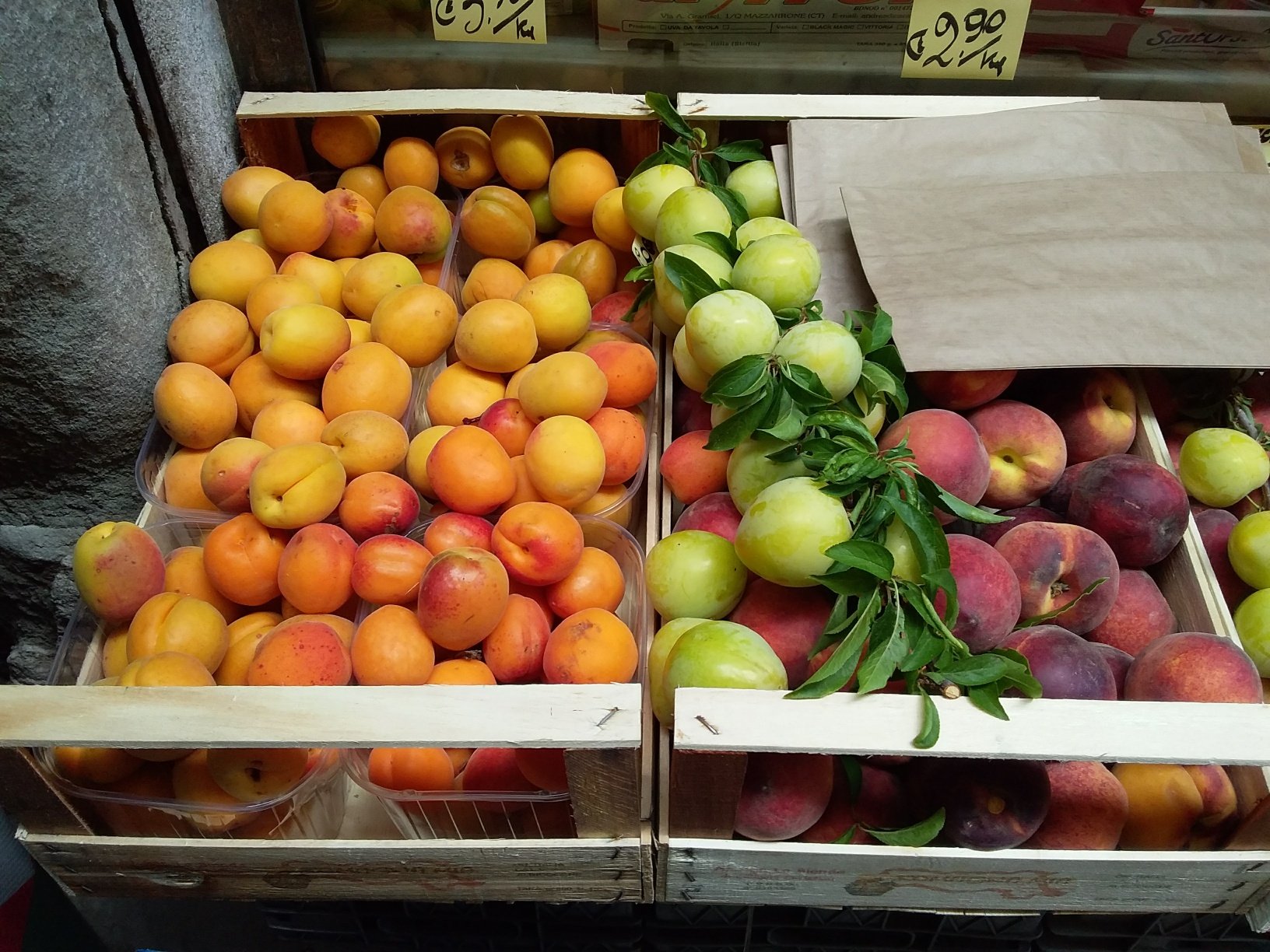
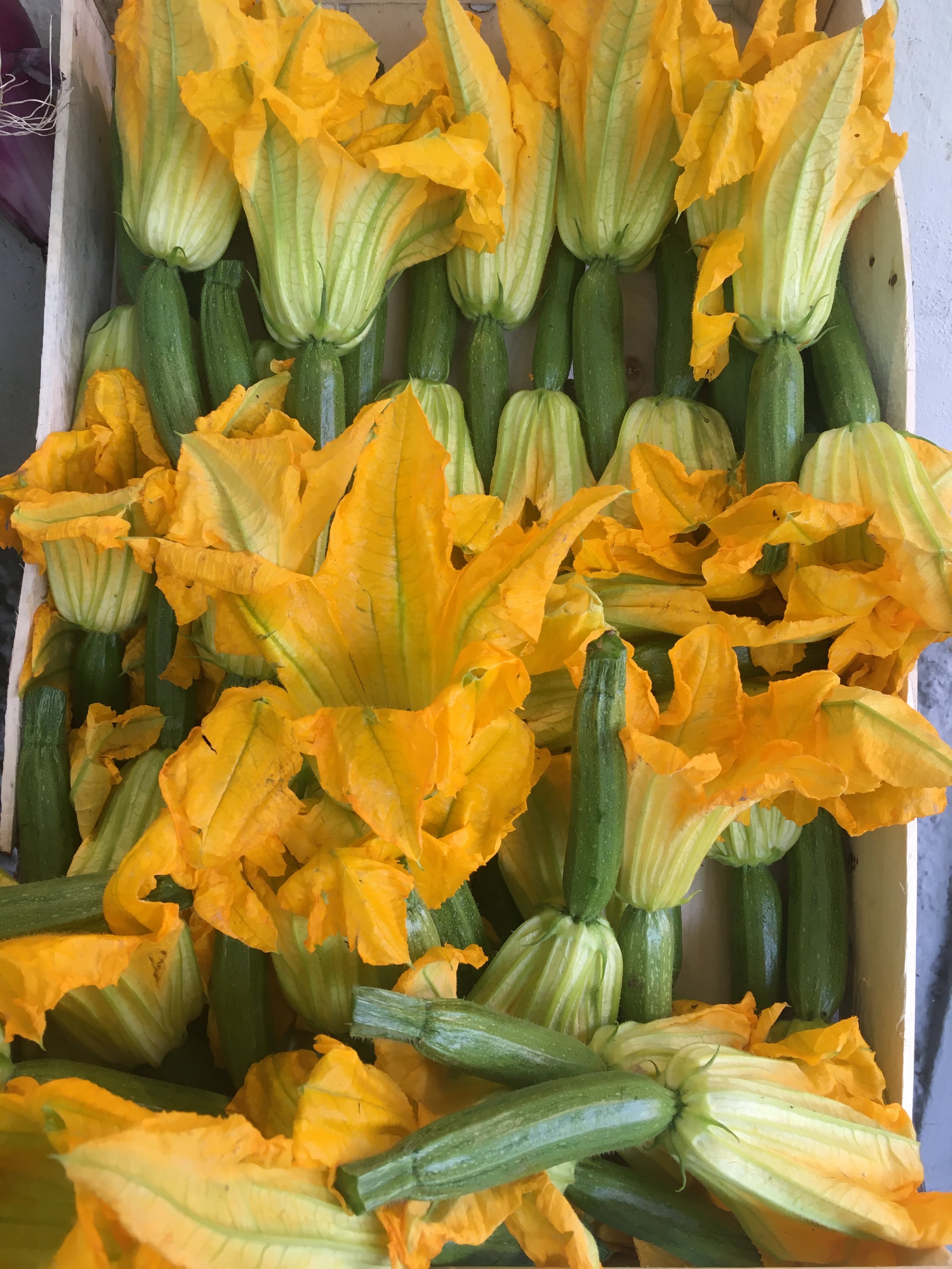
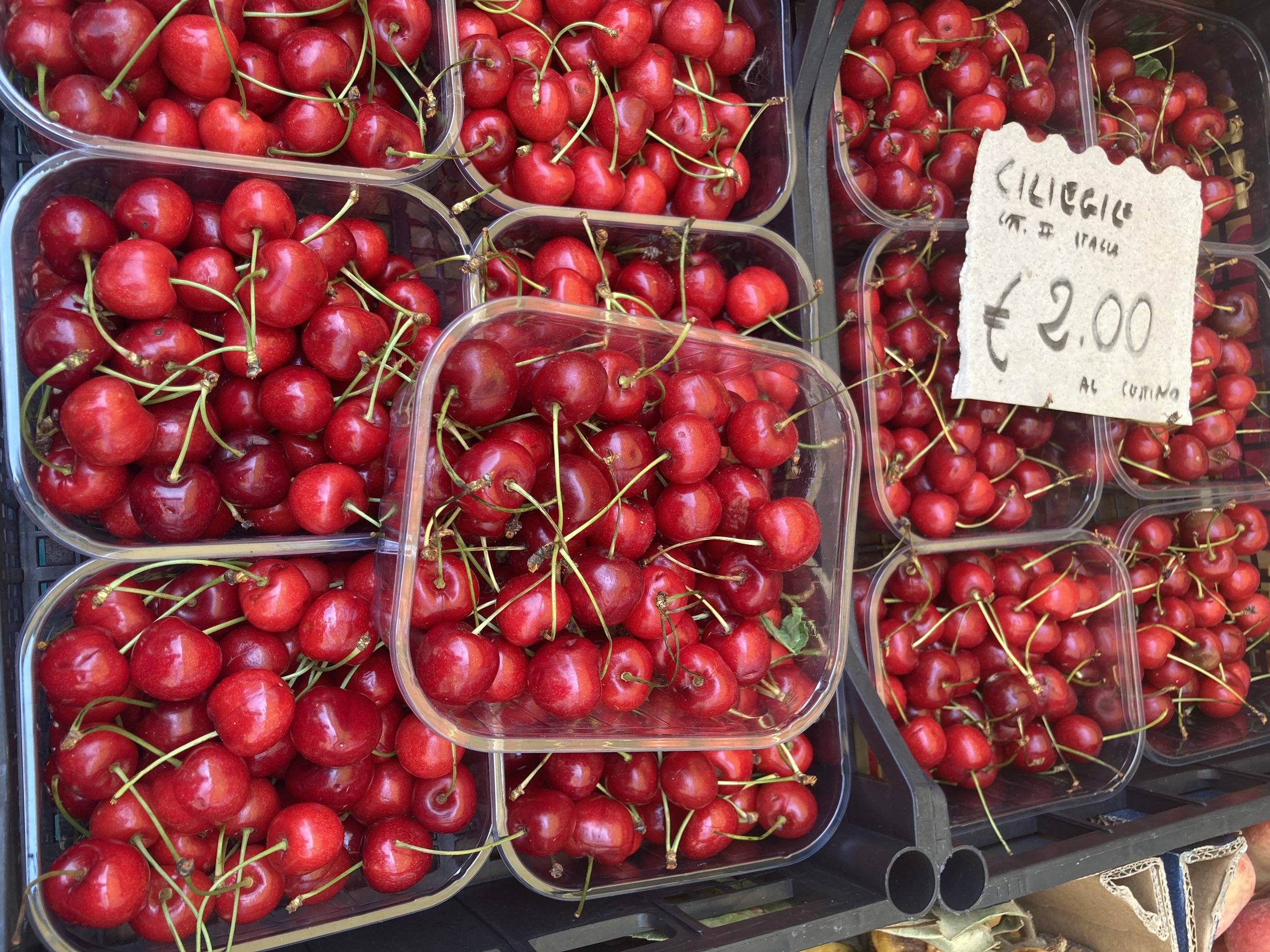
June also means wonderful fresh fruits and vegetables displayed like art in the markets.

E5E7882C-73C4-4659-B61A-64CBD5161434_1_201_a.jpeg
189F7563-1614-4AD1-95CE-4FC95D393DAE.jpeg
17D0E190-7E26-4954-9777-4D6334E8A51B.jpeg
3940A030-ACDB-40C0-A05C-8023E47745F9.jpeg

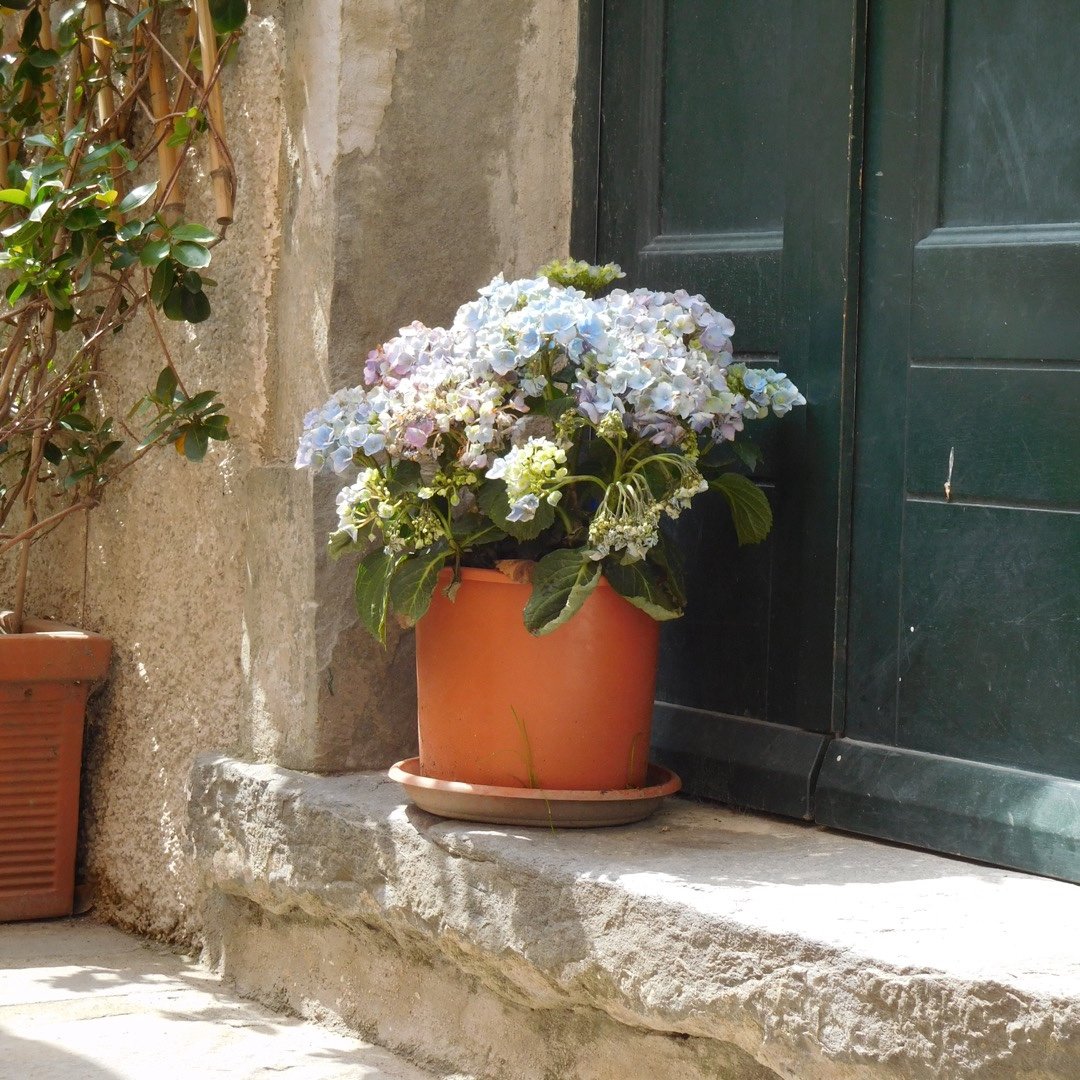
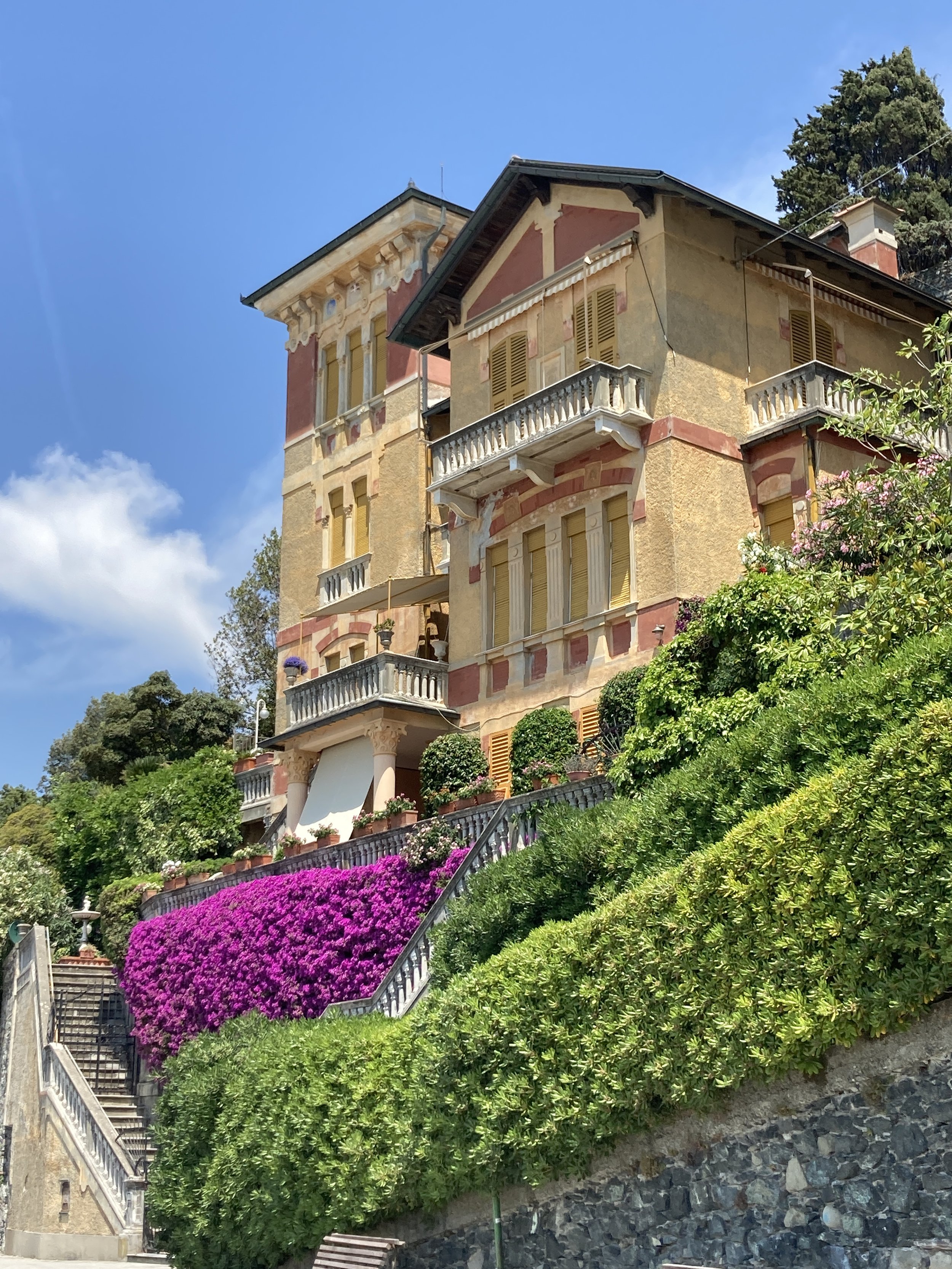
Summer also means flowers on doorsteps and balconies and on the terraced hillsides. In June there is color everywhere you look.

278E559E-71EE-4563-A51D-F810D0F41A26_1_201_a.jpeg
B304CC79-08D5-4897-87E3-3A1FEBF8EEC7.jpeg
6806EDBD-59DA-4BF2-A898-3A9B2E3475F3.jpeg
C397EF48-EBA5-4E86-B309-97D14521693C.jpeg

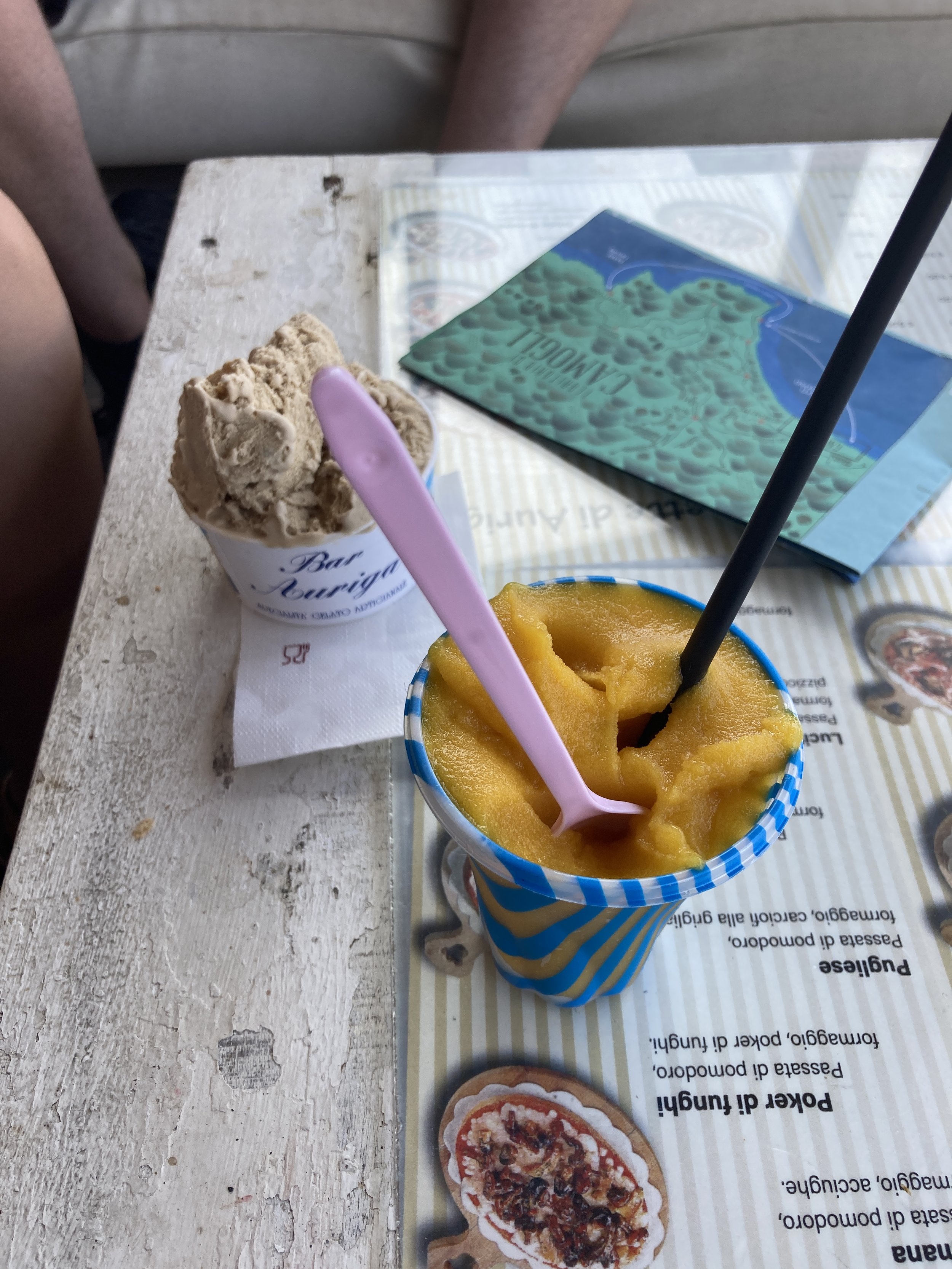
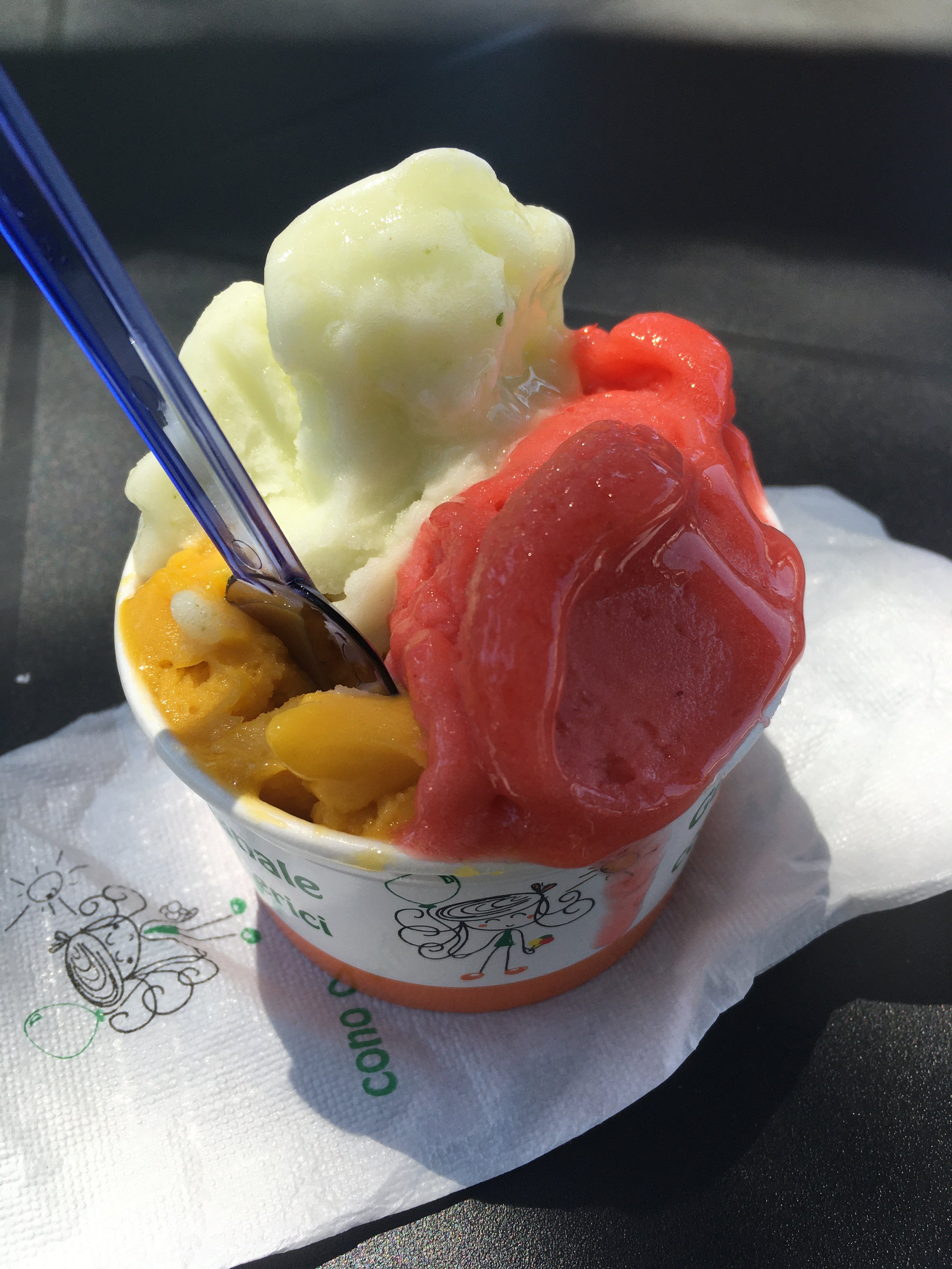
And let us not forget gelato! Whether in the city or in a little beach town, it isn’t summer without gelato. Equally refreshing is a granita made with fresh fruit. The best granita I’ve ever eaten was made with ripe mango and was enjoyed along the harbor in Camoglie last summer. I can almost taste it still.

DCA2C35E-77CE-4E12-8788-16CAC3796ABB.jpeg
EECE6DCA-EA04-4117-9CE6-8E5299DF03B9.jpeg

Do you have some June in Italy photos? If so, please share them on the Two Parts Italy Facebook page. Give us all more inspiration to plan a June vacation in Italy!

June 26, 2023 /Joanne Bartram
June in Italy, Italian June
#italiansummer, #italytravel, Italy, Italy travel, summer in Italy

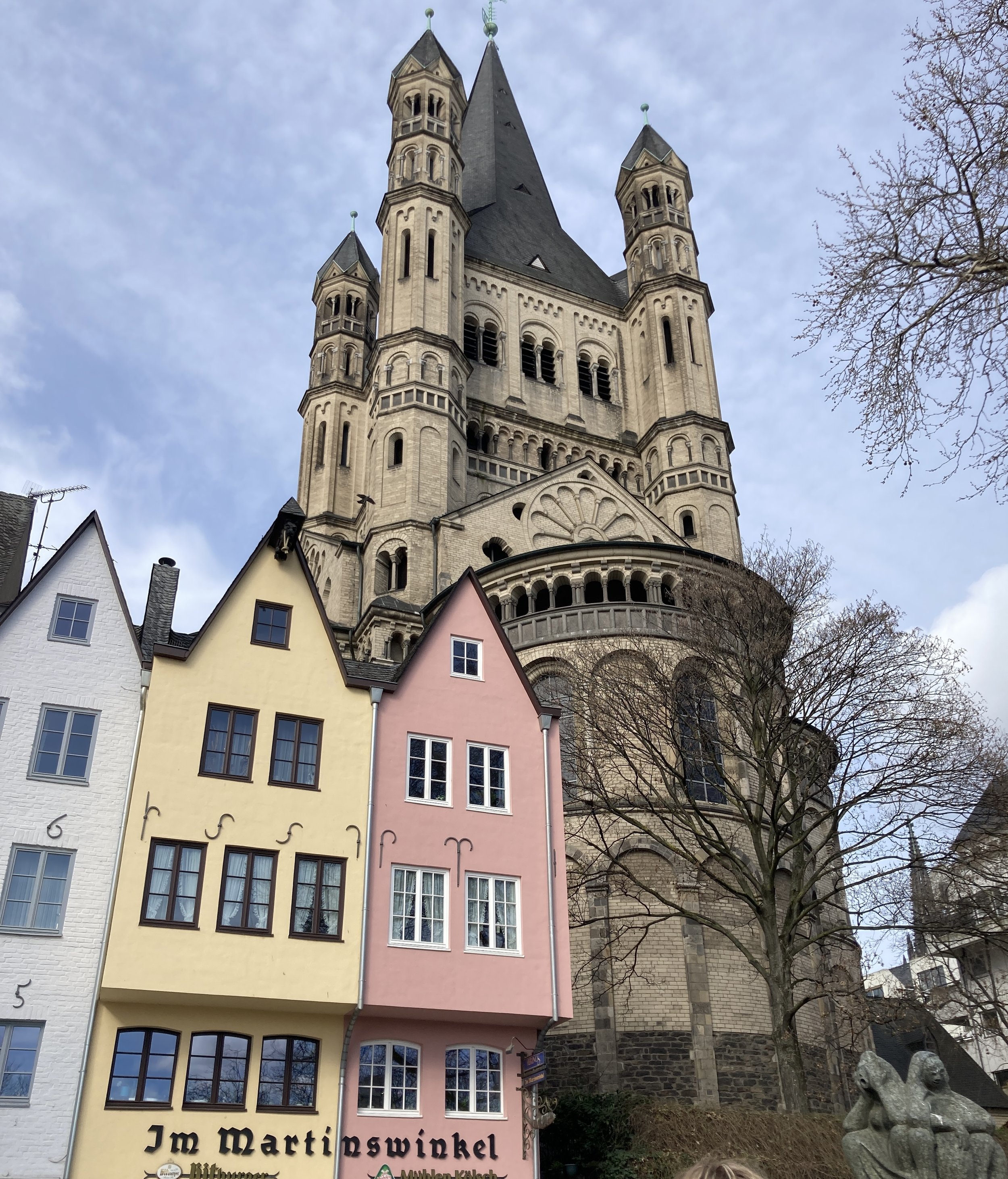
Great Saint Martin Church in Cologne’s Old Town

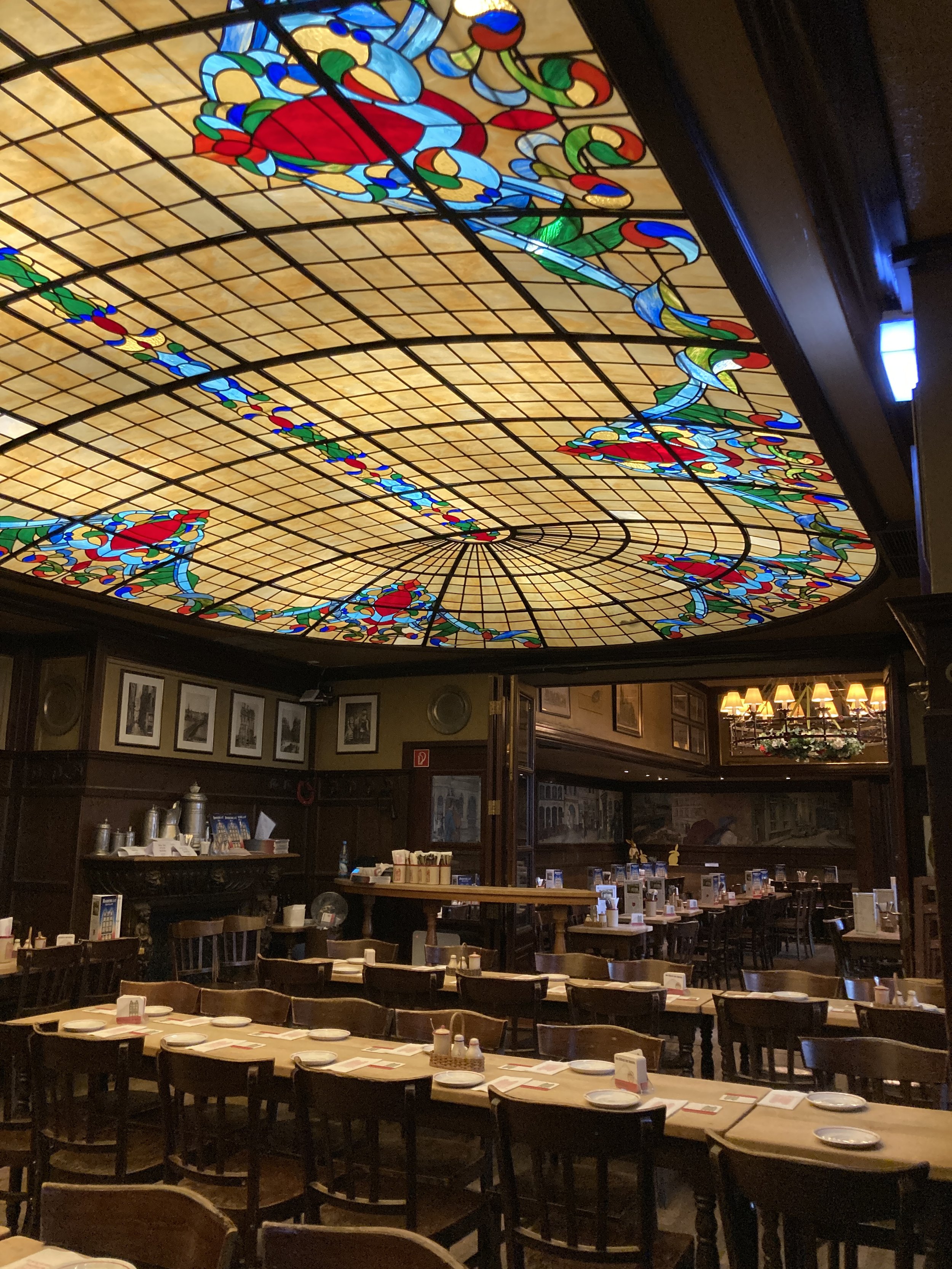
One Day in Cologne, Germany

June 19, 2023 by Joanne Bartram in Europe Cruises, Rhine River Cruise, River Cruise, Travel, Viking River Cruise, Germany Travel

Cologne also has beautiful parks, green spaces, and walking paths.

Cologne (Köln in German) is a city of contrasts.  The city has 2000-year-old Roman roots, some ruins of which are still visible underneath the modern city.  Today Cologne blends the few Medieval structures that survived heavy bombing during WW II with reconstructed areas designed to look as they did before the war. 

Add to these the modern architecture of the post-war city and you get a snapshot of modern-day Cologne.

 Most of Cologne’s sights – including the Cathedral, the Historic Old Town, and the 12 Romanesque churches – lie on the west (left) bank of the Rhine River and within easy walking distance of the Viking ship dock just across the Hohenzollernbrücke (don’t ask me to pronounce it!) bridge on the opposite riverbank.   


Cologne’s Left Bank - the Rhine, the Hohenzollernbrücke bridge, the Cathedral and the train station are all found here at the edge of the Old Town.

The second stop on my Viking Rhine River Cruise began with a morning walking tour led by an excellent local tour guide.  The walk took us through the Old Town, past colorful tall houses, through small squares, and in front of the town hall with its tall clock tower.  We even had a chance to sample the two famous Eau de Colognes (perfumes) produced in town. The walk ended in front of the Cathedral with plenty of free time to explore it on our own.   

Cologne’s Old Town with its cobblestone streets, small squares lined with colorful buildings, shops, and cafes.

 After lunch, the rest of the afternoon and evening was free to explore on our own.  I appreciated that the cruise included a full day in Cologne as there was so much to see. Even with a full day, we barely scratched the surface of this complex city and I have lots of ideas of things to see - including museums, several historic churches, museums, and even a chocolate museum - on a return visit.

Cologne’s Cathedral of St. Peter

 Some highlights of the day we spent in Cologne:

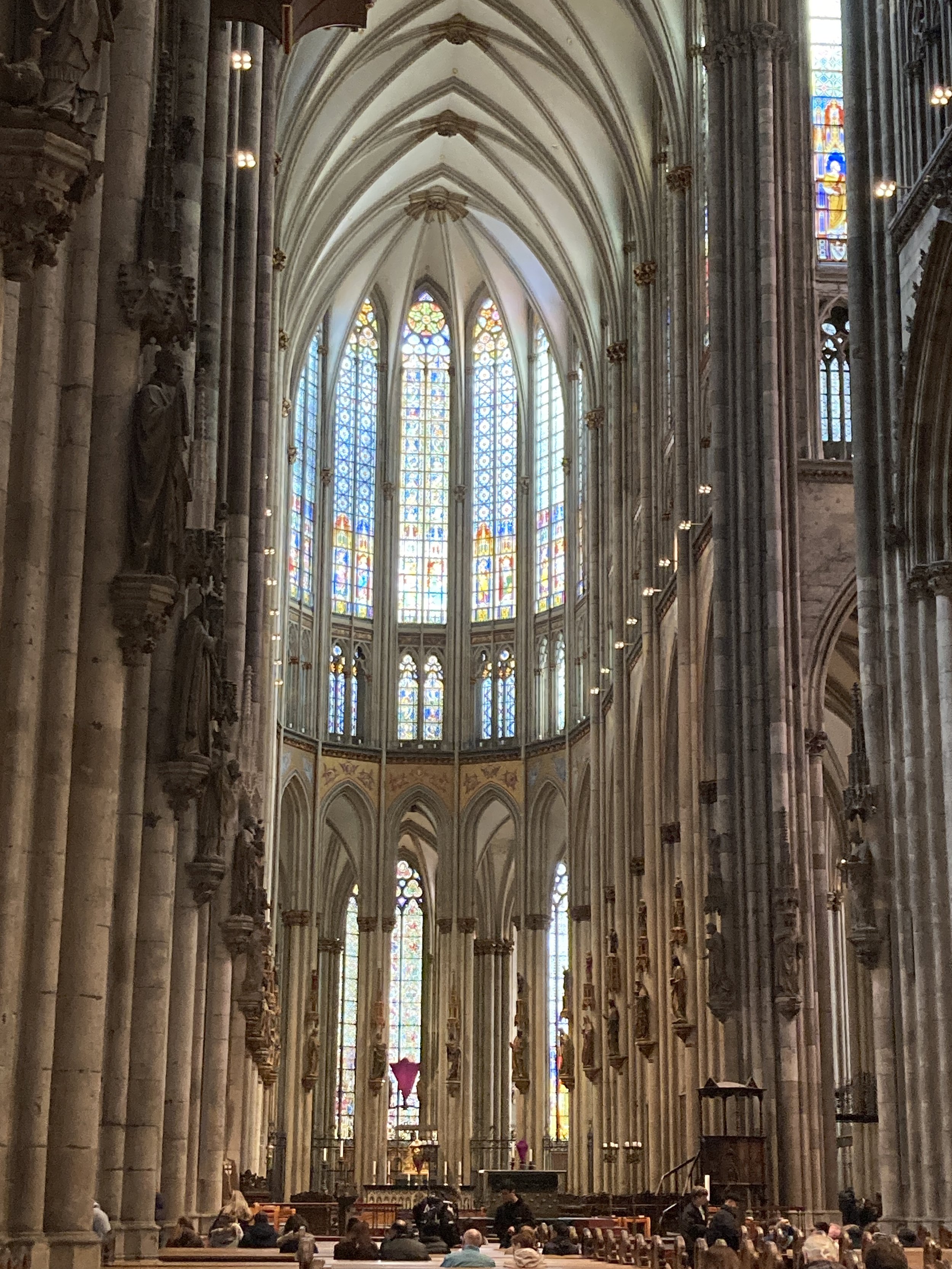
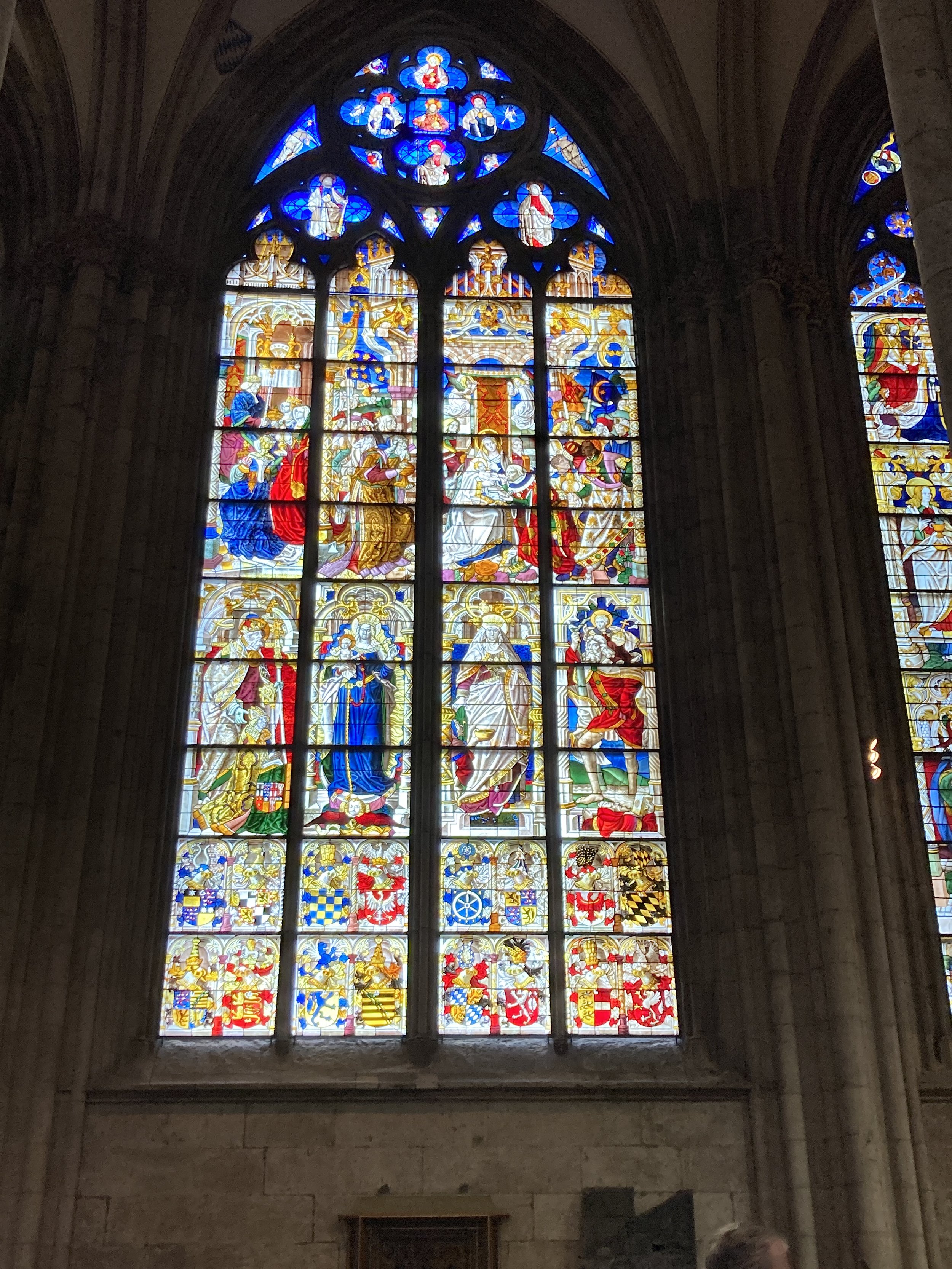
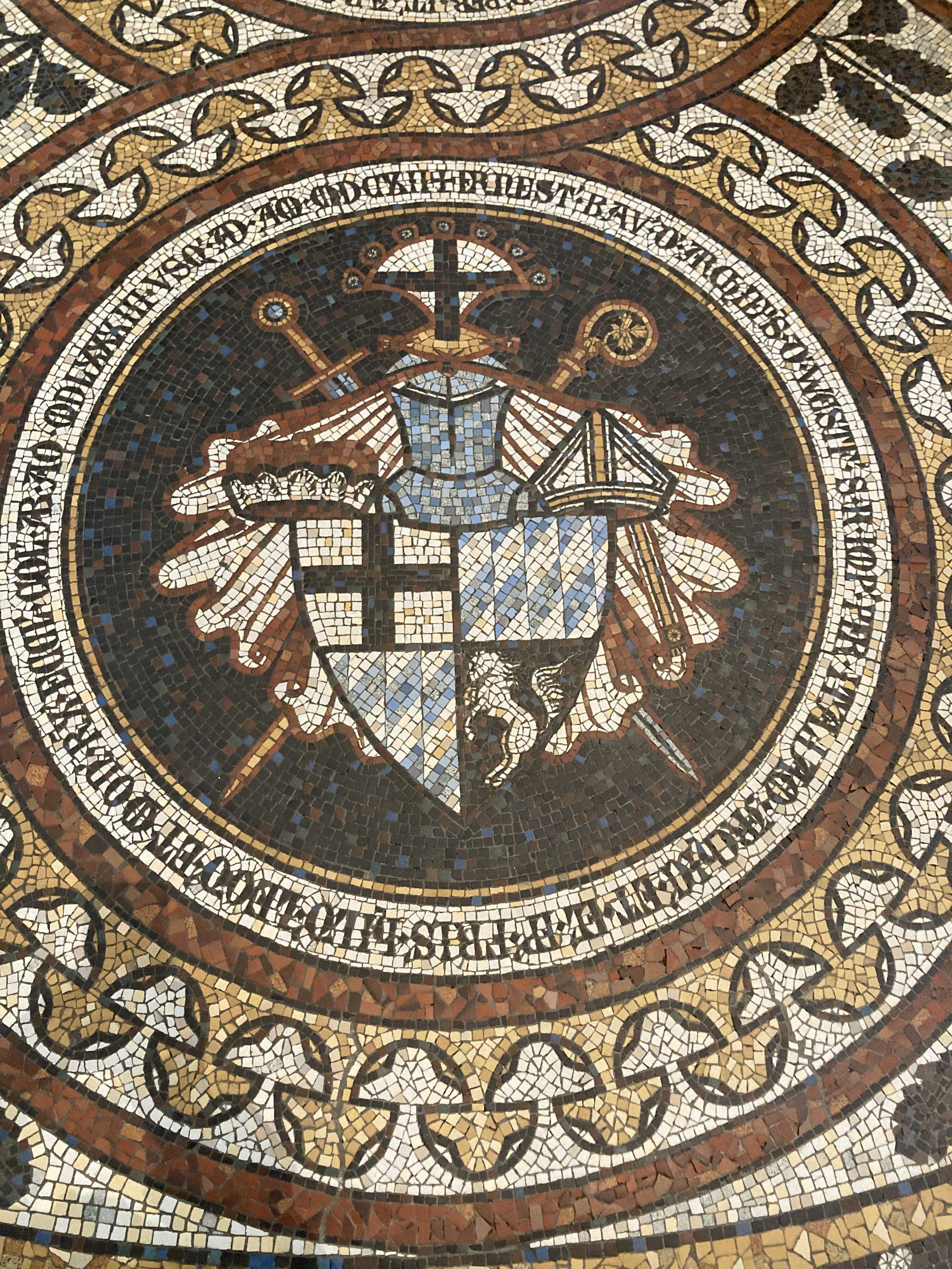
The Cathedral, officially the Cathedral of St. Peter.   This is the most visited landmark in Cologne and for good reason.  Built mostly in the 14th century (but not completed until much later), It is one of the tallest churches in the world.  Its huge spires dominate the skyline of Cologne.  Those spires also likely saved the church from destruction during the war as the Allied pilots used them as they navigated into Germany on bombing raids.  The style is Gothic with flying buttresses and a forest of small spires on the exterior.  The inside is a wonder. Its towering height is full of tall columns, ribbed ceilings, beautiful stained glass, paintings and statues, detailed mosaic floors, and iron work. 

9CBC1E88-7B7F-4945-9FDE-27615FB30FF9.jpeg
C214F0E3-CB81-4716-8C89-A7CAC39C43DF.jpeg
7388FF3D-ED88-450A-BFFD-EE9C768C63C4.jpeg
2447C3C5-B0A5-4FC6-87FD-D027212B4F07.jpeg

The most significant artifact in the Cathedral is the Shrine of the Three Kings (The Magi).  The shrine, located behind the main altar, holds a large gold covered sarcophagus said to hold the bones of the Three Wise Men. 

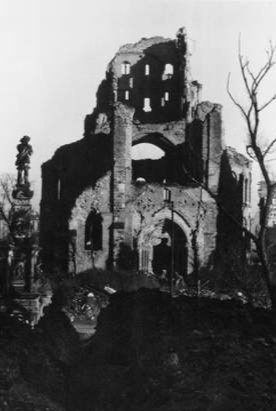
Historic photo of the destruction of Great St. Martin Church during WW II.

 The Great St. Martin Church.   With a one-day visit there wasn’t time to visit all 12 of the Historic Romanesque Churches, most of which were destroyed during the war and later rebuilt.  My friend and I chose to visit St. Martin’s, a beautiful part of the skyline of Cologne.   Smaller than the nearby cathedral, it has a central tall spire and smaller ones at each of its four corners.  There are 3 apses, giving the lower part of the church a clover-leaf shape.  Nearly destroyed during the war, it only reopened in the 1980’s.  The interior is simple with little decoration save for remnants of paintings on the columns and some mosaic floor tile. The starkness and quiet, along with the distant echoes of war, were quite moving.  Its location in the old part of the city, surrounded by colorful houses and small streets, gives it a very human dimension.

7367F5A2-2F19-4E1B-AD2C-C4E56D62A487_1_201_a.jpeg
460D33CD-C1BE-436E-8171-9E713435B12B.jpeg
B51BD999-A46D-45D9-85D1-FC5C6146523E.jpeg
7145B66E-8667-476B-B299-9998A5979308.jpeg

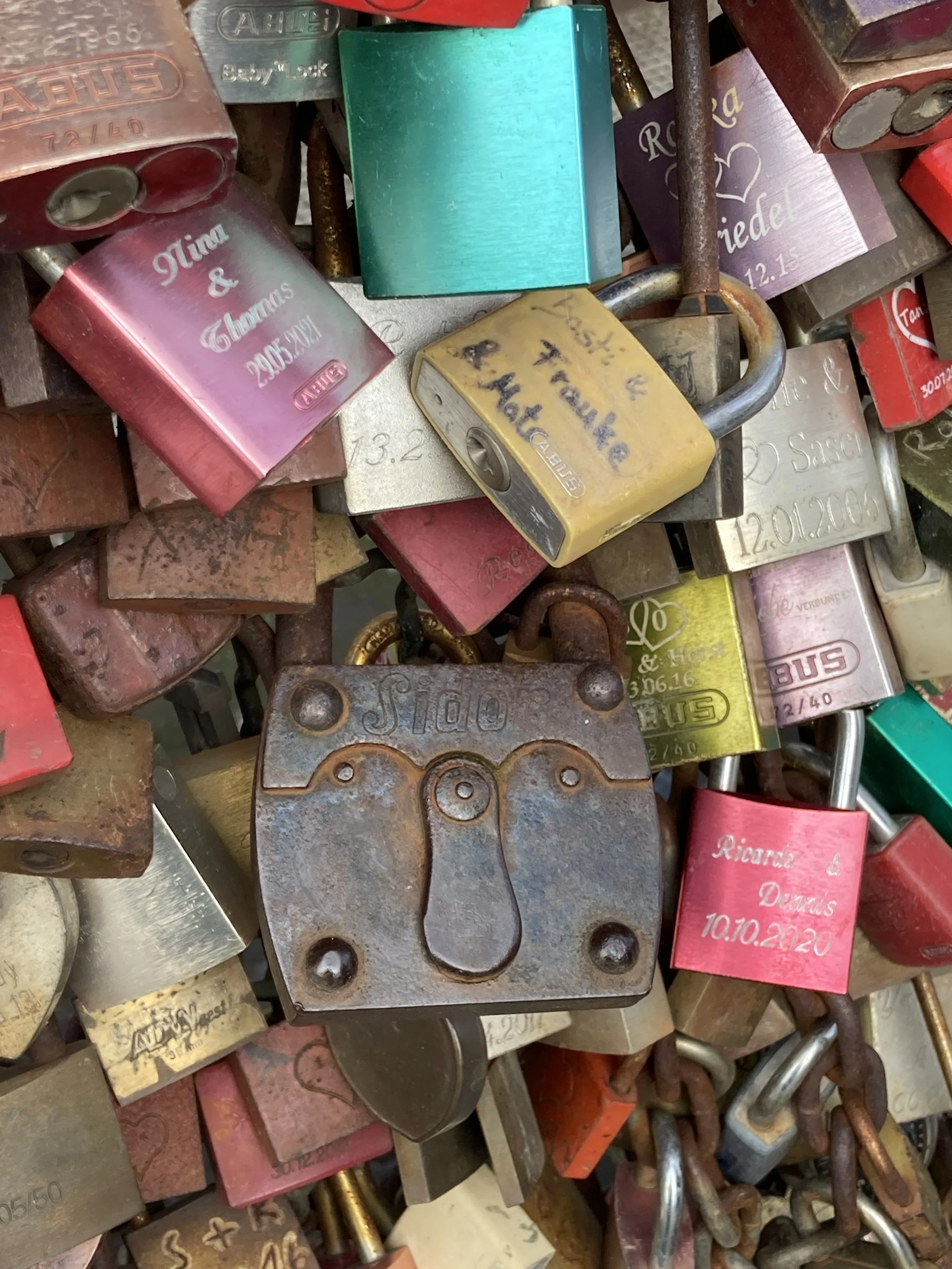
 Love locks on the Hohenzollernbrücke.   This long bridge serves as both a pedestrian bridge and a railway bridge.  It connects the broad pathway on the right bank to the old town on the left.  The bridge is full of love locks placed there by hopeful couples.  The locks are of various shapes, sizes, and colors.  Some look very old and some are shiny and new.  There are so many that the city is worried about the weight they are adding to the bridge! 

The nicest part about strolling across the bridge are the wonderful views of the city skyline, including the Cathedral and the nearby church of Great St. Martin.


Eau de Cologne.   Perhaps the most famous product of the city of Cologne is a type of perfume which bears the city’s name.  The history of Eau de Cologne has an interesting Italian twist.  Giovanni Farina, born in Italy but a resident of Cologne in the early 1700’s, developed a perfume which, in his words, had the scent “of a spring morning in Italy, mountain narcissus, and orange blossom just after a rain”.  He named it after his adopted city of Cologne and founded both a much loved scent and a family dynasty.  Today the 5th generation of Farinas produces the citrus scented Eau de Cologne that bears their name. Of course, he had some competition - a few years later a local German man produced a similar perfume and even tried to market it under the Farina name.  Legal battles ensued, were won by the Farina family, and the name of the other perfume was changed.  Today that second perfume, re-named 4711, is equally famous. 

Our guide brought along samples of both for us to test. Which was my favorite? It was the lighter, fresher scented Farina Eau de Cologne.

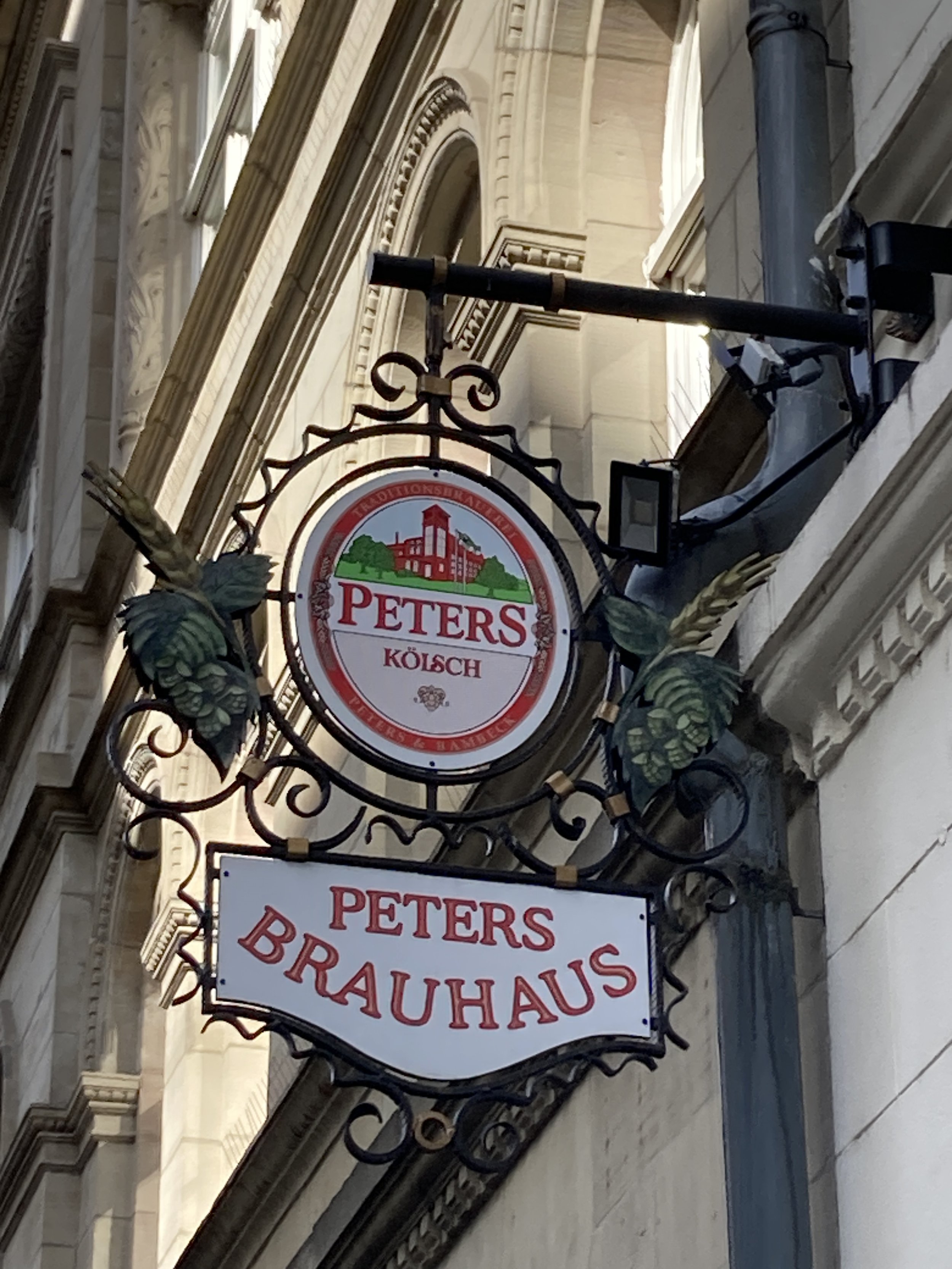
 Local Beer.   I am not much of a beer drinker, but I still found the beer culture in Cologne interesting, especially in the way that it is integral to the local identify.  The beer produced here is called Kölsch and it is served in the many brewpubs in town.  Production is regulated and only beers produced in and around the city, according to set standards, can be called Kölsch. 

69E66493-3E0C-462E-AD63-54CFDB568735.jpeg
B5F00B66-FC7E-4A8E-8DFE-12E91110A7B0_1_201_a.jpeg
3CBE1E11-E54A-4A55-9856-0337A456DA8E.jpeg
41A9FC9E-840B-4A4B-AE47-6EC4D16A4DB0.jpeg

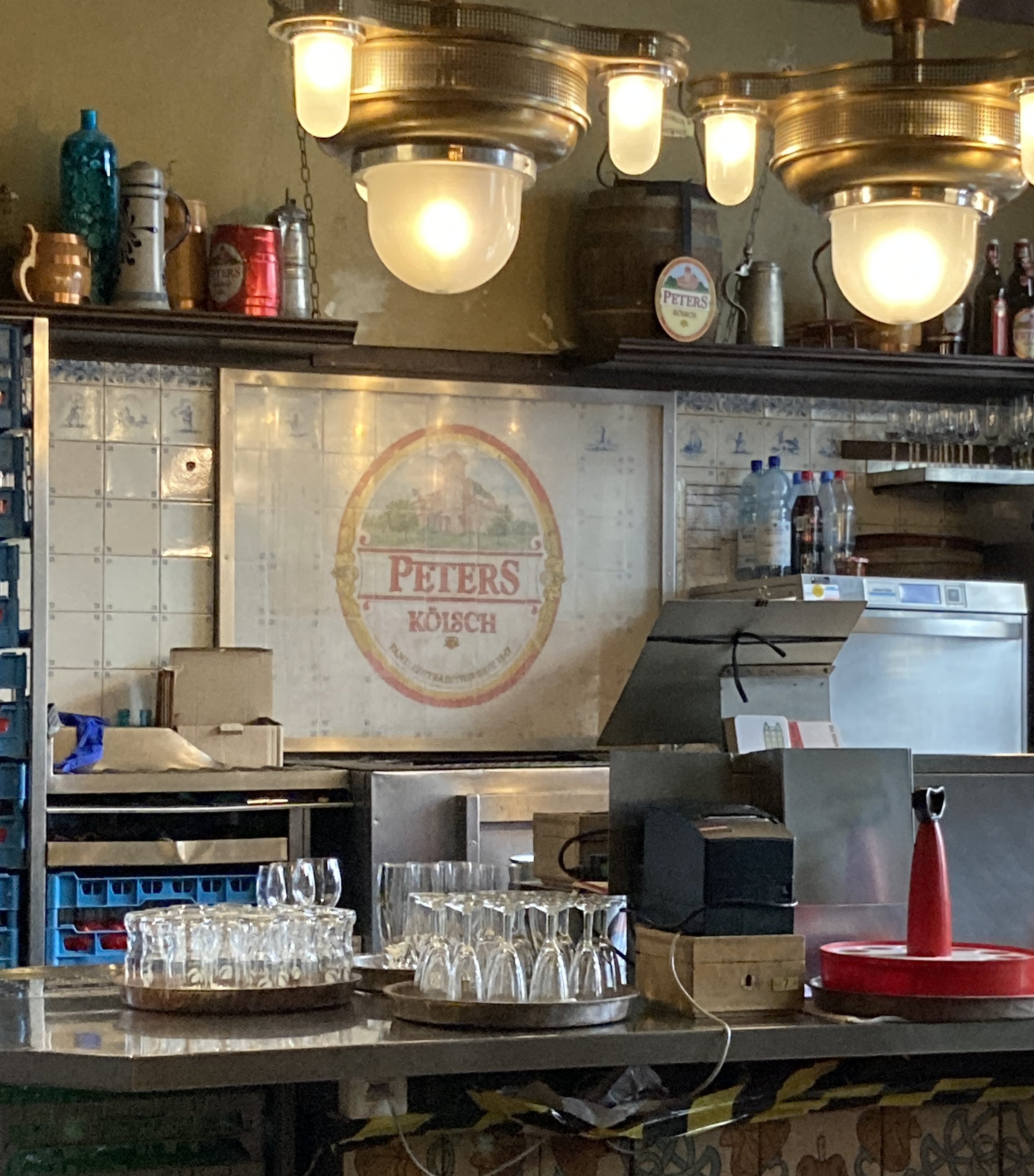
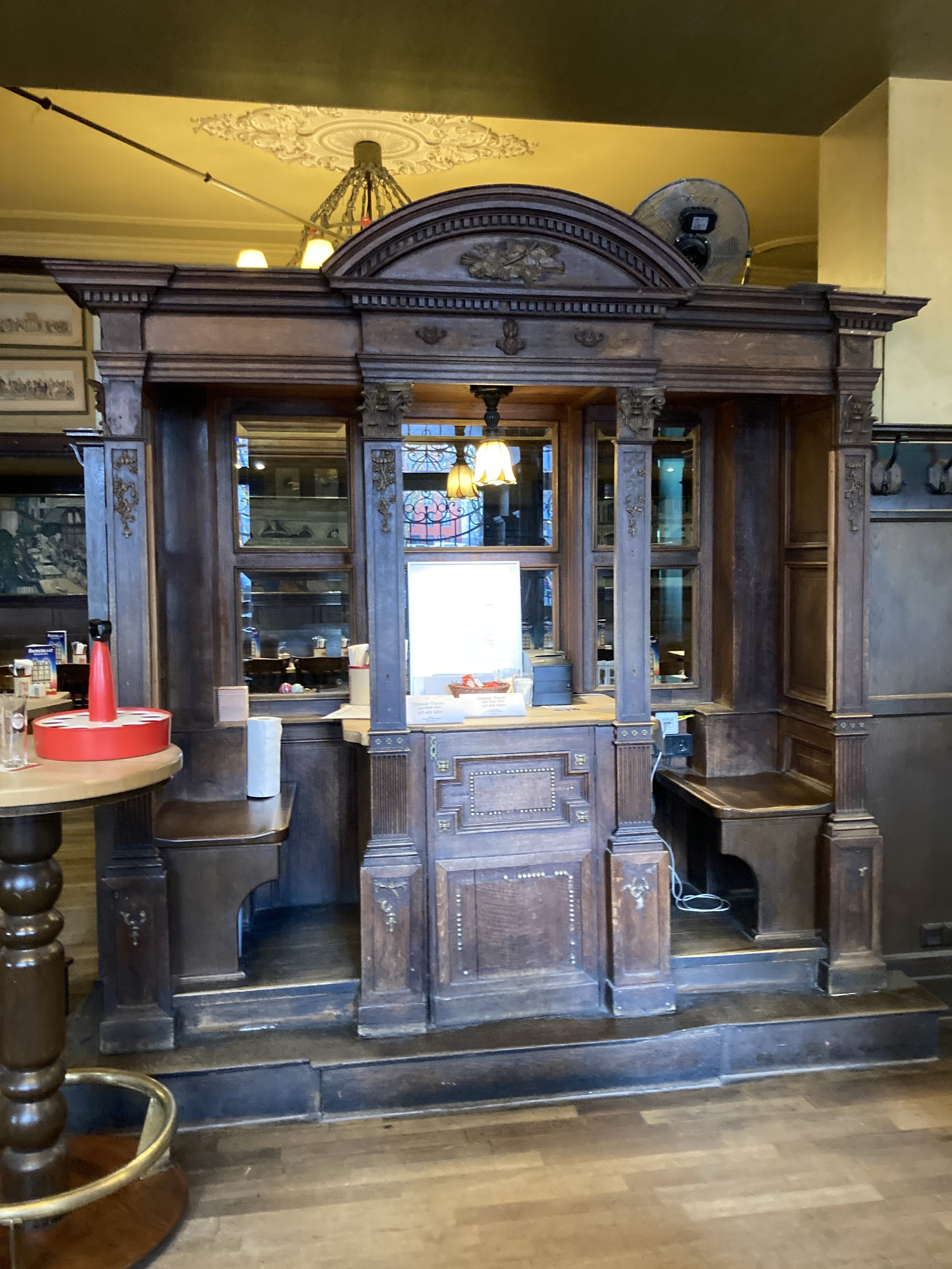
The pubs have an old-world atmosphere. The waiters wear traditional costumes as they carry round trays of beer in narrow glasses called stanges.  The servings are small, around 6 ounces, but are automatically refilled when empty!  To stop the refills, the coaster is placed on top of the glass. 

We made a quick stop at a traditional brewpub - Peters Brauhaus (pictured above) - to have a look around. It was much too early in the morning for a beer, but fun to see the inside of this historic brewpub.

It is impossible to miss the importance of beer culture in Cologne. Look closely and you’ll find small gnome-like carvings of Köbes (waiters who serve the Kölsch) outside some of the pubs. Viking offered an optional excursion for a dinner in a local brewpub for those passengers who wanted to experience the culture first hand.

The Viking ship Baldur left Cologne at 10pm, headed for the dock at Braubach and visits to Koblenz and the Marksburg Castle. More on those stops in a future post.

June 19, 2023 /Joanne Bartram
Cologne, Eau de Cologne, Cologne Cathedral, Viking River Cruise
Europe Cruises, Rhine River Cruise, River Cruise, Travel, Viking River Cruise, Germany Travel

The Windmills of Kinderdijk

June 12, 2023 by Joanne Bartram in Europe Cruises, Netherlands, River Cruise, Travel, Viking River Cruise, Rhine River Cruise

A river cruise along the Rhine River, from Amsterdam in the Netherlands to Basel in Switzerland, passes through beautiful scenery and stops in fascinating places.   Over the next weeks I will write about some of those stops, beginning today with one of my favorites – Kinderdijk.

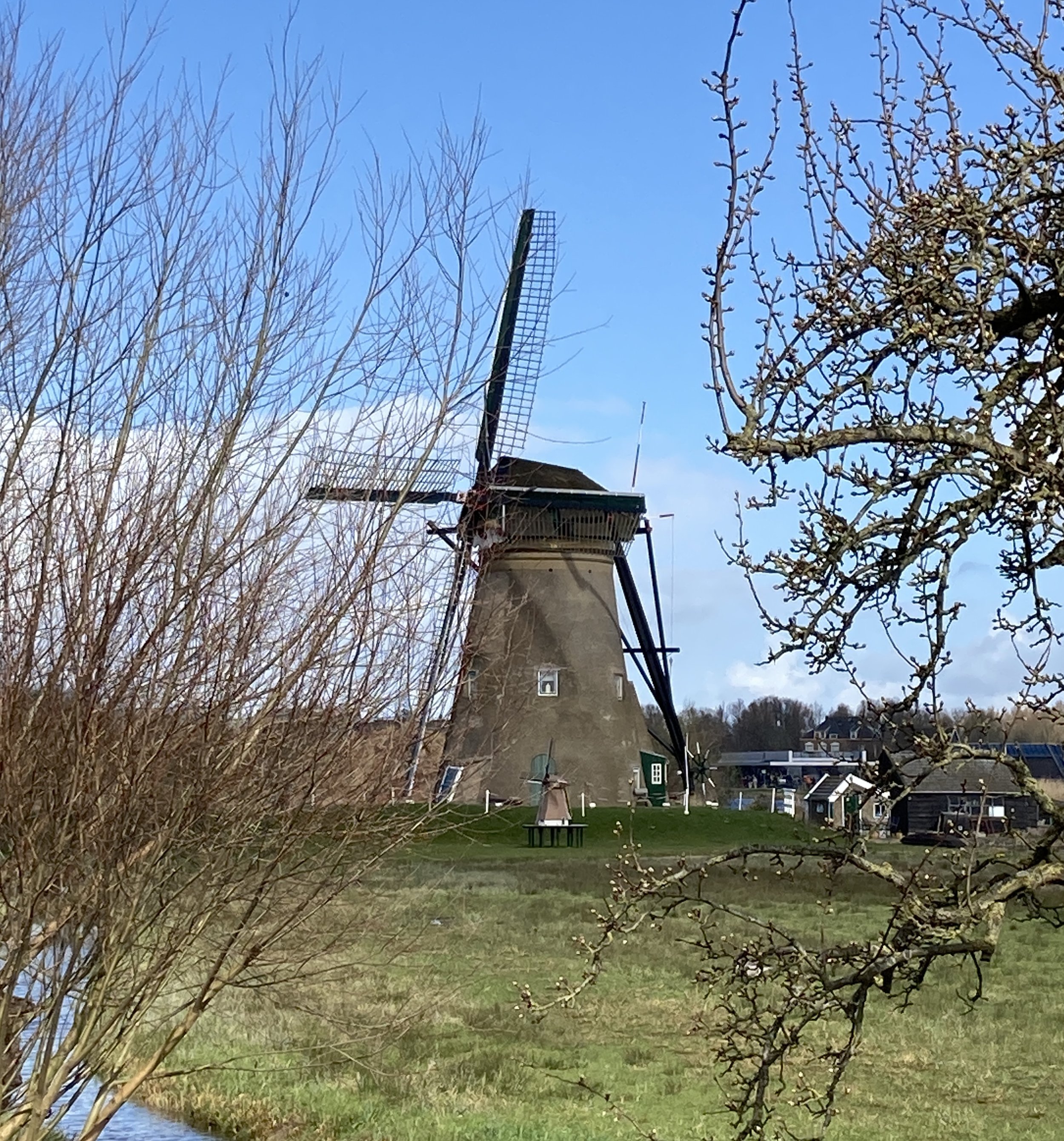
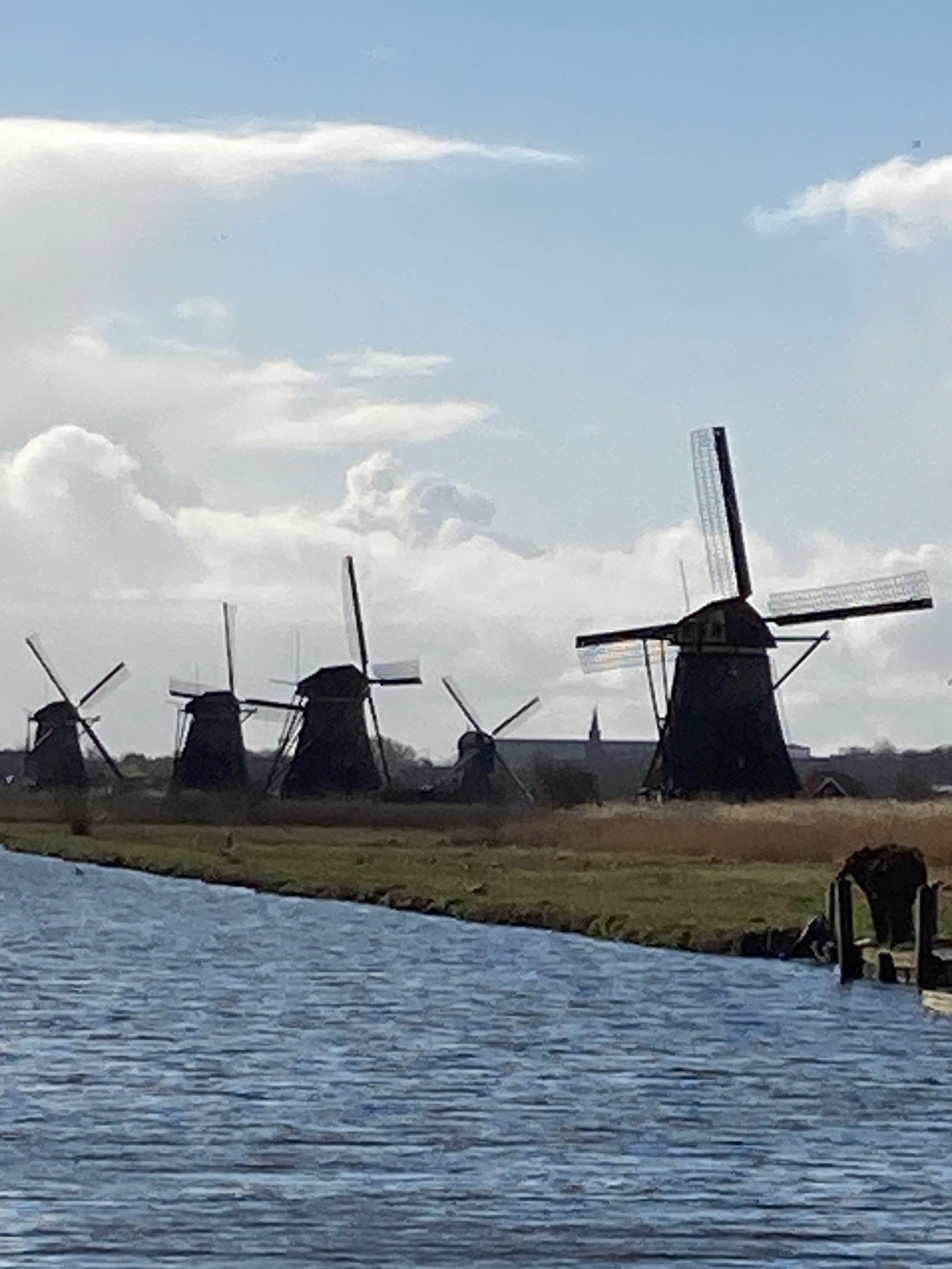
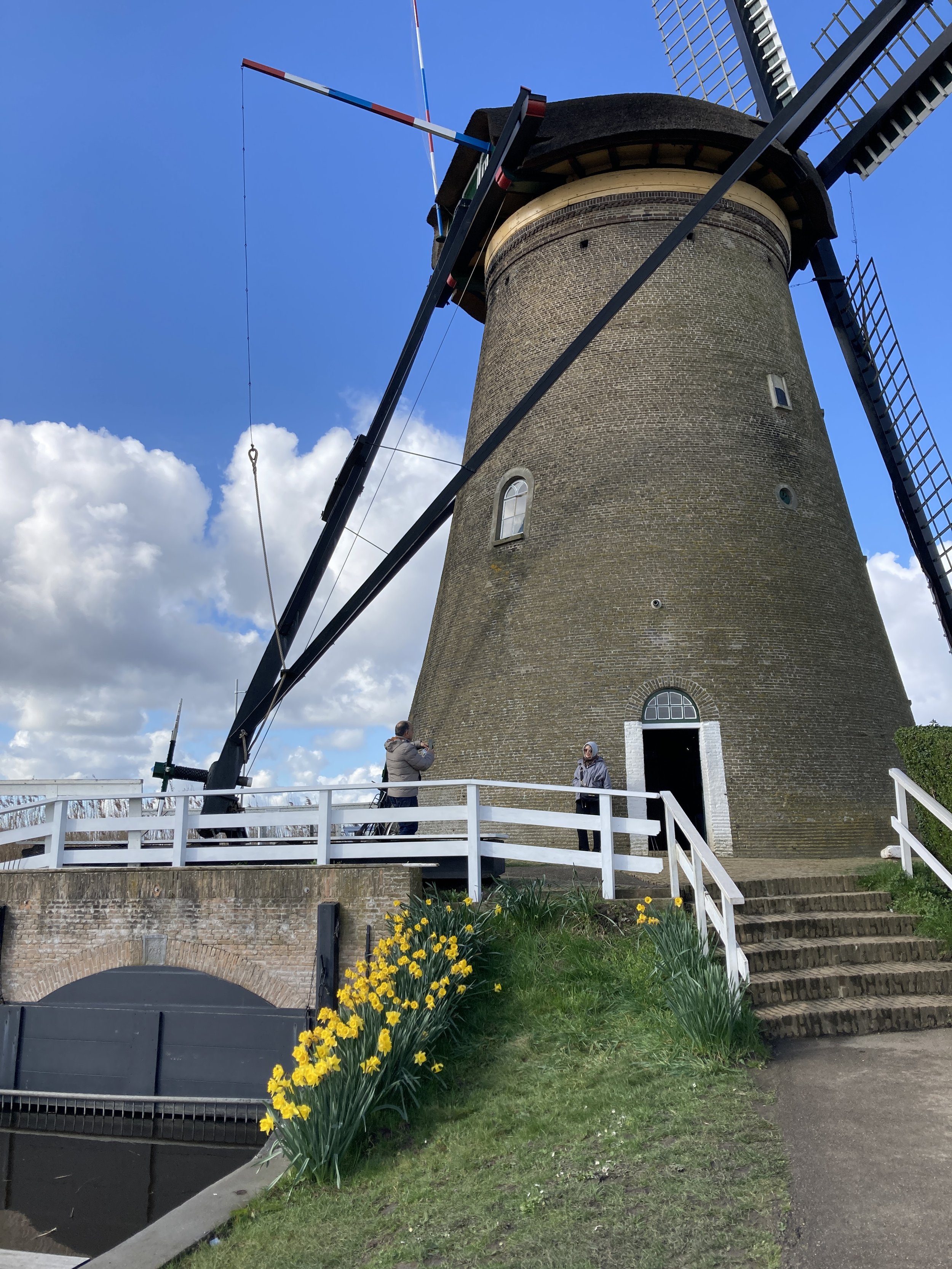
The Viking Baldur sailed out of Amsterdam at 11 pm on day one of the cruise and arrived in Kinderdijk the next morning just after breakfast.  It was an easy walk from the spot where the boat docked to this unique UNESCO Heritage site, famous for its 19 historic windmills.

 Any visit to Kinderdijk begins with the story related to its name which means “Children’s Dike” in Dutch.  The story goes something like this – way back in the year 1421 a huge flood brought destruction and many deaths to the area.  A little boy went to check the dike (not the famous Hans Brinker but a different boy altogether).  The boy found a cat atop a cradle floating in the flood waters.  Inside the cradle was a baby girl.  And so, we have the name Children’s Dike.   Another version of the story pre-dates the flood and is a bit more specific.  The baby was named Honigje. She had been cared for by a midwife and her cat named Dubbeltje. It was this cat who saved the baby from flood waters.  The legend was explained in the Viking Daily, an on-board newsletter provided each day with tidbits of information about the various stops along the cruise.

Viewing the windmills from a small canal boat was an optional excursion at this stop.

The local tour guide for our morning at Kinderdijk was a very tall Dutch gentleman who had grown up in the area.  If you’ve never experienced Dutch humor and frankness, then I will simply say that it is an added bonus during the visit.  We all had a laugh when he warned us about not stepping in goose droppings by saying “watch out, there’s a lot of goose sh*t around”.  Oh, those plain-spoken Dutch! We tried not to laugh, really we did, but it was impossible!

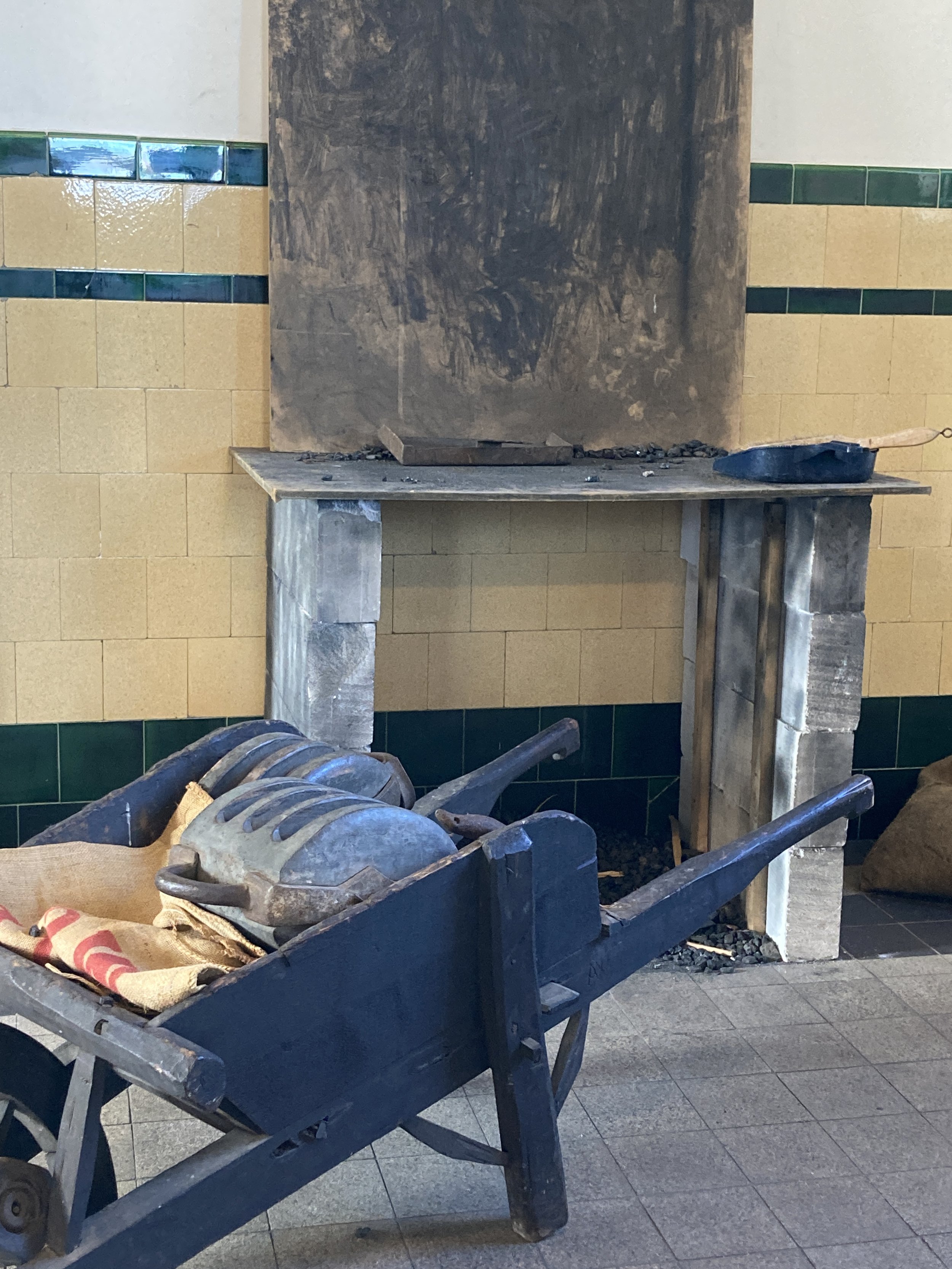
 The visit began in the gift shop where a model of the area provided an explanation of how the windmills worked together to pump water from the below-sea-level lands up to the drainage canals.  This was also made clear by the fact that our ship, which was docked on the river, sat well above the lower lands of Kinderdijk.   Attached to the gift shop building was an area with old tools along with huge mechanical equipment – pumps that later were added to make the process of moving water much more efficient that doing so with the windmills alone.  Of course there were also souvenirs to purchase.

34EE3287-AE46-461B-8B10-562327090ED9.jpeg
A09E590A-1FEC-4B95-8C27-EA939A7D917D.jpeg
496D473E-1D3C-4487-A278-1AF5240F23BD_1_201_a.jpeg

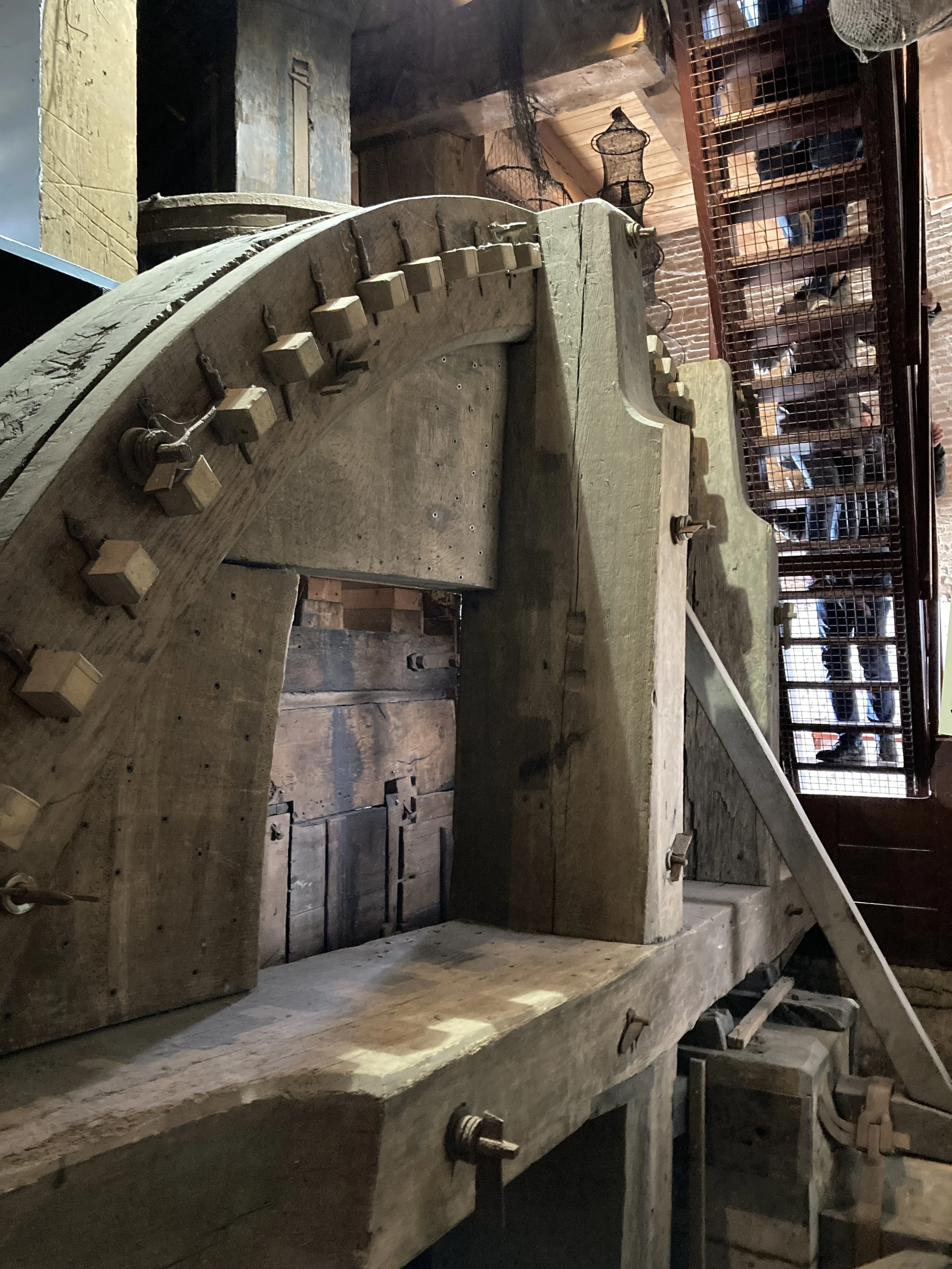
 A small educational building provided a chance to listen as our guide demonstrated the wooden structures used in the oldest windmills.

At Kinderdijk the windmills date back to the 1700’s, among the oldest in the Netherlands.  Our guide also discussed how the windmills work and the changes that occurred over time as construction changed from wood to iron. This brief introduction made the next stop, a visit to the interior of a windmill, much more valuable.

The windmills at Kinderdijk functioned to keep the land from being submerged. They also provided a home for the keeper of the windmill and his family.

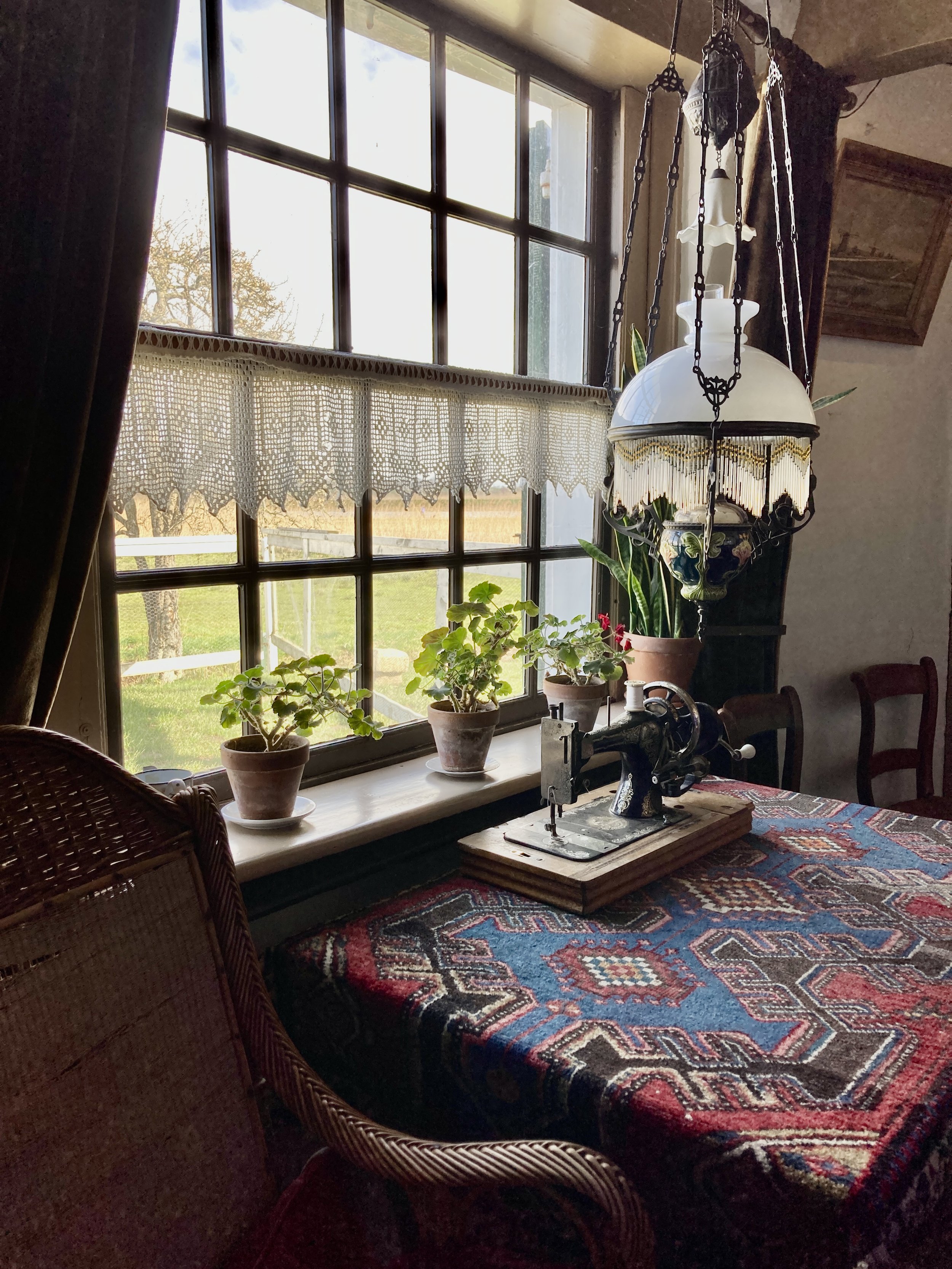
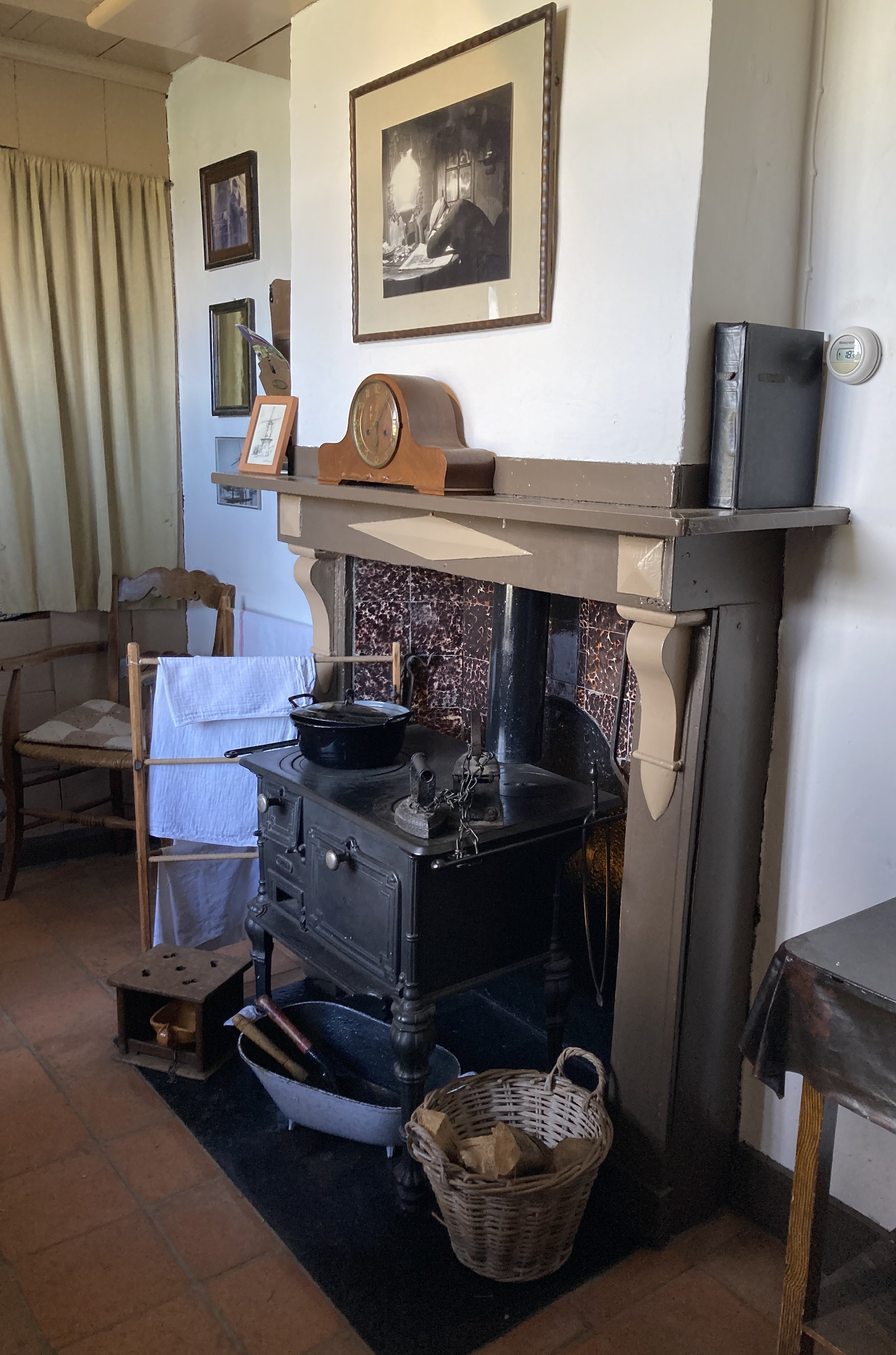
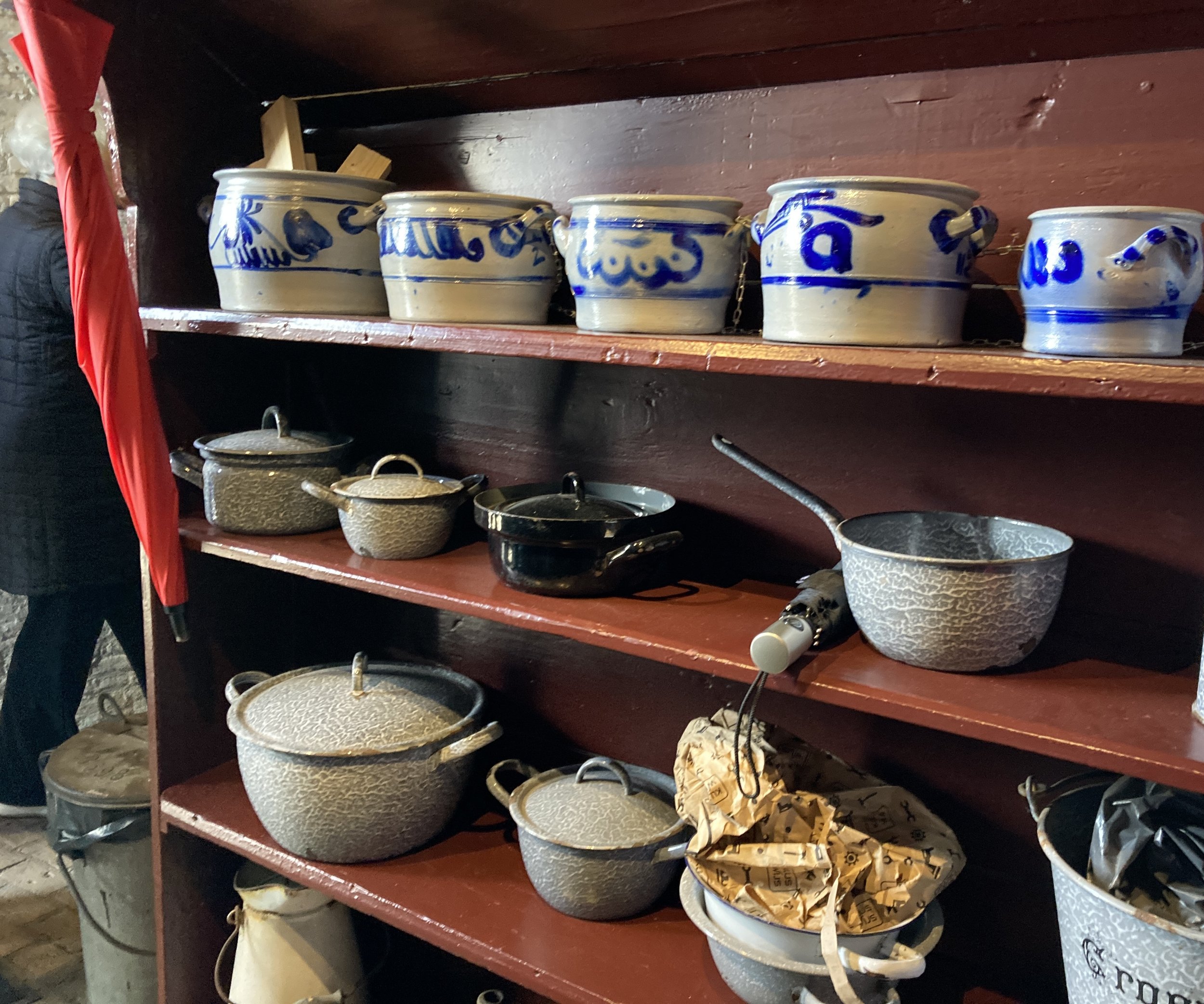
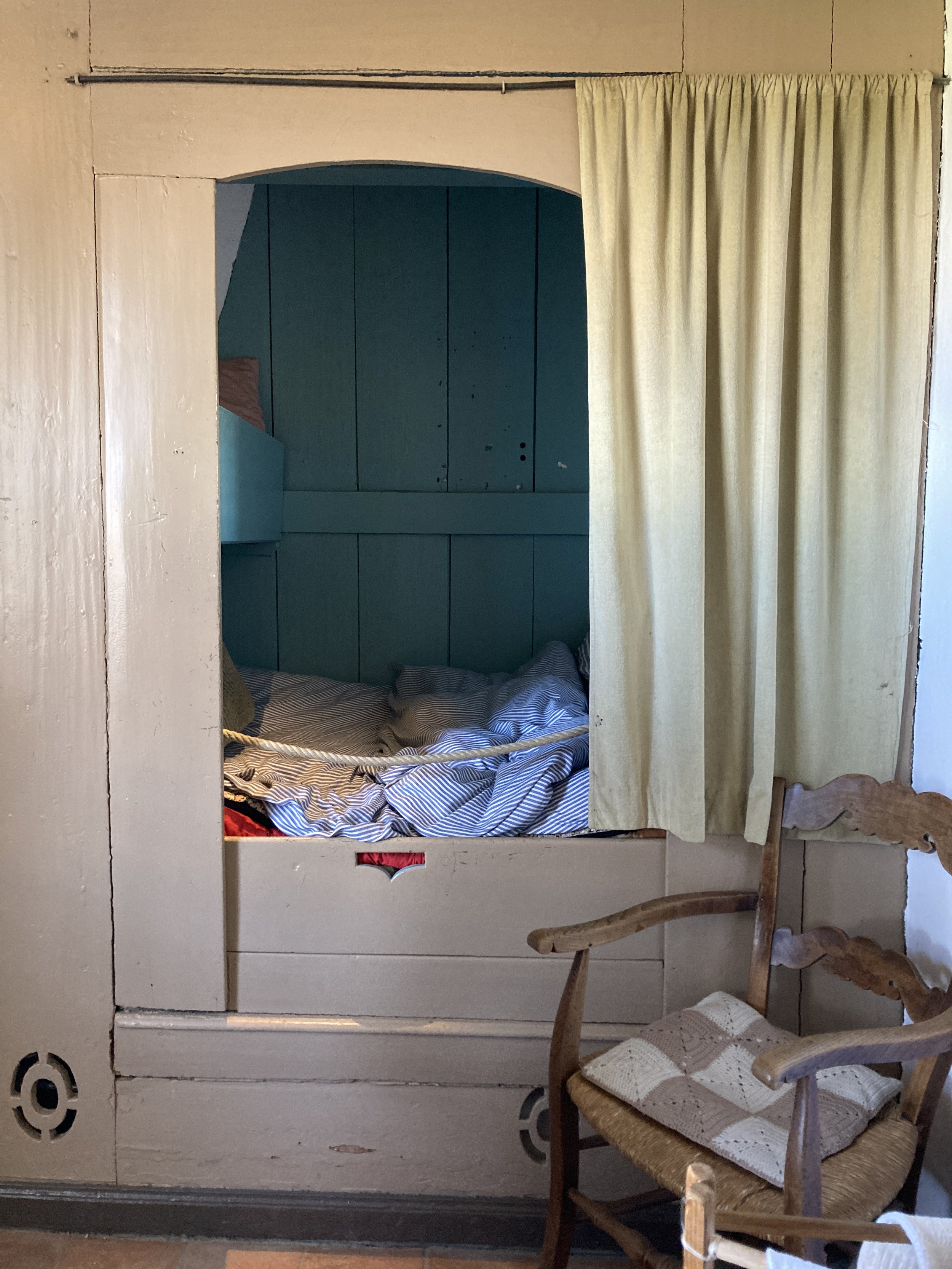
The day of our visit was quite cold and windy. Despite that, the small home inside the windmill was cozy.  The table sat beside a pretty window, the wood stove stood ready to cook a meal, and the china cabinet was full of pretty painted pieces.  The bed, tucked inside an alcove in the single main room of the home, looked warm and inviting.  There is something intriguing about the glimpse into a very different way of life that a visit to a furnished home provides.  

EF31E87C-4D23-4E5B-B2E2-9269E91B3D59_1_201_a.jpeg
7C33C360-C90F-448D-B461-BE60876E1DDD_1_201_a.jpeg
5F62FF18-4C2C-47C6-ACCF-038A506280FB_1_201_a.jpeg
BE3E55C6-9FFE-42E0-9750-04001532F5C4.jpeg

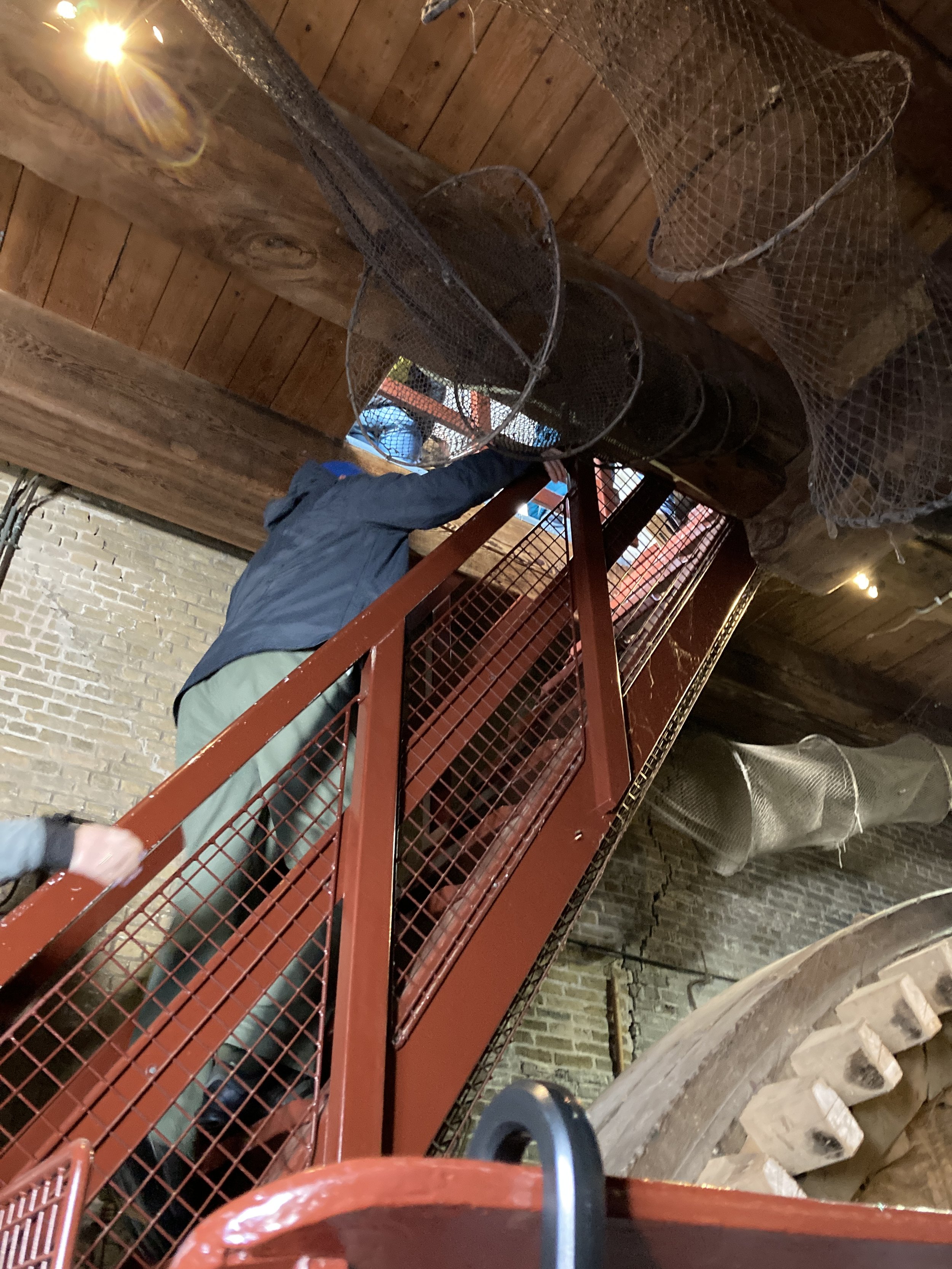
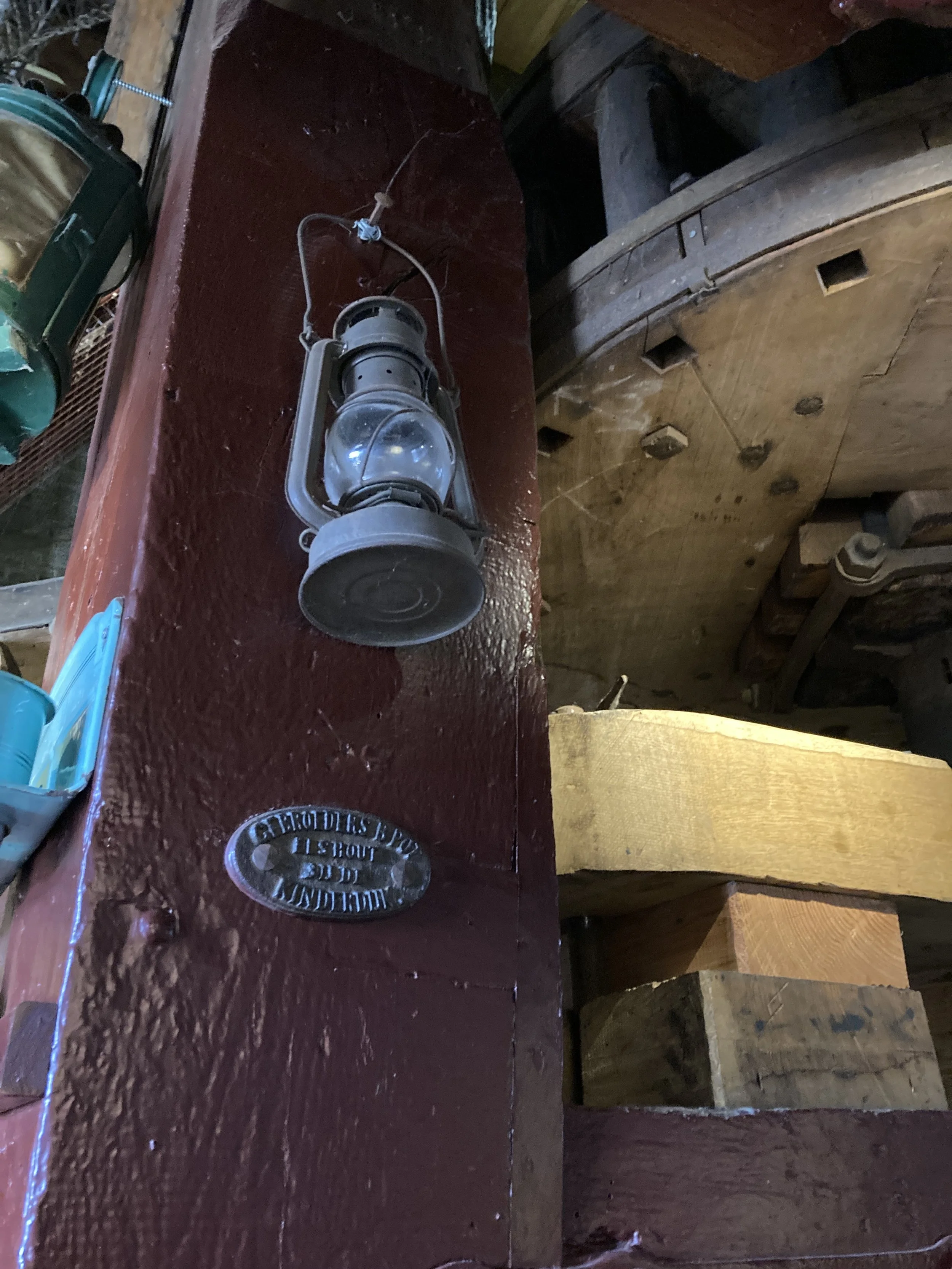
 The more adventurous in our group climbed the ladder into the upper workings of the windmill while some of us kept our feet on the ground exploring the big wooden wheels that drove the windmills and seeing the sails (blades) of the windmill from below.  

C7B630DA-56FC-4F8F-9B06-992C86432438.jpeg
9E8AE601-E850-4E09-8331-B8722697DDA2.jpeg
123F6FCE-BBD3-4044-B839-95E27CCBA35F.jpeg

An interesting tidbit – the position of the sails also served to send messages, including warnings of imminent visits from Nazis during World War II. 

This early spring cruise was a bit too early to see the famous Dutch tulips of the area.  Instead, there were lovely yellow daffodils in bloom, tall graceful grasses, budding trees and some pretty dramatic skies. 

 The windmills of Kinderdijk made for a perfect first stop on this week-long cruise.  Coming up, stops along the Rhine in Germany and France.

June 12, 2023 /Joanne Bartram
Kinderdijk, Dutch Windmills, Windmills, Netherlands, Viking River Cruise
Europe Cruises, Netherlands, River Cruise, Travel, Viking River Cruise, Rhine River Cruise

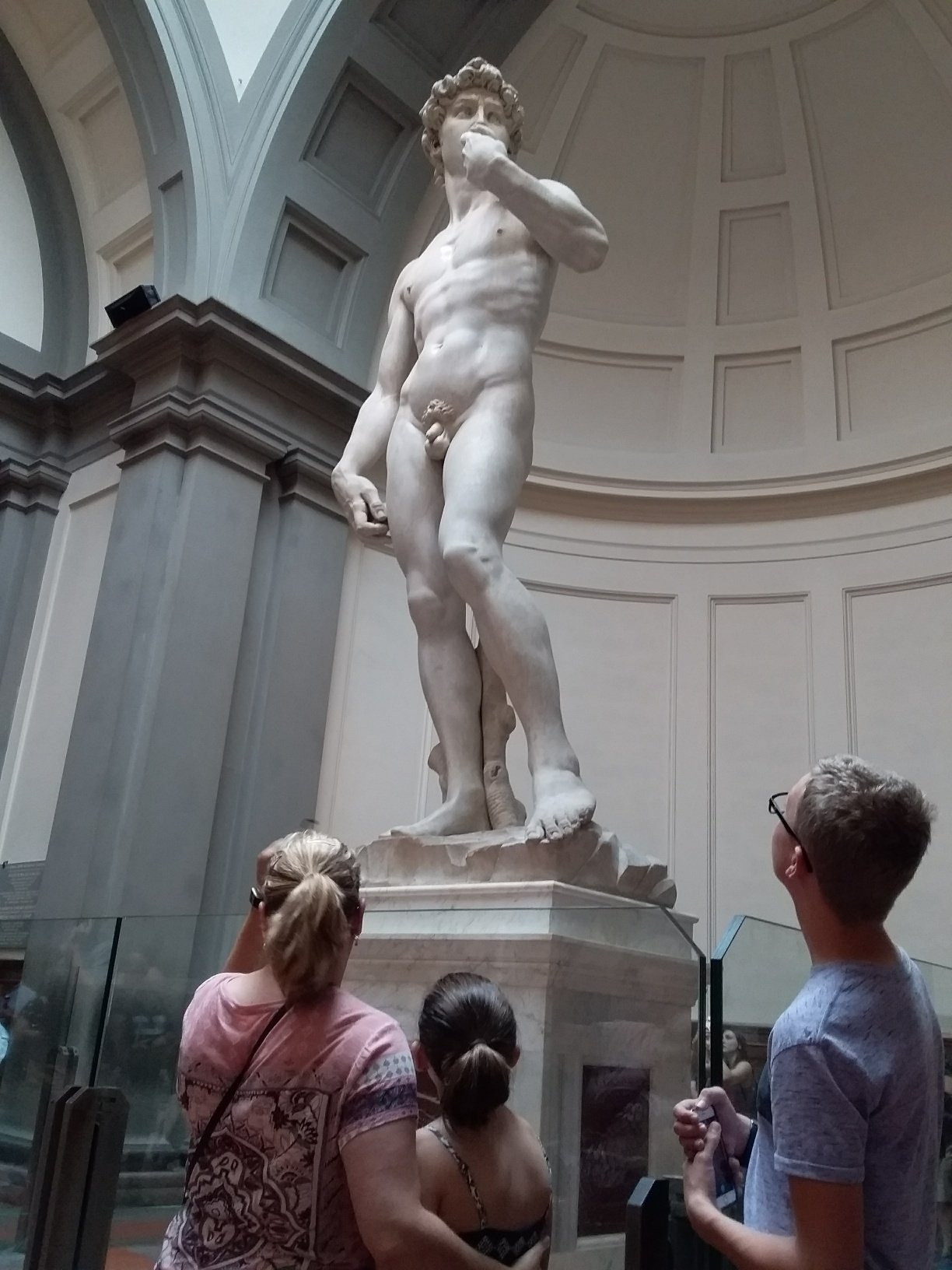
My daughter and two oldest grandchildren admiring Michelangelo’s David in Florence several years ago

Yes, David is Naked

June 05, 2023 by Joanne Bartram in #florence, Florence, Italian Art, Italian culture, Italy

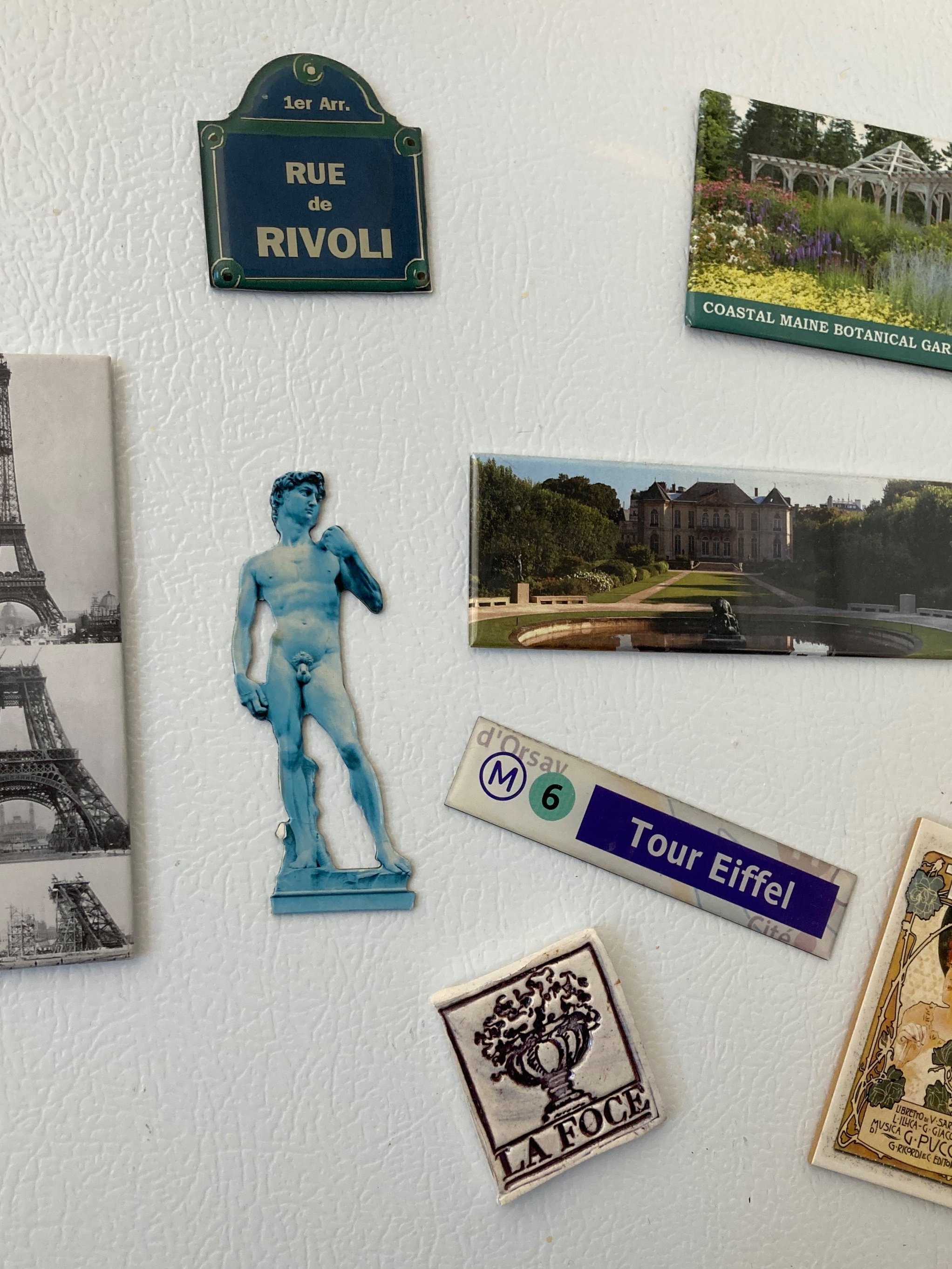
When I travel, I often collect magnets from various places. Monet’s Giverny, La Foce Gardens, the Eiffel Tower - all reside on my refrigerator, a constant reminder of wonderful trips.   

One of the magnets, which I brought home from an early trip to Florence, is of the David.

Years ago, I noticed my then 8-year-old grandson staring at it.  “Nana”, he asked, “why do you have a naked man on your fridge?”.   That was a great opportunity to begin a conversation about classical art, the Italian renaissance, a sculptor’s skill in recreating the human body, and the nude as an art form.  My grandson was not buying any of it.  “Well’, he countered, “I just think it’s inappropriate”.   All I could do was laugh.   

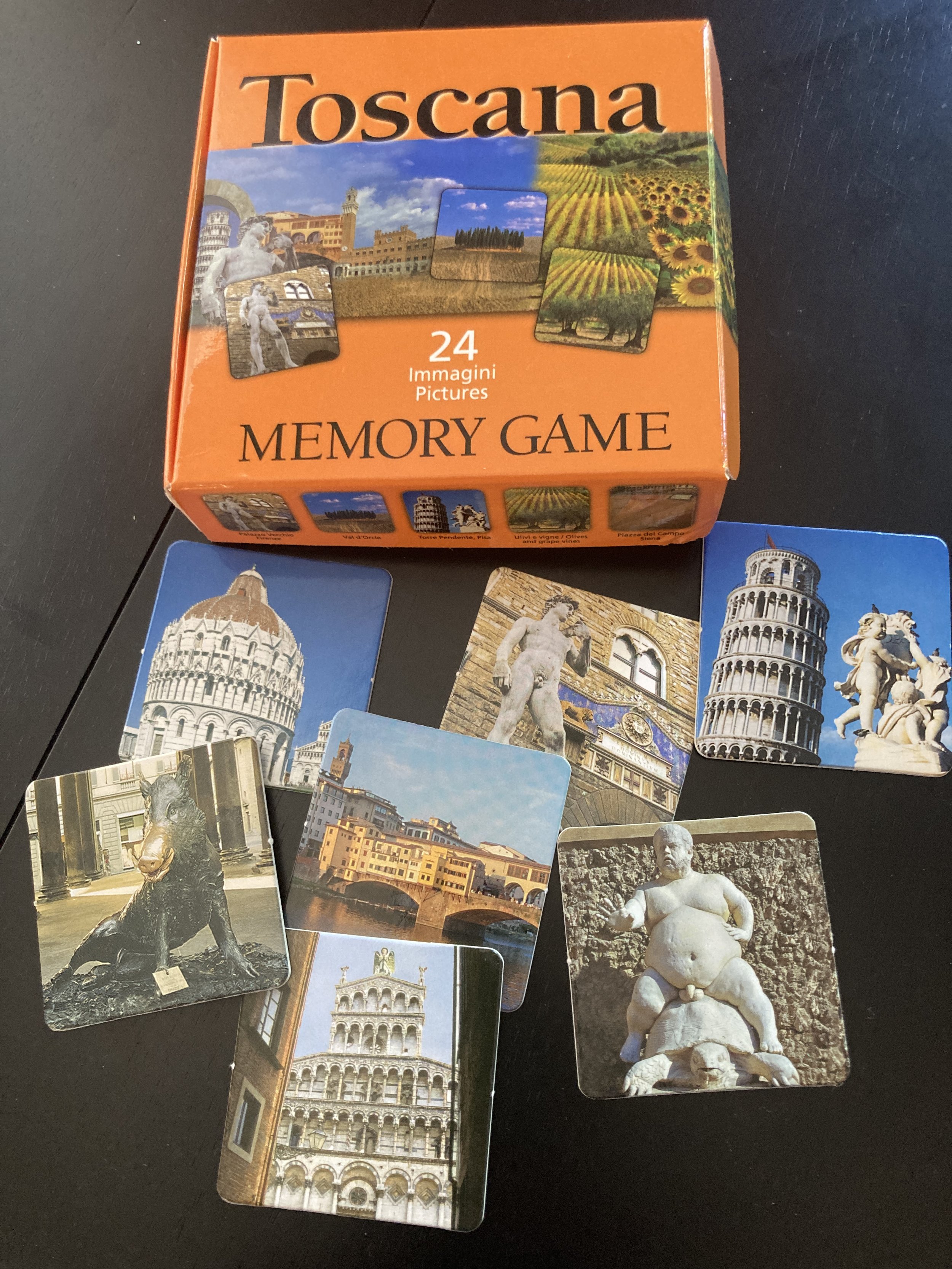
On a later trip I purchased a matching game for my even younger grandkids.  Each card had a photo of a famous Tuscan landmark or piece of art.  Included were, I think you can guess this, a photo of the David. Another card had a photo of Morgante the Dwarf, often known as the “Fat Man on the Turtle”, from the Boboli Gardens. Morgante is, of course, naked. This matching game has been a favorite of my grandkids for years.  And yes, the two nudes get lots of giggles, but the kids have learned a lot about art and Tuscany in their search to be the first one to uncover “the naked guy”.  All 4 grandkids have survived the nudity just fine. 

 My grandson’s opinion, as an 8-year-old, was understandable.  But I expect a more sophisticated and open-minded attitude from adults.  I am still scratching my head over the outrage of some parents in Florida over photos of the David used in a 6th grade art class.  Male nudes have been present in classic sculpture since at least the time of the Greeks.  Most people understand the artistic value and the role of important art pieces in education.  And most understand the difference between art and pornography.  But, a few parents in that school did not and wielded an inordinate amount of influence, leading to the principal resigning.

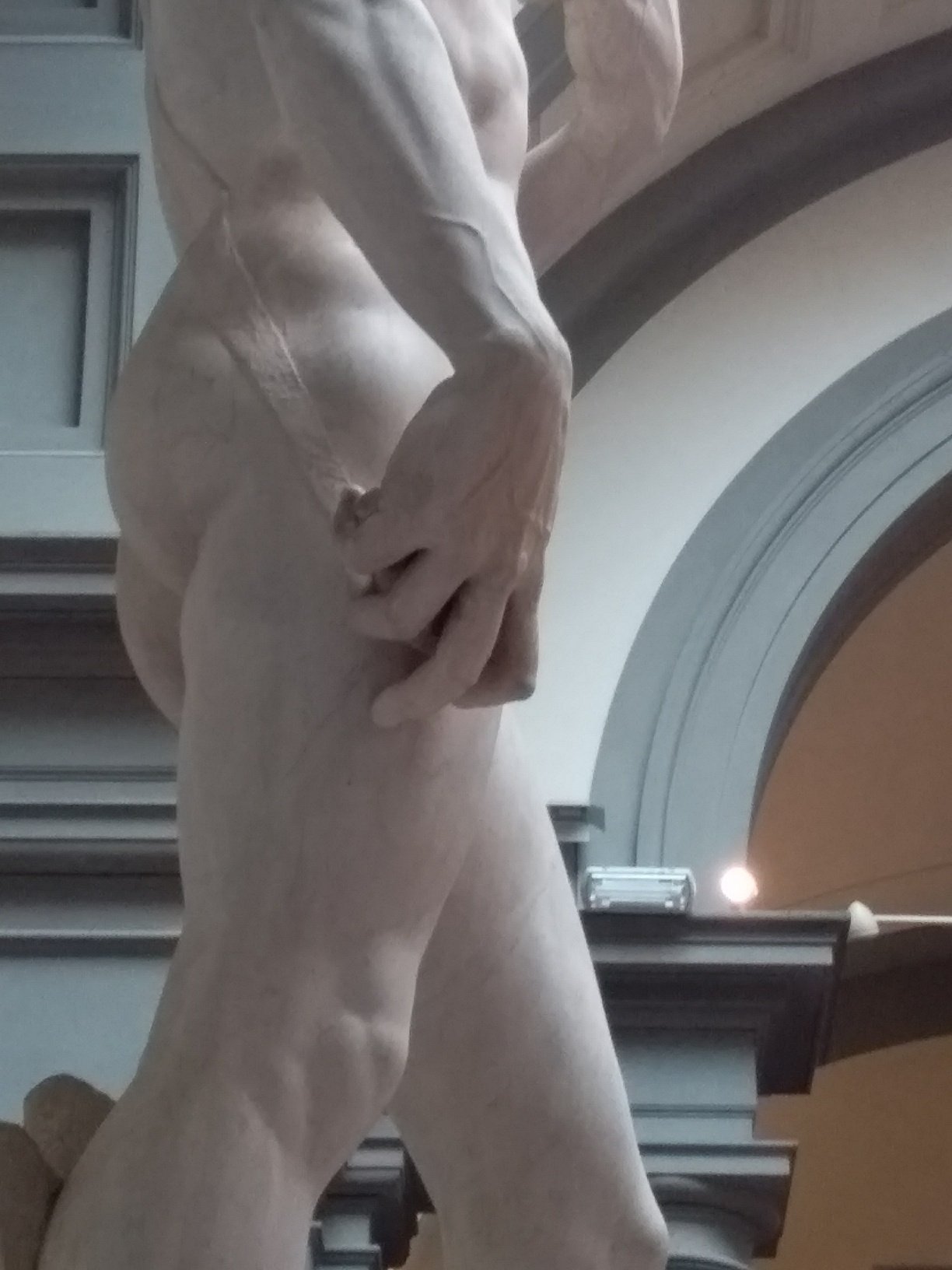
The much discussed and analyzed hand of David.

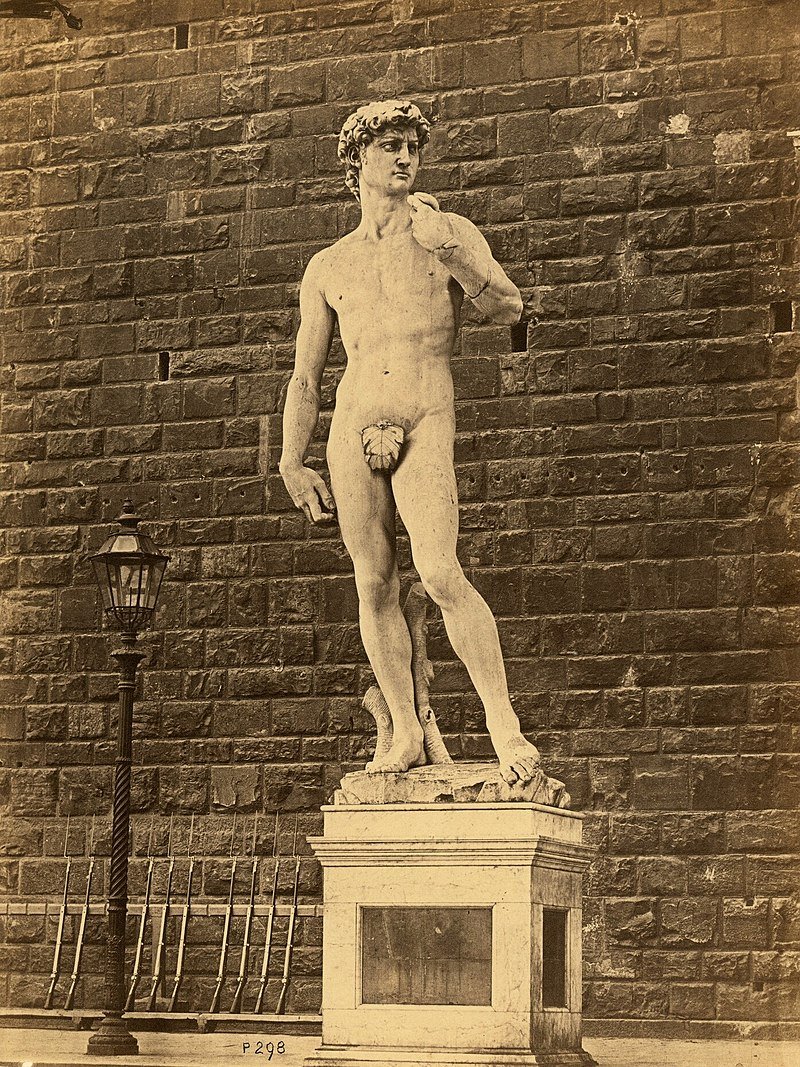
David during the fig leaf years (public domain photo)

Granted, Floridians are not the only ones to be a bit bothered by David’s nudity.  Some long-ago residents of Florence also objected, and after the statue’s completion Michelangelo was asked to cover the genitals with leaves.  Those were later removed, restoring the statue to Michelangelo’s original vision. It has remained thus ever since.  A replica of the David in the Victoria and Albert Museum in London was covered in a fig leaf whenever Queen Victoria visited.  Apparently, the Queen was outraged.  One wonders if Albert was asked to sport a fig leaf when visiting the Queen’s chamber.

 Still, I was saddened to see a principal lose her job over the inclusion of the biblical David in a class.  But I was delighted when the city of Florence brought that school principal to Florence to see the statue in person. How great was that?

This reproduction stands in the Piazza della Signoria in Florence, where the original statue was displayed before being moved to the Accademia Gallery.

I am happy to say that as my grandson has grown so has his appreciation for this magnificent work of art. When he visited me in Italy for the first time several years ago, along with his sister and their mother (my daughter), I took them all to Florence to the Academia Gallery where the David commands an entire room. 

We walked around him, noting the unique size of his…. hands. We marveled at the muscles in his legs and his 6-pack abs. In the end both of my grandkids found that the David was so amazing that they hardly noticed he was naked! 

David is, of course, not the only naked statue in Florence.  There are many nudes, partial nudes, and exposed breasts in Italian sculpture.  Many of the fountains in Italy are anchored by nudes, including the Fountain of Neptune in Florence (below).

Fountain of Neptune, Florence

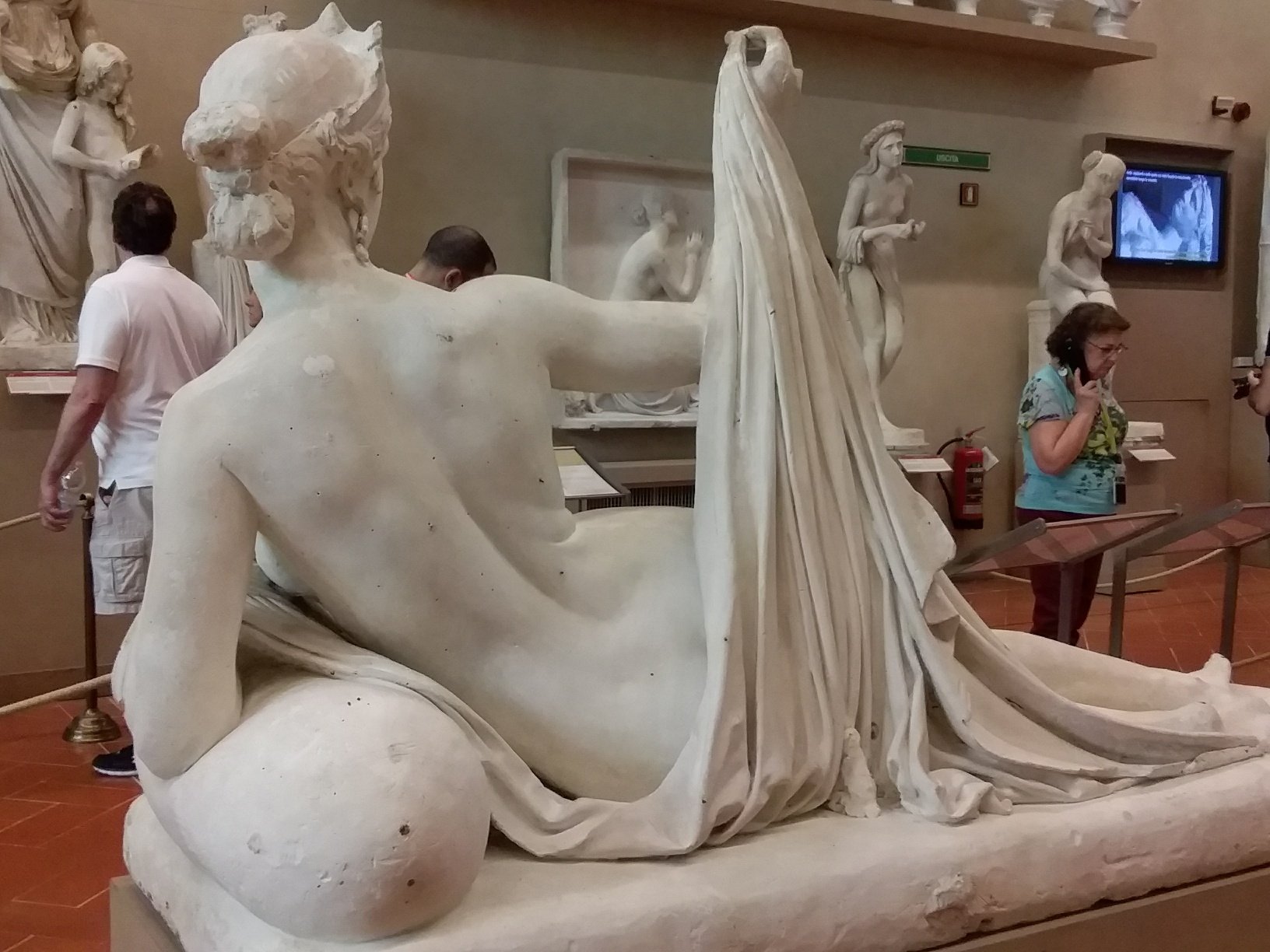
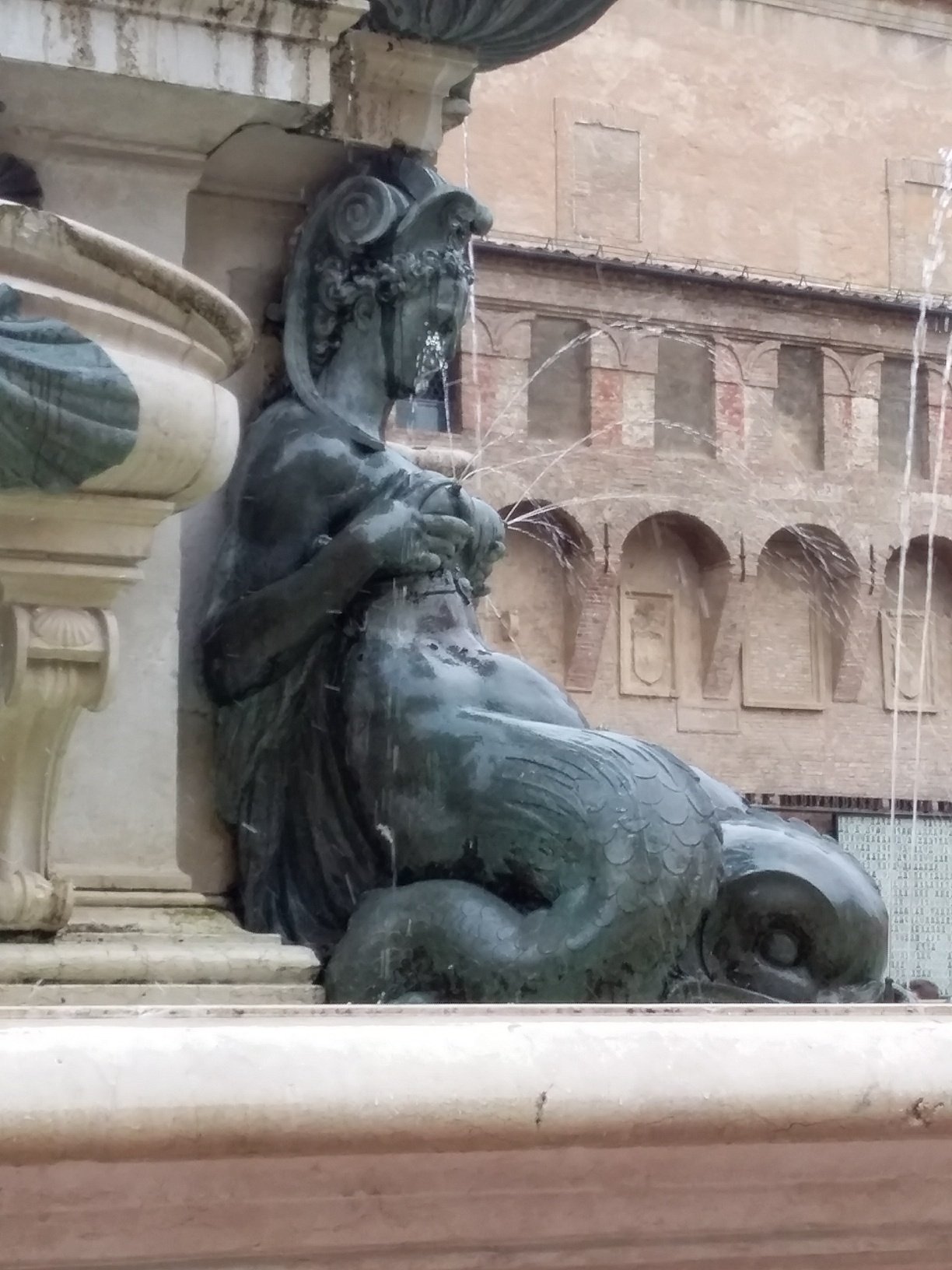
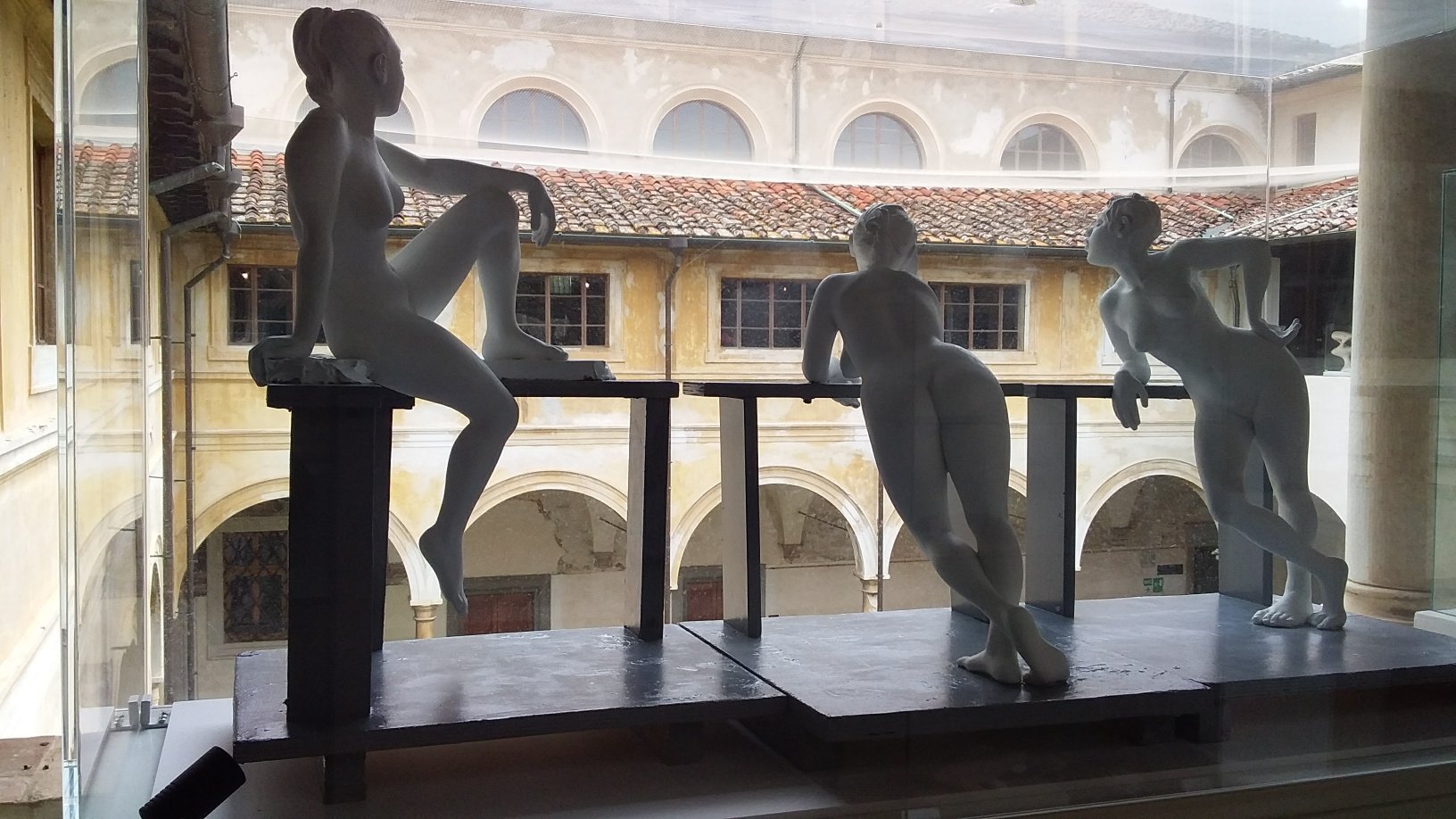
And not all the nudes are male. There are some beautiful female nudes to be found. Here are a few of my favorites from the Accademia Gallery in Florence, the Neptune Fountain in Bologna, and a modern piece in the Museo del Bozzetti in Pietrasanta. I hope you find all of these sculptures as beautiful as I do.

A364132D-CED8-4952-9EF4-B9F47C8B98CE.jpeg
F186AC38-284E-4F30-8FA9-DBBE14E803EA.jpeg
8BF5AD34-C5C4-46D1-BCC5-E3D0C73544DD.jpeg
June 05, 2023 /Joanne Bartram
The David, Nudes in Italian Art, Michelangelo's David
#florence, Florence, Italian Art, Italian culture, Italy
  • Newer
  • Older

Powered by Squarespace