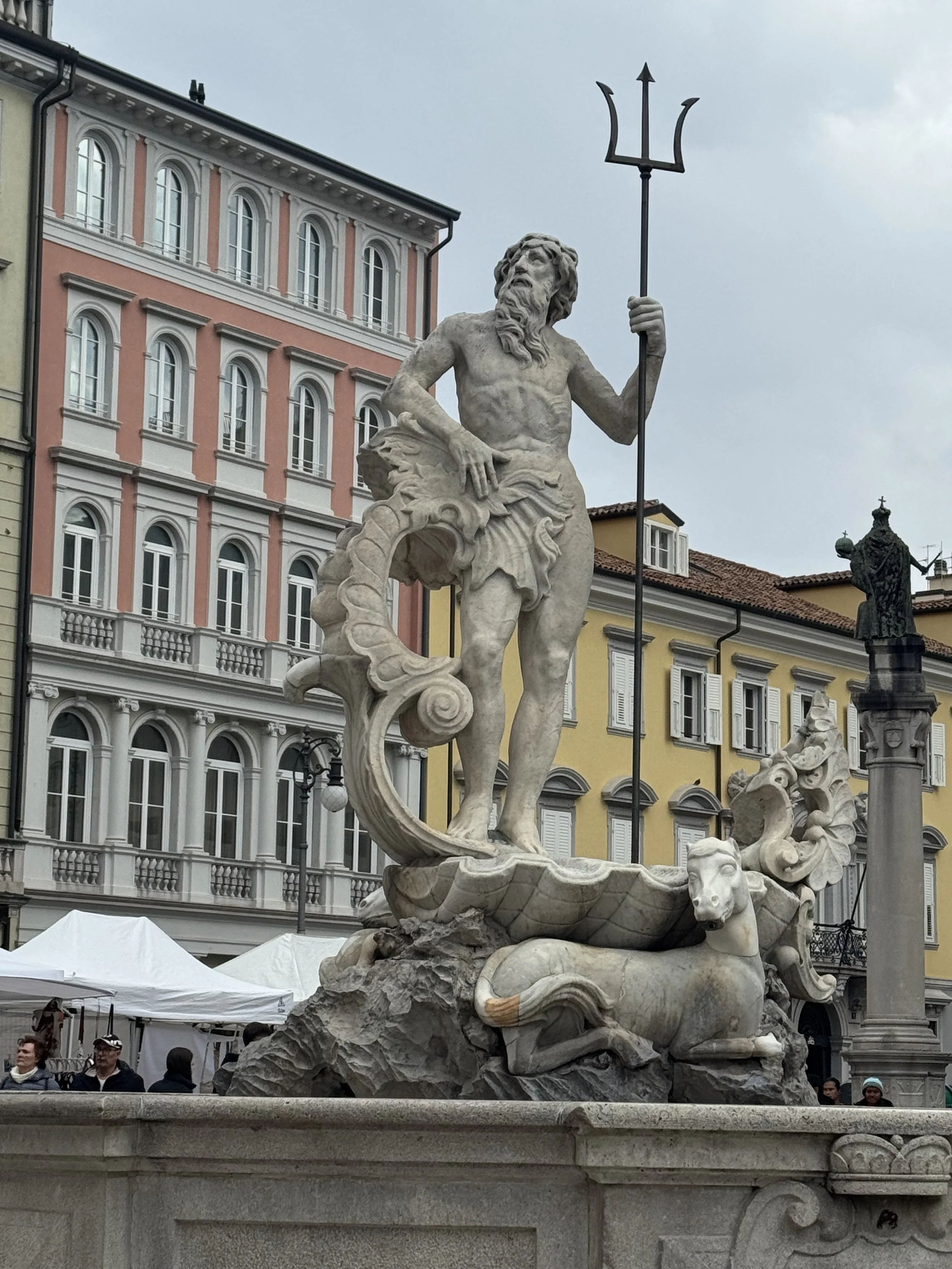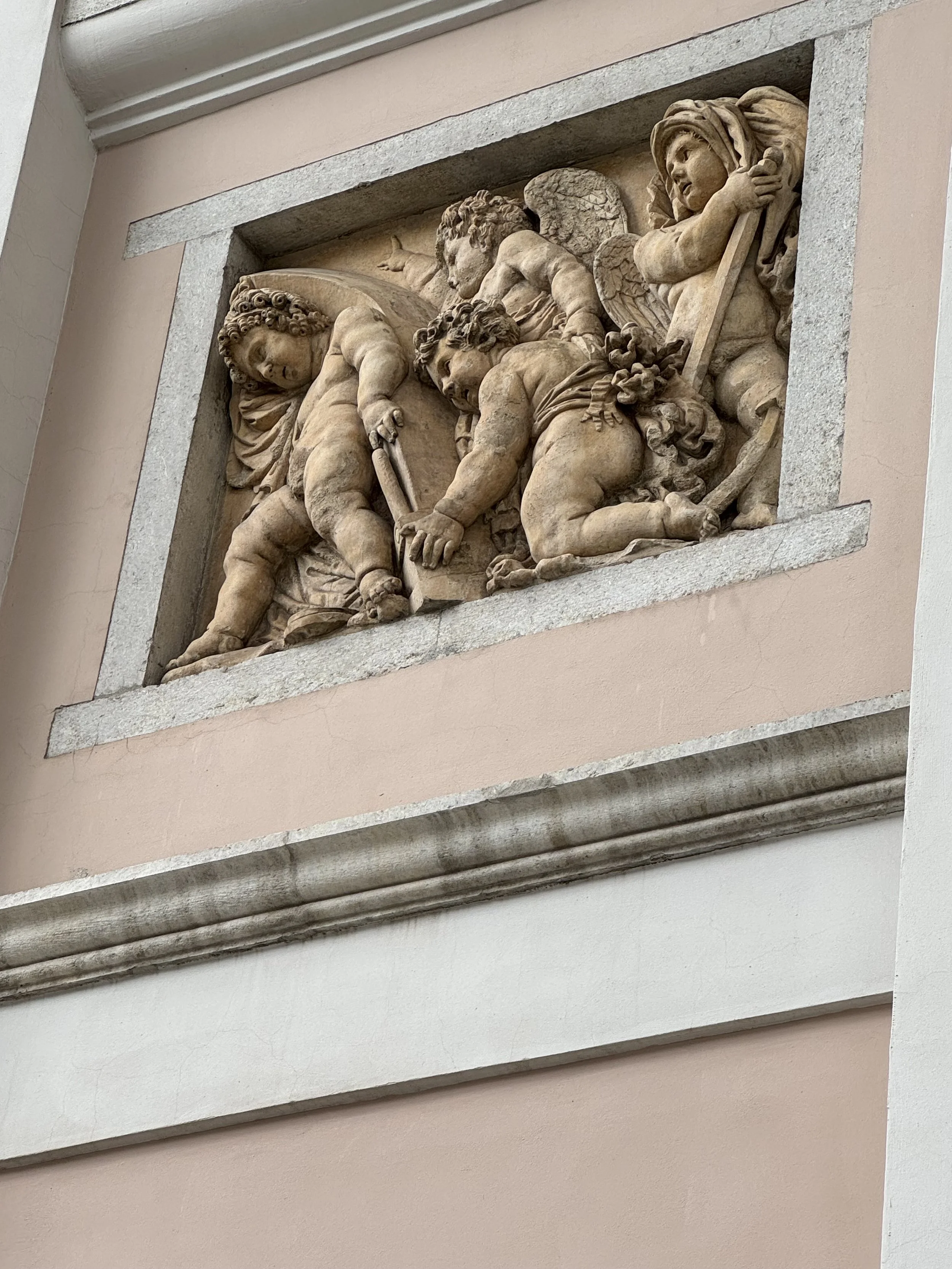
Two Parts Italy

Exploring Italy, travel, and living a flavorful life

  • Blog
  • About This Blog
  • Start Here
  • Recent Posts
  • Archives by Topic
  • Subscribe
  • Contact me

Castello di Spessa in Captiva del Fruili

Wine Tasting in a Friulian Castle

May 04, 2026 by Joanne Bartram in #italytravel, #medievalitaly, european travel, Friuli Venezia Giulia, Friuli-Venezia Giulia, Italy travel

Italy has 20 regions, 5 of which are semi-autonomous based on their history, unique culture, and diversity of language.  This designation provides them with a greater ability to manage their own governance, finances, and education.  One of these 5 regions is Venezia-Friuli Giulia, in the northeastern most part of Italy, bordering on Slovenia and Austria.  Local identity runs deep in this area (as in all of Italy), and the Friuli sub-region is no exception.  With a history that moves from the Romans to the Longobards to the Austro-Hungarian Empire, and finally to its inclusion in the Italian Empire, and with its own Friulian language, Friuli is a unique medley of influences. 

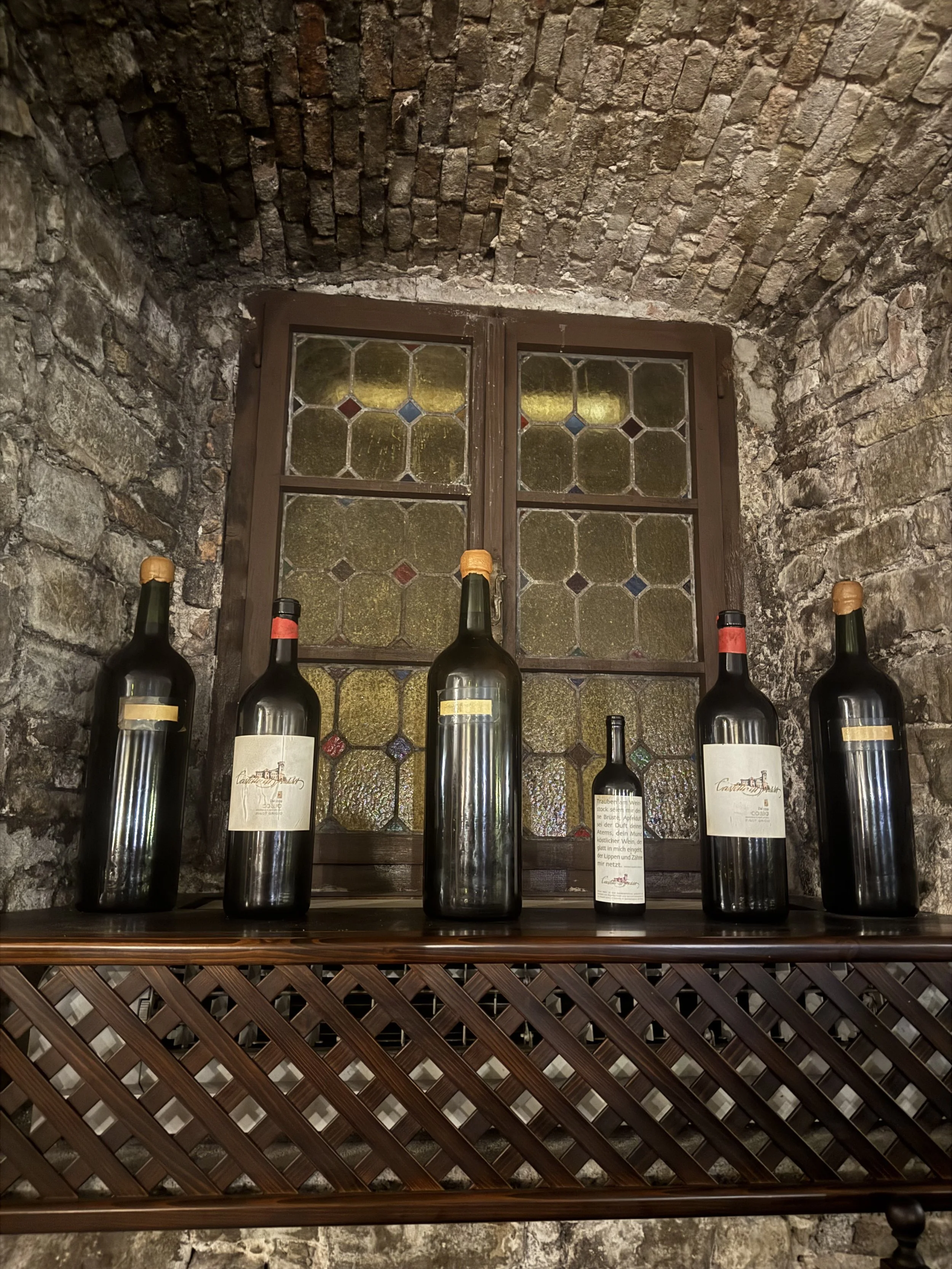
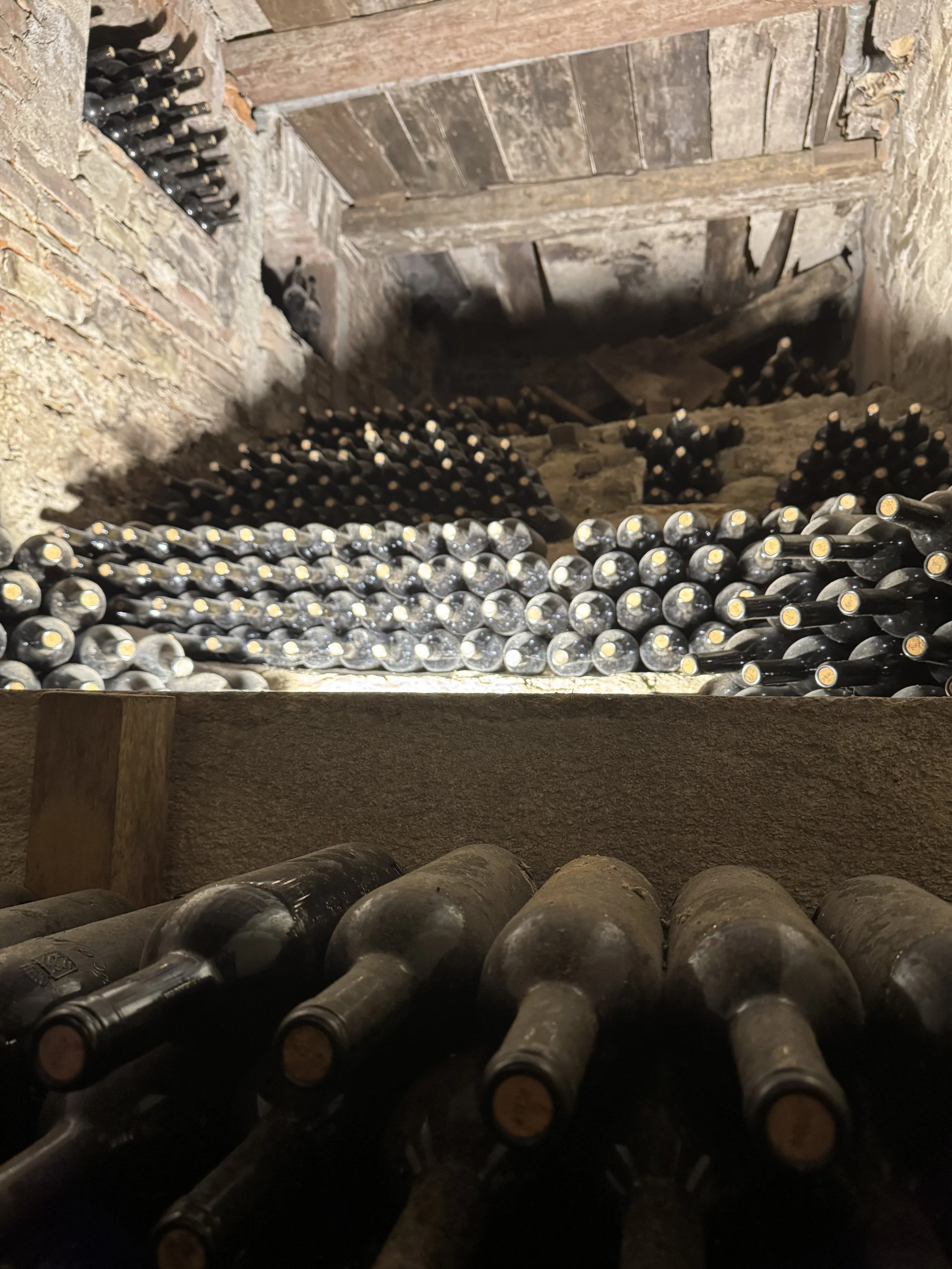
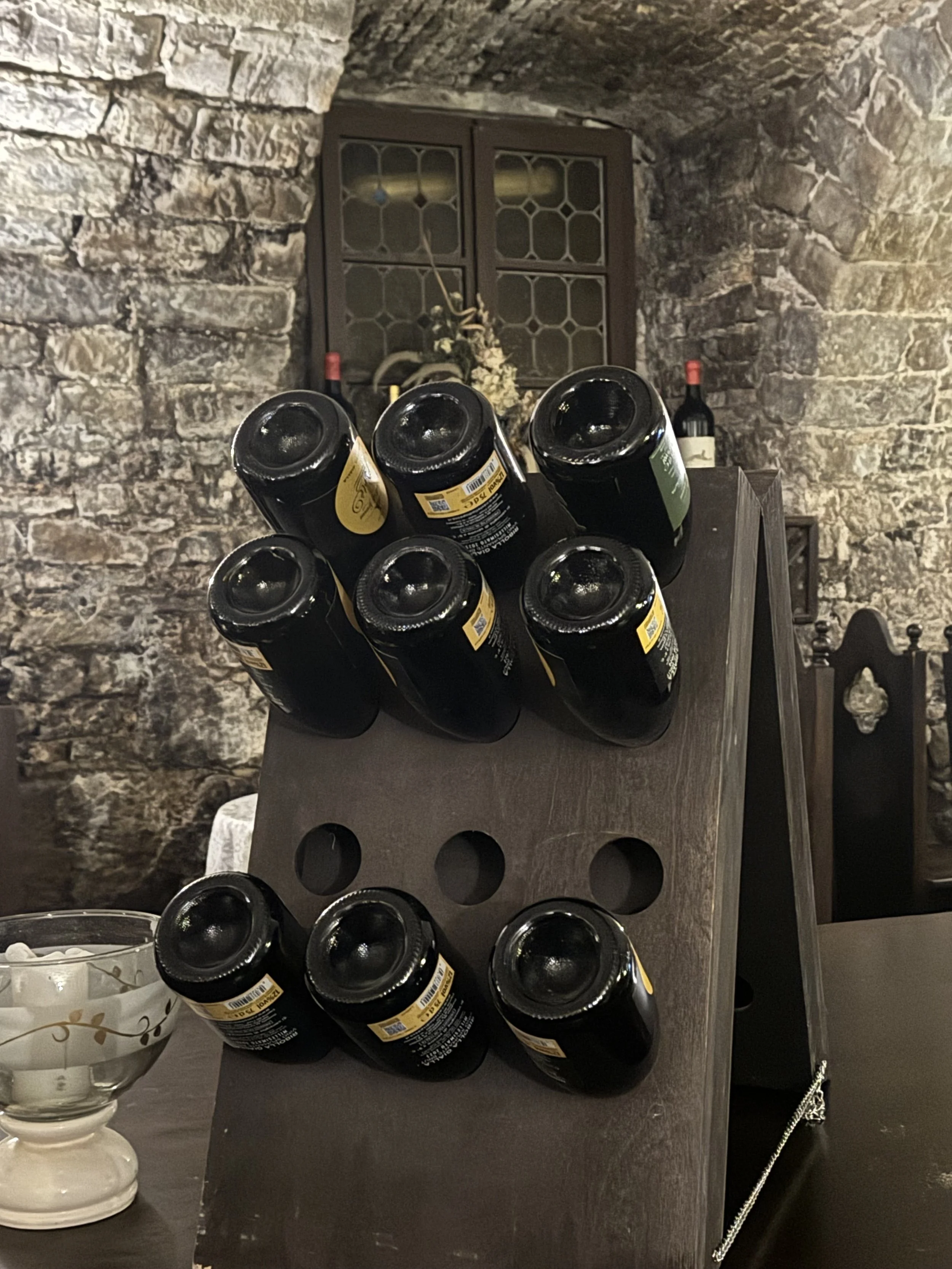
The wine cellar still has traces of previous owners

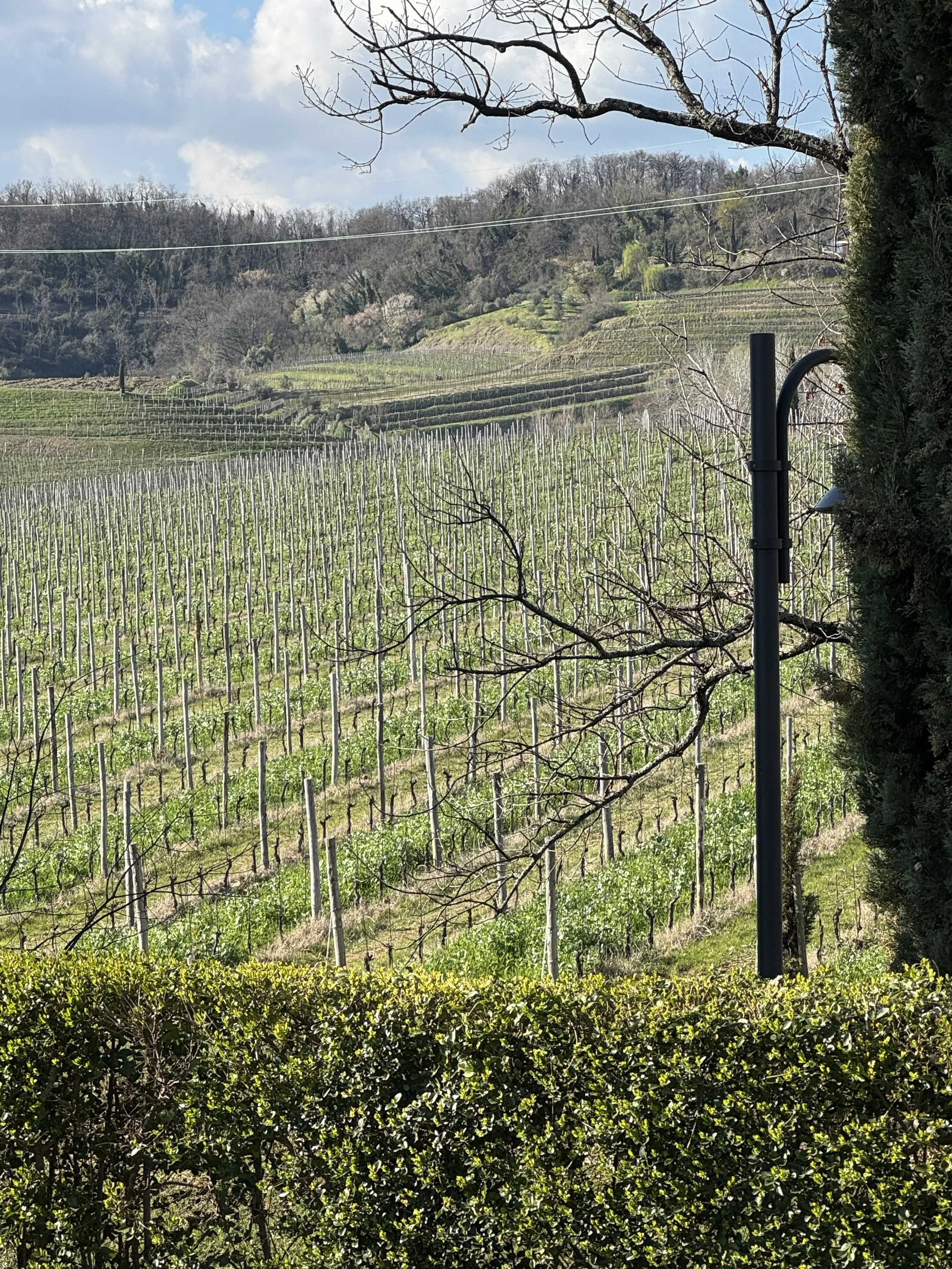
Mostly an agricultural area, Friuli is best known for its white wines.  A variety of grapes are grown in the region, with several DOCG and DOC designations.  The whites include Fruilano, Ribolla Gialla, Malvasia, Pinot Grigio, and Sauvignon Blanc.  Some reds also are produced, Merlot, Cabernet Franc, Pignolo, and Ribolla Nera, though they make up a much smaller percentage of the local wines. 

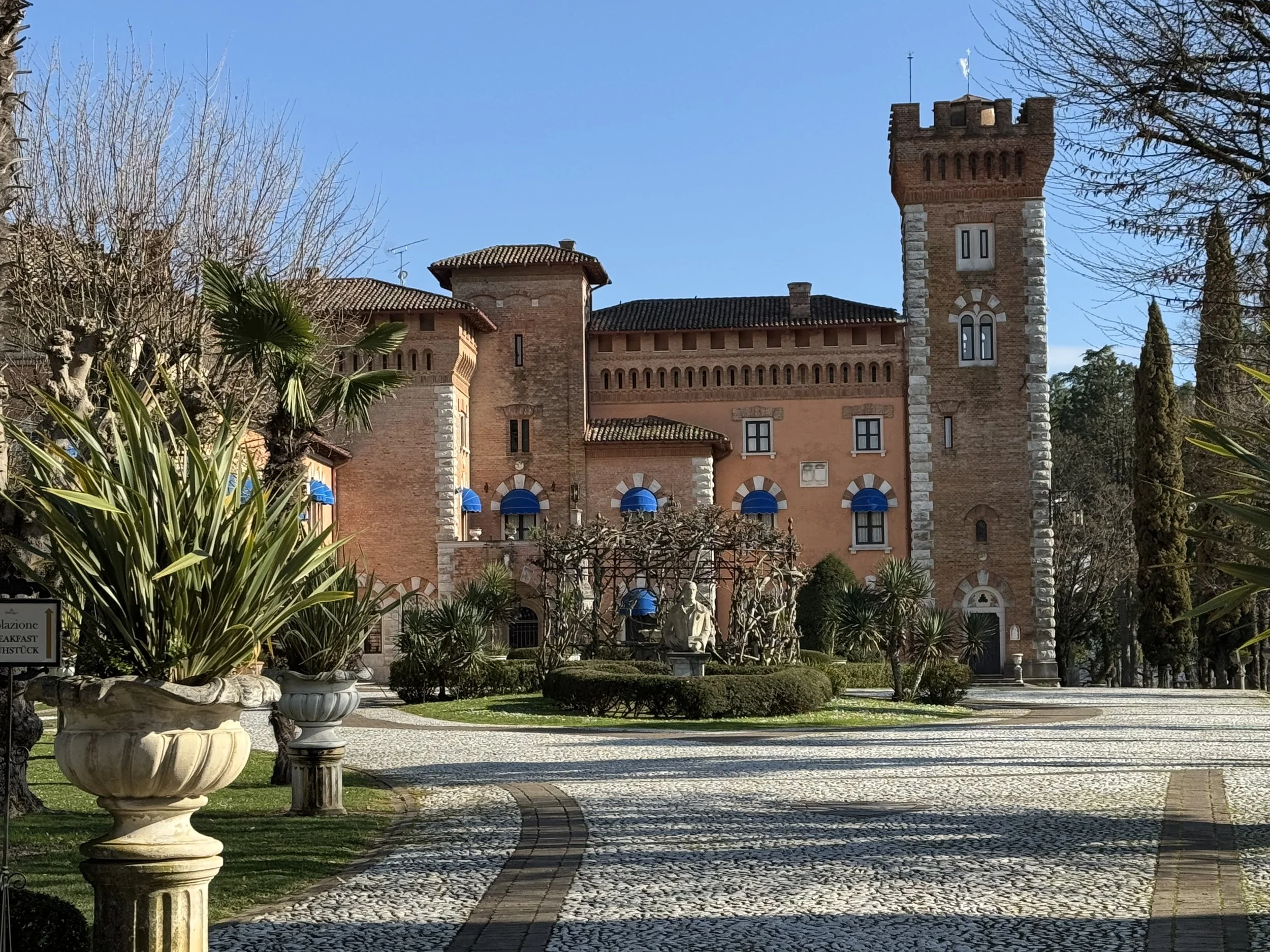
I spend most of my time in Tuscany, and the Lucchese wine shops tend to stock mostly Tuscan wines, so the Friulian varieties are not very familiar to me.  At least they weren’t until a recent wine tasting at the Castello di Spessa in the village of Capriva del Friuli, 25 miles and a world away from busy Trieste. 

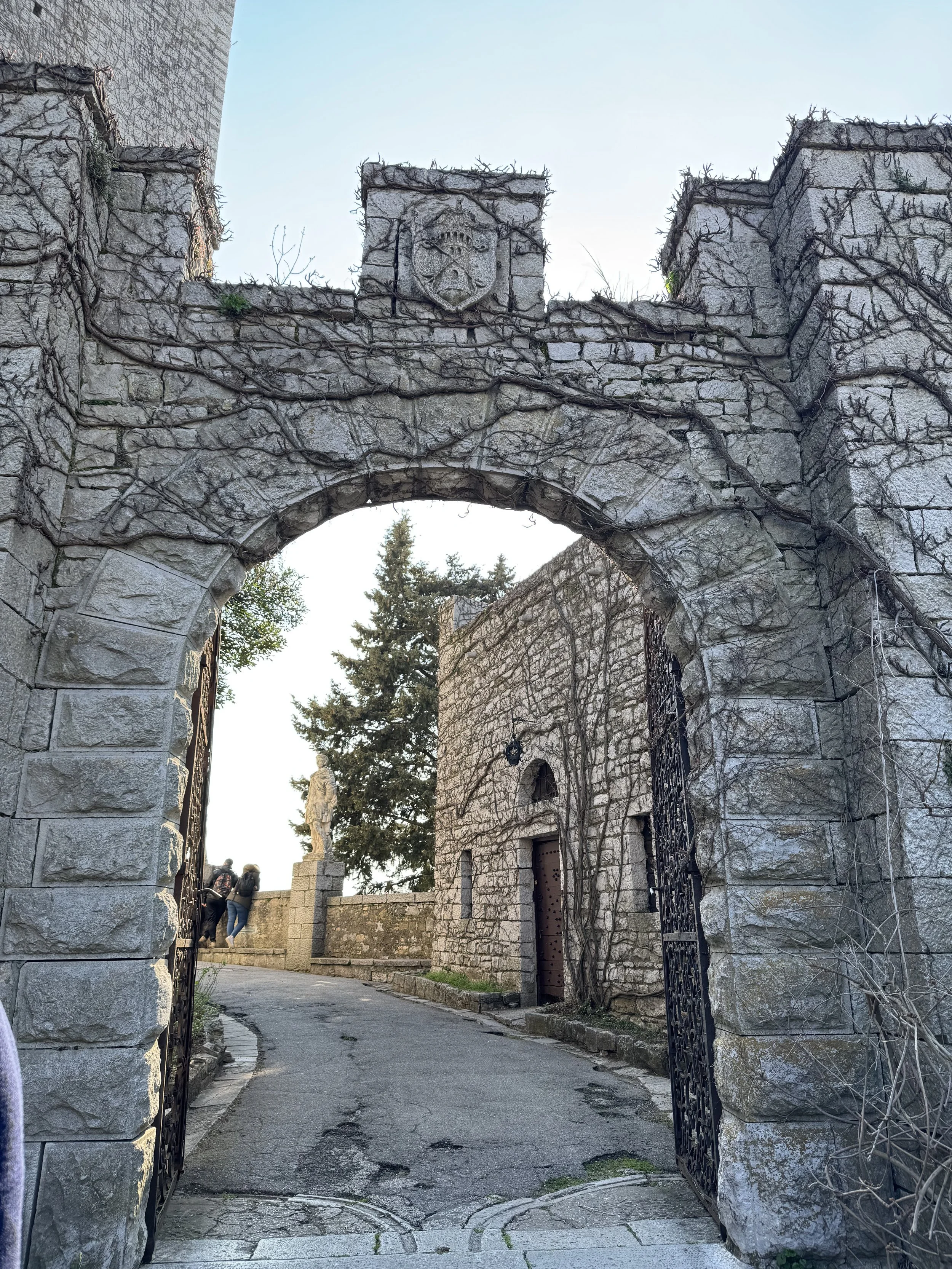
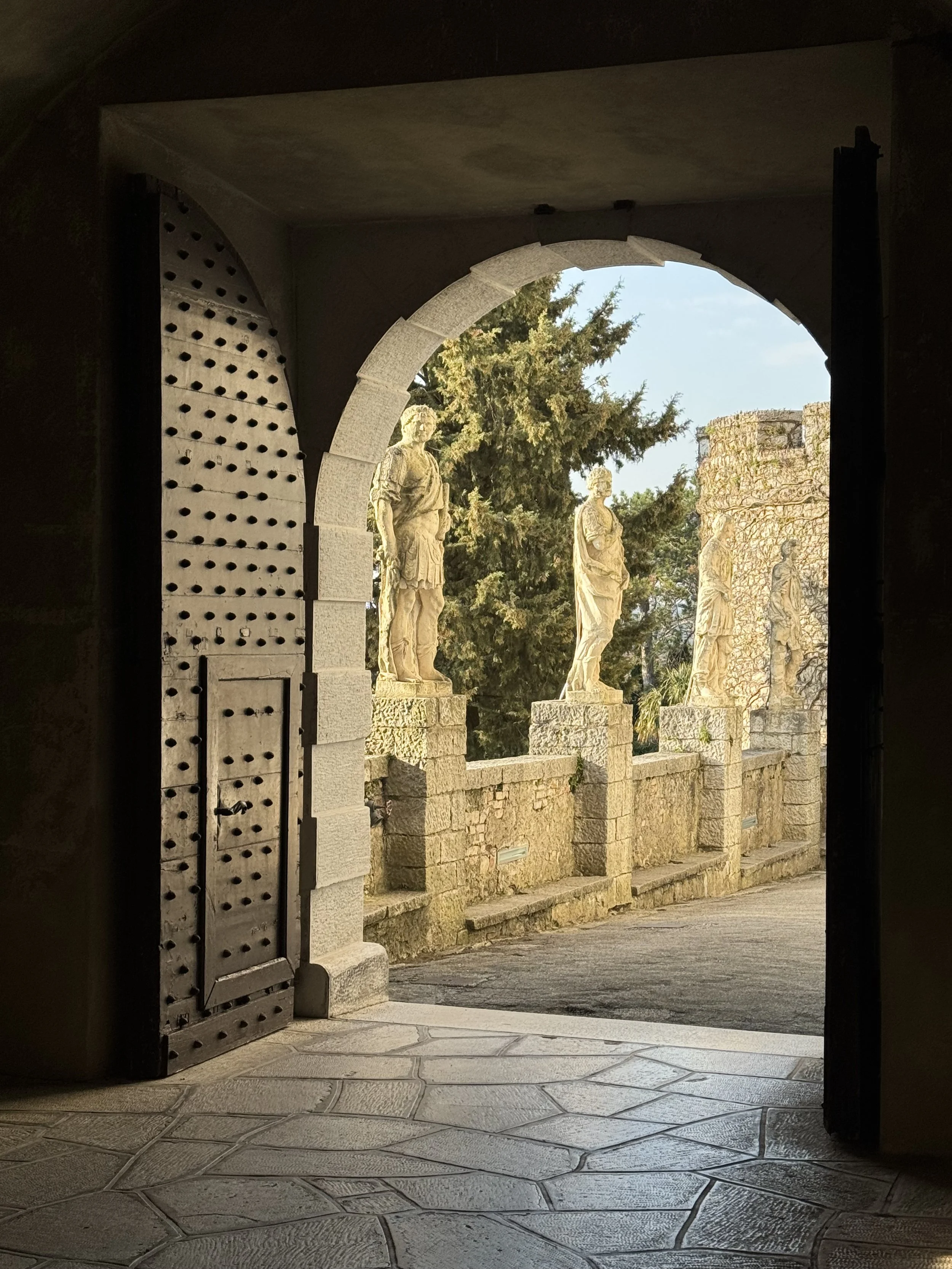
The Castello has a fascinating history beginning with its construction in the 13th century.  Passed down as part of a 15th century dowry, it remained in one family for the next 300 years.  During that time it played host to several famous visitors including Lorenzo da Ponte, who wrote the libretti for some of Mozart’s most famous operas (including my personal favorite, Cosi Fan Tutte).  The  scandalous Casanova came to visit too but was banished after a romantic liaison during his stay (with a maid or the owner’s daughter – we can’t be sure). 

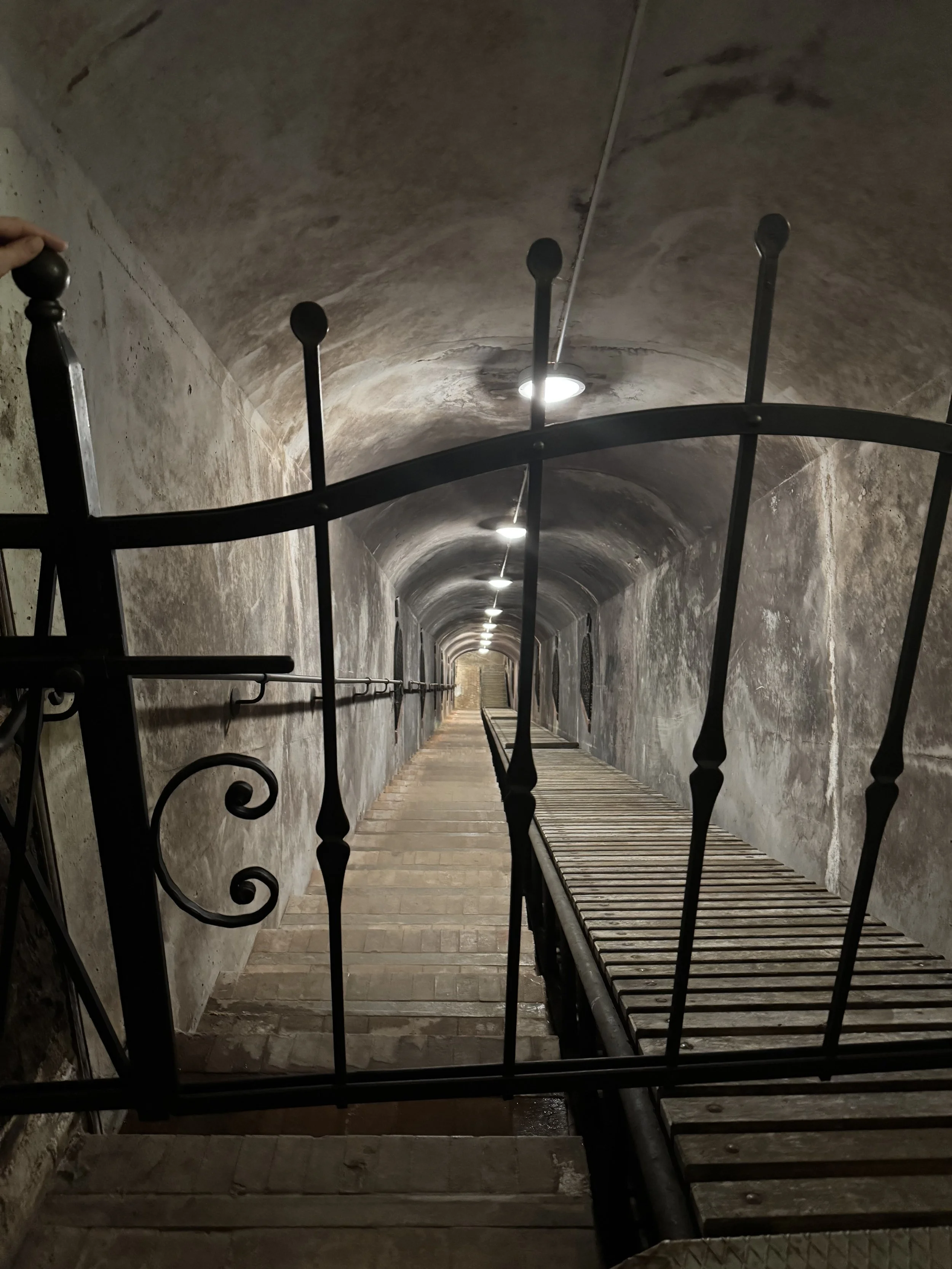
Ownership changed several times in the late 1800’s and into the 1900’s. Wine production began sometime in the years between 1925 and 1940. During WWII an underground bunker was built on the property, used first by Germans and later by Americans.  Long forgotten, it was rediscovered by the current owners who found it to be the perfect temperature for storing grappa. 

Down, down, down to the once abandoned WWII bunker. Today it is where the grappa is stored.

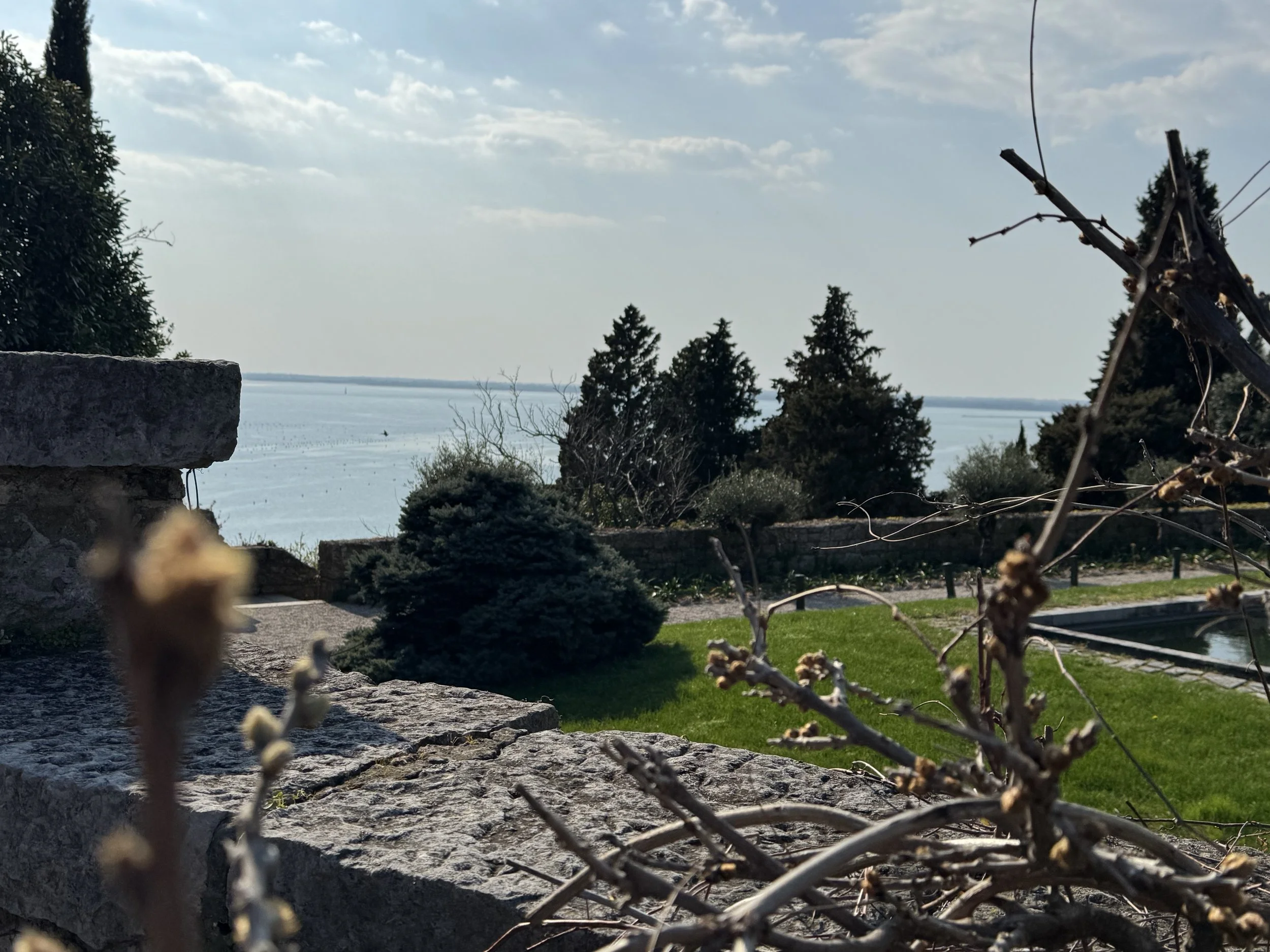
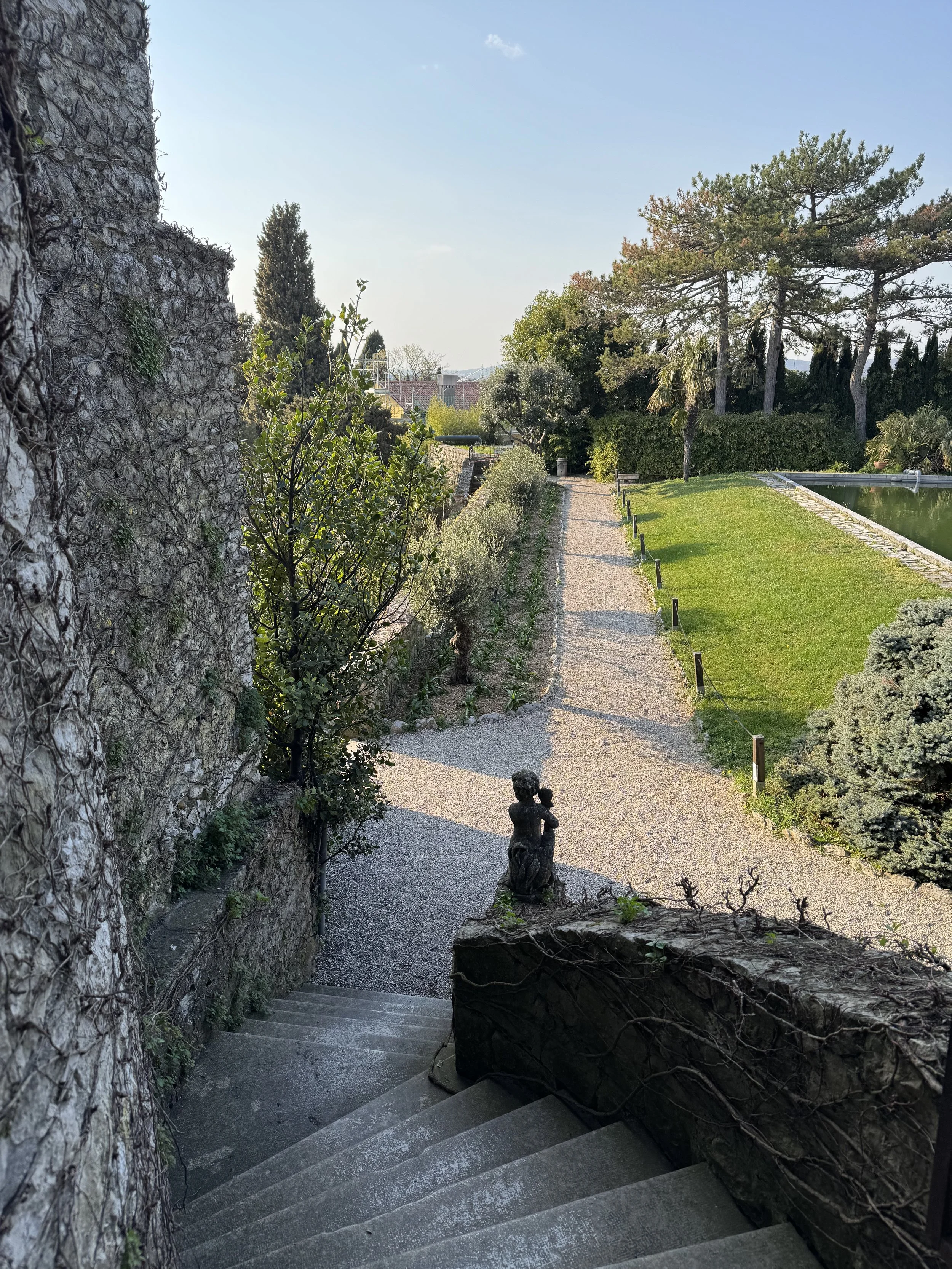
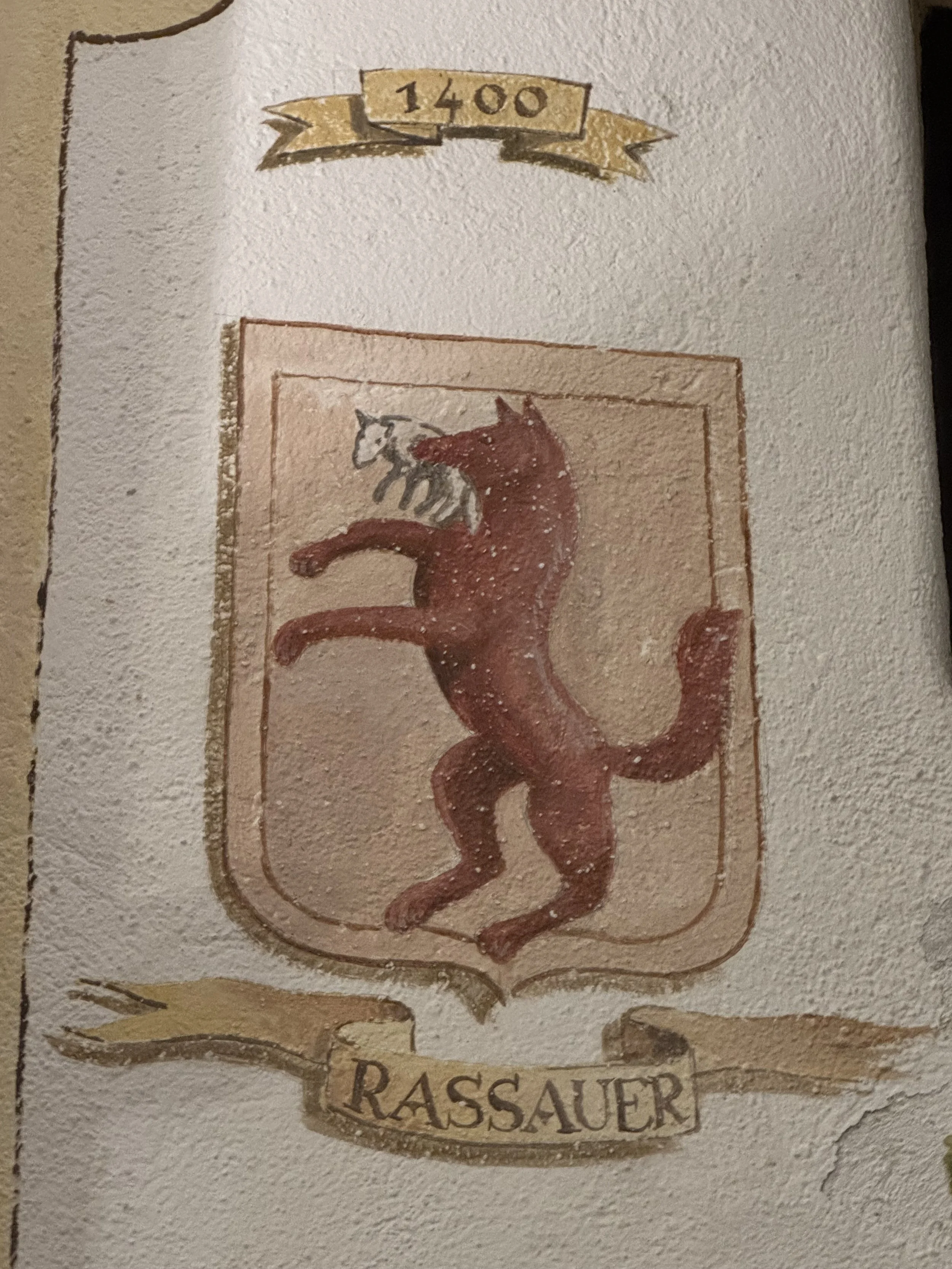
In 1987 the Castello was purchased by the Pali family.  They renovated the property, expanded the vineyard, and developed the surrounding land into a spa and golf resort.  Today they host events, weddings, vacationers, and wine tastings at the Castelllo.  Several of their wines bear the names of those earlier owners and visitors to the castello - there is a Casanova Pinot Noir, a Rassaurer Fruliano, and even an Amadeus Brut.

IMG_9018.jpeg
IMG_9015.jpeg
IMG_9002.jpeg
IMG_9012.jpeg

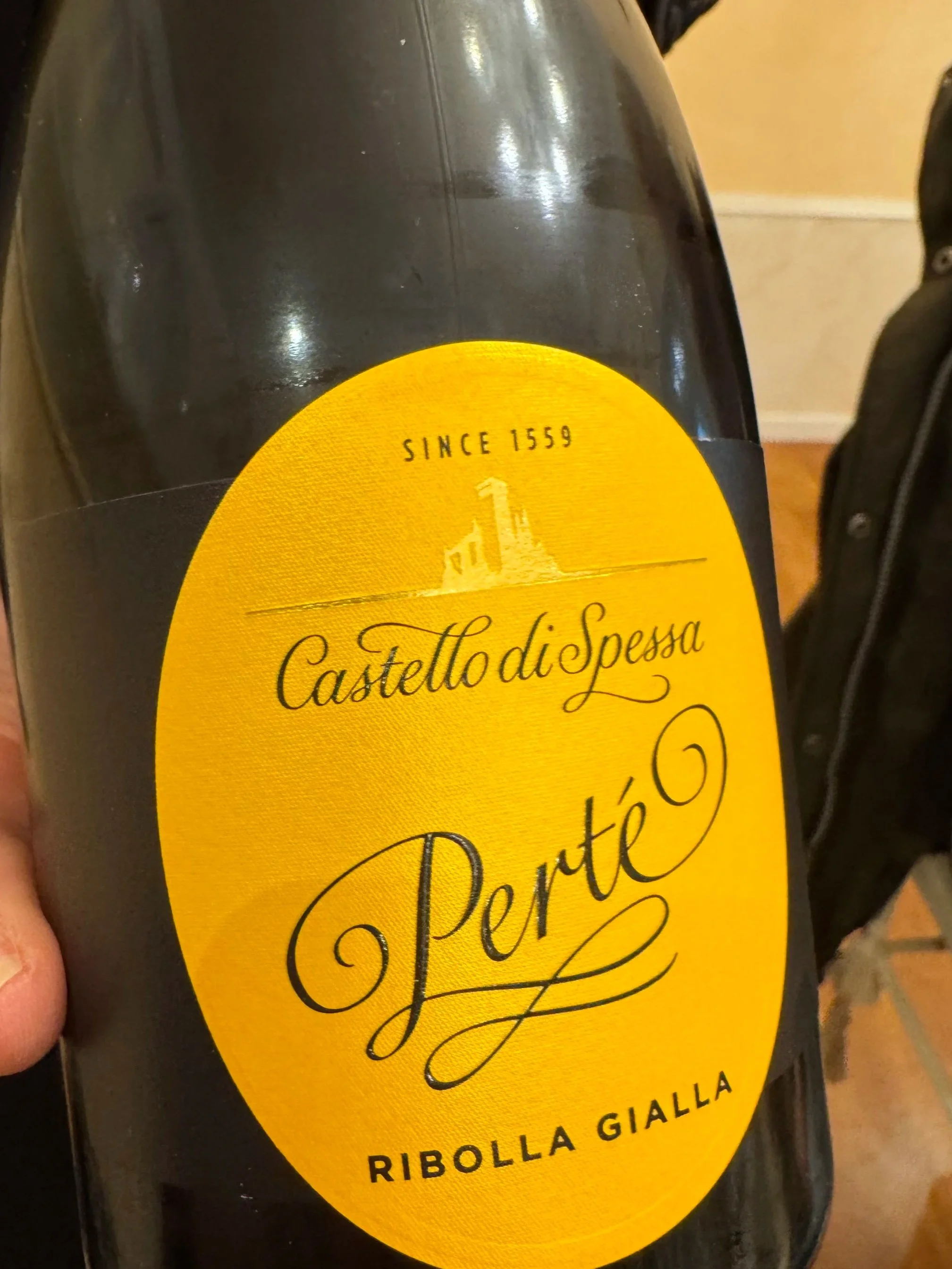
Delicate and sparkling, this was my favorite of the wines we tasted

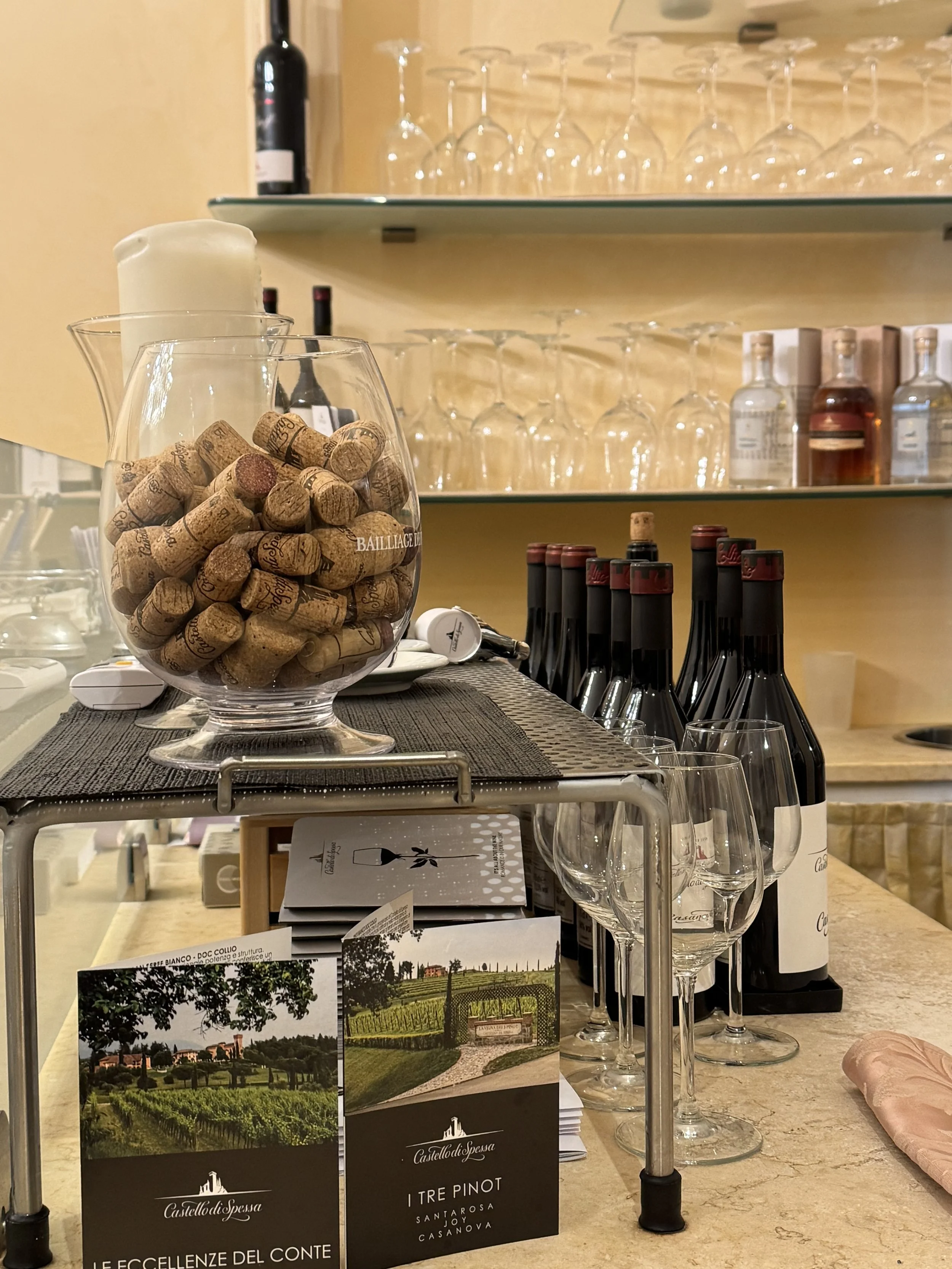
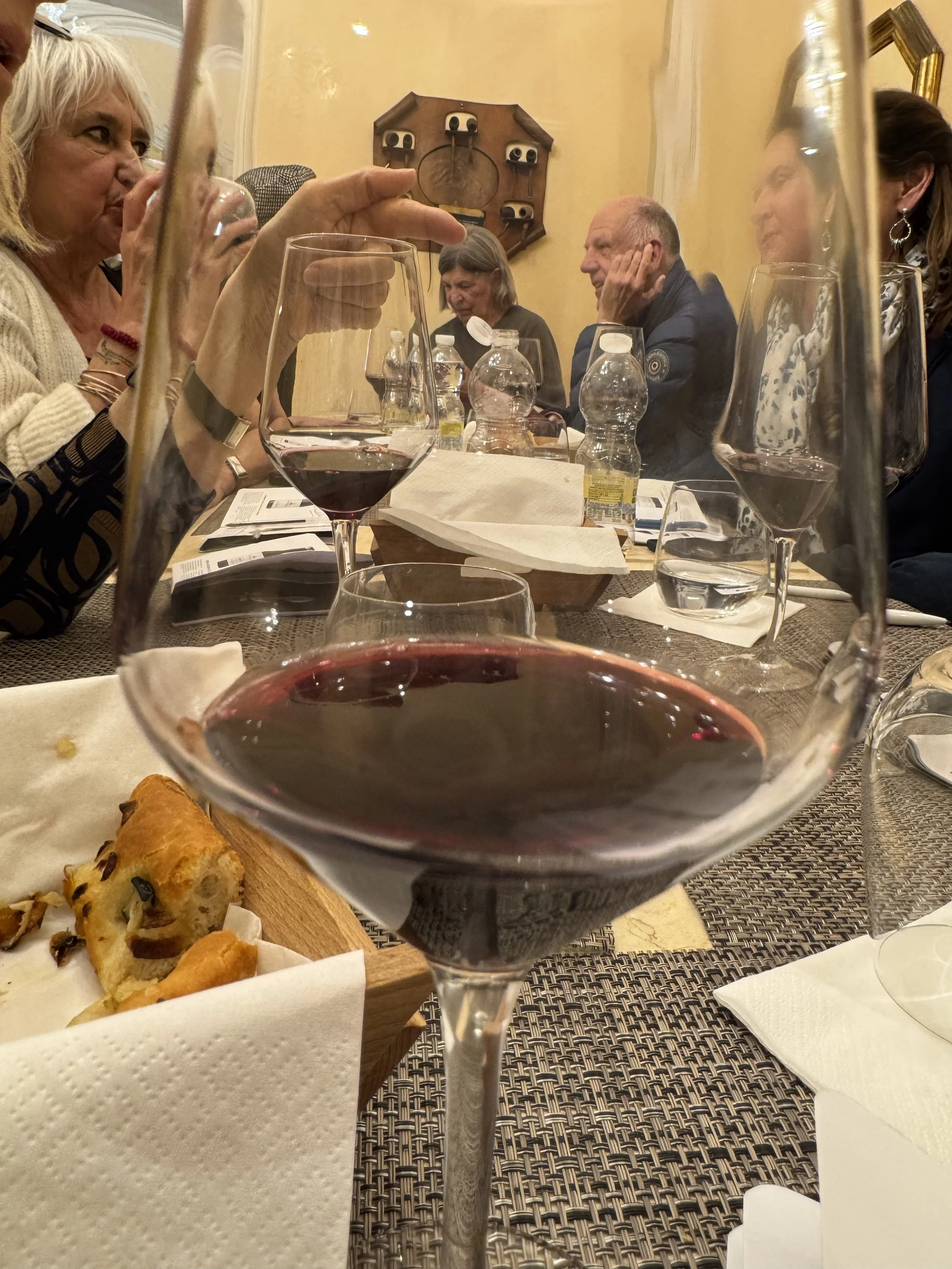
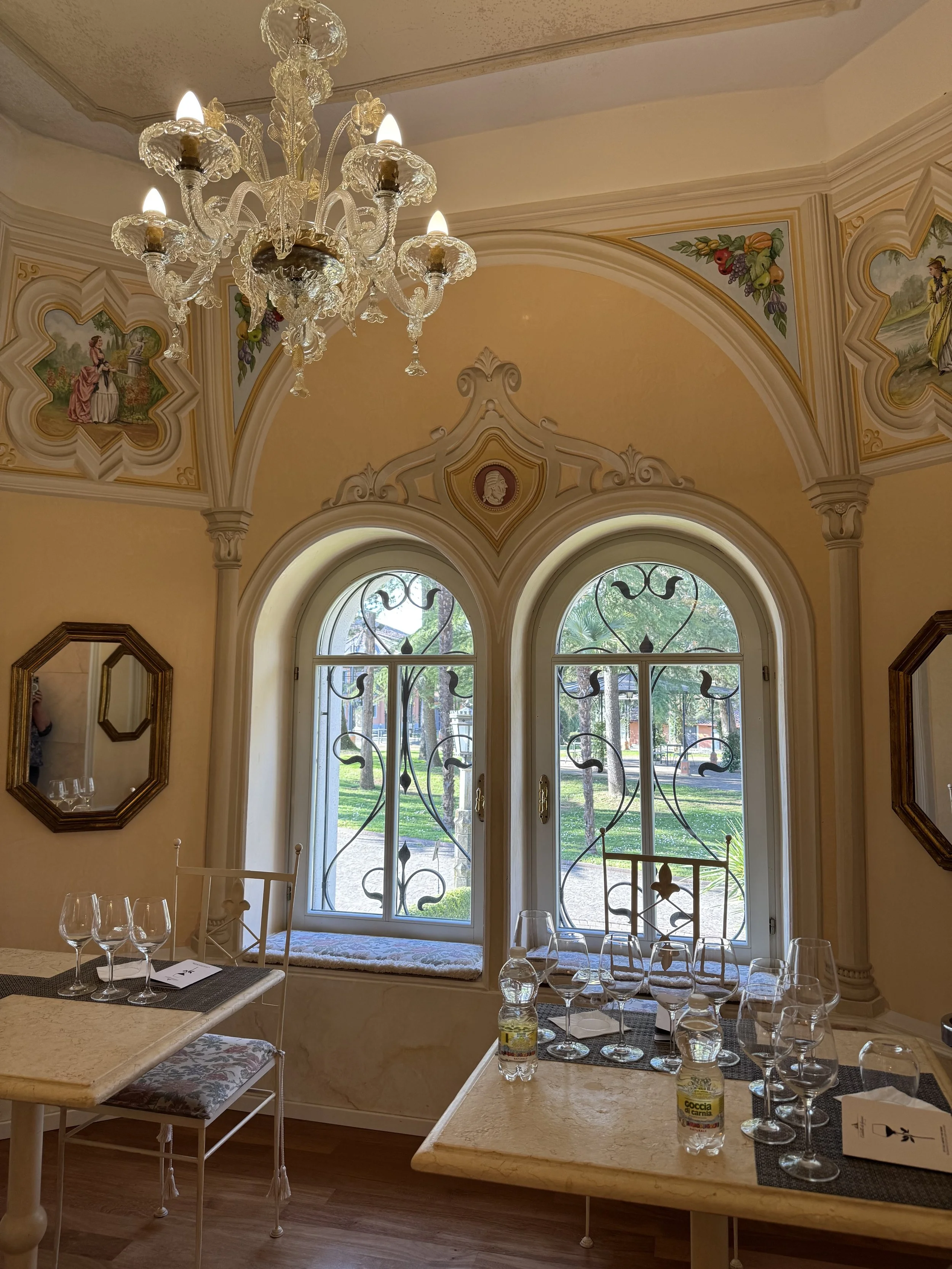
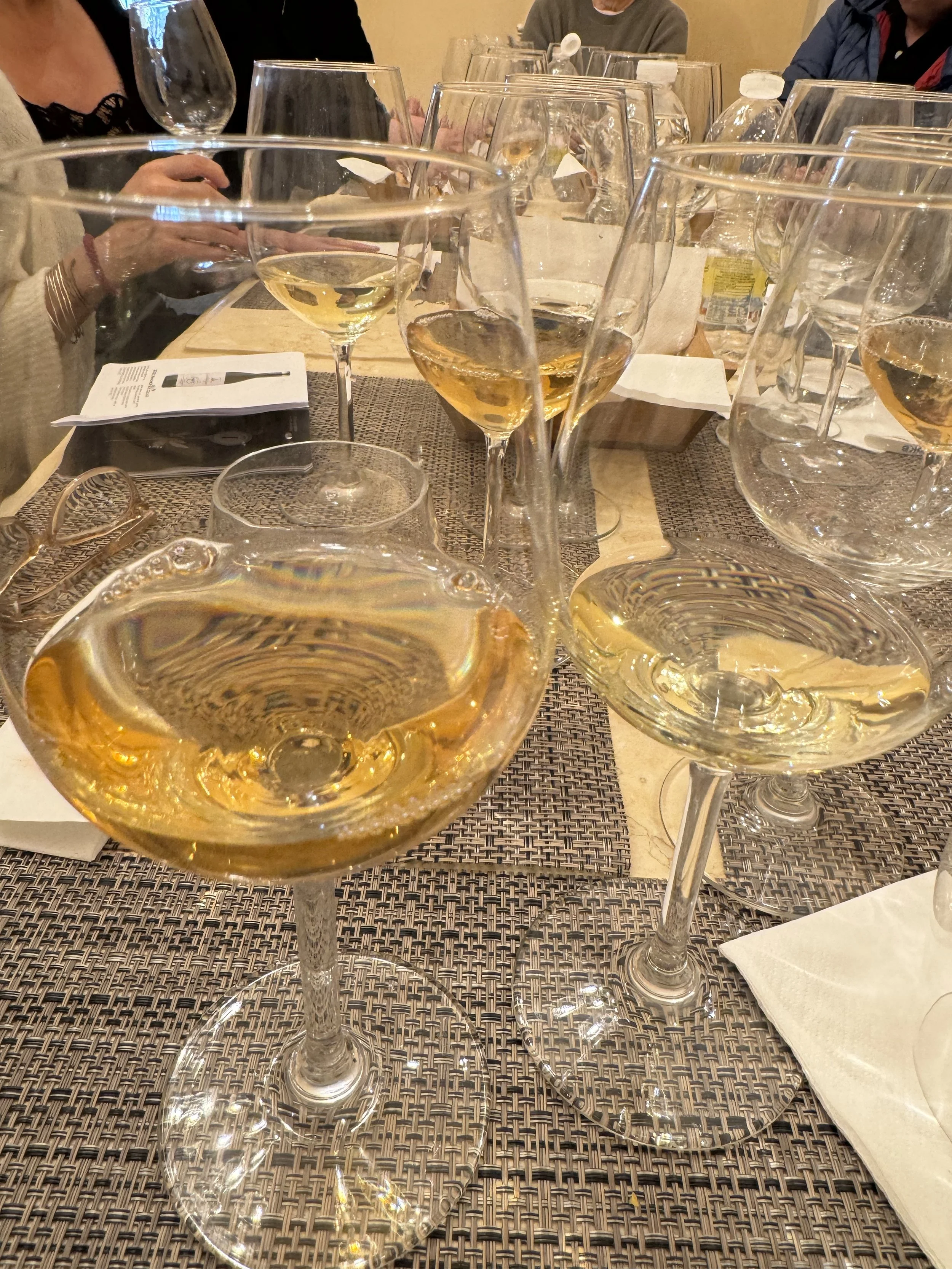
Our group (all students at the Piccola Università language school in Trieste) enjoyed a wine tasting in the Castello’s tasting room. We sampled primarily whites (still and sparkling) and one red (a Cabernet Sauvignon / Merlot blend).  Along with each glass our hostess provided information about the vines, grapes, and production methods. 

All the wines we tasted were very good but I had a definite favorite – the Pertè Ribolla Gialla Spumante, a sparkling wine made by the classic method (unlike Prosecco which is made by the Charmat method) with Chardonnay and Pinot Noir grapes. It was dry with perfect soft bubbles.  A delightful wine which had me wondering how I could possibly get several bottles home to Lucca on the train.  Unfortunately, that was impossible. 

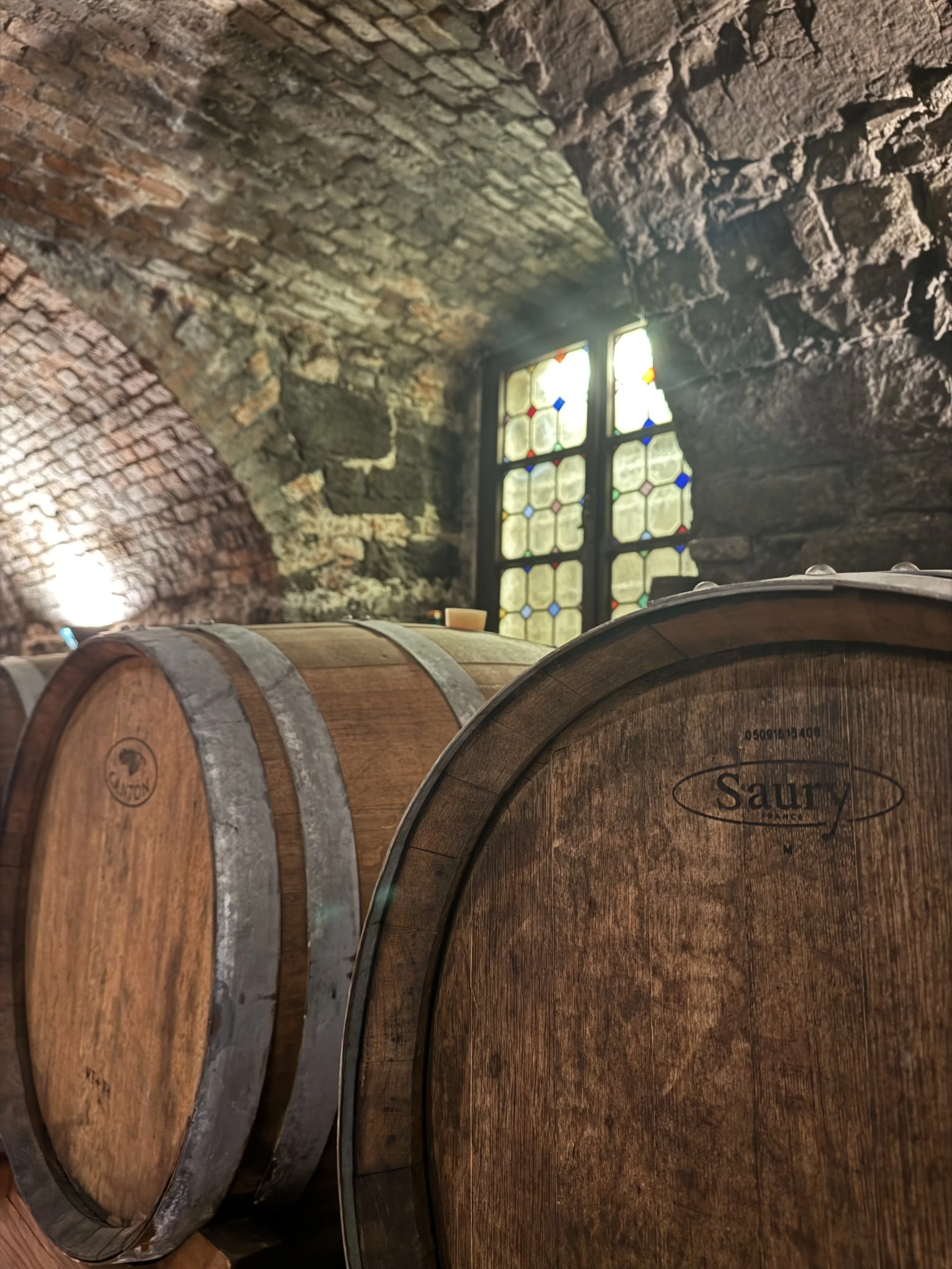
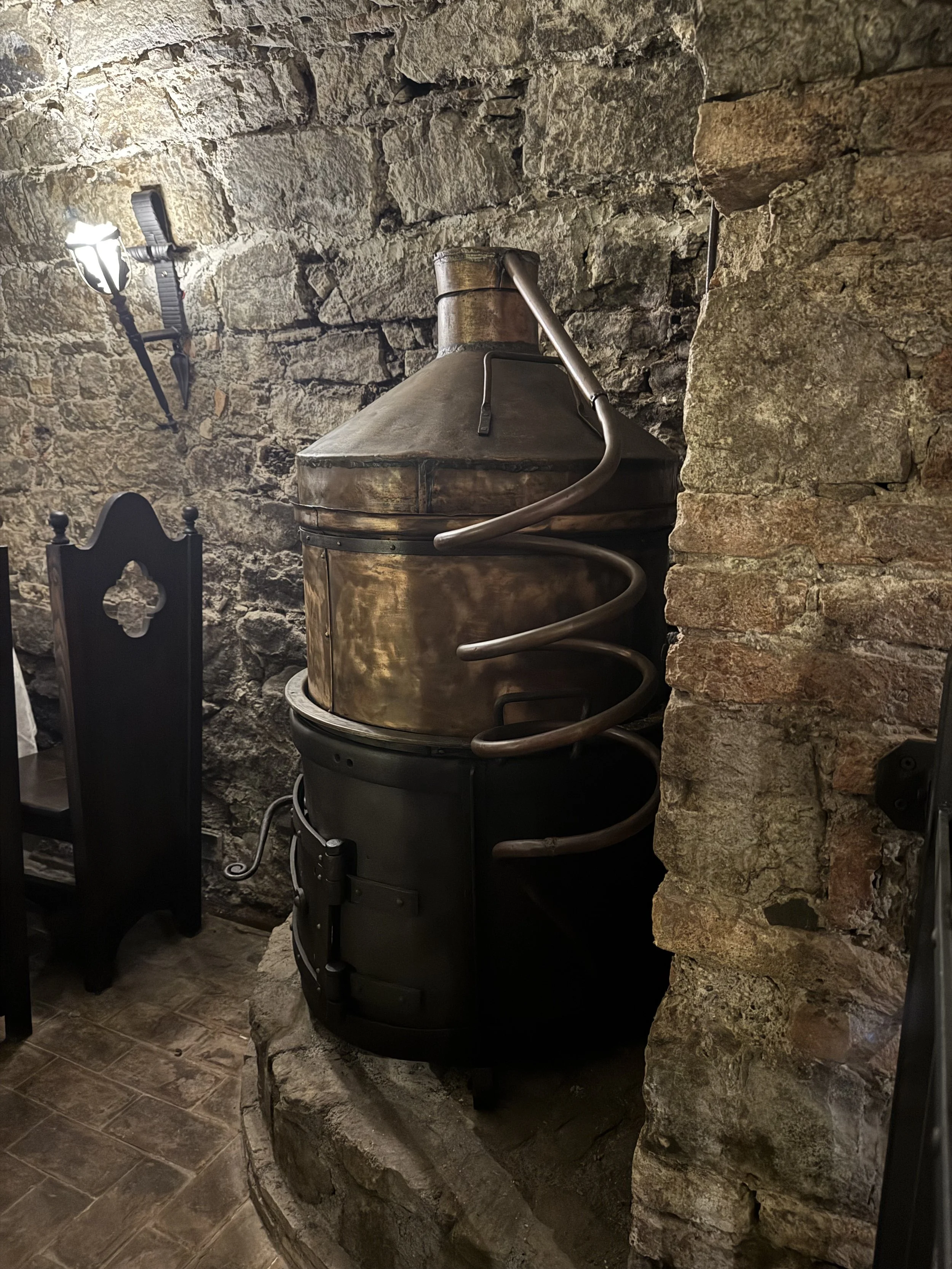
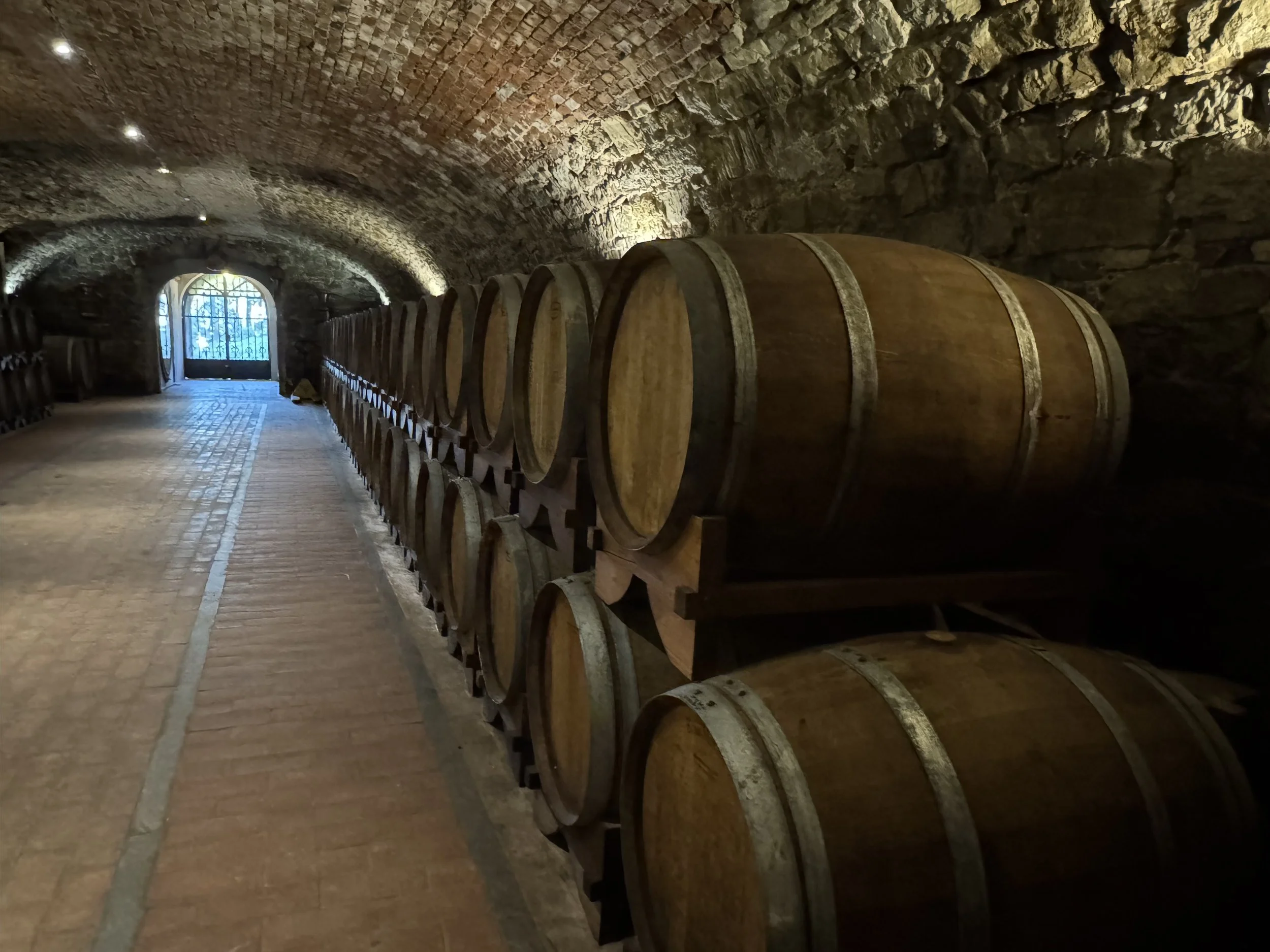
A tour of the wine cellar followed our tasting. The cellars have a variety of rooms which contain not only wine but bits of the history of the Castello and some old winemaking equipment. What is it that makes dusty old wine bottles so fascinating?

IMG_9074.jpeg
IMG_9059.jpeg
IMG_9056.jpeg
IMG_9045.jpeg
IMG_9041.jpeg
IMG_9036.jpeg

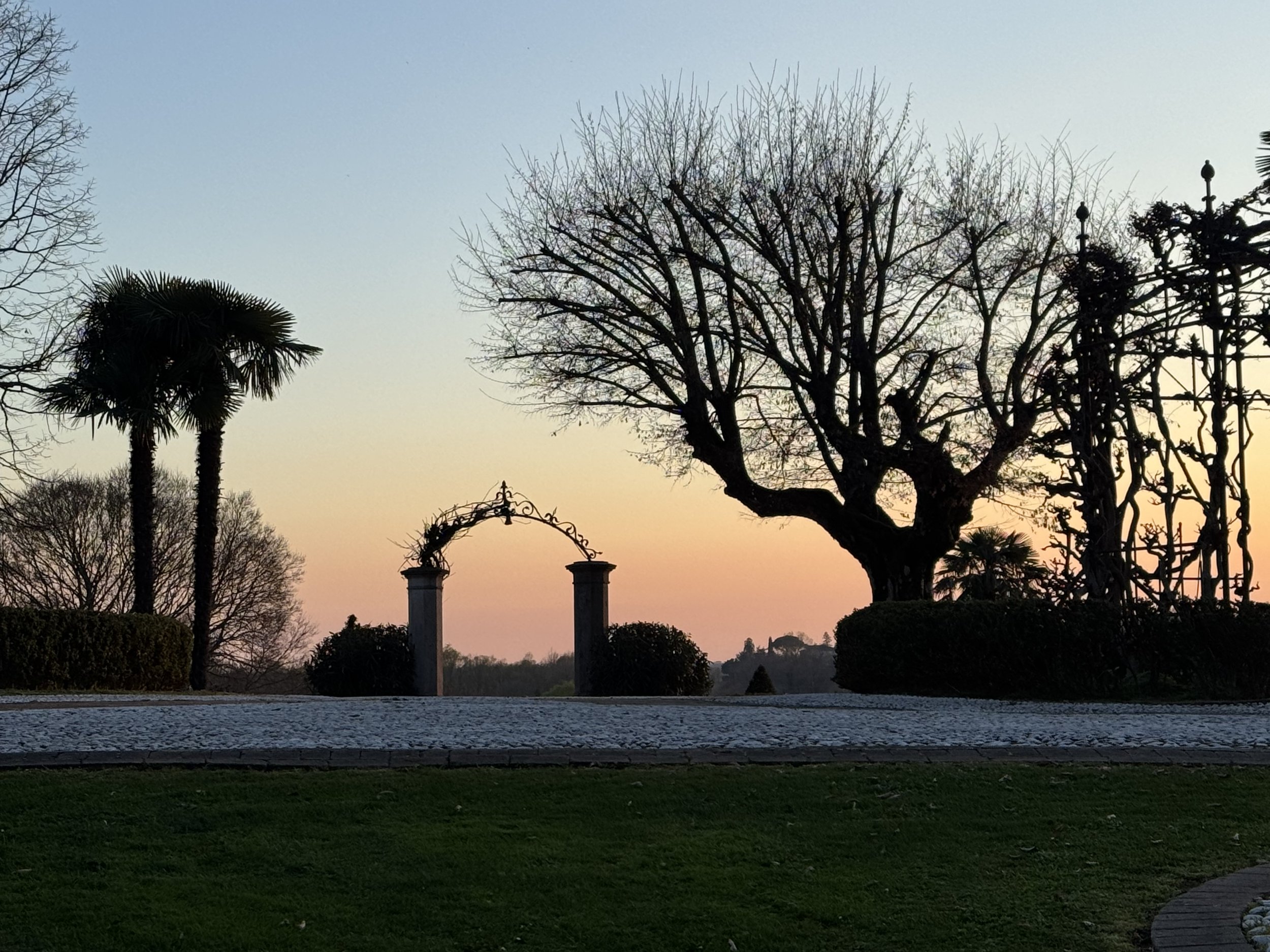
As we left the Castello, our parting gift was a gorgeous tramonto (sunset). A perfect ending to a wonderful afternoon of wine tasting.

contact info: Castello di Spessa Golf Wine Resort and Spa. Via Spessa 1. Capriva del Friuli GO 34070 email: info@castellodispessa.it

May 04, 2026 /Joanne Bartram
Castello di Spesa, Fruili, Capriva del Friuli, wine tasting italy
#italytravel, #medievalitaly, european travel, Friuli Venezia Giulia, Friuli-Venezia Giulia, Italy travel

Piazza Unita d’Italia, Trieste

Città Vecchia, Trieste

March 30, 2026 by Joanne Bartram in #italytravel, Friuli Venezia Giulia, Friuli-Venezia Giulia, Italian art architecture, Italian culture, Italy travel, Trieste

When I mentioned to friends that I was headed to Trieste, I inevitably got two reactions.   First was that it is a wonderful city with really good coffee.  Second was to watch out for La Bora, Trieste’s famously frigid wind which creates havoc as it roars down from the northeast.   During my stay I experienced both. 

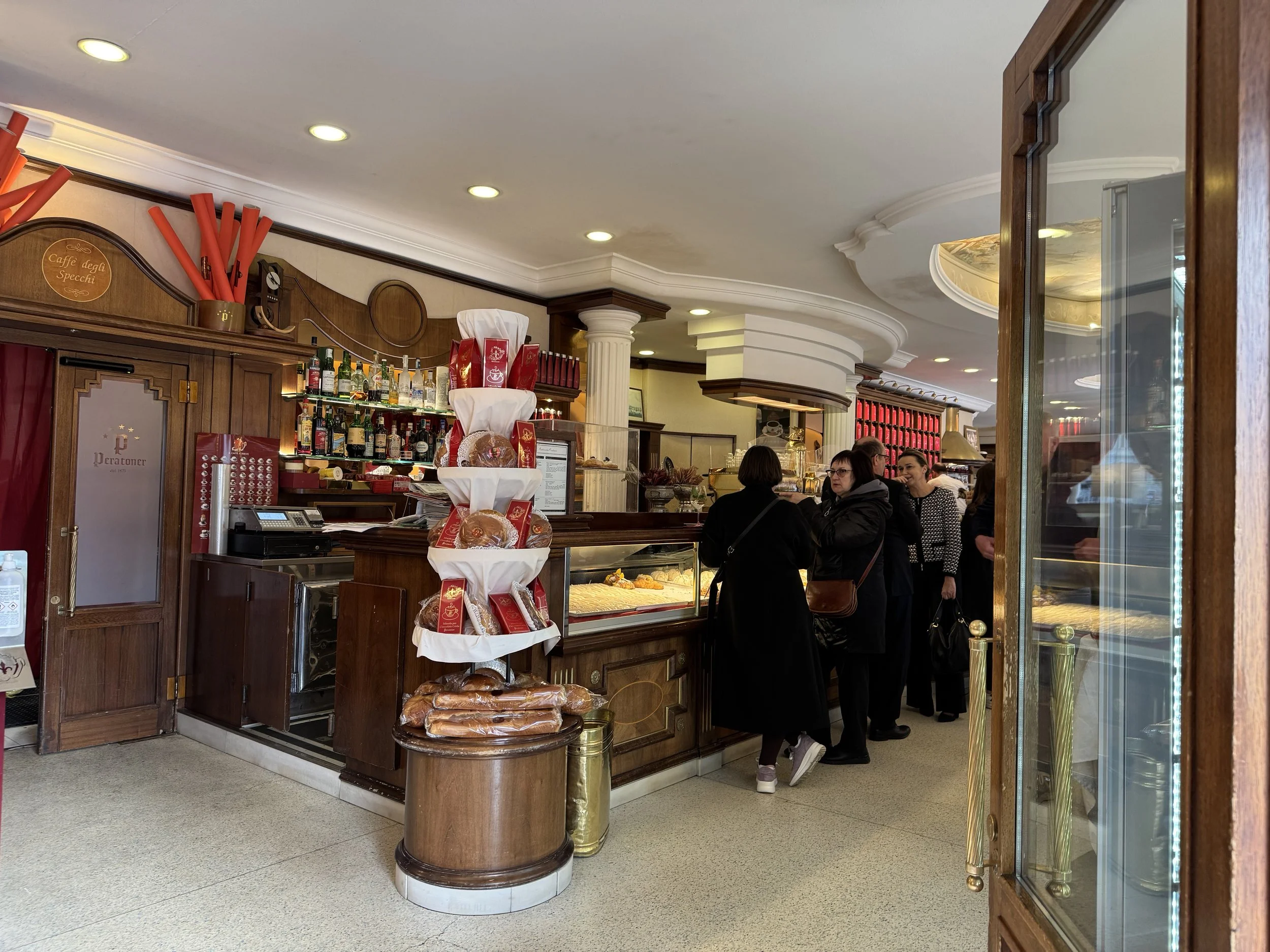
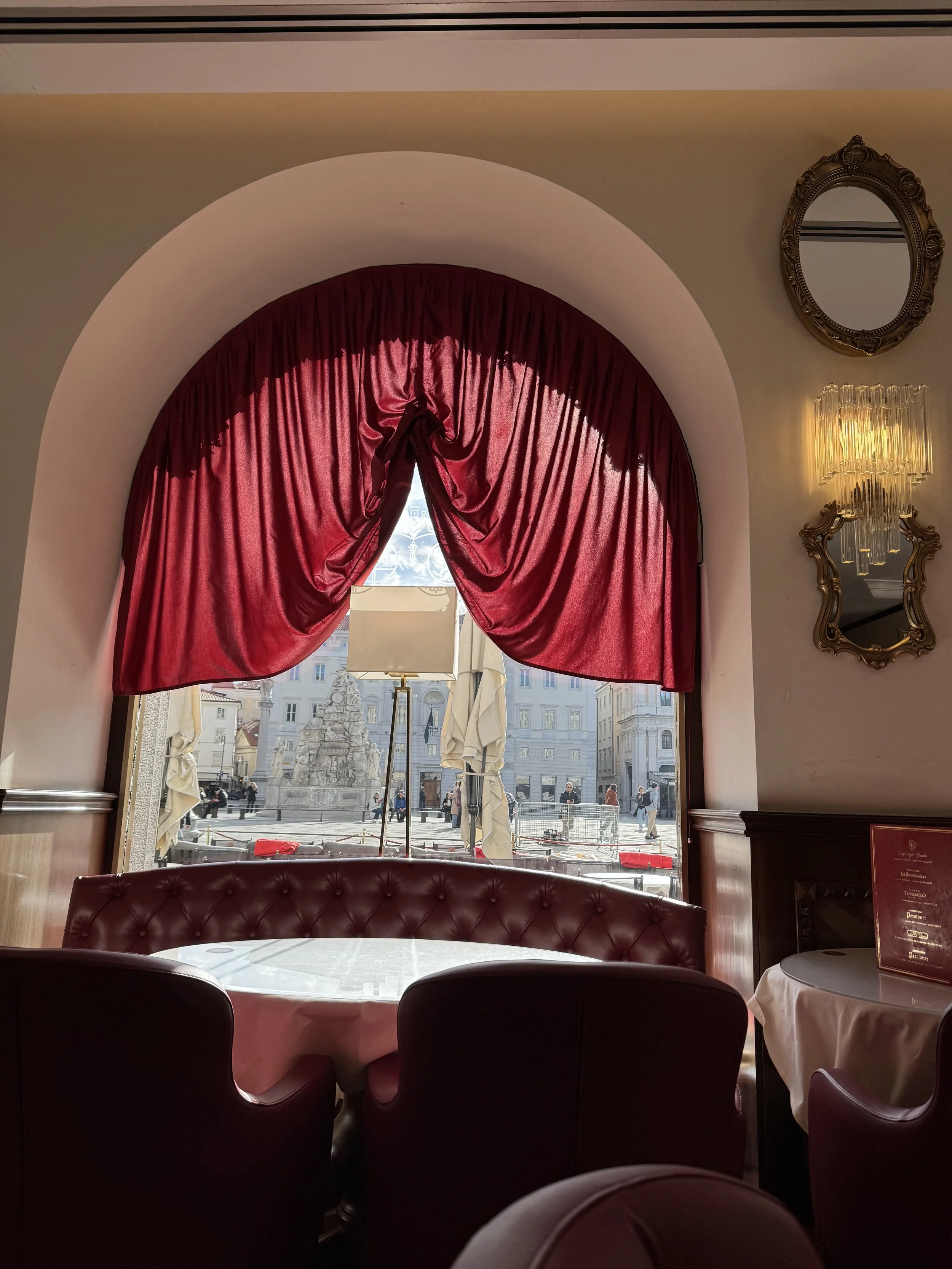
The coffee was great, especially when sipped inside one of the city’s historic cafes.  Their elegant settings reminded me of Vienna, which is no surprise since Trieste was part of the Austro-Hungarian empire for centuries.  That influence can be seen throughout Trieste in the grand architecture, large squares, statues, cafes, and even in its culinary traditions.  Triest is a blend of Italy and those Habsburg roots which makes it a unique place to visit. (below, Caffè degli Specchi)

IMG_9463.jpeg
IMG_9456.jpeg
IMG_9459.jpeg

As for the Bora, it struck one day after a week of pleasant weather.  And when I say it struck, that is not an exaggeration.  The cold (with a wind chill down to about 30 degrees) and wind together just about knock you over.  I was very glad to have brought a winter sweater, heavy scarf, gloves, and a warm hat that covered my ears.  Fortunately, the Bora lasted only one day and then we were back to mild weather.

Piazza Venezia

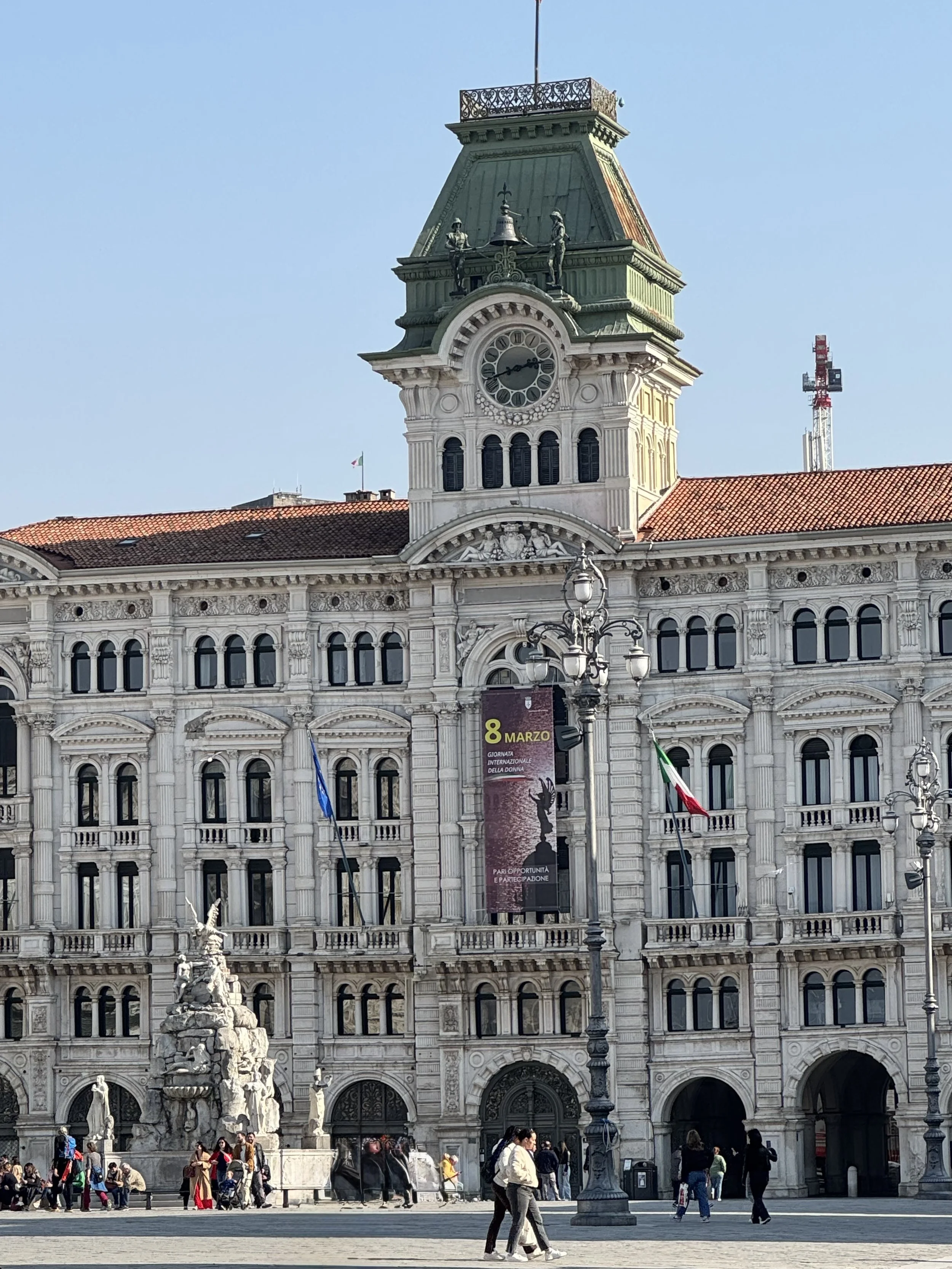
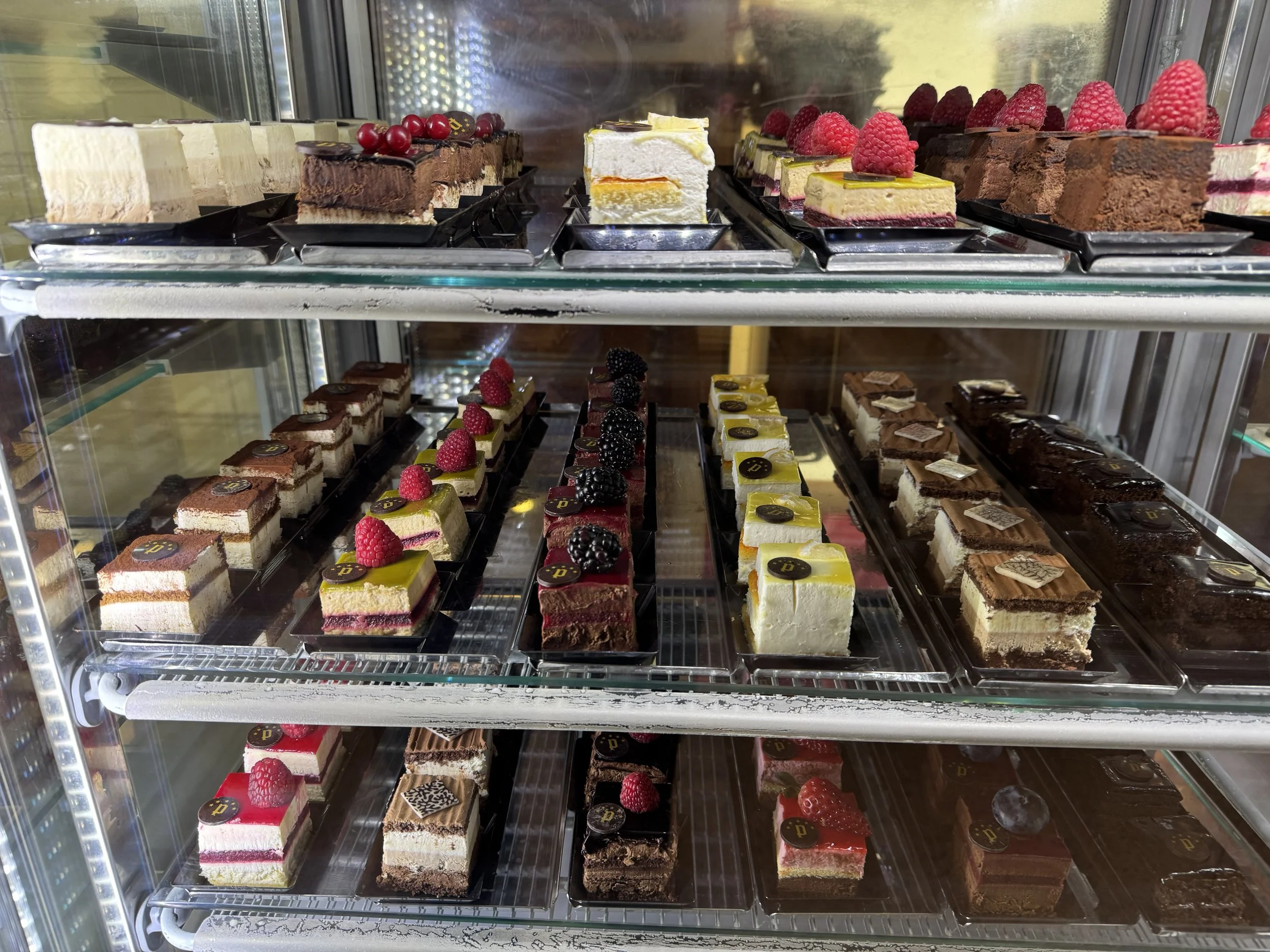
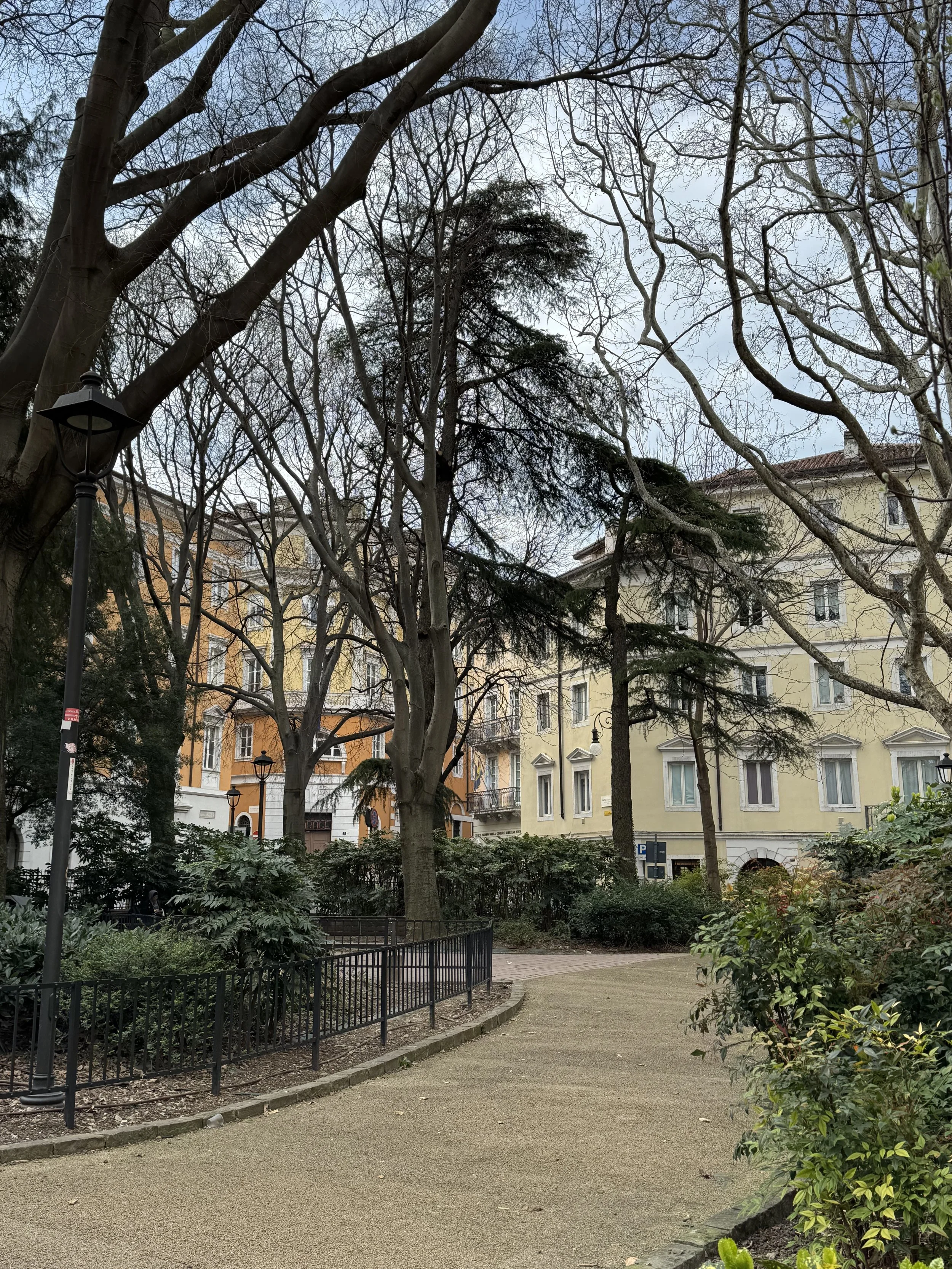
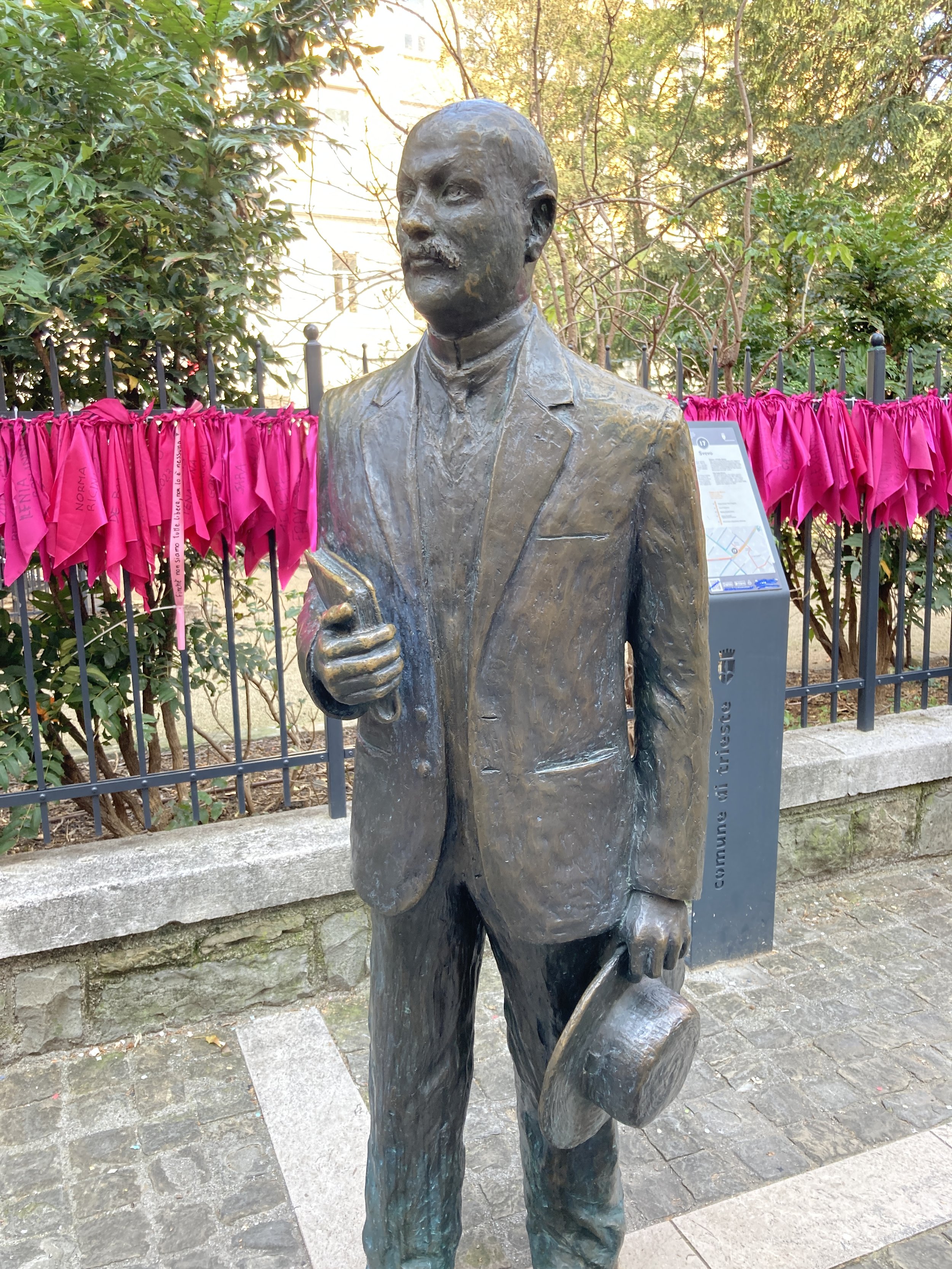
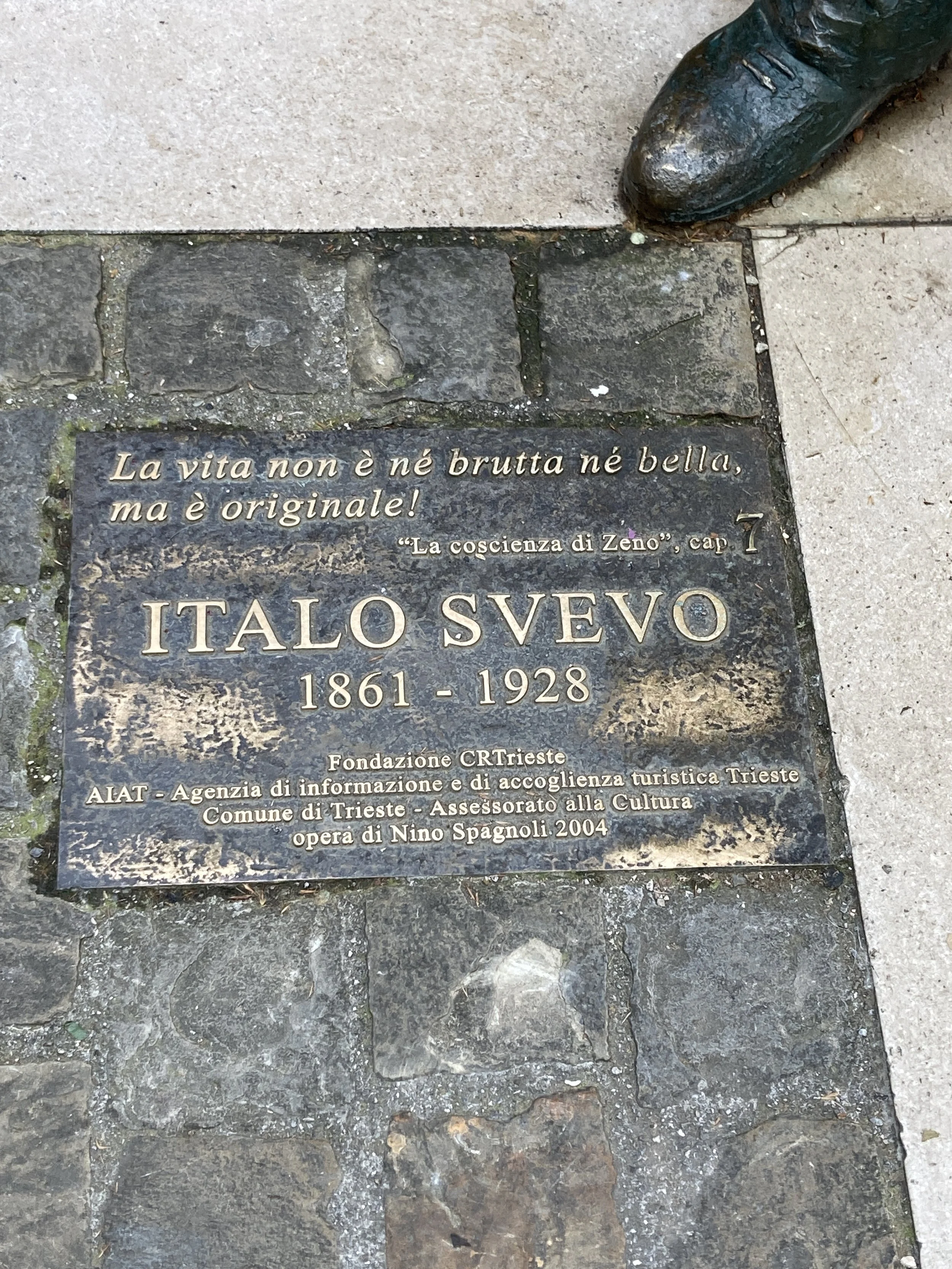
But Trieste is much more than coffee and wind.  The Citta Vecchia runs along the part of Trieste that follows the coastline and is flat before the city heads uphill to Castello San Giusto.  Better still is its long stretch of pedestrian only streets that run from Piazza Venezia through the pretty garden of Piazza Hortis with the statue of Italo Svevo, and to the Piazza Unita d’ Italia which is Trieste’s grand public square (top photo).  Along the way are shops, bars, restaurants, pastry shops, and some interesting meandering side streets.

IMG_9233.jpeg
IMG_9236.jpeg
IMG_8147.jpeg
IMG_8146.jpeg

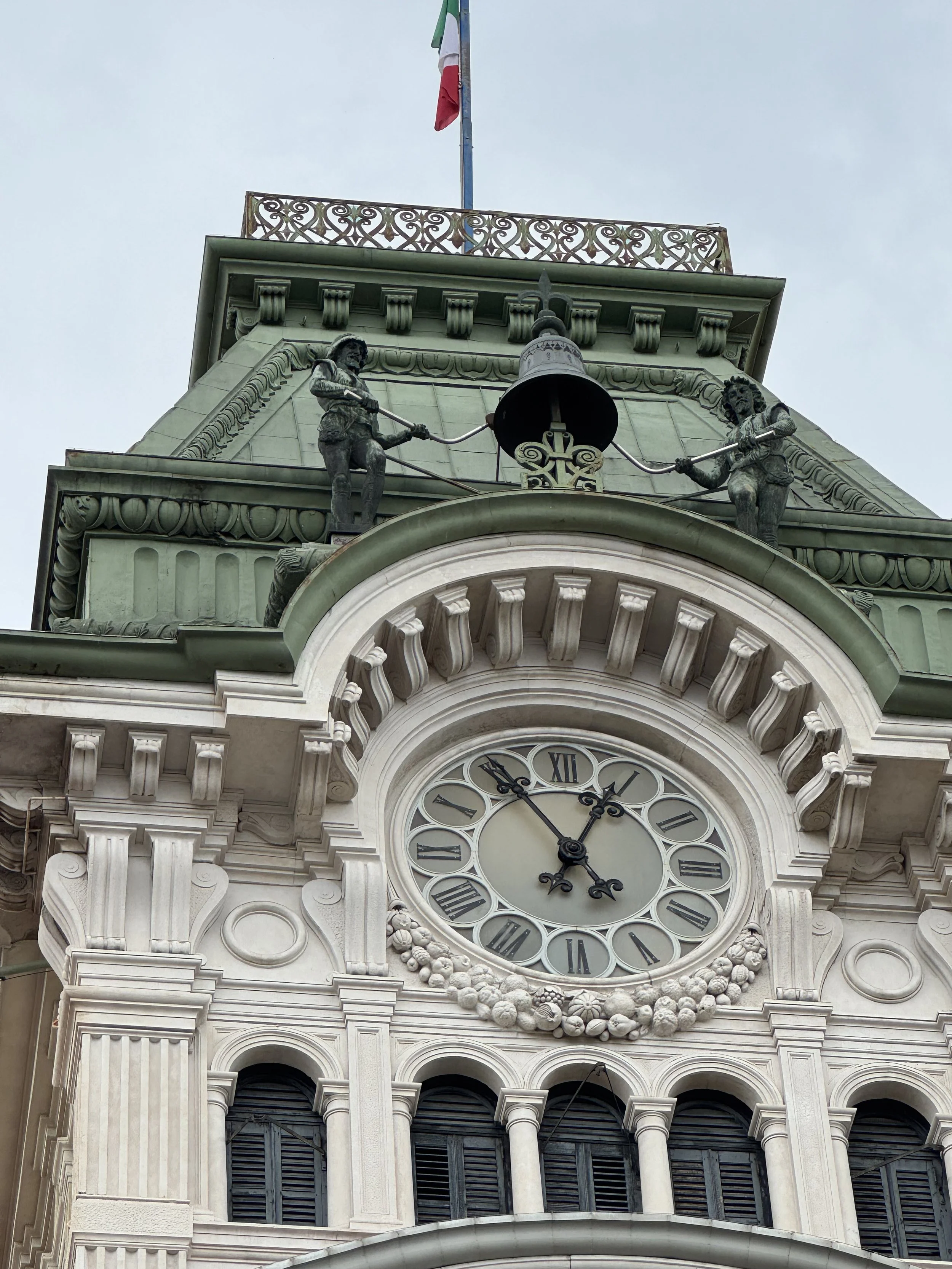
Locals call the 2 Moors who ring the bell atop the clock tower Michez and Jachez

The centerpiece of the Piazza Unita d’Italia is the 1870’s City Hall with its tall clock tower. Up at the top, two bronze Moors strike the bell to mark time. 

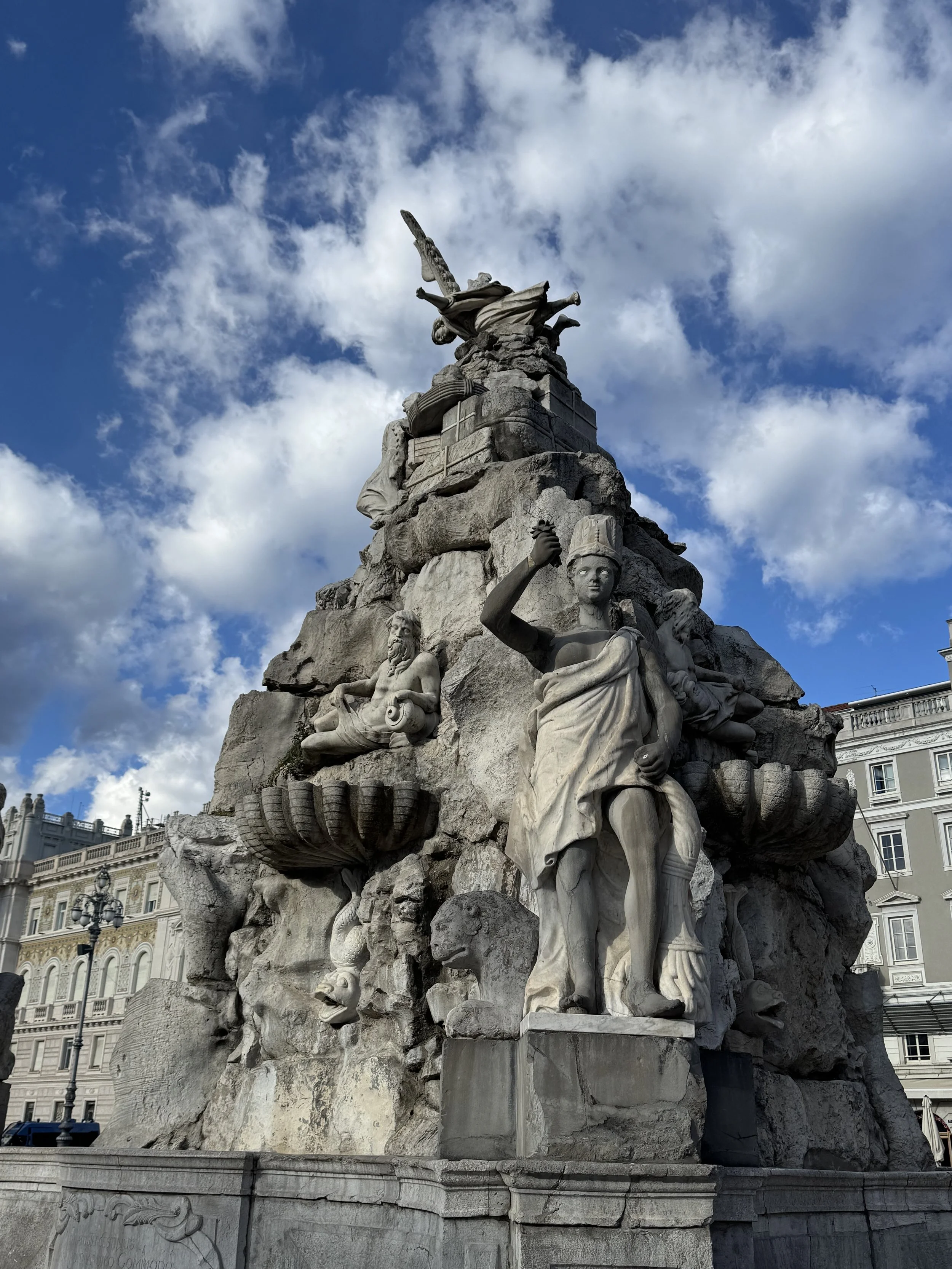
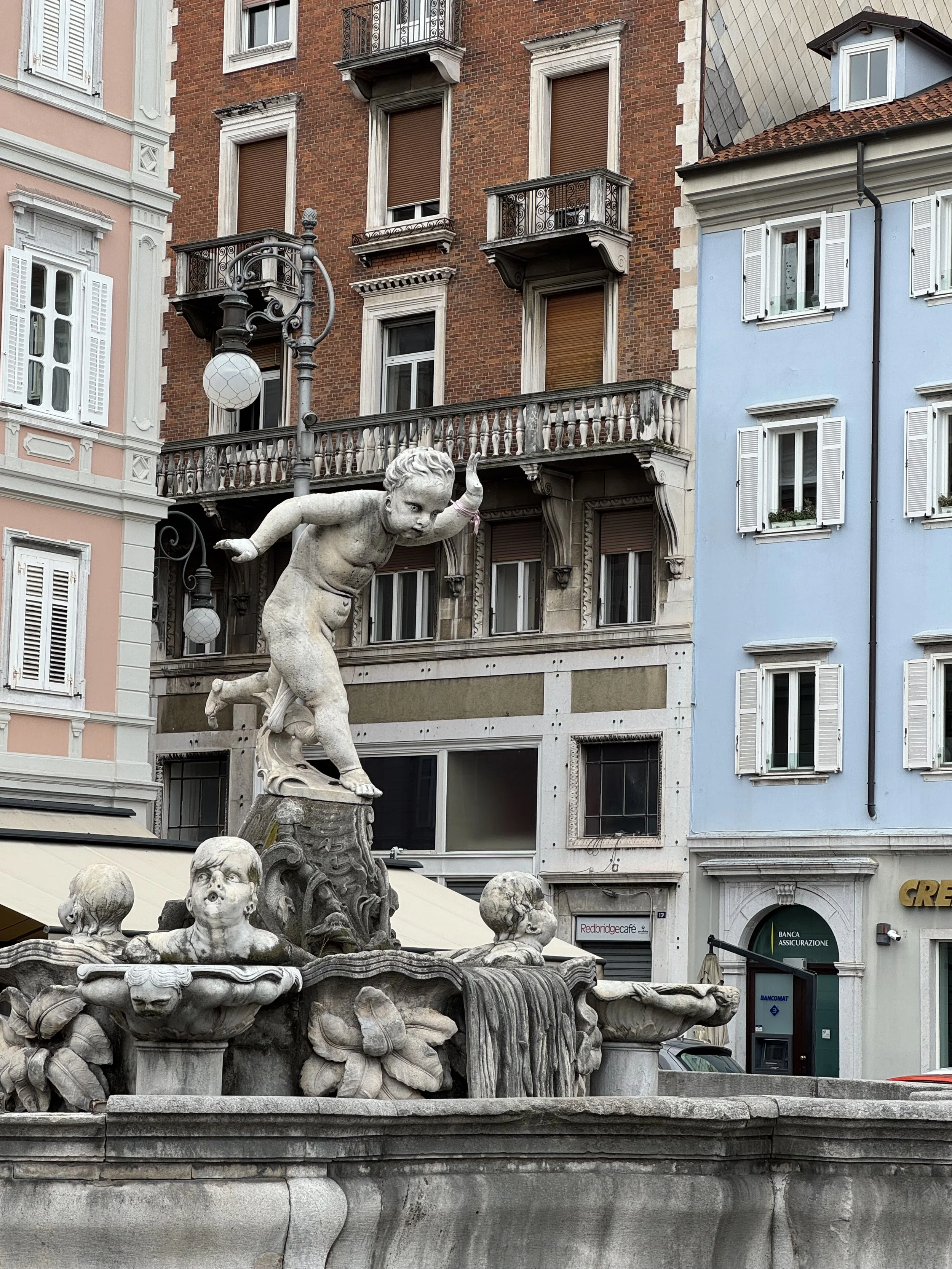
In front of the city hall is the Fontana dei Quatro Continenti (4 Continents Fountain).  Designed in the 1700’s when only 4 continents were known (Europe, Asia, Africa, the Americas), each is represented by sculptures at the corners of the fountain.  On top is a winged female figure, facing the sea, who represents Trieste.   

Removed from the piazza in the 1930’s (our guide said that Mussolini ordered it removed because he didn’t like the non-Italian cultures depicted), it was restored and put back in place only about 25 years ago.  Today it is a fountain without water, in part because when the Bora blows the spray of water would turn the piazza into an icy hazard.


Fontana dei Quatro Continenti, the African corner

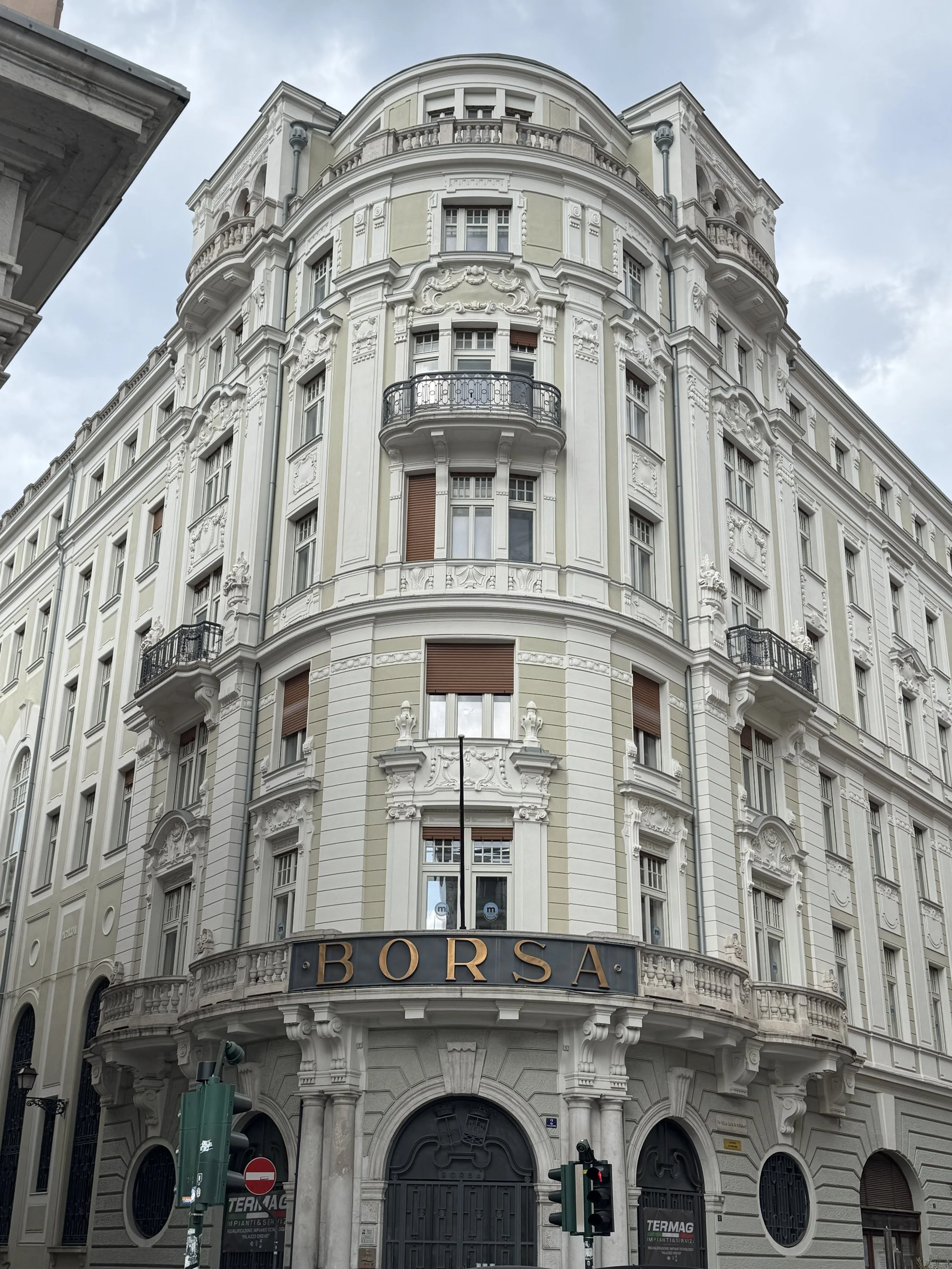
From Piazza Unita d’Italia the pedestrian path continues through Piazza della Borsa (site of the old Stock Exchange, below).

IMG_9259.jpeg
IMG_9269.jpeg
IMG_9266.jpeg

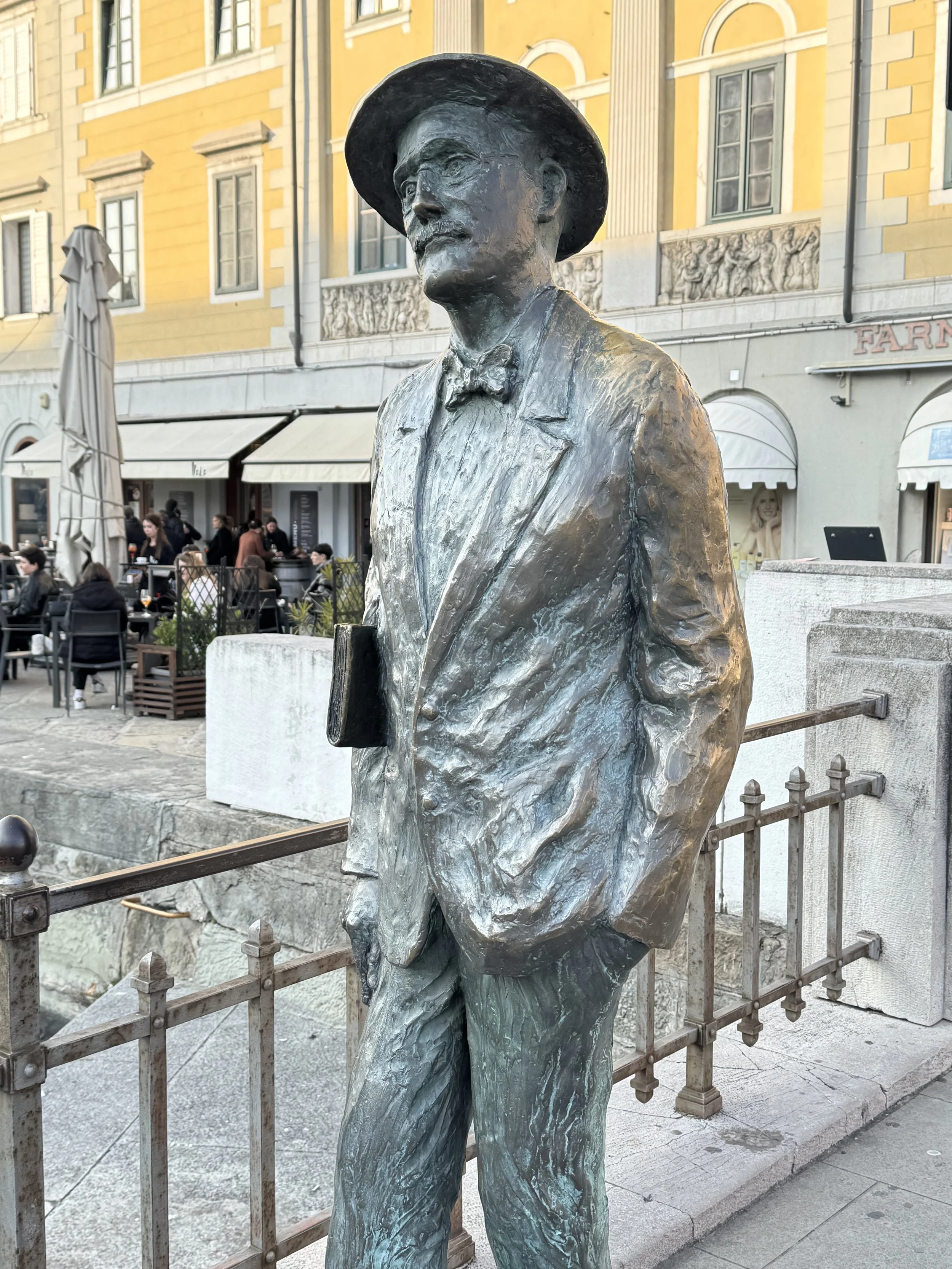
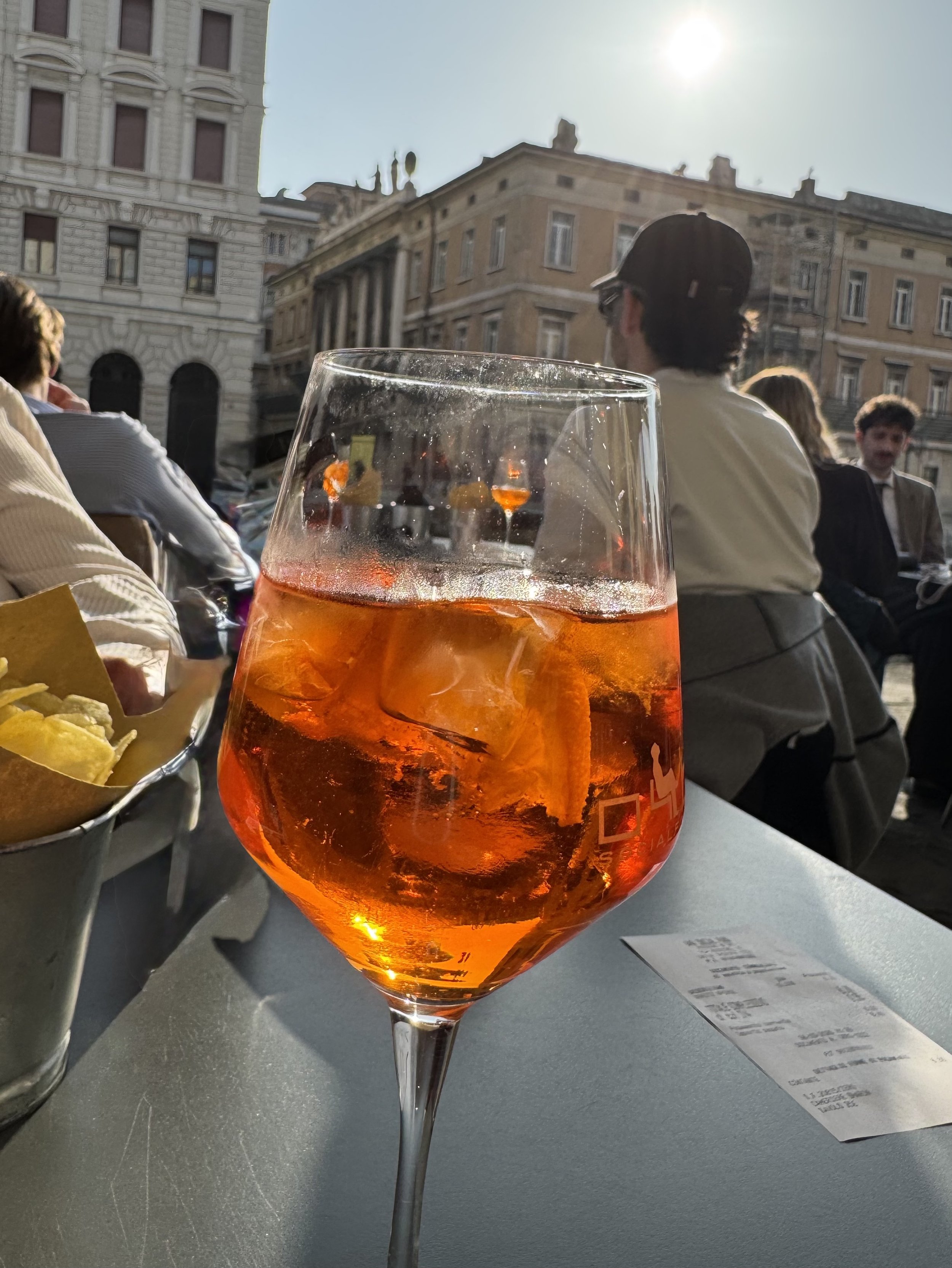
Then it is on to the Grand Canal and Piazza del Ponterosso (look for the famous statue of James Joyce).  This is the perfect place to end a walk through town with a spritz.

IMG_8836.jpeg
IMG_8844.jpeg
IMG_8838.jpeg
IMG_9282.jpeg

 Further inland from the Gulf, Trieste becomes hilly with a steep climb up to its high point and the Castello San Giusto.   More on that coming up in future posts along with some of Trieste’s Roman History. 

March 30, 2026 /Joanne Bartram
Trieste, Old Town Trieste, Citta Vecchia Trieste
#italytravel, Friuli Venezia Giulia, Friuli-Venezia Giulia, Italian art architecture, Italian culture, Italy travel, Trieste

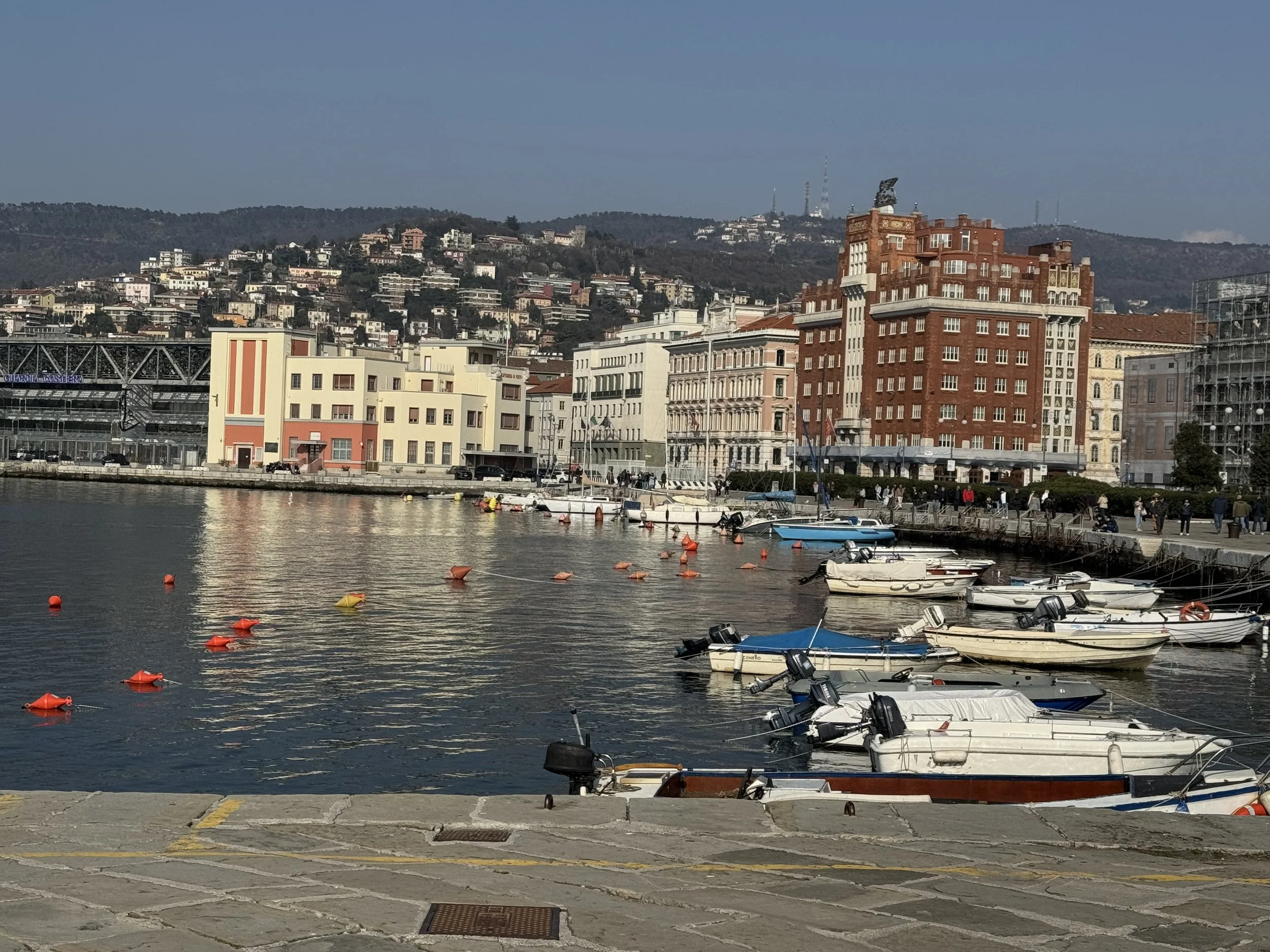
A small glimpse of Trieste’s long waterfront

Trieste at First Glance

March 23, 2026 by Joanne Bartram in #italytravel, Italian art architecture, Italian language study, Italy travel, Friuli-Venezia Giulia

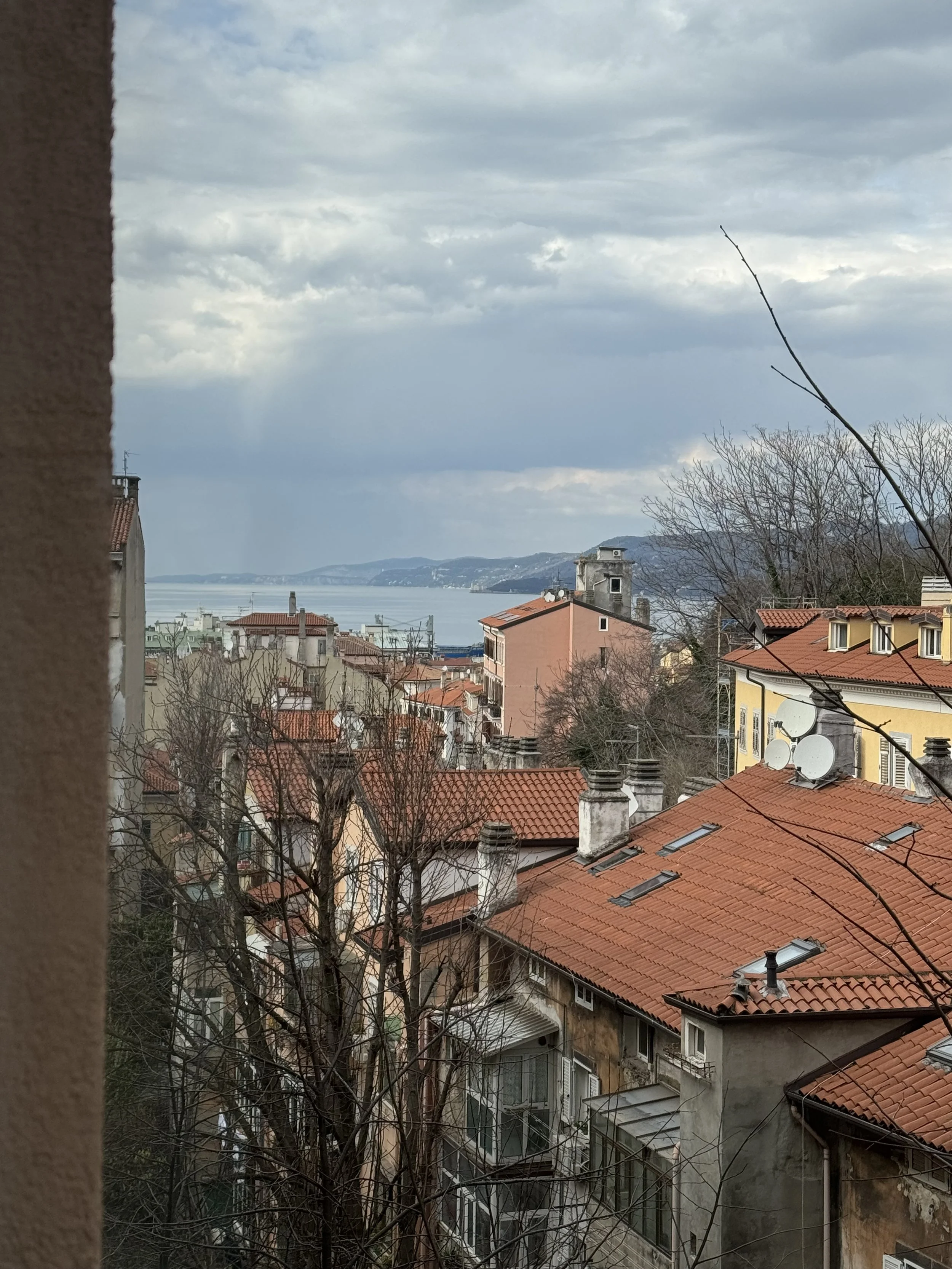
Looking down on the Gulf of Trieste from our apartment building - a steep 15 minute walk to the Piccolo Università Italiana where we studied for 2 weeks

When a friend writes and suggests meeting in Trieste for some fun and a couple of weeks of language study, there really is only one correct answer - Si !!
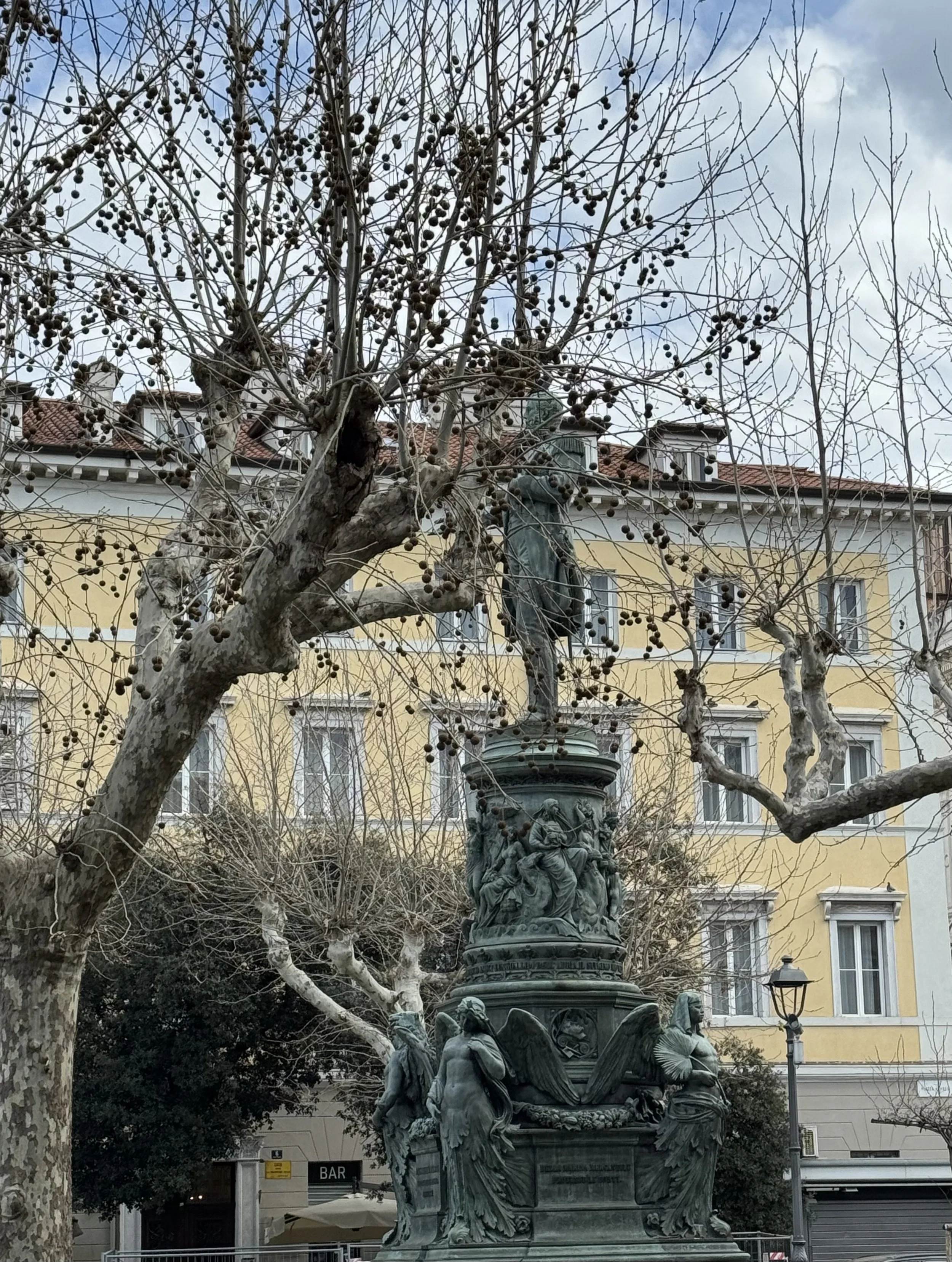
That is especially true if Trieste is a city I you’ve never visited, in a part of Italy that you don’t know well. Both were true for me. Not to mention that my Italian grammar is always in need of a tune up, so two weeks of organized and directed study is always a good idea.

Add to the above the fact that Trieste sits right on a big body of water - the Gulf of Trieste. And, where there is a sea there is sure to be seafood. Having lived many years in land-locked New Mexico, anywhere with water and seafood is a big draw. No surprise then that on the first day there we headed to the waterfront for a first glance of the city. Or that my first meal was a wonderful Spaghetti alle Vongole.

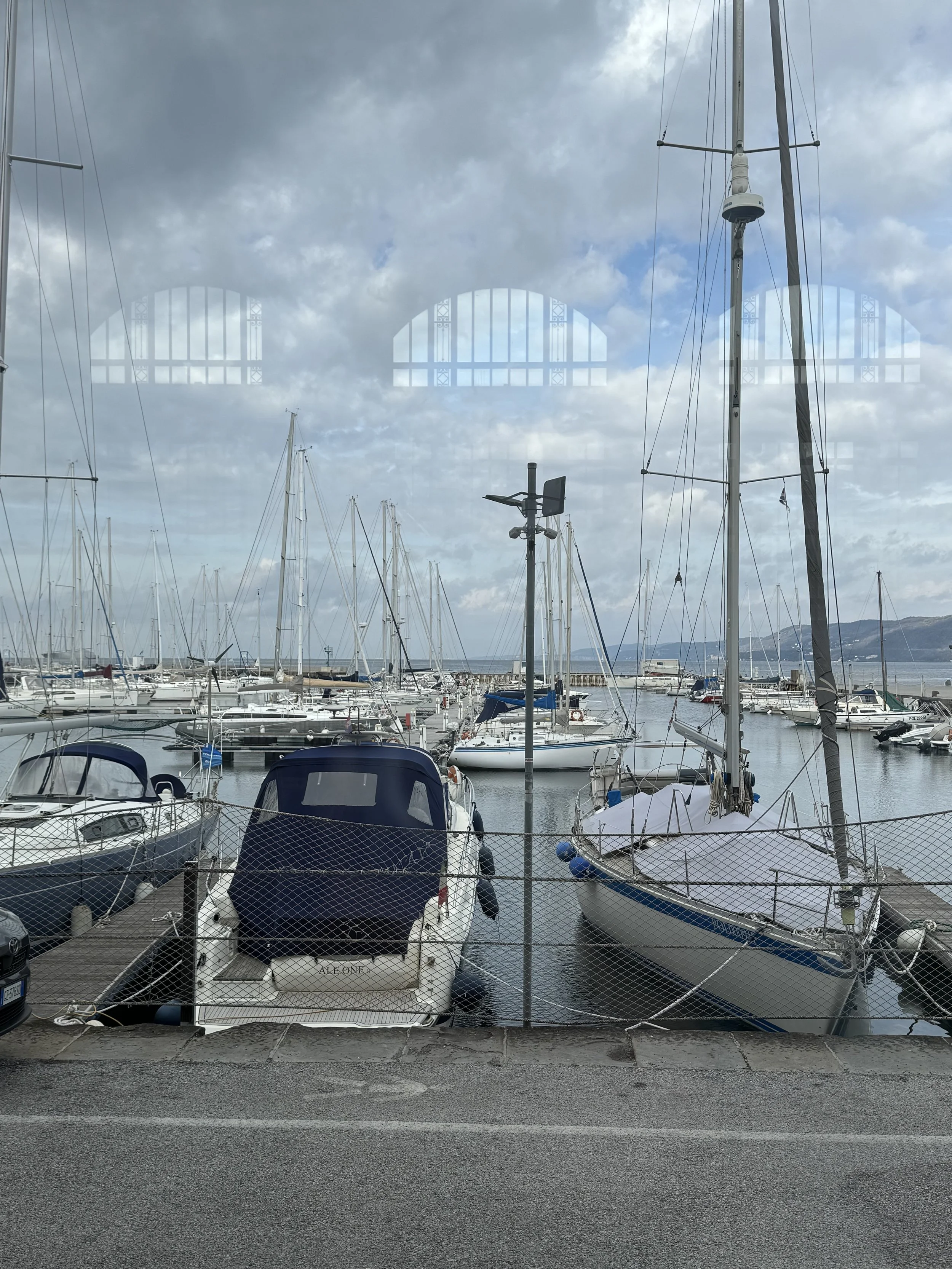
Trieste is an important port, not only for Italy but for the central and eastern European countries, several of which have no sea access of their own. The center and surrounding areas are a center for shipping, ship building, and commerce. Trieste also has a harbor for smaller recreational boats. There is just something joyful about seeing all those small boats with their tall masts, even if the still cold weather meant it wasn’t quite sailing seasdurinon yet.

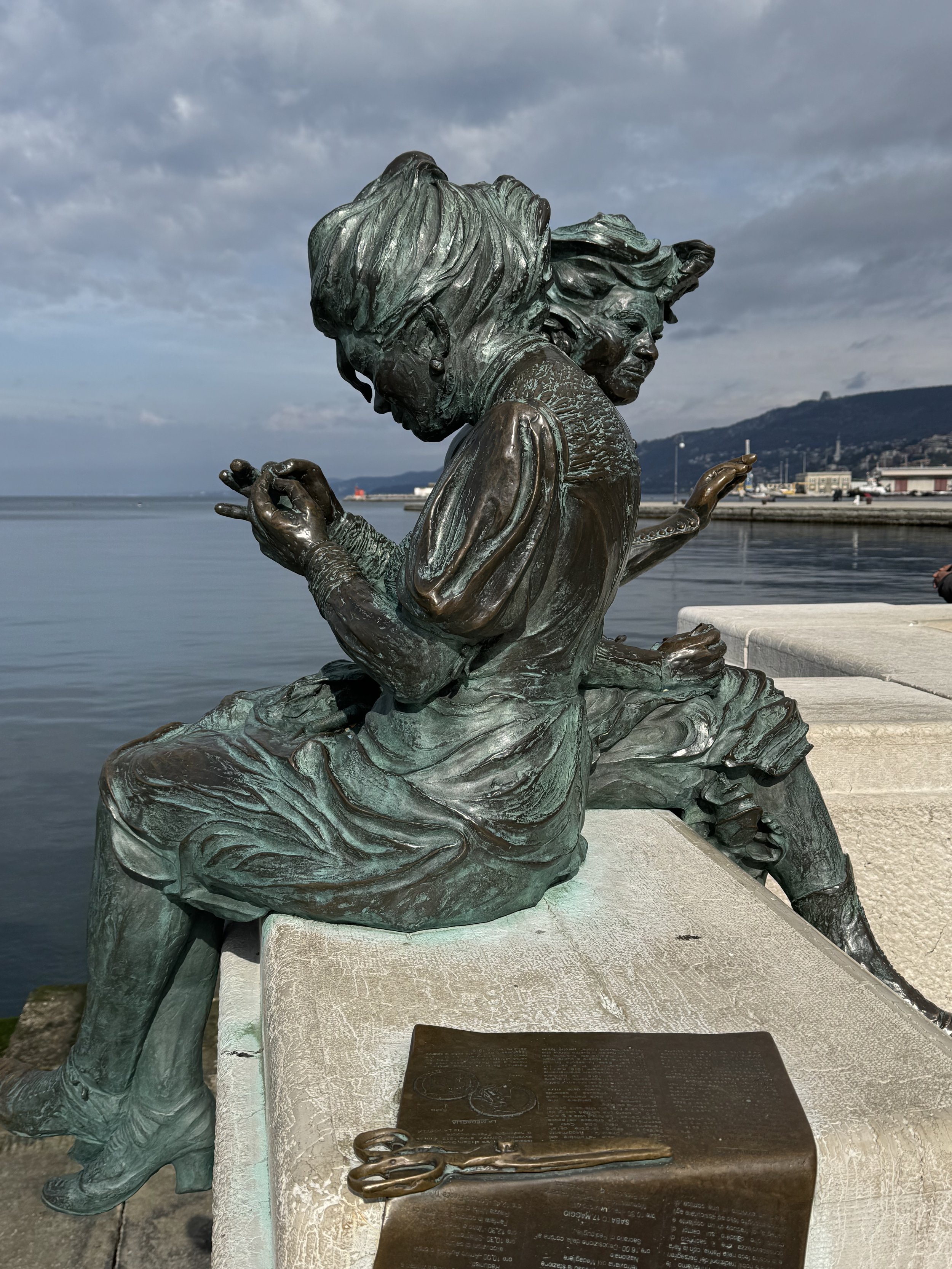
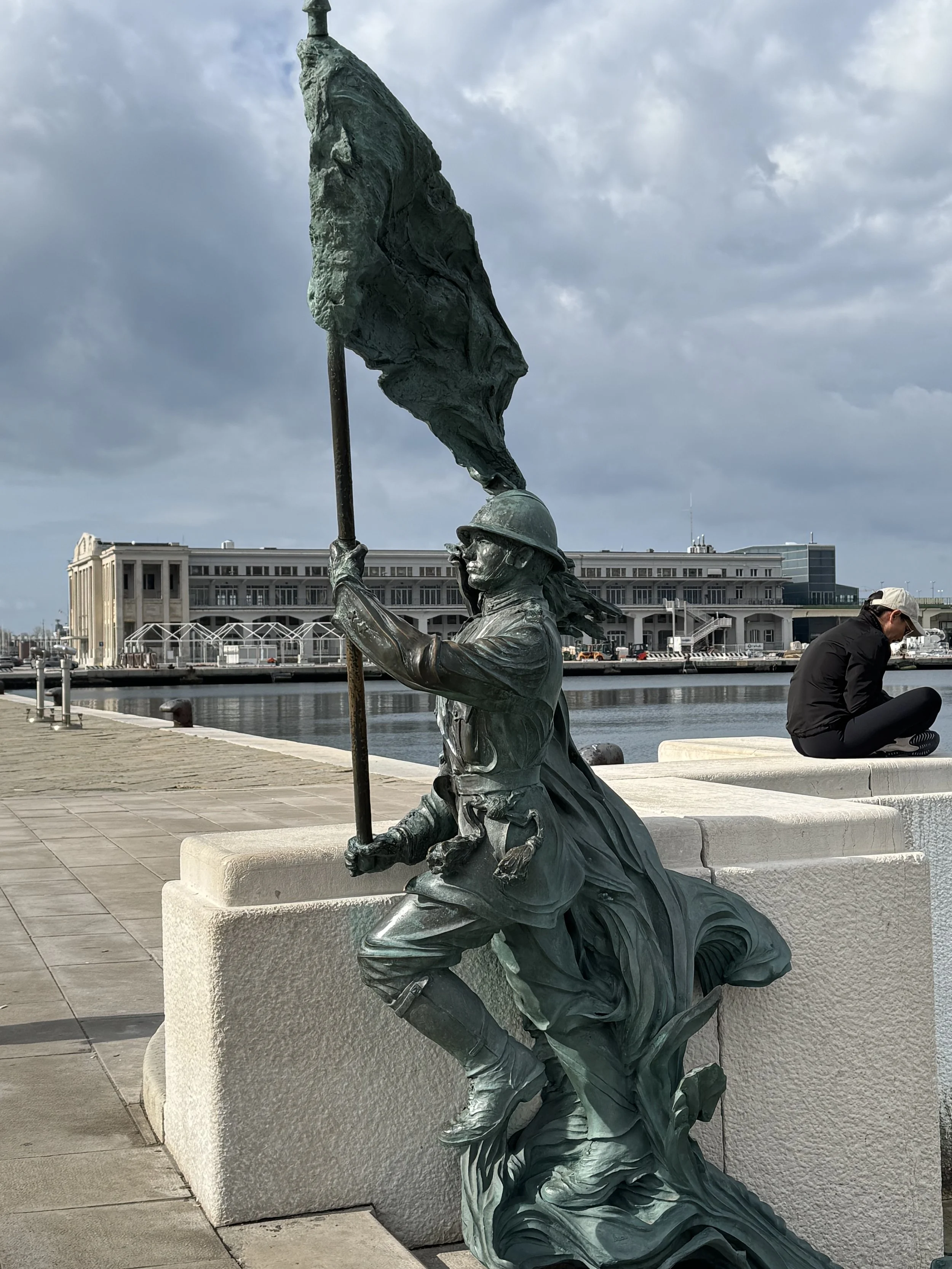
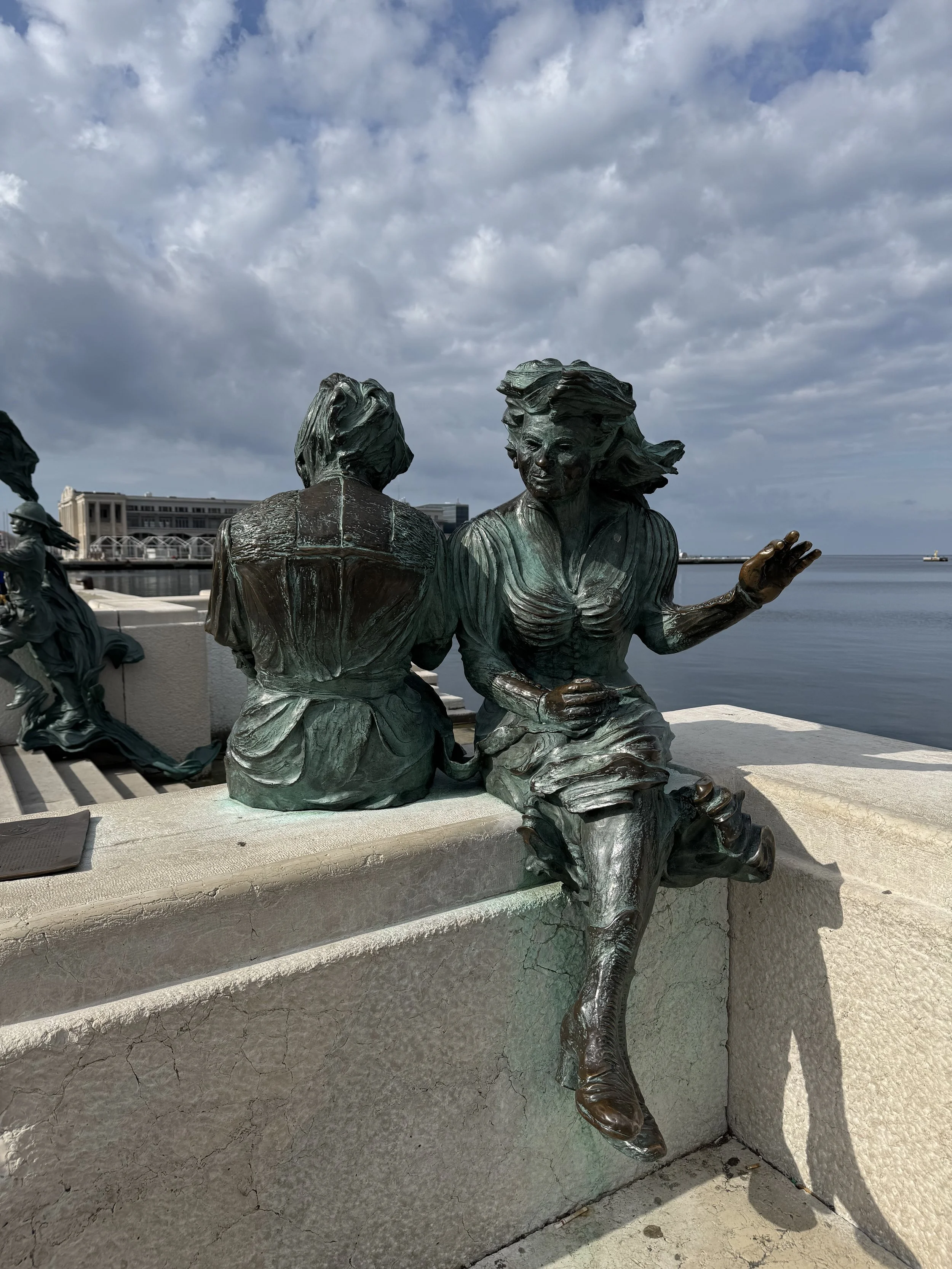
The strip of city along the water is also a place where people go to stroll, for recreation, and for dining. Turn one direction and see tall masts, large ships, and even an impounded Russian yacht which has become a sort of landmark. A series of bronze statues at one of the piers speaks to Trieste’s history.

IMG_9119.jpeg
IMG_9122.jpeg
IMG_9117.jpeg

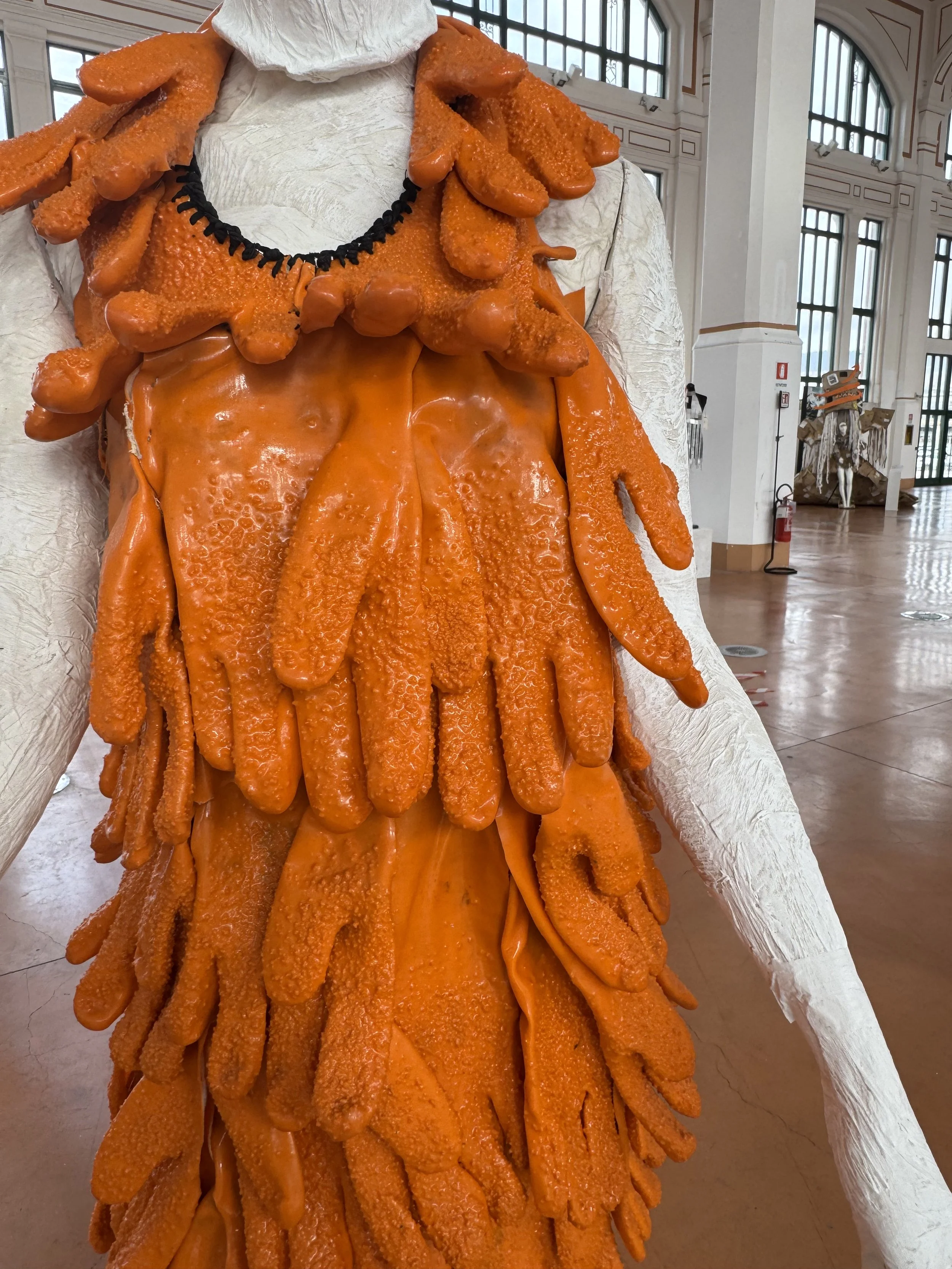
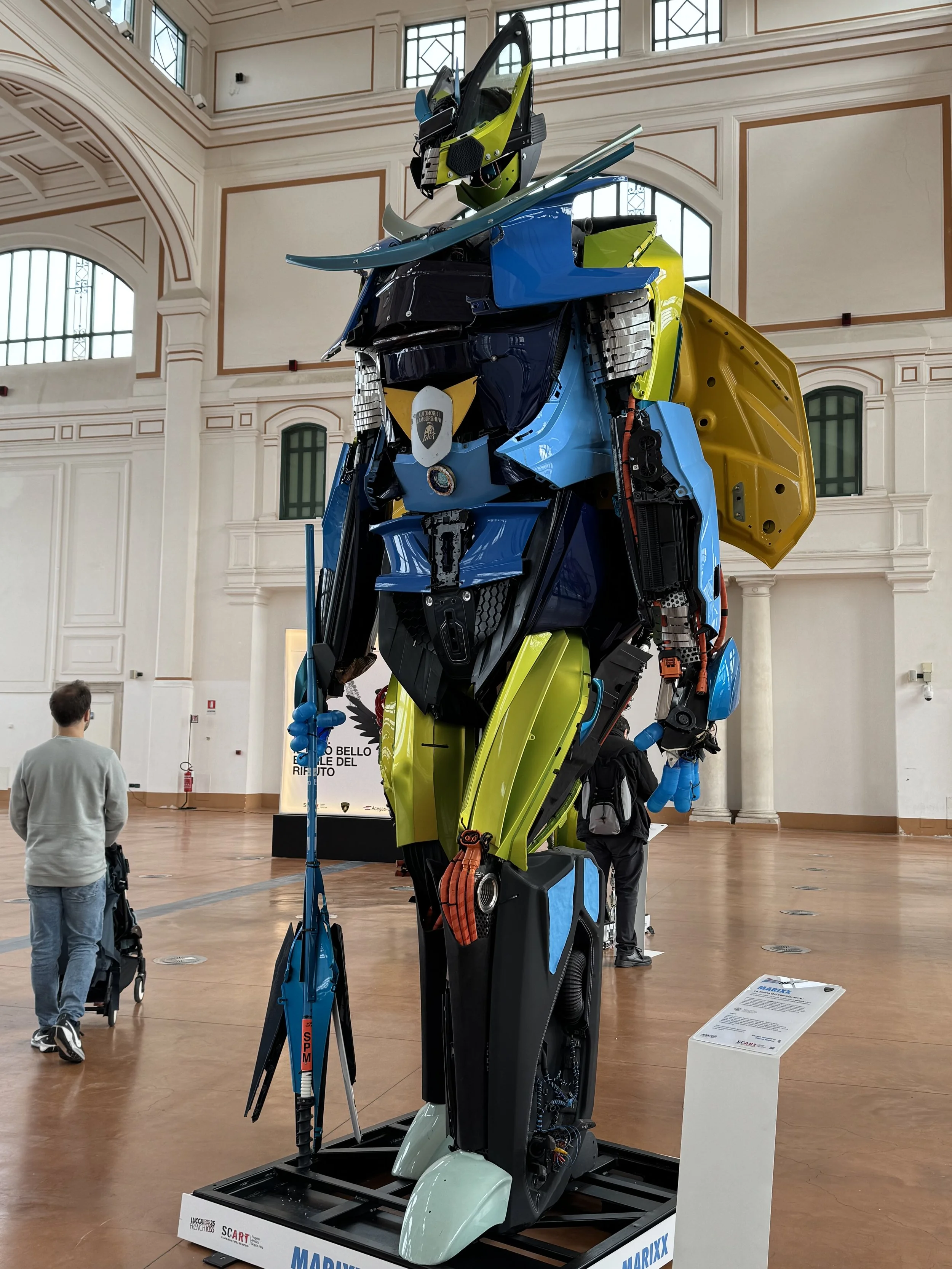
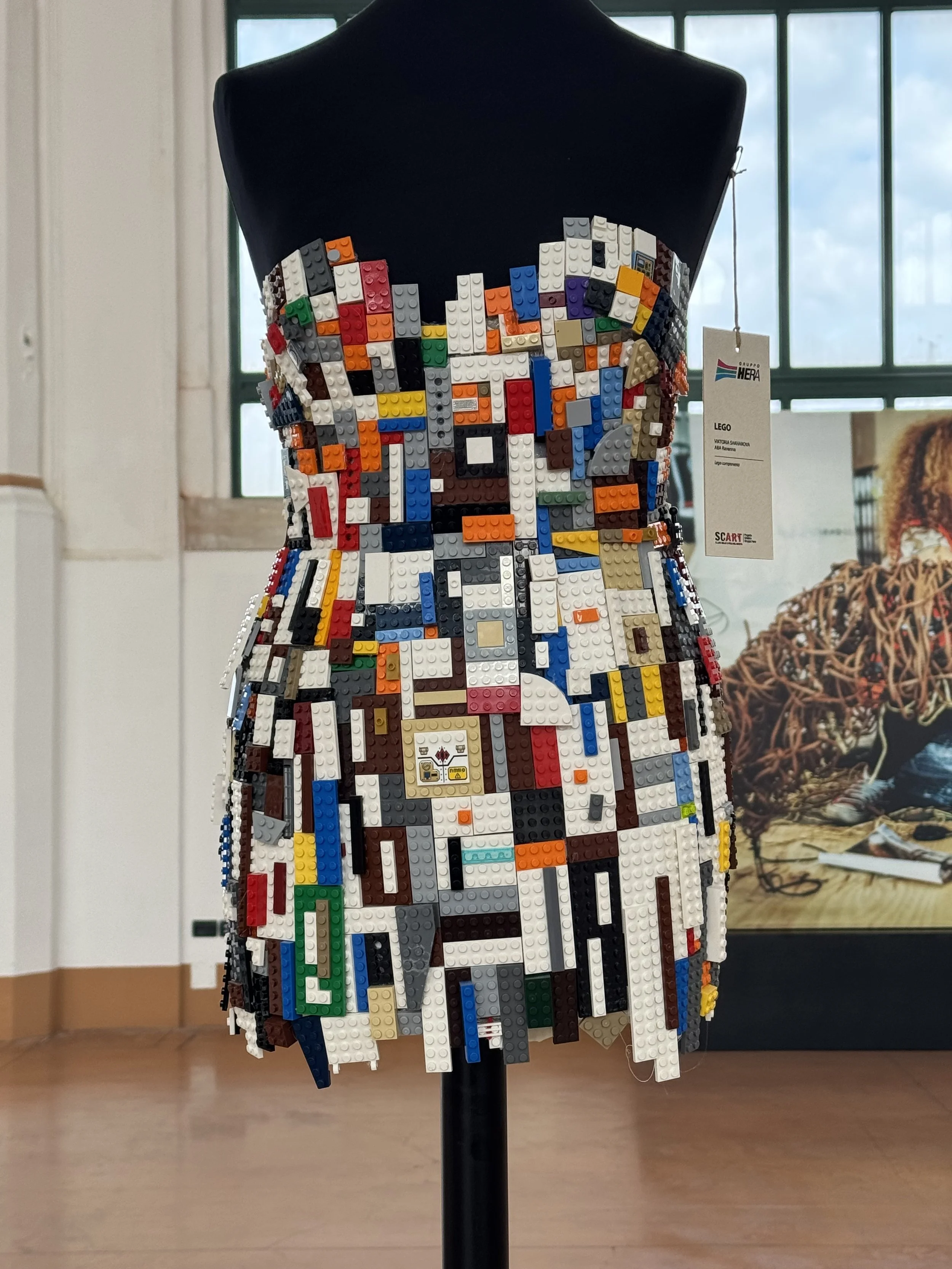
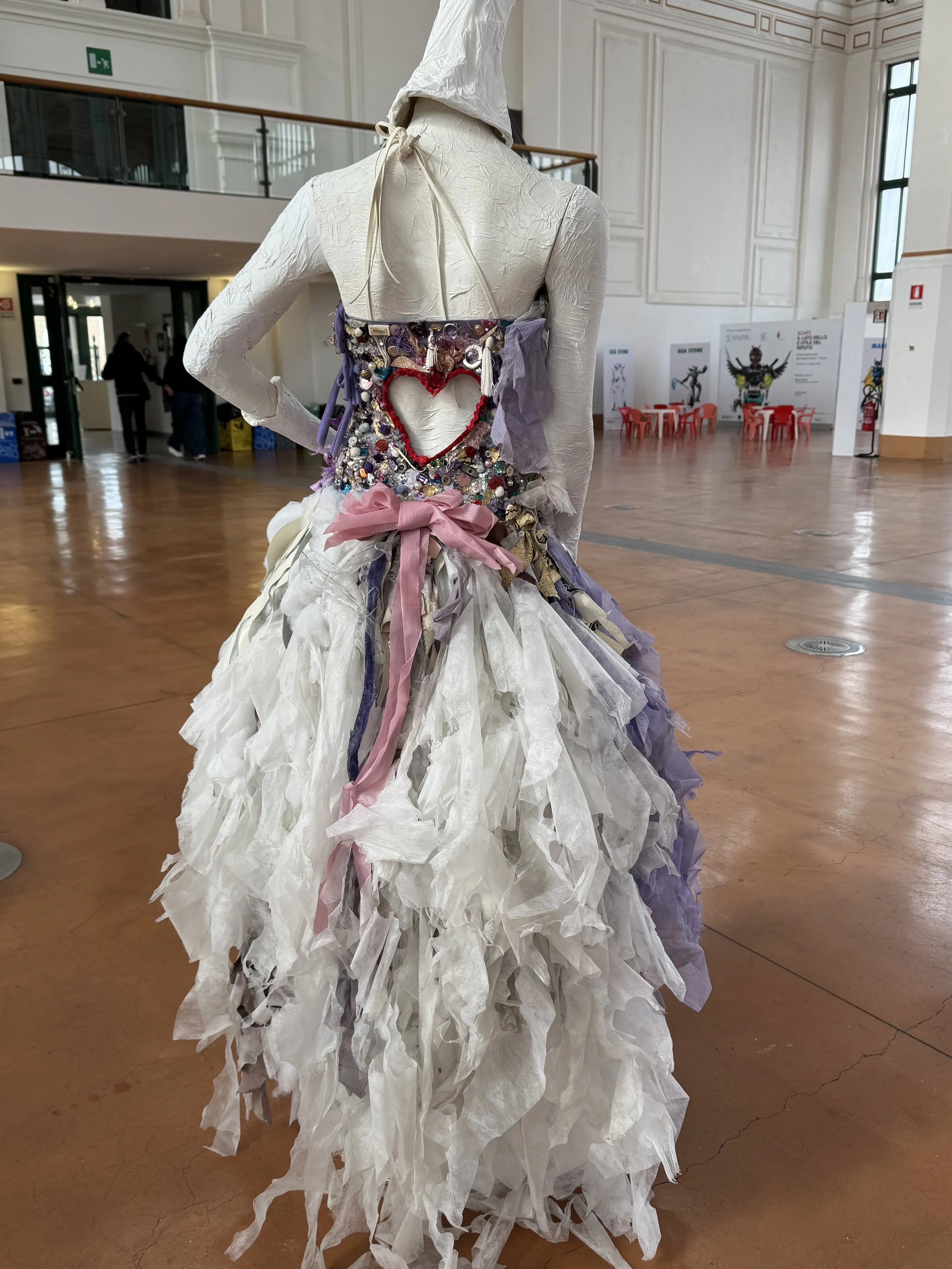
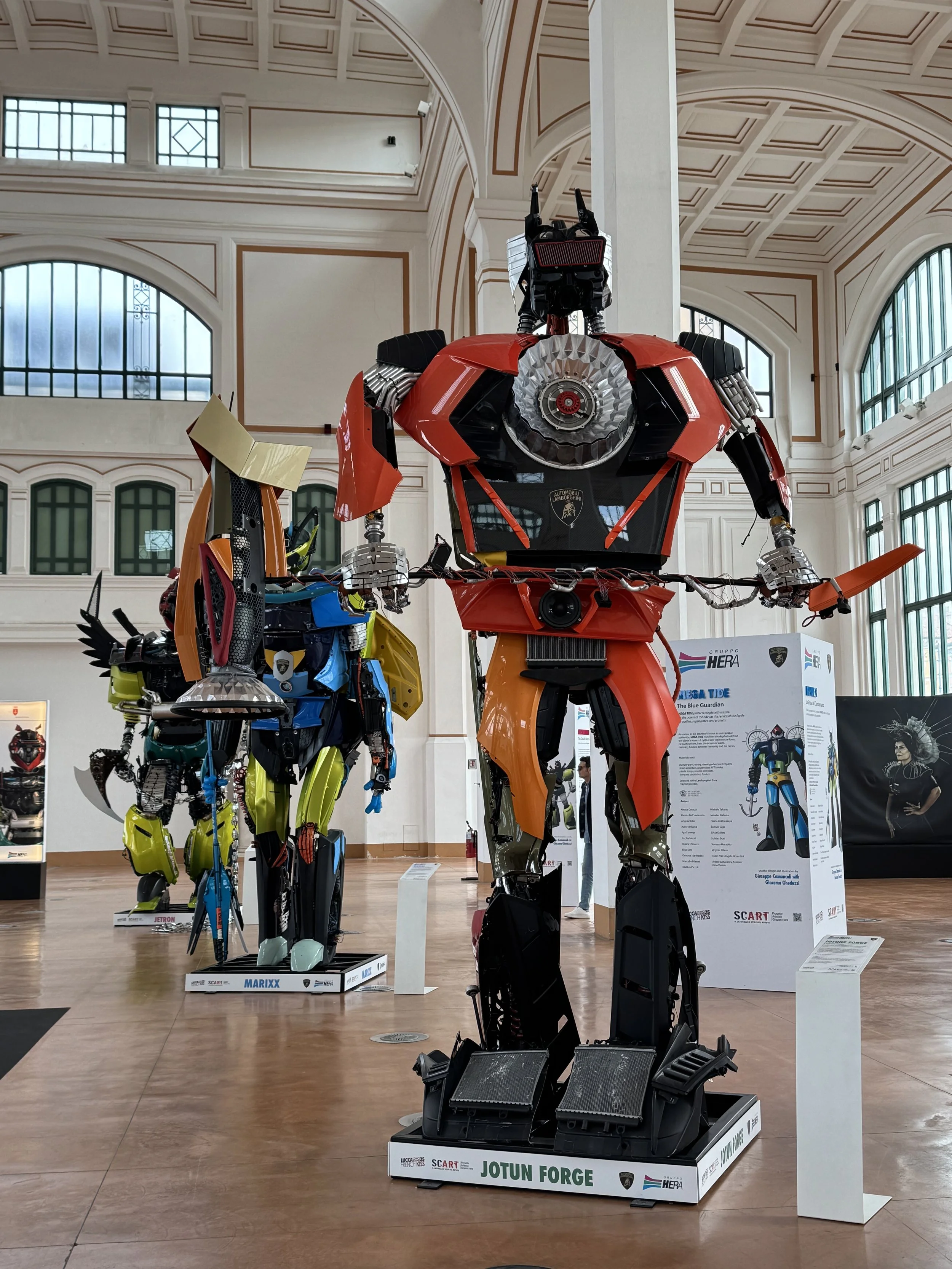
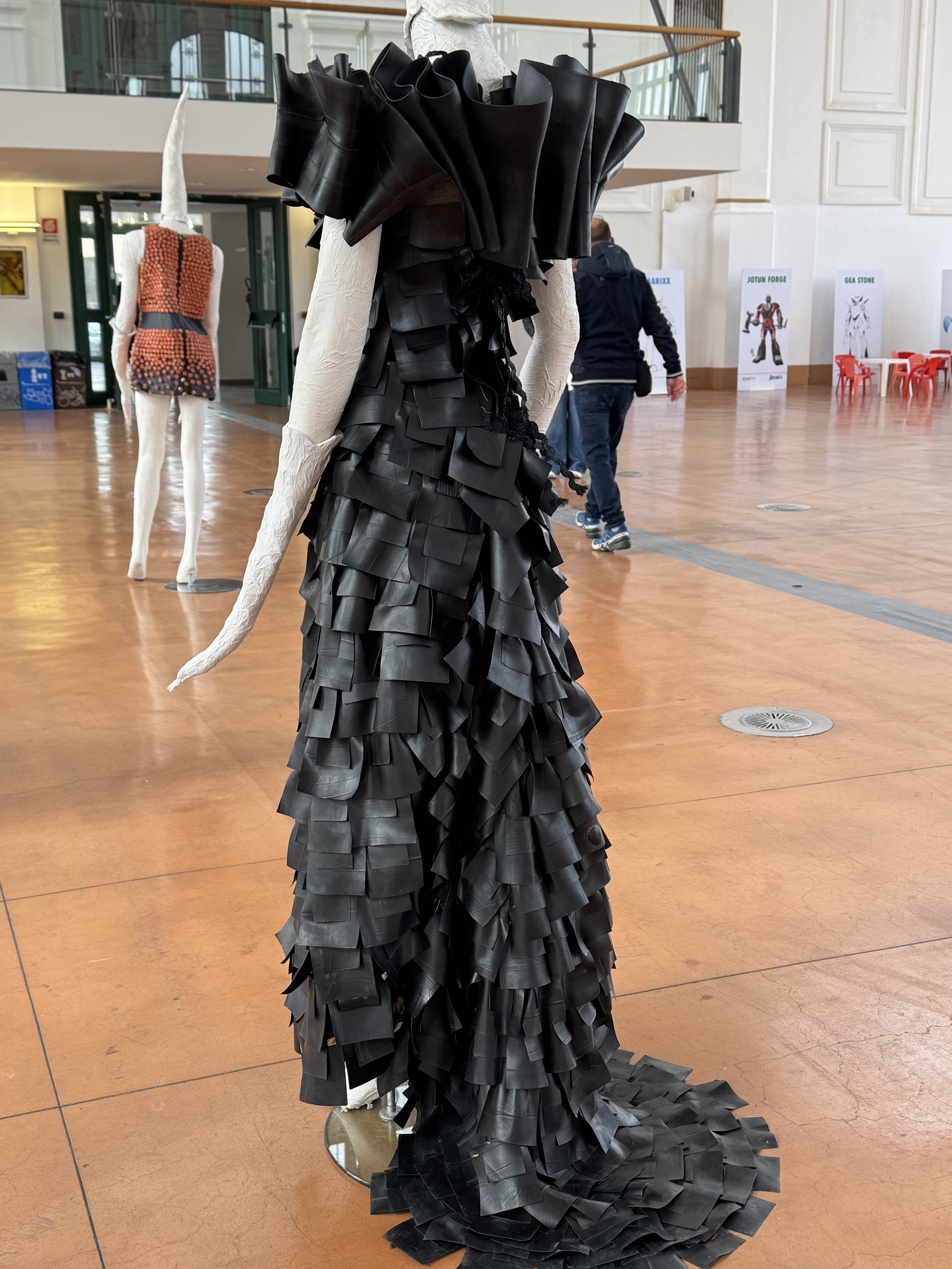
Look further down the waterfront and find the old Aquarium (now an exhibit space). During my visit the Aquarium was hosting an interesting exhibit of objects made from recycled materials and some gigantic robots who were named for their roles in maintaining the environment.

IMG_9152.jpeg
IMG_9169.jpeg
IMG_9155.jpeg
IMG_9164.jpeg
IMG_9167.jpeg
IMG_9163.jpeg

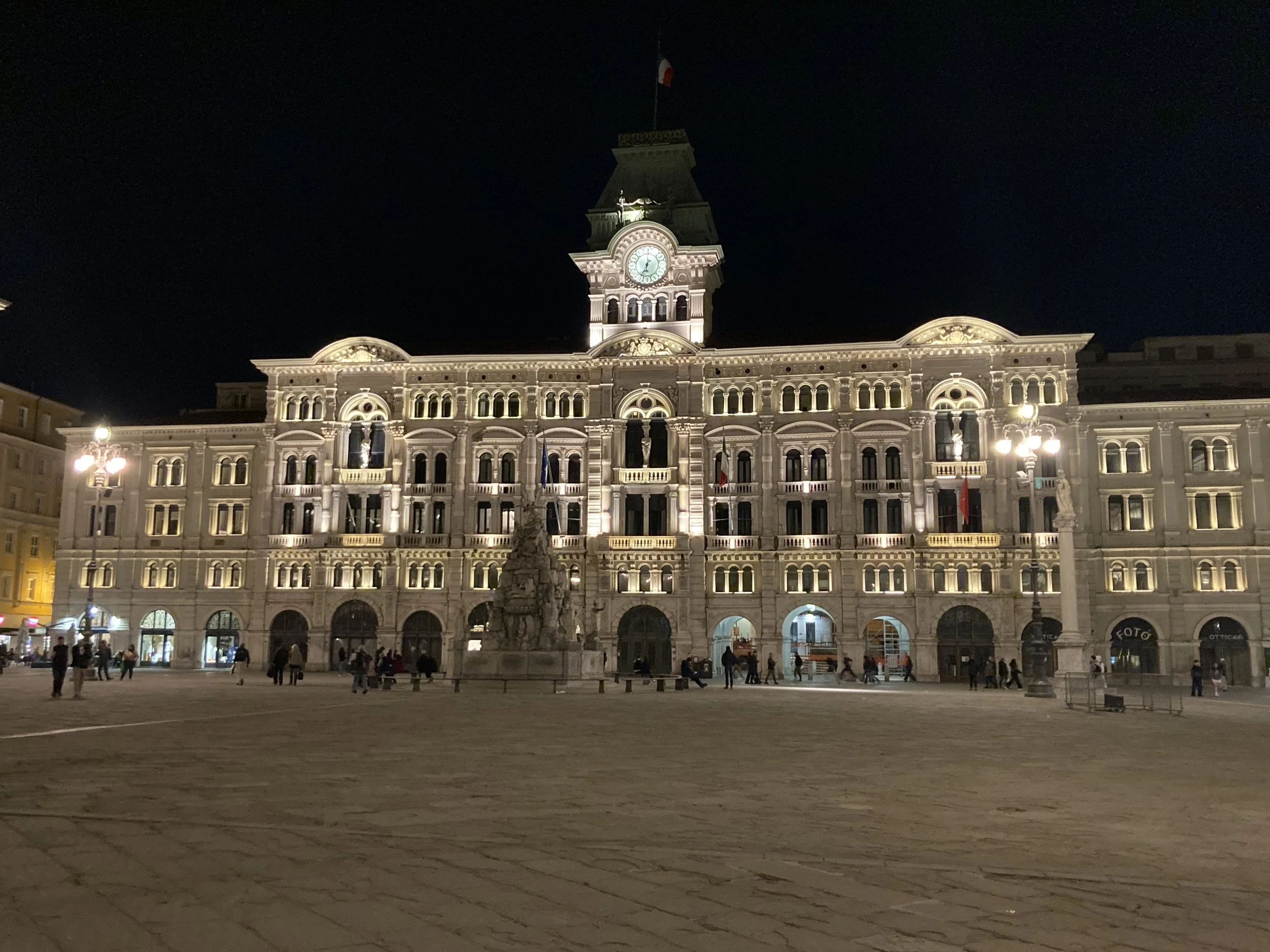
Turn around and the city begins to unfold before you with ornate buildings, fancy hotels, and a historic square, the Piazza Unita d’Italia. Beautiful by day and even better when lit up at night.

Piazza Unità d’Italia in Trieste

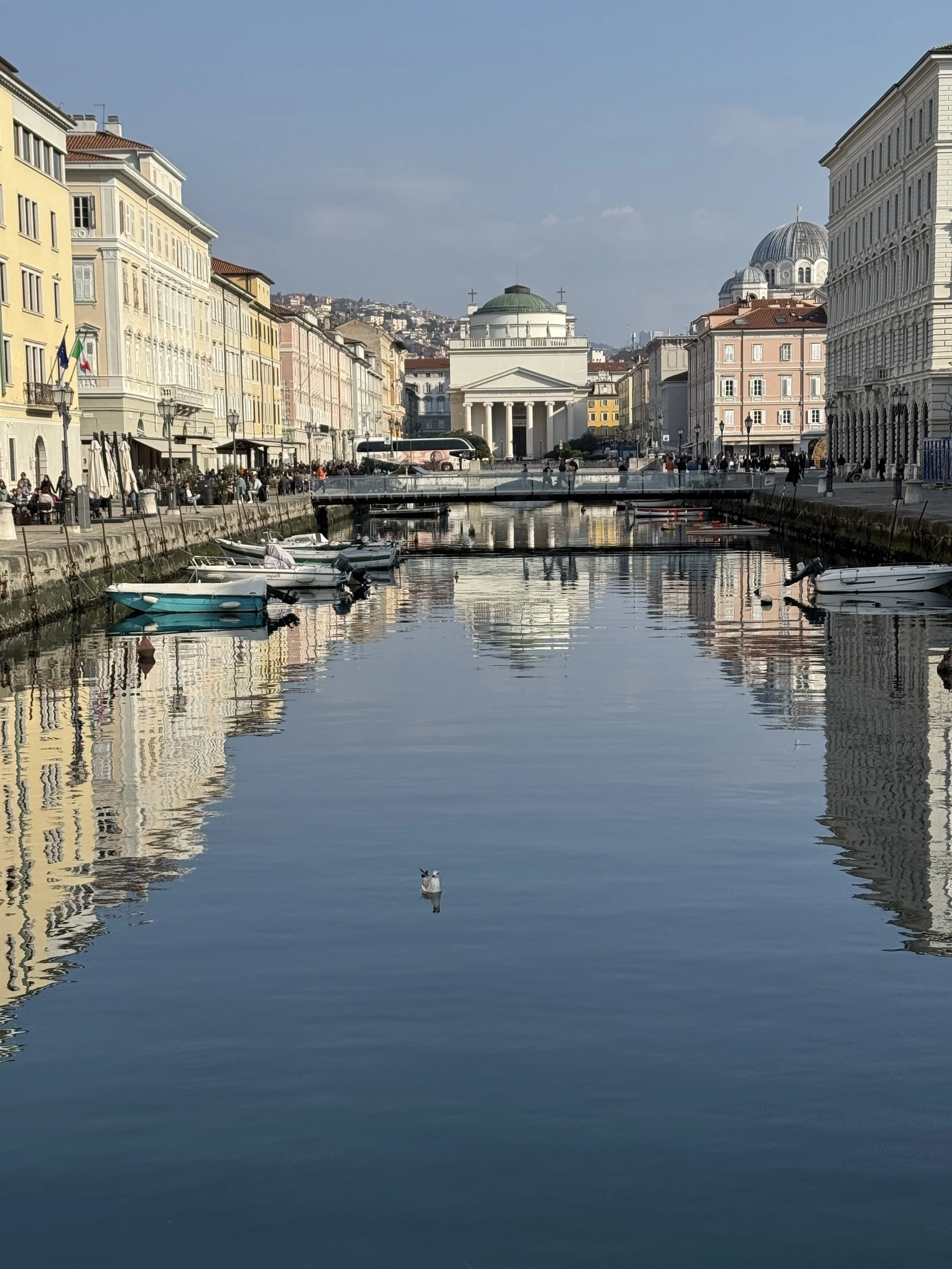
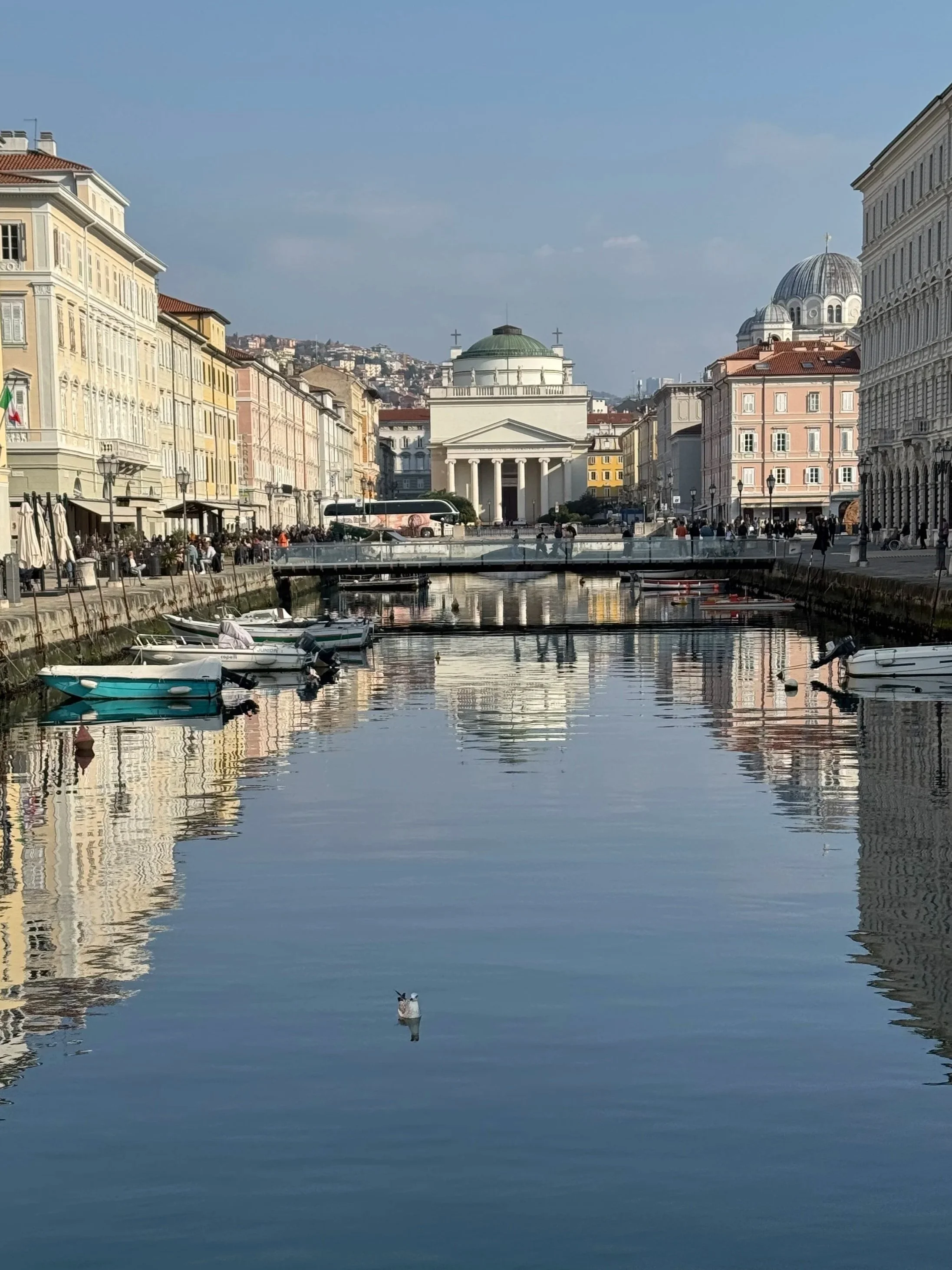
There is even a rather short Grand Canal which leads from the bay a runs a little way into the city. It’s a hint of Venice in Trieste and a great spot for an aperitivo.

Trieste’s Grand Canal once moved goods into the city from the port. Today it is a great place to sit for an aperitivo or begin a walk through the pedestrian areas of Trieste

There is so much more to say about Trieste, but for now I am happy to just appreciate its waterfront.

March 23, 2026 /Joanne Bartram
Trieste, Gulf of Trieste
#italytravel, Italian art architecture, Italian language study, Italy travel, Friuli-Venezia Giulia

Powered by Squarespace