Two Parts Italy

Exploring Italy, travel, and living a flavorful life

  • Blog
  • About This Blog
  • Start Here
  • Recent Posts
  • Archives by Topic
  • Subscribe
  • Contact me

Lake Bled’s fairytale setting

Crossing Borders, Italy to Slovenia

July 20, 2026 by Joanne Bartram in european travel, Slovenia

An early spring visit to Lake Bled avoids the summer crowds

Trieste is just about as far northeast as you can go in Italy before crossing the border into Slovenia.  Until recently, I had never been to Slovenia. But during a stay in Trieste last spring, that border (just a few miles away) seemed to have an almost magnetic pull.  And while I didn’t have much extra time, I couldn’t resist the opportunity for a guided day trip which included Lake Bled and nearby Ljubljana.
I won’t lie - a one-day tour was not a perfect way to visit. In fact it was pretty frustrating because the area was fascinating and I really wanted to linger.  But at least it gave me an introduction to two spots that are now on the list of places I want to explore in more depth.

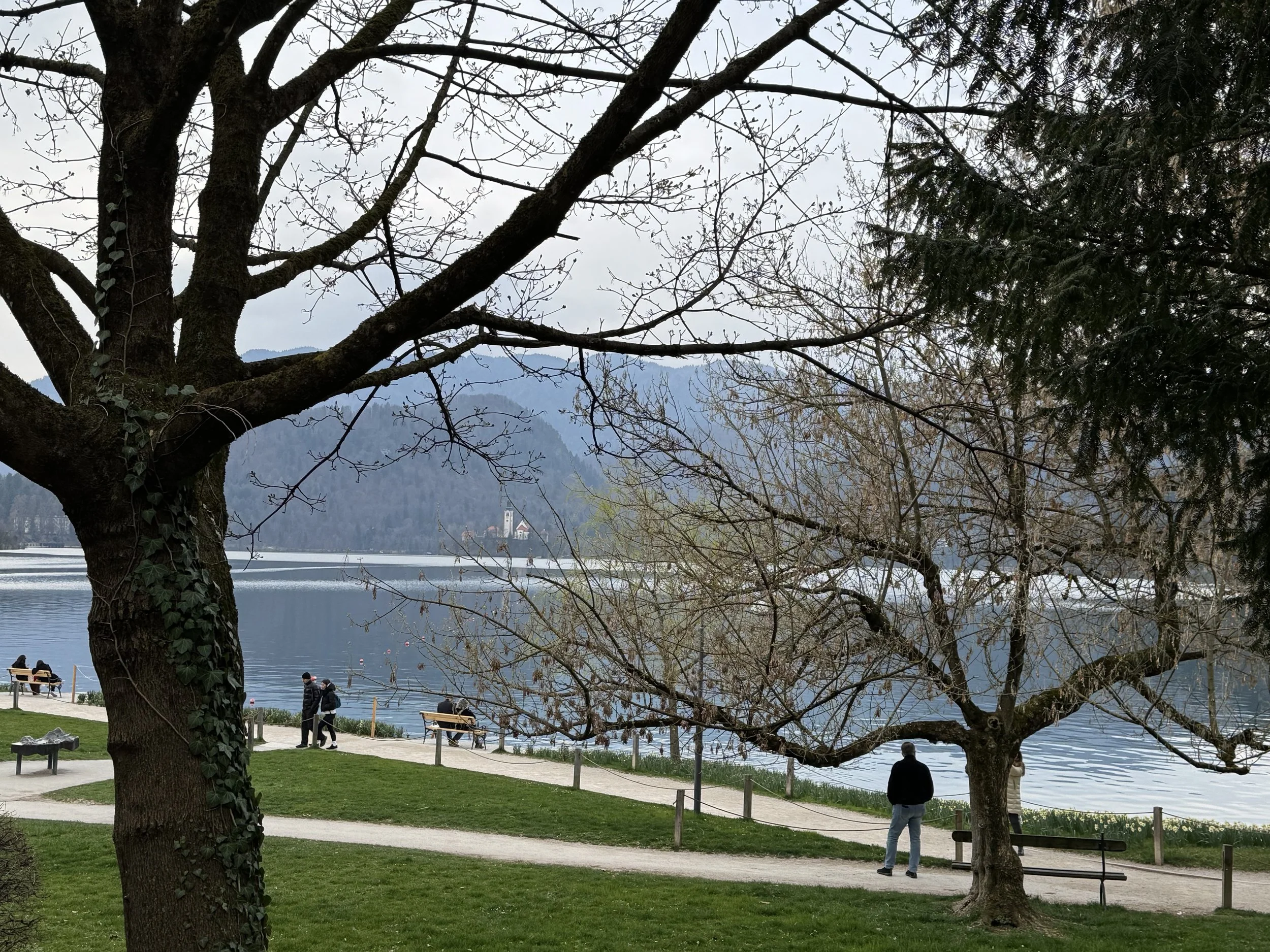
The first stop on the tour, about 2 hours by car from Trieste, was Lake Bled.  The lake lies in the foothills of the Julian Alps, a range that crosses between Italy and Slovenia. Bled is not a big lake at just under 1.5 miles long and less than 1 mile wide. Nor is it a deep one at just about 100 feet of depth, but it makes a very big impact.   Surrounded by forests, cliffs, and the peaks of the Julian Alps, the setting is stunning, with a fairytale quality that is almost too perfect to be real. 

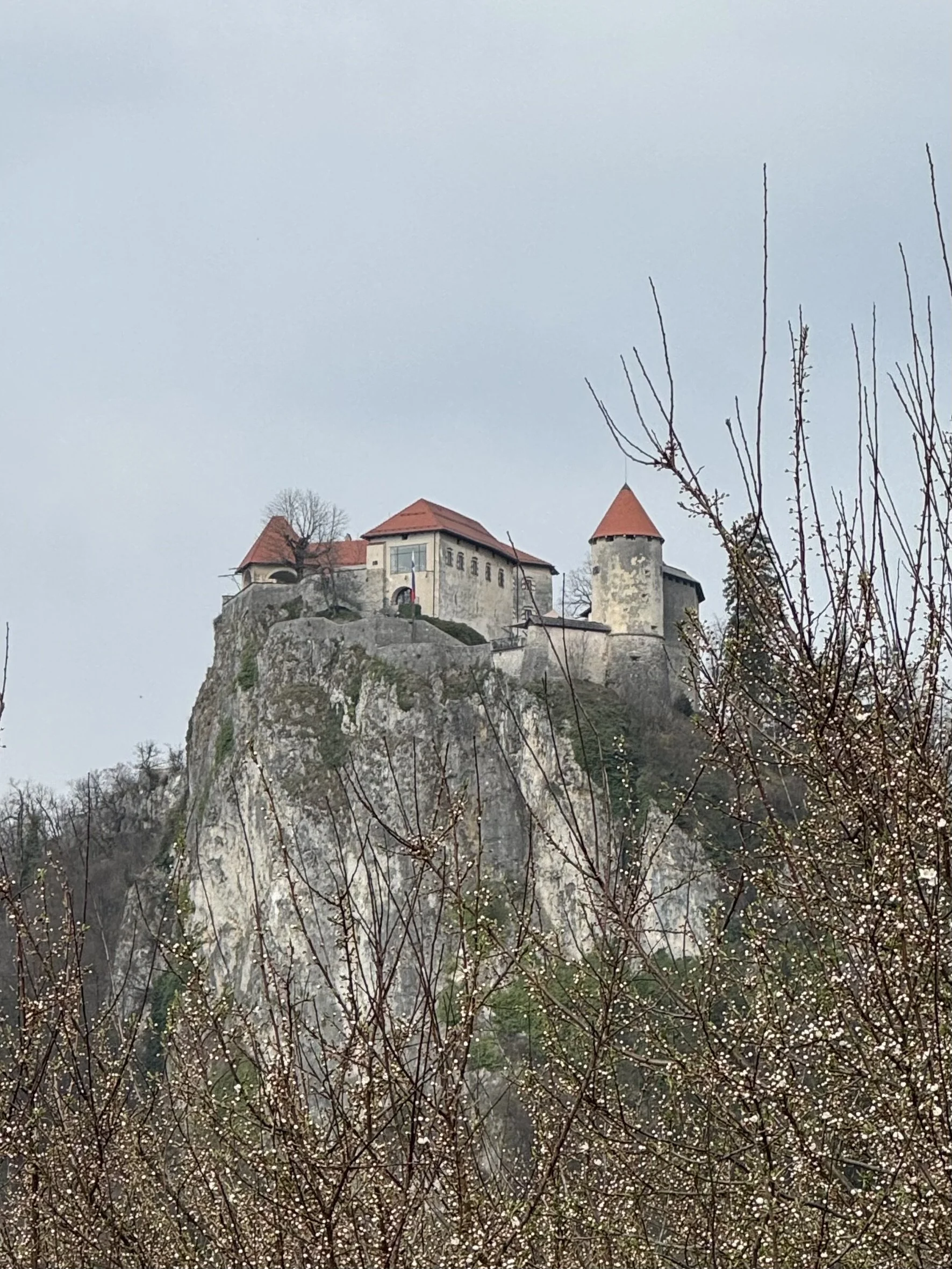
A Medieval castle, once a Bishop’s residence, sits above the lake. It houses a small museum, a chapel, and a restaurant. Things to explore on a future visit!

Bled Castle, a Bishop’s residence in the 11th century, sits on a bluff high above the lake

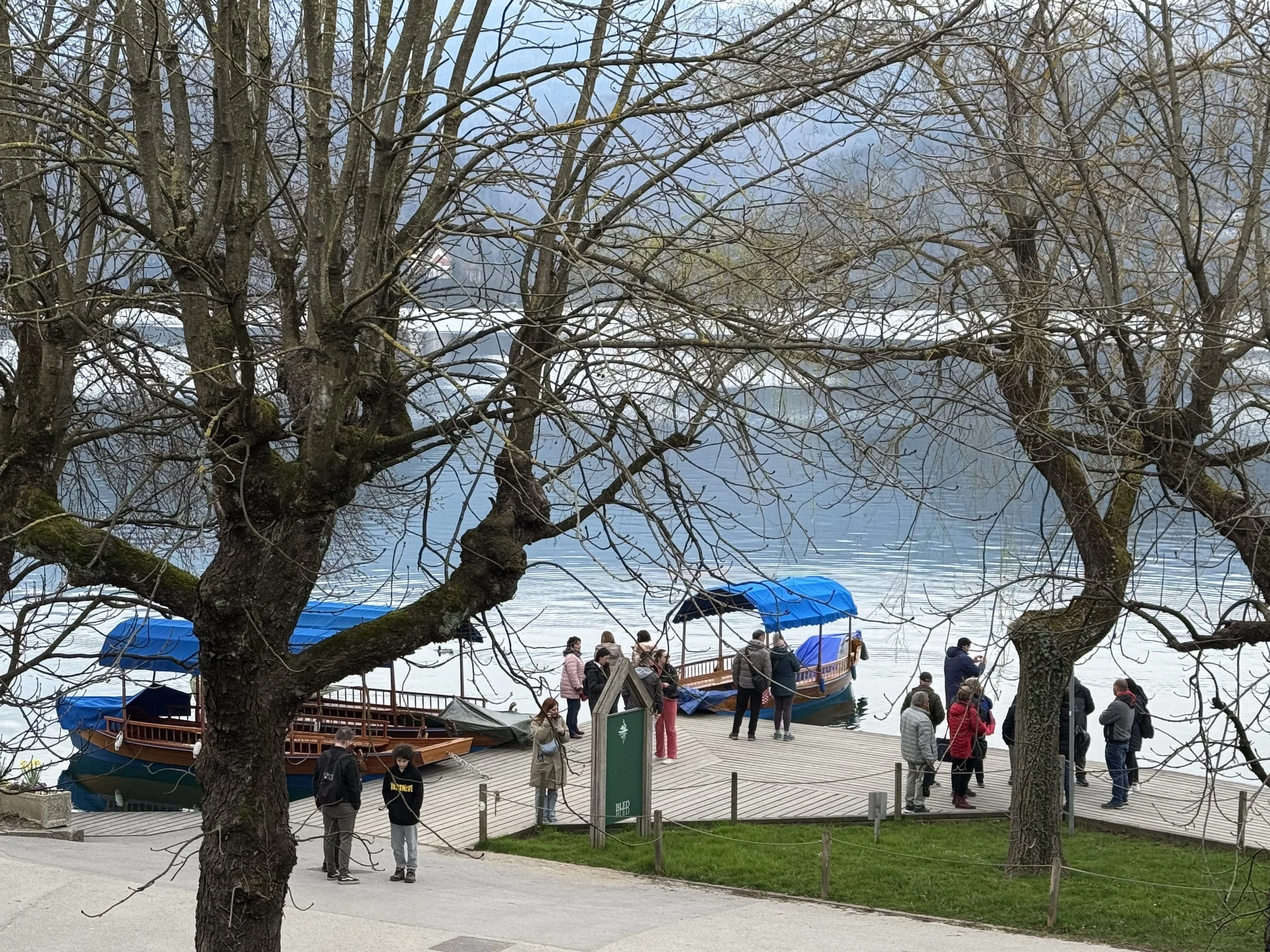
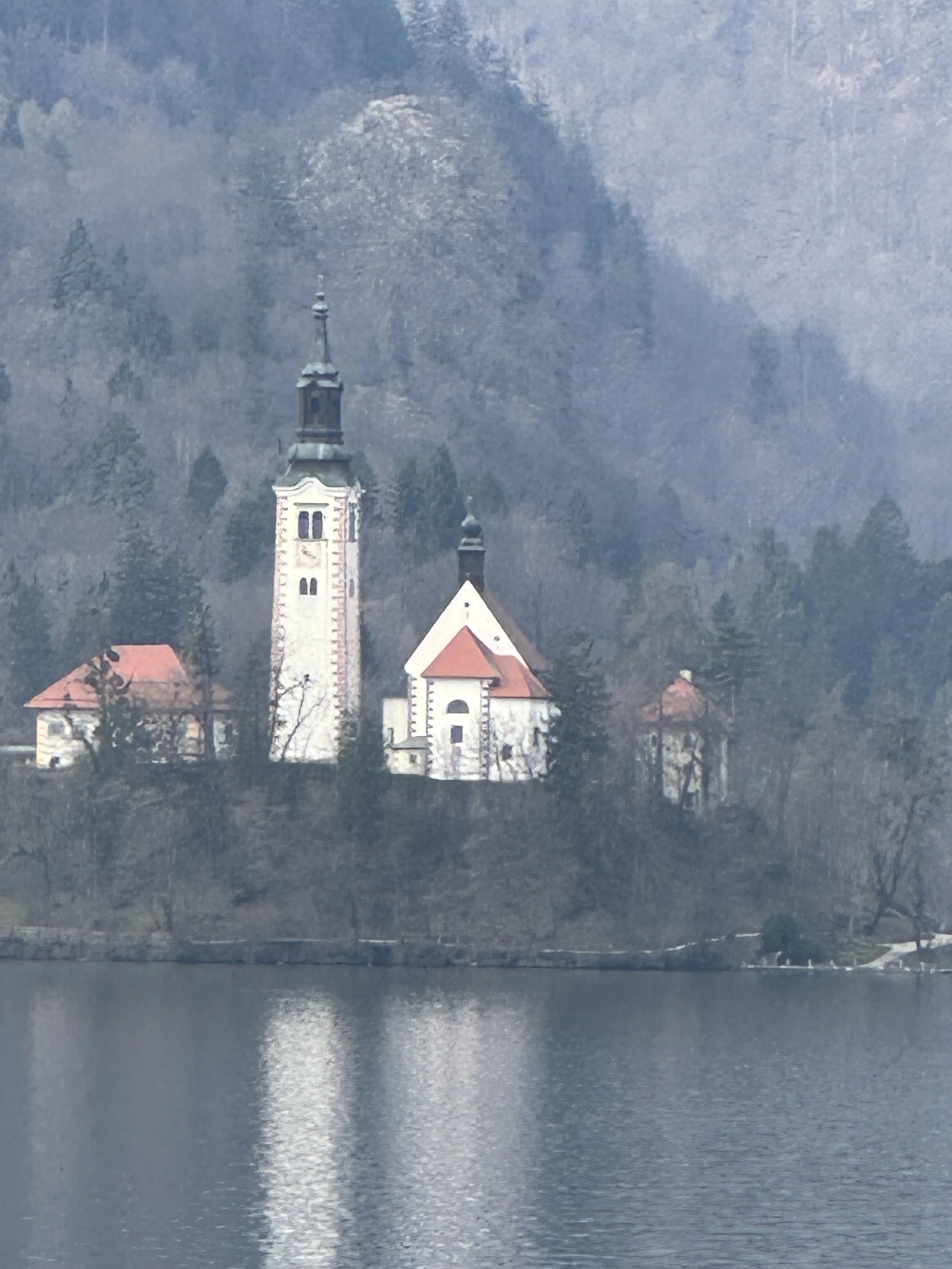
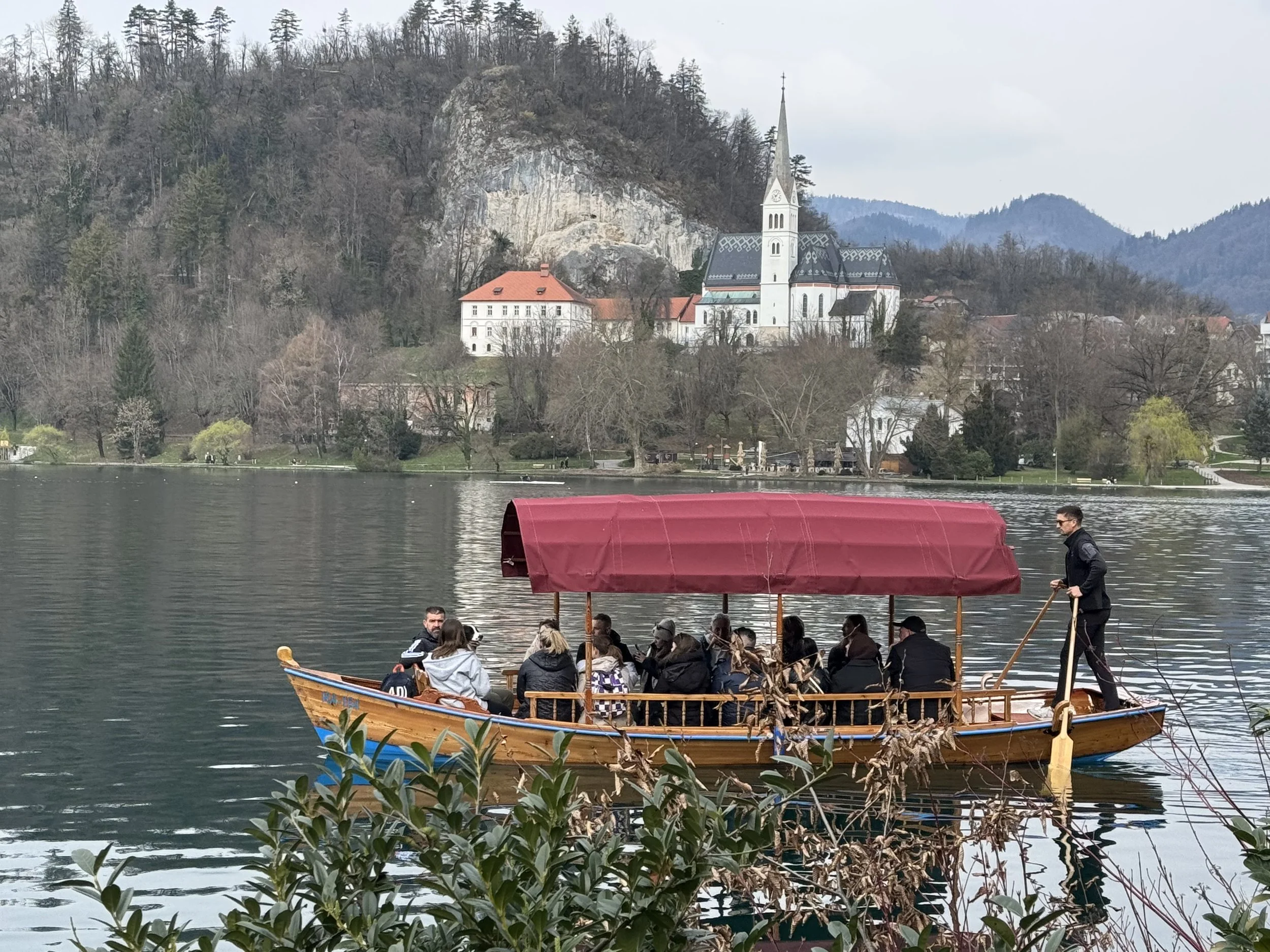
A small island with a steepled church, accessible only by boat, sits within the lake.  Traditional flatbottom and covered boats, called Pletnas, ferry small groups of visitors out to the island. 

Like the gondoliers in Venice, the Pletna rowers come from families who have been doing this work for generations.  Don’t bother applying for a job – you need to be born into it.    

Rowboats however are also available for rent; paddleboards too. You could even swim to the island.


A Pletna boat is the ideal way to reach the island. Thought you could rent a rowboat or swim!

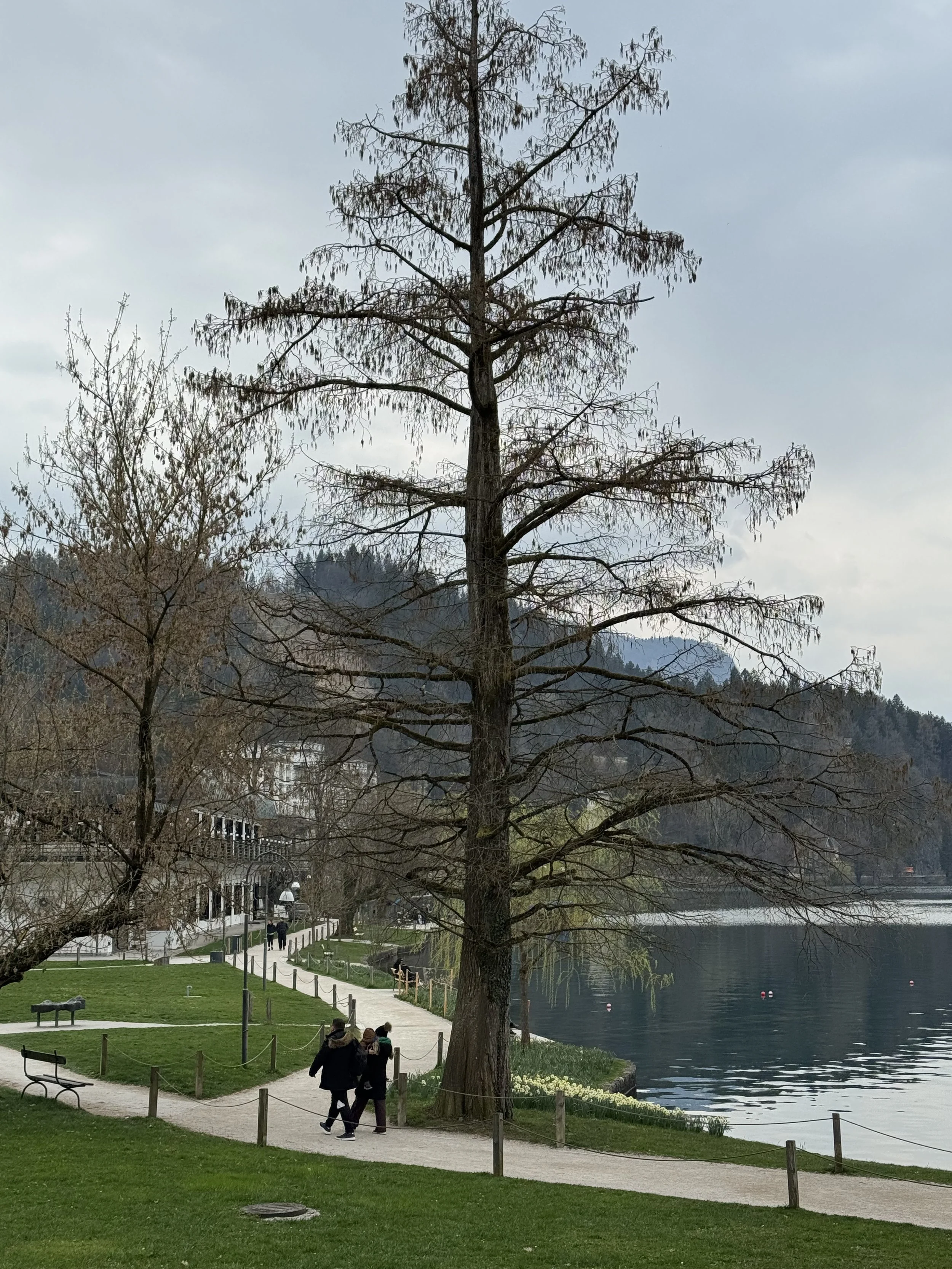
Around the lake is a 6 km walking path with cafes, benches, boat launches, small swimming spots, and lots of places to stop and admire the views. 

A 6 km (3.7 miles) walking path surrounds Lake Bled

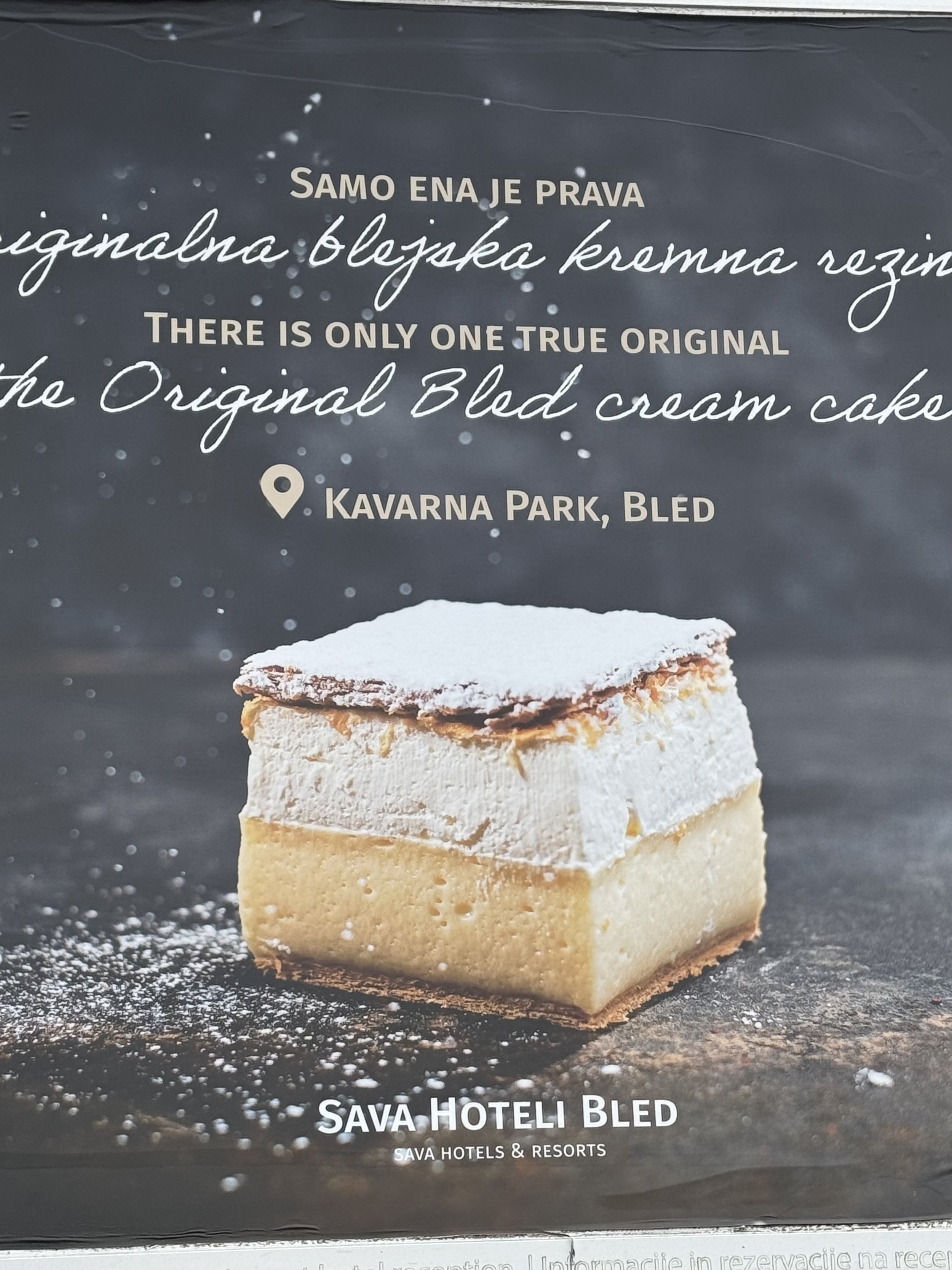
Our guide insisted that we stop to try Bled Cream Cake, the local delicacy.  Two different layers of cream filling between layers of thin, crispy pastry, it is officially called Kremšnita.  Delicious, it is served in huge squares – best to split it with a friend! 

The lake is a popular tourist destination and gets quite busy in the summer. In March, when I visited, it was peaceful and uncrowded.

My time at Lake Bled was much too short, because we were soon leaving for the next stop on the tour, the city of Ljubljana. I would love to return and spend a couple of nights in the town of Bled, ferry out to the island, and walk the path around the lake. Anyone want to come and share a cream cake with me?

July 20, 2026 /Joanne Bartram
Slovenia, Lake Bled, Bled
european travel, Slovenia

Montefalco’s little alleyways provide glimpses over the Umbrian countryside

A Stroll Through Montefalco

July 13, 2026 by Joanne Bartram in #italytravel, #medievalitaly, european travel, Hill Towns Italy, Italian art architecture, Umbria

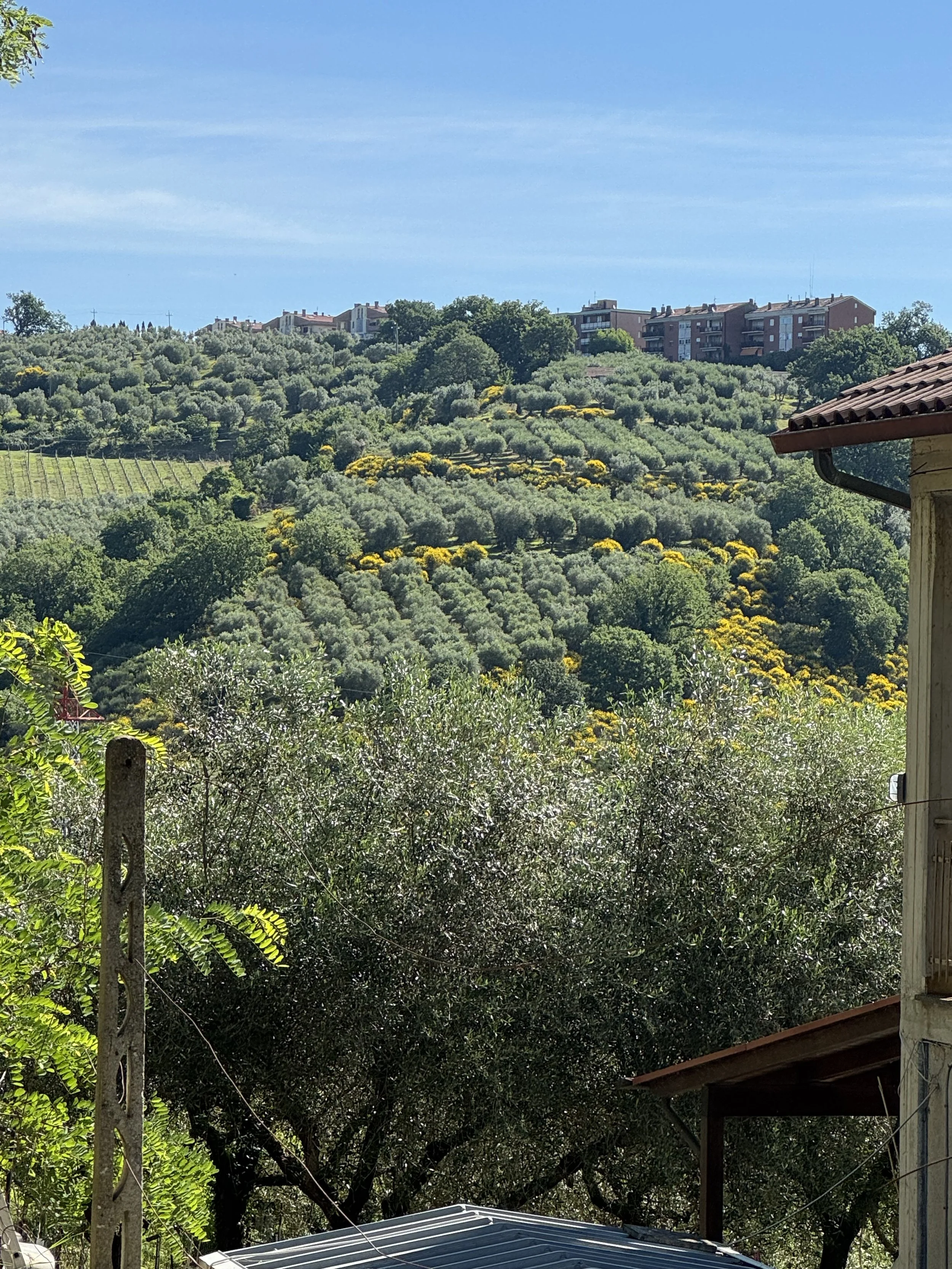
Umbria is known for producing olive oil, wine, and grains

Umbria is a part of Italy that is completely landlocked. What it lacks in coastline it makes up for in rolling hills, fields of grains, bright poppies in springtime, olive groves, vineyards, and its many hill towns. 

Some of the hill towns, such as Spello, Assisi, and Perugia, are well known and attract many visitors.  Others are smaller and quieter, with fewer tourists. Those small towns, Panicale, Rasiglia, and Bevagna for example, are especially delightful.  

On a recent trip to Umbria, after a morning of farmhouse cooking and a visit to a winery, we (a group from Let’s Cook in Umbria) made a quick detour to the village of Montefalco, not far from Bevagna. Montefalco is small (less than 6,000 residents), quiet, and uncrowded. It is a slice of everyday Italy.

Montefalco is on the list of the Borghi Più Belli d’Italia (Italy’s most beautiful villages).  A walled hill town, it still has its Medieval gates and streetscape. 

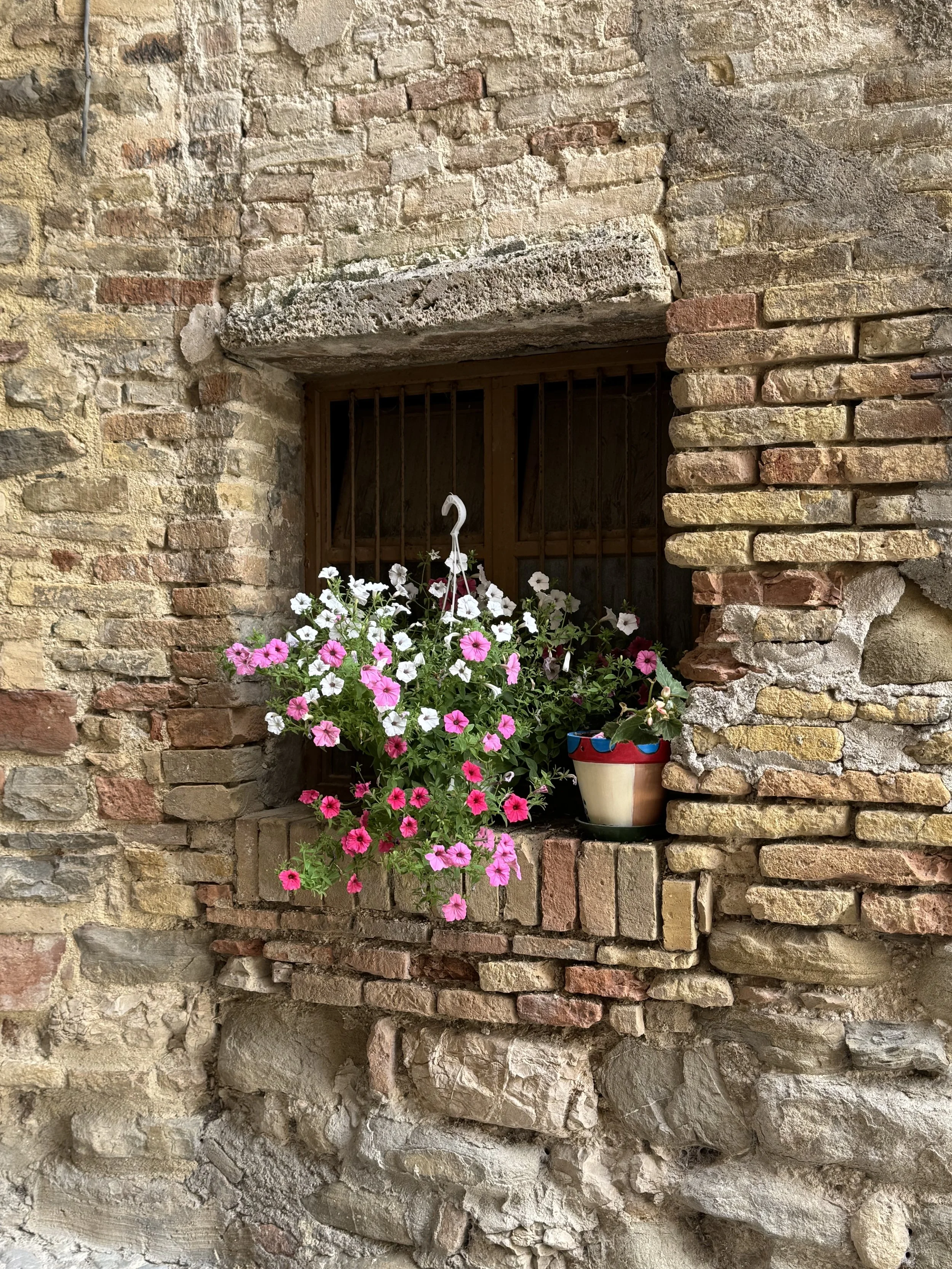
Old stone buildings, pretty windows, and flowers are part of Montefalco’s charm

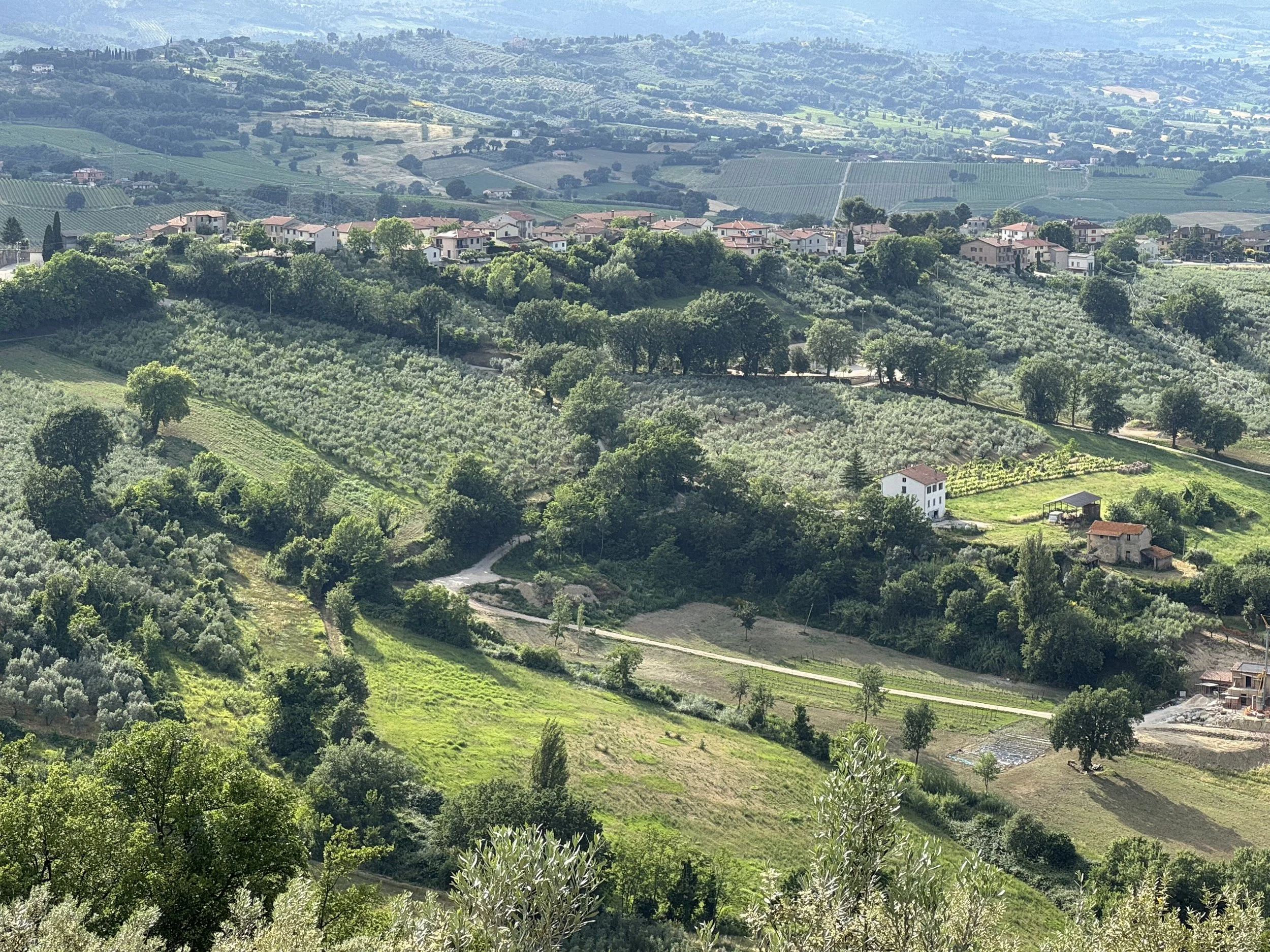
It also has a most enviable location – perched high above the surrounding valley with panoramic views of the Umbrian countryside and, most importantly, of the Sagrantino vineyards.   Montefalco Sagrantino DOC, a bold, dry red wine, is the areas claim to fame and a must-try when in this area.

IMG_0801.jpeg
IMG_0797.jpeg
IMG_0800.jpeg

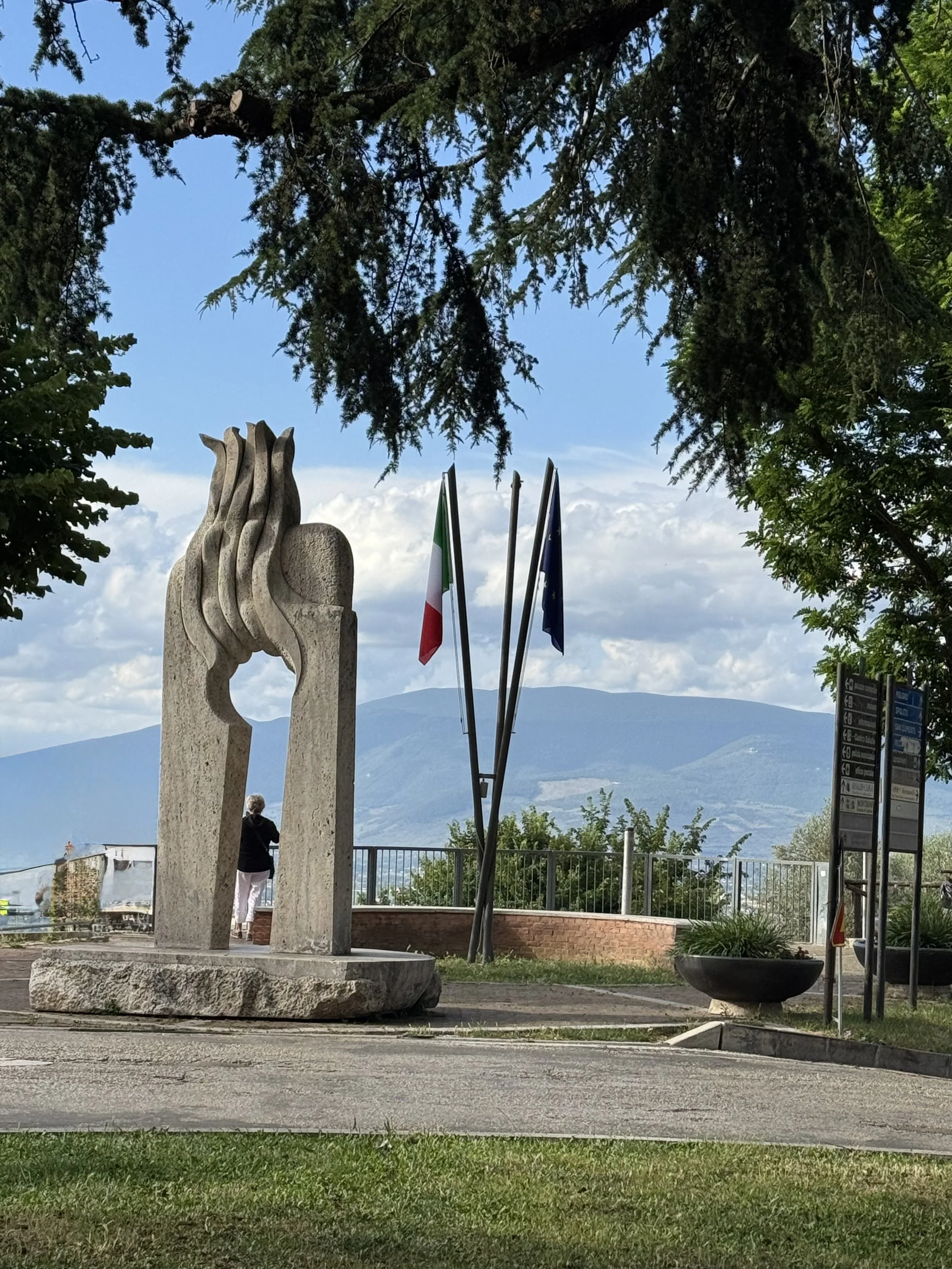
We began our walk through Montefalco at the Belvedere Viewpoint near Porta della Rocca, one of the Medieval gates into the town. It has spectacular views over the valley below, making it clear why Montefalco is known as the Balcony of Umbria.

IMG_0752.jpeg
IMG_0786.jpeg
IMG_0753.jpeg

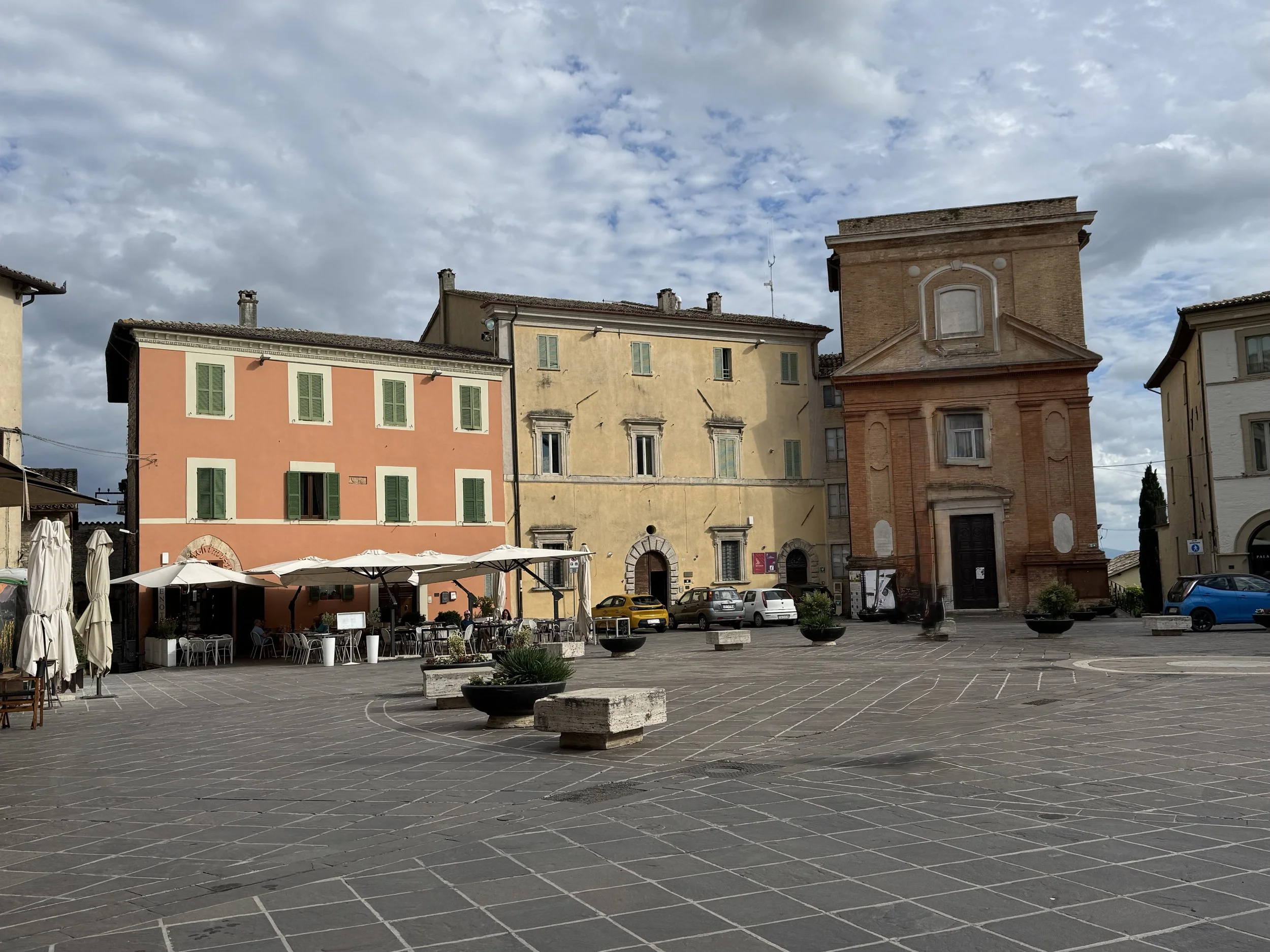
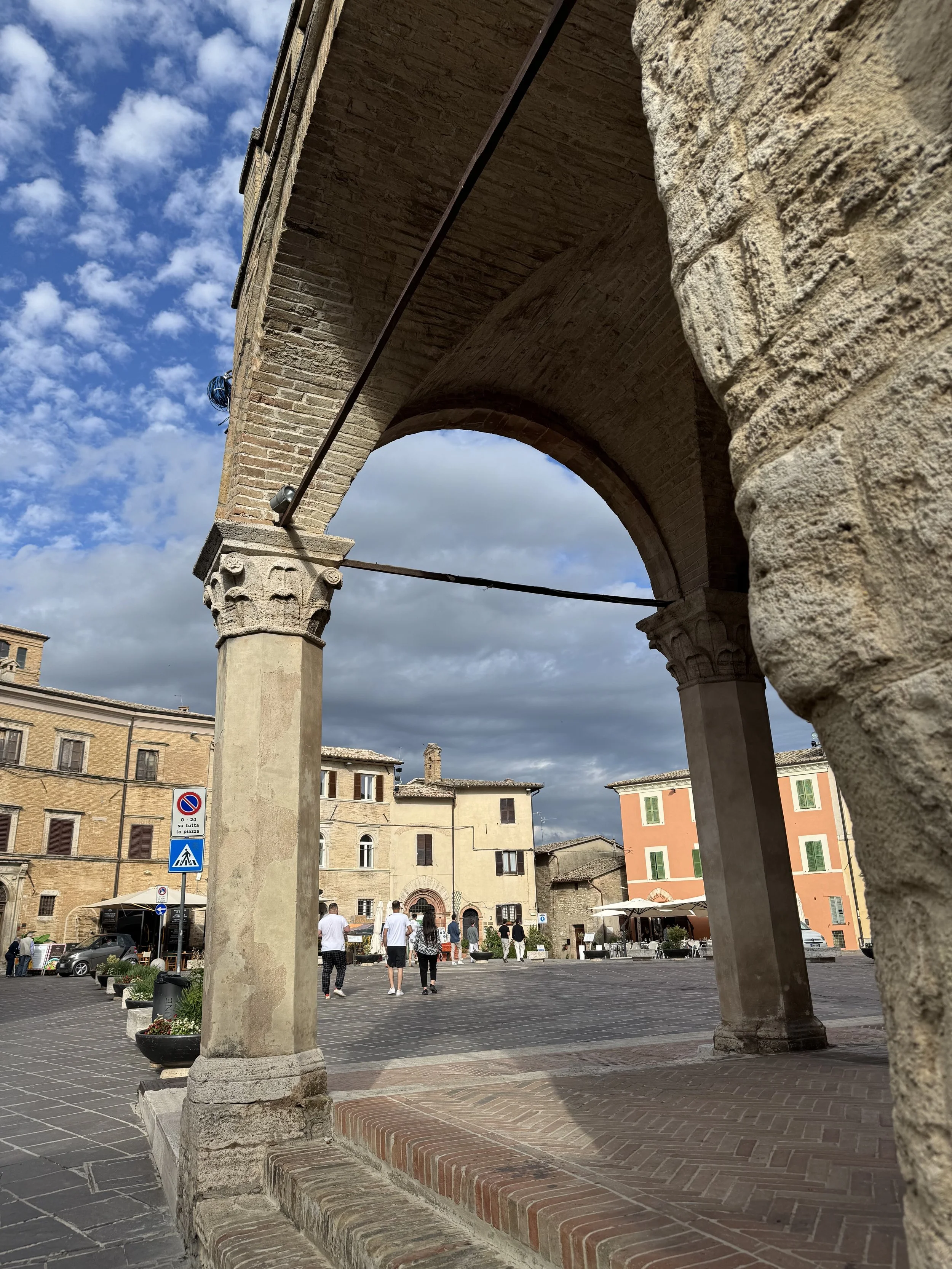
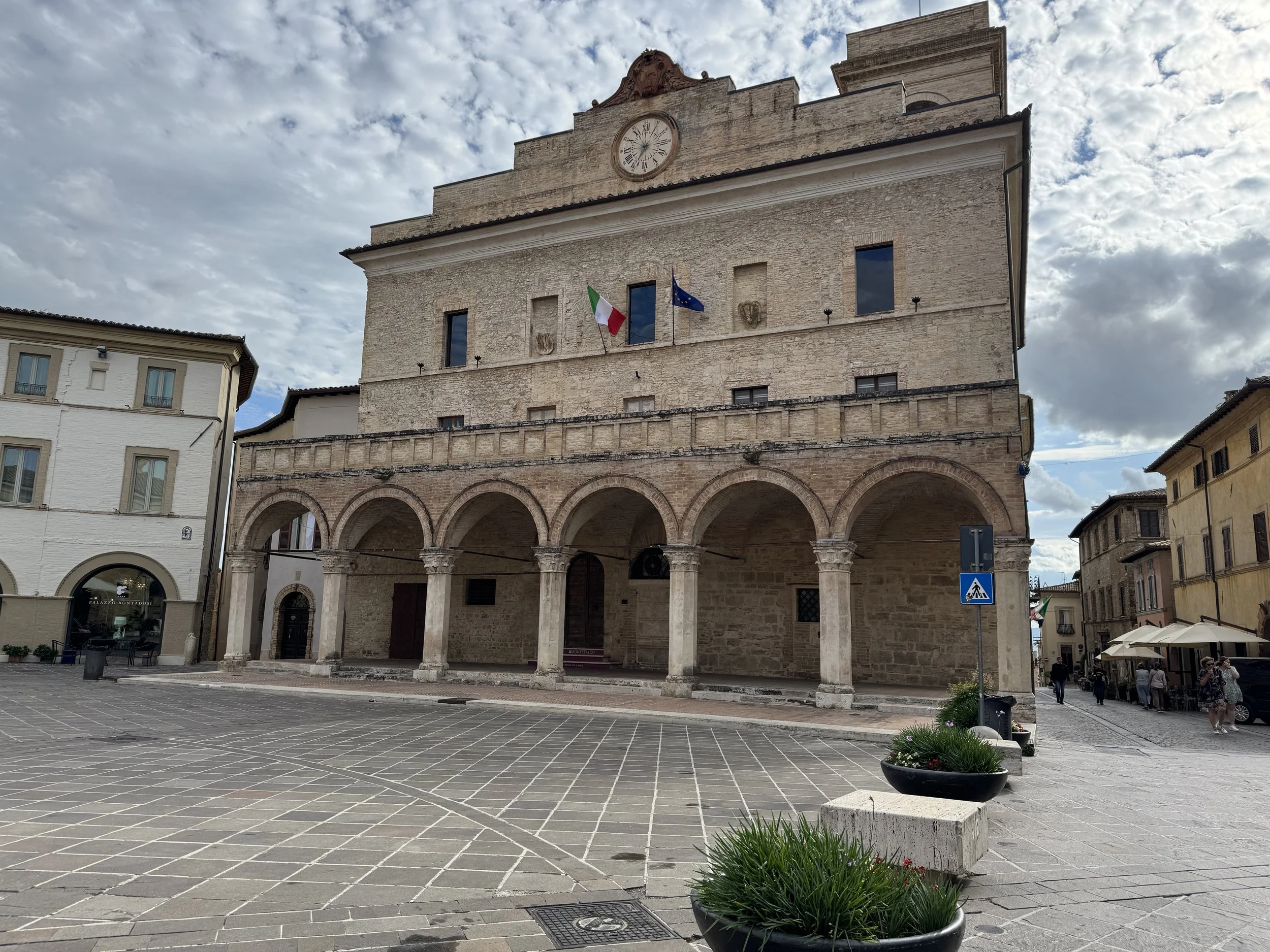
The Piazza del Comune is the heart of the village and where the town hall is located.  It is also where many cafes can be found and where the market and various festivals take place. Just before the piazza is the Church & Museum of San Francesco. I’ll have to explore that on a future visit!

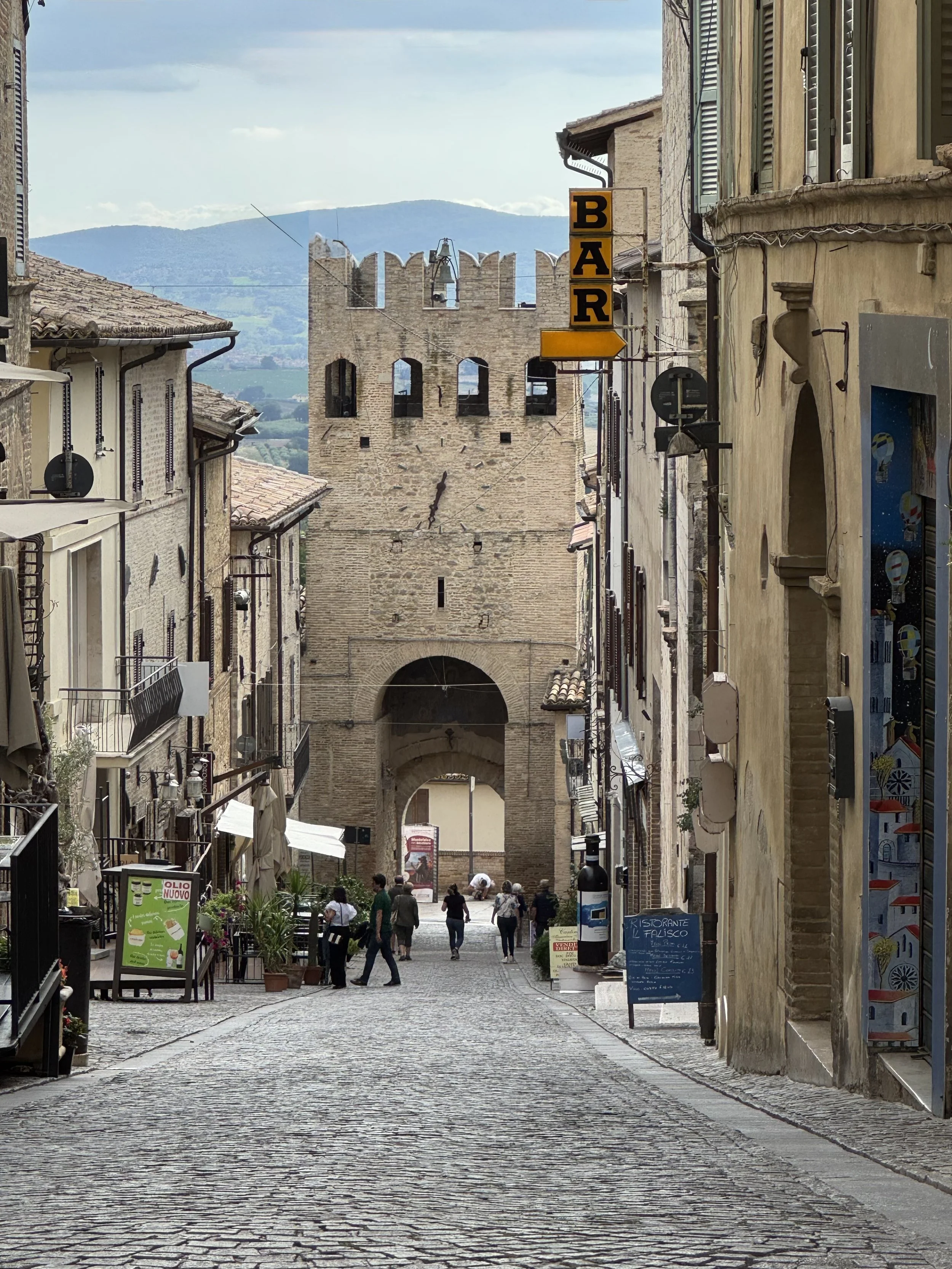
Heading downhill towards Porta di Sant’Agostino, one of Montefalco’s Medieval gates.

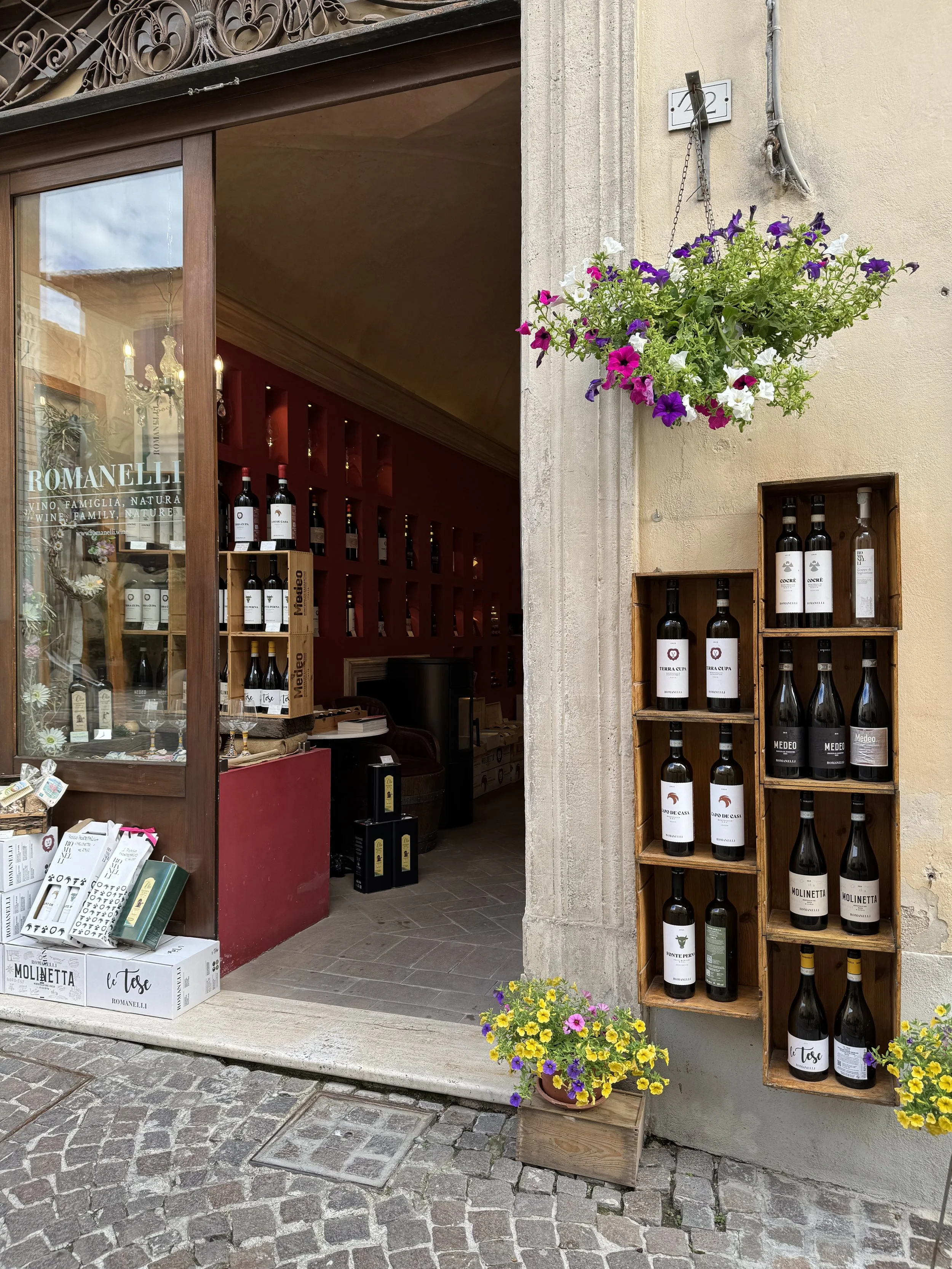
From the piazza, a wander down “main street” reveals a street lined with shops, galleries, a small hotel, and restaurants.  Lots of opportunities to buy a bottle of Sagrantino or other local products. Keep walking and find Porta di Sant’Agostino, another of the town’s Medieval gates.

IMG_0750.jpeg
IMG_0762.jpeg
IMG_0755.jpeg
IMG_0775.jpeg
IMG_0773.jpeg
IMG_0765.jpeg

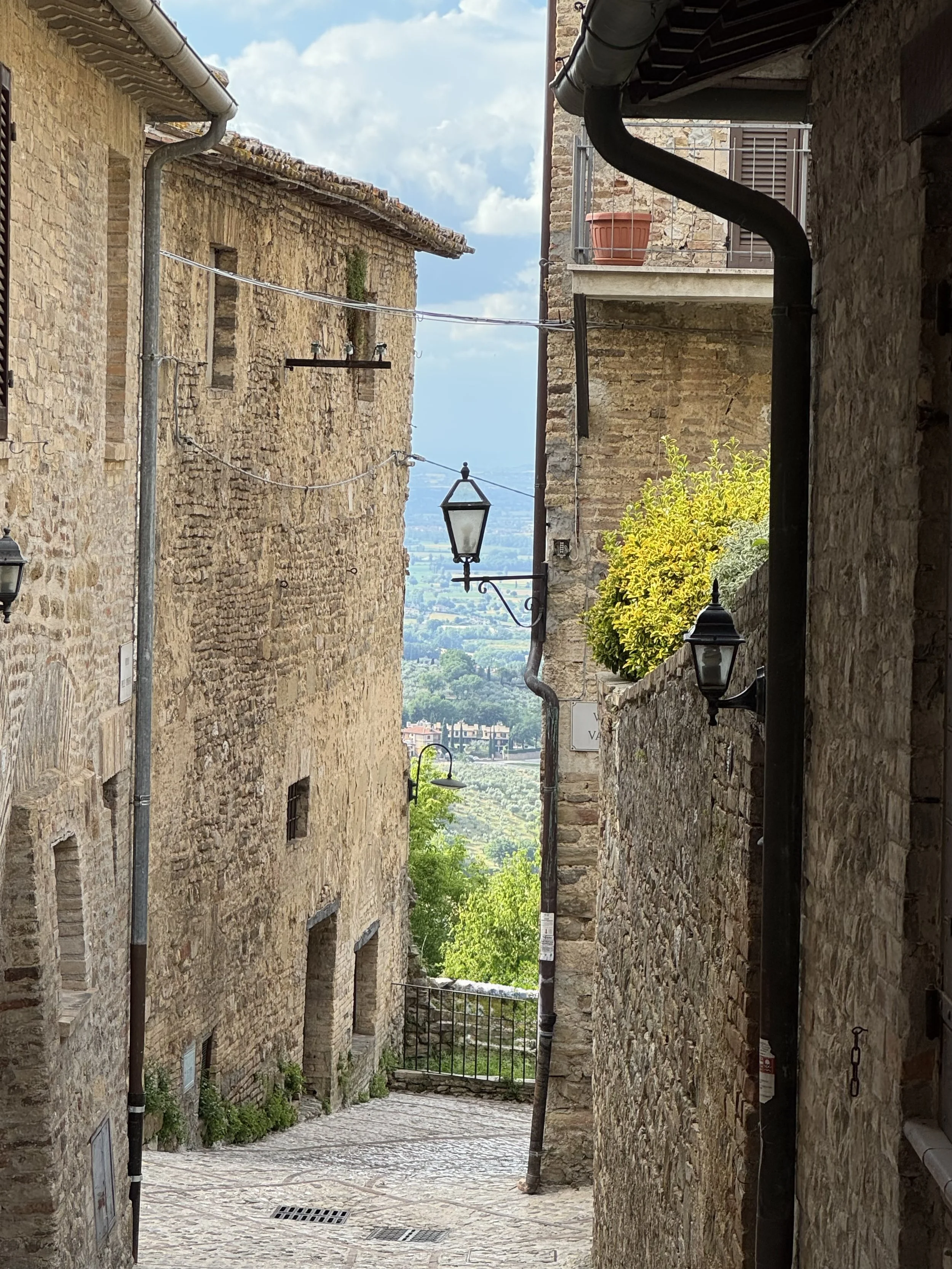
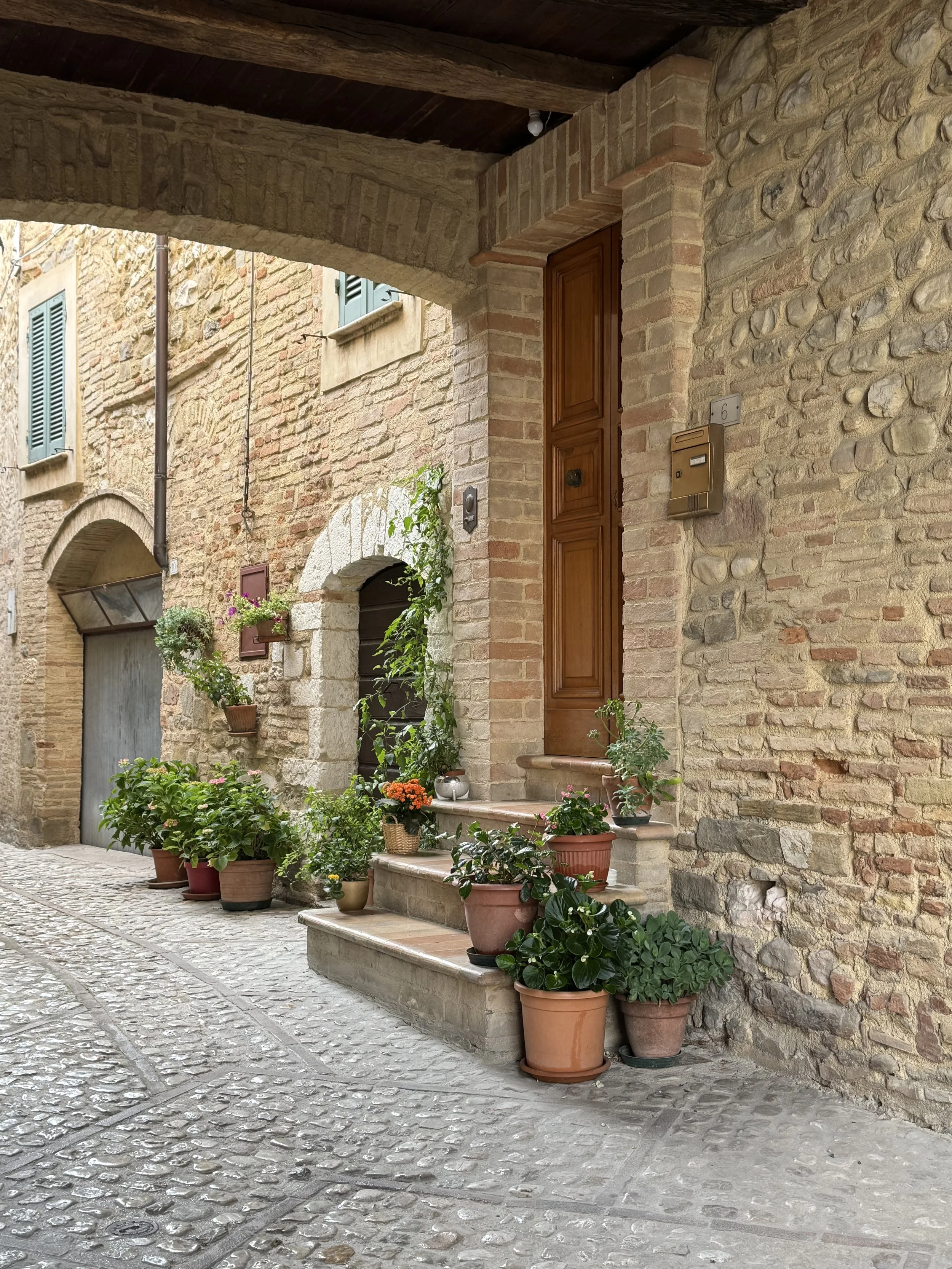
Small lanes branch out from the central street, many of them filled with stone houses, flower filled windows, arched alleyways, and pretty doors. As a bonus, they often end with stunning views over the valleys below.

IMG_0791.jpeg
IMG_0782.jpeg
IMG_0774.jpeg
IMG_0764.jpeg
IMG_0759.jpeg
IMG_0757.jpeg

Our detour to Montefalco gave us only enough time for a brief introduction to the town.  I will need a return trip and more time to better explore all that the village has to offer. One thing is clear to me, the more time I spend in Umbria, the more I fall in love with this unique part of Italy.

Now that is my kind of Farmacia!

July 13, 2026 /Joanne Bartram
Montefalco, Balcony of Umbria, Quiet towns Umbria, Sagrantino Wine
#italytravel, #medievalitaly, european travel, Hill Towns Italy, Italian art architecture, Umbria

Monks and Apricots

May 25, 2026 by Joanne Bartram in Danube Cruise, Europe Cruises, european travel, travel Austria, travel europe

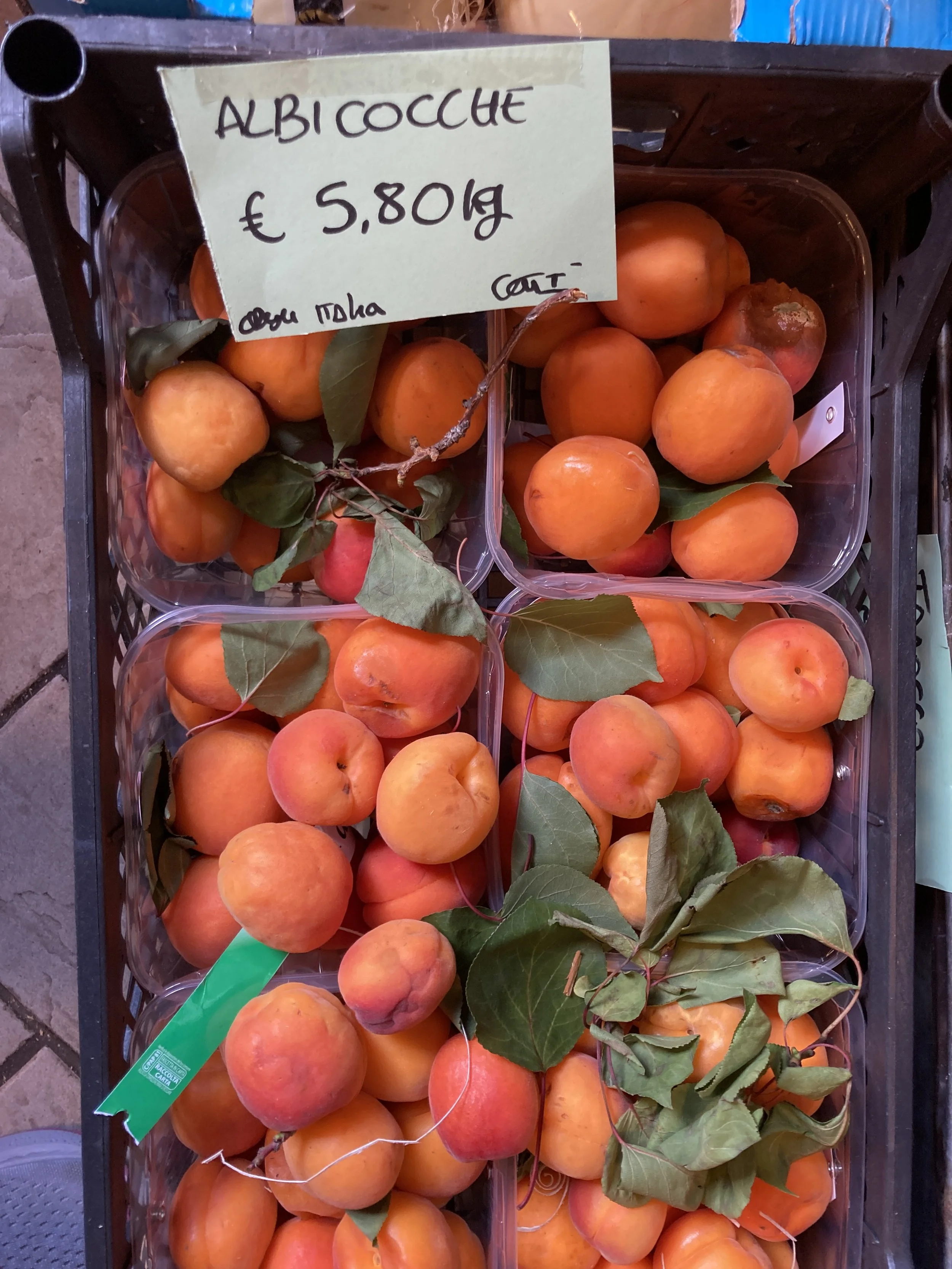
The Ortofrutta (green grocery) in Lucca is full of apricots right now.  Colorful and sweet, they’ve been perfect in my morning yoghurt or eaten out of hand. Not only are they delicious, but seeing them has reminded me of an experience I had last fall when visiting Göttweig Abbey near the town of Krems in Austria - monks and apricots!

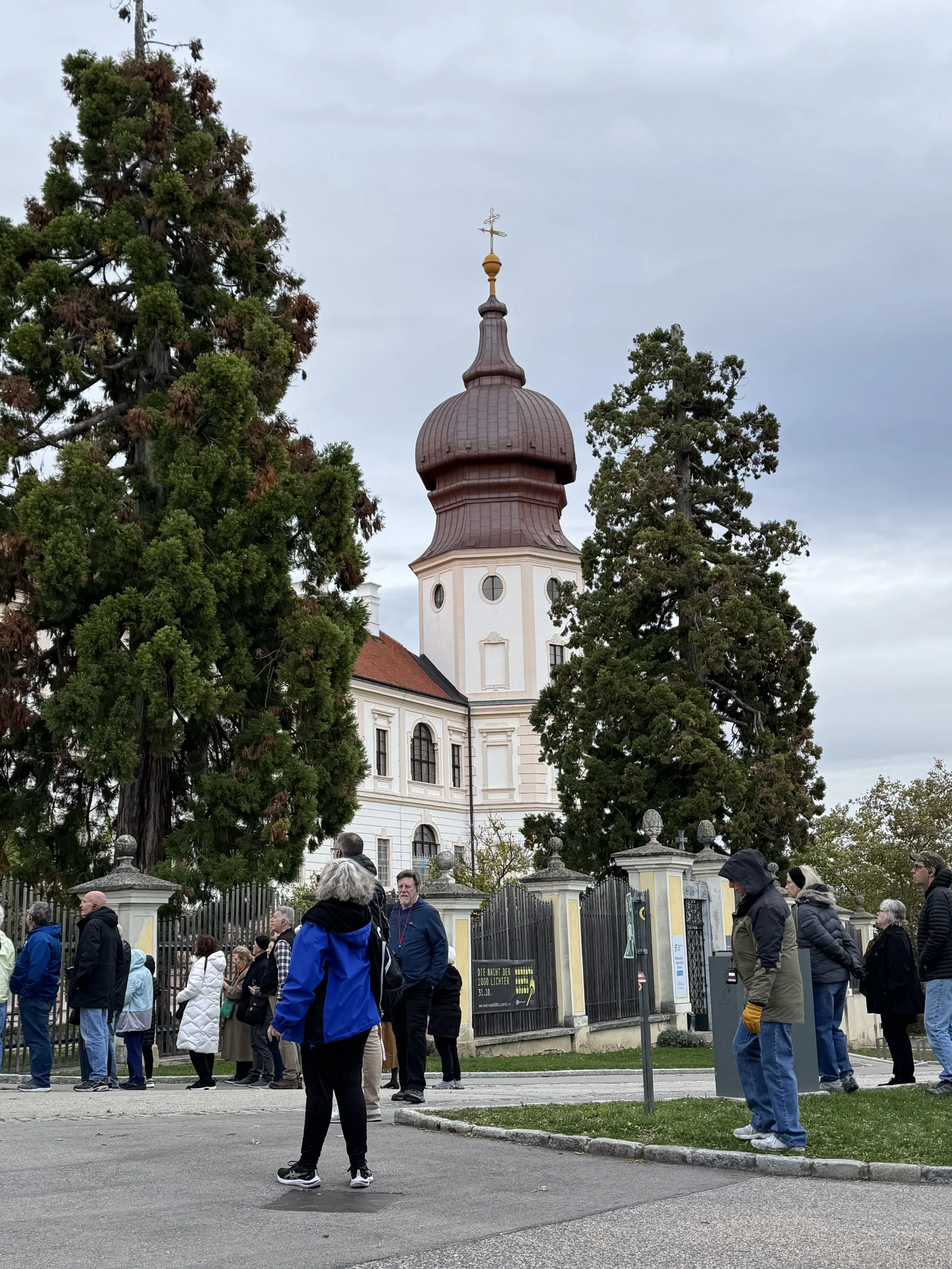
Göttweig Abbey

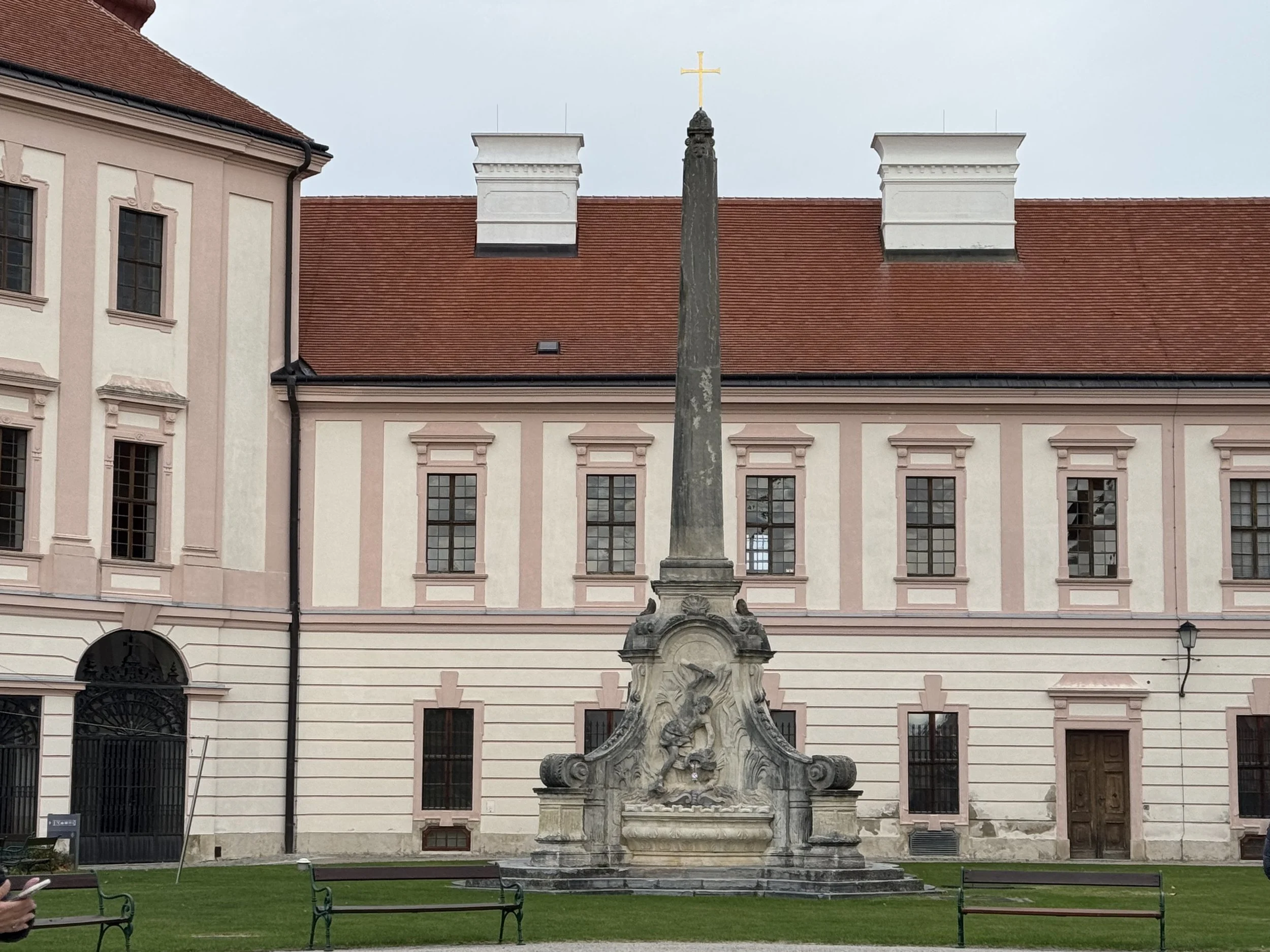
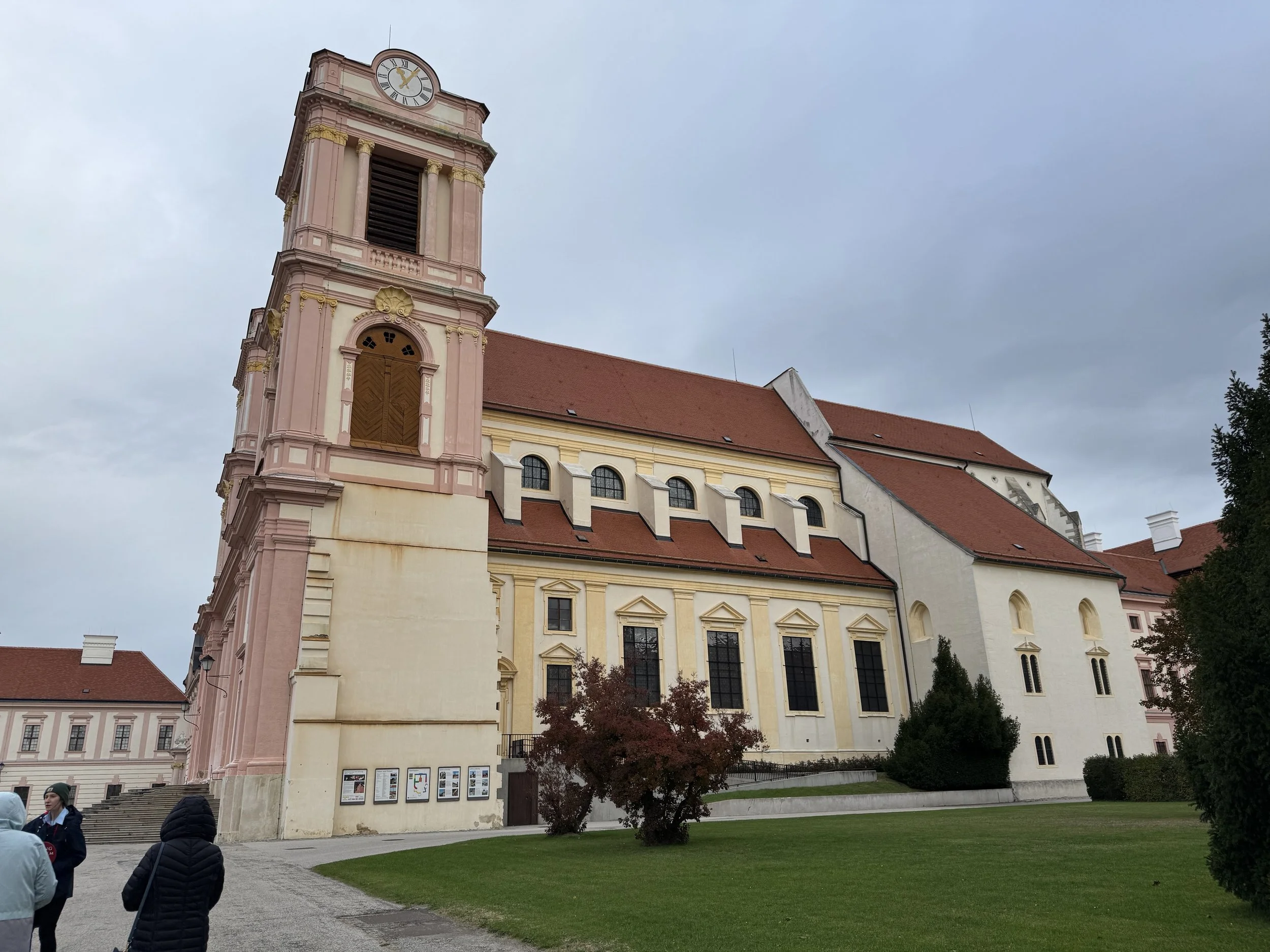
The Abbey, built in the 11th century and rebuilt in 1580 and again in 1718, each time following a fire, is a UNESCO World Heritage site.  Still a working monastery, the grounds and public areas are well worth a visit. 

IMG_6769.jpeg
IMG_6770.jpeg
IMG_6766.jpeg

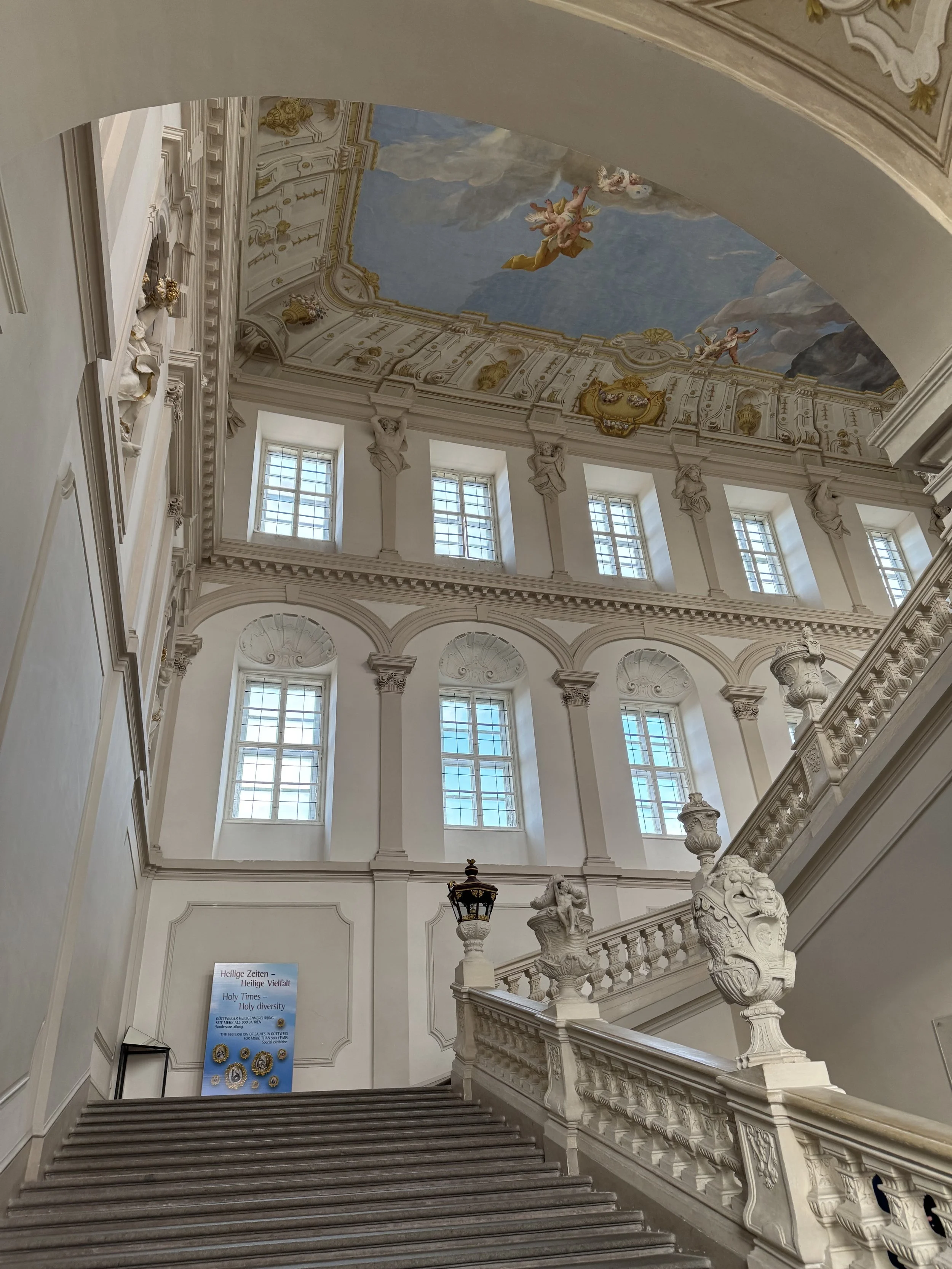
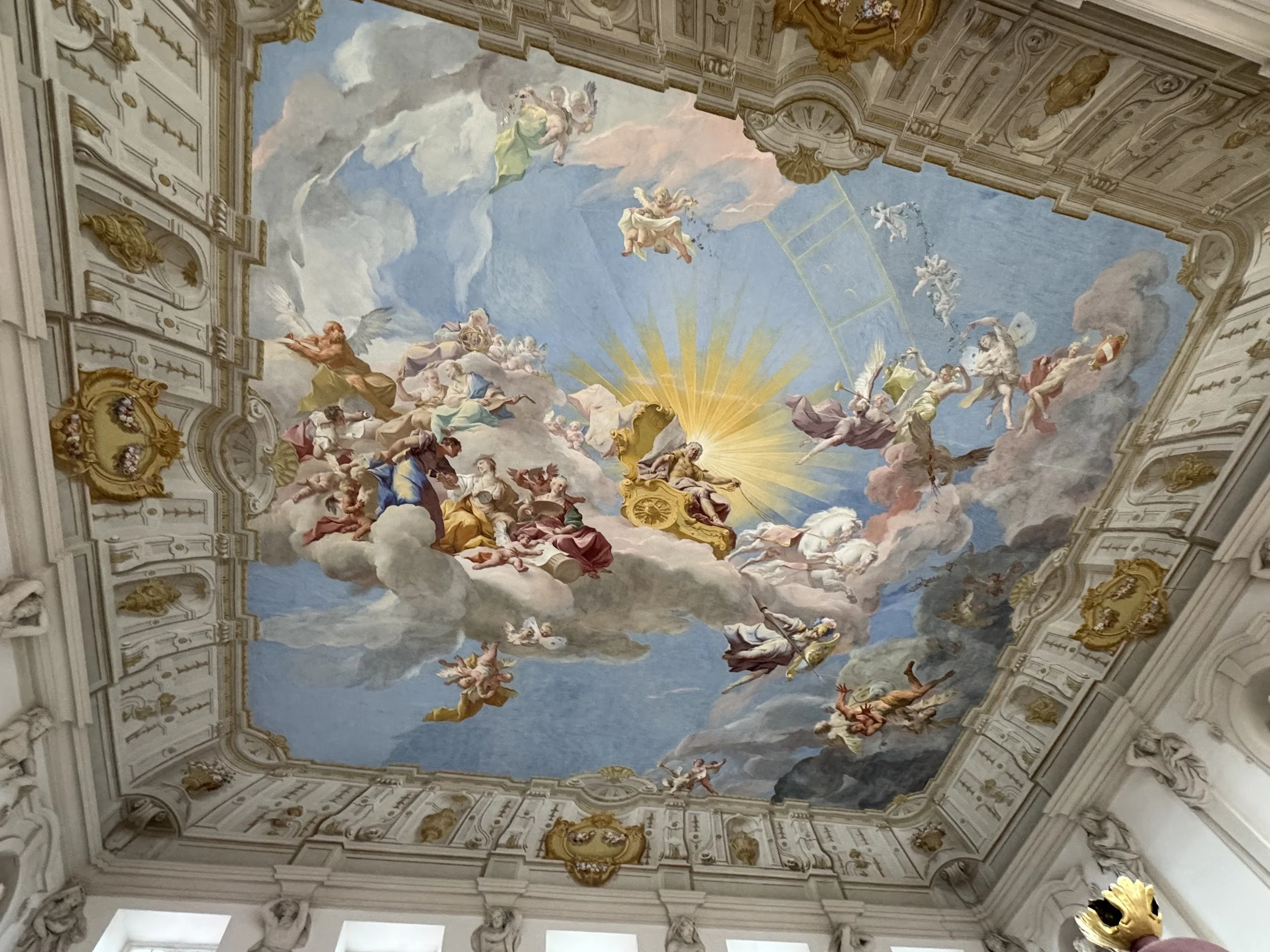
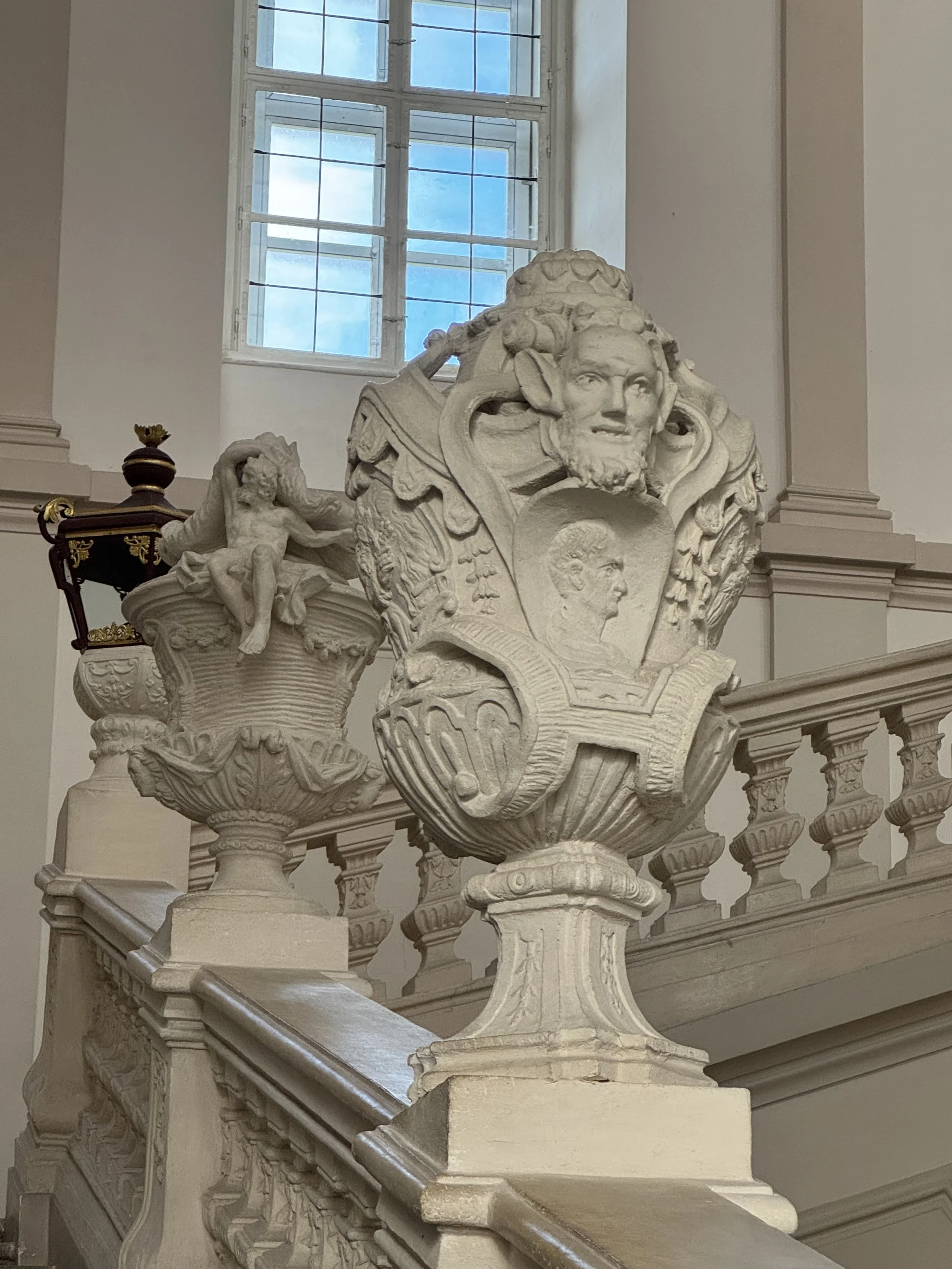
The large monastery complex includes several areas open to the public, including the park like grounds and a museum with a stunning Baroque staircase and beautiful interiors. 

IMG_6796.jpeg
IMG_6801.jpeg
IMG_6799.jpeg

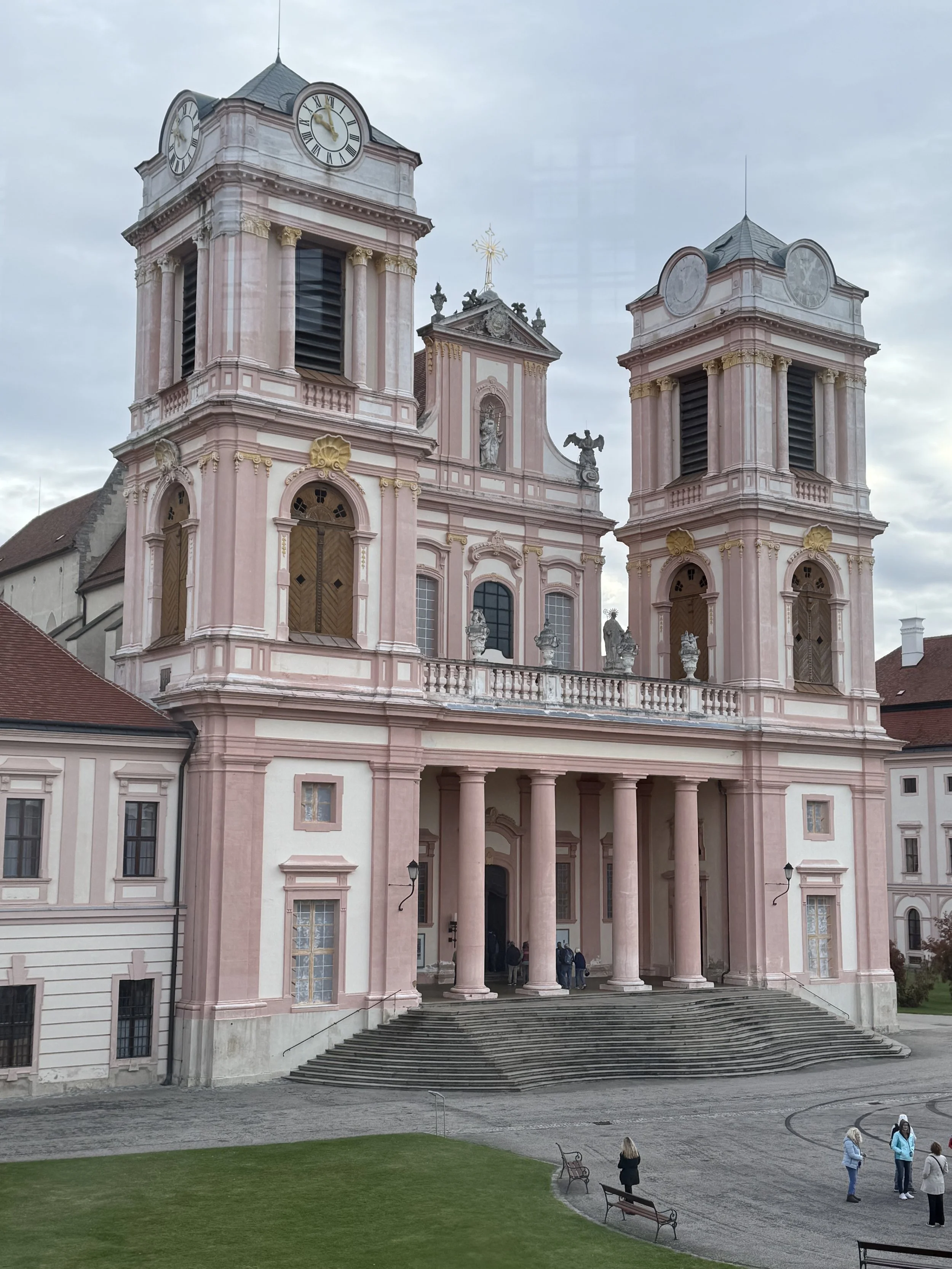
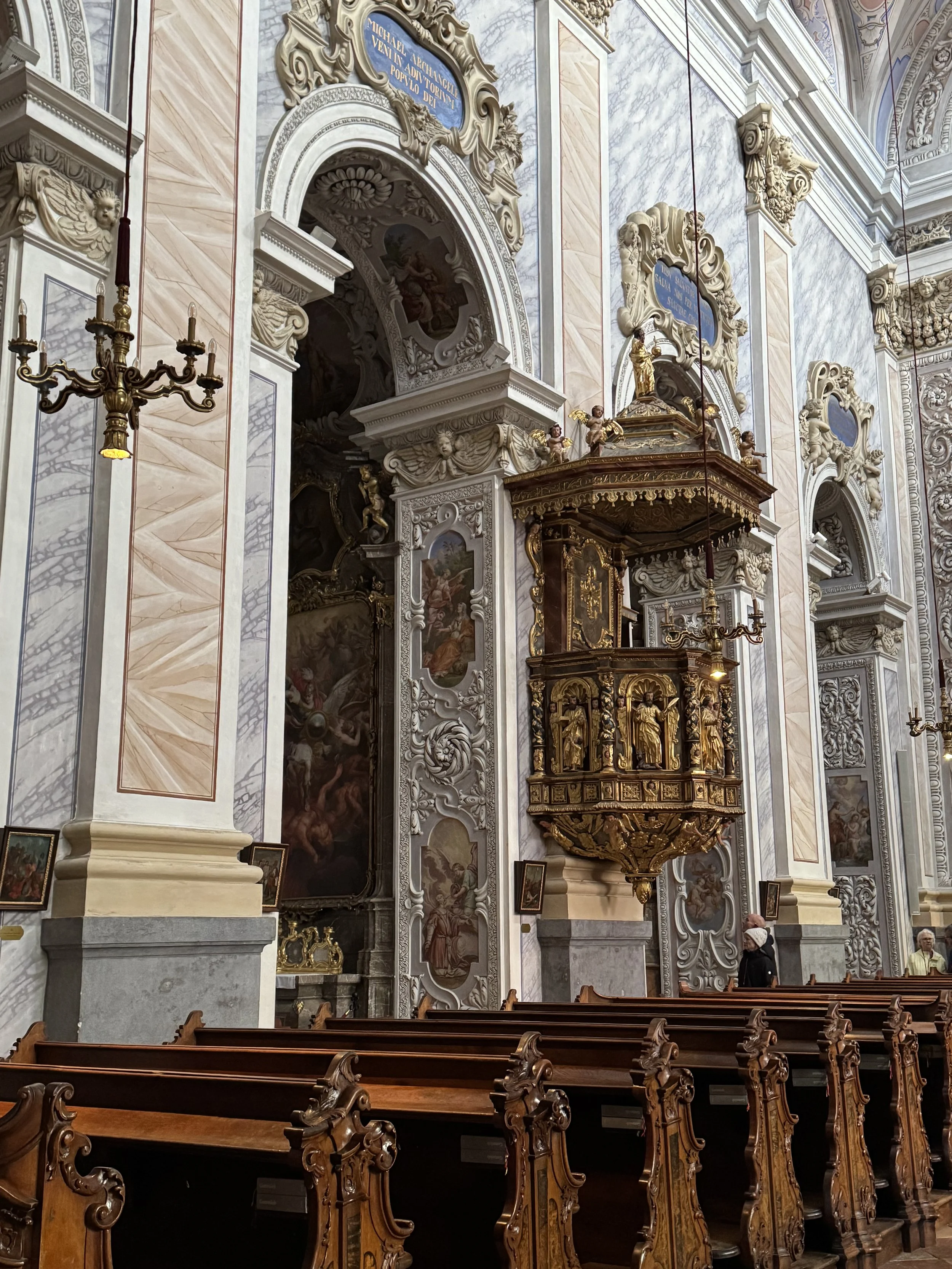
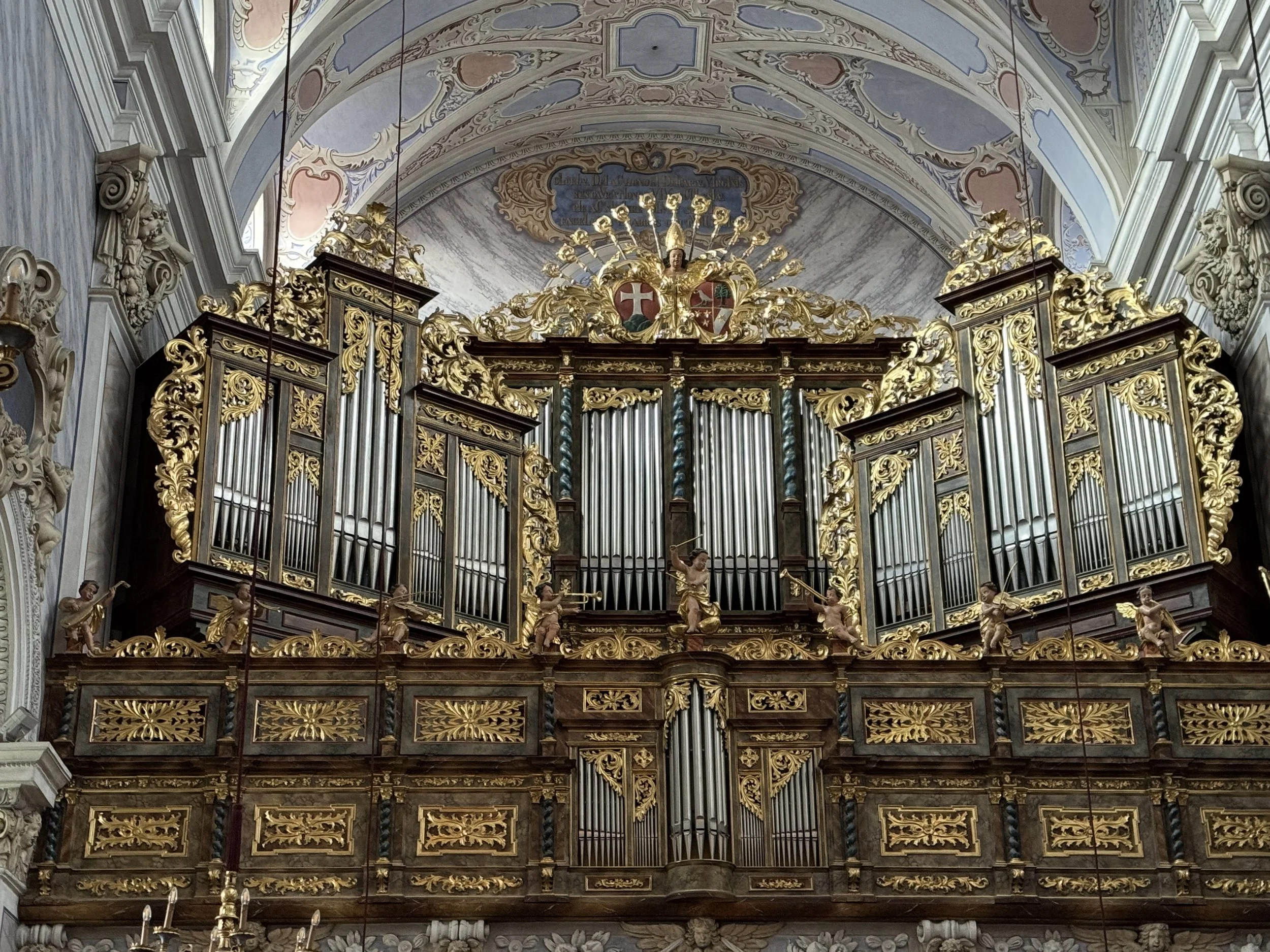
The church, parts of which date back the earliest construction of the abbey, has a dusty pink exterior, twin bell towers, and an ornate interior filled with beautiful frescoes. 

IMG_6793.jpeg
IMG_6788.jpeg
IMG_6787.jpeg

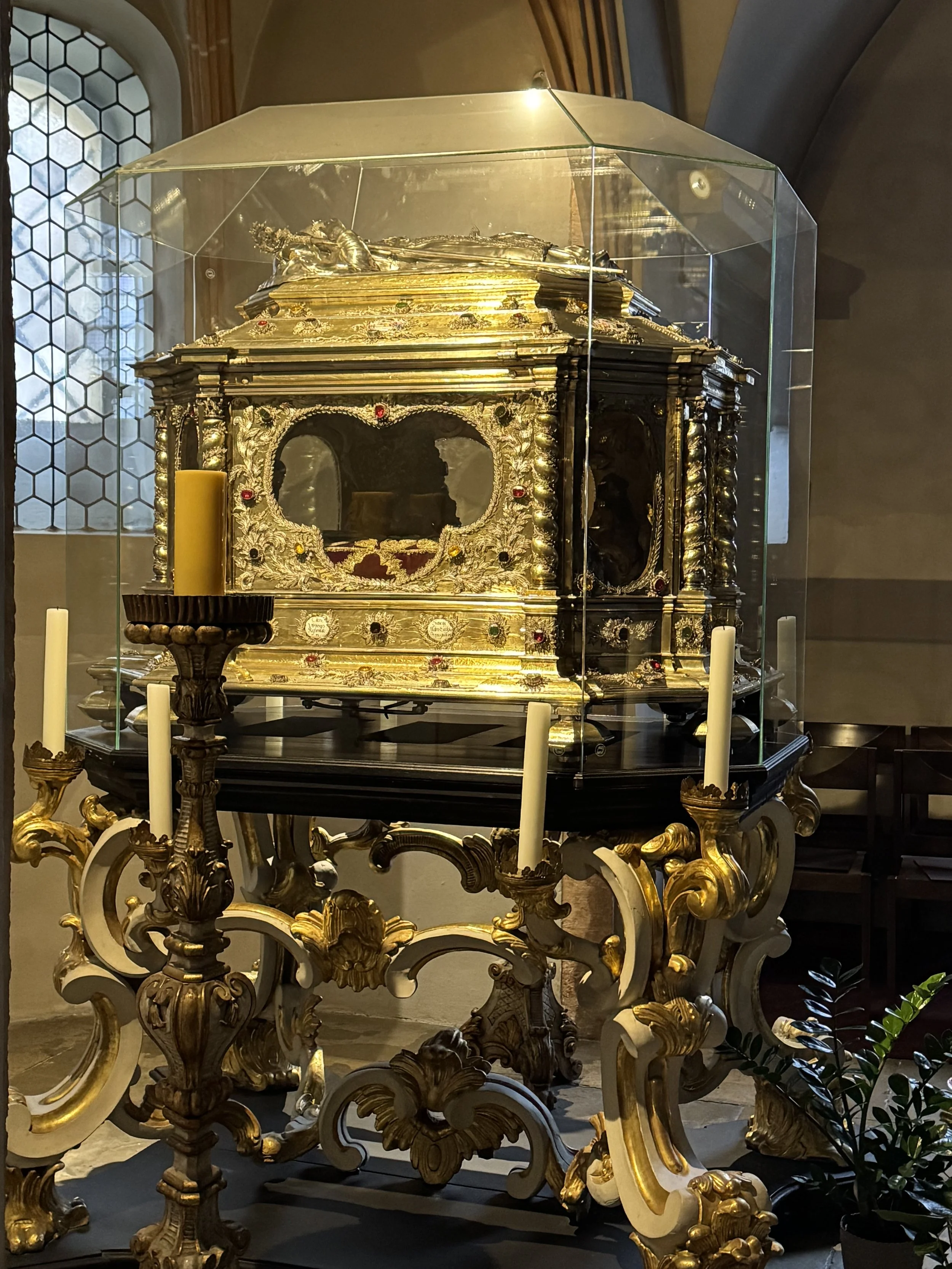
Below the church is a crypt which contains one of the abbey’s most important artifacts - a shrine containing the relics of the abbey’s founder, Bishop Altmann.

IMG_6784.jpeg
IMG_6786.jpeg

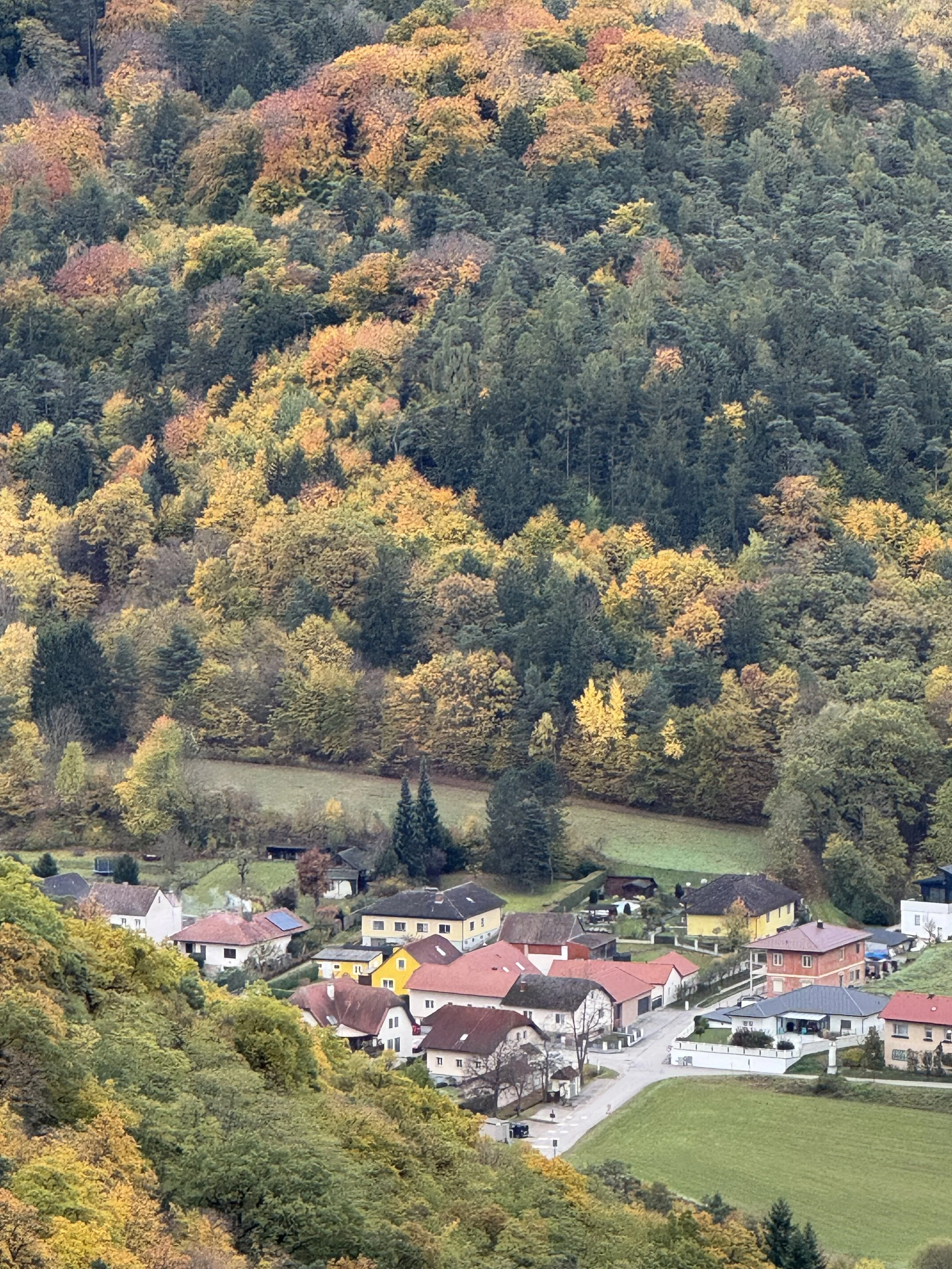
The abbey is surrounded by forest, vines, and orchards. It is especially gorgeous in fall.

 Göttweig Abbey sits on a hill above vineyards, orchards, and forest.  Run by a small group of Benedictine monks, today it is known for its vines, which provide the grapes used to produce the abbey’s wines, and for its apricots which are used to make apricot liqueurs, jams, and nectars – all available for purchase in the gift shop. 

I visited Göttweig Abbey on an excursion offered as part of a Viking Danube River cruise which included the opportunity to learn to make (and of course, to taste) the famous Marillenknödel or Apricot Dumpling that is one of the abbey’s specialties. 

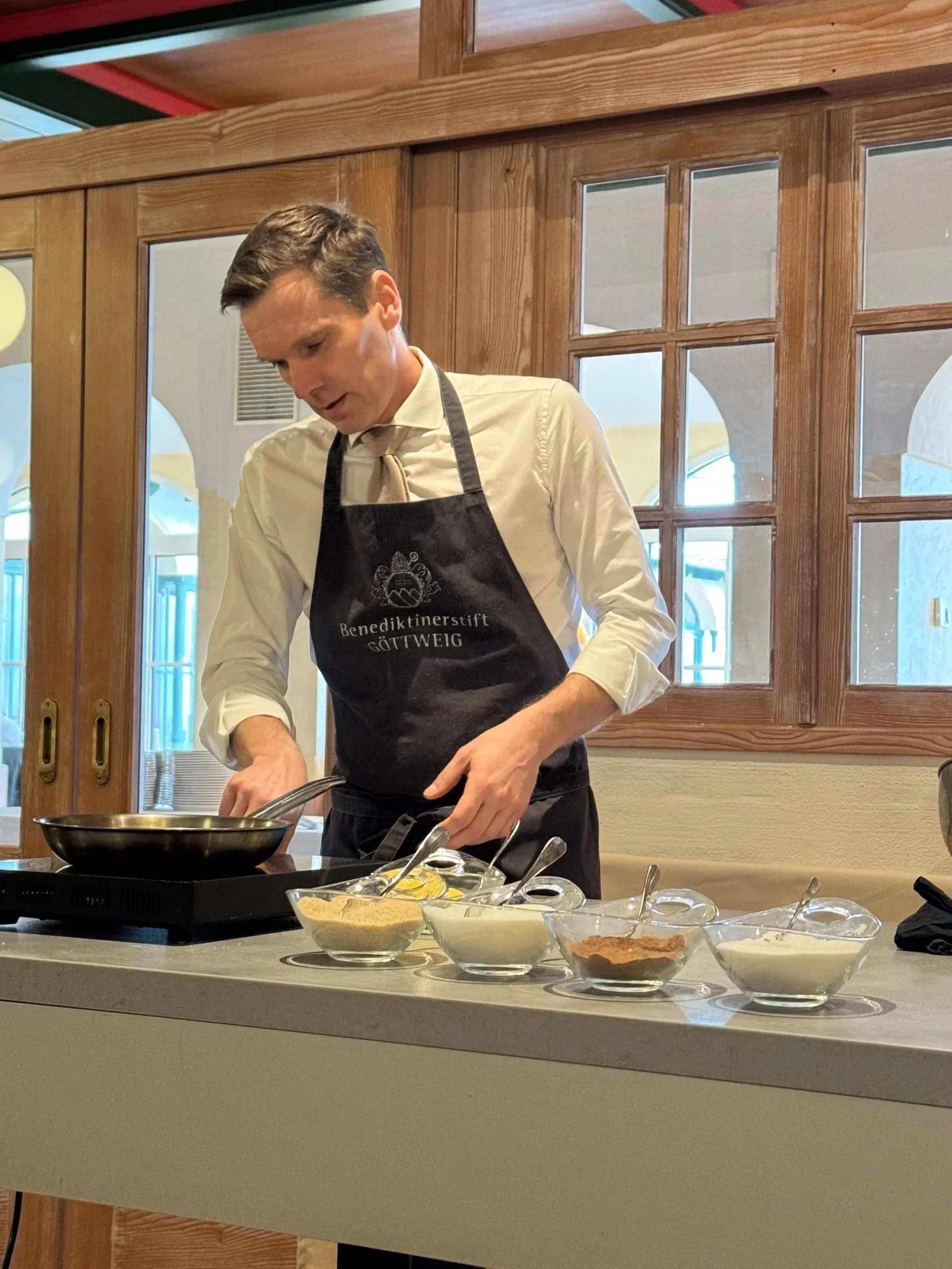
After a tour of the grounds, museum, and church we were offered a taste of apricot nectar and apricot wine – and then if was off to the restaurant for a dumpling lesson from the pastry chef.

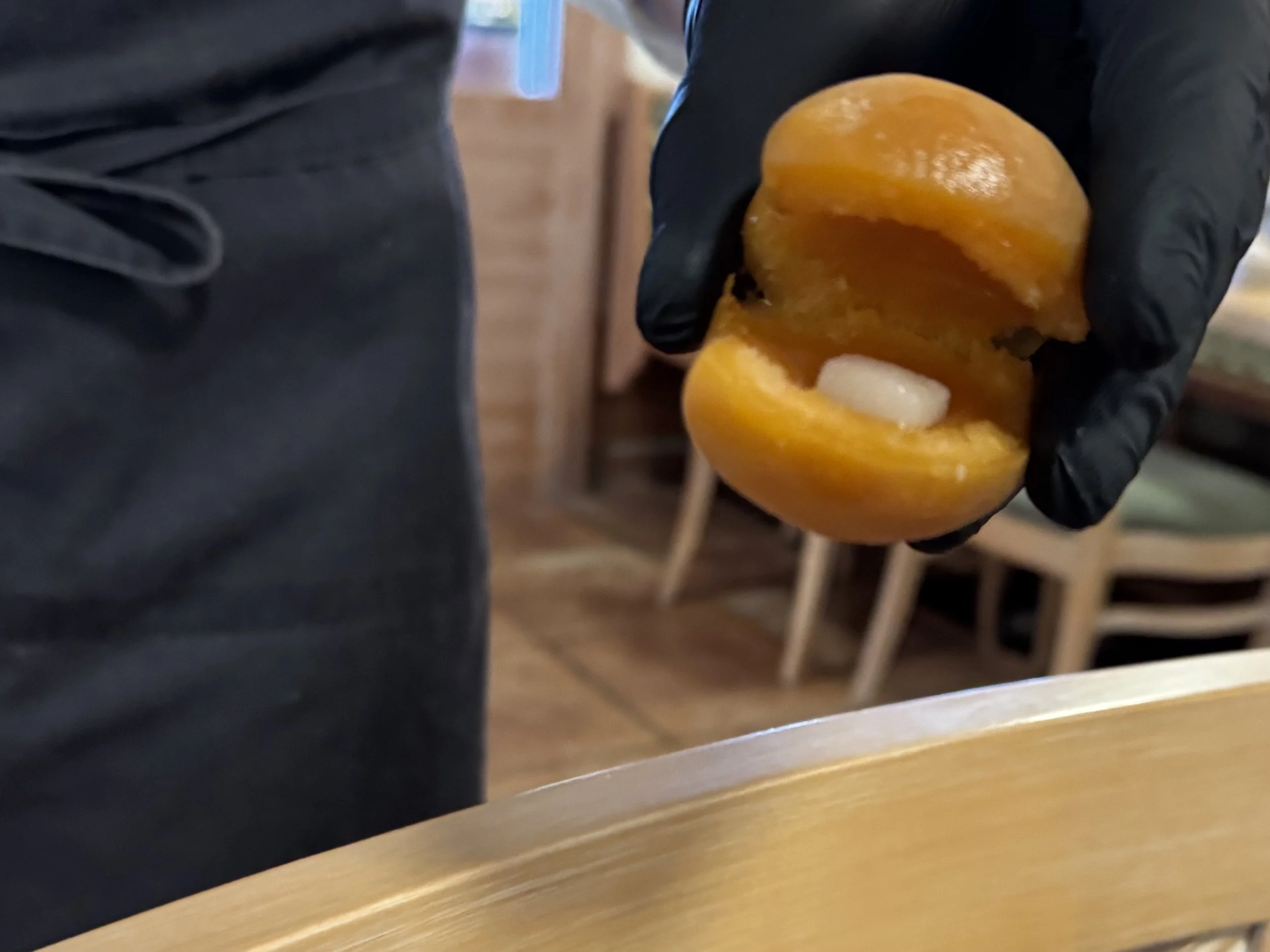
 The apricots used in the dumplings are grown in the abbey’s orchard. Harvested when ripe, the pit is removed and replaced with a sugar cube. Next, they are frozen to be used for future dumpling making year round.  In season they can also be used fresh.

The pastry chef had all of the ingredients ready and demonstrated the process of making the dough, wrapping the apricots, boiling them, and preparing the sweetened bread crumb topping. After the demo we each had a cup of coffee and a dumpling. Delicious, and not too sweet, they were wonderful.

A copy of the recipe was given to each of us and I think the monks won’t mind me sharing!

IMG_6822.jpeg
IMG_6827.jpeg
IMG_6831.jpeg
IMG_6832.jpeg

To make the dumplings, a dough is made from 1 cup farmer’s cheese (a substitute would be ½ ricotta and ½ Greek yoghurt – both full fat),  1 cup flour, 2 Tablespoons semolina flour, 1 egg, 3 ½ tablespoons butter, and a pinch of salt.  Mixed and chilled in the fridge for at least 12 hours.

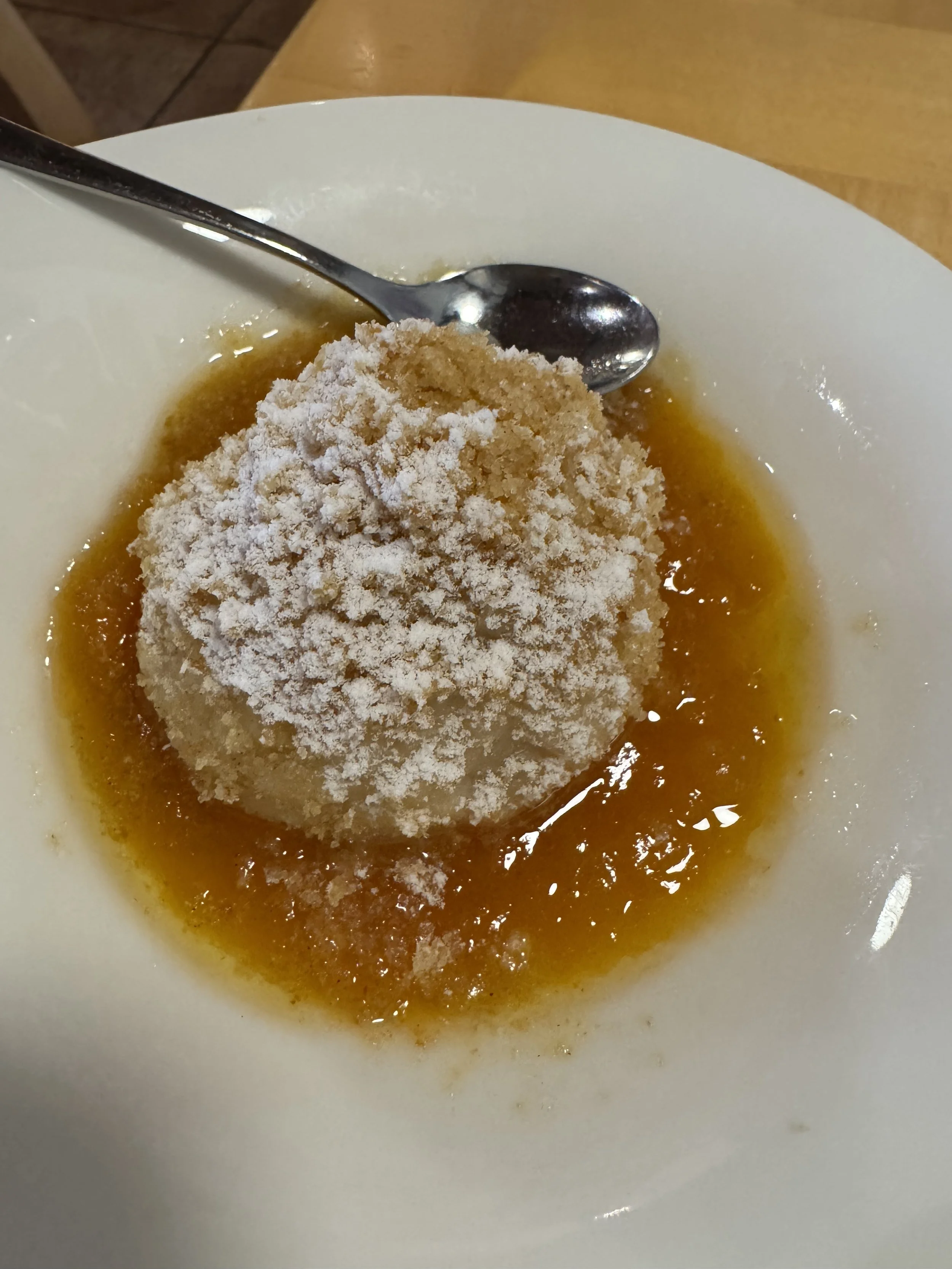
The dumplings were served in a puddle of apricot jam - delicious !

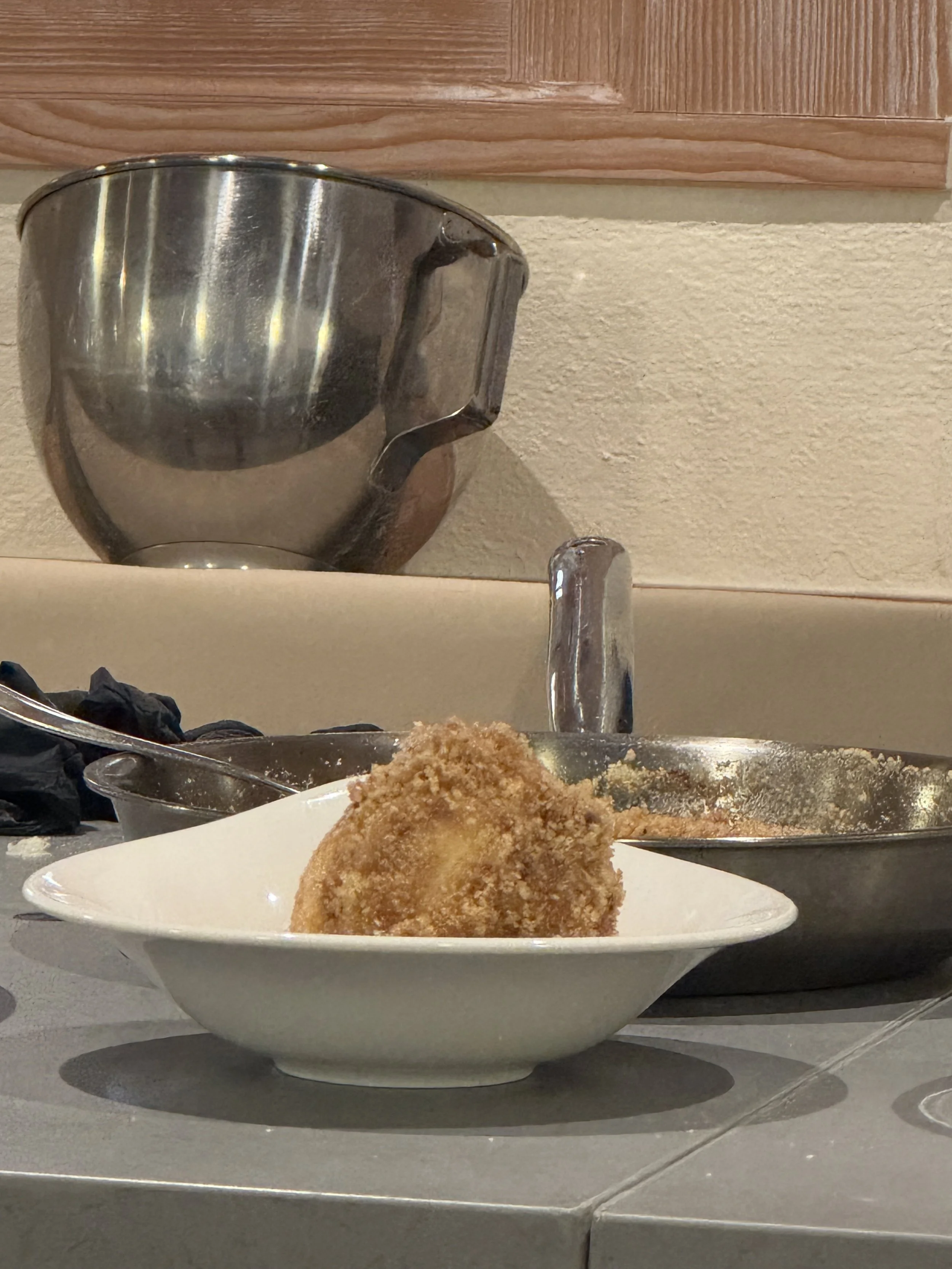
Pieces of the dough are used to wrap around each apricot, forming a round dumpling.  The dumplings are then dropped gently in boiling lightly salted water.  When they float, they are ready (15-20 minutes).  

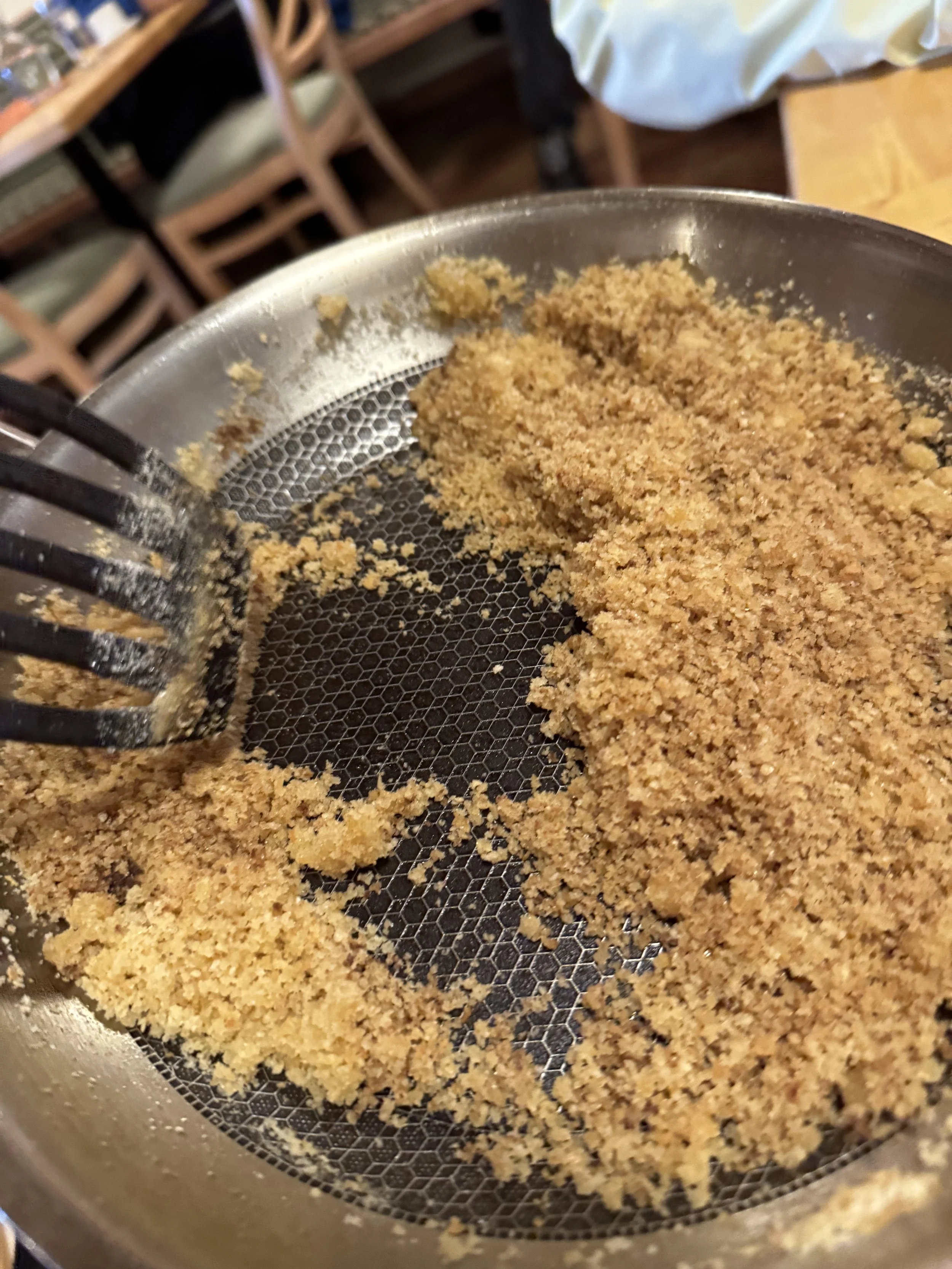
While the dumplings cook, a topping is made from 1 cup bread crumbs, 1 tablespoon sugar, 1 teaspoon vanilla sugar, and 3 tablespoons butter.  Mix and toast in a pan until golden and then add 1 teaspoon cinnamon.   Roll the boiled dumplings in the crumbs and serve while warm.  Toppings can vary – ours were served in pool of thin apricot jam and sprinkled with powdered sugar.  They can also be drizzled with honey, topped with vanilla sauce, whipped cream, or even ice cream. 

Learning to make them was fun – tasting them was even better.   I’ve yet to try making them at home, but will all the ripe apricots in the Italian markets right now I just might give it a try!

May 25, 2026 /Joanne Bartram
Göttweig Abbey, Apricot Dumplings, marillenknödel
Danube Cruise, Europe Cruises, european travel, travel Austria, travel europe

Castello di Spessa in Captiva del Fruili

Wine Tasting in a Friulian Castle

May 04, 2026 by Joanne Bartram in #italytravel, #medievalitaly, european travel, Friuli Venezia Giulia, Friuli-Venezia Giulia, Italy travel

Italy has 20 regions, 5 of which are semi-autonomous based on their history, unique culture, and diversity of language.  This designation provides them with a greater ability to manage their own governance, finances, and education.  One of these 5 regions is Venezia-Friuli Giulia, in the northeastern most part of Italy, bordering on Slovenia and Austria.  Local identity runs deep in this area (as in all of Italy), and the Friuli sub-region is no exception.  With a history that moves from the Romans to the Longobards to the Austro-Hungarian Empire, and finally to its inclusion in the Italian Empire, and with its own Friulian language, Friuli is a unique medley of influences. 

The wine cellar still has traces of previous owners

Mostly an agricultural area, Friuli is best known for its white wines.  A variety of grapes are grown in the region, with several DOCG and DOC designations.  The whites include Fruilano, Ribolla Gialla, Malvasia, Pinot Grigio, and Sauvignon Blanc.  Some reds also are produced, Merlot, Cabernet Franc, Pignolo, and Ribolla Nera, though they make up a much smaller percentage of the local wines. 

I spend most of my time in Tuscany, and the Lucchese wine shops tend to stock mostly Tuscan wines, so the Friulian varieties are not very familiar to me.  At least they weren’t until a recent wine tasting at the Castello di Spessa in the village of Capriva del Friuli, 25 miles and a world away from busy Trieste. 

The Castello has a fascinating history beginning with its construction in the 13th century.  Passed down as part of a 15th century dowry, it remained in one family for the next 300 years.  During that time it played host to several famous visitors including Lorenzo da Ponte, who wrote the libretti for some of Mozart’s most famous operas (including my personal favorite, Cosi Fan Tutte).  The  scandalous Casanova came to visit too but was banished after a romantic liaison during his stay (with a maid or the owner’s daughter – we can’t be sure). 

Ownership changed several times in the late 1800’s and into the 1900’s. Wine production began sometime in the years between 1925 and 1940. During WWII an underground bunker was built on the property, used first by Germans and later by Americans.  Long forgotten, it was rediscovered by the current owners who found it to be the perfect temperature for storing grappa. 

Down, down, down to the once abandoned WWII bunker. Today it is where the grappa is stored.

In 1987 the Castello was purchased by the Pali family.  They renovated the property, expanded the vineyard, and developed the surrounding land into a spa and golf resort.  Today they host events, weddings, vacationers, and wine tastings at the Castelllo.  Several of their wines bear the names of those earlier owners and visitors to the castello - there is a Casanova Pinot Noir, a Rassaurer Fruliano, and even an Amadeus Brut.

IMG_9018.jpeg
IMG_9015.jpeg
IMG_9002.jpeg
IMG_9012.jpeg

Delicate and sparkling, this was my favorite of the wines we tasted

Our group (all students at the Piccola Università language school in Trieste) enjoyed a wine tasting in the Castello’s tasting room. We sampled primarily whites (still and sparkling) and one red (a Cabernet Sauvignon / Merlot blend).  Along with each glass our hostess provided information about the vines, grapes, and production methods. 

All the wines we tasted were very good but I had a definite favorite – the Pertè Ribolla Gialla Spumante, a sparkling wine made by the classic method (unlike Prosecco which is made by the Charmat method) with Chardonnay and Pinot Noir grapes. It was dry with perfect soft bubbles.  A delightful wine which had me wondering how I could possibly get several bottles home to Lucca on the train.  Unfortunately, that was impossible. 

A tour of the wine cellar followed our tasting. The cellars have a variety of rooms which contain not only wine but bits of the history of the Castello and some old winemaking equipment. What is it that makes dusty old wine bottles so fascinating?

IMG_9074.jpeg
IMG_9059.jpeg
IMG_9056.jpeg
IMG_9045.jpeg
IMG_9041.jpeg
IMG_9036.jpeg

As we left the Castello, our parting gift was a gorgeous tramonto (sunset). A perfect ending to a wonderful afternoon of wine tasting.

contact info: Castello di Spessa Golf Wine Resort and Spa. Via Spessa 1. Capriva del Friuli GO 34070 email: info@castellodispessa.it

May 04, 2026 /Joanne Bartram
Castello di Spesa, Fruili, Capriva del Friuli, wine tasting italy
#italytravel, #medievalitaly, european travel, Friuli Venezia Giulia, Friuli-Venezia Giulia, Italy travel

Amsterdam

Fountains

March 16, 2026 by Joanne Bartram in #luccafountains, european travel, travel europe

These last few days of winter are the perfect time to think about plans for summer and fall travel.  Deciding where to go is half the fun, but sometimes we need some inspiration.  With that in mind, this week I hope to inspire some European travel plans through …. fountains.   Below: Hinton Ampner, England; Saint-Martin Gardens, Monaco; Piazza de Spagna, Rome

IMG_8467.JPG
IMG_9934.JPG
IMG_0796.JPG

Fountains show up throughout European cities, along streets, in squares, or tucked away in courtyards and gardens.  Some are grand and others small, even utilitarian such as those that provide a water source for a market.  Below: Lyon France, Campo dei Fiori Rome, Basel Switzerland

IMG_8151.JPG
IMG_0842.JPG
IMG_4375.JPG

La Fontana dell Pupporona

Some fountains are meant for daily function – such as here in Lucca where locals use the fountains in the city center to fill water bottles.  Don’t try to tell them that the water is the same in each fountain lest you start a debate about which fountain has the best, freshest, tastiest water!

My favorite fountain in Lucca is the one in Piazza del Salvatore, locally known as La Fontana della Pupporona (loose translation - The Fountain of the Busty Lady).  She is actually a Naiade (water nymph). You may recognize the statue that is integral to this fountain because I’ve written about it in the past and use it as a symbol of this blog.  The fountain has dual roles – it provides a beautiful centerpiece for the piazza which is a local gathering place but is also a favorite place for residents and tourists alike to fill up their water jugs. 

 More elaborate fountains provide spectacular centerpieces around cafes, parks, or piazzas.  The 3 below, in Rome, Padova, and Florence are pretty famous!

IMG_0807.JPG
IMG_5388.JPG
IMG_8380.jpeg

 When I travel, I often find myself taking photos of fountains.  And while I have the most photos of fountains in Italy, I also have quite a few from other countries.  Below: Uses, France; Linz, Austria; Vienna, Austria; Aix-en-Provence, France

IMG_1804.JPG
IMG_7075.jpeg
IMG_6733.jpeg
IMG_9768.JPG
IMG_2550.JPG
IMG_3952.JPG

I hope these fountains will provide some inspiration for all of us as we plan upcoming travels. Or perhaps they will bring memories of past travels.

Ravenna, Giardini Pensili

March 16, 2026 /Joanne Bartram
european fountains, fountains
#luccafountains, european travel, travel europe
  • Newer
  • Older

Powered by Squarespace