Two Parts Italy

Exploring Italy, travel, and living a flavorful life

  • Blog
  • About This Blog
  • Start Here
  • Recent Posts
  • Archives by Topic
  • Subscribe
  • Contact me

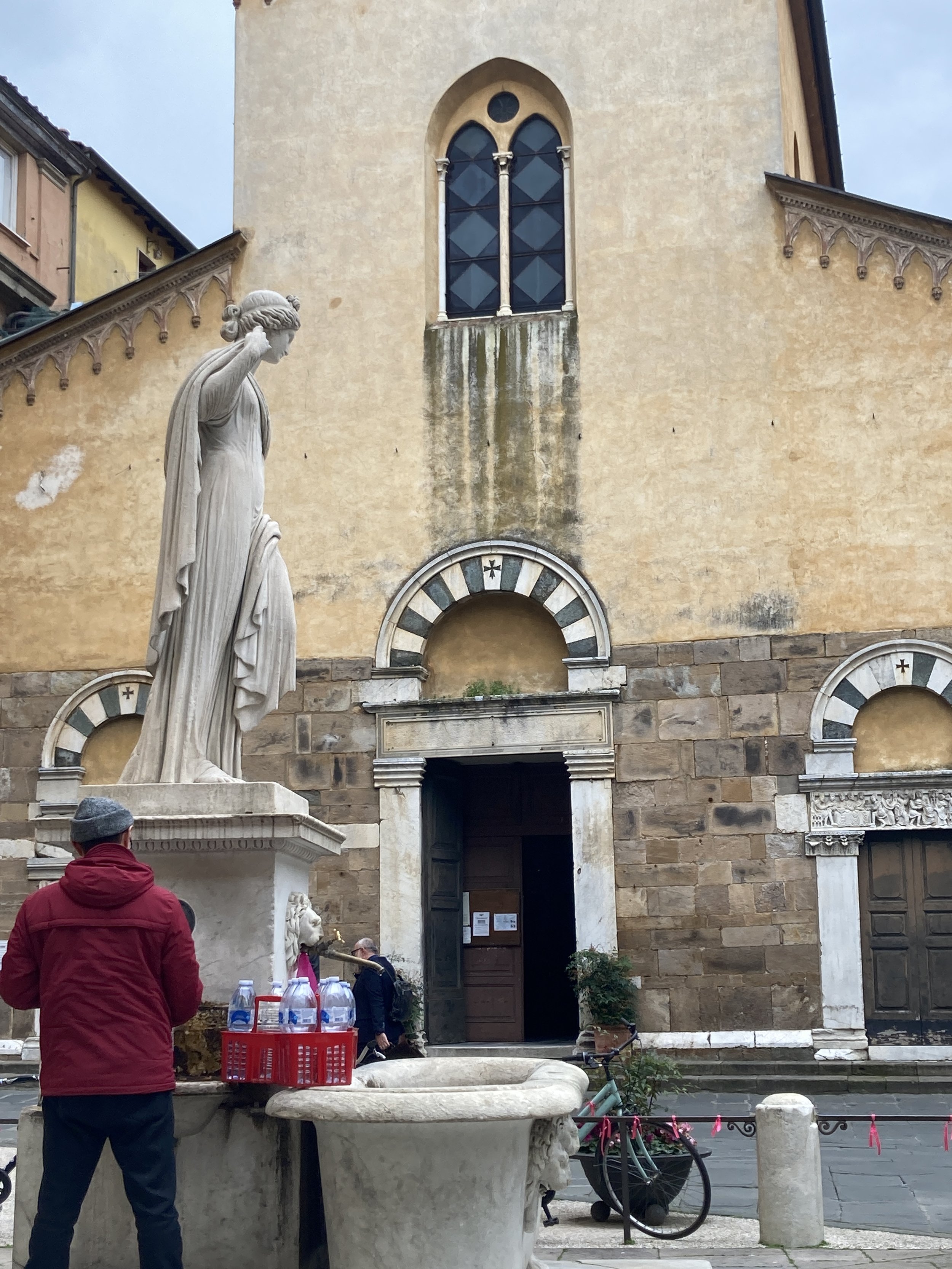
The Piazza del Salvatore is a busy hub of activity in Lucca. It’s all too easy to focus on Nottolini’s fountain and the graceful statue of the Naiade on top and miss the church of San Salvatore which sits across the piazza.

The Church of San Salvatore in Lucca

March 18, 2024 by Joanne Bartram in #italy2024, #lucca, #italytravel, #luccafountains, #medievalitaly, Churches Italy, Italian culture, Italy, Living in Italy, Lucca

A painted door in Piazza del Salvatore, Lucca

A couple of days in Lucca last week were rain free – perfect for catching up on errands.   My tasks included a stop at the lavandaria (cleaners), a quick visit to a local shop to buy a pretty pot for the chives I’ll grow on a sunny windowsill, a meet up with a friend for a coffee (there may have been a pastry involved), and a trip to the Ortofrutta to stock up on vegetables. 

 The best part of running errands here is that it never feels like a chore.  No drudgery involved.  How could there be when the errands are done on foot and all involve a walk through historic Medieval streets?  There are ancient stone buildings, centuries old decorative brick work around windows, balconies full of flowers, and beautiful old wooden doors along every route.  Add to that the sound of spoken Italian providing a soundtrack to daily life here and chores are fun.

On my errands I stopped into one of Lucca’s small and lesser known (at least to visitors; it’s a favorite of locals) churches. It was empty, silent, and unguarded. I was the only person inside, free to admire the architecture, artwork, and treasures within. To leave such a historic place, filled with valuable artifacts, so accessible would be unheard of in the US.  Here in Lucca it is not unusual at all.  
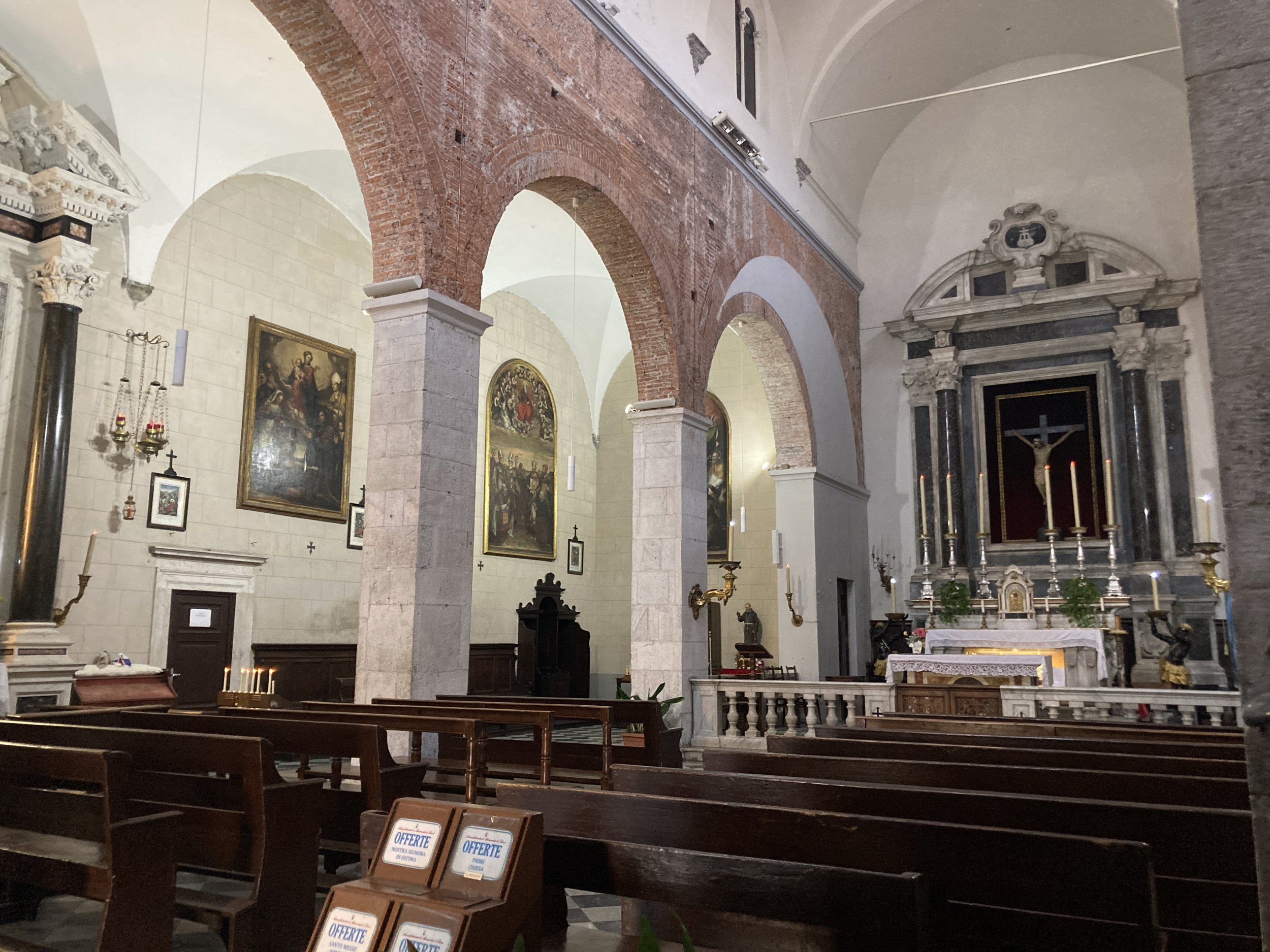
The Church of San Salvatore, also known as the Church of the Misericordia, Lucca
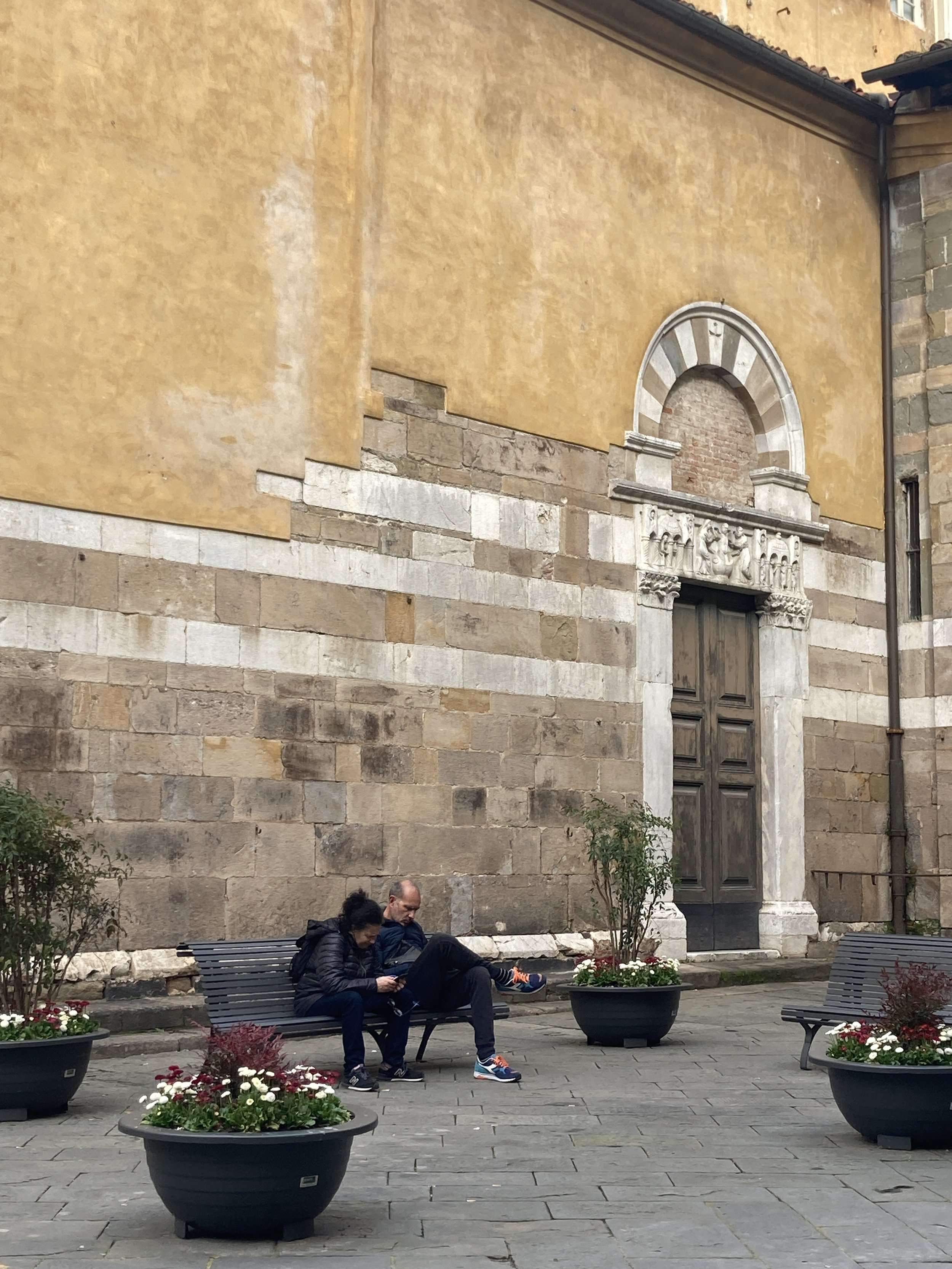
The church, officially the Church of San Salvatore in Mustolio, is more commonly known as the Church of the Misericordia because it is located right next to what was for many years the office of the Misericordia Ambulance Service.   

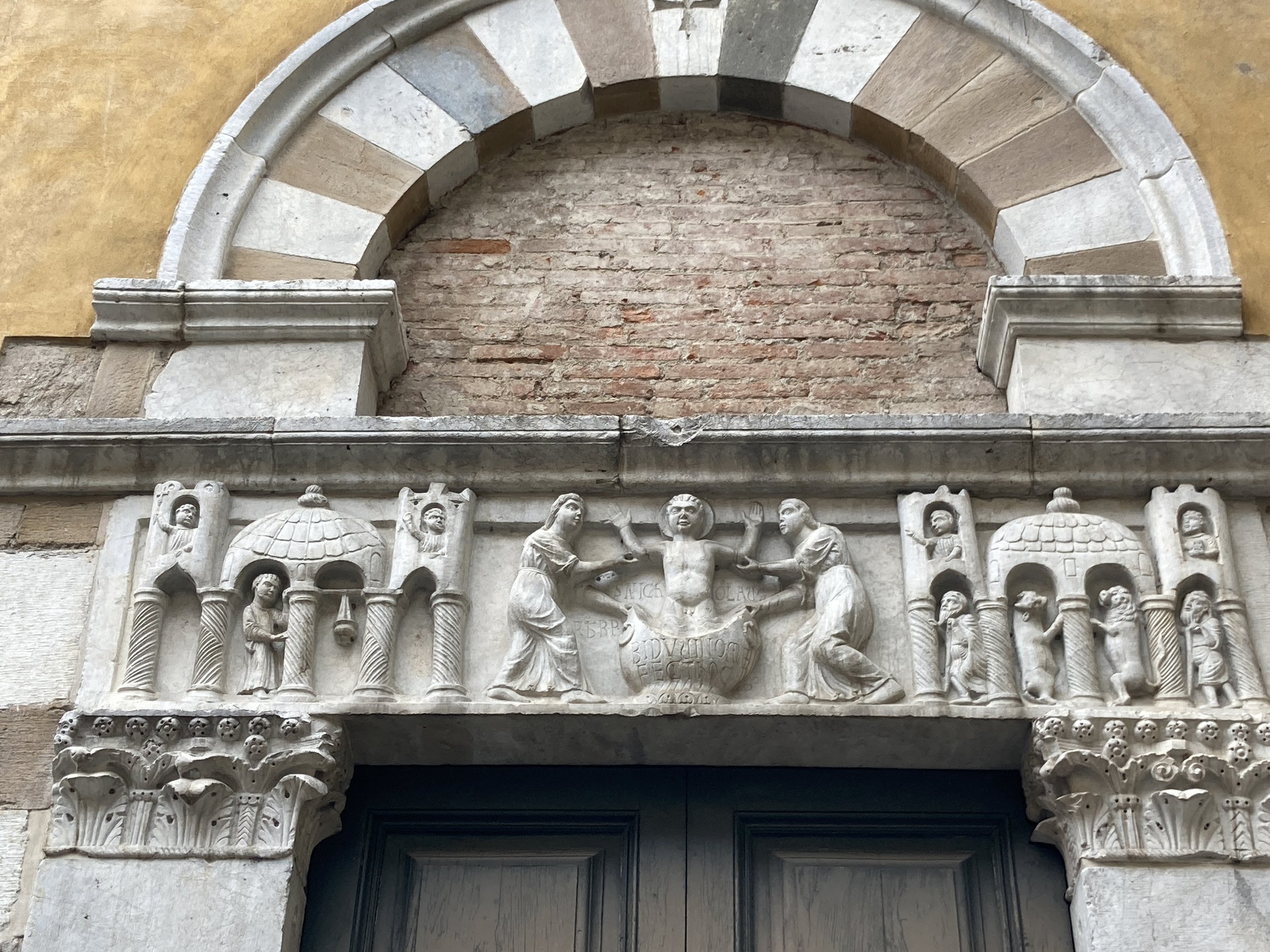
A few months ago the ambulance service moved outside of central Lucca, leaving a spot for some benches and flower pots in the space where the ambulances used to sit. The stone wall of the church is now easy to see and the historic carved lintel above the side door more visible.
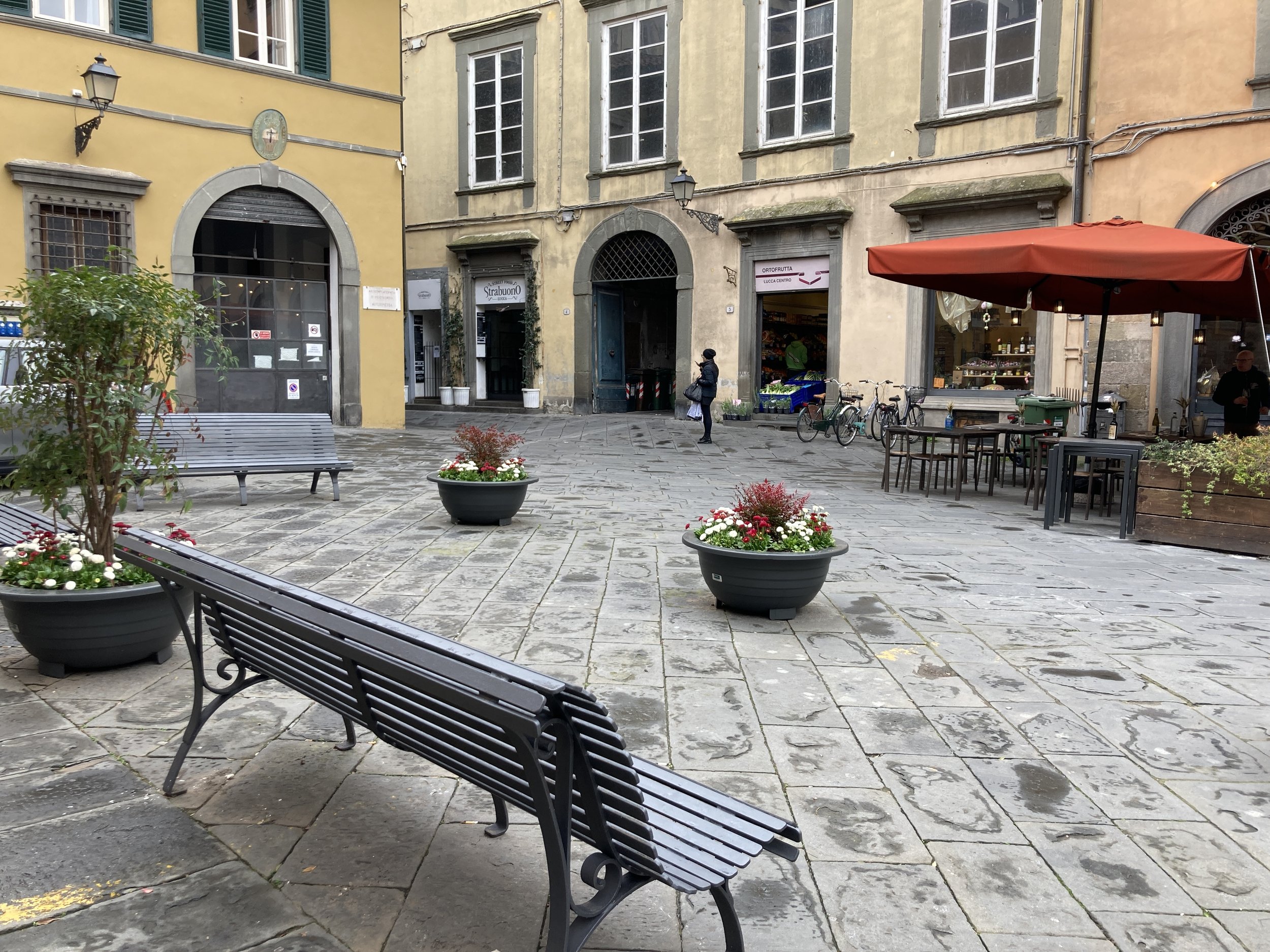
This new sitting area, once filled with parked ambulances, is now a pretty place to sit facing the piazza along the side of the church.

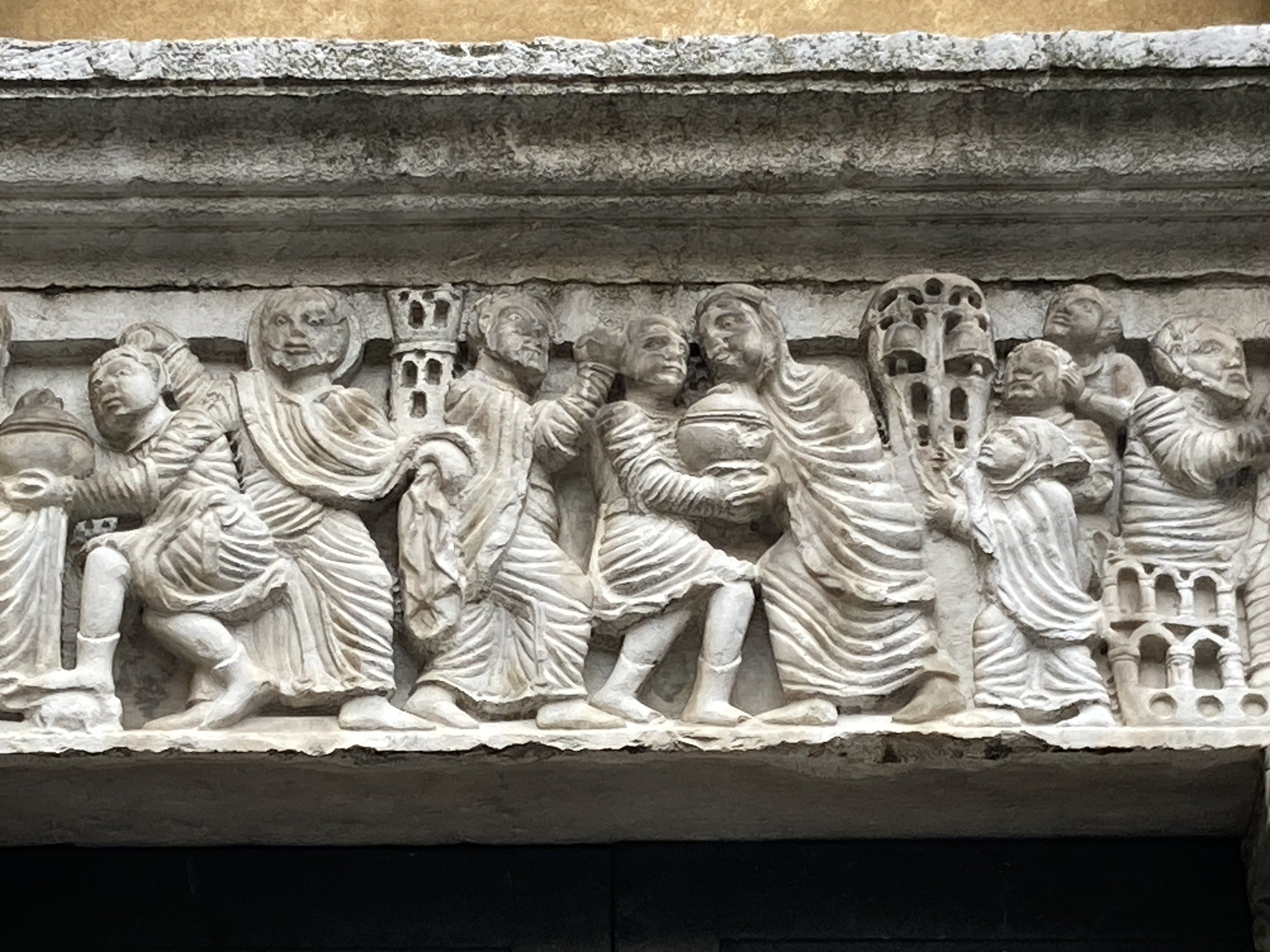
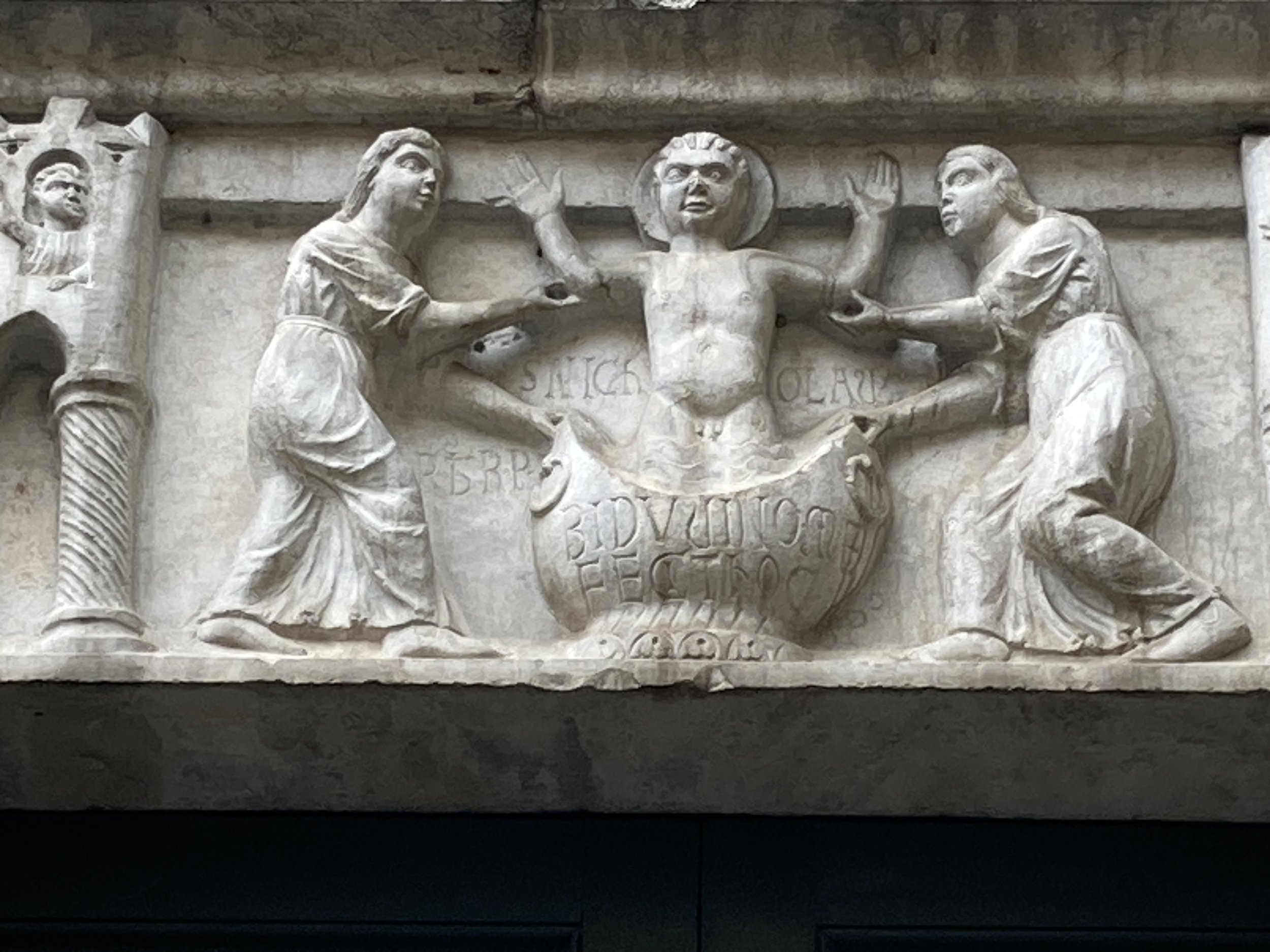
 A church has stood here for over 1000 years**, with major renovations and modifications over time.  Some of the most important elements of the current church are the exterior lintels, one over the front right door (below, right) and one over the side door (below, left), that date from the 12th century.  Each lintel tells a story from the life of Saint Nicholas.  They are beautifully carved, in wonderful shape, and are important examples of decorative elements from that time period. 
IMG_4749.jpeg
IMG_4747.jpeg
IMG_4742.jpeg

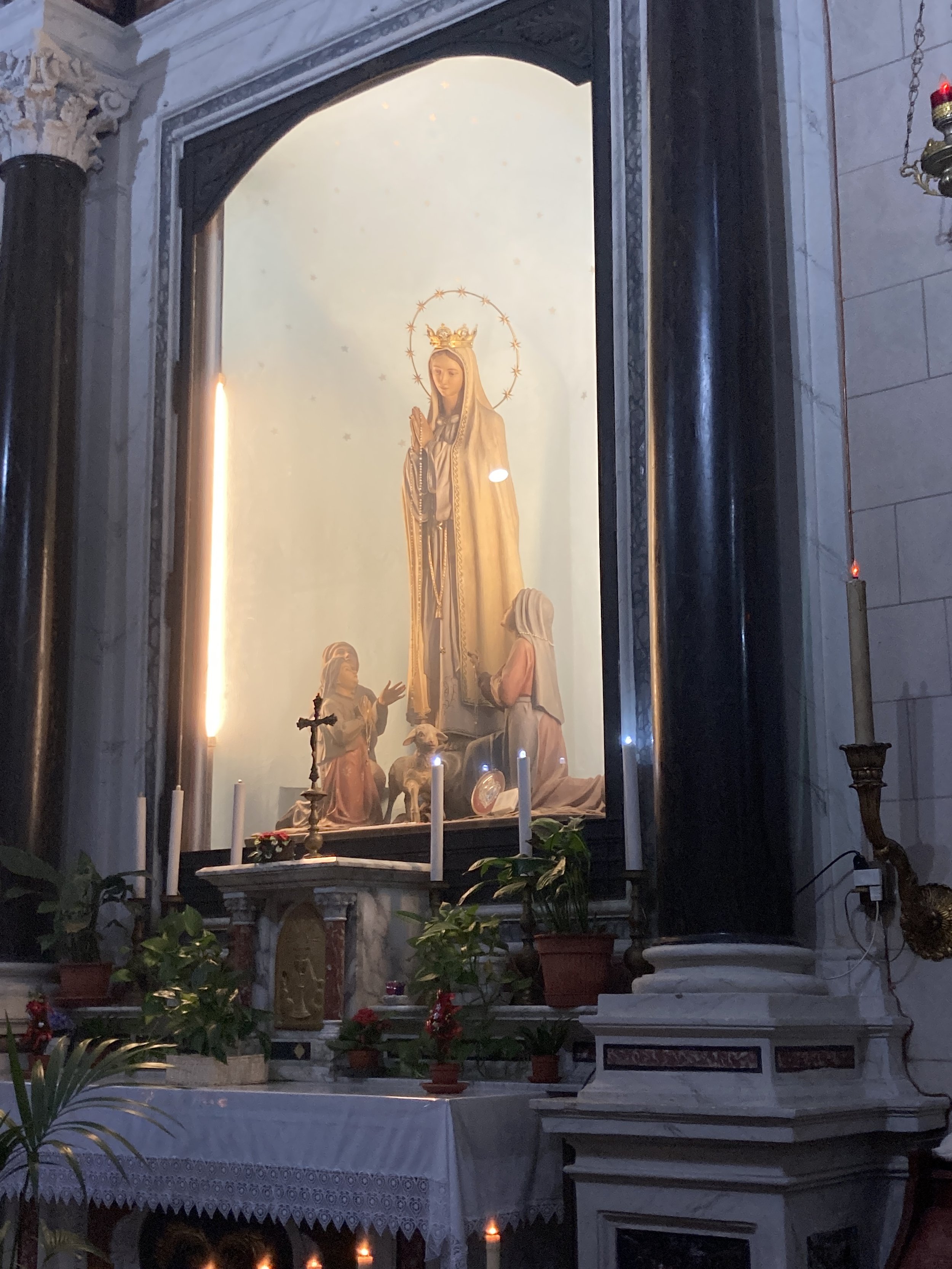
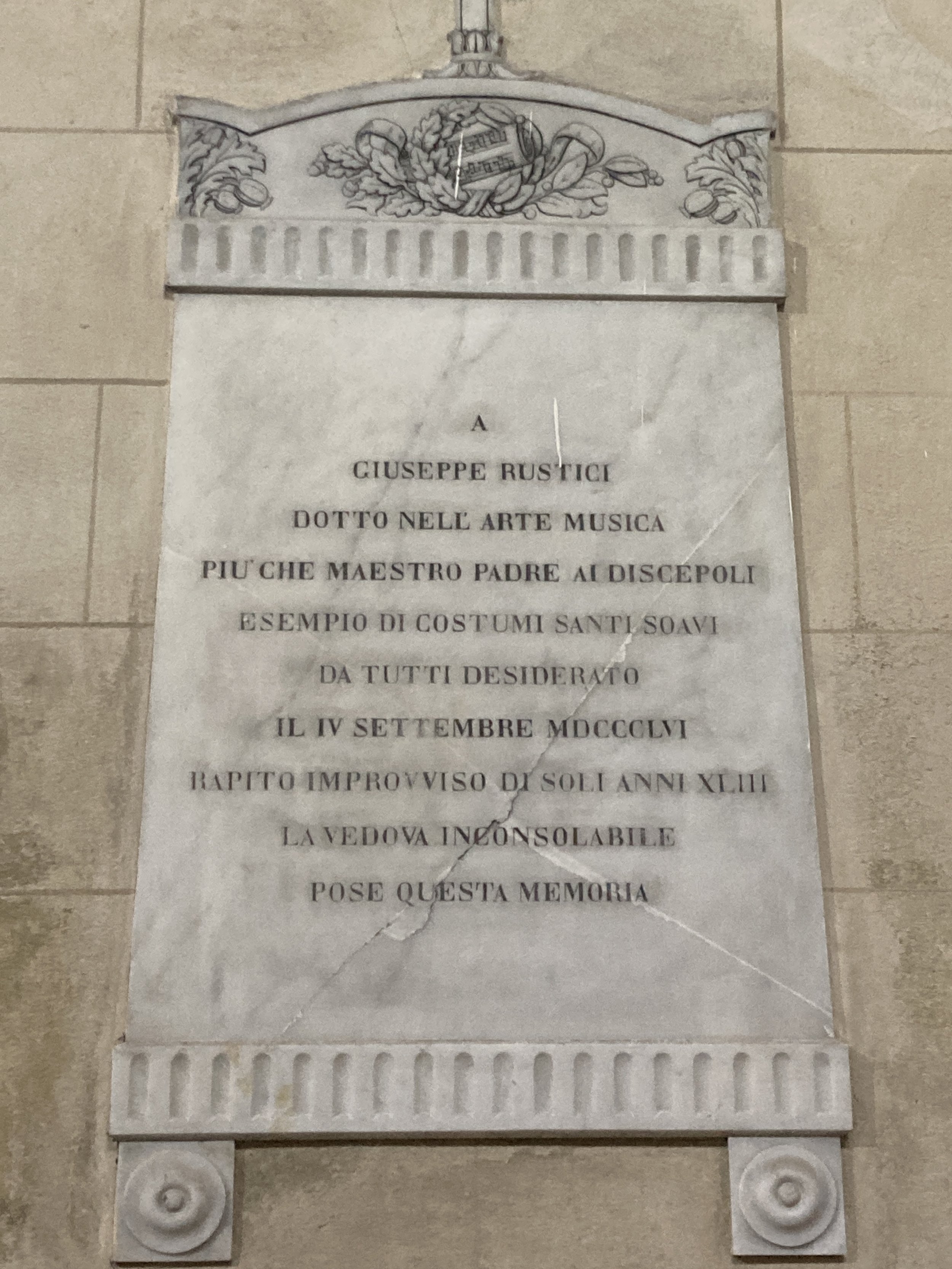
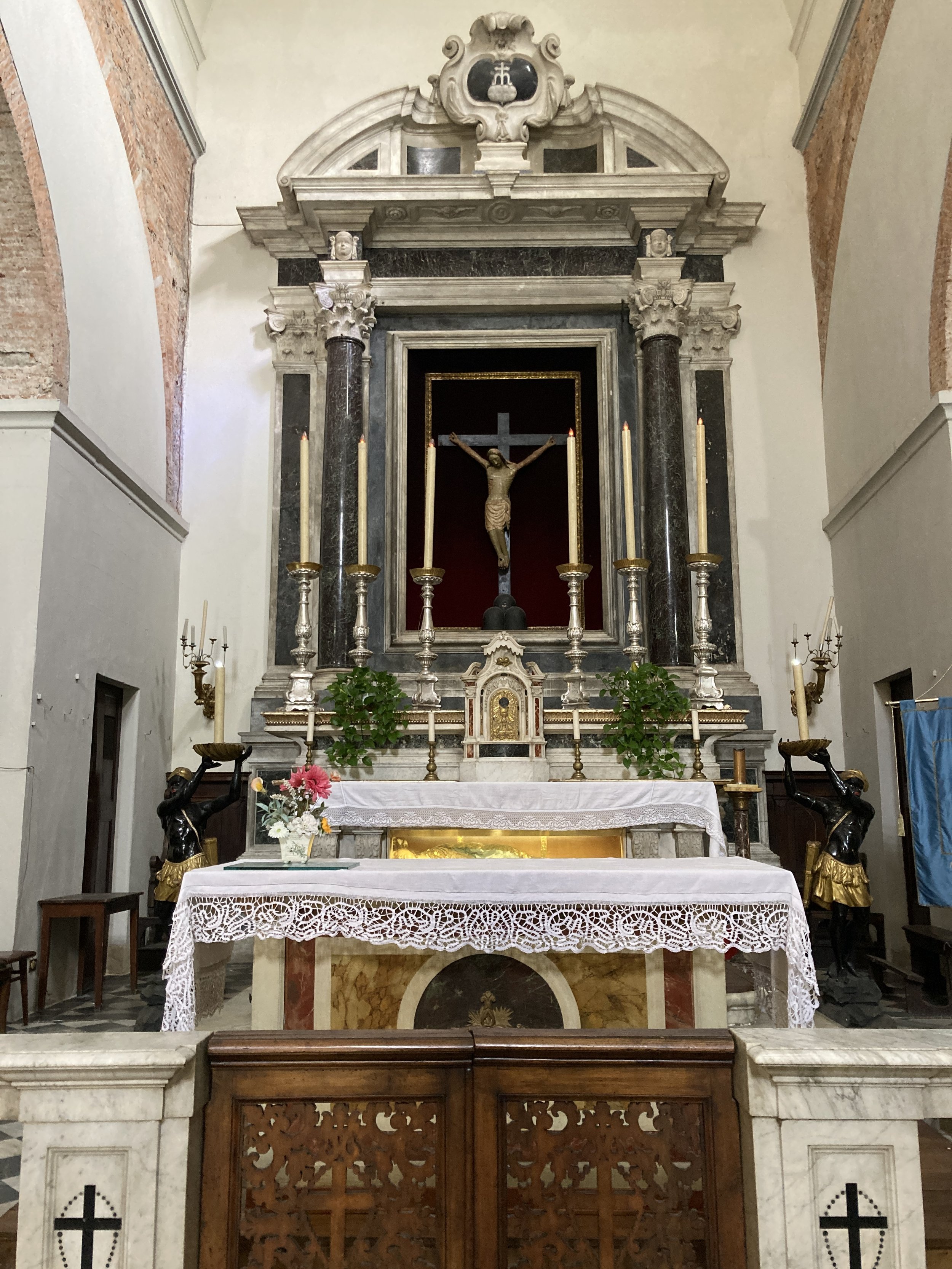
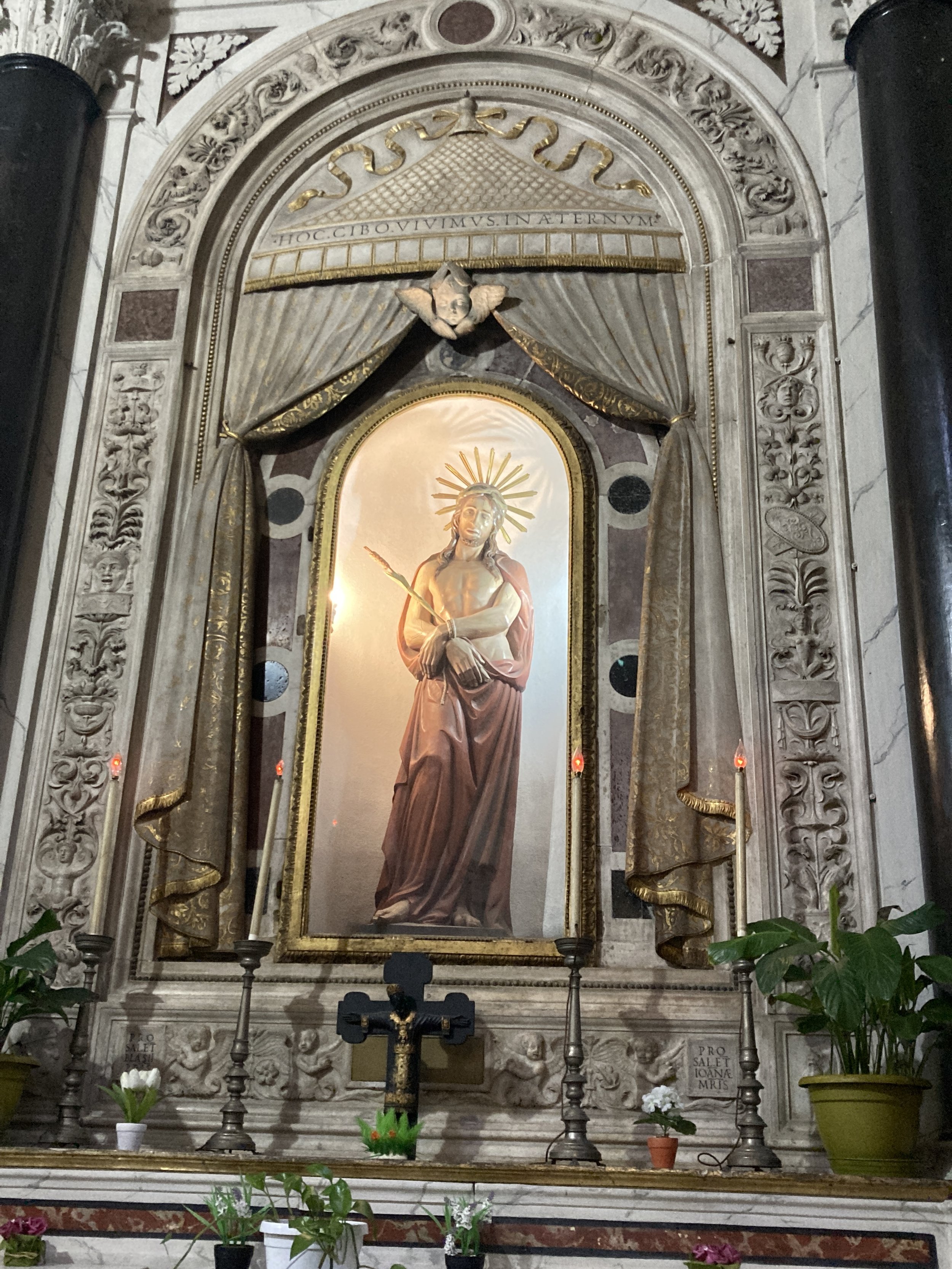
The interior of the church has a main altar that contains a 14th century wooden crucifix.   Two smaller altars are placed along the sides of the small church. One, an ornate sculpted piece, frames a Christ with bound wrists. The other is a depiction of Our Lady of Fatima surrounded by children.
IMG_4771.jpeg
IMG_4716.jpeg
IMG_4730.jpeg

There are several paintings inside the church, including an Ascension from the year 1561 by the local artist Vezzano and another that depicts local favorite Santa Zita in the company of several saints. 
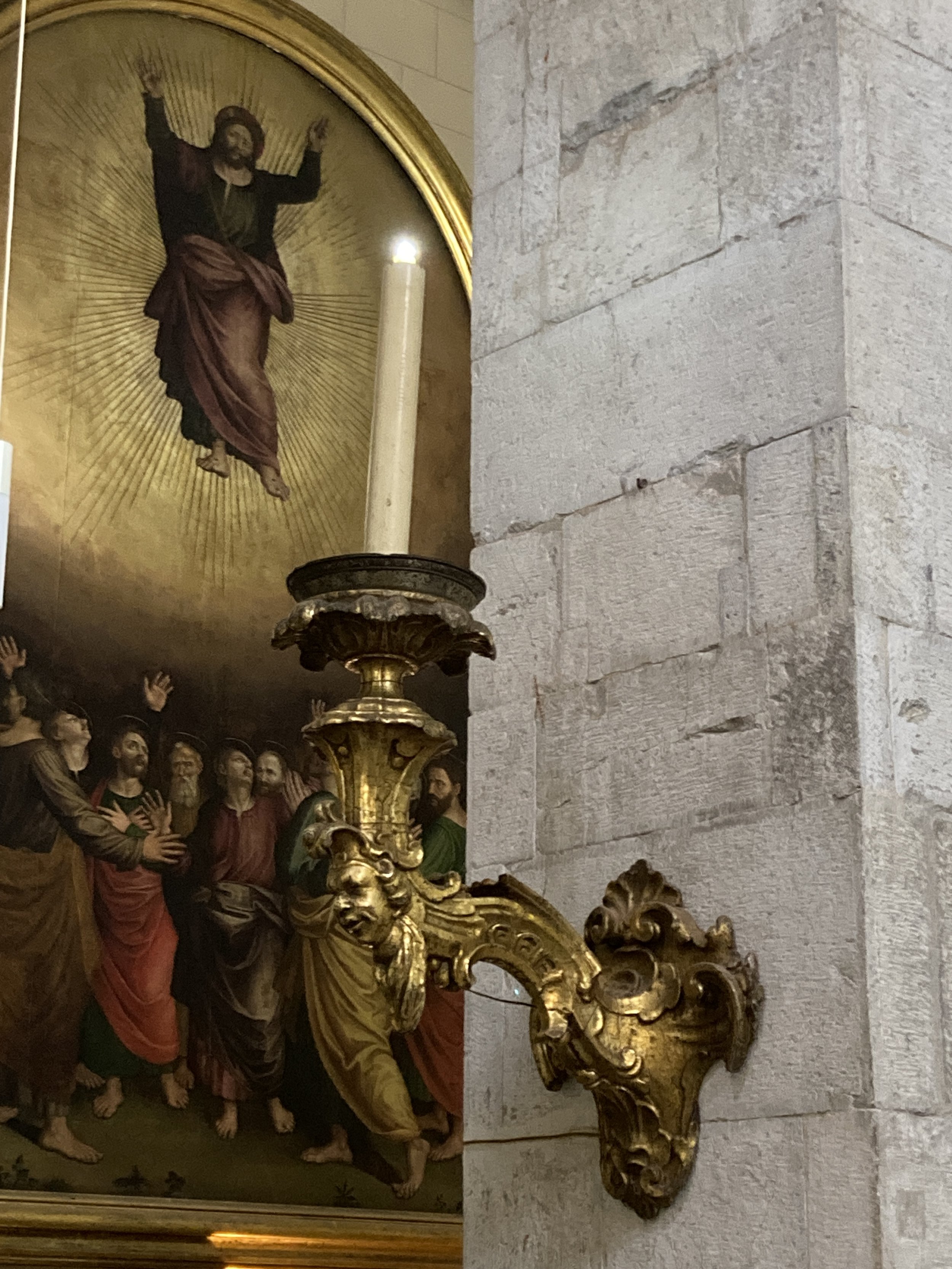
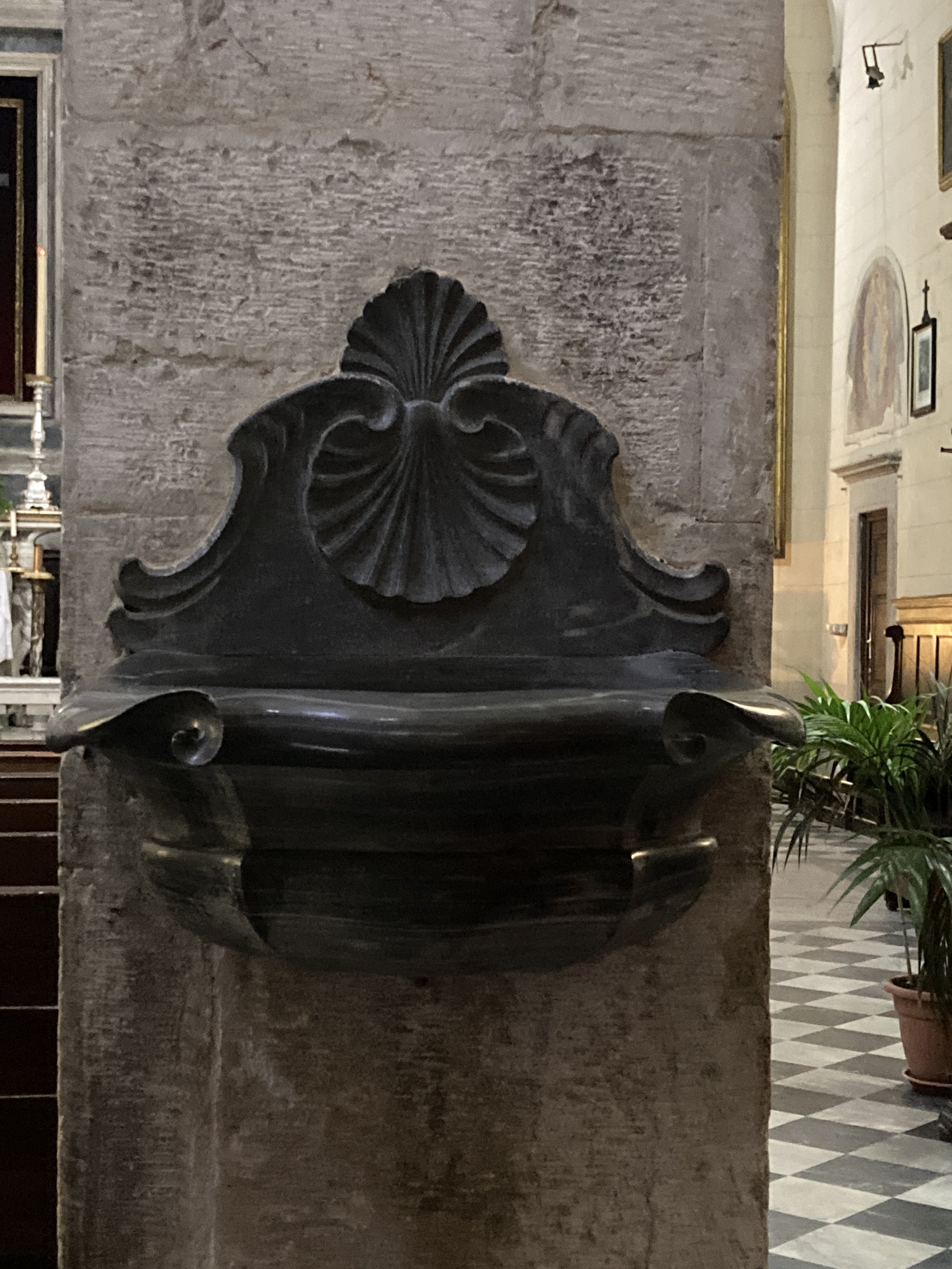
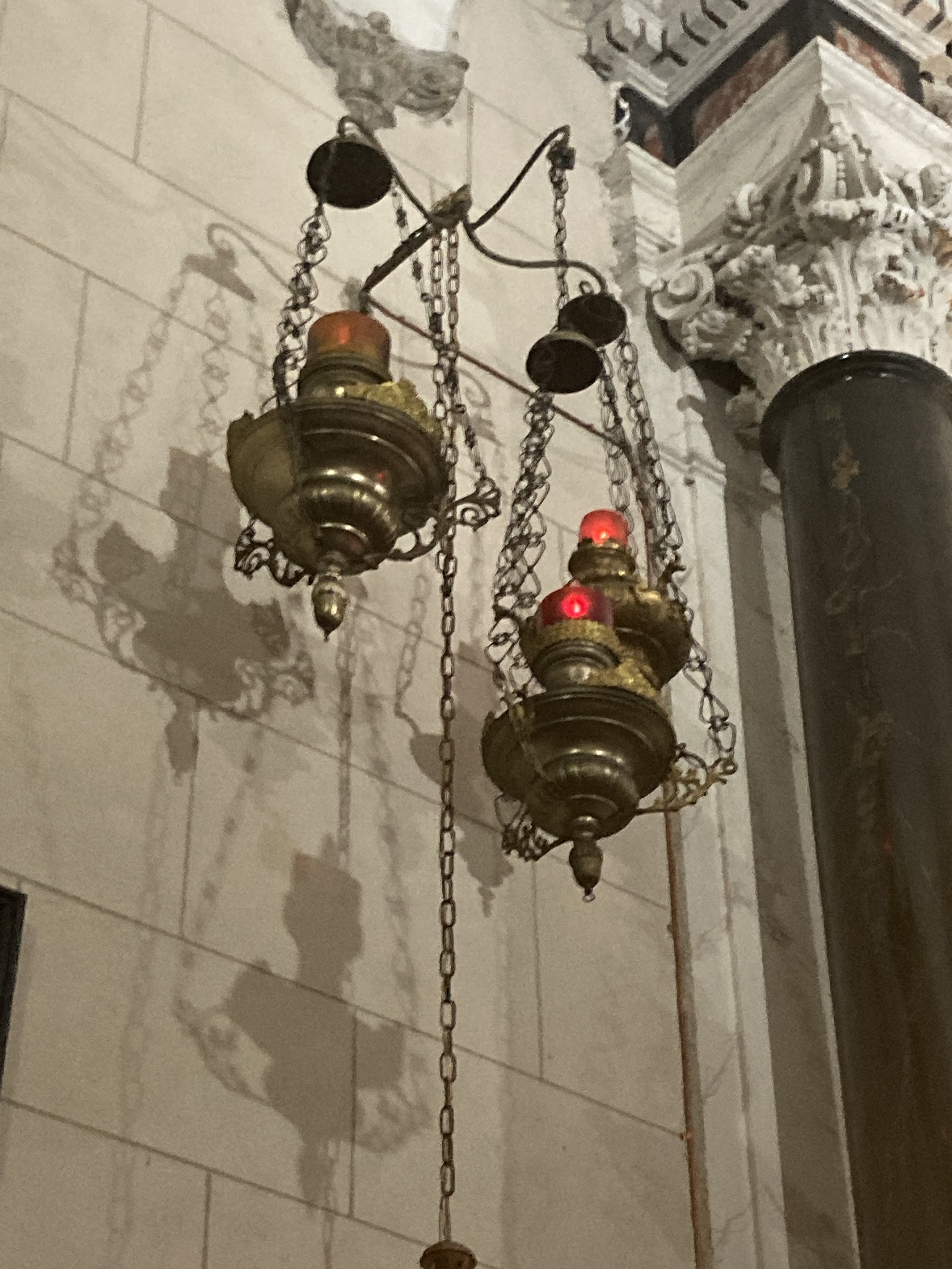
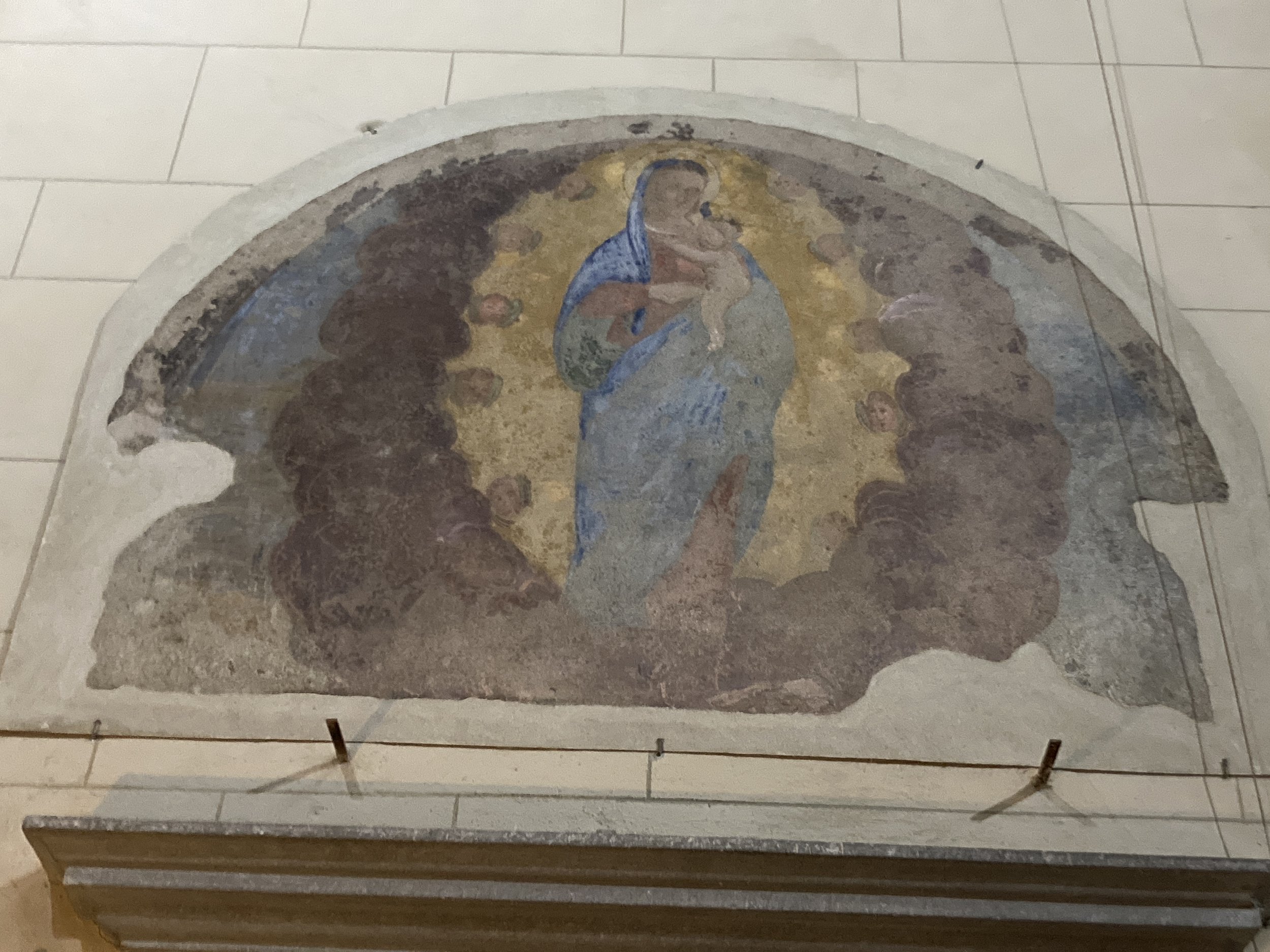
I always find the little details in a church fascinating. A memorial marker, a lantern, a holy water font, a small shrine, a simple stature, a bit of faded fresco. This are the things that capture my attention and there are plenty to see in the Church of San Salvatore.
IMG_4735.jpeg
IMG_4713.jpeg
IMG_4718.jpeg
IMG_4726.jpeg


The quiet church provides an oasis of calm.  As an added bonus, it sits within the Piazza del Salvatore with Nottolini’s famous fountain topped by the Naiade statue. What a beautiful place to stop in the midst of running errands!

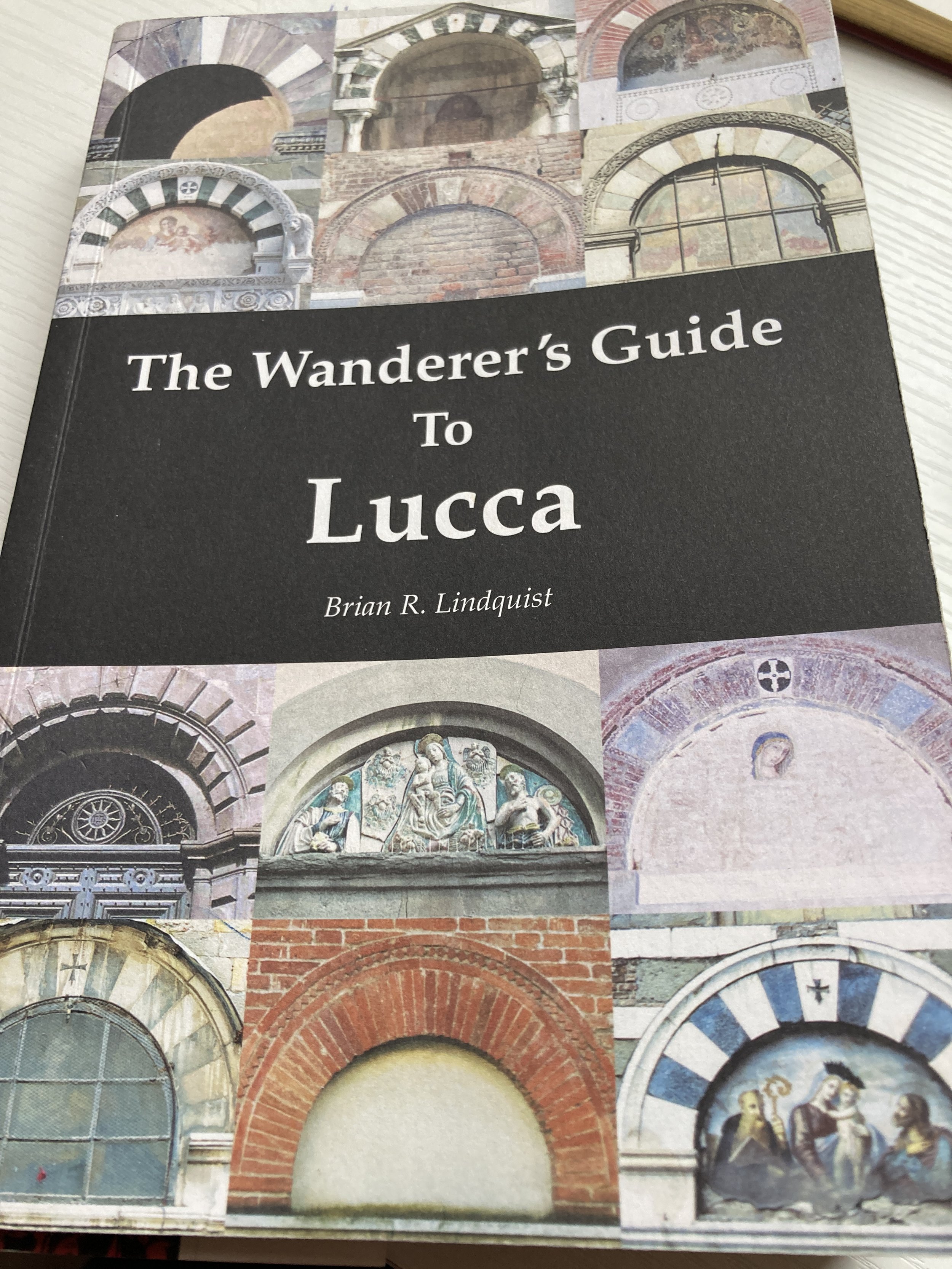
** A huge thanks to The Wanderer’s Guide to Lucca by Brian Lindquist for the history of San Salvatore church.  His book, and the accompanying Wanderer’s Map, remain the most valuable English language source for information on the historic churches and buildings in Lucca.  It’s a must have for anyone living here or interested in Lucca’s history.
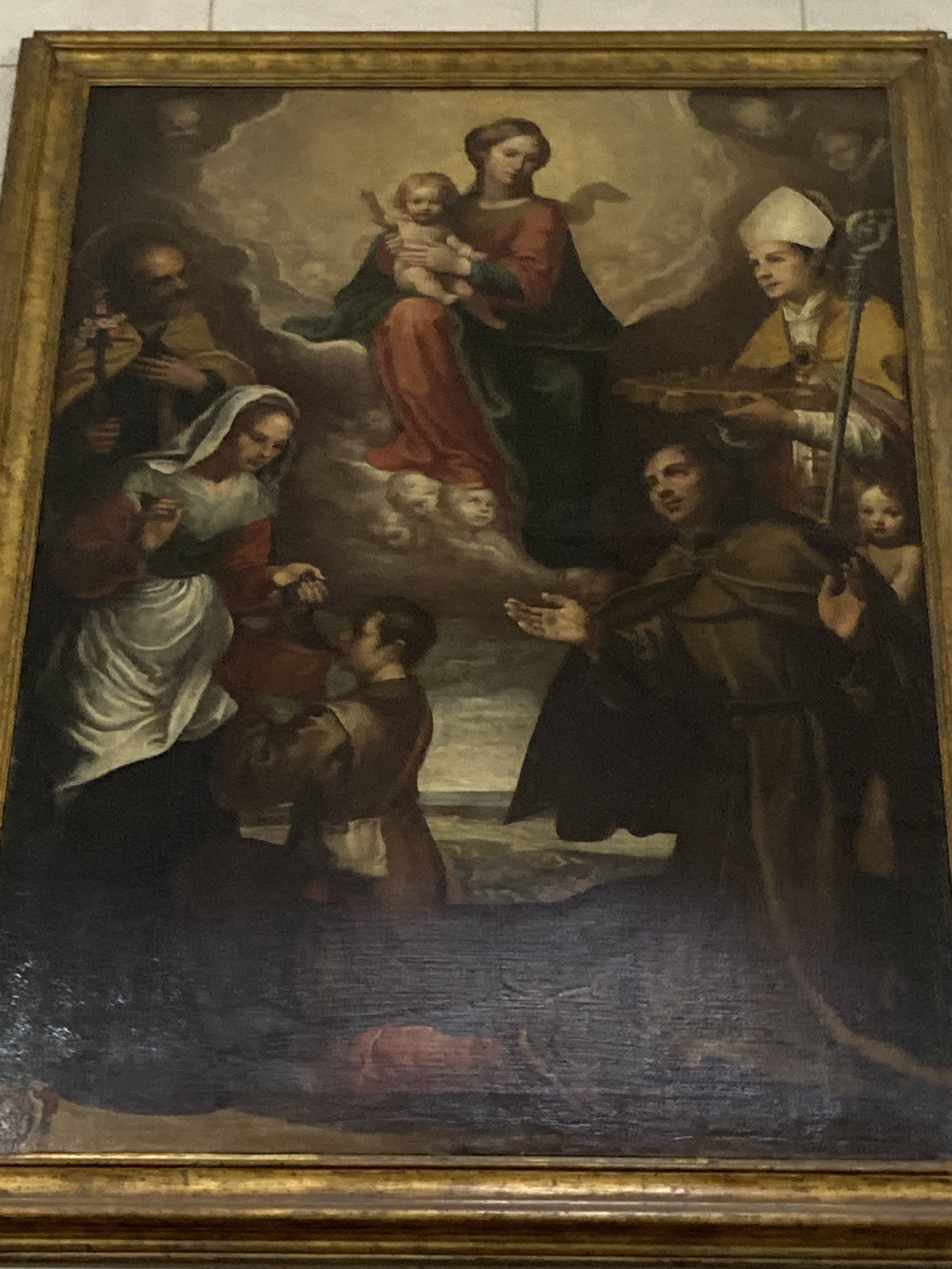
 

Can you spot Santa Zita in this painting from the year 1638 by Mannucci?
March 18, 2024 /Joanne Bartram
Church of San Salvatore Lucca, Piazza del Salvatore Lucca, Churches Lucca, #lucca
#italy2024, #lucca, #italytravel, #luccafountains, #medievalitaly, Churches Italy, Italian culture, Italy, Living in Italy, Lucca

Basilica of San Lorenzo, Florence.

The Basilica of San Lorenzo in Florence

January 29, 2024 by Joanne Bartram in #florence, #italytravel, #medievalitaly, Churches Italy, Florence, Italian art architecture, Italian culture, Italy travel, Tuscany

It’s hard to have a favorite church in Florence.  It may even be wrong to choose a favorite considering the number of historic and significant churches in the city.  The Duomo, officially the Church of Santa Maria del Fiore, with its magnificent façade and campanile, is famous for good reason.  Consider Santa Maria Novella, Santa Croce, Santissima Annunziata – and those are just the basilicas inside the historic center.  Add in smaller churches, chapels, baptisteries, oratorios, bell towers and wonderful churches outside the center and, well, it would take years to explore them all.  How could anyone choose a favorite?

Tomb of Berta Moltke Hwitfeldt, Corbelli Chapel, Basilica of San Lorenzo

 And yet, I do have a couple of favorites.   One is the Basilica of San Lorenzo, whose 4th century origins make it the oldest church in Florence.  Redesigned by Brunelleschi in the 15th century, and completed after his death, it was the parish church of the Medici family, many of whom are buried there.

Detail, Basilica of San Lorenzo, Florence

 San Lorenzo is more than just a church – the complex also has a museum, the Laurentian Library, and the Medici Chapels.  Underneath the Medici chapels is a recently discovered hidden room with rough sketches by Michelangelo covering the walls. Right now it’s the hottest attraction in town but it was not yet opened during my November stay in Florence. The library is not always open, and a special ticket is needed for the Medici Chapel.  The entire complex is a bit too much for one visit.

On my recent off-season stay in Florence, I stopped by on the spur of the moment and purchased a ticket which included only the cloister and church, both of which were uncrowded and just right for a short visit.

What is it that makes the San Lorenzo Basilica one of my favorites?   It starts with the rough stone exterior.  Unlike the polished marble façade of the Duomo, the San Lorenzo stands unadorned and underdressed.  It was meant to have a white marble façade, designed by Michelangelo at the request of the Medici Pope Leo X.   But the pope died, the money dried up, and the façade was never installed. 

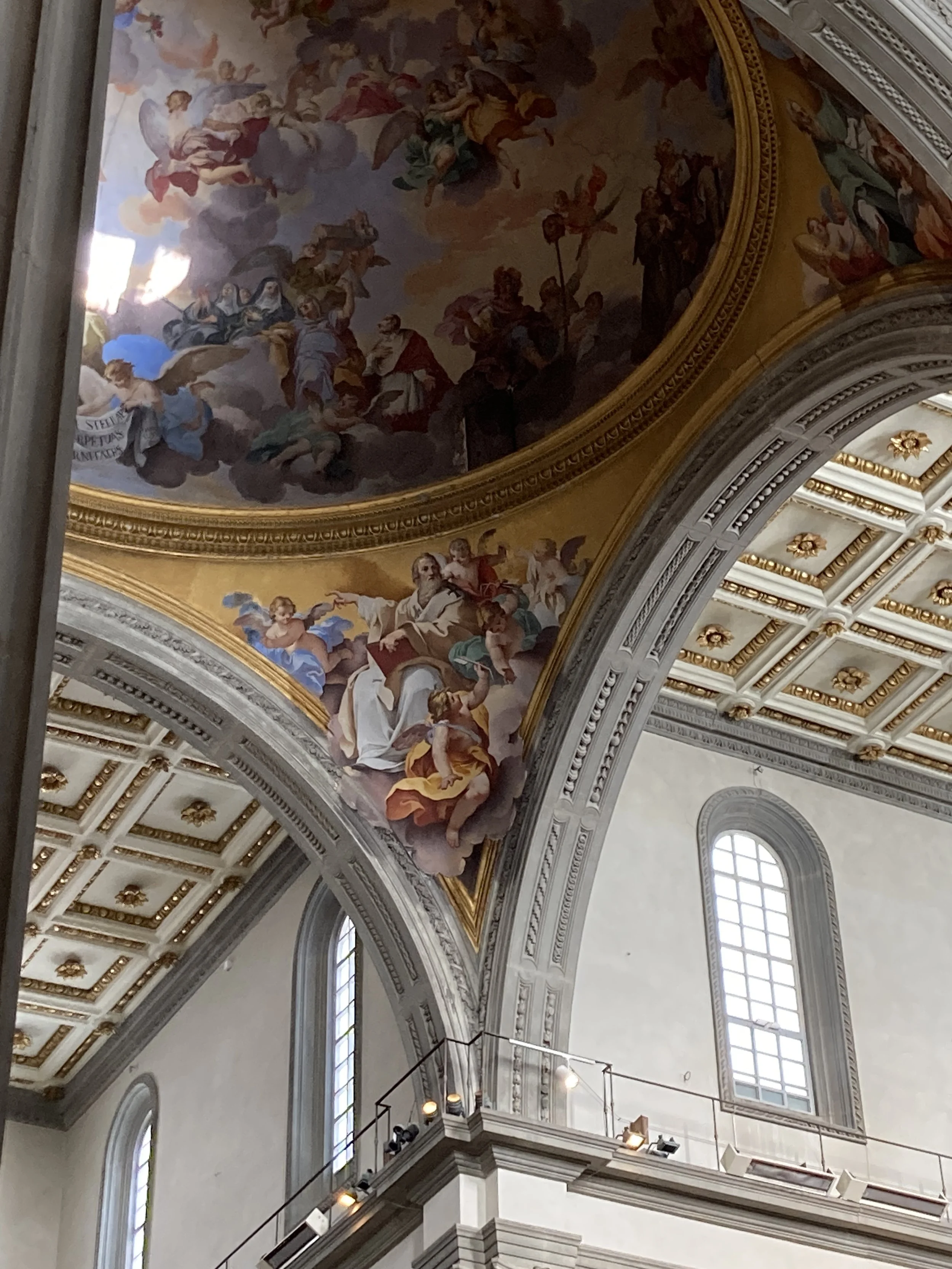
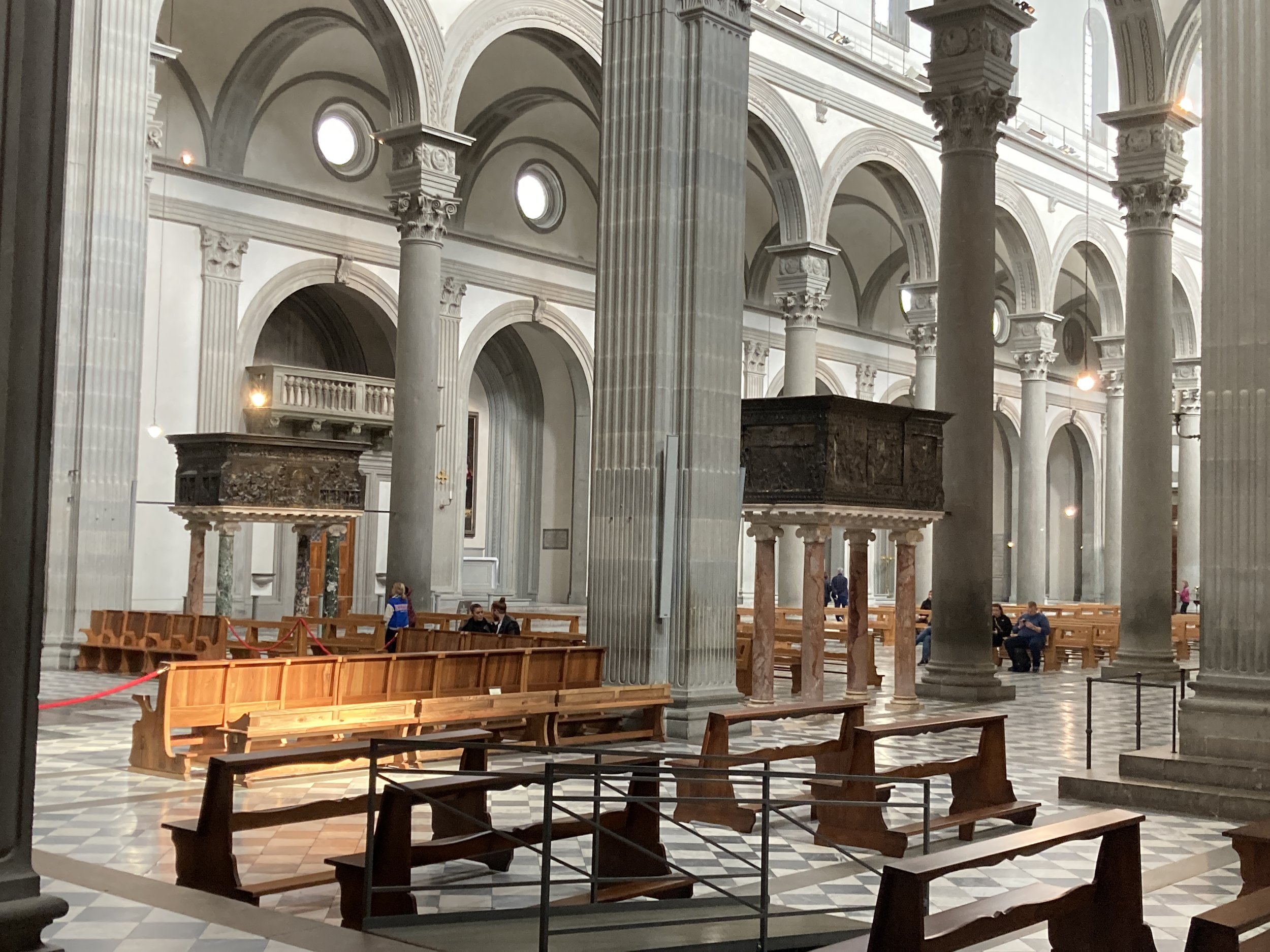
Inside, the basilica feels quiet and peaceful with its simple geometric floor anchoring graceful arches and columns in gray Pietra Serena (Serene Stone).  The high, round, windows let in light through their clear glass.  Even the ceiling, with its gold edged squares and central medallions (look for the Medici coat of arms) feels calming. Unlike more ornate churches (such as my other favorite, the very Baroque Santissima Annunziata), San Lorenzo has low contrast colors and finishes. This allows it to feel open and airy. The Basilica is a soothing space that supports quiet contemplation and an uncluttered mind. 

Another reason to love this church is the way in which it showcases the work of Donatello.  His two ornately carved pulpits, raised high atop marble columns in the center of the church, are considered his final masterpieces.

Donatello’s pulpits , Basilica of San Lorenzo

The church holds many remarkable pieces of art, but not so many as to be overwhelming.  There are sculptures, including graceful tomb markers, and some significant paintings, many of which sit in small side chapels.

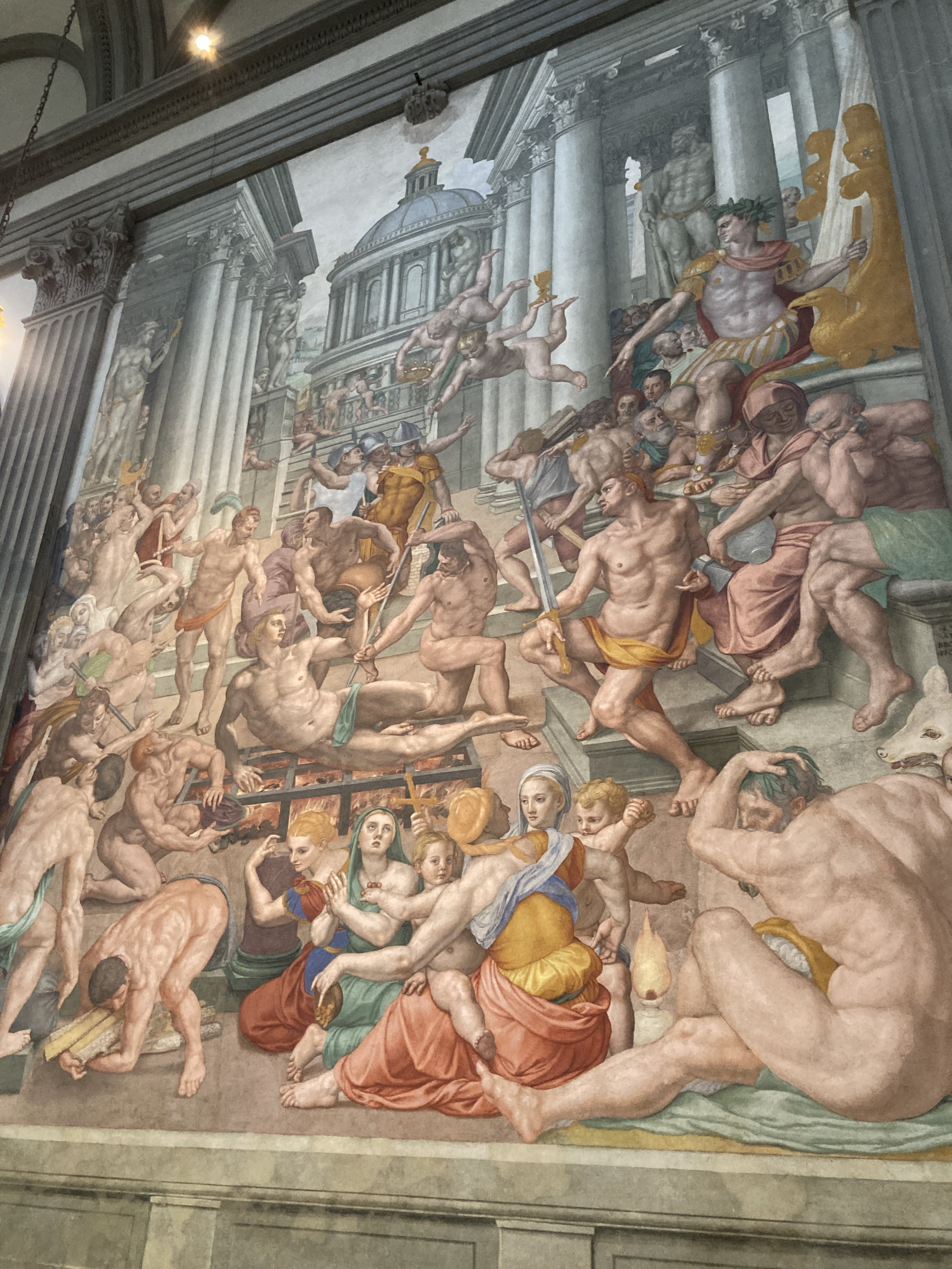
Bronzino’s The Martyrdom of St. Lawrence

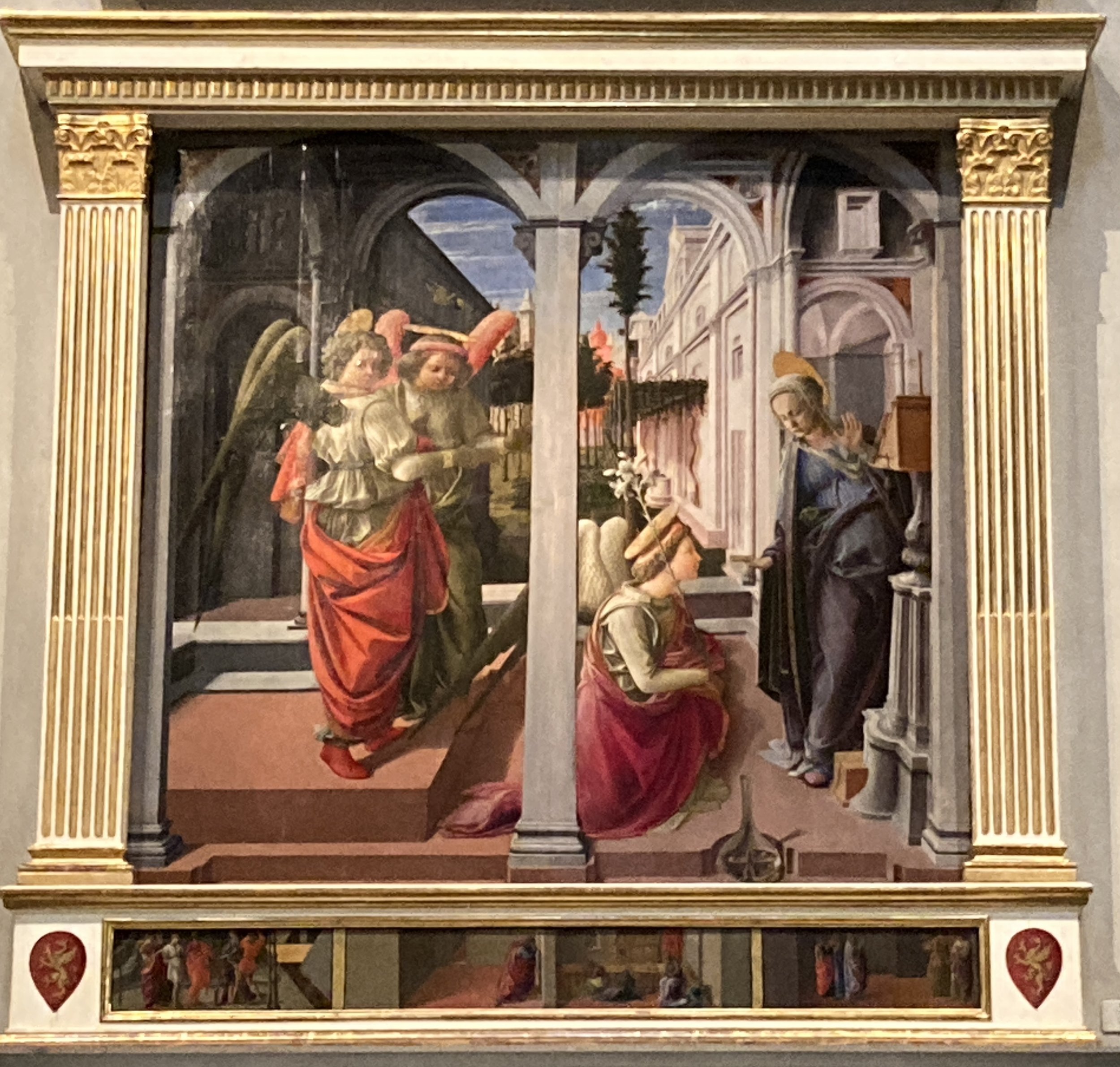
Perhaps the two most well-known paintings are an Annunciation by Filippo Lippi (below, right) and the Betrothal of the Virgin by Rosso Fiorentino (below, left).  Two very different styles, both captivating.   

BDE79584-8F80-47E8-81DD-5A0C9B04510C_1_201_a.jpeg
2A67D836-A358-4A1A-BD0B-42BDDE455A1A_1_201_a.jpeg

Old Sacristy, Basilica of San Lorenzo

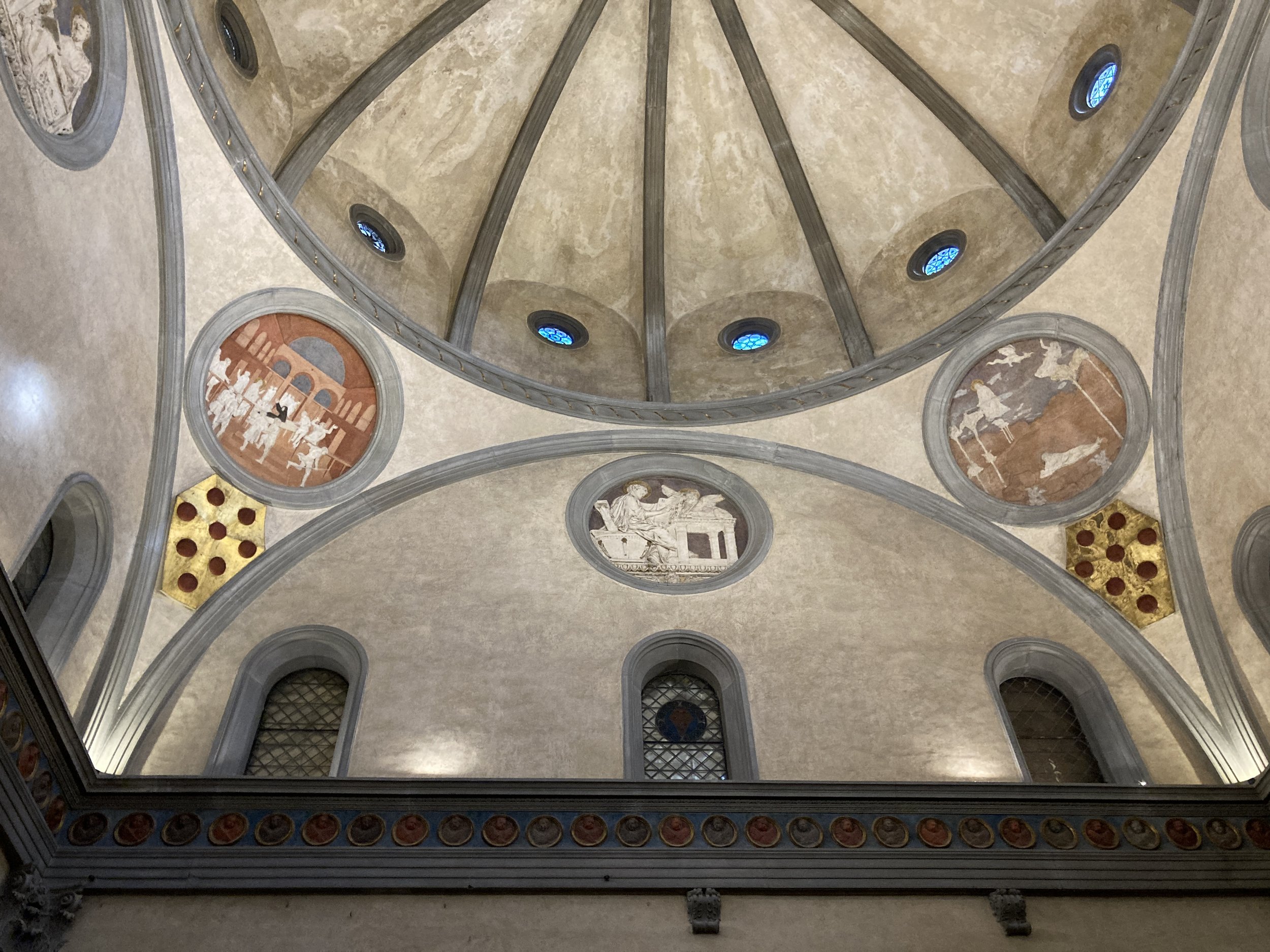
The biggest reason for my love of this church is the small Sagrestia Vecchia (Old Sacristy).  Designed by Brunelleschi, it was the only portion of the church completed before his death.  His perfectly proportioned design incorporates a square room with a ribbed dome on top, several graceful arches, and the same gray and white colors of the main church. 

 Opposite the entry into the sacristy is a small marble altar, its design in white marble is in keeping with the simplicity of the rest of Brunelleschi’s design.  Above the altar, in a smaller dome, is a remarkable blue and gold night sky.  There has been some debate about the date represented by the constellations pictured.  Initially it was thought to represent the day the altar was consecrated in July of 1422.  Newer theories give the date as July 6, 1439, the date of the accord uniting the Eastern and Western branches of Christianity.  Whichever date is correct, the constellations unite the sacristy with the heavens.

The constellations above the altar in the Old Sacristy, Basilica of San Lorenzo

 In the center of the sacristy is the tomb of a Giovanni di Bicci de’Medici and his wife Piccarda Bueri.  It was Giovanni who founded the Medici bank and set the stage for the Medici era in Florence.  This seems like a fitting place for him to rest.

Not part of Brunelleschi’s original design, several elements were later added by Donatello at the request of the Medicis.  These include a series of tondi (round decorations) which lie below the dome.  The 4 in the corners represent the life of Saint John the Evangelist.  


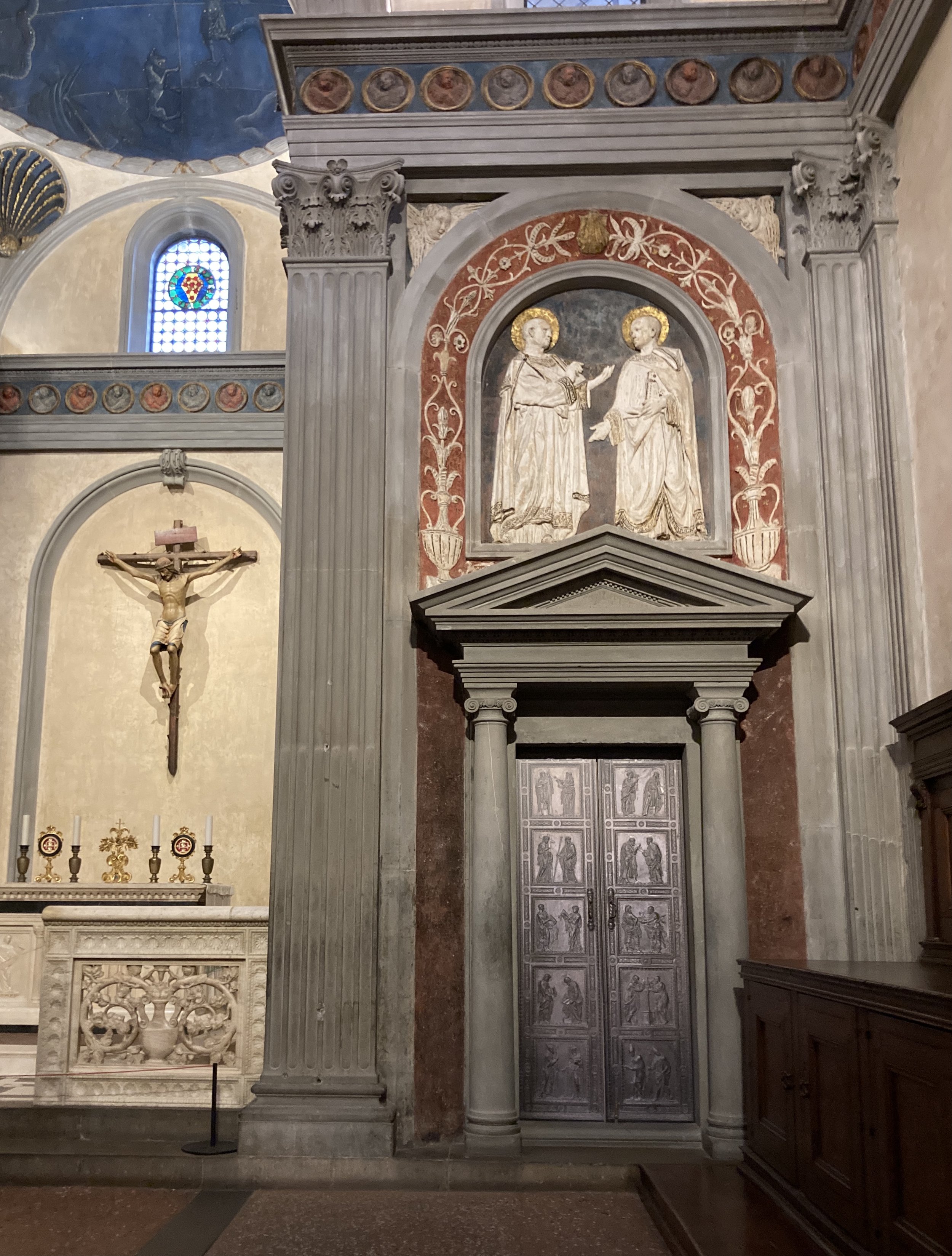
Detail, Donatello’s bronze doors, Old Sacristy

Donatello also designed the two bronze doors that flank the altar.

Apostles to the left, martyrs on the right.

The large reliefs above the doors, with St. Cosmos and St. Damian on the right and St. Stephen and St. Lawrence on the left, are also the work of Donatello.

(Note: There is also a New Sacristy but it is not accessible from inside the church, only from the Medici Chapels)


One of the relief decorations by Donatello above the bronze doors in the Old Sacristy.


The Basilica of San Lorenzo is not the largest or most ornate church in Florence.  It wears no colorful marble facade. But it is stunning in its simplicity and is of great historical and architectual importance. When visiting, don’t miss the literature with a QR code which links to an audio guide. The audio descriptions greatly enhanced any visit.

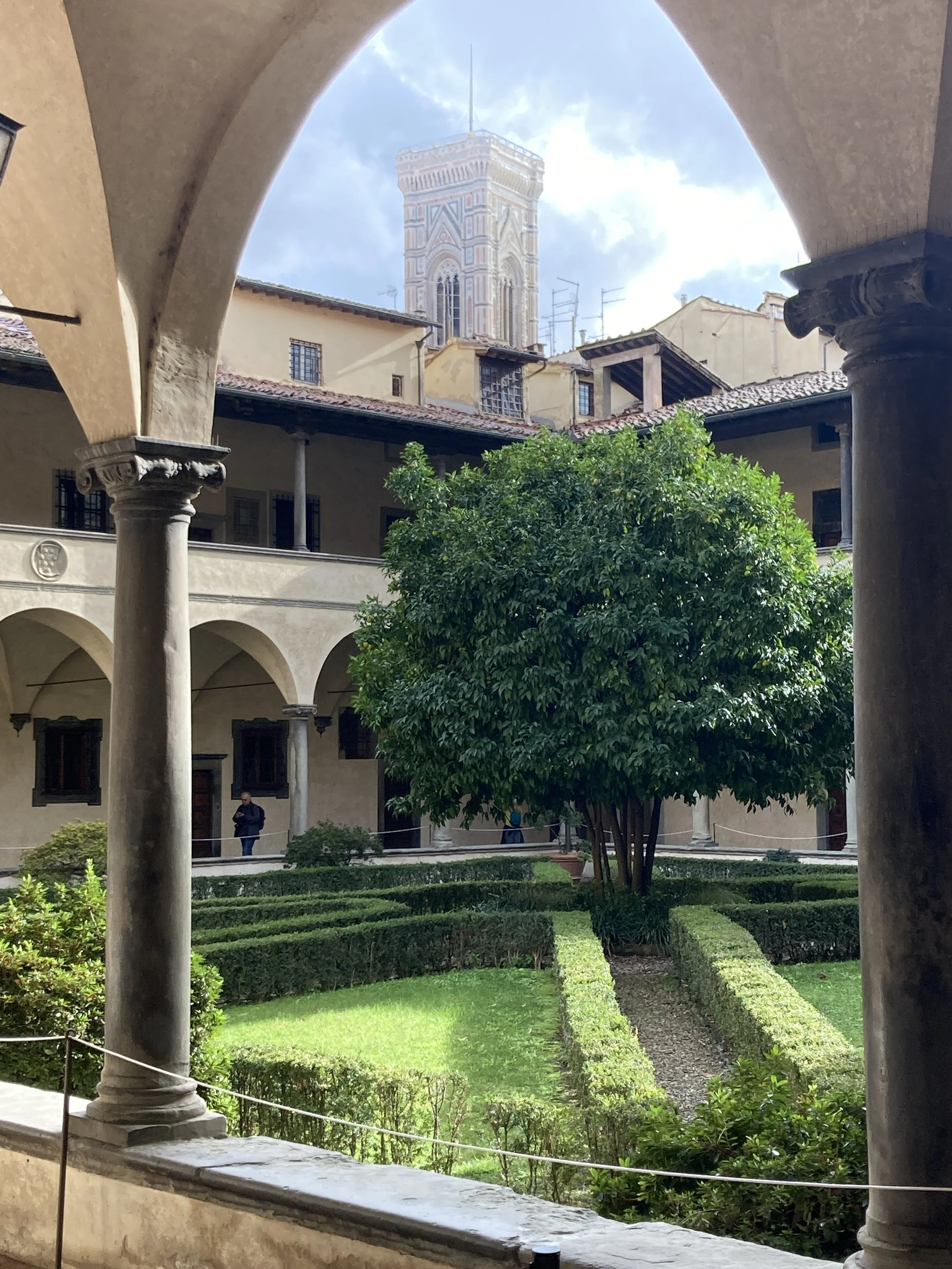
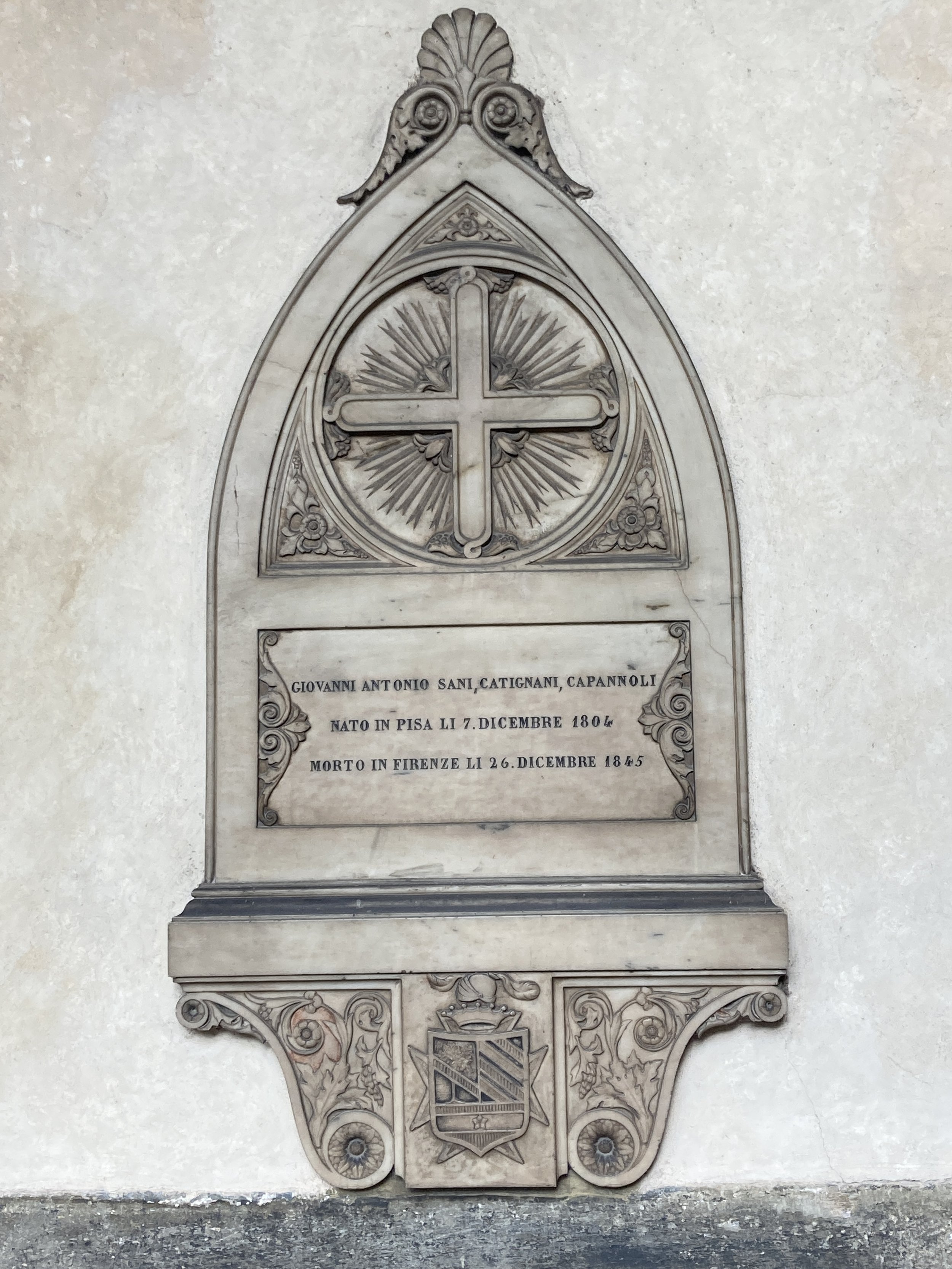
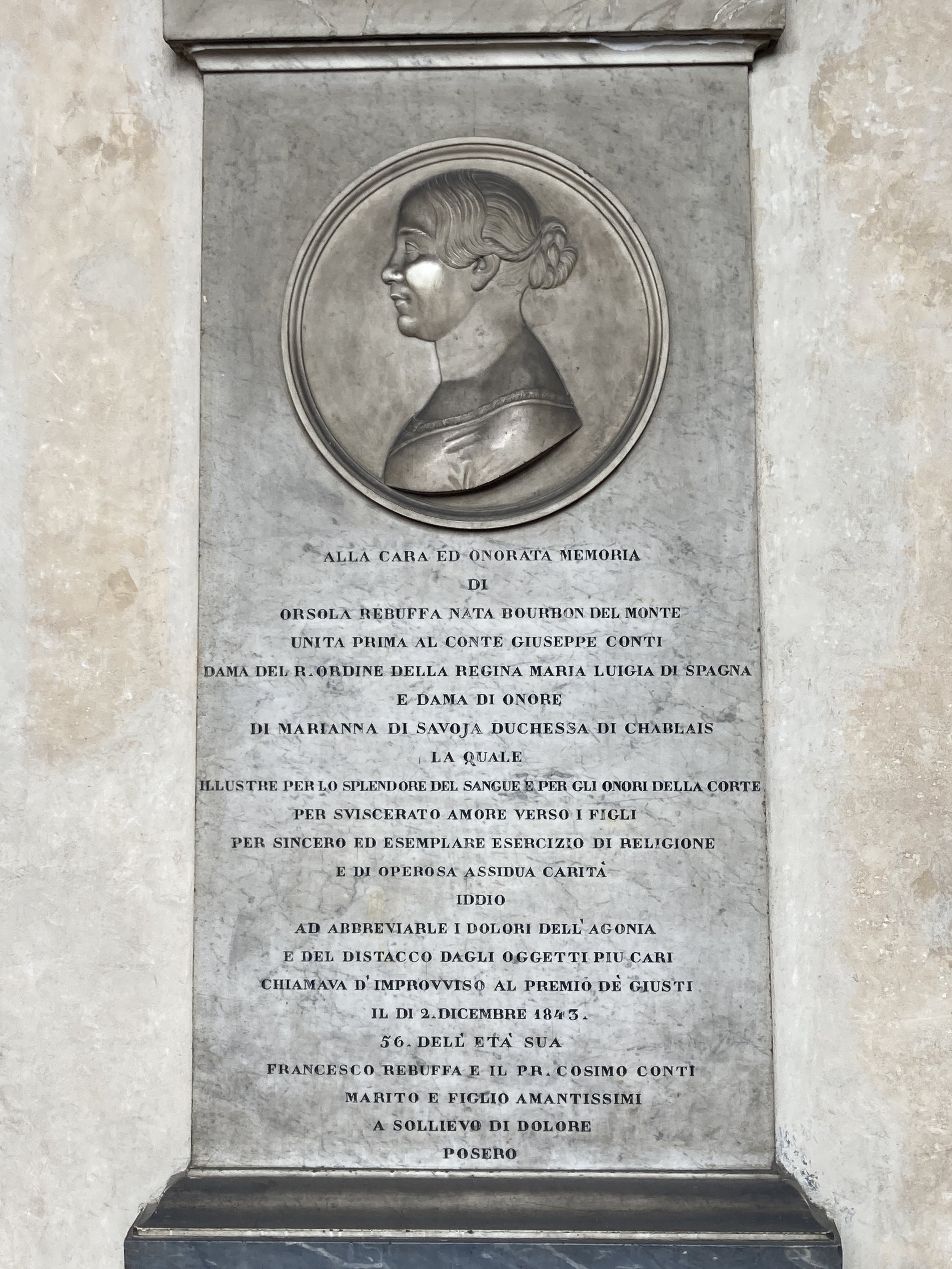
Entry and Exit to the church is through the cloisters.  This green space, surrounded by a two-story loggia, is a destination all of its own. The lower floor of the loggia surrounds a neatly kept space with low hedges and a big central tree.  Under the arches is a walkway with walls filled with memorials to long ago Florentines.  It’s a moving space embracing both the quiet of the church and views out into the “real world” of Florence.  You can almost hear the rustling robes of those long ago monks as they walk through the cloister.

Cloister, Basilica of San Lorenzo

748FC455-2804-4D11-A170-32C8A4F9BDD6.jpeg
5343E7A4-1C72-41FD-9E54-5149601E7ADD.jpeg
81959226-65B3-448A-8D77-A556BC6DAFC3.jpeg

 Hungry afterwards?  Just outside the front entry is a wonderful lunch spot – the Trattoria San Lorenzo.  A perfect way to end a visit to the church, enjoy a meal, and have time to organize memories of the basilica.

January 29, 2024 /Joanne Bartram
San Lorenzo, Basilica San Lorenzo, Florence Churches, Medici Church, Brunelleschi Florence, Donatello Florence
#florence, #italytravel, #medievalitaly, Churches Italy, Florence, Italian art architecture, Italian culture, Italy travel, Tuscany

The Cathedral of San Michele in Lucca during the Luminaria of Santa Croce procession.

September in Lucca

September 25, 2023 by Joanne Bartram in #fallinitaly, #italytravel, #lucca, #medievalitaly, Festivals Italy, Italian culture, Italy travel, Living in Italy, Lucca

September is one of my favorite months in Italy.  It starts out as summer – hot and humid – and then slowly transforms itself into autumn. By late September the mornings and evenings are cool enough that sweaters and scarves make their first appearance of the season. The cooler weather is perfect for a passeggiata, the Italian tradition of an evening stroll, yet still pleasant enough for sitting outdoors at a cafe.  The AC (if one is lucky enough to have it) has been turned off and the windows are open, letting in cool breezes and the hint of fall that is in the air.

Late September skies are beautiful and the weather is pleasant.

 In Lucca, September is a unique month. It even has a special name -  Settembre Lucchese.  It is a month of festivals, artisan markets, concerts, and celebrations. 

1D64A01E-7FBF-4432-9AF7-963F98C66412.jpeg
F13B3161-784D-400E-ACBB-3CD6AF239F87_1_201_a.jpeg
F674D3E9-4FE1-40BF-BC9A-0890EB08D786.jpeg

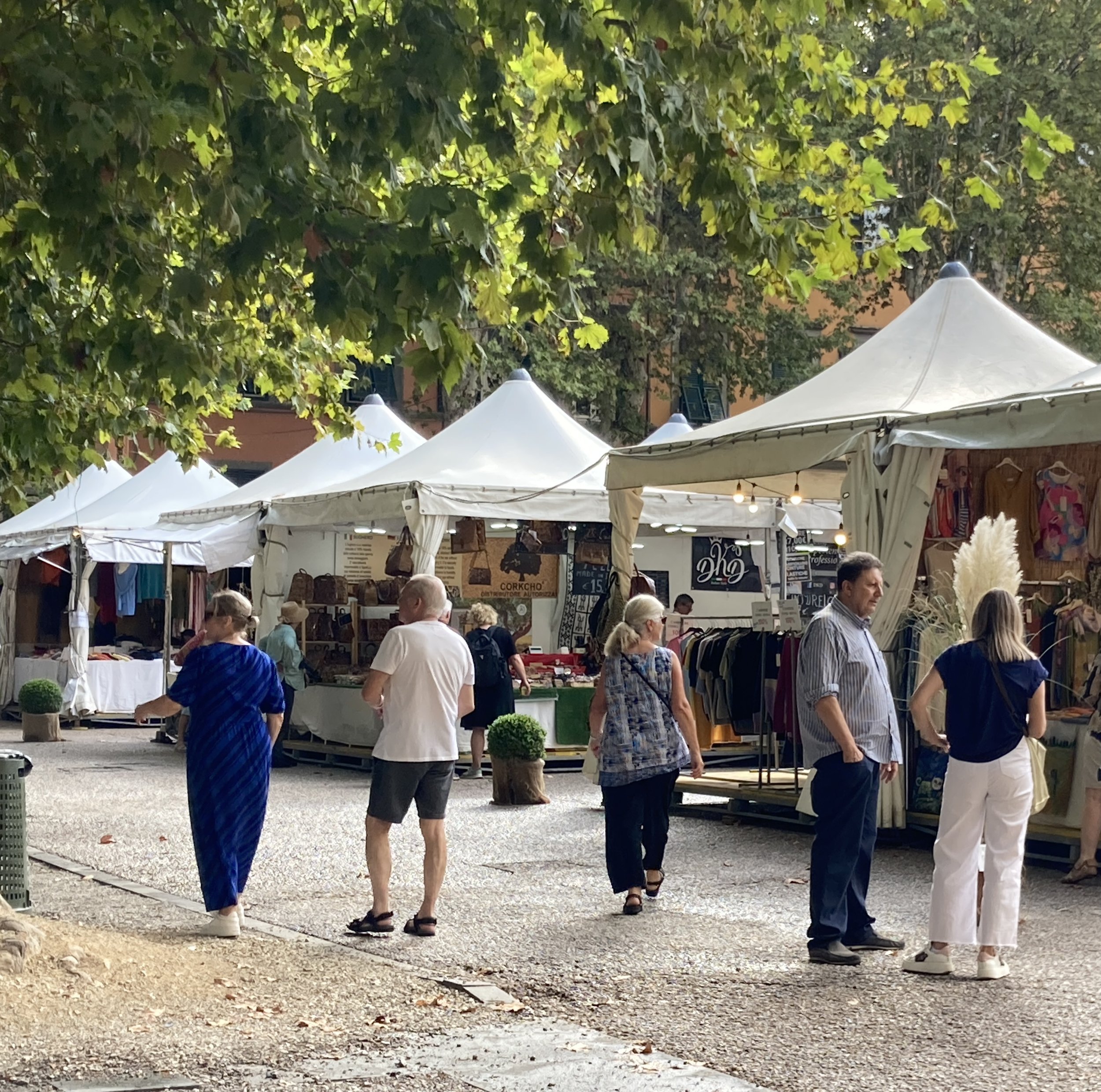
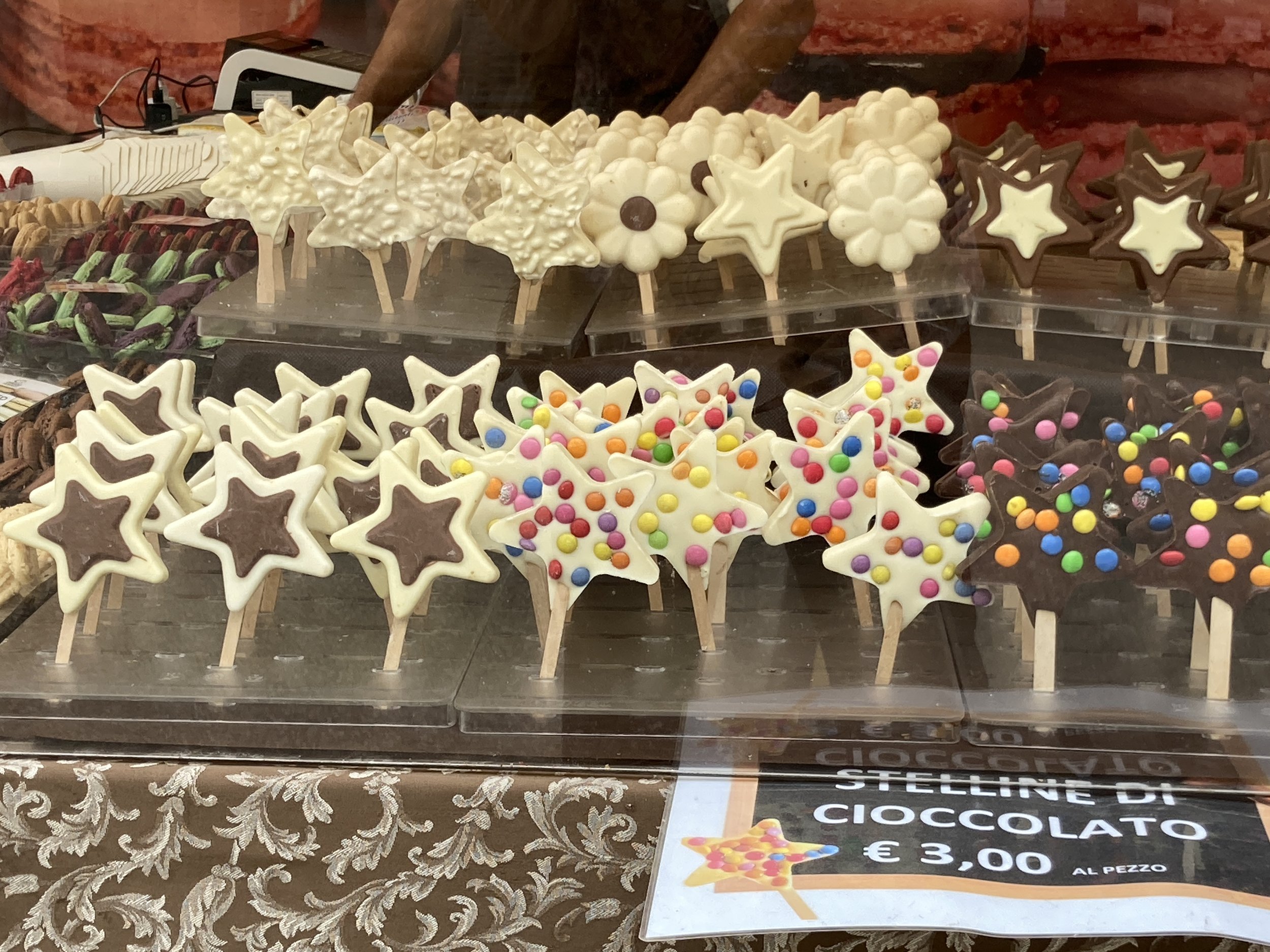
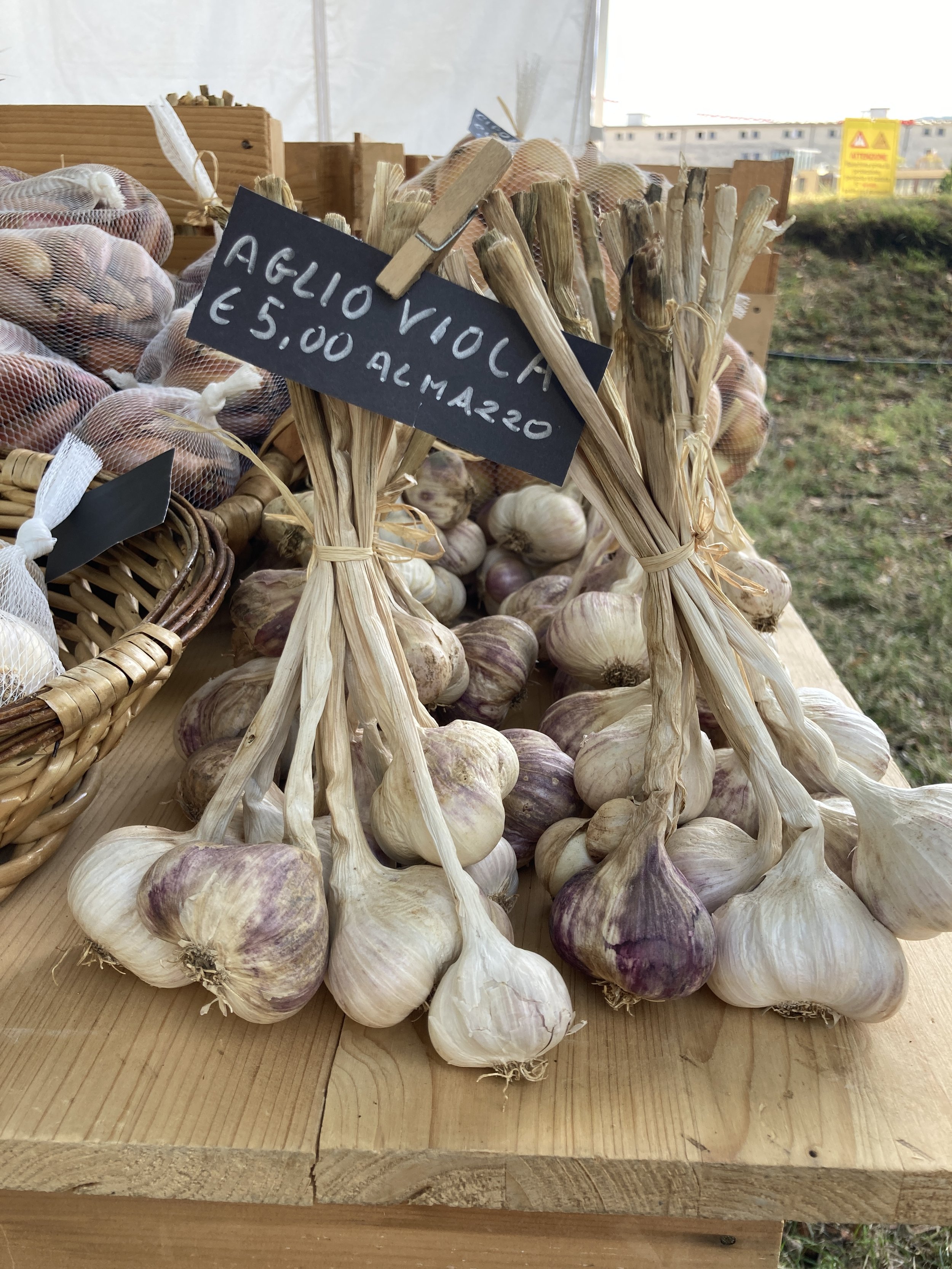
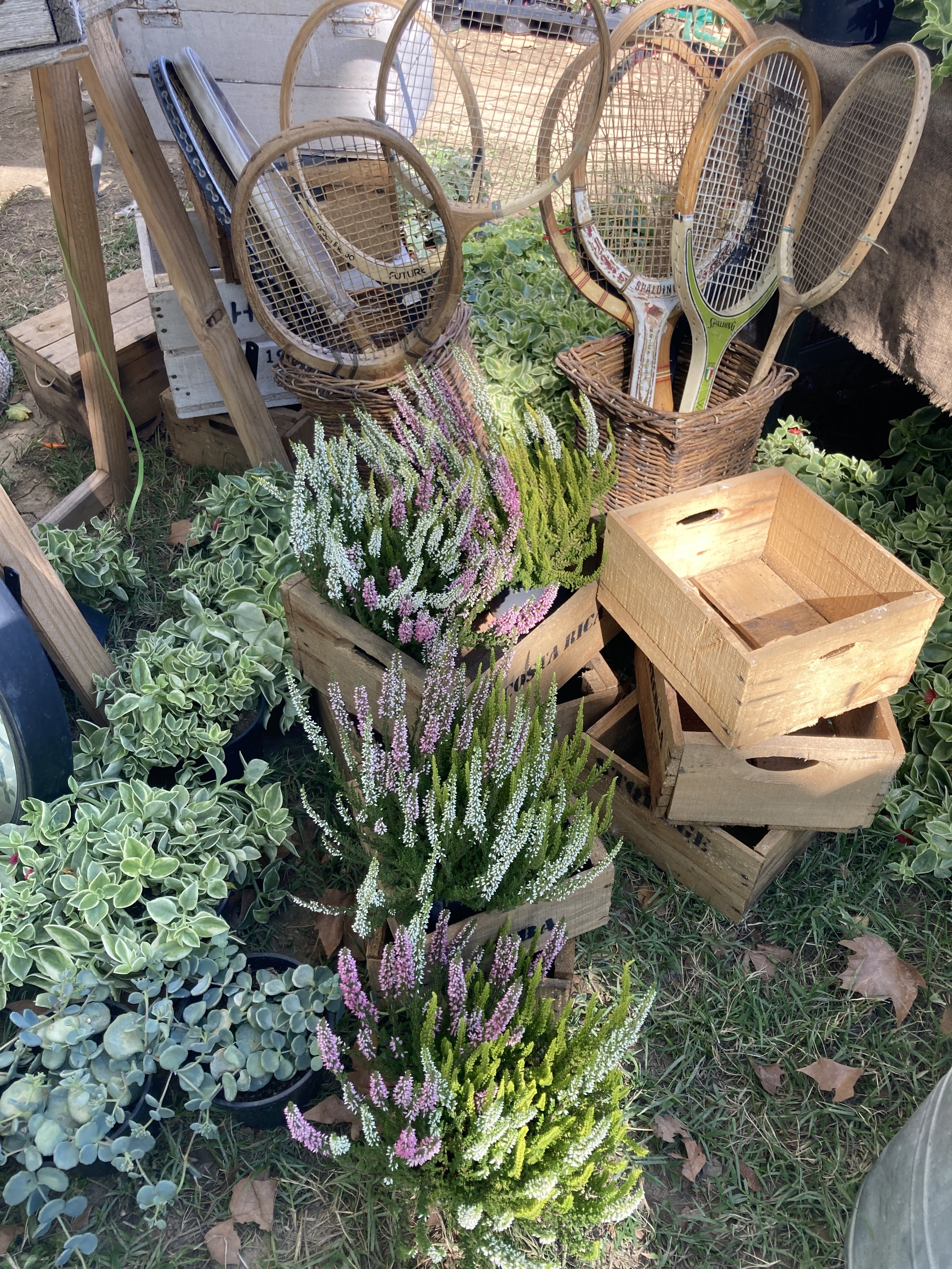
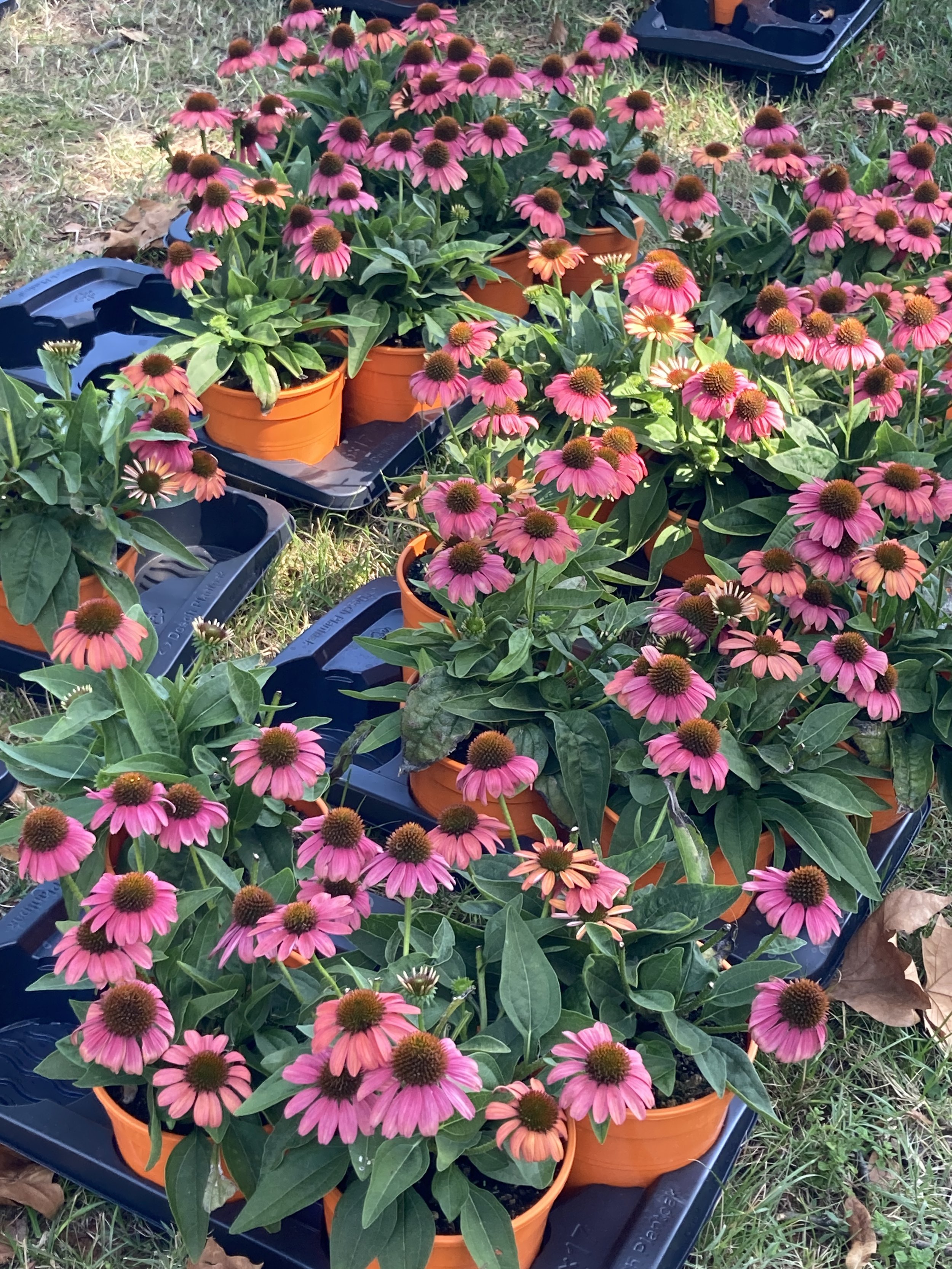
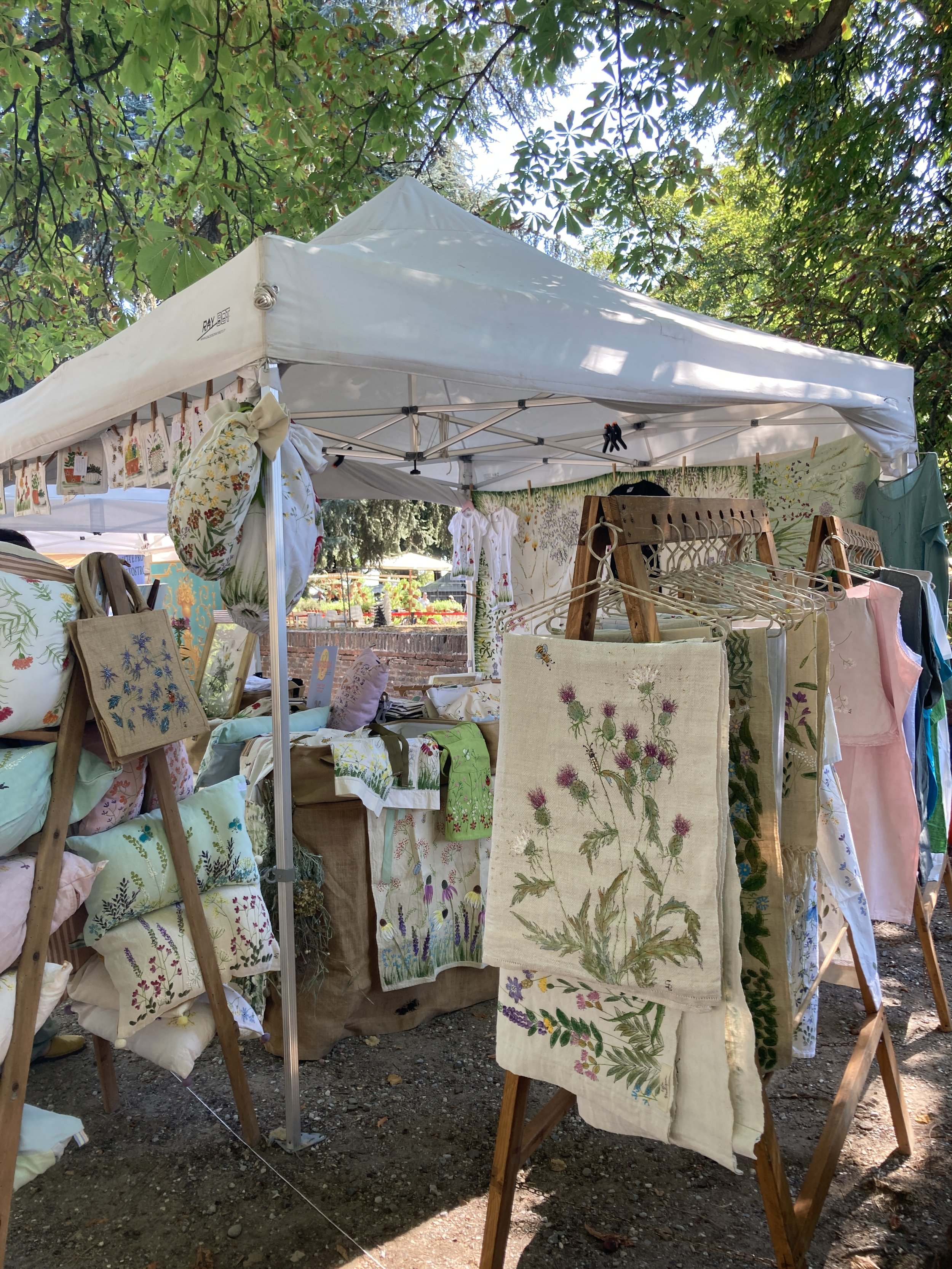
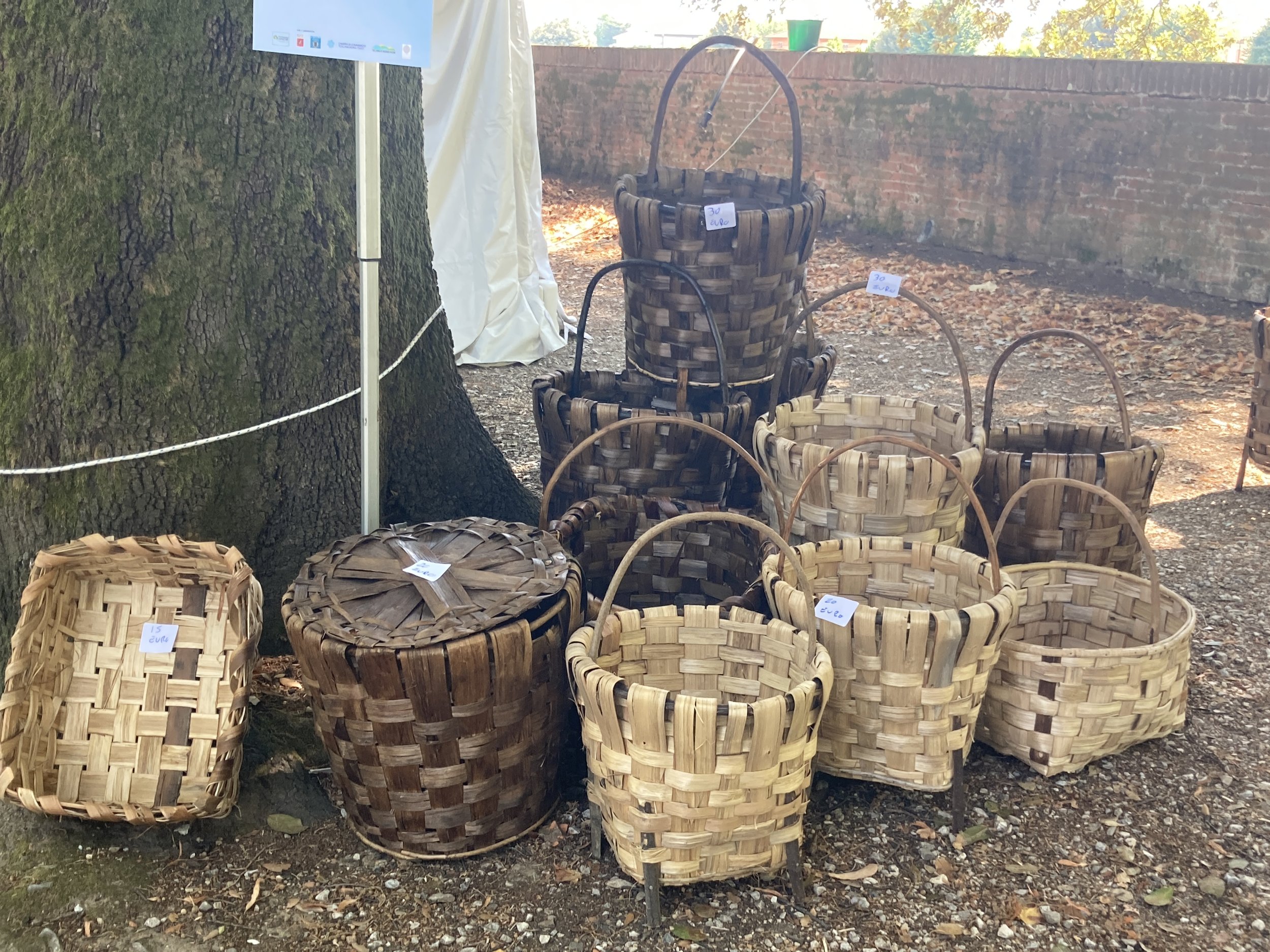
This year September kicked off with Murabilia, the annual fall garden show.  Murabilia has everything for the fall garden, from plants to yard art to terracotta pots.  For inside the home there are delicate orchids, fall gourds, and pretty linens.  Artisans demonstrate and sell their crafts and food stands offer local products – meats, cheese, breads, garlic, and flavored syrups.  

FD2E96B1-E9E2-4A92-BD25-096E52703C02.jpeg
E8F87DAD-DBBE-4029-B9DA-6C09F3EACFC5.jpeg
0685CFEA-AC0E-468B-A222-CF0B85F3EB3F.jpeg
2676E18F-1AEE-4981-AC49-E9F338B85235.jpeg
070CE745-761C-41D1-B09E-73E9D4E8568D.jpeg
9F483FF2-5C0C-40C0-B2BD-1C2F0C471BD6.jpeg


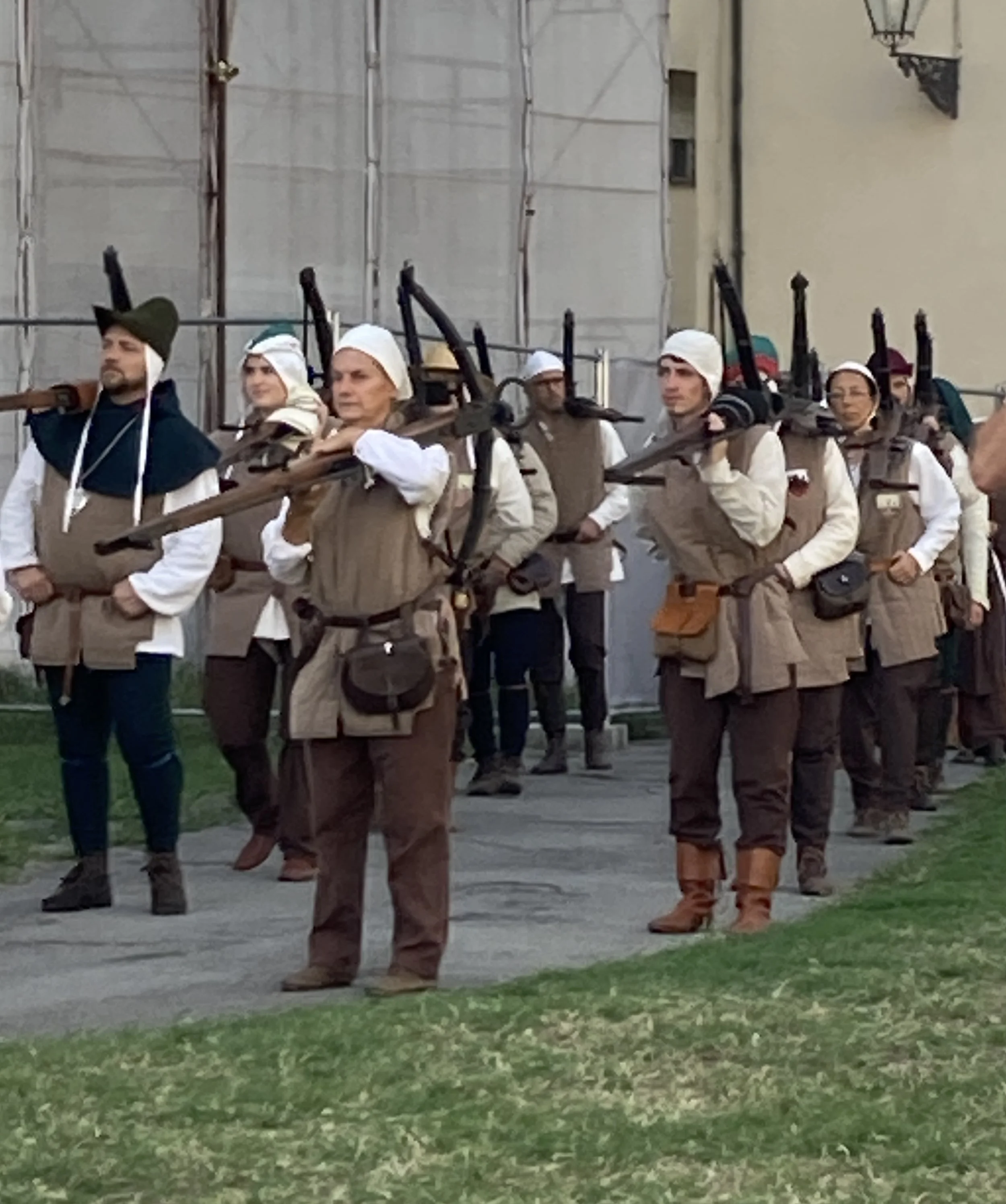
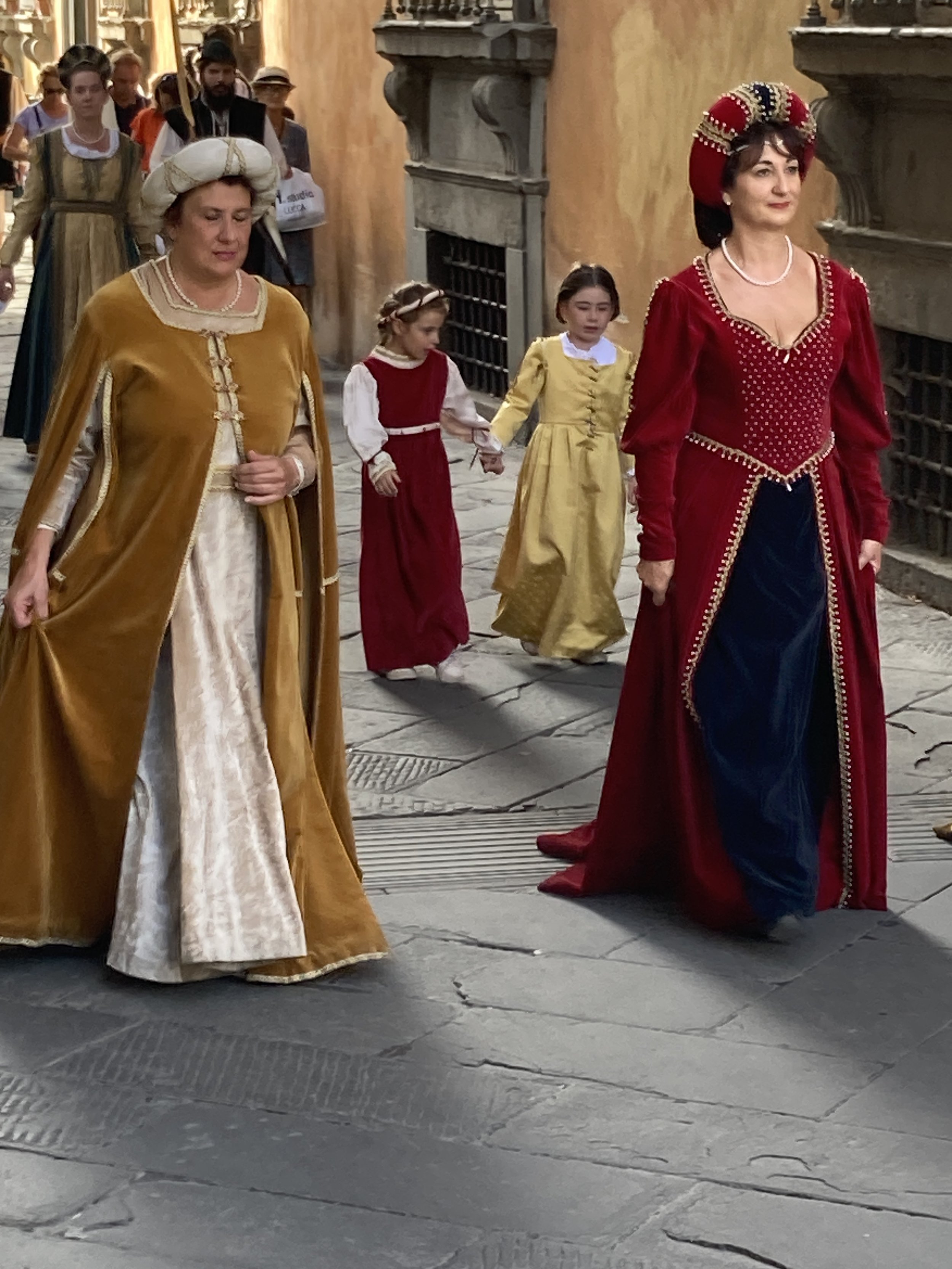
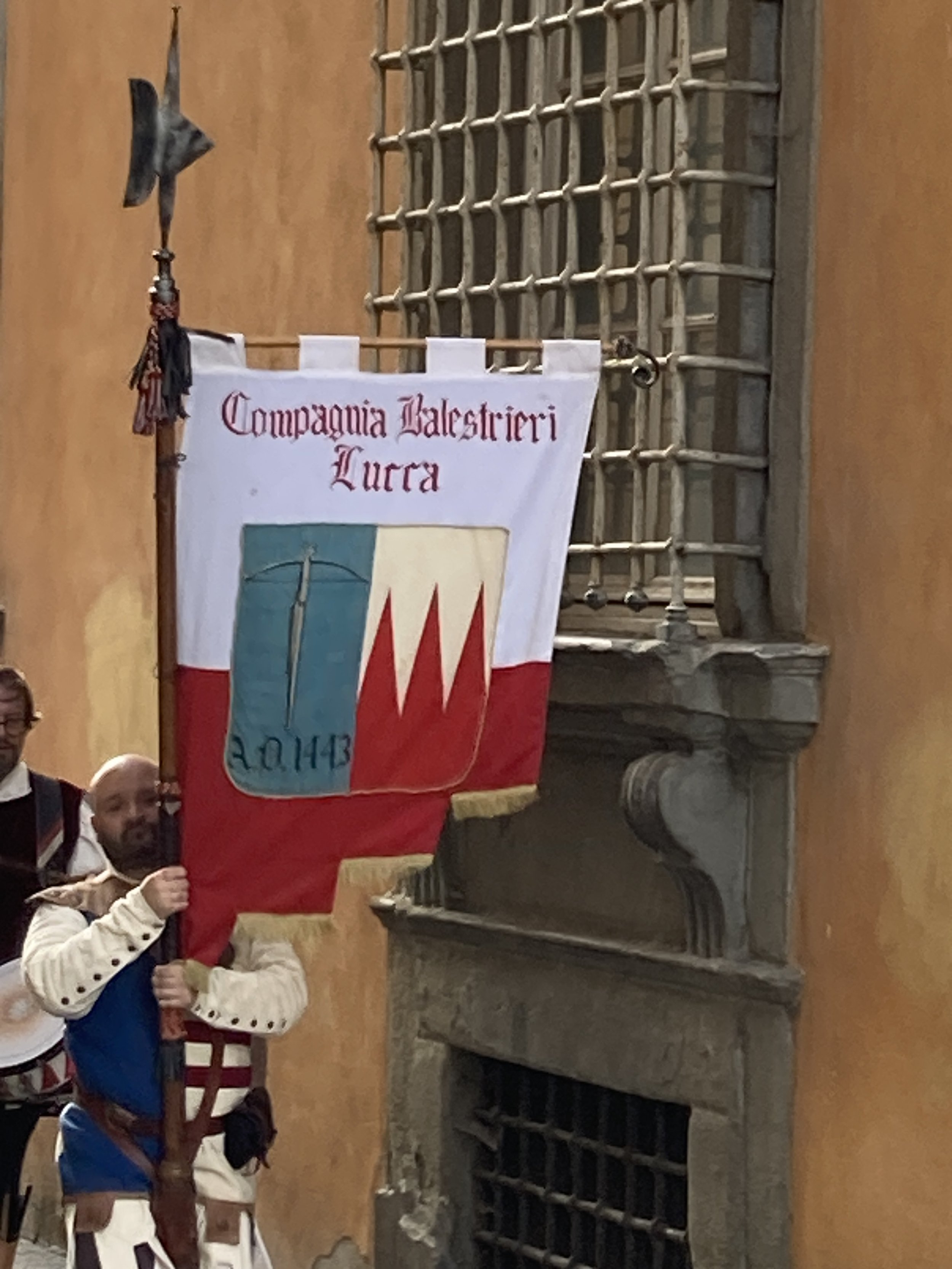
September also brings the Palio della Santa Croce. The Palio is has its roots in medieval times as members of the three contrade (districts) in the historic center of Lucca engage in a crossbow competition. The event starts with a procession of musicians, flag throwers, costumes, and the very medieval looking archers.  The procession weaves its way through Lucca, stopping to perform in some of the piazzas, eventually making their way to the area behind the Cathedral of San Martino where this year’s competition took place.

7F0917C1-19B1-4B82-A227-4614F487FDDF.jpeg
47BFD585-7EA8-48D8-9653-2B94910F9B05.jpeg
08CE7EAE-49CA-4D54-A9B7-482B1D85D30C.jpeg

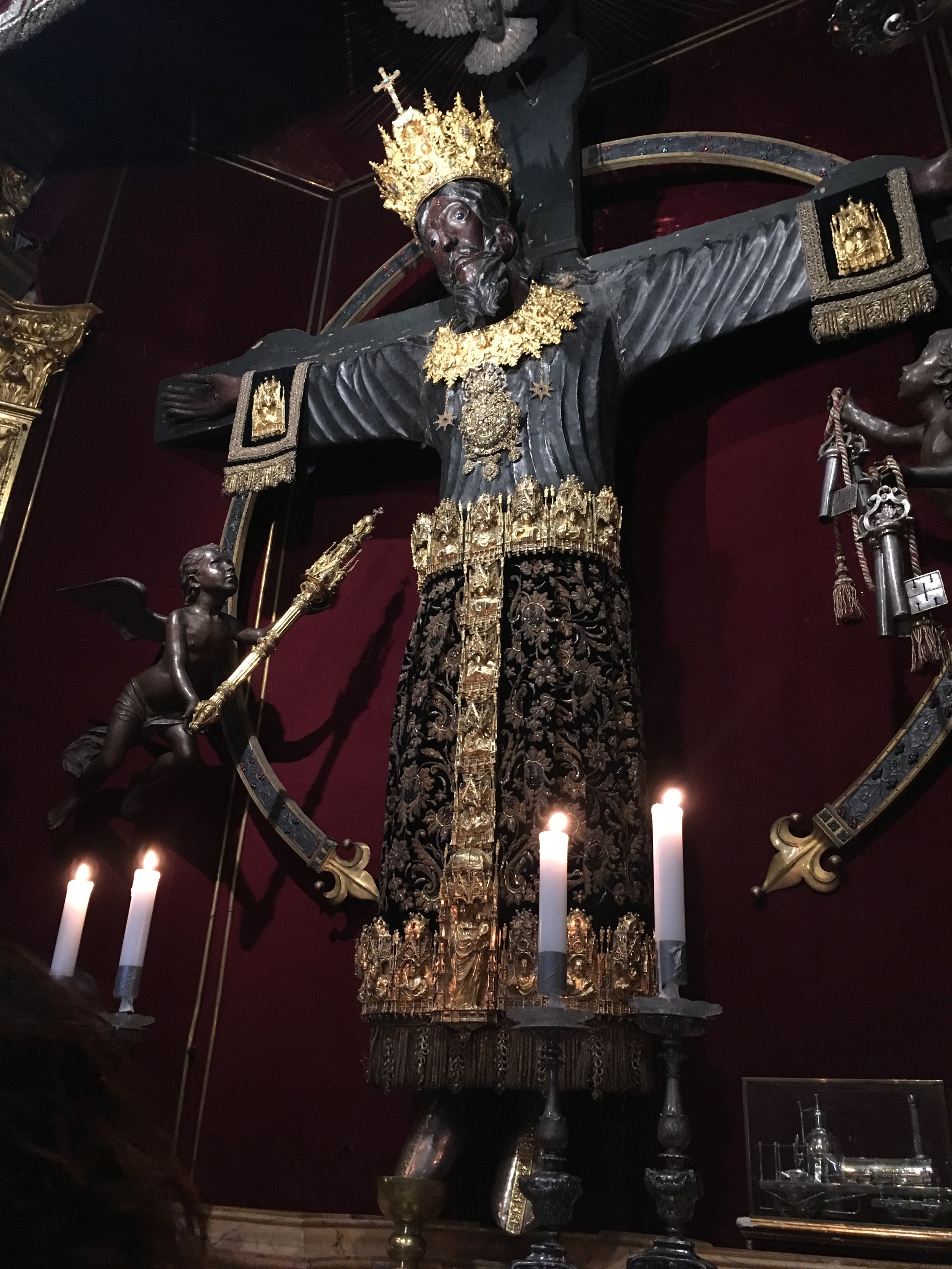
September’s most important event, The Luminaria of Santa Croce, takes place every year on the evening of September 13th.   The luminaria is in honor of Lucca’s most important ancient artifact, the wooden crucifix known as the Volto Santo (Holy Face). 

The legend of the Volto Santo is this: it was crafted by Nicodemus who fell asleep before carving the face.  When he awoke, he found that the face had been miraculously completed. The legend continues with a journey across the sea to the coast of Italy and then a trip by oxcart to Lucca more than 1000 years ago.  Both journeys are considered miracles as, according to the legend, the ship and the oxcart where unmanned and divinely guided to Lucca. The crucifix became a stop on the pilgrim’s route to Rome. It remains a venerated religious object to this day, drawing modern day pilgrims to Lucca. 

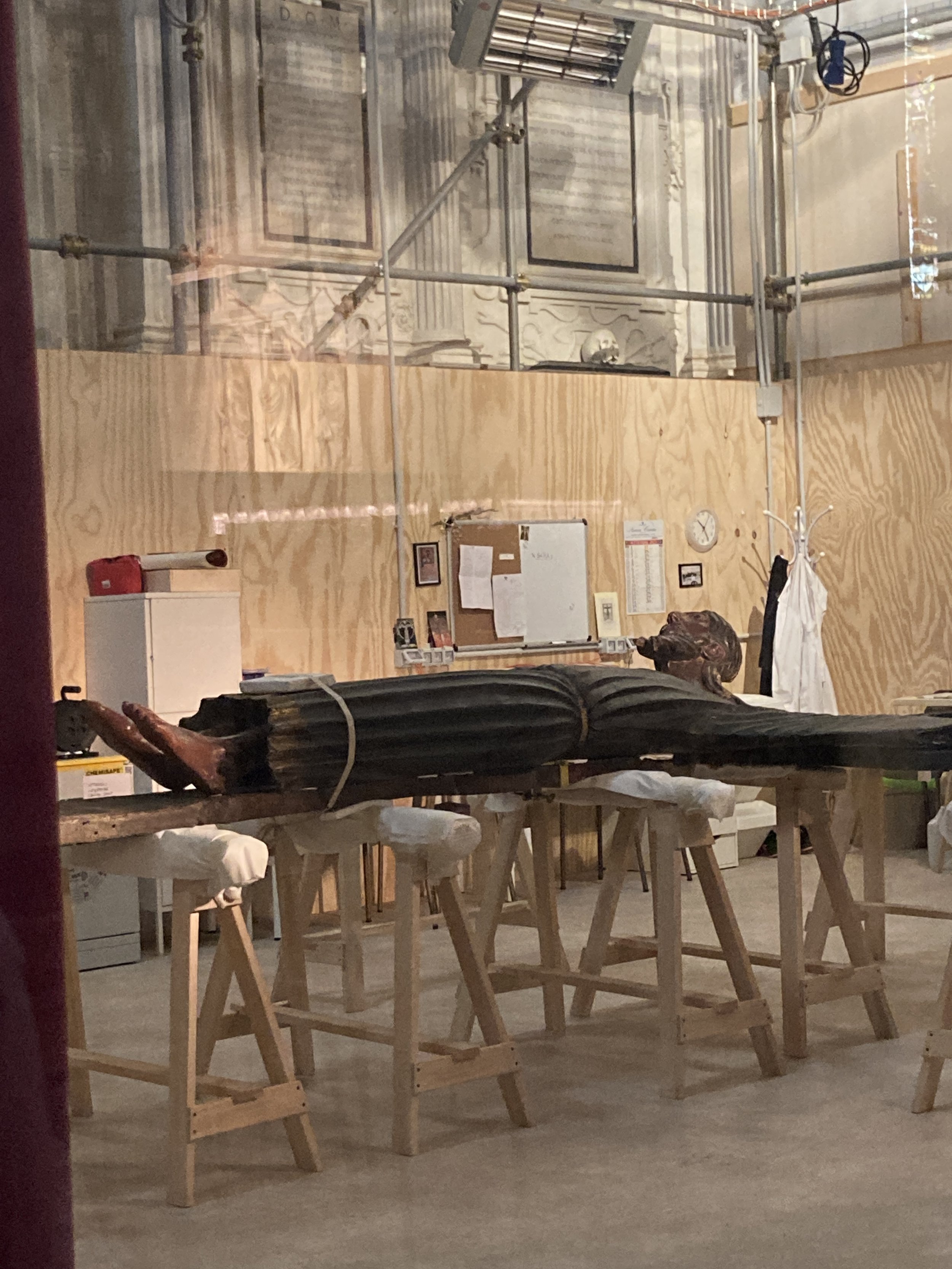
The crucifix usually rests in a small chapel within the Cathedral of San Martino where the figure of Christ is dressed in a gold vestments during the festival. This year was a bit different as the crucifix is undergoing restoration.  It has been moved from its small chapel to an area inside the cathedral where it is possible to watch the restoration in progress.   

43058536-3460-400F-AF5F-954CD8671A46.jpeg
2DB50CBB-1993-4E63-855B-9F5BF6ADD0EB.jpeg

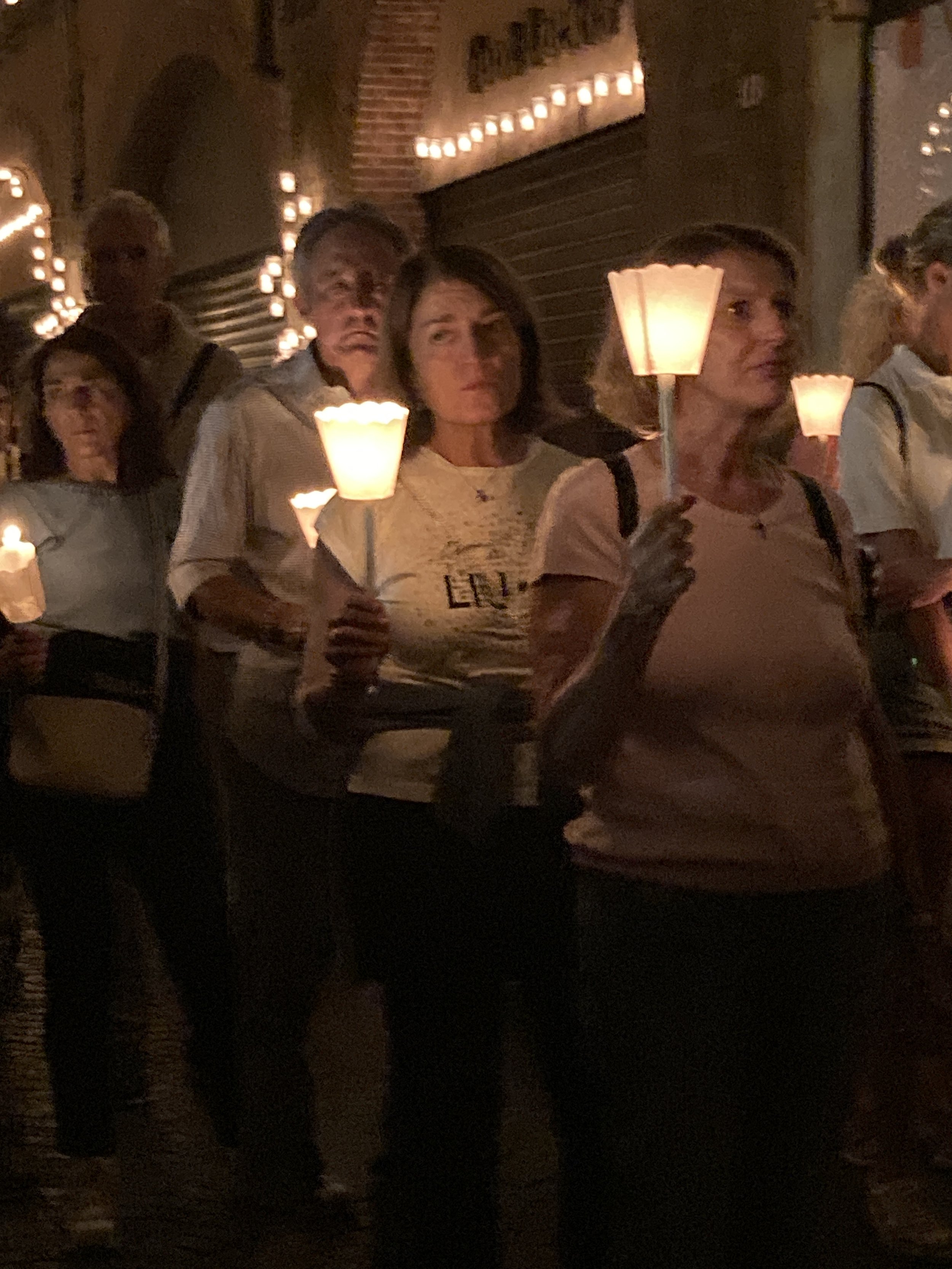
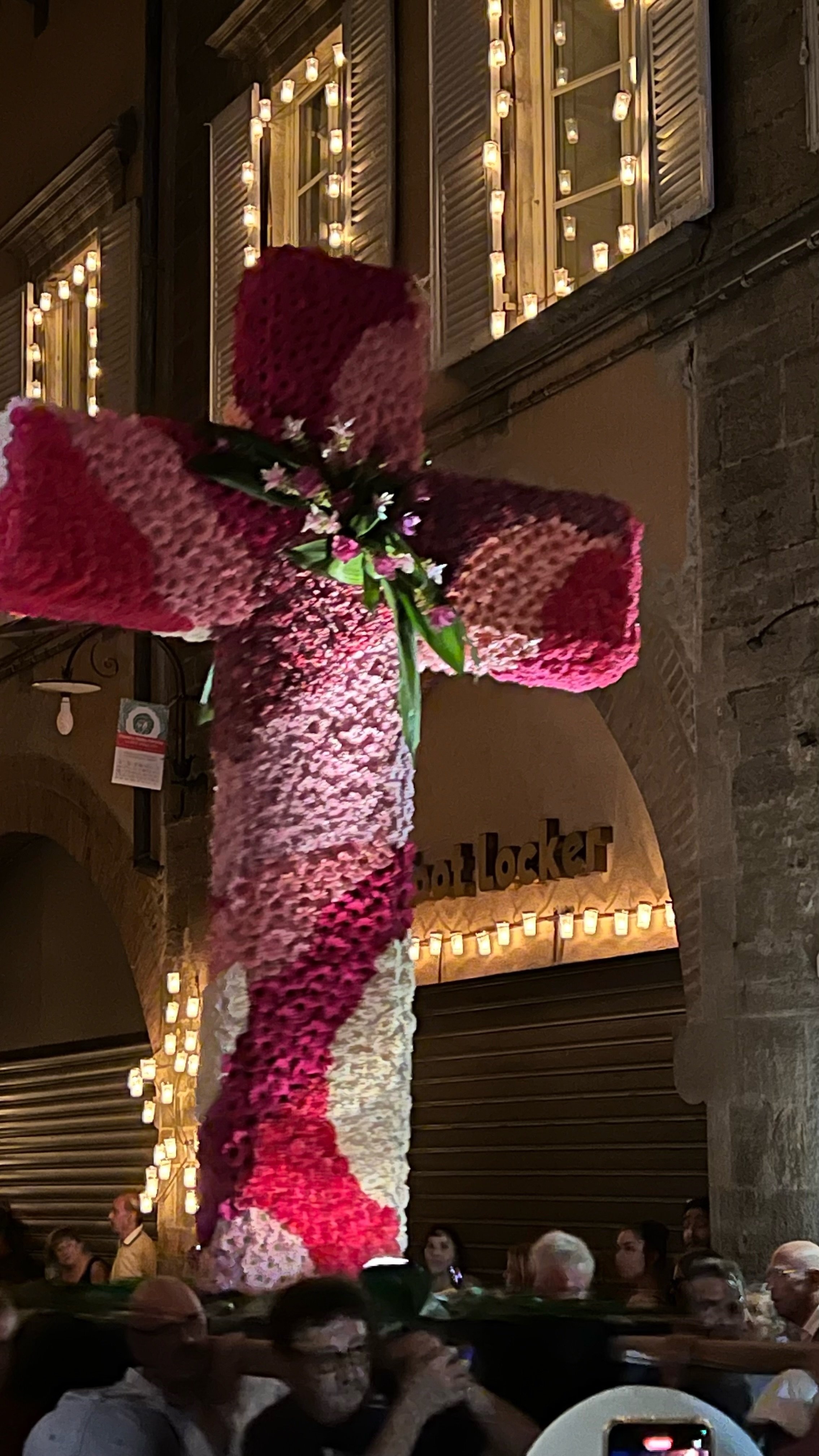
During the luminaria procession religious and civic groups move through the candlelit streets of Lucca.  The Volto Santo is represented by a cloth image held aloft. Each year there is a large cross made of flowers. Participants hold candles and prayers are chanted along the route. It is a beautiful and moving event with both religious and cultural meaning.

5E70BDD8-415C-4FB3-A0FE-851D9879B8B8_1_201_a.jpeg
21D02024-46E7-4D89-9087-8E612220FEE4.jpeg
E24C56C1-1F4F-44E1-8CD3-3F5C4BDC9F2B.jpeg

Settembre Lucchese came to a close this year with the Festival of San Michele (St. Michael the Archangel).  A special mass was held in the Basilica of San Michele, one of Lucca’s historic churches.  A concert, on the evening of September 23rd, filled the church with music by the Polifonica Lucchese and the Boccherini Orchestra. The fullness of the music, along with beautiful voices in the setting of a historic church, combined to create a very special evening.

 September is an ideal time to visit Lucca. It is not too early to begin planning for a September 2024 visit !

By the third week of September the temperatures are cool enough for a late morning walk along Lucca’s shady walls.

September 25, 2023 /Joanne Bartram
Settembre Lucchese, fall in italy, September in Lucca
#fallinitaly, #italytravel, #lucca, #medievalitaly, Festivals Italy, Italian culture, Italy travel, Living in Italy, Lucca

Wild flowers on a late April day along Lucca’s walls

Appreciating April in Lucca

April 24, 2023 by Joanne Bartram in #lucca, #medievalitaly, #springintuscany, Festivals Italy, Italian culture, Living in Italy, Lucca, Tuscany

 Apprezzare is an Italian verb meaning “to appreciate”. That word that has defined much of my time in Italy.  I appreciate the Italian culture, the beauty of this land, the musical language (even if my mastery of it is still a long way off), the people.  Not a day goes by that I am not aware of how fortunate I am to have the opportunity to live in Lucca and travel in Italy.

 But a more specific form of appreciation is on my mind this week.  After dodging the Covid virus for the last 3 years, it finally caught me this month.  Following nearly two weeks in isolation, with some unpleasant but not scary symptoms, and multiple tampone (swabs), I finally received the all-clear to resume my normal activities.  Those two weeks were tough but brought many reminders of reasons to be thankful.  I appreciate that I didn’t get sick back when Covid was ravaging this country.  Back when there were no tests, no vaccines, no treatments, only fear.  I have a renewed appreciation for the science that gave us vaccines and the boosters which I firmly believe kept me from serious, much worse symptoms. 

I appreciate the friendly local pharmacist who administered my swabs and helped me interpret the most current rules for Covid isolation.  That the pharmacy is full of old-world Italian charm makes sitting for those nasal swabs much easier.   I am beyond grateful for a good support system here and the many friends who kept in touch and surprised me with everything from soup to cheese to decadent pastries and Easter chocolates.  I have never enjoyed finding goodies on my doorstep so much!

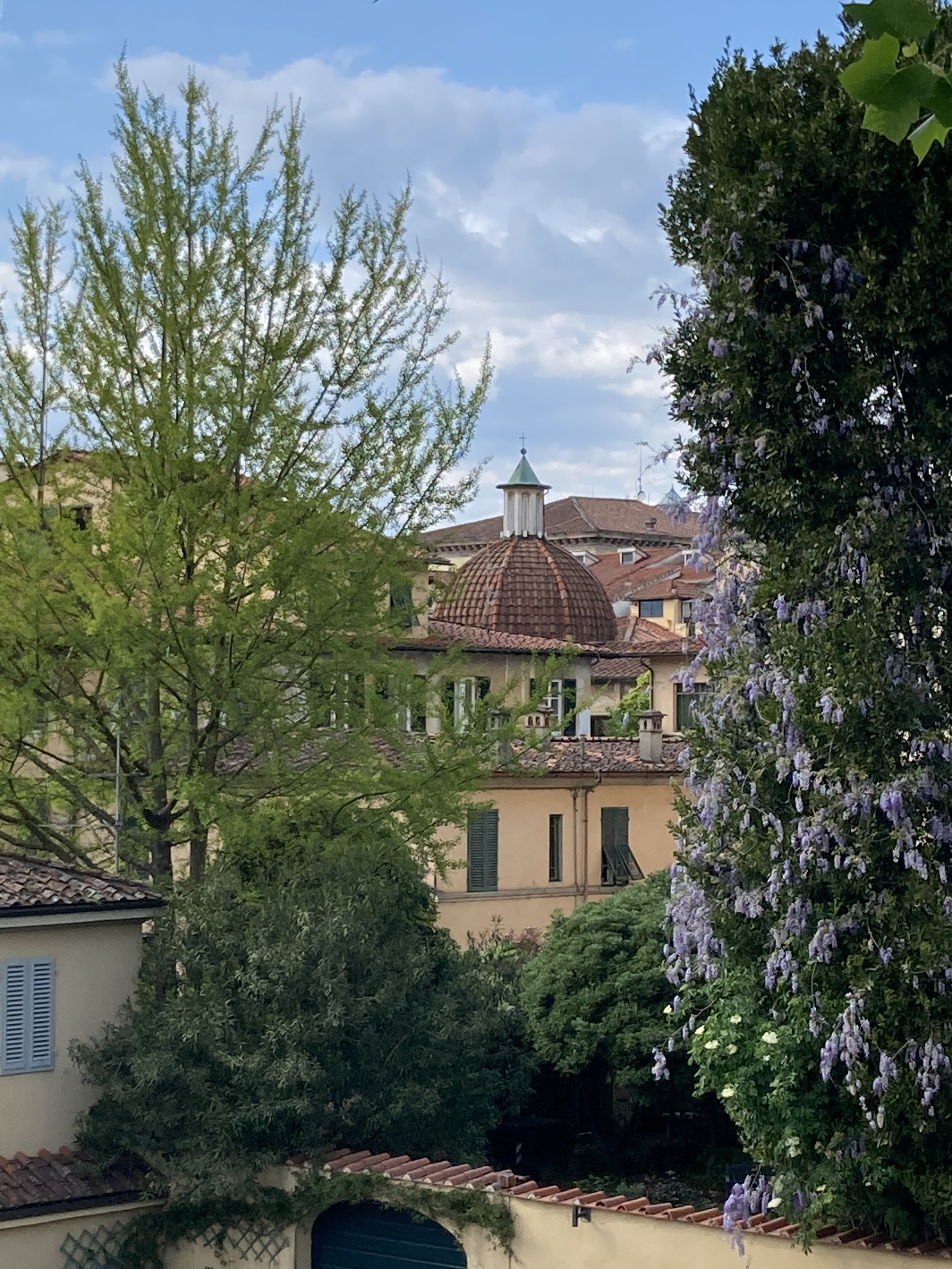
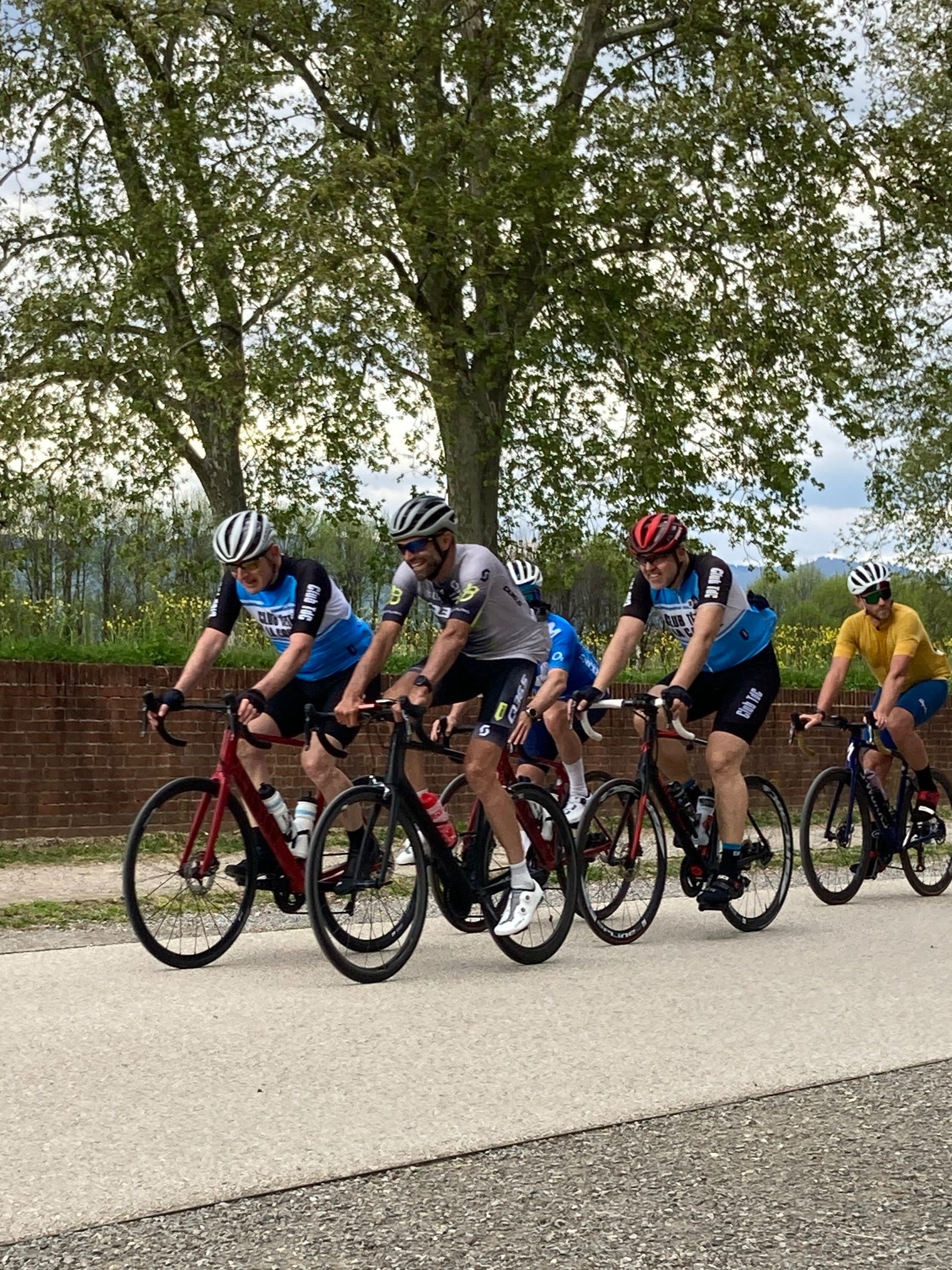
And how I appreciate being able to enjoy these last days of April in Italy.  Lucca has awakened after its winter rest and is buzzing with activity.  The wisteria are in bloom, the ancient walls are dotted with wild flowers, and trees are sprouting green leaves.  The photinia bushes outside my window are resplendent in rusty red spring leaves.  Days are getting longer and warmer.  Cafes and restaurants are setting out tables, umbrellas, and buckets of flowers.  The simple joy of an aperitivo out of doors is even better after a couple weeks of confinement. The walls surrounding the historic center of Lucca are filled with people on foot and on bicycle. Ordinary days feel extraordinary in springtime.

B3C25748-C40A-4F54-82C3-7A80A5D2D5B6.jpg
E29A17FA-083B-48DC-9D3B-F3B0B303E7C1.jpg
5CA845FC-882A-4EA9-B60A-D7FC563FEE83.jpeg

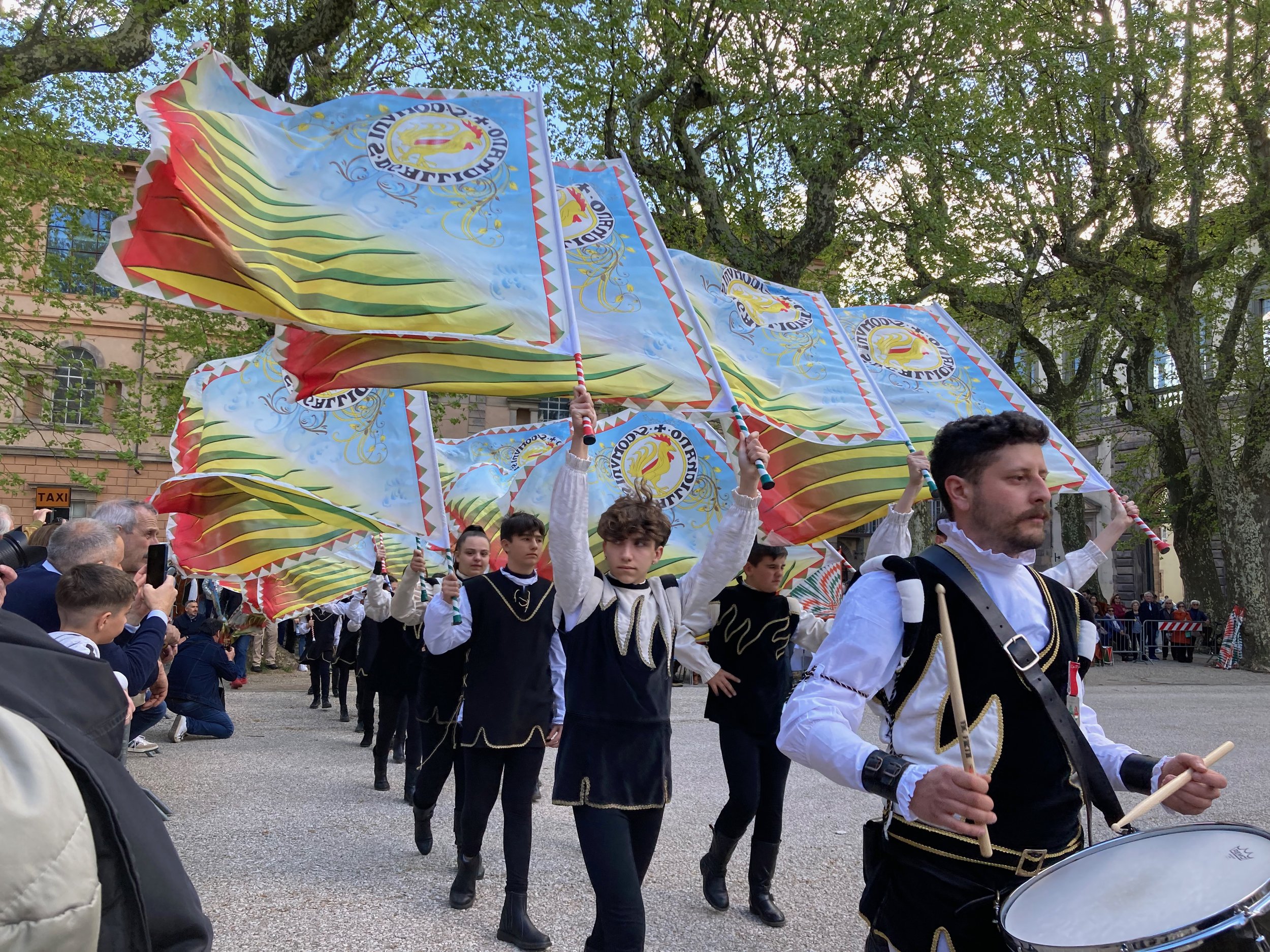
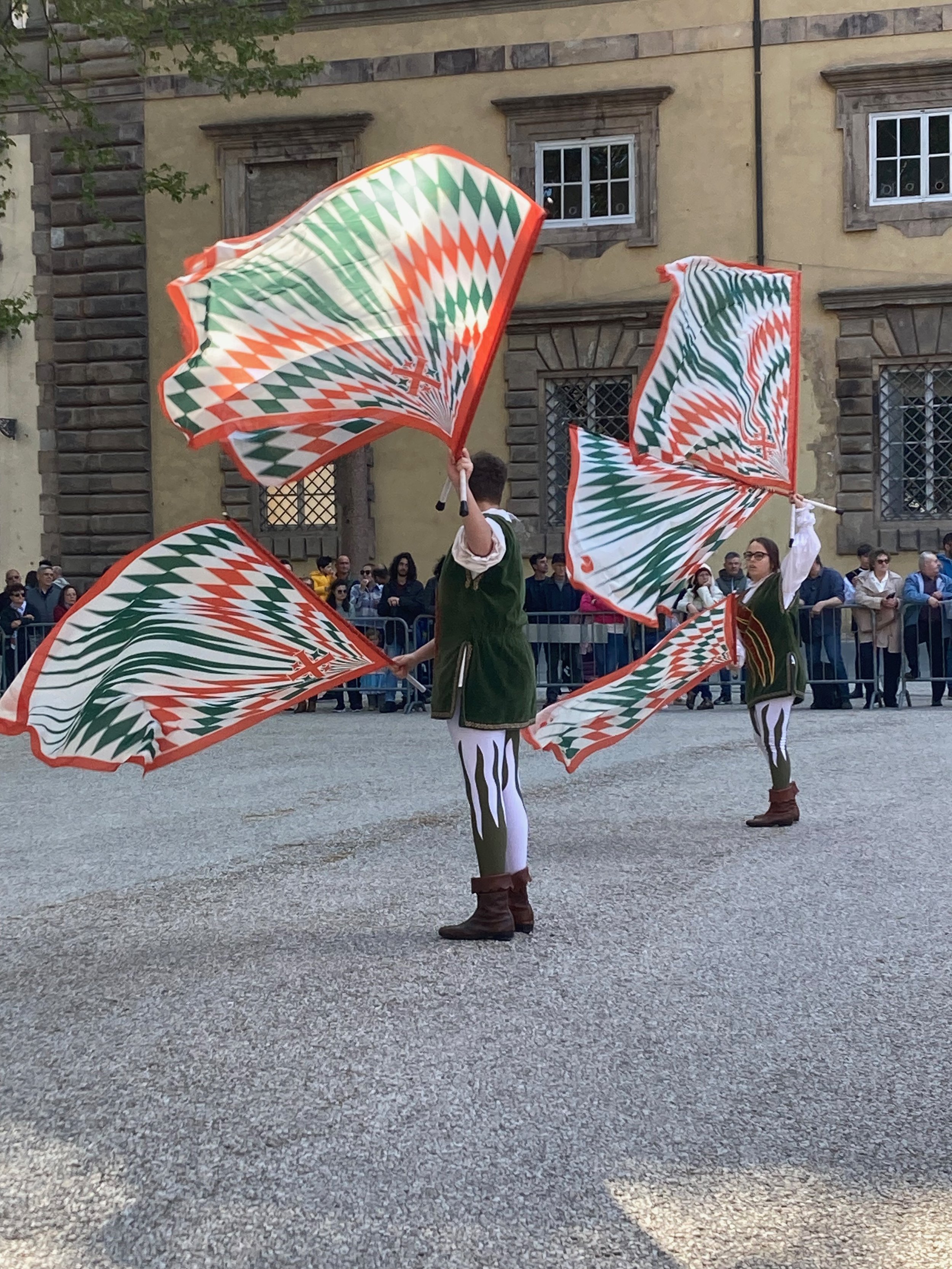
 And the spring celebrations have begun.  I may have spent Easter indoors but was free the following Sunday to see the Liberation Day pageantry.  That event, which celebrates the long ago (14th century) liberation of Lucca from control by Pisa, filled Lucca with the sound of drums.  Trumpets, played by persons in Medieval costumes, heralded the arrival of flag throwers and men carrying crossbows.  There were bow shooting competitions, flag throwing demonstrations, and a wonderful, costumed procession.  I certainly appreciate that I was recovered and able to enjoy the fun.

877E9EC3-6B99-40C9-A25D-47B28D5583EB.jpeg
704A0971-E1C1-4DB6-AB68-46DB9FCB27E4.jpeg
IMG_1925.jpeg
IMG_1986.jpeg

 Coming up next is an event I look forward to every year – the flower festival in honor of one of Lucca’s favorite saints – Santa Zita.  I will appreciate every minute !

April 24, 2023 /Joanne Bartram
covid italy, spring in Italy, lucca spring, festivals Lucca
#lucca, #medievalitaly, #springintuscany, Festivals Italy, Italian culture, Living in Italy, Lucca, Tuscany

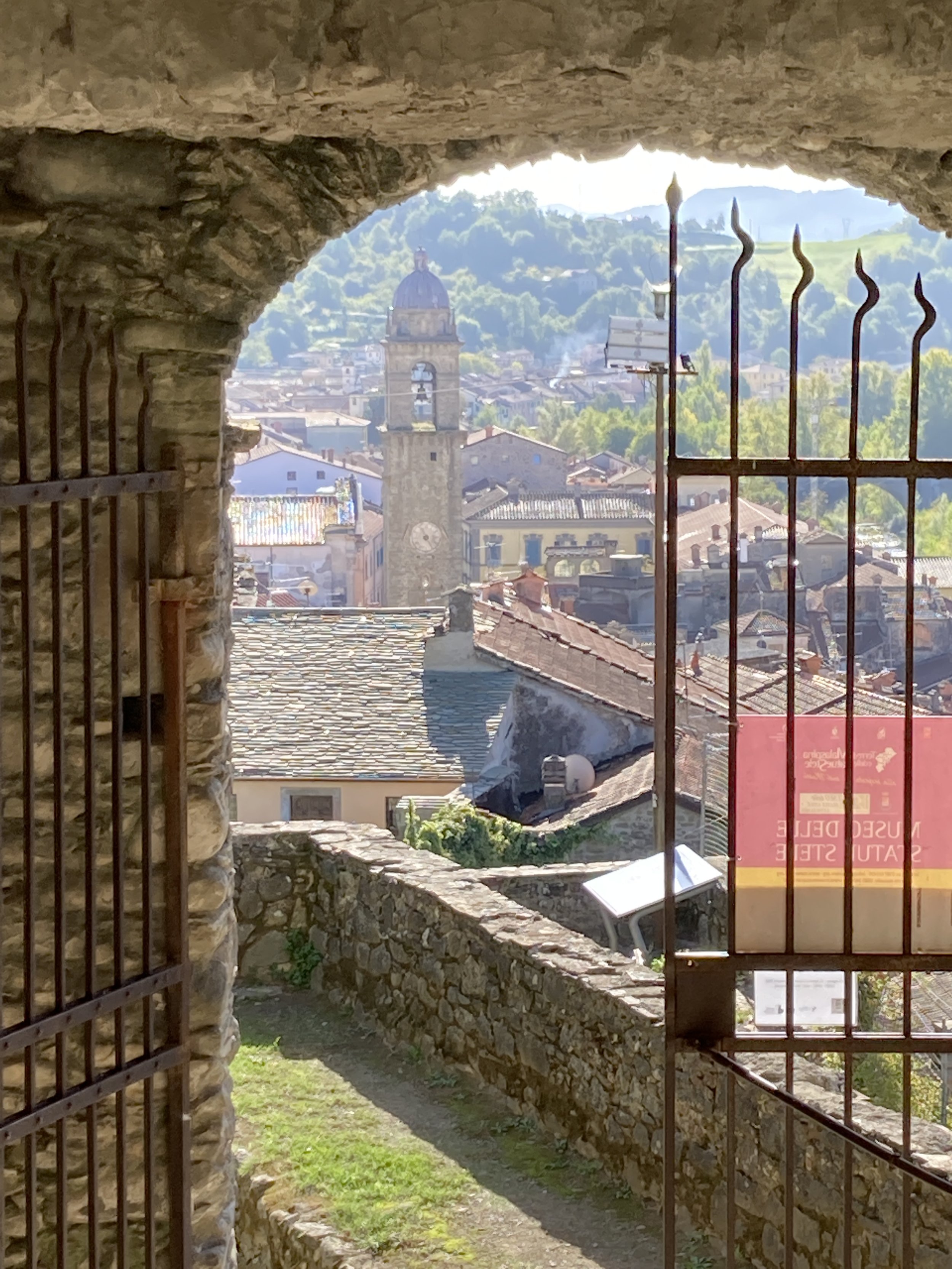
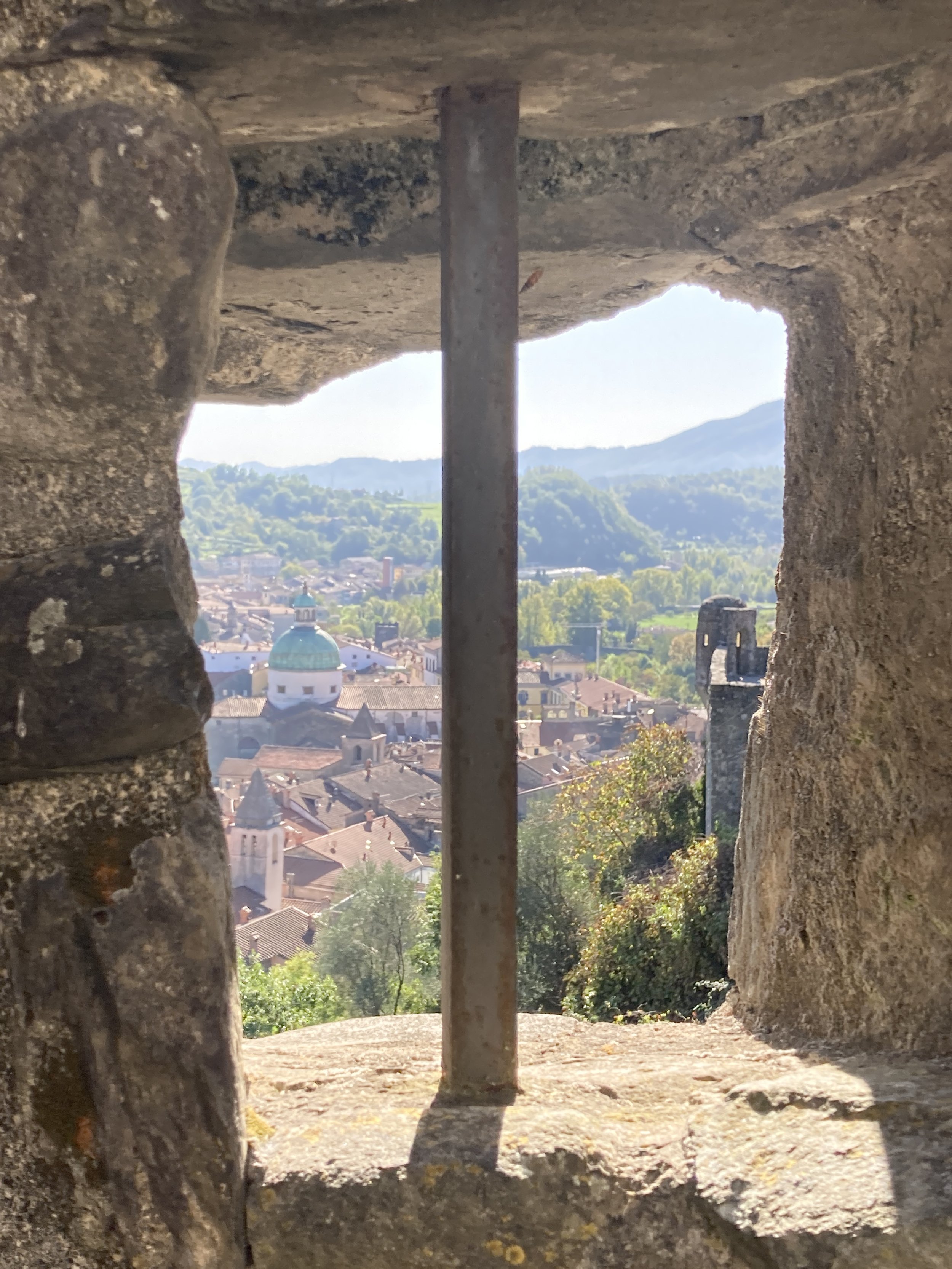
A view of Pontremoli from the Castello del Piagnaro

Pontremoli: A Walk, A Castle, and Prehistoric Rock Carvings

January 30, 2023 by Joanne Bartram in #italytravel, #medievalitaly, Italian art architecture, Italy travel, Italy, Liguria, Lunigiana, Museums Italy, Tuscany

The Lunigiana region reaches from the northern part of Tuscany into Liguria, all the way to the coast. It is a unique area, quite different from the classic images of Italy. No grand cathedrals, huge museums, or rolling vineyards here. The region is mountainous, forested, and crossed by rivers. There are no large cities to be found, instead there are small medieval hamlets, many with ancient towers and castles. Some of the castles lie in ruins, complete or partial, but a few are remarkably well preserved.

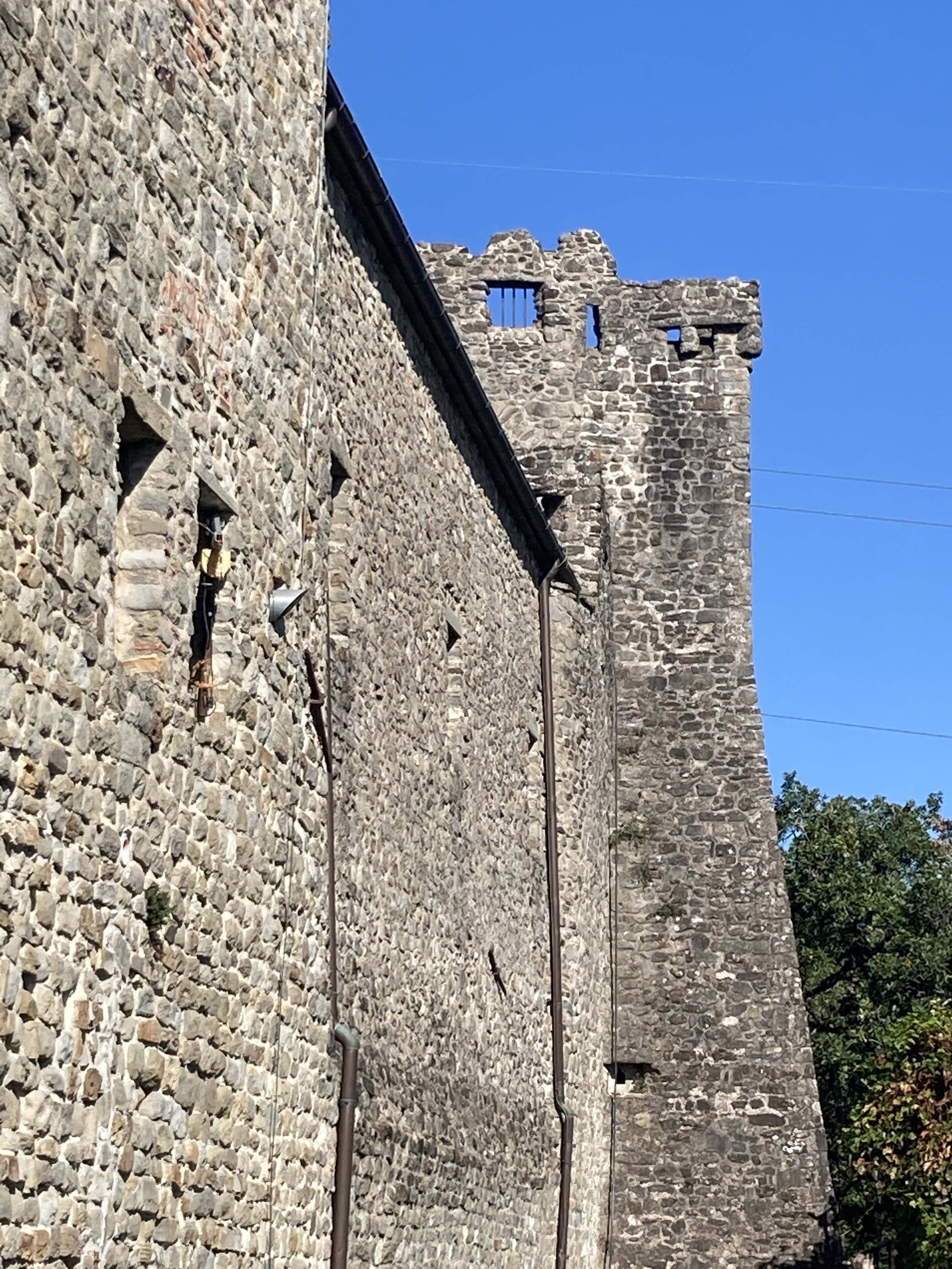
Castello del Piagnaro, Pontremoli

One such castle is the Castello del Piagnaro in the town of Pontremoli. The castle dates from the 10th century, with cycles of expansion, destruction, and rebuilding over the ensuing centuries. Some components of the Castello have been lost to time, a drawbridge for example, and some elements are as new as the 15th century tower (if something that old can really be called new).

Today the restored castle compound stands guard high above Pontremoli and welcomes visitors to both the castle interior and the Museum of the Stele Statues of the Lunigiana which is housed within its ancient walls.

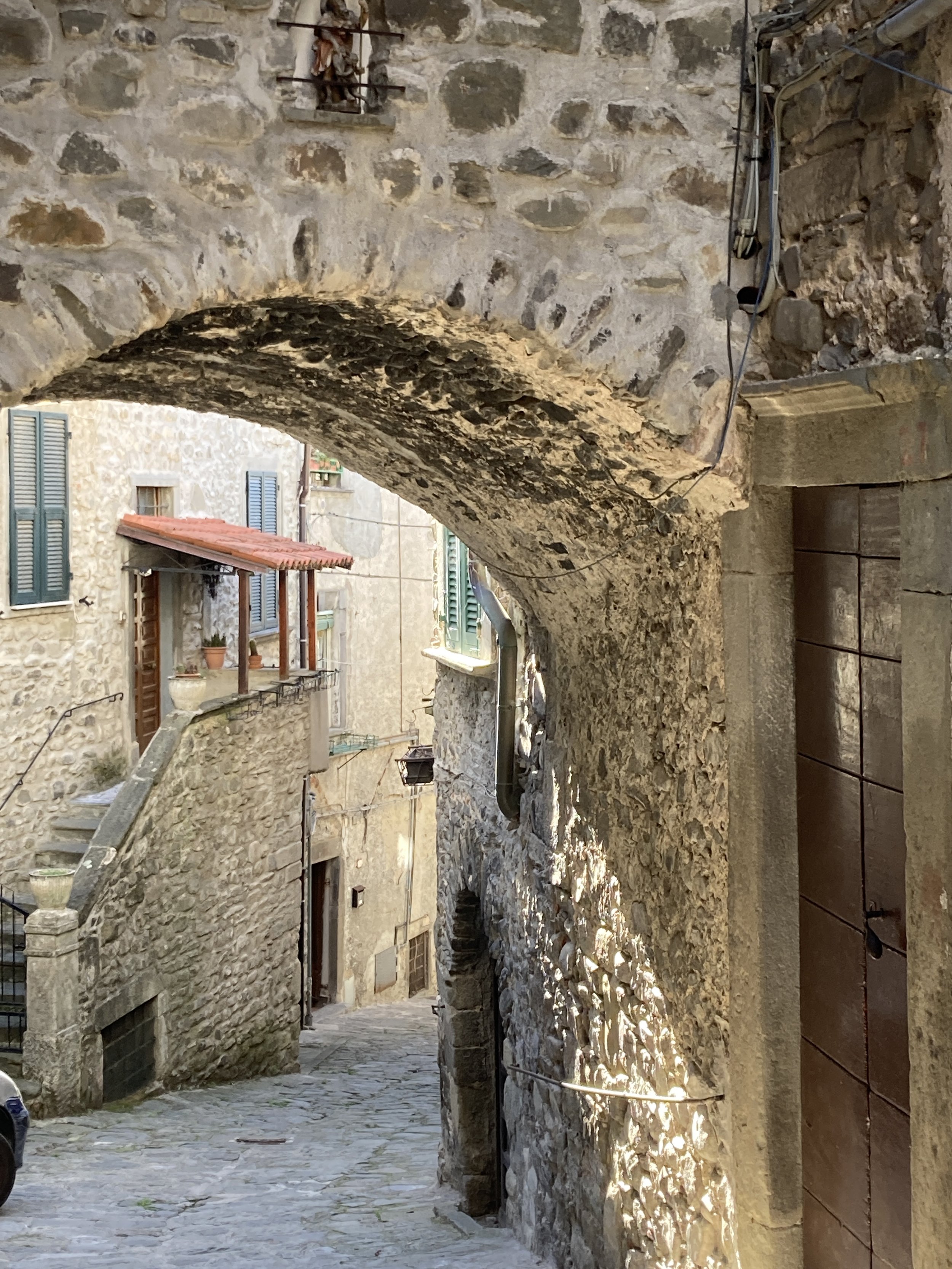
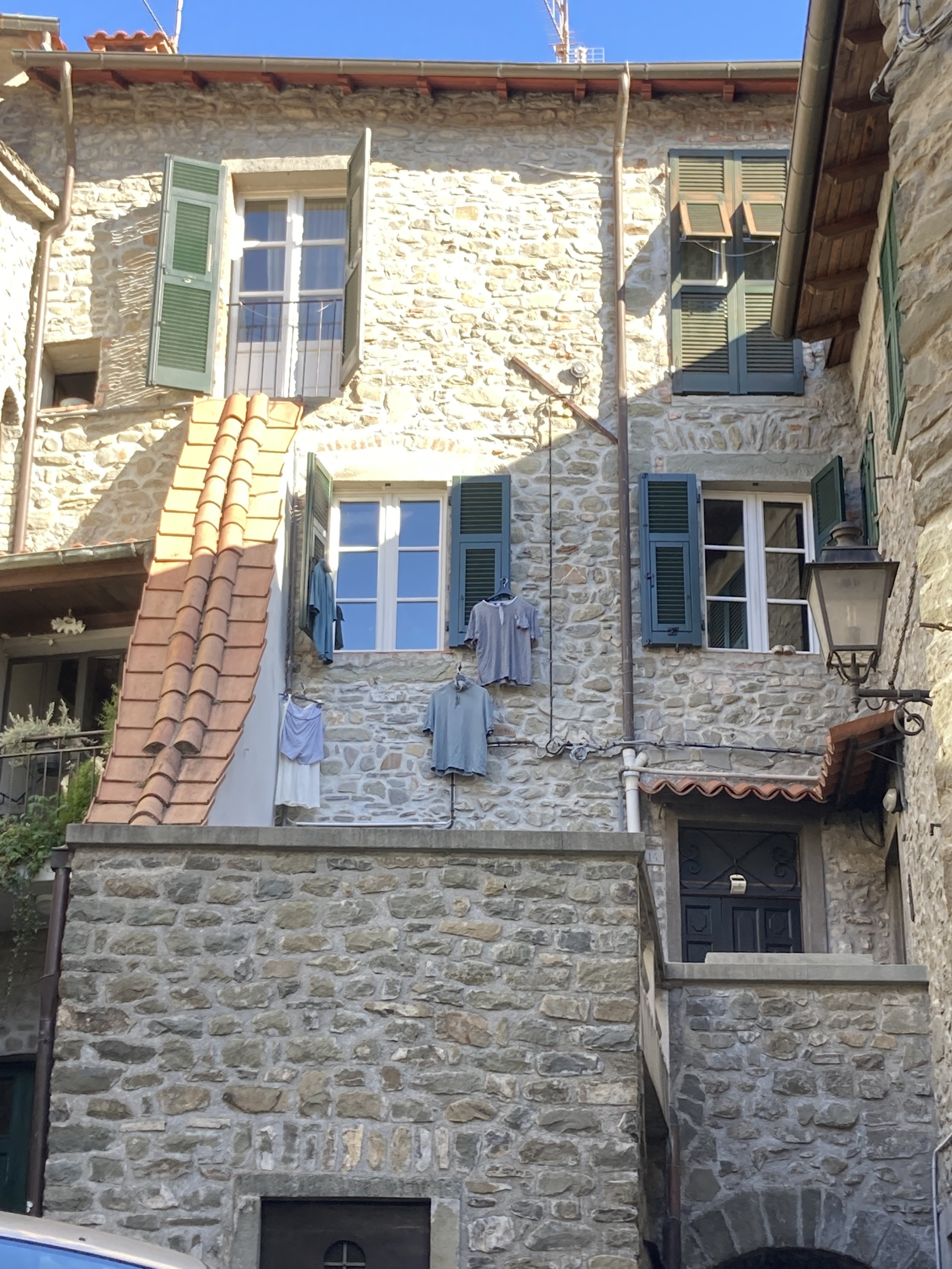
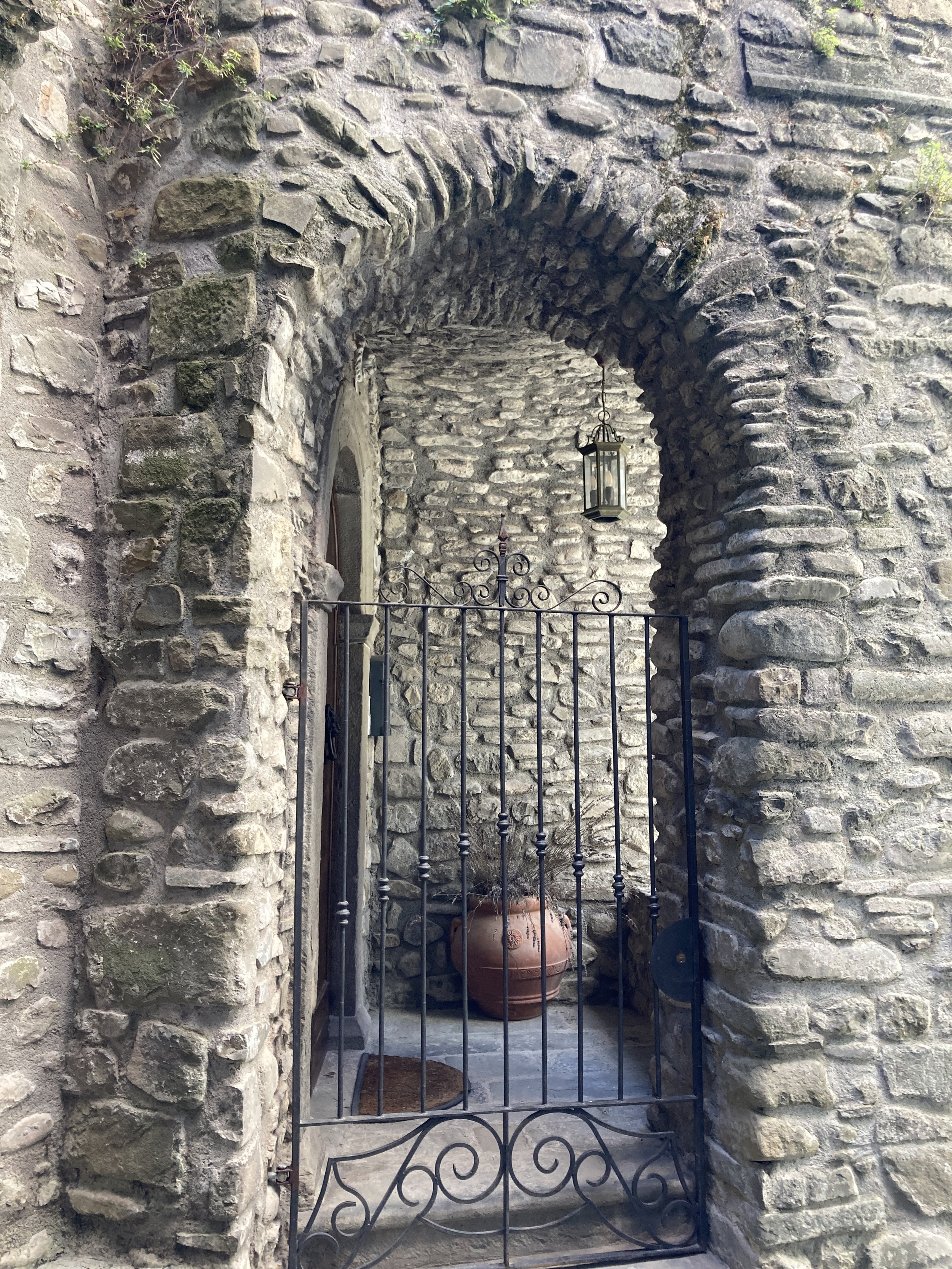
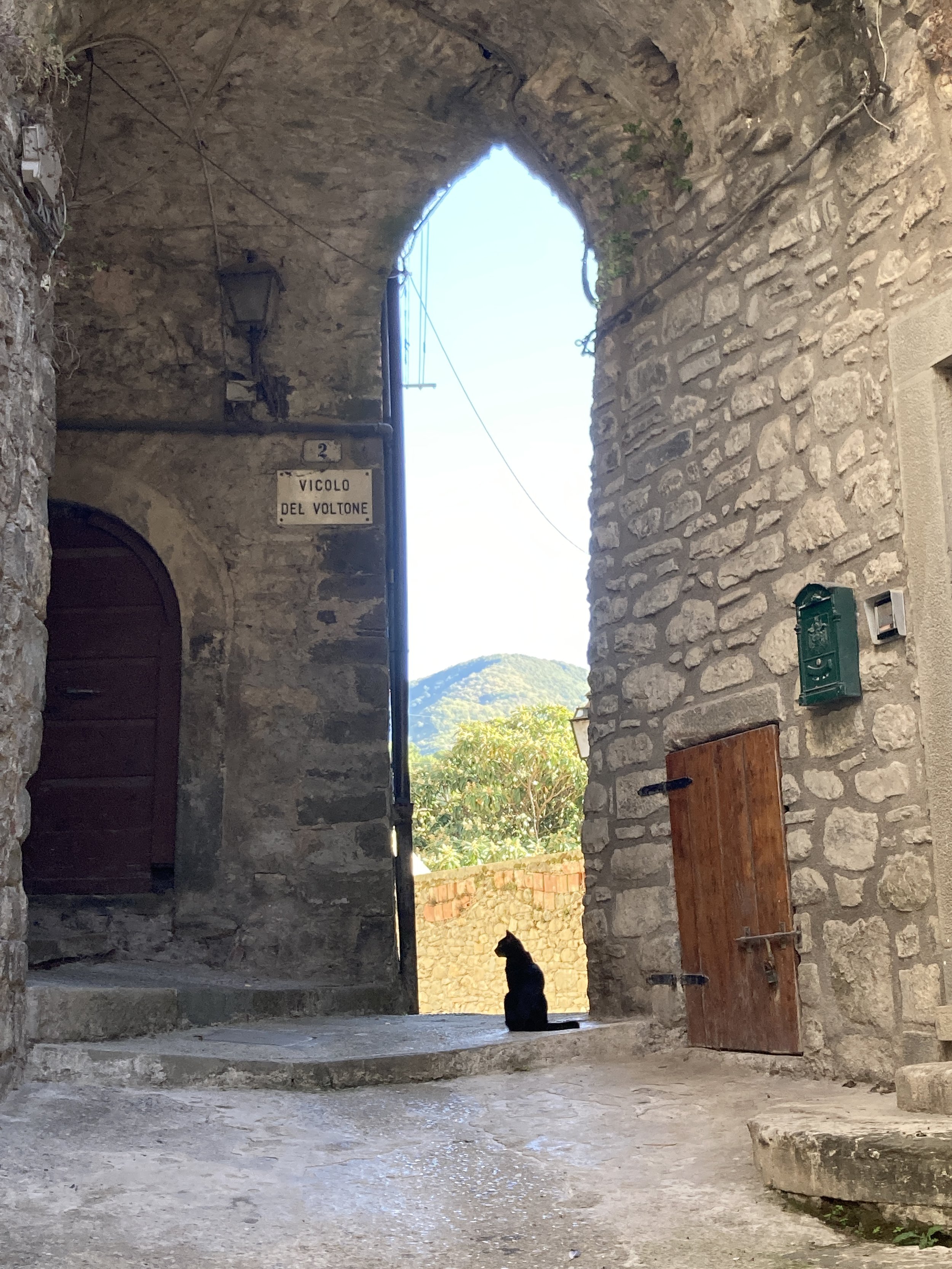
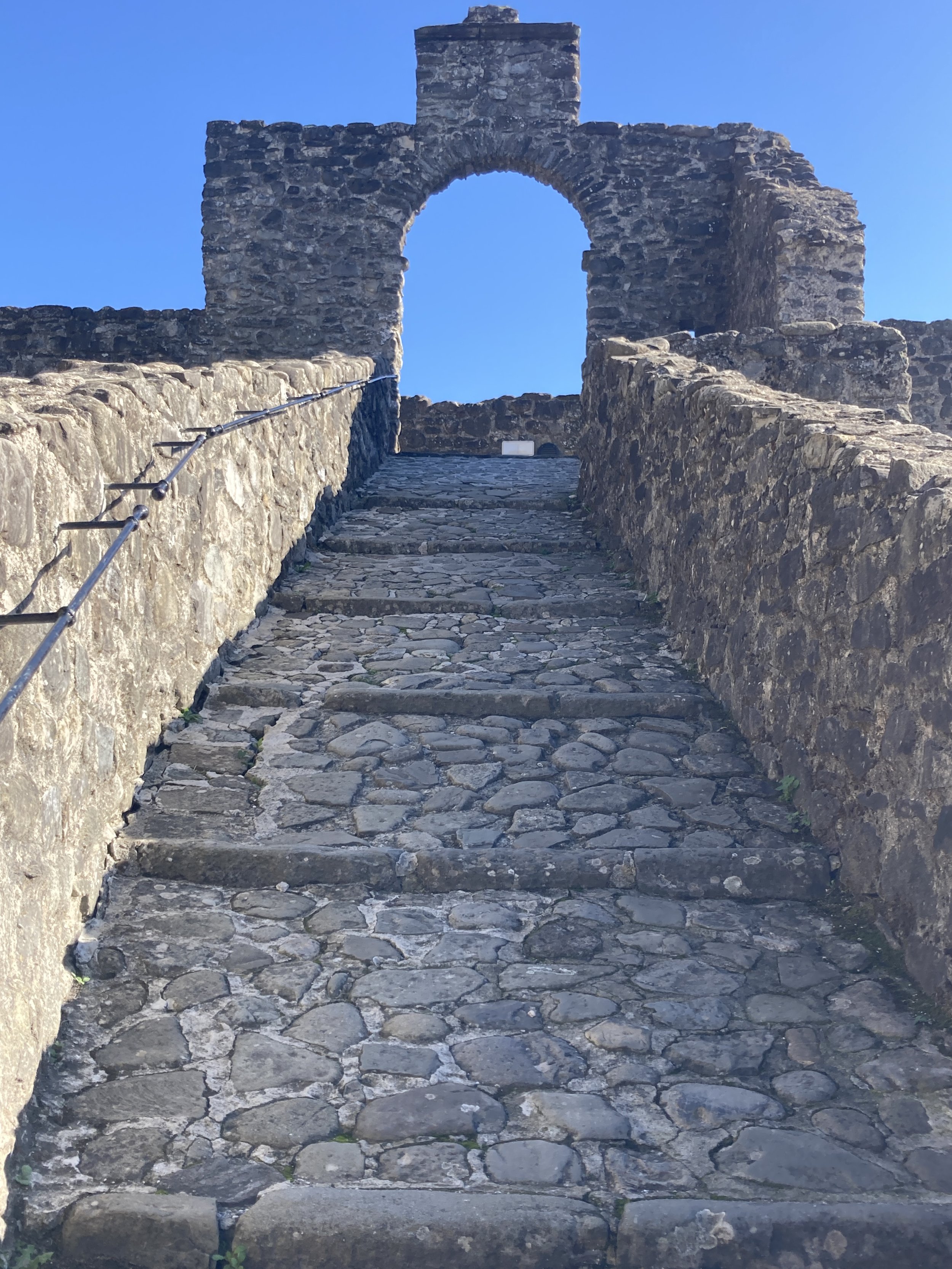
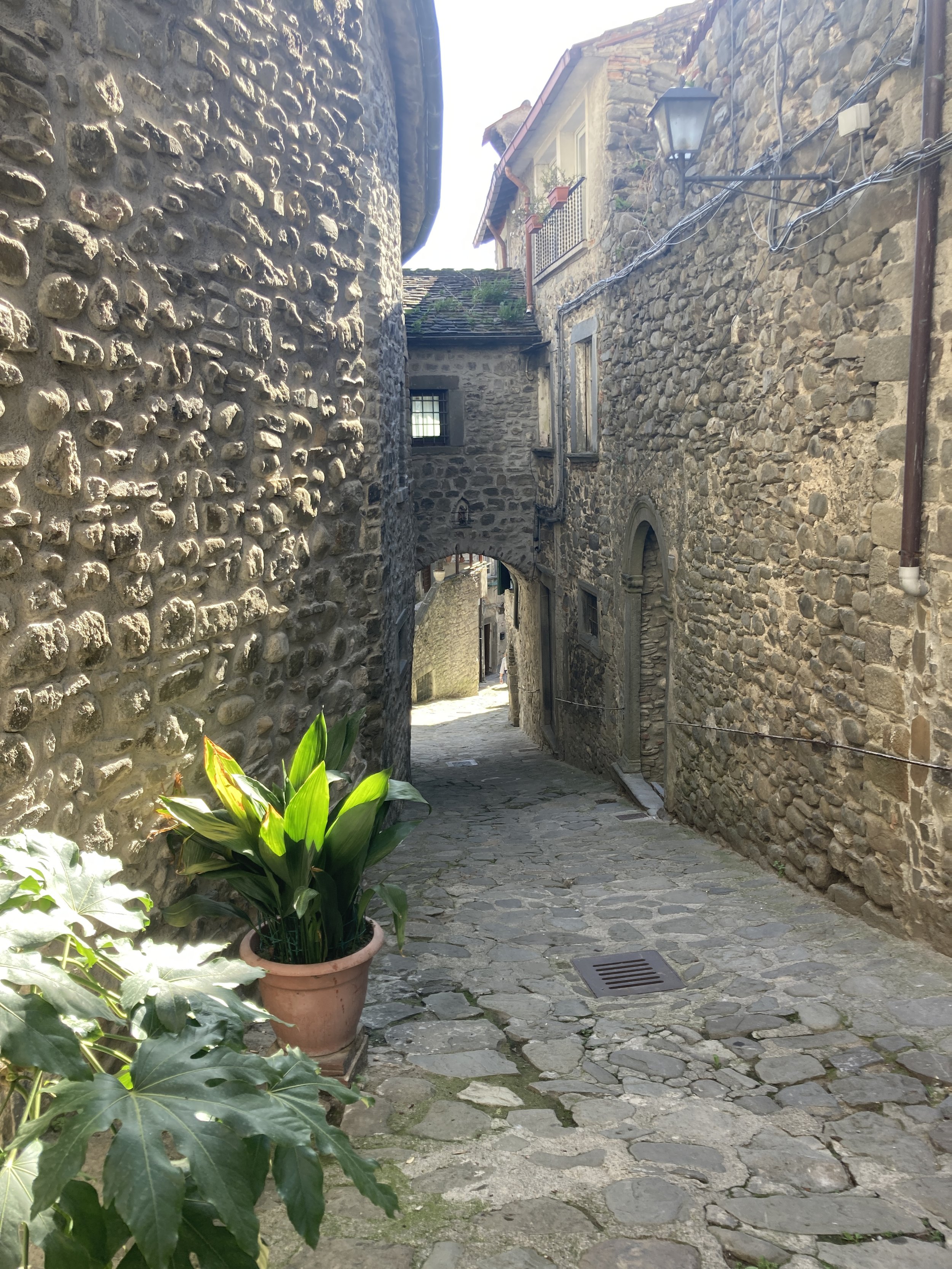
Half the joy of seeing the castle is the walk to it from the historic center of Pontremoli. The walk begins from the small main street and winds up even smaller alleys to the castle. Along the way are small shops, medieval buildings, arches, gates, views, and the occasional cat.

9A276F32-C6DB-4FED-96BA-3507878AB48A.jpeg
659FCDA5-CE13-4D2D-8786-92BA97582636.jpeg
1A5FFBBD-F8DB-4ACF-8582-A3F4EDF23CA8.jpeg
200453F8-50A1-4FD6-A4B2-86EDFA1E66A3.jpeg

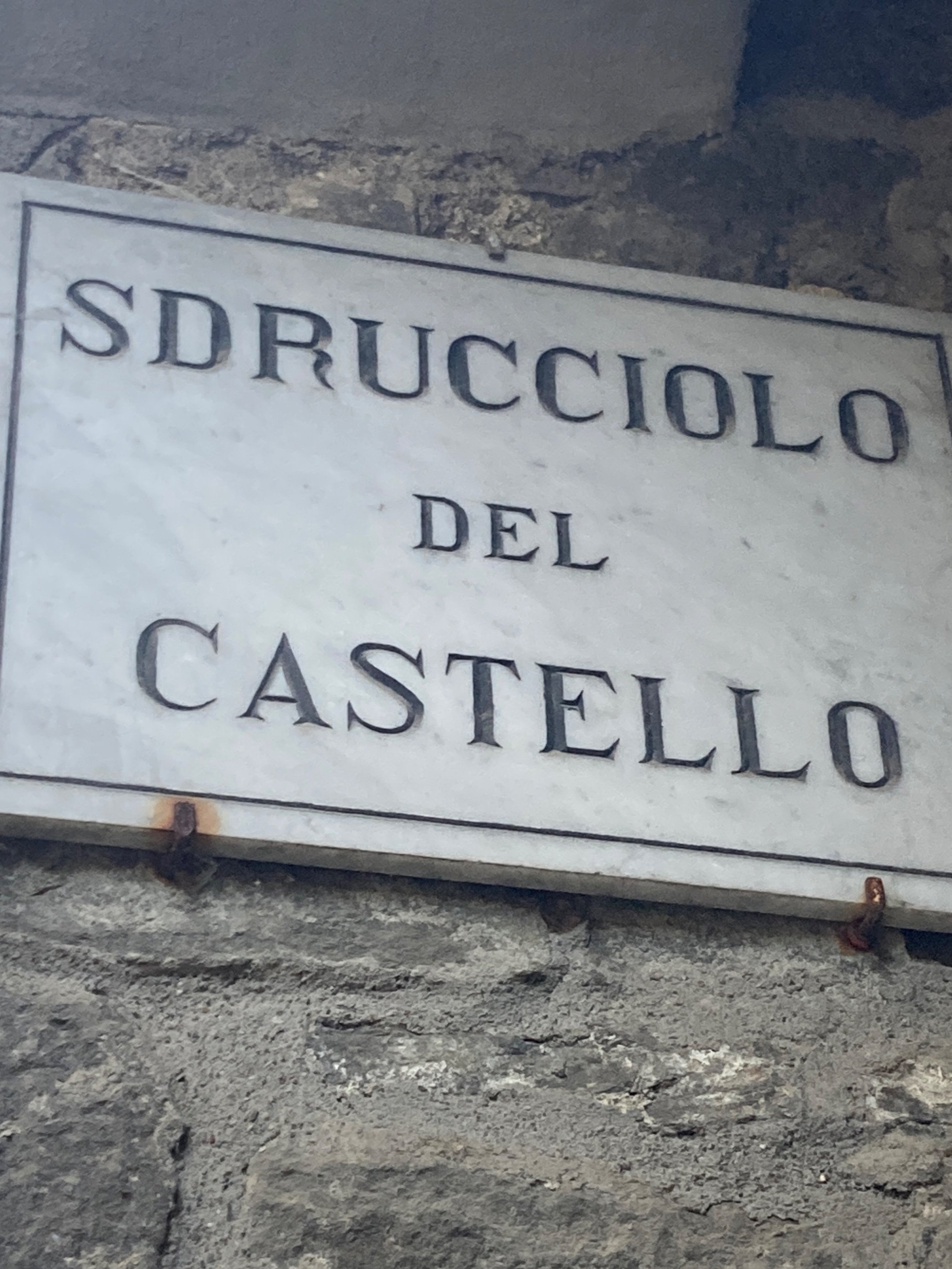
This sign marks a steep little alley that leads to the castle.

The walk winds uphill, but it is not terribly steep. For a less inspiring, but less strenuous, way to the castle take the elevator from Porta Parma at the north end of town directly to the castle grounds. I found the hike up to be definitely worth the effort. With stops along the way to admire the ancient buildings, chat with local residents, and enjoy the views to the town below it was a walk I would not have missed!

There is a ticket office just inside the castle gates where a combined ticket for the museum and castle can be purchased for 7 euro (4 euro for those over 65). From the ticket office you can enter the museum directly or cross to the castle entrance.

62B1FF37-1DC2-441A-AA0B-FD77579C836C.jpeg
E7C694A0-9052-40AF-93C5-BC94DF9BB1A6.jpeg
7DF251FE-919C-4BC7-B65F-1F76E67210E7.jpeg

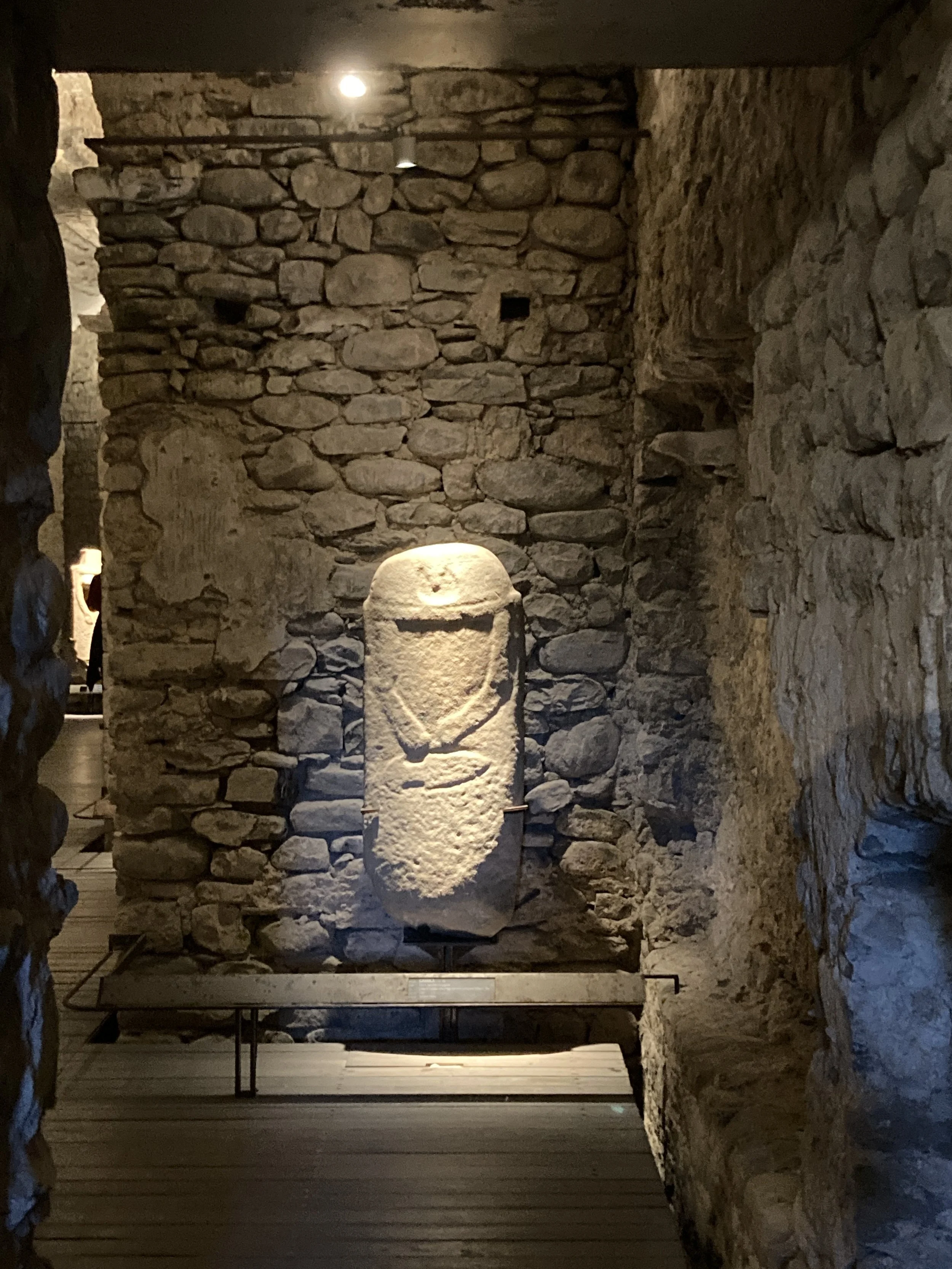
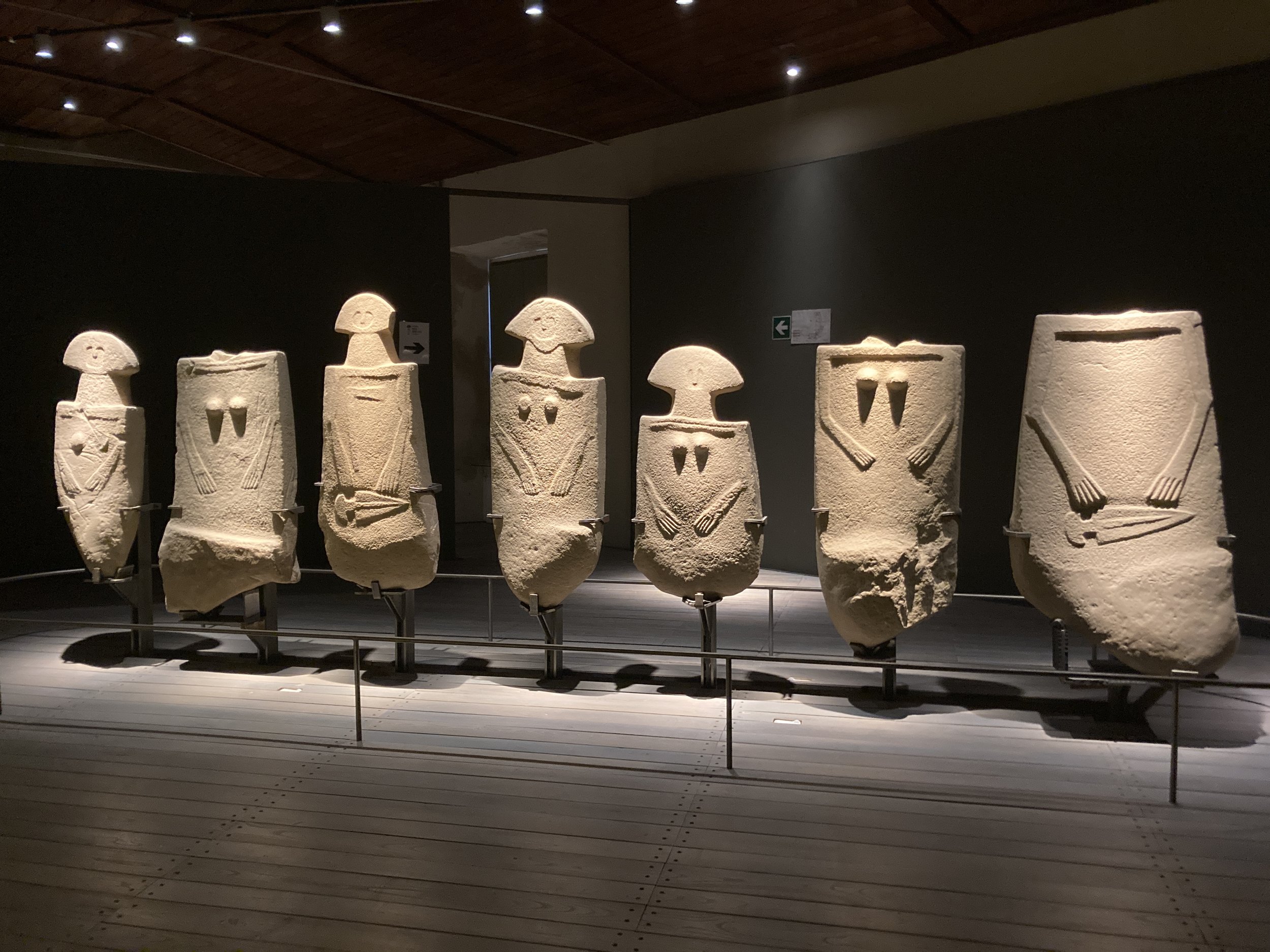
The museum is fascinating. Stele (not to be confused with the similar Italian word stelle which has a different meaning all together) are prehistoric carvings, representing human figures, found throughout the Lunigiana region. They have been housed in the castle museum since 1975 and are truly a treasure.

Both male and female figures are represented. The males seem to be warriors, armed with knives. The women, bare breasted, are adorned with necklaces. The dark rooms and dramatic lighting show the pieces off perfectly.

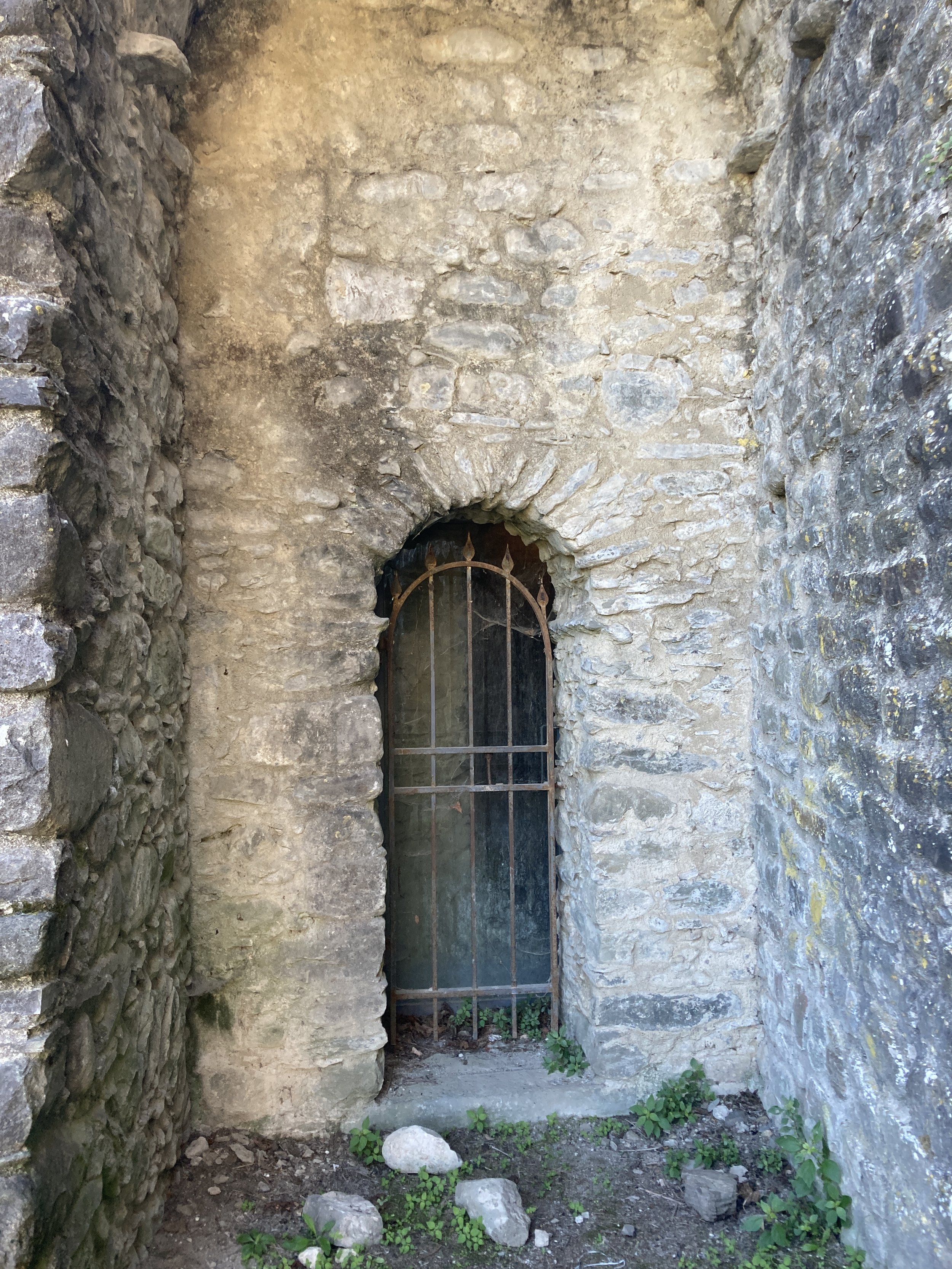
After the stele, it is time to wander through the castle. And I do mean wander - there are many rooms, courtyards, staircases, and roof top terraces to explore. Amazingly, there were no guards or “keep out” signs to be found, just freedom to explore and to wonder what life must have been like for the people who occupied this building over the centuries.

0C3C0097-1438-45E7-94BA-CEA027C996B9.jpeg
8763BF5E-8568-4D2E-A7AA-8EC30BB296F0.jpeg
76AEB383-52BA-42CD-8565-159560922197.jpeg
721EE119-4A82-4888-AD09-E1E9502039D7.jpeg
43136409-7E87-4E26-A9E4-24F4EDE50082.jpeg
7642380A-98F8-4C12-9F10-C20513323235.jpeg

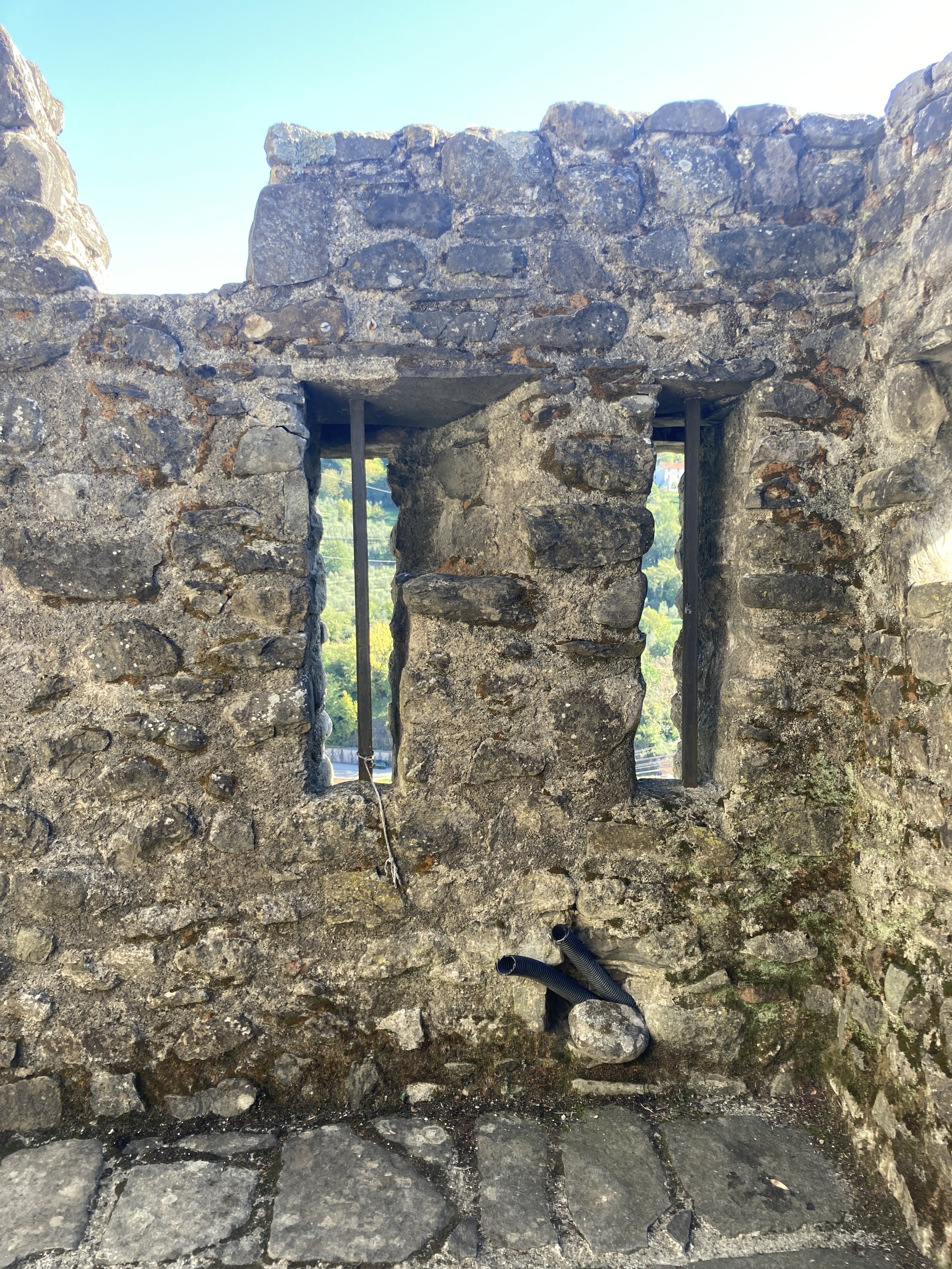
Perched high up on this hill, the castle offers spectacular views down the hill to the city and river below. Walking back down to the village, along a different small alley than on the way up, provides for another scenic walk through the oldest portions of Pontremoli.

A visit to Pontremoli, and a hike up to the castle, provides a wonderful contrast to the more touristed places in Tuscany and Liguria. It’s a special experience!

January 30, 2023 /Joanne Bartram
Pontremoli, castles in italy, italian castles, Castello del Piagnaro
#italytravel, #medievalitaly, Italian art architecture, Italy travel, Italy, Liguria, Lunigiana, Museums Italy, Tuscany
  • Newer
  • Older

Powered by Squarespace