Two Parts Italy

Exploring Italy, travel, and living a flavorful life

  • Blog
  • About This Blog
  • Start Here
  • Recent Posts
  • Archives by Topic
  • Subscribe
  • Contact me

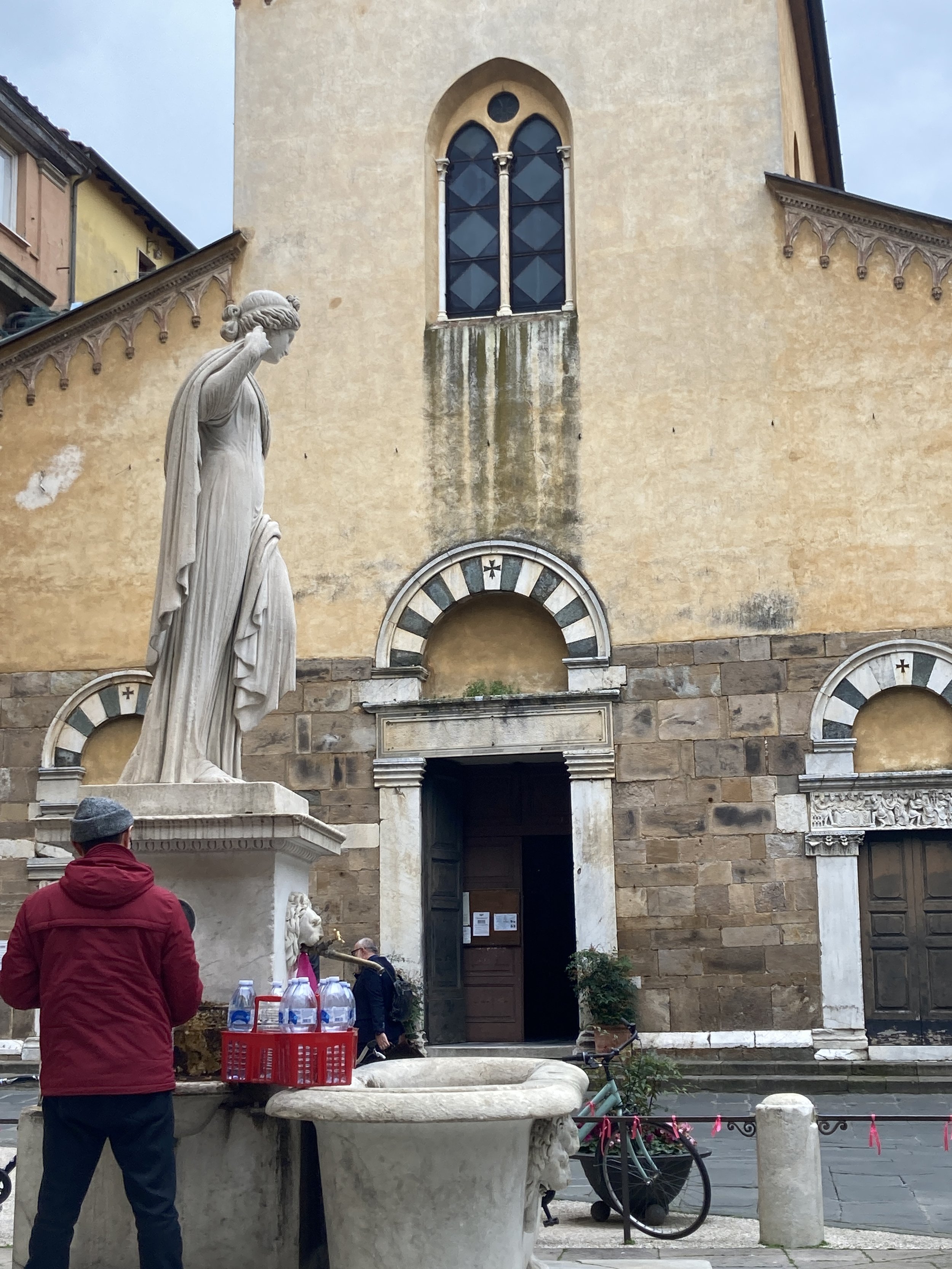
The Piazza del Salvatore is a busy hub of activity in Lucca. It’s all too easy to focus on Nottolini’s fountain and the graceful statue of the Naiade on top and miss the church of San Salvatore which sits across the piazza.

The Church of San Salvatore in Lucca

March 18, 2024 by Joanne Bartram in #italy2024, #lucca, #italytravel, #luccafountains, #medievalitaly, Churches Italy, Italian culture, Italy, Living in Italy, Lucca

A painted door in Piazza del Salvatore, Lucca

A couple of days in Lucca last week were rain free – perfect for catching up on errands.   My tasks included a stop at the lavandaria (cleaners), a quick visit to a local shop to buy a pretty pot for the chives I’ll grow on a sunny windowsill, a meet up with a friend for a coffee (there may have been a pastry involved), and a trip to the Ortofrutta to stock up on vegetables. 

 The best part of running errands here is that it never feels like a chore.  No drudgery involved.  How could there be when the errands are done on foot and all involve a walk through historic Medieval streets?  There are ancient stone buildings, centuries old decorative brick work around windows, balconies full of flowers, and beautiful old wooden doors along every route.  Add to that the sound of spoken Italian providing a soundtrack to daily life here and chores are fun.

On my errands I stopped into one of Lucca’s small and lesser known (at least to visitors; it’s a favorite of locals) churches. It was empty, silent, and unguarded. I was the only person inside, free to admire the architecture, artwork, and treasures within. To leave such a historic place, filled with valuable artifacts, so accessible would be unheard of in the US.  Here in Lucca it is not unusual at all.  
The Church of San Salvatore, also known as the Church of the Misericordia, Lucca
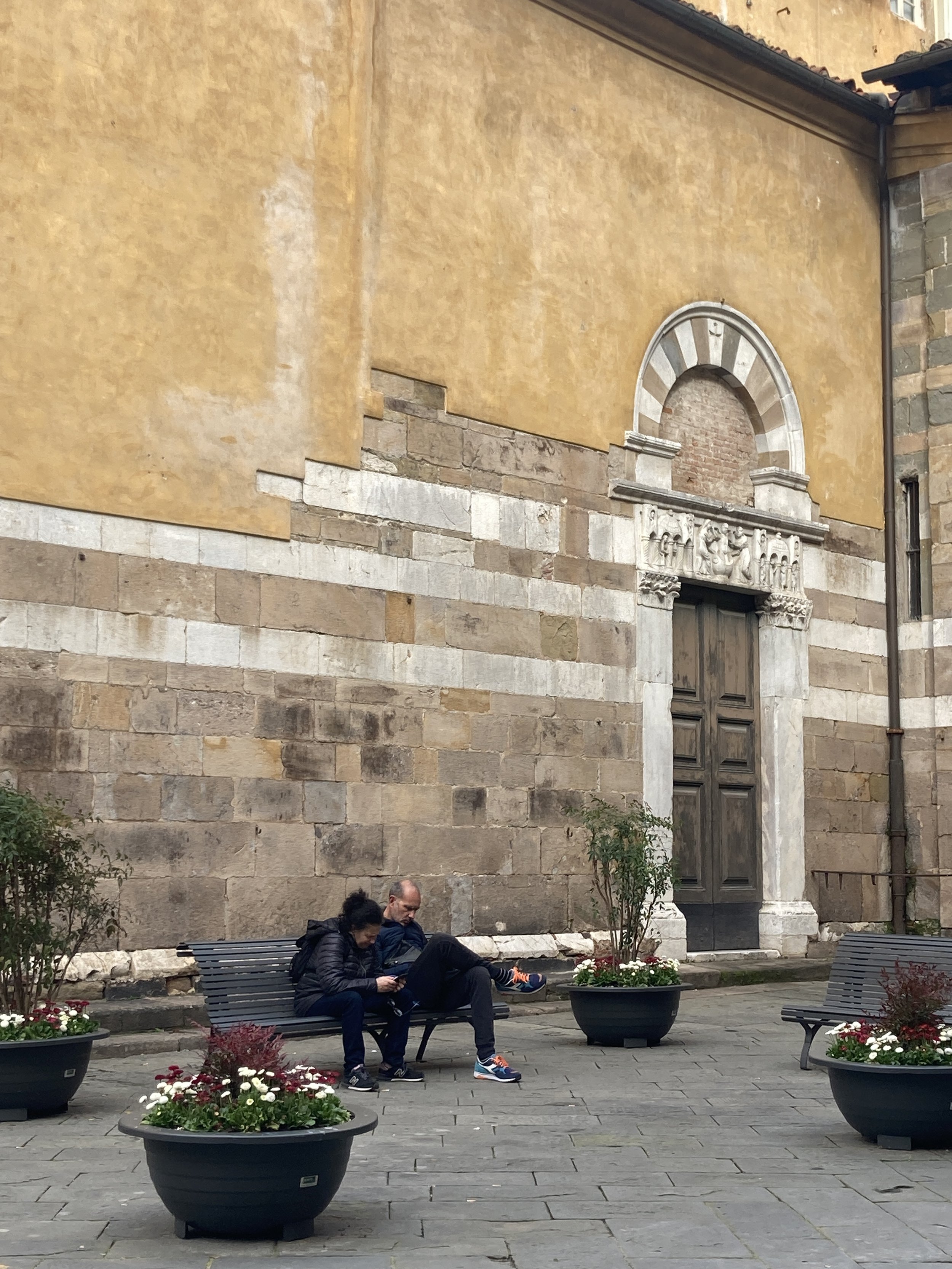
The church, officially the Church of San Salvatore in Mustolio, is more commonly known as the Church of the Misericordia because it is located right next to what was for many years the office of the Misericordia Ambulance Service.   

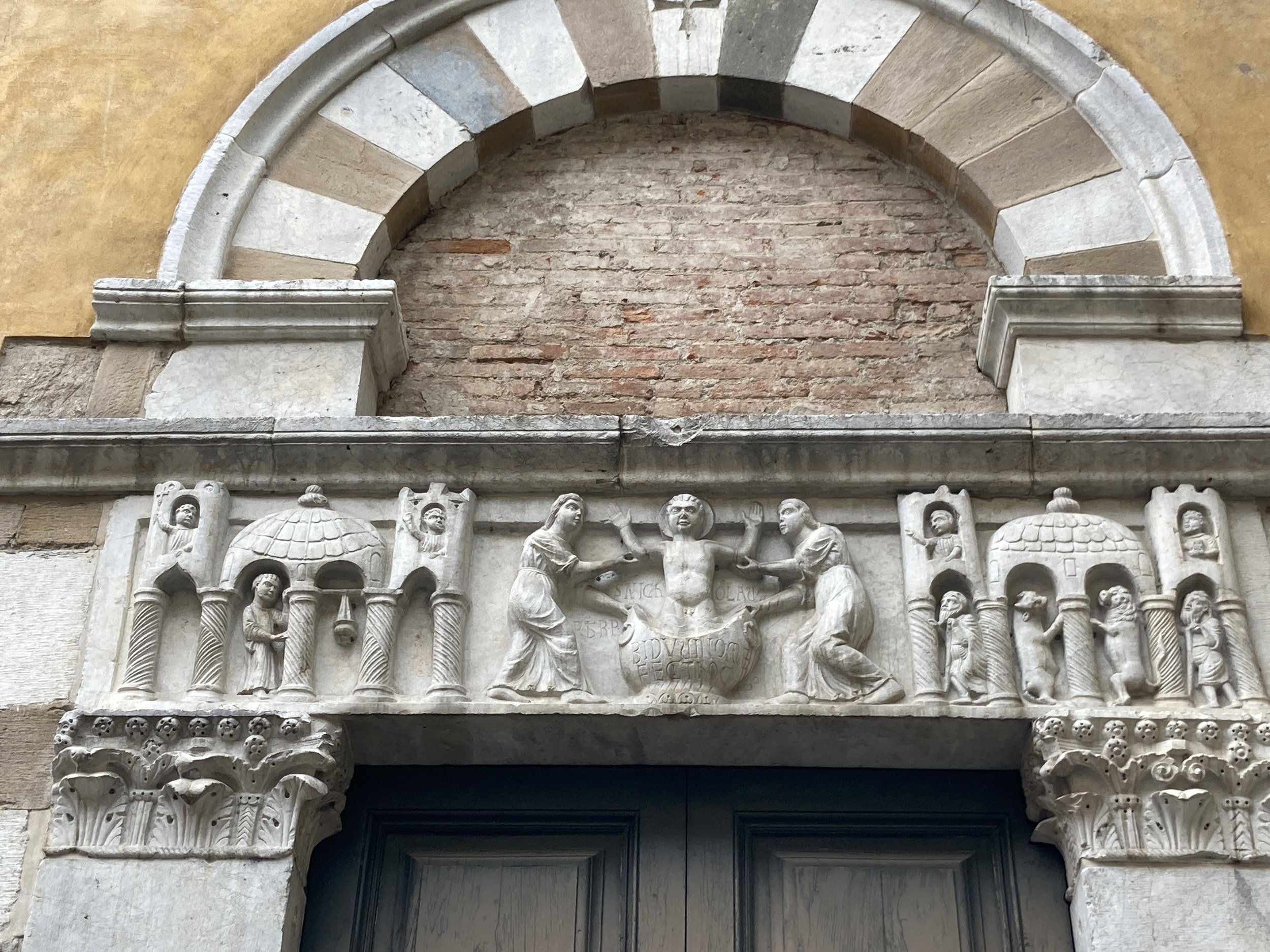
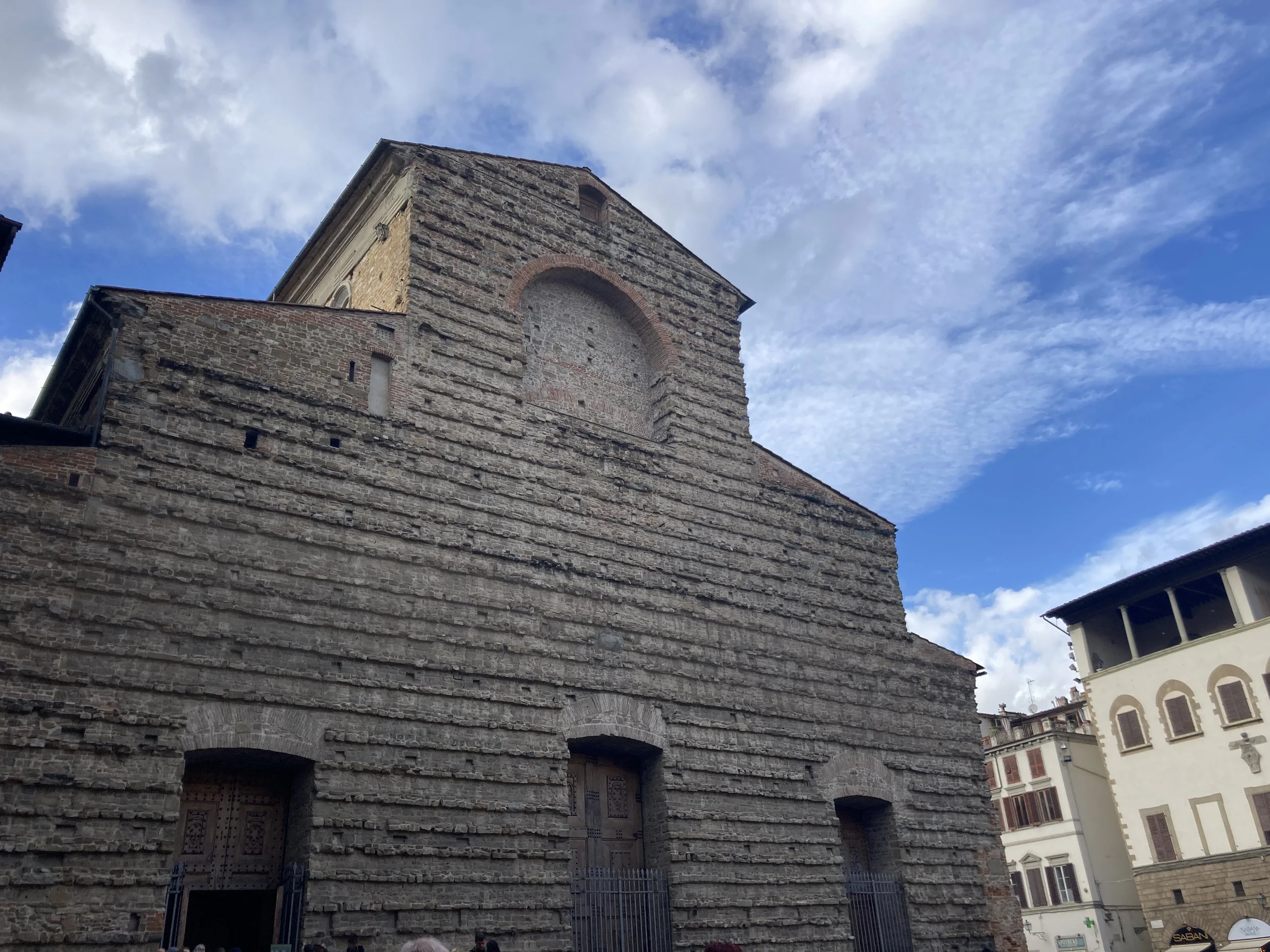
A few months ago the ambulance service moved outside of central Lucca, leaving a spot for some benches and flower pots in the space where the ambulances used to sit. The stone wall of the church is now easy to see and the historic carved lintel above the side door more visible.
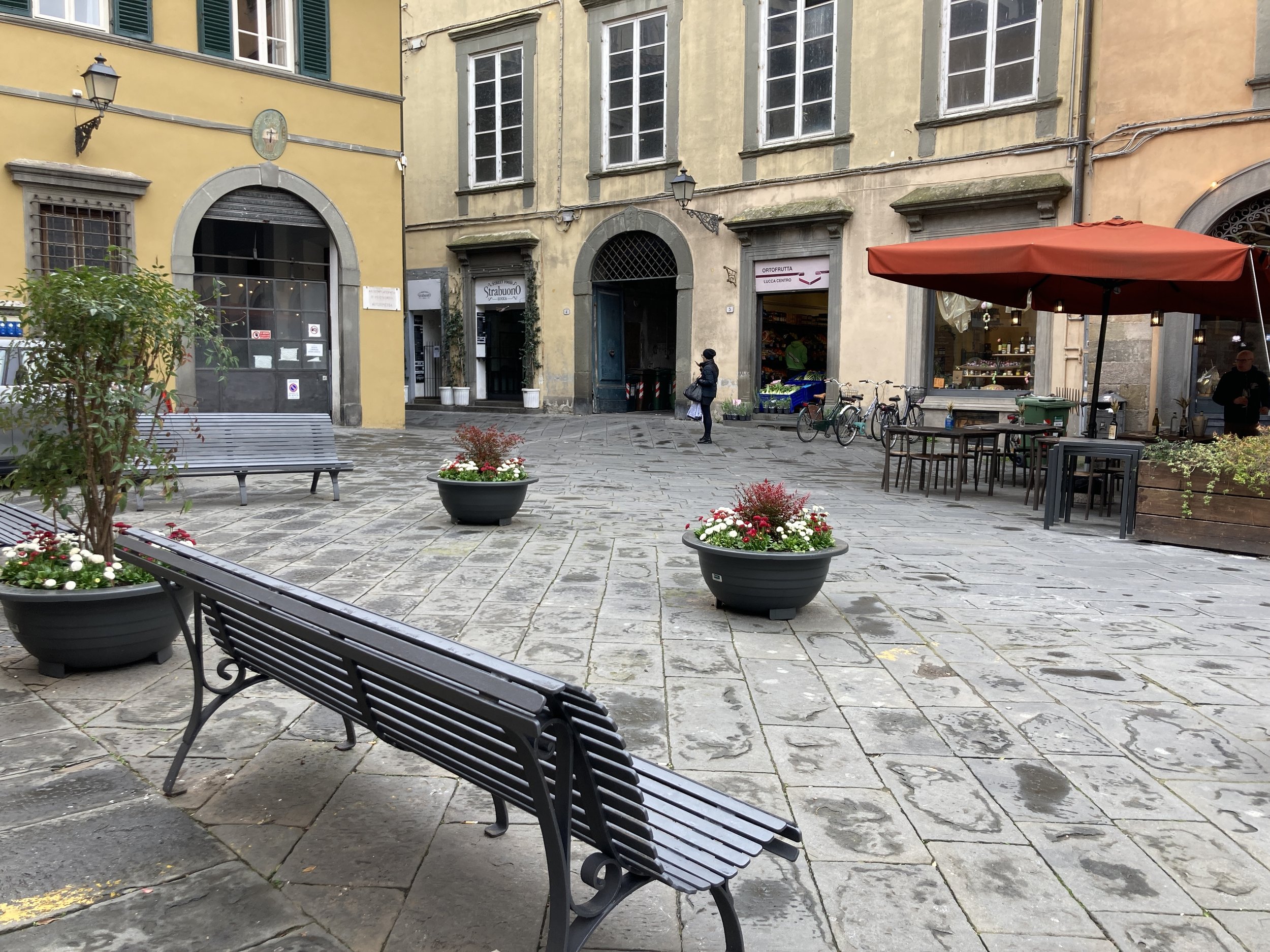
This new sitting area, once filled with parked ambulances, is now a pretty place to sit facing the piazza along the side of the church.

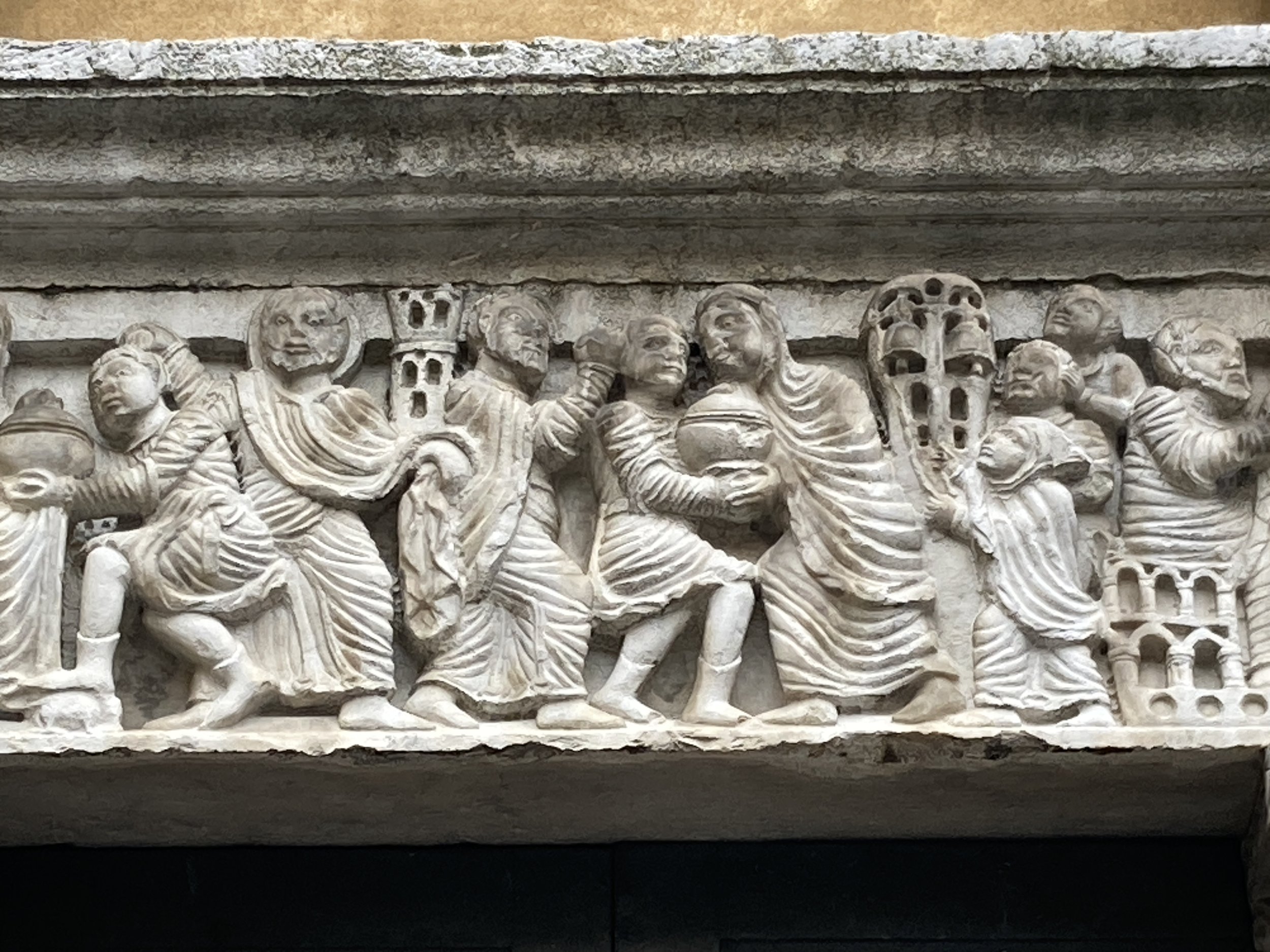
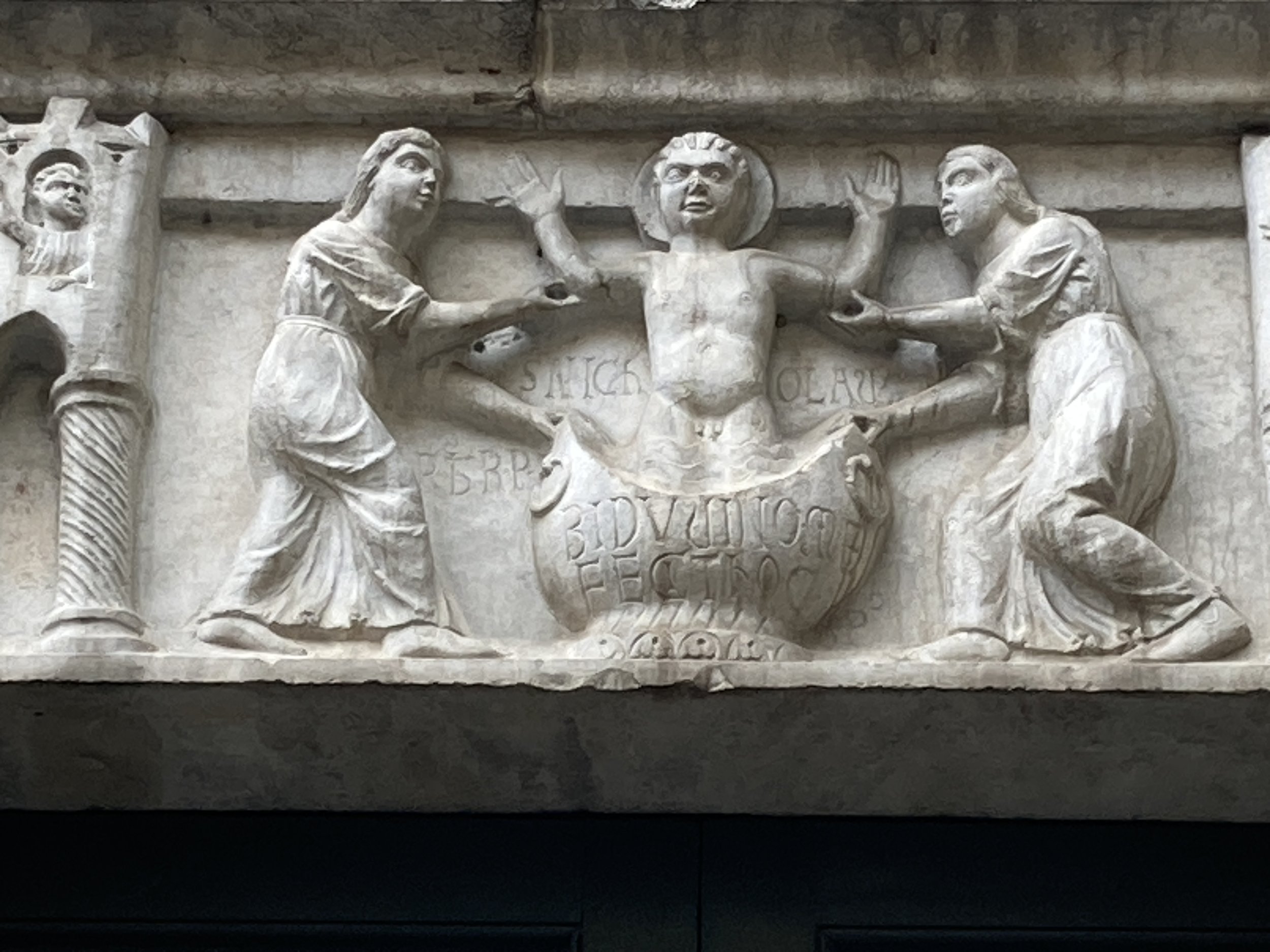
 A church has stood here for over 1000 years**, with major renovations and modifications over time.  Some of the most important elements of the current church are the exterior lintels, one over the front right door (below, right) and one over the side door (below, left), that date from the 12th century.  Each lintel tells a story from the life of Saint Nicholas.  They are beautifully carved, in wonderful shape, and are important examples of decorative elements from that time period. 
IMG_4749.jpeg
IMG_4747.jpeg
IMG_4742.jpeg

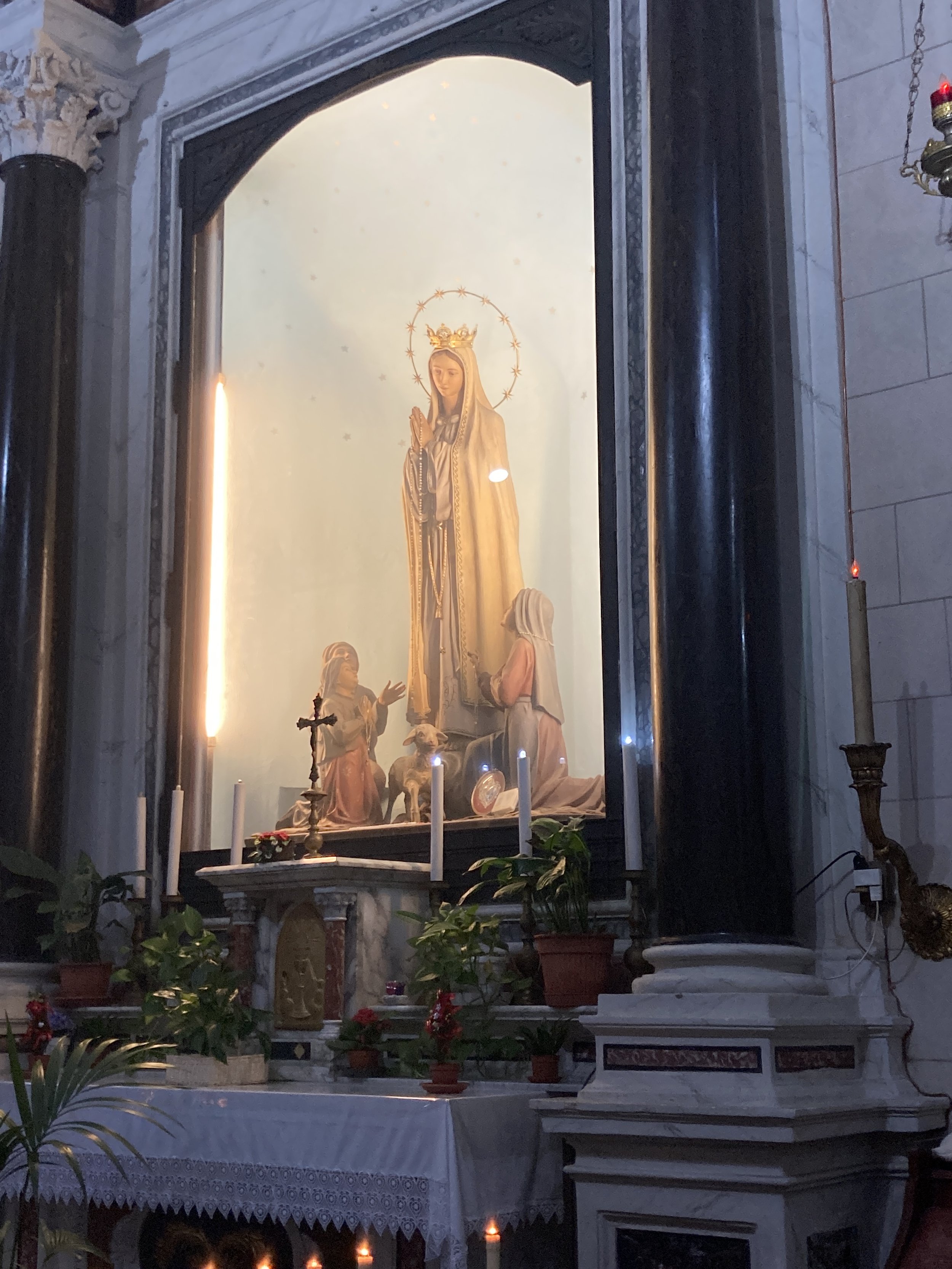
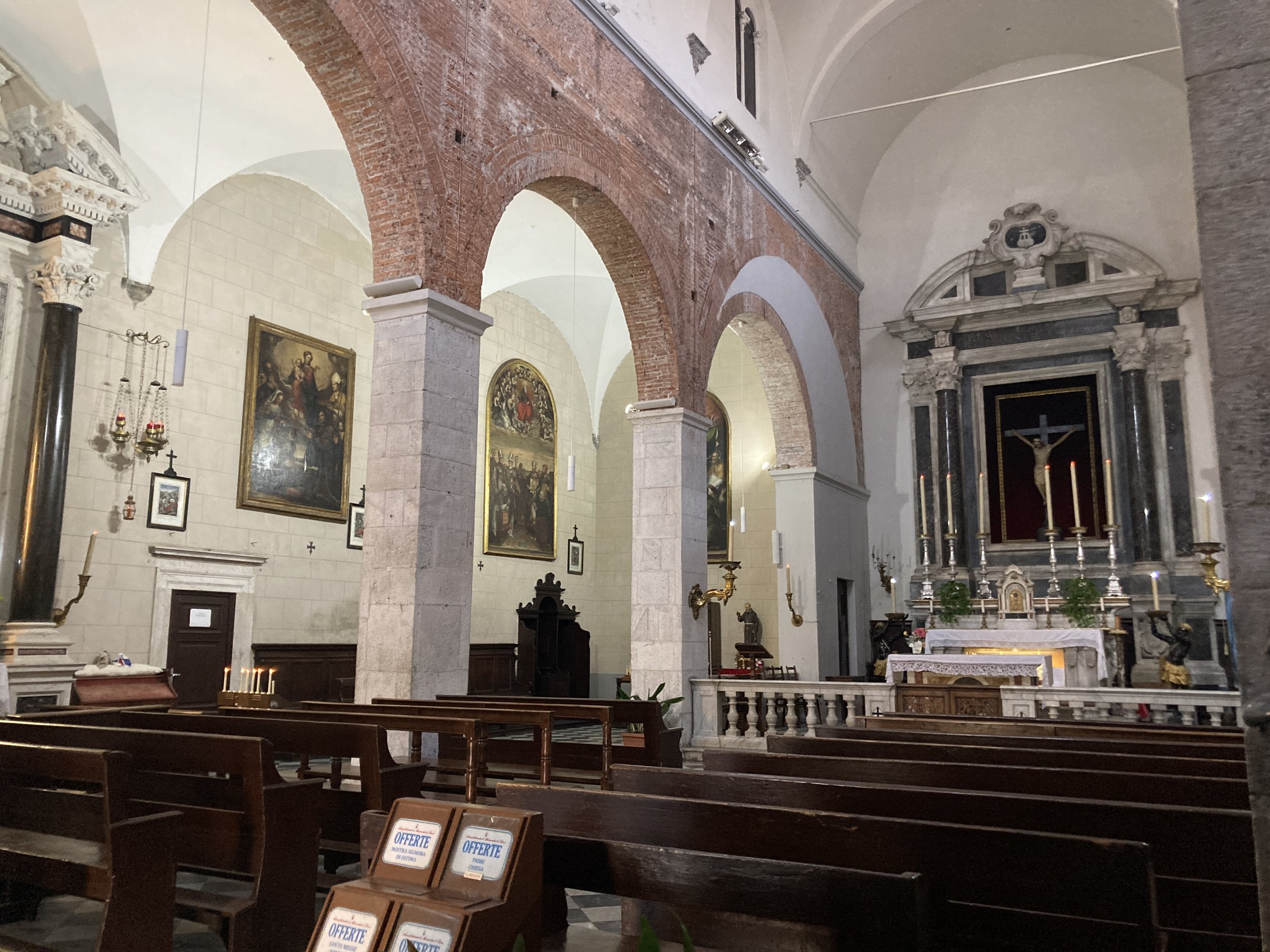
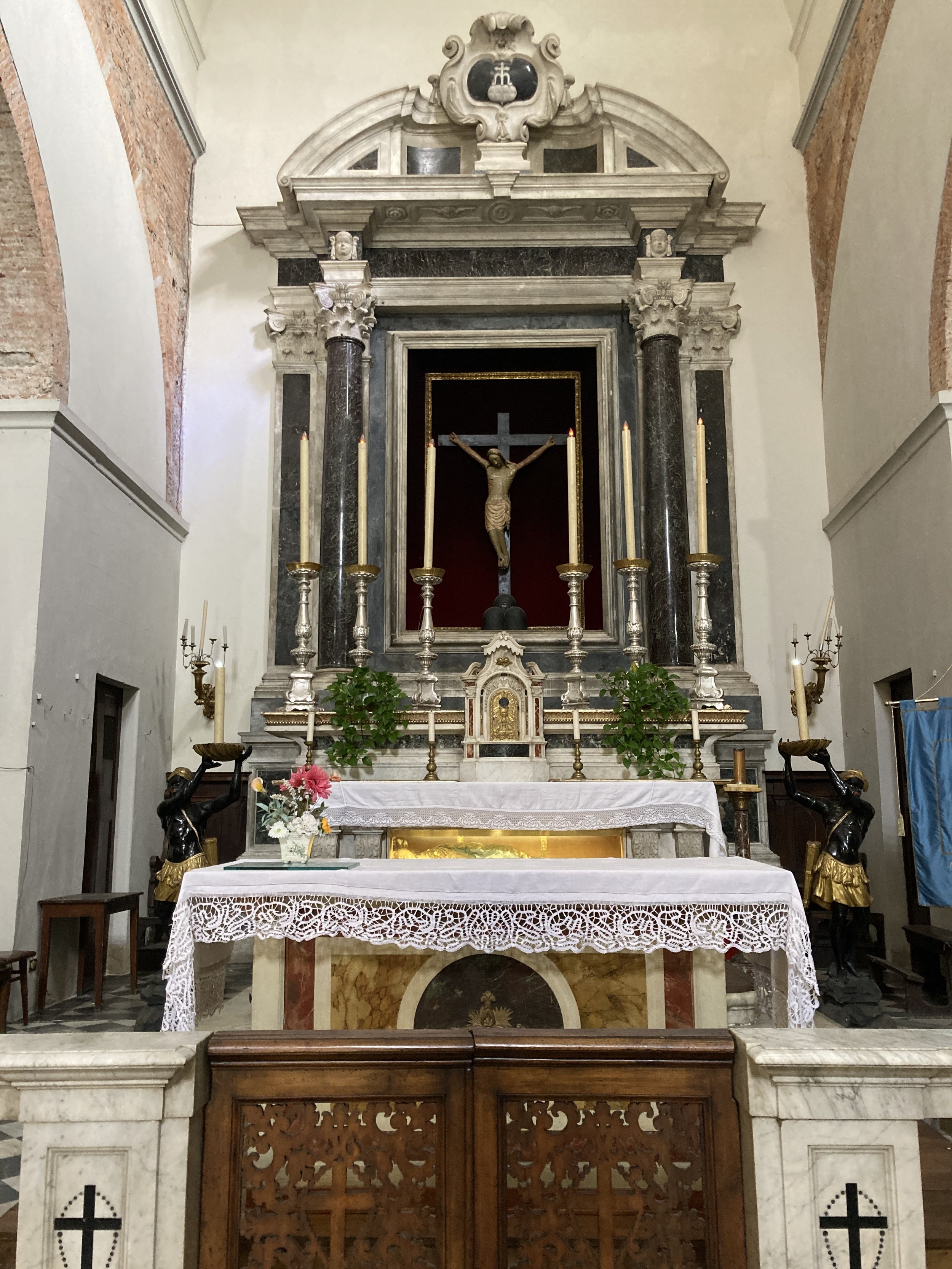
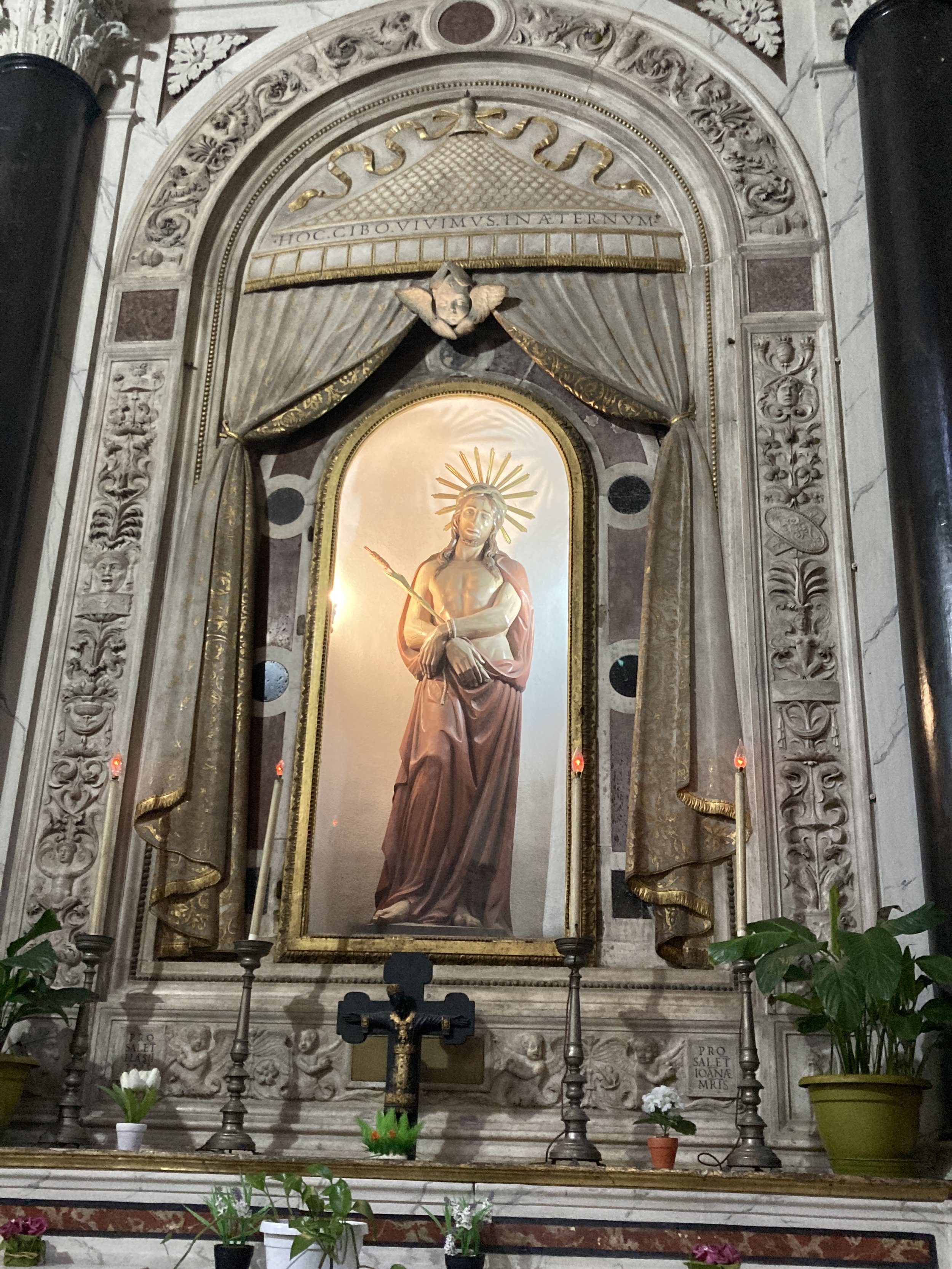
The interior of the church has a main altar that contains a 14th century wooden crucifix.   Two smaller altars are placed along the sides of the small church. One, an ornate sculpted piece, frames a Christ with bound wrists. The other is a depiction of Our Lady of Fatima surrounded by children.
IMG_4771.jpeg
IMG_4716.jpeg
IMG_4730.jpeg

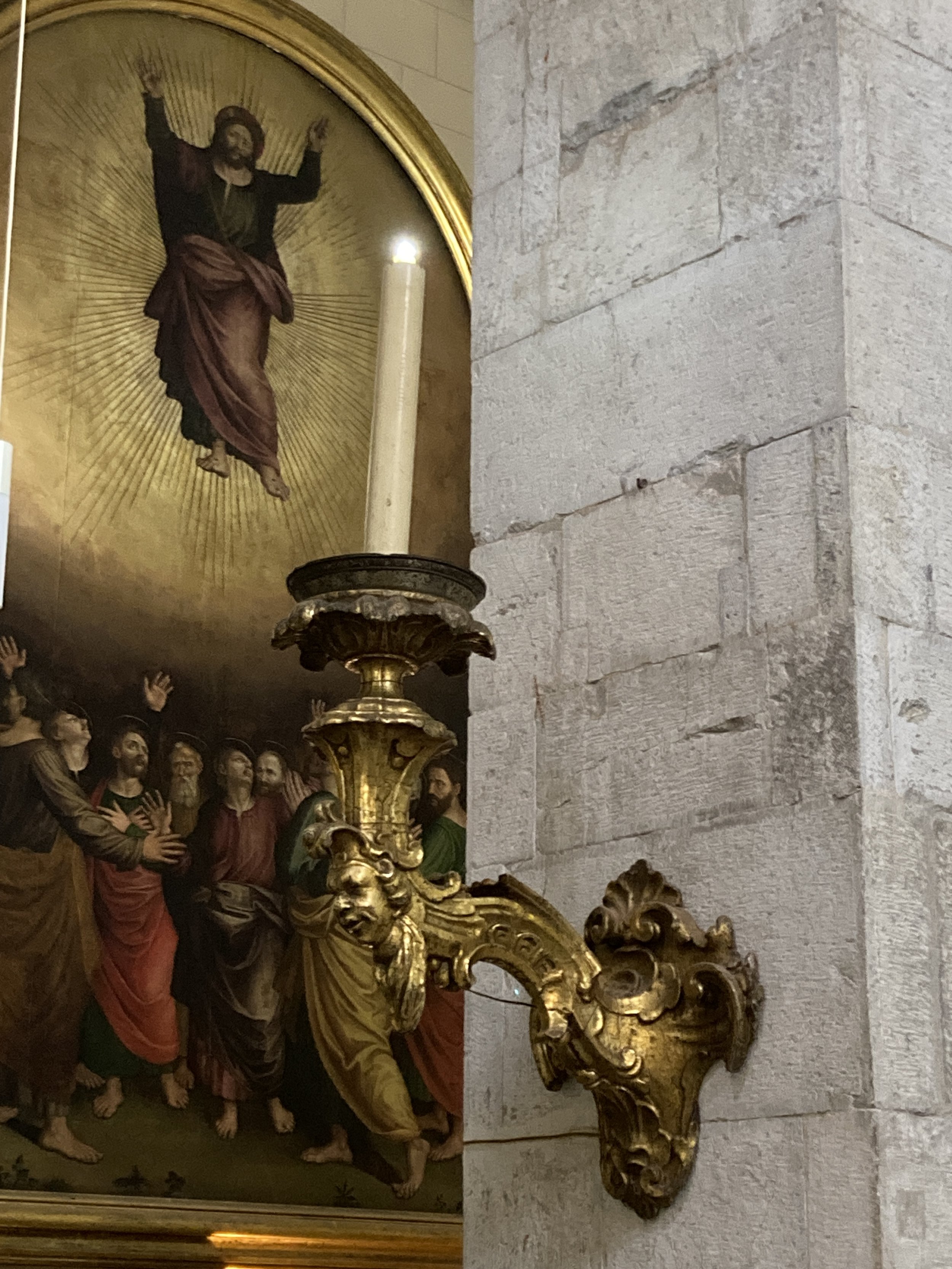
There are several paintings inside the church, including an Ascension from the year 1561 by the local artist Vezzano and another that depicts local favorite Santa Zita in the company of several saints. 
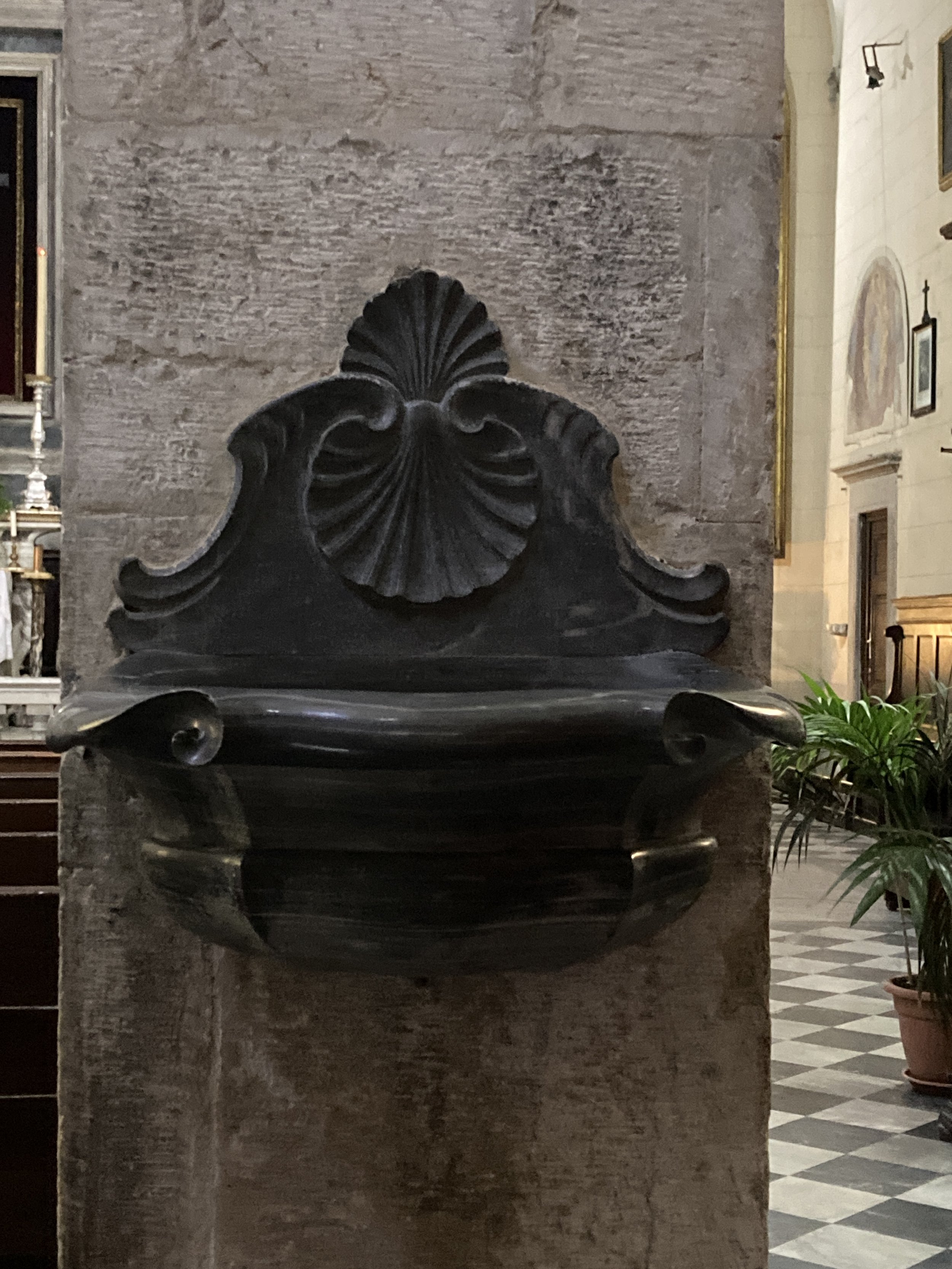
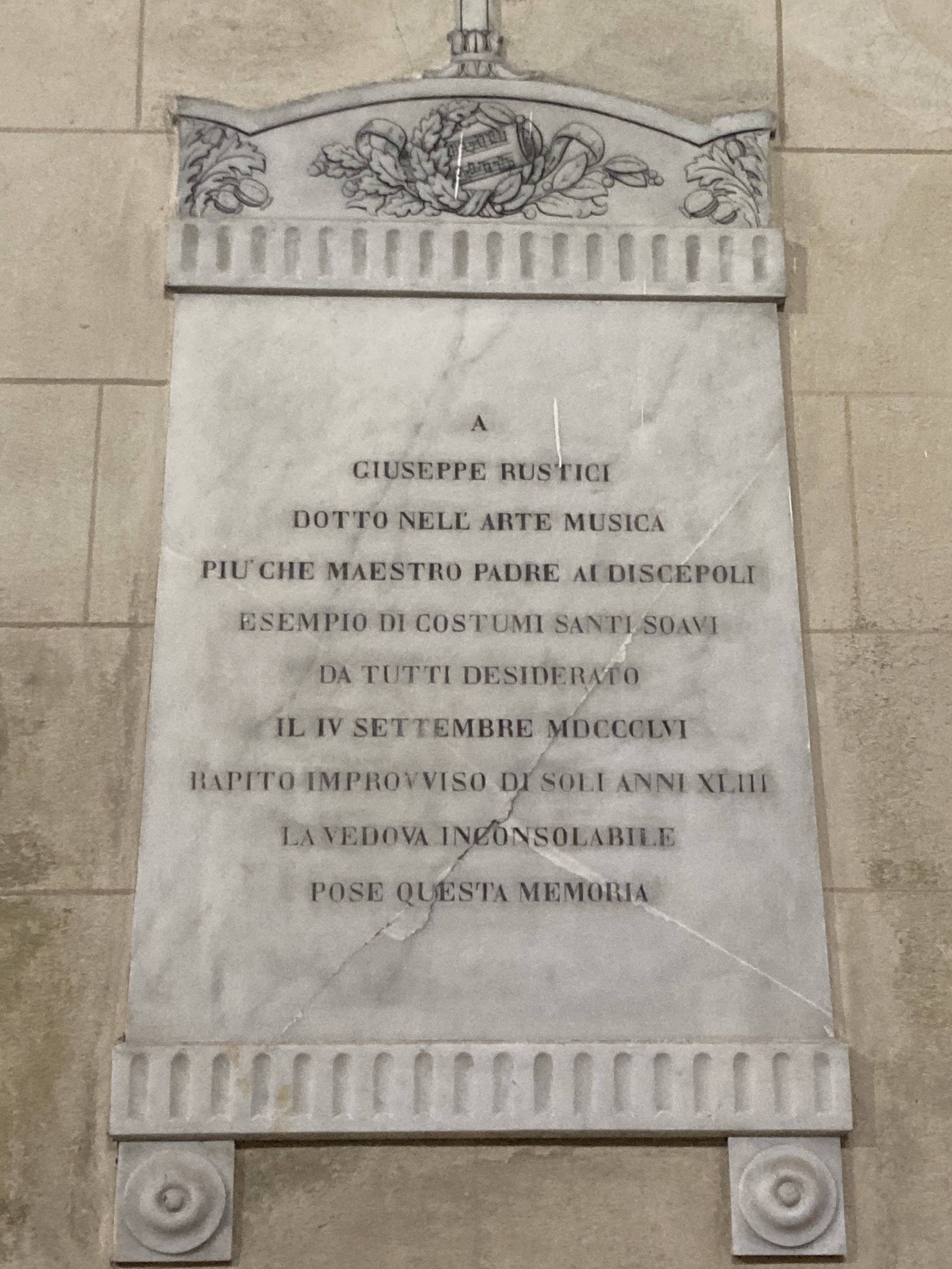
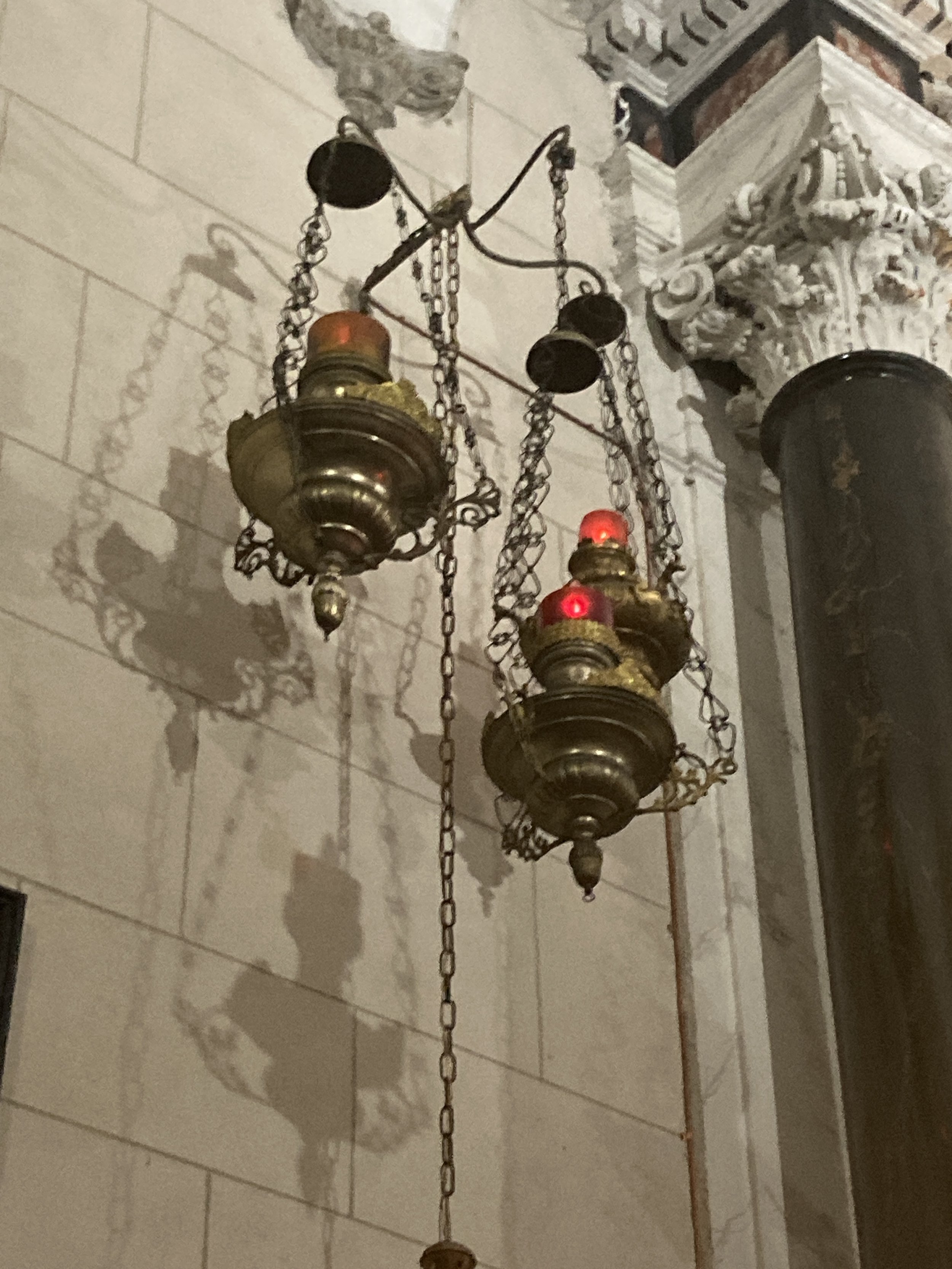
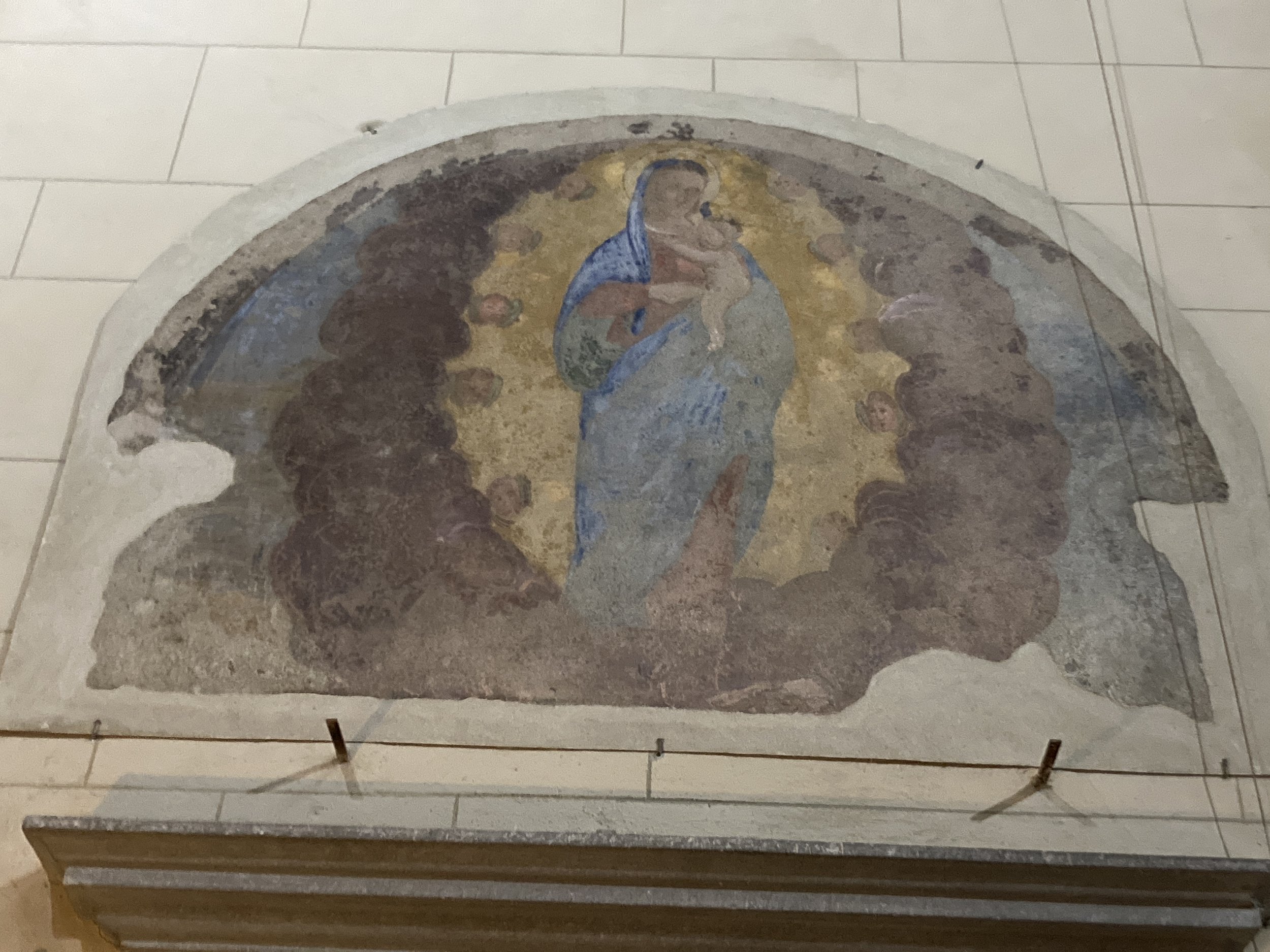
I always find the little details in a church fascinating. A memorial marker, a lantern, a holy water font, a small shrine, a simple stature, a bit of faded fresco. This are the things that capture my attention and there are plenty to see in the Church of San Salvatore.
IMG_4735.jpeg
IMG_4713.jpeg
IMG_4718.jpeg
IMG_4726.jpeg


The quiet church provides an oasis of calm.  As an added bonus, it sits within the Piazza del Salvatore with Nottolini’s famous fountain topped by the Naiade statue. What a beautiful place to stop in the midst of running errands!

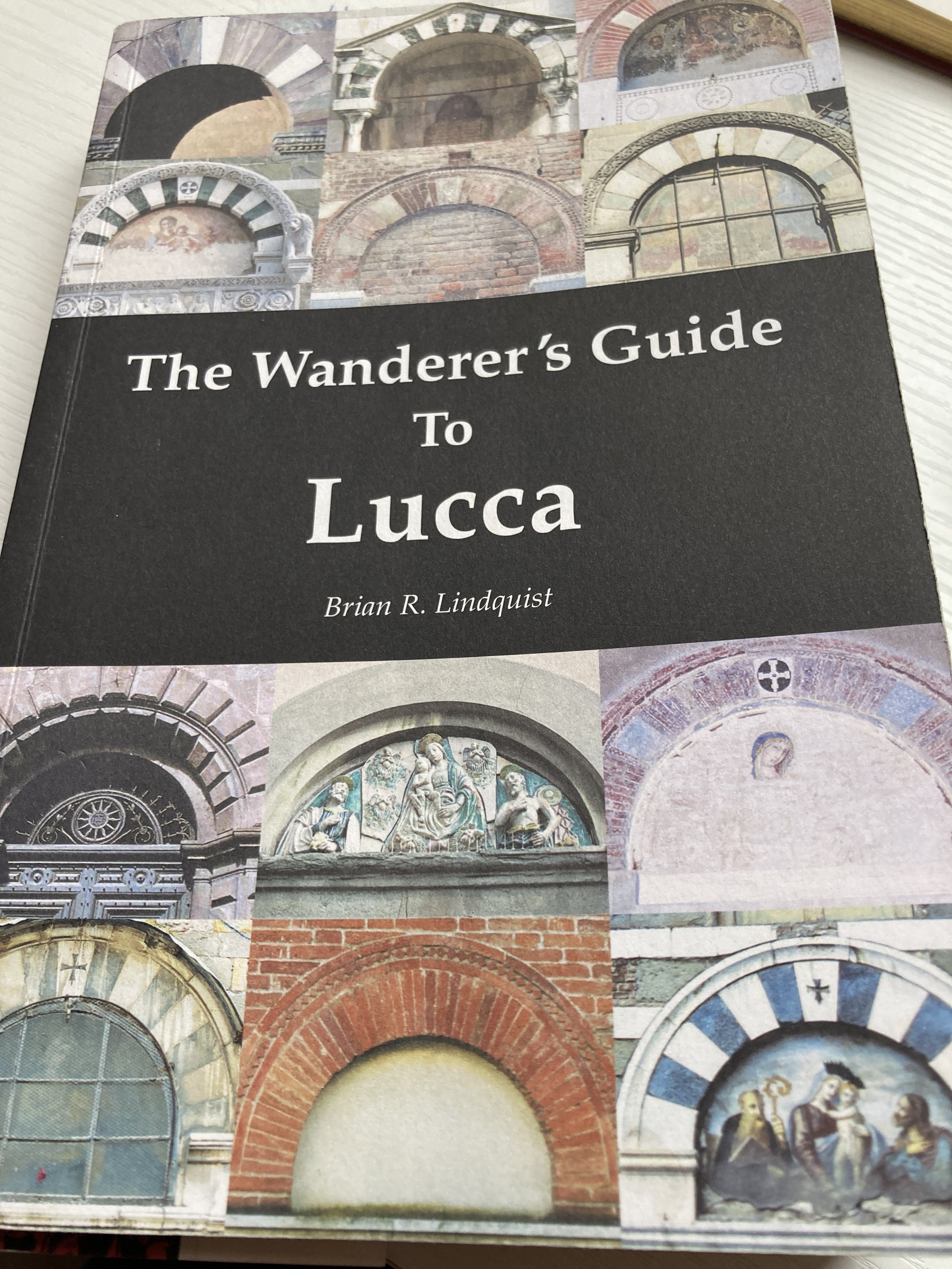
** A huge thanks to The Wanderer’s Guide to Lucca by Brian Lindquist for the history of San Salvatore church.  His book, and the accompanying Wanderer’s Map, remain the most valuable English language source for information on the historic churches and buildings in Lucca.  It’s a must have for anyone living here or interested in Lucca’s history.
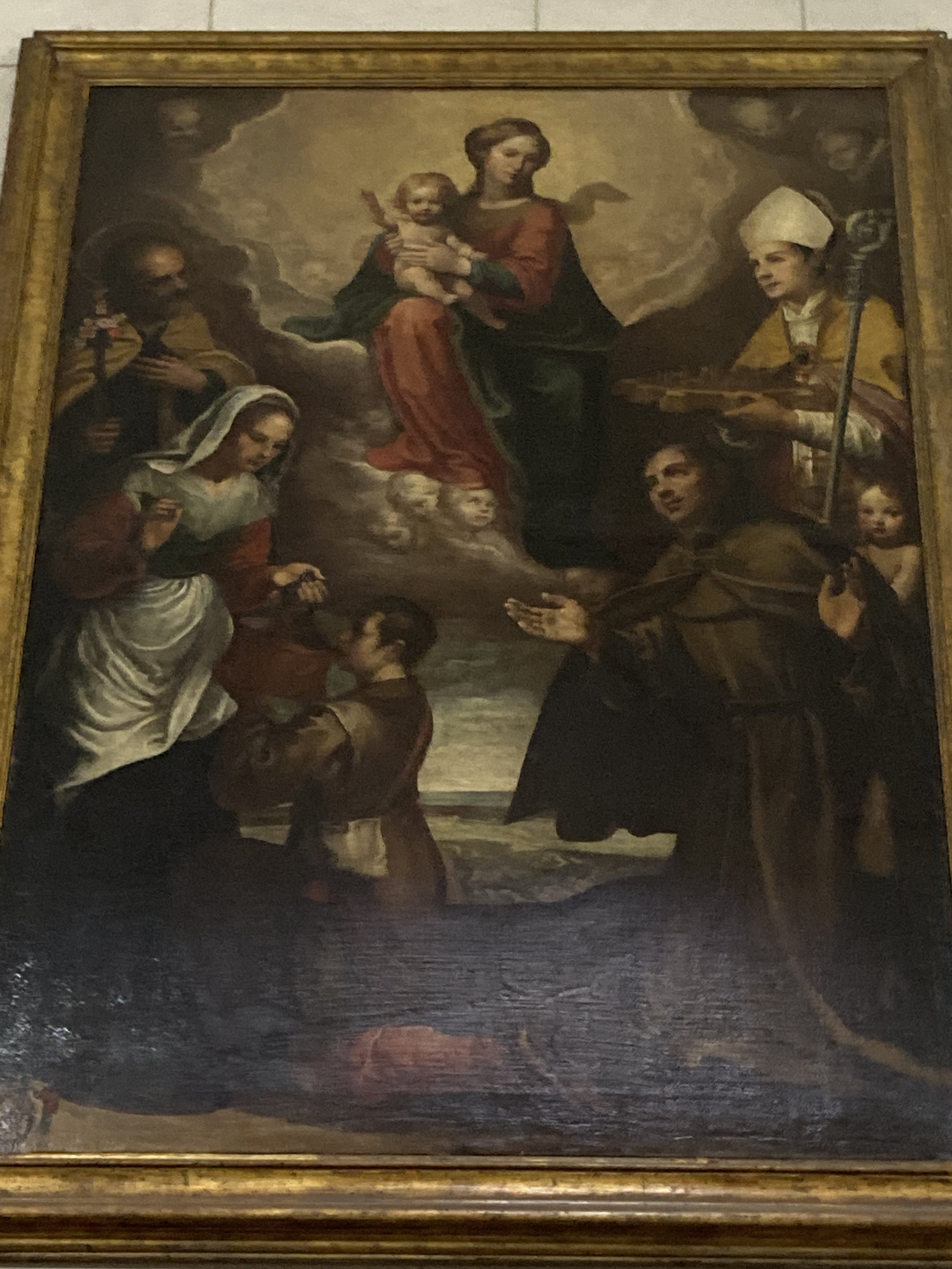
 

Can you spot Santa Zita in this painting from the year 1638 by Mannucci?
March 18, 2024 /Joanne Bartram
Church of San Salvatore Lucca, Piazza del Salvatore Lucca, Churches Lucca, #lucca
#italy2024, #lucca, #italytravel, #luccafountains, #medievalitaly, Churches Italy, Italian culture, Italy, Living in Italy, Lucca

Basilica of San Lorenzo, Florence.

The Basilica of San Lorenzo in Florence

January 29, 2024 by Joanne Bartram in #florence, #italytravel, #medievalitaly, Churches Italy, Florence, Italian art architecture, Italian culture, Italy travel, Tuscany

It’s hard to have a favorite church in Florence.  It may even be wrong to choose a favorite considering the number of historic and significant churches in the city.  The Duomo, officially the Church of Santa Maria del Fiore, with its magnificent façade and campanile, is famous for good reason.  Consider Santa Maria Novella, Santa Croce, Santissima Annunziata – and those are just the basilicas inside the historic center.  Add in smaller churches, chapels, baptisteries, oratorios, bell towers and wonderful churches outside the center and, well, it would take years to explore them all.  How could anyone choose a favorite?
Tomb of Berta Moltke Hwitfeldt, Corbelli Chapel, Basilica of San Lorenzo

 And yet, I do have a couple of favorites.   One is the Basilica of San Lorenzo, whose 4th century origins make it the oldest church in Florence.  Redesigned by Brunelleschi in the 15th century, and completed after his death, it was the parish church of the Medici family, many of whom are buried there.

Detail, Basilica of San Lorenzo, Florence

 San Lorenzo is more than just a church – the complex also has a museum, the Laurentian Library, and the Medici Chapels.  Underneath the Medici chapels is a recently discovered hidden room with rough sketches by Michelangelo covering the walls. Right now it’s the hottest attraction in town but it was not yet opened during my November stay in Florence. The library is not always open, and a special ticket is needed for the Medici Chapel.  The entire complex is a bit too much for one visit.

On my recent off-season stay in Florence, I stopped by on the spur of the moment and purchased a ticket which included only the cloister and church, both of which were uncrowded and just right for a short visit.

What is it that makes the San Lorenzo Basilica one of my favorites?   It starts with the rough stone exterior.  Unlike the polished marble façade of the Duomo, the San Lorenzo stands unadorned and underdressed.  It was meant to have a white marble façade, designed by Michelangelo at the request of the Medici Pope Leo X.   But the pope died, the money dried up, and the façade was never installed. 

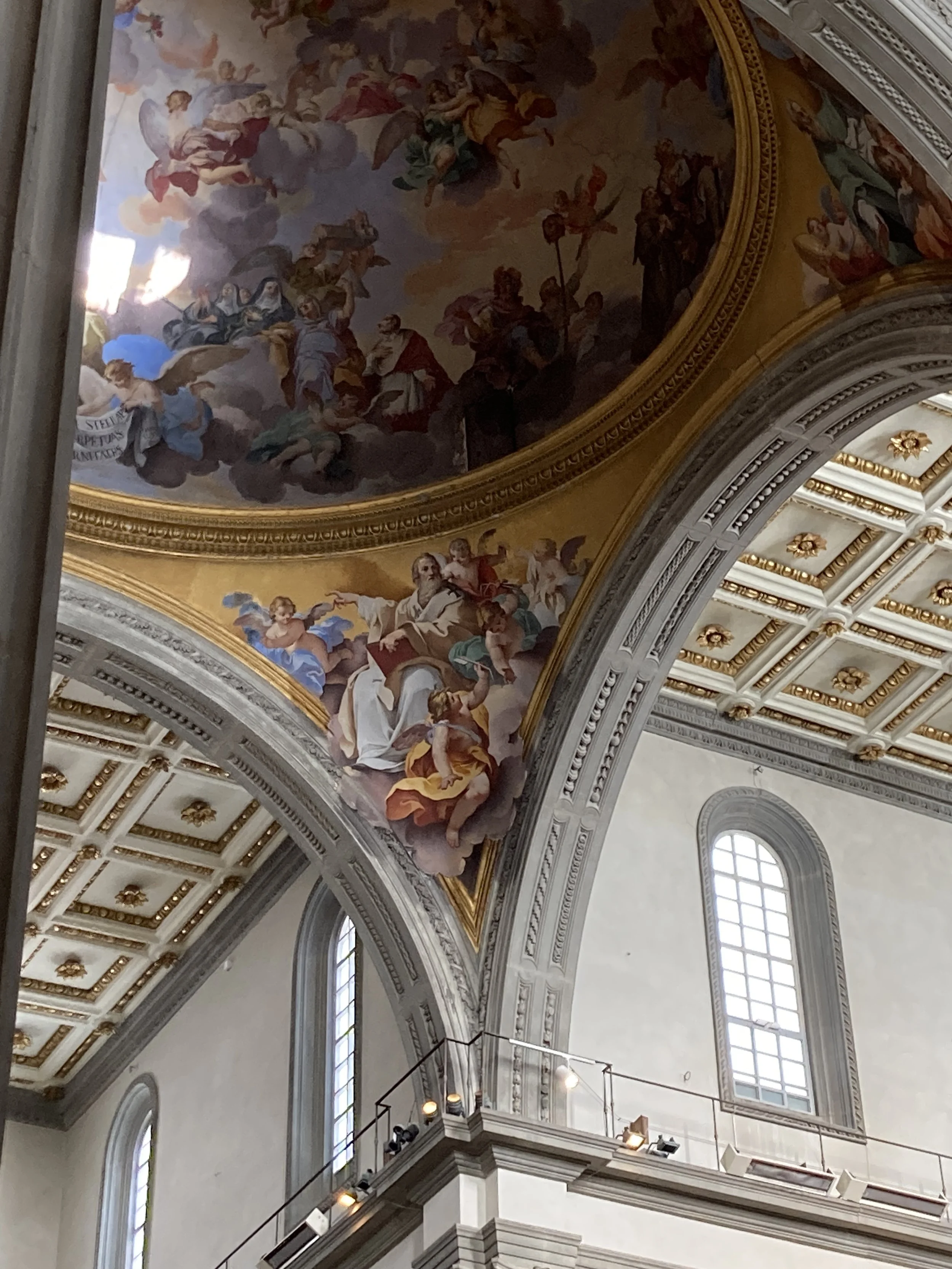
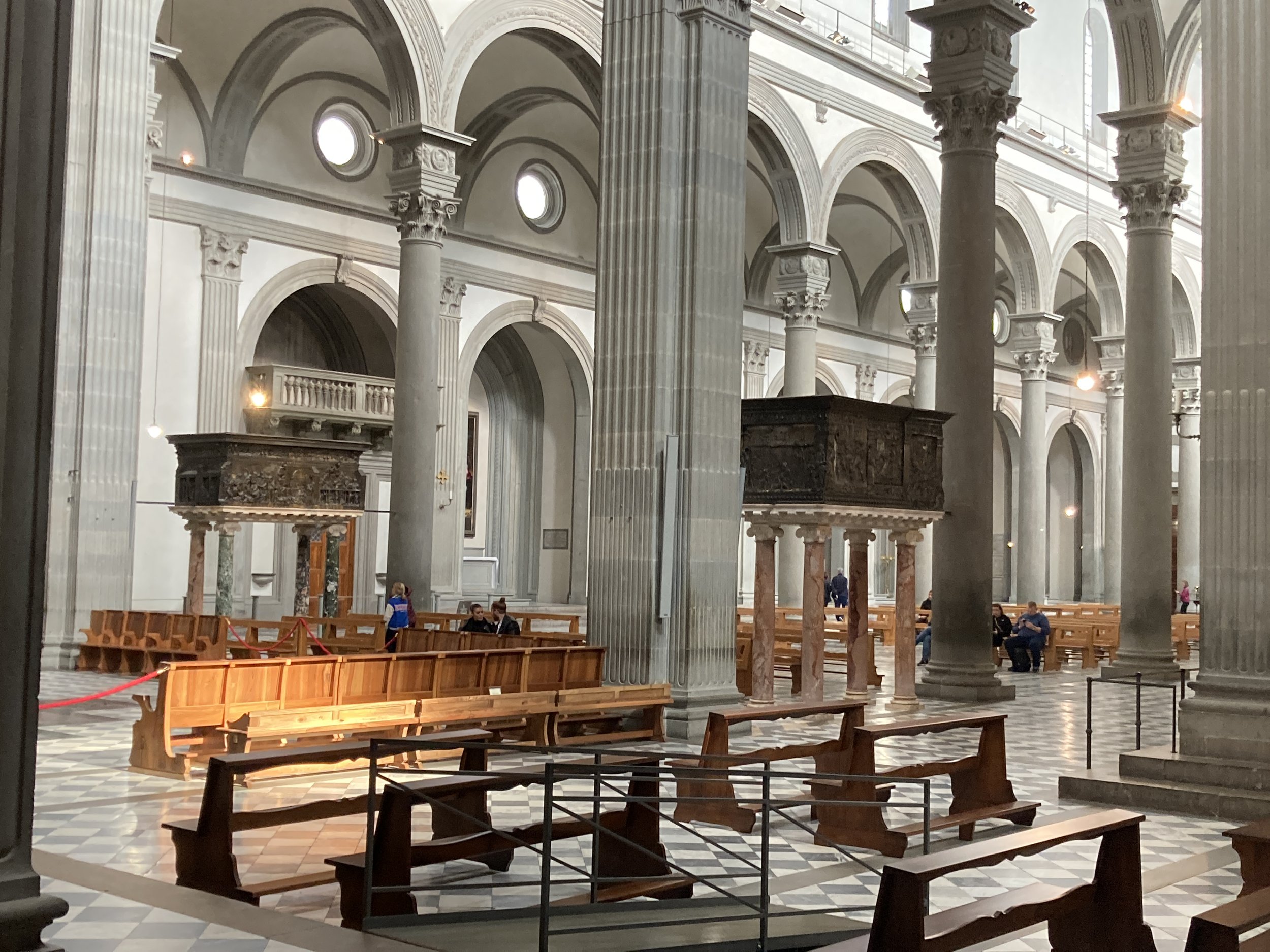
Inside, the basilica feels quiet and peaceful with its simple geometric floor anchoring graceful arches and columns in gray Pietra Serena (Serene Stone).  The high, round, windows let in light through their clear glass.  Even the ceiling, with its gold edged squares and central medallions (look for the Medici coat of arms) feels calming. Unlike more ornate churches (such as my other favorite, the very Baroque Santissima Annunziata), San Lorenzo has low contrast colors and finishes. This allows it to feel open and airy. The Basilica is a soothing space that supports quiet contemplation and an uncluttered mind. 

Another reason to love this church is the way in which it showcases the work of Donatello.  His two ornately carved pulpits, raised high atop marble columns in the center of the church, are considered his final masterpieces.

Donatello’s pulpits , Basilica of San Lorenzo

The church holds many remarkable pieces of art, but not so many as to be overwhelming.  There are sculptures, including graceful tomb markers, and some significant paintings, many of which sit in small side chapels.

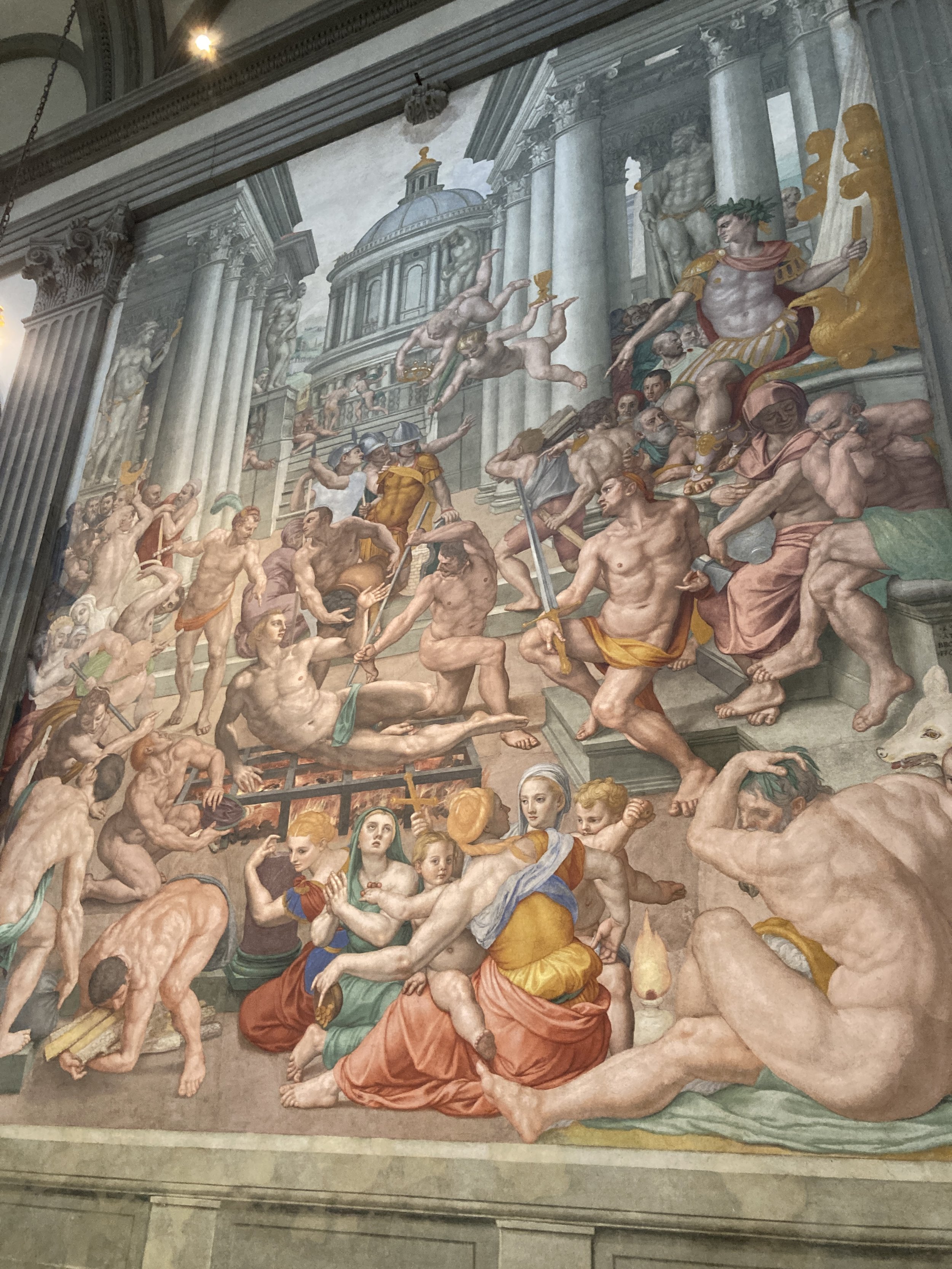
Bronzino’s The Martyrdom of St. Lawrence

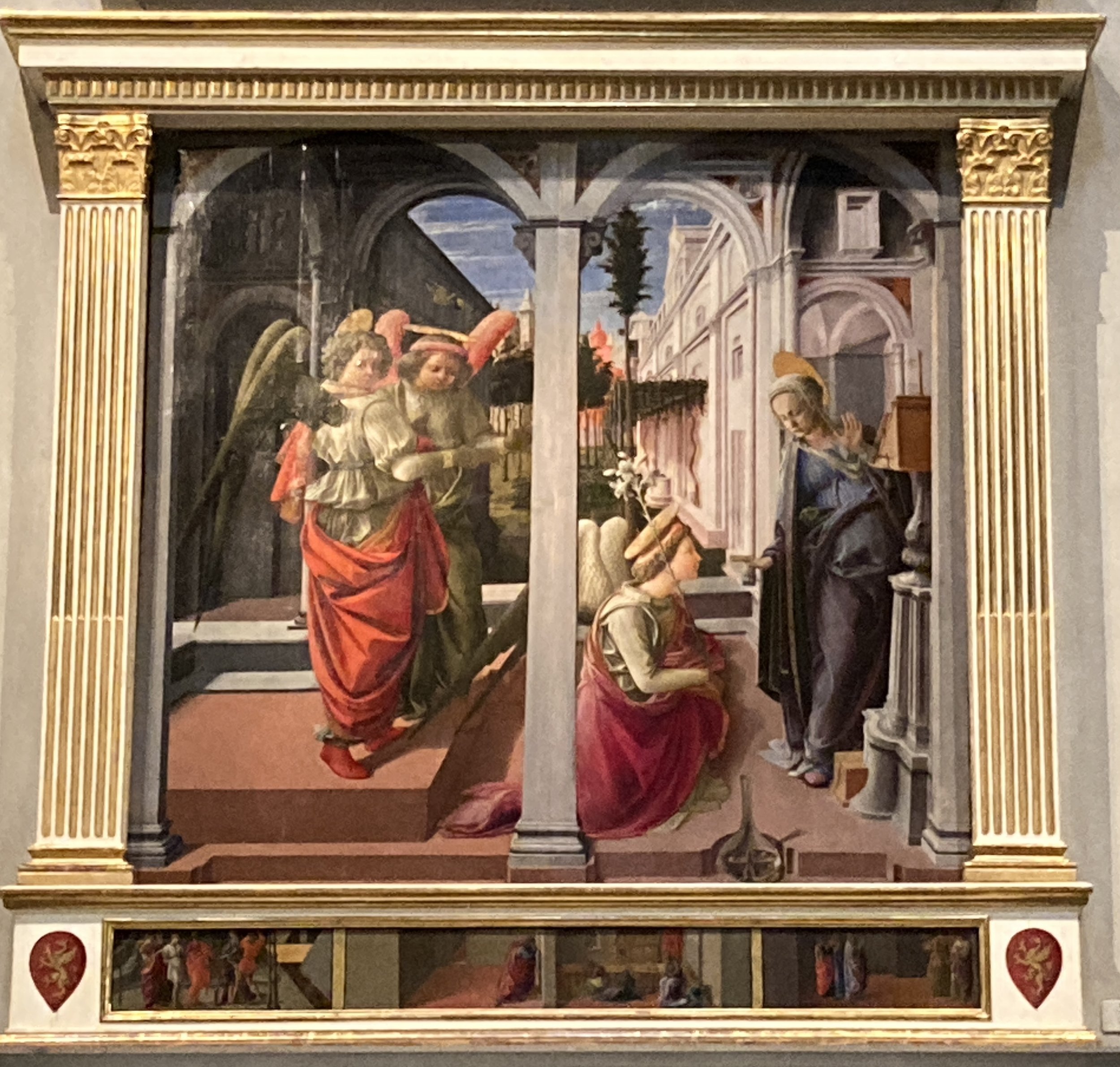
Perhaps the two most well-known paintings are an Annunciation by Filippo Lippi (below, right) and the Betrothal of the Virgin by Rosso Fiorentino (below, left).  Two very different styles, both captivating.   

BDE79584-8F80-47E8-81DD-5A0C9B04510C_1_201_a.jpeg
2A67D836-A358-4A1A-BD0B-42BDDE455A1A_1_201_a.jpeg

Old Sacristy, Basilica of San Lorenzo

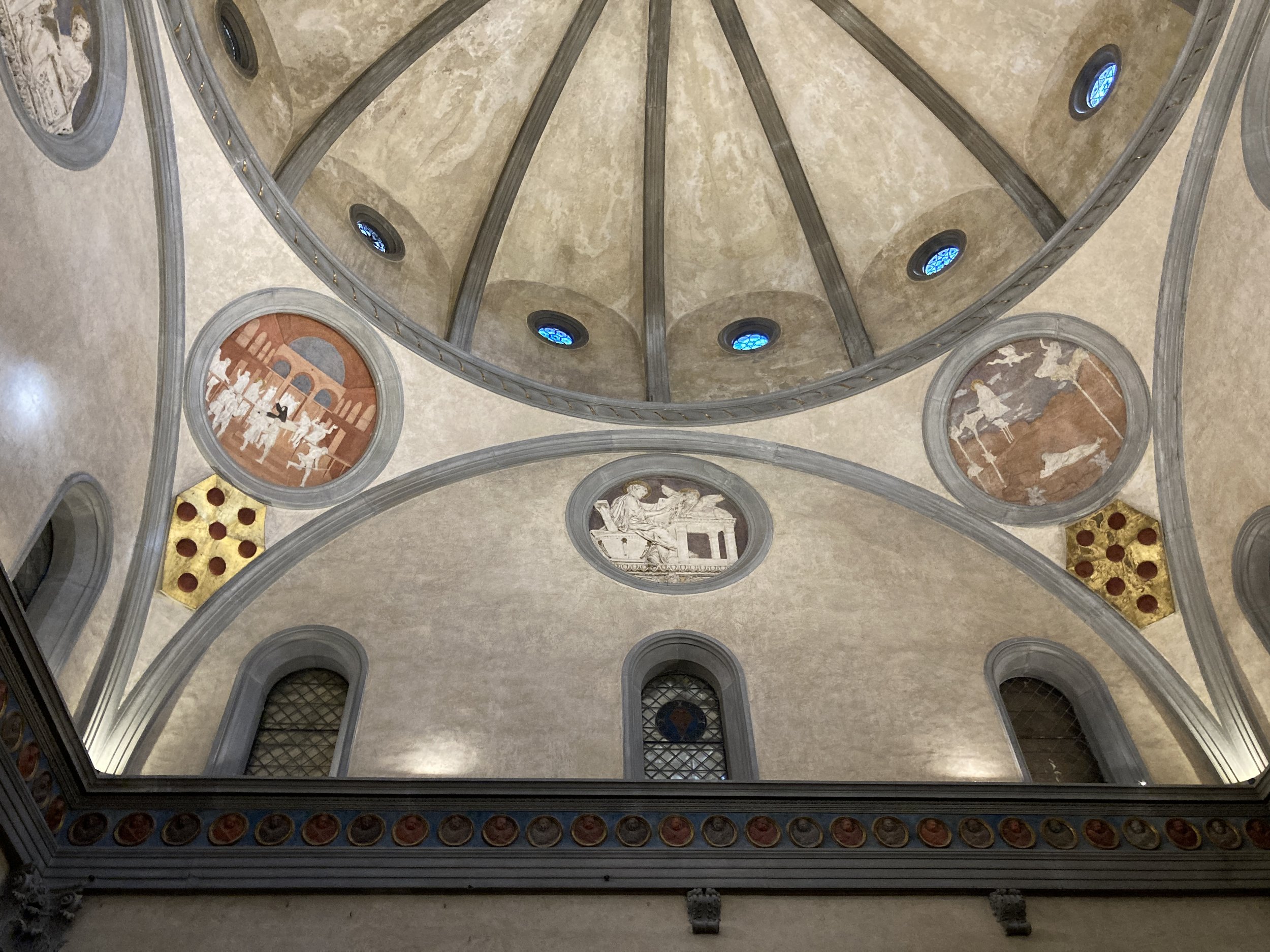
The biggest reason for my love of this church is the small Sagrestia Vecchia (Old Sacristy).  Designed by Brunelleschi, it was the only portion of the church completed before his death.  His perfectly proportioned design incorporates a square room with a ribbed dome on top, several graceful arches, and the same gray and white colors of the main church. 

 Opposite the entry into the sacristy is a small marble altar, its design in white marble is in keeping with the simplicity of the rest of Brunelleschi’s design.  Above the altar, in a smaller dome, is a remarkable blue and gold night sky.  There has been some debate about the date represented by the constellations pictured.  Initially it was thought to represent the day the altar was consecrated in July of 1422.  Newer theories give the date as July 6, 1439, the date of the accord uniting the Eastern and Western branches of Christianity.  Whichever date is correct, the constellations unite the sacristy with the heavens.

The constellations above the altar in the Old Sacristy, Basilica of San Lorenzo

 In the center of the sacristy is the tomb of a Giovanni di Bicci de’Medici and his wife Piccarda Bueri.  It was Giovanni who founded the Medici bank and set the stage for the Medici era in Florence.  This seems like a fitting place for him to rest.

Not part of Brunelleschi’s original design, several elements were later added by Donatello at the request of the Medicis.  These include a series of tondi (round decorations) which lie below the dome.  The 4 in the corners represent the life of Saint John the Evangelist.  


Detail, Donatello’s bronze doors, Old Sacristy

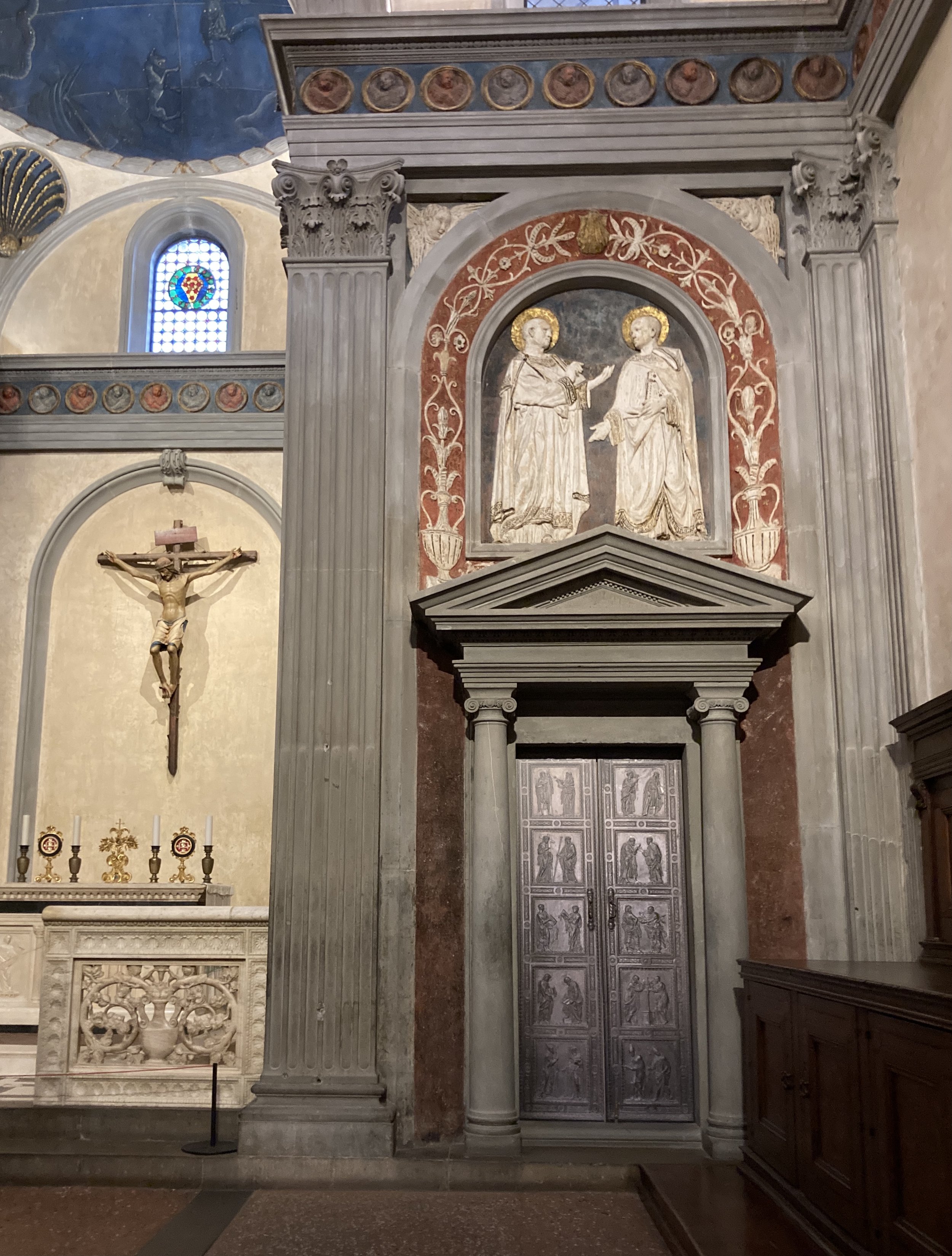
Donatello also designed the two bronze doors that flank the altar.

Apostles to the left, martyrs on the right.

The large reliefs above the doors, with St. Cosmos and St. Damian on the right and St. Stephen and St. Lawrence on the left, are also the work of Donatello.

(Note: There is also a New Sacristy but it is not accessible from inside the church, only from the Medici Chapels)


One of the relief decorations by Donatello above the bronze doors in the Old Sacristy.


The Basilica of San Lorenzo is not the largest or most ornate church in Florence.  It wears no colorful marble facade. But it is stunning in its simplicity and is of great historical and architectual importance. When visiting, don’t miss the literature with a QR code which links to an audio guide. The audio descriptions greatly enhanced any visit.

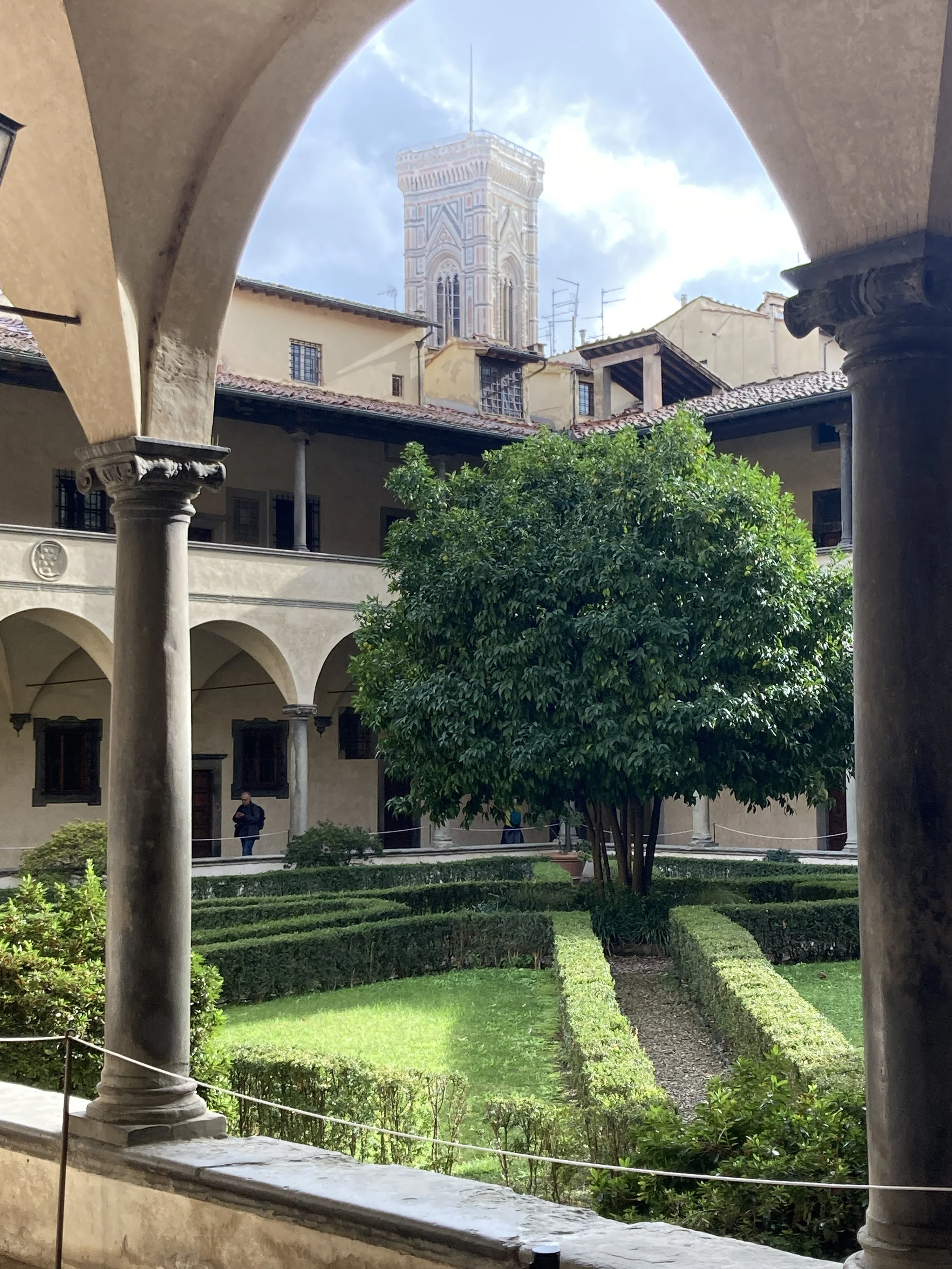
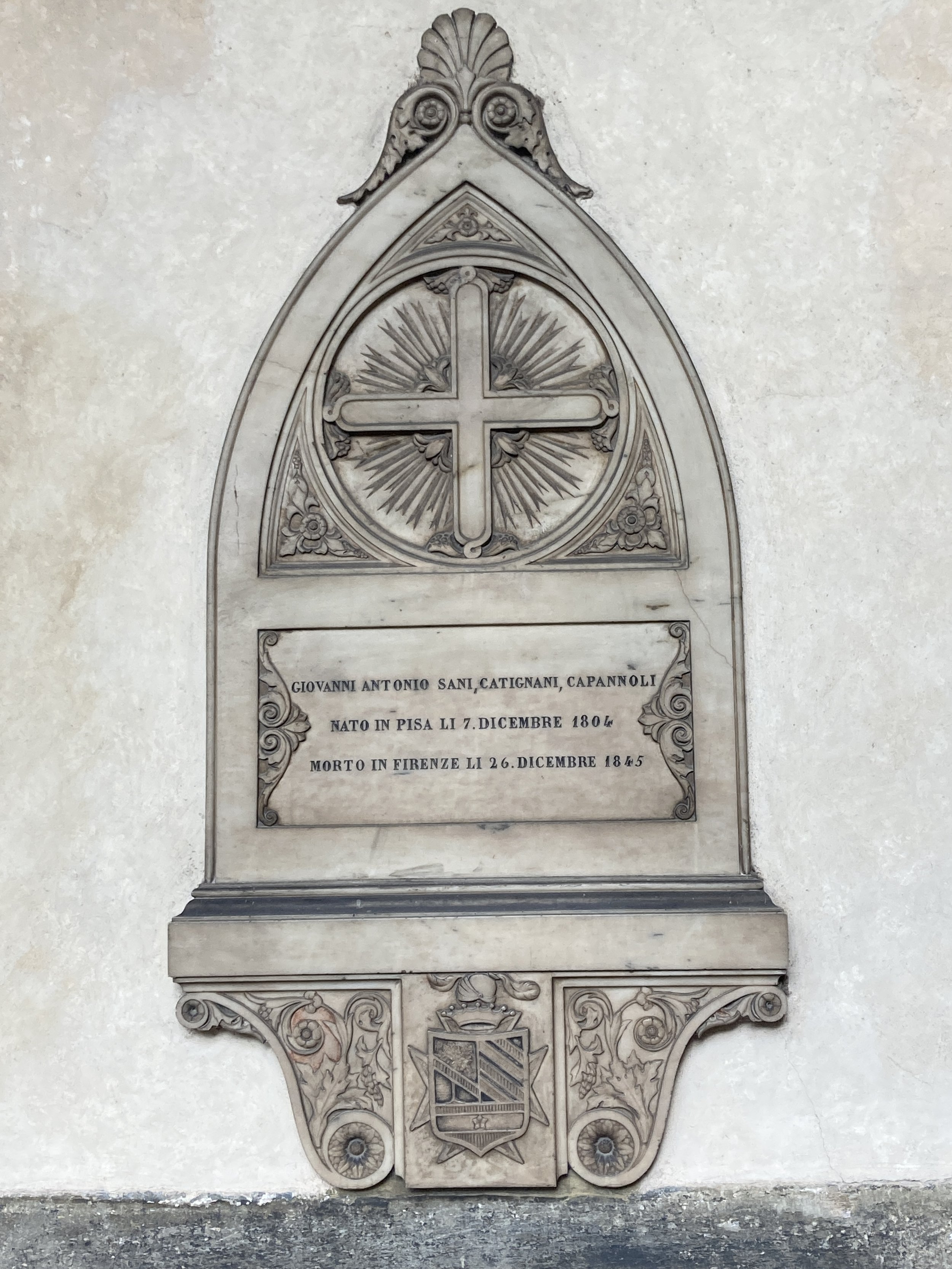
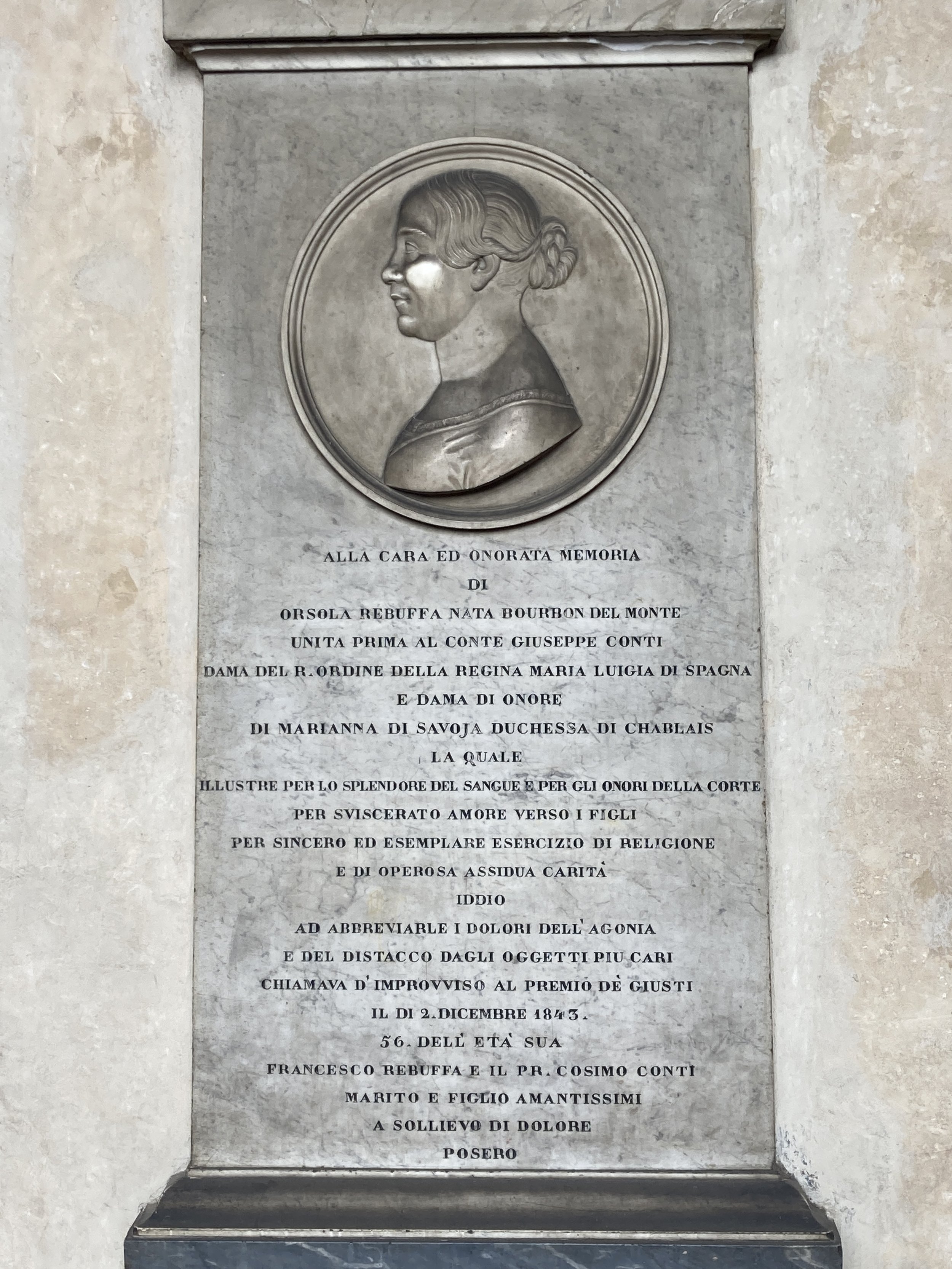
Entry and Exit to the church is through the cloisters.  This green space, surrounded by a two-story loggia, is a destination all of its own. The lower floor of the loggia surrounds a neatly kept space with low hedges and a big central tree.  Under the arches is a walkway with walls filled with memorials to long ago Florentines.  It’s a moving space embracing both the quiet of the church and views out into the “real world” of Florence.  You can almost hear the rustling robes of those long ago monks as they walk through the cloister.

Cloister, Basilica of San Lorenzo

748FC455-2804-4D11-A170-32C8A4F9BDD6.jpeg
5343E7A4-1C72-41FD-9E54-5149601E7ADD.jpeg
81959226-65B3-448A-8D77-A556BC6DAFC3.jpeg

 Hungry afterwards?  Just outside the front entry is a wonderful lunch spot – the Trattoria San Lorenzo.  A perfect way to end a visit to the church, enjoy a meal, and have time to organize memories of the basilica.

January 29, 2024 /Joanne Bartram
San Lorenzo, Basilica San Lorenzo, Florence Churches, Medici Church, Brunelleschi Florence, Donatello Florence
#florence, #italytravel, #medievalitaly, Churches Italy, Florence, Italian art architecture, Italian culture, Italy travel, Tuscany

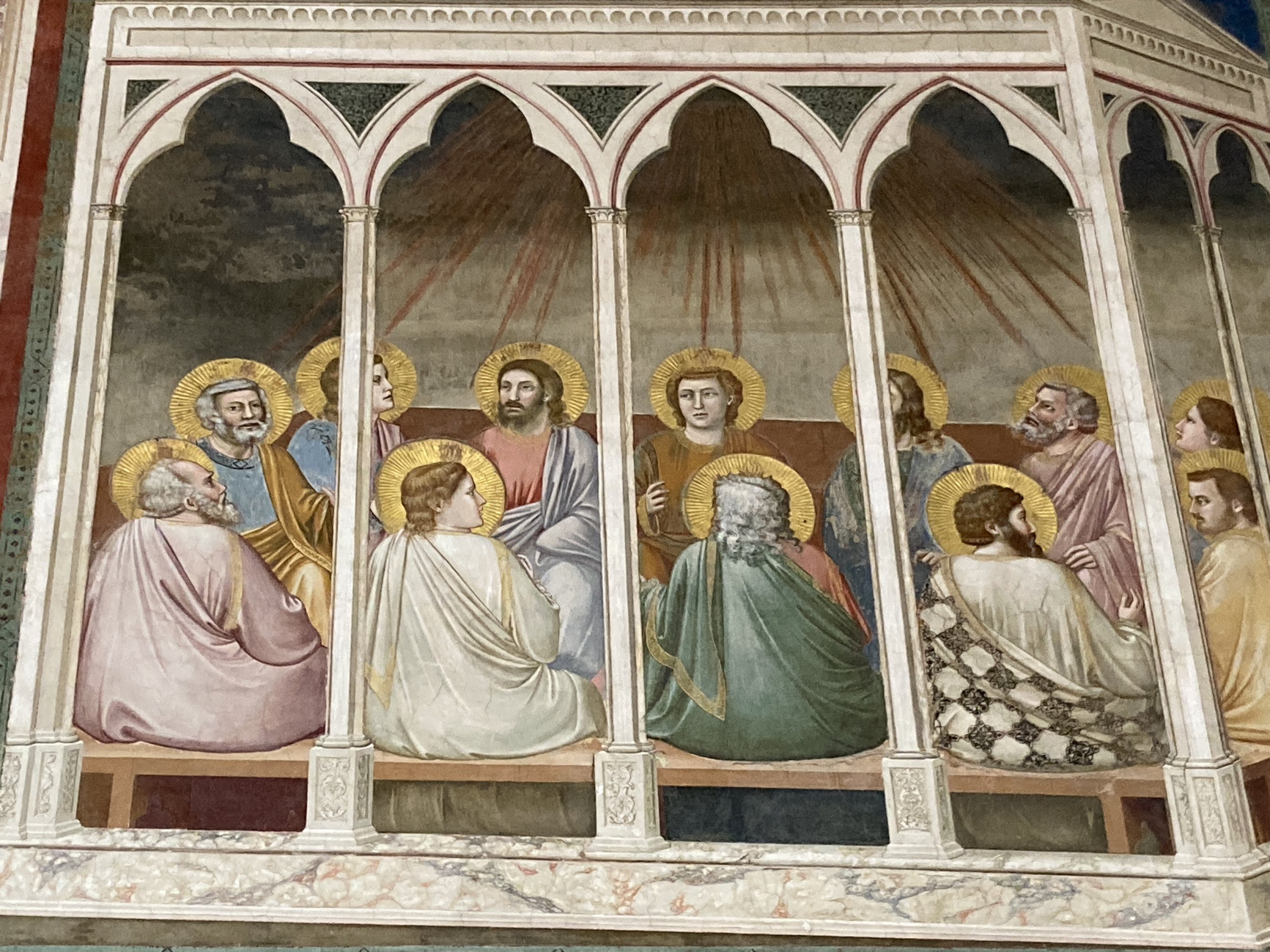
Giotto Panel #37. Pentecost Scrovegni Chapel

And Then Came Giotto

August 29, 2022 by Joanne Bartram in #italytravel, Churches Italy, Italian Art, Italian art architecture, Italy, Padova, Padua

I am not an art historian; far from it.  I don’t even claim to be a serious student of art.  And yet, it is impossible to live in Italy and not develop a profound appreciation for art. There are museums full of ancient art – Etruscan and Roman – displaying artifacts from those eras, from tiny jewelry pieces to funeral urns, mosaics, and classic statuary.  And though there were also Roman painters, the examples that have survived are relatively few.  In contrast, paintings from the late Medieval (Middle Age) and Renaissance periods fill Italian churches and museums.  The differences between the two eras can be appreciated by even an untrained observer like myself.

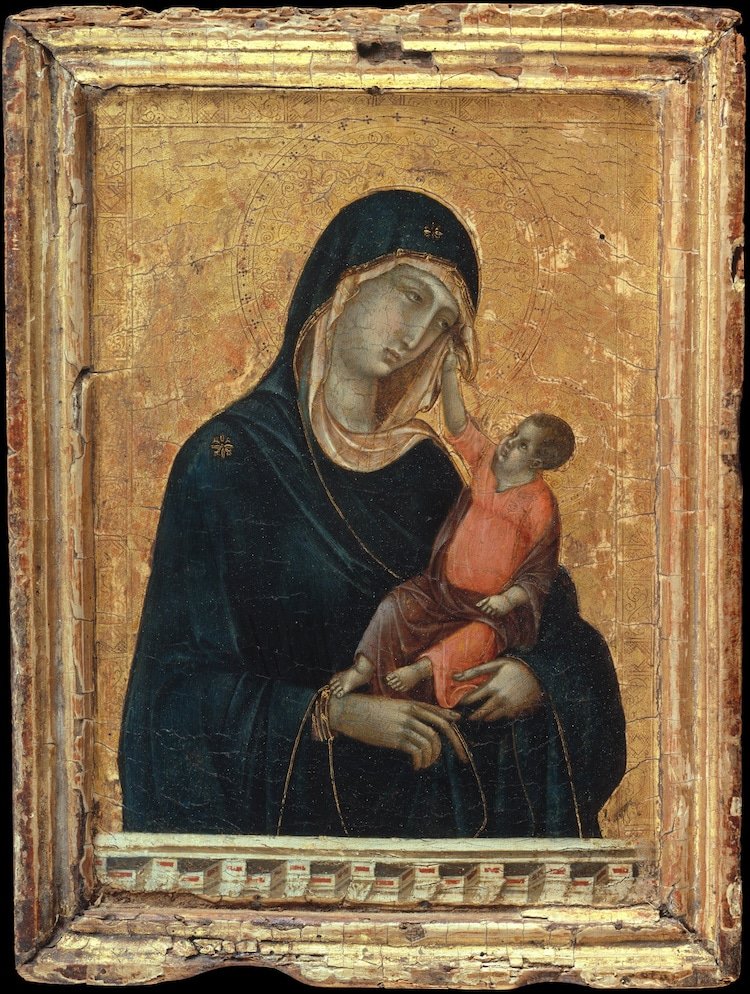
Madonna and Child ca. 1300 artist: Duccio. (photo from Wikimedia Commons Public Domain). An example of painting from the Medieval era.

Prior to the Renaissance, Medieval paintings were characterized by religious subjects, often a single figure filling the center of a painting.  The figures were flat and the faces often expressionless.  The human form was not natural looking or sensuous.  These were icons, not neighbors.

Backgrounds and perspective were not very important components of medieval painting.  And all that gold!  Gold shows up everywhere in Italian art of the middle ages.  In backgrounds, in halos, in elaborate detailing.  Imagine how that gold appeared – as the richness of God, the divine light – and also, perhaps, an symbol of the wealth of the patron or church who commissioned the work.

In contrast, paintings from the Renaissance era (1400 – 1600 AD) make wonderful use of perspective and often place subjects in natural settings.  The figures are realistic, their human-ness evident.  The clothing drapes and swirls, the faces show a full range of emotions.  The subjects are still largely religious, though portraits were also painted, usually for wealthy patrons (think of Da Vinci’s Mona Lisa, painted in 1503).  The names of Renaissance artists are familiar: Donatello, Da Vinci, Michelangelo, and Raphael being perhaps the most widely known artists from the 1400’s.

An unfinished Da Vinci portrait painted between 1500 - 1505. La Scapigliata (the word scapigliata refers to her disheveled hair) hangs in the National Museum in Parma, Italy. The difference between this Renaissance painting and earlier Medieval ones is pretty clear!

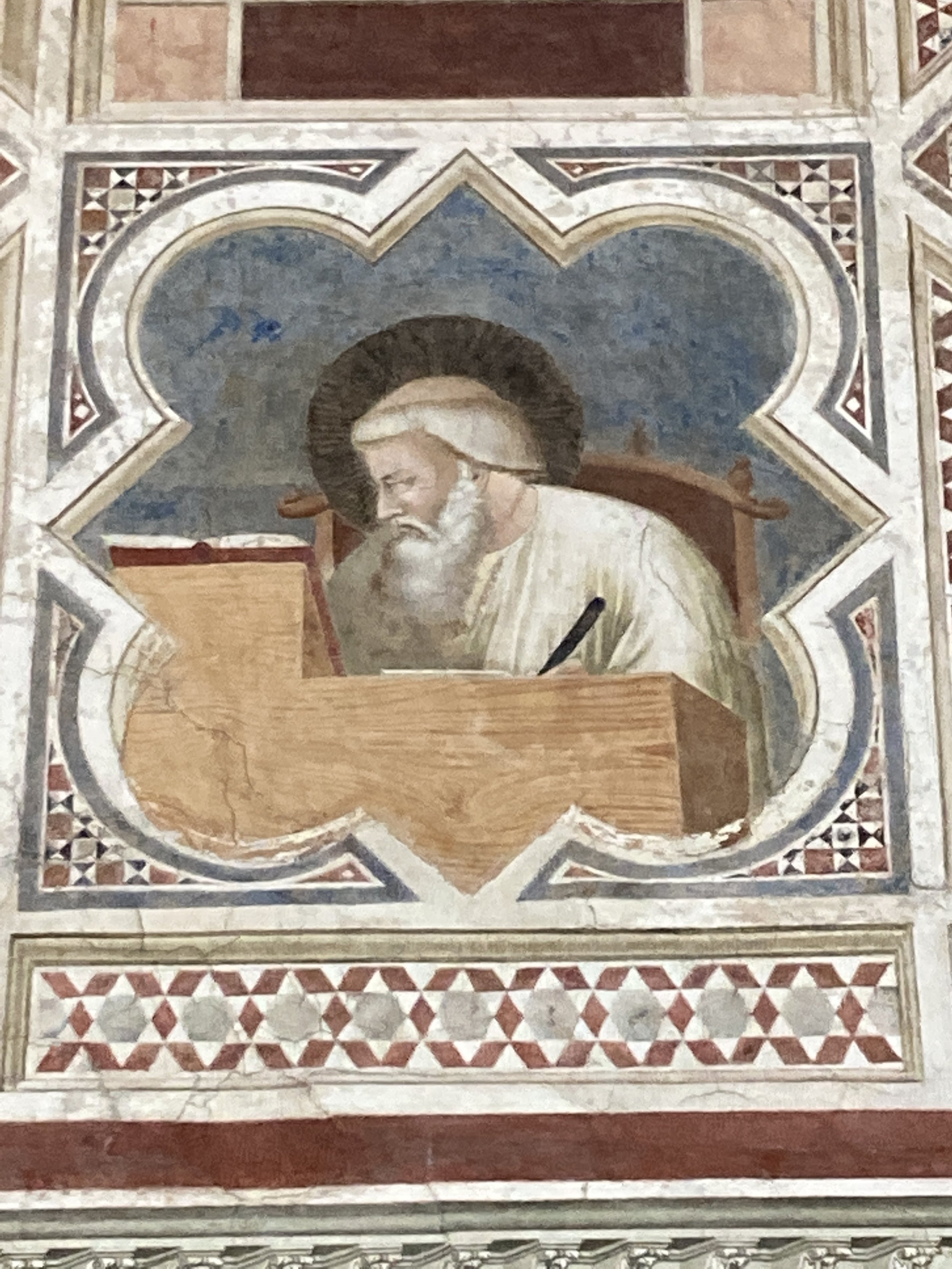
And in between the two periods, the Medieval and the Renaissance, came Giotto di Bondone (1267-1337). Giotto was that rare artist who was appreciated, even famous, during his lifetime. He even merited a mention by his contemporary Dante in The Divine Comedy. 

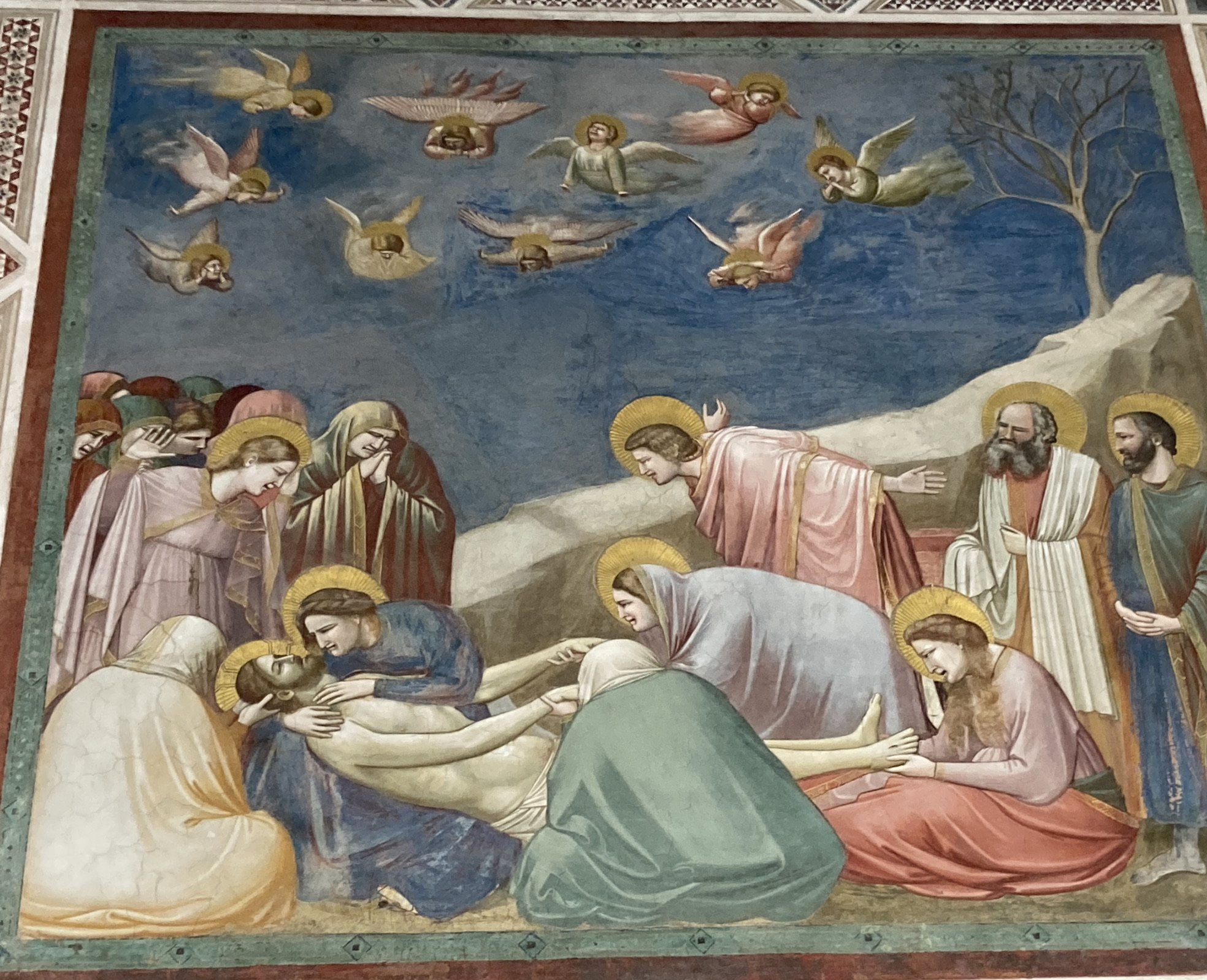
 Giotto revolutionized Italian art, creating life-like figures and placing them in more natural settings. Giotto’s figures show a full range of emotions through their facial expressions. No flat, lifeless saints and madonnas here!   Giotto’s scenes are populated by people who look like the neighbors down the street (at least what the neighbors would have looked like in 1300).  His men are placed in realistic poses and settings, his ladies have (gasp!) breasts over which their garments drape. His angels fly, his flames flicker.  And while the saints still have halos of gold, their clothing is colorful and the background is the most heavenly blue. 

Panel # 34. Weeping over the Body of Christ. Scovegni Chapel.

Sadly, much of Giotto’s work has been destroyed, by time and by fire.  Of the works that remain, the Scrovegni Chapel in Padova is Giotto’s capolavoro (masterpiece). A chance to see the frescoes there was the main reason for my trip to Padova last fall. The church is small and intimate, built as a private chapel for the Scrovegni Family.  The frescoes are in wonderful condition, the figures beautiful, and the colors spectacular.

Panel #35. The Resurrection

The frescoes wrap around the chapel, in a three-tiered series of panels, telling stories from the life of Joachim and Anne, Mary, and Christ. The scenes are full of life, there is movement and emotion, the figures pull you in to their story. Through it all Giotto proves to be not just an accomplished artist but a master storyteller as well.

Panels #8 (Presentation of the Virgin), 21 (Baptism of Jesus), and 33 Crucifixion (top to bottom)

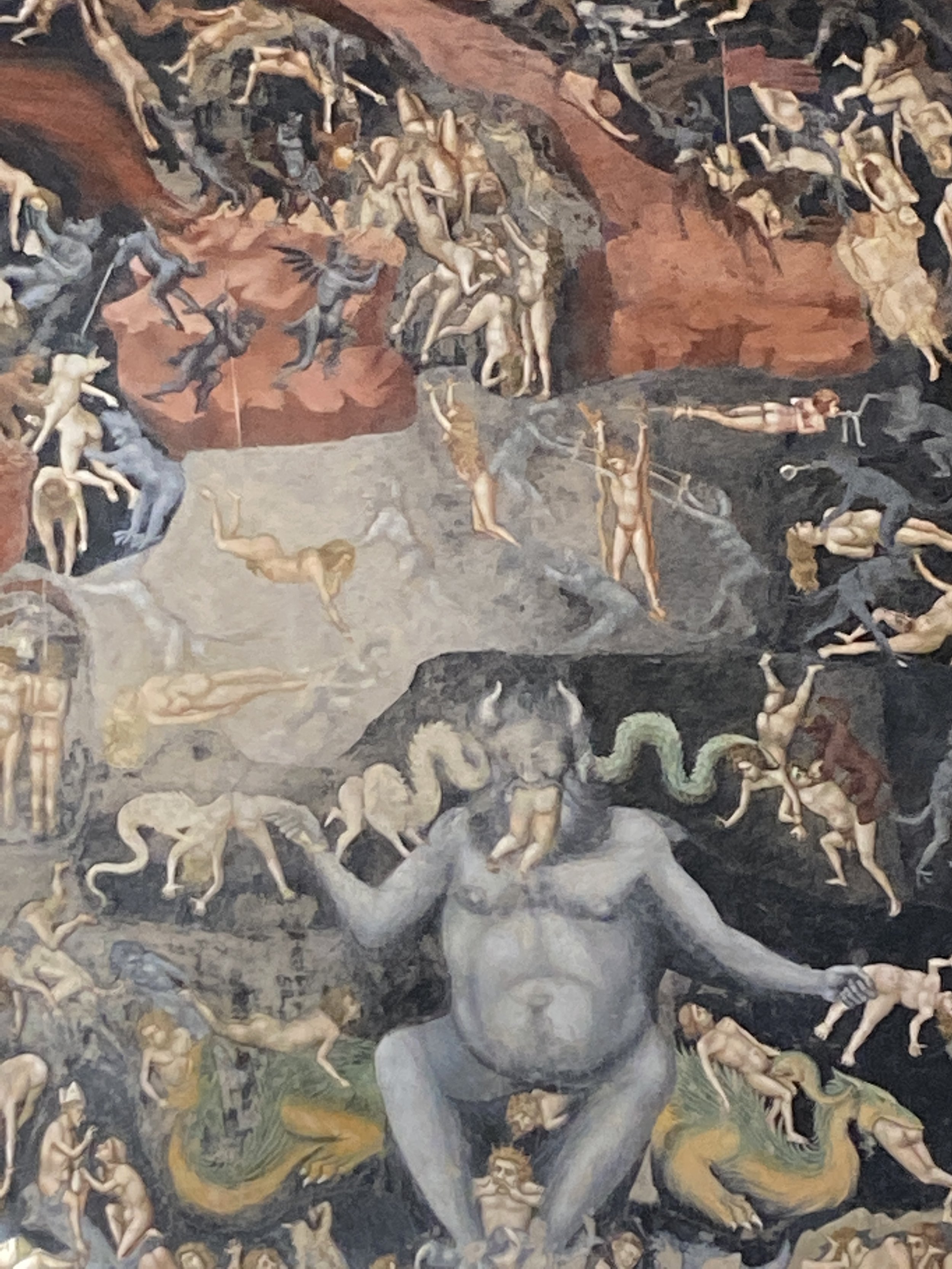
The far end of the chapel has the largest scene - the Last Judgement. It is stunning in both its beauty and its brutality. 

To the left, heaven. To the right, a hell that is terrifying!

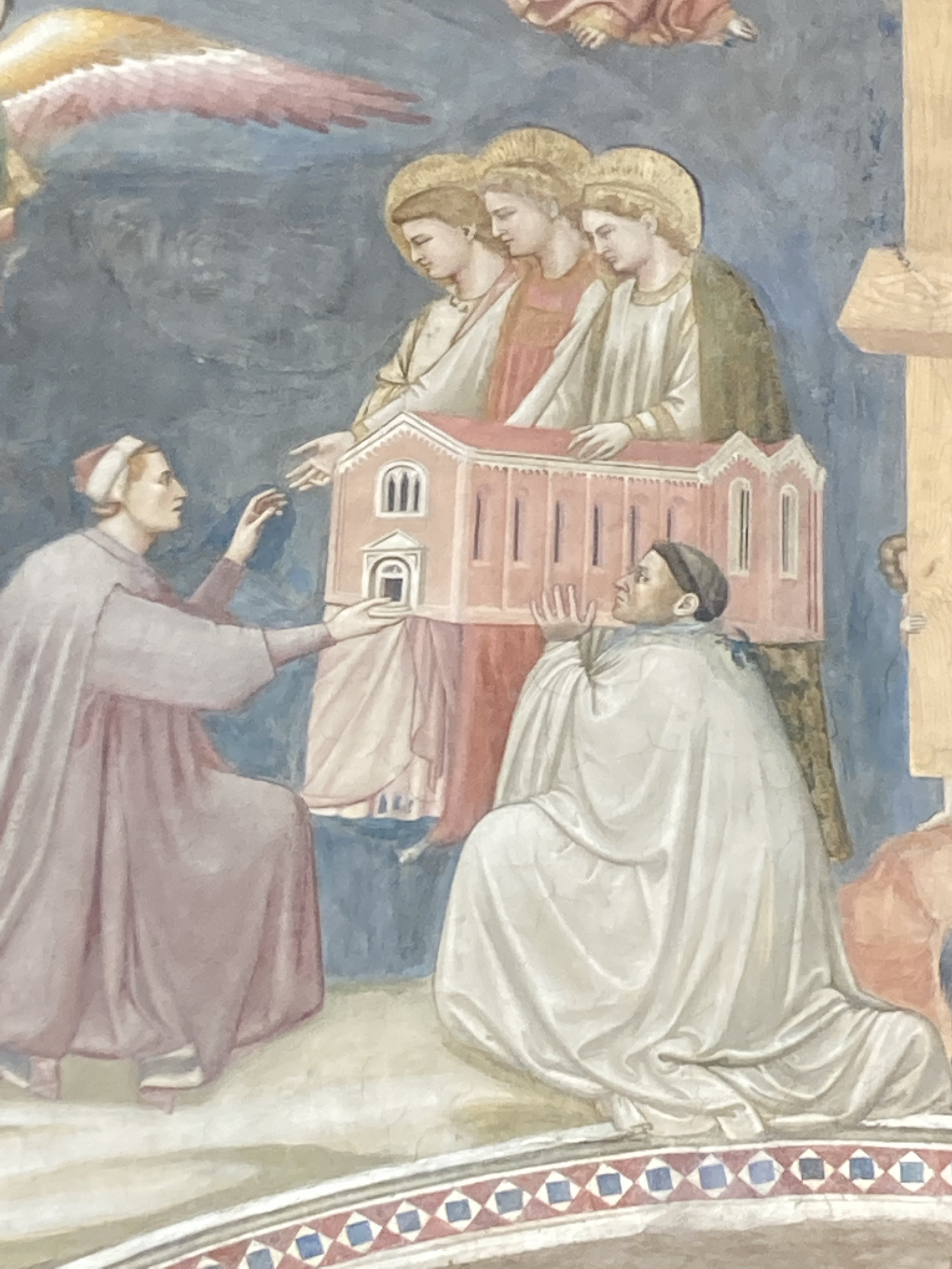
 Look closely and you will find Enrico Scrovegni, offering up the chapel in atonement for the sin of usary (the Scrovegni family were money lenders). This is no doubt an attempt to avoid Giotto’s graphic depiction of hell.

02953DB2-70B8-4662-A9C2-A2BE98E6AB8A.jpeg
7BD86F30-D7B3-4FED-8BA1-94BDF522EBC5.jpeg

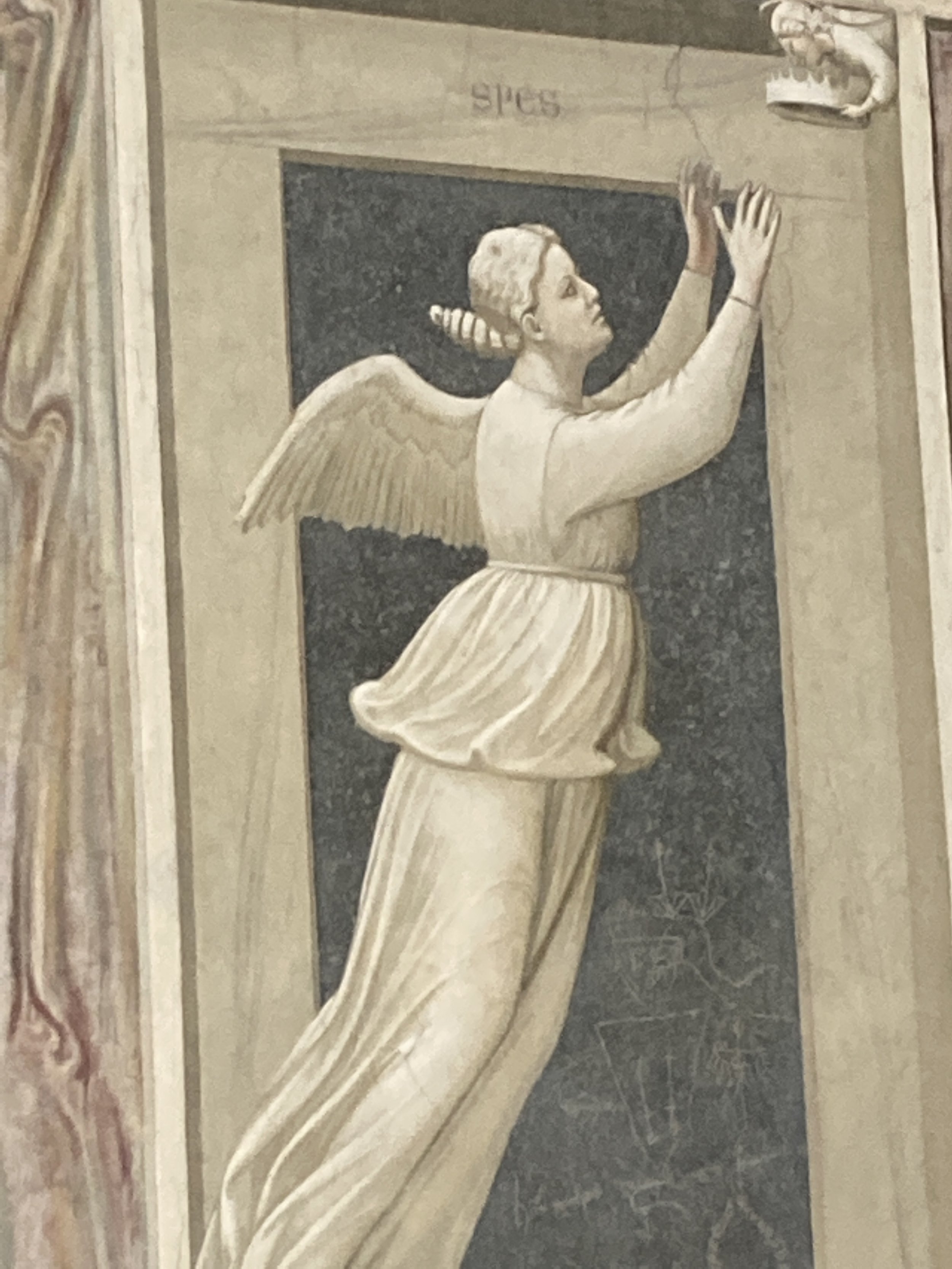
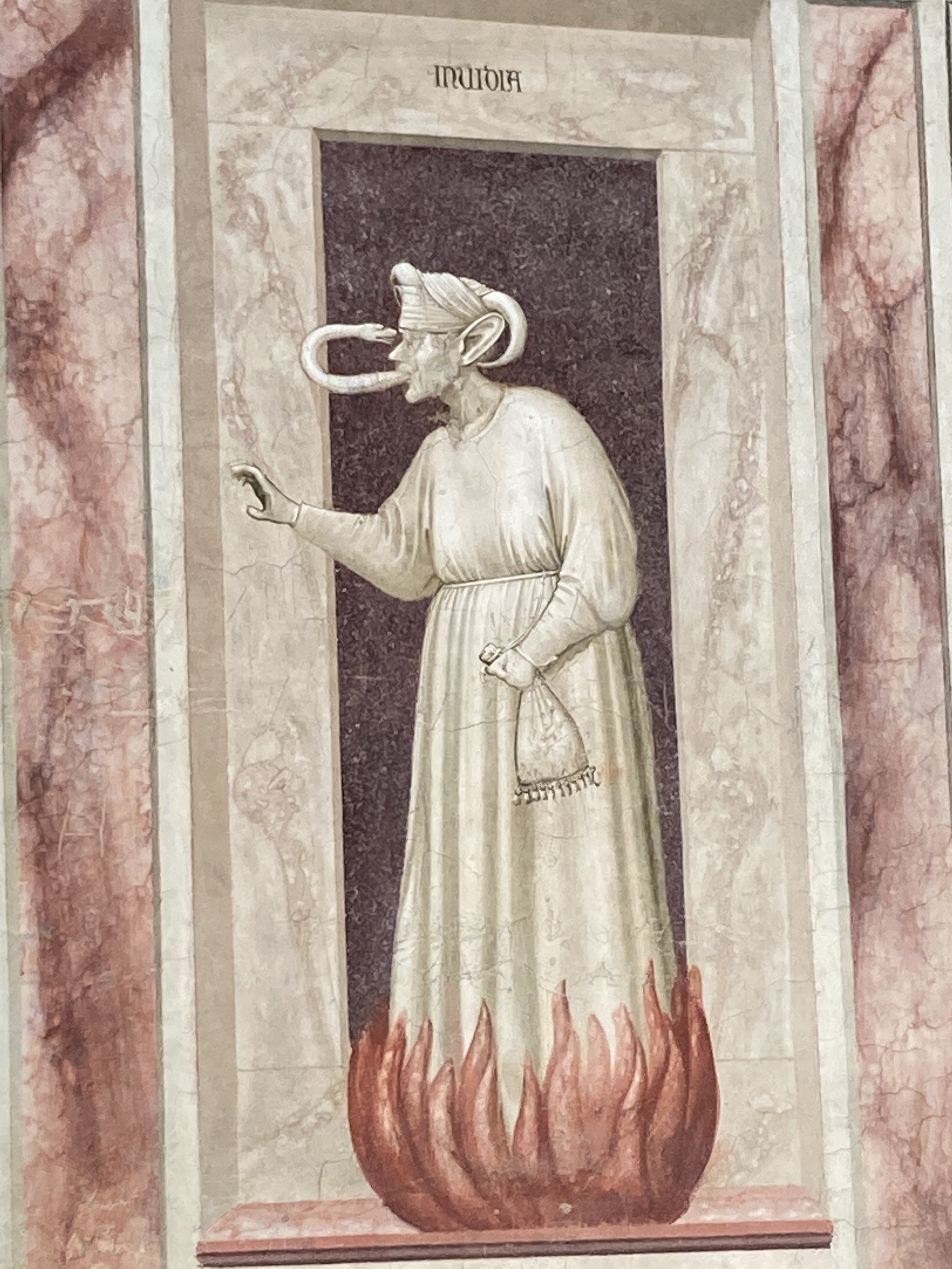
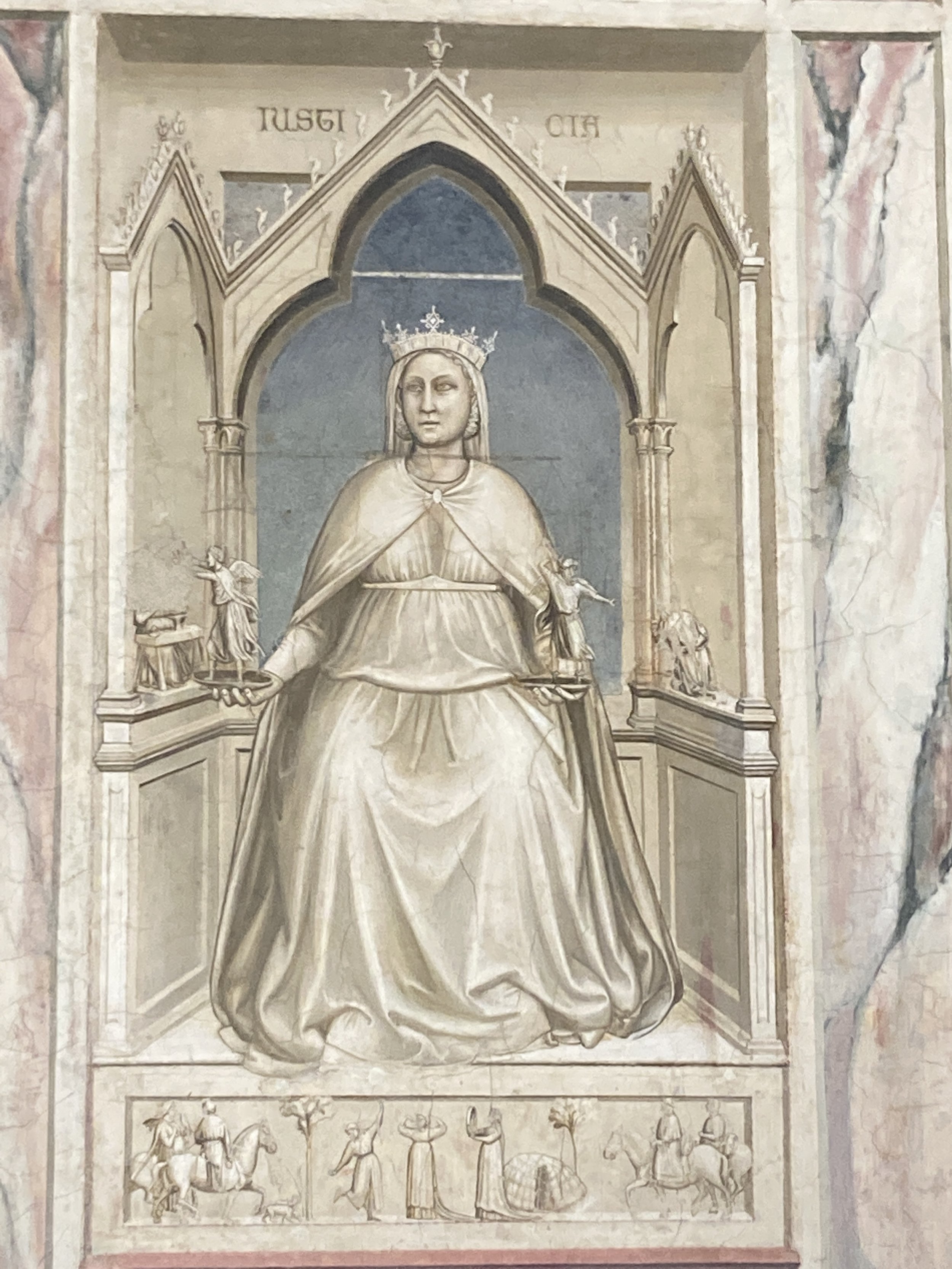
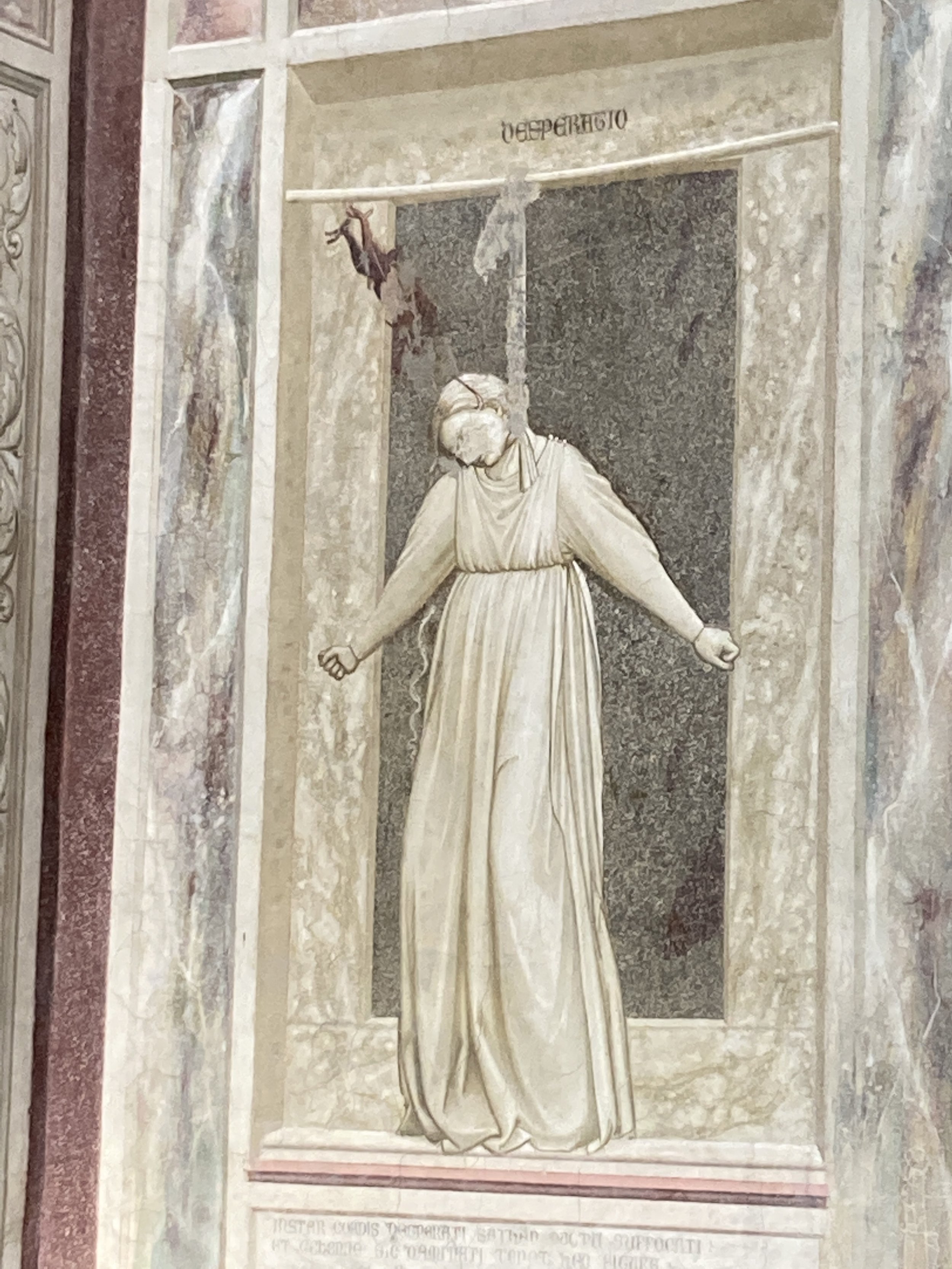
 Aside from bible tales, the allegories of Virtues and Vices are fascinating. Simplistic in design and color compared with the rest of the frescoes, without much adornment, the contrasting figures are as relevant and thought-provoking today as when painted in the early 1300’s.  Pictured below (left to right): Hope, Envy, Justice, Despair.

4C5AD129-D59F-470B-9EB2-322FA661A3CE.jpeg
110BAAAB-A1DC-4E39-BE86-AC7E7CF8B802.jpeg
AA4E6AA0-D7A2-4A57-B40C-BBAB6230F9CA.jpeg
95B4E54D-C0CD-4780-A163-280A71D38E4A.jpeg

The Scrovegni chapel is simply astonishing (my photos can’t capture its majesty).  One does not have to be an art historian, a religious scholar, or even a believer, to appreciate Giotto’s artistic brilliance and the power of these frescoes.  And for anyone with an interest in art, or simply in beauty, the Scrovegni Chapel in Padova is an experience not to be missed.

Detail from panel #33. The Crucifixion

 Even the smallest decorations - such as these quatrefoils - have incredible detail and depth. I could spend hours here looking at everything from the largest scene to the smallest detail. I think I’ll need to go back to Padova before too long.

26CB2995-5E02-4711-ACAD-BD0C8393CDD6.jpeg
03182354-7136-4950-8E3D-A19F2B689A3E.jpg

Note: The Scrovegni Chapel is open to the public with advanced reservation tickets only. Before entering the chapel itself there is a short video (with subtitles in English) which gives a good history of the chapel. Admission is limited to about 25 people at a time with a time limit in the chapel of 15 minutes per group. A short time, but well worth it and sufficient to see this small space (especially after some pre-visit reading).

August 29, 2022 /Joanne Bartram
Scrovegni Chapel, Padova, Padua
#italytravel, Churches Italy, Italian Art, Italian art architecture, Italy, Padova, Padua
San Quirico d’Orcia

San Quirico d’Orcia

San Quirico d'Orcia

January 25, 2021 by Joanne Bartram in #italytravel, #medievalitaly, Churches Italy, Hill Towns Italy, Italian gardens, Italy travel, Tuscany, Val d'Orcia

The small villages in the Val d’Orcia have much in common.  They sit on hilltops and look out over rolling hills, olive groves, vineyards, and cypress trees. They are often fortified by city walls, the legacy of ancient conflicts. The street plans are mostly Medieval, often with a single main street and a large main piazza ringed with stone and brick buildings. They are filled with churches large and small.

Classic Val d’Orcia scenes, in the village of San Quirico

Classic Val d’Orcia scenes, in the village of San Quirico

And the history!  From Etruscan tombs to Roman roads, from Medieval streetscapes to World War II bombs, the history of these villages is rich and fascinating.  That they have so much in common, and yet each village has its own unique character, makes a trip through this area especially wonderful. Think of Monticchiello with its Teatro Povero and stone houses, Montalcino with its famed Brunello wine and steep streets, Bagno Vignoni with its thermal pools, and Pienza - the perfect Renaissance city - with its pretty houses and flowers filled window boxes.

 San Quirico d’Orcia is yet another of the villages found in the Val d’Orcia. Named after a martyred child saint, it lies between Montalcino and Pienza, situated along the ancient Via Francigena, the pilgrim’s route between Canterbury and Rome.  Today, modern pilgrims and adventurous walkers still pass through San Quirico as they follow the ancient path. Other tourists arrive more conventionally by car and stay to enjoy the many things that make this a most pleasant spot.

The ancient wall around San Quirico

The ancient wall around San Quirico

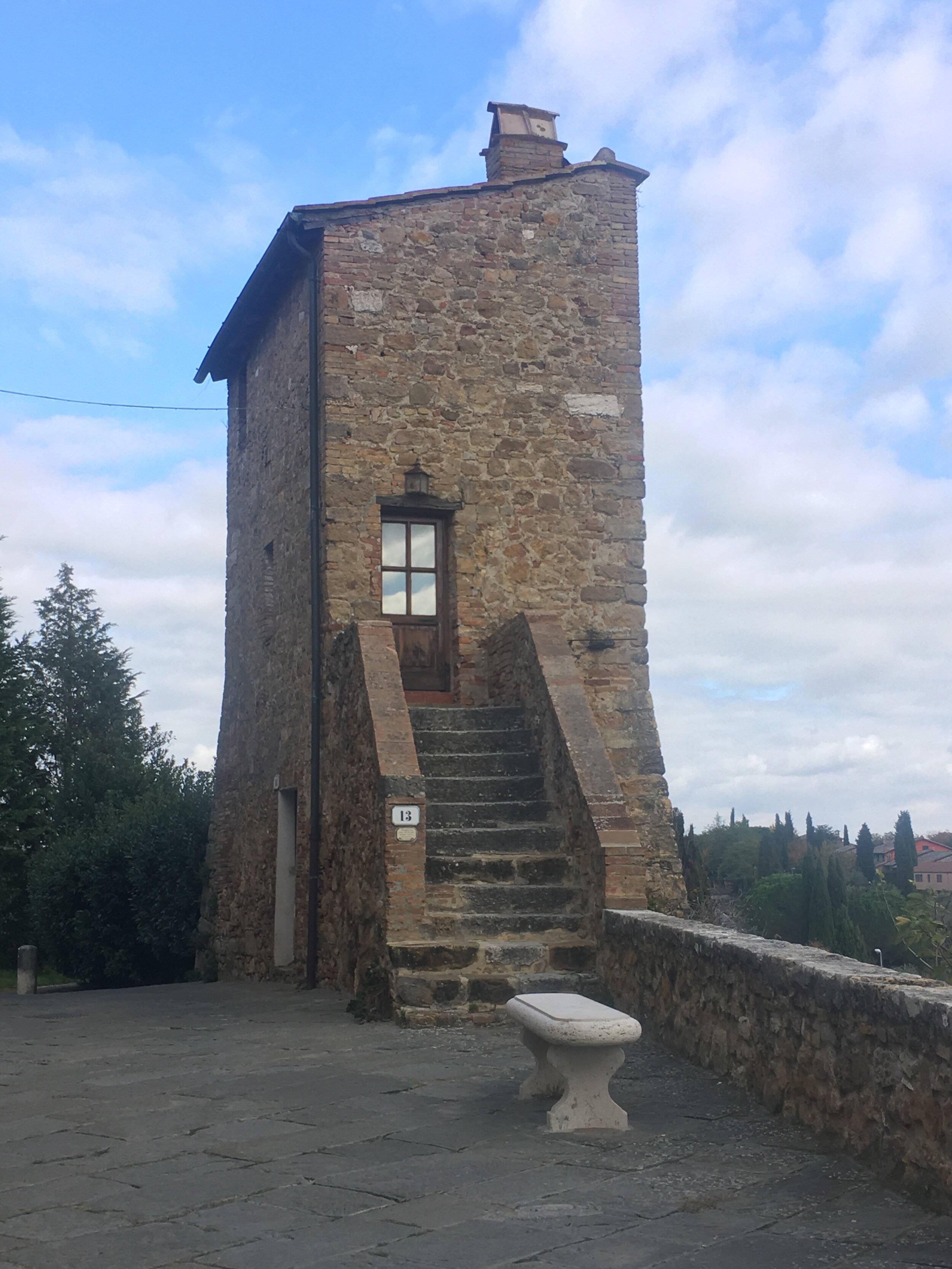
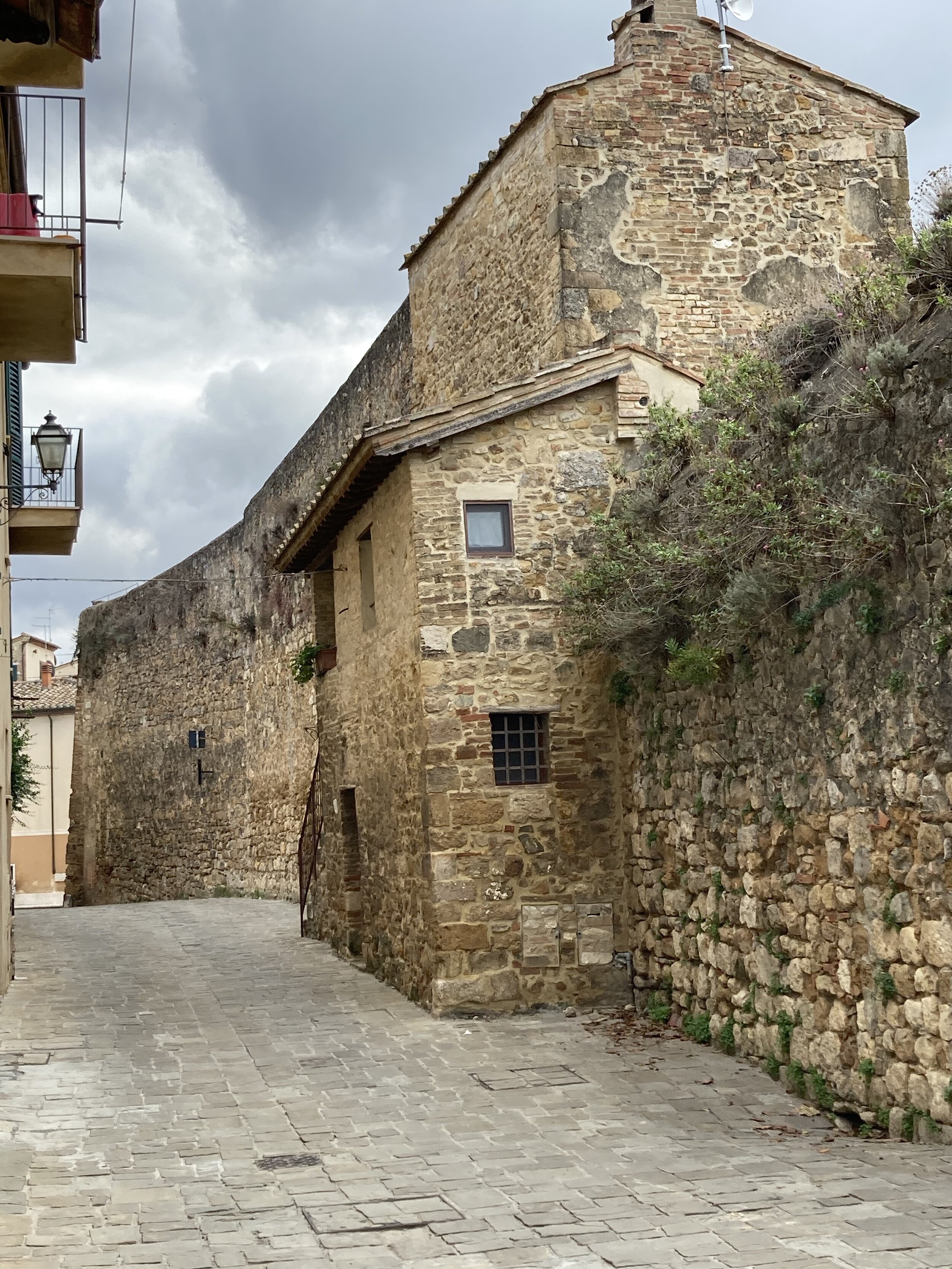
Most of the wall surrounding the city remains, with 2 gates providing entrance to the historic center of town and several of the former watchtowers still standing (though now repurposed, some into tall and narrow homes).  The Porta Cappuccini is the old and most historic gate – a lovely way to enter the town.

IMG_3539.JPG
KAvsXjGlRBqs6eWEzXqT8A.jpg
J8jWBe9mR1WvFOes5z5ytA.jpg

 The best way to explore San Quirico is to simply wander.  A stroll along the main street, Via Dante Alighieri, takes you both along the route of the Via Francigena and past most of the main sights in town. At one end, just inside the city walls, is the Collegiata Church (12th century) with its interesting shape, three very different entrances, and beautiful bell tower.  

The Collegiata Church (also known as the church of Santi Quirico e Giulitta)

The Collegiata Church (also known as the church of Santi Quirico e Giulitta)

Further down the street is the church of San Francesco, with its famous terracotta della Robbia madonna (moved here from the Chapel of the Vitaleta) and its combination bell and clock tower. In front of the church is the Piazza della Liberta`. This lively square is the center of town and a hub of activity.  It’s a great place to stop for a coffee or a glass of wine and to soak in the atmosphere. 

Piazza della Liberta` and the Church of San Francesco

Piazza della Liberta` and the Church of San Francesco

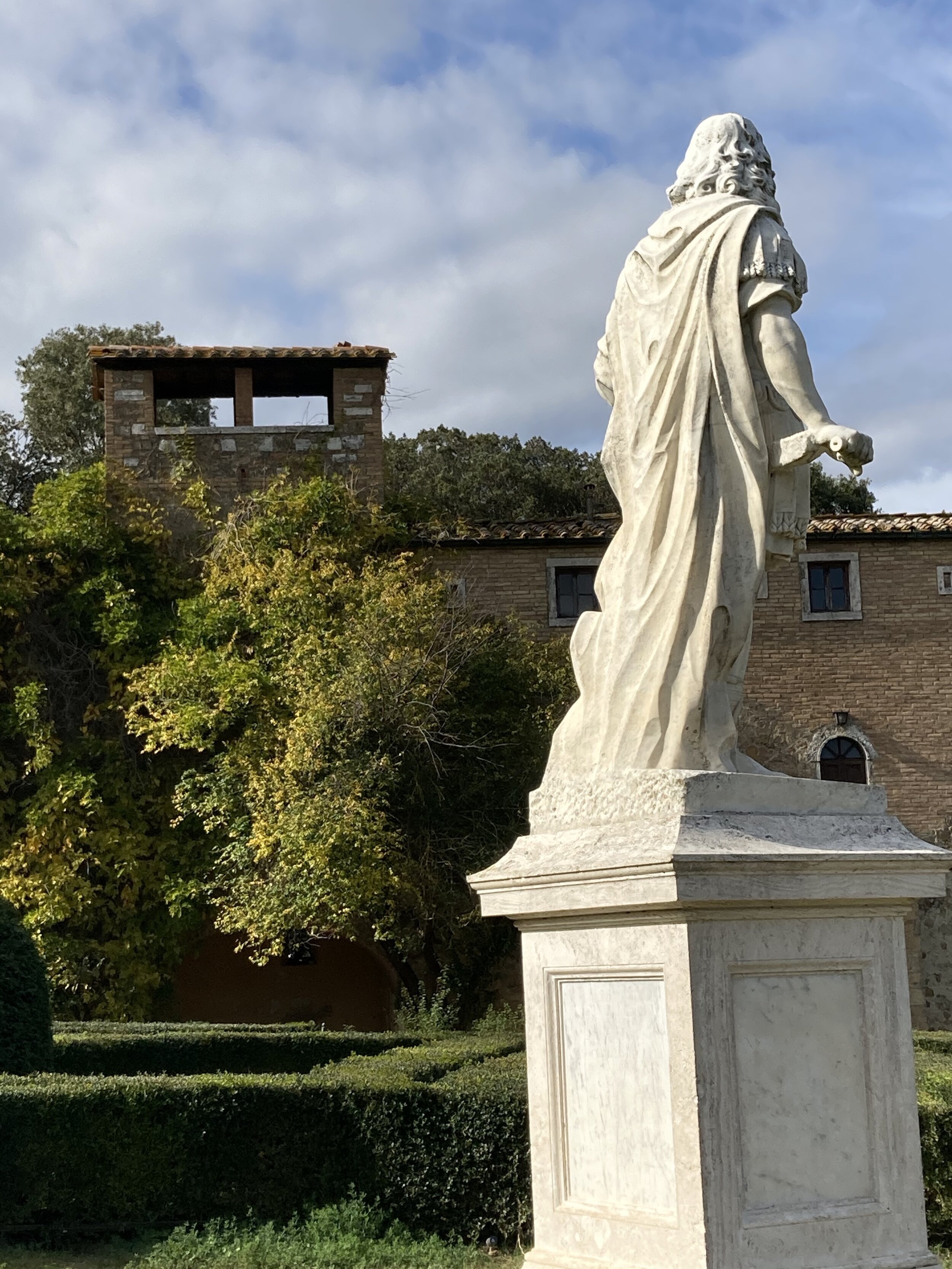
In this square is also the entry to one of San Quirico’s special spaces – the Horti Leonini, a 16th century garden.  The centerpiece is a statue of Cosimo III di Medici. All around him is classic Italian garden design. 

u5ip9LL7QZ25Bef6D1IP8Q.jpg
mFea6PZfTeOBv3GdxPizpw.jpg
8L%0AfeLSjSLMoBM4m6UDg.jpg

Stepping back into the Piazza della Liberta`, and continuing down Via Dante Aligheri, are two of my favorite spots.  One, is a hidden courtyard which contains an old well and the pilgrim’s refuge the Ospedale della Scala.  The other, right on the street, is the small church of Santa Maria Assunta, which is over 1000 years old (but no interior photos allowed!)

The old well in front of the Ospedale della Scala

The old well in front of the Ospedale della Scala

IMG_3549.JPG

 It’s also fun to wander the small side streets.  On my most recent visit, during the height of the olive harvest, I found an active but very old frantoio (olive press) which was still using old stones to grind the olives.  The friendly staff invited me inside to watch the process.  The smell of the fresh olive oil was delicious!

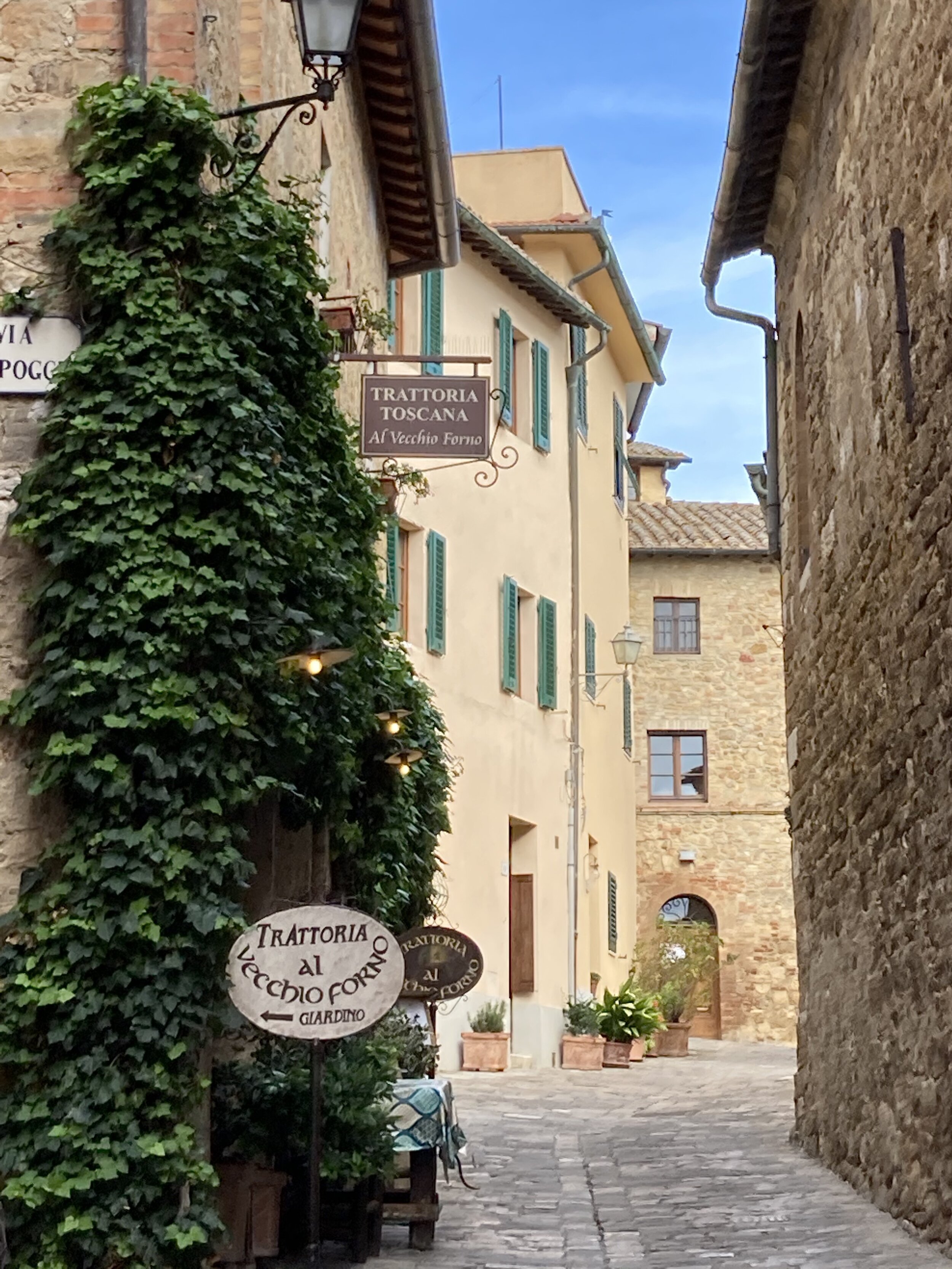
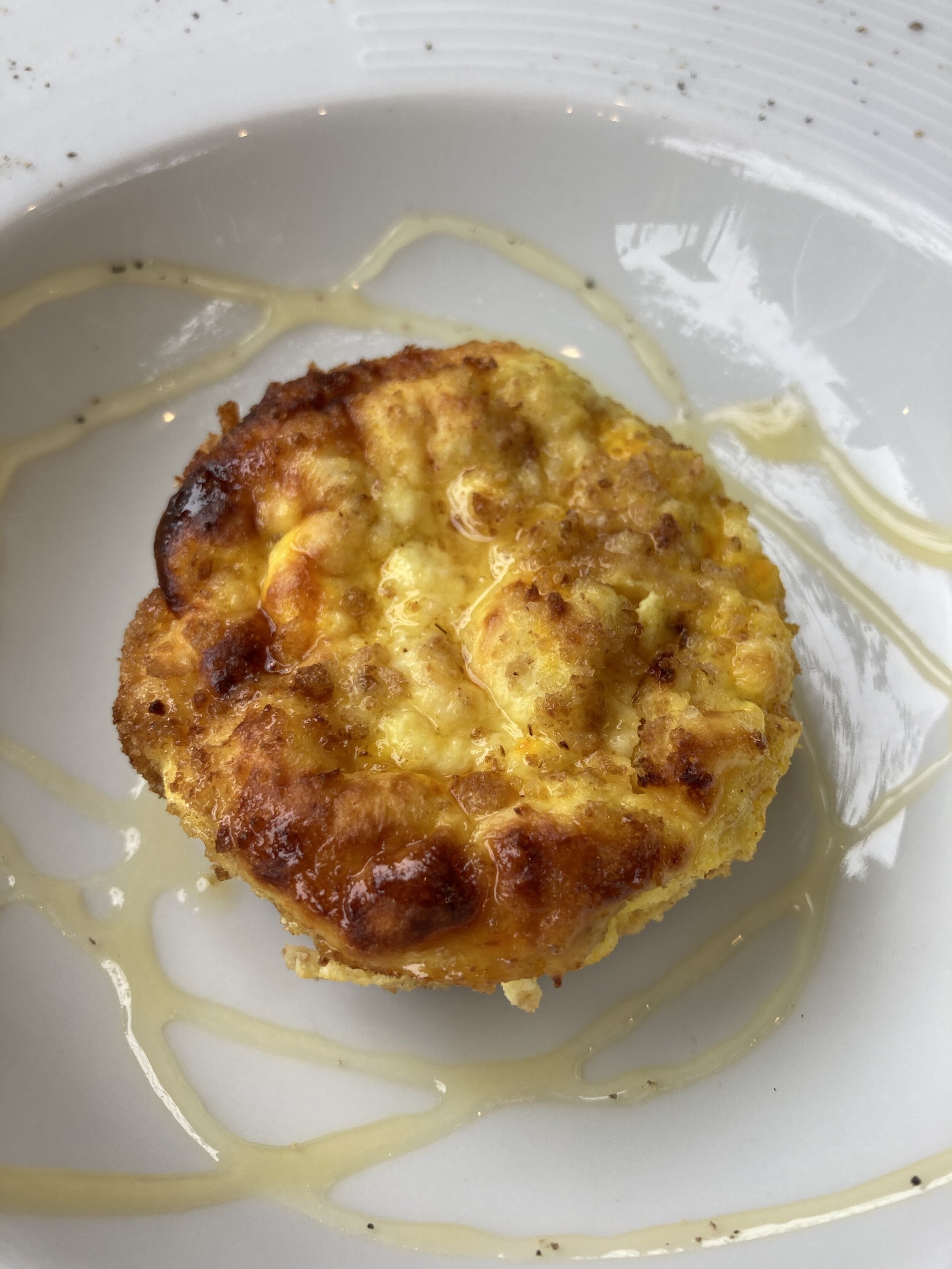
And on a side street just along the church of San Francesco is the wonderful Trattoria al Vecchio Forno, built on the site of the old town bakery (forno).  I’ve eaten here on previous visits and it’s a place that never fails to please.  My lunch, a honey drizzled sformatino and a pappa al pomodoro, eaten outside in the garden on a warm fall day, was delicious.

dmJBkzR2R+C92bChkw51rw.jpg
eTd0JYYiRVeFTiR5tune+g.jpg
NnBVXGhWS0mlyFbP3TR5%g.jpg
DVTBqV5XQwahEZ5Qnj6W6g.jpg
9YdPQZOGSlS8toaxeqMVzQ.jpg

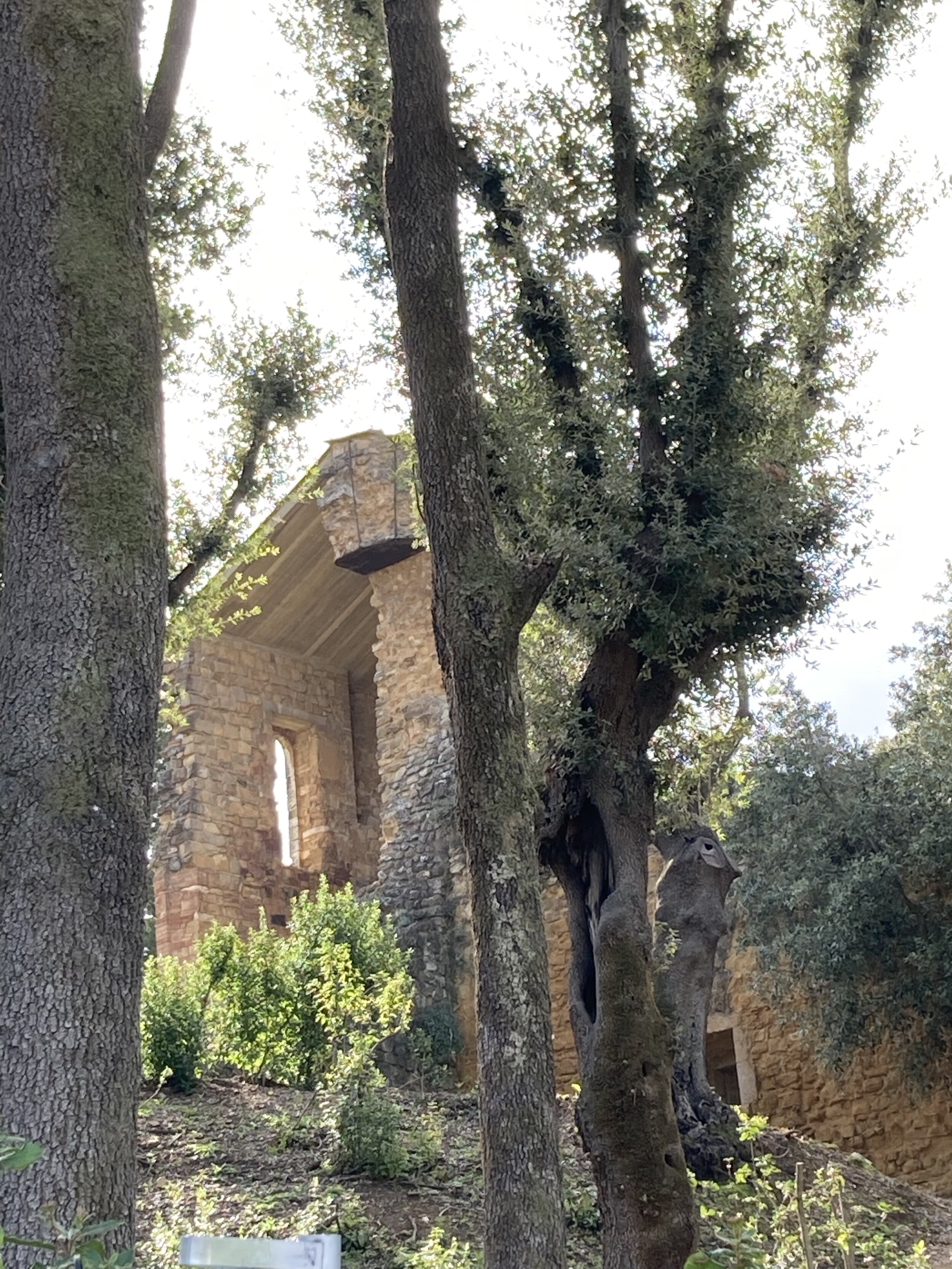
 Heading back to Pienza, the Chapel of the Madonna of Vitaleta is visible from the road.  It is well worth the detour to stop and visit this tiny chapel, which is one of the most photographed spots in Tuscany.   The chapel itself is not usually open, but the surrounding vistas are spectacular.  

 San Quirico was the last stop on my trip through the Val d’Orcia.  There are so many other places left to explore, among them the famous wine towns of Montalcino and Montepulciano (which is just outside the Val d’Orcia) and also the gardens at La Foce.  

I guess I’d better start planning a return trip!


January 25, 2021 /Joanne Bartram
San Quirico, Val d'Orcia
#italytravel, #medievalitaly, Churches Italy, Hill Towns Italy, Italian gardens, Italy travel, Tuscany, Val d'Orcia
The beginning of the procession on the steps of the Basilica of San Frediano, 2018.

The beginning of the procession on the steps of the Basilica of San Frediano, 2018.

The Luminaria of Santa Croce - 2020 Style

September 14, 2020 by Joanne Bartram in Lucca, Tuscany, Churches Italy, Festivals Italy

 In Lucca, September is traditionally a month of festivals including street fairs, music performances, and – most importantly – the Festival of Santa Croce. The Santa Croce festival venerates the Volto Santo (Holy Face), an ancient wooden crucifix which is the most important religious relic in Lucca. The famous crucifix is housed in a small chapel within the larger Cathedral of San Martino.  For most of the year it is viewed through the openings in the small chapel walls, beautiful in its simplicity.

The Volto Santo dressed in gold vestments for the Feast of Santa Croce on September 13th.

The Volto Santo dressed in gold vestments for the Feast of Santa Croce on September 13th.

 But for the September festival the crucifix is anything but simple. Instead, it is adorned with gold vestments – from crown to shoes – and the small chapel is opened for up-close encounters with what is, depending on your personal beliefs, a holy religious artifact or an important cultural and historical object. (For a more detailed description of the legend of the Volto Santo see “The Legend of the Volto Santo” post from September of 2017). Unfortunately this year, while the gold vestments are in place, entrance to the cathedral is limited which means that most of us will have to make do with memories and photos from past years.

The beauty of a candle-lit piazza during the 2016 procession

The beauty of a candle-lit piazza during the 2016 procession

The highlight of the festival is the September 13th luminaria procession through the historic center of Lucca.  It begins in front of the Basilica of San Frediano and slowly makes its way across town, illuminated by the sea of candles which line the buildings along the narrow streets, and ends with a special ceremony upon its arrival at the Cathedral of San Martino.  

Imagine thousands of these luminaria lighting the streets of Lucca.  Magic!

Imagine thousands of these luminaria lighting the streets of Lucca. Magic!

The luminaria procession is an important event - calling home from around the world those with Lucchese roots - and has only rarely been cancelled. The last two cancellations were due to a terrible storm in 1976 and before that a disruption towards the end of World War II.  This year the cancellation of the procession is due to concerns about the potential spread of COVID-19 through the crowds of on-lookers that typically line the streets and the many participants in the procession. The candles were lit, but there was no procession this year.

The beginning of the 2017 procession, on the steps of the Basilica of San Frediano.

The beginning of the 2017 procession, on the steps of the Basilica of San Frediano.

 Although we could not witness the luminaria procession, and could only watch today’s religious services via Italian TV rather than from inside the Cathedral of San Martino, a look back at previous processions can remind us of the beauty of the event. With luck, we will be able to experience the joy of the luminaria once again next year. Let’s make a date for September 13, 2021 in Lucca.

A banner with the representation of the Volto Santo begins the procession each year (the actual crucifix is too large, and too valuable, to be part of the procession).

A banner with the representation of the Volto Santo begins the procession each year (the actual crucifix is too large, and too valuable, to be part of the procession).


September 14, 2020 /Joanne Bartram
Luminaria di Santa Croce, #italianfestivals
Lucca, Tuscany, Churches Italy, Festivals Italy
  • Newer
  • Older

Powered by Squarespace