Two Parts Italy

Exploring Italy, travel, and living a flavorful life

  • Blog
  • About This Blog
  • Start Here
  • Recent Posts
  • Archives by Topic
  • Subscribe
  • Contact me

Basilica di Sant’Apollinare, Ravenna

Ravenna (Part One)

October 17, 2022 by Joanne Bartram in #ravenna, #mosaicsravenna, #italytravel, Italian Art, Italian art architecture, Italian culture, Italy travel

In 25 years of travels in Italy, how did I miss Ravenna?  My first visit came just last month when I spent a few days there with two friends at the end of our trip on the Treno di Dante (Dante’s Train). While a short visit wasn’t enough time to explore everything Ravenna has to offer, I was able to stand in wonder before the mosaics for which the city is famous, visit Dante’s tomb, and soak in the special atmosphere of this city on Italy’s Adriatic coast.

The tomb of Dante Alighieri in Ravenna

 Living in the Medieval city of Lucca, I thought I had a real appreciation for all things “old”.  But while Lucca brings to mind the 1400’s, Ravenna evokes an era nearly 1000 years before that.  Many of the buildings, with their Byzantine mosaic decorations, date from the 5th century, after the fall of Rome and at the very beginning of the middle ages.  By the time Dante arrived in the city, in 1321, the mosaics were already ancient and provided inspiration for his poetry. 

 It would be easy to be overwhelmed by the number of historic and art filled spaces in Ravenna, so it is important to not try to see them all in one day, or even one visit.  Our first afternoon was spent mostly wandering through town and getting a feel for the city. We also made a stop at Dante’s tomb.
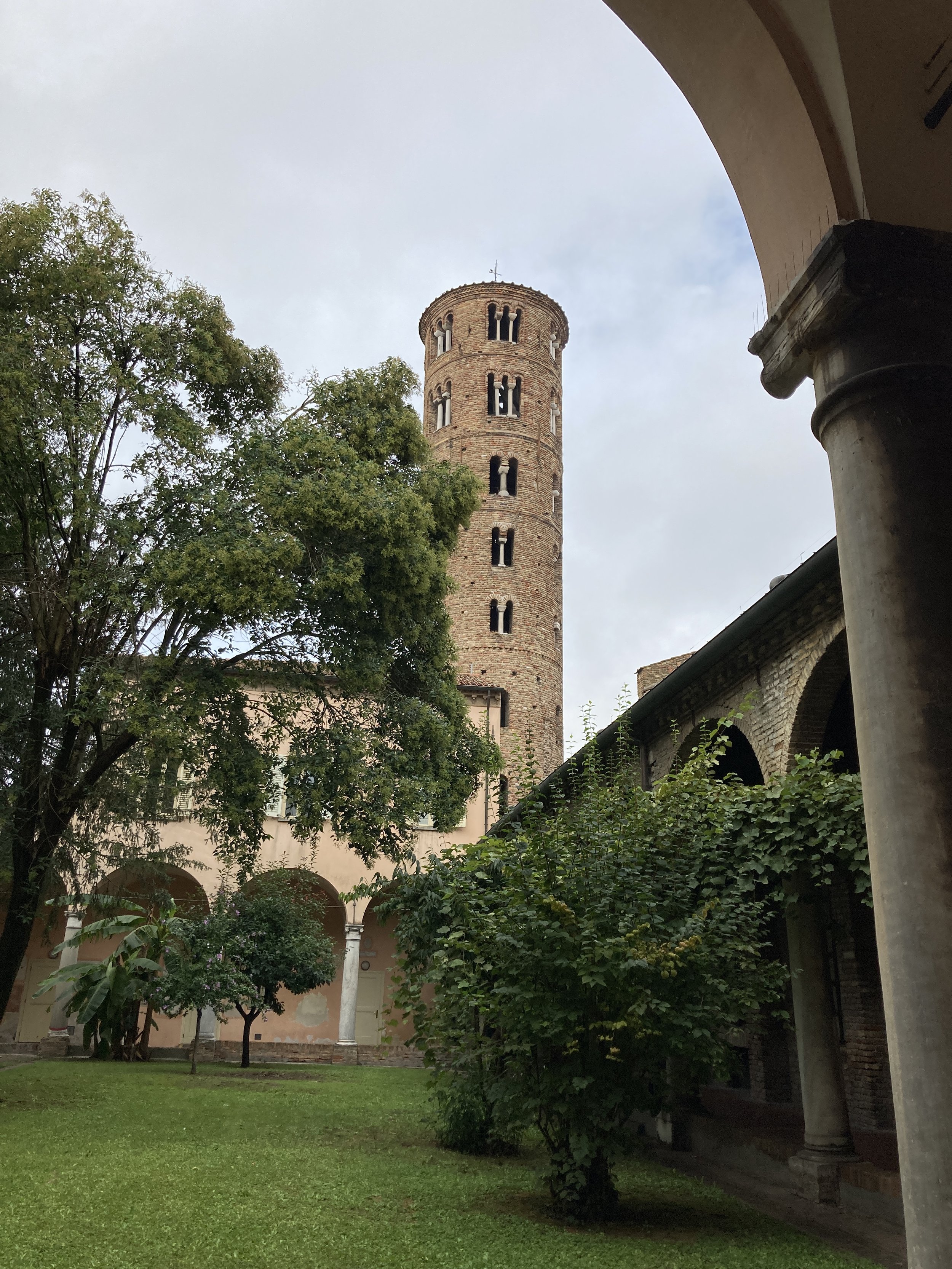
The Basilica of Sant’Apollinare Nuovo, Ravenna


The next two days were devoted to viewing mosaic filled buildings: churches, a baptistery, a museum, and two mausoleum / small chapels. A couple of gardens provided a refreshing break between historic sights and a chance to see another side of Ravenna.

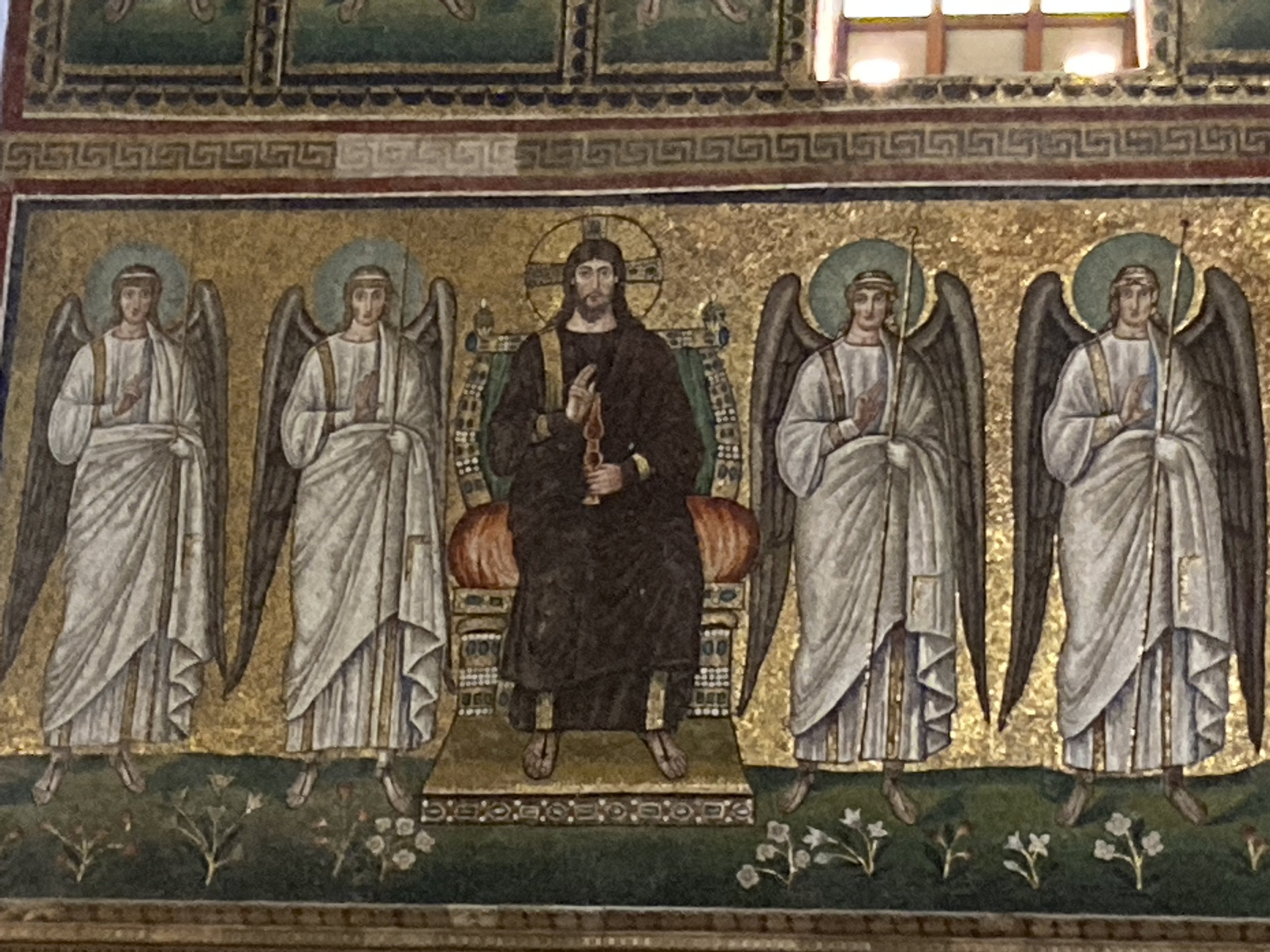
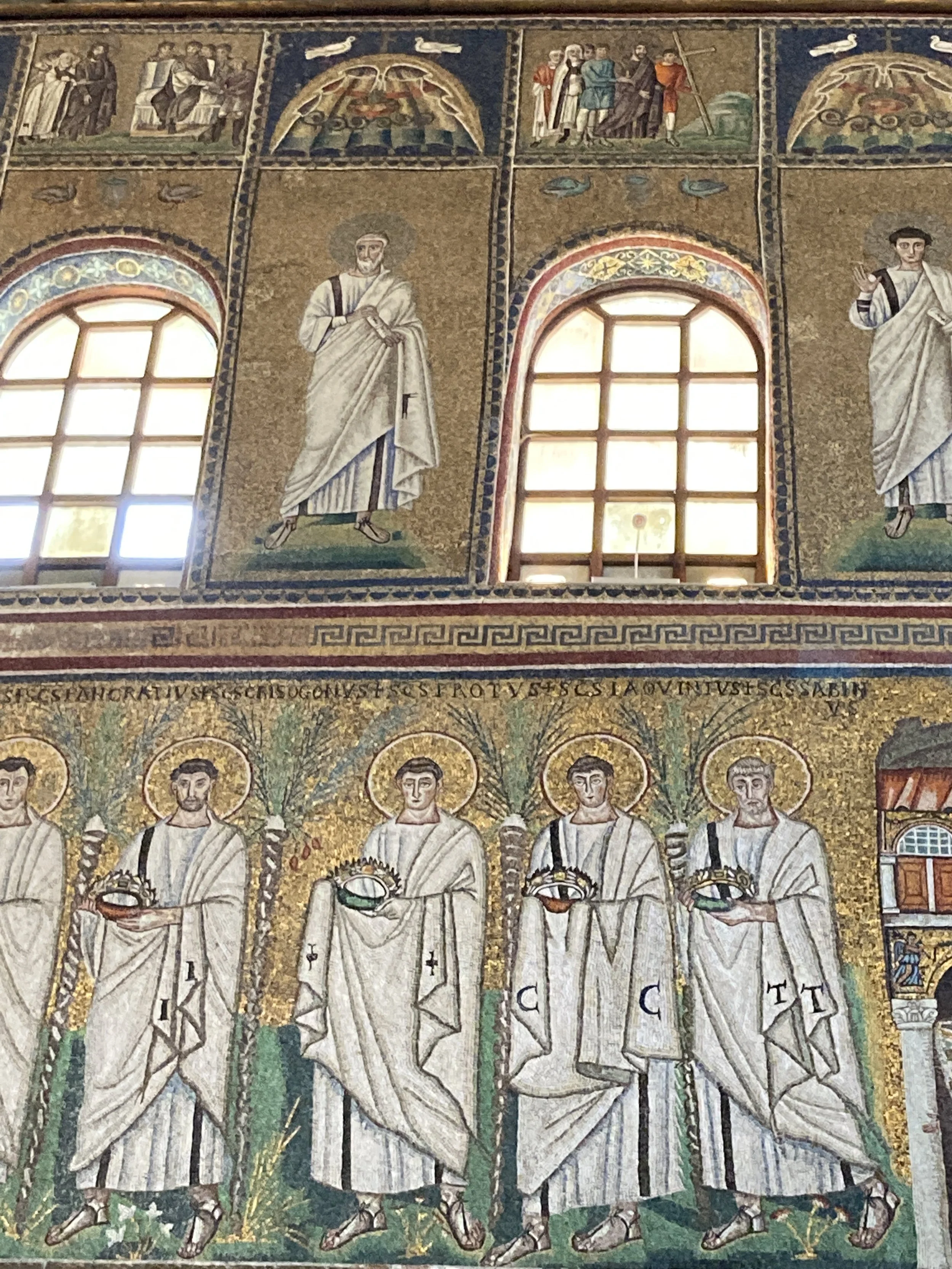
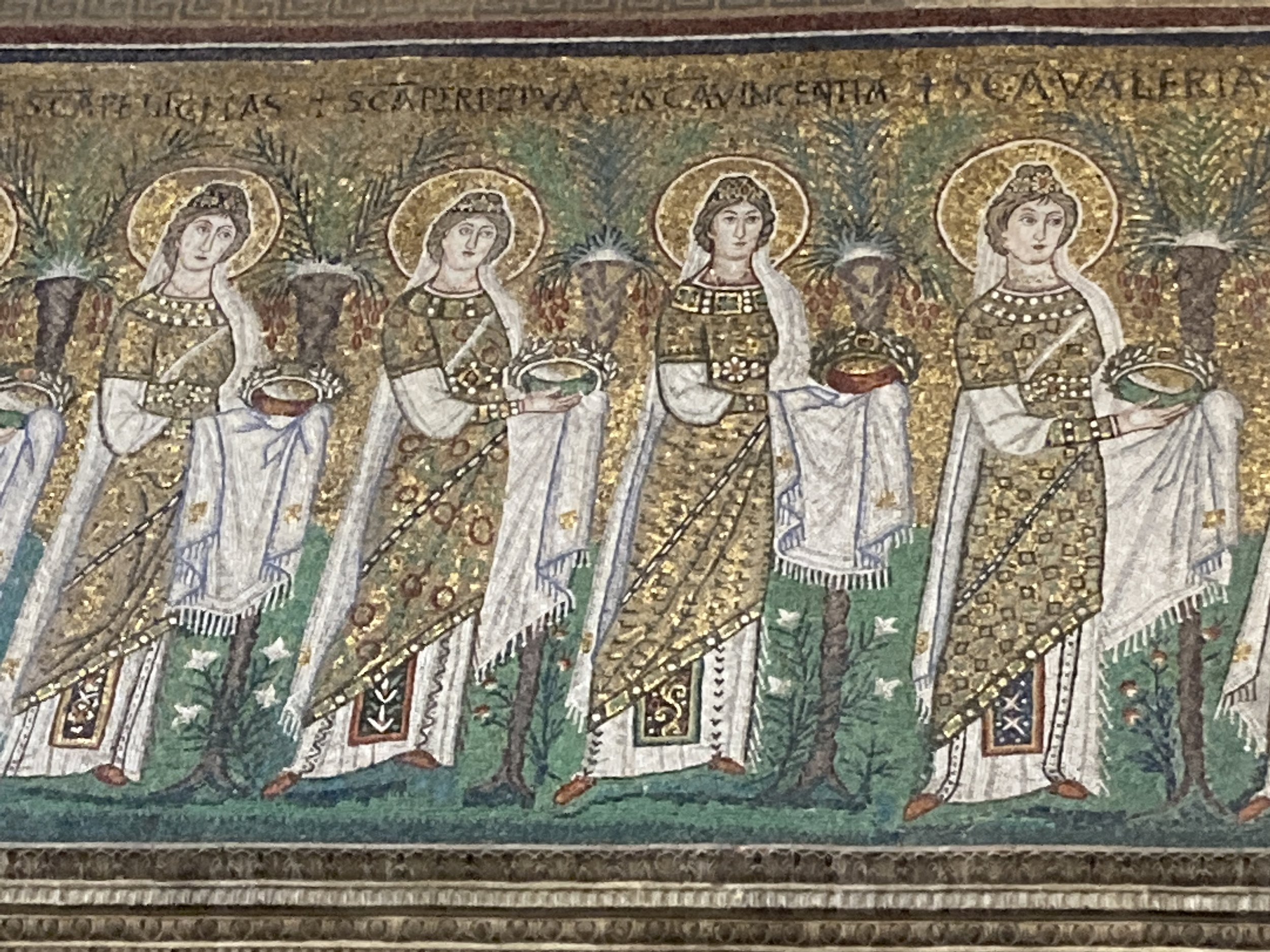
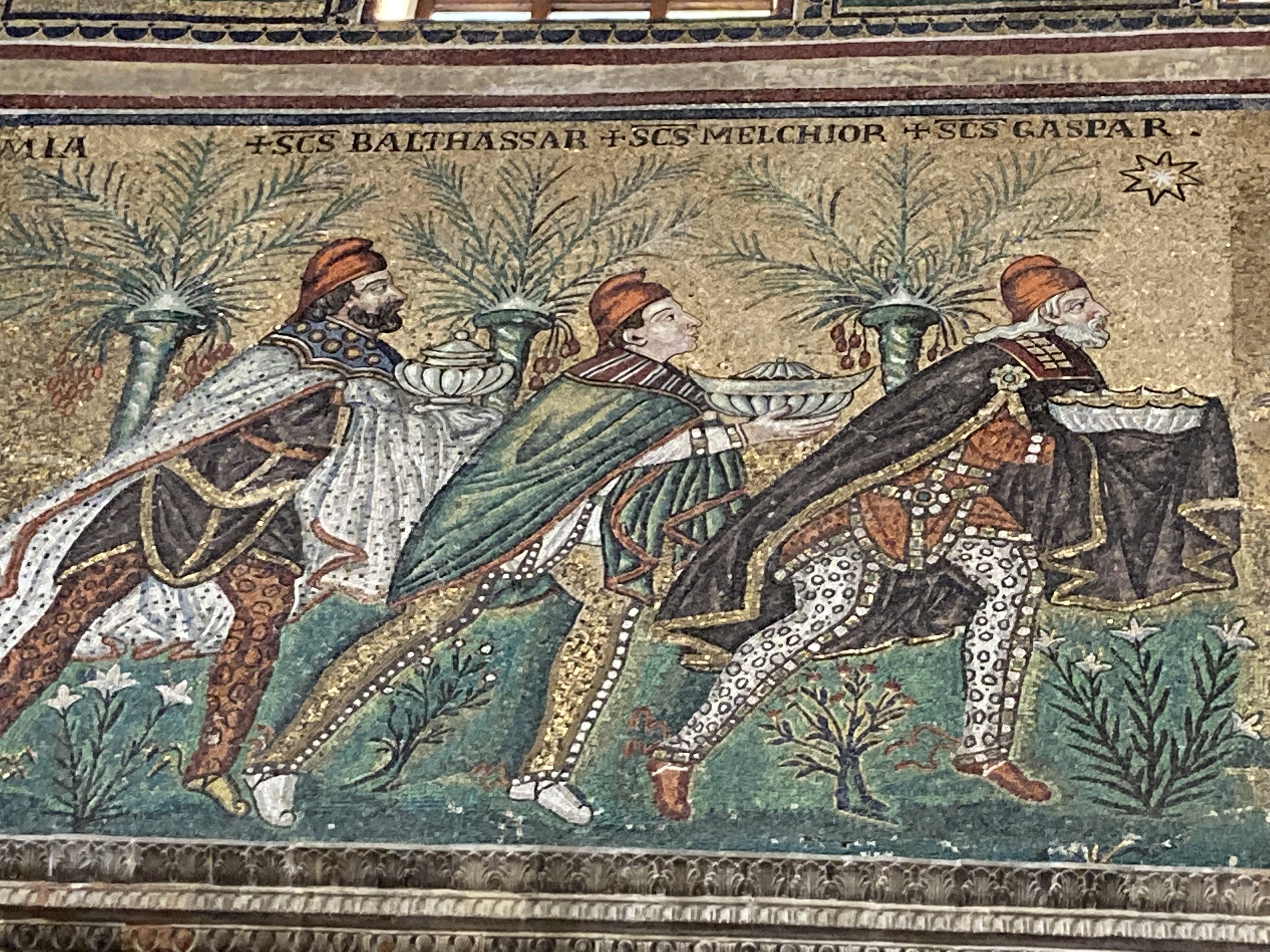
 Our first stop was the Basilica di Sant’Apollinare Nuovo, built near the beginning of the 6th century as a chapel for King Theodoric.  It has had some restoration and remodels over the years along with several name changes. The current name comes from the fact that the church contains relics from Saint Apollinare and it is the newer of two Sant’Apollinare Basilicas in town (the other is Sant’Apollinare in Classe, a bit outside of the city center). The exterior is plain brick but oh, the interior!  The whole room seems infused with color, especially gold. The basilica provided the first of many WOW moments in Ravenna.

The church has a long, tall central nave, with columns supporting arches along both sides (top photo).  Above the arches are three levels of mosaics, small ones at the top and larger ones in the middle and bottom rows.  Depicted are events from the New Testament along with a parade of saints, martyrs, wise men, and virgins.  There are also scenes of miracles and of the Ravenna of more than 1000 years ago.  I doubt that photos can do justice to the mosaics, but here are a few of the scenes that entranced me.
607C3847-59F2-40C0-A8A3-2DC2CA9A0308.jpeg
59B217C8-115C-41D5-98E7-526B723FCC40.jpeg
4B050947-5EF3-47B3-A5AA-E3E8617049DE.jpeg
3DD017C2-8182-4563-A3C4-14217D3F3AC9.jpeg

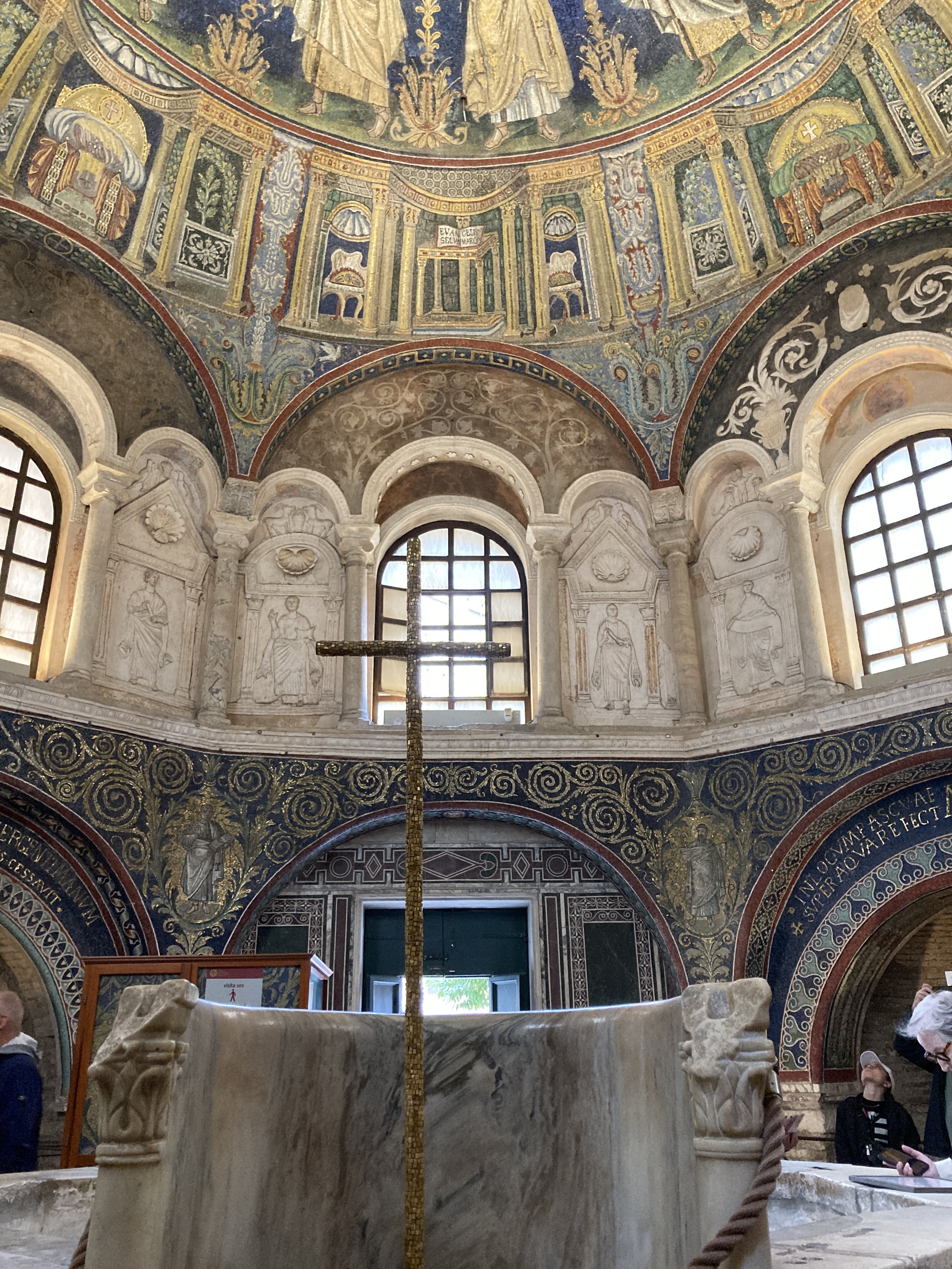
 From the large basilica we headed to the small Battistero Neoniano (Neonian Baptistery, entry ticket and reservation required). This is one of the oldest sites in Ravenna, built early in the 5th century when Ravenna was the seat of the Western Roman Empire.  Like many baptisteries, it is octagonal in shape and contains a large marble baptismal font. 

Central mosaic, Battistero Neoniano, Ravenna

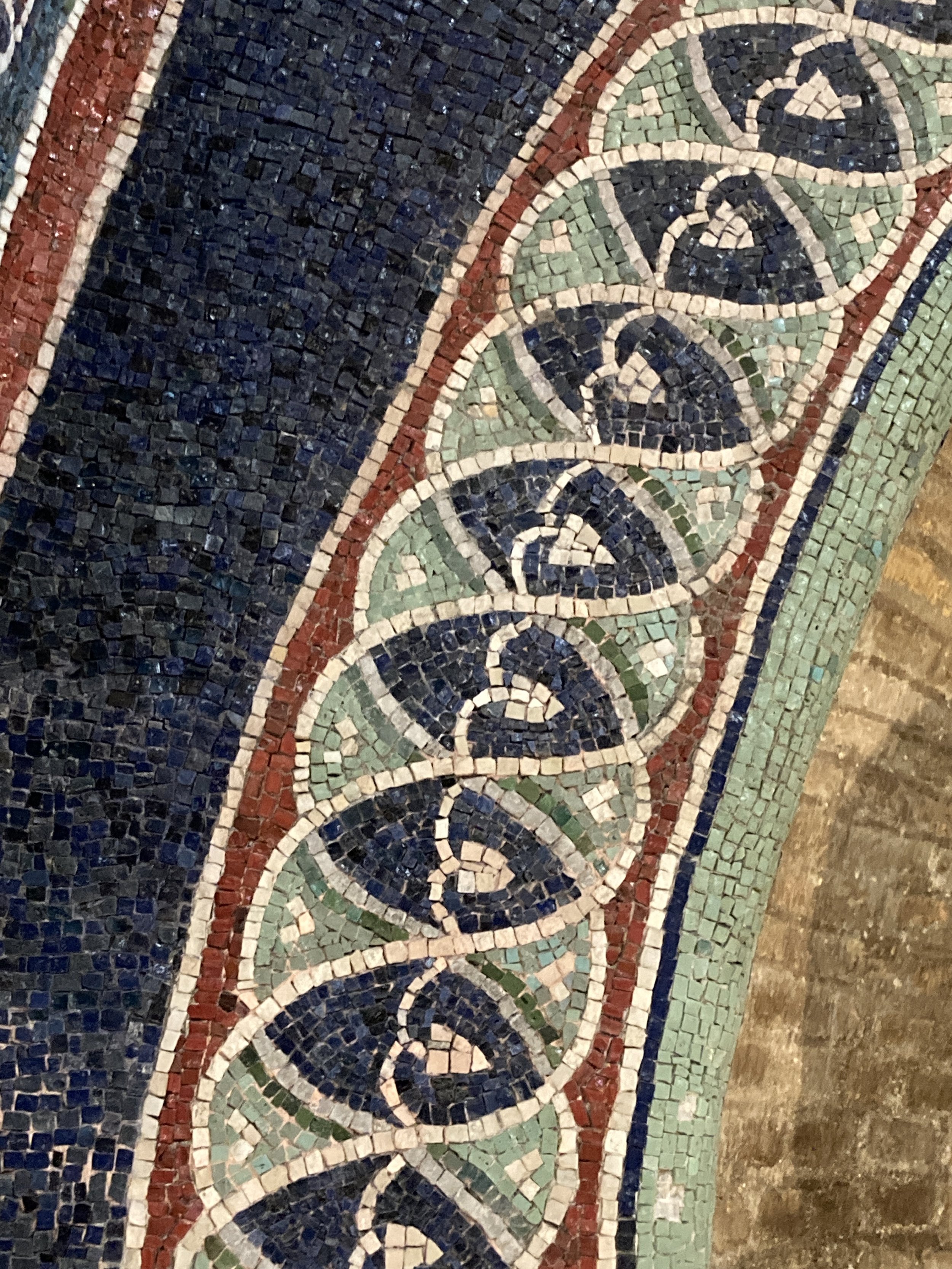
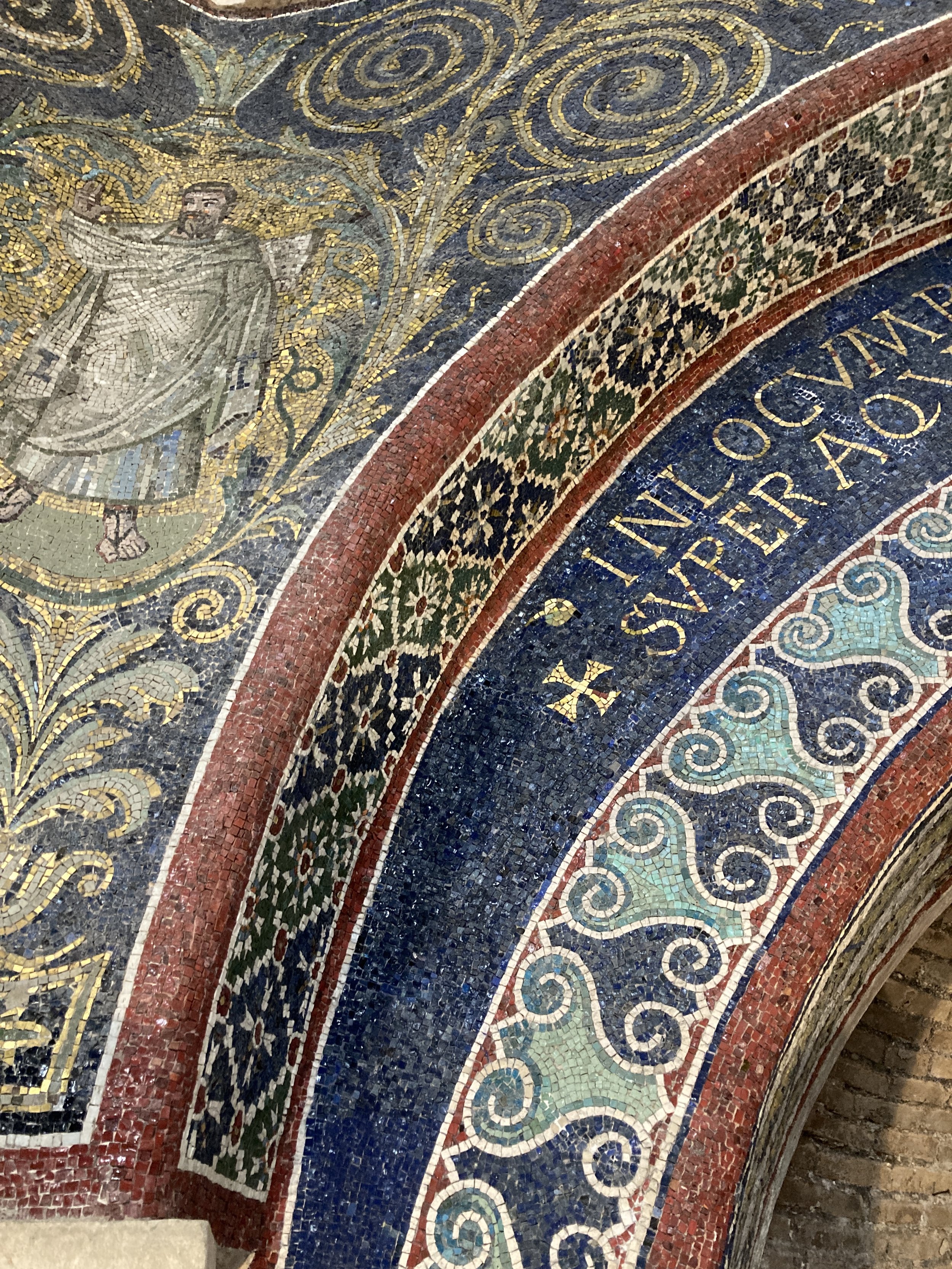
The central dome has a mosaic image of the baptism of Christ – one of the earliest known images of this type.  Moving out from that central image is a mosaic parade of the 12 apostles.  Around the dome’s edges are a series of alternating thrones and altars. The dominant color here is a vibrant blue, although there is still plenty of gold. The walls below the dome also have beautiful decorations with marble carvings and intricate mosaic work. The detail and color fill the small space and feel like a genuine miracle.
6173B8E4-175D-4294-A06B-A32301A9C44E.jpeg
A9CC1BB6-D8C5-4EE6-BF67-FAF5E82F89F4.jpeg
06C627F9-5A05-4BE5-9EA4-0292F216D29A.jpeg

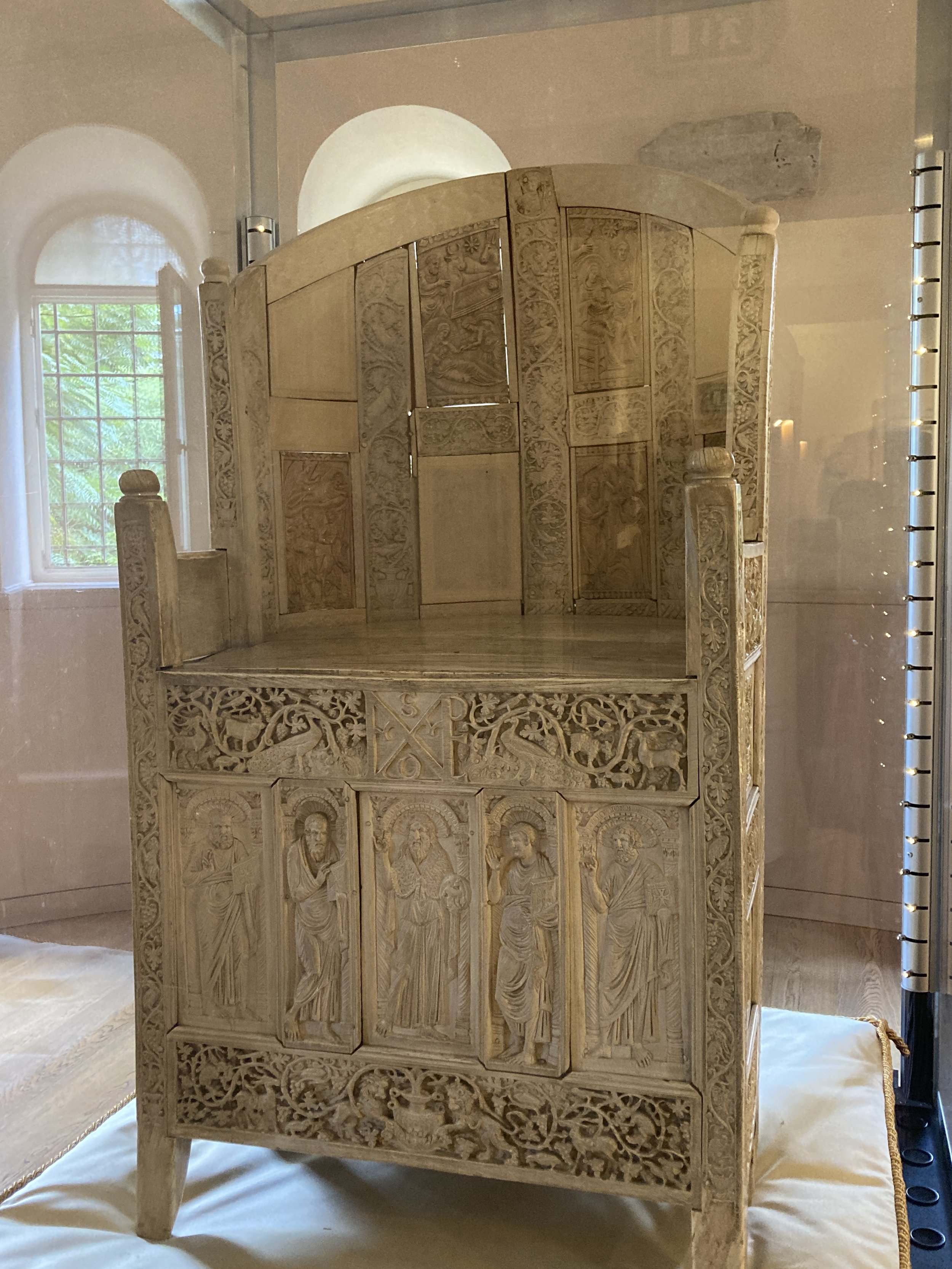
Bishop’s chair, Museo e Cappella Arcivescovile, Ravenna

In the Museo e Cappella Arcivescovile (Bishop’s Museum and Chapel) there are many interesting things to see, including fragments of mosaics from an ancient destroyed church and an intricately carved bishop’s chair (almost a throne really).

The most compelling feature is the tiny chapel, built for the private worship of a long ago Bishop, which is set inside the museum.

The entry mosaics are colorful and depict Ravenna’s aquatic birds The apse is topped by a starry heaven. The small space is intimate and welcoming.

Cappella Arcivescovile, Ravenna

Just as trying to see all of Ravenna’s important sights in one day can be overwhelming, so can reading about them. Look for more about Ravenna including the Basilica di San Vitale and the Galla Placidia Mausoleum in the coming weeks.

October 17, 2022 /Joanne Bartram
Ravenna, #ravenna, Battistero Neonian, Sant'Apollinare Ravenna, Italy Mosaics, Ravenna Mosaics
#ravenna, #mosaicsravenna, #italytravel, Italian Art, Italian art architecture, Italian culture, Italy travel

A maker of medieval armor

A Medieval Weekend in Lucca

June 06, 2022 by Joanne Bartram in #balestrieri, #lucca, #medievalitaly, Festivals Italy, Italian culture

3 years ago, in those distant times before the pandemic, I experienced my first Lucca Medievale (Medieval Lucca). As with so many events, the festival was cancelled in 2020 and 2021. It’s been a long wait, but 2022 is a new year and this past weekend marked the return of the festival.

From 2019, The Liberation Day ceremony which marks Lucca’s liberation from Pisa in 1369.

Lucca is a perfect place of a festival showcasing life in the Middle Ages. Much of the city maintains a medieval streetscape. A troupe of sbandieratori (flag tossers) regularly performs at events throughout the city. It is not unusual to catch a procession of people in medieval costumes parading through the streets, accompanied by batteristi (drummers). At times I’ve followed the sound of canons, to find medieval reenactors loading and firing them from Lucca’s walls. The only “open carry” you’ll find here are the balestieri (crossbow men) carrying their weapons in procession. The liberation of Lucca from Pisa (in the year 1369) is still marked annually by pageantry straight from the Middle Ages. Yes, Lucca is just the place for a medieval festival.

Turning wood on a medieval lathe

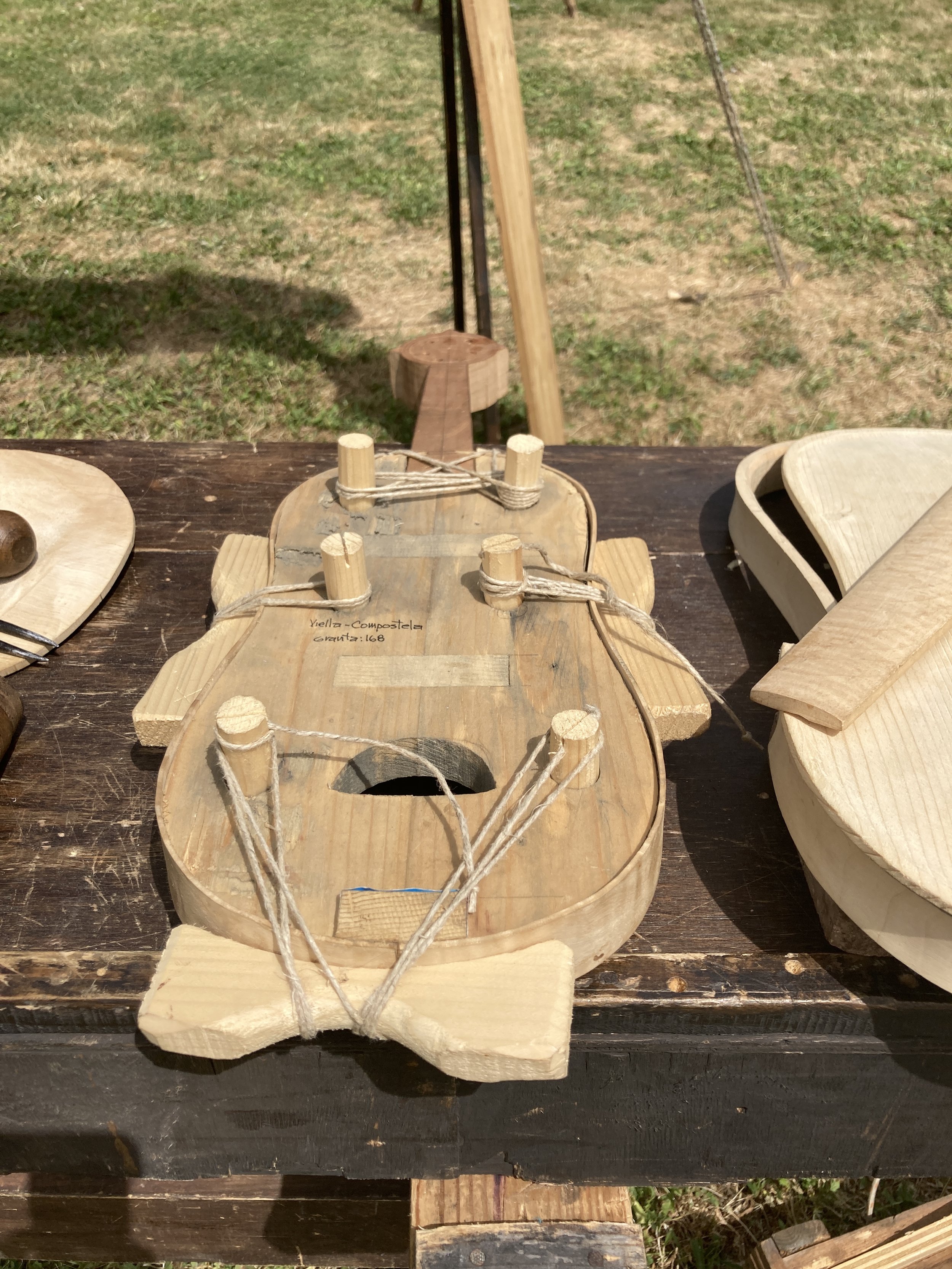
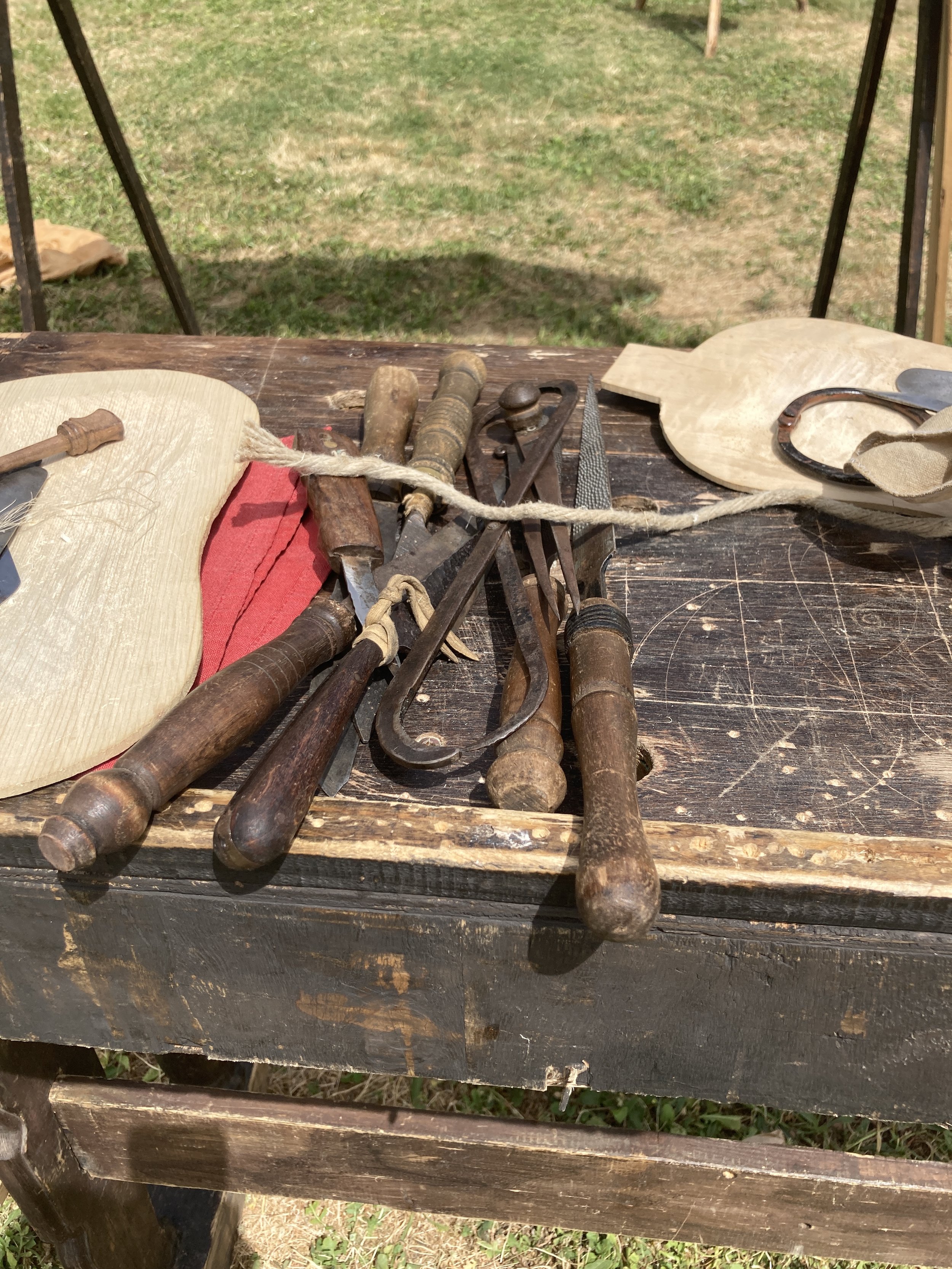
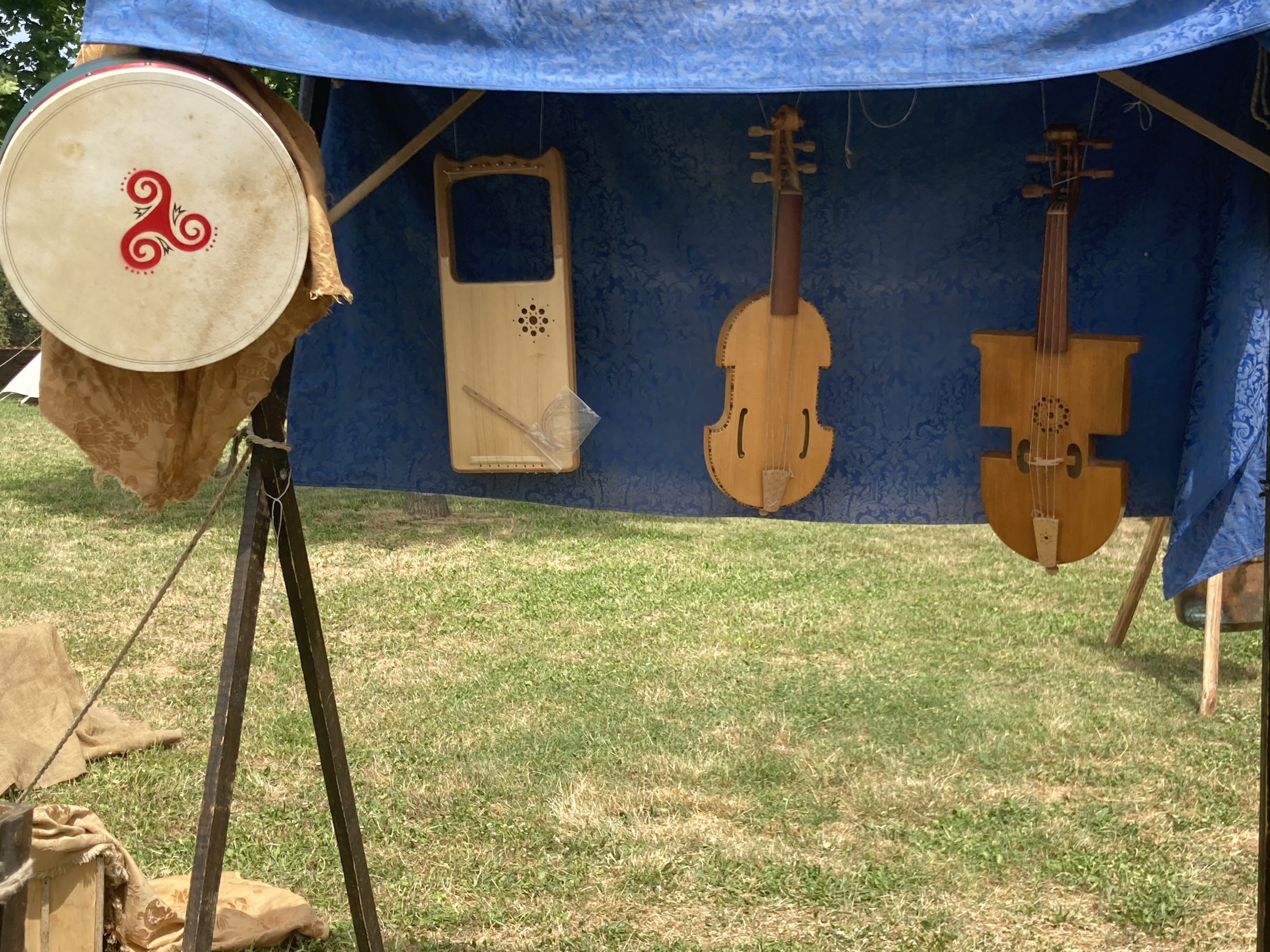
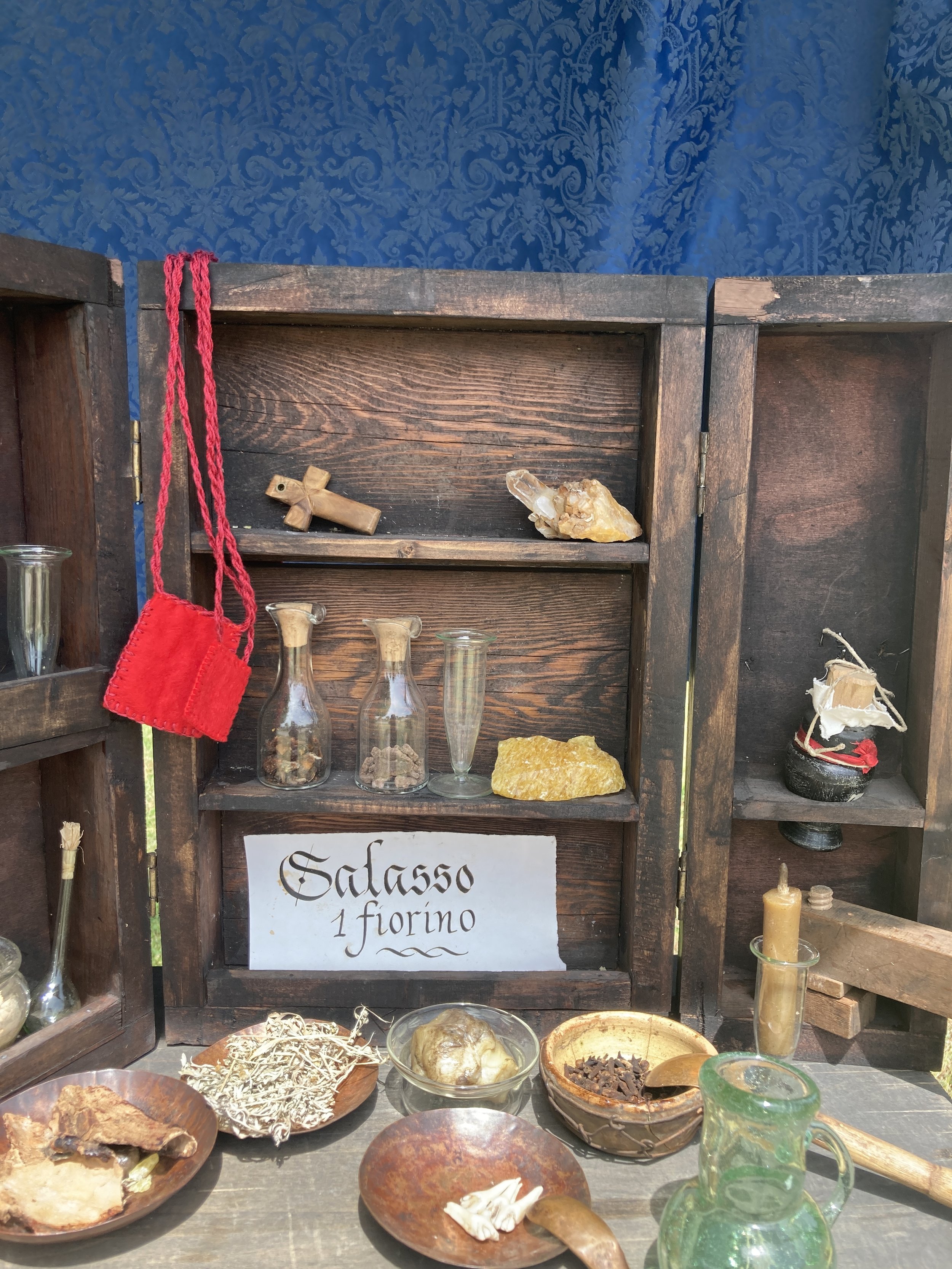
This year’s event included an encampment of tents atop Lucca’s walls around which a variety of medieval crafts, arts, scenes of daily life, and weapons were reenacted.

3BF0934B-BF29-4C77-93C8-75549640FC53.jpeg
D3954DAB-333F-4C4E-8A29-63C608079FE2.jpeg
6B328FD7-6613-42BA-9296-DFFF61426732.jpeg

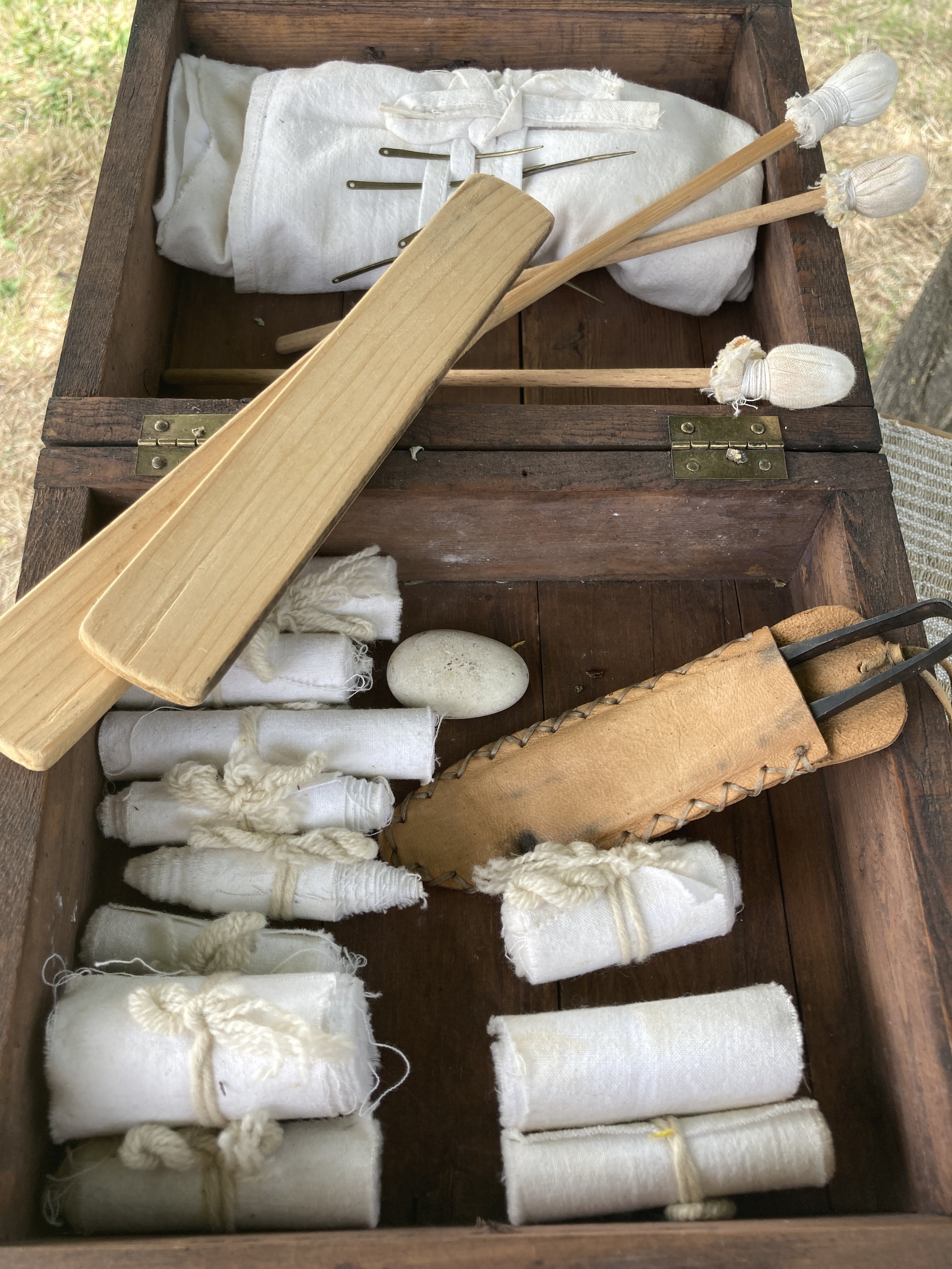
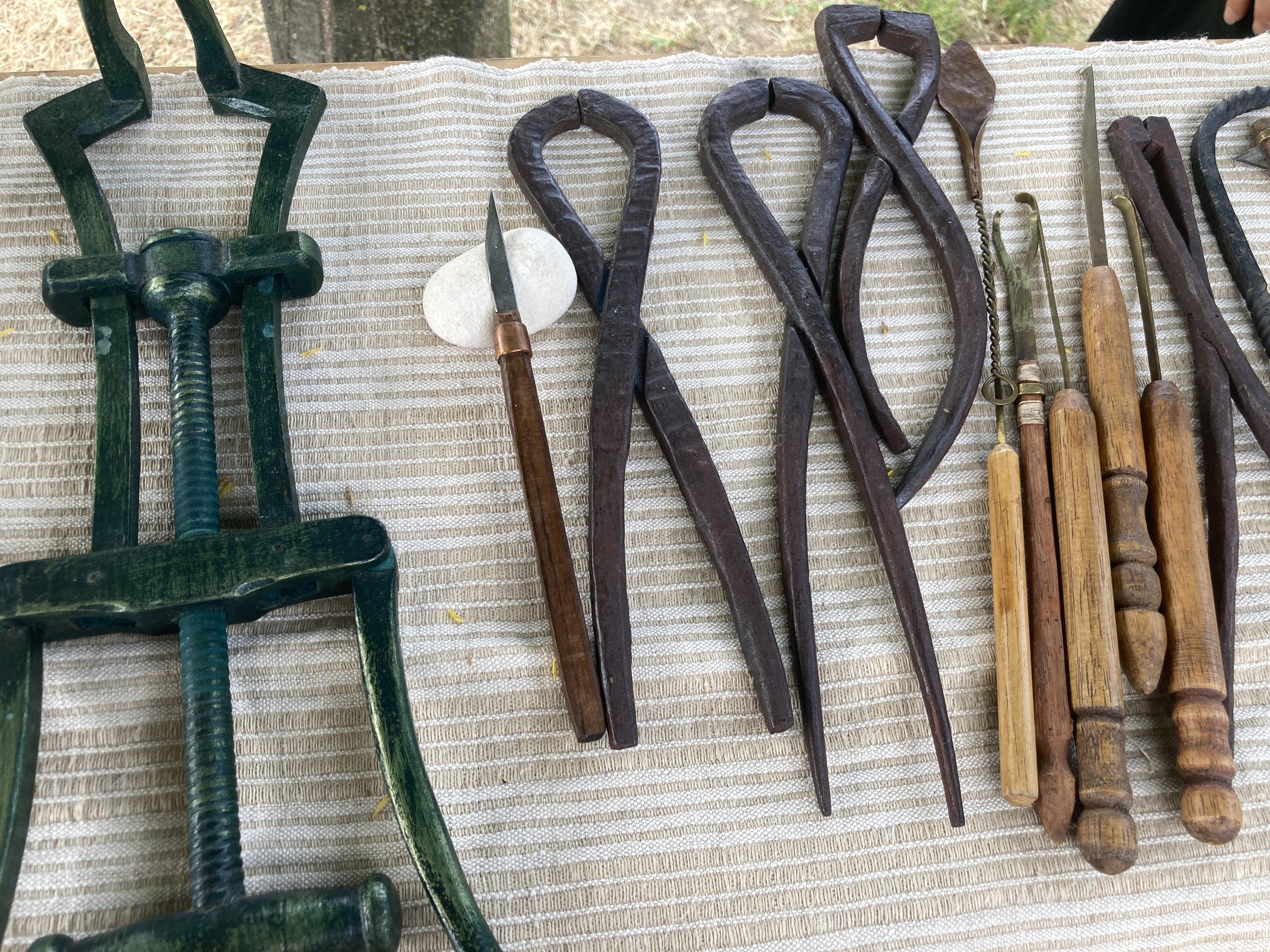
There were falconieri (falcon handlers), makers of armor, sword fighters, crossbow demonstrations, instrument carvers, musicians, dancers, food displays, potters - all in period costume. Especially fascinating was the booth with the medieval pharmacy, including dental instruments that looked downright frightening. I would not want to see these tools in my dentist’s office!

00CBC2AA-9915-4295-A495-BC9DFBE75252.jpeg
F1F50153-8C54-40E9-A89C-882F9E5833A4.jpeg
70F504DE-5834-4156-8BAB-1E6CF9CBA842_1_201_a.jpeg

It was fun to stroll though medieval times, but on a hot June day it was a relief to return to more modern times and give thanks for an air-conditioned apartment! But come next June I’ll be ready for a return to the Middle Ages.

June 06, 2022 /Joanne Bartram
medieval lucca, Lucca Medieval 2022, Lucca History, Middle Ages Italy, #festivalsitaly, #festivalslucca
#balestrieri, #lucca, #medievalitaly, Festivals Italy, Italian culture

Spring in Pietrasanta: Art, Philosophy, and Giraffes

May 16, 2022 by Joanne Bartram in #lucca, Italian art architecture, Italian culture, Italy travel, Italy, Tuscany

Pietrasanta has everything a small town in Italy should have - beautiful scenery, a lively main piazza, historic buildings and statues, a lovely church, cafes, and good food. And art. It is the art that draws me back time after time.

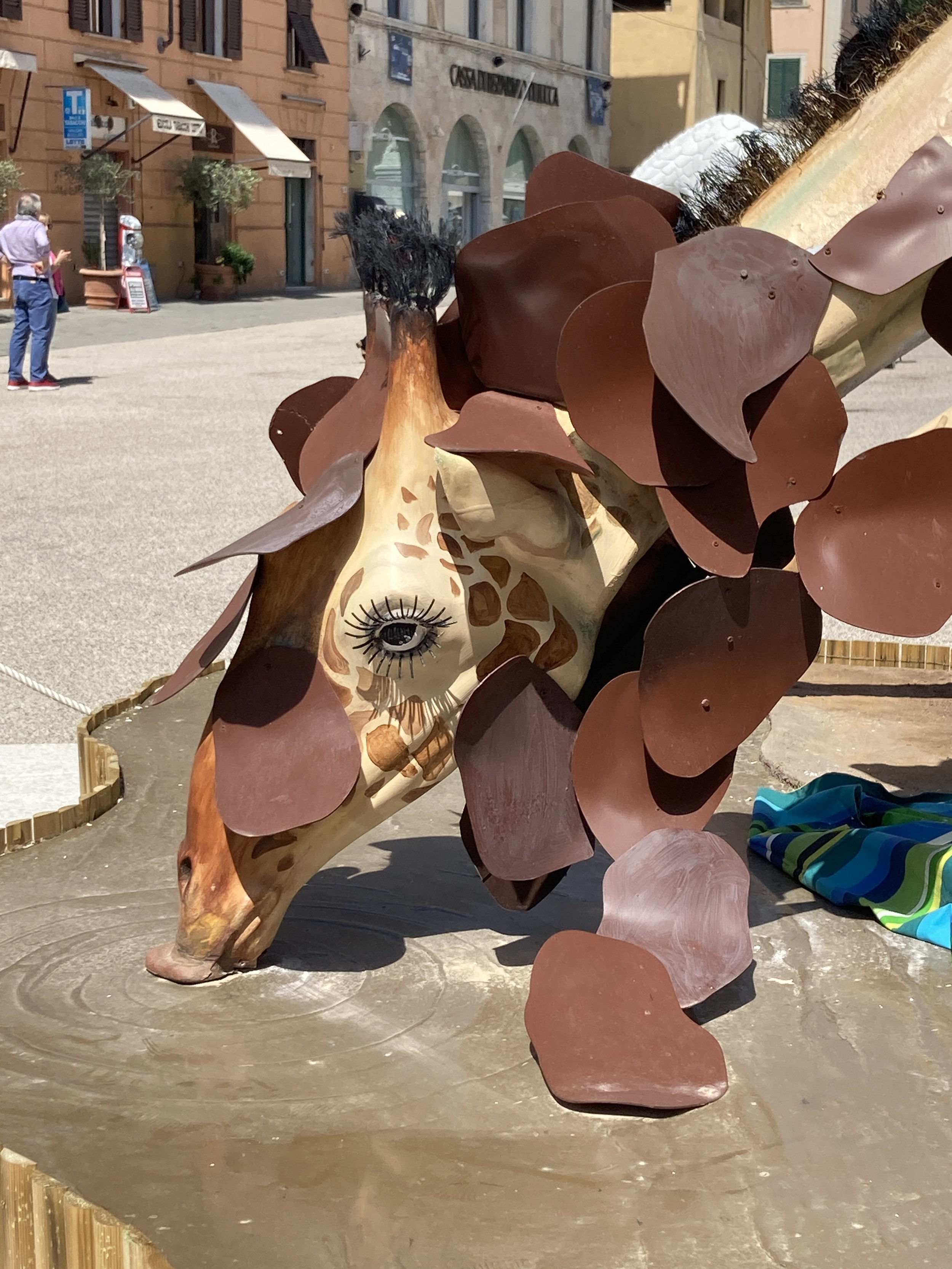
One of many whimsical giraffes that can be seen throughout Pietrasanta this month.

Visiting is easy as it is just an hour-long train ride from my home in Lucca. Unless of course, as in my most recent visit, there is an interruption on the tracks, train delays, an extra change of trains, a track in a tiny station with no signage, and you hop on the wrong train and have to double back. But don’t let that discourage you! My friend and I laughed it off and eventually arrived to spend a lovely day in Pietrasanta.

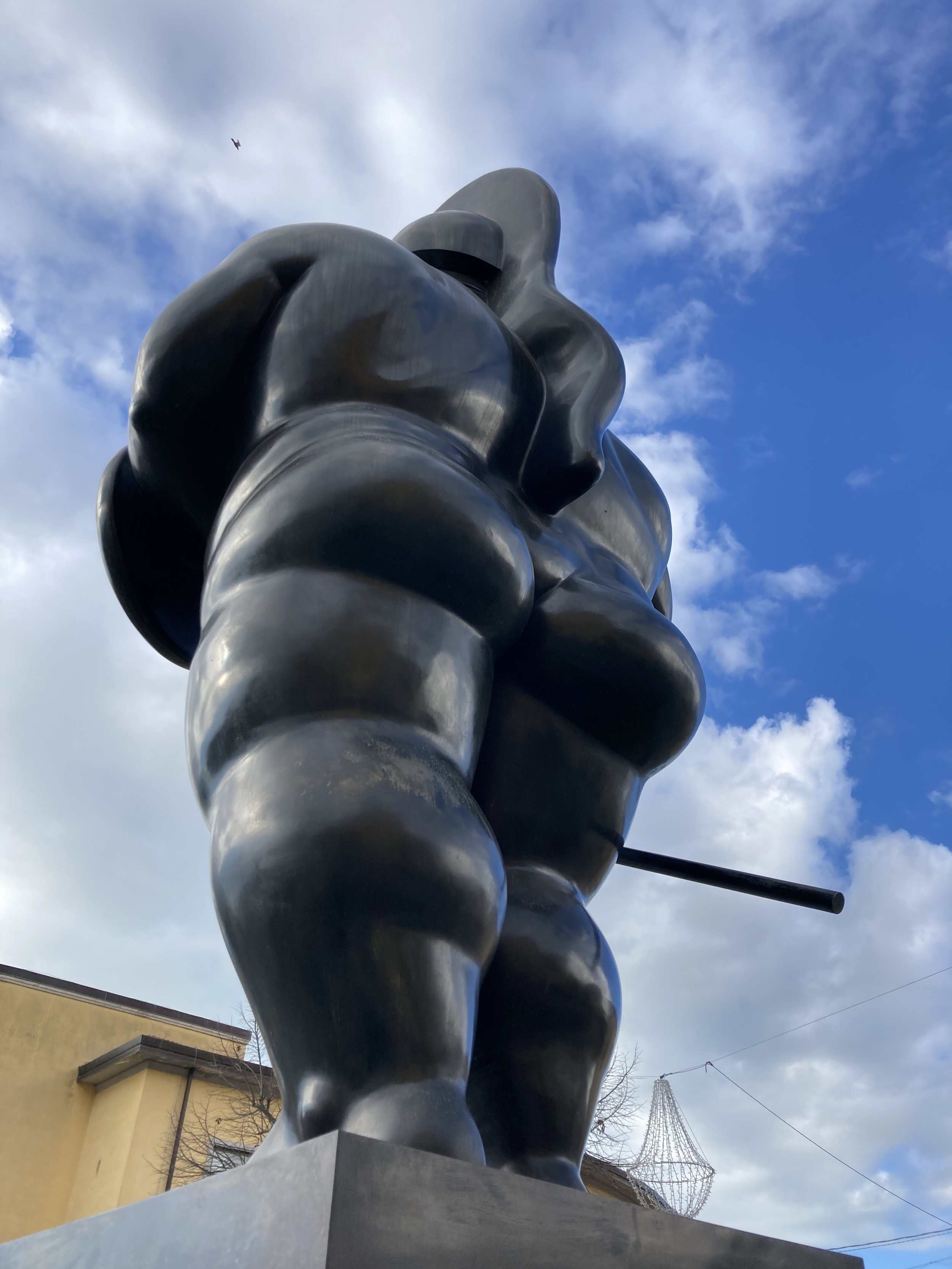
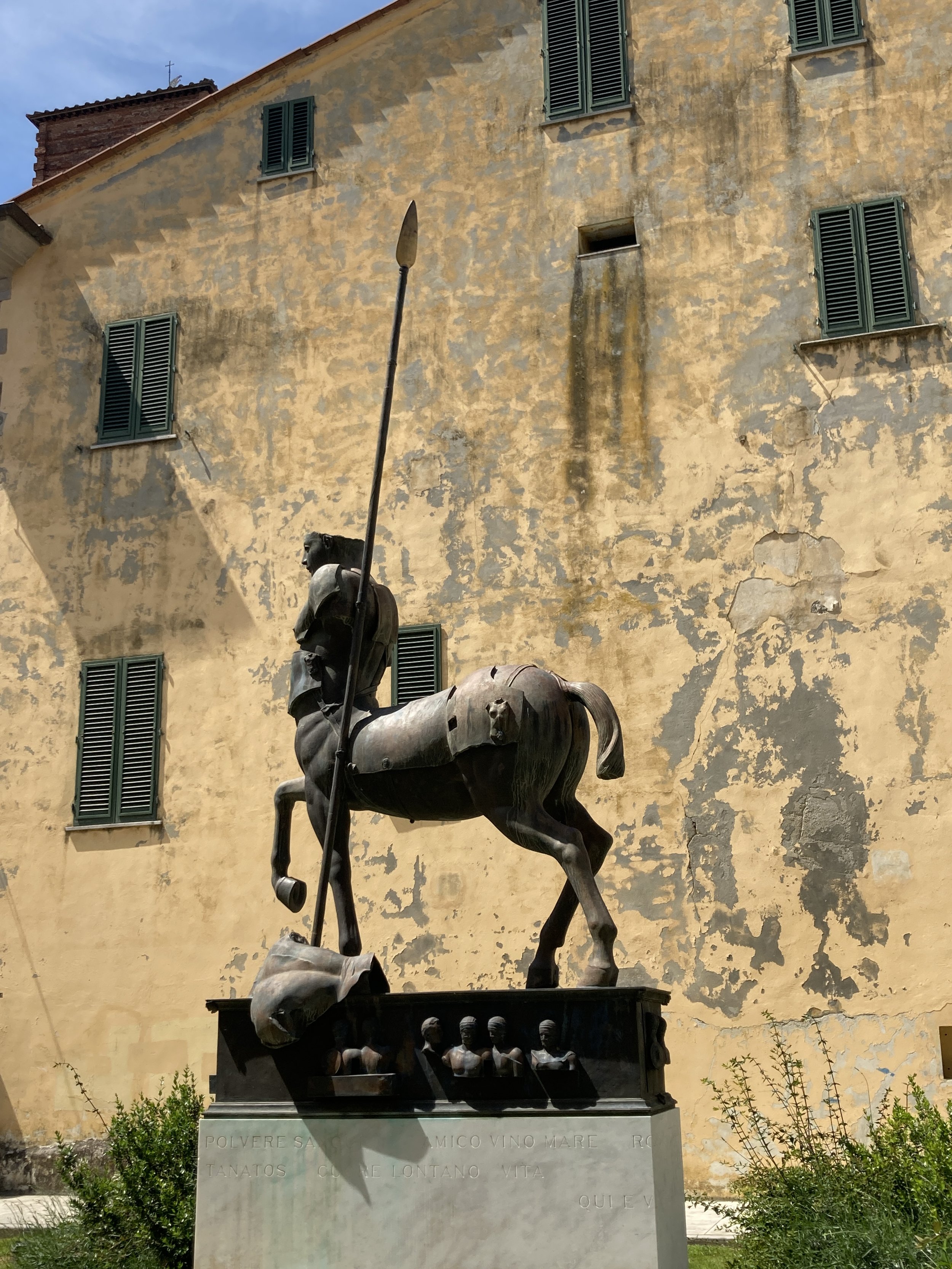
Famous as a center of sculpture (the marble quarries of Carrara are nearby), the town has permanent outdoor installations of bronze and marble sculptures, from smaller pieces to Botero’s massive bronze warrior (below).

CC1D846C-D0C6-4EB9-98AD-96C87DFFC193_1_201_a.jpeg
5853D5E2-CBB7-4A7E-9C0E-F90E3295F19A.jpeg
C95C05B5-2B06-4416-84BA-41EE353B441E.jpeg

In addition to these permanent works, Pietrasanta hosts temporary exhibits which fill the main piazza and nearby spaces (as well as some indoor spots) with an ever-changing display of works by contemporary artists.

The current exhibit, in place until June 5th, features the artistry of Sandro Gorra. Gorra’s background is in commercial art where he worked as an illustrator and creative director for advertising campaigns. That was his work. Today, he concentrates on his art which includes sculpture, illustrations, and a sort of philosophical short poetry which accompanies his works. And then there are his giraffes.
Gorra says that this piece, made from 4 tons of marble, is one of his favorites. A loving mother giraffe tending to her baby.
Why giraffes? According to a published interview with Gorra, the giraffes serve as a parable, representing man’s desire for superiority. A giraffe towers above, looking down on everyone. Each one is unique in his spotted form.

This begs the question - without those spots, what would the giraffe be? Anonymous! Naked!

Change - a predictable part of life - in progress.

Change is inevitable and the spots on Gorra’s giraffes do indeed change. They fade away, they fall off, new ones appear. In fact, during my visit, two men, one looking suspiciously like the artist himself (or was that just my imagination?) were busy painting new spots on two of the giraffes. This would be consistent with Gorra’s view that change is to be expected and that irony is a part of the human (and giraffe) condition.

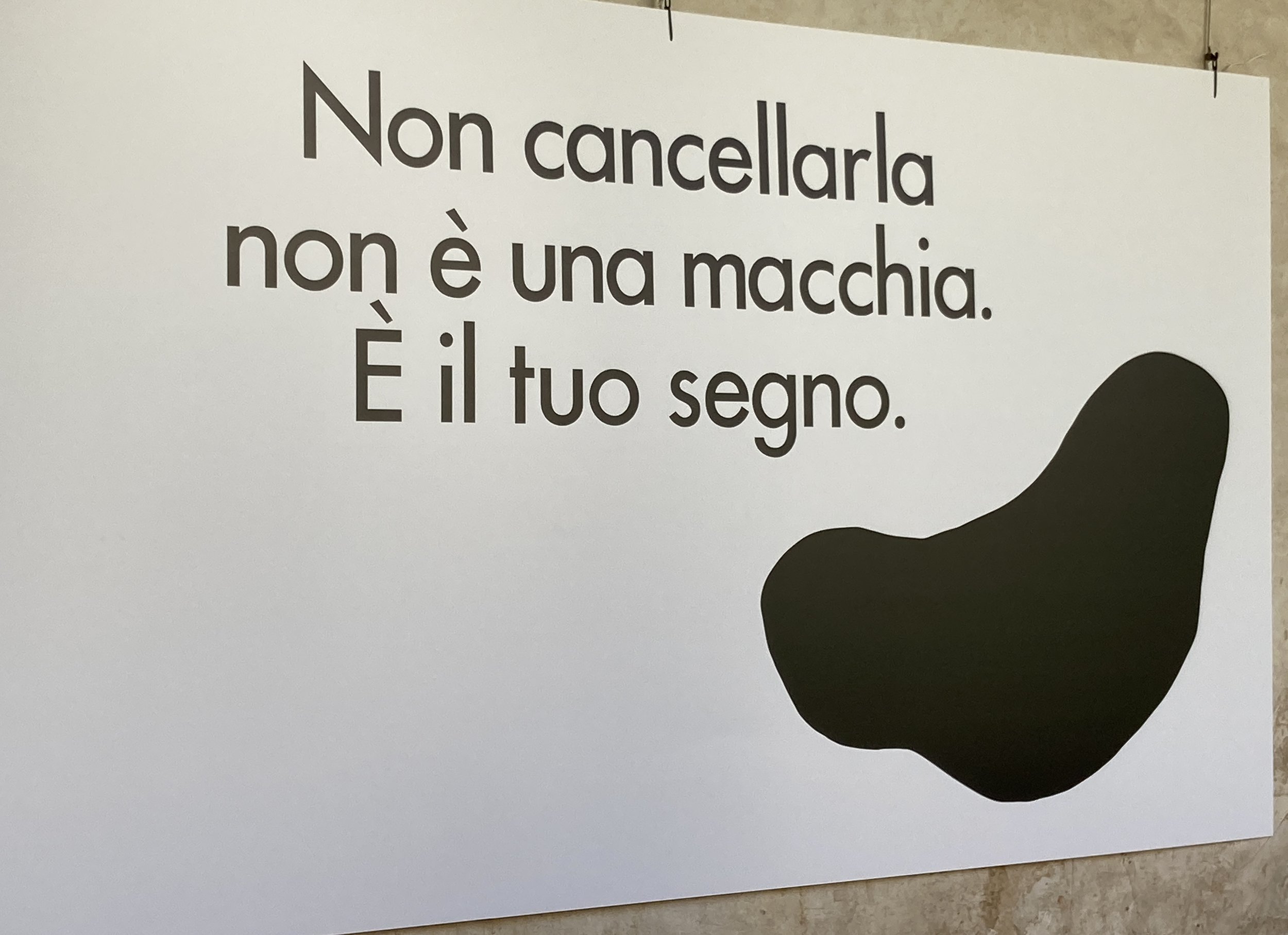
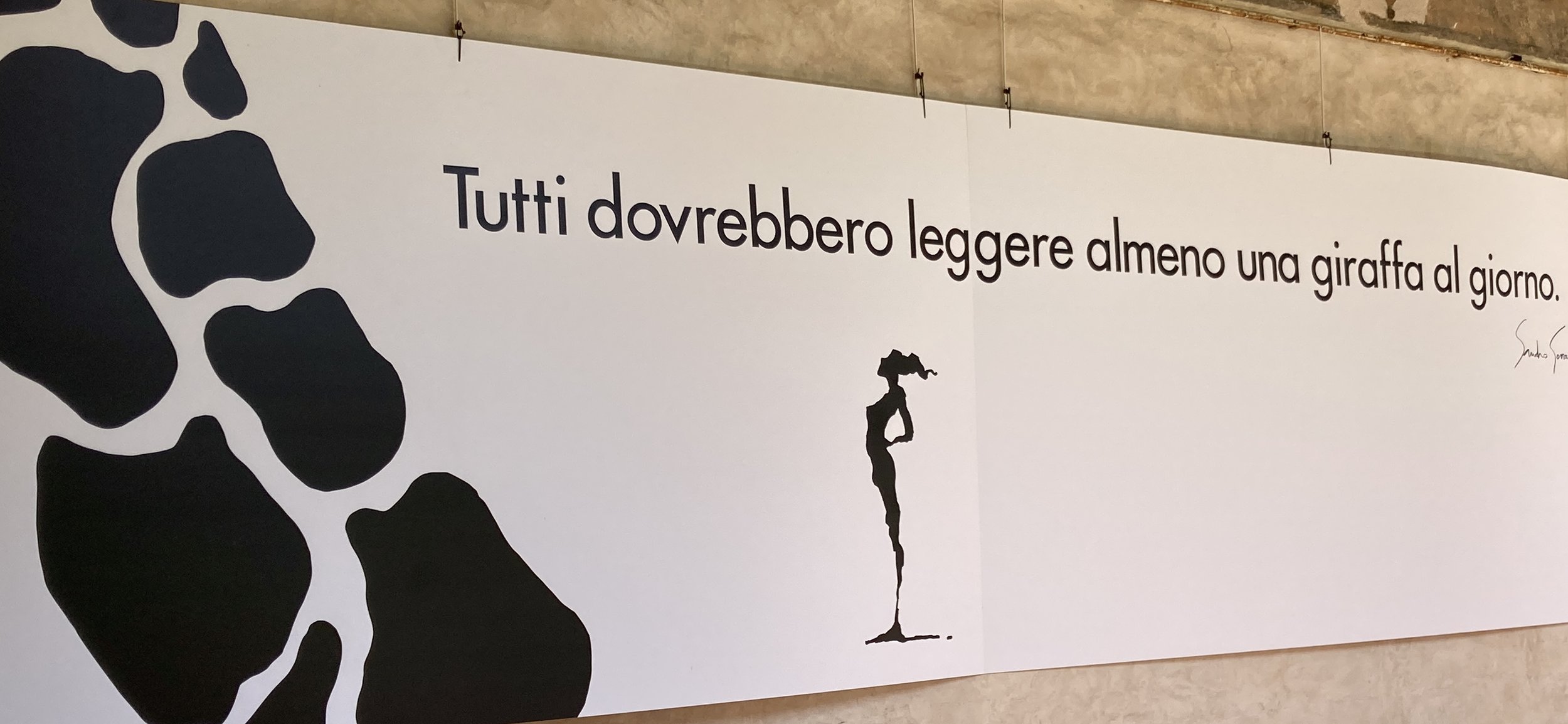
Alongside the works of art are illustrated phrases, providing an intriguing look into the artist’s mind and bits of his philosophy. I enjoyed these sprigs of wisdom just as much as the sculptures. Both made me smile, both made me think. Isn’t that the best part of art?

Here are some examples (any mistakes in translation are entirely my fault).

Don’t erase it, it is not a stain. It is your sign.

Ideas are always around, but if you don’t notice them they go away

And my favorite one of all - it just may become my personal mantra:

Everyone should read at least one giraffe a day.

A day in Pietrasanta is always a joy. Sipping a cafe in the Piazza del Duomo. Strolling through the piazza and the Chiostro di Sant’Agostino. A quick visit to the beautiful Duomo. Wandering the side streets. A quick stop at the Misericordia Chapel to see Botero’s Heaven and Hell frescoes. A relaxed lunch at a favorite spot. Add in Gorra’s giraffes and the day is just perfect!

May 16, 2022 /Joanne Bartram
Pietrasanta, Sandro Gorra, Contemporary Italian Art, #italy, #artitaly, #sandrogorra
#lucca, Italian art architecture, Italian culture, Italy travel, Italy, Tuscany

A Lucchese April

April 11, 2022 by Joanne Bartram in #lucca, #springintuscany, Festivals Italy, Garden Festivals Italy, Italian culture, Italian gardens, Italy travel, Living in Italy

April can be a fickle month here in Lucca. After a few warm days in late March, the kind of days that almost trick you into packing away the winter sweaters, April barged in with colder days, wind, cloudy skies, and rain. The rain is much needed after a dry winter, so I won’t complain. And if the saying is true, and April showers really do bring May flowers, then Lucca should have a most colorful May.

This stand of white wisteria was an early bloomer this spring

Despite the early April chill, the days are growing longer, the first leaves have appeared on the trees, and the first blossoms throughout town hold the promise that warm spring weather will soon arrive.

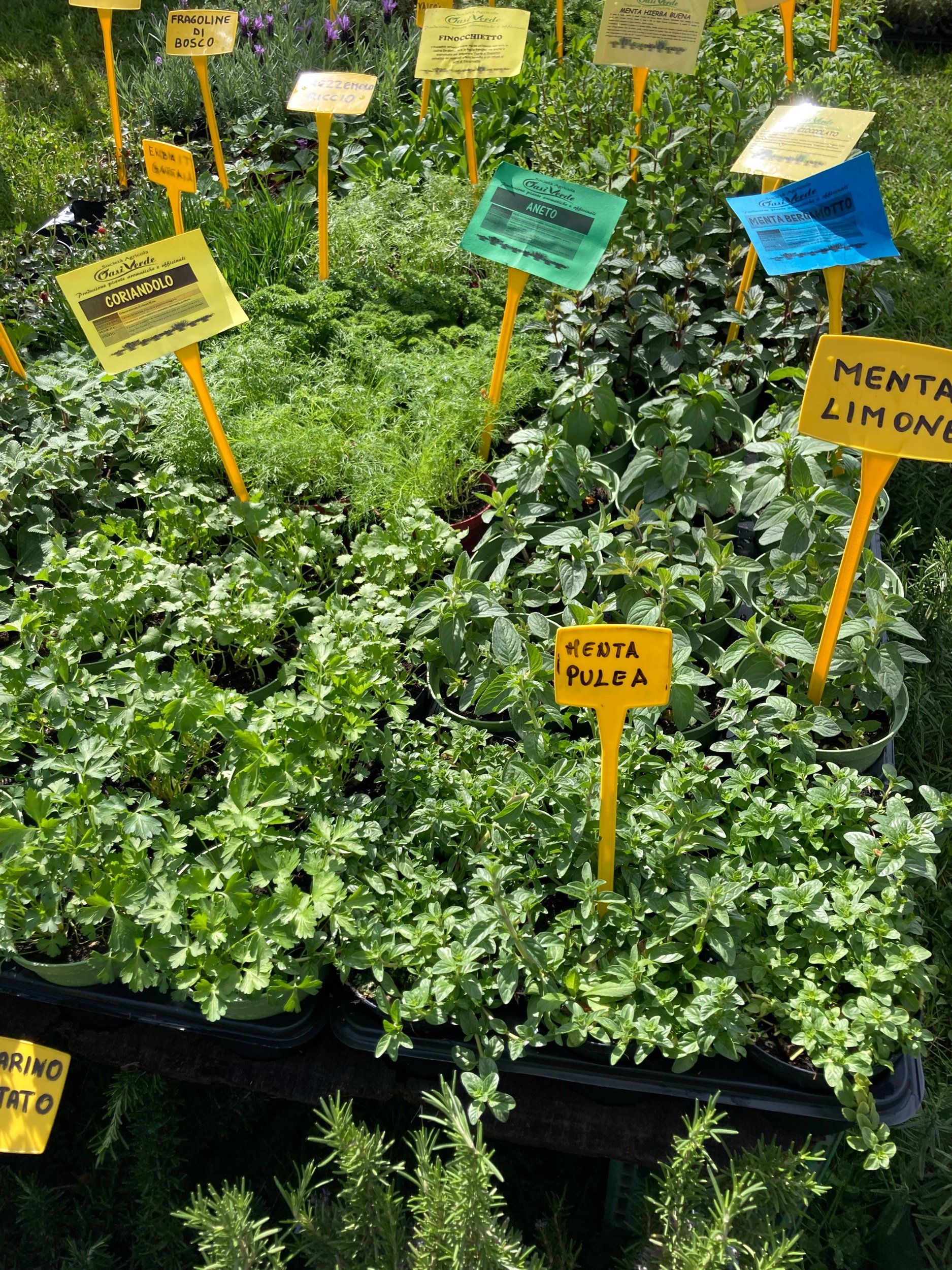
Verde Mura is the perfect place to buy pots of herbs for the garden.

Perhaps the best harbinger of spring is the return, after a two year COVID-related pause, of Lucca’s spring garden festival - the Verde Mura. This wonderful event showcases all things needed to plant and tend a garden. It doesn’t matter if your garden is just a few pots on a terrace, a couple of window boxes, or a large orto (vegetable garden), the Verde Mura has what you need. The festival takes place up on the walls that surround Lucca’s centro storico (historic center) which means that the views are part of the fun.

Garden art at Verde Mura

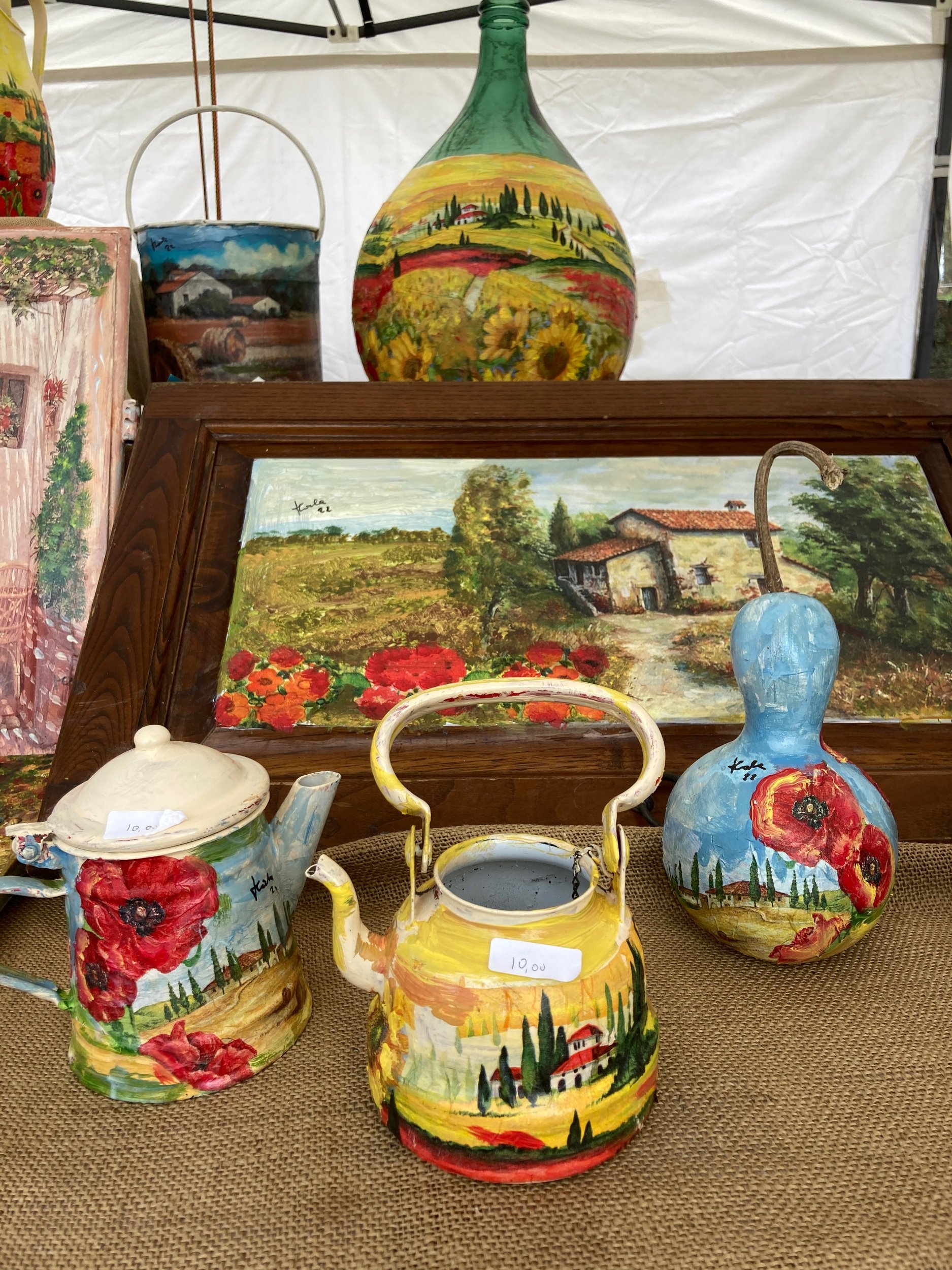
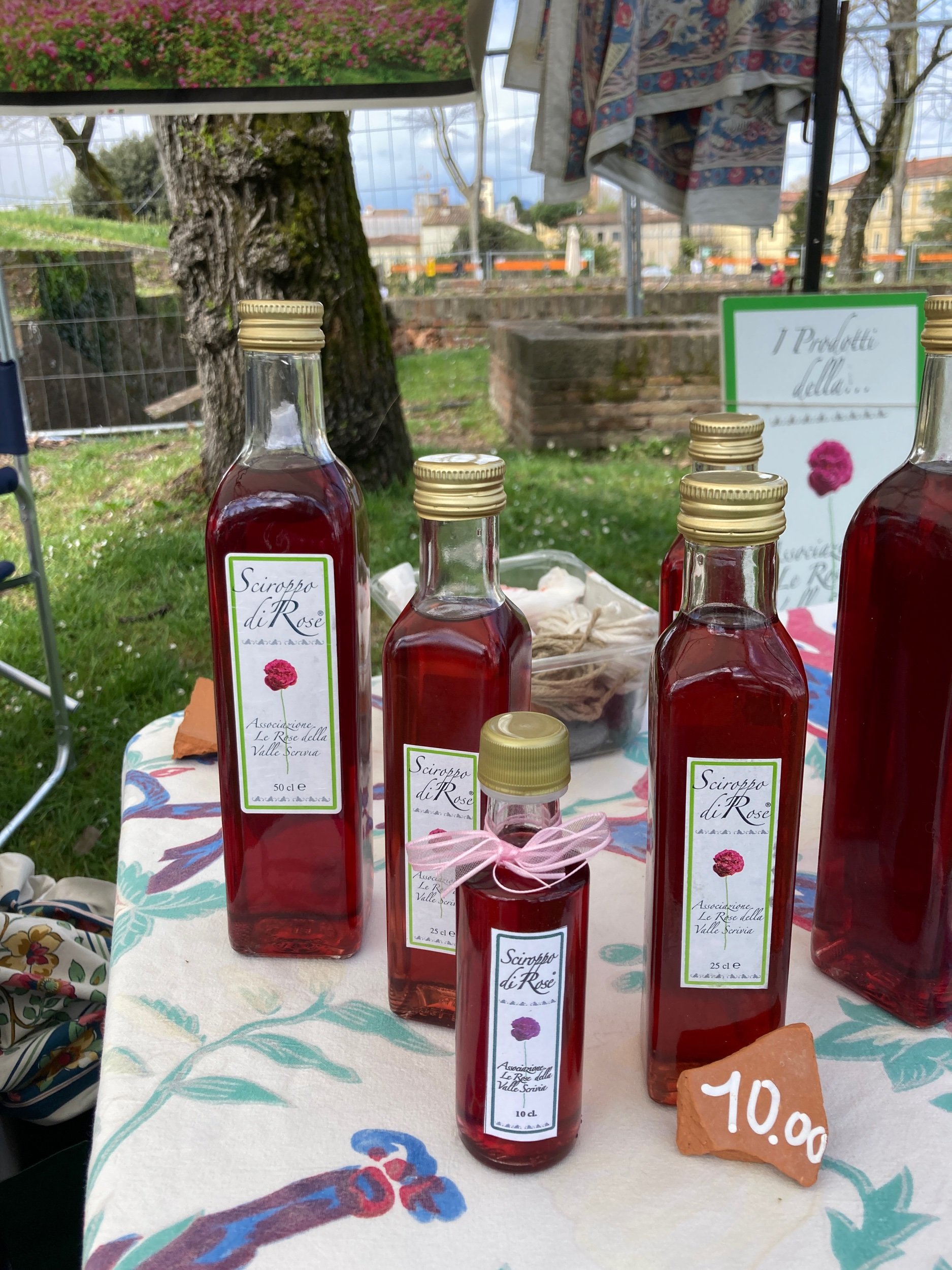
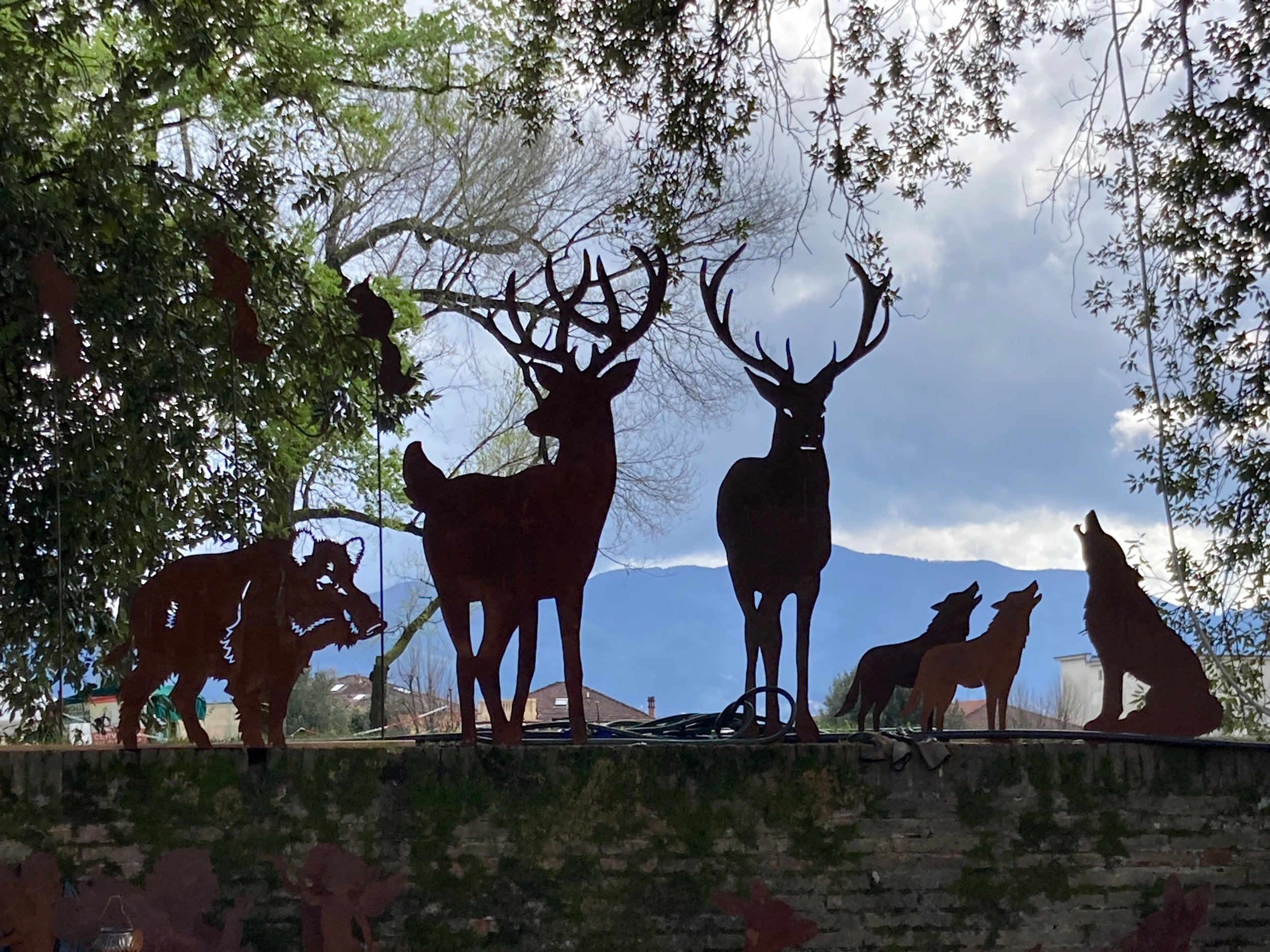
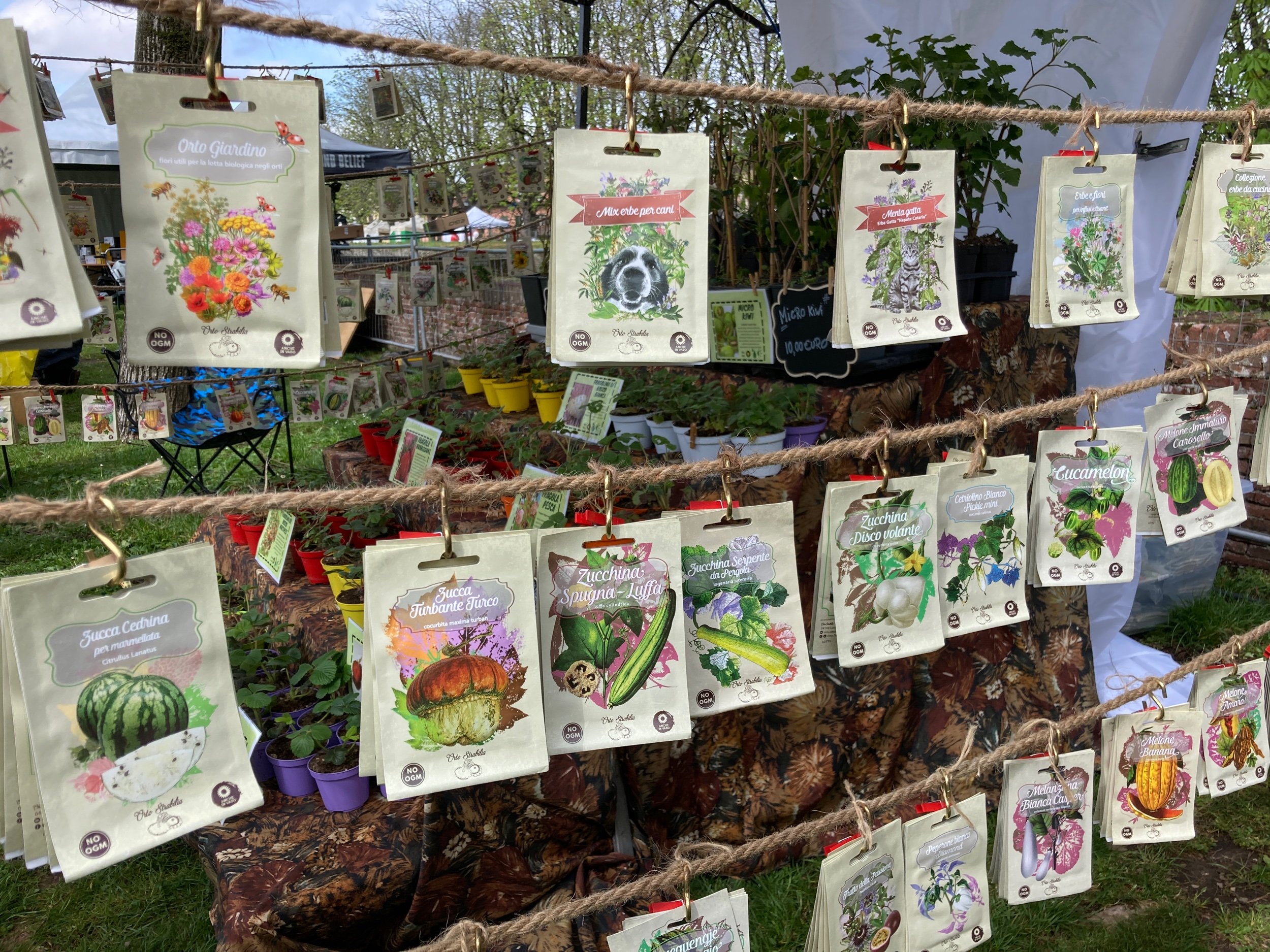
Local gardeners pull wagons through the many booths, collecting everything from rose bushes to fruit trees to annual flowers and herbs. Need a tractor? Well, Verde Mura has just the one. Same with shovels, clay pots, bug sprays, fertilizer, seeds, and outdoor grills. In addition to these garden necessities, this is the place to find whimsical garden art, herbal products (soaps, teas, spices, syrups), fragrant spices, and a variety of crafts.

IMG_5343.jpeg
IMG_5337.jpeg
IMG_5349.jpeg
IMG_5271.jpeg

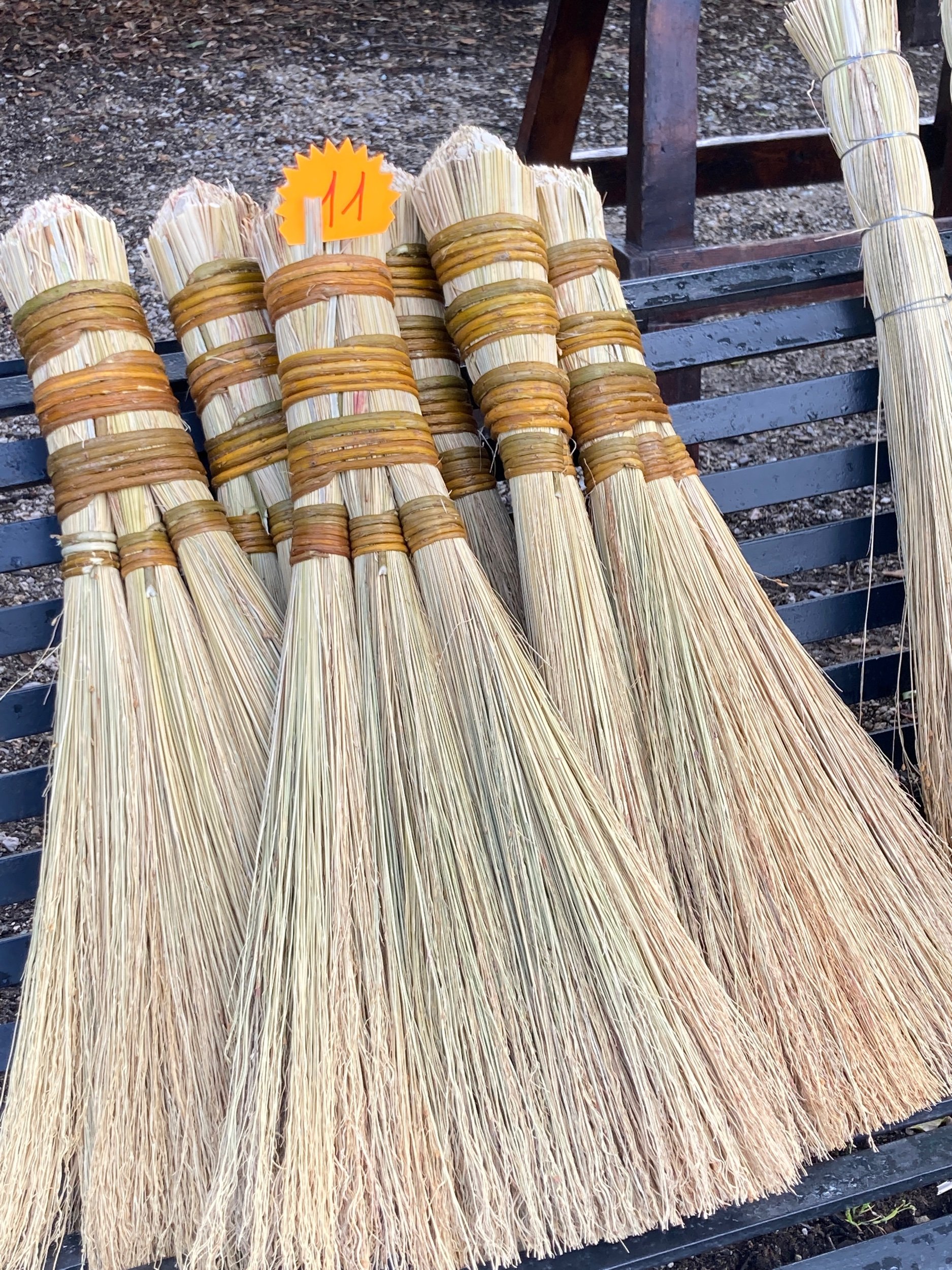
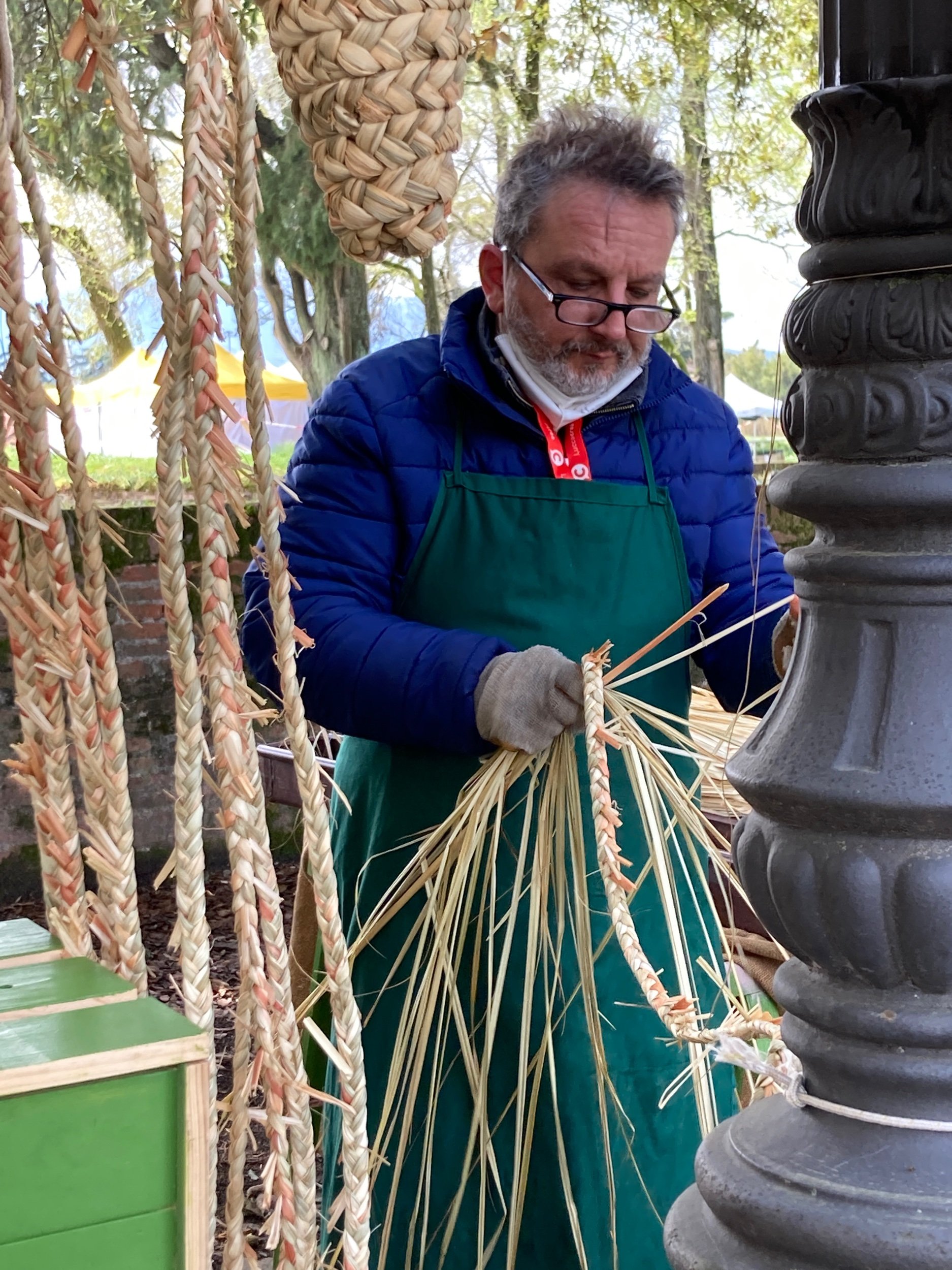
It is always fun to see traditional craftsmen at work; I especially love watching the basket weavers and broom makers.

IMG_5352.jpeg
IMG_5296.jpeg

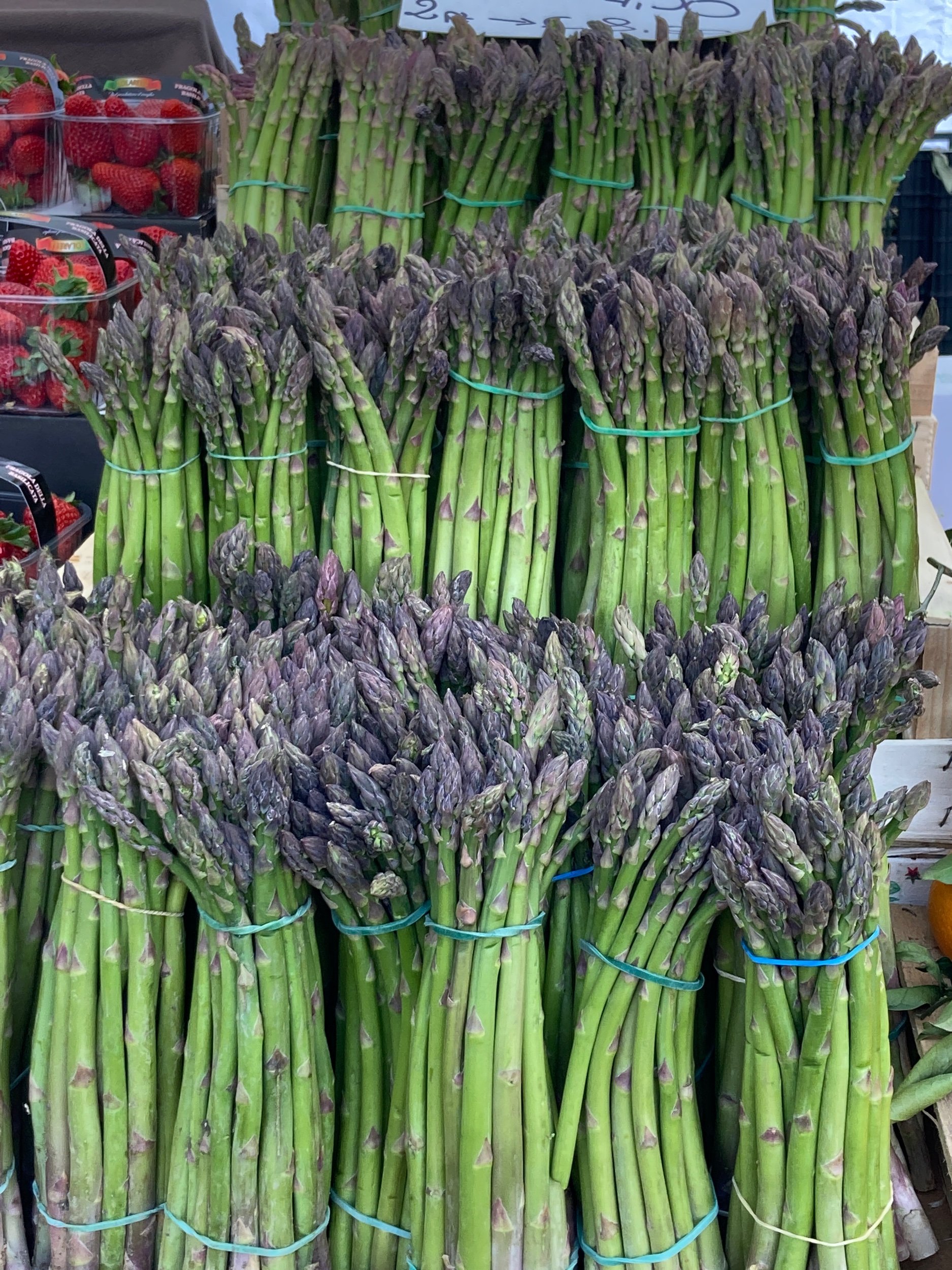
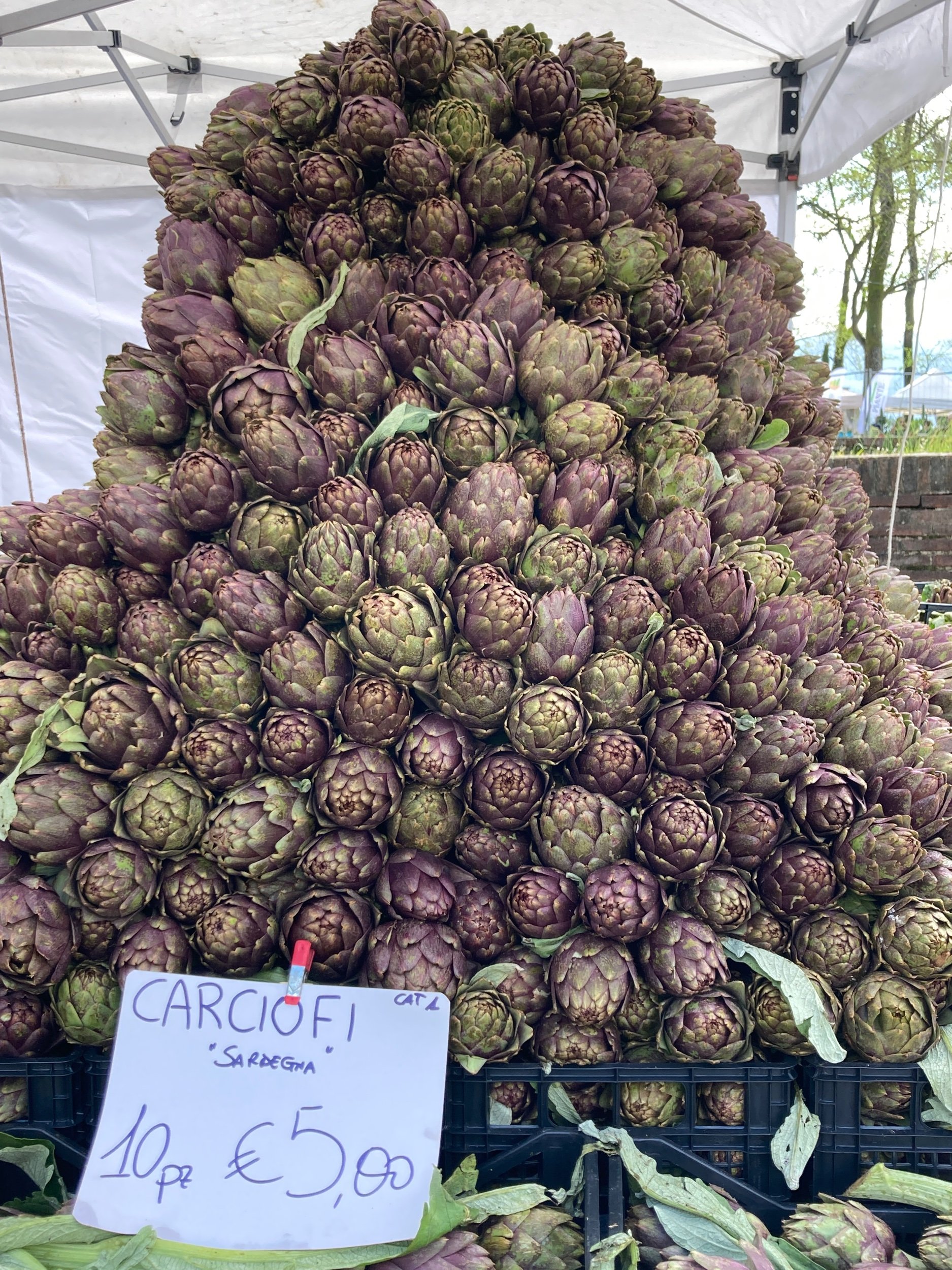
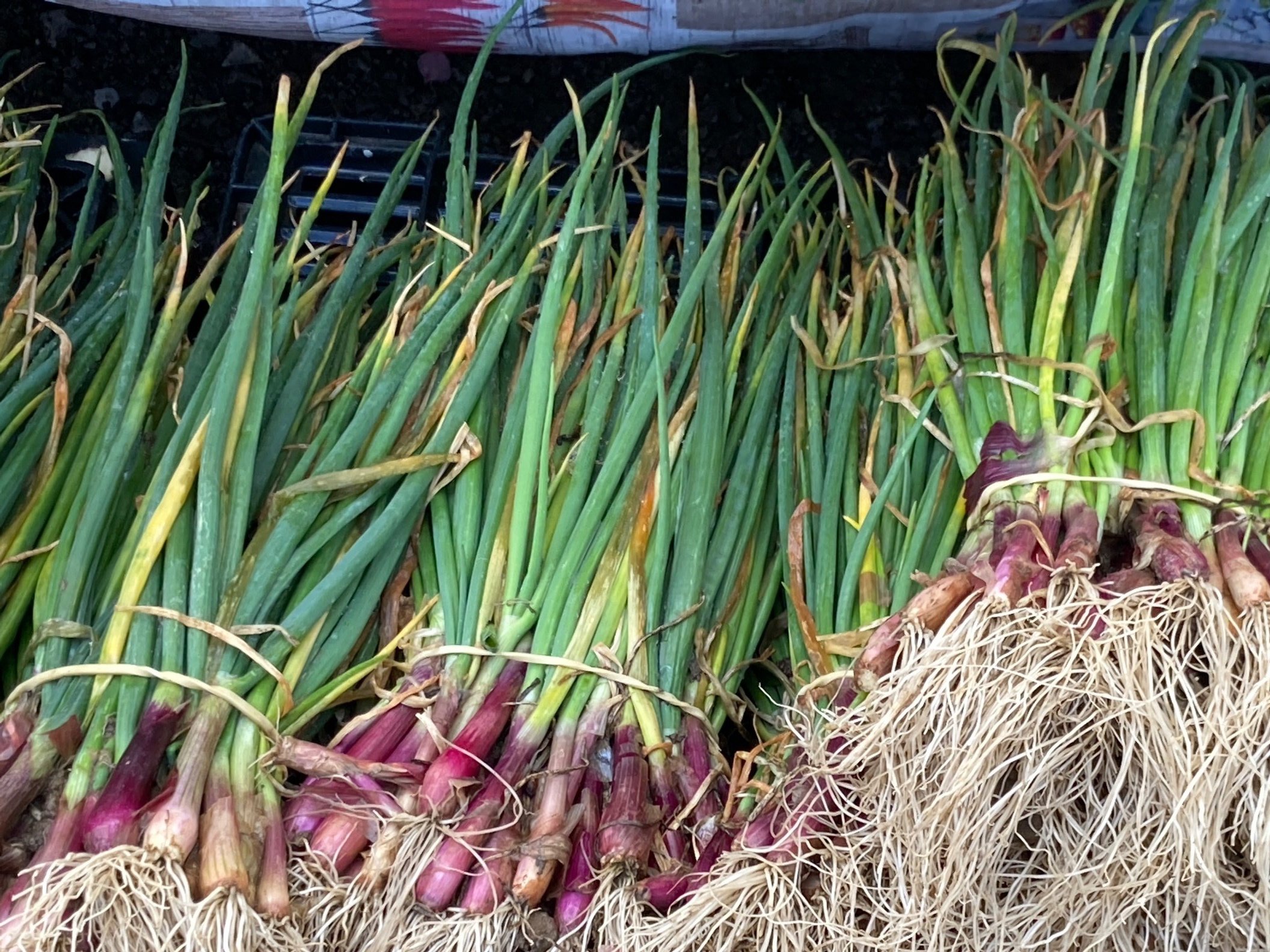
Of course there was food (this is Italy after all). In addition to booths serving coffee and sweets there were plenty of vendors of local meats, cheeses, honey, pasta, and breads - most offering an assaggio (a taste). One booth had mounds of beautiful spring artichokes, bundles of aspargus, pretty Tropea onions and ripe strawberries from the south of Italy.

IMG_5313.jpeg
IMG_5312.jpeg
IMG_5306.jpg

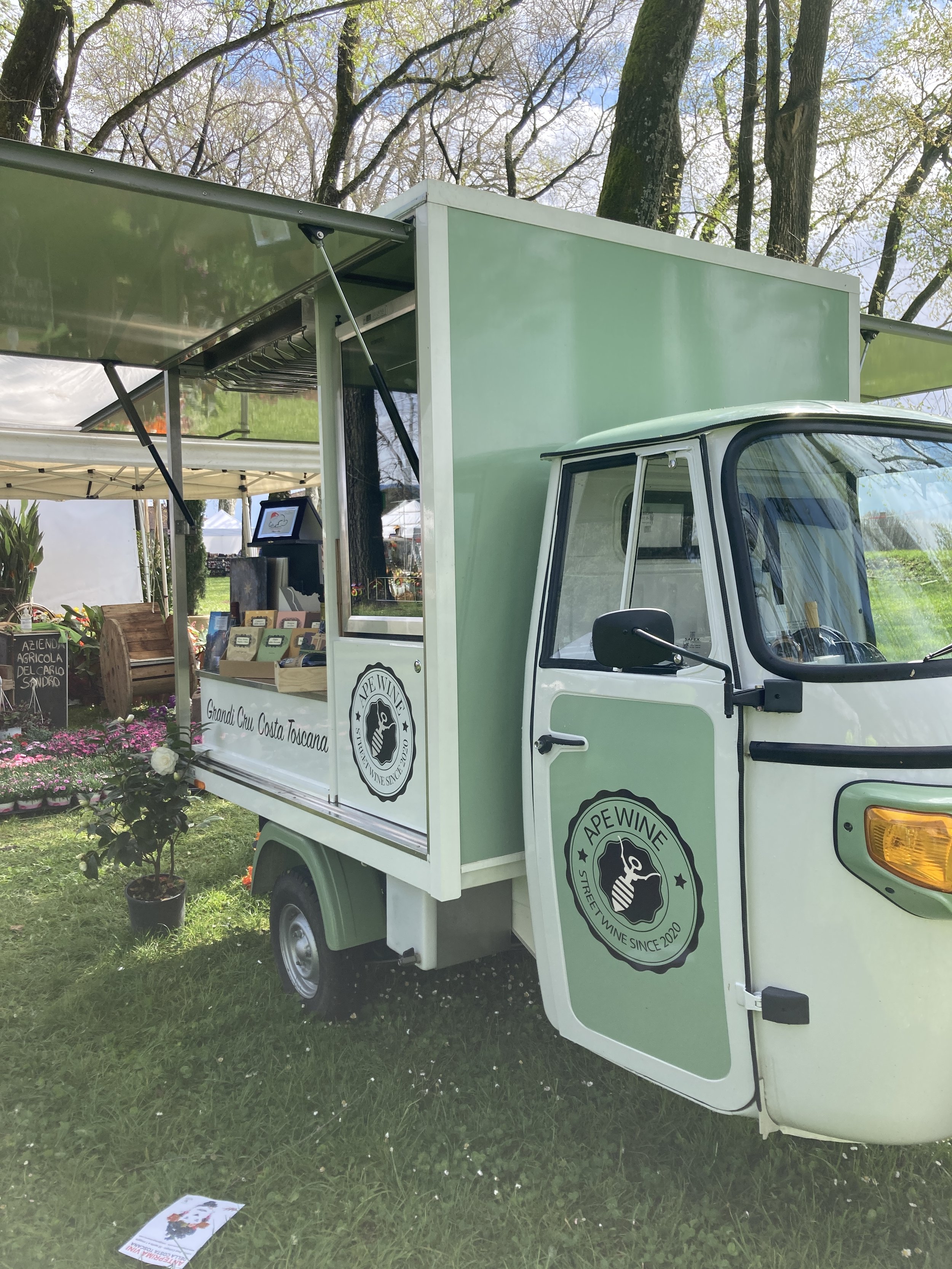
There was even the cutest little wine truck!

A break in the rain allowed for a slow morning wander through the many booths and displays of plants.

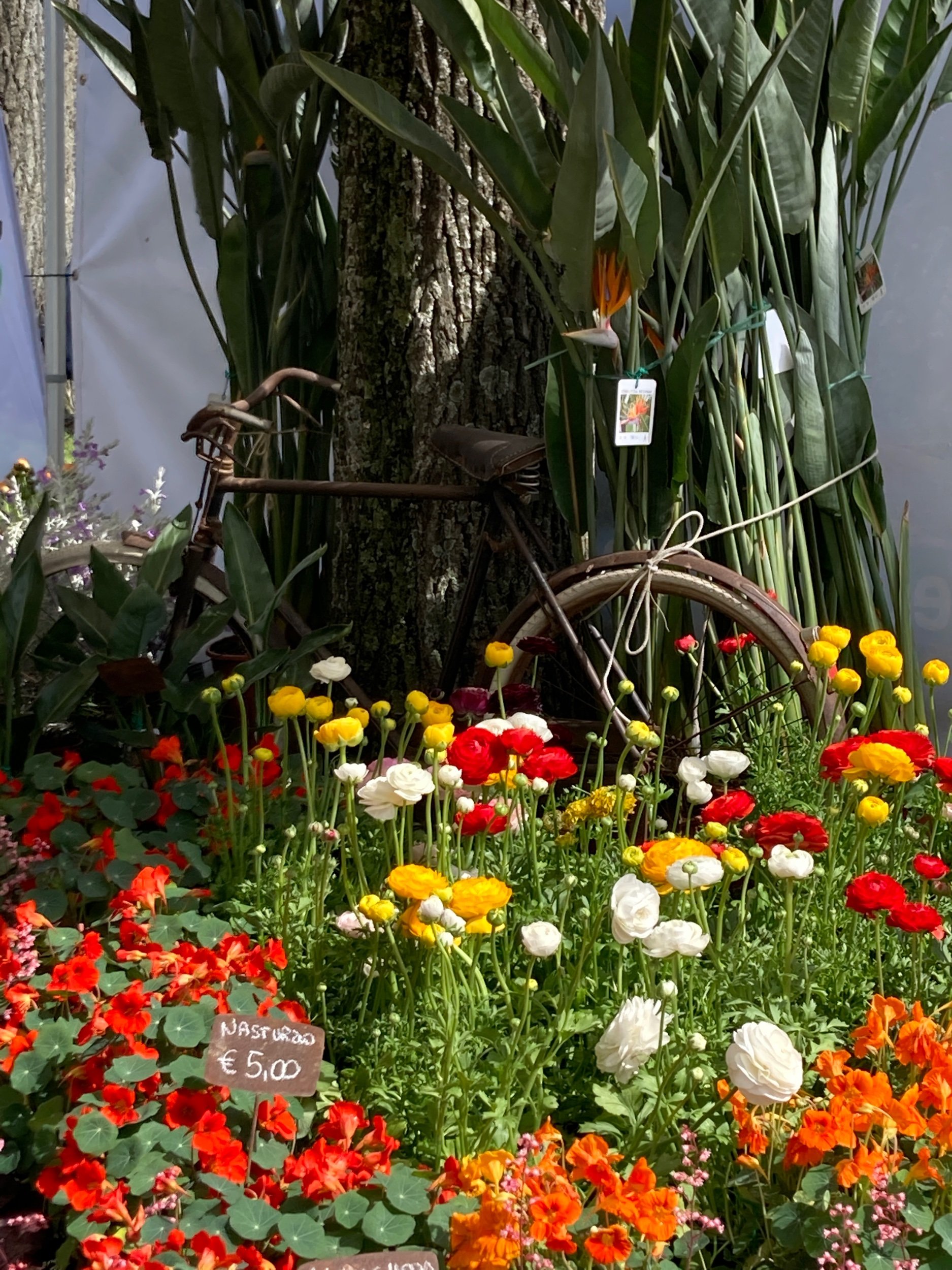
I came home with some herbs which are now happily planted in my window boxes as well as a colorful bouquet of ranunculi for my apartment.

I may have needed a warm coat, a scarf, and a hat against the chill but there was still a hint of spring in the air. I am looking forward to seeing the season unfold.

IMG_5321.jpeg
IMG_5324.jpeg
April 11, 2022 /Joanne Bartram
Italian festivals, Italian Garden, Verde Mura, #tuscany, #Lucca
#lucca, #springintuscany, Festivals Italy, Garden Festivals Italy, Italian culture, Italian gardens, Italy travel, Living in Italy

The daily market in Padova

A Morning in Padova's Market

March 21, 2022 by Judy Giannnettino in #italytravel, Italian culture, Italian markets, Italy travel, #padua

When I first visited Italy, nearly 30 years ago, I hoped to attend a cooking class.  I had been studying Italian cookbooks (especially those by Marcella Hazan) and wanted more than anything to cook in Italy, using local ingredients, with a teacher who could show me how to make authentic Italian dishes.  Unfortunately, the cost of the week-long classes just did not fit my budget.  Instead, I came to Italy determined to taste regional dishes, shop local markets, and take lots of notes.  Or, as someone said to me, “So, you’re going to Italy to eat?”  Well, yes.  That pretty much summed up my intention.

My first bite of prosciutto with melon was a revelation!

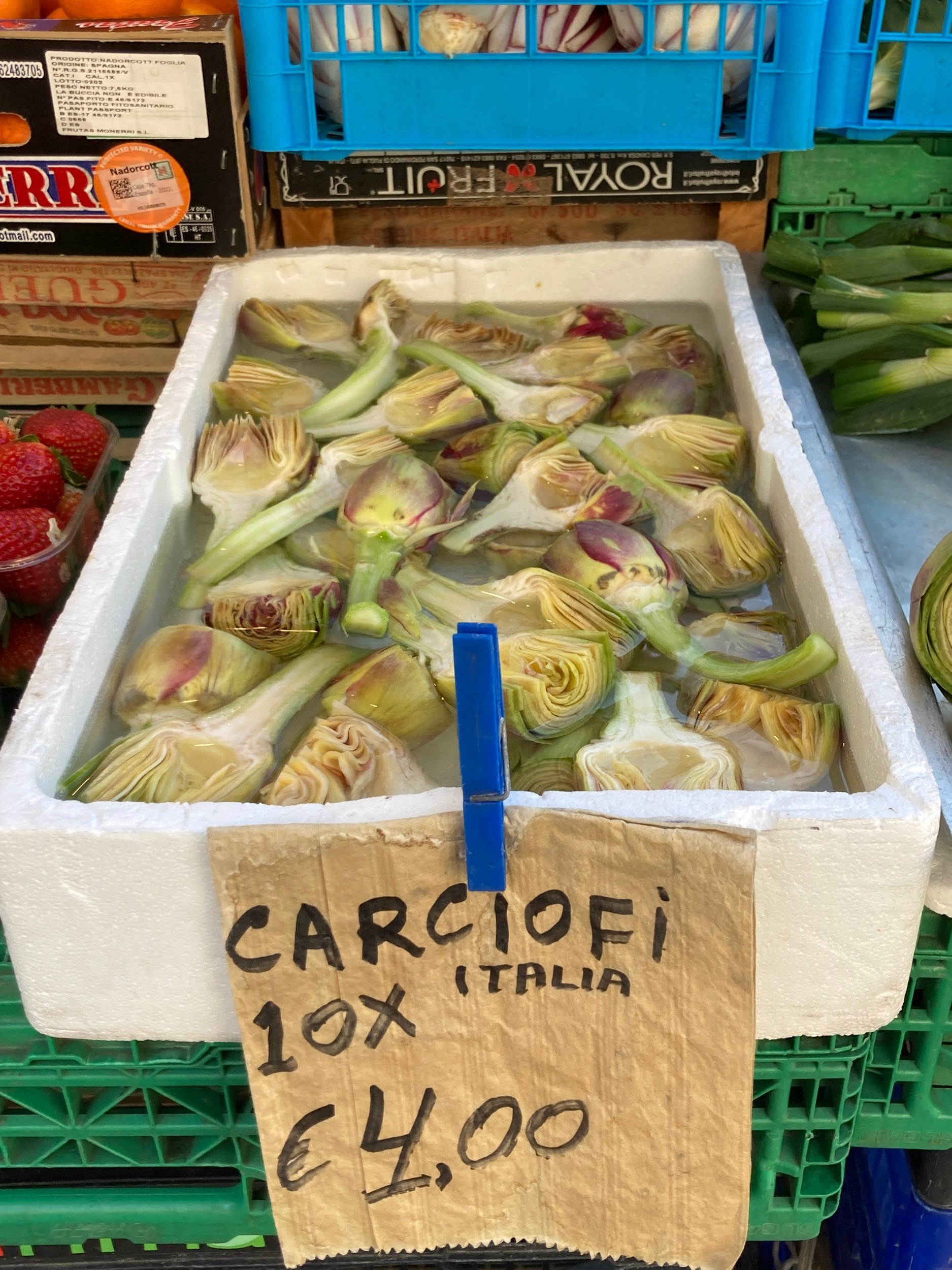
 I learned so much on that trip, in large part through food experiences.  Restaurant dining introduced me to many dishes – sweet melon wrapped in salty proscuitto, a delicate risotto with saffron, fish straight from the lake, tiny wild blueberries atop gelato, pasta fatto a mano (homemade). The flavors and preparation methods were enlightening.  As good as the restaurant meals were, it was the Italian markets which really enchanted me.  Fresh produce artfully displayed, pan-ready trimmed artichokes floating in lemon water, perfectly ripe melons.  I marveled at the fishmongers in Venice who arranged their products in photo-worthy displays and at the shops in Florence filled with hanging legs of prosciutto, a vast array of cheeses, and cases of colorful filled pastas.  How I longed for a kitchen on that trip!

Fresh pasta at the Sant’Ambrogio market in Florence

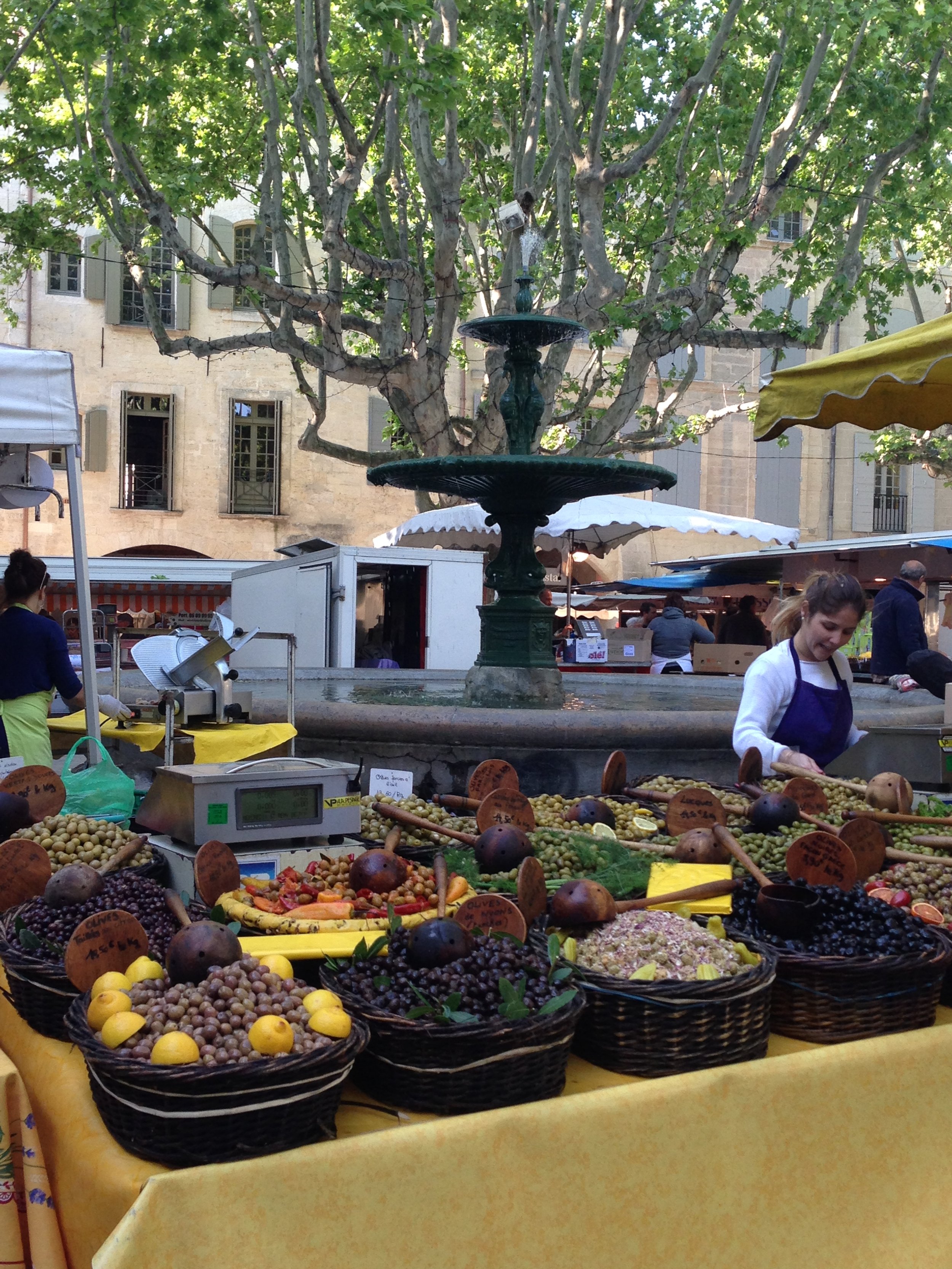
 Since that time I have sought out markets whenever, and wherever, I’ve traveled.  They form some of my most vivid travel memories.  The best ones are the “mamma’s markets”, catering to locals rather than tourists.  Two of my favorites over years of travel are the weekly market in Uzes France (oh those olives!) and the Sant’Ambrogio market in Florence.   

Italy is not the only country with fabulous markets. This one in Uzes, France is among my favorites.

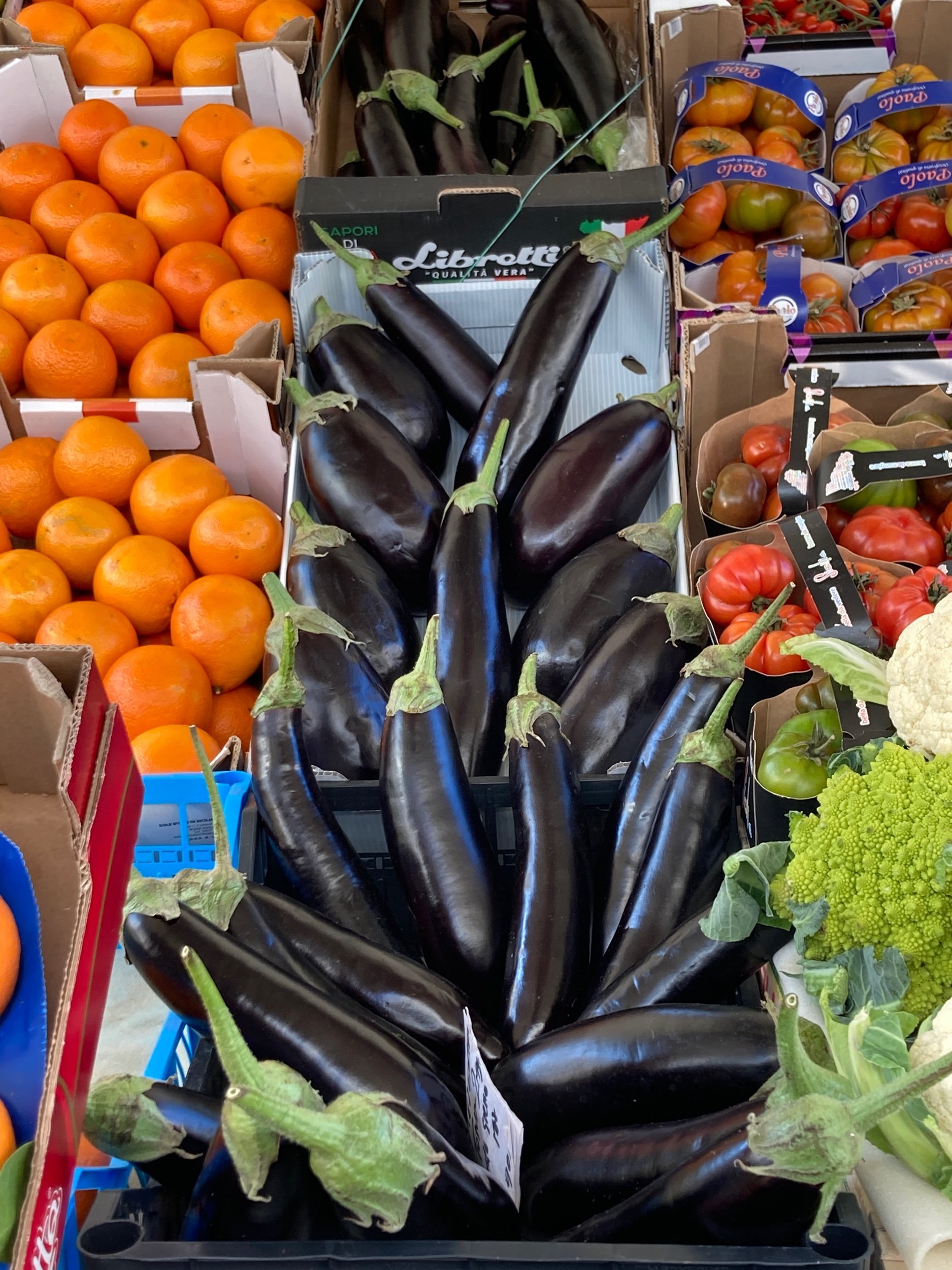
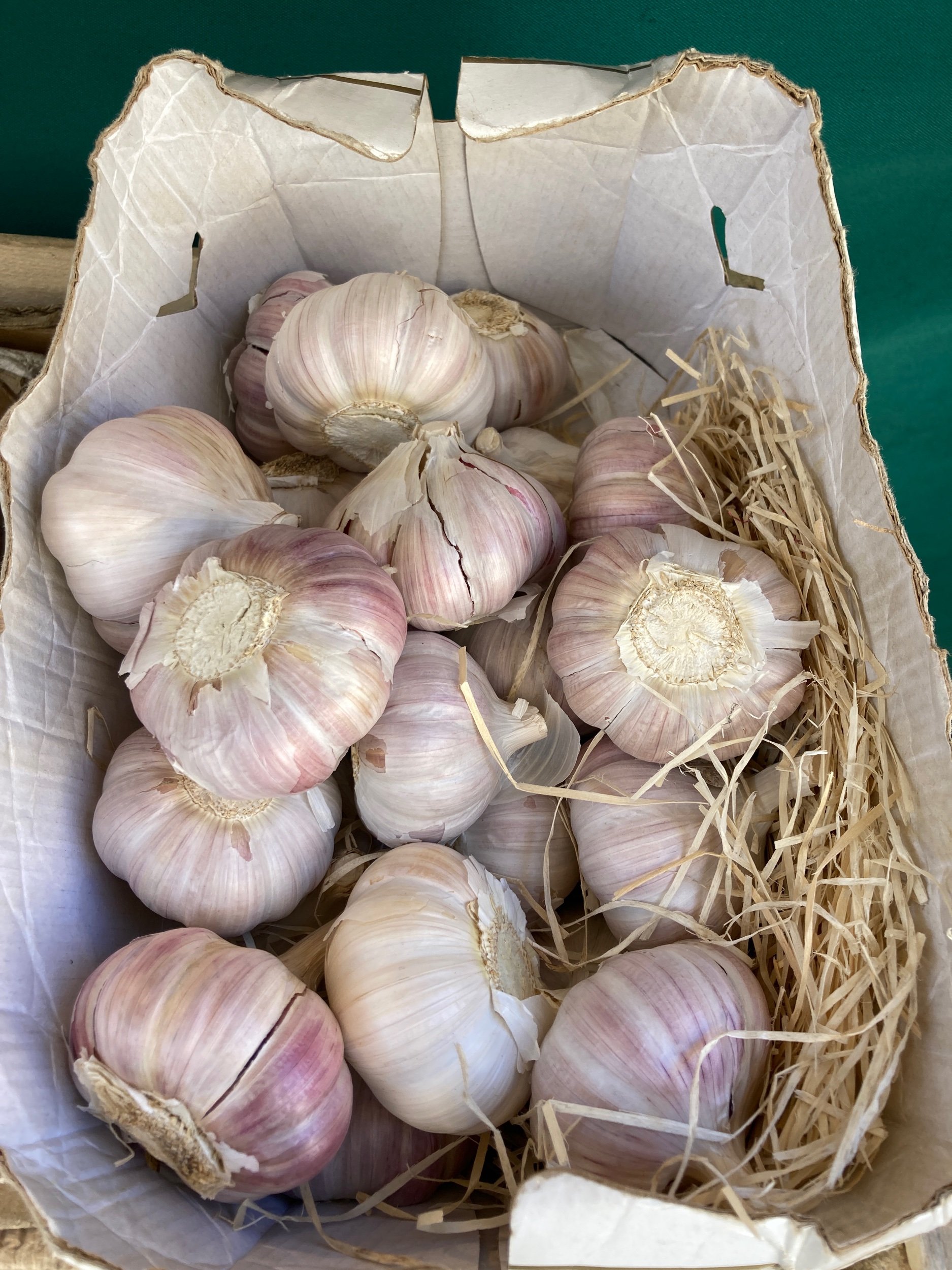
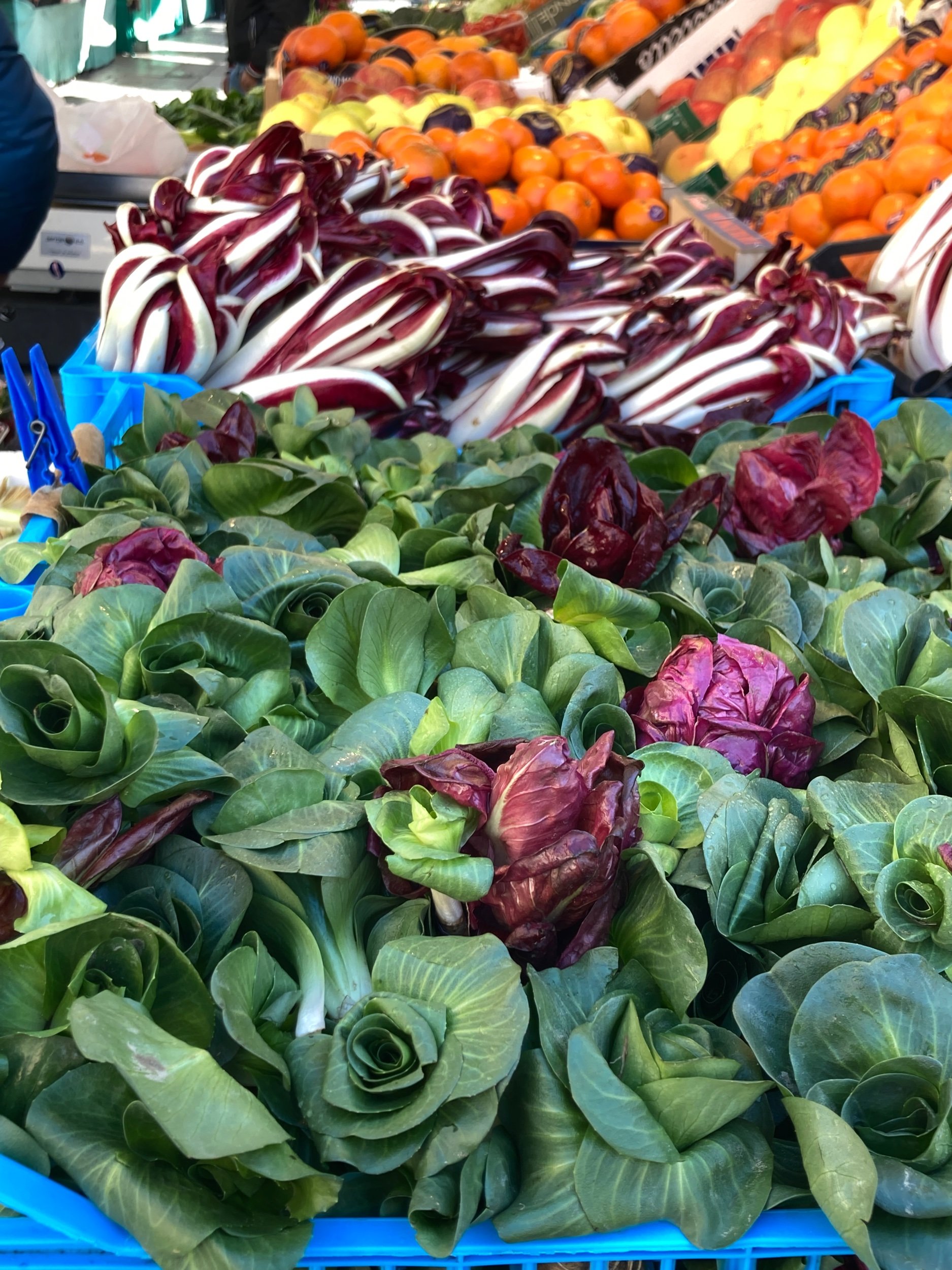
 My most recent market experience was in Padova (Padua) where I was delighted to find a fabulous daily market.  The outdoor market, centrally located in Piazze delle Erbe and Piazza della Frutta, was a wonderland of fresh fruits and vegetables.  Multiple vendors set up stalls each morning filled with just about everything a cook could desire -  baskets of bright lettuces, mounds of greenish-purple artichokes, piles of vibrant oranges, rows of tomatoes in different shapes and sizes, fat stalks of asparagus, dark purple eggplants, dried beans, herbs, and even flowers.  

IMG_5027.jpeg
IMG_5036.jpeg
IMG_5043.jpeg
IMG_5030.jpeg

Spending a morning there was a joy.  In the afternoon the market stalls disappeared and the piazza became a social hub of cafes, bars and casual restaurants. 

Beautiful blossoms in the Padova market

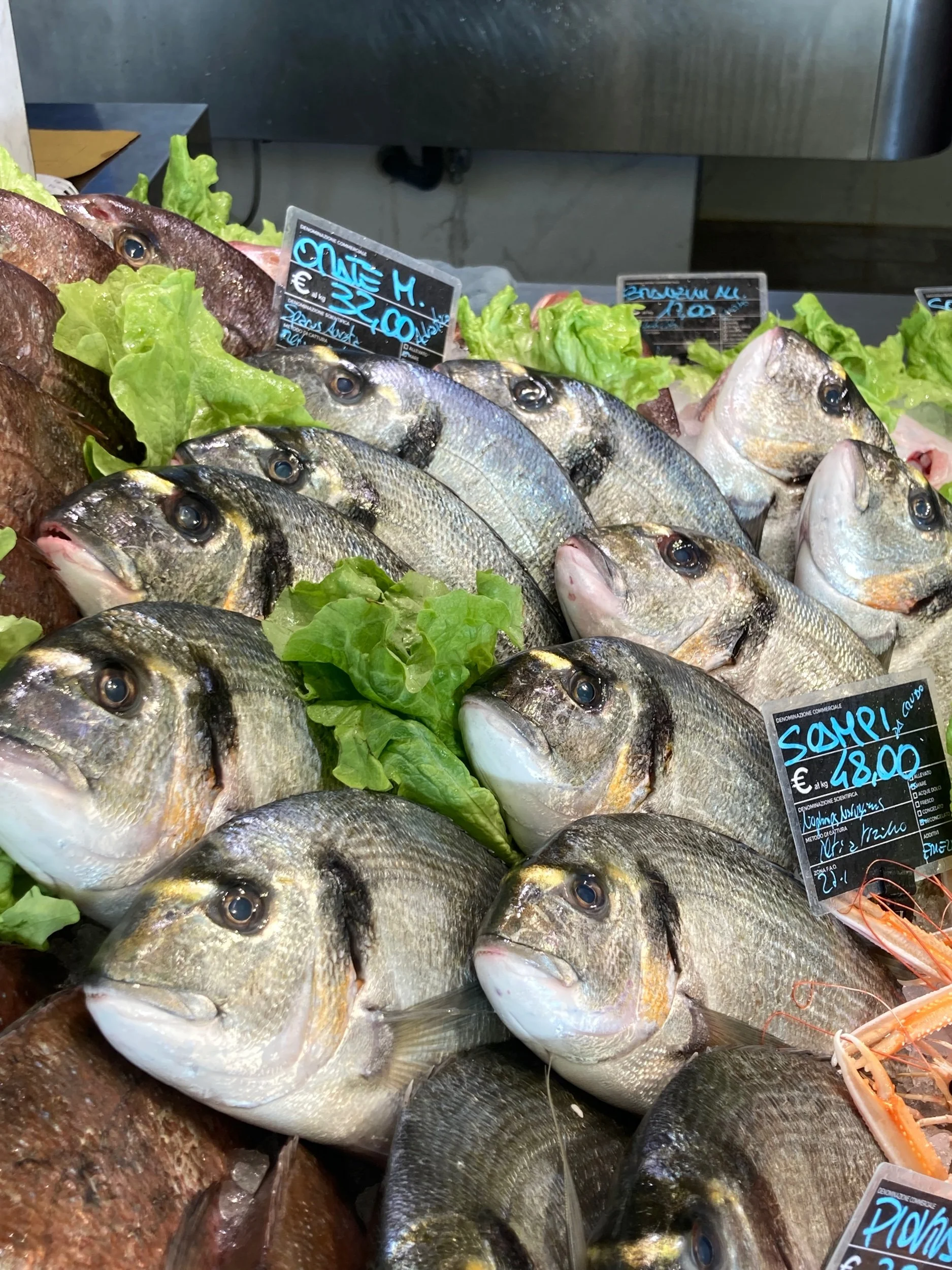
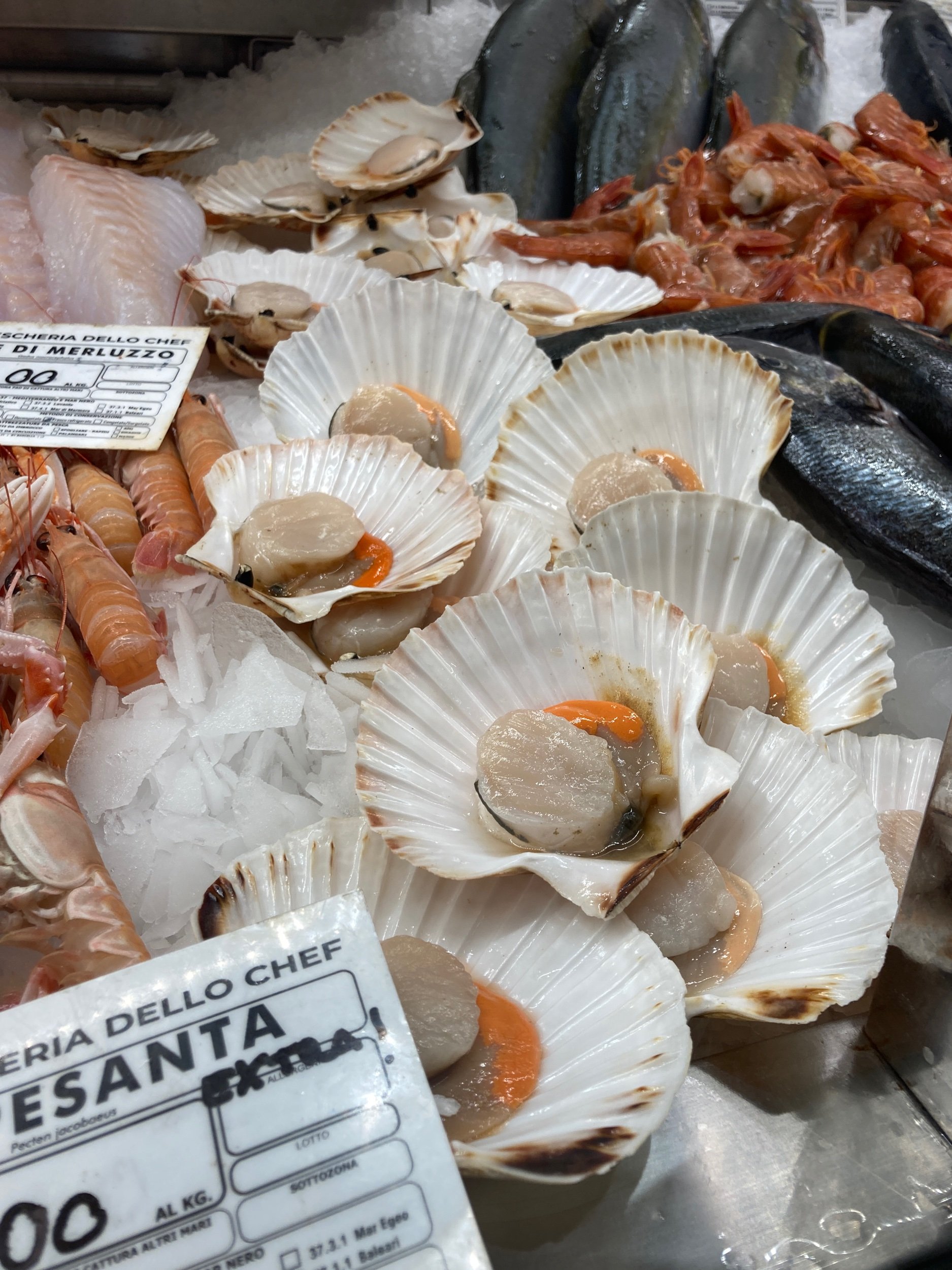
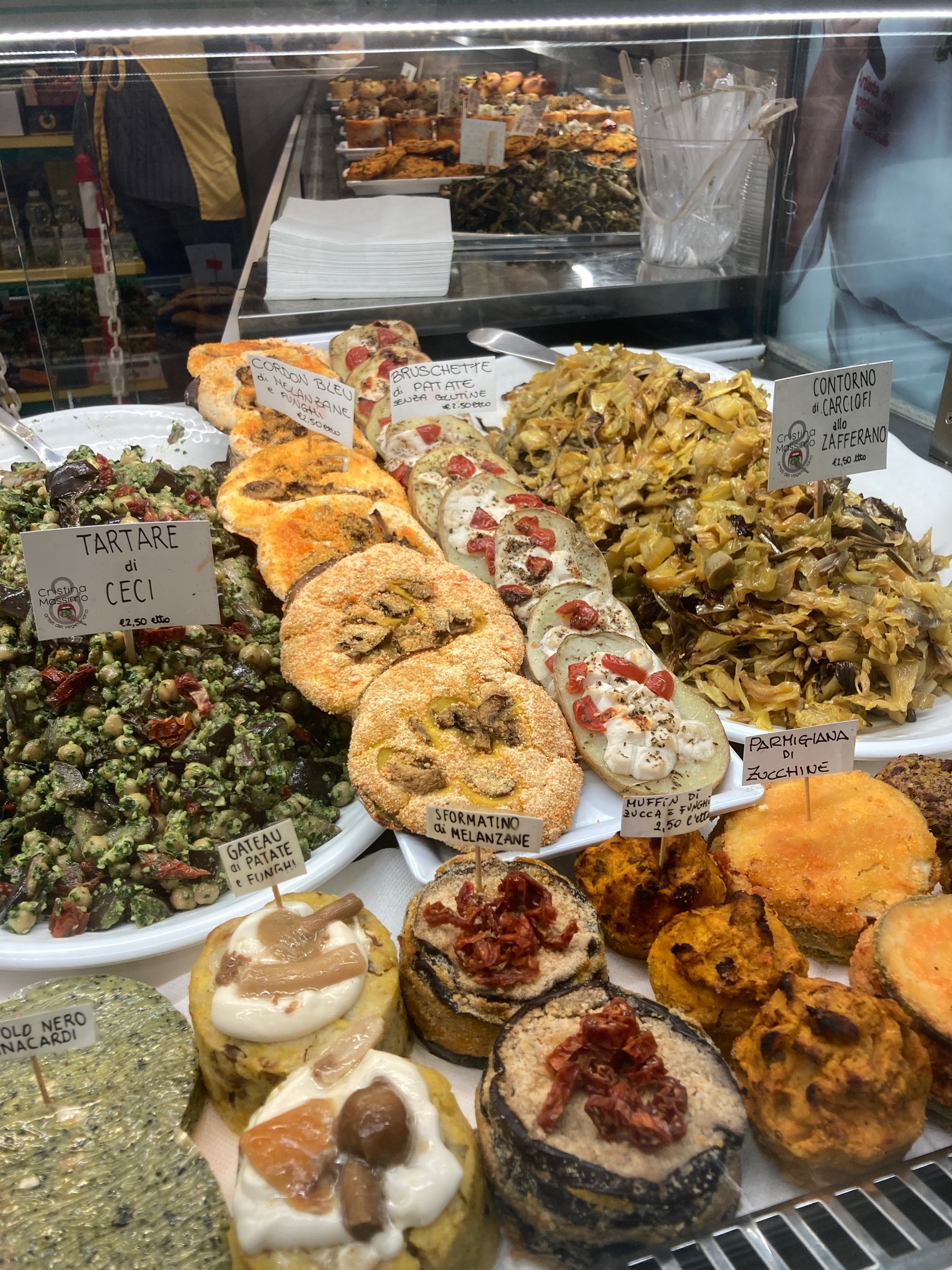
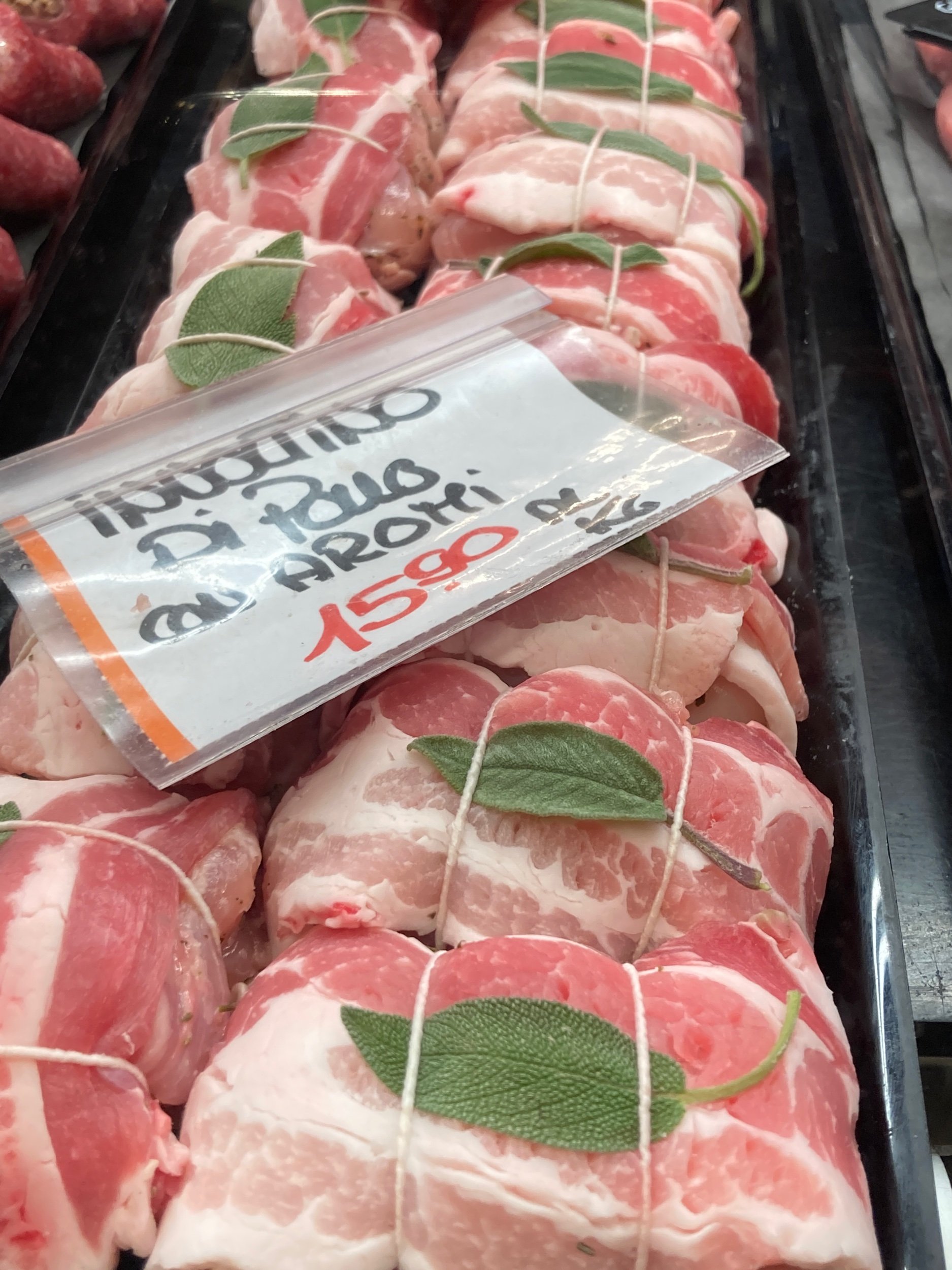
 In addition to the outdoor market stalls, an adjoining indoor market lies beneath the Palazzo della Ragione.  The culinary fun continued here with a host of shops selling fish, meats, prosciutto, bread, pastries, cheeses, and a variety of prepared foods.  There was even a rare sight in Italy – a “to go” coffee bar.   

IMG_5047.jpeg
IMG_5064.jpeg
IMG_5075.jpeg
IMG_5079.jpeg
IMG_5082.jpeg
IMG_5071.jpeg

There is so much to appreciate in Padova – stunning frescoes, historic churches, architecture, historical buildings, parks (I will get to all of these in another post) but never underestimate the power of a good market to add a fun experience when exploring a new city. 

March 21, 2022 /Judy Giannnettino
Padova, Padua
#italytravel, Italian culture, Italian markets, Italy travel, #padua
  • Newer
  • Older

Powered by Squarespace