Two Parts Italy

Exploring Italy, travel, and living a flavorful life

  • Blog
  • About This Blog
  • Start Here
  • Recent Posts
  • Archives by Topic
  • Subscribe
  • Contact me

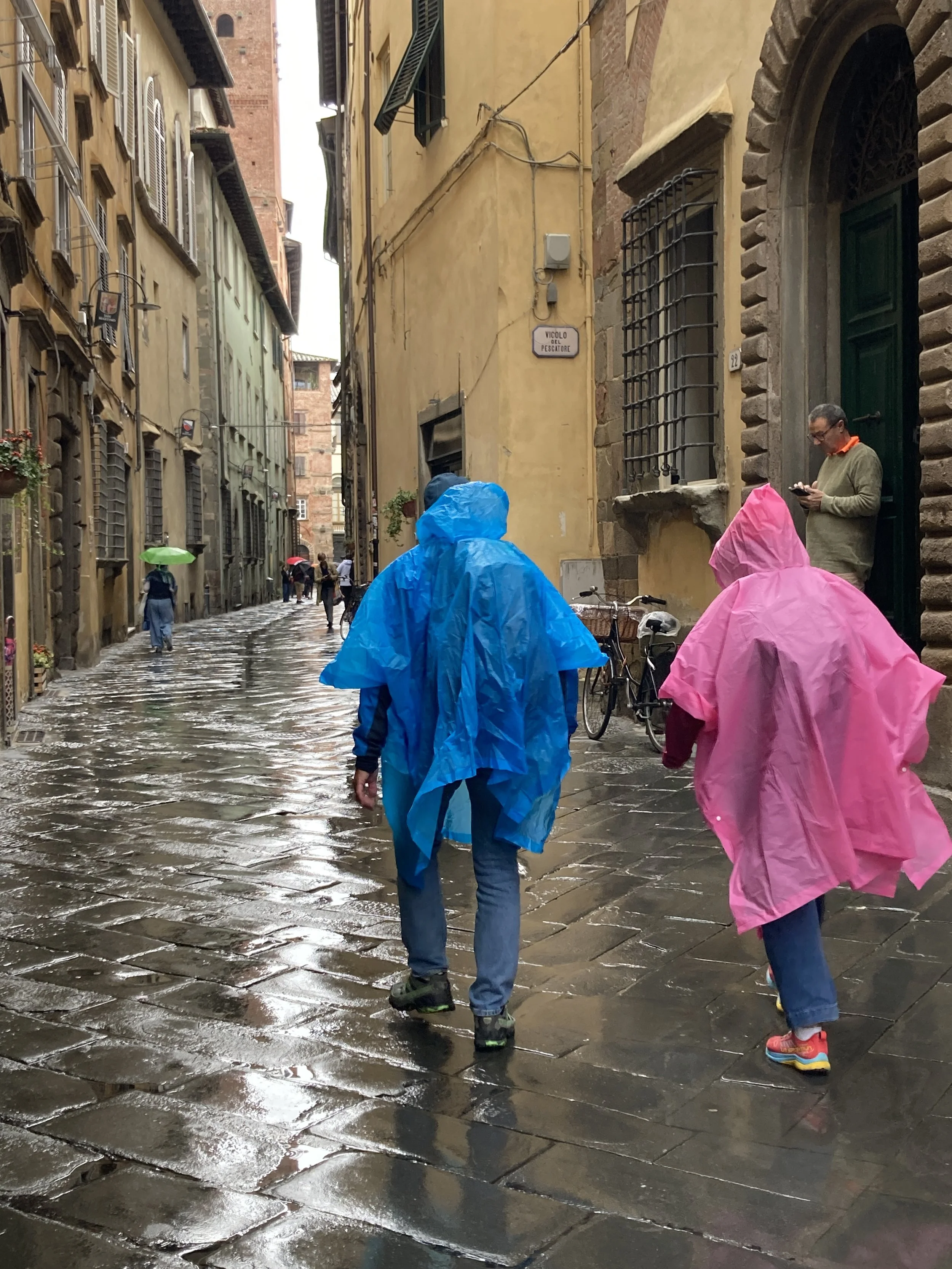
The rainy weather in Lucca last week caught some people unprepared

Rainy Day Rules

September 29, 2025 by Joanne Bartram in #fallinitaly, #italytravel, Autumn in Italy, Living in Italy, Lucca

Umbrella sharing highly encouraged

This month in Lucca has been the coolest and most rainy September that I can recall.  The past week has brought big storms (fierce enough to have destroyed one of my window screens entirely) and some dramatic thunder and torrential rains.  Overnight rain has been common and day times have seen a mix of weather – sunshine one minute, a downpour the next.  And many hours of drizzle.  To me, it feels more like March than September.   But, if I must choose, I much prefer the crisp rainy days we’ve had lately to the years when September heat made for a very long month.

After living 30+ years in the high desert of New Mexico, it took some adjusting to living in rainy Tuscany.  I don’t think I even owned an umbrella before moving here.  In the years since my arrival in Lucca, I have learned a few things about life in a rainy climate, so here is my list of rainy-day “rules”.

Shopping in the rain is easiest with both an umbrella and a “nonna cart” for keeping groceries dry.

The first and most important rule is that life here does not stop due to rain.  In a dry climate, we tended to just wait for the sky to clear before going out to run errands.  Sometimes even a little rain would cancel an event.  And going out in the rain often meant dashing to a warm, dry car.  Not here!  In Lucca, it is impossible to manage without going out in the rain.  Errands don’t wait except in major downpours.  A bit of drizzle ?  Just get on with it.  Even the recent luminaria event was not delayed due to a light rain. Which leads to “rule” number 2.

As the English author Alfred Wainwright said, ‘There’s no such thing as bad weather, only unsuitable clothing”.  

I learned this the hard way when my smooth soled boots saw me hydroplaning on wet marble sidewalks and when a flimsy, undersized umbrella left me wet through and through.
IMG_7746.jpeg
IMG_7748.jpg

Rain wear basics are not optional here.  Good rain boots, water-resistant jackets, and hats.  As for ombrelli (umbrellas), I always have two – a small one that can be carried in a bag or backpack when rain is anticipated and a larger full length one that is needed for the heaviest rains.  In Lucca it is easy to find umbrellas for sale in shops or by street vendors.  And with a variety of colors, the umbrellas turn the rainy streets into art.
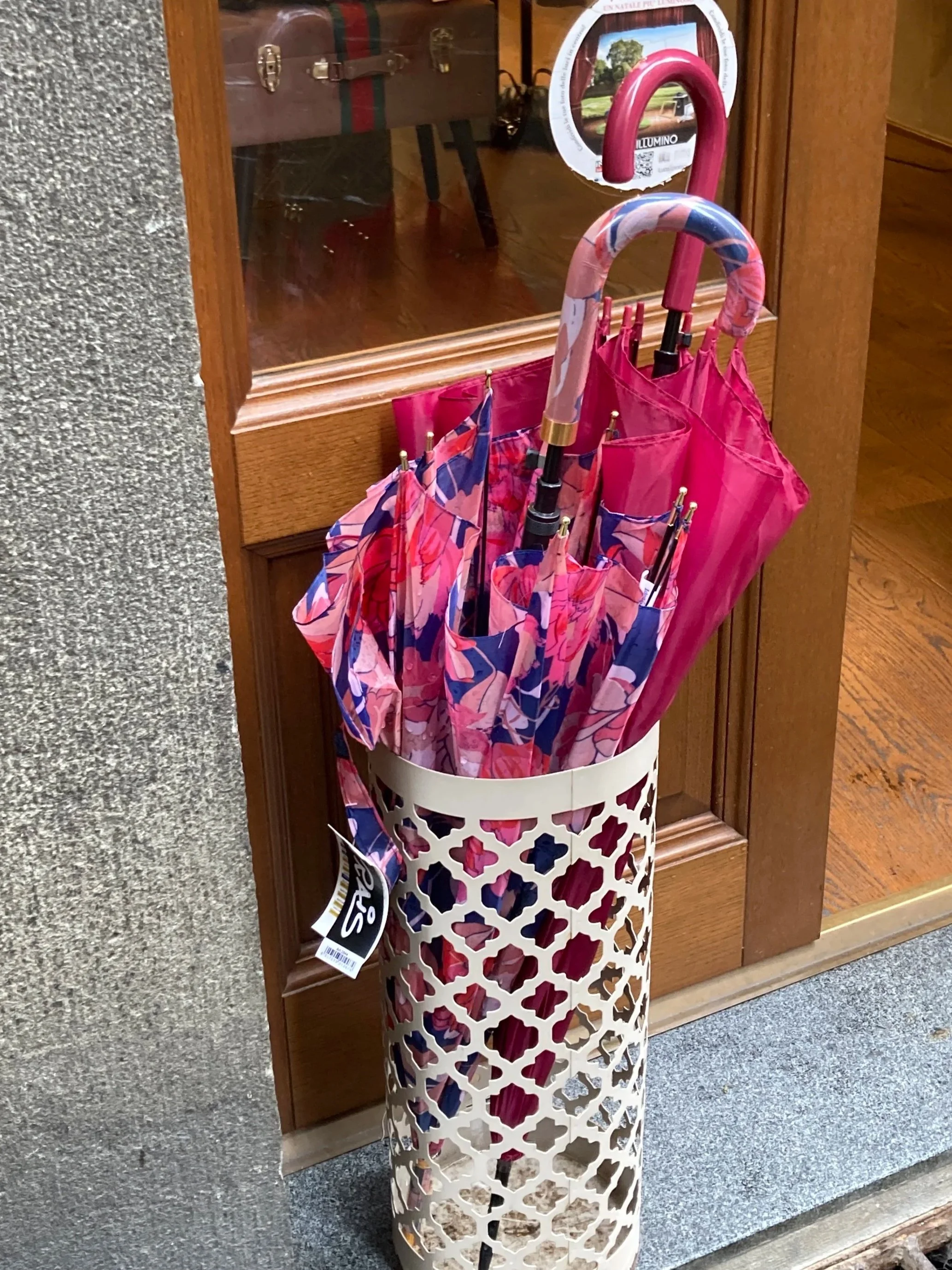
The portaombrelli is the place to leave a wet umbrella when entering a shop

Another rule – never carry a wet umbrella into a shop.  Instead use the portaombrelli (umbrella stand) located near the door.  It works best for the full-size umbrellas; the shorter ones can be left beside it.  Just grab it on the way out – though they is easy to forget if the rain has stopped.  I will not comment on the number of umbrellas I have accidently left behind.  Let’s just say I support the sale of umbrellas quite well.

A bit of umbrella etiquette is also nice.  When everyone has their umbrellas open in the street, things can get quite congested.  The danger of being clobbered with the umbrella of a careless passer-by is considerable. It is most polite to stay to the side of the street and to either tip your umbrella to the side to avoid “kissing” umbrellas or to life the umbrella high allowing others to pass beneath. Does everyone do this?  No, but I sure do appreciate the ones that do.

Did he jump? You bet he did. The splash made us smile.

Another hazard – puddle splashers. 

This is usually caused by a car going by at speed.  Walkers beware! Sometimes a bike or just a heavy-footed person will make a splash.  No “just for fun” puddle splashing allowed by anyone over the age of 6.  But I do love when little ones jump in the puddles.  Makes me smile. 

Lastly, we can’t control the weather, so might as well make the best of it.  A rainy day is a perfect time to make a soup or a fragrant peposo (a peppery beef dish). 

The rain leaves beautiful drops on leaves.  Puddles reflect buildings and light. The rain smells wonderful. The chill is refreshing.  And the return to blue skies after a rain is a welcome sight. 
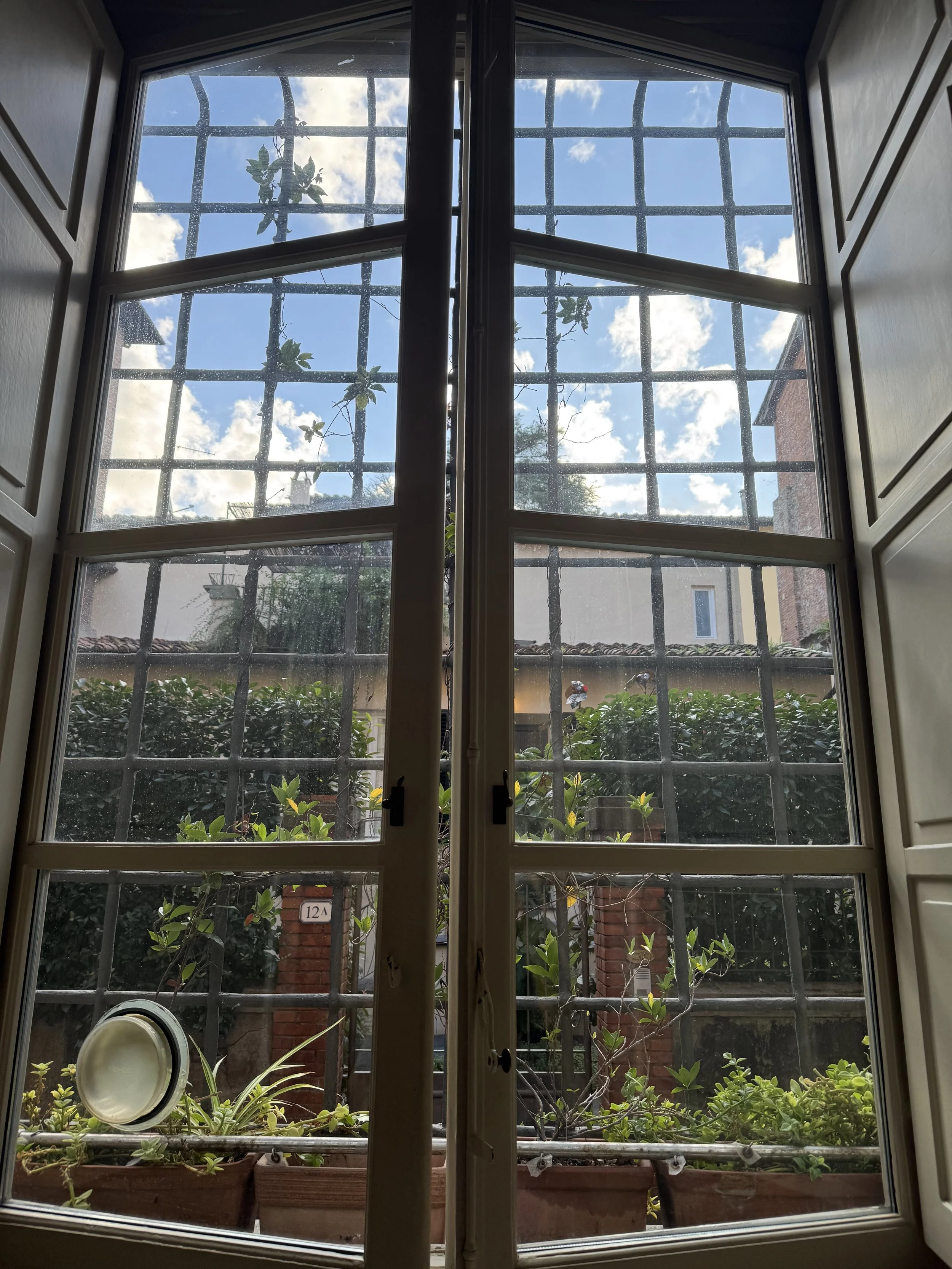

After the rain … blue skies and soft clouds

BTW, Italians don’t say that it is raining cats and dog.  Instead, they may say there is un’acquazzone (a downpour) or piove a catinelle (it’s raining buckets). 

And sometimes, if you are lucky, the rain is followed by an arcobaleno (a rainbow).
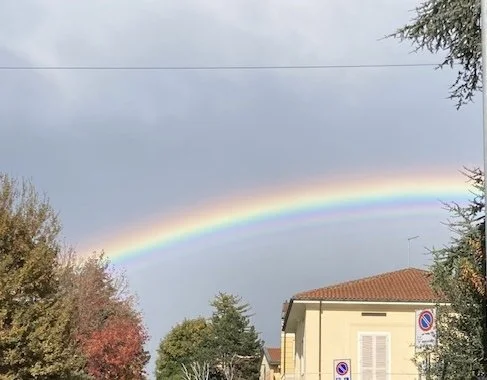
September 29, 2025 /Joanne Bartram
weather italy, rain in Lucca, Rain in Tuscany
#fallinitaly, #italytravel, Autumn in Italy, Living in Italy, Lucca

La Festa di Pane (The Festival of Bread)

September 22, 2025 by Joanne Bartram in #fallinitaly, #italiancooking, #lucca, Autumn in Italy, Fall in Italy, Festivals Italy, Italy travel, Living in Italy, Lucca

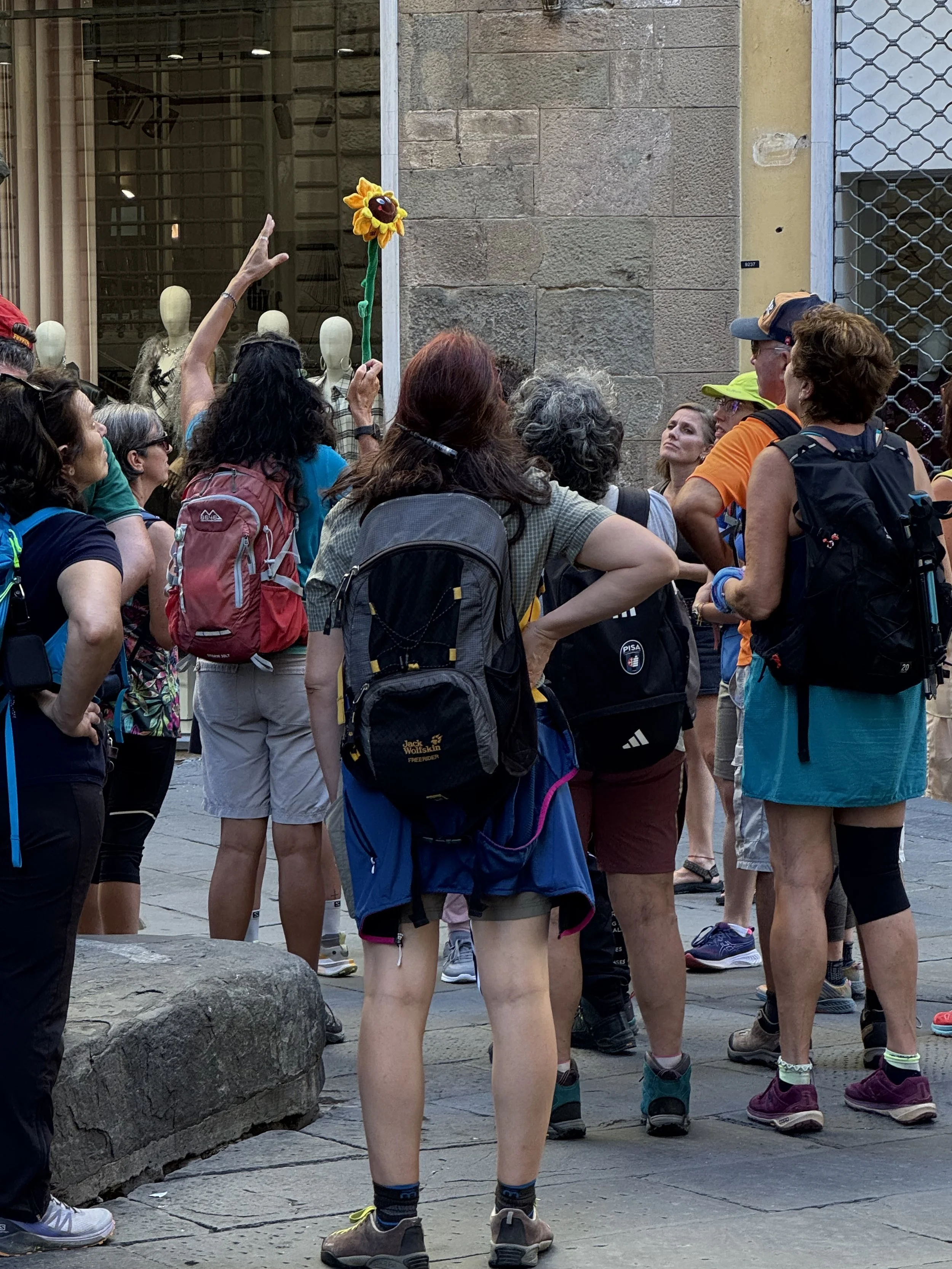
Tourists, and big tour groups, are everywhere in Lucca right now. One of the challenges of living in an historic city!

Today, September 22nd, is the autumnal equinox, officially the first day of fall.  But, after having hints of fall weather in mid-September, this past weekend saw a return to summer-like temperatures.  Between the warm temperatures and the large number of tourists in town, it is hard to believe that fall is just around the corner.

The Settembre Lucchese events are still going strong, even after the conclusion of the Luminaria di Santa Croce event which happened a week ago. The past week has seen disco music in Piazza San Francesco, the monthly antiques market, and the start of Lucca Film Festival.  The Film Festival continues this week with film screenings and appearances by several well-known actors and directors.

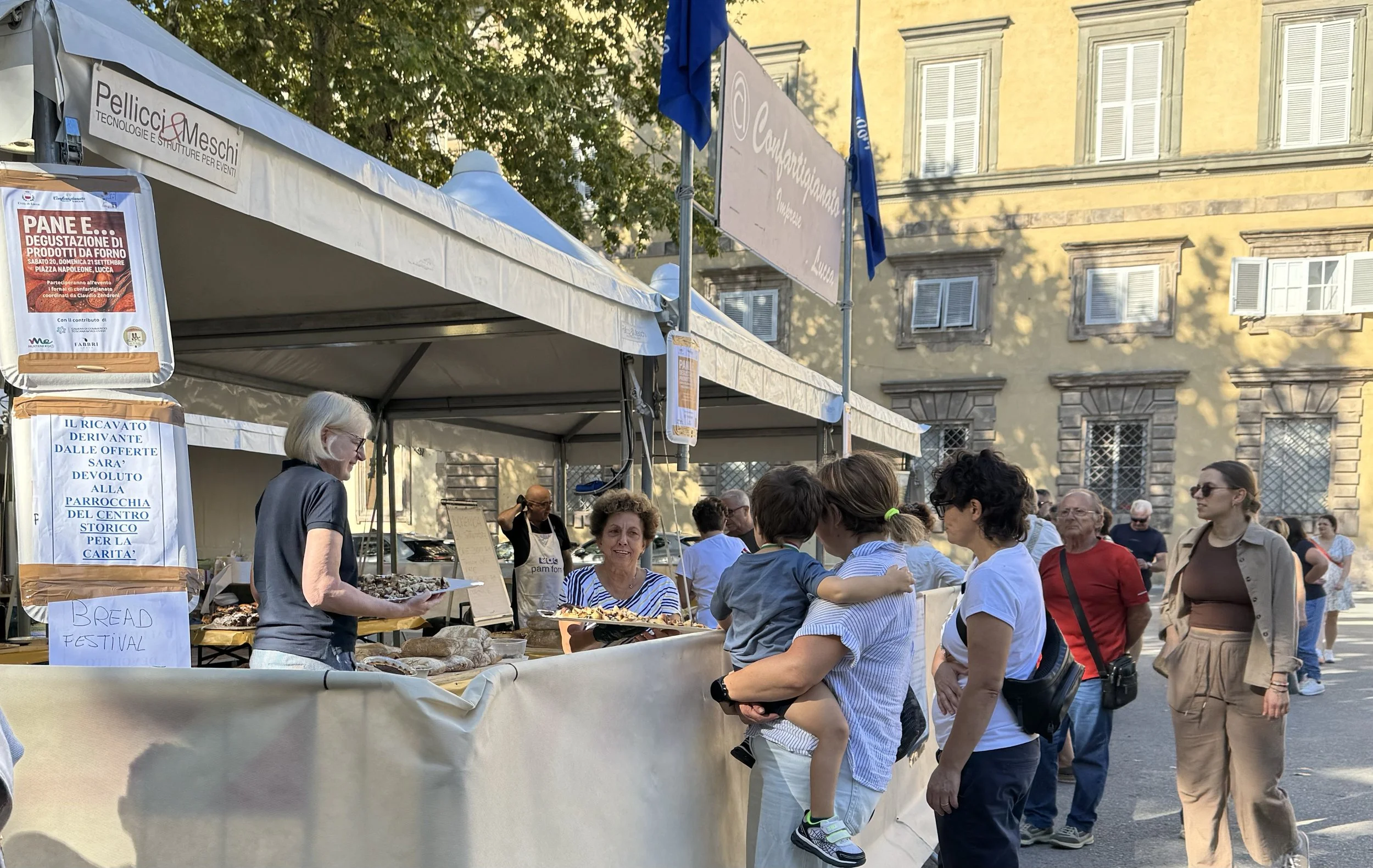
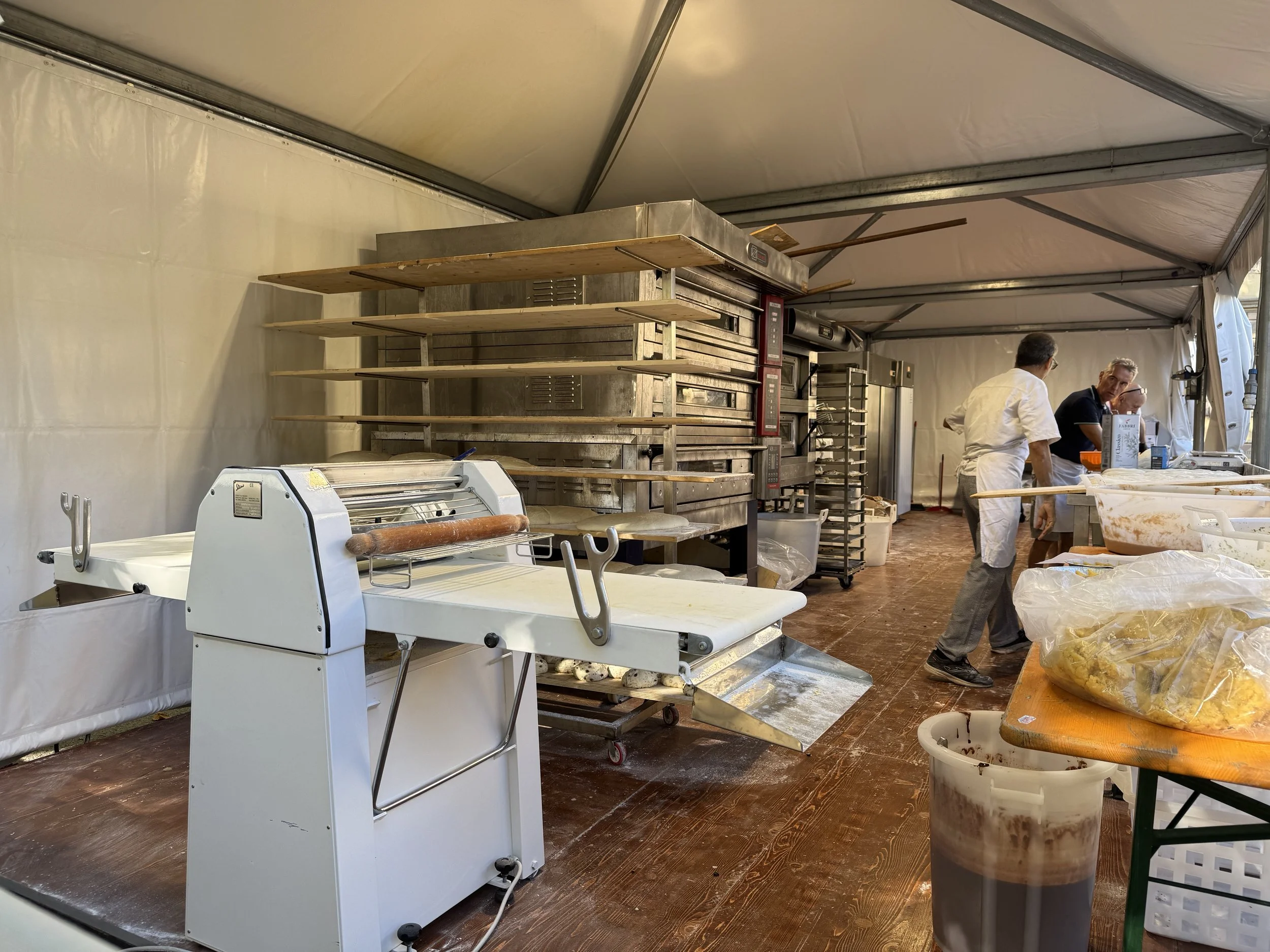
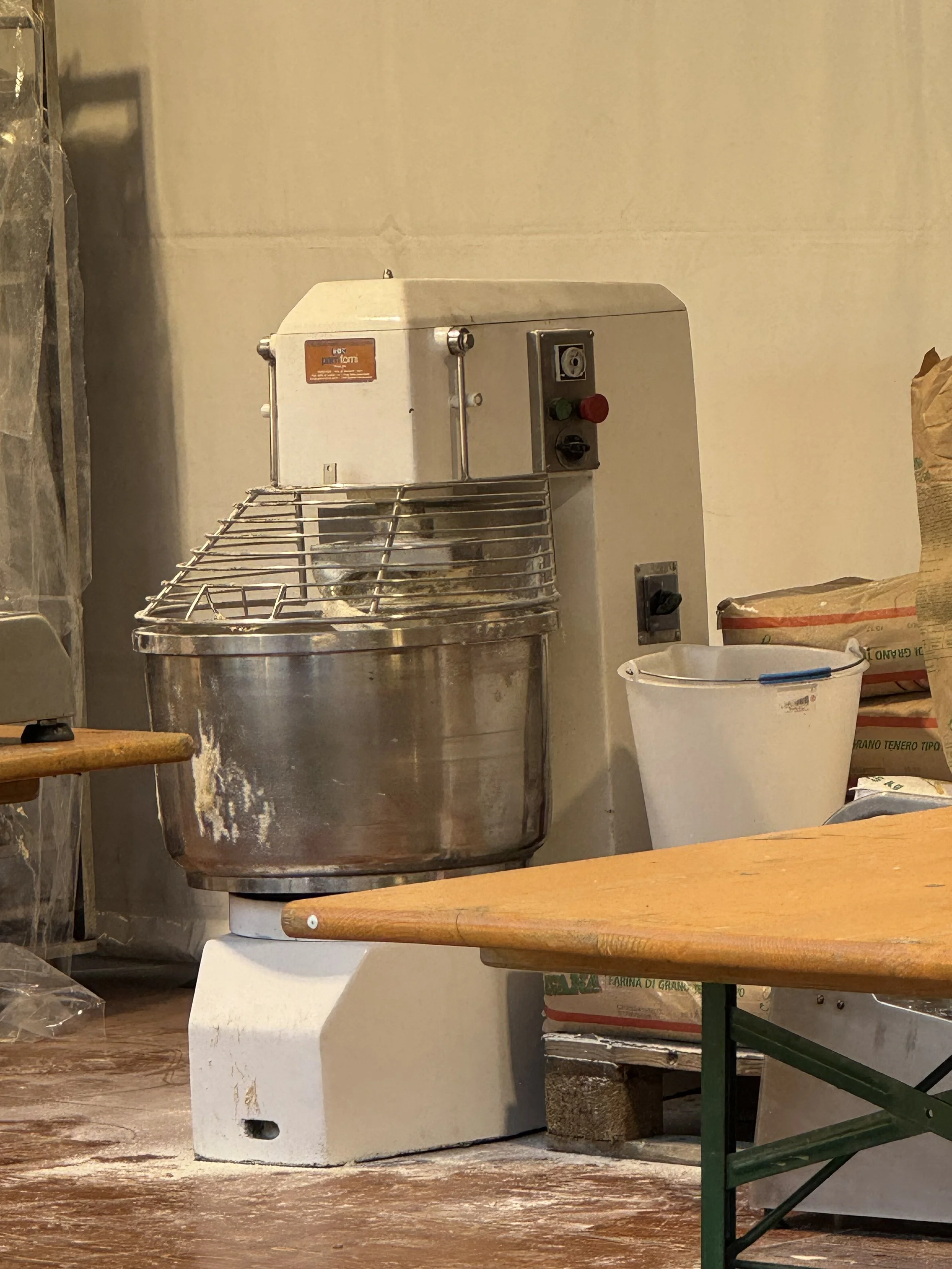
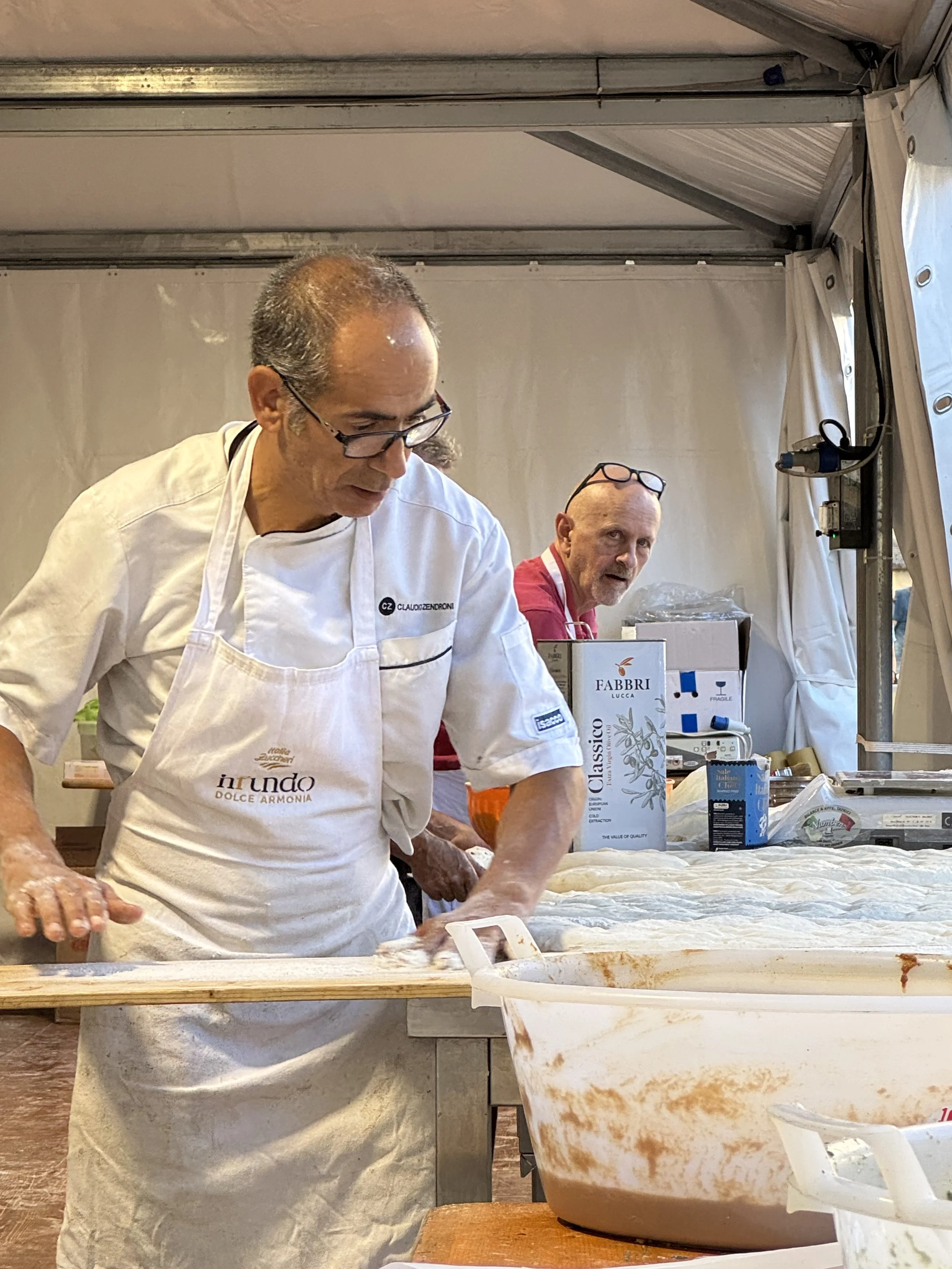
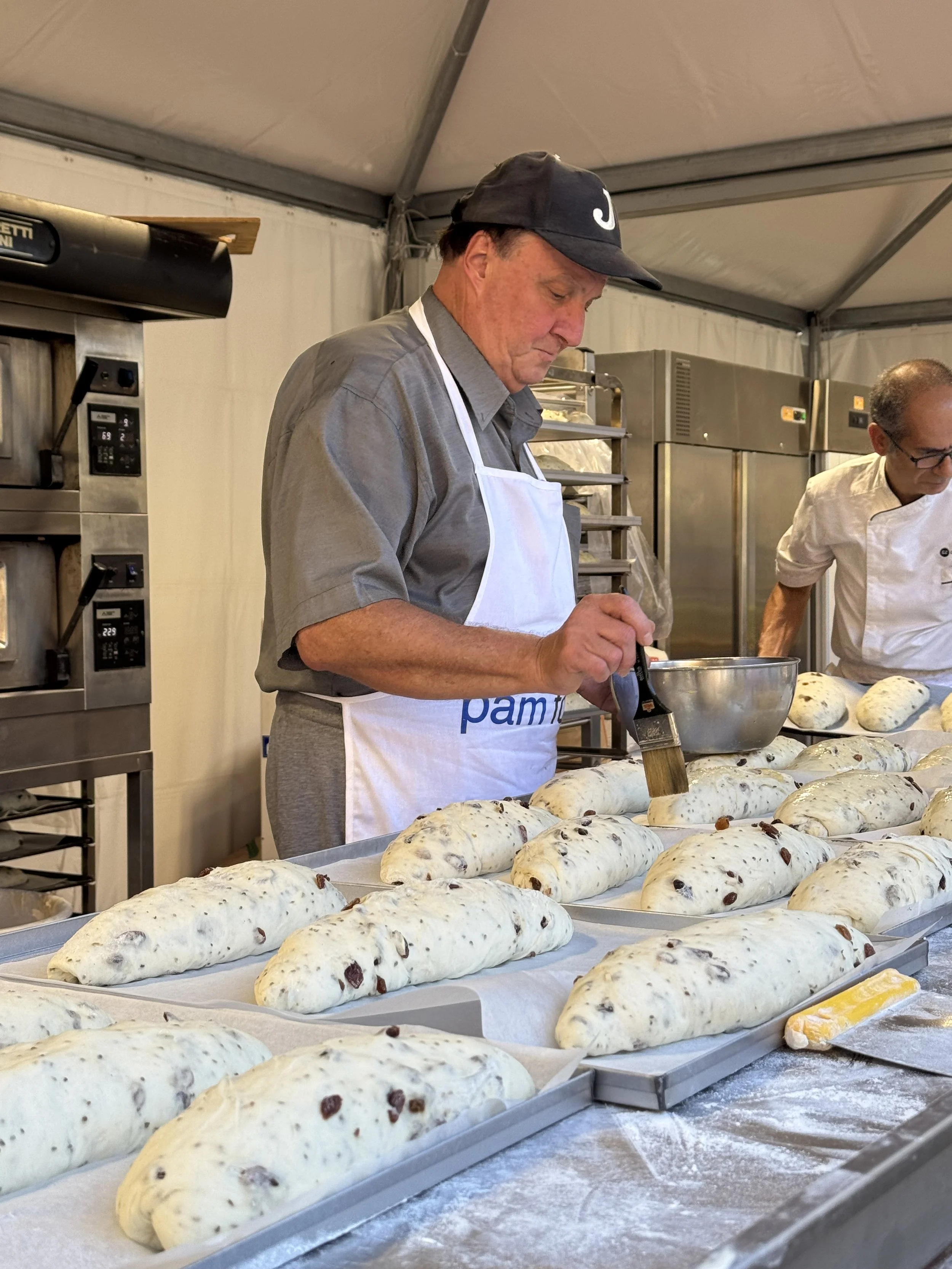
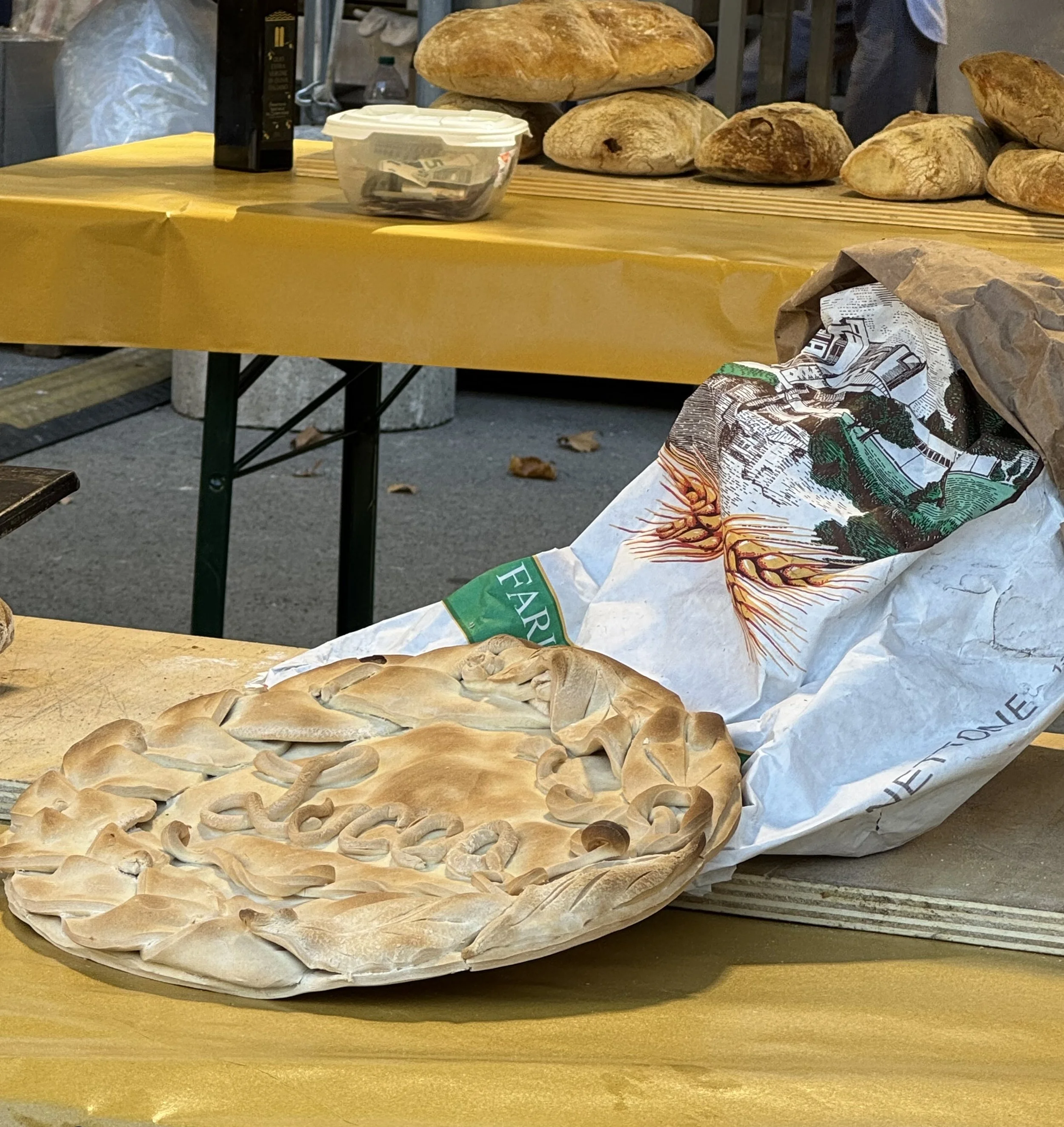
My favorite event of the past weekend was La Festa del Pane (The Festival of Bread). The event, which took place in Piazza Napoleone, featured local Lucchese bakers who set up a bakery right in the piazza.  
IMG_5650.jpeg
IMG_5606.jpeg
IMG_5652.jpeg
IMG_5629.jpeg

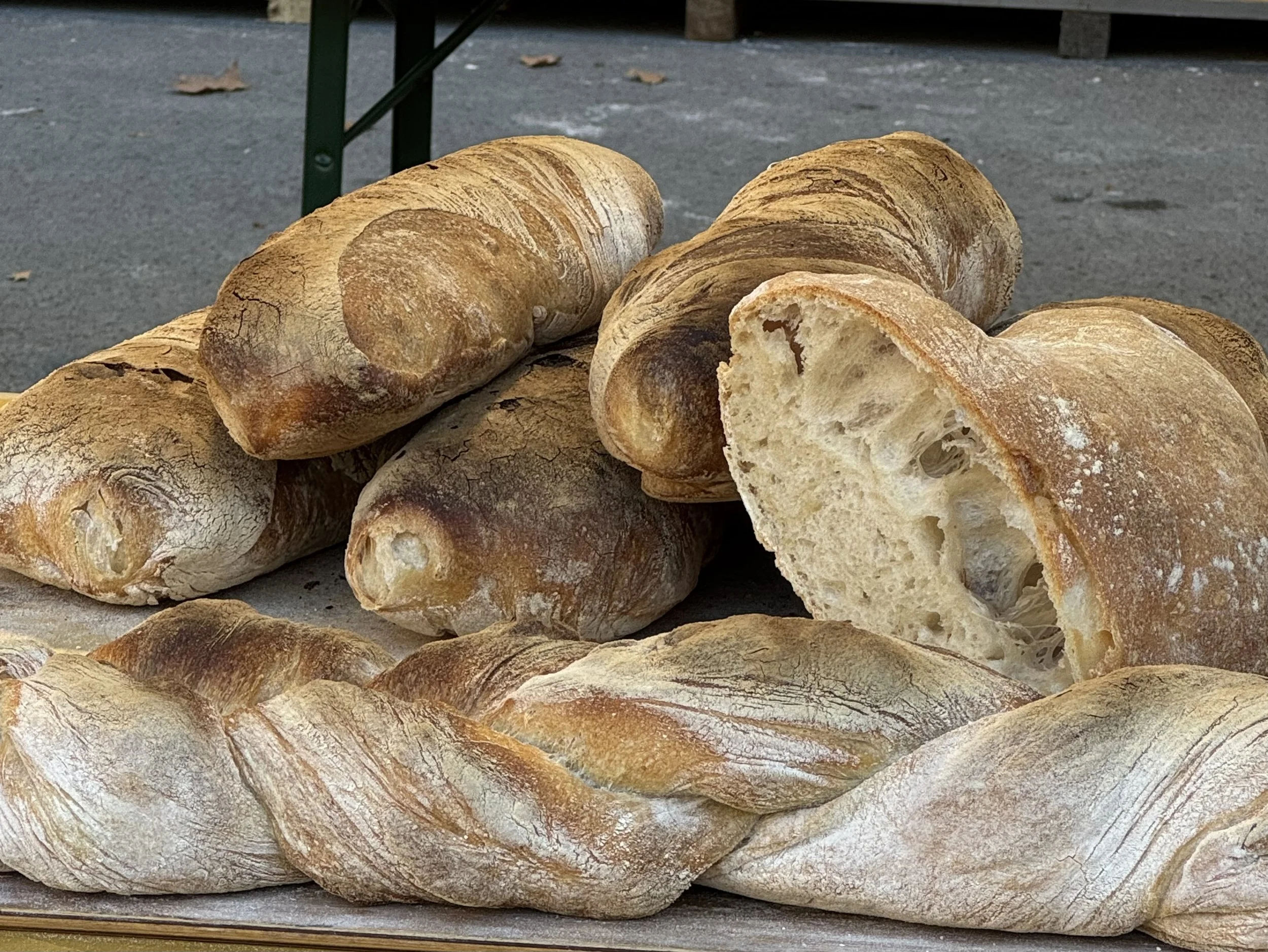
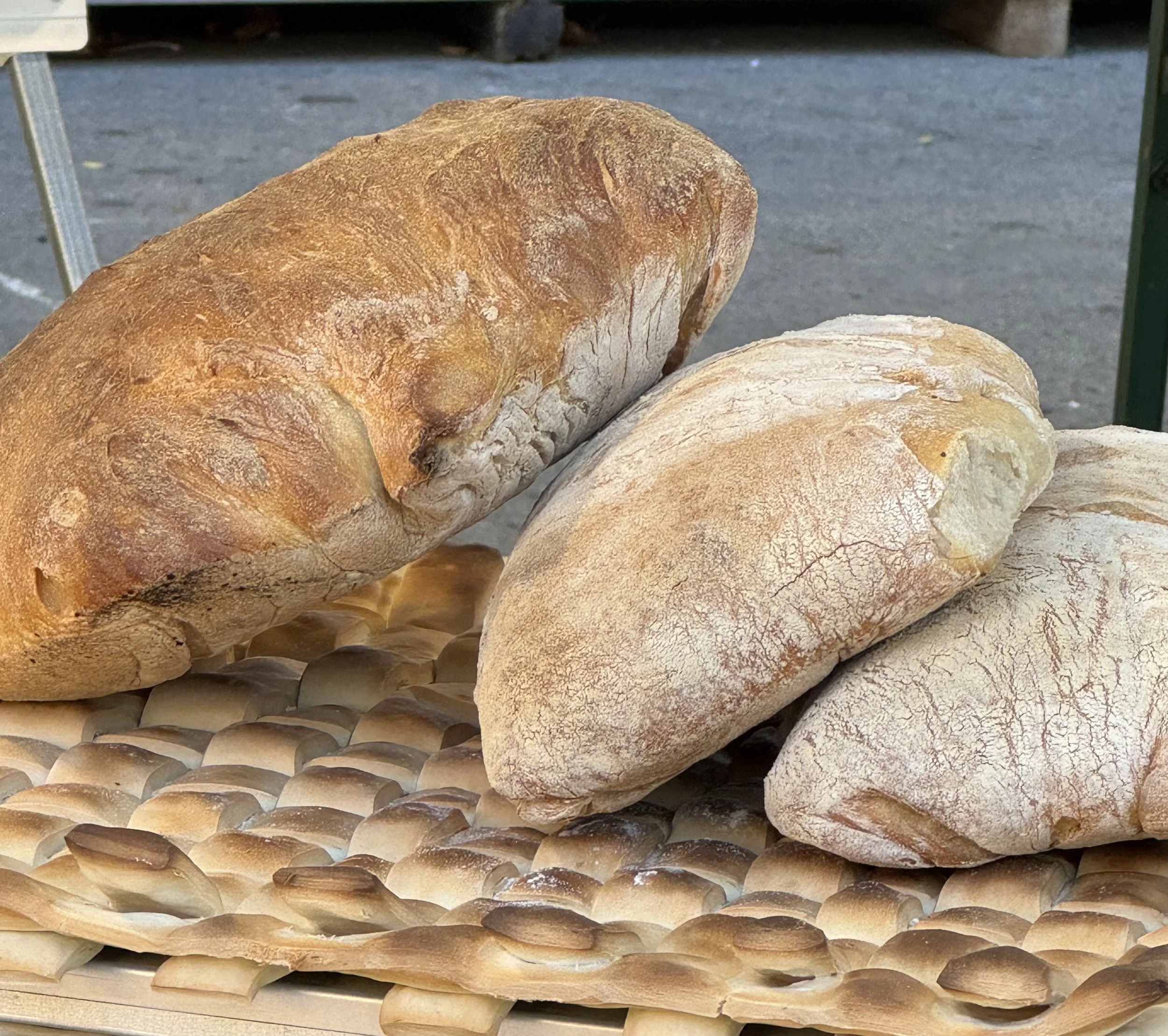
In the pop up bakery they produced many different types of breads, from beginning to finished product.   Tables were laden with rustic loaves, whole grain ones, and even fancy shaped breads fresh from the ovens.  On Saturday, the star of the show were the various breads and focaccia. 

IMG_5602.jpeg
IMG_5598.jpeg
IMG_5597.jpeg

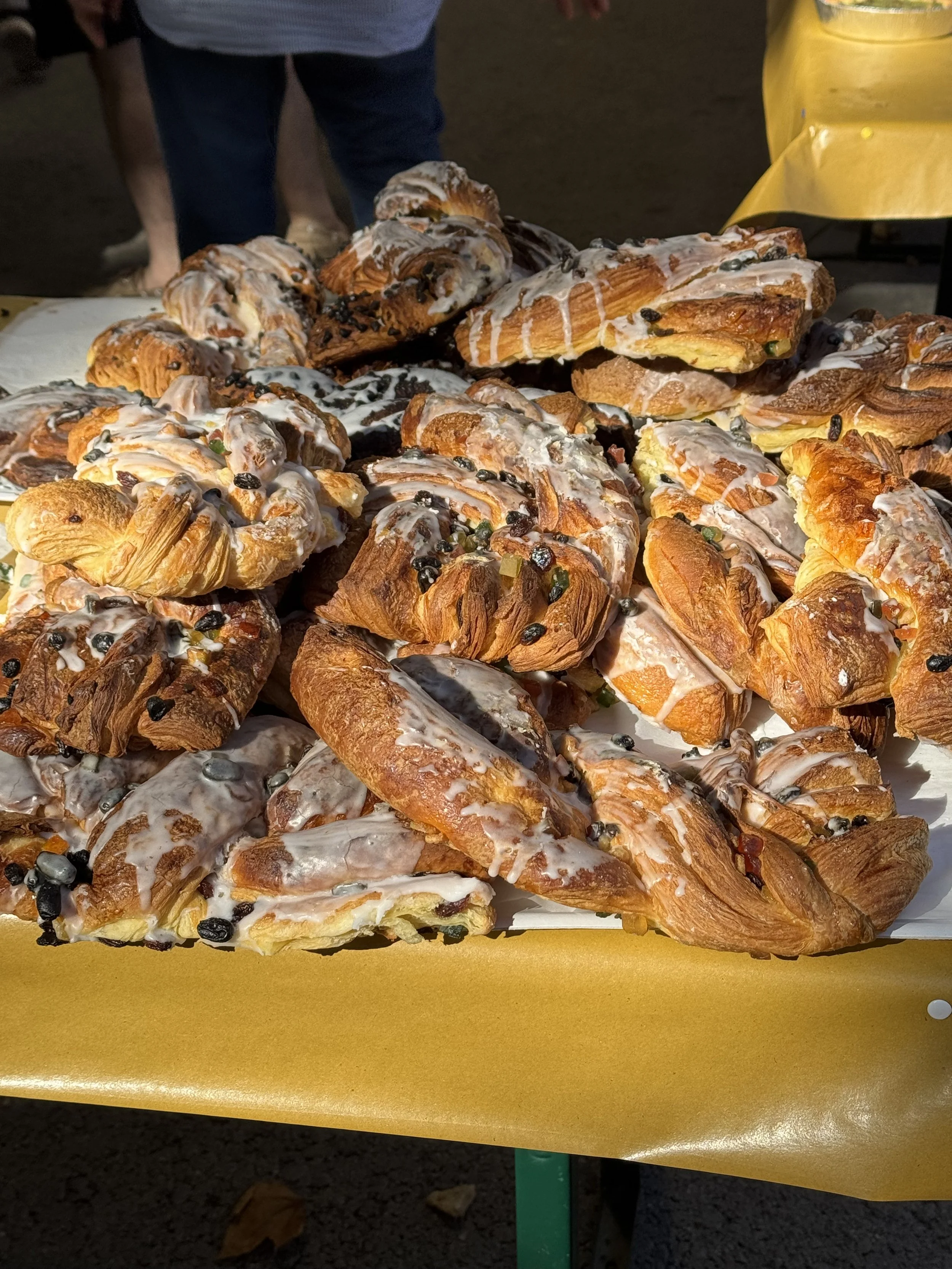
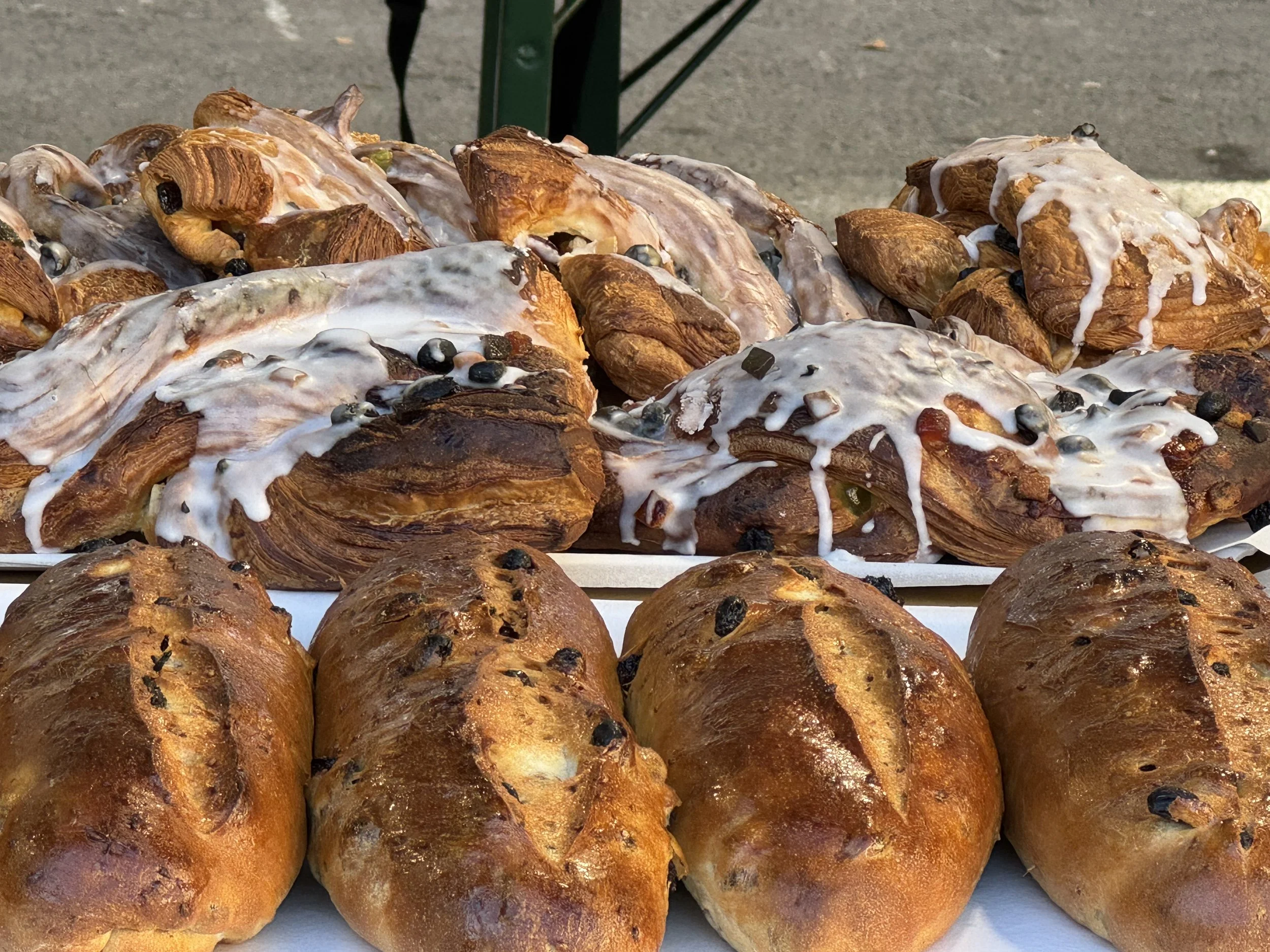
On Sunday morning, sweeter Lucchese specialties were baked. There were beautiful trecce (braids) studded with chocolate bits and loaves of Buccellato, a sweet bread scented with anise and dotted with raisins. Both are typical Lucca foods.

IMG_5646.jpeg
IMG_5638.jpeg

Another Lucca specialty also made an appearance, Torta di Becchi. This is an unusual local torta (not quite a cake, not quite a pie) with both sweet and savory elements.  Imagine a pastry crust filled with a mixture of chard, pine nuts, raisins, sugar, eggs, milk, and spices.  Perhaps a dash of rum or some candied citron.  The edges of the pastry crust are pinched up to form the becchi (beaks). It is a bit of an acquired taste, but a much loved one here in Lucca.

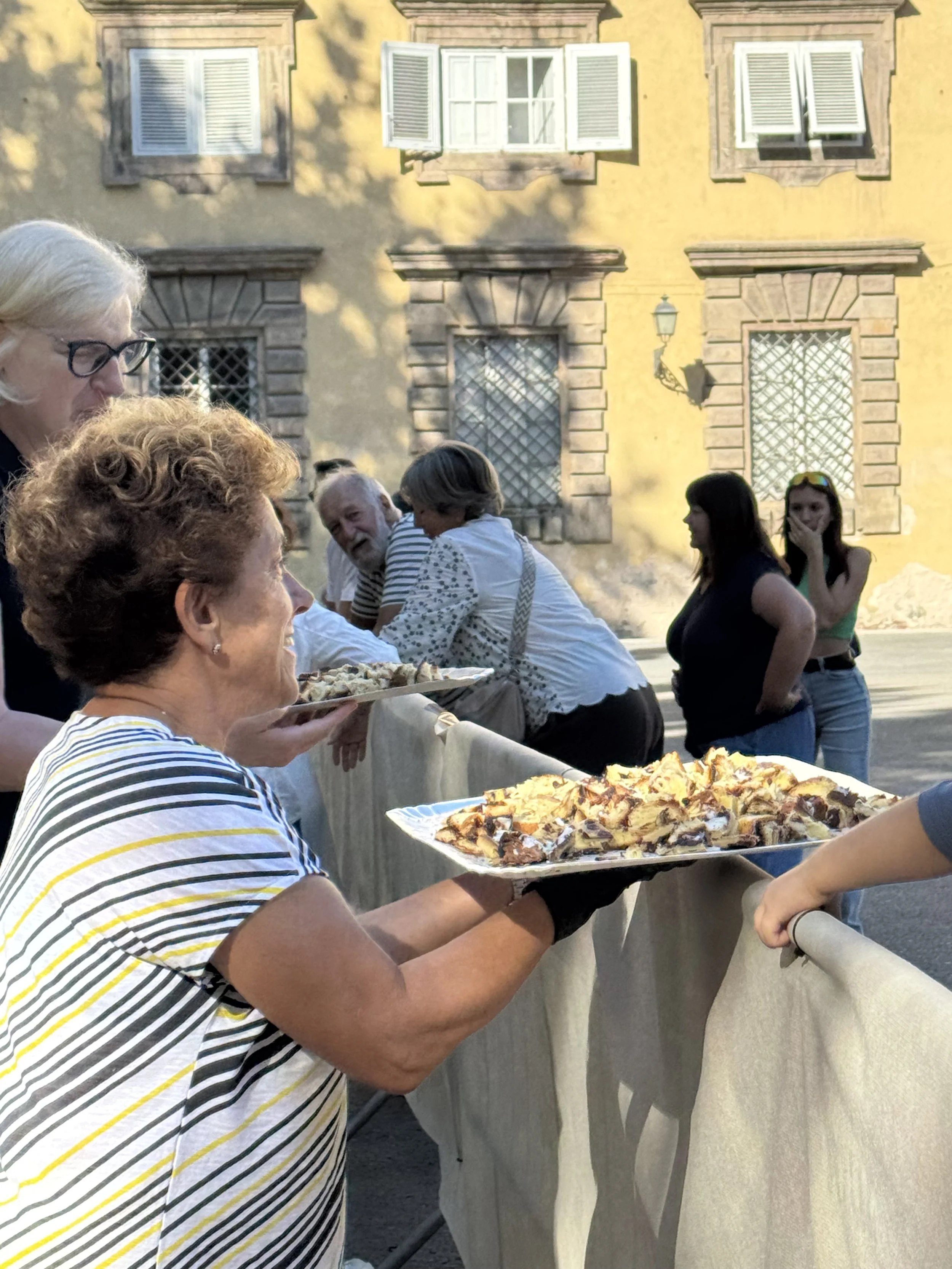
 Samples were handed out to the onlookers, making them very happy. The breads, pastries, and cakes could also be purchased for a donation, which went to support a local charity.

Un assaggio?

The Festa di Pane was a great way to sample some of Lucca’s specialty breads. It’s just one of the many Settembre Lucchese events that make this a great place to visit in September. 

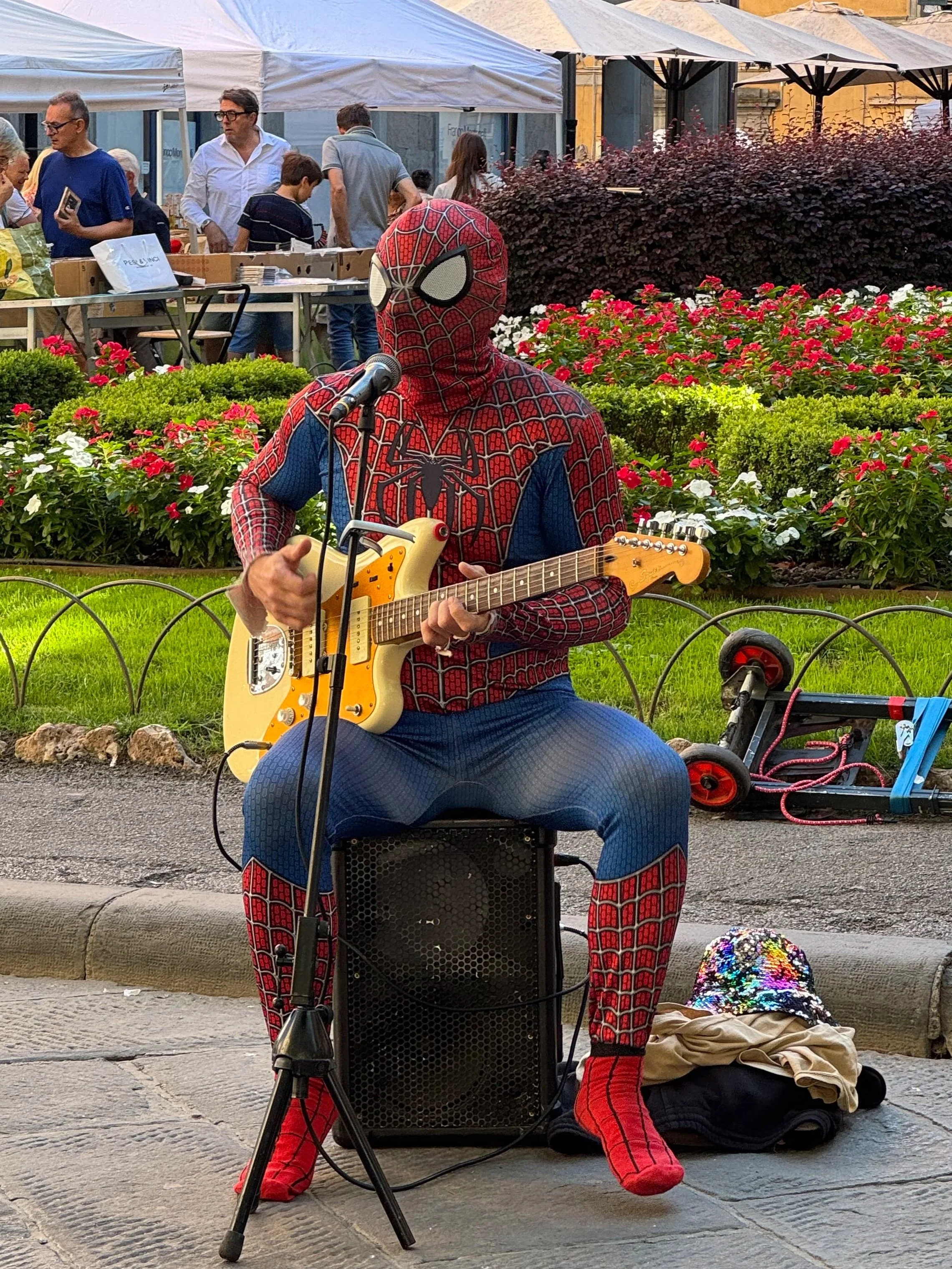
Even Spider Man dropped by to serenade everyone! 

September 22, 2025 /Joanne Bartram
Bread baking Lucca, typical breads lucca
#fallinitaly, #italiancooking, #lucca, Autumn in Italy, Fall in Italy, Festivals Italy, Italy travel, Living in Italy, Lucca

Ondulación (left) 2023 and Ondulación III 2024 White Carrara marble. Gustavo Vélez

Bright Shiny Objects in a Medieval Town

June 30, 2025 by Joanne Bartram in #lucca, #springintuscany, Italian Art, Italian art architecture, Italian culture, Living in Italy, Lucca

Lucca never fails to surprise and delight, especially when it comes to outdoor art.

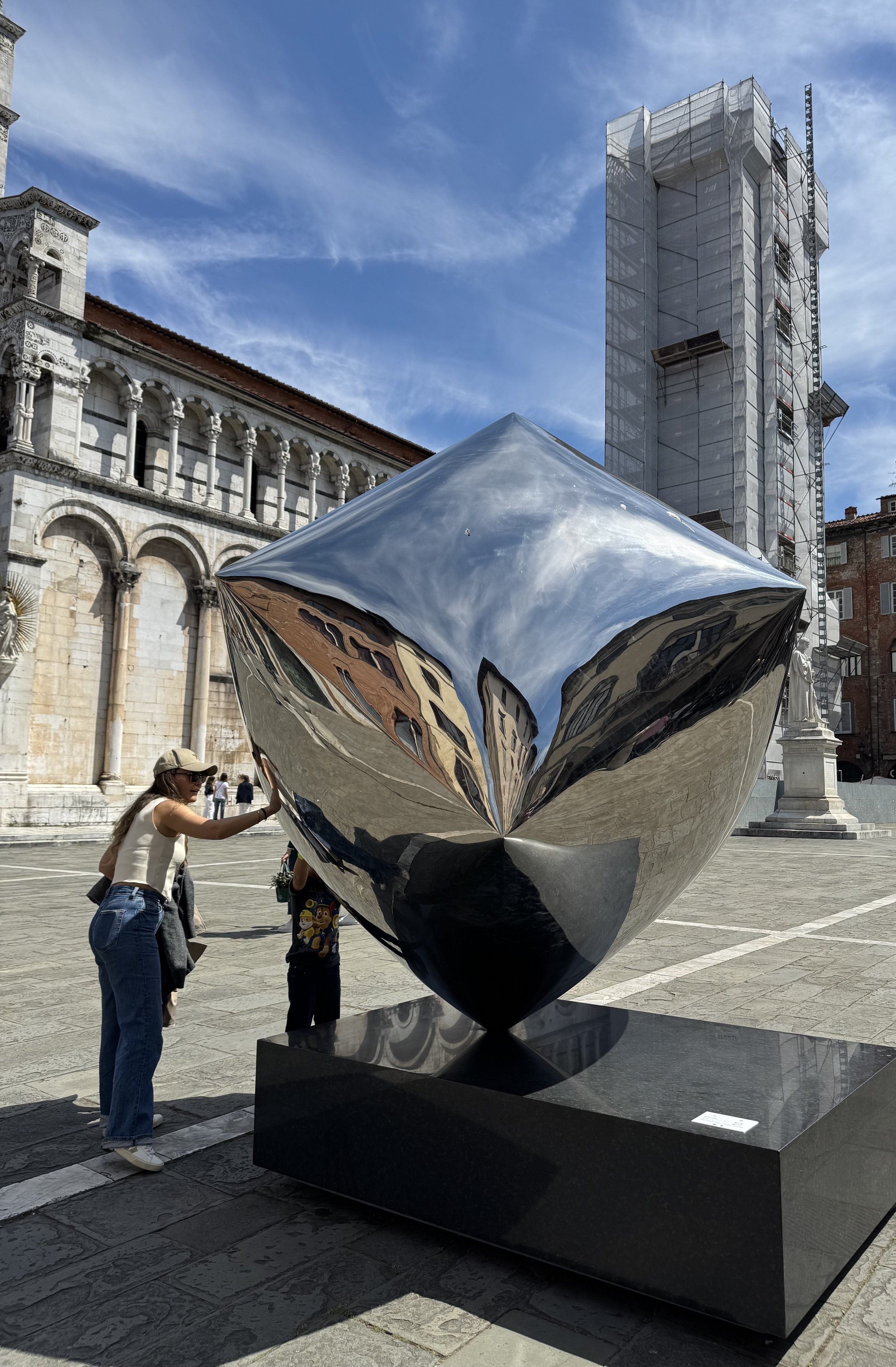
One day in May, I spotted a bright, shiny object in Piazza San Michele. Large, geometric, and standing on point, it shimmered under blue skies on a sunny day. Even better, I watched as a child first touched it and then gave it a push, which set it spinning. I am not sure who was more delighted – the child, his mother, or me. This is outdoor art of the best kind – accessible, touchable, relatable, and engaging for people of all ages.

Expansión Geométrica II 2021 Gustavo Vélez.

Over the next few days, a collection of these modern art pieces appeared throughout the historic center of Lucca. The works, entitled Geometria Senza Confine (Geometry Without Borders), are the creation of sculptor Gustavo Vélez. The exhibit is presented by Oblong Contemporary Galleries and curated by Eike Schmidt. In all, 14 pieces are on display around Lucca.

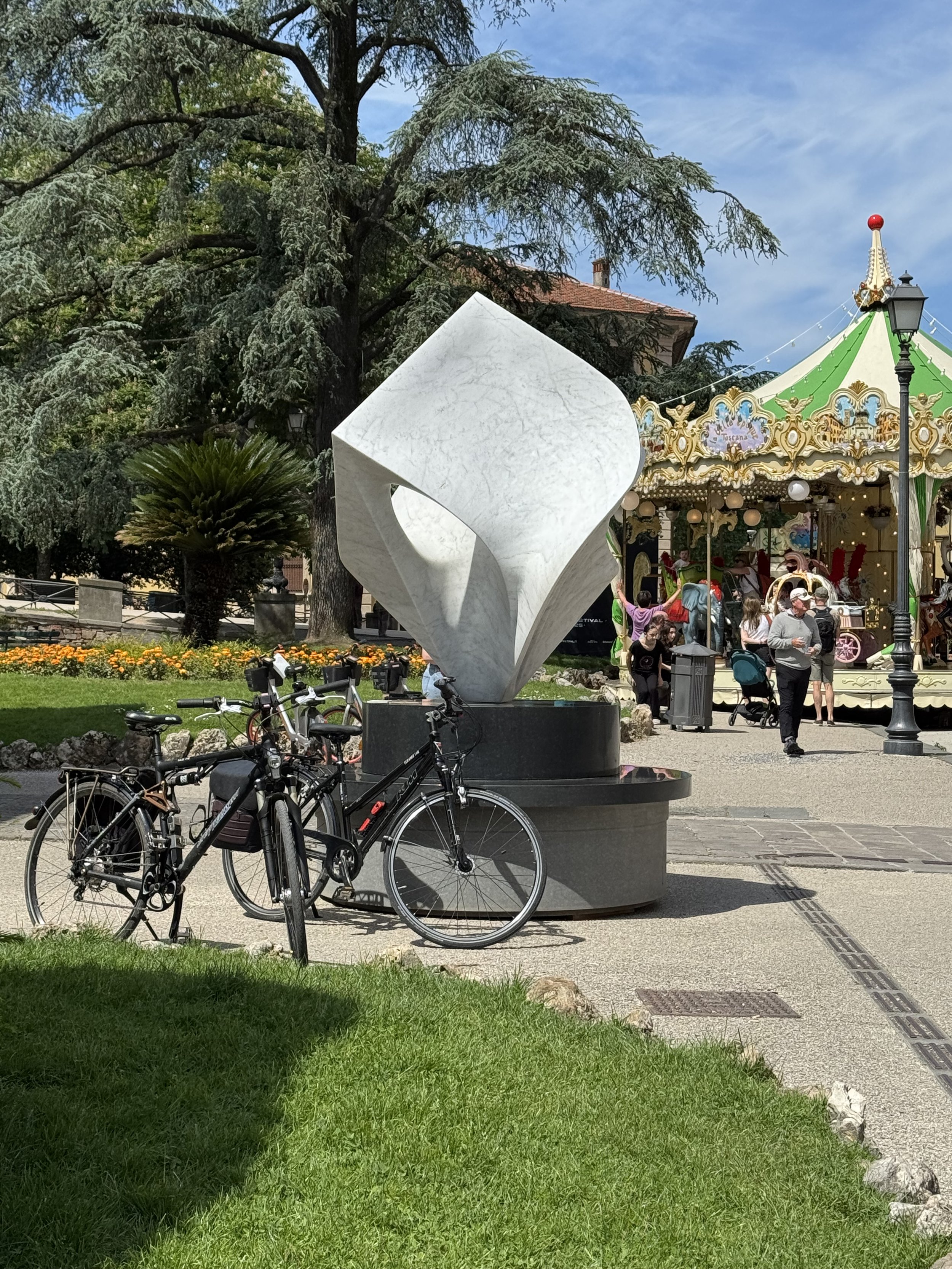
Fiore VI, a sculpture in white Carrara marble by Gustavo Vélez. Piazza Anfiteatro, Lucca

Born in Colombia, Vélez has a studio in Pietrasanta, a city known for its sculptors and proximity to the Carrara marble quarries. Many of the pieces in the exhibit are marble, with works in bronze and stainless steel also included. Below: The same piece, Fiore VI, seems alive with movement when viewed from two different angles.

IMG_4841.jpeg
IMG_4843.jpeg

 According to the description by Oblong Contemporary Galleries, Vélez’s art “merges form, space, and movement” working “in dialog with historic spaces”. That makes Lucca the perfect background for this exhibit.

Hipercúbicos V in stainless steel, Gustavo Vélez 2024

The works are impressive in their scale, texture, and forms full of angles, curves, and waves. Seeing them surrounded by Medieval buildings adds a striking dimension. I am not sure if it was intentional or a happy accident brought about by Lucca’s historic setting, but several of the pieces have open spaces which offer glimpses of ancient buildings, stone arches, balconies. Others, the stainless steel pieces, have polished  surfaces which reflect the surrounding buildings, passersby, and even a certain blog writer with camera in hand. Each one invites inspection from all angles and in different lights throughout the day. I find myself taking detours as I walk through town just to walk by my favorites or to watch the one that spins delight people as they realize that they can interact with the sculpture.

IMG_4832.jpeg
IMG_4859.jpeg
IMG_4829.jpeg
IMG_4866.jpeg
IMG_4848.jpeg
IMG_5181.jpeg

 A few of the larger pieces are mounted on bases big enough to serve as benches. The pieces take on quite a different aspect when surrounded by people sitting below them – another way in which the art is immersed in the life of the city and accessible to all. 

IMG_4852.jpeg
IMG_4823.jpeg

The sculptures can be seen throughout Lucca from now through September 21.  They are a definite can’t miss for visitors to Lucca this summer.

Cono Geométrico 2023. Gustavo Vélez

June 30, 2025 /Joanne Bartram
Gustavo Vélez, art Lucca, art Tuscany, outdoor sculpture lucca
#lucca, #springintuscany, Italian Art, Italian art architecture, Italian culture, Living in Italy, Lucca

The skies threatened rain, but luckily it held off until after the last rider took off.

When The Giro d’Italia Comes To Town

May 26, 2025 by Joanne Bartram in Italian culture, Italy, Italy travel, Lucca, Living in Italy

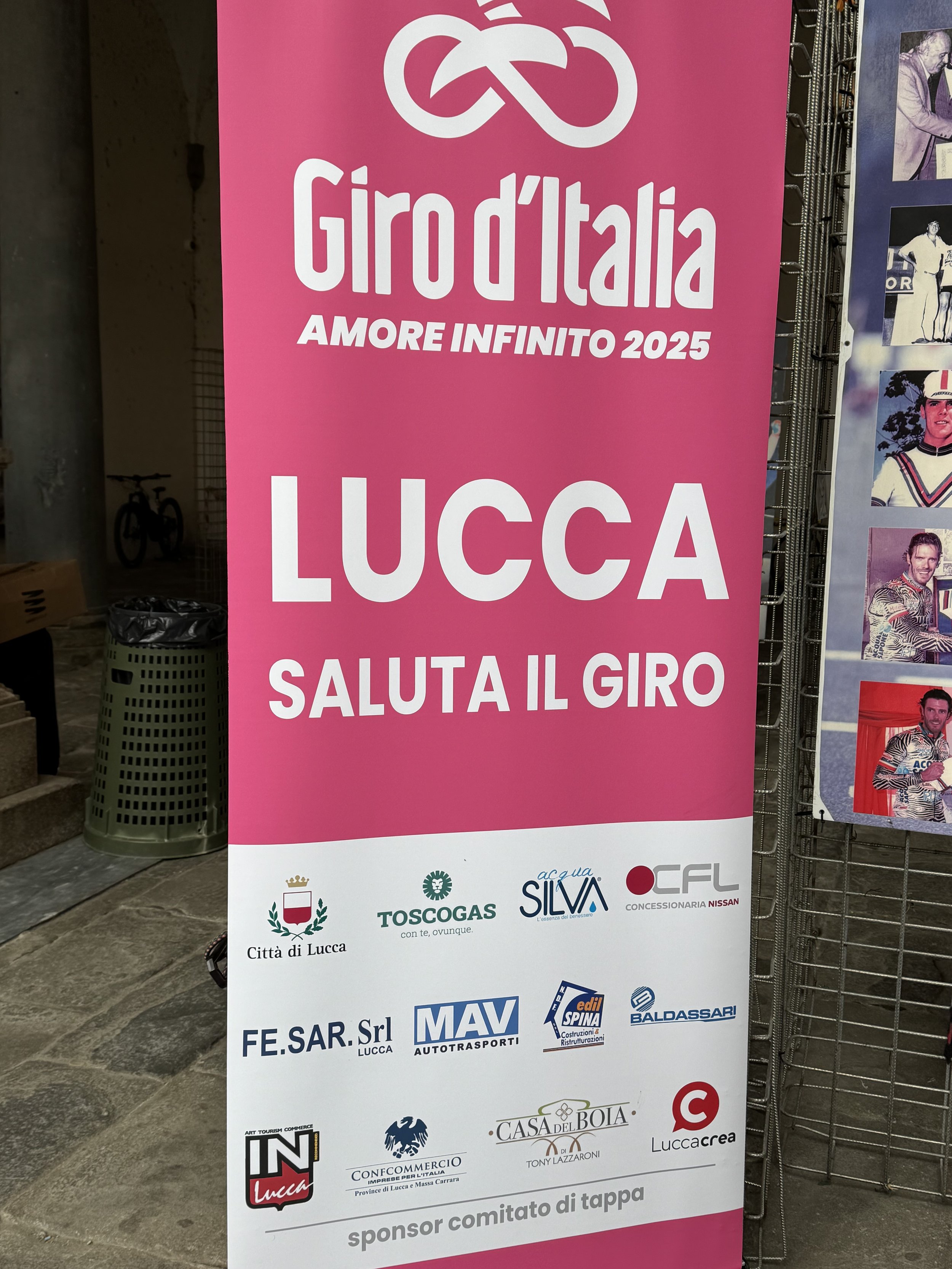
The city of Lucca went a little bit crazy (in a good way) this week when the Giro d’Italia came to town. The color pink, representing the Maglia Rosa, the Pink Jersey worn by the leader, appeared overhead in street banners, in window displays, balloons, and even in pastry shops. The pink of the jersey reflects the color of the pages in the sports paper La Gazzetta dello Sport, the founder of the race in 1909.

IMG_7521.jpeg
IMG_7520.jpeg
IMG_5130.jpeg
IMG_7497.jpeg

The biggest crowd gathered at the beginning of the route. Thanks to J. Nichols for this photo.

The Giro d’Italia is Italy’s Grand Tour bike racing event, with teams from many nations participating.  The Giro has multiple stages, taking the riders from sea level to mountain top over a challenging 3-week course. The rider wearing the Maglia Rosa can change with each stage, always worn by the leader at that point in the competition. 

The route varies from year to year. This year’s race began in Durrës, Albania and ends in Rome on June 1st, a total distance of 3,443 km (2139 miles). The rider who crosses into Rome wearing the pink jersey is the winner. This year’s stage 10, one of two time trial stages, began in Lucca, a very big event for the city.

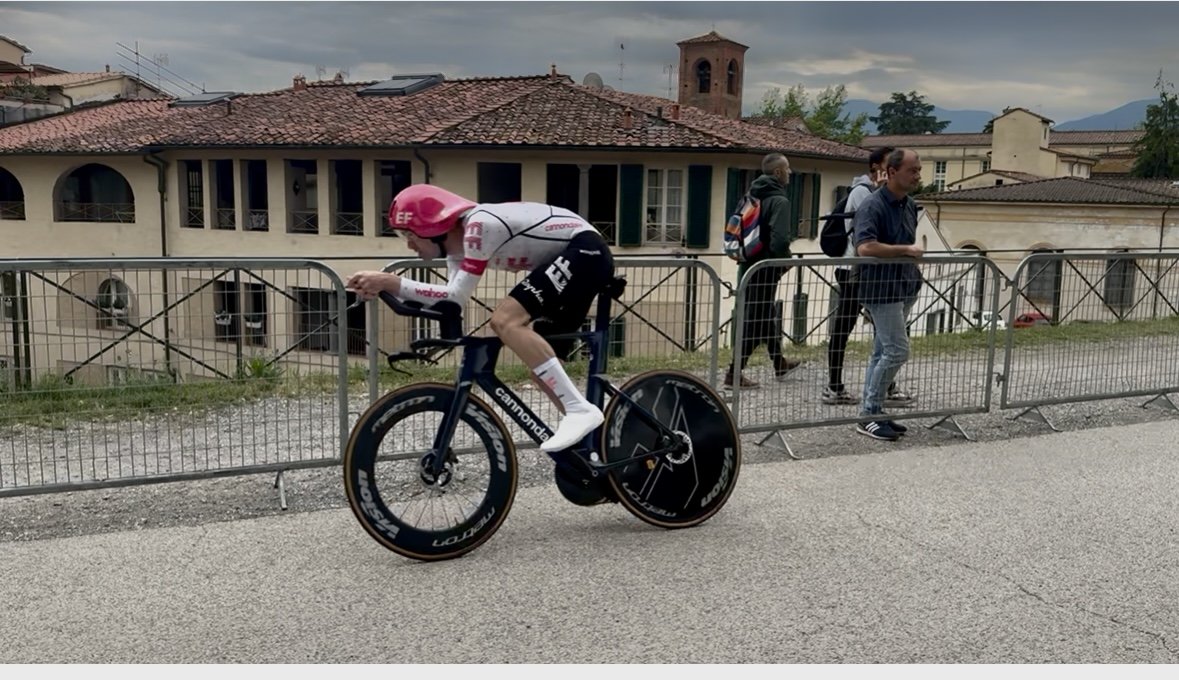
The route took riders along Lucca’s wall as part of the time trial event.

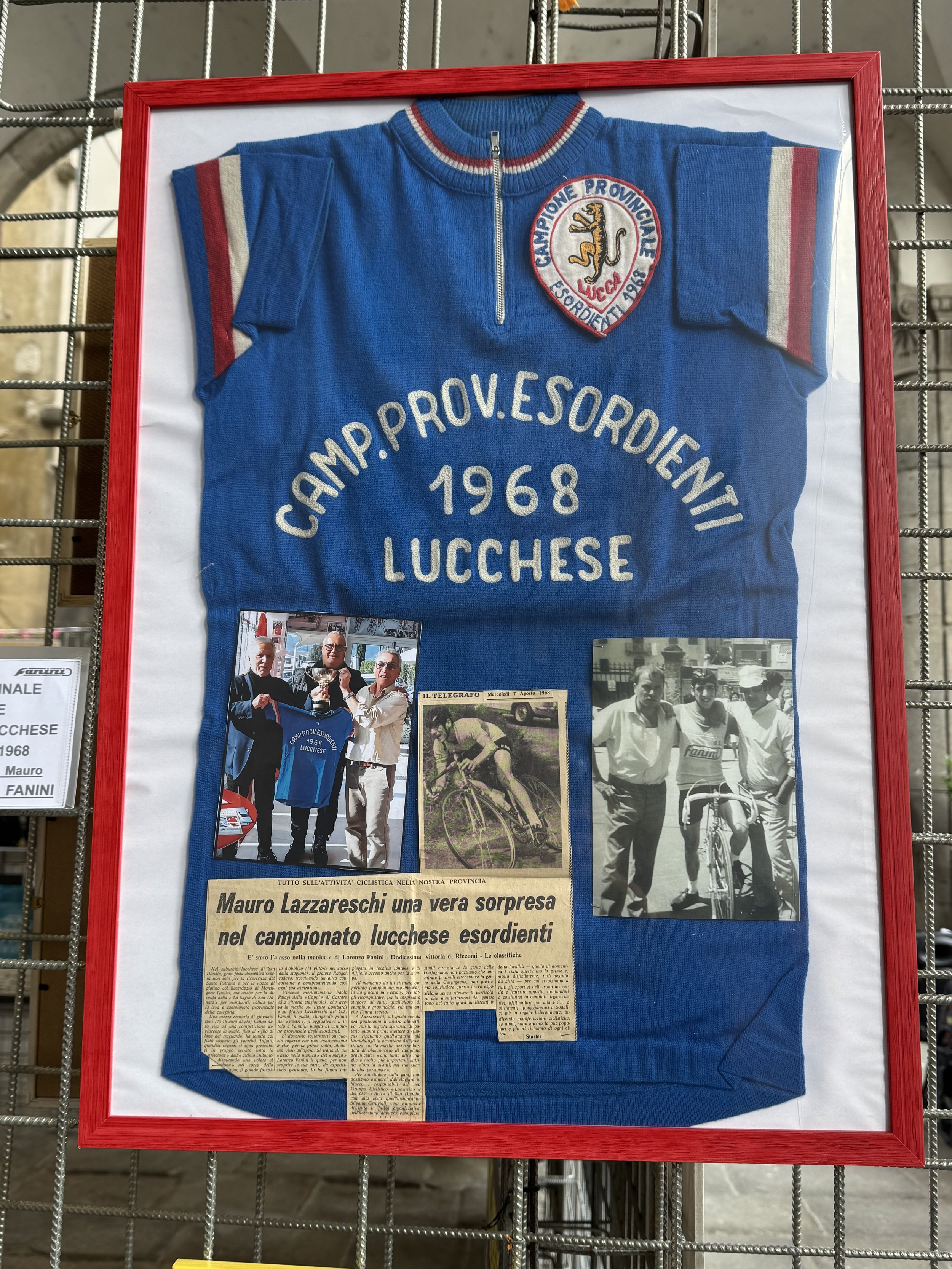
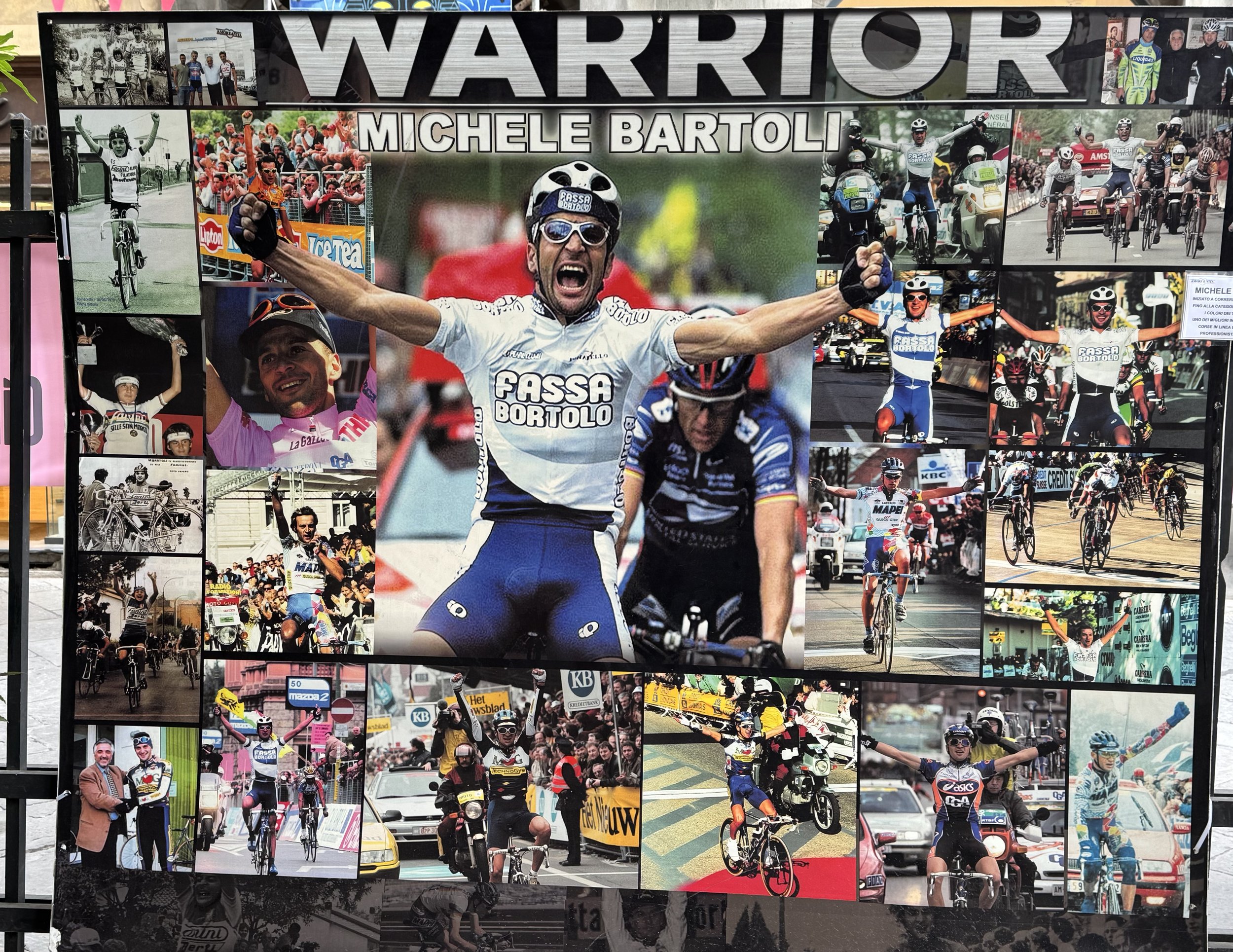
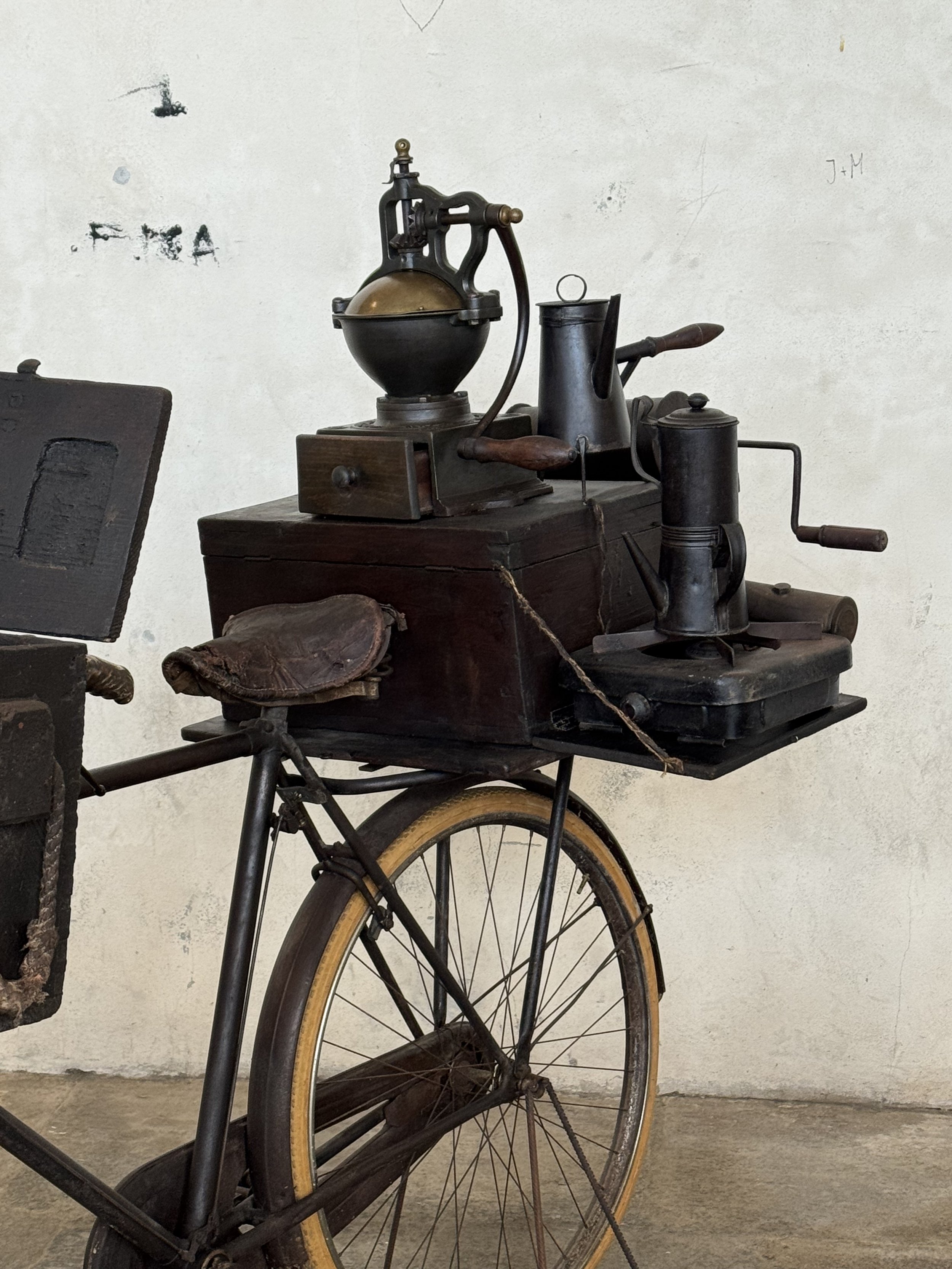
An exhibit on the history of the Giro d’Italia, with photos of past winners and Italian racing superstars, was set up under the loggia in Piazza San Michele. It included an interesting display of old bicycles. My favorite was the bike with a coffee bar attached!

IMG_4981.jpeg
IMG_4982.jpeg
IMG_4998.jpeg
IMG_4983.jpeg
IMG_4988.jpeg
IMG_5001.jpeg

On the day of the race, souvenir stands sold race-themed merchandize, car and pedestrian traffic was rerouted, and Piazza Napoleon became the center of activity and the starting point for the event. 

IMG_5115.jpeg
IMG_4992.jpeg
IMG_4978.jpeg

The route took riders from the piazza up onto Lucca’s wall, about ¾ of the way around, and then onto Pisa, a distance of 28.6 km (17.8 miles). 

IMG_5134.jpeg
IMG_5083.jpeg
IMG_5043.jpeg

Because this was a time trial, the riders took off one at a time rather than in a large group.  Each was preceded by a motorcycle escort and followed by a car bearing the rider’s name and colors.  Fans lined the route, tracking the riders, cheering and waving the flags of various countries as each rider flew passed.

IMG_5125.jpeg
IMG_5133.jpeg
IMG_5094.jpeg
IMG_5092.jpeg
IMG_5072.jpeg
IMG_5078.jpeg

At the end of Stage 10, Dutch rider Daan Hoole had the fastest time to Pisa while Mexican rider Isaac del Toro had the overall lead and the Maglia Rosa. This was the final time trial of the Giro, now the riders move on across Italy and eventually to Rome. Who will be wearing the pink jersey at the end?

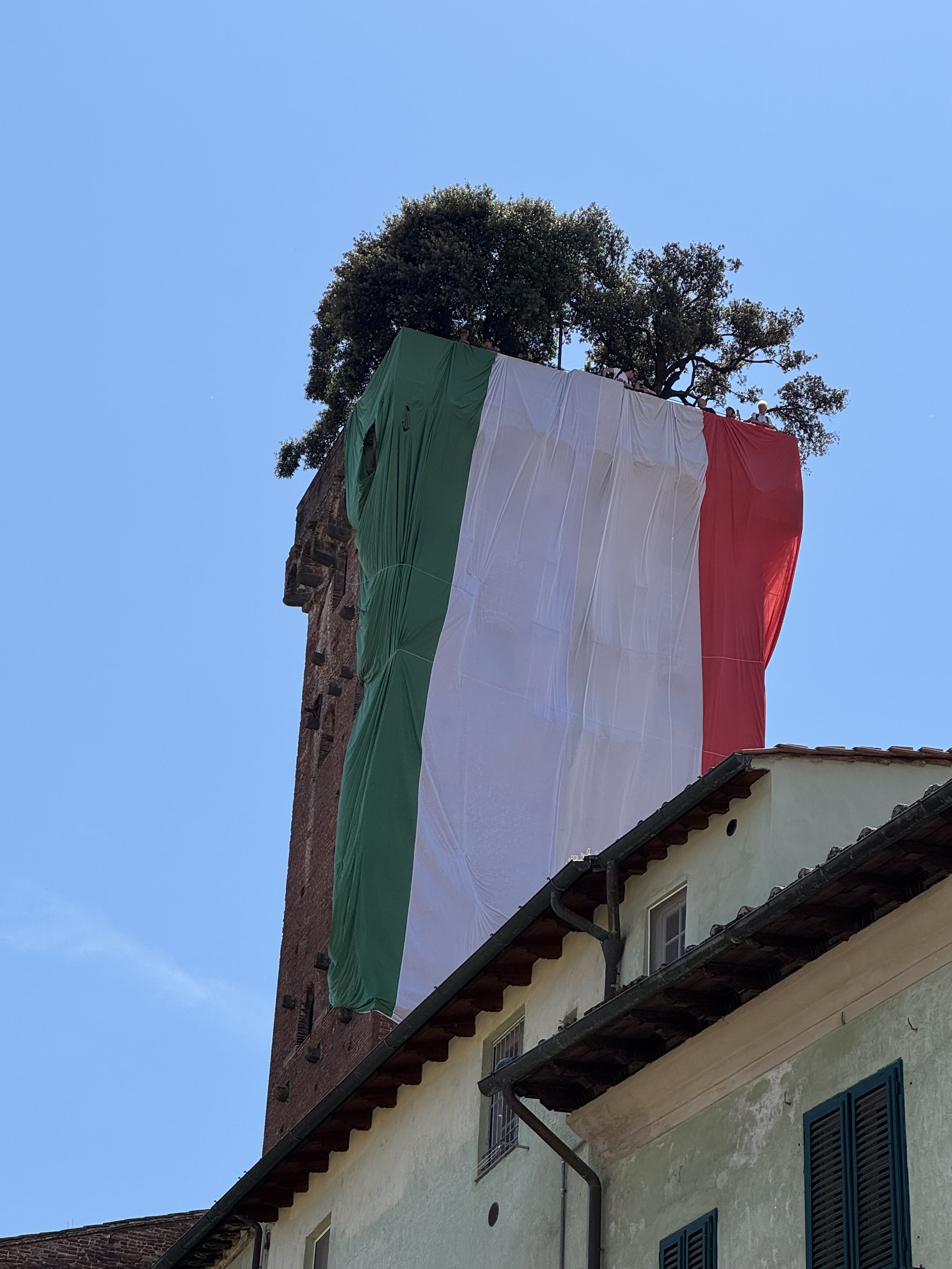
The Torre Guinigi all decked out in an Italian flag to celebrate the Giro d’Italia coming to Lucca.

May 26, 2025 /Joanne Bartram
Giro d'Italia, Italian bike race, Italian sports
Italian culture, Italy, Italy travel, Lucca, Living in Italy

Prato’s Museo del Tessuto (Textile Museum)

May 12, 2025 by Joanne Bartram in #italytravel, #medievalitaly, History, Italian Art, Italian art architecture, Italian culture, Italy travel, Living in Italy, Museums Italy, Tuscany

Tuscany is not all rolling hills, art, vineyards, olive groves, and Medieval streetscapes.  A different Tuscany presents itself in the city of Prato. While Prato does have a historic center worth exploring, it is better known as the center of a thiving textile and fashion industry. 

Displays in the Textile Museum recount the history of cloth making and the fashion industry in Prato, including the role of Chinese immigrants.

The creation of textiles in Prato goes back to the 12th century, but it was the industrial revolution of the late 1800’s which fostered the growth of the industry.  Another boom period came with the end of World War II when Prato became one of Europe’s largest districts for textile and clothing manufacturing. Prato’s role in textiles and fashion continues today, in large part supported by the Chinese immigrants who began arriving in the early 1990’s. 

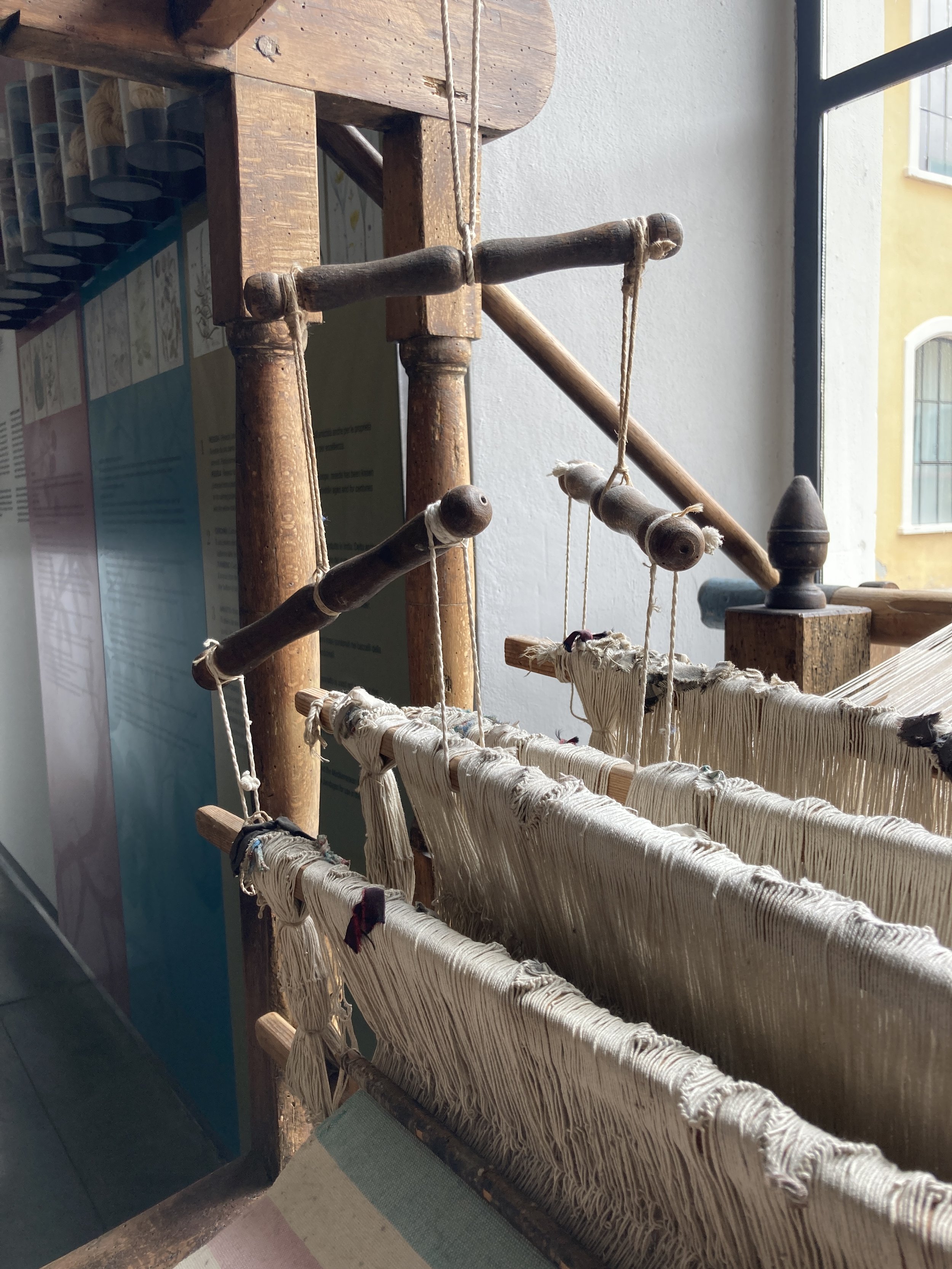
The history of textiles in Prato is celebrated in a small but fascinating and well-curated museum, The Museo del Tessuto. Established 50 years ago, the museum is now housed in a historic building – the former Compolmi textile factory. The factory was opened in 1863 by Vicenzo and Leopoldo Compolmi in a building that formerly housed a mill (and before that a convent). One of the fascinating aspects of the museum is seeing the former factory’s collection of machinery used in the manufacturing process along with implements used during different periods of manufacturing. 

IMG_7078.jpeg
IMG_7082.jpeg
IMG_7145.jpeg

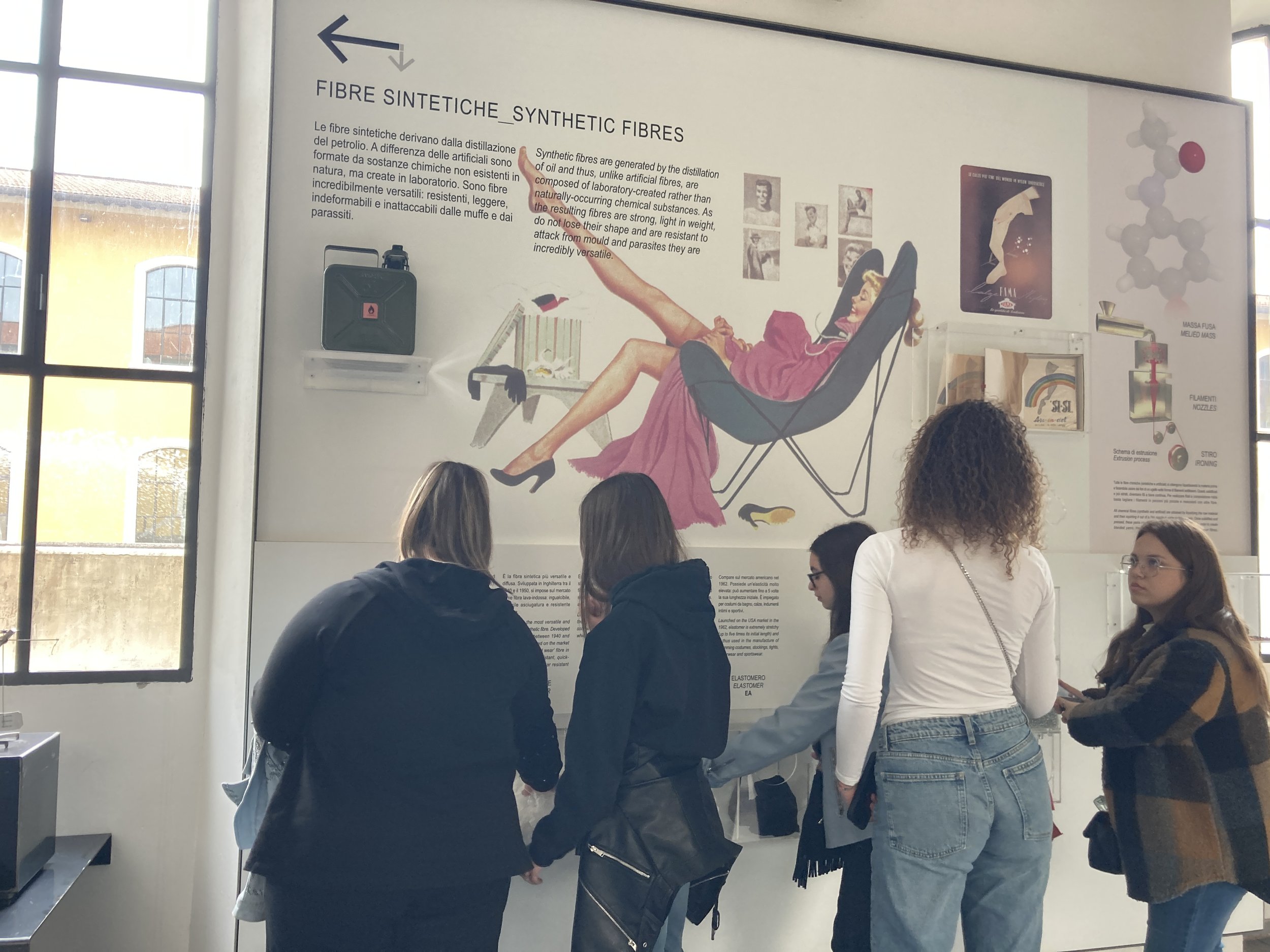
Displays throughout the museum explain the evolution of fashion and style as well as materials used during different time periods. There are displays on types of fabrics, materials used to spin thread, and agents for coloring fabric. Many of the educational displays are hands on, giving visitors the ability to feel how different raw materials are to the touch. I owe these displays a big thank you for most of the info contained in this post.

IMG_7124.jpeg
IMG_7121.jpeg
IMG_7114.jpeg
IMG_7163.jpeg
IMG_7116.jpeg
IMG_7160.jpeg

Recently, I had a chance to visit the museum and see two special exhibits.  One, Silk Treasures, showcases fabric, small remnants, larger pieces, and intact garments, from the 15th – 18th centuries. Many were originally designed for Europe’s wealthy class and later recycled into garments worn by the clergy. The fabrics are woven with gold and silver threads as well as intense blues and reds, forming intricate and beautiful patterns. That they have survived for centuries seems like a miracle. The Silk Treasures exhibit will be on display until December 21, 2025.

IMG_7098.jpeg
IMG_7099.jpeg
IMG_7101.jpeg
IMG_7102.jpeg
IMG_7107.jpeg
IMG_7110.jpeg

The second special exhibit is quite different.  It is a contemporary and futuristic display of clothing crafted from velvet fabrics.  Entitled Velvet Mi Amor, it was created by father and daughter designers Stefano and Corinna Chiassai.

The Velvet Mi Amor exhibit has an eye-catching group of patterns, colors, and textures.

The exhibit, which runs through June 8th, includes 24 otherworldly figures clothed in a diverse range of velvets – prints, patterns, inlays, and laser cuts all have a place.  The oversize pants, jackets, shoes and hats, all in velvet, pull you in to take a closer look. You may even find some hidden messages in the patterns.   

IMG_7215.jpeg
IMG_7209.jpeg
IMG_7224.jpeg
IMG_7225.jpeg
IMG_7205.jpeg
IMG_7226.jpeg

Prato is easily reached by train in about 30 minutes from Florence or 60 minutes from Lucca.  The museum, including its well-stocked gift shop, is definitely worth a visit. And Prato, which hosts Italy’s second largest Chinese population, is just the place for a post-museum Chinese food lunch.

The gift shop at Museo del Tessuto

May 12, 2025 /Joanne Bartram
Prato, Museo dell Tessutto, Fabric Museum, Fashion, Italian Fashion, Historic garments
#italytravel, #medievalitaly, History, Italian Art, Italian art architecture, Italian culture, Italy travel, Living in Italy, Museums Italy, Tuscany
  • Newer
  • Older

Powered by Squarespace